

Korankei Autumn Leaves Guide 2026: A Complete Guide to Toyota, Aichi’s Foliage Spot
Korankei Autumn Leaves Overview
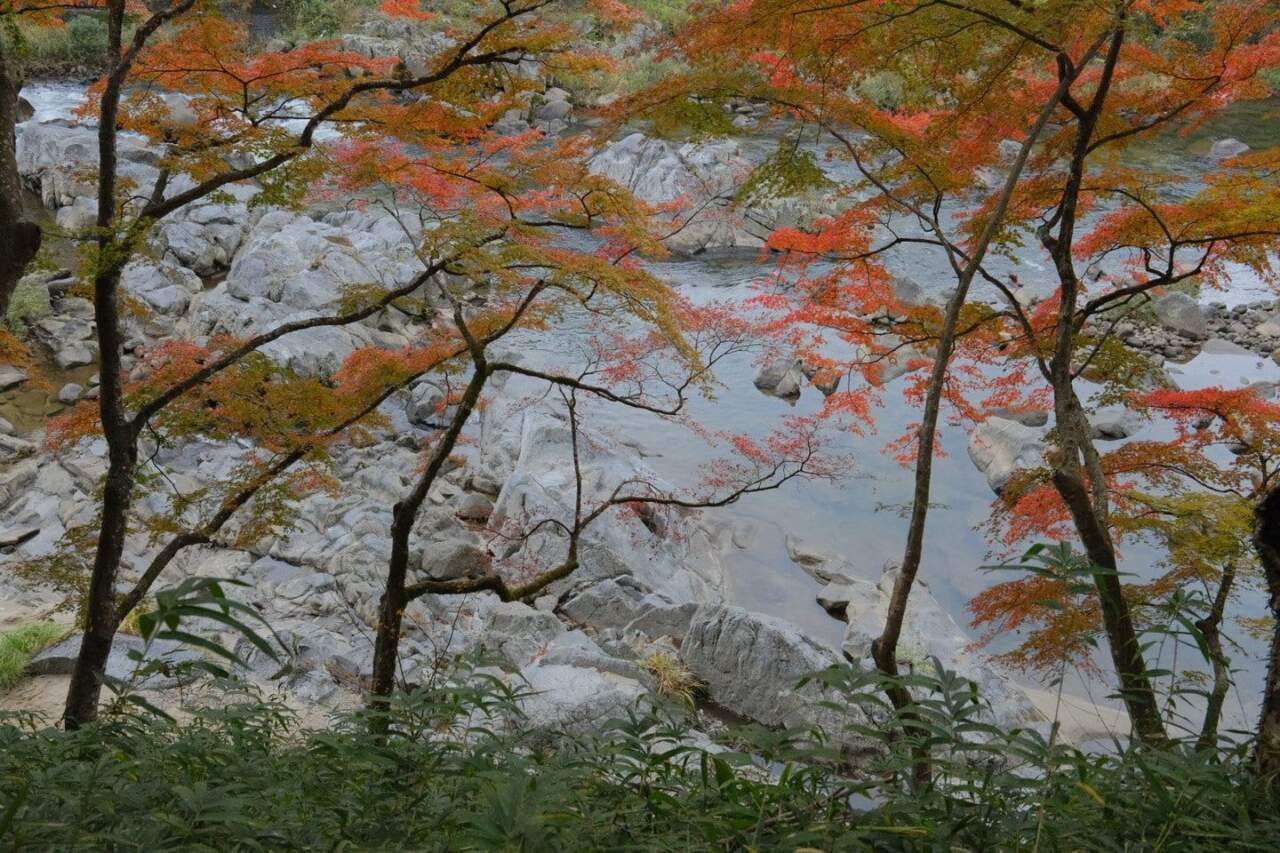
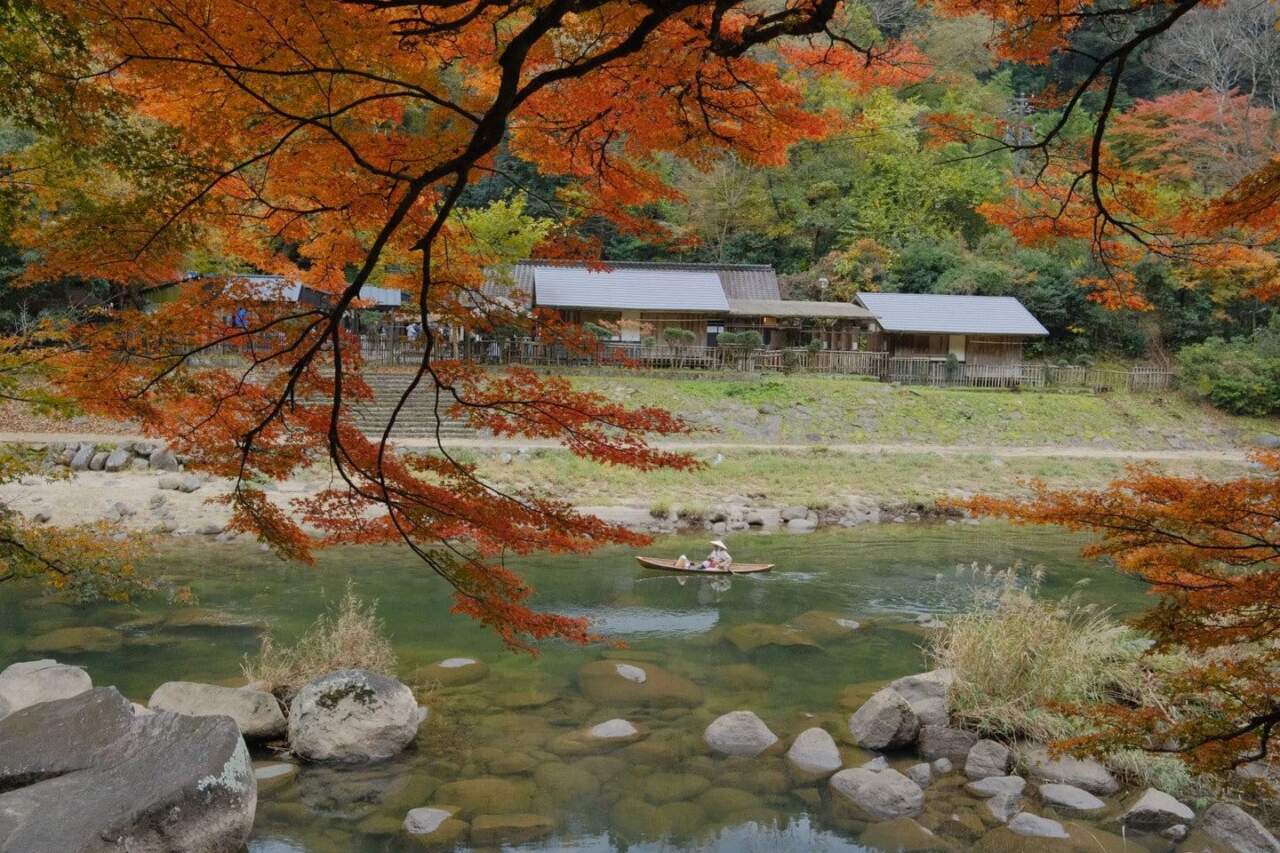
Korankei is in Asuke, Toyota City, Aichi Prefecture, and is one of the best-known foliage spots near Nagoya. Each autumn about 4,000 maple trees turn yellow, orange and red, their colors reflected in the Tomoe River, drawing crowds who come just for the view. According to the Asuke tourist association’s official information, 11 maple varieties turn color here at the same time, from pale yellow and orange-red to deep crimson, giving a rich range of shades and a dense foliage experience that is rare near Nagoya. With Kozen-ji Temple, Asuke Hachimangu Shrine and the Asuke old town right next door, it suits a half-day to full-day trip from Nagoya.
Korankei Basic Information
Korankei is at 444-2424 Iimoriyama, Asuke-cho, Toyota City, Aichi, open 24 hours (tel. +81-565-62-1272). Allow 1-2 hours for the valley itself, and half a day or more if you add Kozen-ji Temple and the Asuke old town.
From Nagoya you can take public transport with a bus transfer, or drive, then stroll the riverside path along the Tomoe River to enjoy the foliage.
The name “Korankei” (香嵐溪) dates from 1930 (Showa 5), combining “ko” (香, from Kozen-ji) and “ran” (嵐, the mountain mist of Mt. Iimori).
Remember to include travel time both ways, and allow even more time if you plan to see the evening illumination.
Getting to Korankei: Full Breakdown from Nagoya
Route A: Jōsui Station and a bus transfer (most recommended, relatively uncrowded)
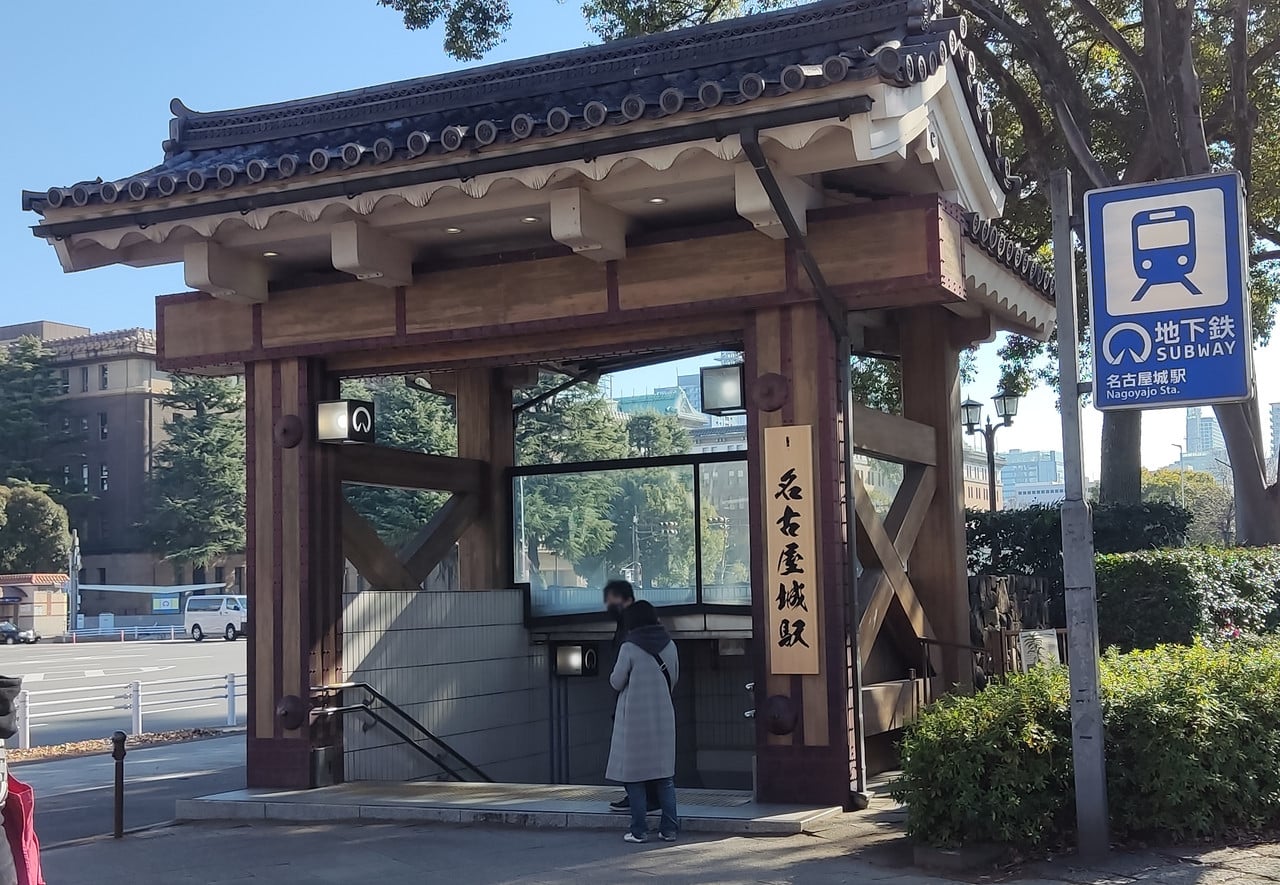
From Nagoya Station, take the Tsurumai Line subway (which runs through to the Meitetsu Toyota Line) to Jōsui Station, then transfer to the Toyota Oiden Bus Sanage-Asuke Line (toward Hyakusōkusa) and get off at Korankei. The ride takes about 60 minutes.
You never have to backtrack to transfer, which makes this a good fit for independent travelers unfamiliar with local buses. If you are unsure which route to pick, this Jōsui Station route is the one to consider first.
After getting off, simply follow the crowd on foot to the entrance of Taigetsu-kyo Bridge. The signs along the way are clear and you won’t need to check a map, which makes it the best choice with older relatives or children.


Routes B and C: Transfer to a bus at Toyotashi Station or Higashi-Okazaki Station
During the Autumn Leaves Festival both routes run extra services, but weekend peak times still involve queuing, so arrive at the stop 10-15 minutes early.
Route B: from Toyotashi Station, take the Meitetsu Bus Yanami Line to Korankei, 45-50 minutes and ¥900. Route C: from Higashi-Okazaki Station, take the Meitetsu Bus Okazaki-Asuke Line, 70 minutes, one way ¥1,000 for adults and ¥500 for children (up to elementary school age).
⚠️ On weekdays there are no return buses from Higashi-Okazaki Station after 19:00. If you plan to see the night foliage, plan your return early, or take the Jōsui Station route to be safe.
OHWA Bus (Festival-Period Only)
During the Autumn Leaves Festival, a limited-period “OHWA Bus” runs between Yakusa Station on the Aichi Loop Railway and Korankei, a direct route for the festival. Check the Asuke tourist association’s announcements for fares and timetables. To reach Yakusa Station, take the JR Chuo Line to Kozoji Station and transfer to the Aichi Loop Railway, or take the Nagoya subway to Fujigaoka Station and transfer to the Linimo maglev.
A shuttle bus also runs from Yahagi Station during the festival. Check that year’s announcement to see whether it operates again.
Driving and Parking
Driving from central Nagoya takes about 1 hour without traffic. You can take the Sanage Green Road and exit at Rikiishi IC, or take the Tokai-Kanjo Expressway to the Toyota-Kanpachi IC exit. The permanent parking lots have about 570-670 spaces and usually charge ¥500, rising to ¥1,000 during the November Autumn Leaves Festival.
⚠️ Korankei is a notorious traffic bottleneck. On November peak-season weekends the queues are often long and the car parks fill up early. Avoid weekends and holidays if you can, and if you drive, arrive before 9:00 or enter after 15:00 to stay for the illumination.

Korankei Foliage Spots: The Full Guide
Taigetsu-kyo Bridge: Korankei’s Signature Photo Spot
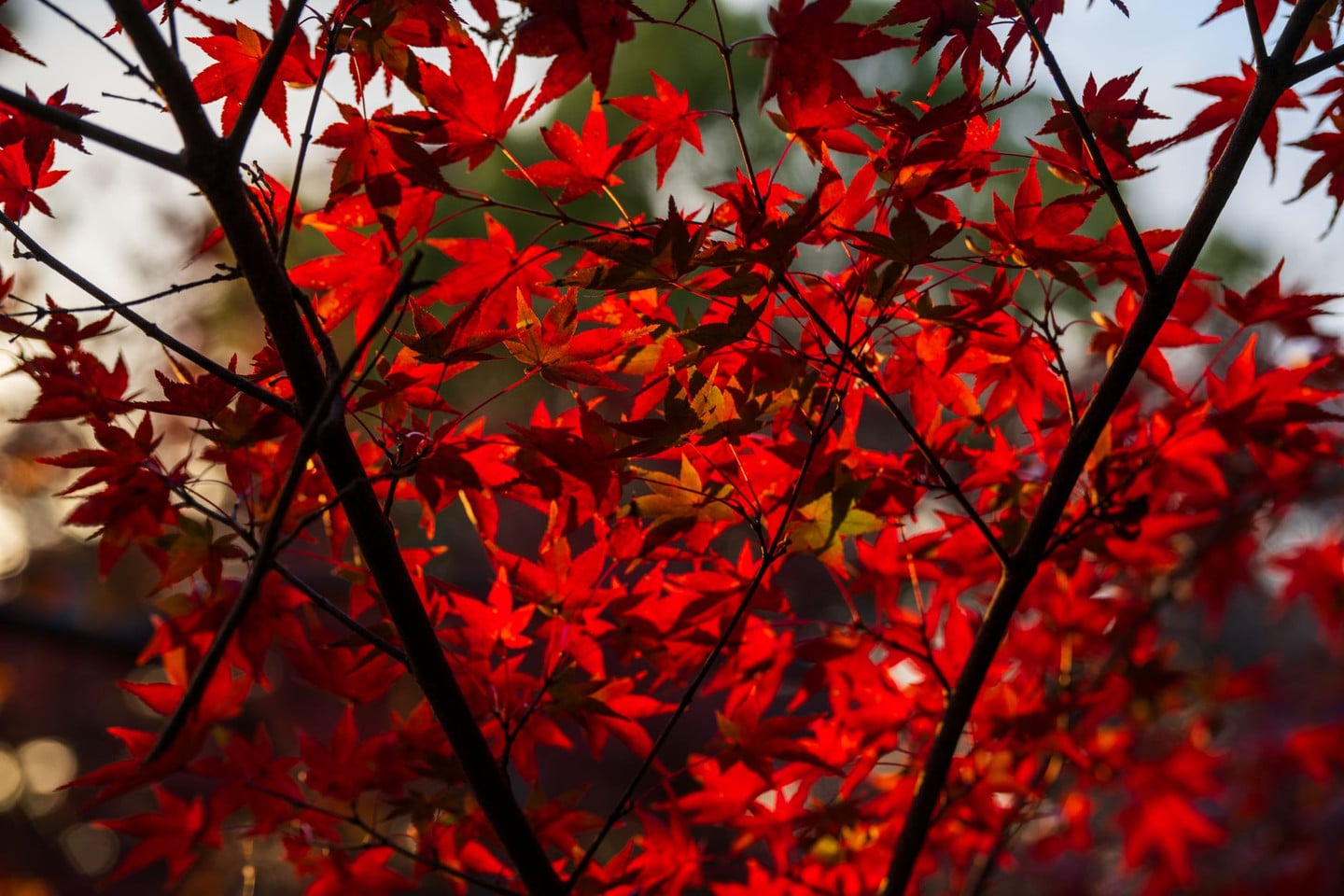
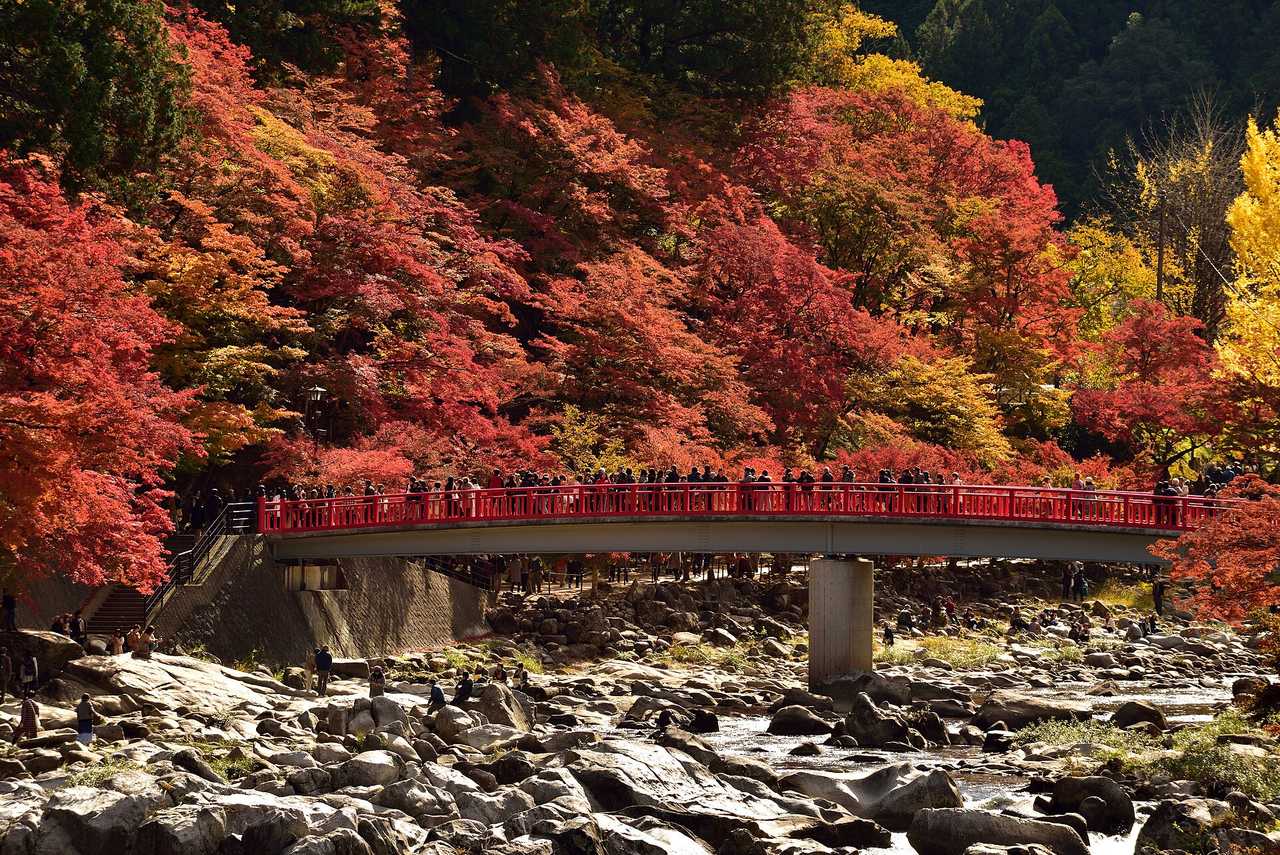
Taigetsu-kyo Bridge spans the Tomoe River and is Korankei’s most classic landmark. The bridge and the red leaves reflected in the water make the iconic view, and it is also the focal point of the night illumination.
Around sunset, just as the lights come on, is a good time to photograph the bridge’s reflection. Claim your spot early.
We suggest first walking the right bank of the Tomoe River to the approach of Kozen-ji Temple to see the tunnel of maples, then circling back to Taigetsu-kyo Bridge for the sunset. If you want night shots, claim your camera spot early, just as the lights come on at dusk, to avoid the crowds that follow.

Kozen-ji Temple: A 1427 Temple and the 1634 Maple-Planting Story
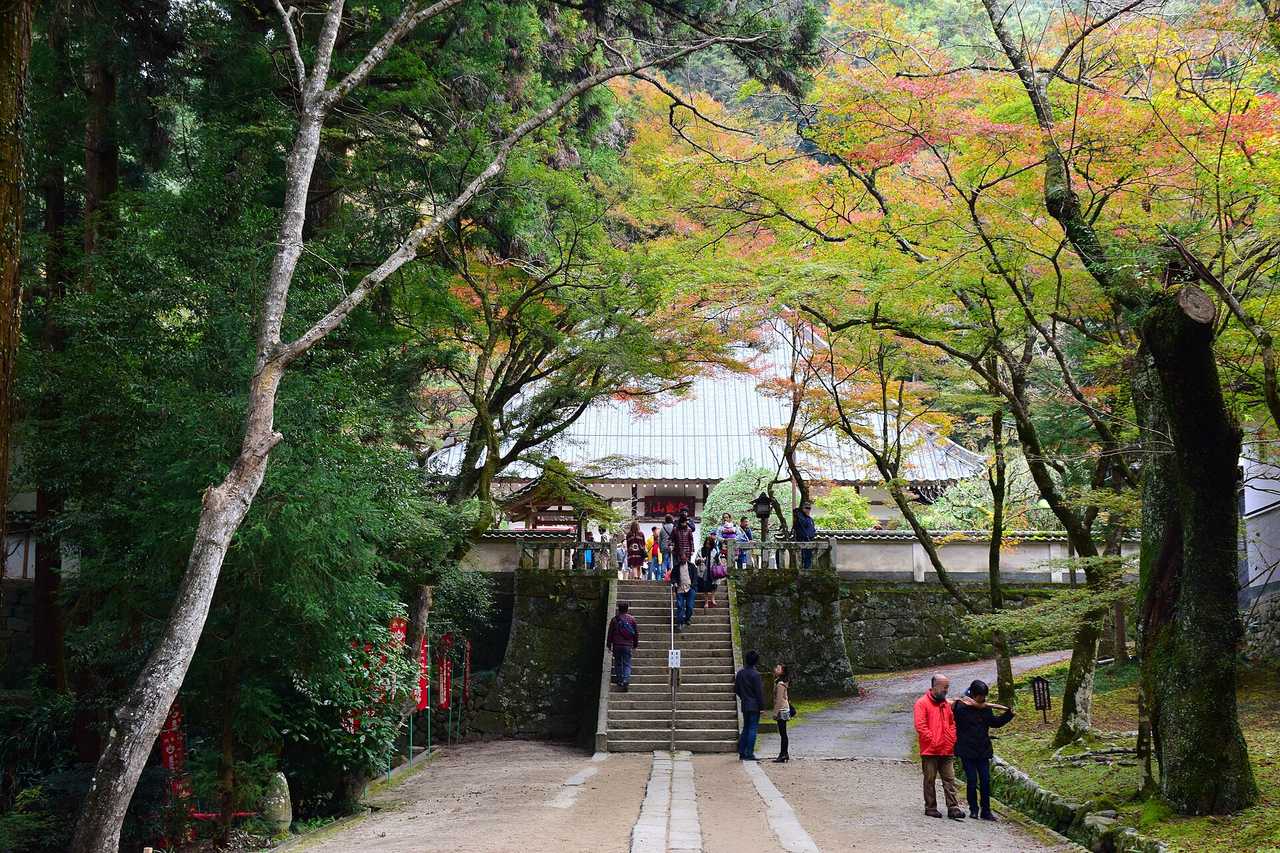
Kozen-ji was founded in Ōei 34 (1427) as a Sōtō Zen temple on the site of the Asuke clan’s residence, and stands at the heart of Korankei. In Kan’ei 11 (1634), the 11th head priest, Sanei, planted maple and cedar trees, which marks the origin of the maple grove.
A hiking trail inside the temple reaches the summit of Mt. Iimori in 15 minutes, with a panorama over all of Korankei. Entry to the grounds is free, and the temple sells omamori charms and goshuin stamps. During the Autumn Leaves Festival, “bamboo lantern” illumination is also held on Saturday and Sunday evenings (about 18:00-20:45).
Asuke Hachimangu Shrine: A Famous Spot for Traffic-Safety Charms
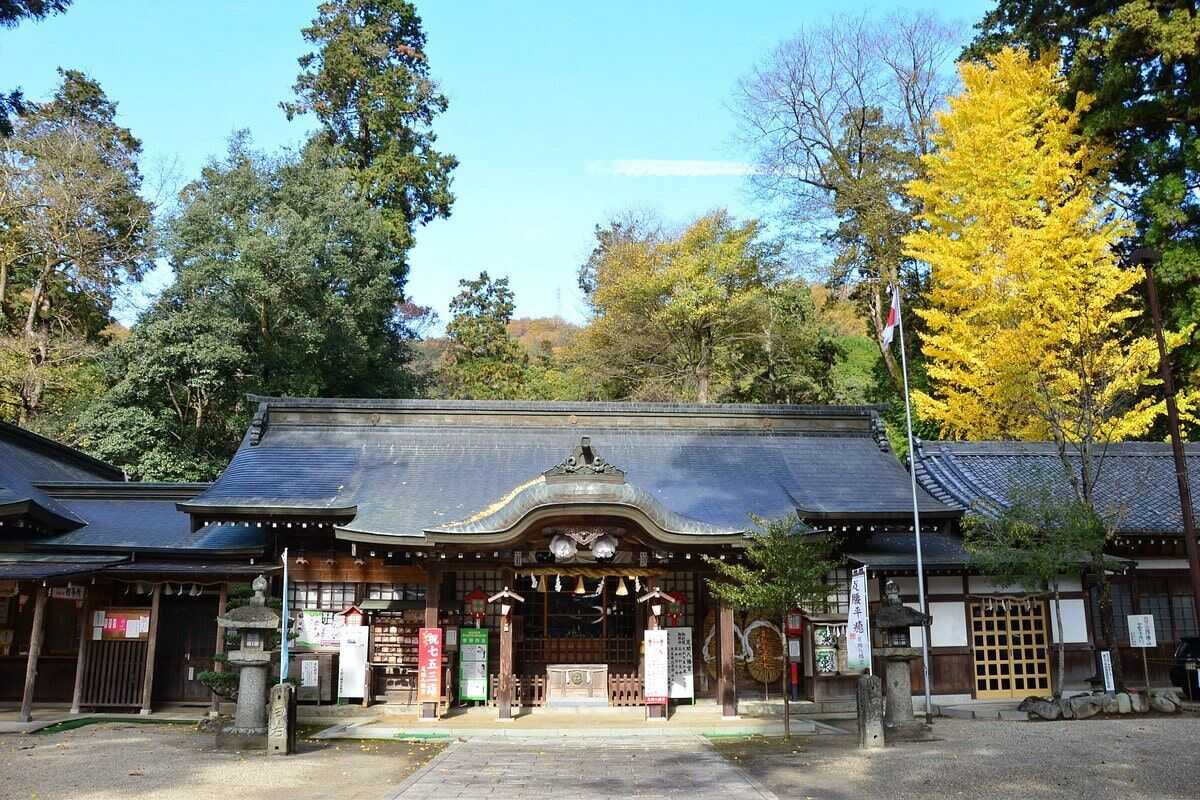
The shrine grounds are small and a visit takes only about 15-20 minutes on foot, so it fits nicely between Kozen-ji and Taigetsu-kyo Bridge. Asuke Hachimangu is said to have been founded in the second year of Hakuhō under Emperor Tenmu (673). Its main hall is in Muromachi-period style and is designated a nationally Important Cultural Property. It has long been worshipped as a guardian of the feet, of travel and of traffic, and is now also revered for recovery from illness and safe childbirth. Many items in the grounds use the character for “foot” (足), echoing the origin of the name “Asuke” (足助). The shrine is known for its “traffic safety” charms, and picking one up while you visit Korankei is a nice touch, especially for drivers wishing for a safe journey.
Asuke Old Town: A Preservation District for Groups of Traditional Buildings
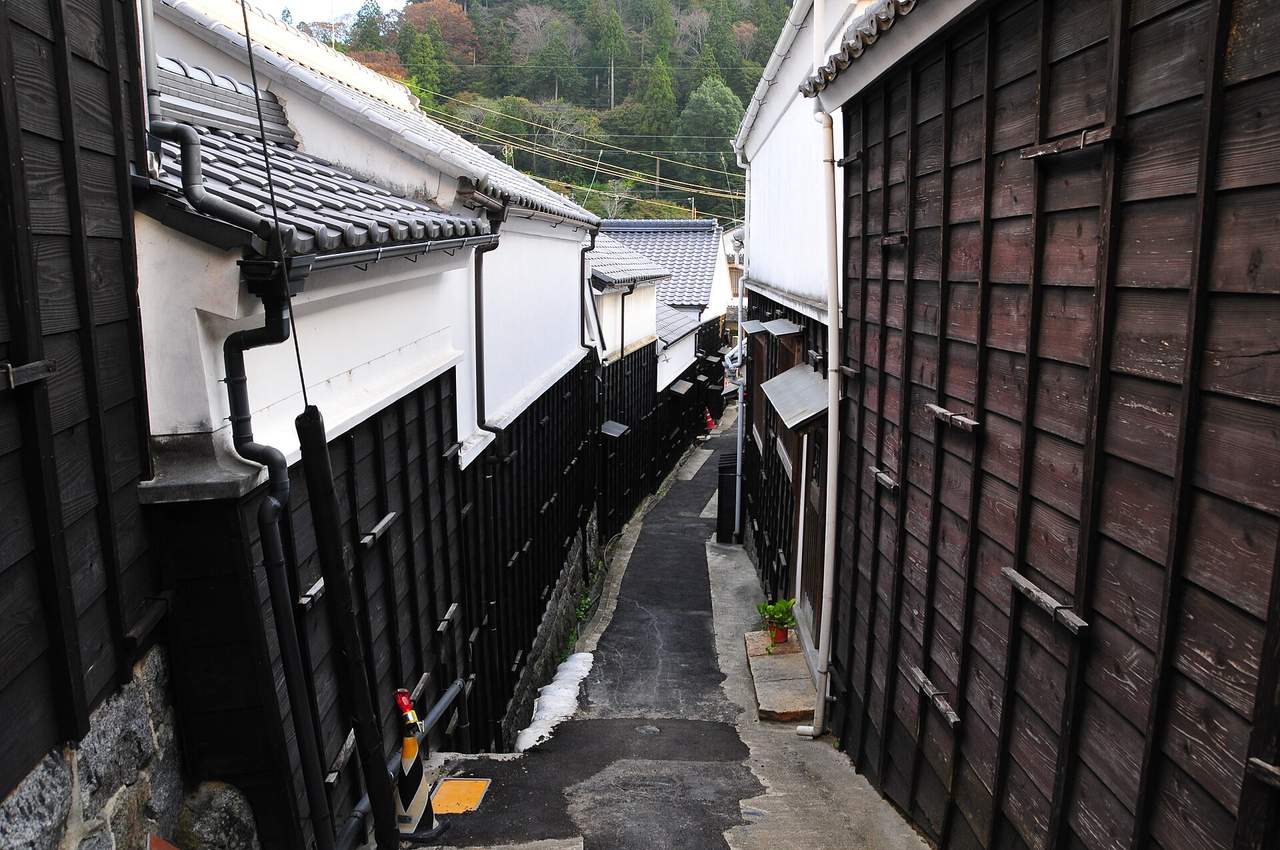
The Asuke old town is a nationally designated Important Preservation District for Groups of Traditional Buildings. It preserves merchant townhouses, white-walled storehouses and nurigome-style buildings from the Edo to Meiji periods, stretched along the old Iida Kaidō road. Paired with Korankei’s natural foliage, it makes a perfect balance of “movement and stillness” and is a great place for a slow stroll.
During the Autumn Leaves Festival, several stalls selling gohei-mochi (grilled rice cakes brushed with miso sauce, a local specialty) also line the approach and the old town. Each shop’s sauce recipe differs slightly, making them a good place to rest and refuel during your foliage walk.
Mt. Iimori Hiking Trail: A Panorama of Korankei
Most adults can reach the summit in about 15 minutes. No special hiking gear is needed, and sneakers are fine.
Mt. Iimori was once chosen as one of Aichi’s 130 mountains. In the late Heian period, Asuke Shigenaga built Iimoriyama Castle here, and its northwest-facing slope of about 0.5 hectares is the core of Korankei’s foliage. From the trailhead beside Kozen-ji, the summit takes about 15 minutes on foot.
The summit has open views over the red valley along the Tomoe River. From the late Taishō to the early Shōwa era, local residents kept planting trees on Mt. Iimori, and it gradually grew into the scale you see today. If you have the energy, it is well worth the climb.
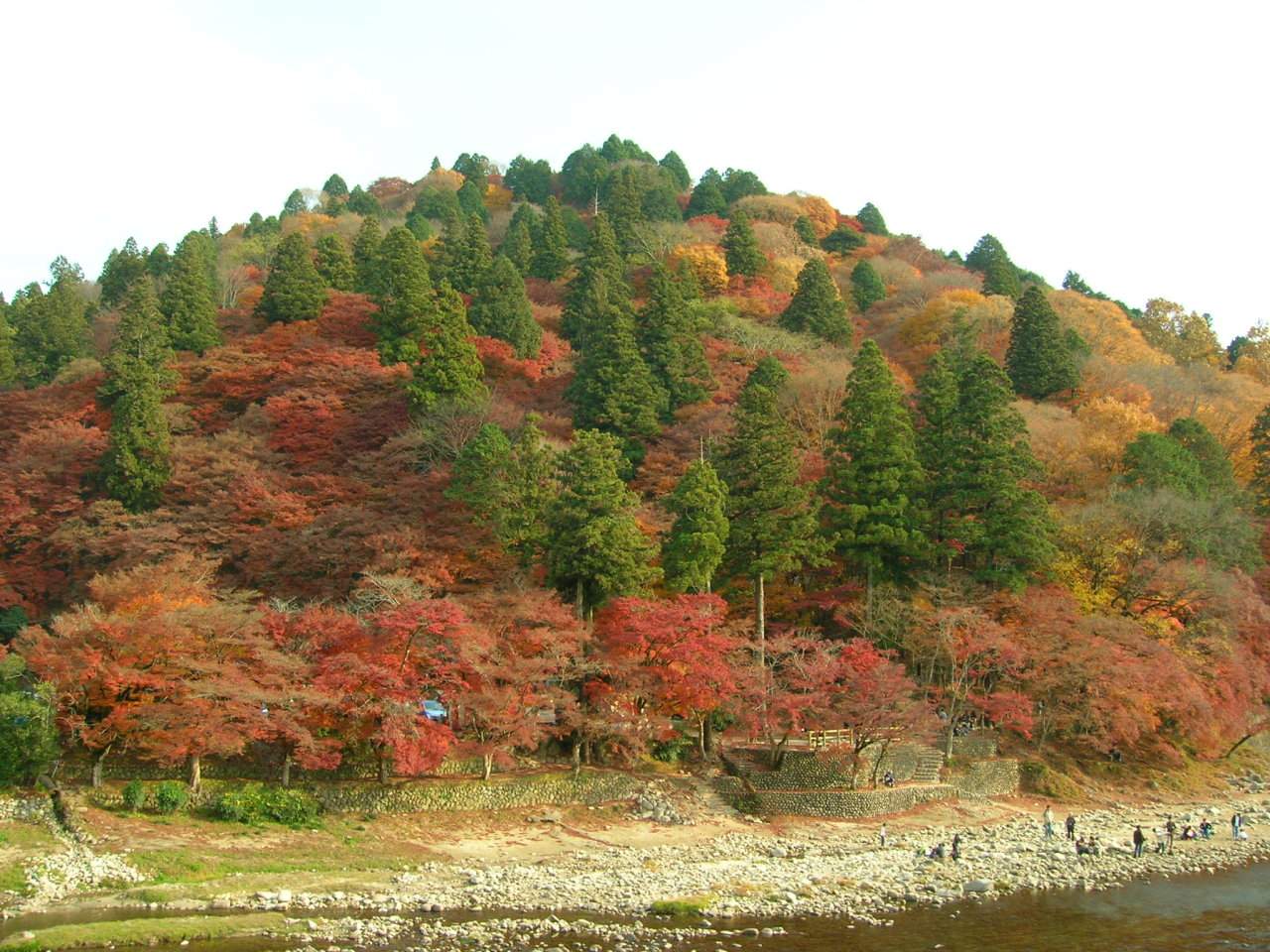
Planning a Walk Along the Tomoe River
Suggested route: first walk the right bank of the Tomoe River to the Kozen-ji approach to see the tunnel of maples, then circle back to Taigetsu-kyo Bridge for the sunset. If you stay for the night foliage, claim a spot on the bridge for photos as the lights first come on, then have dinner, and check the last bus time for your return.
The paths along the Tomoe River are gentle and well laid out on both banks, suitable for all ages. You can see the red leaves reflected in the water, and during the festival seasonal snack stalls appear here and there along the way. It is the most relaxing way to experience Korankei.
Obara Shikizakura: Adding Foliage and Cherry Blossoms Together
The shikizakura (four-season cherry trees) in Toyota’s Obara area bloom twice a year, and in November they flower at the same time as the autumn leaves. This rare combination lets you see foliage and cherry blossoms together, and it is well worth visiting both on the same trip to collect two kinds of color in one view.
Chartered one-day tours from Nagoya go straight to Korankei and Obara, so you don’t need to look up bus timetables or worry about transfers and traffic. Check each platform’s description for the tour details.
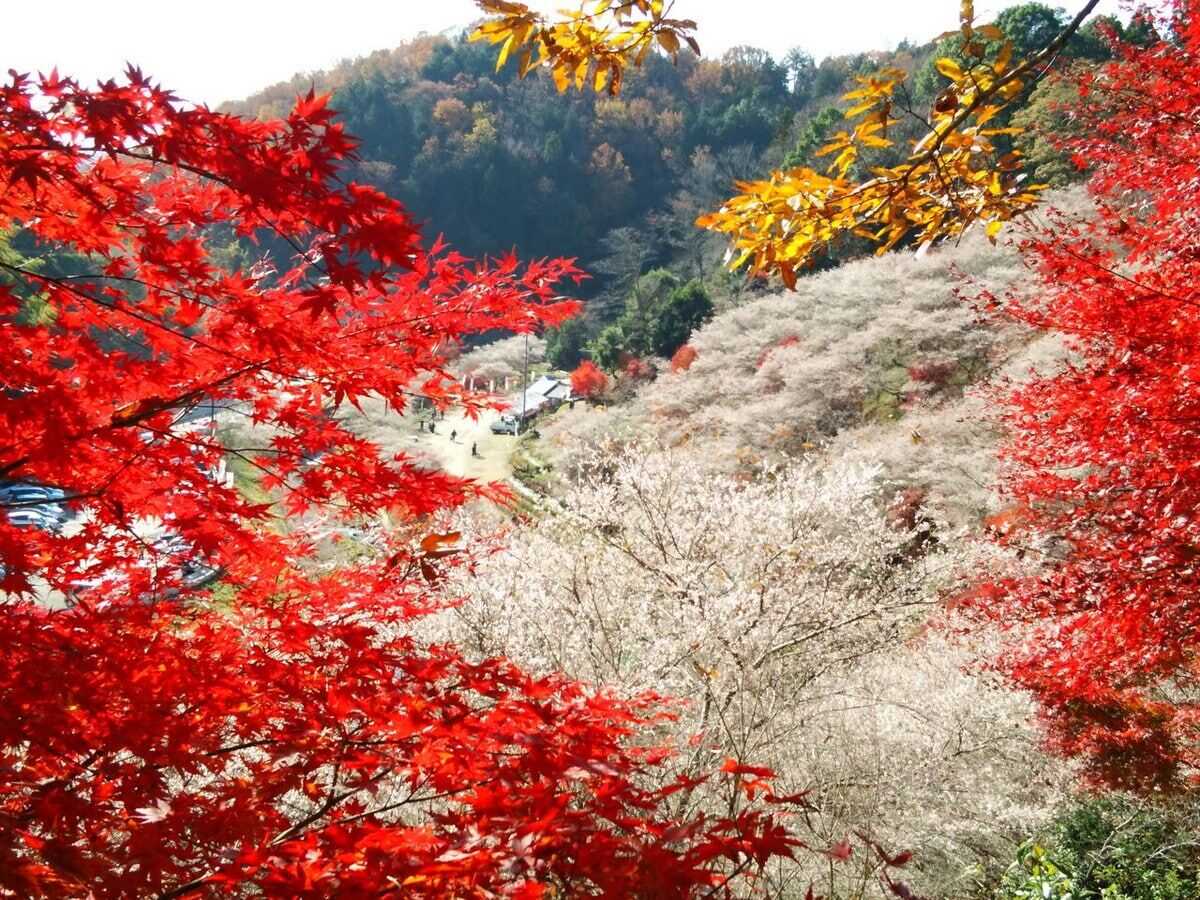
Korankei Autumn Leaves Festival Night Illumination
The Korankei Autumn Leaves Festival, now in its 71st year, runs from November 1 to November 30 in 2026, with the best foliage expected from mid to late November (subject to the final official announcement).
The limited-period night illumination also runs through November 30, lit daily from sunset until 9 p.m. Besides the Mt. Iimori foliage lighting, Kozen-ji holds “bamboo lantern” lighting on some Saturday and Sunday evenings. Please check the lighting dates and event details with the Asuke tourist association (tel. 0565-62-1272).
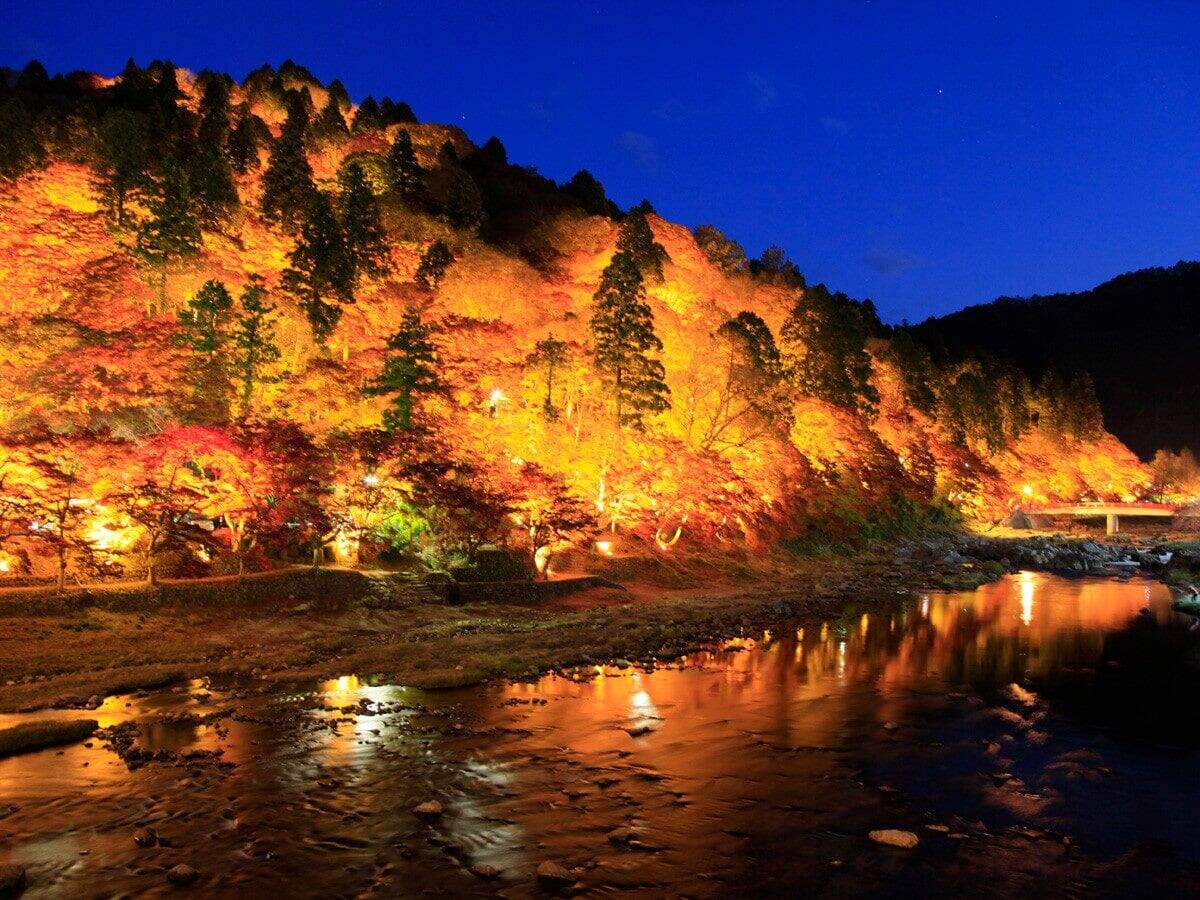
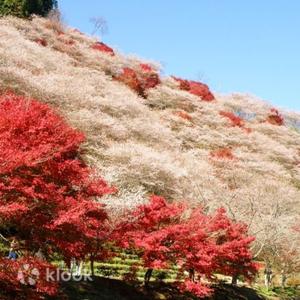
Kozen-ji Bamboo Lanterns: Weekend-Night Lighting During the Festival
Kozen-ji is at the heart of Korankei, and entry to the grounds is free. On Saturday and Sunday evenings during the Autumn Leaves Festival, the temple lights its grounds with bamboo lanterns, from about 18:00 to 20:45. The night illumination, together with the lights on Taigetsu-kyo Bridge, is the highlight of a night-foliage visit. Check the actual dates and event details with the Asuke tourist association (tel. 0565-62-1272).
Tickets and Guided Tours
Although entry to Korankei is free, the following tours and tickets can make your foliage trip easier and more rewarding:
Korankei Walking Tour: Led by a Chinese/English-Speaking Guide
Led by a local guide, this tour covers the history of Kozen-ji’s founding in 1427 and Sanei’s maple planting in 1634, the foliage routes around Taigetsu-kyo Bridge and Mt. Iimori, and local stories from the Asuke tourist association. It suits travelers who want to understand the cultural background.
Itinerary, duration and price follow each tour’s description. We recommend booking ahead on KKday or Klook to confirm availability.
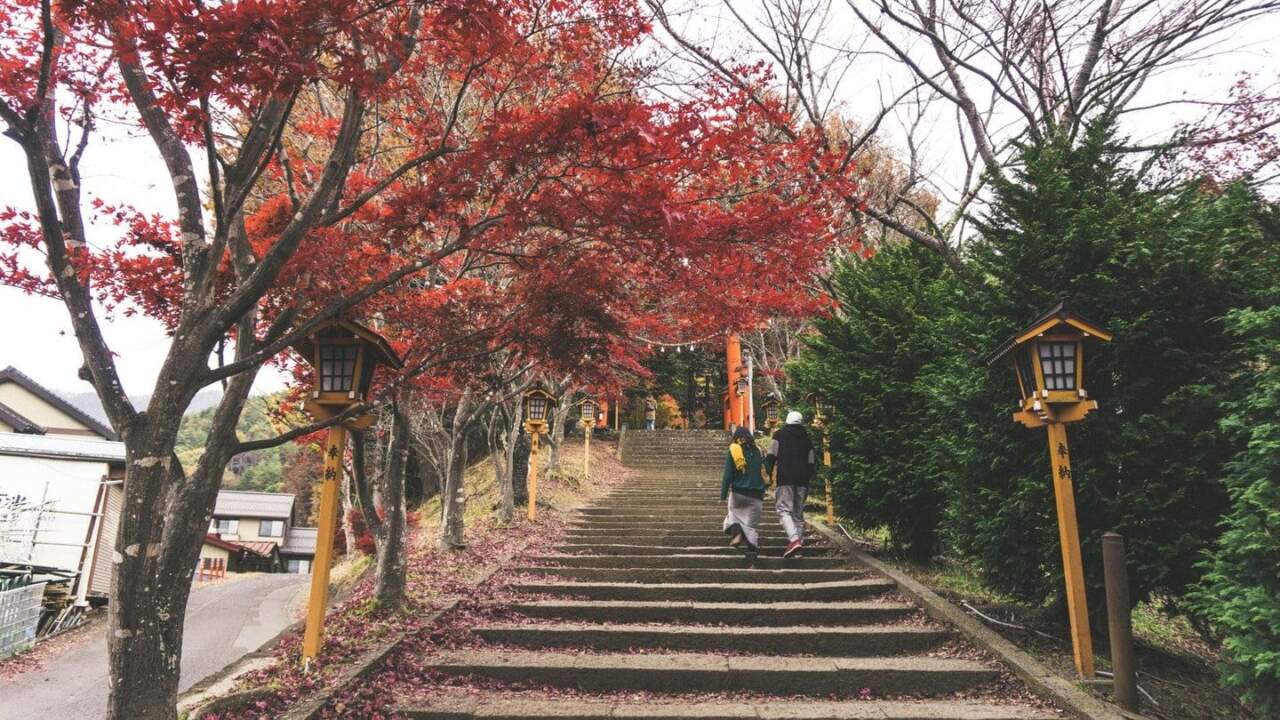
Toyota Obara Shikizakura One-Day Tour: Foliage and Cherry Blossoms Together
The Obara shikizakura bloom is short, concentrated in November, and places are limited, so confirm availability early on KKday or Klook.
A chartered vehicle from Nagoya goes directly to Korankei and Obara, letting you take in both the autumn leaves and the shikizakura without planning bus transfers yourself.
The tour includes round-trip transfers from central Nagoya. Time at each stop and price follow each tour’s description. It suits travelers who want to see both of Aichi’s autumn highlights in one day.
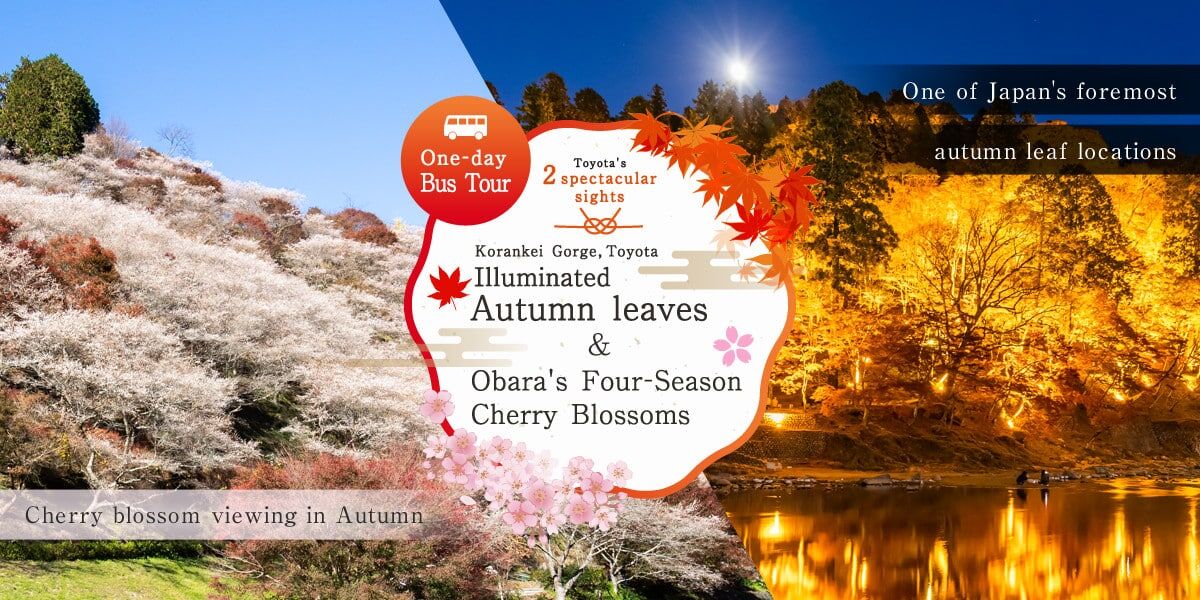
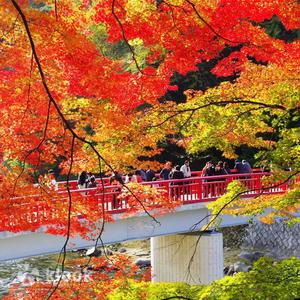
Asuke Old Town Walking Tour: In-Depth Heritage Architecture Guide
Along the way you stop for a break at a café in the old town and soak up the atmosphere of an Edo-to-Meiji era merchant quarter.
The tour combines Korankei foliage with a stroll through Asuke’s heritage buildings. The guide explains the origins of the merchant townhouses, white-walled storehouses and nurigome-style buildings in the nationally designated Important Preservation District for Groups of Traditional Buildings.
The half-day tour covers three core sights, Kozen-ji, Taigetsu-kyo Bridge and the Asuke old town. Duration and price follow each tour’s description, and you can pair it with local snacks such as gohei-mochi.
Nagoya Day-Trip Bus Package: Round-Trip Transport Included
The package includes pickup from a hotel or station in central Nagoya, so before departure you only need to confirm the time and place, with no need to research bus transfers and timetables. It is especially easy for first-time independent travelers and families with older relatives or young children.
This package covers bus transport between Nagoya and Toyota City/Korankei, saving you the hassle of buying tickets on the spot and checking transfer timetables. Price follows each tour’s description. It suits travelers who don’t drive and want an easy foliage trip, and is especially recommended on November peak weekends to avoid traffic and parking problems.
Where to Stay Near Korankei

Where to Stay: One Night in Toyota City or Asuke
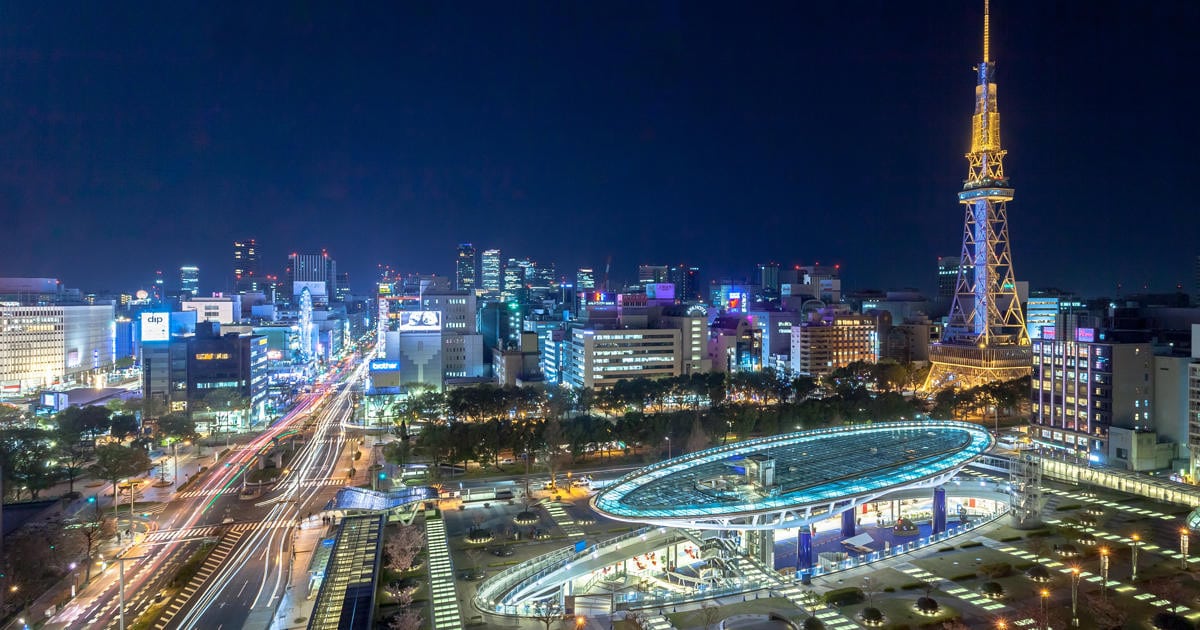
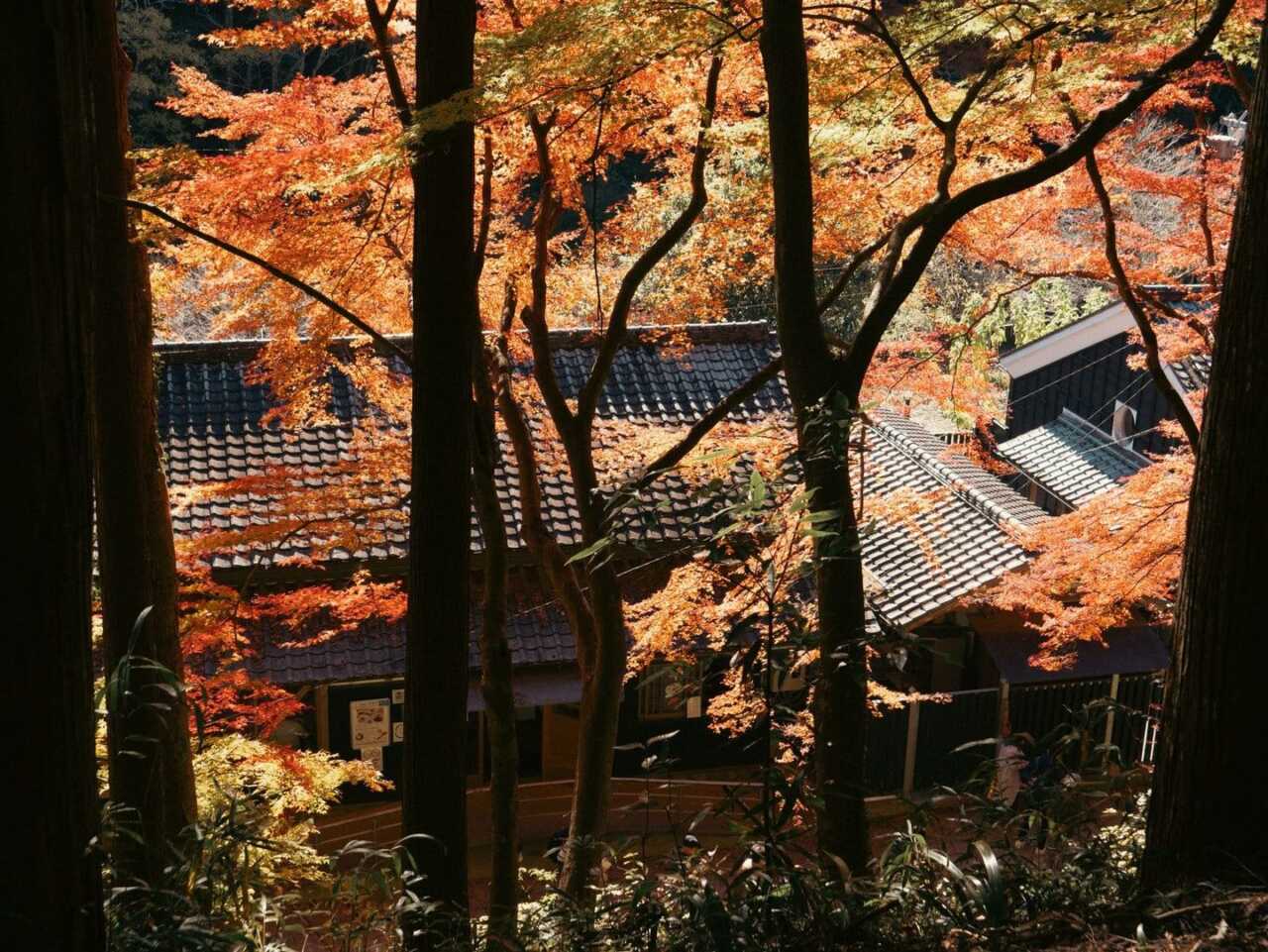
Korankei can be done in half a day, with another half day for the Asuke old town, as a day trip from Nagoya. If you want to avoid the crowds and photograph the night foliage at leisure, you can also stay one night in central Toyota or in Asuke and stroll Kozen-ji and the Mt. Iimori trail the next day. Staying over also lets you extend the trip the next day to Hida-Takayama’s old Edo-style streets or the gassho-zukuri village of Shirakawa-go, collecting Chubu’s autumn colors and old-town atmosphere in one trip for a deeper experience than a day trip. Asuke has small guesthouses and inns near the old town, so after the night illumination you don’t have to rush for the last bus back to Nagoya, and the next day you can enjoy a local breakfast before setting out.
Korankei Autumn Leaves FAQ
When is the best time to see the autumn leaves at Korankei?
The 2026 Korankei Autumn Leaves Festival runs from November 1 to November 30, with the best foliage in mid to late November. The actual schedule varies slightly with each year’s weather, so check the latest official announcement before you go to confirm the peak viewing status.
Does Korankei charge an admission fee?
The Korankei grounds themselves are open 24 hours a day all year and free to enter, with no ticket required. The permanent car park holds about 570 cars. For parking fees and temporary car parks during the Autumn Leaves Festival, rely on on-site information or official announcements.
How long does it take to get to Korankei from Nagoya?
By public transport you first go to Jōsui Station, Toyotashi Station or Higashi-Okazaki Station and then transfer to a bus. By car it takes about 1 hour, so a day trip is feasible.
Is there night illumination during the Autumn Leaves Festival?
Yes. During the festival (November 1 to November 30), the lights run daily from sunset until 9 p.m., and Taigetsu-kyo Bridge is the visual focus of the night foliage. We suggest going in the golden half hour just after the lights come on, when crowds are relatively thin.
Is Korankei better as a half-day or a full-day trip?
Half a day at Korankei plus half a day in the Asuke old town makes a good round trip from Nagoya in a day. If you want to slow down, you can also stay one night in Toyota or Asuke, or even extend to Hida-Takayama and Shirakawa-go to form a Chubu autumn-leaves-and-old-towns route.
