
Sakurajima Guide: An Active Volcano Just 15 Minutes from Central Kagoshima
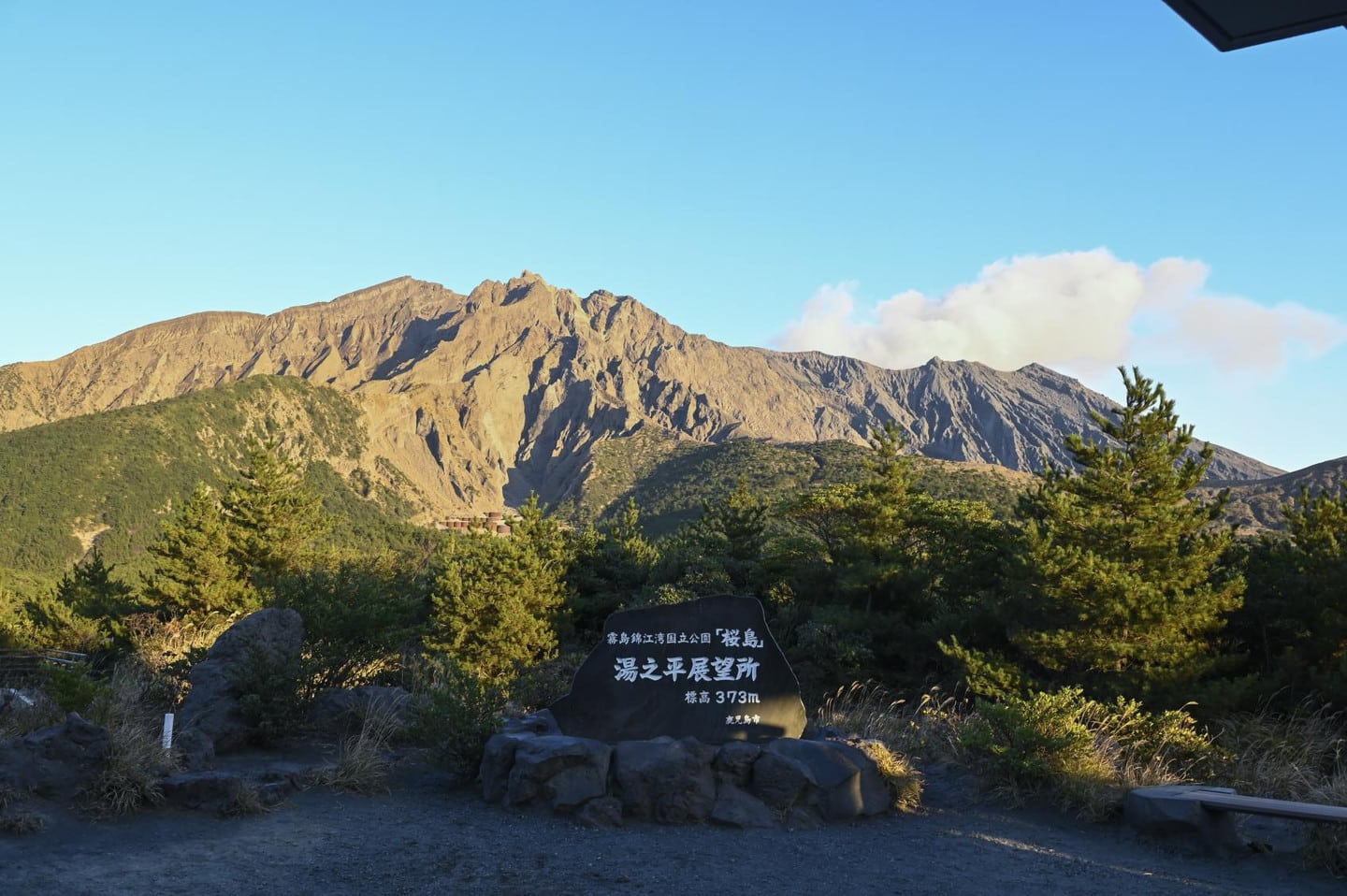
Sakurajima is an active volcano in Kagoshima Bay that is still erupting today. It is just a 15-minute ferry ride away, and 3 to 5 hours is enough to see the highlights.
Sakurajima: A Stratovolcano That Is Still Erupting
Sakurajima is a stratovolcano that continues to erupt today. It was once an island floating in Kinko Bay (Kagoshima Bay), until the lava from the great Taisho eruption of 1914 joined it to the Osumi Peninsula and turned it into a peninsula.
For people in Kagoshima, Sakurajima is part of everyday scenery. A fine dusting of volcanic ash can fall on the city at any time, and the city even hands out special ash-disposal bags. For travelers, it is the easiest active volcano in all of Japan to get close to.


Yunohira Observatory: The Highest Point Regular Visitors Can Reach
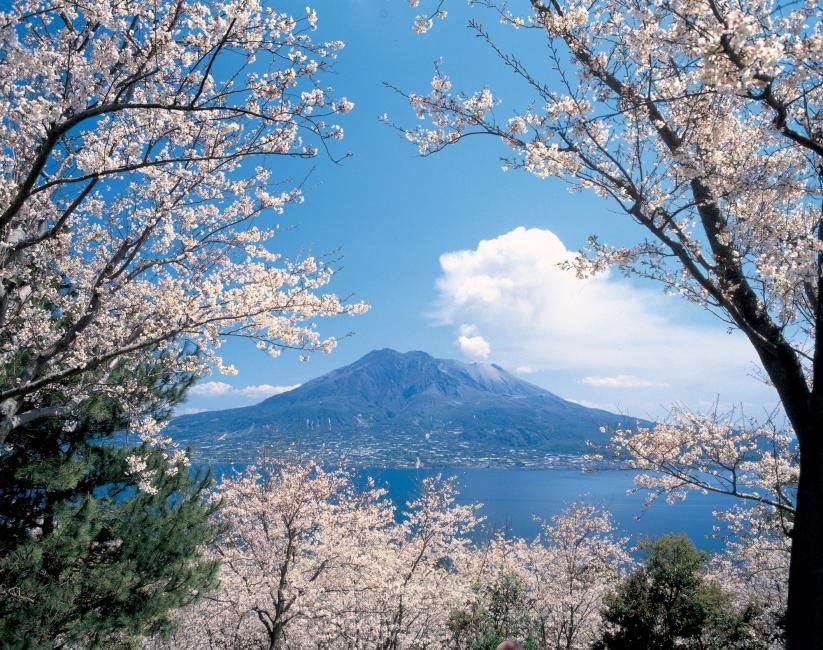
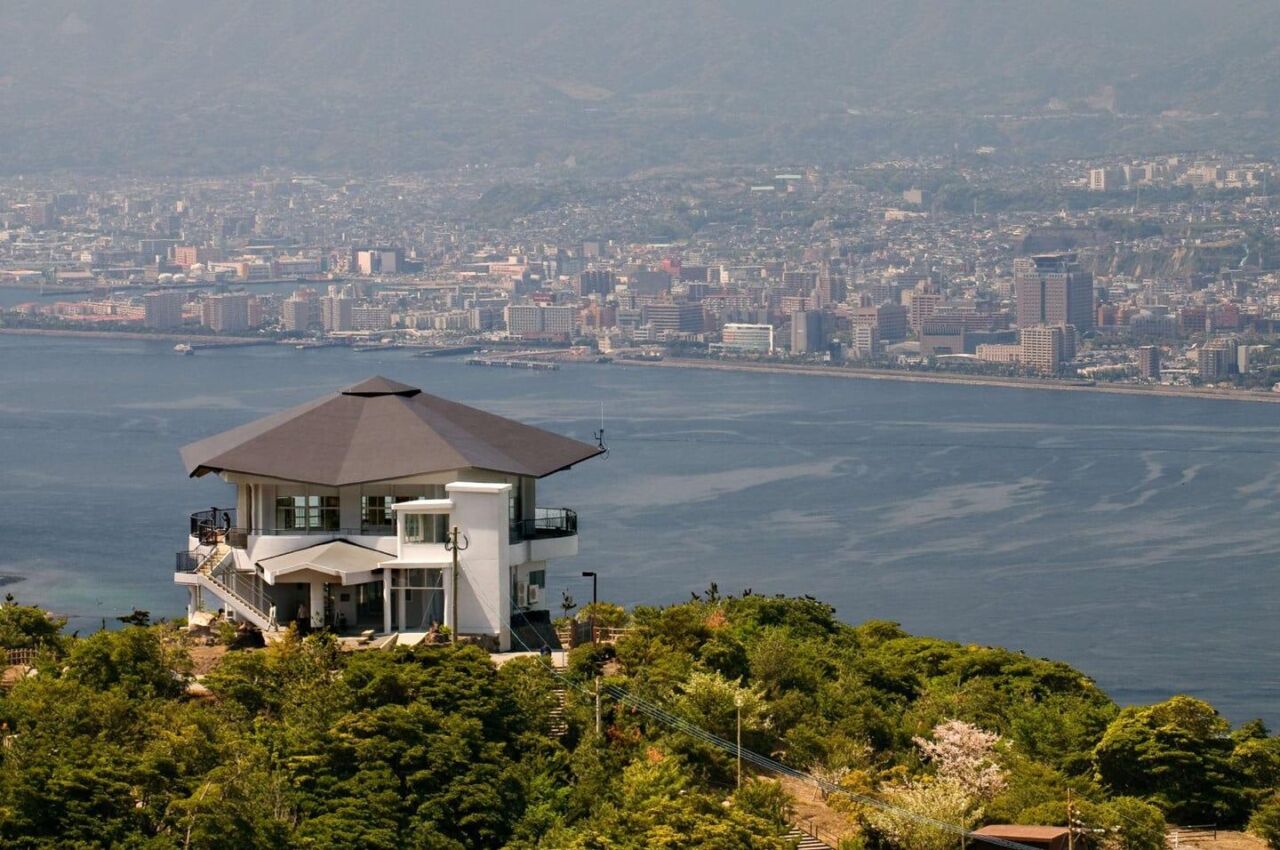
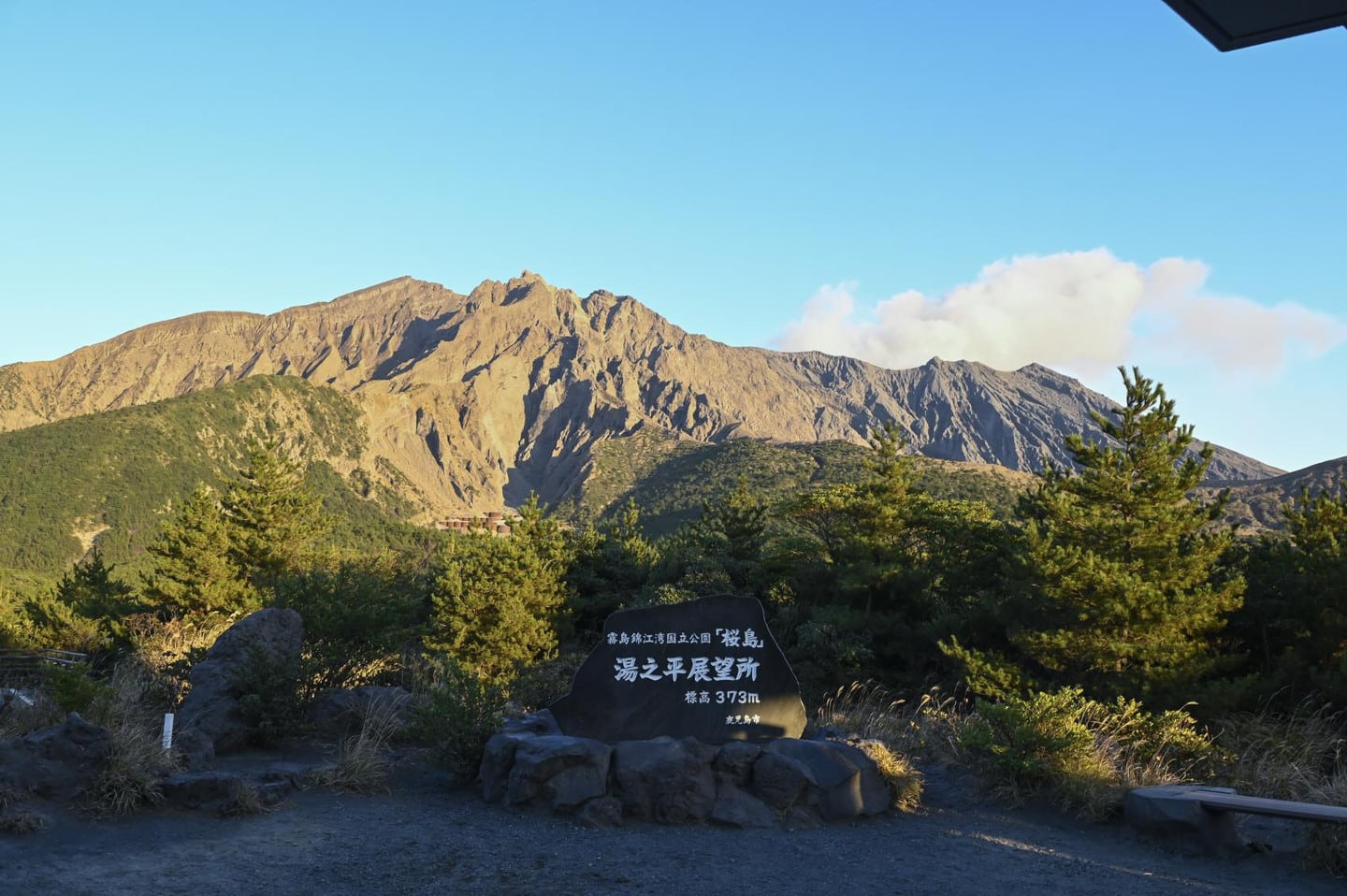
Yunohira Observatory sits at about 373 meters above sea level. It is the highest point on the island that regular visitors can reach, and the visual high point of the whole trip. From here you get a 360-degree view of the crater side of Kitadake and the Kagoshima city skyline across the bay.
Everything above this point is a restricted zone around the crater. Access restrictions change with volcanic activity and the eruption alert level set by the Japan Meteorological Agency, so never try to cross the barrier line under any circumstances.
Sakurajima Ferry: A 24-Hour Sea Commute
The Sakurajima Ferry links Kagoshima Port and Sakurajima Port in about 15 minutes and runs 24 hours a day. During the day a boat leaves every 15 to 20 minutes or so, so you can set off without checking a timetable, which is one of the most relaxing things about this trip.
You can drive a whole car straight onto the ferry (fares are charged by vehicle length), and the SUNQ PASS is accepted too. There is a stand-up udon shop on board, a small pleasure that mostly locals know about.
Lava Nagisa Park: Japan’s Largest 100-Meter Foot Bath
Lava Nagisa Park is a 5 to 8 minute walk from Sakurajima Port. It has a free foot bath 100 meters long, billed as the largest in Japan, where you can soak your feet while looking out over Kinko Bay and the volcano.
No towels are provided on site, so bring your own or buy one at the Sakurajima Visitor Center beforehand. It is also the best place to pass the time while waiting for the ferry at the end of the day.
How to Get to Sakurajima: Ferry, Sightseeing Bus and Driving the Island at a Glance
Take the ferry to the island first, then decide whether to see the sights by sightseeing bus or by car.
From Kagoshima-Chuo Station to the Kagoshima Port Ferry Terminal
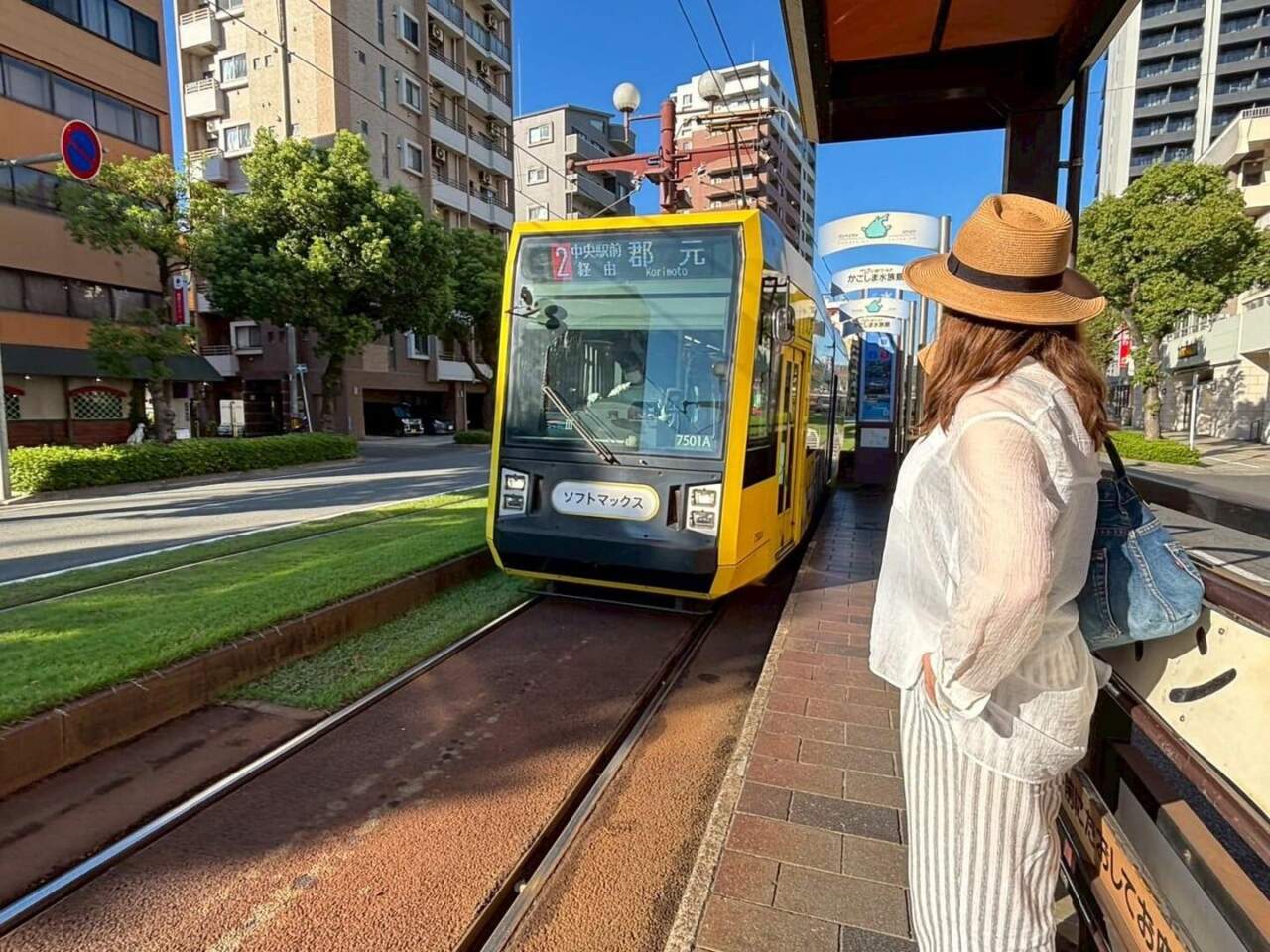
From “Kagoshima-Chuo Station,” take the city tram or a city bus to Suizokukan-mae (the “Aquarium” stop), then walk about 5 minutes to the Sakurajima Ferry terminal at Kagoshima Port. The tram has a flat fare (from August 1, 2026: adults ¥200, children ¥100), and the whole trip takes about 15 to 20 minutes.
If you also plan to visit city sights such as Tenmonkan and Sengan-en that day, a one-day tram pass usually pays for itself. The ferry terminal has luggage lockers, so travelers with large bags can leave them there before heading to the island.
From Kagoshima Airport, take the airport bus to Kagoshima-Chuo Station and transfer to the tram; the whole trip takes about 1 hour 15 minutes. Right next to the terminal is the Kagoshima Aquarium, which is easy to fit in if you have time to spare.

How to Take the Ferry: 24-Hour Service, 15 Minutes Straight to Sakurajima Port
The Sakurajima Ferry connects Kagoshima Port and Sakurajima Port. The crossing takes about 15 minutes, the service runs 24 hours, and boats leave every 15 to 20 minutes during the day, with late-night sailings too. It is a rare sightseeing route in Japan where you do not need to look up a timetable.
Fares are paid on the Sakurajima Port side after you disembark. The official fare is ¥250 one way for adults and ¥130 for children (age 1 through elementary school). Drivers can take their car straight onto the ferry, with a separate fare based on vehicle length. SUNQ PASS holders can also board directly. Actual fares and sailing times are subject to official announcements.
There is a stand-up udon shop on board, a small pleasure that mostly locals know about. You do not need to buy a ticket in advance for the return trip either, so no matter how crowded it gets you will not be stuck in a ticket-window line.
Sakurajima Island View Sightseeing Bus: The Top Choice If You Have No Car
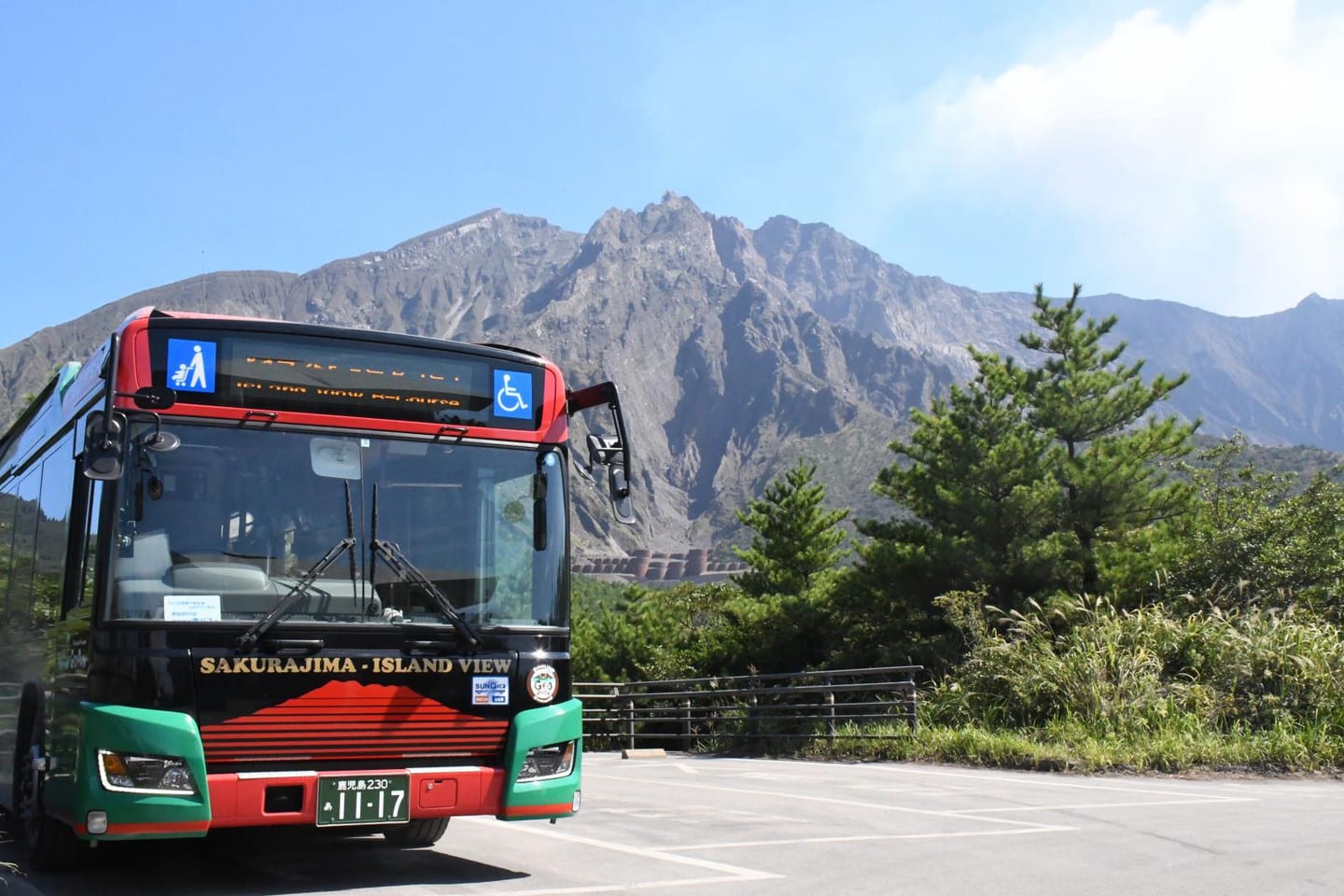
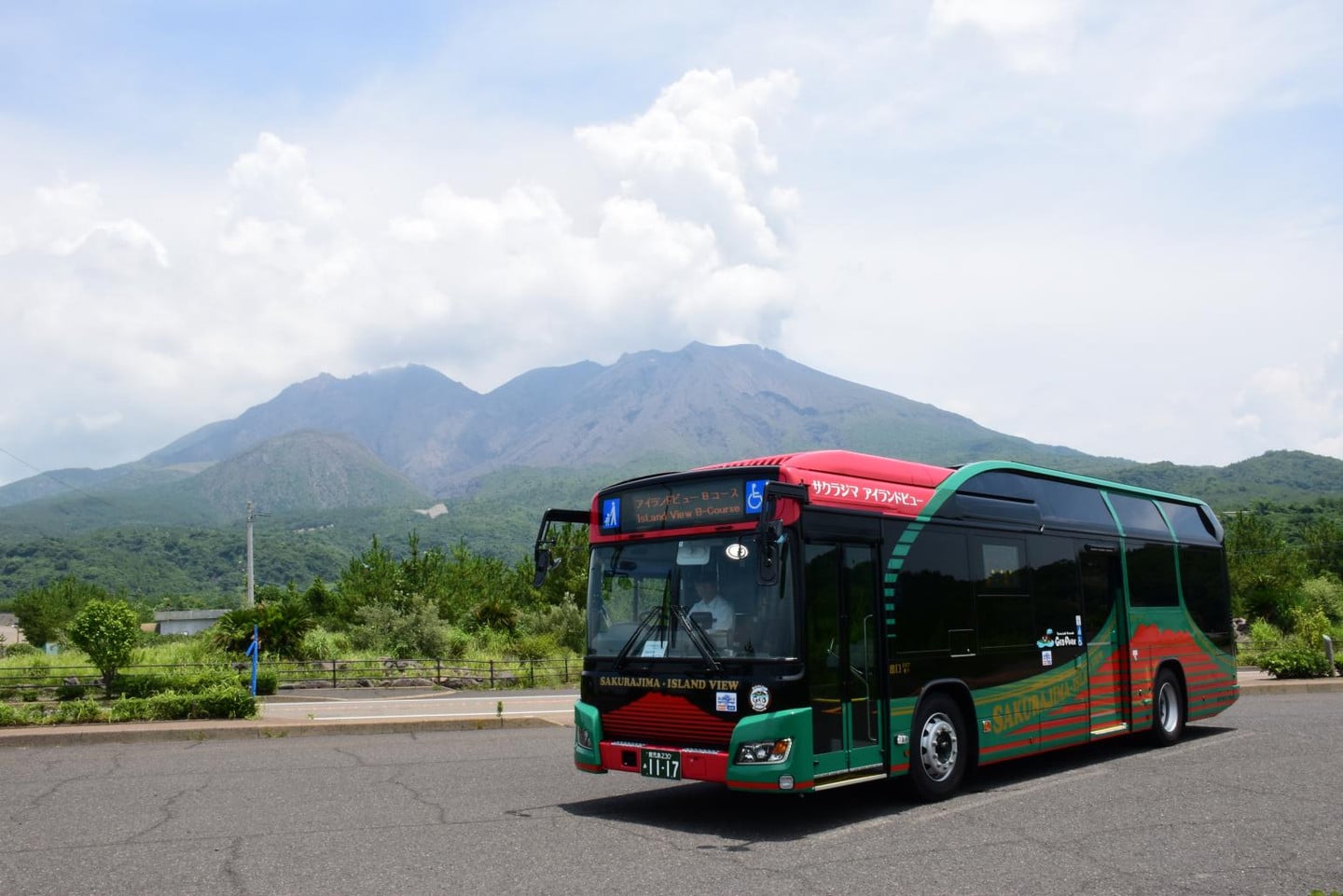
“Sakurajima Island View” is a sightseeing loop bus that circles the highlights on the west side of the island. Starting from Sakurajima Port, it stops at the Sakurajima Visitor Center, Karasujima Observatory (about 5 minutes), Akamizu Observation Plaza (about 8 minutes) and Yunohira Observatory (about 15 minutes) before returning to Sakurajima Port. A full loop takes about 60 minutes.
The bus waits at each stop so passengers can get off, take photos and reboard the same bus, and you can also ride the full loop without getting off. We recommend buying the “Sakurajima Island Free Ticket” (adults ¥500, children ¥250), sold on the bus, at the Sakurajima Port ticket office and at the tourist information center in Kagoshima-Chuo Station. If you want to stay longer at one stop and wait for the next bus, there is no extra charge.
Buses run every 30 minutes to 1 hour, and the last bus finishes in the early evening, so if you want to soak in the foot bath before leaving, check the timetable first. Weekends in peak season can fill up, so we suggest taking an earlier ferry to the island.
Driving Around the Island: You Need a Car to Reach the East Side
Arimura Lava Observatory and the Kurokami Buried Torii are on the south and east sides of the island, which the sightseeing bus does not pass, so you can only get there by car or by the round-island bus. After driving onto the ferry or renting a car on the island, a full loop of the island takes about 2 hours.
The recommended route is Sakurajima Port → Yunohira Observatory → Arimura Lava Observatory → Kurokami Buried Torii → Lava Nagisa Park foot bath, which makes a clockwise loop. There are few gas stations on the island and not many streetlights after dark, so allow plenty of fuel and time.
| Way to Get Around | Reference Cost (per Official Announcements) | Time Needed |
|---|---|---|
| Sakurajima Ferry (Kagoshima Port to Sakurajima Port) | Adults ¥250 one way, children ¥130 (vehicles charged separately by length) | About 15 minutes, 24-hour service |
| Sakurajima Island View Sightseeing Bus | Island bus one-day pass about ¥500 | About 60 minutes for the west-side loop |
| City tram + walk to Kagoshima Port | Flat tram fare ¥200 (from August 1, 2026) | About 15 minutes from Chuo Station to Suizokukan-mae |
| Driving around the island | Vehicle ferry fare charged separately | About 2 hours |
| SUNQ PASS | Varies by edition | Can board the Sakurajima Ferry directly |


What Are the Must-See Sights on Sakurajima? The West-Side Highlights and East-Side Loop Stops
The sights below are listed in the order of the sightseeing bus route and the island loop, with the ones you should not miss first.
| Sight | Highlights | Access and Budget |
|---|---|---|
| Yunohira Observatory | The island’s highest viewpoint (373 meters above sea level), with 360-degree views of the crater and Kagoshima city | Reachable by sightseeing bus / Free |
| Lava Nagisa Park Foot Bath | A 100-meter foot bath, the largest in Japan | 5-8 minute walk from Sakurajima Port / Free |
| Arimura Lava Observatory | A black lava trail left by the Taisho eruption, close to the active volcano | By car or round-island bus / Free |
| Kurokami Buried Torii | A torii gate buried by ash up to its top in a single day during the great Taisho eruption of 1914 | On the east side, car recommended / Free |
| Sakurajima Visitor Center | Eruption history, geological models and live monitoring footage | About 5 minutes on foot from Sakurajima Port / Free admission |
Yunohira Observatory: A 360-Degree Volcano View from the Island’s Highest Lookout
Yunohira Observatory sits at the fourth station of Kitadake, about 373 meters above sea level, and is the highest point regular visitors can reach. From the deck you get a 360-degree view of the volcano itself, Kinko Bay and downtown Kagoshima across the water, and on clear days you can even see Mount Kaimondake.
A heart-shaped piece of lava is hidden in the stone wall of the observation deck, a secret treat that couples always look for. The second floor has a rest area and a small shop where you can buy souvenirs related to Sakurajima komikan, the island’s tiny mandarin oranges.
The sightseeing bus stops here for about 15 minutes, which is on the short side. If you want to take your time with photos, we suggest skipping one bus and leaving on the next. Admission is free, and we recommend allowing 30 to 45 minutes.
Lava Nagisa Park: Japan’s Largest Free 100-Meter Foot Bath
Lava Nagisa Park is a 5 to 8 minute walk from Sakurajima Port. Its main draw is a foot bath 100 meters long, billed as the largest in Japan. The spring water comes from 1,000 meters underground and has a brownish tint when you soak in it.
The foot bath is free to use, and watching the ferries come and go across Kinko Bay while your feet soak is the most relaxing part of the whole trip. No towels are provided on site, so bring your own or buy one at the Sakurajima Visitor Center first.
The park also has the Lava Nagisa Promenade, a trail of about 3 kilometers laid along the lava field, where you can see the lava terrain left by the Taisho eruption up close. We recommend allowing 40 minutes to 1 hour.
Sakurajima Visitor Center: Get to Know the Volcano First
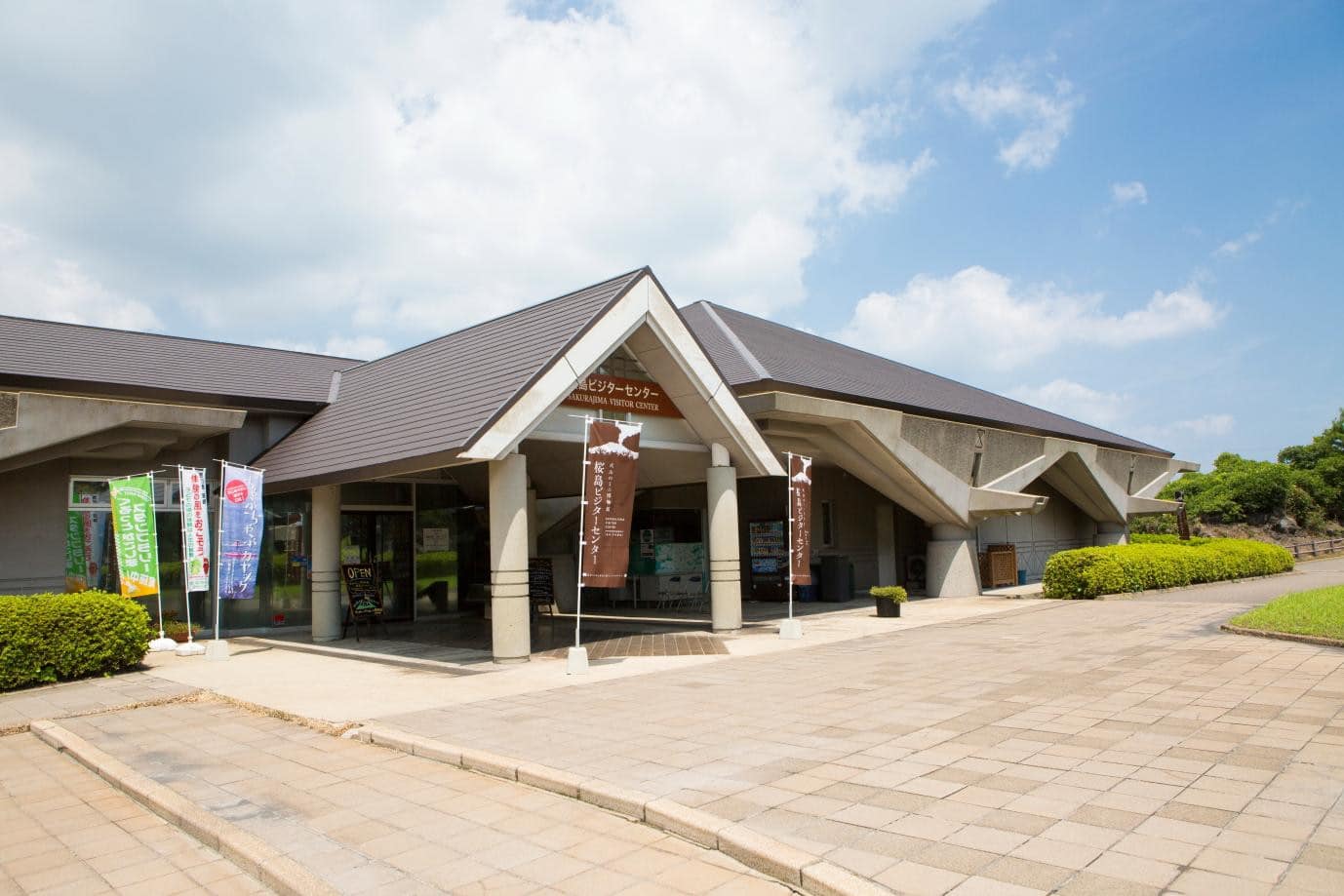
The Sakurajima Visitor Center is about a 5-minute walk from Sakurajima Port. Inside, geological models, videos and live monitoring footage explain Sakurajima’s eruption history, including a comparison of the scale of the three great eruptions of Bunmei, An’ei and Taisho.
Admission is free and the building is air-conditioned, which makes it the best first stop after arriving on the island in summer. The center also sells towels, Sakurajima komikan products and distinctive volcanic-ash souvenirs.
Building a basic understanding of the volcano here makes the lava field and the buried torii much more meaningful later. We recommend allowing 30 minutes.
There is also a viewing area outside, and it is the first stop of the sightseeing bus. When volcanic activity is high, the center posts the latest alert information, so it is worth a look before heading off to other sights.
Akamizu Observation Plaza: The Lava-Carved “Shout” Monument
Akamizu Observation Plaza was built on the site where singer Tsuyoshi Nagabuchi held an all-night open-air concert on Sakurajima on August 21, 2004, when about 75,000 people poured onto the small island. A monument carved from Sakurajima lava stands in the plaza, officially titled “Sakebi no Shozo” (Portrait of a Shout).
The monument is about 3.4 meters tall and uses about 38.2 tons of Sakurajima lava. The sculptor Hiroshi Onari created it in the image of Nagabuchi singing. The plaza itself is wide open, with views of both the volcano and the sea.
The sightseeing bus stops here for about 8 minutes, which is just enough to take photos and read the inscription. Admission is free, and we recommend allowing 20 minutes.
Next to the plaza are a parking lot and restrooms, so drivers can easily stop on the way. The volcano looks especially complete from here, making it one of the popular spots for photographing the whole of Sakurajima.
Karasujima Observatory: An Island Swallowed by Lava
Karasujima was once a separate small island about 500 meters off Sakurajima’s west coast. The lava flow from the great Taisho eruption of 1914 buried the whole island in a few days, and today’s observatory is built on the spot where the island once stood.
Everything underfoot here is lava, and it is hard to imagine there was once sea below. A monument at the observatory explains where Karasujima was and how it disappeared, making this the most direct stop for grasping the scale of the eruption.
The sightseeing bus stops for only about 5 minutes, so it is safer to head straight to the lookout after getting off. Admission is free, and we recommend allowing 15 to 20 minutes.
The observatory sits at one end of the Lava Nagisa Promenade, so if you have time you can continue on foot toward Lava Nagisa Park, with the same Taisho lava terrain all along the way.
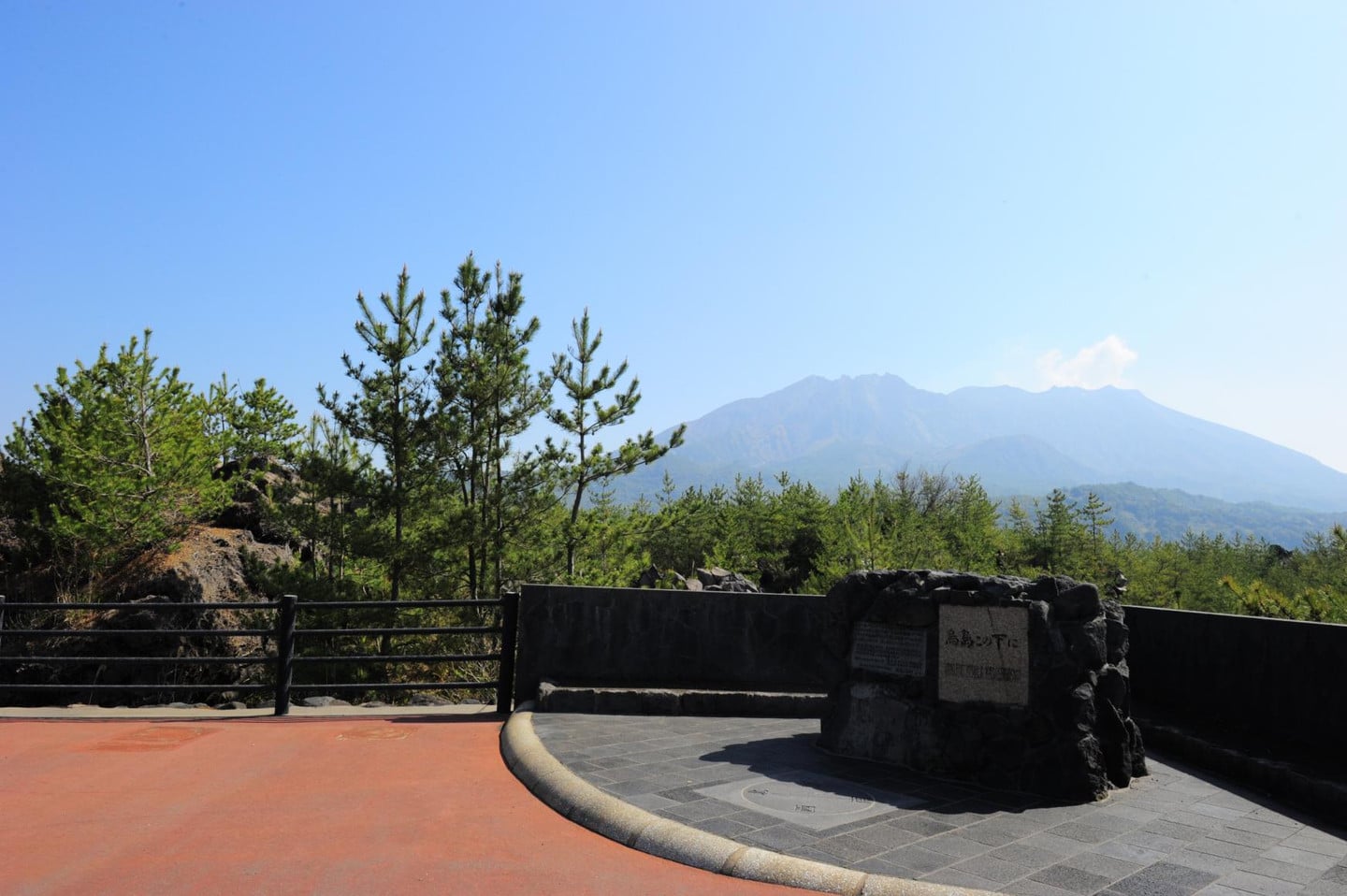
Arimura Lava Observatory: Walking the Black Trails of the Taisho Lava Field
Arimura Lava Observatory is on the south side of Sakurajima. The whole park is built on the lava field left by the Taisho eruption, with a walking trail of about 1 kilometer lined on both sides with black solidified lava and tenacious black pines.
It is quite close to the Minamidake crater in a straight line, and it is the place on the island where you feel the power of an active volcano most strongly. With luck you may even see white smoke rising from the crater. The observation deck at the end of the trail has the best view.
The sightseeing bus does not come here, so you need to drive or take the round-island bus. The site closes when volcanic activity is high, so check the announcements from Kagoshima City and the Japan Meteorological Agency before you set out. Admission is free, and we recommend allowing 40 minutes.
The park has restrooms, a small shop and a parking lot. The trail is mostly outdoor gravel with no shade in summer, so be sure to wear a hat and bring your own drinking water.
Kurokami Buried Torii: Buried by Ash Up to Its Top in a Single Day
During the great Taisho eruption of 1914, the torii of Haraigosha Shrine in the Kurokami district, originally about 3 meters tall, was buried in volcanic ash and pumice within a single day until only its upper edge showed above the ground. What you see today is that top section.
At the time, the village head argued for digging the torii out, but it was finally decided to leave it as it was, as a lesson for later generations about the scale of the disaster. The two large camphor trees next to it are also survivors from that time.
It is on the east side of the island, which the sightseeing bus does not reach, so you need to drive there, about 40 minutes from Sakurajima Port. Admission is free, and we recommend allowing 20 to 30 minutes.
There is only an information sign and some parking space, with no other facilities, but precisely because it is so quiet, the torii top poking out of the ground carries real weight. It is the sight on the island most worth the extra drive.
Tsukiyomi Shrine: The Volcano’s Guardian Shrine Beside Sakurajima Port
Tsukiyomi Shrine dates back to the Nara period and is the chief guardian shrine of Sakurajima, enshrining Tsukuyomi no Mikoto. The original shrine buildings were buried by lava in the great Taisho eruption, and the present buildings were rebuilt after being relocated to the high ground beside Sakurajima Port.
Climbing the stone steps of the approach, you can look down over Sakurajima Port and Kinko Bay. It is one of the few places on the island with a Japanese spiritual atmosphere. Omamori charms are available on the grounds, and goshuin seals are offered as well.
It is about a 5-minute walk from Sakurajima Port, making it a good way to fill the gap before the ferry. Visits are free, and we recommend allowing 20 minutes.
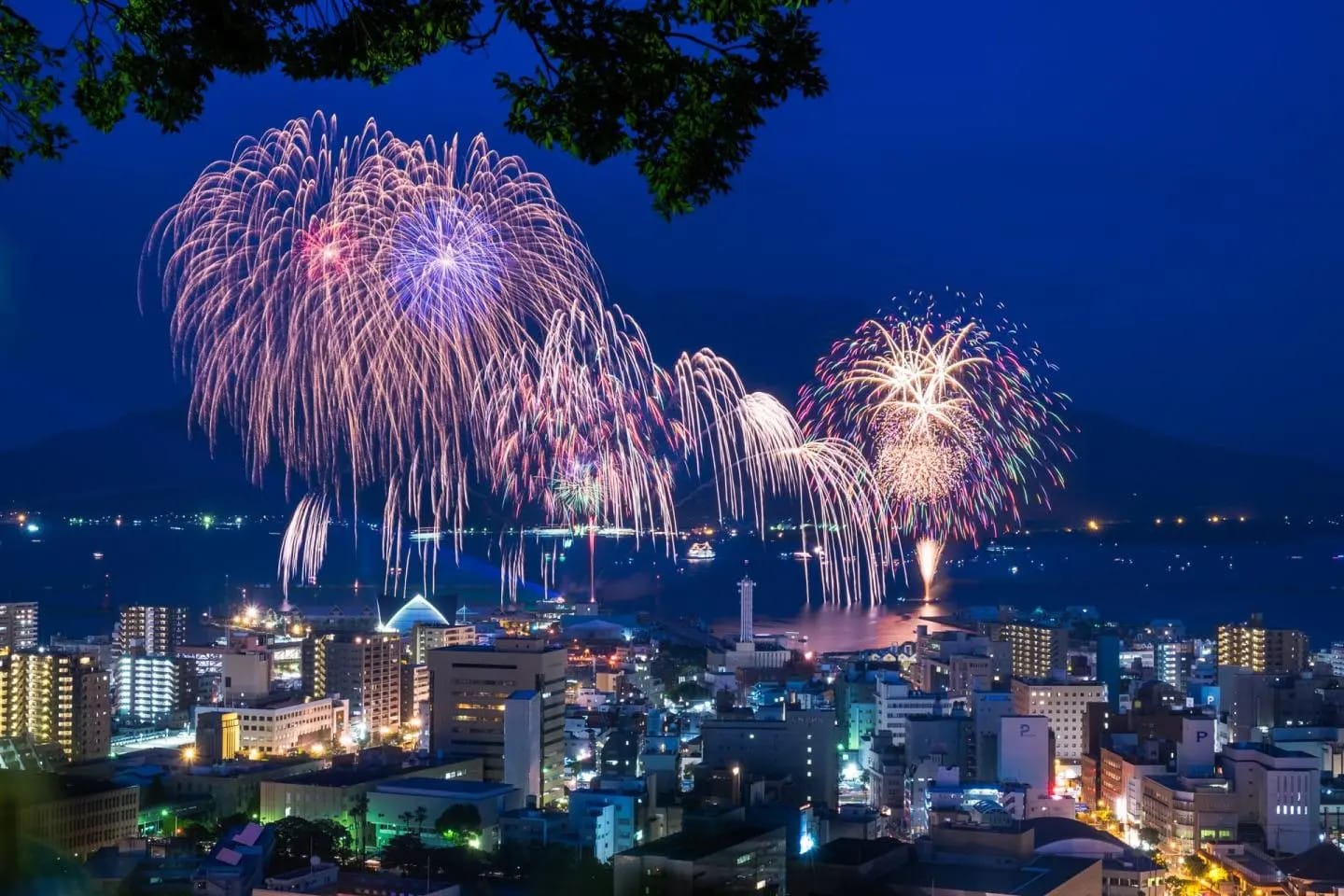
The Sakurajima Hinoshima Festival is held around the shrine every August, with a large fireworks display. At other times few people come to the grounds, making it a good place to escape the sightseeing bus crowds.
Sakurajima Natural Dinosaur Park: A Must-Stop with Kids
Sakurajima Natural Dinosaur Park sits on high ground north of Sakurajima Port, with more than ten life-size dinosaur models scattered around the park, plus play equipment such as a long slide and rope climbing. It is the only place on the island where children can burn off energy.
The park’s location is also a good viewpoint, with the volcano and Kinko Bay both in sight, so adults will not be bored either. Entry and parking are both free. The park has restrooms and shaded areas, but it is still quite sunny around midday in summer.
It is about a 15-minute uphill walk from Sakurajima Port, and the slope is steep, so with small children we suggest driving or taking a taxi up. We recommend allowing 40 minutes to 1 hour. It is the only place on the island where kids can run and jump.
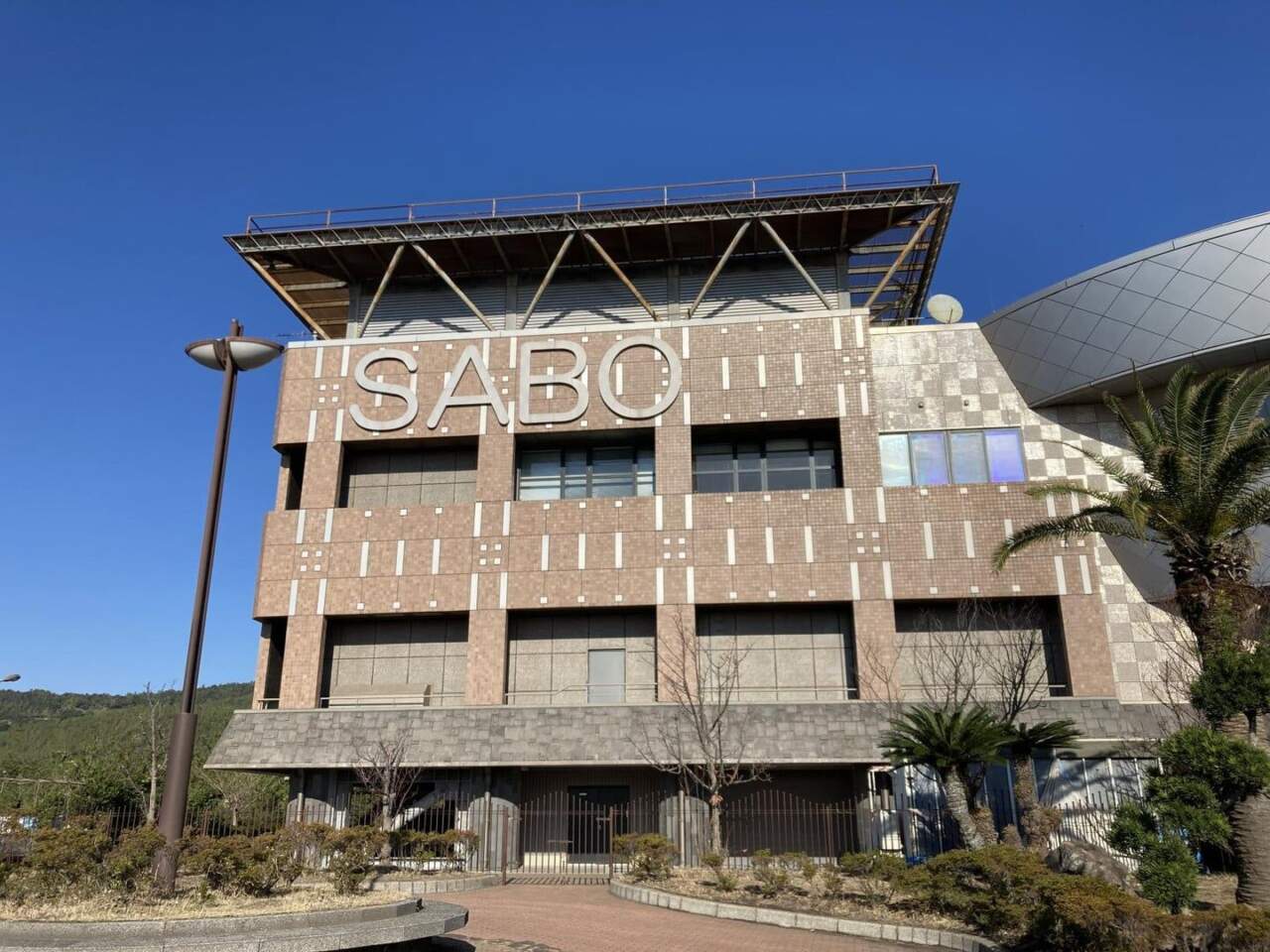
Sakurajima International Volcanic Sabo Center: Learning About Debris-Flow Disaster Prevention
The Sakurajima International Volcanic Sabo Center uses models and video to explain how volcanic ash buildup triggers debris flows and how the erosion-control structures spread across the island work. It is the most concrete display of what it means to live alongside an active volcano.
Admission is free, and an observation deck overlooks the streams and erosion-control dams on the Minamidake side. Few visitors come, so you can usually look around at your own pace, a rare chance to slow down on the trip. It is especially worthwhile for families with children and for anyone interested in disaster-prevention engineering, and it explains why Sakurajima has so many concrete dams.
It is on the south side of the island and easier to reach by car, so you can pair it with Arimura Lava Observatory. We recommend allowing 30 minutes.
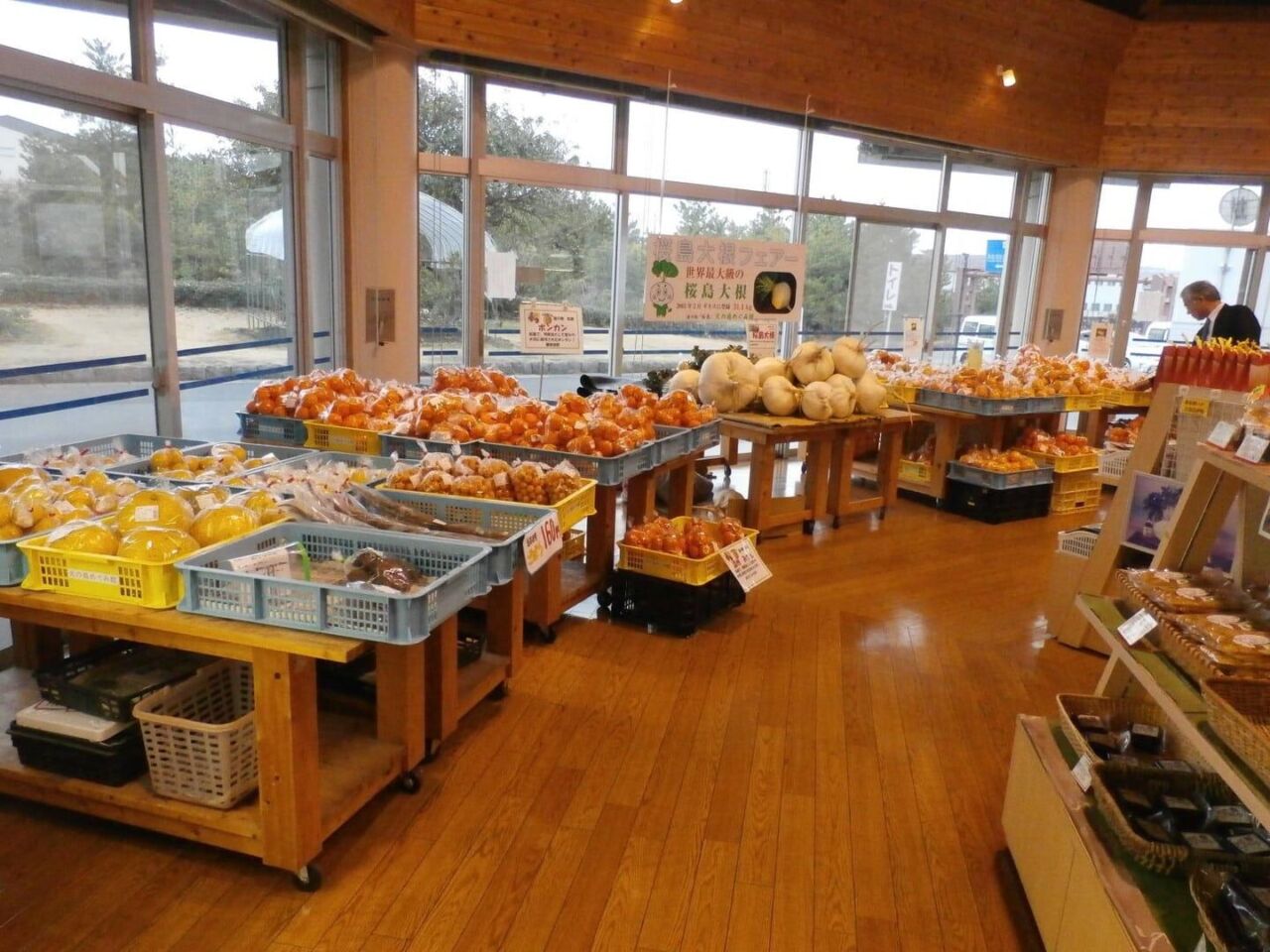
Michi-no-Eki Sakurajima Hinoshima Megumikan: Buy Sakurajima Komikan and Sakurajima Daikon
Hinoshima Megumikan is Sakurajima’s roadside station, selling Sakurajima komikan and Sakurajima daikon sent straight from island farms. The former is one of the smallest citrus fruits in the world, and the latter is certified by Guinness World Records as the world’s largest radish, reaching up to 30 kilograms.
The building has a restaurant and a snack area where you can try set meals made with island ingredients and komikan soft serve. Souvenir prices are lower than in tourist areas, making it the best place to shop. Sakurajima daikon is only in season in winter (roughly December to February); in other seasons it is mostly sold pickled or as processed food.
It is about a 10-minute walk from Sakurajima Port and has a parking lot for drivers. We recommend allowing 30 minutes.
Sakurajima Magma Onsen: A Brown Bath at the Foot of the Volcano
Sakurajima Magma Onsen is inside the Rainbow Sakurajima public lodge beside Sakurajima Port and is the island’s main day-use hot spring facility. The water is a deep tea-brown and high in iron, said to be especially noticeable for people who feel the cold easily.
The bath faces Kinko Bay, so as you soak you can look straight across to downtown Kagoshima and the ferries coming and going, with the best views at sunset. Opening hours are subject to the official website. Bath towels (¥300) and hand towels (¥200) can be bought on site. The building is also a public lodge, and its restaurant serves set meals made with island ingredients.
It is about a 3-minute walk from Sakurajima Port, a perfect stop at the very end of your trip before taking the ferry back to the city. We recommend allowing 1 hour.
How Much Does a Trip to Sakurajima Cost? Ferry, Bus Tickets and Activities
Most Sakurajima sights are free, so your money mainly goes to the ferry and getting around the island.
Sakurajima Ferry Tickets: A 24-Hour Sea Commute Where You Pay After You Get Off
The official fare is ¥250 one way for adults and ¥130 for children. Payment is settled on the Sakurajima Port side after you disembark, so first-timers do not need to queue for tickets at Kagoshima Port and can simply board.
Drivers can take their whole car onto the ferry, with a separate fare based on vehicle length. On peak-season weekends the vehicle deck fills up easily, so we suggest getting in line at the terminal early.
Island Bus One-Day Pass: The Best-Value Ticket for the Island View Sightseeing Bus
The “Sakurajima Island Free Ticket” costs ¥500 for adults and ¥250 for children. It can be bought on the bus, at the Sakurajima Port ticket office and at the tourist information center in Kagoshima-Chuo Station, and it gives unlimited rides that day on the Sakurajima Island View sightseeing bus and the island’s route buses, making it the most important ticket for travelers without a car. A single ride costs adults about ¥230, so it pays for itself as soon as you get off at more than one stop.
Island View departs from Sakurajima Port and stops at the Sakurajima Visitor Center, Karasujima Observatory (about 5 minutes), Akamizu Observation Plaza (about 8 minutes) and Yunohira Observatory (about 15 minutes), with a full loop taking about 60 minutes. The bus waits at each stop so passengers can get off, take photos and reboard the same bus.
If you get off more than once along the way, the pass always pays for itself, and it also lets you spend an extra bus’s worth of time at Yunohira Observatory. Buses run every 30 minutes to 1 hour and the last one finishes in the early evening, so confirm the return time first.
Kagoshima City Tram One-Day Pass: Linking Downtown to the Ferry Terminal
The Kagoshima City tram has a flat fare, which was adjusted to ¥200 for adults and ¥100 for children from August 1, 2026. One-day passes come in a tram-only version and a version that includes city buses, with prices subject to announcements from the Kagoshima City Transportation Bureau. The pass is useful for trips between Kagoshima-Chuo Station, Tenmonkan and Suizokukan-mae (the Sakurajima Ferry terminal). A 24-hour pass is also available.
If you plan to visit Sengan-en, Tenmonkan or the Museum of the Meiji Restoration in addition to Sakurajima that day, this pass almost certainly pays off. It can be bought at the tram office, tourist information centers and some hotel front desks.
There is also a version that combines the tram with the “City View” sightseeing bus, especially handy if you want to cover the city sights with big elevation changes in one go.
SUNQ PASS: The Pick If You Are Traveling Across Kyushu and Taking the Ferry
The SUNQ PASS is an unlimited-ride ticket for Kyushu’s expressway buses and route buses, available in versions such as All Kyushu and Southern Kyushu. Its biggest advantage is that you can board the Sakurajima Ferry directly without buying a separate ferry ticket.
It offers the most value if your itinerary spans several prefectures such as Kagoshima, Kumamoto and Miyazaki. If you only visit downtown Kagoshima and Sakurajima, it may not pay off, so add up your total fares before leaving and then decide.
It can be bought at airports, major bus terminals and some travel agencies. Even with the pass, we still recommend reserving seats in advance on expressway buses.

Sakurajima Magma Onsen Day Bath: A Brown Seaview Soak to End the Trip
The Sakurajima Magma Onsen inside the Rainbow Sakurajima public lodge offers day bathing. Admission fees and opening hours are subject to the official website (several sources list about ¥390 for adults and ¥150 for elementary school students). It is the island’s main day-use hot spring facility, with a deep tea-brown, iron-rich water.
Bath towels (¥300) and hand towels (¥200) can be bought on site, so you can drop in on a whim.
It is about a 3-minute walk from Sakurajima Port, and soaking and then boarding the ferry straight back to the city makes for a very smooth route. The building has a restaurant serving set meals made with island ingredients. Opening hours and fees are subject to the official website.
What to Know Before Visiting Sakurajima: Volcanic Ash, Access Restrictions and Where to Stay
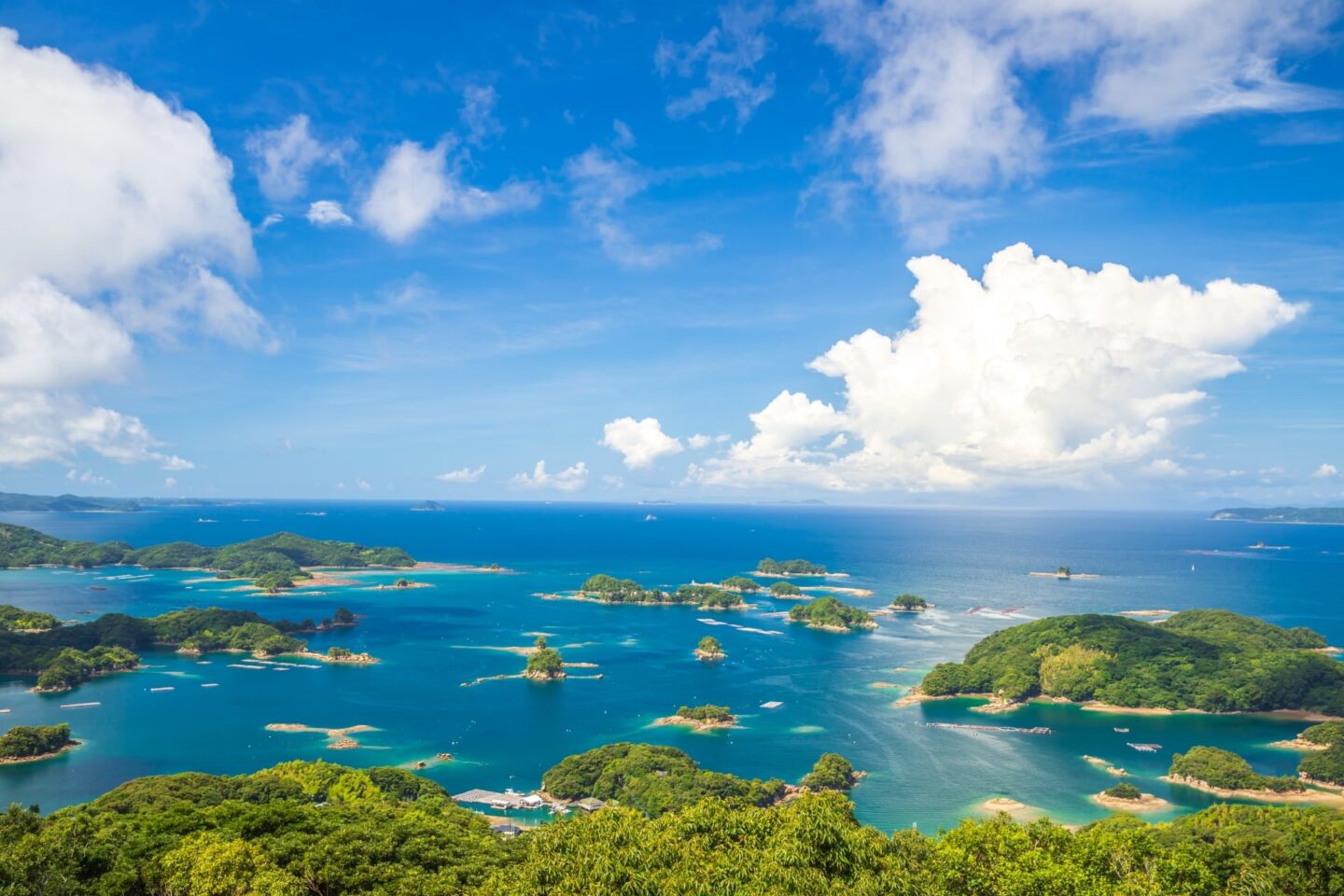

Volcanic Ash and Access Restrictions: Two Things to Check Before You Go
Sakurajima can erupt on a small scale at any time. When ash falls, we recommend wearing regular glasses instead of contact lenses so ash does not get into your eyes. Carrying wet wipes and an umbrella to block the ash is also useful, and Kagoshima City even hands out special ash-disposal bags to residents.
Access restrictions change with volcanic activity and the eruption alert level set by the Japan Meteorological Agency, and the restricted zone around the crater is completely off limits. Yunohira Observatory is the highest point regular visitors can reach, and there is no legal route beyond it. Facilities on the south side, such as Arimura Lava Observatory, may also close when the alert level rises, so check announcements from Kagoshima City and the Japan Meteorological Agency on the day you go.
Also note that convenience stores and restaurants on the island are few, so we suggest eating lunch in downtown Kagoshima or bringing your own, rather than counting on finding food everywhere once you are on the island.
Sakurajima Eruption Alert Levels: How to Read Levels 1 to 5
Sakurajima’s eruption alert level is issued by the Japan Meteorological Agency in five levels: Level 1 is “Be aware of the active volcano,” Level 2 is restrictions around the crater, Level 3 is a ban on entering the mountain, Level 4 is evacuation of the elderly and others, and Level 5 is evacuation. From Level 3 entry to the mountain is restricted and some facilities may close. Check the latest announcements from the Japan Meteorological Agency and Kagoshima City on the day you set out.
Where Is Best to Stay? Downtown Kagoshima vs. on Sakurajima
Most travelers stay in downtown Kagoshima, and the area around Kagoshima-Chuo Station is the most convenient, with the airport bus, the Shinkansen and the tram all at the door. If you want a late-night meal, choose the Tenmonkan area, which has the highest density of izakaya and shochu specialty shops.
If you want to stay a night on the island, the Rainbow Sakurajima public lodge next to Sakurajima Port is the main choice. It has its own magma hot spring, and at night you can see the lights of downtown Kagoshima across the water. Lodging options on the island are very limited, so be sure to book early.
Sakurajima can be seen in half a day, and trips usually continue to places such as the sand-steam baths of Ibusuki, Kirishima or Chiran, so two nights and three days works out just right. The ferry runs 24 hours, so you can get back to the city even if you stay out late.
Sakurajima FAQ
Q: How much is the Sakurajima ferry, and what time are the sailings?
The official fare is ¥250 one way for adults and ¥130 for children, and the crossing takes about 15 minutes. The ferry runs 24 hours, with a boat every 15 to 20 minutes during the day and late-night sailings too. Payment is settled when you disembark on the Sakurajima Port side, and vehicles are charged separately by length.
Q: How long do you need on Sakurajima? Is half a day enough?
The west-side highlights take about 3 to 5 hours by sightseeing bus, so half a day is enough. To reach the Kurokami Buried Torii and Arimura Lava Observatory on the east side, you need to drive around the island. A full loop takes about 2 hours, so plan on a full day.
Q: Can you visit Sakurajima without a car?
Yes. The “Sakurajima Island View” sightseeing bus covers west-side highlights such as Yunohira Observatory, Akamizu Observation Plaza and Karasujima Observatory in a loop of about 60 minutes, and it is best paired with the ¥500 adult Sakurajima Island Free Ticket.
Q: Can you climb to Sakurajima’s crater? How do access restrictions work?
No. The area around the crater is a restricted zone and entry is completely prohibited. Yunohira Observatory (about 373 meters above sea level) is the highest point regular visitors can reach. Access restrictions change with the Japan Meteorological Agency’s eruption alert level, so check that day’s announcements before you go.
Q: Can you still visit when Sakurajima erupts? How do you protect yourself from volcanic ash?
Small eruptions are routine, and tourist facilities stay open as usual. We recommend wearing regular glasses instead of contact lenses and bringing a mask and wet wipes; an umbrella also blocks ash. When the alert level rises, some facilities close, so follow Kagoshima City’s announcements.
Q: Do the sights on Sakurajima charge admission?
Almost all are free. Yunohira Observatory, the Lava Nagisa Park foot bath, Arimura Lava Observatory, the Kurokami Buried Torii and the Sakurajima Visitor Center all charge nothing, so the main costs are the ferry fare and the island bus one-day pass.
Q: What is the best season to visit Sakurajima?
Spring and autumn have the most comfortable weather and the best visibility. Summer is hot with many typhoons, while winter is windy but the air is clear, giving the best views of the volcano. The direction of ashfall changes with the seasonal winds, so checking the wind direction for the day before you go is the safer bet.