

Ishikawa Kenrokuen Autumn Leaves Illumination Guide 2026: A Complete Guide to Autumn Nights at One of Japan’s Three Great Gardens
Kenrokuen Autumn Illumination Guide Overview
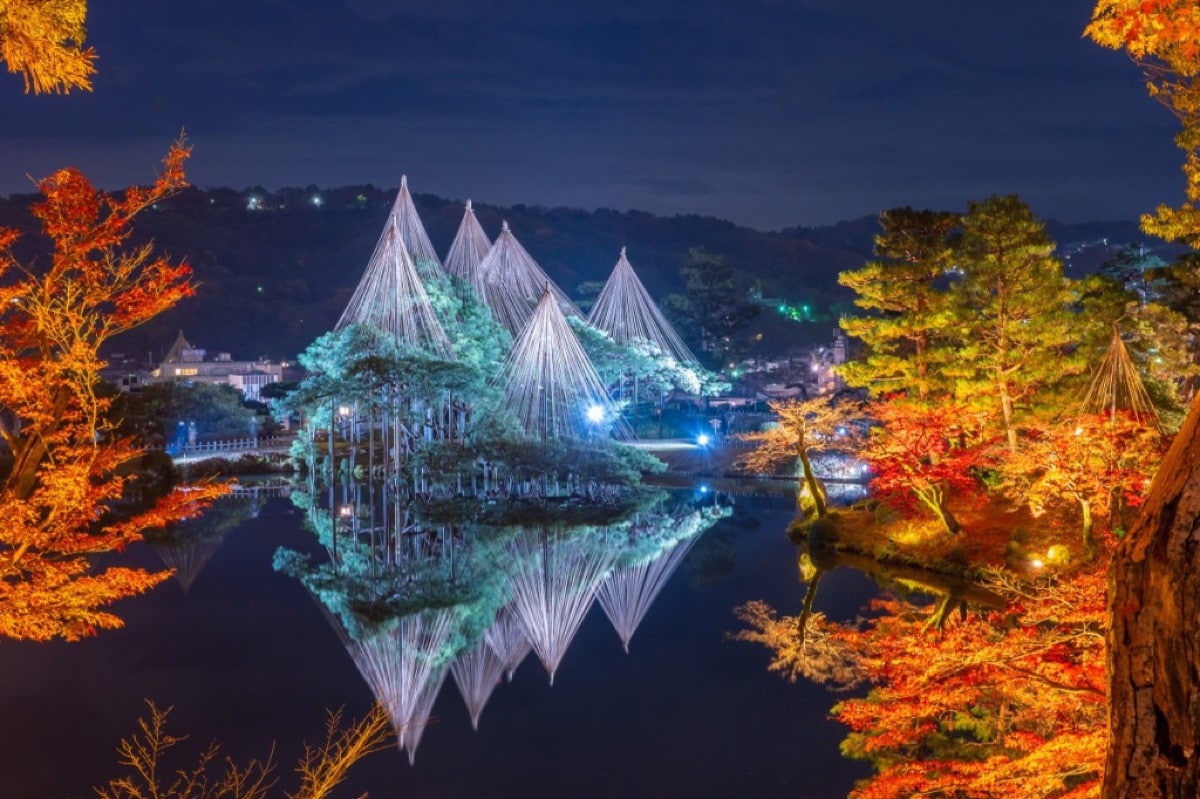
Kenrokuen is one of Japan’s three great gardens, a strolling garden built over the reigns of several Kaga domain lords in the Edo period. Located in the center of Kanazawa, it draws large numbers of visitors every autumn. The autumn 2026 evening illumination event “Kanazawa Castle and Kenrokuen Four Seasons Story: Autumn Edition” lets you enjoy deep-autumn foliage together with yukitsuri, the signature winter snow-protection tradition, and the lights create a dreamlike Japanese garden scene. We suggest pairing it with Kanazawa Castle Park and Higashi Chaya District, so that in a single day you take in three autumn moods: the garden, the castle and a traditional quarter.
Kenrokuen Basic Information
Kenrokuen is located at 1 Kenrokumachi, Kanazawa, Ishikawa (1-1 Marunouchi). Daytime admission is ¥320 for adults and ¥100 for children aged 6-17. Seniors aged 65 and over enter free with ID, and Ishikawa Prefecture residents also enter free on Saturdays and Sundays.
Opening hours vary by season: from March 1 to October 15, 7:00-18:00 (last entry 17:30); from October 16 to the end of February, 8:00-17:00 (last entry 16:30); open every day of the year. There is also an early-morning free-entry period before opening, with actual times varying by season; please see the Kenrokuen official website.
Getting to Kenrokuen: A Full Breakdown from Central Kanazawa
Kanazawa Loop Bus (Jokamachi Kanazawa Shuyu Bus): The Most Recommended Route to Kenrokuen
From the bus stop at the east exit of JR Kanazawa Station, take the “Jokamachi Kanazawa Loop Bus” to the “Kenrokuen / Kanazawa Castle Park” stop, then walk about 3-5 minutes. It is the most convenient route to Kenrokuen with the most frequent service, suited to first-time independent travelers in Kanazawa.
This route also passes major sights such as Higashi Chaya District and Omicho Market, so it pairs well with a one-day pass for unlimited rides all day, with no worry about single fares adding up.
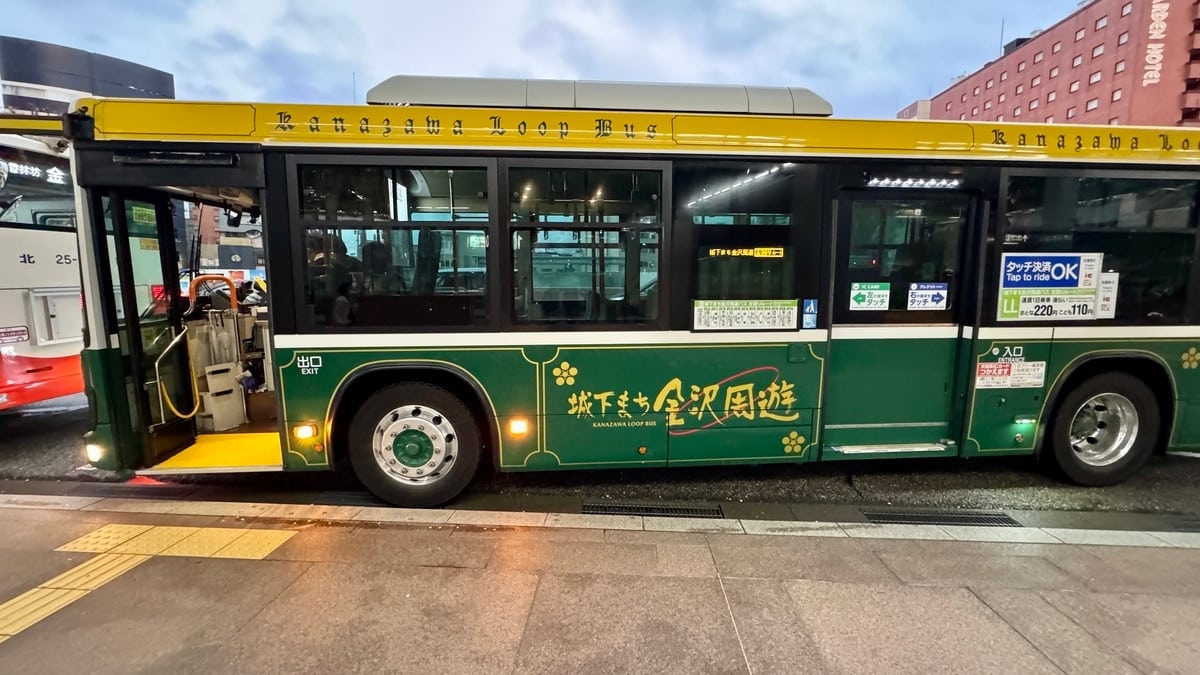
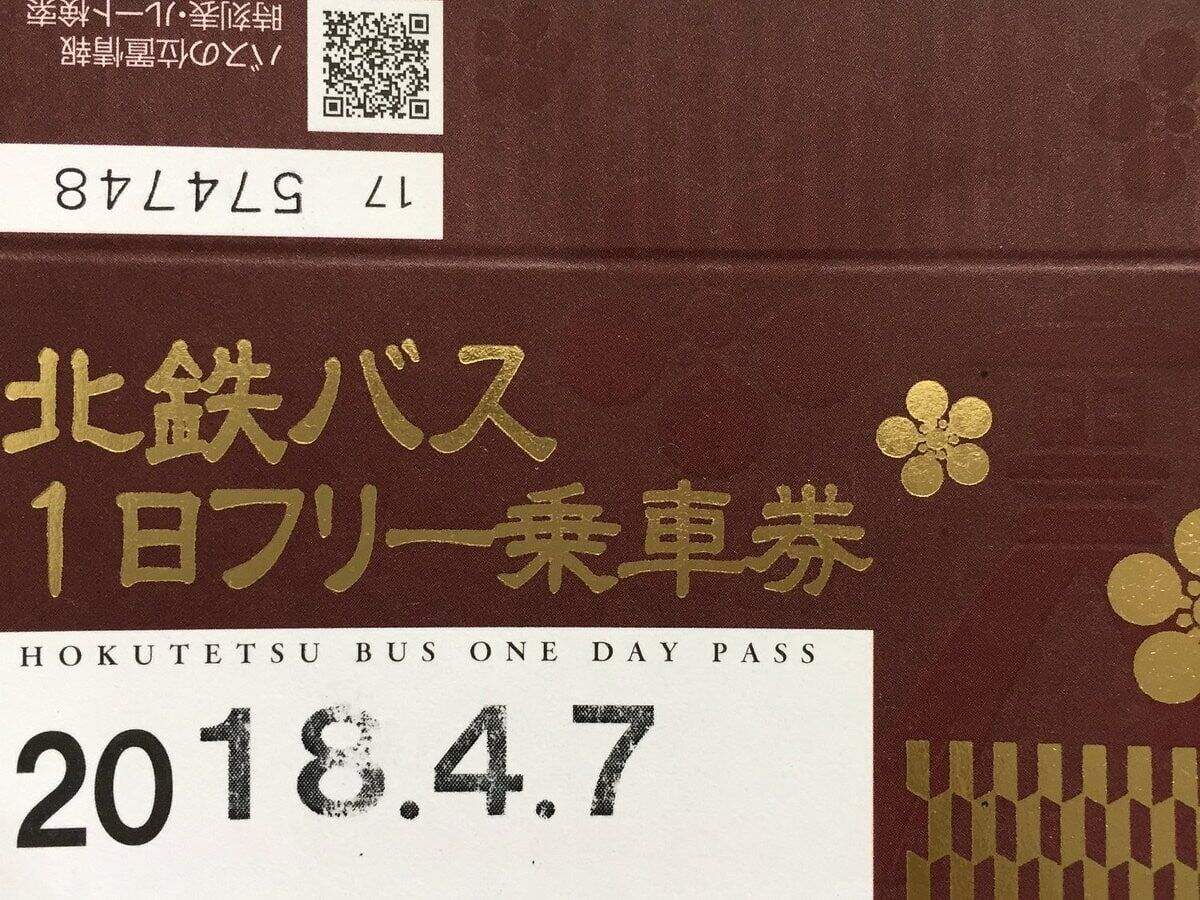
Kenrokuen Loop Bus and the Hokutetsu One-Day Pass
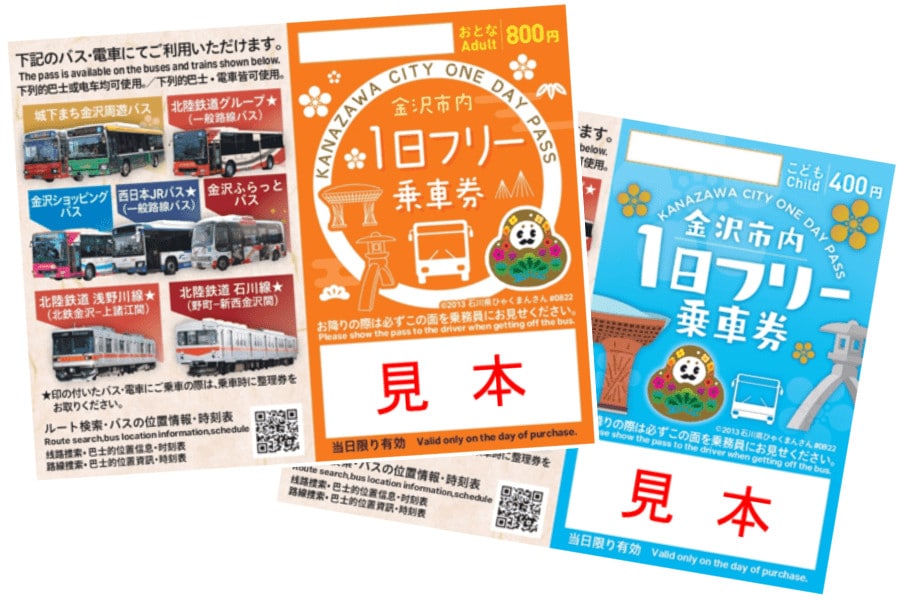
One-day passes can be bought at the bus service center at JR Kanazawa Station or on the bus. If your day links three or more sights such as Kenrokuen, Higashi Chaya District and Omicho Market, it is usually better value than buying single tickets.
Besides the Jokamachi loop bus, many other bus routes pass Kenrokuen, so we suggest simply buying the Hokutetsu Jokamachi Kanazawa Loop Bus one-day pass, which gives unlimited rides on buses between the major sights with no need to work out which route is smoothest at each stop. It is the most hassle-free way to get around central Kanazawa.
JR Hokuriku Shinkansen: From Tokyo and Osaka
The “Tsuzumi Gate” at the east exit plaza of Kanazawa Station is a famous landmark, designed by the architect Hiroshi Hara and about 13 meters high. After leaving the station you can transfer straight to a bus for Kenrokuen, and the station itself is worth stopping for photos.
If you are coming from the Kansai direction, you can take a limited express train and transfer to the Hokuriku Shinkansen. Travel time depends on your starting point, and it is the fastest and most convenient long-distance way to reach Kanazawa.
From Tokyo, the JR Hokuriku Shinkansen reaches Kanazawa Station directly in about 2.5-3 hours, while from Osaka you need to take a limited express and transfer to the Hokuriku Shinkansen.
Driving and Avoiding Traffic Jams
Kenrokuen itself has no free parking lot. If you drive, you need to use nearby paid lots such as those at “Kenrokuen Kamiguchi” or “Takaokamachi,” and traffic around the garden jams very easily during the illumination period. We strongly recommend taking public transport or a taxi to avoid spending too much time looking for parking.
Traffic pressure in central Kanazawa is especially noticeable on weekends in peak foliage season. If your itinerary also includes several sights such as Kanazawa Castle Park and Higashi Chaya District, we suggest using a bus one-day pass as your main transport backbone, which is easier and more worry-free than driving.


A Complete Guide to Kenrokuen Autumn Foliage Spots
Autumn Evening Illumination: Yukitsuri and Red Leaves Together
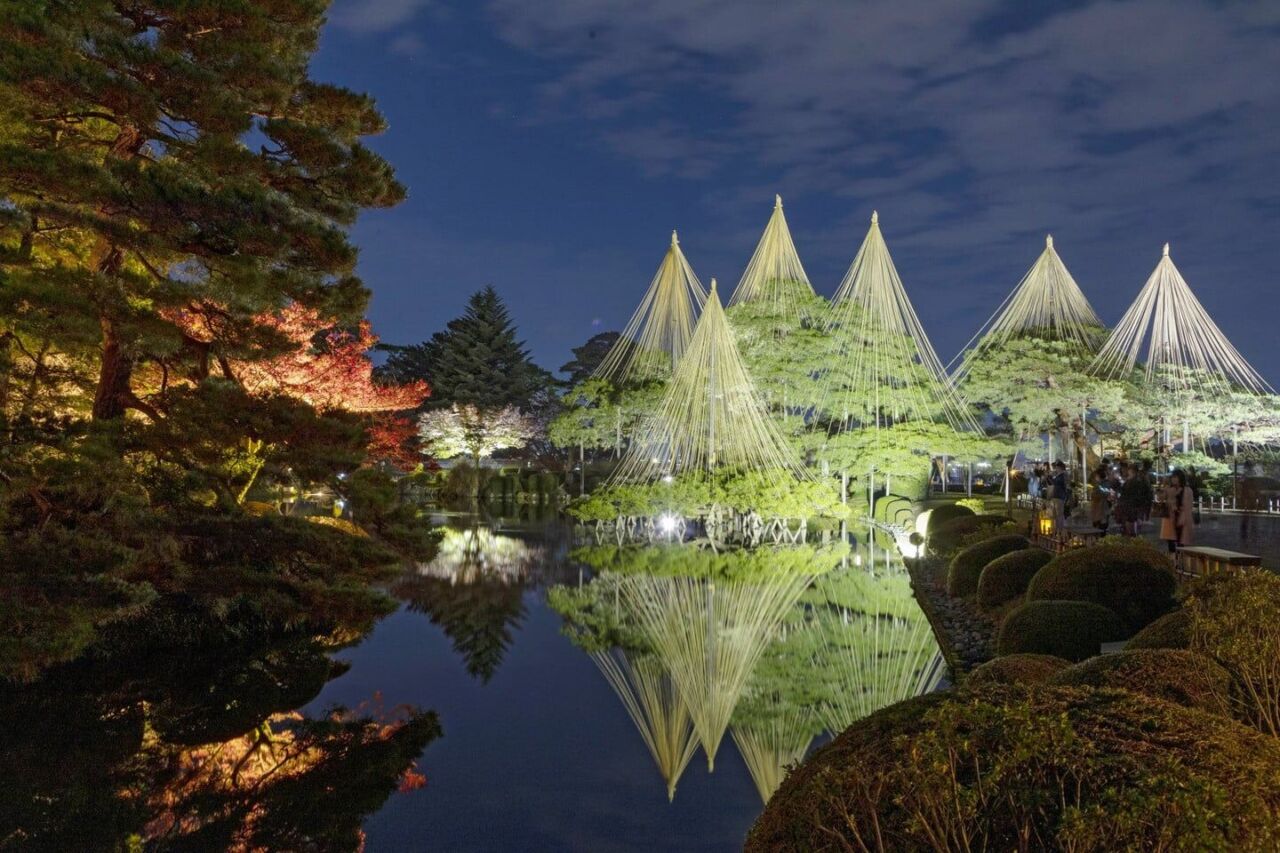
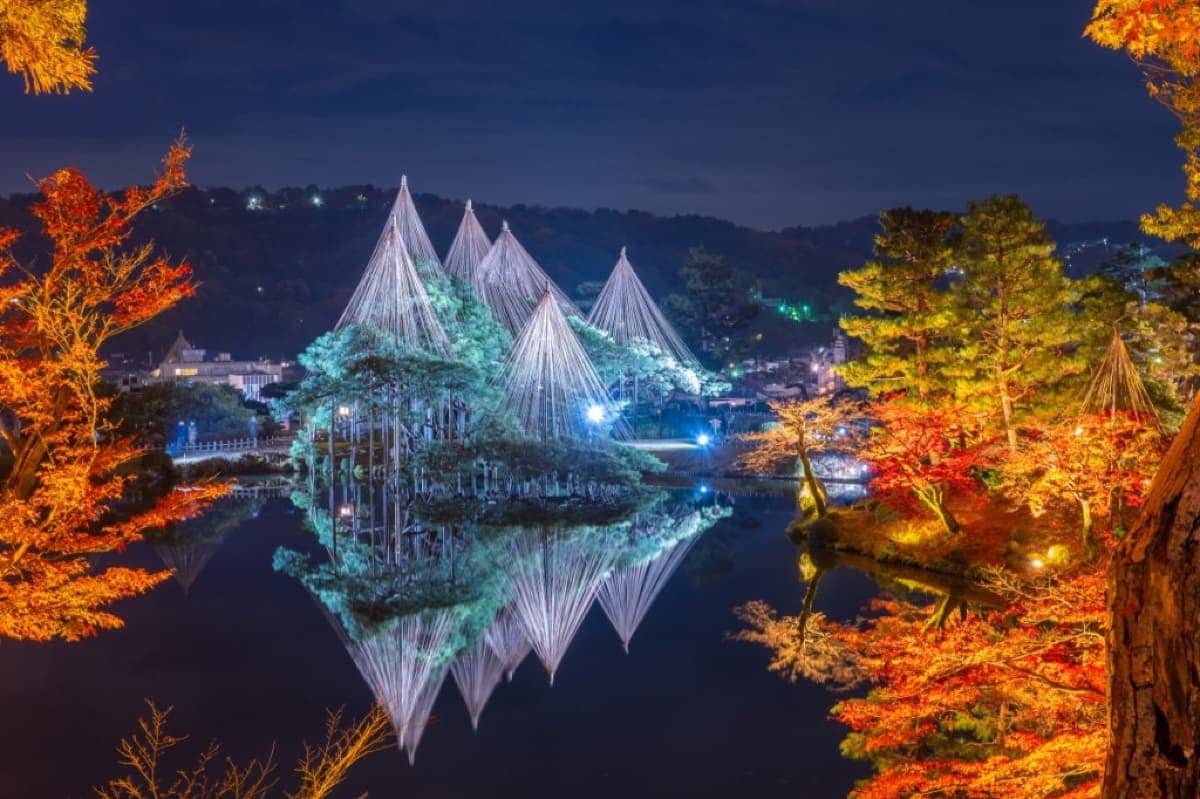
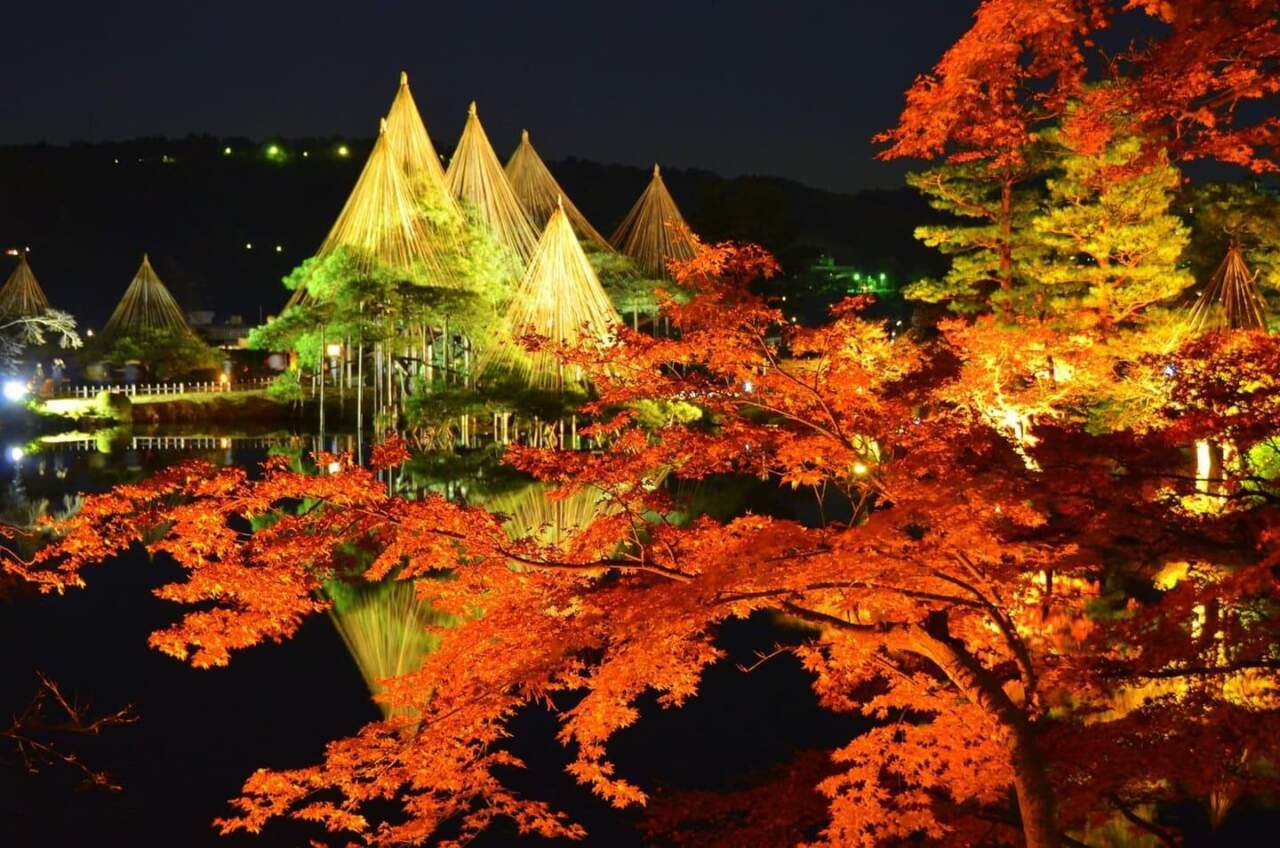
The September 19-22 sessions of the 2026 illumination event have ended. The November sessions are on the 7th, 14th, 15th, 21st, 22nd, 28th and 29th, 18:00-21:00 (last entry 20:45), with free entry during the illumination hours. The yukitsuri rope structures reflected in the pond, together with the red maples, are the signature autumn illumination view.
Kenrokuen is a strolling garden with a large pond, artificial hills and teahouses, and the maples and yukitsuri pines lit at night look like Christmas trees.
Kotoji Stone Lantern and Kasumigaike Pond: Kenrokuen’s Signature View
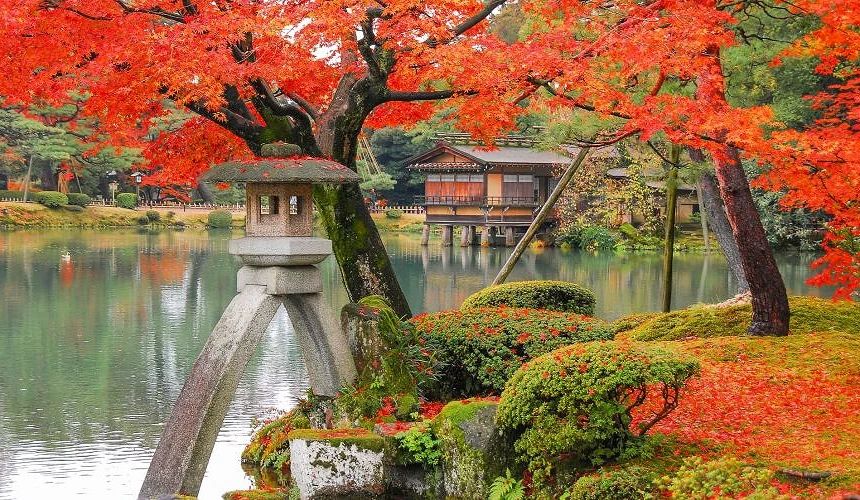
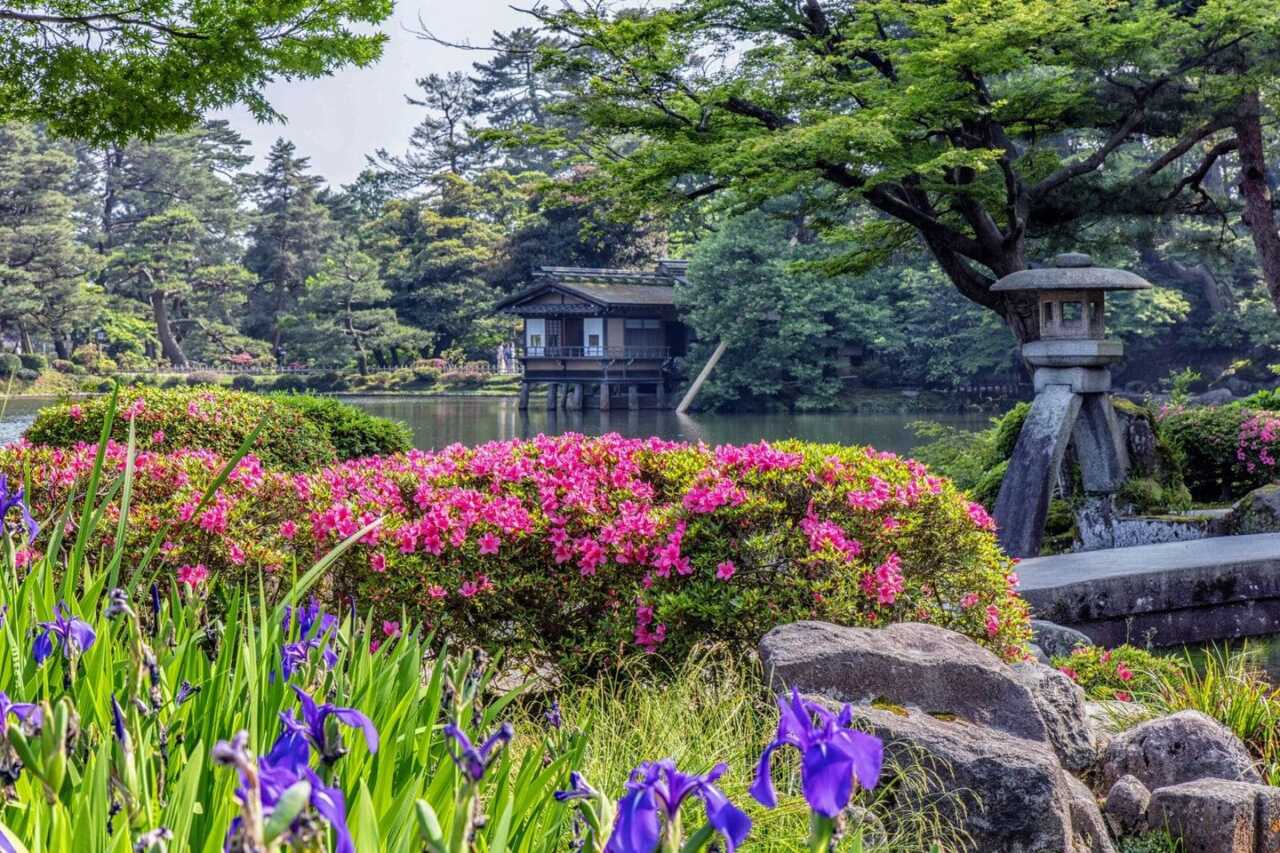
The Kotoji stone lantern is Kenrokuen’s most iconic landmark. The two-legged stone lantern stands on the shore of Kasumigaike Pond, and in autumn the red maples with their “sakasa momiji” (upside-down foliage) reflection on the water are a classic shot every visitor wants, and the cover photo travel media use to introduce Kenrokuen.
This is a popular photo spot. We suggest raising your camera’s ISO or using your phone’s night mode handheld; it is crowded in the daytime, while early morning or the start of the illumination is more relaxed.
Around Kasumigaike Pond you can see the yukitsuri of the Karasaki pine, supported by rope. It is Kenrokuen’s traditional winter snow-protection craft, and together with the autumn maples it shows the beauty of the seasons overlapping.

Yugaotei: A Hidden Teahouse Corner for Autumn Leaves
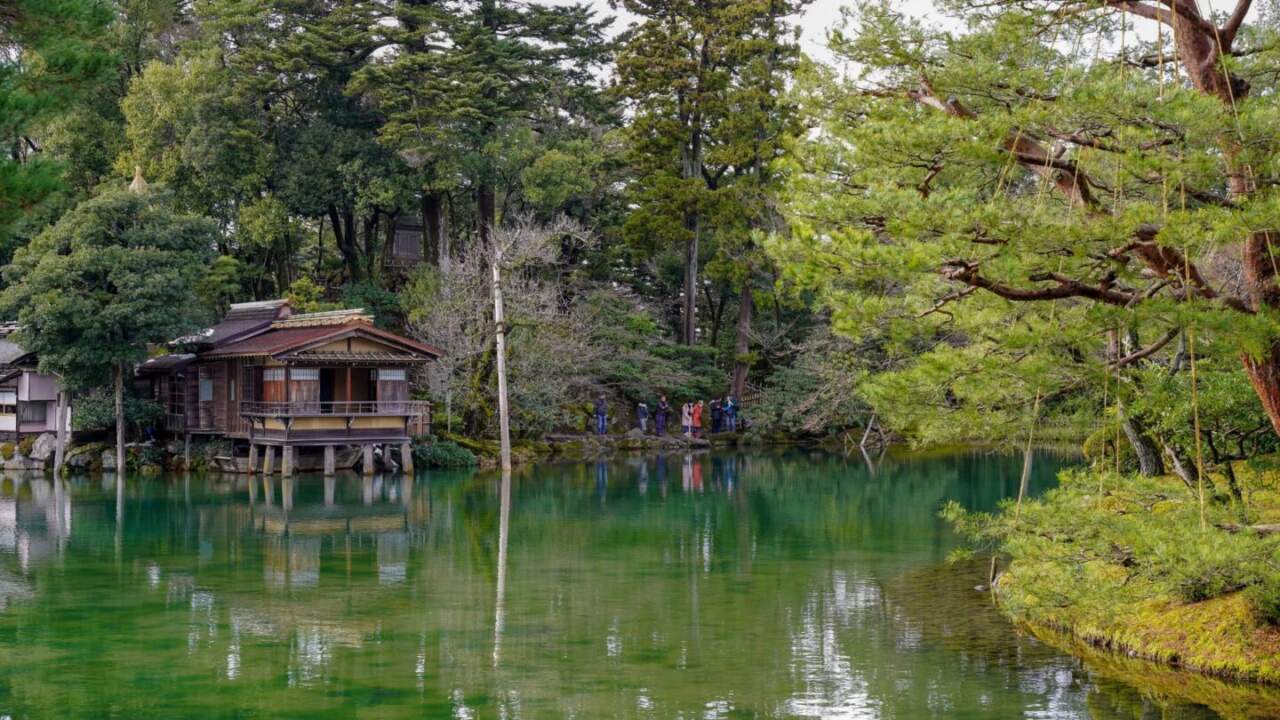
Yugaotei is a long-established teahouse in Kenrokuen, tucked into a quiet corner surrounded by red maples. It is better than the area around the Kotoji lantern for slowing down and savoring the garden atmosphere away from the crowds, and is a hidden foliage spot recommended by local travel sites.
Walking among the winding streams and artificial hills, you can enjoy a quiet autumn color different from the main sights. It suits a relaxed pace as a way station after visiting popular spots such as the Kotoji lantern and Kasumigaike Pond.
Kenrokuen is a strolling garden with several teahouses and pavilions scattered through it, and Yugaotei is one of the longest-established, worth visiting at a slow pace.
Kanazawa Castle Park: Ishikawa Gate and Gyokusen’inmaru Garden
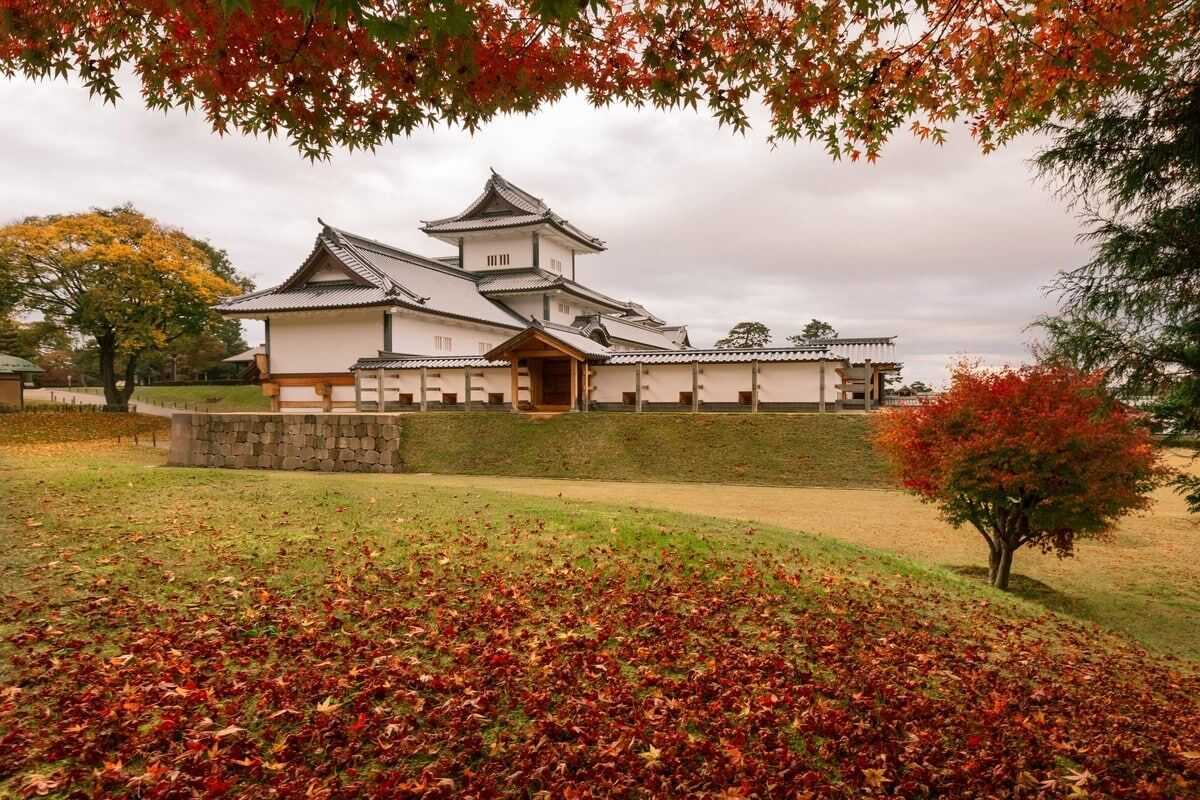
Kanazawa Castle Park is just one bridge away from Kenrokuen. Castle gates such as the Ishikawamon Gate and Nezumita Gate look especially magnificent in autumn light and shadow, and Gyokusen’inmaru Garden shows a geometric beauty of light and shadow different from Kenrokuen, worth adding on. We suggest starting with a walk through Kanazawa Castle Park and entering Kenrokuen past the Ishikawamon Gate over the footbridge, which avoids the crowds at a single spot and lets you take in autumn color in two different garden styles. The Ishikawamon and Nezumita Gates are also lit during the illumination period, complementing the Kenrokuen autumn illumination, so they fit into the same night foliage trip.
Kanazawa Shrine: A Hidden Foliage Spot Next to Kenrokuen
Kanazawa Shrine is right next to Kenrokuen and is seen by local travel media as a hidden foliage spot. Because it sits next to the popular garden but has relatively few tourists, the red maples in the grounds and the shrine buildings complement each other, making it a good place to stop for a prayer before or after visiting Kenrokuen. Compared with the often crowded popular corners inside Kenrokuen, its quiet atmosphere is a rare breathing space, and a private pocket-list spot for photography fans looking for different compositions away from tour groups. The shrine grounds are small, taking only about 10-15 minutes to walk through, so it fits neatly into a gap between Kenrokuen and Kanazawa Castle Park without taking much time from your foliage itinerary.
Oyama Shrine Garden: Autumn Colors in a Pond-and-Stroll Garden
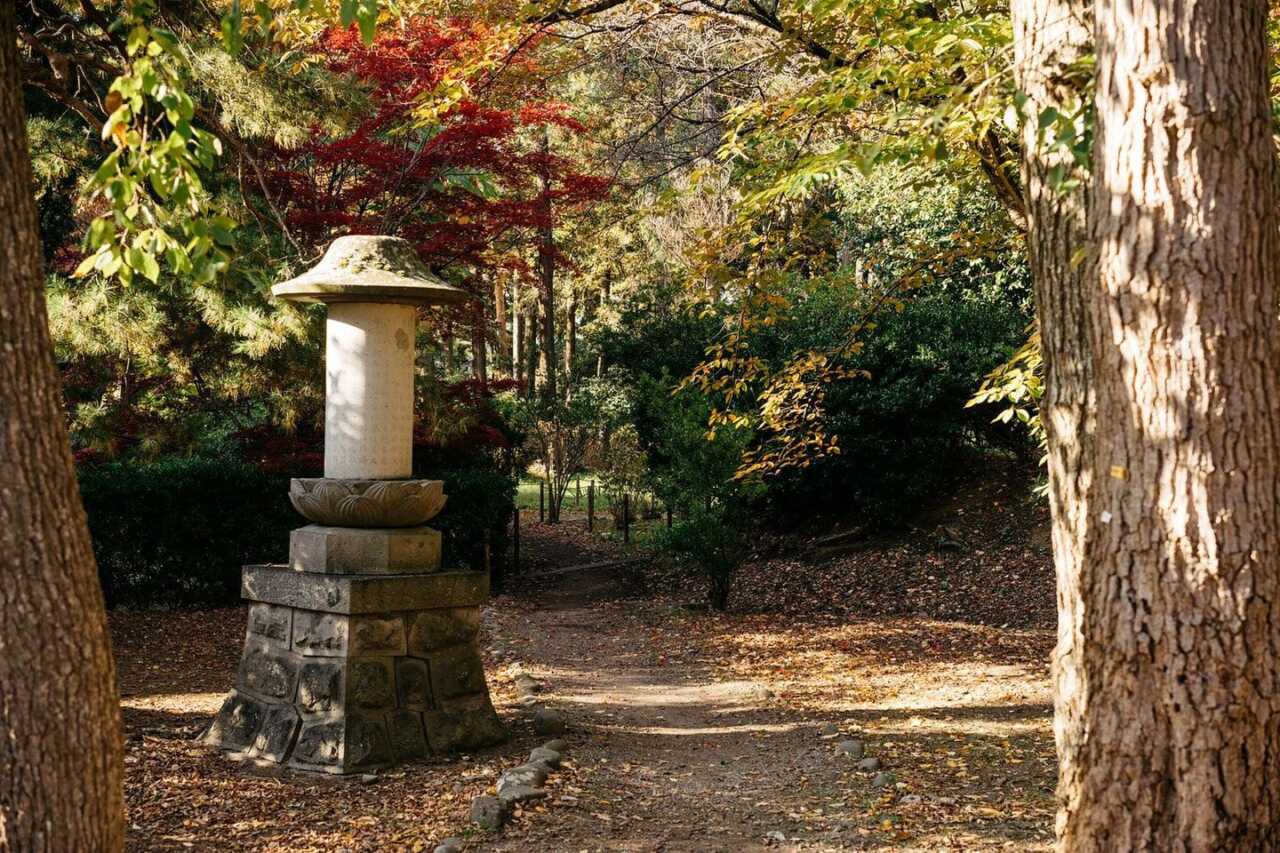
Oyama Shrine itself is known for its unique shrine gate that blends Western and Japanese architecture. Together with the autumn garden in the shrine grounds, it gives an architectural aesthetic and atmosphere completely different from Kenrokuen and Kanazawa Castle Park.
The Oyama Shrine garden is a pond-and-stroll garden near Kenrokuen and the Korinbo shopping district. When the leaves are in full color in mid-November it is just as beautiful, but with less fame it has relatively few visitors, a pocket-list stop worth adding for travelers who like finding off-the-beaten-path foliage corners.
Higashi Chaya District: A Stroll Through an Edo-Style Geisha Quarter
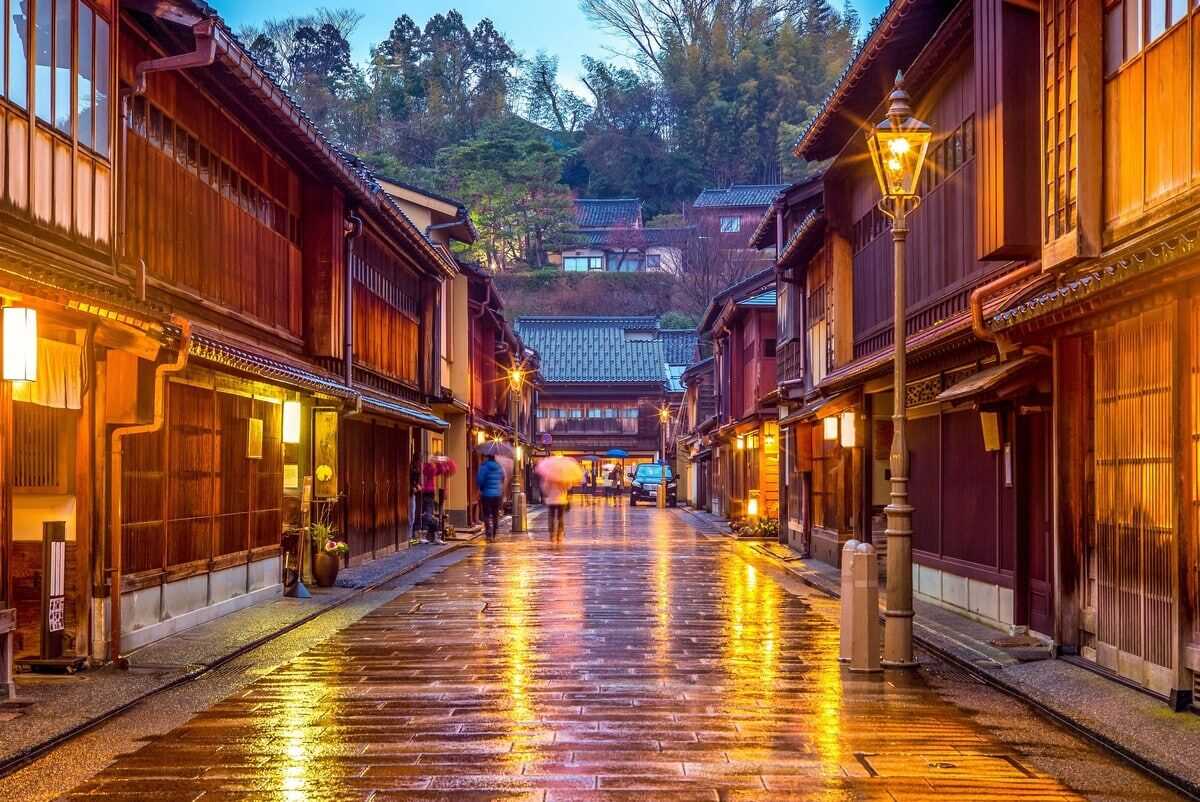
Higashi Chaya District was an Edo-period geisha quarter for watching geisha performances. Old-style wooden townhouses line the streets, and some have been turned into cultural halls, restaurants and souvenir shops where you can buy Kanazawa’s famous gold leaf products. It is Kanazawa’s most representative traditional district.
Afternoons are crowded, so early morning or evening is more relaxed. On the street you can try local snacks such as gold leaf ice cream and silkie chicken egg ice cream, making it a cultural attraction worth half a day beyond foliage viewing.
Higashi Chaya District sits right at the foot of Mount Utatsu. Strolling here after foliage viewing to enjoy the Edo townhouse atmosphere is a classic Kanazawa day-trip route recommended in local guides.

Mount Utatsu: A Foliage Lookout Over the City of Kanazawa
American Maple Street (Amerika Kaede-dori) at the foot of the mountain is a tree-lined road of maples whose peak color comes earlier than Kenrokuen’s (around early November), suited to an “early foliage” itinerary.
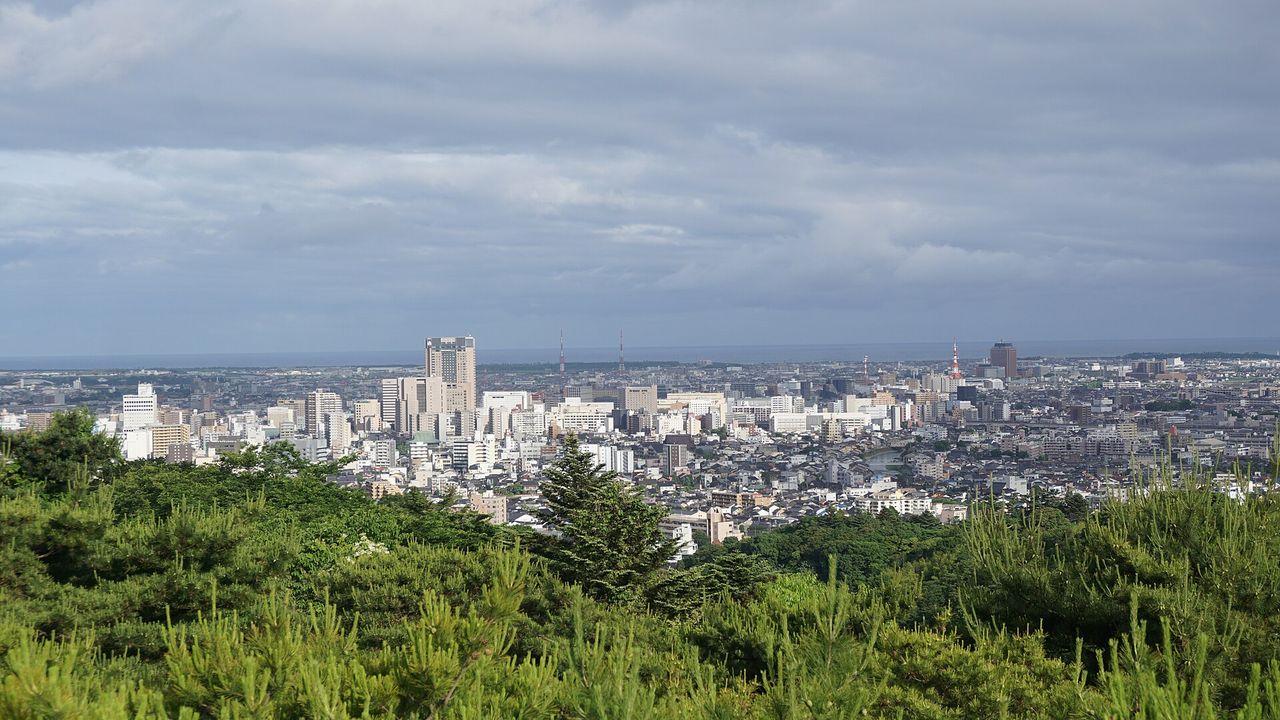
Mount Utatsu is the hill behind Higashi Chaya District and overlooks Kanazawa and the Sea of Japan. Peak color is around mid to late November, and the viewing platform on the hill is an excellent spot for the full panorama of Kanazawa’s autumn colors. Next to a cluster of temples, it fits a half-day add-on.
Compared with flat gardens such as Kenrokuen and Kanazawa Castle Park, Mount Utatsu gives an elevated viewing angle that takes in the whole city’s autumn colors at once, an extra option for travelers who like climbing for views.
Tickets and Guided Tours
Kenrokuen requires an admission ticket in the daytime (free entry during illumination hours). The following tours and tickets can make your foliage trip easier and deeper:
Kanazawa Kimono Experience: The Ceremony of Strolling Through “Little Kyoto”
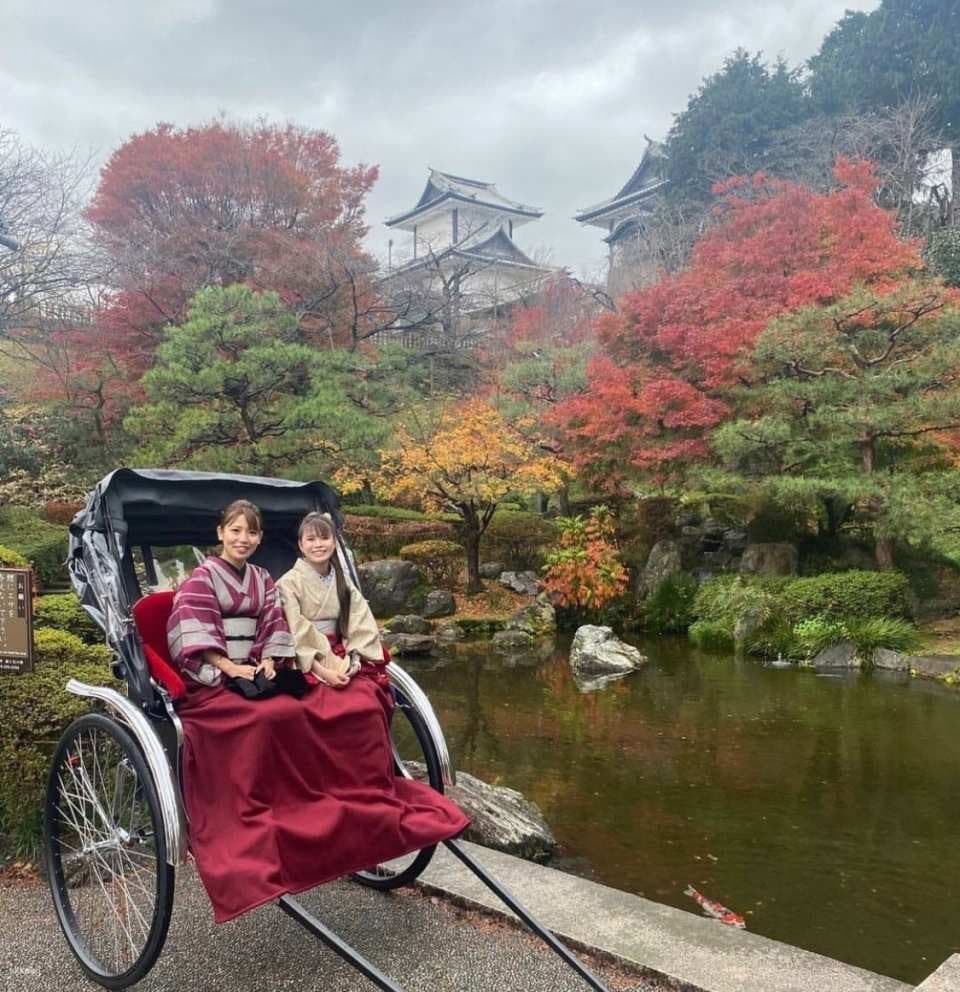
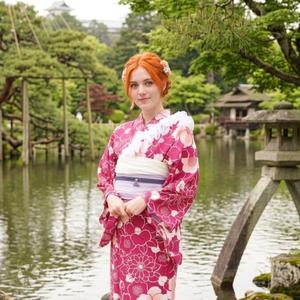
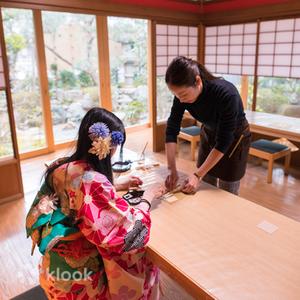
The kimono rental shop “Kanazawa Kimono Karen” near Kenrokuen offers a range of kimonos. Strolling Kenrokuen, Kanazawa Castle Park and Higashi Chaya District in a kimono is one of the most popular ways to experience the “Little Kyoto” atmosphere and fits well with a foliage trip.
Tours usually include dressing, hairstyling and accessory rental, with prices varying by plan. We suggest booking ahead on KKday or Klook. Holiday slots in peak foliage season are in demand, so it is best to confirm a session 1-2 days ahead so you have plenty of time to stroll and take photos.
Kanazawa Loop Bus One-Day Pass: The Best Value for Getting Around the City
The Hokutetsu Jokamachi Kanazawa Loop Bus one-day pass gives unlimited rides on bus routes between major sights such as Kenrokuen, Kanazawa Castle Park, Higashi Chaya District and Omicho Market, saving you the trouble of buying single tickets at each stop, and is the best-value transport option for getting around central Kanazawa. It can be bought at the bus service center at JR Kanazawa Station or directly on the bus, offers great flexibility in planning, suits independent travelers who want to link several sights in one day without working out complicated transfers, and can also save on transport costs.
Where to Stay and Eat Near Kenrokuen

Where to Stay Nearby: Around Kanazawa Station
Within about a 5-minute walk in front of Kanazawa Station there are several newly built hotels with convenient transit and modern facilities, suited as a base for foliage viewing. You can tour Kenrokuen and Kanazawa Castle Park in the daytime and return to the station area for dinner and rest at night, a hassle-free route that suits first-time independent travelers in Kanazawa.
Rooms are in demand in peak foliage season, so we suggest booking at least 1-2 months ahead. If you want a traditional Japanese atmosphere, consider machiya-converted inns around Higashi Chaya District, though prices are usually higher than hotels around the station.
Local Food Picks: Jibuni and Omicho Market Seafood Bowls
Jibuni is a signature local dish of Ishikawa Prefecture, with duck or chicken dusted in flour and simmered into a thick sauce. “Oshokujidokoro Tsutsumitei” next to Kenrokuen is a locally recommended, reasonably priced choice, well suited to trying this Kanazawa specialty right after foliage viewing, and a local classic flavor worth a special trip.
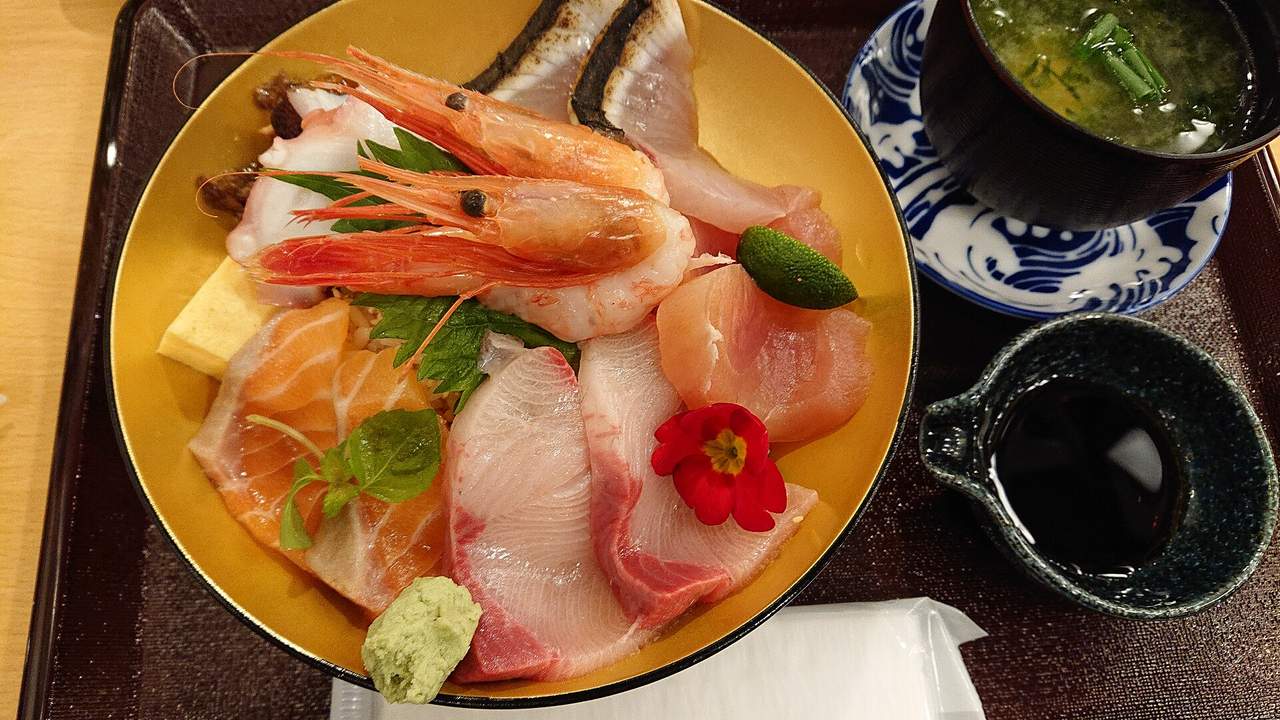
Omicho Market, known as “Kanazawa’s Kitchen,” is the top choice for fresh seafood rice bowls. There are many shops in the market, and we suggest avoiding the noon peak so you can leisurely choose seasonal seafood and local snacks.
Kenrokuen Foliage FAQ
How much is admission to Kenrokuen?
Daytime admission is ¥320 for adults and ¥100 for children aged 6-17. Seniors aged 65 and over enter free with ID, and Ishikawa Prefecture residents also enter free on Saturdays and Sundays; during the evening illumination, entry is free for everyone.
When is the 2026 Kenrokuen evening illumination?
The September 19-22 sessions in 2026 have ended. The November sessions are on the 7th, 14th, 15th, 21st, 22nd, 28th and 29th, 18:00-21:00 (last entry 20:45), with free entry.
What is the easiest way to get to Kenrokuen?
From the bus stop at the east exit of JR Kanazawa Station, take the “Jokamachi Kanazawa Loop Bus” to the “Kenrokuen / Kanazawa Castle Park” stop and walk about 3-5 minutes. Pairing it with the Hokutetsu one-day ticket is the best value.
Is it better to visit Kenrokuen in September or November?
The September sessions have ended (the maples had not yet turned red). The November sessions let you enjoy red leaves and yukitsuri together and are the most recommended window for foliage and lights, especially mid to late November when the colors are at their most magnificent.
How should I plan a day in Kanazawa?
We suggest first visiting Kanazawa Castle Park, Kenrokuen and Kanazawa Shrine in the daytime, then heading to Higashi Chaya District and Omicho Market, and returning to Kenrokuen in the evening for the night illumination, taking in Kanazawa’s best foliage route in a single day.
