

Nasu Highlands Autumn Leaves Guide 2026: A Complete Guide to a Kanto Highland Foliage Getaway
Nasu Highlands Autumn Foliage Guide Overview
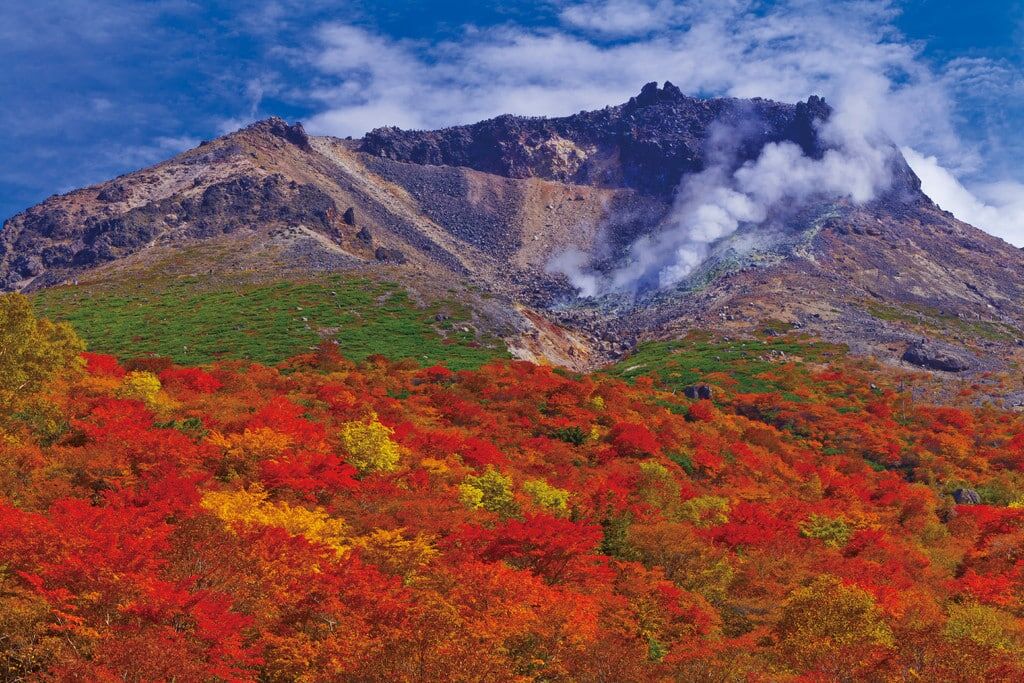
The Nasu Highlands are the most popular highland resort area in Tochigi Prefecture, north of Tokyo. The Shinkansen from Tokyo to Nasushiobara takes only 70-80 minutes, and with the Nasu Imperial Villa, the Imperial family’s summer retreat, cool summers and autumn foliage make it a favorite of the Imperial family and families alike, with a relaxed highland pace as its main appeal.
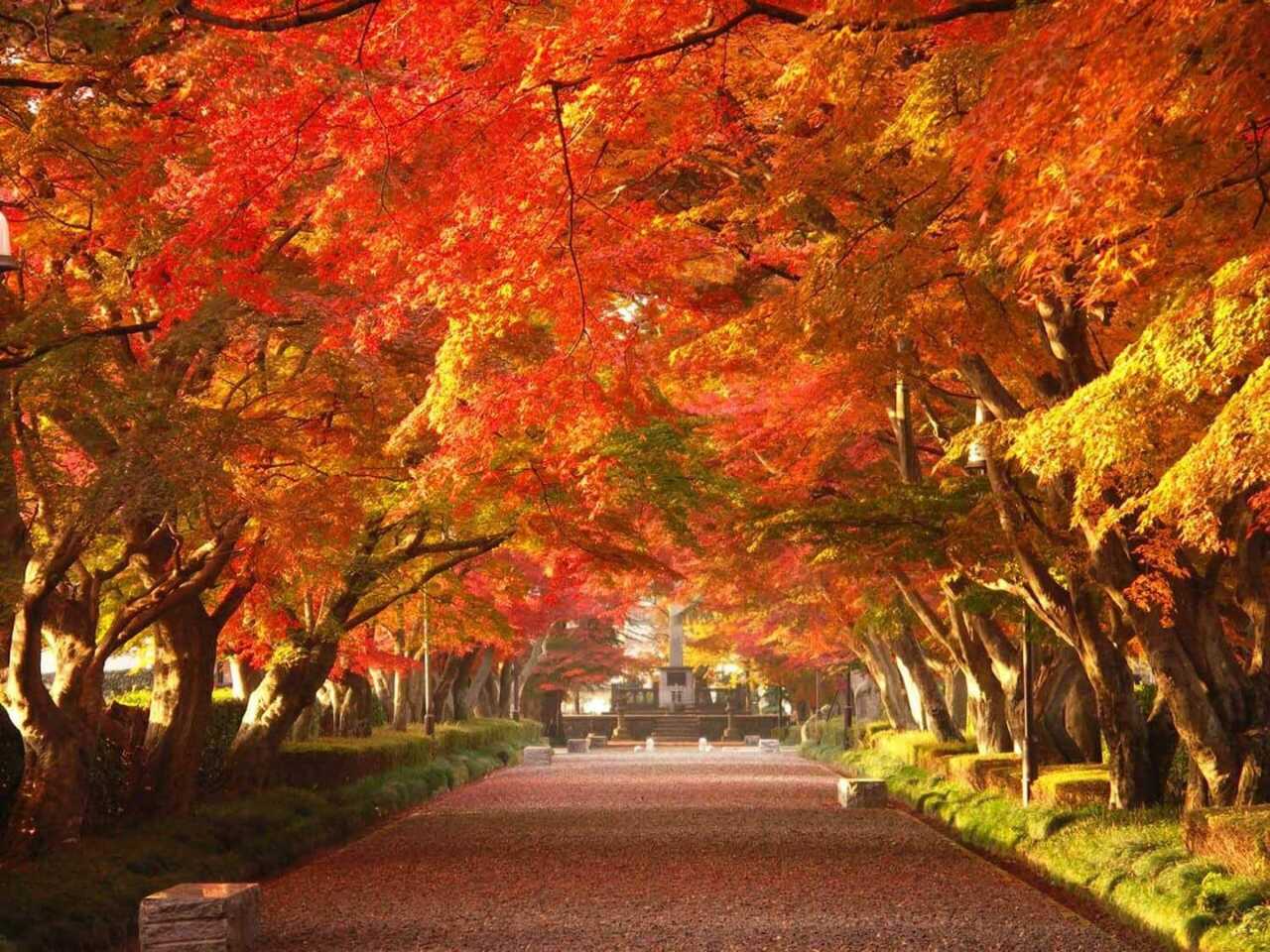
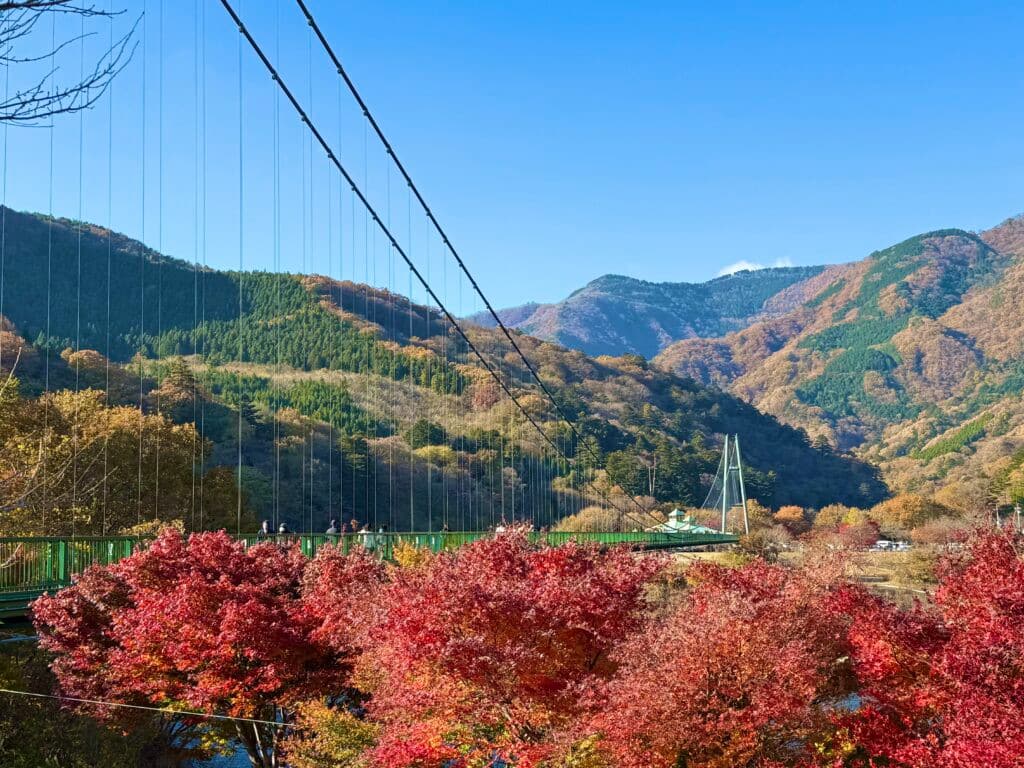
Autumn color peaks in stages by altitude: from late September to early October the summit of Mount Chausu changes first, and from late October to early November the color moves to the Momijidani Great Suspension Bridge in the Nasushiobara area, letting you see a gradient of autumn leaves from high mountain to valley.
We suggest pairing it with hot springs and a family ranch for a two-day, one-night trip to enjoy the Nasu Highlands resort pace at leisure.
Still at the Foot of the Mountain After You Get Off: A Key Nasu Transit Reminder
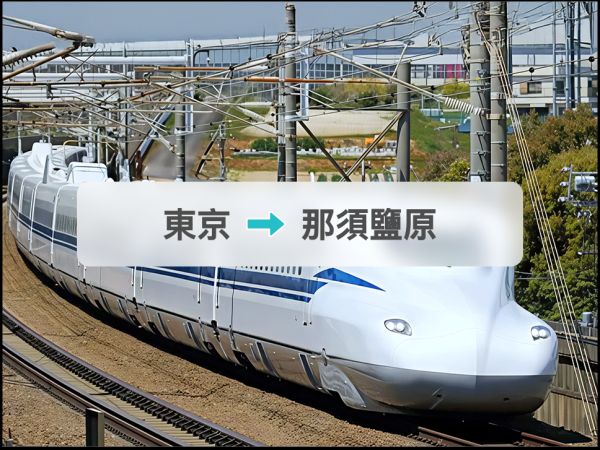
The easiest mistake when planning a Nasu trip is to think that taking the Shinkansen to Nasushiobara Station gets you to the highland sights. In fact you are still at the foot of the mountain after getting off, and need to transfer to a bus or rent a car to go up. For getting there, take the Tohoku Shinkansen “Nasuno,” about 70-80 minutes from Tokyo to Nasushiobara. If you use JR a lot on your trip, you can check whether a JR Pass is worth it, but the Kanto Bus that goes up the mountain is not covered by the Pass and must be paid for separately. We suggest staying directly at a hot spring inn or resort hotel in the highlands, where you can soak quietly after the day visitors leave and reach the sights first thing the next morning, avoiding daily trips up and down the mountain.

Nasu Highlands Transit Guide: A Full Breakdown from Tokyo
Kanto Bus Nasu Line: The Only Option Without a Car
Take the Kanto Bus Nasu Line from the west exit of Nasushiobara Station. To Nasu-Yumoto it costs ¥1,170 one way, and to the ropeway station it takes about 70 to 85 minutes (¥1,640 one way). It is the main way up to the highlands for travelers who do not drive.
Service is not frequent, and in off-peak hours there is often one bus every hour or two, so be sure to check the latest bus timetable before you go to avoid a long wait.
This bus section is not covered by the JR Pass and must be paid for separately, so include it in your budget planning.
The bus stops at places such as Animal Kingdom and the ranches along the way, so you can flexibly choose where to get off to fit family attractions.
Rental Car: The Best Choice for Visiting Many Sights
If you want to visit several ranches, museums and the ropeway, driving is more convenient. After leaving the expressway at Nasu IC, follow the Nasu Highway toward Yumoto. Most sights have free or low-cost parking lots (such as Minamigaoka Farm and Animal Kingdom), and for a family traveling in one car the flexibility is far better than waiting for buses. Driving also lets you arrange sights with large altitude differences, such as the “Momijidani Great Suspension Bridge” and “Mount Chausu,” more flexibly and free of timetables, which is especially an advantage on peak-season weekends when traffic is heavy, and suits adding famous foliage drive roads such as the “Ensan Skyline” or the “Nichien Momiji Line,” extending it into a highland driving trip.
Getting to the Momijidani Great Suspension Bridge: JR Bus Shuttle
To reach the Momijidani Great Suspension Bridge, take a JR Bus from Nasushiobara Station toward Shiobara Onsen and get off at “Momijidani Ohashi” stop or “Kaikobashi” stop, then walk about 3 minutes. It is the most direct public transport option. The bridge and Mount Chausu belong to Nasu Town and Nasushiobara City respectively, with a considerable driving distance between them. If you cover both on the same day, linking them by car is smoothest, while by bus you need to allow more time for transfers and waiting. If you have time, you can also add nearby sights such as Komadome Falls and Benten Suspension Bridge along the way to and from the Shiobara Onsen area, enriching the whole foliage trip.
Avoiding Traffic Jams and Crowds
In peak foliage season (especially October weekends), the “Nasu Volcano Highway” leading to the Nasu Ropeway foot station is very prone to heavy jams. We strongly recommend passing through the Nasu-Yumoto hot spring town before 6:00 a.m. to start up the mountain, or visiting from Monday to Friday, which saves a lot of time in traffic.
On peak foliage weekends, parking lots often fill up before 4:30-5:00 a.m. If you have time, you can also consider staying at a hot spring inn in the highlands, where you can soak quietly after the day visitors leave and go straight to the sights first thing the next morning, with no need to go up and down the mountain every day.


A Complete Guide to Nasu Highlands Autumn Foliage Spots
Mount Chausu and the Nasu Ropeway: Active Volcano Foliage Views
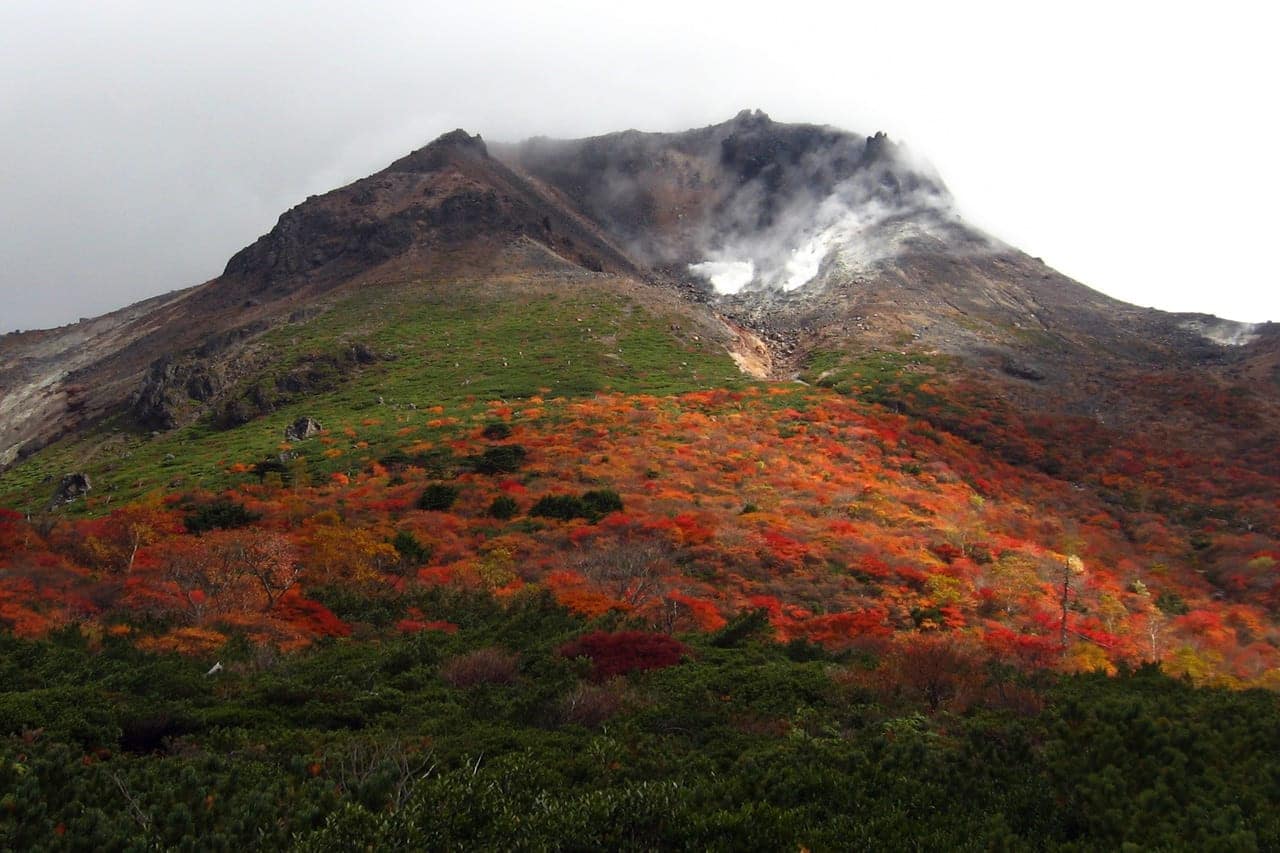
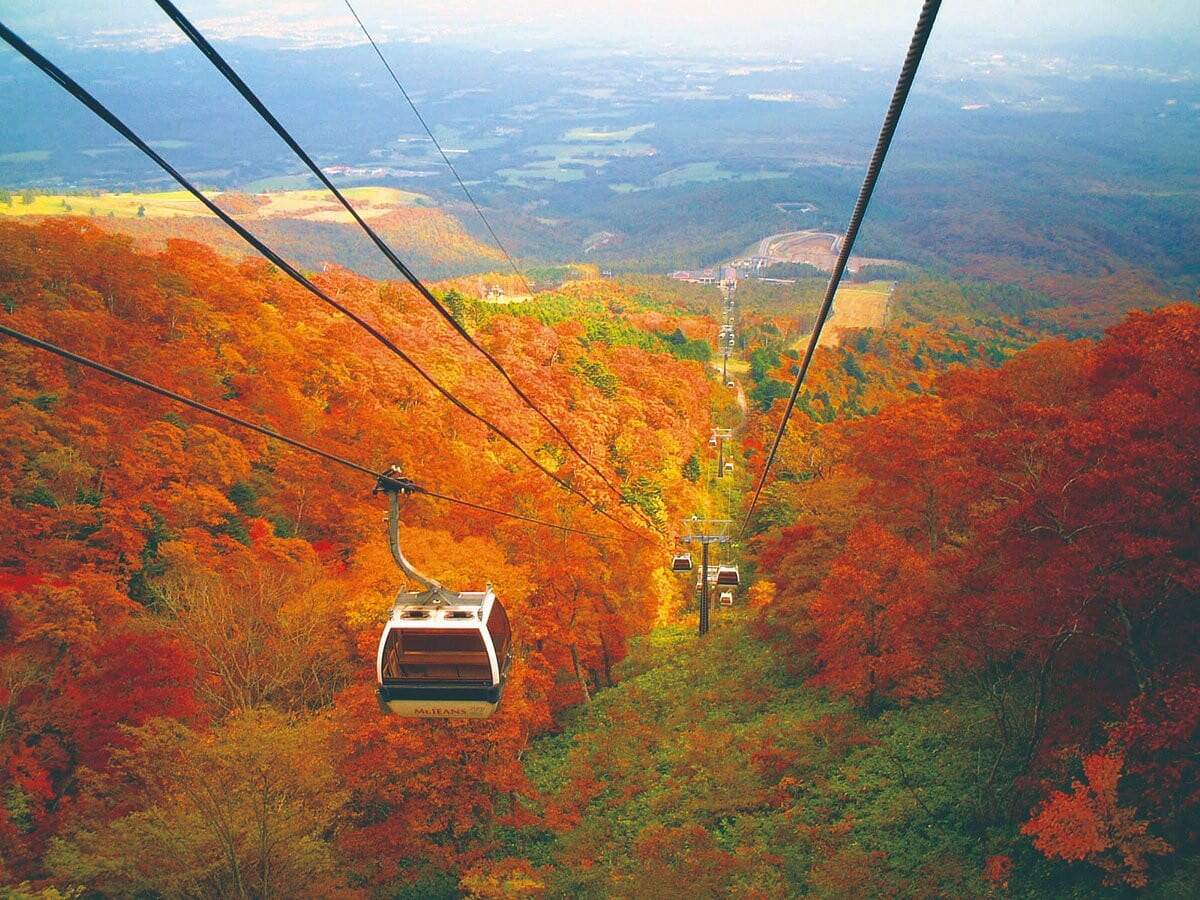
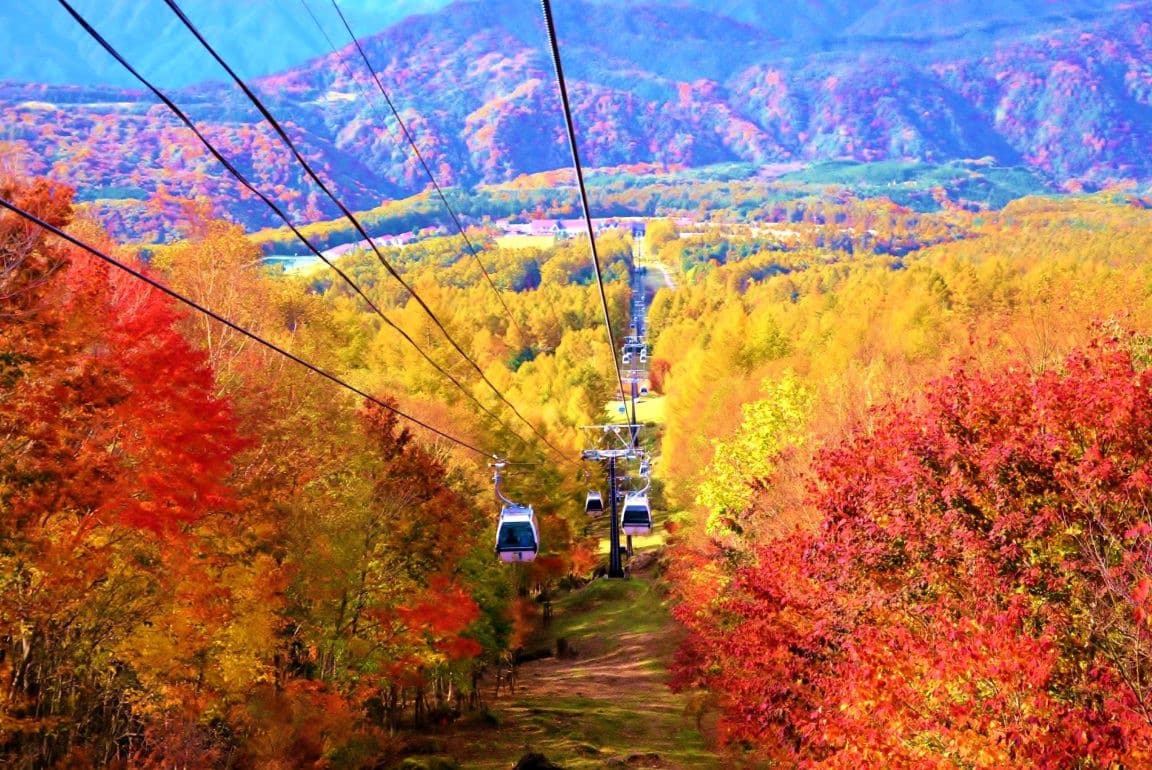
Mount Chausu is the main peak of the Nasu mountain range, an active volcano about 1,915 meters high whose summit still emits sulfur gas. The Nasu Ropeway goes straight to the summit station at the ninth station. It runs roughly from mid-March to early December, 8:30-16:30, about every 20 minutes, and a round trip is ¥2,000.
Continuing on a volcanic gravel path takes about 40-60 minutes to reach the peak, with views over the Kanto Plain along the way. The ropeway and trail may close if volcanic activity rises or in strong wind and thick fog, so check the official website and the Japan Meteorological Agency’s alert level before you go.

Momijidani Great Suspension Bridge: A 320-Meter Foliage Bridge
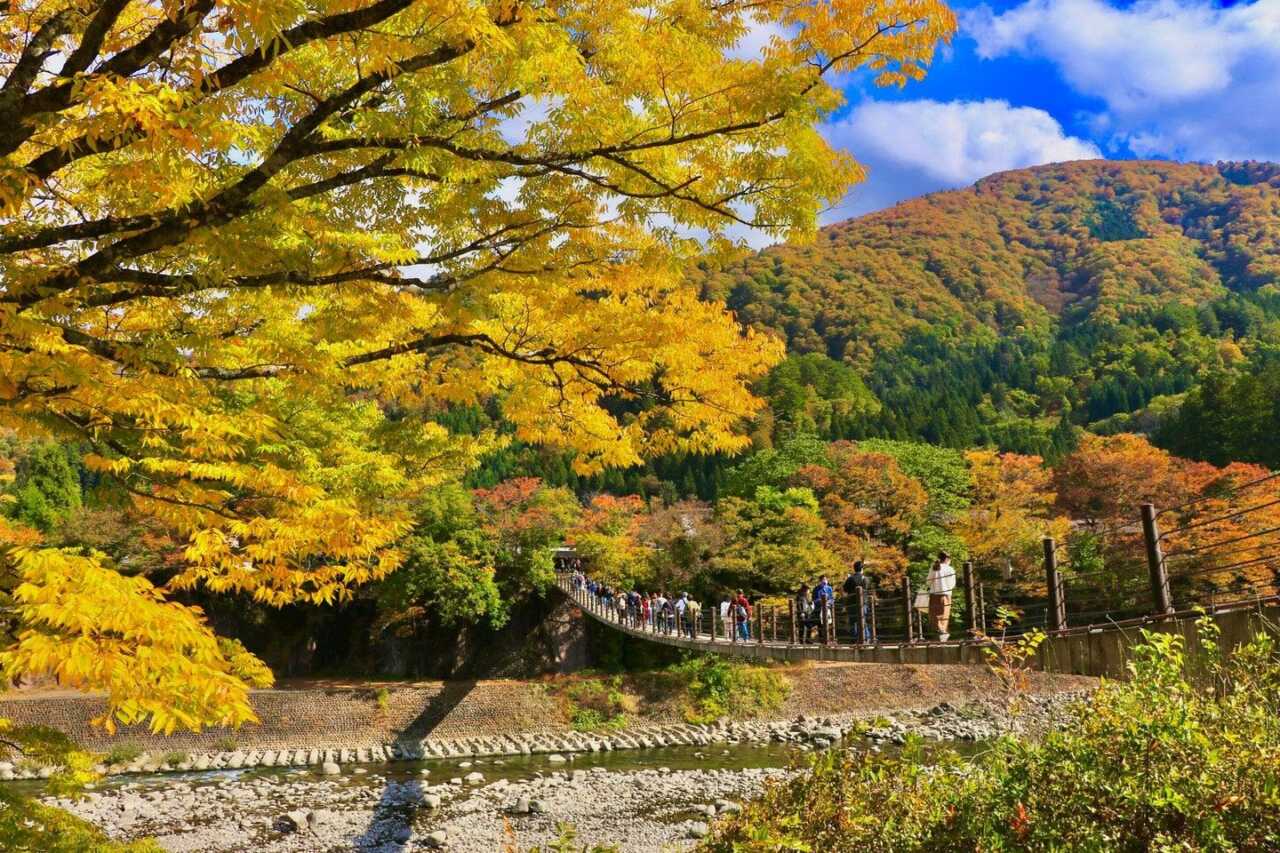
There is a “Lovers’ Sanctuary” lookout where you can see the whole bridge.
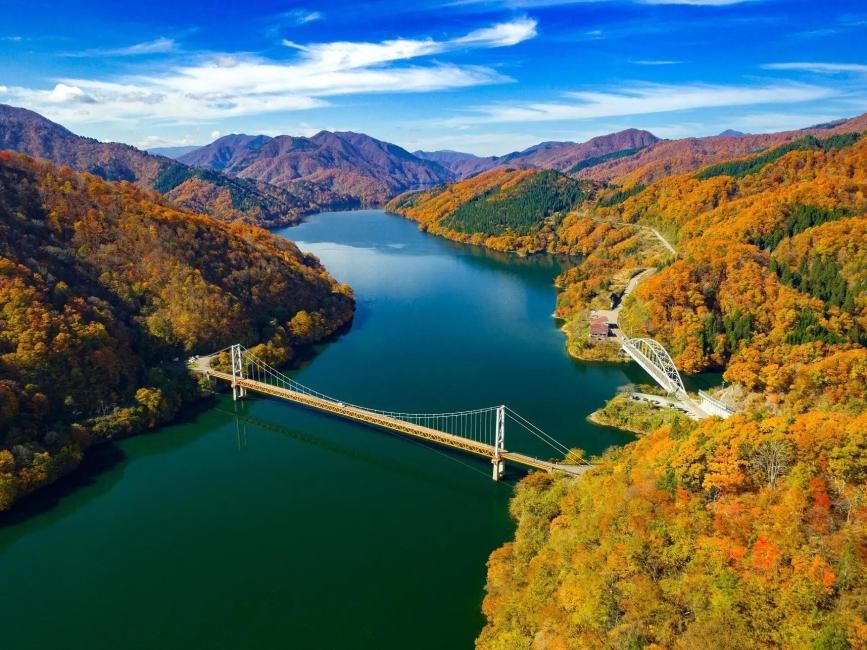
The Momijidani Great Suspension Bridge is 320 meters long and spans a valley, with spectacular views of red maples. Address: 1425-60 Sekiya, Nasushiobara, Tochigi; phone 0287-34-1037; open 08:30-18:00 (08:30-16:00 from 11/1 to 3/31).
Admission prices rise from October 1, 2026: adults from ¥300 to ¥400, children and seniors to ¥300.
Sessho-seki and Nasu-Yumoto: Land of the Nine-Tailed Fox Legend
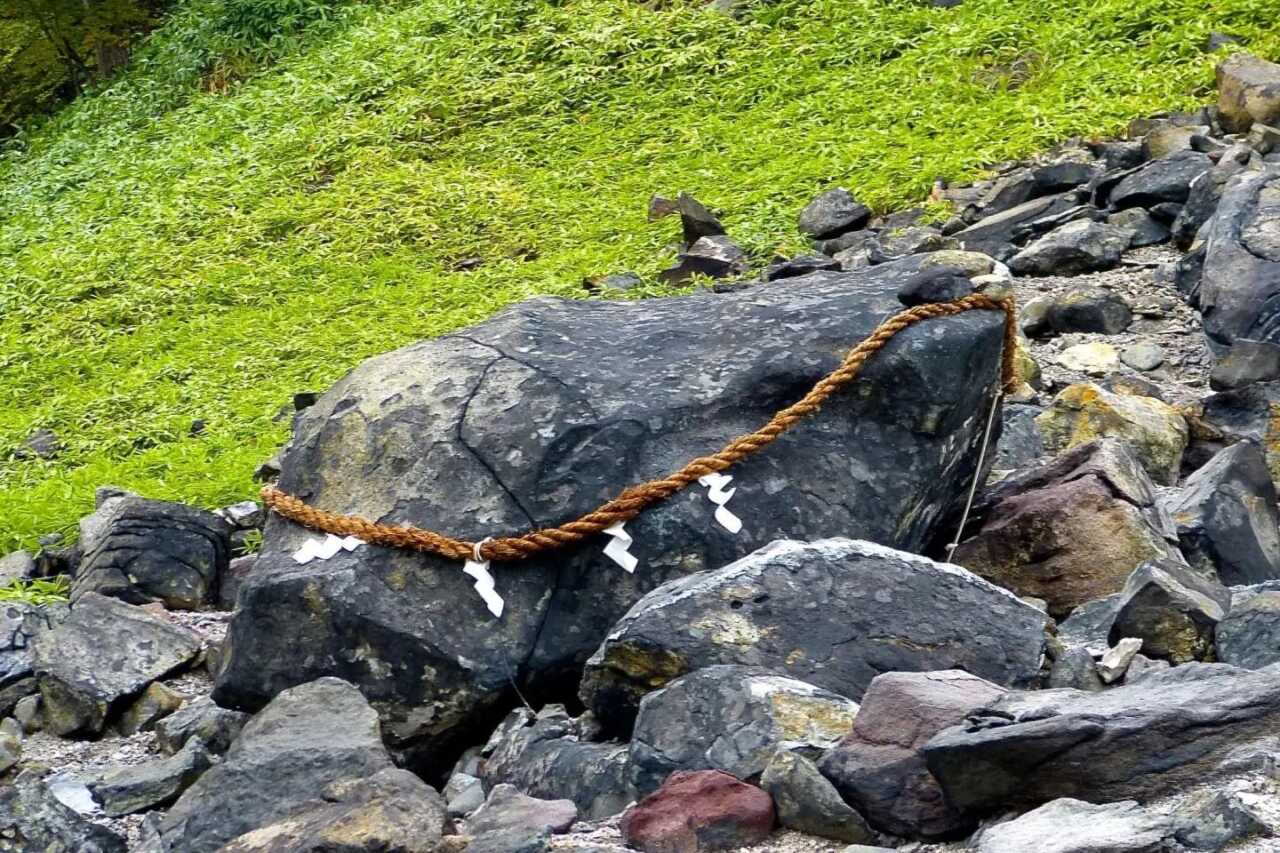
Legend says Sessho-seki seals the resentment of the nine-tailed fox (Tamamo-no-Mae), and people and animals that come near it die, hence the name “Sessho” (killing stone). In March 2022 the rock split, sparking talk that the “seal had been broken,” but the stone surface already had cracks before it split and it was natural deterioration. It is now preserved as split, with a shimenawa rope tied around it, and the boardwalk around it is open free of charge.
Nasu-Yumoto Onsen, where Sessho-seki stands, is the source of Nasu’s hot springs. Sulfur steam and geothermal heat rise from the ground and nothing grows, and the grey-white ground dotted with a dense field of “Sai no Kawara” jizo statues creates a solemn atmosphere. The boardwalk loop takes under 30 minutes, we advise not going near the spring vents, and it can be combined with Shika no Yu.
Shika no Yu: A Thousand-Year-Old Sulfur Communal Bath
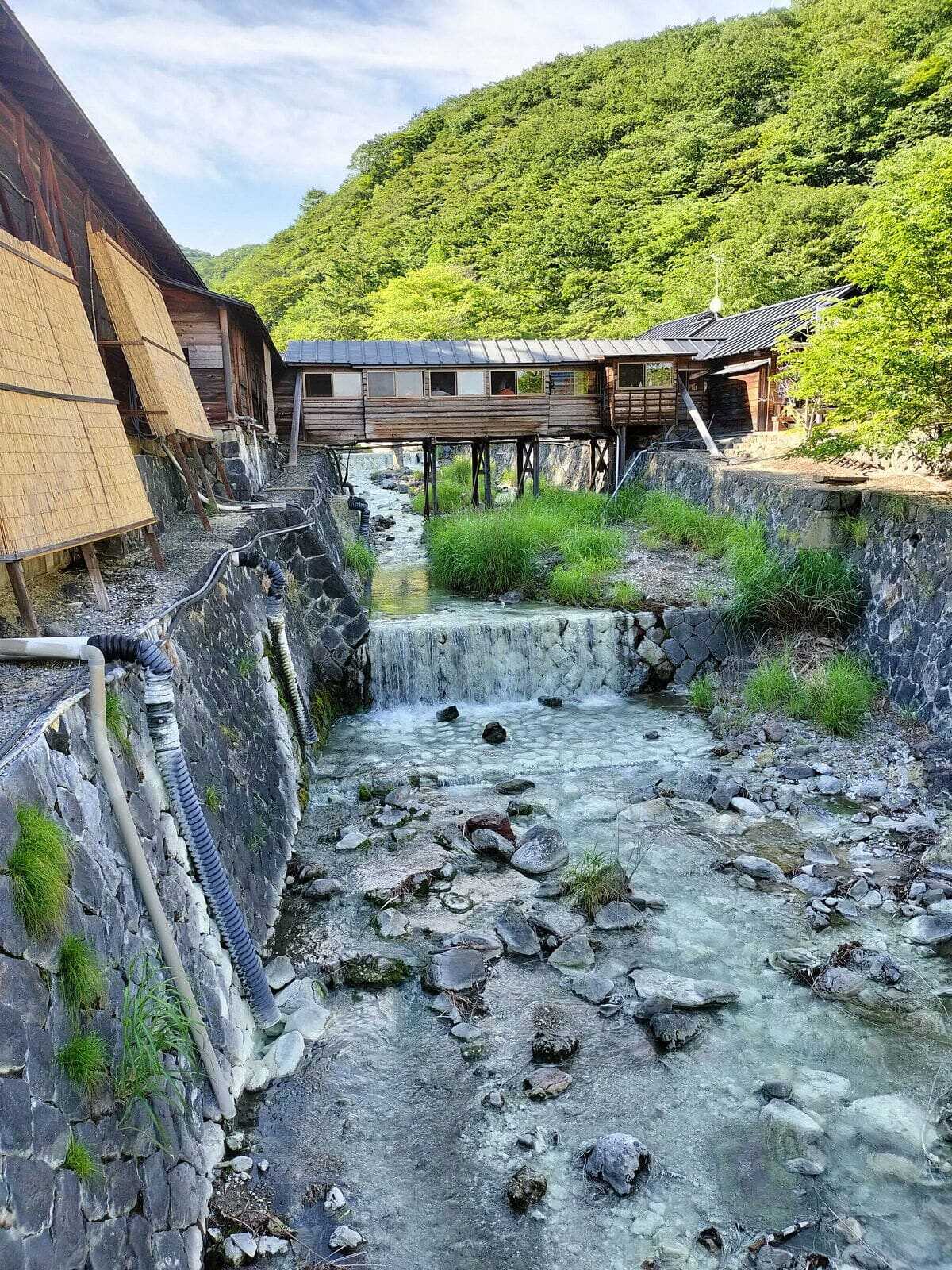
Shika no Yu is the soul hot spring of Nasu-Yumoto. Legend says it got its name about 1,300 years ago when an injured deer soaked here. It is a traditional bathhouse rather than a hot spring hotel, with milky white sulfur water. Bathing fee is ¥500 for adults, ¥300 for elementary school students, and free for infants; open 8:00-18:00 (last admission 17:30).
The bathhouse has pools from 41 to 48 degrees. First pour hot water over yourself with a wooden bucket to get used to the temperature, then soak from the cooler pools to the hotter ones. Body wash and shampoo are not sold, towels must be brought or bought, and your skin will carry a faint sulfur smell after bathing.
Komadome Falls: A Foliage Waterfall in Nasu Heisei no Mori
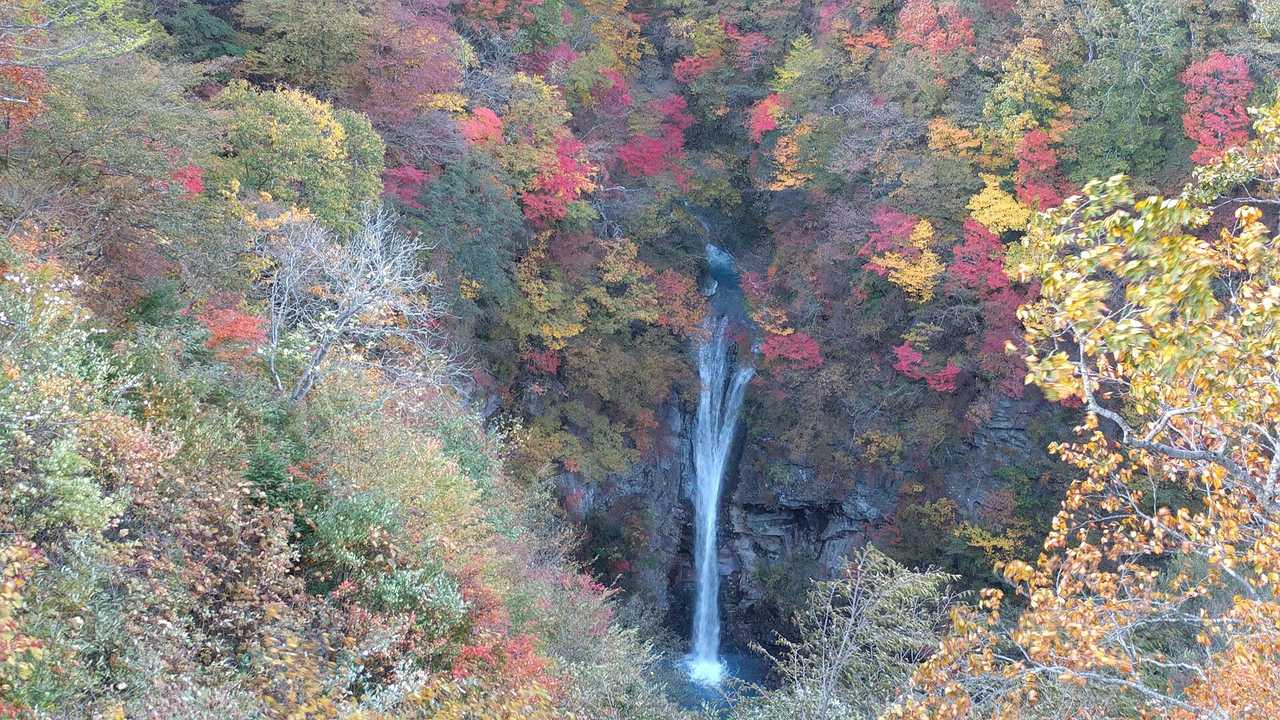
Komadome Falls is in Nasu Heisei no Mori, within Nikko National Park, and is called the “number one waterfall of Nasu.” Peak color is around mid to late October, and you need to walk a short trail to reach it. It is a foliage spot near Mount Chausu worth a visit.
Entry to Nasu Heisei no Mori is free, general opening hours are 9:00-16:30, and it is closed on Wednesdays (the next day if a national holiday falls on Wednesday).
Nasu Animal Kingdom and Minamigaoka Farm: The Top Pick for Families
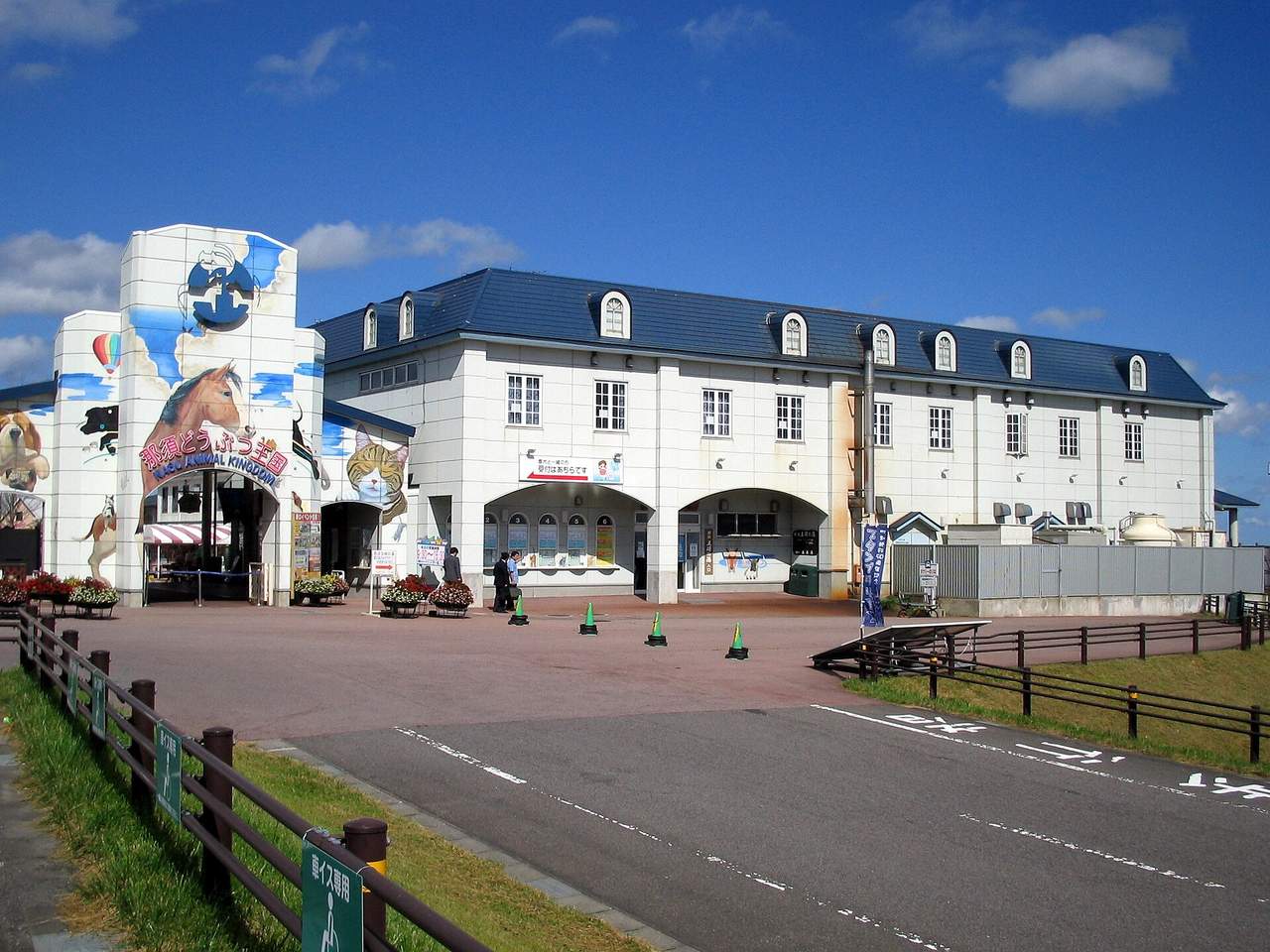
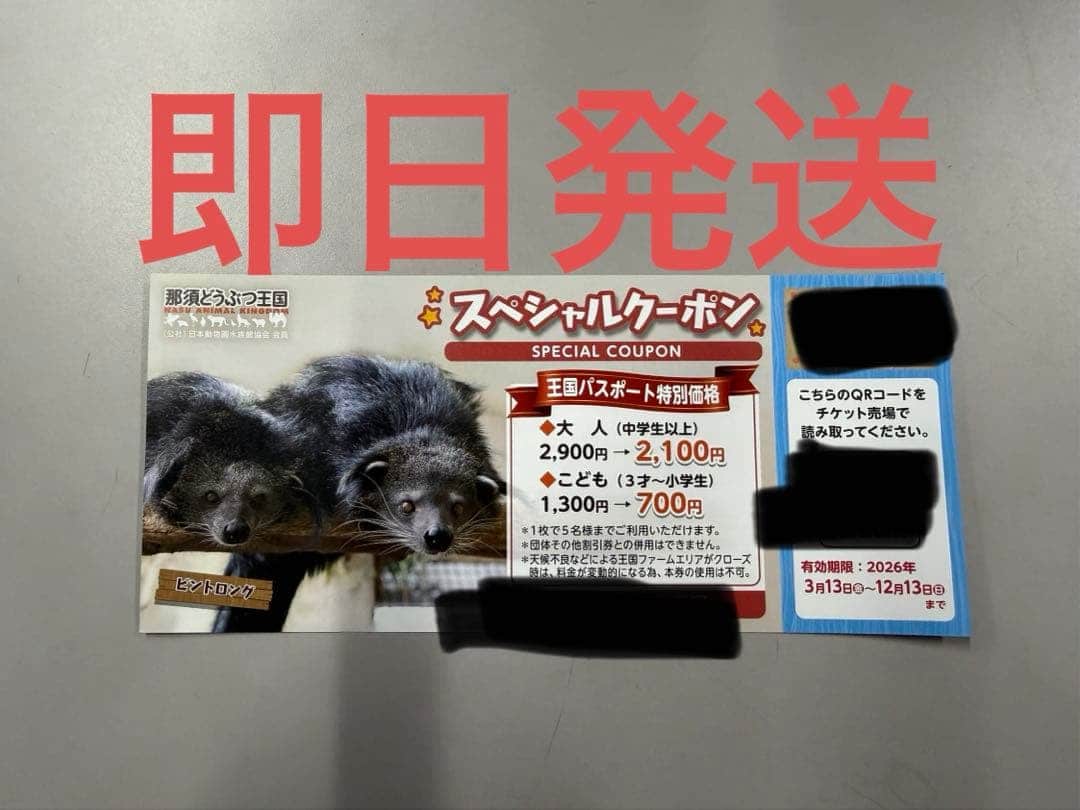
Nasu Animal Kingdom has an outdoor “Kingdom Farm” and an indoor “Kingdom Town,” with capybaras, alpacas, big cats and a bird-of-prey flight show, and indoor areas to play in when it rains. Admission is ¥2,900 for adults and ¥1,300 for ages 3 through elementary school. Minamigaoka Farm has free entry and free parking, sits at about 650 meters above sea level, and lets you get close to cows, horses, alpacas and donkeys.
On rainy days, you can switch to indoor attractions such as the Nasu Stained Glass Museum and the Nasu Teddy Bear Museum.
![Tochigi Japan | Nasu Animal Kingdom e-ticket booking [¥100 cheaper than buying at the gate!]](https://travel.williamlion.tw/wp-content/uploads/sites/7/2026/09/image-170.jpg)
Nasu Onsen Shrine: A Shrine to Visit on the Way
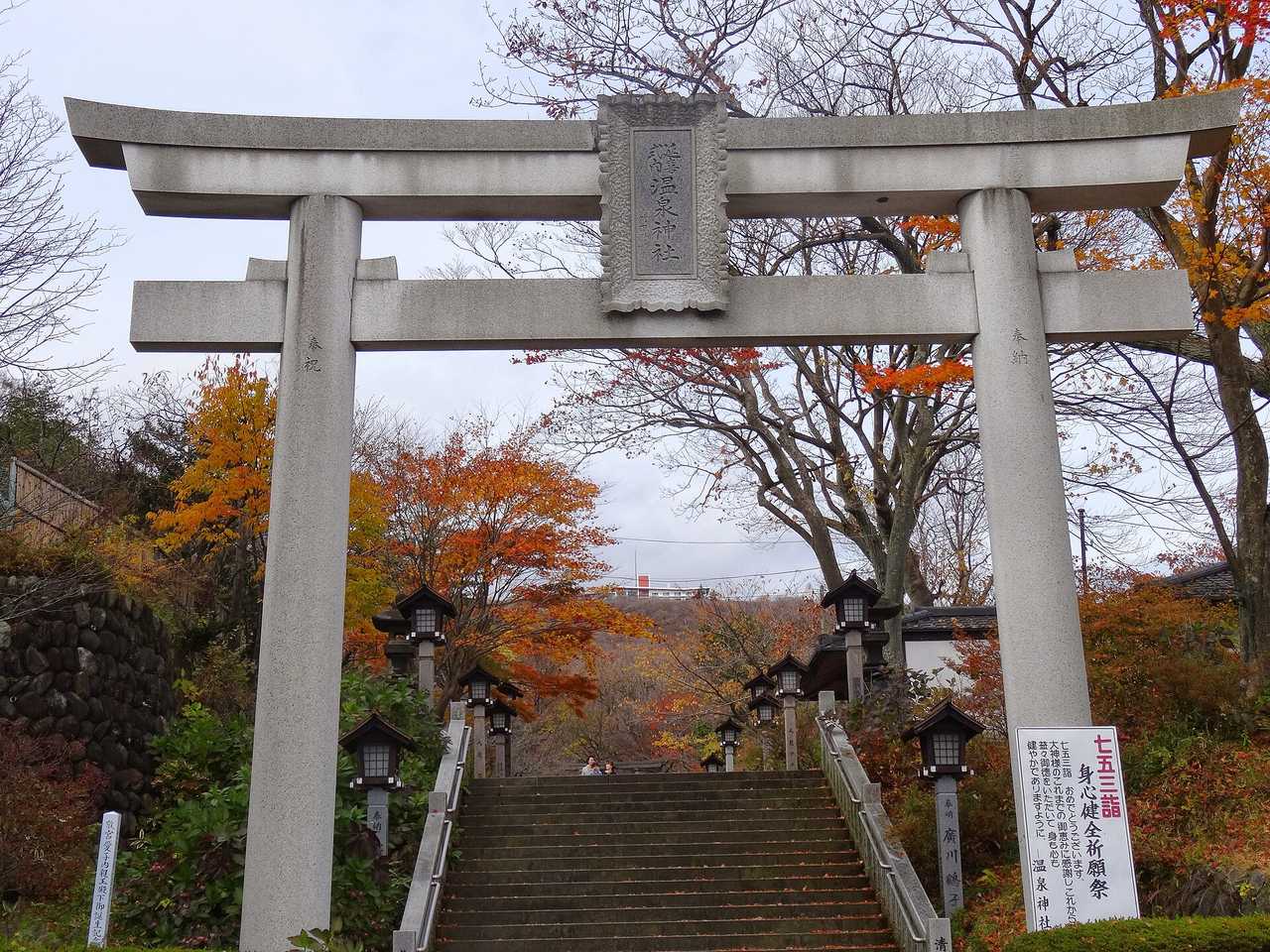
Nasu Onsen Shrine is a shrine often visited along the way on ropeway and Sessho-seki itineraries. Close to the Nasu-Yumoto hot spring area, its old trees and autumn colors complement each other, and it fits well after climbing Mount Chausu or visiting Sessho-seki, as a place to pray for a safe journey.
The shrine grounds are small and take about 15-20 minutes to walk through. It is an easy stop to fit into the Nasu-Yumoto hot spring itinerary without taking much time from your foliage trip, and a good last stop on a Nasu-Yumoto walking route.
Ensan Skyline and Nichien Momiji Line: Foliage Drive Roads
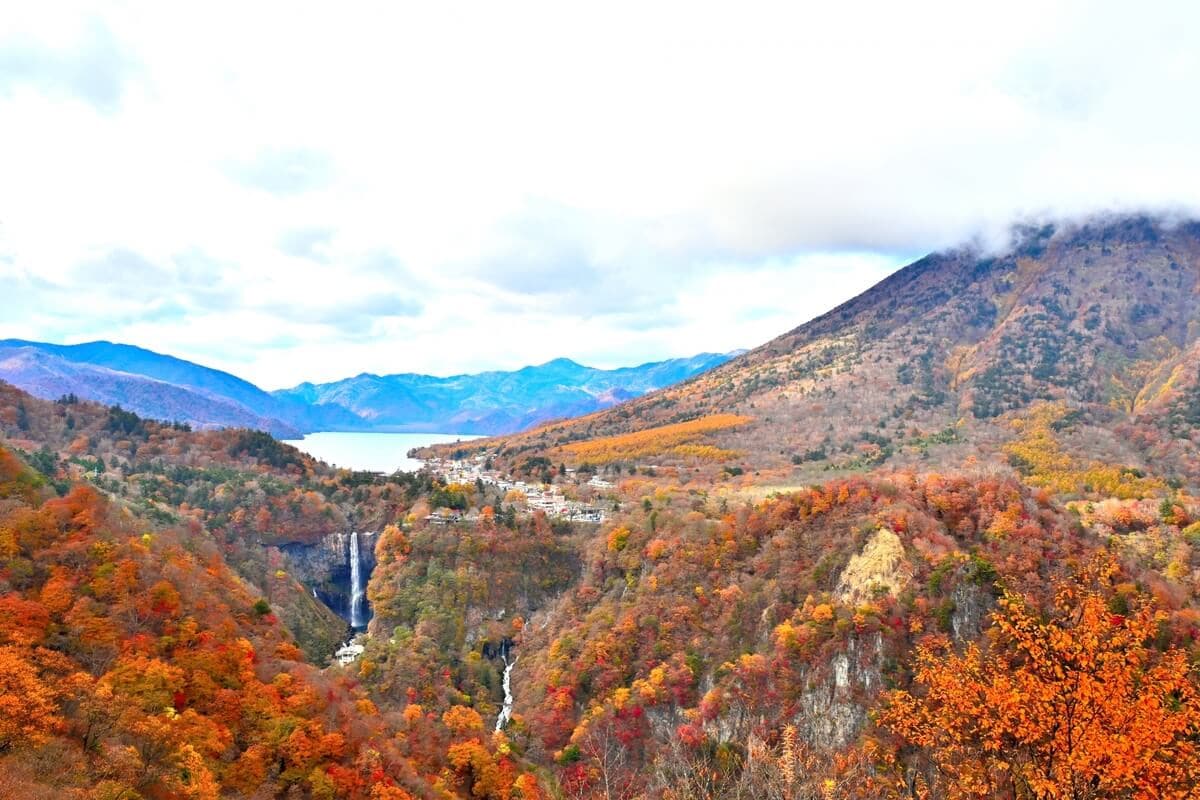
Drivers should not miss the two foliage drive routes, the “Ensan Skyline” and the “Nichien Momiji Line.” Peak color on the Nichien Momiji Line is around late October to early November, with layer upon layer of autumn color along the way, a classic driving foliage experience in the Nasu Highlands.
Nasu has the “Nasu Seven Springs,” with a history of more than 1,300 years, comprising seven sources: Shika no Yu, Benten, Kita, Daimaru, Takao, Hachiman and Sanzu Koya. The local foods “Nasu wagyu” and “Nasu Kogen milk” are also worth tasting.
Tickets and Guided Tours
In the Nasu Highlands, the following tours and tickets can make your foliage trip easier and deeper:
Nasu Ropeway Ticket: Active Volcano Foliage Views
The Nasu Ropeway round trip is ¥2,000 for adults and ¥1,000 for ages 3 through elementary school. We suggest checking the day’s operating status and latest information on the official website or on KKday or Klook before you go, since the active volcano may close and suspend service at short notice in strong wind, thick fog or when volcanic activity rises.
We suggest riding in the morning when the weather is more stable, going up to catch the best summit views, then walking the Sessho-seki trail and Shika no Yu after coming down, for the smoothest route. On peak-season weekends, we suggest queuing early at the foot station for the first ropeway, to avoid crowds and catch the best early-morning visibility.
Momijidani Great Suspension Bridge Tickets: A 320-Meter Foliage Bridge
The new prices have been in effect since October 2026. We suggest carrying enough cash, since ticket windows at some out-of-town sights may not support electronic payment. The paths around the bridge are gentle and suit travelers of all ages, and we recommend it as a stopover on a Shiobara Onsen area itinerary.
Momijidani Great Suspension Bridge tickets are adjusted from October 1, 2026 to ¥400 for adults and ¥300 for children and seniors. You can buy on site, with no online reservation needed, and on peak foliage weekends we suggest avoiding the midday crowd peak.
We suggest visiting the bridge on your route to or from the Shiobara Onsen area, especially recommended in foliage season.
Nasu Animal Kingdom Tickets: A Whole Day for Kids to Burn Off Energy
Check the show schedule first; we suggest wearing comfortable shoes and bringing rain gear for changeable mountain weather. There are plenty of restaurants and souvenir shops in the park, so there is no need to plan meals specially.
Nasu Animal Kingdom prices: ¥2,900 for adults and ¥1,300 for ages 3 through elementary school. In winter (December to February) only the indoor Kingdom Town is open, at ¥2,000 for adults and ¥1,000 for ages 3 through elementary school, and you can buy tickets in advance on KKday or Klook. Plan a whole day for your visit, and check timed shows such as the bird-of-prey flight show beforehand to plan your route.
Nasu Highlands One-Day Chartered Car: See It All Without Driving
Chartered car service can adjust the vehicle type and itinerary flexibly by group size, suited to travelers who want a customized route. We suggest booking 3-5 days in advance, and peak-season weekends are in demand as well.
The itinerary can link the Mount Chausu ropeway, Momijidani Great Suspension Bridge, Sessho-seki and Animal Kingdom, sparing you bus transfers and car rental worries, and suits families or elders traveling together.
Some plans can extend to Nikko Toshogu and Kegon Falls, taking in the autumn colors of both Nasu and Nikko at once, suited to a three-to-four-day in-depth Tochigi trip.
Where to Stay in the Nasu Highlands

Where to Stay: Nasu Onsen Area or Highland Resort Hotels
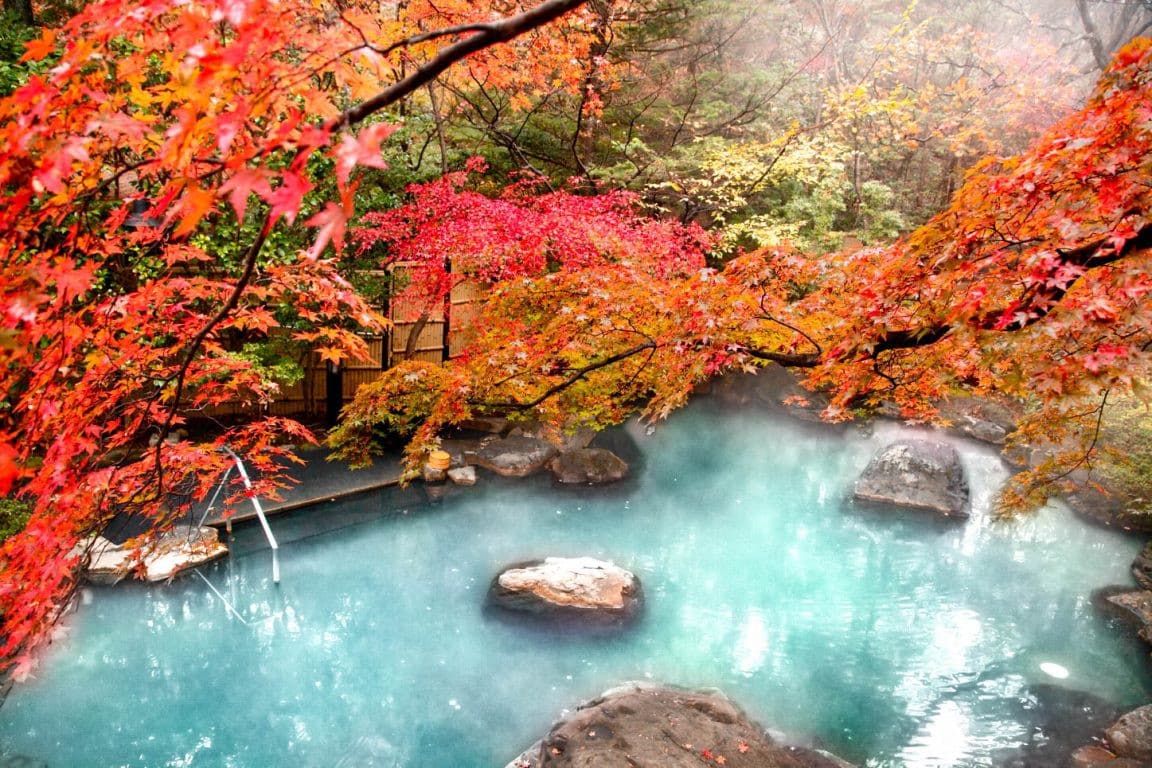
We suggest staying directly at a hot spring inn or resort hotel in the Nasu hot spring area or around Nasu-Yumoto, where you can soak quietly after the day visitors leave and go straight to the sights first thing the next morning, suited to a two-day, one-night trip. Nasu has plenty of lodging at a wide range of prices, but in peak season (summer, foliage weekends, long holidays) rooms are tight, so we suggest booking 1-2 months ahead. Resort-style stays such as Hoshino Resorts RISONARE Nasu suit families with children. Some hot spring inns offer one-night, two-meal plans that include Nasu wagyu kaiseki cuisine, an excellent way to experience local food.
Nasu Highlands Foliage FAQ
When is the best time to see autumn leaves in the Nasu Highlands?
The Mount Chausu area is high in altitude and changes first, around late September to early October; the mid-slope highlands and the hot spring area come later, from late October to early November, and the Momijidani Great Suspension Bridge peaks around late October to early November. For high-altitude foliage aim for late September to early October, and for hot springs plus foliage come in late October.
How much is the Mount Chausu ropeway?
A round trip is ¥2,000 for adults and ¥1,000 for ages 3 through elementary school. It operates roughly from mid-March to early December and is suspended in winter, so we suggest checking the official website for the day’s operating status before you go.
How much is admission to the Momijidani Great Suspension Bridge?
From October 1, 2026 it is adjusted to ¥400 for adults and ¥300 for children and seniors. You can buy tickets on site, with no need to reserve online in advance.
Is the Nasu Highlands good for traveling with children?
Very much so. Nasu Animal Kingdom, Minamigaoka Farm and the Alpaca Farm are all popular family attractions, with the Stained Glass Museum and Teddy Bear Museum as rainy-day backups. It is one of the few resort areas in Kanto where kids can burn off energy all day.
Is it better to drive or take the bus?
If you want to visit several sights (ranch + museum + ropeway + suspension bridge), driving is far more flexible than the bus. If you do not drive, the Kanto Bus Nasu Line is the only option, but service is not frequent, so be sure to check the timetable first and plan around the departures.
Nasu Highlands Autumn Leaves Guide 2026: A Complete Guide to a Kanto Highland Foliage Getaway
Nasu Highlands Autumn Foliage Guide Overview
The Nasu Highlands are the most popular highland resort area in Tochigi Prefecture, north of Tokyo. The Shinkansen from Tokyo to Nasushiobara takes only 70-80 minutes, and with the Nasu Imperial Villa, the Imperial family’s summer retreat, cool summers and autumn foliage make it a favorite of the Imperial family and families alike, with a relaxed highland pace as its main appeal.
Autumn color peaks in stages by altitude: from late September to early October the summit of Mount Chausu changes first, and from late October to early November the color moves to the Momijidani Great Suspension Bridge in the Nasushiobara area, letting you see a gradient of autumn leaves from high mountain to valley.
We suggest pairing it with hot springs and a family ranch for a two-day, one-night trip to enjoy the Nasu Highlands resort pace at leisure.
Still at the Foot of the Mountain After You Get Off: A Key Nasu Transit Reminder
The easiest mistake when planning a Nasu trip is to think that taking the Shinkansen to Nasushiobara Station gets you to the highland sights. In fact you are still at the foot of the mountain after getting off, and need to transfer to a bus or rent a car to go up. For getting there, take the Tohoku Shinkansen “Nasuno,” about 70-80 minutes from Tokyo to Nasushiobara. If you use JR a lot on your trip, you can check whether a JR Pass is worth it, but the Kanto Bus that goes up the mountain is not covered by the Pass and must be paid for separately. We suggest staying directly at a hot spring inn or resort hotel in the highlands, where you can soak quietly after the day visitors leave and reach the sights first thing the next morning, avoiding daily trips up and down the mountain.
Nasu Highlands Transit Guide: A Full Breakdown from Tokyo
Kanto Bus Nasu Line: The Only Option Without a Car
Take the Kanto Bus Nasu Line from the west exit of Nasushiobara Station. To Nasu-Yumoto it costs ¥1,170 one way, and to the ropeway station it takes about 70 to 85 minutes (¥1,640 one way). It is the main way up to the highlands for travelers who do not drive.
Service is not frequent, and in off-peak hours there is often one bus every hour or two, so be sure to check the latest bus timetable before you go to avoid a long wait.
This bus section is not covered by the JR Pass and must be paid for separately, so include it in your budget planning.
The bus stops at places such as Animal Kingdom and the ranches along the way, so you can flexibly choose where to get off to fit family attractions.
Rental Car: The Best Choice for Visiting Many Sights
If you want to visit several ranches, museums and the ropeway, driving is more convenient. After leaving the expressway at Nasu IC, follow the Nasu Highway toward Yumoto. Most sights have free or low-cost parking lots (such as Minamigaoka Farm and Animal Kingdom), and for a family traveling in one car the flexibility is far better than waiting for buses. Driving also lets you arrange sights with large altitude differences, such as the “Momijidani Great Suspension Bridge” and “Mount Chausu,” more flexibly and free of timetables, which is especially an advantage on peak-season weekends when traffic is heavy, and suits adding famous foliage drive roads such as the “Ensan Skyline” or the “Nichien Momiji Line,” extending it into a highland driving trip.
Getting to the Momijidani Great Suspension Bridge: JR Bus Shuttle
To reach the Momijidani Great Suspension Bridge, take a JR Bus from Nasushiobara Station toward Shiobara Onsen and get off at “Momijidani Ohashi” stop or “Kaikobashi” stop, then walk about 3 minutes. It is the most direct public transport option. The bridge and Mount Chausu belong to Nasu Town and Nasushiobara City respectively, with a considerable driving distance between them. If you cover both on the same day, linking them by car is smoothest, while by bus you need to allow more time for transfers and waiting. If you have time, you can also add nearby sights such as Komadome Falls and Benten Suspension Bridge along the way to and from the Shiobara Onsen area, enriching the whole foliage trip.
Avoiding Traffic Jams and Crowds
In peak foliage season (especially October weekends), the “Nasu Volcano Highway” leading to the Nasu Ropeway foot station is very prone to heavy jams. We strongly recommend passing through the Nasu-Yumoto hot spring town before 6:00 a.m. to start up the mountain, or visiting from Monday to Friday, which saves a lot of time in traffic.
On peak foliage weekends, parking lots often fill up before 4:30-5:00 a.m. If you have time, you can also consider staying at a hot spring inn in the highlands, where you can soak quietly after the day visitors leave and go straight to the sights first thing the next morning, with no need to go up and down the mountain every day.
A Complete Guide to Nasu Highlands Autumn Foliage Spots
Mount Chausu and the Nasu Ropeway: Active Volcano Foliage Views
Mount Chausu is the main peak of the Nasu mountain range, an active volcano about 1,915 meters high whose summit still emits sulfur gas. The Nasu Ropeway goes straight to the summit station at the ninth station. It runs roughly from mid-March to early December, 8:30-16:30, about every 20 minutes, and a round trip is ¥2,000.
Continuing on a volcanic gravel path takes about 40-60 minutes to reach the peak, with views over the Kanto Plain along the way. The ropeway and trail may close if volcanic activity rises or in strong wind and thick fog, so check the official website and the Japan Meteorological Agency’s alert level before you go.
Momijidani Great Suspension Bridge: A 320-Meter Foliage Bridge
There is a “Lovers’ Sanctuary” lookout where you can see the whole bridge.
The Momijidani Great Suspension Bridge is 320 meters long and spans a valley, with spectacular views of red maples. Address: 1425-60 Sekiya, Nasushiobara, Tochigi; phone 0287-34-1037; open 08:30-18:00 (08:30-16:00 from 11/1 to 3/31).
Admission prices rise from October 1, 2026: adults from ¥300 to ¥400, children and seniors to ¥300.
Sessho-seki and Nasu-Yumoto: Land of the Nine-Tailed Fox Legend
Legend says Sessho-seki seals the resentment of the nine-tailed fox (Tamamo-no-Mae), and people and animals that come near it die, hence the name “Sessho” (killing stone). In March 2022 the rock split, sparking talk that the “seal had been broken,” but the stone surface already had cracks before it split and it was natural deterioration. It is now preserved as split, with a shimenawa rope tied around it, and the boardwalk around it is open free of charge.
Nasu-Yumoto Onsen, where Sessho-seki stands, is the source of Nasu’s hot springs. Sulfur steam and geothermal heat rise from the ground and nothing grows, and the grey-white ground dotted with a dense field of “Sai no Kawara” jizo statues creates a solemn atmosphere. The boardwalk loop takes under 30 minutes, we advise not going near the spring vents, and it can be combined with Shika no Yu.
Shika no Yu: A Thousand-Year-Old Sulfur Communal Bath
Shika no Yu is the soul hot spring of Nasu-Yumoto. Legend says it got its name about 1,300 years ago when an injured deer soaked here. It is a traditional bathhouse rather than a hot spring hotel, with milky white sulfur water. Bathing fee is ¥500 for adults, ¥300 for elementary school students, and free for infants; open 8:00-18:00 (last admission 17:30).
The bathhouse has pools from 41 to 48 degrees. First pour hot water over yourself with a wooden bucket to get used to the temperature, then soak from the cooler pools to the hotter ones. Body wash and shampoo are not sold, towels must be brought or bought, and your skin will carry a faint sulfur smell after bathing.
Komadome Falls: A Foliage Waterfall in Nasu Heisei no Mori
Komadome Falls is in Nasu Heisei no Mori, within Nikko National Park, and is called the “number one waterfall of Nasu.” Peak color is around mid to late October, and you need to walk a short trail to reach it. It is a foliage spot near Mount Chausu worth a visit.
Entry to Nasu Heisei no Mori is free, general opening hours are 9:00-16:30, and it is closed on Wednesdays (the next day if a national holiday falls on Wednesday).
Nasu Animal Kingdom and Minamigaoka Farm: The Top Pick for Families
Nasu Animal Kingdom has an outdoor “Kingdom Farm” and an indoor “Kingdom Town,” with capybaras, alpacas, big cats and a bird-of-prey flight show, and indoor areas to play in when it rains. Admission is ¥2,900 for adults and ¥1,300 for ages 3 through elementary school. Minamigaoka Farm has free entry and free parking, sits at about 650 meters above sea level, and lets you get close to cows, horses, alpacas and donkeys.
On rainy days, you can switch to indoor attractions such as the Nasu Stained Glass Museum and the Nasu Teddy Bear Museum.
Nasu Onsen Shrine: A Shrine to Visit on the Way
Nasu Onsen Shrine is a shrine often visited along the way on ropeway and Sessho-seki itineraries. Close to the Nasu-Yumoto hot spring area, its old trees and autumn colors complement each other, and it fits well after climbing Mount Chausu or visiting Sessho-seki, as a place to pray for a safe journey.
The shrine grounds are small and take about 15-20 minutes to walk through. It is an easy stop to fit into the Nasu-Yumoto hot spring itinerary without taking much time from your foliage trip, and a good last stop on a Nasu-Yumoto walking route.
Ensan Skyline and Nichien Momiji Line: Foliage Drive Roads
Drivers should not miss the two foliage drive routes, the “Ensan Skyline” and the “Nichien Momiji Line.” Peak color on the Nichien Momiji Line is around late October to early November, with layer upon layer of autumn color along the way, a classic driving foliage experience in the Nasu Highlands.
Nasu has the “Nasu Seven Springs,” with a history of more than 1,300 years, comprising seven sources: Shika no Yu, Benten, Kita, Daimaru, Takao, Hachiman and Sanzu Koya. The local foods “Nasu wagyu” and “Nasu Kogen milk” are also worth tasting.
Tickets and Guided Tours
In the Nasu Highlands, the following tours and tickets can make your foliage trip easier and deeper:
Nasu Ropeway Ticket: Active Volcano Foliage Views
The Nasu Ropeway round trip is ¥2,000 for adults and ¥1,000 for ages 3 through elementary school. We suggest checking the day’s operating status and latest information on the official website or on KKday or Klook before you go, since the active volcano may close and suspend service at short notice in strong wind, thick fog or when volcanic activity rises.
We suggest riding in the morning when the weather is more stable, going up to catch the best summit views, then walking the Sessho-seki trail and Shika no Yu after coming down, for the smoothest route. On peak-season weekends, we suggest queuing early at the foot station for the first ropeway, to avoid crowds and catch the best early-morning visibility.
Momijidani Great Suspension Bridge Tickets: A 320-Meter Foliage Bridge
The new prices have been in effect since October 2026. We suggest carrying enough cash, since ticket windows at some out-of-town sights may not support electronic payment. The paths around the bridge are gentle and suit travelers of all ages, and we recommend it as a stopover on a Shiobara Onsen area itinerary.
Momijidani Great Suspension Bridge tickets are adjusted from October 1, 2026 to ¥400 for adults and ¥300 for children and seniors. You can buy on site, with no online reservation needed, and on peak foliage weekends we suggest avoiding the midday crowd peak.
We suggest visiting the bridge on your route to or from the Shiobara Onsen area, especially recommended in foliage season.
Nasu Animal Kingdom Tickets: A Whole Day for Kids to Burn Off Energy
Check the show schedule first; we suggest wearing comfortable shoes and bringing rain gear for changeable mountain weather. There are plenty of restaurants and souvenir shops in the park, so there is no need to plan meals specially.
Nasu Animal Kingdom prices: ¥2,900 for adults and ¥1,300 for ages 3 through elementary school. In winter (December to February) only the indoor Kingdom Town is open, at ¥2,000 for adults and ¥1,000 for ages 3 through elementary school, and you can buy tickets in advance on KKday or Klook. Plan a whole day for your visit, and check timed shows such as the bird-of-prey flight show beforehand to plan your route.
Nasu Highlands One-Day Chartered Car: See It All Without Driving
Chartered car service can adjust the vehicle type and itinerary flexibly by group size, suited to travelers who want a customized route. We suggest booking 3-5 days in advance, and peak-season weekends are in demand as well.
The itinerary can link the Mount Chausu ropeway, Momijidani Great Suspension Bridge, Sessho-seki and Animal Kingdom, sparing you bus transfers and car rental worries, and suits families or elders traveling together.
Some plans can extend to Nikko Toshogu and Kegon Falls, taking in the autumn colors of both Nasu and Nikko at once, suited to a three-to-four-day in-depth Tochigi trip.
Where to Stay in the Nasu Highlands
Where to Stay: Nasu Onsen Area or Highland Resort Hotels
We suggest staying directly at a hot spring inn or resort hotel in the Nasu hot spring area or around Nasu-Yumoto, where you can soak quietly after the day visitors leave and go straight to the sights first thing the next morning, suited to a two-day, one-night trip. Nasu has plenty of lodging at a wide range of prices, but in peak season (summer, foliage weekends, long holidays) rooms are tight, so we suggest booking 1-2 months ahead. Resort-style stays such as Hoshino Resorts RISONARE Nasu suit families with children. Some hot spring inns offer one-night, two-meal plans that include Nasu wagyu kaiseki cuisine, an excellent way to experience local food.
Nasu Highlands Foliage FAQ
When is the best time to see autumn leaves in the Nasu Highlands?
The Mount Chausu area is high in altitude and changes first, around late September to early October; the mid-slope highlands and the hot spring area come later, from late October to early November, and the Momijidani Great Suspension Bridge peaks around late October to early November. For high-altitude foliage aim for late September to early October, and for hot springs plus foliage come in late October.
How much is the Mount Chausu ropeway?
A round trip is ¥2,000 for adults and ¥1,000 for ages 3 through elementary school. It operates roughly from mid-March to early December and is suspended in winter, so we suggest checking the official website for the day’s operating status before you go.
How much is admission to the Momijidani Great Suspension Bridge?
From October 1, 2026 it is adjusted to ¥400 for adults and ¥300 for children and seniors. You can buy tickets on site, with no need to reserve online in advance.
Is the Nasu Highlands good for traveling with children?
Very much so. Nasu Animal Kingdom, Minamigaoka Farm and the Alpaca Farm are all popular family attractions, with the Stained Glass Museum and Teddy Bear Museum as rainy-day backups. It is one of the few resort areas in Kanto where kids can burn off energy all day.
Is it better to drive or take the bus?
If you want to visit several sights (ranch + museum + ropeway + suspension bridge), driving is far more flexible than the bus. If you do not drive, the Kanto Bus Nasu Line is the only option, but service is not frequent, so be sure to check the timetable first and plan around the departures.
