

Sanuki Udon Pilgrimage: How Kagawa Locals Turned Eating Noodles Into a Way of Getting Around
Kagawa Prefecture calls itself “Udon Prefecture,” with at least 600 udon shops, so dense that if you see a line at lunchtime, it is most likely an udon shop. Locals do not stop at one; they drive from shop to shop, eating at each. This way of traveling is called the “udon pilgrimage” (udon junrei, うどん巡礼).
But it is not very friendly to outsiders: many famous shops open at dawn and close after noon, shutting as soon as the noodles run out; ordering is self-service, and if you do not know the rules you get stuck at the counter; and the best few are hidden in the middle of the fields and almost impossible to reach without a car. Below we first explain four core ideas, then cover how to eat, famous shops and transport.
The Soul of Sanuki Udon: What Exactly Is “Koshi”?
The most emphasized trait of Sanuki udon is “koshi,” a texture somewhere between springiness and chew. The noodles are squarish in cross-section with a smooth surface, and when you bite in there is resistance first and then a rebound, making it an entirely different food from the softer udon of the Kanto region.
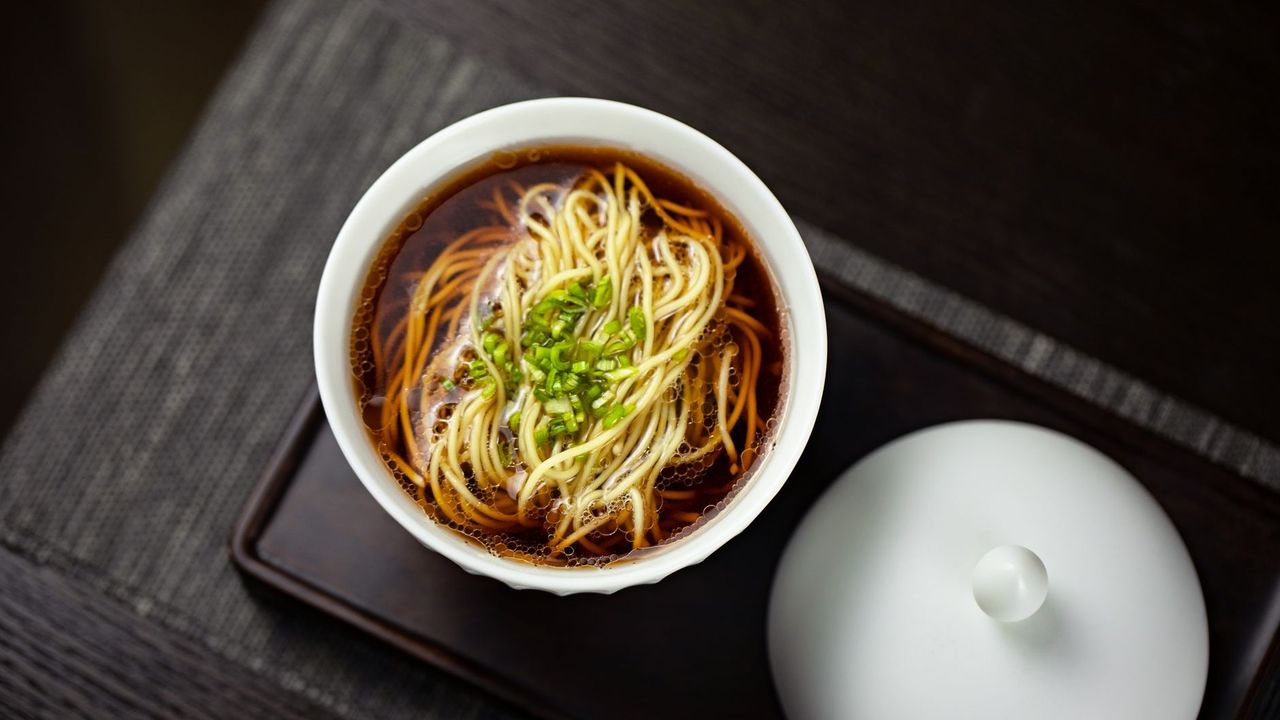
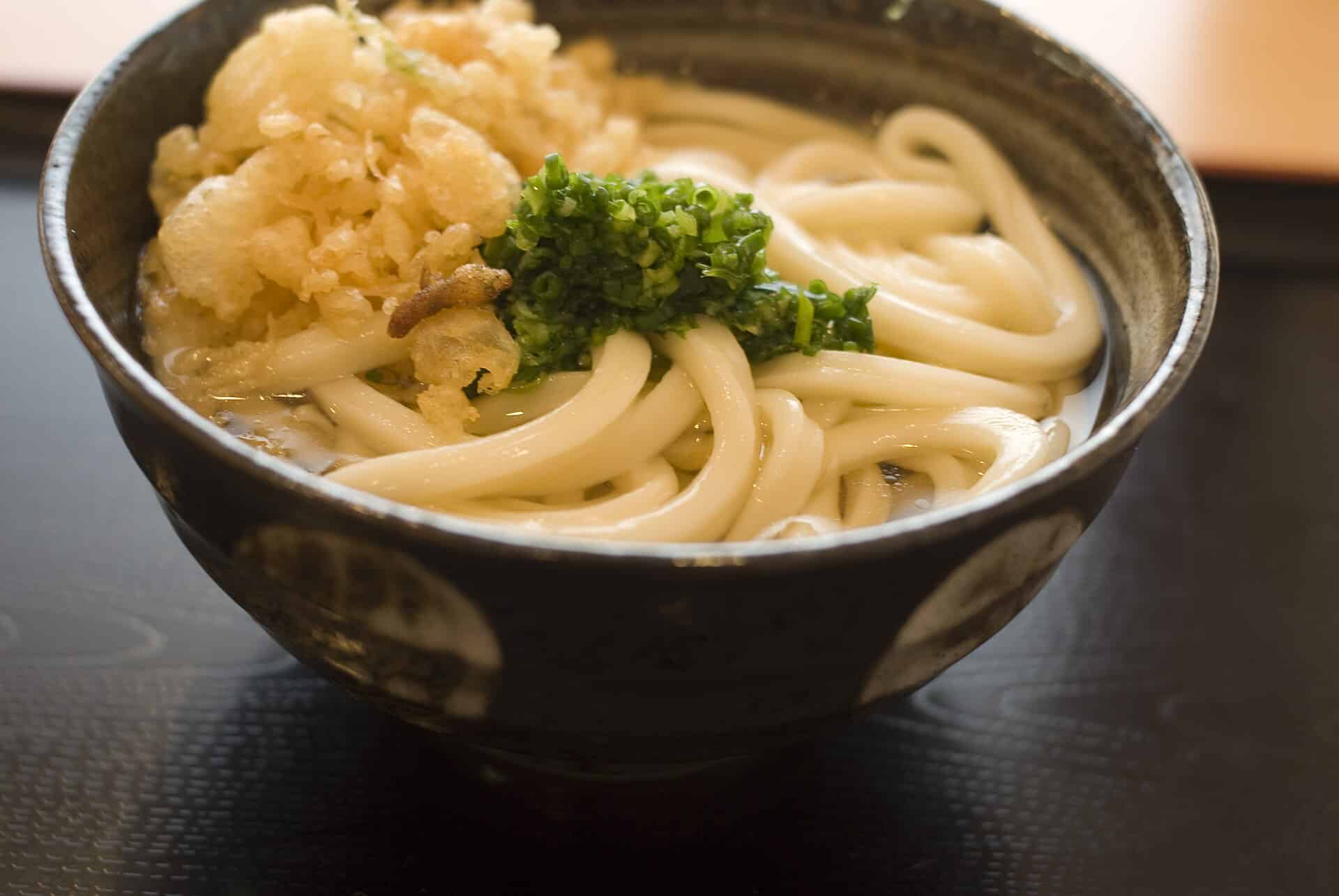
This texture comes from a high proportion of medium-strength flour, salted water and repeated stomping and kneading, plus Kagawa’s low-rainfall climate, which suits wheat growing. Because the noodles themselves are the star, the most traditional ways of eating are surprisingly minimal in toppings, and a bowl of plain-broth udon is enough to show a shop’s skill.
Self-Service (Serufu) Shops: The Default Format of Kagawa Udon Shops
Most highly rated shops in Kagawa are “self-service shops” (serufu-ten). You take your own tray, say how many portions (tama) you want, pick your own tempura, pour the broth yourself at the broth barrel, sprinkle on your own scallions, and carry the bowl back to the return counter when you finish.
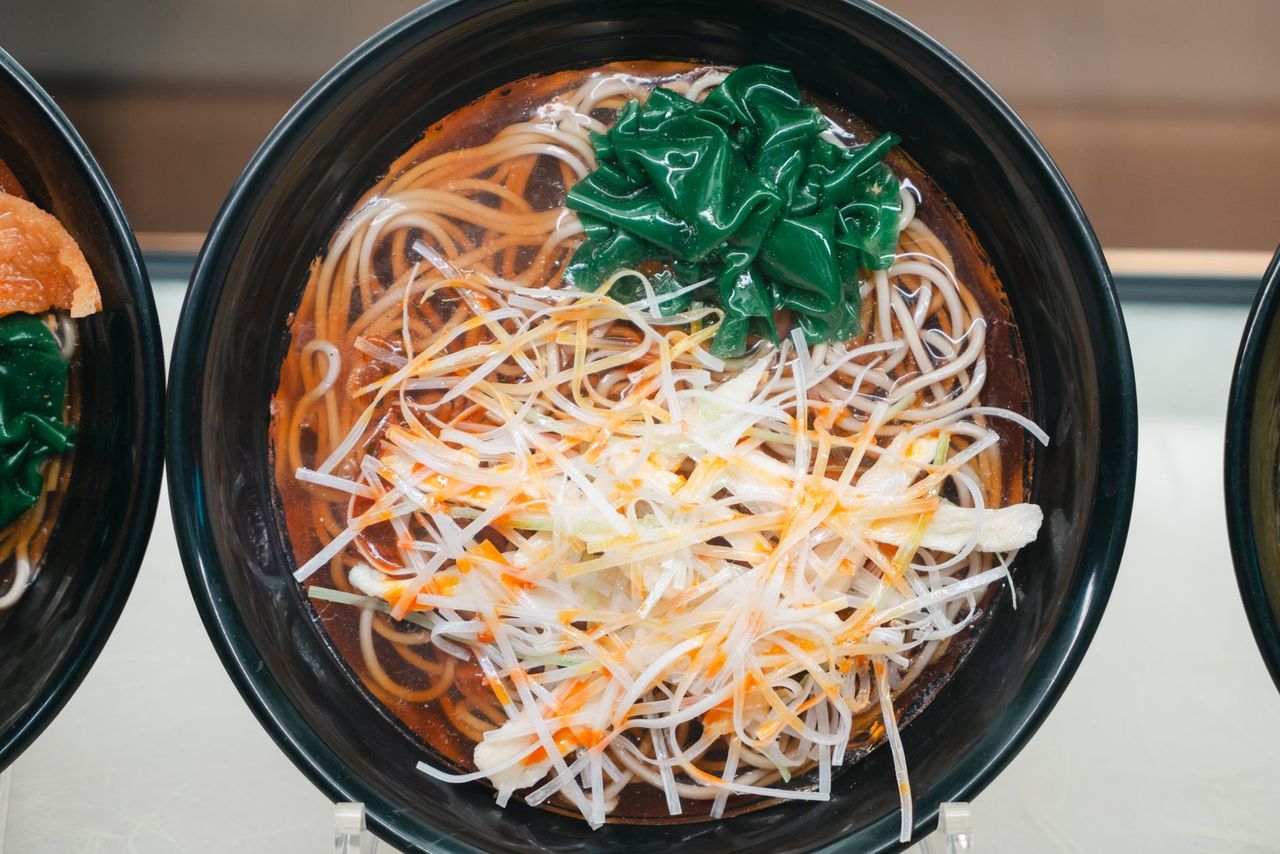
This is not just to save on labor; it lets everyone adjust the temperature of the noodles and the amount of broth to their own rhythm. You may panic the first time, but once you follow the person in front of you through the route you will understand, and prices are kept very low as a result.
Noodle-Factory Shops: Making Noodles Is the Real Business, You Just Get to Eat Beside It
The hardest level of the pilgrimage is the “noodle-factory” shop (seimenjo-gata). Their real business is wholesale noodle making, and they simply put a few tables or outdoor benches in a corner of the factory so customers can eat on the spot, so there is no menu and no table service, and sometimes you even have to ladle the broth yourself from a bucket.
These shops are mostly in the middle of fields or in the mountains, and may be open for only an hour or two on weekdays, closing once sold out. But precisely because the noodles are freshly made, many people believe this is where you taste Sanuki udon in its most original form, and it is the ultimate goal of the pilgrimage.
Pilgrimage Route Logic: Base Yourself in Takamatsu and Extend to Marugame and Kotohira
For your first pilgrimage, we suggest centering on “Takamatsu city plus the Marugame/Kotohira area.” Takamatsu city has easy transport and a high density of shops, suited to famous shops reachable without a car such as Baka Ichidai and Takekiyo, with one for breakfast and one for lunch being just right.
If you have a rental car or are combining suburban outings, string together Yamagoe in Ayagawa, Gamo in Sakaide and Osada in Kanoka in Zentsuji into a countryside noodle route. Two to three shops a day is a reasonable upper limit; beyond that you lose the ability to tell the flavor differences.
What Are the Must-Try Ways to Eat Sanuki Udon? Kake, Bukkake, Kamaage and Kamatama Explained
Understand how to eat before ordering, because menus are usually only in Japanese and have no photos. The following six are the most common options in Kagawa shops, roughly from basic to advanced.
Kake Udon: The Plain-Broth Bowl That Best Shows a Shop’s Skill
“Kake” is the most basic and traditional way: freshly boiled noodles go into a bowl and warm broth is poured straight over. Kagawa broth is based on small dried sardines (iriko) from Ibuki Island, with kelp and bonito flakes added, tasting clear yet with distinct sweetness and sea flavor.
Because nothing can cover anything up, the quality of the noodles and the layers of the broth are completely laid bare, so seasoned pilgrims almost always order kake at the first shop. Scallions, grated ginger and tempura crumbs (tenkasu) are the standard toppings, all free to help yourself.
Bukkake Udon: Thick Sauce Poured Straight On, Best With Lemon
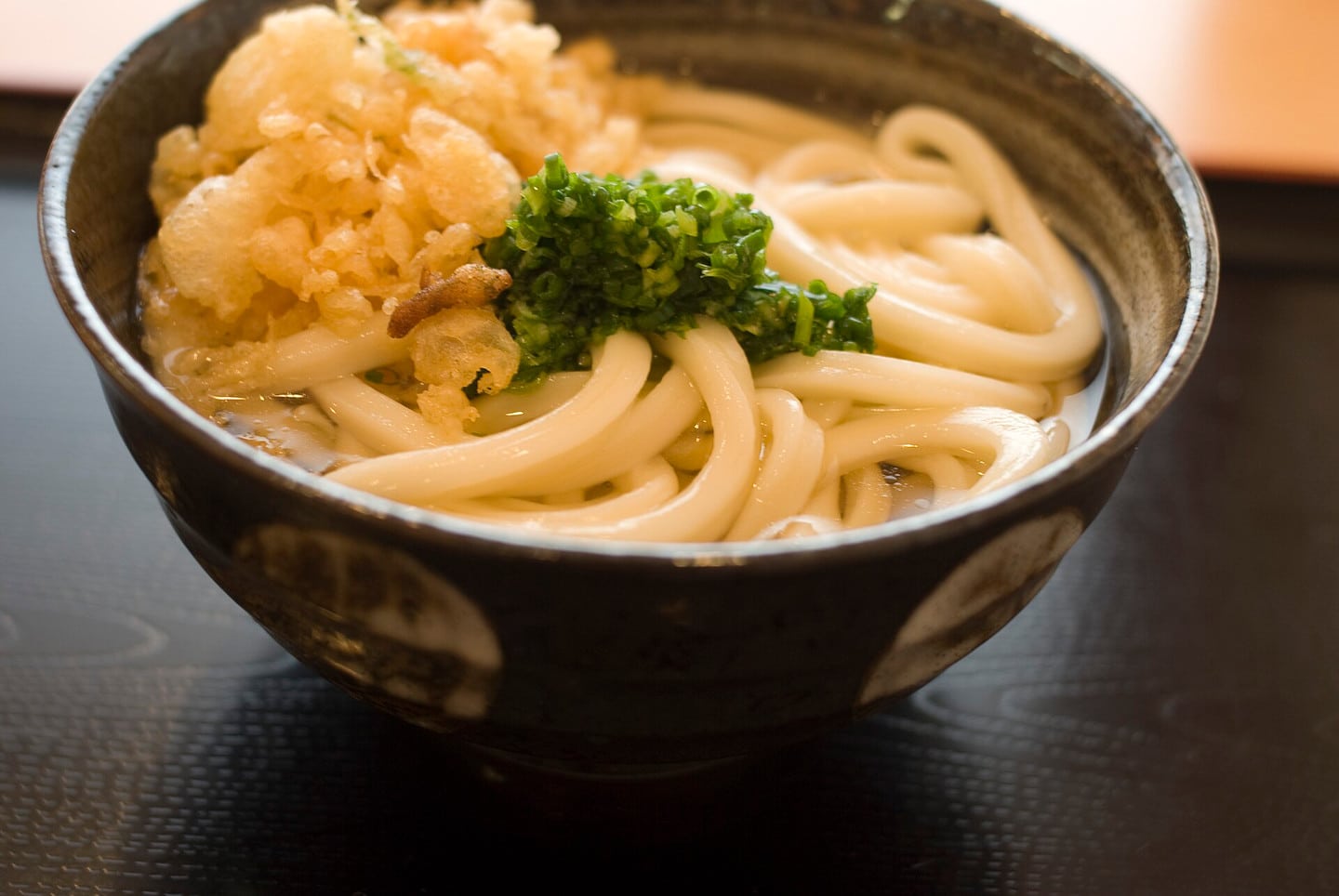
“Bukkake” means “pour straight on”: instead of being steeped in broth, a much more concentrated sauce is poured directly over the noodles, along with grated daikon, scallions, tempura crumbs and a slice of lemon, and you mix it with chopsticks to eat.
The sauce is thick with little liquid, so the chew of the noodles is highlighted most fully, and squeezing on lemon cuts the saltiness with acidity, making it especially refreshing in summer. You can order it hot or cold; cold (hiya) has the springiest texture and is the number-one item in many shops. Note that the sauce is already salty, so taste it after mixing before deciding whether to add more; many first-timers make it too salty by accident.
Kamaage Udon: Lifted Straight From the Pot, Dipped to Eat
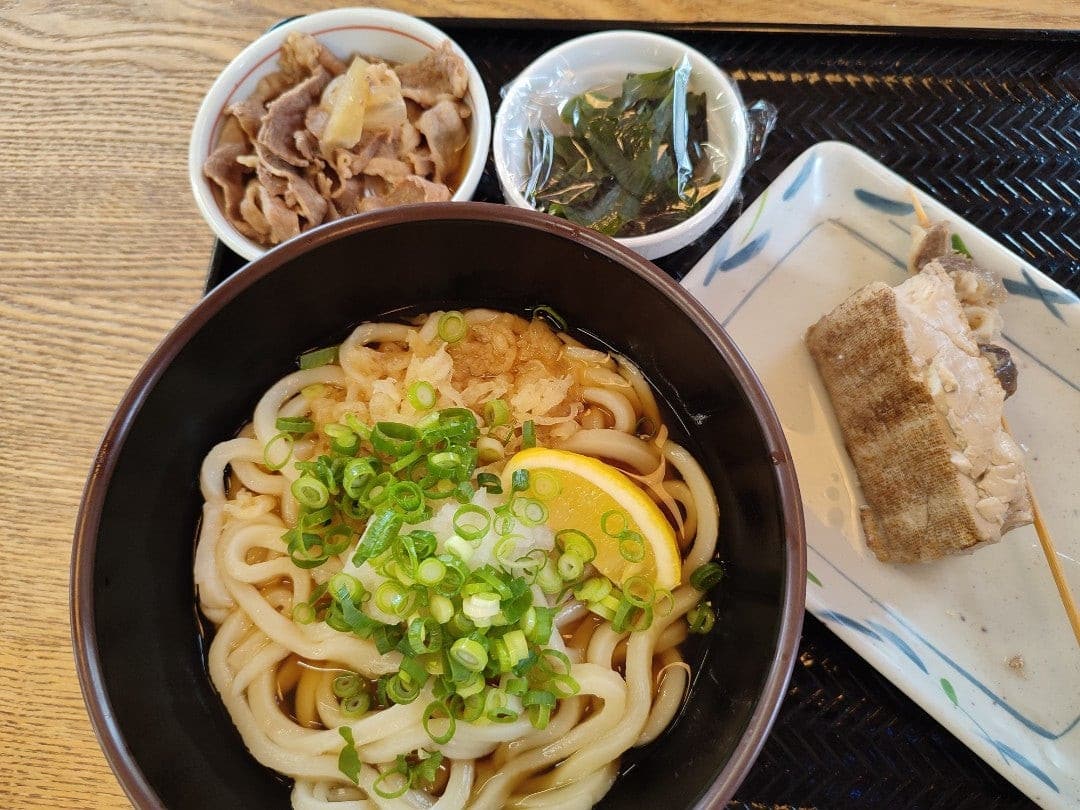
“Kamaage” serves freshly boiled noodles together with their cooking water, with no cold-water rinse at all, and a separate pot of concentrated dipping sauce (tsukedashi) on the side. Because the noodles are not cooled, they are soft and warm and most aromatic.
This style is a test for shops, since the noodles must be cooked to order, and serving usually takes a dozen or twenty minutes. Osada in Kanoka in Zentsuji is a famous shop specializing in kamaage, with the sauce served in a ceramic tokkuri kept warm in hot water, the signature way of this school.
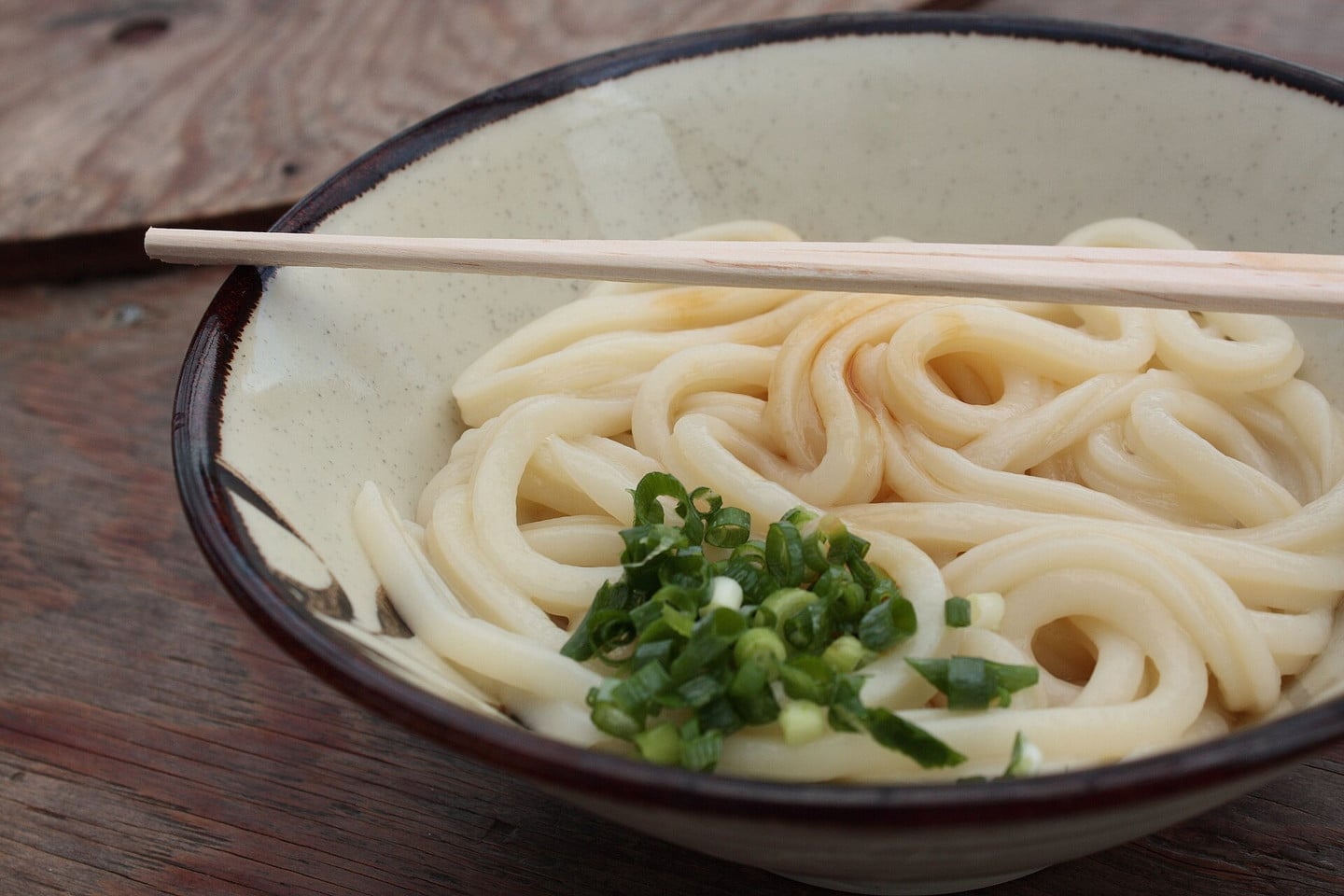
Kamatama Udon: Hot Noodles With a Raw Egg, Kagawa’s Answer to Egg on Rice
“Kamatama” is when a raw egg is cracked directly onto steaming noodles fresh from the pot and mixed in with a little soy sauce. The egg is cooked to a soft set by the noodles’ residual heat and coats every strand, thick and silky, and it is the easiest style for beginners to accept.
This style is widely credited to Yamagoe Udon in Ayagawa Town, which is still the pilgrimage site for kamatama today. Because it relies on the temperature of noodles just out of the pot, it must be ordered and made fresh and eaten right away; left too long, the egg overcooks and the noodles turn mushy.
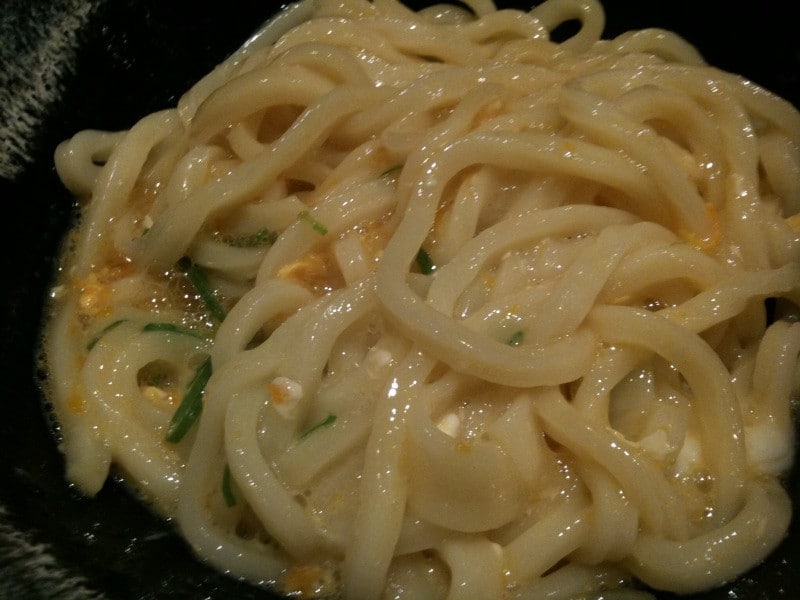
Shoyu Udon: Just Soy Sauce, the Style With No Way Out
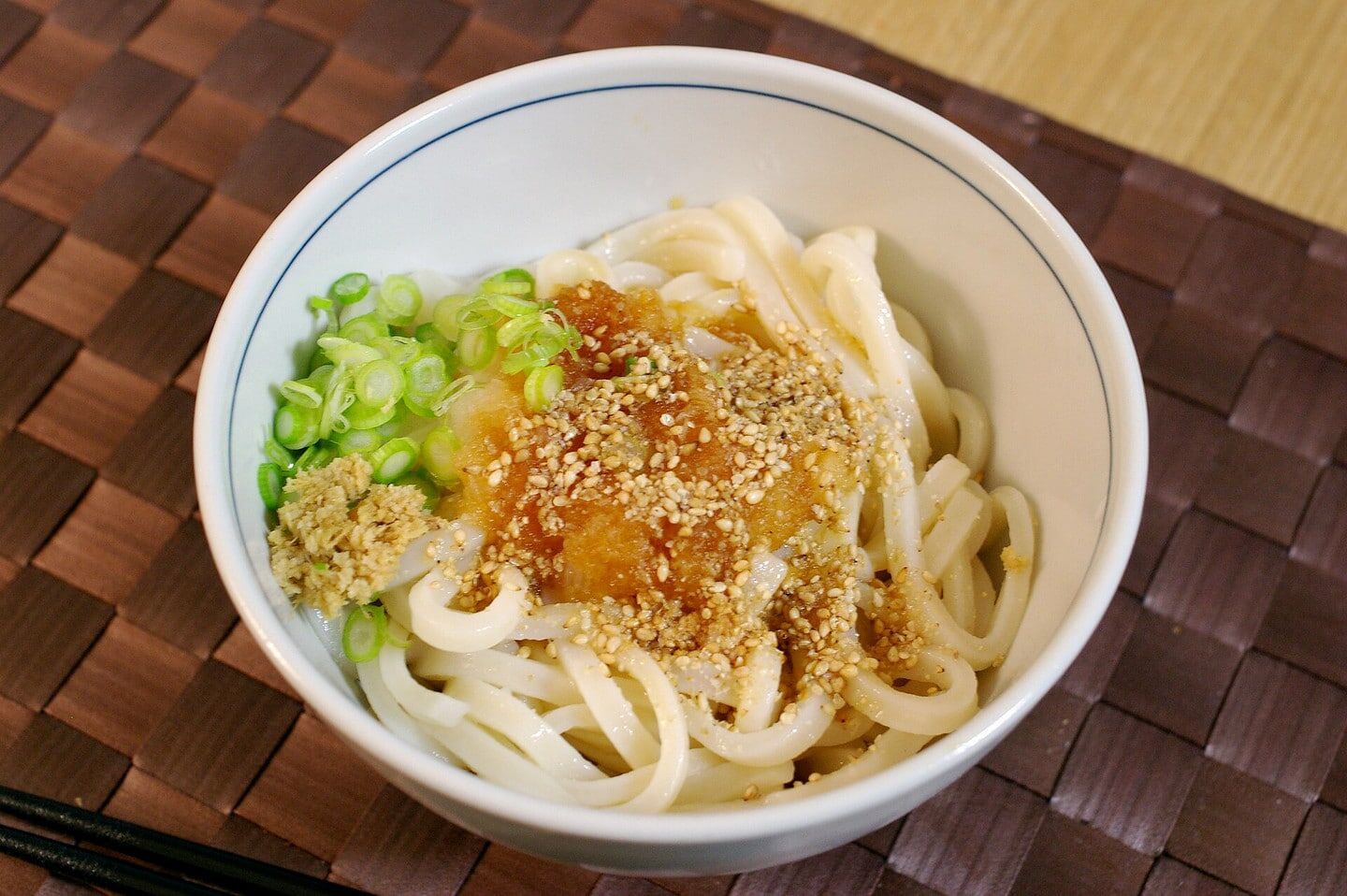
“Shoyu udon” is made so simply it is almost brutal: boiled, drained noodles come with nothing on them, and customers pour on raw soy sauce themselves, then mix in grated daikon, scallions and a little citrus juice. With no broth, there is no cushion.
For that reason it is the most direct way to taste the aroma of the wheat and the texture of the noodles, and many local connoisseurs order it only at shops they trust. The soy sauce is mostly a shop-blended raw soy sauce or saishikomi soy sauce, thicker than ordinary soy sauce, so pour with restraint.
Tempura and Side Dishes: Kagawa’s Staples Are Soft-Boiled Egg Tempura and Chikuwa Tempura
Along the route at a self-service shop there is usually a whole row of freshly fried tempura to pick with tongs. Kagawa’s two staples are “soft-boiled egg tempura” with a crisp coating that releases the yolk when you bite in, and “chikuwa tempura,” in which fish-paste chikuwa is battered and fried.
Other common ones include fried tofu (kitsune), fried shrimp, pumpkin and shiso. All are priced per piece at pocket-change prices, so it is easy to take too many without noticing. We suggest taking just one or two, since there may be another shop after this meal.
Recommended Sanuki Udon Restaurants: Must-Try Shops in Takamatsu, Marugame and Zentsuji
These are the shops that appear most often on pilgrimage lists. The first few can be reached without a car, while the later ones are best reached by driving or an udon taxi. Please rely on each shop’s own announcements for opening hours and closing days.
Teuchi Judan Udon Baka Ichidai (手打十段 うどんバカ一代): The Famous Shop With the Kama-Butter Udon Line
Baka Ichidai in Takamatsu city is probably the best-known Sanuki udon shop in all of Japan, with a line out the door almost all day. Its signature is not the traditional kake but “kama-butter udon”: hot noodles fresh from the pot topped with butter and a raw egg yolk, then lots of black pepper.
Once mixed, the butter melts into the noodles, rich almost like pasta carbonara, with the spice of black pepper cutting the fat, and for many people it is a bowl they never forget. The shop is in central Takamatsu with easy access and opens early in the morning, so we recommend coming early to avoid the crowds.

Sakaeda Udon Honten (さか枝うどん 本店): The Self-Service Mecca Next to the Prefectural Office
Sakaeda is in central Takamatsu near the Kagawa Prefectural Office, and many people consider it the first stop for experiencing the “authentic self-service routine.” You get a bowl of noodles, dip them in a net ladle in boiling water for a few seconds, then walk to the famous broth tap and fill your bowl.
The broth is based on small dried sardines, full of aroma without being overly salty, and paired with a basic kake it is complete. Because it is in an office district, on weekdays it is packed from morning to noon with office workers and civil servants, and that “everyday life of the locals” atmosphere is worth seeing in itself.
Takekiyo Honten (竹清 本店): A Takamatsu Favorite You Visit for the Soft-Boiled Egg Tempura
Takekiyo is also in Takamatsu city, and what it is most famous for is not the noodles but the tempura, especially the made-to-order soft-boiled egg tempura. The egg is wrapped in a crisp coating, and when you bite in the thick yolk runs out; many people come specially for that one egg.
When ordering, first say how many portions of noodles and which tempura you want; the tempura is fried to order, so expect a short wait. The noodles themselves are firm and chewy, and with one egg tempura and one chikuwa tempura you get the classic combination. The shop is small and often has a line at mealtimes.
Yamagoe Udon (山越うどん): The Birthplace of Kamatama Udon
Yamagoe is in the countryside of Ayagawa Town and is widely recognized as the shop that popularized “kamatama.” After ordering you get a bowl of hot noodles fresh from the pot and a raw egg, crack it in yourself and mix, add the shop’s soy sauce to taste, and eat standing under an outdoor awning.
The shop has a large garden seating area, and in good weather everyone sits under the trees with their bowls, the mood much like a picnic. Because it is in the countryside, we recommend driving; it is open until about 1:30 p.m. and closes when the noodles run out, so go in the morning, and the line at peak mealtimes is considerable.
Osada in Kanoka (長田 in 香の香): The Top Name for Kamaage Fans
Osada in Kanoka in Zentsuji specializes in kamaage and is the shop most often named by that school. The noodles are cooked to order and arrive still steaming in their cooking water, with the dipping sauce in a ceramic tokkuri, whose aroma is especially noticeable when poured into a small bowl.
Because the noodles must be cooked to order, serving takes longer than at typical shops, and waits of twenty or thirty minutes at peak times are common, but that is exactly why kamaage tastes so good. The shop is spacious with a large parking lot, suiting drivers, and is a fixture on itineraries around Zentsuji and Kotohira.
Yamashita Udon (山下うどん): The Zentsuji Shop Famous for Bukkake
Yamashita Udon, also in Zentsuji, is one of the shops most often cited as an originator of the bukkake style. Its noodles take an extremely powerful approach, with a strong rebound when you bite, and they stand up fully to the thick sauce and lemon.
The standard order is cold bukkake with lots of scallions, tempura crumbs and a slice of lemon, and the sourness and fragrance together with the wheat flavor of the noodles are very refreshing. The shop is on the edge of the city with its own parking lot and is usually combined with Osada in Kanoka and Kotohira-gu Shrine in the same day’s itinerary.
Oka-izumi (おか泉): The Utazu Shop That Piles Tempura Into a Small Mountain
Oka-izumi in Utazu Town takes the “regular restaurant” route rather than self-service, with seats and table service, suiting those with older relatives or anyone who does not want to deal with the self-service routine. Its signature is “hiya ten oroshi,” chilled cold noodles topped with giant fried shrimp and grated daikon.
The two fried shrimp are so large they stick out over the rim of the bowl, a strong visual impact, and the noodles reach their firmest state from being chilled. Prices are higher than self-service shops, but the portions and finish are correspondingly good, making it the choice when you want to “sit down properly for a meal” in the middle of the pilgrimage.
Noodle-Factory Pilgrimage for Sanuki Udon: Legendary Shops Hidden in Fields and Mountains
This group is the hardest: remote locations, very short opening hours, closing once sold out, but also the real core of the pilgrimage. If you have no car, we suggest booking an udon taxi directly.
Gamo Udon (がもううどん): The Legendary Noodle Factory Where You Eat on a Bench by the Fields
Gamo is in the countryside of Sakaide and is the representative of the noodle-factory type. The shop is so small it is easy to miss, and customers mostly carry their noodles outside to eat on benches or stones beside the fields, with rice paddies and distant mountains in front of them.
Ordering is minimal: say how many portions and hot or cold, pick a giant piece of fried tofu (kitsune) yourself, and pour the broth yourself. Clear broth with that piece of fried tofu soaked in sweet sauce is the signature combination. It is open until around noon and closes when the noodles run out, so be sure to go early.
Hinode Seimenjo (日之出製麵所): A Sakaide Shop Open Only for a Short Time Each Day
Hinode Seimenjo in Sakaide is a wholesale noodle maker that opens only for a short window around noon each day for customers to eat on the spot, so short it is often described as “limited-time opening.” A line forms at the door before it opens, and if you arrive late there is nothing left.
The noodles are freshly made and go straight into the pot, with a fine, springy texture, and the signature styles are kamaage and shoyu. The shop is small and the dining pace is fast. Be sure to check with the shop before setting out about the actual opening hours, closing days and whether there have been any changes.
Tanigawa Beikokuten (谷川米穀店): Clear Broth With Green Chili in the Mountains
Tanigawa Beikokuten is hidden in the mountains of Manno Town, and driving in takes quite a stretch of mountain road, yet there is still a line every day. The menu has only two choices, cold or hot, and on the table are soy sauce and a jar of pickled green chilies, all to mix yourself.
The signature way is cold noodles with a little soy sauce and a few slices of green chili mixed in; the spiciness, with a fresh fragrance, lifts the wheat flavor of the noodles entirely, a combination you cannot get elsewhere. Opening hours are short, it closes the moment the noodles run out, closing days are irregular, and the drive on mountain roads is long, making it the shop on the whole list that most needs luck and advance confirmation.
Nakamura (なかむら): A Long-Established Noodle Factory in Iyadani, Marugame
Nakamura in Iyadani, Marugame is a regular on pilgrimage lists. There used to be a story that when scallions ran out, customers had to go pull some from the field next door; the story made the shop famous, but today the shop supplies them normally and you do not need to go into the field.
The noodles take a smooth, fine approach and the broth is on the light side, and a basic bowl of kake gives the best sense of the balance. It is in the countryside and requires a car, and closes soon after noon, also while supplies last, so we suggest making it the first or second stop of the morning.
Udon Honjin Yamada-ya (うどん本陣 山田家): Kama-Bukkake in a Garden of an Old Townhouse
If noodle factories feel too rough, Yamada-ya in Mure, Takamatsu is the other extreme. The shop itself is a large mansion with a garden, registered as a tangible cultural property, and eating udon on tatami while looking at a Japanese garden gives a completely different atmosphere.
The signature is “kama-bukkake”: hot noodles fresh from the pot with thick sauce poured straight on, combining the softness of kamaage with the richness of bukkake. It is near the foot of Yashima and fits well into an itinerary with Yashima and Shikoku Mura, and has a parking lot.
Sanuki Udon Pilgrimage Tips: Opening Hours, Ordering Routine and Etiquette
The most common reason a pilgrimage fails is not failing to find the shop but “going too late.” Remember the following five things first and your success rate will be much higher.

The Biggest Trap: Many Famous Shops Close After Noon
Udon shops in Kagawa generally “open early and close early.” Many open at 6 a.m., most close before 2 or 3 p.m., and they “close early once the noodles are sold out”; noodle-factory shops in particular may hang out a sold-out sign before noon.
So the right approach is to schedule udon for breakfast and lunch, with almost no options at dinner. Before setting out, check each shop’s opening hours and closing days one by one, prepare one or two backups, and avoid unexpected closures around long holidays.
Five Steps to Ordering at a Self-Service Shop: Follow the Route and You Cannot Go Wrong
The standard routine is: 1. line up at the entrance and take a tray and bowl; 2. tell the staff how many portions and whether you want cold (hiya) or hot (atsu); 3. at some noodle factories you are given cold noodles, which you dip in a net ladle in boiling water for five to ten seconds and shake dry.
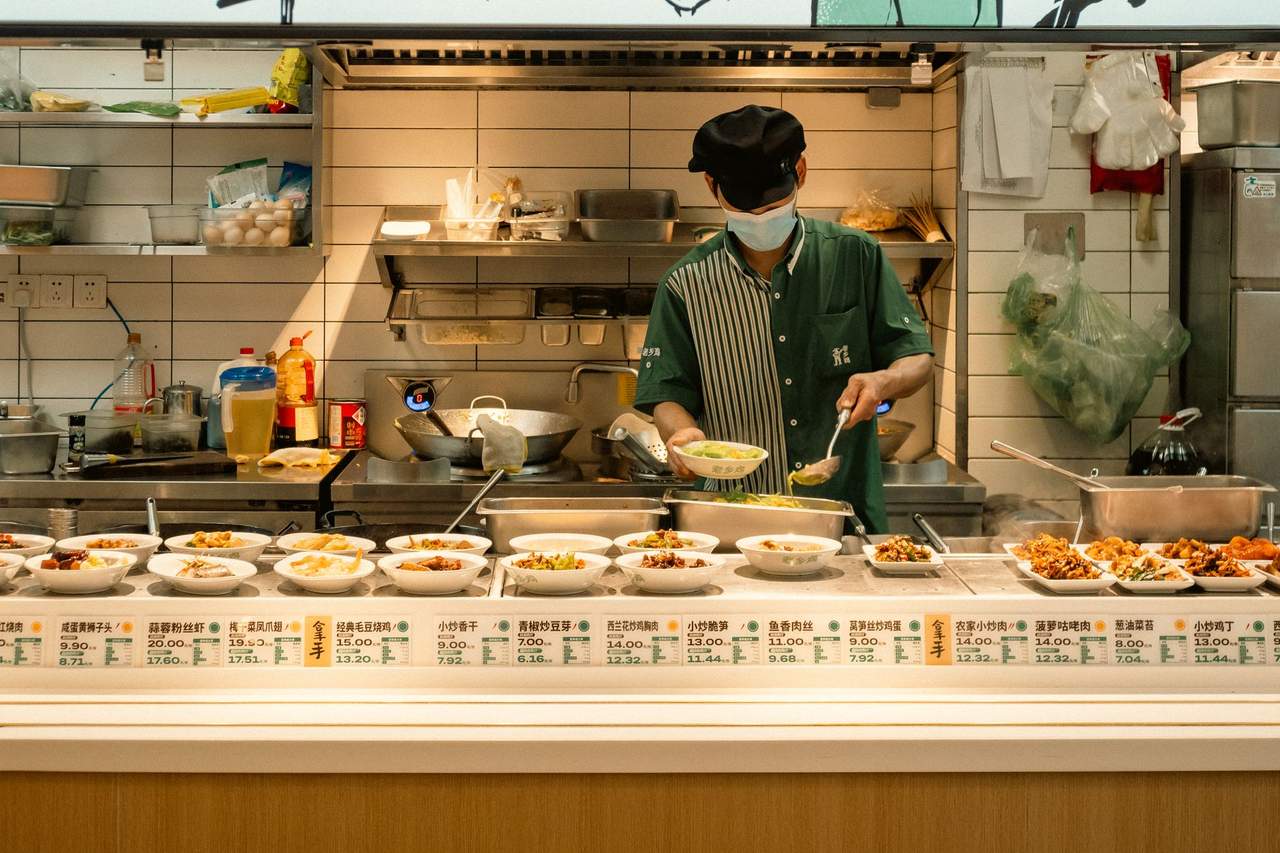
4. take tempura and side dishes with tongs along the route; 5. pay at the counter, then go to the self-service area and pour broth from the broth barrel or tap, and sprinkle on scallions, grated ginger and tenkasu. When you finish, return your tableware to the return counter yourself; many foreign visitors forget this step.
Portion Control: Always Order “1 Tama” to Finish Three Shops
The “tama” on the menu is the portion unit: 1 tama is roughly a regular bowl and 2 tama is a large bowl. Udon is very cheap, a bowl often costing just ¥300 to ¥500, so it is easy to slip and order 2 tama.
But Sanuki udon is more filling than it looks: the noodles are dense and swell again in your stomach after absorbing water, and most people give up after two shops in a row. If you want to hit several shops in a day, always order the smallest 1 tama and keep tempura to one or two pieces, saving room for the next shop; that is the right mindset for the pilgrimage.
Reading the Sanuki Udon Menu: Common 2026 Items and Hot/Cold Terms
Basic styles: kake, bukkake, kamaage, kamatama, shoyu
Common items: zaru (dipping on a bamboo strainer), kitsune (with sweet fried tofu skin), niku udon (with stewed meat slices)
Portions: labeled “1 tama, 2 tama” or “small, large”
Hot/cold terms: atsuatsu = hot noodles in hot broth, hiyaatsu = cold noodles in hot broth, atsuhiya = hot noodles in cold broth, hiyahiya = cold noodles in cold broth; the first word refers to the noodles, the second to the broth
Transport: Suburban Famous Shops Almost All Need a Car
Famous shops in Takamatsu city can be reached on foot or by the Kotoden train, but the truly legendary noodle factories are all in fields or mountains, almost unreachable by public transport. Driving is the most direct solution, and a Taiwanese driver’s license must come with a Japanese translation to rent a car in Japan.
If you do not drive, Kagawa has themed transport services such as the “udon taxi” (udon takushi), where a driver who knows the ropes takes you straight to famous shops and can adjust the route to that day’s opening and queue situation. It must be reserved in advance, so arrange it early in peak season, and it also saves you the effort of studying bus timetables.
Self-Driving for Taiwanese Visitors: License and Japanese Translation
Taiwanese visitors renting a car in Japan need to bring their original Taiwanese driver’s license, a Japanese translation and their passport. The Japanese translation can be applied for at a motor vehicles office in Taiwan before departure, or, if you forget, at a JAF service point in Japan. Before picking up the car, confirm that all three documents are in order so you are not refused at the counter. It is also recommended to confirm pickup time, return location and insurance plan with the rental company before departure.
Etiquette and Notes: Cash, Table Turnover and Photo Manners
Many noodle-factory shops accept cash only and have no English menu, so bring small change. Table turnover is very high, and at peak times it is basic courtesy to give up your seat as soon as you finish; sitting long to chat or work is not recommended.
Photography is generally fine, but avoid pointing the camera at other customers or staff, and do not block the route for picking up food and paying while framing a shot. Also, some noodle factories have no indoor seating, only benches or stones outside, which is quite rough in the rain, so be mentally prepared beforehand and bring rain gear.
Recommended Sanuki Udon Experiences and Food Tours
Besides eating, Kagawa has many ways to turn udon into an experience. The following are the options most often put into itineraries; costs and contents follow each operator’s announcements on the day.
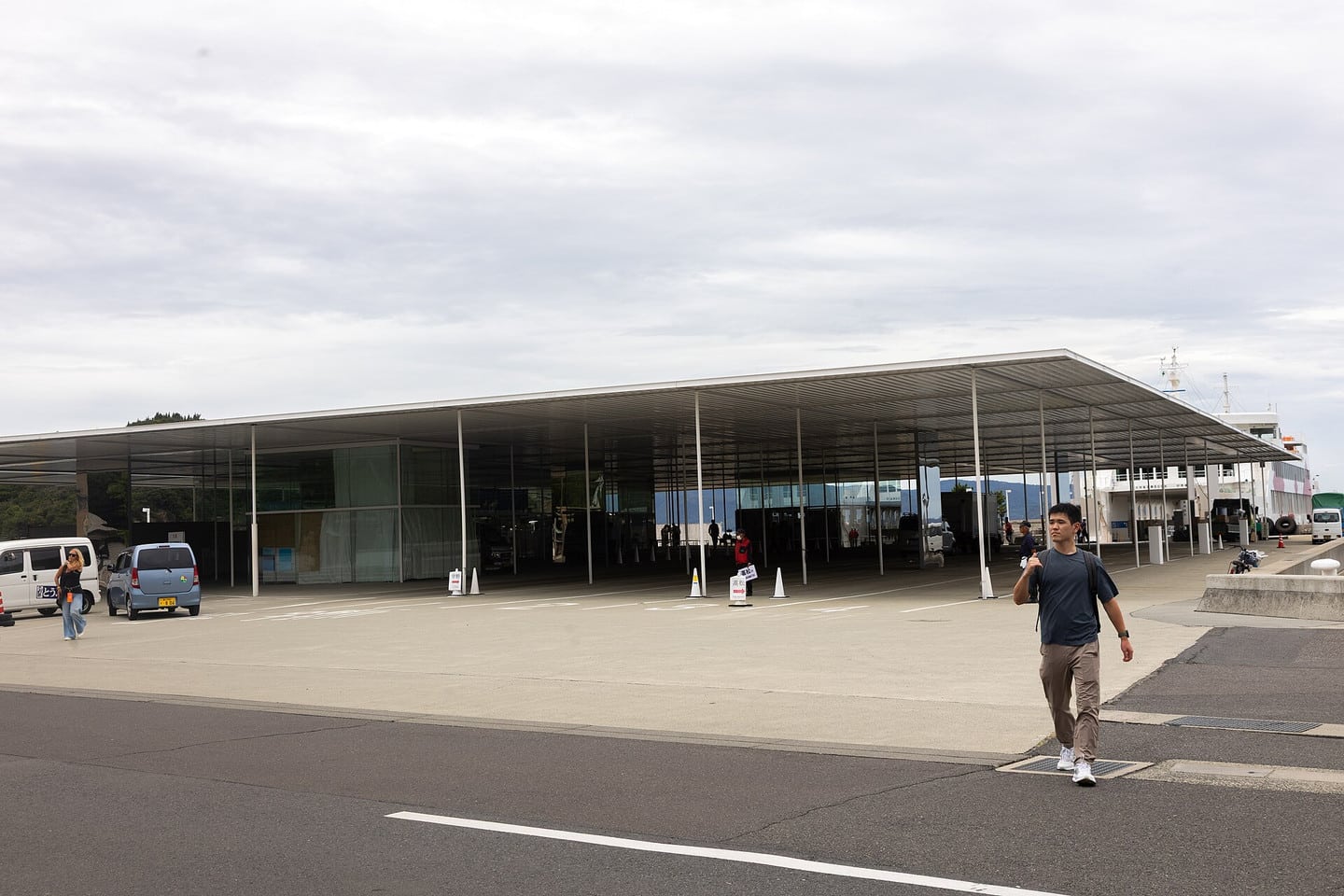
Nakano Udon School: Stomp the Dough, Cut the Noodles and Get a Graduation Certificate
Nakano Udon School on the Kotohira approach is the best-known hands-on experience. The process includes kneading, stomping the dough to music, rolling it flat and cutting the strips, and at the end you can cook and eat your own noodles on the spot, and you receive a graduation certificate and a rolling pin.
The whole session takes about 50 minutes to 1 hour 20 minutes, is especially popular with families and groups, and fits well before or after visiting Kotohira-gu Shrine. The fee is ¥1,760 per person, reservations are needed for 2 or more people, and hours are about 9:00 to 15:00.

Udon Taxi: Let a Local Driver Take You to Hidden Famous Shops
“Udon taxi” (udon takushi, うどんタクシー) is a service unique to Kagawa, operated by Kotohira Bus, where drivers know each shop’s opening hours, closing days and queue situation and can adjust the route in real time according to the day, avoiding wasted trips.
For travelers who do not drive but want to visit suburban noodle factories, this is the most efficient option, usually charged by the hour and allowing you to name the shops you want. The downside is that the price is higher than driving yourself, though the cost is clearly shared when there are several people. It must be reserved in advance, so arrange it early in peak season.
(行程自由搭配)-Klook.jpg)

Semi-Fresh Udon Souvenirs: Take the Sanuki Texture Home
The most practical souvenir is a semi-fresh or dried udon set, mostly with a concentrated broth packet, so a few minutes of cooking at home recreates a texture close to the shop’s. They are sold at Takamatsu Station, the airport and major shops, lightweight to pack and with a long shelf life.
A more advanced choice is the noodle and broth sets sold by the famous shops themselves; some noodle factories are wholesalers and sell their fresh noodles at retail directly. Note that fresh noodles often keep for only a few days, so if your trip continues or involves a long flight, semi-fresh or dried noodles are much safer.
Udon Prefecture Goods: Yadon and Prefectural Souvenirs
Kagawa calls itself “Udon Prefecture,” which has produced a flood of merchandise, from T-shirts printed with bowl designs and udon-shaped stationery to limited-edition goods in collaboration with the Pokemon “Slowpoke” (Yadon), the latter because “udon” and “Yadon” sound alike in Japanese.
These goods are concentrated at shops in Takamatsu Station, the airport and major tourist facilities. If your trip passes Ayagawa’s Yadon Park, related merchandise can be found nearby as well, suitable as souvenirs for children. Items and availability depend on each shop.
Itadakimasu! Plan Your Own Sanuki Udon Pilgrimage Route
What is really charming about the Sanuki udon pilgrimage is not which shop is best but how many faces the same food can take on across more than 600 shops: the famous queue shops in the city make it into rich kama-butter, the self-service shop beside the prefectural office lets you dip the noodles and pour the broth yourself, the noodle factories in the middle of the fields give you just a bowl of noodles and a piece of fried tofu, and the old shops in the mountains skip even the menu.
If it is your first time, start with two shops in Takamatsu city, then rent a car the next day to make a loop through Ayagawa, Sakaide and Zentsuji. Remember to get up early, remember to order only 1 tama, remember to check the opening hours first; do those three things well and leave the rest to luck and stomach capacity. Enjoy your trip and eat to your heart’s content.
Where to Stay Nearby
The Sanuki udon pilgrimage mostly uses Takamatsu as a base; Sakaeda, Takekiyo and Baka Ichidai are all within Takamatsu city, and Marugame, Zentsuji and Kotohira can be reached by JR or the Kotoden. Staying near Takamatsu Station or Kotoden Kataharamachi Station makes it more relaxed to set out in the morning for your first udon shop.

Sanuki Udon Pilgrimage FAQ
Q: How Many Udon Shops Can You Eat at in a Day?
We recommend two to three. Locals often eat at one or two a day, but Sanuki udon is very filling, and beyond three you usually cannot tell the difference. The trick is to order only the smallest “1 tama” at each shop and keep tempura restrained, so you have room for the next stop.
Q: What Time Is Safest to Go?
The morning. Many shops open at 6 a.m. and close one after another after noon, and noodle-factory shops may sell out and close before noon. Scheduling udon for breakfast and lunch is safest; almost no famous shops are open at dinner.
Q: Can You Order Without Japanese?
Yes. Knowing how to say the portion and hot or cold is enough: “ichi tama” plus “atsu” (hot) or “hiya” (cold). All the other steps are self-service following the route; watching the person in front and doing the same usually works.
Q: Can You Do the Pilgrimage Without a Rental Car?
Famous shops in Takamatsu city can be reached on foot or by the Kotoden train, so two shops a day is no problem. But suburban noodle factories almost all need a car, in which case you can book an udon taxi, where a local driver leads the way and saves you the effort of studying timetables.
Q: What Exactly Is the Difference Between Kake and Bukkake?
Kake is warm broth poured into a bowl with the noodles steeped in it, light in flavor; bukkake is a much more concentrated sauce poured directly over the noodles with almost no broth, usually with grated daikon and lemon. Order kake if you want the broth, and bukkake if you want the chew of the noodles.
Q: Roughly How Much Does a Bowl of Sanuki Udon Cost?
A bowl at self-service shops and noodle factories is usually around ¥300 to ¥500, and a few pieces of tempura rarely take it over ¥1,000, making it one of the best-value meals in Japan. Regular restaurant-style shops cost more but are still mostly a little over ¥1,000. Actual prices follow each shop’s announcements.
