

Shuri Castle: Five Centuries of Ryukyu Kingdom Power and a Restoration in Progress
Shuri Castle stands in Shuri, Naha, and was the royal castle of the Ryukyu Kingdom. Restoration of the main hall after the 2019 fire is nearly complete, and the park remains open to visitors.
What Is Shuri Castle? The Political Center of the Ryukyu Kingdom for 500 Years
Shuri Castle was the royal castle of the Ryukyu Kingdom from the early 15th century until the Ryukyu Disposition of 1879, serving as the king’s residence, the administrative center and the stage for foreign diplomacy. Its architecture is clearly different from castles on mainland Japan, and the vermilion pillars, dragon columns and curved roofs show Chinese and Southeast Asian influence.
The castle was almost completely destroyed in the Battle of Okinawa, and after the war the site long served as the campus of the University of the Ryukyus. The main hall and other buildings were reconstructed from historical records starting in 1992. One point worth clarifying: what is inscribed as a UNESCO World Heritage Site, “Gusuku Sites and Related Properties of the Kingdom of Ryukyu,” is the underground remains of the “Shuri Castle Site,” not the reconstructed wooden buildings above ground.
After the 2019 Fire: Can You Visit Now?
The fire in the early hours of October 31, 2019 destroyed the main hall (Seiden), North Hall and South Hall. The park did not close, and outer areas such as Shureimon Gate and Kankaimon Gate stayed open as usual.
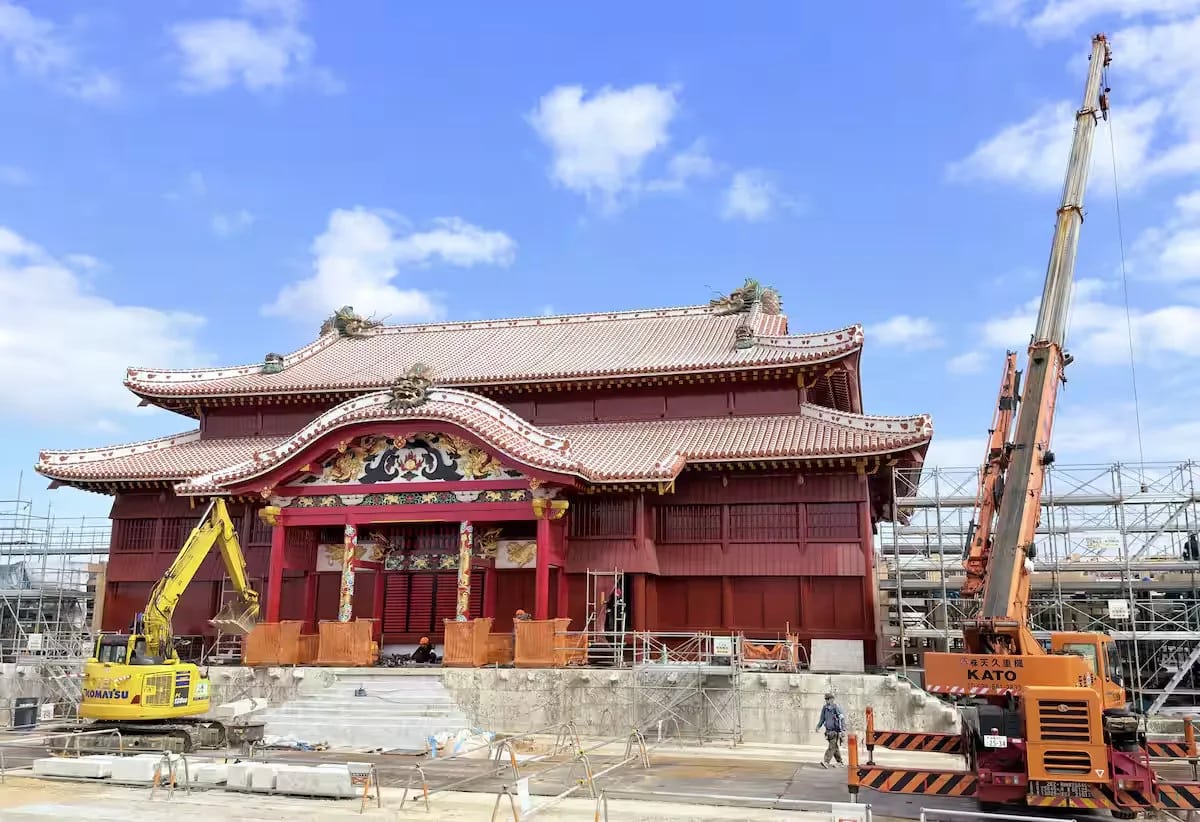
Restoration of the main hall has entered its final stage. The temporary “Suyane” roof structure has been removed, revealing the vermilion exterior for the first time in six years. The North Hall, South Hall, Unaa courtyard and other areas will be restored in phases, with work expected to continue into the 2030s.
The park has announced a completion ceremony for the main hall on November 22, 2026. The park will be closed all day that day and on the morning of the 23rd, and the main hall interior will open to the general public from noon on November 23. On other dates the free and paid areas are open as usual, and the exterior can be viewed up close from the paid area.
How to Explore Shuri Castle: A Half-Day Walking Route
The smoothest route starts at Shuri Station on the monorail. First walk to Shureimon Gate and the Sonohyan Utaki Stone Gate, then head up through Kankaimon, Zuisenmon, Kofukumon and Hoshinmon gates in that order to reach the Unaa courtyard and main hall area. The whole way is a gentle slope plus steps.
After seeing the castle interior, head downhill to the west to take in Tamaudun, Enkanchi Pond and Benzaiten-do, and finally walk down the Shuri Kinjocho Stone-Paved Road into the city. The full circuit takes about 3 to 4 hours; just the free areas take about 1 hour. The sun is strong in summer and there are many slopes, so we recommend going in the morning or late afternoon.
How to Get to Shuri Castle: Complete Guide to the Monorail, Buses and Parking Fees
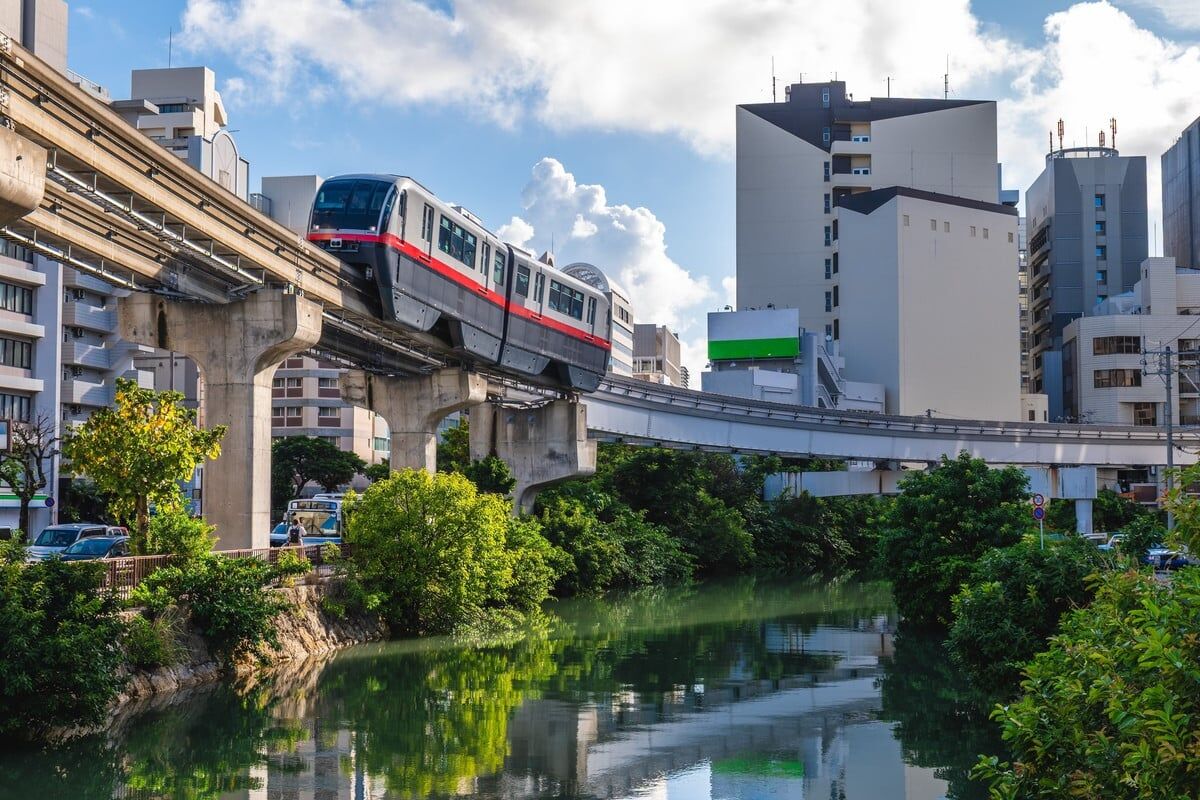
From central Naha to Shuri Castle, the monorail plus a short walk is the simplest route.
Monorail: Get off at Shuri Station, about a 15-minute walk to Shureimon Gate
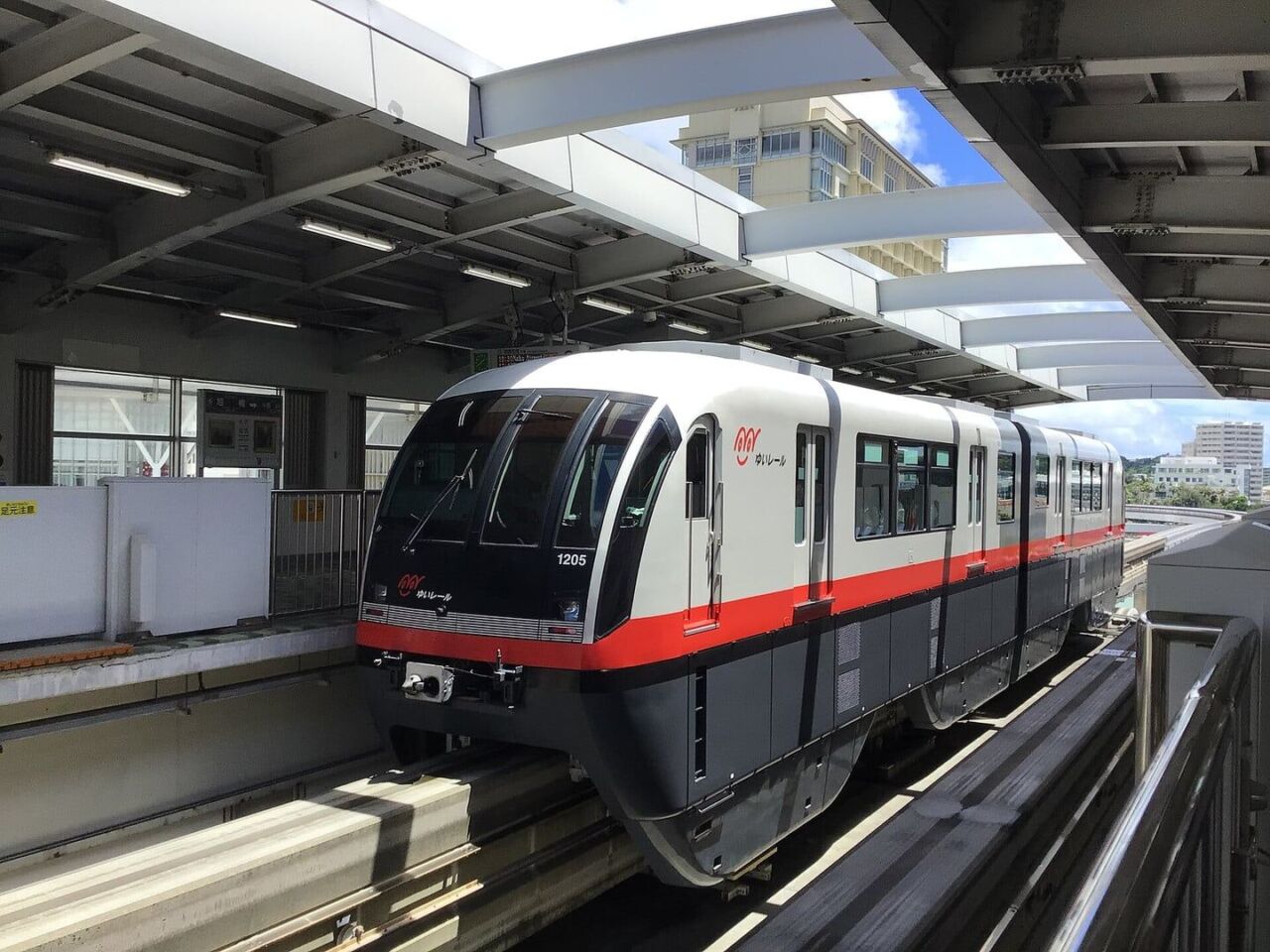
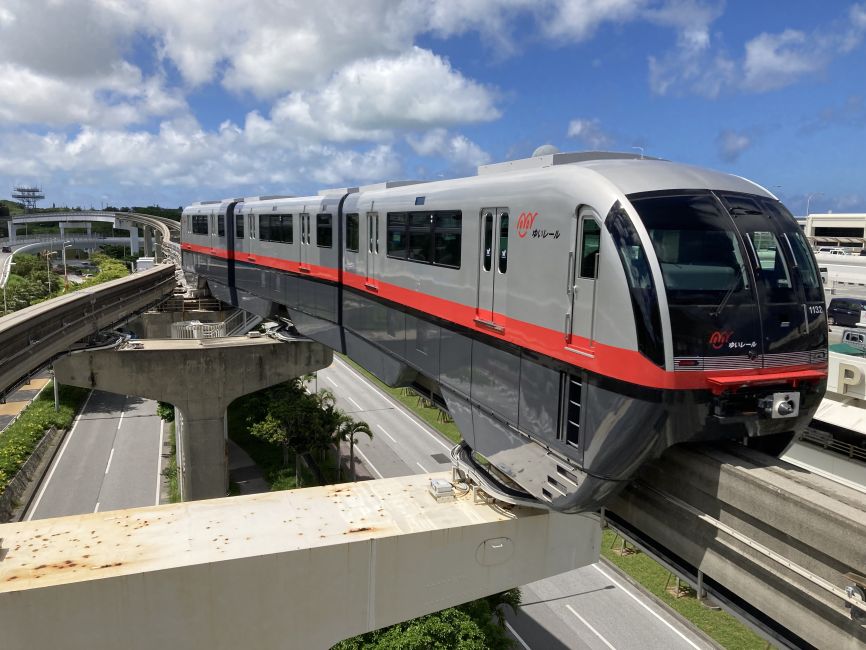
Take the Okinawa Urban Monorail (Yui Rail) to Shuri Station, the second-to-last stop on the line. From the station, follow the signs for about a 15-minute walk to Shureimon Gate. The route passes Shuri’s residential streets on a gentle uphill, with flat paving and clear signage.
The official website also offers an alternative route through the Kaminomo park (上之毛公園), which is a little gentler and shadier and more pleasant in summer. Giho Station, one stop earlier, is also within walking distance but a bit farther. From Naha Airport Station, the monorail to Shuri Station takes about 27 minutes, the simplest option for travelers without a car.
If you’d rather not walk downhill on the way back, you can catch a bus in front of Shuri Castle back to Shuri Station. Please check the official site for last monorail times, and if you enter in the late afternoon, work out your timing beforehand.
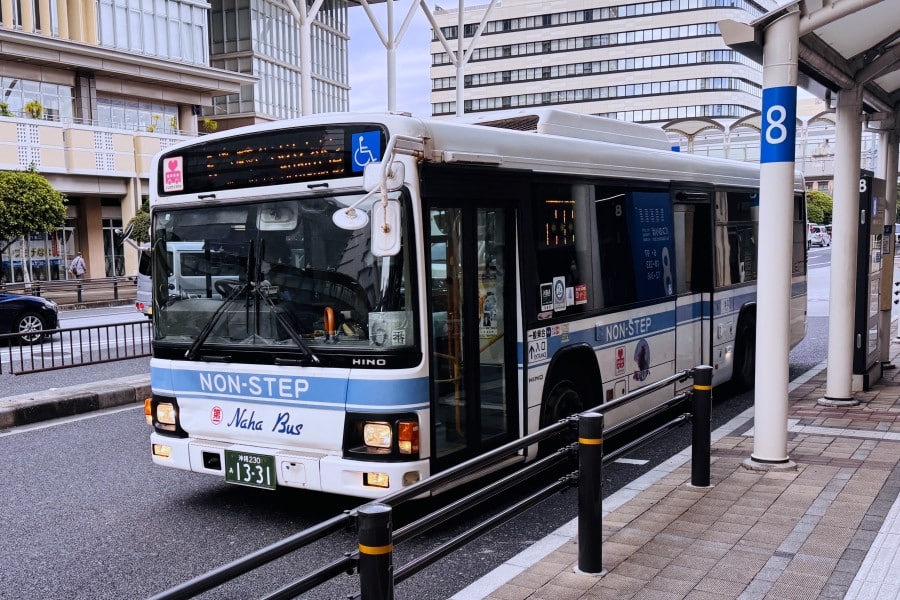
Bus: Shurijo Shitamachi Line Nos. 7 and 8 Go Directly to Shuri Castle
If you don’t want the 15-minute uphill walk, transfer at the bus stop in front of Shuri Station to Route 7 or 8 of the “Shurijo Shitamachi Line” and get off at the “Shurijo-mae” stop. It is a 1-minute walk to Shureimon Gate, making this the least tiring option.
Another option is to take city Route 14 or intercity Route 346 and get off at the “Shurijo Koen Iriguchi” stop, about a 5-minute walk to Shureimon Gate. Bus fares are distance-based: take a numbered ticket when boarding and pay when getting off, using cash or a transit IC card. Buses are less reliable than the monorail, so check that day’s timetable first.
The bus stop is diagonally across from the exit of Shuri Station; if you can’t find it, following the crowd is usually right. Checking real-time departures on your phone’s navigation app is far more reliable than a paper timetable.
By Car: Parking Rates at the Shurimori-kan Underground Garage Changed in 2026
If you drive, you can park in the “Shurimori-kan” underground garage at the park entrance. The fee structure changed on April 1, 2026: for a standard car it is ¥500 for the first 60 minutes, then ¥250 per 30 minutes, up to a maximum of ¥1,000 per entry, different from the previous per-entry pricing.
The garage is open 8:30 to 19:30 from April to November and 8:30 to 18:30 from December to March, with a maximum stay of 3 hours per entry. Spaces are very tight in the busy season, and there are private pay-by-the-hour lots nearby as a backup.
| Ticket Category | New Price (from Nov 23, 2026) | Old Price (until Nov 22, 2026) |
|---|---|---|
| Adult | ¥1,000 | ¥400 |
| High school student | ¥760 | ¥300 |
| Junior high / elementary student | ¥370 | ¥160 |
| Age 6 and under | Free | Free |
| Group (20 or more) | Adult ¥800 / high school ¥610 / junior high and elementary ¥300 | Adult ¥320 / high school ¥240 / junior high and elementary ¥120 |
How Long from Naha Airport and Kokusai-dori? Travel Times at a Glance
From Naha Airport Station, the monorail runs directly to Shuri Station in about 27 minutes with no transfers. From Kencho-mae or Makishi stations near Kokusai-dori, it takes about 20 and 15 minutes respectively to Shuri Station, with fares in the range of a few hundred yen.
With a monorail 1-day pass (adult ¥1,000 / 24 hours) or 2-day pass (adult ¥1,800 / 48 hours), you also get 20% off admission to designated facilities such as Shuri Castle, so an itinerary limited to central Naha almost always pays off. Driving from Kokusai-dori takes about 15 to 20 minutes, but the lanes around Shuri are narrow, so set your navigation directly to Shurimori-kan.



Must-See Highlights at Shuri Castle: 13 Sights Inside and Around the Castle
The following are organized from the free areas to the paid areas and then the nearby World Heritage sites.
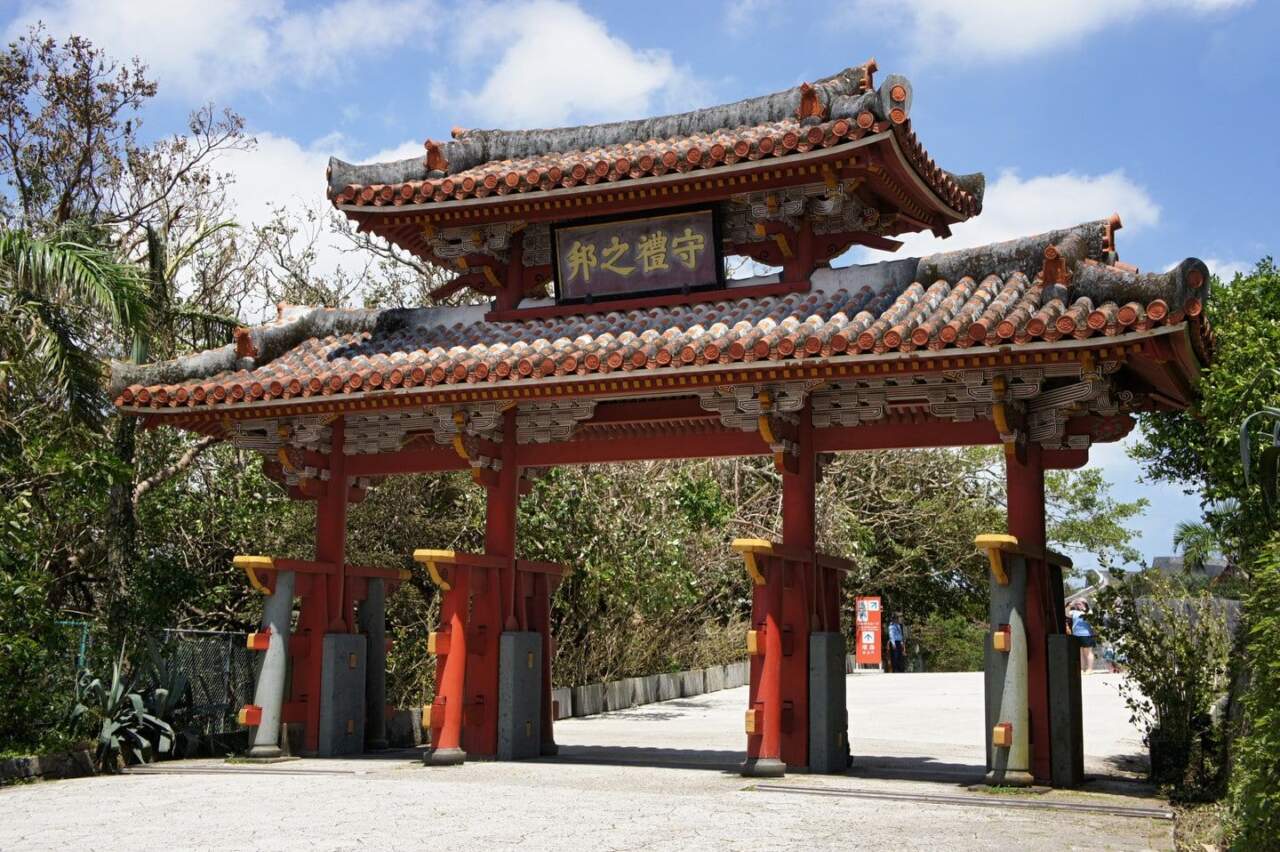
Shureimon Gate: The Ryukyu Gateway Printed on the 2,000-Yen Note
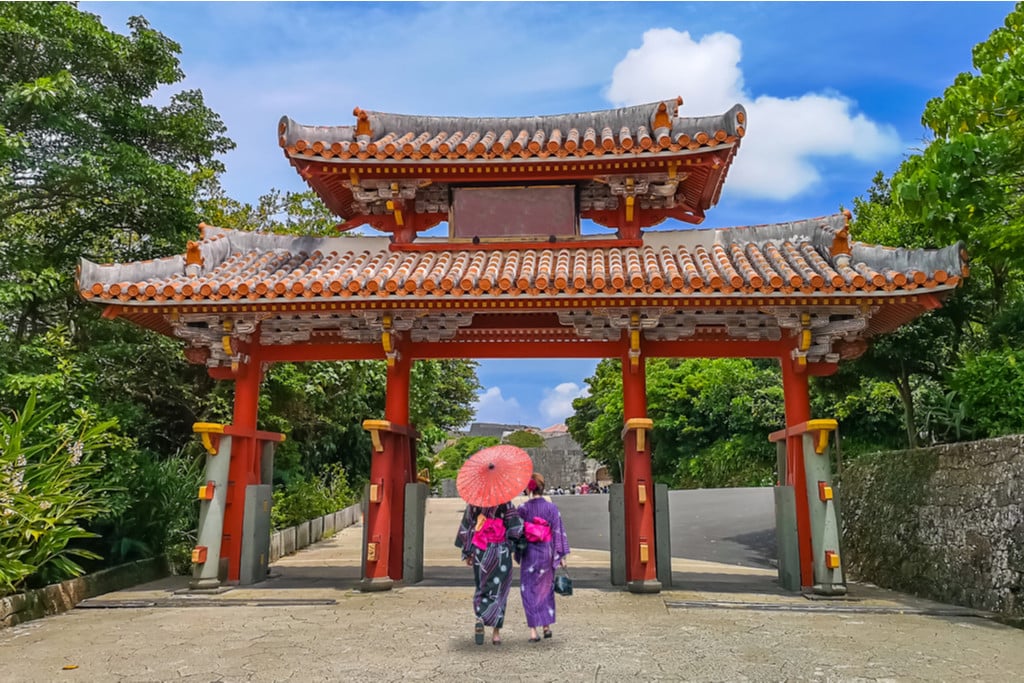
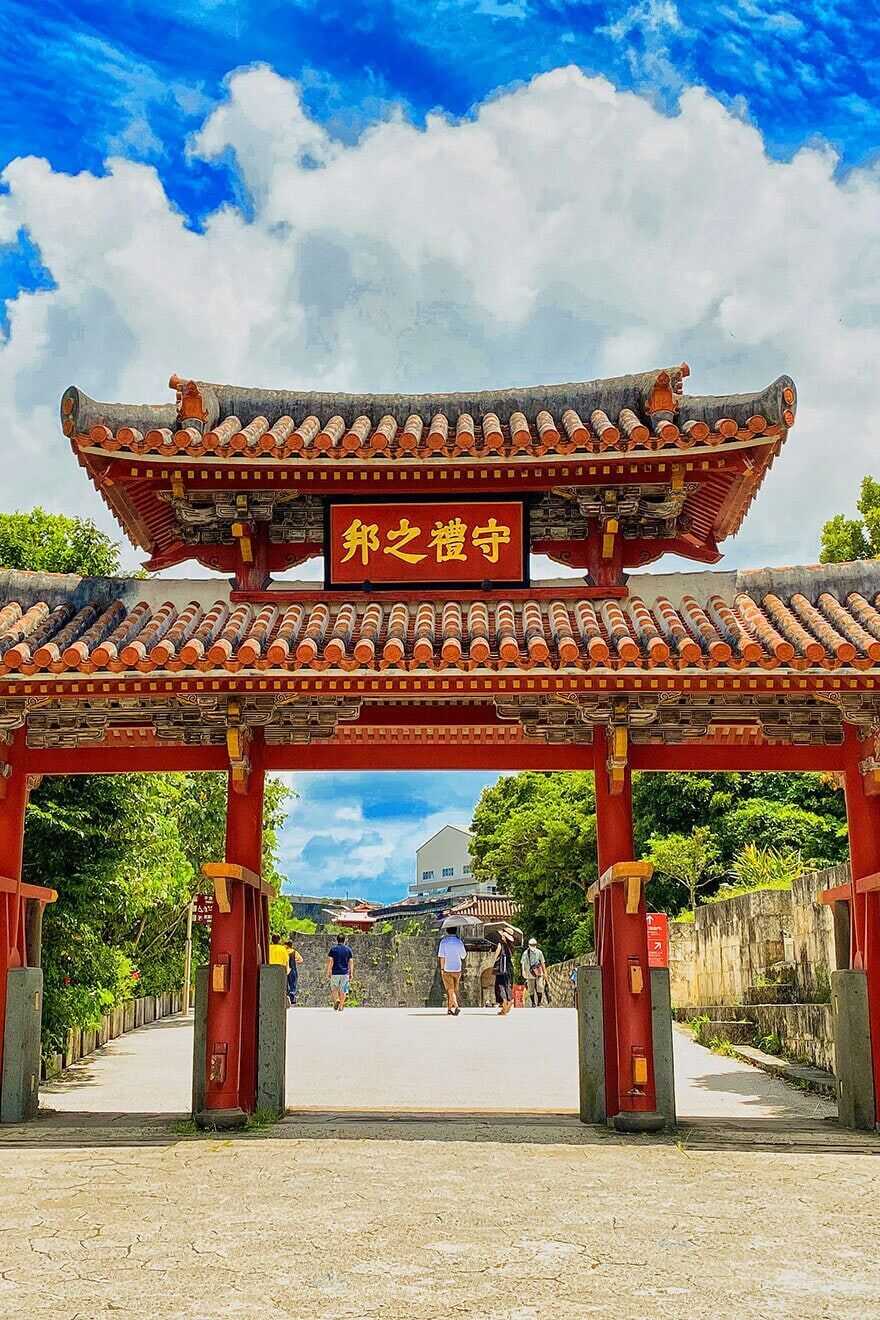
Shureimon is the most iconic image of Shuri Castle. Its plaque reads “Shurei no Kuni,” meaning Ryukyu is a land that values courtesy. The gate is also printed on Japan’s 2,000-yen note, and nearly every traveler takes their first photo here.
It is in the free area, so you can see it without buying a ticket. The current gate was rebuilt in 1958 from old photographs. Staff in traditional Ryukyuan dress are often in front of the gate for photos, and it is quietest around 8 a.m. From here, you officially enter the Shuri Castle visitor route.
This area is the starting point of the whole route, with restrooms and vending machines nearby, so it’s a good idea to hydrate here before you start climbing. The space in front of the gate is small and gets very crowded when tour groups arrive.

Sonohyan Utaki Stone Gate: The Sacred Entrance Where Kings Prayed Before Setting Out
Right next to Shureimon, this stone gate built in 1519 was the entrance to the ritual site where Ryukyu kings prayed for safety before setting out on a journey. The grove behind the gate is the actual sacred “utaki” and is generally closed to entry; the object of worship is the gate itself.
It is one of the component sites of the World Heritage Site “Gusuku Sites and Related Properties of the Kingdom of Ryukyu” and a masterpiece of Ryukyuan stone architecture. The reliefs on the gate and the curve of the eaves blend Chinese and Japanese techniques, so slow down and look at the details. Incidentally, Shuri Castle is not a shrine and has no omamori or goshuin; for goshuin, visit Naminoue Shrine in central Naha.
There are Chinese and English information boards in front of the stone gate. If you are short on time, at least read them to save yourself a lot of “what is this?” confusion.
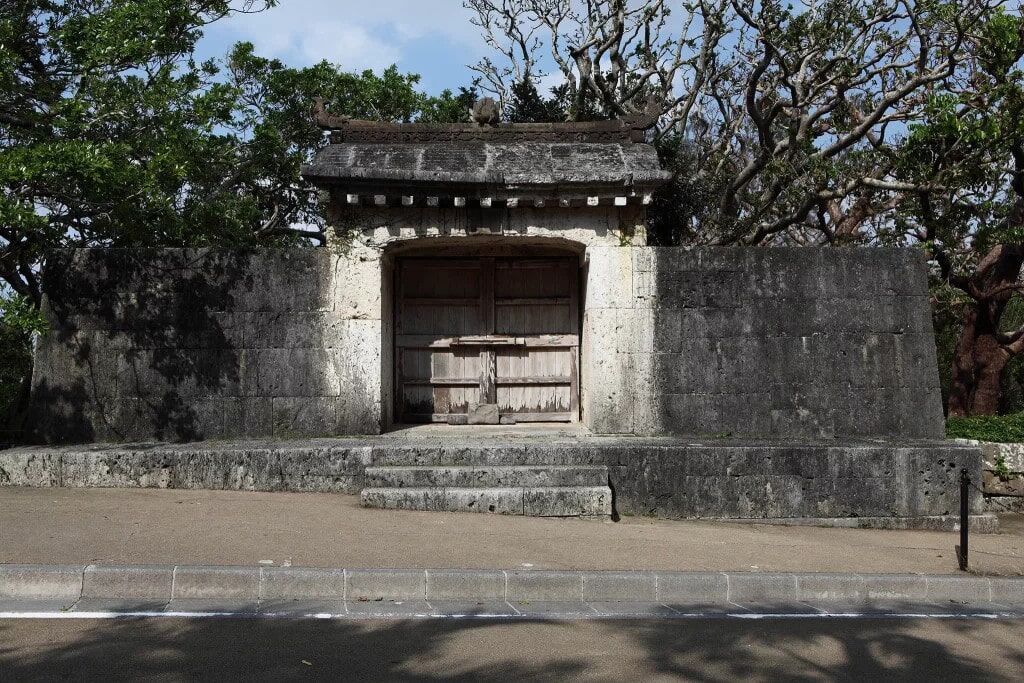
Kankaimon Gate: The Castle’s First Main Gate, Guarded by Stone Lions
Kankaimon is the first main gate of Shuri Castle’s walls. Its name means “welcoming visiting guests,” and it mainly greeted the investiture envoys from China. A pair of stone lions (shisa), the most common guardian beasts in Okinawa, crouch on each side of the gate.
This gate was built in the latter half of the 15th century, was also destroyed in the Battle of Okinawa, and was reconstructed in 1974. It is only a minute or two on foot from Shureimon. After passing through the gate, the stone steps become noticeably steeper. This is also a free area, so you can rest in the shade under the gate before continuing up.
The walls on the inside of the gate are built in the curved Ryukyuan limestone style, completely different from the straight stone walls of mainland Japan, and well worth photographing from the side for comparison.
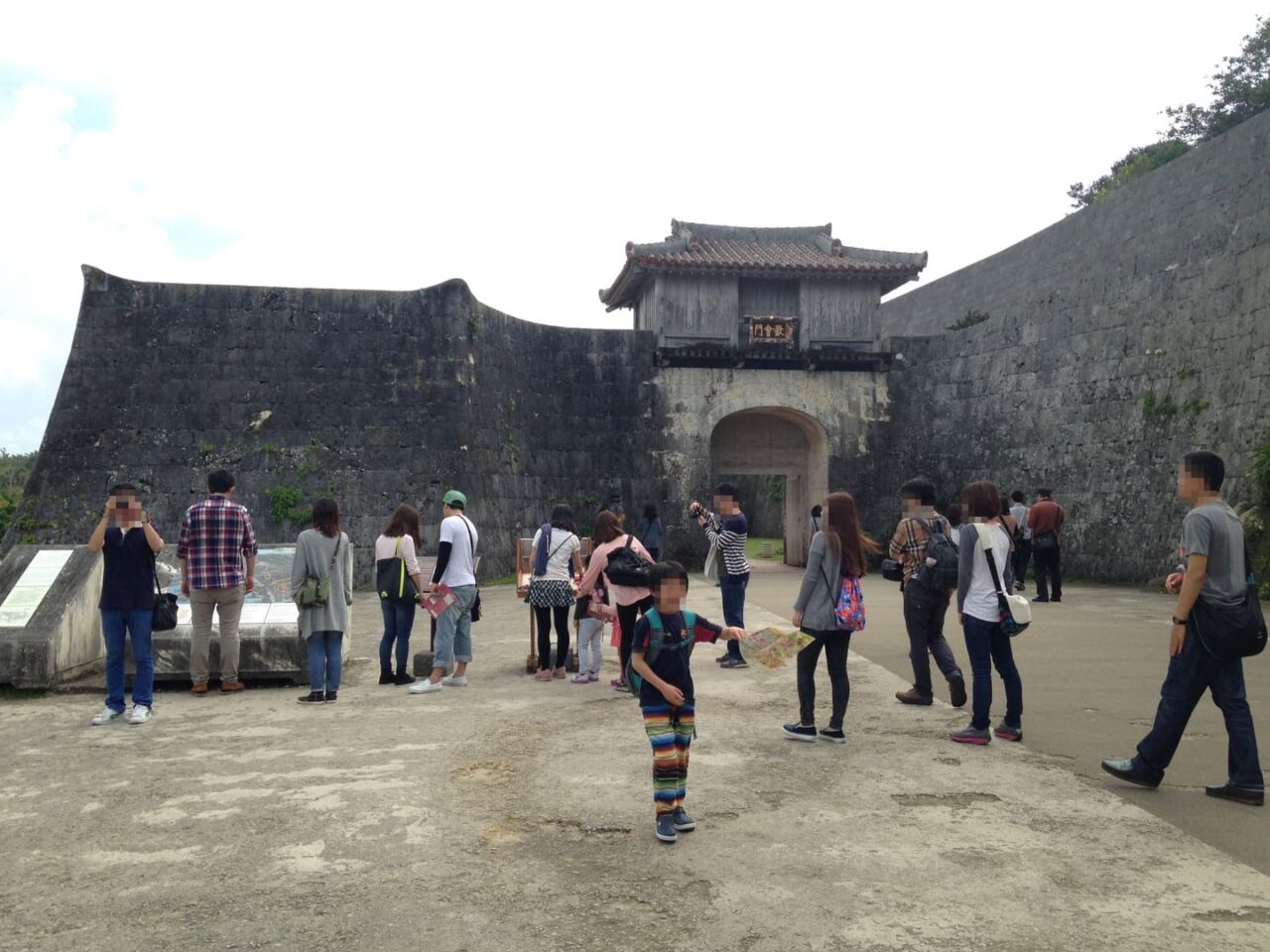
Zuisenmon Gate and Ryuhi: The Royal Castle’s Spring That Has Flowed for 500 Years
The “zuisen” in Zuisenmon refers to the spring in front of the gate called “Ryuhi.” Water flows from the mouth of a dragon-shaped stone carving and supplied drinking water to the royal palace. The dragon-head carving was brought from China in 1523 and is one of the few originals in the castle that survived the war.
When Chinese investiture envoys visited, they erected a stele here praising the spring, and a few replica steles still stand beside the stone steps. This stretch of steps is steep and narrow and the most physically demanding part of the route. It is also a free area, and a good place to slow down and take photos.
The spring water cannot currently be collected and can only be viewed. There is no shade on either side of the steps, and passing through at midday in summer is quite hard, so be sure to bring a hat and water.
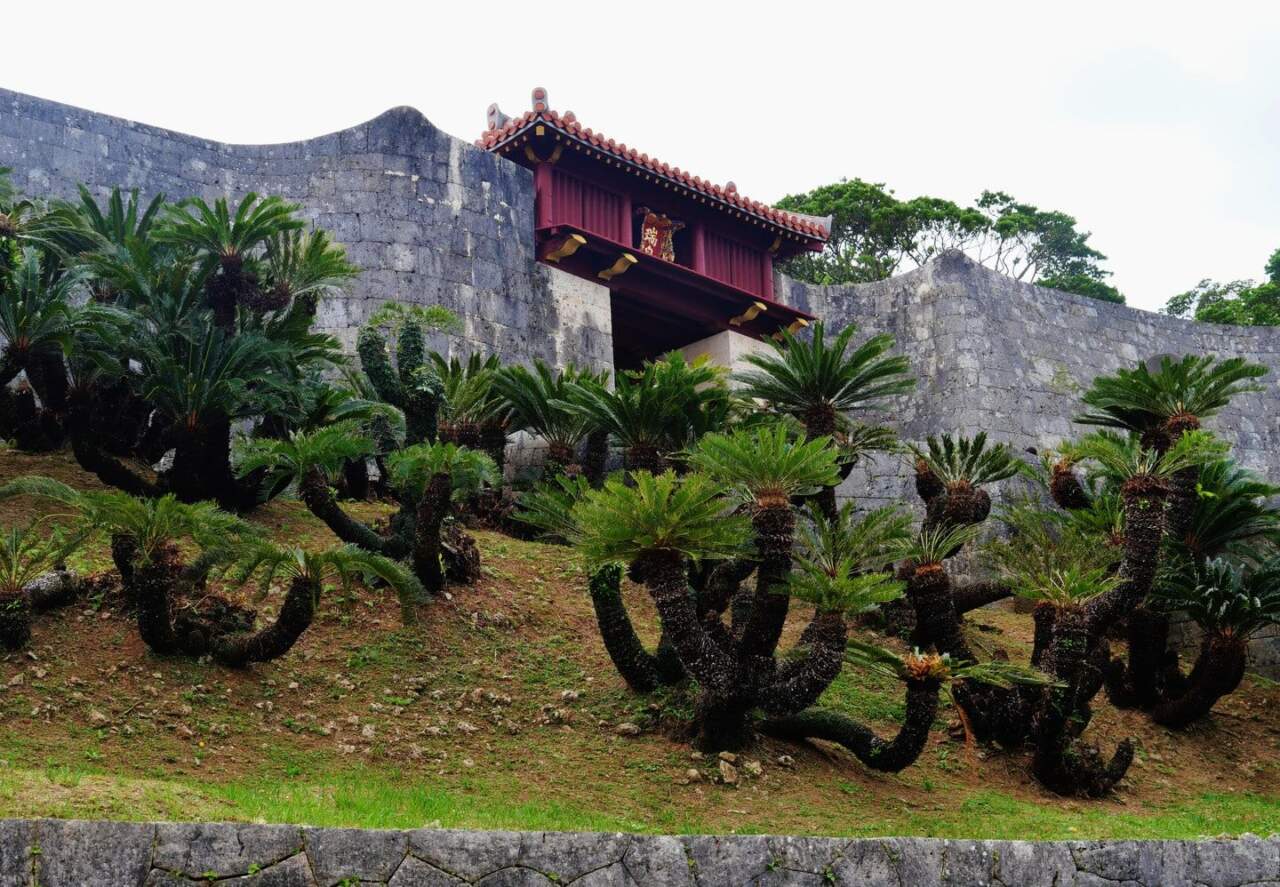
Kofukumon Gate: The Administrative Gate Where the Ticket Office Is Located
“Kofuku” in Kofukumon means spreading good fortune. The gate is itself a building, which in the kingdom era was used as an administrative office handling matters of temples and shrines and the registration of samurai-class family genealogies.
Today the gate houses the ticket office and service center, and it is the outpost marking the boundary between the free and paid areas. After passing Kofukumon you first reach the Lower Unaa courtyard, which has a rest area and a shop; Hoshinmon Gate and the paid area lie further up.
Ticket sales end earlier than the park’s closing time, usually about 30 minutes before closing, so travelers arriving in the late afternoon should be careful, or they will only be able to see the free area. Lockers and restrooms are also available inside the gate.
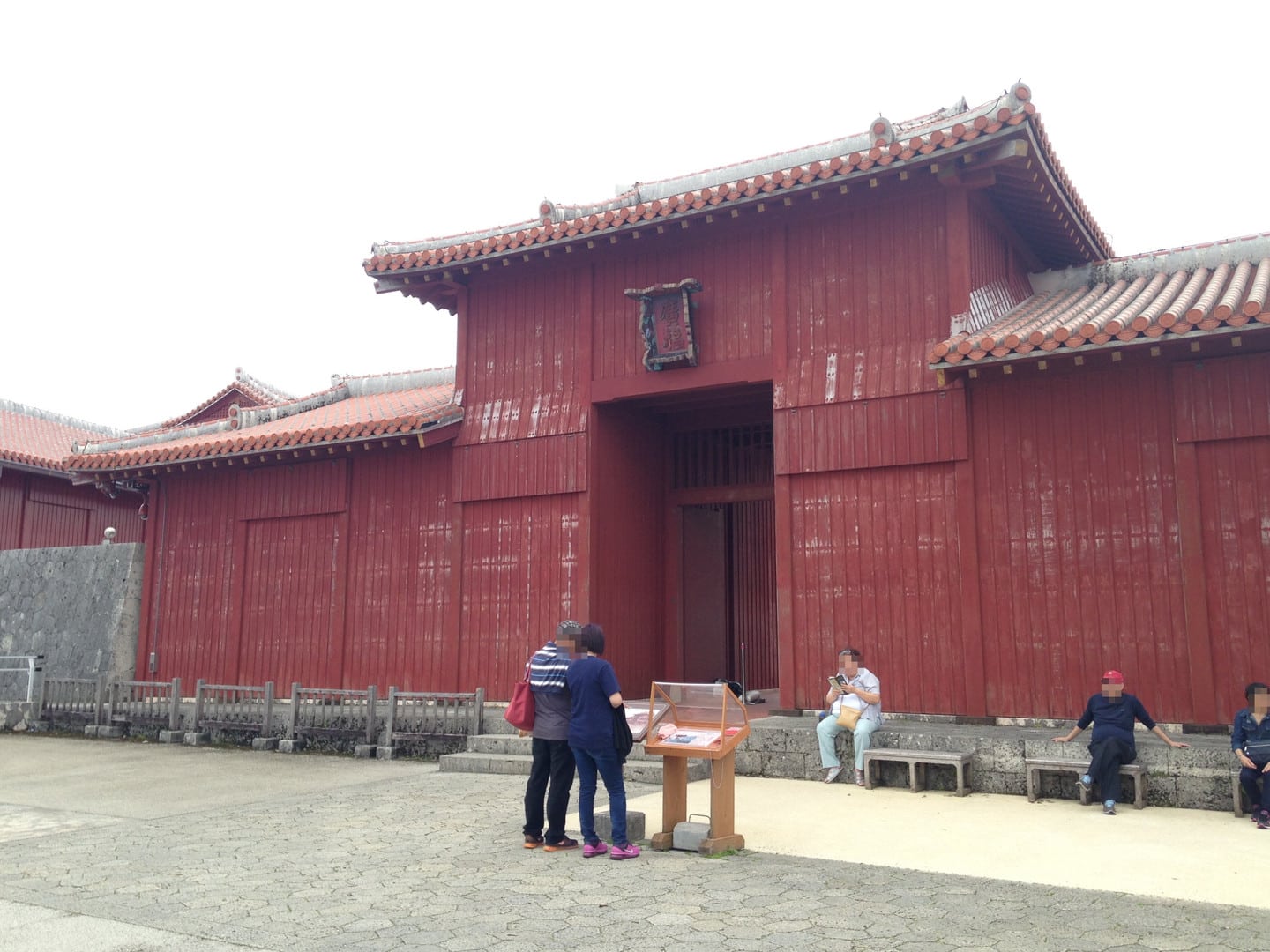
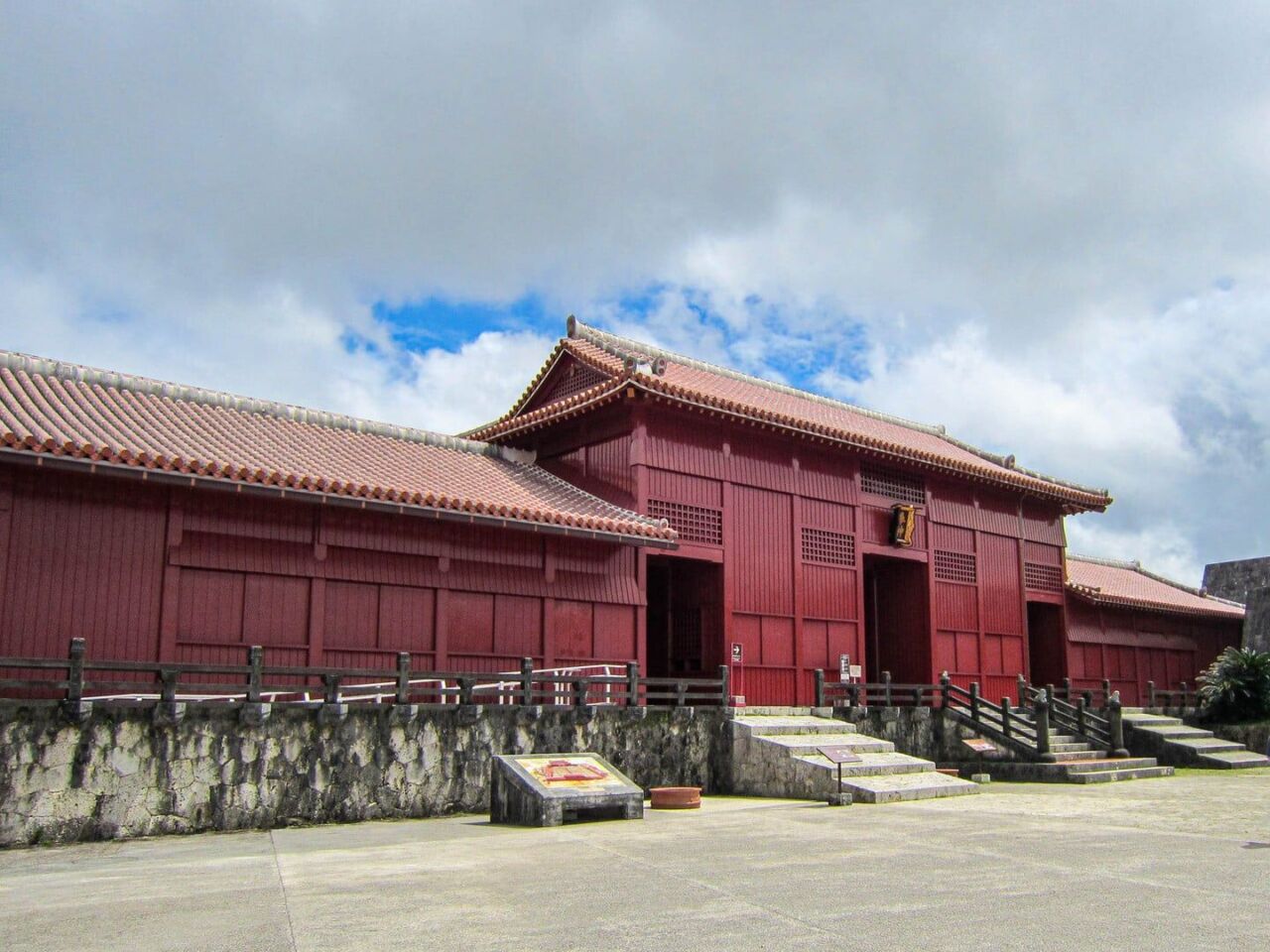
Hoshinmon Gate: The Official Entrance to the Paid Area, with Three Doorways
Hoshinmon is the last gate before the Unaa courtyard and the official entrance to the paid area. It has three openings; the central one could once be used only by the king and investiture envoys, while ordinary officials used the sides.
The plaza in front of the gate is where Shuri Castle’s “gate-opening ceremony” is held. Every morning, staff in traditional Ryukyuan dress perform the ceremony; please check the day’s announcement for the time. Beyond Hoshinmon is the Unaa courtyard, where important ceremonies were held, and the main hall directly faces this brick-patterned plaza.
There is almost no shade in the plaza in front of the gate, so while waiting for the gate-opening ceremony we recommend staying in the rest area of the Lower Unaa. If you have a monorail 1-day pass, show it at the ticket office for a ticket discount, and don’t forget to take it out.
Main Hall (Seiden): Restoration Nearly Complete, Interior Opens November 23, 2026
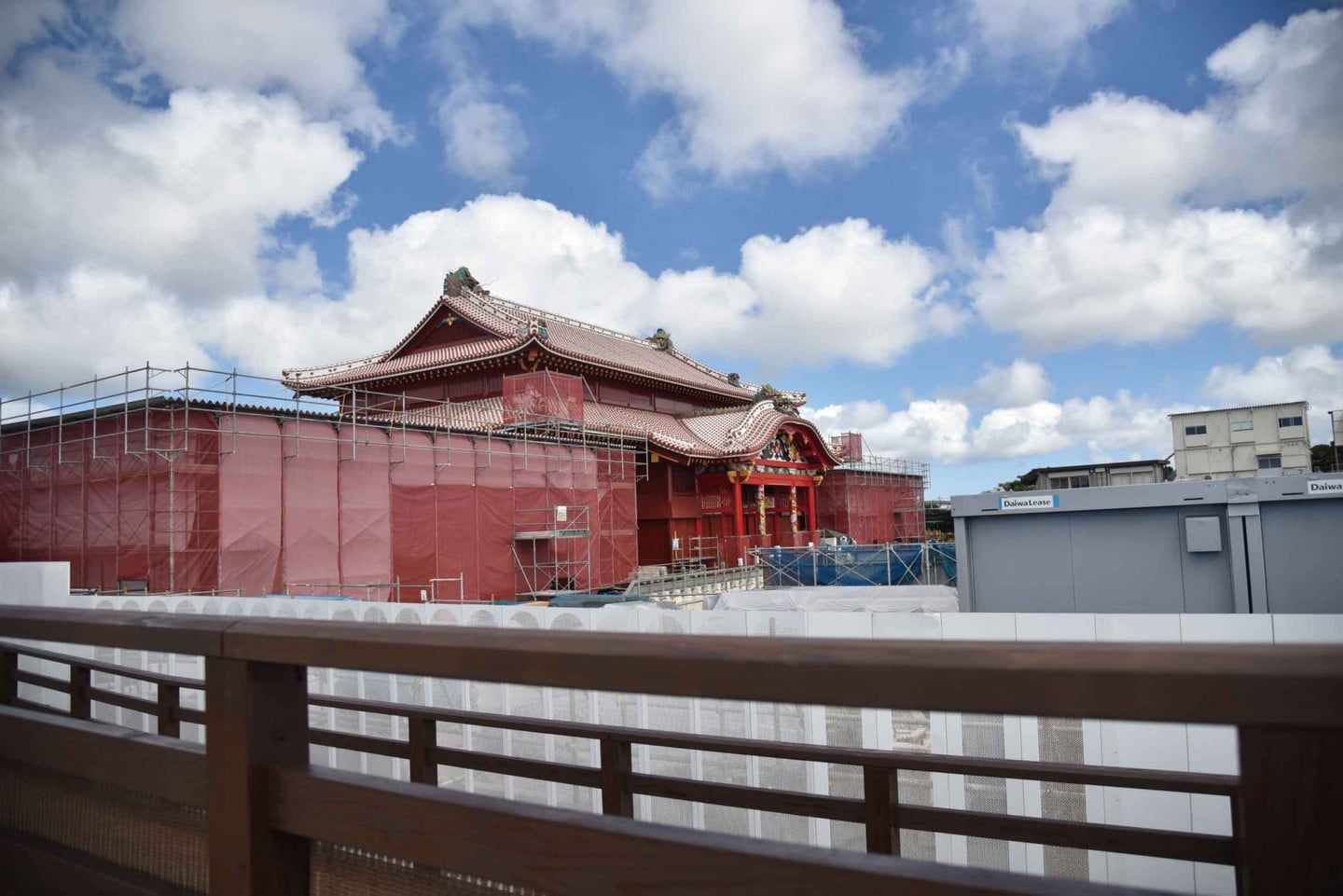
The main hall is the largest wooden building of the Ryukyu Kingdom and the one that suffered the most in the 2019 fire. Its vermilion exterior has reappeared, and the interior will open on November 23, 2026.
The park has announced a completion ceremony on November 22, with the park closed all day then and on the morning of the 23rd. The interior opens from noon on the 23rd, with advance reservations required in 30-minute time slots. Individual tickets are released in batches, and from 2027 they go on sale at 13:00 on the 1st of the month, two months before the entry date. See the ticket section below for details on reservations and prices.
Reconstruction Exhibition Room: See the Restoration Site That Will Disappear After Completion
Before the main hall interior opens, the park has clear viewing panels and an elevated viewing platform, where visitors can look through the transparent panels or down from above at the main hall with its completed exterior. Exterior work on the main hall was finished in 2025, and the work now underway is interior painting and fire-protection equipment, a “restoration in progress” scene that will no longer be seen once construction is complete.
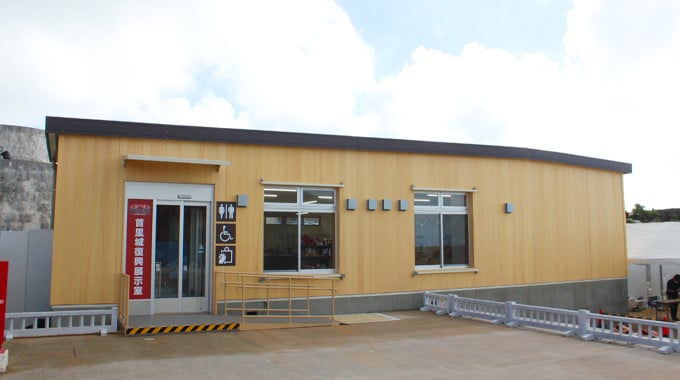
The accompanying Reconstruction Exhibition Room explains the restoration process with models, videos and actual building materials, including where the large timbers were sourced and how the vermilion lacquer and roof tiles were recreated. For anyone interested in architecture or cultural heritage, this area is more information-dense than the finished building itself.
The information boards here hold a lot of detail. A quick pass takes about 15 minutes, while reading carefully can take 40 minutes, so leave some flexibility in your schedule.
Yohokori-den (世誇殿): The Temporary Exhibition Core During Main Hall Restoration
Yohokori-den was originally the residence of princes and princesses in the kingdom era and the site of enthronement ceremonies for new kings. After the 2019 fire it became the main exhibition space in the paid area, introducing the Ryukyu Kingdom’s ceremonies and daily life through video and artifacts.
It is also the most comfortable refuge when it rains or the heat is severe, with air conditioning and seating inside. The exhibits are updated as restoration progresses, so repeat visitors often find something new to see.
Photography is prohibited in some areas inside, so check the signs on site before entering. Shoes are removed before entering, so slip-on shoes make the visit much smoother, and wear a presentable pair of socks.
Higashi-no-Azana (East Azana): The Castle’s Best Viewpoint on the East Side
Higashi-no-Azana is an elevated lookout on the east side of the castle walls at about 140 meters above sea level, the highest point in the castle. To the east you can see the waters around Tsuken Island, to the west the streets of Shuri and Naha Port, and on a clear day even the Kerama Islands.
This is in the paid area, and crowds are usually much smaller than around the main hall, with the most beautiful light in the late afternoon. There is also a “Nishi-no-Azana” (West Azana) on the west side of the castle walls; the two face different directions, and if you have time both are worth a visit.
Reaching the lookout requires climbing another flight of steps, so consider whether to go if your stamina is limited. The ground is high and the wind is noticeable, so hold on to your hat and light jacket, and watch your step when taking photos.
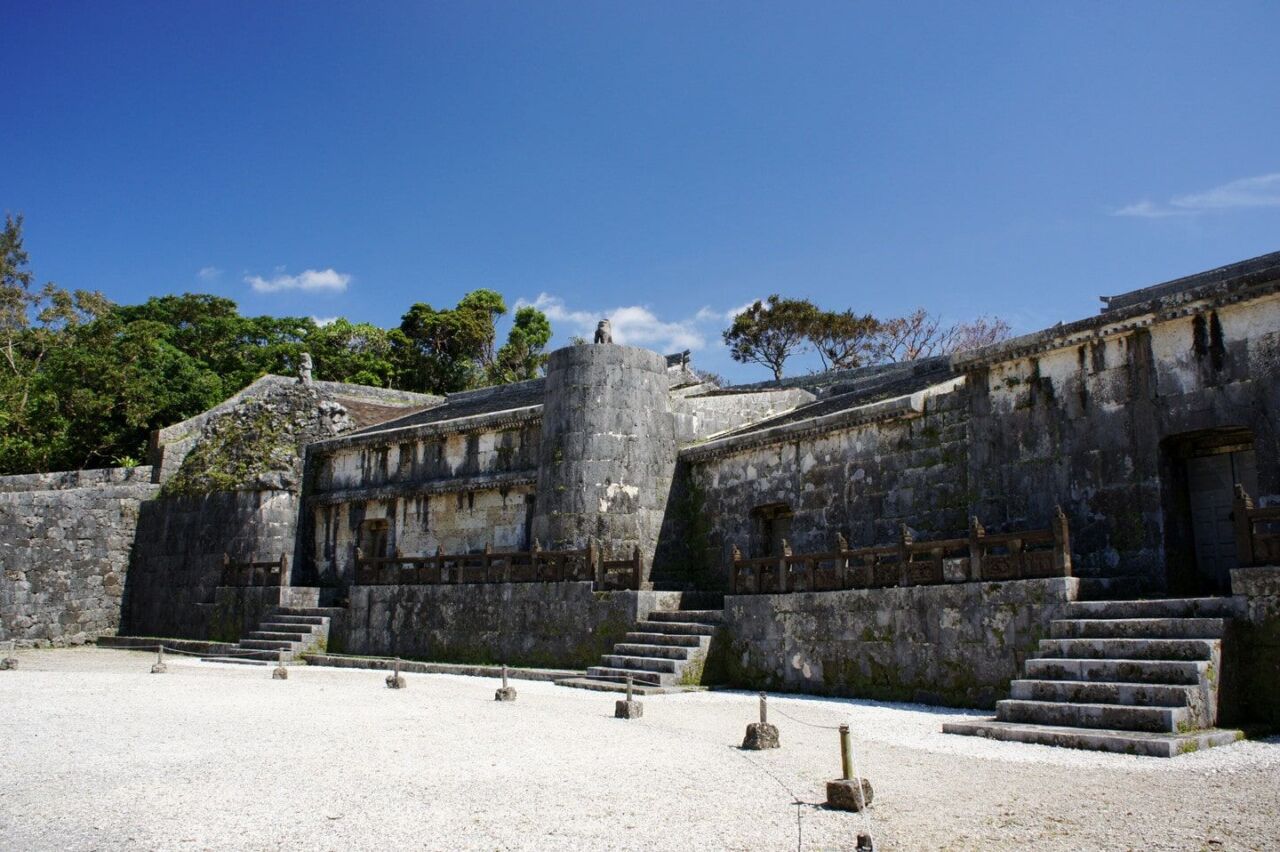
Tamaudun: The World Heritage Mausoleum of the Second Sho Dynasty Kings
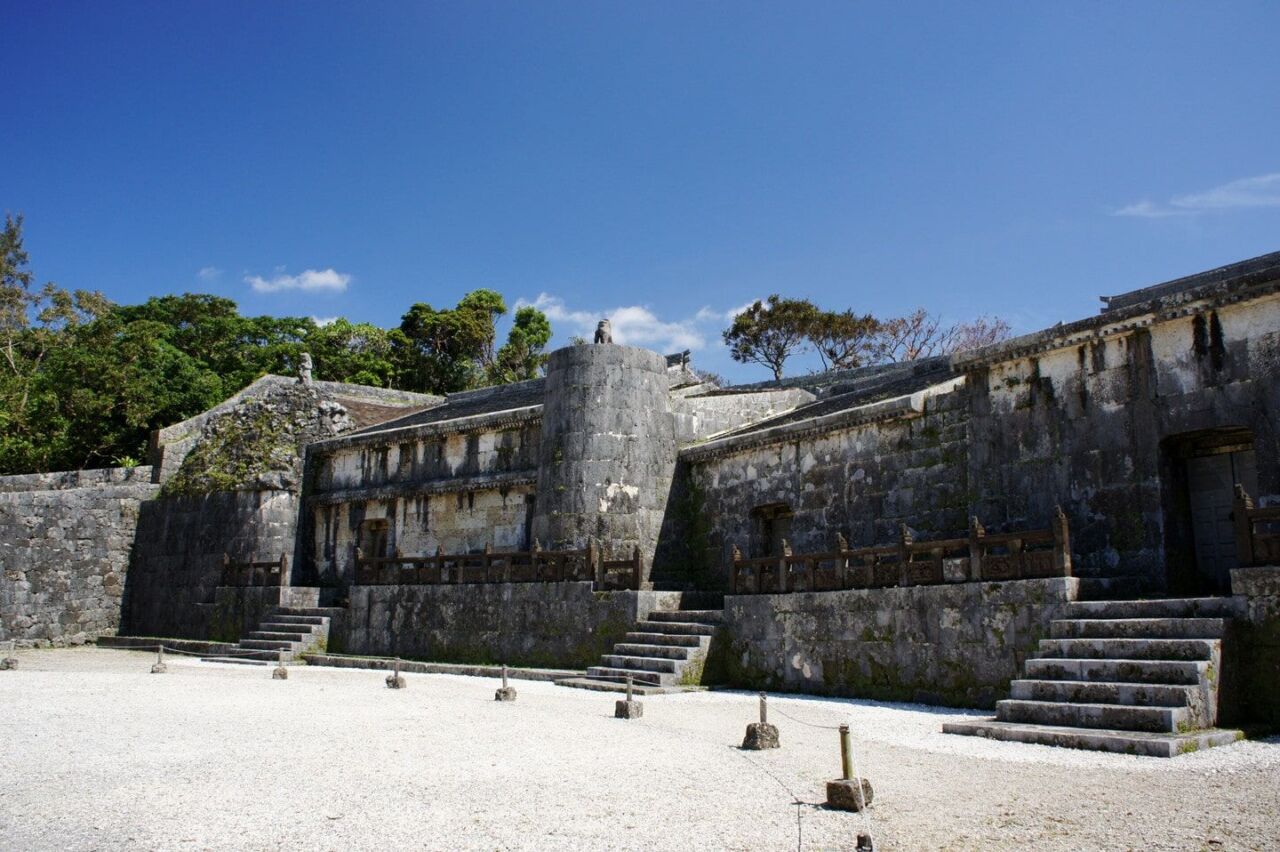
Tamaudun was built in 1501 by King Sho Shin to rebury his father, King Sho En, and later became the mausoleum of successive kings of the Second Sho Dynasty. It is also a World Heritage Site. The whole structure is built of Ryukyuan limestone, with an exterior modeled on the shingle-roofed palaces of the time.
The mausoleum is divided into three parts: the East, Middle and West chambers. The Middle Chamber was used to hold the remains until the bone-washing ritual was completed, while the East and West chambers housed kings and queens. Admission is ¥300 for adults (high school students and up) and ¥150 for junior high and elementary students. It is about a 5-minute walk from Shureimon, making it easy to fit in.
Next to the entrance is an underground exhibition room explaining the mausoleum’s structure and the cultural background of the bone-washing ritual. This is a burial ground, so please stay quiet and do not eat or drink during your visit.
Enkanchi Pond and Benzaiten-do: The Tennyo Bridge Built in 1502
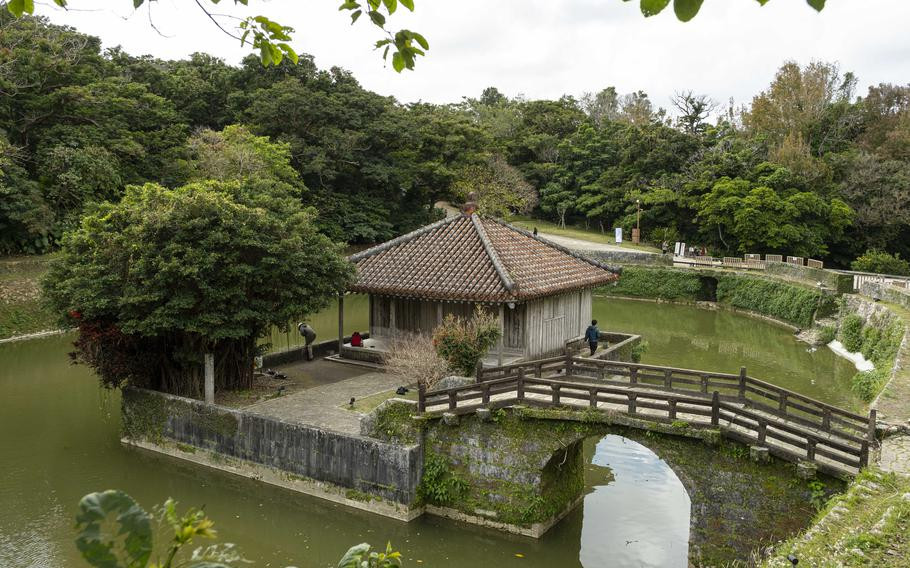
Enkanchi is an artificial pond on the west side of Shuri Castle. On a small island in the pond stands Benzaiten-do, originally built to house Buddhist scriptures presented by Korea. The hall was burned down in the war and rebuilt in its original form in 1968. The surrounding trees are thick, making it the quietest corner of the castle area.
The “Tennyo Bridge” leading to Benzaiten-do was built in 1502 from cut Ryukyuan limestone and is designated a National Important Cultural Property of Japan. This area is free to enter, and a great place to sit and catch your breath after climbing the steps inside the castle.
The path around the pond has steps and slopes, but the distance is short, about 15 minutes for a loop. Locals often stroll here in the early morning and late afternoon, giving it a very everyday feel.
Shuri Kinjocho Stone-Paved Road: A Ryukyuan Limestone Slope Laid in the 16th Century
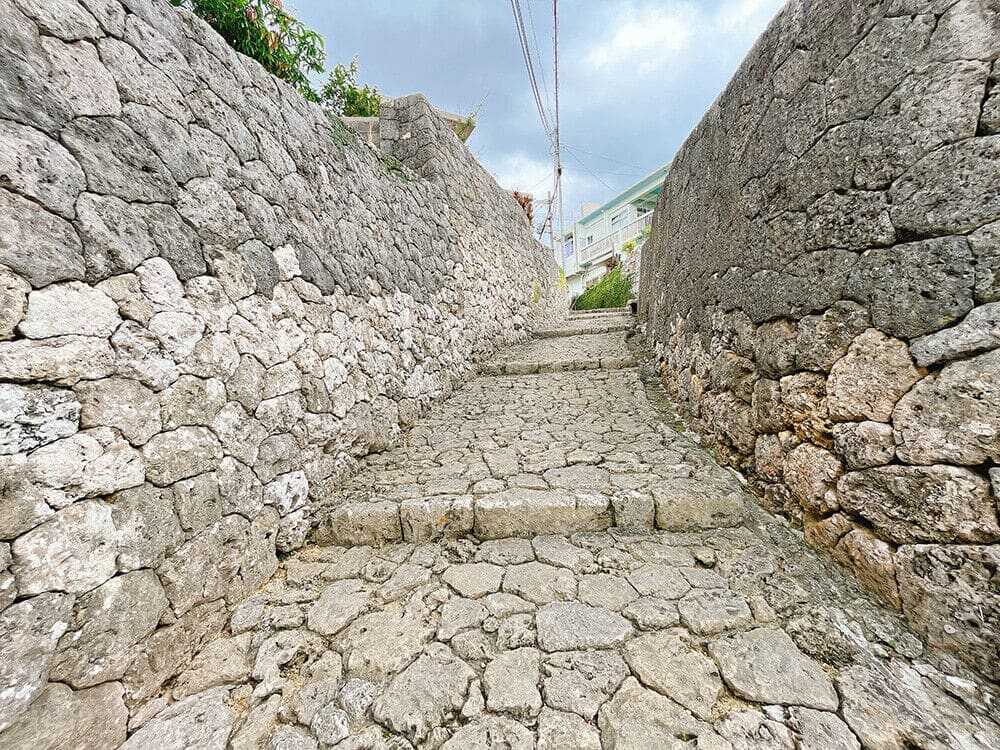
The stone-paved road was originally a main road connecting Shuri Castle to the south in the 16th century, paved on both sides with Ryukyuan limestone. Most of it was destroyed in the war, and today only about 200 meters in Kinjocho remain, designated a Cultural Property of Okinawa Prefecture.
Residents still live along the route, and bougainvillea occasionally pops up between red-tile houses and stone walls, making it one of the most photogenic slopes in Naha. The stone slabs get very slippery in the rain and the slope is considerable, so wear non-slip shoes. In the middle section, the free “Kinjo Murayaa” building offers a place to rest.
Walking down brings you to city streets, from where you can walk or take a bus back to Shuri Station. Walking the opposite way, uphill, is quite tiring, so we recommend going downhill.
How Much Does Shuri Castle Cost? Tickets, Reservations and Experience Tours
The free areas of Shuri Castle require no ticket, while paid-area ticket prices change from November 23, 2026.
Shuri Castle Park Paid-Area Tickets: Old and New Prices and the Reservation System
The paid area covers Hoshinmon Gate, Yohokori-den, the Reconstruction Exhibition Room and Higashi-no-Azana. Current prices are ¥400 for adults, ¥300 for high school students and ¥160 for junior high and elementary students, with children 6 and under free.
From November 23, 2026, prices change to ¥1,000 for adults, ¥760 for high school students and ¥370 for junior high and elementary students, with children 6 and under free; advance reservations are required for the main hall interior.
The official website is “Shuri Castle Park” (oki-park.jp/shurijo), and main hall reservations are covered in the next section.

:21點前歸還、送御朱印帳-Klook.jpg)
How to Reserve for the Shuri Castle Main Hall: Ticketing Platform and Sale Times
Advance reservations are required for the main hall interior. Individual tickets are bought online through the “Webket” ticketing system linked from the official website, with up to 9 tickets per order. Sessions from November 23 to December 31 are released in two batches, and from 2027 they go on sale at 13:00 on the 1st of the month, two months before the entry date. Tickets that include a main hall reservation cover the entire paid area, the date and time slot can be changed up to the day before use, and refunds must be requested two days before use. Groups of 20 or more are allocated by lottery, and group reservations are not accepted from November 23 to December 6.
Naha World Heritage Half-Day Guided Tour: Understand Shuri’s Story in One Go
Shuri Castle, the Sonohyan Utaki Stone Gate and Tamaudun are all component sites of the World Heritage listing and are within walking distance of each other, but on-site Chinese-language explanations are limited, and joining a guided tour saves a great deal of research time.
Half-day tours usually meet at Shuri Station on the monorail and walk through Shureimon, the castle route, Tamaudun and the Kinjocho Stone-Paved Road in that order, for about 3 hours in total. Most tours do not include paid-area admission to Shuri Castle, so check when booking whether you need to buy a ticket separately.
Tours mostly depart at fixed times and go ahead in the rain, though the route is adjusted. The stone-paved road section requires some stamina, so check your walking tolerance before signing up.
Okinawa Monorail 1-Day and 2-Day Passes: 20% Off Shuri Castle with the Pass
The 1-day pass is ¥1,000 for adults and ¥500 for children, with unlimited rides for 24 hours from purchase; the 2-day pass is ¥1,800 for adults and ¥900 for children, valid for 48 hours. They can be bought at vending machines and staffed windows at every station.
Besides unlimited rides, the pass gives 20% off admission to designated facilities such as Shuri Castle, Tamaudun and Fukushuen (the adult Shuri Castle ticket of ¥400 currently drops to ¥320; for the discount after the new prices take effect on November 23, please refer to the official announcement). Putting Shuri Castle and other Naha attractions on the same day pays the pass back quickly.

Where to Stay Near Shuri Castle: Staying in Shuri vs. Central Naha

Stay in Shuri or in the City? Differences Between the Two Options
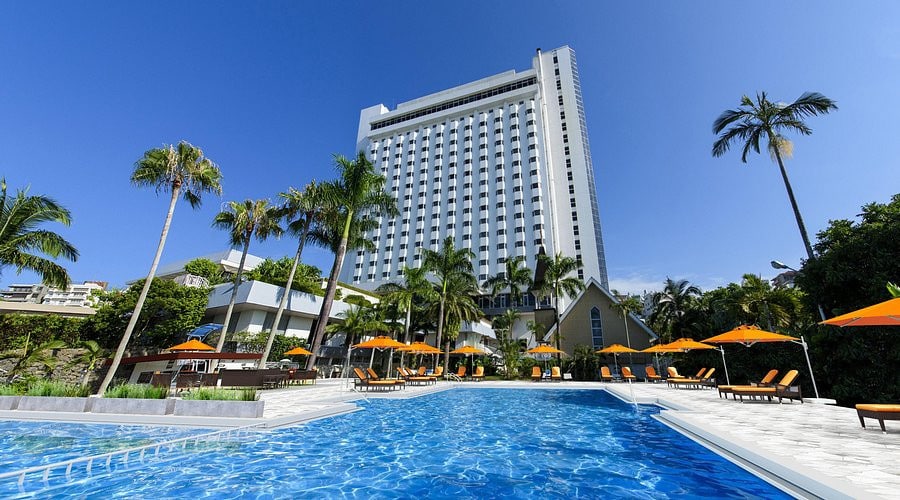
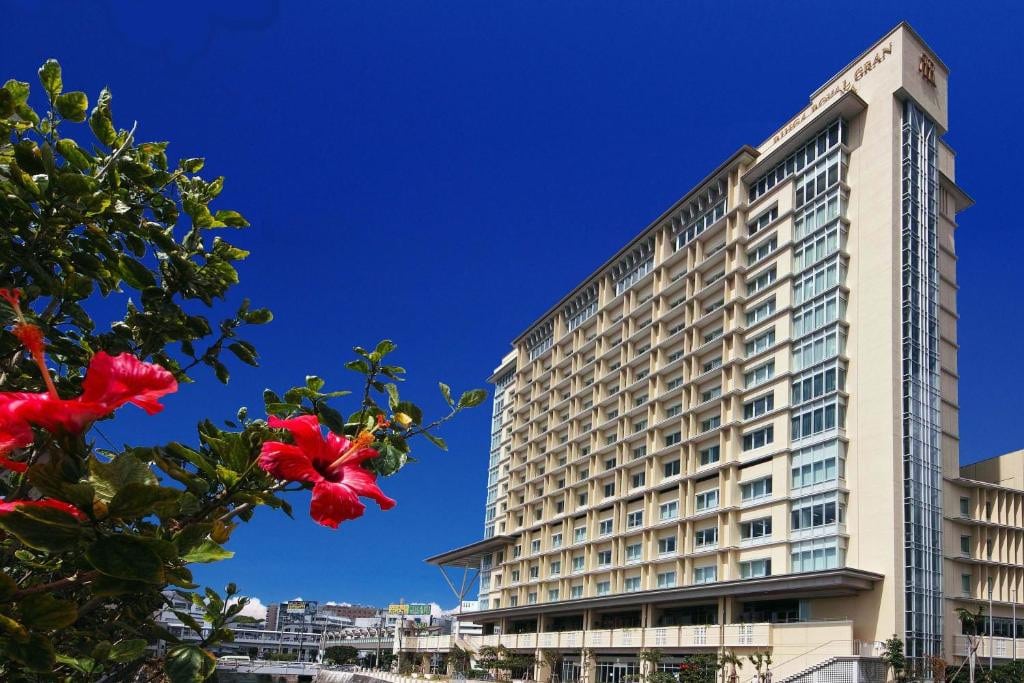
The Shuri area is mostly residential with few places to stay. The advantages are that you can arrive right at opening time and avoid tour groups; the drawbacks are limited dining and shopping at night, and an extra monorail ride back to the city.
Most travelers stay in central Naha along the monorail line. The areas around Kencho-mae, Miebashi and Makishi stations have the most complete amenities, and the monorail from Kokusai-dori to Shuri Station takes only 15 to 20 minutes. If you want an early start at Shuri Castle while also enjoying the nightlife, staying in the city is usually the better balance.
Shuri Castle FAQ
Q: Can you still visit Shuri Castle after the fire?
Yes. The park never closed, free areas such as Shureimon are open as usual, and the paid area is also open. The main hall interior opens to the general public only from November 23, 2026.
Q: When does the Shuri Castle main hall open? Do I need a reservation?
The interior opens for visits from noon on November 23, 2026, with advance reservations required in 30-minute time slots on the official website. The park is closed all day on November 22 and on the morning of the 23rd.
Q: How much is Shuri Castle admission? Did it change in 2026?
Yes. From November 23, 2026, it is ¥1,000 for adults, ¥760 for high school students and ¥370 for junior high and elementary students, with children 6 and under free; before that the prices are ¥400, ¥300 and ¥160 respectively.
Q: Which parts of Shuri Castle can I see without a ticket?
Shureimon, the Sonohyan Utaki Stone Gate, Kankaimon, Zuisenmon, Kofukumon and the walking paths around the castle walls are all free areas, and the Enkanchi Pond and Benzaiten-do area also requires no ticket.
Q: How do I get to Shuri Castle? Can I walk from Shuri Station on the monorail?
Yes. It is about a 15-minute walk from Shuri Station on the monorail to Shureimon Gate. If you don’t want the uphill walk, transfer to Shurijo Shitamachi Line bus No. 7 or 8 to “Shurijo-mae,” then walk 1 minute.
Q: How much is parking at Shuri Castle?
At the Shurimori-kan underground garage, from April 1, 2026, a standard car pays ¥500 for the first 60 minutes, then ¥250 per 30 minutes, with a cap of ¥1,000 per entry.
Q: How long does Shuri Castle take? What time of day is most comfortable?
About 1 hour for just the free areas, and about 3 to 4 hours including the paid area, Tamaudun and the Kinjocho Stone-Paved Road. There are many slopes in the park, so we suggest going in the morning or late afternoon to avoid the midday sun.
Q: What are Shuri Castle Park’s opening hours? Are there closure days in 2026?
According to the Shuri Castle Park website, the free area is open 8:00-19:30 from April to November and 8:00-18:30 from December to March; the paid area is open 8:30-19:00 from April to November and 8:30-18:00 from December to March, and ticket sales end 30 minutes before closing. The park is closed all day on November 22 and on the morning of November 23 for the completion ceremony.
