

Okinawa Food Guide: How “American-Ryukyu Style” Became the Taste of an Island
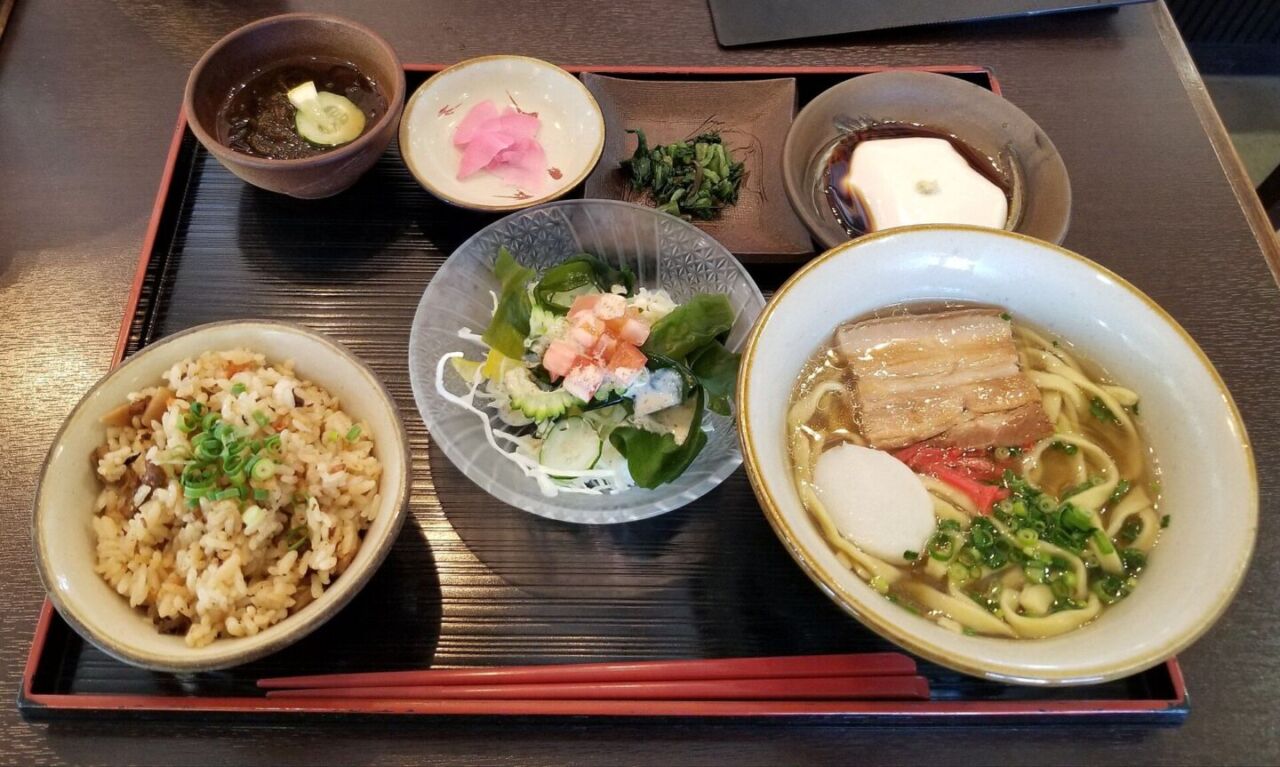
Okinawan food is the product of Ryukyu tradition overlapping with postwar American culture, and its four stars are Okinawa soba, sea grapes, taco rice and the A&W burger.
American-Ryukyu Style: The Two Bloodlines of Okinawan Food Culture
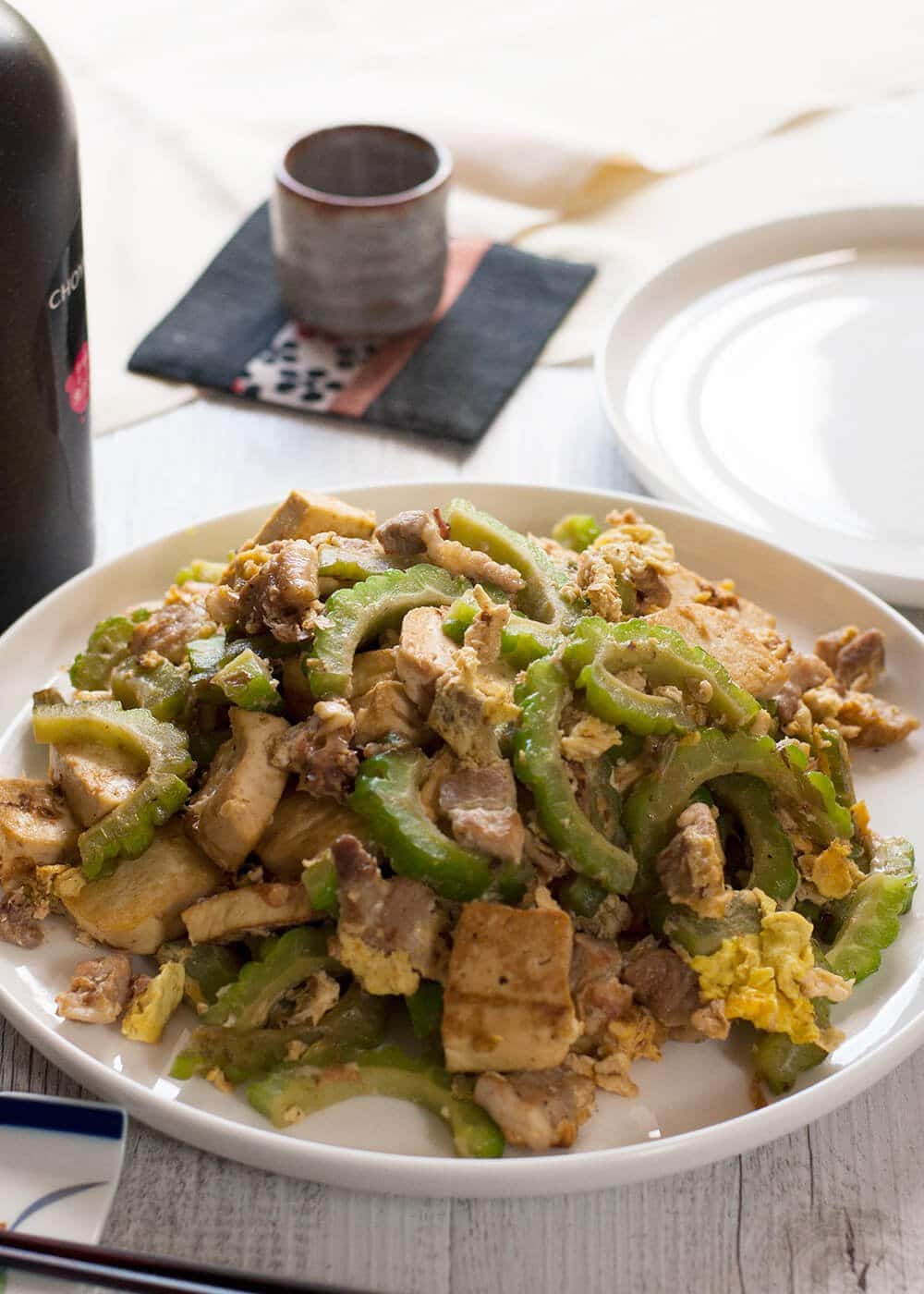
Okinawan tables hold both pork-and-egg rice balls and taco rice. This hybrid taste, often called “American-Ryukyu style,” comes from two clear bloodlines: first, the pork dishes and seaweed culture left by the Ryukyu Kingdom’s trade with China and Southeast Asia; second, the Spam, cheese and fast food that arrived with the US military bases after the war.
That is why eating in Okinawa often feels delightfully out of place: a traditional house serves bonito-broth Okinawa soba, while a retro drive-in one street over sells root beer. Once you see this dividing line, it is easy to understand why signature dishes on the same island differ so much.
| The Four Signature Foods | Typical price | Representative shops and location |
|---|---|---|
| Okinawa soba | About ¥600-900 a bowl | Okinawa Soba EIBUN (Tsuboya, Naha), Shuri Soba (Shuri, Naha) |
| Sea grapes | About ¥1,000-2,000 per person | Ganso Umibudo Honten (Onna Village), Uminchu (Itoman) |
| Taco rice | About ¥1,000 a serving | King Tacos (Kin Town), JAM’S TACOS (Kokusai-dori, Naha) |
| A&W burgers | About ¥1,000-1,500 per person | A&W Makiminato (Urasoe), A&W Mihama (American Village, Chatan) |
The Four Signature Foods: Okinawa Soba, Sea Grapes, Taco Rice and A&W
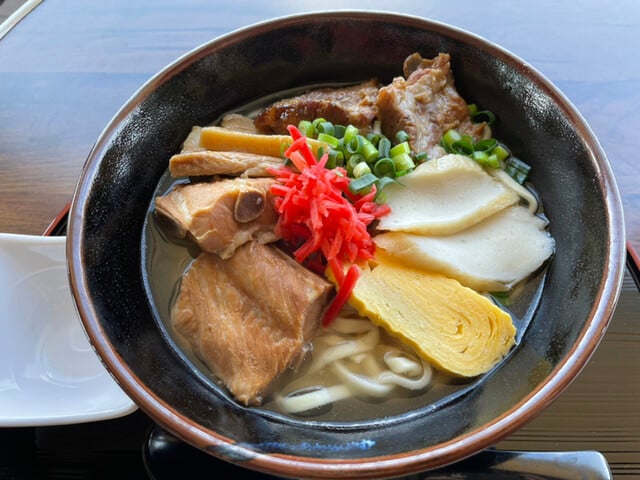
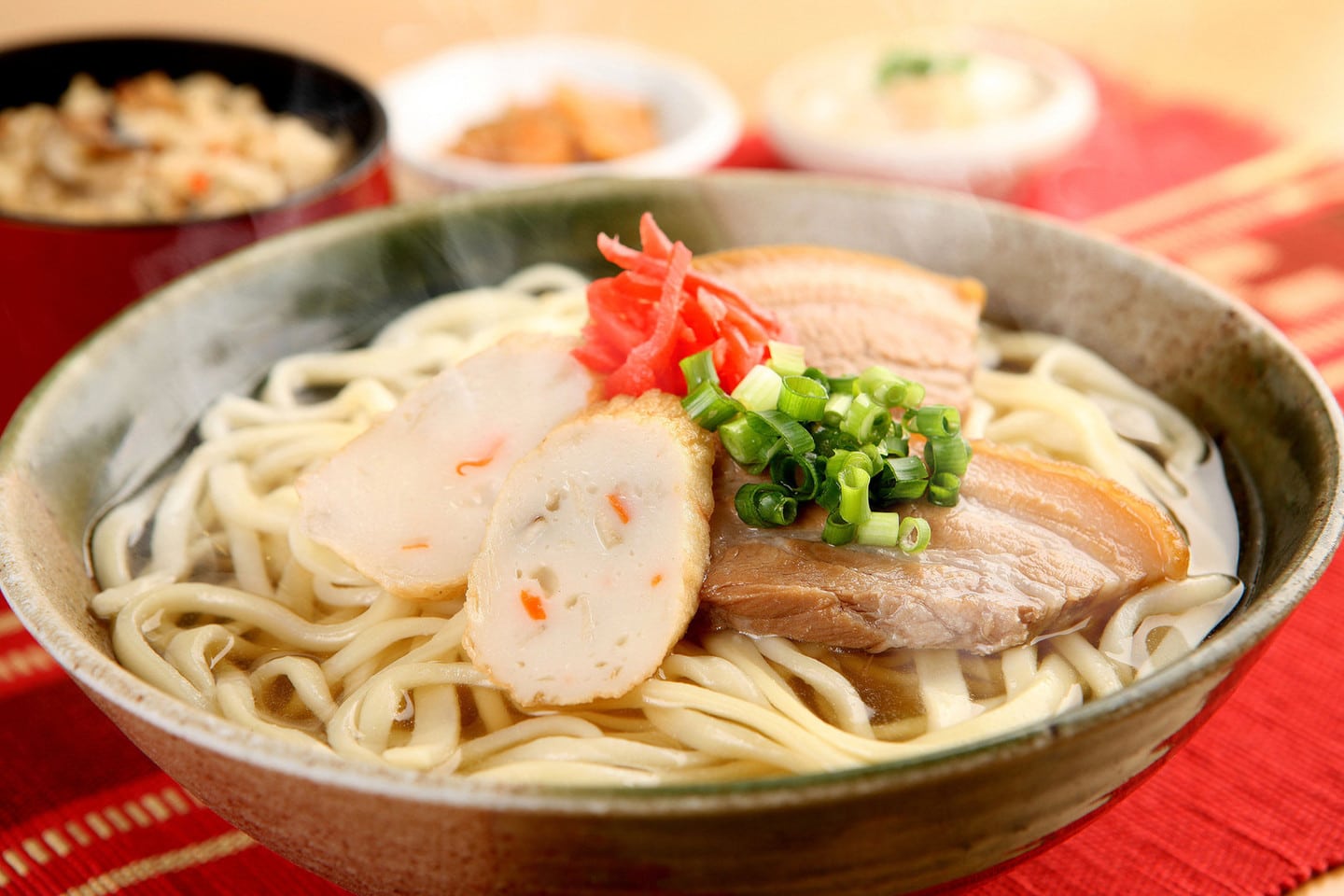
Okinawa soba is a thick noodle made from 100% wheat flour in a broth simmered from bonito and pork bones. Sea grapes are a local seaweed nicknamed “green caviar” that pops with a crisp “puchi-puchi” burst when you bite. Taco rice puts taco filling over white rice and was born in the US military town of Kin.
A&W is an American fast-food chain found only in Okinawa within Japan, and its root beer is free to refill when you dine in. Together these four make up Okinawa’s most recognizable flavor calling card, and they are the backbone of the 21 shops covered below.
How to Plan It: The Food Map of Naha, Central and Northern Okinawa
Okinawa’s best-known shops are spread far apart. Central Naha packs in Okinawa soba, taco rice and market snacks, and the monorail alone lets you eat very well; the central towns of Urasoe and Chatan form the American food belt, home to the representative A&W and BLUE SEAL shops.
The northern areas such as Onna and Nago are the home turf of sea grapes and Agu pork dishes, while the south, Itoman and Nanjo, has sea grape farms and Okinawan tempura. Apart from central Naha, nearly everything requires a car, so settle how you will get around before you plan your days.
What Are the Must-Eat Local Foods in Okinawa? Six Top Shops for Okinawa Soba and Sea Grapes
Start with the two things that best represent Okinawa: Okinawa soba and sea grapes.
Next-Generation Okinawa Soba: Okinawa Soba EIBUN
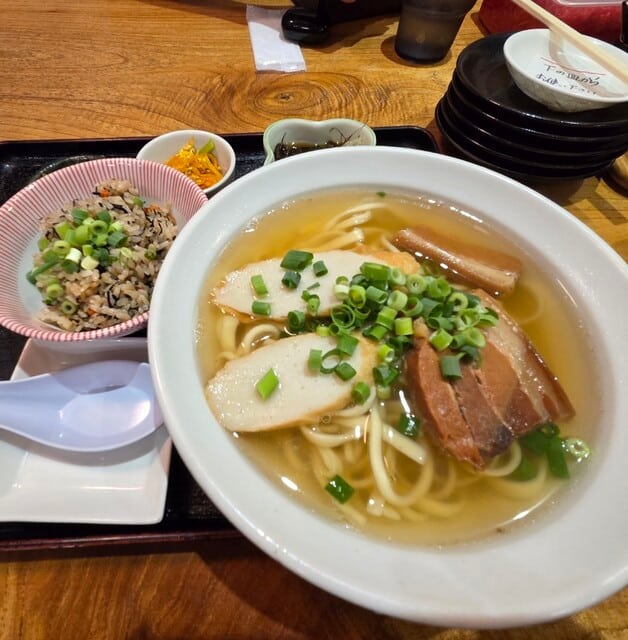
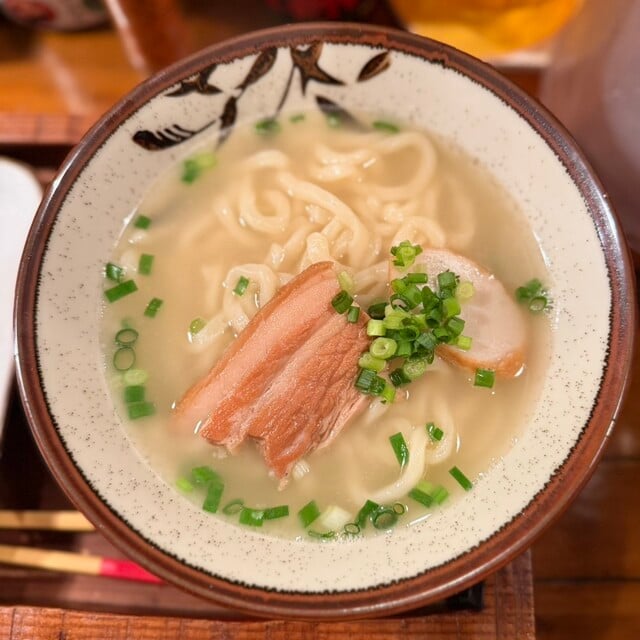
Despite “soba” in the name, Okinawa soba is not buckwheat noodles but a thick noodle made from 100% wheat flour, usually in a clean, light broth of bonito and pork bones. EIBUN in Tsuboya, Naha, is the leading shop pushing this tradition toward “next-generation Okinawa soba.”
Besides the classic bowl, there are creative versions with coriander, curry and chilled noodles, and the springiness of the fresh noodles is clearly different from ordinary dried-noodle shops. Hours are 11:00-20:00 (last order 19:30); for closing days, rely on the shop’s official Instagram announcements. It is popular and often has a line, so arrive early.
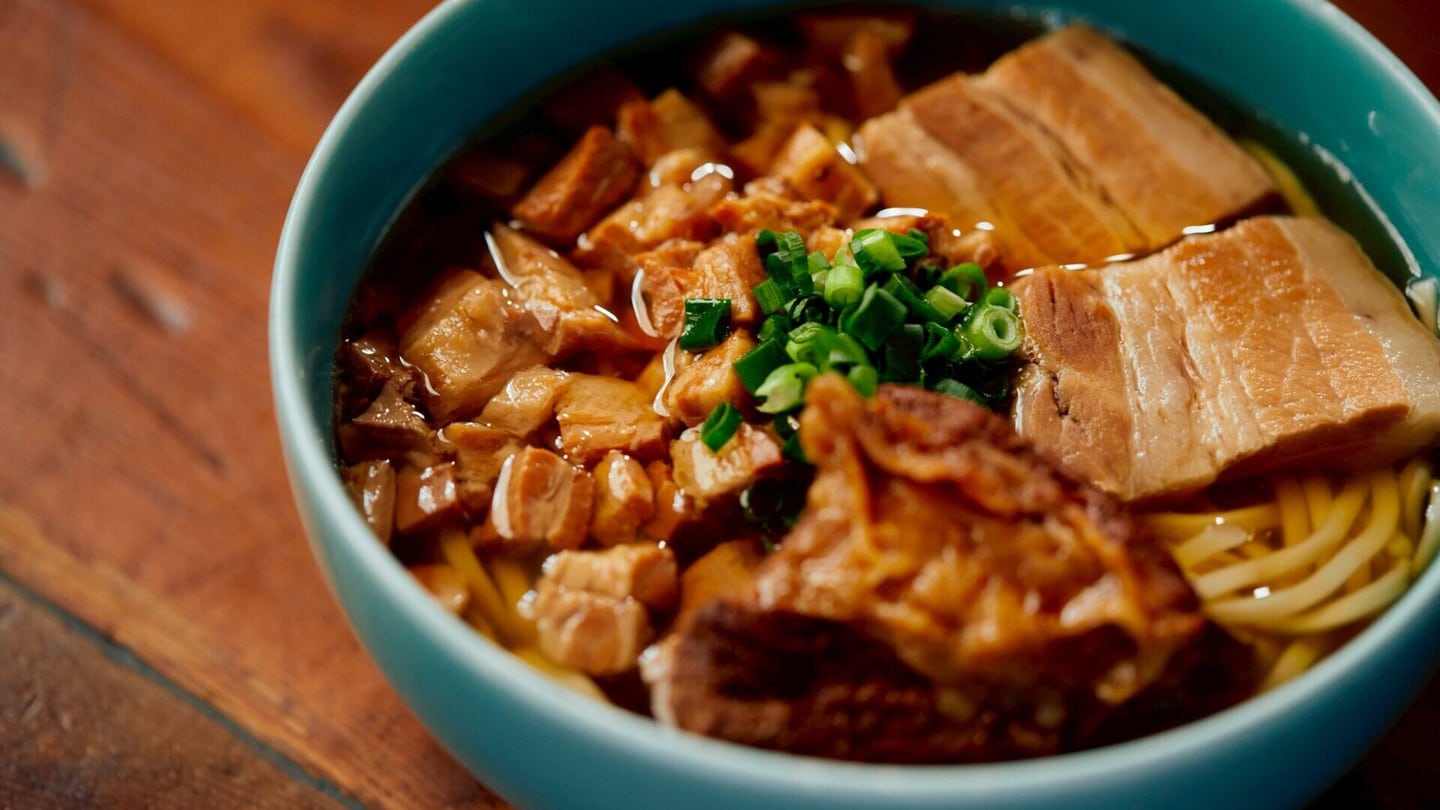
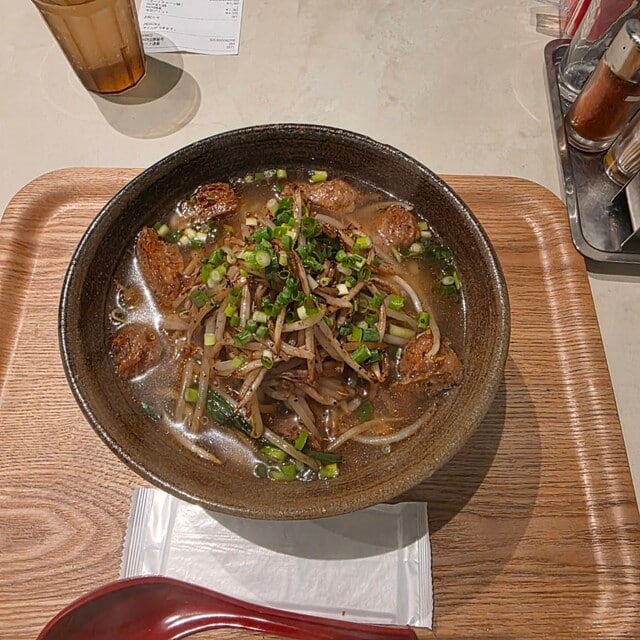
- 🍜 Must-order: BUNBUN Okinawa soba, soki (stewed spare rib) Okinawa soba
- 💰 Price: The official site says the menu changes with the season and supply, so for current prices rely on the shop’s official Instagram; about ¥1,000 per person
- 🚉 Getting there: About a 12-minute walk from Makishi Station on the monorail, next to Tsuboya Yachimun Street

Agu Pork Okinawa Soba: Hundred-Year-Old House Ufuya
Ufuya (大家) is set in a century-old traditional Okinawan house in Nago, with a red-tile roof, a wooden veranda, a Japanese garden and an artificial waterfall. It is the most atmospheric Okinawa soba shop in northern Okinawa and is often added to the route to and from the Churaumi Aquarium.
The signature bowl is Okinawa soba made with the Okinawan brand pork “Agu,” in a sweet, savory broth that is not greasy. Meal times are very busy and the official site takes online reservations, so book before you set out.
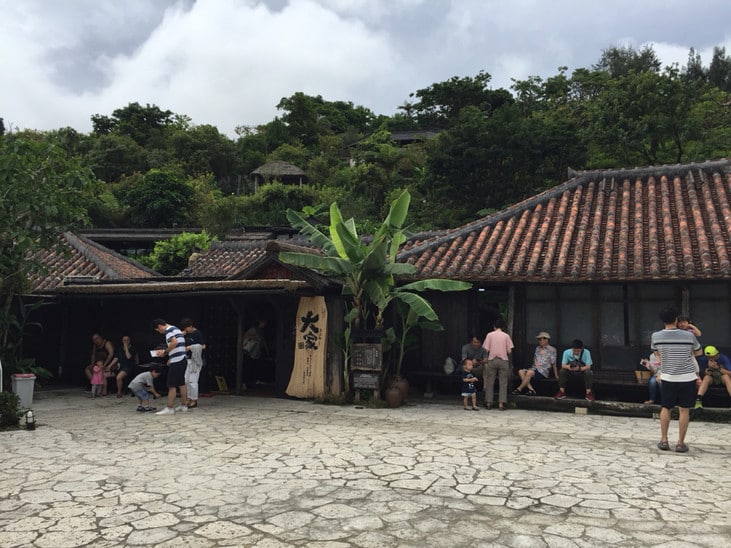
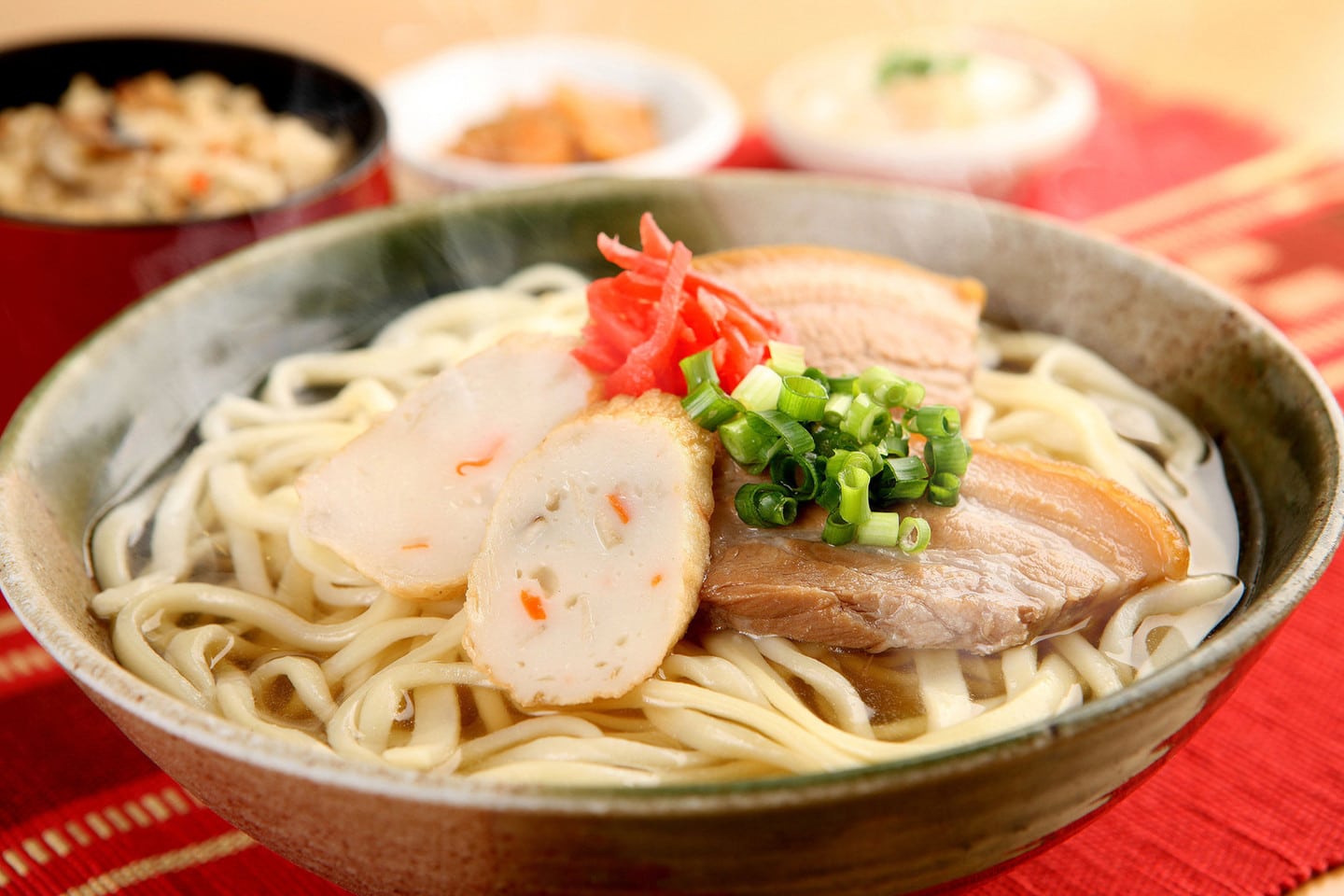
- 🍜 Must-order: Agu pork Okinawa soba, Agu pork shabu-shabu
- 💰 Price: Okinawa soba ¥1,450-2,350, set meals from ¥1,950
- 🚉 Getting there: About 1 hour 30 minutes by car from central Naha, in Nakayama, Nago City, with a car park
Soki Spare Rib Noodles: Soba-dokoro Sobe
Sobe (official name “Sobe Soba”) is a converted postwar traditional house that opened in 2009. With tatami seating and old furniture, it feels like eating at an Okinawan grandmother’s home. It has little tourist feel and many local regulars, and is one of the few Naha soba shops that still feels lived-in.
The signature is spare ribs stewed until they “melt in your mouth,” in a light bonito-and-pork-bone broth. When ordering you can choose “sanmainiku (pork belly)” or “soki (cartilage spare ribs),” and the table holds a special awamori chili sauce called “koregusu”; a few drops change the flavor at once.
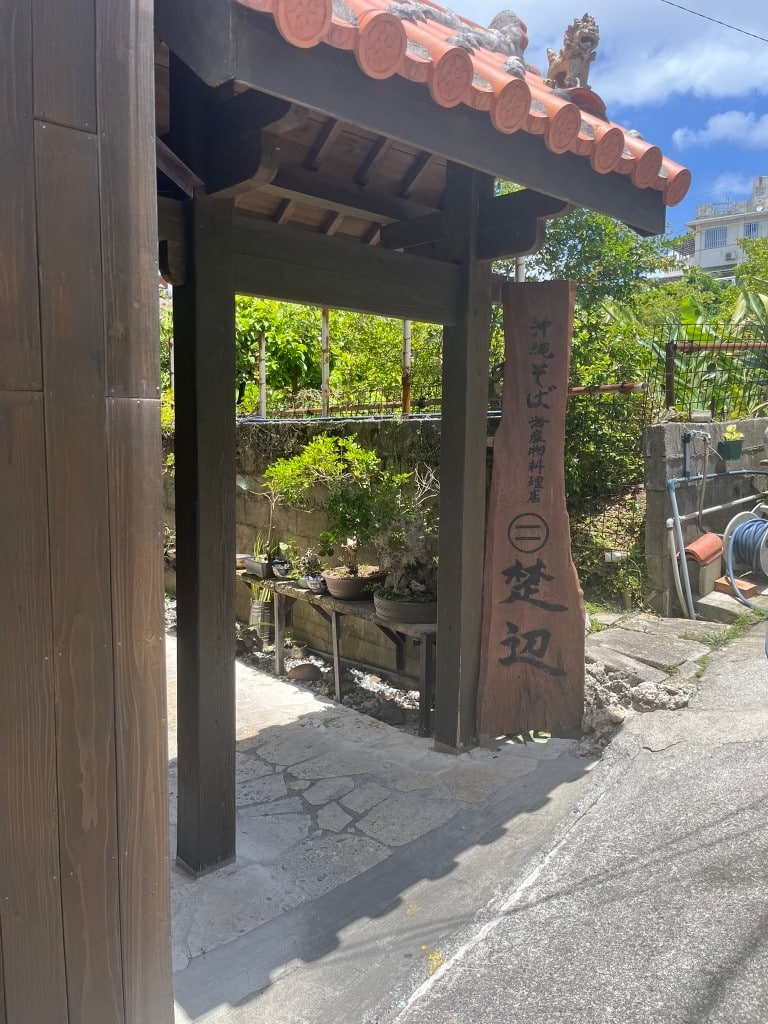
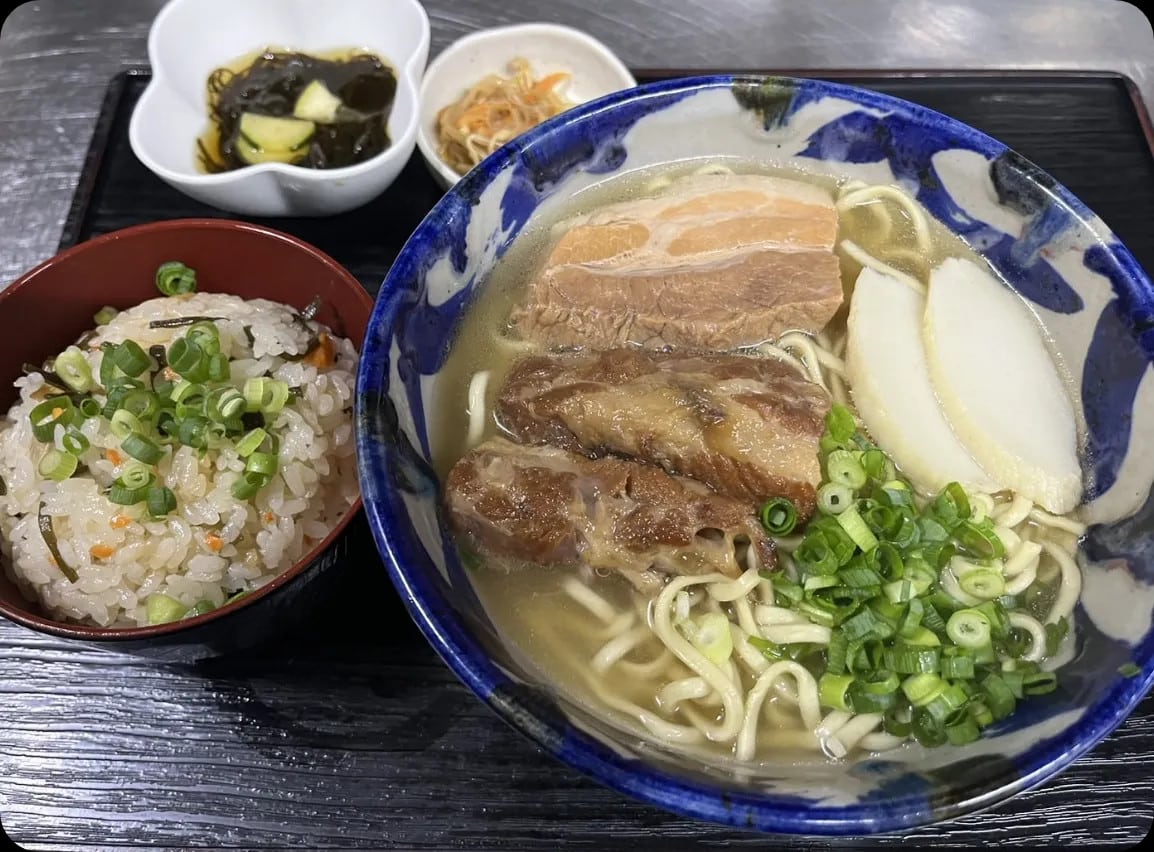
- 🍜 Must-order: Soki spare rib noodles, sanmainiku Okinawa soba
- 💰 Price: Okinawa soba ¥1,000, soki noodles ¥1,350, three-star combination ¥1,350; cash only
- 🚉 Getting there: 2-37-40 Sobe, Naha; about a 10-minute walk from Tsubogawa Station on the monorail, with 40 free parking spaces; open 11:30-21:00 (last order 20:00), no regular closing days except New Year and the old Obon
Hand-Cut Bonito Broth Noodles: Shuri Soba
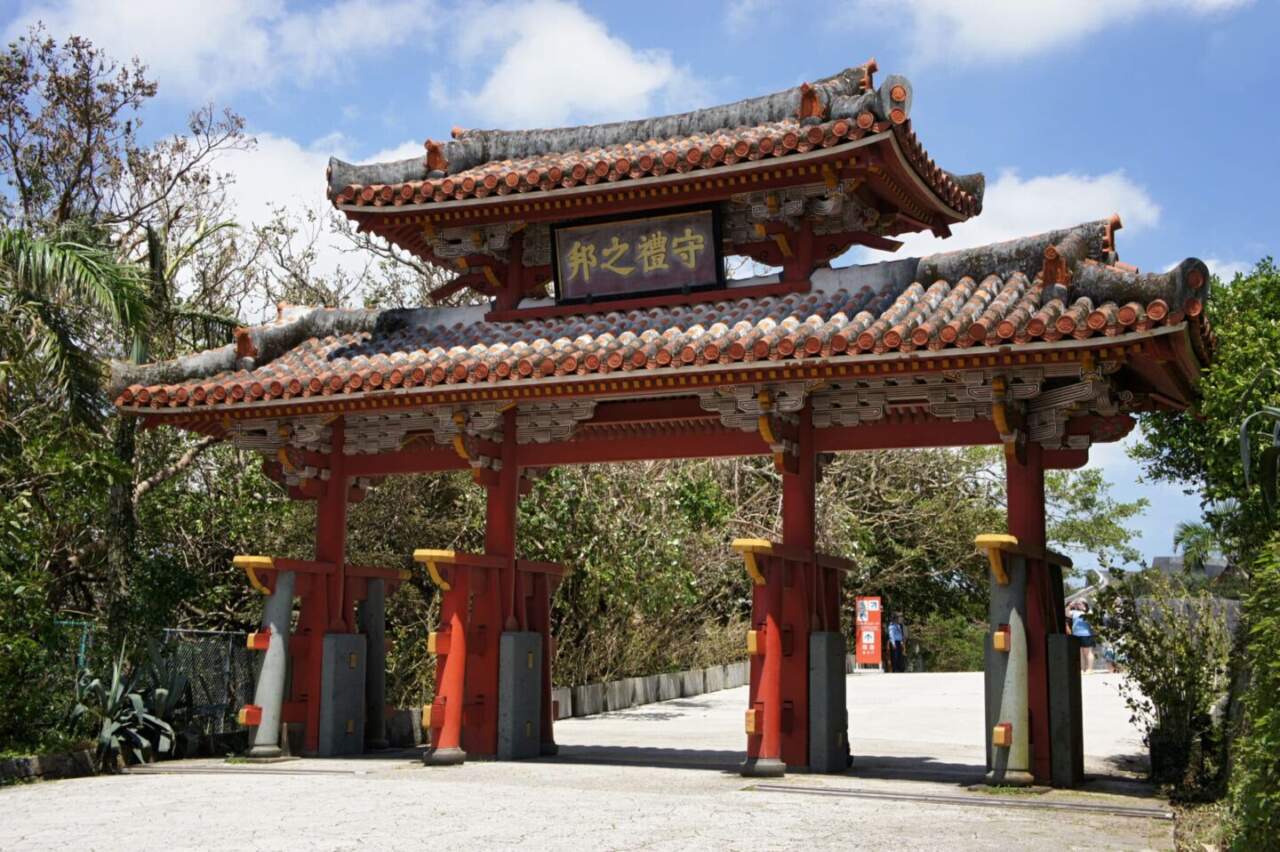
Shuri Soba is near Shuri Castle and carries on the hand-made recipe of the postwar Shuri favorite “Sakuraya.” The hand-cut noodles have irregular cross-sections and a firm bite, and the broth is a clear, pure bonito stock with almost no pork bone. The flavor is clean and elegant, a different path from rich-style Okinawa soba.
The official site states that it closes “when sold out,” with a limited quantity each day and a risk of selling out after noon, so arrive before noon to queue. It is closed Thursdays and Sundays. Seating is limited and meals move quickly, so it suits lunch early in a Shuri Castle outing.
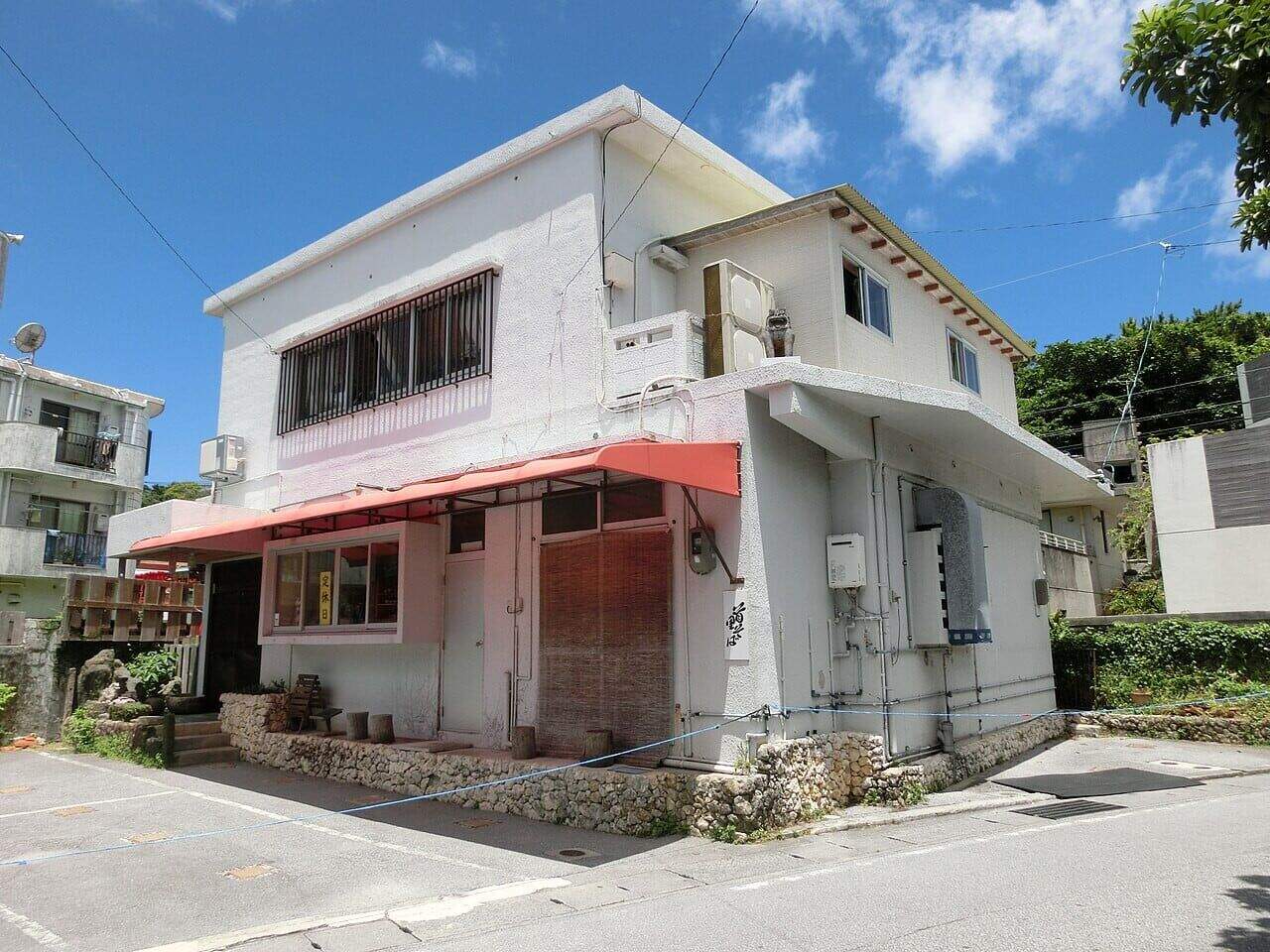
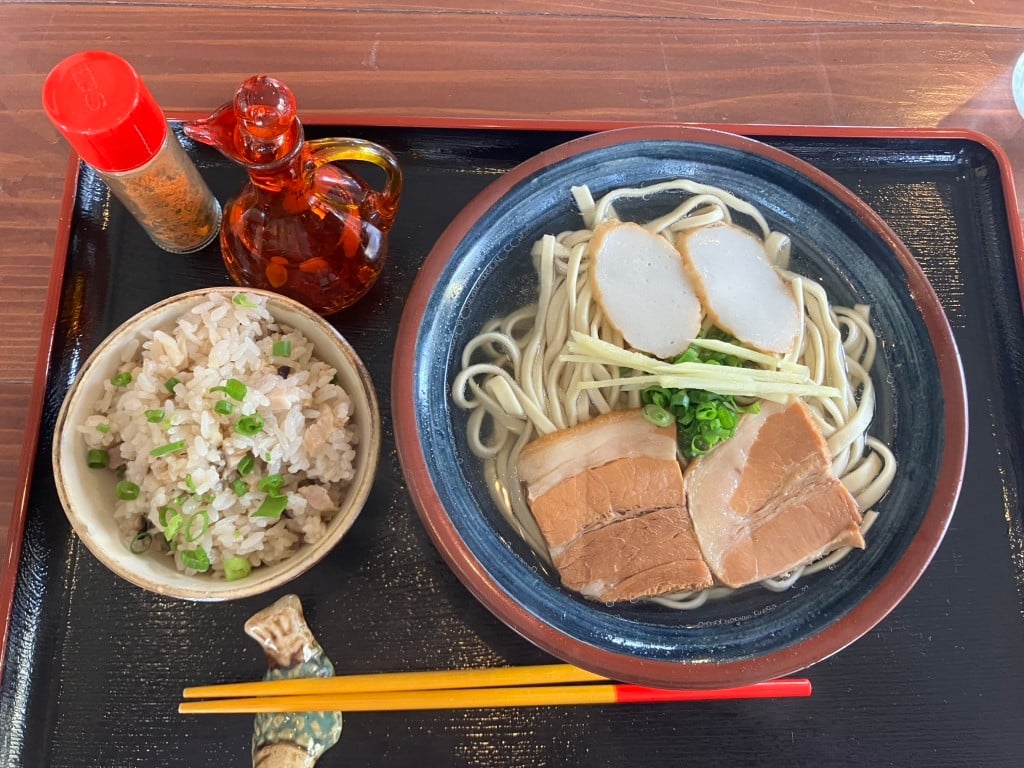
- 🍜 Must-order: Shuri Okinawa soba (with sanmainiku and soki), takikomi rice (seasoned mixed rice)
- 💰 Price: The official site does not list prices; check on the spot
- 🚉 Getting there: About a 10-minute walk from Shuri Station on the monorail
Sea Grape Rice Bowl: Ganso Umibudo Honten
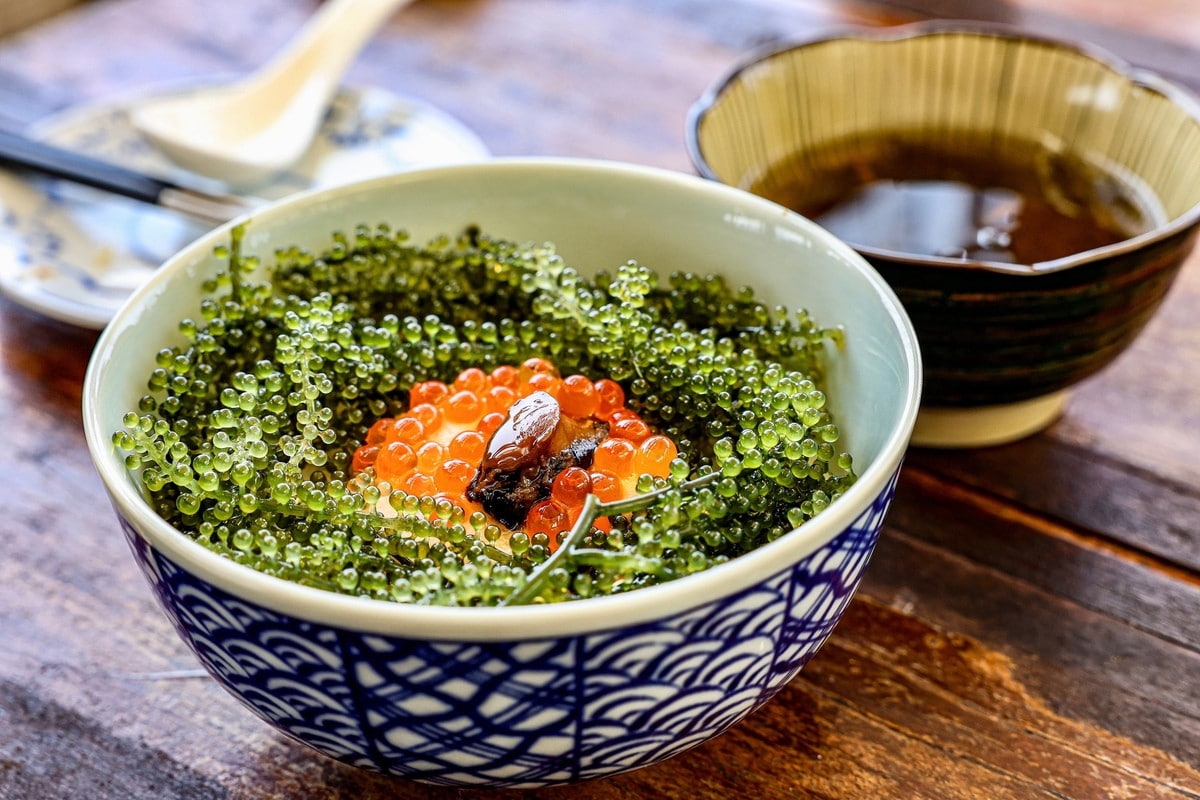
Sea grapes are called “green caviar,” a seaweed native to Okinawa that pops with a crisp “puchi-puchi” when you bite, spreading the briny flavor of the sea. Ganso Umibudo has moved to the 2nd floor of a revitalization facility near Cape Manzamo in Onna Village, and by the shop’s own account it is the birthplace of the “sea grape rice bowl.”
The bowl lays sea grapes over vinegared rice with grated yam, sea urchin and salmon roe, giving a rich range of textures in a single bite.
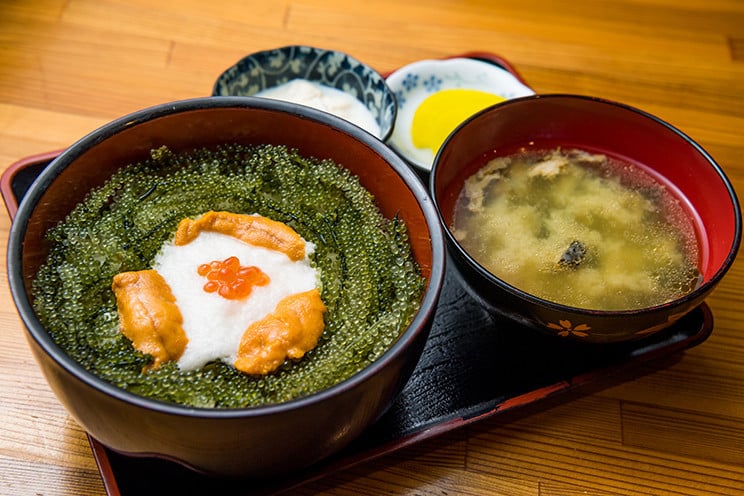
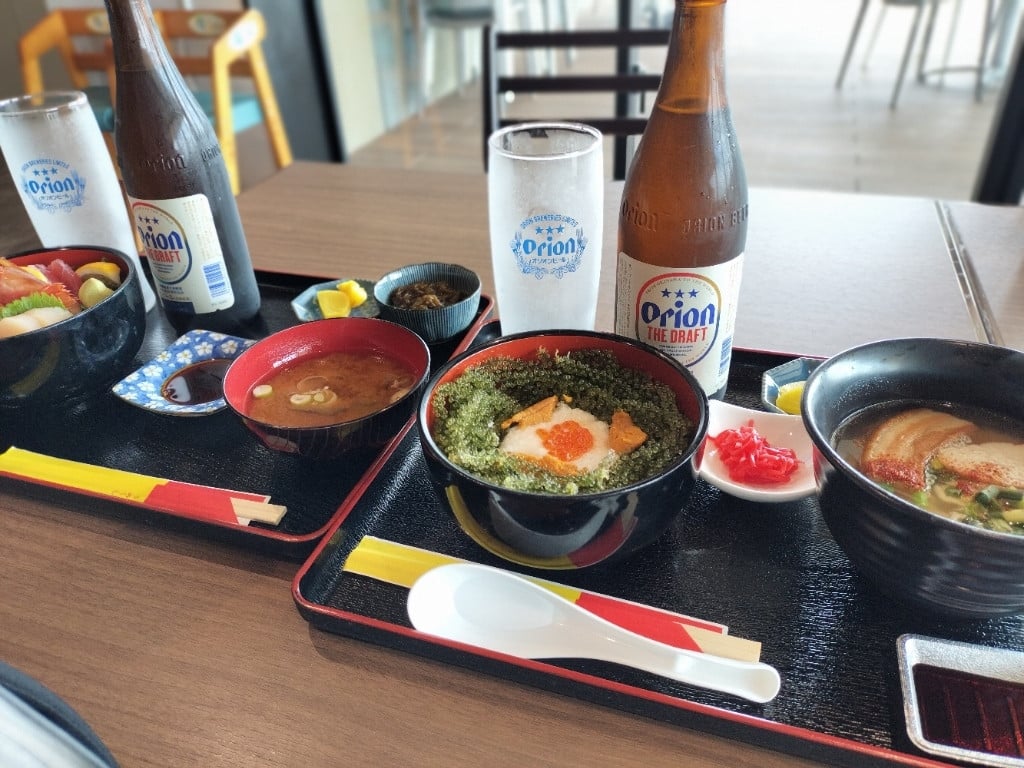
- 🍚 Must-order: Sea grape rice bowl, sea grape tempura
- 💰 Price: About ¥1,000-2,000 per person
- 🚉 Getting there: About 1 hour by car from central Naha, in Onna Village near Cape Manzamo
Freshly Picked Sea Grapes: Umibudo Farm Uminchu
Uminchu is in Itoman in southern Okinawa, a sea grape farm open to visitors. You can see the culture tanks, learn how the grapes grow, then eat the freshest batch picked on the spot, and it works well for families with children.
The hidden item here is the “fresh sea grape soft serve” (¥580), where salty, crisp beads pair surprisingly well with milk ice cream. It is about a 40-minute drive from Naha and fits neatly into a southern coastline route.
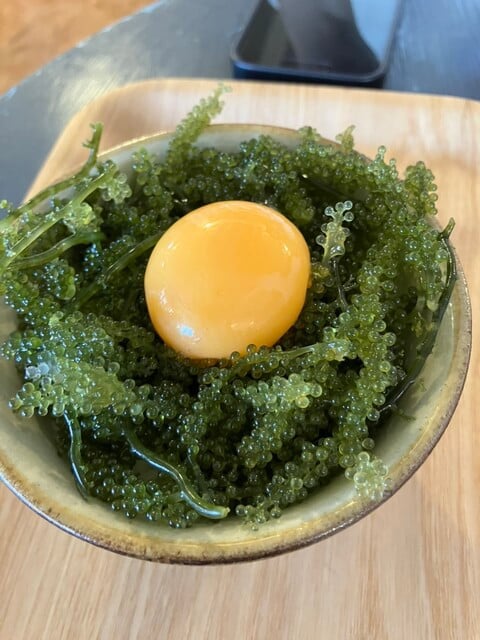
- 🍦 Must-order: Fresh sea grape soft serve (¥580), freshly picked sea grapes
- 💰 Price: About ¥1,000-2,000 per person
- 🚉 Getting there: About 40 minutes by car from central Naha, in Itoman City
Where to Eat in Okinawa: Seven Picks for Taco Rice, A&W and Steak
Next is the most American-blooded group in Okinawa: taco rice, A&W and steak.
Omelet Taco Rice: Taco Rice Cafe Kijimuna
Taco rice is Okinawan B-grade comfort food that spreads the filling of a Mexican taco (spicy ground meat, lettuce, cheese, tomato) straight over hot white rice. It originated in Kin, where US military personnel gathered, and is now an everyday dish across the island.
Kijimuna (きじむなぁ) is the shop that invented “Omutaco” (omelet taco rice), covering spicy taco rice with a very silky, soft-cooked omelet whose sweetness tames the heat so even children can eat it. There are branches around American Village and in other areas.
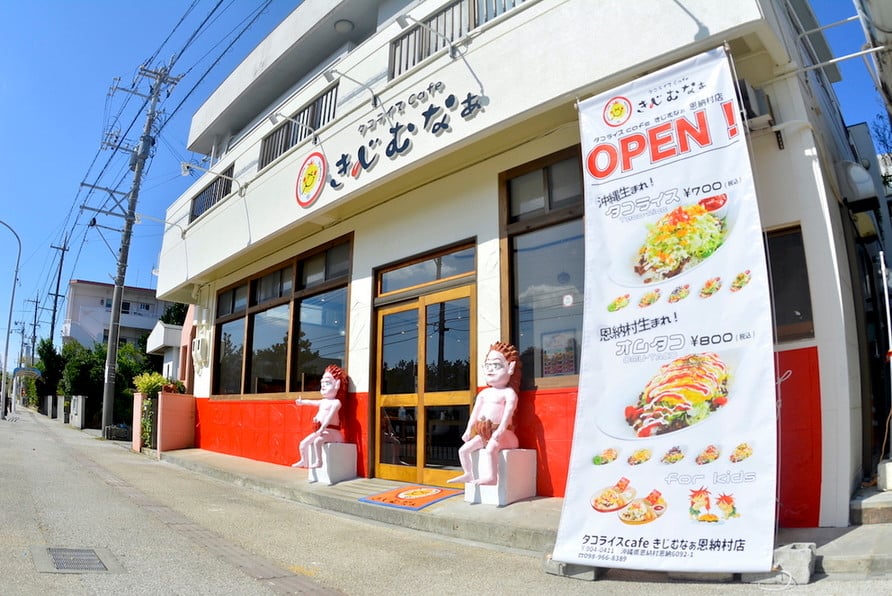
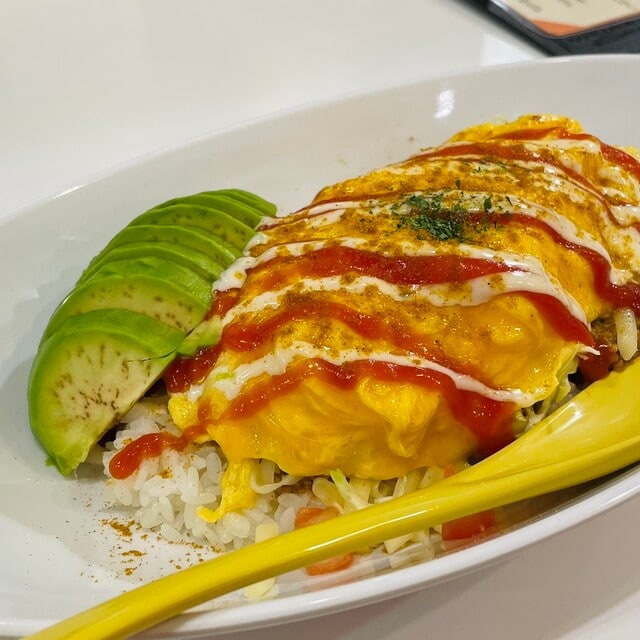
- 🍛 Must-order: Omelet taco rice (Omutaco)
- 💰 Price: About ¥1,000-2,000 per person
- 🚉 Getting there: About 40 minutes by car from central Naha, with a large car park near American Village
The Original Taco Rice: King Tacos Kin Main Branch
Taco rice was invented in 1984 by Matsuzo Gibo at “Parlor Senri,” just outside the gate of Camp Hansen in Kin. King Tacos is the chain that carries on this lineage, and its main branch sits on the same US-base street, which still keeps a strong military-town atmosphere, with graffiti on the walls and English signs full of character.
Its signature selling point is the huge portion: so much meat sauce and cheese that it nearly spills from the container, and one serving can feed two people. It follows a traditional, rich American route, a must-visit once for fans of bold flavors.
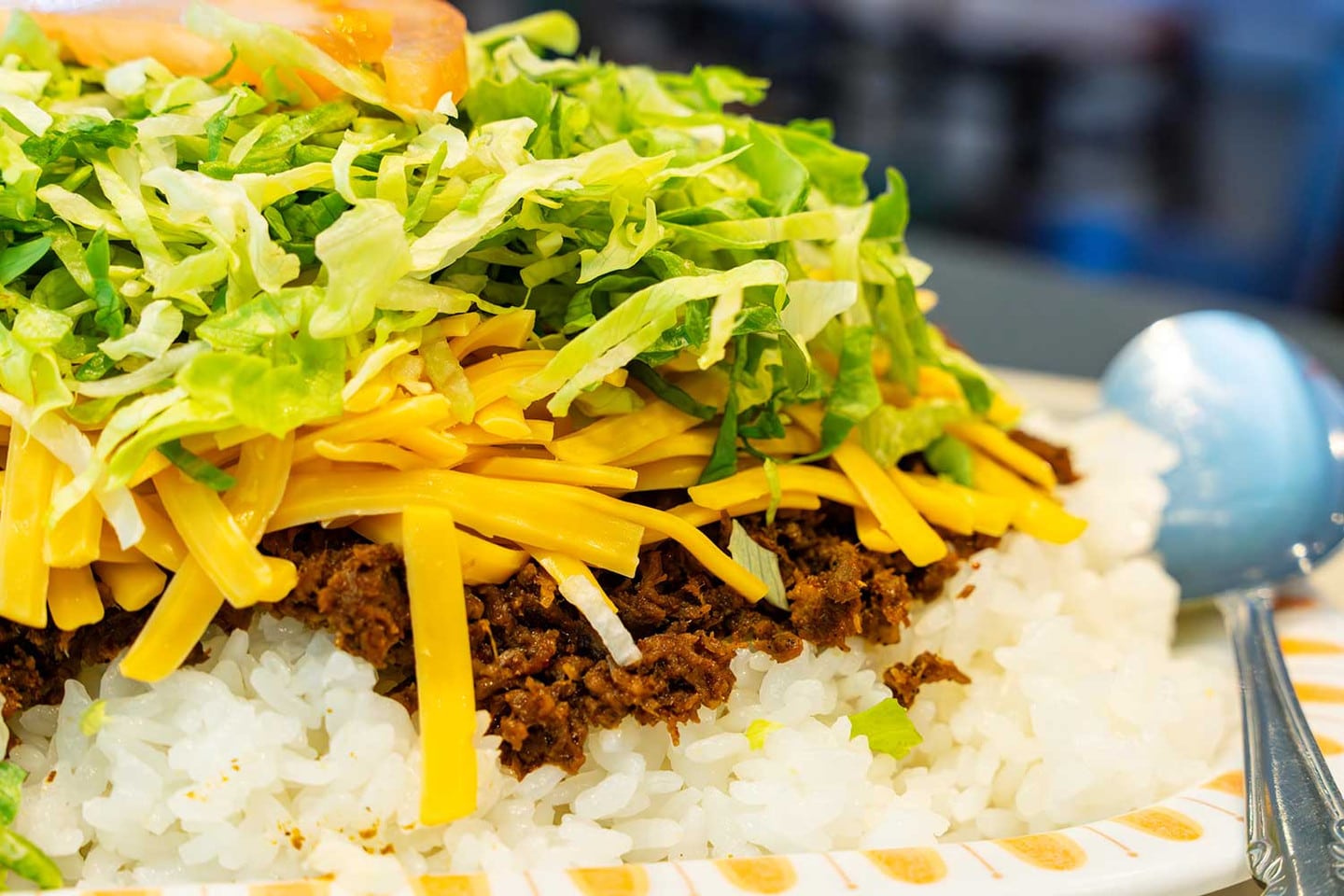
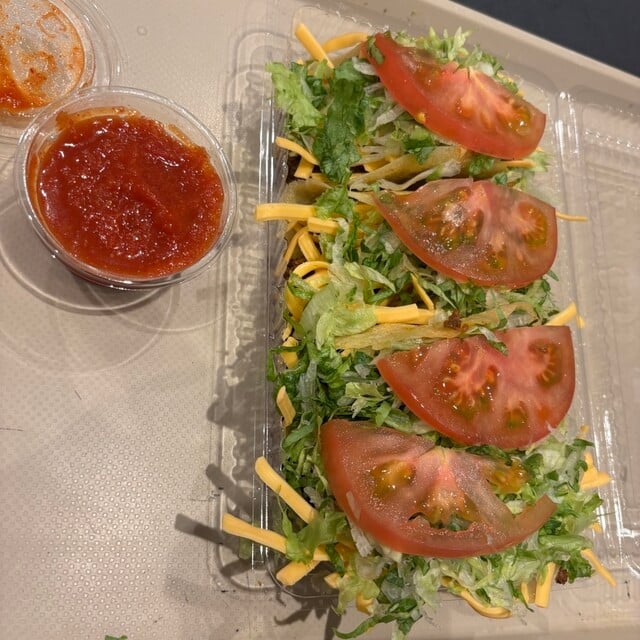
- 🍛 Must-order: Taco rice with cheese and vegetables (taco rice cheese yasai)
- 💰 Price: About ¥1,000 or less per serving
- 🚉 Getting there: About 1 hour by car from central Naha, in Kin Town
Handmade Taco Shells: JAM’S TACOS Kokusai-dori
If you don’t want to drive all the way to central and northern Okinawa just for taco rice, JAM’S TACOS on Kokusai-dori is the most convenient choice. Its stylish-cafe look is completely different from the traditional US-base-town taco rice shops.
The taco shells here are made and fried in the shop, and the crispness is clearly better; the taco rice meat sauce is lightly seasoned and not heavy, and the portion isn’t overwhelming. The shop has a stylish-cafe feel, is open every day of the year until 9 p.m., and is one of the few taco shops around Kokusai-dori where you don’t need to pick your time.
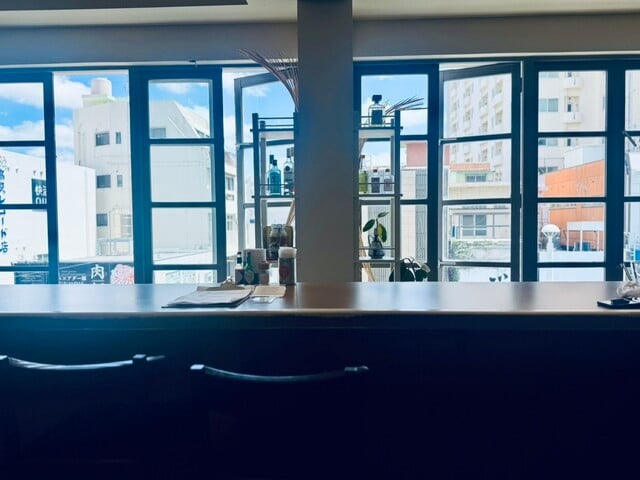
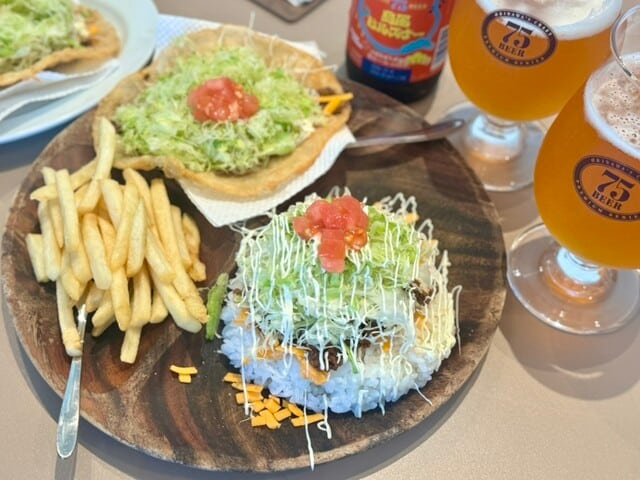
- 🌮 Must-order: Handmade tacos, taco rice
- 💰 Price: About ¥1,000-2,000 per person
- 🚉 Getting there: About a 4-minute walk from Makishi Station on the monorail, along Kokusai-dori
Retro Drive-In Burgers: A&W Makiminato
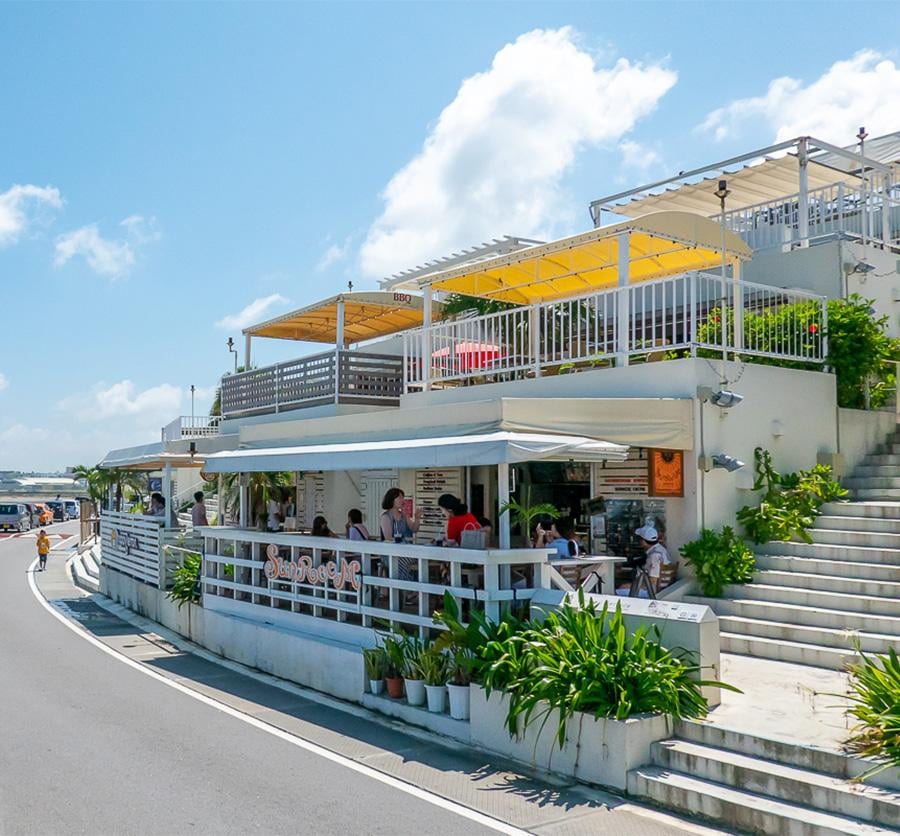
A&W is an Okinawa-only American fast-food chain, the only place in Japan to find it. The brand was founded in the US in 1919, and its first Okinawa shop opened on November 1, 1963 in Yagibaru, Kitanakagusuku, after which it became a collective memory for locals. The signature is root beer, free to refill every day at every shop.
The best thing about Makiminato is its huge, retro American gas-station-style drive-in lane: park in a bay, press the button to order, and staff bring the food to your car. The official site currently notes some limits on the drive-in service, so check before you go. Outside is a children’s play area, full of old-America nostalgia.
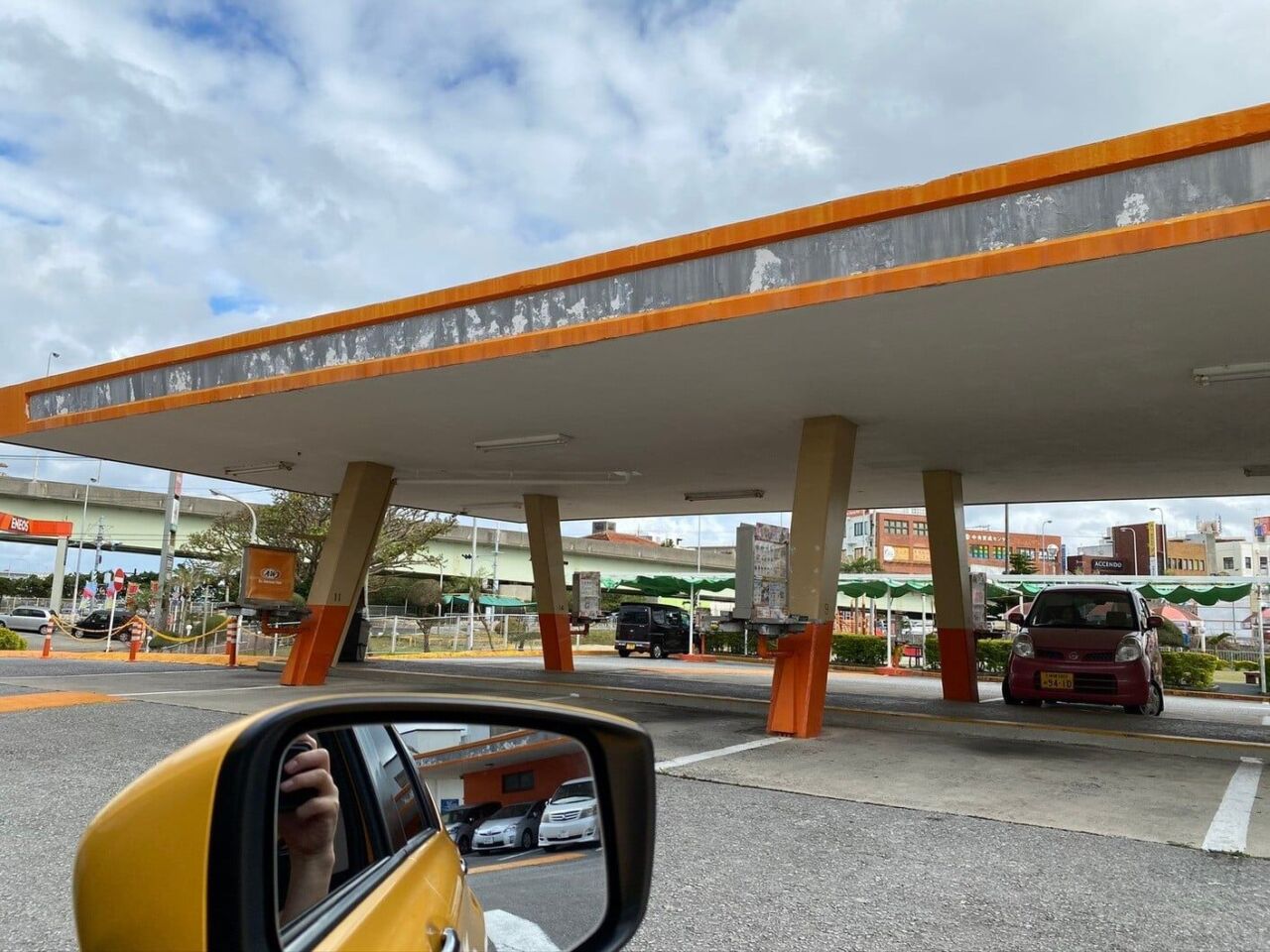
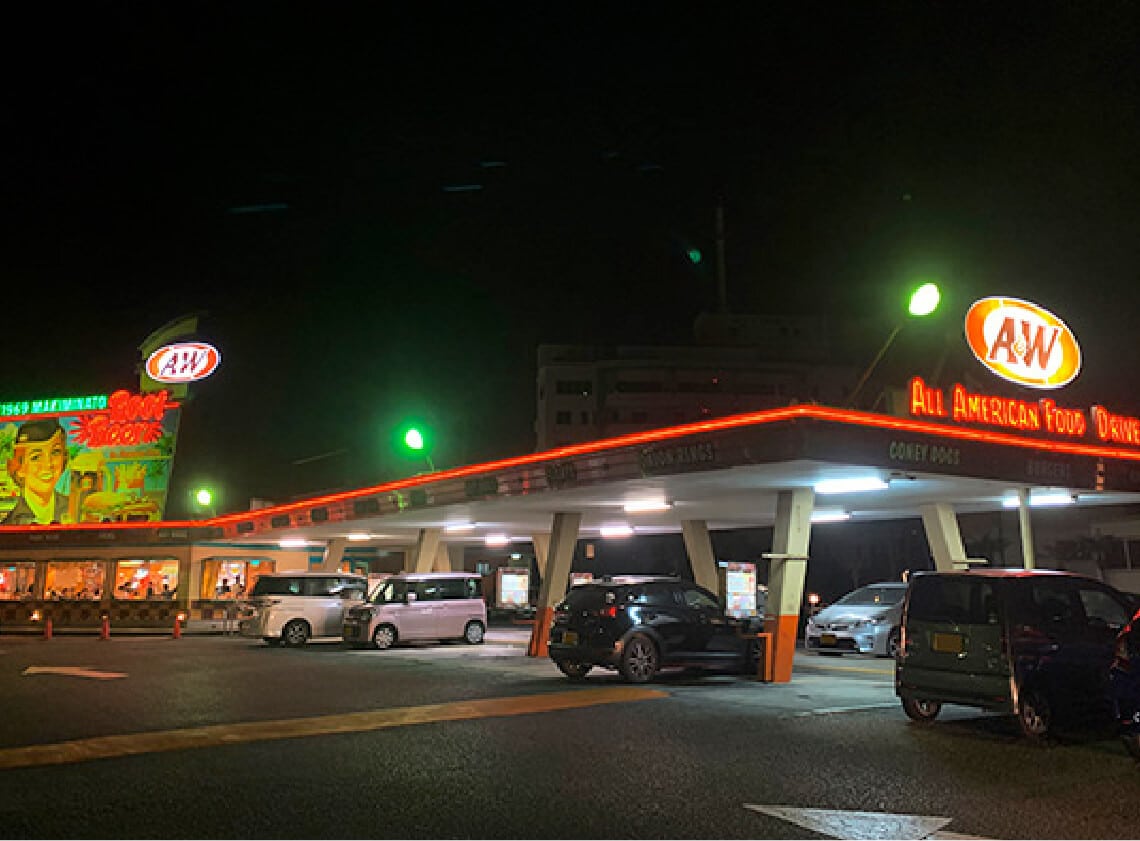
- 🍔 Must-order: The A&W Burger, curly fries, root beer float
- 💰 Price: About ¥1,000-1,500 per person
- 🚉 Getting there: About 25 minutes by car from central Naha, in Makiminato, Urasoe City
Ocean-View Burgers at American Village: A&W Mihama
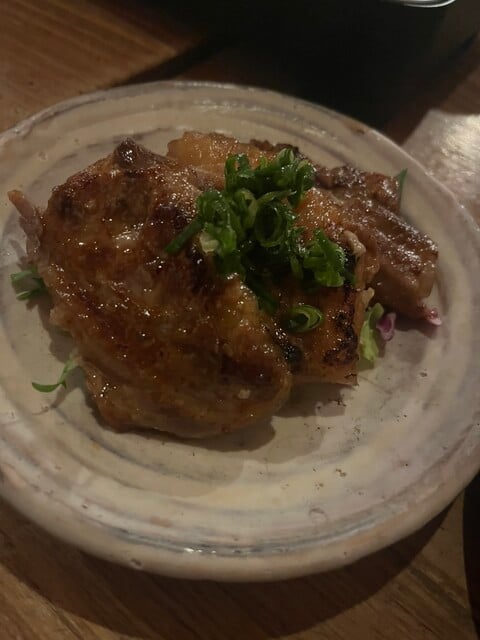
The Mihama shop is in American Village in Chatan. After a burger you can walk a few steps to shop, ride the Ferris wheel or watch the sunset at Sunset Beach, an all-in-one package of American exoticism, and the mood is best in the early evening.
The signature The A&W Burger stacks brown-sugar pork slices, a beef patty, onion rings and rich cream cheese, with a portion that makes its presence felt. The Kokusai-dori Matsuo shop in Naha is on the 2nd floor by the entrance, with windows overlooking the street; the Naha Airport shop is on the 3rd floor of the terminal, handy for a last bite before your flight home.
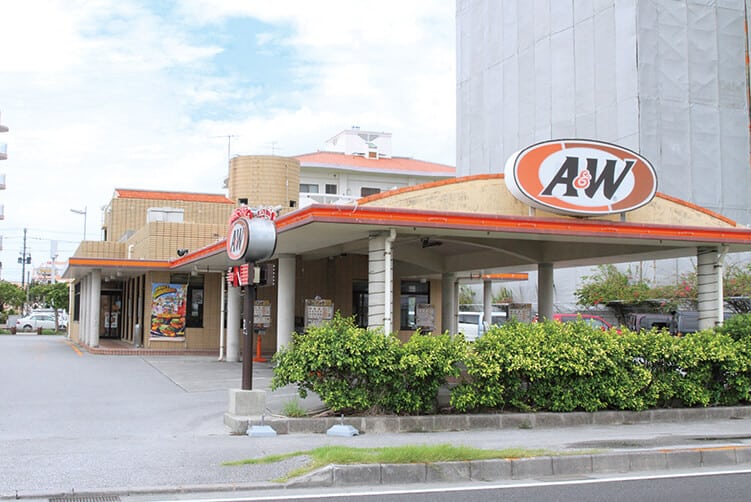
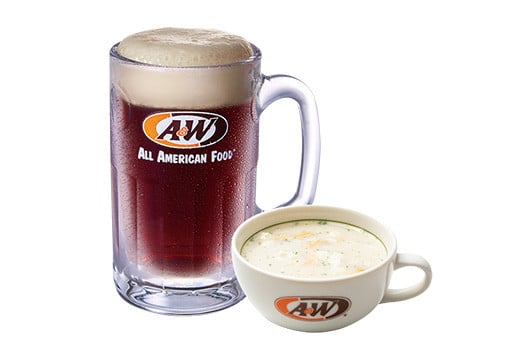
- 🍔 Must-order: The A&W Burger, curly fries
- 💰 Price: About ¥1,000-1,500 per person
- 🚉 Getting there: About 40 minutes by car from central Naha, with a car park at American Village
Okinawa-Style Ramen: Tondo Oroku Main Branch
Okinawa is not only Okinawa soba. Tondo is a very popular local ramen brand, and its Oroku main branch is close to Naha Airport. Many travelers make it their last meal before heading home, since you can even walk there dragging your luggage.
There are two signature bowls: the pork-bone “otoko-aji (men’s flavor)” broth is thick and hearty, while “onna-aji (women’s flavor)” is a salt broth of prefectural free-range chicken and prefectural pork bone, mild and smooth. Cash only. The shop also serves Okinawa-style fried dumplings and fried rice; when it’s crowded you can order a few to share and finish quickly enough to still catch your flight.
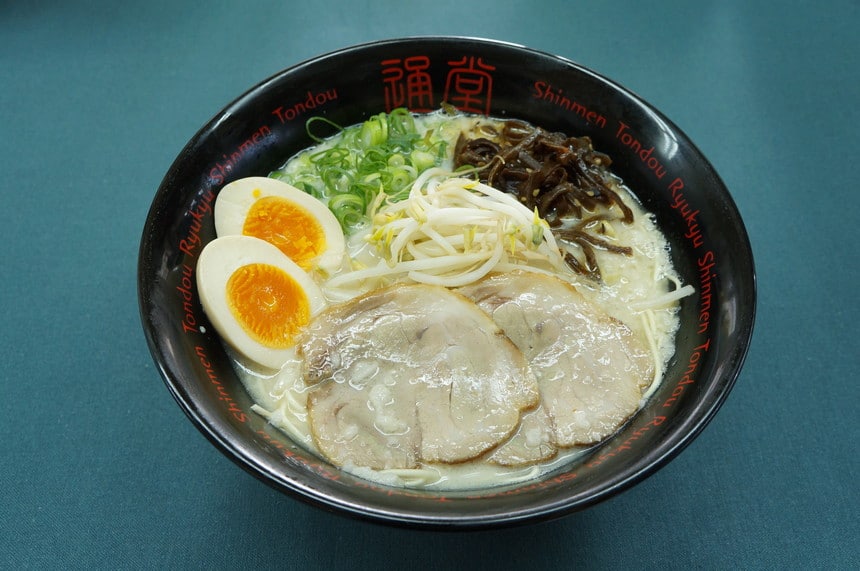
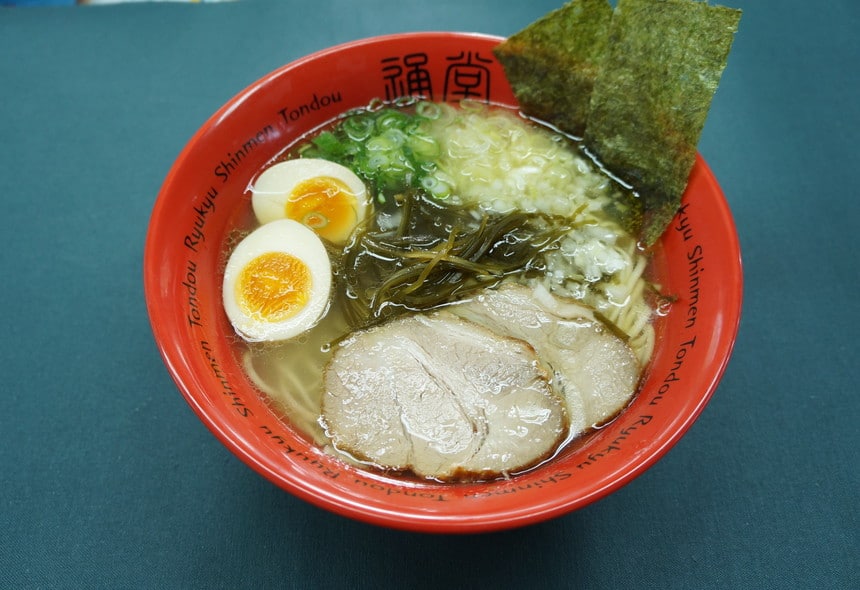
- 🍜 Must-order: Otoko-aji, onna-aji
- 💰 Price: About ¥800-1,000 a bowl
- 🚉 Getting there: About a 2-minute walk from Oroku Station on the monorail, across from AEON Naha
Long-Established Okinawan Steak: Jack’s Steak House
Okinawans have the distinctive habit of “finishing a night of drinking with steak,” and Jack’s Steak House (ジャッキーステーキハウス) represents this steak culture. Open since 1953, it still has the red-leather booths of an old American diner.
The signature Tenderloin Steak comes with soup, salad and bread, and A1 sauce on the table is the standard way to eat it. It is closed every Wednesday (plus New Year’s Day and the 15th day of the seventh lunar month), and there is often a line on the spot, so avoid weekend dinner time or go in the quiet afternoon hours.
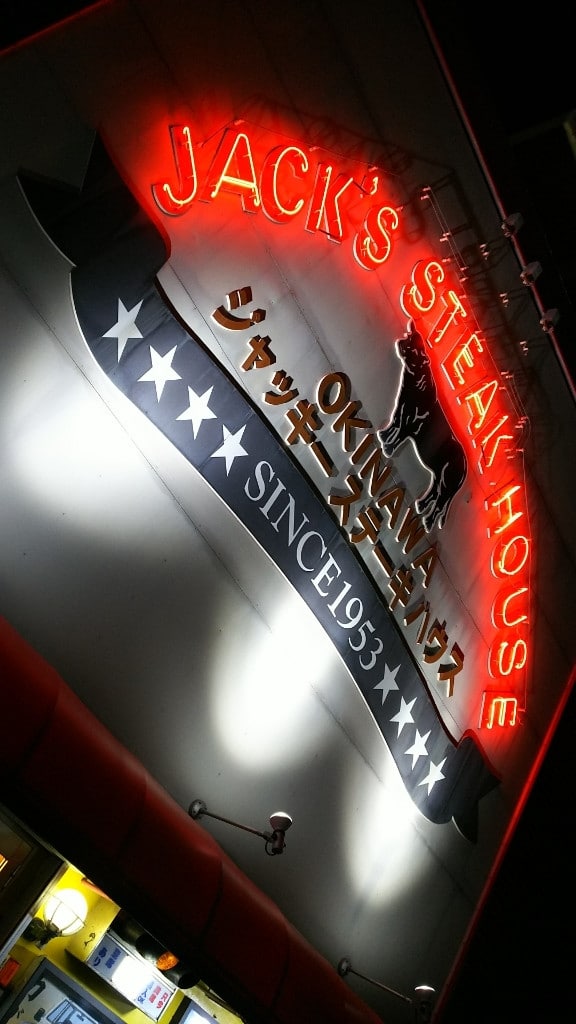
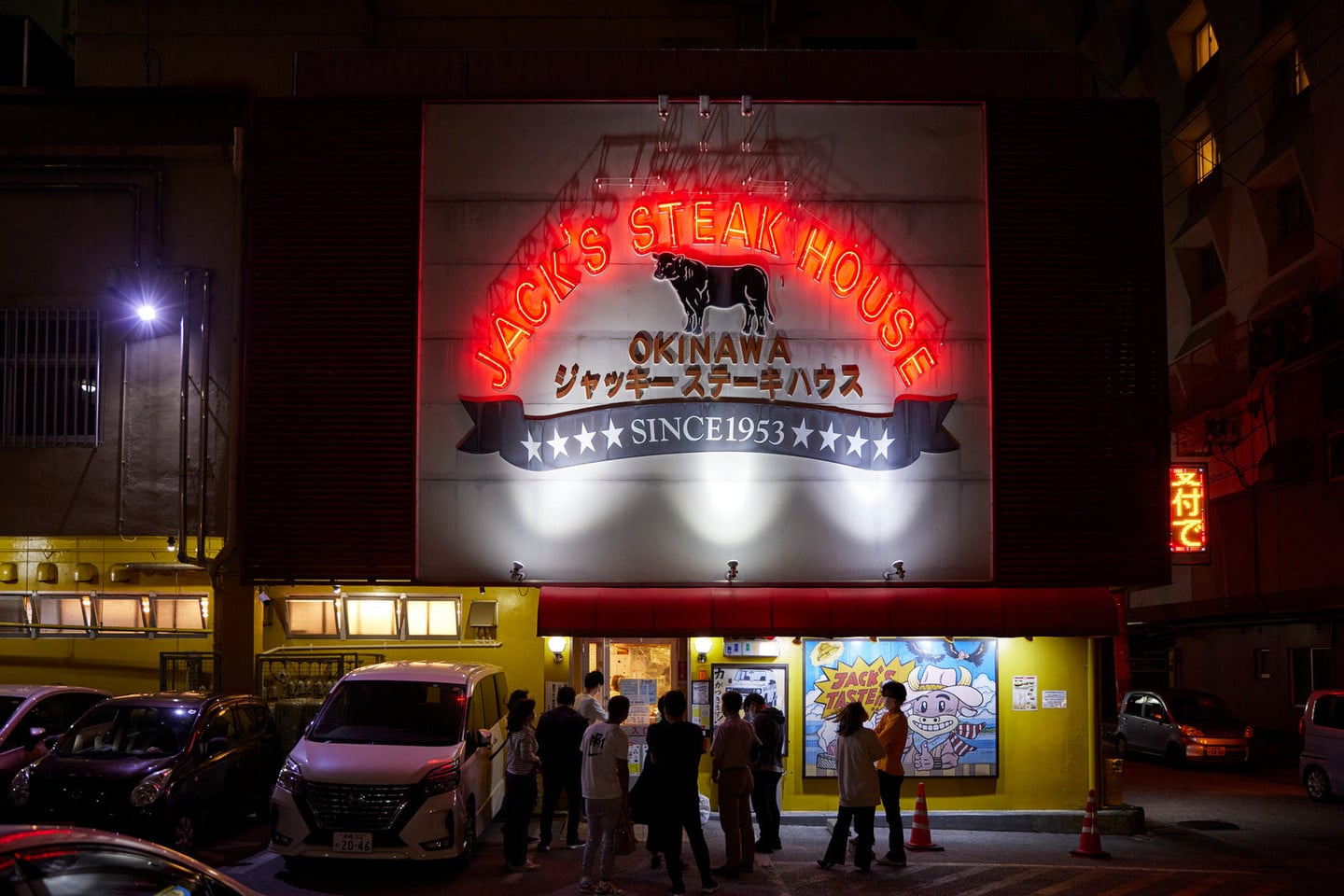
- 🥩 Must-order: Tenderloin Steak, the shop’s special salad
- 💰 Price: Tenderloin Steak comes in S/M/L sizes; the official site says menu prices were adjusted in April, so rely on the in-store menu for current prices; about ¥3,000-5,000 per person
- 🚉 Getting there: About an 8-minute walk from Asahibashi Station on the monorail
Okinawa Street Food and Markets: Six Affordable Food Spots in Naha
Last come the markets and street-food spots where you need no reservation and can eat as you walk.
Pork and Egg Rice Balls: Pork Tamago Onigiri Honten Makishi Market Shop
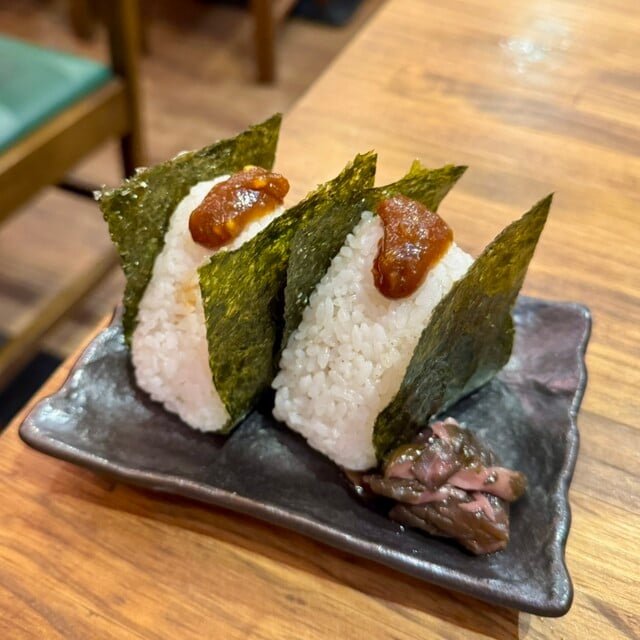
The pork and egg rice ball (pork tamago onigiri) is Okinawa’s national breakfast: pan-fried Spam and a fluffy thick omelet, wrapped with nori and white rice into a square.
The savory Spam against the sweet, moist omelet gives two layers in one bite; the Makishi Market shop also has limited flavors such as fried fresh fish and Okinawan champuru. It sits next to Daiichi Makishi Public Market, and mornings often see a line, so arriving before 9 a.m. is more relaxed.
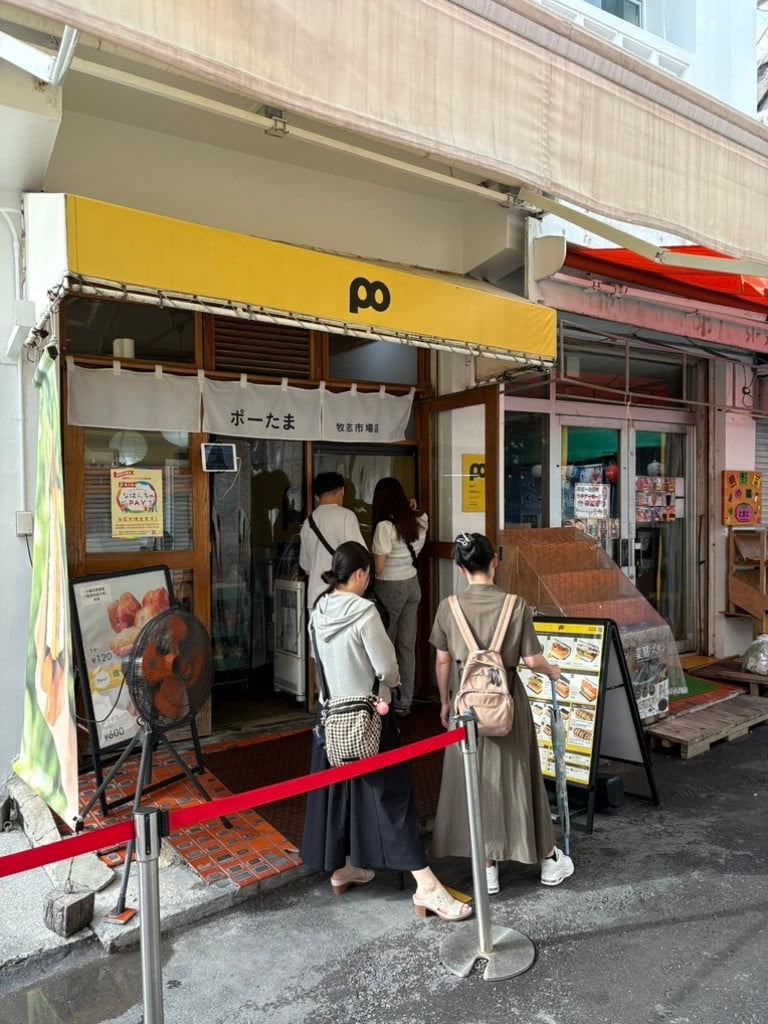
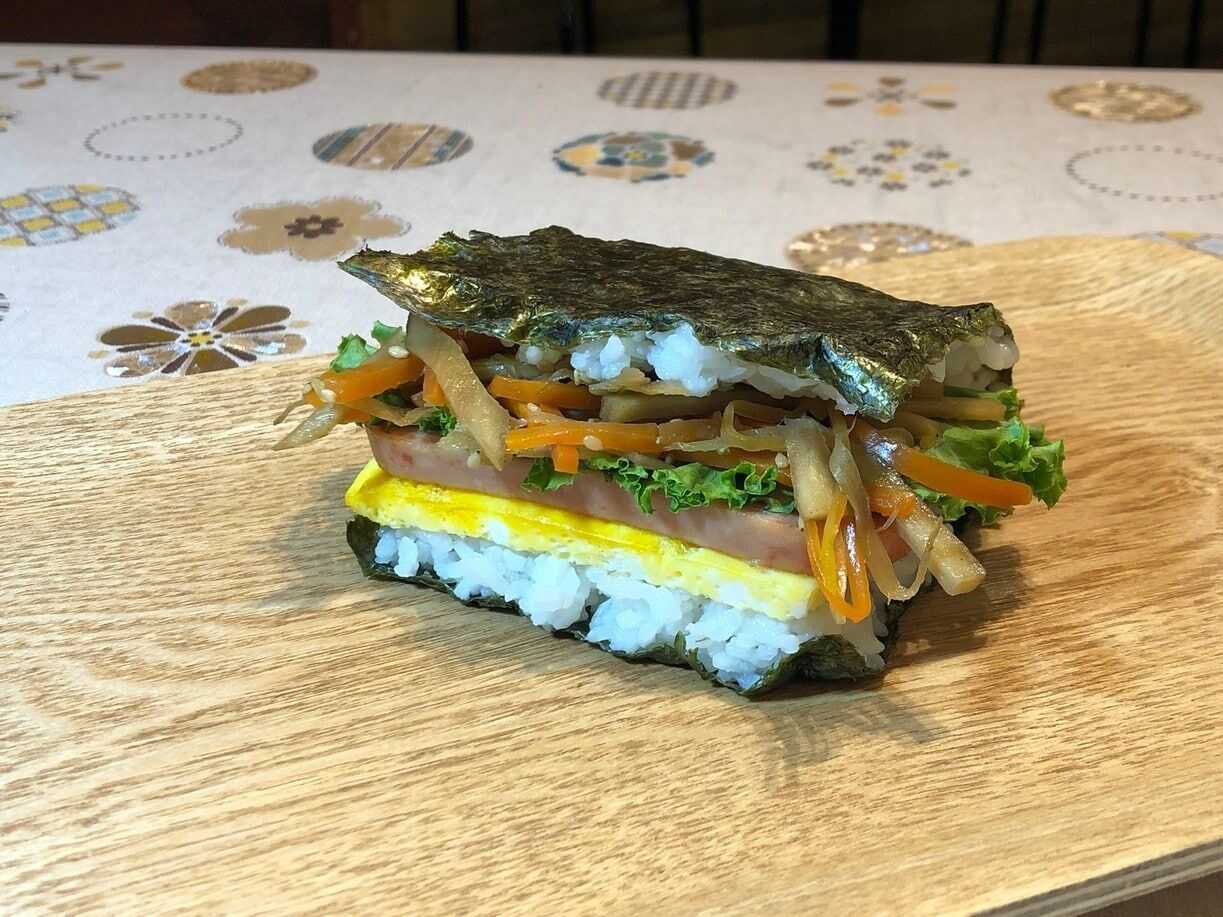
- 🍙 Must-order: Classic pork and egg rice ball, ebitaru (shrimp tartar sauce, ¥750)
- 💰 Price: Classic ¥450, with extra toppings ¥550, special and limited editions ¥750-850
- 🚉 Getting there: About a 9-minute walk from Makishi Station on the monorail
Market Cook-for-You Dining: Daiichi Makishi Public Market
Known as “the kitchen of Okinawans,” Daiichi Makishi Public Market reopened on its original site on March 19, 2023 after roughly four years of reconstruction. The first floor holds fresh-food stalls and the second floor is the dining level, closed on the fourth Sunday of each month.
The signature experience is the “mochiage” cook-for-you system: pick turban shells, parrotfish, lobster or Ishigaki beef on the first floor, then take it upstairs to a restaurant to have the chef cook it. Cooking fees vary by shop and item, so it is safer to ask before ordering; if your budget is limited, you can also buy just one or two seafood items and add a set meal.
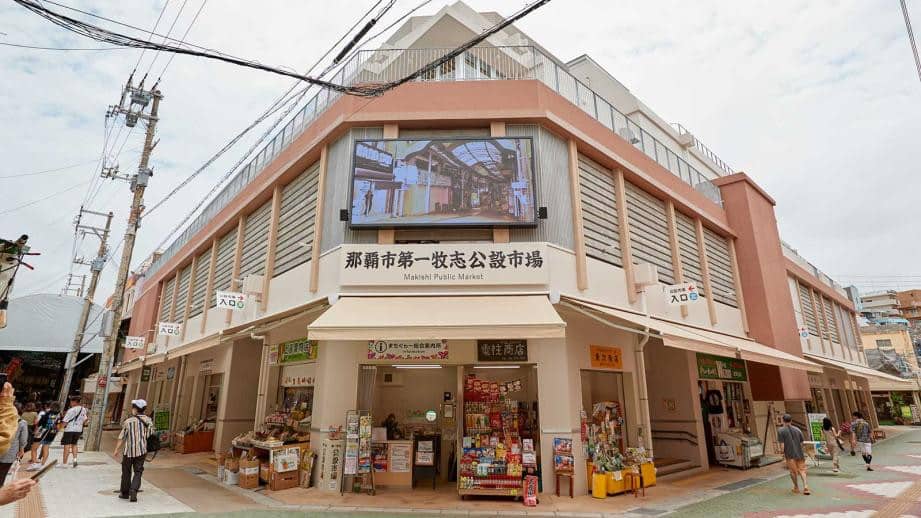
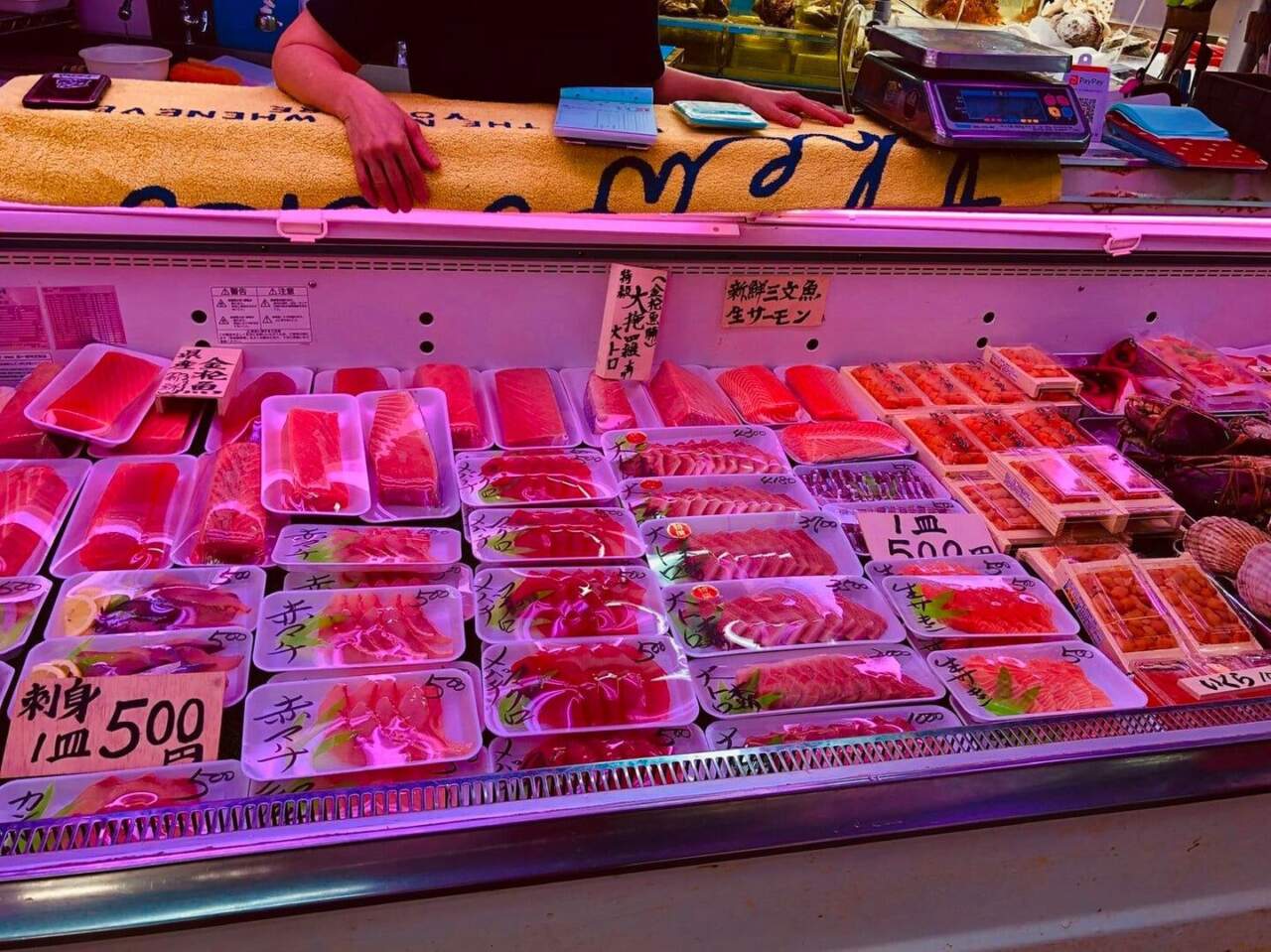
- 🦐 Must-order: Cooked-to-order turban shell, parrotfish sashimi
- 💰 Price: Ingredients charged separately; cooking fee set by each restaurant
- 🚉 Getting there: About a 9-minute walk from Makishi Station on the monorail
Food Stall Hopping: Kokusai-dori Yatai Village
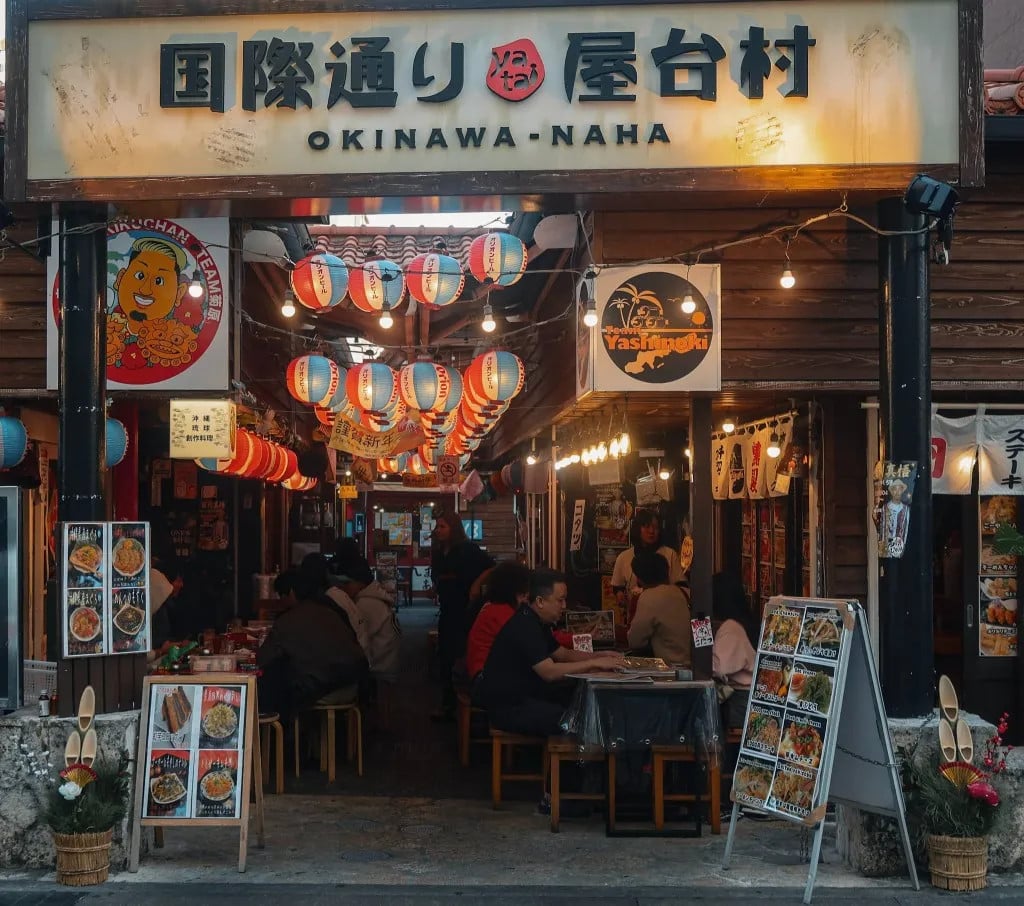
Kokusai-dori Yatai Village is made up of 21 small bars and food stalls hung with red Orion beer lanterns. It is the easiest yatai cluster to try in Naha: you won’t feel awkward coming alone, and even without a shared language you can order by pointing.
Each stall has only a few counter seats; rotate through skewers, Agu pork, nigiri sushi and Okinawan home cooking, and ordering one or two things per stall before moving on is the most fun. It is liveliest after 7 p.m., and the central plaza has a shared seating area where you can join tables when it’s crowded.
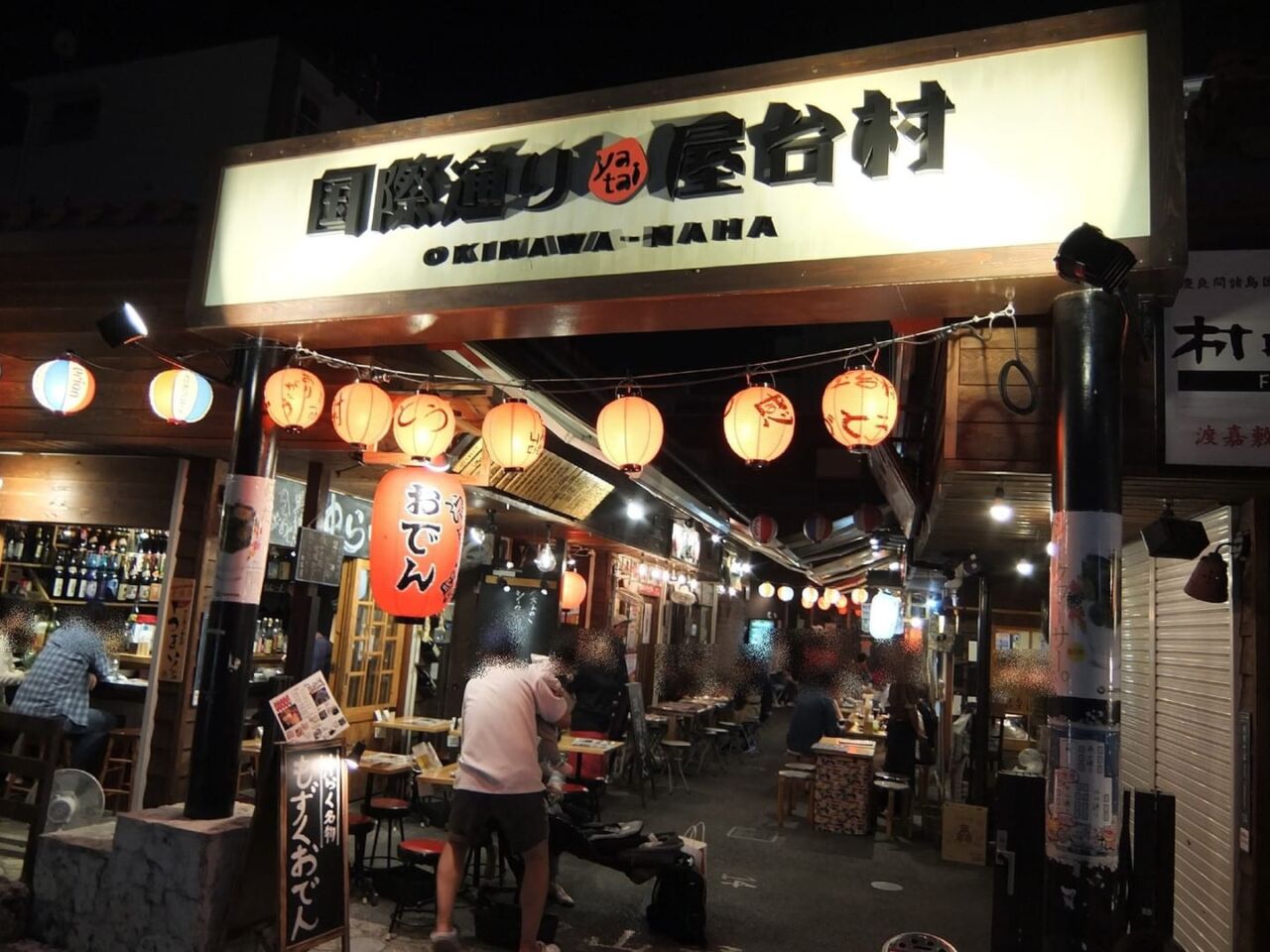
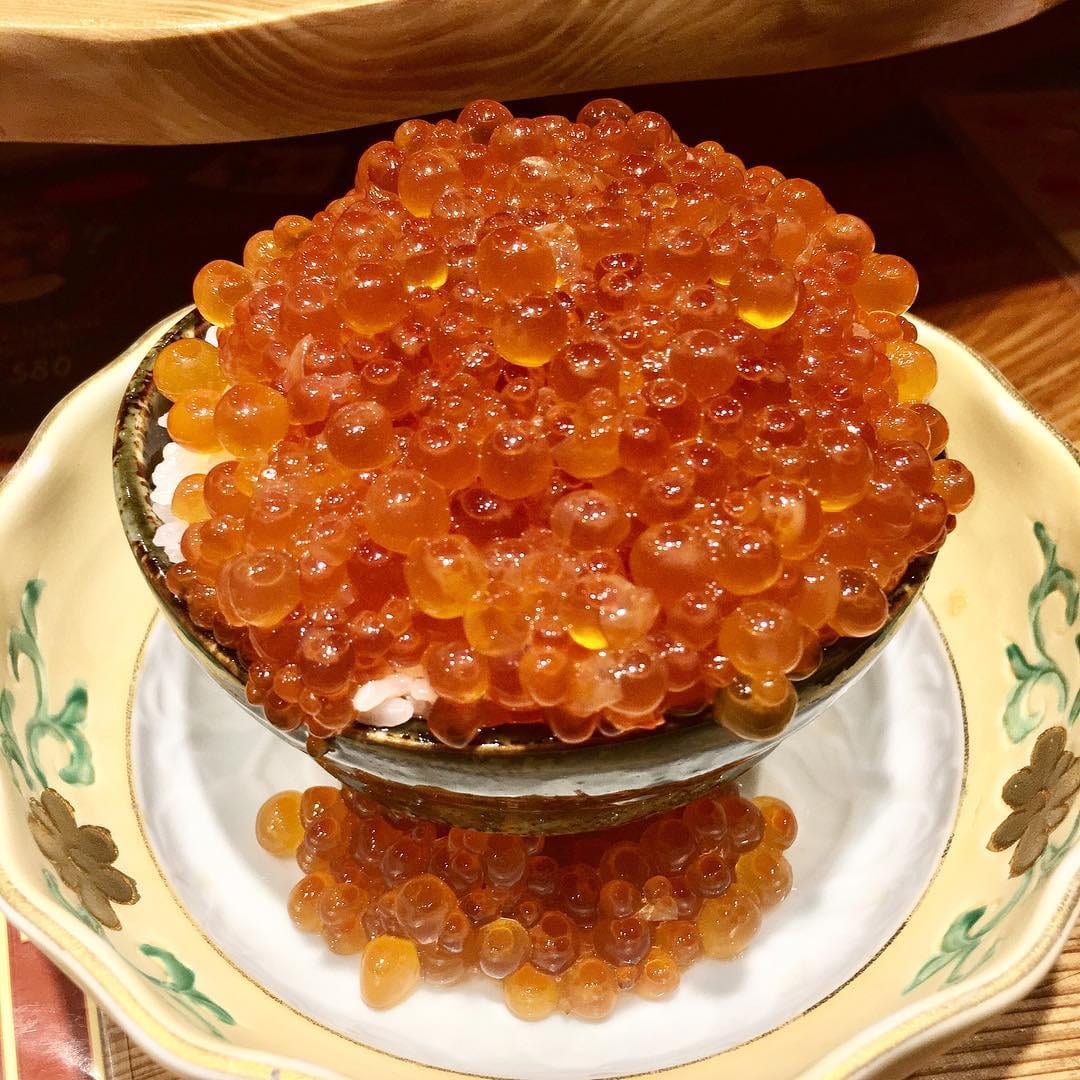
- 🍢 Must-order: Agu pork skewers, Okinawan champuru
- 💰 Price: About ¥1,000-3,000 per person
- 🚉 Getting there: About a 4-minute walk from Makishi Station on the monorail
Okinawa’s National Ice Cream: BLUE SEAL Makiminato Main Store
BLUE SEAL began in 1948 as a factory supplying dairy products to US military bases. In 1963 it opened its first off-base shop in Makiminato, Urasoe, which is today’s Makiminato main store, and the brand slogan “Born in America, Raised in Okinawa” speaks to exactly this history.
The shop has American diner-style booths, and besides ice cream there are floats and apple pie. The must-try flavors are red sweet potato (beni-imo), salt chinsuko and Okinawan vanilla; the natural sweetness of the red sweet potato best represents Okinawa and is the top pick for takeaway souvenirs.
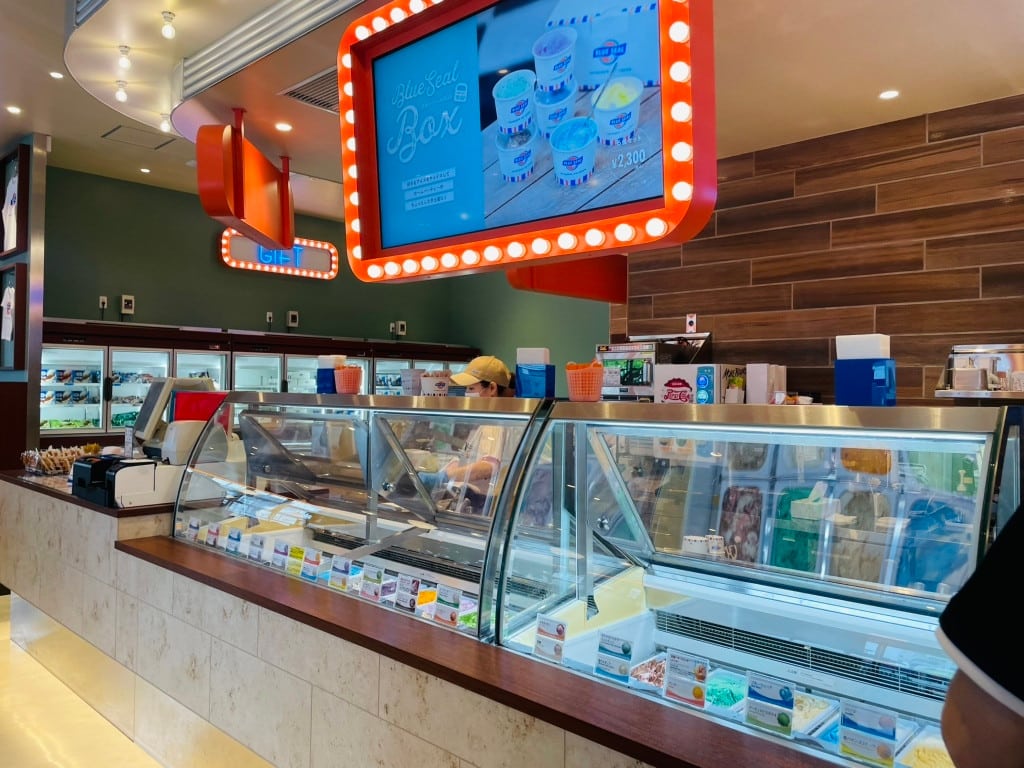
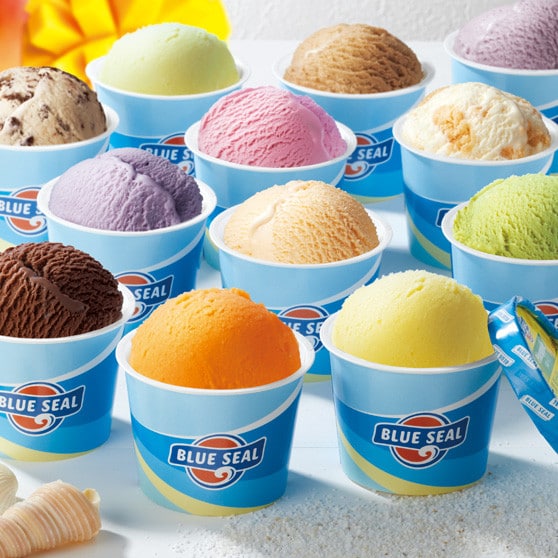
- 🍦 Must-order: Red sweet potato ice cream, salt chinsuko ice cream
- 💰 Price: Varies by shop and size; check on the spot
- 🚉 Getting there: About 25 minutes by car from central Naha, in Makiminato, Urasoe City
Freshly Baked Red Sweet Potato Tarts: Okashi Goten Kokusai-dori Matsuo Shop
The Okashi Goten Matsuo shop is built to look like Shuri Castle’s vermilion palace, one of the easiest buildings to spot on Kokusai-dori. Its signature is the award-winning original red sweet potato tart, filled with Okinawa-grown red sweet potato and kept restrained in sweetness.
The shop has a large glass viewing window where you can watch the whole process of the red sweet potato tarts, from piping the filling to baking. The second floor has a dining area where you can sit and have red sweet potato soft serve or an Okinawan-style set meal, a good rest stop when your feet are tired from shopping.
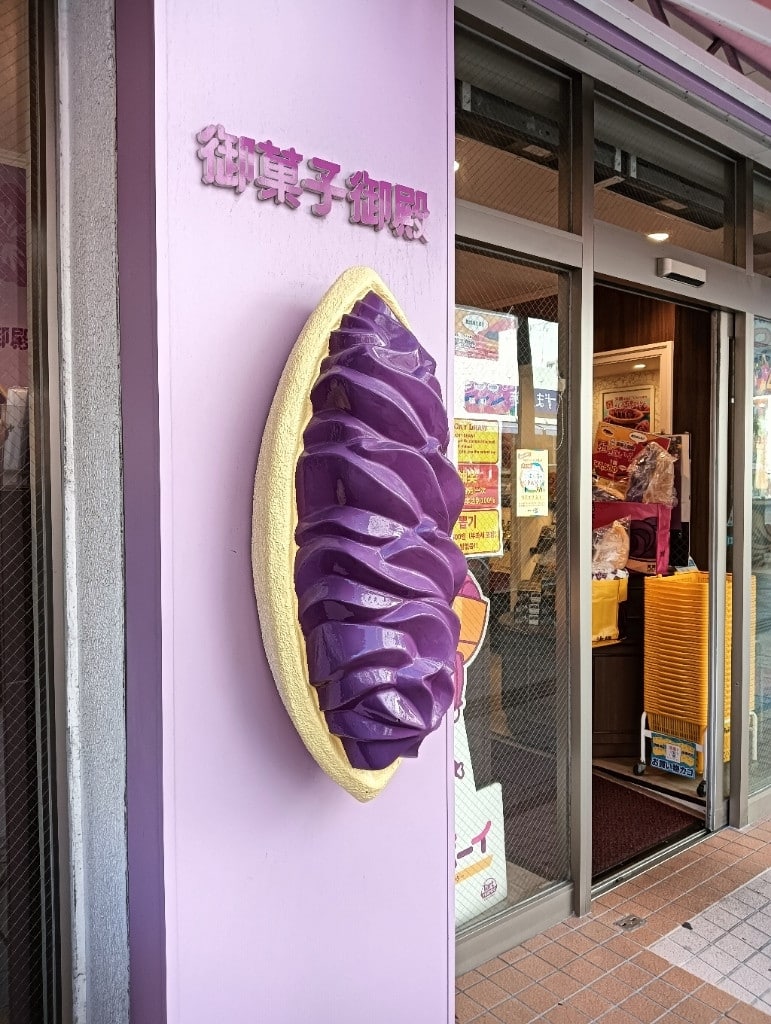
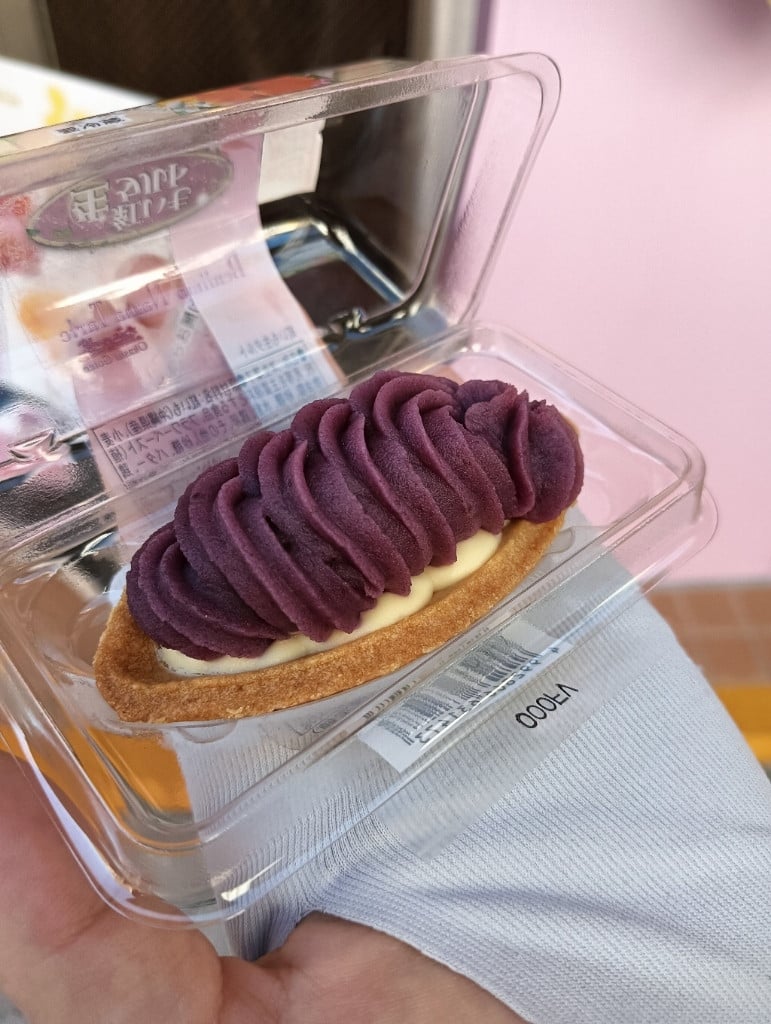
- 🍠 Must-order: Original red sweet potato tart, red sweet potato soft serve
- 💰 Price: Prices of the original red sweet potato tart vary with the number in the box; go by in-store signs
- 🚉 Getting there: About an 8-minute walk from Kencho-mae Station on the monorail
Fresh-Fried Okinawan Tempura: Nakamoto Fresh Fish Tempura Shop
Okinawan tempura is completely different from mainland Japanese tempura: the batter is thick and already salty, eaten without dipping sauce, and so cheap it is nearly a snack, a regular 3-4 p.m. treat for locals.
Nakamoto Fresh Fish Tempura Shop on Ojima Island in Nanjo City is the most famous one. Buying a serving of freshly fried fish, squid and sea lettuce tempura and eating it on the seawall while watching the sea is the classic scene. Weekend lines are considerable, so go on a weekday.
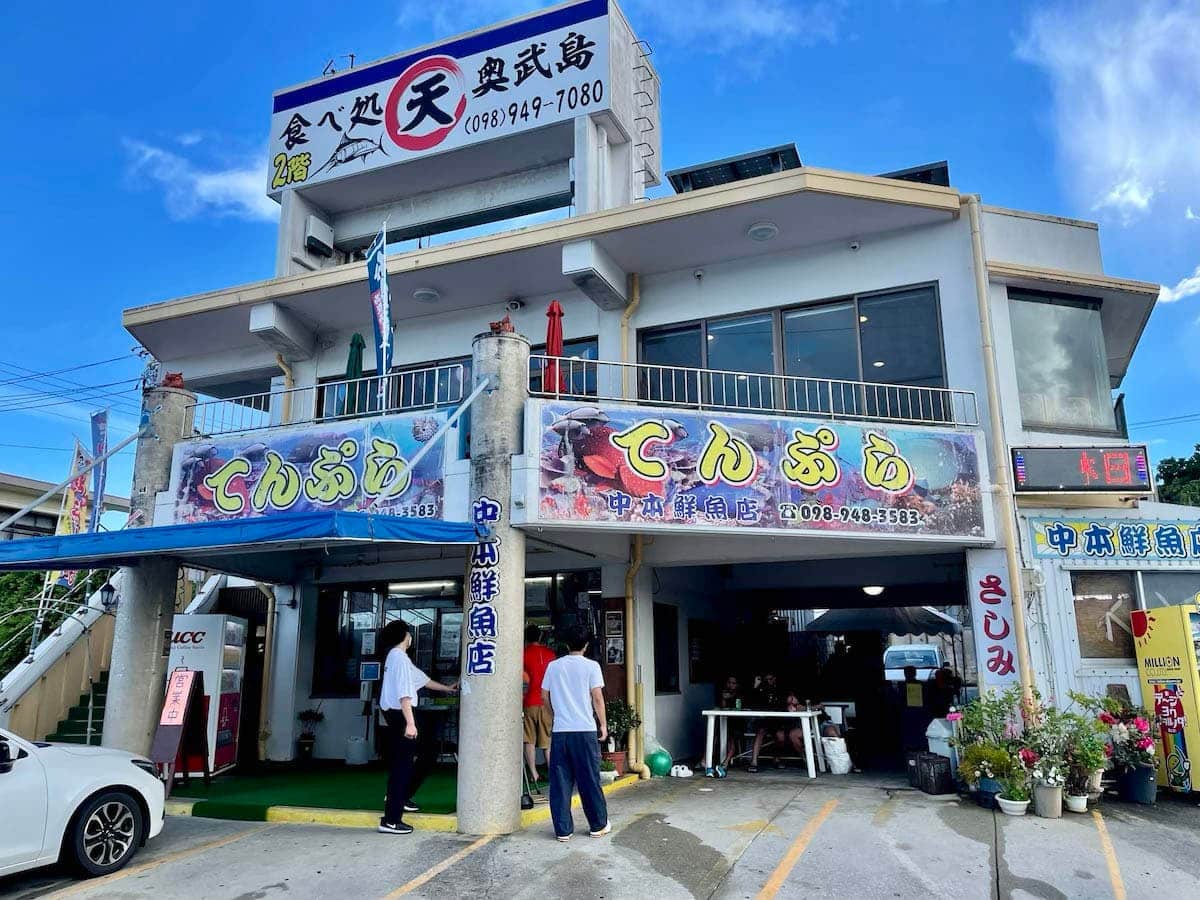
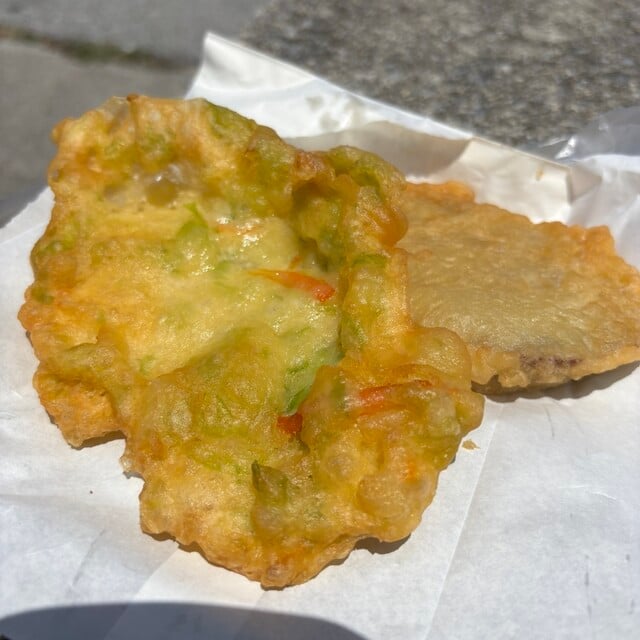
- 🍤 Must-order: Squid tempura, sea lettuce (aasa) tempura, fish tempura
- 💰 Price: Check prices on the spot; hours change with the season, roughly 10:30 to 18:00, closed every Thursday (if Thursday is a holiday, closed the day before)
- 🚉 Getting there: About 40 minutes by car from central Naha, on Ojima Island in Nanjo City
Okinawa Food Trip Tips: Ordering, Driving and Avoiding Wasted Trips
How to Order Okinawa Soba: Sanmainiku vs. Soki Spare Ribs
Okinawa soba toppings come in two main kinds: “sanmainiku (pork belly)” is tender braised pork belly slices with skin and fat, rich in texture; “soki (spare ribs)” comes in two types: “nankotsu soki” is stewed until the cartilage melts, while “hon soki” is a large bone-in rib.
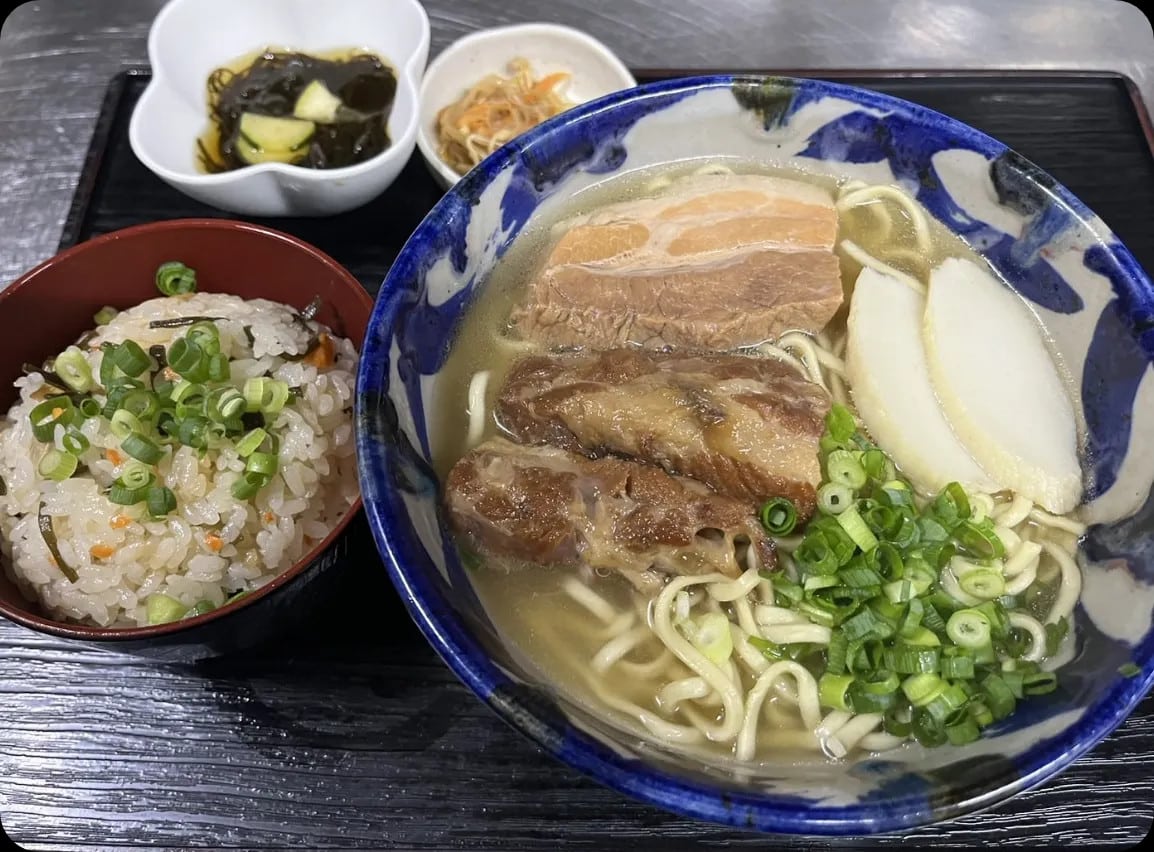
If you can’t decide, order the combination bowl that comes with both. The table usually holds awamori chili sauce “koregusu”; a drop or two in the broth boosts the flavor, but it is quite hot, so try a small amount the first time. Also, Okinawa soba shops mostly don’t offer dipping sauces, because the broth is the star.
Driving and Designated Drivers: The Practical Side of an Okinawa Food Trip
Okinawa’s top shops are scattered across Naha and the central, northern and southern areas, and apart from central Naha you almost always need a car. Rental cars often sell out early in peak season, so book a car as soon as your plans are set and check whether you need a Japanese translation of your license.
If you plan to drink at Sakaemachi Market or the yatai village, note that Japan has zero tolerance for drunk driving, and even passengers in the same car can be penalized. On nights you drink, take the monorail or a taxi, or use the widely available “unten daiko (designated driver)” service to drive your car back to the hotel.
Avoiding Wasted Trips: The Rhythm of Okinawa’s Top Shops
Many top Okinawa soba shops do lunch only and close when sold out. For limited-quantity shops like Shuri Soba, whose official site says it closes when sold out, make it the first stop of the day.
Also, many independent shops have irregular closing days, and a fair share take weekdays off; on long weekends and in the summer peak, getting a seat is often hard. Checking each shop’s social media or official announcements the day before, and looking up “backup shops” too, is the least stressful way to run an Okinawa food trip. Lunch also ends early in Okinawa, with many shops taking a break around 14:30 and reopening for dinner after 17:30.
Okinawa Food Tours and Cooking Classes: Bookable Experiences
Naha Market Food Guide Walk: Eat Your Way Through the Public Market with a Local
Led by a local guide, the tour starts from Kokusai-dori and visits Daiichi Makishi Public Market and Heiwa-dori, sampling pork and egg rice balls, Okinawan tempura and market deli food along the way while explaining the ingredients and how to eat them. It lasts about 2 to 3 hours.
The tour overcomes language and selection barriers, helping visitors learn how to eat the fish, seaweed and pickles, and suits your first day in Okinawa as a warm-up, after which you can return on your own to buy ingredients. Meeting points are mostly near Kokusai-dori or Kencho-mae Station, which are easy to reach.
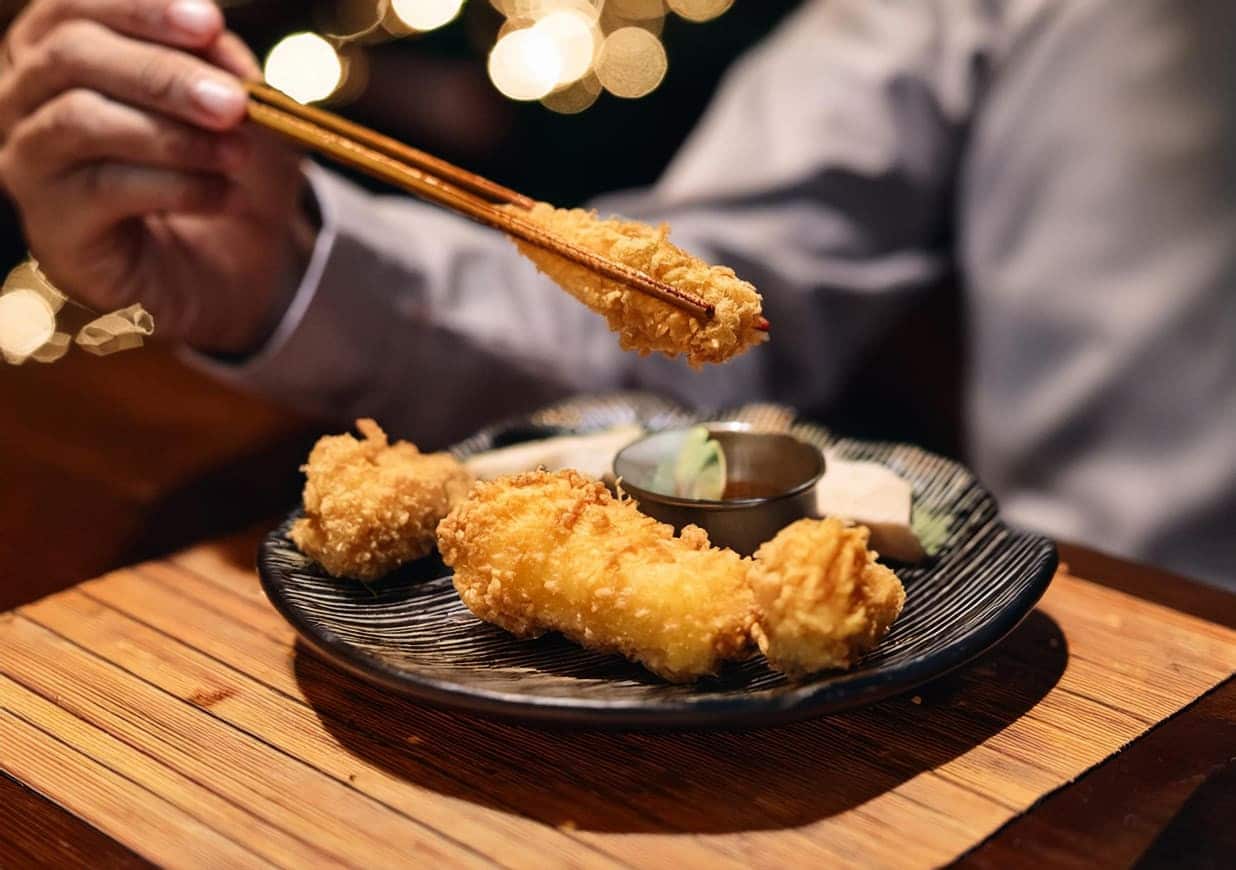


Okinawan Home Cooking Class: Make a Pot of Goya Champuru by Hand
Classes are mostly held in classrooms or private homes in central Naha, teaching home dishes such as goya (bitter melon) champuru, Okinawa soba and pork and egg rice balls. They last about 2 to 3 hours, include ingredients and tasting, and are more rewarding than buying ready-made mixes; the teacher explains substitute ingredients you can find back home. Most need booking a few days ahead, and you can note vegetarian or no-pork requests. Some classes give recipe cards and Okinawan seasonings, and they suit families with children and make a good rainy-day backup.
Awamori Distillery Tours and Tastings: Getting to Know Okinawa’s Island Spirit Culture
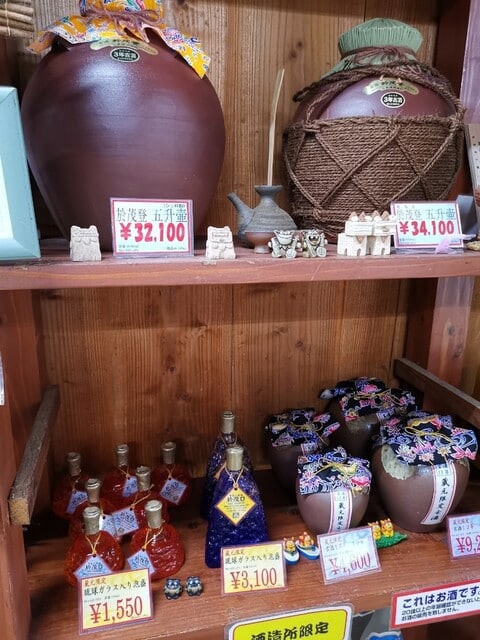
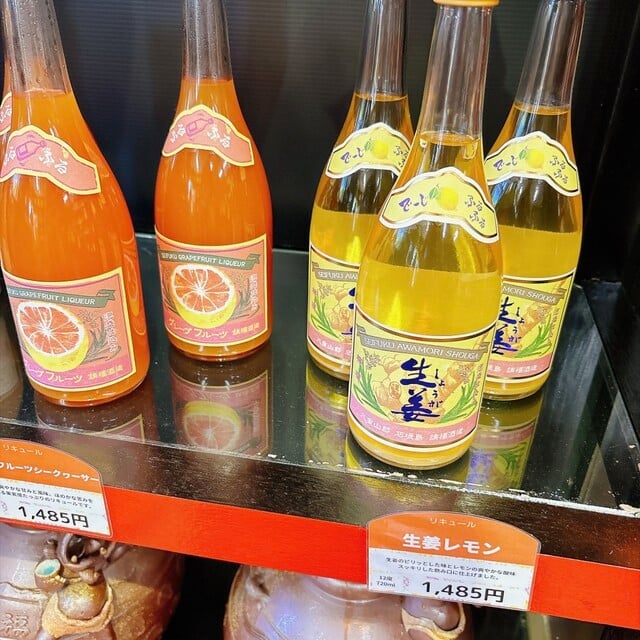
Awamori is an Okinawan distilled spirit made with Thai rice and black koji mold; when aged more than three years it is called “koosu (old awamori).” Several distilleries in and around Naha open for tours, where you can see the koji rooms and clay-pot storage and taste bottles from different years.
Tours mostly need booking, and some distilleries provide Chinese or English materials. Note that you must never drive after tasting, so pair it with a taxi or designated driver, or plan it within walking distance of your hotel. Non-drinkers can join too, as most distilleries have non-alcoholic alternatives and a shop, so you can take your favorite bottle straight home.
Okinawa Rental Car Options: Linking the Top Shops into One Route
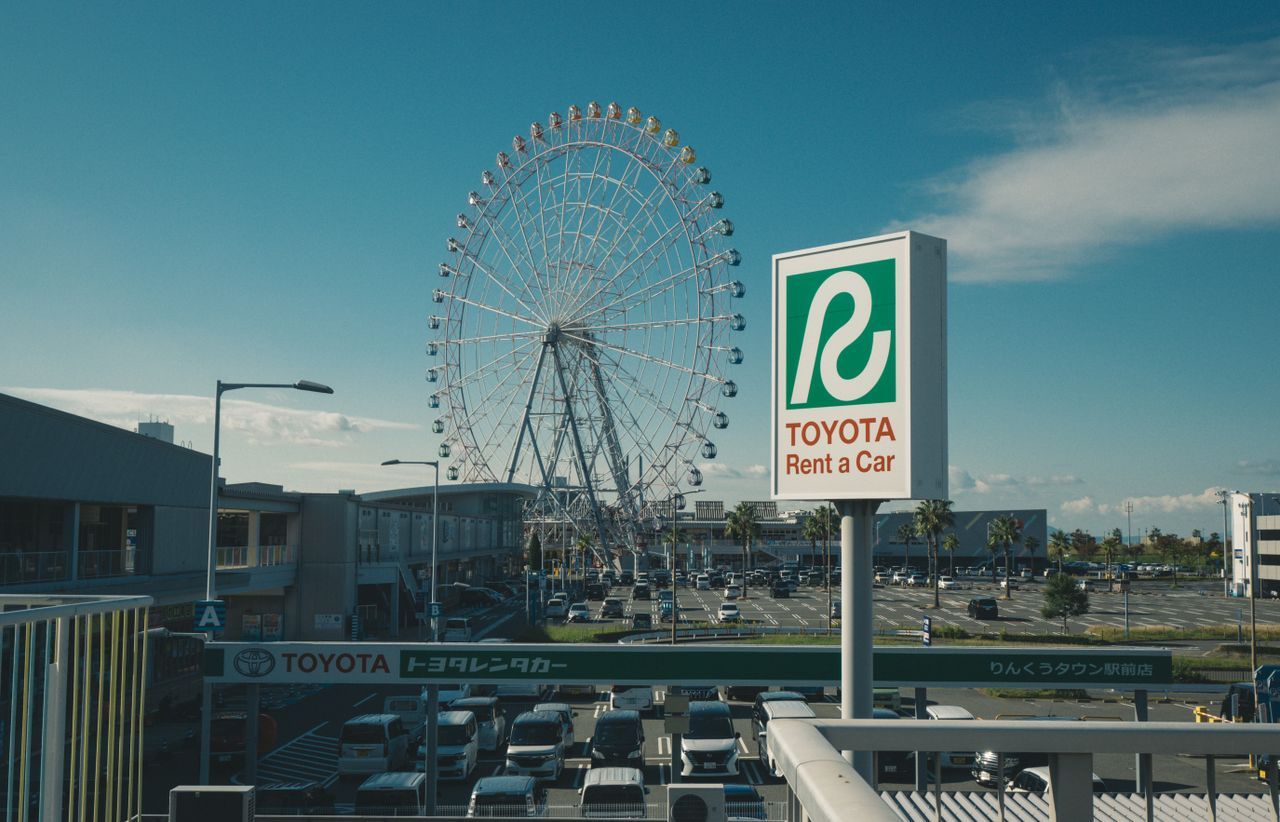
To eat your way through the central and northern shops in this guide, renting a car is almost the only answer. Rental companies around Naha Airport mostly use shuttle buses to their offices for pickup, and in peak seasons (summer holidays, long weekends, the cherry blossom and beach-opening seasons) they often sell out one or two months ahead.
A Taiwanese driver’s license needs a separate Japanese translation to rent a car in Japan, unlike the international license system used in Europe and America, so arrange it at a motor vehicle office or the relevant authority before you leave. Also, Okinawa’s expressway and ETC card rental plans differ from the mainland’s, so ask clearly at pickup.

Itadakimasu! Fit Okinawa’s Four Signature Foods into Your Itinerary
How to Eat All Four Okinawan Signatures in 3 Days and 2 Nights
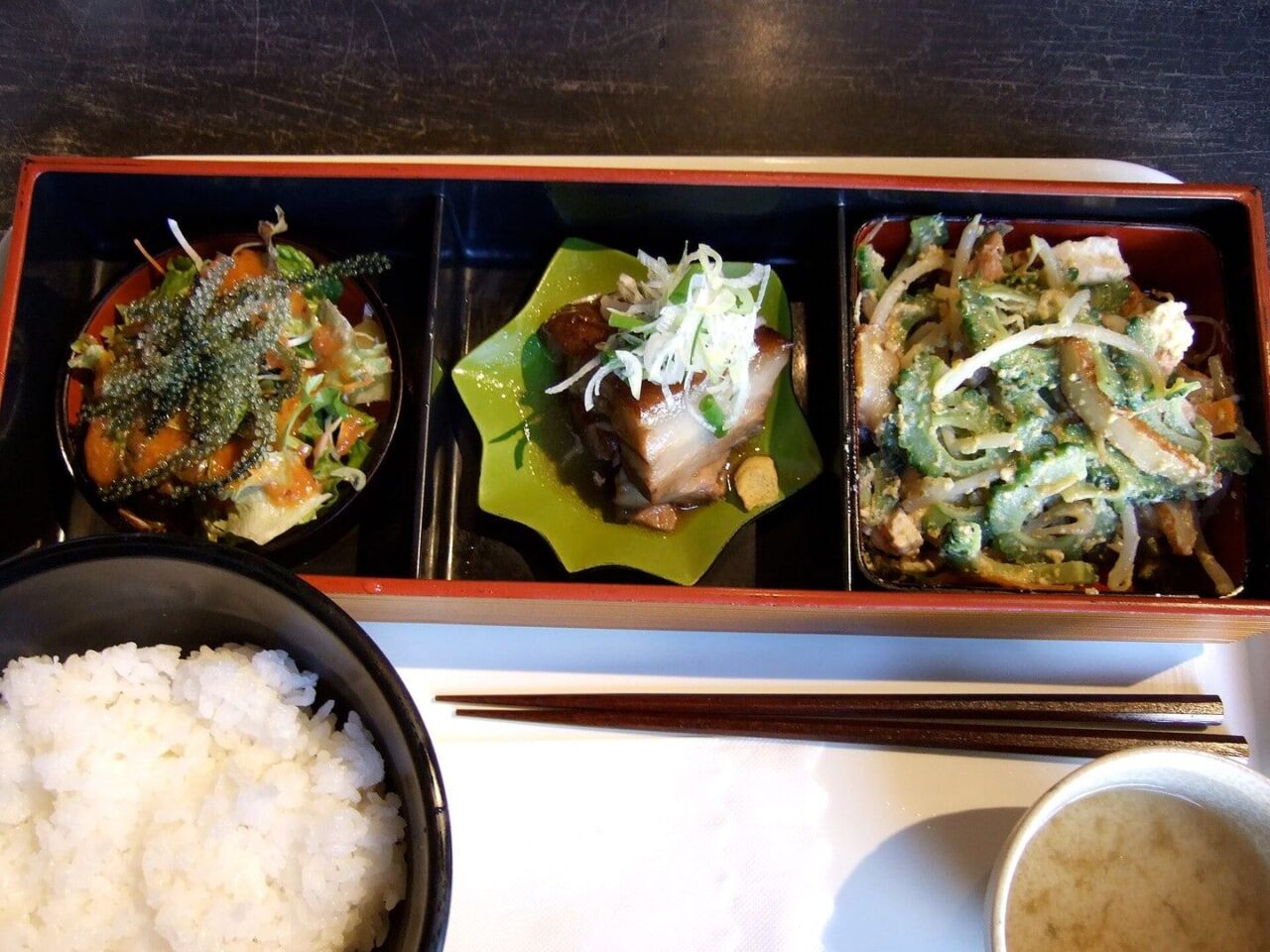
Day 1, stay in Naha after arrival: Okinawa soba from EIBUN or Sobe at lunch, Daiichi Makishi Public Market in the late afternoon, and the Kokusai-dori Yatai Village or Sakaemachi Market for a second round at night. Day 2, head to the central area: brunch at A&W Makiminato, taco rice at Kijimuna in American Village, and BLUE SEAL on the way.
On Day 3, choose between north and south: the north takes in Ufuya, the century-old house in Nago, and Ganso Umibudo Honten in Onna Village; the south pairs the Uminchu farm in Itoman with Nakamoto Fresh Fish Tempura on Ojima Island. Arranged this way, you can eat all four signature foods.
Eating Without a Car: A Naha City Food List
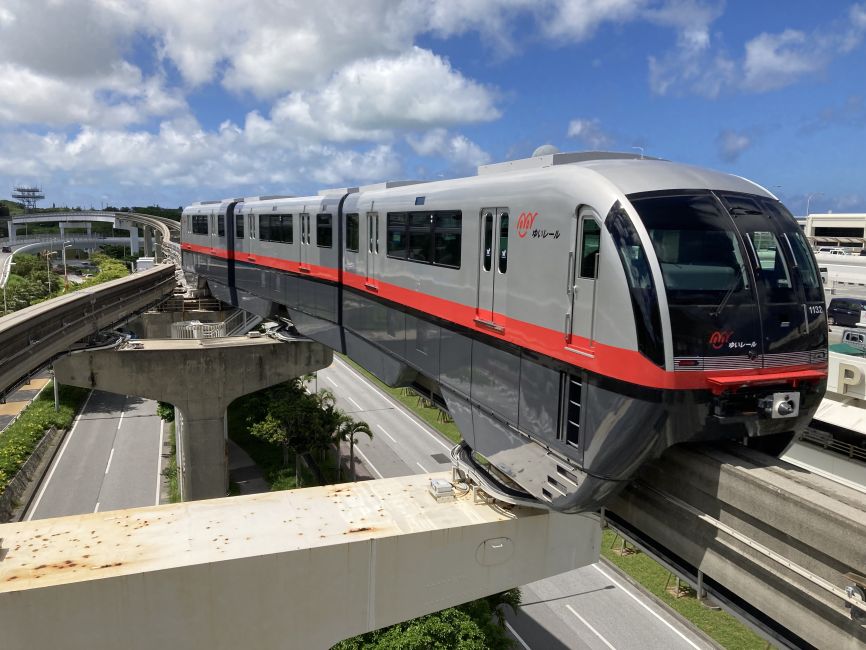
No car doesn’t mean giving up. Along the monorail you can still eat EIBUN’s next-generation Okinawa soba, Shuri Soba’s hand-cut noodles, JAM’S TACOS taco rice, Tondo’s ramen, Jack’s Steak House steak, plus market snacks from the public market and the yatai village.
The trickiest are the sea grape source and A&W’s distinctive branches: for the former you can substitute the market shop’s pork and egg rice ball, and for the latter there are the Kokusai-dori Matsuo shop and the Naha Airport shop. Linking these together makes two days quite full.

Where to Stay Along the Way
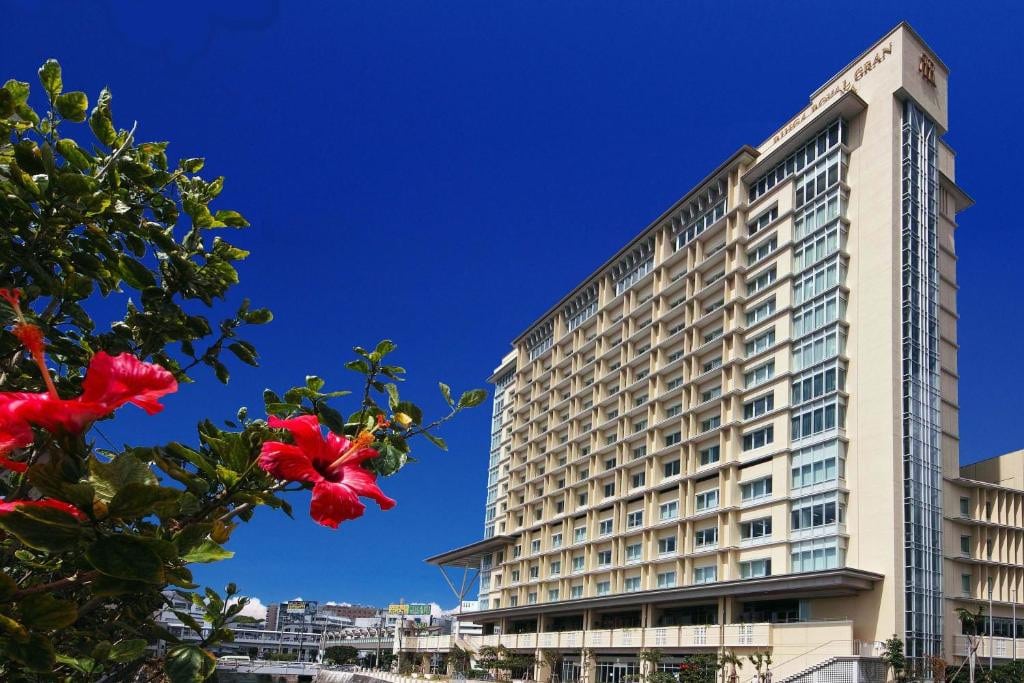
Okinawa’s food is concentrated around Kokusai-dori and Makishi in central Naha, and from the area around the monorail’s Makishi Station you can walk to the public market, the yatai village and Okinawa soba shops. Staying between Makishi and Kencho-mae stations makes both late-night second rounds and early-morning food hunts easy; if you plan to drive to top shops in the north or center, you can also pick a hotel near Naha Airport or an expressway interchange.

