

Miyajima Autumn Leaves Guide 2026: An Autumn Trip to One of Japan’s Three Great Views
Why Miyajima Is Special in Autumn and When to Go
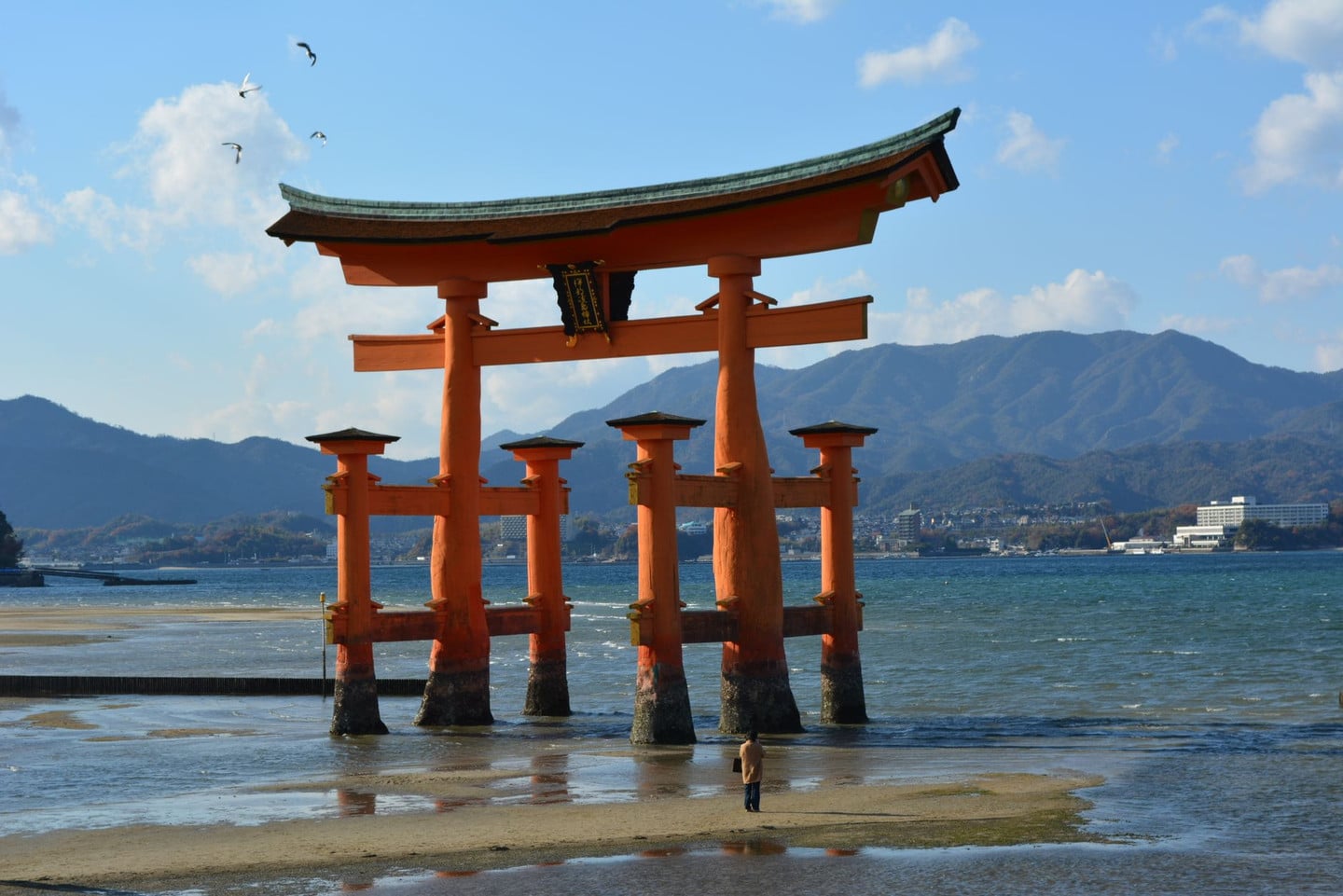
Miyajima (Itsukushima) is known as the “island where the gods dwell” and is one of Japan’s Three Great Views. In autumn, the vermilion floating torii gate and hillsides full of red maples come together in a scene you shouldn’t miss, and it is the most iconic autumn foliage destination near Hiroshima.
The best time to see the 2026 autumn leaves on Miyajima is expected to be mid to late November (roughly November 15 to 28). Around 700 maple trees in Momijidani Park reach peak red at this time, and together with Itsukushima Shrine and Mt. Misen they create richly layered autumn colors. If you want to see Miyajima’s maples, these two weeks are the safest bet.
Miyajima’s 3 Core Autumn Foliage Spots at a Glance
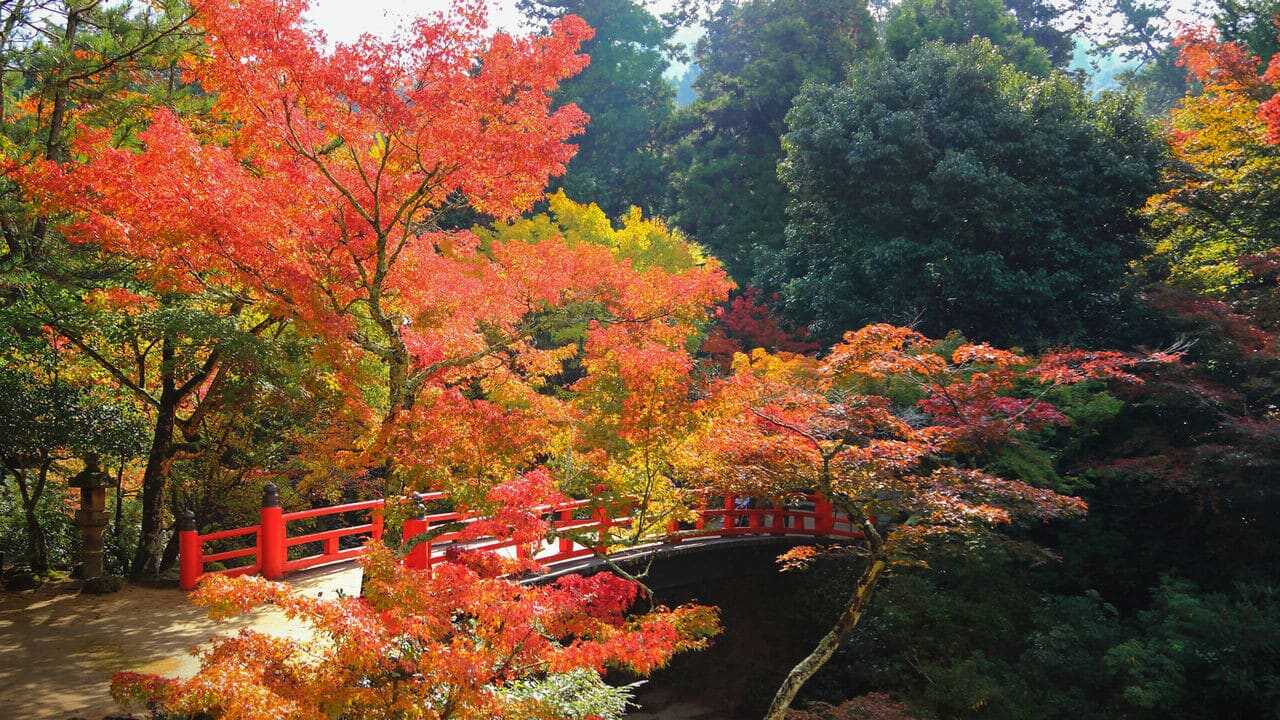
Miyajima’s maples have a distinctive layered quality, stretching from the seaside and the valley all the way up to the primeval forest at the summit. Momijidani Park is the top recommendation. It sits at the foot of Mt. Misen’s primeval forest, and its famous photo spot, Momiji Bridge, with a small stream and a sky full of red leaves, looks like a classical Japanese painting.
Around Itsukushima Shrine the maples are not as dense as in the park, but looking from the shrine toward the mountains, you can capture the classic view of red-covered hillsides setting off the vermilion torii and shrine halls. Mt. Misen can be reached by the Miyajima Ropeway, and as you rise you look out over the whole Seto Inland Sea and valleys tinted red and yellow.
Transport Pass Tips for Miyajima Autumn Foliage
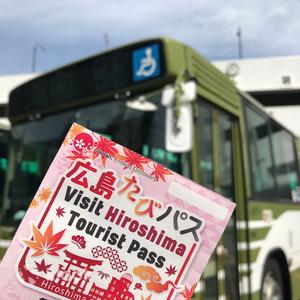
You can use the JR West Rail Pass to get to Miyajima. If you also want to see other sights around Hiroshima, consider the Hiroshima Tourist Pass, which usually includes ferry or attraction discounts and can save a good amount on transport and admission fees.
The ferry from Miyajimaguchi to Miyajima is operated by JR West Miyajima Ferry and Miyajima Matsudai Kisen. The JR West Miyajima Ferry official website lists a one-way fare of ¥200 for adults and ¥100 for elementary school children. Check the latest schedules on the official websites before you go.

Getting to Miyajima for Autumn Foliage
How to Get to Miyajima for the Autumn Leaves
Getting from central Hiroshima to Miyajima is easy. The trip has two stages, rail and ferry, and a transport pass can save you a fair amount on fares.
The ferry takes about 10 minutes one way. The Miyajima Ropeway official website says a free shuttle bus runs to Momijidani Station about every 20 minutes starting at 9:50, which saves you a walk of about 20 minutes. For the return trip, confirm the last ferry time in advance, especially if you plan to see the evening illuminations or a night cruise.
All the Transport Options at a Glance
- Hiroshima Station to Miyajimaguchi Station: JR Sanyo Line, about 25-30 minutes
- City center to Miyajimaguchi Station (slow route): Hiroden (streetcar) Miyajima Line, about 50-70 minutes
- Miyajimaguchi to Miyajima Pier: JR West ferry or Miyajima Matsudai Kisen ferry, about 10 minutes
- Recommended passes: the JR West Rail Pass or the Hiroshima Tourist Pass, which usually include ferry discounts
Complete Guide to Miyajima’s Autumn Foliage Spots
Momijidani Park: Miyajima’s Core Autumn Foliage Spot
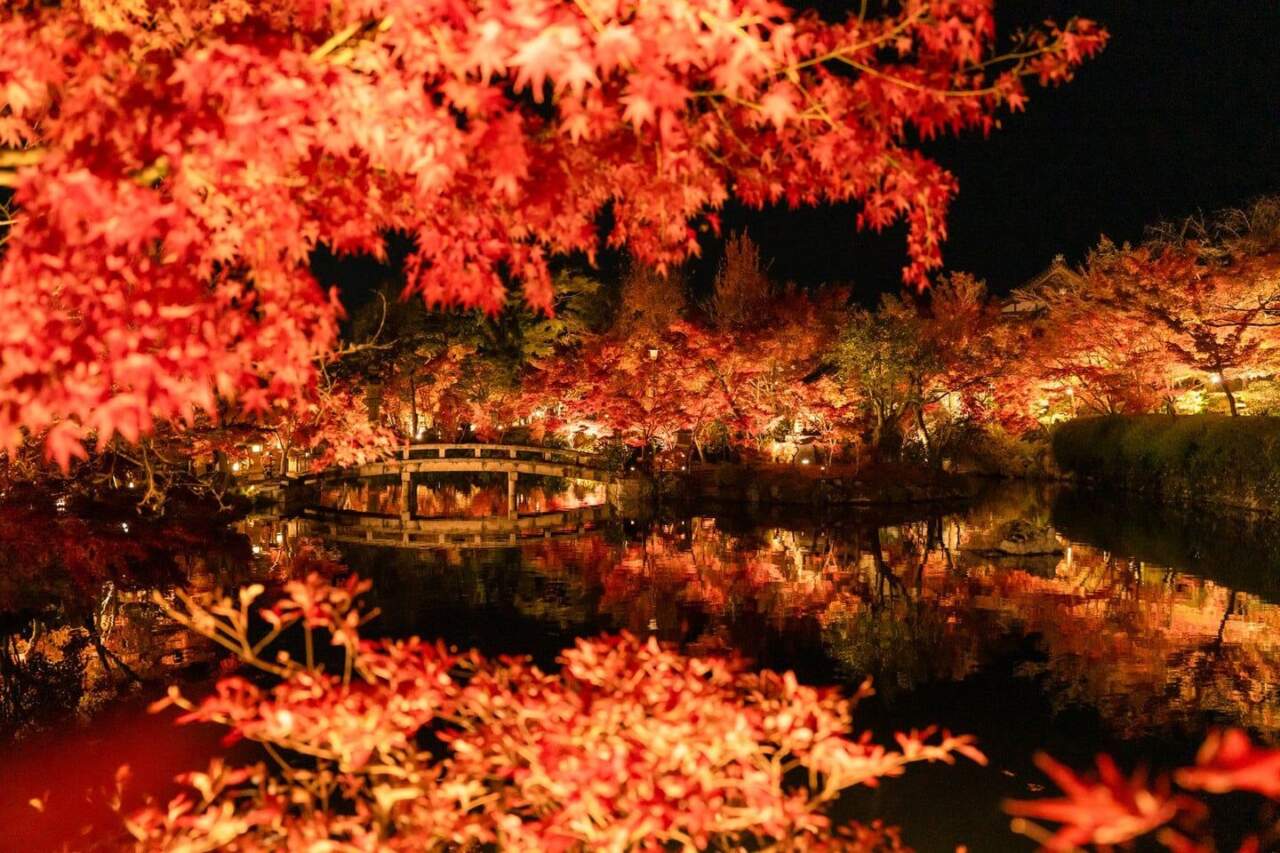
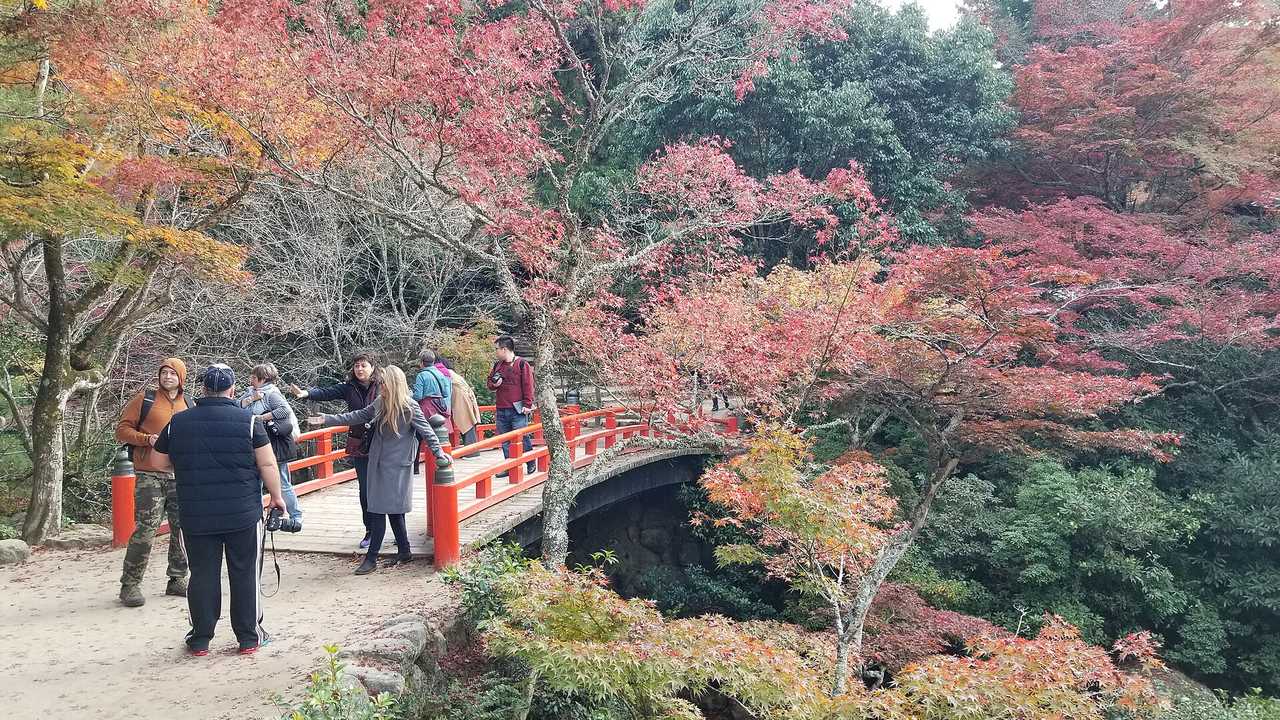
Momijidani Park lies at the foot of Mt. Misen’s primeval forest and extends toward the mountain along the Momijidani River. About 700 maple trees (including iroha maples and large-leaf maples) grow in the park and reach peak red from mid to late November, making it the absolute core of Miyajima’s autumn foliage.
The most famous photo spot is the vermilion Momiji Bridge, where the stream and the sky of red leaves set each other off like a classical Japanese painting. The park is free and open every day, about a 20-minute walk (roughly 1.5 km) from Miyajima Pier, and it is also close to the Miyajima Ropeway’s Momijidani Station.
Autumn weekends are crowded, so go early in the morning to get photos with fewer people in them.

Itsukushima Shrine: World Heritage Site and the Floating Torii
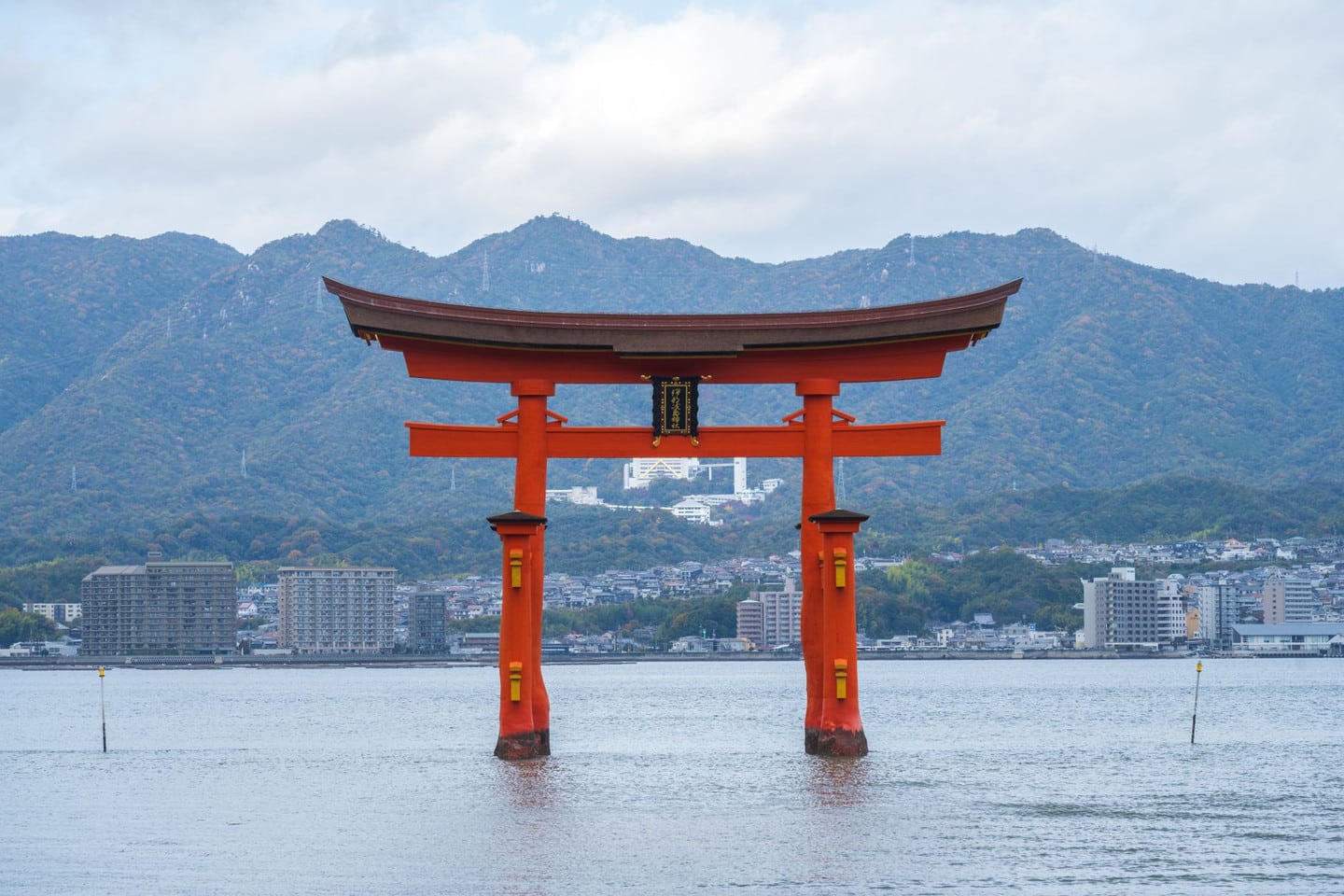
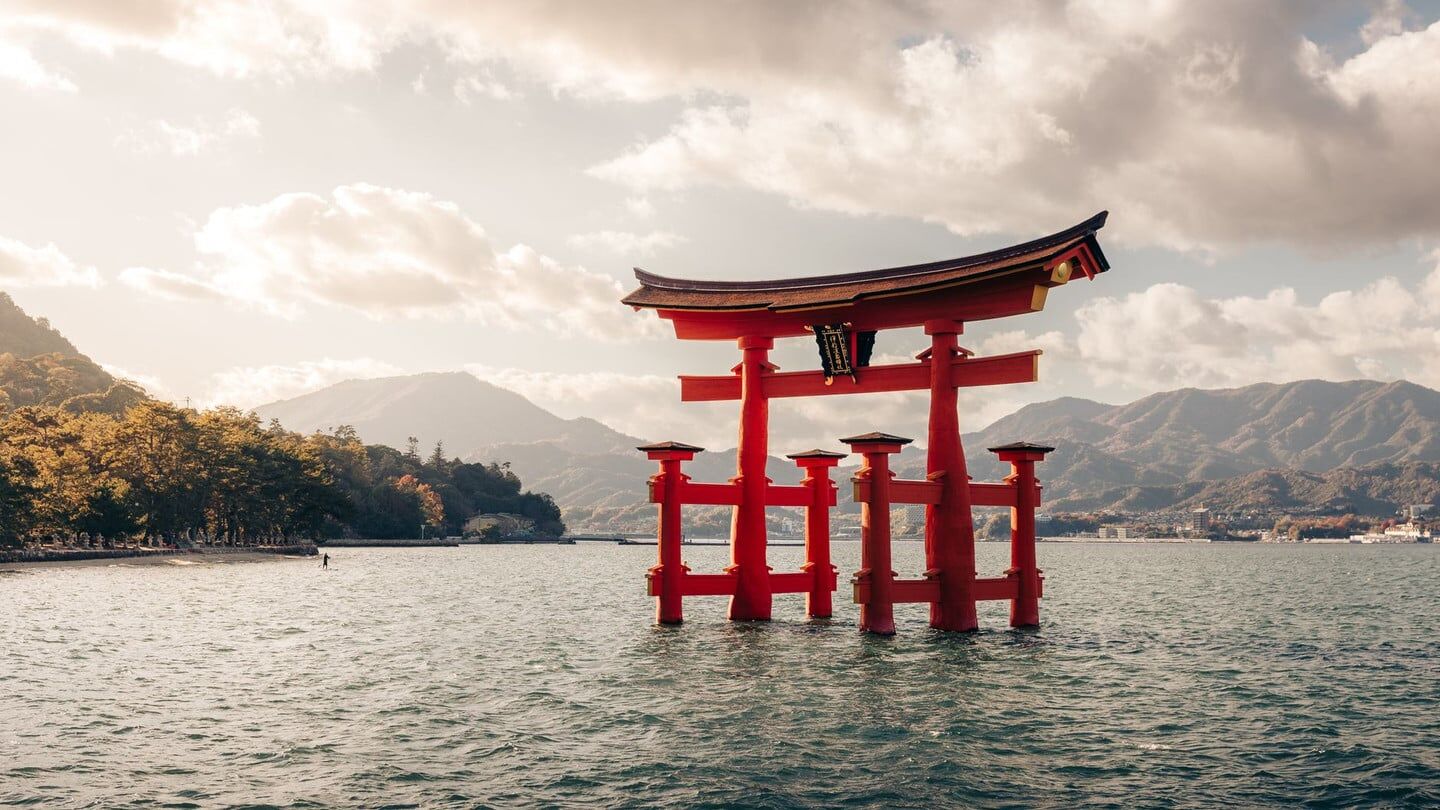
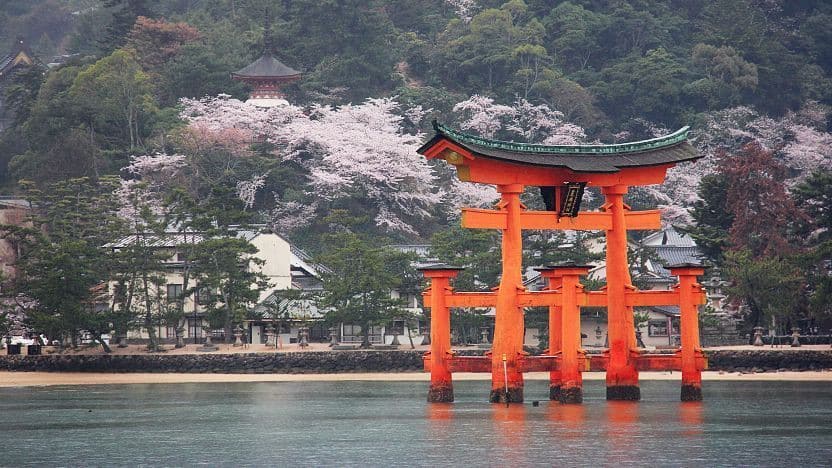
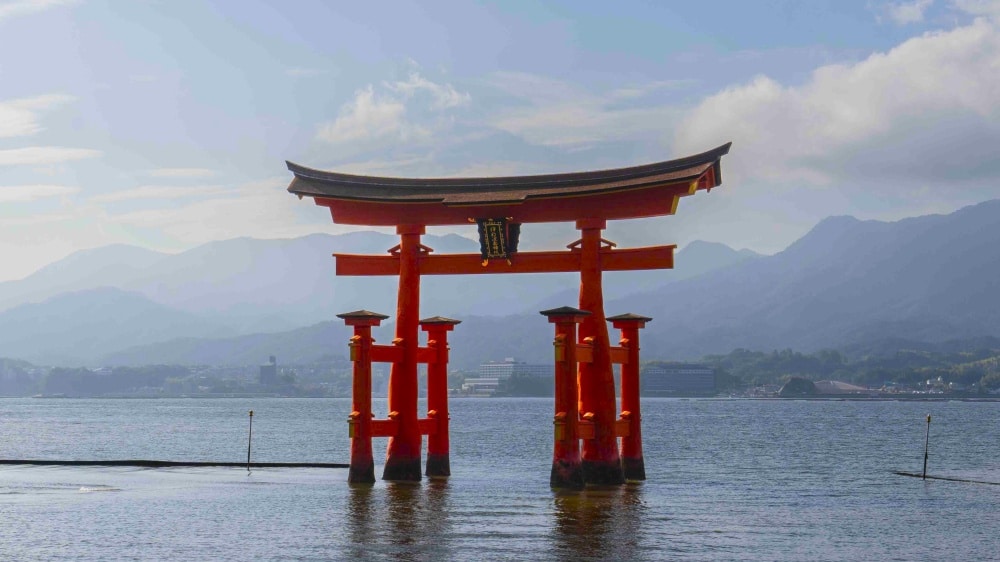
Itsukushima Shrine is a UNESCO World Heritage Site, and its vermilion great torii standing in the sea is Miyajima’s most classic landmark. It looks completely different at low tide and high tide, and as the tide rises and falls the light and reflection of the torii on the water change the scenery.
Although the maples around the shrine are not as dense as in Momijidani Park, looking from the shrine toward the mountains you can capture the classic view of red-covered hillsides setting off the vermilion torii and shrine halls. It is a stop not to be missed on a Miyajima autumn itinerary.
Mt. Misen and the Miyajima Ropeway: A Bird’s-Eye View of the Autumn Colors
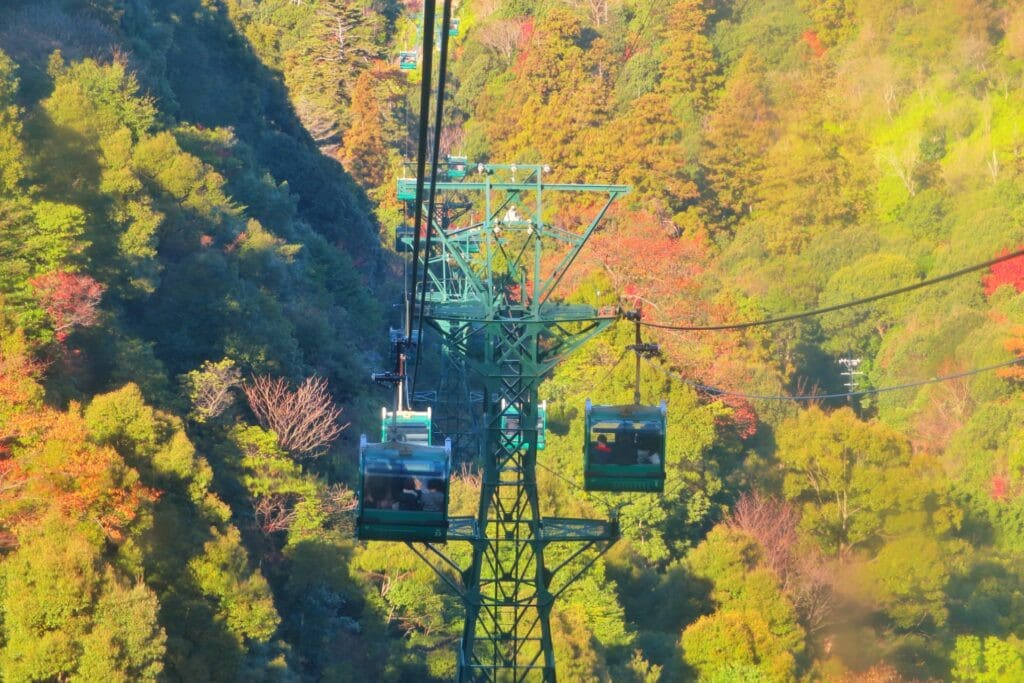
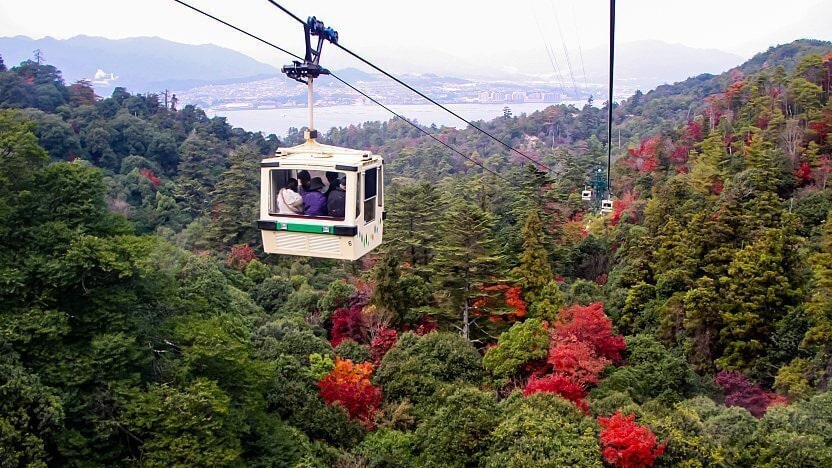
If you want to avoid the crowds or catch the leaves turning early, take the Miyajima Ropeway up Mt. Misen. The ropeway links a recirculating-type cable car and an alternating-type cable car, a rare arrangement. The ride takes about 14 minutes, with a transfer at Kayatani Station and the terminus at Shishiiwa Station.
As you climb, you look out over the whole Seto Inland Sea and valleys tinted red and yellow. After you get off, it is about a 30-minute walk to the Mt. Misen observatory at 535 meters, which offers an unobstructed 360-degree view and, in good weather, even distant islands and seascapes.
Mt. Misen Summit: The Site of the Eternal Flame Hall and Kuguriiwa
Mt. Misen has long been regarded as the sacred mountain of the island of the gods. The “Eternal Flame Hall” (Kiezu no Reikado) and the Misen reception office near the summit were completely destroyed in a fire on May 20, 2026. The original site is closed to entry, and Daishoin is working on reconstruction. Please check official announcements before you visit.
Nearby is “Kuguriiwa,” a huge natural rock tunnel and a rather special geological feature in Mt. Misen’s primeval forest. Autumn colors dot the area, and it makes a good stop after you reach the top by ropeway.
The ropeway round trip takes about 1 hour, and getting to the summit and back takes about another hour, so allow at least 2 hours. Rest and recharge, then take the ropeway back down the same way.
Daishoin: Autumn Leaves at a 1,200-Year-Old Temple
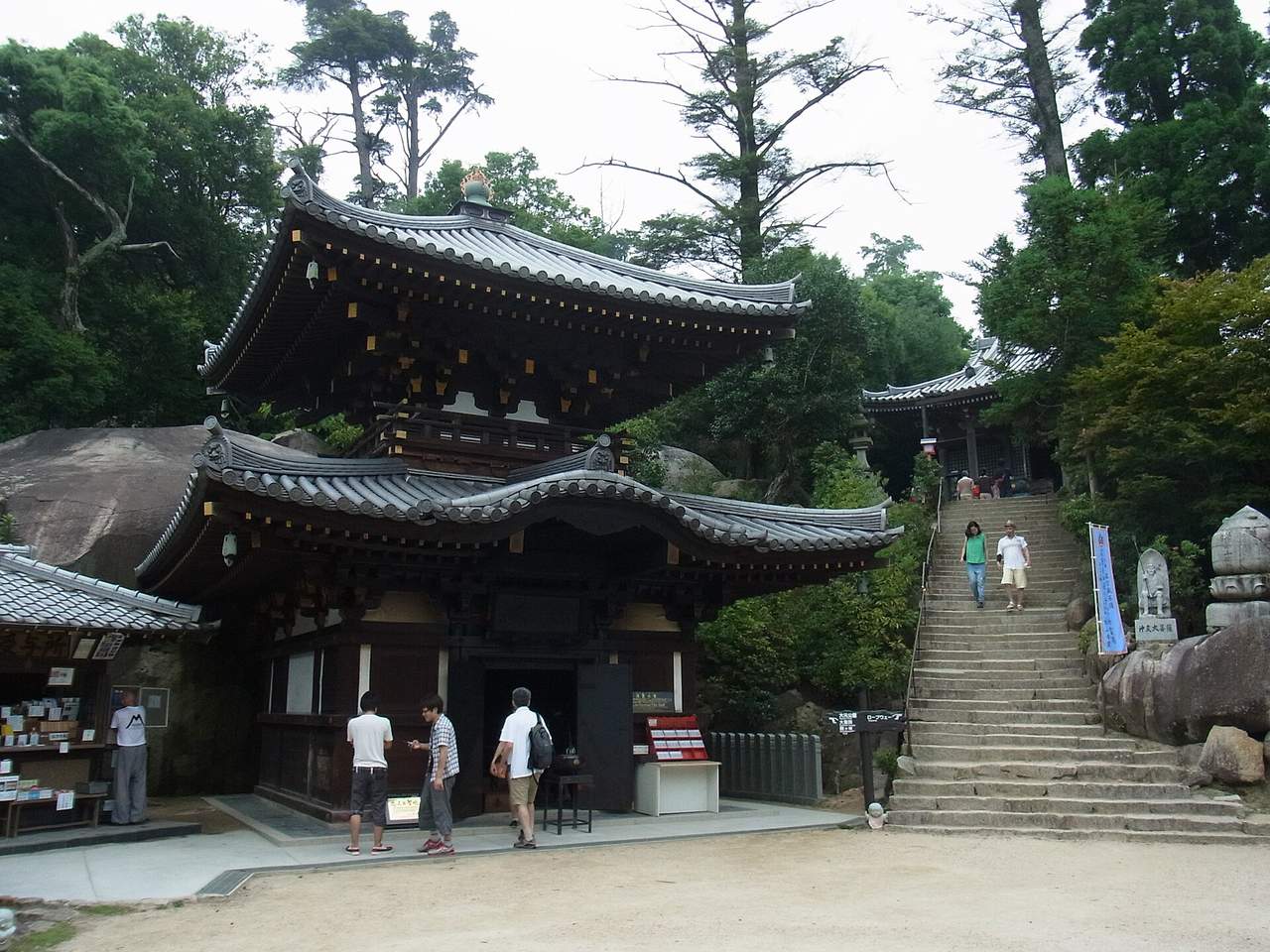
Daishoin has a history of 1,200 years and is especially beautiful with red leaves around it. Besides Momijidani Park and Itsukushima Shrine, it is the third autumn foliage spot most often mentioned by locals and travel platforms, and the atmosphere inside the temple is solemn and quiet.
Beside the stone steps of the approach, the Kannon Hall enshrines the Eleven-Faced Kannon, and the Mani Hall enshrines Sanki Daigongen. The temple buildings layered with red leaves along the way make a favorite angle for photography lovers.
Statues of the Five Hundred Rakan line both sides of the stone steps inside the grounds, each with a different expression and pose. Paired with the red leaves in autumn, they are a very popular subject for photographers.
Omoto Park: A Locals’ Hidden Autumn Spot
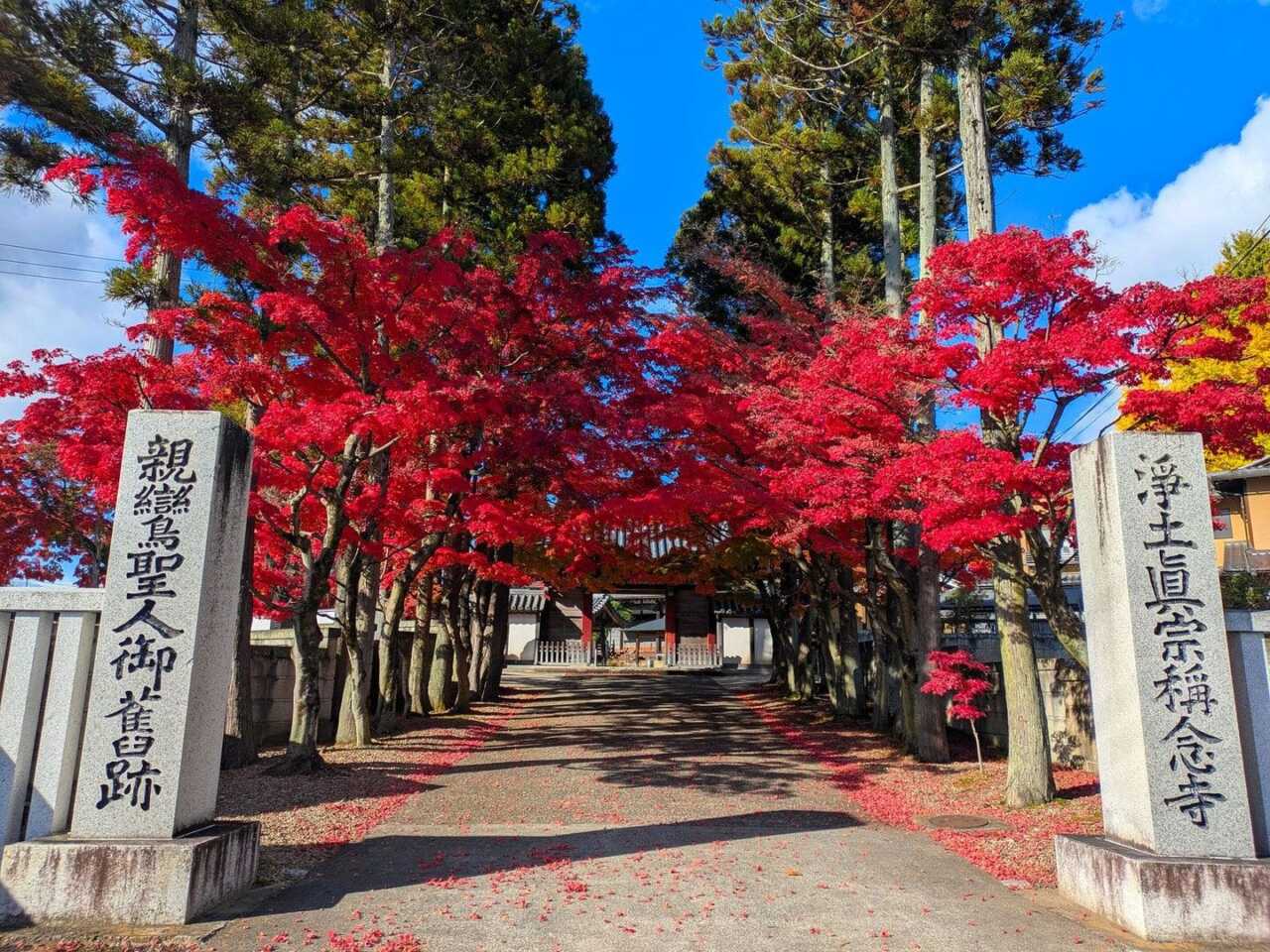
Omoto Park, like Momijidani Park and Daishoin, sits in a stream-fed wind corridor, where cold breezes promote the changing of the leaves and make the colors especially vivid. It is a hidden spot recommended by locals, with noticeably fewer people than Momijidani Park, and it suits travelers who want to enjoy the maples at a leisurely pace away from the crowds.
The park is small but peaceful. A walk along the stream gives you quiet autumn colors that are completely different from the busy tourist core, and it is a hidden spot worth a special detour on a Miyajima autumn itinerary.
Because it is less well known, big tour groups rarely show up here even on peak-season weekends. It is a good place to take your time with a camera and enjoy a side of Miyajima that fewer people know.
Autumn Night Illuminations: Momijidani Park and Daishoin
Both Momijidani Park and Daishoin have held autumn leaf night illuminations (light-up events) in recent years. The scene looks completely different by day and by night, and maples lit by lights have a distinctly romantic atmosphere.
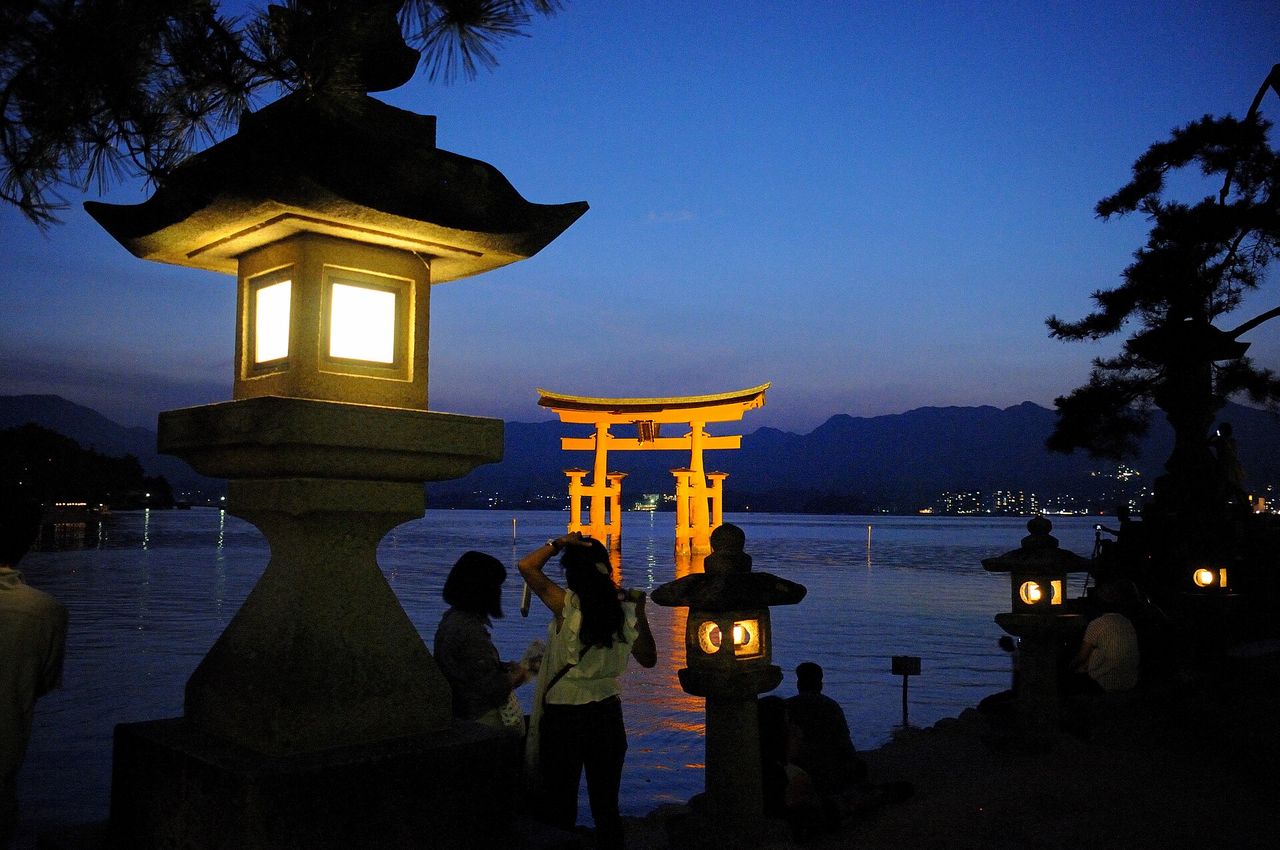
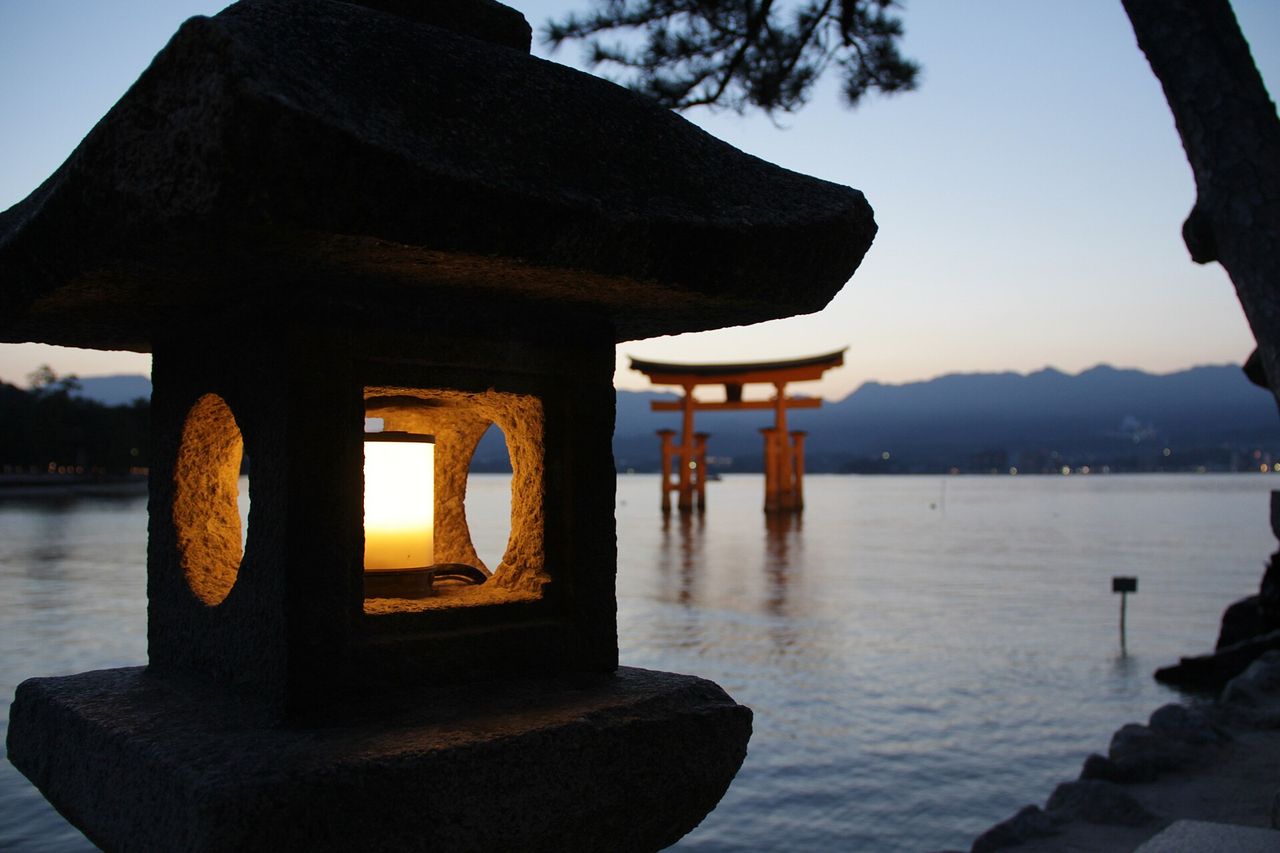
The great floating torii of Itsukushima Shrine is also lit at night. Together with the illuminated night maples, it is one of the most representative images of an autumn night on Miyajima.
In 2026 the Momijidani Park illumination runs from November 13 to December 6 with free admission. The Daishoin red maple illumination runs from November 17 to 29, 17:30 to 19:00, also free.
Otorii Cruise: Night Yakatabune Boat Tour
To see the illuminated Itsukushima Shrine and the great torii up close from the sea, try the “Otorii Cruise” night yakatabune (traditional houseboat) tour. The voyage takes about 25-30 minutes and combines night maples with the floating torii, an angle that is hard to get from a normal visit on land.
The boat slowly circles the great torii, with night lights and reflections on the water, making a romantic way to end the day. You must book at least 2 hours before departure, and you cannot board without a reservation.

Tickets and Guided Tours
Here are the most useful tickets and experiences for Miyajima’s autumn foliage. Booking ahead saves you from queuing on site or being put on a standby list.
Miyajima Ropeway Ticket: The Easiest Way to the Summit
The Miyajima Ropeway links a recirculating-type and an alternating-type cable car, with a one-way ride of about 14 minutes (including the transfer at Kayatani Station). A round trip is ¥2,000 for adults and a one-way ticket is ¥1,100, the best choice for reaching the heights with the least effort.
On November 1, 7, 8, 14, 15, 21 to 23, 28 and 29, 2026, advance online reservations are required on those designated days. After you get off, it is about a 30-minute walk to the Mt. Misen observatory, where you can enjoy an unobstructed 360-degree view of the autumn colors.
Otorii Cruise Ticket: A Night Maple Cruise on the Sea
The night yakatabune tour takes about 25-30 minutes. Adult tickets are ¥2,000 and tickets for ages 5 through elementary school are ¥1,000, cash only. You can see the illuminated great torii up close from the sea, a special angle you can’t get from the shore.
Night departures run every 40 minutes from 17:55 to 21:15 and must be booked 2 hours before departure. Sailings with no bookings by 17:00 the day before are canceled.
Itsukushima Shrine Admission Ticket
The Itsukushima Shrine official website lists an admission fee of ¥300 for adults. From October 15 to November 30 it is open from 6:30 to 17:30. The shrine office inside the grounds sells omamori charms and goshuin stamps (about ¥500), and the floating torii looks completely different at low and high tide.
Check the tide times for the day before planning your visit and photo time. At high tide the torii seems to float on the sea, and at low tide you can walk right up to the base of the torii.
Hiroshima Tourist Pass: Save on Transport and Admission Together
It covers ferry and some nearby attraction discounts. If your itinerary includes both central Hiroshima (the Atomic Bomb Dome, Shukkeien Garden and so on) and Miyajima, this pass is usually better value than buying tickets separately.
Check the latest prices and coverage on the official website before you go. Some versions can also be used toward streetcar fares in central Hiroshima.


Accommodation Tips for Your Trip
Miyajima has few places to stay on the island, but they have a special atmosphere. If you want to avoid the daytime crowds and fully enjoy the night maples and the shrine in the early morning, a night on the island is well worth it.
On Miyajima vs. in Miyajimaguchi: Two Very Different Stays
If you stay at an inn on Miyajima, you can have the quiet approach and shoreline to yourself after the visitors leave in the evening. In the morning you can visit Itsukushima Shrine before the crowds arrive and photograph the torii with no one around. It is also convenient for the evening maple illuminations or the night yakatabune cruise, with no worry about catching the last ferry.
If you don’t mind taking the ferry every day, you can also stay in Miyajimaguchi across the water or in central Hiroshima, where there is more choice and prices are relatively friendly, then take the ferry over during the day to see the leaves. This suits travelers who also want to fit in central Hiroshima (the Atomic Bomb Dome, Shukkeien Garden and so on).
For detailed hotel comparisons, price ranges and booking tips, see our other dedicated Miyajima accommodation guide, which covers the pros and cons of staying on the island and on the mainland side.
Miyajima Autumn Foliage FAQ
When is the best time to see autumn leaves on Miyajima?
The best viewing period in 2026 is expected to be mid to late November (roughly November 15 to 28), when the roughly 700 maple trees in Momijidani Park reach peak red.
How should I plan a one-day Miyajima autumn foliage itinerary?
Suggested route: Miyajima Pier → Itsukushima Shrine visit → Omotesando shopping street (grilled oysters, momiji manju) → Momijidani Park for the leaves → Miyajima Ropeway up Mt. Misen → back to the shore in the evening to see the torii at sunset → ferry back.
-Klook.jpg)
How do I get from Hiroshima to Miyajima?
Take the JR Sanyo Line to Miyajimaguchi Station (about 25-30 minutes), then transfer to the JR West ferry or Miyajima Matsudai Kisen ferry to Miyajima Pier (about 10 minutes). You can also take the Hiroden streetcar on a slower route of about 50-70 minutes.
Are there any hidden autumn foliage spots on Miyajima?
We recommend Omoto Park, which sits in a stream-fed wind corridor and has fewer people than Momijidani Park. It is a hidden maple spot recommended by locals. Daishoin is also less crowded but just as impressive, and it is the third-best autumn foliage spot.
Are there night maple events on Miyajima?
Momijidani Park has a free night illumination from November 13 to December 6, 2026. The Daishoin red maple illumination runs from November 17 to 29, 17:30 to 19:00, with free admission. The great torii of Itsukushima Shrine is also lit at night, and there is a night Otorii Cruise as well (booking required at least 2 hours before departure). Please confirm the last ferry time before you head back.
What are the must-eat foods on Miyajima?
Grilled oysters and momiji manju on the Omotesando shopping street are must-eats. Momijido Honten is a signature old shop, and other options include Shibai Charyo Mizuha (Japanese cuisine) and Onigiri-ya Sanpiki Miyajima branch (a rice ball specialty).
