
Jozankei Onsen Attractions: Sapporo’s Backyard of Gorges, Autumn Leaves and Kappa Legends
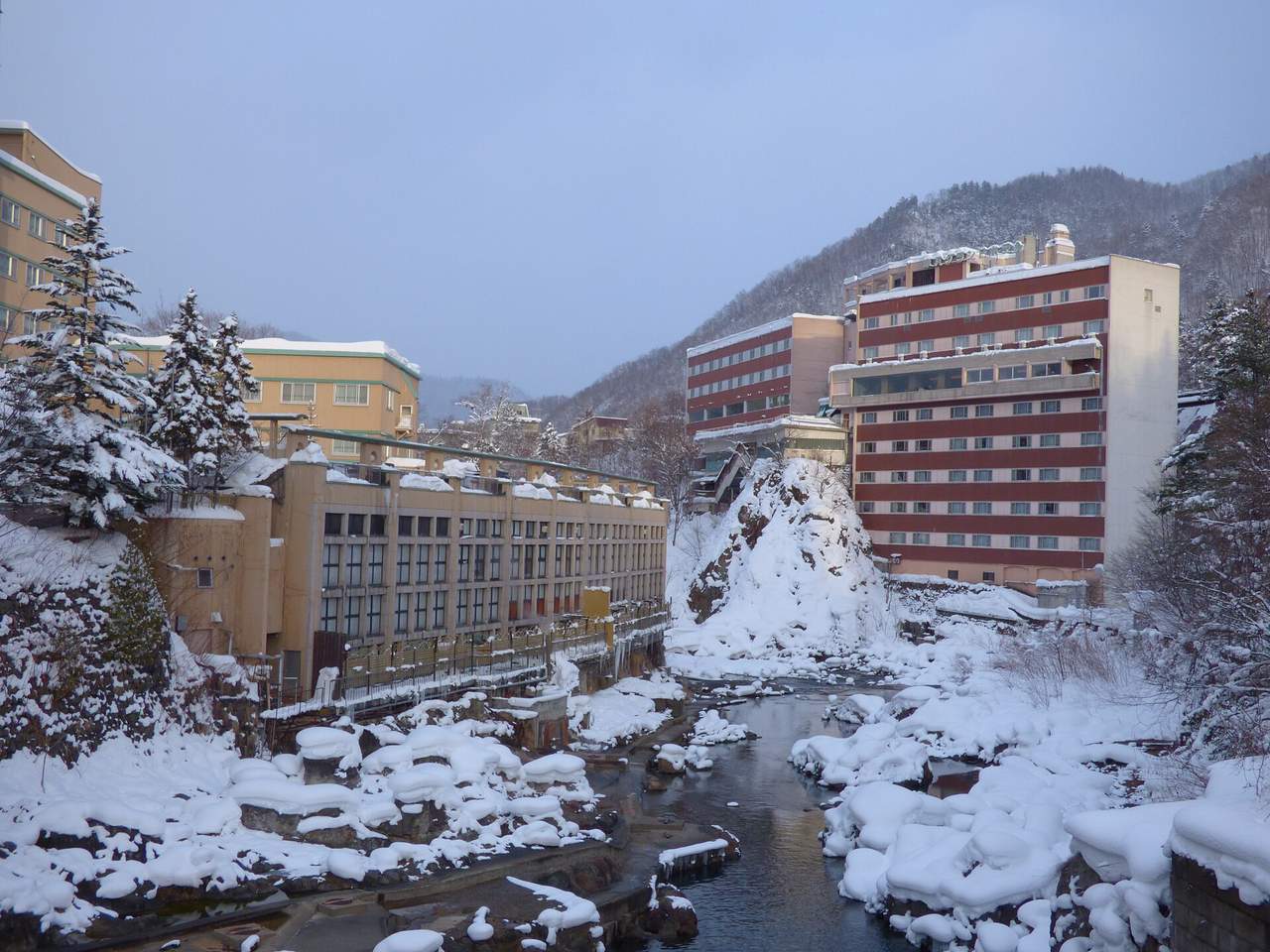
Jozankei Onsen is in Minami Ward, Sapporo. Administratively it is still part of Sapporo, but it is only about an hour from downtown by car or bus, and you go straight from the city to a hot spring town surrounded by gorges and forest, which is why it is called “Sapporo’s backyard.” There is no direct rail line, only buses and driving, which has helped keep the whole hot spring street quiet and resort-like.
Jozankei’s three most famous things are the gorge’s autumn leaves, the kappa legend and day-trip hot springs. The way people travel here is also distinctive: many do not stay overnight but make a day trip from Sapporo, hiking trails to see the maples by day, picking an inn for a soak in the afternoon, and returning to the city for dinner in the evening. Below we first introduce the four core themes, then cover access, sights and costs.
Sapporo’s Backyard: A Hot Spring Gorge One Hour From the City
Jozankei’s address is Jozankei Onsen, Minami Ward, Sapporo, Hokkaido. It sounds like the city, but it actually lies in a gorge on the upper Toyohira River, surrounded by forest. A direct bus from JR Sapporo Station takes about an hour, making it one of the easiest hot spring areas in all of Hokkaido to visit as a day trip from a big city.
Because it is so close, Jozankei is very flexible: you can plan just half a day with a day-trip soak and head back to Sapporo, or stay a night and walk the trails at leisure. The hot spring street stretches along the gorge, and nearly all the main sights are within walking distance; the only one that needs a separate shuttle is the Hoheikyo Dam.

160 Years of Hot Springs: The Monk Mizumi Jozan and the Name of This Gorge
The name Jozankei comes from the monk Mizumi Jozan, who developed the hot spring. The springs opened in the 2nd year of Keio (1866) and now have about 160 years of history, making this one of the longer-established hot spring areas in Hokkaido. The Jozan Gensen Park on the hot spring street is a recreation of the original landscape where the springs were discovered.
Knowing this background adds interest to a stroll through the town: from Jozankei Shrine to the Gensen Park and on to the trails along the stream, everything grew up around the same line of springs. The water belongs to the chloride spring family and flows in large volume, which is why the street can support several large inns at once.
Autumn Gorge: A Sweep of Red, Yellow and Orange From Early to Mid-October
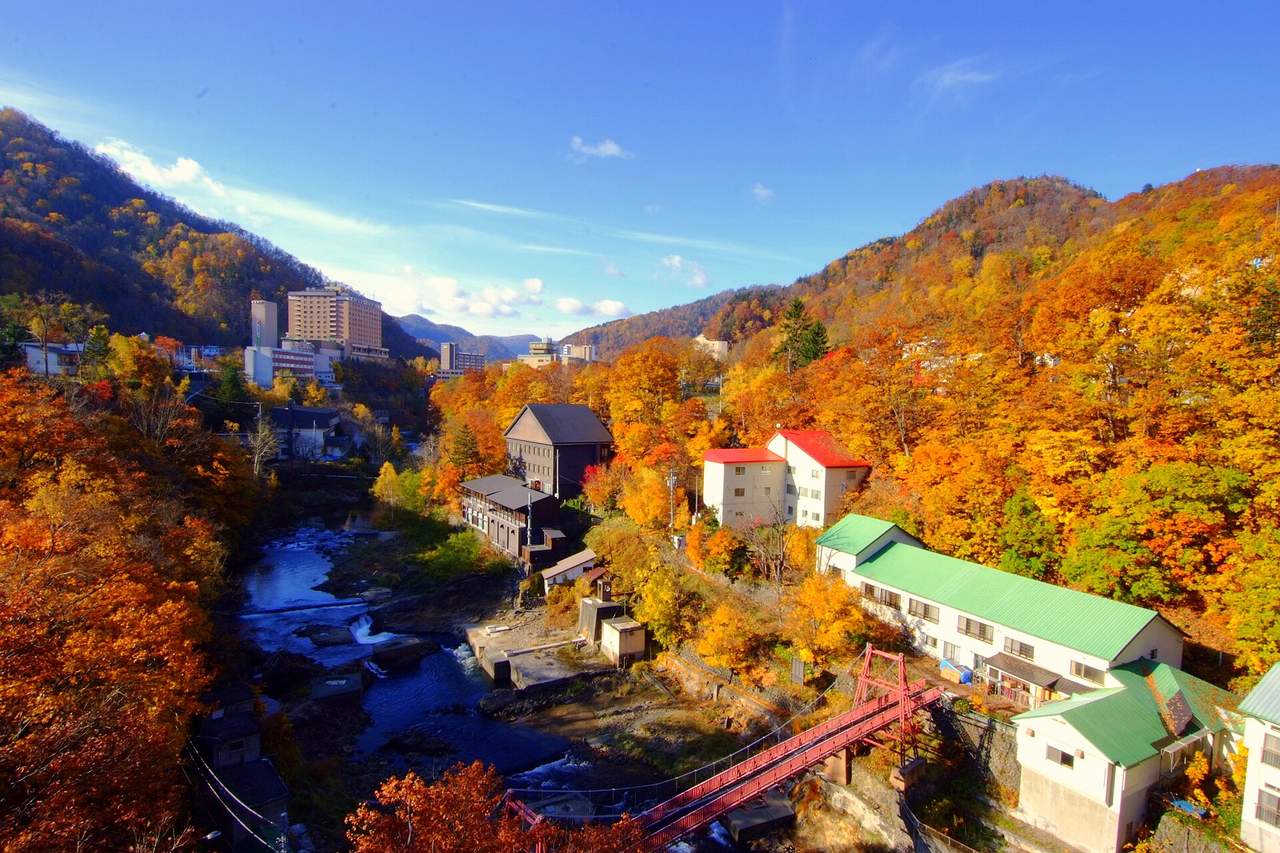
Jozankei’s most famous season is autumn. The foliage is forecast to peak from about early to mid-October each year, when the whole gorge turns red, yellow and orange, contrasting sharply with the water of the Toyohira River, which is why it is ranked the top leaf-viewing spot near Sapporo.
The two main stages for viewing the leaves are the Futami Suspension Bridge beside the hot spring street and the Hoheikyo Dam, which needs a separate shuttle. During this period National Route 230 is badly jammed on weekends and the shuttle buses also queue, so for good photos we suggest going on a weekday and setting out early. The actual timing shifts earlier or later with the weather each year.
2026 Jozankei autumn leaves information: The Jozankei Tourism Association has not yet announced the specific peak dates for 2026, but it has announced the seasonal shuttle buses for the “Jozankei Five Great Autumn Leaves,” all departing from the Jozankei Tourist Information Center, with same-day tickets on a first-come basis at the counter: the guided “Momiji Kappa Bus” runs October 1 to 21 (¥700 per seat, about 70 minutes); the “Hoheikyo Dam Liner” to the Hoheikyo electric bus stop runs October 3 to 25 (¥1,000 round trip; the electric bus needs a separate round-trip ticket, ¥1,200 for adults); and the “Momiji Gondola Liner” to the Sapporo Kokusai Ski Resort for the autumn-leaf gondola runs October 1 to 20. The shuttle buses run from early to late October, which can serve as a timing guide for planning a 2026 Jozankei autumn-leaf trip.
Kappa Legend: More Than Twenty Statues Hidden Around the Hot Spring Street
The kappa is Jozankei’s mascot, drawn from the kappa legend passed down in this gorge. More than twenty kappa statues, each with a different shape and expression, are hidden along the hot spring street, so finding them becomes a walking game in itself, great for children and couples who want to take photos along the way.
The most iconic are the towering “Kappa Daio” (Kappa King) in Futami Park and the Kappa Family Wish Hand Bath at a corner of the street, where you pour spring water onto the dish on a kappa’s head and make a wish. These stops are all free and, strung together, make a walking route through the street.
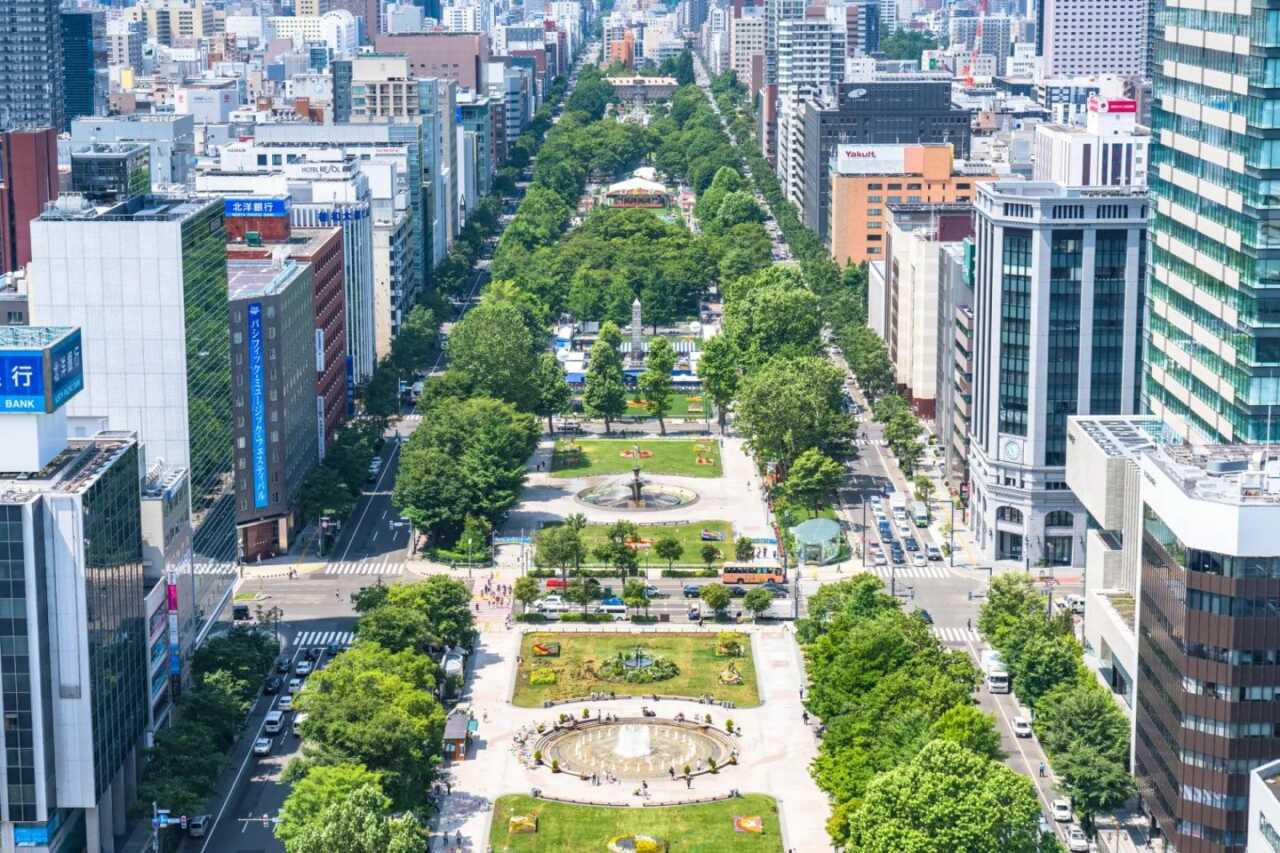
How to Get to Jozankei: Kappa Liner, Jotetsu Bus and Driving Compared
There is no direct rail line to Jozankei, so the only options are buses and driving. The two kinds of buses are quite different, and choosing wrongly can cost you a lot of time.
Kappa Liner: Reserved Direct Limited Express Bus, About 60 Minutes
The most recommended option is the direct limited express bus designed for tourists, the “Kappa Liner” (かっぱライナー号). It boards at stop 27 at JR Sapporo Station and also stops at Odori Nishi 1-chome and Susukino on the way, which is convenient for travelers staying downtown.
The ride takes about 60 minutes, and the official website lists a one-way adult fare of ¥1,700 (¥1,460 with the online reservation discount), the fastest of all the options. Seating is all-reserved, and you must book by 17:00 the day before riding at the latest; in peak autumn-leaf season it often fills up early. Departures and fares follow the operator’s announcements on the day, so check the boarding point and departure time once more before you set out to avoid going to the wrong platform. There is luggage space on board, but seats are limited in peak season, so if you carry a large suitcase we suggest queuing early at the boarding point.
Jotetsu Bus Express 7 and 8: No Reservation Needed but 20 Minutes Longer
If you could not book the Kappa Liner, or your schedule is not fixed, switch to the Jotetsu Bus Express routes 7 and 8. These are ordinary route buses with more departures than the limited express bus, and no reservation is needed, so you can catch one even if you decide to go at the last minute, which is far more flexible.
The trade-off is a longer ride, about 1 hour 20 minutes, with more stops along the way. The fare is actually cheaper, about ¥1,000 one way, with the actual amount following the operator’s announcement. There are several stops in the hot spring town, so before getting off, check which stop is closest to your inn or sight to save a lot of walking. This route is also a daily route for local residents, with departures concentrated in daytime hours and noticeably fewer in the evening, so be sure to check the return times first.
Driving Along National Route 230: About 40 to 50 Minutes but Jammed in Peak Season
Driving is the fastest way. From central Sapporo, take National Route 230 south; the drive takes about 40 to 50 minutes, and you can easily add stops that only work by car, such as Jozankei Dam and Lake Sapporo, for the greatest flexibility.
The biggest problem is autumn. On October leaf-season weekends the traffic on National Route 230 surges, jams and a lack of parking are the norm, and the Hoheikyo parking lot fills up quickly. If you want to drive for the leaves, try to go on a weekday and set out early in the morning. In winter the road surface is snowy and icy, so be sure your rental has snow tires and drive slowly. Nakayama Pass along the way is a popular rest stop where you can try the local specialty fried potatoes, a pleasure you only get when driving.
Best for Saving Money: A Day-Trip Package With Round-Trip Bus From Sapporo Plus a Bath Voucher
If you plan a day trip, the best value is a day-trip hot spring package such as the “round-trip hot spring day pass.” It usually includes a round-trip bus ticket between Sapporo and Jozankei plus a bath voucher usable at a designated hot spring inn, and the total is cheaper than buying them separately.
These packages can be bought online on travel platforms or by asking at the ticket counter on site. Note that the list of inns you can use is fixed, so before buying, check that the one you want to soak at is on the list, and read the voucher’s valid hours carefully. Actual contents, prices and participating inns follow the seller’s announcements on the day. Also note that most bath vouchers are single-use and do not include towel rental, so it is safer to check before you go.

What Are Jozankei’s Must-Visit Sights? 12 Highlights From Gorge Foliage and Dam to the Kappa Tour
Jozankei’s sights fall into two groups: strolling spots within walking distance of the hot spring street, and the Hoheikyo Dam, which needs a separate shuttle. Below are 12 highlights in the order that is practical to walk them.
Futami Suspension Bridge: Jozankei’s Best Autumn-Leaf Photo Spot
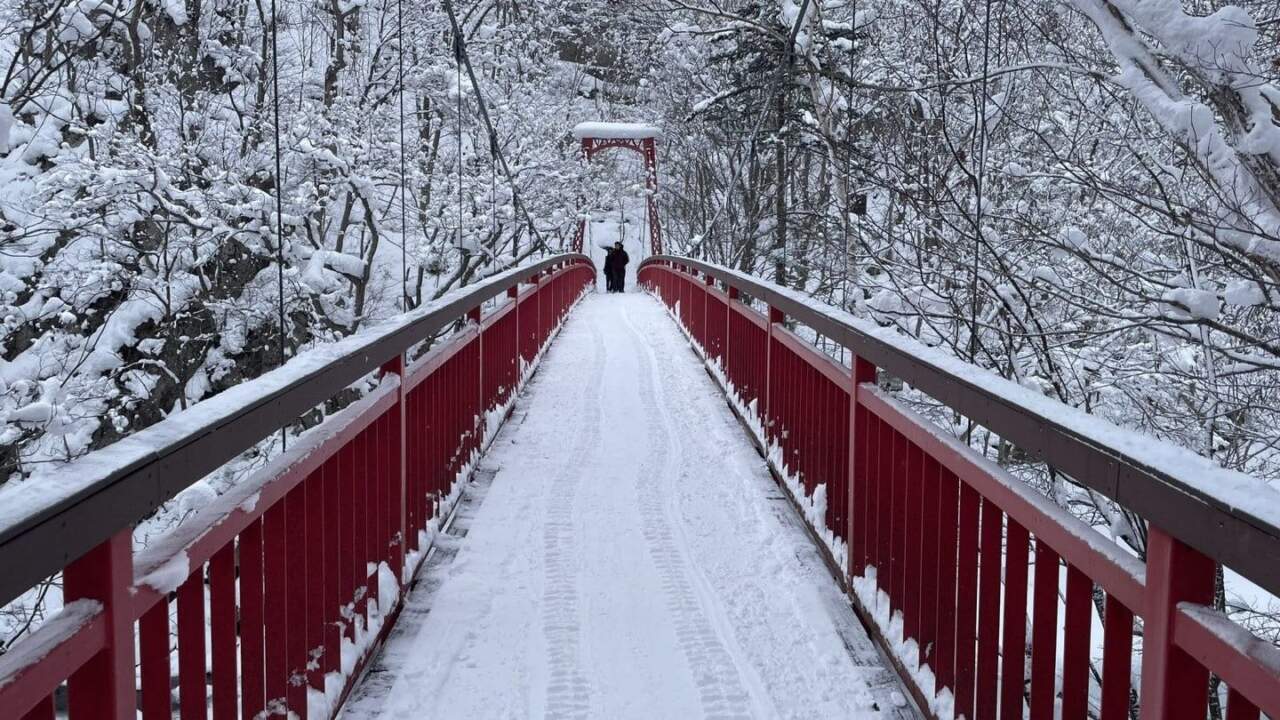
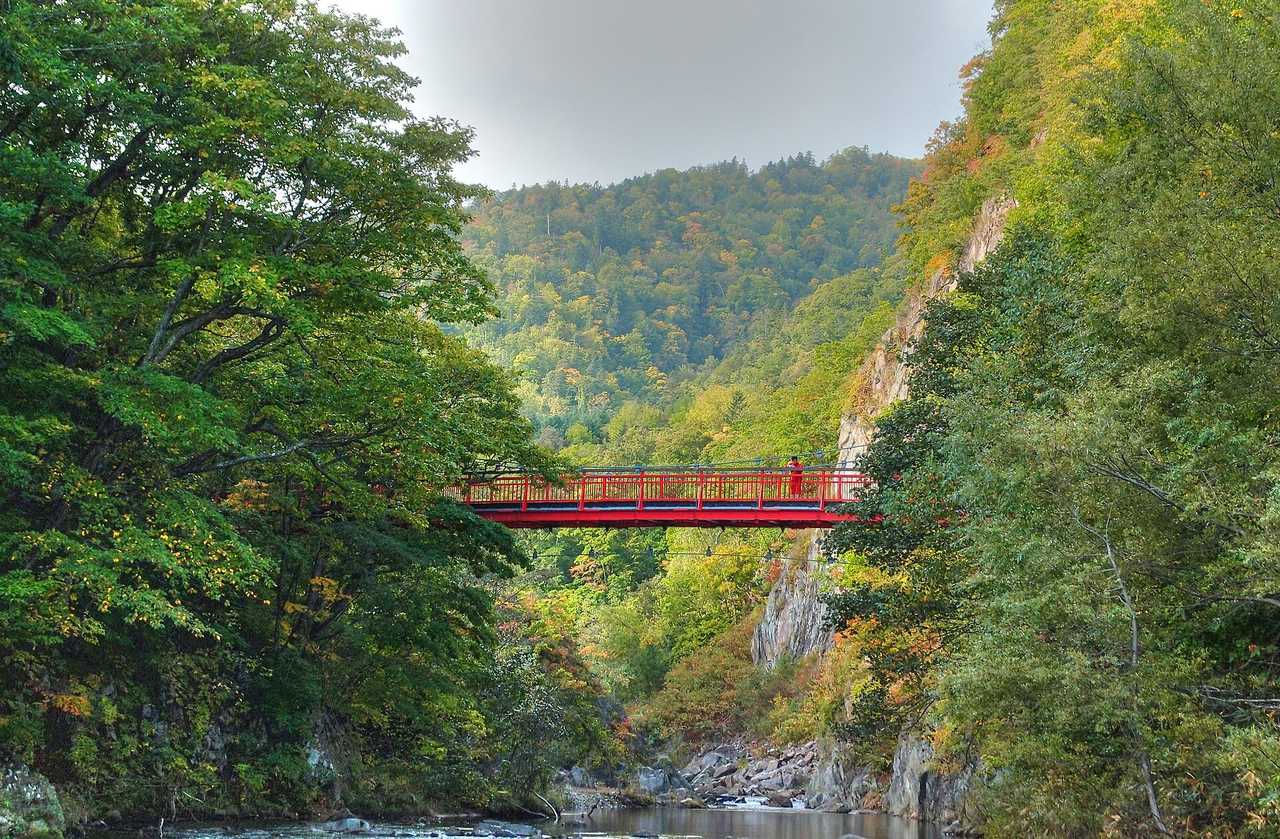
The Futami Suspension Bridge is a bright red suspension bridge spanning the Toyohira River and the most recognizable landmark in all of Jozankei. From Futami Park in the center of the hot spring street it is about a 5-minute walk along the promenade on a flat, easy path that ordinary visitors can reach with no trouble.
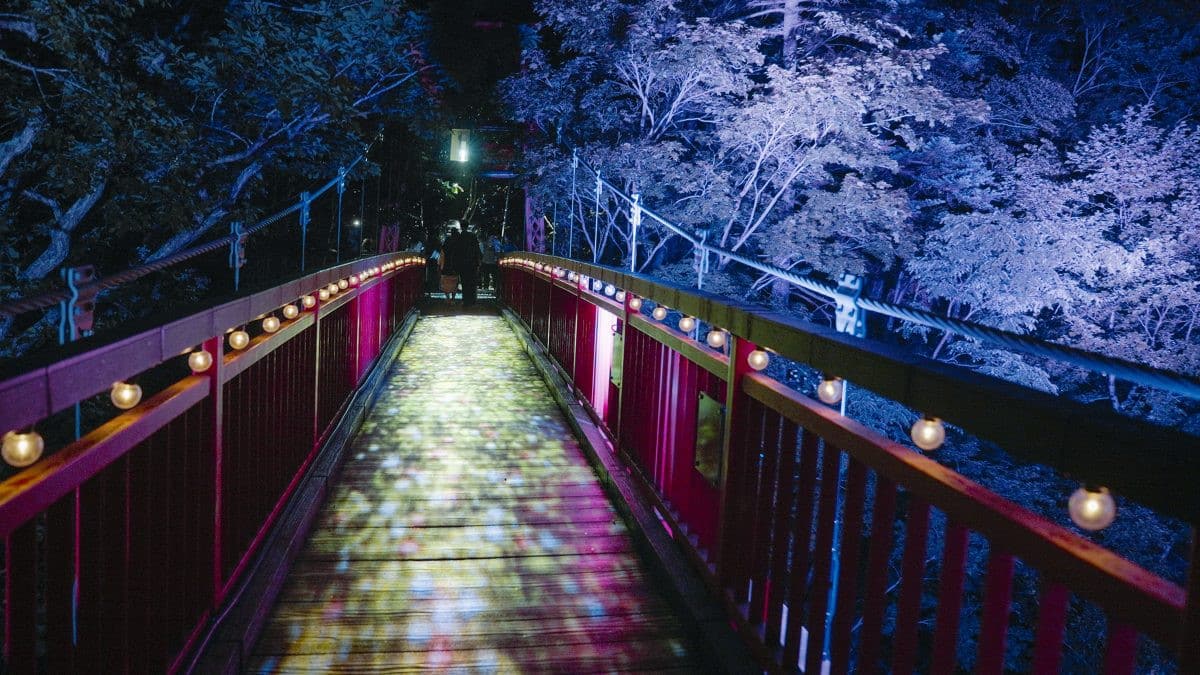
In autumn, standing on the bridge and looking down, you see the mountainside of leaves reflected in the water of Maizuru-no-fuchi pool below, and the red bridge, red leaves and emerald stream layered together make a postcard-quality composition. From June 1 to October 31 in summer, the hot spring street holds the “Jozankei Summer Light Road” illumination, with venues around Jozankei Shrine, Jozan Gensen Park and Iwato Kannon Hall. The bridge deck is narrow, so in peak season mind the flow of people when taking photos.
Where do you park to visit the Futami Suspension Bridge by car? The bridge and Futami Park have no dedicated parking lot. The public lot recommended by the Jozankei Tourism Association is the “Times Jozankei Tourist Parking Lot” (タイムズ定山渓観光駐車場), at Jozankei Onsen Higashi 4-chome next to Hotel Milione (the former sports park parking lot), open 24 hours with 54 spaces at ¥500 per 24 hours and public restrooms; after parking, walk to the center of the hot spring street and the Futami Park promenade. On autumn weekends the spaces fill quickly, and the officials also warn that spaces are limited, so we suggest arriving early on a weekday or taking a bus instead.
Futami Park and Kappa Daio: The Start of the Promenade
Futami Park lies between the center of the hot spring street and the Futami Suspension Bridge and is the start of the whole gorge promenade as well as the first good spot for photographing the Toyohira River gorge. A towering “Kappa Daio” statue stands in the park, the star of Jozankei’s kappa tour, and almost everyone who comes takes a photo here.
The path from the park toward the bridge follows the gorge, with viewing platforms along the way where you can stop to watch the water; the whole walk takes about 5 minutes. This stretch looks very different in each season, with fresh green in spring, red leaves in autumn and snow in winter, making it Jozankei’s most classic walking route. The park is an open outdoor space, so mind your step on wet winter surfaces. There is parking and a restroom next to the park, the most convenient meeting point before and after a stroll through the hot spring street.
Futami Foot Bath: A Free Foot Bath Newly Opened in Late 2024
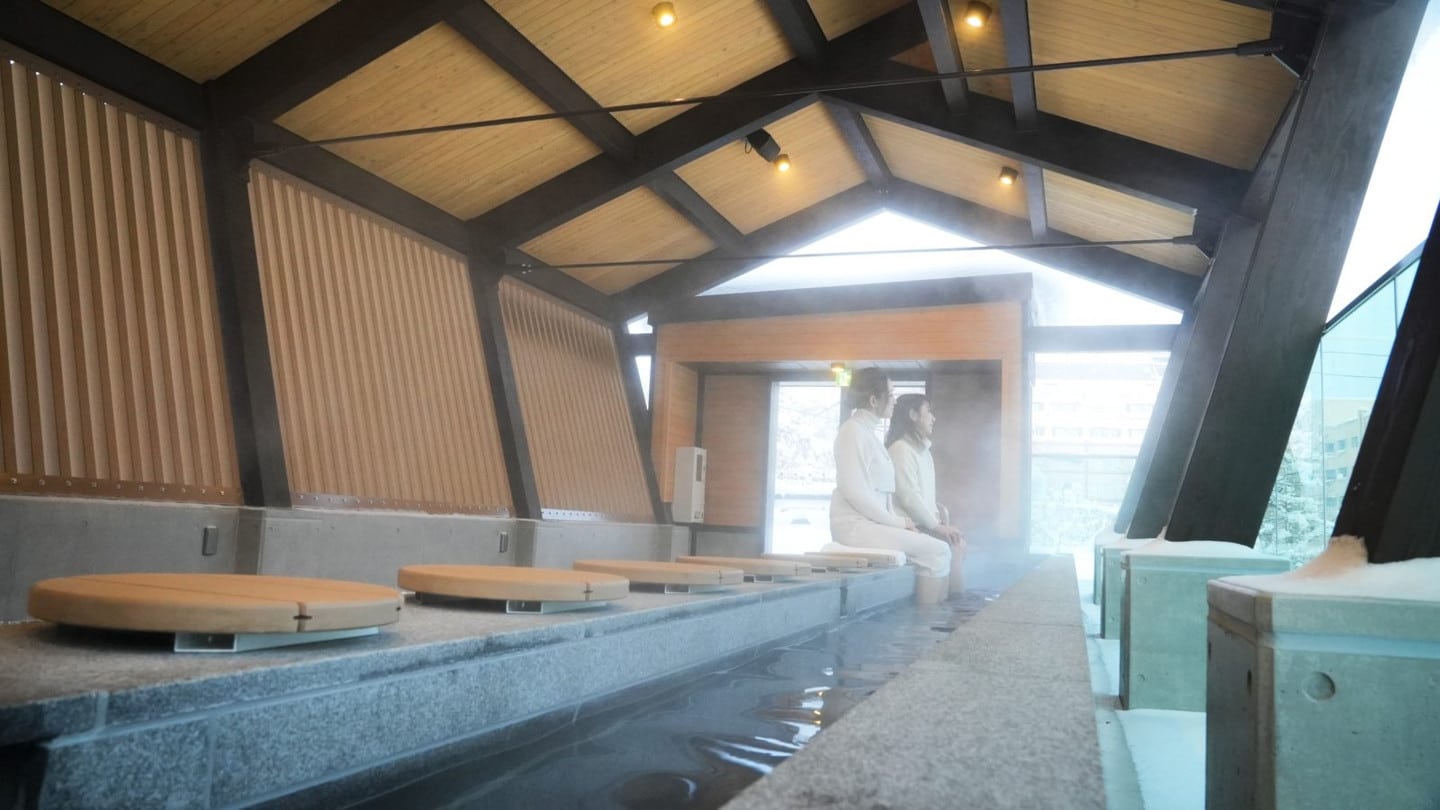
“Futami no Ashiyu” (Futami Foot Bath) is a foot bath facility newly built on December 20, 2024, located in the Futami Park area, adding a free rest stop on the most popular walking route. Soaking your feet on the way back from the bridge relieves most of the leg fatigue.
Because it is a new facility, it is clean and the layout is roomier than the older foot baths, and soaking your feet in snowy scenery in winter is especially memorable. Bring your own towel to dry your feet; shops and inns in the hot spring street sell them. Opening hours and whether it is closed in winter follow the daily announcements of the City of Sapporo and the tourism association. It sits right next to the main path, so it is easy to find even if you are just passing, with no need for a detour.
Jozan Gensen Park: Free Foot and Hand Baths Where You Cook Your Own Onsen Egg
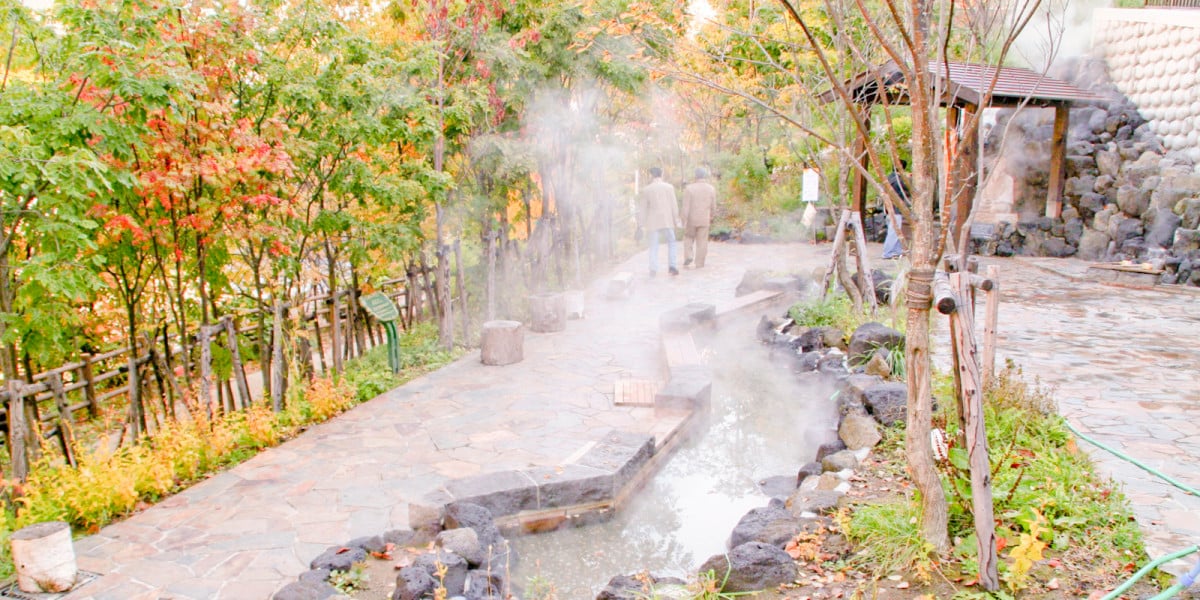
Jozan Gensen Park is in the center of the hot spring street, a park recreating the original landscape where Mizumi Jozan discovered the springs, and Jozankei’s most fun free attraction. The park has both a foot bath and a hand bath, so you can sit down for a soak at any time.
The most popular feature is the “onsen egg pot”: buy raw eggs at the nearby local products shop, put them in the pot and wait about 13 to 15 minutes, then fish out an onsen egg you cooked yourself. Children especially love this, and it is why many people choose to take their afternoon tea here. Admission is free, and the park is open from 7:00 to 21:00 every day. Opening hours and facility maintenance follow on-site notices. The park is small, so about 30 minutes is enough to see it at leisure, making it a good midway stop on a walk through the hot spring street.
Kappa Family Wish Hand Bath: Pour Water on the Kappa’s Head and Make a Wish
At a corner of the hot spring street stands a cute “Kappa Family Wish Hand Bath.” The way to play is unusual: scoop up spring water and pour it into the dish on the kappa’s head while making a wish, a small ritual handed down in Jozankei and the most photographed spot in the street.
It is also a hand bath, and passing it in the snow in winter, dipping your hands in the warm water feels wonderful. This stop is free and always open, right on the main walking route, and fits neatly into the kappa tour. The street also hides more than twenty kappa statues of different designs for you to collect as you walk. The officials have also run a kappa-collecting campaign; if you bring children, pick up a map at the tourist information center first, which gives the walk more of a goal.
Hoheikyo Dam: An Arch Dam Chosen as One of Japan’s 100 Dam Lakes
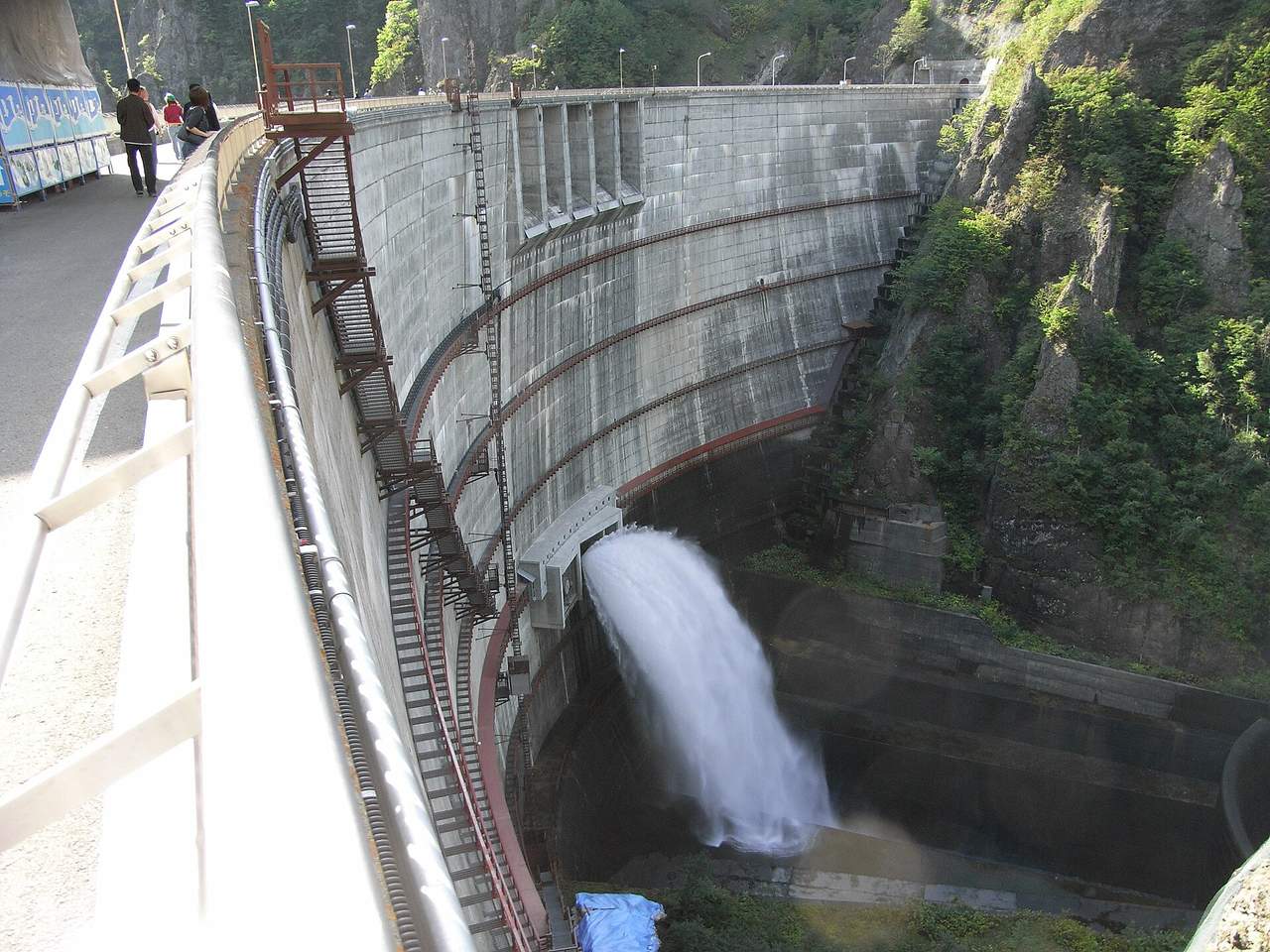
The Hoheikyo Dam is Jozankei’s most spectacular sight, chosen as one of the “100 Best Dam Lakes of Japan.” An arch dam is wedged between steep gorge walls, and in autumn the leaves on both sides press right down to the water, a scale quite different from the delicate hot spring street.
If you catch a water release, the jet of water bursting out raises a rainbow in the sunlight, a scene many photographers come specially to wait for. The grounds have an observation deck and dining facilities, and a full loop takes about 1 to 2 hours. Whether water is released, the open period and facility operations follow the managing authority’s announcements, and it is usually closed in winter. There is no way to drive directly in from the hot spring street, and you must transfer to a shuttle, so be sure to confirm the access method before you go; this is where the most people trip up.
Hoheikyo Electric Bus: The Last Stretch Ordinary Vehicles Cannot Enter
The part of Hoheikyo that trips people up most is this last stretch. To protect the environment, neither ordinary vehicles nor route buses may enter the dam area; they can only park at the “Hoheikyo parking lot,” after which you must transfer to the park’s eco-friendly electric bus or walk in through the tunnel yourself.
The round-trip fares announced on the electric bus website are ¥1,000 for adults in the regular season (early May to the end of September) and ¥1,200 for adults in the busy season (October to early November), and ¥600 / ¥700 one way. The Reisui Tunnel itself can be walked through for free, about 30 minutes one way. If you don’t have a car, in the 2026 leaf season (October 3 to 25) the Jozankei Tourism Association runs the “Hoheikyo Dam Liner” from the tourist information center to the electric bus stop, ¥1,000 round trip, 3 trips a day, with same-day tickets on a first-come basis. Whether shuttles exist at other times, and their departures and operating periods, follow that year’s announcements, so be sure to check before you go.
Hoheikyo Onsen: Authentic Indian Curry After Your Soak
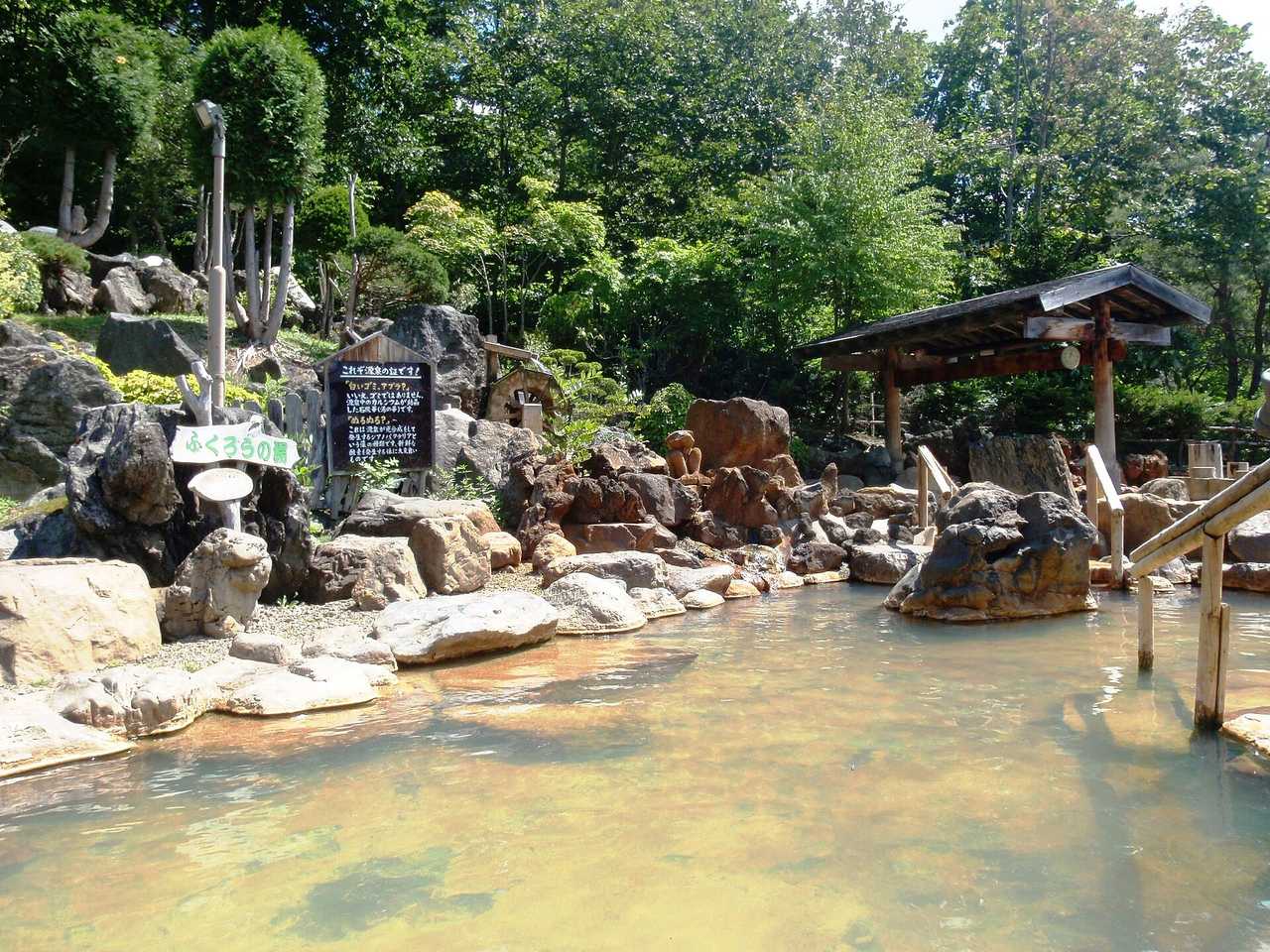
Hoheikyo Onsen is the most talked-about day-trip hot spring facility in the Jozankei area, famous for two things: a spacious open-air bath, and authentic Indian curry served at the restaurant inside, paired with freshly baked flatbread, a fairly rare combination in a hot spring facility.
Many people schedule it after the Hoheikyo Dam, soaking and then eating curry before heading back to Sapporo, which makes for a very smooth route. Because it is so well known, there are lines at mealtimes on weekends and in the leaf season, so we suggest avoiding the peak. Opening hours, bathing fees and the restaurant’s serving hours follow the shop’s announcements on the day. The facility also has a rest area where you can lie down for a while after bathing before eating, a routine many regulars follow.
Iwato Kannon Hall: 33 Kannon Statues in a 120-Meter Cave
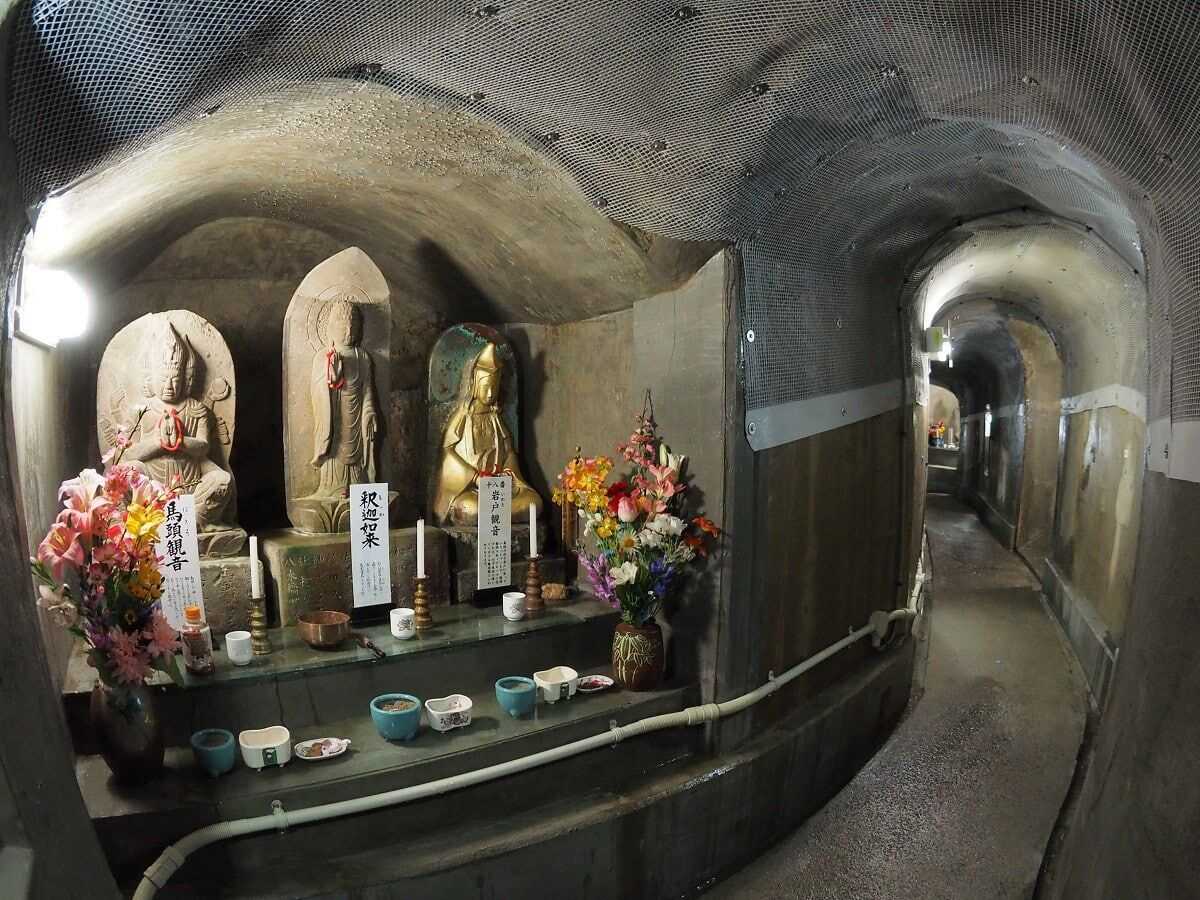
Iwato Kannon Hall is the most atmospheric place on the hot spring street. It looks unremarkable from outside, but walk in and you find a cave about 120 meters long, with 33 Kannon statues placed in order along its walls, dim and cool, a completely different world from the street outside.
It was originally built to pray for the souls of those who died while the road was being cut, so it is not just a sightseeing spot but carries the weight of local history. The visit is short and can be done within 20 minutes, ideal for filling a gap while waiting for a bus. The hall is free, but entering the cave to pray costs extra. The cave is slippery with limited lighting, so slow down and follow the rules on site. The entrance is right beside the main road of the hot spring street with a small sign, and many people walk past it, so locate it on a map first.
Shiraito Falls: A Water Feature Left by the Jozankei Power Station
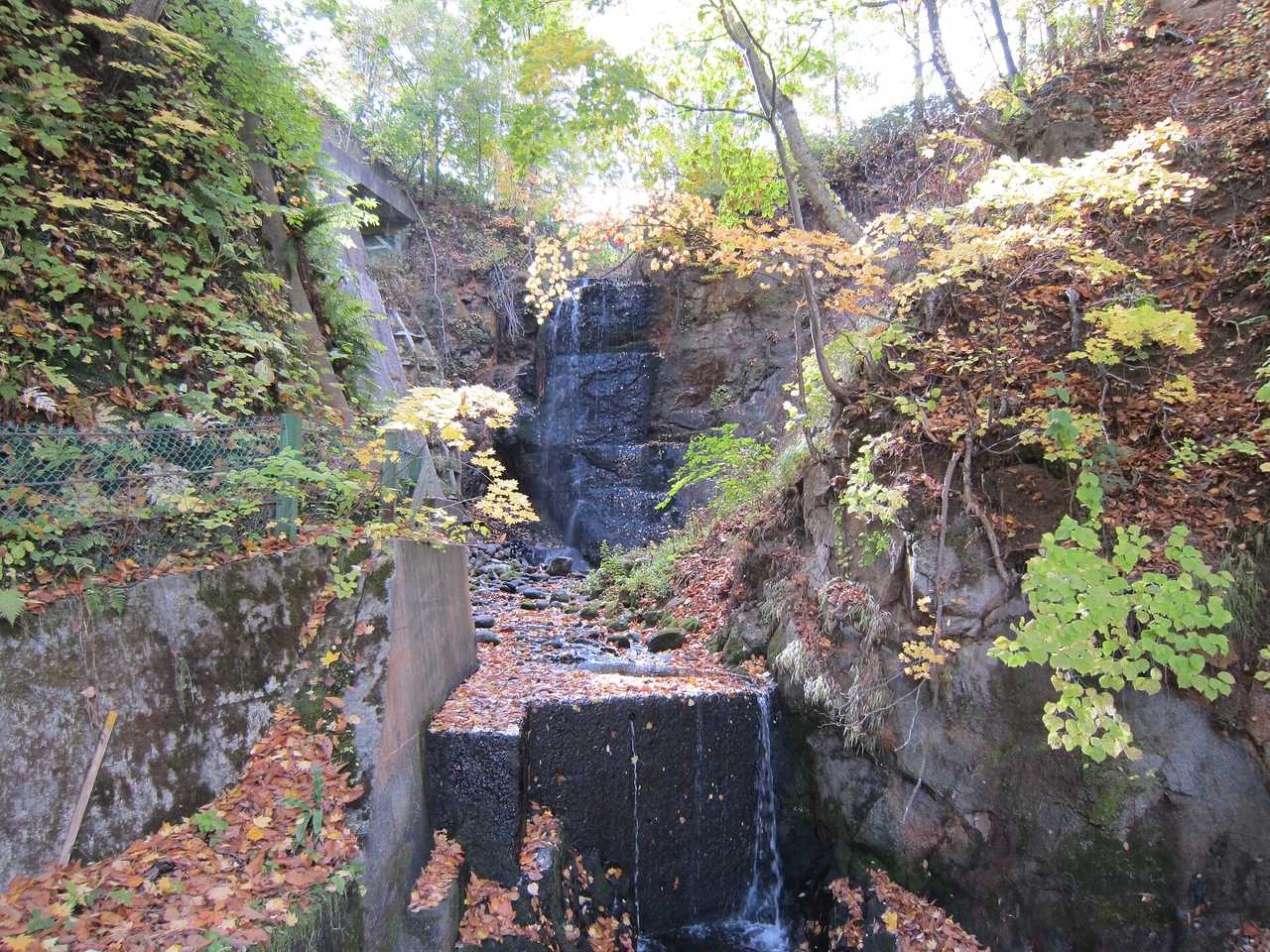
Jozankei’s Shiraito Falls are not large, but their origin is interesting: the water is actually the return flow from the Jozankei Power Station. The power station was completed in 1909 and still operates today, one of the oldest working hydroelectric plants in Hokkaido, so the falls are a by-product of industrial heritage.
The falls are beside the path leading from the hot spring street toward the gorge; the thin stream like white silk, set against the surrounding trees, is good for photos, and looks completely different with autumn leaves or frozen in winter. You don’t need to stay long, and it is usually walked together with the gorge promenade. In winter the path may be closed because of snow, so follow the signs on site. Because the falls are small, we suggest treating them as a stop along the walk rather than a main destination.
Jozankei Shrine: Stone-Step Autumn Leaves and the Main Venue of the Summer Light Road
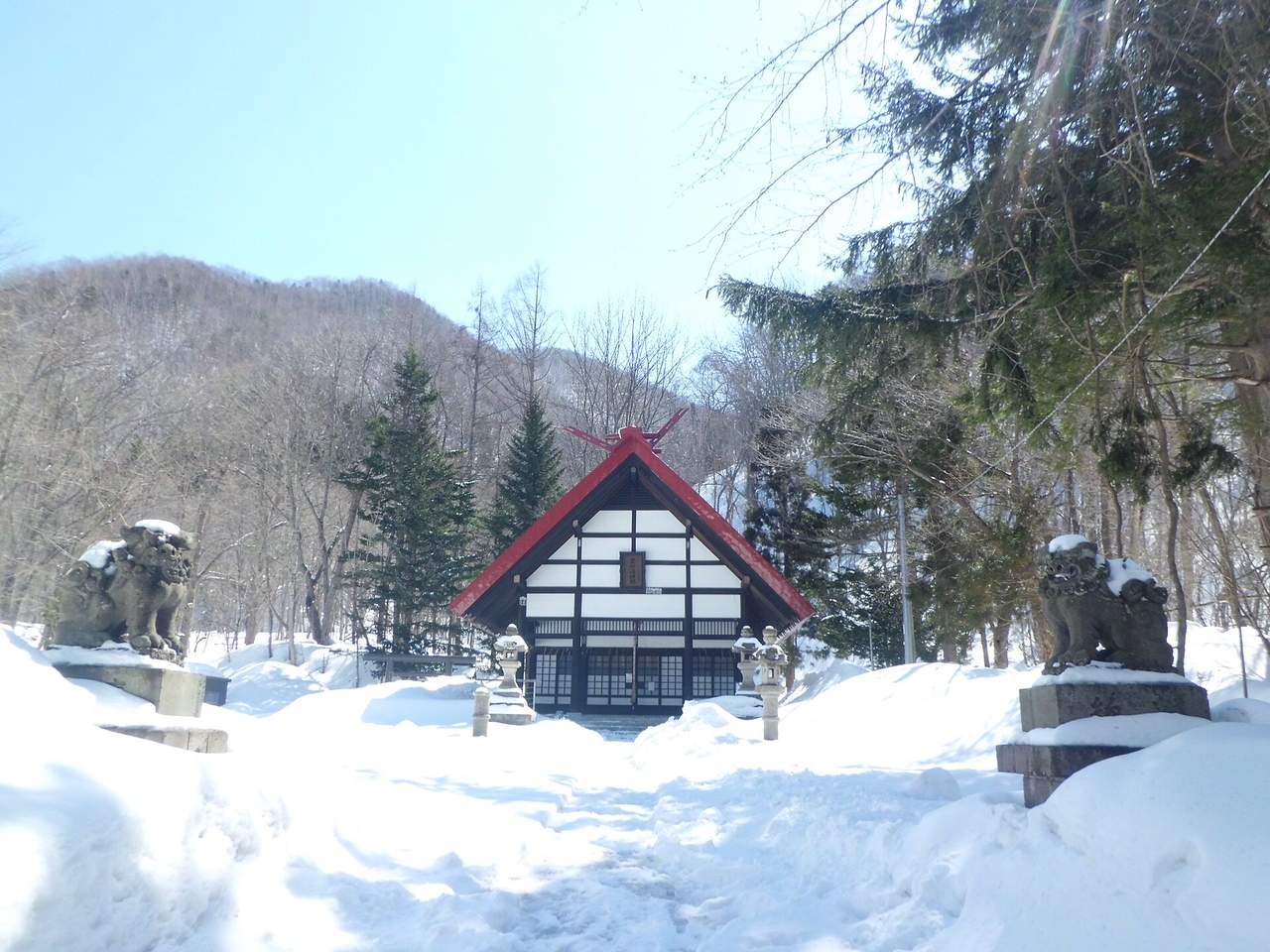
Jozankei Shrine sits high in the hot spring street, normally a quiet local shrine with its stone steps flanked by woods; in autumn the climb passes a beautiful tunnel of red leaves, one of the few high vantage points in the street.
Its longtime claim to fame is the winter “Snow Light Road,” when the grounds are filled with about 1,000 snow candles, but that event held its final run from January 27 to February 3, 2026. In summer it is the main venue of the 2026 Summer Light Road, which combines projection mapping with mist and lights and admits only guests staying at lodgings in the Jozankei area. The shrine steps ice over in winter, so take special care going up and down.
Night Illumination: The Summer-Only Jozankei Summer Light Road
Jozankei’s nights are not boring. From June 1 to October 31 in summer, the hot spring street holds the “Jozankei Summer Light Road.” In 2026 the venues are around Jozankei Shrine, Jozan Gensen Park, Iwato Kannon Hall and the foot bath, lit from 19:00 to 21:30 (from 18:00 in September and October). The Jozankei Shrine venue admits only guests staying in the Jozankei area, with entry tickets issued by the lodgings.
Jozan Gensen Park is also one of the Summer Light Road venues. The winter “Snow Light Road” held its final run in 2026, so for future winter night events please follow the tourism association’s announcements. This is also the main reason to stay a night rather than make a day trip: with trails by day and lights by night, the schedule works. Event dates and content follow each year’s announcements. Lighting on the night paths is limited, so wear comfortable shoes and follow the on-site flow instructions.
Tickets and Tours
Jozankei has few paid items, mainly shuttle transport and day-trip soaks. Below are the paid items most often put into an itinerary; prices and hours always follow each operator’s announcements on the day.
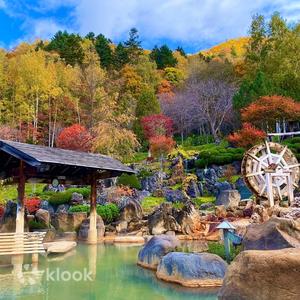
Jozankei Day-Trip Hot Spring Package: Bus Ticket Plus Bath Voucher Is the Best Value
This is the most useful ticket for day-trippers. It usually includes the round-trip bus fare between Sapporo and Jozankei plus a bath voucher usable at a designated hot spring inn, and the bundle price is cheaper than buying them separately.
You can buy it online or ask at the ticket counter on site. Note that the usable inns are a fixed list, so before buying check that the one you want to soak at is included, and check the voucher’s valid hours and whether a towel is included. Actual contents and prices follow the seller’s announcements on the day.


-Klook.jpg)
How Much Does a Jozankei Trip Cost? Transport, Shuttle and Bathing Fees
Jozankei’s cost structure is simple: bus fare, dam shuttle, day-trip soaking, plus whether you want a nice meal. The following are rough ranges; actual costs follow each operator’s announcements on the day.
Round-Trip Transport: Buses From About ¥1,000 One Way
The Kappa Liner is ¥1,700 one way for adults (¥1,460 with an online reservation), so a round trip comes to about ¥3,000; the Jotetsu Bus Express 7 and 8 are about ¥1,000 one way, noticeably cheaper, just 20 minutes longer. This is the most basic and most easily estimated item of a Jozankei trip.
If you plan a day-trip soak, a package with round-trip bus and bath voucher is usually cheaper than buying separately and is the most direct way to save. If you drive, add fuel and parking, and with more people the per-person cost can actually be lower.
Hoheikyo Shuttle: Electric Bus ¥1,000 to ¥1,200 Round Trip
The Hoheikyo Dam electric bus is ¥1,000 round trip for adults, ¥1,200 in the busy season, unless you plan to walk through the tunnel (free, about 30 minutes one way). In the 2026 leaf season, the “Hoheikyo Dam Liner” from the Jozankei Tourist Information Center to the electric bus stop is ¥1,000 round trip, which with the electric bus round-trip ticket comes to ¥2,200 in total for adults.
In other words, just adding the Hoheikyo Dam to your itinerary raises the transport cost noticeably over only walking the hot spring street. If time or budget is tight, walking just the hot spring street promenade and the Futami Suspension Bridge still gives you the full Jozankei autumn-leaf experience.
Day-Trip Soaking: The Going Rate for One Bath at One Inn
Most hot spring inns in Jozankei offer day-trip bathing at the usual day-trip hot spring level, far cheaper than staying overnight. To save money, check whether towels are charged separately; at many facilities you pay extra for towels or bring your own.
Dedicated day-trip facilities such as Hoheikyo Onsen have their own pricing and let you eat right inside. If you only want to experience Jozankei’s spring water, soaking once at one inn is plenty, with no need to stay overnight just for the bath.
What Is Free? A List of Jozankei’s Free Sights
What makes Jozankei budget-friendly is that the most classic spots are all free: the Futami Suspension Bridge and gorge promenade, Futami Park and Kappa Daio, the foot and hand baths at Jozan Gensen Park, the Futami Foot Bath, the Kappa Family Wish Hand Bath, and the kappa tour of the whole hot spring street.
Jozankei Shrine and Shiraito Falls are also free, and the Summer Light Road can be viewed free at all venues except the Jozankei Shrine venue, which is for lodging guests only. The cost of the egg for one onsen egg is almost negligible. Strung together, admission costs for a half-day trip can be pushed close to zero.
Overnight Stay or Day Trip? Where the Costs Differ
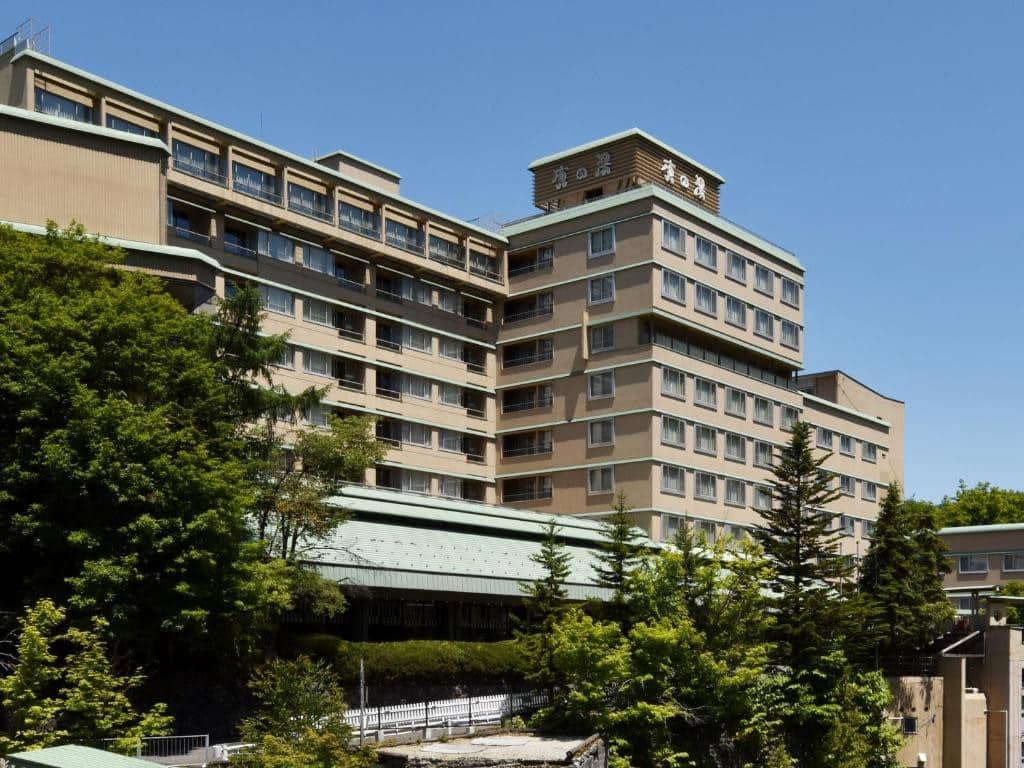
The total for a day trip is basically bus fare plus bathing fee, one of the cheapest hot spring trips in Hokkaido. Staying overnight moves the budget up a tier, because Jozankei inns are mostly priced as one night with two meals, with dinner usually a buffet or kaiseki.
The rule of thumb is simple: if you want to see the night illumination, soak slowly two or three times, or your companions have limited stamina, stay a night; if you only want to see the leaves, take photos and have a soak, a day trip is entirely enough, and the budget you save can go to food in central Sapporo.
What to Watch for in Jozankei: Season, Shuttle and Itinerary Reminders
Although Jozankei is close to Sapporo, if you miss a few key details it is still easy to make a wasted trip.
In Leaf Season, the Biggest Enemies Are Traffic Jams and Shuttle Queues
Early to mid-October is Jozankei’s most crowded time of the year. If you drive, National Route 230 is badly jammed on weekends and the Hoheikyo parking lot fills quickly; if you take the bus, the Kappa Liner fills up early and the dam shuttle also has a line.
There are three fixes: go on a weekday if possible, set out early in the morning, and book the Kappa Liner early. If you can only go on a weekend, we suggest putting the Hoheikyo Dam first, then returning to the hot spring street afterward, to avoid the afternoon crowd peak.
Check the Two Shuttle Legs to Hoheikyo and the Last Buses First
The most common mistake on the way to the Hoheikyo Dam is not working out the return time. The trip involves two transfers: first the seasonal Liner bus to the parking lot, then the electric bus into the park, and the return runs the same way in reverse, so missing the last bus on either leg is a big problem.
Before you set out, confirm that day’s shuttle times and last departures at the Jozankei Tourist Information Center or on the website, and leave a buffer. In winter the dam grounds are usually closed and the shuttles do not run, so when you visit Jozankei in winter, focus on the hot spring street and soaking.
Overnight Stay or Day Trip? Suggested Side-Trip Routes
Jozankei’s biggest advantage is that you can do it in a day: many people leave Sapporo in the morning and are back in the city for dinner in the evening. But if you want to see the summer Light Road night illumination (the Jozankei Shrine venue admits only lodging guests), we suggest staying a night.
If you drive, you can link Jozankei Dam, Lake Sapporo and Nakayama Pass on the way, or extend toward Otaru. To compare inn room types, bath huts and meals in more depth, see our separate guide to Jozankei lodging.
Jozankei Onsen FAQ
Q: How many days should I plan for Jozankei?
A day trip is plenty. Leave Sapporo by bus in the morning, reach the hot spring street before noon, walk the Futami Suspension Bridge and Gensen Park, go to the Hoheikyo Dam in the afternoon, pick an inn for a day-trip soak on the way back, and be back in Sapporo for dinner in the evening. Only if you want to see the night illumination or soak several times at leisure do you need to stay a night.
Q: Can I visit Jozankei without a car?
Absolutely, and it is easy. From the South Exit of JR Sapporo Station, the Kappa Liner takes about 60 minutes direct, or the Jotetsu Bus Express 7 and 8 take about 1 hour 20 minutes at about ¥1,000 one way. The Futami Suspension Bridge, Futami Park, Jozan Gensen Park and Iwato Kannon Hall on the hot spring street are all within walking distance. Only the Hoheikyo Dam requires separate transfers to a shuttle bus and the electric bus.
Q: When are the autumn leaves at Jozankei most beautiful?
The forecast period is about early to mid-October each year, when the whole gorge turns red, yellow and orange. The Futami Suspension Bridge and the Hoheikyo Dam are the two main stages. The actual timing shifts earlier or later with the weather each year, so check the tourism association’s foliage report before you go. This is also the time of the worst traffic and the longest shuttle queues, so choose a weekday and set out early.
Q: Can I drive into the Hoheikyo Dam myself?
No. To protect the environment, neither ordinary vehicles nor route buses may enter the dam area; you can only park at the Hoheikyo parking lot in front of the Reisui Tunnel (free), then transfer to the park’s eco-friendly electric bus (adult round trip ¥1,000, ¥1,200 in the busy season) or walk through the tunnel (free, about 30 minutes one way). In the 2026 leaf season (October 3 to 25) there is also the “Hoheikyo Dam Liner” from the Jozankei Tourist Information Center to the parking lot, ¥1,000 round trip. The grounds are usually closed in winter.
Q: Can I soak in Jozankei’s hot springs without staying overnight?
Yes, and it is the most common way to enjoy it here. Most hot spring inns offer day-trip bathing, and there are dedicated day-trip facilities such as Hoheikyo Onsen. The best value is a day-trip package with a round-trip bus ticket from Sapporo plus a bath voucher. The hot spring street also has free foot baths such as Jozan Gensen Park and Futami Foot Bath, where you can experience the water without changing clothes.
Q: Is Jozankei worth visiting in winter?
Yes, but you need to change how you play. There are no autumn leaves in winter, the Hoheikyo Dam grounds are usually closed and the shuttles stop, so the itinerary has to focus on the hot spring street. The compensation is hot springs in snowy scenery and soaking your feet in the snow. Room rates are also noticeably cheaper than in leaf season, suiting a soak-focused trip.
Q: Why are there kappa everywhere in Jozankei?
More than twenty kappa statues with different shapes and expressions are hidden along the hot spring street, and finding them is a walking game in itself. The best known are “Kappa Daio” in Futami Park and the “Kappa Family Wish Hand Bath,” where you can pour spring water onto the dish on a kappa’s head and make a wish.