
Kofuku Station: How an Abandoned Railway Left Japan’s Most Famous Station Name
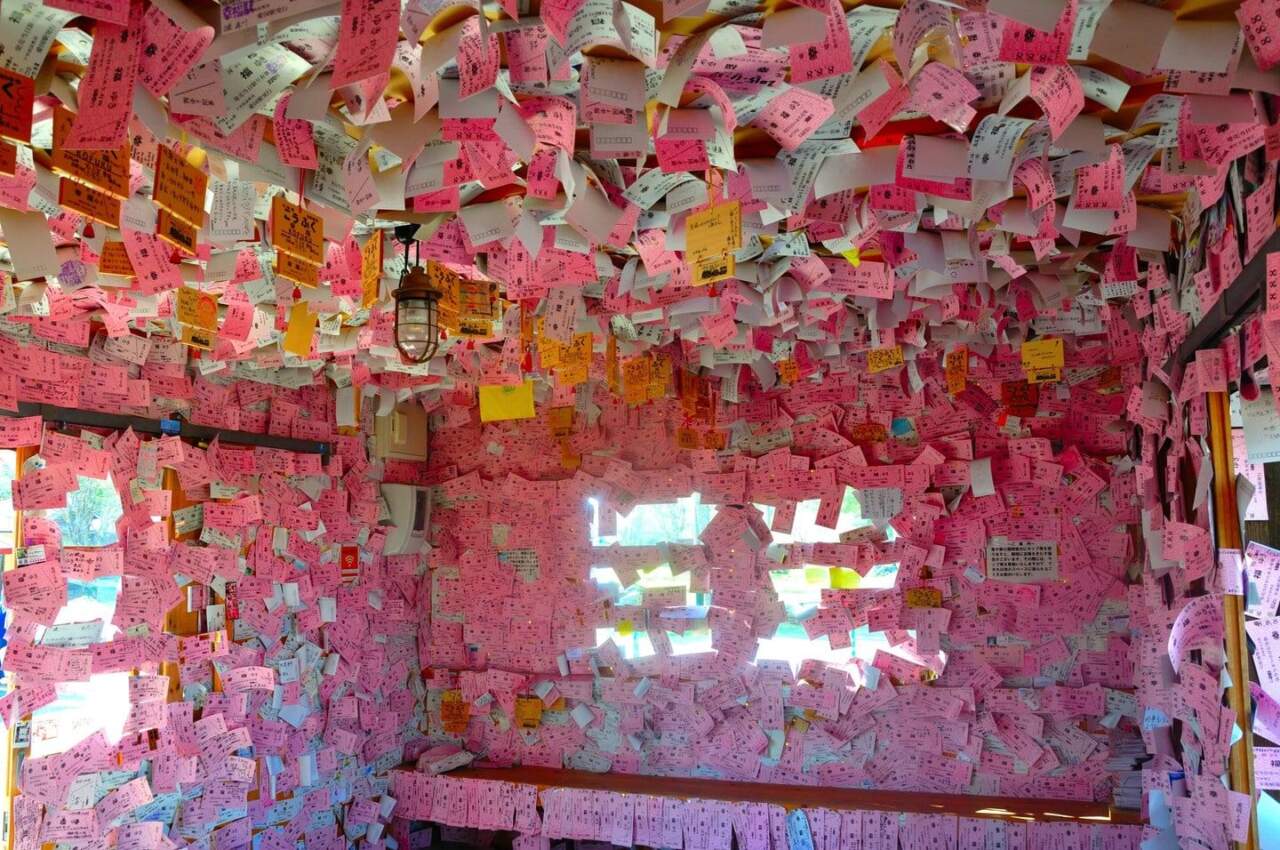
Kofuku Station (Happiness Station) is the best-known train-less station in all of Japan. It sits south of Obihiro, its wooden station building covered inside and out with pink commemorative tickets left by travelers, and two orange old diesel cars parked outside. But one important thing first: there are no trains here anymore.
The Most Common Misunderstanding: The Hiroo Line Closed Long Ago
Kofuku Station and Aikoku Station were both stations on the former Japanese National Railways Hiroo Line. The line ran south from Obihiro to Hiroo Town and was closed in February 1987 (Showa 62) due to low ridership. The tracks themselves were removed long ago, and all that remains today are the station buildings, platforms and a few railcars, all open to visitors as tourist facilities.
In other words, you cannot “take a train to Kofuku Station.” Every way of getting there is by car or by route bus, a point that is often mixed up during trip planning. Once you understand this, the itinerary becomes much clearer: this is a road trip heading south along the old railway corridor.
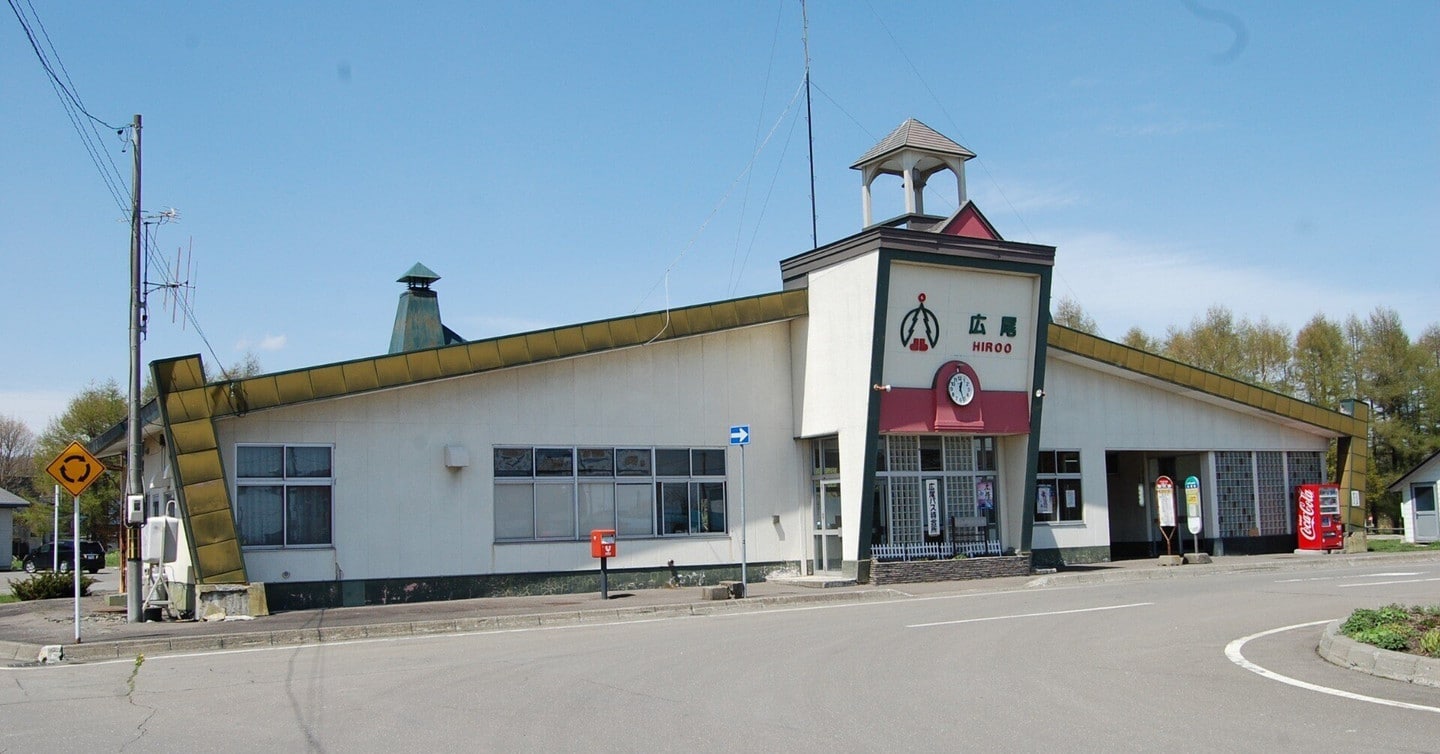
Why Is Such a Small Station So Famous?
The story begins with the pairing of the two station names, “Aikoku” and “Kofuku.” A ticket from Aikoku to Kofuku literally reads “from the land of love to happiness.” After it was covered by the media in the 1970s it quickly went viral, commemorative tickets sold in astonishing numbers, and it became a nationwide phenomenon at the time.
After the line closed, the popularity did not fade. Kofuku Station was later designated a sacred place for lovers, the station building became a place where travelers stick up tickets and make wishes, and a Happiness Bell stands in front of the station, where couples come to ring it and make a wish. Its meaning long ago shifted from a transport facility to a pure place to hang one’s hopes.
Who Is This Route For? A Half Day to a Full Day
This route suits travelers who like railway ruins, nostalgic atmosphere and photography, and it is also great to do with a partner or family. The sights themselves are small: Aikoku Station takes about 20-30 minutes and Kofuku Station about 40-50 minutes, so the main effort is in the travel.
If you only visit the two stations, half a day is more than enough. If you continue south to Hanabatake Farm and the art village in Nakasatsunai, it makes a full day trip. The smoothest approach is to leave central Obihiro in the morning, head south all the way, and return to town in the evening to finish with butadon.
What Will This Article Tell You?
This article covers Aikoku Station, Kofuku Station and Nakasatsunai Village in turn, with ten specific highlights, transport options and costs, and it specifically explains that Tokachi Bus Hiroo Line buses run only once every one to two hours, because that is where travelers without a car most often go wrong.
Note that in winter, bus services in eastern Hokkaido are often cut sharply or suspended altogether, and some facilities in Nakasatsunai Village close for the season. Please check each operator’s announcements again before you go.
How to Get to Kofuku Station: Driving, Tokachi Bus Hiroo Line and Day Pass Compared
There is no railway to Kofuku Station, so there are only two ways to get there: drive, or take a route bus. The two experiences are very different, so read on before you decide.
Driving: The Most Recommended Way on This Route
From JR Obihiro Station heading south, it takes about 20 minutes by car to Aikoku Station, about 30 minutes to Kofuku Station, and about 35 to 40 minutes more to Hanabatake Farm in Nakasatsunai Village. The roads on the Tokachi Plain are straight and easy to drive, and every sight along the way has ample free parking.
The biggest advantage of driving is freedom with time: you can browse the tickets and take photos at Kofuku Station at your own pace without watching a bus timetable. In winter the roads are covered with snow and ice, so make sure your rental car has snow tires and allow extra time for each leg. There are car rental offices in front of Obihiro Station and at Obihiro Airport.
Tokachi Bus Hiroo Line: Only Once Every One to Two Hours
If you don’t drive, take a route bus bound for Hiroo from the JR Obihiro Station bus terminal. It stops at Aikoku and Kofuku, and from each stop it is about a two- to five-minute walk. From Obihiro it takes about 30 minutes to Aikoku and about 45 to 50 minutes to Kofuku. Buses run about once an hour during the day, stretching to every hour and a half in the afternoon, so missing one means a long wait. Tokachi Bus fares have risen since June 2025, so rely on Tokachi Bus announcements. Check the timetable first and work backward from “arrival time plus time spent” to pick your return bus and keep your pace. In winter services are often cut sharply or suspended, so confirm the actual schedule and fares with that day’s Tokachi Bus announcement.
Bus Day Pass: Buy It If You’re Going Round Trip
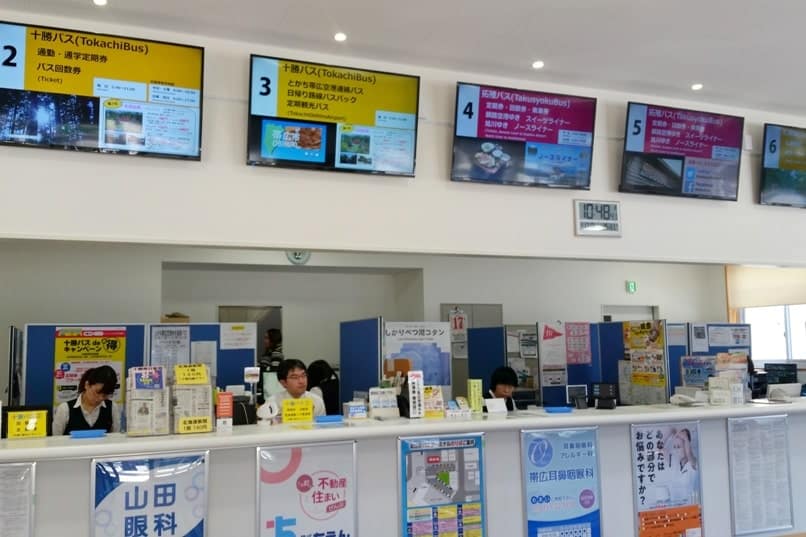
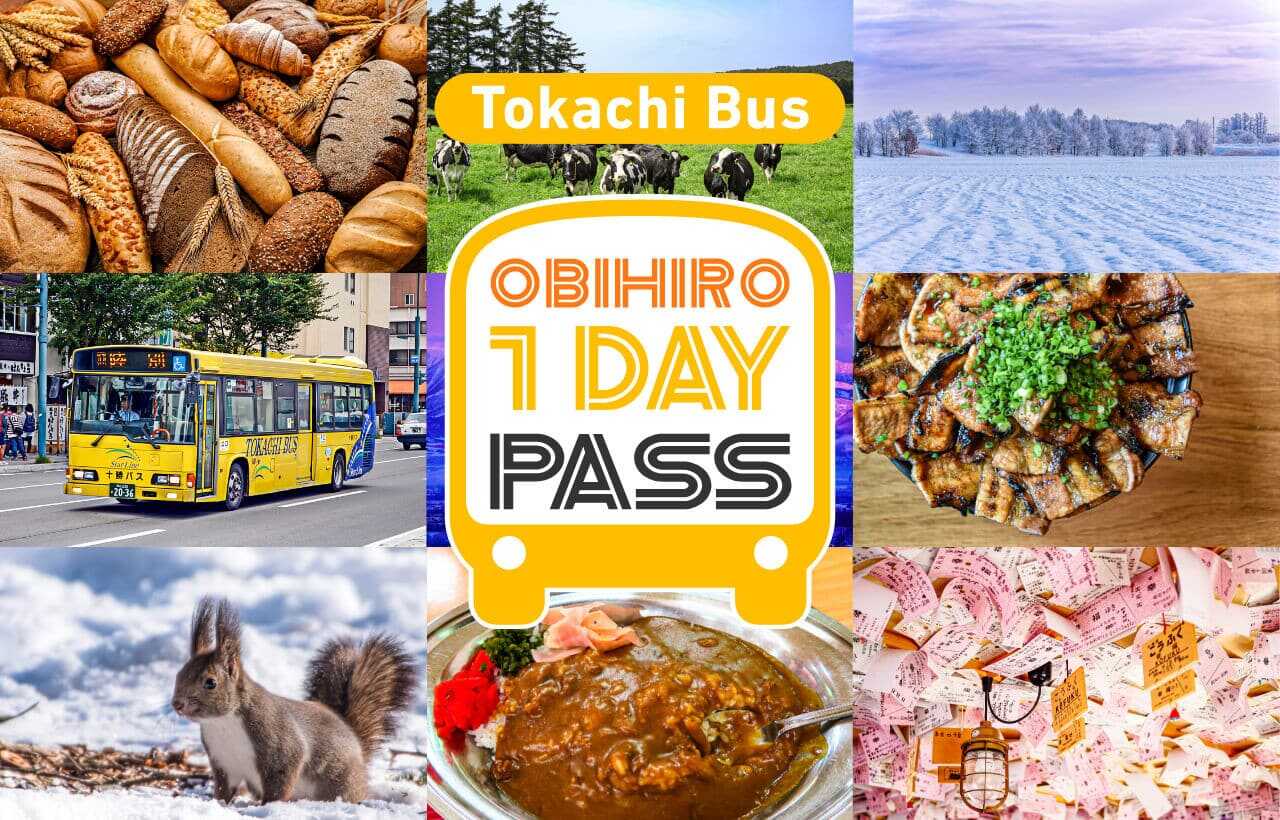
If you take the route bus, first buy a day pass at the ticket counter at Obihiro Station bus terminal. Within Obihiro you can buy Tokachi Bus’s “Obihiro 1-Day Unlimited Ride Ticket” (おびひろ1day乗放きっぷ); ask the Tokachi Bus counter for the price. For a round trip to Kofuku it is usually good value, while for Aikoku you should first work out the one-way fare. Take a route bus bound for Hiroo and get off at “Aikoku” stop, and Aikoku Station is about a 2-minute walk away.
When buying, say you are going to Kofuku Station and the counter will give you a timetable and stop information. If you don’t speak Japanese, write the station name down. Ticket types and prices follow Tokachi Bus announcements.
Can You See Everything in One Day Without Driving?
Honestly, it’s hard. The bus route only covers Aikoku and Kofuku. Going on from Kofuku Station to Hanabatake Farm in Nakasatsunai Village means very few public transport services and long walking distances, so in practice it can hardly be linked up.
Travelers without a car should narrow the goal to a half-day trip to the two stations and be back in Obihiro around midday. Anyone who wants to cover all of Nakasatsunai Village should either rent a car or consider joining a local one-day tour.

What to See at Kofuku Station and Nakasatsunai Village: 10 Highlights South Along the Old Hiroo Line
This route runs from north to south: Aikoku Station, Kofuku Station, then further south into Nakasatsunai Village. The ten highlights below are in the order you’d actually travel.
Aikoku Station Building and Transport Memorial Hall: The First Stop
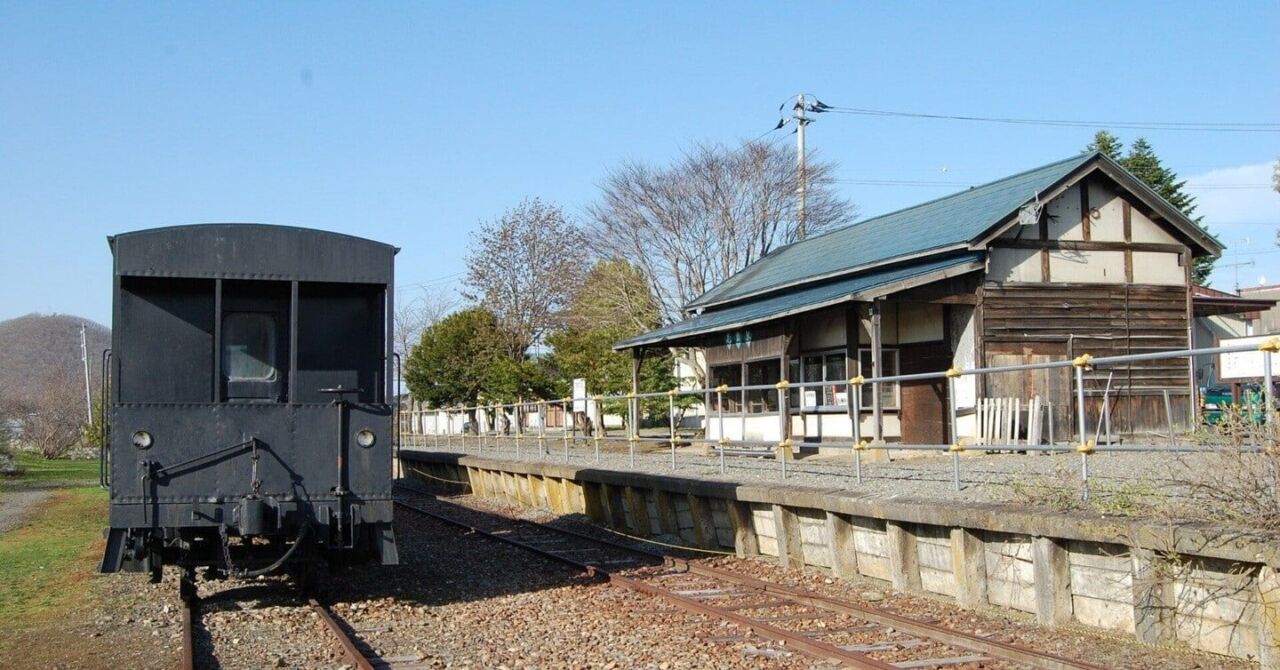
Aikoku Station was a station on the old Hiroo Line. After the line closed, the station building was kept and converted into a Transport Memorial Hall displaying railway equipment, ticketing devices, station signs and old photos, tracing the line from opening to closure.
The exhibition space is small and a visit takes about 20 to 30 minutes, but it helps you understand the background of the “Aikoku to Kofuku” story. Admission is free, open 9:00-17:00, daily from March to November, and only on Sundays from December to February. We suggest coming here before Kofuku Station, since reversing the order halves the impact. Actual opening hours follow the hall’s announcements on the day.

The Aikoku Station Steam Locomotive: The Outdoor Star Exhibit
Parked in the memorial hall’s outdoor space is a Japanese National Railways Class 9600 steam locomotive (No. 19671), the most substantial exhibit in the area. This type served for many years on freight and passenger lines in Hokkaido, and its black body and huge driving wheels look especially striking in the snow.
You can walk around the locomotive freely and take photos, but please do not climb on it or enter restricted areas. Note that in winter the locomotive is covered with protective sheeting and cannot be viewed, so avoid winter if you want to photograph it. There is parking nearby, which makes driving convenient. Actual access areas follow on-site announcements.
Kofuku Station Building: A Waiting Room Covered in Pink Tickets
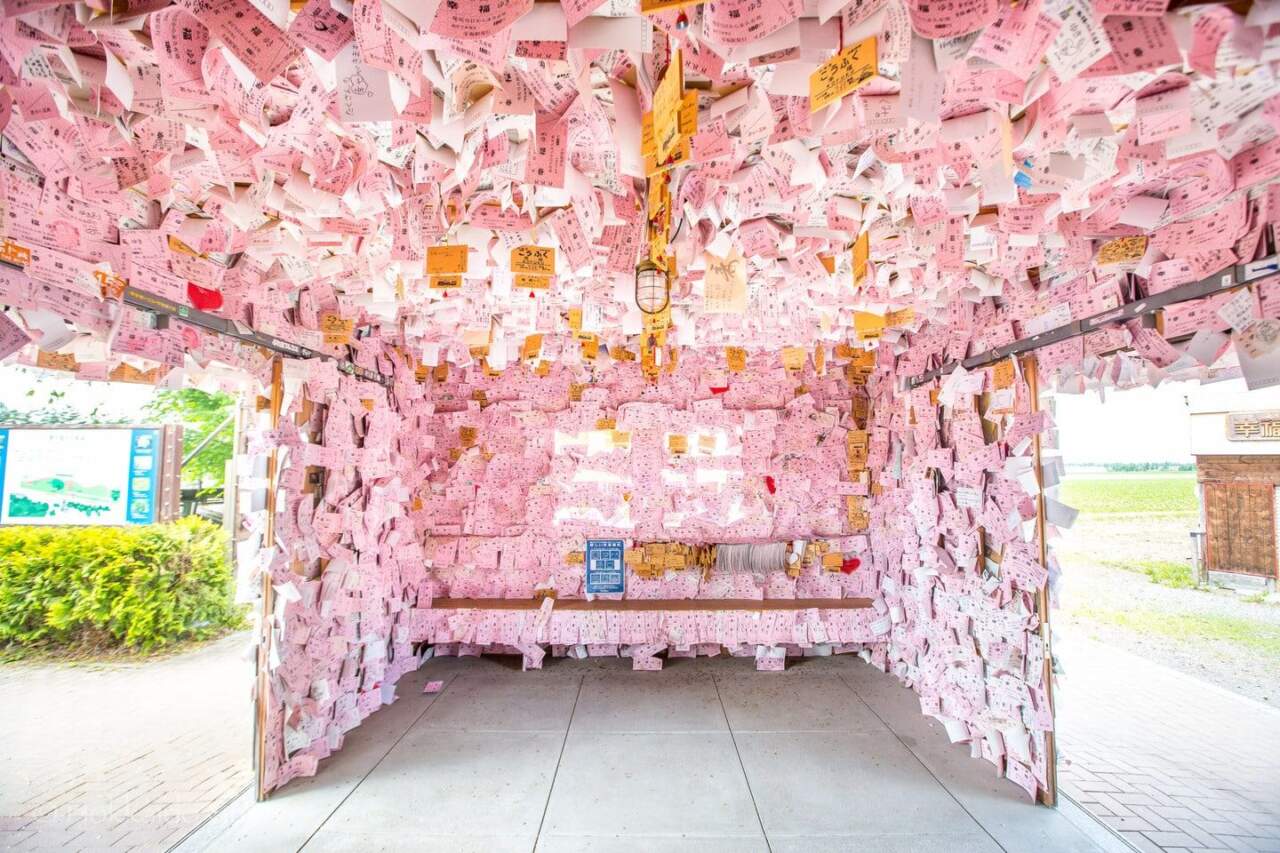
The wooden station building at Kofuku Station is the star of the whole route. Step inside and the walls, ceiling and pillars are all covered with pink commemorative tickets left by travelers, each bearing a name and a wish, layered so thickly that you can no longer see the original wood.
These tickets can be bought at the souvenir shop beside the station, and you complete the ritual by writing on one and sticking it up yourself. The station building was renovated in recent years and the wooden structure was treated again, so it is in good condition, and the tradition of sticking up tickets has been fully preserved. Visiting is free and open all day; only the souvenir shop has opening hours.
The Happiness Bell and the Sacred Place for Lovers: The Bell Couples Must Ring
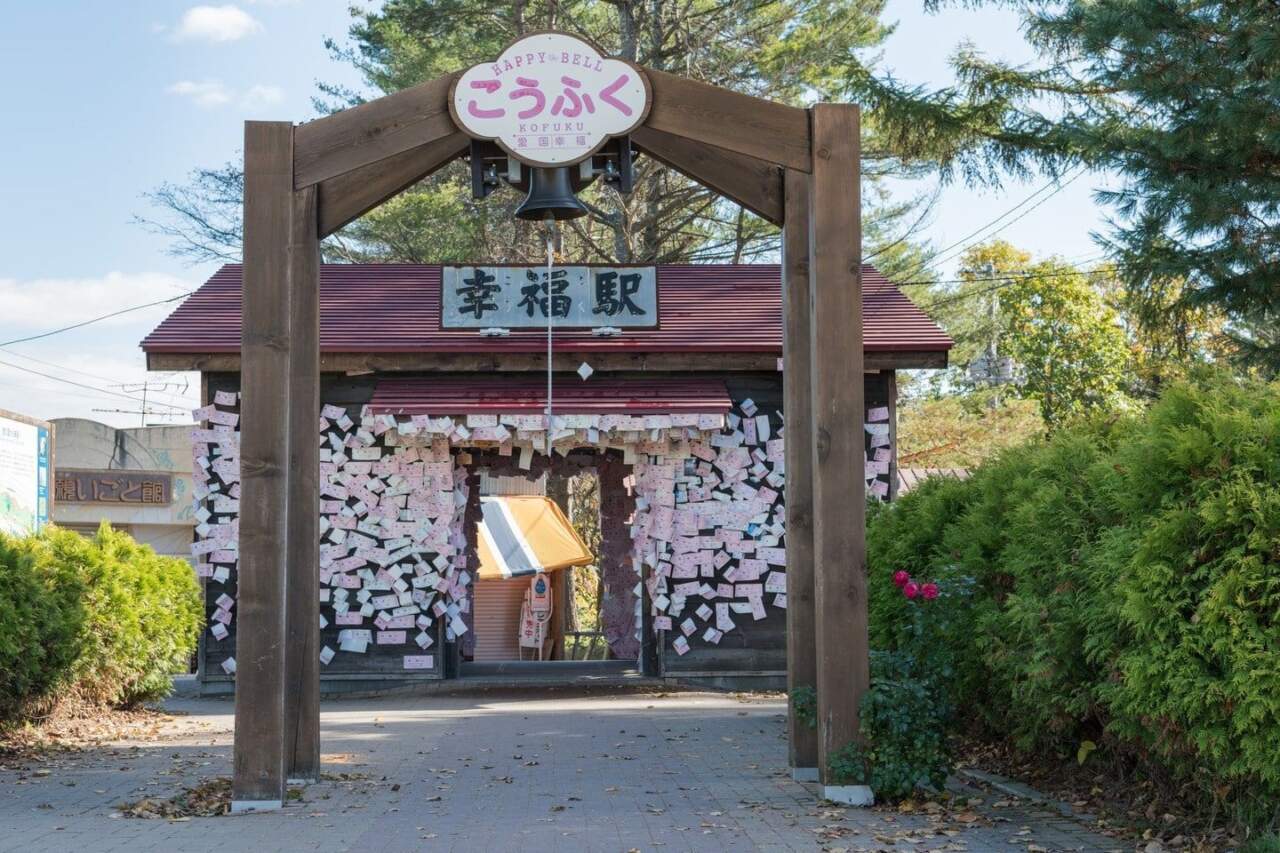
Kofuku Station is designated a sacred place for lovers in Japan, and a Happiness Bell stands in front of the station, which couples ring together to make a wish. The bell is small, but because the backdrop is that wooden station building covered with tickets, it is the most common composition for photos here.
Heart-shaped installations and a message board stand nearby, and the overall atmosphere is warm rather than flashy. Crowds usually gather from morning to afternoon, so for shots without people, come early or just before evening. When it is snowy in winter the ground is slippery, so watch your step.
Two Orange Diesel Cars: Old Vehicles You Can Walk Into
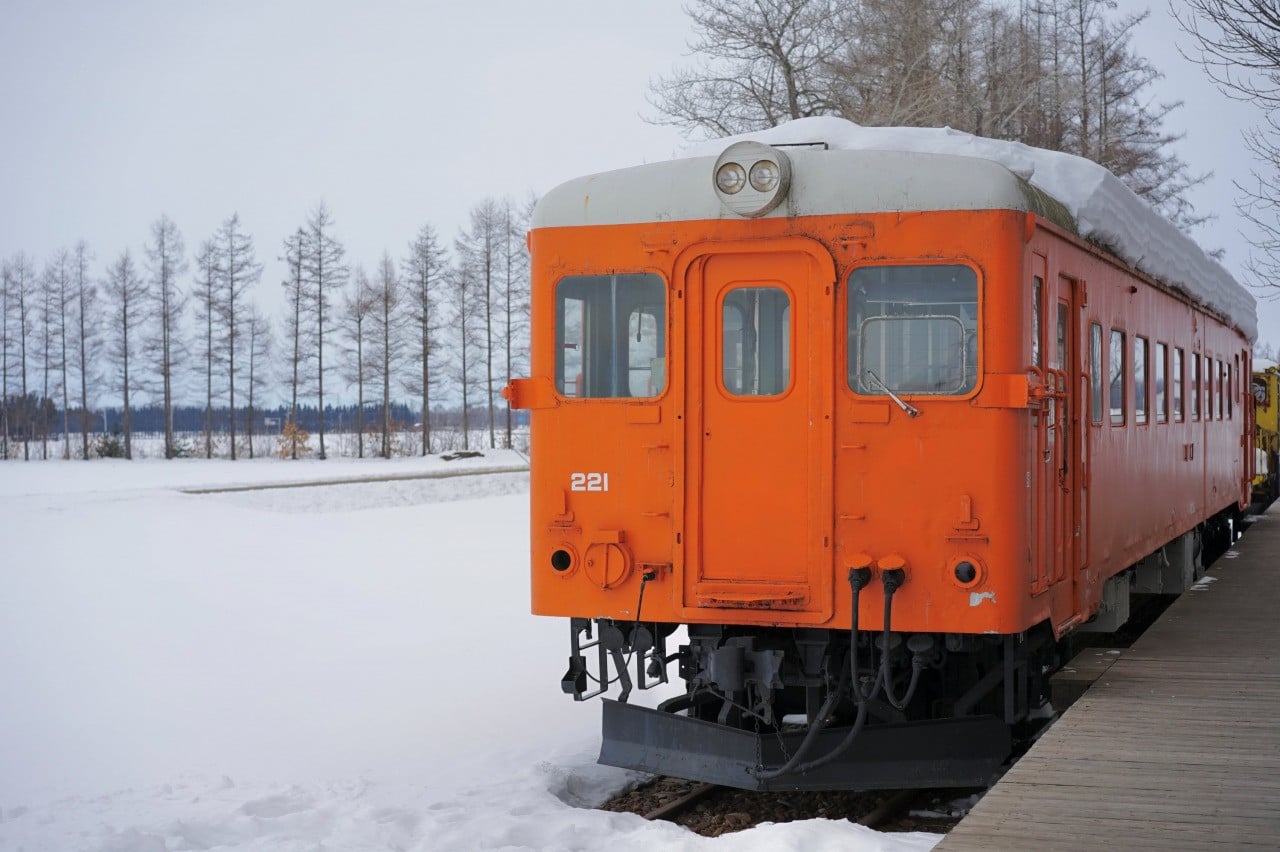
Parked beside the platform outside the station building are two old diesel passenger cars in orange livery, the same type of vehicle actually used on the Hiroo Line. The cars are open to visitors, and inside the seats and luggage racks remain; sitting by the window you look out over the Tokachi Plain.
This is one of the best photo spots at Kofuku Station, especially the window-view composition shot from inside the car. Note that the cars have no air conditioning, so they are stuffy in summer and cold in winter, and you won’t stay long. Actual access depends on on-site maintenance.
Aikoku to Kofuku Commemorative Tickets: The Classic Souvenir Here
The souvenir shop beside Kofuku Station sells commemorative tickets as a regular item, printed “Aikoku → Kofuku,” which is the most representative item of this line. Besides standard-size tickets, there are also large ticket-shaped postcard goods, good for sending to friends or keeping for yourself.
Note that these are souvenirs, not valid tickets for riding, since the line was closed long ago. The souvenir shop’s hours are about 8:30-18:00 in summer and about 9:00-15:00 in winter. Actual items, prices and hours follow the shop’s announcements on the day.
Other Remains of the Old Hiroo Line: An Invisible Railway
Besides Aikoku and Kofuku, the old Hiroo Line corridor has left quite a few traces across the Tokachi Plain: some sections have been turned into roads or cycling paths, and bridge abutments, embankments and platform remains are scattered among the farmland.
Most of these remains have not been developed as tourist facilities and have no signs, so they are for railway fans who make a special trip to look for them. For most travelers, it is enough to know that “the road you are driving on used to be a railway,” and that sense of time is itself the point of the trip. Before going to any area not open to the public, be sure to check whether it is private land.
Hanabatake Farm: Home of Nama Caramel in Nakasatsunai Village
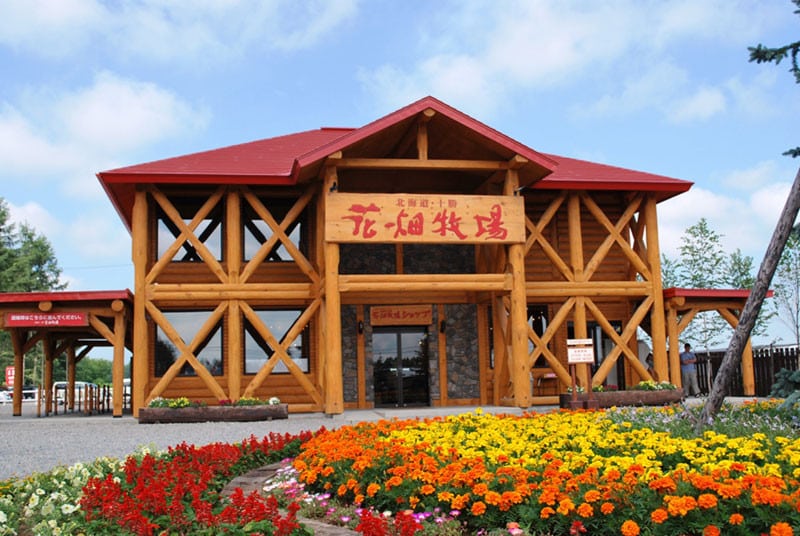
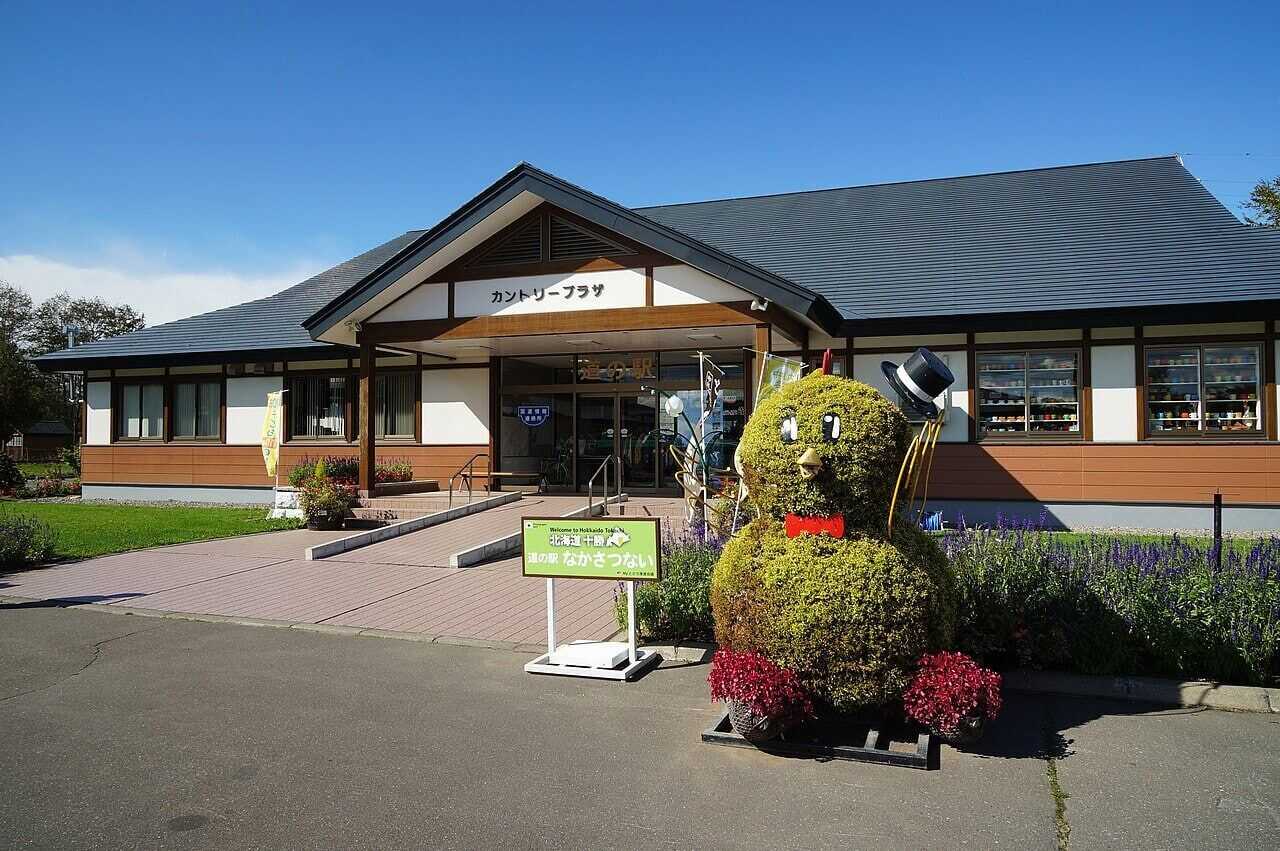
Heading south from Kofuku Station, you reach Nakasatsunai Village in about 10 to 15 minutes by car. Hanabatake Farm is the best-known facility there, run by a Japanese entertainer and famous for its nama caramel, a soft, melt-in-the-mouth treat that was once a national hit. The grounds have a shop and a dining area serving cheese dishes and nama caramel ice cream, with the farm scenery as the main draw, and it suits one to two hours. Admission is free, and the shop and cheese restaurant are open about 10:00-16:00; it is closed in winter (November to mid-April), so skip it if visiting in winter. Actual opening periods and products follow the farm’s announcements on the day.
Rokkatei Nakasatsunai Art Village: A Cluster of Museums in the Forest
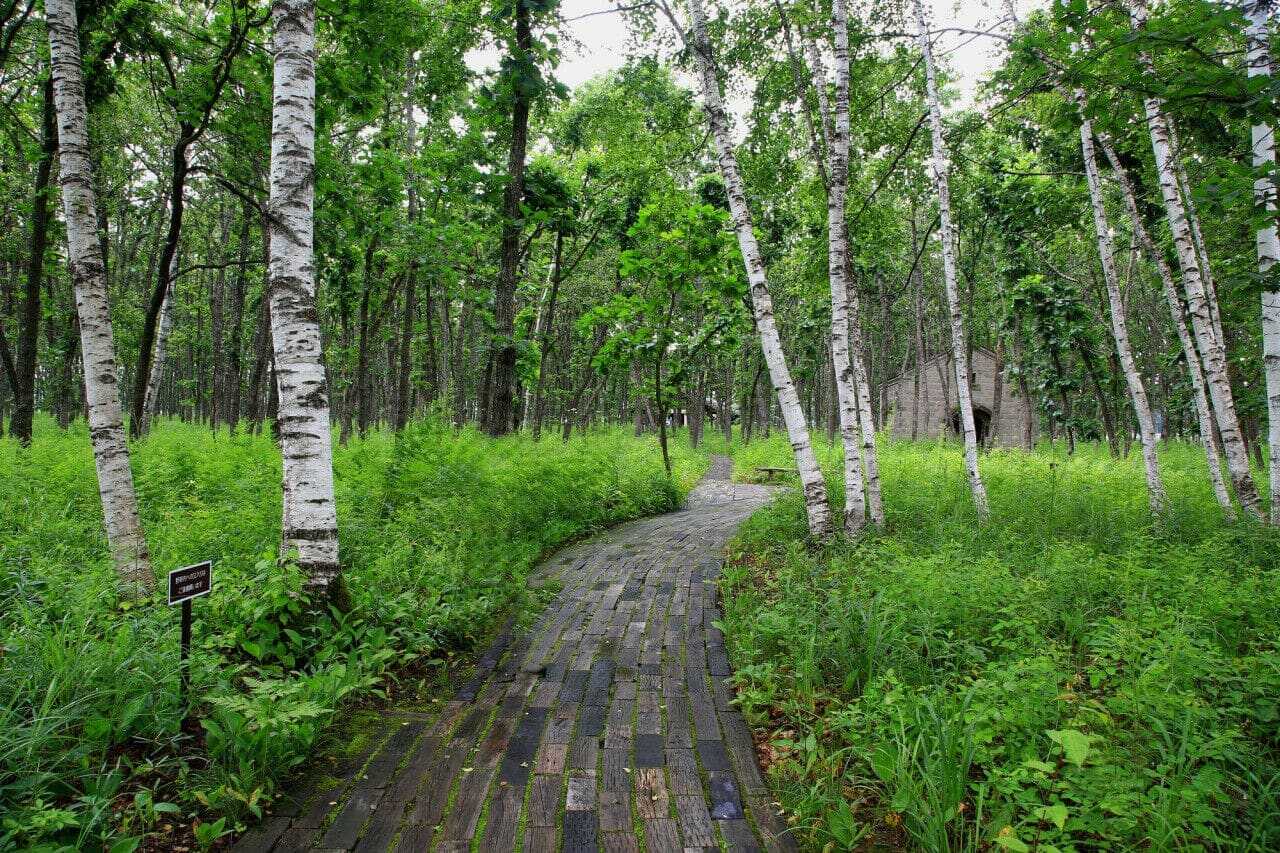
Run by Hokkaido’s most representative confectionery brand, this art village lies among the birch and oak woods of Nakasatsunai Village. Several small museums converted from old buildings are scattered through the grounds, displaying paintings and crafts related to Hokkaido, linked by lawns and forest paths.
The value here is not only the exhibits but the overall atmosphere: walking in the woods, you can hear the wind through the treetops, and it is the quietest part of a Tokachi trip. The grounds are large, so allow one and a half to two hours. It is usually closed in winter; actual opening periods and admission follow the operator’s announcements for the year.
Michi-no-Eki Nakasatsunai: The Final Stop for Supplies and Souvenirs
The Nakasatsunai Village roadside station has a farm-produce direct-sales area, light meals and a souvenir shop, where you can buy Tokachi dairy products, vegetables and processed goods. The produce direct-sales area is closed from December to March, leaving only souvenirs and food in winter.
The roadside station is open all year, 9:00-18:00 from April to October and 9:00-17:00 from November to March, daily from April to November and closed Mondays from December to March. Parking is ample, making it a good rest stop for drivers; actual hours follow announcements on the day.
Tickets and Tours
There are very few paid items on this route, and most sights are free. The real spending is on transport, souvenirs and admission to the Nakasatsunai Village grounds.
Tokachi Bus Day Pass: A Must-Buy If You Don’t Drive
Buy it at the bus ticket counter at JR Obihiro Station. The “Obihiro 1-Day Unlimited Ride Ticket” (おびひろ1day乗放きっぷ) allows unlimited rides on route buses within Obihiro during its validity; ask the counter for the price. A round trip to Kofuku is usually good value, but going only to Aikoku may not be, so compare one-way fares before you set out.
When you buy the ticket, remember to ask for the timetable for the Hiroo Line direction and confirm that day’s last bus time. In winter service is greatly reduced and the pass is worth less. Ticket types, coverage and prices follow Tokachi Bus announcements on the day.

Aikoku-Kofuku Commemorative Ticket Set: A Souvenir to Take Home
The souvenir shop beside Kofuku Station sells regular commemorative tickets and large ticket-shaped postcards, the most representative goods here. Buying one, writing a wish on it and sticking it on the waiting room wall is something almost everyone does.
Note that these are souvenirs, not valid tickets. The shop’s hours are seasonal and it may close early in winter, so there is a risk of arriving on the last bus to find it shut. Actual items and prices follow the shop’s announcements on the day.
Nakasatsunai Art Village Admission: Museums in the Forest
Admission to the garden and the Mano Masami Museum is ¥1,000 for adults and ¥500 for elementary and junior high students, and the other museums are free (donations welcome). The grounds are large, so allow about an hour and a half. From Tuesday to Friday only the museums and garden are open, and the dining facilities operate only on weekends and holidays.
The season runs from late April to the end of October (April 29-October 31 in 2026), and the village is closed from November to April. Opening hours are 10:00-16:00 in April, May, August and September, 9:00-16:00 in June and July, and 10:00-15:00 in October.
Rokka no Mori Admission: 2026 Opening Period and Prices
Rokka no Mori (六花の森) is a garden run by Rokkatei in Nakasatsunai Village. In 2026 it is open from April 24 to October 12, closing earlier than the Nakasatsunai Art Village. Opening hours are 10:00-16:00 in April, May, August and September, 9:00-16:00 in June and July, and 10:00-15:00 in October; a stand-alone entry ticket costs ¥1,200 for adults and ¥800 for elementary and junior high students.
Hanabatake Farm Food and Goods: Nama Caramel and Cheese Dishes
Spending at the farm is mainly at the shop and dining area. Nama caramel is the signature item, and there are also cheese dishes and nama-caramel-flavored ice cream. Prices are typical for a tourist facility, making it a one-stop solution for lunch and souvenirs.
Some products need refrigeration and have a short shelf life, so if you have a long journey afterward, check how to store them before buying. The farm is closed in winter (November to mid-April) and is only enjoyable during the open season. Actual products, prices and hours follow the farm’s announcements.
One-Day Tours from Obihiro: An Alternative If You Don’t Want to Drive
If you don’t plan to rent a car but still want to cover both stations and Nakasatsunai Village in a day, consider a local one-day tour from Obihiro, which outsources both transport and scheduling.
Tours like this usually need advance booking and a minimum number of participants, and departures become less frequent in winter. Content, price and departure conditions follow each operator’s announcements for the year, so check the cancellation policy before booking.
How Much Does a Day Trip to Kofuku Station Cost? Transport, Admission and Souvenirs
This route is one of the cheapest in the Tokachi area, since neither station charges admission. Here is the spending broken down.
Transport Costs: Rental Car vs. Bus Day Pass
If you don’t drive, the main expense is the bus day pass, which is reasonably priced and more than enough for a round trip to both stations in a day. Driving means counting the daily rental, fuel and insurance, but you save waiting time and can add Nakasatsunai Village.
The break-even point is roughly the group size: for two people or fewer visiting only the two stations, the bus plus day pass is better value; for three or more, or if you want to cover Nakasatsunai Village, renting a car clearly wins. Actual costs follow rental companies and Tokachi Bus announcements on the day.
Admission Costs: Almost Zero
The station building, platform, cars and Happiness Bell at Kofuku Station are all free, as is the outdoor steam locomotive at Aikoku Station. The Aikoku Station Transport Memorial Hall is also free. The main paid item is the Nakasatsunai Art Village, where the garden and the Mano Masami Museum cost ¥1,000 for adults.
In other words, there is almost no admission pressure on this trip. Most people’s spending actually goes on souvenirs and food, which you can fully control. Actual admission prices follow each facility’s announcements on the day.
Souvenirs and Food: Where It’s Easiest to Overspend
Kofuku Station’s commemorative tickets are cheap individually but it is easy to end up buying a whole set; dairy products, cheese and processed farm goods at Hanabatake Farm and the roadside station in Nakasatsunai Village are also very easy to buy, and the total often exceeds expectations.
We suggest setting a limit before you go into a shop. For meals, Nakasatsunai Village has fewer dining options than Obihiro city, and prices are typical for tourist facilities, so to save money, keep your main meal for butadon back in Obihiro.
Time Cost: Actually More Expensive Than Money
The real cost of this route is time. Without a car, waiting for buses alone can eat up two to three hours, and with buses only once every one to two hours, missing one throws off the whole schedule.
So when planning, count “waiting for a bus” as an expense too. If your holiday is short, the time saved by renting a car is often worth more than the fare saved. In winter, with fewer buses, the gap is even bigger.
Seasons and Flexibility
Summer to early autumn is the most comfortable season, and the Nakasatsunai Village grounds are open, so the day trip is at its fullest. Winter snow is beautiful, but the art village and some facilities close and buses are cut, so what you can do shrinks noticeably.
If winter is your only option, focus on the two stations in the snow and the memorial hall, and plan around renting a car from the start. Actual operating periods of each facility follow the year’s announcements.
What to Know Before Visiting Kofuku Station: Bus Times, Time Spent and Where to Stay

The difficulty of this route is not the sights but the pacing. Think through these three things first and the day will go much more smoothly.
The Thing That Most Easily Ruins the Day: Bus Times
Route buses on the Hiroo Line run only about once every one to two hours, and the last bus is earlier than you’d expect. Many people get so absorbed at Kofuku Station that they look up and find the next bus is an hour and a half away, wrecking the whole afternoon.
The fix is to nail down the timetable first: ask the counter for it when you buy the day pass at Obihiro Station, photograph the return bus stop as soon as you get off, and work backward from the return time to decide how long you can stay. In practice, allowing 30 minutes at Aikoku Station and 50 minutes at Kofuku Station is a safe plan. Winter services are cut further, so be sure to check again on the day.
How Long to Stay? The Two Stations Have Different Rhythms
Aikoku Station is mainly indoor exhibits and takes about 20 to 30 minutes. Kofuku Station has four spots, the station building, the cars, the Happiness Bell and the souvenir shop, and with writing and sticking a ticket and taking photos, you will actually stay 40 to 50 minutes.
If you also continue south to Nakasatsunai Village, allow at least two and a half to three hours for Hanabatake Farm plus the art village, and with driving time the day is essentially full. For shots with few people, set out early and reach Kofuku Station before noon.
Back in Obihiro for Butadon: Ganso Butadon Pancho
Butadon, Obihiro’s local specialty, can be eaten at Ganso Butadon Pancho (元祖豚丼のぱんちょう), about a 2-minute walk from JR Obihiro Station, which opened in 1933 (Showa 8). It is open 11:00 to 19:00 and closed on Mondays and on the 1st and 3rd Tuesday of each month, so check the shop’s announcements before you go. When return buses are infrequent, eating near Obihiro Station first is the smoothest way to finish.
Where to Stay: Accommodation Suggestions
There is almost no accommodation along this route, so in practice you base yourself in central Obihiro and make a round trip in a day. Business hotels cluster around JR Obihiro Station, with the bus terminal right outside, which also makes it easy to continue in other directions the next day, making it the most sensible choice.
If you also want an onsen soak, you can stay in the Tokachigawa Onsen area in Otofuke Town and enjoy the amber-colored moor hot spring water, then drive south along this route the next day, though you need to allow for an extra leg of driving.
Kofuku Station and Hanabatake Farm FAQ
Q: Can I take a train to Kofuku Station?
No. Kofuku Station and Aikoku Station were both stations on the former Hiroo Line of the Japanese National Railways, and the line was closed and removed long ago. Only the station buildings, platforms and a few railcars remain as tourist facilities. Every way to get there is by car or route bus. It is about 30 minutes by car from JR Obihiro Station to Kofuku Station, and about 45 to 50 minutes by route bus.
Q: How do I get to Kofuku Station without a car?
Take a route bus bound for Hiroo from the Obihiro Station bus terminal. It stops at Aikoku and Kofuku, and after getting off it is about a two- to five-minute walk. Be sure to buy a day pass at the ticket counter first, since a round trip to Kofuku is usually good value. Buses run about once every one to two hours, and in winter services are cut sharply or even suspended; actual schedules and fares follow Tokachi Bus announcements on the day.
Q: Is there an admission fee at Kofuku Station?
No. The station building, platform, two orange diesel cars and the Happiness Bell are all free, with no fixed opening-hour limits. The only place with opening hours is the souvenir shop beside the station, which may close early in winter. The outdoor steam locomotive at Aikoku Station is also free; indoor exhibits follow the hall’s rules, so rely on on-site announcements.
Q: Where can I buy the pink commemorative tickets?
You can buy them at the souvenir shop beside Kofuku Station. Once you have one, you can write your name and wish on it and stick it straight onto the waiting room wall, the classic experience here. Note that it is a souvenir, not a valid ticket for riding. Besides standard tickets, there are also large ticket-shaped postcards to choose from.
Q: Which should I visit first, Aikoku Station or Kofuku Station?
We suggest Aikoku Station first. Heading south from Obihiro, Aikoku naturally comes first and Kofuku second, and the Transport Memorial Hall at Aikoku lays out the history of the old Hiroo Line before you reach Kofuku Station and see the wall of tickets, so the experience is much more complete. Going in reverse loses half the context.
Q: Can I do Hanabatake Farm and Kofuku Station on the same day?
If you drive, no problem at all. From Kofuku Station it takes about 10 to 15 minutes to drive south into Nakasatsunai Village, where both Hanabatake Farm and the Rokkatei Nakasatsunai Art Village are, and together with the two stations it makes a full day trip. Without a car it is very difficult, because public transport from Kofuku Station to Nakasatsunai Village is very infrequent and the walking distance is long, so it is hard to link up in practice.
Q: Is this route worth doing in winter?
It depends on what you want. In winter Kofuku Station is covered in snow, and the wooden station building and orange cars look great against it. But the Aikoku Station steam locomotive can’t be viewed in winter, the Transport Memorial Hall is open only on Sundays from December to February, the Nakasatsunai Art Village and Hanabatake Farm are both closed, and route buses are cut sharply, so what you can do shrinks noticeably. If you come in winter, plan around renting a car.