

Eigenji Autumn Leaves and Night Illumination Guide 2026
Eigenji (Zuisekizan), the head temple of its school, is in Higashiomi, Shiga Prefecture. It was founded in 1361 (Koan 1) when the Omi lord Sasaki Ujiyori invited the Zen master Jakushitsu Genko to open it, and it is the head temple of the Eigenji school of Japan’s Rinzai sect. The grounds hold about 3,000 trees including mountain maples, Japanese maples and ginkgoes, and it ranks alongside the famous “Koto Sanzan” (Saimyoji, Kongorinji and Hyakusaiji) as one of the Kansai region’s most representative autumn-foliage spots.
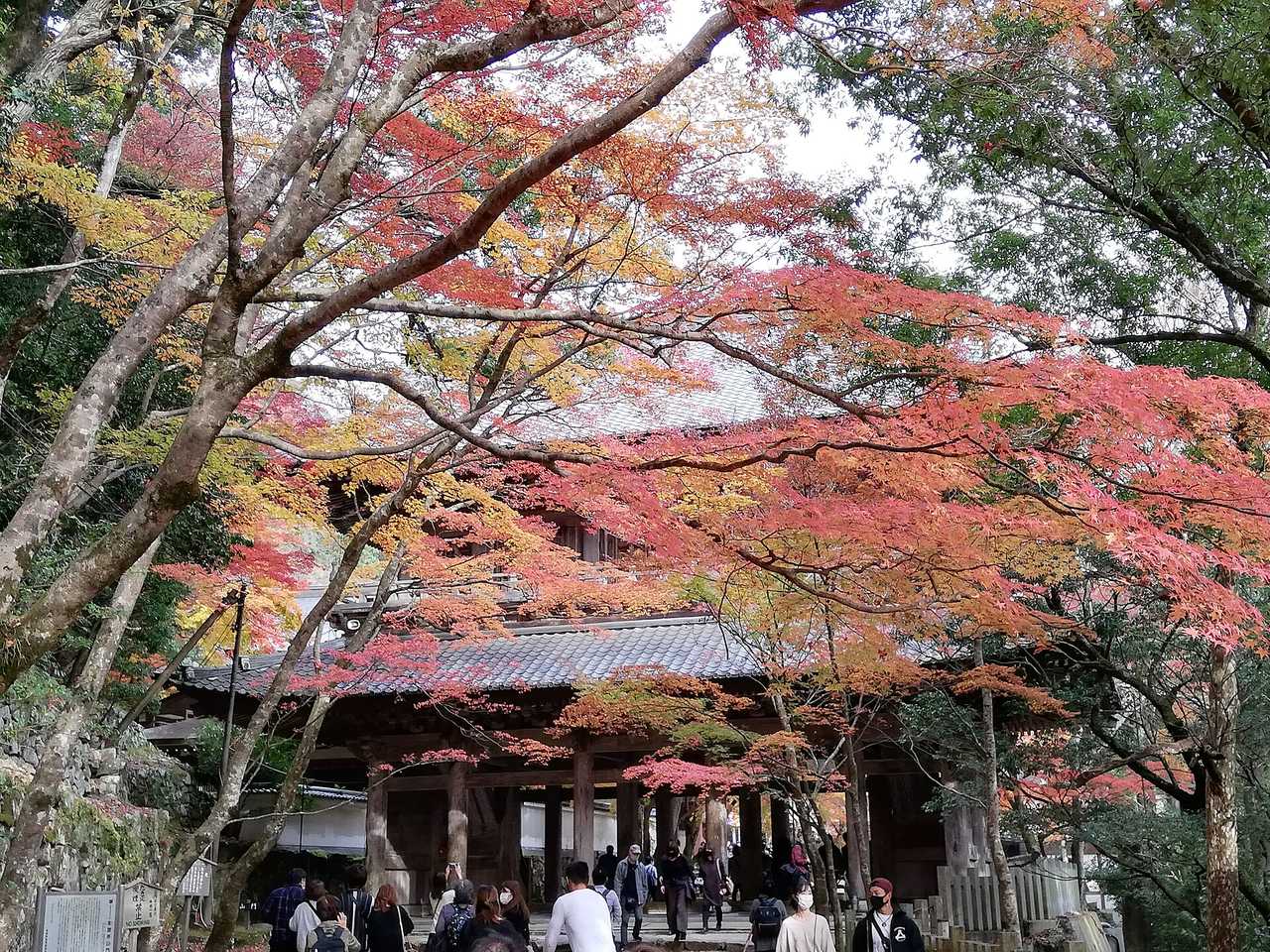
Every autumn, as you climb the main approach, the Aizu River flows on your right, while on the rock wall to your left are carved stone statues of the sixteen arhats. The maples overhead interlace into a spectacular tunnel of red leaves, and together with the long-established Kaisando and Goeido halls it looks like an elegant landscape painting.
The best viewing period for the 2026 foliage season is expected from mid-November to late November. Each November the temple holds a “Special Sanmon Gate Viewing” and “Autumn Leaves Night Illumination” (November 14 to 29 in 2025; please check the temple’s announcements for the 2026 dates), letting you see cultural properties normally closed to the public and experience a dreamlike atmosphere under the lights that is completely different from daytime.
Getting There: How to Reach Eigenji
Eigenji lies in the mountains of Shiga’s Koto region, so access is relatively inconvenient. We recommend planning your transfers or driving route early.
Omi Railway and Bus: The Main Public Transport Route
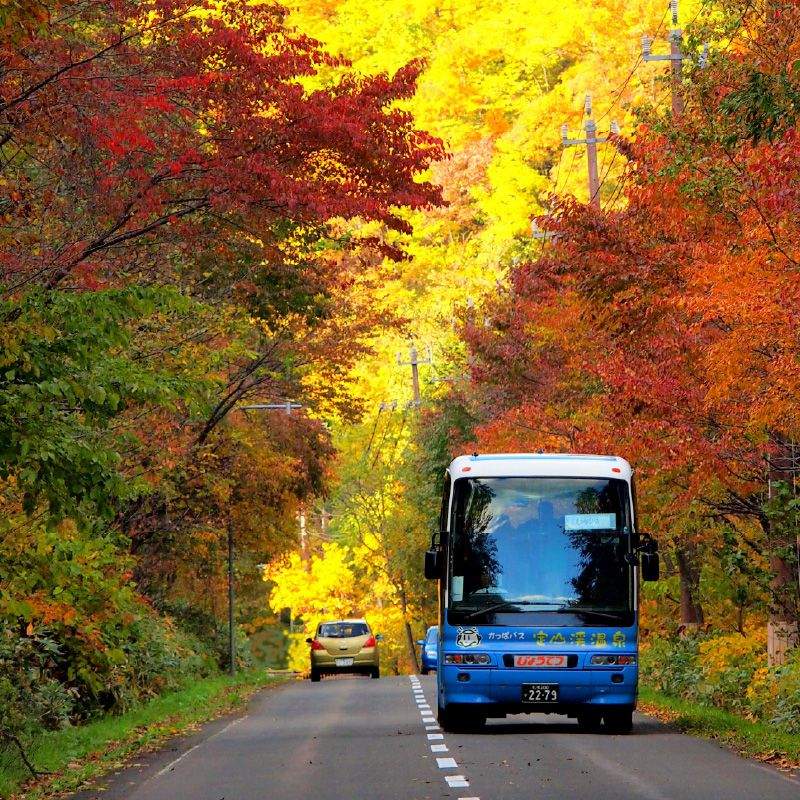
Take the JR Biwako Line to Omi-Hachiman Station, transfer to the Omi Railway Main Line to Yokaichi Station, then take the Omi Railway bus bound for Eigenji Garage for about 35 minutes and get off at Eigenji-mae, about a 1-minute walk from the temple gate. Along the way you can enjoy the countryside and mountain scenery of Shiga’s Koto region.
Buses are not very frequent, so check the timetable before you set out and leave plenty of time for transfers so you don’t miss the bus toward Eigenji at Yokaichi Station. On weekends in foliage season crowds often cause delays, so be sure to allow extra time.
Autumn Foliage Shuttle Bus: A Hassle-Free Option Linking the Koto Sanzan
During foliage season, shuttle buses connect the Koto Sanzan (Hyakusaiji, Kongorinji and Saimyoji) with Hikone Station in the Shiga Koto region, suited to travelers who don’t drive. In 2025 the Koto Sanzan admission fees were ¥800 for Saimyoji, ¥800 for Kongorinji and ¥600 for Hyakusaiji.
Bus operating dates, schedules and fares are adjusted every year. Please check the latest announcements from Omi Railway or each temple before you go, and allow time for transfers and queuing so that a missed bus doesn’t upset your whole day.
By Car: Exit at Yokaichi IC on the Meishin Expressway
Drivers can take the Meishin Expressway, exit at Yokaichi IC, and then head toward Eigenji. The temple has a paid parking lot holding about 50 cars for ¥500. It is the most flexible way to reach the Shiga Koto region, especially suitable for travelers who want to visit the Koto Sanzan and Kyorinbo and other sights in a row.
Because Eigenji is in the mountains and public transport is limited, the parking lot can fill up at the peak of foliage season. We recommend arriving early, or visiting on a weekday to avoid weekend traffic and the struggle to find a parking space, so your trip is more relaxed.
Starting Point Reminder: Reach Omi-Hachiman Station First, Then Transfer
Whether you take public transport or arrange a tour, most travelers use JR Omi-Hachiman Station as their transfer starting point. It is also a transport hub for nearby sights such as Azuchi (Kyorinbo) and Hikone, so you can fit them in before or after your foliage trip and make full use of the same transfer.
There are also car rental services around Omi-Hachiman Station. If your itinerary includes several scattered Koto sights, renting a car saves you from repeatedly waiting for buses. It is a more flexible alternative and better suited to group travel.


Top Sights at Eigenji
Eigenji’s grounds and the surrounding Koto area preserve many long-established cultural properties and foliage spots. Below are the core spots most worth lingering at in foliage season, plus side trips to the nearby Koto Sanzan and Kyorinbo.
The Kaisan Otauemomiji Maple: An Old Maple Carrying 600 Years of Zen History
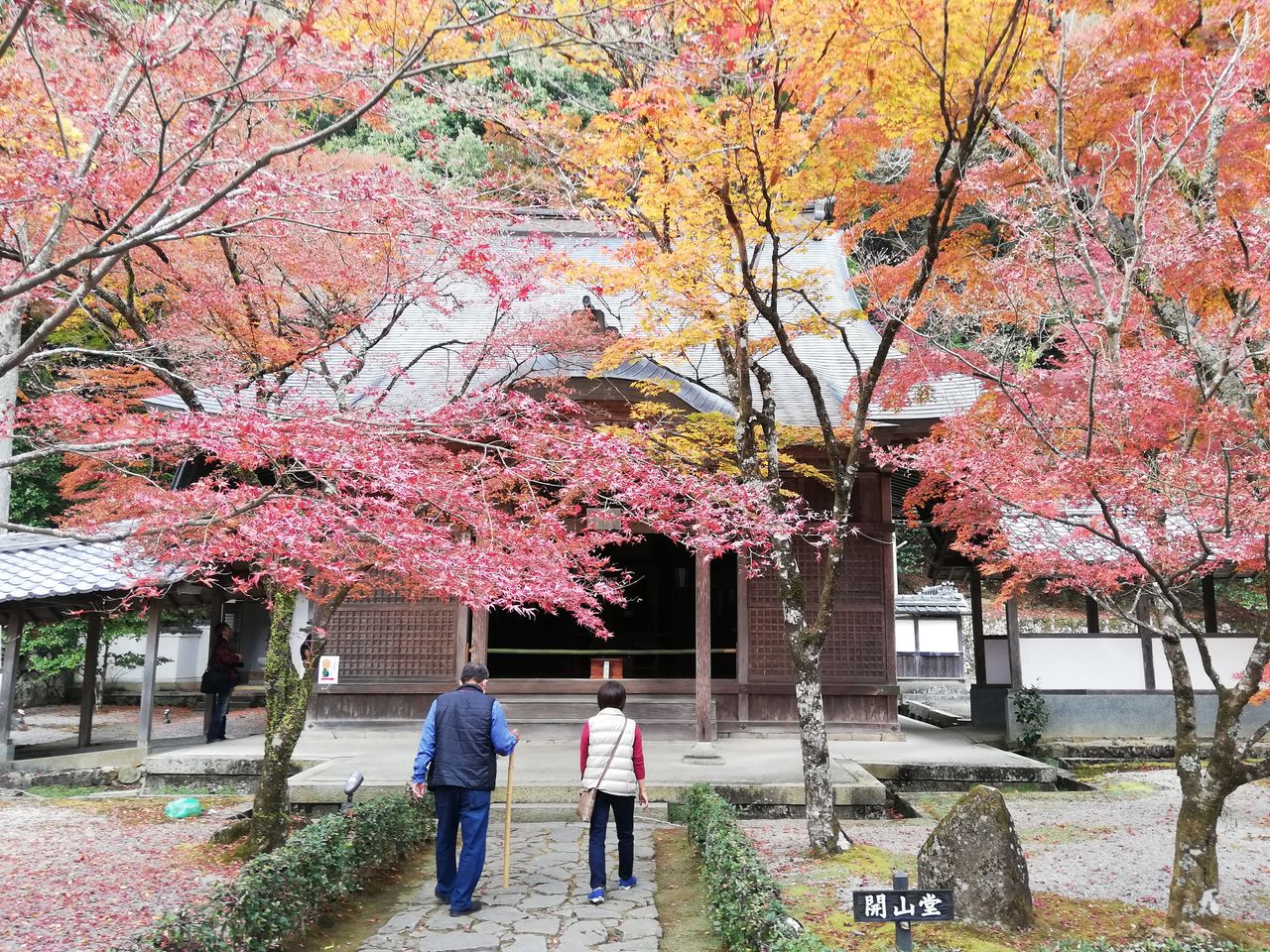
The Kaisan Otauemomiji (founder-planted maple) stands in front of the Kaisando (the tomb hall of Zen master Jakushitsu). Tradition holds that it was planted by Jakushitsu Genko himself (1290-1367, a native of Mimasaka Province), the founder of Eigenji, when the temple was built. After his death he was granted the posthumous titles “Enno Zenji” and “Shoto Kokushi” by imperial decree.
The maple standing today is said to be the third generation. In late autumn the red leaves intertwine with the rustic Kaisando building, giving off a refined Zen beauty, and it is an important stop for understanding Eigenji’s history.

The Red Leaf Tunnel: A Stunning View on the Approach
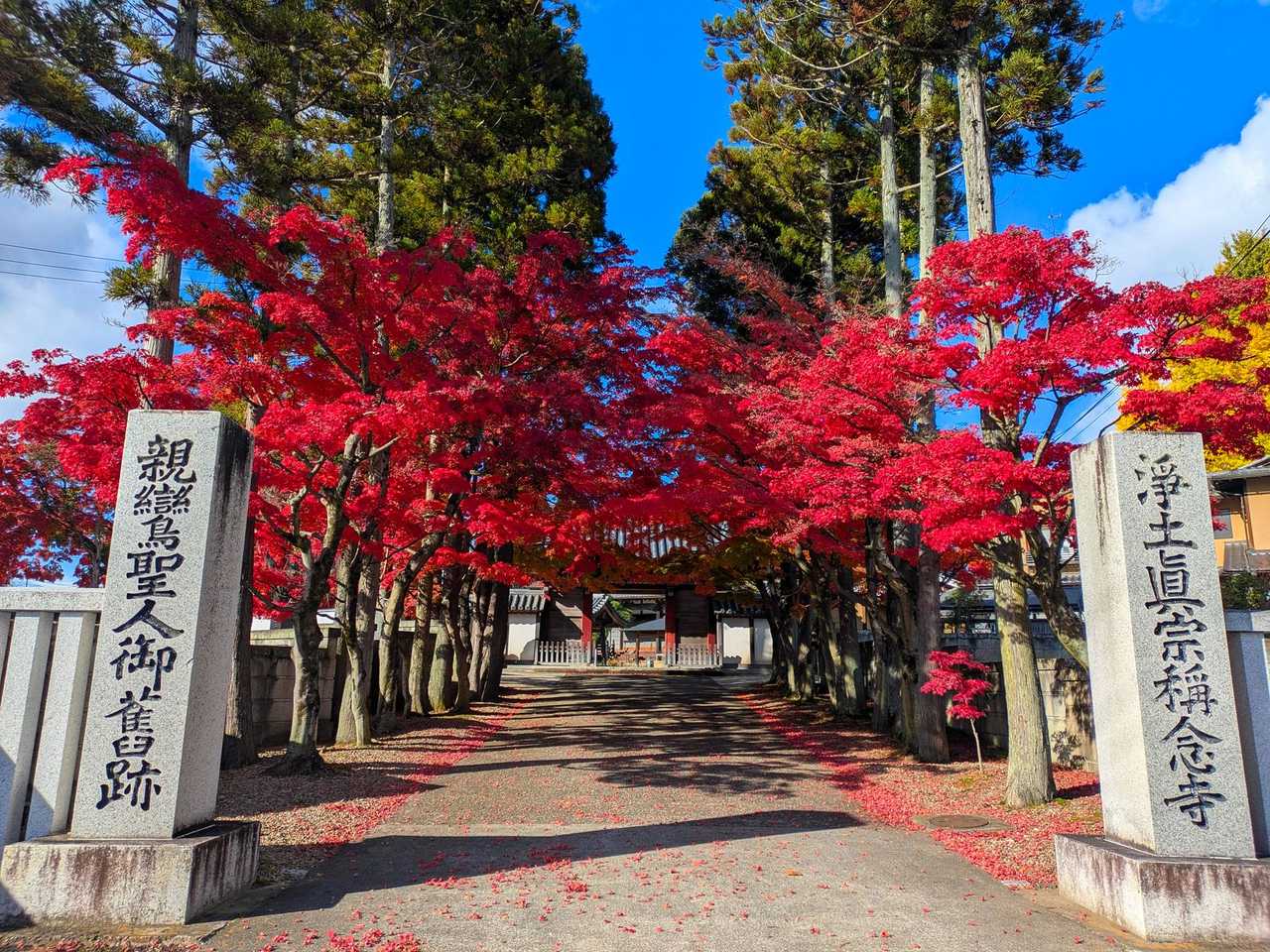
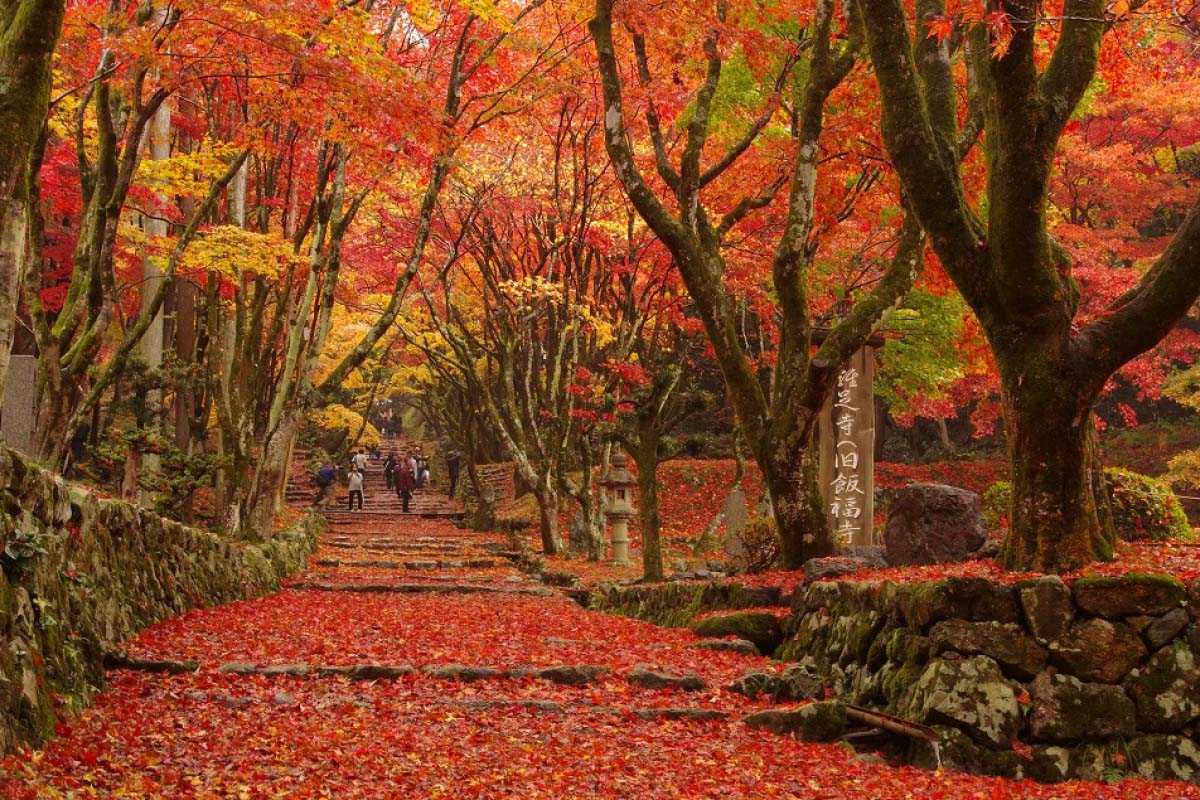
As you climb the main approach, the Aizu River flows on your right and on the rock wall to your left are carved stone statues of the sixteen arhats. The maples interlace overhead to form a spectacular red-leaf tunnel, a paradise for photographers and one of the most iconic scenes of Eigenji’s foliage season.
We suggest slowing down and walking the approach at an unhurried pace, enjoying the interwoven red leaves overhead while listening to the sound of the Aizu River, and feeling how the tunnel’s mood changes between daytime and evening light. It is also the framing most often shared on social media during Eigenji’s foliage season.
Special Sanmon Gate Viewing: A Limited-Time Cultural Property Climb
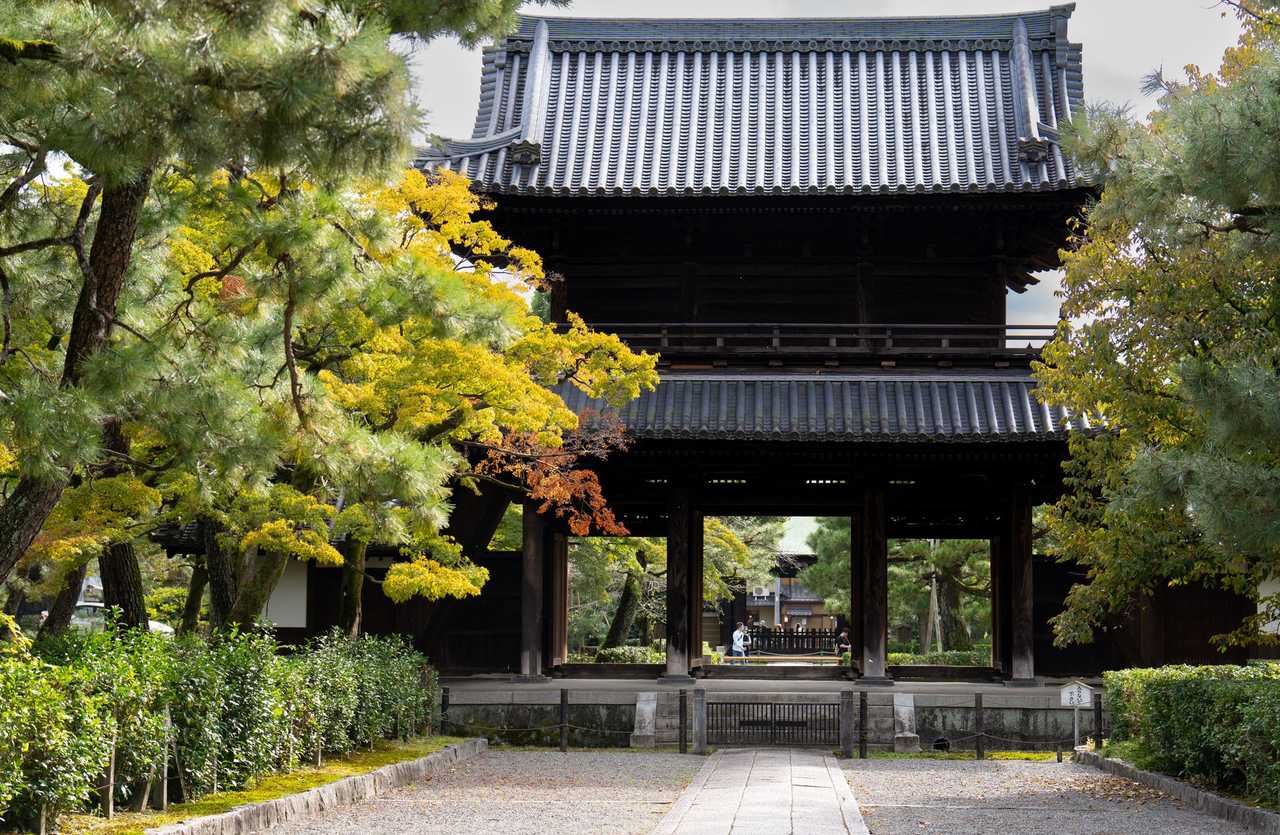
During foliage season, the second floor of the Sanmon gate (a cultural property), normally closed to the public, is specially opened for viewing. Visitors can climb up for a view over the whole valley and the temple dyed red, a precious opportunity available only in autumn, and if you miss it you have to wait another year.
From the top of the Sanmon the view is wide open, taking in the red leaf tunnel, the Kaisando and the layers of surrounding mountains all at once. It is a highlight you should leave time for rather than rushing through, and also an excellent vantage point for photographers shooting overhead panoramas.
Peak Foliage at Eigenji and the Koto Sanzan: When Is the Best Time to Go?
Peak foliage at Eigenji generally falls from early November to early December, and in 2025 the days around November 23 and 24 were the most crowded. The 2025 autumn leaves night illumination and Special Sanmon Gate Viewing ran from November 14 to 29, opening from 17:00. Peak foliage at the Koto Sanzan (Saimyoji, Kongorinji and Hyakusaiji) is roughly mid-November to early December. For the actual 2026 dates, please confirm with Eigenji (0748-27-0016) before you go.
Kaisando: Home of a Nationally Designated Important Cultural Property Seated Statue
The “clay statue of the priest Jakushitsu” enshrined in the Kaisando is a nationally designated Important Cultural Property. It was made in 1379 (Koryaku 1, at the ceremony for the 13th anniversary of Jakushitsu’s death), and it is one of the few medieval statues with a clearly documented date, making it extremely valuable. The hall also holds a silk-painted set of Jizo and the Ten Kings (11 scrolls) and Jakushitsu’s ink-written final admonitions on paper, also designated Important Cultural Properties.
For travelers who like to learn about Buddhist art and history in depth, the Kaisando is the stop with the greatest cultural depth in Eigenji’s grounds. It is worth pairing with the Special Sanmon Gate Viewing, to feel the temple’s more than 600-year lineage and the refined craftsmanship of Buddhist art.
Mandokoro Tea: A “Legendary Fine Tea” Passed Down for 600 Years
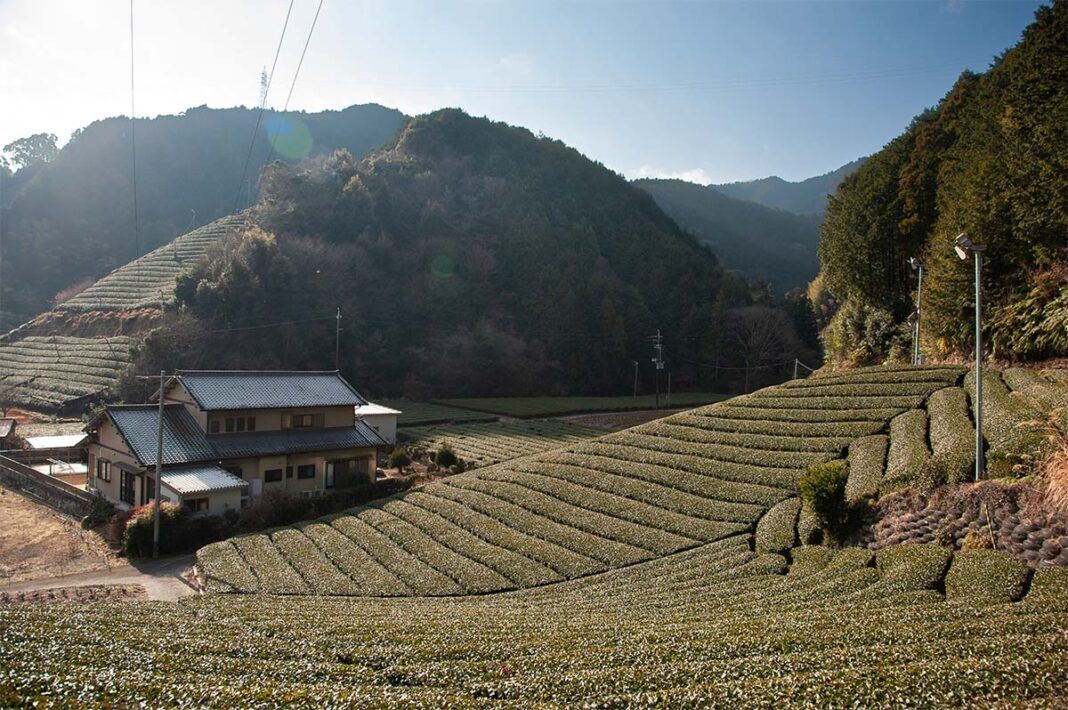
In the Muromachi period, Etsukei Shukaku, the fifth abbot of Eigenji, found that the local water and soil suited tea growing and encouraged villagers to plant it. Mandokoro tea once rivaled Uji tea, as the tea-picking song “Uji is tea country, and tea is Mandokoro” tells; it was offered to the imperial court and the Hikone domain and is now counted among the “Three Great Omi Teas.”
Eigenji also offers a zazen meditation experience and shojin ryori (Buddhist vegetarian cuisine with no meat or fish). In the deep mountain Oku-Eigenji district you can see how Mandokoro tea is made and enjoy the tea fields. It is a “legendary fine tea” grown without pesticides and handed down for more than 600 years, and it pairs well with a foliage trip to experience Zen spirit and local culture.
Kyorinbo: The “Temple of Stones” Designed by Kobori Enshu
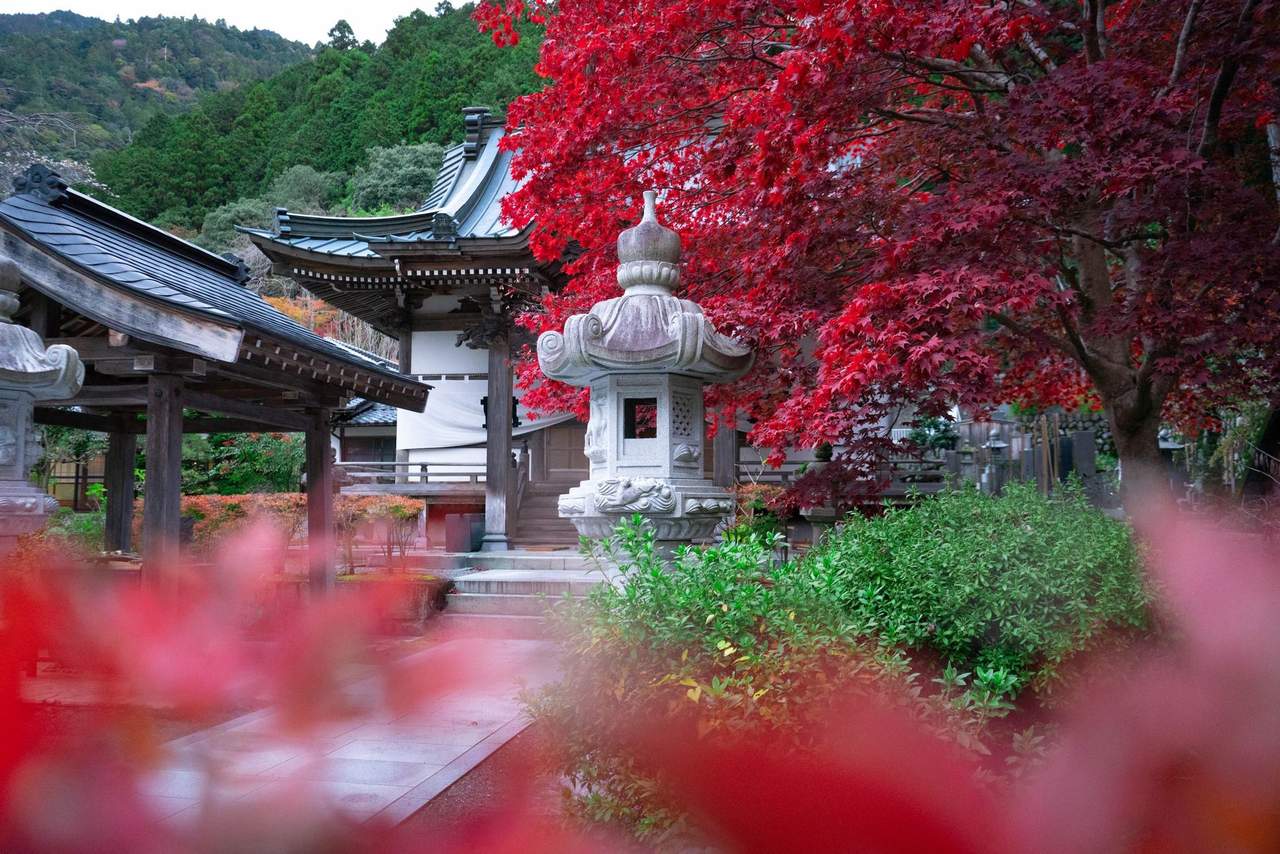
Kyorinbo is in Azuchi-cho, Omi-Hachiman City, nicknamed the “Temple of Stones,” and is linked to legends of Prince Shotoku. Its garden was designed by the garden designer Kobori Enshu and holds about 300 maples whose red leaves reflect beautifully in the pond. It is open only in spring and autumn each year; please check the temple’s announcements for viewing hours and fees.
In 2025 the night illumination ran from November 15 to December 7, 17:30 to 19:00 (last entry 18:30). Please check the temple’s announcements for the 2026 dates. It is a good follow-on to an Eigenji trip.
Kongorinji: A Koto Sanzan Temple Famous for “Blood-Stained Maples”
Kongorinji is in Aisho-cho and is one of the Koto Sanzan, known for the exceptionally intense color of its maples. Locals nickname its autumn scenery “blood-stained red leaves” (chizome no momiji). It is one of the Koto area’s deepest-red and most visually striking foliage spots, not to be missed by photographers who love bold color compositions.
Historically the Koto Sanzan (Kongorinji, Saimyoji and Hyakusaiji) ranked alongside Eigenji as famous Tendai temples of the Omi region. They declined after the Onin War and Oda Nobunaga’s burning attacks, and were rebuilt one after another from the Edo period onward. They suit a visit before or after Eigenji, forming a deep foliage and history tour.
Saimyoji: A Koto Sanzan Temple Known for Maple-Dotted Scenery
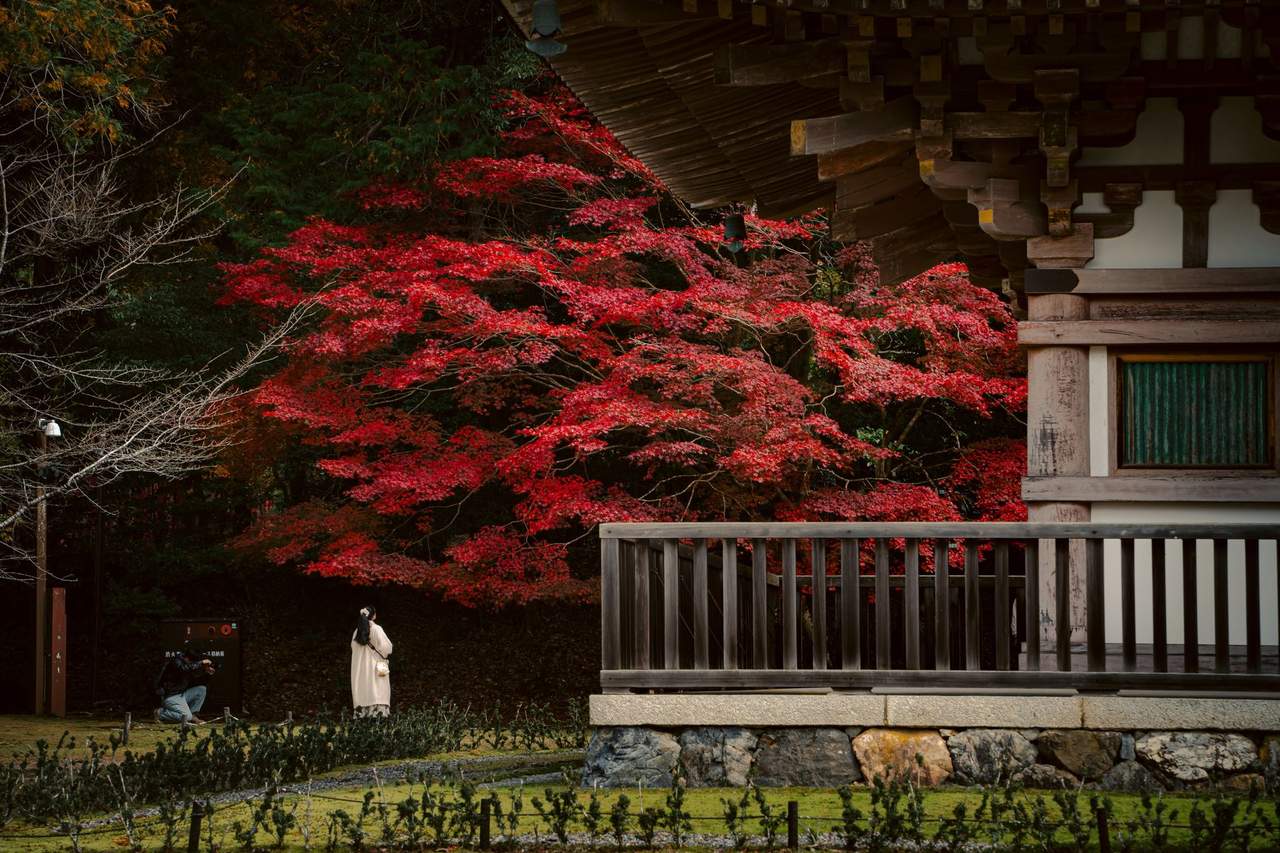
Saimyoji is in Koura-cho and is also one of the Koto Sanzan, known for its pleasing garden scenery dotted with maples. In contrast to Kongorinji’s intense “blood-stained maples,” Saimyoji’s red leaves show a more elegant, layered autumn color. The two make an interesting comparison and suit travelers who like comparing the landscaping aesthetics of different temples in one visit.
Public transport to the Koto Sanzan is inconvenient, so we recommend combining the foliage-season shuttle bus or a car, and scheduling Eigenji, Saimyoji and Kongorinji on the same day.
Recommended Tickets and Tours
When planning your Eigenji foliage trip, these tickets and tours can make transport and visits easier.
Eigenji Special Sanmon Gate Viewing Ticket: A Limited-Time Event Not to Miss
Eigenji’s admission donation is ¥500 for adults (¥600 in November 2025). During foliage season there is also a Special Sanmon Gate Viewing that lets you climb to the second floor of the Sanmon, normally closed. We recommend checking the open period and time slots for the year in advance to avoid a wasted trip. Viewing hours and fees during the night illumination may also differ from daytime, so check the latest official announcements before you go.

![[From Osaka/Kyoto] One-Day Bus Tour: Autumn Leaves at Eigenji, the Metasequoia Avenue and Tokugen-in of Seiryuji](https://travel.williamlion.tw/wp-content/uploads/sites/7/2026/09/image-639.jpg)

Koto Sanzan and Kyorinbo: Visits and Transport Linking Shiga’s Koto Foliage Spots
The Koto Sanzan and Kyorinbo are quite far apart, so travelers who don’t drive can link them with the foliage-season shuttle bus or the Omi Railway. In 2025 the Koto Sanzan admission fees were ¥800 for Saimyoji, ¥800 for Kongorinji and ¥600 for Hyakusaiji. The contents of buses and loop tickets change every year, so please confirm with Omi Railway or each temple before you go. Each temple’s last-entry time differs, so plan the visiting order first and leave time to travel between temples, so you don’t miss the last entry in the evening.

Omi Railway One-Day Pass: A Transport Ticket Linking Yokaichi and Omi-Hachiman
If your day also includes other Koto sights such as Omi-Hachiman and Hikone, please check with Omi Railway about the contents and coverage of day-pass-type tickets. Yokaichi Station is where you transfer to the Eigenji bus, so checking tickets and timetables before you leave helps you control the transport budget for the whole Shiga foliage trip, and the areas around Omi-Hachiman and Hikone Stations each have sights worth adding.
Temple Visit Tips
Viewing and Transport Reminders
Eigenji is in the mountains and temperatures drop sharply after dark in autumn, so be sure to bring warm clothing during the night illumination. The grounds have many stone steps and slopes, so wear non-slip shoes that are easy to walk in. Because public transport is limited, if you are not driving, check the Omi Railway bus timetable in advance and leave ample transfer time so a missed bus doesn’t upset your whole day. At the peak of foliage season the parking lot and popular viewing times get crowded, so try to avoid weekends or go on a weekday.
Where to Stay Nearby
Eigenji is in the mountains of Higashiomi, Shiga Prefecture. From JR Omi-Hachiman Station, transfer to the Omi Railway to Yokaichi Station, then take a bus for about 35 minutes. In 2025 the night illumination closed its gate at 18:30 on weekdays. If you want to take your time with the foliage and night maples and link the Koto Sanzan or Kyorinbo the next day, consider staying around Omi-Hachiman Station.

FAQ
Q: How much does it cost to visit Eigenji?
Eigenji’s admission donation is ¥500 for adults, ¥600 in November 2025, ¥200 for junior high school students, and free for elementary school students and younger. Please check the temple’s announcements for the 2026 foliage-season fees and hours.
Q: When is the best time to see the 2026 autumn leaves at Eigenji?
Peak foliage at Eigenji generally falls from early November to early December. The 2025 night illumination and Special Sanmon Gate Viewing ran from November 14 to 29. Please check the temple’s announcements for the 2026 dates before you go.
Q: Is it very inconvenient without a car?
You need to transfer from JR Omi-Hachiman Station to the Omi Railway to Yokaichi Station, then take a bus for about 35 minutes. If you also want to visit the Koto Sanzan, consider the foliage-season shuttle bus, a rental car or a chartered car.
Q: Can I visit Eigenji and the Koto Sanzan on the same day?
Yes. Eigenji and the Koto Sanzan are all foliage spots in Shiga’s Koto area, but they are spread out, so we recommend using the shuttle bus or a car and planning your route and time allocation early.
Q: What should I watch out for during the night illumination?
Eigenji is in the mountains and temperatures drop noticeably after dark, so bring warm clothing. The grounds have many stone steps and slopes and visibility is poorer at night, so wear non-slip shoes that are easy to walk in and bring a flashlight or use your phone’s light.
Q: Where can I buy or try Mandokoro tea?
Mandokoro tea is a local tea from around Eigenji in Higashiomi, handed down for more than 600 years. Some tea fields and shops offer tea tastings or sell tea leaves, and it also makes a great souvenir.
