
Kumamoto Castle: One of Japan’s Three Great Castles, Reborn from the Earthquake
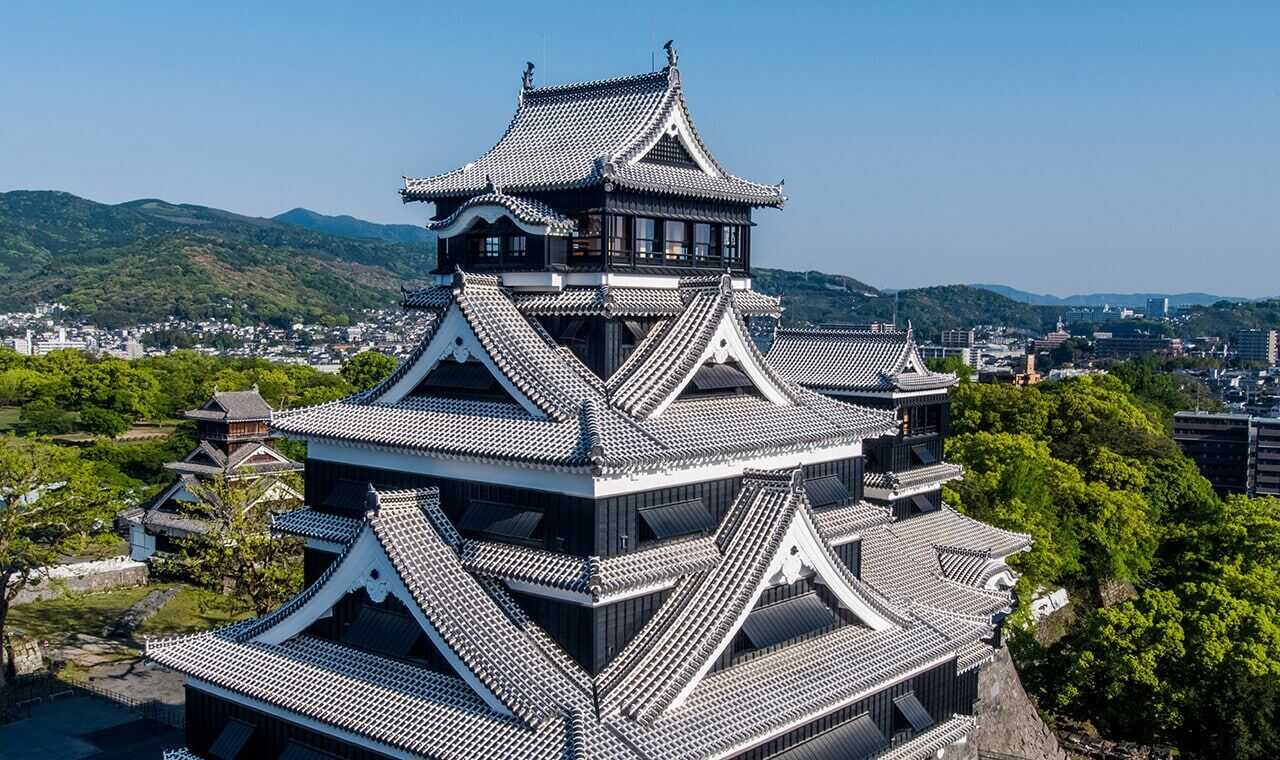
Kumamoto Castle is in Chuo Ward, Kumamoto City, and is one of Japan’s Three Great Castles. The main keep is fully open (the castle closed after the July 28, 2026 Kumamoto earthquake and reopened on August 13, and the official website showed normal operation on September 18), and it is worth setting aside half a day.
One of Japan’s Three Great Castles: A Masterpiece Left by Kato Kiyomasa
Kumamoto Castle’s history begins with the master castle builder Kato Kiyomasa. He completed it in 1607 (Keicho 12), and it ranks alongside Osaka Castle and Nagoya Castle as one of Japan’s Three Great Castles. The castle area is about 980,000 square meters with a circumference of about 9 km, and at its peak it had large and small keeps and 49 turrets, one of the largest scales among early-modern castles.
Best known is the stone wall technique called “Mushagaeshi” (warrior repeller): the lower section is gently sloped and rises almost vertically toward the top, forming a graceful fan-shaped curve that left climbing enemy soldiers nearly unable to reach the summit. On the eve of the Satsuma Rebellion in 1877, the main keep and Honmaru Palace burned in a fire, but the castle itself held off the Satsuma army’s fierce assault, and its reputation for being “hard to attack and never falling” was born. The large and small keeps seen today are an exterior reconstruction in reinforced concrete from 1960.

The 2016 Kumamoto Earthquake and a Restoration Plan Spanning Decades
On the scale of damage from the 2016 Kumamoto earthquake: stone walls at Kumamoto Castle collapsed on a large scale, several important cultural properties tilted and were damaged, and the whole site was closed for a time. Restoration uses a rigorous method of numbering each stone and restoring it exactly as it was (also written as numbering each stone and rebuilding as original). Every stone must first have its original position recorded and photographed before it is stacked again, so progress is extremely slow. Many older sources said “around 2050,” but the overall full-restoration target announced by Kumamoto City is actually 2052, a generational project spanning more than thirty years.
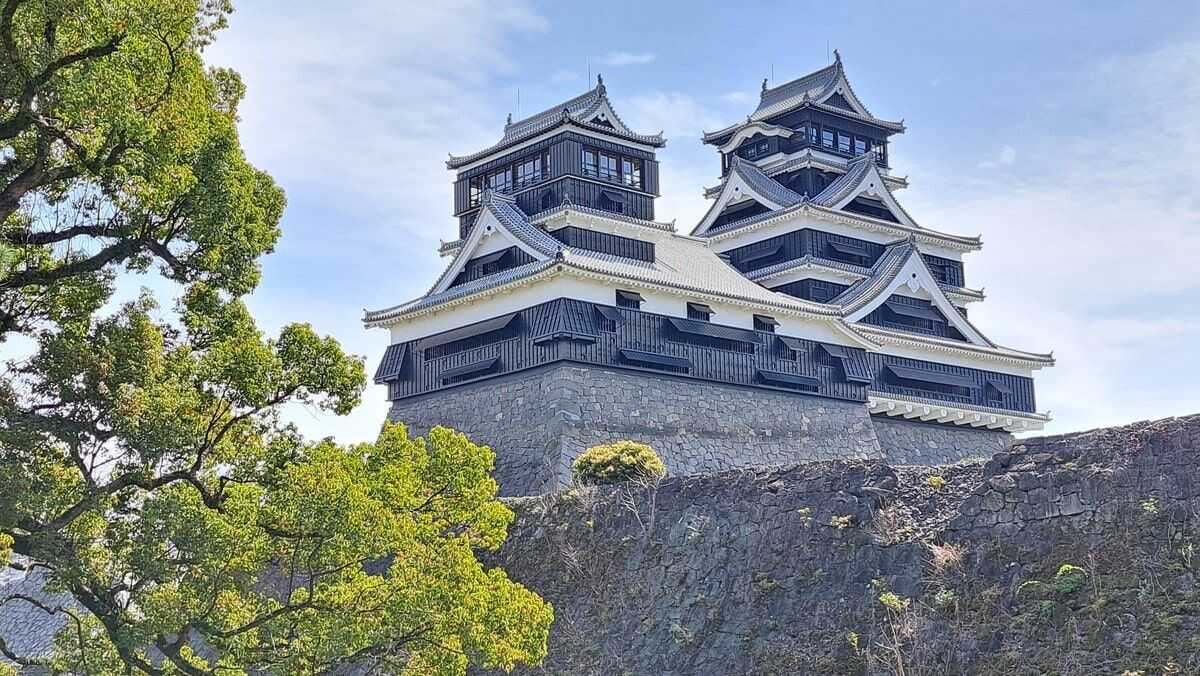
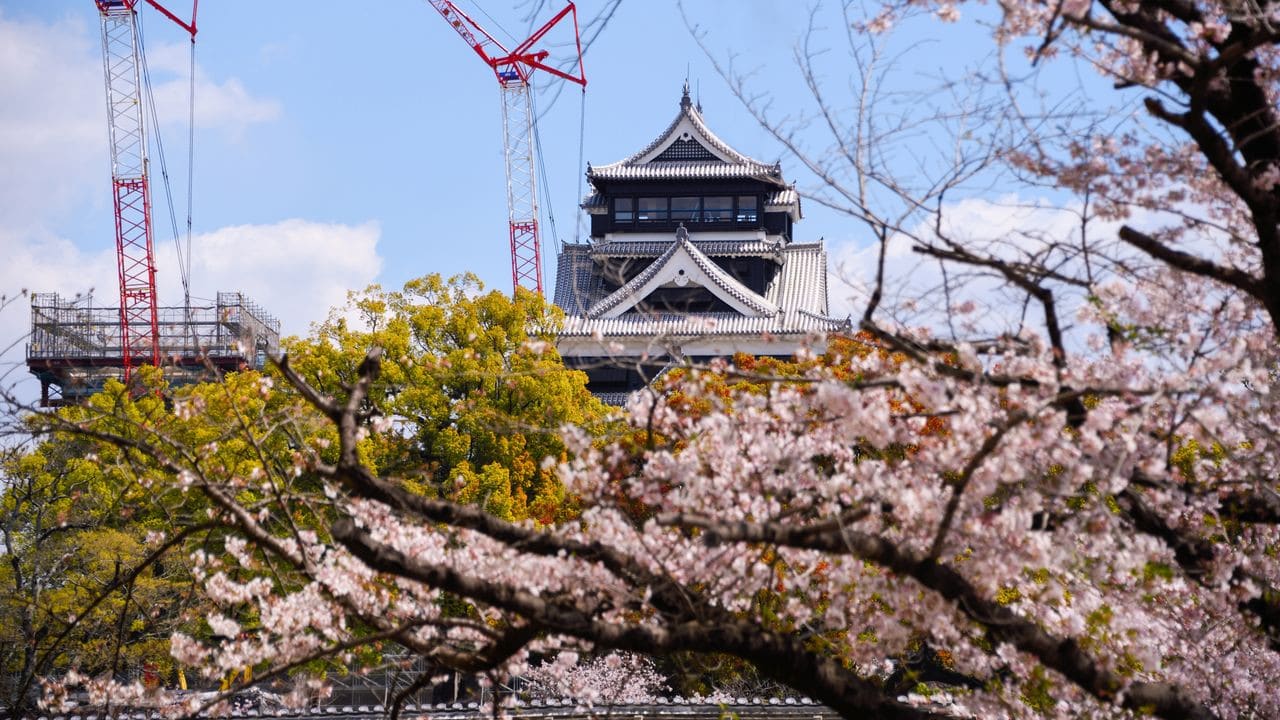
The main keep was restored first, reopening fully on April 26, 2021, and became a symbol of recovery. The other areas are still under phased construction, and all over the grounds you can see construction fences, cranes and storage yards of numbered stones. Seen another way, being able to witness the restoration of a national-treasure-class castle in person is a limited-time “recovery viewing” experience unique to this era.
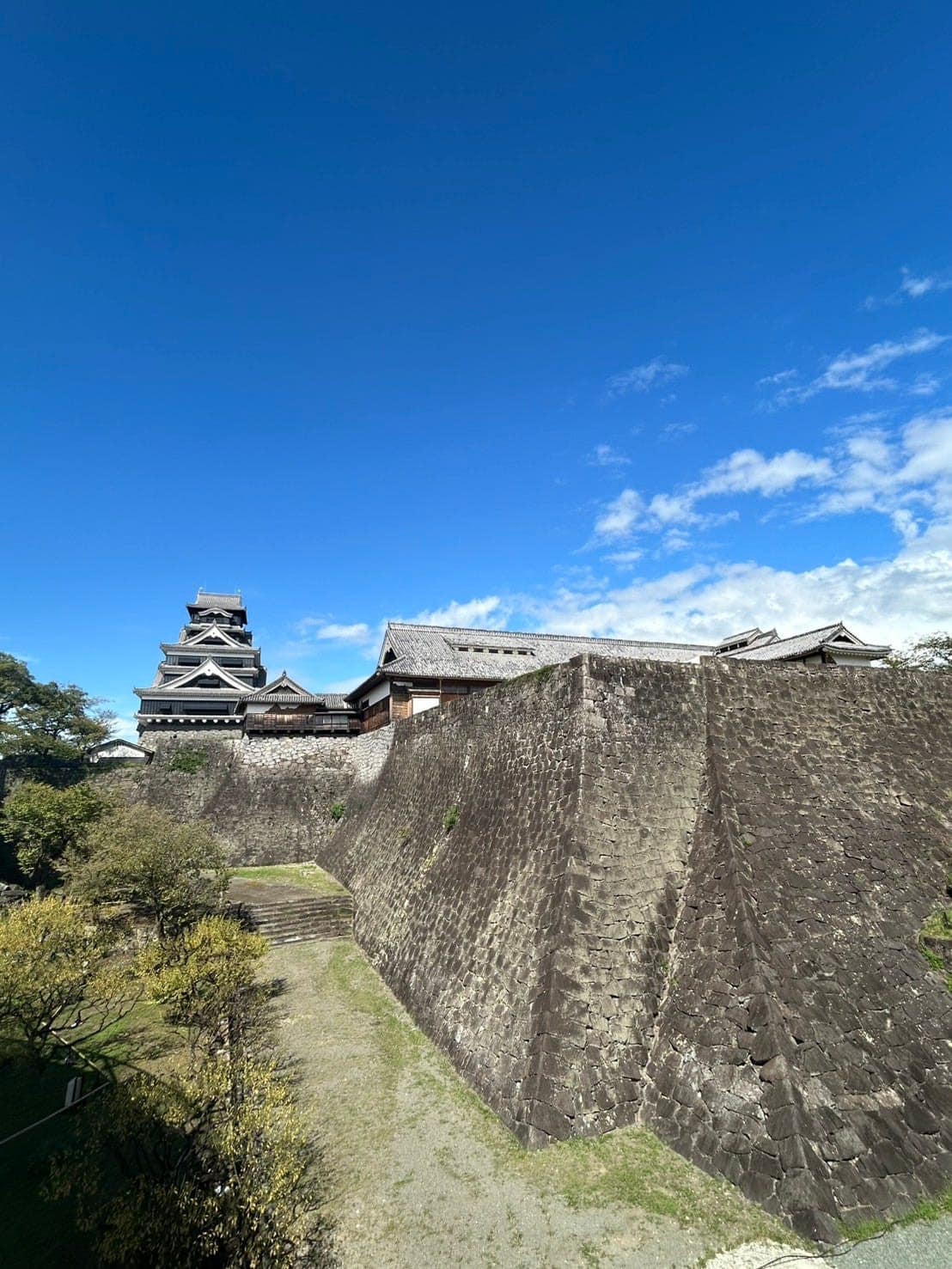
Kumamoto Castle after the July 2026 Kumamoto Earthquake: Reopened on August 13
A magnitude 7.1 earthquake struck Kumamoto on July 28, 2026. Stone walls collapsed in 27 places at Kumamoto Castle and the castle closed for a time. After safety checks by Kumamoto City it reopened on August 13, with areas that were open before the earthquake, such as the main keep and the Special Viewing Route, open again, and the official website showed normal operation on September 18. The site may change operations because of aftershocks or safety inspections, so please check the latest announcements on the Kumamoto Castle official website for restoration progress and opening information.
Who Should Visit? Recommended Time and Best Season
Kumamoto Castle suits travelers who love historic architecture and photography, or who want a half-day city sightseeing stop in a Kyushu itinerary. It is about a 15 to 20 minute walk from the south entrance ticket office to the main keep, and allowing 2 to 2.5 hours is recommended including the inside of the keep. Adding a meal and shopping at Sakura-no-Baba Johsaien makes half a day the most relaxed plan.
By season, late March to early April, when several hundred cherry trees bloom at once inside and outside the castle, is the most popular time. In autumn there is the “Autumn Kumamoto Castle Festival” (Aki no Kumamoto Oshiro Matsuri), which in 2026 extends opening hours to 21:00 from October 2 to November 1 with night light shows. The site has many slopes, so wear comfortable shoes. Free wheelchair loans and an accessible elevator are available, so visitors with limited mobility can also reach the top floor of the main keep.
How to Get to Kumamoto Castle: Trams, the Loop Bus and Parking at a Glance
From JR Kumamoto Station, you can reach the foot of Kumamoto Castle in under 20 minutes by tram or loop bus.
| Transport | Cost | Notes |
|---|---|---|
| Kumamoto City Tram Line A (Kumamoto Station-mae to Kumamoto-jo / Shiyakusho-mae) | ¥180 for adults | About 10 minutes’ walk after getting off |
| Kumamoto Castle Loop Bus “Shiromeguri-n” | ¥180 per ride / ¥500 one-day pass | 9:00-17:00, about every 20 minutes |
| Free shuttle bus inside the castle (Johsaien ⇄ in front of the South Entrance ⇄ Ninomaru Parking Lot) | Free | 9:00-17:00, about every 10-15 minutes |
| Ninomaru Parking Lot (by car) | ¥400 for 2 hours, then ¥200 per hour | West side of the grounds, reachable by shuttle |
Kumamoto City Tram Line A: The Main Route from Kumamoto Station to “Kumamoto-jo / Shiyakusho-mae”
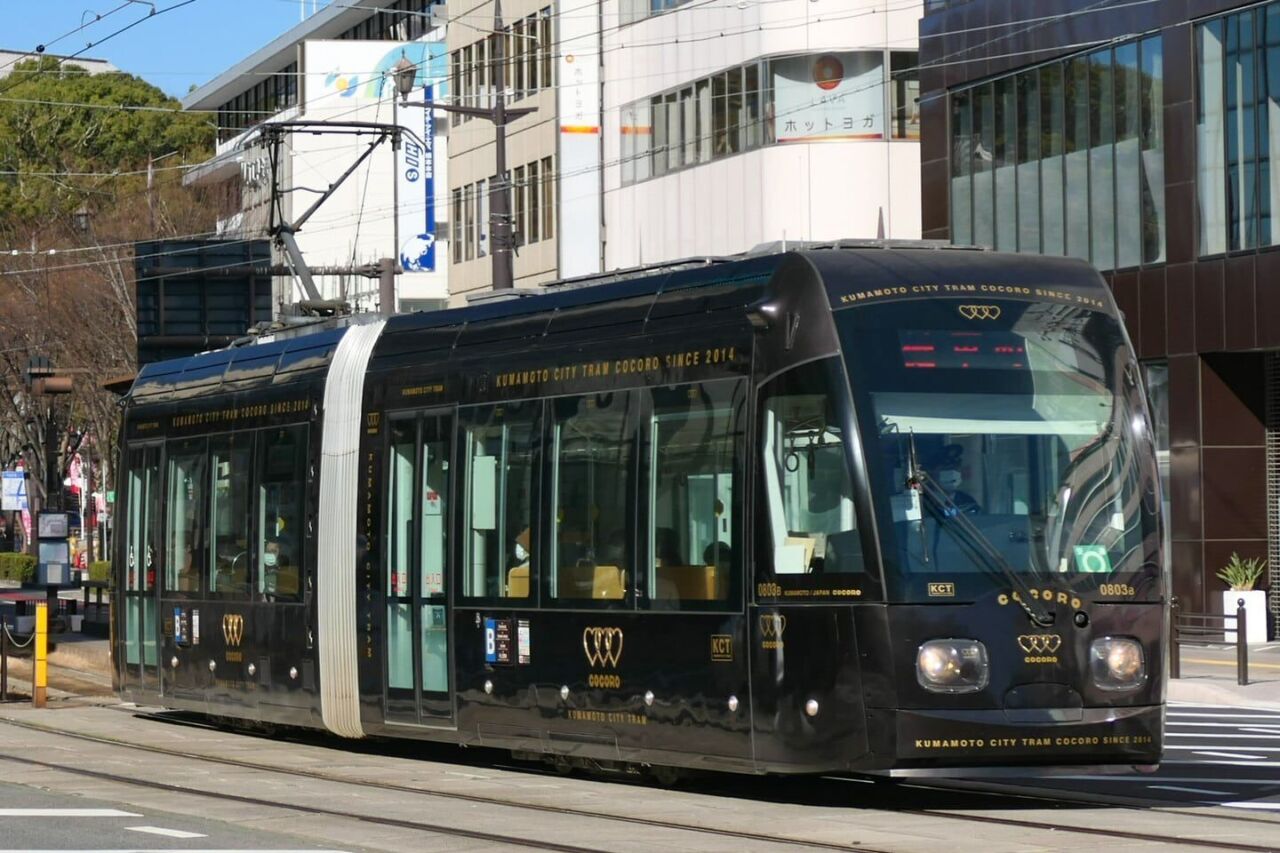
The tram is the simplest way to reach Kumamoto Castle. Board Line A (toward Kengunmachi) at the “Kumamoto-eki-mae” stop in front of JR Kumamoto Station and get off at “Kumamoto-jo / Shiyakusho-mae,” a ride of about 17 minutes. The fare is a flat ¥180 for adults and ¥90 for children. After getting off, walk north across Gyoko Bridge, and it takes about 10 minutes on foot to reach the Kumamoto Castle south entrance ticket office.
Trams run frequently, about every 5 minutes at peak times, making it the least error-prone choice for independent travelers. The same stop is also right next to Kumamoto City Hall, so if you want to go up to the 14th-floor observation hall first to photograph the castle panorama, you can go straight up as you leave the stop with no extra travel. Board the tram by the rear door, exit by the front door and pay when you get off. Stop displays are in Chinese and English, so even if you do not read Japanese you are unlikely to miss your stop.


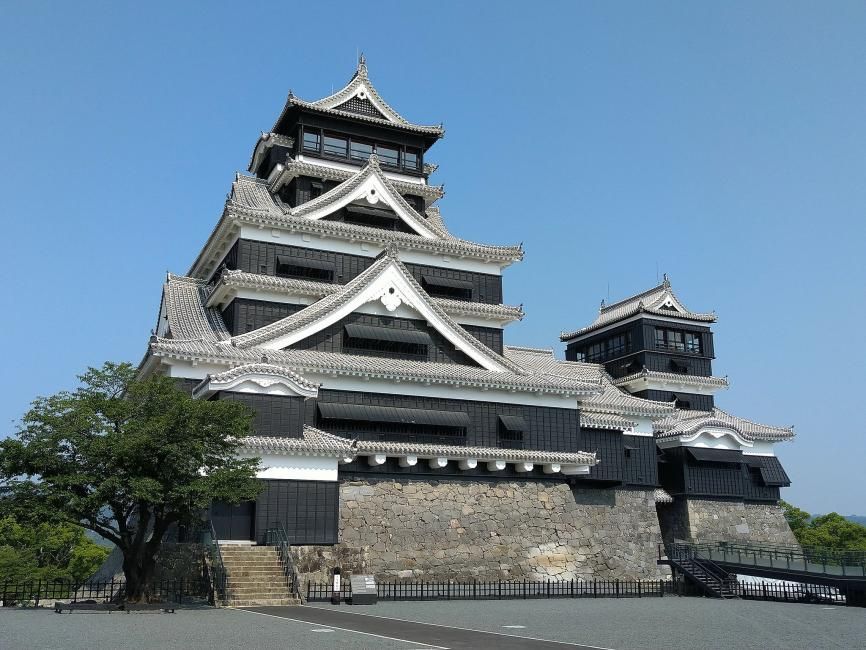
Kumamoto Castle Loop Bus “Shiromeguri-n” and Sakuramachi Bus Terminal
“Shiromeguri-n” is a retro loop bus designed for tourists. It departs from JR Kumamoto Station and circles Kumamoto Castle and nearby facilities via Sakuramachi Bus Terminal, running from 9:00 to 17:00 about every 20 minutes. A single ride is ¥180 for adults and ¥90 for children, and the one-day pass is ¥500 for adults and ¥250 for children. The operating company changed from April 1, 2026, so please check the on-site notices at the bus stops for timetables.
If you arrive in Kumamoto by highway bus, the terminus is usually Sakuramachi Bus Terminal. From here it is about a 10-minute walk to the Kumamoto Castle south entrance, or you can transfer directly to Shiromeguri-n. Above the bus terminal is the SAKURA MACHI shopping mall, which makes the wait easy. The bus body is painted like a retro streetcar and is a good photo subject in itself, and there is a voice guide on board introducing sights along the way. Tickets can also be bought directly from the driver with no reservation needed.
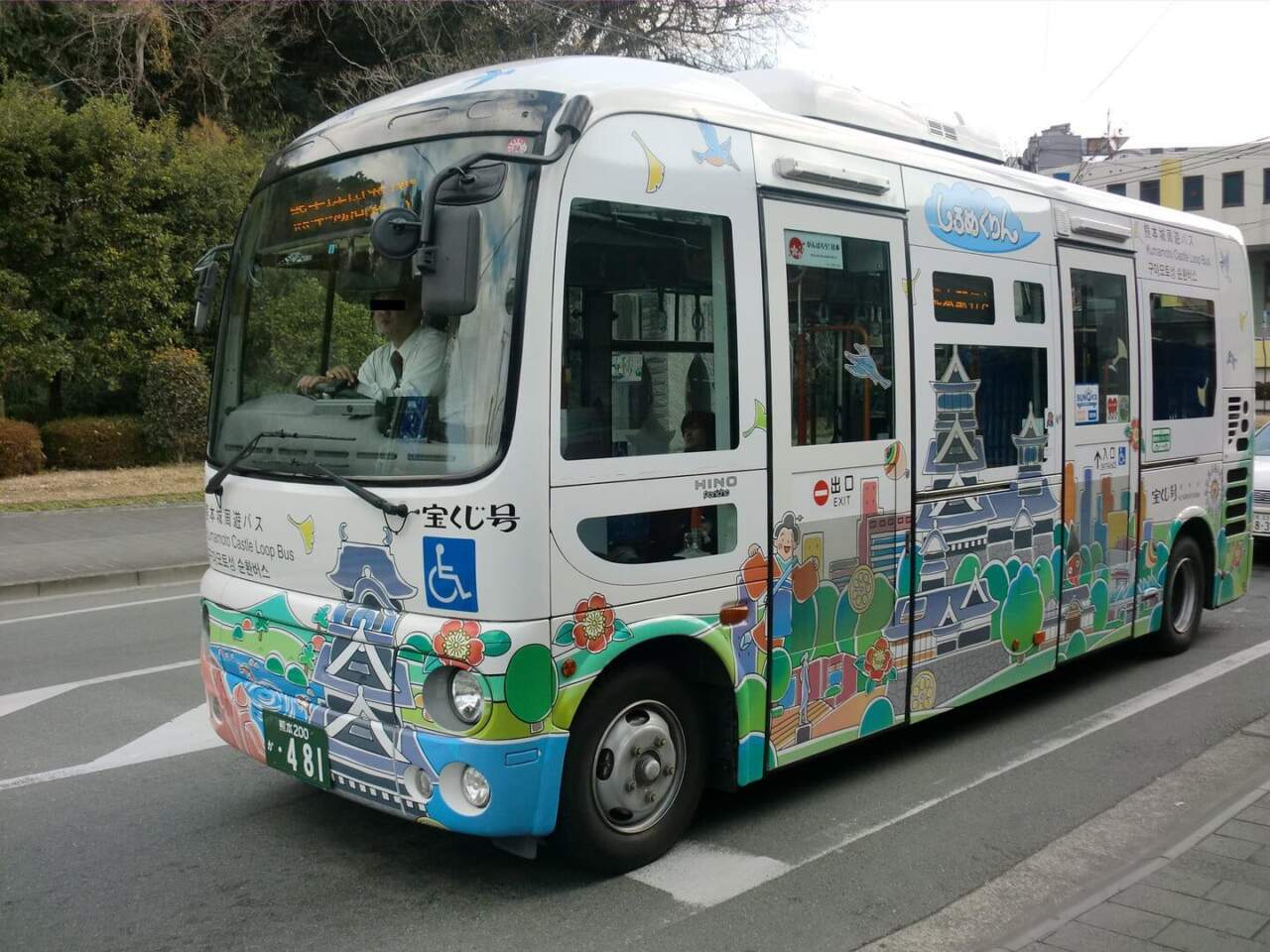
Free Shuttle Bus Inside the Castle and the Sakura-no-Baba Johsaien Parking Lot
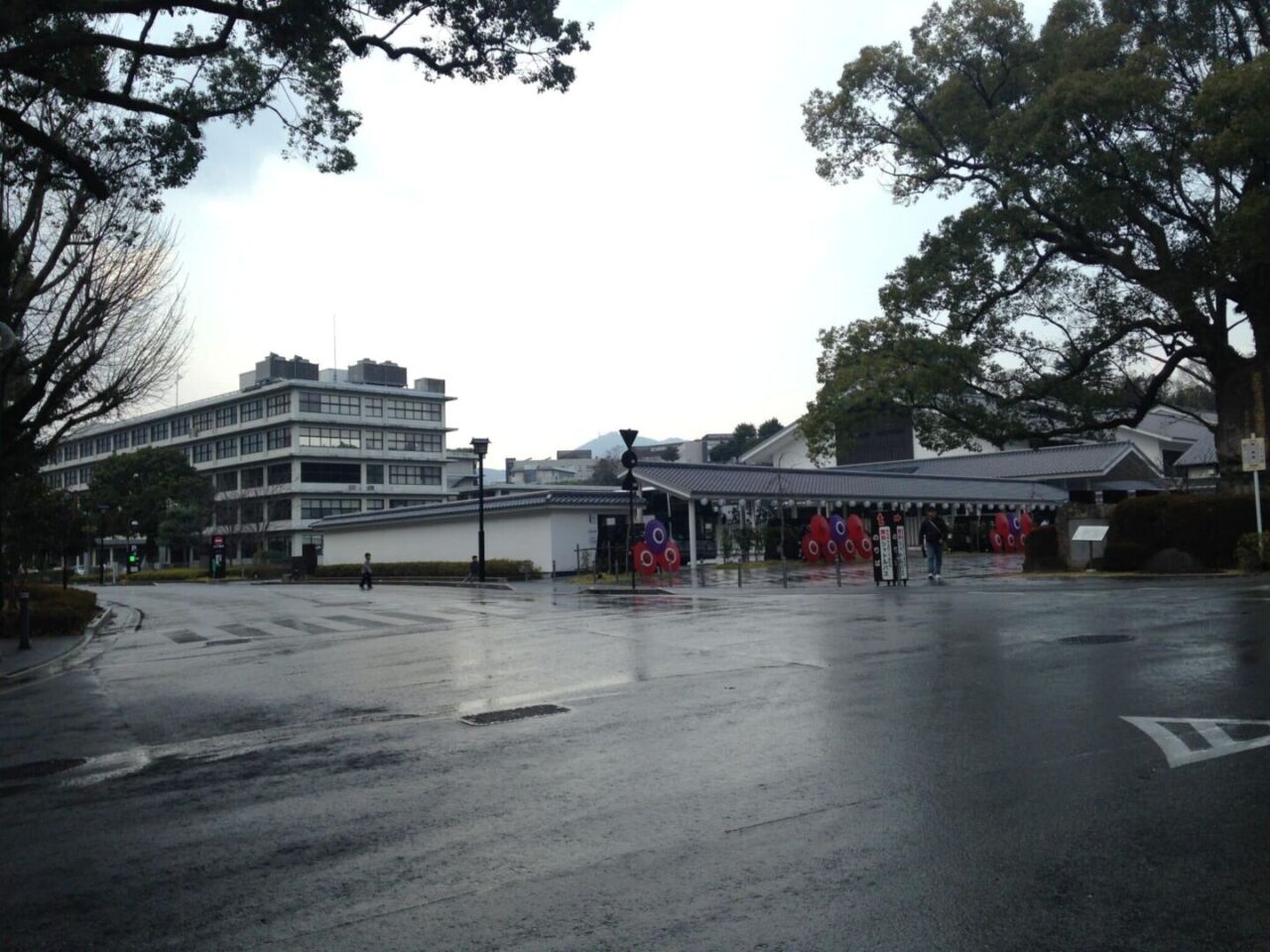
Once inside the castle area, the park provides a free shuttle bus between Sakura-no-Baba Johsaien and the Ninomaru Parking Lot (suspended after the 2026 earthquake and resumed daily from August 5, running 9:00 to 17:00), about every 10 to 15 minutes. It saves you the steep climb from the foot of the hill to the Honmaru, and families with elderly relatives or strollers should definitely use it.
If you drive, navigating to the Ninomaru Parking Lot is the most convenient. The fee is ¥400 for up to 2 hours and then ¥200 per hour. The other option is the Sakura-no-Baba Johsaien parking lot at the foot of the hill, where you can park, browse Johsaien and then take the shuttle up. Both lots tend to fill up around midday on holidays, so arrive before the 9:00 opening. The last bus ends at about 17:00, so allow time for the return.
Payment Methods and Money-Saving Tickets: Suica Doesn’t Work, So Bring Cash or a Contactless Card
This is the easiest trap in Kumamoto. Operators in Kumamoto Prefecture, including Kyushu Sanko Bus, Sanko Bus, Kumamoto Dentetsu, Kumamoto Bus and Kumamoto City Bus, stopped accepting nationwide interoperable transport IC cards such as Suica, PASMO and ICOCA on November 15, 2024, and switched to contactless credit card payment (touch payment). The Kumamoto City Tram has likewise introduced contactless payment and QR tickets.
Payment methods currently available include cash, credit/debit/prepaid card contactless payment, the region-only “Kumamon IC Card” and QR tickets such as “Kumamon! Pay.” To save money, the Kumamoto City Tram one-day pass is ¥500 and pays for itself with more than three rides in a day, and you can buy it directly from the driver. Be sure to carry a small amount of yen cash and do not board with only a Suica. If your credit card has no contactless function, we suggest getting ¥1,000 notes and ¥100 coins at a convenience store in Kumamoto Station before you set out.

What Are the Must-See Spots at Kumamoto Castle? The Main Keep, Special Viewing Route and Nearby Highlights
Below are the 15 best things to see at Kumamoto Castle, ordered along a route from inside the grounds to nearby stops.
Main Keep: The Symbol of Recovery Completed in 2021
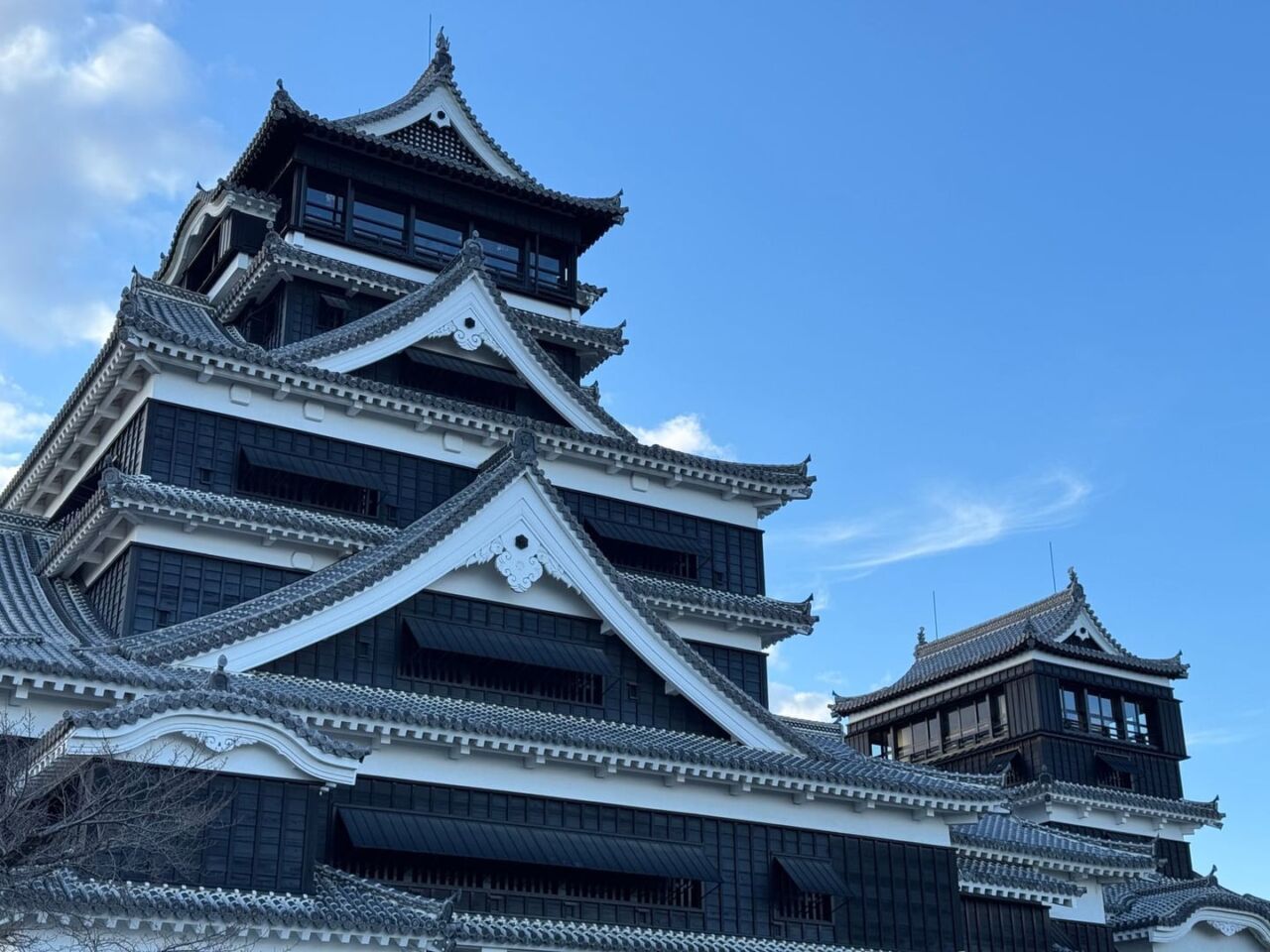
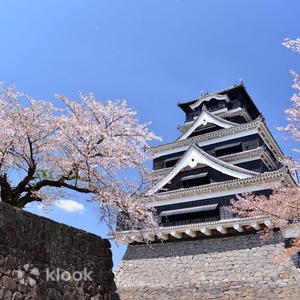
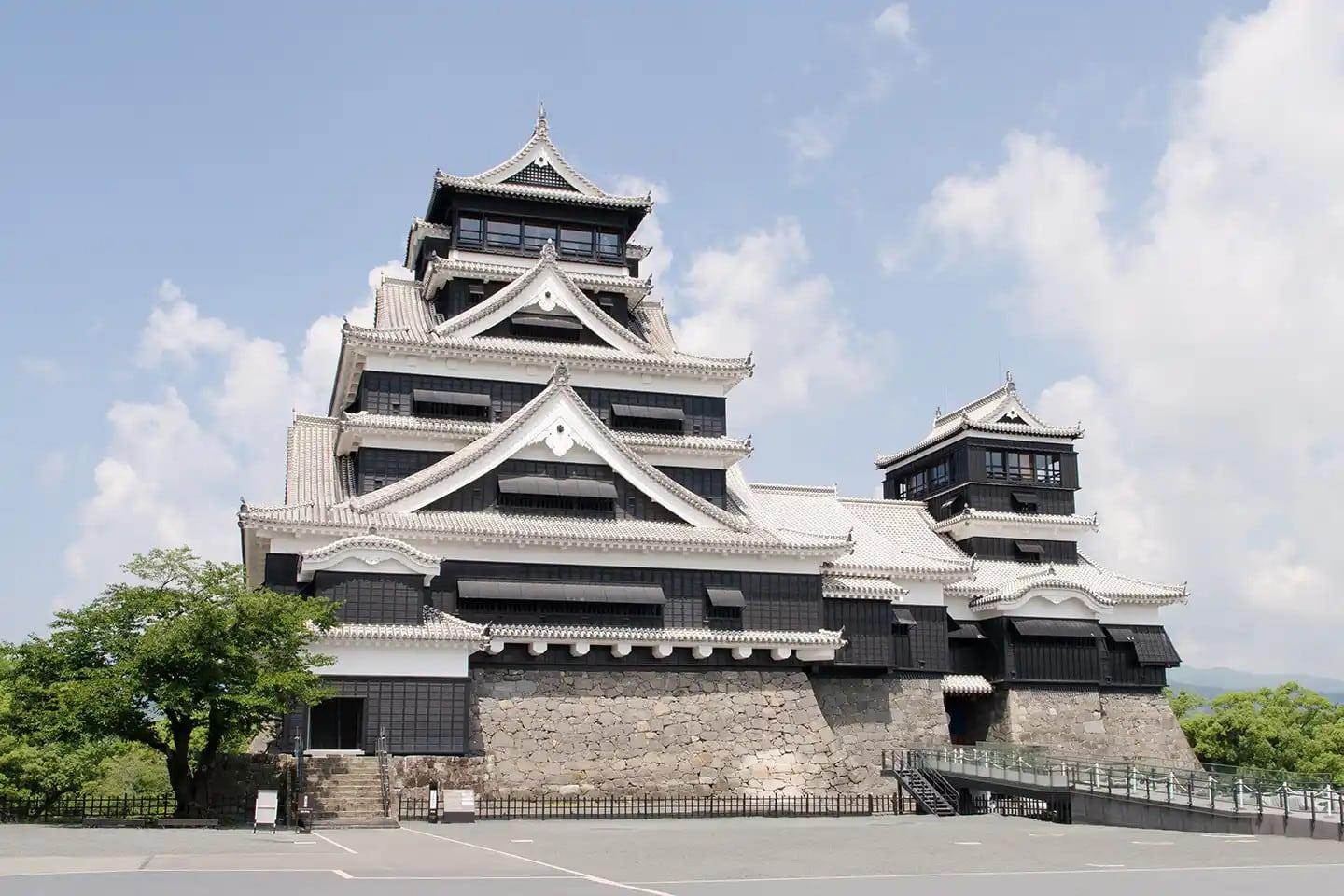
The combined structure of the large and small keeps is the heart of Kumamoto Castle. It has three tiers outside and six floors above ground inside, and the strong contrast of black-lacquered wood and white plaster is imposing. After restoration was completed on April 26, 2021 it fully reopened, and the interior was converted into a modern history museum with earthquake-resistant structure and an accessible elevator added.
The exhibits are themed by floor: the underground Anakura recreates an Edo-period kitchen space; the 1st floor covers Kato Kiyomasa’s castle building and the formation of the castle town, with a theater video; the 2nd floor covers the Hosokawa era and the armory; the 3rd floor covers the period after Meiji and the loss to fire in the Satsuma Rebellion; and the 4th floor shows repairs in the Showa and Heisei eras and the damage and restoration from the 2016 earthquake. The observation floor on the 6th floor offers a 360-degree view over Kumamoto’s streets and, on clear days, the distant Aso mountains, and an AR feature lets you overlay the view in front of you with old Meiji-era photographs. Admission to the keep ends 30 minutes before closing, and allow at least 40 minutes.
Special Viewing Route: An Elevated Restoration Walkway 6 Meters Above the Ground
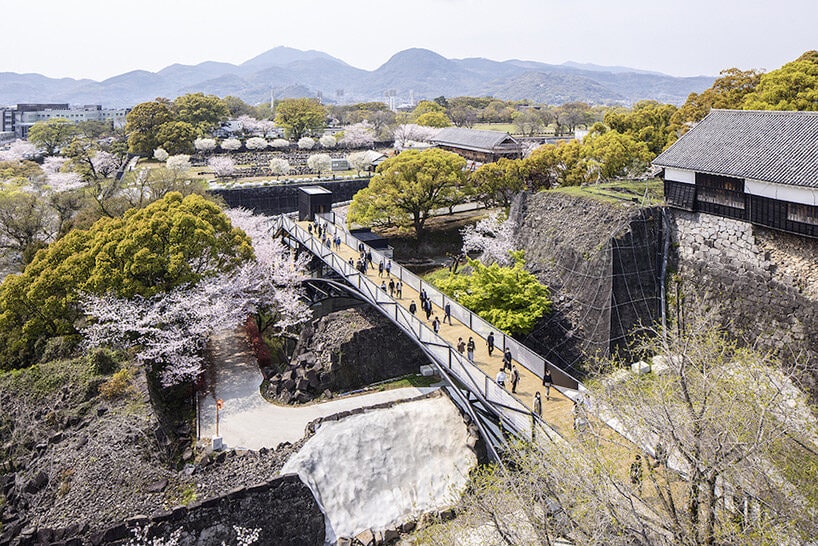
The Special Viewing Route is Kumamoto Castle’s most distinctive way to visit and an experience you cannot find at other famous Japanese castles. This elevated walkway is about 6 meters above the ground and crosses areas still under construction, letting visitors look down at the restoration of the collapsed stone walls from above and up close without disturbing the work.
Along the way you can clearly see how craftsmen do carpentry, plaster finishing and stone placement, which is like visiting a living cultural-property restoration site for free. The international design awards the Special Viewing Route has won are impressive too: the 2020 Good Design Award Focus Issue prize and the 2021 Asia Design Prize Grand Prize. Because overall restoration will not be finished until 2052, the route is expected to operate until around 2042 before being dismantled. In other words, what you see now is a time-limited landscape.
Uto Yagura: The “Third Keep” Now Being Dismantled for Restoration
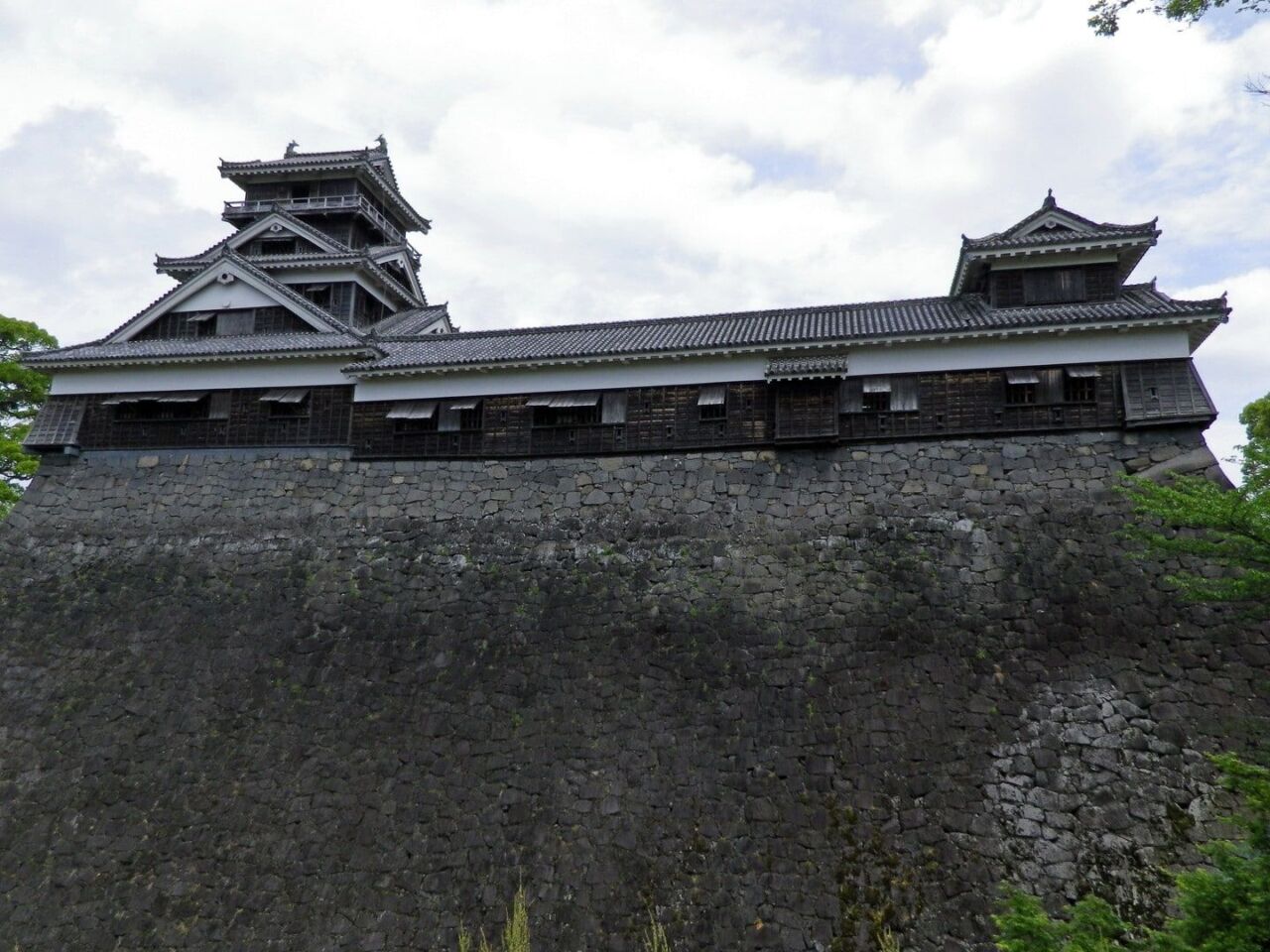
Uto Yagura is a multi-tier turret with three stories and five levels plus one basement floor, with a scale and structure almost equal to an ordinary keep, so it is called the “Third Keep.” It is also a nationally designated Important Cultural Property. It survived the fire of the 1877 Satsuma Rebellion and kept its original appearance from the castle’s construction up until the 1960s, making it the most precious surviving building in the castle.
It is currently closed to visitors.Damaged by the 2016 earthquake, Uto Yagura has been undergoing full dismantling and restoration since 2022. Dismantling was completed in 2025, and from March 2026 it entered the survey and design stage, with restoration work expected to start in fiscal 2028 and finish in fiscal 2032. At this stage you can only view the construction site, covered by a protective structure, from a distance along the Special Viewing Route or around Kato Shrine, so please do not go expecting to go inside.
Mushagaeshi Stone Walls: Fan-Shaped Curves Enemy Soldiers Could Not Climb
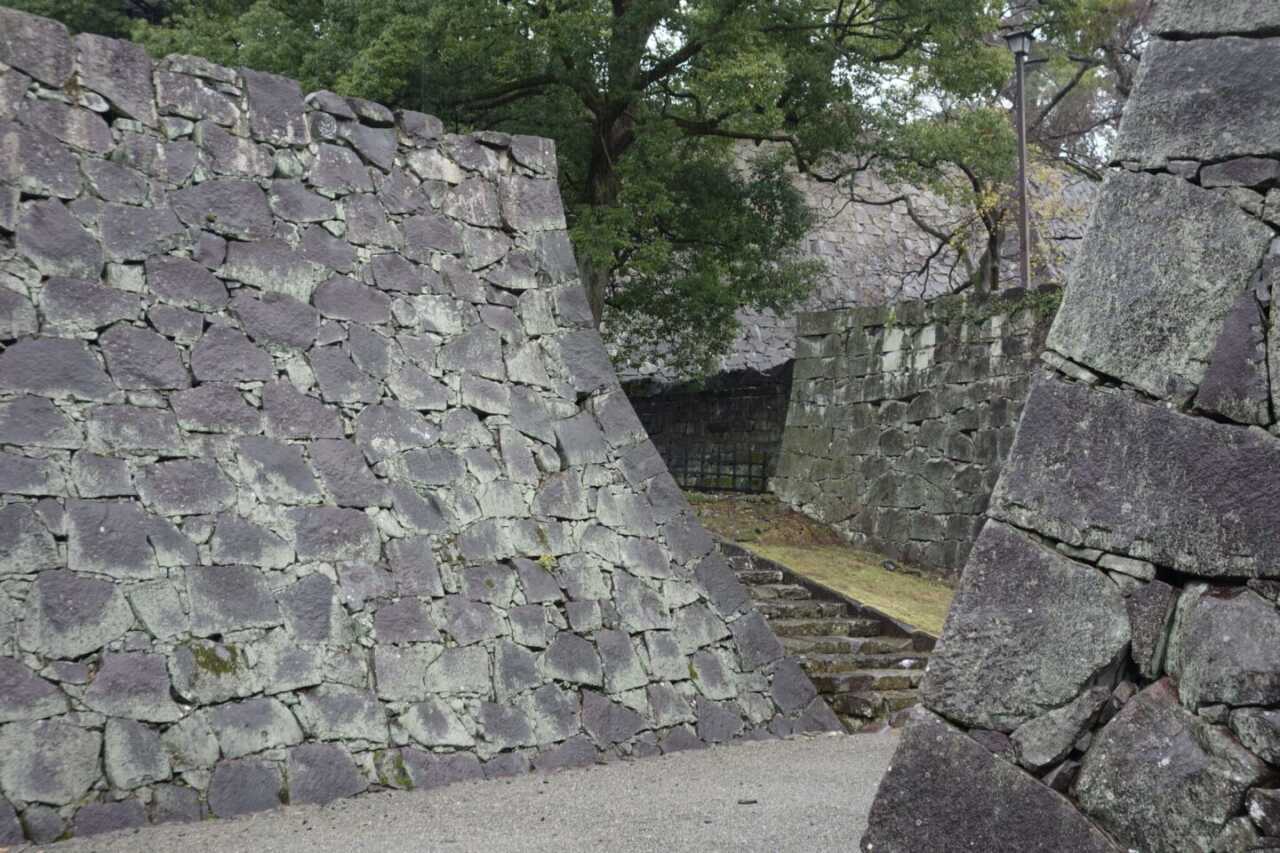
The defensive “Mushagaeshi” stone wall technique is Kumamoto Castle’s most recognizable sight and the signature work of Kato Kiyomasa’s castle-building skill. The lower part of the wall is gently sloped and gets steeper toward the top until it is nearly vertical, forming an elegant concave curve. A samurai in armor who climbed halfway would be caught by the flared angle, which gave the wall its name.
This technique is not only defensive but also helps with drainage and earthquake resistance: the curved surface spreads the weight above to the base, one reason large areas of Kumamoto Castle’s stone walls survived repeated earthquakes. The best viewing points are around Hoate Gomon and beside the passage from the Ninomaru to the Honmaru, where backlighting gives the stone surface clear shadows and the most layered photos. There is also a stone storage yard in the park where you can see numbered collapsed stones.
Iida-maru Five-Story Turret and the “Miracle Single Stone Wall”: The Lone Column That Held During the Earthquake
After the 2016 earthquake, almost all of the stone wall beneath the Iida-maru Five-Story Turret collapsed, leaving only a single row of stones at the corner supporting the entire building. The media called this sight the “Miracle Single Stone Wall,” and the Iida-maru Five-Story Turret and the “Miracle Single Stone Wall” became the pairing most often seen in coverage of the Kumamoto earthquake, a symbol of the disaster and of resilience.
Restoration of the stone wall took nearly four years and was completed in 2024, using 246 “pressure plates” for seismic reinforcement for the first time in Japan to spread the building’s weight evenly across the wall face. Restoration of the building itself began in 2025 with a target completion of 2028. You can currently look toward Iida-maru from the southern section of the Special Viewing Route to see the reinforcement method and construction under the protective cover. In addition, five other Important Cultural Properties, Tago Yagura, Shichiken Yagura, Jushiken Yagura, Yonken Yagura and Genshinojo Yagura, were also dismantled in 2025 and have entered the restoration stage.
Honmaru Palace and the Akari Passage: The Phantom Grand Hall Still in the Design Stage
The Honmaru Palace Grand Hall was the space for the lord’s receptions and administration, and its most gorgeous room, the “Shokun-no-Ma,” is famous for its gold-gilded wall paintings. The “Akari Passage” under the palace is a rare underground corridor in all of Japan, quite unusual in castle architecture.
Please note it is not currently open.The Honmaru Palace Grand Hall’s floor sank and its walls peeled in the 2016 earthquake. According to the restoration status published by Kumamoto Castle officials, this area is still at the survey and design stage, has not entered restoration construction, and has no publicly announced schedule yet. Many older online articles still say you can take the Akari Passage up to the main keep, but that is pre-earthquake information; when you visit, please follow on-site route signs and official website announcements.
Ninomaru Plaza: The Best Lawn for Photographing the Large and Small Keeps Together
Ninomaru Plaza is an open grassy area and Kumamoto Castle’s most classic panoramic photo spot. Standing on the east side of the plaza, you can fit the large keep, small keep and the stone walls toward Uto Yagura into one frame, and it is far enough away with an unobstructed view that even a phone can capture the grandeur.
The plaza itself is free and needs no ticket, and right next to it are the Ninomaru Parking Lot and the stop for the free shuttle inside the castle, so it is a good warm-up before entering or a last stop before leaving. In spring it is also a popular picnic spot for cherry blossoms, and during the Kumamoto Castle autumn festival it stays open later in the evening with lighting, so you can photograph the keep lit at night. On the west side of the plaza is the main building of the Kumamoto Prefectural Museum of Art, where you can go in afterward to rest in the air conditioning. Allow 15 to 20 minutes.
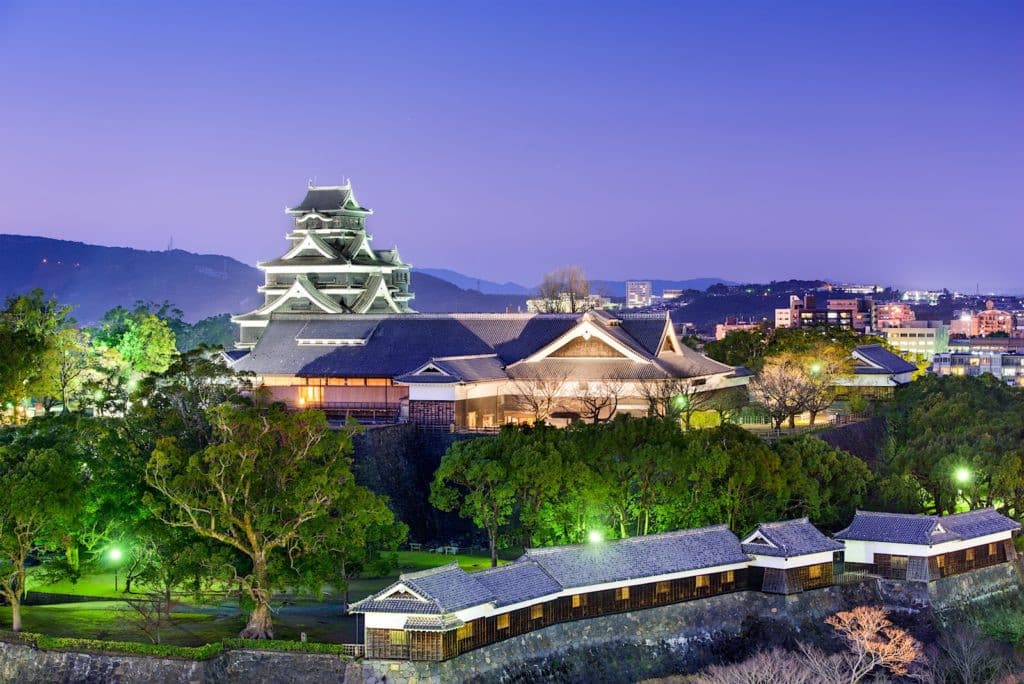
Kumamoto Castle Night Illumination 2026: Shiro Akari, October 2 to November 1
“Reiwa 8 Kumamoto Earthquake Recovery Project: Autumn Kumamoto Castle Festival – Forward, Together” runs from October 2 to November 1, 2026. The specially opened areas of Kumamoto Castle extend opening hours to 21:00 (last entry 20:00), and the area in front of the main keep has “Shiro Akari,” a light show with projections, lasers, searchlights and bamboo lanterns. Parking lots such as the Ninomaru stay open until 21:30 during the same period, and on November 3 there is also Takeda-style horseback archery (yabusame). Crowds are heavier during the period, so buy entry tickets in advance.
Kato Shrine: A Free Photo Spot Enshrining the Founder of the Castle
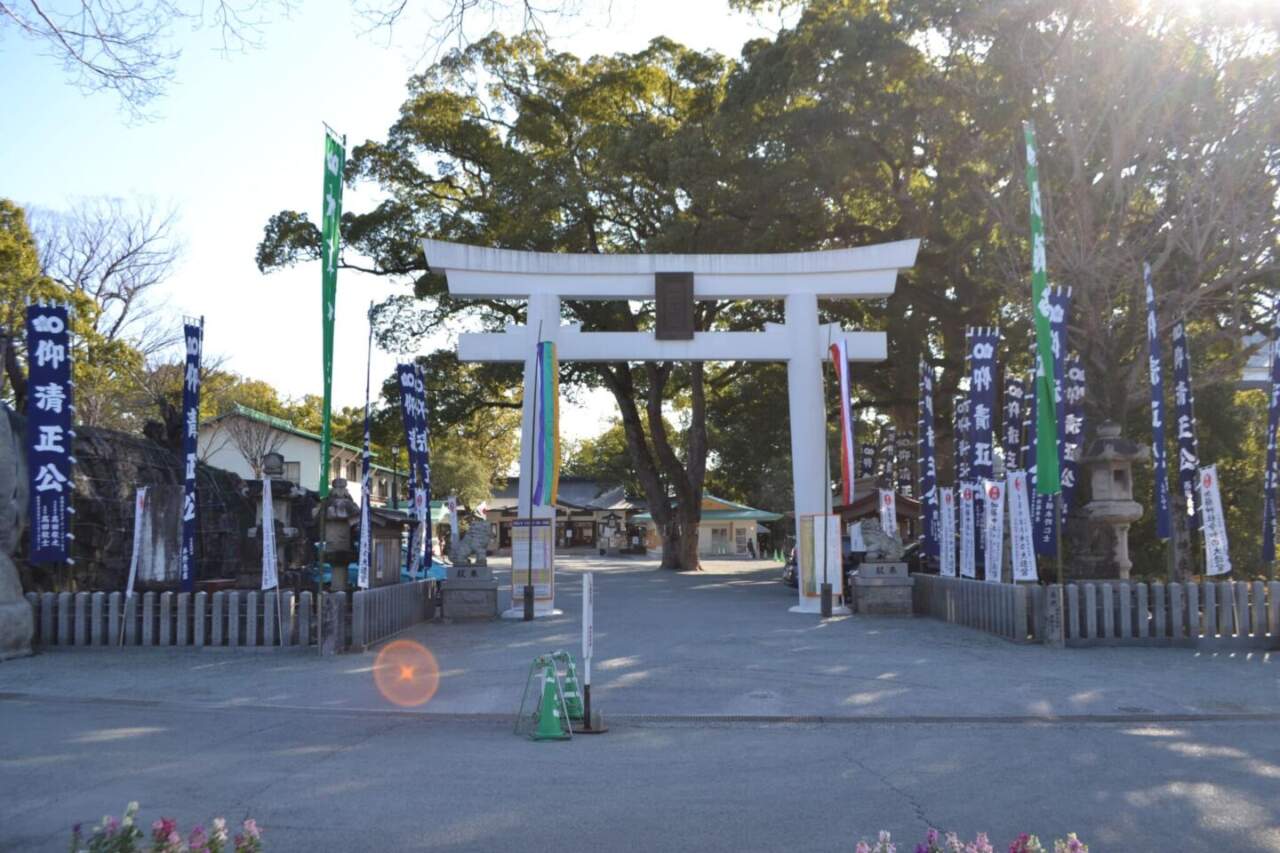
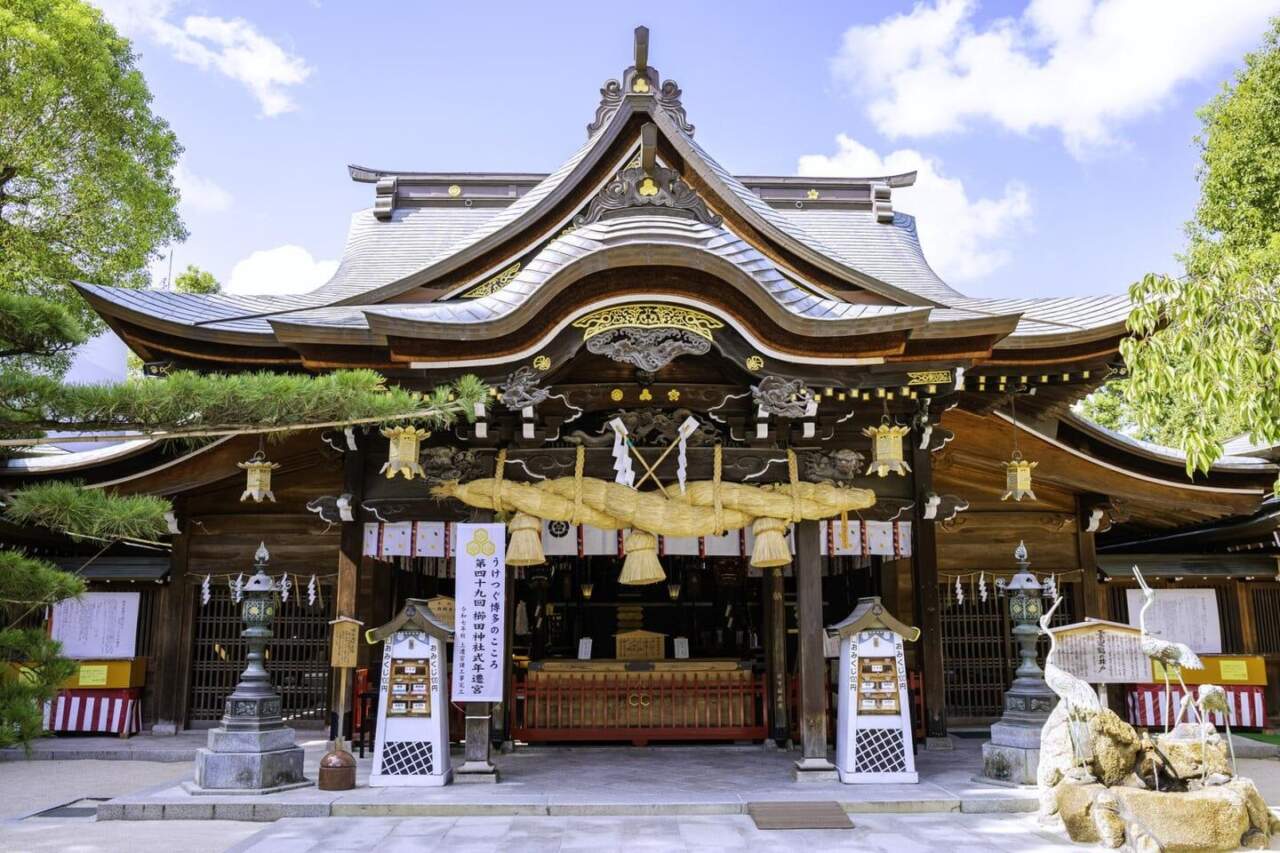
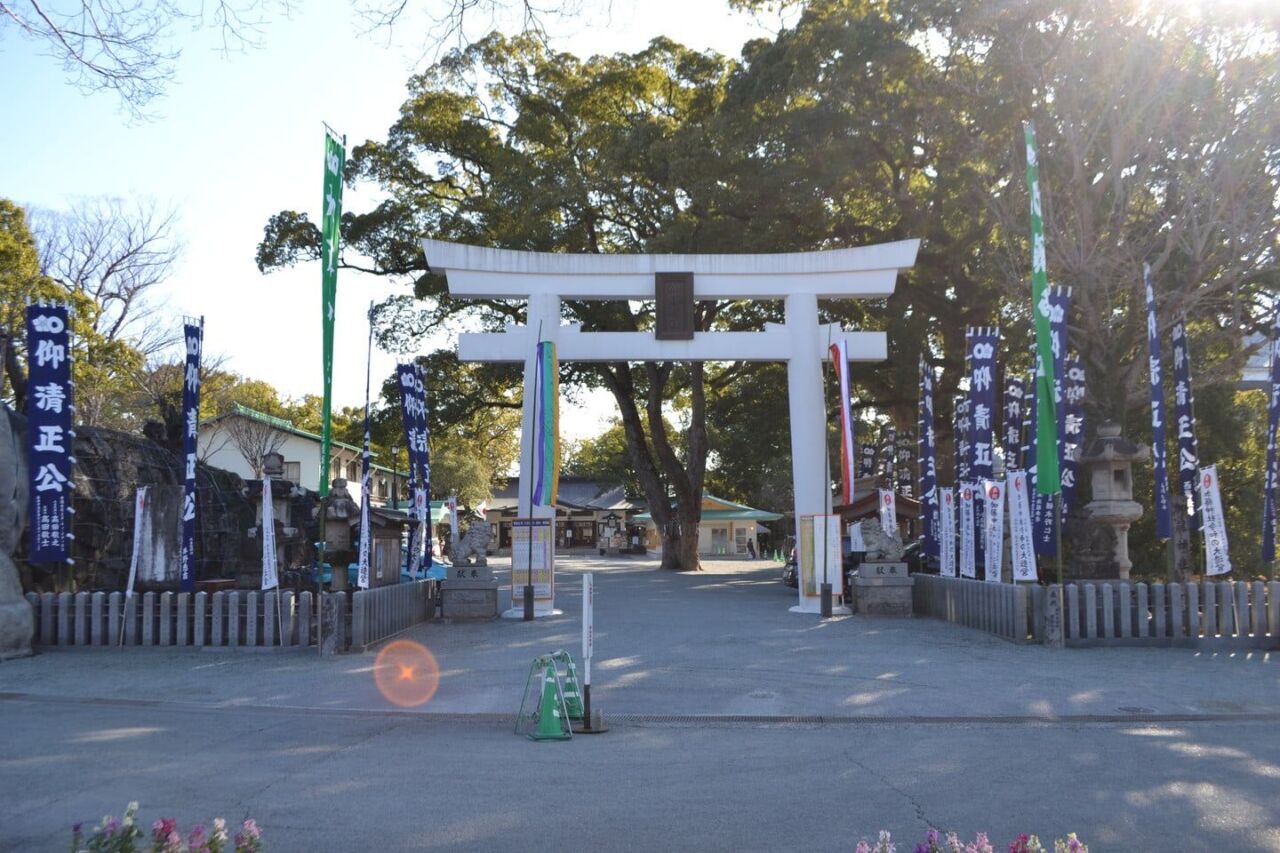
Kato Shrine sits just north of the main keep and enshrines Kato Kiyomasa, the founder of the castle, whom locals call “Seishoko-san” and have long regarded as Kumamoto’s guardian deity. The shrine grounds are free to enter, a place of sincere faith and also Kumamoto Castle’s most famous free photo angle.
Looking out from the approach inside the grounds, you can frame the large and small keeps together with the buildings toward Uto Yagura. The composition is better than many paid viewpoints in the park and is the most famous spot for shooting the “main keep plus Uto Yagura” together, with especially lovely light around sunset. The shrine’s office offers omamori and goshuin, and omamori for victory, career success and family prosperity, the “hissho” type, are the most popular. Goshuin must be requested in person at the shrine office, with times following on-site notices. When worshipping, follow the etiquette of two bows, two claps and one bow.
Sakura-no-Baba Johsaien: An Edo Castle-Town Shopping Street at the Foot of the Castle
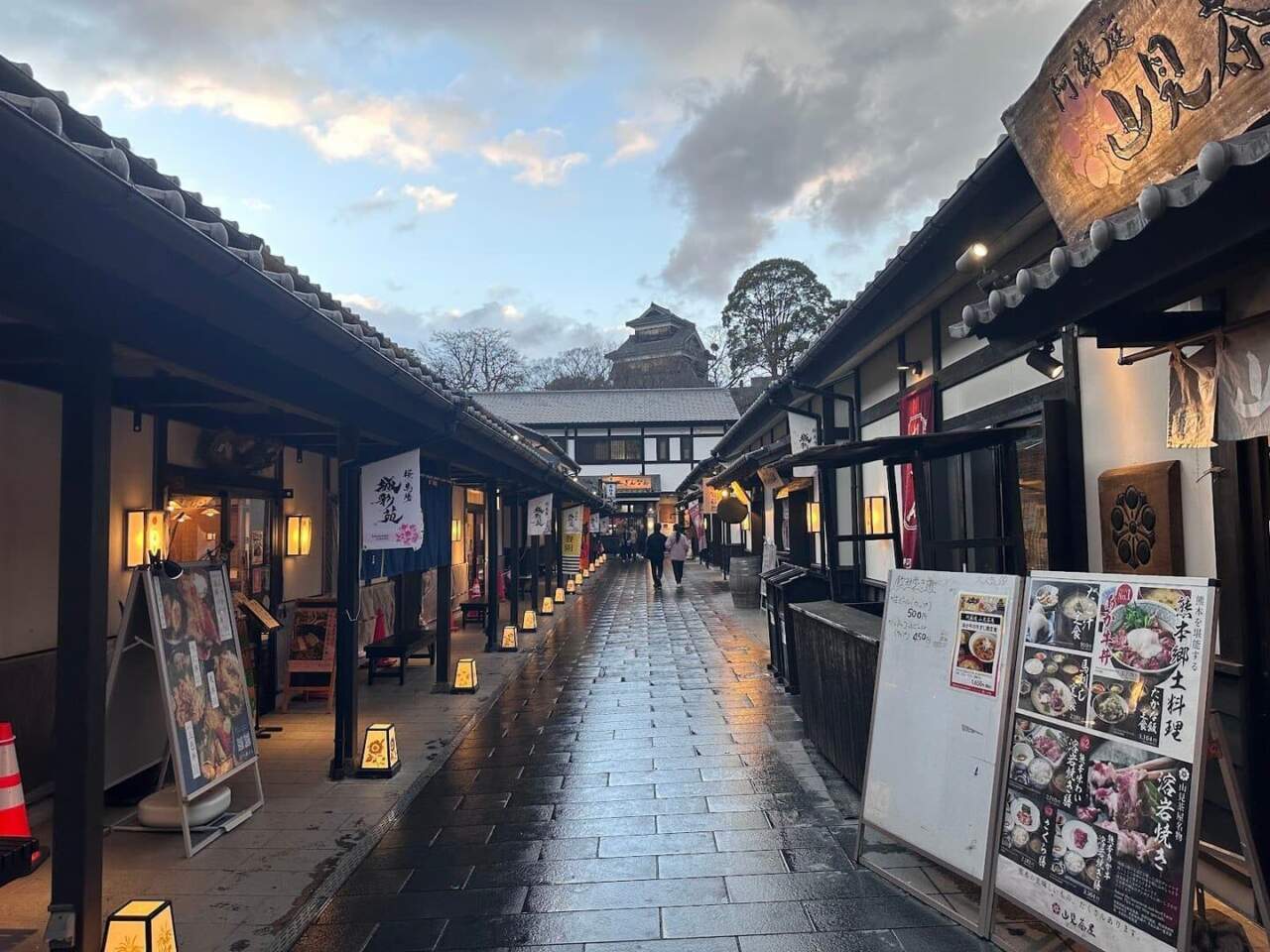
Sakura-no-Baba Johsaien lies at the south foot of Kumamoto Castle. In the Edo period it was a training ground for horseback riding and archery, and today it has been recreated as a castle-town-style tourist park with free entry. The core “Sakura-no-Koji” has more than 20 restaurants and souvenir shops and is the best place in your itinerary to refuel and eat.
Must-try Kumamoto specialties include horse meat sashimi (basashi), karashi renkon (mustard lotus root), taipien and freshly made dango, while the most popular souvenirs are Homare no Jin taiko, Fuga Maki and Kumamon goods. The “Kumamoto Castle Omotenashi Bushotai” currently offers greetings such as conversation and photos inside Johsaien, from 11:00 to 12:00 and 14:30 to 15:30 (announced September 18, 2026), with actual sessions following the official performance information. The park also has a comprehensive tourist information desk where you can get Chinese-language maps and the latest restoration progress booklet, a good first stop before entering the castle.
Kumamoto Castle Museum Wakuwakuza: A Hands-On History Museum (Temporarily Closed)
Wakuwakuza sits inside Johsaien and is a hands-on history museum built around “seeing, hearing and touching.” It is temporarily closed because of the July 2026 Kumamoto earthquake and is expected to reopen in December, and all events planned for September to November have been cancelled or postponed.
When open, the museum uses video, models and interactive installations to introduce Kumamoto Castle’s construction history and castle-town life, and offers kimono, warlord costume and ninja costume rental for trying on. A single-museum ticket is ¥300 for high school students and older and ¥100 for elementary and junior high school students. It is open from 9:00 to 17:30 with last entry at 17:00. For the latest operating status, check the Sakura-no-Baba Johsaien official website (sakuranobaba-johsaien.jp).
Kumamoto Prefectural Museum of Art: An Art Breather in Ninomaru Park
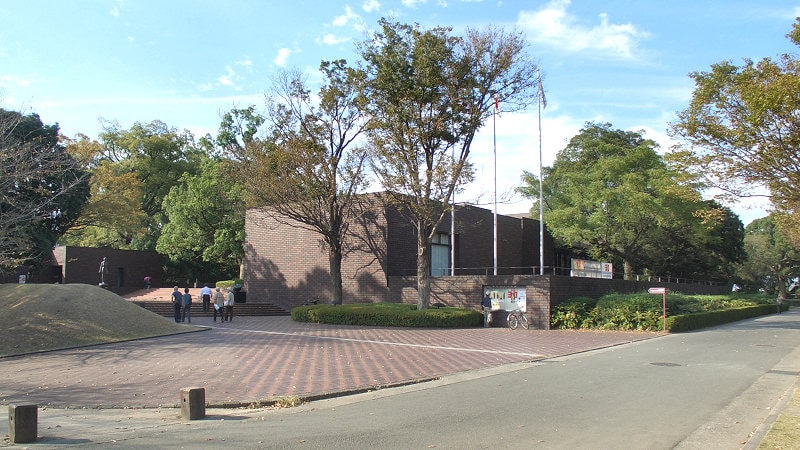
The main building of the Kumamoto Prefectural Museum of Art stands among the trees of Ninomaru Park, just a few minutes’ walk from Ninomaru Plaza, and is the easiest-to-miss side stop within the Kumamoto Castle grounds. Designed by Kunio Maekawa, it sits quietly in the greenery and keeps just the right distance from the castle scenery.
Its collection centers on Kumamoto-related art and crafts, artifacts handed down by the Hosokawa family and modern Japanese-style paintings, with special exhibitions held from time to time. For travelers who have walked stone steps and slopes all morning, this is a good midway rest: it is air-conditioned and not crowded, and when you go back to Ninomaru Plaza to photograph the keep, the evening light fits just right. Permanent exhibition tickets and special exhibitions are priced separately, and opening hours and closing days follow the official website.
Kumamoto City Hall 14th-Floor Observation Hall: A Free Spot for Photographing Kumamoto Castle Head-On
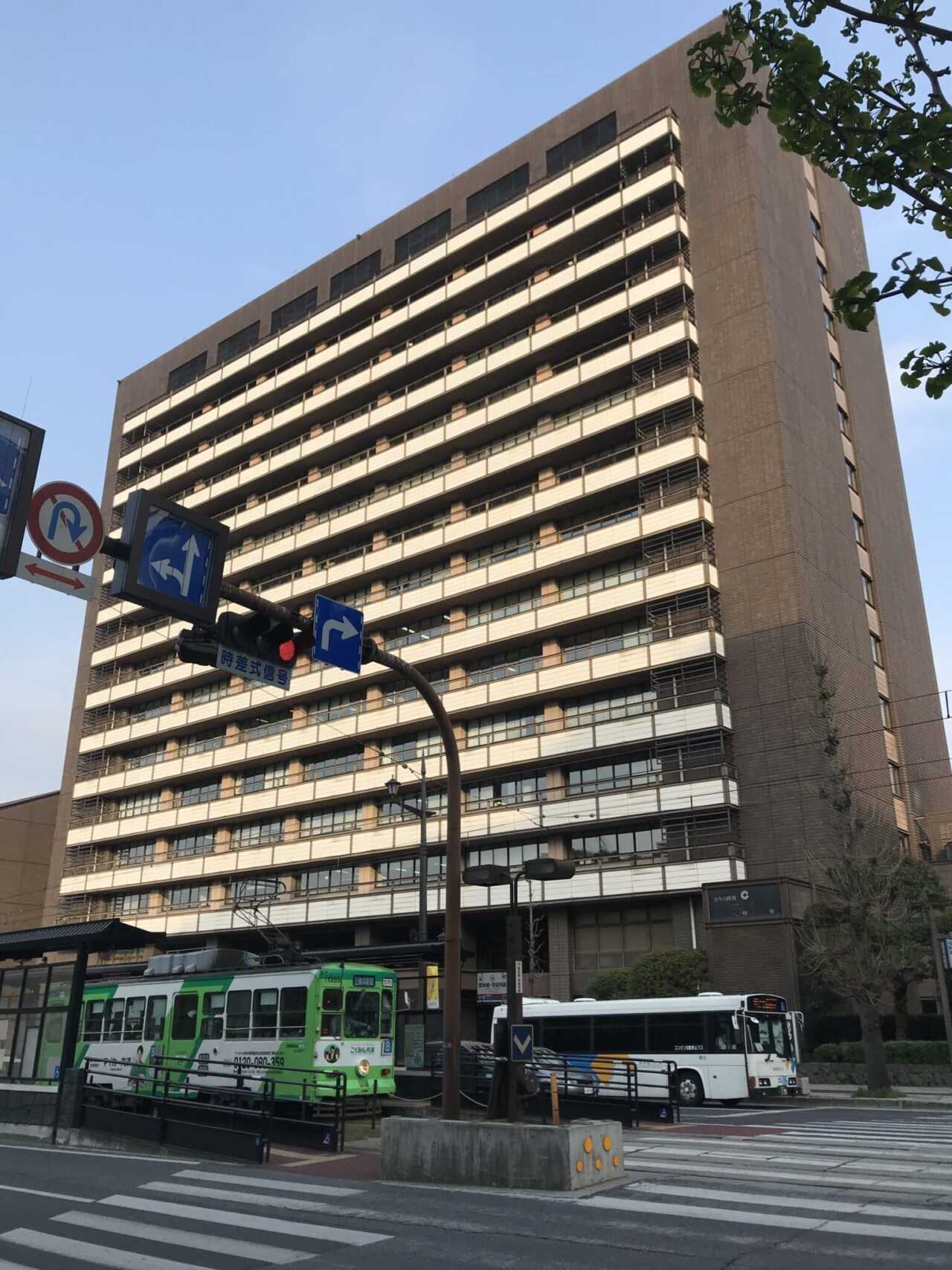
The answer to getting the fullest, most frontal panorama of Kumamoto Castle is not inside the castle but on the 14th floor of the Kumamoto City Hall main building across the road. There is a free observation hall here with a full wall of windows facing the castle grounds, where the relative positions of the large and small keeps, the long wall and the moat are clear at a glance, a spot even local photographers recommend.
The observation hall is open until 22:00 (closed over the year-end and New Year holidays), which means you can still photograph the lit-up castle at night, the only place where you can keep viewing the keep after the park closes. There is also a restaurant on the 14th floor where you can eat while looking at the castle. It is right at the tram stop “Kumamoto-jo / Shiyakusho-mae,” needs no ticket at all, and fits well before entering at dawn or after leaving in the evening. For night shots, bring a small tripod or rest your camera on the window frame, and shield the area around the lens with a jacket when the glass reflects.
Suizenji Jojuen Garden: A Momoyama-Style Garden Fed by Aso Underground Water
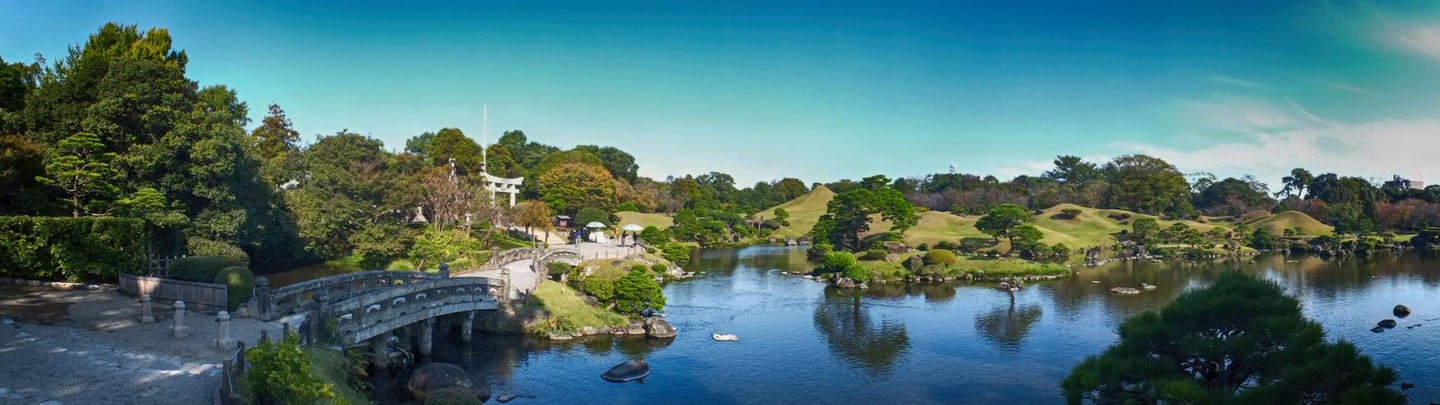
Suizenji Jojuen was laid out in 1632 by the Hosokawa family, lords of Kumamoto, as a Momoyama-style stroll garden, about 20 minutes by car from Kumamoto Castle and the most classic extension of a half-day city tour. The garden centers on a spacious pond surrounded by grassy slopes trimmed into gentle hills and pine trees, and one cone-shaped grassy mound is often described as a “miniature Mt. Fuji.”
The garden’s biggest feature is that the pond water comes from underground springs of the Aso volcano, crystal clear and especially cool in summer. The Izumi Shrine and the “Kokin Denju-no-Ma” in the garden are must-sees; the latter is a thatched-roof building moved from Kyoto where you can pay to enjoy matcha and wagashi while looking out over the garden’s water scenery. A walk around takes 40 to 60 minutes, and it is about 5 minutes’ walk from the “Suizenji-koen” tram stop.
Kumamon Square: The Manager’s Office and Limited-Edition Souvenirs
Kumamon Square is in the East Building of the Tsuruya Department Store and is the official base where Kumamon works as “Head of Sales,” and the easiest side stop to fit in next to the “Suidocho” tram stop. The manager’s desk and seat are fully preserved inside, so even if he is not there, you can sit beside them for a photo.
The range of limited-edition goods sold here is the most complete in all of Kyushu, from plush toys and stationery to snacks and liquor with Kumamon designs, ideal for taking care of your souvenir shopping in one go. The manager holds meet-and-greets and dance performances inside from time to time, and his hours vary, so be sure to check the day’s “attendance schedule” on the official website before you set out and decide what time to go, so you do not miss him. Entry is free. There is also a cafe bar inside where you can order a drink with Kumamon latte art and sit down to rest, a good midway stop while shopping.
Kamitori and Shimotori Shopping Arcades: Kumamoto’s Liveliest Covered Shopping Streets
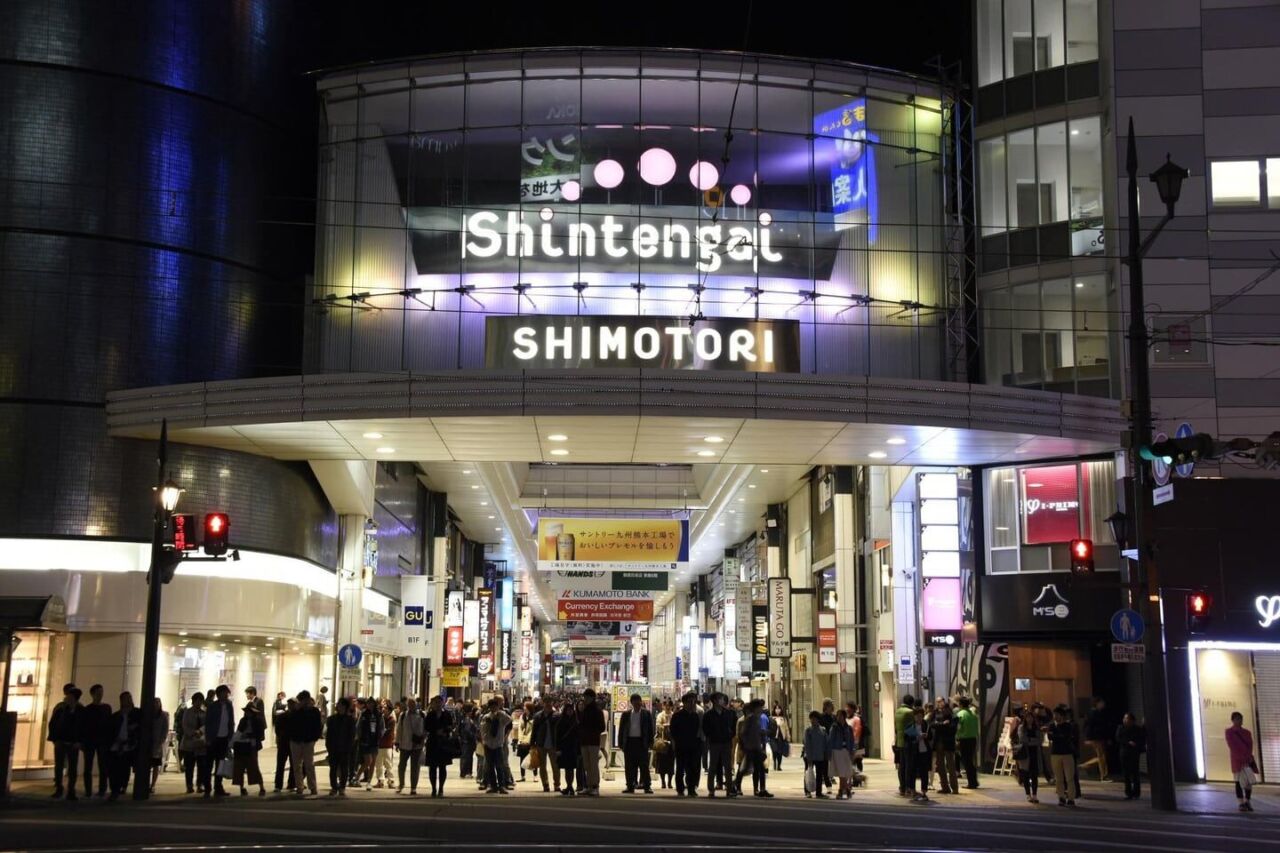
Kamitori and Shimotori are two huge connected covered shopping arcades in central Kumamoto City, and together with the Shinshigai area they make up one of Kyushu’s top downtown districts. They are covered all the way, so you can shop comfortably even in the rain, and they are a good way to end a Kumamoto Castle itinerary.
Shimotori leans toward chain brands, drugstores and large bookstores and has the densest crowds, while Kamitori has more individual small shops, old stores and cafes and a relatively quieter atmosphere. For dinner you can take care of Kumamoto’s three signature foods in this area: Kumamoto ramen, horse meat dishes and taipien, and Katsuretsutei Honten, recommended by the Michelin Guide, is also in Shinshigai. Getting off at the “Torichosuji” tram stop puts you right at the entrance, and it is about 10 minutes’ walk to the Kumamoto Castle south entrance. The streets around the arcades are also where downtown accommodation is most concentrated, so it is very convenient to return to your hotel after browsing in the evening.
How Much Does Kumamoto Castle Cost? Ticket Types, Combo Tickets and Guided Tours
Kumamoto Castle admission is ¥800 for adults, and adding Wakuwakuza costs only ¥50 more (Wakuwakuza is temporarily closed and expected to reopen in December).
| Ticket type | High school students and older | Elementary and junior high school students |
|---|---|---|
| Kumamoto Castle single-site admission ticket | ¥800 | ¥300 |
| 2-site combo ticket (Kumamoto Castle + Wakuwakuza) | ¥850 | ¥300 |
| 3-site combo ticket (+ Kumamoto Museum) | ¥1,100 | ¥400 |
| Groups of 30 or more (Kumamoto Castle) | ¥640 | ¥240 |
| Preschool children | Free | |
Kumamoto Castle Single-Site Admission: The Basic ¥800 Adult Ticket
The single-site Kumamoto Castle ticket is the most basic ticket type. It covers the paid areas outside Ninomaru Plaza, the Special Viewing Route and all floors inside the main keep, which means ¥800 takes you all the way up to the 6th-floor observation level of the main keep, very good value. Preschool children are free, and groups of 30 or more get a discounted price of ¥640.
Tickets are sold at the ticket windows at the south or north entrance. Ticket sales end each day at 16:00, one hour before closing, so spontaneous visitors should take note. Opening hours are 9:00 to 17:00 from September to June (last entry 16:00) and extended to 9:00 to 19:00 in July and August (last entry 18:00), with the only closure on December 29. Chinese-language maps of the grounds and restoration progress booklets are available at the ticket windows and entrances, so grab one to follow along. Free wheelchair loans are also available in the park.
2-Site Combo Ticket (Kumamoto Castle + Wakuwakuza): Only ¥50 More
The 2-site combo ticket is ¥850 for adults and ¥300 for elementary and junior high school students, only ¥50 more than Kumamoto Castle alone, and includes admission to Wakuwakuza inside Johsaien. However, Wakuwakuza is currently temporarily closed because of the earthquake (expected to reopen in December), so please ask at the Kumamoto Castle ticket window about using or refunding the combo ticket during the closure.
Wakuwakuza is open 9:00 to 17:30 with last entry at 17:00, closing later than the castle itself, so after it reopens you can tour the castle first and then walk down to the museum. When buying, just tell the window you want the 2-site combo ticket.
3-Site Combo Ticket (+ Kumamoto Museum): A ¥1,100 In-Depth History Tour
The 3-site combo ticket is ¥1,100 for adults and ¥400 for elementary and junior high school students and adds the Kumamoto Museum to the 2-site ticket. Wakuwakuza is temporarily closed, so please check the ticket contents at the ticket window before buying. The Kumamoto Museum is next to Ninomaru Park and exhibits Kumamoto’s nature, history and culture, and also helps you understand Kumamoto Castle’s role in the castle town in a wider context.
This ticket suits travelers interested in history who are willing to spend most of a day around the castle area. If your schedule is only half a day and you also need to rush to Suizenji or Aso, the 2-site ticket is enough, so you do not buy something you cannot finish. The three sites are within walking distance of each other, and the suggested order is Kumamoto Castle, Kumamoto Museum, then Wakuwakuza. The Kumamoto Museum’s closing days differ from the castle’s, so please check opening status before you go to avoid buying a ticket and finding it closed. The three sites are within walking distance of each other, so the route is quite flexible.
Kumamoto City Tram One-Day Pass and Shiromeguri-n One-Day Pass: A ¥500 Money-Saving Combo
The Kumamoto City Tram has a flat single fare of ¥180 for adults and a one-day pass for ¥500, which pays for itself with more than three rides in a day. The Kumamoto Castle Loop Bus “Shiromeguri-n” is also ¥180 per ride with a ¥500 one-day pass. If your itinerary is Kumamoto Castle plus Suizenji Jojuen Garden, Kumamon Square and Kamitori/Shimotori, you will almost certainly exceed three rides.
Note that route buses in Kumamoto Prefecture no longer accept nationwide IC cards such as Suica and PASMO and have switched to contactless credit cards and QR tickets, and the tram has likewise introduced contactless payment. When buying a one-day pass, have cash or a contactless credit card ready and buy it directly from the driver. Both types of one-day pass can be bought directly from the driver with no reservation and no need to queue at a window to exchange tickets. The pass allows unlimited rides that day, with no limits on getting off midway to explore, which suits a stop-and-go itinerary.
Kumamoto City and Aso Day Tour: Chinese-Language Guide Saves You the Transfers
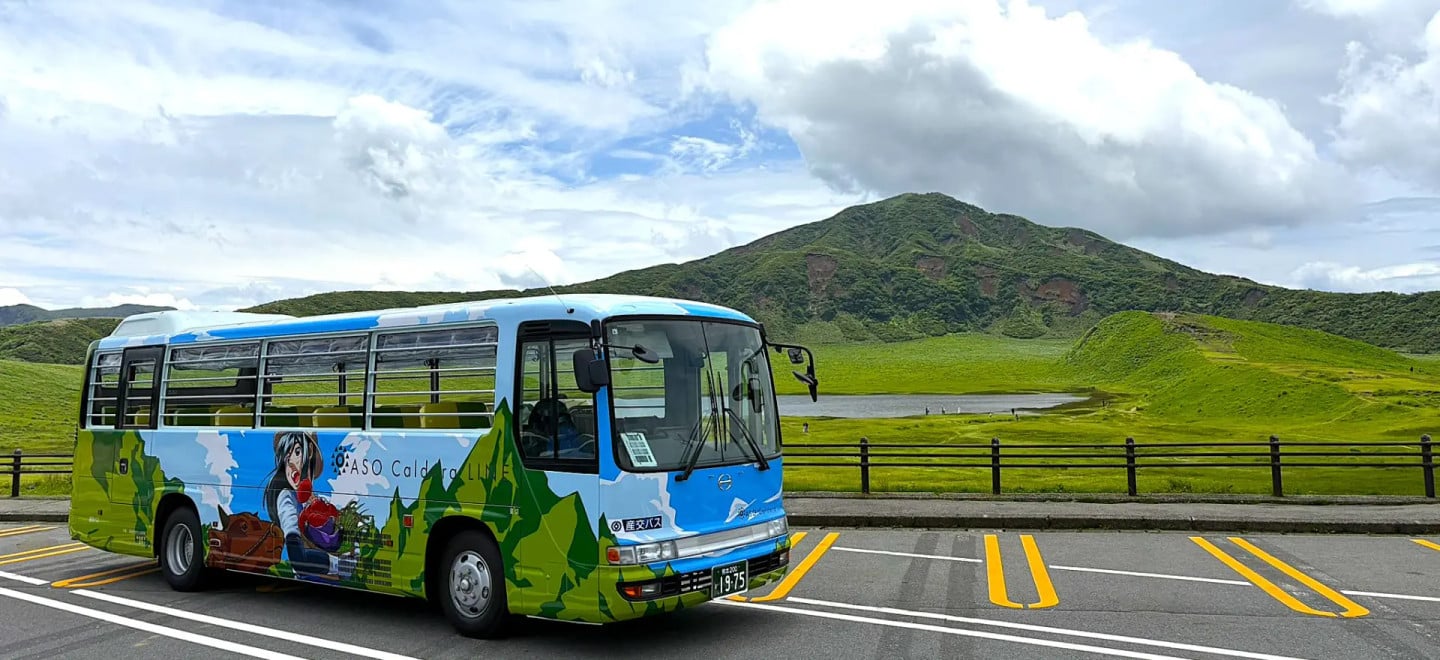
If you are only in Kumamoto for one day and also want to visit Aso, joining a Chinese-language chartered car or group bus day tour from Kumamoto or Hakata is much easier than transferring on your own. These usually link Kumamoto Castle, Daikanbo, Kusasenri and Aso Shrine and save you the wait for infrequent services.
These tours mostly include transport and guiding but not admission or meals, so before departure check whether the Kumamoto Castle admission ticket is included. If you only want to explore Kumamoto Castle itself in depth, you do not actually need a tour: the official Kumamoto Castle app has Chinese audio guides, and inside the main keep you can also use AR to compare old Meiji-era photographs, so independent travelers can explore in depth too. Entry restrictions at the Aso Nakadake crater change at any time depending on volcanic activity, so before booking please check the operator’s change and refund policy.
-Klook.jpg)
Where to Stay Near Kumamoto Castle? Hotel Area Suggestions

Near Kumamoto Castle, Kumamoto Station or Kamitori/Shimotori? How to Choose Among Three Areas
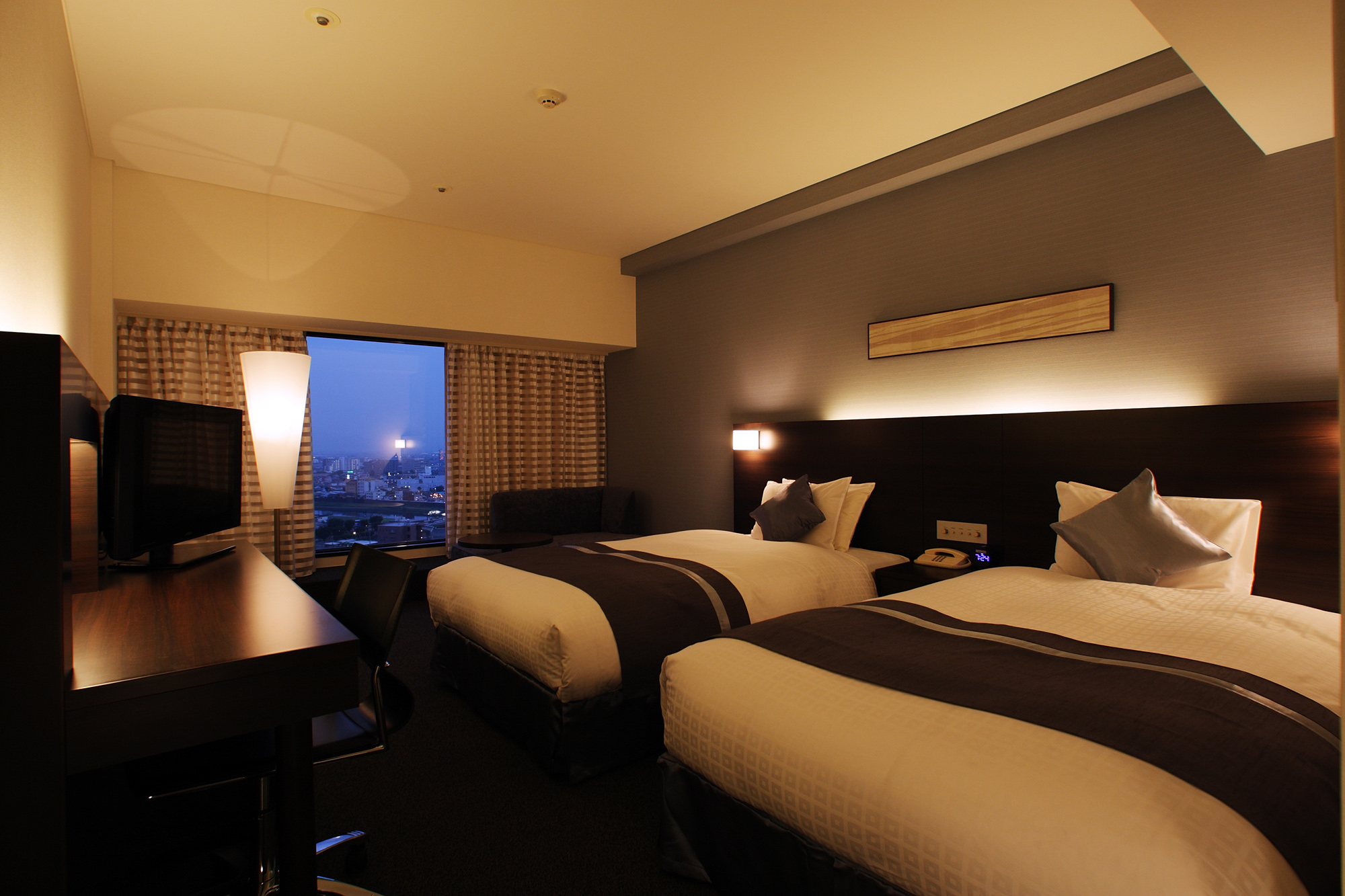
Kumamoto Castle has no accommodation in the grounds, but the three surrounding areas each have trade-offs. If you want to get up early and photograph the keep in morning light before opening, the Kumamoto Castle and City Hall area is the most convenient, with the south entrance a walk away and the lighting still visible in the evening.
If dining and shopping matter to you, stay around Kamitori, Shimotori and Shinshigai, where restaurants and drugstores stay open late and the walk to the Kumamoto Castle south entrance is only about 10 minutes, the best balance of convenience and distance. If you are taking the Shinkansen to Hakata or Kagoshima the next day, or transferring to the Hohi Line to Aso, staying near JR Kumamoto Station is the easiest, about 17 minutes by tram into the city. Room rates in all three areas are generally friendlier than in Fukuoka, but in peak season (cherry blossom season and Golden Week) booking early is still recommended. The three areas are connected by tram, so even if you cannot book the ideal location, it will not disrupt your trip.
Kumamoto Castle FAQ
Q: How much are Kumamoto Castle tickets?
Kumamoto Castle admission is ¥800 for high school students and older and ¥300 for elementary and junior high school students, and free for preschool children. The 2-site combo ticket with Wakuwakuza is ¥850 for adults, and the 3-site combo ticket adding the Kumamoto Museum is ¥1,100, with the 2-site ticket only ¥50 more (Wakuwakuza is currently closed, so please check before buying).
Q: Is Kumamoto Castle open now? What is the situation in 2026?
Yes. Kumamoto Castle closed after the July 28, 2026 earthquake and reopened on August 13, and the official website showed normal operation on September 18. Areas that were open before the earthquake, such as the main keep and the Special Viewing Route, can be visited, while areas such as Uto Yagura are still under restoration and can only be seen from the outside. Before you go, check the Kumamoto Castle official website home page, which announces the day’s opening status and temporary notices.
Q: What time does Kumamoto Castle close? Are there closing days?
From September to June it is 9:00 to 17:00 (last entry 16:00), and in July and August it is extended to 9:00 to 19:00 (last entry 18:00). Ticket windows close at 16:00 every day. The last entry to the main keep is 16:30 (18:30 in July and August). The only closing day all year is December 29, and bad weather may cause temporary closures. During the 2026 “Autumn Kumamoto Castle Festival” (October 2 to November 1), the specially opened areas are extended to 21:00 (last entry 20:00).
Q: Can I go inside the Kumamoto Castle main keep now? What about Uto Yagura?
The main keep finished restoration in April 2021 and is fully open, and you can take the elevator up to the 6th-floor observation level. Uto Yagura has been dismantled for restoration since 2022 and cannot be entered; it is expected to be finished only in fiscal 2032, and you can only view the work site from a distance outside.
Q: How do I get to Kumamoto Castle from JR Kumamoto Station? Can I use Suica?
From Kumamoto-eki-mae, take tram Line A to “Kumamoto-jo / Shiyakusho-mae” and walk about 10 minutes, or take the loop bus “Shiromeguri-n.” Buses in Kumamoto Prefecture no longer accept IC cards such as Suica and PASMO, so please use cash or a contactless credit card.
Q: Is there a free shuttle at Kumamoto Castle?
Yes. The free shuttle bus announced on the Kumamoto Castle website runs between Sakura-no-Baba Johsaien, the south entrance and the Ninomaru Parking Lot every day from 9:00 to 17:00 (the last bus departs from the Ninomaru Parking Lot), about every 10 to 15 minutes, completely free. It suits those who park at the Ninomaru Parking Lot (¥400 for 2 hours, then ¥200 per hour), or elderly relatives and families who do not want to walk uphill after browsing Johsaien.
Q: How long does Kumamoto Castle take, and what season is best?
It is about a 15 to 20 minute uphill walk from the south entrance to the main keep, and allowing 2 to 2.5 hours including the visit is recommended, or half a day with Johsaien. Cherry blossoms are most beautiful from late March to early April, and in autumn there is the “Kumamoto Castle Autumn Festival” with extended opening hours and night lighting.
Q: Are the entrances the same on weekdays and holidays?
No. On weekdays only the south entrance is open for entry and exit, while on weekends and public holidays both the south and north entrances can be used. If you approach from the Kato Shrine direction on a weekday, you still need to go back around to the south entrance to enter, so factor this walk into your route.
Q: Is Kumamoto Castle still worth visiting in the rain?
Yes. All six floors inside the main keep are indoor exhibits, and you can also go to the covered Kamitori and Shimotori shopping arcades, or visit the Kumamoto Museum, which is usually open. But the slopes in the park are slippery when wet, so wear non-slip, comfortable shoes.