
Karatsu and Yobuko Sights: Sea Views and Seafood at the Northern Tip of Saga
Karatsu in Saga Prefecture and Yobuko, the town within it, make up the most classic “sea views plus seafood” day trip on a self-guided Kyushu trip. In the morning you graze through Yobuko’s centuries-old morning market, at noon you eat a plate of live squid sashimi so translucent it reflects light, in the afternoon you head to Karatsu Castle by Karatsu Bay and the 4.5-kilometer Niji-no-Matsubara pine grove, and in the evening you climb to the Mt. Kagami observation deck to take in the whole curve of the pine grove at once. The whole route has one key condition: Yobuko Morning Market packs up at noon, so you must go “Yobuko first, Karatsu second,” traveling from west to east; reverse the order and you miss the best part. Below we first introduce the four core sights, then cover transport and costs.
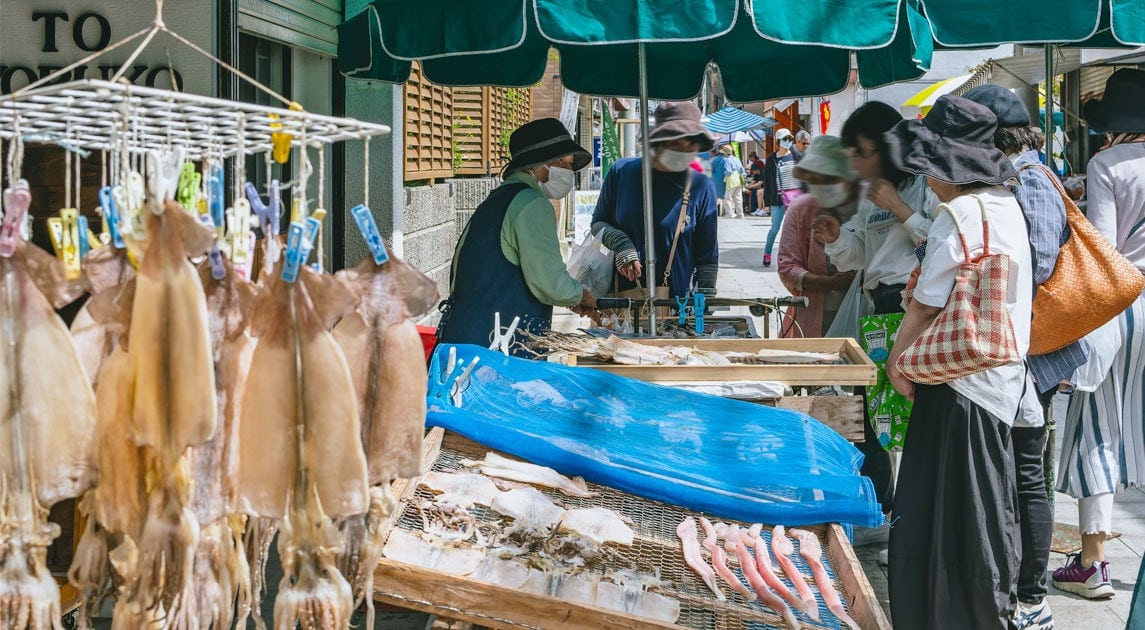
Yobuko Morning Market: A Centuries-Old Harborside Market That Closes at Noon
Yobuko Morning Market is one of Japan’s three great morning markets, with a history of over 400 years. About 200 meters of old street is packed with local vendors selling seafood freshly caught that day in the Genkai Sea, handmade dried goods and fishing village snacks, a bustle quite unlike a touristy market.
It is open daily from 07:30 to 12:00 (closed on New Year’s Day), and stalls are most complete between 08:30 and 10:00. Because it packs up at noon, this stop must come first in the day, which is why the whole route runs from west to east. The market ends at Yobuko Port, so after browsing you can walk over to see the fishing boats and fish pens before lunch.

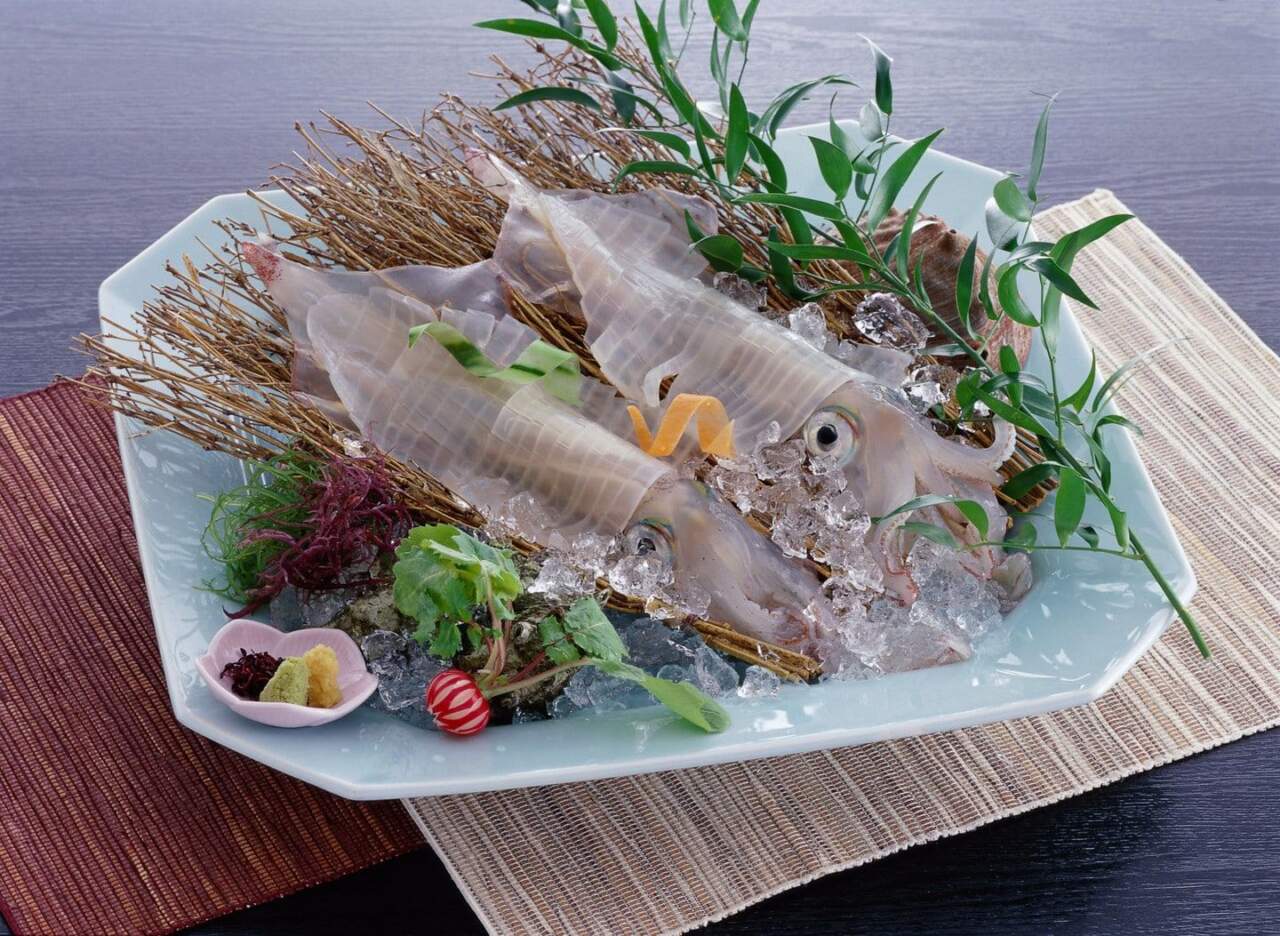
Yobuko Live Squid: The Signature Dish, Crystal Clear
Yobuko is synonymous with “live squid sashimi (ika no ikizukuri).” Squid just landed is prepared by a skilled chef with a swift knife and arrives at the table with the body still semi-transparent, the flesh crisp with a clear sweetness, a freshness that is hard to replicate anywhere else.
After you finish the sashimi, the restaurant takes back the remaining head and tentacles to salt-grill or fry as tempura, serving one squid two ways as a standard routine here. Famous restaurants have heavy queues on holidays, so we suggest putting your name down around 10:30.
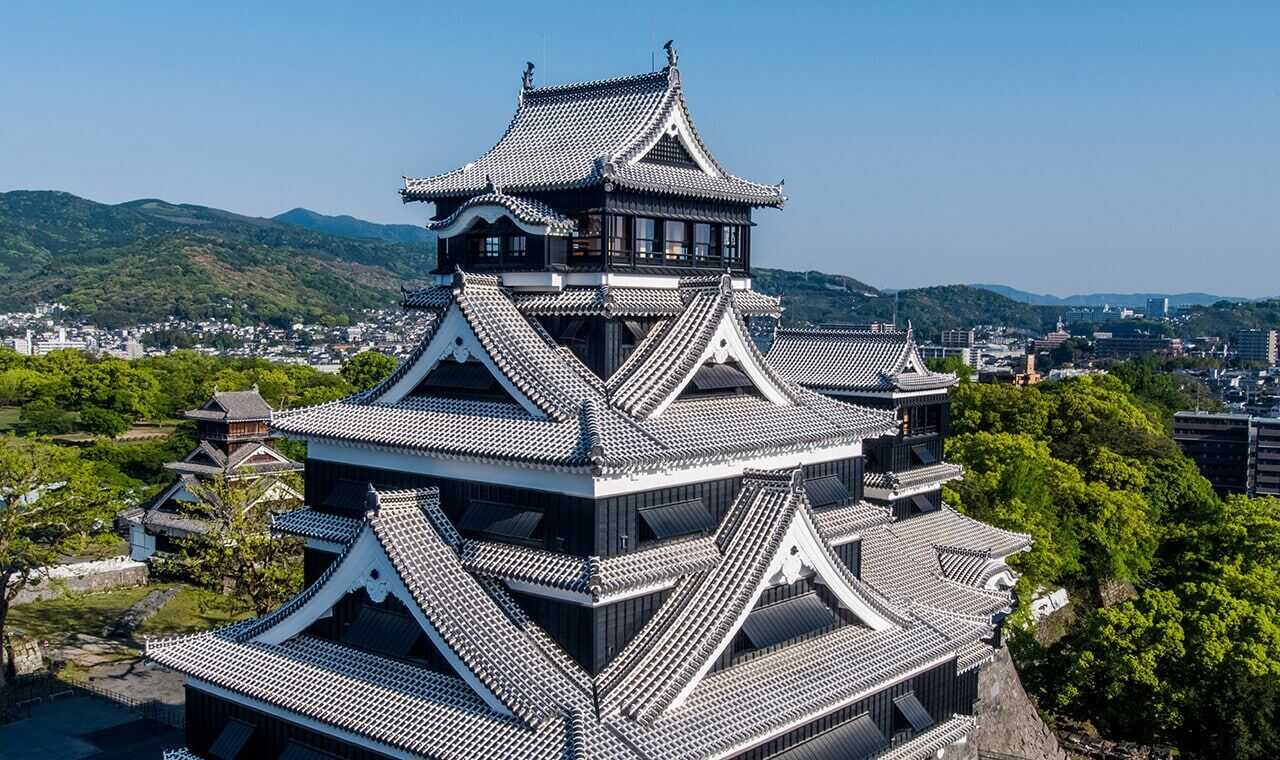
Karatsu Castle: The Crane Castle Standing by the Sea
Karatsu Castle was built on high ground beside Karatsu Bay, and because the coastline on either side of the keep stretches out like the wings of a white crane, it is also called “Maizuru Castle” (Dancing Crane Castle). Looking out from the top floor of the keep, Karatsu Bay and the whole Niji-no-Matsubara fit in one frame, the best view of the whole trip.
It has cherry blossoms in spring and wisteria in early summer, and looks very different in each season. If you would rather not climb the hill path, a paid inclined elevator at the foot of the hill takes you straight up to the castle grounds, which makes things much easier with seniors. Maizuru Park below the castle can be strolled for free, with cherry blossoms in spring and wisteria in early summer the most popular times. Parking is at the foot of the castle, about five minutes’ walk up.
Niji-no-Matsubara: 4.5 Kilometers of White Sand and Green Pines
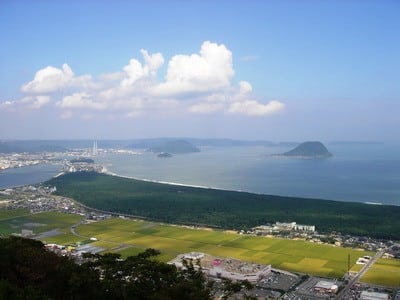
Niji-no-Matsubara is one of Japan’s three great pine groves, planted by the first lord of Karatsu to block wind and waves. It stretches about 4.5 kilometers along Karatsu Bay with about one million black pines, and from above it forms a beautiful arc of green, which is how it got its name (“Rainbow Pine Grove”).
Roads and walking paths run through the pine forest, and there is even a food-truck bus selling “Karatsu Burgers.” To capture the whole curved arc, you need to drive further up to the Mt. Kagami observation deck, because only from that height can you see the whole picture.
How to Get to Karatsu and Yobuko? Driving, the Chikuhi Line and Showa Bus Compared
There is no railway between Karatsu and Yobuko, so your mode of transport directly determines how many sights you can fit into the day.
Driving: The Smoothest Way to Switch Between the Four Sights
Driving is the most recommended way. From central Hakata it takes about 1 hour 15 minutes on the Nishi-Kyushu Expressway to reach Karatsu, and then about another 30 minutes from Karatsu to Yobuko. Switching between the four core sights is very smooth, and you can also fit in the Nagoya Castle ruins and the Mt. Kagami observation deck along the way.
Every sight has a paid or free parking lot, though the lots at Karatsu Castle and Niji-no-Matsubara fill up easily on holidays. Note that the roads around Yobuko Morning Market are narrow with many one-way streets, so we suggest parking directly in a public lot near the market and walking, rather than hunting for roadside spots as you drive.
From Hakata: Subway Kuko Line Through-Service to the Chikuhi Line and JR Karatsu Station
If you are not driving, take the subway Kuko Line from Hakata Station. It runs straight through onto the JR Chikuhi Line, so you can ride all the way to JR Karatsu Station without changing, about 1.5 hours in total, the simplest way in.
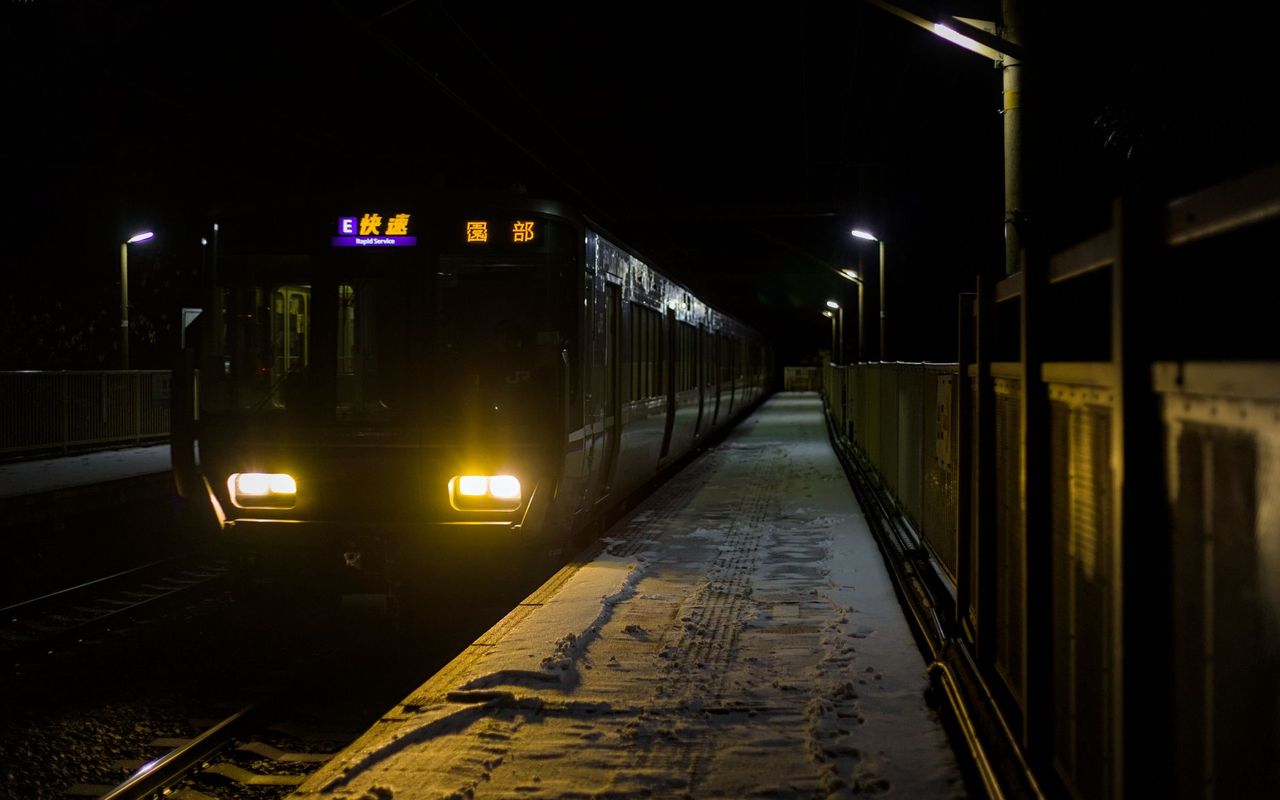
After arriving at Karatsu Station, you can transfer to a city bus or taxi toward Karatsu Castle and Niji-no-Matsubara; if your focus is Yobuko, first walk to the “Karatsu Otegushi Bus Center” and transfer there. We suggest treating JR as the way to get “in and out of Karatsu,” while between the city and Yobuko you still rely on buses. If you hold a Kyushu Rail Pass, remember to check whether it covers the subway section, as some passes start only from Meinohama Station.
Karatsu Otegushi Bus Center to Yobuko: Showa Bus, About 30 Minutes
After walking from JR Karatsu Station to the “Karatsu Otegushi Bus Center,” take a Showa Bus to Yobuko, about 30 minutes and about ¥760 one way. There are roughly 1 to 2 buses an hour, the part of this route that needs the most attention.
Because the morning market packs up at noon, travelers who are not driving must work out an early bus to catch the liveliest hours. When you get off, be sure to check the return schedule first; missing one bus may push your whole afternoon in Karatsu back. If you cannot make the last bus back, the number of taxis in Yobuko is limited, so it is best to call one ahead.
Parking and Route Flow: West to East Avoids Wasted Trips
Whether you drive or take the bus, we recommend fixing the route as “Yobuko Morning Market → live squid lunch → Karatsu Castle → Niji-no-Matsubara.” Yobuko is in the west and Karatsu in the east, so going west to east is naturally on the way and also avoids the market’s closing-time limit.
If you want to add the Nanatsugama cruise or the Nagoya Castle ruins, do them together in the Yobuko leg rather than doubling back.


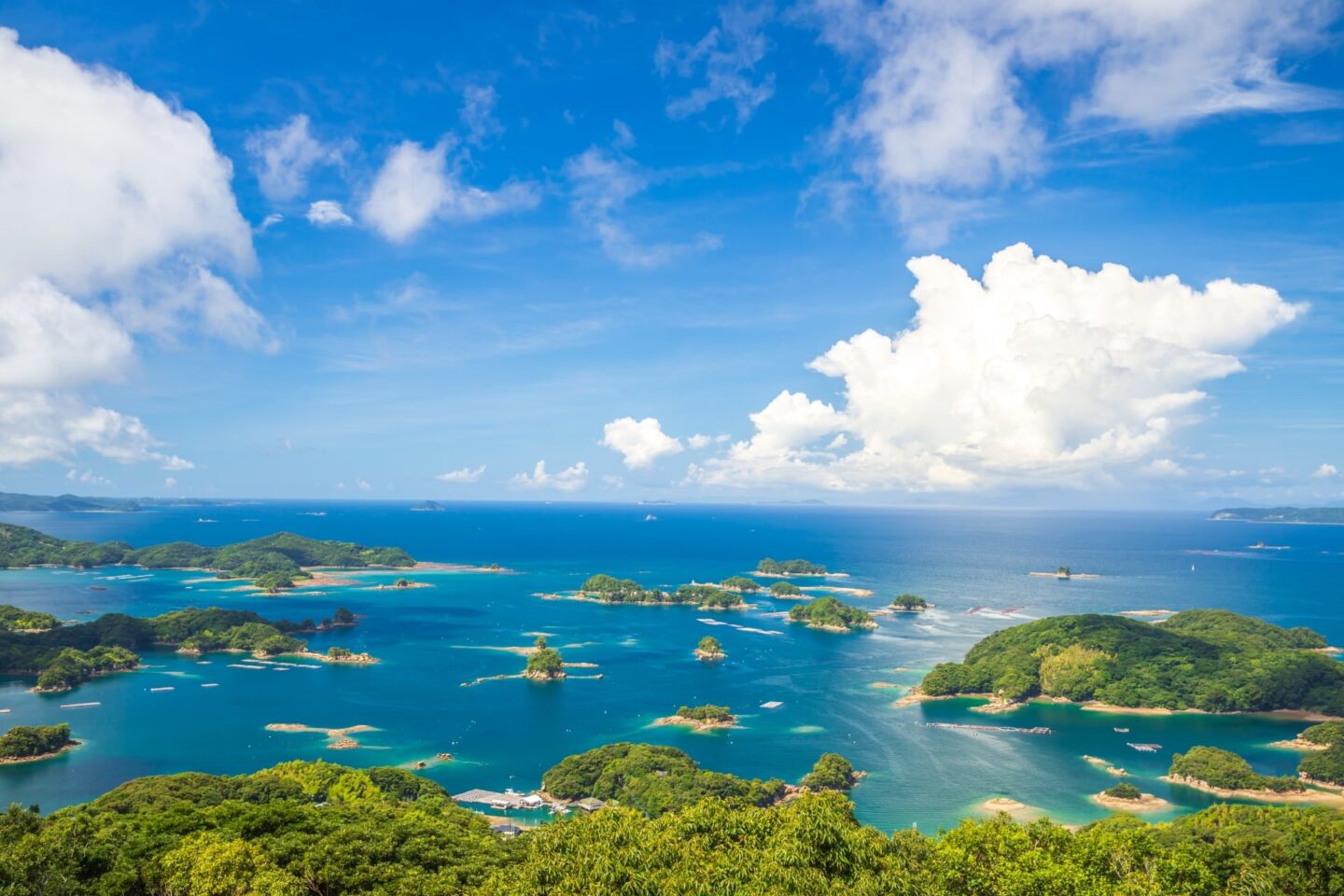
What Are the Must-Visit Sights in Karatsu and Yobuko? The Morning Market, Sea Caves and Pine Grove Explained
The sights below are listed in “Yobuko (west) → Karatsu (east)” order, and following this order a day is just enough.
Yobuko Morning Market: A Fishing Village Morning at One of Japan’s Three Great Morning Markets
Yobuko Morning Market has over 400 years of history and is ranked as one of Japan’s three great morning markets. The roughly 200-meter old street is lined on both sides with stalls: fish sellers, dried goods sellers and grandmothers selling their own pickles sit in front of their stalls, with tourists and locals mingling in a very down-to-earth atmosphere.
It is open daily from 07:30 to 12:00, closed on New Year’s Day, with the most stalls from 08:30 to 10:00. Recommended snacks as you walk are freshly grilled turban shells, freshly fried squid tempura and the must-buy squid shumai. Most vendors take cash only, so remember to bring enough small change.
Yobuko Morning Market Hours and Parking: Opening Times, Parking Lots and Buses
Yobuko Morning Market is open daily from 07:30 to 12:00, closed on New Year’s Day, with about 50 open-air stalls along the roughly 200-meter market street. Around the market there are about 29 free parking spaces and about 128 paid spaces (¥100 per hour). By Showa Bus, get off at the “Yobuko” stop and it is about a 3-minute walk.
Yobuko Live Squid Sashimi: The Signature Dish Clear Enough to Reflect Light
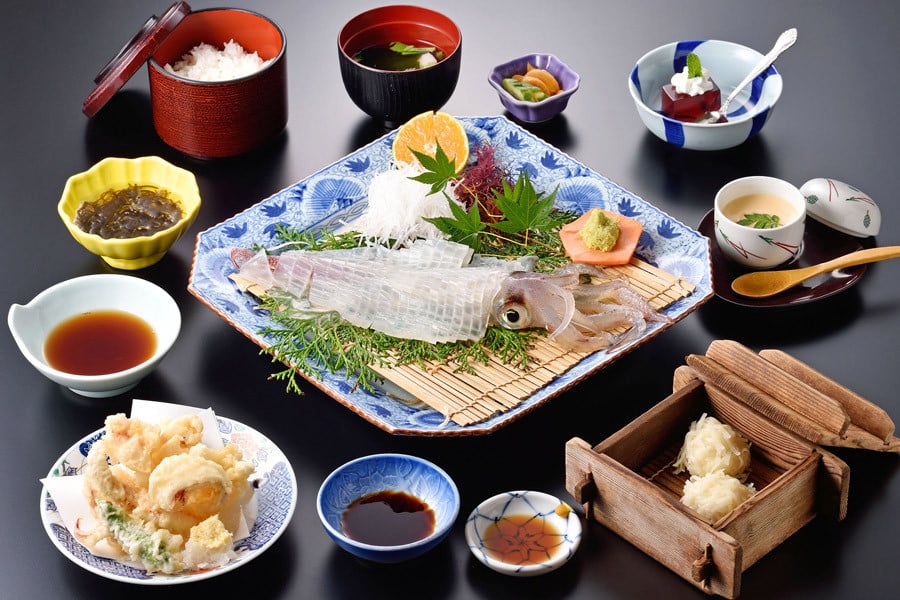
Live squid sashimi is the soul of Yobuko. Squid just lifted from the fish pen is prepared by a skilled chef with a swift knife, and arrives at the table with its body still semi-transparent and its tentacles still moving, crisp and sweet in the mouth, a completely different ingredient from ordinary chilled squid.
After the sashimi, the restaurant takes back the head and tentacles to make salt-grilled or tempura dishes, the standard way to eat in Yobuko. Set meals cost about ¥3,000 to ¥4,000 per person. Note that live squid depends entirely on that day’s weather and catch; when the seas are rough there may be no live squid and the restaurant will serve chilled or flash-frozen squid instead.
Manbo: The Restaurant Built Over the Sea
Manbo is Yobuko’s most talked-about restaurant, a building set right over the water, with some seats below the waterline where you can see fish in the sea through the windows. Kaichu Uodokoro Manbo has been closed for a full renovation since June 1, 2026 and is expected to reopen sometime after autumn 2026, so please check the official website for its operating status before you go.
While it is closed, if you want live squid you can choose “Kawataro” Yobuko branch near Yobuko Port (weekdays 11:00 to 15:30, weekends 10:30 to 17:30, cash only). Manbo is also a well-known shop for “squid shumai.”
Nanatsugama: Sea Caves in Basalt Columnar Joints
Nanatsugama consists of seven sea caves eroded by waves over many years out of basalt columnar joints, and is a nationally designated natural monument. Hexagonal rock columns rise straight up from the sea, and the cave mouths are as neat as if they were chiseled by hand, Yobuko’s most imposing natural scenery.
On land, you can look down over the whole coast and meadow from the observation deck at Nanatsugama Park, free to visit; to get close and enter the caves you need to take a cruise boat. The park area is windy and unsheltered, so remember sun protection in summer and warm clothing in winter, and please do not cross the railing on the seaward side of the path. It is about ten minutes by car from Yobuko Port,
How to Enjoy Yobuko’s Nanatsugama? Two Options: Observation Deck and Cruise Boat
There are two ways to enjoy Nanatsugama: the free Nanatsugama Park observation deck lets you look down on the sea caves from land, about 10 minutes by car from Yobuko Port; the “Ika Maru” cruise boat leaves Yobuko Port for about 40 minutes at ¥2,000 for adults, and when sea conditions allow it enters the caves, while in rough seas it only shows the exterior or does not sail, so please confirm that day’s operation before you go.
Ika Maru Cruise: Into the Nanatsugama Caves from the Sea
The “Ika Maru” (Squid Maru) cruise boat from Yobuko Port is a sightseeing boat shaped like a squid. It runs along the coast to Nanatsugama and, when sea conditions allow, goes right into the caves, an angle you can only get by boat.
The whole voyage takes about 40 minutes and costs ¥2,000 for adults, with ticket sales and boarding at the boarding point in Yobuko Port. In rough seas it may be suspended or shortened, so be sure to check the operating status before you go, and schedule it after the morning market and before lunch.
Yobuko Bridge and Kabeshima: A Walking Route Across the Sea
Yobuko Bridge is a cable-stayed bridge linking Yobuko with Kabeshima island offshore, its curved profile striking against the blue sea, with parking space for viewing beside the bridge, a good photo stop on a drive.
Kabeshima, across the bridge, is wide open, with Tajima Shrine and lookouts over the Genkai Sea, and far fewer visitors than the Yobuko port area. If you are short of time you can skip this part, but if the cruise is suspended that day, a loop around Kabeshima is a good alternative. Stopping on the bridge is prohibited, so use the parking space at the bridgehead to take photos.
Nagoya Castle Ruins: A Special Historic Site Left by Toyotomi Hideyoshi
The Nagoya Castle ruins are the base Toyotomi Hideyoshi built for his invasion of Korea. At the time it was second in scale only to Osaka Castle, and large stone walls and the remains of the keep base still stand, designated a national Special Historic Site. From the keep base you can look out over the Genkai Sea and the layout of the surrounding camp sites.
The grounds are quite large, and a full circuit takes about an hour, with grass and stone steps, so wear comfortable shoes. There is a “historical heritage maintenance cooperation fee” at entry, ¥100 per person for university students and older (the amount and method of collection are as announced by the managing body that day). The parking lot is beside the museum and can be shared.
Saga Prefectural Nagoya Castle Museum: Understanding the Castle’s Background
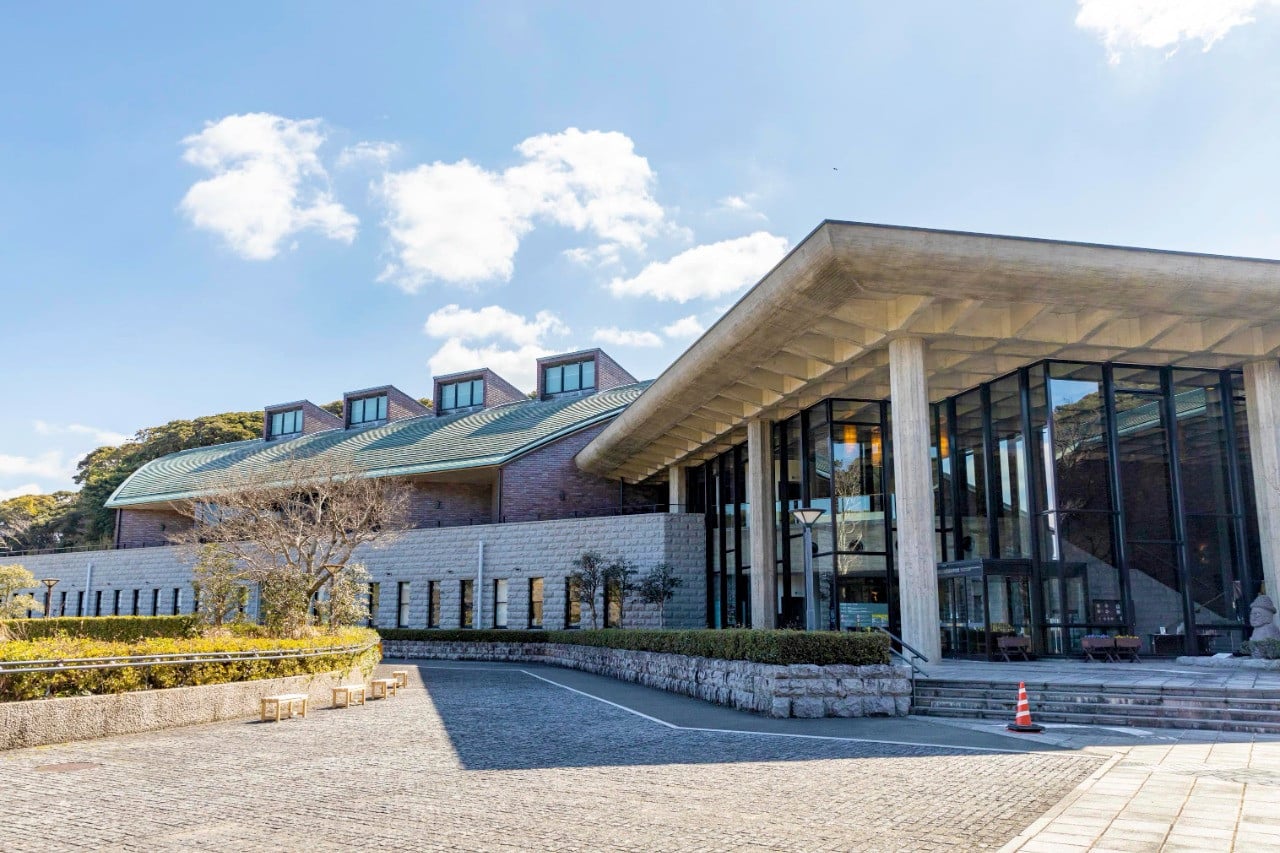
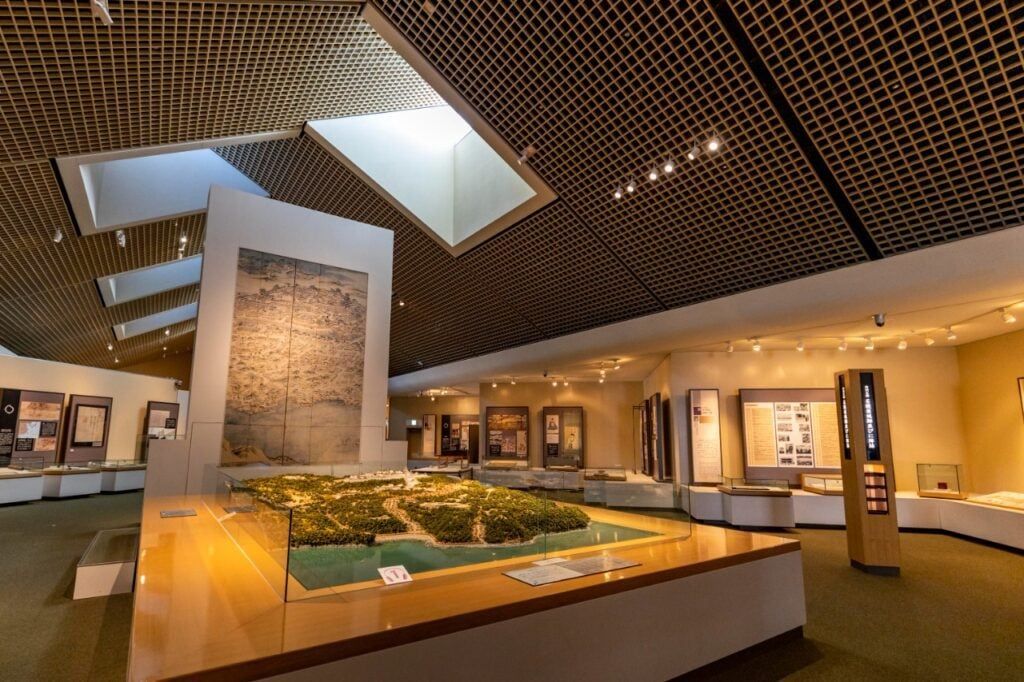
The Nagoya Castle Museum is right beside the castle ruins, with exhibits centered on the history of exchange between Japan and the Korean Peninsula, using models and video to recreate the scale of Nagoya Castle and the surrounding camp sites. Visit the museum first and then walk the ruins, and the feeling will be completely different.
The permanent exhibition is free, it is open 9:00 to 17:00 and closed on Mondays (the next day if Monday is a national holiday), with free parking as well, a very useful stop on rainy days. It is about fifteen minutes by car from Yobuko Port, in the same area as Nanatsugama and Yobuko Bridge.
Karatsu Castle (Maizuru Castle): Panorama of Karatsu Bay from the Top of the Keep
Karatsu Castle was built in the early Edo period on Mt. Mitsushima beside Karatsu Bay, and gets the name “Maizuru Castle” because the coastlines on both sides look like the wings of a white crane. The current keep is a later reconstruction with exhibits inside, and its top floor is the best viewing platform in the area.
From the top floor you can look over Karatsu Bay and the whole of Niji-no-Matsubara with no blind spots, and on a good day even distant islands. Keep admission is ¥500 for adults, open 9:00 to 17:00 (last entry 16:40), and a paid inclined elevator at the foot of the hill costs ¥100 one way for adults.
Niji-no-Matsubara: The Curved Green Belt of One of Japan’s Three Great Pine Groves
Niji-no-Matsubara stretches about 4.5 kilometers along Karatsu Bay and has about one million black pines. It is a windbreak forest planted by the first lord of Karatsu to block wind and waves, and is now one of Japan’s three great pine groves and a nationally designated Special Place of Scenic Beauty.
Straight roads and walking paths run through the pine forest, and driving through, you are surrounded by pine trunks with beautiful light and shadow. If you want to walk, we suggest choosing the entrance on the Karatsu Castle side, where there is less traffic. Mosquitoes are common in summer, so long sleeves and insect repellent will come in handy.
Mt. Kagami Observation Deck: The Only Height That Shows the Full Arc
Mt. Kagami stands 284 meters high, and its summit observation deck is the only place that takes in the full arc of Niji-no-Matsubara and Karatsu Bay at once. Seen from the ground and seen from here are two entirely different levels of awe.
The summit has a parking lot and observation deck, and driving up is the most convenient, but the mountain road has continuous bends, so slow down. The light is most beautiful around sunset, but lighting on the mountain is limited after dark, so we suggest heading down while it is still light. The summit also has a shrine and walking paths, and it is a cherry blossom spot in spring. If you are not driving, a taxi from JR Karatsu Station up the mountain takes about twenty minutes; we suggest asking the driver to wait or arranging the return time in advance.
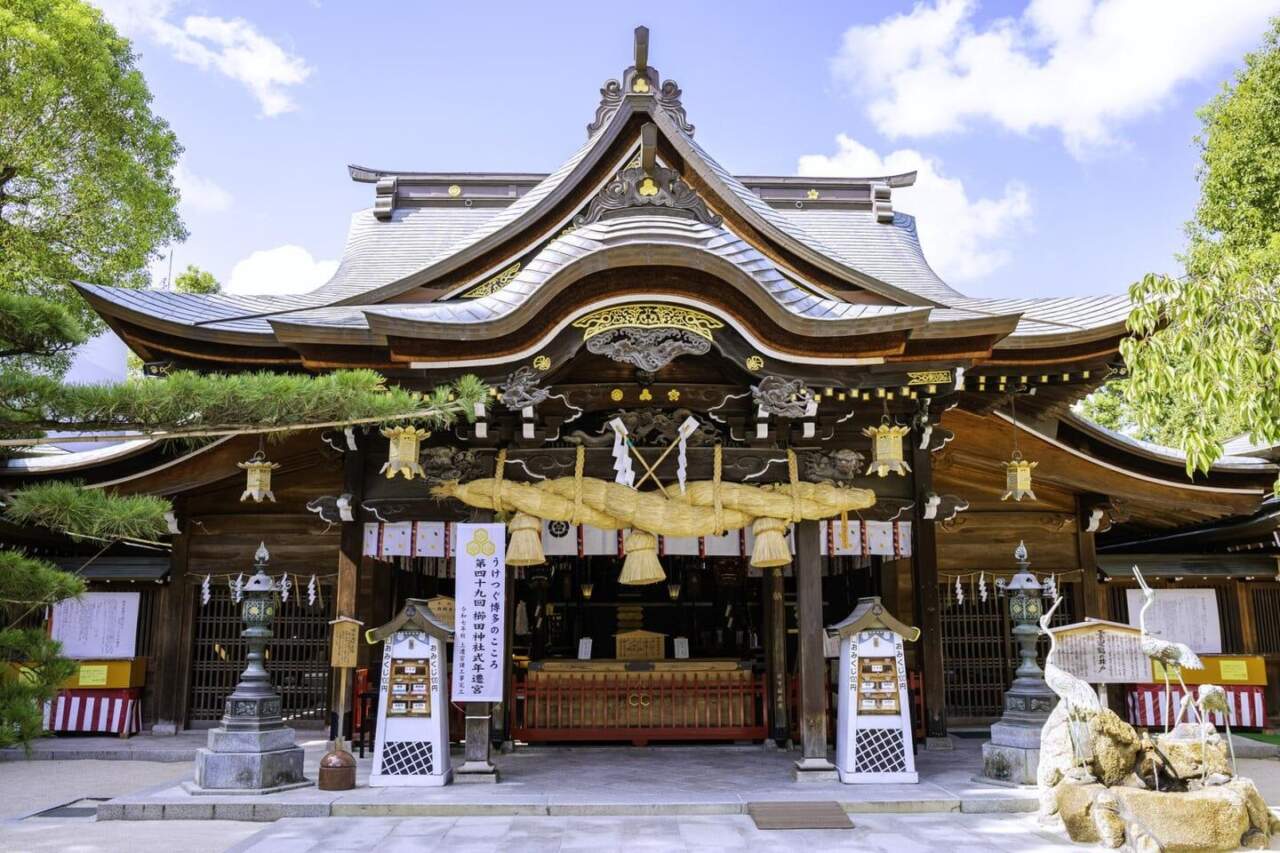
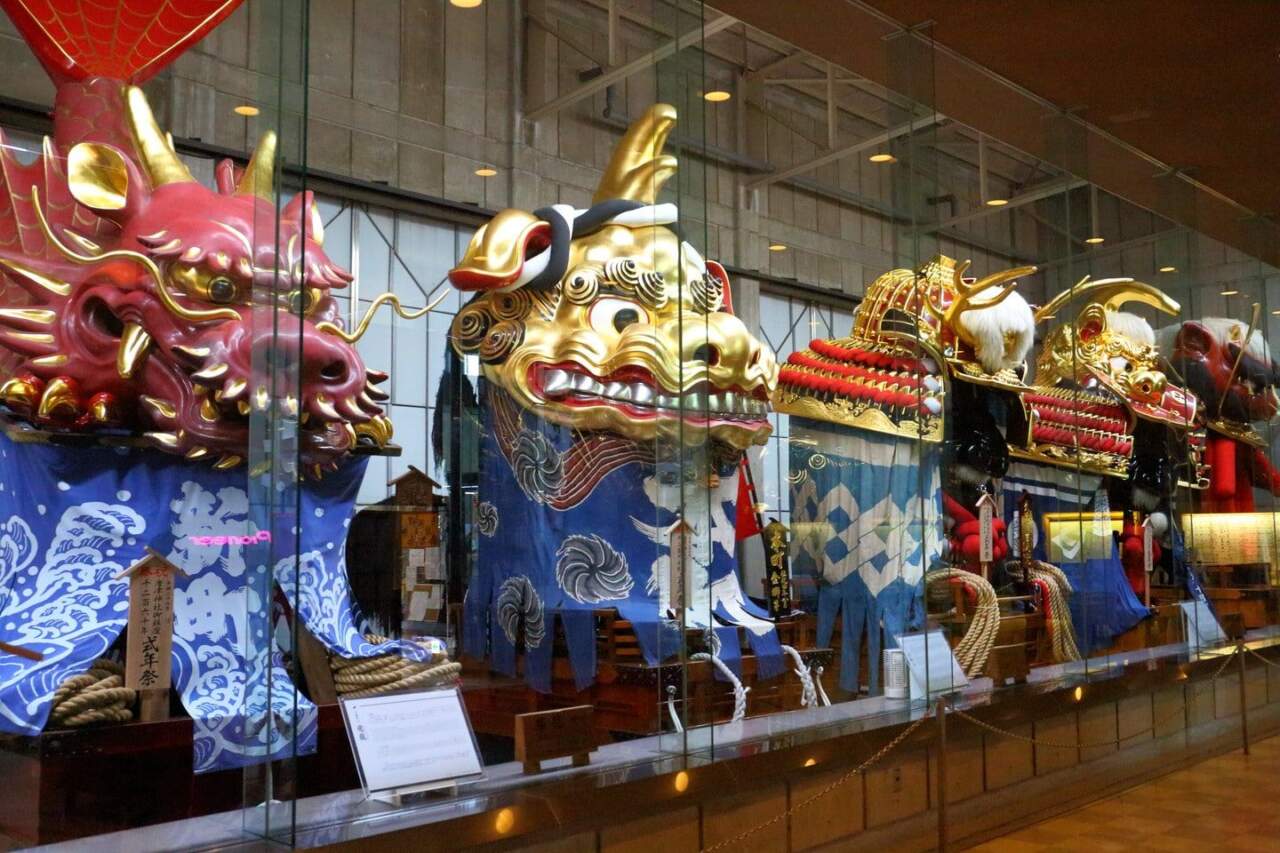
Karatsu Shrine and the Hikiyama Exhibition Hall: Home Ground of Karatsu Kunchi
Karatsu Shrine is the center of worship in Karatsu city, and the autumn festival “Karatsu Kunchi,” held each year from November 2 to 4, is centered here. The festival is inscribed as a UNESCO Intangible Cultural Heritage and is also a nationally designated Important Intangible Folk Cultural Property of Japan.
During the festival 14 giant hikiyama floats parade: the Yoi-yama on the night of the 2nd, the Otabisho Shinko on the 3rd, when the floats are hauled onto the sand of Nishinohama, and the final haul-in at the next-day festival on the 4th. Outside the festival you can see real hikiyama floats up close at the Hikiyama Exhibition Hall; the hall’s location, opening hours and admission are as announced by Karatsu City.
Karatsu-yaki Kilns: Saga Ceramics on a Par with Arita-yaki
Karatsu-yaki is one of Saga’s representative ceramics, plain in texture and calm in glaze color, emphasizing “beauty in use,” a completely different path from the ornate Arita-yaki, and long valued in the tea ceremony world.
Many kilns and sales outlets are scattered across the city and surroundings, and some offer visits or hands-on experiences, making this Karatsu’s most representative souvenir route. Opening days and whether visits are allowed differ greatly between kilns, so we suggest checking before you go, or simply going to a general showroom in the city to compare in one place.
How Much Does Karatsu and Yobuko Cost? Admission, Boat Tickets and Meals
Spending for the day mostly goes to lunch, the boat ticket and Karatsu Castle admission; the rest is mostly free or costs only coins.
Live Squid Set Meal: The Biggest Expense of the Day
A live squid set meal in Yobuko costs about ¥3,000 to ¥4,000 per person and usually includes live squid sashimi, rice, miso soup and small side dishes; the head and tentacles taken back after the sashimi are made into salt-grilled or tempura dishes at no extra charge.
Note that live squid depends entirely on the day’s sea conditions and catch; when there is no live squid, the restaurant will use chilled or flash-frozen squid, and the price will differ. Most old restaurants do not accept credit cards, so bring plenty of cash.

Karatsu Castle Keep Admission and Inclined Elevator
Karatsu Castle keep admission is ¥500 for adults, open 9:00 to 17:00 (last entry 16:40). A paid inclined elevator at the foot of the hill takes you straight up to the castle grounds, saving the climb.
If you only want to stroll in Maizuru Park and take photos of the castle and sea together, skipping the keep is also well worthwhile. Admission, elevator fees and last entry times are as announced that day, and ticket sales may end early in winter.
Ika Maru Nanatsugama Cruise: A Sea Trip of About 40 Minutes
The “Ika Maru” cruise from Yobuko Port takes about 40 minutes and costs ¥2,000 for adults. It heads to Nanatsugama and, when sea conditions allow, goes right into the sea caves. Tickets are bought on site at the boarding point in Yobuko Port.
This is the item most affected by weather. In rough seas it may be suspended or shortened, so we suggest calling or checking on site that morning. If it is suspended, you can switch to the land-based Nanatsugama Park observation deck, which also shows the whole coast.
Nagoya Castle Ruins Cooperation Fee and Museum
The Nagoya Castle ruins charge a “historical heritage maintenance cooperation fee” of ¥100 per person for university students and older, and you get a guide pamphlet after paying; the neighboring Saga Prefectural Nagoya Castle Museum is themed on the history of exchange between Japan and the Korean Peninsula, with free permanent exhibition admission, and VR guide rental and parking are also free, while special exhibitions may cost extra.
The two are adjacent and share a parking lot, so combining them is the most efficient, about two hours in total. Amounts, closing days and opening hours are as announced by the managing body and the museum that day.
Hikiyama Exhibition Hall and Karatsu-yaki Experiences
Outside the festival, if you want to see the Karatsu Kunchi hikiyama floats, you can visit the real floats at the Hikiyama Exhibition Hall, which is a paid facility. If you are interested in crafts, the Karatsu-yaki kilns in the city and surroundings also offer visits or making experiences.
The exhibition hall’s location, opening hours and admission are as announced by Karatsu City; kiln experiences mostly need advance reservations and the finished pieces are shipped separately, so it is safer to confirm the process and fees before you go.
What to Watch for in Karatsu and Yobuko? Where to Stay Nearby and Pre-Trip Reminders

Last two things: where to stay, and a few variables you must check before you leave.
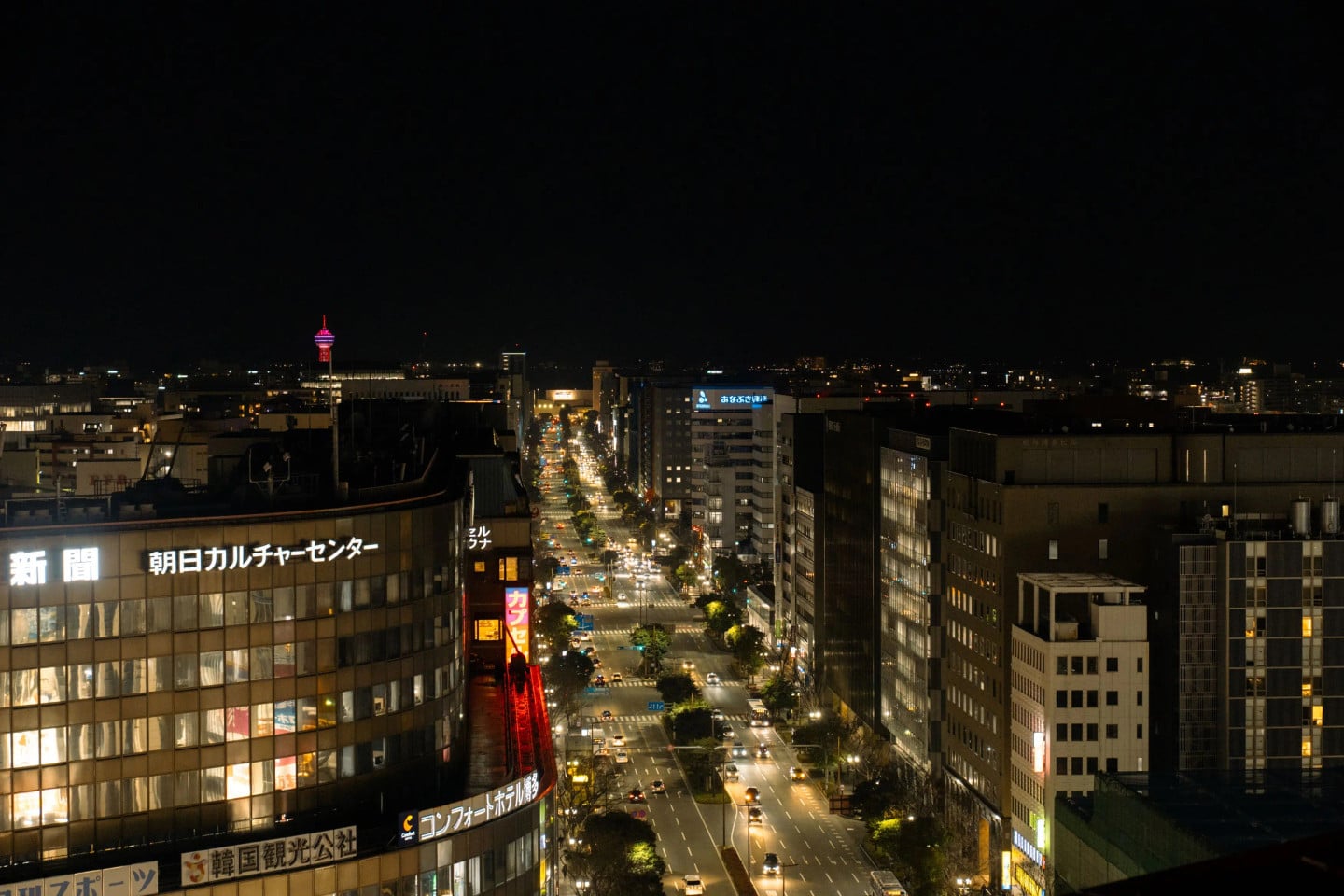
Stay in Karatsu or Fukuoka? Where to Stay Nearby
Most people plan Karatsu and Yobuko as a day trip from Fukuoka and stay around Hakata, which has the most transport and dining options and makes it easy to continue north to Kitakyushu or to Nagasaki the next day.
If you want to take it slower, or plan to cover the Nagoya Castle ruins, Nanatsugama and Kabeshima as well, we suggest staying in Karatsu itself. Along Karatsu Bay there are sea-view lodgings and hot spring inns, with few rooms, which are very hard to get in peak season and during Karatsu Kunchi (November 2 to 4 each year), so be sure to book early. Another benefit of staying in Karatsu is that you can head straight to Yobuko Morning Market first thing the next morning without rushing for a bus.
Three Things to Check Before You Go: Live Squid, Boat Service and Cash
First is the live squid supply. Live squid depends entirely on that day’s weather and catch; in rough seas restaurants may have no live squid and will serve chilled or flash-frozen squid instead.
Second is the cruise. The Ika Maru Nanatsugama route may be suspended or shortened because of waves, so be sure to check before you go and have an alternative of the land-based Nanatsugama Park ready. Third is cash: the roadside stalls at Yobuko Morning Market and some old live squid restaurants do not accept credit cards, so bring plenty of yen in cash. All the fares, timetables and opening hours mentioned in this article may change, so please rely on official announcements that day.
Karatsu and Yobuko FAQ
Q: How should I plan a Karatsu and Yobuko day trip? Where do I go first?
Yobuko first, Karatsu second, west to east: morning market 08:30 to 10:00, live squid 10:30 to 12:30, Karatsu Castle 13:30, Niji-no-Matsubara 15:15. Reverse the order and you miss the morning market.
Q: What time does Yobuko Morning Market open? Is it closed on any days?
Open daily from 07:30 to 12:00, closed on New Year’s Day; stalls are most complete from 08:30 to 10:00. Most vendors take cash only, so bring small change.
Q: How do I get to Yobuko Morning Market? Is there parking?
The Showa Bus from Karatsu Otegushi Bus Center to Yobuko takes about 30 minutes, then it is about a 3-minute walk; if driving, you can use the paid lots around the market (¥100 per hour), and on holidays we suggest arriving before 9 a.m.
Q: How much is live squid in Yobuko? Can I be sure to get it?
Set meals cost about ¥3,000 to ¥4,000 per person. Live squid depends on that day’s weather and catch; in rough seas chilled or flash-frozen squid may be served instead, and this cannot be guaranteed in advance.
Q: Can I do Karatsu and Yobuko without a car?
Yes. From Hakata Station take the subway Kuko Line through-service on the JR Chikuhi Line to Karatsu Station, about 1.5 hours, then transfer to a Showa Bus to Yobuko, about 30 minutes; please check the return schedule first.
Q: Does Karatsu Castle charge admission? Is it a long climb?
Keep admission is ¥500 for adults; the castle is on Mt. Mitsushima and there is a paid inclined elevator at the foot (¥100 one way for adults) if you would rather not climb.
Q: How do I photograph Niji-no-Matsubara well?
To capture the full arc you need to go up to the Mt. Kagami observation deck at 284 meters, which takes in the 4.5-kilometer pine grove and Karatsu Bay in one frame; the light is best around sunset.
Q: When is Karatsu Kunchi held? Can I see the hikiyama floats normally?
It is held at Karatsu Shrine every year from November 2 to 4 and is inscribed as a UNESCO Intangible Cultural Heritage. Outside the festival you can see real hikiyama floats at the Hikiyama Exhibition Hall.