

Gunkanjima (Hashima) Guide: Why This Abandoned Island Is Worth the Trip
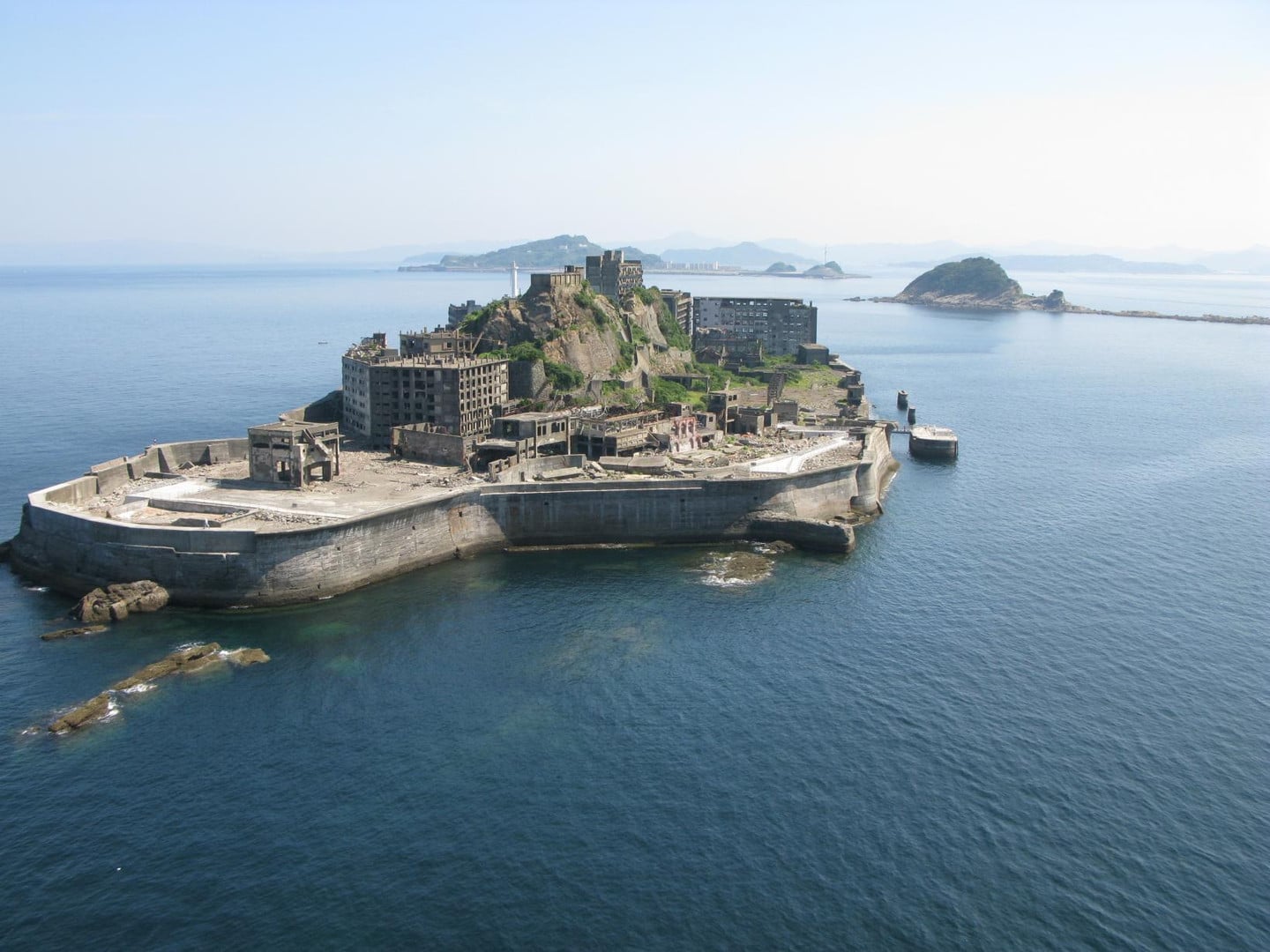
Gunkanjima, officially Hashima, lies off Nagasaki Harbor. This World Heritage ruin island can only be visited on an approved sightseeing boat.
Hashima: The Offshore Coal-Mining Town Named for Its Battleship Silhouette
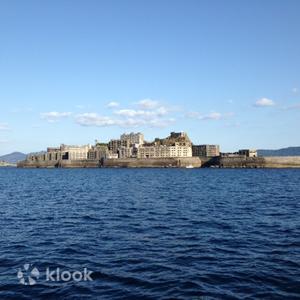
Gunkanjima (“Battleship Island”) is officially called Hashima. It sits in open water about 19 km southwest of Nagasaki Harbor, and its reclaimed-land outline and towering reinforced-concrete buildings resemble the Japanese battleship Tosa from a distance, which is how it got its nickname.
The island covers only about 6.3 hectares, yet at its peak more than 5,000 people lived here, once giving it the highest population density in the world. Undersea coal mining on the island underpinned Japan’s modern industry; after the mine closed in 1974, everyone left and the town was preserved just as it stood.
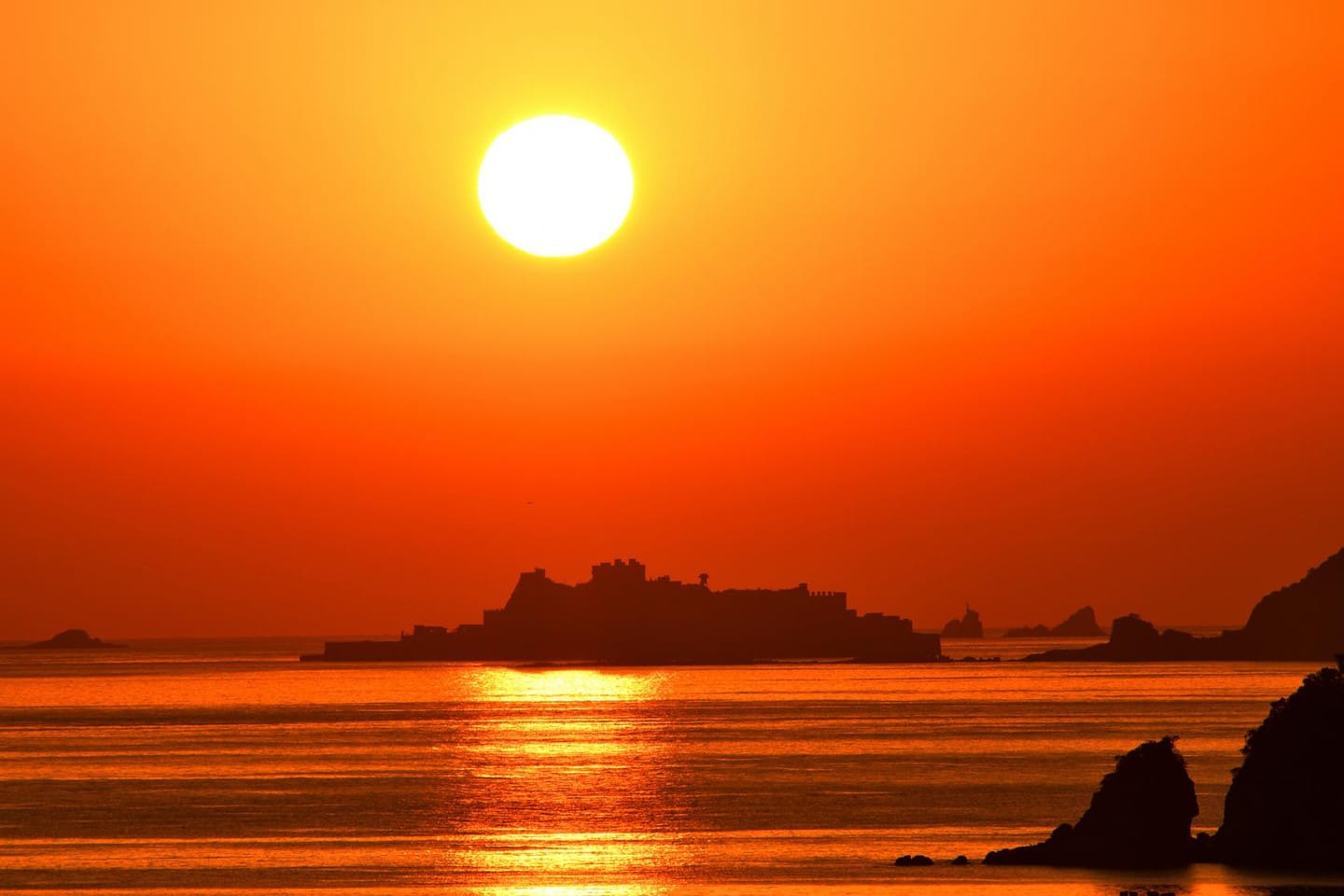

World Heritage Status: A Component of Japan’s Meiji Industrial Revolution Sites
In 2015, the Hashima coal mine was inscribed as one of the component sites of “Sites of Japan’s Meiji Industrial Revolution: Iron and Steel, Shipbuilding and Coal Mining,” alongside related facilities at the Mitsubishi Heavy Industries Nagasaki Shipyard.
Its core value is that it bears witness to Japan industrializing in only half a century, from the end of the shogunate through the Meiji era. Knowing this context before you land means you see not just ruins but a living site of industrial history.
You Can’t Just Go: Reservations and Sea Conditions Are Two Hurdles
Free entry to the island is prohibited in principle. Visitors must join a reservation-based sightseeing boat tour approved by the City of Nagasaki, and there is no legal way to land on your own. According to the Nagasaki Prefecture tourism federation, five operators currently run landing tours: Gunkanjima Concierge, Yamasa Kaiun, Takashima Kaijo Kotsu (Gunkanjima Cruise), Seaman Shokai and Daishichi Ebisu-maru. The one-way crossing takes about 30 to 40 minutes.
The bigger factor is the sea. The pier is exposed to open water, and under the Nagasaki city ordinance landing is not allowed if any one of these is met: wind over 5 m/s, waves over 0.5 m, or visibility of 500 m or less. If a limit is exceeded, the boat only circles the island. Sailing does not guarantee landing, so accept that when planning your schedule.
Is Gunkanjima Rough? How to Judge Seasickness and Cancellations
The pier at Gunkanjima faces open water, so calm weather in the city does not mean calm seas. The Nagasaki city ordinance sets the landing criteria at wind of 5 m/s, waves of 0.5 m and visibility of 500 m, and if any one is exceeded the boat can only circle the island.
Travelers prone to seasickness can choose an operator with a larger vessel and take motion-sickness medicine 30 minutes before boarding. Whether you can land is usually decided only 30 minutes before departure, so check each company’s announcements first.
Gunkanjima Digital Museum: A Lesson Worth Taking Before or After Your Visit
The Gunkanjima Digital Museum in downtown Nagasaki uses large-scale projection, VR and reconstructed scenes to recreate daily life on the island at its peak, including the miners’ route down the shaft and the interiors of the apartments. It is far more complete than what you can see on the island itself.
Because only a short stretch of the island is open to visitors, building a mental picture here first makes the landing feel completely different. If the landing is canceled because of sea conditions, this is also the most practical backup.
How to Get to Gunkanjima: The Two Nagasaki Harbor Terminals and City Transport
All boats depart from Nagasaki Harbor, so first check which terminal your booking uses.
Tokiwa Terminal: Check-in Point for Gunkanjima Concierge
Tokiwa Terminal sits on the south side of Nagasaki Harbor and is the departure point for Gunkanjima Concierge. It is very close to the Gunkanjima Digital Museum, so check-in is smoothest if you book a combo ticket that includes the museum.
From Nagasaki Station, take Tram Line 1 and transfer to Line 5 to the Oura Kaigan-dori or Medical Center stop, then walk a few minutes. Follow the check-in times announced on the official website, and first-time visitors should allow an extra 15 minutes to find the way.
There are few places to eat near the terminal, so for a morning boat have breakfast at Nagasaki Station or in the city first. The terminal has restrooms and a seating area, so arriving early is no problem.
Motofune Terminal: The Main Departure Point Shared by Most Operators
The Motofune-machi area is the departure zone for Yamasa Kaiun (Window 7, 1st floor of the Nagasaki Port Terminal Building) and Takashima Kaijo Kotsu (11-22 Motofune-machi). It is also a hub for ferries to the outer islands, with a large building and concentrated counters.
It is about a 5-minute walk from the Dejima or Ohato tram stops, and close to the site of the Dejima Dutch Trading Post and the Dejima Wharf, so it is easy to eat or browse before or after boarding. The terminal has coin lockers.
Because several operators share one building, there is more than one check-in counter. After arriving, confirm which company you booked and which window to use, since it is easy to join the wrong line at peak times.
From the City to Nagasaki Harbor: Tram, Walking and Taxi
Nagasaki Harbor lies along the coast on the west side of the city. From Nagasaki Station, take Tram Line 1 or 3 to Ohato; the ride takes only a few minutes at a flat fare, which is the simplest option. If you have a one-day tram pass, just tap it.
Walking from Nagasaki Station takes about 15 to 20 minutes, passing Dejima and the Nagasaki Prefectural Art Museum, so it is a pleasant walk if you have time. With heavy luggage or in a hurry, take a taxi; fares are usually low.
Most boats leave in the morning, and city trams get crowded at commuting hours, so leave generous travel time. If you plan to continue sightseeing in the city that day, the one-day pass almost always pays for itself.


Getting to Central Nagasaki from Hakata and Nagasaki Airport
From Hakata, take the JR Limited Express Relay Kamome to Takeo-Onsen Station, then transfer to the Kamome on the Nishi-Kyushu Shinkansen, which opened in September 2022. The whole trip takes about 1 hour 20 minutes. Since most boats leave in the morning, rushing in from Hakata on the same day is very risky, so we recommend staying in central Nagasaki the night before.
From Nagasaki Airport, the airport limousine bus takes about 40 to 45 minutes to Nagasaki Ekimae and costs about ¥1,400. Actual fares and schedules follow each official website’s announcements on the day.
| Landing Criterion | Standard (per official notice) | If Not Met |
|---|---|---|
| Wind speed | Over 5 m/s: no landing | Island circuit only |
| Wave height | Over 0.5 m: no landing | Island circuit only |
| Visibility | 500 m or less: no landing | The whole sailing may be canceled |
| Decision time | Final decision 30 minutes before departure | Check the website or call |
| Cancellation refunds | Follow each operator’s rules | Check the terms before booking |


Gunkanjima Highlights: Sights on the Island and Nearby
Only a fixed path is open on the island, and the sights below follow the tour route in order.
Building No. 30: Japan’s Oldest Reinforced-Concrete High-Rise Apartments
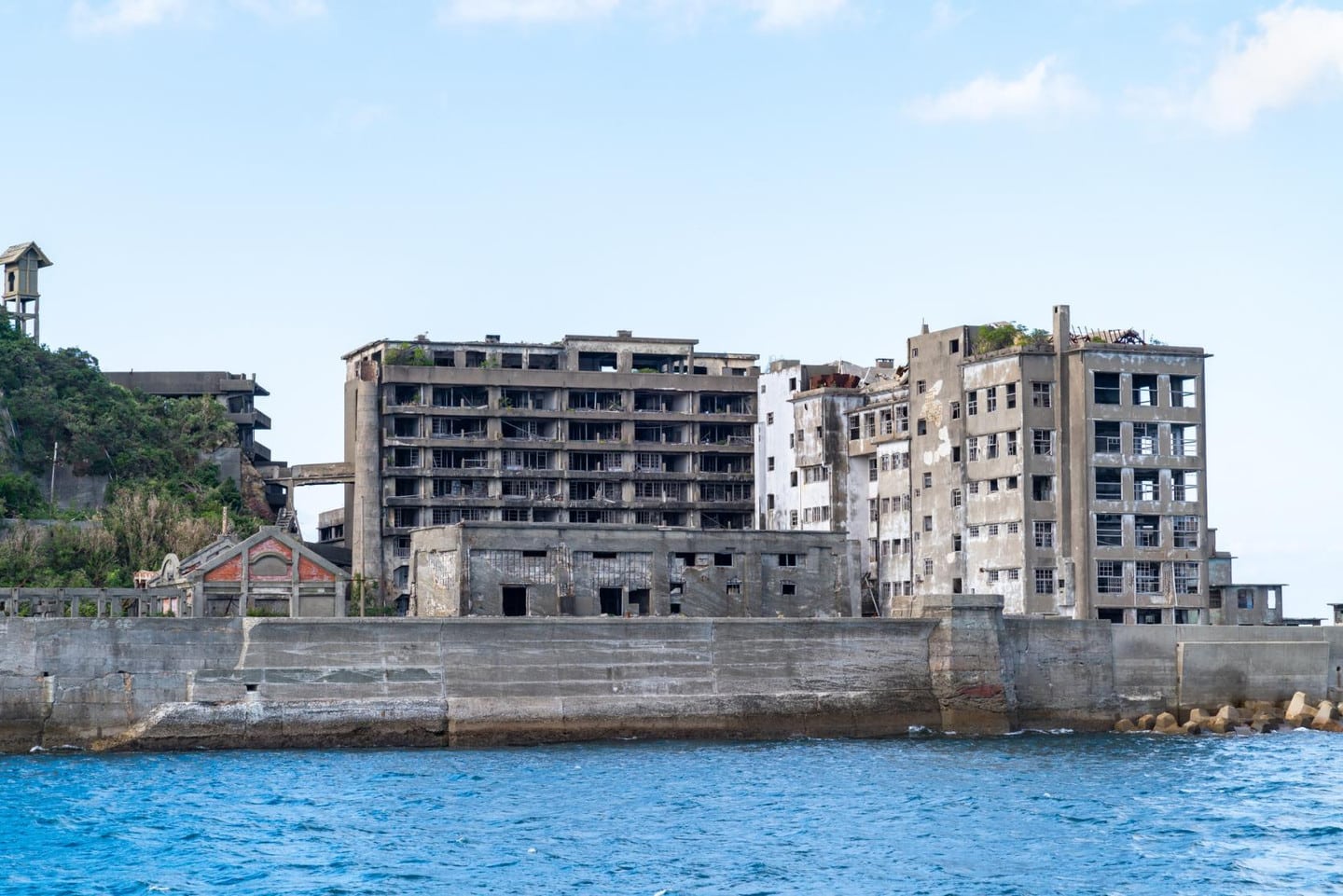
Building No. 30 was built in 1916 and is the oldest surviving reinforced-concrete high-rise apartment block in Japan, seven stories tall in a square layout around a central courtyard. Miners’ families once lived here. It is widely seen as the centerpiece view of the whole tour.
A century of sea wind and salt damage keeps flaking the concrete and exposing the rebar, so the structure is weathering quickly and has partially collapsed in recent years. Guides explain it from a safe distance and approaching it is prohibited.
Looking from the visitor path, Building No. 30 and the neighboring blocks stack into a wall of concrete, the stretch that best conveys the post-apocalyptic feel.
First Viewing Plaza: The First Stop After Landing and Start of the Island Tour
The first place you reach after landing is the First Viewing Plaza, where the guide explains the safety rules and the island’s layout, and you can see where the seawall, housing blocks and mine remains sit relative to each other.
At the edge of the plaza you can see the remains of the rails and pier once used to carry coal. For safety on the ruins, free movement across the island is prohibited, and you must follow the guide along the protected walkway the whole time.
Total time on the island is fixed at about 40 to 50 minutes. The distance between the three plazas is short, so the point is listening to the commentary rather than walking.
Second Viewing Plaza: A Head-On View of the Mine Entrance and Shaft Remains
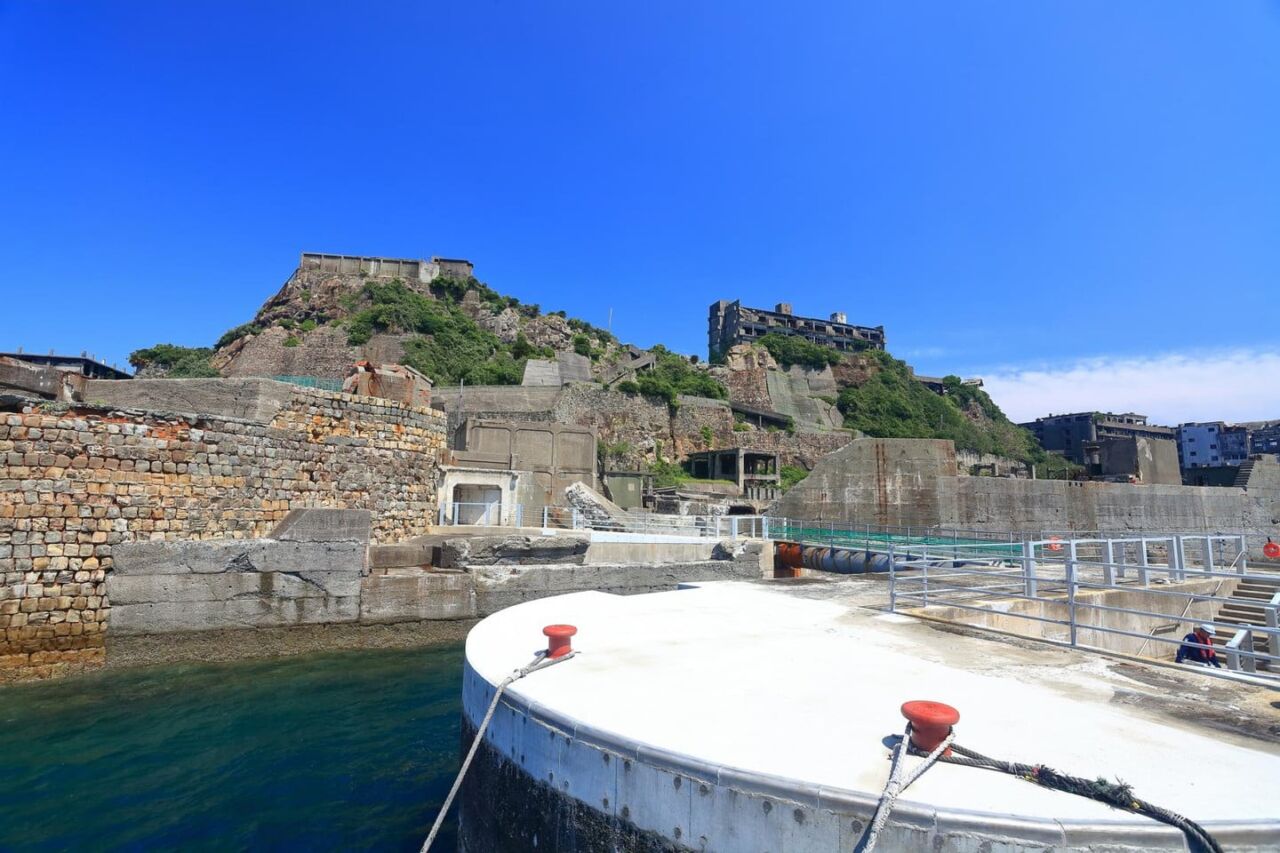
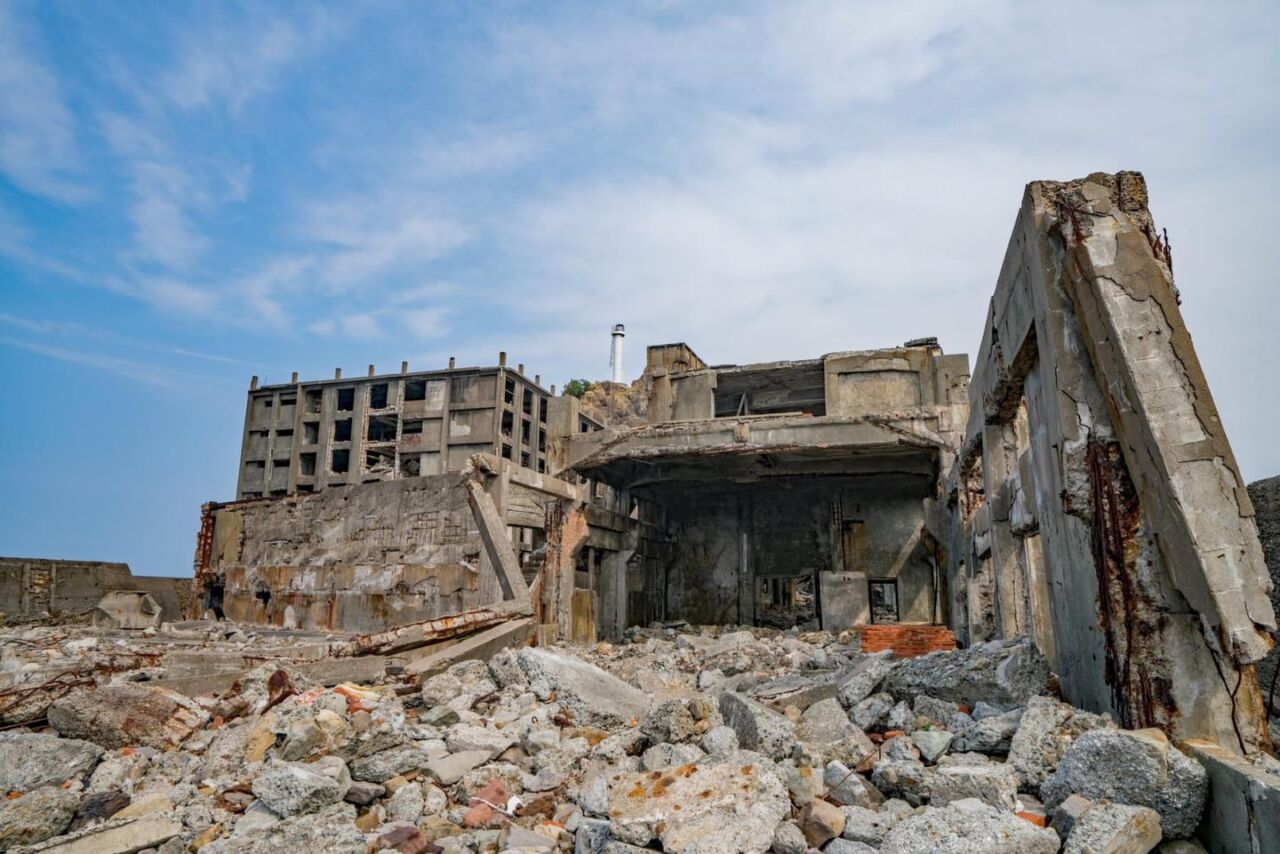
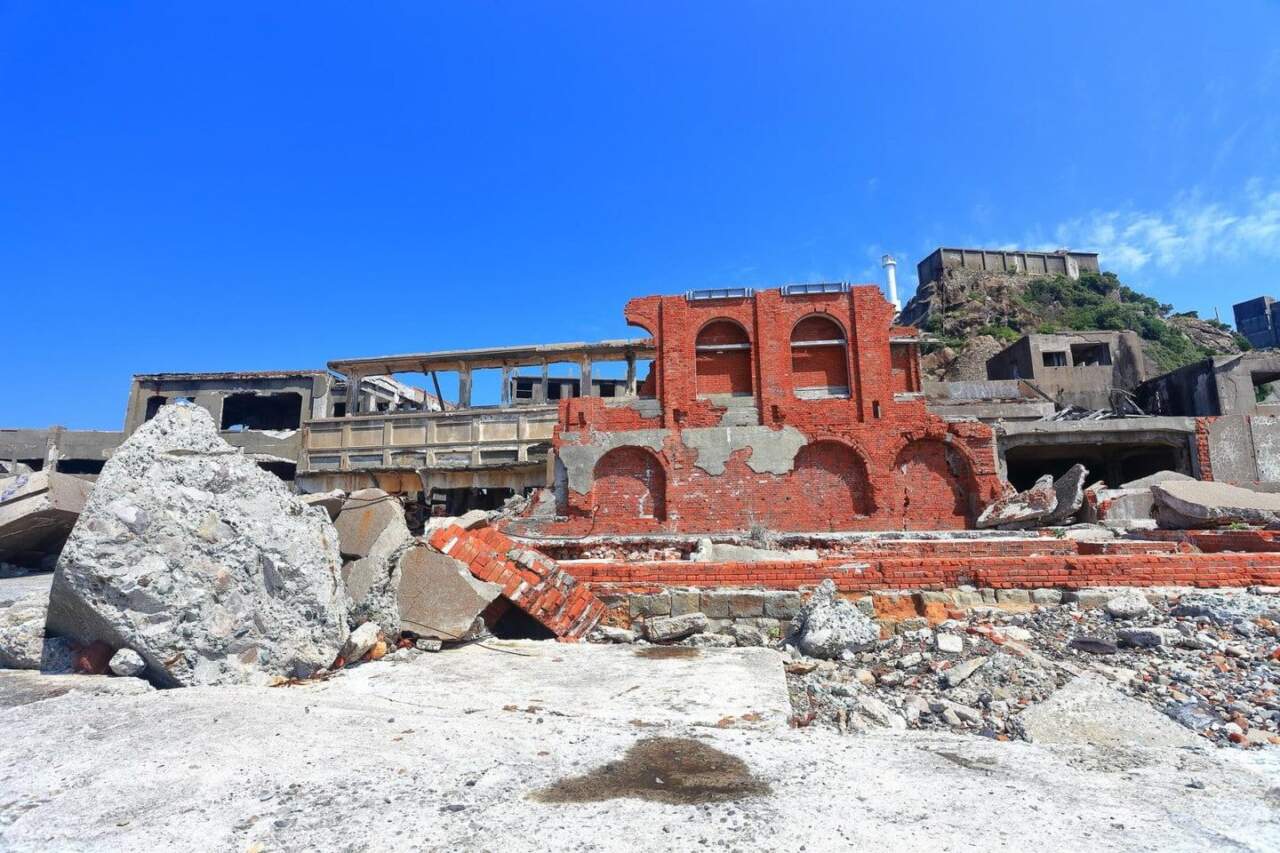
The Second Viewing Plaza faces the remains of the pier at the mouth of Hashima coal mine’s Second Shaft. This was the entrance miners used every day, and the deepest workings reached more than 1,000 m below sea level. The guide explains how the work went and the dangers involved.
Today only the concrete base and steel debris remain, but with the commentary you can still imagine the scale of the conveyors and lifts at work. This stop is key to understanding why the island exists.
The plaza is low and close to the sea, so spray can reach it when waves are high; keep your camera and phone put away. In good weather you can also see distant Takashima.
Third Viewing Plaza: The Best Place to View the Housing and Daily-Life Facilities
The Third Viewing Plaza has the widest view of the three and takes in the facades of housing blocks such as Building No. 30 at a glance. Here the guide describes island life, with a general hospital, elementary and junior high schools, a cinema, shops and a temple all present.
At its peak more than 5,000 people lived on Hashima, with the highest population density in the world, and all of life’s functions had to be squeezed onto this 6.3-hectare island, which is why housing was stacked vertically.
This is also the best spot for panoramic photos, but space is limited and tour groups are large, so take care not to block travelers behind you while the guide is speaking.
Hashima Elementary and Junior High School: A Seven-Story School on the Sea
Hashima Elementary and Junior High School is a seven-story building shared by the elementary and junior high schools, and hundreds of students once attended. It is the building that best shows there was a complete society on the island.
Because of its position and angle, the school can only be viewed from a distance along the visitor path and cannot be approached. Guides often use old photos to show how students got to school; from front door to classroom, the whole route was on the same island.
After the mine closed, the school was left with the other buildings, and much of its exterior has peeled away. It is also a key filming location for many documentaries and video works.
Hashima Shrine: The Island’s Spiritual Center, Now Just a Small Shrine
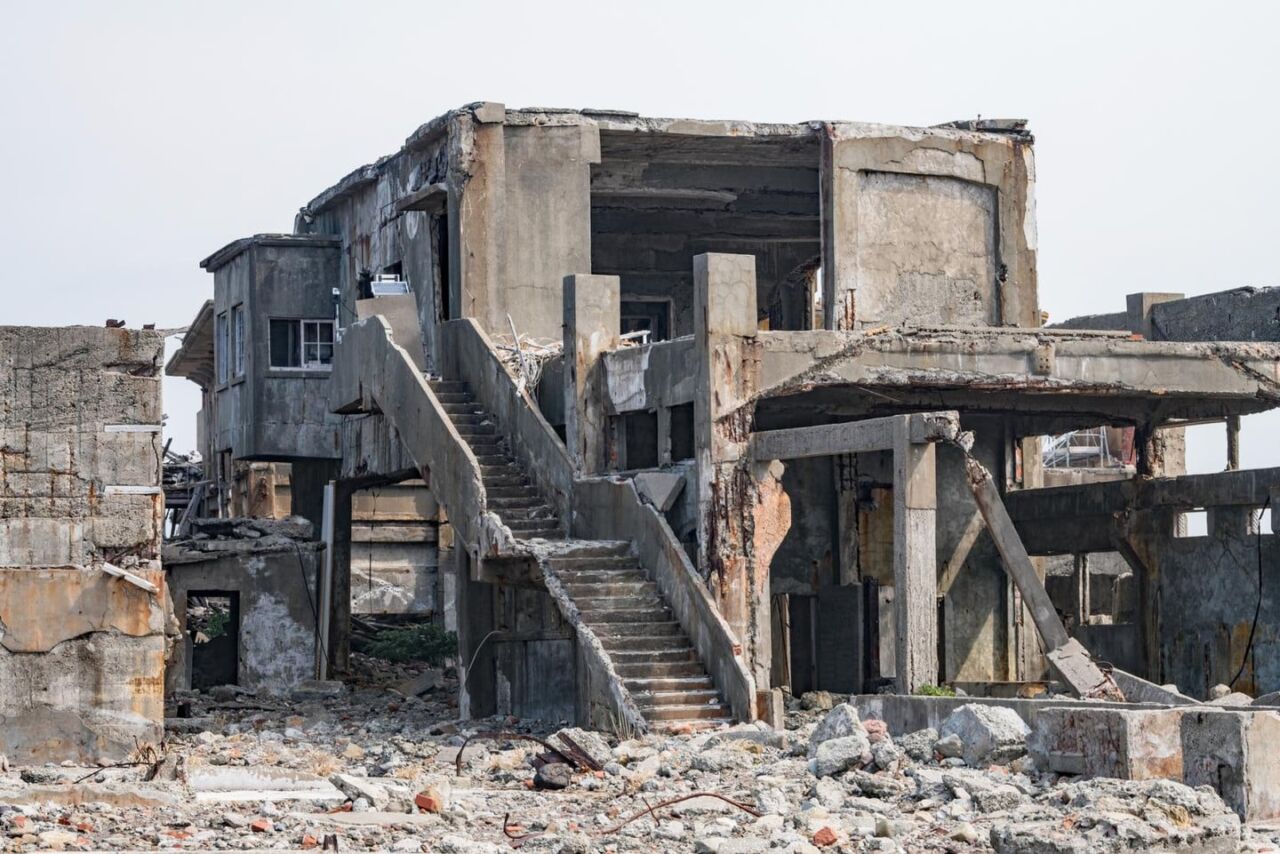
Hashima Shrine stands at the island’s highest point and was the spiritual center where miners prayed for safety underground; the Yamagami Festival every April was the island’s liveliest event. The main hall has since collapsed, leaving only a small concrete shrine standing alone on the heights.
Its outline is visible from the visitor path and is one of the most recognizable parts of the island’s skyline. You can only view it from afar and cannot pray there.
Guides often mention that miners prayed at the shrine before descending, a fixed sight of every morning on the island. Knowing this makes the ruined little shrine more moving to look at.
The high ground where the shrine stands is outside the visitor path and closed to entry.
The Water Tank and Seawall: Two Works That Kept the Island Standing
Hashima has no natural water source and relied on shipments in the early years; supply became stable only after an undersea water pipe was laid. The water tank on high ground dates from that era and is an easily overlooked but vital remnant.
The seawall around the island is what allows this artificial island to exist. Hashima began as a small reef and took its present shape through repeated land reclamation. The seawall was built with the “Tenkawa” method of stone and mortar, and some sections still stand.
During typhoon season waves often wash over the seawall into the island, which is why the landing criteria are so strict. Guides point out several sections visibly damaged by waves.
Circling the Island by Boat: Your Only Chance to Photograph the Battleship Shape
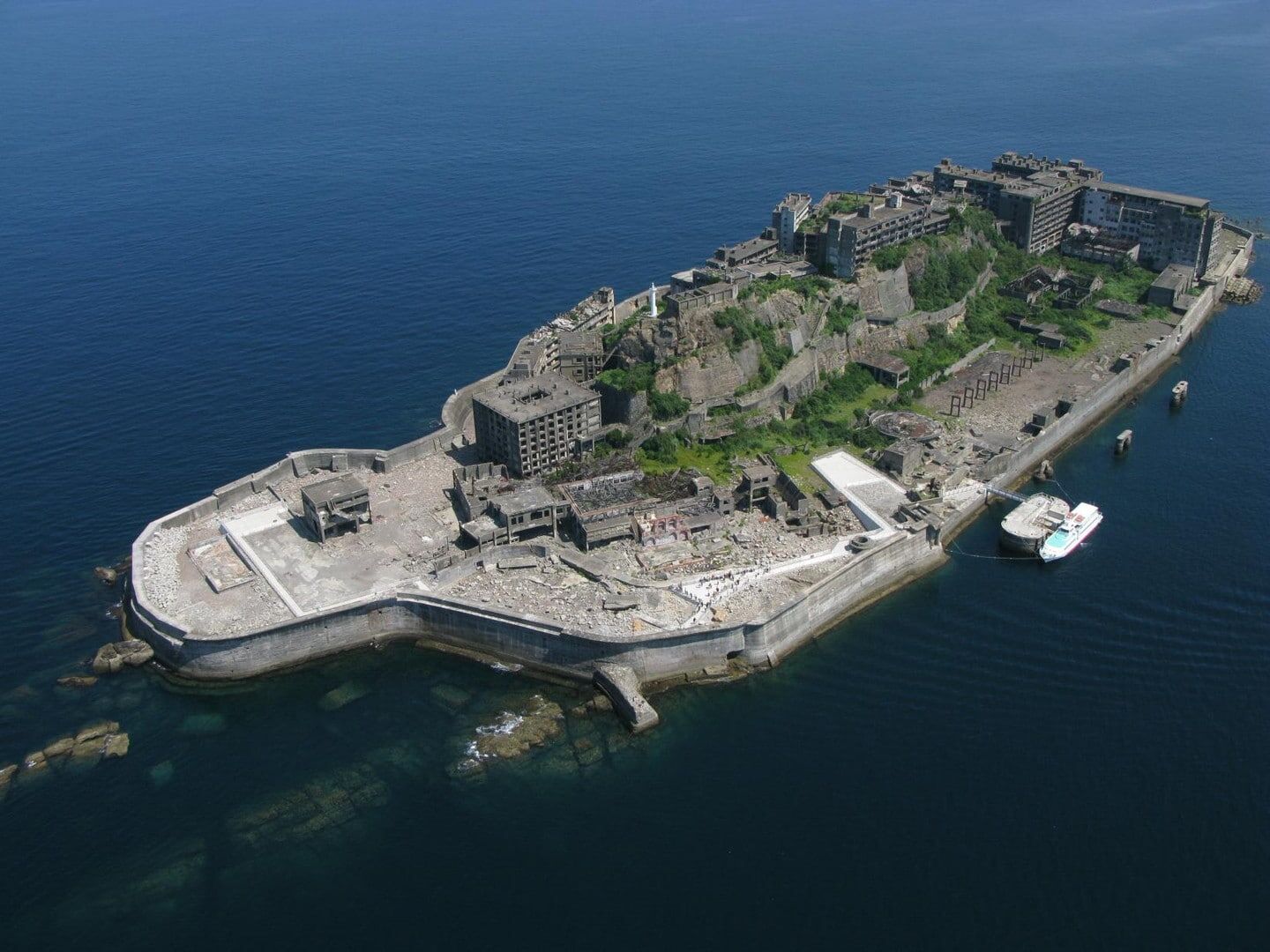
Before docking or after leaving, the boat slowly circles the island once, the only chance to photograph the whole island as it resembles the battleship Tosa. From the west, the towering housing blocks and seawall stack into a bridge-like outline, which is the origin of the name Gunkanjima.
Even if sea conditions prevent landing that day, the circuit usually still goes ahead, so the trip is not a total loss. Many people actually find this the most striking view of all.
The deck is windy and the boat rocks, so hold your phone tightly and use a wrist strap. In backlight, shoot silhouettes, which works better than forcing the exposure.
-Klook.jpg)
Takashima: Gunkanjima’s Neighbor and the Other Half of the Coal-Mining Story
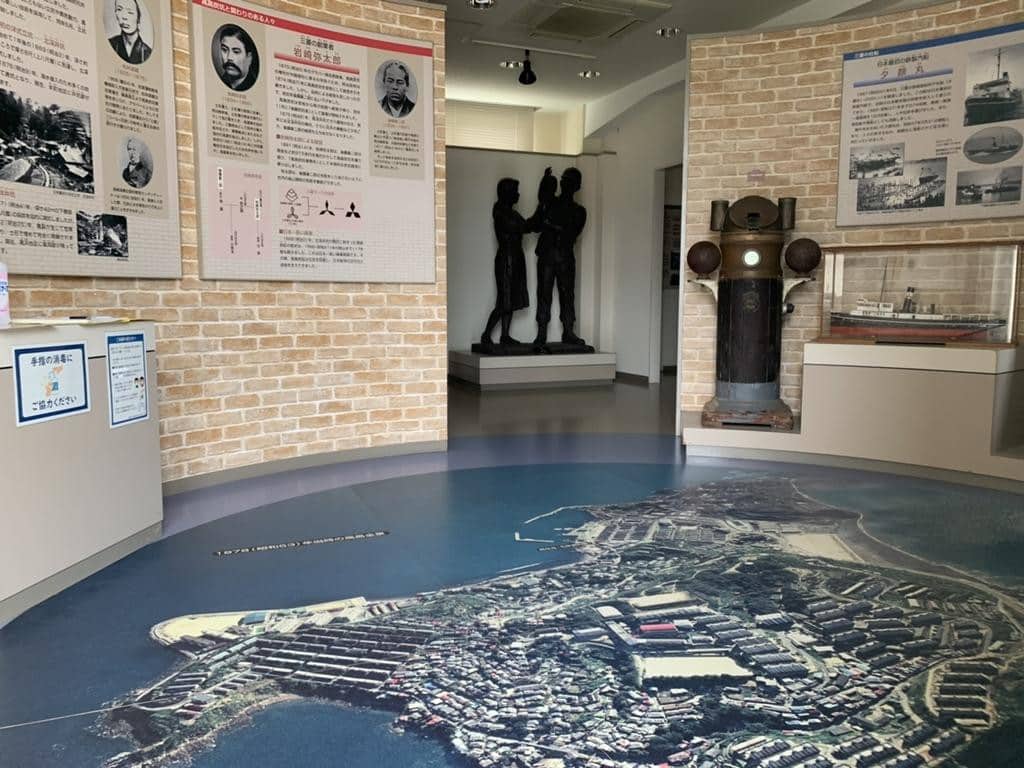
Takashima lies north of Hashima and is an island where the Nagasaki coalfield was developed earlier; some operators’ routes stop here. The Takashima Coal Museum on the island displays the history of coal mining and a large model of Hashima, a good place to understand the whole Nagasaki coalfield.
The lookout outside the museum gives a distant view of Hashima, and its outline is quite clear in good weather. Takashima itself still has residents and scheduled ferries, a strong contrast with the uninhabited Hashima.
If you only have half a day and want to focus on the landing, you can skip this stop; but if you pick a route that stops at Takashima, don’t rush to stay on the boat.
Hashima Coal Mine Remains: The Real Star of the World Heritage Listing
Large-scale mining began at Hashima coal mine after Mitsubishi bought it in 1890, with undersea tunnels extending several kilometers outward, making it one of Japan’s earliest undersea coal mines.
When it was inscribed as a World Heritage Site in 2015, what was recognized as a component site was in fact the industrial facility of the “Hashima Coal Mine,” not the ruined landscape of the whole island. The remains of the Second Shaft pier are the most representative.
The mine closed in 1974 and all residents left; some areas were reopened to visitors only in 2009.
How Much Does Landing on Gunkanjima Cost? Comparing Operator Fares and Booking Methods
Choose a terminal and operator first, then deal with the visitor fee and combo tickets.
Gunkanjima Concierge: Departs from Tokiwa Pier, Reception Counter Inside the Digital Museum
Gunkanjima Concierge departs from Tokiwa Pier in Nagasaki Harbor, with its reception counter on the 1st floor of the Gunkanjima Digital Museum. The official website lists the standard cabin (1F open seating) from ¥5,500 for adults on weekdays and ¥6,000 on specified days and school holidays, and a 2F reserved-seat Premium from ¥9,000 (neither includes the landing fee).
You can add the Gunkanjima Digital Museum combo ticket; the two are close, so check-in and the visiting route flow best.
Morning reception runs 9:00 to 10:05, and the official website gives a cumulative average landing rate of 94% (statistics through March 2020). Actual details follow the official website.
Yamasa Kaiun: The Longest-Running Route with Larger Vessels
Yamasa Kaiun departs from Window 7 on the 1st floor of the Nagasaki Port Terminal Building. The official website lists the adult boarding fee at ¥4,700, cheaper the earlier you book (early-bird ¥3,800 at 20 days ahead, ¥4,000 at 15 days, ¥4,300 at 10 days and ¥4,500 at 5 days), plus a ¥650 facility visitor fee when landing. The one-way crossing takes about 30 to 40 minutes.
Its larger vessel sails relatively smoothly and is the option most often recommended for people prone to seasickness.
Yamasa Kaiun publishes monthly sailing and landing rates on its website, and the numbers vary widely from month to month, so take a look before booking.
Takashima Kaijo Kotsu (Gunkanjima Cruise): The Most Economical, with Some Routes Stopping at Takashima
Takashima Kaijo Kotsu operates under the name “Gunkanjima Cruise” and departs from its own office at 11-22 Motofune-machi, Nagasaki. The official website’s online discount price is ¥3,600 for adults and junior/senior high students and ¥1,800 for elementary students and younger children, the most economical of the operators, with sailings at 9:10 a.m. and 2:00 p.m.
Some routes stop at Takashima, so you can also visit the Takashima Coal Museum, which displays the history of mining in the Nagasaki coalfield and a large model of Hashima, a good place to understand the whole industrial story.
Whether the route actually stops at Takashima depends on the sailing, so be sure to confirm before booking.
Seaman Shokai and Daishichi Ebisu-maru: Small and Mid-Sized Boats Led by Former Residents
The other two approved operators: Seaman Shokai’s “landing plus circuit” tour, per its website with a discount coupon, is ¥3,900 for adults, ¥3,500 for junior/senior high students and ¥2,000 for elementary students; Daishichi Ebisu-maru is known for a crew of former islanders who share their own experiences on board. Confirm the departure pier and meeting point with the company when booking.
Landing records (success rates) differ among operators, and most publish recent landing records on their websites, so you can check them before deciding.
Tours likewise include the island circuit and a guided visit of about 40 to 50 minutes on the island.
Hashima Facility Visitor Fee: On-Site Charges from April 2026
In addition to the boat fare, if you land successfully you must pay the City of Nagasaki’s “Hashima facility visitor fee” on site. From April 1, 2026 it was revised to ¥650 for general visitors (age 15 and over), ¥320 for elementary through high school students, and free for preschoolers. This is collected only when you actually land; if you cannot land, you pay nothing. The ¥310 / ¥150 widely circulating online is the old price before the revision.
Gunkanjima Reservation Process: Three Steps
Reservations take three steps: first book on each operator’s website or on platforms such as Klook and KKday (for busy holidays and summer, book 1 to 2 weeks ahead); then sign a safety pledge to follow the island’s safety rules, either on paper or online, and you cannot land without it; finally, on the departure day, check the website or call to confirm that the boat is sailing, since the final decision on sailing and landing is usually announced only 30 minutes before departure.
Refund rules differ by company, so read the terms before booking; some operators accept cash only.
How to Book Gunkanjima: Gunkanjima Concierge
- Gunkanjima Concierge accepts advance reservations only, through online booking with a website member login, and does not take waitlists. Individual bookings open in batches; for example, sailings for January 1 to 3, 2027 open on September 5, 2026, so anyone wanting a specific date should watch the website announcements.
How to Book Gunkanjima: Yamasa Kaiun Check-in and Cancellation
- Yamasa Kaiun: you can book online on the website or call the reservation line at 0800-200-8180. On the day, check in at Window 7 on the 1st floor of the Nagasaki Port Terminal Building; the window opens about 45 to 60 minutes before sailing. Hand in your signed pledge and pay the boat fare and visitor fee on the spot. For individual bookings, cancellation is free 15 days before boarding, 10% is charged 14 to 10 days before, the share rises closer to the date, and canceling after departure is charged in full.
How to Book Gunkanjima: Seaman Shokai and Platform Bookings
- Seaman Shokai: book online or call 095-818-1105. Same-day online bookings are accepted up to 9:00 a.m. for the morning sailing and 12:00 p.m. for the afternoon one. The fare is cash only, no cards; meet 20 minutes before departure, with one pledge per person, which you can download from the website and fill in beforehand.
If you book through Klook or KKday, the meeting point, cancellation rules and whether the visitor fee is included follow the platform’s product page, which may differ from the operator’s website rules.
Gunkanjima Digital Museum: The Best Backup When You Can’t Land
The Gunkanjima Digital Museum is in the Oura area of Nagasaki, about a 5-minute walk from Oura Church, and uses large-scale projection, VR and full-scale reconstructed scenes to recreate miners descending the shaft, apartment interiors and the shopping street.
Only a short path on the island is open to visitors, so the things you most want to see, such as apartment interiors and the depths of the mine, are out of view; the museum fills that gap, and it also preserves recorded oral accounts from former islanders. Exhibits rely on video and immersive experience, so you can follow them without Japanese.
If your group includes elderly relatives or young children who cannot land, they can also wait here. Admission and opening hours follow the official website.
What to Know Before Going: Gear Restrictions and Where to Stay Nearby

Must-Know Rules for Landing: Age Limits, No Umbrellas, Motion-Sickness Pills and Footwear
The island has no barrier-free facilities, the ground is uneven with level changes, and some operators ban children under 6 or people with limited mobility from landing, so confirm each company’s rules before booking.
Sea winds on the island are very strong, and umbrellas and parasols are banned throughout; in summer the perceived temperature often tops 40°C, so bring a hat, sunglasses and plenty of water. Open-sea conditions have nothing to do with the weather in the city, so we strongly recommend taking motion-sickness medicine 30 minutes before boarding.
High heels, flip-flops and sandals are banned for landing, and anyone not complying will be refused boarding; some operators lend rain boots. The whole trip takes about 2.5 to 3 hours, and there is no shop on either the boat or the island.
After the Half Day: How to Continue in the City and Which Area to Stay In
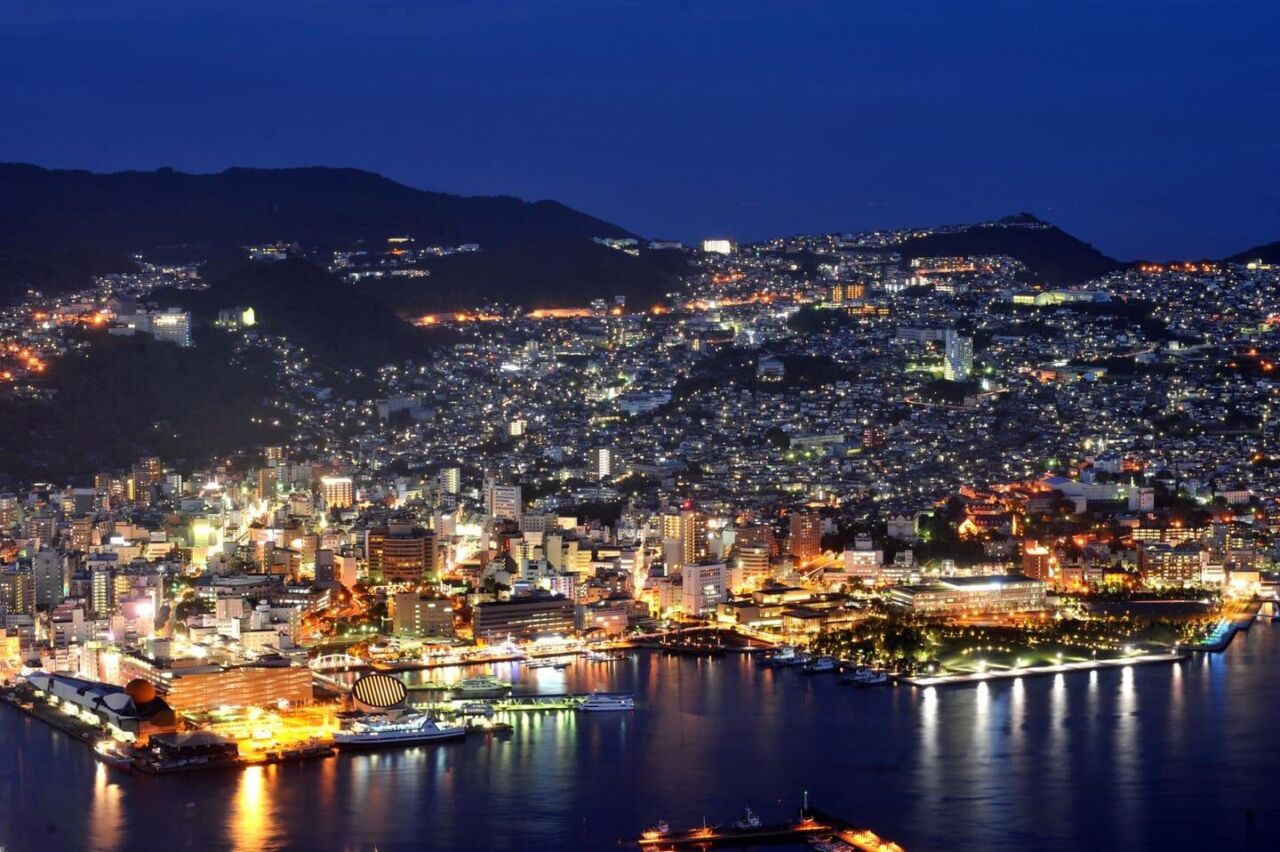
The Gunkanjima tour ends after about half a day, so we suggest staying in central Nagasaki and following the classic route: lunch of champon at Nagasaki Shinchi Chinatown, an afternoon tram ride to Spectacles Bridge, Oura Church and Glover Garden, then the ropeway up Mount Inasa in the evening for one of the world’s new three great night views.
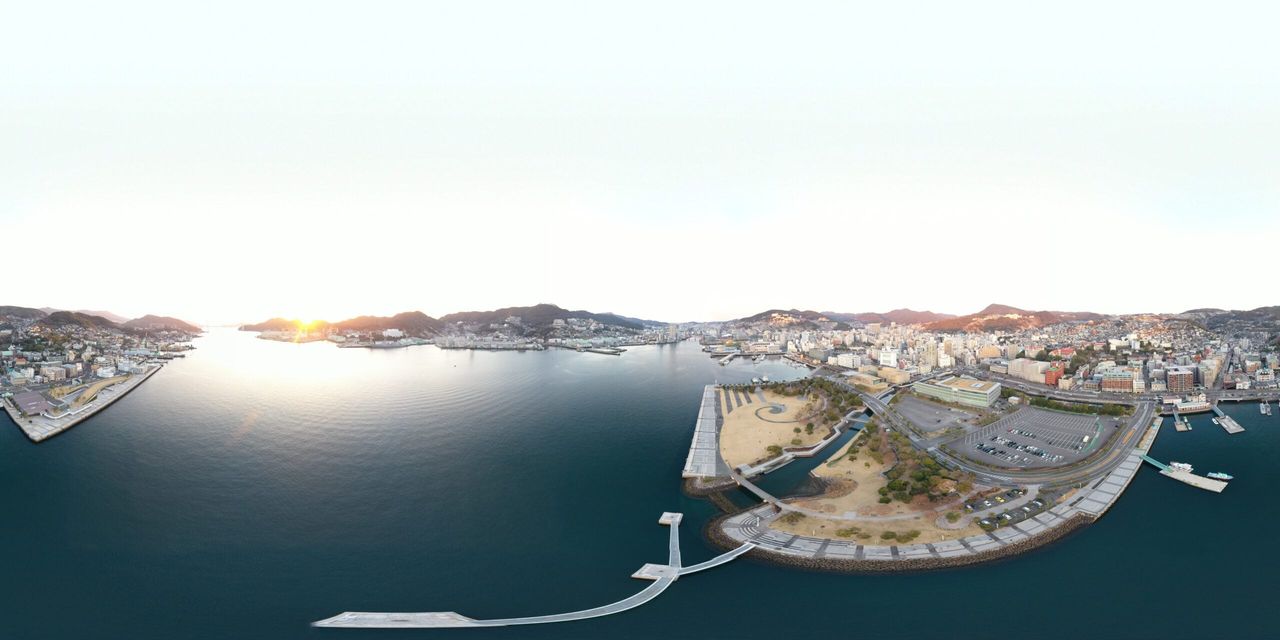
Around Nagasaki Station is the easiest place to stay, with the new station building and the new Amu Plaza wing, both opened after the Nishi-Kyushu Shinkansen began in 2022, right at hand. For an easy walk to the terminals choose the Dejima and Ohato area; if you want late-night food, stay in Shianbashi.
Because most boats leave in the morning and sailings can be canceled, we recommend staying at least two nights in Nagasaki and scheduling the landing on the first day so you have a second chance if it is canceled.
Gunkanjima FAQ
Q: How much does it cost to land on Gunkanjima, and what does that include?
Boat fares run about ¥3,600 to ¥6,000 depending on the operator and plan. If you land successfully you also pay the on-site Hashima facility visitor fee: ¥650 for general visitors (age 15 and over), ¥320 for elementary through high school students, and free for preschoolers (revised April 1, 2026). Adding a Gunkanjima Digital Museum combo ticket costs extra. Actual amounts follow each official website’s announcements.
Q: Is landing on Gunkanjima guaranteed? What are the landing conditions?
No. The Nagasaki city ordinance sets the landing criteria so that landing is not allowed if any one of these is met: wind over 5 m/s, waves over 0.5 m, or visibility of 500 m or less, and then the boat only circles the island. Landing records differ among operators, and the final decision on sailing is usually made 30 minutes before departure.
Q: How far ahead should I book Gunkanjima, and how?
For holidays and summer, book 1 to 2 weeks ahead, either on each operator’s website or on platforms such as Klook and KKday. After booking you need to sign a safety pledge, on paper or online, and you cannot land without it.
Q: How long can I stay on Gunkanjima, and can I explore freely?
The time on the island is fixed at about 40 to 50 minutes, and free movement is prohibited throughout; you must follow the guide along the designated protected walkway, which covers only the area around the first to third viewing plazas, and building interiors are always closed.
Q: Which season has the best chance of a successful landing?
In general sea conditions are steadier in spring and autumn, while cancellations rise noticeably during the summer typhoon season and the winter monsoon. But the sea changes daily and a cancellation can happen in any season, so always keep a backup plan.
Q: What should I bring to Gunkanjima, and what is prohibited?
Wear comfortable closed shoes; high heels, flip-flops and sandals are banned, and umbrellas and parasols are banned on the island throughout. Be sure to wear a hat, bring water and take motion-sickness medicine 30 minutes ahead. Some operators ban children under 6.
Q: What if I can’t land that day? Is there a backup?
In most cases the boat still sails and circles the island, which is actually the best chance to photograph the battleship shape. If the whole sailing is canceled, you can go to the Gunkanjima Digital Museum in the city and use VR and reconstructed scenes to understand the island.
