
Ibusuki Sand Bath Guide: Bury Yourself in Hot Seaside Sand
Ibusuki’s sand bath is a natural sand bath heated by coastal geothermal energy, about an hour from central Kagoshima by train or car.
How to Get to the Ibusuki Sand Baths: Tamatebako Train, Local Trains and Sightseeing Bus Compared
Take JR to Ibusuki Station first, then decide whether to take a bus or walk to the sand bath facilities.
Taking the Ibusuki no Tamatebako from Kagoshima-Chuo Station
Take the sightseeing limited express “Ibusuki no Tamatebako” from Kagoshima-Chuo Station to JR Ibusuki Station; the ride takes about 50-55 minutes. The counter seats on the sea side give views of Kinko Bay. All seats are reserved, trains are infrequent and often sell out, so reserve through the JR Kyushu website. JR Kyushu Rail Pass holders can reserve seats for free.
If you cannot get a seat, you can take the more frequent Ibusuki-Makurazaki Line local or rapid trains instead, though the ride takes longer.

Ibusuki-Makurazaki Line Local Trains: A Frequent, Cheap Backup
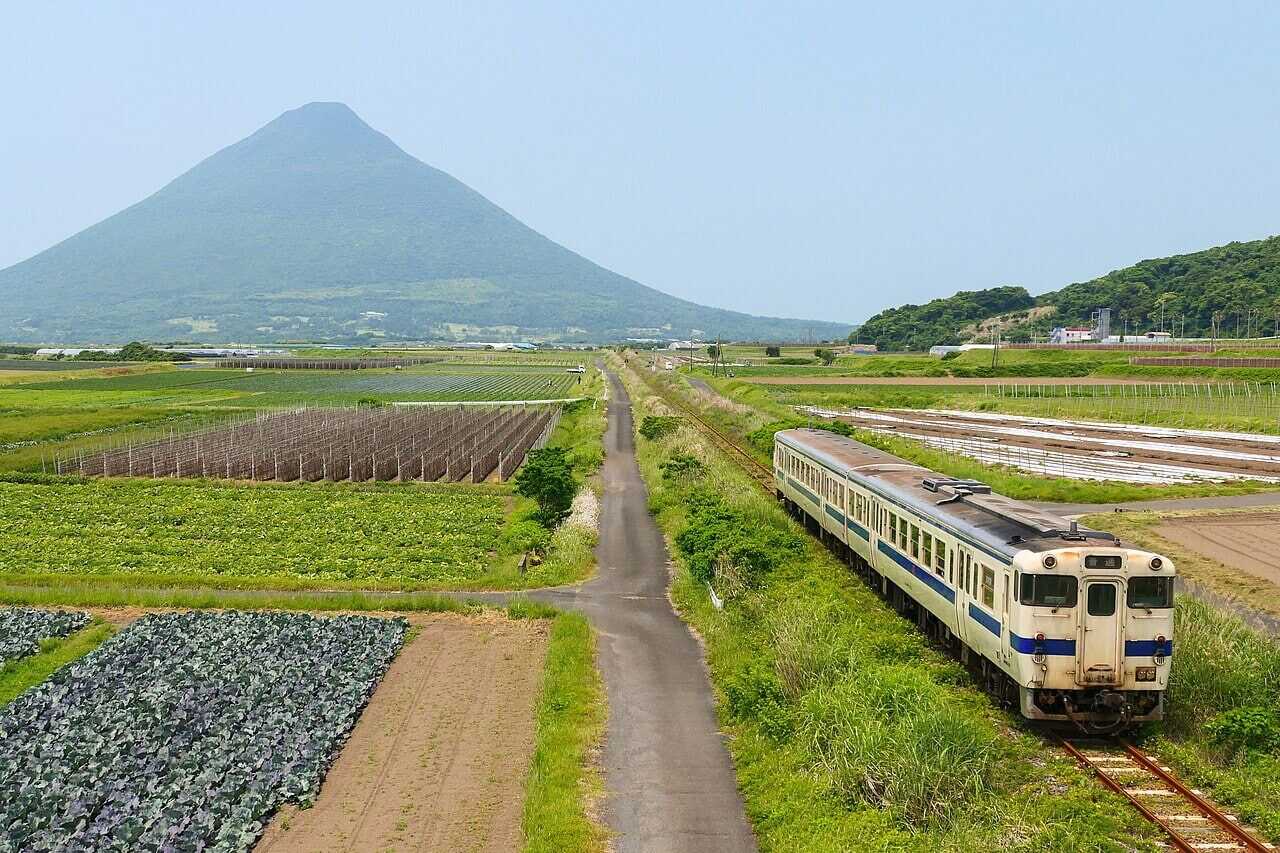
Local or rapid trains on the JR Ibusuki-Makurazaki Line run from Kagoshima-Chuo Station to Ibusuki Station in about 70 minutes, with lower fares and frequent departures, suited to last-minute plans. The line runs along Kinko Bay with beautiful scenery, but the cars have no sea-facing seats. To reach Nishi-Oyama Station, the southernmost JR station in Japan, you also take this line, with very few trains, so check the timetable in advance.
The last trains on the Ibusuki-Makurazaki Line leave early, so if you plan to visit Sunaraku in the evening, watch the last departure time. The trains are mostly one or two diesel cars, and local students ride at peak times, so travelers with lots of luggage should avoid school commute hours.
Getting from Ibusuki Station to Sunaraku and Sunayuzato
To “Sunaraku”: Take a Kagoshima Kotsu bus from Ibusuki Station to “Sunaraku-mae,” about 5 minutes; you can also walk about 20 minutes along the coast.
To “Sunayuzato”: Take a bus toward Lake Ikeda from Ibusuki Station and get off at “Healthy Land Iriguchi.” Because it is far and buses are infrequent, driving or taking a taxi is recommended.
To visit Lake Ikeda, Nagasakibana and other spots, buy the “Ibusuki Sightseeing Loop Bus one-day pass” in front of Ibusuki Station. It allows unlimited rides for one day; confirm the fare at the information office.
By Car: Renting a Car Is Fastest for Nishi-Oyama and Nagasakibana
Driving from central Kagoshima to Ibusuki takes about 1 hour 10 minutes, via the Ibusuki Skyline or the coastal Route 226. Both Sunaraku and Sunayuzato have parking lots, mostly free.
Nishi-Oyama Station, Mt. Kaimon, Nagasakibana and Tosenkyo somen flume are far apart and buses are infrequent, so renting a car is almost the only way to see them all in one day. There are car rental offices at both Ibusuki Station and Kagoshima-Chuo Station.
Roads at the southern tip of the Satsuma Peninsula are mostly single-lane with few streetlights, and the sun sets early in winter, so try to finish your itinerary in daylight.
| Facility | Fee (Adult, including yukata) | Hours and Features |
|---|---|---|
| Sand Bath Hall Sunaraku (Sunamushi Kaikan Sunaraku) | Adult ¥1,500 / Child ¥800 (including yukata and large bath) | 08:30-21:00 (last admission 20:00; closed to admissions 12:00-13:00 on weekdays), all-weather roof so you can go in the rain |
| Yamakawa Sand Bath Sunayuzato | Adult ¥1,100 / Child ¥600 (including yukata) | 08:30-17:00 (admission until 16:30), closed Wednesdays, superb sea view with Mt. Kaimon in the distance |
| Ibusuki Hakusuikan (Genroku Furo + in-hotel sand bath) | Depends on stay or day-use bath plan | Hotel-run sand bath, fewer crowds |
| Ibusuki Sightseeing Loop Bus one-day pass | About ¥1,000 | Unlimited rides for one day, connecting Lake Ikeda and Nagasakibana |
| Ibusuki no Tamatebako (reserved seat) | Per JR fares | About 50-55 minutes from Kagoshima-Chuo Station, reservation required |


What Are Ibusuki’s Must-See Spots? Sand Baths and Highlights of the Southern Satsuma Peninsula
The following are arranged by route, with the sand bath facilities first and nearby sights after.
Sand Bath Hall Sunaraku: A Natural Seaside Sand Bath Rare in the World
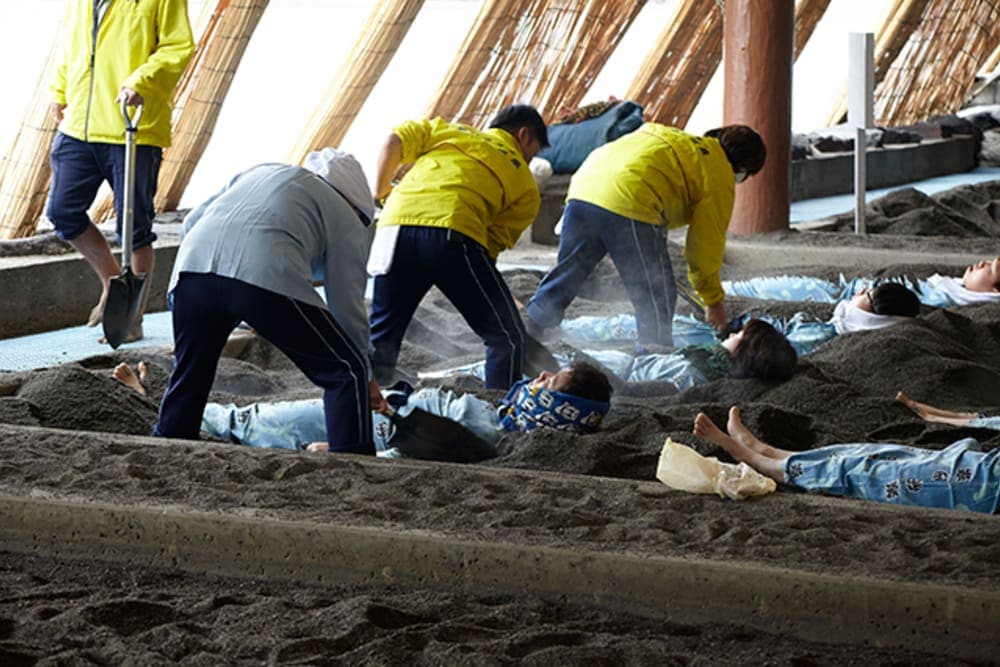
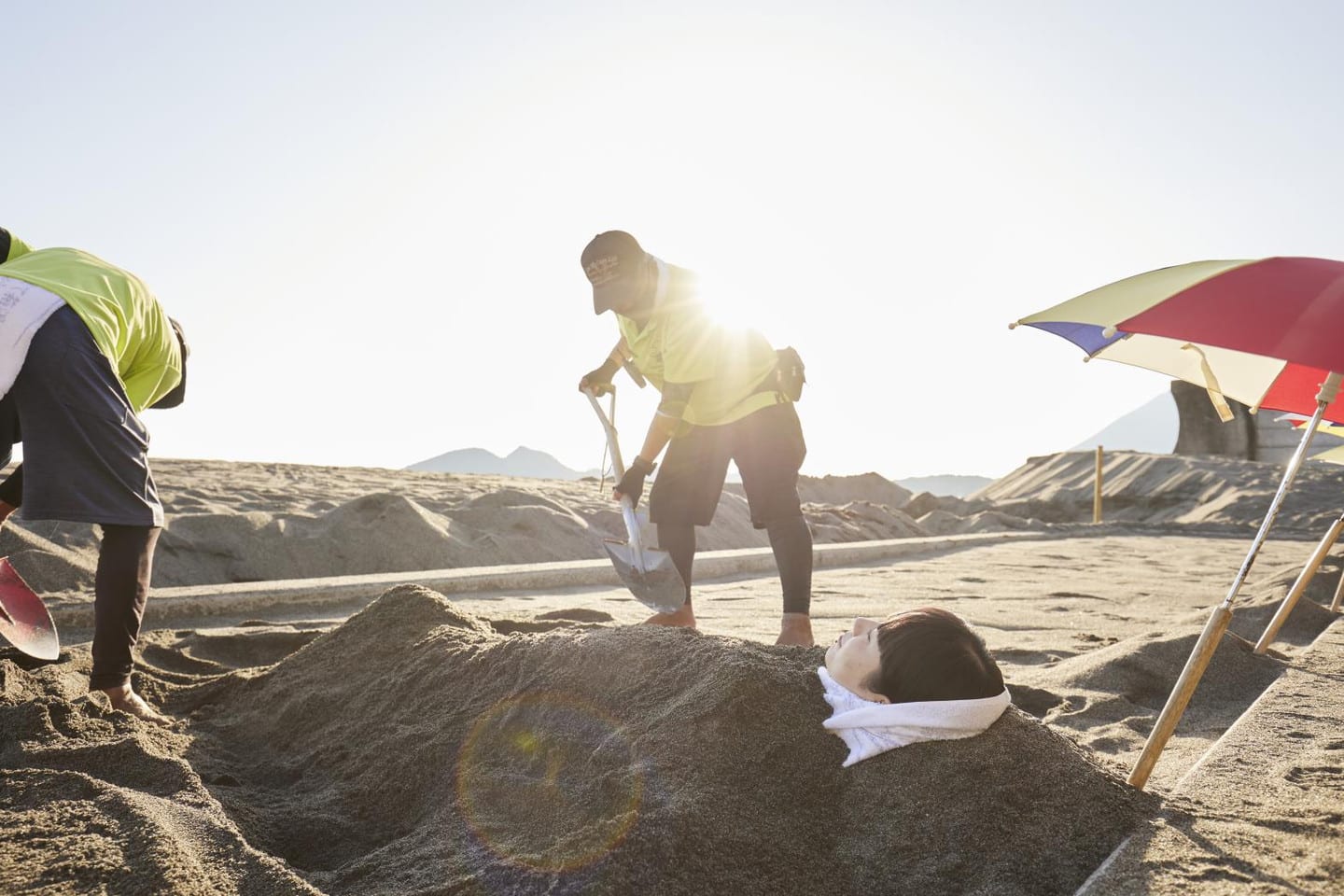
Sunaraku is a municipal sand bath hall run by Ibusuki City and the one most visitors go to. Sand on the beach is heated from below to about 50 to 55 degrees by hot spring water welling up from underground. After you lie down, sand attendants cover your whole body with hot sand using shovels, giving a pressure and heat you do not get from an ordinary hot spring.
It is commonly said that a sand bath boosts circulation about 3 to 4 times as much as an ordinary hot spring, and after lying there about 10 minutes you start sweating heavily. The sand bath area has an all-weather roof, making it the only one of the two facilities that reliably operates in the rain.
The official website lists the basic “Sunamushi Set” (sand bath + large bath + yukata) at ¥1,500 for adults and ¥800 for children; a set with a souvenir towel is ¥1,800, and the “Sunaraku Set,” which adds a bath towel, is ¥2,100. Golden Week, Obon, Silver Week and the year-end/New Year period are special periods with separate prices. The hall opens at 08:30, last admission is 20:00 and it closes at 21:00; the sand bath is closed to admissions from 12:00 to 13:00 on weekdays. A large bath is also inside, so after rinsing off the sand you can go straight to a soak. Allow 1.5 hours.

Yamakawa Sand Bath Sunayuzato: An Open-Air Sand Bath Where You Look at Mt. Kaimon
Sunayuzato is on Fushime Beach in the Yamakawa area. The sand bath is on the bay’s beach, facing the sea and Mt. Kaimon, with superb scenery.
Fees: adults ¥1,100, children ¥600 (including yukata); during special periods adults ¥1,500, children ¥750. Hours 08:30-17:00 (admission until 16:30), closed Wednesdays (the next day if a holiday). Geothermal steam can be seen on nearby Fushime Beach.
This is a fully open-air facility, and strong wind, heavy rain and tides may affect opening, so call or check the official website before you go. Allow 1 hour.
What Is Ibusuki “Suna Furo”? The Japanese Term “Sunamushi” and Experience Highlights
In Japanese, Ibusuki’s sand bath is called “sunamushi” and often written “suna furo” (sand bath), and you will see both spellings when searching Japanese information. In this style of bathing you lie in yukata in sand heated by hot spring heat welling up along the coast, introduced as a rare natural sand-steam hot spring that is said to have a history of about 300 years. About 10 minutes of lying is generally recommended, by which time your whole body begins to sweat; after getting up, rinse and soak in the large bath.
Ibusuki Hakusuikan: Genroku Furo and the Hotel’s Own Sand Bath
Ibusuki Hakusuikan is a well-known long-established hot spring hotel in Ibusuki, with a large bath hall, “Genroku Furo,” recreating the Edo period, and a hotel-run sand bath with fewer crowds. The hotel is near pine woods and a private beach, and its Satsuma Denshokan collects Satsuma ware and Satsuma domain artifacts and can also be visited on its own.
For day-use bathing, sand bath hours, reservation requirements and possible closures for private use, non-guests should call to confirm first. Allow 2 hours or more. The hotel is on the south side of Ibusuki city, about a 10-minute drive from JR Ibusuki Station, and offers a shuttle service. It is a comfortable alternative for avoiding the crowds at municipal Sunaraku.
Nishi-Oyama Station: JR Japan’s Southernmost Unmanned Station
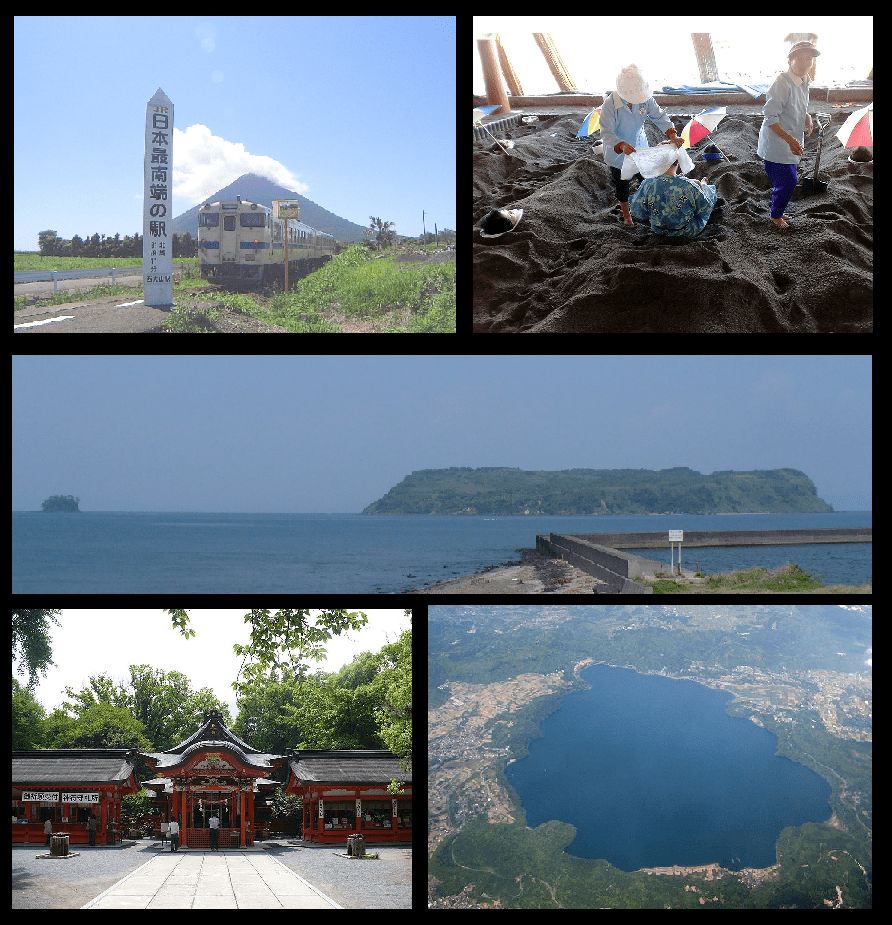
Nishi-Oyama Station is the southernmost station on JR in Japan, and in front of the “JR Japan’s Southernmost Station” marker on the platform is the classic Mt. Kaimon backdrop. This unmanned station has just one platform, a yellow mailbox beside it is said to bring happiness, and a small shop sells local produce and souvenir postcards.
Trains on the Ibusuki-Makurazaki Line are infrequent (one every two or three hours), so check the timetable in advance; driving is more convenient. Allow 30 minutes. From winter to early spring, rapeseed flowers bloom in the fields around the station, which together with Mt. Kaimon make a beautiful scene. There is only a restroom in front of the station, so eat in Ibusuki city first.
Mt. Kaimon: The Perfectly Shaped “Satsuma Fuji”
Mt. Kaimon (about 924 meters) is shaped like a perfect cone and is called “Satsuma Fuji” for its resemblance to Mt. Fuji. One of Japan’s 100 Famous Mountains, it can be seen to the south of Ibusuki. The trailhead is near the Sanroku nature park at the base, and a round trip to the summit takes about 5-6 hours, with a path that spirals upward and views that open up as you climb. If you do not hike, you can view it from afar from Nishi-Oyama Station or Nagasakibana. Mountain weather is changeable, so bring plenty of water and start early. The shore of Lake Ikeda is also a popular place to photograph Mt. Kaimon’s reflection.
Lake Ikeda: Kyushu’s Largest Crater Lake and the Giant Eel Legend
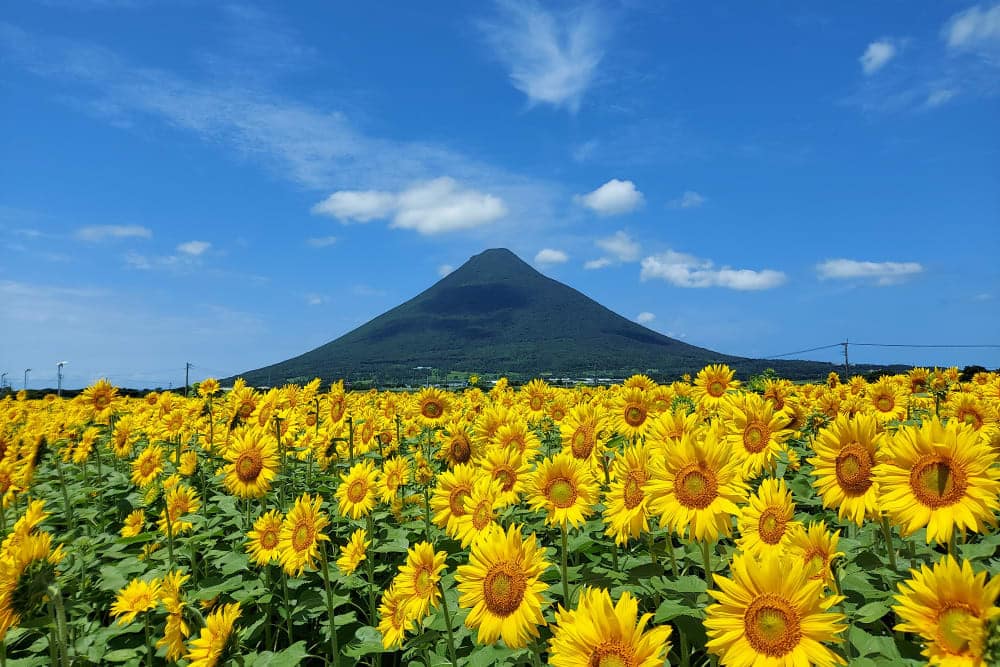
Lake Ikeda is Kyushu’s largest crater lake, 15 km around and more than 200 meters deep. It faces Mt. Kaimon, whose reflection can be seen on clear days, and its signature view is the rapeseed flowers in bloom in spring.
The lake is home to 2-meter-long giant eels, a natural monument, and the rest stop by the lake has a tank for viewing. There is also the legend of the unidentified creature “Issie.”
The lakeside has a parking lot and souvenir shops, and is a sightseeing bus stop. Allow 30 to 40 minutes.
The lakeside has no shade, and the midday sun is strong in summer; early morning, when the lake is calmest, is best for photographing Mt. Kaimon’s reflection.
Nagasakibana: The Lighthouse Cape at the Southern End of the Satsuma Peninsula
Nagasakibana is the southernmost cape of the Satsuma Peninsula. A white lighthouse stands on the rocky shore, with Mt. Kaimon to the left and the East China Sea ahead, the widest view in Ibusuki. A souvenir street between the parking lot and the lighthouse sells shell crafts and local produce. At low tide, small creatures can be seen in the tide pools on the rocky shore, good for families. The rocks are slippery with no guardrails, so be careful near the water. Admission is free; allow 40 minutes to 1 hour. The full walkway is about 10 minutes, paved but slightly undulating. It is also a sightseeing loop bus stop.
Ryugu Shrine: The Wish Shells of the Urashima Taro Legend’s Birthplace
Ryugu Shrine is next to the entrance to Nagasakibana and enshrines Otohime (Toyotamahime). The area is regarded as one of the birthplaces of the Urashima Taro legend, and the Ibusuki no Tamatebako train is named after it.
The shrine’s feature is writing a wish on a shell and dropping it into the “Kanau-tsubo” (wish jar). The vermilion hall dotted with shells makes a distinctive sight, especially popular with those seeking love.
Amulets and goshuin are available at the shrine. Visiting is free and open all day; allow 20 minutes, and visit together with Nagasakibana.
The shrine is small, and there may be a line to write on a shell when it is crowded. Nearby souvenir shops sell shell souvenirs and local specialties.
![[Kagoshima Ibusuki Day Tour] Photograph Japan's Hardest-to-Reach JR Station, Winter-Only Rapeseed Fields, Visit Urashima Taro's Ryugu Shrine, Try Tosenkyo Flowing Noodles and Natural Sand Bath, Small Group of 8-24 on a Green-Plate Private Vehicle, Chinese-Speaking Driver-Guide](https://res.klook.com/images/w_300,h_300,c_fill,q_75/w_80,x_15,y_15,g_south_west,l_Klook_water_br_trans_yhcmh3/activities/siupsx78znpb9zqodgd5/【鹿兒島指宿一日遊】打卡最難JR站·冬季限定油菜花海,探訪浦島太郎龍宮神社,體驗唐船峽流水面+天然砂蒸,8-24人小團綠牌專車,中文司導-Klook.jpg)
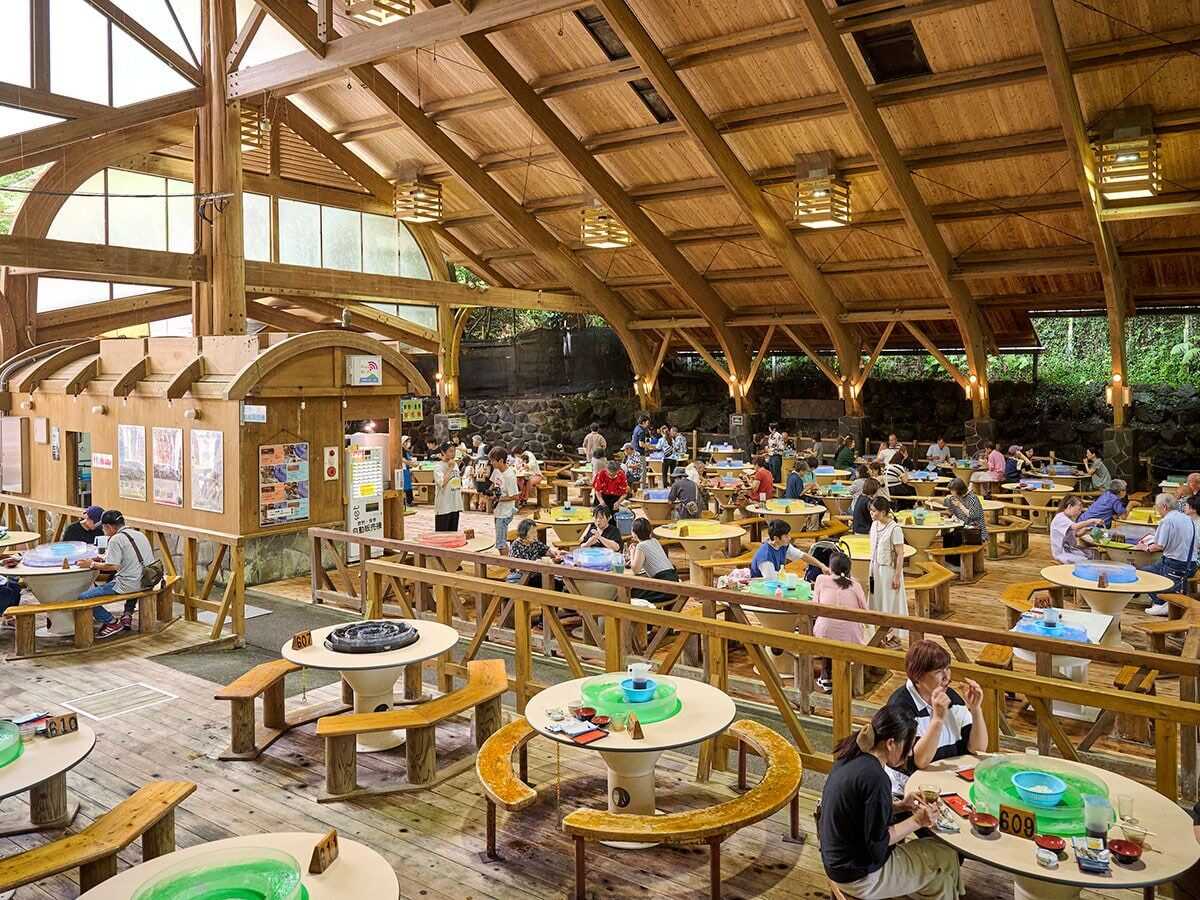
Tosenkyo Flowing Noodles: Rotating Flowing Somen Served All Year
Tosenkyo is the birthplace of rotating flowing somen in Japan and is open all year. Each table has a circular rotating water channel where noodles swirl in the spring water. The spring flows about 100,000 tons a day at about 13 degrees, was selected as one of the “Heisei Famous Waters 100” in 2008, and keeps the noodles firm. Signature dishes also include trout sashimi and salt-grilled trout. The place is “Ibusuki City-run Tosenkyo Somen Nagashi.”
It is on the outskirts of Ibusuki, so driving is recommended. In summer there is a wait at peak mealtimes; allow 1 hour. The restaurant has you buy a meal ticket before sitting, and at peak times it is best to buy the ticket first and then find a seat. Tosenkyo Park nearby is good for a stroll.
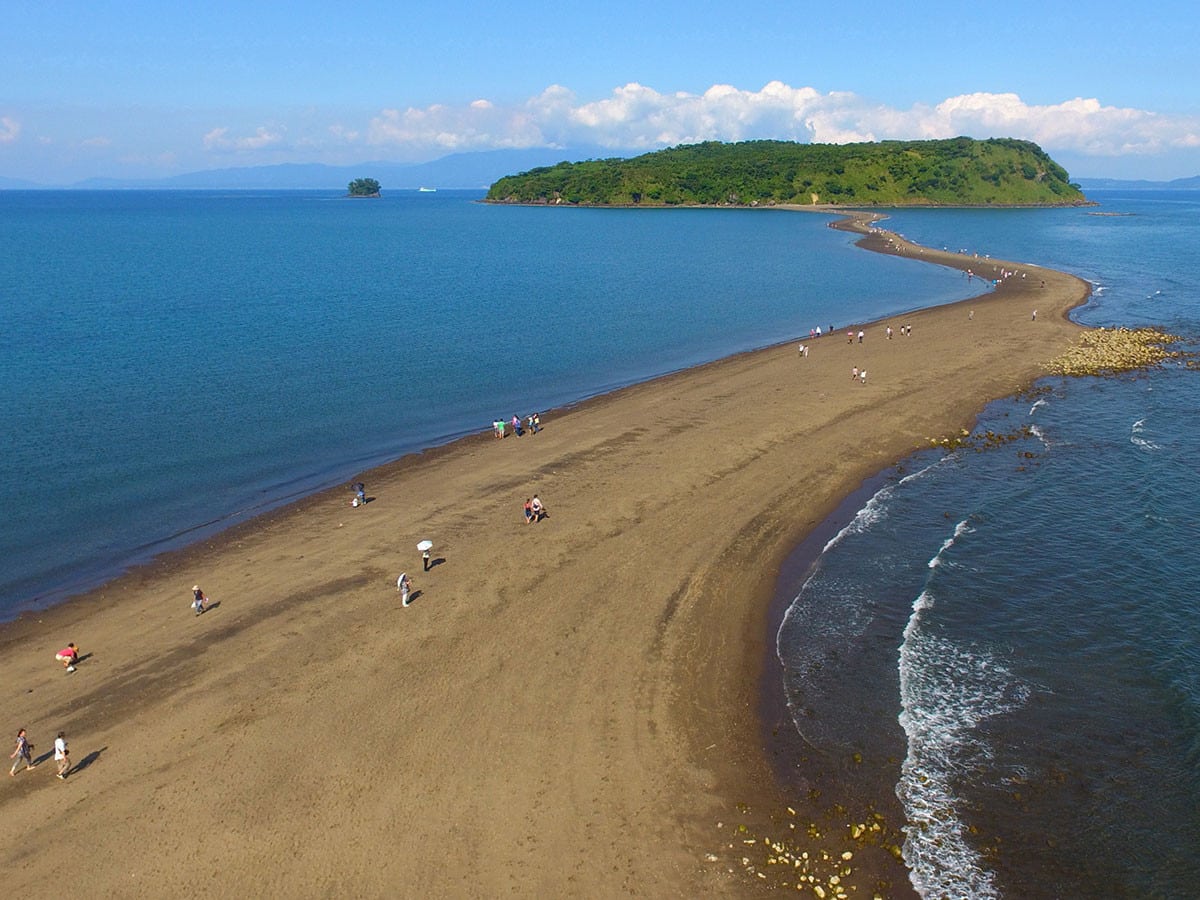
Chirin-jima: A Sand Path in the Sea That Appears Only Some Months of the Year
Chirin-jima is an uninhabited island floating in Kinko Bay. From March to October, at low tide during spring or middle tides each year, a natural sandbar about 800 meters long (nicknamed “Ibusuki Suna no Michi Chirin Road”) emerges under the sea and connects the small island to the mainland, so you can walk across directly. The island is about 3 km around, with a highest point of about 90 meters.
When the sandbar appears depends on the tides, only a few hours a day, and if you miss it you must wait for the next low tide. Ibusuki City publishes a “sandbar appearance forecast table” for March to October each year, but the actual time can come earlier or later depending on the weather that day, so always check before the trip and again on the day.
Walking across takes about 20 minutes one way, and the island has a simple path for a loop. On the way back, be sure to keep track of the incoming tide, and do not stay on the island too long. Allow 1.5 to 2 hours.
The sandbar has no shade and no restrooms, so take care of that on the mainland side and bring plenty of water. In bad weather the tourism association will announce that the crossing is closed for the day.
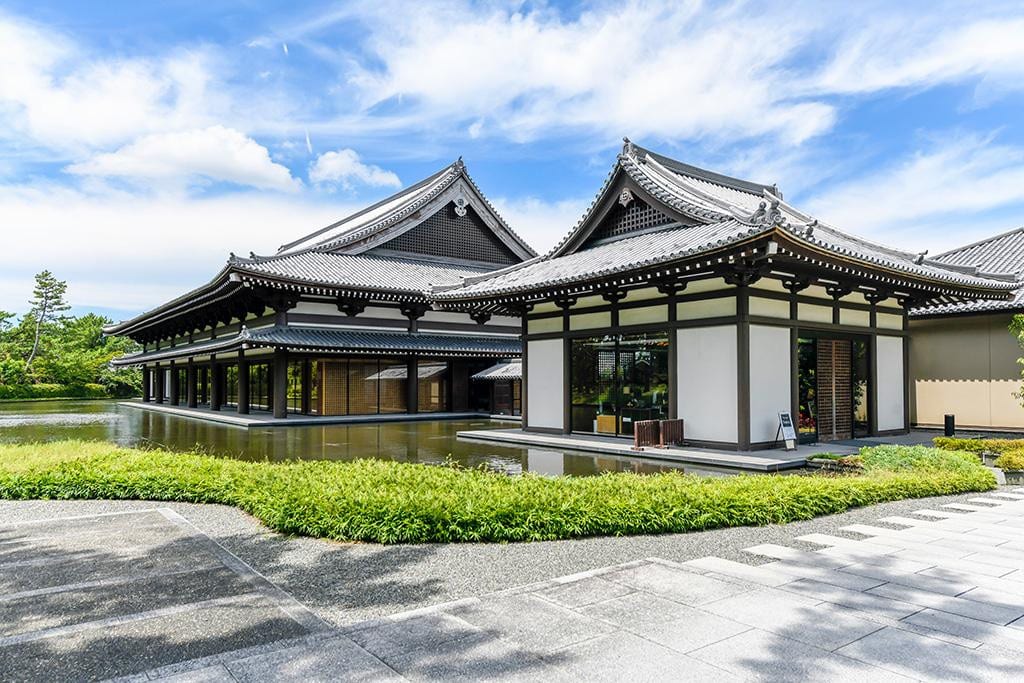
Satsuma Denshokan: A Satsuma Ware Collection in a Pavilion on the Water
Satsuma Denshokan is a private museum next to Ibusuki Hakusuikan, with a building modeled on Byodo-in’s Phoenix Hall built on a pond. It mainly collects Satsuma ware from the late Edo to Meiji periods, mostly gorgeous gold-decorated pieces exported to Europe, along with historical artifacts of the Satsuma domain and ancient Chinese ceramics. It has a tea room where you can rest beside the water. Non-guests can buy a ticket to visit on their own. For opening hours and closing days, see the official website. Allow 1 hour. Photography is prohibited in some exhibit areas, so watch the signs. It can be combined with a day-use bath at Ibusuki Hakusuikan for a half-day trip.
Foot Bath in Front of Ibusuki Station: A Free Hot Spring While You Wait
In front of JR Ibusuki Station is a free foot bath, the first stop for many travelers on arrival or while waiting for a train. The water is the same as the Ibusuki hot spring area, and ten minutes of soaking eases the fatigue of the trip.
Trains on the Ibusuki-Makurazaki Line run far apart, and waiting for the return train is often half an hour or more, so this foot bath fills that gap. Towels are not provided on site, so bring a small hand towel.
The station has a tourist information office, where you can buy the loop bus one-day pass, get a map and confirm whether Sunayuzato is open that day. Allow 20 minutes.
In front of the station there is also a taxi stand and car rental offices, so if you suddenly decide to go to Nishi-Oyama or Tosenkyo you can arrange it right here.
How Much Does an Ibusuki Sand Bath Cost? Bathing Tickets, Passes and Experiences
The sand bath itself is not expensive; transportation and passes are the main costs.
Sunaraku Sand Bath Ticket: The Standard Choice, Including Yukata and Open in the Rain
The basic plan at the Sand Bath Hall “Sunaraku,” the “Sunamushi Set,” is ¥1,500 for adults and ¥800 for children, including a yukata and the hall’s large bath. It has the lowest barrier and is best for first-timers; there are also two sets, ¥1,800 with a souvenir towel and ¥2,100 with a bath towel.
It opens at 08:30, last admission is 20:00 and it closes at 21:00, the only one of the two main facilities you can fit in at night (admissions are paused from 12:00 to 13:00 on weekdays). The sand bath area has an all-weather roof and stays open in the rain, so when the weather turns bad on your trip it is almost the only answer. Each year it closes for maintenance for about a week in July and in December; check the official website for exact dates.
On peak-season weekends the wait can exceed 30 minutes, so avoid the afternoon peak. Towels can be rented on site, but bringing a small face towel to wrap your head is handier. Actual fees are as announced on the official website.
Sunayuzato Sand Bath Ticket: The Same Money for an Unbeatable Sea View
Sunayuzato’s bathing fee is ¥1,100 for adults and ¥600 for children (including yukata), and the bath is on the beach at Fushime Coast, with a view of the sea and Mt. Kaimon. Hours are 08:30-17:00 (admission until 16:30), closed Wednesdays (the next day if a holiday). The open-air facility may close because of weather or tides, so call or check the official website beforehand.
The facility is small with limited sand pits, so arrive early in peak season. There are no restaurants nearby, so eat in Ibusuki city.
Ibusuki Sightseeing Loop Bus One-Day Pass: Linking Lake Ikeda and Nagasakibana
The “Ibusuki Sightseeing Loop Bus one-day pass” is sold at the tourist information office in front of JR Ibusuki Station; confirm the fare on site. It allows unlimited rides that day, covering Lake Ikeda, Nagasakibana, the sand bath facilities and other main spots.
It is usually more convenient if you visit two or more spots, so travelers without a rental car can consider buying it, deciding by the number of spots and the timetable. Buses are not frequent, so ask for a timetable when you buy the pass and plan your return. Nishi-Oyama Station and Tosenkyo flowing noodles are not stops on every bus, so check at the information office first and consider a taxi or rental car.
Ibusuki no Tamatebako Reserved Seats: Make the Transportation Part of the Trip
Ibusuki no Tamatebako is a JR Kyushu sightseeing limited express, about 50-55 minutes from Kagoshima-Chuo Station to JR Ibusuki Station. The black-and-white body comes from the Urashima Taro legend, and the doors open with a puff of white mist. All seats are reserved, and the sea-facing counter seats are the most popular. Services are limited and sell out quickly in peak season, so reserve early through the JR Kyushu website.
The train sells limited-edition pudding desserts and gives out a ride commemorative certificate. If you cannot get a seat, you can still reach Ibusuki on an Ibusuki-Makurazaki Line local or rapid train, but the ride lengthens to about 1 hour 10 minutes.
JR Kyushu Rail Pass: Worth It for Travel Across Prefectures
JR Kyushu Rail Passes come in All Kyushu, Southern Kyushu and Northern Kyushu versions and cover reserved-seat bookings on the Ibusuki-Makurazaki Line and sightseeing trains. It is a good value if your trip spans Kagoshima, Kumamoto and Miyazaki.
If you only go back and forth between central Kagoshima and Ibusuki, buying a round-trip ticket is usually cheaper, so add up the total fare before departure and then decide whether to buy the pass.
The pass must be purchased and exchanged overseas or at designated counters, and you still need to reserve seats separately during the validity period. Seats on sightseeing trains are limited, so arrange your reserved seat as soon as you collect your ticket.
What to Watch For at a Sand Bath: Process Highlights and Accommodation Tips

The Seven Steps of the Sand Bath Experience and Rules You Must Know
The standard process is: buy a ticket at the counter (including yukata) → take off all clothing including underwear in the changing room and put on the yukata directly → walk to the sand bath area with your phone and a small towel → lie in the sand pit as the attendant directs, and staff cover you with hot sand → you can ask staff to take your photo → lie still for 10 to 15 minutes → get up and rinse the sand off thoroughly in the rinse area, put the yukata in the return bin, then relax in the large bath.
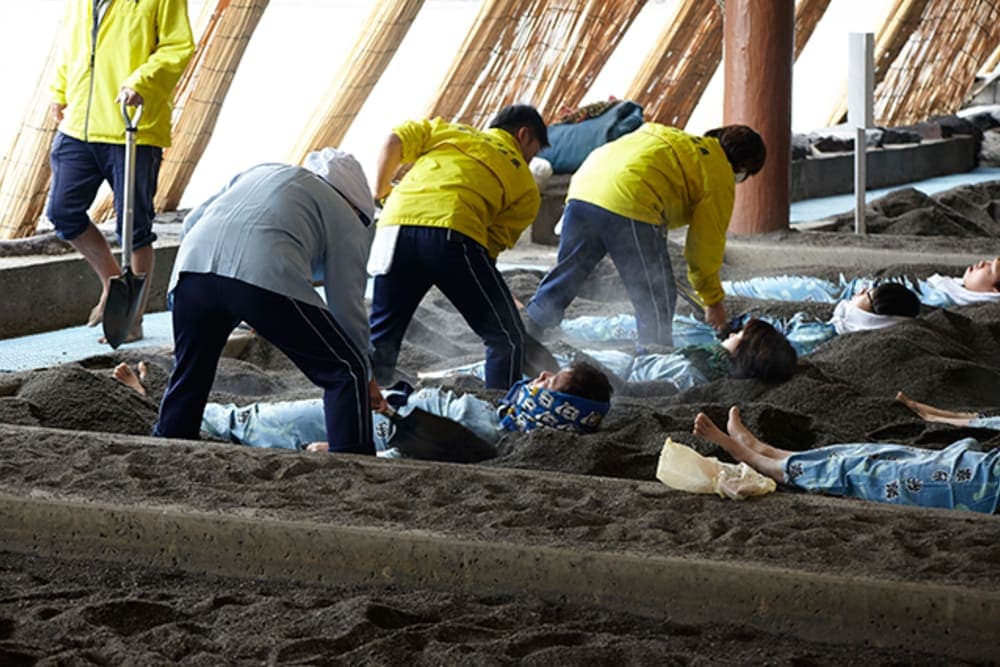
The most common pitfalls: bring or buy a small face towel to wrap your head, or sand will stick all over your face and neck; put your phone in a clear zip-top bag so fine sand does not get in the charging port; the sand bath boosts circulation throughout the body, so it is not suitable on an empty or full stomach, and it is best scheduled before a meal; always rehydrate afterward, and Meiji milk in the rest area is a classic choice.
Other restrictions to note: geothermal temperatures are about 50 to 55 degrees and the sand is heavy, so most facilities do not allow infants in diapers into the sand bath area; some public sand baths restrict large tattoos, so travelers with tattoos should check the official website first or bring cover-up patches; if it feels too hot or you feel unwell at any point, you can brush off the sand and get up yourself at any time, with no need to push through.
Stay in Ibusuki or Central Kagoshima? How to Arrange the Smoothest Itinerary
If you only want the sand bath, a day trip from central Kagoshima is more than enough: take the Ibusuki no Tamatebako in the morning, have a sand bath around noon, visit Lake Ikeda or Nagasakibana in the afternoon, and return to the city in the evening.
To fit in Nishi-Oyama Station, Mt. Kaimon and Tosenkyo, stay a night in Ibusuki. Ibusuki Hakusuikan and the hot spring inns in front of the station are both options, and the next morning you can soak once more before leaving.
Ibusuki is often paired with Sakurajima in the same Kagoshima trip: Sakurajima on day one and Ibusuki on day two, using Kagoshima-Chuo Station as your base both days, the least wasteful route.
Ibusuki Sand Bath FAQ
Q: How much is an Ibusuki sand bath? Do I need to bring anything else?
The basic Sunaraku plan is ¥1,500 for adults and ¥800 for children, and Sunayuzato is ¥1,100 for adults and ¥600 for children, both including a yukata. You also need to bring or buy a small face towel to wrap your head, and prepare a clear zip-top bag to keep sand off your phone.
Q: What is the difference between Sunaraku and Sunayuzato? Which should I choose?
Sunaraku is the largest, has an all-weather roof, stays open until 21:00, can be visited in the rain and has the easiest access. Sunayuzato is on the beach with a view of Mt. Kaimon, an unbeatable view but fully open-air, closing at 17:00 and closed Wednesdays, and weather and tides can also affect opening.
Q: How long do you lie in the sand bath? Is it very hot?
10 to 15 minutes is recommended. Geothermal temperatures are about 50 to 55 degrees, and you sweat heavily in less than ten minutes. If it feels too hot or you feel unwell, you can brush off the sand and get up at any time, with no need to tough it out.
Q: How long does it take to get from central Kagoshima to Ibusuki? What is the fastest way?
The sightseeing limited express Ibusuki no Tamatebako takes about 50 to 55 minutes from Kagoshima-Chuo Station to Ibusuki Station, with all seats reserved; local or rapid trains take about 1 hour 10 minutes with more departures. Driving takes about 1 hour 10 minutes.
Q: Do I need a reservation for the Ibusuki sand bath?
Generally no reservation is needed; buy a ticket on site, but waits on peak-season weekends can exceed 30 minutes. Sunaraku closes for maintenance for about a week each in July and December; Sunayuzato is closed Wednesdays and also stops operating in bad weather and tides, so call or check the official website before you go to confirm that day’s opening.
Q: Can I do the sand bath with tattoos or children?
Some public sand baths restrict large tattoos, so check the facility’s official website first or bring cover-up patches. Geothermal temperatures are high and the sand is heavy, so most facilities do not allow infants in diapers into the sand bath area.
Q: How should I plan an Ibusuki day trip? Is half a day enough?
Half a day is enough for a sand bath plus the area around Ibusuki Station. To add Lake Ikeda, Nagasakibana and Ryugu Shrine, allow a full day and buy the loop bus one-day pass; to visit Nishi-Oyama Station and Tosenkyo flowing noodles, you almost certainly need to rent a car.