
Abashiri Drift Ice Guide: One of the World’s Lowest-Latitude Drift Ice Sites and the City’s Three Trump Cards
Abashiri is in northeastern Hokkaido, facing the Sea of Okhotsk, and is one of the few places in the world where sea ice can be seen at such a low latitude. Every winter, drift ice floating down from the north approaches the Abashiri coast and turns the whole sea into a slowly moving white plain, the most famous and irreplaceable sight in Abashiri.
But Abashiri is not only for winter. The city has three trump cards: the drift ice sightseeing icebreaker, Abashiri Prison Museum, which preserves an entire old prison, and the Okhotsk Drift Ice Museum on Mt. Tento. The first runs only in winter, while the other two can be enjoyed year round. Below we first get to know the four core elements, then cover transport, sights and costs.
Okhotsk Sea Drift Ice: Where It Comes From and When It Arrives
Abashiri’s drift ice does not freeze on the local sea. It forms in waters farther north and is then pushed by wind and currents to the Hokkaido coast. That is why “when will the drift ice arrive this year” differs every year. It depends on that year’s temperature, wind direction and currents, and as a natural phenomenon it cannot be guaranteed in advance.
In general, drift ice approaches the Abashiri coast from late January to March, and February to early March is usually the most reliable peak. The right expectation to set is that even in peak season, once the wind direction shifts, the drift ice can be blown away from the shore overnight. Before you go, build “not seeing it” into your trip planning too.

The Drift Ice Sightseeing Icebreaker Aurora (おーろら): A Ship That Crushes Its Way Through Ice
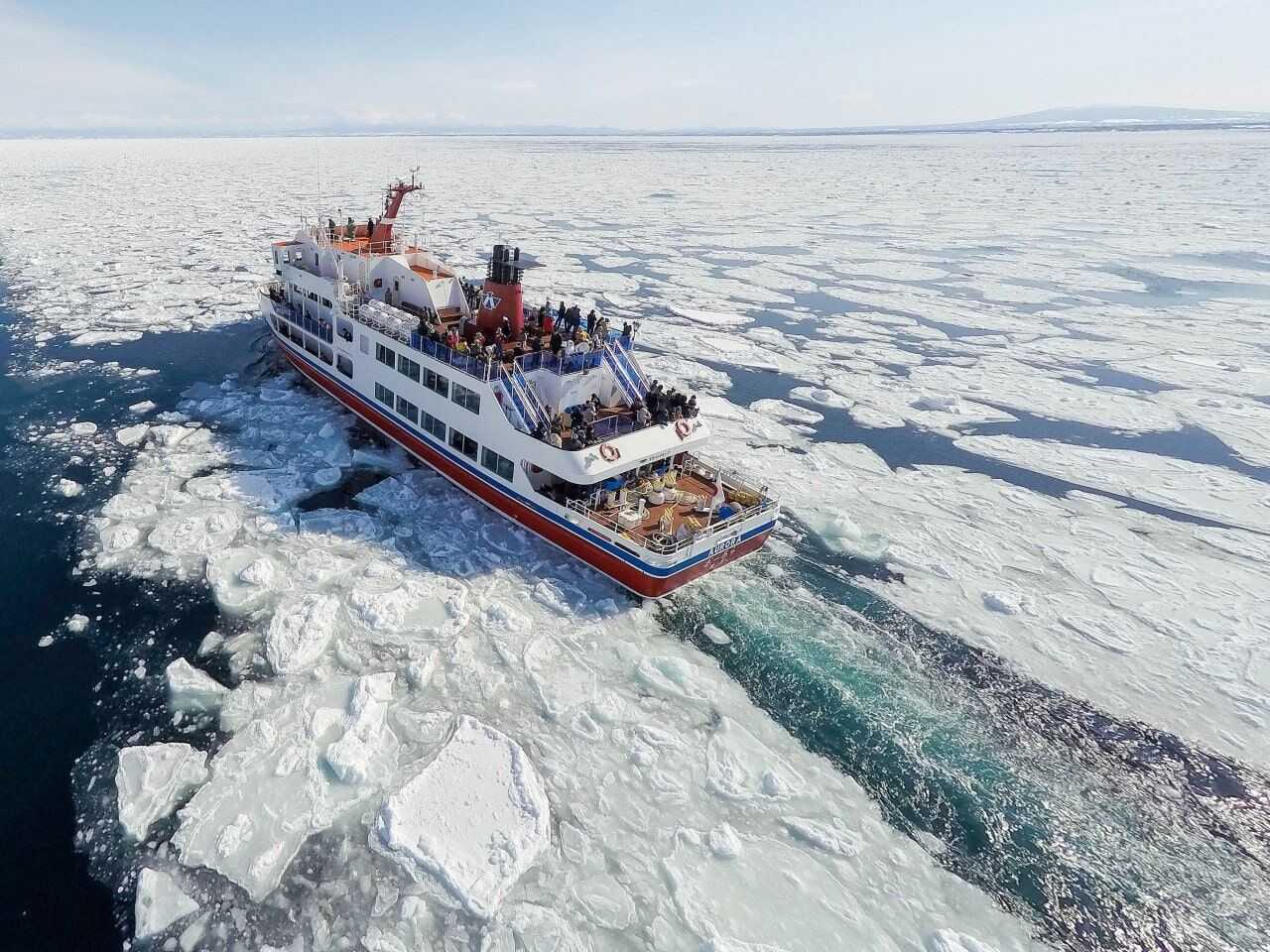
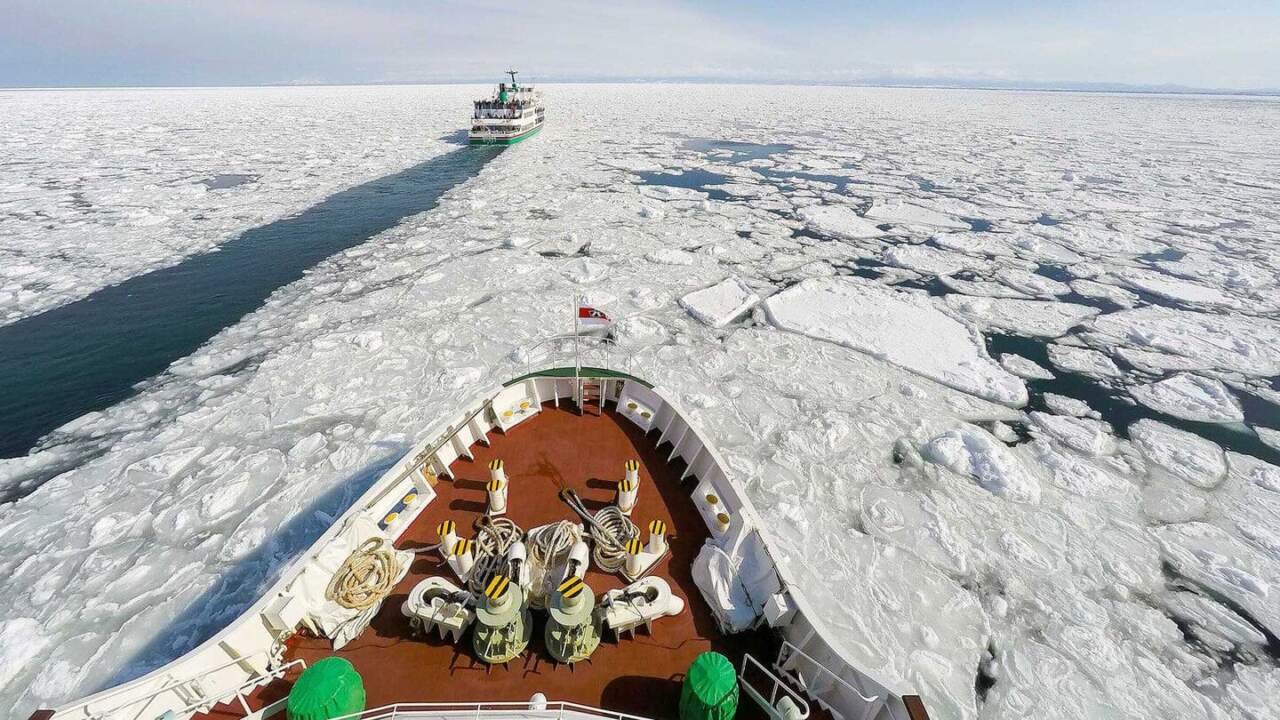
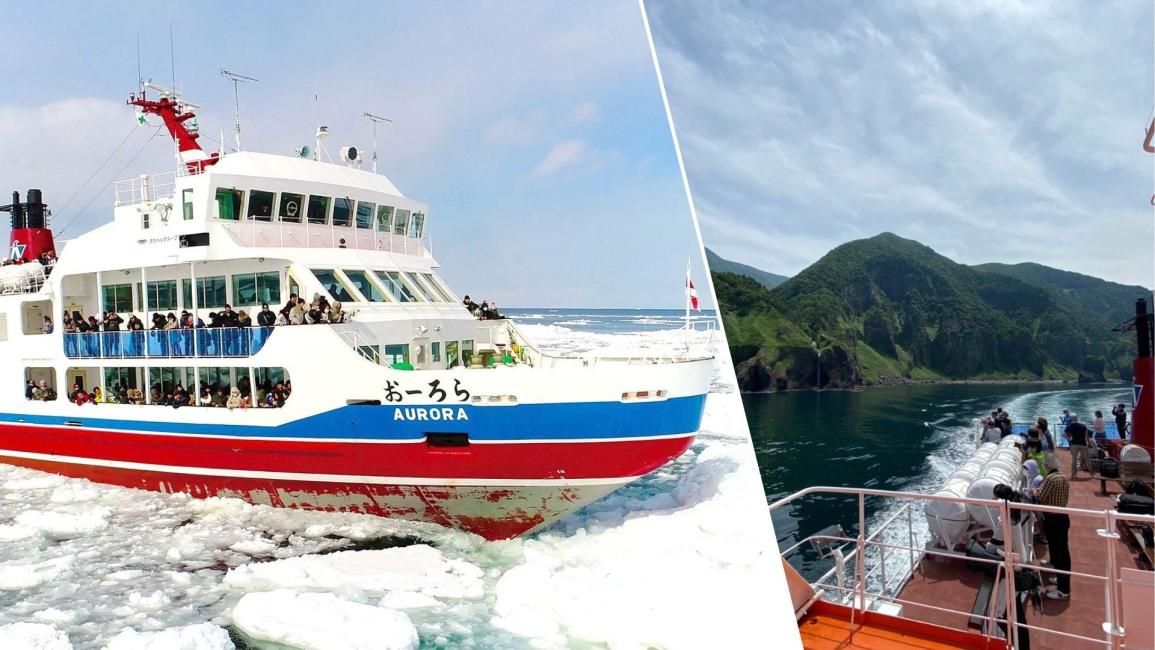
Abashiri’s signature experience is the drift ice sightseeing icebreaker “Aurora” (おーろら), operated by Doto Kanko Kaihatsu. It does not go around the ice but rides up onto the drift ice and crushes it with the weight of the hull to move forward, and the cracking sound and vibration heard on deck are the most memorable part of the voyage.
The operating season is from late January to the end of March (January 20 to March 31 in 2026). Advance reservation is required, and check-in is at the roadside station “Ryuhyo Kaido Abashiri,” to be completed 20 minutes before departure. The voyage takes about 60 minutes. Actual operating days, times and fares follow the official announcement for the year.
Abashiri Prison Museum: An Open-Air Museum of a Whole Relocated Old Prison
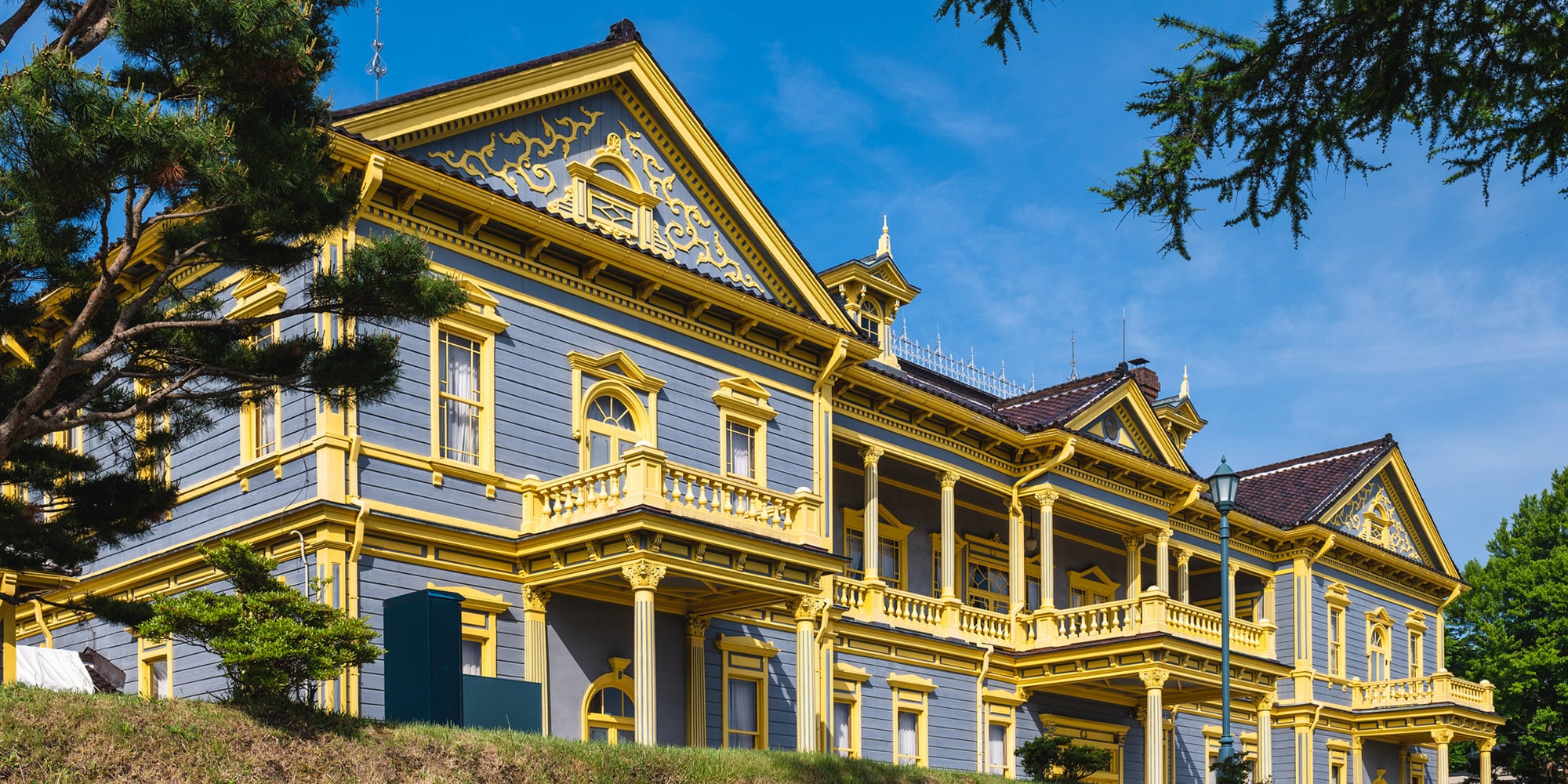
“Abashiri Prison” is a household name in Japan. Abashiri Prison Museum preserves, by relocating them, the buildings actually used by the old Abashiri Prison and turns them into an open-air museum you can walk into. It covers a large area, and a full circuit usually takes 2 to 2.5 hours.
The most famous feature is the radially arranged cell block, where the view from the center straight down five corridors is visually striking. Beyond the buildings themselves, the exhibits also carefully tell the history of Meiji-era prisoners building roads, an important piece for understanding the history of Hokkaido’s development. Opening hours and admission follow the museum’s announcement for the day.
Okhotsk Drift Ice Museum: Touch Drift Ice All Year Round
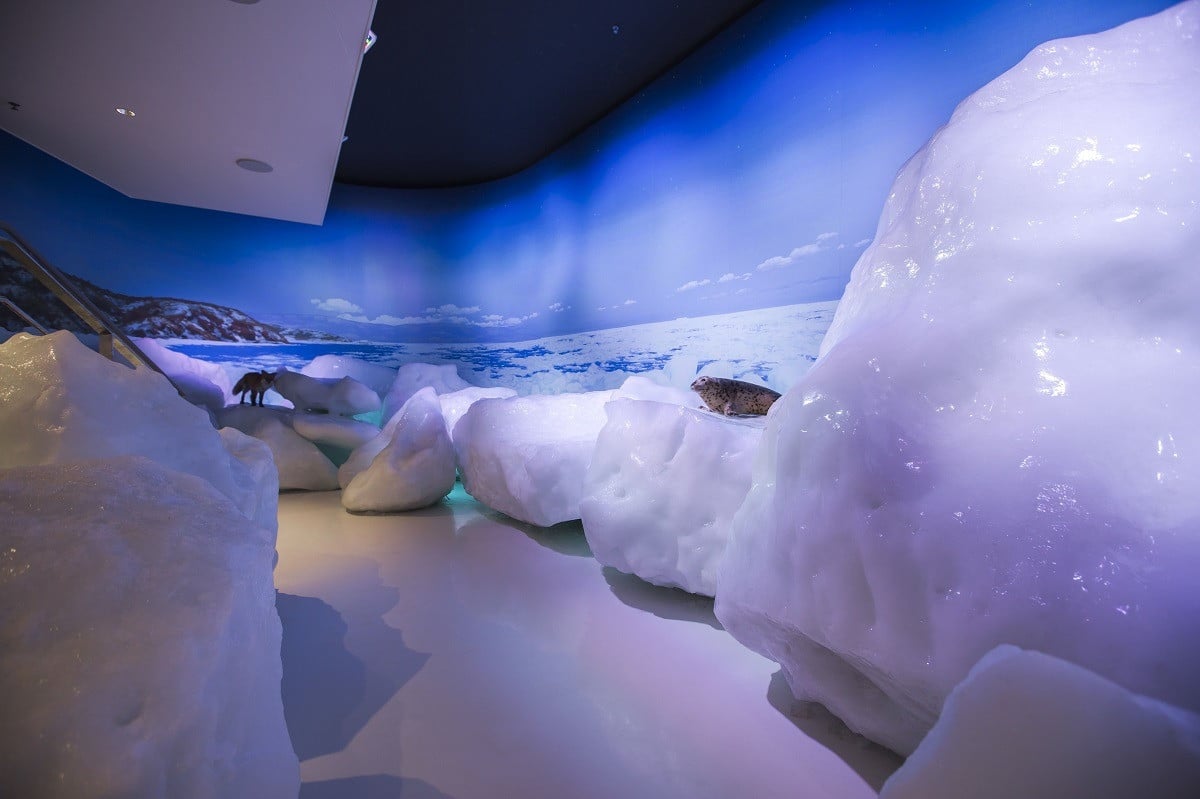
The Okhotsk Drift Ice Museum is on Mt. Tento, and its biggest value is that you can experience drift ice even if you do not come in drift ice season. Inside is a drift ice experience room kept at minus 15 degrees Celsius with real drift ice, where you can also try the classic experiment of swinging a wet towel until it freezes into a hard stick.
Another star is the naked sea angel known as the “drift ice angel” (Clione), which you can watch up close in the tanks inside. Admission is about ¥990 for adults, and the attached Mt. Tento observation deck is free. About 1.5 to 2 hours is about right. Actual prices and opening hours follow the museum’s announcement.
How to Get to and Around Abashiri: JR, Memanbetsu Airport and the City Loop Bus Compared
Abashiri is in eastern Hokkaido and is a long way from Sapporo, but the three main sights in the city can all be covered with a single loop bus, so transport is simpler than you might expect.
Getting to Abashiri by JR: Limited Express on the Sekihoku Main Line and the Senmo Main Line
Coming from the Sapporo or Asahikawa direction, you mainly take a limited express on the Sekihoku Main Line directly to JR Abashiri Station. The ride is quite long, about half a day of travel, so we suggest treating it as a whole segment of the trip rather than squeezing it between sights.
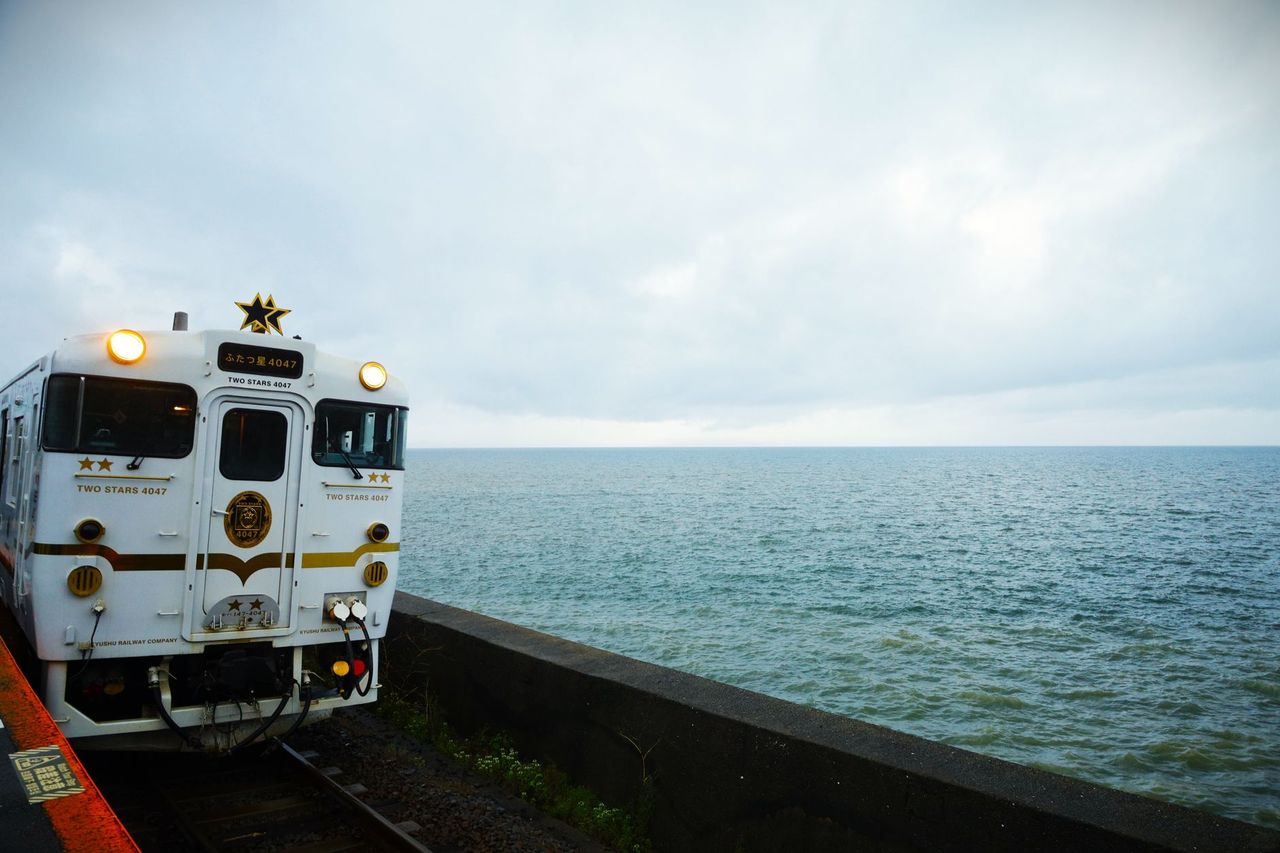
The other route is the Senmo Main Line connecting Abashiri with Shiretoko-Shari and Kushiro, which runs almost right along the Sea of Okhotsk and wetlands and is a famous scenic line in itself. If your itinerary is “Shiretoko plus Abashiri” or “Kushiro plus Abashiri,” taking the Senmo Main Line is far more fun than detouring by car. Actual timetables and fares follow JR Hokkaido’s announcement for the day. In winter, trains may be delayed or suspended by blizzards, so leave a little extra buffer when planning transfers.
From Memanbetsu Airport: The Nearest Air Gateway
Memanbetsu Airport is the airport closest to Abashiri and the most commonly used entry and exit point for eastern Hokkaido trips. Buses run from the airport to central Abashiri in about 35 minutes for about ¥1,050, and during drift ice season some departures go straight to the “drift ice boat boarding area,” so you can go directly from the plane to the icebreaker.
If you plan to combine Abashiri with Shiretoko and Lake Kussharo, renting a car at Memanbetsu Airport is the most efficient way. In winter the roads are snowy and icy, so be sure to confirm you are getting snow tires and leave generous time for every leg. Actual bus timetables and fares follow the operator’s announcement for the day. The airport’s rental counters are clustered beside the terminal with a simple pickup and return flow, the most common starting point for eastern Hokkaido trips.
City Sightseeing Facility Loop Bus: One Bus for All Three Sights
If you are not driving, simply remember this line: the Abashiri Sightseeing Facility Loop Bus. The route passes in order the Abashiri Bus Terminal, Abashiri Station, the icebreaker pier (roadside station Ryuhyo Kaido Abashiri), Abashiri Prison Museum and finally the Okhotsk Drift Ice Museum on Mt. Tento, neatly linking the three main sights of a day trip.
This line runs year round with two timetables, summer and winter (the winter timetable matches the drift ice season, so check Abashiri Bus’s announcement for actual dates), roughly one bus every 1 to 2 hours. Since you will ride at least three or four times in a day, we suggest considering Abashiri Bus’s “Sightseeing Facility Loop One-Day Pass” depending on how many rides you take (ask Abashiri Bus for the price). Actual routes, timetables and fares follow Abashiri Bus’s announcement for the year.
The Easiest Winter Trap: Last Bus and Sunset Time
Winter nights fall early in Abashiri, and it gets dark by four or five in the afternoon. The Drift Ice Museum is open until 16:30 in winter (November to April), with last entry at 16:00, and the loop bus’s last departure from Mt. Tento is also early. Many people get so absorbed at the museum that they come out to find no bus left and can only call a taxi down the mountain. Taxis on Mt. Tento are not always available on demand, usually need the museum’s help to call, and take a while to arrive.
The fix is simple: before going up the mountain, photograph the return stop’s timetable and plan your museum visit earlier. For the overall itinerary, we suggest scheduling the weather-dependent icebreaker in the morning, so even if it is cancelled, the Abashiri Prison and the Drift Ice Museum can fill in the afternoon and the day is not wasted.


What Are Abashiri’s Must-Visit Sights? 12 Highlights of the Icebreaker, Prison and Sea of Okhotsk
Abashiri’s sights fall into three groups: the icebreaker and roadside station at the harbor, the museum cluster on Mt. Tento, and the capes and lakes on the outskirts. Below are 12 highlights in the order that is easiest to plan.
Drift Ice Sightseeing Icebreaker Aurora (おーろら): A 60-Minute Ice-Crushing Experience
Aurora is the undisputed star of Abashiri’s winter. The ship drives right onto the drift ice and crushes the ice layer with the weight of its hull, so you feel both the vibration and the cracking sound on deck. With luck, you may also see seals on the ice or white-tailed sea eagles perched on it.
The operating season is from late January to the end of March (January 20 to March 31 in 2026), the voyage takes about 60 minutes, and advance reservation is required. Departure times change by date: in late January there is about one sailing every two hours, February to mid-March has the most frequent sailings, and late March reduces them again. Check-in is at the roadside station “Ryuhyo Kaido Abashiri” and must be completed 20 minutes before departure. Actual operations and fares follow the official announcement.
Aurora Departure Times and Reservation Notes
Aurora’s 2026 departure times are: January 20-31 at 9:00, 11:00, 13:00 and 15:00; February with 5 sailings daily starting at 9:30; and March 15-31 at 9:30, 11:30 and 13:30.
The official website (www.ms-aurora.com/abashiri) asks passengers to reserve only their first-choice sailing, and sailings with too few reservations may be cancelled. Tel. 0152-43-6000, answered 9:00-18:00. For 2027 times, please follow the official website’s announcement.
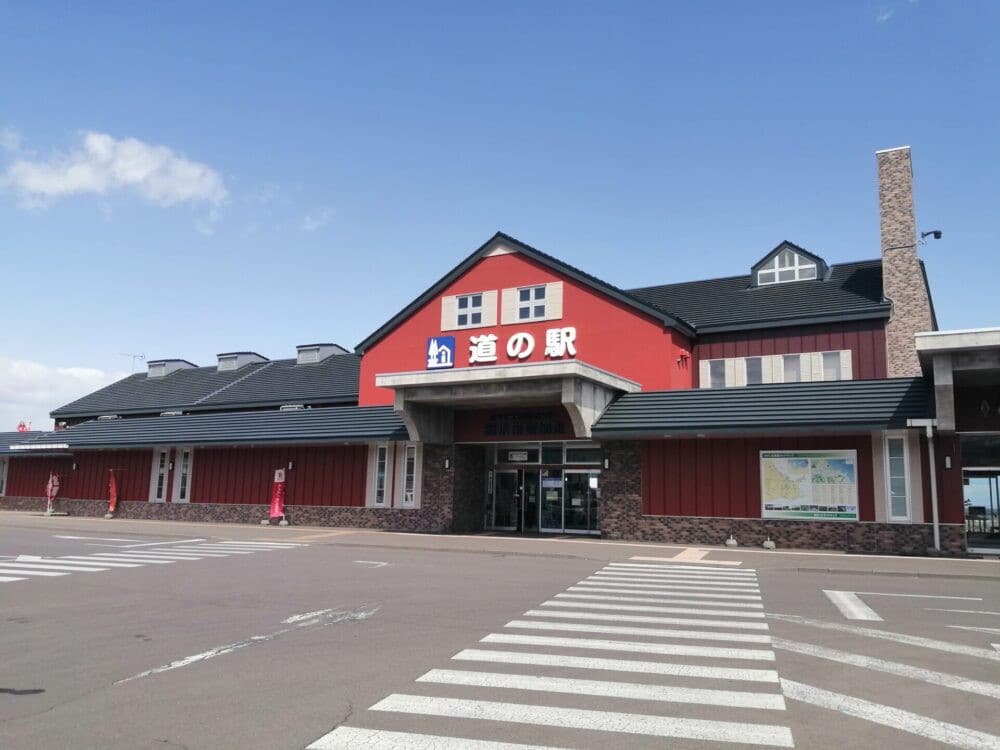
Roadside Station Ryuhyo Kaido Abashiri: The Boarding Point Is Also a Food and Supply Stop
The roadside station “Ryuhyo Kaido Abashiri” is right beside the icebreaker pier. It is the check-in location for boarding and also the most convenient place to eat and shop in the Abashiri port area. The second floor has a dining area where you can get seafood bowls and ramen, so having a meal here before or after the cruise is very smooth.
It is also a good place to buy local souvenirs. The most famous are the distinctively colored blue drift ice soft serve and the drift ice beer with the same color scheme, both Abashiri-only photo items. Because it is right next to the pier, we suggest scheduling it in the same time slot as the icebreaker so you need no extra travel. Business hours follow the facility’s announcement. There is ample parking, so it is easy for drivers too.
Abashiri Prison Museum: Walk Into Prison Buildings That Were Really Used
Abashiri Prison Museum preserves, by relocating them, buildings actually used by the old Abashiri Prison and turns them into an open-air museum, at the foot of Mt. Tento. It is not a reconstructed set but buildings that really held prisoners, so walking in feels quite direct.
The grounds are large and include the cell block, the chapel hall, the execution ground, the bathhouse and facilities around the prison buildings, plus models and exhibit explanations. A full circuit takes about 2 to 2.5 hours, the longest stay of any Abashiri sight. In winter some outdoor stretches are snowy, so wear non-slip shoes. The grounds also have a dining area where you can eat prison meals recreating prisoners’ food, an experience many people come specifically to try.
The Five-Wing Radial Cell Block: Five Corridors Seen at a Glance From the Center
The most famous building at Abashiri Prison is the radially arranged cell block: with the central guard post at the center, five corridors fan out, and standing at the center you can see down every corridor at once. This structure was designed in the Meiji era to watch the most prisoners with the fewest staff.
Walking into a corridor you see rows of wooden cells, with light slanting in from high windows, plus the smell of wood and cold air, and the atmosphere feels very real. This is also where the most photos are taken in the whole museum. Please follow the museum’s routing and photography rules during your visit, as photography may be restricted in some areas. The cell block has no heating in winter and the temperature is not much different from outdoors, so keep your coat on. The route in this area is narrow, so please be patient when it is crowded in peak season.
Okhotsk Drift Ice Museum: The Minus 15 Degree Drift Ice Experience Room
The Okhotsk Drift Ice Museum is on Mt. Tento, and its main show is the drift ice experience room kept at minus 15 degrees Celsius, with real drift ice you can touch. The classic activity is to take a wet towel in and swing it, and within seconds it freezes into a rock-hard stick, and almost every visitor lines up to try.
Another highlight is the naked sea angel known as the drift ice angel (Clione), whose transparent body and wing-flapping swimming motion are very soothing to watch in the tank. Admission is about ¥990 for adults. In winter (November to April) it is open 9:00-16:30. The official website is www.ryuhyokan.com, and we suggest staying 1.5 to 2 hours. The temperature in the experience room is extremely low, so put on a coat before entering, and the museum usually provides cold-weather coats. There is also a cafe and shop area inside where you can sit and watch the view outside before continuing your trip.
Mt. Tento Observation Deck: A 360-Degree View of the Shiretoko Range and the Frozen Sea
The Mt. Tento Observation Deck is set above the Okhotsk Drift Ice Museum building, and best of all it is free, so buying a museum ticket gets you an extra sight for nothing. The view is a 360-degree panorama, taking in Lake Abashiri, Lake Notoro, the Sea of Okhotsk and the distant Shiretoko range all at once.
The winter view is the most striking: the whole sea covered by drift ice into a white plain, a completely different world from the deep blue summer sea. Because it is on a mountain, the wind is very strong and the apparent temperature is far lower than in town, so be sure to bring a hat and gloves. Opening hours follow the facility’s announcement. Since it is built into the Drift Ice Museum, you usually see both in the same time slot without needing extra transport.
Hokkaido Museum of Northern Peoples: Ethnic Cultures of the Whole Northern Circle
The Hokkaido Museum of Northern Peoples, also on Mt. Tento, has a distinctive theme: it covers not only Ainu culture but the northern peoples of the whole circumpolar region, including the Sami of northern Europe, the peoples of Siberia and the Indigenous groups of North America, showing comparatively how they lived in extreme cold.
Exhibits focus on clothing, hunting tools, transport and dwellings. There is a lot of information but the route is clear, and a visit takes about 1 hour. Since it is near the Drift Ice Museum, you can fit it in on the way. For travelers interested in culture and history, the reward here is often higher than expected. Admission and opening hours follow the museum’s announcement. The museum offers audio guides and multilingual explanations, so even without Japanese you can follow the main thread.
Notoro Cape: A Combination of Grassland, Lighthouse and Cliff
Notoro Cape is on the outskirts of Abashiri, a grassy plateau extending to the sea with a black-and-white striped lighthouse at its end, and a sheer cliff and the Sea of Okhotsk below. The scenery is so open that there is almost no cover, and it is a location for many Japanese dramas and commercials.
When drift ice comes ashore in winter, looking down from the cape you see a white ice field extending all the way to the horizon, as impressive as taking the boat. In summer it is the contrast of green grass and blue sea. There is no direct public transport, so it is basically a self-drive or chartered trip. In winter the sea wind is extremely strong and the road ices over easily, so please take care. The cape has a parking lot but not many shops, so prepare drinks and food in advance before coming.

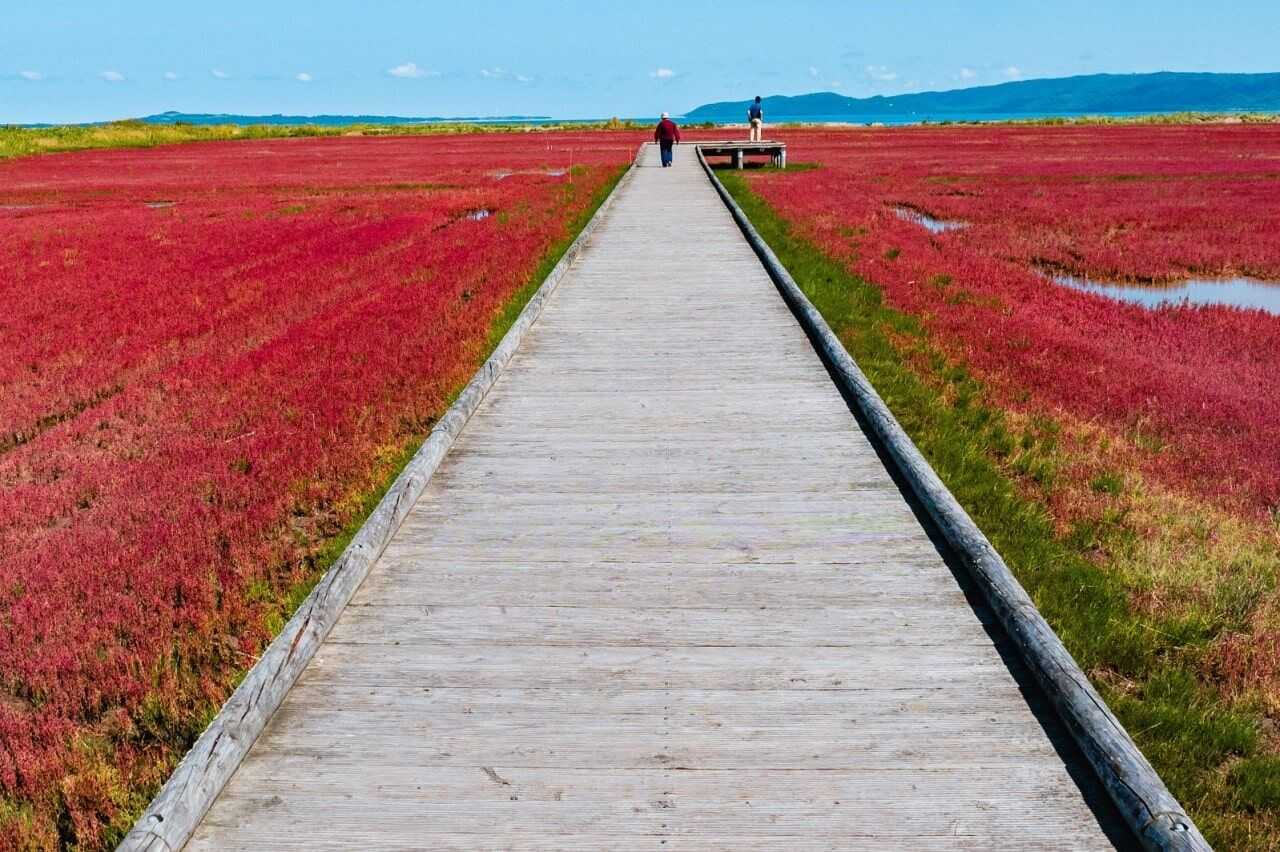
Lake Notoro Coral Grass: Autumn Turns the Whole Lakeshore Red
Lake Notoro is another of Abashiri’s cards, and it is the exact opposite of drift ice: its season is autumn. Around Uebaranai on the lakeshore grows a large stand of a salt-marsh plant called “coral grass” (sangosou), which turns an intense red each autumn and lays out a red carpet along the lakeshore.
The peak viewing period is roughly late August to late September, with the reddest color in mid-September, which is also when the “Lake Notoro Coral Grass Festival” is held; the actual dates vary by year with the weather. A boardwalk lets you walk into the colony to take photos, and the area is quite large. This is one of the few Abashiri sights centered on summer and autumn, and if you are not coming in winter it is worth scheduling. Actual peak timing and opening status follow local announcements. The area has parking and a small shop, and about 1 hour is plenty.
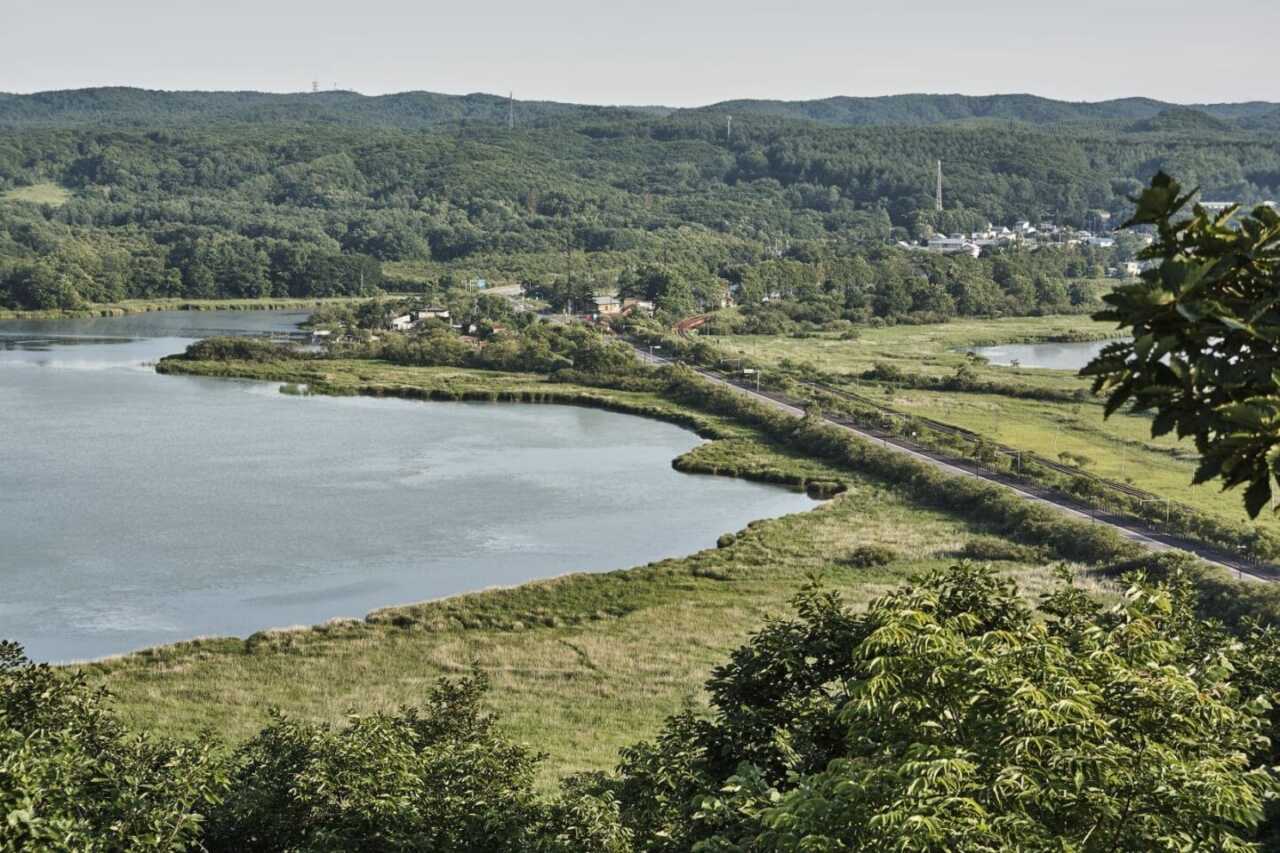
Lake Abashiri: Boating in Summer, Pond Smelt Fishing in Winter
Lake Abashiri is right next to the city, a brackish lake connected to the sea, and what you can do differs a lot by season. In summer the lakeside has camping, boating and walking paths. In winter, once the lake freezes, ice fishing for pond smelt (wakasagi) opens, a classic winter activity in eastern Hokkaido.
It is close to the city, so it works as a buffer point in your itinerary: when the icebreaker is cancelled or there is a gap between the prison and the Drift Ice Museum, you can stop by. For ice activities, be sure to stay within the designated area and follow the organizer’s rules, and never walk onto the ice by yourself. Actual open periods and activity details follow the organizer’s announcement. The lakeside also has hot spring lodging and a campground, and in summer you can spend half a day here relaxing.
The Ryuhyo Monogatari Train: A Winter Train Running Along the Sea of Okhotsk
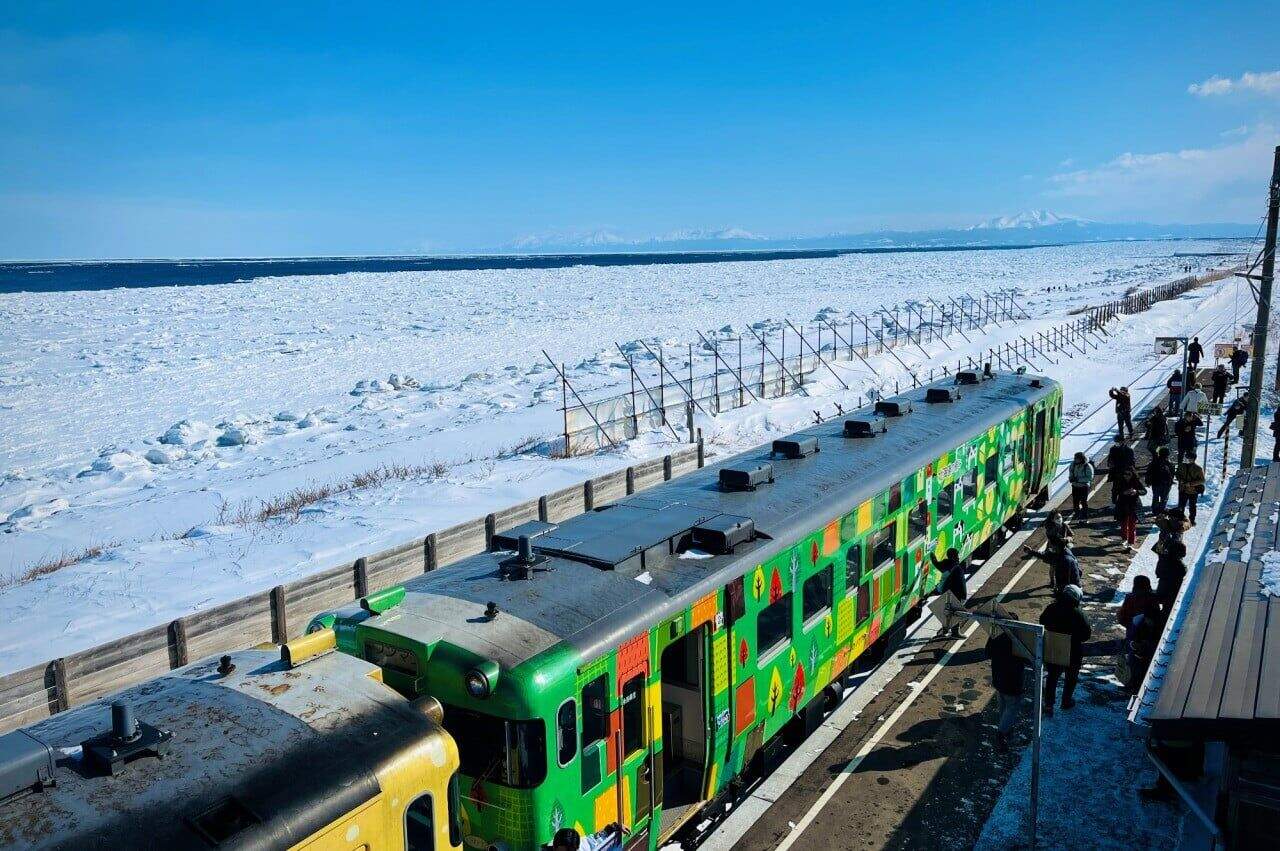
In winter, JR’s Senmo Main Line adds an extra sightseeing train called the “Ryuhyo Monogatari-go” (Drift Ice Story train), running between Abashiri and Shiretoko-Shari. The route runs almost right along the Sea of Okhotsk, with drift ice just outside the window, so you can see the whole icy sea without moving.
For people who do not take the boat or cannot get boat tickets, this is the most comfortable alternative: warm, no seasickness and photos all the way. The train stops for a few minutes at the stations with the best scenery along the way so passengers can get off and take photos. Operating dates and schedules are announced every year and usually concentrated in drift ice season, and actual information follows JR Hokkaido’s announcement for the year. Because it is an extra train with limited seats, we also suggest reserving early in peak season.
Kitahama Station: Japan’s Station Closest to the Sea of Okhotsk
Kitahama Station is a small station on the Senmo Main Line, famous as the “station closest to the Sea of Okhotsk.” Just outside the platform is the sea wall, and beside the station is a wooden observation deck from which you can see the tracks and coastline at the same time, and in winter drift ice laid out right in front of you.
The station building itself is also a sight: its interior is covered with business cards and tickets stuck up by travelers over the years, wall-to-wall, which makes a fun scene. There is also a dining space in the station. It is one of the Ryuhyo Monogatari train’s stops, and easy to reach by car as well. 20 to 30 minutes is plenty. The platform and observation deck are snowy and windy in winter, so take care on the stairs.
Tickets and Guided Tours
Abashiri’s paid items are concentrated in the icebreaker and the two museums, and adding one transport ticket links up a whole day. Below are the five items most often put in itineraries, and prices and time slots all follow each operator’s announcement for the day.
Aurora Icebreaker Tickets: The Winter Main Show That Must Be Reserved in Advance
The operating season is from late January to the end of March (January 20 to March 31 in 2026), the voyage takes about 60 minutes, advance reservation is required, and check-in is at the roadside station “Ryuhyo Kaido Abashiri,” to be completed 20 minutes before departure. February to early March is the most sought-after period.
If there is no drift ice at all on the day, the ship still sails but switches to sea sightseeing toward Notoro Cape with an adjusted fare. In bad weather it is cancelled. Actual operating days, times, fares and cancellation rules follow the official announcement for the year.
Abashiri Prison Museum Tickets: Allow More Than Two Hours
An open-air museum preserving relocated buildings of the old Abashiri Prison. The grounds are large, including the radial cell block, the chapel hall and facilities around the prison buildings, and a full circuit takes about 2 to 2.5 hours, the longest stay of any Abashiri sight.
It is at the foot of Mt. Tento and reachable directly by the city sightseeing facility loop bus. In winter outdoor stretches are snowy, so wear non-slip shoes and allow travel time. Admission and opening hours follow the museum’s announcement for the day.
Okhotsk Drift Ice Museum Tickets: Touch Drift Ice All Year Round
Admission is about ¥990 for adults, including the minus 15 degree drift ice experience room and the display of the naked sea angel (Clione), the “drift ice angel,” and we suggest staying 1.5 to 2 hours. The attached Mt. Tento Observation Deck is free.
For travelers not visiting in drift ice season, this is the only place where you can actually touch drift ice, an itinerary that works all year. The experience room is extremely cold, so put on a coat before entering.
![[Official Sale] Okhotsk Sea Ice Museum Tickets (Abashiri, Hokkaido)](https://travel.williamlion.tw/wp-content/uploads/sites/7/2026/08/image-3476.jpg)
Abashiri City Bus One-Day Pass: A Transport Choice for a Day Trip
The single-ride fare on the sightseeing facility loop bus depends on the section, and since a day trip involves at least three or four rides, a one-day pass is more convenient. The one-day pass can be bought at places such as the Abashiri Bus Terminal and the Abashiri Station tourist information center; ask Abashiri Bus for the price.
The route links in order the roadside station (icebreaker boarding point), Abashiri Bus Terminal, Abashiri Station, Abashiri Prison Museum, Okhotsk Drift Ice Museum and the Museum of Northern Peoples. The winter last bus time follows Abashiri Bus’s timetable for the season, so confirm it before going up the mountain. Actual fares and timetables follow Abashiri Bus’s announcement.
Ryuhyo Monogatari Sightseeing Train: See Drift Ice Without the Boat
An extra winter sightseeing train on JR’s Senmo Main Line running between Abashiri and Shiretoko-Shari. The route runs almost right along the Sea of Okhotsk with drift ice just outside the window, and it stops at stations with good scenery so passengers can get off and take photos.
For travelers who cannot get icebreaker tickets or get seasick, it is the best alternative, and it can also be scheduled on the same day as the icebreaker. Operating dates and schedules are announced each year, and actual information follows JR Hokkaido’s announcement for the year.
How Much Does a Trip to Abashiri Cost? Boat Tickets, Admission and Transport Summarized
The cost structure of an Abashiri day trip is very clear: one boat ticket, two admission tickets, plus a bus one-day pass. Below are rough ranges, and actual costs follow each operator’s announcement for the day.
The Icebreaker: The Biggest Expense of the Day
Aurora is the highest-priced item of the day trip, with adult fares in the several-thousand-yen range, several times other admission fees. If there is no drift ice at all on the day, the route switches to sea sightseeing toward Notoro Cape and the fare is lowered accordingly, which is the official standard practice.
In other words, this money buys “a chance to see drift ice,” not a guarantee. If your budget is limited, or your travel dates fall at the edge of drift ice season, you can consider taking the Ryuhyo Monogatari train instead, seeing the same sea at much lower cost. Actual fares follow the official announcement.
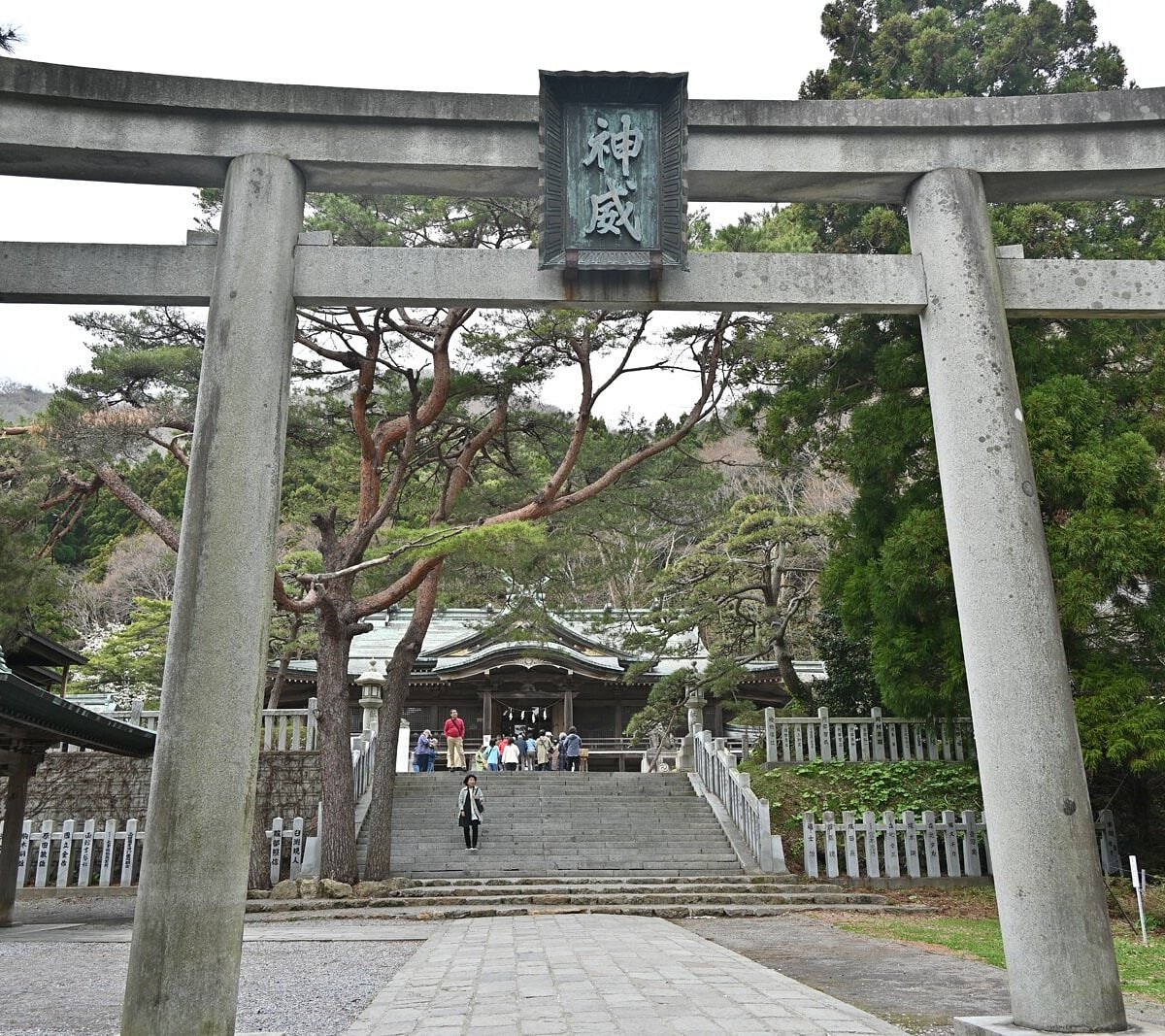
Two Museums: The Drift Ice Museum at ¥990 and Abashiri Prison
The Okhotsk Drift Ice Museum is about ¥990 for adults, with the Mt. Tento Observation Deck included free, great value. Admission to Abashiri Prison Museum is a bit higher, but the grounds are large and the stay is long, so it works out as good value too.
If you only have time to pick one: choose Abashiri Prison to understand the history of Hokkaido’s development, or the Drift Ice Museum to make sure you “touch drift ice.” Both museums are in the Mt. Tento area, and the loop bus links them directly with no need to go back and forth to town. Actual prices follow the museums’ announcements.
City Transport: A One-Day Pass Covers the Three Sights
You ride the loop bus three or four times a day, and the fares add up, so depending on your itinerary consider buying the Sightseeing Facility Loop One-Day Pass; ask Abashiri Bus for the price.
If you arrive via Memanbetsu Airport, there is an airport connecting bus to Abashiri Station or the bus terminal in about 35 minutes for about ¥1,050, and in drift ice season some departures go straight to the icebreaker boarding point, saving the time of going into town first and doubling back. If you drive, count car rental, fuel and winter tires separately. Actual fares follow the operator’s announcement.
What Is Free? A Checklist of Abashiri’s Free Highlights
Abashiri has more free sights than you might expect: the Mt. Tento Observation Deck, Notoro Cape, Kitahama Station and its observation deck, the Lake Abashiri lakeshore, and the roadside station Ryuhyo Kaido Abashiri itself all charge no admission. Watching a whole sheet of drift ice from Notoro Cape in winter is an experience no less impressive than taking the boat.
In other words, if you skip the icebreaker, a day’s admission spending can be reduced to just the museums. For budget-minded drivers, “Notoro Cape plus Kitahama Station plus the Drift Ice Museum” is a very complete low-cost combination.
Lodging and Dining: City Hotels and Harborside Seafood
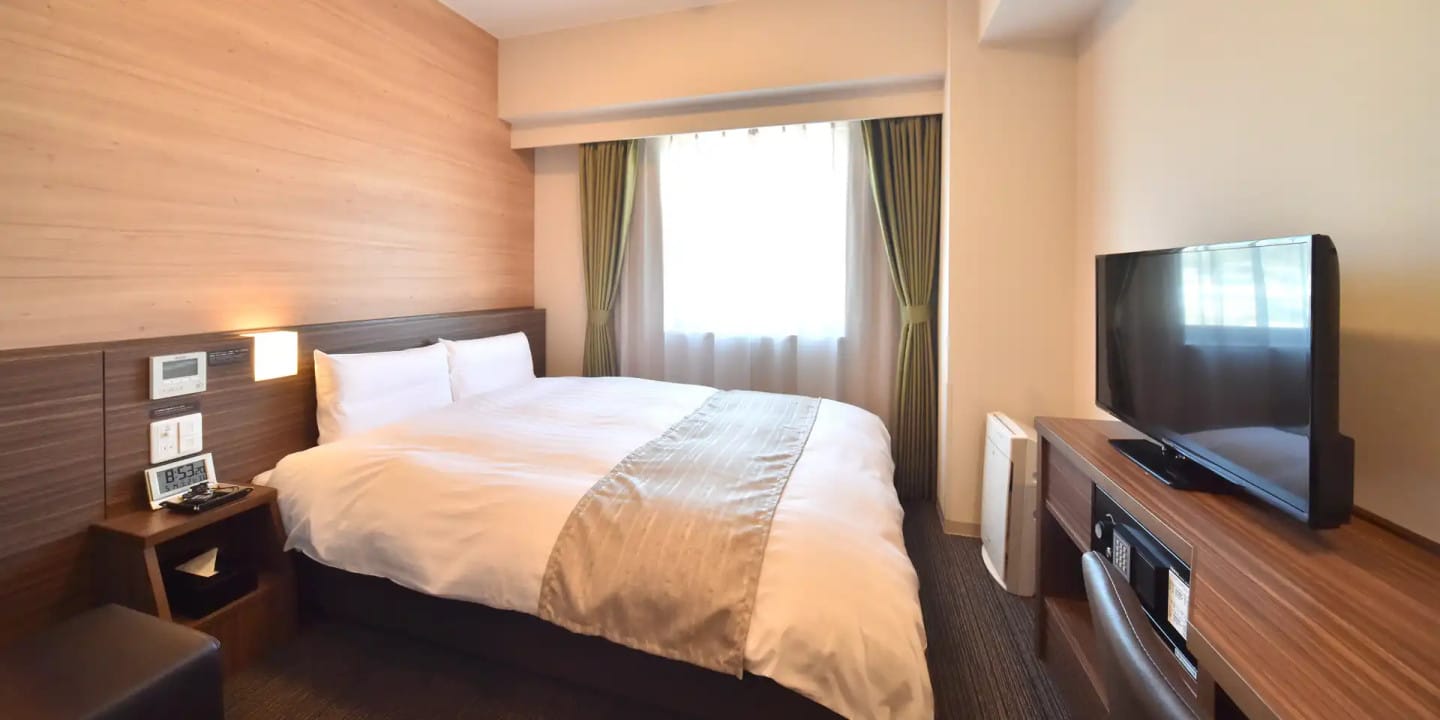
Lodging in Abashiri city is mainly business hotels, with prices much friendlier than the hot spring inns of Utoro, mostly clustered around JR Abashiri Station and the bus terminal, the most convenient for public transport travelers. Room rates rise in peak drift ice season, so we suggest booking early.
For dining, the seafood bowls and ramen on the second floor of the roadside station are the most convenient, and there are plenty of local restaurants in the city. Do not forget to try Abashiri’s exclusive blue drift ice soft serve and drift ice beer, memorable souvenirs. Actual prices follow each shop’s announcement.
What to Watch Out for in Abashiri: No Drift Ice Guarantee, Staying Warm and Backup Plans
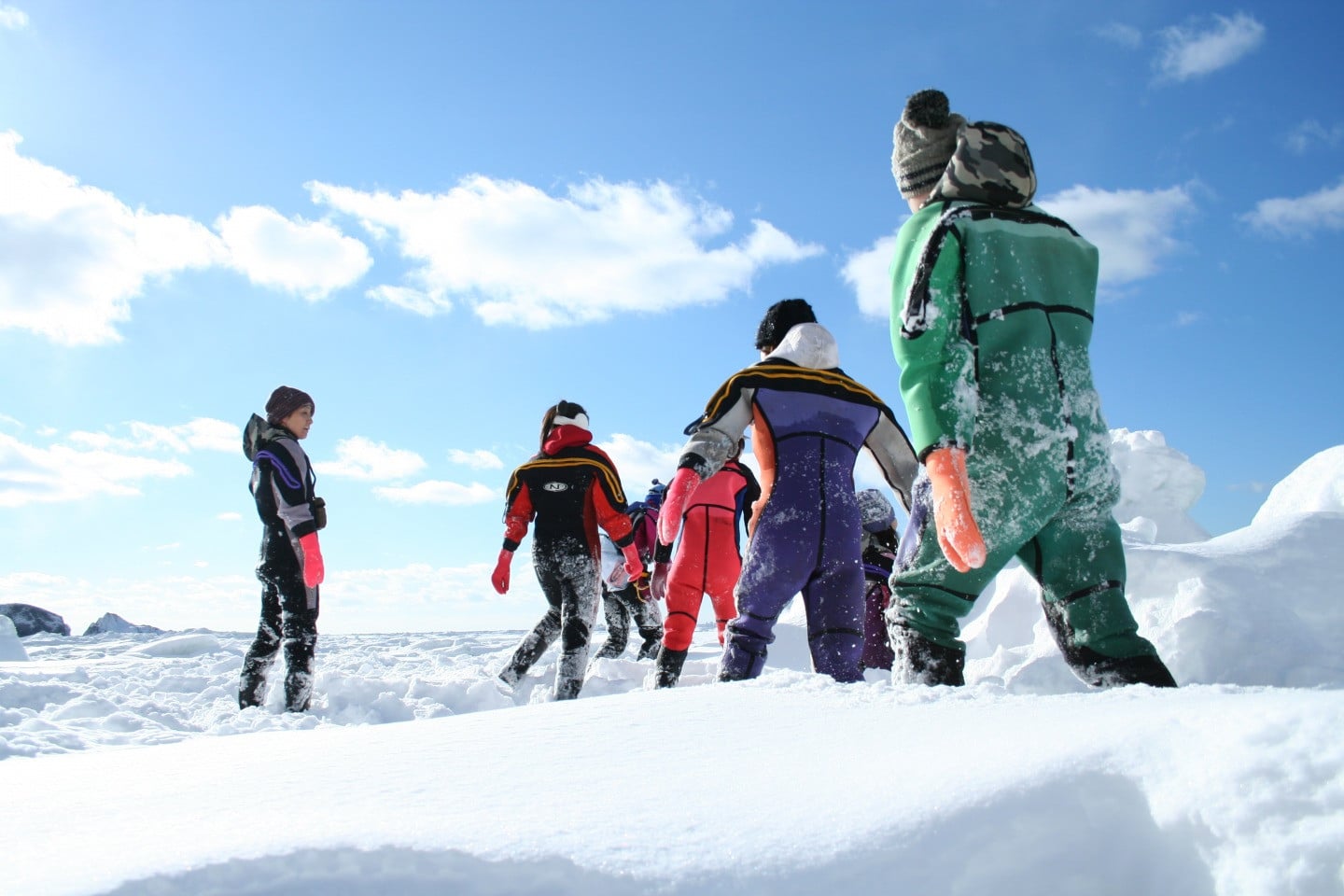
Abashiri’s winter itinerary is almost entirely left up to the weather, so adjust your expectations in advance so the trip does not disappoint.
The Most Important Point: Whether There Is Drift Ice Depends on the Year
Drift ice is a natural phenomenon. Whether it comes, when it comes and whether it reaches the shore depends entirely on that year’s temperature, wind direction and currents, and no itinerary can guarantee you will see it. Even at the February peak, once the wind direction shifts the ice can be blown away from the shore.
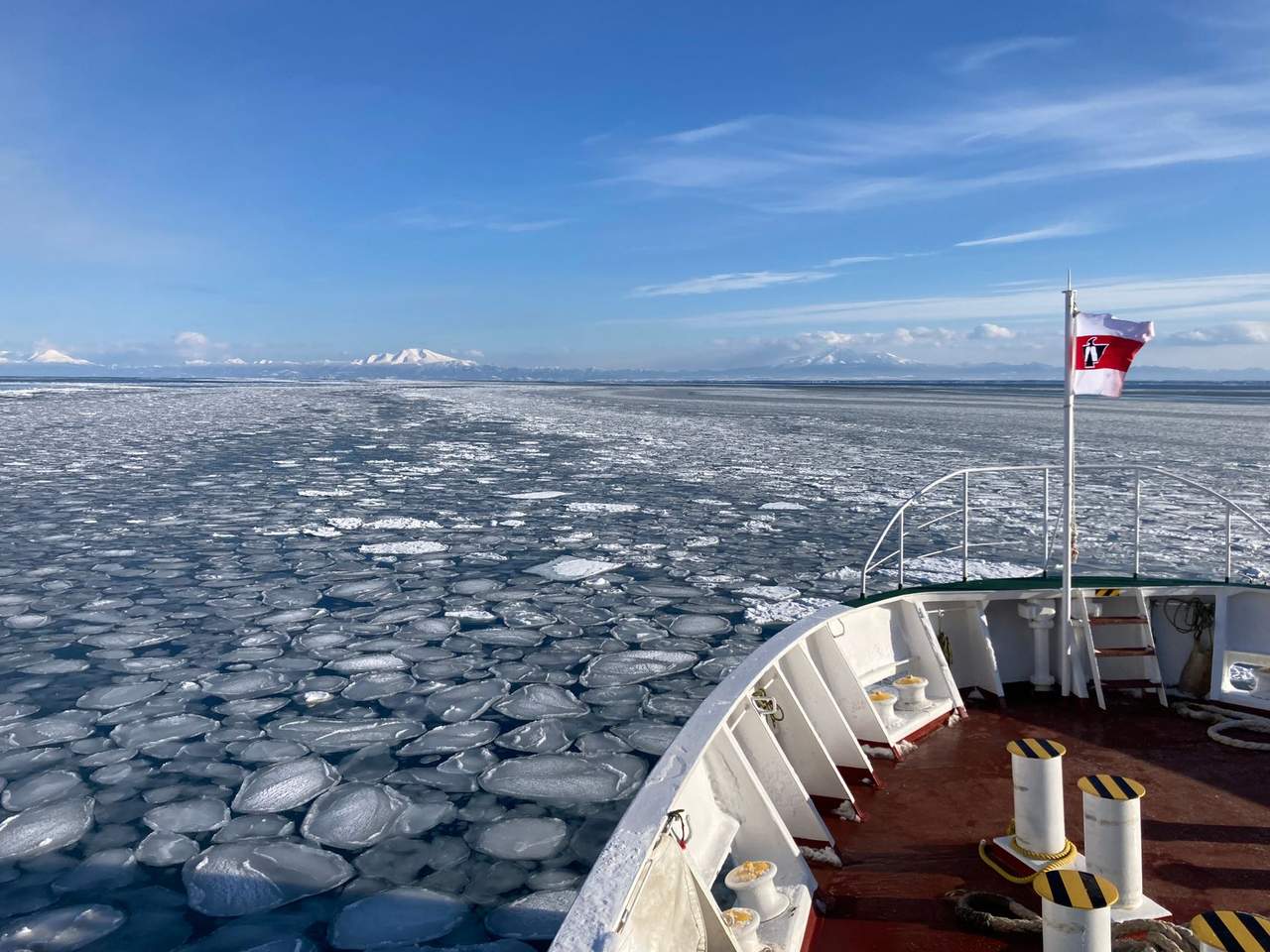
In practice: on the morning of departure, check the drift ice information published by the icebreaker’s official site to confirm whether ice has reached the shore that day. If there is no ice at all, the ship still sails but switches to coastal sightseeing with an adjusted fare. Treat “not seeing it this year” as a reasonable outcome and do not force your itinerary to chase the ice.
How to Prepare Warm Gear? The Sea and the Mountain Are Two Different Levels
The cold in Abashiri city is already quite noticeable, but the sea wind on the icebreaker’s deck and the wind on Mt. Tento push the apparent temperature down much further. A windproof down jacket, wool hat, gloves and scarf are the basics, and missing any one of them means you cannot stay on deck.
Be sure to choose non-slip snow boots, since the outdoor stretches at Abashiri Prison and around Mt. Tento are snowy and icy in winter. Cameras and phones also lose battery quickly in the cold, so we suggest bringing a power bank and keeping a spare battery in an inside pocket to stay warm.
How to Plan the Itinerary? Also Clearing Up the Difference Between Aurora (おーろら) and Garinko-go (ガリンコ号)
For the itinerary, we suggest scheduling the icebreaker in the morning, so if it is cancelled, Abashiri Prison and the Drift Ice Museum can fill in the afternoon and the day is not left empty. The three main sights linked by the loop bus make exactly one full day, and in the evening you can stay in town or head on toward Shiretoko.
One common misunderstanding should be cleared up first: Abashiri’s icebreaker is called “Aurora” (おーろら), while “Garinko-go” (ガリンコ号) is a different ship in a different city, Monbetsu. They are not the same tour, so be sure to check the departure city when booking. If you want to visit Shiretoko on the way, see our dedicated Shiretoko World Heritage guide.
Nearby Accommodation Suggestions
There is lodging in Abashiri city and along Lake Abashiri. Getting from the front of Abashiri Station to the icebreaker boarding point requires a bus, so travelers who want to take the icebreaker or see drift ice in winter are advised to stay in front of Abashiri Station or at a hot spring inn on the lakeshore, and to confirm the shuttle in advance.

Abashiri Drift Ice FAQ
Q: When can I see drift ice in Abashiri?
Drift ice approaches the Abashiri coast from about late January to March, and February to early March is usually the most reliable. But drift ice is a natural phenomenon, and whether it reaches the shore depends entirely on that year’s temperature, wind direction and currents, so it cannot be guaranteed. The icebreaker “Aurora” (おーろら) operates from about late January to the end of March (January 20 to March 31 in 2026), and on the morning of departure you can check the drift ice information published by the official site.
Q: Do I need to reserve the icebreaker in advance?
Yes, and the earlier the better. Aurora uses advance reservation, February to early March is the most sought-after period, and tickets sell out easily. Check-in is at the roadside station “Ryuhyo Kaido Abashiri,” to be completed 20 minutes before departure. In bad weather sailings are cancelled, so check the cancellation and change rules before booking.
Q: If there is no drift ice that day, does the ship still sail?
Yes. If the drift ice has been blown away from the shore that day, the ship still sails to look for drift ice. If there is no ice at all, the route switches to sea sightseeing toward Notoro Cape and the fare is lowered accordingly, which is the official standard practice. To soften the disappointment of coming up empty, you can also schedule the Okhotsk Drift Ice Museum, where you can touch real drift ice all year round.
Q: Can I see Abashiri in one day?
The three main sights fit a day exactly. We suggest taking the icebreaker in the morning (about 60 minutes), eating a seafood bowl at the roadside station at noon, then in the afternoon visiting Abashiri Prison Museum (about 2 to 2.5 hours) first and then the Okhotsk Drift Ice Museum on Mt. Tento (about 1.5 to 2 hours). All of it can be linked by the city sightseeing facility loop bus. Adding Notoro Cape or Lake Notoro requires a car.
Q: Can I enjoy Abashiri without a car?
Yes, winter Abashiri is friendly to travelers without a car. The sightseeing facility loop bus links in order the Abashiri Bus Terminal, Abashiri Station, the icebreaker pier, Abashiri Prison Museum and the Okhotsk Drift Ice Museum on Mt. Tento, and one Sightseeing Facility Loop One-Day Pass covers the whole day. Only outlying sights such as Notoro Cape and Lake Notoro need a car or a charter.
Q: What is the difference between Aurora (おーろら) and Garinko-go (ガリンコ号)?
This is the most common confusion. “Aurora” (おーろら) is Abashiri’s drift ice sightseeing icebreaker, boarding at Abashiri’s roadside station “Ryuhyo Kaido Abashiri.” “Garinko-go” (ガリンコ号) is a different icebreaker in Monbetsu, a different city, a different operator and a different boarding point. They cannot substitute for each other, so be sure to confirm the departure city when booking.
Q: What else can I do in Abashiri if I am not going in winter?
Plenty. Abashiri Prison Museum, the Okhotsk Drift Ice Museum and the Hokkaido Museum of Northern Peoples are all open year round, and at the Drift Ice Museum you can touch real drift ice in any season. On the outskirts, Notoro Cape is a combination of grassland and blue sea in summer, and the coral grass on the shore of Lake Notoro turns red from late August to late September, spreading a red carpet along the lakeshore. Lake Abashiri also has summer water activities.