
2026 Osaka Shinsekai and Tsutenkaku Guide: The Charm of a Showa-Era Landmark and the God of Good Luck
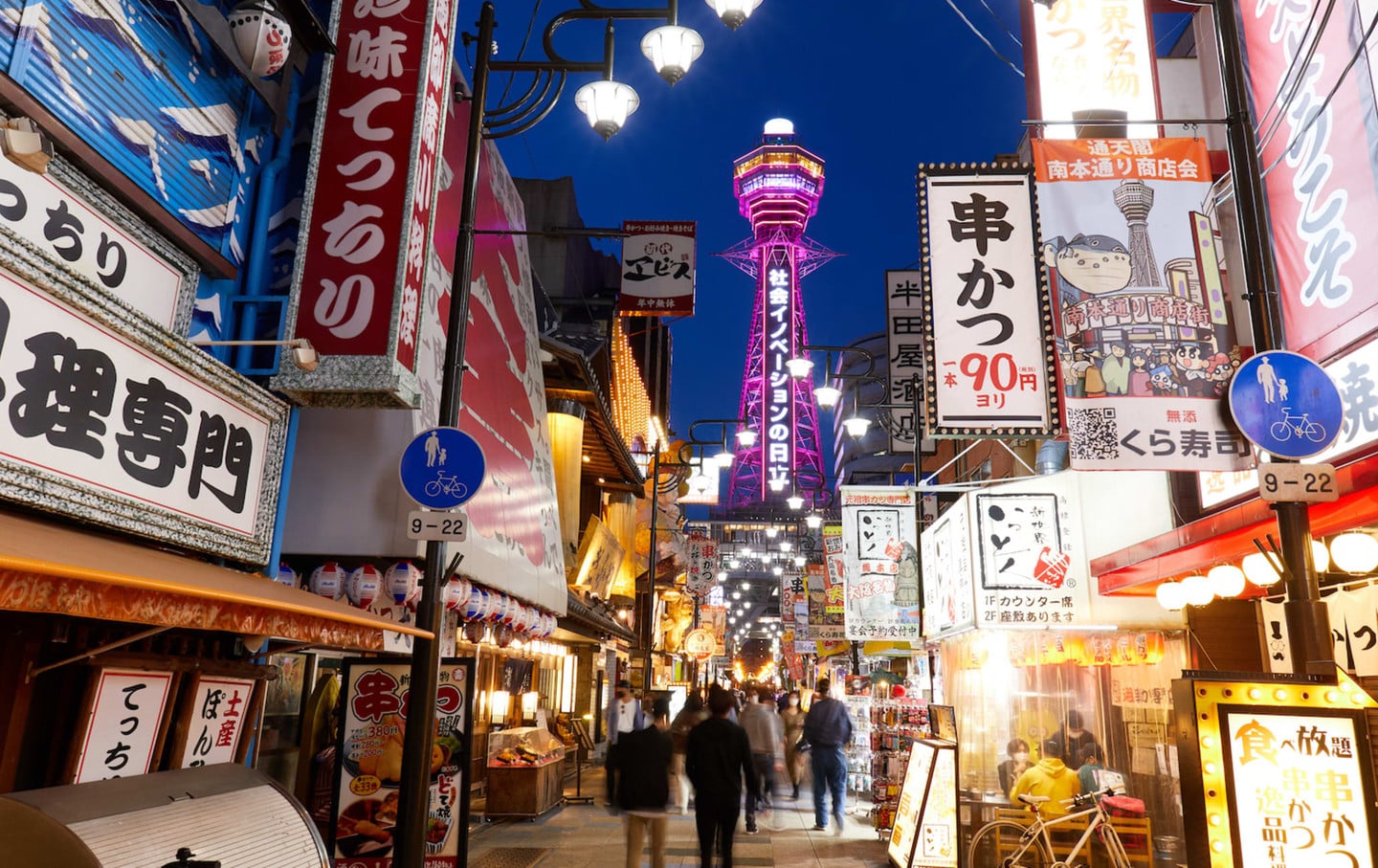
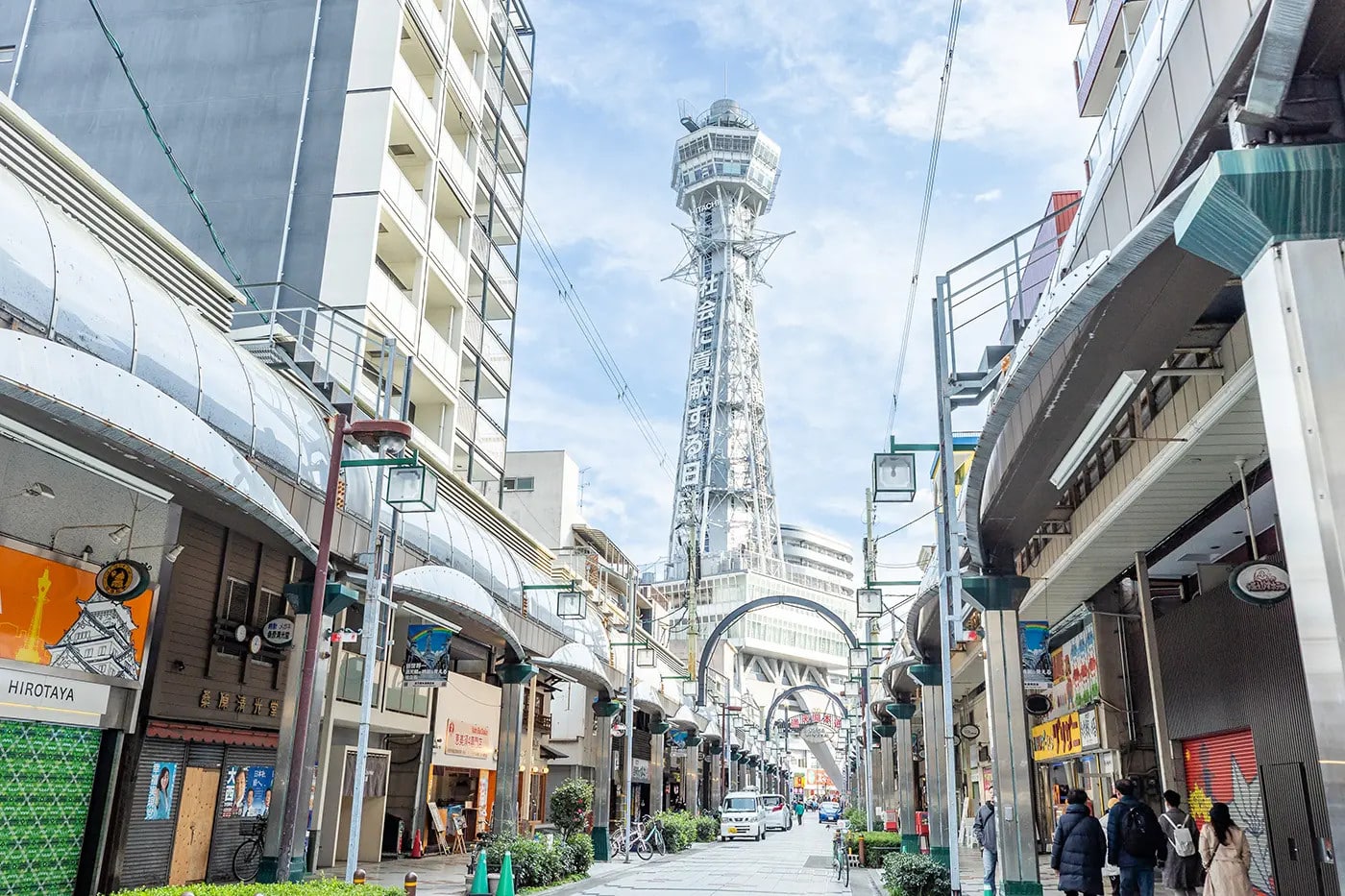
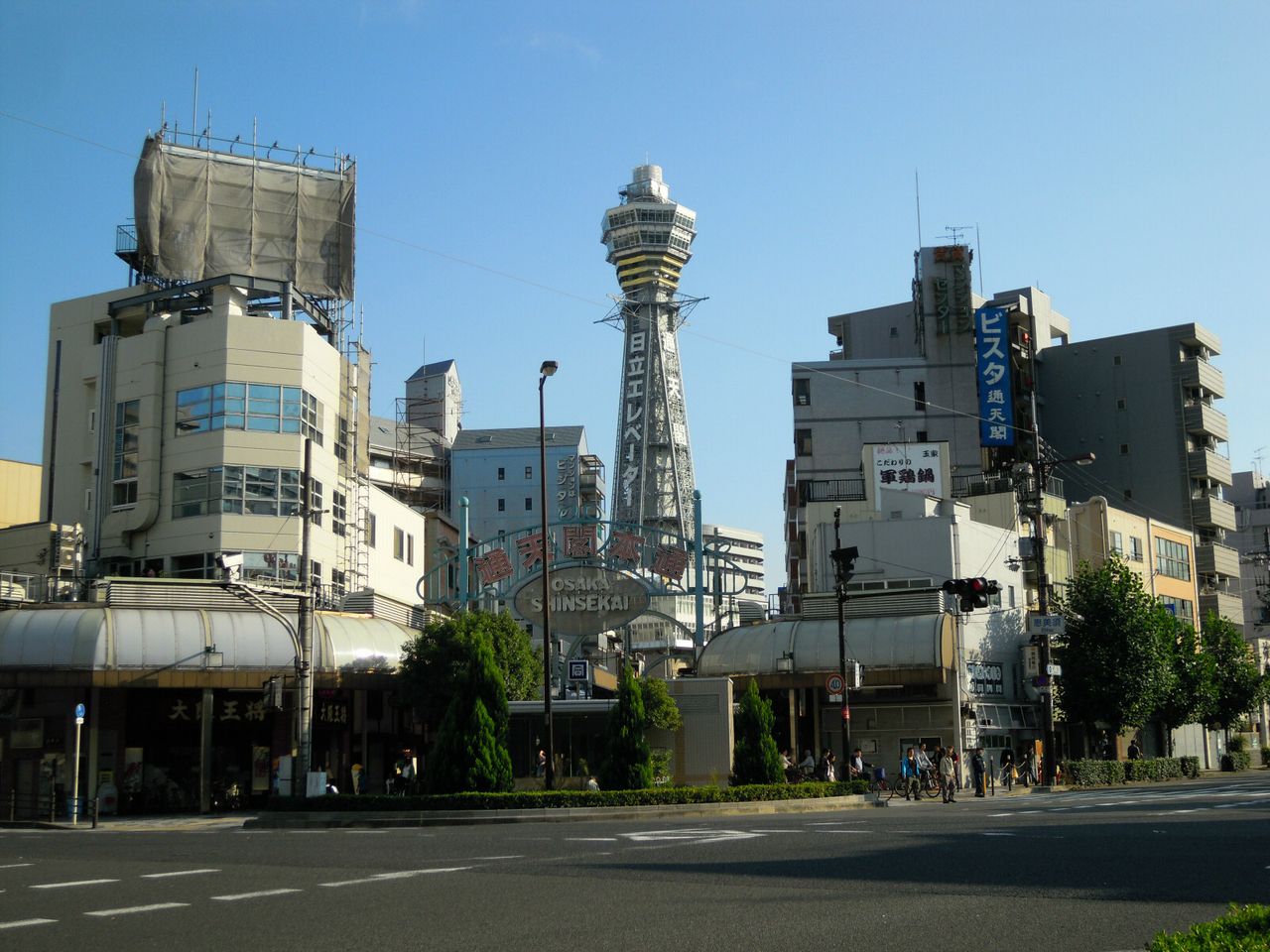
Shinsekai, with Tsutenkaku as its landmark, is famous for kushikatsu and the Billiken lucky god. It is the core district for experiencing Osaka’s old downtown atmosphere and deserves half a day of exploring.
Shinsekai: A Retro Downtown District Founded in 1912
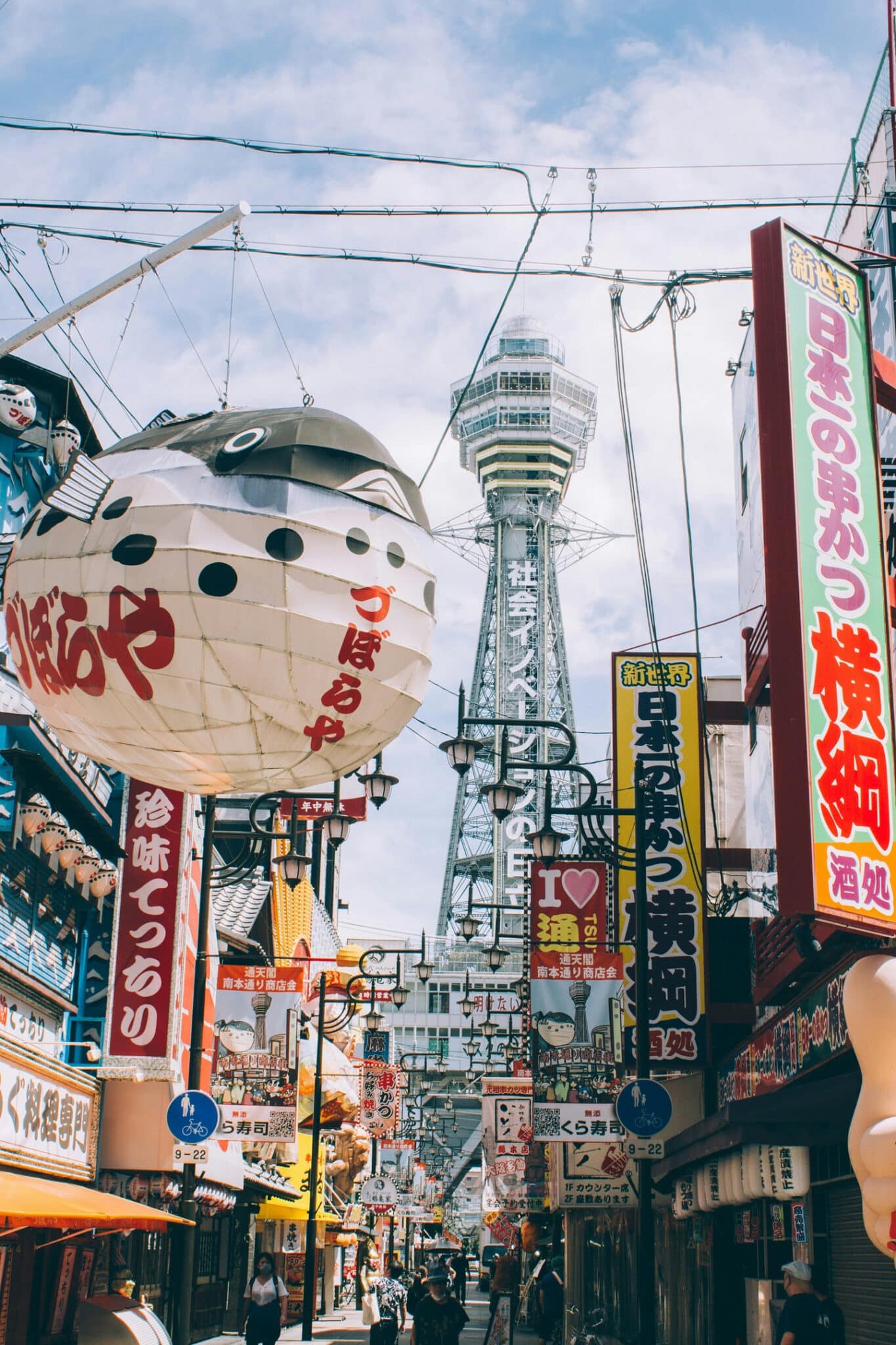
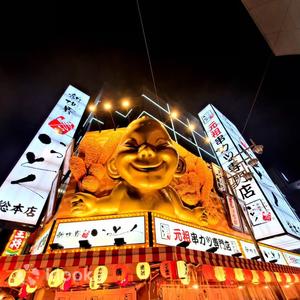
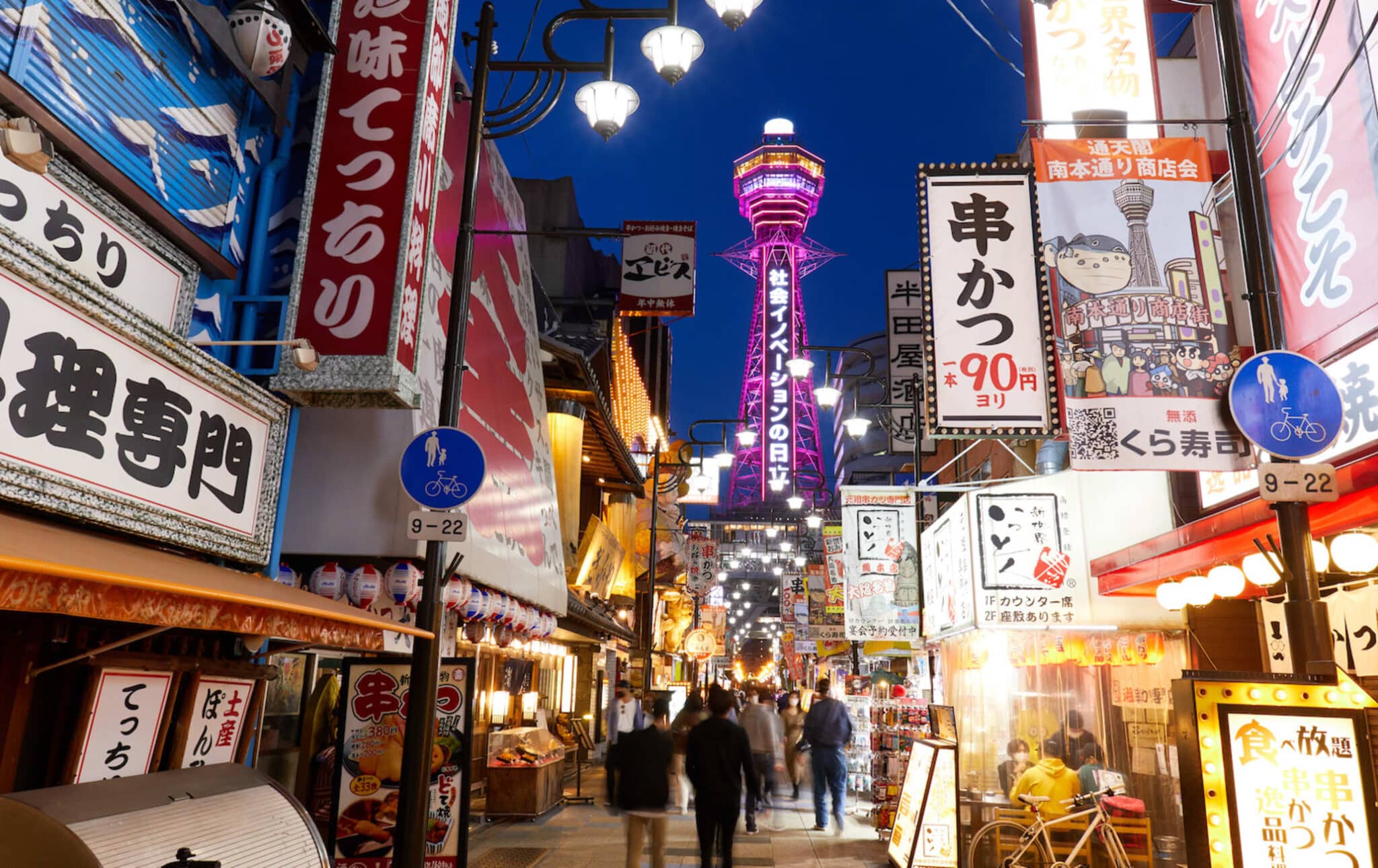
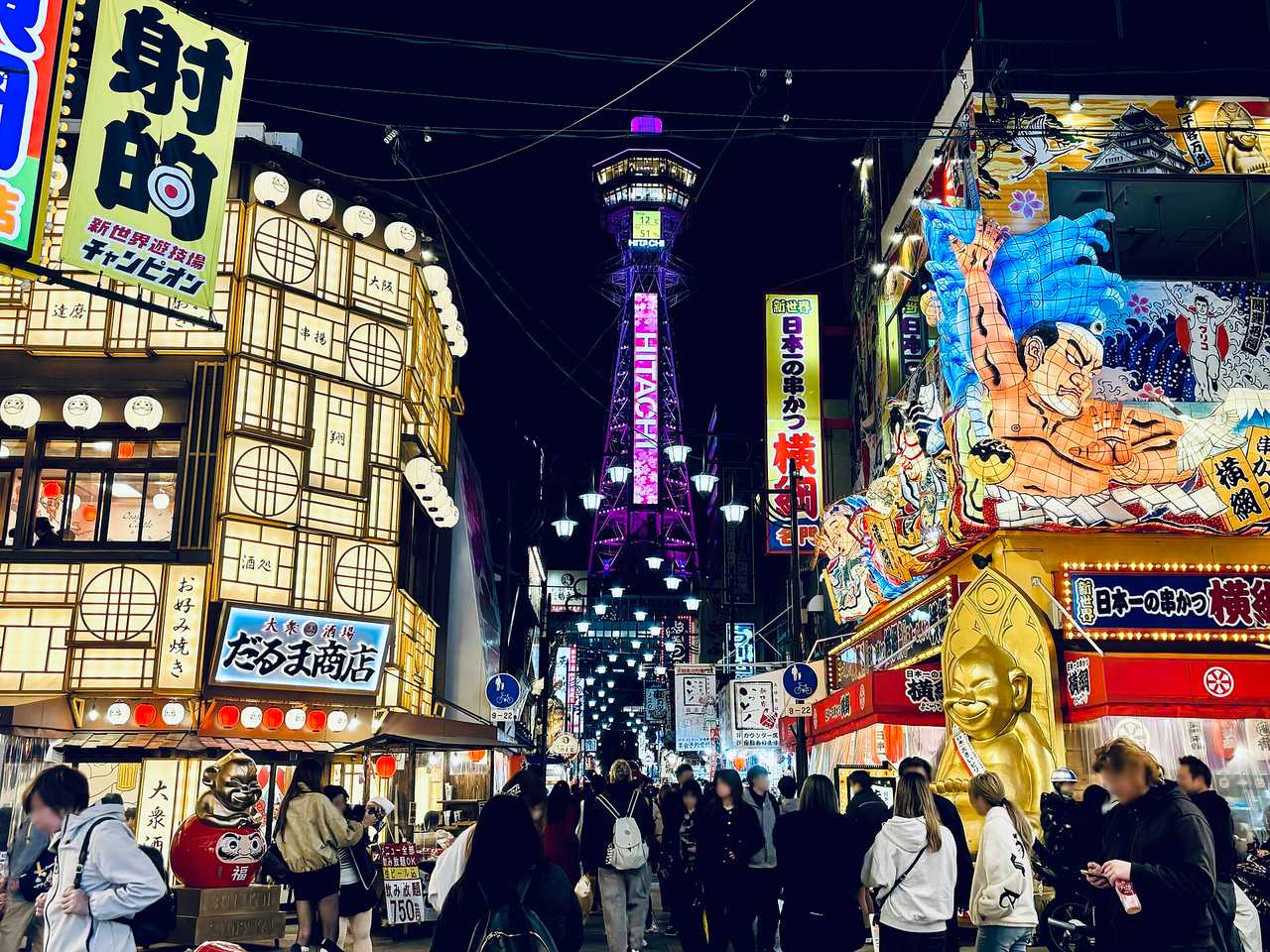
Shinsekai was founded in 1912 and is Osaka’s most visually striking retro district, full of lively working-class energy and Showa-era nostalgia, a sharp contrast with the modern shopping areas. The streets are hung with exaggerated three-dimensional signs such as the giant takoyaki octopus and pufferfish lanterns. The buildings are old but full of life, and the narrow alleys hold cheap kushikatsu stalls, retro candy shops and discount souvenir stands, a paradise for photographers and culture watchers. At dusk, the neon signs and the lights of Tsutenkaku play off each other for an even more distinctive charm.
美食導覽之旅,品嚐15道菜-Klook.jpg)

Tsutenkaku: The 103-Meter Landmark Tower of Shinsekai
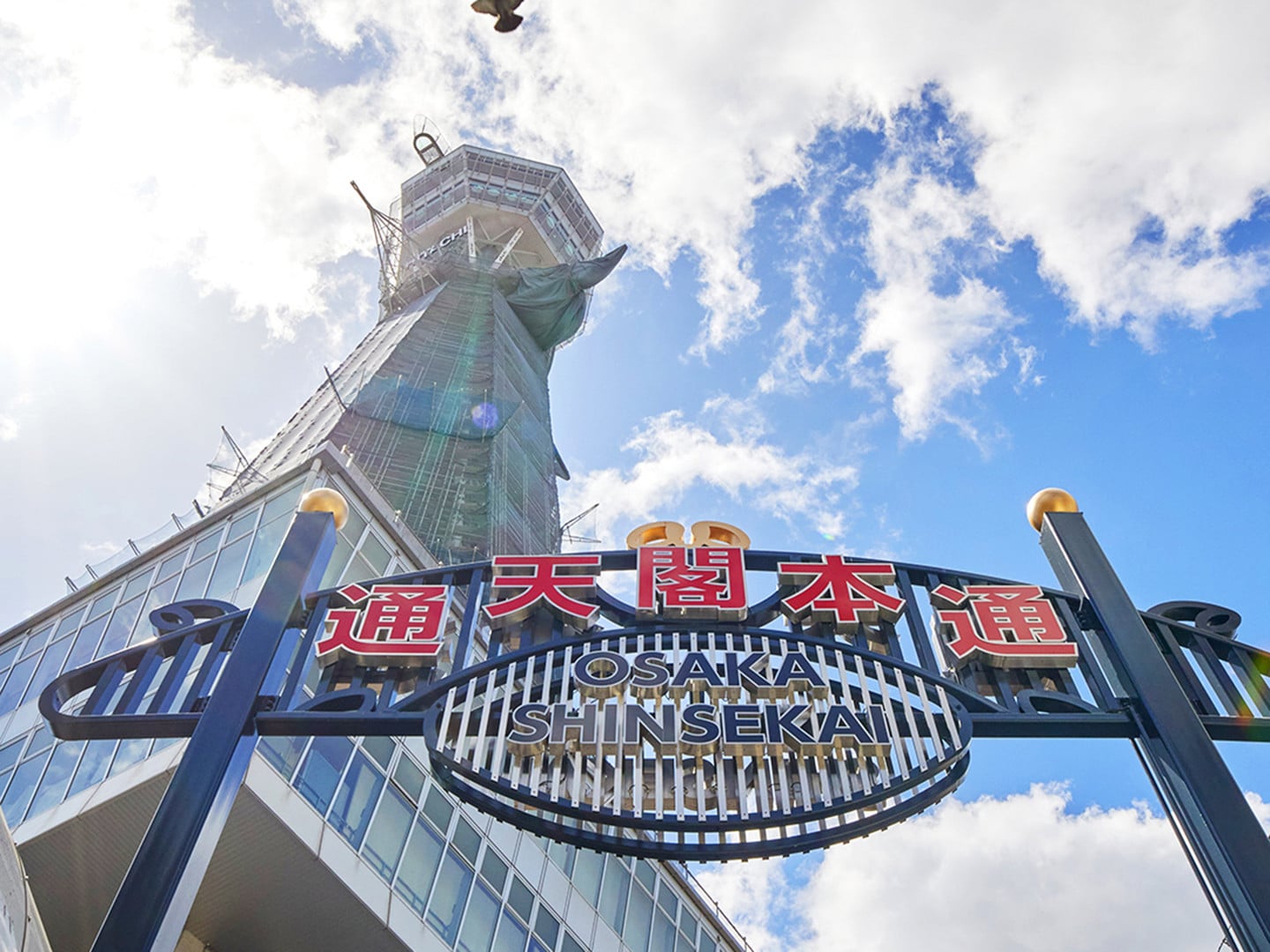
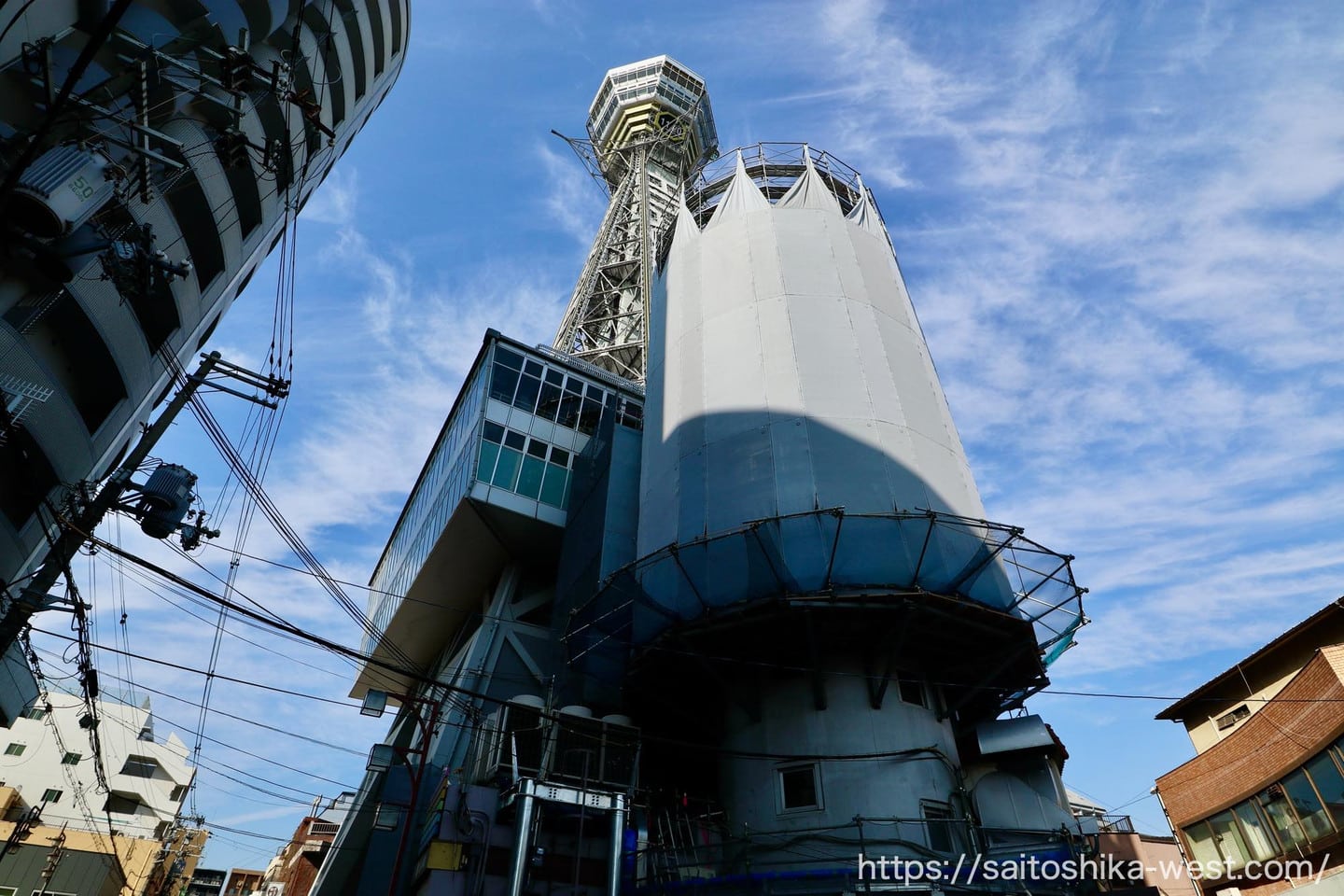
Tsutenkaku is the symbol of Shinsekai. The existing tower is the second-generation Tsutenkaku, rebuilt in 1956, standing about 103 meters tall. Inside is an observation deck with 360-degree views over Osaka, and on clear days you can even see the Rokko Mountains in the distance, the best angle for looking out over the old downtown.
The top of the tower once had a neon device that showed the next day’s weather forecast, but this tradition ended in July 2022. Visitors now mostly come to climb the tower for the view, rub Billiken’s feet for luck, and try the giant slide inside the tower.
Jan Jan Yokocho (Nanyo-dori Shopping Street): A Slice of Nostalgic Local Life
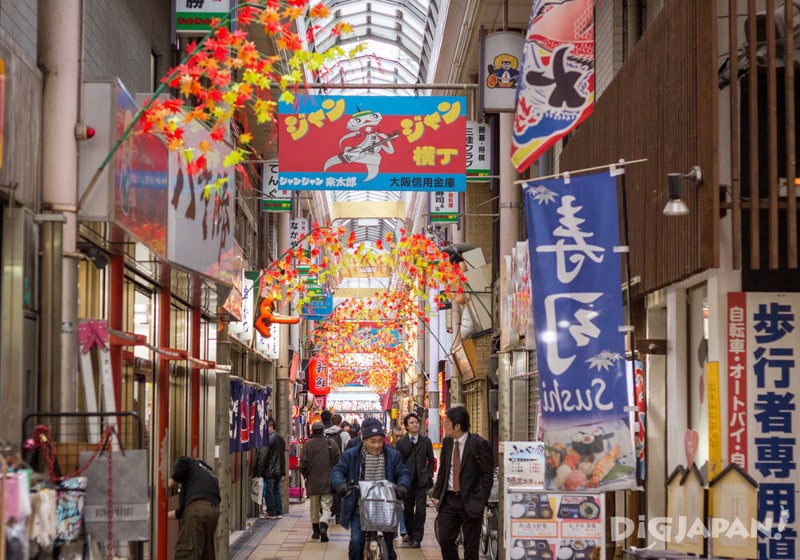
Jan Jan Yokocho, also called Nanyo-dori Shopping Street, got its name from the “jan jan” twang of shamisen and taiko drums once heard on the street. This long, narrow arcade is lined with standing kushikatsu shops and places where people play shogi and go, a precious scene of the everyday pace of local elderly residents.
The street has kept its Showa-era signs and decor, almost untouched by modernization. It is a great place for retro photos and a must-visit for the atmosphere of Osaka’s “late-night diner.”
Billiken Shrine: A Faith Landmark Built for Shinsekai’s 100th Anniversary
Along the shopping street you will see a small red torii shrine, the “Billiken Shrine,” built to mark the 100th anniversary of Shinsekai’s founding. Billiken is one of Shinsekai’s key symbols, with statues and merchandise of him seen everywhere on the streets.
The shrine is small, but attracts many visitors and locals who come to pray for good luck. It is also a quiet corner of faith among the alleys of Shinsekai, an interesting contrast with the bustling shopping street.
How to Get to Shinsekai and Tsutenkaku: Transport and Costs
The easiest way to reach Shinsekai and Tsutenkaku is the Osaka Metro Sakaisuji Line to “Ebisucho Station,” about a 3-minute walk from Exit 3. You can also take the Midosuji Line to “Dobutsuen-mae Station,” about a 7-minute walk from Exit 1, or the JR Osaka Loop Line to “Shin-Imamiya Station,” about a 5-7 minute walk from the East Exit. All three stations accept tap-in, tap-out with transit IC cards such as ICOCA and Suica.
What Are the Highlights and Food Experiences of Shinsekai and Tsutenkaku in 2026?
From the observatory’s night view to famous kushikatsu shops, Shinsekai and Tsutenkaku offer layered sightseeing and food experiences. Here are 11 highlights not to miss.
The Golden Observatory: 360-Degree Views over Osaka
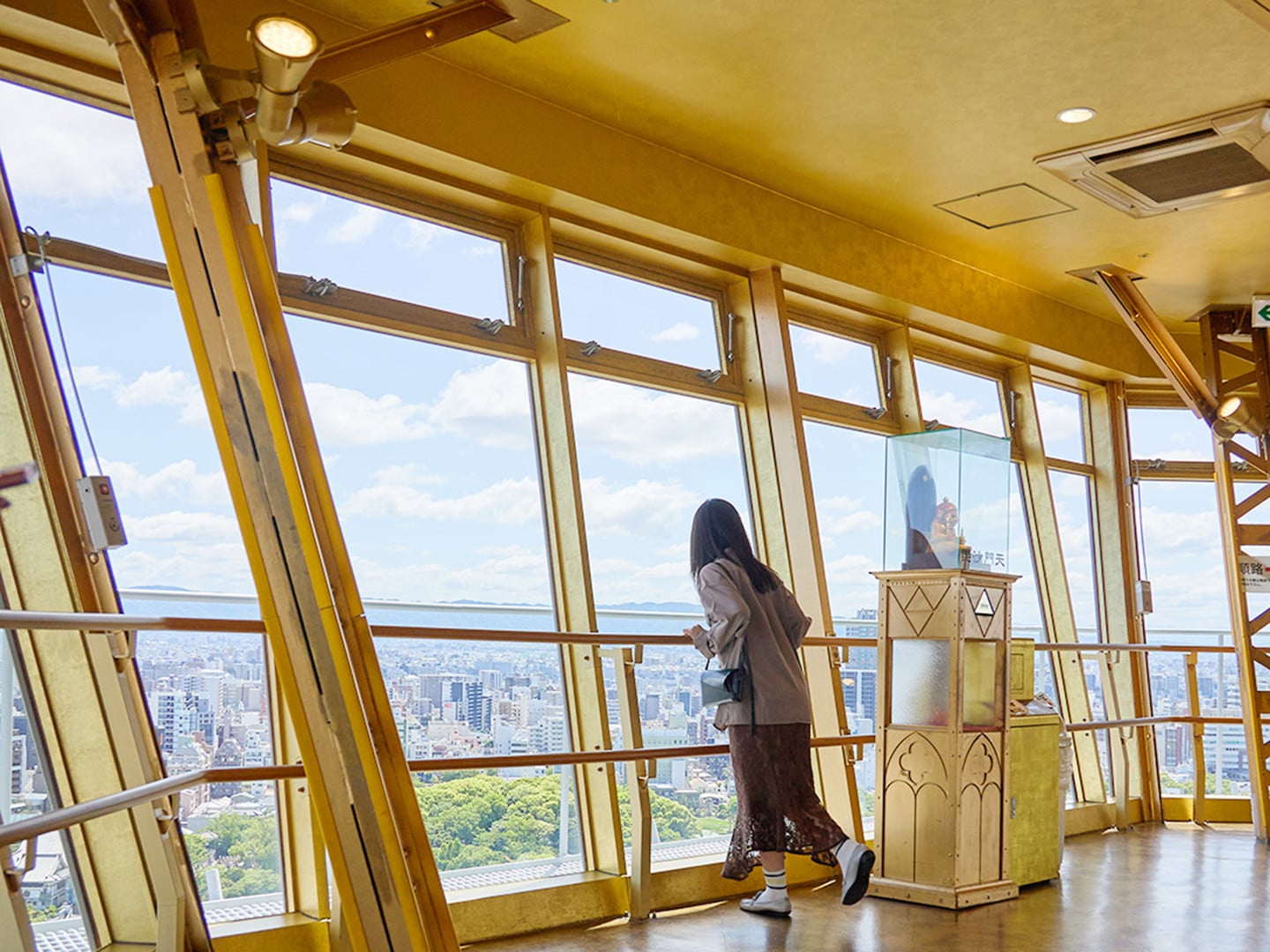
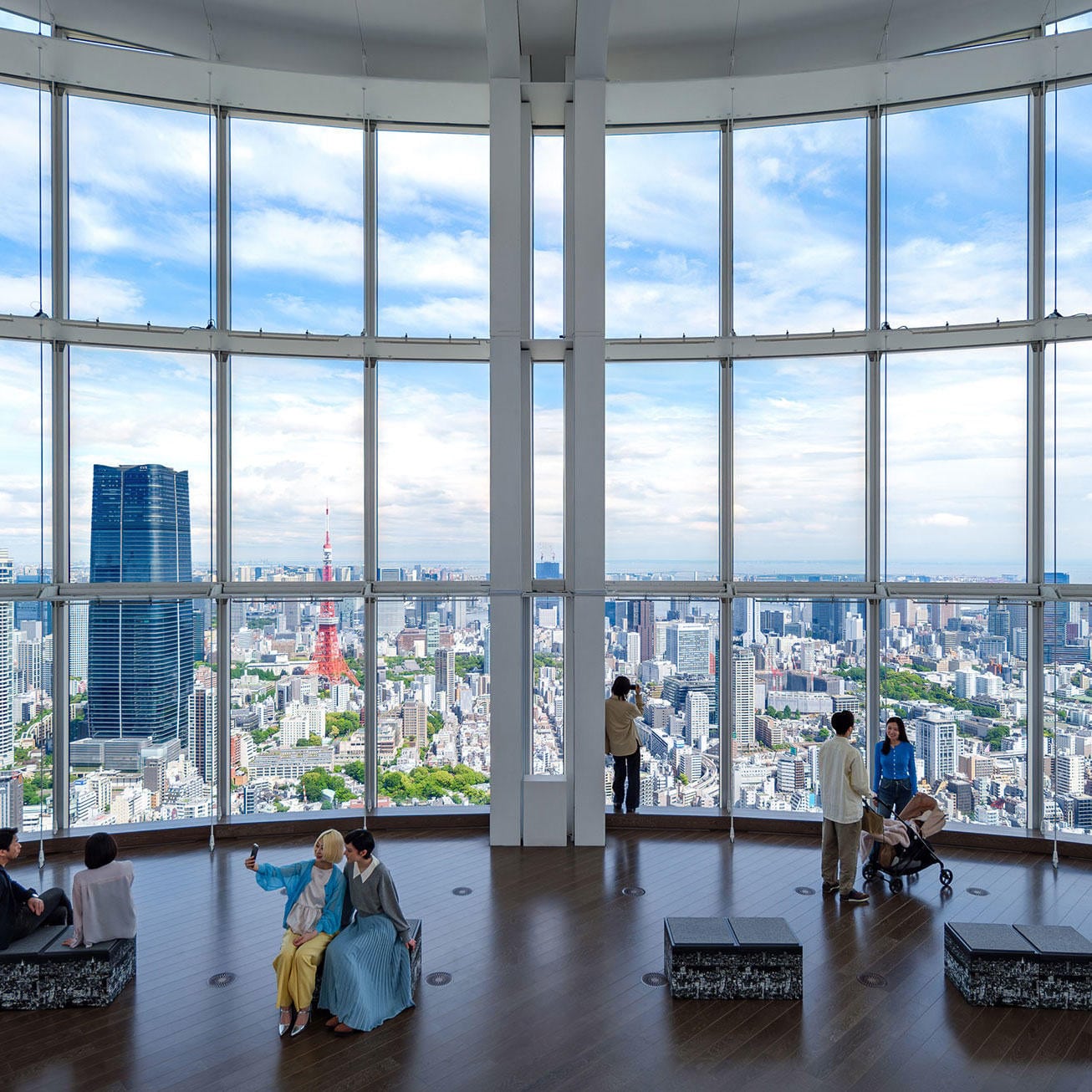
Floors 2 to 5 of Tsutenkaku are observation decks. The 5th-floor “Golden Observatory” is decorated in gold leaf and enshrines a god of fortune and a Billiken statue. Floor-to-ceiling windows give 360-degree views over Shinsekai, Tennoji and the Rokko Mountains, and a clear evening is the best time to see the day-to-night transition.
Adult tickets (15 and over) are about ¥1,500 and child tickets (ages 5-14) about ¥800 (including “Tenbo Paradise”). We recommend using the Osaka Amazing Pass for free admission. The observatory is open from 9:00 to 22:00 (last entry 21:30); plan on 30-45 minutes.


Tenbo Paradise: Thrilling Views from the Outdoor Rooftop Deck
Tenbo Paradise is the outdoor area at the top of Tsutenkaku. It is now bundled into a fixed set ticket with the regular observatory (adults ¥1,500 / children ¥800), with no separate add-on needed to go up. It has the highest and widest views in Tsutenkaku, and the unobstructed open-air design makes the scenery even more striking. Tenbo Paradise is an open-air facility with shorter hours that vary with the weather, so please check the official website.
For safety reasons, children under 5 are not allowed into Tenbo Paradise. Visiting at dusk lets you capture both the afterglow of sunset and the first lights of evening, a favorite insider tip for photographers.
TOWER SLIDER: A 60-Meter Slide from the 3rd Floor to B1
TOWER SLIDER is the most thrilling attraction in Tsutenkaku, running about 60 meters from the 3rd floor all the way down to the first basement level. Riders sit on a mat and spiral rapidly down, and through the transparent sections you can see the inside structure of the tower, a real thrill.
This attraction requires a separate ticket: from April 2026, ¥1,100 for adults and ¥600 for children, open 10:00 to 20:00 (last entry 19:30). Because queues are long, visit on a weekday morning or before the evening. The ride is short but very popular with families and young visitors.
Dive & Walk: A High-Altitude Walk Without Handrails and a Jump
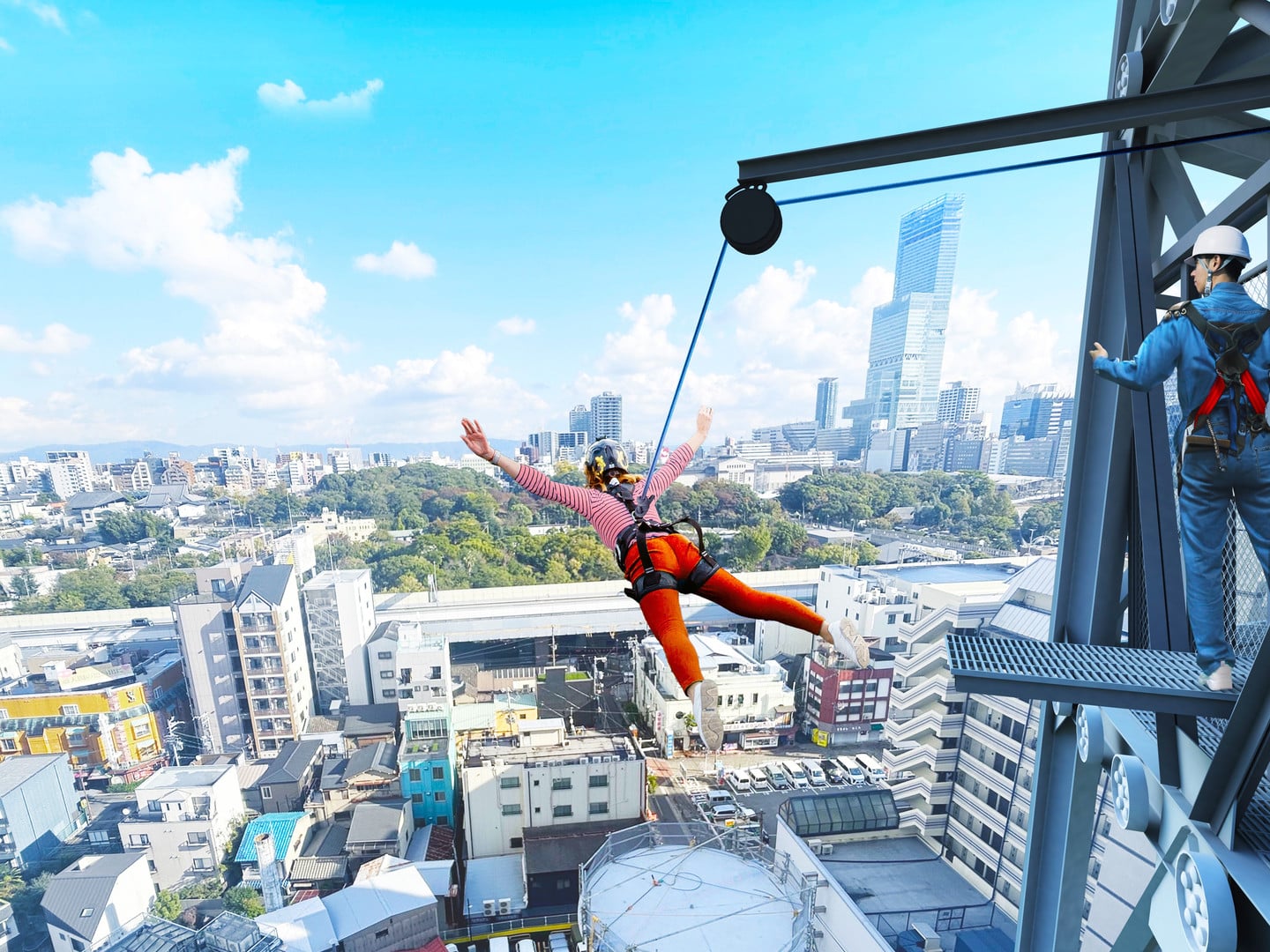
Dive & Walk is a high-altitude experience Tsutenkaku introduced in recent years. Visitors wear a safety harness and walk along a handrail-free path on the outer edge of the 3rd floor, about 26 meters up (Walk), or jump about 14 meters from a height of about 40 meters (Dive). It suits thrill-seekers.
This experience costs extra: from April 2026, ¥3,000 for adults and ¥2,000 for children, open 9:10 to 19:00 (last entry 18:15). Wear clothes that are easy to move in, and allow at least 30 minutes for queuing and putting on equipment.
TIP THE TSUTENKAKU: A Surprising Perspective from the Glass-Floor Deck
“TIP THE TSUTENKAKU” is a transparent-floor section inside the Tsutenkaku observatory. Standing on reinforced glass, you look straight down at the street scene dozens of meters below, a knee-weakening thrill and a popular photo spot on social media in recent years.
This attraction costs extra (reference price ¥300 for adults and ¥200 for children; check the official website), but avoid peak holiday crowds so you can take photos at leisure. Timid travelers can also watch others take the challenge from the side, which is just as fun.
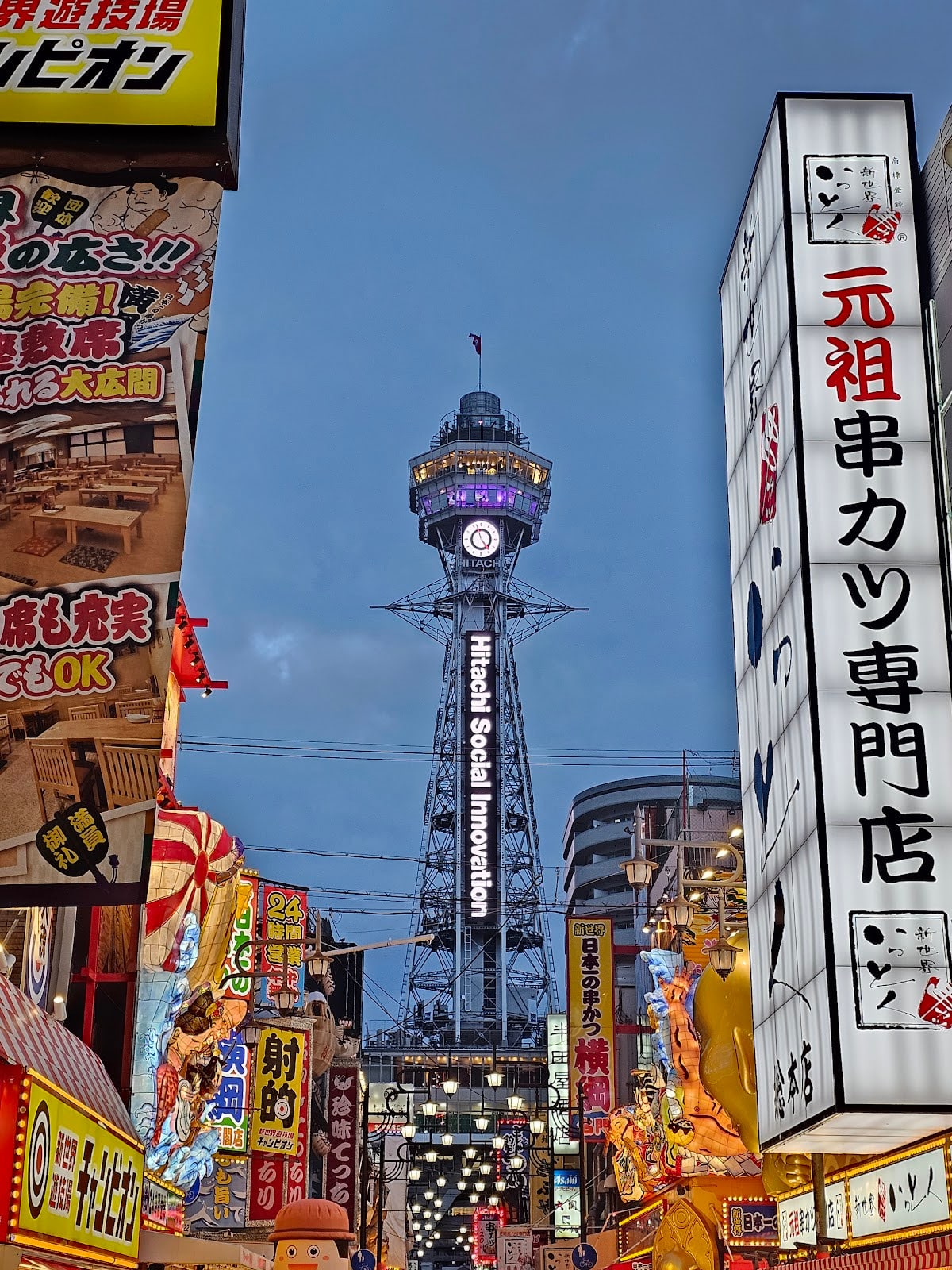
Tsutenkaku Night Illumination: A Romantic Night View as the Lights Come On
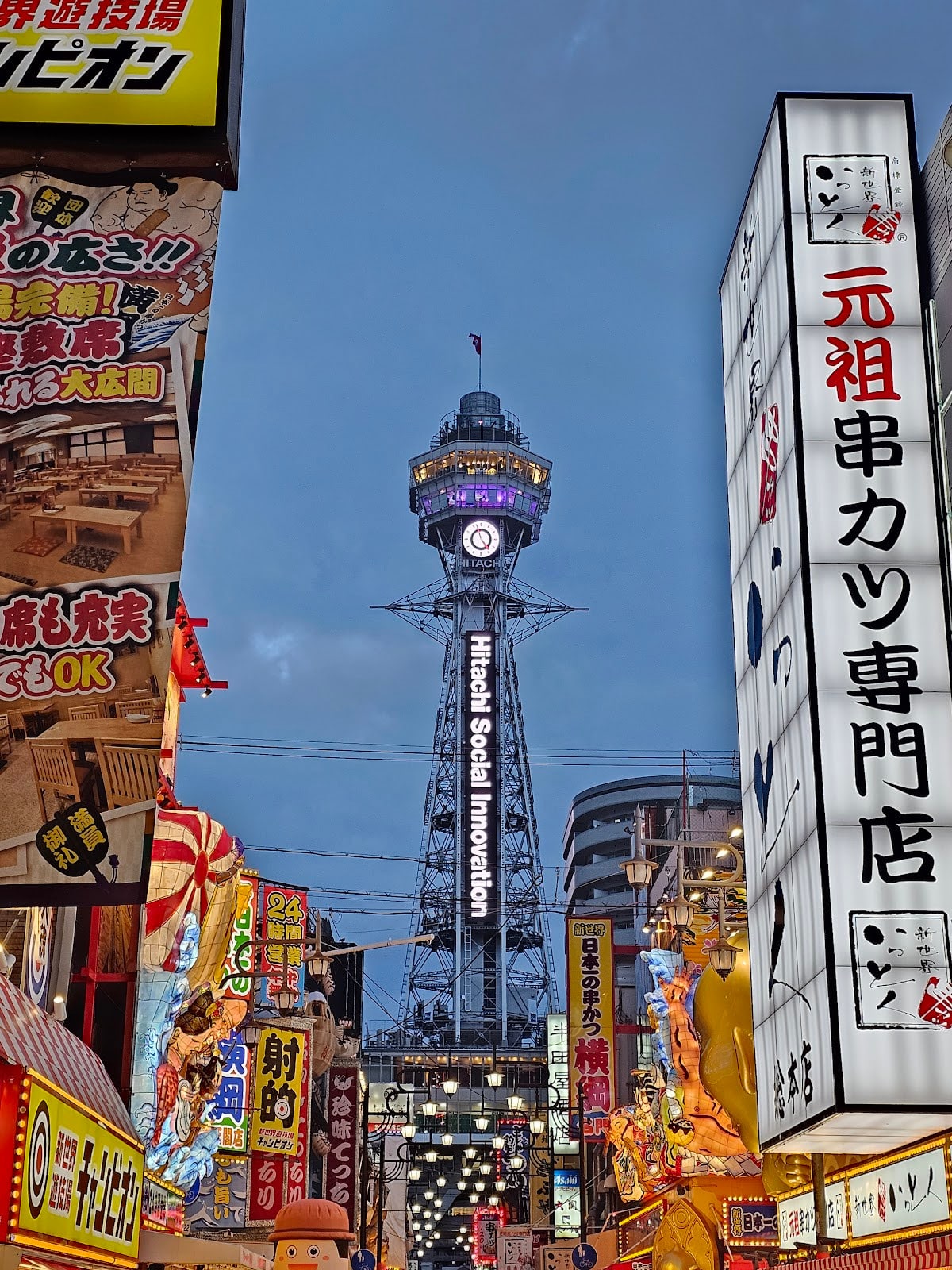
When night falls, Tsutenkaku’s tower is lit in colorful lights, with colors that change by season, festival or special event. During Christmas, for example, it often shows red and green. It is the brightest landmark in Shinsekai at night.
Go up the tower before sunset so you can enjoy the transition from day to night. The square below the tower is also a great angle for a full view of Tsutenkaku with the neon signs, and around 7 or 8 p.m. is the best time for photos, when crowds ease.
The Billiken Lucky God: The Custom of Rubbing His Feet for Good Luck
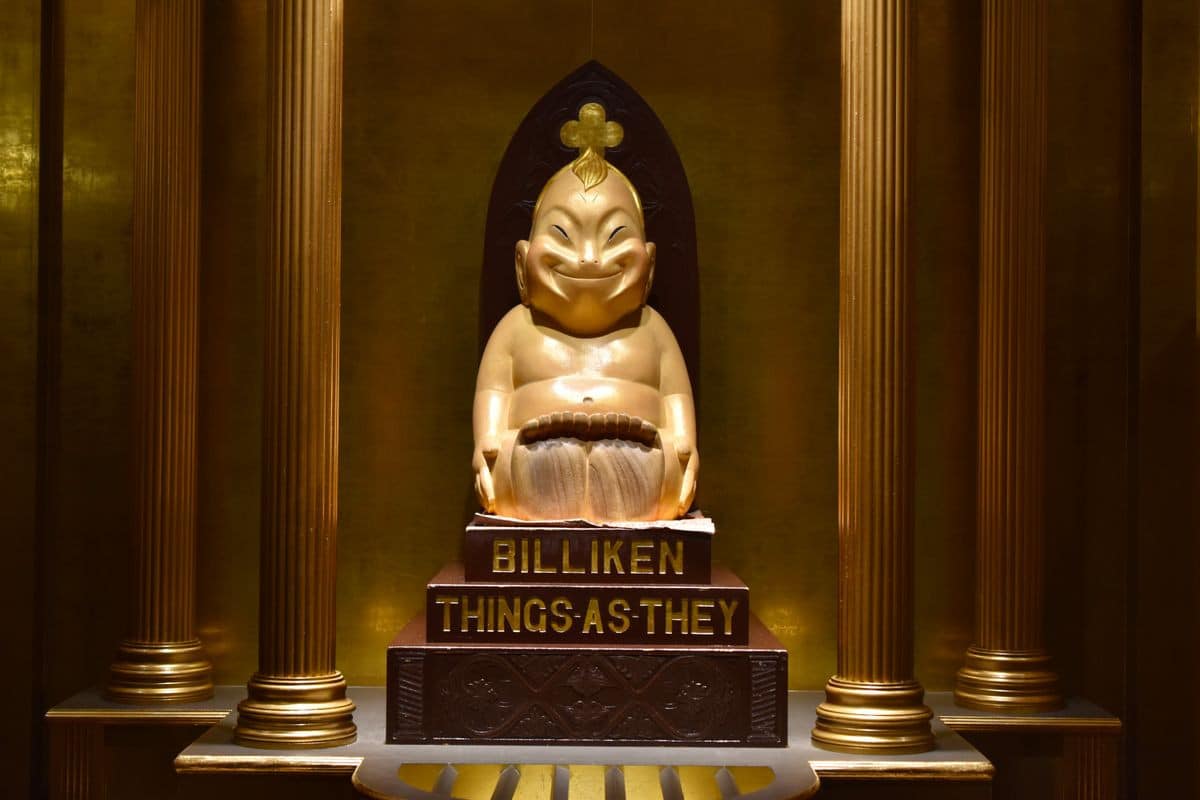
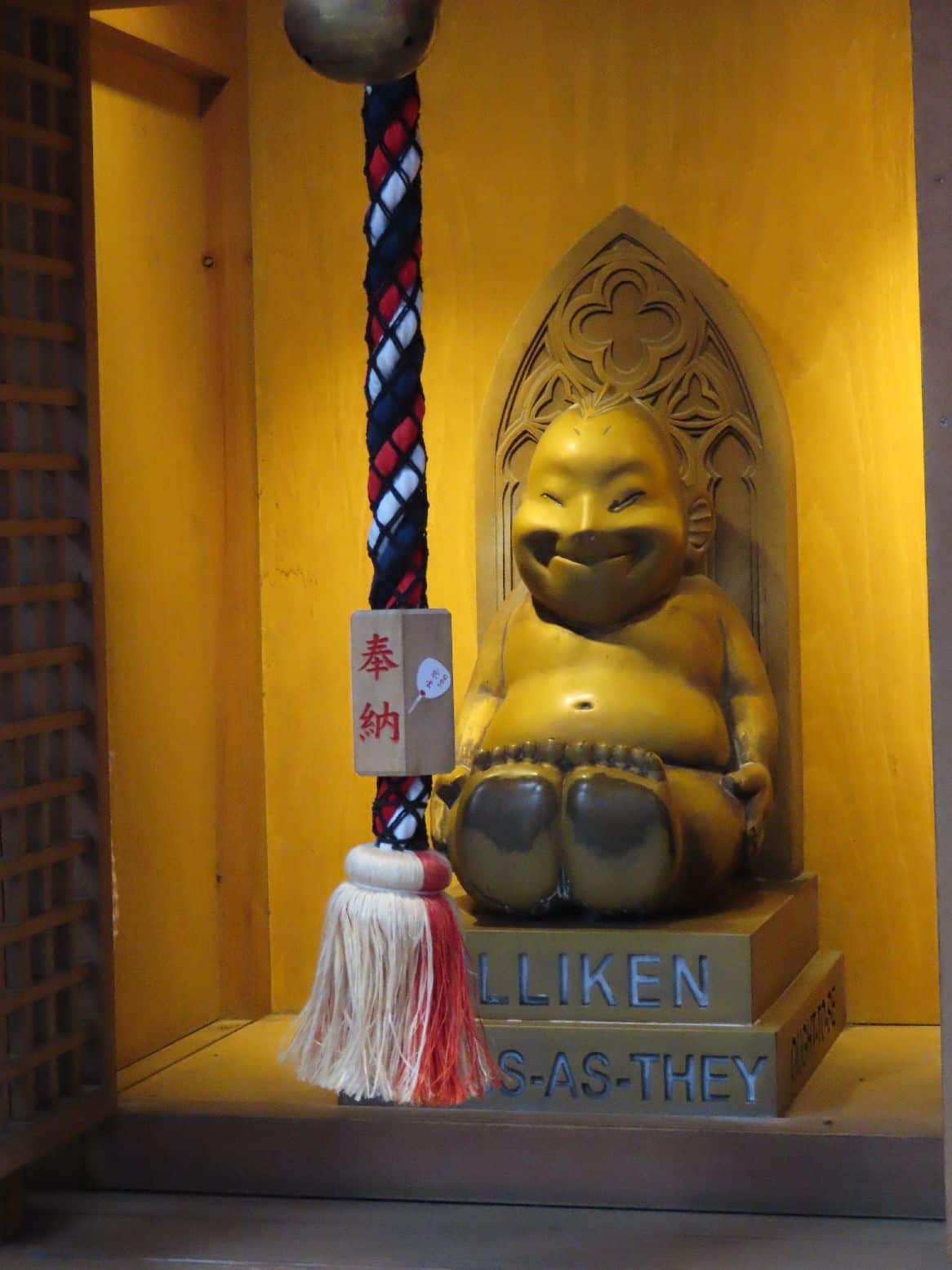
Billiken is enshrined in the 5th-floor observatory of Tsutenkaku. He is recognizable by his pointed head and squinting smile, and is said to have originated from the creation of an American artist before putting down roots in Osaka as Shinsekai’s guardian. Legend says that rubbing the soles of Billiken’s feet brings good luck, exam success or business prosperity, so the soles have been rubbed shiny by visitors.
Billiken merchandise is sold inside and outside the tower and along the shopping street, from key chains to plush dolls, and is one of the souvenirs visitors most love to take home. Rubbing his feet for a blessing has become an essential ritual of visiting Tsutenkaku.
What Is Billiken? The Origin of Tsutenkaku’s God of Fortune
Billiken (ビリケン) is the guardian god of Tsutenkaku. In 1908, the American artist Florence Pritzel created the figure based on a deity she saw in a dream. It later became a lucky mascot popular in many places and also came to Shinsekai. The Billiken now enshrined in the Tsutenkaku observatory is the third-generation statue, installed in 2012 to mark the 100th anniversary of the first Tsutenkaku tower. Visitors rub his outstretched soles, said to bring good luck, and many travelers climb the tower specifically to have their photo taken with him.
The “No Double-Dipping” Rule for Kushikatsu: Shinsekai Dining Etiquette
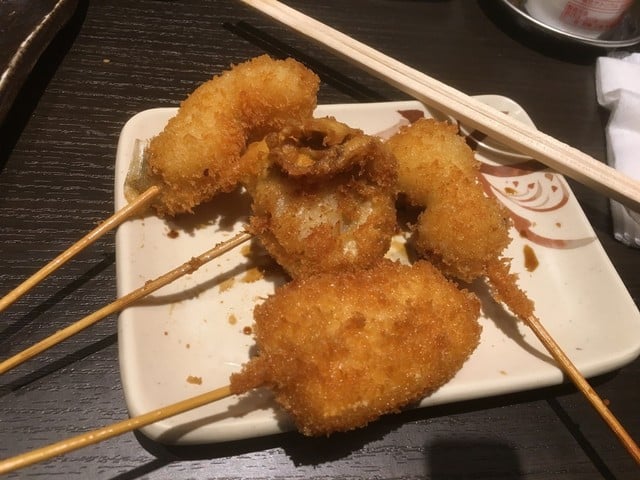
Shinsekai is the birthplace of Osaka kushikatsu, in which meat, seafood and vegetables are coated in fine batter and fried until golden and crisp. You must strictly observe the traditional rule “no double-dipping in the sauce” (ソースの二度漬け禁止): each skewer may be dipped in the sauce only once, and a bitten portion must not be dipped again.
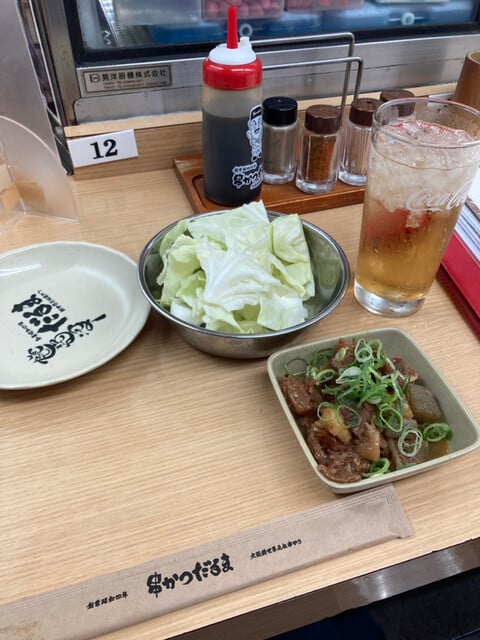
If you feel there is not enough sauce, shops usually provide cabbage leaves so guests can scoop sauce and pour it over the skewer. This rule has become a shared culture of Shinsekai kushikatsu shops, so first-time visitors should take care to avoid misunderstandings.
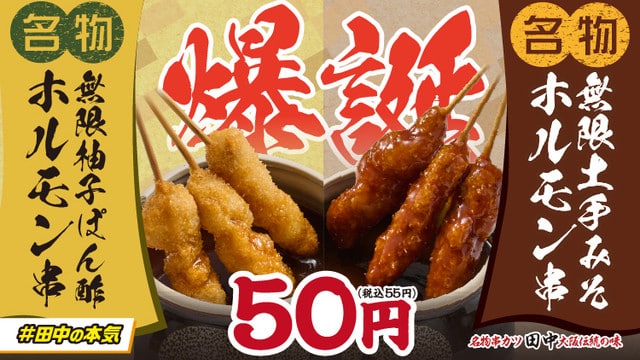
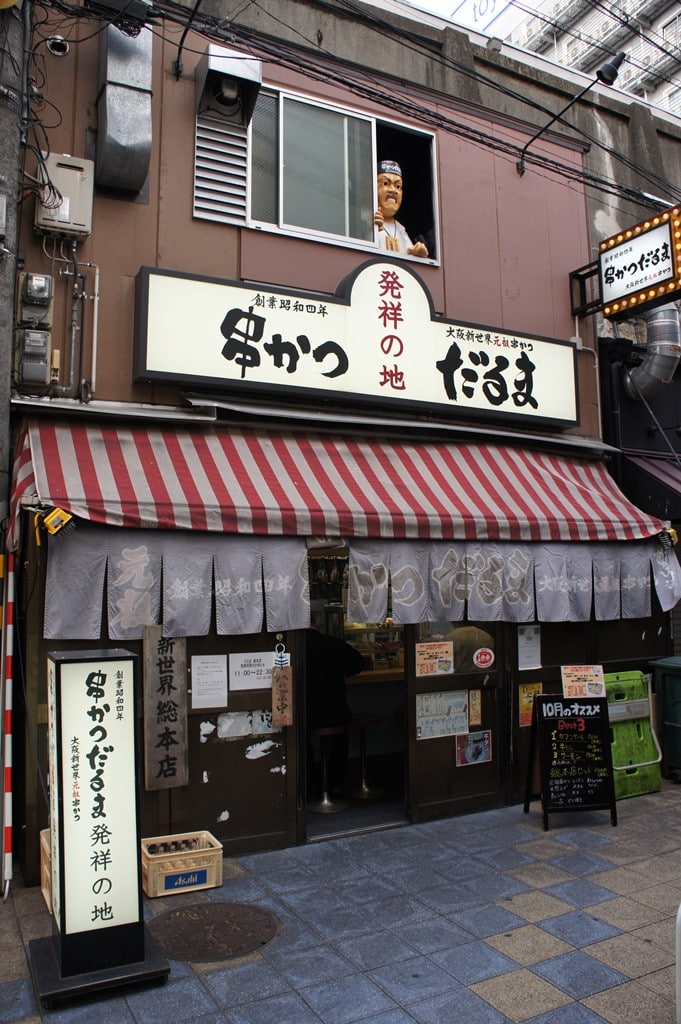
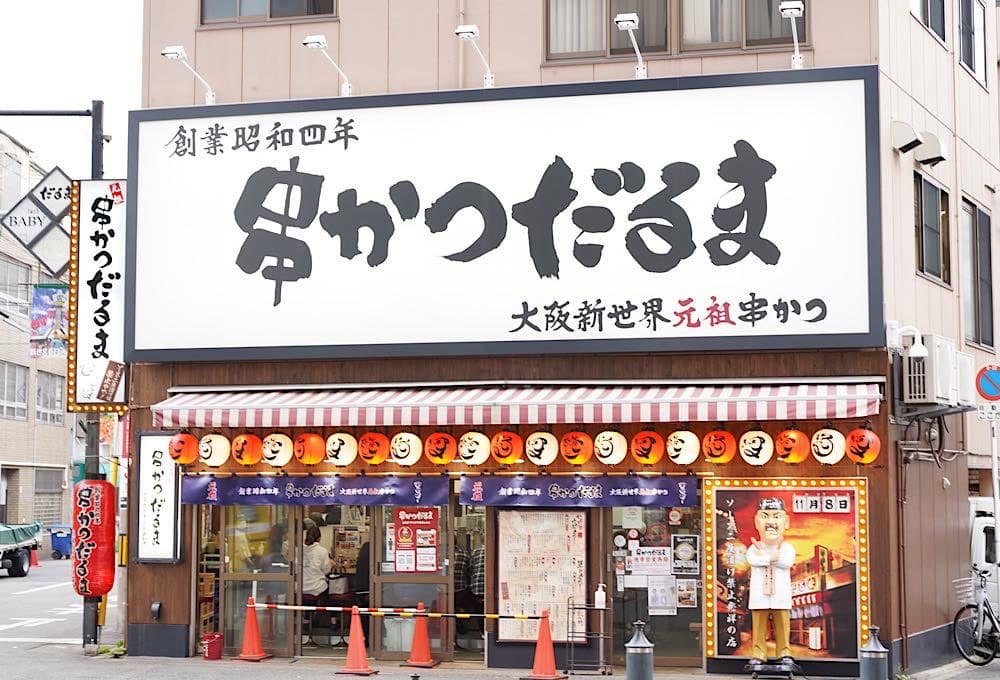
Kushikatsu Daruma: The Most Representative Founding Shop of Shinsekai
Kushikatsu Daruma is one of the founding shops of Shinsekai kushikatsu. In front of the Shinsekai main store stands a statue of the angry-faced “Daruma Ojisan,” which has become the shop’s signature symbol and attracts countless visitors for photos.
Its kushikatsu has a thin, crisp batter and a secret sauce with a lingering sweetness that is never cloying. Signature items include shrimp, beef and lotus root, at about ¥1,500-¥2,500 per person. Because of the tourist crowds, avoid the lunch and dinner peaks or line up early.
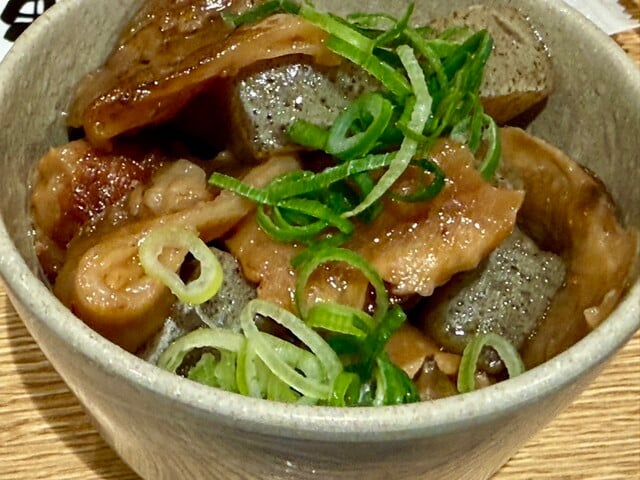
Kushikatsu Ittoku Tsutenkaku Branch: Great-Value, Crispy Thin-Batter Fried Food
Kushikatsu Ittoku’s Tsutenkaku branch is loved by visitors and locals for its great value and extra-crispy thin-batter fried food. It is about a 3-minute walk from Dobutsuen-mae and Ebisucho Stations and about 5 minutes from Shin-Imamiya Station, a very convenient location.
The shop offers various kushikatsu set platters at reasonable prices, averaging from about ¥1,200 per person, suited to travelers on a budget who want an authentic kushikatsu experience. The seating is relaxed, good for groups of friends or family meals.
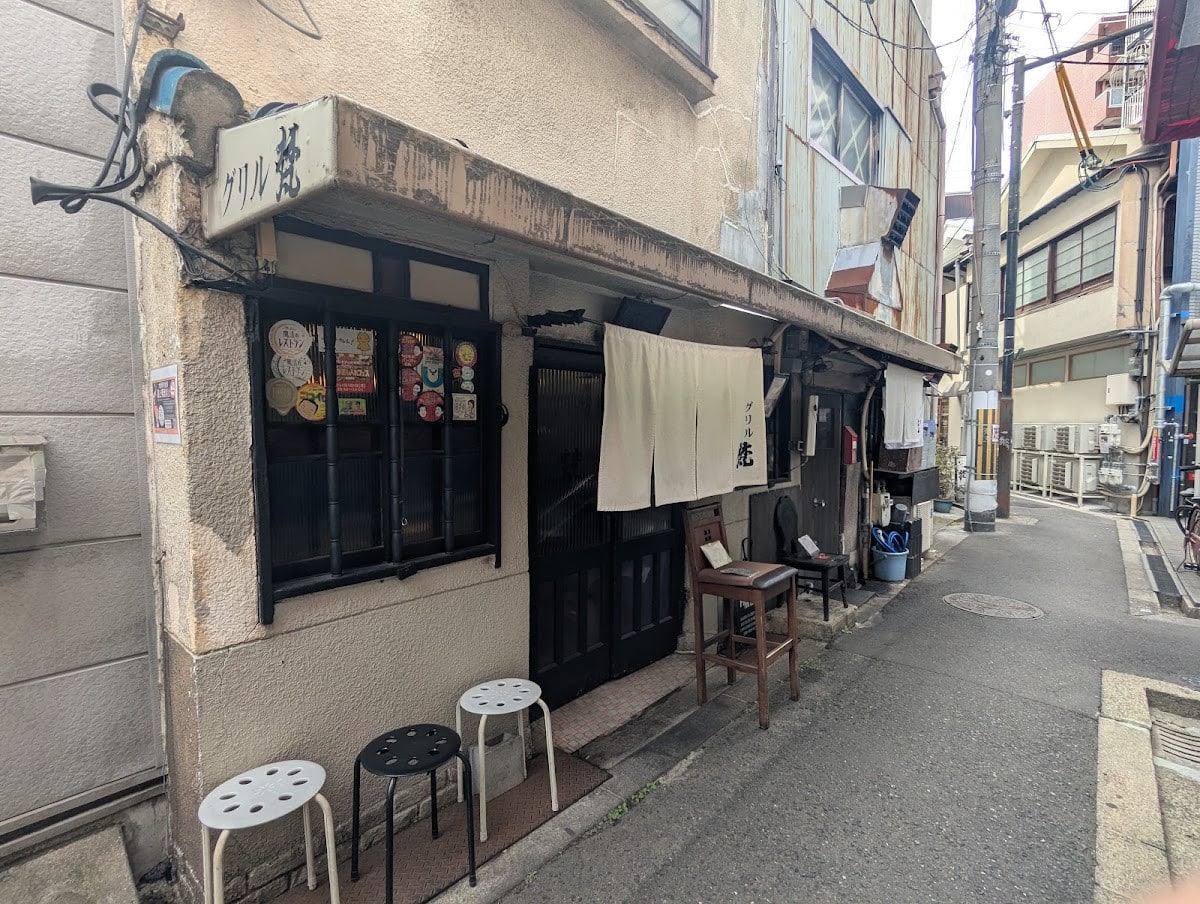
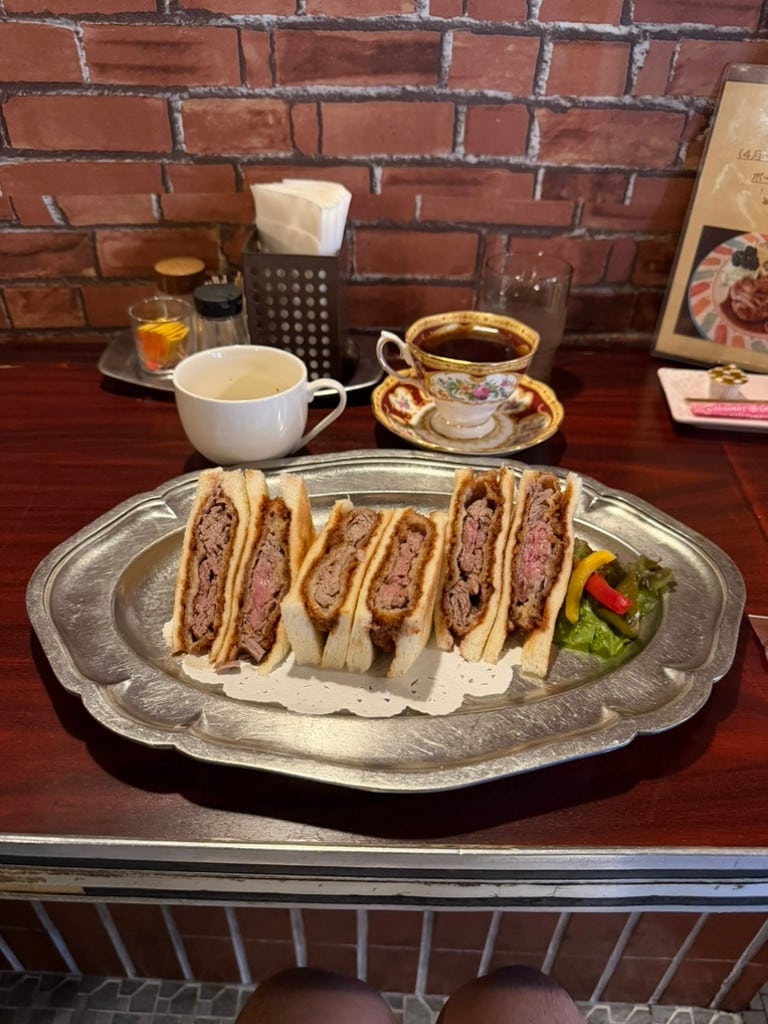
Grill Bon (グリル梵): A Steak Sandwich Institution Open for Over 60 Years
The Grill Bon main store was founded in 1961 and is a long-established Western-style restaurant that has operated in Shinsekai for more than 60 years. Its signature beef fillet cutlet sandwich (ヘレカツサンド) is known for its crisp batter and juicy meat, and its taste has stayed consistent for decades, loved by local connoisseurs and tourists alike. It is a nostalgic food that has been much discussed on social media recently.
Please check the in-store menu for prices. It is a good choice for a snack or lunch after exploring Shinsekai. The interior keeps the retro atmosphere of a Showa-era Western restaurant, echoing Shinsekai’s overall nostalgic feel, and is worth a special trip for this classic taste that spans generations.
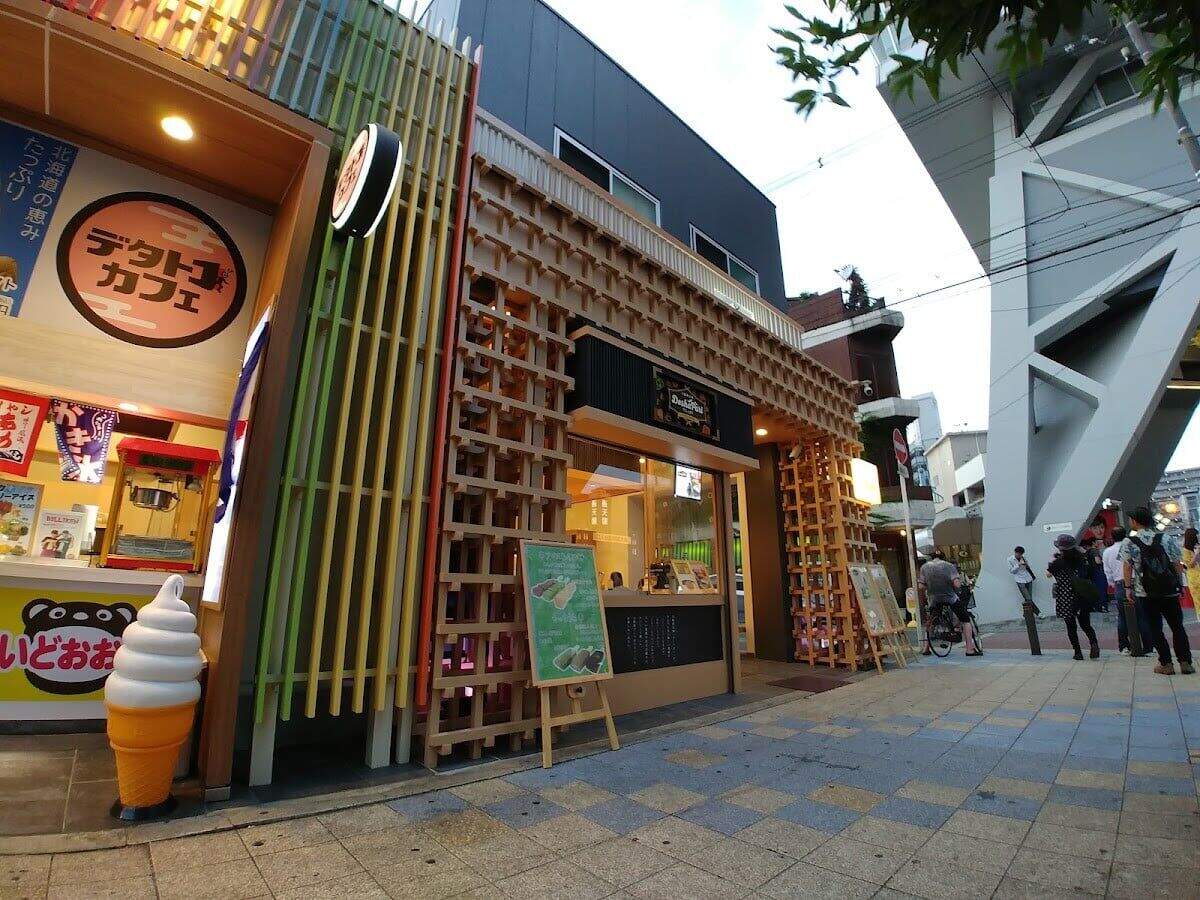
How Much Does a Visit to Shinsekai and Tsutenkaku Cost in 2026? Tickets and Guided Tours
Shinsekai and Tsutenkaku are among Osaka’s most down-to-earth attractions. Whether you want to climb the observatory to look over Osaka, rub the Billiken lucky god’s feet for luck, or feast on authentic kushikatsu with beer, you can do it all here. Below are the 2026 prices and contents for Tsutenkaku tickets, observatory set tickets and Shinsekai guided tours, to help first-time visitors set a budget, plan ahead, and avoid queuing in vain or overspending on the spot.
Tsutenkaku Observatory Standalone Ticket: Climb Osaka’s Most Iconic Landmark
Tsutenkaku (1-18-6 Ebisu-higashi, Naniwa Ward, Osaka) is the landmark of Shinsekai, about 103 meters tall, with an observatory offering 360-degree views over Osaka and, on clear days, a distant view of the Akashi Kaikyo Bridge. The regular observatory and the outdoor deck “Tenbo Paradise” are combined into a single set ticket, priced at ¥1,500 for adults and ¥800 for children. Hours are daily 9:00 to 22:00 (last entry 21:30). The official website uses timed-entry reservations, so please check for temporary changes.
The 5th floor of the tower has the Billiken lucky god statue, where you rub the soles of his feet and make a wish. The official site uses timed-entry reservations, so book an e-ticket in advance through the official site or Klook or KKday, especially on weekends and holiday periods.
Go up the tower in the evening to enjoy both the daytime view and the neon scenery after the night illumination, two views in one day.
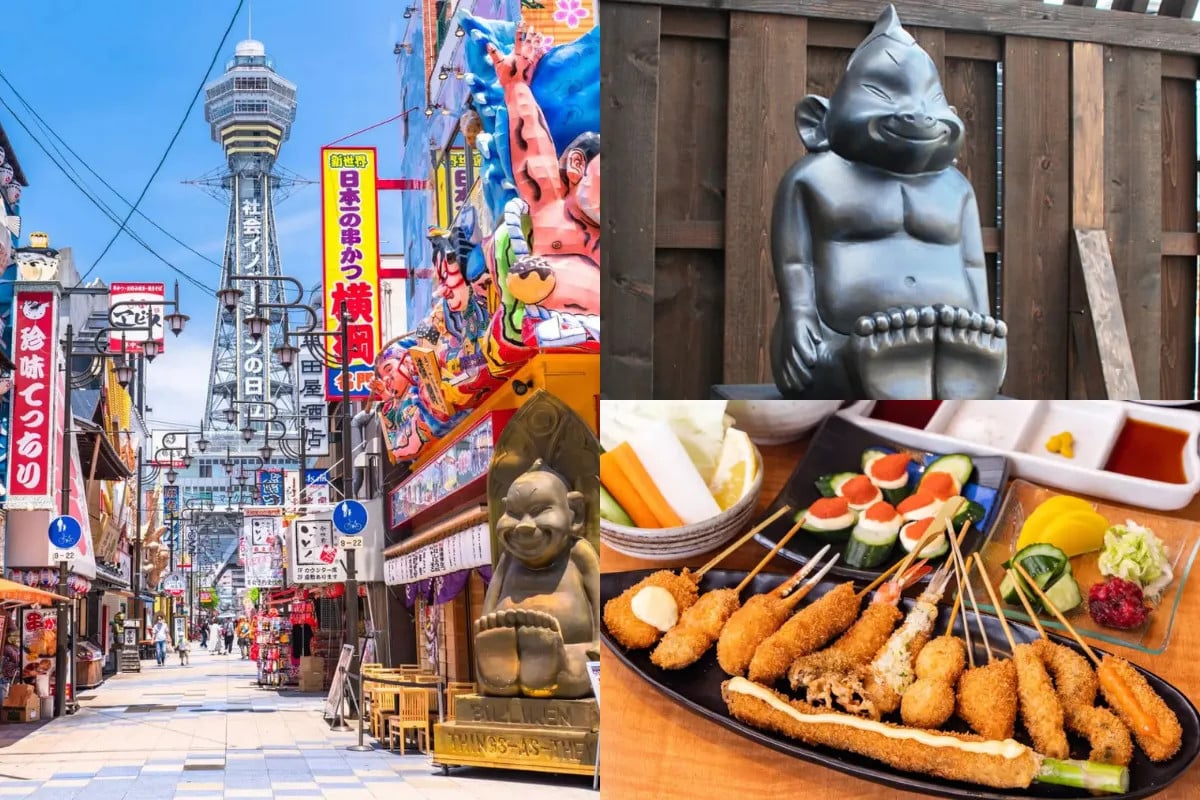
Tsutenkaku + Shinsekai Kushikatsu Experience Set: Enjoy the View, Then Feast on Authentic Food
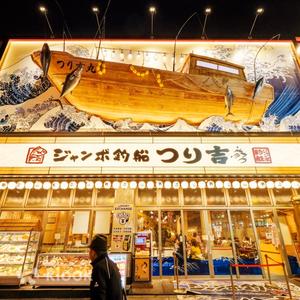
Most travel platforms offer set tickets combining Tsutenkaku observatory admission with Shinsekai kushikatsu vouchers, priced at about ¥2,200-3,200 depending on the shop and number of items. The set includes Tsutenkaku admission and 3-5 kushikatsu vouchers at famous Shinsekai shops such as “Daruma” (だるま) or “Jan Jan Yokocho” (じゃんじゃん横丁), and some plans include a drink.
The Daruma main store (2-3-9 Ebisu-higashi, Naniwa Ward) is the founding kushikatsu shop of Shinsekai, with pork, lotus root and octopus skewers recommended and the signature rule of “dip the sauce only once.” Dining with the set saves money and spares you the trouble of ordering across a language barrier, suited to independent travelers.
Shinsekai and Tsutenkaku Half-Day Walking Tour: A Local Guide for a Deeper Experience
Want to learn more about Shinsekai’s history and culture? Choose a 2-3 hour guided tour in Chinese or English, at about ¥1,500-2,500 per person (admission and food not included). Meeting points are mostly at the entrance of the Tsutenkaku Hondori shopping street or around Ebisucho subway station.
Tour content covers the history of Tsutenkaku, the origin of the Billiken god, and Showa-era nostalgic streetscapes, and introduces kushikatsu culture and dining etiquette. Some tours include tasting at a local shogi cafe or standing kushikatsu shop.
The tour suits first-time visitors, those interested in history and culture, or travelers who want to hear local stories. Experienced guides can offer in-depth information such as hidden-gem food spots.
-Klook.jpg)
Tsutenkaku Night View + Nearby Bar Hopping Tour: Experience Osaka’s City That Never Sleeps
Nightlife lovers can choose a tour combining the Tsutenkaku night observatory with a round of nearby standing bars (tachinomi), priced at about ¥3,000 to ¥4,500. It usually includes night admission to Tsutenkaku and drink vouchers for 2 to 3 izakaya or standing bars around Shinsekai.
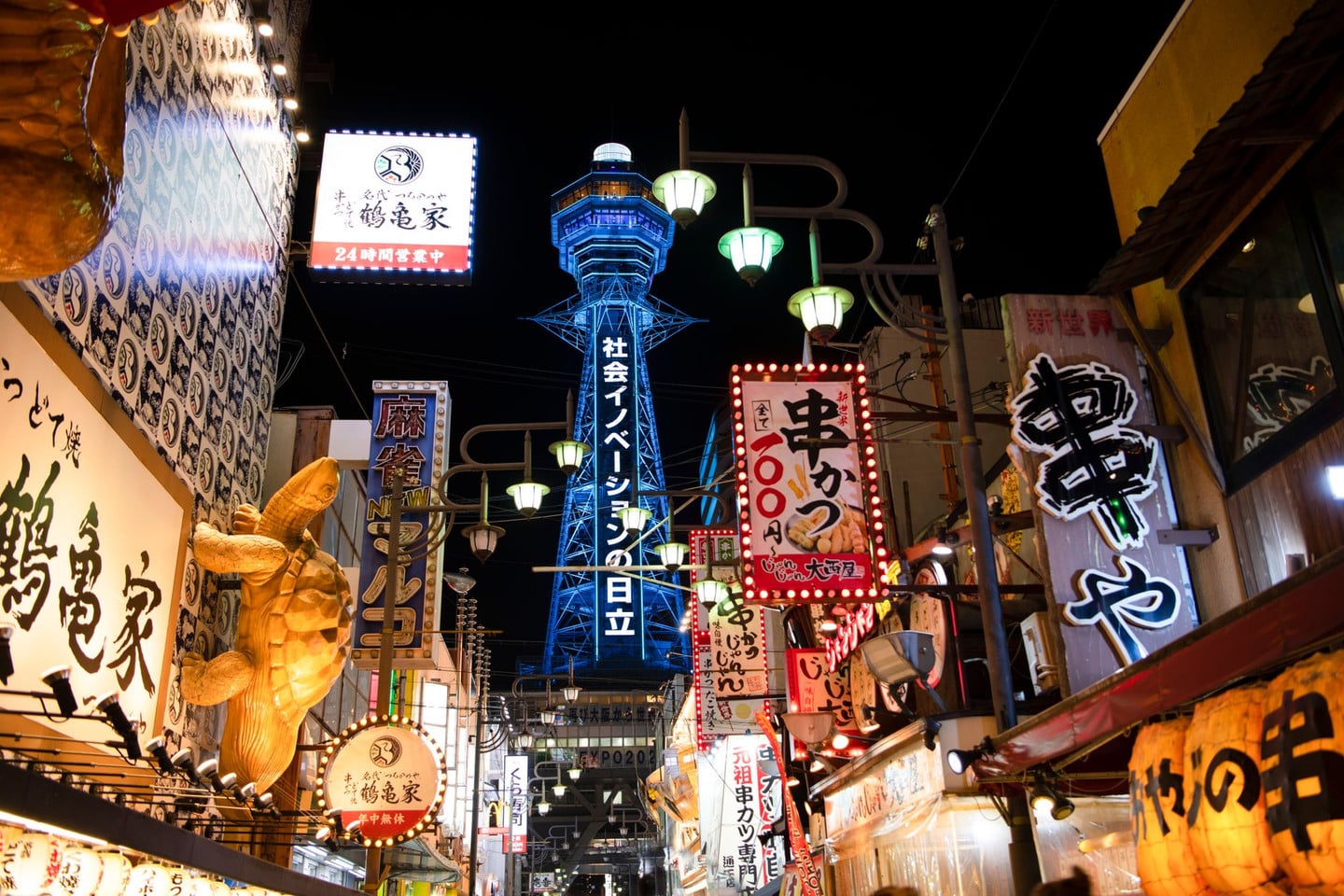
Tours usually meet and depart after 5 p.m. You first go up Tsutenkaku to see Osaka’s night view as the lights come on, then a guide leads you to authentic standing bars in the Shinsekai alleys to experience the everyday culture of local office workers having a drink after work, with kushikatsu or fried snacks as drinking food, for the most genuine Osaka working-class nightlife.
These tours usually require participants to be 20 or older (the legal drinking age in Japan). Check beforehand whether transport is included. The alleys around Shinsekai are rather complicated, and following a guide who knows the area at night prevents getting lost and makes the evening safer and more enjoyable.
Nearby Accommodation Suggestions
Shinsekai and Tsutenkaku sit between JR Shin-Imamiya Station and Dobutsuen-mae subway station, about a 10-minute walk. Staying around Shin-Imamiya, Tennoji or Namba makes it easy to get back to your hotel after the kushikatsu street and the Tsutenkaku night view, and costs are relatively modest.

FAQ
Q: How much are Tsutenkaku tickets?
Adults (15 and over) observatory set ticket (Tenbo Paradise included) about ¥1,500, children (ages 5 to 14) about ¥800. Tenbo Paradise is now bundled into the set ticket, with no separate add-on needed.
Q: What is the easiest way to get to Tsutenkaku?
Take the Sakaisuji Line subway to Ebisucho Station and walk 3 minutes, or the Midosuji Line to Dobutsuen-mae Station and walk 7 minutes.
Q: What time does Tsutenkaku open?
The observatory is open from 9 a.m. to 10 p.m. (last entry 9:30 p.m.). Tenbo Paradise has shorter hours that may change temporarily depending on weather or events. Visit around dusk to enjoy both day and night views.
Q: Can I dip twice in the sauce when eating kushikatsu?
No. Shinsekai kushikatsu shops strictly follow the “no double-dipping” rule: a bitten portion must not be dipped again, and you can scoop sauce with a cabbage leaf to add flavor.
Q: When is the best season to visit Shinsekai and Tsutenkaku?
Spring and autumn are the most comfortable, with pleasant weather. Winter night illumination has a great atmosphere. Summer is hot, so avoid going out around midday.
Q: Does Tsutenkaku’s weather forecast neon light still operate?
This traditional device ended in July 2022. The tower’s lights are now mainly used for festival illuminations and nighttime decoration.
Q: Is the Osaka Amazing Pass worthwhile for visitors to Tsutenkaku?
Very much so. The 1-day pass, at about ¥3,500, gives free entry to Tsutenkaku’s regular observatory and unlimited rides on the subway and buses.