
Ginzan Onsen Accommodation Overview: Only 13 Ryokan, and That Is Why Rooms Are Hard to Book
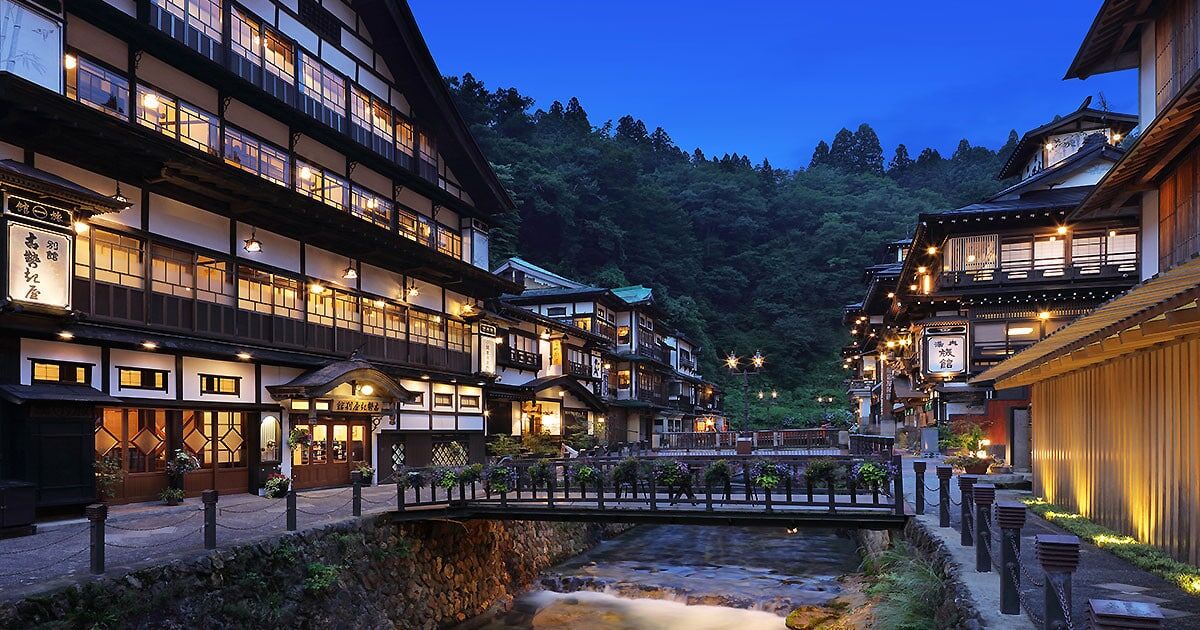
Finding a place to stay in Ginzan Onsen is, at heart, a supply problem. The Ginzan Onsen Tourist Association lists only 13 ryokan along the entire hot spring street, and all of them are Japanese-style inns. Search for a “Ginzan Onsen hotel” and you will not find a large chain. More than half have 10 rooms or fewer, and the two smallest have just 4 rooms each. On the other side of the equation is a gas-lamp night view that people from all over the world want to see. With supply and demand this lopsided, it is no surprise that rooms are snapped up as soon as reservations open in peak season.
How do you book accommodation in Ginzan Onsen? The “Accommodation Reservations” and “Vacancy Status” pages on the official Ginzan Onsen website lead to the booking portal of the Ginzan Onsen inn association, where you can check each ryokan’s plans and vacancies and then go to the individual ryokan’s reservation page to book.
Rooms in Ginzan Onsen are hard to get mainly because there are so few of them, and each ryokan opens sales at a different time. The Ginzanso group opens reservations five months ahead on the 1st of each month, Ryokan Matsumoto opens about three months ahead, and Showakan releases dates in stages as announced on its website.
If you plan to have someone book for you, check the rules first: Notoya states that it accepts reservations only from the guest in person through its official website, and does not take bookings by phone, email or through an agent.
For Ginzan Onsen accommodation recommendations, start with your needs. If you worry about not getting a room or are traveling with older relatives, choose Ginzanso, which stands outside the street and has 40 rooms. If you want an old house on the street, choose one of the wooden ryokan on the hot spring street. If you want to see architectural design, choose Fujiya.
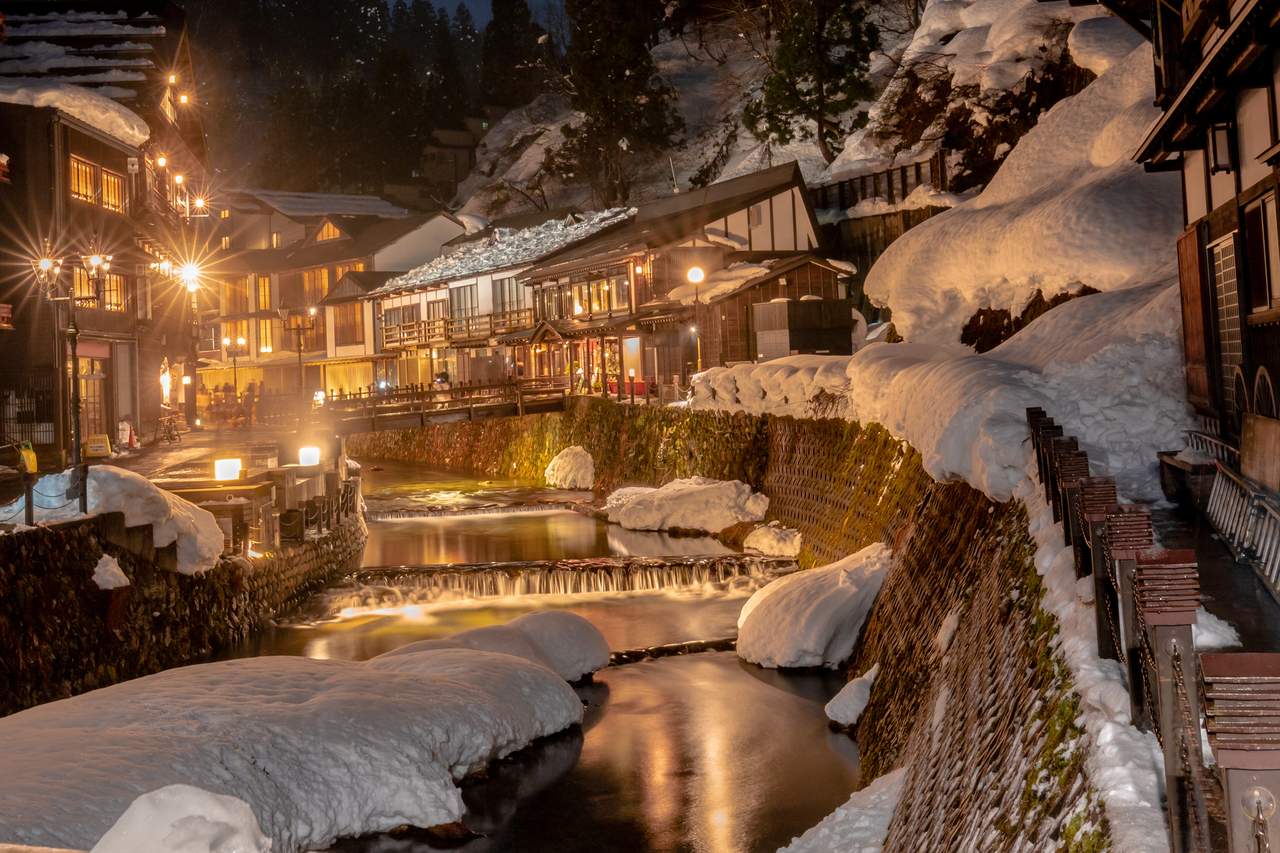
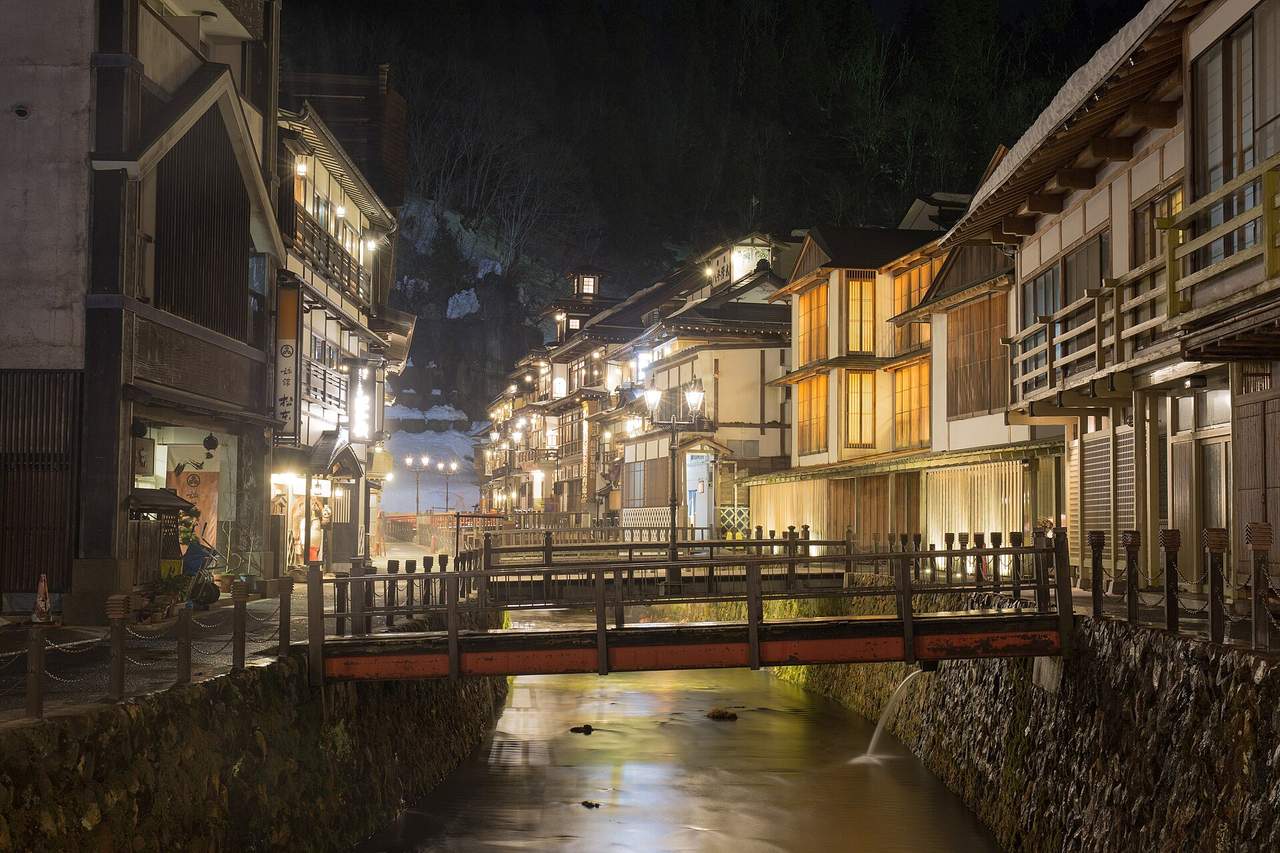
But what one night buys is also very concrete. According to the 2026–2027 winter access guide published by the Ginzan Onsen inn association, traffic restrictions are scheduled from December 2026 to early March 2027 (to be updated once the final schedule is confirmed). Day-trippers must transfer to a shuttle bus at Taisho Roman-kan, with buses to the hot spring street running from 9:00 to 18:00, every 20 minutes. Staying guests can use the parking lot designated by their ryokan, and should confirm pick-up arrangements with the ryokan. After the last bus carries the day-trippers away, the whole street suddenly goes quiet, and only overnight guests get to see it. That is what accommodation in Ginzan Onsen is really selling.
Three key tips for choosing a ryokan: First, decide whether you want to stay “on the street” or “off the street.” The wooden old houses on the street have an atmosphere nothing else can match, but they generally have no elevators, steep stairs, and some room types lack a private bathroom. Ginzanso and Takimikan, off the street, are larger, newer and have large communal baths. Second, with so few rooms, every cancellation is a chance, so do not give up if you cannot book; keep checking back. Third, if you truly cannot get a room, look in the Obanazawa city area down the mountain and visit the hot spring street during the day.
| Ryokan | Rooms | Location | Best for |
|---|---|---|---|
| Senkyo no Yado Ginzanso | 40 rooms | Just outside the street entrance | Large communal bath; traveling with older relatives or children |
| Fujiya | 8 rooms | On the hot spring street | Travelers who like design |
| Notoya Ryokan | 15 rooms | On the hot spring street | Staying in a landmark building |
| Taki to Soba no Yado Takimikan | 18 rooms | On a hilltop, off the street | Open-air bath and scenic views |
| Aji to Magokoro no Yado Showakan | 13 rooms | On the hot spring street | Those who care about dinner |
| Kosegiya Annex | 15 rooms | On the hot spring street | First stay on the street |
| Kosegiya Main Building | 14 rooms | On the hot spring street | Staying in the old main building |
| Kozankaku | 8 rooms | On the hot spring street | Seeing the kote-e plaster relief facade up close |
| Ryokan Matsumoto | 10 rooms | On the hot spring street | Small and quiet |
| Ryokan Nagasawa Heihachi | 7 rooms | On the hot spring street | Staying in a wooden old house |
| Hatago Itoya | 4 rooms | On the hot spring street | Two travelers who want to be well looked after |
| Oyado Yanadaya | 4 rooms | On the hot spring street | Very few rooms, peace and quiet |
| Katoya Ryokan | — | Central Obanazawa | When the hot spring street is full |
| Kuranoba | 6 rooms | On the hot spring street | A small inn of a new style |
| Hanagasa Kogenso | — | Tsuruko, Obanazawa | Drivers who want a highland stay |
| Business Hotel Omotaka | — | Central Obanazawa | Just a place to sleep, tight budget |
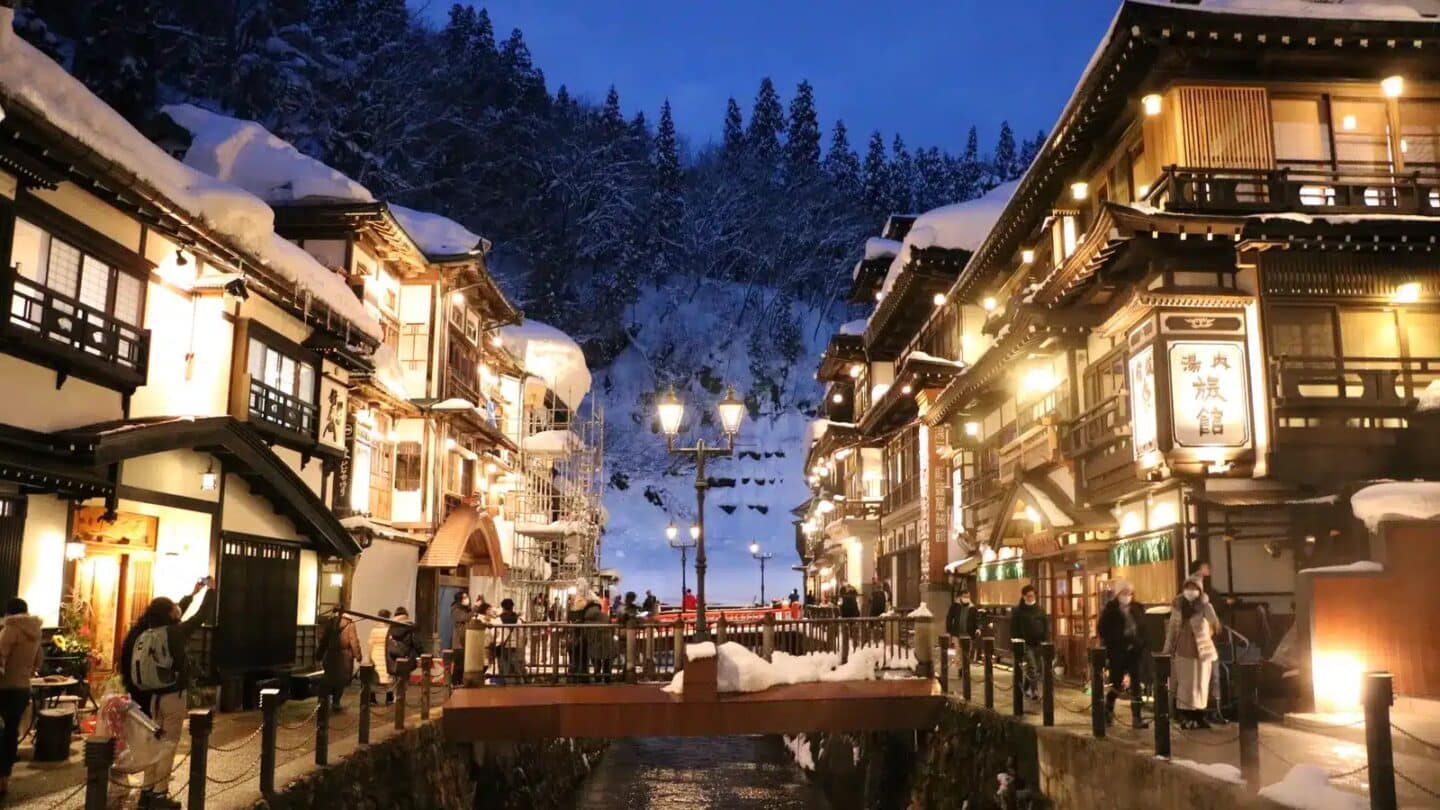
Standout and Large Ryokan in Ginzan Onsen: 4 Picks for Scale, Design and Landmark Status
These four are the best known and the most often requested, and each has a completely different appeal.
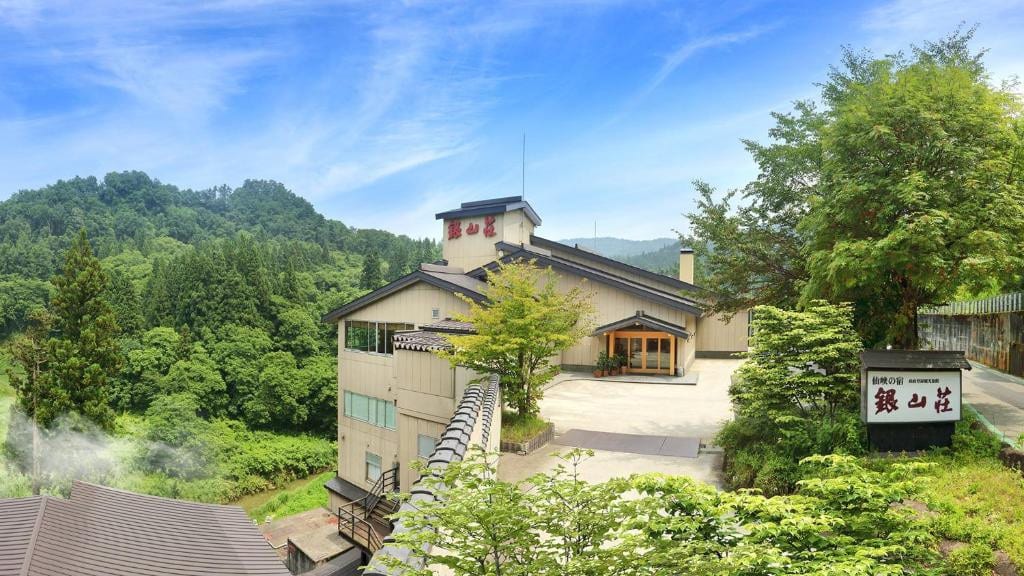
Where to Stay in Ginzan Onsen: Senkyo no Yado Ginzanso (仙峡の宿 銀山荘)
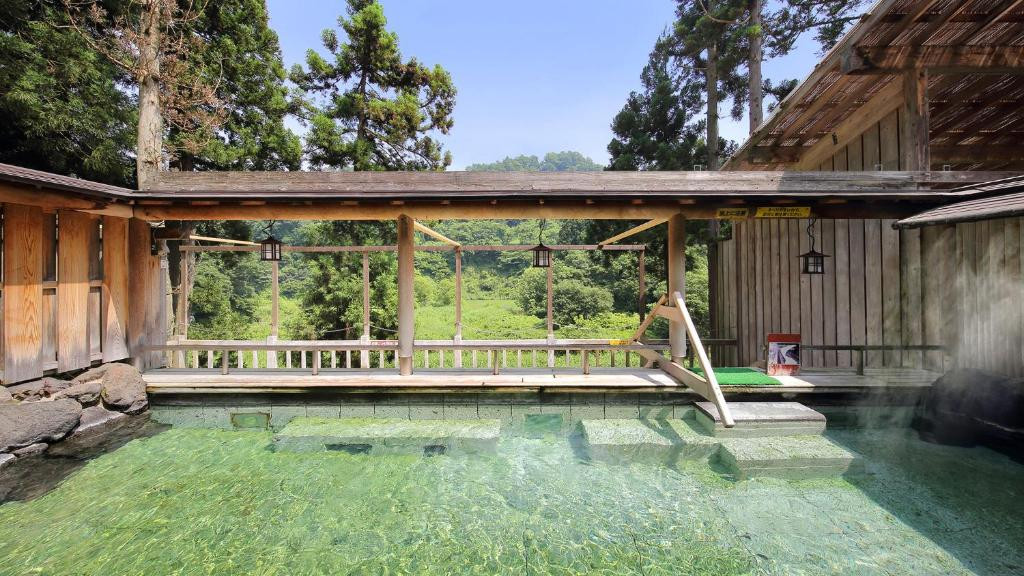
The largest ryokan in the hot spring area, with 40 rooms and space for about 200 guests. It sits at 85 Ginzan Shinbata, just outside the entrance to the hot spring street, rather than inside the cluster of wooden buildings. That difference is key: it has room for a large communal bath and open-air baths, and its facilities are far more modern than those of the old houses.
Because it has so many rooms, it is also the easiest one to book, and the most practical choice for those traveling with older relatives, children or anyone with limited mobility: no steep stairs to climb and no shared bathrooms to worry about. The trade-off is that it takes a few minutes (along a slope) to walk to the gas-lamp street, so you lose the feeling of stepping out the door straight into the night view. The ryokan also runs a free shuttle from JR Oishida Station (departing daily at 11:10, 13:40 and 15:45; advance reservation required).

- Rates: The official website does not publish fixed list prices. Plans that include dinner and breakfast vary by date, room type and number of guests, so check the official site or a booking platform (usually priced per person, dinner and breakfast included)
- Access: Just outside the entrance to the hot spring street, a few minutes’ walk to the gas-lamp street; during the winter traffic restrictions, staying guests can use the shuttle arranged through the ryokan
- Highlights: 40 rooms, large communal bath and open-air baths, space for about 200 guests, relatively accessible
- 👥 Best for: Travelers with older relatives or children, those who want a large communal bath, and anyone worried about not getting a room
Where to Stay in Ginzan Onsen: Fujiya (藤屋)
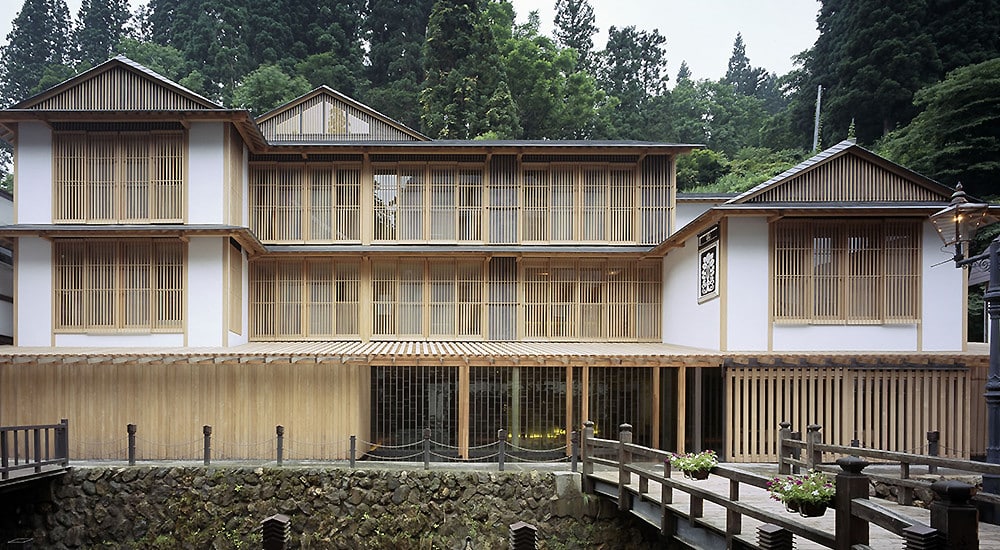
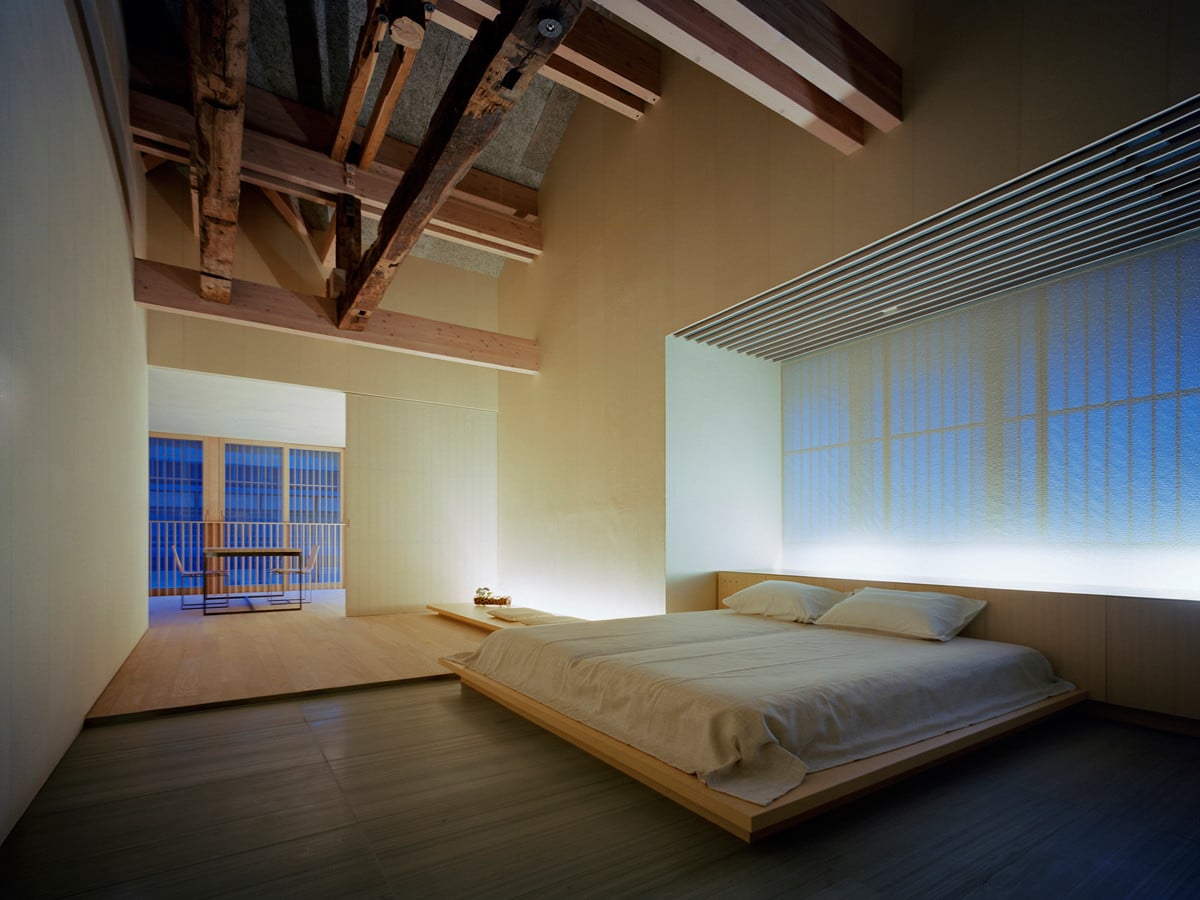
The most talked-about ryokan on the hot spring street. It keeps the shell of a Taisho-era wooden building, while the interior was redesigned by architect Kengo Kuma: the concrete sections added later were removed, usable century-old timber was reused, and an atrium void was inserted in the middle, surrounded by “sumushiko” bamboo screens woven from 4mm thin bamboo, with nearly transparent colored glass set into the openings. It is the least traditional-feeling ryokan on the whole street.
The whole building has only 8 guest rooms, each with a different design, plus several kashikiri (privately reserved) baths. With so few rooms and so much buzz, it is one of the hardest places on the street to book. Those who love architecture and design will find it well worth it, while those who want a traditional tatami atmosphere may find it falls short of expectations.
- Rates: The official website does not publish fixed list prices. Plans that include dinner and breakfast vary by date, room type and number of guests, so check the official site or a booking platform (usually priced per person, dinner and breakfast included)
- Access: On the hot spring street (Ginzan Shinbata 443); in winter, staying guests can use the parking lot designated by the ryokan. Whether a shuttle is offered depends on each ryokan, so please confirm with the ryokan after booking
- Highlights: Redesign by Kengo Kuma, only 8 guest rooms, 5 fully private baths (no large communal bath), thin bamboo screens and colored glass in the atrium
- 👥 Best for: Travelers who like architecture and design, and couples or pairs
Where to Stay in Ginzan Onsen: Notoya Ryokan (能登屋旅館)
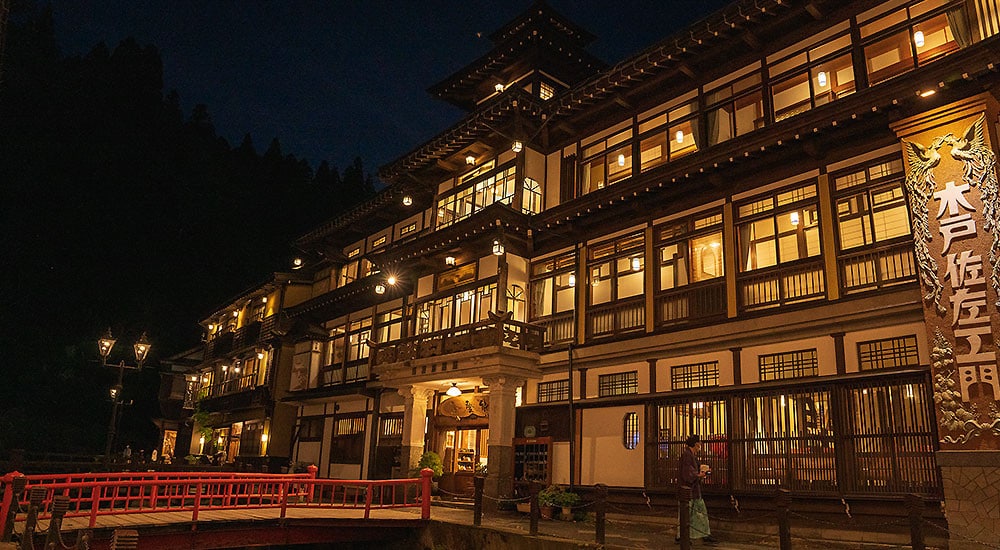
It appears in almost every iconic photo of Ginzan Onsen. The main building is a three-story wooden structure built in Taisho 14 (1925), topped with a small lookout tower. The official website describes it as a nationally registered cultural property, and the kote-e plaster reliefs on the exterior wall are the work of plasterer Goto Ichizo from Showa 7 (1932).
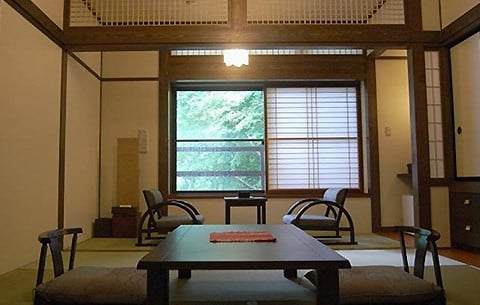
It has 15 guest rooms. The scenic open-air bath (privately reserved) overlooks Shirogane Falls, requires climbing a long flight of stairs, and is closed in winter (roughly December to April), so confirm whether it is open before booking. The biggest point of staying here is “living in a landmark”: in the morning you open the window and the street itself is right there. Be prepared for the sound insulation and stairs of an old building, which cannot be compared with a modern hotel.
- Rates: The official website does not publish fixed list prices. Plans that include dinner and breakfast vary by date, room type and number of guests, so check the official site or a booking platform (usually priced per person, dinner and breakfast included)
- Access: On the hot spring street (Ginzan Shinbata 446); in winter, staying guests can use the parking lot designated by the ryokan. Whether a shuttle is offered depends on each ryokan, so please confirm with the ryokan after booking
- Highlights: Three-story wooden building and lookout tower from Taisho 14 (1925), nationally registered tangible cultural property, kote-e plaster relief walls, scenic open-air bath (closed in winter), 15 guest rooms
- 👥 Best for: Travelers who want to stay in a Ginzan Onsen landmark and enjoy the atmosphere of an old building
Where to Stay in Ginzan Onsen: Taki to Soba no Yado Takimikan (滝と蕎麦の宿 瀧見館)
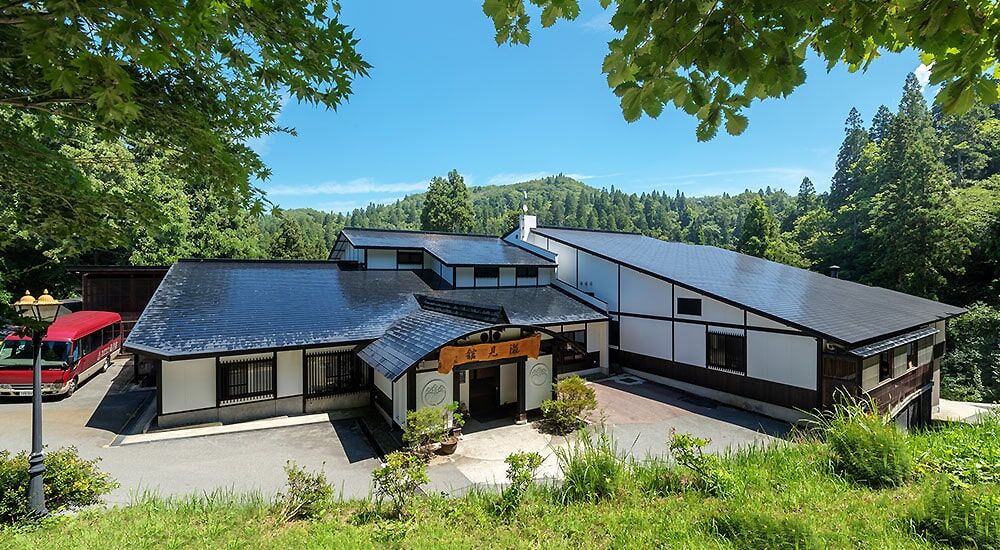
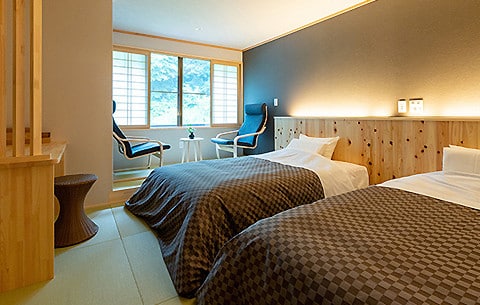
A ryokan on the hilltop above the hot spring street, with 18 guest rooms. It is not part of the wooden cluster, and what you get in return is the view: the open-air bath looks down on Shirogane Falls, and as you soak you look out over an expanse of forested mountains, something the old houses on the street cannot offer. The ryokan also runs a shuttle from Oishida Station, and after dinner there is one stroll shuttle to the hot spring street (departing 20:15, returning 20:50, about 30 minutes of free walking).
The “soba” (buckwheat) in the name is not decoration: the ryokan is also known for hand-made soba noodles, served at dinner and at lunchtime. Because it sits on a hilltop, getting to and from the hot spring street means walking a slope or taking the ryokan shuttle, which becomes more noticeable when snow piles up, so confirm the shuttle arrangements when booking. For those who want both the atmosphere of the hot spring street and open views, this is the best-balanced choice.
- Rates: The official website does not publish fixed list prices. Plans that include dinner and breakfast vary by date, room type and number of guests, so check the official site or a booking platform (usually priced per person, dinner and breakfast included)
- Access: On the hilltop above the hot spring street (Ginzan Shinbata 522); getting to and from the street means walking a slope or taking the ryokan shuttle
- Highlights: Open-air bath overlooking Shirogane Falls, hand-made soba noodles, 18 guest rooms, hilltop views
- 👥 Best for: Travelers who want an open-air bath and open views, and who like soba noodles
Long-Established Ryokan in Ginzan Onsen: 5 Picks Within the Wooden Buildings of the Hot Spring Street
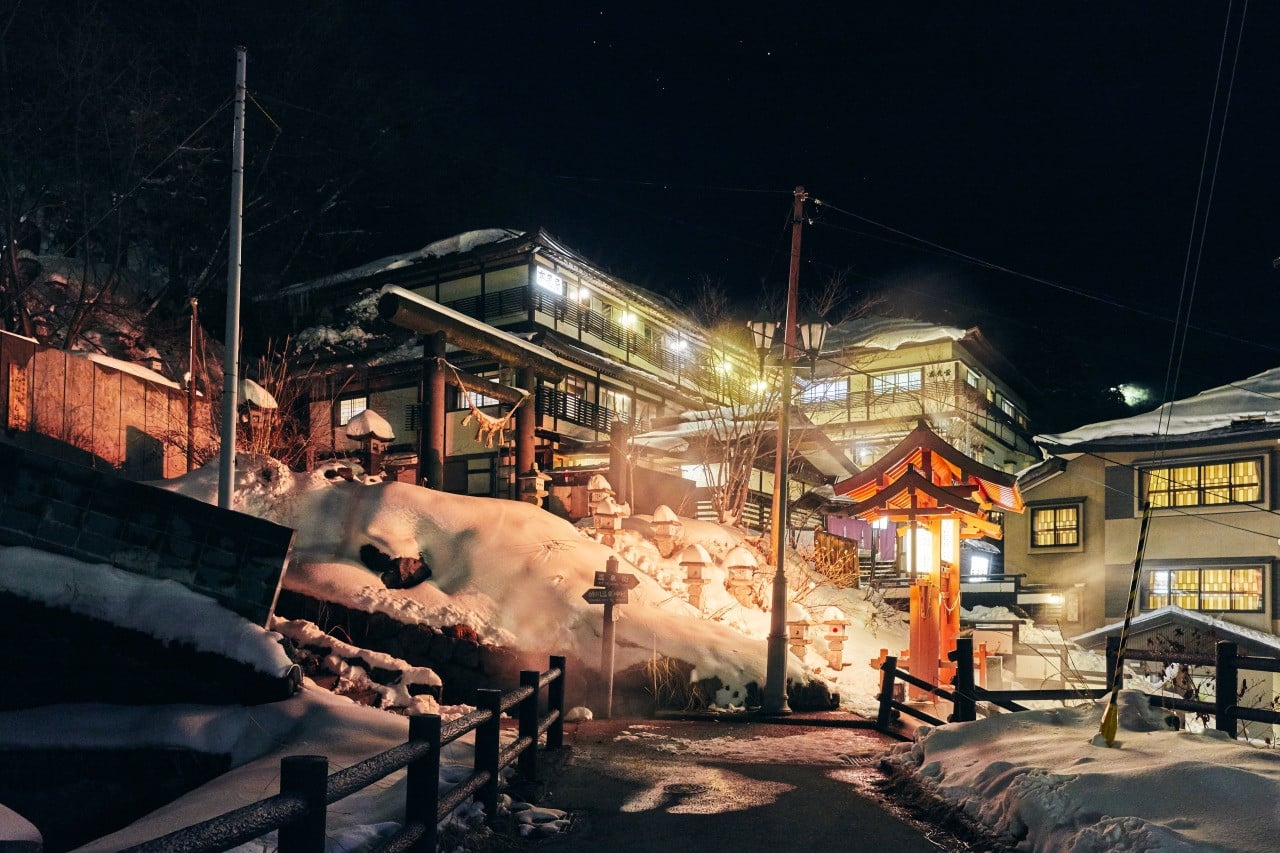
All five sit within the wooden buildings of the hot spring street, with the gas-lamp street right outside the door, and that atmosphere is their biggest shared selling point.
Where to Stay in Ginzan Onsen: Aji to Magokoro no Yado Showakan (味とまごころの宿 昭和館)
A long-established ryokan on the hot spring street with 13 guest rooms. Its formal name puts the emphasis up front: “Aji to Magokoro” means “taste and sincerity,” which signals that it puts the cooking first. For anyone who believes the point of a stay with dinner and breakfast is the dinner, this is a clear choice.
Yamagata is a producer of rice and buckwheat, and wild mountain vegetables from the inland area and Obanazawa beef are common ingredients; the actual menu varies by season and plan. There are not many rooms, so book early. The inn has an elevator up to the sky-view bath on the top floor. Sound insulation is the same as at the other wooden ryokan on the street, so it is worth asking about it when choosing a room type.
- Rates: The official website does not publish fixed list prices. Plans that include dinner and breakfast vary by date, room type and number of guests, so check the official site or a booking platform (usually priced per person, dinner and breakfast included)
- Access: On the hot spring street (Ginzan Shinbata 420); in winter, staying guests can use the parking lot designated by the ryokan. Whether a shuttle is offered depends on each ryokan, so please confirm with the ryokan after booking
- Highlights: Cuisine-focused, 13 guest rooms, wooden old house, right in the middle of the hot spring street
- 👥 Best for: Travelers who care about dinner and want to stay on the street
Where to Stay in Ginzan Onsen: Kosegiya Annex (古勢起屋別館)
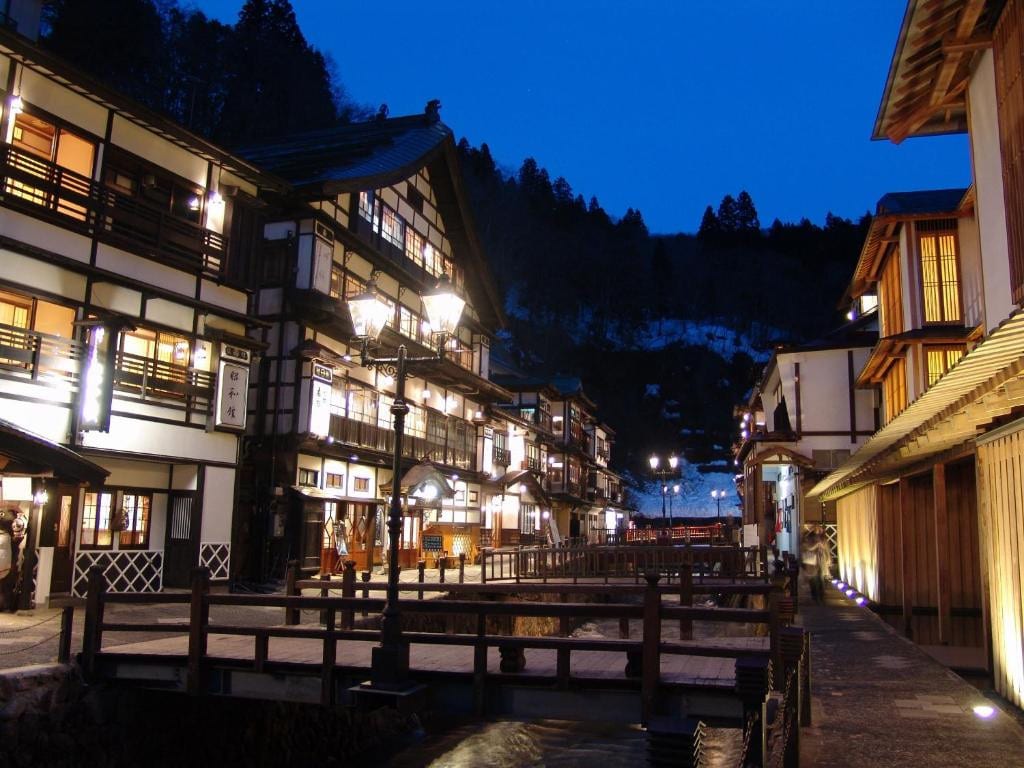
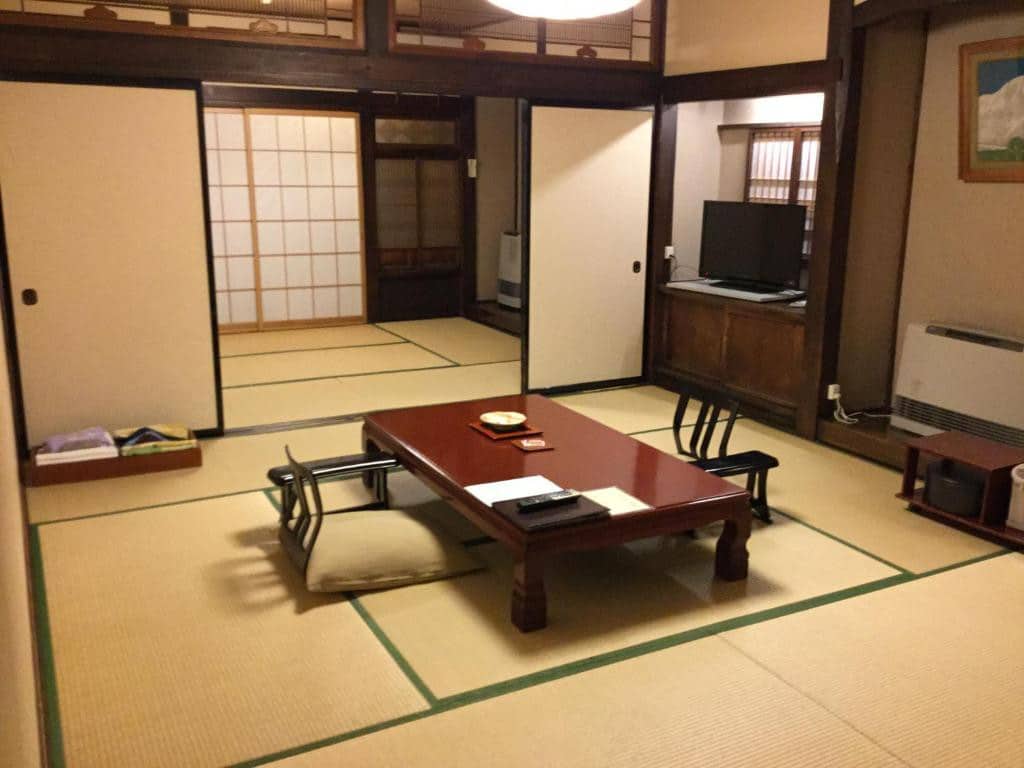
A mid-sized wooden ryokan on the hot spring street with 15 guest rooms (per the official Ginzan Onsen website and the operating company), located in the middle of the street and very close to the main photo bridge. It and its sister ryokan, Kosegiya Main Building, are two separate inns, so make sure you know which one you are booking.
For first-timers on the hot spring street, this size is the more comfortable choice: you are not under the host’s eye at every move as in a 4-room inn, and it does not lack the old-house atmosphere the way a large ryokan does. Most rooms are Japanese-style, and the bathroom and bath arrangements vary by room type, so confirm before booking.
- Rates: The official website does not publish fixed list prices. Plans that include dinner and breakfast vary by date, room type and number of guests, so check the official site or a booking platform (usually priced per person, dinner and breakfast included)
- Access: In the middle of the hot spring street (Ginzan Shinbata 417); in winter, staying guests can use the parking lot designated by the ryokan. Whether a shuttle is offered depends on each ryokan, so please confirm with the ryokan after booking
- Highlights: 15 guest rooms, wooden old house, close to the main photo spot on the hot spring street
- 👥 Best for: First-time guests on the street who want both atmosphere and comfort
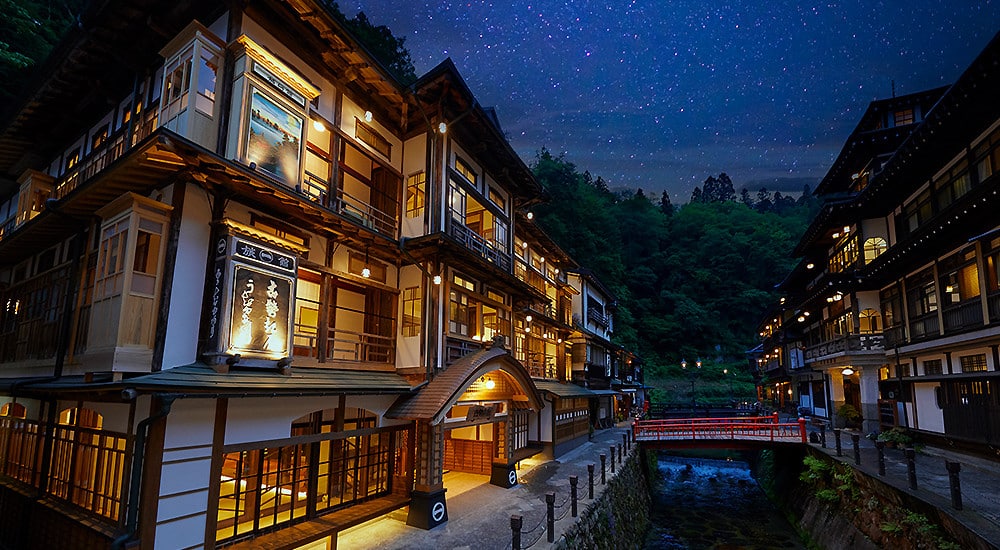
Where to Stay in Ginzan Onsen: Kosegiya Main Building (本館古勢起屋)
Run by the same operator as Kosegiya Annex but registered separately, with 14 guest rooms and space for about 28 guests. On average that means fewer guests per room than the annex, with smaller, quieter room types.
It is a typical Taisho-era wooden ryokan of the hot spring street, with steep stairs and narrow corridors, but that is exactly why many people come to stay: the building itself is part of the experience. The most common booking mistake is mixing up the main building and the annex. Their room types, plans and prices all differ, so be sure to check the full name before booking.
- Rates: The official website does not publish fixed list prices. Plans that include dinner and breakfast vary by date, room type and number of guests, so check the official site or a booking platform (usually priced per person, dinner and breakfast included)
- Access: On the hot spring street; in winter, staying guests can use the parking lot designated by the ryokan. Whether a shuttle is offered depends on each ryokan, so please confirm with the ryokan after booking
- Highlights: 14 guest rooms, space for about 28 guests, Taisho-era wooden building, quieter room types
- 👥 Best for: Travelers who want to stay in the old main building and are traveling in a party of two or fewer
Kosegiya Main Building vs. Annex: Same Company, Two Completely Different Ways to Stay
The difference between the Kosegiya main building and annex in one sentence: the annex is a traditional stay with dinner and breakfast, while the main building is all-inclusive with a drink bar. Both belong to Ginzanso Co., Ltd., and you can decide between them using the points below:
- Rooms and location: The annex has 15 rooms (Ginzan Shinbata 417) and the main building has 14 rooms (Ginzan Shinbata 412); both are on the hot spring street.
- Meals: The annex is a traditional stay with dinner and breakfast, with dinner a Japanese-style set meal using seasonal Yamagata ingredients. The main building is “all-inclusive”: drinks at the lobby drink bar (including alcohol) are free to help yourself to, dinner is a Japanese-Western fusion course paired with wine at Nogawatei, the restaurant reserved for main-building guests (17:30-20:30, last order 20:00), and during your stay, up to the lunch hour on checkout day, you can also freely use Yukemuri Shokudo Shirogane on the hot spring street (some menu items cost extra).
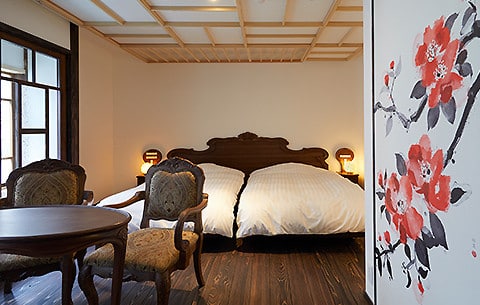
- Room types: At the annex, some rooms on the top (5th) floor were renovated in winter 2016 into “Roman guest rooms,” and the river-side rooms face the hot spring street. The main building keeps river-side Japanese-style rooms with traditional craftsmanship and also has “Taisho Modern guest rooms” with two semi-double beds; all room types listed on the official website come with a washlet toilet.
- Baths: The annex has two small indoor baths, “Chikayu” and “Kintaro-yu,” used by men and women in rotating time slots. The main building has two indoor baths: the black inkstone “Suzuri-buro” and the white “Taisho-buro,” which recreates the old style, with men and women switching at 8:00 and 20:00 every day. The main building’s official website notes that it has no open-air bath, and guests can use the open-air bath at its sister ryokan Ginzanso (which may be suspended depending on the ryokan’s circumstances).
- Accessibility: The main building’s official website warns that the entrance to Nogawatei has about 20 steps and no ramp, so wheelchairs cannot enter.
In short: if you want a classic wooden ryokan stay with dinner and breakfast and a clear budget, choose the annex; if you want a course dinner, drinks without extra charges and a room with beds, choose the main building. The two ryokan’s official booking systems, plans and prices are separate, so be sure to check the full ryokan name before booking.
Where to Stay in Ginzan Onsen: Kozankaku (古山閣)
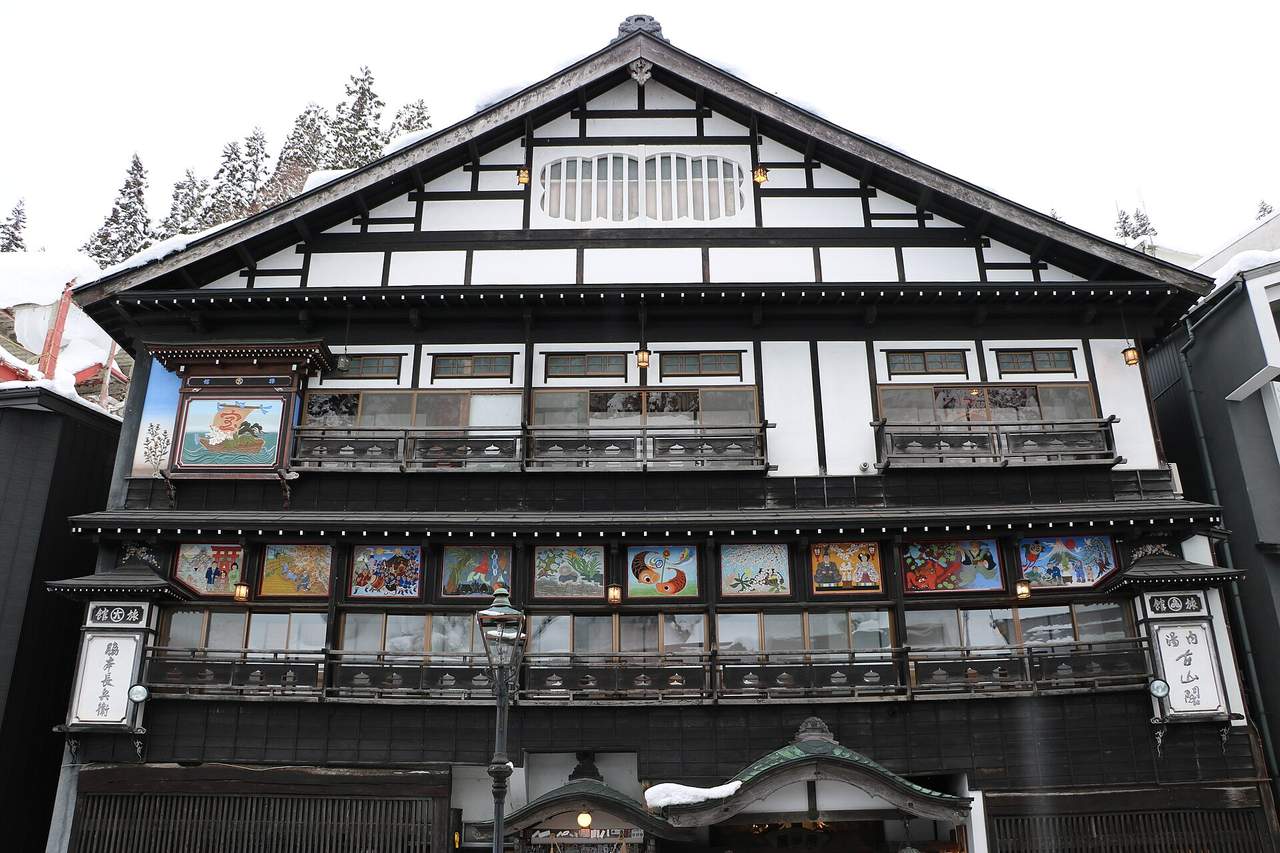
A ryokan on the hot spring street famous for its exterior wall, listed on its website as having 9 rooms in total (the tourist association’s list says 8). Its facade keeps a set of kote-e, three-dimensional reliefs sculpted in plaster, and is one of the walls on the street most worth stopping to look at closely; accounts of the motifs differ and the ryokan has not officially explained them.
With few rooms and a small scale, it is quiet to stay in, and for the same reason fills up more easily. The added value of staying here is being able to look at that wall up close, again and again, in different light: in daytime you see the detail, and at night you see the shadows the gas lamps cast on it, two completely different views. The old-house conditions are the same as at the other ryokan on the street.
- Rates: The official website does not publish fixed list prices. Plans that include dinner and breakfast vary by date, room type and number of guests, so check the official site or a booking platform (usually priced per person, dinner and breakfast included)
- Access: On the hot spring street (Ginzan Shinbata 423); in winter, staying guests can use the parking lot designated by the ryokan. Whether a shuttle is offered depends on each ryokan, so please confirm with the ryokan after booking
- Highlights: Kote-e plaster relief facade, 9 guest rooms (per the official website; the tourist association’s list says 8), wooden old house, space for about 50 guests
- 👥 Best for: Travelers who like architectural details and want to stay on the street
Where to Stay in Ginzan Onsen: Ryokan Matsumoto (旅館 松本)
A wooden ryokan on the hot spring street with 10 guest rooms, neither large nor small, with space for about 30 guests. It has no especially strong theme; what it sells is the most standard Ginzan Onsen stay: a wooden old house, Japanese-style rooms, dinner and breakfast, and the gas-lamp street right outside the door.
For those who are not after a specific design or culinary theme and just want to stay comfortably on the street and enjoy the night view, this “nothing in particular emphasized” quality is actually an advantage, and it is usually a little easier to book. The ryokan says an elevator is available for getting around the building, and room types range from rooms for 2 guests to two-room suites for 8; if you have special needs (for example, a private bathroom), confirm directly before booking.
- Rates: The official website does not publish fixed list prices. Plans that include dinner and breakfast vary by date, room type and number of guests, so check the official site or a booking platform (usually priced per person, dinner and breakfast included)
- Access: On the hot spring street; in winter, staying guests can use the parking lot designated by the ryokan. Whether a shuttle is offered depends on each ryokan, so please confirm with the ryokan after booking
- Highlights: 10 guest rooms, space for about 30 guests, wooden old house, standard stay with dinner and breakfast
- 👥 Best for: Travelers who just want a comfortable stay on the hot spring street and are not picky about themes
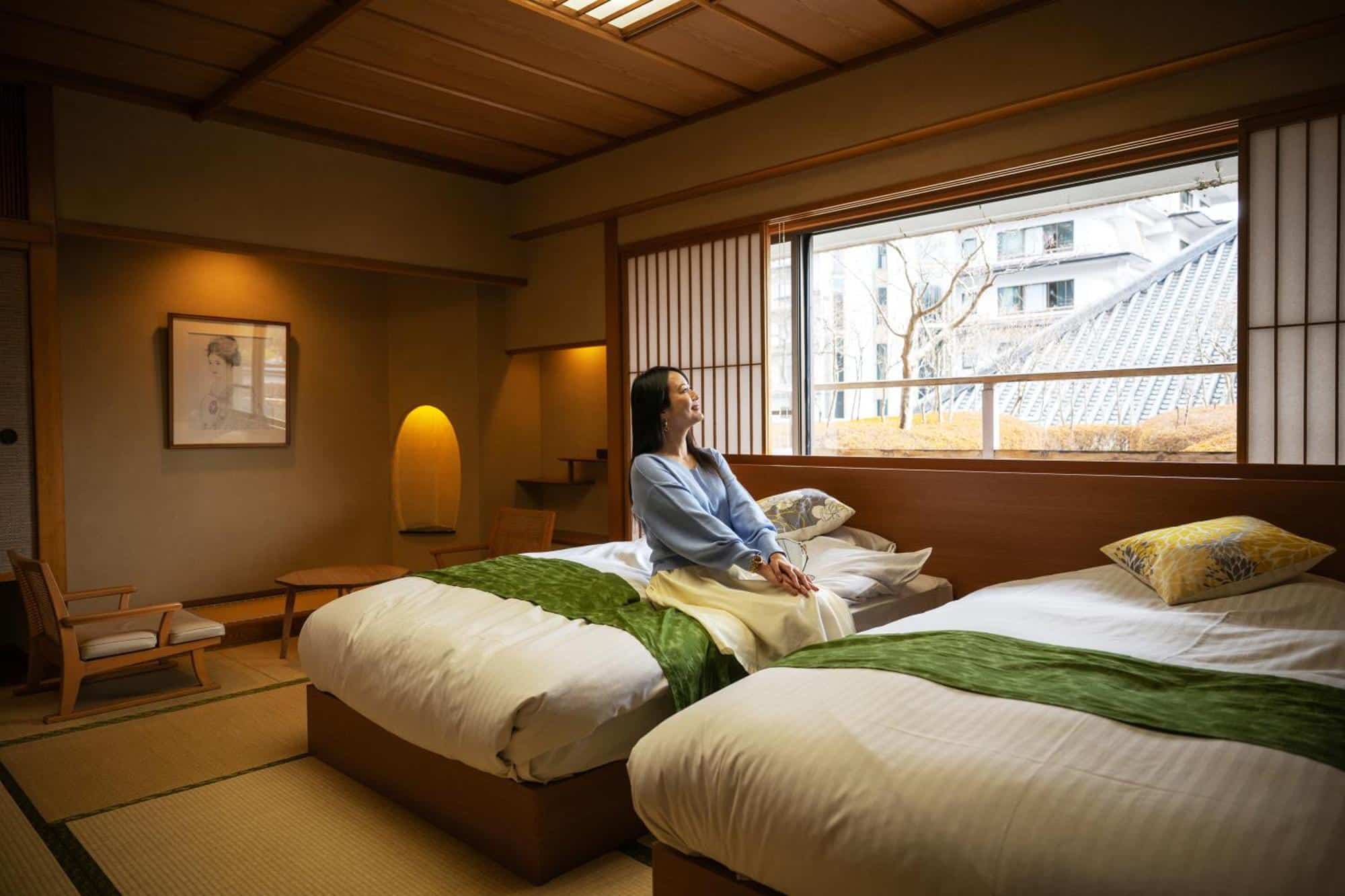
Small Inns and Budget Options Down the Mountain: 4 Picks
This group includes the ryokan with the fewest rooms on the hot spring street, along with the most practical alternative down the mountain in the city of Obanazawa.
Where to Stay in Ginzan Onsen: Ryokan Nagasawa Heihachi (旅館 永澤平八)
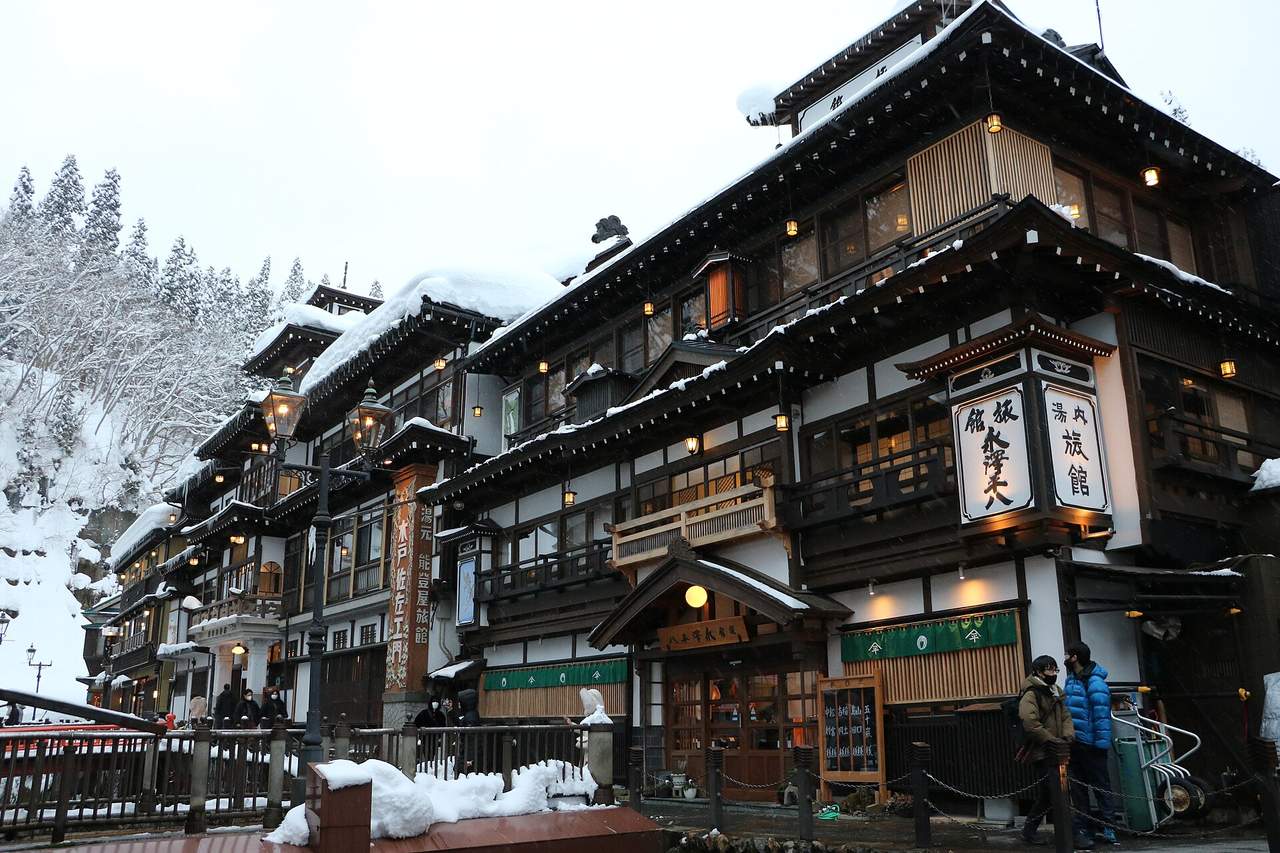
A wooden old ryokan on the hot spring street with only 7 guest rooms, right next door to Notoya Ryokan by address (445/446). It is also a Taisho-era rebuilt building, with finely crafted woodwork on its facade, and it has a strong presence among the row of buildings.
Few rooms means a high level of attention from the staff, and also very few guests in the whole building, so nights are very quiet. On the other hand, the stairs in the old building are steep, sound insulation between rooms is limited, and bathroom arrangements vary by room type. With only 7 rooms, any vacancy is booked up quickly, so set a reminder and keep checking back.
- Rates: The official website does not publish fixed list prices. Plans that include dinner and breakfast vary by date, room type and number of guests, so check the official site or a booking platform (usually priced per person, dinner and breakfast included)
- Access: On the hot spring street (Ginzan Shinbata 445, right next to Notoya Ryokan at 446); in winter, staying guests can use the parking lot designated by the ryokan. Whether a shuttle is offered depends on each ryokan, so please confirm with the ryokan after booking
- Highlights: Only 7 guest rooms, space for about 28 guests, Taisho-era wooden building, finely crafted woodwork facade
- 👥 Best for: Travelers who want to stay in a wooden old house and prefer quiet
Where to Stay in Ginzan Onsen: Hatago Itoya (旅籠 いとうや)
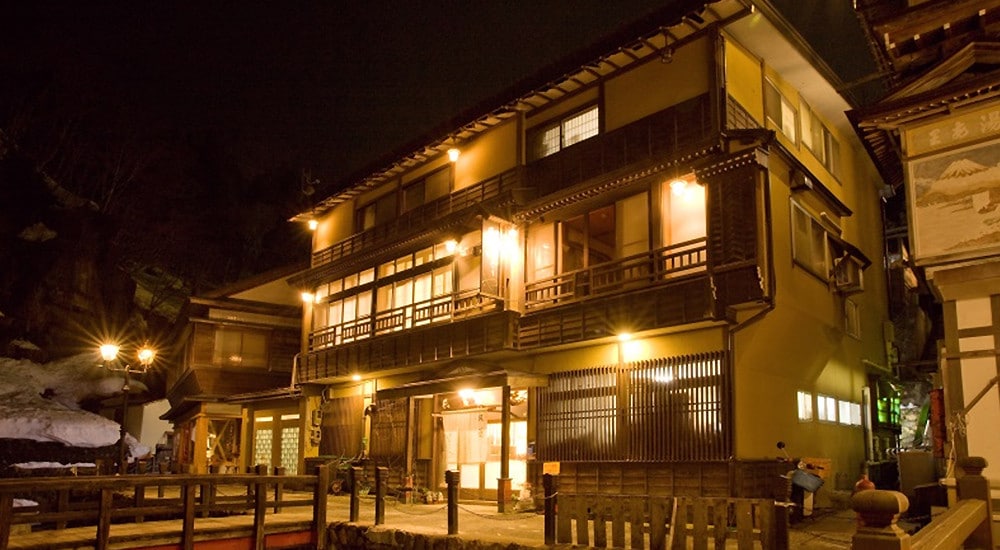
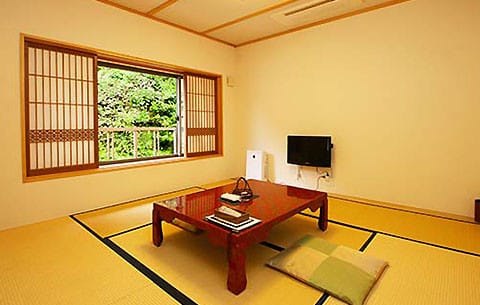
One of the two ryokan with the fewest rooms on the whole hot spring street, with just 4 guest rooms and space for 13 guests. It calls itself a “hatago,” the kind of small inn that offered lodging and meals in the Edo period, and its scale and atmosphere lean in that direction.
Staying at an inn this size is a very personal experience: the host remembers your name, and meals are served at a pace that follows you. In return, it has almost none of the shared facilities of a large ryokan, and there is little choice of room types. It suits two travelers who want to be well looked after; it is not for those who need a sense of privacy or for larger groups.
- Rates: The official website does not publish fixed list prices. Plans that include dinner and breakfast vary by date, room type and number of guests, so check the official site or a booking platform (usually priced per person, dinner and breakfast included)
- Access: On the hot spring street; in winter, staying guests can use the parking lot designated by the ryokan. Whether a shuttle is offered depends on each ryokan, so please confirm with the ryokan after booking
- Highlights: Only 4 guest rooms, space for 13 guests, small hatago-style inn, high level of personal attention
- 👥 Best for: Two travelers who want personalized service
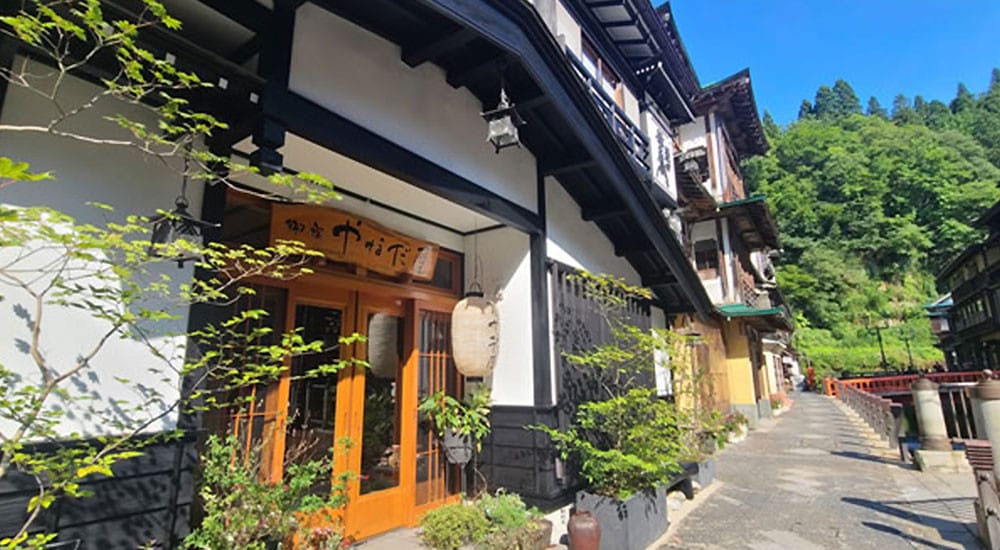
Where to Stay in Ginzan Onsen: Oyado Yanadaya (御宿 やなだ屋)
Another small ryokan with only 4 guest rooms, with space for about 20 guests, on the hot spring street. Although it has few rooms, each room holds more guests than at Itoya, which means it has room types better suited to three or more people sharing, something not common in Ginzan Onsen.
The shared advantages of small inns are quiet and closeness; the downside is low flexibility: once they are full there is no fallback room type, and cancellation policies are usually stricter too. Before booking, be sure to confirm the maximum number of guests, the meal content and the bathroom arrangement, which vary widely among small inns.
- Rates: The official website does not publish fixed list prices. Plans that include dinner and breakfast vary by date, room type and number of guests, so check the official site or a booking platform (usually priced per person, dinner and breakfast included)
- Access: On the hot spring street (Ginzan Shinbata 416); in winter, staying guests can use the parking lot designated by the ryokan. Whether a shuttle is offered depends on each ryokan, so please confirm with the ryokan after booking
- Highlights: Only 4 guest rooms, space for about 20 guests, some room types suit three or more people, wooden old house
- 👥 Best for: Small families or groups of three or more sharing a room, who want to stay on the street
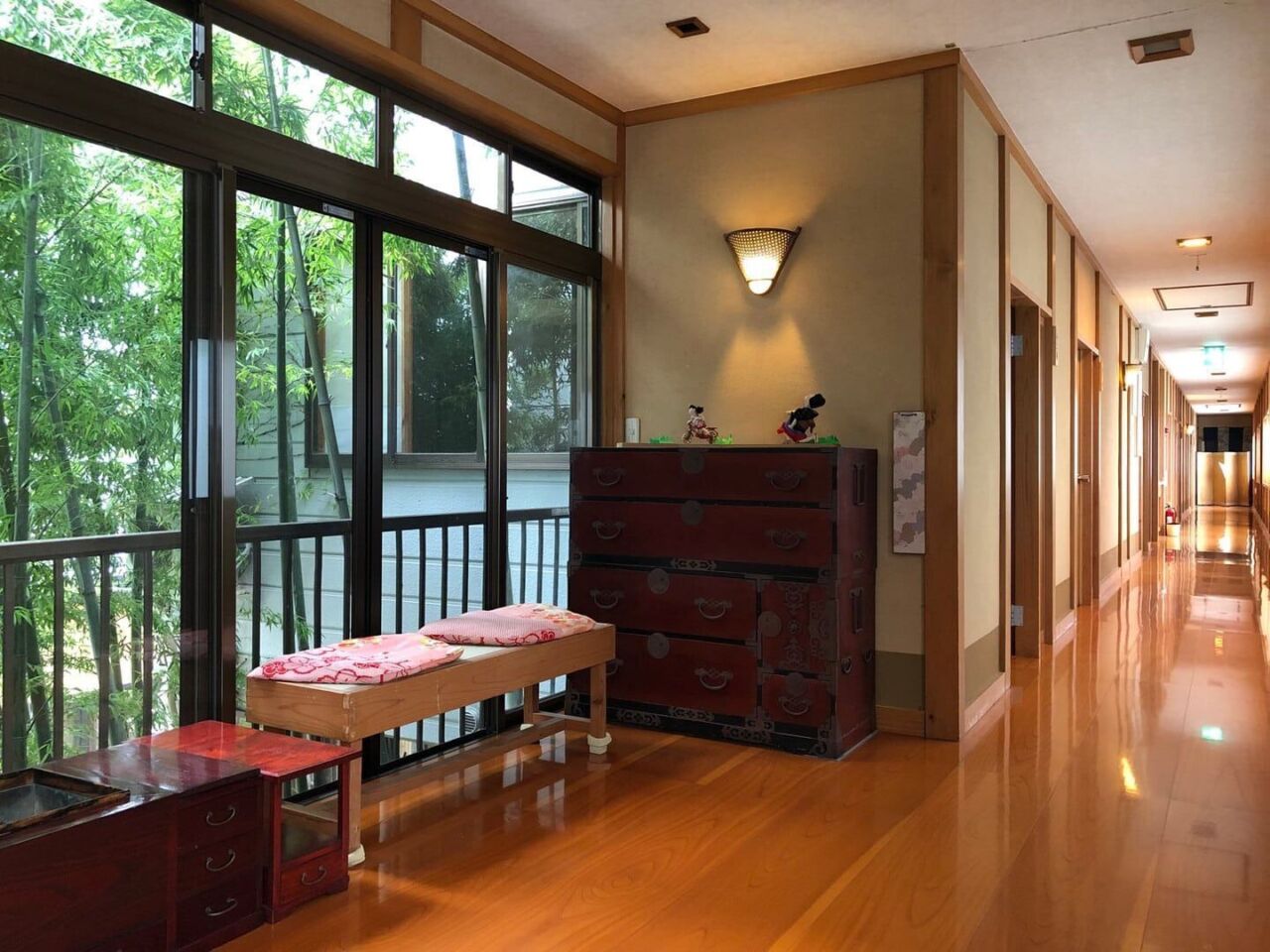
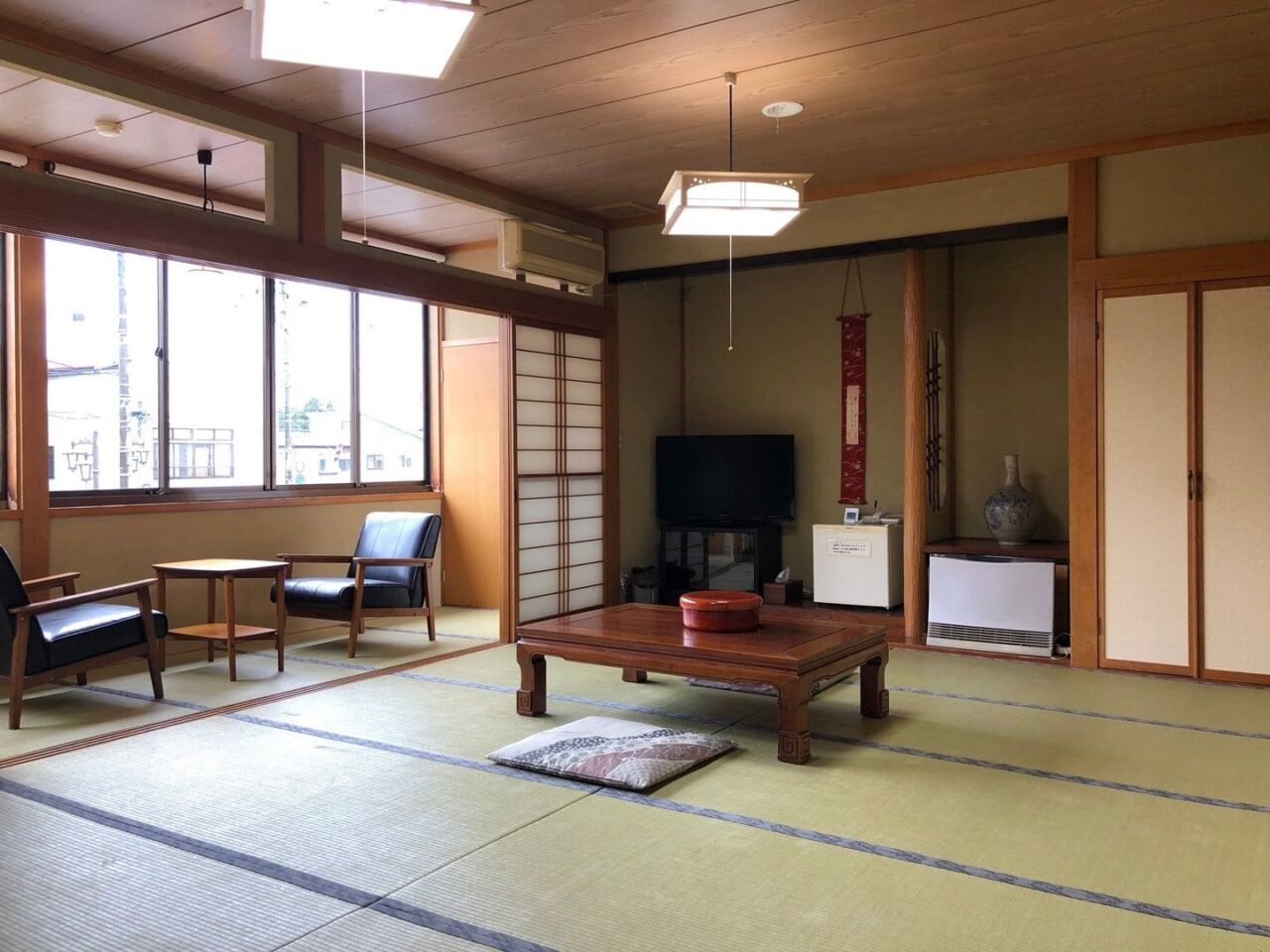
Where to Stay Near Ginzan Onsen: Katoya Ryokan (Central Obanazawa)
A ryokan in Nakamachi, in the center of Obanazawa, and one of the options outside the hot spring street on the city’s official accommodation list. When all 13 ryokan in Ginzan Onsen are fully booked, you can stay in the same city and head to the hot spring street early the next morning.
Staying here you will not see the gas-lamp street late at night, but prices are much friendlier and restaurants and convenience stores in town are close by. The official website lists room-only stays from ¥6,000 on weekdays; dinner for regular guests is currently suspended, reservations are accepted by phone only (0237-22-0020), and the ryokan is closed over the New Year holiday, December 30 to January 4.
- Rates: The official website does not publish fixed list prices. Rates vary by date and plan, so check the official site or a booking platform (priced per room per night)
- Access: Located at Nakamachi 4-3, Obanazawa; reached by vehicle from JR Oishida Station, and getting into Ginzan Onsen requires a separate bus or drive
- Highlights: Central location, close to restaurants in town, easy to book, friendly prices
- 👥 Best for: Travelers who cannot get a room on the hot spring street, put budget first, or decide on their trip at the last minute
Distinctive and Alternative Stays Around Ginzan Onsen: 3 Picks
The last three each solve one specific need: a new-style small inn, a highland stay for drivers, and a base purely for keeping to a budget.
Design-Style Stay: Kuranoba (クラノバ)
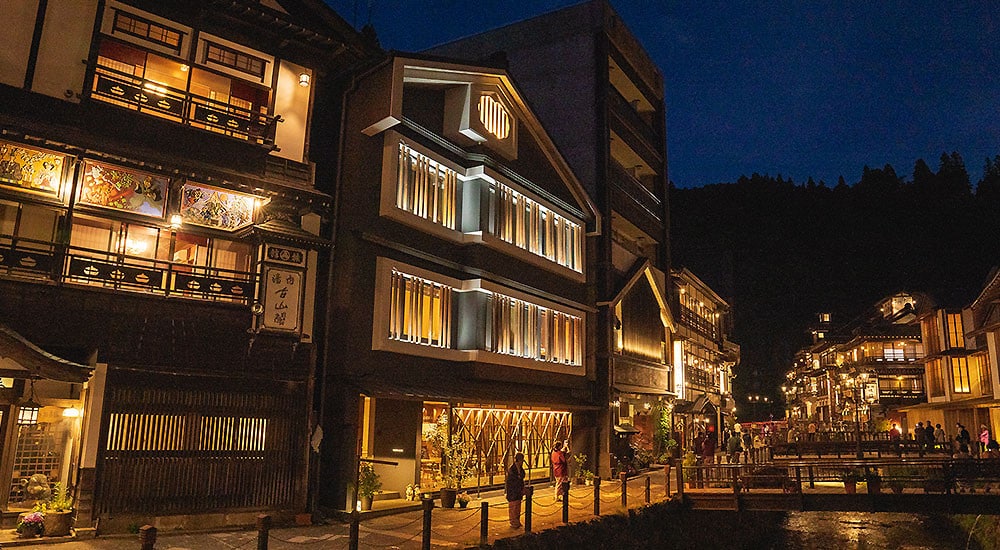
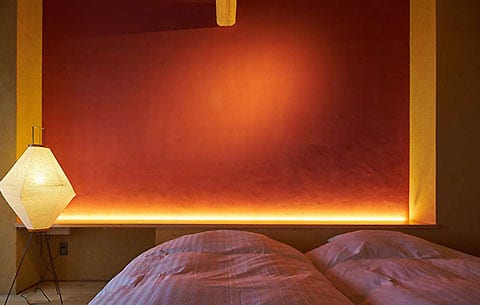
One of the newer ryokan on the hot spring street, with 6 guest rooms and space for 12 guests. It is among the options least like a traditional ryokan of the 13 official inns, and suits those who want to stay on the street but not in a typical Japanese-style old ryokan layout.
It is just as small, and not easy to book. It is in fact the new building of Kozankaku (opened in 2017, on the same site as Kozankaku), with all Western-style rooms that come with beds and private bathrooms. It has no bath of its own, so to soak you walk next door to the Kozankaku main building (an indoor bath on the 1st floor and a privately reserved bath on the 3rd), and dinner is an authentic Italian course.
- Rates: The official website does not publish fixed list prices. Plans that include dinner and breakfast vary by date, room type and number of guests, so check the official site or a booking platform (usually priced per person, dinner and breakfast included)
- Access: On the hot spring street; in winter, staying guests can use the parking lot designated by the ryokan. Whether a shuttle is offered depends on each ryokan, so please confirm with the ryokan after booking
- Highlights: 6 guest rooms, space for 12 guests, non-traditional ryokan layout, located within the hot spring street
- 👥 Best for: Travelers who want to stay on the street but prefer a modern layout
Stay for Drivers: Hanagasa Kogenso (花笠高原荘)
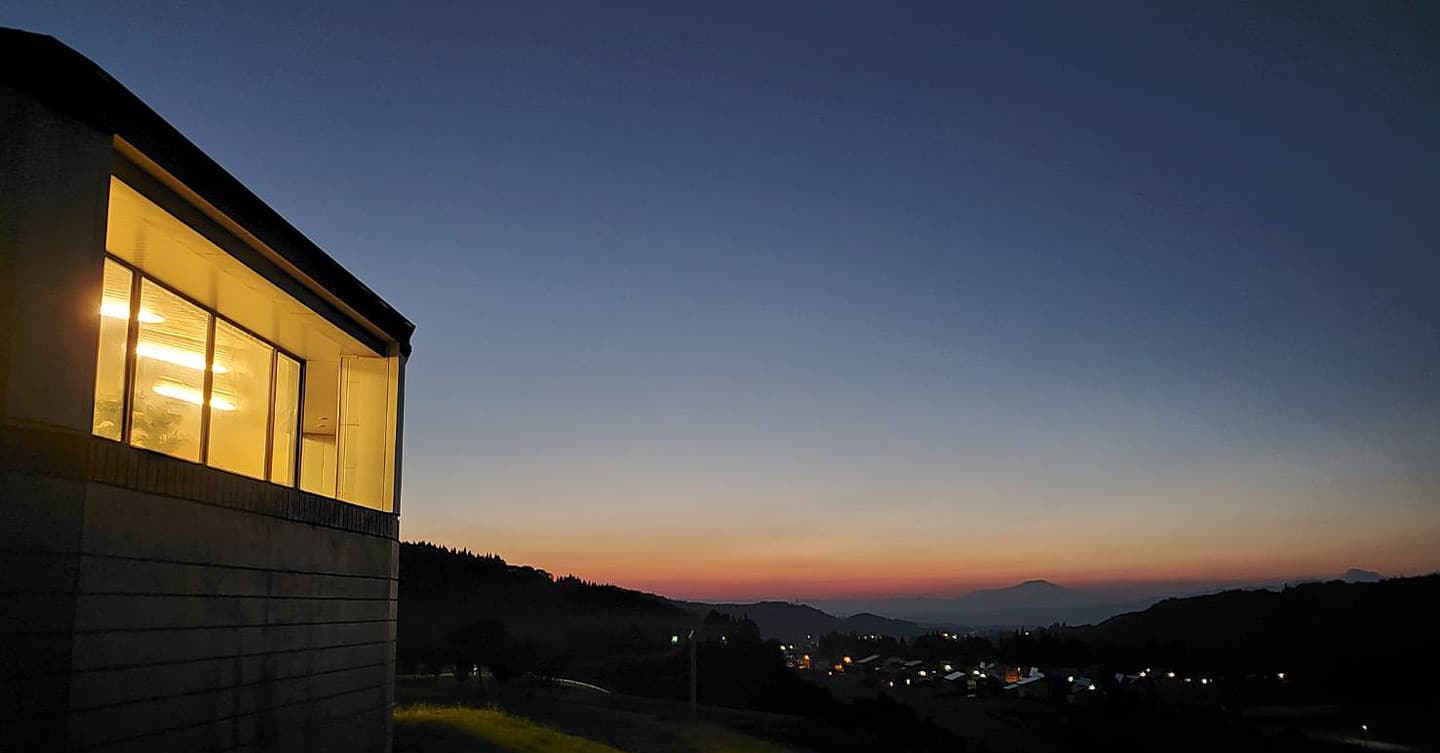
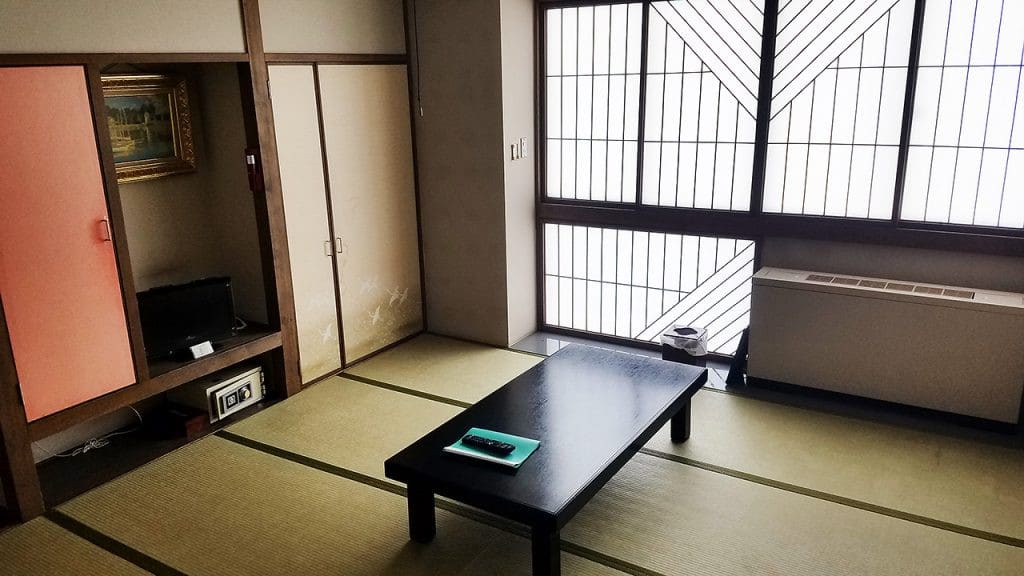
A highland lodging facility in Tsuruko, Obanazawa, publicly run, surrounded by open highland terrain and cool in summer, a completely different environment from the densely packed wooden streets of the hot spring town.
It suits drivers: you can schedule Ginzan Onsen as a daytime outing and return to a quiet highland stay at night. It sits right next to the Hanagasa Kogen ski area; confirm the closing days of the “Goshono-yu” large communal bath and the meal plans with the facility. Snow is extremely deep in this area, so be sure to check road conditions before setting out. The same site also has 6 log cabins, the “Hanagasa Kogen Log Houses.”
- Rates: The official website does not publish fixed list prices. Rates vary by date and plan, so check the official site or a booking platform (priced per room per night)
- Access: Located at Oaza Tsuruko 1300-27, Obanazawa; mainly reached by car, and winter road conditions need to be checked in advance
- Highlights: Highland setting, publicly run facility, 6 log cabins on the same site, cool in summer
- 👥 Best for: Drivers who want to stay in a quiet highland setting
Budget Stay: Business Hotel Omotaka (ビジネスホテル おもたか)
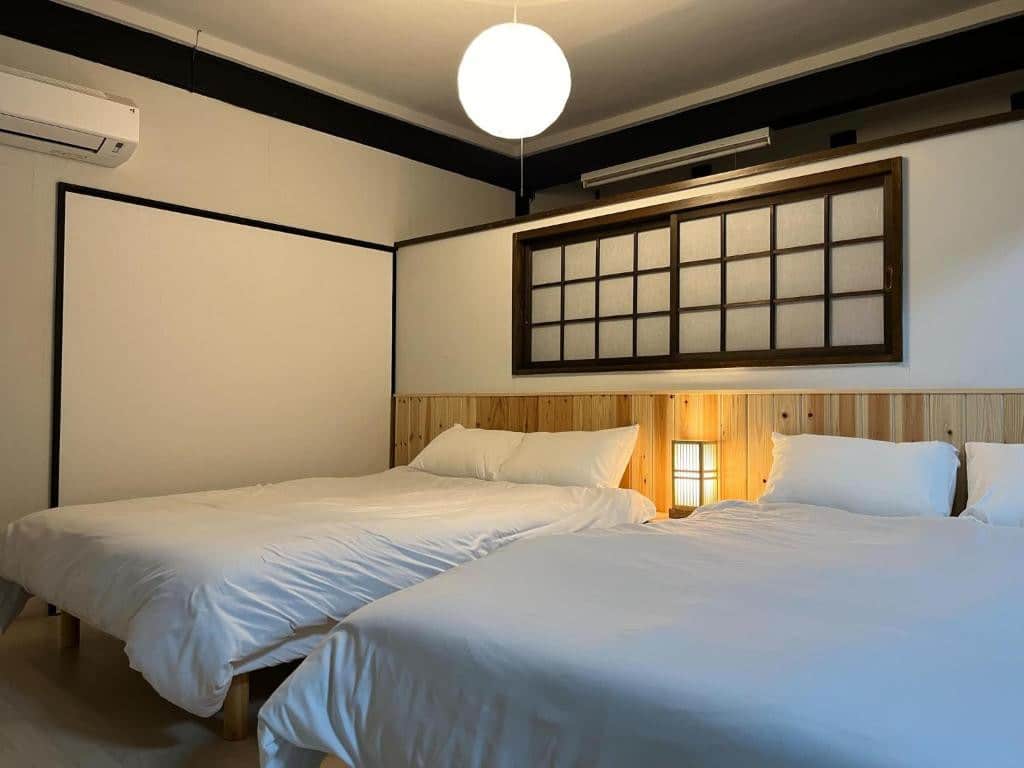
A business hotel in Nakamachi, Obanazawa, also listed on the city of Obanazawa’s official accommodation list. It is a simple place to sleep, with prices and booking difficulty far lower than on the hot spring street.
There are two most practical uses: when Ginzan Onsen is completely full and you do not want to give up this part of the trip, or when you need an overnight stop on a driving trip and want to head into the mountains early the next morning to catch the first shuttle bus. It is in the city center, with restaurants and convenience stores within walking distance. Room types and facilities are standard business-hotel grade. It has no official website and is not listed on booking sites, and it is no longer on the current list of the Obanazawa City Tourism and Products Association; this article is based on the 2022 list on the city of Obanazawa’s website. Please call to confirm that it is still operating before you go (0237-23-3050).
- Rates: The official website does not publish fixed list prices. Rates vary by date and plan, so check the official site or a booking platform (priced per room per night)
- Access: Located at Nakamachi 2-36, Obanazawa; restaurants and convenience stores are within walking distance in the city center, and getting into Ginzan Onsen requires a separate ride
- Highlights: Standard business-hotel grade, central location, friendly prices, easy to book
- 👥 Best for: Travelers who just need a place to sleep, put budget first, or want to enter the hot spring street on the first morning bus
Ginzan Onsen Booking Guide and Tips to Avoid Pitfalls
Four points where things especially tend to go wrong in Ginzan Onsen.
Booking methods differ at other ryokan too. The reservation pages for Nagasawa Heihachi, Kozankaku and others can be reached from the booking portal of the Ginzan Onsen inn association.
Ryokan Matsumoto opens reservations about 3 months ahead, accepting them over several days starting on the 1st of each month. Notoya accepts reservations only from the guest in person on its official website.
Kozankaku cancellation fees: 100% on the day of check-in, 50% the day before, 40% two days before, and 30% three to four days before; cancellations must be made by phone.
When Does Peak Season Start? How Far Ahead Should You Book?
Peak season in Ginzan Onsen is very clear: the snow-scene period from December to February is the highest peak, followed by the autumn foliage season from late October to November, and then Japan’s holiday weekends and the New Year. During these periods, the combined rooms of the 13 ryokan are simply not enough to go around, so book as early as you can.
There are two practical approaches: book the moment reservations open (opening times differ by ryokan: about 5 months ahead for the Ginzanso group, about 3 months ahead for Ryokan Matsumoto), and keep checking back for rooms released by cancellations. Because there are so few rooms, any cancellation is a chance, and vacancies occasionally pop up closer to the date. The off-season (late spring to summer) is much easier.
How to Book Showakan: Website, Phone and Sales Range
Aji to Magokoro no Yado Showakan is a family-run ryokan with 13 rooms in the very middle of the hot spring street. Official information states that every room has a toilet and washbasin, and there are separate indoor baths for men and women and a “sky-view bath”; check-in is 15:00-18:00. There are three ways to book: online reservations on the Showakan website, by phone (0237-28-2151), and the listing page on the Japanese booking site Jalan.
- The website booking system has changed: Showakan switched to a new online booking system on July 2, 2026. For rooms booked before then, confirm, change or cancel through the old-system entrance on the website’s home page.
- How far sales currently run: According to the website announcement of September 14, 2026, stays up to February 11, 2027 are currently open; later dates are not yet on sale, and the ryokan states that it does not answer inquiries about the sale date, so you have to check the website regularly yourself.
- Payment: The same announcement states that reservations for stays from December 1, 2026 onward accept only “advance payment.”
- Room choice: Since June 2025, a renovated mountain-side “Deluxe Twin Room” (Western-style, 24.5㎡, two beds, limited to 2 guests) has been added; those not used to sleeping on futons on the floor can look for this room type first.
Booking Guide for Ginzanso (Also Applies to Kosegiya Main Building and Kosegiya Annex)
Senkyo no Yado Ginzanso, Kosegiya Main Building and Kosegiya Annex all belong to Ginzanso Co., Ltd., and their official websites use the same online booking system, with sales rules announced together. Keep the following points in mind to raise your chances of getting a room:
- Sales open at a fixed time, 9:00 a.m.: The company’s 2025 announcement states that it “normally opens reservations for five months ahead on the 1st of each month”; in 2026 it switched to announcing by period. For example, stays for July to September 2026 went on sale on the website at 9:00 a.m. on February 1, but the Obon holiday (August 8-16) was postponed to March 1 and the September holiday weekend (September 19-22) to April 4. Peak dates are often postponed separately, so be sure to check the latest announcements in the “News” section of the website first.
- The website accepts only advance credit card payment: For reservations from March 1, 2025, website bookings all switched to advance credit card payment, with the cancellation rules revised at the same time; the ryokan explained that the reason was people booking several nights and several rooms at once and then canceling close to check-in.
- Check the three ryokan separately: Each of the three ryokan has its own independent vacancies. If you cannot book Ginzanso, switch right away to the vacancy calendar of the main building or annex, and vice versa.
Cannot Get a Room in Ginzan Onsen? 5 Practical Things to Do
- Book the moment sales open: Find out the target ryokan’s sale date and time in advance (for example, 9:00 a.m. for the Ginzanso group); before sales open, register as a member on the website booking system, log in and have your credit card ready.
- Avoid peak dates that are postponed: Obon and holiday weekends are often put on sale separately and later, while weekday and non-holiday slots are usually released earlier and are easier to book.
- Keep checking back for cancellations: At a small ryokan, a single cancellation opens up a room, and chances occasionally appear in the weeks before check-in.
- Widen the search to all 13: Do not fixate only on popular Notoya and Fujiya; Showakan, Ryokan Matsumoto, Kuranoba and others are also on the hot spring street.
- Stay down the mountain and visit the hot spring street by day: If you truly cannot book, stay in the Obanazawa city area or around Oishida Station and take a bus into the hot spring street during the day; in winter, check the day-tripper shuttle bus hours first (see the explanation above).
On the Street or Off the Street? Be Clear About What You Want
This is the most important choice in Ginzan Onsen. Staying within the wooden buildings of the hot spring street, the value lies in stepping out the door straight onto the gas-lamp street, where you can stroll back and forth several times in the evening, and after the crowds disperse late at night the street effectively belongs to the guests. The price is old-house conditions: no elevator, steep and narrow stairs, limited sound insulation, and some room types without a private bathroom.
Ginzanso and Takimikan, off the street, are the opposite: large, with modern facilities, large communal baths and open-air baths, and much easier when you have older relatives, children or lots of luggage, but you need to walk a stretch or take a shuttle to reach the street. The rule of thumb is simple: if the core of your trip is the “late-night gas-lamp street,” stay on the street; if the core is “soaking comfortably in a hot spring,” stay off the street.
Bathrooms, Stairs and Similarly Named Ryokan: Three Things to Confirm Before Booking
The first is the bathroom. A considerable share of room types in the wooden old ryokan on the hot spring street have no private bathroom, and you need to use shared toilets and baths. This is not a flaw but the reality of old buildings, yet you must confirm it before booking, especially when traveling with older relatives.
The second is the stairs. These three- and four-story wooden buildings have no elevators, and the stairs are steep and narrow, so carrying a large suitcase upstairs is hard work; this is one reason we suggest leaving large luggage at Sendai or Yamagata Station.
The third is similarly named ryokan. “Kosegiya Annex” and “Kosegiya Main Building” are two separate ryokan with very similar names, so be sure to check the full name and address when booking; this is a mistake that has actually happened.
Do Not Forget to Confirm Pick-Up and Winter Entry With the Ryokan
Traffic restrictions are scheduled for winter from December 2026 to early March 2027. Day-trippers must transfer to a shuttle bus at Taisho Roman-kan, while staying guests can use the designated parking lot or shuttle vehicles as arranged by their ryokan; please rely on what the ryokan and the Ginzan Onsen inn association announce for details.
But whether it is the parking lot or the shuttle, it needs to be arranged in advance. After booking, proactively confirm with the ryokan the meeting point, the time and whether there is an extra charge for pick-up; most pick you up at Taisho Roman-kan down the mountain or at Oishida Station, and advance reservation is required, with usually no seats if you simply show up. Heavy winter snow can also delay pick-ups, so do not over-schedule your arrival day. Actual pick-up arrangements and fees are as announced by each ryokan.