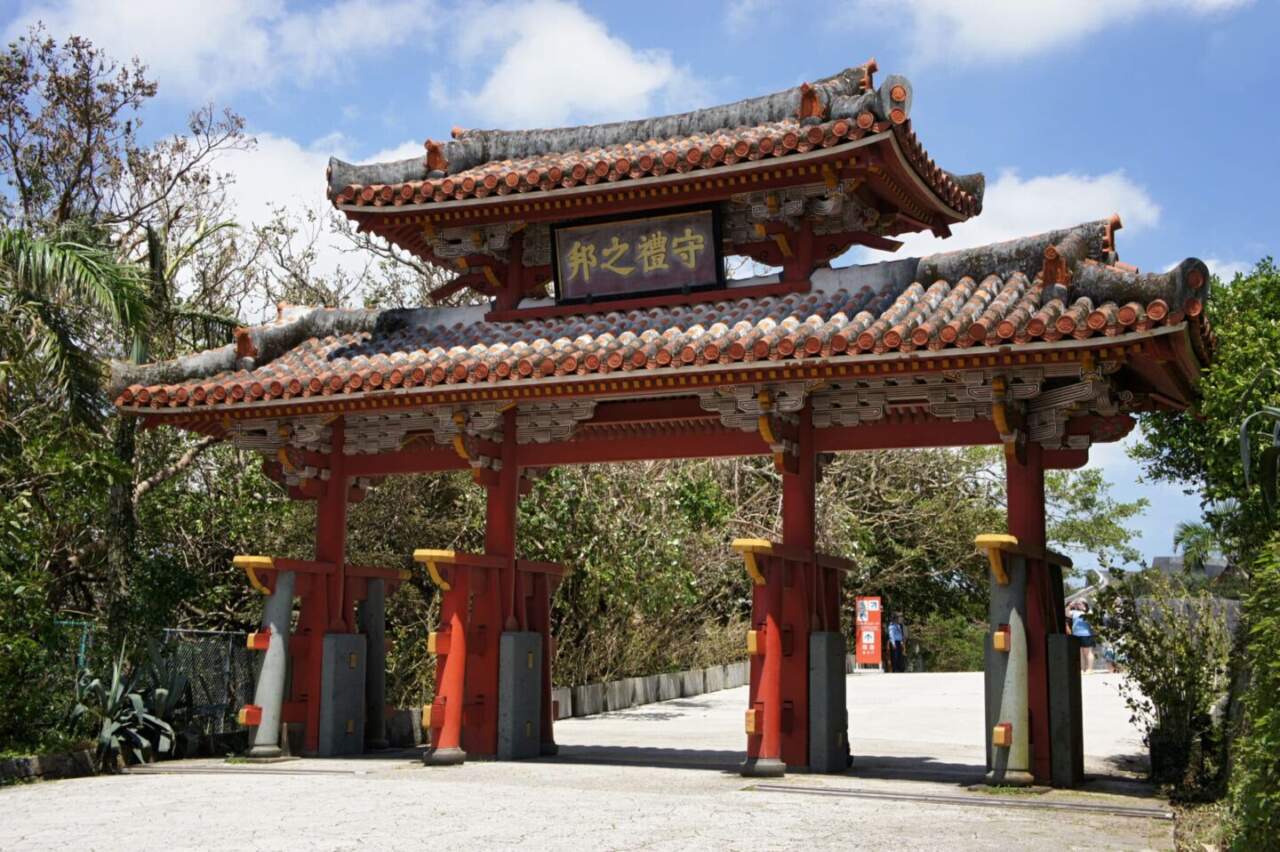

Okinawa Churaumi Aquarium and Northern Okinawa Day Trip: A Classic Route Linking Three Landmarks in One Day
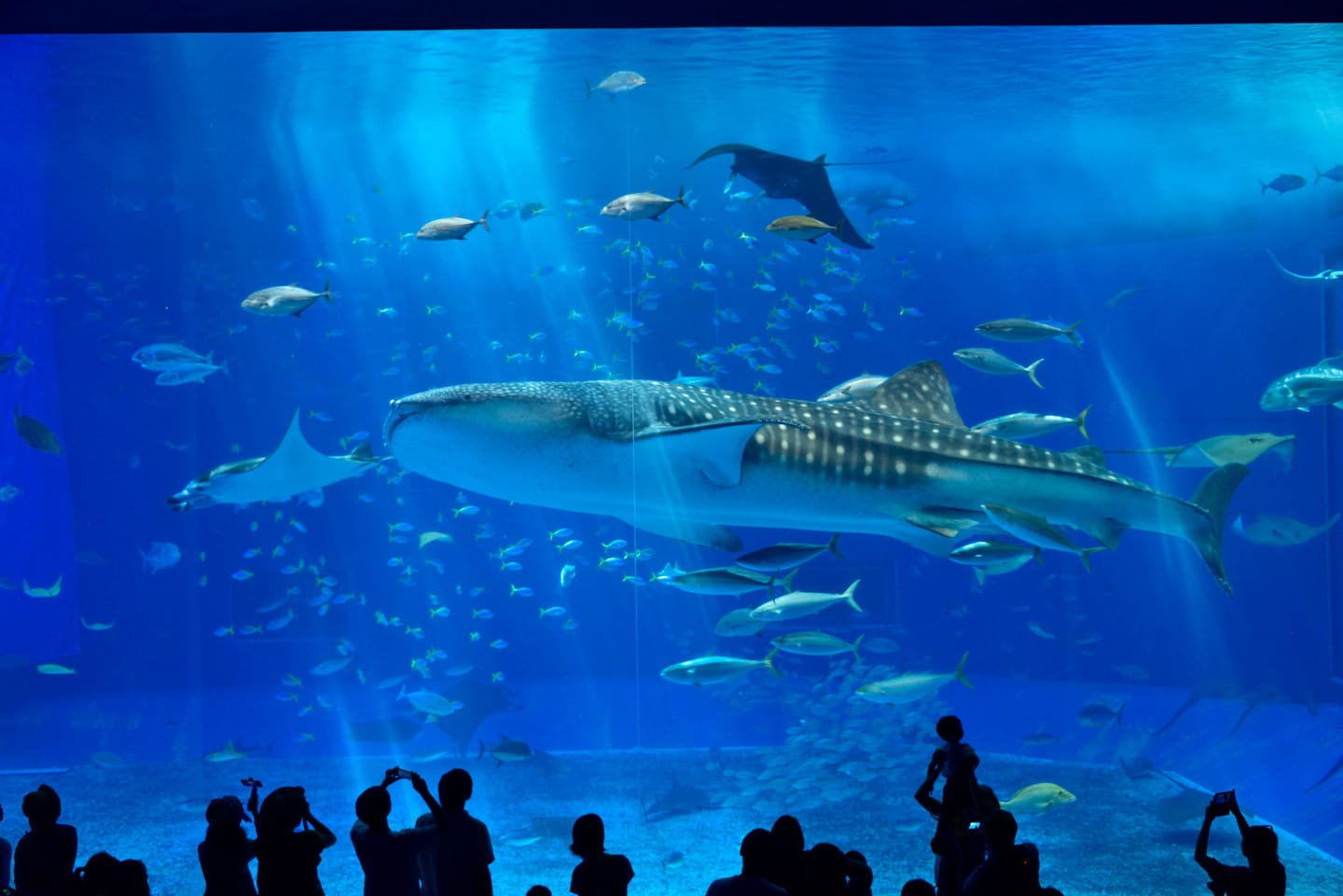
Okinawa Churaumi Aquarium (美ら海水族館) is inside Ocean Expo Park in northern Okinawa Main Island. The official website says it takes about 2 hours by car on the expressway from Naha Airport, or about 3 hours by express bus. It is the island’s most iconic attraction.
How to Plan a Northern Okinawa Day Trip: Three Landmarks from South to North
The smoothest route links the landmarks from south to north and then doubles back to central Okinawa or Naha. In the morning, start at Manzamo (万座毛) in Onna Village and spend about 30 to 45 minutes there, before the midday sun gets strong. At noon, cross the Kouri Bridge to Kouri Island, have the shrimp rice and stroll the beach, allowing about 1.5 hours.
Save the main event for the afternoon at the Okinawa Churaumi Aquarium, where you can see whale sharks, a dolphin show and the free exhibit halls; allow at least 3 to 4 hours. On the way back in the evening, stop at American Village in central Okinawa for dinner and the night views. This plan never has you backtrack and also avoids the morning tour-group rush at the aquarium.
Who Is This Route For? Seasons and Weather
This route is friendly to first-time visitors to Okinawa, families with children and travelers with older relatives, because none of the three stops involves much walking, and the aquarium is fully indoors and air-conditioned, so rain is no problem.
The most comfortable months are March to May and October to November. July to October is typhoon season, when sea activities and the sea-crossing bridge may be restricted in strong winds, so always check the forecast before you go. In midsummer the aquarium extends its hours, and the evening crowds are much thinner.
How Much Does a Day Cost? A Rough Budget for Tickets and Transport
Of the three main stops, only the aquarium and Manzamo charge admission: the aquarium’s on-site adult ticket is ¥2,180, the Manzamo scenic walkway is ¥100 per person, and entering Kouri Island is free. Parking is mostly in private lots with varying fees.
Transport is the biggest variable. Driving means adding car rental, fuel and expressway tolls. A Chinese-language sightseeing bus day tour usually already includes aquarium and Manzamo admission, so the total is easy to pin down. The express bus is the cheapest, but it is hard to cover all three stops in one day.
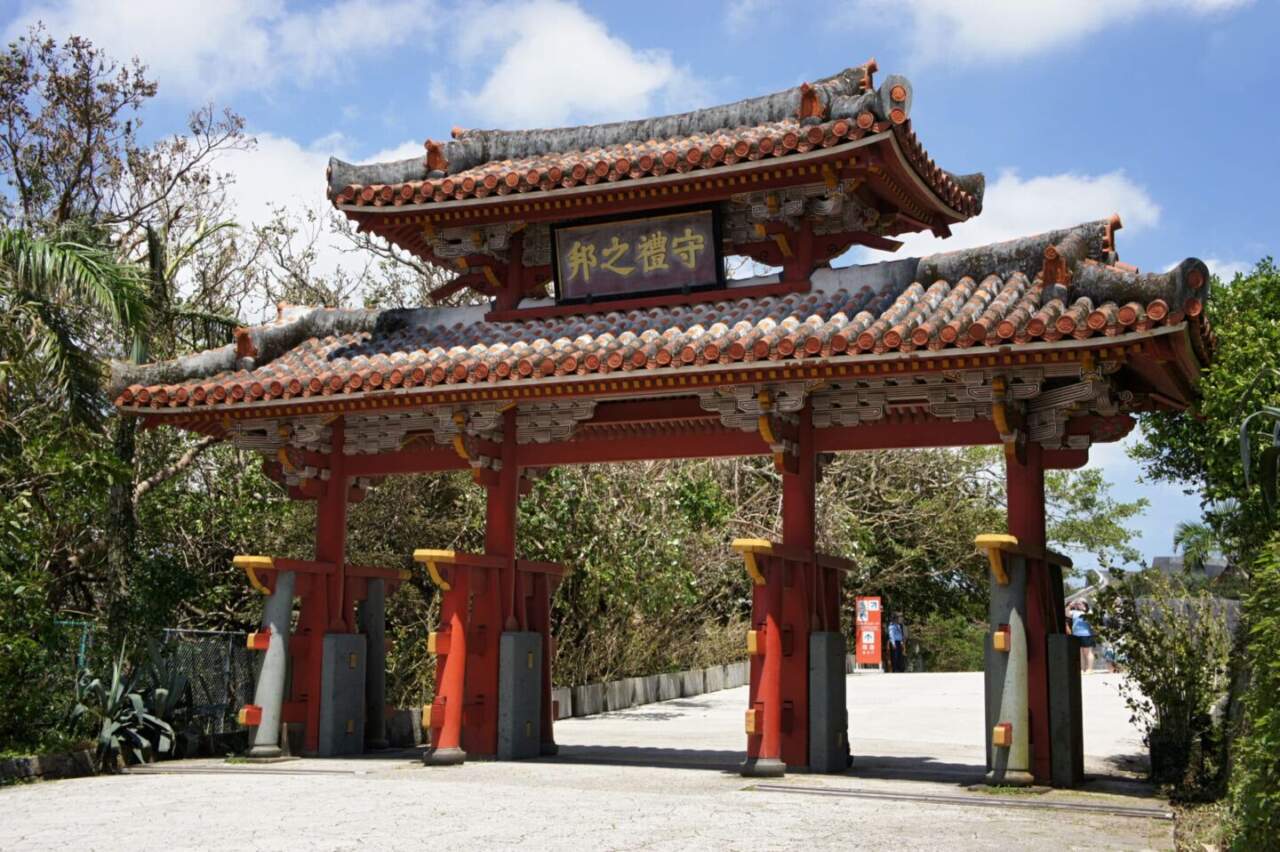
How to Get to Okinawa Churaumi Aquarium: Driving, Sightseeing Bus and Express Bus Compared
From Naha to the Churaumi Aquarium, there are three main ways: driving, a sightseeing bus day tour and the express bus.
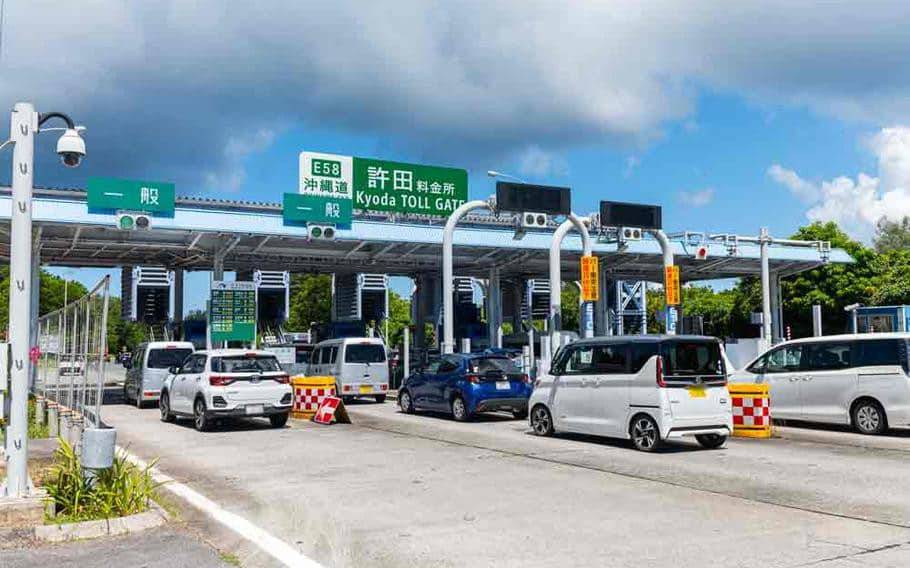
Driving: Take the Okinawa Expressway North and Set Your Navigation to Parking Lot P7
From Naha, take the Okinawa Expressway north; it is about 2 hours to the Churaumi Aquarium, with good road conditions. The aquarium’s phone number is 0980-48-3748. Set your navigation to “P7 Multi-Level Parking” (P7立体駐車場), which is closest to the entrance. Parking is free, and in peak season you should arrive early.
| Comparison | Sightseeing Bus Day Tour | Rental Car |
|---|---|---|
| All Three Stops in One Day | Yes (Manzamo + Kouri Island + Churaumi) | Yes, and you control the timing completely |
| Cost of the Day | Moderate; usually includes most admission fees and transport | Higher: car rental + fuel + expressway tolls |
| Effort of Getting Around | Easy; usually with a Chinese-speaking guide | Requires focus; Japan drives on the left with right-hand-drive cars |
| Best For | First-timers, families with children, non-drivers | People who like flexibility and want to linger at a single spot |
| Public Bus Alternative | The express bus takes about 2 to 3 hours one way, with few departures in the north, so it is hard to cover several stops in one day | |
Best If You Don’t Drive: A Chinese-Language Sightseeing Bus Day Tour from Naha
If you don’t plan to drive, or are traveling with older relatives or small children, a Chinese-language sightseeing bus day tour is the easiest choice. Tours leave from central Naha (around Kencho-mae and Shintoshin) every day and bring you back.
The tour fee usually already includes Churaumi Aquarium and Manzamo admission, saving you the hassle of changing transport and finding parking, and the total cost is easy to control. The downside is that the time at each stop is fixed, so it is hard to linger in front of the Kuroshio Sea tank.
Before booking, confirm the meeting point and the last return time. Some tours end at American Village, and you then need to get back to your hotel on your own.
Express Bus: Yanbaru Express Bus and the Airport Shuttle Bus
If you don’t drive, you can take an express bus straight to the Churaumi Aquarium from Naha Airport or downtown. Common options are the Yanbaru Express Bus (やんばる急行バス), the Okinawa Airport Shuttle and Kariyushi Kanko’s “Churaumi Liner” (美ら海ライナー), about 2 to 3 hours one way.
This is the cheapest option and avoids right-hand driving, but there are only a few departures a day, and ordinary local buses in the north run infrequently, so it is hard to also visit Kouri Island or Manzamo on the same day. We suggest giving the aquarium a day of its own, or staying in Motobu Town or Nago.
Getting Around the Park: Ocean Expo Park Is Big, So Learn the Layout First
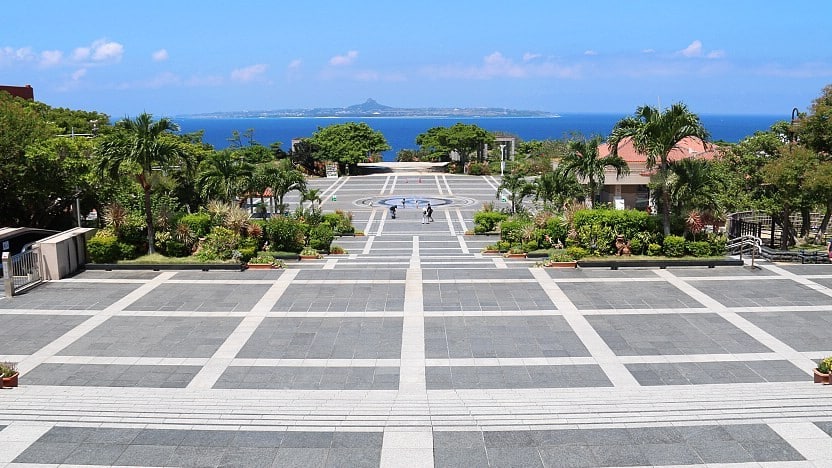
Ocean Expo Park is very large and the aquarium is only one area. Emerald Beach, the Oceanic Culture Museum, the Dolphin Lagoon and the Tropical Dream Center are spread across the park, and walking from the south gate to the north gate is quite tiring, especially in summer.
An electric shuttle car stops at the main facilities inside the park and is well worth using with children or older relatives. Entering from the P7 multi-level parking lot puts you closest to the aquarium.
Park maps are available at every entrance; take a look first before deciding your route.
Each facility in Ocean Expo Park has its own opening hours, and some have separate closure days, so check the Ocean Expo Park official website before you go. The aquarium has no scheduled closure days until March 31, 2027.
Must-See Highlights of the Churaumi Aquarium and Northern Okinawa: 13 Sights Explained
The sights below are arranged in order, from inside the aquarium to Ocean Expo Park to stops around northern Okinawa.
Kuroshio Sea Tank: Home of Whale Sharks Over 8 Meters and Manta Rays
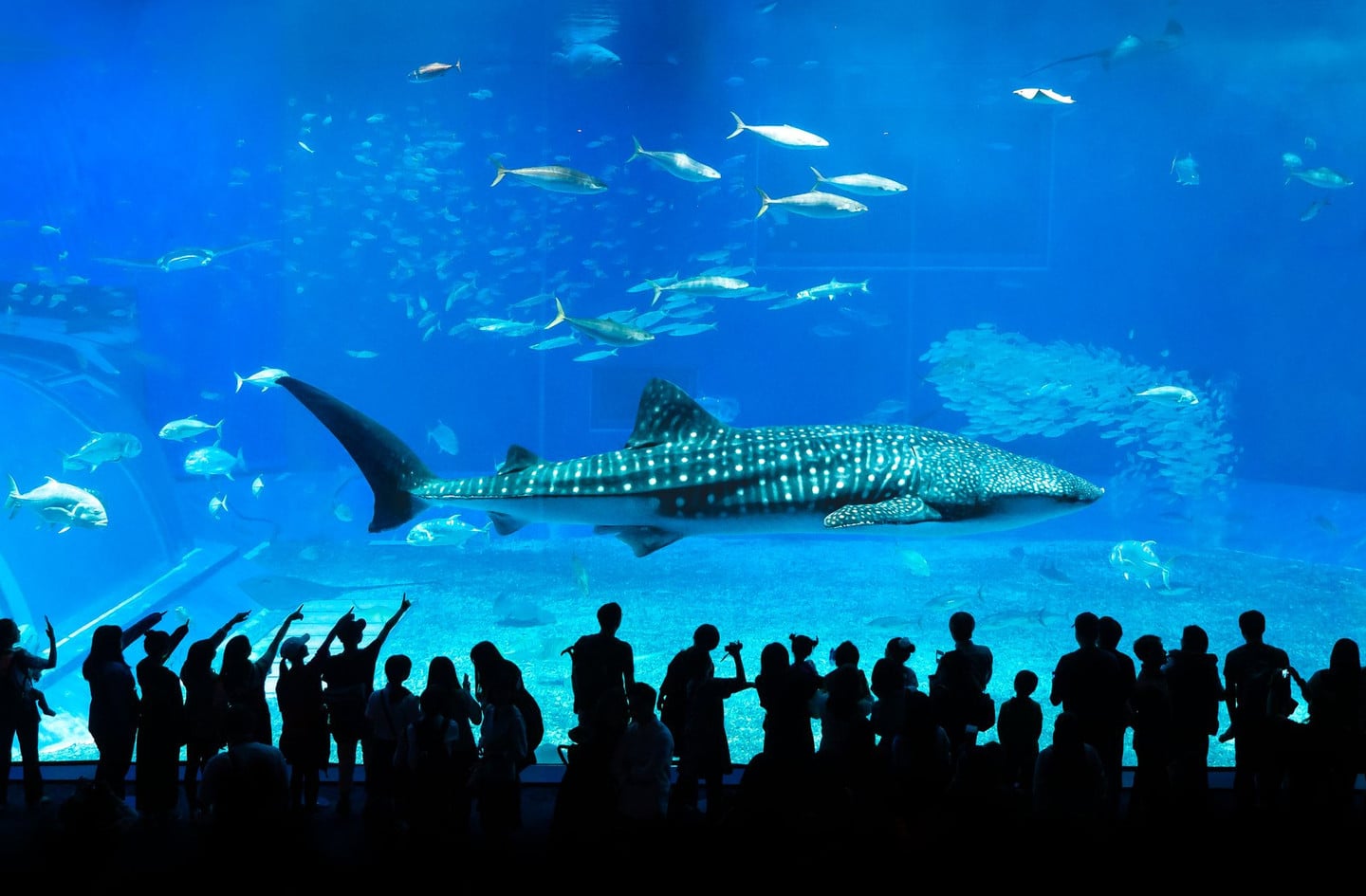
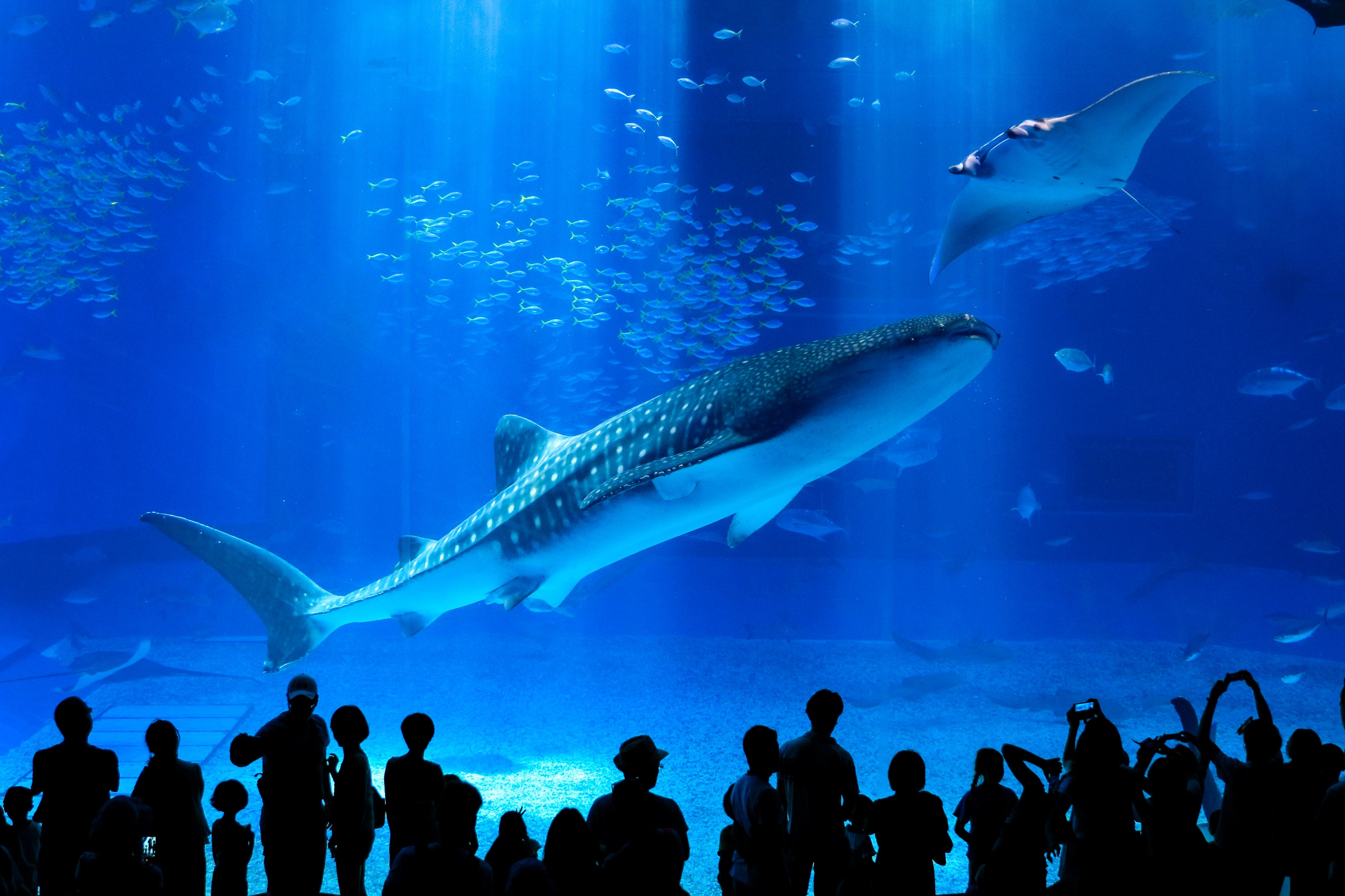
The Kuroshio Sea is the aquarium’s signature exhibit, and crowds always gather at its huge acrylic viewing window. The stars are a giant whale shark more than 8 meters long and schools of manta rays turning somersaults; just sitting and watching them circle can easily use up half an hour. A “whale shark vertical feeding show” is held daily, and the sight of a whale shark standing upright with its mouth open to feed is the most memorable moment; check the day’s schedule for exact show times. For photos without crowds, go soon after opening or in the last hour before closing, since the middle of the day is the tour-group peak. There are tiered seats and a cafe in front of the tank so you can sit and take your time, which is especially handy with children.

Coral Reef Voyage and Tropical Fish Sea: Living Coral Under Natural Light
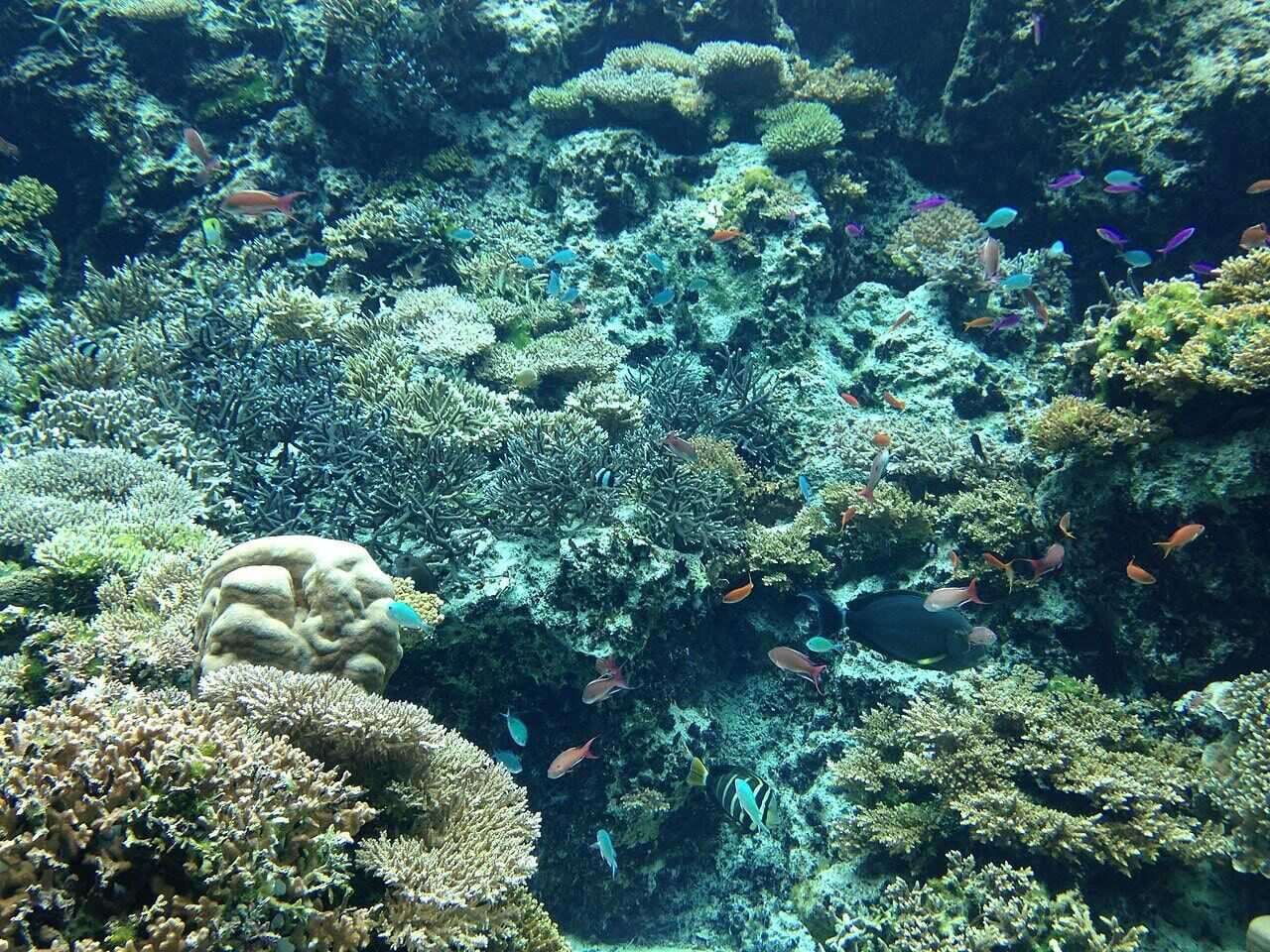
The entrance leads first to the “Coral Reef Voyage” touch pool, where you can touch starfish and sea cucumbers and children often won’t leave; next come large tanks with an open design that bring in natural light to grow living coral.
Further along is the Tropical Fish Sea, where reef fish such as clownfish and butterflyfish dart among artificial corals in the most saturated colors. The route is one-way, so take your time and see it all in one pass to avoid walking back against the crowd.
Staff guide the touch pool, and you must wash your hands before and after touching as instructed; please do not lift animals out of the water.
Dolphin Theater and Dolphin Lagoon: A Blue-Sky Dolphin Show With No Ticket
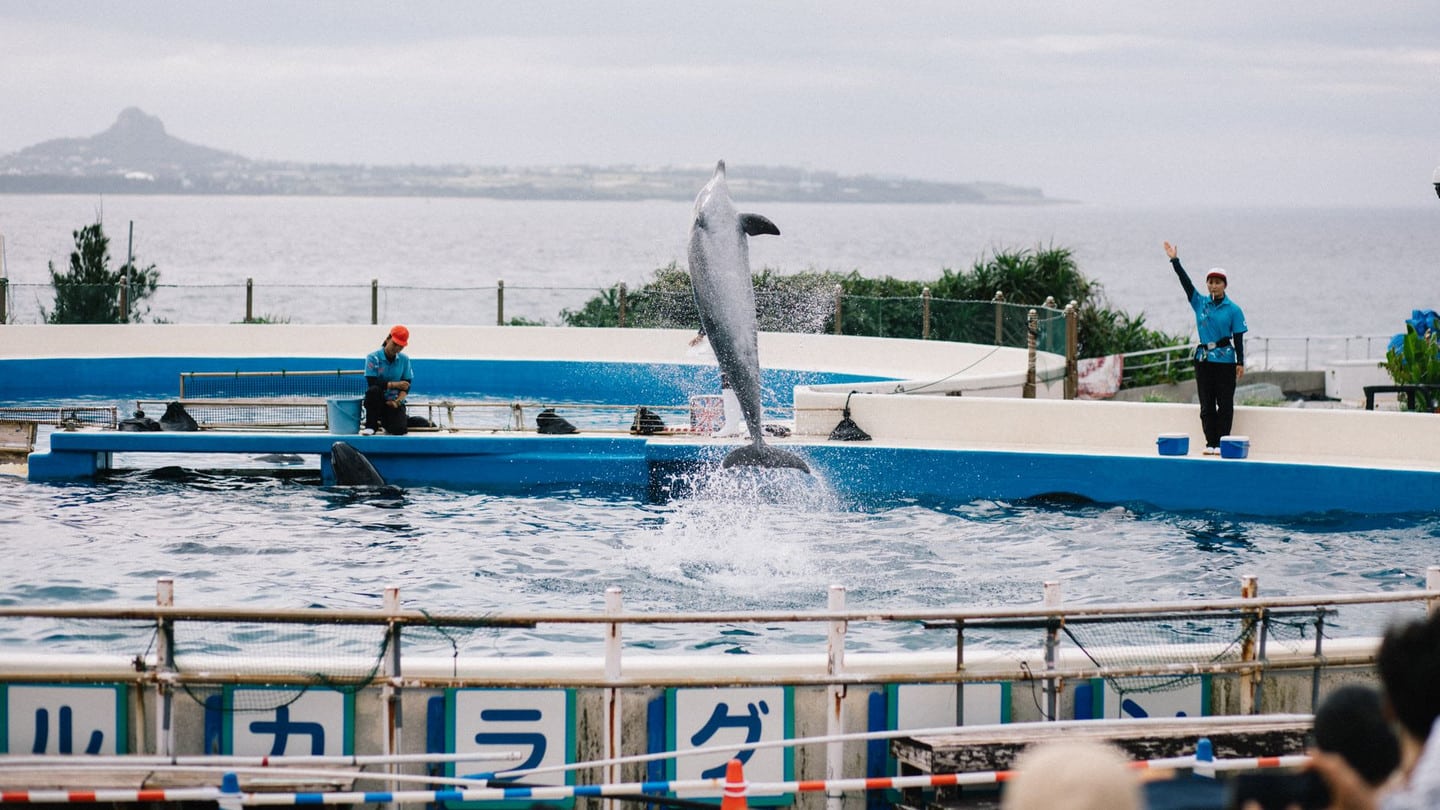
The dolphin show is outdoors against a backdrop of blue sky and the East China Sea, lasts about 20 minutes and is free to watch (a free facility of Ocean Expo Park that does not need an aquarium ticket). The seating is tiered, and the front rows are easily splashed, so sit in the back if you don’t want to get wet.
The venue and show times have been adjusted in recent years, and some shows are now held at the adjacent Dolphin Lagoon, so check the day’s schedule on arrival. At other times you can also see dolphins swimming up close at the lagoon, where it is less crowded.
The stands have almost no shade, so bring a hat and water in summer; shows may be canceled in rain or poor sea conditions.
Sea Turtle Hall and Manatee Hall: Two Separate Free Pavilions
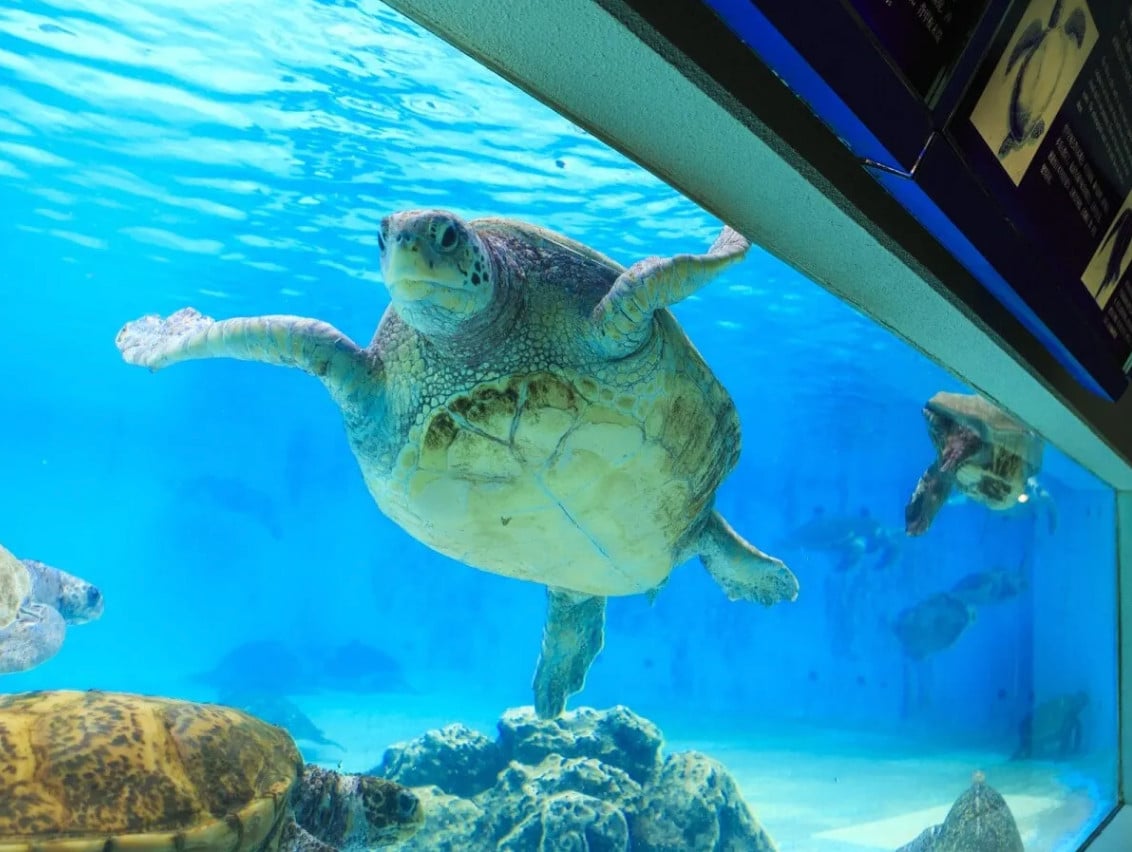
The Sea Turtle Hall and Manatee Hall stand outside the main aquarium building. They are free facilities of Ocean Expo Park and can be visited without an aquarium ticket. At the Sea Turtle Hall you can watch loggerhead and green turtles, species common in Okinawan waters, from both above and below the water; the Manatee Hall shows huge, slow-moving manatees, and watching them munch vegetables through the glass is soothing. Both are only a few minutes from the aquarium exit and fit well after the Kuroshio Sea, on the way to the Dolphin Theater. They are small, taking about 15 minutes each, and are also good to visit when the lines are long.
Ocean Expo Park and Emerald Beach: A Free Half Day Beyond the Aquarium
Besides the aquarium, Ocean Expo Park has Emerald Beach, the Oceanic Culture Museum, the Tropical Dream Center and the Okinawa Village, mostly free or low-cost to enter, enough to fill a whole day.
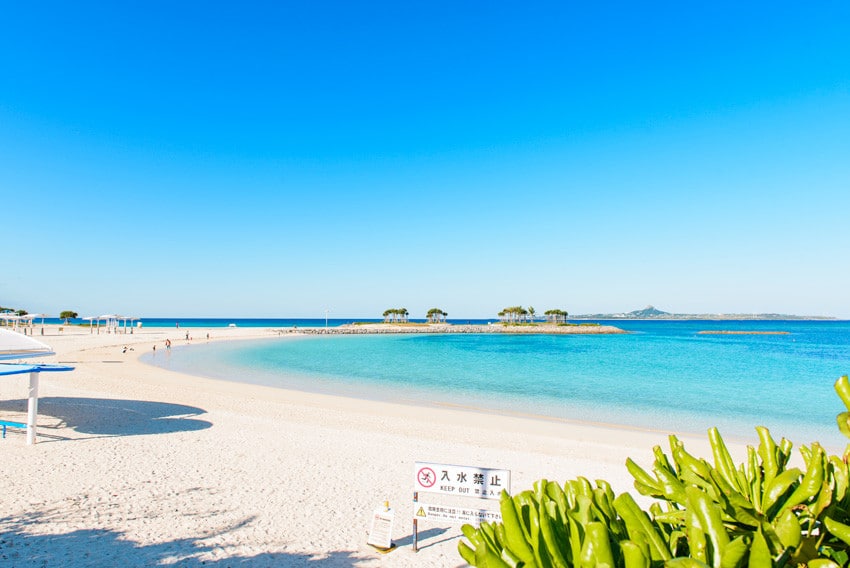
Emerald Beach has white sand and clear water and is a popular photogenic coast in the north, with changing rooms and showers. The swimming season runs from April 1 to October 31 each year (open until 17:00 from July), and outside it you can walk and take photos but swimming is prohibited; follow the posted notices.
It is about a 10-minute walk from the aquarium to Emerald Beach; if you are pushing a stroller or with older relatives, the electric shuttle car inside the park is easier.
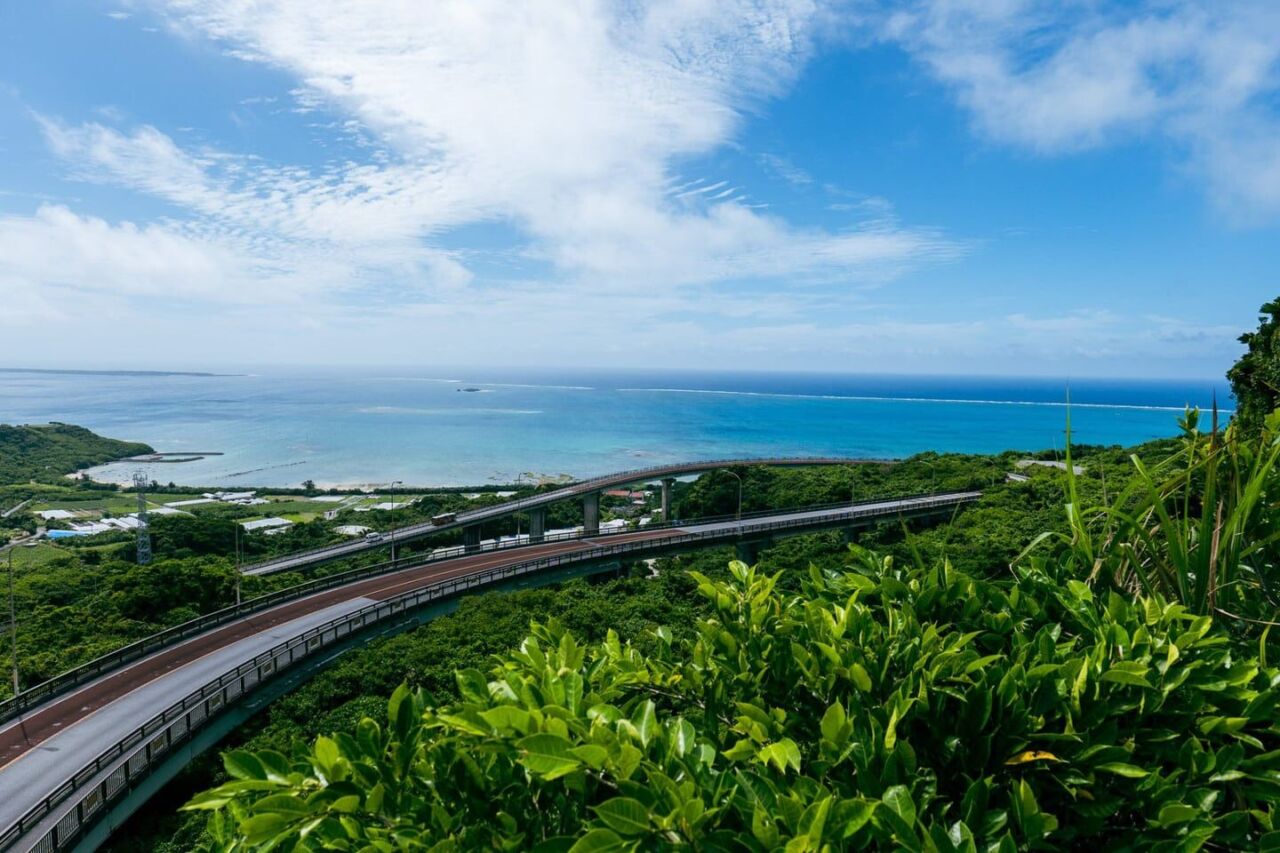
Kouri Bridge: A 1,960-Meter Straight Sea Crossing and “Kouri Blue”
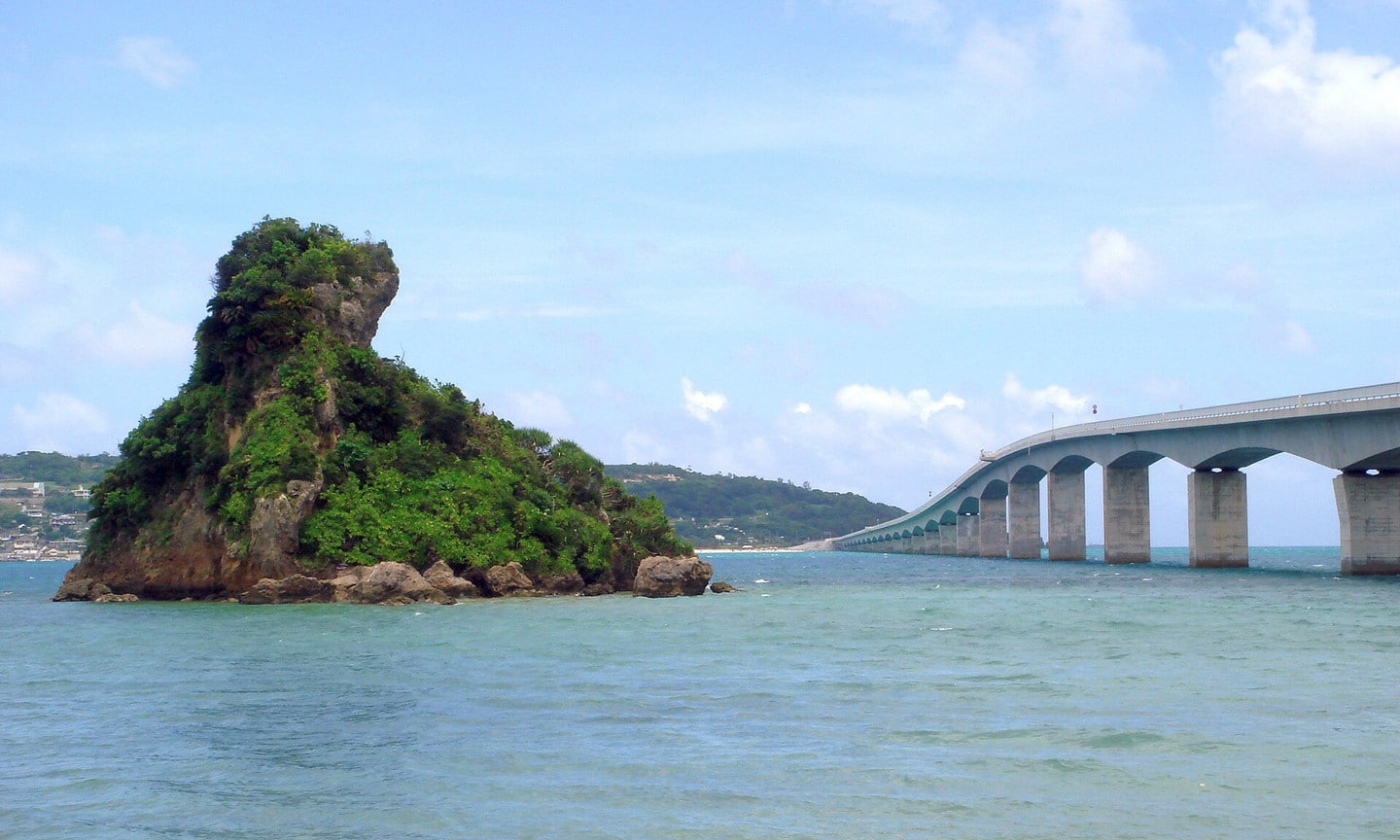
The Kouri Bridge is 1,960 meters long and crosses the sea from Yagaji Island straight to Kouri Island, with layered shades of “Kouri Blue” sea along the way.
There is a parking lot and a viewpoint on the south side where you can get out for photos. Stopping on the bridge is prohibited, and traffic may be restricted in strong winds or when a typhoon approaches, so check live road conditions before you set out.
There is a convenience store at each end, a rare place to stock up in the north, where you can use the restroom, buy drinks and confirm your route.
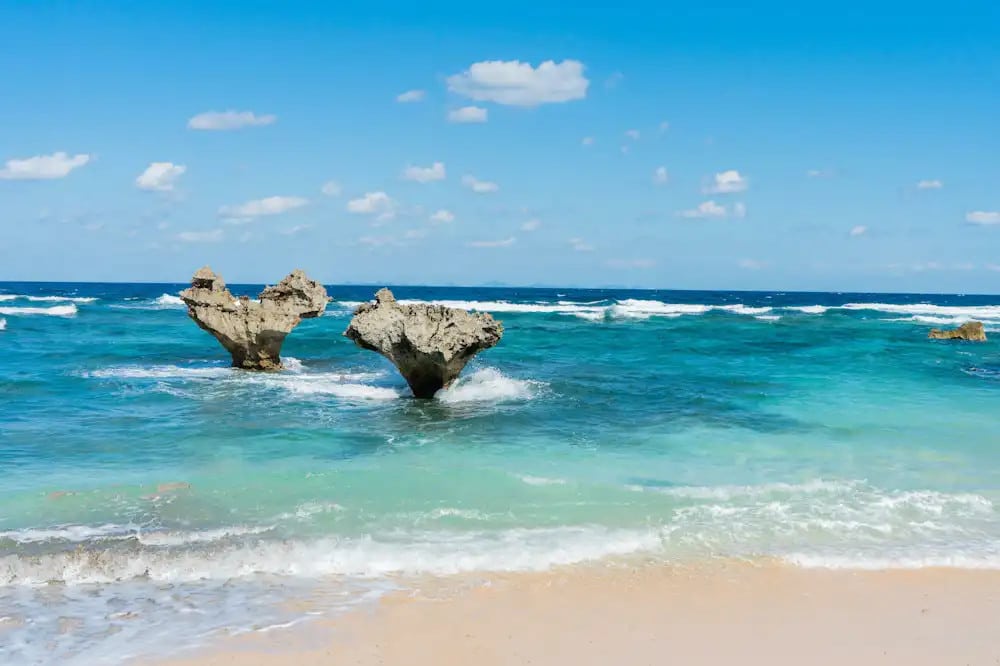
Kouri Island Heart Rock: The Heart-Shaped Reef Featured in an Arashi Commercial
Heart Rock sits on Tinu Beach on the north side of Kouri Island. It is two reef rocks eroded by waves into a heart outline, and it became famous after the Japanese idol group Arashi filmed a commercial here, making it a must-visit photo spot for couples.
Most nearby parking is private, costing about ¥100 to ¥300, and it is about a 5-minute walk down to the beach, with the last stretch over gravel and reef rock, so wear sturdy shoes. You can only reach the best photo spot at low tide, so check that day’s tide before you go.
The island also has Kouri Beach and several seaside cafes, and it is easy to lose half a day if you linger.
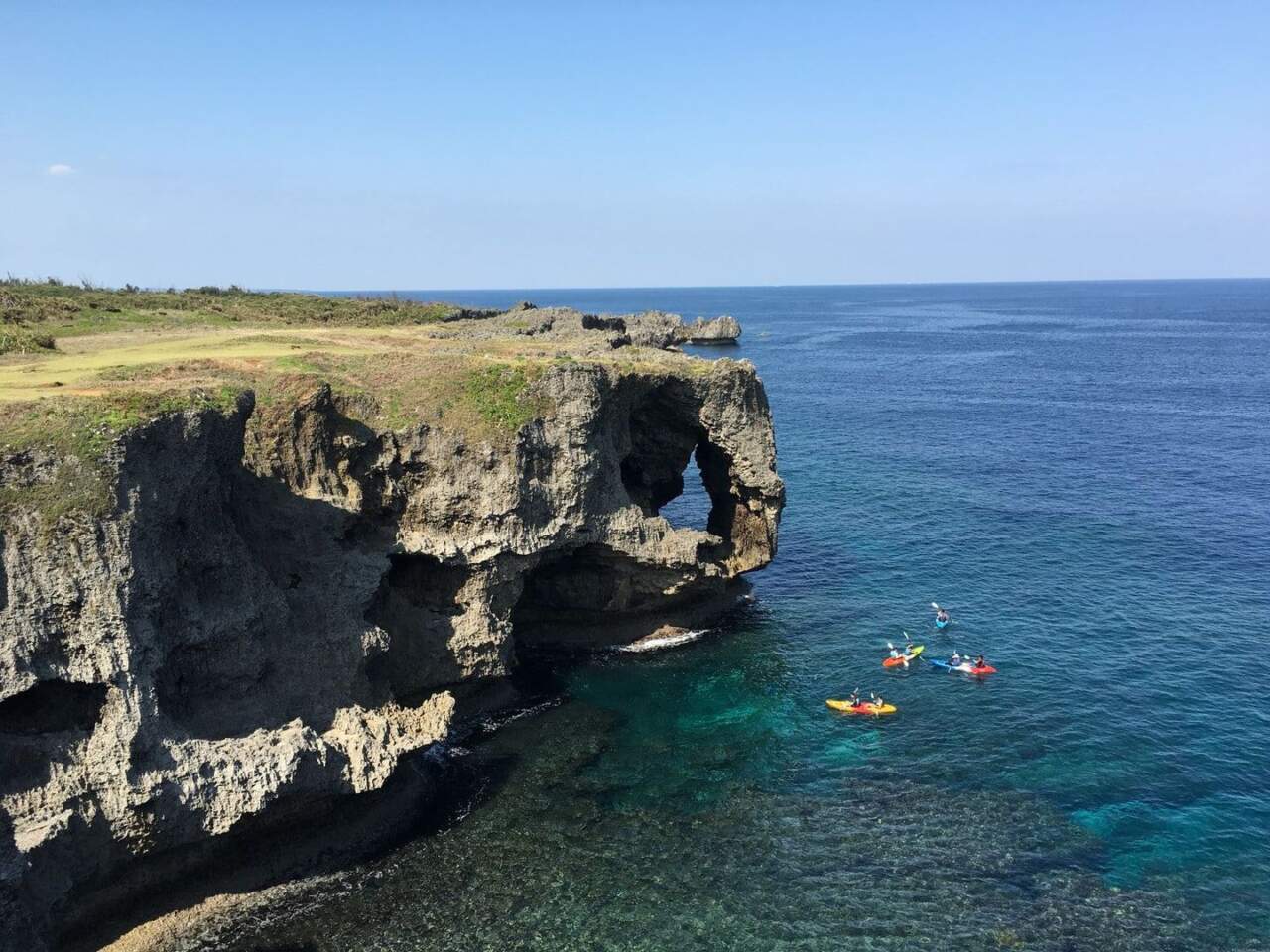
Manzamo: An Uplifted Coral Reef Cliff Shaped Like an Elephant’s Trunk
Manzamo is the best-known viewpoint in Onna Village, an uplifted coral reef cliff about 20 meters high whose side looks like an elephant’s trunk, with views across the East China Sea. Its name comes from a Ryukyu king’s praise that the place could seat ten thousand people.
Buy a scenic walkway ticket at the ticket machine, ¥100 per person, free for preschool children. Opening hours vary by season; follow the announcements of Onna Village. Walking and taking photos takes under about 30 minutes, so it suits as the first stop of the morning.
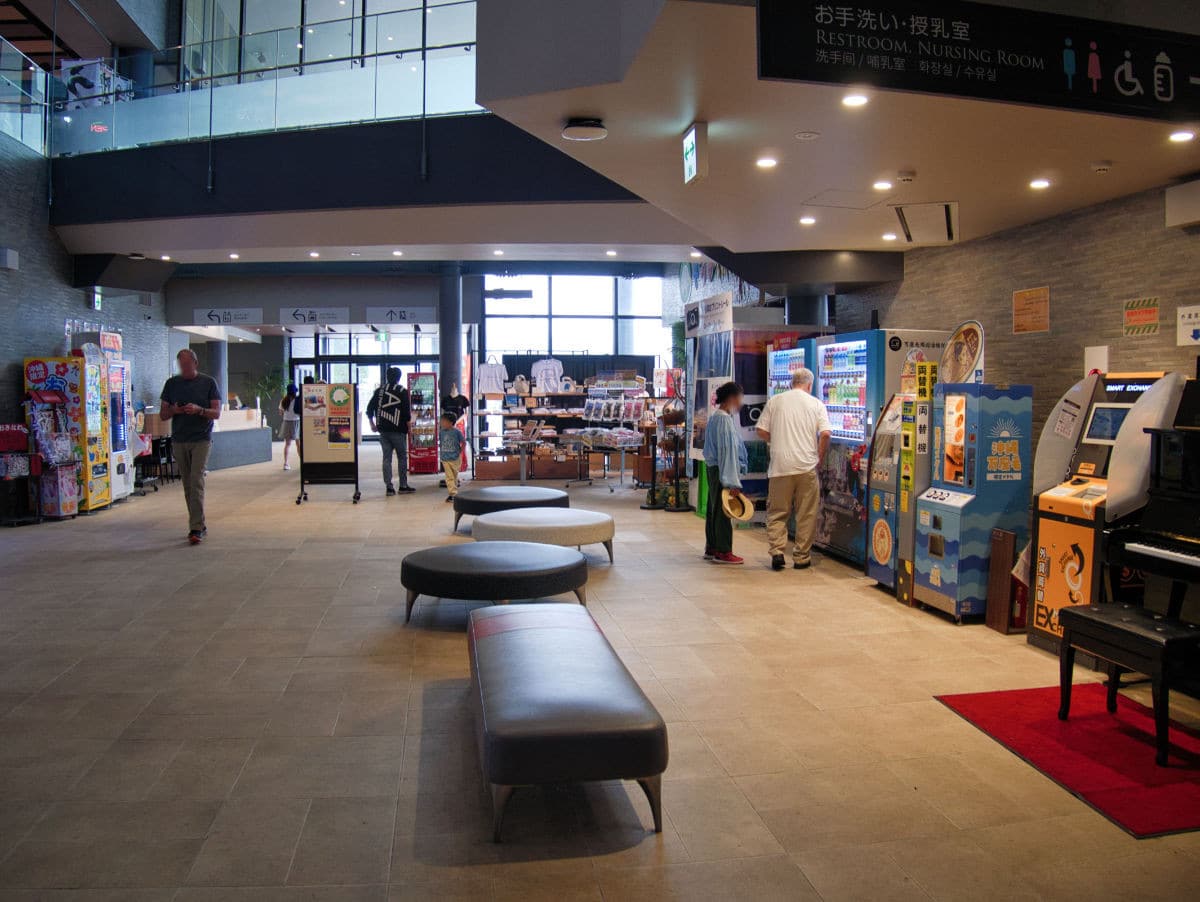
Manzamo Revitalization Facility: Restaurants and a Souvenir Shop Beside the Ticket Office
At the Manzamo entrance is the “Manzamo Revitalization Facility” (万座毛周辺活性化施設), with ticketing, a shop and dining, air conditioning for a rest, and parking nearby.
The facility has a Ryukyuan restaurant and a souvenir shop selling Onna Village sea grapes, brown sugar, awamori and other gifts, a good place to cool off after the cliff walk.
Each shop has different opening hours, and you have more choice if you arrive before evening. Manzamo is in Onna Village, and the resort hotels and beaches around it are also worth a visit, so you can combine them with the northern itinerary.
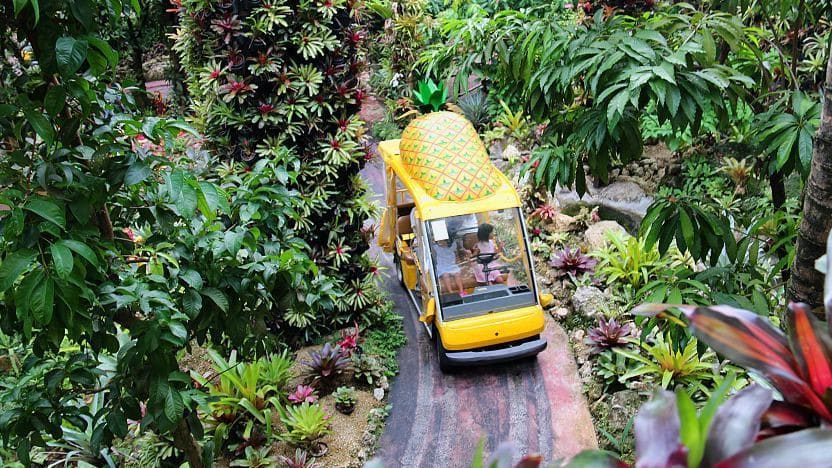
Nago Pineapple Park: An Automatic Guide Car Through the Pineapple Fields
Nago Pineapple Park is a long-established family attraction in the north. Its signature is riding a driverless pineapple-shaped guide car through pineapple fields and a subtropical botanical garden, with Chinese-language audio commentary all the way, and it is very popular with small children.
The exit leads to a large pineapple-products shop where you can sample pineapple cake, pineapple wine and jam, so you can buy northern-region souvenirs in one place. It is right on the way to the Churaumi Aquarium and works as a rainy-day backup or a rest stop.
The park is mostly indoors and shaded, one of the few attractions in the north that works as normal in the rain, which is especially handy if the weather turns and you need to adjust your plans, and the parking lot is also roomy.
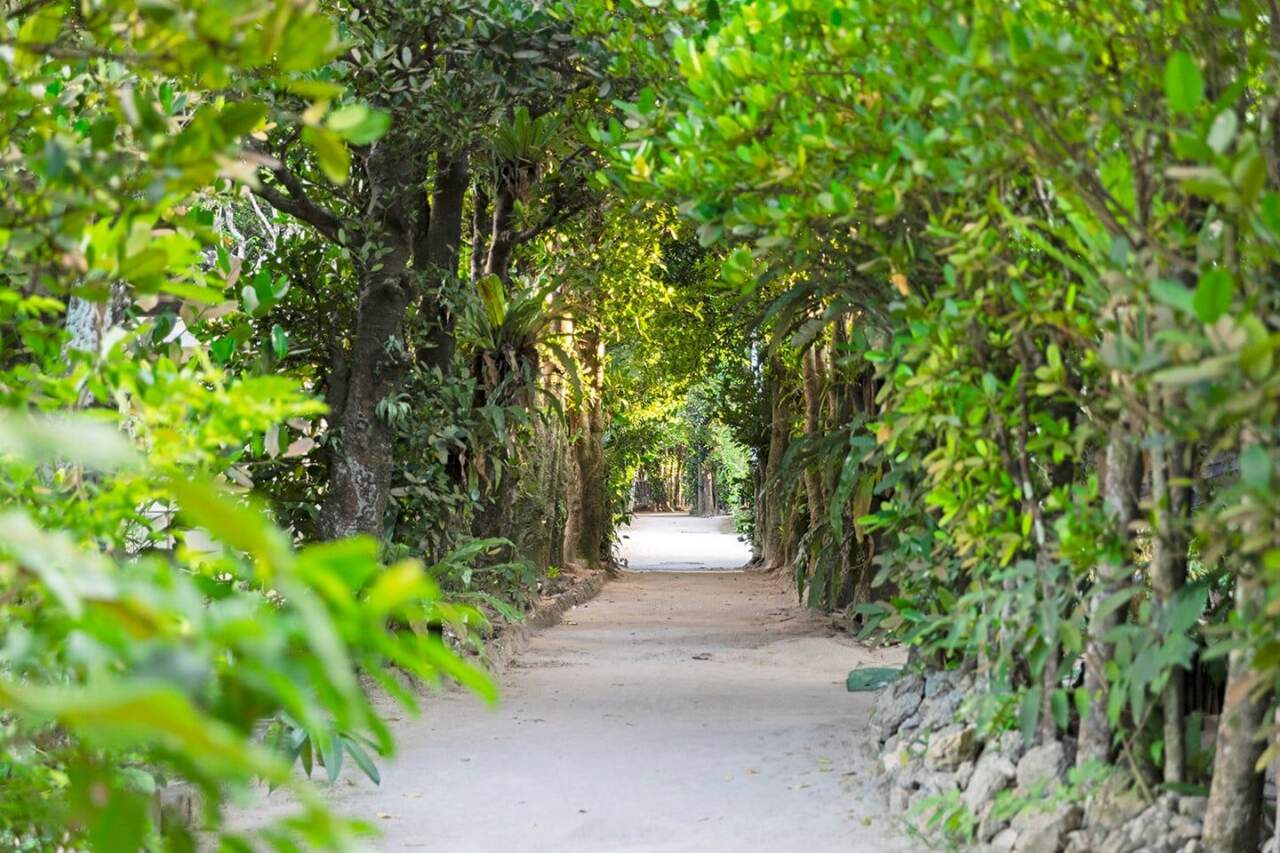
Bise Fukugi Tree Road: A One-Kilometer Green Tunnel of Thousands of Fukugi Trees
Bise Fukugi Tree Road is about a 5-minute drive north of the Churaumi Aquarium. It is a traditional village that uses fukugi trees as windbreaks, and centuries-old trees weave together into a green tunnel with beautiful light and shadow.
You can walk, rent a bicycle or ride a water buffalo cart, and a loop takes about 30 to 60 minutes. People still live here, so keep your voice down and do not enter homes; it is a good stop after the aquarium.
The village roads are narrow and residents’ cars come and go, so if driving, park in the paid lot at the entrance and do not drive into the tree road.
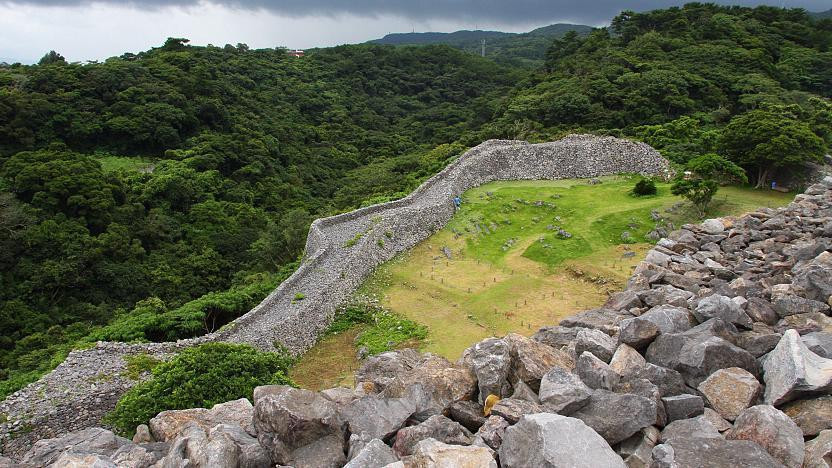
Nakijin Castle Ruins: World Heritage-Class Ryukyuan Hilltop Castle Walls
Nakijin Castle Ruins were the residence of the King of Hokuzan, with winding limestone walls rising and falling along the hills. It is inscribed as part of the World Heritage listing “Gusuku Sites and Related Properties of the Kingdom of Ryukyu” and is an important historic site in the north.
From the high parts of the walls you can see across the East China Sea, with superb views in good weather. From late January to early February the Taiwan cherry (hikanzakura) blooms, the earliest cherry blossoms in Okinawa. It is about a 20-minute drive from Kouri Island and fits well into the same day.
Admission requires a ticket, shared with the Nakijin Village History and Culture Center; for the actual price and opening hours, follow the official website announcement.
![[Now on Sale] Nakijin Castle Ruins Ticket (Nakijin Village, Okinawa)](https://travel.williamlion.tw/wp-content/uploads/sites/7/2026/08/image-629.jpg)

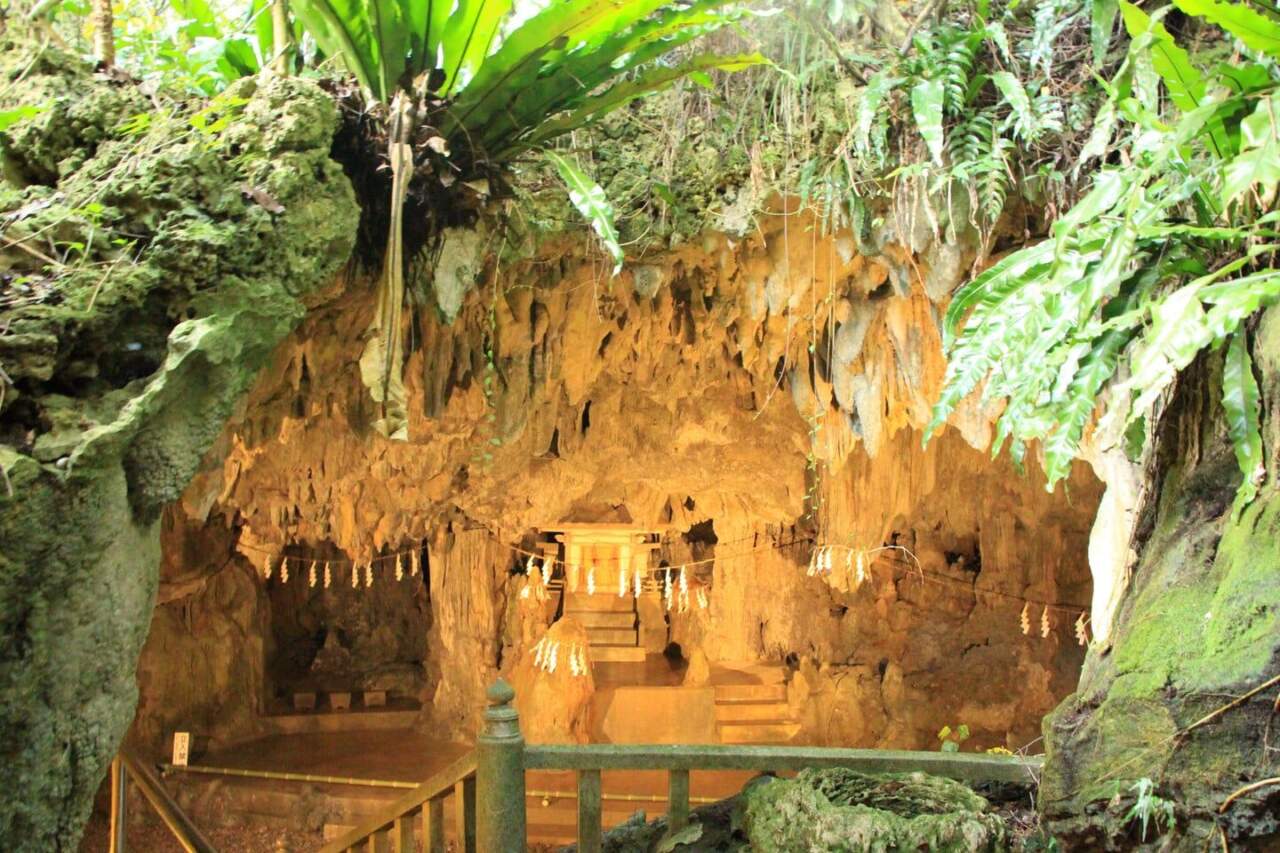
Futenma Shrine: A Cave Shrine and One of the Eight Ryukyu Shrines
Futenma Shrine is in Ginowan City and is one of the Eight Ryukyu Shrines. Behind the main hall is a stalactite cave you can apply to enter during reception hours, which is rare among Japanese shrines.
It is known for matchmaking, safe childbirth and business prosperity, and the shrine office sells omamori charms and goshuin stamps. It lies along Route 330 on the way back to Naha, making it the last stop, but cave visits are limited to certain hours, so confirm opening hours first.
The entrance is not conspicuous, so set your navigation directly to the shrine name; the grounds have a parking lot, so you don’t need to find parking elsewhere.
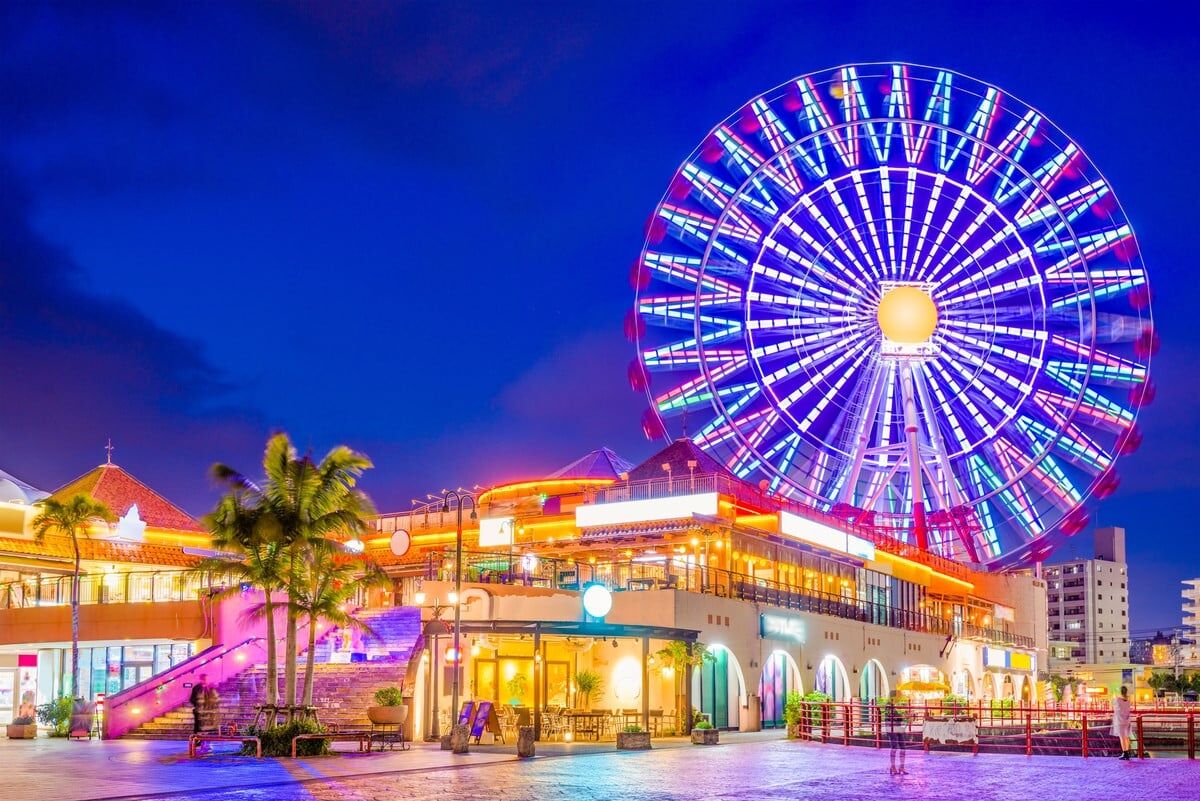
American Village: An American-Style Night Finish by the Chatan Shore
American Village is in Chatan Town, a complex that packages US military culture into a tourist district. A Ferris wheel, colorful murals and a seaside promenade create an exotic atmosphere, and it is a convenient dinner spot on the way back from the northern day trip. Next door, Sunset Beach lets you watch the sunset in the evening before dining in the district, with plenty of choices such as A&W and taco rice, and many free parking lots; it is about 40 minutes back to central Naha.
The district is crowded in the evening and parking fills up easily, so park first and then wander; on the way back, take Route 58 south along the coast, which is easier to drive than the expressway and more scenic.
How Much Does the Okinawa Churaumi Aquarium Cost? Tickets and Day Tours Compared
There are several ways to buy aquarium tickets and northern itineraries, and the price gaps and convenience differ a lot.
Churaumi Aquarium Tickets: On-Site Prices and E-Tickets
The official website (churaumi.okinawa) lists on-site prices of ¥2,180 for adults, ¥1,440 for high school students and ¥710 for elementary and junior high students, free for under 6. You can also pre-purchase e-tickets on platforms such as Klook and enter by scanning the QR code.
Drivers can buy discounted tickets at the specialty products counter of Michi-no-Eki Kyoda (道の駅許田) (cash only, open 8:30-19:00): ¥2,000 for adults, ¥1,300 for high school students and ¥650 for elementary and junior high students, free for under 6. The counter also sells other combo passes. Prices are as announced on the official website.

Classic Northern Bus Day Tour: Tickets and Transport Covered in One
Day tours from central Naha typically combine Manzamo, Kouri Island and the Churaumi Aquarium, and some add Nago Pineapple Park or American Village. You meet in the morning and are returned to the city in the evening, about 10 hours in all.
Most tours include aquarium and Manzamo admission and come with a Chinese-speaking guide, the easiest choice for travelers who don’t drive or who bring older relatives or young children. The downside is that the time at each stop is fixed, so people who like to linger at one spot will feel constrained.
![Okinawa: [Northern Okinawa Day Tour] Okinawa Churaumi Aquarium, Manzamo, Kouri Island and Bise Fukugi Tree Road | From Naha](https://res.klook.com/images/w_300,h_300,c_fill,q_75/w_80,x_15,y_15,g_south_west,l_Klook_water_br_trans_yhcmh3/activities/xvb5gwuhci11twrjkmoi/【沖繩北部一日遊】沖繩美麗海水族館・萬座毛・古宇利島・備瀨福木林道|那霸出發-Klook.jpg)
Kouri Island Sea Activities: SUP and Clear Kayaks
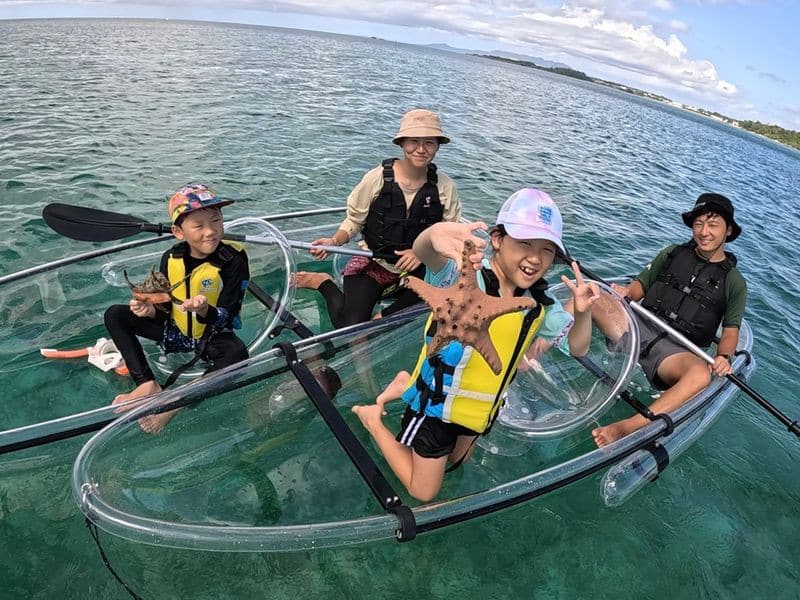
The waters around Kouri Island are very clear and the waves relatively calm, making it a popular spot on the main island for stand-up paddleboarding (SUP) and clear kayaks. Most experiences last about 1 to 2 hours, include equipment and a brief lesson, and beginners can manage.
Summer slots go fast, so book online in advance. These activities depend heavily on weather and are canceled outright when a typhoon approaches or the sea is too rough, so check the cancellation policy and refund method when booking, and schedule it in a flexible slot of your itinerary.
Most operators provide wetsuits and lockers, but you need to bring your own towel and swimsuit. If you have sensitive skin, bring coral-friendly sunscreen.
Okinawa Main Island Car Rental: The Freedom Option for a Northern Trip
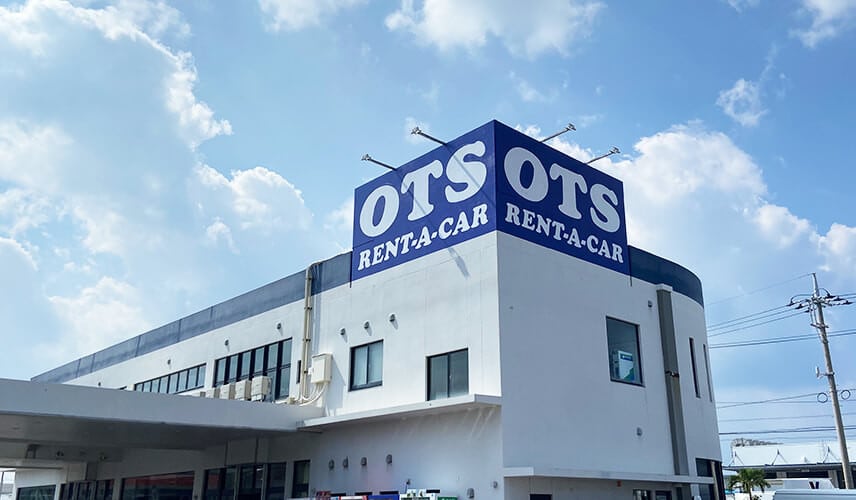
If you want to cover the three northern landmarks in a day without a group’s schedule, renting a car is almost the only way. Rental companies around Naha Airport mostly pick you up by shuttle bus to their office, and in peak season (summer holidays, long weekends) they often sell out a month or two ahead.
A Taiwanese driver’s license needs a separate Japanese translation to rent a car in Japan, which differs from the international driving permit system, so arrange it before you leave. Also, Okinawa’s ETC card rental plans and insurance add-on options are not exactly the same as on mainland Japan, so ask about each item when you pick up the car.
Where to Stay in Northern Okinawa? Motobu Town, Nago and Onna Village Compared

Where to Stay in the North? Choosing Between Motobu Town, Nago and Onna Village
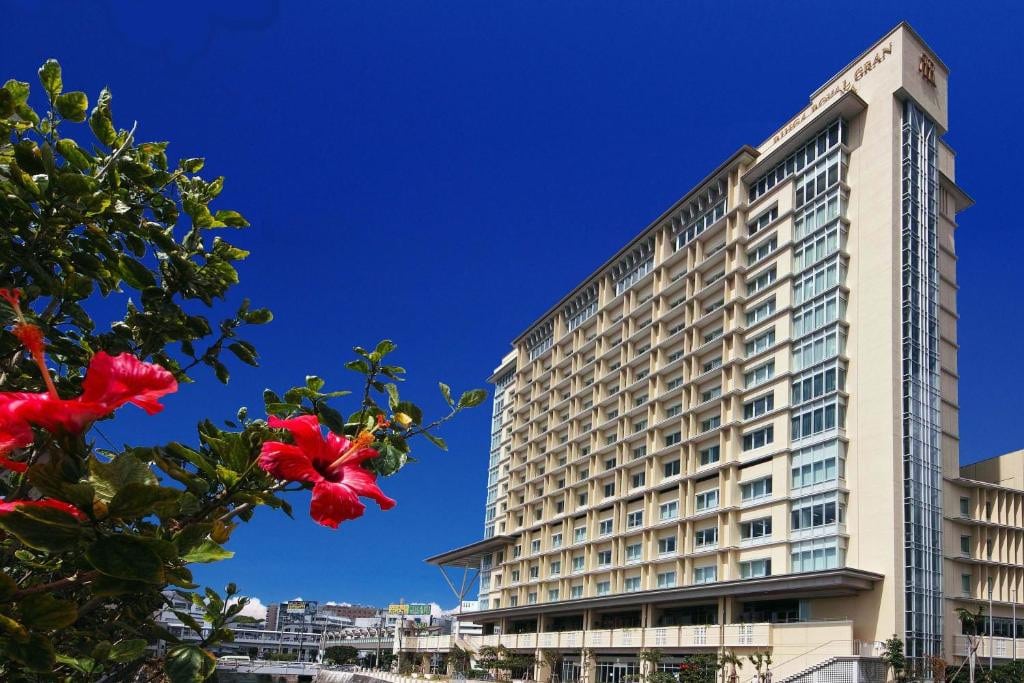
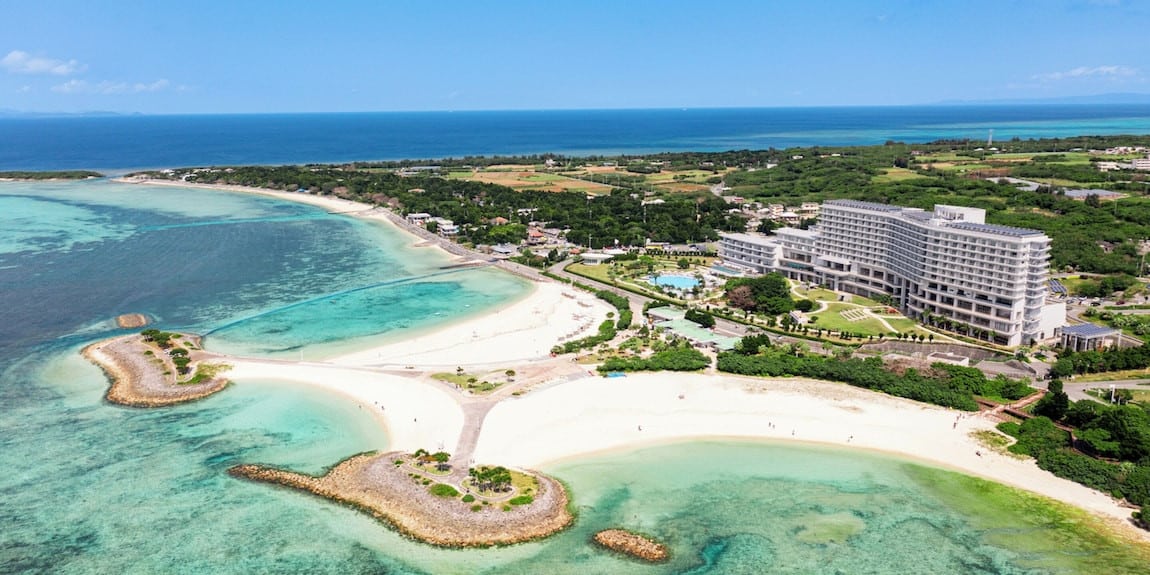
If you don’t want to go back and forth from Naha in one day, the ideal plan is to stay a night in the north. Motobu Town and Nago City are closest to the Churaumi Aquarium, a 10 to 30 minute drive away, which suits people who want to enter right at opening and avoid the tour groups.
Onna Village has the densest stretch of resort hotels on Okinawa, with many rooms offering sea views and private beaches, and it is also near Manzamo, so it works well for splitting the northern day trip into two days. If you want to keep costs down, central Nago has the most business hotels, with convenient dining and supermarkets.
Okinawa Churaumi Aquarium FAQ
Q: How much is a ticket to the Okinawa Churaumi Aquarium?
On-site prices on the official website are ¥2,180 for adults, ¥1,440 for high school students and ¥710 for elementary and junior high students, free for under 6. You can also pre-purchase e-tickets on platforms such as Klook.
Q: What time does the Churaumi Aquarium open, and is there a closure day?
Regular hours are 8:30 to 18:30, with last entry at 17:30. In 2026, the extended periods are 8:30 to 20:00 (last entry 19:00) from 4/25 to 5/6 and 7/18 to 7/31, and 8:30 to 21:00 (last entry 20:00) from 8/1 to 8/31. The official website announces no scheduled closure days until March 31, 2027, apart from temporary closures such as typhoons.
Q: How long does the Churaumi Aquarium take? Is half a day enough?
The main aquarium building alone takes about 2 hours; with the dolphin show and free facilities such as the Sea Turtle Hall and Manatee Hall, allow 3 to 4 hours. Adding Emerald Beach takes a whole day.
Q: How do I get to the Churaumi Aquarium without driving? How long from Naha?
You can take an express bus (such as the Yanbaru Express Bus, the Okinawa Airport Shuttle or the Churaumi Liner (美ら海ライナー)) straight there, about 2 to 3 hours one way; or join a Chinese-language sightseeing bus day tour from Naha, where tickets are usually included.
Q: Can I still buy discounted Churaumi Aquarium tickets at Michi-no-Eki Kyoda?
Yes. The specialty products counter at Michi-no-Eki Kyoda (道の駅許田) still sells adult discount tickets for the aquarium at ¥2,000 (cash only, open 8:30 to 19:00), cheaper than the on-site price of ¥2,180; combo passes such as the “Churaumi Tokutoku 5 Pass” (美ら海とくとく5パス) are also available. Prices may change, so check the latest announcement on the official website before buying.
Q: Is parking at the Churaumi Aquarium free? Which lot is closest?
Parking at Ocean Expo Park is free. The closest lot to the aquarium entrance is the P7 multi-level lot, and setting your navigation directly to it is the simplest.
Q: What season is best for a northern Okinawa day trip?
March to May and October to November have the most comfortable weather. July to October is typhoon season, when the sea-crossing bridge and sea activities may be canceled due to strong winds, so choose a free-cancellation option when booking.