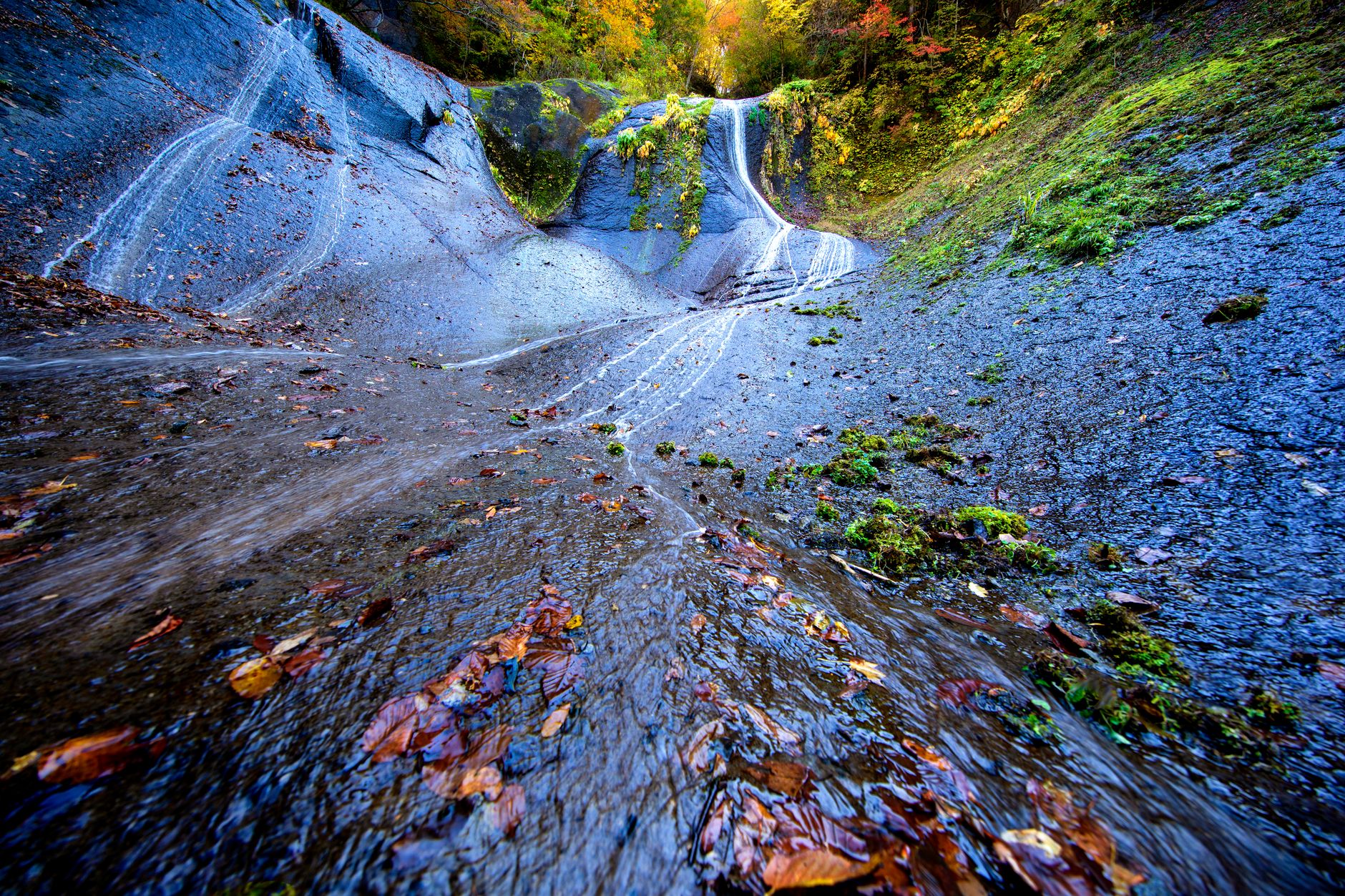

Tateyama Kurobe Autumn Foliage 2026: Three Tiers of Color on the Alpine Route’s 55th Anniversary
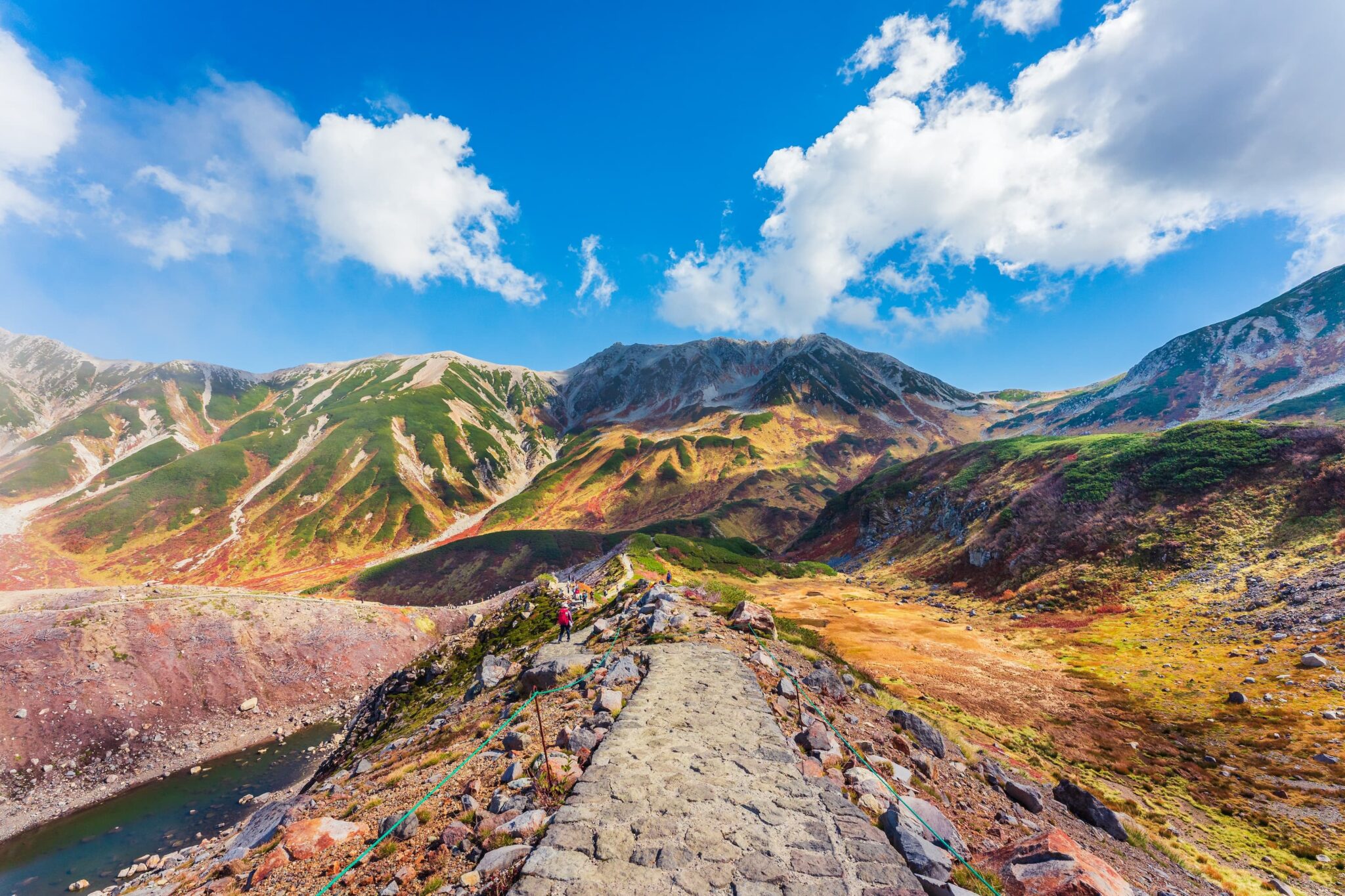
The Tateyama Kurobe Alpine Route spans Toyama and Nagano prefectures and celebrates its 55th anniversary in 2026, with a foliage season lasting about two months.
Stretching 37.2 km with a maximum elevation difference of 1,975 m, the route links six modes of transport and lets you see first snow on the summits, red maples on the slopes and green forest at the foot of the mountain, the so-called “three tiers of color,” in a single day. It suits rail and hiking fans planning a one- or two-day trip across the two prefectures.
2026 Opening Dates and Foliage Timeline at a Glance
In 2026 the Alpine Route operates from April 15 to November 30. The foliage season starts in mid-September when Murodo-daira changes color first, and runs through early November at Shomyo Falls at the foot of the mountain, a span of nearly two months.
2026 is the 55th anniversary of the full route’s opening, and from June 1 a stamp rally and AR experiences were offered as commemorative events. Check the official website for the latest announcements before you go.
Geography and Scale of the Alpine Route
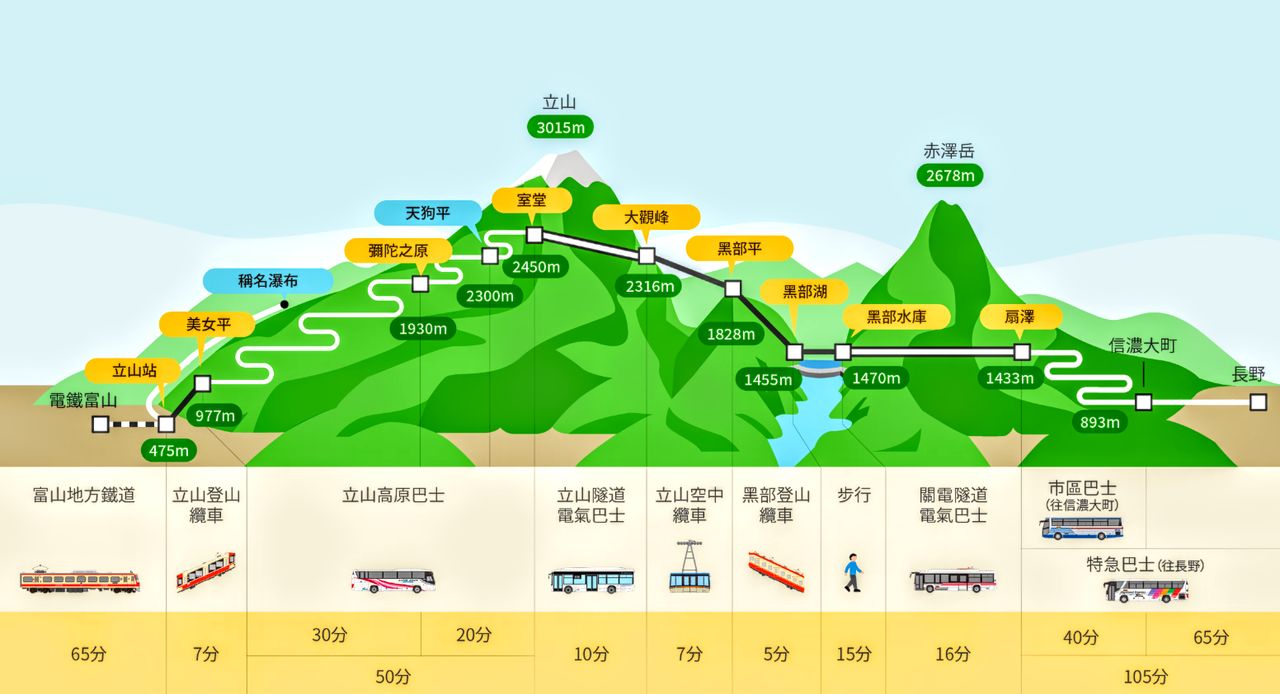
The route runs from Tateyama Station in Toyama Prefecture in the west to Ogizawa Station in Nagano Prefecture in the east, a total of 37.2 km. Its highest point, Murodo, stands at 2,450 m, a drop of 1,975 m from Tateyama Station at 475 m.
Private cars are banned along the entire route, so travel between Tateyama and Ogizawa relies on six relayed modes of transport, including a cable car, a highland bus, a tunnel trolley bus and an aerial ropeway.
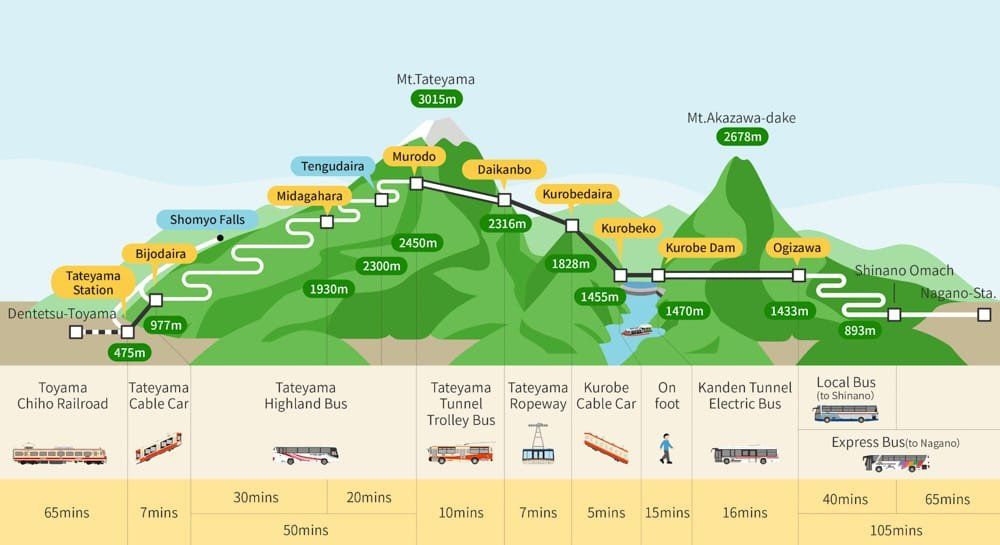
Travel Time for the Six Modes of Transport: How the 95 Minutes Break Down
Starting from the Toyama side, the sequence is the Tateyama Cable Car (about 7 minutes), Tateyama Highland Bus (about 50 minutes), Tateyama Tunnel Trolley Bus (about 10 minutes), Tateyama Ropeway (about 7 minutes) and Kurobe Cable Car (about 5 minutes). You then walk across Kurobe Dam to the Kanden Tunnel Trolley Bus, which takes about 16 minutes to reach Ogizawa Station, for a total of about 95 minutes across the six legs. Transfers on foot and waiting for departures are needed between legs, so when you include sightseeing stops, plan a full day from Tateyama Station to Ogizawa Station.
Are the Three Tiers of Color Worth Planning a Trip Around?
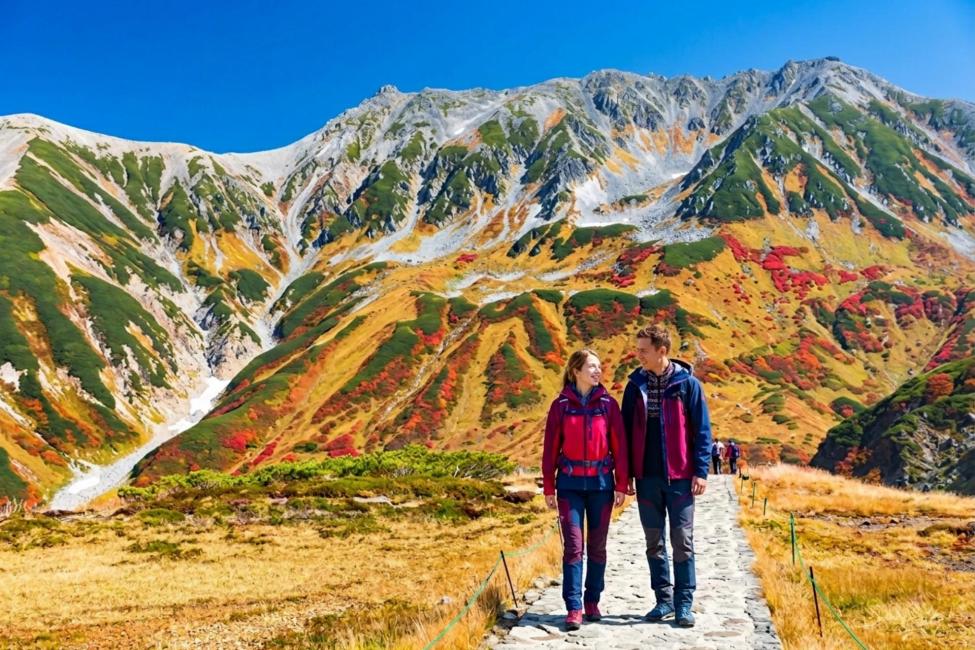
Thanks to the huge elevation difference, in a single day you can see alpine grass turning red on Murodo-daira, the sea of red maples around Daikanbo and Kurobedaira, and the gentle orange and yellow of Bijodaira. For travelers who want layered autumn scenery in one trip, it is one of the Hokuriku region’s most iconic foliage routes.
Operating information and live camera views for the Alpine Route are available on the official website “Tateyama Kurobe Alpine Route” (alpen-route.com). We recommend checking the weather and schedules the day before you go.
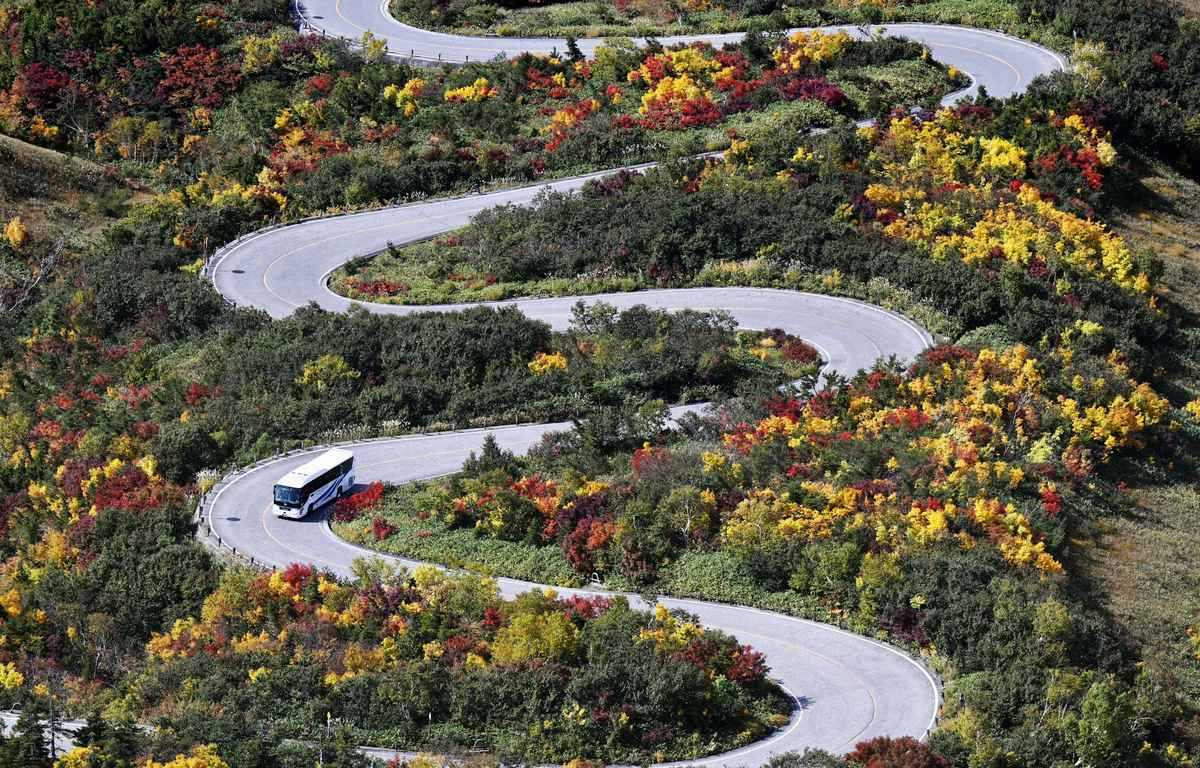
Tateyama Kurobe Transport Guide: Entering from the Toyama or Nagano Side
How to Get to Tateyama Kurobe: Transport and Fares at a Glance
Toyama side: Toyama Station to Tateyama Station takes about 1 hour and costs ¥1,420 (¥1,280 with an IC card). Nagano side: from JR Shinano-Omachi Station, take a bus for 30-40 minutes to Ogizawa Station.
The Alpine Route links Tateyama Station and Ogizawa Station with six modes of transport in about 95 minutes, at ¥10,940 one way; a round trip between Ogizawa and Murodo costs ¥12,300.
We recommend booking your Tateyama Cable Car and trolley bus times online. In peak foliage season queues often exceed 1 hour. There is also the “Autumn Trip Early-Bird Web Ticket” (Sept 1 – Nov 10).

Which Foliage Spots in Tateyama Kurobe Are Must-Sees?
From the highest point to the foot of the mountain, here are the best foliage spots to stop at along the Alpine Route.
Murodo-daira: The Highest Point and Start of the Three Tiers of Color
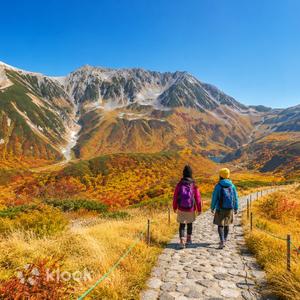
Murodo-daira stands at 2,450 m. It is the highest point on the Alpine Route and the first place to change color in foliage season. From mid-September to early October, alpine grasses turn the whole plateau red, and the shore of Mikurigaike Pond is especially spectacular.
It is also a gateway for hiking, with the trailhead for the three peaks of Tateyama within walking distance. Temperatures at Murodo-daira are often 10 to 15 degrees lower than on the plains and can approach freezing in the mornings and evenings in October, so bring a warm jacket.

Daikanbo: A Pillar-Free Ropeway Over a Valley of Red Leaves
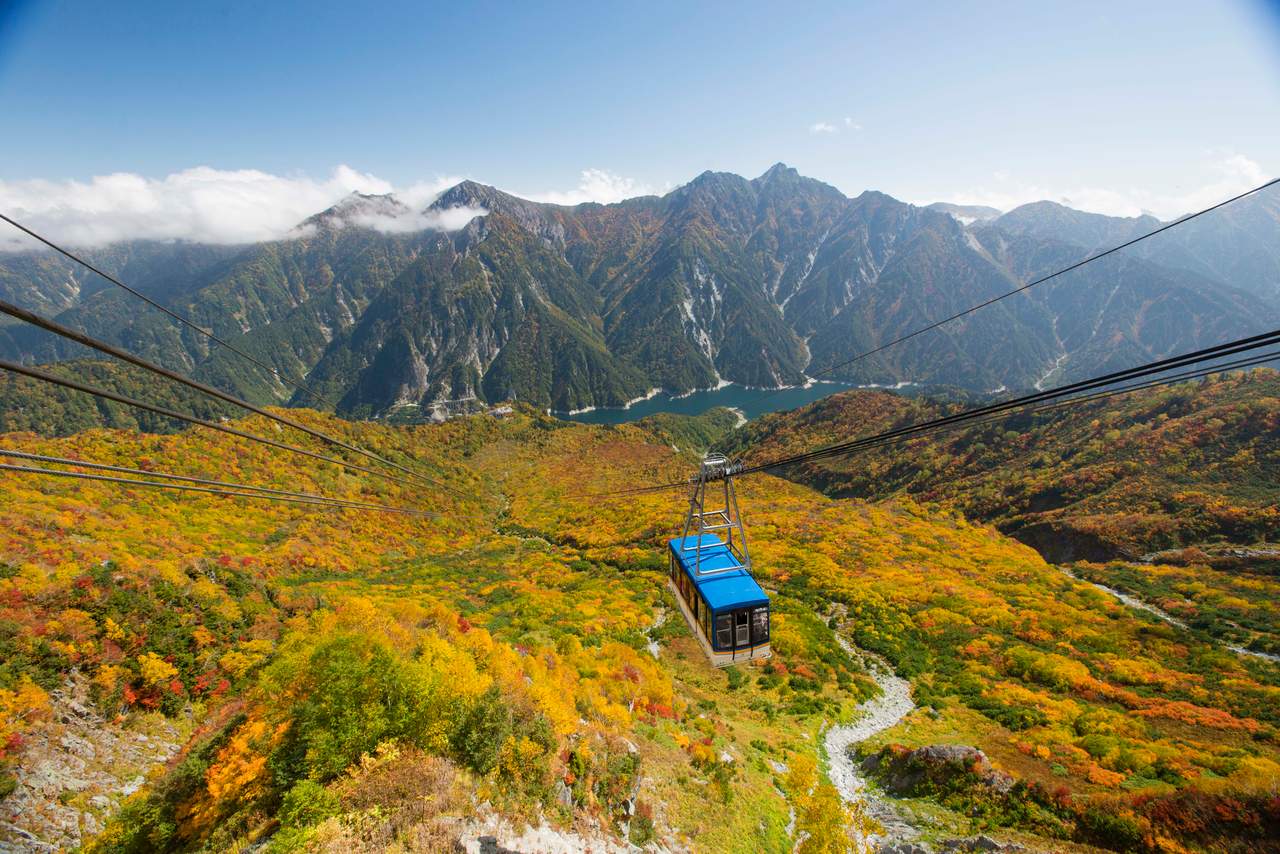
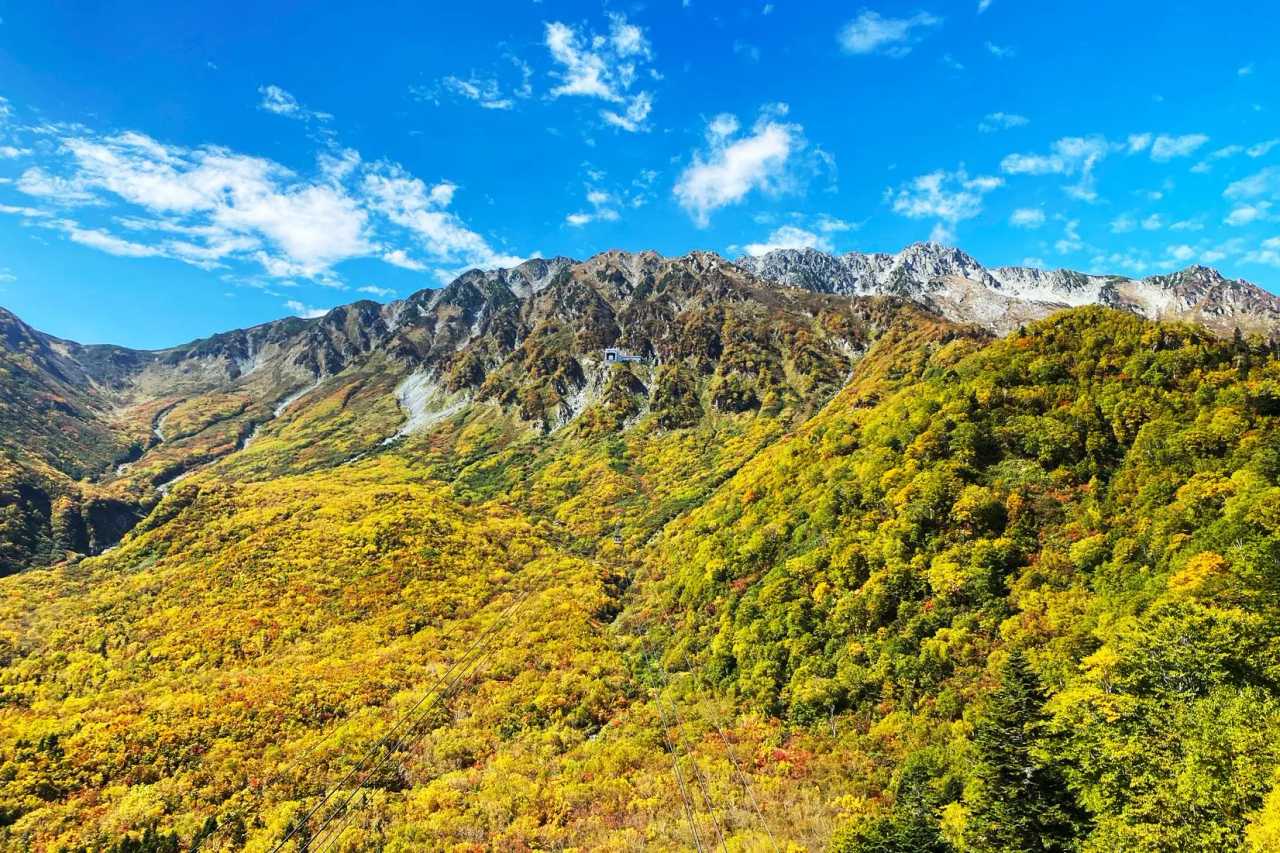
Daikanbo stands at 2,316 m and is the starting station of the Tateyama Ropeway, Japan’s largest pillar-free ropeway. It crosses the valley over 1.7 km in just 7 minutes and offers the best angle for a panorama of the foliage-filled valley.
From late September to mid-October, the valley walls on both sides of the ropeway turn from deep green to orange-red. Extra departures are added depending on crowds, and in peak season we recommend queuing early.
![[From Kanazawa] Tateyama Kurobe Alpine Route Day Tour](https://travel.williamlion.tw/wp-content/uploads/sites/7/2026/09/Klook-4.jpg)
Kurobedaira: A Forest Hideaway Between the Ropeway and the Kurobe Cable Car
Kurobedaira stands at 1,828 m, sandwiched between the Tateyama Ropeway and the Kurobe Cable Car. It is a mid-slope viewpoint for foliage from late September to mid-October, with the surrounding mixed conifer and broadleaf forest dyed in gradient tones.
From here you can transfer to the fully underground Kurobe Cable Car to Lake Kurobe in only 5 minutes, with departures about every 20 minutes. It is a good spot for a short 15- to 20-minute photo stop.
Midagahara: Sea of Clouds and a Golden Wetland Plateau
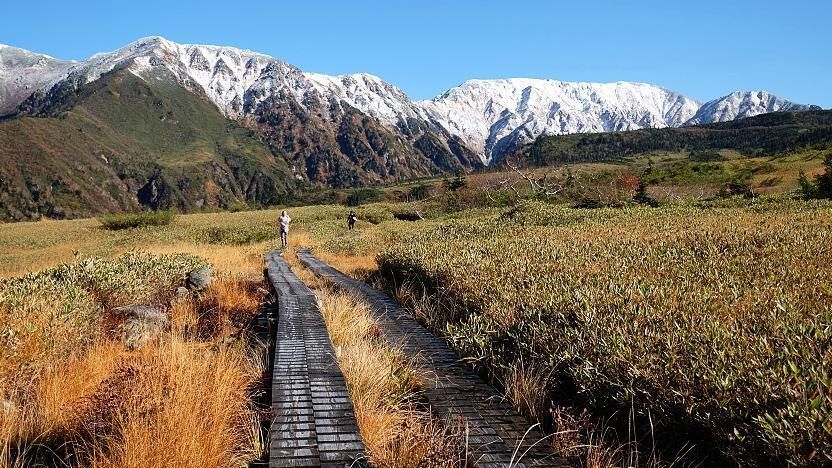
Midagahara lies at about 1,600 to 2,000 m and is a highland wetland that the Tateyama Highland Bus passes through. From late September to early October the grassland turns a mix of gold and orange-red, often accompanied by a sea of clouds in the early morning.
Midagahara has a highland bus stop where you can get off and walk the boardwalk to enjoy the wetland’s autumn grasses, and Midagahara Hotel offers lodging in the area.
![[Autumn Only] Kurobe-Tateyama Foliage Hidden Gems 2-Day Tour | 6 Alpine Transport Modes & Kamikochi Hike | From Nagoya](https://travel.williamlion.tw/wp-content/uploads/sites/7/2026/09/6-Klook.jpg)
Kurobe Dam (黒部ダム): Japan’s Tallest Arch Dam and Its Tourist Discharge
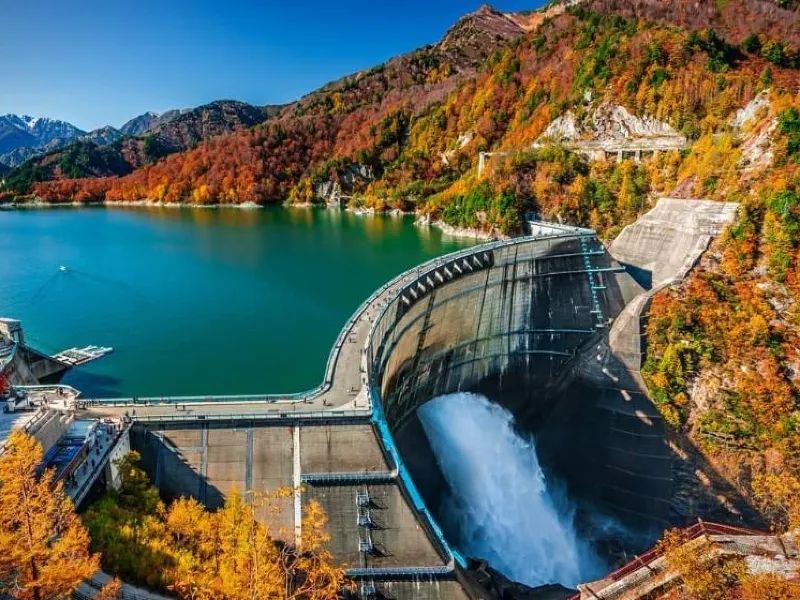
Kurobe Dam is 186 m high with a crest length of 492 m, making it Japan’s tallest dam. In 2026 the tourist discharge period runs from June 26 to October 15, and from September 11 to October 15 discharge hours are 7:00 to 16:30 (it may be suspended in bad weather).
From Kurobe Dam Station, climb 220 steps to reach the observation deck at 1,508 m, overlooking the discharge and the full view of the dam.
Shomyo Falls: Japan’s Tallest Waterfall at 350 m
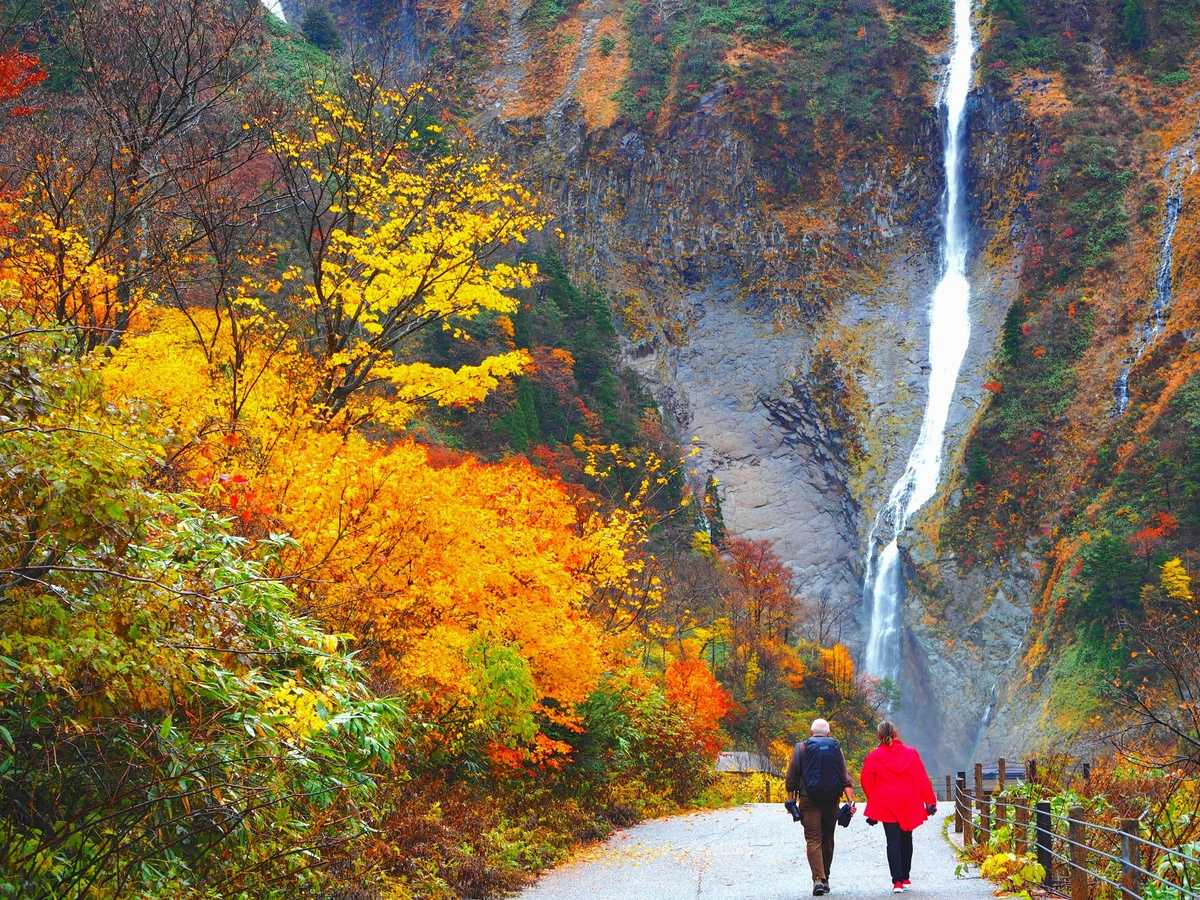
Shomyo Falls drops 350 m, the greatest drop of any waterfall in Japan. Peak foliage usually falls from late October to early November, and the orange-red cliffs woven from Japanese rowan (nanakamado) and maples are the most iconic sight.
From Tateyama Station, take the Shomyo Falls sightseeing bus for about 15 minutes (¥500 one way for adults), then walk about 30 minutes to reach the falls viewing platform.
Bijodaira: The Foliage Gateway at the Top of the Tateyama Cable Car
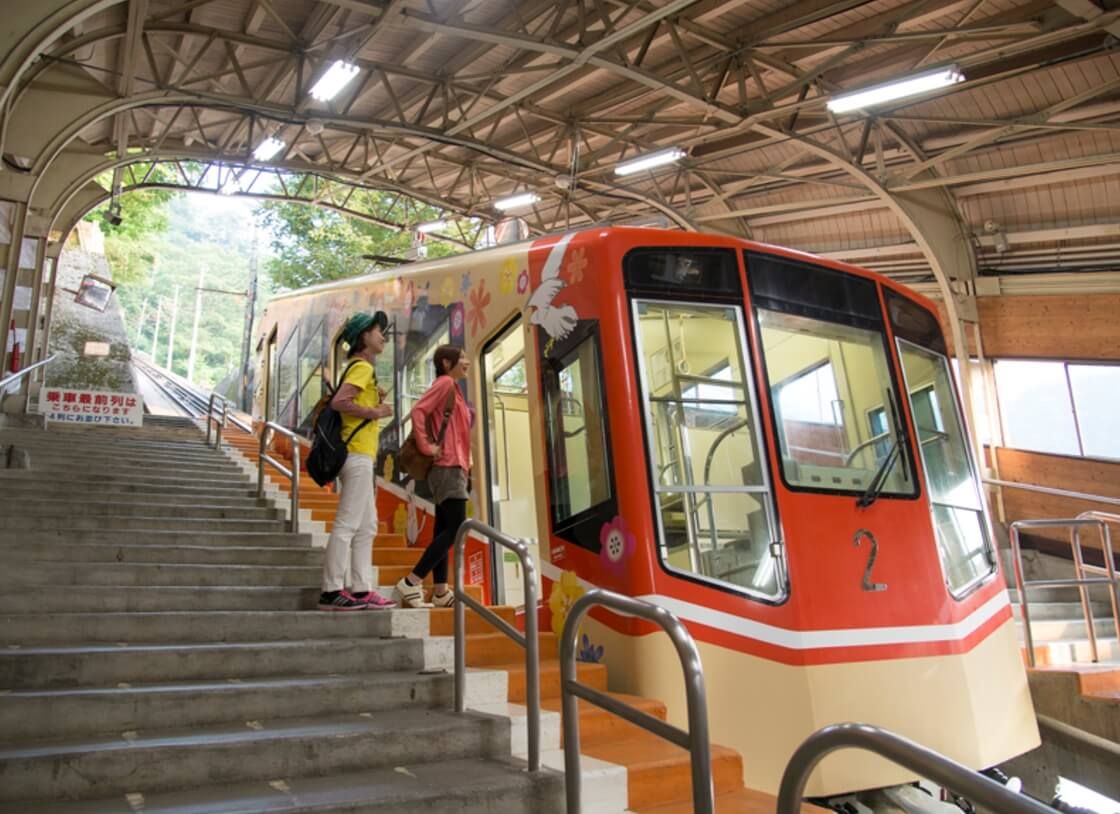
Bijodaira stands at about 977 m and is the terminus of the Tateyama Cable Car and the starting point of the Tateyama Highland Bus. Surrounded by centuries-old cedar forest, it turns a gentle orange-yellow from early to late October.
The Tateyama Cable Car runs just 1.3 km from Tateyama Station to Bijodaira, with a 500 m drop and a 24-degree gradient, taking 7 minutes, with departures about every 10 to 20 minutes. In autumn you must ride with a ticket for a designated time.
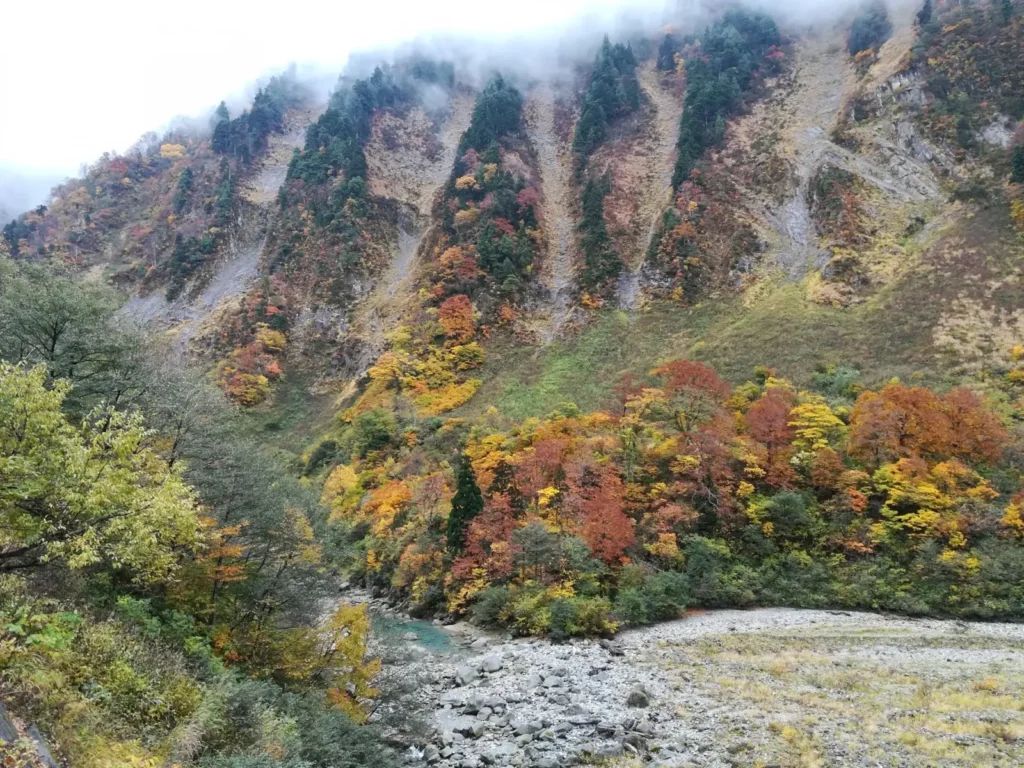
Oyama Shrine Mine Honsha: The Summit Sanctuary of Tateyama Worship
Oyama Shrine Mine Honsha stands on the summit of Mt. Oyama (3,003 m), the main peak of Tateyama, and enshrines Tateyama Gongen. It is the heart of “Tateyama worship,” one of Japan’s three sacred mountain faiths, and it takes about 2 to 3 hours to climb there from Murodo-daira.
The shrine office offers worship registration and amulets only during the climbing season (roughly July to September). The summit has strong winds and low temperatures all year, so check your gear and the weather before visiting.
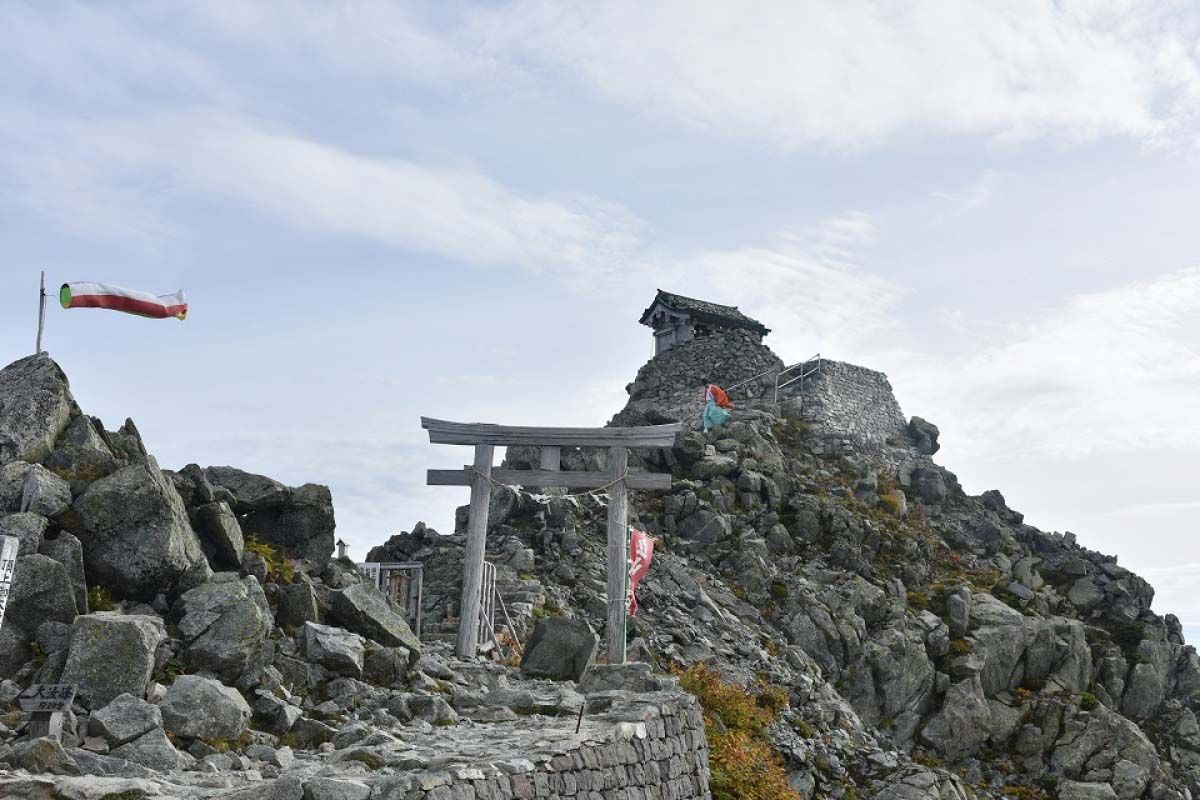
Mikurigaike Pond: An Alpine Pond Mirroring the Tateyama Range
Mikurigaike Pond lies next to Murodo-daira and is the most iconic alpine pond in Tateyama Kurobe. On a clear, windless day you can photograph a full reflection of the Tateyama range, and from mid-September the surrounding grasses turn the shore gold and red.
It is about a 15-minute walk one way from Murodo Terminal, and is the most recommended hiking stretch if you have a 2-hour stay at Murodo-daira.

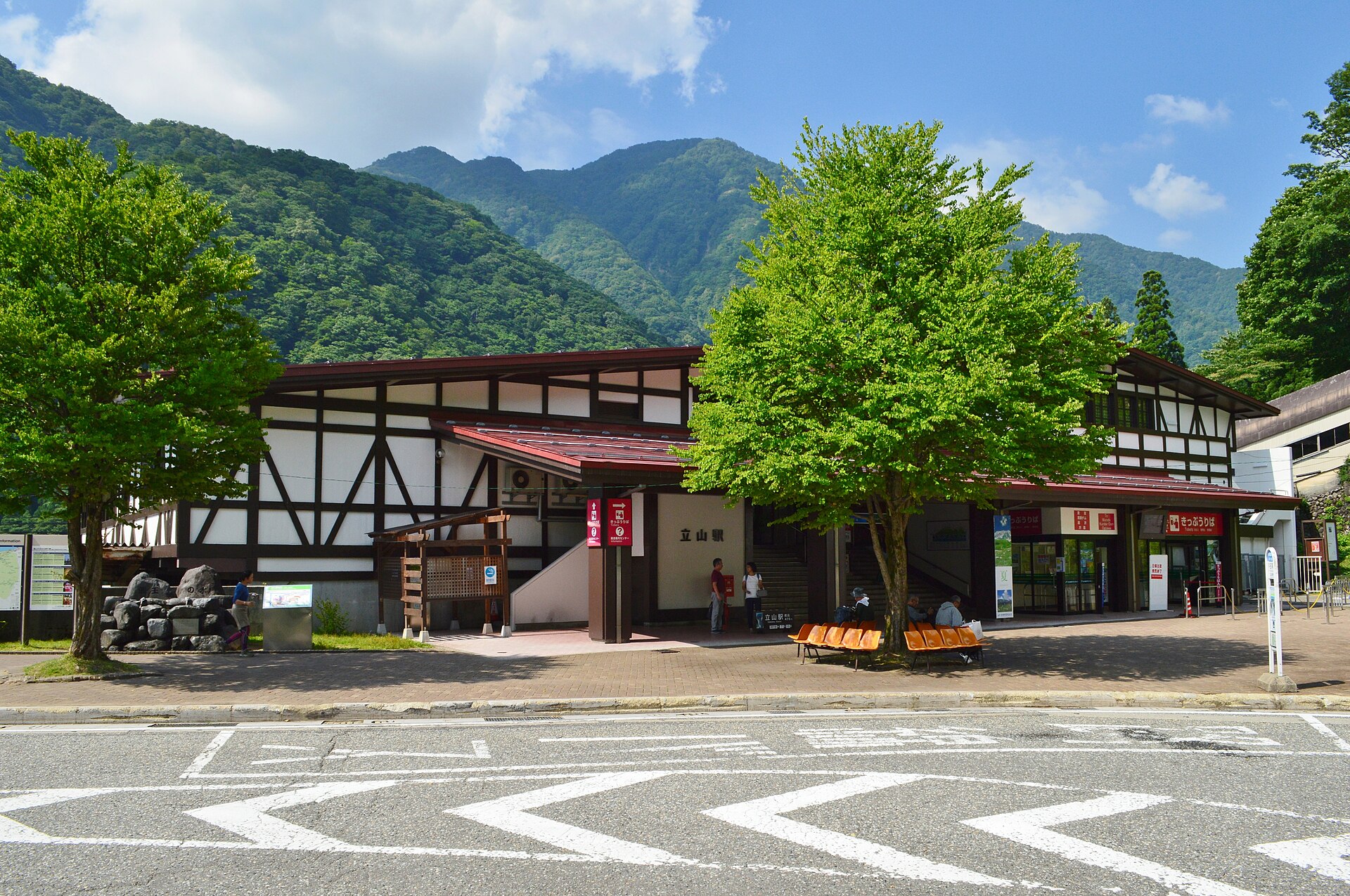
Tateyama Station: Toyama-Side Start of the Alpine Route (475 m)
Tateyama Station stands at 475 m. It is the terminus of the Toyama Chihō Railway and the Toyama-side starting point of the Alpine Route, with a ticket office, luggage storage and the boarding gate for the Tateyama Cable Car inside the station.
It takes about 1 hour from Dentetsu-Toyama Station on the Toyama Chihō Railway. During peak foliage season, we recommend reserving your Tateyama Cable Car departure time on the official website in advance to avoid long waits on site.
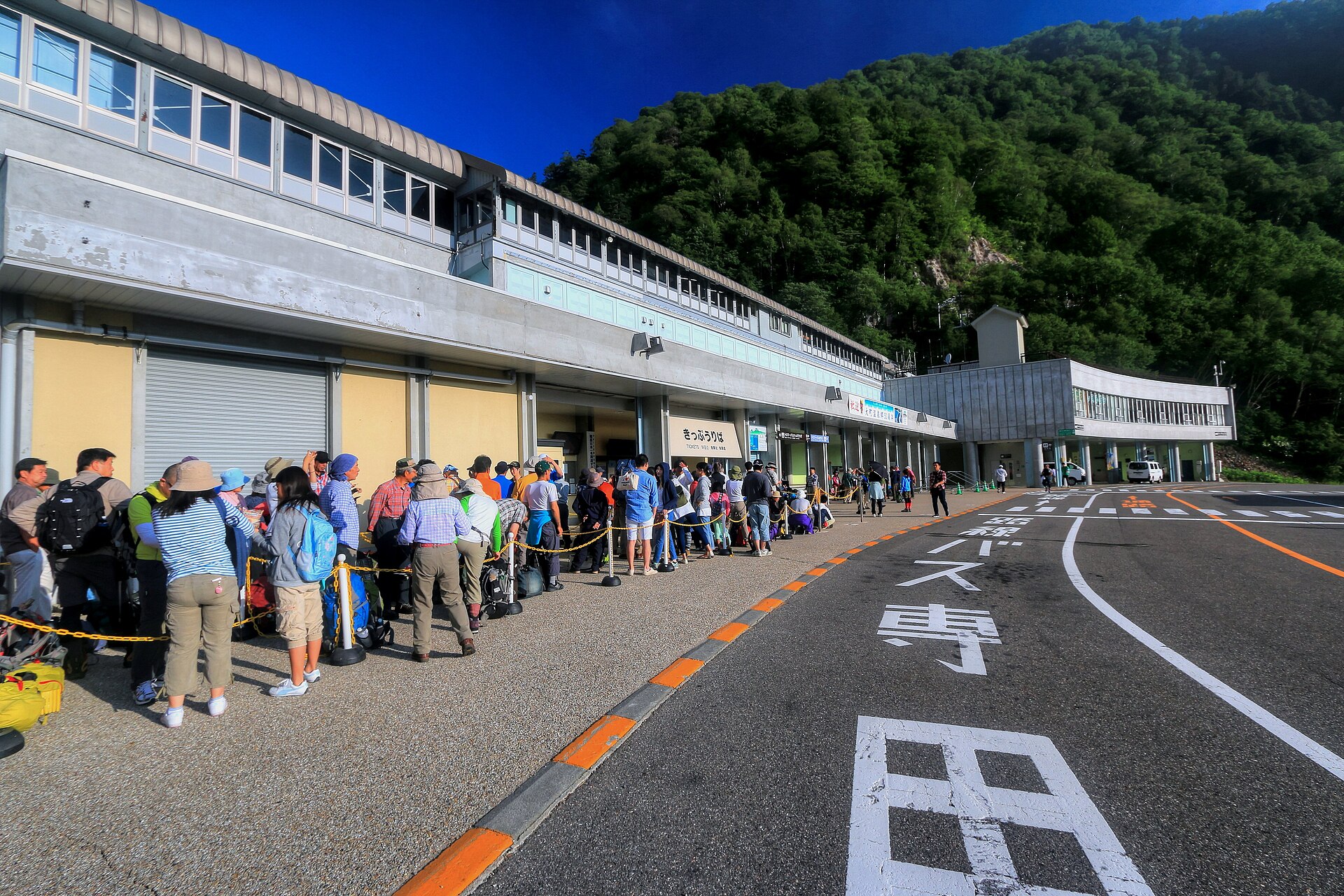
Ogizawa Station: Nagano-Side Gateway and the End of Driving Access
Ogizawa Station stands at 1,433 m. It is the Nagano-side starting point of the Alpine Route and the farthest point private cars can reach. Driving is banned entirely between Tateyama and Ogizawa, so you can only travel by transferring between the six modes of transport.
The station has ticket windows, a parking lot and a bus transfer area, and a route bus takes about 30 to 40 minutes to reach JR Shinano-Omachi Station.
Hotel Tateyama: Restaurant and Shop on Murodo-daira
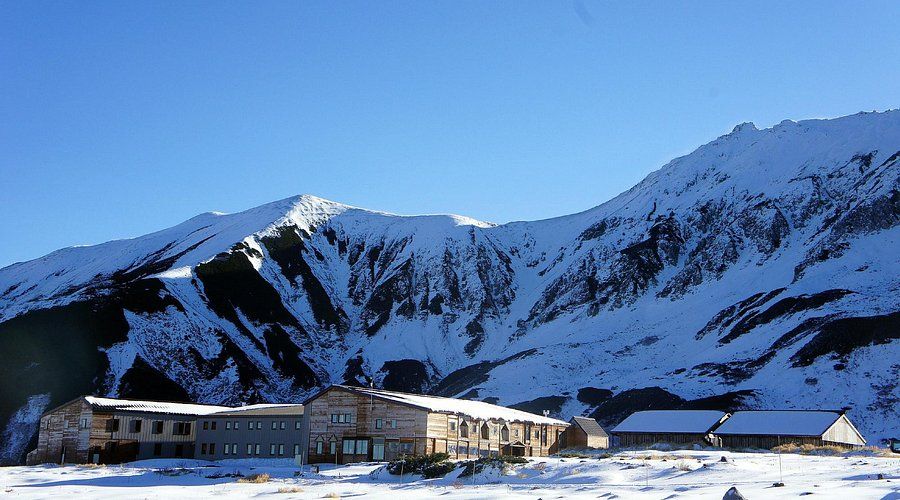
Hotel Tateyama stands on Murodo-daira at 2,450 m. It opened in 1972 and ended its lodging service on August 31, 2026, but its restaurant and shop remain open for meals and souvenirs.
If you want to stay overnight on the mountain to catch the Tateyama range at dawn, consider Tateyama Murodo Sanso or Mikurigaike Onsen at Murodo, or Tateyama Kogen Hotel at Tengudaira.
How Much Does Tateyama Kurobe Cost? Fares, Passes and Online Booking
Here are the most practical tickets and passes for Tateyama Kurobe.
Alpine Route Web Tickets: Choose Your Departure Time and Skip the Queue
With the official Web Ticket, you only need to designate the Tateyama Cable Car departure from Tateyama Station and the Kanden Tunnel Trolley Bus departure from Ogizawa Station; the return leg needs no reservation. In autumn there are also two early-bird options, the “Autumn Trip Early-Bird Web Ticket” (Sept 1 – Nov 10) and the “Yuki Tabi Early-Bird Web Ticket” (Nov 11 – Nov 30).
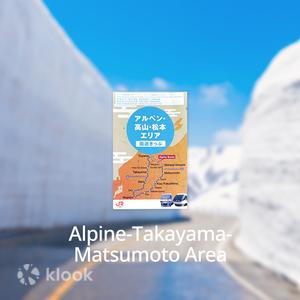
Alpine-Takayama-Matsumoto Area Tourist Pass: A Rail Pass for Foreign Travelers
This pass costs ¥24,500 for adults and combines JR train tickets with Alpine Route transport tickets. It covers JR lines between Nagoya and Toyama, Matsumoto and Shinano-Omachi, plus all Tateyama Kurobe transport, and suits travelers planning a cross-prefecture traverse.
The pass is valid for 5 consecutive days, with children (ages 6 to 11) at half price, ¥12,250. It includes the six modes of transport on the Alpine Route and can be pre-purchased on travel platforms such as Klook and KKday.
JR Central Tateyama Kurobe Alpine Free Ticket: 5-Day Pass from Nagoya
The “Tateyama Kurobe Alpine Free Ticket” departs from Nagoya at ¥24,500 for adults, valid for 5 days, and goes on sale until November 26 in 2026. It covers the outbound leg from Nagoya to Toyama, Dentetsu-Toyama to Tateyama, and the return from Shinano-Omachi to Nagoya, and suits an in-depth itinerary combining Tateyama Kurobe with Takayama and Matsumoto.
The usage period is April 15 to November 30, 2026, excluding April 27 to May 6 and August 10 to 19. The JR sections can be ridden in ordinary-class unreserved seats.
Tateyama Kurobe Day Trip Sightseeing Package: Round Trip to Kurobe Dam
A round trip between Tateyama and Lake Kurobe costs ¥16,480 for adults (Kurobe Dam is a short walk from Kurobe-ko Station). It suits travelers who only want a round trip from the Toyama side to Kurobe Dam without the Nagano-side traverse, and you can compare prices on KKday or Klook before buying.
The Kurobe Dam tourist discharge period runs until October 15, 2026, and from September 11 the discharge hours are 7:00 to 16:30. Plan to arrive within the discharge hours to have a better chance of seeing the discharge.
![[From Nagano] Tateyama Kurobe Alpine Route Day Tour](https://travel.williamlion.tw/wp-content/uploads/sites/7/2026/09/Klook-6.jpg)
Shomyo Falls Sightseeing Bus: A ¥500 One-Way Shortcut to the Falls
The Shomyo Falls sightseeing bus from Tateyama Station costs ¥500 one way for adults and takes about 15 minutes, followed by a walk of about 30 minutes to the viewing platform. It is easy to fit in before or after the Tateyama Cable Car, and no separate pass is required.
Foliage at Shomyo Falls peaks from late October to early November, the last spot along the Alpine Route to change color, so schedule it for trips after the end of October.

Where to Stay near Tateyama Kurobe: Toyama Station Area or Omachi Onsen Village?

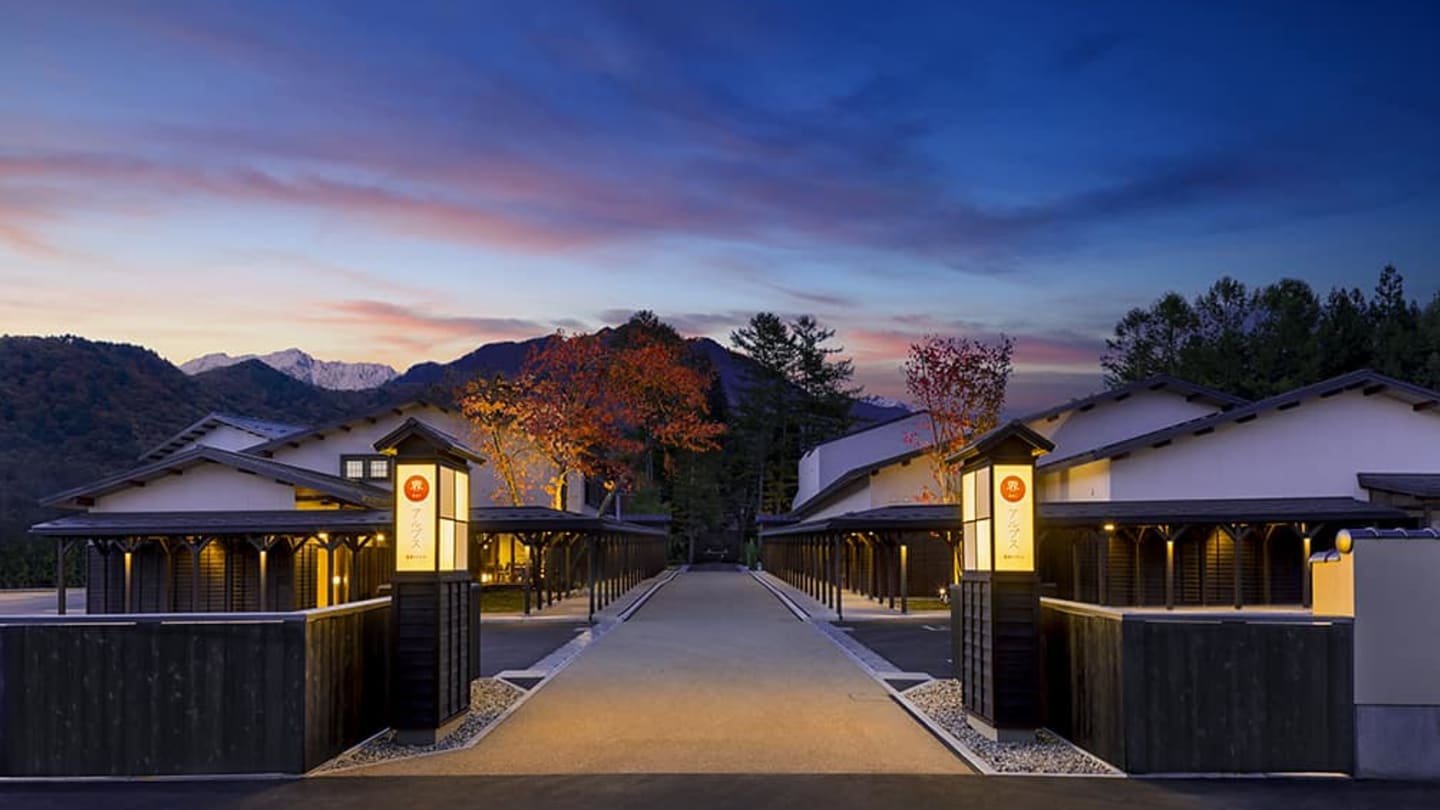
Around Toyama Station: The Most Convenient Base for Tateyama Kurobe
Toyama Station is the Toyama-side gateway to Tateyama Kurobe, and Dentetsu-Toyama Station sits next to JR Toyama Station. Staying near the station saves transfer time for early departures, and we recommend a business hotel within a 5-minute walk to match the early-morning departures.
From Dentetsu-Toyama Station, the Toyama Chihō Railway takes about 1 hour to reach Tateyama Station, ¥1,420 one way (¥1,280 with an IC card). Leave extra transfer time for the first train.
Omachi Onsen Village: Luggage-Forwarding Base on the Nagano Side
Omachi Onsen Village on the Ogizawa side has inns such as Kurobe Kanko Hotel and Tateyama Prince Hotel. The Tateyama Kurobe luggage forwarding service (¥4,000 per item, scheduled for April 15 – November 8 in 2026) is handled at the baggage counter in front of JR Shinano-Omachi Station, making it a good base for travelers entering from the Nagano side.
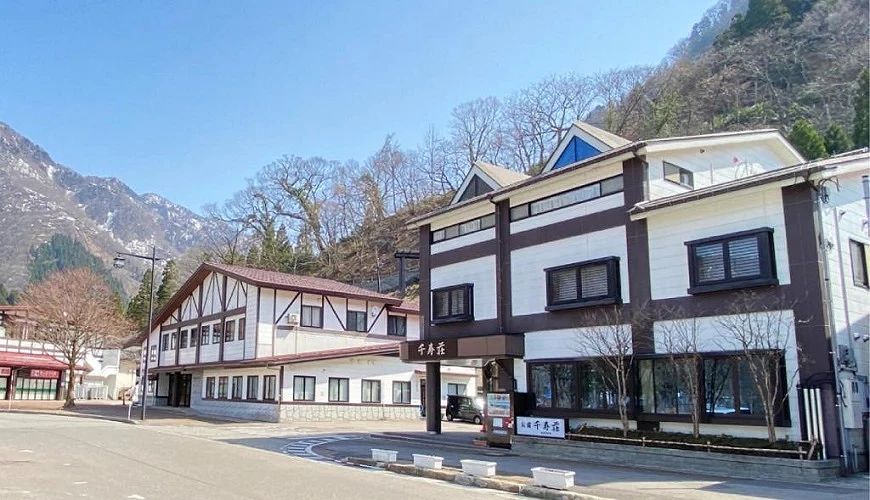
Murodo Sanso and Mikurigaike Onsen: Mountain Options After Hotel Tateyama Closes
After Hotel Tateyama ends its lodging service on August 31, 2026, Murodo-daira still has mountain huts such as Tateyama Murodo Sanso and Mikurigaike Onsen for hikers to stay overnight. Consider a night there if you want to photograph sunrise over Mikurigaike Pond or traverse the three peaks of Tateyama.
Mikurigaike Onsen sits at 2,410 m and is Japan’s highest natural hot spring. It is about a 15-minute walk along a mountain path from Murodo Terminal, and also offers lodging and day-use bathing.
Tateyama Kurobe Foliage FAQ
Q: When is the best time to see foliage in Tateyama Kurobe in 2026?
Murodo-daira changes first from mid-September, Daikanbo and Kurobedaira from late September to mid-October, Kurobe Dam and Bijodaira from early to late October, and Shomyo Falls last, through early November. Overall the foliage season runs from mid-September to early November.
Q: How much is a ticket for the Tateyama Kurobe Alpine Route?
Tateyama to Ogizawa through-ticket is about ¥10,940 one way, an Ogizawa-Murodo round trip is about ¥12,300, and Dentetsu-Toyama to Tateyama Station is ¥1,420 one way (¥1,280 with an IC card).
Q: How long does the full Tateyama to Ogizawa trip take?
The six modes of transport take about 95 minutes in total, and including sightseeing and transfer waits, Tateyama Station to Ogizawa Station usually takes 6 to 7 hours.
Q: When does Tateyama Kurobe open and close in 2026?
In 2026 the Alpine Route operates from April 15 to November 30, and the whole route is closed in winter. 2026 is the 55th anniversary of the full route’s opening, with commemorative events starting June 1.
Q: Do I need to book Tateyama Kurobe tickets online in advance?
In peak seasons (April to June and the foliage season in September and October), we strongly recommend using the official Web Ticket to designate your Tateyama Cable Car and Kanden Tunnel Trolley Bus departure times to avoid queues of over an hour. The return leg does not need to be designated.
Q: Can I send my luggage ahead at Tateyama Kurobe?
A luggage forwarding service is available between Toyama and Shinano-Omachi at ¥4,000 per item, scheduled for April 15 to November 8. Handling hours are 05:00-10:00 at Dentetsu-Toyama Station and 07:40-10:30 in front of Shinano-Omachi Station.
Q: Can I use an IC card in the Tateyama Kurobe mountain area?
IC cards work only on the Toyama Chihō Railway section between Dentetsu-Toyama Station and Tateyama Station. Once you enter the Alpine Route mountain area, none of the six modes of transport accept IC cards, so you need to buy a paper or web ticket separately.