
Nabana no Sato Illumination 2026: Tunnel of Light and the Water Light Show
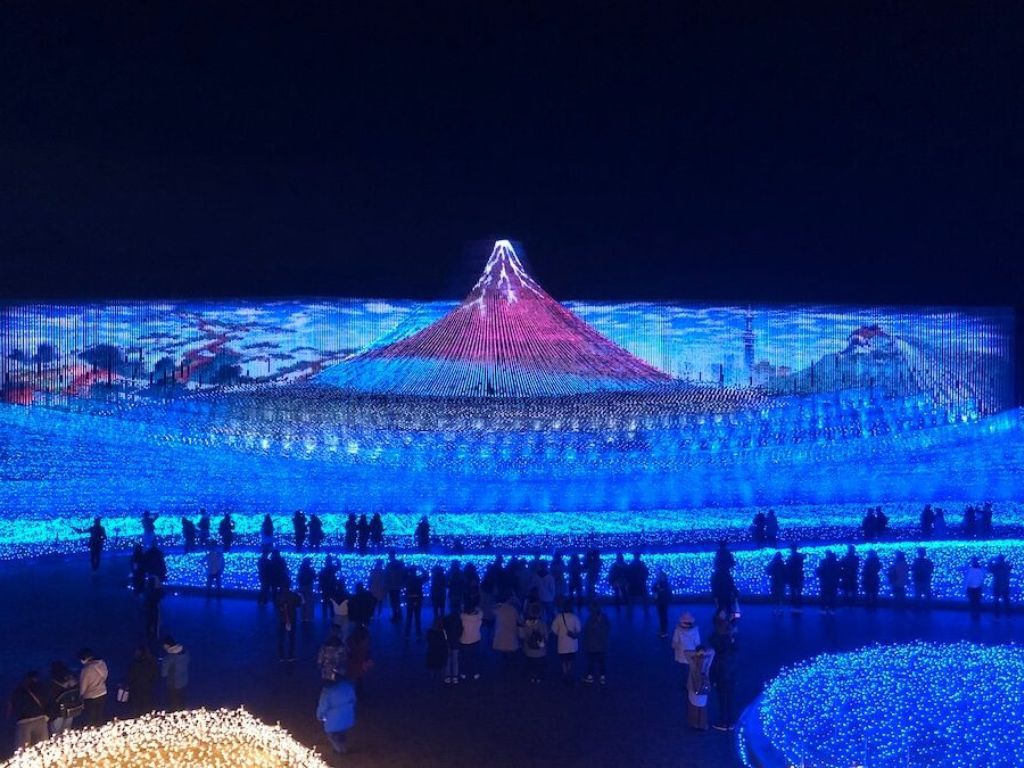
Nabana no Sato (なばなの里) in Nagashima, Kuwana, Mie Prefecture hosts one of Japan’s largest illumination events, running from October to May each year. It is known for its 200 m tunnel of light and Japan’s largest water-surface light show. It is about 30-40 minutes from Nagoya, making it a good one-day or half-day trip for couples, families and anyone looking for high-quality night views.
What Makes Nabana no Sato Famous: The Tunnel of Light and the Water Light Show
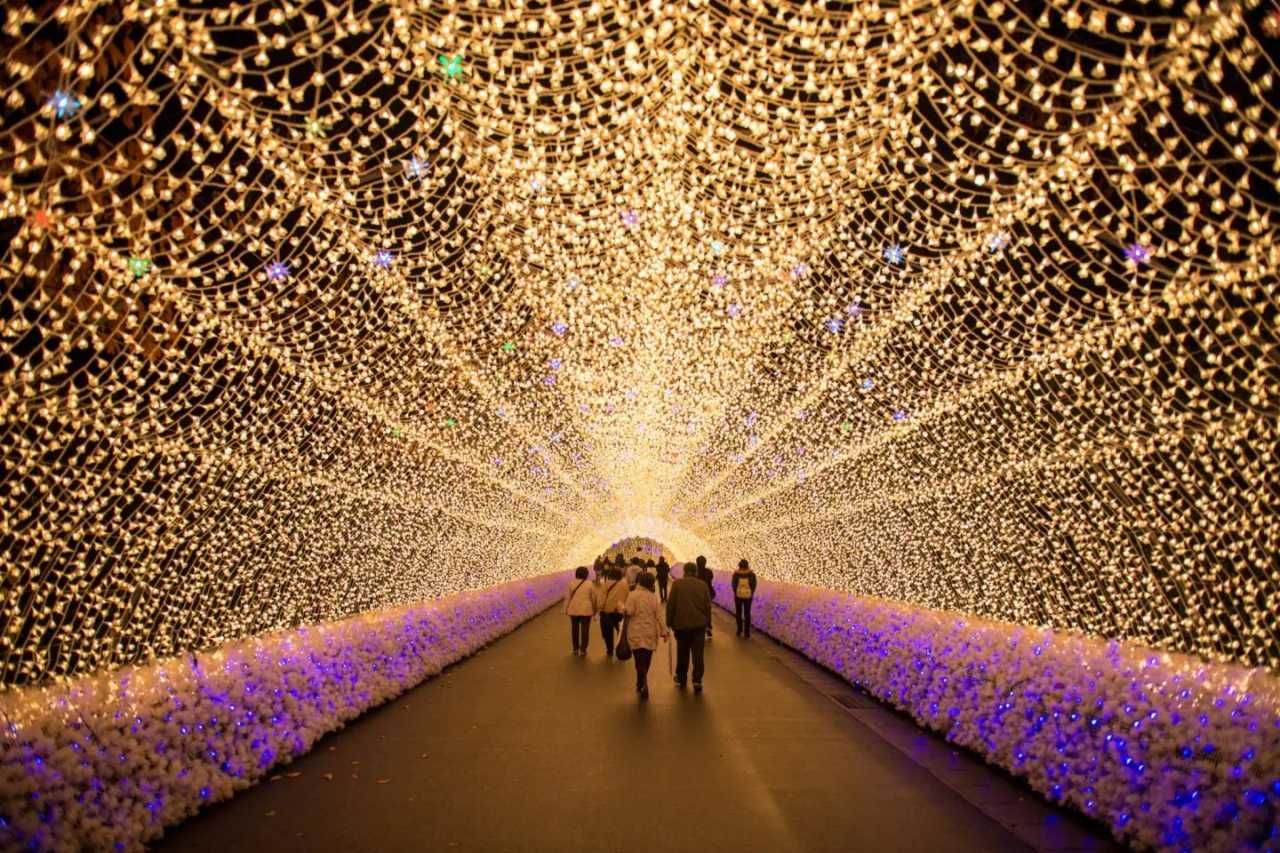
The two signature highlights of Nabana no Sato are the roughly 200 m tunnel of light “Hana Kairo” and “River of Light,” Japan’s largest water-surface light show. Both have appeared in guidebooks and on social media, and they are the shots you can’t miss and the core destinations most visitors build their route around.
A New Theme Every Year: Something Fresh Each Season
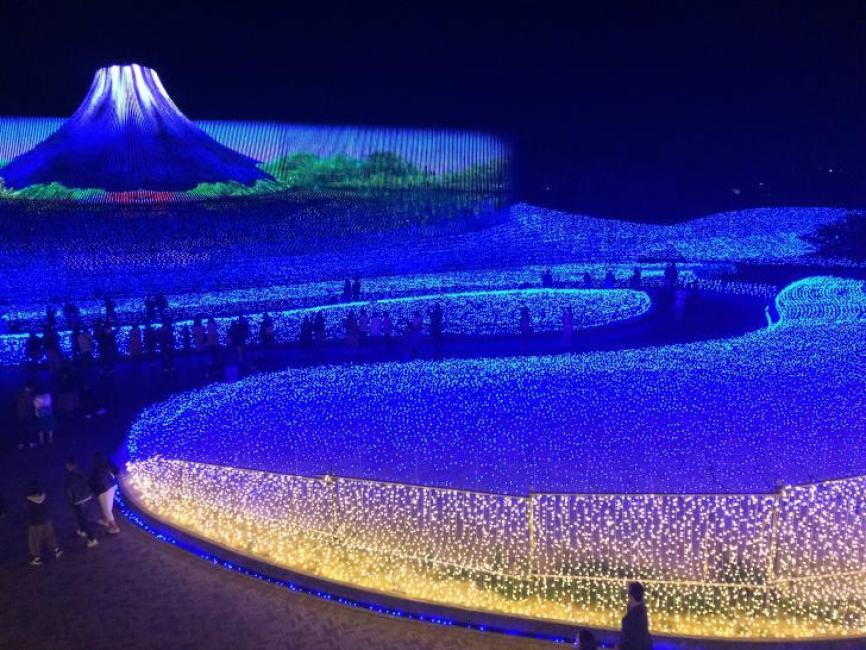
The water light show at Nabana no Sato changes its theme and music every year. The 2025-26 season is themed “Zipangu” (the land of gold), inspired by ukiyo-e and the traditional scenery of Japan’s four seasons, while past years have featured cherry blossoms, Mt. Fuji and more. The new theme for 2026-27 will follow the official announcement. Because the content differs each season, it is worth a return visit even if you have been before.
The official website “Nabana no Sato” (nagashima-onsen.co.jp/nabana) announces each season’s theme, opening hours and admission fees, so check it before you go.
Flowers and Lights Together: Enjoy Blooms During the Illumination Season
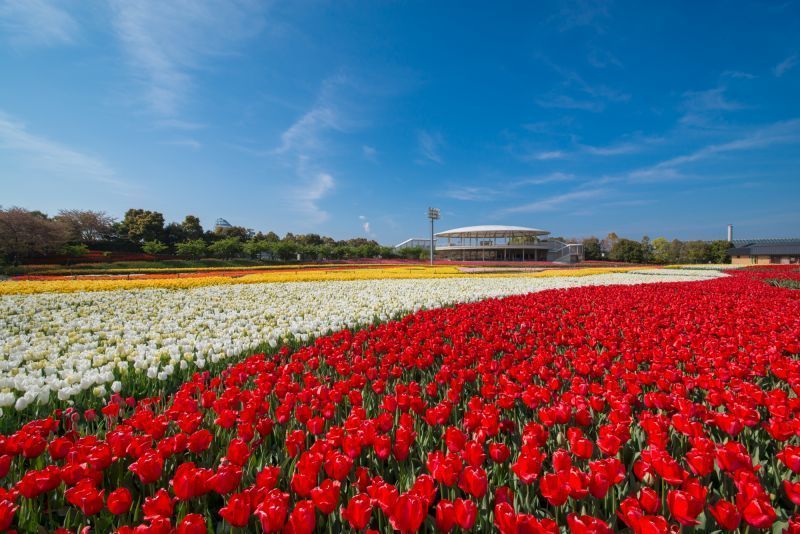
The Nabana no Sato season spans autumn, winter and spring. Besides the night illumination, the park plants seasonal flowers such as autumn leaves, plum blossoms, tulips and roses, so you can see flowers by day and lights at dusk. This is one of the biggest points that set Nabana no Sato apart from purely illumination-only attractions.
How to Get to Nabana no Sato: A Complete Guide to Transport and Costs
From Nagoya there are three ways to reach Nabana no Sato: train plus bus, a direct bus, or driving, each with pros and cons.
How to get to Nabana no Sato: train, bus and driving at a glance
By Kintetsu train, go from Kintetsu Nagoya Station to Kintetsu Nagashima Station (about 17-28 minutes by express), then take a shuttle bus for about 10 minutes. The fare is ¥250 one way for adults and ¥130 for children, and IC cards such as Manaca are accepted. During the illumination season, buses from Kuwana Station do not run, and departures are from Nagashima Station instead. You can also take a direct bus from the Meitetsu Bus Center, which takes from about 30 minutes and costs about ¥1,000 for adults, with no transfers. By car, take the Higashi-Meihan Expressway and exit at Nagashima IC. The park has about 5,700 free parking spaces, and tour buses are charged ¥2,000.



Must-See Attractions at Nabana no Sato: The Tunnel of Light and All the Illumination Zones
The illumination at Nabana no Sato is divided into several themed zones, with the tunnel of light and the water light show as the must-see core. Admission closes 30 minutes before closing time, and weekday evenings are usually less crowded than weekends. Below are the highlights in order of popularity.
The “Hana Kairo” Tunnel of Light: A Dreamy 200 m Flower-Lantern Corridor
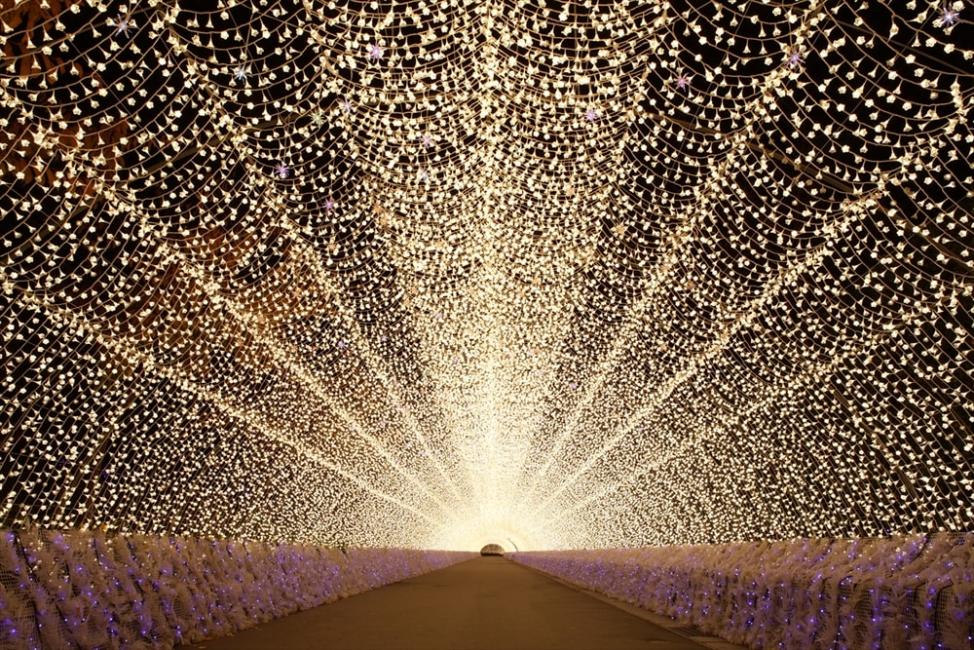
“Hana Kairo” is the signature attraction of Nabana no Sato. Roughly 200 m long, tens of thousands of LED bulbs are shaped into small flowers and stacked layer upon layer along the path into a tunnel of blossoms. It was featured in the bestselling book 死ぬまでに行きたい!世界の絶景 (Breathtaking Places to Visit Before You Die) and is one of the most popular photo spots on social media. We recommend going 20-30 minutes after the lights come on, during the “blue hour,” when the sky still has some glow that pairs best with the corridor. Weekends are crowded, while weekday evenings are roomier and easier to photograph.
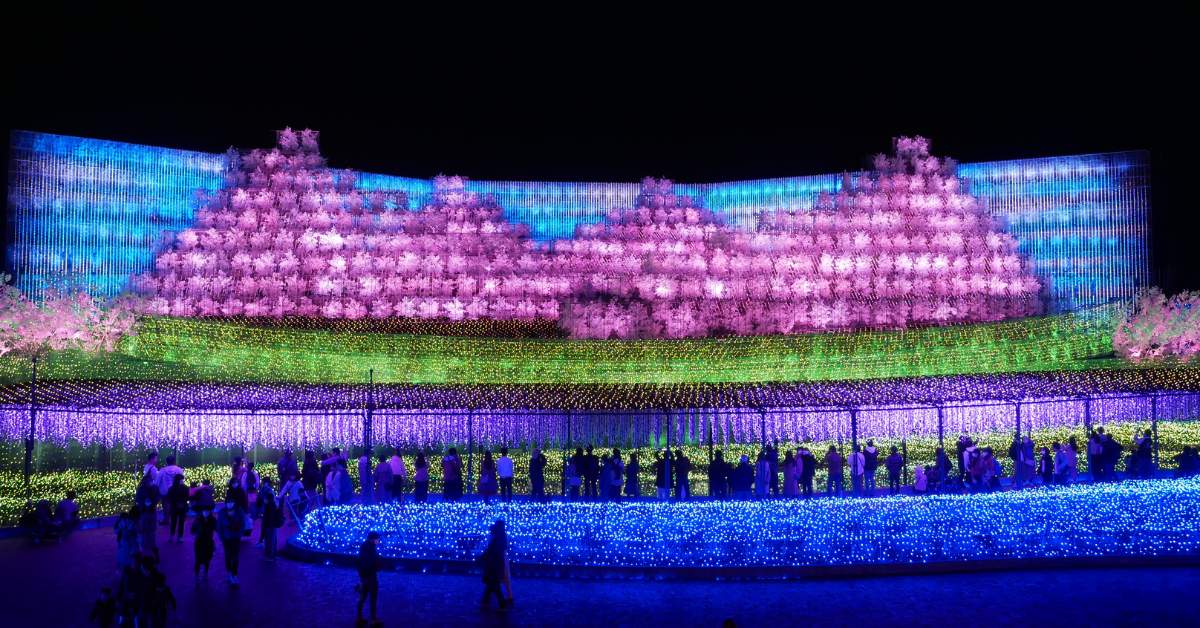

The “River of Light” Water Light Show: Japan’s Largest Sea of Lights on Water
“River of Light” uses the reflections on the water at the center of the park to create Japan’s largest water-surface light show, with lights and music performed in sync. The colors and storyline change each year with the theme, and the theme and performance content follow that year’s official announcement. Reflections are clearest and most complete when there is no wind, and this is the most striking photo spot in the whole park. We recommend visiting it right after the tunnel of light, so you don’t have to backtrack.
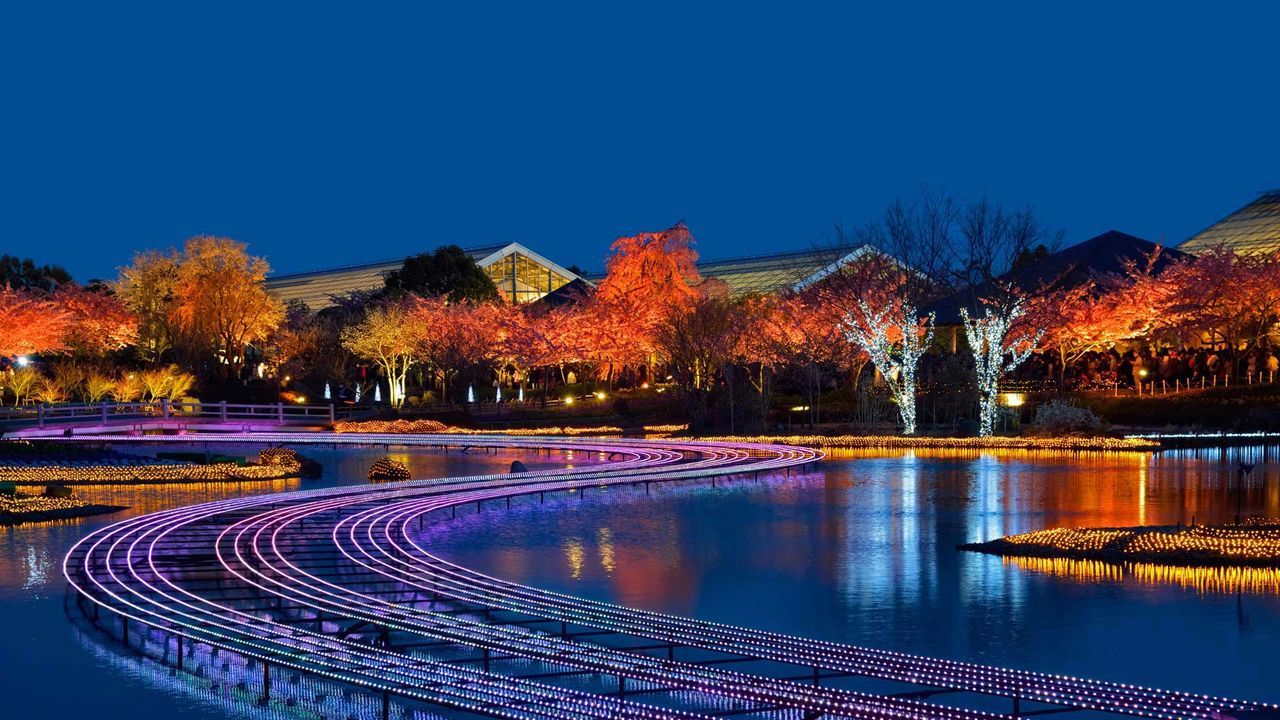
The 100 m Tunnel of Light: A Second Corridor That Echoes Hana Kairo
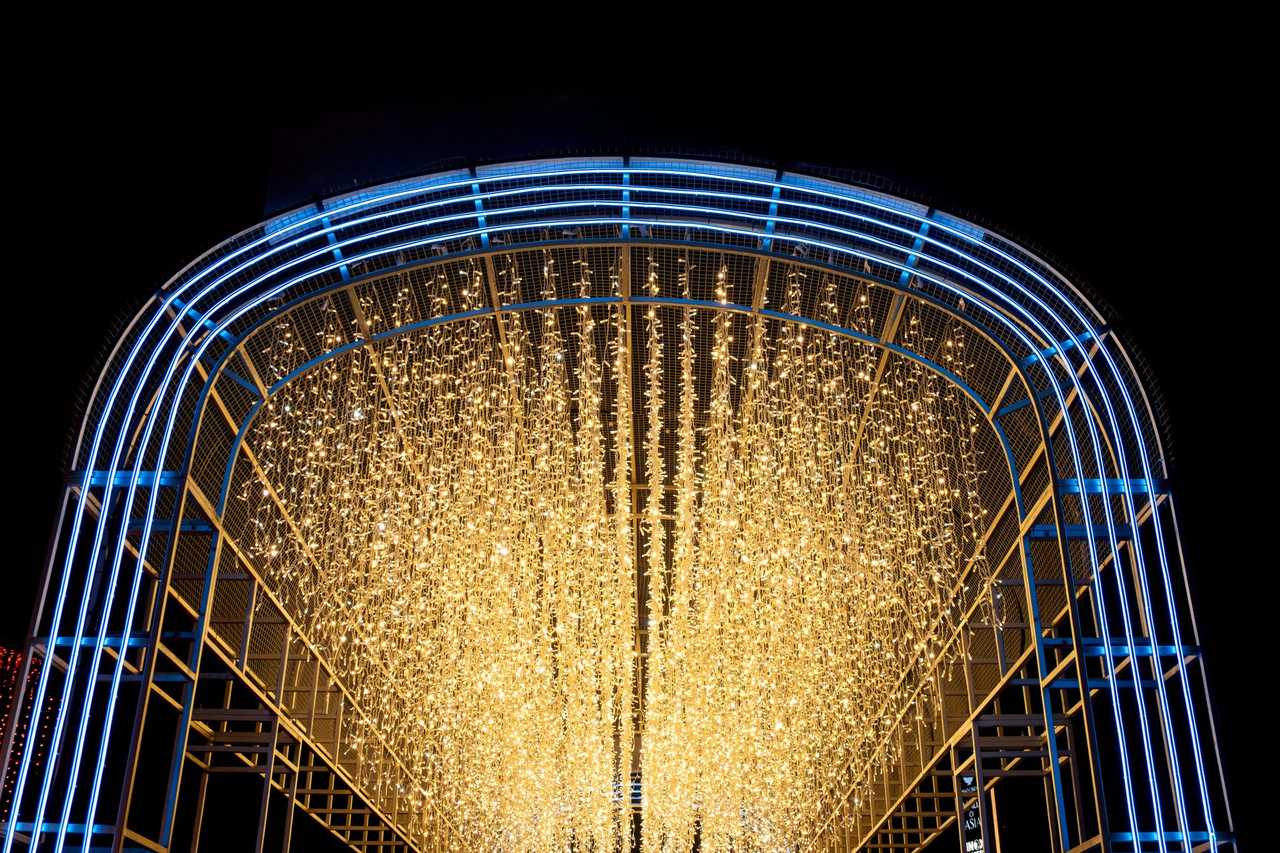
Besides the 200 m Hana Kairo, the park has another tunnel of light about 100 m long. Its colors and design change each season, forming a twin-tunnel illumination route with Hana Kairo. The lighting is bright, which suits close-up shots of the details or family photos.
The lights are on from around sunset until closing time. Actual opening hours vary by season, so check the official announcements before you go.
Sea of Light: A Night Garden Lit Around a Thousand-Year-Old Olive Tree
“Sea of Light” is in the area of the Millennium Garden (ミレニアムガーデン), where an olive tree about a thousand years old is surrounded by colorful lights. This “Millennium Tree” is said to bring happiness and is a popular spot for couples’ photos. This zone has roomier paths and more spread-out crowds, so it is a good place to slow down and take it in after the tunnel of light and the water light show.
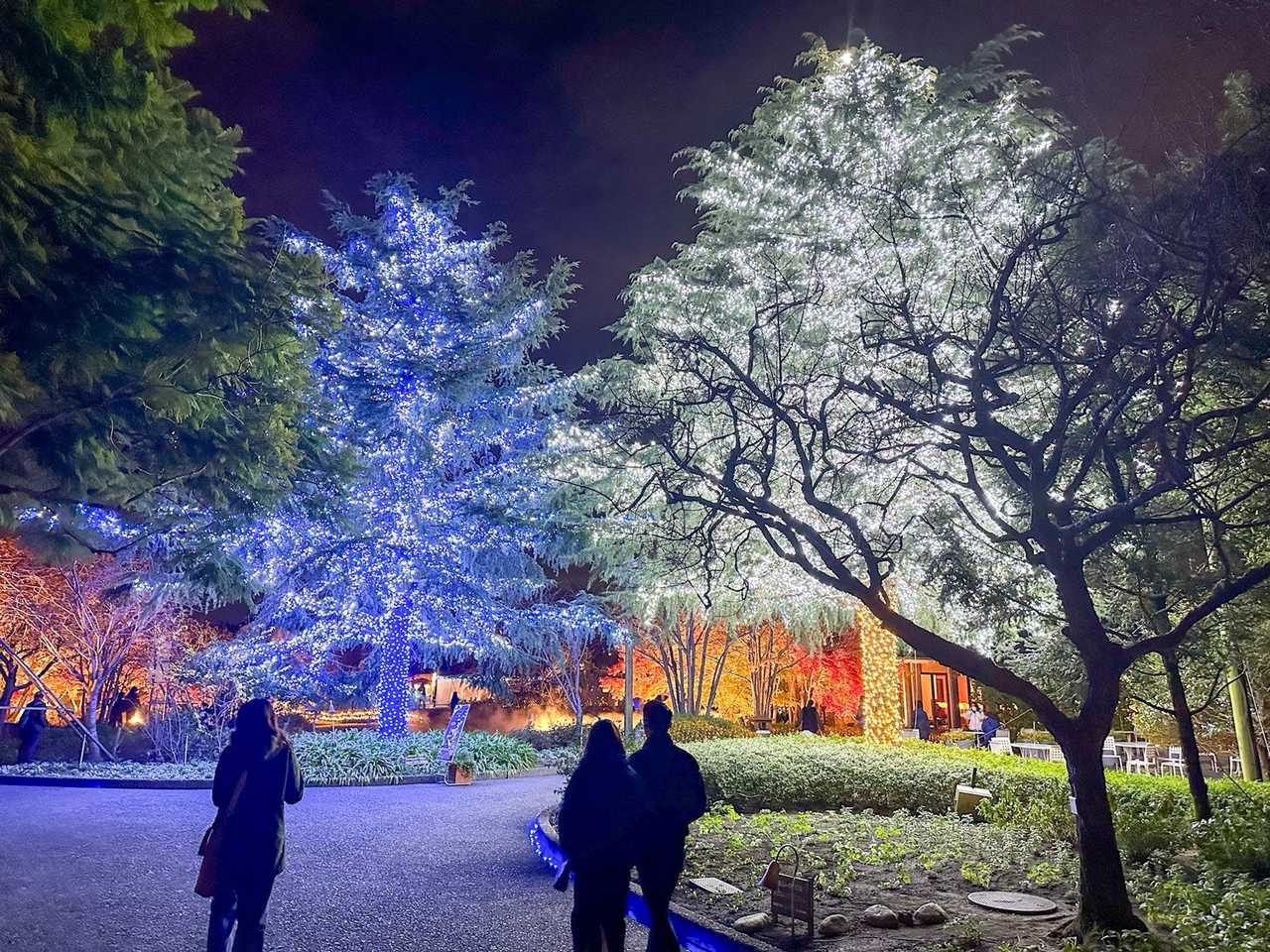
Twin Trees: Natural Trees About 20 m Tall Covered in Lights
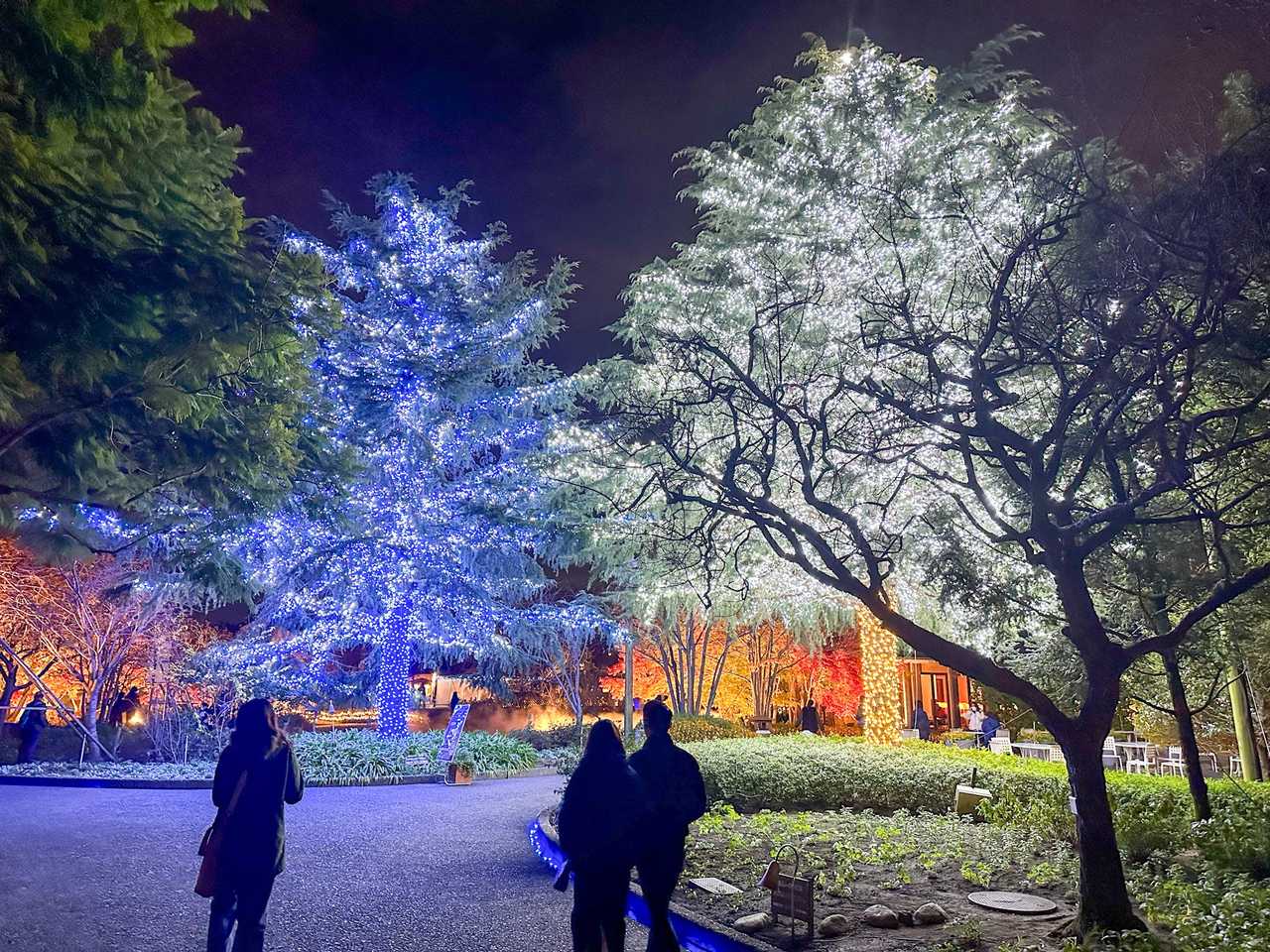
The “Twin Trees” (ツインツリー) are two natural trees about 20 m tall, decorated with lights from trunk to treetop, standing side by side as a classic photo spot in the park. The tree-shaped lights have rich layers, and you need to stand farther back to fit the whole tree in the frame, so a wide-angle lens or your phone’s wide-angle mode is recommended.
Island Fuji Observation Tower: Illumination Views from 45 m up
“Island Fuji” (アイランド富士) is a rotating observation platform that rises to about 45 m above the ground and turns 360 degrees, giving views over the whole sea of lights and the scenery beyond. It costs extra and is not included in admission, about ¥600 for adults, purchased at a ticket machine that accepts cash only. It may be suspended in bad weather or for maintenance, so check whether it is running that day after you enter the park.
Begonia Garden (ベゴニアガーデン): A Greenhouse in Bloom All Year Round
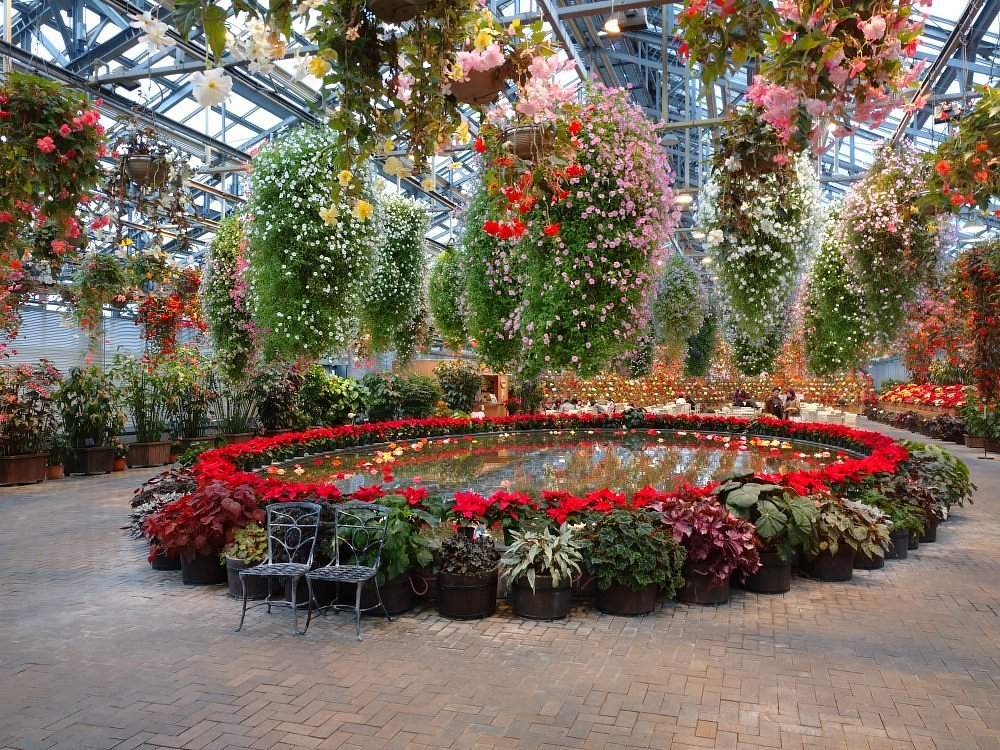
This large greenhouse displays tuberous begonias from around the world, blooming all year regardless of season. Entry is included in the admission ticket, and it is a good place to visit before sunset or on a rainy day. There are seats where you can relax over afternoon tea, making it the best place to warm up before the lights come on or to rest out of the cold, and it is also handy for a mid-visit break when traveling with older relatives or children.
Foot Bath Area: A Free Warm-Up Rest Stop
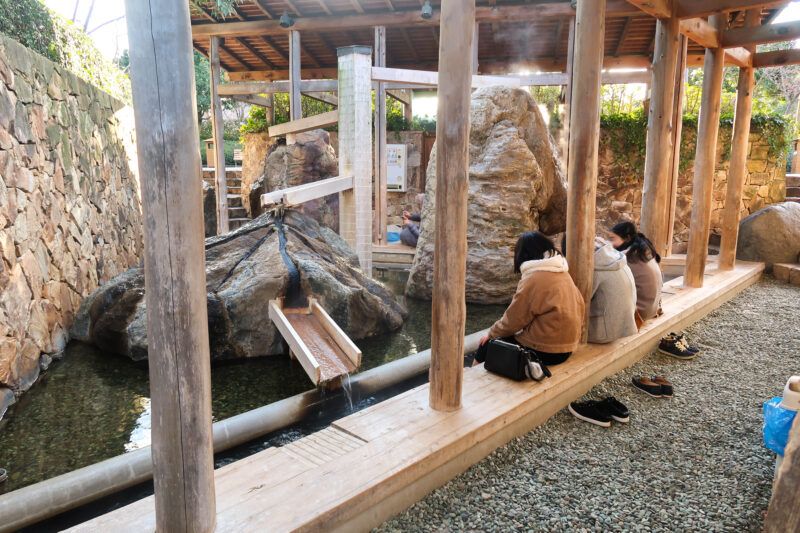
The park has a foot bath where you simply take off your shoes and socks and step in, a good place to rest and warm up when your feet get tired from walking among the lights. Winter nights are quite cold, and after a soak your feet and whole body warm up. We suggest fitting it in between the tunnel of light and the water light show as a mid-visit break.
The 70 m Wisteria Trellis: A Purple Waterfall of Early Summer Blooms
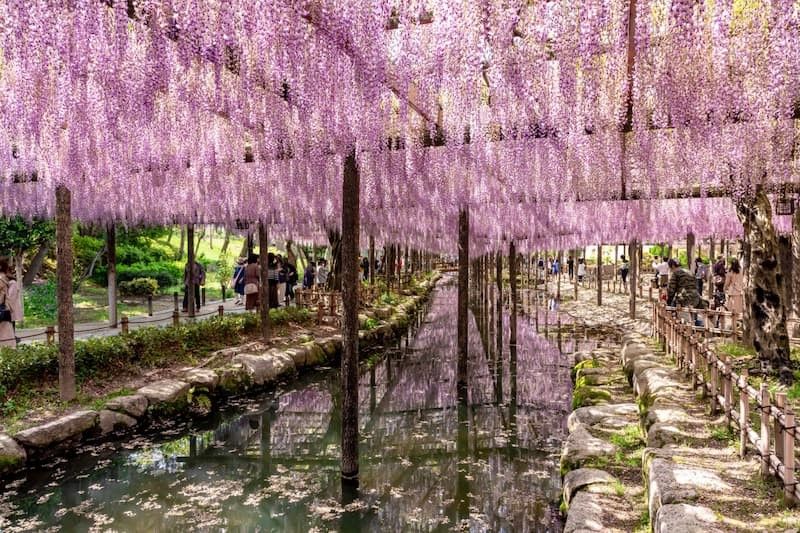
The park has a 70 m wisteria trellis, with a bloom season from late April to early May. In full bloom it looks like a large purple waterfall of hanging flowers, overlapping with the end of the illumination season, a limited-time sight not to be missed by May visitors. After the bloom ends, the trellis still provides leafy shade and is a cool place to relax in summer outside the illumination season.
Flowers Through the Seasons: From Autumn Leaves and Plum Blossoms to Roses
Besides the lights, Nabana no Sato has flowers to see all year: autumn brings foliage, dahlias and cosmos, while spring brings cherry blossoms (March), tulips (March-April) and nemophila (April-May) in turn. Visiting during the illumination season means seeing the night lights together with the season’s flowers, one of the biggest points that set Nabana no Sato apart from purely illumination-only attractions.
Food and Souvenirs in the Park: Local Flavors You Can Pay for with Vouchers
The ¥1,000 voucher included with your admission ticket can be used at restaurants and shops in the park, whether for a hot snack to warm up or for souvenirs, and it is good value. Any amount over the voucher’s face value must be paid separately, so it helps to decide what to use it on before you spend.
How Much Does Nabana no Sato Cost? Ticket Types and How to Buy
Nabana no Sato tickets vary in price and rules by time period and purchase channel, so understand them before buying to avoid overspending.
Illumination Season Admission Ticket (Convenience Store Advance Sale): ¥200 Cheaper Than at the Gate
Print the application slip at a multimedia kiosk at FamilyMart or 7-Eleven and pay at the register. It is ¥200 cheaper than the ticket window on site and also saves time queuing at the window. From October 17 to November 20, 2026, advance tickets are ¥2,500 (¥2,700 on site); from November 21 to December 22 and December 26 to February 28 they are ¥3,000 (¥3,200 on site); from March 1 to May 31 the price is ¥2,500 whether bought in advance or on site. All include a ¥1,000 in-park voucher and Begonia Garden admission, and children of elementary school age and under are free.
Nabana no Sato 2026-27 Opening Days and Entry Notes: Buy Tickets at a Convenience Store First, Closed Days and the Christmas Period
The 2026-27 illumination season at Nabana no Sato runs from October 17, 2026 to May 31, 2027, with closed days on January 6 and 7, and the lights are on from around sunset until closing. The official site recommends printing tickets in advance at a FamilyMart or 7-Eleven kiosk, as getting a ticket at the on-site window is expected to involve a queue of 30 minutes or more. December 23 to 25 is a date-specific Christmas special opening with limited tickets, with opening hours starting at 15:00 and no daytime entry, so plan to arrive in the evening.
Christmas Special Admission Ticket (Dec 23-25): Limited Tickets with a ¥2,000 Voucher
For these three days, tickets are sold in advance for specific dates and in limited numbers; any remaining tickets on site are ¥5,500 (the advance price follows the official announcement). The ticket includes a ¥2,000 in-park voucher, double the voucher value of a regular day. All three days open at 15:00, and on Dec 24 and 25 stay open until 23:00. Regular admission tickets do not apply, so you need to buy a date-specific ticket to enter.
Kintetsu Train & Bus Discount Set Ticket: Train, Bus, Admission and Voucher All in One
The set includes a round-trip Kintetsu train ticket, a round-trip direct bus ticket, Nabana no Sato admission and a ¥1,000 in-park voucher. Prices vary by departure station and date, and it is on sale at ticket offices at major Kintetsu stations from September 17, 2026 to May 31, 2027 (except on the Christmas special opening days).
Regular-Period Admission (Jun 1 – Oct 16): Tickets Outside the Illumination Season
June 1 to October 16 each year is outside the illumination period, and admission is cheaper than in the illumination season, with the actual amount following the official announcement. You can still enter the Begonia Garden and the various flower areas, and children of elementary school age and under are likewise free. During this period the direct bus from Kintetsu Nagashima Station does not run, and route buses from the Kuwana Station direction are used instead, so check the departure station for the season before you go.
Day Trips from Nagoya: Nabana no Sato + Nagashima Onsen + Outlet Packages
Day trips from Nagoya can be booked on platforms such as KKday and Klook. They include round-trip transport, Nabana no Sato admission and Yuami no Shima hot spring fees, but the details (meeting time, departure time from the park, whether the onsen is included) differ by operator, so check before booking that you can stay until after the lights come on.
Where to Stay near Nabana no Sato: Nearby Lodging and Extended Itinerary Suggestions

Nagashima Onsen Resort: Plan Hot Springs, the Outlet and the Illumination Together
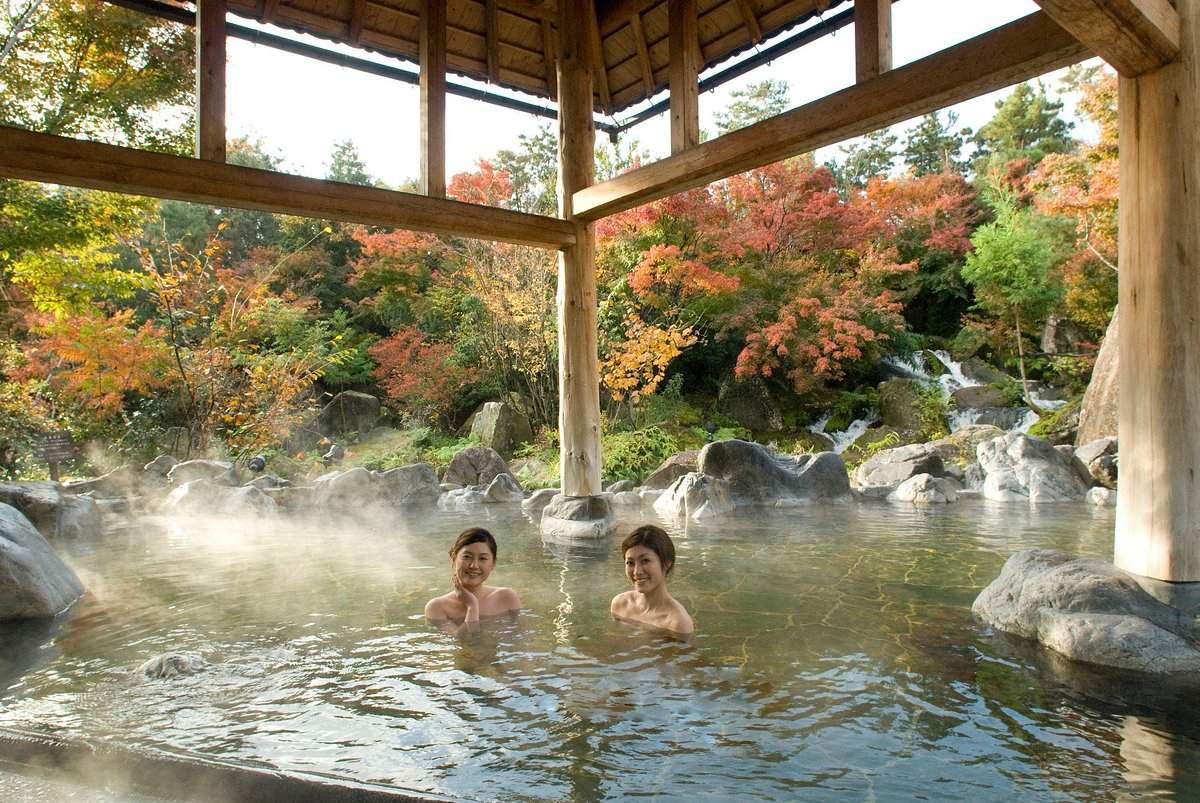
Route buses connect the Nagashima Onsen Resort (Yuami no Shima, Nagashima Spa Land and Mitsui Outlet Park Jazz Dream Nagashima) with Nabana no Sato (¥500 one way for adults), so you can fit outlet shopping and a hot spring soak by day and the illumination in the evening into one day. If you stay at an onsen hotel inside the resort, you don’t have to rush back to Nagoya after the lights.
Staying in Nagoya: Around Nagoya Station for the Most Reliable Transport Links
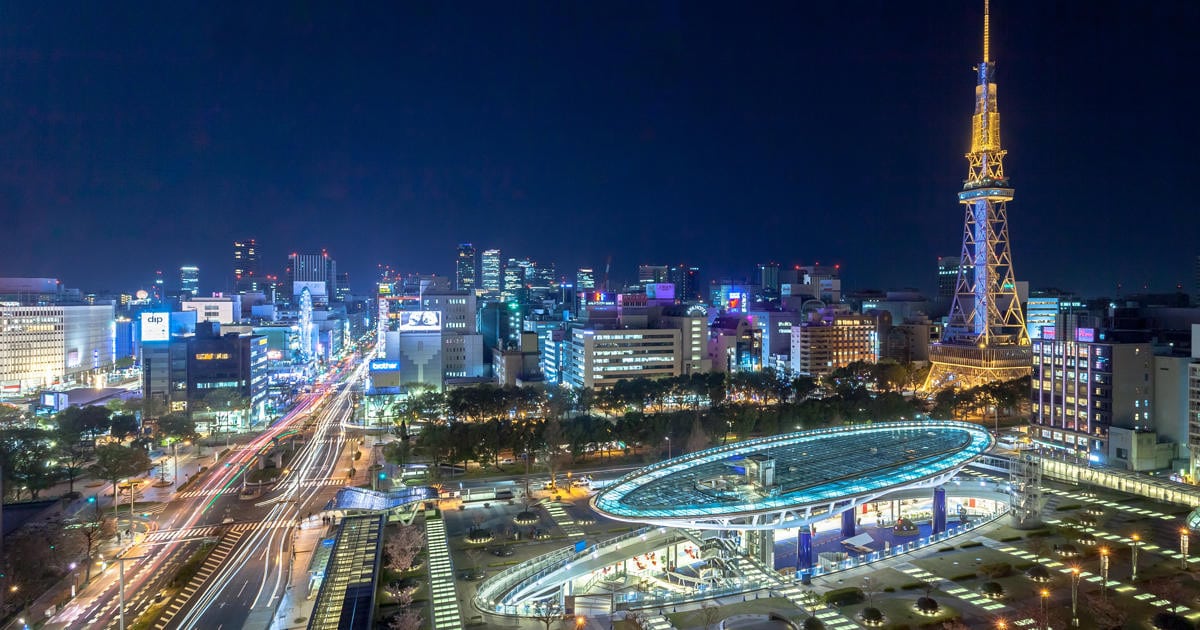
If you don’t want to stay overnight in Nagashima, staying around Nagoya Station is the most convenient, and you can plan Nabana no Sato or other suburban trips for the next day. The Meitetsu Bus Center and Kintetsu Nagoya Station are both within walking distance of the station, so you won’t worry about missing the last shuttle on the way back.
From Kintetsu Nagoya Station, a Kintetsu express to Kintetsu Nagashima Station takes as little as about 17 minutes, then a shuttle bus takes about 10 minutes. The fare is ¥250 one way for adults.
Extending Your Trip: Shirakawa-go Illumination and Planning a Free-Itinerary Nagoya Trip
For a multi-day trip, you can combine Nabana no Sato with the Shirakawa-go illumination, Nagoya Castle and Ghibli Park in Aichi in the same journey, but the Shirakawa-go illumination requires advance reservations, so plan early. For Nabana no Sato, we recommend buying tickets at a convenience store in advance, since the on-site window takes about 30 minutes or more of queuing, and the Christmas period sells only date-specific tickets, so it suits a more flexible day in your itinerary.
Nabana no Sato Illumination FAQ
Q: When does the 2026 Nabana no Sato illumination start and end?
It opens on October 17, 2026 and runs until May 31, 2027, with official closed days on January 6 and 7.
Q: How much is admission to Nabana no Sato?
Admission is ¥2,500-3,200 (convenience store advance tickets are ¥200 cheaper than on site from Oct 17 to Feb 28), including a ¥1,000 voucher and Begonia Garden admission. The Christmas period is priced separately, and children under elementary school age are free.
Q: Do children need tickets?
Everyone of elementary school age and above (including junior high and high school students and adults) pays the same price, with no child discount. Children under elementary school age enter free all year, with no need to buy a ticket or show ID.
Q: How long does it take to get to Nabana no Sato from Nagoya?
The direct bus from the Meitetsu Bus Center takes from about 30 minutes (depending on traffic), or you can take a Kintetsu express to Nagashima Station (as little as about 17 minutes) and then a direct bus for about 10 minutes. The two options take a similar amount of time.
Q: When is the illumination season busiest, and how can I avoid the crowds?
Weekends, national holidays and the Christmas period of December 23-25 are the most crowded, while weekday evenings are quieter. We recommend entering on a weekday and taking photos during the blue hour 20-30 minutes after the lights come on.
Q: Can I use an IC card on the bus to Nabana no Sato?
The shuttle bus from Kintetsu Nagashima Station accepts transit IC cards such as Manaca. For other routes, check the payment method with the driver before boarding.
Q: Can I stay in the park until the last minute before closing?
No. Admission closes 30 minutes before closing time, so you cannot enter all the way until closing. Be sure to leave a buffer when planning your arrival.