
Zao Onsen Ski Resort Guide 2026: Tohoku’s Largest Resort for Snow Monsters and Hot Springs
Zao Onsen Ski Resort: Tohoku’s Largest Resort for Snow Monsters and Hot Springs
Zao Onsen Ski Resort is in Yamagata City, Yamagata Prefecture, and is one of the largest ski resorts in Tohoku, with 14 ski areas (ゲレンデ) and 12 courses, about 30 gondolas and lifts, and a total course length of about 42.5 km, with everything from gentle beginner slopes to black-diamond steeps.
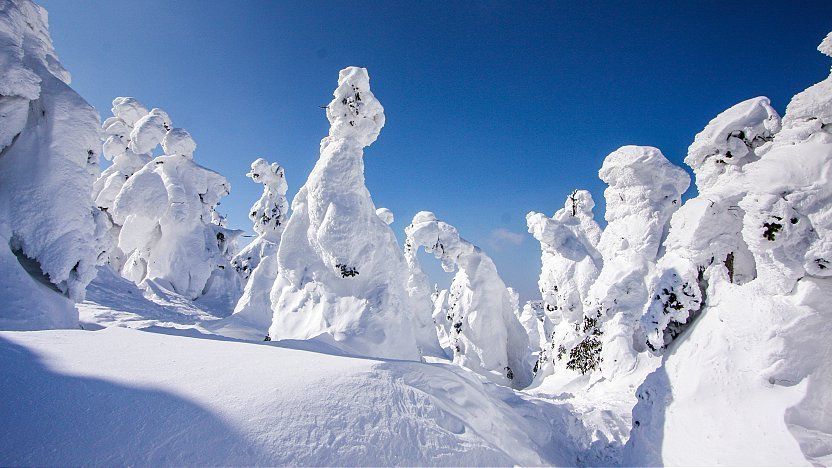
Its biggest draws are the “snow monster” (juhyo) rime-ice spectacle formed by frozen pine forests and the thousand-year-old highly acidic sulfur hot springs at the foot of the mountain. After skiing you can walk straight back to the onsen town for a soak, a combination few other resorts offer.
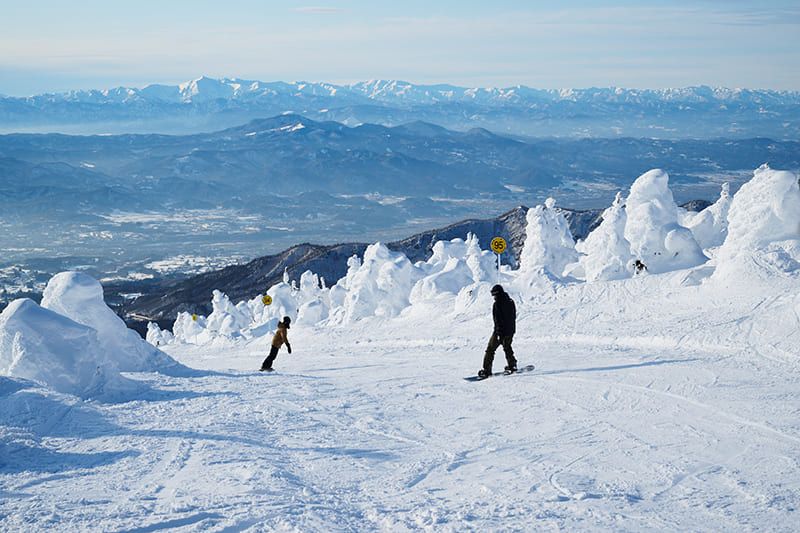
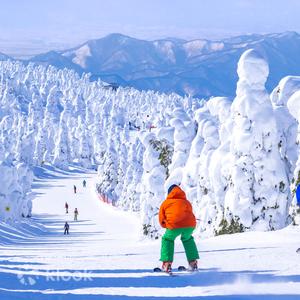

A First Look at the Snow Monsters: A Rare Forest of Snow Monsters
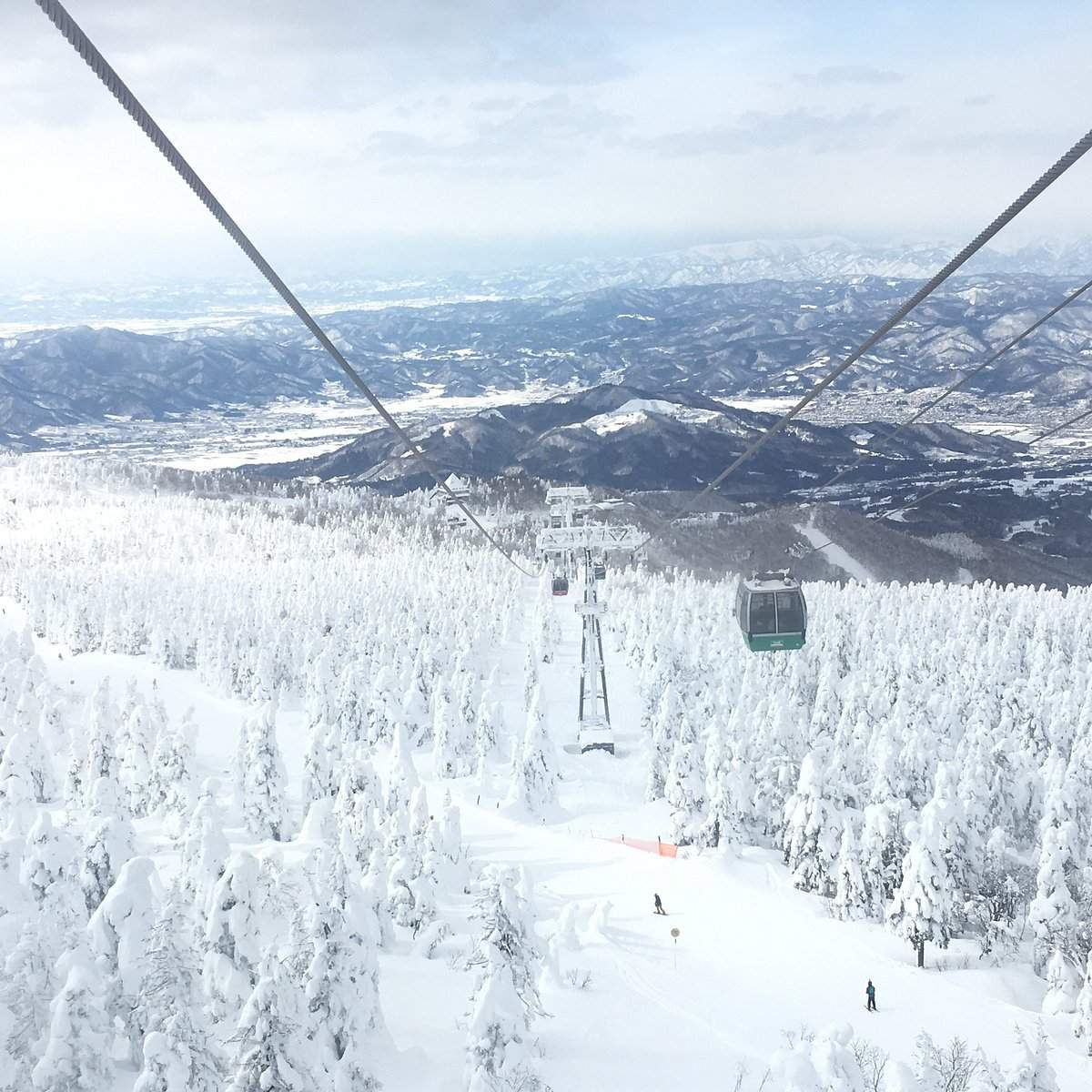
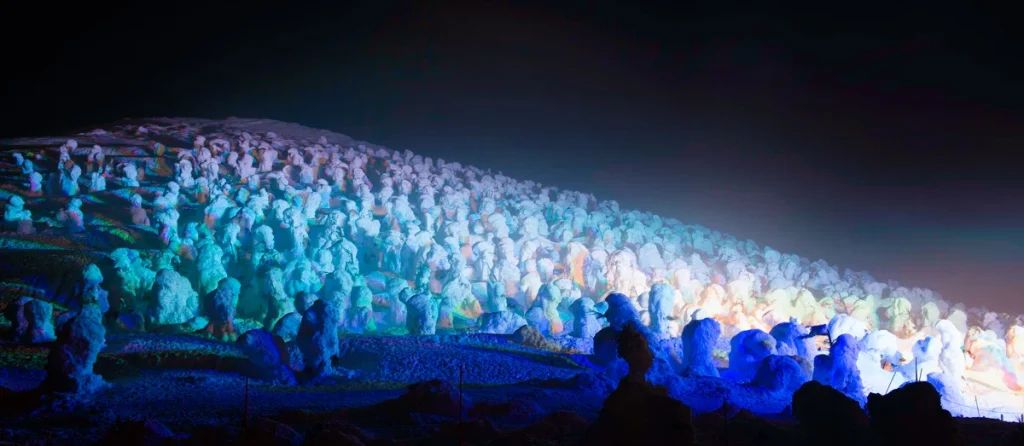
Zao’s rime ice forms when moisture from the Sea of Japan meets Siberian cold winds and freezes onto the conifers. Its shapes look like white monsters, which is why it is called the Snow Monster.
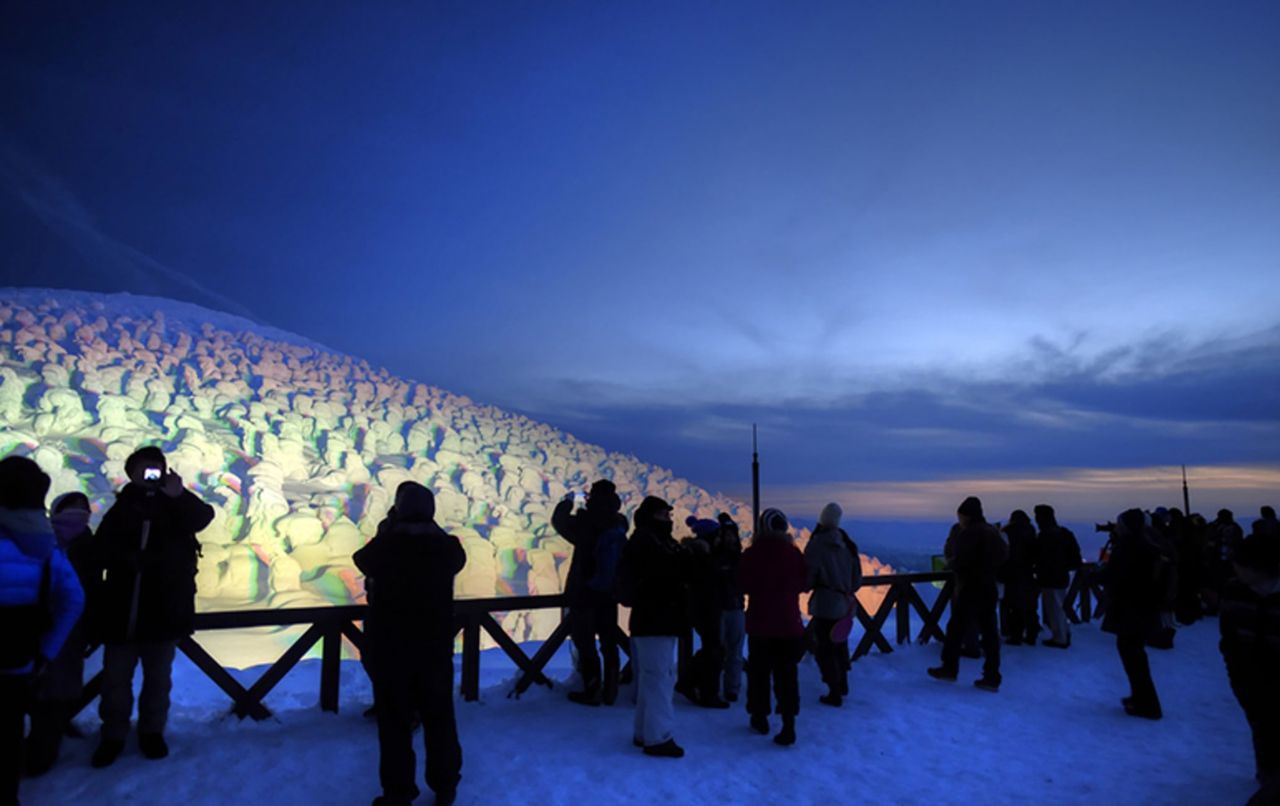
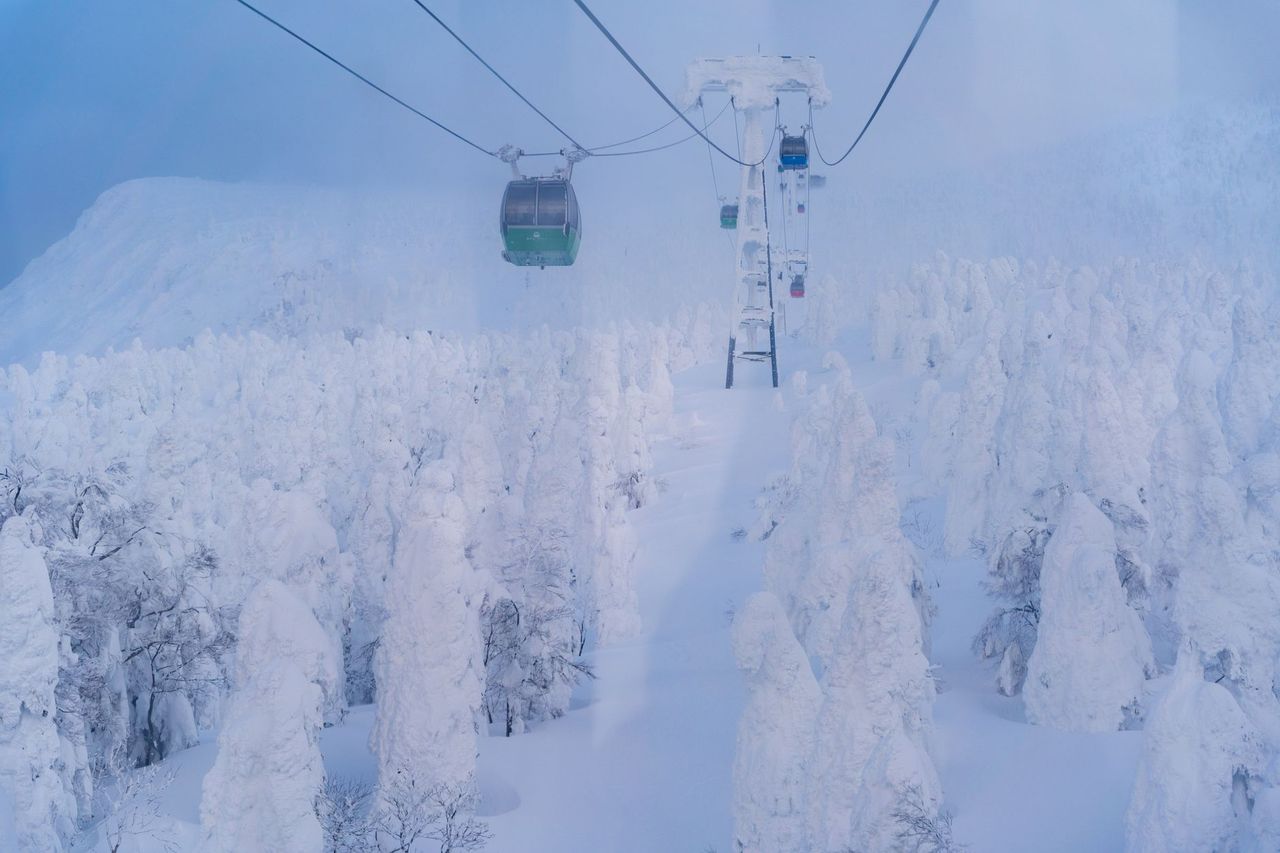
The best viewing period is mid-January to late February. You can see them up close by gondola to the mountaintop in the daytime or by skiing along the Juhyo-gen Course, and during the evening illumination period they take on an even more dreamlike atmosphere.
Who Is Zao Onsen Ski Resort For? Pre-Trip Planning Tips
Whether you are an expert looking to take on black-diamond steeps, a beginner who wants to ski gentle slopes at leisure, or a non-skier who just wants to ride the gondola for snow views and soak in a hot spring, Zao has a way to enjoy it, and it suits both family trips and couples’ getaways.
We suggest allowing at least 2 days and 1 night: get used to the gentle Kaminodai slopes on day one, then take on the Juhyo-gen Course on day two or plan evening activities such as the Juhyo Fantasy Corridor, so you do not rush through.
How to Get to Zao Onsen Ski Resort? 2026 Yamagata Access and Gondola Ticket Prices at a Glance
Access to Zao Onsen Ski Resort at a Glance: Shinkansen and Bus
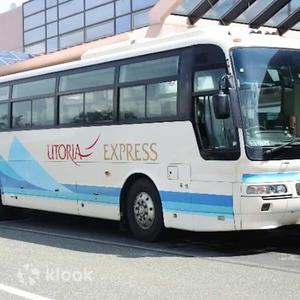
The most common way to reach Zao is by changing to a bus at Yamagata Station.
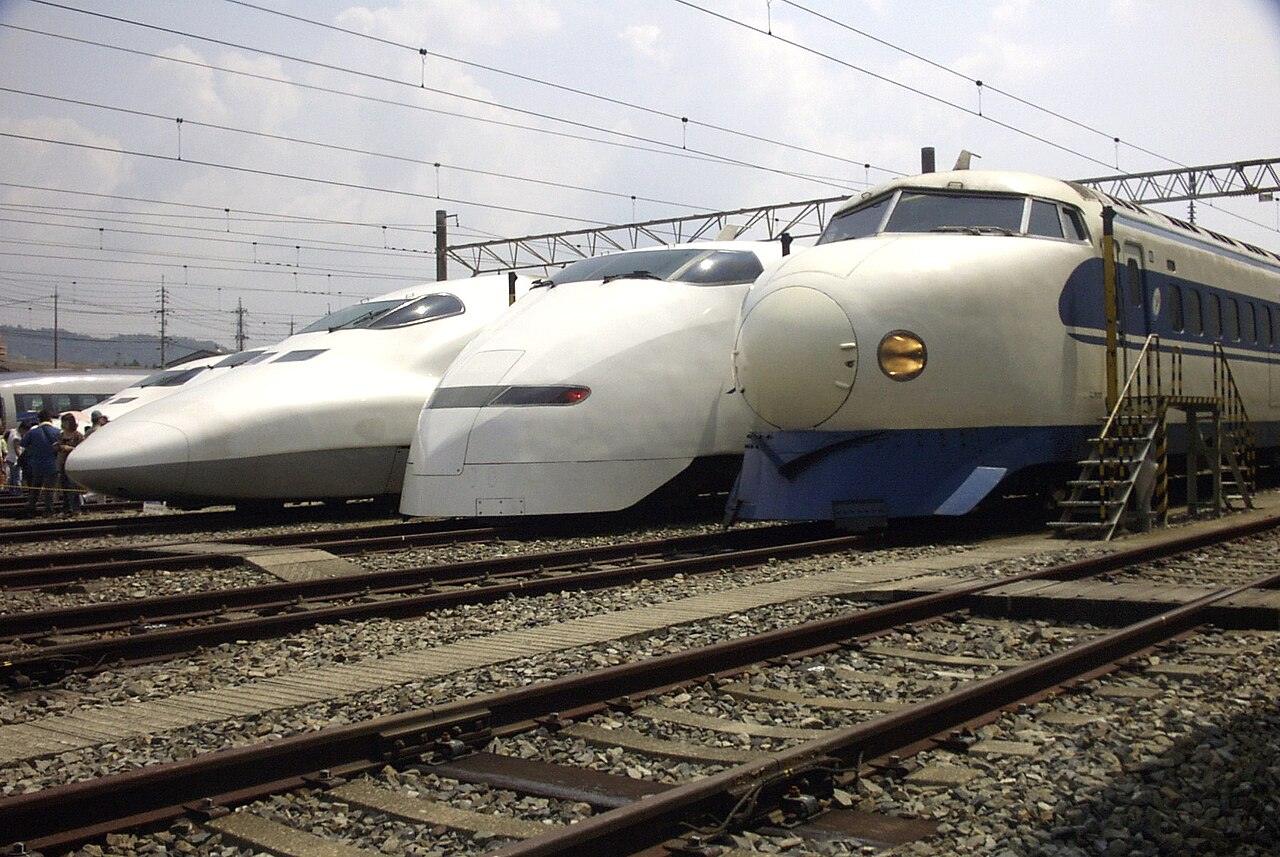
- Tsubasa Shinkansen (Tokyo to Yamagata): about 2.5-3 hours direct.
- Yamako Bus Z90/Z91 (Yamagata Station East Exit, Platform 1, to Zao Onsen): ¥1,200 one way, ¥600 for children, about 40-45 minutes, IC cards accepted.
- From Sendai: in winter there is a limousine bus direct from Sendai Airport to Zao Onsen (about 1 hour 45 minutes, advance reservation required), and there is also an express bus from Sendai Station East Exit to Zao Onsen, with schedules and fares as announced for the season; you can also take the JR Senzan Line for about 1 hour to Yamagata Station and change to a bus.
- After arriving at the Zao Onsen bus terminal, you can walk to the Zao Sanroku Station, the Central Ropeway Station and the Kaminodai ropeway stations.
Must-See Courses and Spots at Zao Onsen Ski Resort in 2026: Highlights Explained
Juhyo-gen Course: About 10 km, the Signature Course Through the Snow Monster Forest
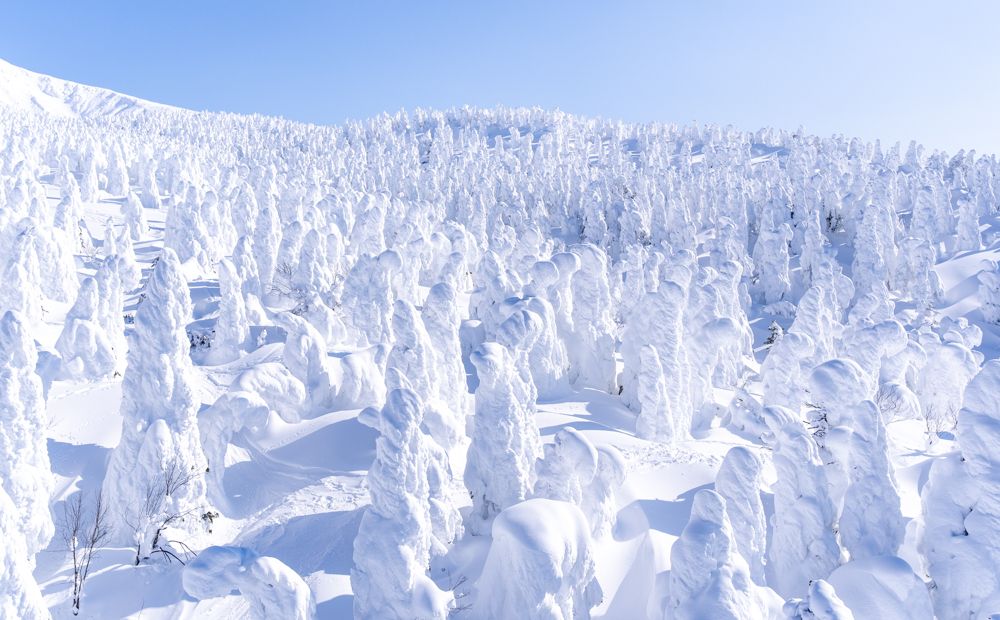
The Juhyo-gen Course runs from Jizo Sancho Station down to the mid-mountain, about 10 km long, and is Zao’s most representative course, with the “juhyo” rime-ice spectacle of frozen pine forests on both sides all the way, known as snow monsters (Snow Monster).
The course is beginner-to-intermediate in difficulty, but snowboarders struggle on the flat sections, so we suggest bringing ski poles or unstrapping and walking where needed; rime ice is thickest from mid-January to late February, making it the most popular photo course in all of Zao.

Kaminodai Area: Beginner Paradise and Zao’s Only Night Skiing Area
The area around Kaminodai Station has gentle slopes and wide courses, the area Zao most recommends for beginners to practice, and it is also the only area in the resort open for night skiing, from 17:00 to 21:00, with an evening lift ticket at about ¥3,000 for adults and about ¥1,500 for children.
This area is right next to the Zao Onsen town, and after skiing you can walk 5-10 minutes back to your inn or to a hot spring; many ski rental shops and Chinese-language lessons are also concentrated here, making it the best base for planning your trip.
![[SNOWPINK] Zao Onsen Ski Resort Ski Lesson [Beginner Experience | Zao Juhyo]](https://travel.williamlion.tw/wp-content/uploads/sites/7/2026/10/jpg.jpg)

Utopia Slope: An Open-View Scenic Course
Utopia Slope (ユートピア) is near Juhyo Kogen Station, with open terrain and good views, a popular course at Zao that balances snow conditions and scenery.
The slope is of moderate gradient and manageable for beginner-to-intermediate skiers, with convenient lift access, and is often linked with the Juhyo-gen Course into a popular route. We suggest going in the morning when snow conditions are best.
Paradise Slope: An Intermediate Test on a 25-Degree Slope
Paradise Slope (パラダイス) has a gradient of about 25 degrees and is slightly challenging, a popular course for intermediate skiers to practice linked turns and speed control.
The course connects to the Juhyo Kogen Station lift, easy to go back and forth, with stable snow, and in peak season it has fewer people than the Juhyo-gen Course, suited to skiers who want to avoid queues while keeping the intensity of their runs.
Hyakumannin Course: A Gentle Family Slope Up to 200 Meters Wide
The Hyakumannin Course is near Juhyo Kogen Station, up to 200 meters wide at its widest, with a gentle gradient and open views, one of the few large-area courses at Zao suited to families and large groups of beginners practicing at the same time.
Skiers spread out on the course and it rarely gets congested, and it is often used as a meeting point for ski lessons. If you want to find roomy practice space outside the Kaminodai area, the Hyakumannin Course is the first choice.
Yokokura Wall: An Expert Wall With a Maximum 38-Degree Pitch
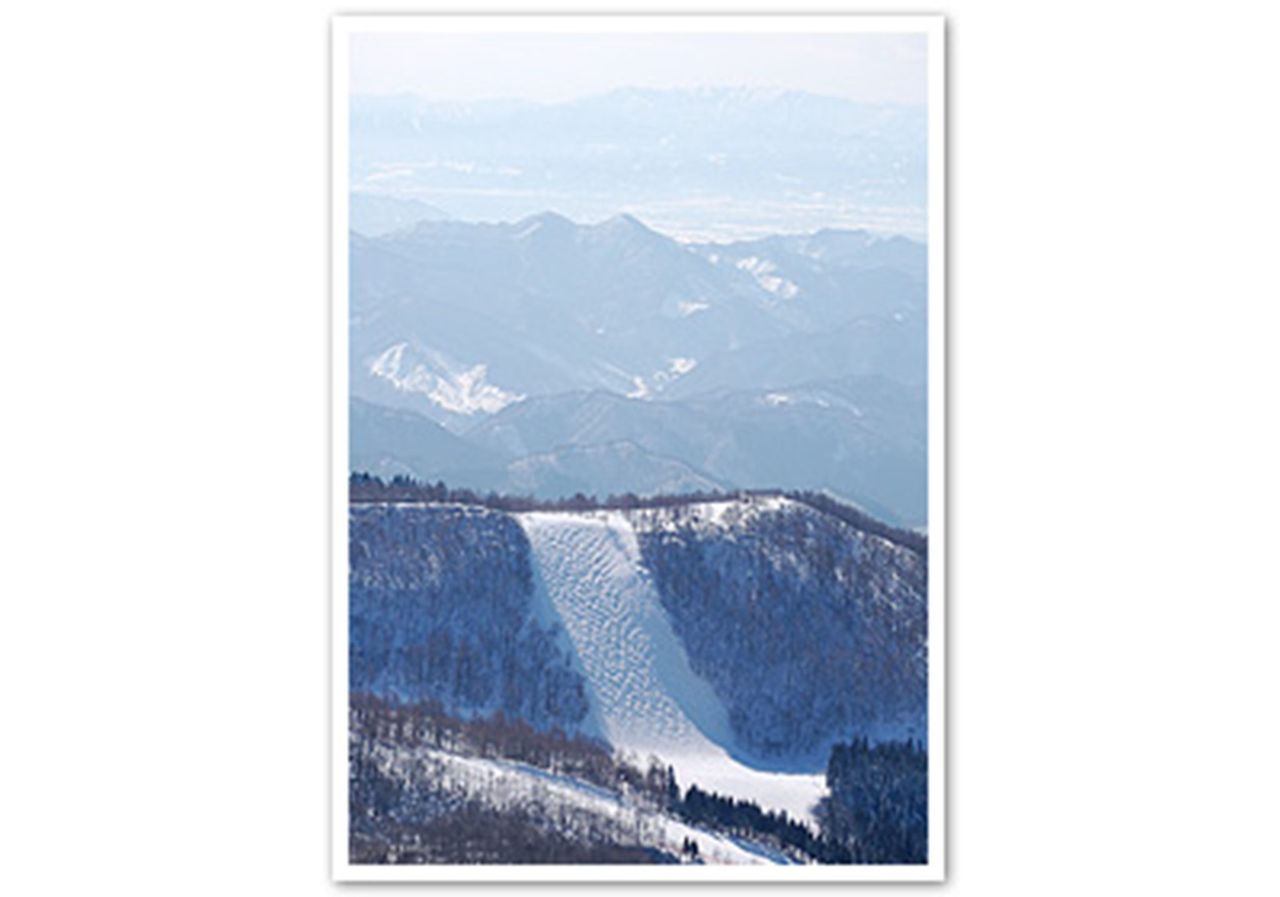
Yokokura Wall (横倉の壁, Yokokura Wall) is Zao’s famous steep course, rated black, with a maximum pitch of 38 degrees at the start, followed by about 300 meters of 30-degree steeps, widely regarded as the expert-only challenge in the resort.
The course is narrow with big changes in gradient, and we do not recommend intermediate or beginner skiers try it; build experience first at Kaminodai or the Hyakumannin Course, then take on Zao’s most hardcore steep.
Zao Jizo-son: A Stone Buddha Guarding the Summit for Over Two Hundred Years
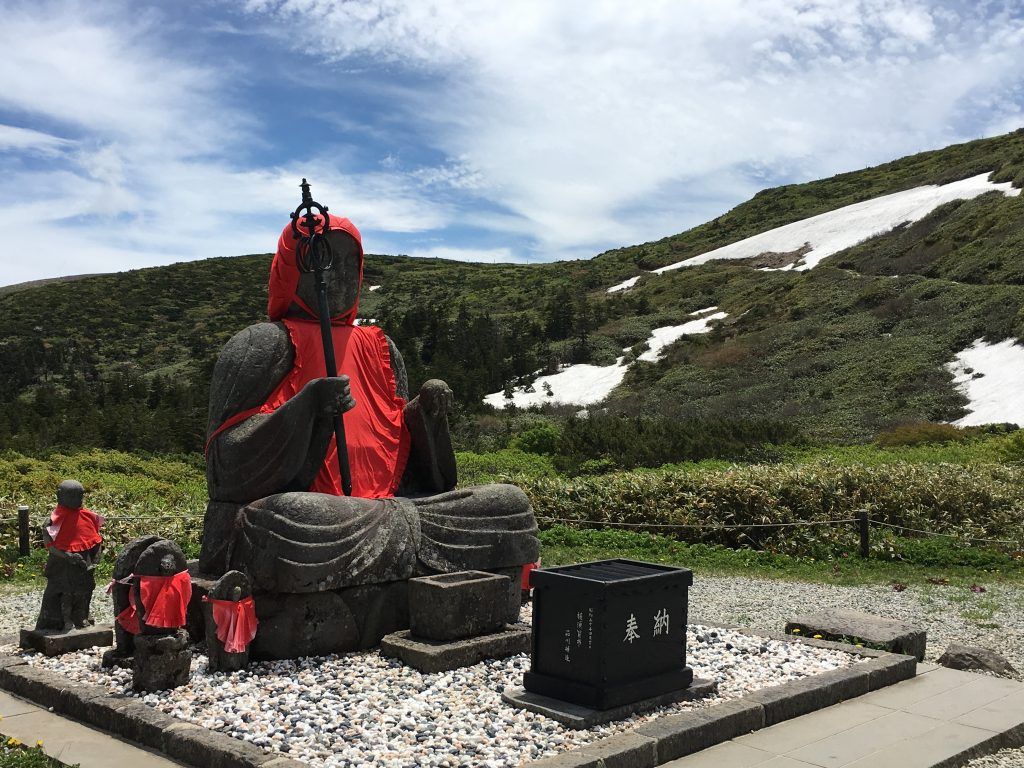
The Zao Jizo-son statue was built in 1775, stands 2.34 meters tall and took 37 years to complete. It stands beside Jizo Sancho Station and has guarded Zao for over two hundred years, and is also known as the “Disaster-Averting Jizo” (災難よけ地蔵), prayed to for warding off misfortune.
Visitors often take photos with the Jizo statue, and even if you do not ski, you can ride the gondola to the summit station and pay respects up close, the most representative spiritual landmark of Zao.
![[Tohoku Day Trip] Ginzan Onsen & Zao Snow Monsters & Special Lunch | Departing From Sendai](https://travel.williamlion.tw/wp-content/uploads/sites/7/2026/10/Klook-2.jpg)
Zao Ropeway Juhyo Kogen Station: A Transfer Hub at 1,331 Meters
Juhyo Kogen Station is the relay station between the Zao Ropeway’s Sanroku line and summit line, at an altitude of 1,331 meters, where you can transfer to Jizo Sancho Station and which is also the entrance for viewing the Juhyo-gen Course and the Utopia Slope.
In peak season there are often long queues around midday, so we suggest taking the first gondola in the morning or arriving to transfer before 1 p.m.
![[From Sendai] Zao Ropeway Snow Monsters + Ginzan Onsen Town Stroll 1-Day Tour](https://travel.williamlion.tw/wp-content/uploads/sites/7/2026/10/jpg-1.jpg)
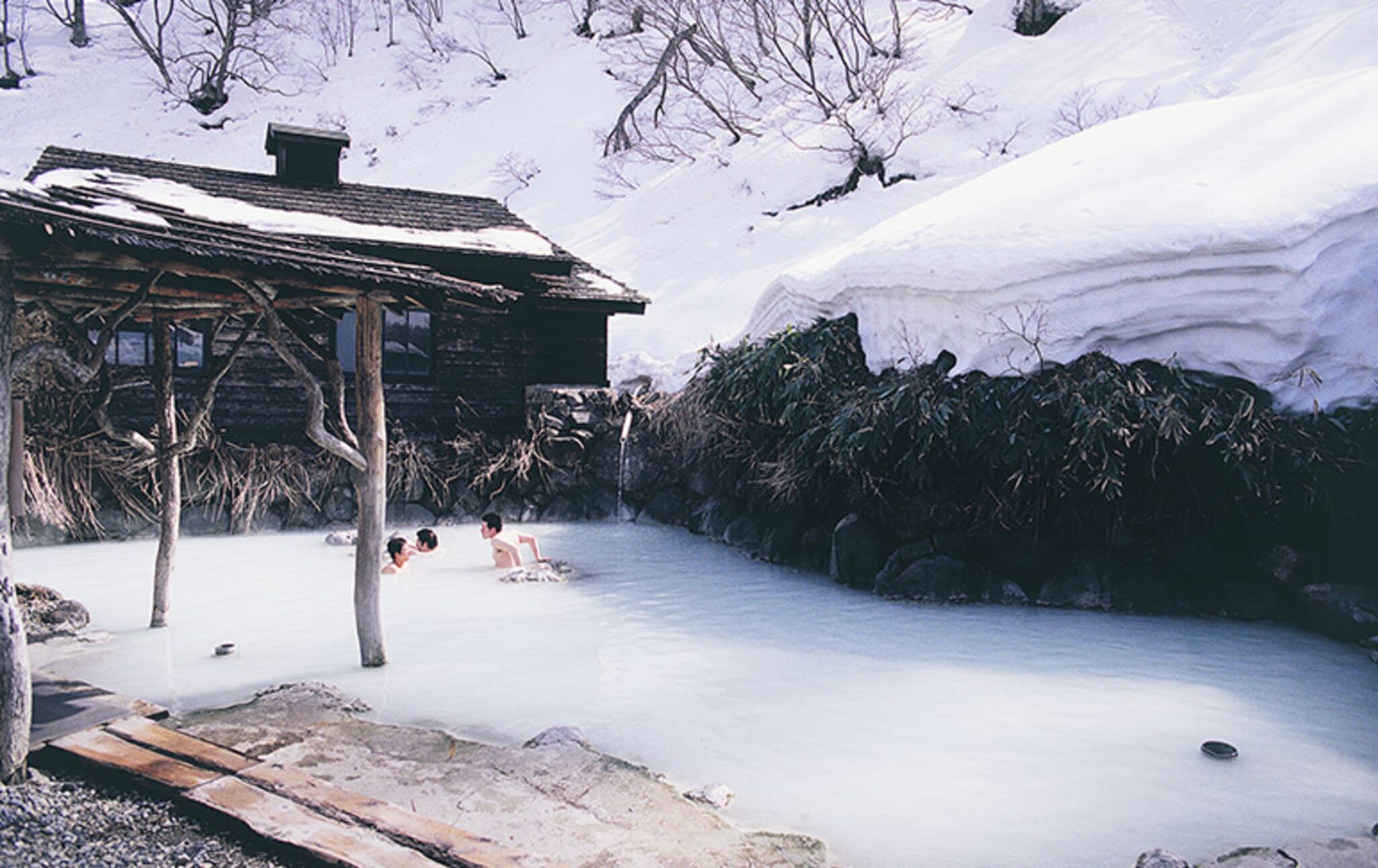
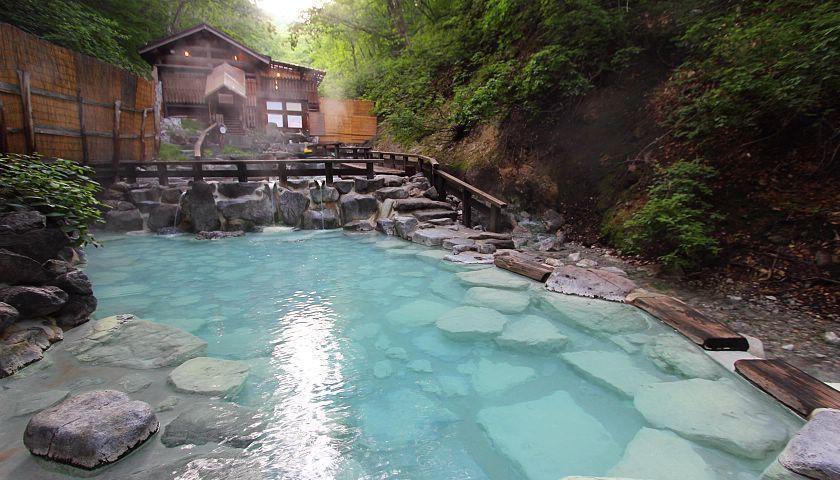
Zao Onsen Open-Air Bath: A Thousand-Year-Old Highly Acidic Sulfur Spring
Zao Onsen is a highly acidic sulfur spring with milky water tinged with pale blue. The Open-Air Bath (大露天風呂) holds about 200 people, but it operates only from about mid-April to mid-November and is closed in winter, so in ski season you can only soak at the town’s public baths.
The three public baths, Kawarayu, Kamiyu and Shimoyu, cost about ¥200 to enter, dropped into an unmanned fee box, and you need to bring your own towel; for fuller facilities choose a day-use onsen house such as Shinzaemon-no-Yu or Genshichi Rotenburo-no-Yu.
Miyagi Zao Fox Village: An Open Park to Get Close to a Hundred Foxes
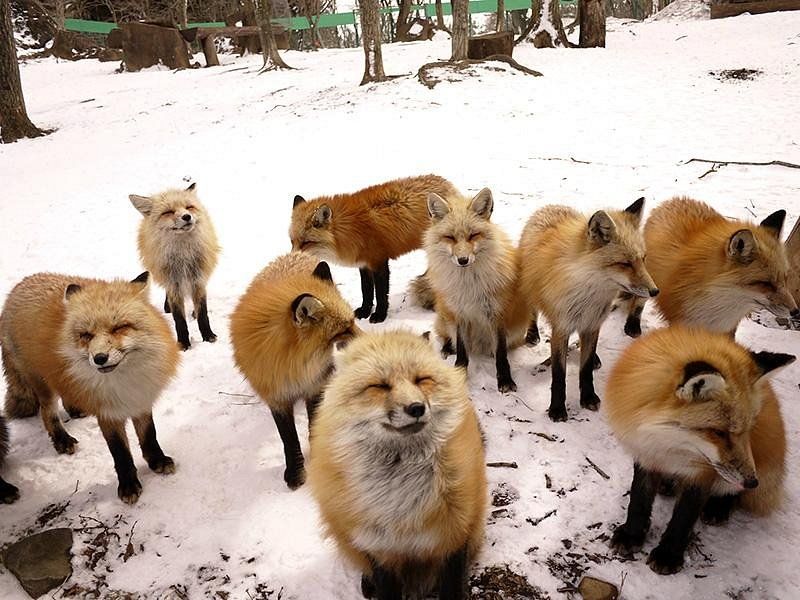
Miyagi Zao Fox Village (蔵王キツネ村) is in Shiroishi City, on the other side of Mount Zao, home to more than 100 red foxes, silver foxes and Arctic foxes, kept free-roaming without fences so visitors can observe them up close.
Admission is ¥1,500 for junior high school students and older, free for elementary school students and younger, with winter hours until 16:00 (last entry 15:30), generally closed on Wednesdays. We suggest allowing half a day, and if your day is already full of skiing and snow monsters, choose another day to avoid an overly tight schedule.
![[From Sendai] Volcanic Lake Okama & Miyagi Zao Fox Village 1-Day Tour | Runs With 2 People, Private Car Transfer, Multilingual Service (Miyagi Prefecture)](https://travel.williamlion.tw/wp-content/uploads/sites/7/2026/10/png.png)
How to Choose a Beginner Area? Kaminodai vs. Central Onsen Station Compared
Kaminodai Station has gentle slopes and simple routes, the most recommended starting point for Zao beginners and for a first ski lesson; Central Onsen Station also has gentle beginner-to-intermediate slopes, but requires several gondola transfers and has a more complicated layout, so it is not recommended as a beginner’s first choice.
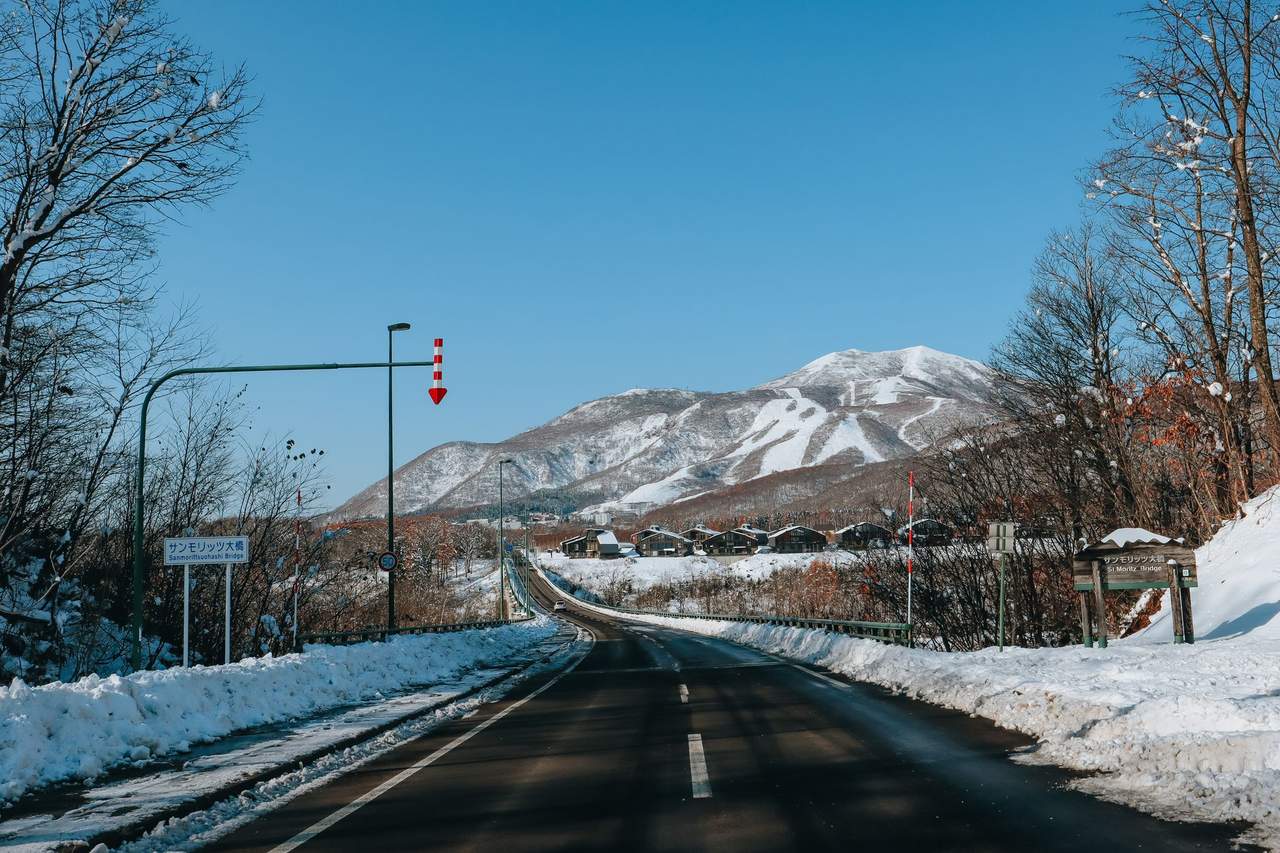
Zao Sanroku Station is the starting point for the snow monsters and Jizo Sancho, where the summit is windy with low visibility and harder slopes, and it is likewise not recommended for beginners to begin their first lesson directly from here.
Ski Rental Complete Guide: Choosing Between Central Station and Kaminodai Station
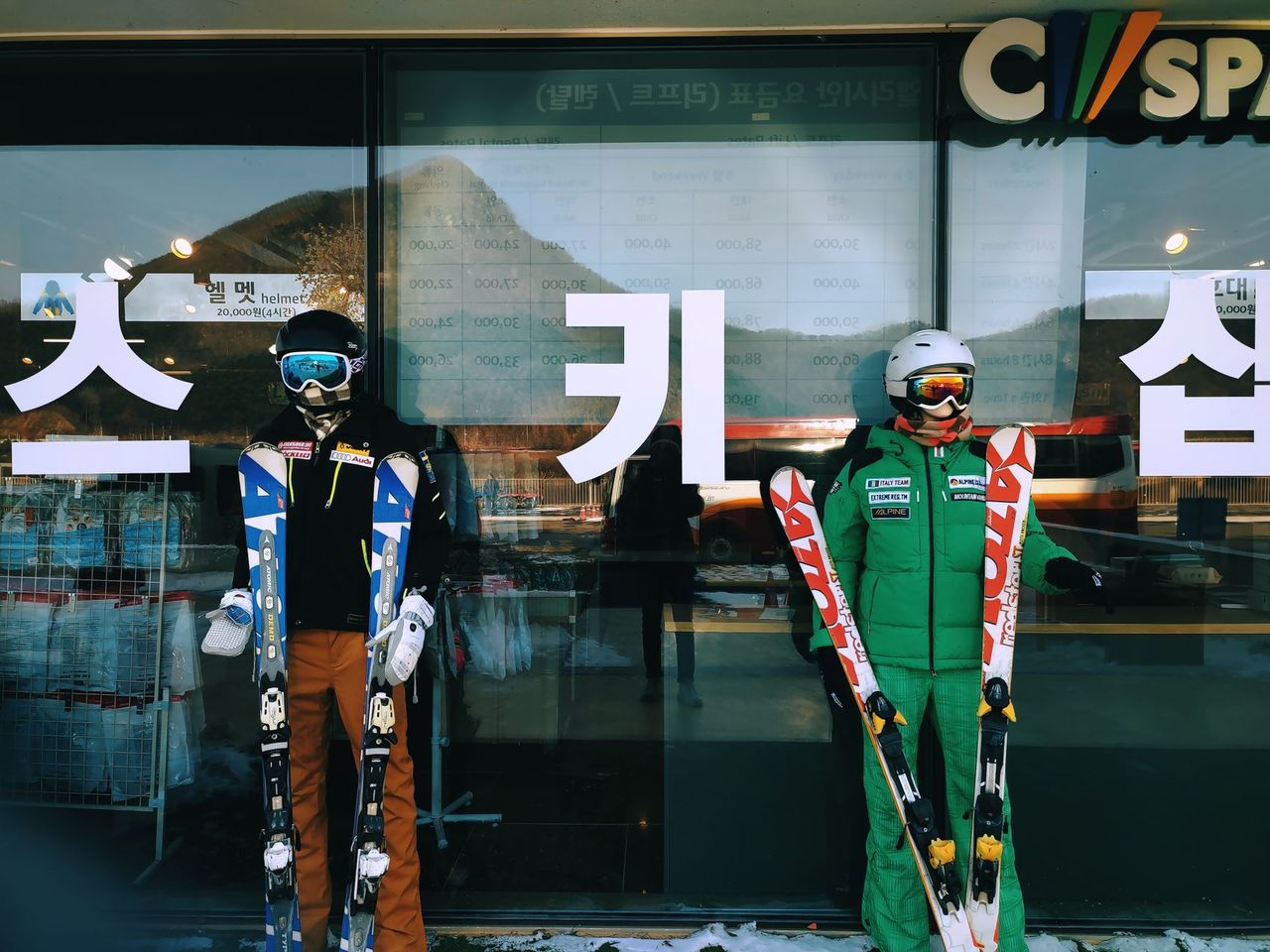
Around Central Ropeway Station you can rent skis or a snowboard at Shiba Ski (しばスキー); around Kaminodai Ropeway Station there are more choices, including shops such as Best Rental Pro and Jupeer.
We suggest arriving at the shop 30 minutes to 1 hour early to avoid queues, and bringing your own knee-high ski socks, as most shops rent gear only and not socks, and the choice of socks to buy on the spot is limited.
Zao Onsen Town Food Picks: Yakiniku and Summit Restaurants
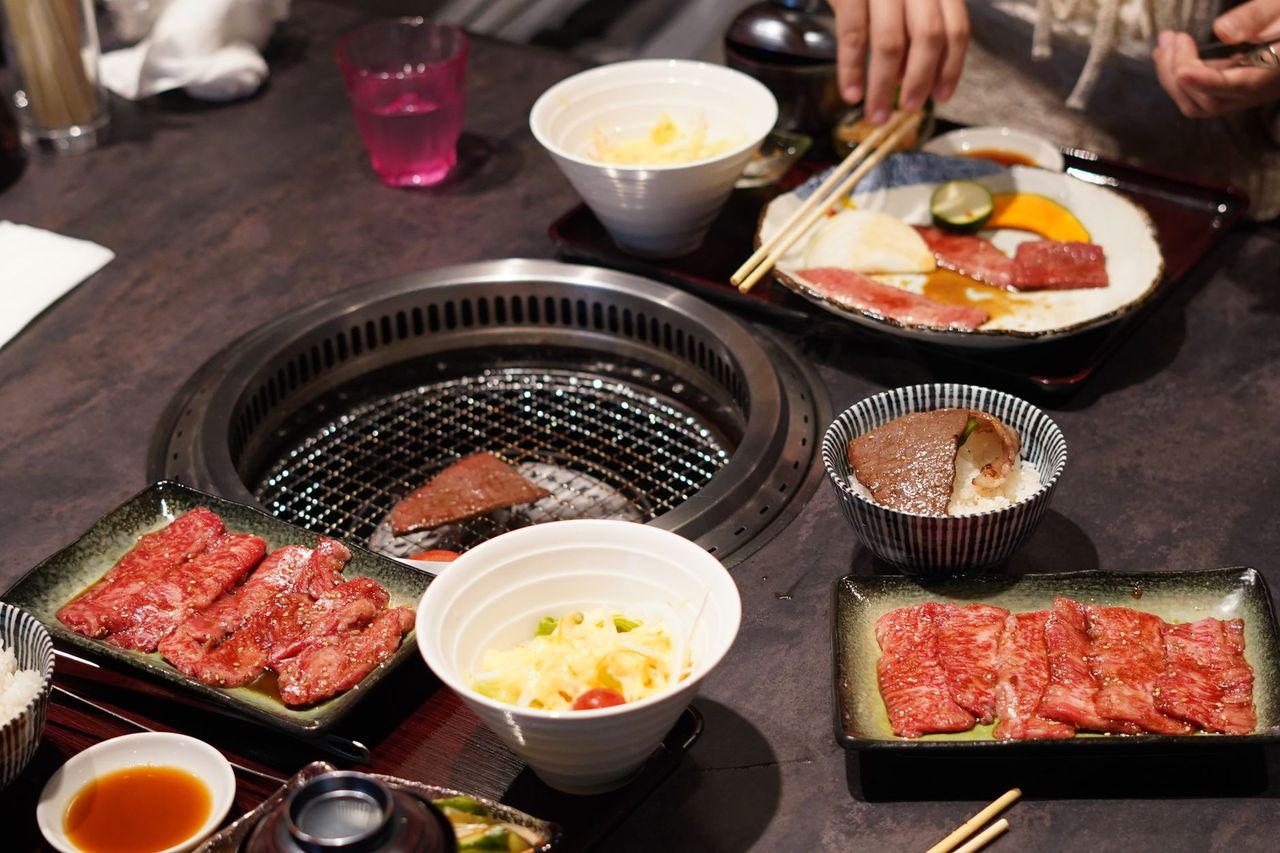
Hachiman is a popular yakiniku shop on Dashi-dori in the onsen town, featuring Yamagata beef, pork and lamb, just right for a hot grilled meal after skiing.
If you spend the whole day on the mountain, the Restaurant Sancho (レストラン山頂, 9:00-16:00) at Jizo Sancho Station is open year-round, a good option for refueling during your ski day.
Night Skiing and Snow Monster Evening Illumination: A Romantic Snowy Night in Sub-Zero Cold
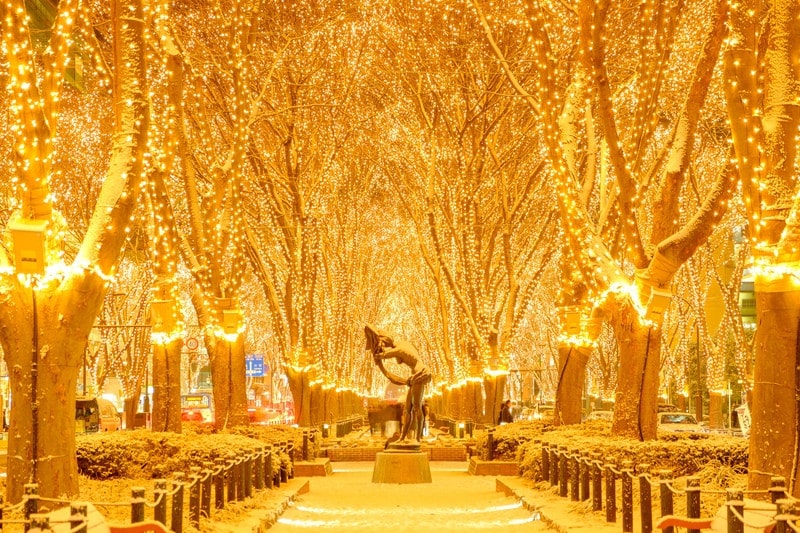
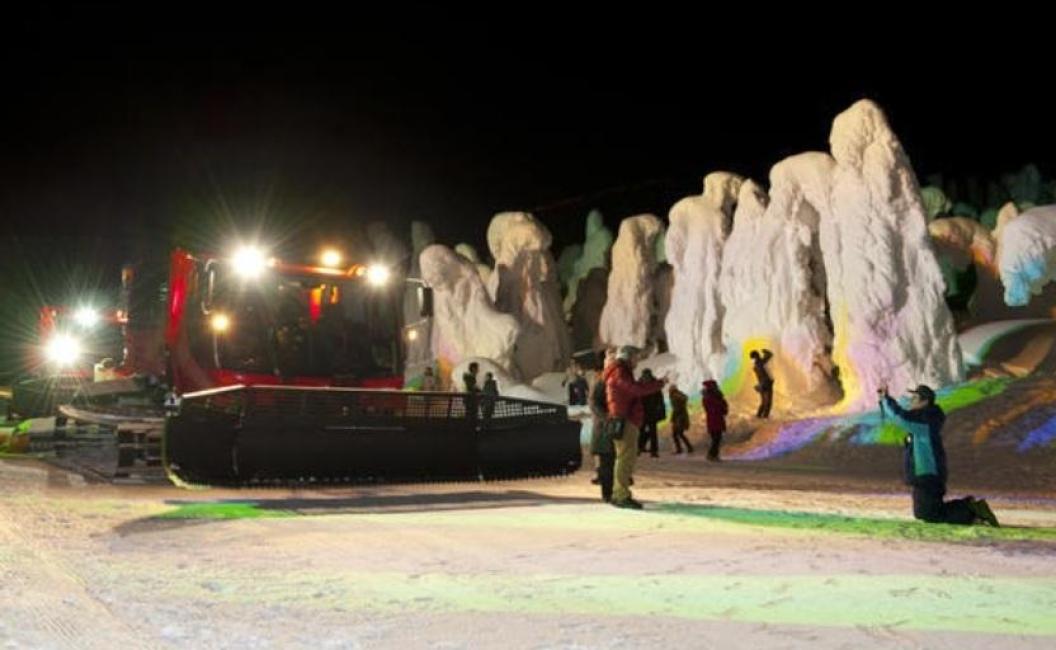
Night skiing is open only in the Kaminodai area, from 17:00 to 21:00; the snow monster evening illumination takes place on designated dates from late December to late February, with a round-trip gondola ticket for the same time slot at ¥4,400 for adults, and there is also the snow cat “Juhyo Fantasy Corridor” by reservation, at ¥7,500 for adults.
Summit nighttime temperatures often drop to minus 10-15 degrees, so be sure to wear layers and a long windproof, waterproof jacket to last through outdoor photos and queue time.
How Much Does Zao Onsen Ski Resort Cost? Gondola Tickets and Lift Passes Explained
Zao Ropeway Jizo Sancho Station Ticket: Easily Go Up the Mountain Just to See the Snow Monsters
You can ride the Zao Ropeway straight to Jizo Sancho Station without skiing, with a round trip at ¥4,400 for adults and ¥2,200 for children; a round trip from Juhyo Kogen Station is ¥2,200 for adults and ¥1,100 for children, and the official website also offers priority boarding by online reservation through “Rakuraku WEB Yoyaku” (らくらくWEB予約).
We suggest avoiding the midday peak; priority boarding is only for upbound trips from Sanroku Station and often sells out early in peak season.
Zao Ski Resort 1-Day Lift Pass: Gondola Tickets and Lift Passes Are Very Different
A lift pass is a ski-only ropeway ticket. For the 2026-27 season the 1-day ticket in the regular period is ¥8,000 for adults and ¥4,000 for junior high and younger, and in peak season (12/26-1/3, 1/30-2/28) ¥9,000 for adults and ¥4,500 for children; if you only want a few runs you can buy a point ticket, ¥600 per point.
The resort itself has no entry fee; you only need to buy a lift pass to ride the ski lifts. The night ski ticket (Kaminodai 17:00-21:00) is ¥3,000 for adults and ¥1,500 for children.
Zao Lift Pass Online Pre-Purchase and Pickup
Lift passes for Zao Onsen Ski Resort can be bought online in advance with a chosen usage date on the official website of the Zao Ropeway Association (zao-ski.or.jp), with 1-day to 4-day tickets and separate pricing for adults and children. To pick up, use the QR code received after purchase at the automatic ticket machines at Zao Ropeway Sanroku Station, Central Ropeway Onsen Station and Zao Base Center Jupiter to exchange it for an IC card, with no need to queue for tickets. Actual sales and pickup methods are subject to the official announcements for the season.
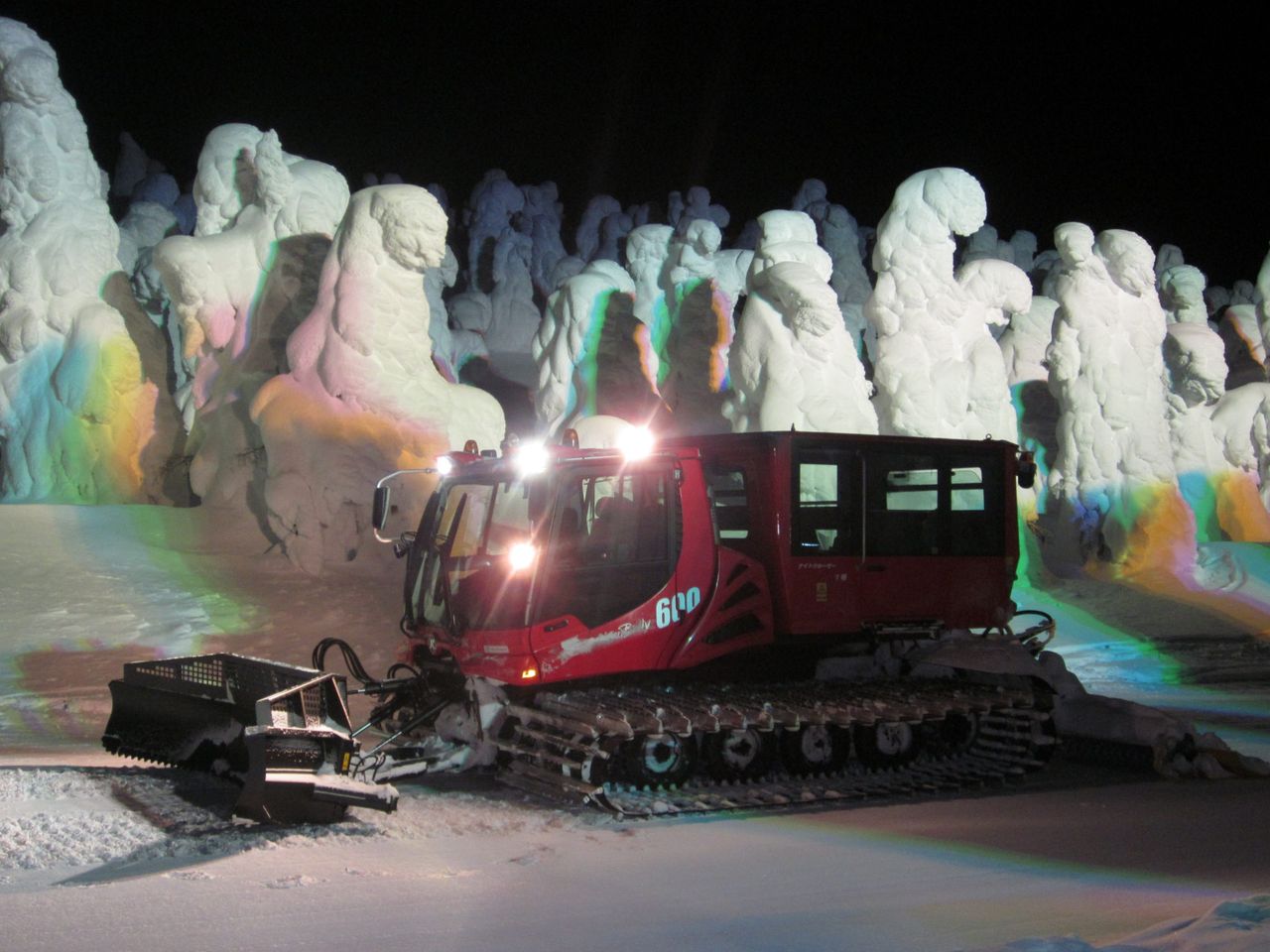
Juhyo Fantasy Corridor Snow Cat Experience: See the Snow Monsters Up Close by Snow Monster Car
Ride the snow cat “Nightcruiser” deep into the rime-ice forest to see the snow monsters up close, with 4 departures daily from 17:00-20:00, about 75 minutes in all (including about 30 minutes of riding), at ¥7,500 for adults and ¥6,000 for children in the 2025-26 season, with the round-trip Sanroku ropeway line already included.
The activity is by reservation only, with an operating period of roughly late December to late February, and tickets go on sale at 14:00 seven days before the ride date. Popular time slots sell out in seconds, so we suggest locking in your date early to grab tickets.
Zao Chinese-Language Ski Lessons: The Top Choice for Small-Group Beginners
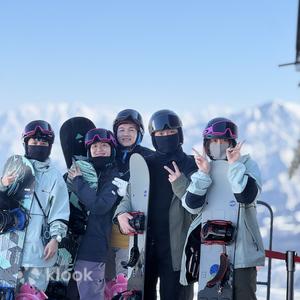
Several Taiwanese ski schools based in Zao Onsen offer Chinese-language instruction, with lessons mostly meeting in the Kaminodai area, and both snowboard and ski beginner group lessons and one-on-one private lessons, with some lessons including ski rental.
Popular times (such as Lunar New Year and weekends) often fill up early, so we suggest booking instructors and time slots 1-2 months before departure and confirming whether the lesson includes a lift ticket and insurance.
Where to Stay Near Zao Onsen Ski Resort? Recommended Areas

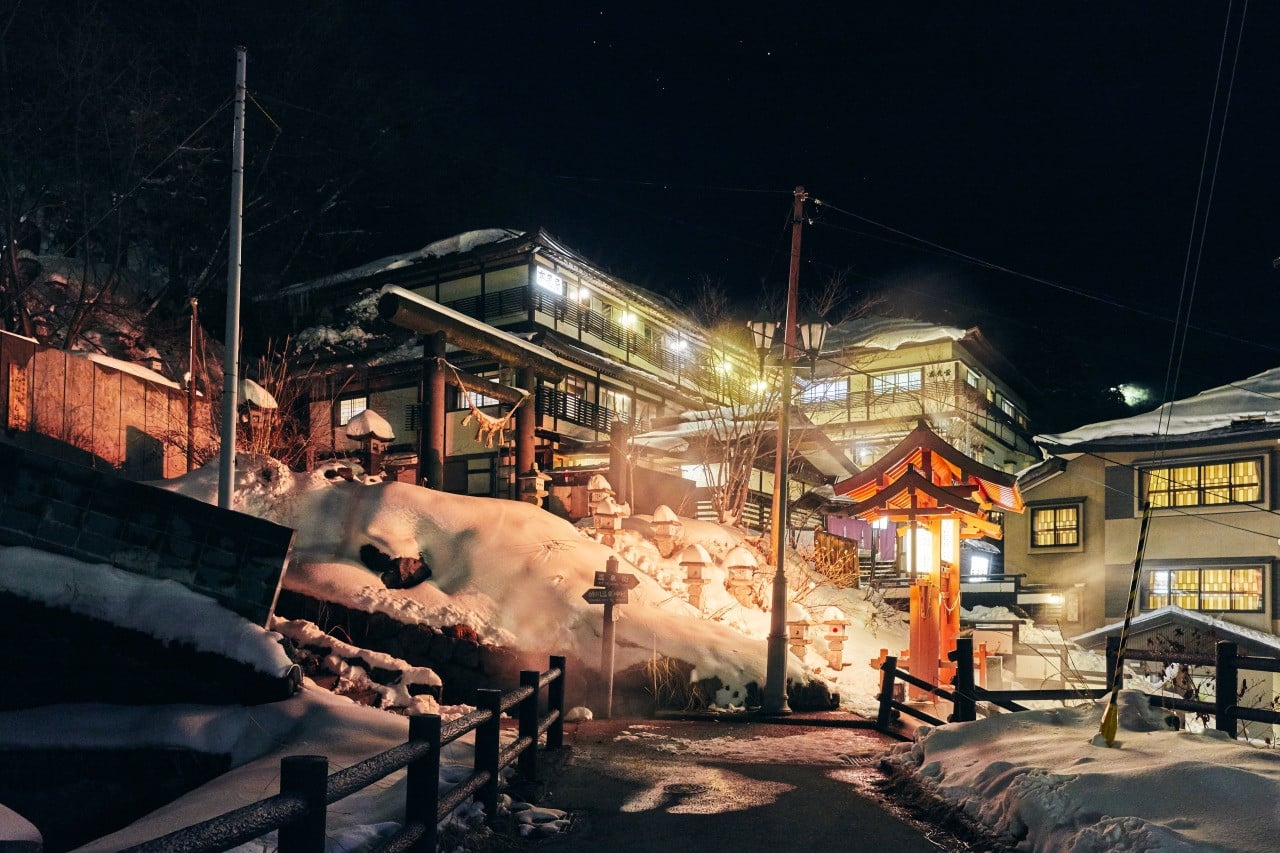
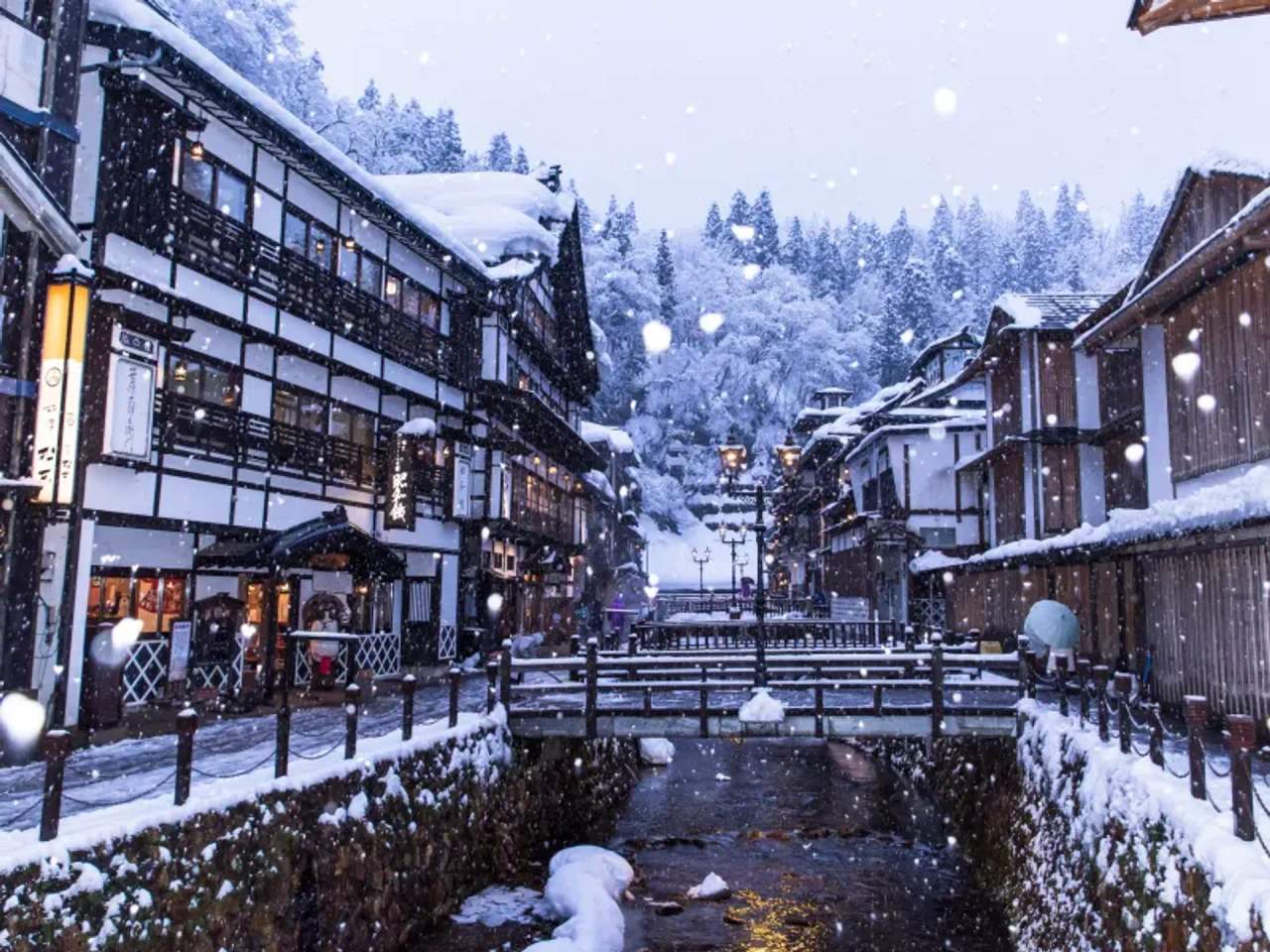
Around Kaminodai: The Beginner’s First Choice, Walkable to the Onsen Town and Slopes
The area around Kaminodai ropeway station is the first-choice stay area for most beginners and families, with the slope entrance and Zao Onsen town within walking distance, a short trip back to your room after skiing or night skiing, and convenient for catching the first gondola the next morning.
Accommodation types here are varied, from backpacker rooms to Japanese onsen ryokan, and some inns have their own private baths, suited to skiers who want to save commuting time.
Zao Onsen Town: 80-Plus Lodgings and the Richest Choice of Baths
Zao Onsen town gathers more than 80 lodgings large and small, from onsen ryokan to guesthouses, and an evening stroll lets you drop by public baths such as Kawarayu, Kamiyu and Shimoyu, experiencing the atmosphere of a thousand-year-old sulfur hot spring village.
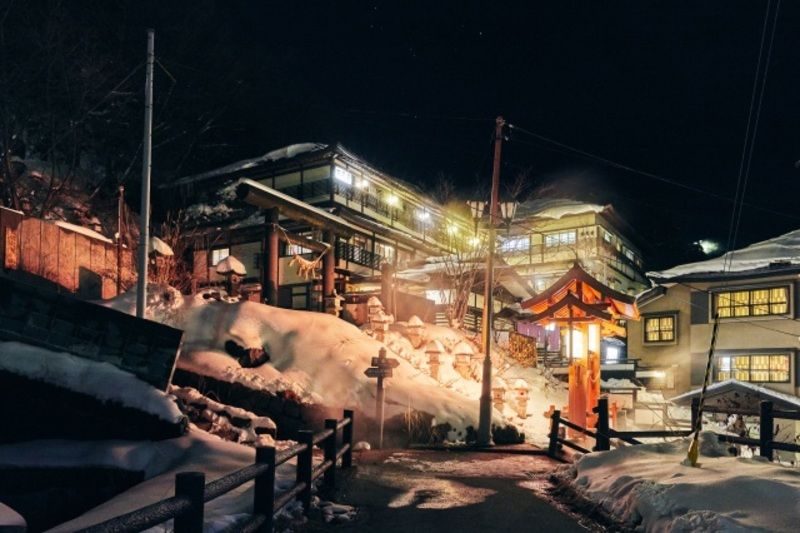
This area is slightly farther from the ropeway stations, with some inns offering shuttles or you can walk, suited to travelers who value the bathing experience over ski convenience.
Around Sanroku Ropeway Station: Ski-in/Ski-out Saves the Most Time
Inns around Zao Sanroku Ropeway Station mostly feature Ski-in/Ski-out, where you step out of your room onto the slopes or the gondola, sparing you the trouble of hauling gear, especially suited to skiers who want to spend all their time on the slopes.
This area has fewer room types and rooms are hard to get in peak season, so we suggest booking early to avoid being unable to find a Ski-in/Ski-out room at the last minute.
Around Yamagata Station: A More Affordable Transfer Base
If you do not want to be tied to resort lodging peak-season prices, you can also stay around Yamagata Station and take a bus up the mountain the next morning. Room rates are usually lower than comparable inns in Zao Onsen town, and there are also more convenience stores and restaurants around the station.
The downside is an extra 40-45 minutes each way to the resort every day, so we suggest booking here only for the last day or a transit day.
FAQ
Q: What is the difference between a gondola ticket and a lift pass at Zao ski resort?
The ropeway ticket (round trip to Jizo Sancho Station, ¥4,400) is purely for sightseeing the snow monsters; the lift pass is the ski-only ropeway ticket, with a 2026-27 regular-period adult 1-day ticket at ¥8,000.
Q: Is Zao Onsen Ski Resort suitable for ski beginners?
Yes. Kaminodai ropeway station has gentle slopes and simple routes, the beginner practice area recommended by both the resort and instructors, while Central Onsen Station and Sanroku Station are less recommended as a beginner’s first choice.
Q: Which months are best for viewing the Zao snow monsters?
The rime-ice season runs from about late December to early March, with the peak in mid-January to late February, when the rime ice is thickest and best formed.
Q: How long does it take to get from Yamagata Station to Zao Onsen?
The Yamako Bus Z90/Z91 takes about 40-45 minutes, ¥1,200 one way, IC cards accepted.
Q: How many courses does Zao ski resort have and how large is it?
Zao has 14 ski areas (ゲレンデ) and 12 courses, about 30 gondolas and lifts, and a total course length of about 42.5 km, among the largest in Tohoku.
Q: Is there night skiing at Zao Onsen Ski Resort?
Yes. Only the Kaminodai area is open for night skiing, from 17:00 to 21:00, with an evening lift ticket at about ¥3,000 for adults and about ¥1,500 for children.
Q: How do I get from Zao Onsen to Ginzan Onsen?
Take a bus back to Yamagata Station first, then the JR Ou Main Line to Oishida Station, then a bus to Ginzan Onsen, taking about 2-2.5 hours one way including transfers.