
Getting to Oirase and Lake Towada: JR Bus, Driving and Autumn Leaf Season Traffic Controls
There is no railway here, so everything depends on the roads, and the options change noticeably with the season. The four sections below cover it all.
By JR Bus: Take the “Mizuumi-go” from Aomori, the “Oirase-go” from Hachinohe
If you are not driving, take the JR Bus Tohoku: from Aomori Station the “Mizuumi-go” runs via the Hakkoda Mountains, Sukayu Onsen and Oirase Gorge to Lake Towada in about 3 hours. From the west exit of Hachinohe Station the “Oirase-go” runs via downtown Towada to the lake, and boarding at Hachinohe Station’s west exit requires a reservation in advance.
The summer service runs from early April to mid-November, and in winter it is sharply reduced or suspended. The “Aomori-Hachinohe-Lake Towada Free Kippu” pass was discontinued on April 13, 2024, and you now pay by section with an IC card or cash after boarding, so budget your transport costs again. Timetables and fares are subject to JR Bus Tohoku announcements.
Bus Stops Beside the Trail: Hop On Whenever You Are Tired
The Oirase trail runs parallel to National Route 102, with bus stops at Yakeyama, Ishigedo, Kumoi Falls, Choshi Otaki, Nenokuchi and more. If you get tired you can catch a bus at any time, with no need to finish the whole trail or walk back the way you came.
We recommend taking the bus to Ishigedo and walking toward Lake Towada, so you face the rushing water and waterfalls head-on; on the way back, take a boat or bus from Nenokuchi. Buses are infrequent, so photograph the timetable before you set out, as mountain reception is unreliable. Food and restrooms along the route are concentrated at Ishigedo and Nenokuchi, so bring plenty of water and snacks.
Driving Is the Most Flexible, but Autumn Leaf Season Brings Traffic Jams and Controls
Driving is flexible and suits a side trip to Tsuta Swamp, Hakkoda or Sukayu Onsen, but parking along the route is limited and often full around midday in leaf season.
Traffic controls are announced year by year. In fiscal 2026 they were enforced from September 7 to 13 on the roughly 10 km stretch of Route 102 from Sobe to Nenokuchi (all vehicles banned on the 13th); for later years, follow the official announcements. Snow makes the roads slippery in winter and some sections close, so rental cars need snow tires and you need snow-driving experience. The roads are narrow, so park in proper parking spaces and never stop on the roadside. If only one car wants to walk the trail one way, park at Nenokuchi, take the bus to Ishigedo and walk back.
![[Licensed Green-Plate Vehicle] Aomori Private Charter Day Tour, Tohoku, Japan | Oirase Gorge / Lake Towada | Flexible Itinerary](https://travel.williamlion.tw/wp-content/uploads/sites/7/2026/08/image-3488.jpg)
Electric-Assist Bikes: The Answer If Your Stamina Is Limited but You Want to Do the Whole Route
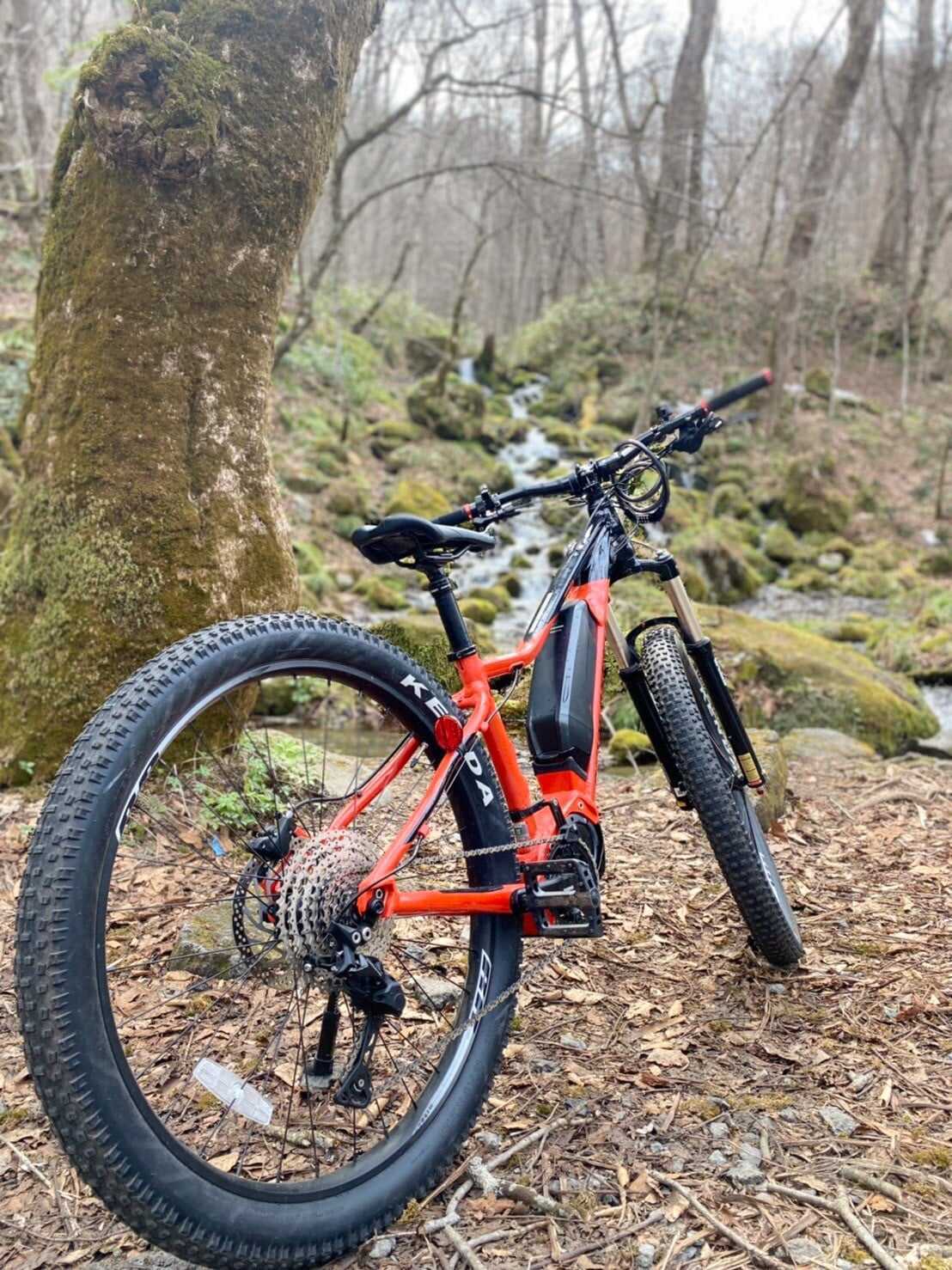
If you want to see the full 14 km but your stamina is limited, renting an electric-assist bike is a good compromise. There are rental points at the Oirase Yusuikan, the Ishigedo Rest House and Nenokuchi, and you can rent at one and return at another, for example riding from the entrance to Nenokuchi, returning the bike and then leaving by boat or bus.
Electric assist makes uphill sections easy and cuts the riding time sharply, and you can still stop for photos whenever you like. The number of bikes is limited, so in leaf season come early or check whether you can reserve. Riding is banned on some sections of the trail, where you need to walk the bike or use the road instead. Rental fees and rules are subject to the operator’s announcements.
What Are the Must-Sees at Oirase and Lake Towada? 12 Highlights from Rapids to the Caldera Lake
The first seven run along the stream from downstream to upstream, and the last five belong to Lake Towada and its surroundings.
Oirase Gorge Trail: 14 km, but You Do Not Need to Walk It All
From Yakeyama to Nenokuchi is about 14 km and takes about 5 hours in total; the terrain is gentle, runs parallel to the road and has bus stops along the way. Most people walk only the highlight section: Ishigedo to Nenokuchi, about 9 km and about 2.5 hours on foot (not counting photo and rest stops), where most of the rapids and waterfalls are concentrated; actual times are as shown on the on-site signs. We recommend walking upstream, from bottom to top, for the best views of the water and falls coming toward you. The trail is slippery after rain with many roots and stones, so wear shoes with good grip. The whole trail is free to enter, and signs along the way show distances and times to the next stop, so you can reassess your plan at any point.

Ishigedo Rest House: The Start of the Highlight Section and the Only Supply Stop
This is the start of the main hiking section and one of the few places along the stream with restrooms, light meals and souvenirs. Most people begin their walk here, and there is a bus stop and a bike rental point next to it.
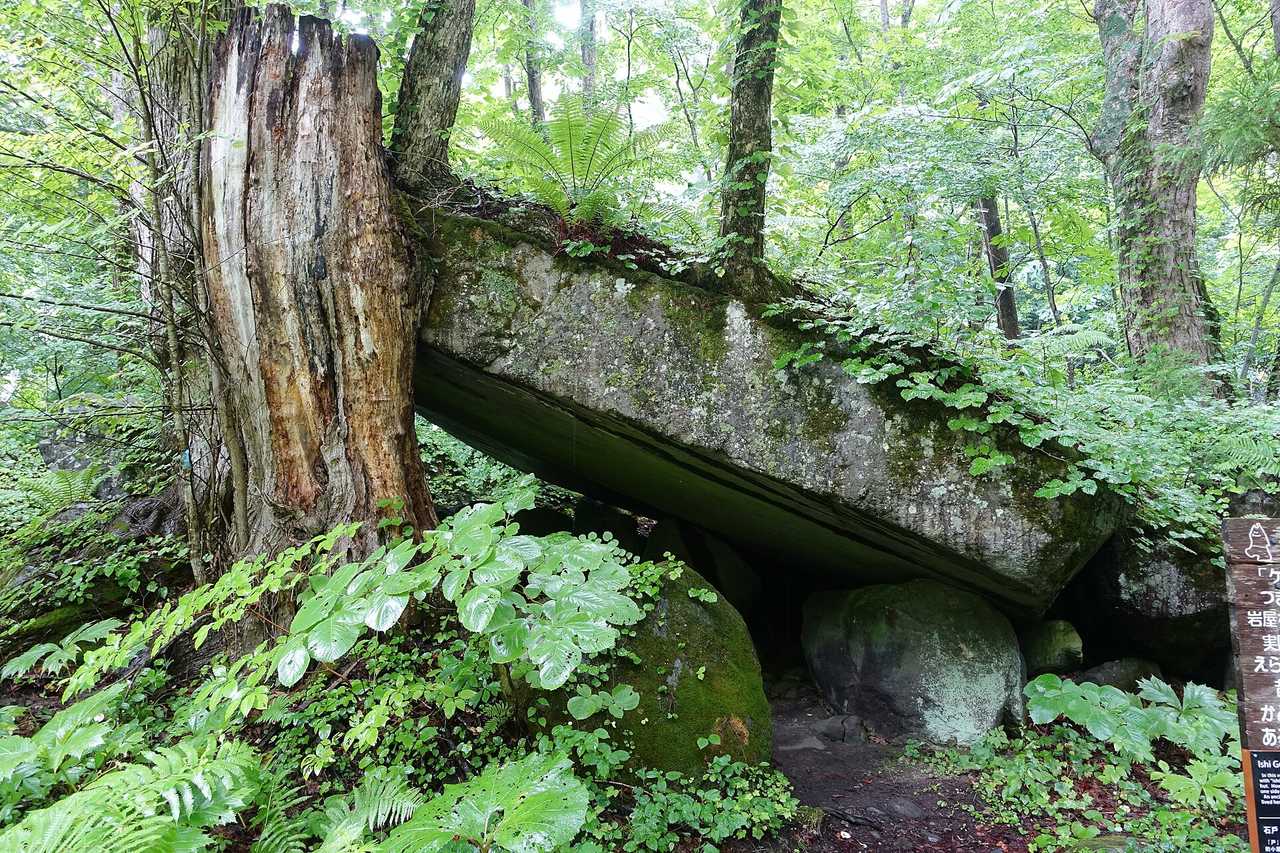
The name comes from the huge rock beside it: a katsura tree holds up a large boulder to form a natural rock shelter, and “Ishigedo” means “hut made of stone” in the local dialect; legend says it was once a female bandit’s hideout. Not far upstream you reach the first rapids worth stopping for. The parking lot is often full in peak season, so we recommend going by bus. This is also the most convenient place to check trail conditions and closure information, so look at the notice board before you set off.
Sanmidare Stream: Where Three Currents Collide
Located on the lower part of the stream, its name means three currents crossing here. The water surface is split and rejoined by rocks and sandbars, forming layers of water moving at different speeds, and branches hanging over both banks make it a favorite with photographers.
Its character is “order within chaos,” and you need to look quietly for a moment to see the layers of flow. In spring greenery and autumn leaves, the whole water surface reflects the colors. The trail runs right beside the water with few guardrails, so watch your step when you approach for photos, as the stones and moss are slippery. Because it is close to the entrance, those short on time can walk just this section and turn back.
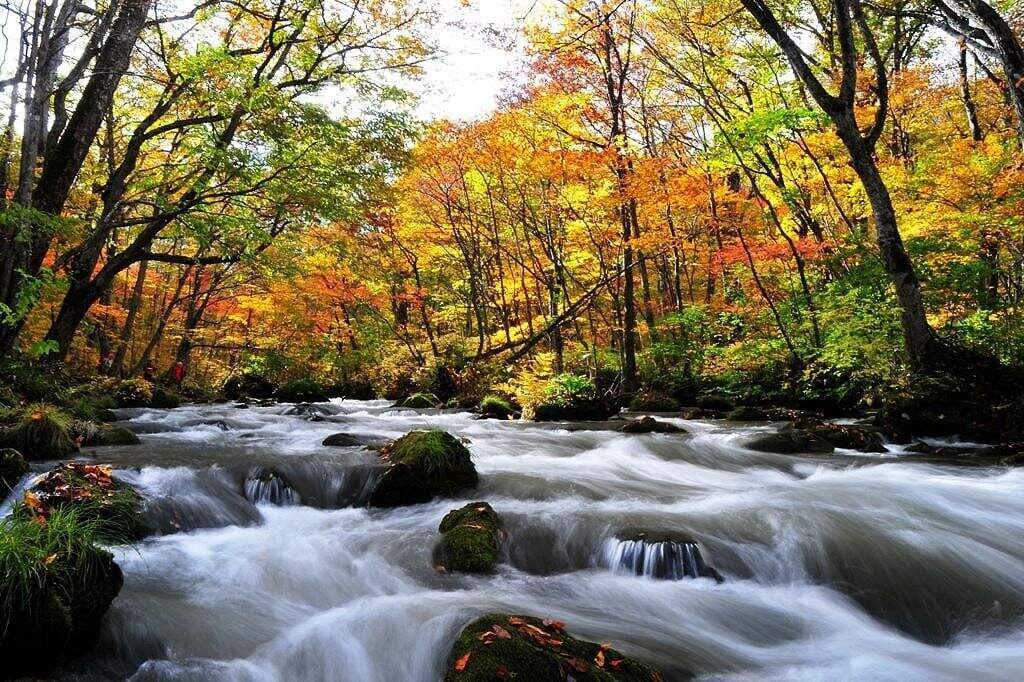
Ashura Stream: Oirase’s Most Famous Stretch of Rapids
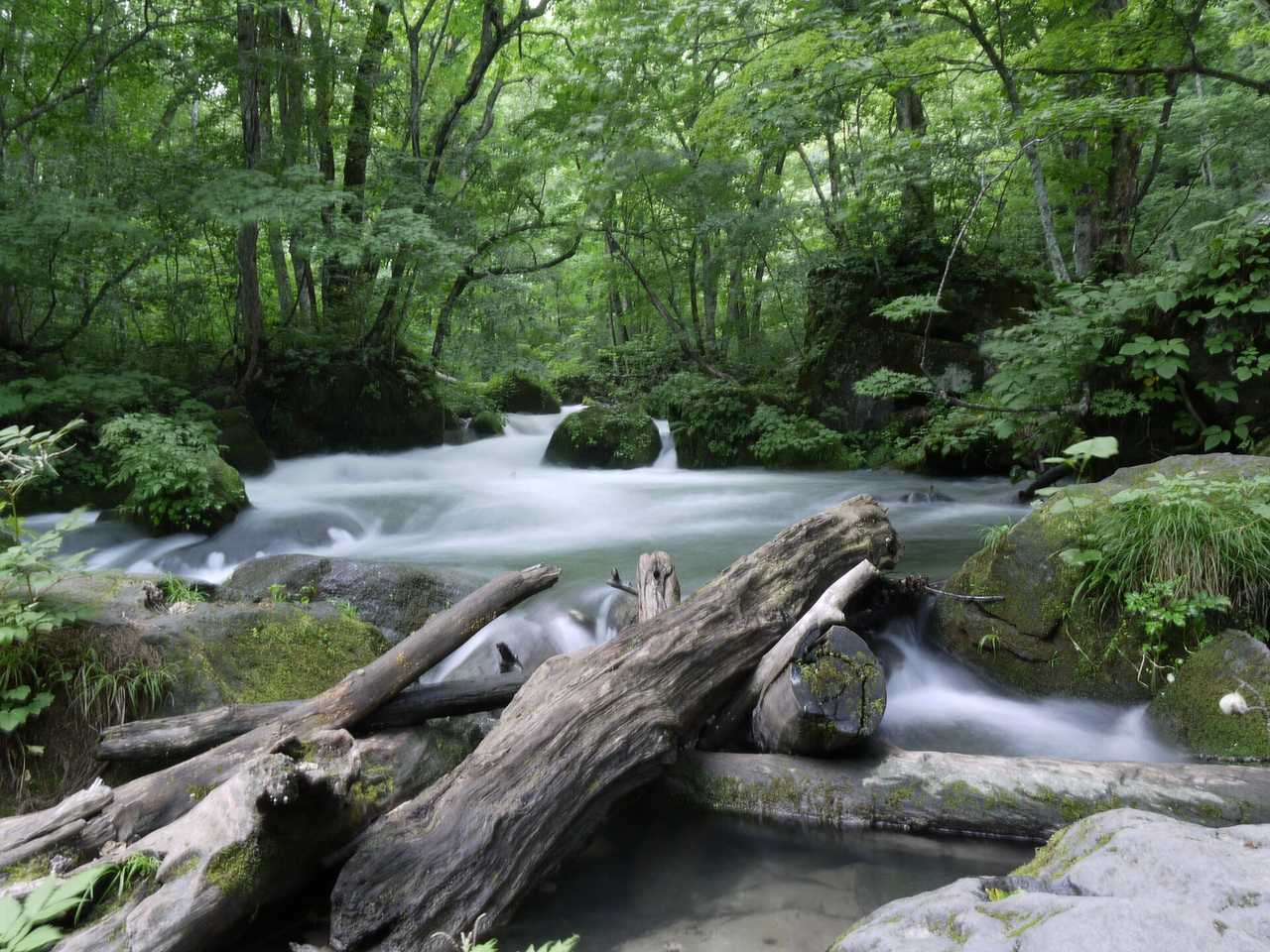
This is the most representative scene of the whole Oirase. Here the water is broken up by countless rocks and white spray tumbles down the whole stretch, with dark green mossy rocks and tree trunks on both sides, a strong contrast of motion and stillness. It is named after Ashura, the warrior deity of Buddhism.
It appears in almost every Oirase promotional photo, which also makes it one of the most crowded photo spots in peak season. Long exposures can turn the water silky, but the trail is narrow, so make sure your tripod does not block the way. It is in the middle of the highlight section, a short walk upstream from Ishigedo, with signs along the way. Slanting light in the early morning and late afternoon best brings out the layers of the mossy rocks, while overhead light at midday is the flattest.
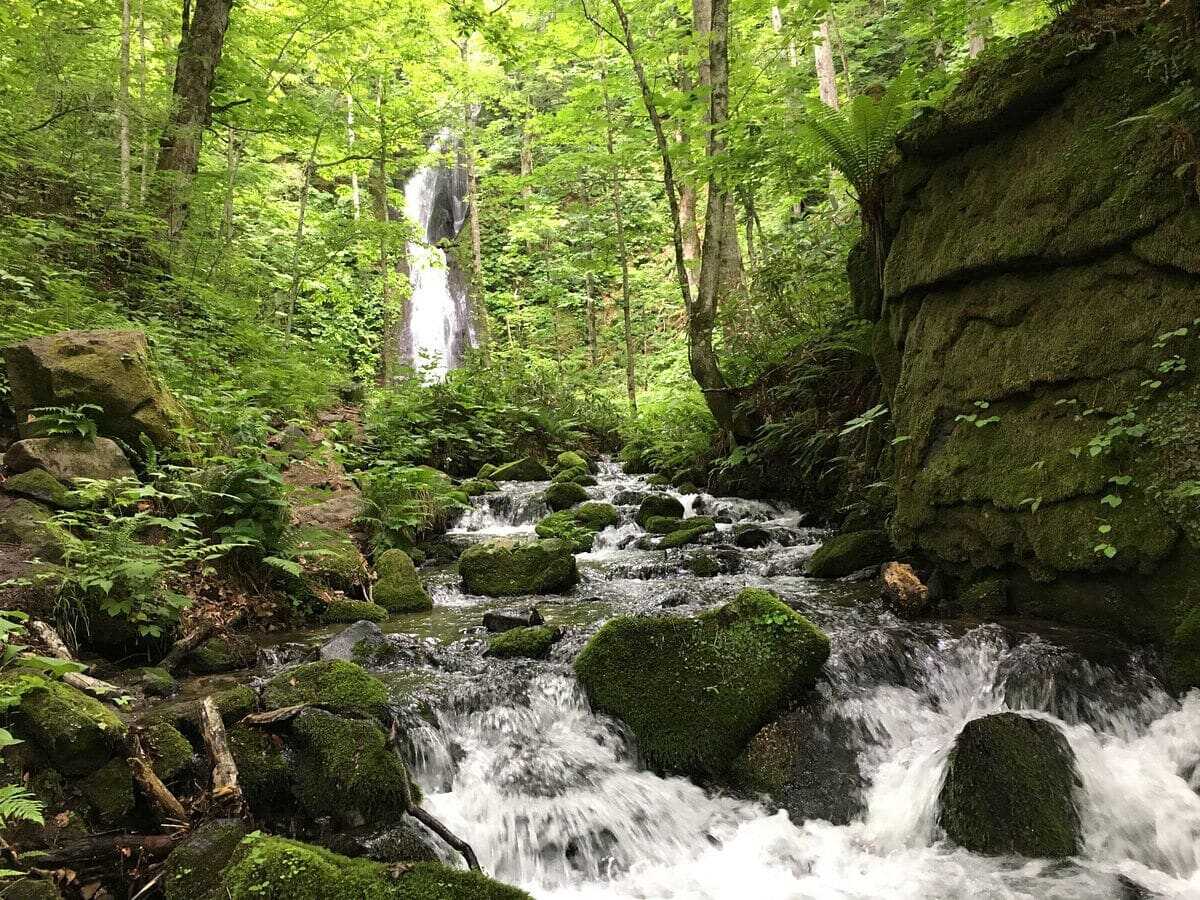
Kumoi Falls: The 20-Meter Waterfall Closest to the Trail
About 20 meters high and falling in three tiers, it is one of the most substantial tributary waterfalls along Oirase. The water drops straight down the cliff beside the trail, and you can walk up close to feel the spray and hear the roar.
It sits right beside the trail with a bus stop next to it, making it the easiest waterfall to reach on the whole route; if you are short on time, you can simply take the bus to see it briefly. The ground around it is wet and lenses fog up easily, so bring a cloth to wipe them. In winter the falls freeze, but the trail is mostly closed then. The path in front of the falls has slippery stone steps, so hold children’s hands.
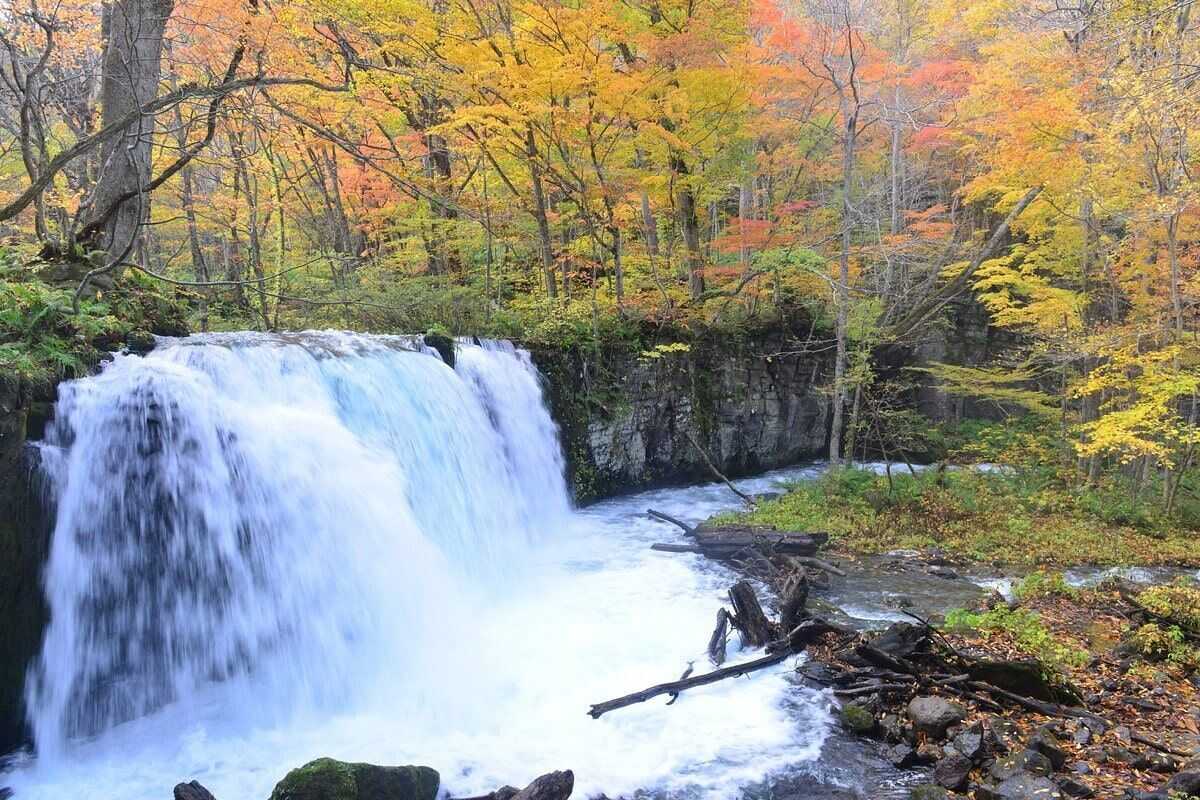
Choshi Otaki: The Only Waterfall That Spans the Whole Stream
Oirase’s largest waterfall and the only one that spans the main stream, with the greatest volume and width along the route.
Also known as “Uodome no Taki” (Fish-Stopping Falls) because its drop blocked fish from migrating into Lake Towada, so the fish in the lake were stocked artificially later. Located near the upstream end of the highlight section close to Nenokuchi, it is the final climax of the hike, with a viewing platform and bus stop beside it. From here it is about thirty minutes’ walk to Nenokuchi, the last point at which to judge whether you can make the boat.
Nenokuchi: The Start of the Stream and Where You Switch to the Sightseeing Boat
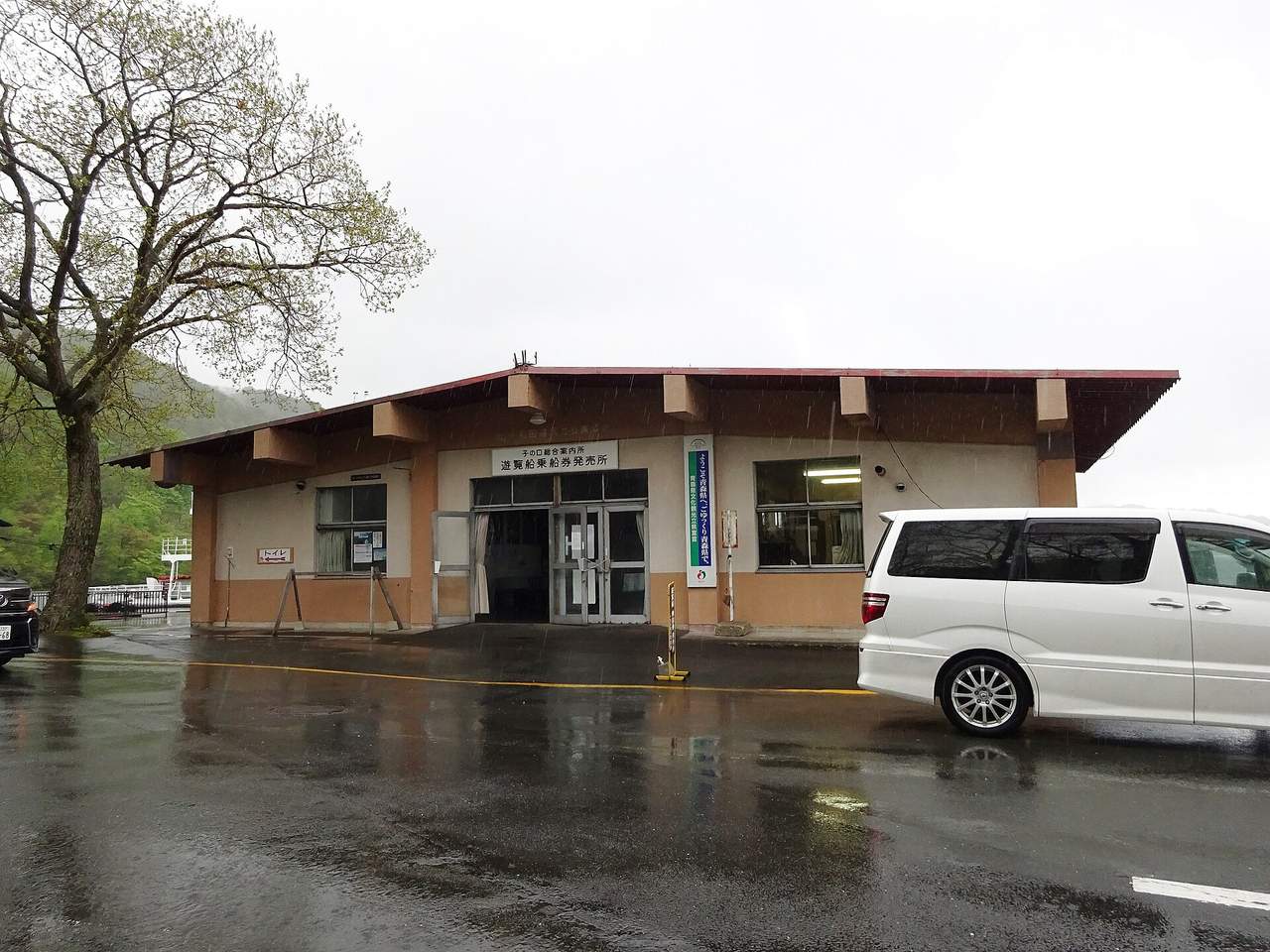
This is the outlet of Lake Towada, where Oirase Gorge begins to flow downstream. For hikers it is the end of the highlight section and the turning point of the whole trip: after walking 9 km you board a boat here and cross the lake to Yasumiya on the opposite shore, a beautiful route.
There is a harbor, ticket office, rest facilities and bus stop here, so you can sit down and eat something before boarding. Note that the sightseeing boats have operating seasons and limited schedules and stop running in winter, so before hiking be sure to check the day’s last boat and work backward from it to set your start time. If you miss the boat, you can take a bus around the lake instead.
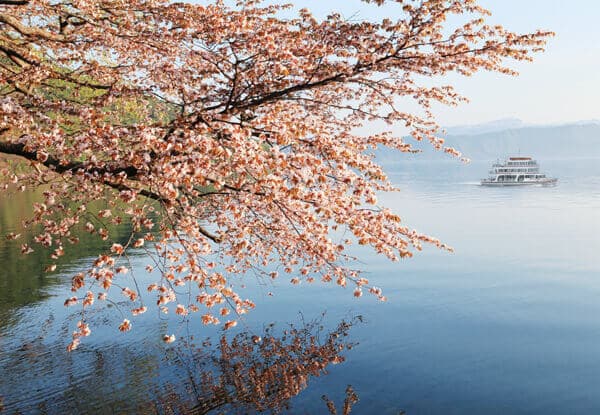
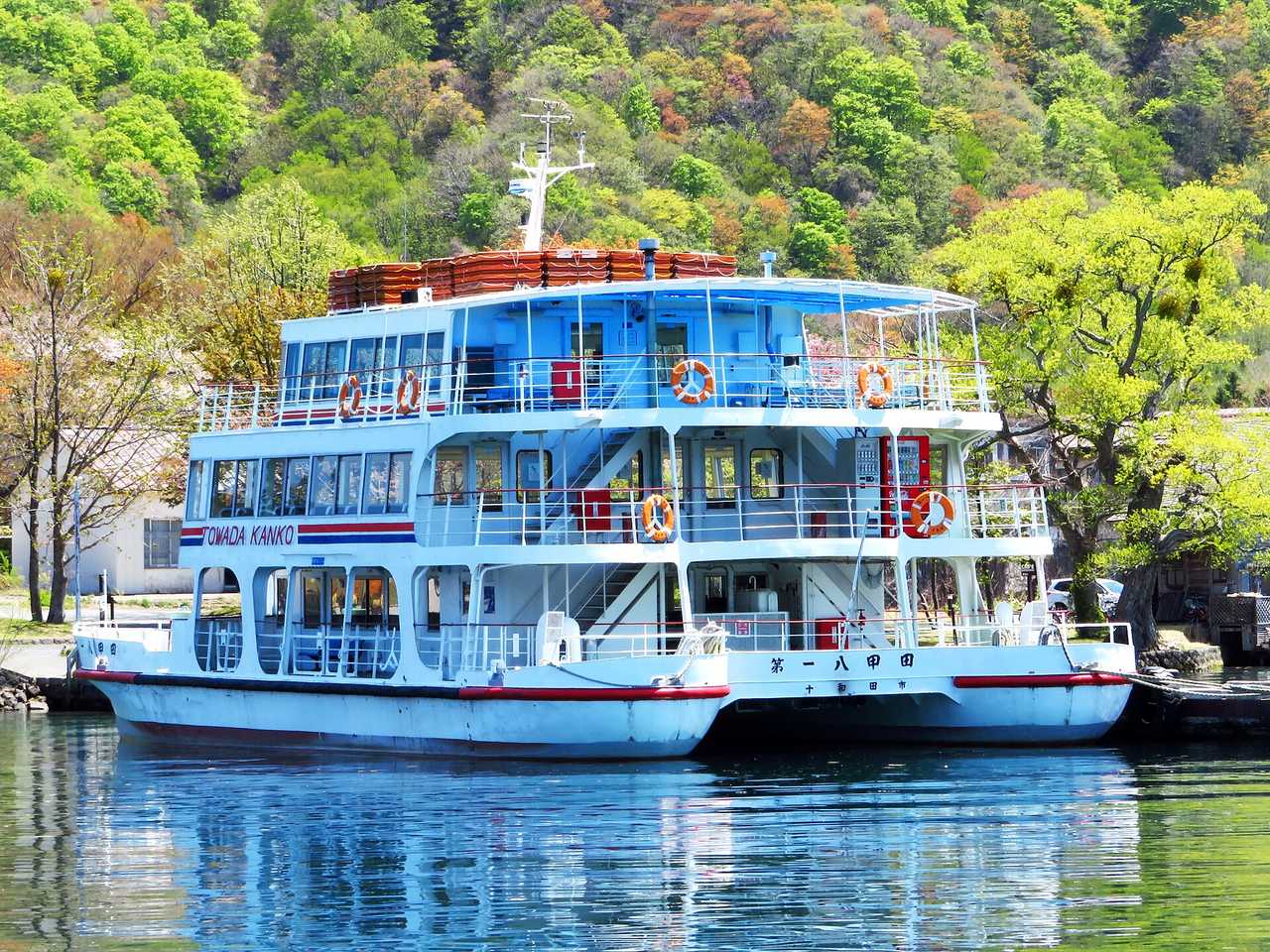
Lake Towada Sightseeing Boat: Seeing This Double Caldera from the Water
Lake Towada is a double caldera lake whose shore is cut into a complex shape by two peninsulas, and only from the water can you feel the terrain wrapped in the crater. There are two routes: a one-way route from Yasumiya to Nenokuchi, and a round-trip cruise that leaves Yasumiya, circles the Onkura and Nakayama peninsulas and returns to Yasumiya. Both take about 50 minutes.
The standard fare for 2026 is ¥1,760 for adults and ¥880 for children. The boats do not run in winter. Actual operating season, schedule and fares are subject to announcements on the Towada Kanko Dentetsu website (toutetsu.co.jp), and service may be suspended in bad weather.
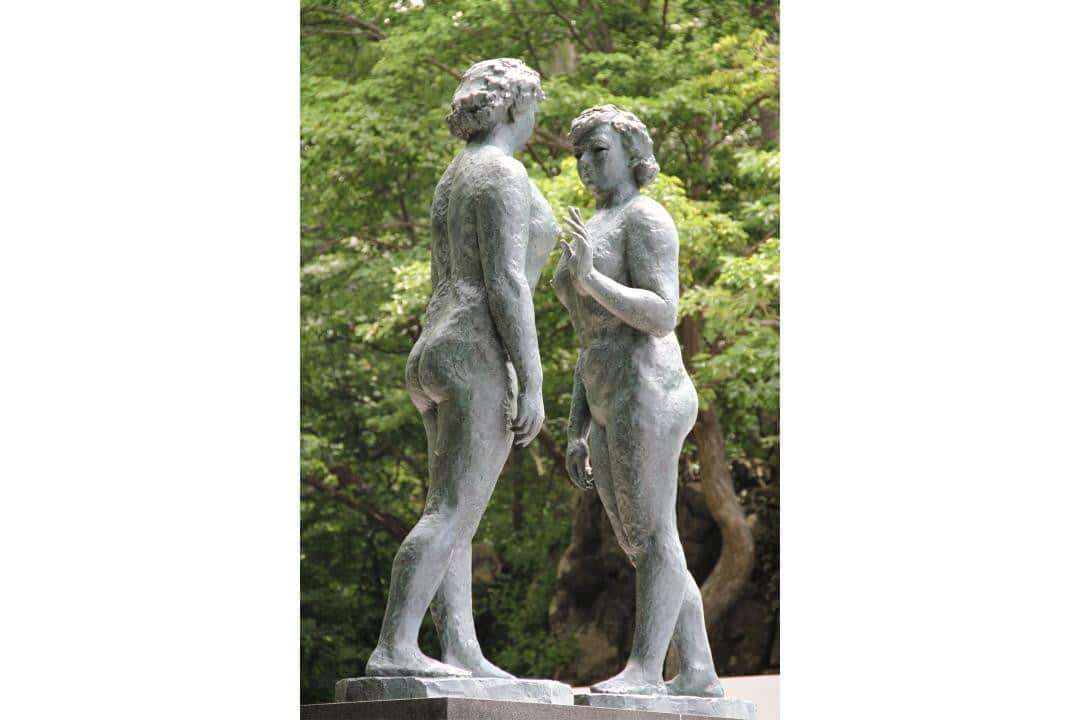
Otome no Zo: Two Bronze Nude Statues on the Lakeshore
Bronze statues standing in the woods on the Yasumiya lakeshore. Two nude female figures about 2.1 meters tall face each other with their left hands lightly touching. It was the last work of sculptor and poet Kotaro Takamura and is the most recognizable landmark of Lake Towada.
It is about a ten-odd-minute walk from Yasumiya harbor along the lakeside path, with pleasant woods and lake views on the way. The lake lies right behind the statues, so you can shoot silhouettes against the light. Entry is free with no time limit, and it is often paired with Towada Shrine on the same route. In winter the lakeshore is snowy and slippery, and there is not much space in front of the statues, so in peak season make way quickly after taking your photo.
![[Departing from Aomori] Forest Walk Day Tour: Oirase Gorge & Lake Towada & Otome no Zo & Towada Shrine | Departs with 2 People, Private Transfer, Multilingual Service (Aomori)](https://travel.williamlion.tw/wp-content/uploads/sites/7/2026/08/image-547.jpg)
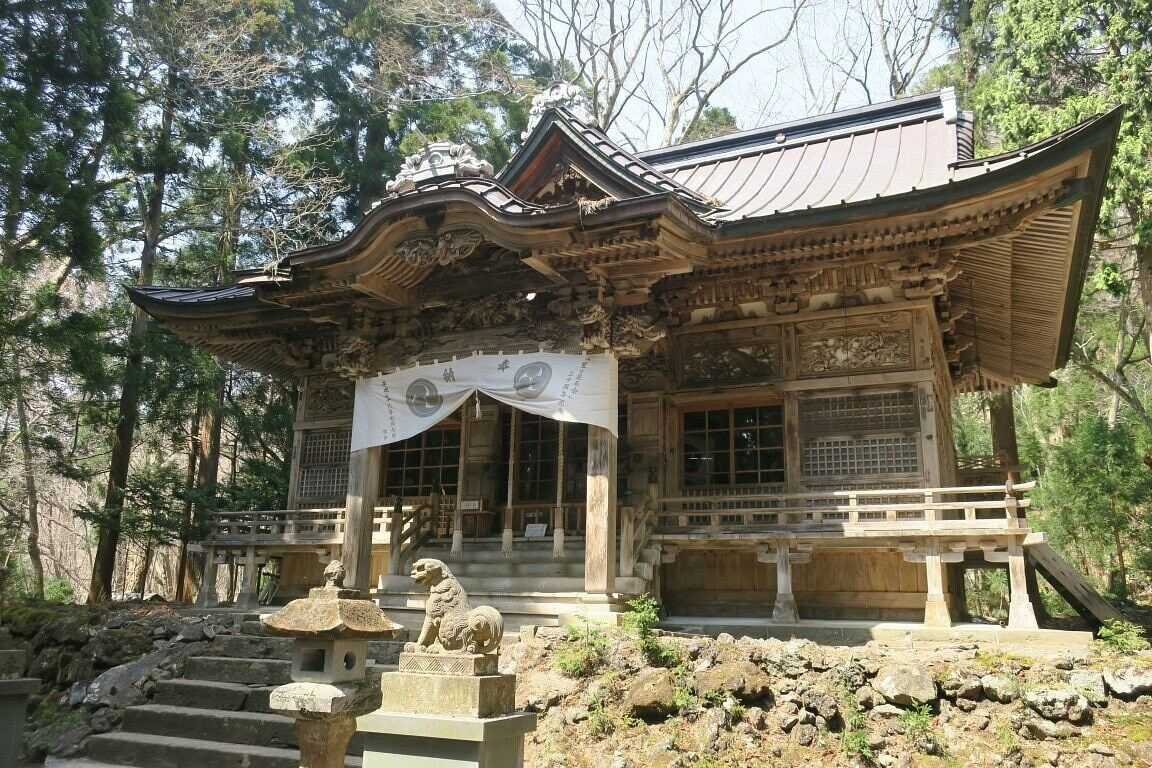
Towada Shrine: A Wish-Granting Shrine Hidden in a Cedar Forest
Located in the cedar woods of Yasumiya, with tall old cedars on both sides and dim light, its atmosphere is quite different from the open lakeshore. The shrine has a long history and is a place of protection and ascetic practice for Lake Towada.
The famous legend is “Uranaiba”: in the past people threw slips of paper into the lake to divine their wishes. The ladder to the divination spot is currently closed to passage, so paper is now thrown at Gozen-no-hama in front of Otome no Zo; check on-site notices for actual availability. Entry to the grounds is free, and since it is on the same Yasumiya lakeshore as Otome no Zo, the two can be combined on one stroll. The stone steps are slippery after rain and the cedars block the light, making it even darker in the afternoon, so we suggest visiting in the morning.
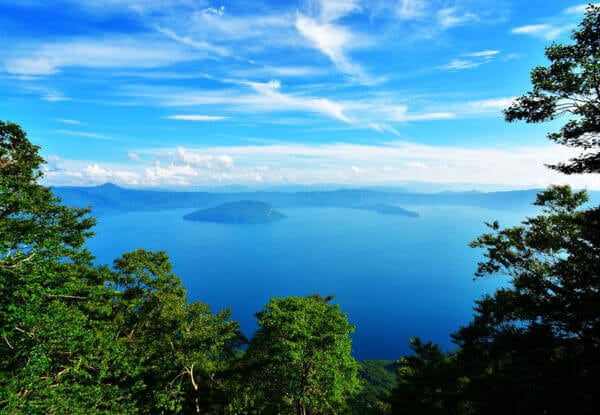
Hakka Pass Observatory: Take In the Whole of Lake Towada at Once
Located on the south side of Lake Towada within Akita Prefecture, this is the classic panoramic viewpoint, offering a view of the lake, the two peninsulas and the distant Hakkoda range all at once, with the caldera landscape at its clearest here.
The terrain is higher, so autumn leaves appear earlier than at the lakeshore, and layered colors are common in autumn. Entry is free, with a parking lot and viewing deck, but it can only be reached by car and public transport is inconvenient; in winter snow easily closes the road, so check conditions before setting out. Mist is common in the early morning and the view is steadier after noon. It is about twenty to thirty minutes’ drive from Yasumiya, so it is a convenient stop on the way.
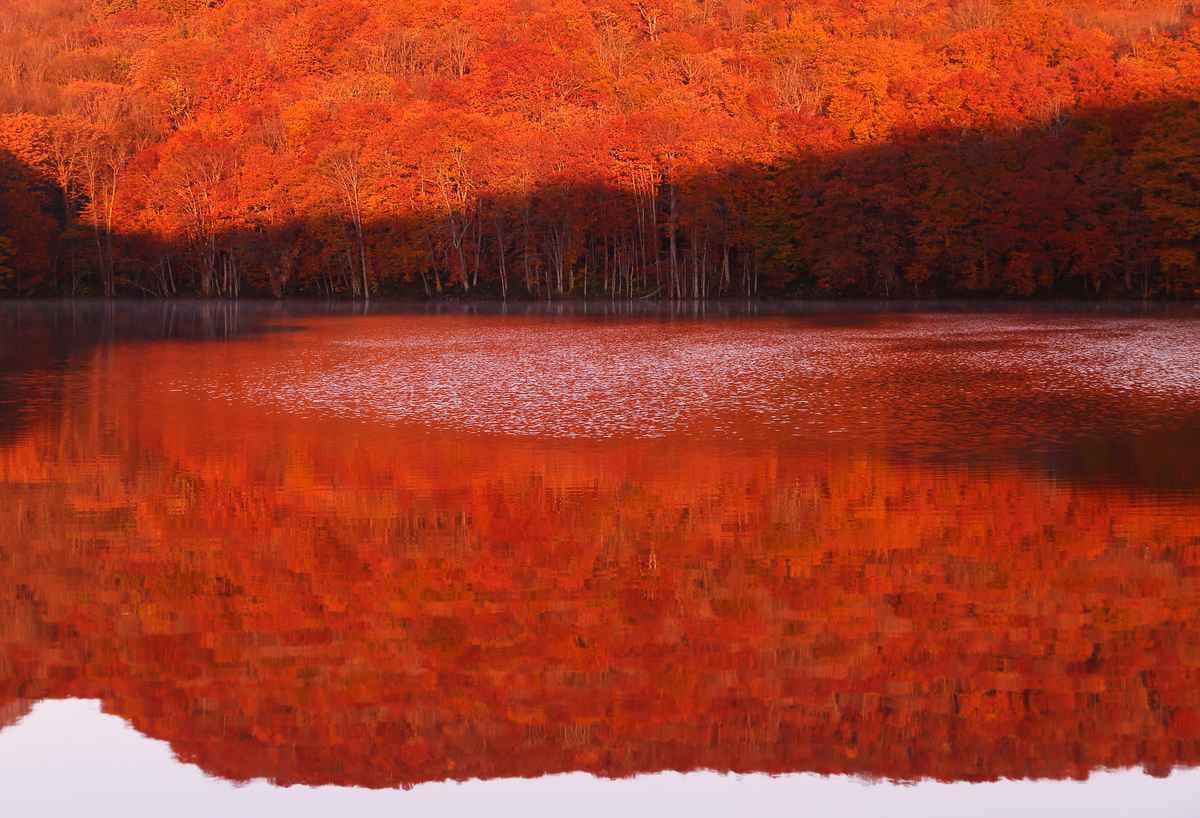
Tsuta Swamp: A Reservation-Only Spectacle at Dawn in Leaf Season
A small swamp at the foot of the Hakkoda Mountains on the way to Oirase, surrounded by primeval forest and famous for the view at sunrise in leaf season when the whole swamp of red leaves lights up together with its reflection. In 2026 the leaf period is October 23 to November 3, and entering the observation deck between 5:00 and 7:30 in the morning requires an advance online reservation, with a cooperation fee of ¥2,000 per person. Outside leaf season it is freely accessible, and the wooden boardwalk around the swamp takes about thirty minutes to circle; the fresh-green season is just as beautiful with fewer people. Several other swamps nearby can be linked into the “Tsuta Numa Meguri” loop route, which is less crowded.
Tickets and Tours: What to Book Ahead at Oirase and Lake Towada
Most trails here are free; the things that cost money come down to boat tickets, bikes and guided tours.
Lake Towada Sightseeing Boat Ticket: The Best Finish After a Hike
In 2026 the adult fare is ¥1,760 and the child fare ¥880, with a voyage of about 50 minutes. Tickets can be bought at the ticket offices at Nenokuchi or Yasumiya; the Yasumiya office is inside the Lake Towada Tourist Exchange Center “Purratto” and opens at 9:00. Boats do not run in winter and schedules in other seasons are not frequent either, so if you take the boat after the hike, work backward from the last boat to set your start time. Service may be suspended in bad weather, and in leaf season we suggest arriving at the harbor early; actual season, schedule and fares follow the operator’s announcements. It is windy on deck and cooler on the water, so bring a light jacket, and those prone to seasickness should choose an indoor seat.
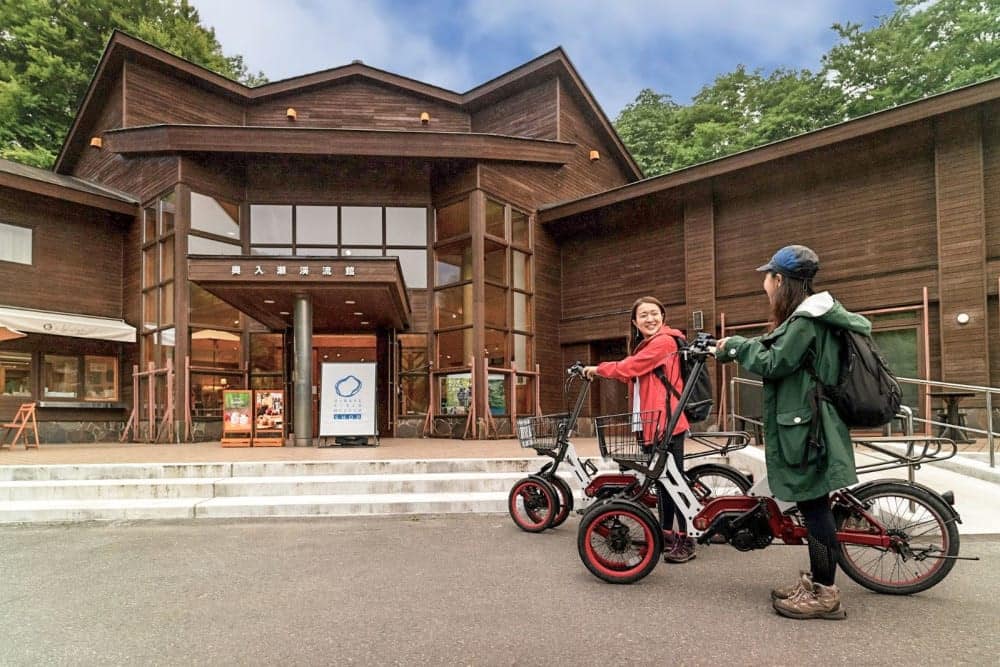
Electric-Assist Bike Rental: Rent at One End, Return at the Other
Rent a bike at the Oirase Yusuikan or the Ishigedo Rest House and ride to Nenokuchi to return it, with no need to backtrack. It suits people who have only half a day to see the main sights.
Bikes are limited and are easily all rented out in leaf season, so we recommend reserving. Riding is not allowed on some sections of the trail, where you need to walk the bike or use the road, so when renting confirm the route rules and the return deadline; rental fees and rules follow the operator’s announcements. Battery range is limited, and running the highest assist mode the whole way may not last, so switch modes as needed. Helmets are mostly provided by the operator and wearing one is recommended; cars use this road, so ride at the edge.
Winter Ice Falls and Night Tours: What to Do When the Trail Is Closed
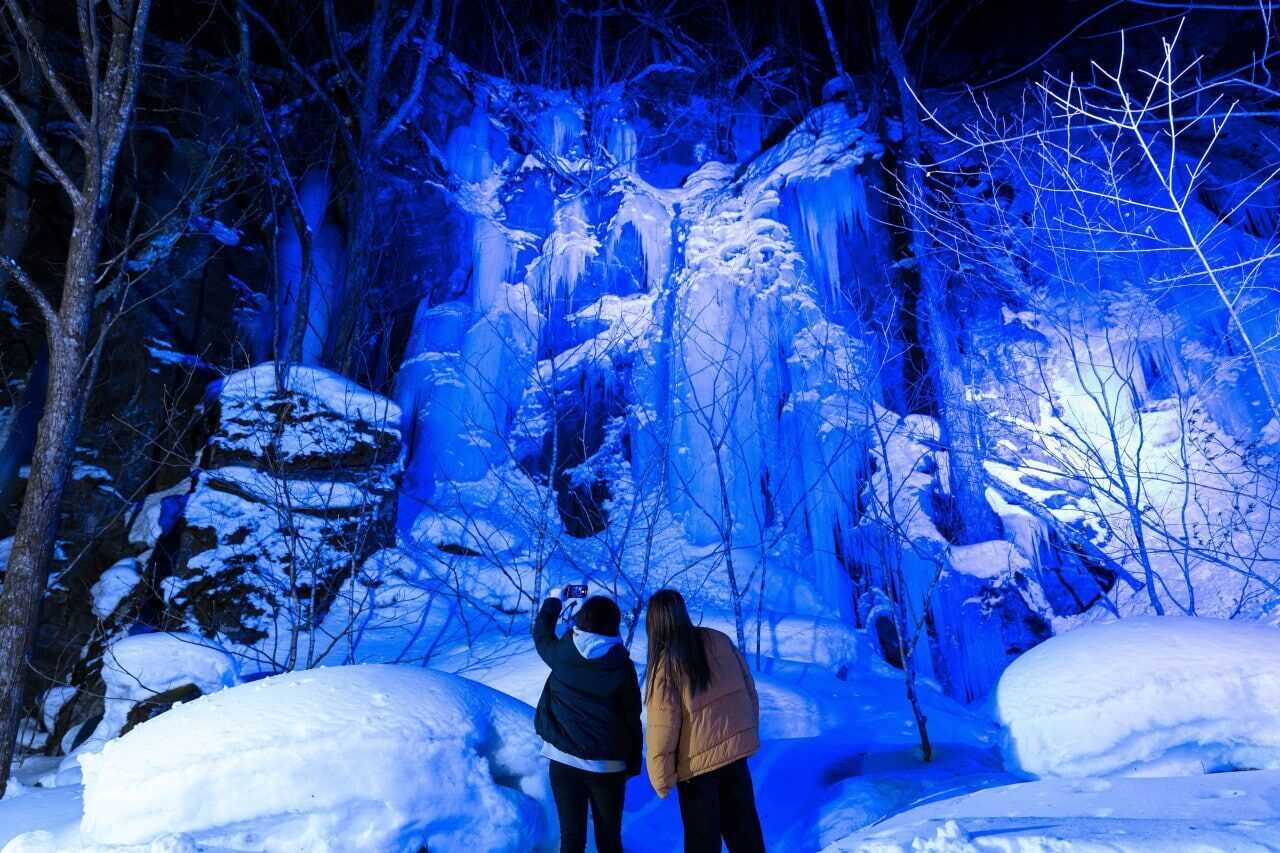
In winter the trail is mostly closed and the boats stop running, so the main options are operator-led ice waterfall viewing and illuminated night bus tours, which let you enjoy frozen waterfalls and snow scenery.
Tours are by reservation, need a minimum number of participants and depend on weather and road conditions; heavy snow often leads to cancellations. Most equipment is provided by the operator, but you need to bring your own waterproof jacket and snow boots. Actual dates, content and fees follow the operator’s announcements for the year. In winter most local restaurants and shops are closed, so bring your own food, and daylight is short, with dark falling just after 3 p.m., so plan your schedule early.
Dawn Entry to Tsuta Swamp in Leaf Season: Reservation Only with Limited Places
In the dawn hours of peak leaf season, Tsuta Swamp operates an advance reservation system with visitor limits and an extra fee; places are limited and close when full.
In 2026 the system runs from October 23 to November 3. Between 5:00 and 7:30 in the morning you must reserve on the official website and prepay the cooperation fee (¥2,000 per person); outside leaf season it is freely accessible. Dawn temperatures are very low and the trail is unlit, so participants need to bring their own headlamp and warm clothing. Actual rules follow the announcements for the year. Please confirm parking and shuttle arrangements on the reservation page.
 KKdayTsuta Swamp autumn leaf dawn entry reservation
 KLOOKTsuta Swamp autumn leaf dawn entry reservation
Trekking the Stream with a Local Guide: Learning to Read the Moss and Trees
What is most special about Oirase is actually not the waterfalls but the forest cycle formed by the moss and fallen trees covering the ground. Walking alone you will not understand these things, but with a local guide you stop to look at moss under a magnifying glass and hear how fallen trees renew the forest, a completely different experience.
These tours are mostly half-day, by reservation and with limited group sizes, and some operators offer guiding in Chinese or English, so confirm the language before signing up. They usually go ahead in rain, so bring your own rain gear. Actual content, language and fees follow each operator’s current announcements.
![[Departs with 1 Person] Tohoku Aomori Autumn Leaves Day Tour | Oirase, Lake Towada, Hirosaki Park](https://travel.williamlion.tw/wp-content/uploads/sites/7/2026/08/image-3487.jpg)
Where to Stay: By the Stream, on the Lakeshore or in a Hot Spring Area?
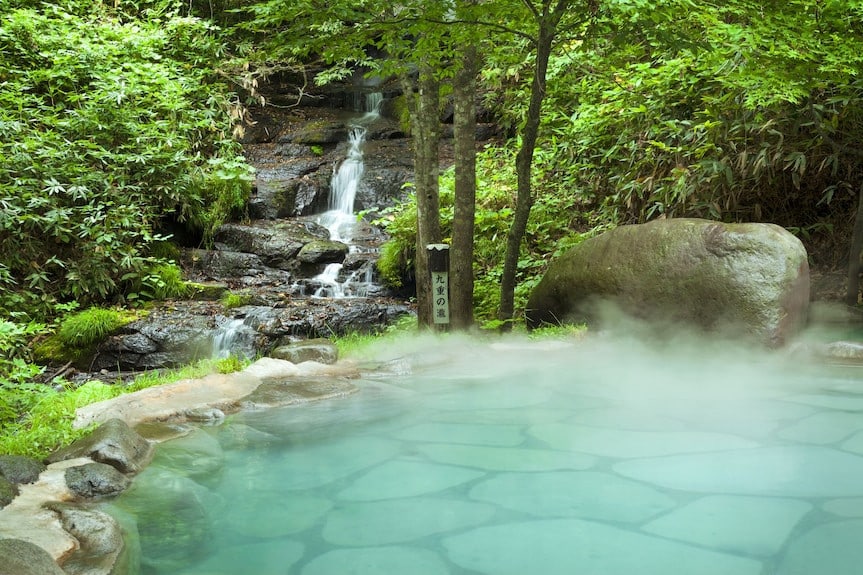
There are not many places to stay here, but location directly changes your itinerary.

Which Area? It Depends on When You Want to Be on the Trail
The biggest value of staying along the stream is the early morning: before the tour buses arrive the trail is almost empty, and the moss and mist in the morning light are completely different from midday, so photographers mostly choose this area. Staying around Yasumiya on the lakeshore suits those who center their trip on Lake Towada: you can visit Otome no Zo and Towada Shrine, take the first boat the next day, and restaurants and shops are also concentrated there. You can also choose a nearby hot spring area such as Sukayu or Hakkoda, which has the best bathing conditions but needs extra driving time. In winter many facilities close, so be sure to confirm operating periods and trail and bus-stop transfer services before booking.
Oirase Gorge and Lake Towada FAQ
Q: Do I have to walk the full 14 km of Oirase Gorge?
Not at all. The full 14 km takes about 5 hours, but most people walk only the highlight section from Ishigedo to Nenokuchi, about 9 km and about 2.5 hours, where the main rapids and waterfalls are. An easier option is to take the bus to Kumoi Falls or Choshi Otaki and walk just a short stretch. The trail runs parallel to the road with bus stops all along, so you can board at any time and there is no need to push yourself.
Q: Is it better to walk from upstream or downstream?
We recommend walking upstream, from Ishigedo toward Lake Towada (Nenokuchi). That way the water comes toward you and you see both the force of the rapids and the front of the waterfalls, whereas walking the other way mostly means seeing the water flowing away from behind. Another benefit is that the end point, Nenokuchi, is the boat pier, so you can board straight after the walk and cross the lake, the smoothest route with no backtracking.
Q: When are the autumn leaves most beautiful?
They usually start to color in mid-October and peak from mid- to late October (the upstream Nenokuchi area turns red first, while the downstream Yakeyama side can last to late October or early November), and the gorge is listed among Japan’s top 100 autumn leaf spots. The Hakka Pass Observatory at higher elevation comes a little earlier. Be prepared for very large crowds and weekend traffic jams, and every year a few days of private-car traffic control with shuttle buses are in effect, but the dates are announced year by year (in fiscal 2026 they were September 7 to 13, ending before leaf season). The actual peak varies with the weather each year, so check that year’s autumn leaf forecast before you go.
Q: What can I see at Oirase and Lake Towada in winter?
Most of the trail is closed by snow and the boats stop running, so independent travelers can do very little. In winter the area mainly depends on operator tours: ice waterfall viewing and illuminated night bus tours that feature frozen waterfalls and snow scenery, which need reservations and are canceled in heavy snow. Unless you come specifically for snow, winter is not the high season here, and your flexibility drops sharply.
Q: How much is the Lake Towada sightseeing boat, and how long does it take?
The standard fare in 2026 is ¥1,760 for adults and ¥880 for children, with a voyage of about 50 minutes. There are two routes: a one-way route from Yasumiya to Nenokuchi, and a round-trip cruise that leaves Yasumiya, circles the peninsulas and returns to Yasumiya. Hikers mostly choose the one-way route, boarding at Nenokuchi right after the stream walk. The boats do not run in winter and schedules in other seasons are also limited, so be sure to check the last boat first. Actual fares and operation follow the operator’s announcements.
Q: Is there a good-value bus pass?
The “Aomori-Hachinohe-Lake Towada Free Kippu” that many people used in the past has been discontinued since April 13, 2024, a point many older guides have not updated. Now on the JR Bus “Mizuumi-go” or “Oirase-go” you pay by section after boarding with a transport IC card or cash (Aomori / Shin-Aomori to Oirase Keiryu Onsen ¥2,270, to Lake Towada ¥3,050), or you can use a rail pass with broader coverage. At present JR Bus Tohoku does not sell a pass dedicated to the Lake Towada line. Transport costs are not cheap in this area, so budget for them separately. Actual ticket types and prices follow the operator’s current announcements.
Oirase Gorge and Lake Towada: A Stream You Can Finish Walking, a Lake You Never Can
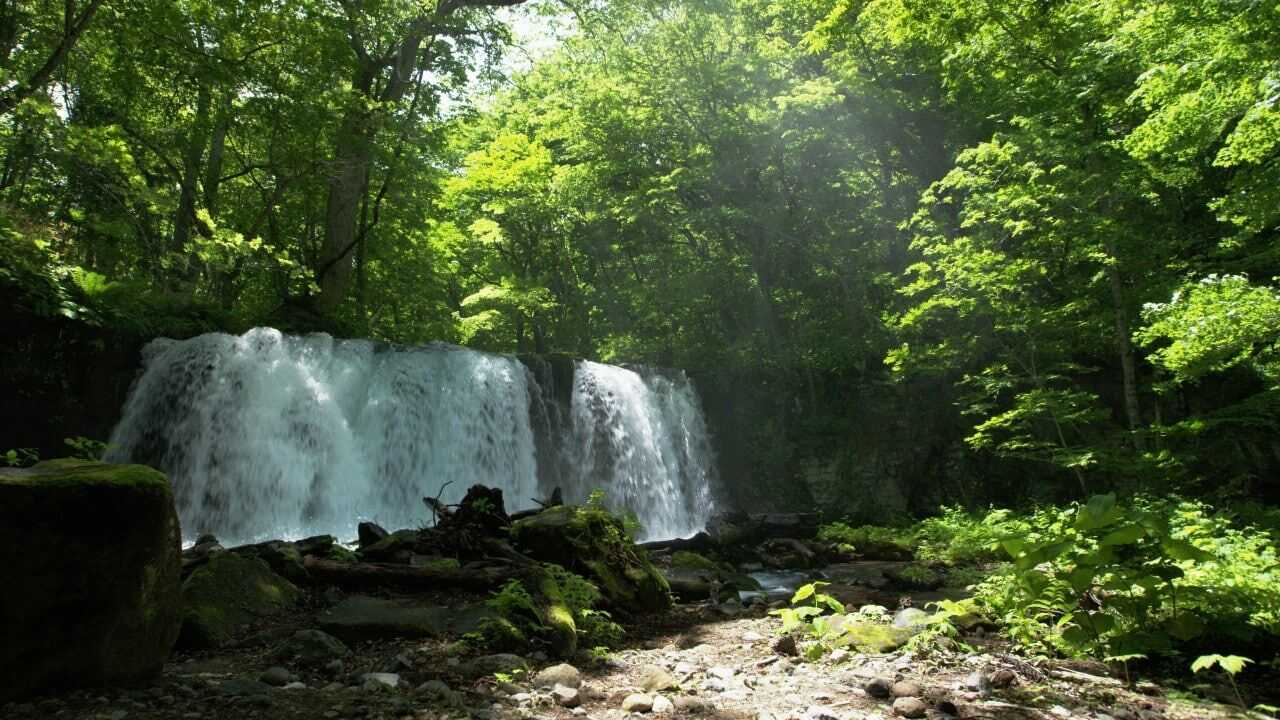
Oirase Gorge is the only outlet of Lake Towada. It flows downstream from Nenokuchi on the lakeshore toward Yakeyama, and about 14 km of its course is lined with a walking trail. It is nothing like an ordinary mountain hike: the path is flat, runs parallel to the road, and has bus stops all along the way, so you can hop on a bus whenever your legs give out. Yet the scenery is packed in tightly, with rapids, mossy rocks, fallen trees and more than a dozen waterfalls appearing one after another.
Lake Towada is the gorge’s source, a double caldera lake that spans both Aomori and Akita prefectures. The water is deep, the surface calm and the shores wrapped in forest. The classic way to do it is to walk the gorge and then take a sightseeing boat across the lake from Nenokuchi to Yasumiya, linking the “stream” and the “lake” into a single route.
The area is intensely seasonal, though. Autumn leaves start to color in mid-October and peak from mid- to late October, the most beautiful and most crowded time of the year. May and June bring cool, fresh greenery that is easy to walk in, while in winter most of the trail is closed by snow and the sightseeing boats stop running. This guide lays out how to split up the trail, what things cost and when everything closes.
Getting to Oirase and Lake Towada: JR Bus, Driving and Autumn Leaf Season Traffic Controls
There is no railway here, so everything depends on the roads, and the options change noticeably with the season. The four sections below cover it all.
By JR Bus: Take the “Mizuumi-go” from Aomori, the “Oirase-go” from Hachinohe
If you are not driving, take the JR Bus Tohoku: from Aomori Station the “Mizuumi-go” runs via the Hakkoda Mountains, Sukayu Onsen and Oirase Gorge to Lake Towada in about 3 hours. From the west exit of Hachinohe Station the “Oirase-go” runs via downtown Towada to the lake, and boarding at Hachinohe Station’s west exit requires a reservation in advance.
The summer service runs from early April to mid-November, and in winter it is sharply reduced or suspended. The “Aomori-Hachinohe-Lake Towada Free Kippu” pass was discontinued on April 13, 2024, and you now pay by section with an IC card or cash after boarding, so budget your transport costs again. Timetables and fares are subject to JR Bus Tohoku announcements.
Bus Stops Beside the Trail: Hop On Whenever You Are Tired
The Oirase trail runs parallel to National Route 102, with bus stops at Yakeyama, Ishigedo, Kumoi Falls, Choshi Otaki, Nenokuchi and more. If you get tired you can catch a bus at any time, with no need to finish the whole trail or walk back the way you came.
We recommend taking the bus to Ishigedo and walking toward Lake Towada, so you face the rushing water and waterfalls head-on; on the way back, take a boat or bus from Nenokuchi. Buses are infrequent, so photograph the timetable before you set out, as mountain reception is unreliable. Food and restrooms along the route are concentrated at Ishigedo and Nenokuchi, so bring plenty of water and snacks.
Driving Is the Most Flexible, but Autumn Leaf Season Brings Traffic Jams and Controls
Driving is flexible and suits a side trip to Tsuta Swamp, Hakkoda or Sukayu Onsen, but parking along the route is limited and often full around midday in leaf season.
Traffic controls are announced year by year. In fiscal 2026 they were enforced from September 7 to 13 on the roughly 10 km stretch of Route 102 from Sobe to Nenokuchi (all vehicles banned on the 13th); for later years, follow the official announcements. Snow makes the roads slippery in winter and some sections close, so rental cars need snow tires and you need snow-driving experience. The roads are narrow, so park in proper parking spaces and never stop on the roadside. If only one car wants to walk the trail one way, park at Nenokuchi, take the bus to Ishigedo and walk back.
Electric-Assist Bikes: The Answer If Your Stamina Is Limited but You Want to Do the Whole Route
If you want to see the full 14 km but your stamina is limited, renting an electric-assist bike is a good compromise. There are rental points at the Oirase Yusuikan, the Ishigedo Rest House and Nenokuchi, and you can rent at one and return at another, for example riding from the entrance to Nenokuchi, returning the bike and then leaving by boat or bus.
Electric assist makes uphill sections easy and cuts the riding time sharply, and you can still stop for photos whenever you like. The number of bikes is limited, so in leaf season come early or check whether you can reserve. Riding is banned on some sections of the trail, where you need to walk the bike or use the road instead. Rental fees and rules are subject to the operator’s announcements.
What Are the Must-Sees at Oirase and Lake Towada? 12 Highlights from Rapids to the Caldera Lake
The first seven run along the stream from downstream to upstream, and the last five belong to Lake Towada and its surroundings.
Oirase Gorge Trail: 14 km, but You Do Not Need to Walk It All
From Yakeyama to Nenokuchi is about 14 km and takes about 5 hours in total; the terrain is gentle, runs parallel to the road and has bus stops along the way. Most people walk only the highlight section: Ishigedo to Nenokuchi, about 9 km and about 2.5 hours on foot (not counting photo and rest stops), where most of the rapids and waterfalls are concentrated; actual times are as shown on the on-site signs. We recommend walking upstream, from bottom to top, for the best views of the water and falls coming toward you. The trail is slippery after rain with many roots and stones, so wear shoes with good grip. The whole trail is free to enter, and signs along the way show distances and times to the next stop, so you can reassess your plan at any point.
Ishigedo Rest House: The Start of the Highlight Section and the Only Supply Stop
This is the start of the main hiking section and one of the few places along the stream with restrooms, light meals and souvenirs. Most people begin their walk here, and there is a bus stop and a bike rental point next to it.
The name comes from the huge rock beside it: a katsura tree holds up a large boulder to form a natural rock shelter, and “Ishigedo” means “hut made of stone” in the local dialect; legend says it was once a female bandit’s hideout. Not far upstream you reach the first rapids worth stopping for. The parking lot is often full in peak season, so we recommend going by bus. This is also the most convenient place to check trail conditions and closure information, so look at the notice board before you set off.
Sanmidare Stream: Where Three Currents Collide
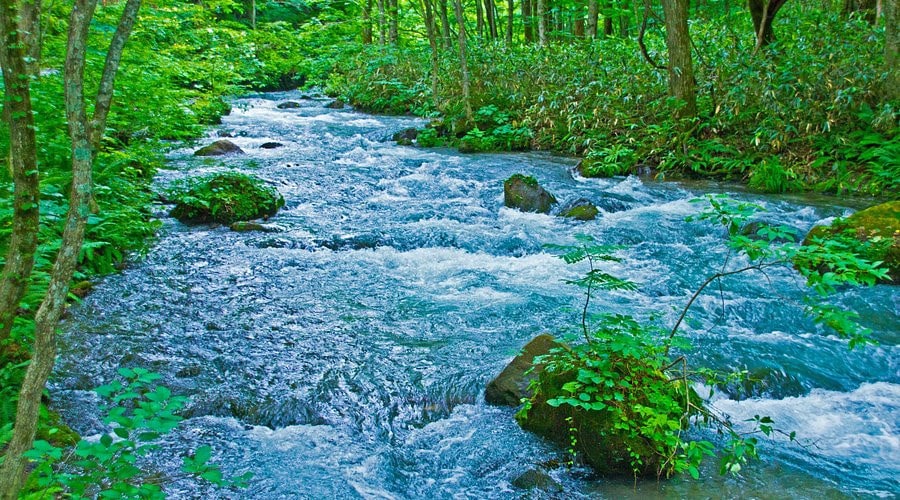
Located on the lower part of the stream, its name means three currents crossing here. The water surface is split and rejoined by rocks and sandbars, forming layers of water moving at different speeds, and branches hanging over both banks make it a favorite with photographers.
Its character is “order within chaos,” and you need to look quietly for a moment to see the layers of flow. In spring greenery and autumn leaves, the whole water surface reflects the colors. The trail runs right beside the water with few guardrails, so watch your step when you approach for photos, as the stones and moss are slippery. Because it is close to the entrance, those short on time can walk just this section and turn back.
Ashura Stream: Oirase’s Most Famous Stretch of Rapids
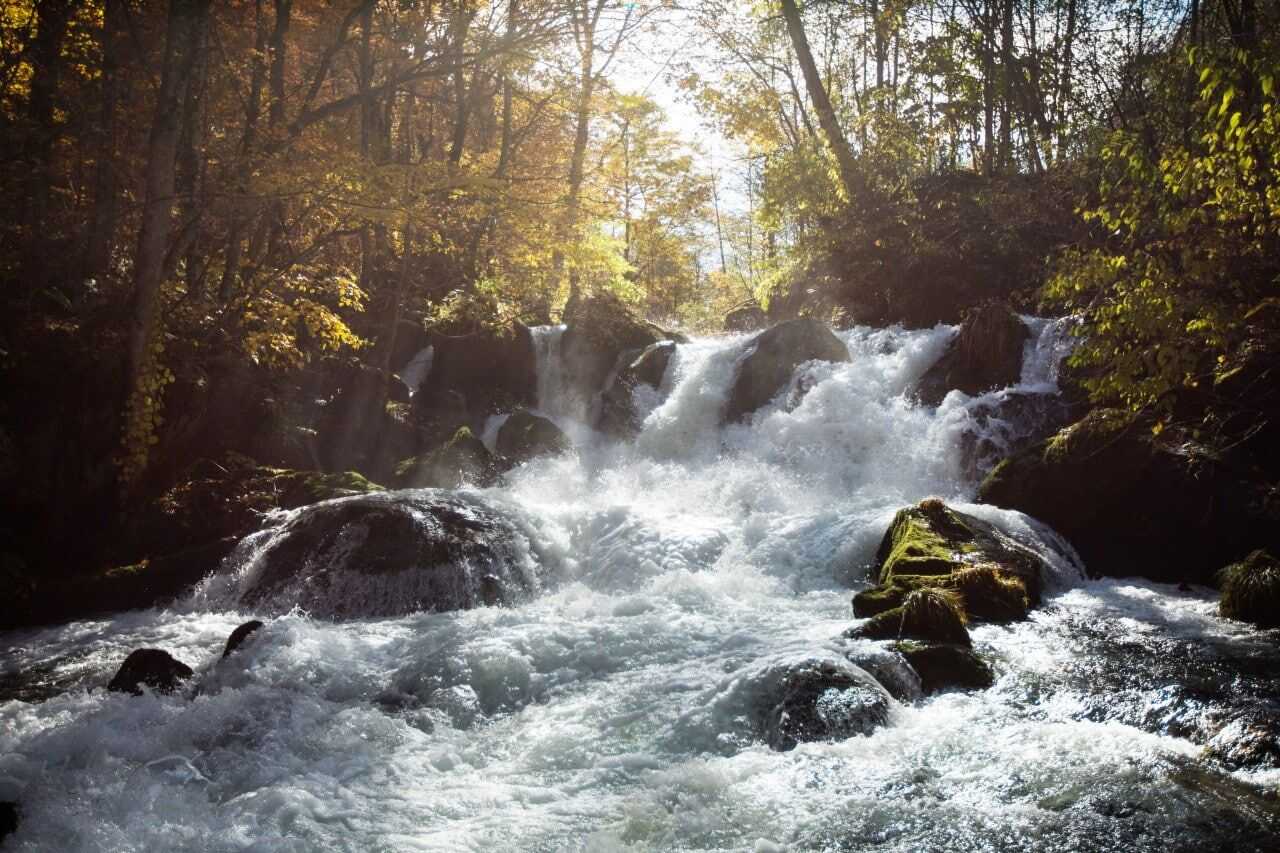
This is the most representative scene of the whole Oirase. Here the water is broken up by countless rocks and white spray tumbles down the whole stretch, with dark green mossy rocks and tree trunks on both sides, a strong contrast of motion and stillness. It is named after Ashura, the warrior deity of Buddhism.
It appears in almost every Oirase promotional photo, which also makes it one of the most crowded photo spots in peak season. Long exposures can turn the water silky, but the trail is narrow, so make sure your tripod does not block the way. It is in the middle of the highlight section, a short walk upstream from Ishigedo, with signs along the way. Slanting light in the early morning and late afternoon best brings out the layers of the mossy rocks, while overhead light at midday is the flattest.
Kumoi Falls: The 20-Meter Waterfall Closest to the Trail
About 20 meters high and falling in three tiers, it is one of the most substantial tributary waterfalls along Oirase. The water drops straight down the cliff beside the trail, and you can walk up close to feel the spray and hear the roar.
It sits right beside the trail with a bus stop next to it, making it the easiest waterfall to reach on the whole route; if you are short on time, you can simply take the bus to see it briefly. The ground around it is wet and lenses fog up easily, so bring a cloth to wipe them. In winter the falls freeze, but the trail is mostly closed then. The path in front of the falls has slippery stone steps, so hold children’s hands.
Choshi Otaki: The Only Waterfall That Spans the Whole Stream
Oirase’s largest waterfall and the only one that spans the main stream, with the greatest volume and width along the route.
Also known as “Uodome no Taki” (Fish-Stopping Falls) because its drop blocked fish from migrating into Lake Towada, so the fish in the lake were stocked artificially later. Located near the upstream end of the highlight section close to Nenokuchi, it is the final climax of the hike, with a viewing platform and bus stop beside it. From here it is about thirty minutes’ walk to Nenokuchi, the last point at which to judge whether you can make the boat.
Nenokuchi: The Start of the Stream and Where You Switch to the Sightseeing Boat
This is the outlet of Lake Towada, where Oirase Gorge begins to flow downstream. For hikers it is the end of the highlight section and the turning point of the whole trip: after walking 9 km you board a boat here and cross the lake to Yasumiya on the opposite shore, a beautiful route.
There is a harbor, ticket office, rest facilities and bus stop here, so you can sit down and eat something before boarding. Note that the sightseeing boats have operating seasons and limited schedules and stop running in winter, so before hiking be sure to check the day’s last boat and work backward from it to set your start time. If you miss the boat, you can take a bus around the lake instead.
Lake Towada Sightseeing Boat: Seeing This Double Caldera from the Water
Lake Towada is a double caldera lake whose shore is cut into a complex shape by two peninsulas, and only from the water can you feel the terrain wrapped in the crater. There are two routes: a one-way route from Yasumiya to Nenokuchi, and a round-trip cruise that leaves Yasumiya, circles the Onkura and Nakayama peninsulas and returns to Yasumiya. Both take about 50 minutes.
The standard fare for 2026 is ¥1,760 for adults and ¥880 for children. The boats do not run in winter. Actual operating season, schedule and fares are subject to announcements on the Towada Kanko Dentetsu website (toutetsu.co.jp), and service may be suspended in bad weather.
Otome no Zo: Two Bronze Nude Statues on the Lakeshore
Bronze statues standing in the woods on the Yasumiya lakeshore. Two nude female figures about 2.1 meters tall face each other with their left hands lightly touching. It was the last work of sculptor and poet Kotaro Takamura and is the most recognizable landmark of Lake Towada.
It is about a ten-odd-minute walk from Yasumiya harbor along the lakeside path, with pleasant woods and lake views on the way. The lake lies right behind the statues, so you can shoot silhouettes against the light. Entry is free with no time limit, and it is often paired with Towada Shrine on the same route. In winter the lakeshore is snowy and slippery, and there is not much space in front of the statues, so in peak season make way quickly after taking your photo.
Towada Shrine: A Wish-Granting Shrine Hidden in a Cedar Forest
Located in the cedar woods of Yasumiya, with tall old cedars on both sides and dim light, its atmosphere is quite different from the open lakeshore. The shrine has a long history and is a place of protection and ascetic practice for Lake Towada.
The famous legend is “Uranaiba”: in the past people threw slips of paper into the lake to divine their wishes. The ladder to the divination spot is currently closed to passage, so paper is now thrown at Gozen-no-hama in front of Otome no Zo; check on-site notices for actual availability. Entry to the grounds is free, and since it is on the same Yasumiya lakeshore as Otome no Zo, the two can be combined on one stroll. The stone steps are slippery after rain and the cedars block the light, making it even darker in the afternoon, so we suggest visiting in the morning.
Hakka Pass Observatory: Take In the Whole of Lake Towada at Once
Located on the south side of Lake Towada within Akita Prefecture, this is the classic panoramic viewpoint, offering a view of the lake, the two peninsulas and the distant Hakkoda range all at once, with the caldera landscape at its clearest here.
The terrain is higher, so autumn leaves appear earlier than at the lakeshore, and layered colors are common in autumn. Entry is free, with a parking lot and viewing deck, but it can only be reached by car and public transport is inconvenient; in winter snow easily closes the road, so check conditions before setting out. Mist is common in the early morning and the view is steadier after noon. It is about twenty to thirty minutes’ drive from Yasumiya, so it is a convenient stop on the way.
Tsuta Swamp: A Reservation-Only Spectacle at Dawn in Leaf Season
A small swamp at the foot of the Hakkoda Mountains on the way to Oirase, surrounded by primeval forest and famous for the view at sunrise in leaf season when the whole swamp of red leaves lights up together with its reflection. In 2026 the leaf period is October 23 to November 3, and entering the observation deck between 5:00 and 7:30 in the morning requires an advance online reservation, with a cooperation fee of ¥2,000 per person. Outside leaf season it is freely accessible, and the wooden boardwalk around the swamp takes about thirty minutes to circle; the fresh-green season is just as beautiful with fewer people. Several other swamps nearby can be linked into the “Tsuta Numa Meguri” loop route, which is less crowded.
Tickets and Tours: What to Book Ahead at Oirase and Lake Towada
Most trails here are free; the things that cost money come down to boat tickets, bikes and guided tours.
Lake Towada Sightseeing Boat Ticket: The Best Finish After a Hike
In 2026 the adult fare is ¥1,760 and the child fare ¥880, with a voyage of about 50 minutes. Tickets can be bought at the ticket offices at Nenokuchi or Yasumiya; the Yasumiya office is inside the Lake Towada Tourist Exchange Center “Purratto” and opens at 9:00. Boats do not run in winter and schedules in other seasons are not frequent either, so if you take the boat after the hike, work backward from the last boat to set your start time. Service may be suspended in bad weather, and in leaf season we suggest arriving at the harbor early; actual season, schedule and fares follow the operator’s announcements. It is windy on deck and cooler on the water, so bring a light jacket, and those prone to seasickness should choose an indoor seat.
Electric-Assist Bike Rental: Rent at One End, Return at the Other
Rent a bike at the Oirase Yusuikan or the Ishigedo Rest House and ride to Nenokuchi to return it, with no need to backtrack. It suits people who have only half a day to see the main sights.
Bikes are limited and are easily all rented out in leaf season, so we recommend reserving. Riding is not allowed on some sections of the trail, where you need to walk the bike or use the road, so when renting confirm the route rules and the return deadline; rental fees and rules follow the operator’s announcements. Battery range is limited, and running the highest assist mode the whole way may not last, so switch modes as needed. Helmets are mostly provided by the operator and wearing one is recommended; cars use this road, so ride at the edge.
Winter Ice Falls and Night Tours: What to Do When the Trail Is Closed
In winter the trail is mostly closed and the boats stop running, so the main options are operator-led ice waterfall viewing and illuminated night bus tours, which let you enjoy frozen waterfalls and snow scenery.
Tours are by reservation, need a minimum number of participants and depend on weather and road conditions; heavy snow often leads to cancellations. Most equipment is provided by the operator, but you need to bring your own waterproof jacket and snow boots. Actual dates, content and fees follow the operator’s announcements for the year. In winter most local restaurants and shops are closed, so bring your own food, and daylight is short, with dark falling just after 3 p.m., so plan your schedule early.
Dawn Entry to Tsuta Swamp in Leaf Season: Reservation Only with Limited Places
In the dawn hours of peak leaf season, Tsuta Swamp operates an advance reservation system with visitor limits and an extra fee; places are limited and close when full.
In 2026 the system runs from October 23 to November 3. Between 5:00 and 7:30 in the morning you must reserve on the official website and prepay the cooperation fee (¥2,000 per person); outside leaf season it is freely accessible. Dawn temperatures are very low and the trail is unlit, so participants need to bring their own headlamp and warm clothing. Actual rules follow the announcements for the year. Please confirm parking and shuttle arrangements on the reservation page.
KKdayTsuta Swamp autumn leaf dawn entry reservation
KLOOKTsuta Swamp autumn leaf dawn entry reservation
Trekking the Stream with a Local Guide: Learning to Read the Moss and Trees
What is most special about Oirase is actually not the waterfalls but the forest cycle formed by the moss and fallen trees covering the ground. Walking alone you will not understand these things, but with a local guide you stop to look at moss under a magnifying glass and hear how fallen trees renew the forest, a completely different experience.
These tours are mostly half-day, by reservation and with limited group sizes, and some operators offer guiding in Chinese or English, so confirm the language before signing up. They usually go ahead in rain, so bring your own rain gear. Actual content, language and fees follow each operator’s current announcements.
Where to Stay: By the Stream, on the Lakeshore or in a Hot Spring Area?
There are not many places to stay here, but location directly changes your itinerary.
Which Area? It Depends on When You Want to Be on the Trail
The biggest value of staying along the stream is the early morning: before the tour buses arrive the trail is almost empty, and the moss and mist in the morning light are completely different from midday, so photographers mostly choose this area. Staying around Yasumiya on the lakeshore suits those who center their trip on Lake Towada: you can visit Otome no Zo and Towada Shrine, take the first boat the next day, and restaurants and shops are also concentrated there. You can also choose a nearby hot spring area such as Sukayu or Hakkoda, which has the best bathing conditions but needs extra driving time. In winter many facilities close, so be sure to confirm operating periods and trail and bus-stop transfer services before booking.
Oirase Gorge and Lake Towada FAQ
Q: Do I have to walk the full 14 km of Oirase Gorge?
Not at all. The full 14 km takes about 5 hours, but most people walk only the highlight section from Ishigedo to Nenokuchi, about 9 km and about 2.5 hours, where the main rapids and waterfalls are. An easier option is to take the bus to Kumoi Falls or Choshi Otaki and walk just a short stretch. The trail runs parallel to the road with bus stops all along, so you can board at any time and there is no need to push yourself.
Q: Is it better to walk from upstream or downstream?
We recommend walking upstream, from Ishigedo toward Lake Towada (Nenokuchi). That way the water comes toward you and you see both the force of the rapids and the front of the waterfalls, whereas walking the other way mostly means seeing the water flowing away from behind. Another benefit is that the end point, Nenokuchi, is the boat pier, so you can board straight after the walk and cross the lake, the smoothest route with no backtracking.
Q: When are the autumn leaves most beautiful?
They usually start to color in mid-October and peak from mid- to late October (the upstream Nenokuchi area turns red first, while the downstream Yakeyama side can last to late October or early November), and the gorge is listed among Japan’s top 100 autumn leaf spots. The Hakka Pass Observatory at higher elevation comes a little earlier. Be prepared for very large crowds and weekend traffic jams, and every year a few days of private-car traffic control with shuttle buses are in effect, but the dates are announced year by year (in fiscal 2026 they were September 7 to 13, ending before leaf season). The actual peak varies with the weather each year, so check that year’s autumn leaf forecast before you go.
Q: What can I see at Oirase and Lake Towada in winter?
Most of the trail is closed by snow and the boats stop running, so independent travelers can do very little. In winter the area mainly depends on operator tours: ice waterfall viewing and illuminated night bus tours that feature frozen waterfalls and snow scenery, which need reservations and are canceled in heavy snow. Unless you come specifically for snow, winter is not the high season here, and your flexibility drops sharply.
Q: How much is the Lake Towada sightseeing boat, and how long does it take?
The standard fare in 2026 is ¥1,760 for adults and ¥880 for children, with a voyage of about 50 minutes. There are two routes: a one-way route from Yasumiya to Nenokuchi, and a round-trip cruise that leaves Yasumiya, circles the peninsulas and returns to Yasumiya. Hikers mostly choose the one-way route, boarding at Nenokuchi right after the stream walk. The boats do not run in winter and schedules in other seasons are also limited, so be sure to check the last boat first. Actual fares and operation follow the operator’s announcements.
Q: Is there a good-value bus pass?
The “Aomori-Hachinohe-Lake Towada Free Kippu” that many people used in the past has been discontinued since April 13, 2024, a point many older guides have not updated. Now on the JR Bus “Mizuumi-go” or “Oirase-go” you pay by section after boarding with a transport IC card or cash (Aomori / Shin-Aomori to Oirase Keiryu Onsen ¥2,270, to Lake Towada ¥3,050), or you can use a rail pass with broader coverage. At present JR Bus Tohoku does not sell a pass dedicated to the Lake Towada line. Transport costs are not cheap in this area, so budget for them separately. Actual ticket types and prices follow the operator’s current announcements.