
Tohoku Autumn Leaves 2026: Naruko Gorge and Kakunodate, a Two-Stop Guide
The Golden Pair of Tohoku Foliage Spots
The golden pairing for autumn leaves in Japan’s Tohoku region in 2026 is Naruko Gorge in Miyagi Prefecture and the Kakunodate samurai district in Akita Prefecture, a classic itinerary for independent travelers. The foliage at the two places is completely different, one a dramatic gorge and the other an old-fashioned townscape, so they fit well into the same trip.
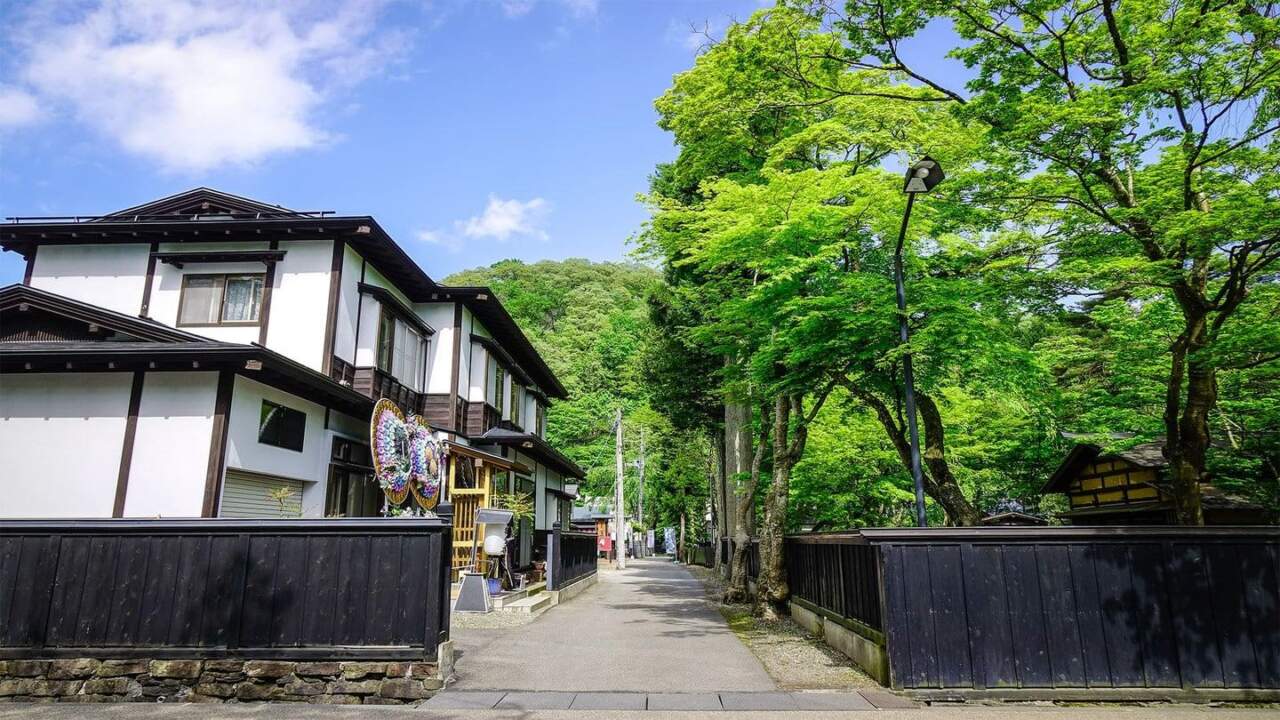
Naruko Gorge is known for its striking V-shaped canyon walls blazing with red leaves, while Kakunodate’s samurai district shows the quiet elegance of the “Little Kyoto of Michinoku,” where Edo-period black wooden fences mingle with classic maples. The two make a strong contrast and are a must-visit combination for Tohoku foliage lovers.
2026 Foliage Forecast and Best Viewing Period
Because of recent warming and lingering summer heat, peak color at both places mostly falls between mid-to-late October and mid-November. At Naruko Gorge it is around late October to early November, when the rich layers of yellow, orange and red across the hillsides are at their most striking. At the Kakunodate samurai district it is around mid-October to early November, when jet-black samurai residence walls set off the fiery maples for a very strong contrast.
The golden two weeks for foliage in northern Tohoku fall from mid to late October. If you can only pick one window, aim for this period, when most spots reach their best viewing time.
Practical Foliage Tips for Independent Travel in 2026
Go early to beat the crowds: Naruko Gorge is one of Japan’s 100 Best Autumn Leaf Spots, and the Momijigo bus and the rest-area parking lot peak around midday and can even jam up. Arrive at Naruko Gorge before 9:00 a.m., then stroll Kakunodate at a relaxed pace in the afternoon.
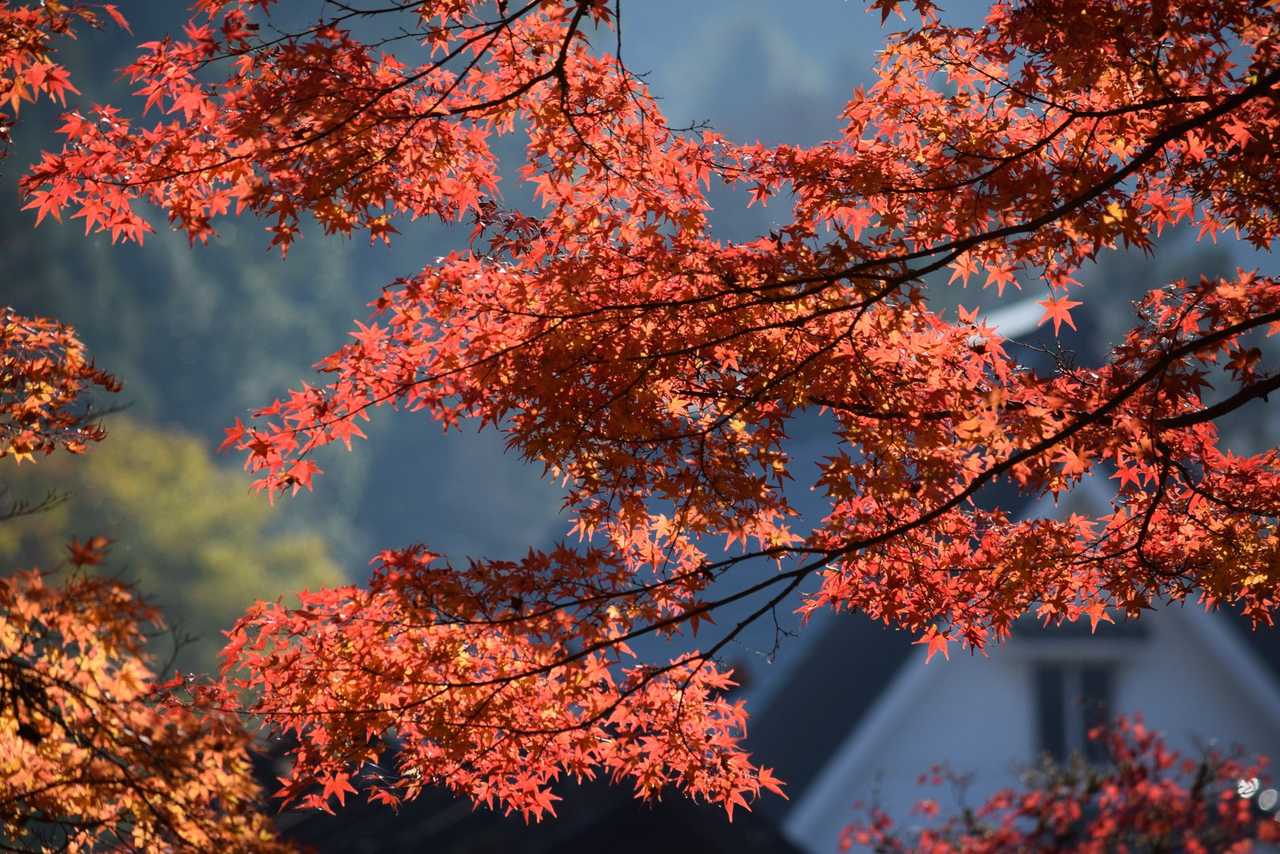
Warmth and clothing: in late October the Tohoku mountains (especially the trail at the bottom of Naruko Gorge) feel cold and damp, so dress in layers and wear non-slip, comfortable casual shoes or sneakers. For luggage, leave large suitcases in a coin locker at Sendai Station or Morioka Station and travel light to enjoy the day.
Getting to Naruko Gorge and Kakunodate
Getting to Naruko Gorge by Public Transport
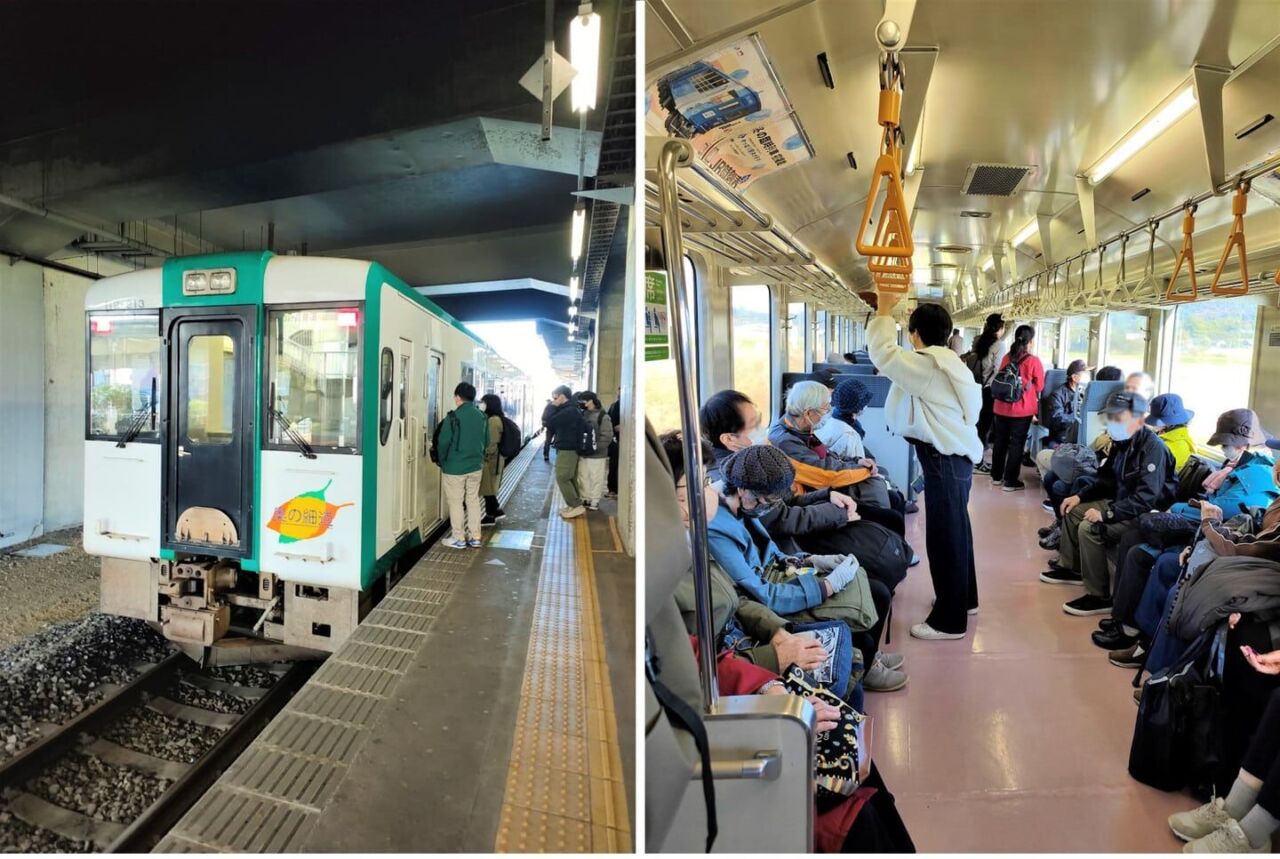
From JR Sendai Station, take the Tohoku Shinkansen (about 13 minutes) to JR Furukawa Station, transfer to the JR Rikuu East Line (about 43 to 50 minutes) to JR Naruko-Onsen Station, then change to the “Momijigo” special bus that runs only in the foliage season (about 13 minutes). Get off at “Naruko-kyo Nakayamadaira-guchi” and you are there.
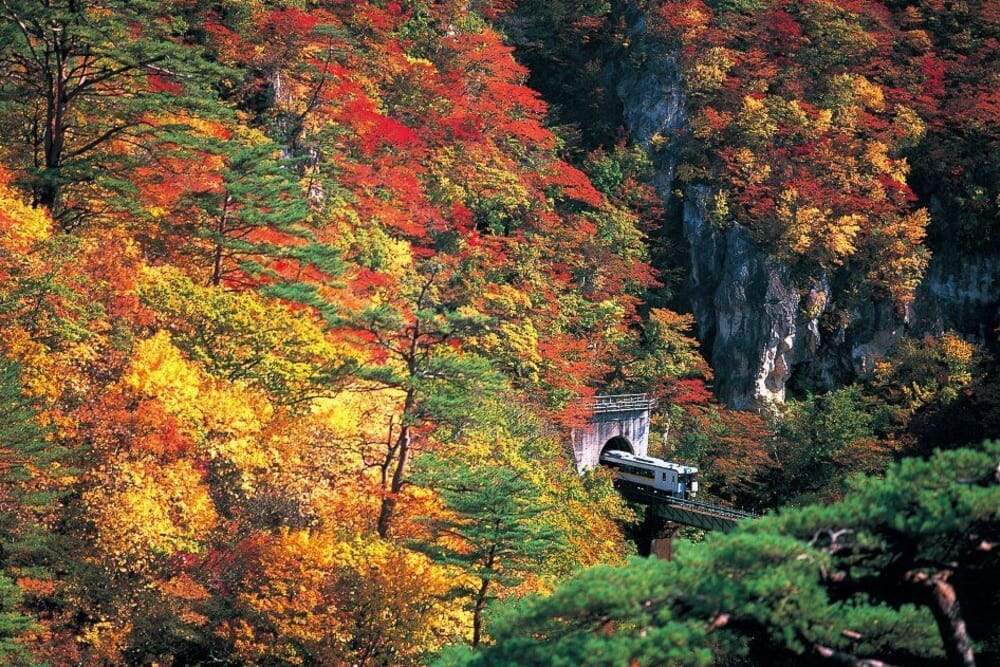
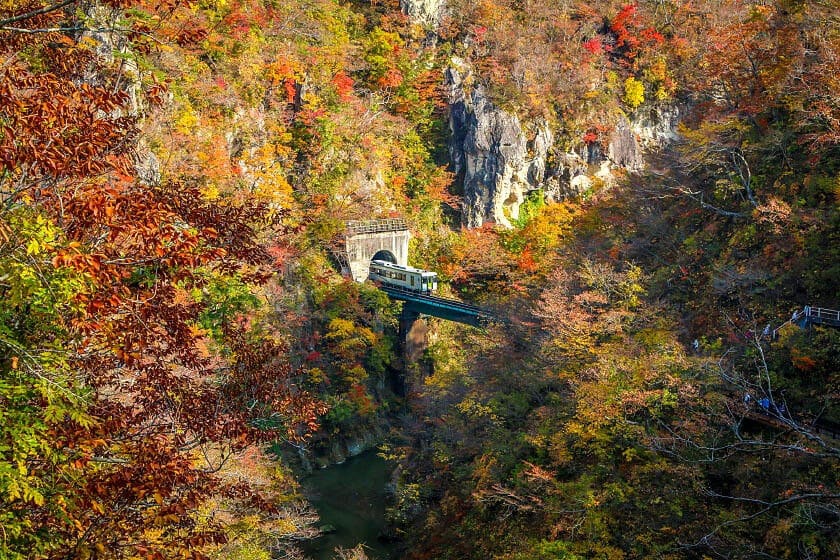
⚠️ Outside the foliage season, the only way to reach Naruko Gorge is a walk of about 1 hour from Naruko-Onsen Station. The Rikuu East Line between Naruko-Onsen and Shinjo has remained suspended since the heavy rain of July 2024, with replacement buses running instead. The classic shot of a train emerging from a tunnel onto Oofukasawa Bridge is therefore not currently possible, but the view of the autumn leaves from the bridge itself is still Tohoku’s number-one spectacle.
Getting to the Kakunodate Samurai District by Public Transport
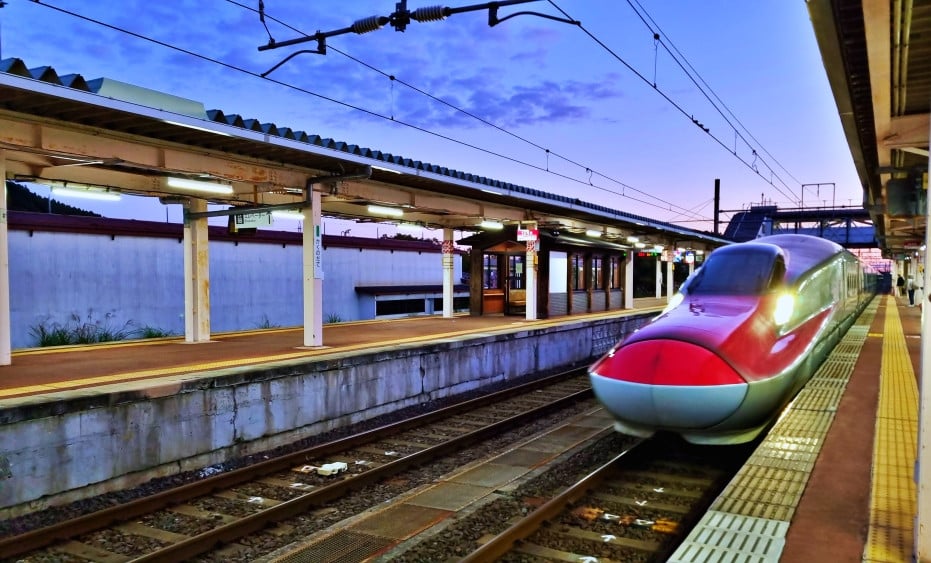
Whether you start from Tokyo, Sendai or Morioka, take the Akita Shinkansen “Komachi” straight to JR Kakunodate Station. From the station it is a walk of about 15 to 20 minutes to the core historic area of Bukeyashiki-dori, making it one of the easiest spots to reach on a Tohoku Shinkansen itinerary.
The Akita Shinkansen Komachi stops at Tazawako, Kakunodate, Omagari and other stations. If you also plan to visit Lake Tazawa or Nyuto Onsen, Kakunodate is a convenient stopover that needs no extra detour or transfer. From Tokyo it takes about 3 hours at the fastest.
Getting Between Naruko Gorge and Kakunodate
If you want to cover both places on two consecutive days (or in one tightly planned day), the smoothest rail route is as follows: take the JR Rikuu East Line from JR Naruko-Onsen Station to JR Furukawa Station, transfer to the Tohoku Shinkansen (you need a train that stops at Furukawa, such as the Yamabiko) to JR Morioka Station, then change to the Akita Shinkansen Komachi to JR Kakunodate Station.
The total journey including transfers takes roughly 2.5 to 3 hours. We suggest staying the night before in the Naruko Onsen area or in central Morioka and setting off early the next morning. That lets you plan both stops more calmly, without rushing back and forth in a single day or hurrying through transfers.
If you would rather avoid frequent transfers, you could also consider a chartered car service linking the two places. It saves checking timetables and dragging luggage between trains, and suits seniors and travelers with large bags especially well.
Rail Pass Tip: JR East Pass
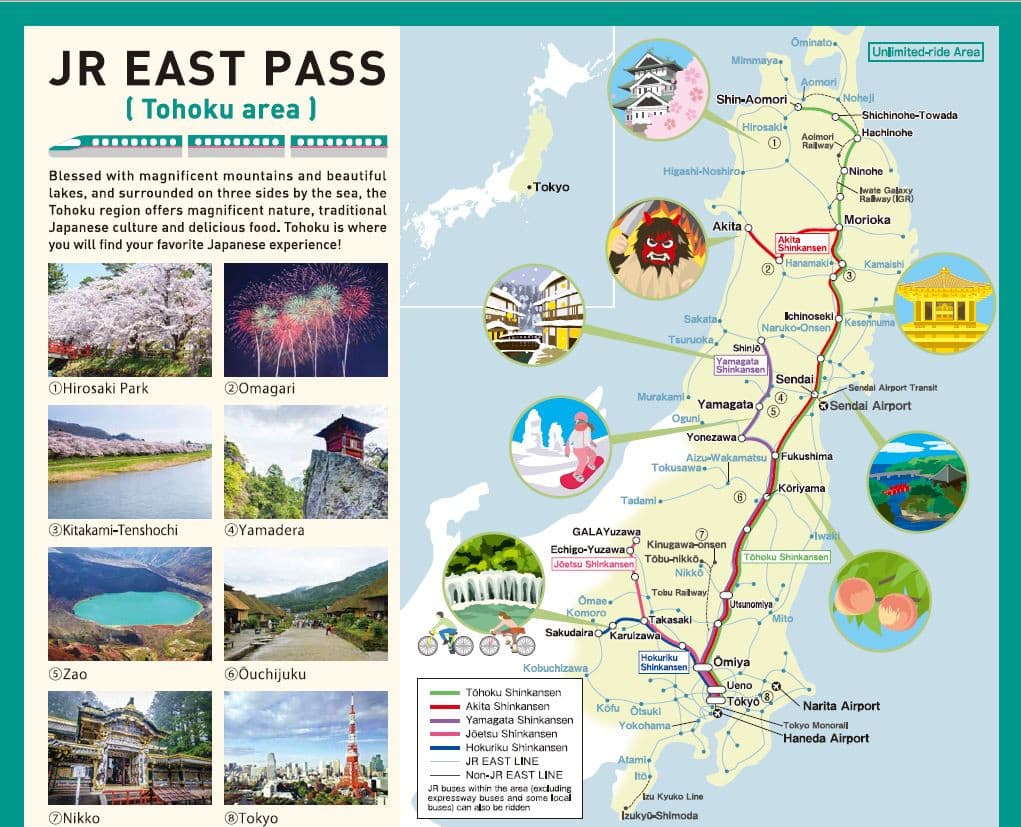
The two spots lie in Miyagi and Akita prefectures, so they pair best with the JR East Pass (Tohoku area) for wide-ranging Shinkansen travel. It gives unlimited rides on the Tohoku Shinkansen, the Akita Shinkansen and many other lines, sparing you from buying tickets leg by leg.
If your trip also extends to other Tohoku foliage spots such as Oirase Gorge in Aomori or Chusonji in Iwate, the pass offers even better value. Plan your overall route first, add up the one-way fares, and then decide whether to buy it.

Naruko Gorge and Kakunodate: The Complete Foliage Spot Guide
Oofukasawa Bridge: The Dramatic Panorama of Naruko Gorge
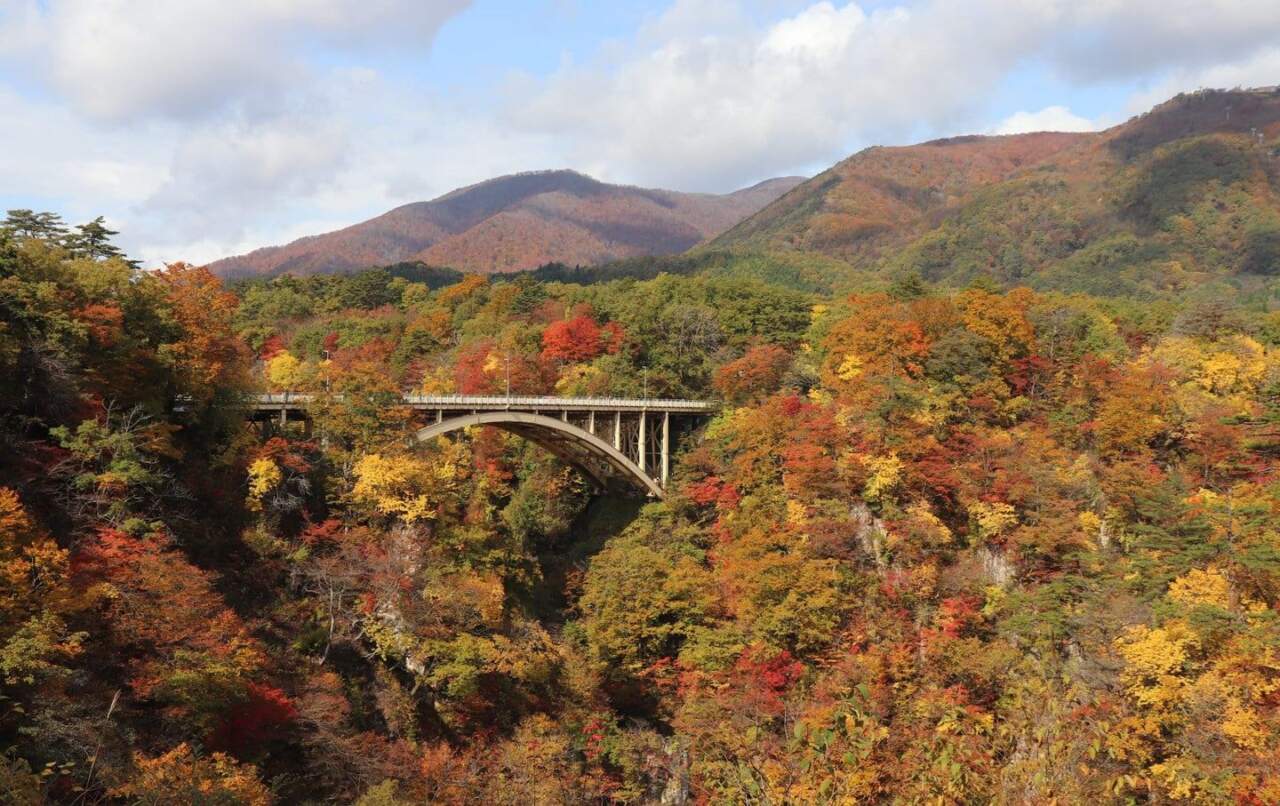
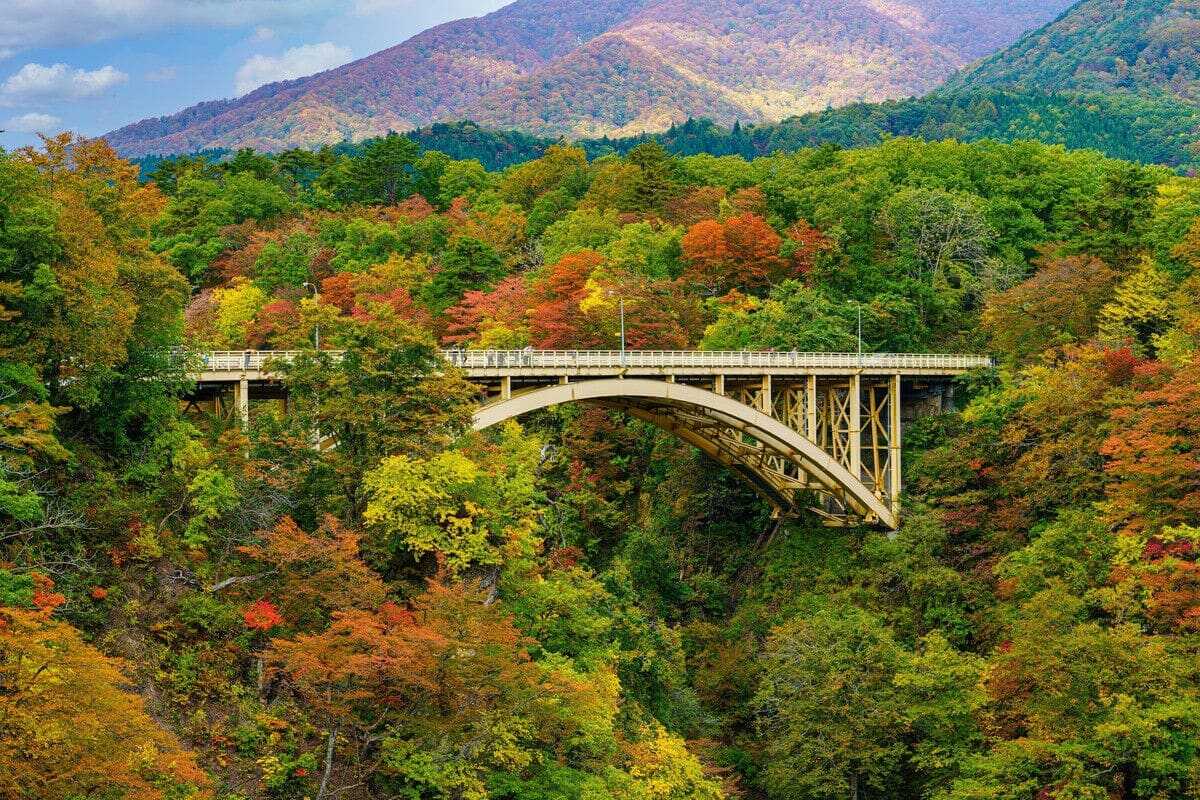
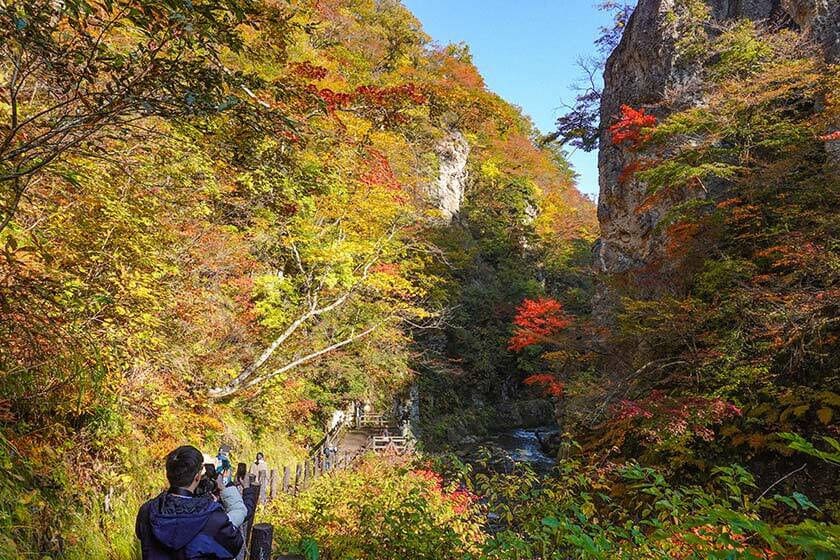
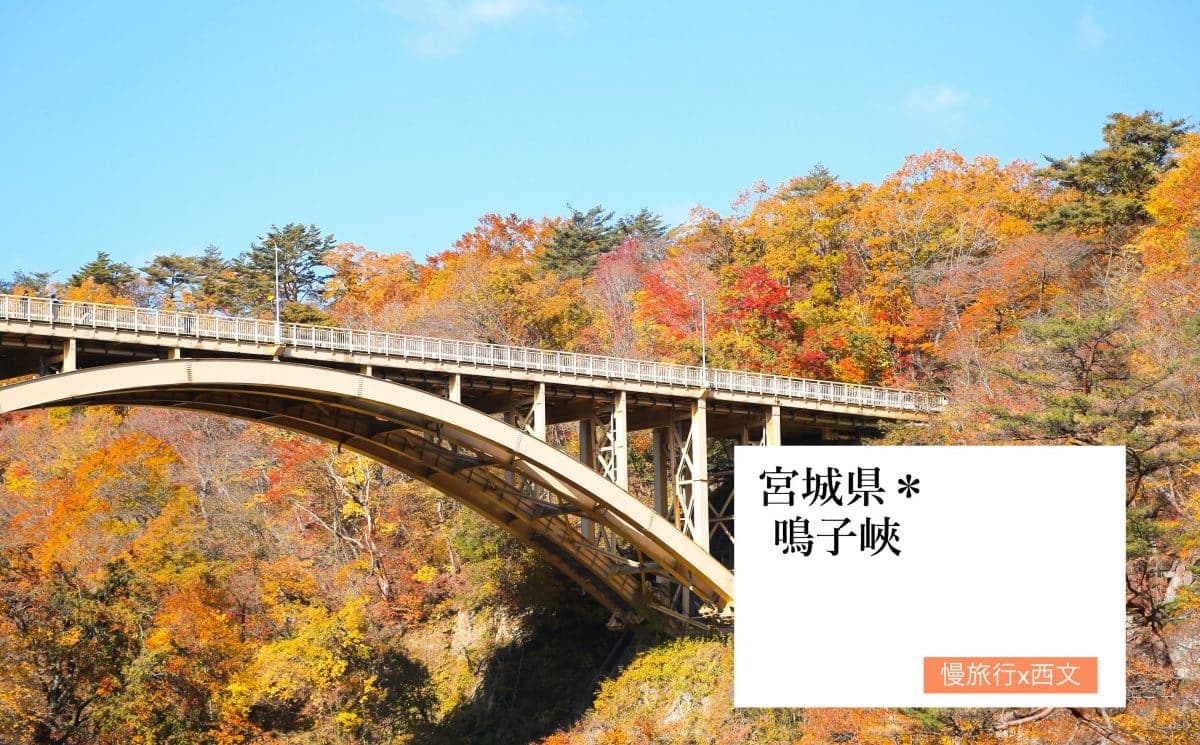
Oofukasawa Bridge is the classic photo spot at Naruko Gorge. From the bridge you look down into a gorge about 100 meters deep, dyed into a ribbon of red, orange and yellow. It is one of the most representative views among Japan’s 100 Best Autumn Leaf Spots and draws large numbers of photography enthusiasts every year.
Although the Rikuu East Line between Naruko-Onsen and Shinjo has remained suspended since the heavy rain of July 2024, so the classic shot of a train emerging from the tunnel onto Oofukasawa Bridge is not currently possible, the view of the gorge’s autumn leaves from the bridge is still impressive and an absolute must-stop when visiting Naruko Gorge. Plan to stay 30 minutes to 1 hour to take it in slowly.

Naruko Gorge Rest House and the Valley-Floor Hiking Trail
The Naruko Gorge Rest House is a resting and supply stop for visitors, selling local specialties and hot food. Its signature kinoko-jiru (mushroom soup) is a popular way to warm up after a hike. Fit visitors can follow the walking trail from the rest house to Furikaeri Bridge for views of the gorge (about 350 meters one way). The path is slippery, so wear non-slip shoes.
In 2026 the walking trail is open from April 28 to late November, 9:00 a.m. to 4:00 p.m. There is also the Oofukasawa walking trail (a 2.2-kilometer loop) starting from the rest house. It has been closed because of heavy rain damage until mid-October and is expected to open from mid-October to late November.
The Momijigo Shuttle Bus: Foliage-Season-Only Transport
The Momijigo is a shuttle bus that runs only in the foliage season, connecting JR Naruko-Onsen Station and JR Nakayamadaira-Onsen Station with a stop at “Naruko-kyo Nakayamadaira-guchi.” It usually operates from late October to early November. Check the official announcement for the actual dates each year, since they are adjusted slightly according to how the foliage develops.
Around midday is the peak for crowds and traffic jams. If you miss the Momijigo’s operating period, the only option is to walk about 1 hour from Naruko-Onsen Station, which means rethinking your schedule, so be sure to confirm the bus timetable for the year before you set out.
Naruko Gorge Momijigo 2026: Operating Days, Timetable and Fare
Latest 2026 announcement: according to Miyagi Transportation (Miyako Bus, official site miyakou.co.jp) and the flyer from the Naruko Onsen Tourism Association, the 2026 “Naruko-kyo Nakayamadaira Momijigo” runs from Monday, October 26 to Sunday, November 8, a total of 14 days, operating every day with 7 trips a day in each direction. From JR Naruko-Onsen Station the first bus leaves at 8:30 a.m. and the last at 3:50 p.m., reaching “Naruko-kyo Nakayamadaira-guchi” in about 13 minutes. The fare is ¥450 (¥300 to Naruko-kyo Naruko-guchi and ¥550 to Nakayamadaira-Onsen Station). From Nakayamadaira-guchi back to Naruko-Onsen Station the first bus is at 9:04 a.m. and the last at 4:34 p.m. The fare is cash only with no change given (only ¥1,000 bills can be exchanged on board). Credit cards and transit IC cards are not accepted, so have small change ready. At the peak of the foliage, buses may run late because of traffic.
Naruko Gorge Momijigo Boarding Rules: No Reservations, First Come First Served
The Naruko-kyo Nakayamadaira Momijigo runs from in front of Naruko-Onsen Station to Naruko-kyo Nakayamadaira-guchi and Nakayamadaira-Onsen Station. It uses free boarding with no reservations, and passengers board on a first-come, first-served basis. When it is crowded you may have to stand or even be unable to board. Traffic jams can cause major delays, and weather such as typhoons may suspend or change the service, so check the official announcement before you set out.
The Five Naruko Onsen Villages: Hot Spring Choices After Foliage Viewing
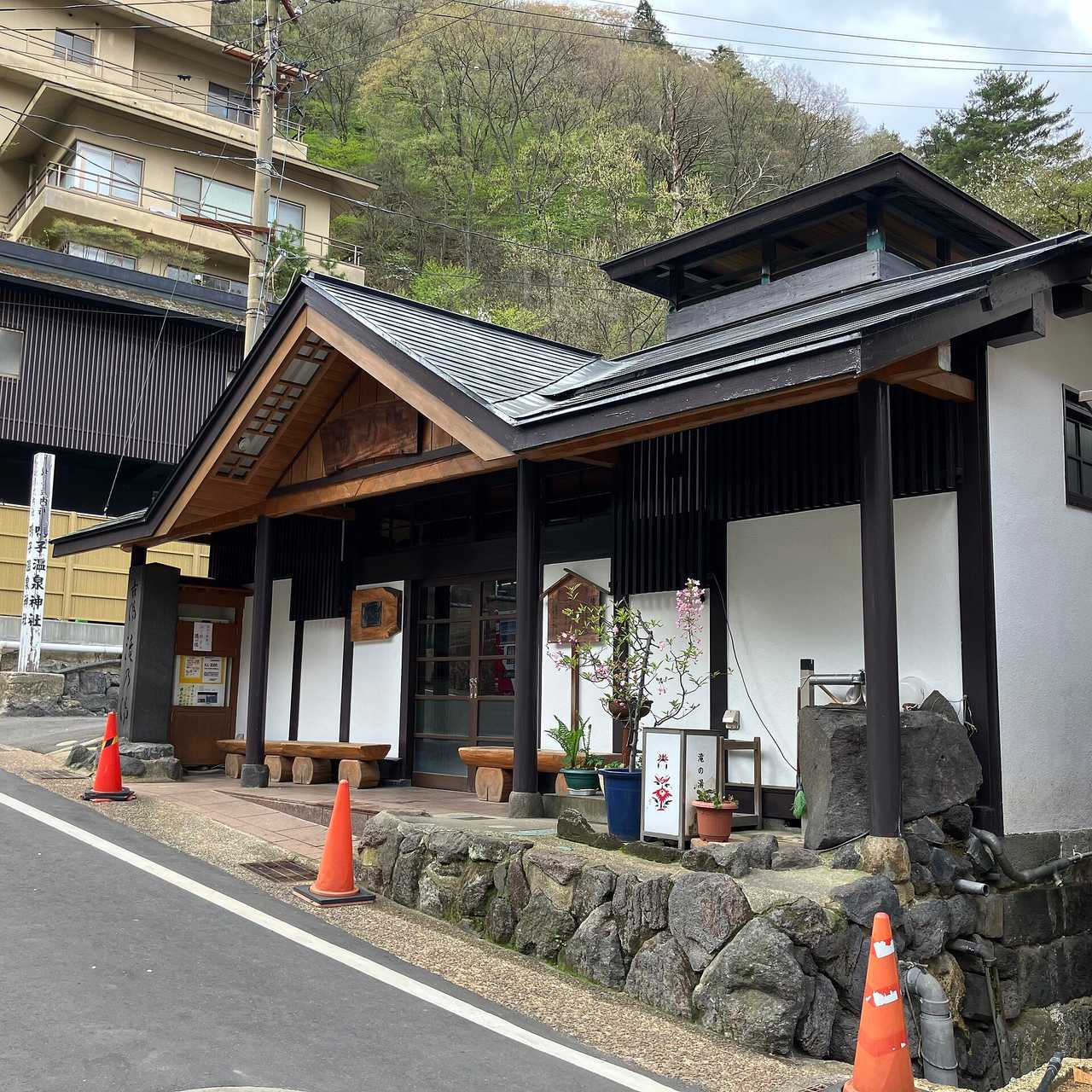
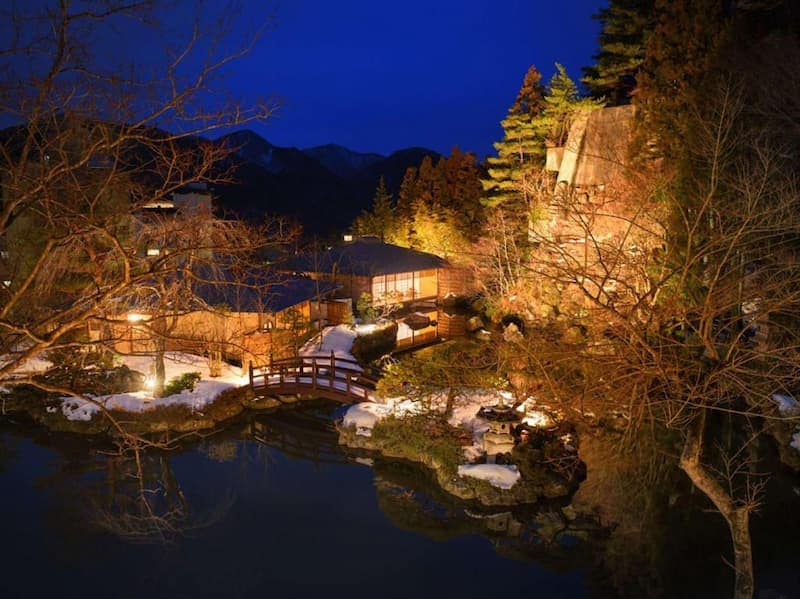
The Naruko Onsen area is made up of five hot spring villages: Naruko Onsen, Higashi-Naruko Onsen, Kawatabi Onsen, Nakayamadaira Onsen and Onikobe Onsen. Together they have about 370 springs covering 9 of Japan’s 11 spring types, making it a superb place to soak and relax after seeing the autumn leaves at Naruko Gorge. Such a variety of spring qualities is quite rare in Tohoku.
Each hot spring area has its own style, from large family-friendly onsen inns to secluded hidden-spring atmospheres. A stay with dinner and breakfast works well: foliage by day and a hot spring soak by night is the most authentic way to experience Tohoku in autumn. Book rooms early during the foliage season.
Some onsen inns offer shuttle service to and from Naruko-Onsen Station. Before you check in, confirm whether you need to book a pickup time separately, so you are not left without transport on arrival.
Aoyagi Family Residence: Kakunodate’s Representative Samurai House
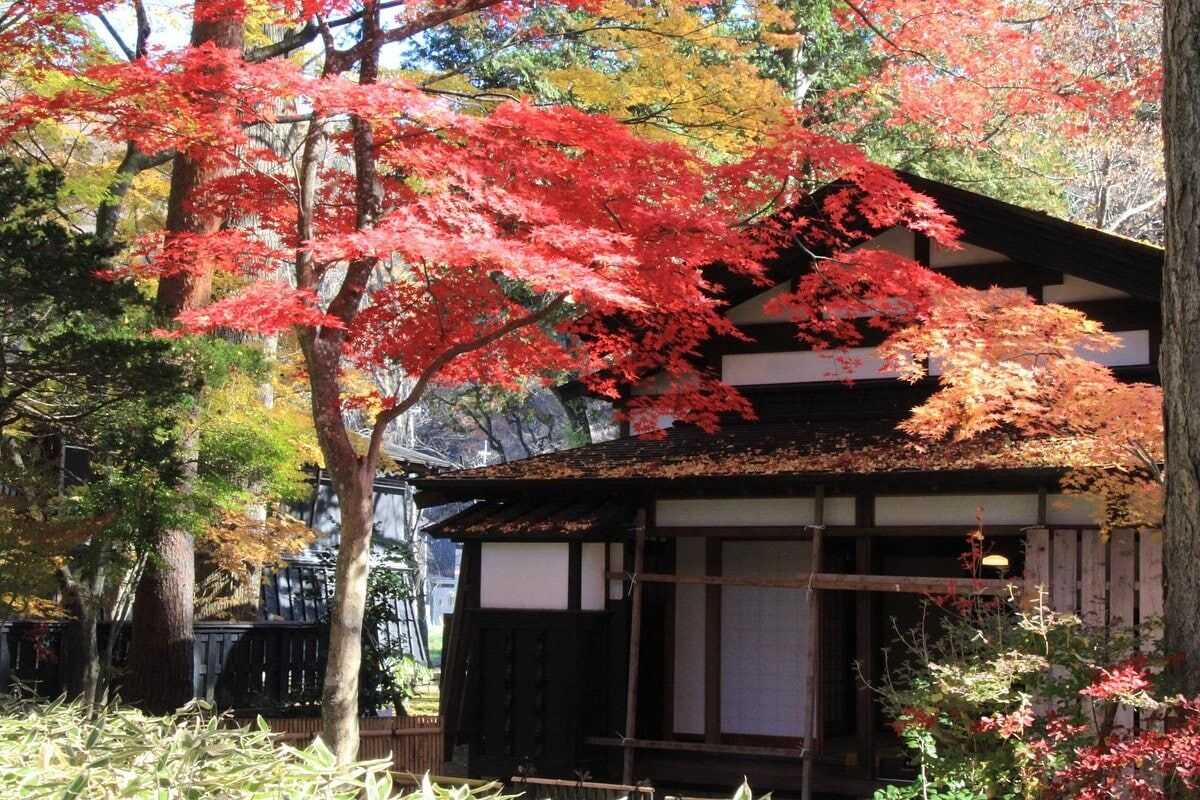
The Aoyagi Family Residence is the most representative house and complex of old buildings on Kakunodate’s Bukeyashiki-dori. It covers about 3,000 tsubo and holds several museums, including the Kaitai Shinsho Memorial Hall, the Akita Folk Museum and the Samurai Tools Museum. It is open daily all year from 9:00 a.m. to 5:00 p.m. from April to November (until 4:30 p.m. from December to March). The official website is samuraiworld.com, and admission is ¥500 for adults, ¥300 for junior and senior high school students and ¥200 for elementary school students.
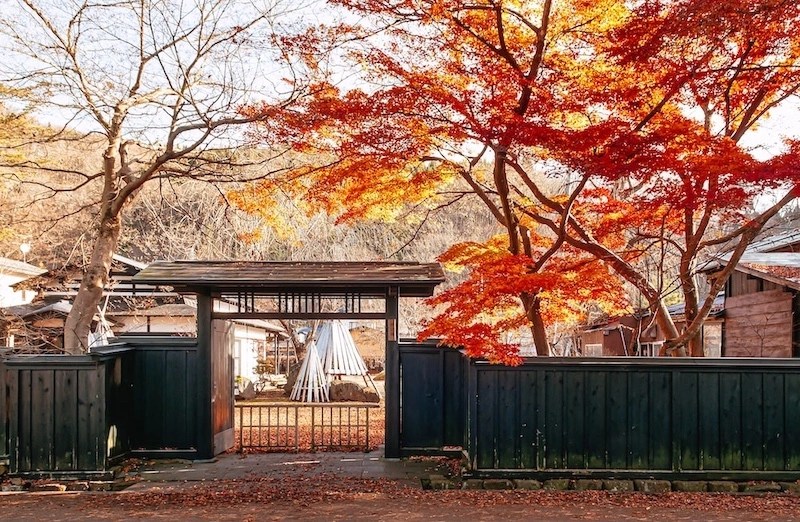
The residence behind its black wooden fence, set against the red maples in the garden, makes a very strong contrast. Exhibits on samurai culture inside give a good look at samurai life in the Edo period. It is one of the places you will spend the longest at in Kakunodate, so allow more than 1.5 hours to look around properly.
Ishiguro Family Residence: The Oldest Surviving Samurai House
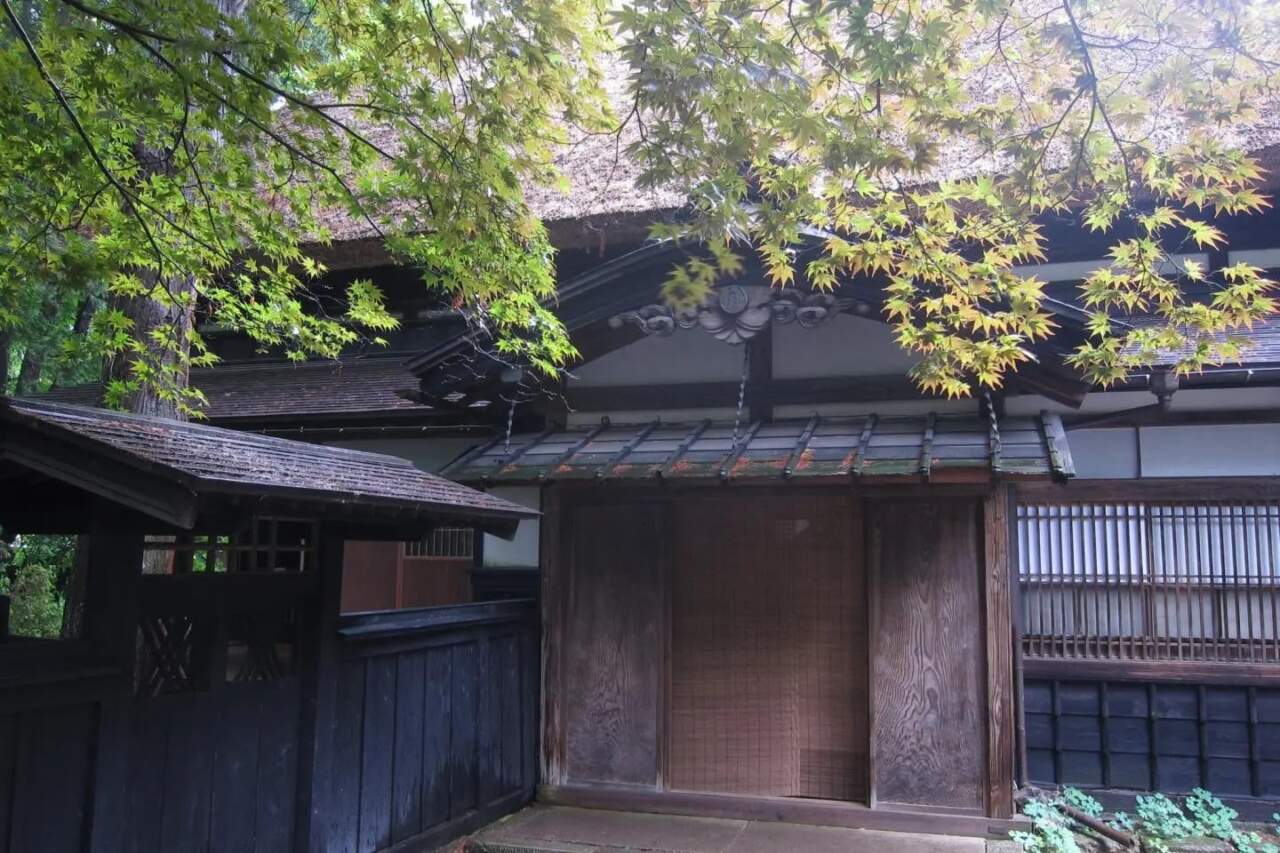
The Ishiguro Family Residence was the home of a “yonin” (steward) of the Satake Kita family and is the oldest surviving samurai house. Direct descendants still live there. Opening hours are the same as the Aoyagi residence, and admission is ¥500 for adults and ¥300 for elementary and junior high school students. Staff offer guided explanations that add depth, a precious chance to learn about real samurai life.
Compared with the Aoyagi residence, the Ishiguro house is smaller but feels more lived-in, conveying the atmosphere of a samurai household passed down through the generations. In autumn the streetscape of black wooden fences and red maples is one of the must-visit spots for photographers. We suggest staying about 1 hour for the full guided tour.
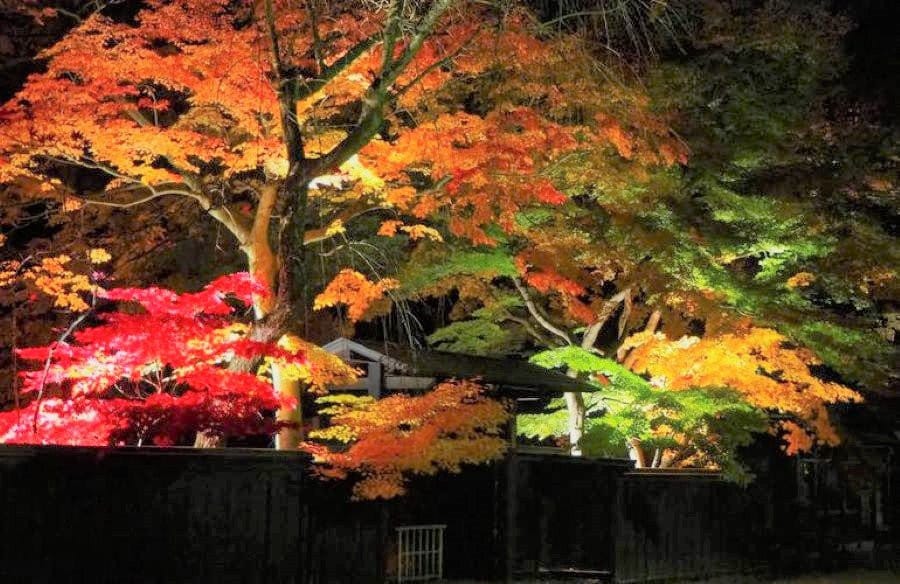
Kakunodate Night Foliage: Evening Illumination of Bukeyashiki-dori
During the foliage season, evening illumination events are held around the Kakunodate city-run Sakura-namiki parking lot (8:30 a.m. to 4:30 p.m., ¥500 for a standard car). The lights are on from about 4:30 p.m. to 10:00 p.m., and under the lights Bukeyashiki-dori takes on a quiet atmosphere quite unlike its daytime self. It is well worth a second visit after dusk.
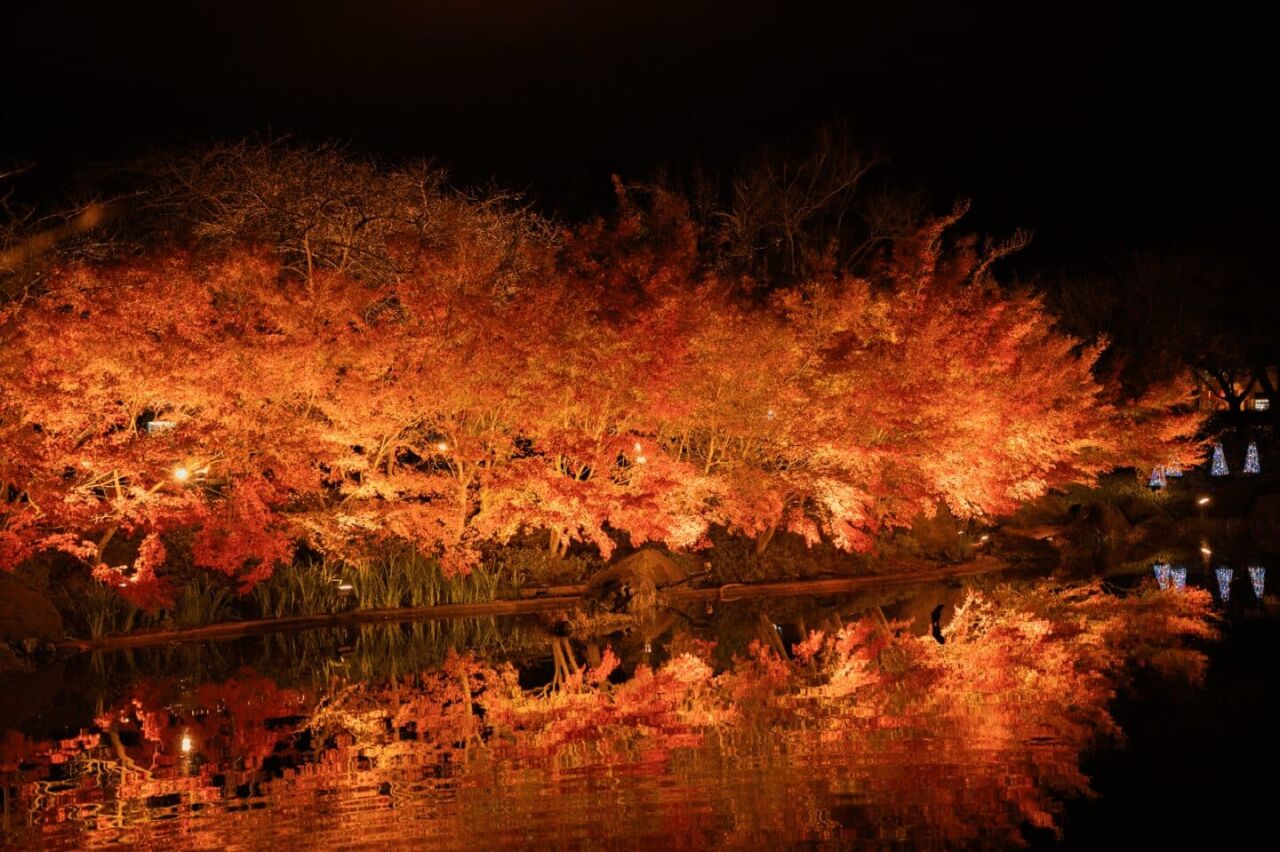
The black wooden fences look even more mysterious and solemn as night and lights interplay. After seeing the daytime leaves, return to the district at dusk for the illuminated night maples, and experience two entirely different autumn faces of Kakunodate in a single day. It is also an excellent time to shoot dramatic night scenes.
Bring a warm jacket for night visits, since autumn evenings in Tohoku cool down noticeably. For photos, consider bringing a tripod to capture the calm scene of lights and black wooden fences.
Kakunodate Food: Inaniwa Udon and Hinai-jidori Chicken
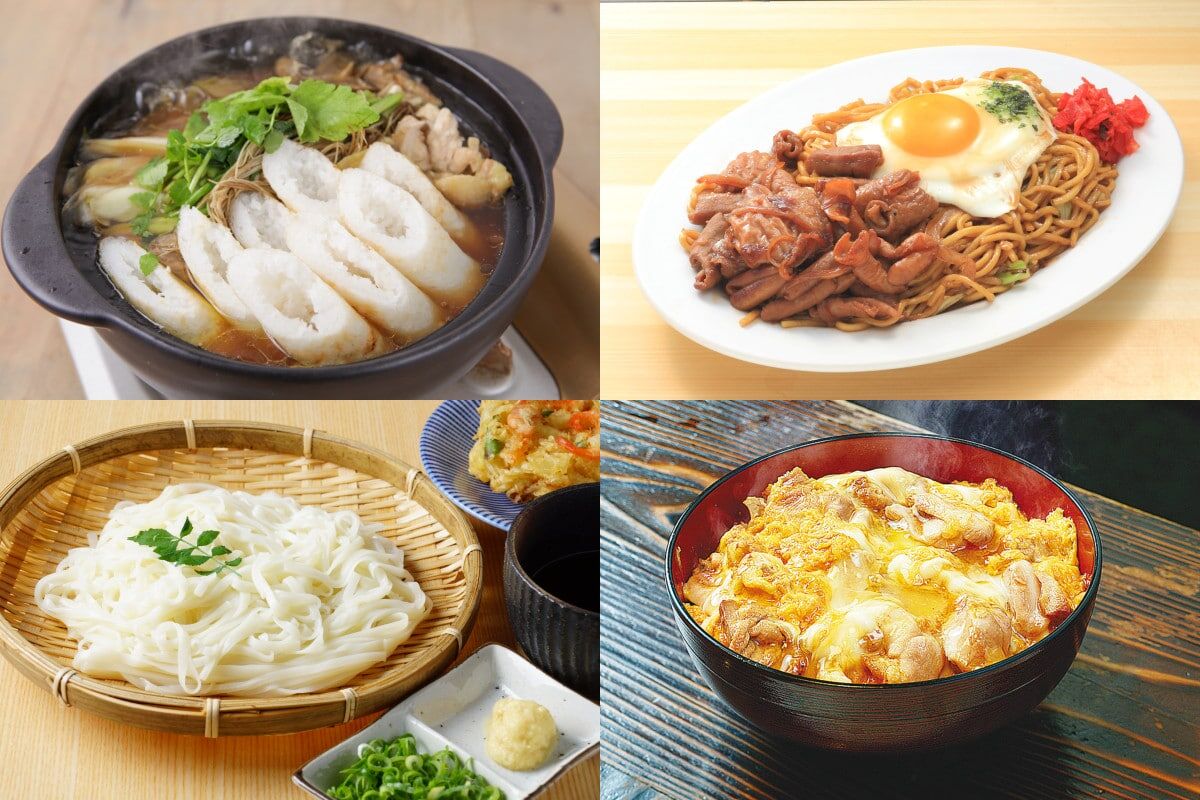
Inaniwa udon is one of Japan’s three great udon styles. Inside the samurai district, “Fukiya” is a specialty shop for Sato Yosuke Inaniwa udon (official site kakunodate-fukiya.com). Hinai-jidori is Akita Prefecture’s signature free-range chicken, with springy meat, and the popular local way to eat it is as Hinai-jidori oyakodon (chicken and egg rice bowl).
A set of Inaniwa udon with Hinai-jidori oyakodon is Kakunodate’s most popular combination. After the autumn leaves and the samurai district, it is a great way to sit down and enjoy these two Akita specialties and end your Kakunodate day on a delicious note. At peak mealtimes, go early or call ahead to reserve.
Tickets and Tours
Here are the most useful tickets and experiences for foliage viewing at Naruko Gorge and Kakunodate. Booking ahead saves you queuing on site and the hassle of planning.
JR East Pass: Wide-Ranging Tohoku Travel
Suited to travelers linking foliage spots across Miyagi, Akita, Aomori and Iwate. It gives unlimited rides on the Tohoku Shinkansen, the Akita Shinkansen and many other lines, sparing you from buying tickets leg by leg, and offers better value on longer trips.
Plan your overall route first, add up the one-way fares, and then decide whether to buy. It becomes an even better deal if you plan to extend to places such as Oirase Gorge or Chusonji.
Kakunodate Samurai Residence Tickets and the Free Houses
The Iwahashi and Odano residences are free to visit from April 10 to November 30, while the Aoyagi, Ishiguro and Kawarada residences require a ticket (¥500 for adults at each).
If you buy tickets separately, both the Aoyagi and Ishiguro residences cost ¥500 for adults. To visit both, allow at least 2.5 hours so you can see everything without rushing.
Akita Kakunodate and Lake Tazawa Private Car Day Tour
Link the Kakunodate samurai district and Lake Tazawa, or even extend to Nyuto Onsen, without planning bus connections yourself. It suits travelers who want a hassle-free, in-depth look at Akita, especially those with seniors or large luggage.
Private car tours can usually adjust the order of stops and the time spent at each to your needs, which is more flexible than public transport. Book online in advance to make sure a slot is available.
 KKdayAkita Kakunodate Lake Tazawa private car day tour
 KLOOKAkita Kakunodate Lake Tazawa private car day tour
Naruko Onsen Stay Options
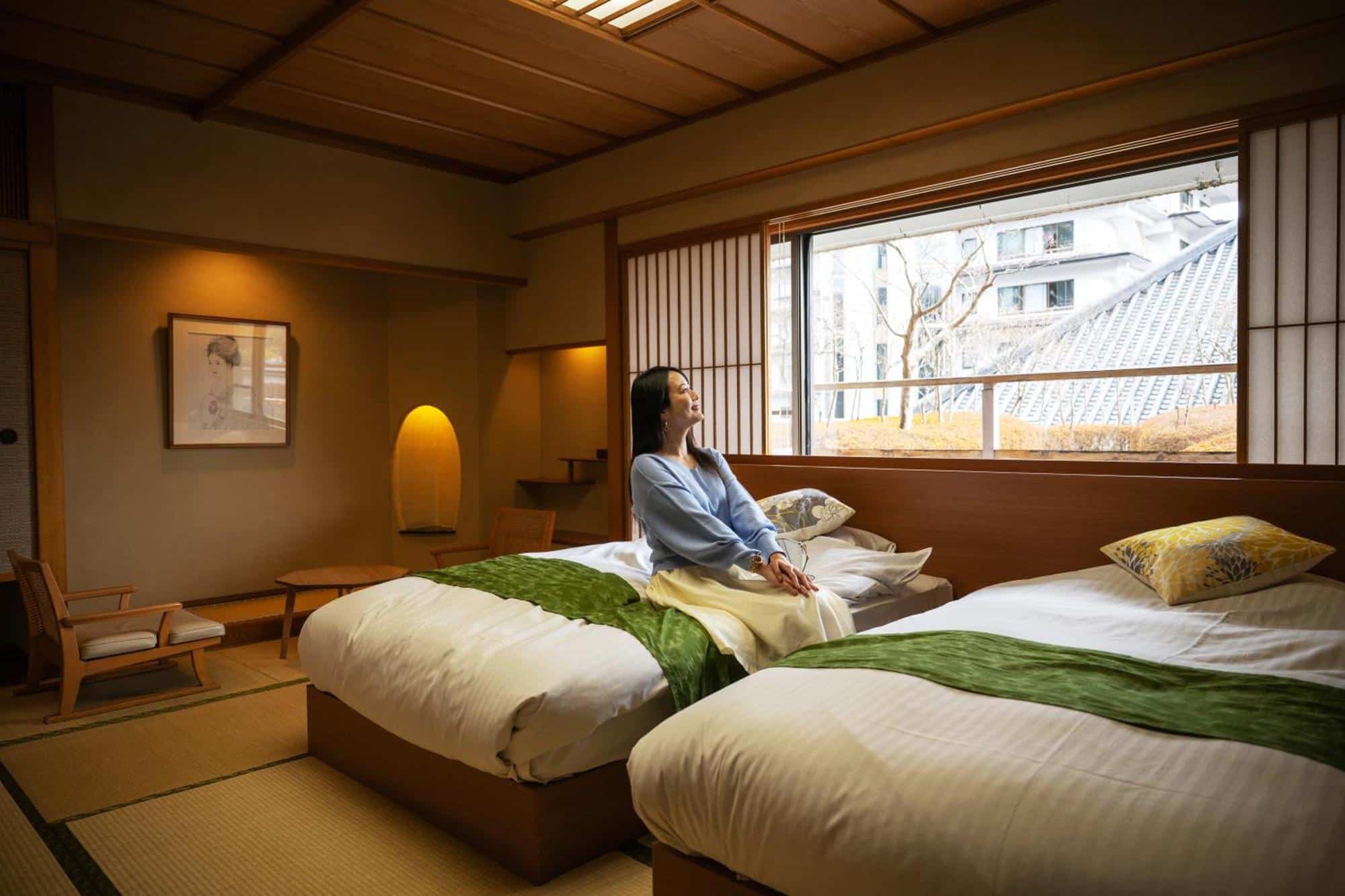
After the autumn leaves at Naruko Gorge, staying nearby in the Naruko Onsen area with dinner and breakfast at an onsen inn is the most relaxing way to round out a Tohoku foliage trip. The five villages each have a different character, so pick according to your taste.
The foliage season is peak season for Naruko Onsen. Book rooms early, especially if you want an inn with highly rated hot springs, and plan your booking time ahead.
Where to Stay Along the Way
The Naruko Gorge and Kakunodate itinerary spans Miyagi and Akita prefectures, so where you stay directly affects your route and the pace of your trip.

Naruko Onsen and Central Morioka: Two Convenient Bases
Staying in the Naruko Onsen area (one of the five villages: Naruko Onsen, Higashi-Naruko Onsen, Kawatabi Onsen, Nakayamadaira Onsen and Onikobe Onsen) is the most authentic way to experience Tohoku in autumn. After seeing the autumn leaves at Naruko Gorge by day, you can soak nearby that night without worrying about the last Momijigo bus. If you are heading to Kakunodate the next day, you could also stay in central Morioka as a relay point for the Akita Shinkansen.
Kakunodate itself has fewer places to stay, but if you want to see the samurai district’s night-maple illumination in depth, you could also stay a night near Kakunodate Station and set off early next morning for Lake Tazawa or Nyuto Onsen. That avoids the daytime tourist crowds and lets you enjoy the quiet early-morning streets.
For detailed hotel comparisons, room-rate ranges and booking advice, see our separate Tohoku accommodation guide, which sets out the pros and cons of each area in one place.
Naruko Gorge and Kakunodate Foliage FAQ
When is the best time to see the autumn leaves at Naruko Gorge and Kakunodate?
Naruko Gorge is around late October to early November, and the Kakunodate samurai district around mid-October to early November. If you can only pick one window, aim for the golden two weeks of northern Tohoku foliage from mid to late October.
Can Naruko Gorge and Kakunodate be done in the same day?
Yes, but the journey including transfers takes about 2.5 to 3 hours. Visit Naruko Gorge before 9:00 a.m. to avoid the crowds, then head to Kakunodate in the afternoon. If you have time, two days and one night is more relaxed.
When does the Momijigo bus run?
The Momijigo is a shuttle bus that runs only in the foliage season. In 2026 it operates from October 26 to November 8, every day, between JR Naruko-Onsen Station and JR Nakayamadaira-Onsen Station, with 7 trips a day in each direction and cash-only fares. See the “Momijigo Shuttle Bus” section above for timetable and fare details, and check the latest official announcement from the Naruko Onsen Tourism Association before you go.
How much are tickets to the Kakunodate samurai residences?
The Aoyagi and Ishiguro residences each cost ¥500 for adults. At the Aoyagi residence it is ¥300 for junior and senior high school students and ¥200 for elementary school students, and at the Ishiguro residence ¥300 for elementary and junior high school students. Opening hours from April to November are 9:00 a.m. to 5:00 p.m.
Is there recommended local food in Kakunodate?
We recommend Inaniwa udon with Hinai-jidori oyakodon. “Fukiya,” inside the samurai district, is a specialty Inaniwa udon shop of the Sato Yosuke brand and is Kakunodate’s most representative food combination.
How should I prepare transport tickets for Naruko Gorge and Kakunodate?
We suggest the JR East Pass (Tohoku area), which gives unlimited rides on the Tohoku Shinkansen and Akita Shinkansen to link the two places. It offers even better value if your trip extends to other Tohoku sights.