
Tsumago-juku and Magome-juku Autumn Leaves Hiking Guide 2026: A Complete Guide to the Nakasendo
Tsumago-juku and Magome-juku Autumn Leaves Hiking Guide 2026: Overview
Tsumago-juku and Magome-juku form the best-preserved stretch of the Kiso Road on the Nakasendo, on the border between Gifu and Nagano prefectures. Tsumago-juku became one of Japan’s first “Important Preservation Districts for Groups of Traditional Buildings” in 1976, while Magome-juku is a stone-paved slope climbing up the hillside, and the old trail between the two post towns links the most classic section of the Nakasendo.
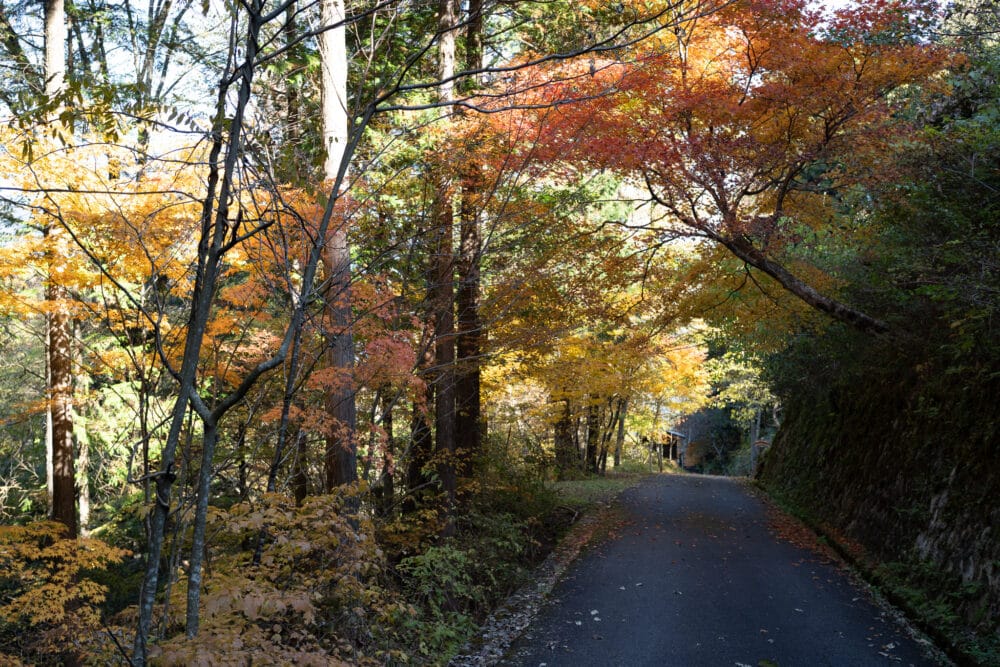
The best viewing period in 2026 is expected to be from late October to mid-November. The roughly 8-kilometer old trail is nicknamed the “Samurai Trail” by foreign travelers, and in autumn you can enjoy hillsides full of maple leaves while walking it. Even on holidays it does not get crowded, making it an excellent way to experience Edo-period atmosphere and autumn color.
The value of the Kiso Road lies not in a single sight but in the route itself, which is the experience. If you have already been to popular cities such as Kyoto and Osaka and want a quiet trip with historical weight, this is a very good fit.
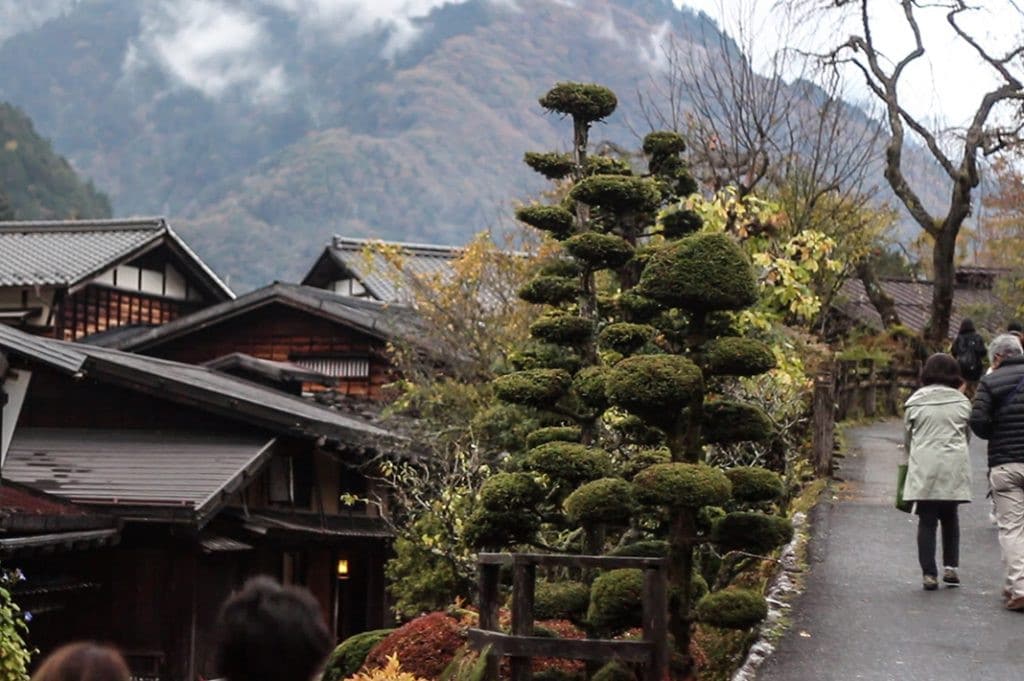
Tsumago vs. Magome: Where Should You Start?
Tsumago-juku has no utility poles and no cars, with the most authentic Edo-period streetscape and a “quiet” character. Magome-juku sits on higher ground and is livelier, lined with teahouses and souvenir shops, with views of Mt. Ena and a stronger commercial feel.
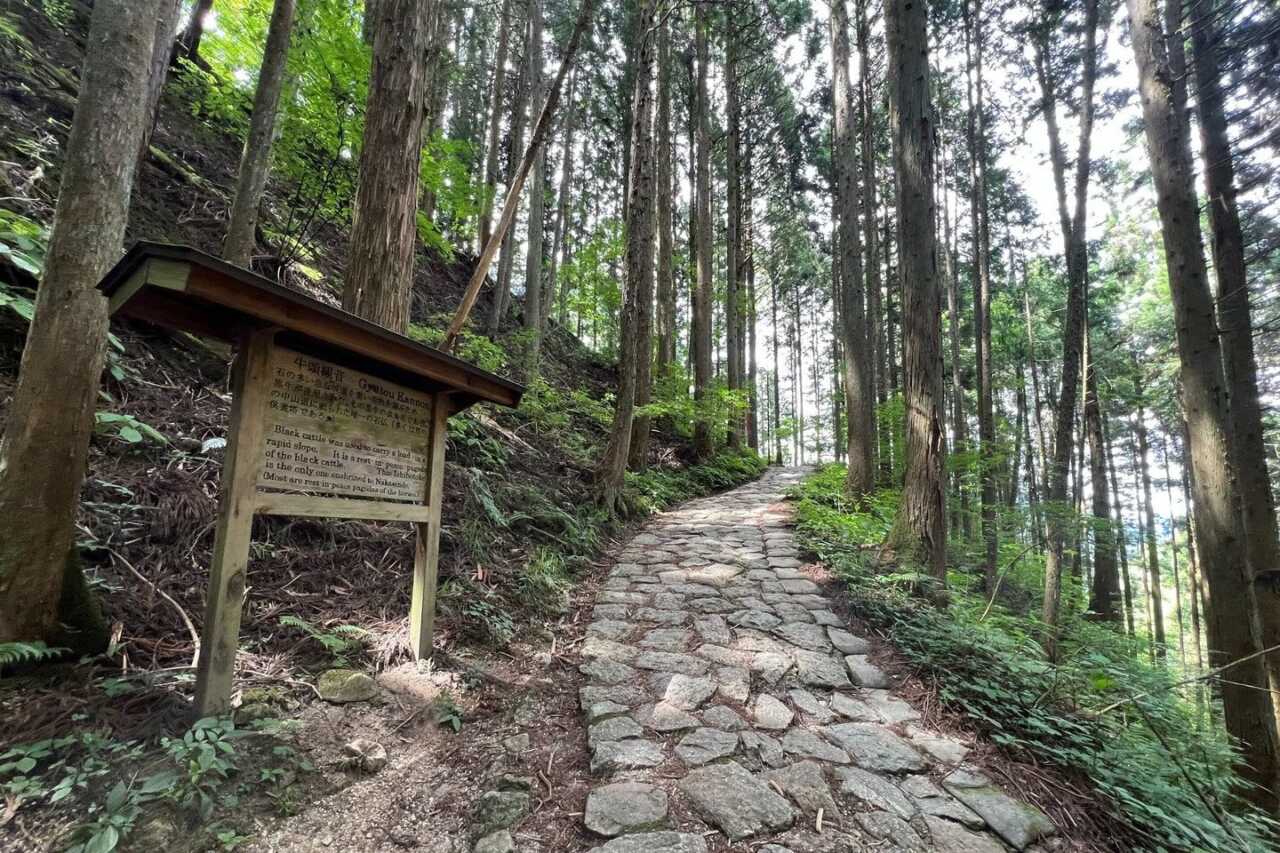
We recommend walking the trail in the “Magome to Tsumago” direction. Starting from Magome, you first climb a short, steep slope of about 200 meters to Magome Pass, and after the pass it is almost all downhill to Tsumago, so the second half is much easier. Walking the other way means starting from Tsumago with a gentler climb of about 370 meters, which spreads your energy less favorably, so first-timers are advised to start from Magome.
Walking the other way, Tsumago to Magome, puts the climb in the second half and is more tiring, but if you are staying in Tsumago and want to finish in Magome for shopping and a meal, it is a reasonable plan.
2026 Autumn Leaves Light-Ups and Nearby Events
Shimada Park in Magome-juku is one of the main maple-viewing spots. According to Gifu Prefecture tourism information, the “Akari Kaido” night light-up takes place on November 3, 2026, and the maple light-up at Shimada Park is held on weekends from November 3 to November 23, letting visitors enjoy a post-town atmosphere at night that is completely different from daytime.
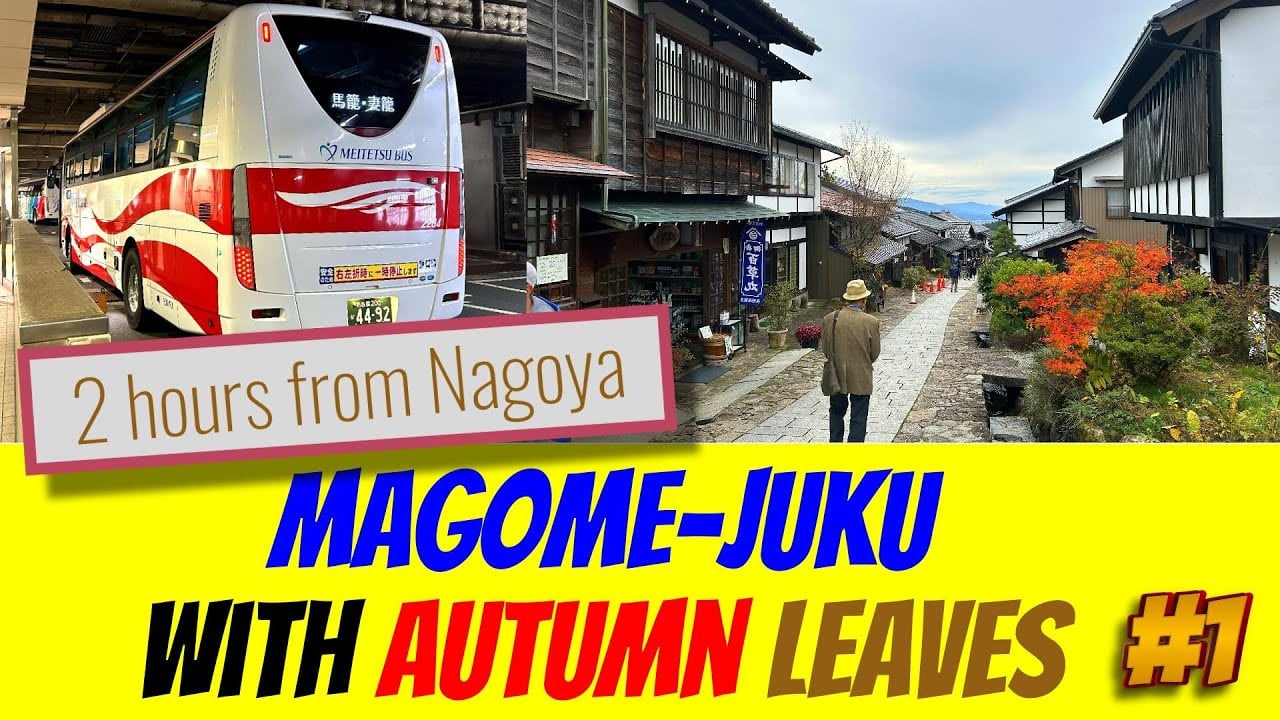
Meitetsu Bus has previously trialed seasonal autumn services running directly from Nagoya Station to Magome-juku and Tsumago-juku (in 2019, one trip a day, ¥2,500 one way for adults). Please check with Meitetsu Bus whether it runs this year. Separately, Kitaena Kotsu has operated a route from Nakatsugawa Station directly to Tsumago and Nagiso Station since October 2025.
Seasonal autumn bus services are limited, so be sure to check outbound and return times before you go to connect smoothly with your hike and return trip and avoid long waits on site.
Nighttime temperatures are low during the light-up period, so we recommend bringing a warm jacket to enjoy this seasonal post-town night scene comfortably.
Tsumago and Magome Autumn Leaves Transport Guide: Everything From Nagoya
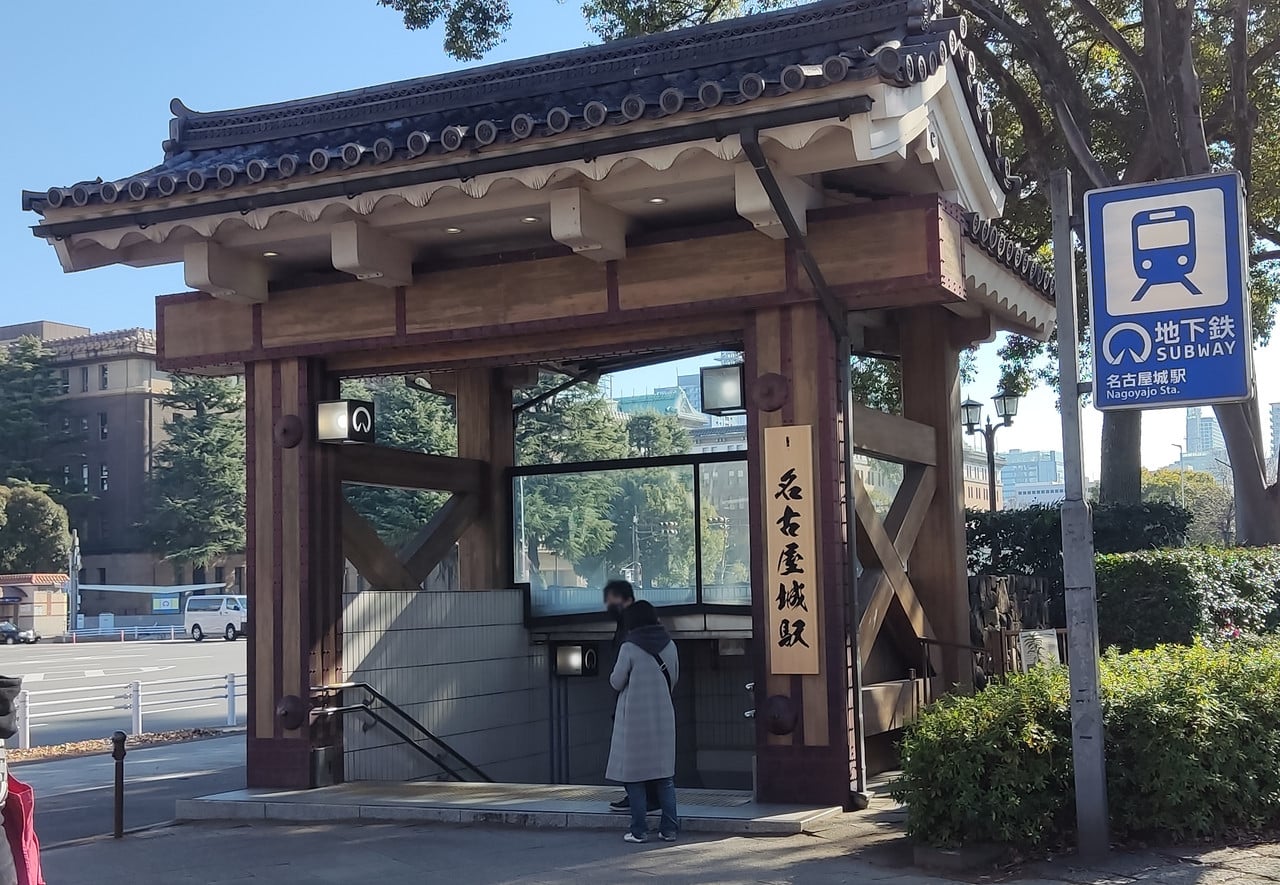
From Nagoya: Transfer to a Bus at Nakatsugawa for Magome
Take the JR Chuo Main Line limited express “Shinano” from Nagoya to Nakatsugawa Station in about 50 minutes, then transfer outside the station to a “Kitaena Kotsu” route bus for about 25-30 minutes (about ¥800) to reach Magome-juku. This is the main way to get to Magome.
The nationwide JR Pass covers the JR limited express section from Nagoya to Nakatsugawa, but the final route bus is not covered by the pass and must be paid for in cash on the spot, so be sure to include this fare when planning your budget.
We suggest catching a morning departure so you have ample time to finish the full 8-kilometer old trail. Arriving in Magome before noon to start the hike is the ideal timing.
Return: From Nagiso Station to Tsumago
After arriving in Tsumago-juku and finishing your visit, you can take the Nagiso Town community bus (Magome Line) from the main junction to JR Nagiso Station (about 10 minutes), then transfer to a JR train back to Nagoya. In addition to cash, transit IC cards such as Suica are also accepted.
The return bus stop is at Tsumago-juku’s No. 1 parking lot and is very convenient whether you are heading back to Magome-juku or on to JR Nagiso Station. However, rural buses are infrequent, so be sure to check the day’s latest timetable at the tourist information center when you get off, and watch the last bus time.
If you have time, you can also continue north from Nagiso Station to Narai-juku, extending the trip into a fuller two-day Kiso Road itinerary.
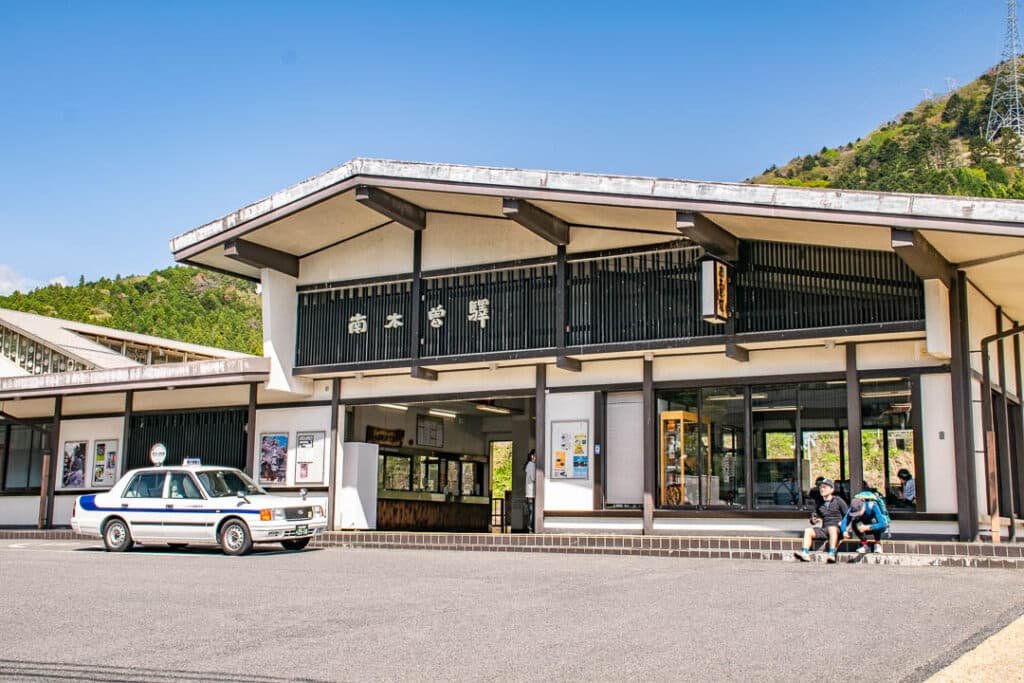
Luggage Forwarding: Walk the Whole Trail Light
The old trail’s stone paths and mountain tracks are not suited to wheeling large luggage. From late March to late November each year, a luggage forwarding service operates between Tsumago and Magome at about ¥1,000 per piece. Please confirm the drop-off and pick-up times with the tourist information center in advance.
If you send your luggage from your starting point in the morning before setting out, you can walk the 8 kilometers empty-handed and collect it at your destination. It is one of the most considerate services on the Kiso Road. Please confirm the drop-off locations at the information center.
If you are staying that night in the post town of Tsumago or Magome, you can simply leave your luggage at the inn and walk the trail with a light pack, with no need to arrange forwarding.
Driving and Winter Alternatives
Both Tsumago and Magome have parking lots, but if you drive you cannot “walk the trail one way” (you have to walk back to where you parked). Most people find public transport plus luggage forwarding smoothest, and it also lets you enjoy a complete one-way hike.
From December to mid-March the winter luggage forwarding fee is higher. If you want to walk the trail then, please confirm the service details with the tourist information center in advance, or just visit the post towns without carrying luggage over the mountain path. The autumn leaves season falls within the service period, so you do not need to worry about this.
If you get tired or the weather suddenly turns, there are also route buses between Tsumago and Magome to take you back, so you do not have to push through the whole trail, a handy fallback when your energy runs low.


Complete Guide to Autumn Leaves Spots in Tsumago and Magome
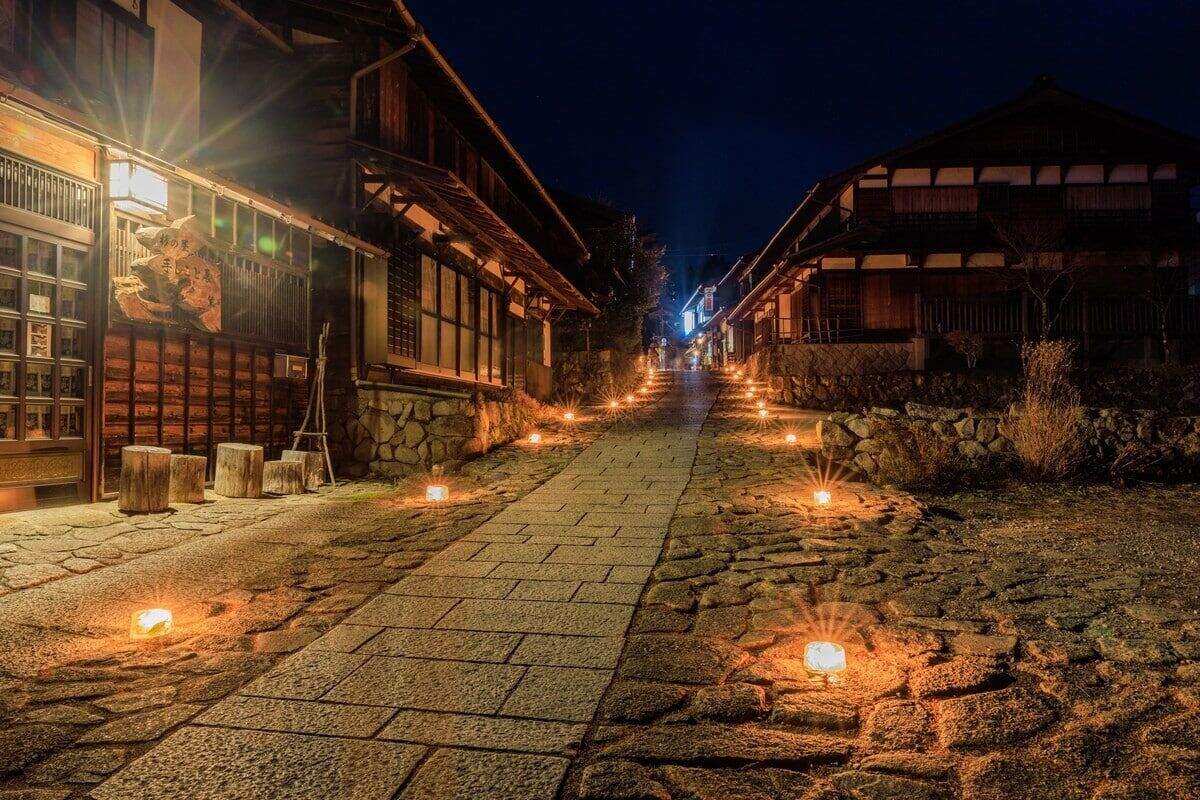
Tsumago-juku: An Edo Street With No Utility Poles
Tsumago-juku is the 42nd post town on the Nakasendo. In 1968 (Showa 43) Japan’s first town-scape preservation and restoration project was carried out here, and in 1976 (Showa 51) it became the first place in Japan designated an “Important Preservation District for Groups of Traditional Buildings.” Residents drew up a charter of “do not sell, do not rent, do not demolish,” preserving the whole street as a living museum.
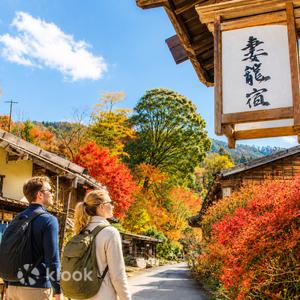
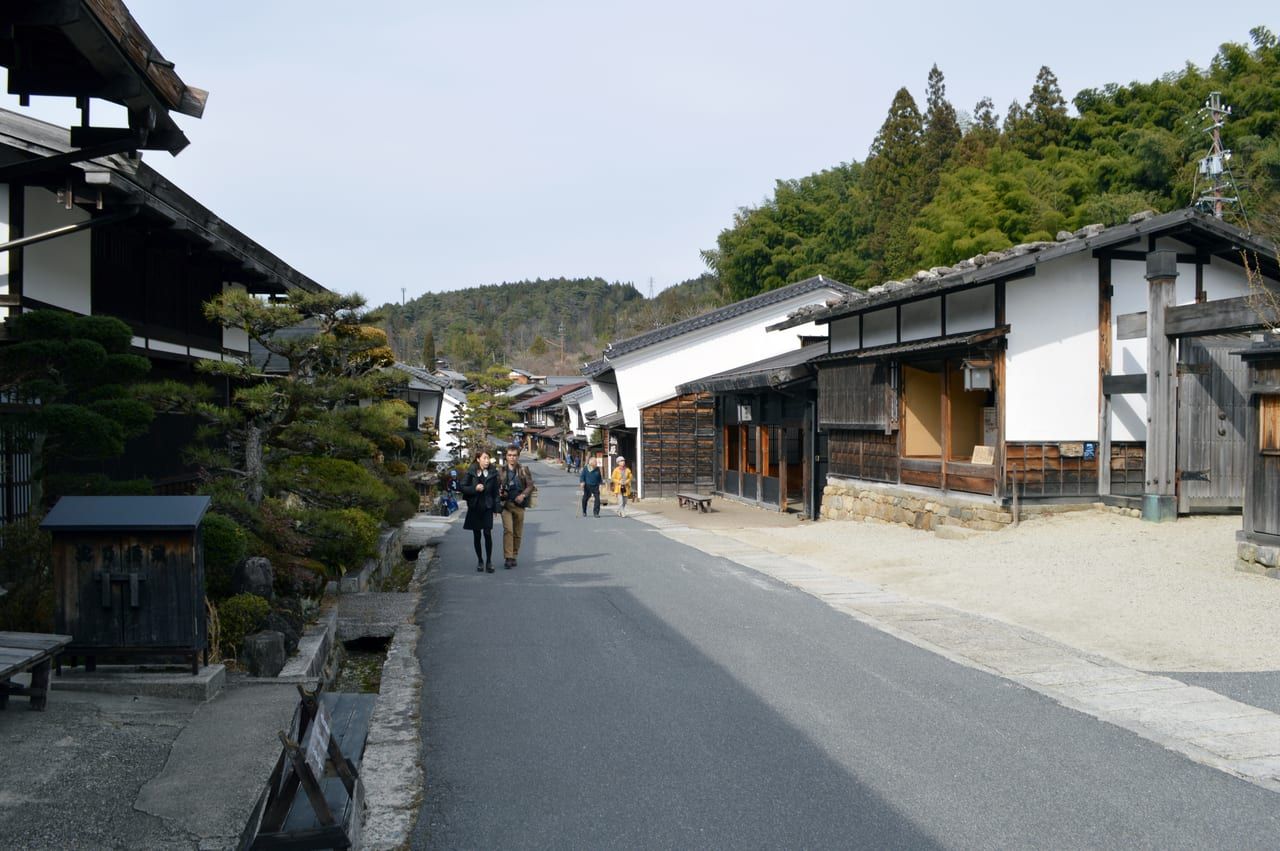
The first difference you notice on entering Tsumago is how “clean” it is: no utility poles, no air-conditioner units, and vehicles are banned from entering even during the day. Wooden inns, lattice windows and udatsu (fire-break walls) follow one after another, and highlights include “Waki-honjin Okuya” (an existing Important Cultural Property building, originally a post-station inn that received daimyo and others) and the restored “Tsumago-juku Honjin.”
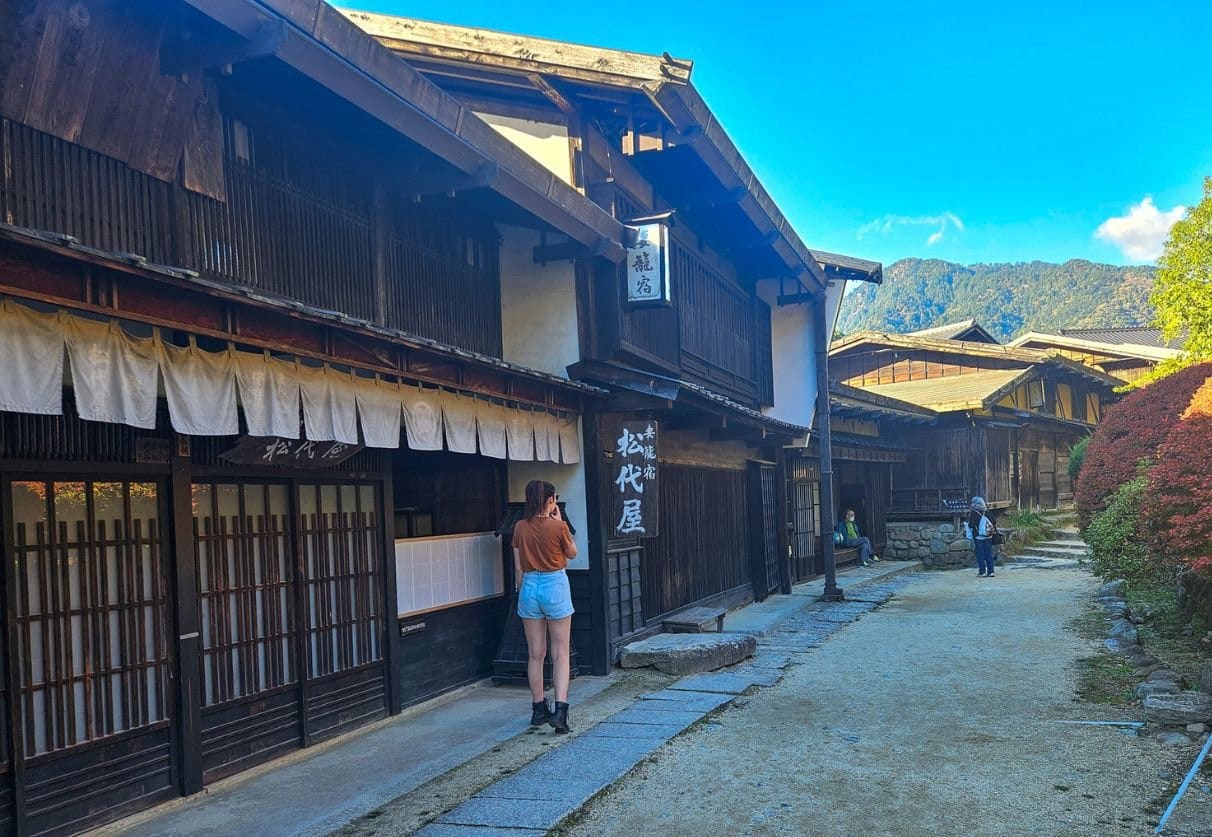



Magome-juku: A Mountain Town on a Stone-Paved Slope
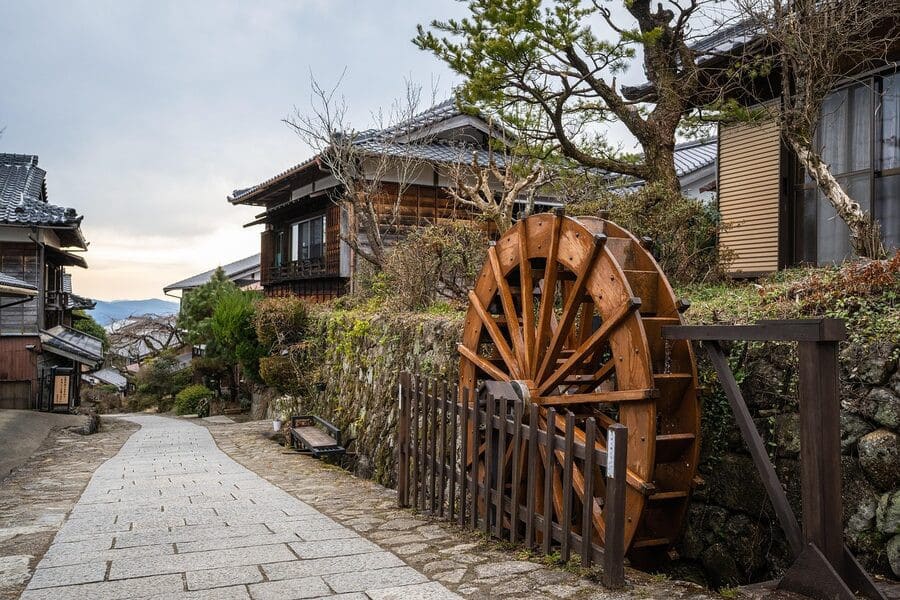
Magome-juku is the 43rd post town on the Nakasendo, Tsumago’s neighbor and the other end of the old trail. The biggest difference from Tsumago is the terrain: Magome is a stone-paved slope climbing up the hillside, lined on both sides with stone walls, waterwheels, teahouses and souvenir shops, and the higher you go the wider the view, with Mt. Ena and the Kiso Valley visible on a clear day.
Magome is also the hometown of the literary master Shimazaki Toson, whose novel “Yoake Mae” (Before the Dawn) is set on the Nakasendo and in Magome. The Toson Memorial Museum in the post town is described below.
Magome-juku Autumn Leaves Peak and Maple-Viewing Spots
The autumn leaves peak at Magome-juku usually falls from late October to mid-November, and the maple light-up at Shimada Park is held on weekends from November 3 to 23. To see Mt. Ena, go to Magome Furusato Hiroba (Magome viewpoint), and the sunset spot at Shin-chaya in the evening is also popular. For the latest conditions, contact the Magome Tourist Association (tel. 0573-69-2336).
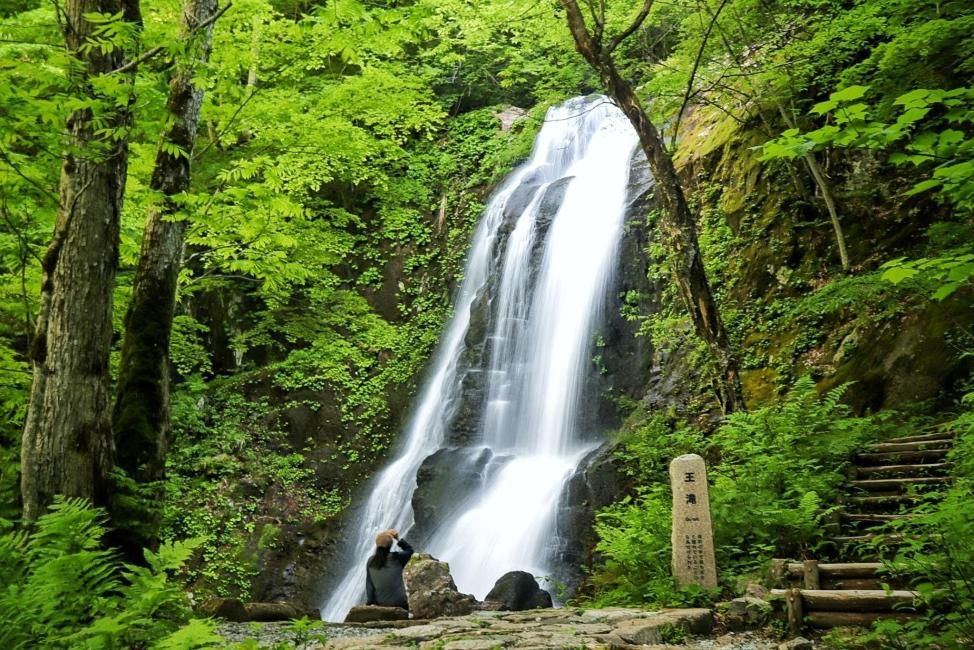
Odaki and Medaki Falls: Twin Waterfalls on the Old Trail
We suggest slowing down and pausing here, quietly listening to the water and soaking in the stillness of the surrounding forest, the most healing interlude along the whole old trail.
Odaki and Medaki (the male and female falls) are a pair of side-by-side waterfalls hidden in dense forest along the old trail between Tsumago and Magome. The clear water and the autumn leaves dotting the surroundings create a Zen-like Japanese autumn scene, and they are said to appear in swordsman novels and legends, a popular small stop on the old trail hike.
You can reach them with a small detour from the old trail, a good place to stop for photos and a short rest during the hike. In autumn the red maple leaves set off the flowing water, forming one of the most representative views of the Kiso Road old trail, and many travelers deliberately spend a few extra minutes here taking photos.
Ichikokutochi Tachiba Teahouse: A Free Rest Stop Midway Along the Trail
There are not many seats around the teahouse, and on weekends in the peak autumn-leaves season you may have to wait a little, so we suggest taking the chance to drink plenty of water before continuing on the later stretch.
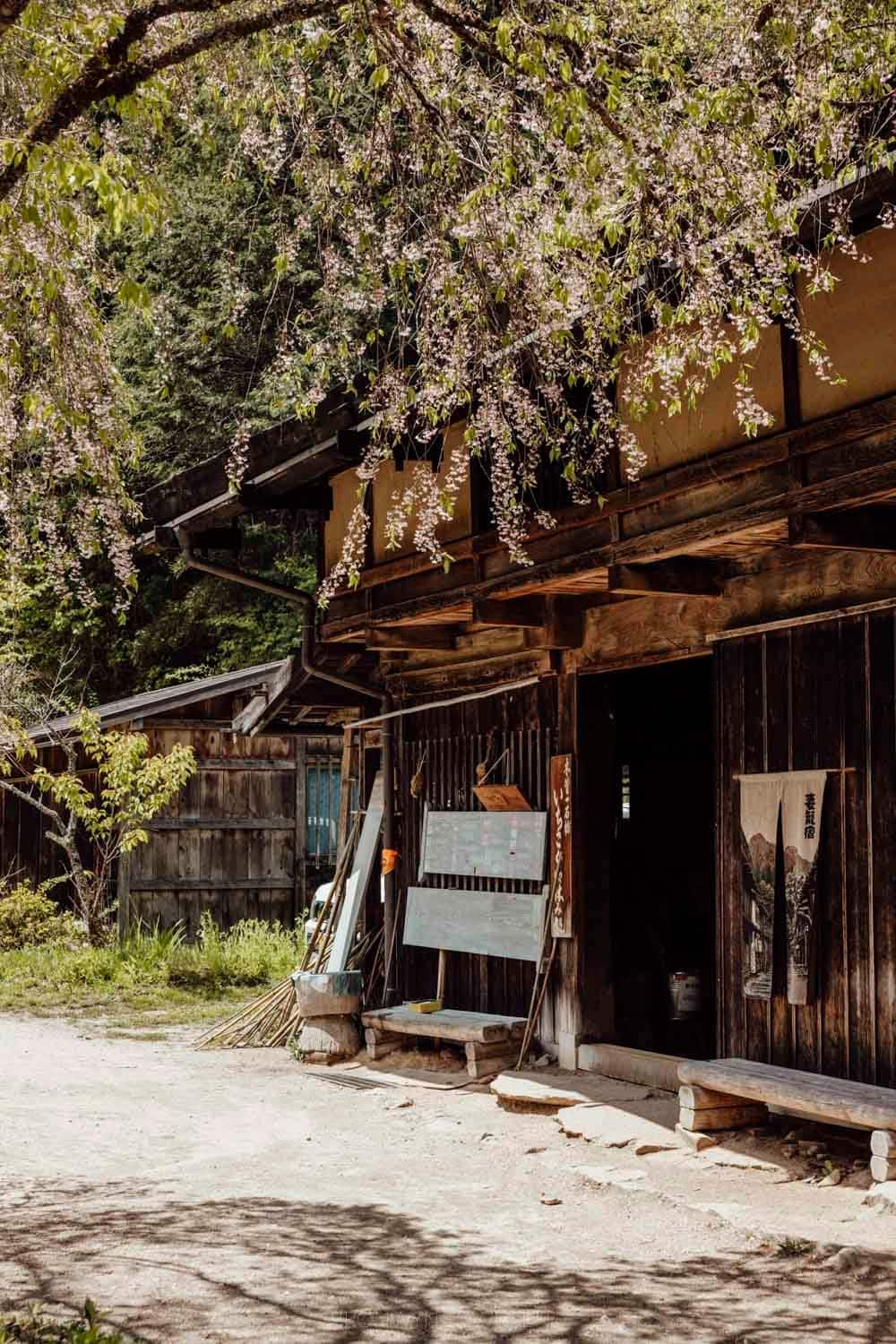
Ichikokutochi Tachiba Teahouse is an old rest stop midway along the old trail. It offers free hot tea, and in autumn it is surrounded by red maple leaves, making it the best place for travelers to exchange stories. After finishing the first half of the slopes, a short rest here restores your energy for the second half.
Mobile reception along the way comes and goes, so we suggest saving offline maps and bus timetables in advance. There are bear warnings in the mountain area, and when you pass a “bear bell” set up on the trail, you simply ring it once to make noise. This is a long-standing local custom, so just follow it, and it is also a distinctive local experience of hiking the old trail.
Masugata Roads and Magome Pass: Terrain Highlights of the Old Trail
“Masugata” is a special road structure shared by Magome-juku and Tsumago-juku, in which the end of the road is deliberately built with a right-angle turn. It was used for military defense in the past, so enemies could not see into the village at a glance and there was room for ambushes. It is now a famous feature visitors should experience, and walking through it you can truly feel the defensive wisdom of the Edo period.
Magome Pass is the highest point of the old trail, at about 790 meters above sea level. At the top there is a stone marker and a teahouse for resting. After crossing Magome Pass it is downhill all the way to Tsumago, the most iconic landmark of the whole old trail hike and an important dividing line for pacing your energy.
The summit has a wide view, and on a clear day you can see the mountains of the Kiso Valley in the distance, a good place to pause and enjoy the grand scenery after crossing the mountain.
Toson Memorial Museum: Where Literature and History Meet
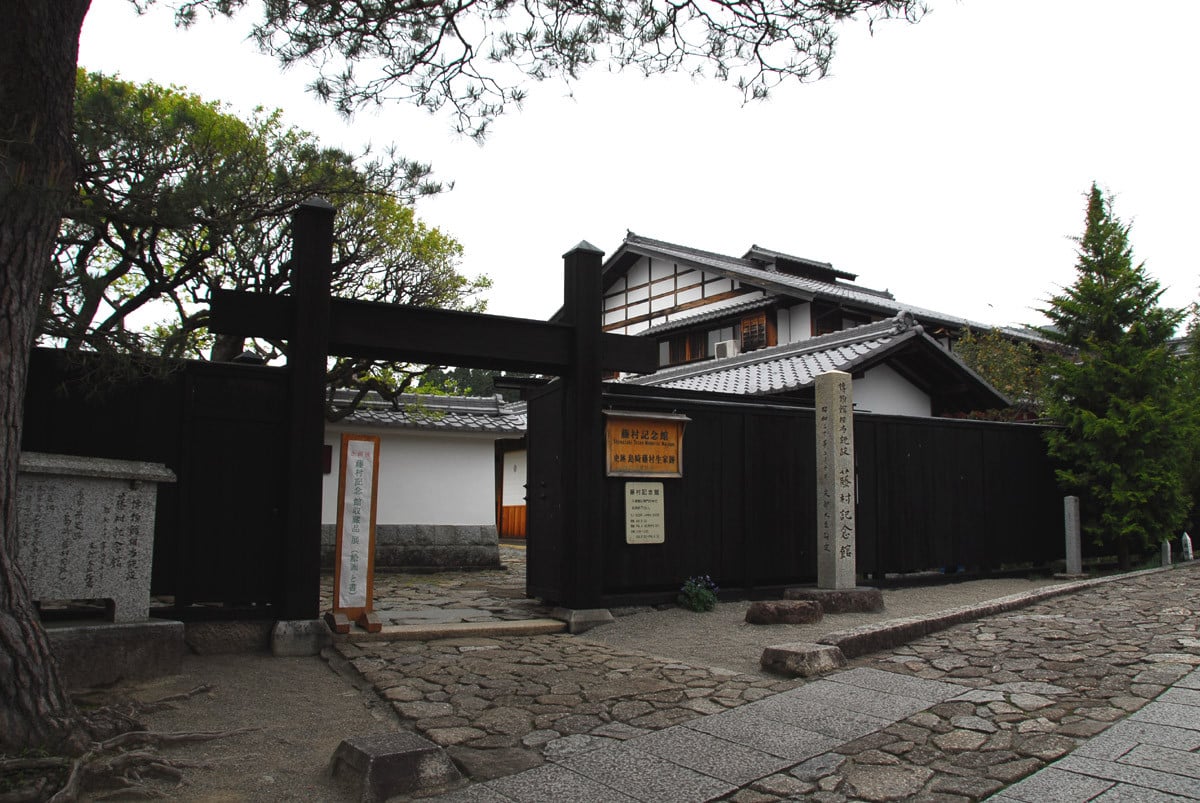
The Toson Memorial Museum stands on the site of the former Magome-juku honjin. The original honjin building was destroyed in the great fire of 1895 (Meiji 28), and the current building was designed by architect Yoshiro Taniguchi and completed in 1947 (Showa 22). It opened in 1952 as Japan’s first literary museum and is the deepest stop for understanding the history and culture of the Kiso Road.
The museum displays about 6,000 manuscripts and relics, from Shimazaki Toson’s first poetry collection “Wakanashu” to his final work “Higashi no Mon” (The Eastern Gate), so visitors not only walk the stone-paved road but also understand the literary tradition this land nurtured. The address is 4256-1 Magome, Nakatsugawa City, Gifu Prefecture, tel. 0573-69-2047, and we suggest fitting it in during your stroll around Magome-juku.
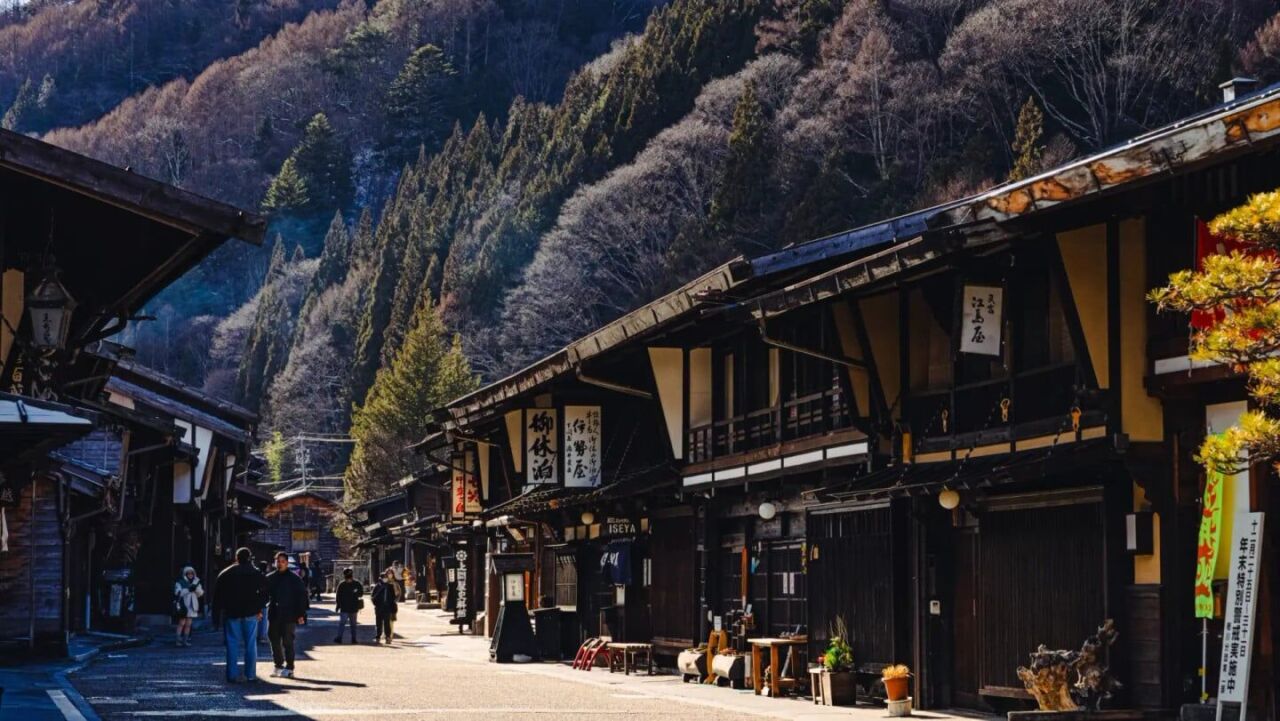
Narai-juku: An Extension Stop on Japan’s Longest Post-Town Street
Narai-juku is the 34th post town on the Nakasendo, at an elevation of about 940 meters, the highest post town on the Kiso Road. It is also an Important Preservation District for Groups of Traditional Buildings and one of the longest surviving post-town streets in Japan (about 1 kilometer), with wooden townhouses stretching on and on, longer than Tsumago or Magome and usually with fewer people.
Narai is right beside JR Narai Station on the JR Chuo Main Line, and you can link it by going north from the Tsumago and Magome side. It suits a two-day deep itinerary of “Tsumago and Magome in the south plus Narai in the north,” collecting three post towns in one trip. More energetic travelers can also take on the roughly 6-kilometer extension hike on the Nakasendo from Yabuhara to Narai.
Jinbaage Viewpoint: A Superb Lookout Before the Hike
We suggest going early in the morning, when the light is soft and visitors have not yet arrived, so you can capture the clearest, most moving shot of Mt. Ena and red maple leaves in one frame.
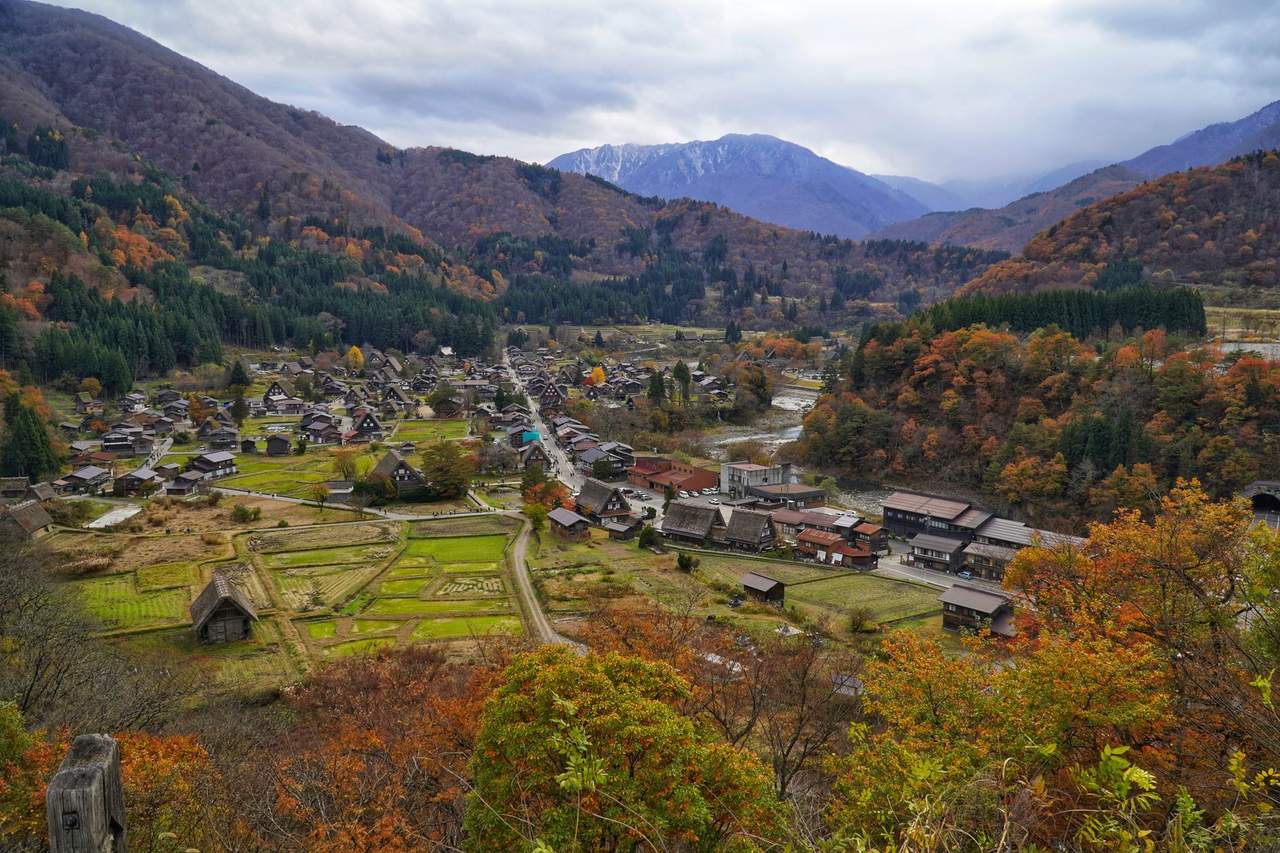
Jinbaage Viewpoint is at the top of the Magome-juku slope and looks out over Mt. Ena and the layered autumn-red mountains. It is a superb photo spot before you set off hiking, taking in at one glance the mountain scenery the old trail is about to pass through, helping you prepare mentally for the hike ahead, and it is also a fairly popular photo spot in Magome-juku.
The viewpoint has a wide outlook, and it is well worth pausing here to enjoy the panorama before stepping onto the old trail, feeling the grandeur of the Kiso Valley ringed by mountains. It is easy to overlook on a stroll around Magome-juku but worth a special visit, and on a clear day the view is especially vast.
Local Kiso Road Food: Gohei Mochi and Chestnut Sweets
Gohei mochi is the most classic local snack of the Kiso Road: house-made rice is shaped into a flat cake, brushed with sweet miso sauce and grilled, and you can find shops selling it all along Tsumago and Magome. The autumn-only “kurikinton” (chestnut sweet) is a famous seasonal treat in this area, sweet without being cloying and good for replenishing energy after hiking.
There are also kuri zenzai (chestnut sweet red bean soup) and oyaki (a traditional grilled dumpling of the Koshin region) to try. “RIVERBED COFFEE,” about a 10-minute walk from Nakatsugawa Station (closed Thursdays and national holidays), is also a recommended coffee stop, well suited to a short rest before or after the hike.
We suggest sitting down at a teahouse during or after the hike to try these with a cup of hot tea, the most authentic way to experience local Kiso Road flavor.

Tickets and Guided Tours
Tsumago-Magome Old Trail Hiking Tour
A local guide leads you through the history of the Nakasendo, the military defense design of the masugata roads and the literary story of Shimazaki Toson. It suits travelers who want a deeper understanding of Kiso Road culture rather than just putting their heads down to finish the 8 kilometers. The tour lasts about half a day and covers the whole old trail with commentary on the stories along the way.
Prices vary with group size and guide language. We recommend booking and confirming a session on KKday or Klook at least 3 days in advance, especially as spots on peak autumn-leaves weekends are in high demand, and early planning is the way to be sure the trip goes ahead.
Compared with exploring on your own, a guide can share many local stories you cannot find on a map, making the whole Kiso Road trip deeper and more meaningful.
Tsumago-Magome Day Trip Bus From Nagoya
We suggest checking in advance whether the tour includes luggage forwarding or storage. Some packages include only transport and not a guided old trail hike, so be sure to read the itinerary details before booking.
If you find the transport complicated, consider a day-trip bus tour from Nagoya on KKday or Klook. Not only can you tour Tsumago-juku and Magome-juku easily, some tours also combine a Toki Premium Outlets shopping stop, making the whole day relaxed and full.
Package tours usually include round-trip transport from Nagoya and time for the old trail hike, suited to independent travelers who do not want to research bus transfer timetables and want to experience the best of the Kiso Road without the hassle.
Toson Memorial Museum Tickets
Toson Memorial Museum tickets can be bought on site. We suggest fitting the visit at the start or end of your stroll around Magome-juku, visiting first to understand the literary background of the land, then setting out on the old trail with that understanding for a deeper experience.
The museum has rich displays, and we suggest allowing 30-45 minutes. If you are interested in modern Japanese literature, it is well worth spending a little more time to savor the collection.
JR Chuo Main Line Limited Express Shinano Tickets
If your trip will also extend to Matsumoto, Takayama or other parts of central Japan, we suggest first assessing whether a JR Pass is worthwhile before deciding how to buy tickets.
Tickets for the JR Chuo Main Line limited express “Shinano” toward Nakatsugawa and Nagiso can be bought on the JR West or JR Central websites or at station windows.
On peak autumn-leaves weekends trains may be crowded, so we suggest buying tickets early or leaving a buffer for waiting, and planning your return ticket in advance especially over long holidays.
Where to Stay Near Tsumago and Magome

Where to Stay: Staying One Night Is the Essence of the Kiso Road
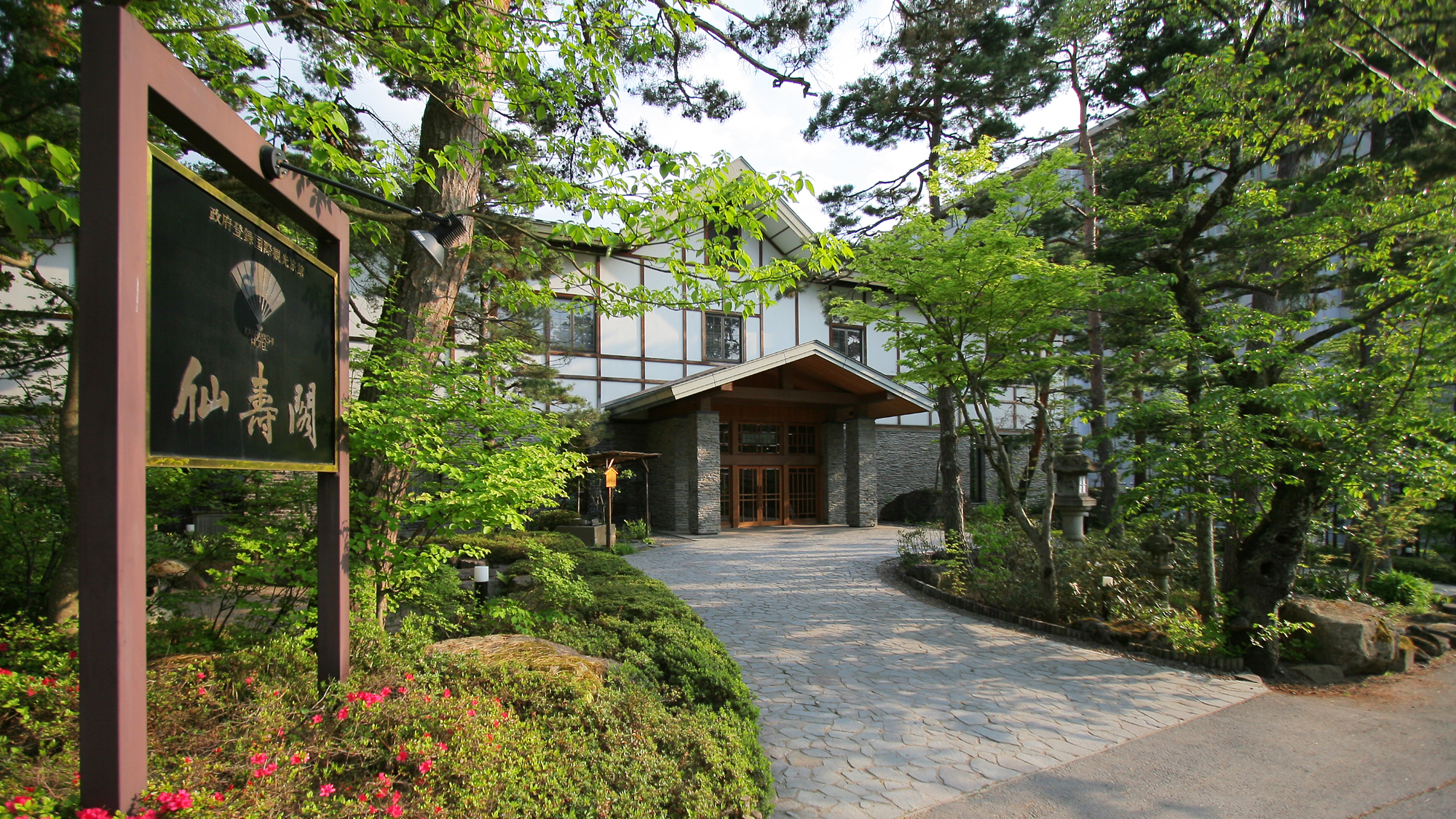
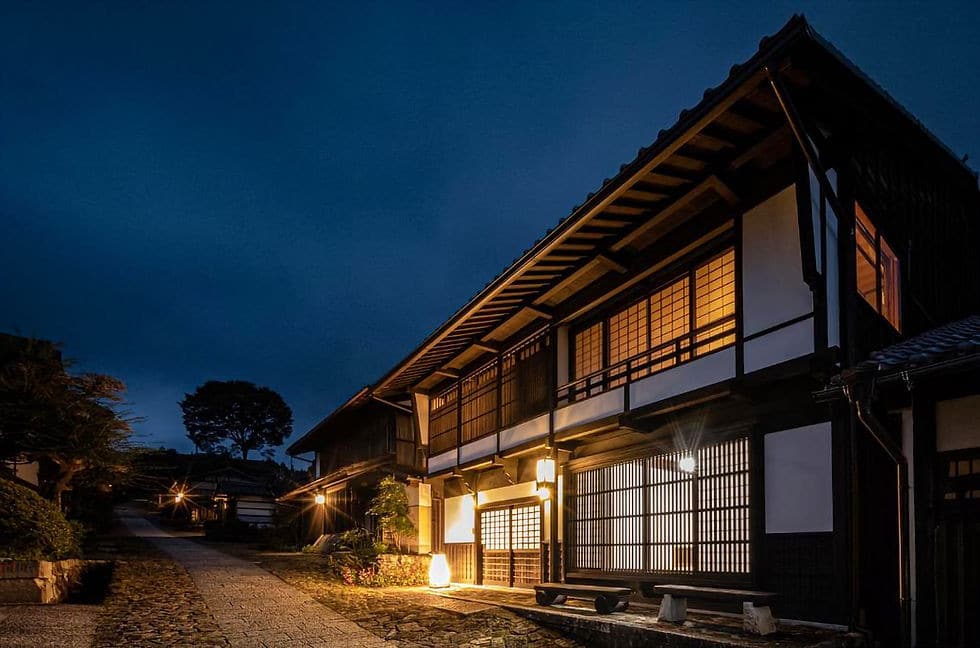
The beauty of the Kiso Road lies in the hours without tourists. We most recommend staying right inside the post town of Tsumago or Magome. Inns inside Magome-juku are close to the Toson Memorial Museum and convenient for the start and end of the hike, and about 5 minutes by car from Magome-juku is “Hotel Hanazarasa” (Nakatsugawa City, Gifu Prefecture), next to the hot spring facility “Cure Resort Yubunezawa.”
Both places keep Edo-style inns and old-house guesthouses, with few rooms, so book early in peak season (autumn leaves season, long holidays). The biggest benefit of staying a night is seeing the empty approach in the early morning and the streets after the day visitors have left in the evening, scenery a same-day round trip completely misses. Dinner is usually Kiso local cuisine: mountain vegetables, river fish, soba noodles and gohei mochi.
Lodging choices on the Kiso Road are limited with few rooms, so during peak autumn-leaves season be sure to book 1-2 months ahead to get the room type and price you want.
Tsumago and Magome Autumn Leaves FAQ
How long does the Tsumago-Magome old trail take?
The whole trail is about 8 kilometers and takes 2.5 to 3 hours at a normal pace. It is a hike, not a mountain climb, with a mix of stone paving, dirt paths and some asphalt, clear signposts, and even families with children can manage it.
How do I send my luggage?
It costs about ¥1,000 per piece, and the service runs from late March to late November. Please confirm drop-off and pick-up times with the tourist information center in advance. From December to mid-March the fee is higher.
Should I start from Magome or Tsumago?
We recommend starting from Magome: Magome is on higher ground, so you first climb a short, steep slope of about 200 meters to Magome Pass, and after the pass it is almost all downhill to Tsumago, making the second half much easier and less tiring than the gentler 370-meter climb of walking the other way.
Is Tsumago-Magome suitable for children or older family members?
Yes. The old trail is clearly signposted and mostly stone paving and dirt paths, so even families with children can manage it. If your stamina is limited, you can also visit just the two post towns and take the bus to skip the old trail, and still feel the atmosphere of the Edo period.
What should I do if I meet a bear on the trail?
There are bear warnings in the mountain area, and “bear bells” are set up along the way for you to ring. Just ring one once as you pass to make noise. This is a local custom, and following it effectively lowers the risk of encountering wildlife.