
Yamadera Risshakuji Autumn Leaves Guide 2026: A 1,000-Year-Old Temple and Its Thousand Stone Steps
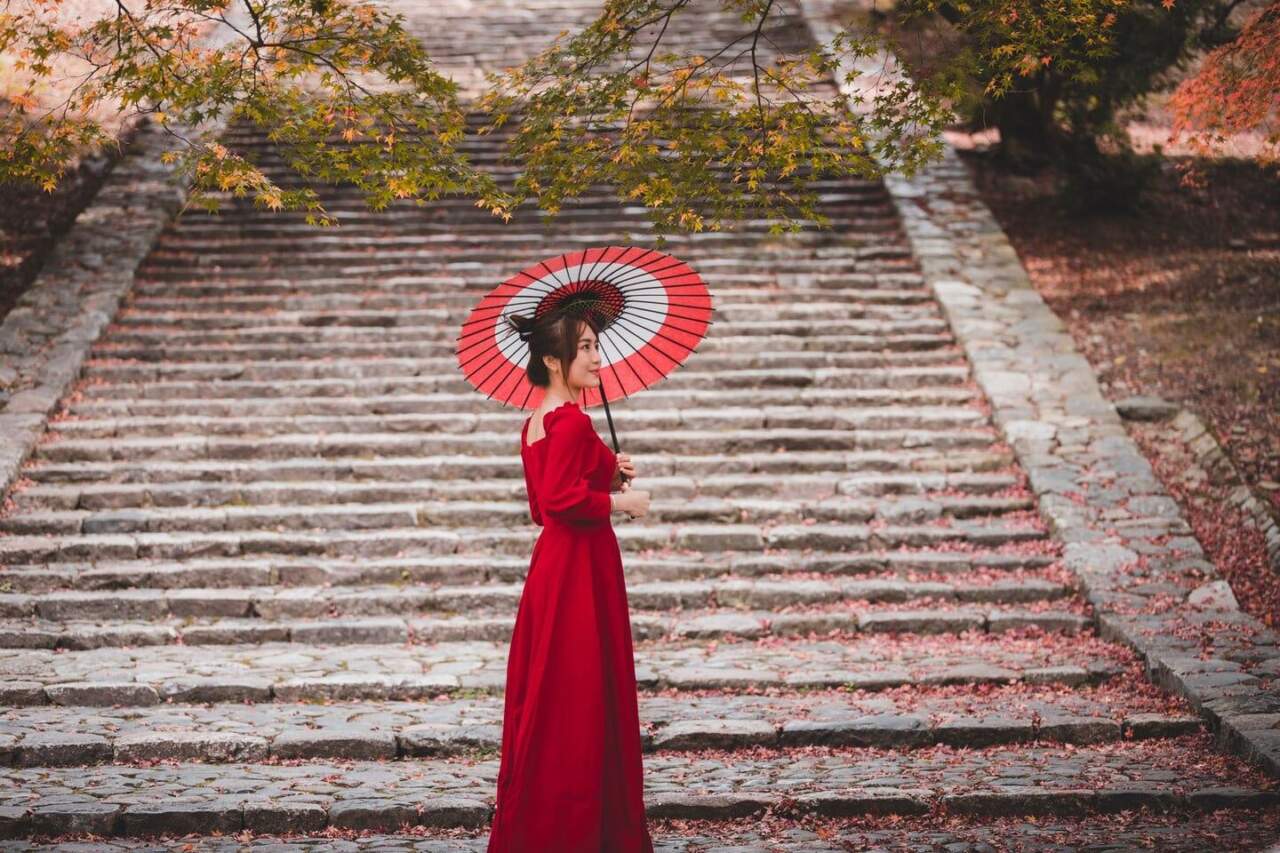
Yamadera Risshakuji Autumn Foliage Overview
Yamadera, officially Hojusan Risshakuji, is the most representative autumn foliage destination in the Tohoku region of Yamagata Prefecture. Tradition says it was founded in 860 by Jikaku Daishi Ennin, the third head of the Tendai school, and it is a Tendai temple with a thousand years of history. It is known for its “three eternal flames”: the Dharma lamp that has never gone out, the incense offerings to Jikaku Daishi that have never ceased, and the Nyoho-kyo sutra copying ritual that has never lapsed. The sutra copying ritual was not even passed down at Enryaku-ji on Mt. Hiei, the head temple of the Tendai school.
The best viewing period in 2026 is expected to be late October to early November. Take on the 1,015 stone steps and climb to Godaido, perched at the cliff’s edge, for a view over the whole valley of red leaves.
Matsuo Basho and the Narrow Road to the Deep North
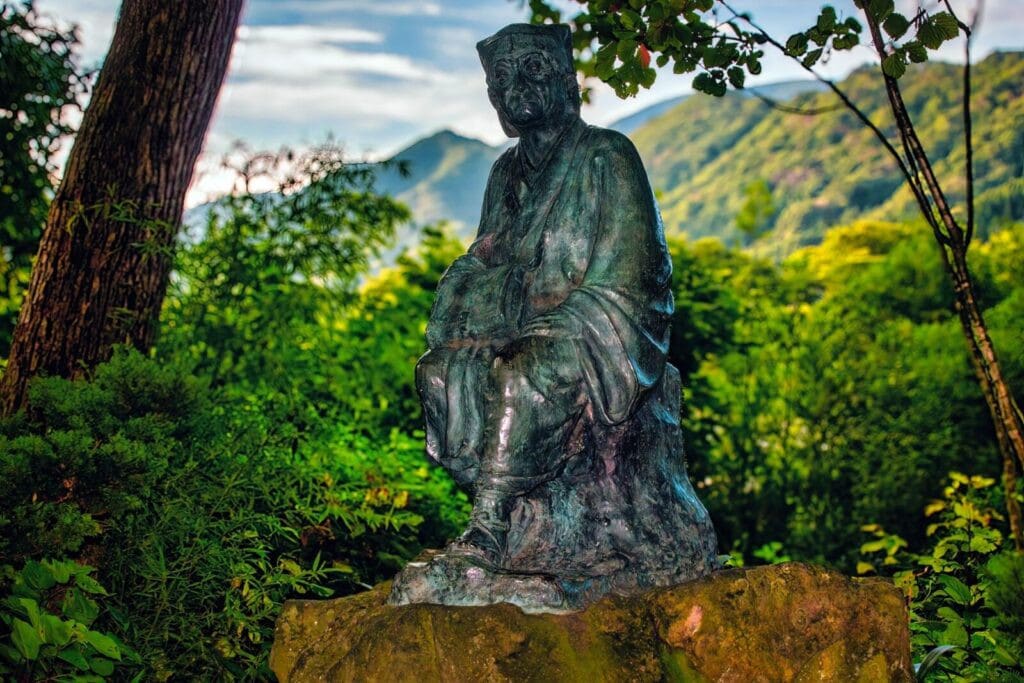
The haiku master Matsuo Basho visited Yamadera during his journey recorded in “The Narrow Road to the Deep North” and left the famous line “Shizukasa ya iwa ni shimiiru semi no koe” (“Stillness: the cicadas’ cry seeps into the rocks”). It remains the best-known story in Yamadera’s cultural heritage, and the Semizuka (Cicada Mound) beside Ubado Hall marks the spot commemorating the verse.
Basho was describing summer cicadas, but visiting Yamadera in autumn, with falling leaves and the faint call of late-season cicadas, adds a quiet, poetic loneliness of its own. It is worth savoring this literary resonance across four hundred years as you climb the stone steps.
2026 Foliage Forecast and Night Illumination
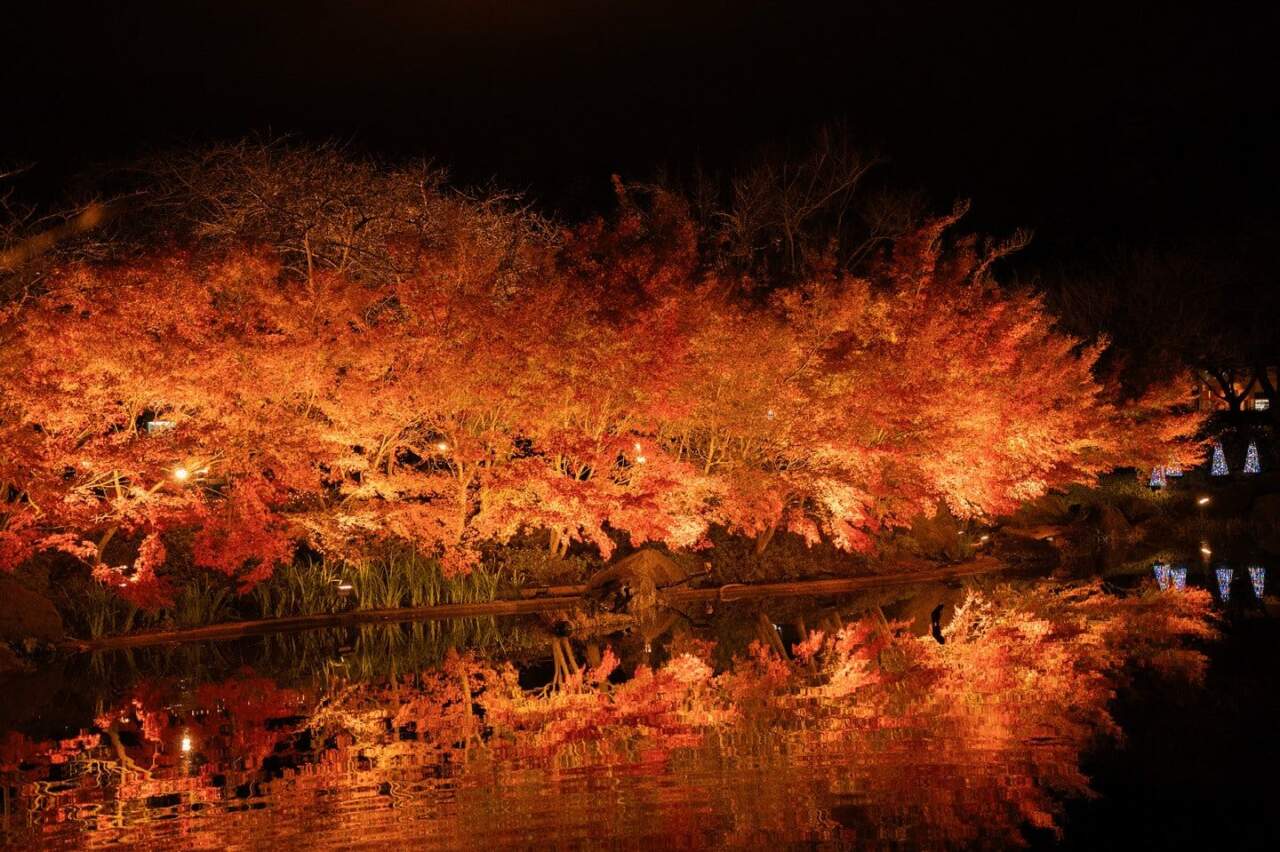
The “Hojusan Light-Up” night illumination was held in 2025 from October 26 to November 9, from evening until 21:00. For the 2026 schedule, please check announcements from the Yamadera Tourist Association. Entering Risshakuji at night is prohibited, so you can only view it from afar, from the monzen-machi shopping street in front of the temple or from the Basho Memorial Museum.
According to the Risshakuji official website, visiting hours are 8:00 to 15:30 in October and November (8:00 to 16:00 from April to September). During foliage season, enter the mountain before 15:30.
Because of climate change, the peak timing varies a little each year. We suggest checking Japan foliage forecast websites again one to two weeks before departure and confirming the latest color-change status before fixing your travel dates.
Getting to Yamadera in Autumn: Full Breakdown from Yamagata and Sendai
From Yamagata Station: The Fastest Route on the Senzan Line
From Yamagata Station, the JR Senzan Line takes about 17 to 19 minutes to reach Yamadera Station, with a fare of about ¥242. It is the fastest and most convenient route to Yamadera and suits travelers using Yamagata city as their base. Check the timetable before you set out.
After leaving the station, follow the signs and walk about 5 to 10 minutes to the trailhead at the foot of the mountain. There are paid lockers in the station, so if you have a lot of luggage you can leave it there and climb light, and on the way back you can return to Yamagata city by JR the same way.
This route suits a half-day to full-day Yamadera foliage trip.
From Sendai Station: The Most Scenic Foliage Stretch
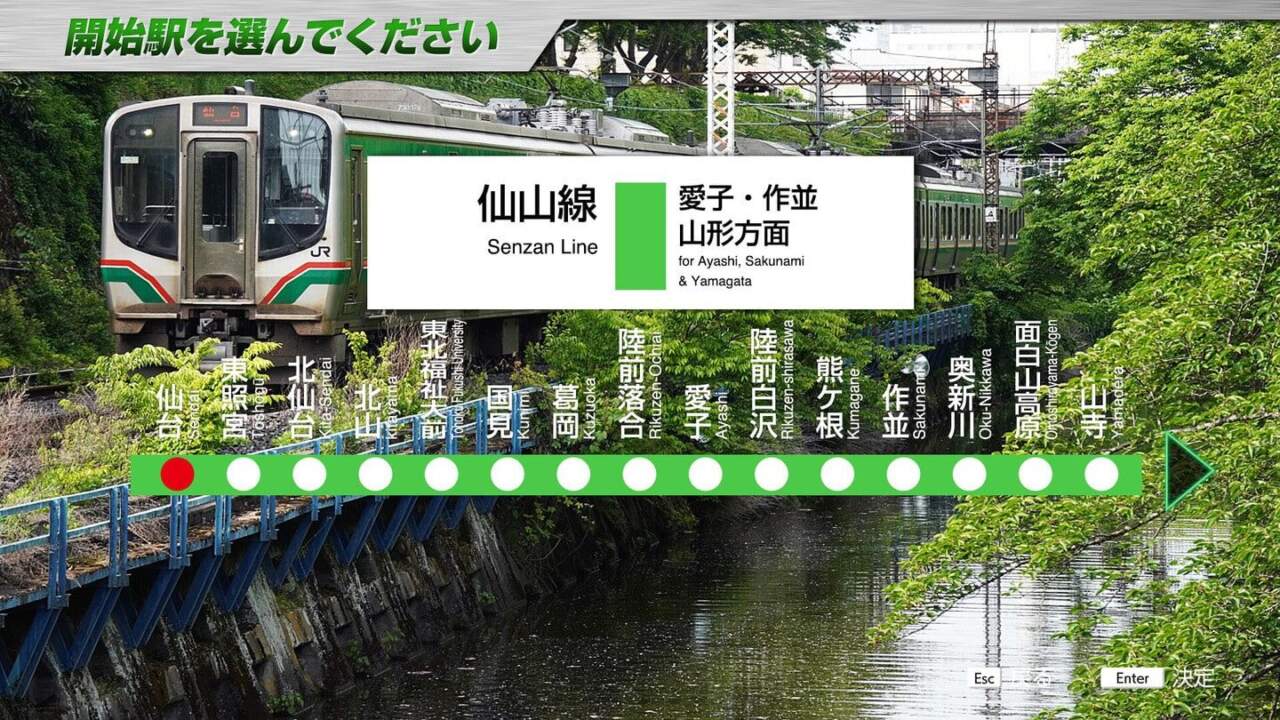
The Senzan Line runs along the valleys of the Ou Mountains and is a well-known foliage railway route in Tohoku.
From Sendai Station, the JR Senzan Line (rapid or local) takes about 60 to 65 minutes to reach Yamadera Station. On the way you pass what is widely considered the Senzan Line’s most beautiful foliage stretch, between Sakunami Station and Yamadera Station, where the autumn colors of the Ou Mountains pile up layer upon layer. The ride itself is a pleasure.
We suggest a window seat to enjoy the autumn colors of the Ou Mountains along the line.
JR East Rail Pass: Linking Multiple Sights
If you plan to link Yamadera with the Zao Ropeway, Sendai and other Tohoku sights, consider the JR EAST PASS. The new 5-day pass system from March 14, 2026 costs about ¥35,000 and covers JR East lines. Please check the JR East official website for coverage.
If you are only making a round trip between Yamagata or Sendai Station and Yamadera Station, simply buy a one-way ticket and there is no need for a pass. Choose the best-value option flexibly according to your actual number of days and range.




Hiking Gear and Crowd-Avoidance Tips
There are no shops along the way up, only vending machines selling drinks. Use the restroom and prepare drinking water at the foot of the mountain before you climb, so you can complete the thousand steps with peace of mind.
We suggest entering when the gates open at 8:00 to avoid the peak rush after trains arrive. Weekdays are also much more relaxed than weekends. The steps are slippery, so be sure to wear non-slip sneakers or hiking shoes.
You will sweat while climbing, but it is cool in the wind at Godaido, so we suggest dressing in layers and bringing a windproof jacket.

Complete Guide to Yamadera’s Autumn Foliage Spots
Goshinboku and the Trailhead: Where the Thousand Steps Begin
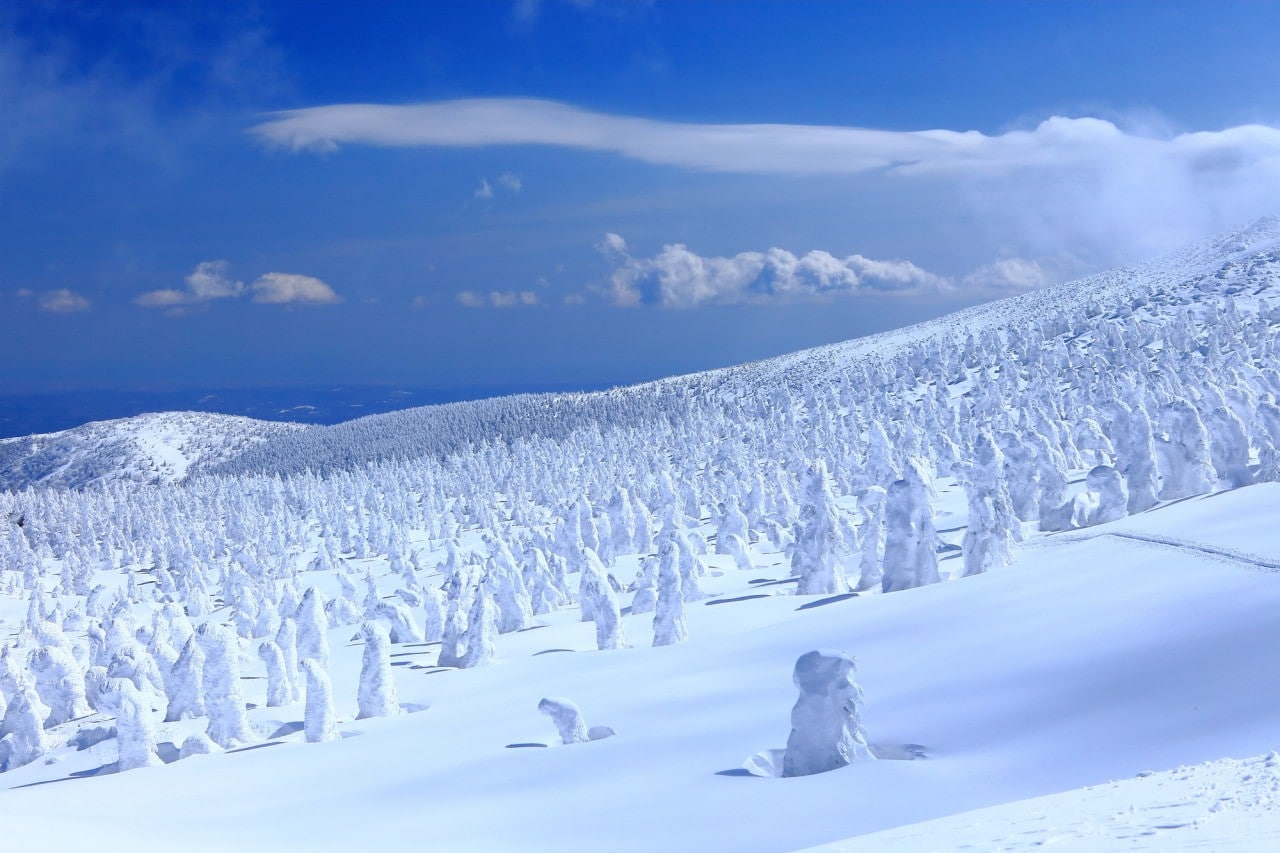
After buying your ticket at the mountain gate and entering, you reach the start of the 1,015 stone steps. Near the entrance stands a huge sacred tree, the “Goshinboku,” with a thick trunk covered in yellow leaves and fallen autumn leaves all over the ground. It is the first photo highlight before the climb begins and also symbolizes the start of this path of austerity.
As the old saying goes, “each step you climb removes one worry.” You climb through tall cedar forest and past stone Buddhas. According to the Risshakuji official website, the mountain entrance fee is ¥500 for adults (junior high school age and up) and ¥200 for children (age 4 and up), cash only. Opening hours vary slightly by season.
Konpon Chudo beside the mountain gate is the oldest beech-wood building in Japan at the foot of the mountain. It is well worth stepping inside before the climb to feel the original solemn appearance of this thousand-year-old temple.

Mida Hora: A Natural Rock Formation as a Symbol of Faith
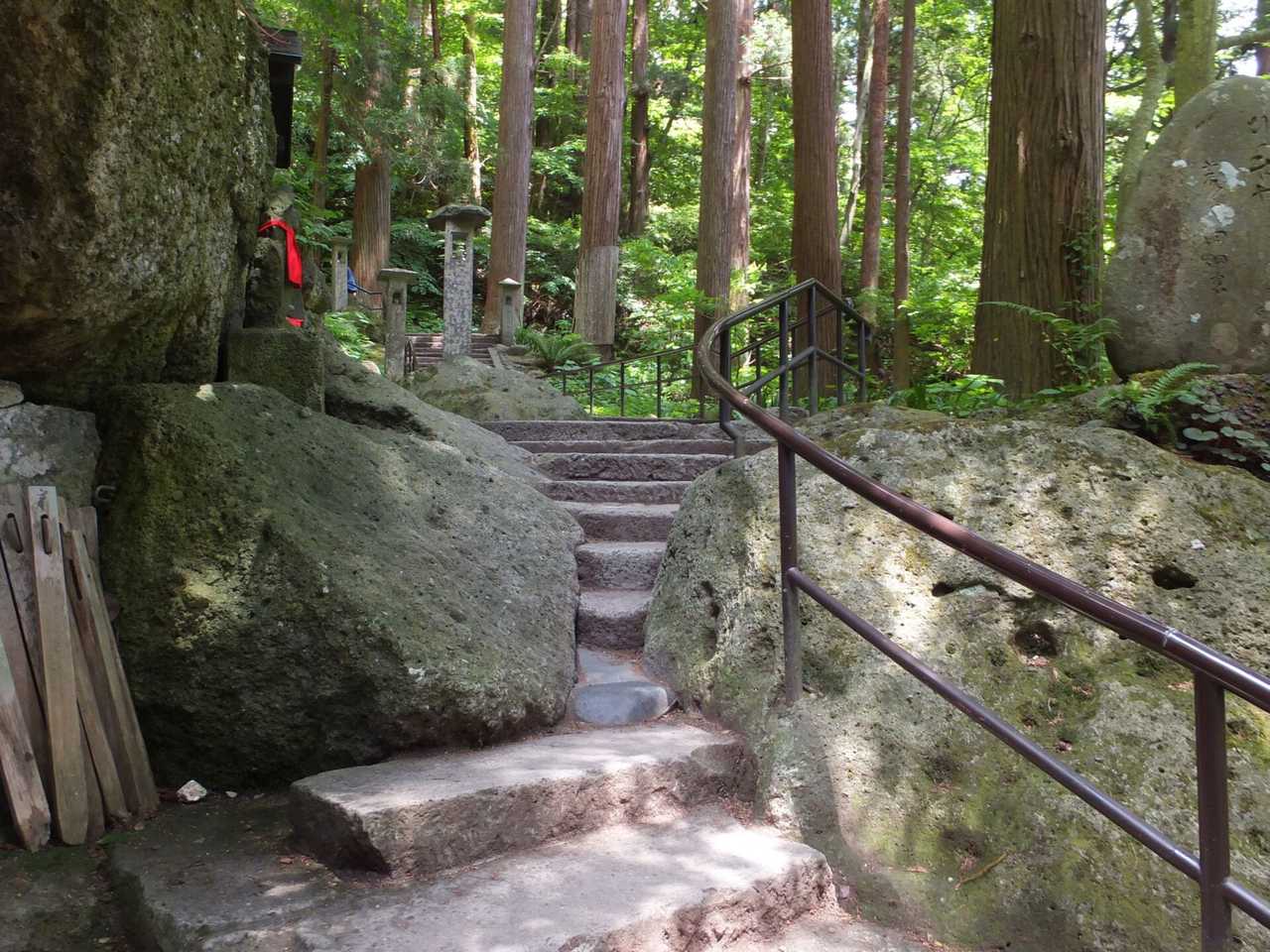
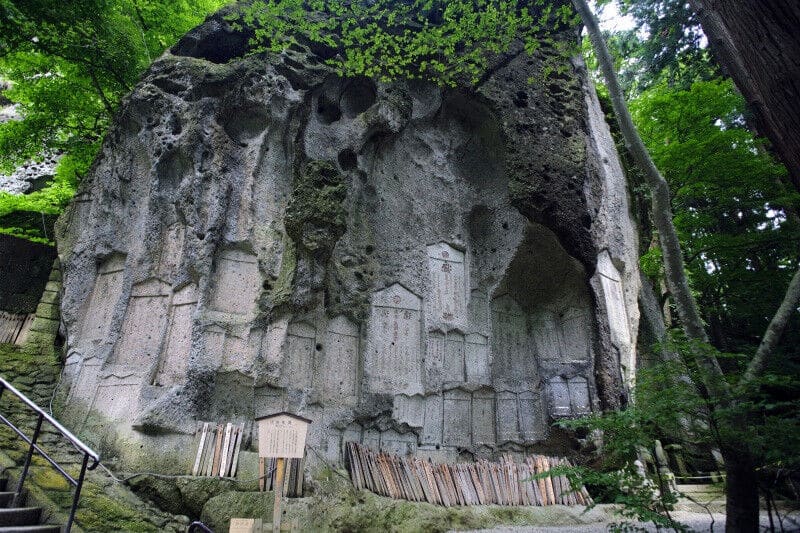
Mida Hora is a huge natural boulder along the climb. Years of weathering have given the rock face a distinctive outline resembling the figure of Amida Nyorai. It is an important place where worshippers pause to pray along the way and a stop not to be missed for understanding Yamadera’s faith culture.
This stretch is lined with towering cedars dotted with red maples in autumn, and light filters through the treetops onto the rock face, a classic composition for photographers. Slow down and take in this landscape where culture and nature meet.
Along the way you also pass small halls such as Kanmyo-in, each with its own character. It is a good idea to explore as you walk and treat the climb as a miniature pilgrimage.
Niomon Gate: The Halfway Landmark
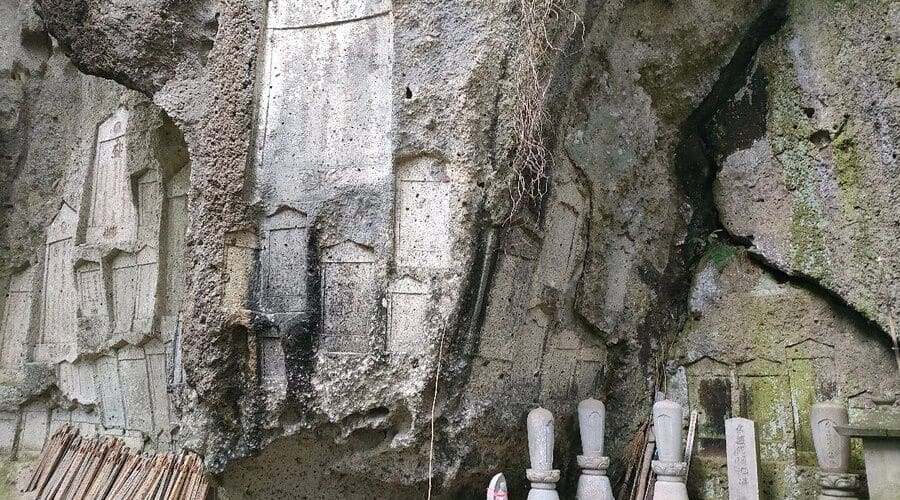
Niomon Gate is also a popular spot for souvenir photos, where the wooden gate and the surrounding red maples complement each other. It makes a good last rest and photo stop before the summit.
Niomon Gate is an imposing gate rebuilt with zelkova wood. Seeing this building that combines stone and wood means you have climbed about half the route. The Nio guardian statues on both sides watch over the path upward, an important psychological and physical milestone on the climb.
After Niomon Gate the slope of the steps eases slightly, and there are still several viewing platforms where you can rest and enjoy the maple forest turning red on both sides, recovering energy for the second half of the climb.
Okunoin and Daibutsuden: The End of the Thousand Steps
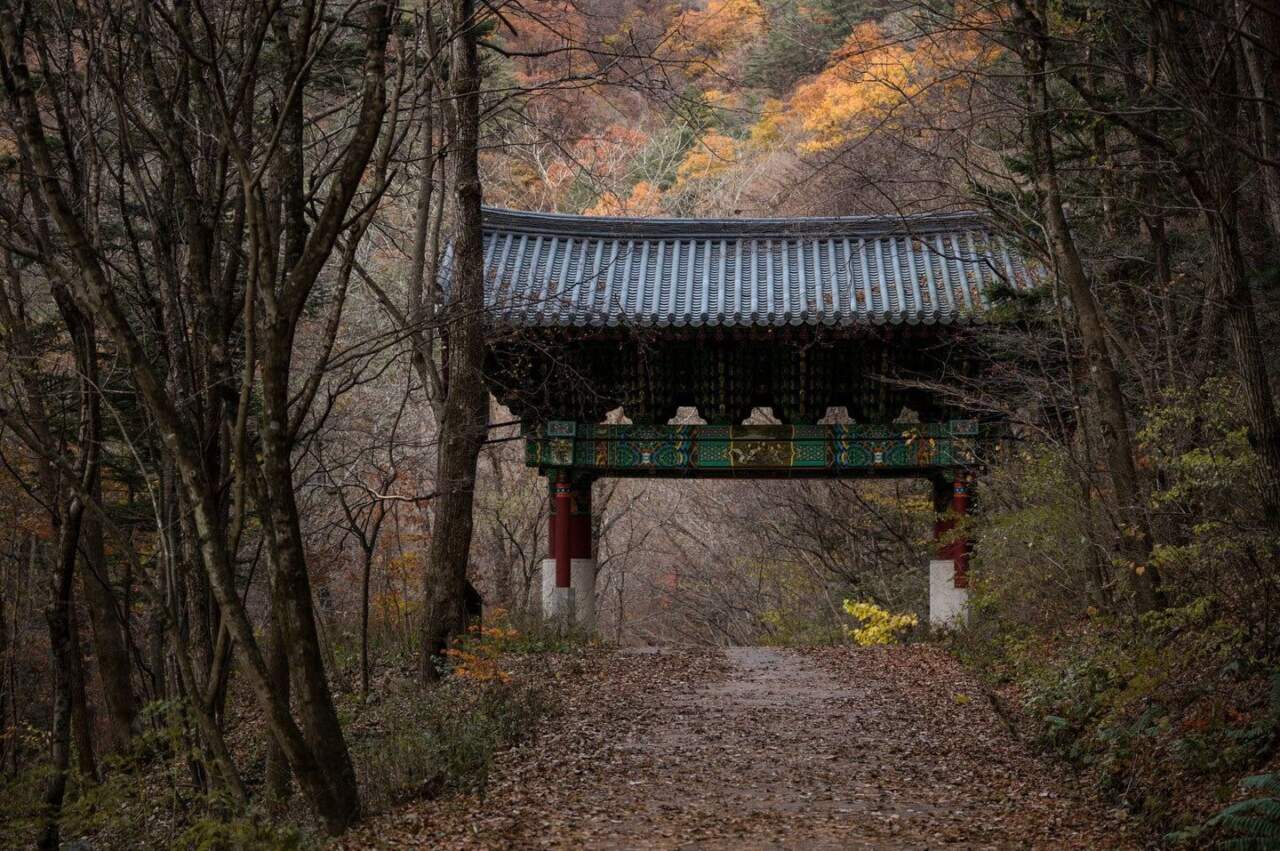
Okunoin and Daibutsuden mark the true end of the 1,015 steps. The hall enshrines a golden Buddha about 5 meters tall, and its solemn atmosphere cleanses the spirit after the long climb. It is also where many visitors press their palms together and make a wish, closing the chapter on this austere journey.
Walking back from Okunoin along the fork leads to Kaizando and Godaido. Take a rest and drink some water here, because there are no shops along the way up, only vending machines selling drinks.
Kaizando and Godaido: The Ultimate Autumn Foliage View
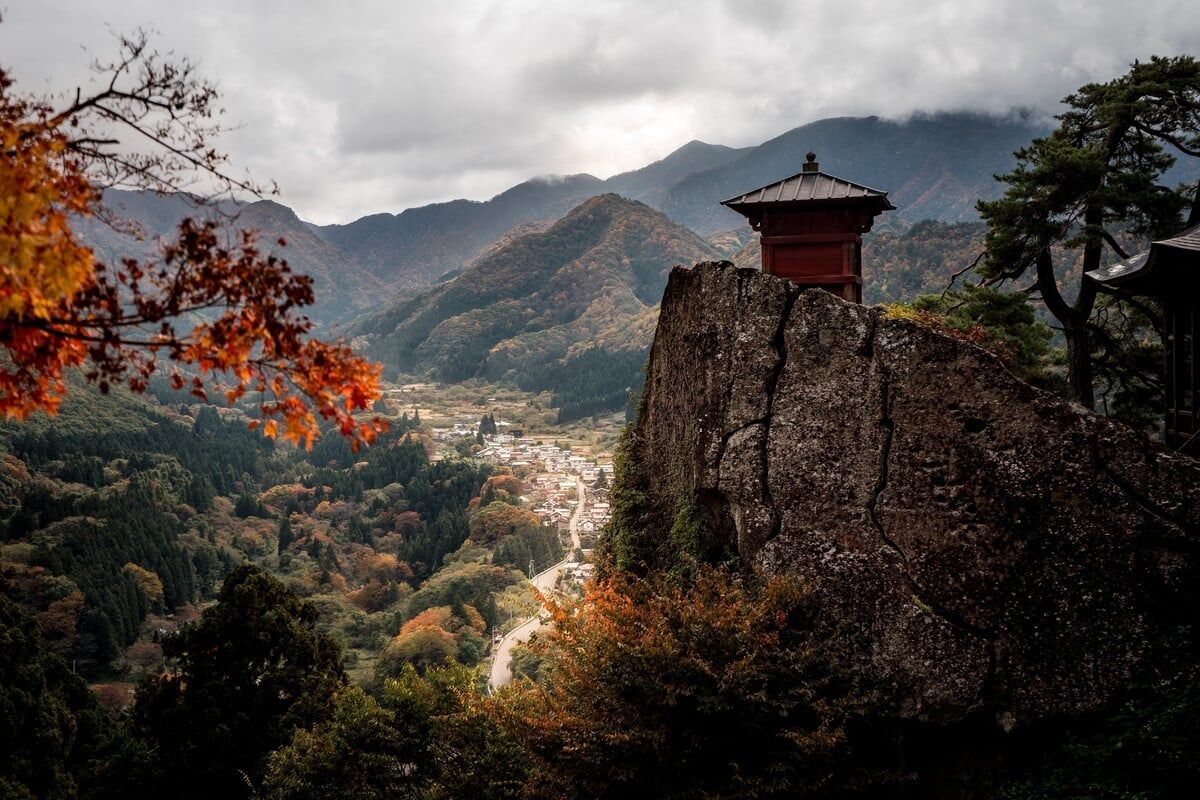
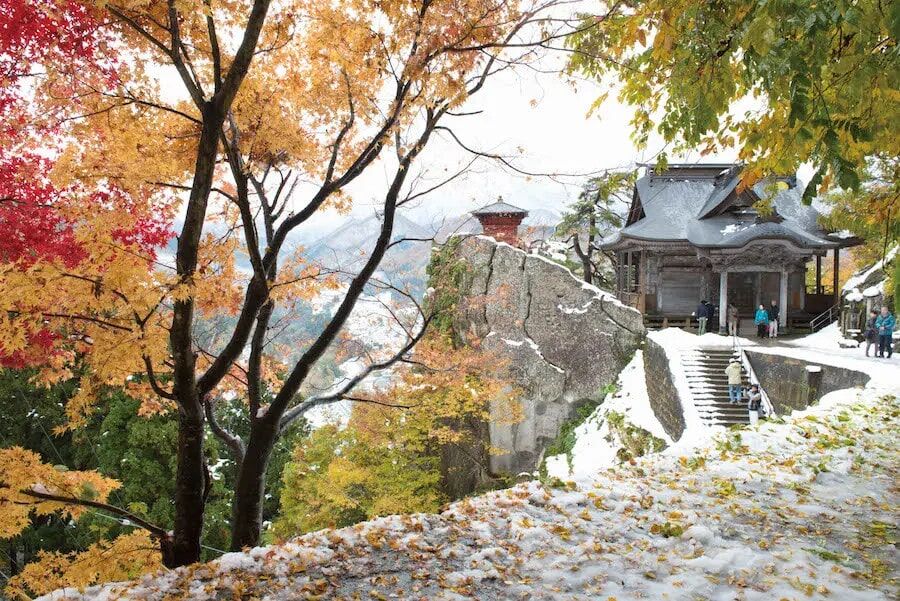
Kaizando enshrines Jikaku Daishi, the founder of Yamadera, and right beside it Godaido is a wooden viewing platform that juts out over the cliff like a stage. It is called the “number one viewpoint of Yamadera.” From here you get a 360-degree view down over JR Yamadera Station, scattered villages and a whole gorge dyed red and yellow, the ultimate reward for finishing the thousand-step challenge.
You stand almost level with the distant mountains, and the little houses below look especially charming. This view is why Yamadera is called an “ink-painting mountain scene to see once in a lifetime.” Be sure to leave plenty of time here for photos.
We suggest reaching Godaido in the soft morning light, when backlighting is minimal, for the clearest and most striking panorama of the red gorge.
Ubado and Semizuka: The Birthplace of Basho’s Verse
Ubado is also one of the spiritual sites of Yamadera’s “three eternal flames,” where the Nyoho-kyo sutra copying ritual has been passed down through generations. It is well worth pausing to feel this cultural heritage spanning a thousand years.
Ubado is an important landmark on the climb. Beside it, the “Semizuka (cicada mound)” is the place where the haiku master Matsuo Basho wrote his famous line “Shizukasa ya iwa ni shimiiru semi no koe.” Literature lovers may want to stop here for a moment and feel the quiet mood of the poet’s words from four hundred years ago.
When you visit in autumn, the peak cicada season has passed, but you can still occasionally hear a few late cicadas. Together with the lonely atmosphere of fallen leaves across the mountain, it makes a poetic experience different from summer.
Godaido Night Illumination: Viewable Only from Below
The “Hojusan Light-Up” night illumination was held in 2025 from October 26 to November 9, from evening until 21:00. For the 2026 schedule, please check announcements from the Yamadera Tourist Association. The outlines of Kaizando and Godaido on the cliff are traced by light, and against the night and the surrounding red maples they take on a mysterious atmosphere completely different from daytime, one of the limited-time highlights of Yamadera’s foliage season.
Important note: entering Risshakuji at night is prohibited. The illumination can only be viewed from the monzen-machi shopping street or the Basho Memorial Museum. The steps are not open for a night climb to the summit, so do not assume you can climb to Godaido in the dark. Be sure to confirm the latest official announcements when planning.
We suggest climbing the mountain for the autumn leaves during the day, then returning to the monzen-machi in the evening to enjoy the illumination.
Zao Ropeway: An Extended Autumn Foliage Spot
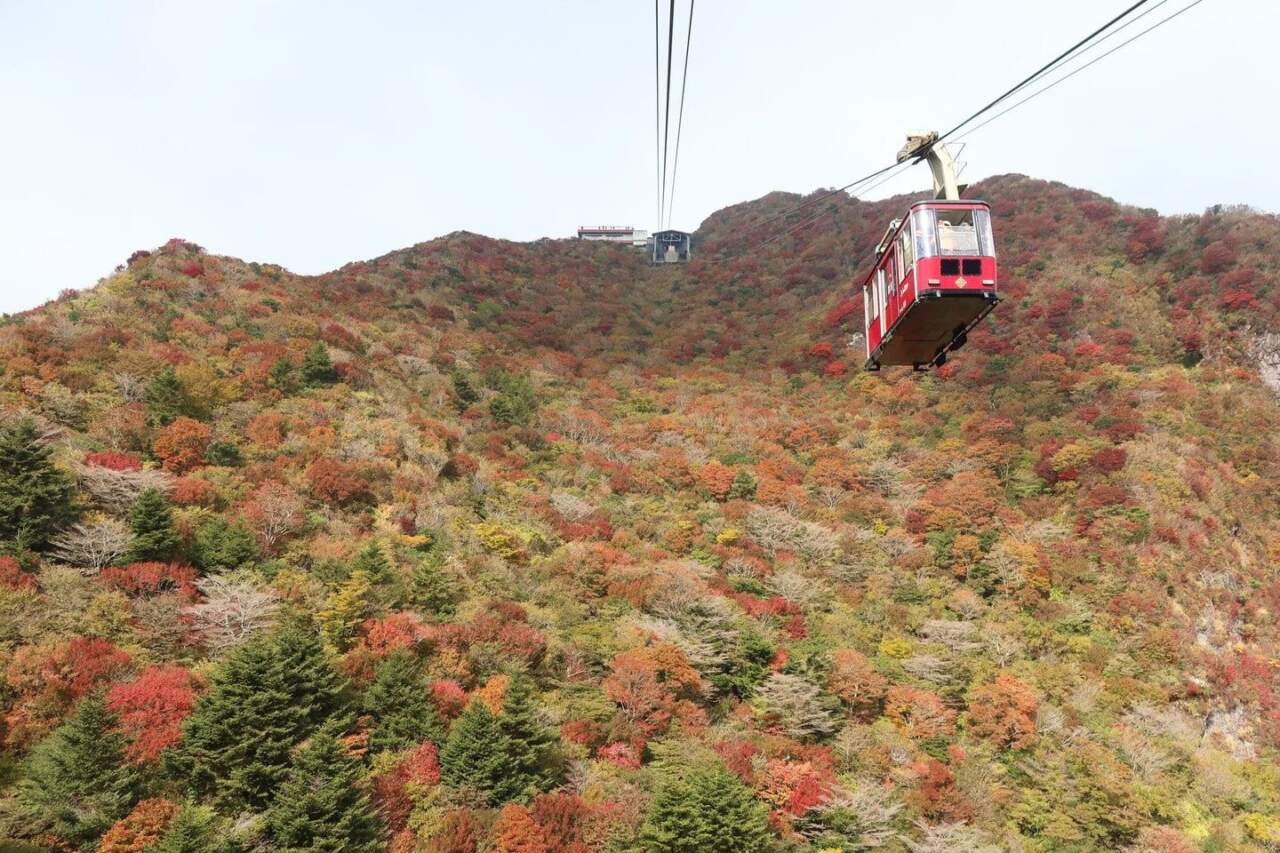
If you have time, you can take a bus from Yamagata to Zao Onsen and ride the Zao Ropeway up the mountain for autumn leaves. A round-trip ticket to Jizo Summit Station costs about ¥4,200 to ¥4,400 for adults and about ¥2,100 to ¥2,200 for children (per the official Zao Ropeway announcement). Looking down from above on layers of orange-yellow and orange-red autumn colors, it is another representative foliage spot in Yamagata besides Yamadera.
Travelers with more stamina can extend the trip to hike to Zao Okama, which fits well after the Yamadera itinerary as an extension of a two-day, one-night Tohoku autumn-hunting trip.
Take on the thousand steps in the morning when your energy is highest, then ride the ropeway for the leaves in the afternoon, a more sensible way to pace your energy.
-Klook.jpg)
Food at the Foot of the Mountain: Chikara Konnyaku and Yamagata Soba
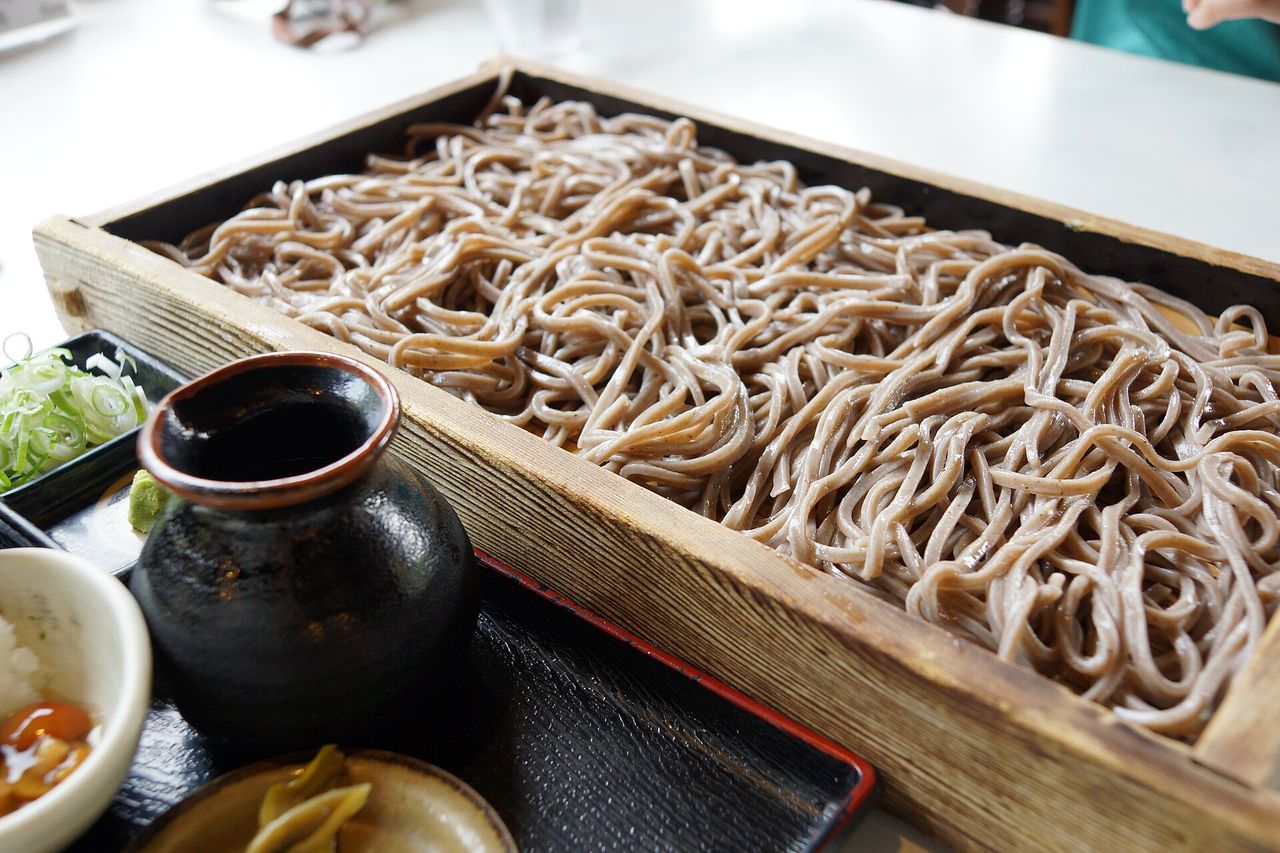
In autumn, the monzen-machi at the foot of the mountain coincides with the new soba (shin-soba) season, and many shops offer limited menus. It is a seasonal food experience you shouldn’t miss alongside the foliage.
After coming down, don’t forget to try Yamagata’s specialty “Chikara Konnyaku” in the old street at the foot of the mountain: chewy konnyaku balls simmered through with soy sauce, said to give you the strength to climb. You can also finish with a bowl of Yamagata soba.
“Rakusuian Izumiya” is across Hojubashi Bridge and serves Yamagata imoni.
Tickets and Guided Tours
The following itineraries and tickets around Yamadera can make your foliage trip easier and deeper:
Yamagata Day Trip Transport Pass: A Good-Value Way to Link Multiple Sights
If you plan to link Yamadera with the Zao Ropeway, Kajo Park and other Yamagata sights, consider the JR EAST PASS. The new 5-day pass system from March 14, 2026 costs about ¥35,000 and covers JR East Shinkansen, limited express and local lines. Please check the JR East official website for coverage.
If you are only making a round trip between Yamagata Station and Yamadera Station, you can also buy a one-way ticket (about ¥242) at the JR Senzan Line ticket window, with no need for a pass. Choose the best-value option flexibly according to your actual number of days and range.
銀山溫泉一日遊-Klook.jpg)
Sendai-Yamagata Autumn Day Charter: A Top Choice for Families and Seniors
Charter tours from Sendai and Yamagata, some of which combine Kajo Park or a stay at Tendo Onsen, let you take in the autumn colors of both Yamagata city and the countryside in one trip. They suit a deep two-day, one-night Tohoku autumn trip.
A charter tour links Yamadera, the Zao Ropeway and nearby orchards in one go, so you don’t have to plan the complicated route of JR Senzan Line plus bus transfers yourself, and you can adjust time at each stop to the weather and crowds. It suits families or seniors who don’t want to climb the full thousand steps themselves.
Where to Stay Around Yamadera
Where to Stay: Yamagata City or Tendo Onsen
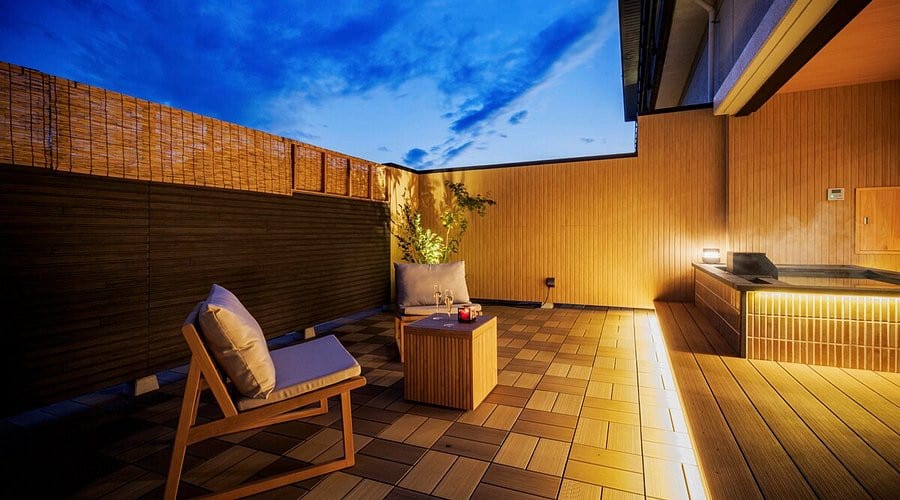
If you plan to go to the Zao Ropeway or other Yamagata sights the next day, consider staying in Yamagata city, Tendo Onsen or Kaminoyama Onsen. Climbing Yamadera by day and relaxing in a hot spring in the evening is a popular way to arrange a Tohoku autumn trip.
Yamagata city has a wide choice of accommodation and the most convenient transport, suiting independent travelers visiting Yamagata for the first time. If you want an authentic hot spring town atmosphere, Tendo Onsen and Kaminoyama Onsen each have distinctive old ryokan. We suggest booking one to two months ahead in peak foliage season.
Yamadera Autumn Foliage FAQ
How much is admission to Yamadera?
According to the Risshakuji official website, individual mountain entry is ¥500 for adults (junior high school age and up) and ¥200 for children (age 4 and up), cash only. The Treasure Hall charges an additional ¥200 for adults, and entering the inner sanctuary of Konpon Chudo costs ¥200.
How long does it take to climb the 1,015 steps?
Risshakuji’s official guidance says the whole route is stone steps, with a round trip of about 1 hour 30 minutes. The Yamagata Prefecture official tourism site gives about 1 hour one way from the trailhead to Okunoin and 1.5 to 2 hours round trip. On foliage-season weekends the steps are crowded and you will stop for photos, so we suggest allowing 2 to 2.5 hours for a relaxed pace.
How long should I stay at Risshakuji, and how do I plan my time?
If you only climb the steps to Godaido and Okunoin and come back down, allow about 2 hours. If you also visit Konpon Chudo and the Treasure Hall before the climb and eat chikara konnyaku or soba in the monzen-machi afterward, allow 3 to 4 hours overall, which is a half-day trip. Because visiting hours in October and November run until 15:30, if you arrive in the afternoon start climbing by around 13:30 at the latest so you are not rushing before closing. To avoid the crowds, enter the mountain when it opens at 8:00.
Can I climb to Godaido during the Yamadera night illumination?
No. Entering Risshakuji at night is prohibited. The illumination can only be viewed from afar, from the monzen-machi shopping street or the Basho Memorial Museum, looking at the lit buildings in the grounds. The steps are not open for a night climb, so do not try to reach the summit in the dark.
Is Yamadera suitable for seniors or children?
The stone steps total about 1,015, which is a real physical challenge for seniors and young children, so go as far as your own stamina allows. If you can’t reach Godaido, spots in the middle such as Niomon Gate and Ubado also offer good foliage views.
Which is faster, from Sendai or from Yamagata?
From Yamagata Station is fastest, about 17 to 19 minutes on the JR Senzan Line. From Sendai Station it takes about 60 to 65 minutes, but you pass the most beautiful foliage stretch of the Senzan Line (between Sakunami Station and Yamadera Station), so the ride itself is a pleasure.