

Ishigaki and the Yaeyama Islands: Another Okinawa, One More Flight Past Naha
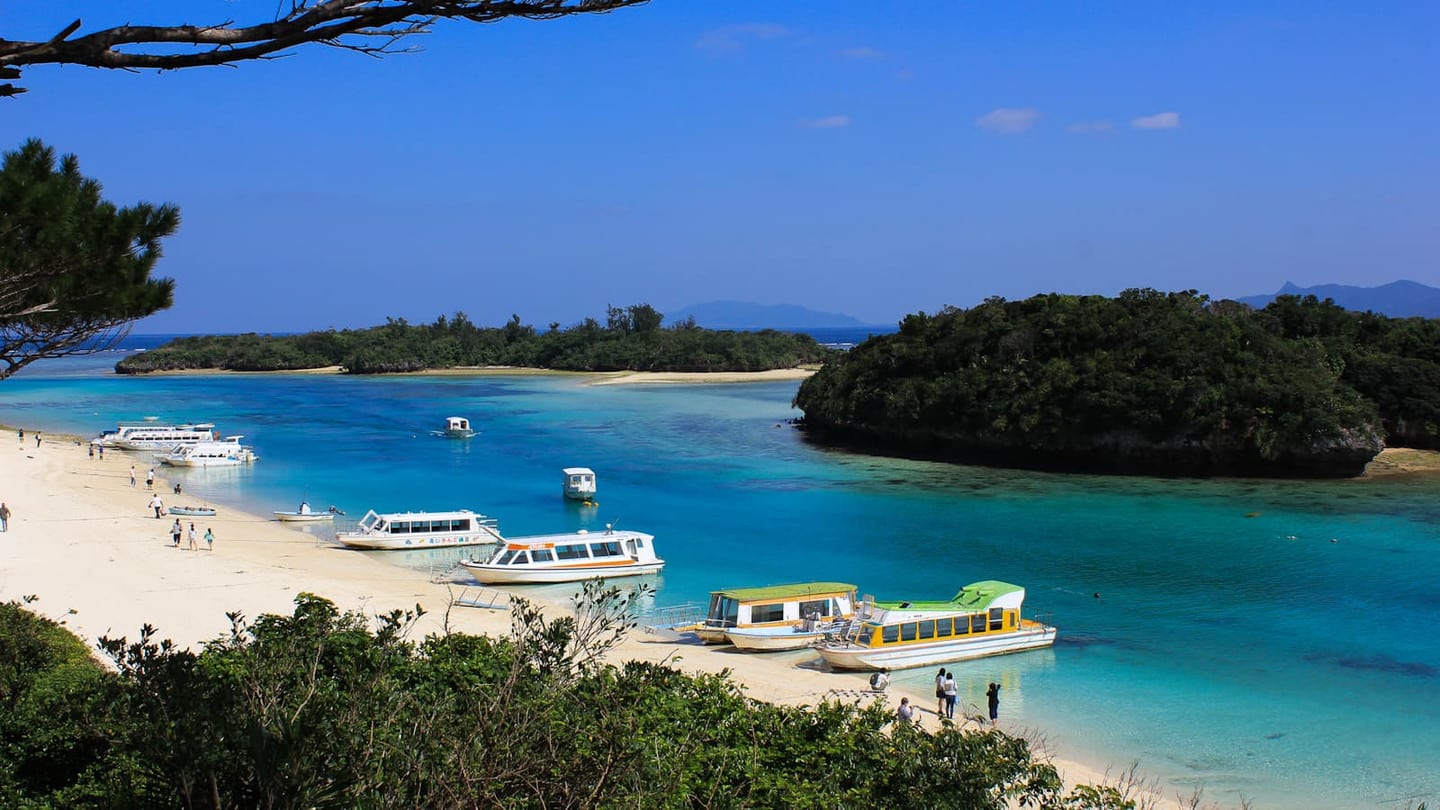
Ishigaki is the gateway to the Yaeyama Islands. It takes another flight from the main island of Okinawa, and both the clarity of the water and the look of the villages are completely different from Naha.
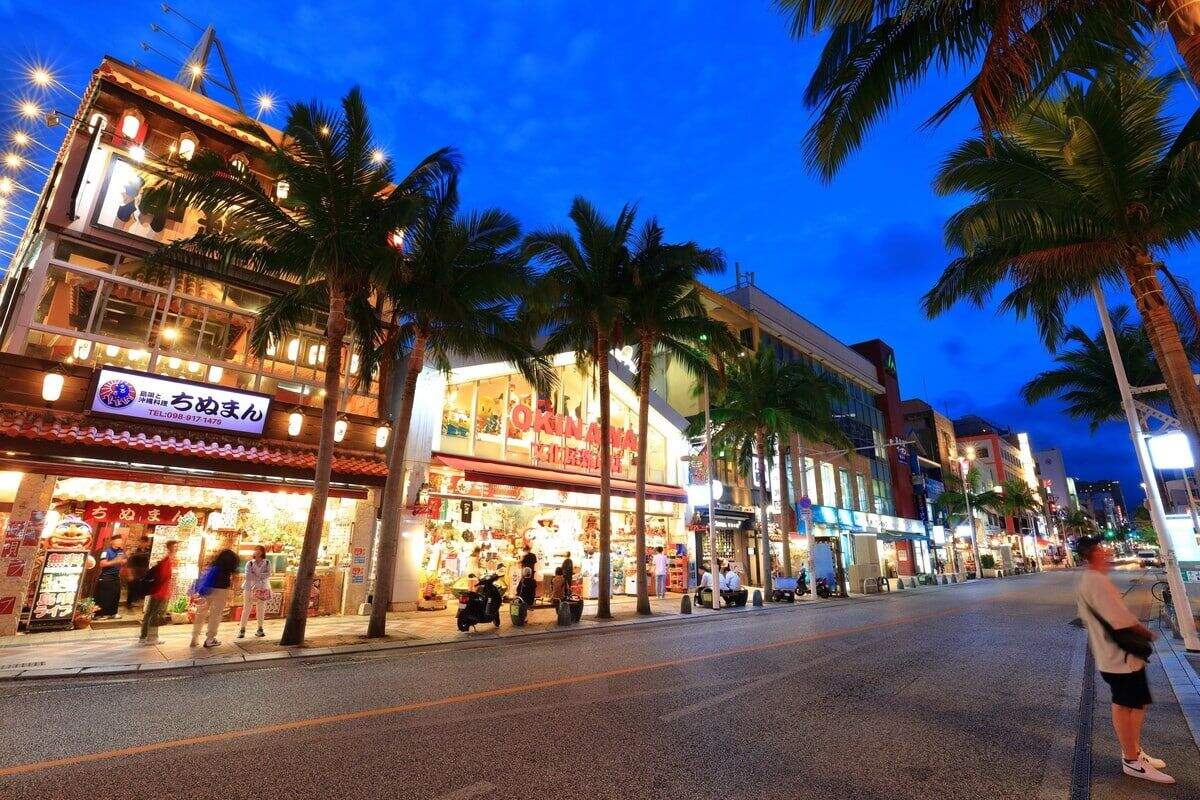
First, a Reality Check: Ishigaki Cannot Be a Day Trip from Naha
Many people assume that, like Churaumi Aquarium, you can rent a car and drive to Ishigaki from Naha. In fact the two are about 400 kilometers apart with open sea in between. You can only get to Ishigaki by plane or ferry. The flight from Naha Airport to New Ishigaki Airport takes about 1 hour, and there have also been direct flights from Taiwan; check the current timetable for actual flights.
Ishigaki and the Yaeyama Islands must therefore be planned as a separate leg of your trip, at least three days and two nights and ideally four days and three nights, not squeezed in as a day trip from the main island. Plan it as “a different trip” and the pace will be right.
Which Islands Make Up the Yaeyama Islands? How Their Characters Differ
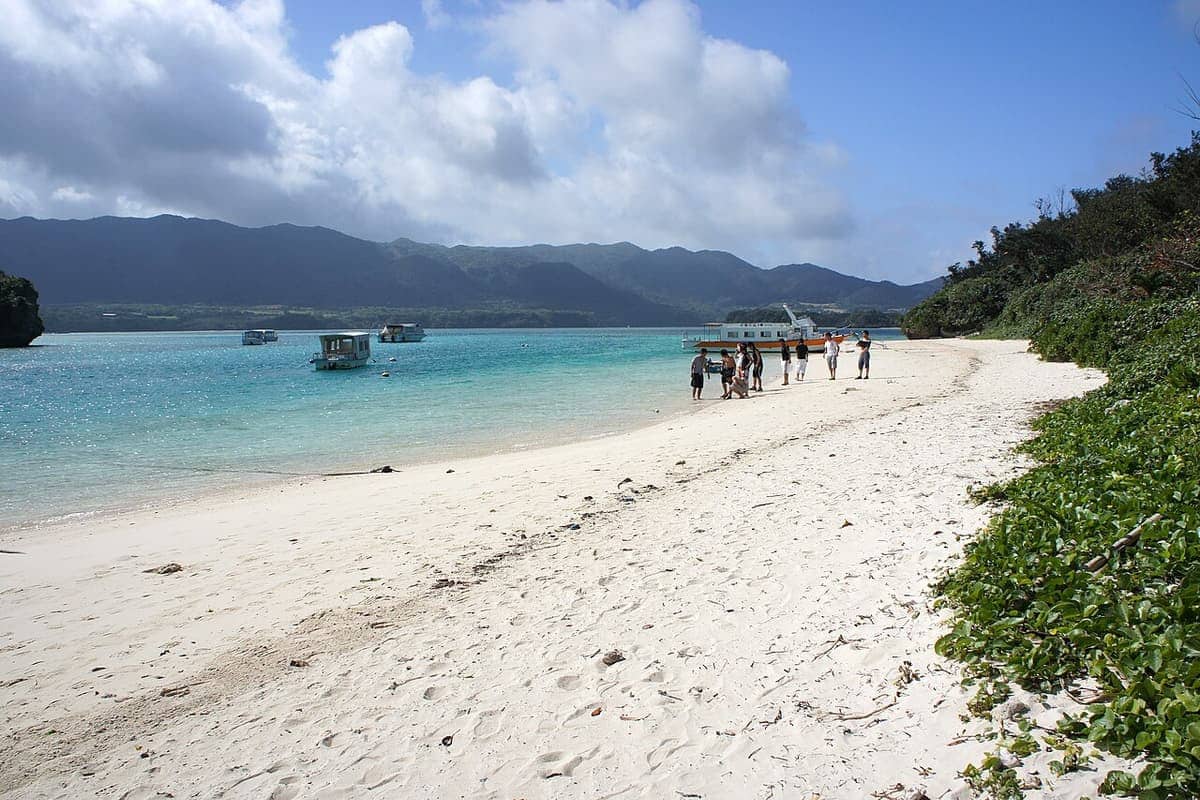
The Yaeyama Islands use Ishigaki as their transport hub, and the islands most often added to itineraries are Taketomi and Iriomote. Taketomi is small and flat and preserves a complete Okinawan village of red tile roofs and white sand, ideal for a slow half-day or full-day visit. Iriomote is a World Natural Heritage site, with about 90% of its area covered in primeval mangrove and subtropical jungle.
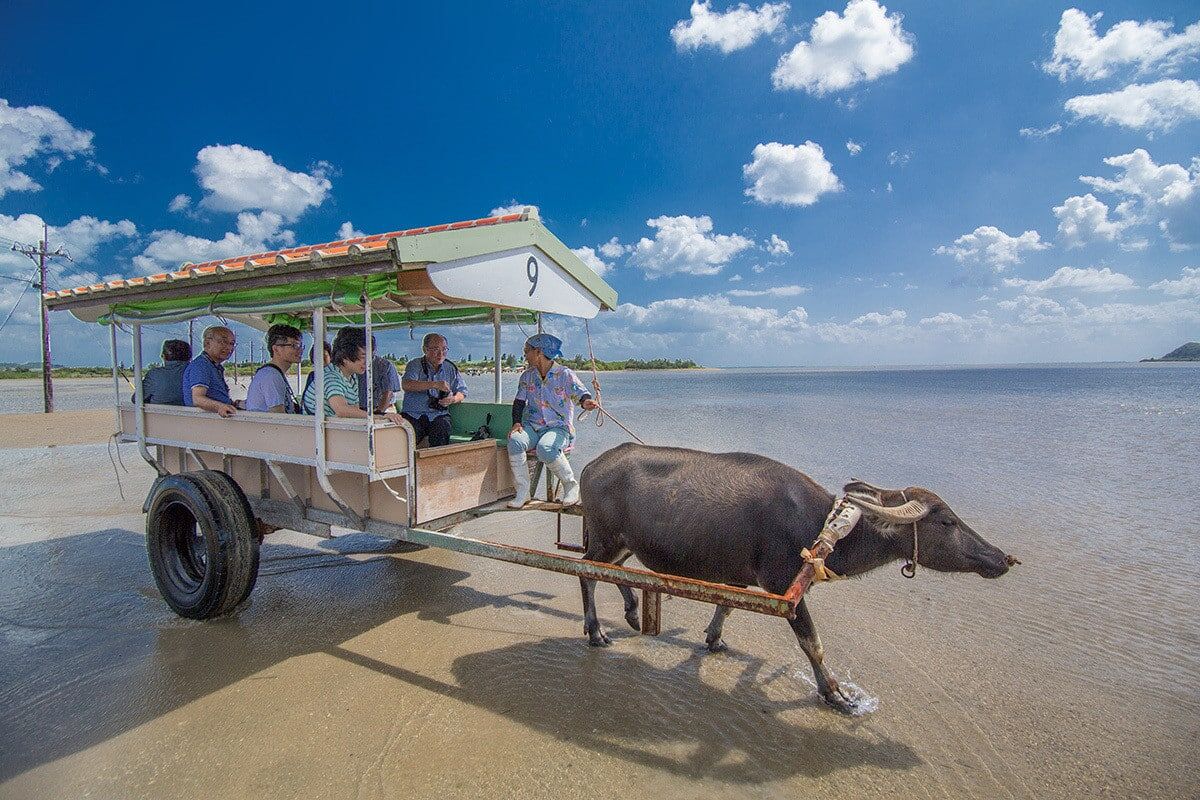
Other options include Yubu, Kohama, Kuroshima and Hateruma. Yubu’s special feature is that you must cross the tidal flat in a water buffalo cart to reach it, and it is usually combined with Iriomote on the same day. For a first visit, Taketomi plus Iriomote is enough to form the backbone of the whole trip.
When to Go: How Typhoons and the Northeast Monsoon Affect Boat Services
April to June and October to November are the periods with relatively stable weather and sea conditions. July to October is typhoon season, when flights and boats can be suspended for a whole day, and Yaeyama is more affected than the main island of Okinawa, so keep your itinerary flexible.
In autumn and winter the northeast monsoon mainly affects Uehara Port on the north side of Iriomote, where service is often suspended; the Ohara Port route on the south side is less affected. When booking flights and accommodation, choose free-cancellation options where possible, and schedule the outer-island portion in the early part of the trip so you still have a chance to recover if service is suspended.
How to Get to Ishigaki and the Yaeyama Islands: Flights, High-Speed Ferries and Getting Around
Getting around Ishigaki has three legs: fly to Ishigaki first, take a high-speed ferry to hop between islands, and rent a car on the island itself.
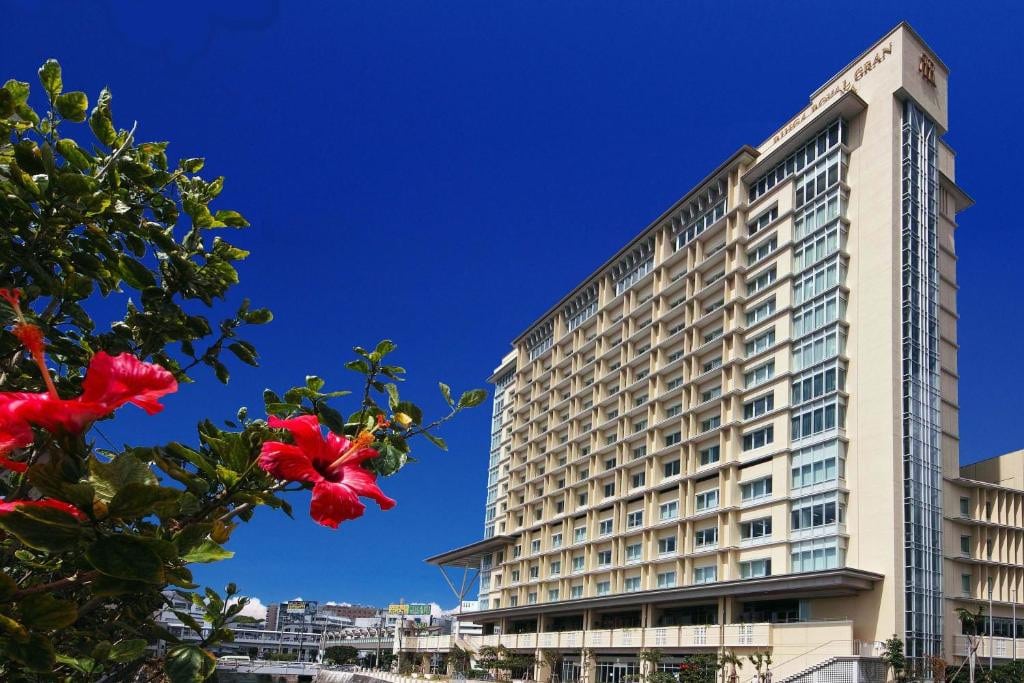
Leg One: Fly to New Ishigaki Airport (Painushima Ishigaki Airport)
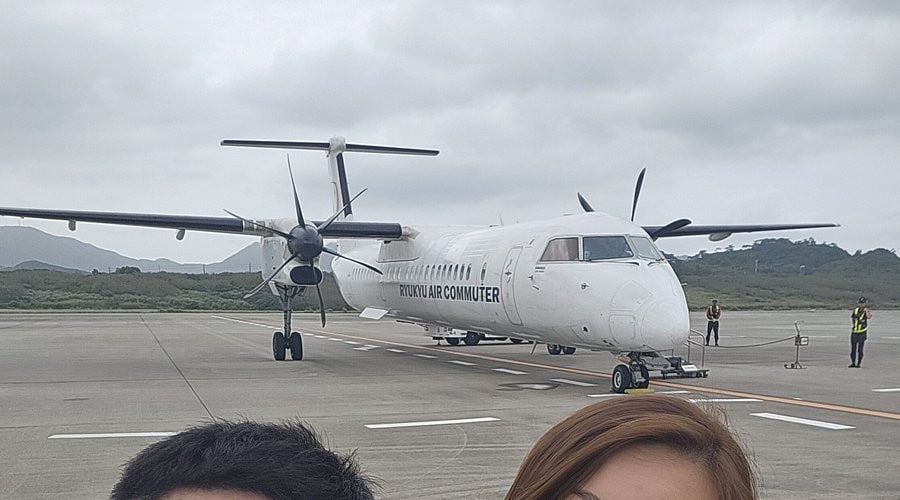
New Ishigaki Airport (Painushima Ishigaki Airport) is on the east side of Ishigaki and is the gateway to the Yaeyama Islands. The flight from Naha Airport takes about 1 hour, with several domestic flights a day; Taiwan has also had direct flights to Ishigaki, so check the current flight information for whether they have resumed and how often they run.
To get from the airport to the city and the Ishigaki Port Offshore Islands Terminal, the most common option is the airport route bus, a ride of about 30 to 40 minutes. You can also take a taxi or pick up a rental car at the airport. If you are catching a high-speed ferry to another island the same day, allow generous transfer time and leave your luggage at the hotel first.
| Destination | Travel time | Round-trip fare (reference) |
|---|---|---|
| Taketomi | About 10 to 15 minutes | One way ¥970, round trip ¥1,880 |
| Iriomote (Ohara Port) | About 40 minutes | One way ¥2,520, round trip ¥4,880 |
| Iriomote (Uehara Port) | About 45 minutes | One way ¥3,290, round trip ¥6,370 |
| Naha Airport to New Ishigaki Airport | About 1 hour (by air) | Varies by airline and fare class |
| Fuel surcharge | The fares above already include the fuel price adjustment fee, so nothing extra is charged; only Anei Kanko’s free-ride passes settle the adjustment fee separately | |
Leg Two: Ishigaki Port Offshore Islands Terminal, Anei Kanko and Yaeyama Kanko Ferry
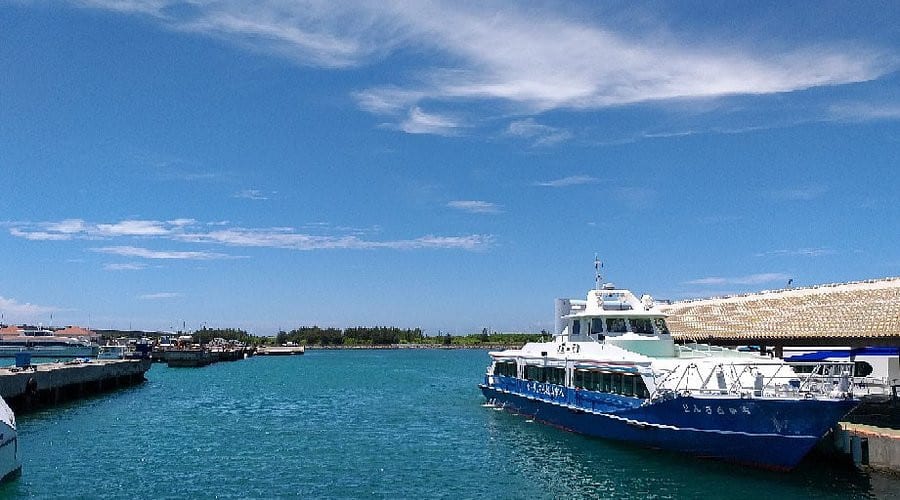
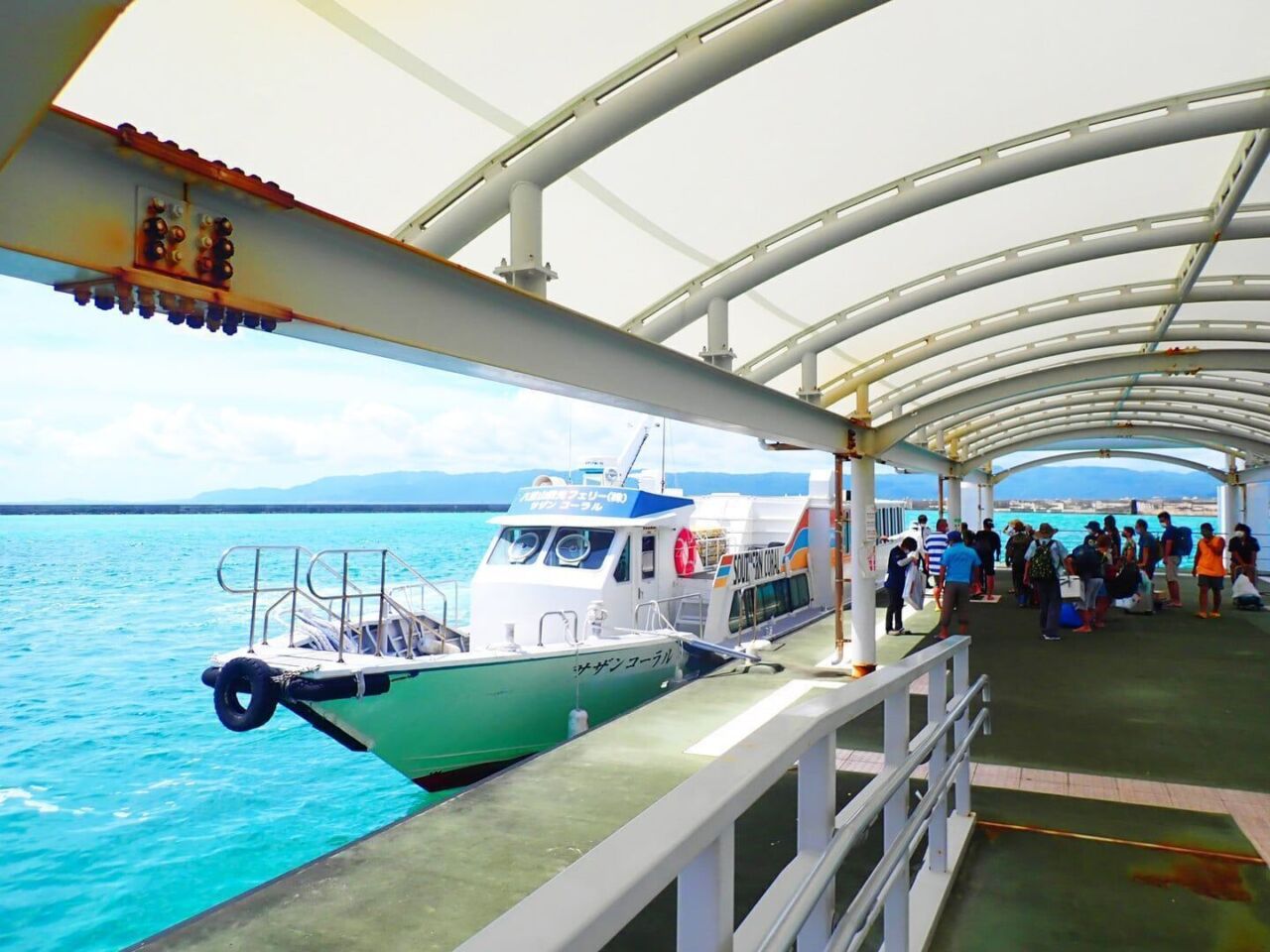
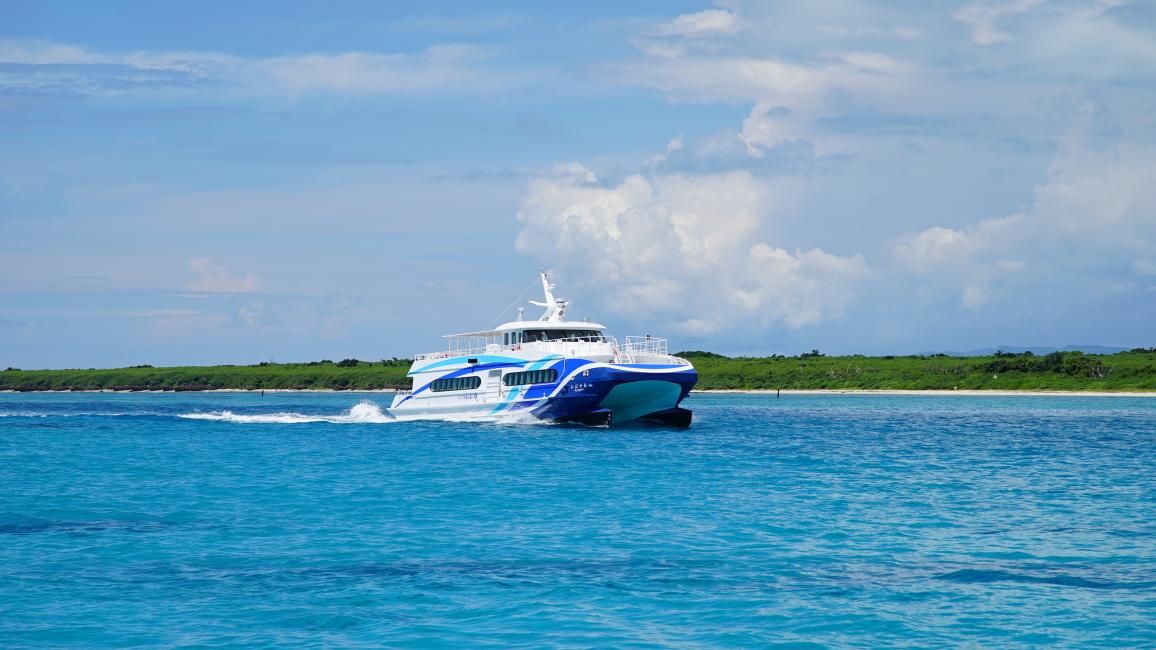
The starting point for island hopping is the “Ishigaki Port Offshore Islands Terminal” in the city. The routes are mainly operated jointly by two companies, Anei Kanko and Yaeyama Kanko Ferry, with frequent departures. You can buy tickets on the spot or book online to skip the queue.
The crossing to Taketomi takes about 10 to 15 minutes, ¥970 one way and ¥1,880 round trip. Departures depend on each company’s own timetable and the day’s sea conditions, so check the timetable on the Anei Kanko website before you go. Iriomote’s Ohara Port takes about 40 minutes at ¥2,520 one way and ¥4,880 round trip; Uehara Port takes about 45 minutes at ¥3,290 one way and ¥6,370 round trip. Anei Kanko and Yaeyama Kanko Ferry charge the same fares, and both already include the fuel price adjustment fee.
How to Check Ishigaki to Taketomi Ferry Times: Timetables and Child Fares
To check ferry times for Taketomi and Iriomote, go to the “Timetable and Fares” page of the Anei Kanko website, which lists the scheduled timetable, and whose home page also posts the day’s operating status. For Taketomi, one way is ¥970 for adults and ¥510 for children, and round trip is ¥1,880 for adults and ¥990 for children. To Iriomote’s Ohara Port, one way for children is ¥1,290, and to Uehara Port it is ¥1,650. Check the operating status again the day before departure so your plans are less likely to be disrupted.
What If Uehara Port Is Suspended? The Ferry Companies’ Substitute Shuttle
Uehara Port on the north side of Iriomote faces the northeast monsoon head-on, and in autumn and winter service is often suspended by strong winds, the most common variable in Yaeyama travel. The area near Uehara is exactly where outdoor activities such as mangrove kayaking are concentrated, so a suspension affects the whole day’s plans.
When service is suspended, the ferry company usually offers a substitute: you depart from Ohara Port on the south side instead and are taken by overland shuttle to the Uehara area. The total time is longer but the plan can still go ahead. The day before departure, be sure to check the company’s website or call to confirm the day’s operating status, and leave room to adjust your plans.
When booking tours, favor routes departing from Ohara Port, which are far more likely to run. If a plan must use Uehara Port, schedule it in the middle of your stay so there is room to reschedule.
Leg Three: Rent a Car on Ishigaki; Each Outer Island Has Its Own Way to Play
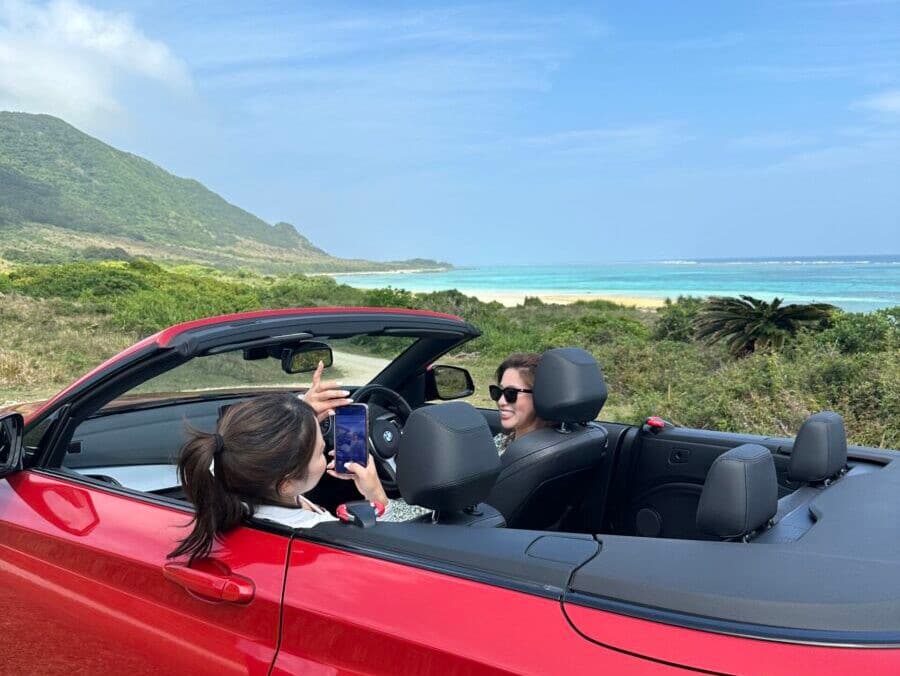
The sights on the main island of Ishigaki (Kabira Bay, Yonehara Beach, Tamatorizaki Observation Deck, Hirakubozaki) are spread across the north and south ends, and route buses are infrequent, so in practice renting a car is the most efficient way, with a loop of the island of about 100 kilometers. Renting a car also requires your original driver’s license and a Japanese translation of it, and you need both; check the requirements for your own country’s license before booking.
The outer islands each have their own way to play. Taketomi is small and flat, and you can ride around it on a rented bicycle, with water buffalo carts and shuttle buses also available. Iriomote’s activity sites are spread out and getting around the island is inconvenient, so the easiest approach is to join a day tour package that includes the ferry ticket and a private car.
Gas stations on the island are concentrated in the city and a few villages, so fill up before driving north. Taketomi also has paid shuttle buses and taxis, so you can get around even without cycling.


Must-See Sights in Ishigaki and the Yaeyama Islands: 13 Highlights Explained
Below, in order, are the main island of Ishigaki, then Taketomi, Iriomote and Yubu.
Kabira Bay: An Emerald Bay Ranked Among Japan’s Top Scenic Spots, with Glass-Bottom Boats
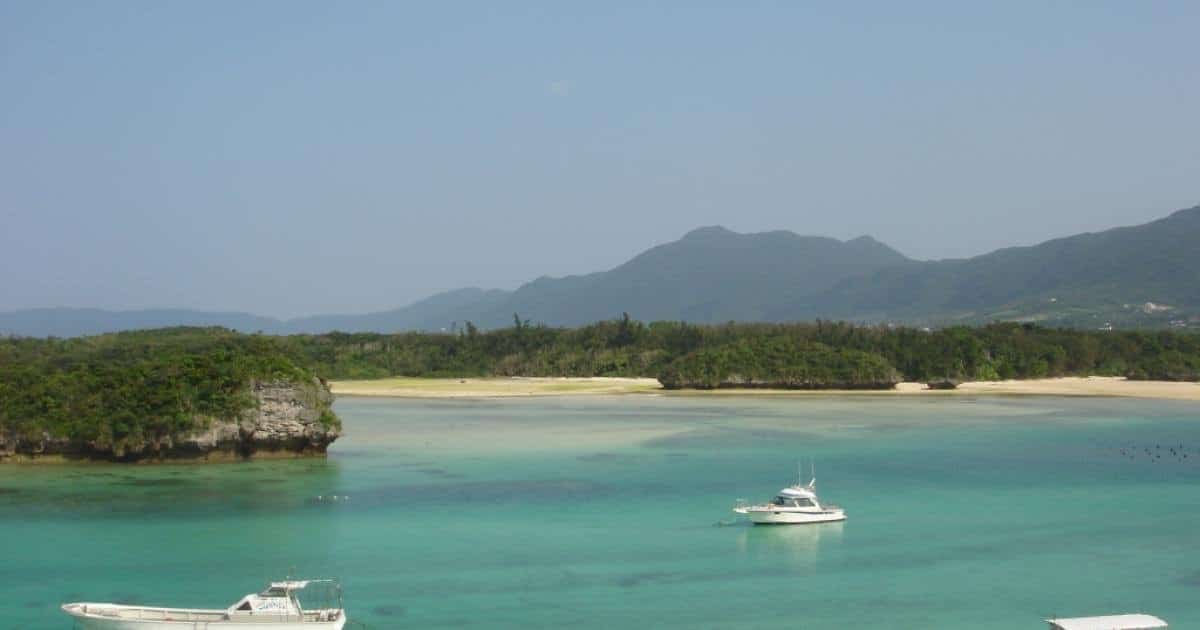
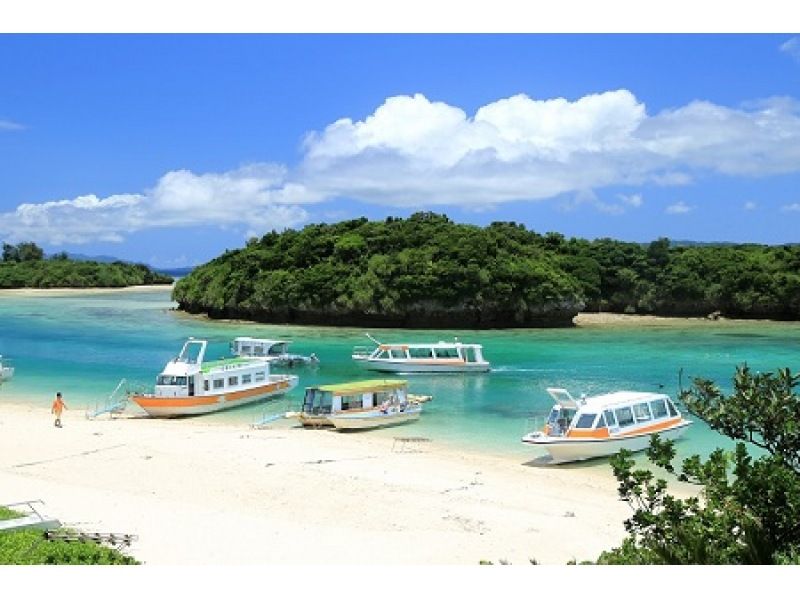
Kabira Bay is in the northwest of Ishigaki and is listed as one of Japan’s 100 Scenic Spots. The water shifts between emerald green and deep blue with the tide and sunlight, and islands large and small dot the bay, making it Ishigaki’s most representative view.
Swimming is prohibited here because of the strong currents, and the main activity is a glass-bottom boat ride for a direct look at coral and tropical fish from the bottom of the boat. The trip takes about 30 minutes, and several operators run from the shore with no reservation needed. On shore there is an observation trail and a parking lot, and a walk around takes about 30 to 40 minutes.
Beside the parking lot are several souvenir shops and ice cream stands, good for a rest before or after the boat. The bay faces west toward sunset, and the evening light is the prettiest, but it is also when tour groups are thickest.
![[Ishigaki / Half Day] Kabira Bay SUP / Canoe Experience (Okinawa), Choose Your Plan](https://res.klook.com/images/w_300,h_300,c_fill,q_75/w_80,x_15,y_15,g_south_west,l_Klook_water_br_trans_yhcmh3/activities/wgiu2pspxyhyzsgridei/【石垣島半日】世川平灣SUP獨木舟體驗(沖繩),方案任您選-Klook.jpg)

Yonehara Beach: A Snorkeling Spot with Coral Right Off the Shore
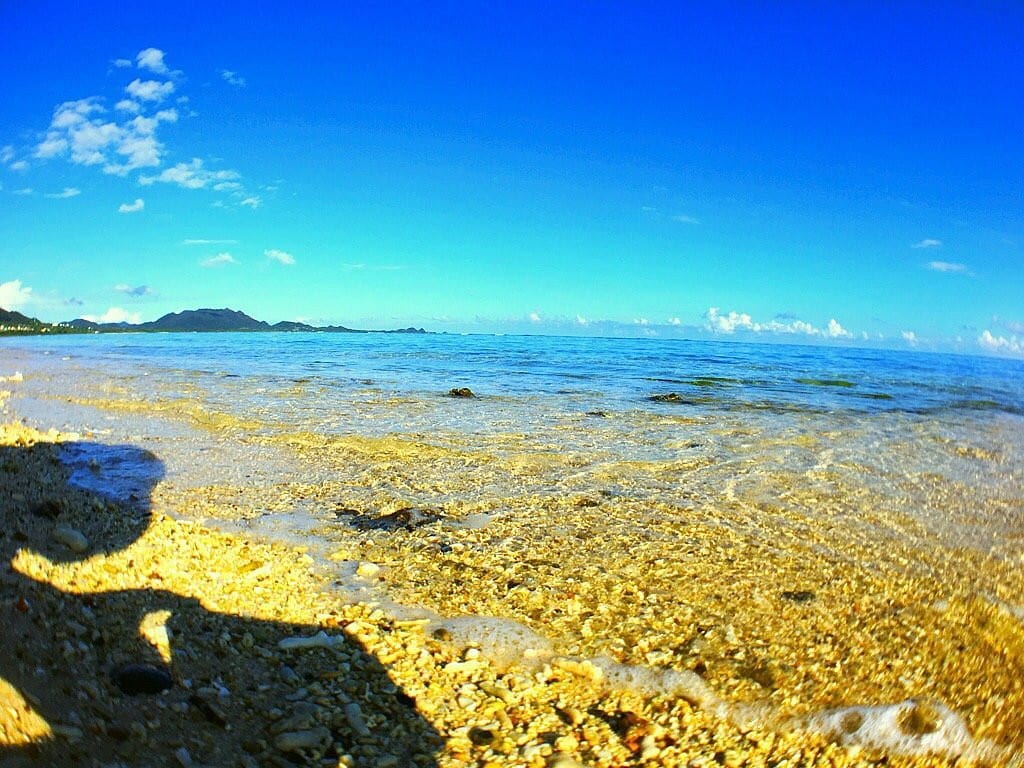
Yonehara Beach is in northern Ishigaki, and its biggest draw is that the coral reef is very close to shore: swim a short distance from the sand and you see broad stretches of coral and tropical fish, one of Ishigaki’s classic shore-snorkeling spots.
There are no lifeguards on duty here, and rip currents and tidal flows change noticeably, so we strongly recommend entering the water with a local operator’s guide and wearing a wetsuit or life jacket. Beside the beach are a campground and parking, with plenty of shade, a good place to escape the sun on a summer afternoon.
The beach has no permanent lifeguards and no fixed snorkel-gear rental shop, so bring your own or join a tour. There is a campground and public restrooms nearby.
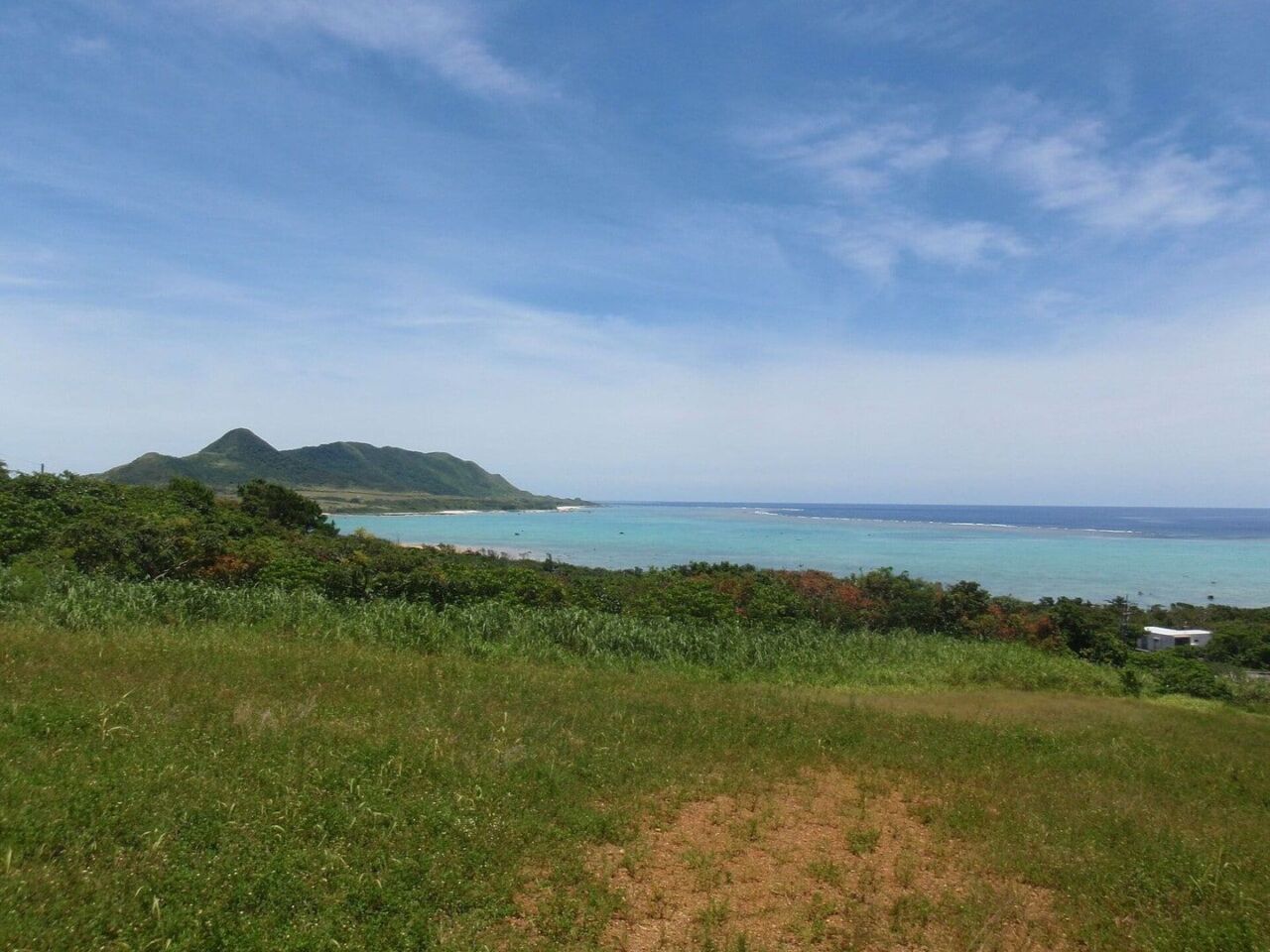
Tamatorizaki Observation Deck: The Narrowest Waist of Ishigaki in One View
Tamatorizaki Observation Deck is in northeastern Ishigaki, and from the height you can see the sea on both the east and west sides of the island at once. This stretch is the narrowest part of Ishigaki, where the Pacific Ocean and the East China Sea almost meet beneath your feet, with a very wide view.
Hibiscus is planted along both sides of the path beside the deck, so something is in bloom all year. The parking lot is free, and the walk up to the deck takes just a few minutes. It is the lowest-effort but high-value stop on the island loop, ideal on the way to Hirakubozaki.
This is a waypoint on the island loop, convenient whether you continue north to Hirakubozaki or head south back to the city. The steps up to the deck are short, so even seniors can manage them.
-Klook.jpg)
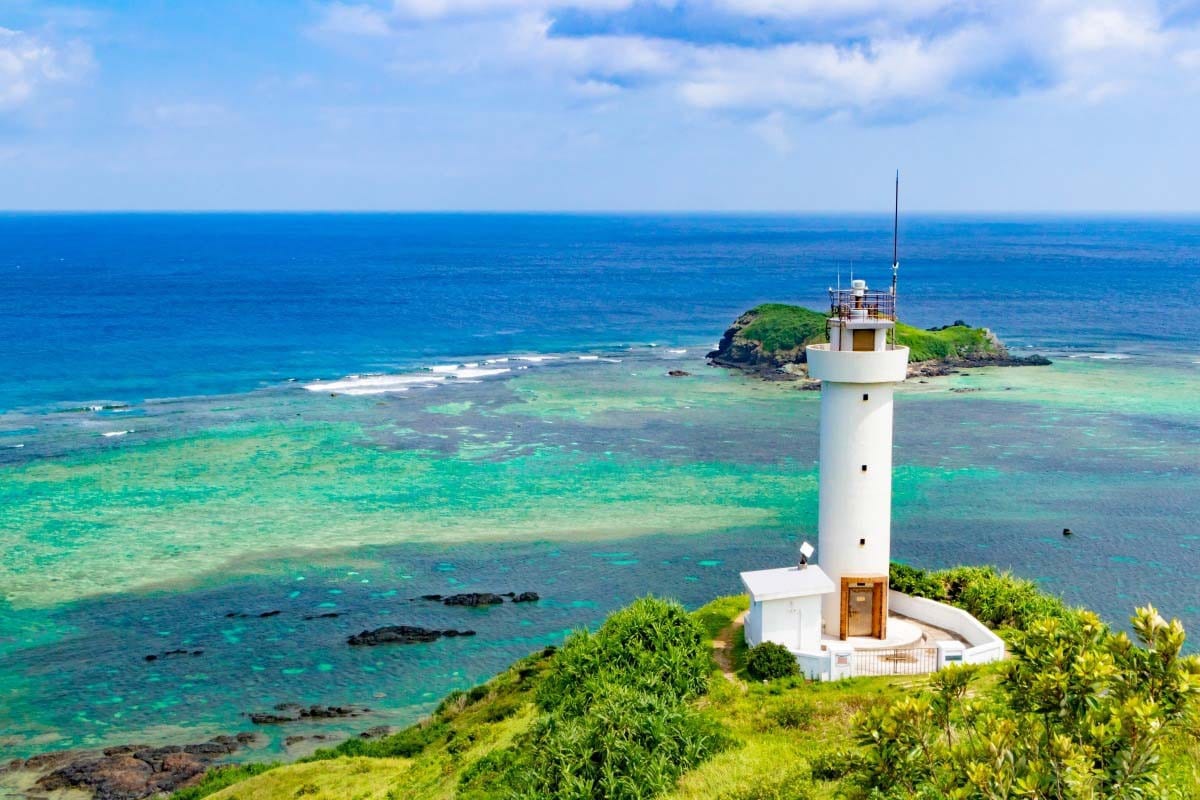
Hirakubozaki Lighthouse: A White Lighthouse on Grassy Slopes at Ishigaki’s Northern Tip
Hirakubozaki is the northernmost point of Ishigaki, where a white lighthouse stands on a green grassy slope with the sea on three sides. On a good day you can see sharply layered colors in the water, a scene that makes a fitting finale to the island loop.
From the city it is about 1 hour one way by car, and Prefectural Route 71 along the way is itself easy to drive and scenic. There are almost no shops or gas stations in this area, so fill up and bring drinking water before you go. The wind is strong on the grassy slope, so watch your hat and any drone.
The lighthouse itself is not open to climb, and the main pleasure is the surrounding grass slopes and the layered sea view. There are not many parking spaces, and they fill up easily in peak season and around sunset.
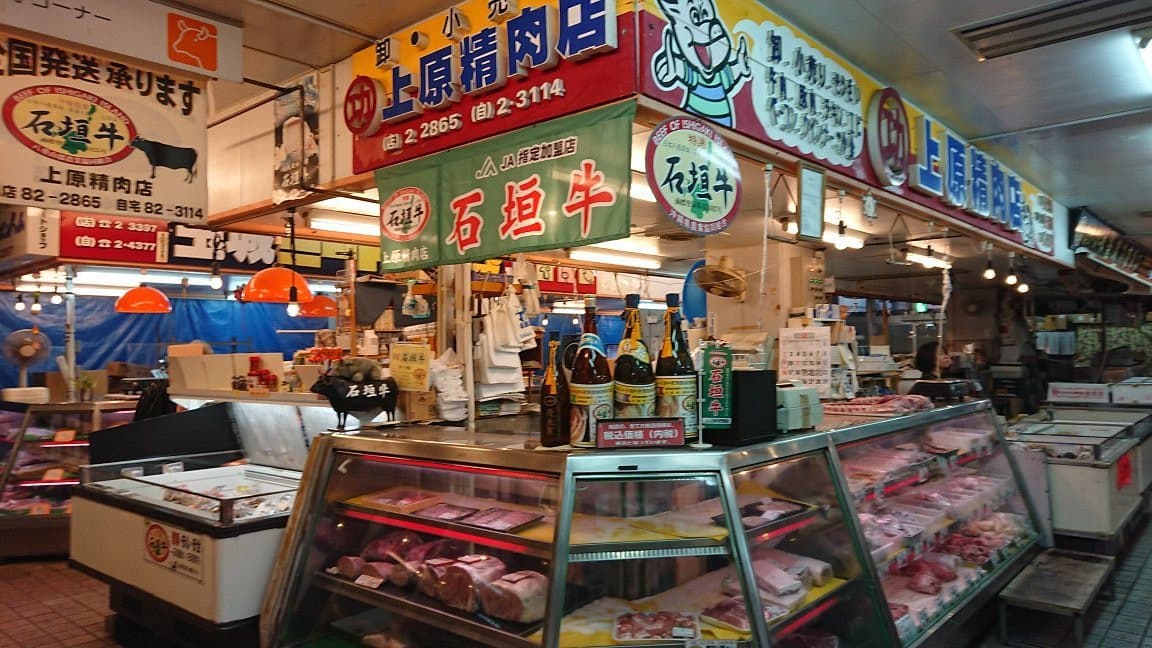
Ishigaki City Public Market: The Place to Shop for Yaeyama Specialties and Ishigaki Beef
Ishigaki’s downtown is concentrated around Ishigaki Port, and the public market along with the nearby 730 Shopping Street and Euglena Mall are the shopping hubs. You can buy Yaeyama brown sugar, chili oil, awamori and processed seafood, at better prices and selection than at the airport.
The signature dinner is Ishigaki beef yakiniku, with several specialty restaurants in the city, and Yaeyama soba is also a must-eat. The market’s second floor has a food court and a specialty-goods display, so you can go straight upstairs to eat after browsing. Most shops close by early evening, so shop during the day.
The market’s first floor is mainly fresh produce and processed goods, and the second floor has a food court and a crafts display. The nearby shopping streets are mostly covered arcades, so they are easy to browse on rainy days.
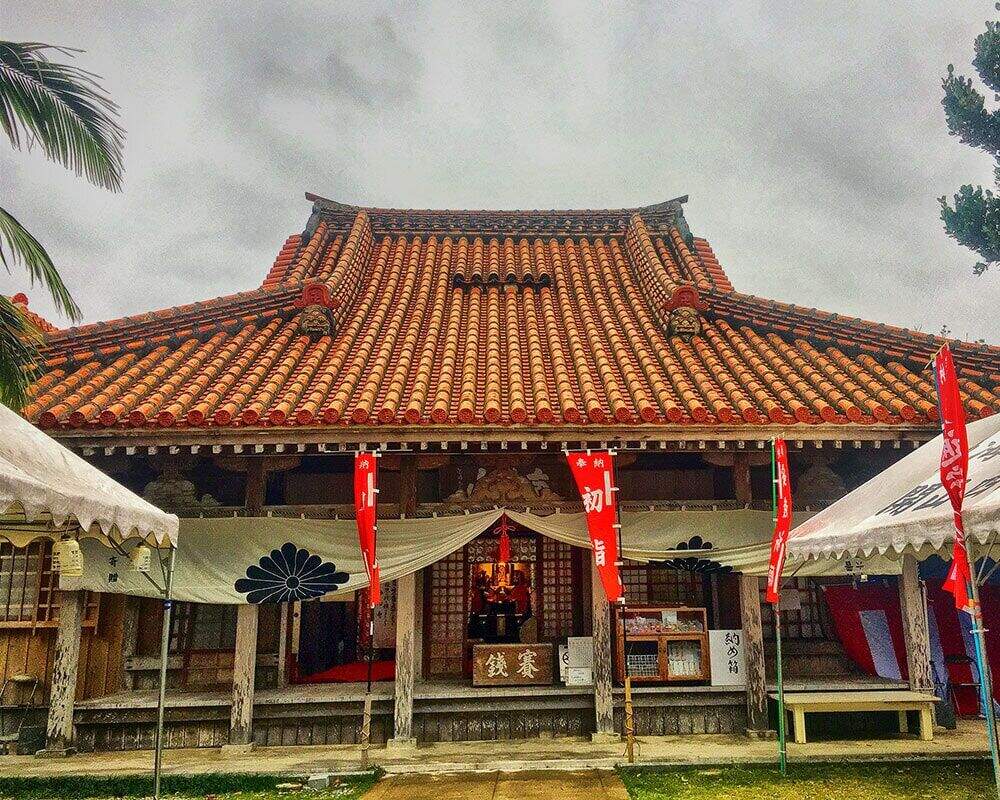
Torin-ji and Gongen-do: The Oldest Temple and Shrine Buildings in Yaeyama
Torin-ji was founded in 1614 and is the oldest surviving temple in the Yaeyama Islands, of the Rinzai school. The Nio guardian statues on either side of its gate are the oldest wooden Nio statues in Okinawa. They were swept away in the Meiwa tsunami and later recovered, and they are an important symbol of faith on the island.
Gongen-do beside the temple is a shrine building from the same period, designated an Important Cultural Property of Japan. Its red-tiled roof and Ryukyuan timber construction clearly differ from mainland shrines. Amulets are available in the grounds, the atmosphere for worship is quiet, and it sits on the edge of the city, within walking distance.
The grounds are small and a visit takes about 20 minutes, so it combines easily with a city itinerary. When worshipping, keep your voice low and follow the instructions on site.
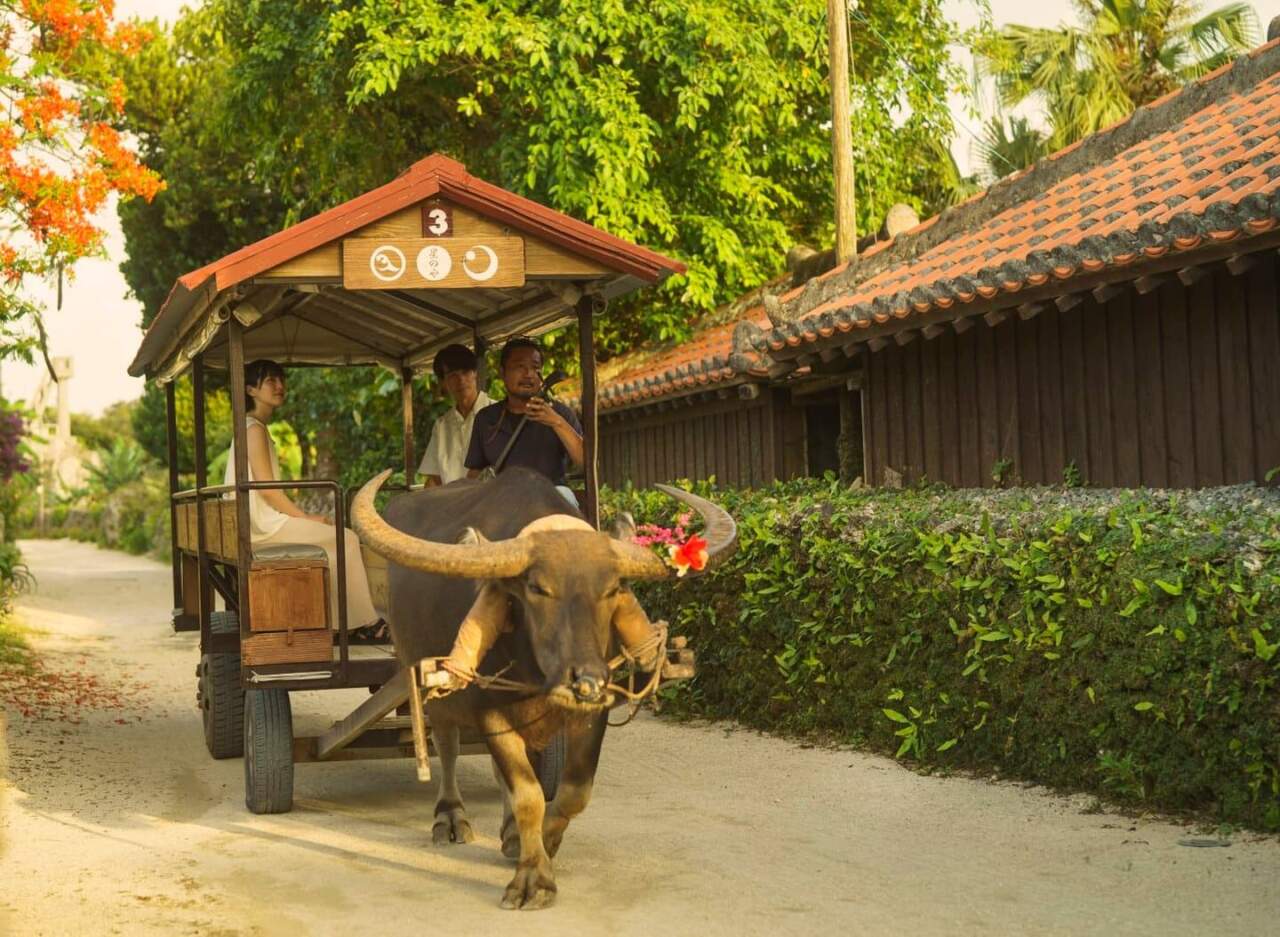
Taketomi’s Red-Tile Village: A Slow Scenic Ride by Water Buffalo Cart Along White-Sand Lanes
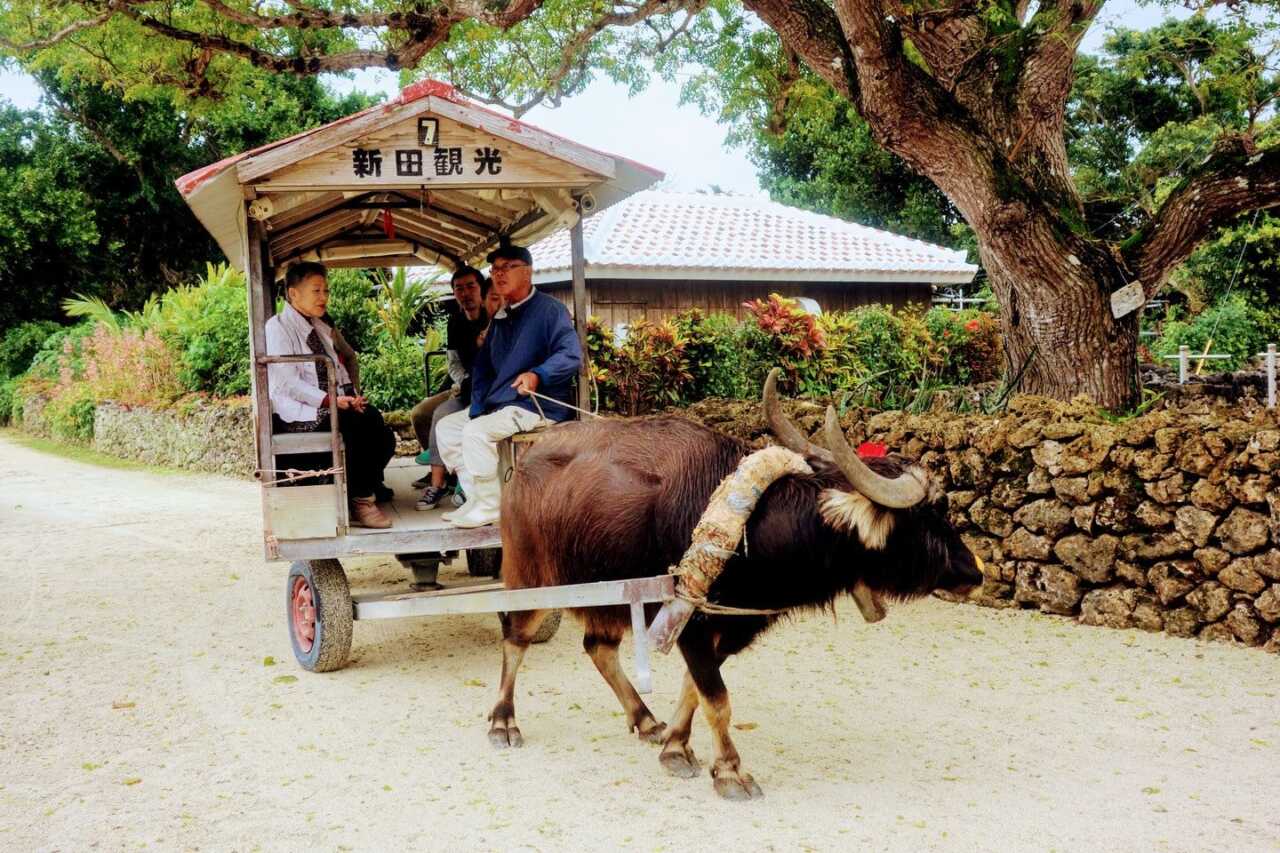
Taketomi preserves Okinawa’s most complete traditional village: red tile roofs, coral stone walls and lanes covered in white sand. The whole village is designated an Important Preservation District for Groups of Traditional Buildings, and residents still live in it today.
The classic experience is a ride on a water buffalo cart, with the driver playing the sanshin and singing folk songs as you circle the village for about 30 minutes. A free shuttle runs from the port to the village and the cart boarding area. The white sand on the island is the result of residents sweeping and maintaining it every day, so please do not take any sand away, and avoid entering private residential property.
The lanes in the village are narrow and covered in white sand, so ride your bicycle slowly. Climbing the central “Nagomi Tower” is currently prohibited, so photograph the surrounding streetscape instead.
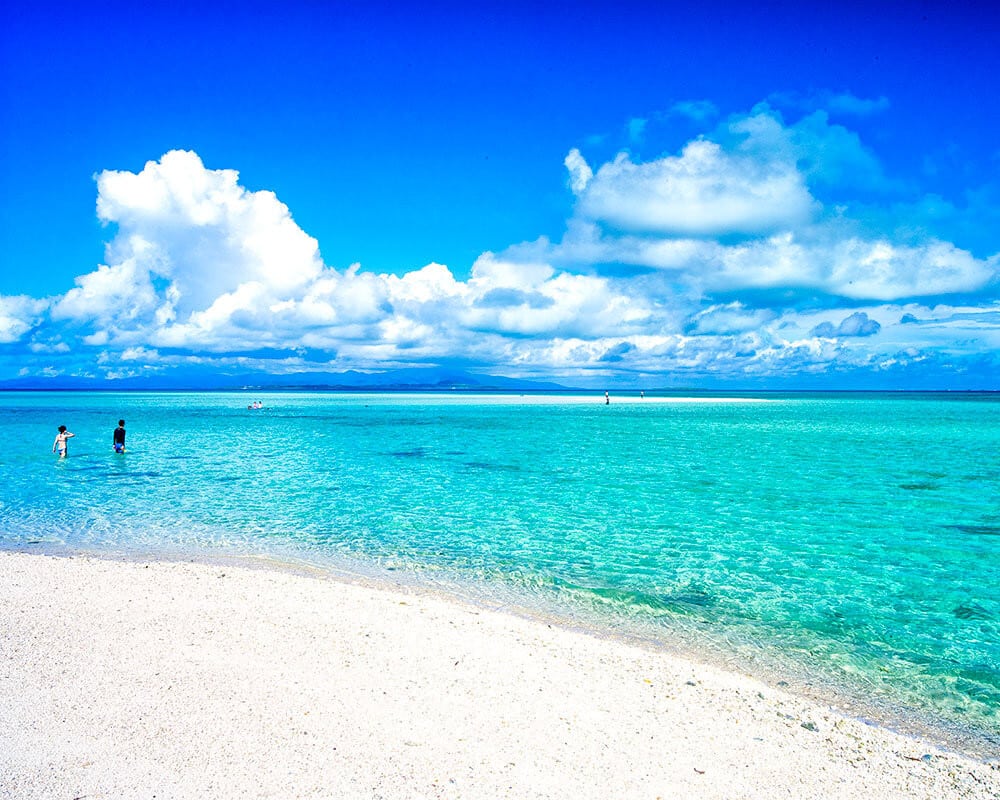
Kondoi Beach: Shallows and Gradient Blue Sea on Taketomi’s West Coast
Kondoi Beach is the only beach on Taketomi suitable for swimming. It is on the west side of the island, with shallow water and a gentle slope, and at low tide you can walk out dozens of meters. The water shows a lovely gradient of blues, an ideal choice for kids to play in the water.
The beach has changing rooms and showers but no snack bar, so bring your own drinking water and sun protection. It is about a 10-minute bicycle ride from the port. There are no lifeguards on duty and the currents change a lot, so heed the day’s notices and tide times when entering the water.
Wild peacocks and cats occasionally appear on the beach, part of everyday island life, so please do not feed them. In summer the midday UV is extremely strong, so bring plenty of sun protection.
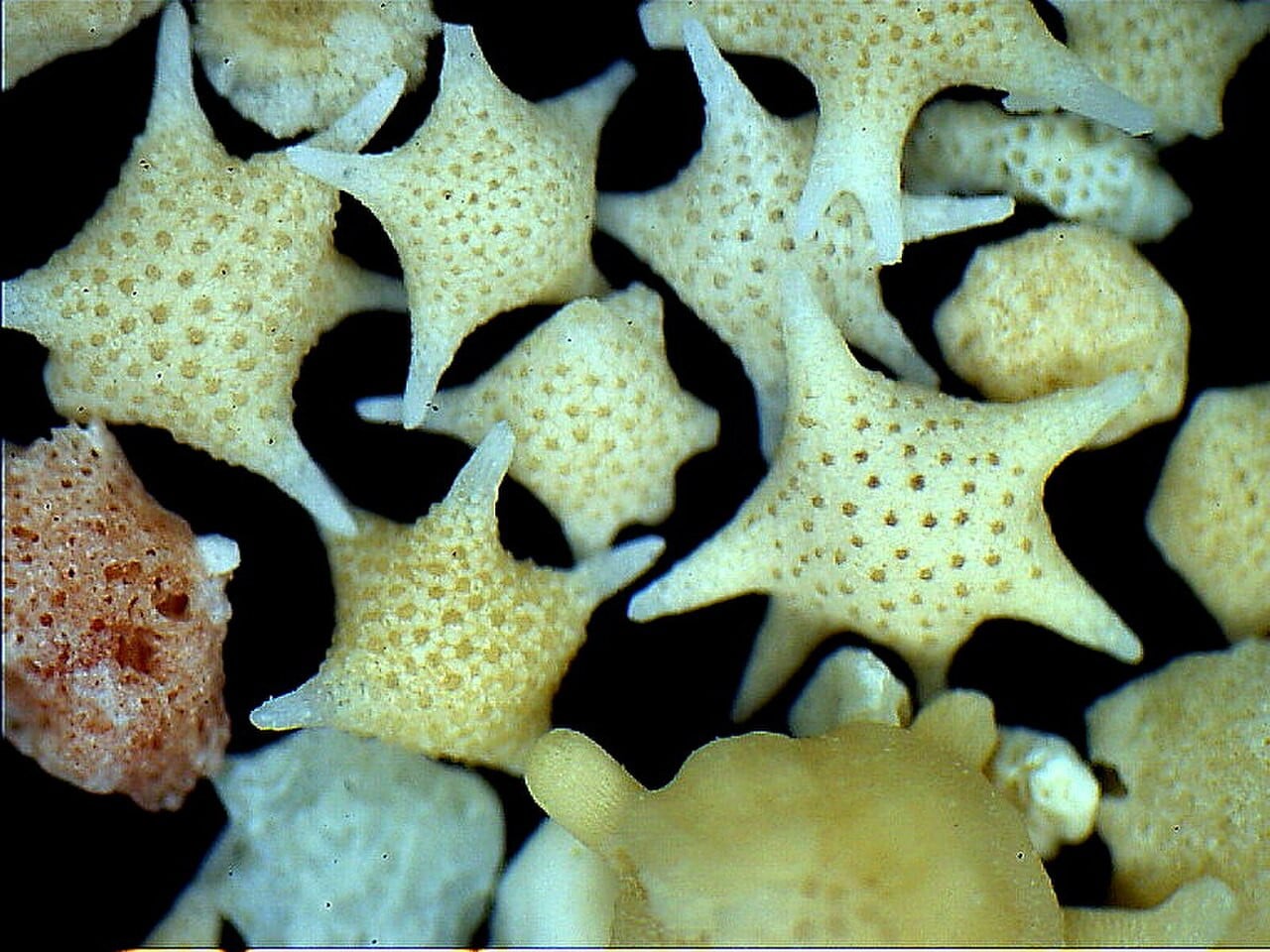
Kaiji Beach: Hunting for Star Sand, the Signature Experience
Kaiji Beach is just south of Kondoi Beach and is also known as “Hoshizuna no Hama” (Star Sand Beach). Its sand is mixed with the star-shaped shells of foraminifera. Press your palm flat on the sand and turn it over, and you can see tiny stars stuck to it, the most memorable experience on Taketomi.
Swimming is prohibited at this beach because of strong rip currents, so you can only wade and stroll. The amount of star sand has declined in recent years and taking it from the island is prohibited, so after finding some, take a photo and put it back on the beach. There is a tree-shaded path around the beach, and it is only a few minutes by bicycle from Kondoi.
The shop beside the beach sells star sand souvenirs already packaged, so if you want to take some home, buy it there rather than digging it up yourself.
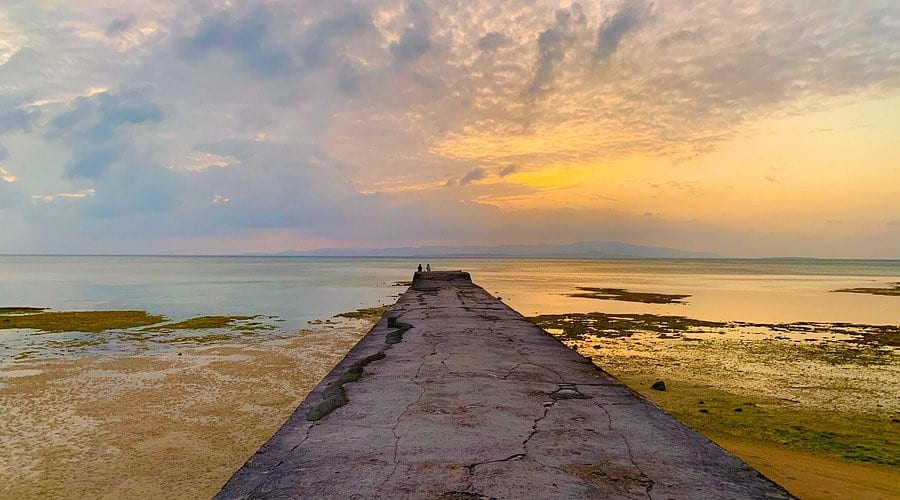
Nishi Pier: Taketomi’s Railing-Free Pier for Sunsets and the Milky Way
Nishi Pier (Nishi-sanbashi) was built in the early Showa era as the landing used by residents to go farm on Iriomote. It has since ceased to function and is a registered tangible cultural property, and it is Taketomi’s most famous photo and sunset spot.
The pier runs straight out into the sea with no railings, and at dusk the whole pier is dyed orange-red by the sunset, while at night it is a popular spot for shooting the Milky Way. Walk toward the center and watch your step, and hold children’s hands firmly. It is about a 5-minute bicycle ride from the village.
There is no lighting on the pier, so for night stargazing bring a headlamp and go with a companion. At high tide the sea washes over the end of the pier, so take care on the slippery surface.
Nakama River Mangrove Cruise: A Jungle Voyage into Japan’s Largest Mangrove Forest
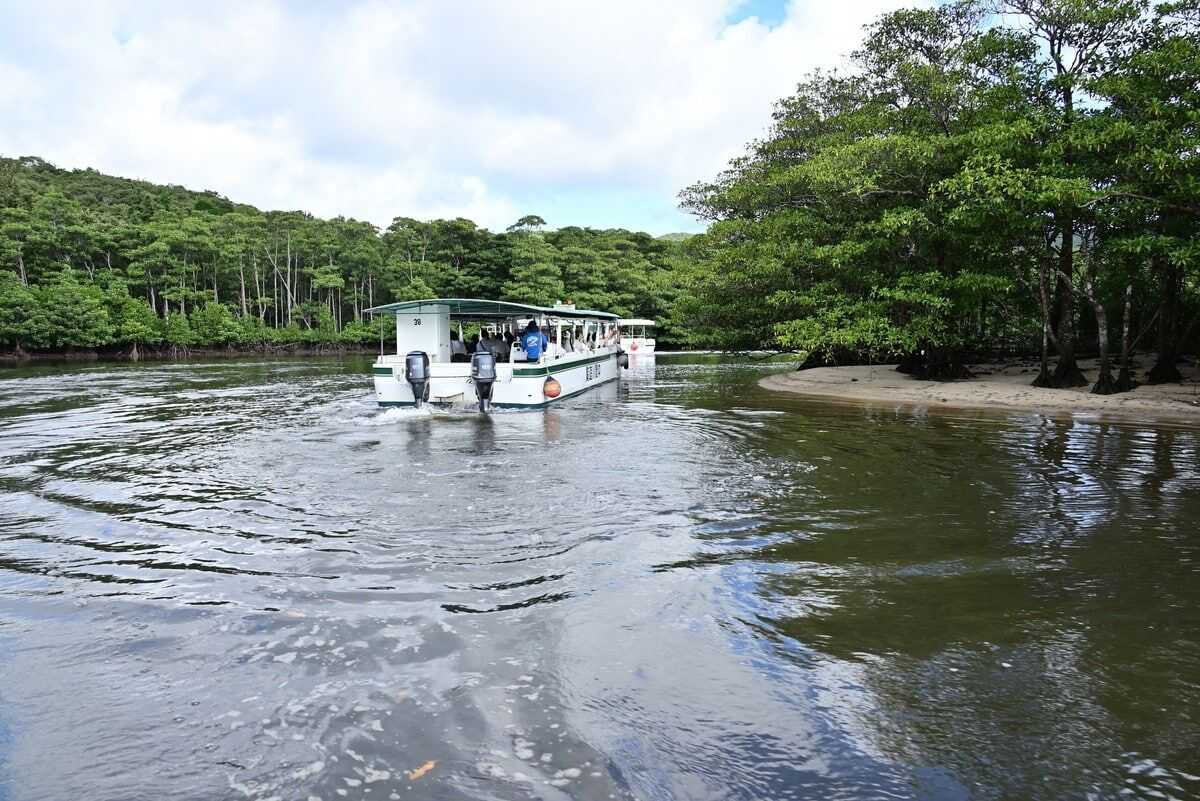
The Nakama River is in the southeast of Iriomote and has the largest mangrove community in Japan. Tour boats run from the river mouth deep into the jungle, with layers of pneumatophore roots and subtropical vegetation on both banks, and birds of prey occasionally circling overhead.
The currently scheduled service is the mangrove route (about 50 to 60 minutes, ¥3,500 for adults (announced on the Iriomote transport official website iriomote.com, applicable from October 1, 2026), departing from Ohara Port, no reservation needed). The route going upstream to see the giant buttress roots of “Sakishimasuounoki” has been suspended according to official announcements because of damage to the boardwalk, so check the official website before you go. This route is mostly included in Iriomote day tour packages, with the boat ticket and private car transfer, saving you the trouble of arranging transport yourself.
There is limited shade on the boat, so in summer wear a hat and bring sunscreen. The ride can sway, and those prone to seasickness may want to take medication beforehand.
Yubu Island: A Botanical Garden Islet Reached by Water Buffalo Cart Across the Shallow Sea
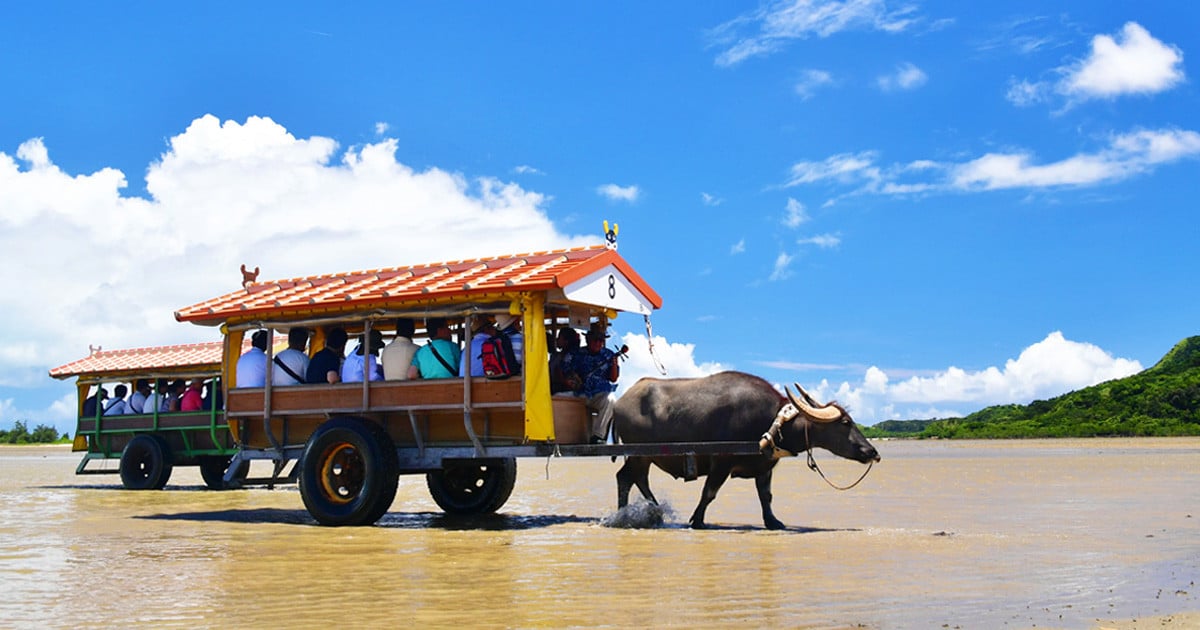
Yubu is a small island off the east coast of Iriomote, less than two kilometers around, and its biggest feature is how you get there: visitors must ride a traditional water buffalo cart through about 400 meters of shallow tidal flat to reach the shore, with the driver playing and singing sanshin folk songs along the way.
The whole island is a subtropical botanical park, planted with coconut palms, moth orchids and tropical flowering trees, with a butterfly garden and a restaurant for lunch. It is almost always visited as part of a package combined with Iriomote on the same day. The round-trip water buffalo cart including garden admission is ¥2,000 for adults and ¥1,000 for elementary school students, departing from the “Tabibito no Eki” on the Iriomote side. The official website (yubujima.com) announces opening hours of 9:15 a.m. to 4:30 p.m., and the carts run on a regular schedule, with opening and departures adjusted for the tide.
The paths on the island are mostly sandy earth and get muddy after rain, so wear shoes that are easy to wash. The carts have a passenger limit, so expect a wait at peak times.
Cape Ongan (Ongan-zaki): Sea Cliffs and a Sunset Lighthouse at Ishigaki’s Western End
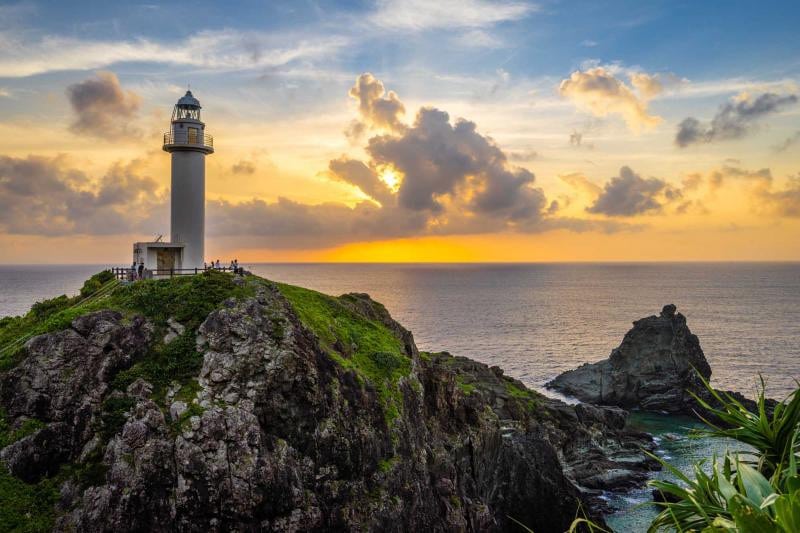
Cape Ongan is at the western end of Ishigaki, a cliff headland jutting into the East China Sea with a white lighthouse on a grassy slope. Because it faces due west, it is widely regarded as one of the island’s best sunset spots, only about ten-odd minutes by car from Kabira Bay.
In spring the cliffs bloom with white wild lilies. The terrain is uneven and there is no complete guardrail along the cliff edge, which is quite dangerous in strong wind, so stay within the marked paths. The parking lot is free but small and easily fills at sunset, so arrive early to claim a spot.
The road from Kabira Bay has several sharp bends, so drive slowly. There are no shops or restrooms nearby, so take care of that around Kabira Bay before you set out.
How Much Does Island Hopping from Ishigaki Cost? Ferry Tickets, Combo Passes and Day Tours
The cost of island hopping comes mainly from three things: ferry tickets, activities on the islands, and car rental.
Taketomi Water Buffalo Cart and Round-Trip Ferry Combo: Skip Queuing Twice on Site
The combo bundles the round-trip ferry ticket from Ishigaki to Taketomi with a water buffalo cart sightseeing ticket, so after landing you can take the free shuttle bus straight to the cart boarding area without queuing to buy a ticket again. As soon as a ferry docks, the shuttle bus line grows long, and the difference is very noticeable.
The water buffalo cart ride takes about 30 minutes, circling the red-tile village with sanshin music. If you plan to stay longer on the island, the return ferry can usually be taken flexibly within the ticket’s validity period, but in peak season the last boat fills up easily, so arrive at the port early.

Iriomote and Yubu Day Tour: Easiest with Ferry Tickets and a Private Car Included
Iriomote’s activity sites are spread out and getting around the island is inconvenient, so a day tour package including ferry tickets, a private car and admission is the most practical choice. The classic route goes from Ishigaki Port to Ohara Port, takes the Nakama River boat into the mangroves, then goes by private car to Mihara and crosses by water buffalo cart to Yubu Island.
Tours usually check in at the Ishigaki Port Offshore Islands Terminal before 8 a.m. and return to Ishigaki Port around 5 p.m., with lunch mostly on Yubu. We especially recommend this arrangement when traveling with seniors or children: someone guides you the whole way and you don’t have to work out ferry and shuttle times yourself.
Kabira Bay Glass-Bottom Boat: See Coral and Tropical Fish Without Getting in the Water
Swimming is prohibited at Kabira Bay, so the glass-bottom boat is the main way to experience it. The trip takes about 30 minutes, and the transparent hull gives a direct view of the coral reef and schools of tropical fish. Several operators run from the shore, and you buy tickets on the spot and board as you arrive, so there is little need to reserve in advance.
Those who can’t swim, are afraid of water or are traveling with seniors can all take part, making it suitable for the whole family. In rough seas the boats don’t run, and if they are suspended you can walk the observation trail on shore instead, where you can still see the gradient colors of Kabira Bay.
Renting a Car on Ishigaki: The Freedom of a 100-Kilometer Island Loop
The loop around Ishigaki is about 100 kilometers, and Kabira Bay, Yonehara Beach, Tamatorizaki Observation Deck and Hirakubozaki are scattered around the island. Route buses are infrequent, so renting a car is almost essential. You can pick up a car at New Ishigaki Airport or at an office in the city.
As on the main island of Okinawa, renting a car requires your original driver’s license and a Japanese translation of it, and you need both; check the requirements for your own country’s license before booking. Ishigaki has fewer cars than the main island, and they sell out more easily in peak season, so we suggest booking the car as soon as you book your flights.
Speed limits on Ishigaki’s roads are generally low and the city has many one-way streets, so we recommend using MAPCODE for navigation. Before returning the car, fill the tank at a designated gas station and keep the receipt.
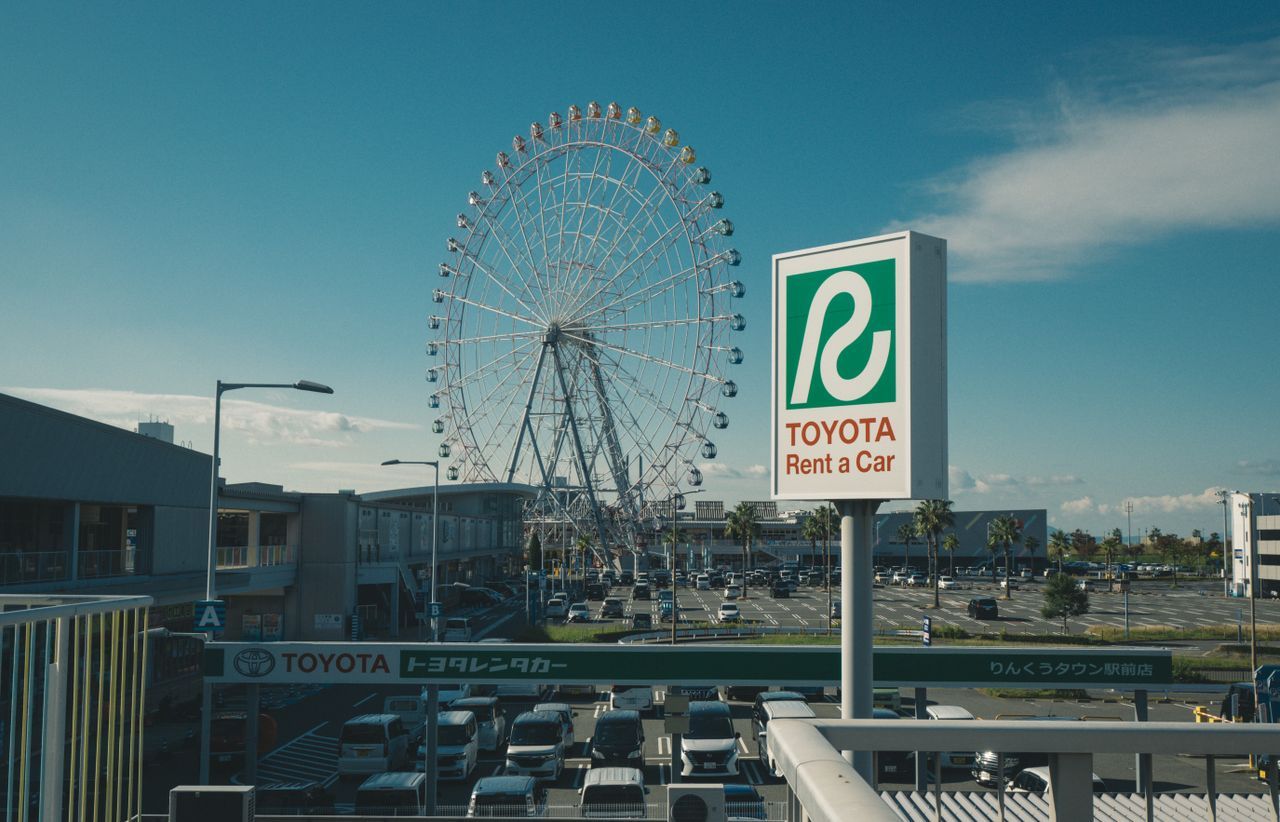

Yaeyama Islands Ferry Free-Ride Passes: Worth It Only If You Hop Many Islands
Both Anei Kanko and Yaeyama Kanko Ferry offer free-ride passes covering several islands with unlimited rides for a set number of days. If your trip covers just one round trip each to Taketomi and Iriomote, buying separate round-trip tickets is usually the better deal.
The pass is really worth buying only if you plan to cover many islands in depth, such as Taketomi, Kohama, Kuroshima and Iriomote. Each company’s covered routes, number of days and whether the fuel surcharge is included differ, so check every item before buying, and confirm whether off-season services are reduced.
Some passes can be bought on the spot at the ticket window of the offshore islands terminal, and there are also versions you buy online and then redeem. In peak season it is safer to handle it online first.
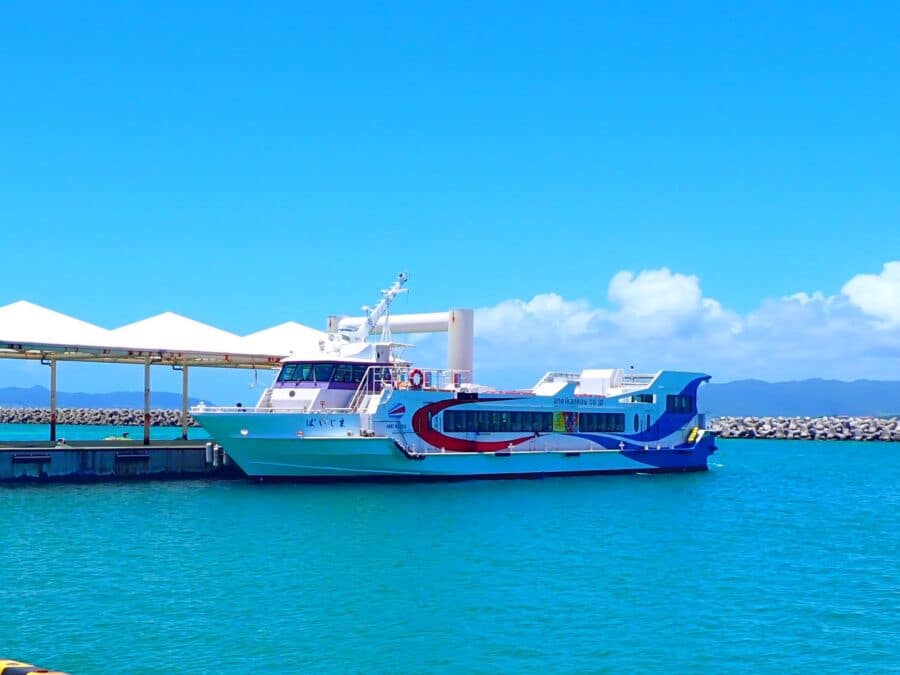
Where to Stay on Ishigaki: Trade-Offs Between Downtown, the Ferry Port and Seaside Resorts

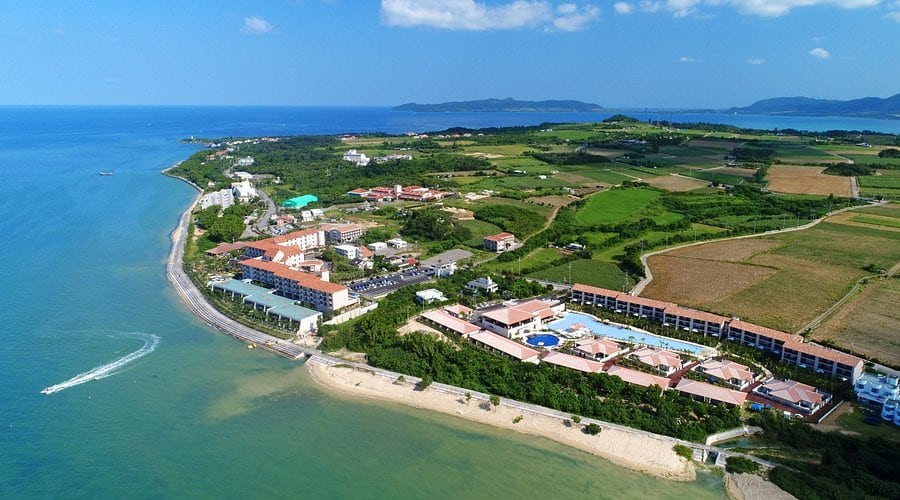
Where to Stay on Ishigaki: Near the Port for Island-Hopping Trips
If your trip is mainly island hopping, the most practical choice is to stay near the Ishigaki Port Offshore Islands Terminal or downtown. Many day tours require check-in before 8 a.m., and staying close lets you sleep half an hour longer, and at night you can walk to the public market and yakiniku restaurants without driving.
If your trip leans toward relaxing and sea views, there are plenty of resorts along the north and west coasts of the island with beaches and pools, but they are some driving distance from the port, so you must get up early and drive when island hopping. A common arrangement is to stay downtown for the outer islands in the first part of the trip, then move to a seaside resort to finish.
Ishigaki and Yaeyama Islands FAQ
Q: Can Ishigaki be done as a day trip from Naha?
We strongly advise against it. The two are about 400 kilometers apart and reachable only by plane or ferry. The flight from Naha Airport to New Ishigaki Airport takes about 1 hour, and with transfers at both ends you should allow at least three days and two nights.
Q: How much is the ferry from Ishigaki to Taketomi? How long does it take?
The crossing takes about 10 to 15 minutes, ¥970 one way and ¥1,880 round trip (including the fuel price adjustment fee). Departures follow the two companies’ timetables, so rely on the Anei Kanko website.
Q: What is the difference between Iriomote’s Ohara Port and Uehara Port?
Ohara Port is in the southeast, about 40 minutes and ¥4,880 round trip, and is less affected by the northeast monsoon. Uehara Port is in the north, about 45 minutes and ¥6,370 round trip, and is often suspended in autumn and winter.
Q: What should I do if a ferry is suspended?
When Uehara Port is suspended, the ferry company usually switches departures to Ohara Port and shuttles passengers overland to Uehara. Check the company’s website the day before departure for operating status, and leave room to adjust your plans.
Q: Do I have to rent a car on Ishigaki? And on the outer islands?
We recommend a car on the main island of Ishigaki, where the loop is about 100 kilometers and buses are infrequent. You will need your original driver’s license and a Japanese translation of it; check the requirements for your own country’s license. On Taketomi a bicycle is enough, and on Iriomote we suggest joining a package tour that includes a private car.
Q: What is the best season to visit Ishigaki and Yaeyama?
April to June and October to November have steadier sea conditions. July to October is typhoon season, when flights and ferries can be suspended for a whole day, and the autumn and winter northeast monsoon often suspends Iriomote’s Uehara Port.
Q: How many days should I allow for Ishigaki and the outer islands?
We suggest four days and three nights: one day for Ishigaki city, one day for Iriomote and Yubu, one day for Taketomi plus a self-drive around the main island of Ishigaki, and a final day for shopping and the return trip, for the least rushed pace.
