
Mojiko Retro: A Century-Old Port Town Where Taisho Romance Meets the Kanmon Strait
Mojiko Retro is a harbor sightseeing district at the northernmost tip of Kitakyushu, Fukuoka Prefecture, famous for its cluster of red-brick Western-style buildings from the Meiji and Taisho eras. It is about 90 minutes from Hakata by JR and suits a half-day or full-day trip.
Where Is Mojiko Retro? Getting to Know This Century-Old Port Town
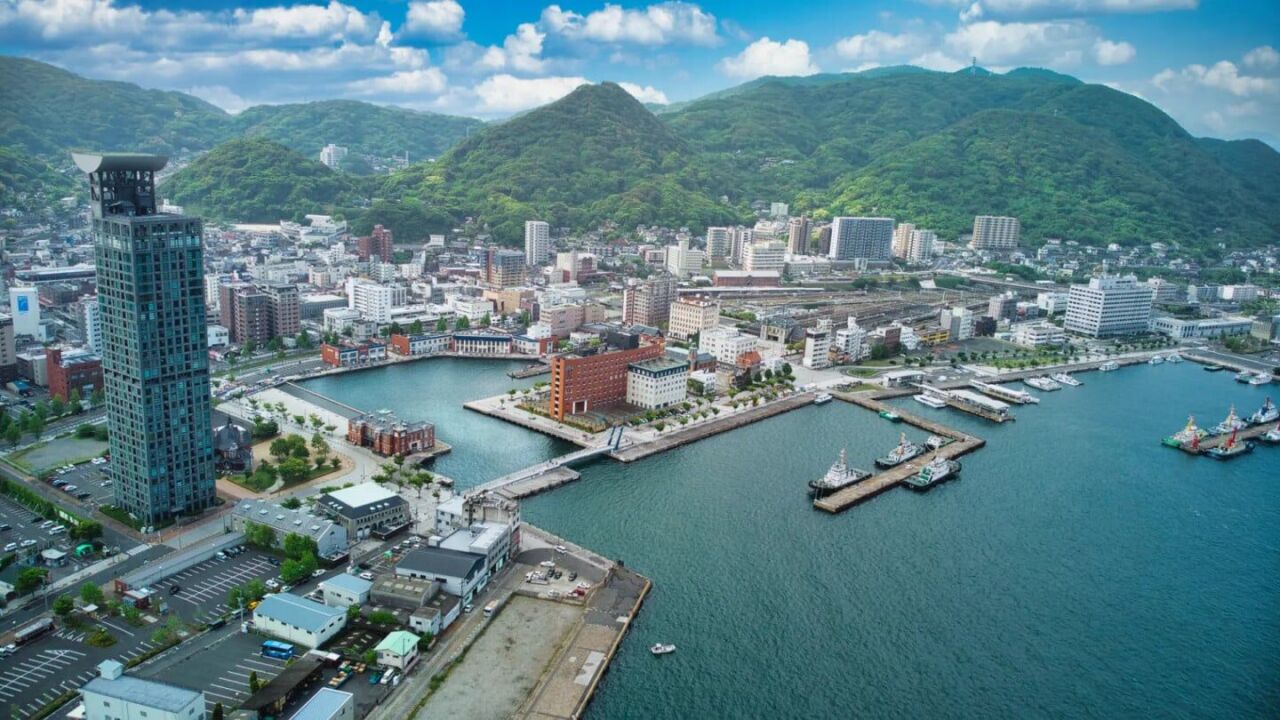
Mojiko is in Moji Ward, Kitakyushu, at the northern tip of Kyushu, facing Shimonoseki in Yamaguchi Prefecture on Honshu across the Kanmon Strait, which is only about 700 meters wide at its narrowest. After the port opened in 1889 it became Japan’s gateway for foreign trade, and before World War II it ranked alongside Kobe and Yokohama as one of the “three great ports of Japan.” Banks, trading companies and shipping firms built Western-style buildings here, creating the distinctive scenery of red brick and Western mansions you see today.
After the war the center of trade moved elsewhere and the port area declined for a time. From 1988 Kitakyushu promoted the “Mojiko Retro” redevelopment project, restoring historic buildings such as the old customs house and the old Osaka Shosen building and opening them to the public, and in 1995 the area was formally reborn as a tourist district. Almost all the core sights of the retro district now lie within a 10-minute walk of JR Mojiko Station, so you can see everything on foot without taking any transport.
Who Is Mojiko Retro For? Choosing Between a Half-Day and a Full-Day Itinerary
If you only have half a day, spend your time on the harborside walking route of JR Mojiko Station, the Blue Wing Moji bridge, the Old Moji Customs House and Kaikyo Plaza. It takes about 3 hours and leaves time for a meal of the local specialty, yaki-curry (baked curry). The Mojiko tourism association offers a “Yaki Curry Map,” available at the station’s tourist information office, so you can follow it to more than twenty well-known shops.
If you have time for a whole day, beyond the retro district itself you can add two indoor museums, the Kyushu Railway Memorial Museum and the Kanmon Strait Museum, then take the sightseeing train “Shiokaze” to Mekari Park under the Kanmon Bridge. You can even walk the Kanmon Tunnel pedestrian passage or take the Kanmon ferry across the strait to Shimonoseki. Along the way, don’t forget to take a “been here” photo at Chinzei Bridge Park and in front of the “MOJIKO” monument. For families, we suggest putting the Kyushu Railway Memorial Museum in the morning, when energy is high and the miniature railway is most fun.
Best Season and Time of Day to Visit Mojiko Retro
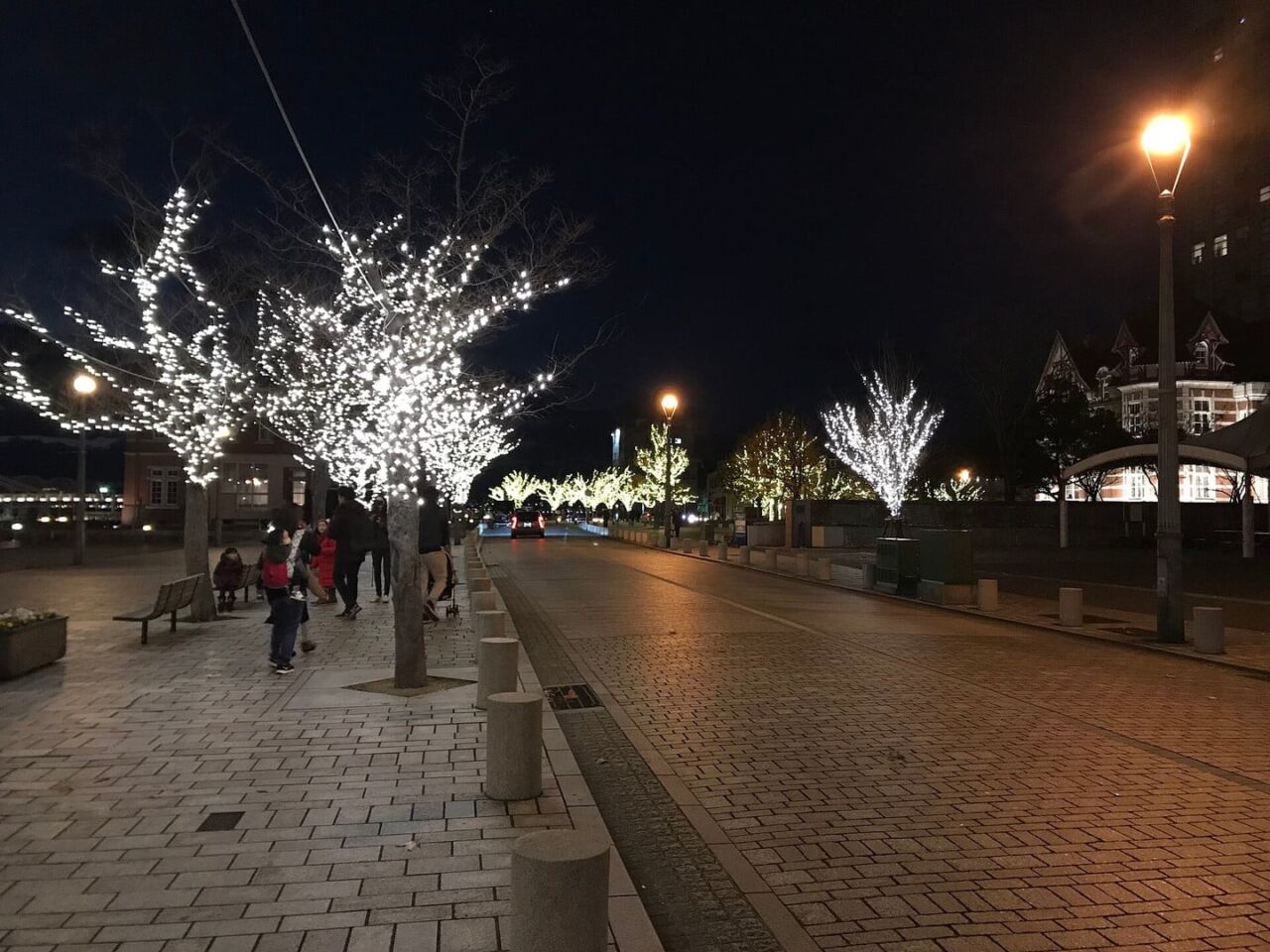
Mojiko can be visited all year, and spring and autumn, with their pleasant weather, are the most comfortable. Each season has its own draw: the “Seaside Seagull Market” (Umibe no Kamome-ichi) in April, the Mojiko Retro Tanabata Festival and the Kanmon Strait Fireworks Festival in summer, and the harbor-area illuminations in autumn and winter. Check the event announcements from Kitakyushu’s official tourism account before you go.
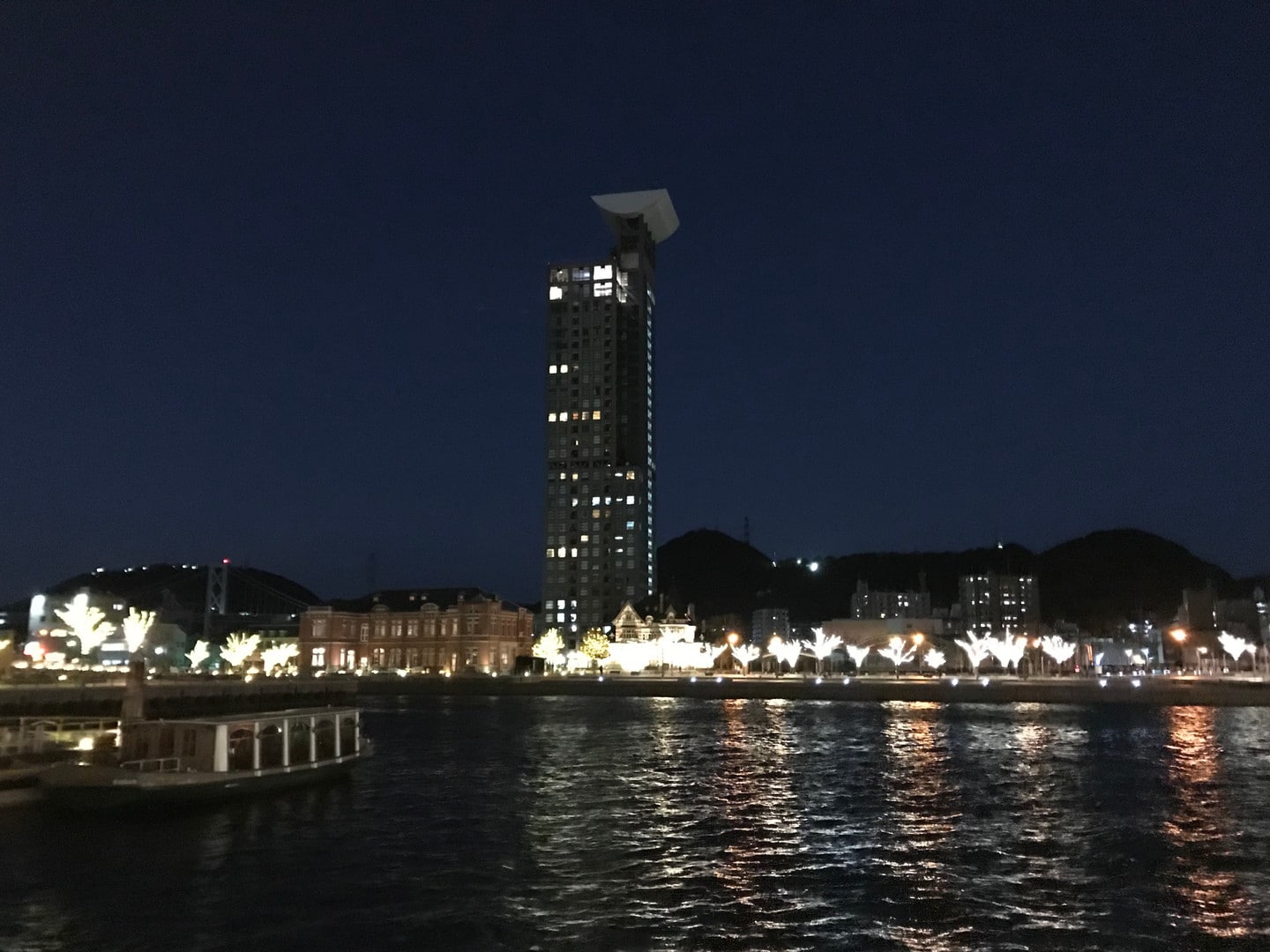
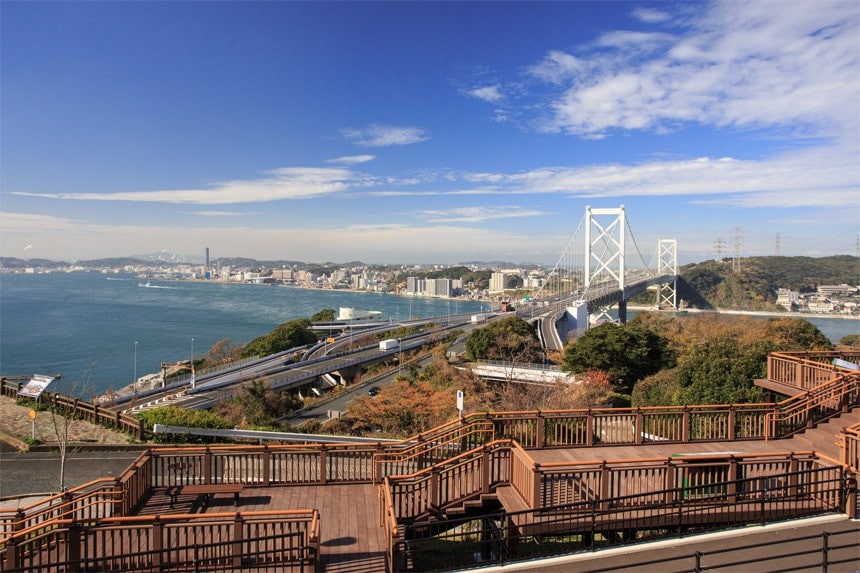
As for timing, the red-brick buildings look best in daylight, but Mojiko’s real signature is its night view. The night view from the Retro Observation Room was selected as a “Japan Night View Heritage” site, with the Kanmon Bridge and the lights of Shimonoseki across the water joined together, an atmosphere completely different from daytime. We suggest starting your walk in the afternoon, going up to the observation room before sunset, and strolling around Blue Wing Moji before you leave, to take in both the day and night faces of Mojiko.
How to Get to Mojiko Retro: Transport Options and Costs
Mojiko is the terminus of the JR Kagoshima Main Line, with direct service from Hakata and no transfer needed.
| Transport | Approximate cost | Travel time |
|---|---|---|
| JR Kagoshima Main Line Rapid (direct from Hakata) | ¥1,730 | About 1 hour 30 minutes |
| Shinkansen to Kokura + JR transfer | Shinkansen unreserved seat ¥2,160 + JR fare from Kokura to Mojiko | About 50 minutes |
| Kitakyushu Airport bus + JR | From about ¥1,300 | About 60 minutes |
| JR Kagoshima Main Line from Kokura Station | About ¥280 | About 15 minutes |
JR Kagoshima Main Line Rapid: Direct from Hakata to Mojiko Without Changing
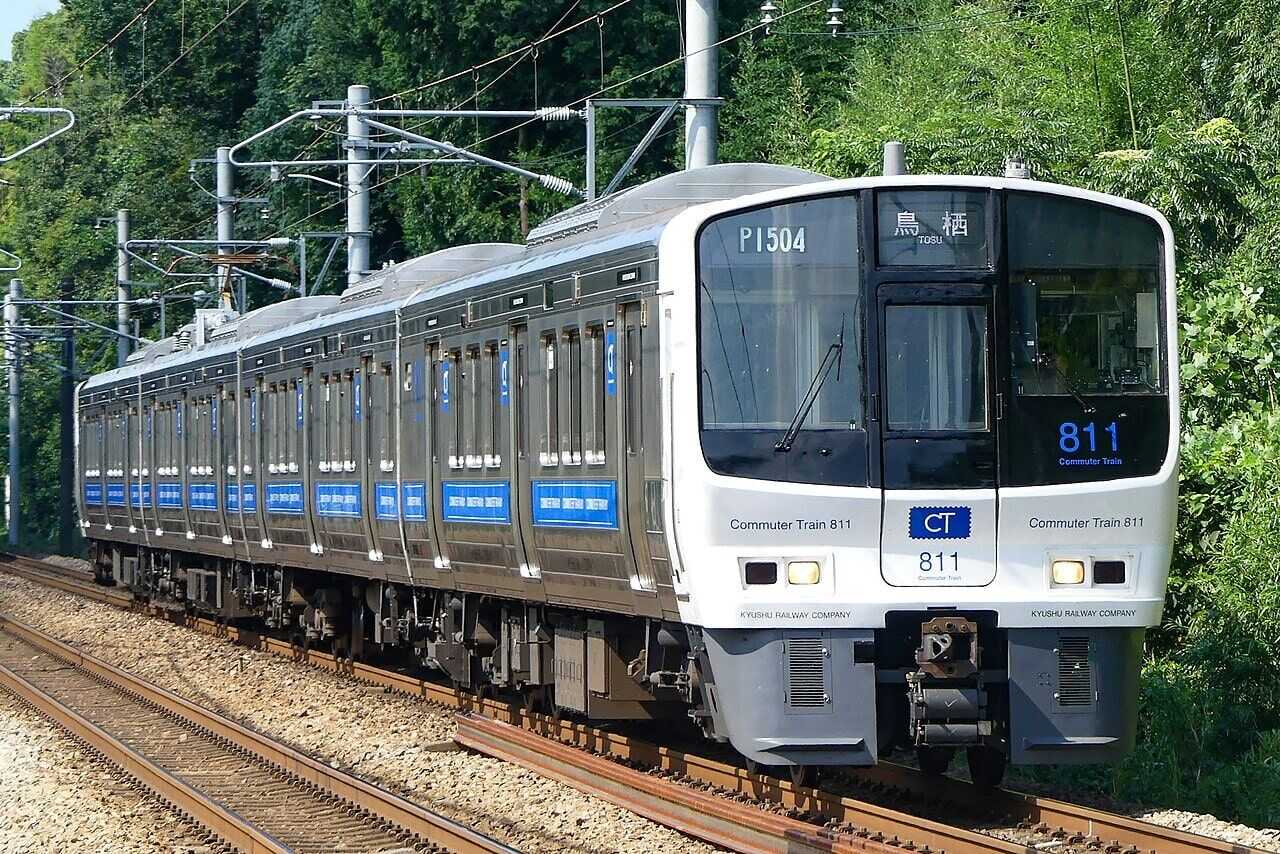
This is the simplest and cheapest way. Take a Rapid or Section Rapid train on the JR Kagoshima Main Line from Hakata Station and ride all the way to the terminus at Mojiko Station without any transfer. The whole trip takes about 1 hour 30 minutes and costs ¥1,730. Service is frequent, about every 15 to 20 minutes at peak times and roughly every 30 minutes off-peak.
The route passes stations such as Orio, Kurosaki and Kokura. The cars have commuter-style seating, so avoid the rush hours if you want a seat. For holders of the JR Kyushu Rail Pass (Northern Kyushu or All Kyushu), this section is fully covered with no extra charge, making it the option we recommend most to independent travelers. The last train back is around 11 p.m., leaving plenty of time to see the night view and return to Hakata.


Sanyo Shinkansen Plus JR: The Fastest 50-Minute Option When You’re in a Hurry
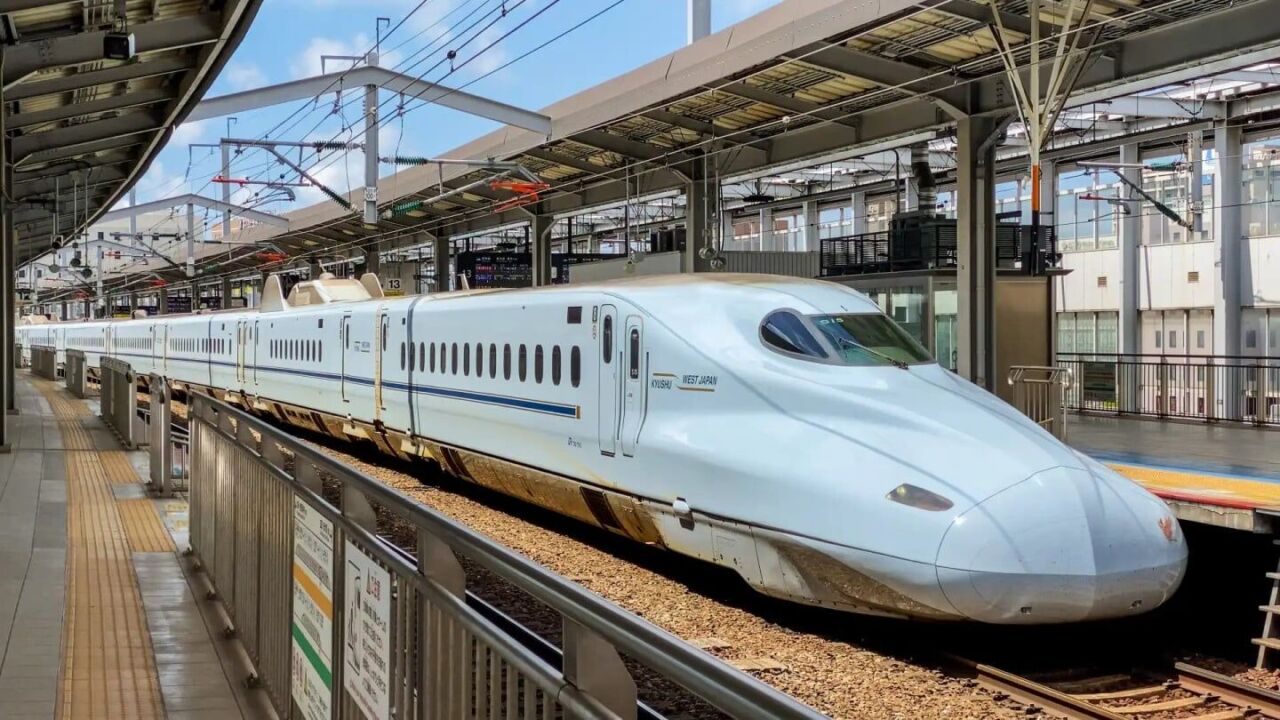
Travelers for whom time is money can take the Shinkansen instead. From Hakata Station, a Kodama or Sakura on the Sanyo Shinkansen reaches Kokura Station in about 17 minutes, then the JR Kagoshima Main Line takes about 15 minutes to Mojiko Station. With transfer waiting time, the whole trip is about 50 minutes. The Shinkansen unreserved seat (Hakata to Kokura) is ¥2,160, plus the JR fare from Kokura to Mojiko.
Compared with the direct Rapid train the fare is clearly higher, but it saves about 40 minutes, suiting people on a same-day round trip with a packed schedule. At Kokura Station the Shinkansen platforms and the conventional-line platforms are in the same station building, so the transfer is just one floor up or down with clear signs. Note that the JR Kyushu Rail Pass does not cover the Sanyo Shinkansen between Hakata and Kokura (that section belongs to JR West), so you need to buy a separate ticket.
Kitakyushu Airport Bus Plus JR: The Shortest Route for Budget-Airline Travelers
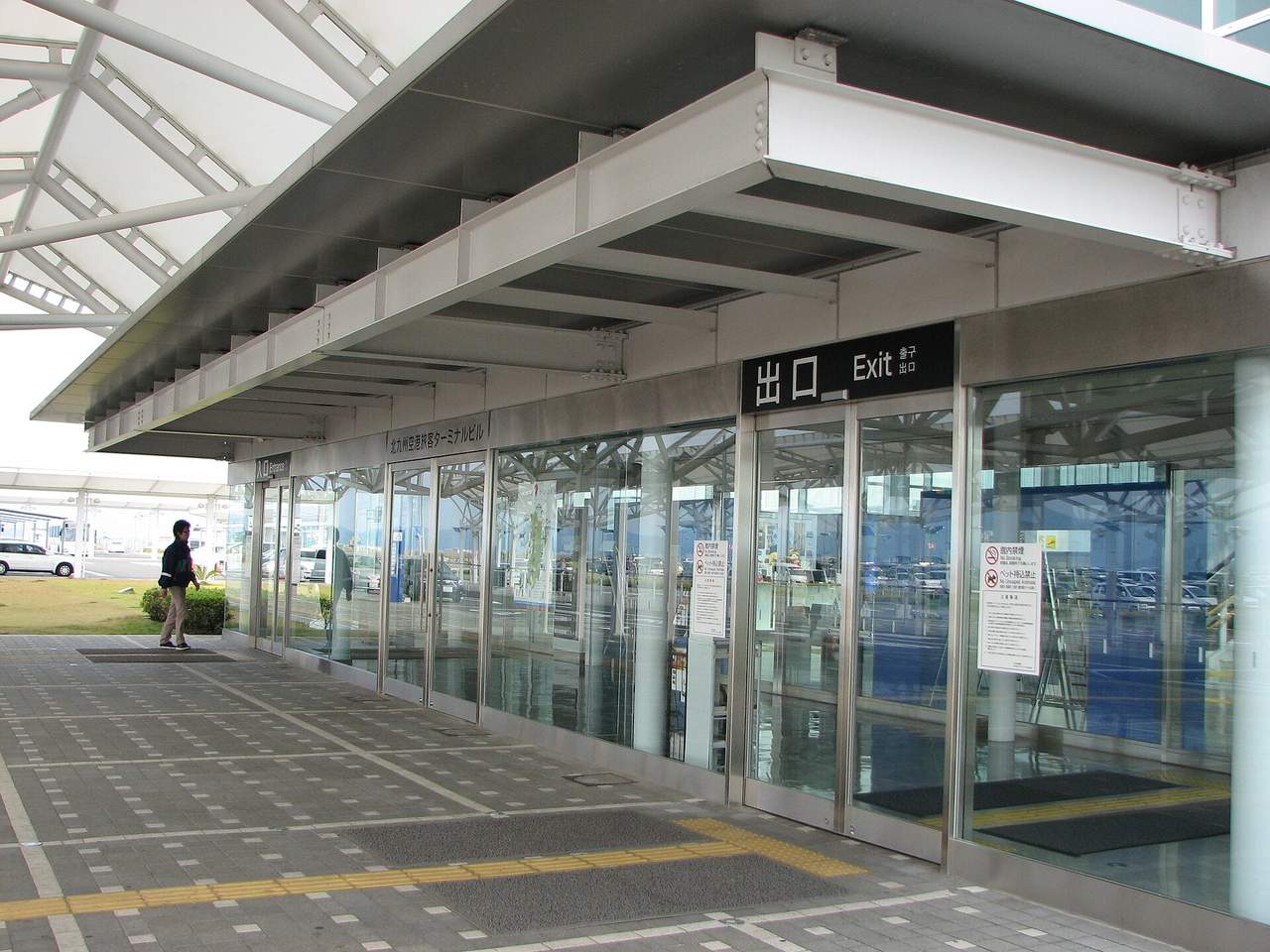
If you fly a budget airline directly to Kitakyushu Airport, Mojiko is actually closer than from Fukuoka Airport. After clearing the airport, take the airport shuttle bus to Kokura Station from in front of the terminal, a ride of about 35 to 45 minutes and ¥710. From Kokura, change to the JR Kagoshima Main Line for about 15 minutes to Mojiko, for a total of about 1 hour.
Bus departures are timed to flights, with service late at night and early in the morning too, and it is much easier than dragging luggage onto trains if you have large bags. If you arrive at Fukuoka Airport, you first take the subway to Hakata Station (about 5 minutes) and then connect to JR, which stretches the total to around 1.5 hours, so factor your airport arrival and departure into your planning.
Walking Around Mojiko Station and Renting Bicycles: No More Transport After You Arrive
Mojiko’s biggest advantage is how concentrated its sights are. JR Mojiko Station is itself one of the attractions. From the station it is a 3-minute walk to the Old Moji Mitsui Club and Kaikyo Plaza, 5 minutes to Blue Wing Moji and the Kanmon Strait Museum, and within 10 minutes you can cover the Old Moji Customs House, the Old Osaka Shosen building and the Retro Observation Room, with no need for any local transport.
The only farther sights are Mekari Park and Mekari Shrine under the Kanmon Bridge, about 2 kilometers away, reachable on the sightseeing train Shiokaze. Shiokaze does not run on weekdays, so on a weekday visit you can rent a bicycle in front of Mojiko Station or at the tourist information office and ride along the coast, about 15 minutes with sea views the whole way, a popular alternative.
Must-See Sights in Mojiko Retro: 12 Highlights Explained
Here are the 12 sights most worth stopping at in Mojiko, in walking order.
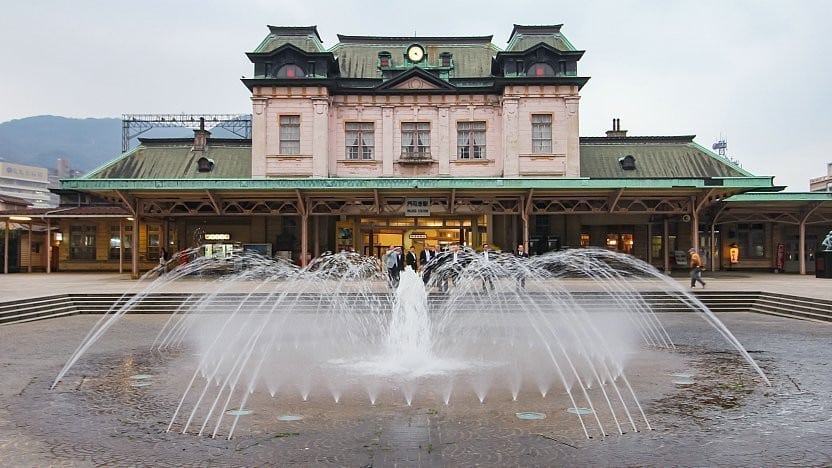
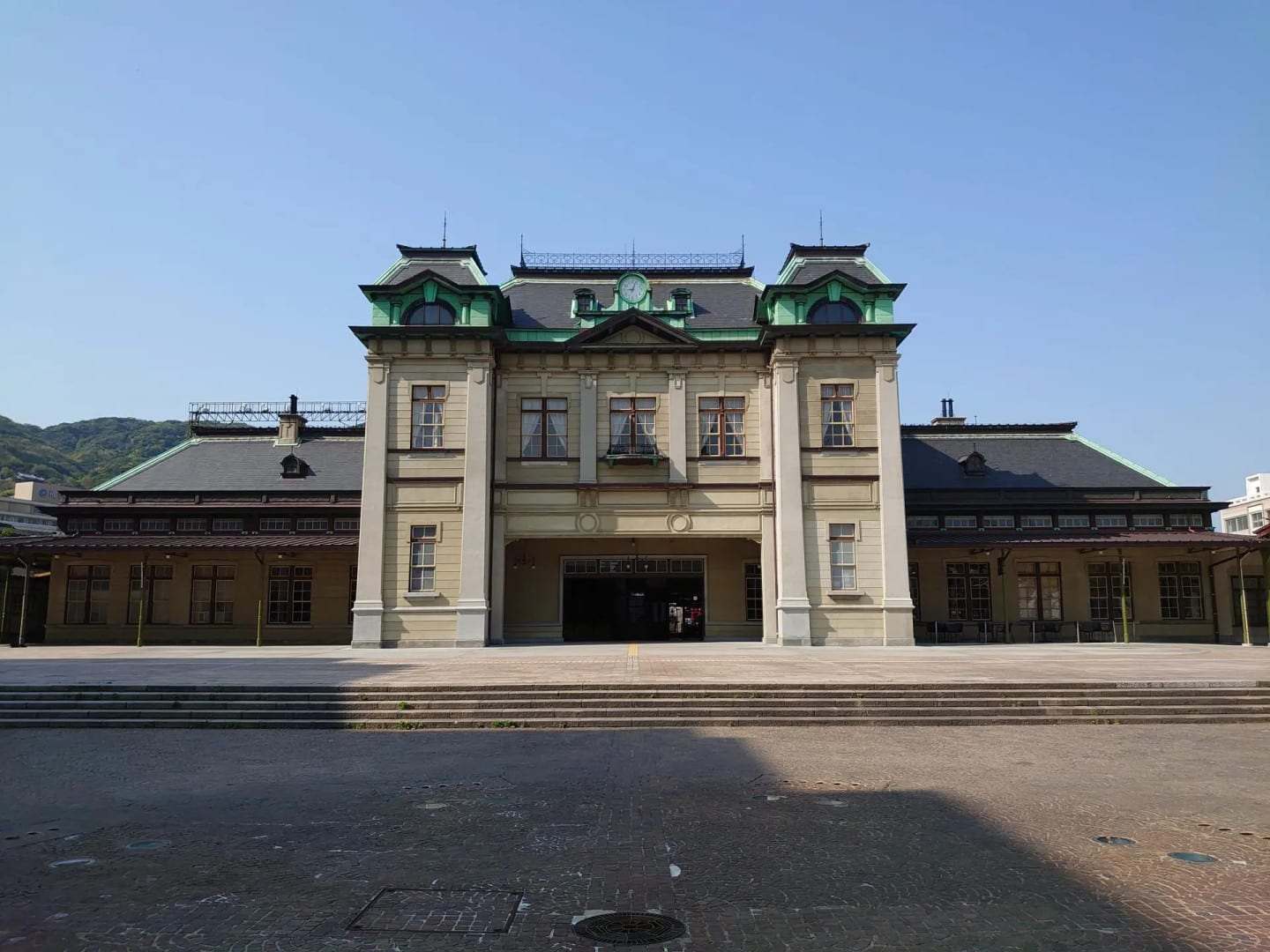
JR Mojiko Station: Japan’s First Railway Station Designated an Important Cultural Property
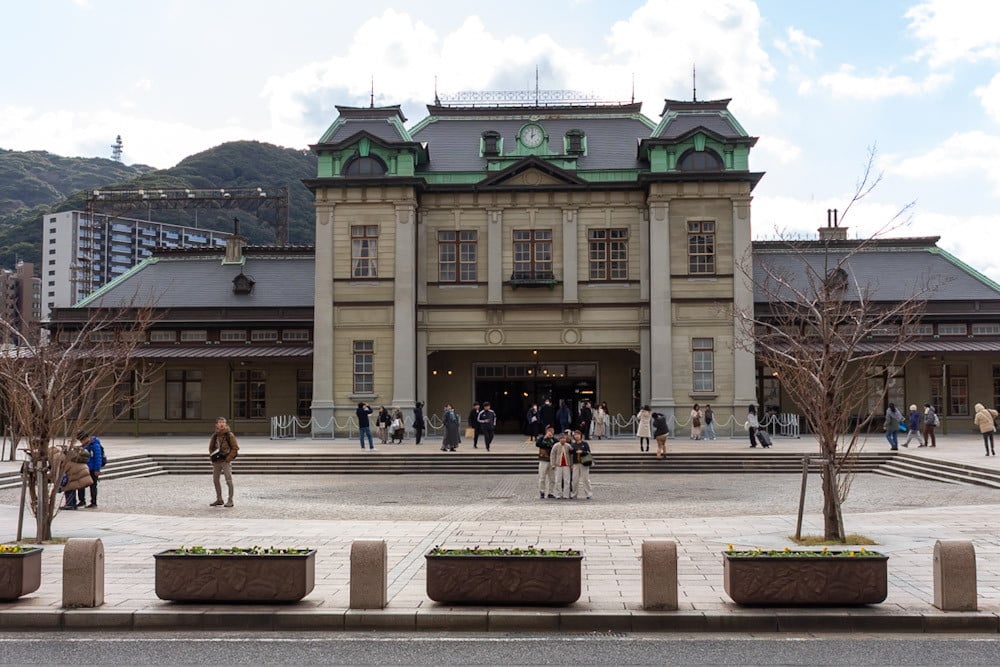
Completed in 1914, this two-story wooden station is in a symmetrical Neo-Renaissance style, and in 1988 it became the first railway station in Japan designated a national Important Cultural Property. Major conservation and restoration work began in 2012 and finished in March 2019, returning the exterior and interior to how they looked when the station opened in the Taisho era.
The highlights are in the details: the wooden benches in the waiting hall, the bronze hand-washing basin “Lucky Water,” the former VIP room and old dining space on the second floor, and even the old-style lettering on the restroom signs. There is also a Starbucks with retro decor inside the station, a favorite rest stop for visitors. The station is free to visit. Plan 20 to 30 minutes, and the facade looks best photographed from the platform end.

Blue Wing Moji: Japan’s Only Pedestrian-Only Movable Bridge
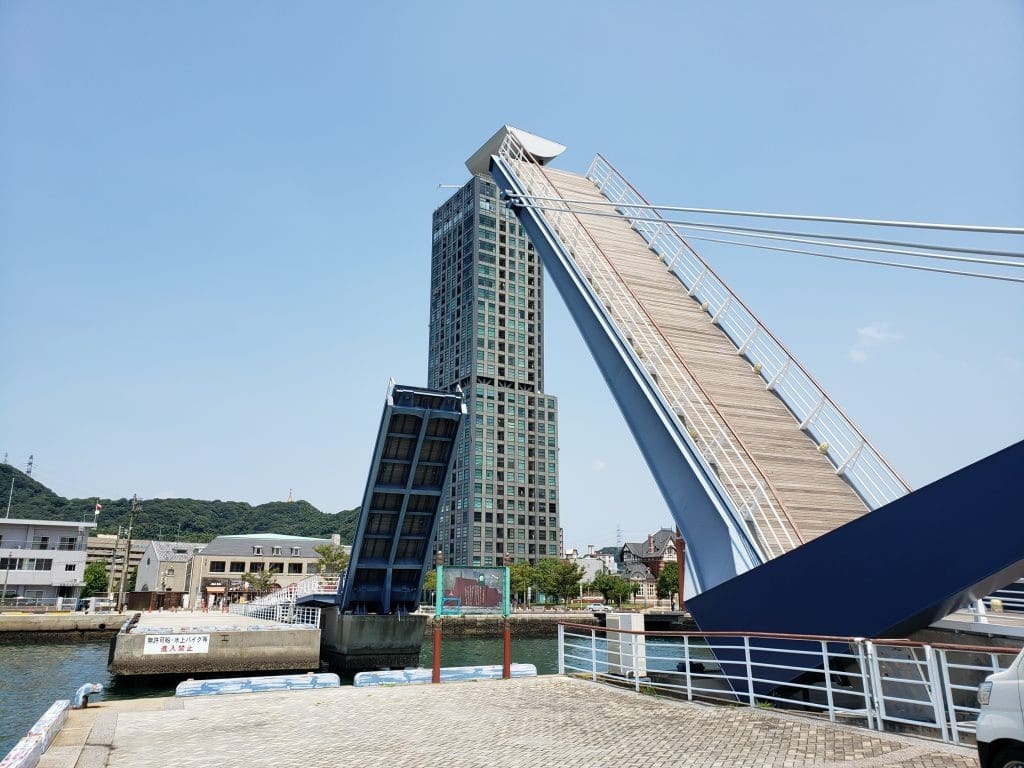
Spanning the Daiichi Funadamari basin, Blue Wing Moji consists of a 24-meter main leaf and a 14-meter sub leaf, and it is Japan’s only movable drawbridge reserved for pedestrians. The bridge rises 6 times a day, at 10:00, 11:00, 13:00, 14:00, 15:00 and 16:00, staying open for about 20 minutes each time to let boats pass. The two leaves spread upward like blue wings, the most photogenic scene in Mojiko.
Local lore says the first couple to cross holding hands after the bridge closes will stay together forever, so the spot is also called a “lovers’ sanctuary,” with heart-shaped installations and a padlock area beside the bridge. Actual times may shift slightly with the season and sea conditions, so check the notice board on site before you go. Crossing the bridge is free and the angle for looking out at the Kanmon Bridge is excellent. 15 to 20 minutes is enough.
Mojiko Retro Observation Room: Japan Night View Heritage 103 Meters Up
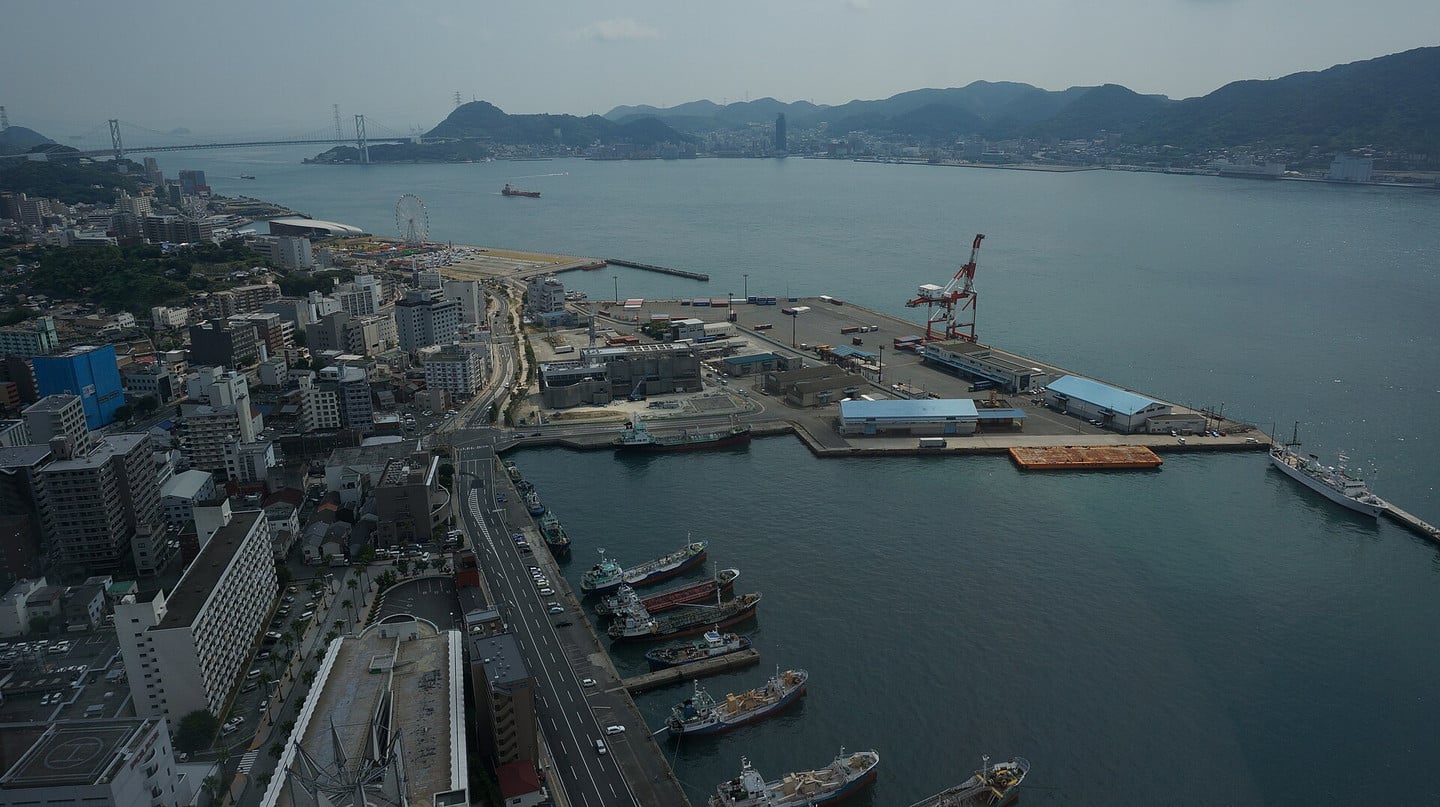
On the 31st floor of the “Mojiko Retro Hi-Mart” high-rise designed by Kisho Kurokawa, about 103 meters above the ground, this is Mojiko’s only high-altitude observation facility. Floor-to-ceiling glass gives a 270-degree view over the red-brick buildings of the retro district, the Kanmon Strait, the Kanmon Bridge and the city of Shimonoseki across the water. On clear days the view extends all the way to Suo-nada, and the night view was selected as a “Japan Night View Heritage” site.
The observation room has a cafe bar and seating, so you can wait for the sunset with a drink, the best spot to take in daylight, the blue hour and the night view in one visit. Admission is about ¥300 for adults and about ¥150 for elementary and junior high school students, and it stays open into the evening. Plan 40 to 60 minutes, and try to enter about 20 minutes before sunset to claim a window spot facing the Kanmon Bridge.
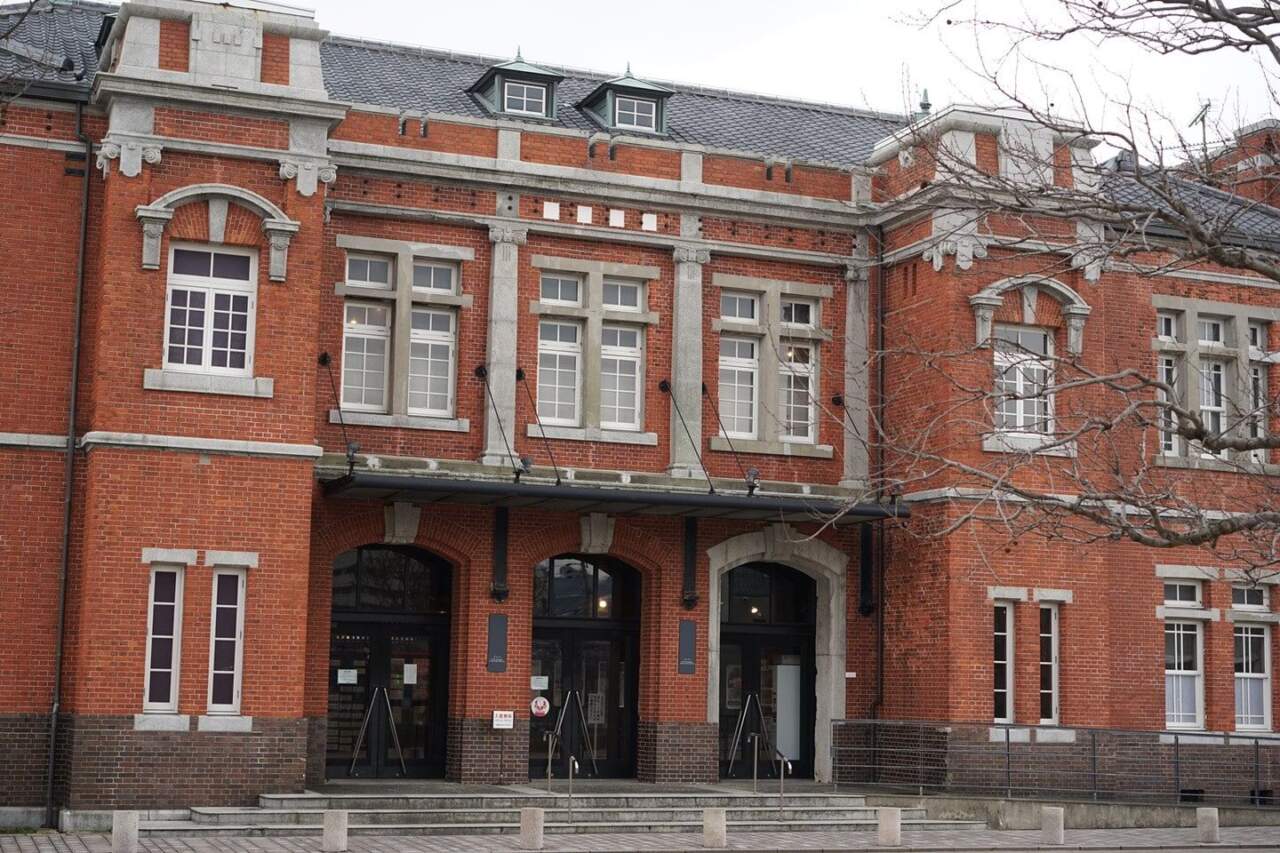
Old Moji Customs House: A Free Gallery and Fruit Cafe in a Red-Brick Mansion
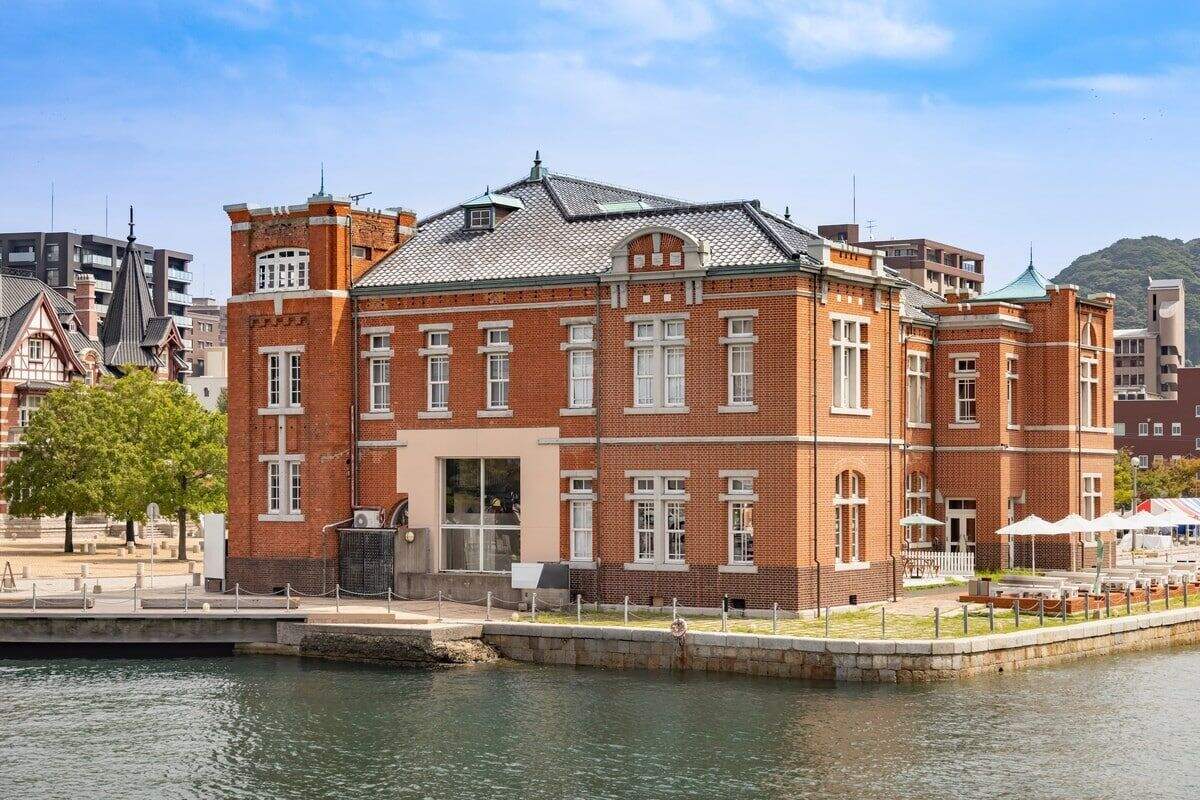
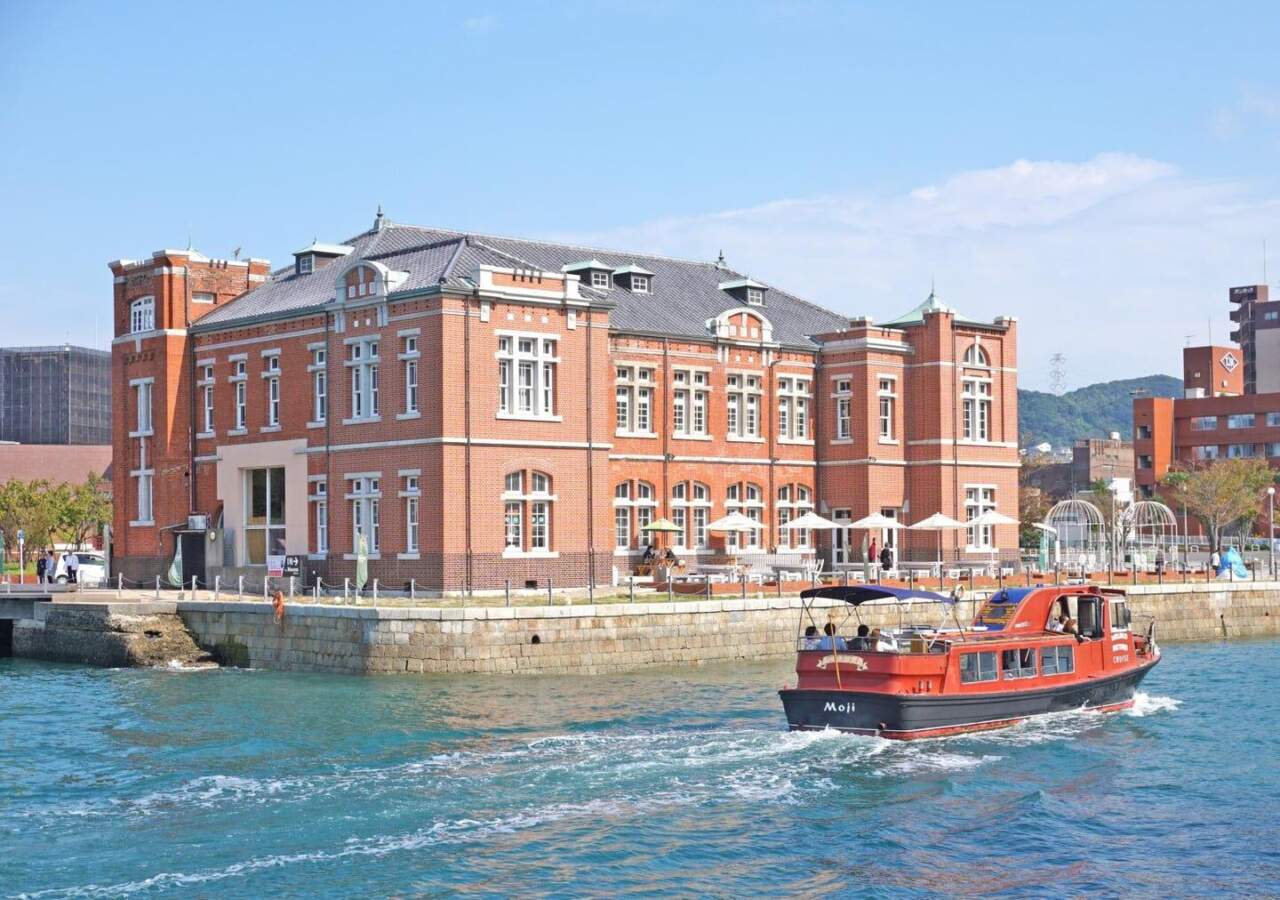
Built in 1912 (Meiji 45), this two-story red-brick building was originally the customs house of Moji. It sat idle after being retired in the early Showa era and was restored to its original appearance and opened to the public in 1994. Its exterior is classic Neo-Renaissance, with red brick walls and white decorative bands, one of the best buildings to photograph in the retro district.
The first floor has an exhibition room and rest space introducing Mojiko’s customs and trade history, plus a cafe famed for fresh fruit parfaits, a popular refueling stop on a walk. The third floor is an observation room overlooking the harbor. It is free to visit. Plan 30 to 45 minutes, and the red-brick facade lit up at dusk has a special charm.
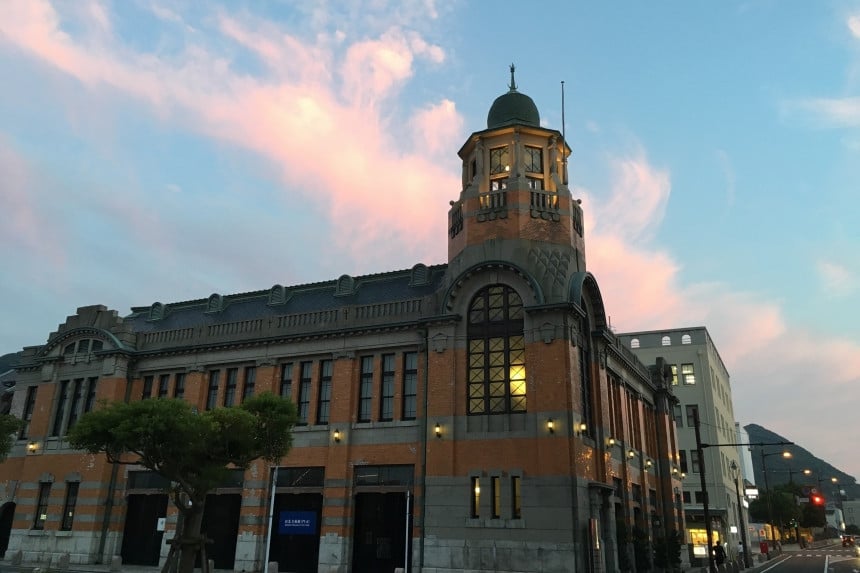
Old Osaka Shosen Building: Orange Walls and an Octagonal Tower, a Harbor Landmark
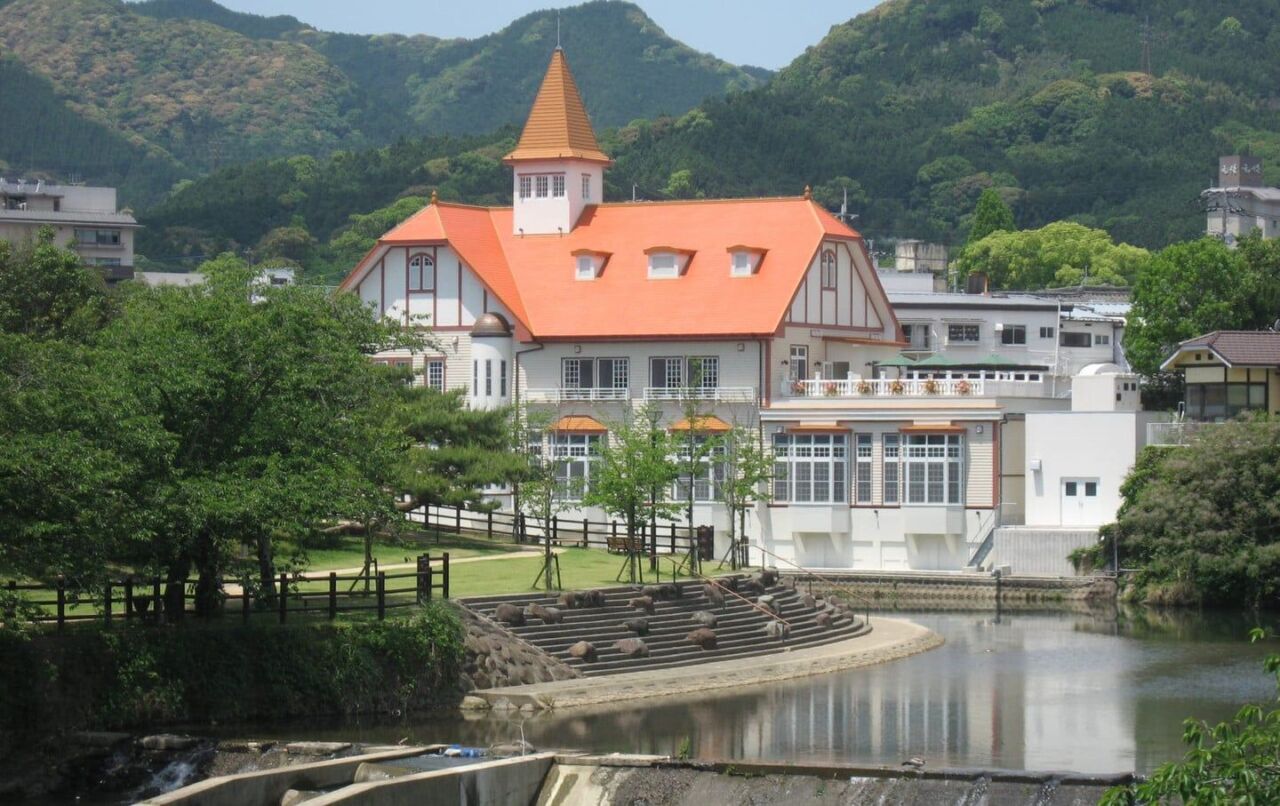
Built in 1917, this two-story wooden Western-style building has bright orange tiled walls and a signature octagonal tower. In the Taisho era it was the Moji branch of the Osaka Shosen company, with a first-floor waiting hall for routes to China, and the tower doubled as a lighthouse.
Inside is the “Seizo Watase and the Sea Gallery,” themed on works by Kitakyushu-born illustrator Seizo Watase, which charges admission of ¥150 for adults and ¥70 for elementary and junior high school students. There is also a maritime information desk and exhibition space that you can enter free. The building is designated a tangible cultural property of Kitakyushu, and the classic shot is the tower together with the harbor basin from the waterfront promenade. 20 to 30 minutes is enough.
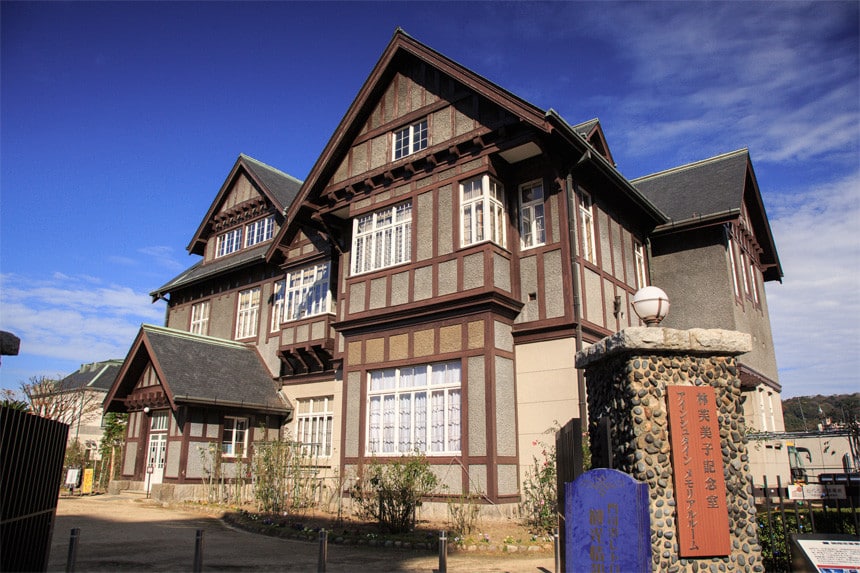
Old Moji Mitsui Club: The Half-Timbered Mansion Where Einstein Stayed
Built in 1921 by Mitsui & Co. as a guest house, it uses traditional European half-timbered construction, with white walls and dark timber framing that stand out among Mojiko’s red-brick buildings. It is now a national Important Cultural Property and in 1990 was moved from its original site to directly opposite Mojiko Station.
Albert Einstein and his wife stayed here during their visit to Japan in 1922. The second floor preserves their room as the “Einstein Memorial Room,” and the same floor has a memorial room for Fumiko Hayashi, a writer from Mojiko. The first floor is a restaurant where you can try fugu (pufferfish) dishes and yaki-curry. The second-floor exhibits charge about ¥150 for adults, and we suggest 30 minutes. Incidentally, about an 8-minute walk away is Sangiro, a three-story wooden ryotei restaurant built in 1931, whose large banquet hall “Hyakujojiki” (100-mat room) is open to visit free when not in use, one of the largest surviving wooden ryotei in Kyushu.
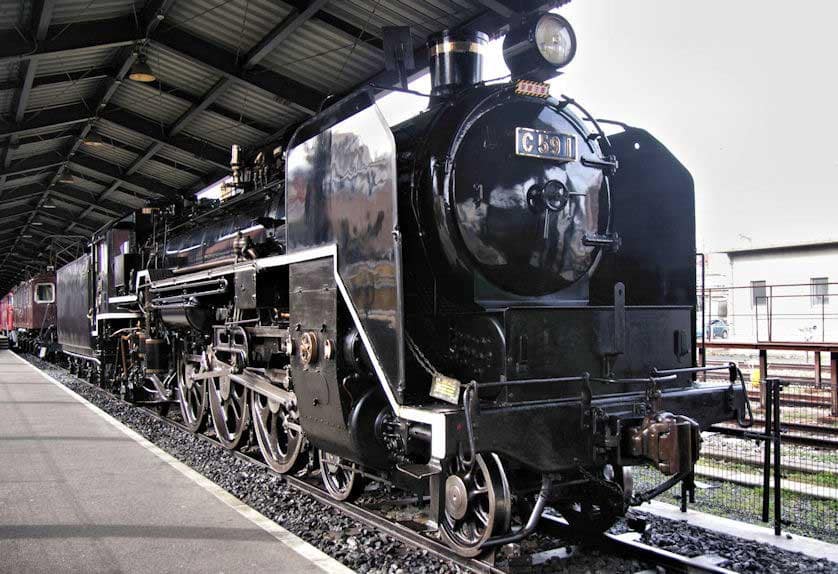
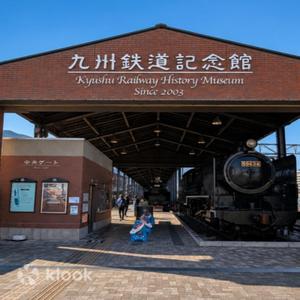
Kyushu Railway Memorial Museum: A Railway Haven Where You Can Drive a Miniature Train
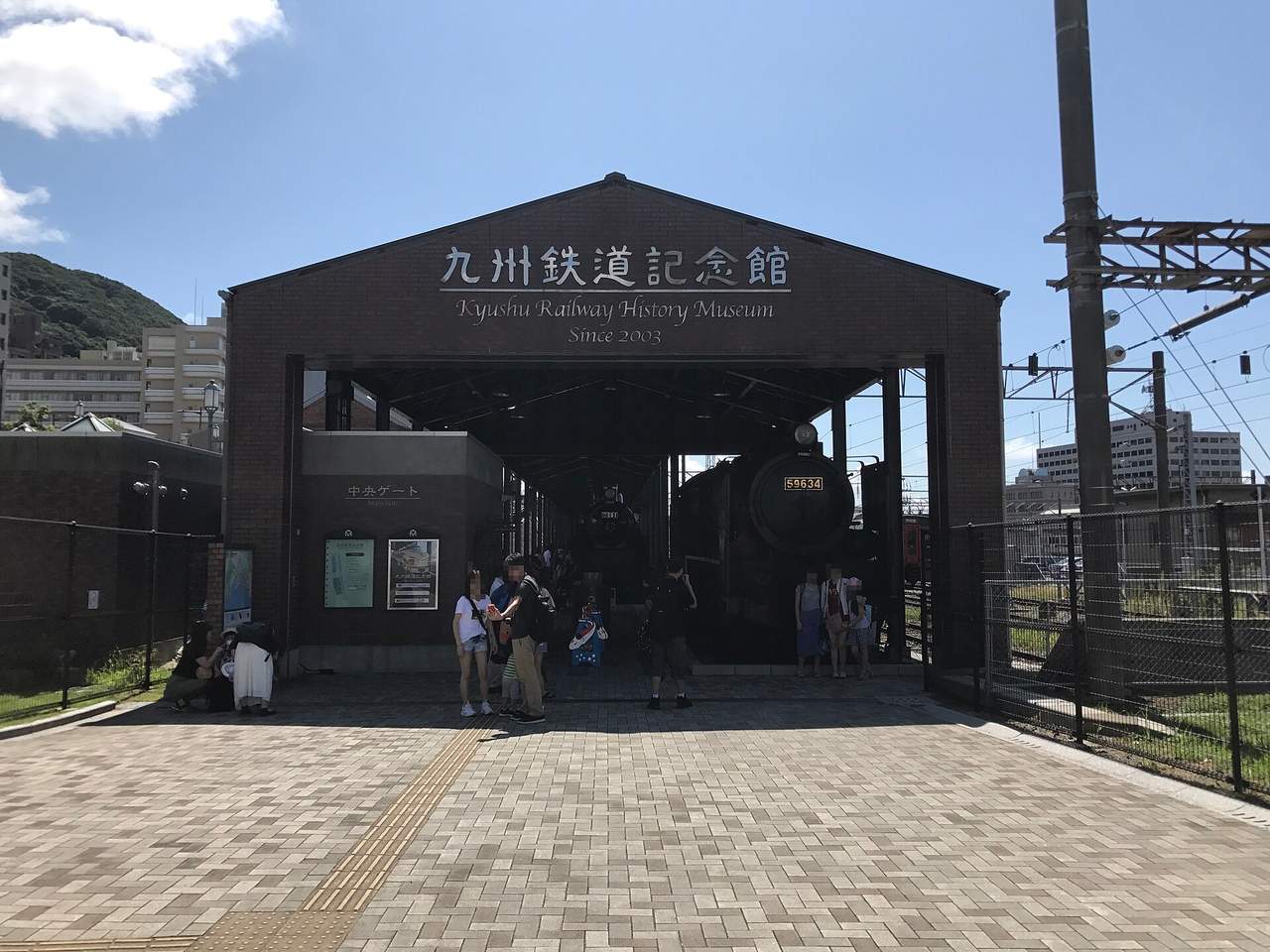
Converted from the red-brick former headquarters of the Kyushu Railway Company built in 1891, this is Kyushu’s most complete railway-themed museum. The outdoor display yard holds several retired steam locomotives and sleeper cars, most of which can be entered, so you can sit in the old berths and driver’s seats.
The main hall traces the development of Kyushu’s railways from the Meiji era to today, and also has a large railway model theater. The most popular attraction is the outdoor miniature railway park, where children can drive a scaled-down Kyushu limited express around a loop themselves. Admission is ¥500 for adults and ¥250 for junior high school students and younger (from April 2026, buying with a JR Kyushu SUGOCA gives a 20% discount). Hours are 9:00 a.m. to 5:00 p.m. (last entry 4:30 p.m.), with about 10 irregular closure days a year. Plan 60 to 90 minutes.
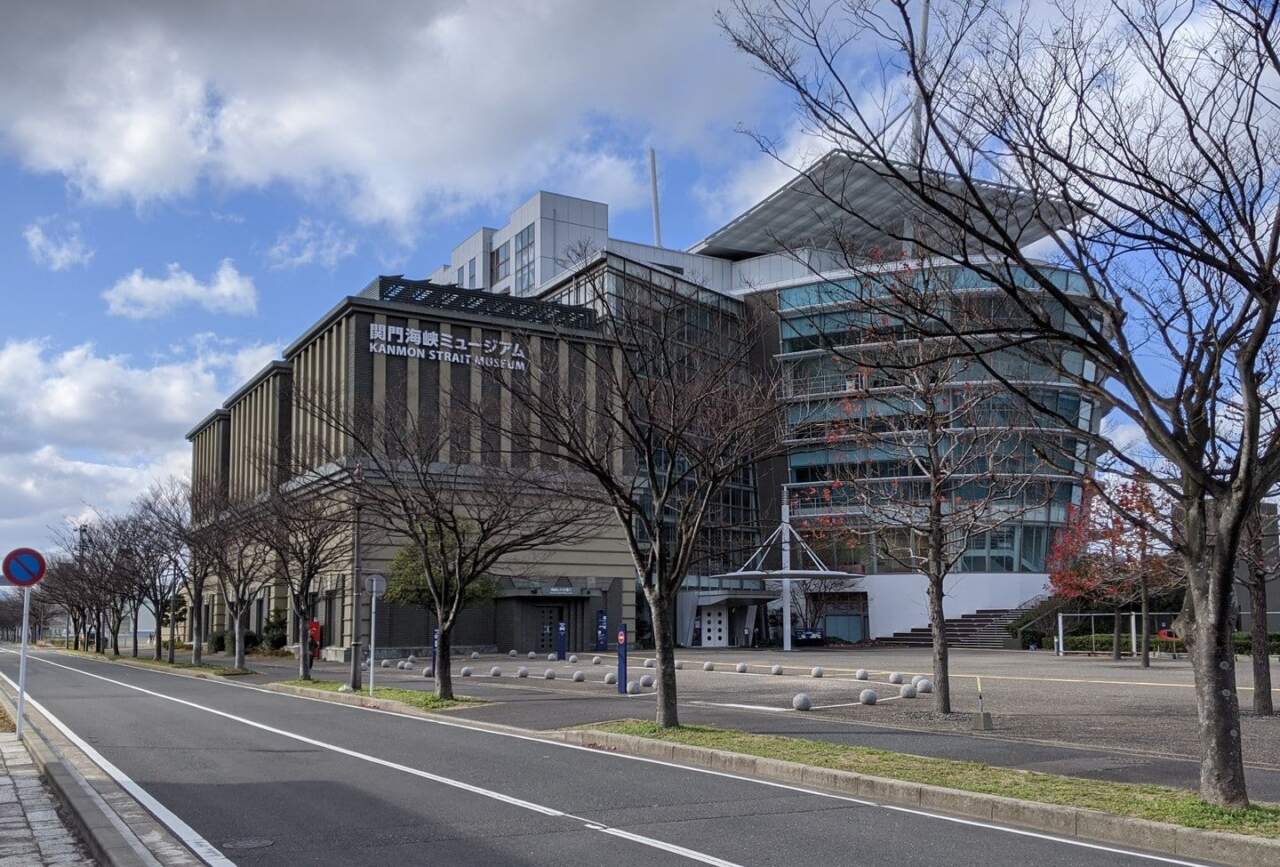
Kanmon Strait Museum: A Strait-Themed Museum Recreating a Taisho Streetscape
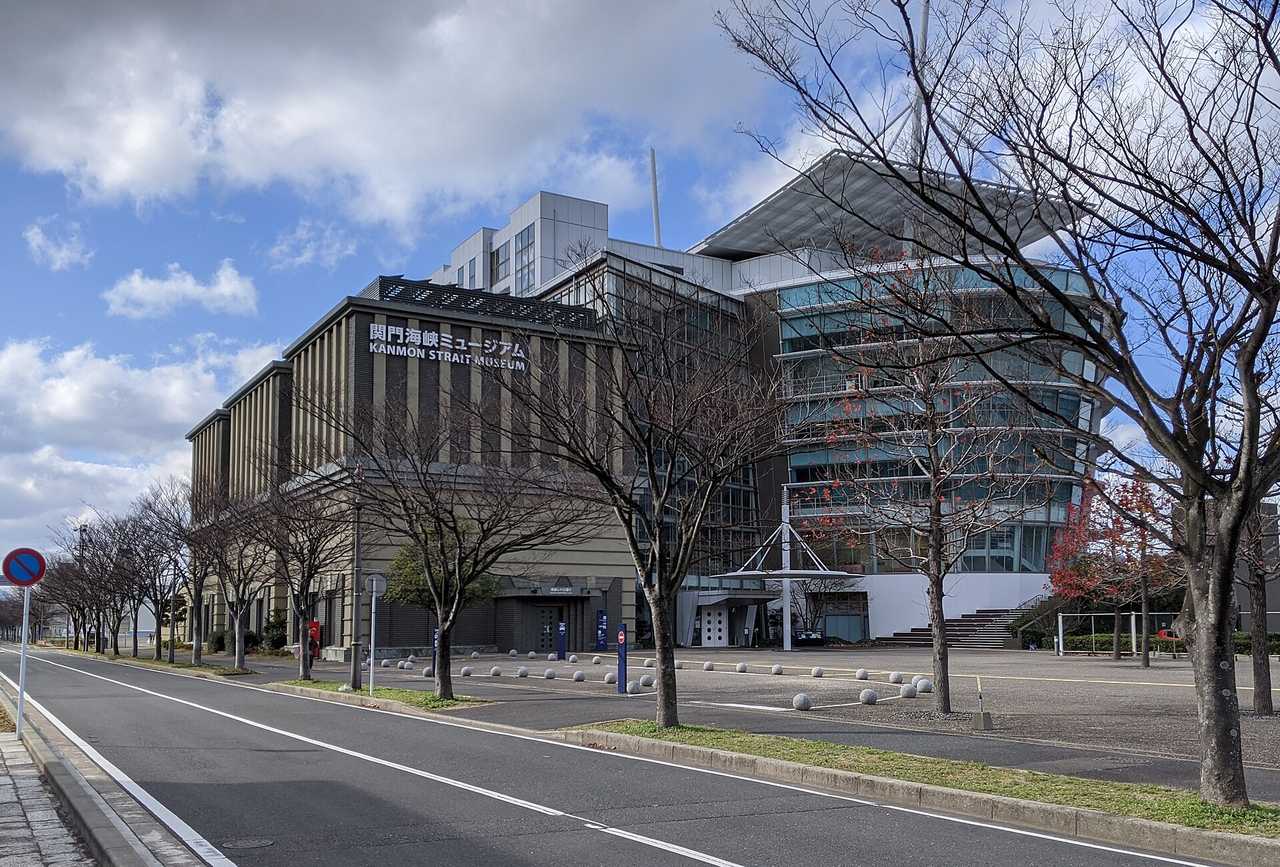
Also known as “Kaikyo DRAMASHIP,” it explains the history and maritime culture of the Kanmon Strait through exhibits, video, music and dining. The biggest highlights are the three-story-tall giant screen of the “Kaikyo Atrium” and the “Kaikyo Retro Street,” which recreates a Taisho-era Mojiko streetscape indoors so completely that walking in feels like stepping back a century into a shopping street.
The museum also has a navigation simulator where you can operate a large ship, and an exhibit on the Battle of Dannoura in the Genpei War. Note that the observation deck, cafe and “Kaikyo Retro Street” are all free to enter, and only the main exhibition area needs a ticket, ¥500 for adults and ¥200 for elementary and junior high school students. It is open 9:00 a.m. to 5:00 p.m. (last entry 4:30 p.m.), about a 5-minute walk from JR Mojiko Station. Plan more than 60 minutes.
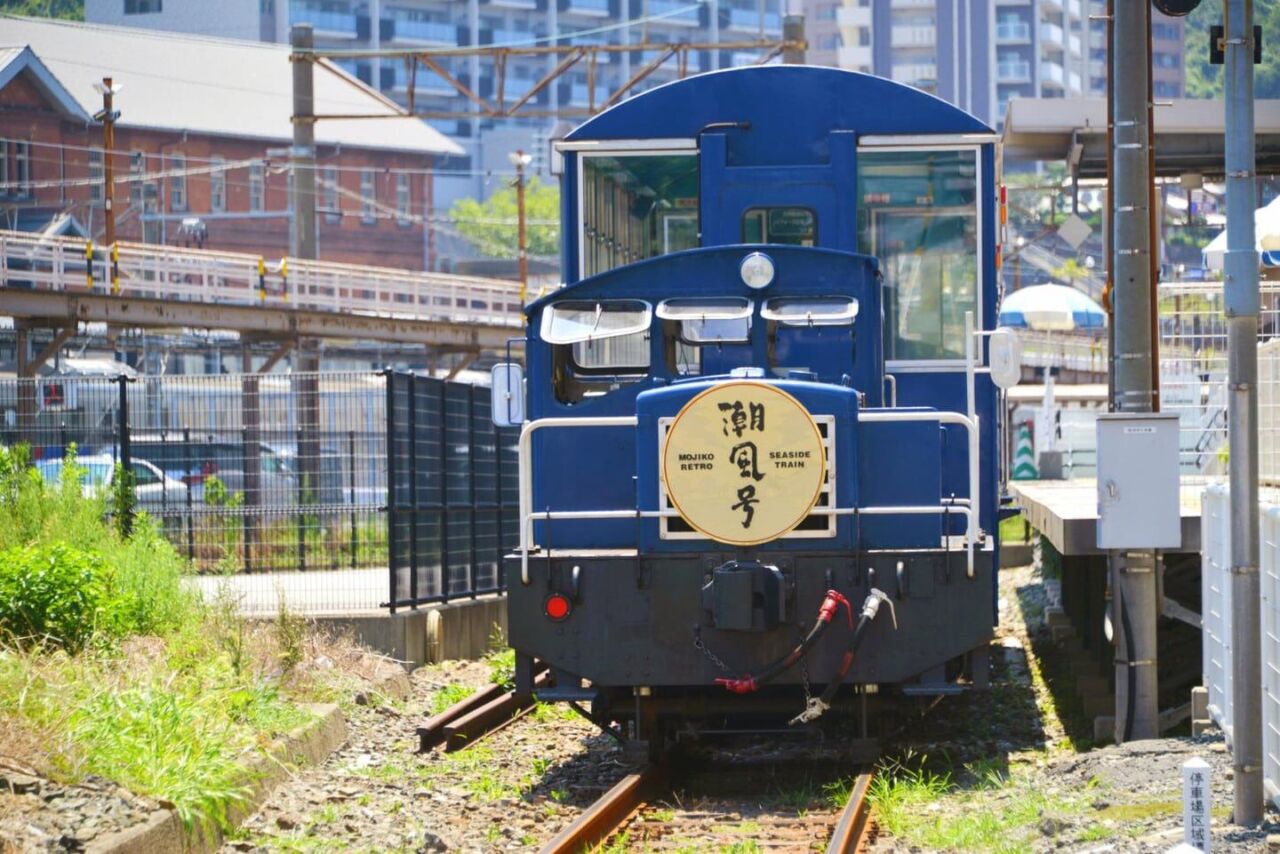
Mojiko Retro Sightseeing Train Shiokaze: Japan’s Slowest and Shortest Tourist Train
This sightseeing train connects the retro district with the Mekari area beside the Kanmon Strait. The line is about 2.1 kilometers long, with a one-way ride of about 10 minutes at a speed of only about 15 km/h, billed as the slowest and shortest sightseeing train in Japan. Its two blue cars depart from Kyushu Railway Memorial Museum Station, stopping at Idemitsu Museum Station and Norfolk Plaza Station, and terminate at Kanmon Strait Mekari Station.
The line hugs the coast, and the view is most striking when passing directly under the Kanmon Bridge. An onboard guide plays along the route. A one-way fare is ¥500 for adults and ¥250 for children. Note especially that Shiokaze does not run on weekdays. According to the 2026 operating calendar (April 2026 to March 2027) on the official website, it mainly runs on Saturdays, Sundays and national holidays all year (suspended January 1 to 3), and runs every day during April 1 to 5, Golden Week April 29 to May 10, the Obon period August 8 to 16, November 2 to 3, and March 29 to 31, 2027.
As for times, per the official timetable, the downbound trains (Kyushu Railway Memorial Museum Station to Kanmon Strait Mekari Station) start at 10:00 a.m., then run about every 40 minutes, with the last at 4:40 p.m.; the upbound trains (Mekari Station to Kyushu Railway Memorial Museum Station) start at 10:20 a.m., with the last at 5:00 p.m. Every Saturday there is also an extra evening “Yugure Torokko” service, so check the official announcements for the months and number of trips. Tickets are sold at Kyushu Railway Memorial Museum Station and Kanmon Strait Mekari Station. If you want to get off midway and ride more, you can buy the “1-Day Free Ride Ticket” (¥1,000 for adults, ¥500 for children, with discounts if you show a Kyushu Railway Memorial Museum entry ticket or a JR Kyushu Rail Pass). JR tickets are not valid on it, and each adult may bring 2 preschool children free.
How to Ride the Mojiko Train: Shiokaze Boarding Rules and Official Website
The official website for the Mojiko train “Shiokaze” is retro-line.net. It runs on Saturdays, Sundays and national holidays and not on weekdays, so confirm on the website before you go. Seating is unreserved and passengers board in order, and individual travelers cannot book in advance, so to ride it we suggest arriving early and queuing at Kyushu Railway Memorial Museum Station. The line has four stations in all: Kyushu Railway Memorial Museum, Idemitsu Museum, Norfolk Plaza and Kanmon Strait Mekari, and a round trip takes about 30 minutes.
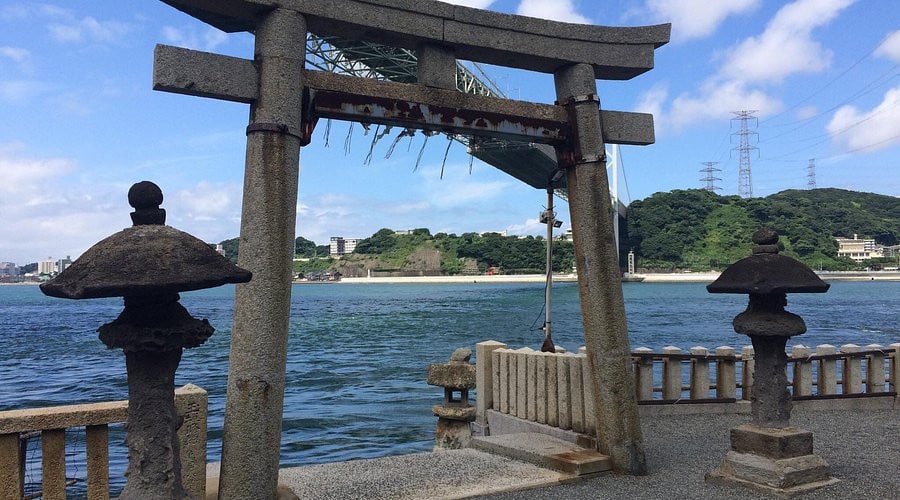
Mekari Shrine: An Ancient Kyushu Shrine on the Strait Shore with a Night-Lit Torii
This old shrine sits right under the Kanmon Bridge, hugging the shore of the strait. Tradition says it was founded in the 9th year of Emperor Chuai (AD 200), making it one of Kyushu’s shrines with the longest history. Its principal deity is Himegami, long regarded as the guardian of sea travel and tides. The most famous scene in the grounds is the torii standing in the sea, which at high tide is surrounded by water at its feet, with the huge Kanmon Bridge behind it.
Every year before dawn on the first day of the old lunar calendar’s first month, the “Mekari Shinji” ritual is held, in which a priest goes into the sea to cut mekari (wakame seaweed) as an offering to the deity. It is a Fukuoka Prefecture-designated intangible folk cultural property. The shrine office offers amulets for sea safety and traffic safety, and also issues goshuin. It is a short walk from the Shiokaze terminal station, and we suggest 20 to 30 minutes.
Mekari Park and the Kanmon Bridge: The Best Spot to Look Up at the Sea-Crossing Bridge
This park runs along the strait shore directly beneath the foot of the Kanmon Bridge, which opened in 1973 and is 1,068 meters long. It is the closest place in all of Kyushu to look up at this sea-spanning suspension bridge, and an excellent spot to photograph the Shimonoseki cityscape across the strait.
Walking uphill from the park brings you to the observation deck at the summit of Mt. Kojo, with a view over the Kanmon Strait, the Kanmon Bridge and central Mojiko at once, and on a clear day the view reaches Suo-nada. After dark the Kanmon Bridge is lit up, its light bands reflected on the water, another classic angle on Mojiko’s night view. The park is free. We suggest taking Shiokaze to the terminus and walking from there, staying 30 to 40 minutes.
Kaikyo Plaza and the Banana Man Statues: A Harborside Mall for All Your Souvenirs
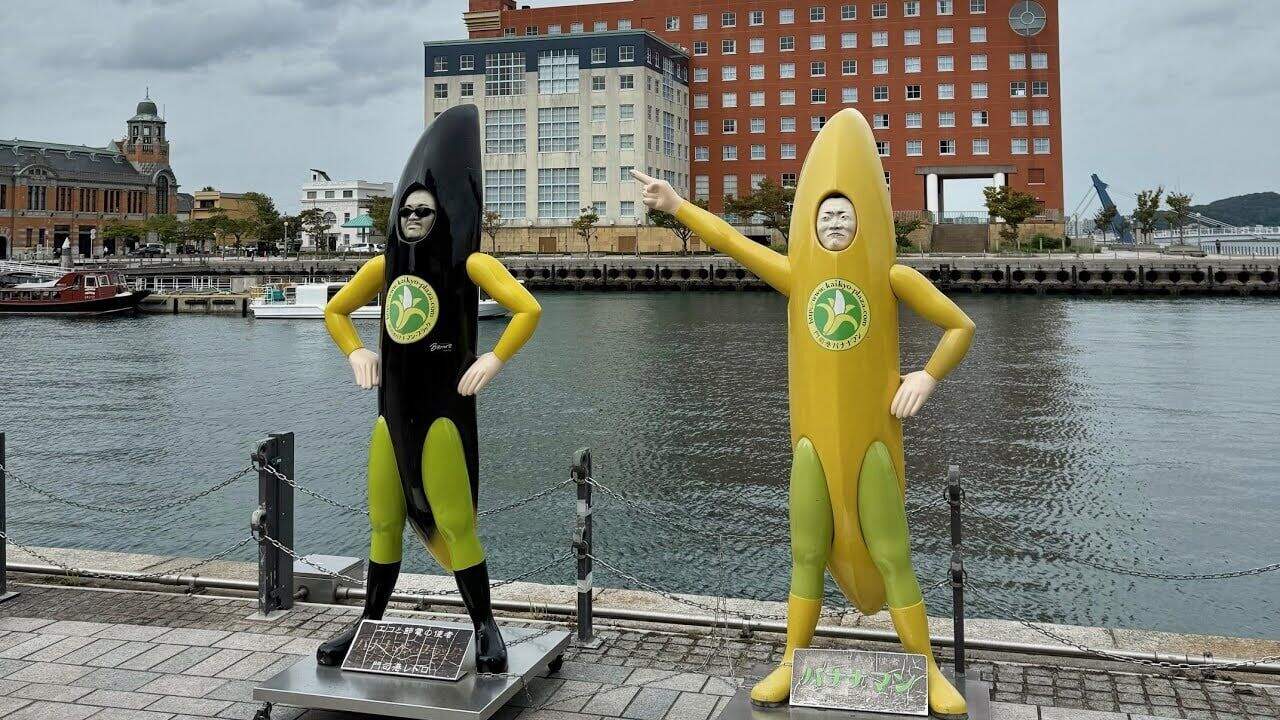
This two-story waterfront shopping mall next to JR Mojiko Station and the harbor basin has souvenir shops, general stores, conveyor-belt sushi and a range of restaurants, the most convenient place in Mojiko to pick up gifts. Mojiko was once the hub for importing Taiwanese bananas into Japan and the birthplace of the “banana sale” street performance. Inside and outside the mall you can buy local-only items such as banana cake, banana beer and banana pudding, as well as the very popular Mojiko Retro maple waffles of recent years.
The black and yellow “banana man” statues outside the mall are one of Mojiko’s must-photograph landmarks. On weekend afternoons the nearby “Minatoya” local products hall often hosts lively banana-selling performances in which the vendor keeps shouting the price lower and lower, full of atmosphere. The mall is open all year with no admission fee, and we suggest 40 to 60 minutes for shopping and a meal.
How Much Does Mojiko Retro Cost? Tickets, Combo Passes and Tours
Most of Mojiko’s red-brick buildings are free to enter. What costs money is the three venues, the sightseeing train and the cross-strait ferry, and combination tickets give the best value.
| Item | Adult price (reference) | Suggested stay |
|---|---|---|
| Mojiko Retro Observation Room | ¥300 | 40 to 60 minutes |
| Kyushu Railway Memorial Museum | ¥500 | 60 to 90 minutes |
| Kanmon Strait Museum exhibition area | ¥500 | 60 minutes or more |
| Shiokaze (one way) | ¥500 | 10 minutes |
| Kanmon Strait Clover Pass | ¥1,000 | Half a day to a full day |
Kanmon Strait Clover Pass: One Ticket for a Loop Between Kyushu and Honshu
This combination ticket, launched jointly by transport operators along the Kanmon Strait, was repriced from January 10, 2026 to ¥1,000 for adults and ¥500 for children (previously ¥800 / ¥400). It lets you ride once each on the sightseeing train Shiokaze, the Sanden Bus on the Shimonoseki side (Mimosusogawa to Karato) and the Kanmon Kisen ferry (Shimonoseki Karato to Mojiko). After the revision the Nishitetsu Bus (in front of Mojiko Station to Mekari) no longer applies, so between Mojiko and Mekari the pass can only be used on days Shiokaze runs. It makes a full loop around the Kanmon Strait and is the best-value ticket in Mojiko.
With the pass you can plan a classic loop: take Shiokaze from Kyushu Railway Memorial Museum Station to Kanmon Strait Mekari Station, then walk the Kanmon Tunnel pedestrian passage, 780 meters long and 60 meters beneath the seabed, to cross on foot from Kyushu into Yamaguchi Prefecture on Honshu. After the tunnel, visit Akama Shrine and Karato Market in Shimonoseki, and finally take the Kanmon ferry from Karato Pier, a 5-minute crossing back to Mojiko.
This saves several hundred yen compared with buying each leg separately and avoids repeated queuing for tickets, suiting travelers who set aside a whole day and want to set foot in both Kyushu and Honshu. Tickets are mostly sold at the tourist information office near Mojiko Station and at the Shiokaze ticket counter. On weekdays when Shiokaze does not run the pass is not very useful, so confirm the operating days before you buy.
Shiokaze Plus Kanmon Ferry: The Easiest Way to Cross the Strait
If you would rather not take on the 780-meter undersea tunnel on foot, you can use a combination where you have a seat the whole way. First buy a one-way Shiokaze ticket (¥500 for adults, ¥250 for children) from Kyushu Railway Memorial Museum Station to the terminus at Kanmon Strait Mekari Station. The line hugs the coast, and the view is most striking passing directly under the Kanmon Bridge, with an onboard guide along the route.
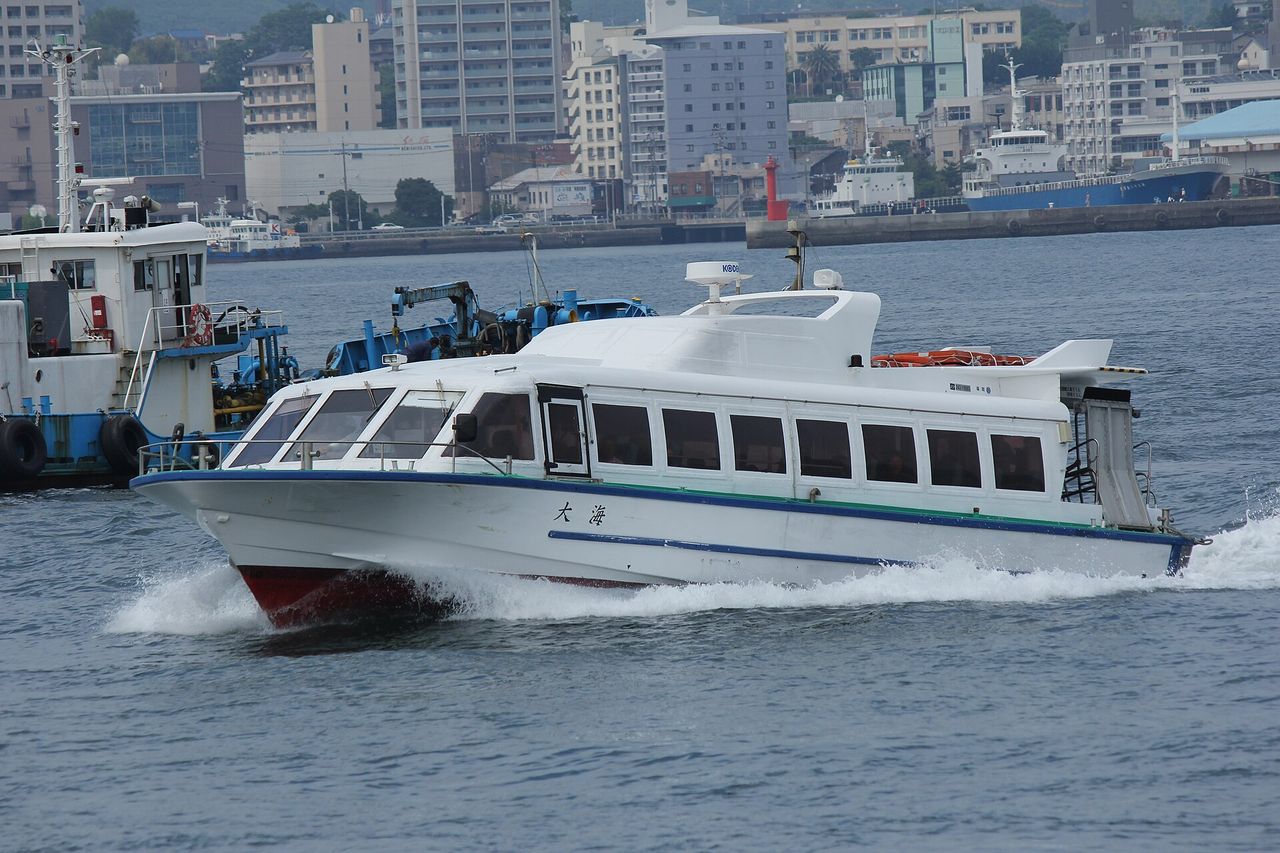
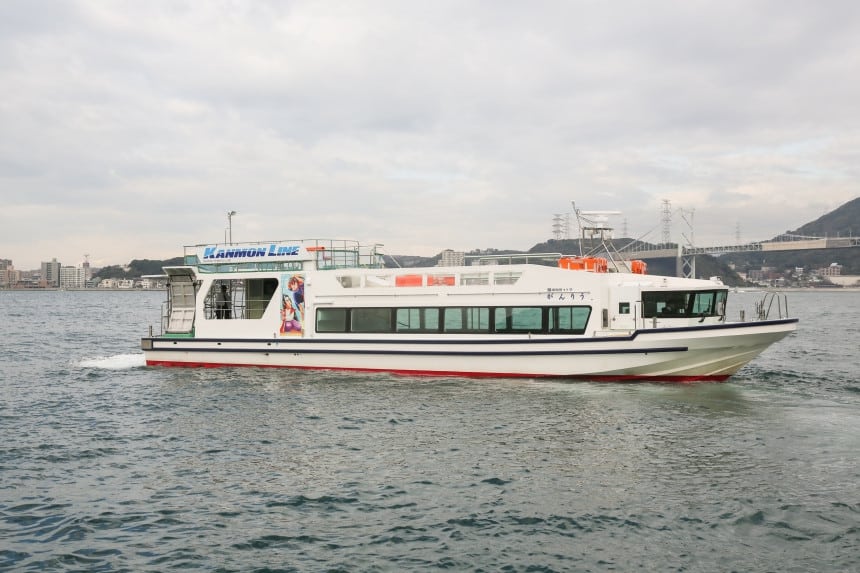
After seeing the Kanmon Bridge and Mekari Shrine, return to Mojiko, then take the Kanmon ferry from Mojiko Pier to Shimonoseki Karato, a crossing of about 5 minutes and about ¥400 one way. This voyage gives you the best view from the water of the Kanmon Bridge and the skyline of Mojiko’s red-brick buildings.
Ferries run about every 20 to 30 minutes, and the last one leaves earlier, so confirm the return time. This combination is best for those traveling with seniors, pushing strollers or with limited stamina, with no stairs and no long tunnel walk.
Mojiko Retro Observation Room Ticket: The Best-Value Time Is Around Sunset
About ¥300 for adults and about ¥150 for elementary and junior high school students, with an elevator straight up to the 31st floor of the Kisho Kurokawa-designed high-rise. It is Mojiko’s best-value paid attraction and the only high-altitude view over the whole retro district.
The observation room is about 103 meters above the ground, and the 270-degree windows take in the red-brick buildings, the Kanmon Strait, the Kanmon Bridge and the Shimonoseki cityscape across the water. The night view was selected as a “Japan Night View Heritage” site. The room has a cafe bar and seating, where you can order a drink and wait for the sky to darken.
For the best shots, enter 20 to 30 minutes before sunset and claim a window spot facing the Kanmon Bridge, and you can capture the sunset, the blue hour and the full night view, three kinds of light in one go. It stays open into the evening, making it the ideal last stop on a Mojiko itinerary.
Kanmon Strait Museum Ticket: A Century of Strait History in One Hour
Also known as “Kaikyo DRAMASHIP,” the exhibition area costs ¥500 for adults and ¥200 for elementary and junior high school students, open 9:00 a.m. to 5:00 p.m. (last entry 4:30 p.m.), about a 5-minute walk from JR Mojiko Station. It opens with the three-story giant screen of the “Kaikyo Atrium,” using video and music to recreate the shipping history of the Kanmon Strait and the Battle of Dannoura in the Genpei War.
The most popular part is “Kaikyo Retro Street,” which fully recreates a Taisho-era Mojiko streetscape indoors, with brick walls, signs and street lamps built as they were then. Walking in feels like stepping back a century into a shopping street, and it is also the best rainy-day backup. The museum also has a navigation simulator where you can operate a large ship.
The observation deck, cafe and the Taisho streetscape “Kaikyo Retro Street” can all be entered without a ticket, so if you only want photos you can look around without buying one. Plan 60 minutes or more, and families can allow 90 minutes. There is a dining area in the museum where you can have a meal too.
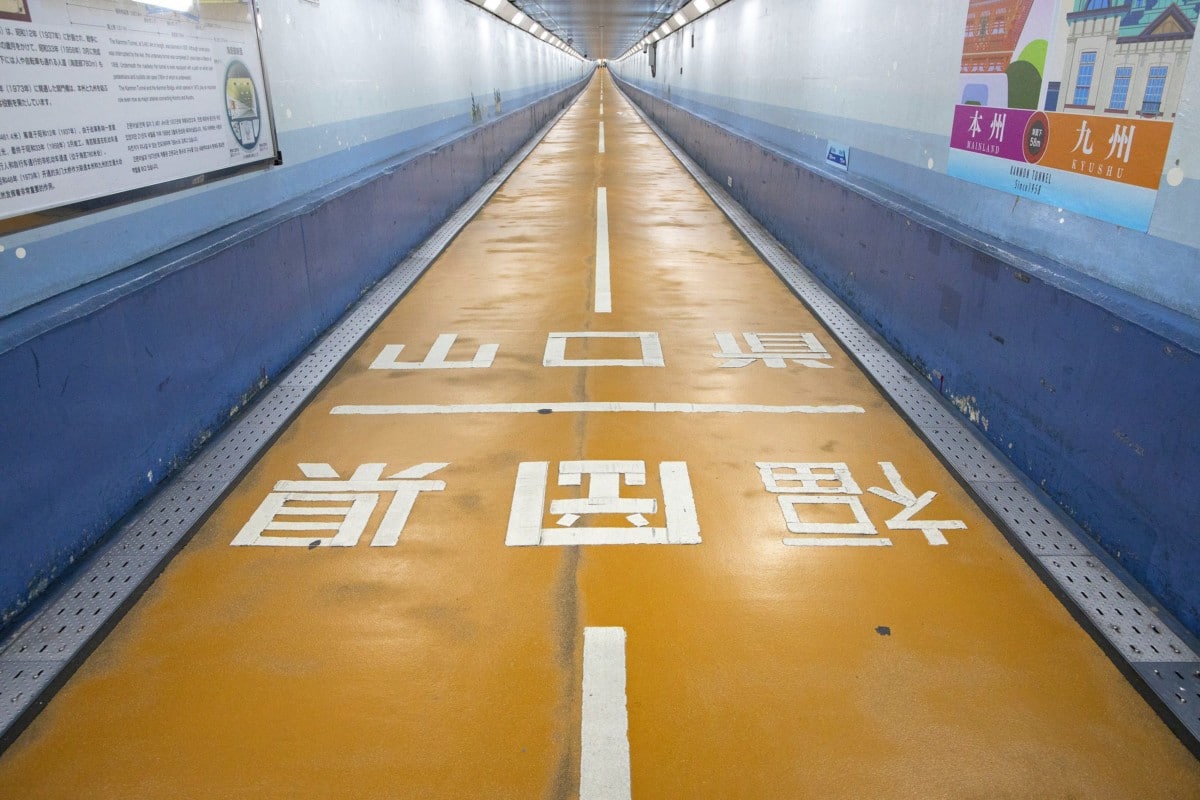
Walking the Kanmon Tunnel Across the Strait: From Kyushu to Honshu for Free
The Kanmon national highway tunnel linking Moji and Shimonoseki has two levels, with cars on the upper level and a pedestrian walkway on the lower. It is 780 meters long and runs about 60 meters beneath the seabed. Pedestrian passage is completely free (bicycles and motorbikes must be walked through and pay about ¥20).
In the middle of the tunnel floor, a marker shows the border between Fukuoka and Yamaguchi prefectures, the classic photo spot, and almost every visitor takes the “one foot in each prefecture” shot. The walk takes about 15 minutes. The tunnel has constant temperature, lighting and elevators, so even those with children or seniors can finish it.
The two entrances are near Mekari Park on the Moji side and Dannoura on the Shimonoseki side, open roughly 6:00 a.m. to 10:00 p.m. After the walk you can take the Kanmon ferry back to Mojiko from Shimonoseki Karato, the most rewarding and cheapest way to cross the strait.
Mojiko Day Trips and Private Car Tours: The Easiest Option from Fukuoka
If you don’t want to work out transfers yourself, you can join a Kitakyushu day tour departing from Hakata or Tenjin. Most itineraries combine the Mojiko Retro district, Kokura Castle and nearby sights, with a Chinese- or English-speaking guide throughout, and the on-board commentary fills in the historical context you would miss on your own.
Another option is a private car, which suits families with seniors, strollers or more luggage. You can adjust how long you stay at each stop to your energy level, and you needn’t worry about getting to Mekari Park on weekdays when Shiokaze doesn’t run.
Prices for both vary with group size, vehicle type and season, with clear rises in the cherry blossom and autumn leaf peaks, so compare and book early on travel platforms. If you simply want to save planning time, a group day tour is usually the most economical way to start.
Where to Stay Near Mojiko Retro: Convenient Places to Sleep
There are few places to stay in Mojiko itself, so nearby Kokura is the more practical base.

Mojiko or Kokura: Two Directions for Where to Stay
If you want to enjoy the night view and an early-morning harbor walk to the fullest, stay at a harbor hotel near Mojiko Station. Stepping outside puts you at the harbor basin and red-brick buildings, and you can go up to the observation room once more in the evening. The downsides are few rooms, easy sell-outs on weekends and fewer dining options after dark, so book at least two months ahead.
If your trip also includes Kokura Castle, Tanga Market or a Shinkansen onward to other prefectures, staying around JR Kokura Station is more flexible. Kokura is Kitakyushu’s transport hub, with plenty of business hotels across a full price range, and the JR ride to Mojiko takes only about 15 minutes, with trains running late into the night so there is no rush on the way back. For travelers with seniors or more luggage, choosing Kokura saves a lot of travel effort.
Mojiko Retro FAQ
Q: Do you need tickets for Mojiko Retro? About how much does it cost?
The retro district itself is free, and neither the red-brick buildings nor the harborside promenade charge admission. What costs money is the Retro Observation Room (¥300), the Kyushu Railway Memorial Museum (¥500) and the Kanmon Strait Museum (¥500), about ¥1,300 for all three.
Q: How do you get from Hakata to Mojiko? How long does it take?
Take the JR Kagoshima Main Line Rapid from Hakata Station for a direct ride to Mojiko Station without changing, about 1 hour 30 minutes and ¥1,730. Taking the Shinkansen to Kokura and transferring to JR takes about 50 minutes, with the Shinkansen unreserved seat at ¥2,160 plus the JR fare.
Q: Is half a day enough for Mojiko Retro?
About 3 hours is enough for just the station, Blue Wing Moji, the Old Customs House and Kaikyo Plaza. If you want to add the Kyushu Railway Memorial Museum, the Kanmon Strait Museum and Shiokaze, or cross the strait to Shimonoseki, plan a whole day.
Q: When does the Shiokaze train run?
In fiscal 2026 it mainly runs on Saturdays, Sundays and national holidays all year (suspended January 1 to 3, with winter weekends running as usual), and runs every day during Golden Week April 29 to May 10 and the Obon period August 8 to 16, but not on weekdays. The first train leaves Kyushu Railway Memorial Museum Station at 10:00 a.m., about every 40 minutes, a one-way ride of about 10 minutes at ¥500 for adults. Check the official operating calendar again before you go.
Q: What is the best time to visit Mojiko Retro? Is the night view worth waiting for?
We suggest arriving in the afternoon and going up to the Retro Observation Room 20 minutes before sunset. The night view here was selected as a Japan Night View Heritage site, with the Kanmon Bridge and the lights of Shimonoseki joined together, and it is well worth staying until dark.
Q: What are the must-eat and must-buy items in Mojiko?
The must-eat is yaki-curry, the local specialty born in the 1950s, and you can pick up a Yaki Curry Map at the tourist information office. The must-buys are banana-themed souvenirs such as banana cake and banana beer, all available at Kaikyo Plaza.
Q: Is Mojiko good for children?
Very much so. At the Kyushu Railway Memorial Museum you can step inside real train cars and even drive a miniature train yourself, and the Kanmon Strait Museum has large interactive exhibits. Both are indoors, so rain is no problem.