
Shikisai no Oka Guide 2026: Patchwork Flower Fields, Transport, Seasonal Highlights and Queue-Beating Tips: A Natural Color Palette on the Hills of Biei, Hokkaido
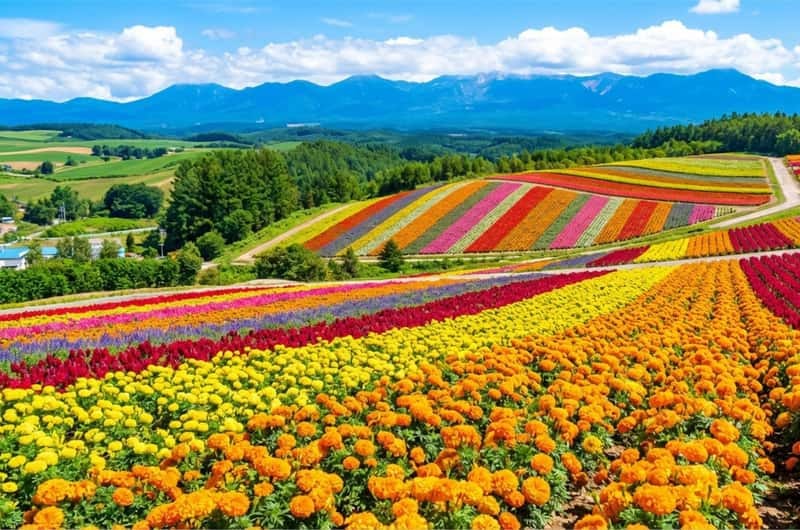
Shikisai no Oka is in Biei, Hokkaido, a naturally colorful flower field of about 15 hectares that covers an entire hill. Each season brings a completely different sea of flowers or snowscape, and you can take in the whole view in under 2 hours. It suits families, photography lovers and self-drive travelers looking for a must-visit stop in Biei.
Winter Snow Playground: A Different Face Beyond Summer Flowers
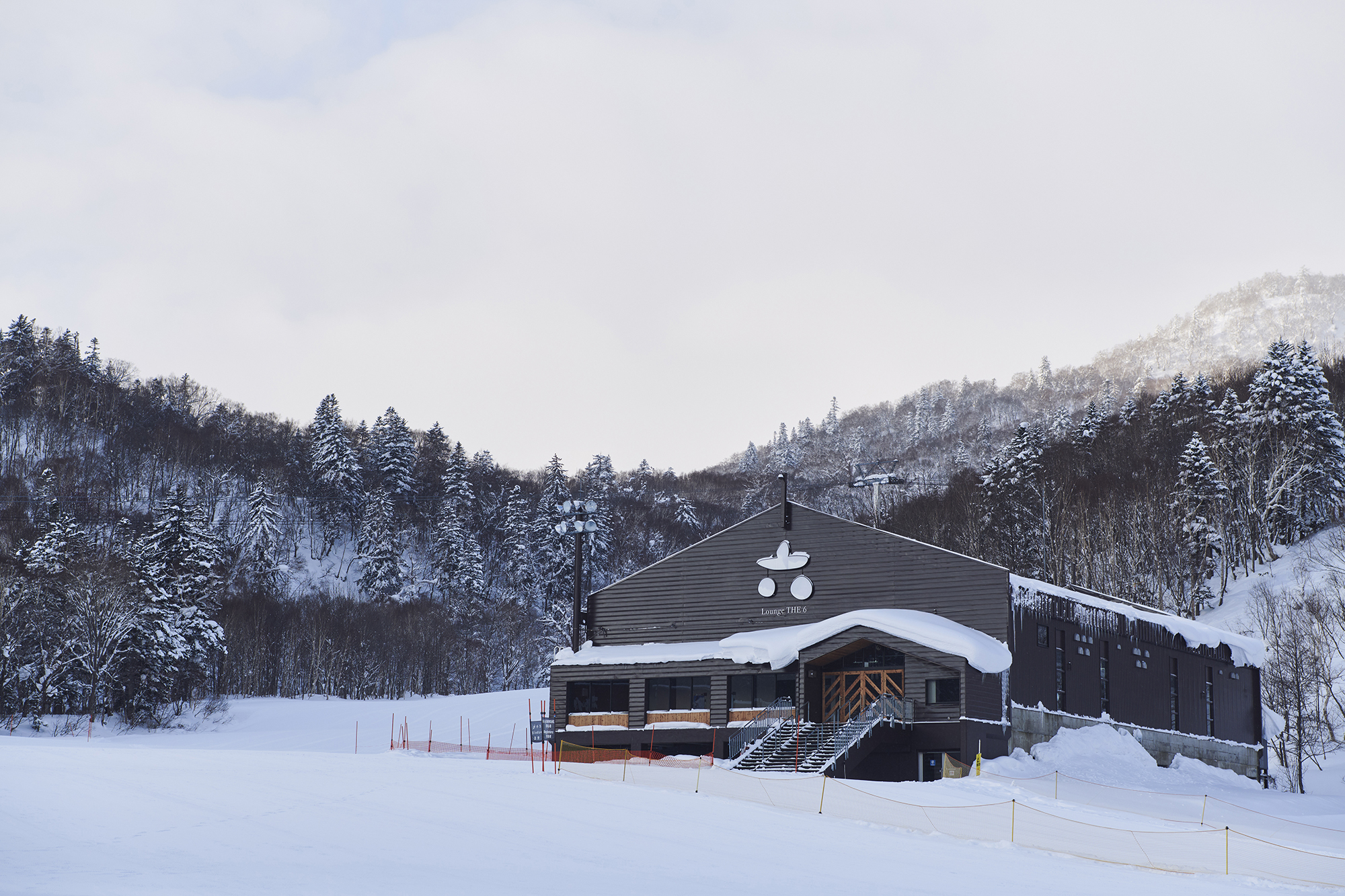
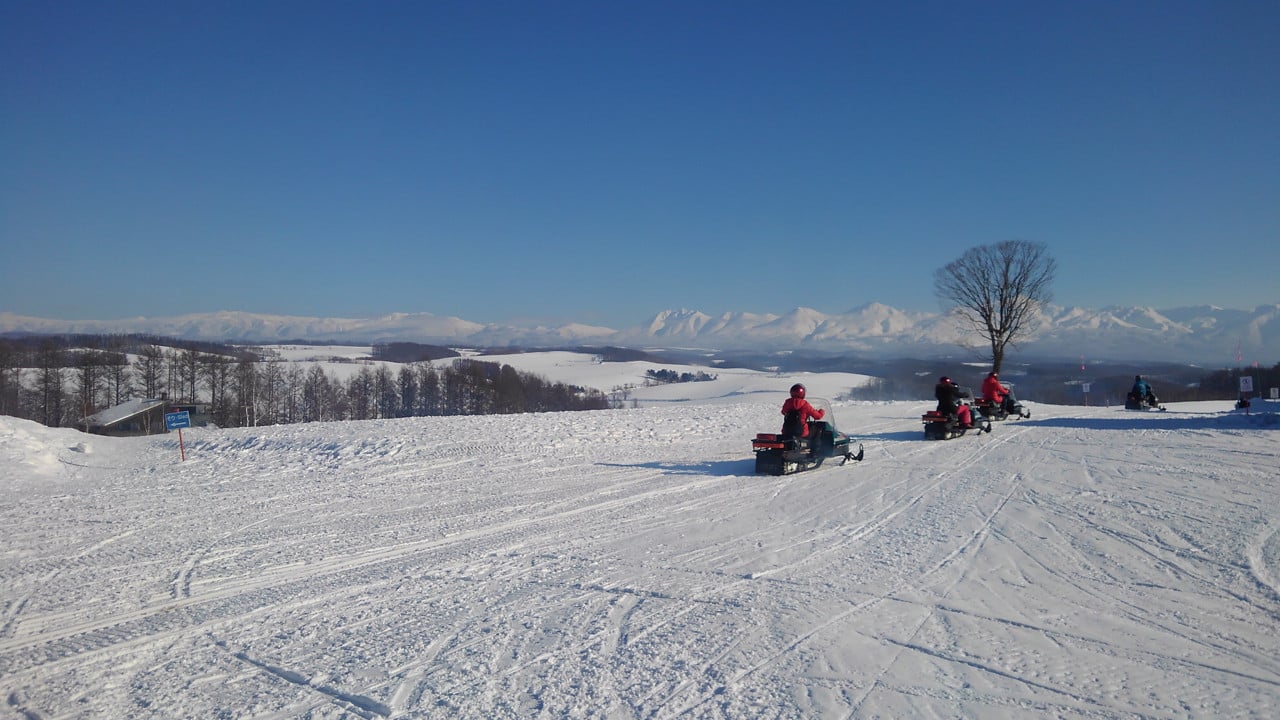
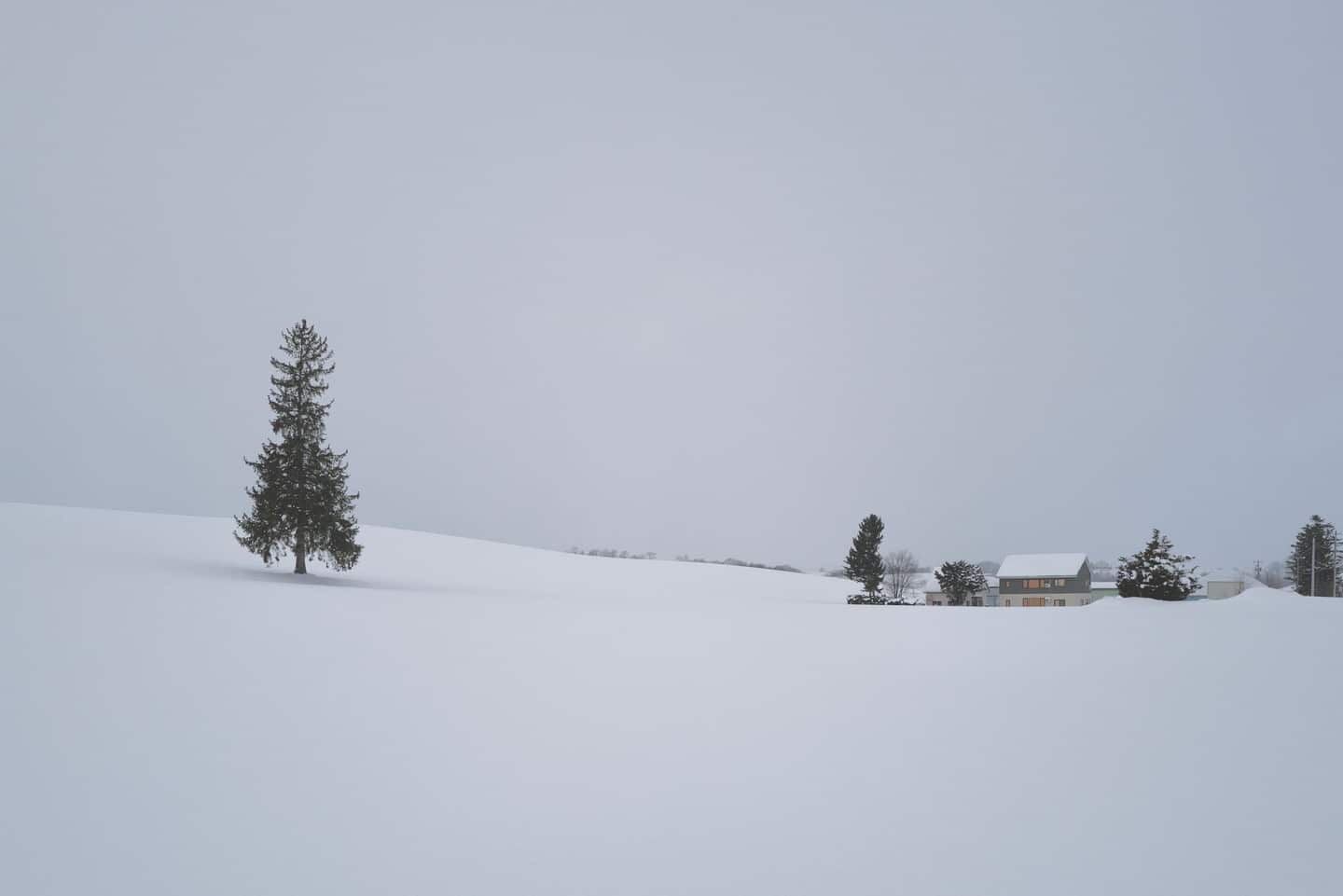
From December to March the fields are blanketed in white snow and turn into a silver playground offering snowmobiles, snow rafting and sledding, a worthwhile add-on when planning a Sapporo or Asahikawa trip.
How to Get to Shikisai no Oka: Transport, Costs and Tips for Avoiding Traffic at a Glance
Shikisai no Oka is at Shinsei Daisan, Biei, Hokkaido, in the heart of the Patchwork Road (パッチワークの路), with no convenience stores or public transport stops nearby, so how you get there directly affects how smoothly your trip goes. Below are the costs and practical tips for four main ways to reach it: driving, train connections, a sightseeing bus and taxi. Reading this before you go can save a lot of time stuck in queues and traffic.
Four Ways to Get There Compared
By car: it takes about 30 minutes from Asahikawa Airport and about 15 minutes from JR Biei Station. The car park holds 300 passenger cars and 30 large buses, and costs ¥500 per entry from June to September (cash only, and taxis must pay too). The downside is that the car park is often full around midday in the July lavender season, so arrive when the park opens at 8:40.
JR plus taxi: take the JR Furano Line to Biumaushi or Biei Station, then a taxi for about 10 to 15 minutes, costing about ¥1,500 to ¥2,000. This suits travelers who do not drive, but note that rural taxis are limited, so for the return trip ask the driver for a phone number or have the park’s information desk call a cab.
Biyu Bus: The Biei Tourist Association’s Reservation-Only Sightseeing Bus
The Biyu Bus is run by the Biei Tourist Association. In 2026 it operates on June 6, June 15 to 30, every day from July 1 to September 30, and on October 1 to 3 and October 9 to 12, departing from “Shiki no Johokan” next to JR Biei Station. Route A leaves at 9:40 a.m. and visits the Blue Pond, Shirahige Falls and Shikisai no Oka (about 45 minutes there); Route B leaves at 14:10 and goes to Shikisai no Oka first (about 40 minutes there). Adult fares start at ¥4,500 in June and October and ¥5,000 from July to September, and you must book on the official website between 90 days and 4 days before departure, until 17:00.
From Biumaushi to Shikisai no Oka: Walking, Cycling and Things to Note
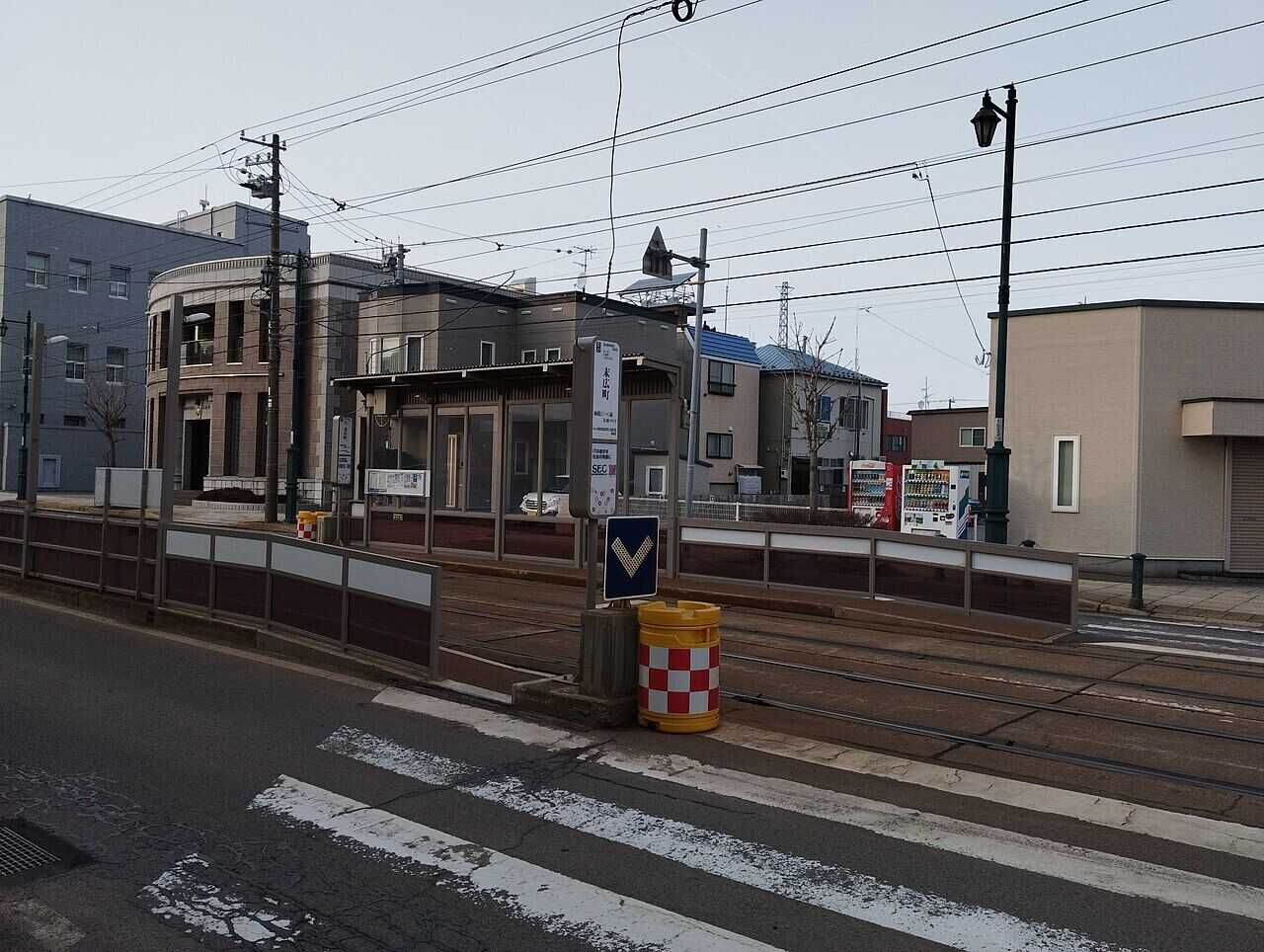
The nearest station listed on the Shikisai no Oka website is Biumaushi Station on the JR Furano Line, about a 25-minute walk from the station. Biumaushi is an unstaffed station with no ticket staff, so check JR Furano Line timetables for your return in advance. Trains are far apart, and missing one often means a long wait. The official site also says that visitors who get off at Biumaushi can reserve a rental bicycle from “Guide no Yamagoya” (ガイドの山小屋).
- 🚶 On foot: Biumaushi Station to Shikisai no Oka takes about 25 minutes, with ups and downs along the hills; in summer take care with sun protection and fluids.
- 🚲 By bicycle: you can reserve one from “Guide no Yamagoya” (ガイドの山小屋), good for travelers who want to explore the hills around the Patchwork Road.
- 🚌 If you would rather not walk: take the reservation-only Biyu Bus from JR Biei Station, or a taxi from Biei Station.



What to See at Shikisai no Oka: Seasonal Highlights and Nearby Attractions Explained
Patchwork Flower Fields: A Natural Canvas of Color Covering the Whole Hillside
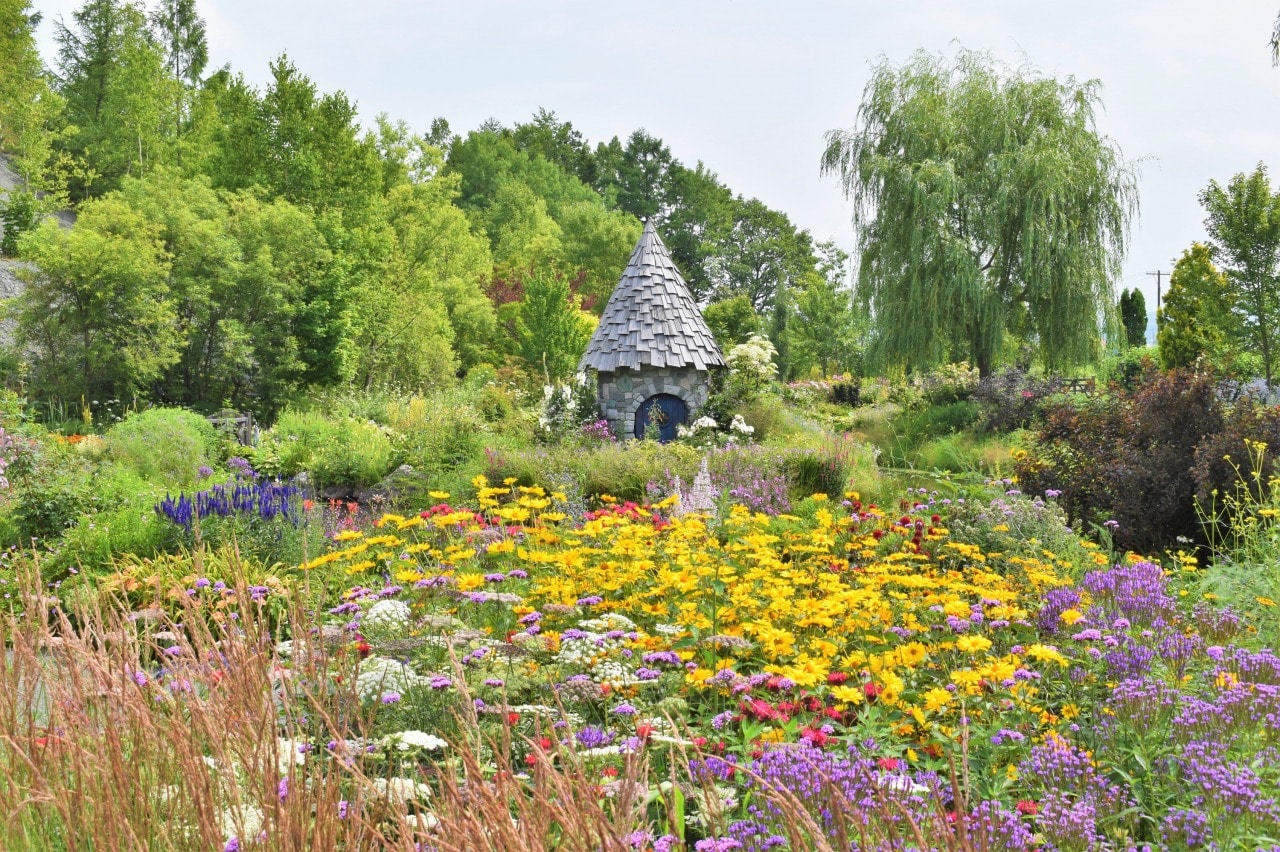
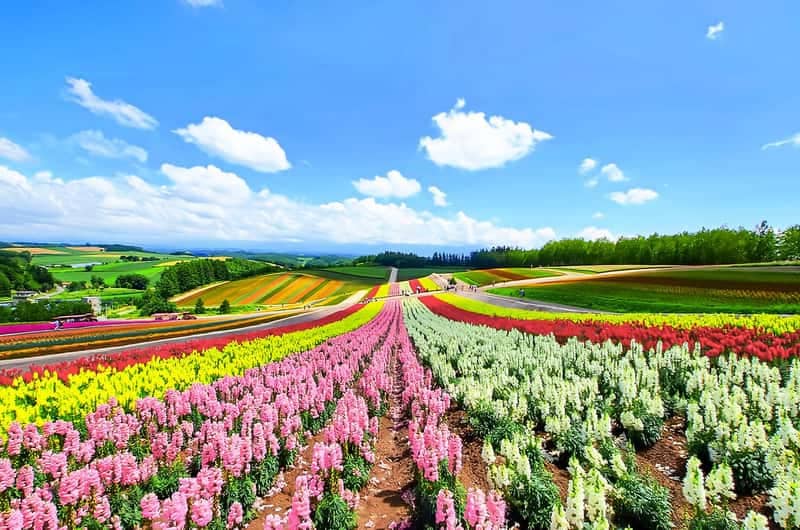
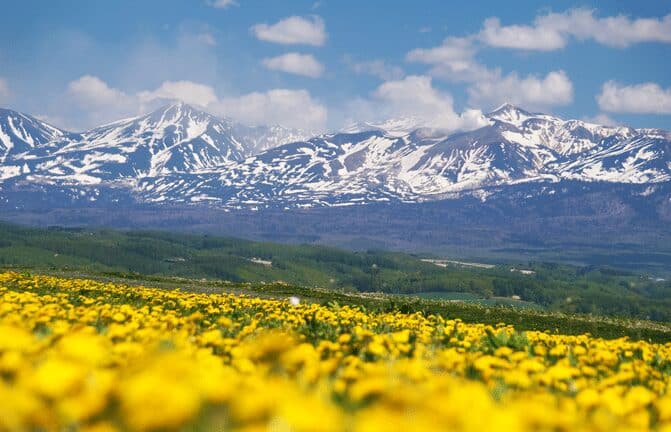
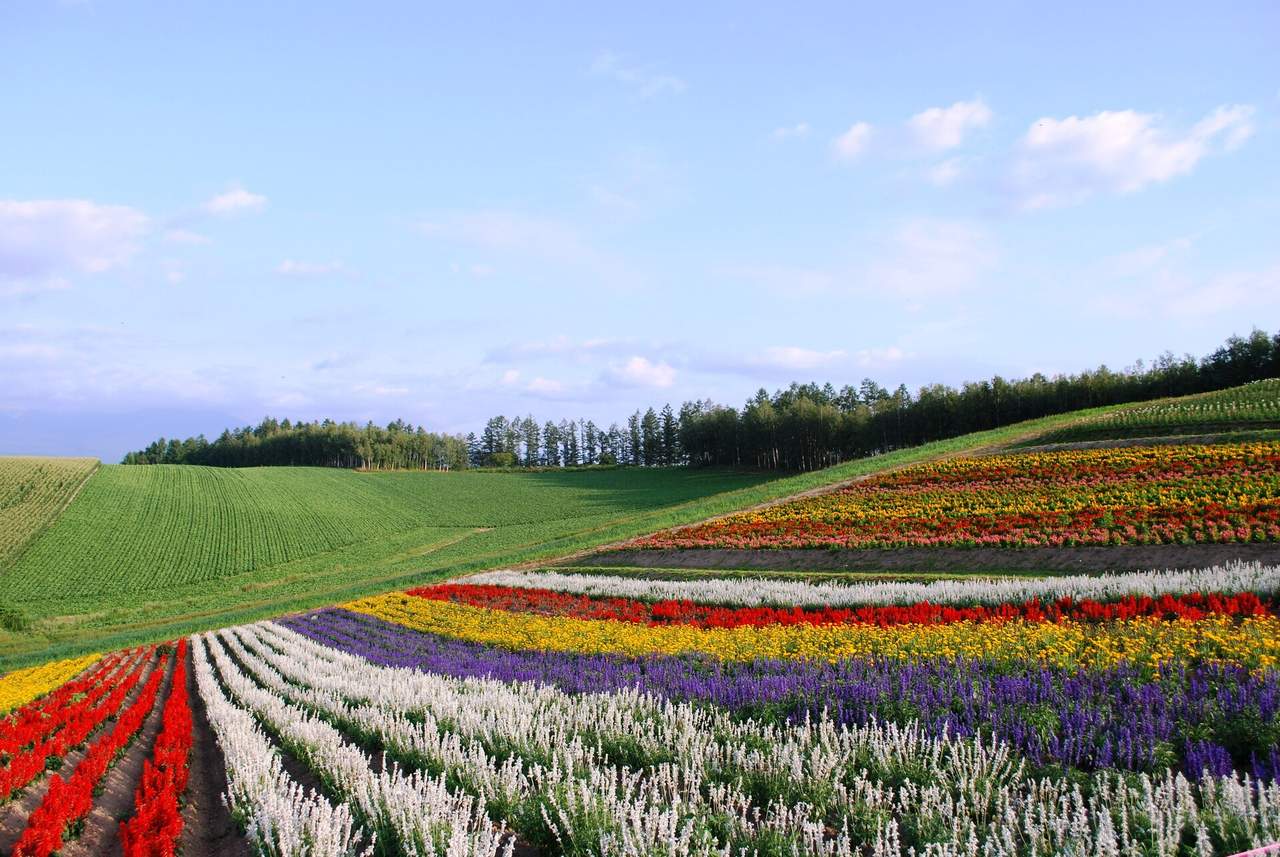
Shikisai no Oka covers about 15 hectares and is not a single flower bed. The entire hillside is dyed into a rainbow patchwork by dozens of flowers, including tulips, lavender, sunflowers, cosmos and salvia. Seen from above, the bands of color follow the rolling terrain, and with the Tokachidake mountain range in the distance as a backdrop, it forms one of Hokkaido’s most iconic flower landscapes.
Unlike Farm Tomita, where lavender is the star, the appeal of Shikisai no Oka is its “large scale and many colors.” The fields are larger and the colors richer, so even if you do not come in July or August when lavender is in bloom, you can still enjoy flowers in every color across the hillside. Plan at least 2 hours to wander and take photos.

Shikisai no Oka in Spring (April to May): A Prelude of Lingering Snow and Fresh Green
April and May are when Shikisai no Oka is just waking up. Tulips, pansies, grape hyacinths (ムスカリ) and rapeseed flowers bloom one after another, and some corners of the park also have soft pink cherry blossoms.
The flowers have not yet reached their summer vibrancy, but the Tokachidake range in the background still has snow, so snowy peaks, fresh green hills and pink blossoms share the same frame. It is a “lingering snow with spring flowers” scene that photographers love, and crowds are relatively thin, which suits travelers who like a quiet atmosphere.
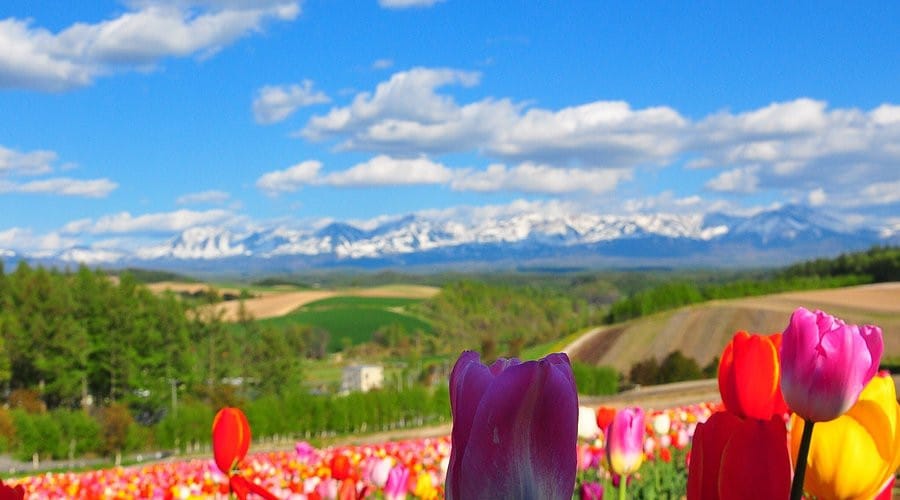
Shikisai no Oka in Early Summer (June): The Golden Window of Good Blooms Before the Crowds Arrive
June is the hidden season that insiders recommend. The end of tulip season hands off to summer flowers, with California poppies, salvia, catmint, nemophila and marigolds popping up one after another. The park gets steadily more colorful, but it has not yet reached the July and August travel peak, so queues and traffic are much lighter.
Note that the car park charges from June (¥500 per entry, cash only), unlike the free parking before then in May. Admission is only charged from July, so keep some cash on hand when planning. Overall, if you want to avoid crowds yet still photograph a colorful sea of flowers, mid-to-late June offers the best value.
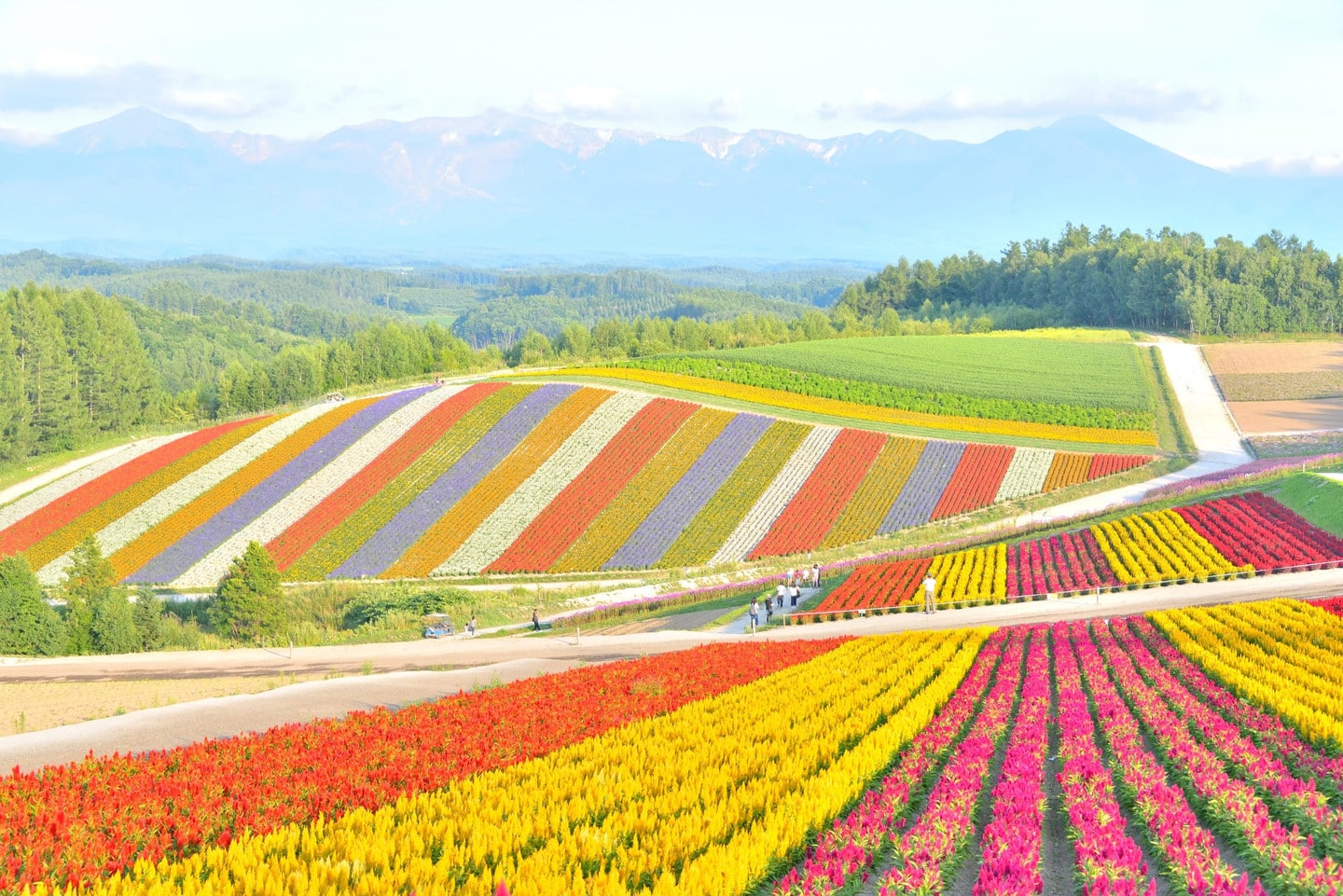
Shikisai no Oka in Summer (July to August): Peak Summer with a Sea of Lavender
July and August are the grandest flowering period of the year at Shikisai no Oka and the most recommended time to visit. Dozens of flowers, including lavender, sunflowers, cosmos and salvia, bloom at the same time, creating a stunning rainbow of color fields and the most classic scene in the whole Biei and Furano area.
Because this is the peak travel period, admission is charged from July to September (¥800 for high school students and older, ¥500 for elementary and junior high students, free for preschoolers, cash only at the window), and the car park costs ¥500 per entry in cash only from June to September. The park’s fan page often shares live bloom updates, so check social media before you go to confirm the flowering stage. It gets very crowded, so going early in the morning is strongly recommended.
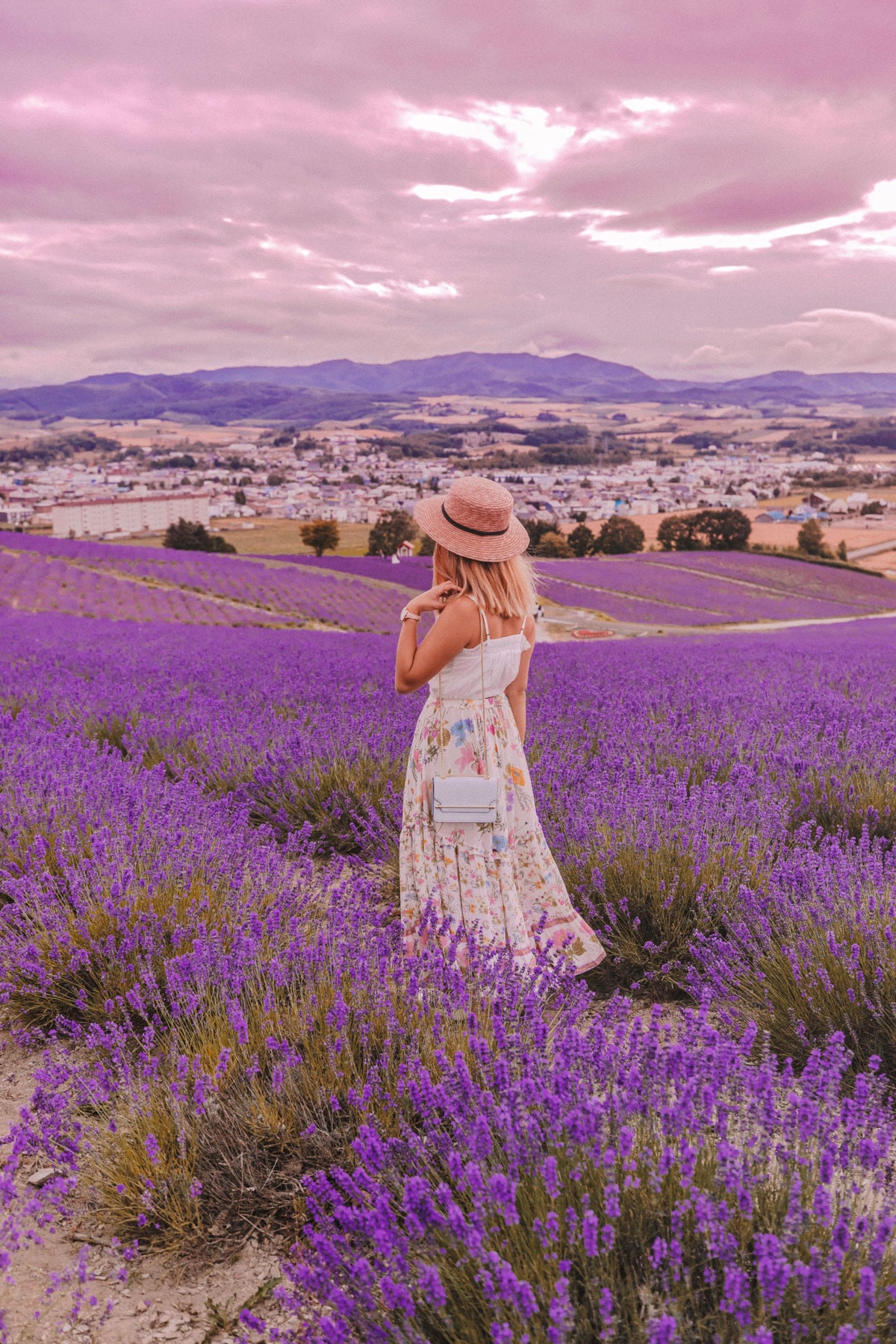
Current Conditions at Shikisai no Oka: Blooms and Opening Status
For current conditions at Shikisai no Oka, the most accurate source is the bloom report under “Information” (インフォメーション) on the official website. It is updated continually. One late-summer update noted that temperatures had dropped and a hint of autumn was in the air, with spider flowers (クレオメ), yellow cosmos and regular pink and white cosmos all in full bloom, along with salvia, marigolds, cockscomb, sunflowers, petunias, heliopsis (ヘリオプシス) and kochia (コキア).
Admission is charged only from July to September. Hours from June to September are 8:40 to 17:30; from October entry is free and hours are 8:40 to 17:00, and the green season (flower season) generally runs until late October. Blooms change each year with the weather, so check the latest updates on the official website or official Instagram before you go.
Shikisai no Oka Opening Hours: Month-by-Month Overview
According to the hours published on the Shikisai no Oka website, the park is open all year except December 31 and January 1. Hours by month are as follows:
- 🕘 January: 8:40 to 16:30
- 🕘 February to April: 9:10 to 17:00
- 🕘 May and October: 8:40 to 17:00
- 🕘 June to September: 8:40 to 17:30 (last entry 17:15 from July to September)
- 🕘 November to December: 9:10 to 16:30
- 📅 Closures: open all year except December 31 and January 1; the alpaca farm closes 30 minutes before the park does, and the on-site restaurant is closed on Wednesdays, with last orders at 15:00.
Shikisai no Oka in Autumn (September to October): Cosmos and Red Leaves in Northern Autumn Colors
After September begins, the lavender gradually fades, replaced by calendula, cosmos and hillside vegetation turning red. The flowering period is longer than at other flower fields, and as the maples in the Biei hills slowly change color, a deep northern autumn mood sets in, a favorite for travelers who like a calm atmosphere.
Temperatures have cooled noticeably by then and the gap between morning and evening is large, so bring a warm jacket. The last running day of the Biyu Bus in 2026 is October 12, so if you plan to take the shuttle bus to the Blue Pond and Shirahige Falls and then on to Shikisai no Oka, pay close attention to end-of-season timetables so you are not left out.
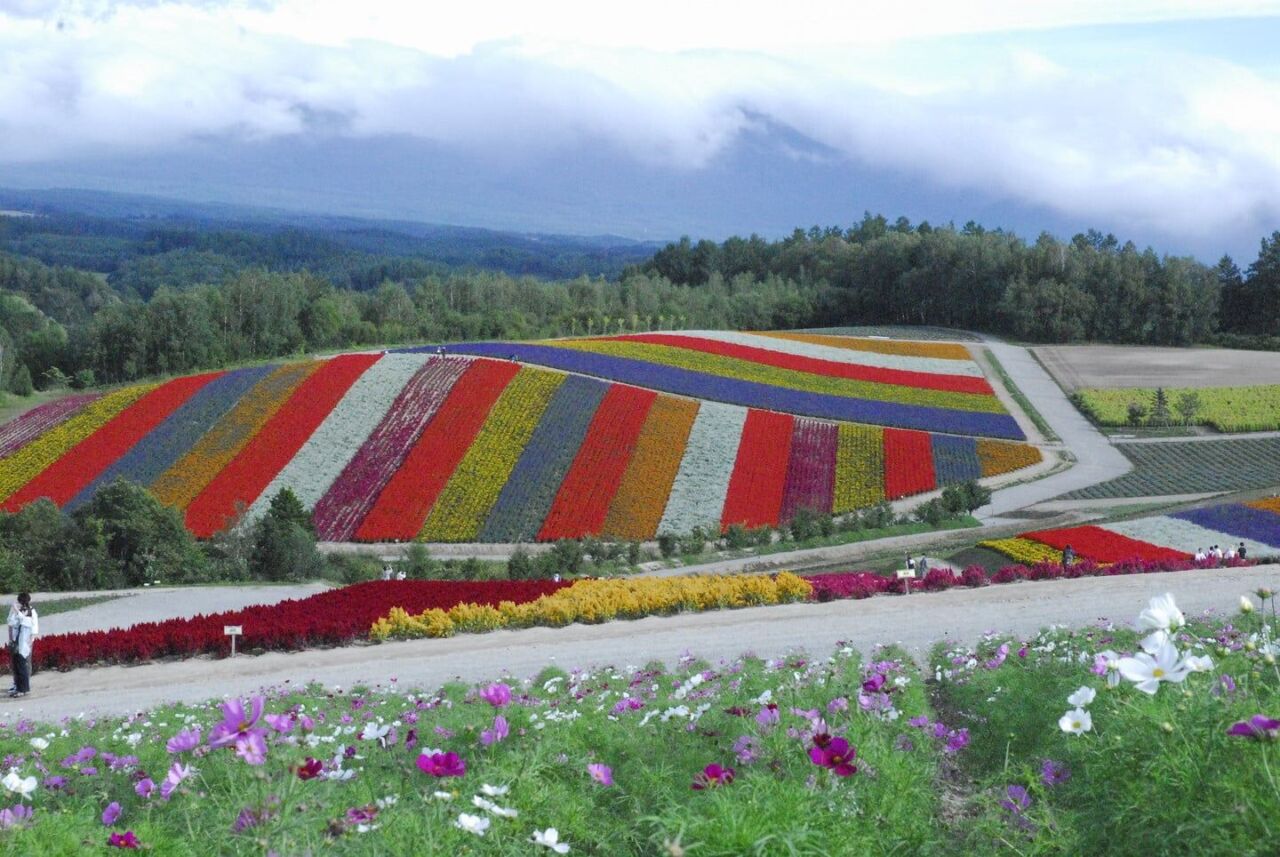
Shikisai no Oka in Winter (December to March): Snowmobiles and a Sledding Playground
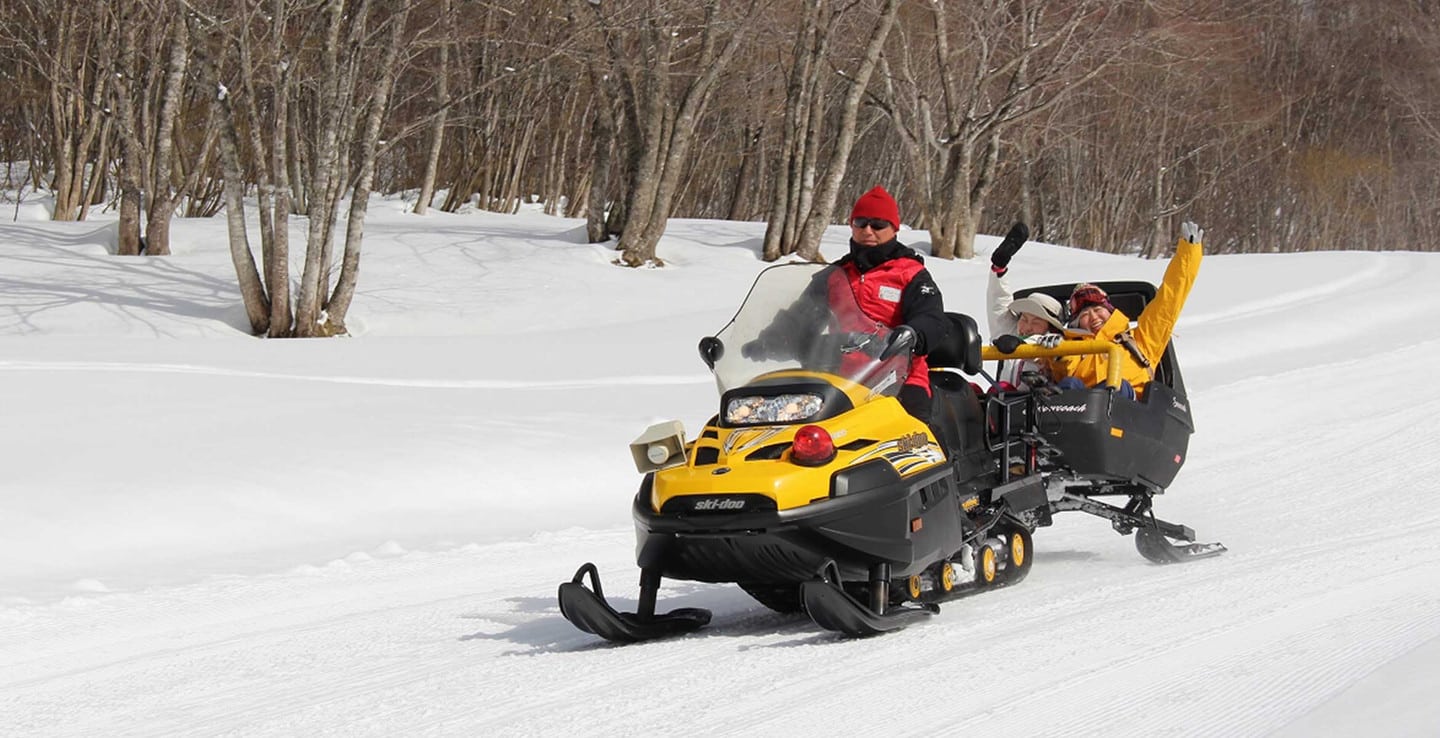
From December to March the following year, the fields are completely covered in white snow and Shikisai no Oka transforms into a winter snow playground. This is also its biggest point of difference from Farm Tomita: the park offers paid experiences such as snowmobiles, snow rafting and sledding, so visitors can speed and play across the silver hills.
In winter there is no admission fee and you pay only for each activity, which makes it an easy add-on when planning a winter trip to Sapporo or Asahikawa. Wear non-slip snow boots and warm gloves.
Alpaca Farm: The Most Heartwarming Family Moment in the Park
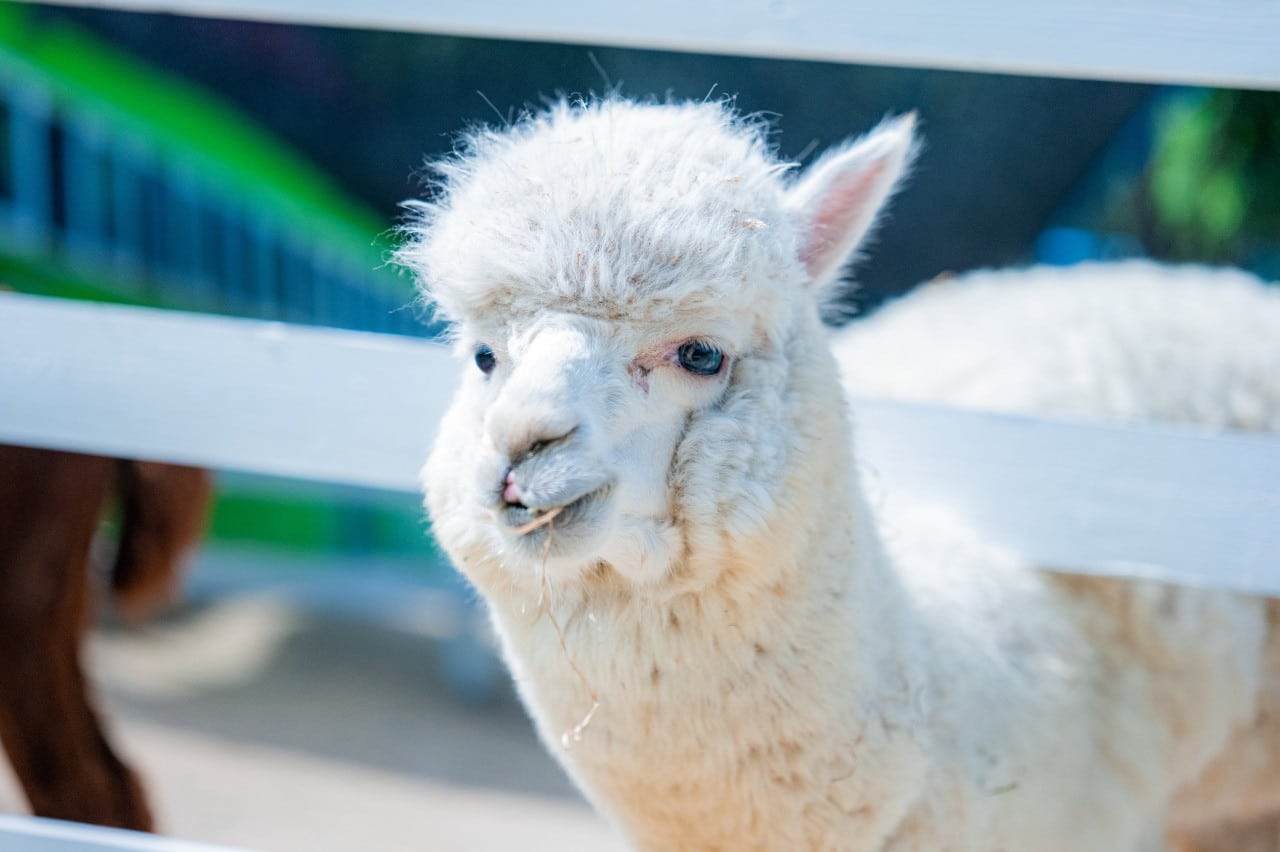
The park has an alpaca farm where, for a fee, visitors can enter and feed fluffy alpacas up close. It costs about ¥500 for high school students and older, and for elementary and junior high students please check the park’s notice for the price. It is one of the experiences most popular with families, and often appears in travel agencies’ scheduled sightseeing bus itineraries.
The alpacas are gentle and friendly, and staff provide hay so visitors can feed them by hand. The close interaction is very soothing, so visit when you still have energy to spare after the flowers.
Shikisai NOROCCO Tractor Bus: The Signature Sightseeing Ride Around the Fields
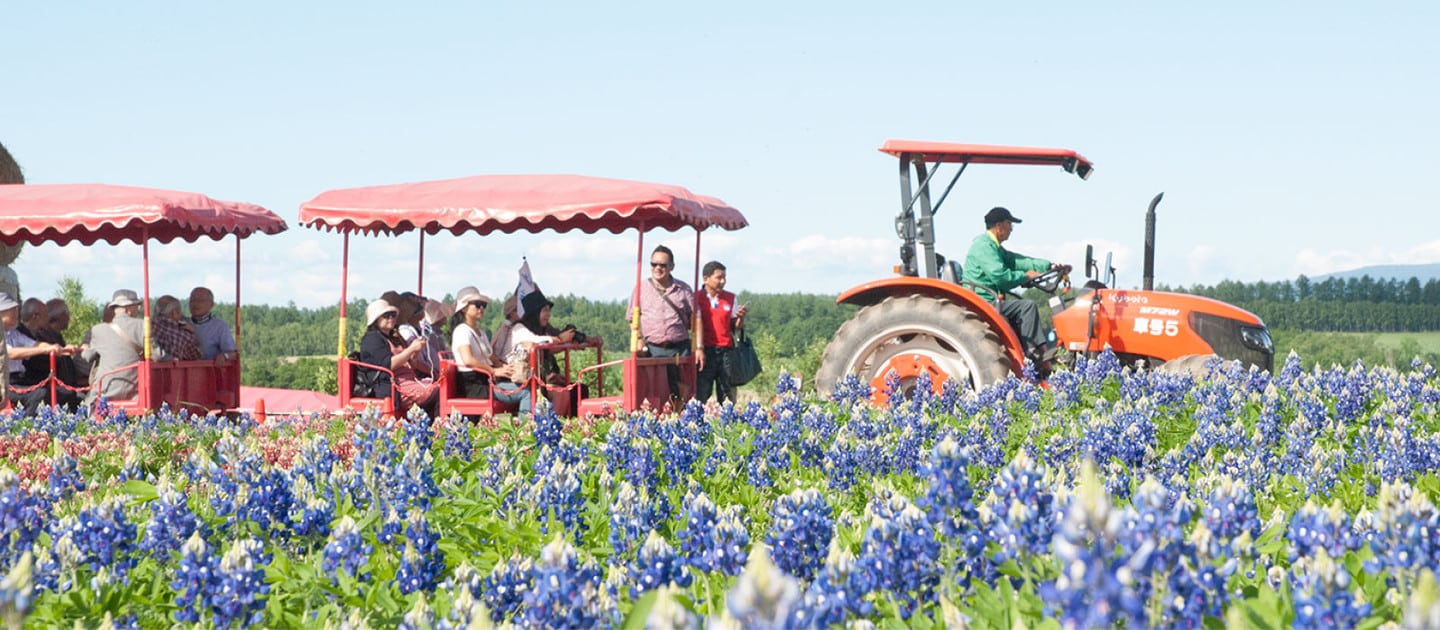
The Shikisai NOROCCO is the park’s signature tractor-style sightseeing bus. It circles the whole flower field in about 15 minutes, stops once along the way so passengers can take photos in front of the flowers, and costs ¥500 for high school students and older, ¥300 for elementary and junior high students and is free for preschoolers (cash only). It is the best way to get around if your stamina is limited or you are traveling with older family members.
Because the vantage point is higher, riding the NOROCCO lets you take in the whole patchwork at once, so you avoid walking until your legs ache without finding the best angle. In peak season, queue early for the first ride to avoid long lines around midday.
Biei Patchwork Road and the Seven Stars Tree: Classic Scenery Where Hills and Farmland Meet
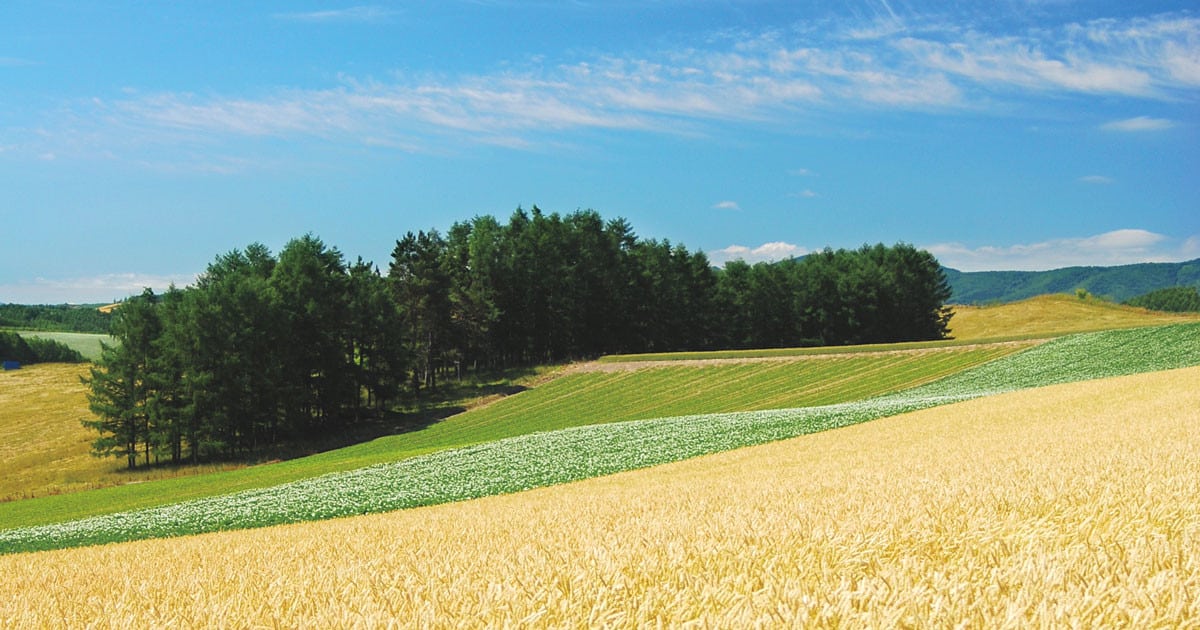
The Biei Patchwork Road is a sightseeing route linking the farmland hills around Shikisai no Oka, named for the interlocking shapes of the fields that resemble patchwork. Several landmark trees dot the route, among them the “Seven Stars Tree” (セブンスターの木), famous for once appearing on a cigarette pack and a must-stop photo spot for self-drive visitors.
Most of the land along the Patchwork Road is private farmland. Do not enter the fields to take photos or trample the crops, which can damage them and spread pests and disease. Use the roadside viewing platforms and parking areas to stop and shoot, which is safe and does not disturb the farmers’ work.
Shirogane Blue Pond and Shirahige Falls: A Dreamy Indigo Natural Wonder
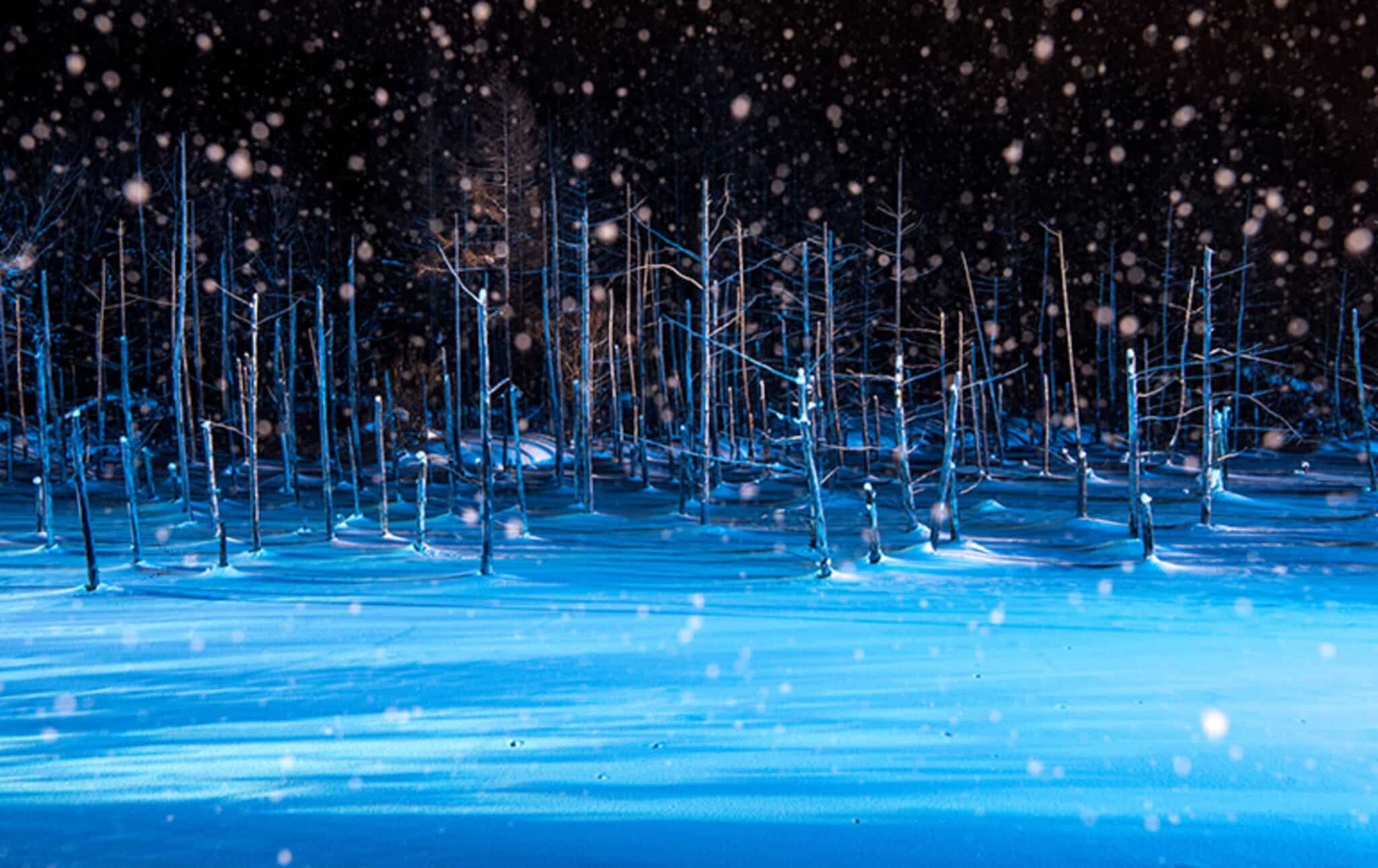
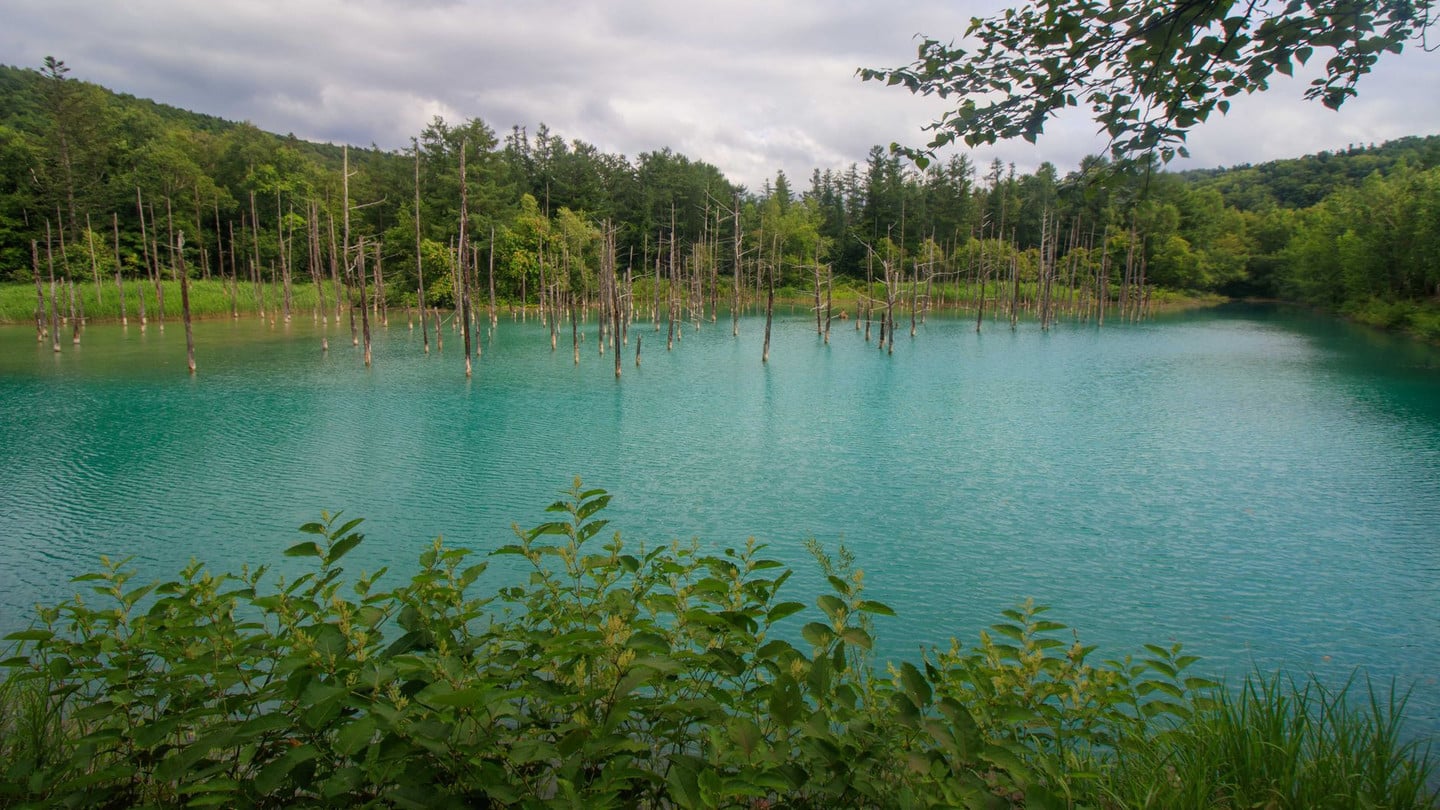
The Shirogane Blue Pond (白金青い池) is one of Biei’s most iconic natural sights. Its water turns a dreamy indigo from volcanic minerals, and with dead trees reflected in it the mood is mysterious and enchanting, especially on a windless early morning or when thin mist surrounds it. Not far upstream, Shirahige Falls is a white waterfall fed by snowmelt and groundwater, and the two are often visited together on the same trip.
The Blue Pond is open and free to visit all year, but there is no large car park, so in peak season go early or take a morning departure of a scheduled sightseeing bus to avoid not finding a space.
-Klook.jpg)
Farm Tomita: The Birthplace of the Lavender Kingdom
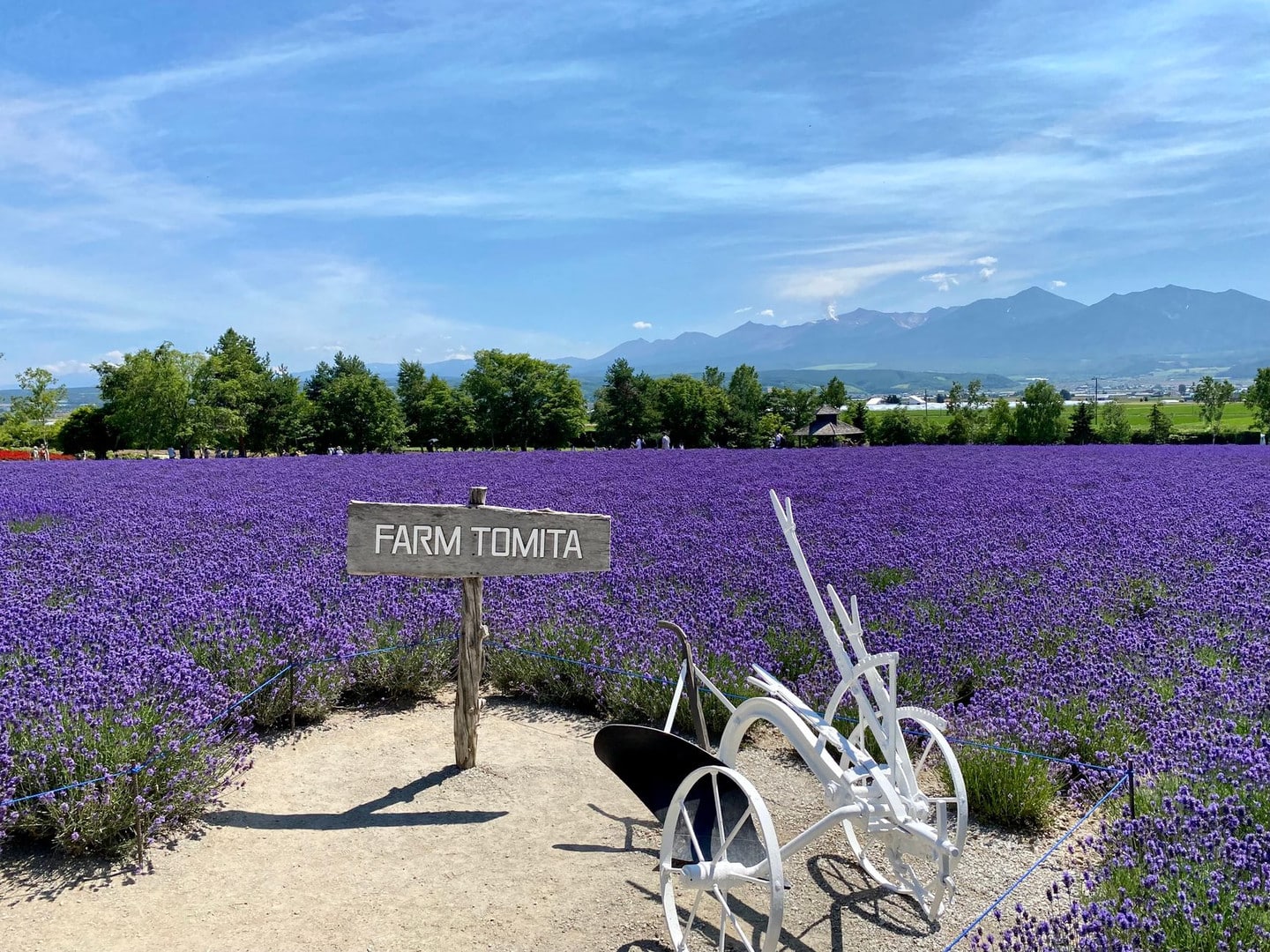
Farm Tomita (ファーム富田) is in Naka-Furano and is the birthplace of lavender tourism in Hokkaido. Its lavender fields stack up in waves, with the best bloom from mid-July to early August, a sharp contrast to the multicolored flowers of Shikisai no Oka, and many travelers visit the two in the morning and afternoon of the same day.
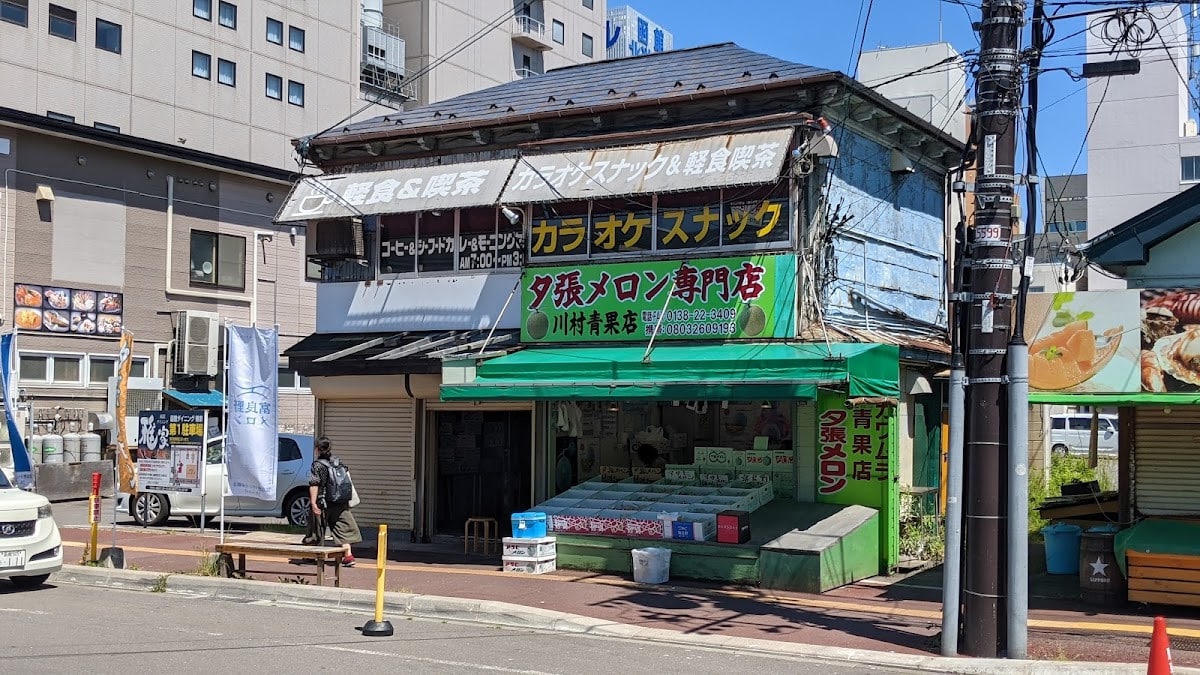
Entry to the farm is free, and it has lavender soft-serve ice cream (about ¥450 each), melon bread and shops selling lavender souvenirs, making it an essential stop on a Biei and Furano day trip.

Flower Land Kamifurano and Asahiyama Zoo: Flower Fields and an Animal Park to Extend Your Trip
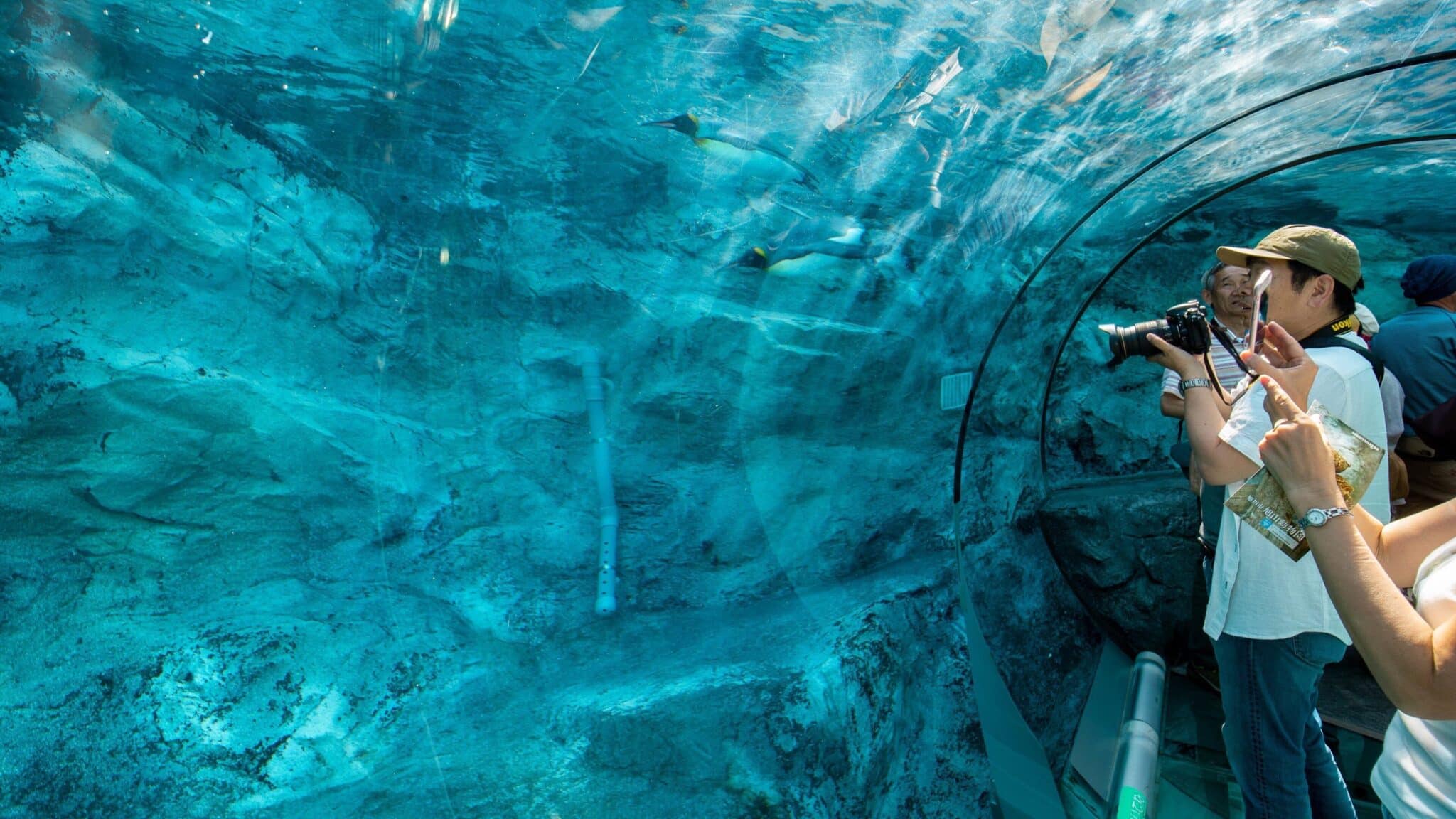
Like Shikisai no Oka, Flower Land Kamifurano is known for its colorful flower fields, with a lift that gives a panoramic view, making it a good add-on for more flower viewing. If you are staying overnight in Asahikawa, you can also visit Asahiyama Zoo, famous for its “behavioral exhibits.” Both are about 40 minutes to 1 hour by car from Shikisai no Oka.
How Much Does It Cost to Visit Shikisai no Oka? Tickets and Activity Fees Summarized
Shikisai no Oka is at Shinsei Daisan, Biei, Hokkaido, and is one of the best-known flower-field attractions on the Patchwork Road. The grounds cover 15 hectares with different flower scenery in every season. Admission is only charged from July to September, but what really makes travelers hesitate are the activities and transport arrangements inside and outside the park, including the tractor bus, electric golf carts, winter snow activities and shuttles to and from Asahikawa or Furano. Below are the latest 2026 ticket and activity prices to help you budget and plan your route in advance and avoid wasted trips to long queues in peak season.
Shikisai no Oka Admission (Environmental Maintenance Fee): The Basic Summer Ticket
According to the Shikisai no Oka website, admission is charged only from July to September: ¥800 for high school students and older and ¥500 for elementary and junior high students when buying from the ticket machine, free for preschoolers; for visitors with disabilities and groups of 10 or more buying at the window, the prices are ¥700 and ¥400 (cash only at the window). Entry is free in other months, but the park cart, alpaca farm and winter snow activities all cost extra. We suggest buying tickets on site, and the admission line is usually short. On a KKDay or Klook Biei and Furano day tour, admission is already included, saving you the time of buying a ticket on site. After entering, pick up a park map at the visitor center and check the flower-area bloom calendar (for lavender, poppies, sunflowers and so on) to plan the best photo route.
Tractor Bus (トラクターバス): The Best Choice for Effortless Flower Viewing
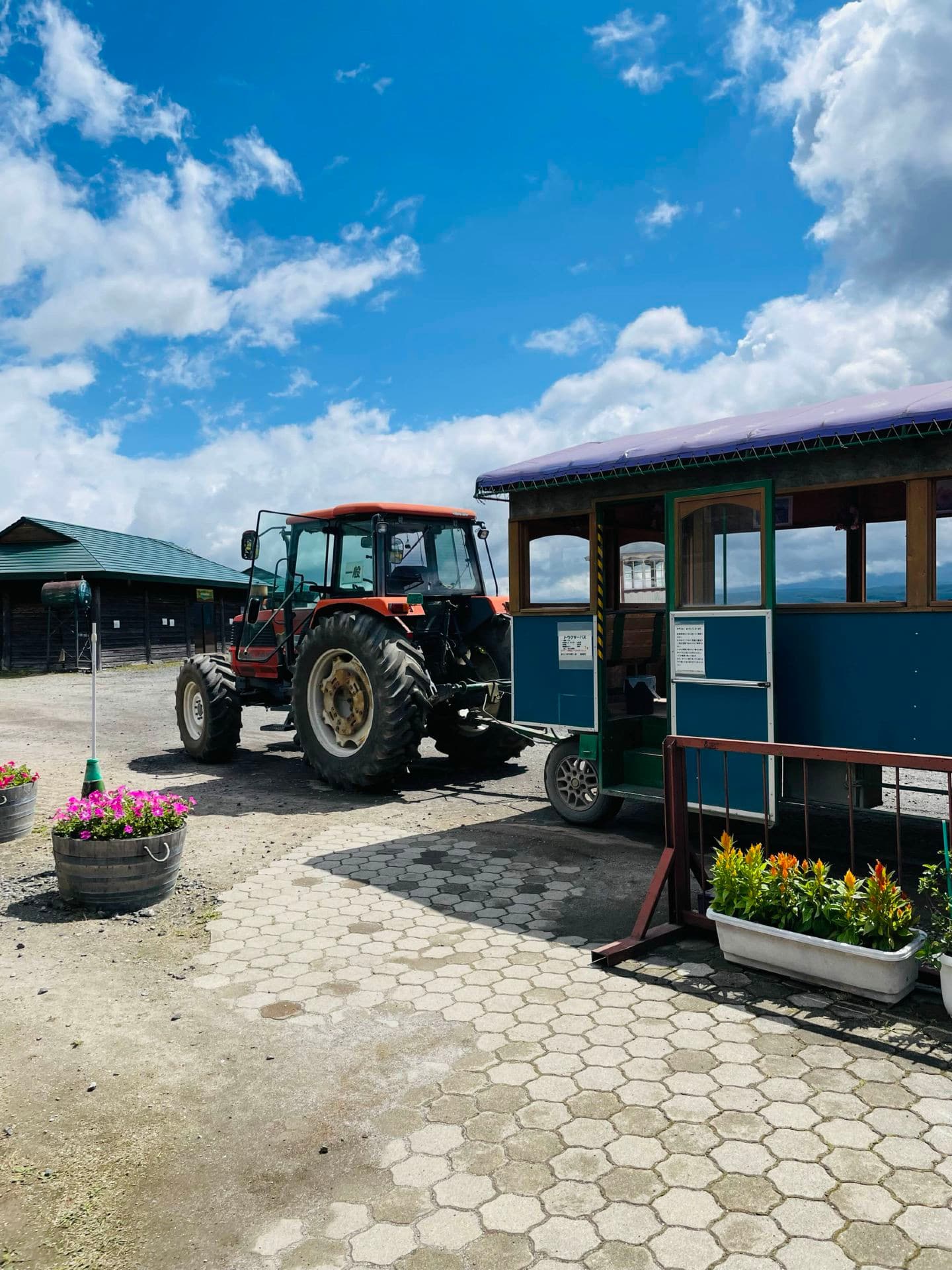
Shikisai no Oka’s tractor bus is a converted tractor pulling an open-air carriage that takes passengers around the flower park in about 15 minutes, passing lavender fields, a rainbow of flowers and a viewing platform, with a conductor introducing flower varieties and photo spots in Japanese and simple English. It costs ¥500 for high school students and older, ¥300 for elementary and junior high students and is free for preschoolers, cash only, and runs in the green season (late April to late October), rain or shine.
In peak season (mid-July to mid-August), line up for a seat as soon as you arrive, and allow waiting time at peak hours. It suits older travelers, children and anyone with limited stamina who wants to see the whole park’s flowers with the least effort, and it is also an add-on option for many Taiwanese tour groups.
Electric Golf Cart Self-Drive: An Advanced Way to Explore Freely
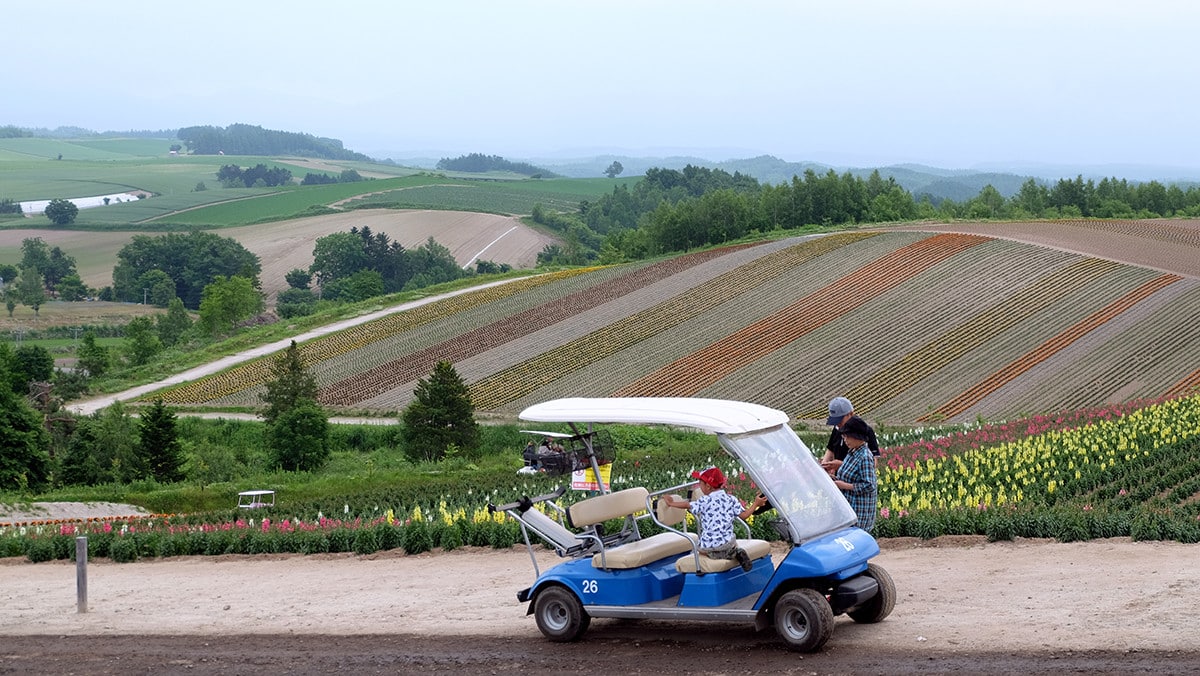
If you want to take photos at your own pace, the park also rents electric golf carts that seat 1 to 4 people. The rental fee for a 4-seater is ¥2,500 per 15 minutes, with an extra ¥500 for every 5 minutes over, and the driver must hold a standard driver’s license (普通運転免許). Cash only.
The park also has buggies (バギー) that go around a roughly 700-meter dedicated course through a birch forest, ¥800 for one person and ¥1,200 for two. Drivers must be 16 or older and buggies cannot enter the flower fields. The park cart is listed on the website as operating in the green season (late April to late October) and may be suspended in strong wind or rain, so check with the park for that day’s operation before you go.
Winter Snow Activities: Snowmobile and Sledding Experiences
During the snow season from December to March, Shikisai no Oka becomes a white playground. The park offers snowmobile (スノーモービル) rides: the individual forest course (about 10 to 20 minutes) costs ¥15,000 for one person and ¥20,000 for two, with an instructor accompanying you. Drivers must be over 16, and children 102 cm or shorter cannot ride. A reservation-only 10-kilometer snowmobile tour starts from ¥18,000. There is also snow rafting (スノーラフティング) at ¥1,200 per person and sledding at ¥500 per sled.
The forest course takes about 10 to 20 minutes depending on your driving skill, and an instructor leads you around the snowfield to experience the vastness of the silver-white world. It is an add-on that many Taiwanese travelers make a point of including when they visit Hokkaido in winter. The forest course can be signed up for on site, while the tour course requires a reservation. It is busier over Christmas and the New Year holidays, so arrive early to register.
Transfers To and From Asahikawa and Furano: A Day-Tour Package Is the Best Value
Shikisai no Oka is in the Biei countryside, so travelers without a car should book a Biei and Furano day tour or a Furano flower-field transfer through KKDay or Klook. Prices vary by plan, so please check the booking page. Most tours include transfers to Shikisai no Oka, the Blue Pond, Shirahige Falls and other sights, and the plan description will say whether admission is included.
If you choose public transport, you can join the Biei Tourist Association’s reservation-only Biyu Bus from JR Biei Station. In summer 2026 it runs on designated dates from June to October, with one morning and one afternoon departure, starting at ¥4,500 for adults (from ¥5,000 in July to September), and you must book on the official website by 17:00, 4 days before departure.
Where to Stay Near Shikisai no Oka: Suggested Areas for Your Trip
Where to Stay Near Shikisai no Oka? Suggested Areas in Biei and Furano
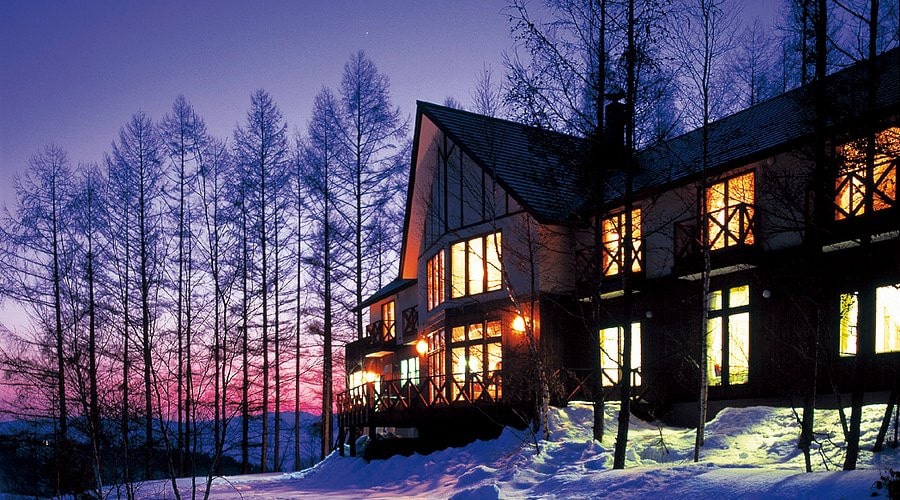
Shikisai no Oka is on the outskirts of Biei, surrounded mostly by farmland with few places to stay. We suggest using the area around Biei Station, or Furano Station and Kitanomine about 30 minutes away by car, as your base, which makes connections to nearby sights easier.
Around Biei Station there are mostly cozy guesthouses, suited to travelers who like a relaxed local atmosphere. Furano Station and Kitanomine have more hotels and hot spring inns, and are close to Farm Tomita and evening attractions such as Ningle Terrace, which suits a longer, in-depth Biei and Furano itinerary.

FAQ
Q: How much is admission to Shikisai no Oka?
Admission is charged only from July to September: ¥800 for high school students and older, ¥500 for elementary and junior high students, and free for preschoolers. Entry is free in other months, but activities such as the NOROCCO bus and alpaca feeding cost extra.
Q: What is the easiest way to get to Shikisai no Oka?
Driving is most recommended. Set your navigation to “四季彩の丘” or the address (Shinsei Daisan, Biei). If you do not drive, take the JR Furano Line to Biumaushi Station and walk about 25 minutes (Biumaushi is an unstaffed station, and “Guide no Yamagoya” (ガイドの山小屋) takes bicycle rental reservations), or take a taxi from Biei Station or join the reservation-only Biyu Bus.
Q: When is the best season to visit Shikisai no Oka?
Lavender and many other flowers are most spectacular in July and August, but that is also when crowds are biggest. By June the blooms are already good and crowds are smaller, which insiders recommend as the golden window.
Q: How much is parking at Shikisai no Oka? Is the car park paid?
The car park is paid from June to September at ¥500 per entry, cash only; parking is free from October to May of the following year.
Q: How can I avoid the crowds and queues at Shikisai no Oka?
Arrive when the park opens at 8:40 (hours are 8:40 to 17:30 from June to September) to beat the tour buses that pour in after 11 a.m., and go on a weekday if you can, which saves a lot of waiting time in queues.
Q: How long should I stay at Shikisai no Oka?
We generally suggest staying about 1.5 to 2 hours. If you only want to take photos at the viewpoints and do a quick loop, the Biei Tourist Association’s Biyu Bus tour allows about 40 to 45 minutes at Shikisai no Oka, which can serve as a minimum. If you add the NOROCCO bus (about 15 minutes around the park), the park cart (rental from 15 minutes) or the alpaca farm, allow 2.5 to 3 hours to be comfortable.