
Kyoto Arashiyama Autumn Leaves Guide 2026: The Complete Sagano Foliage Route
Arashiyama Autumn Leaves Overview
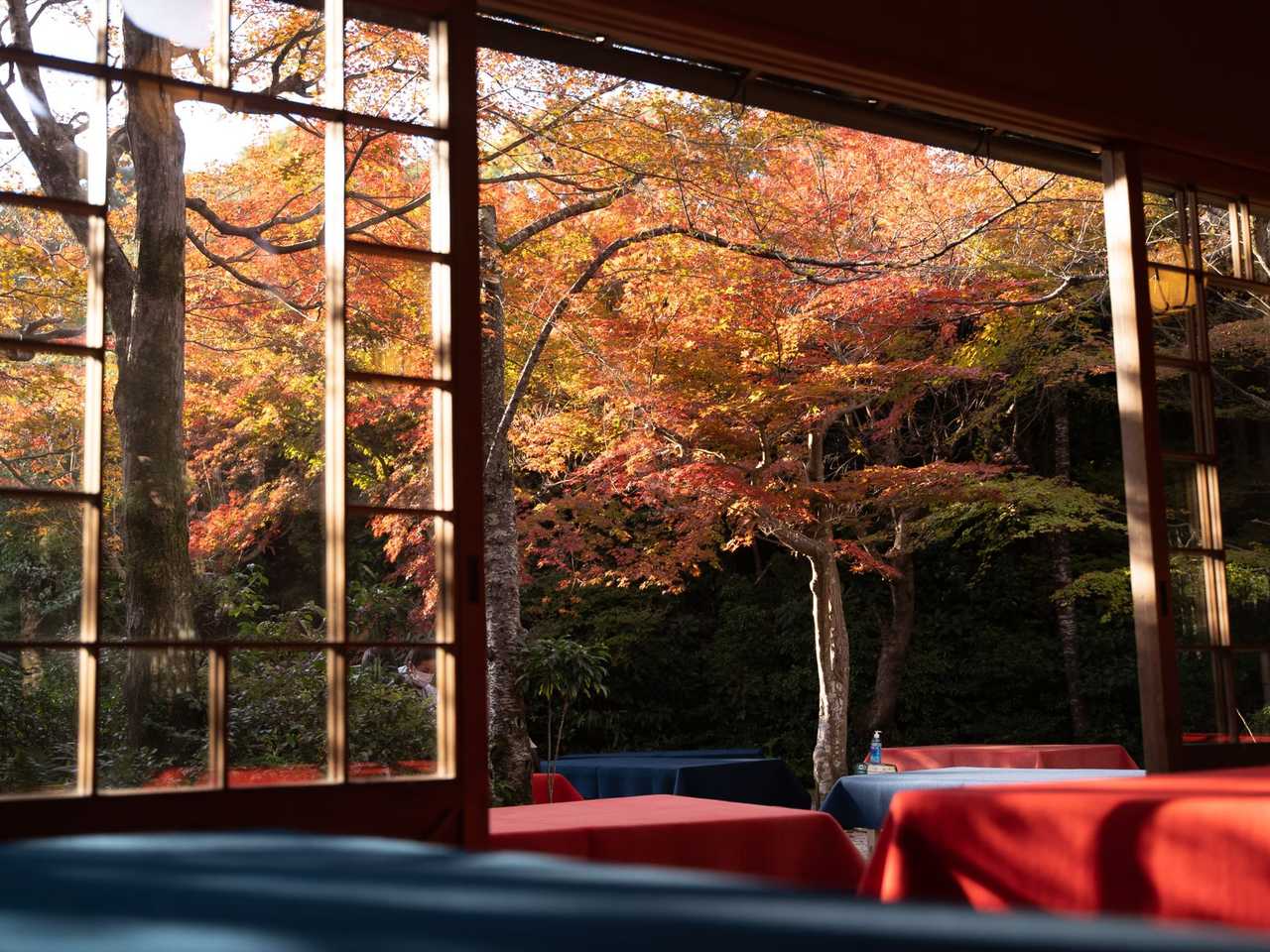
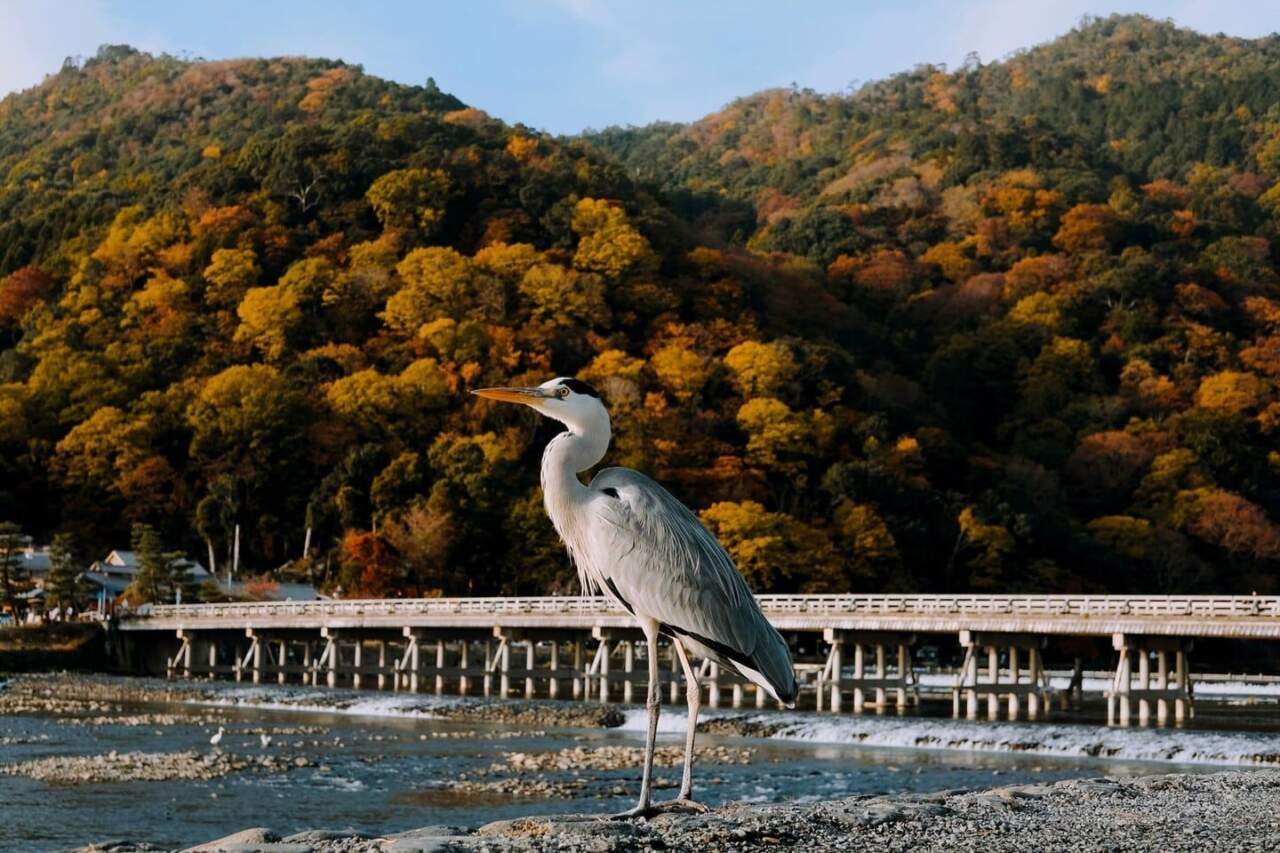
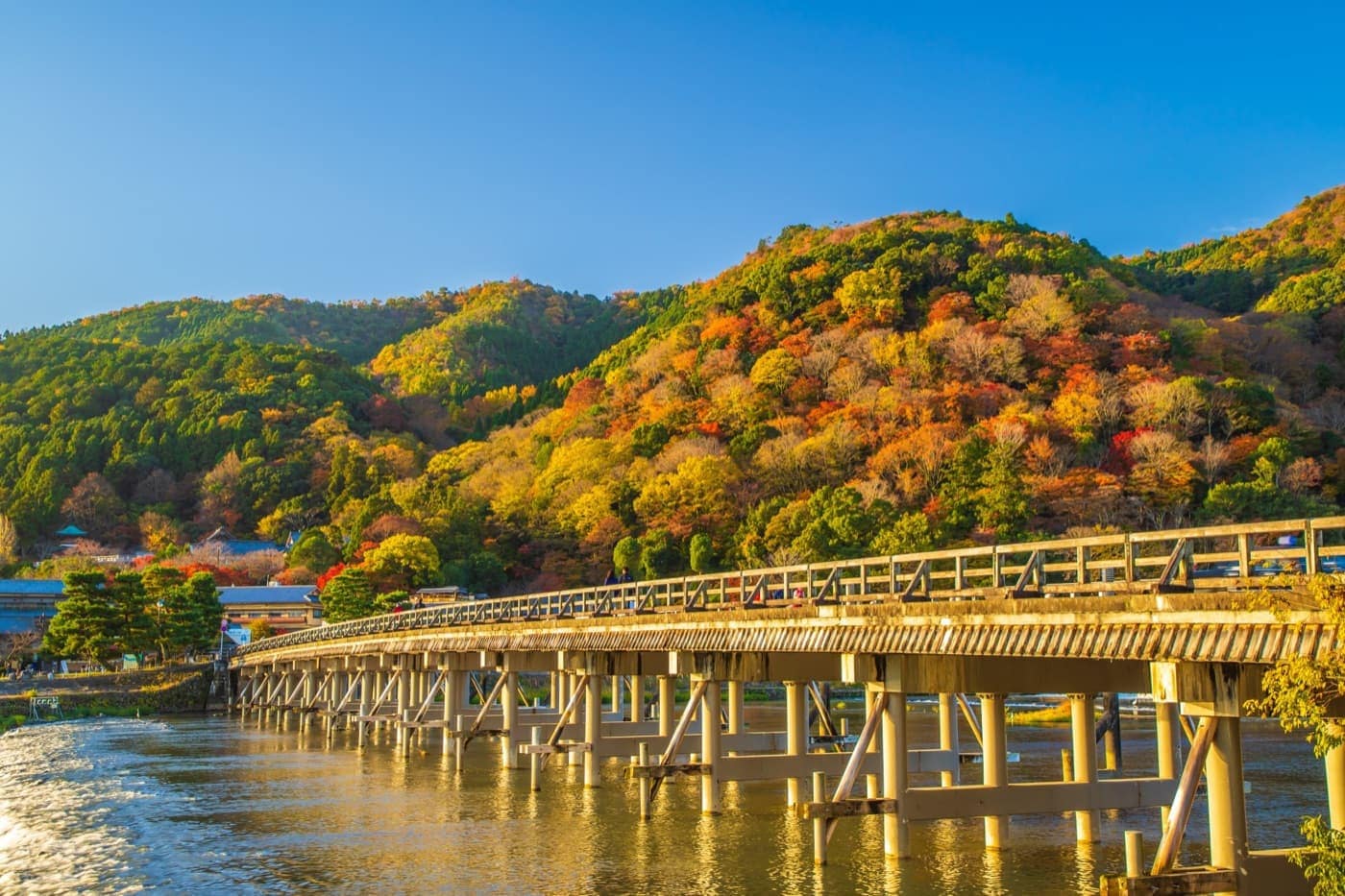
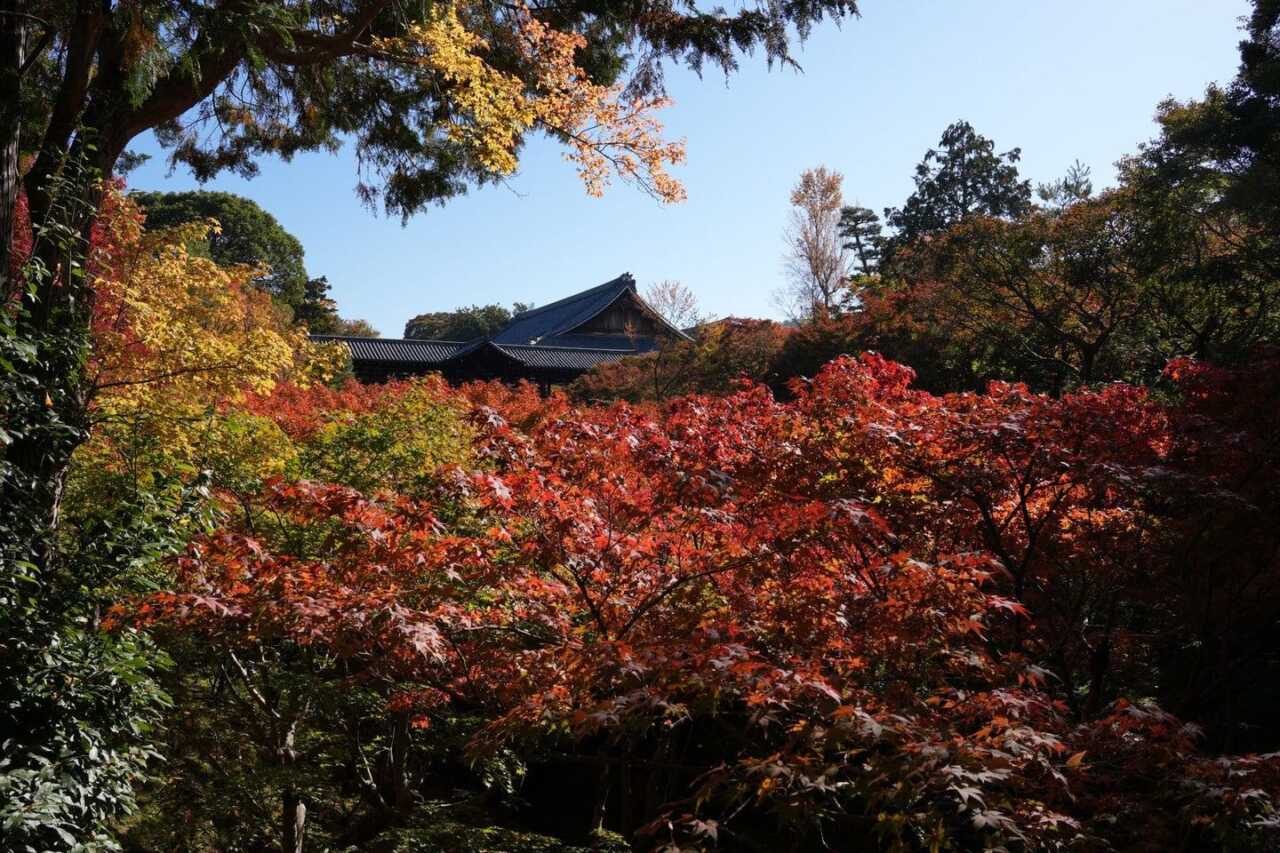
Arashiyama is one of Kyoto’s signature autumn foliage destinations. Togetsukyo Bridge, Jojakko-ji Temple and the Bamboo Grove Path make up the classic “Sagano foliage route,” drawing huge crowds every year to see red maples woven through ancient temples.
The best time to see the leaves in 2026 is expected to be from late November to early December. However, recent years have been warmer and the peak (mihoro) has been arriving later year after year, so check the latest foliage reports one to two weeks before you go.
The whole route is gentle, flat and easy to walk. Plan half a day to a full day for it; it is a must-see on any independent trip to Kyoto.
2026 Arashiyama Peak Foliage Forecast: Around November 24, and How to Plan Togetsukyo and Jojakko-ji
In its first foliage forecast of the year, released on September 3, 2026, Weathernews (ウェザーニューズ) predicts that peak color in Kyoto’s Arashiyama will arrive around November 24. Temperatures are running high across Japan this autumn, so the peak is generally later than usual. Check the latest forecast one to two weeks before you travel. If the peak is delayed, do Togetsukyo Bridge and the Bamboo Grove Path in the morning, then visit temples such as Jojakko-ji and Nison-in after they open at 9:00.
2026 Arashiyama Foliage Route Planning
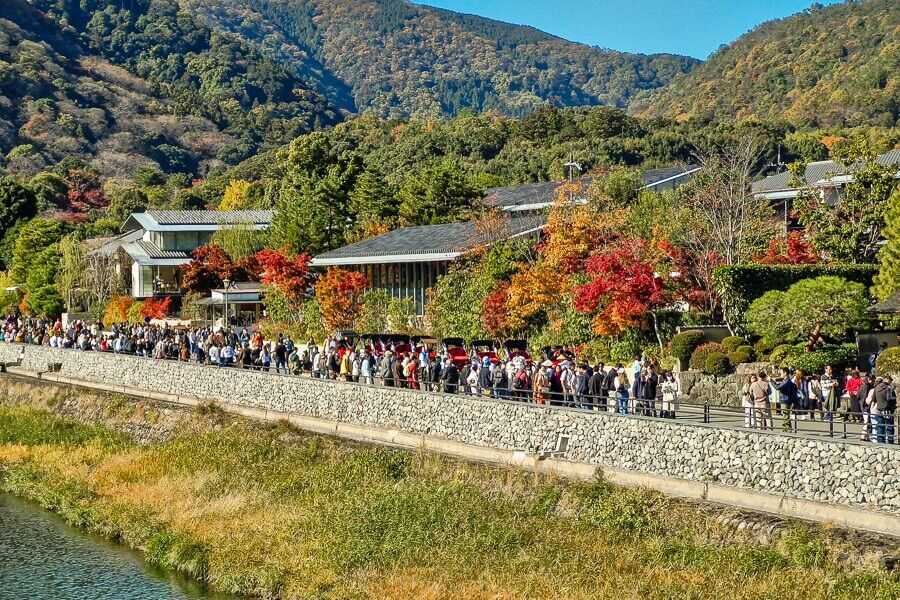
The classic Sagano foliage route runs like this: Hankyu / JR / Randen station → Togetsukyo Bridge (shoot the empty bridge at sunrise) → Bamboo Grove Path (the crowd-free morning version) → Jojakko-ji (opens 9:00) → Nison-in (10 minutes on foot) → lunch on Arashiyama’s main street. That captures the best of the autumn colors in one day. If you have plenty of energy, you can extend to Daikaku-ji and Yusai-tei, but give those a full separate day so they do not squeeze the classic route. To beat the crowds, we strongly recommend arriving in Arashiyama before 8:30 for photos without people. Use the soft morning light for pictures, and when the afternoon crowds build, switch to indoor spots such as the hojo hall at Tenryu-ji for a smoother flow.
Practical Tips for Avoiding the Worst of Arashiyama’s Foliage Season
During peak foliage season the roads around Arashiyama gridlock. Do not take a bus or drive; take the JR Sanin Line (Saga-Arashiyama Station) or the Hankyu Arashiyama Line instead to avoid traffic.
For the Sagano Scenic Railway, book tickets on the Sagano Scenic Railway official website when reservations open one month before your trip. The stone steps at Jojakko-ji and Nison-in are steep, so wear non-slip sneakers.
Check each sight’s opening hours and last entry before you go. Some temples stop admitting visitors after 16:30, so leave buffer time in your schedule.
Getting to Arashiyama for the Foliage: All Routes from Central Kyoto
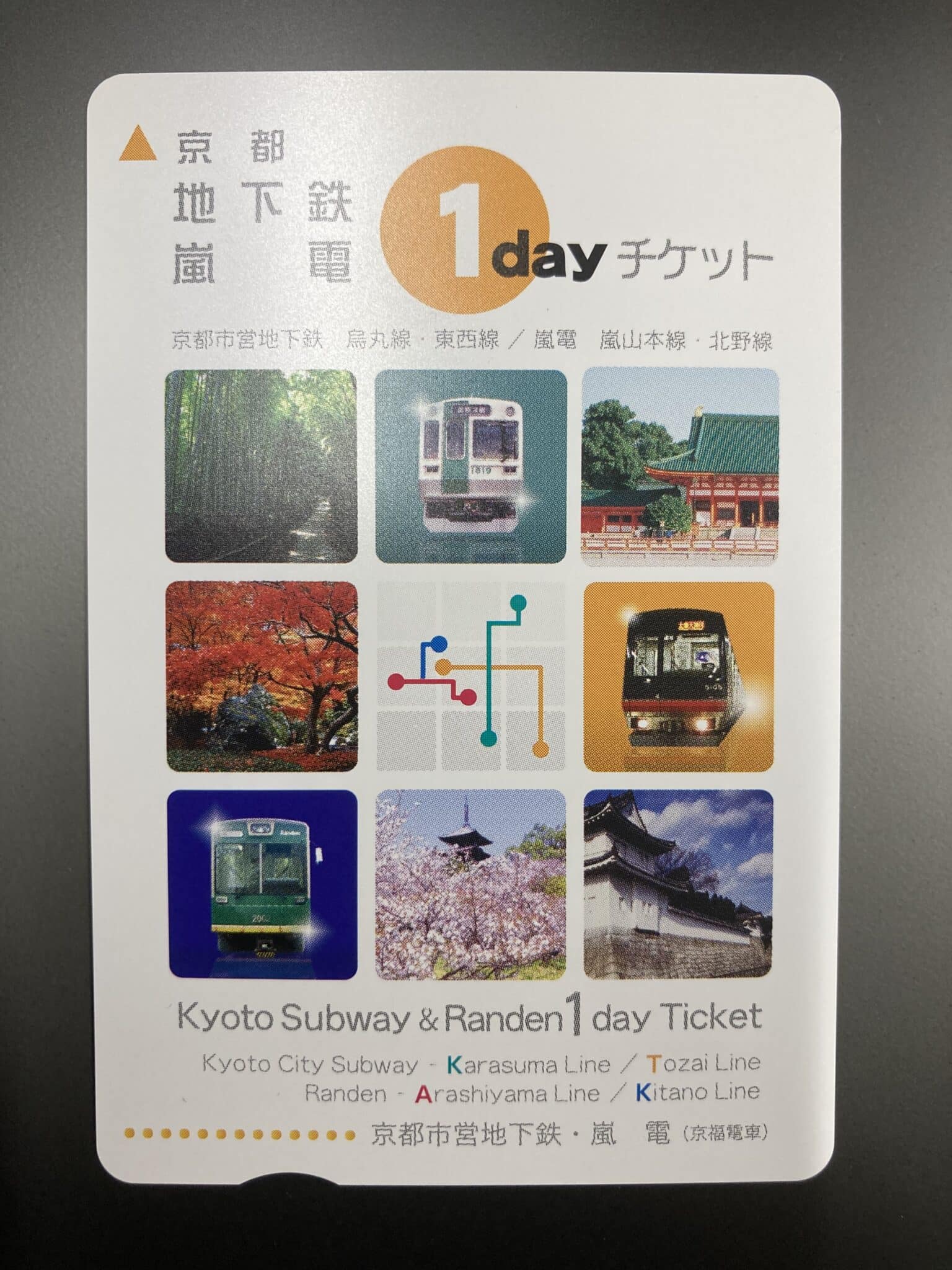

JR Sanin Line: The Top Choice from Kyoto Station
From Kyoto Station, take the JR Sagano Line (Sanin Line) straight to JR Saga-Arashiyama Station. The fare is about ¥240 one way and the ride takes about 20 minutes with no transfers. It is the fastest and most convenient route if you are staying near Kyoto Station, and the crowds are relatively more spread out than on the other two options.
After getting off, simply follow the signs on foot to core spots such as Togetsukyo Bridge and the Bamboo Grove Path. The station has coin lockers, so if you have a lot of luggage, drop it off and explore light. For the return, you can simply take the JR line back to central Kyoto.
If you plan to continue to other Kansai cities such as Osaka and Kobe, consider combining your trip with a JR Kansai Wide Area Pass. One pass covers Arashiyama and the rest of your itinerary across the whole Kansai region.


Nison-in: The Tranquil “Momiji no Baba” Maple Avenue
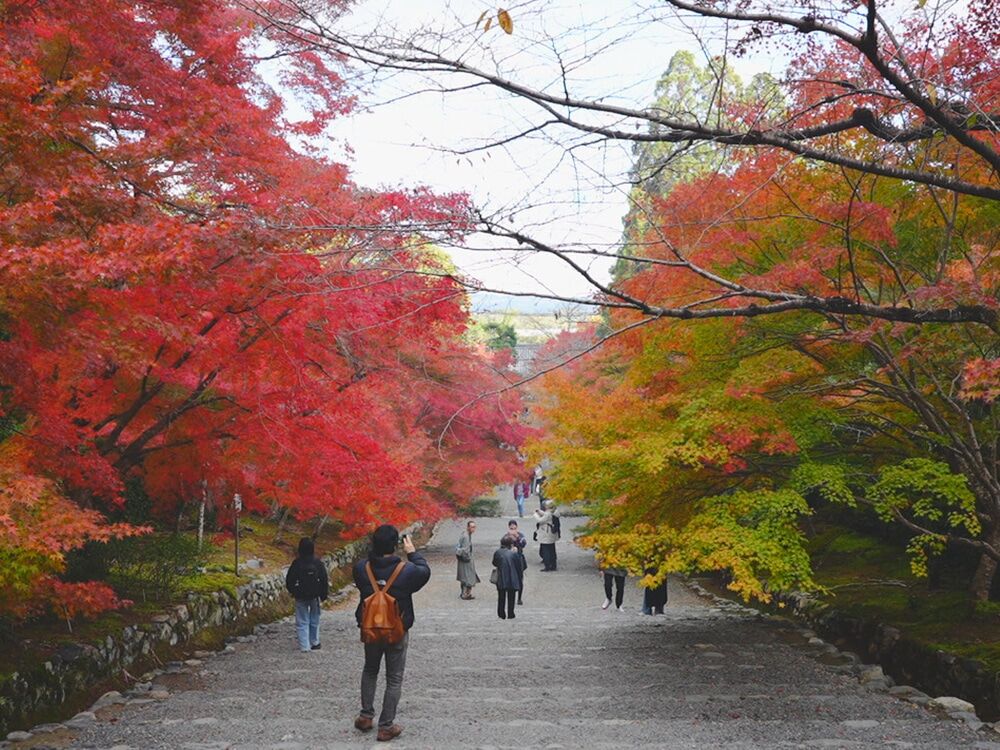
Nison-in is about a 10-minute walk from Jojakko-ji. Beyond the main gate is a broad stone-stepped approach known as the “Momiji no Baba” (maple avenue), where interlaced maple leaves form a red carpet. It is more open and quiet than Jojakko-ji and has fewer visitors.
Admission is ¥500 and it is open 9:00-16:30. You can pick up fallen maple leaves and photograph them against the black main gate, which feels very Zen. It is the stop on the foliage route best suited to slowing down and savoring the autumn colors.
The temple enshrines two Buddhas, Shaka Nyorai and Amida Nyorai, which gives “Nison-in” (Temple of the Two Honored Ones) its name. Pine trees and cherry trees also line the approach, making it a favorite hidden shooting spot for photographers.
Tenryu-ji: A World Heritage Garden Borrowing Arashiyama as Scenery
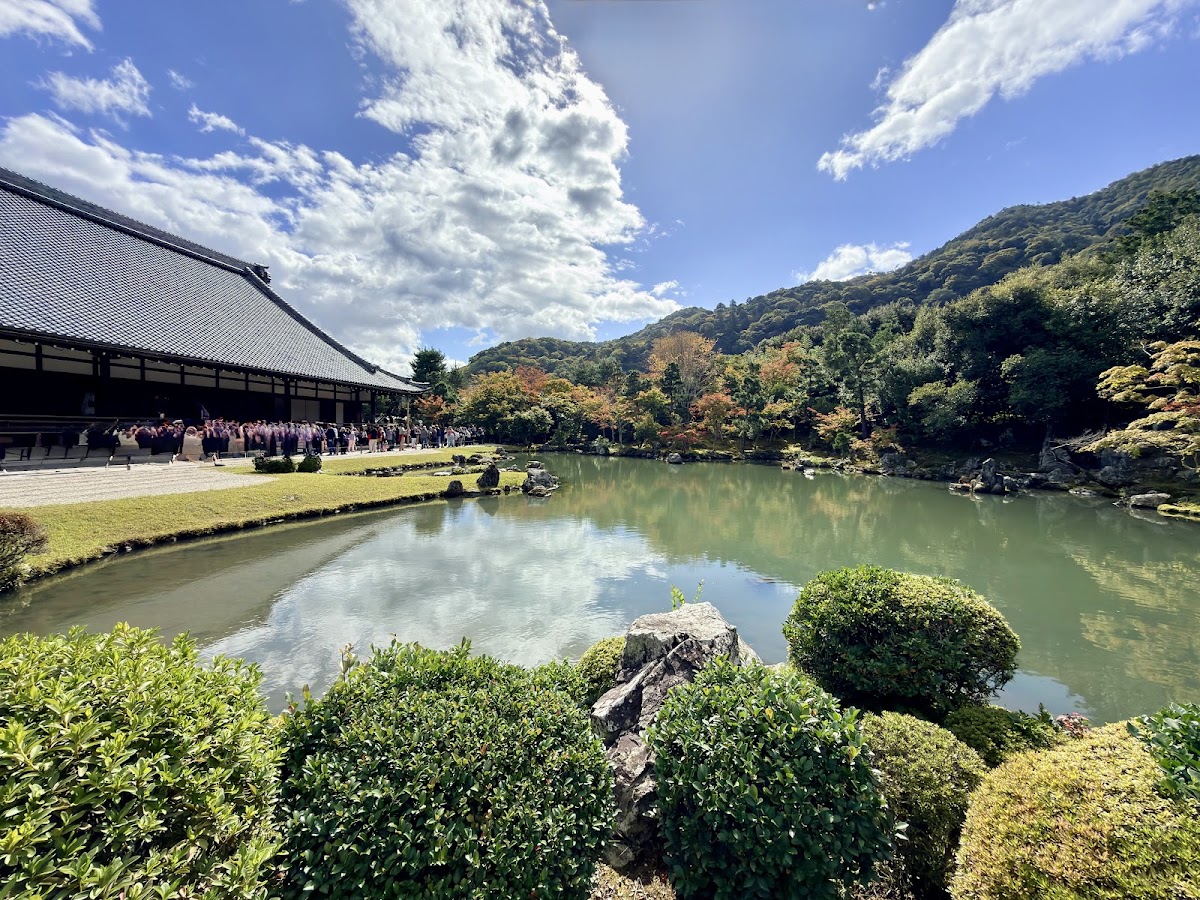
Tenryu-ji is an important Rinzai Zen temple in Kyoto and a World Heritage site with more than 600 years of history. Its Sogenchi Garden, designed by the monk Muso Soseki, borrows Arashiyama and Kameyama as scenery and is one of the first gardens in Japan designated a National Special Place of Scenic Beauty and Historic Site. Its autumn foliage is picture-perfect.
Garden admission is ¥500, with an extra ¥300 to enter the halls. It is open 8:30-17:00. From the main hall (hojo) you can enjoy a full view of the garden along with calligraphy and paintings. It is the core Sagano sight with the deepest history.
Tenryu-ji’s north gate leads directly to the Bamboo Grove Path. It fits well after your bamboo walk and before Nonomiya Shrine, and is the smoothest link in a one-day route.
Hogon-in: A Tenryu-ji Sub-Temple Known for Night Foliage
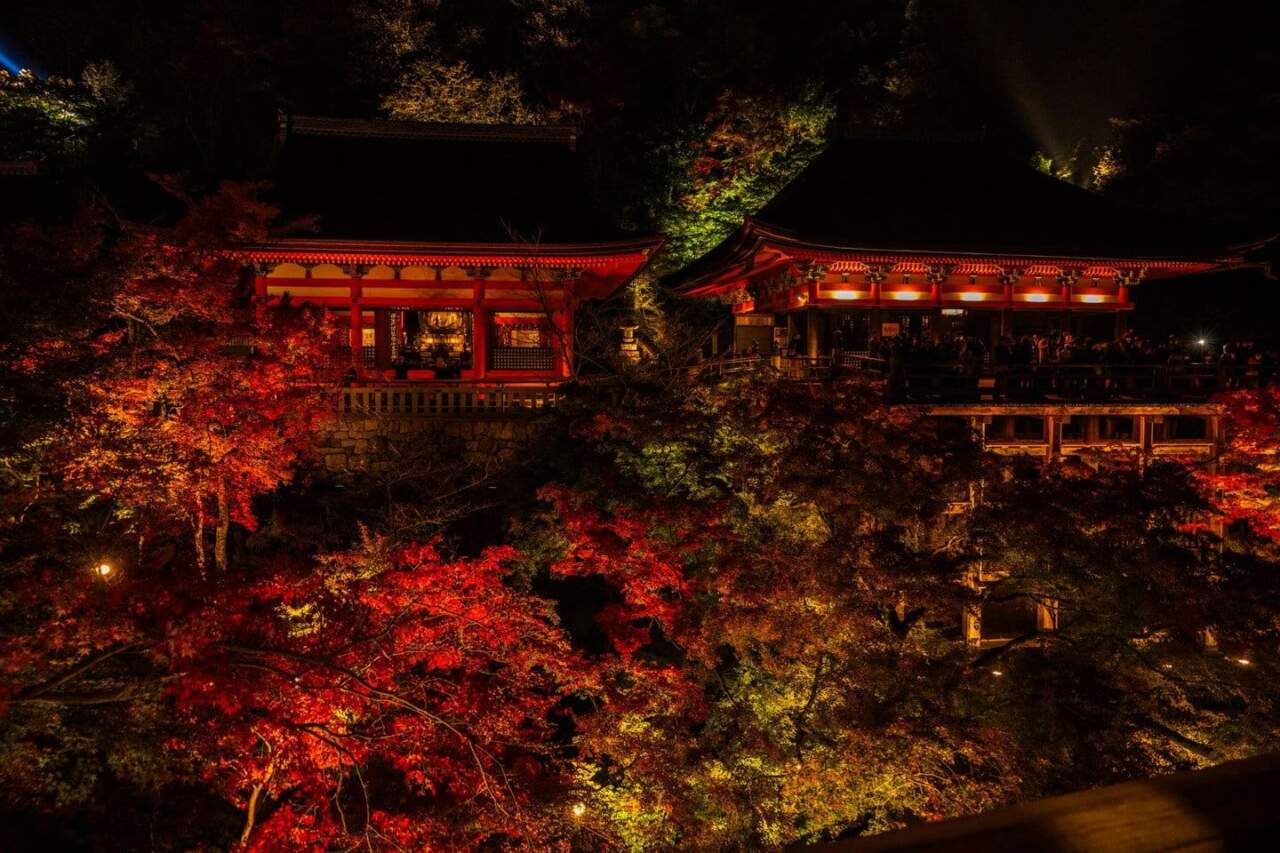
Hogon-in does not hold its night foliage opening every year. Before you go, be sure to check that year’s announcement to confirm the dates and how to buy tickets.
Hogon-in is a sub-temple of Tenryu-ji. Its Shishiku no Niwa (Lion’s Roar Garden) borrows Arashiyama as scenery and uses large rocks and maple trees skillfully. It is one of the few places that opens for evening illumination during foliage season, so you can pair it with Togetsukyo Bridge and Jojakko-ji by day for a day-and-night rhythm.
For the autumn 2025 special opening, daytime admission was ¥700 for adults and nighttime ¥1,000; check the official announcement for 2026 dates and fees. We suggest finishing Jojakko-ji and Nison-in during the day, then returning to Hogon-in in the evening to enjoy the night foliage.
・大阪京都出發-Klook.jpg)
Bamboo Grove Path and Nonomiya Shrine: The Defining Image of Arashiyama
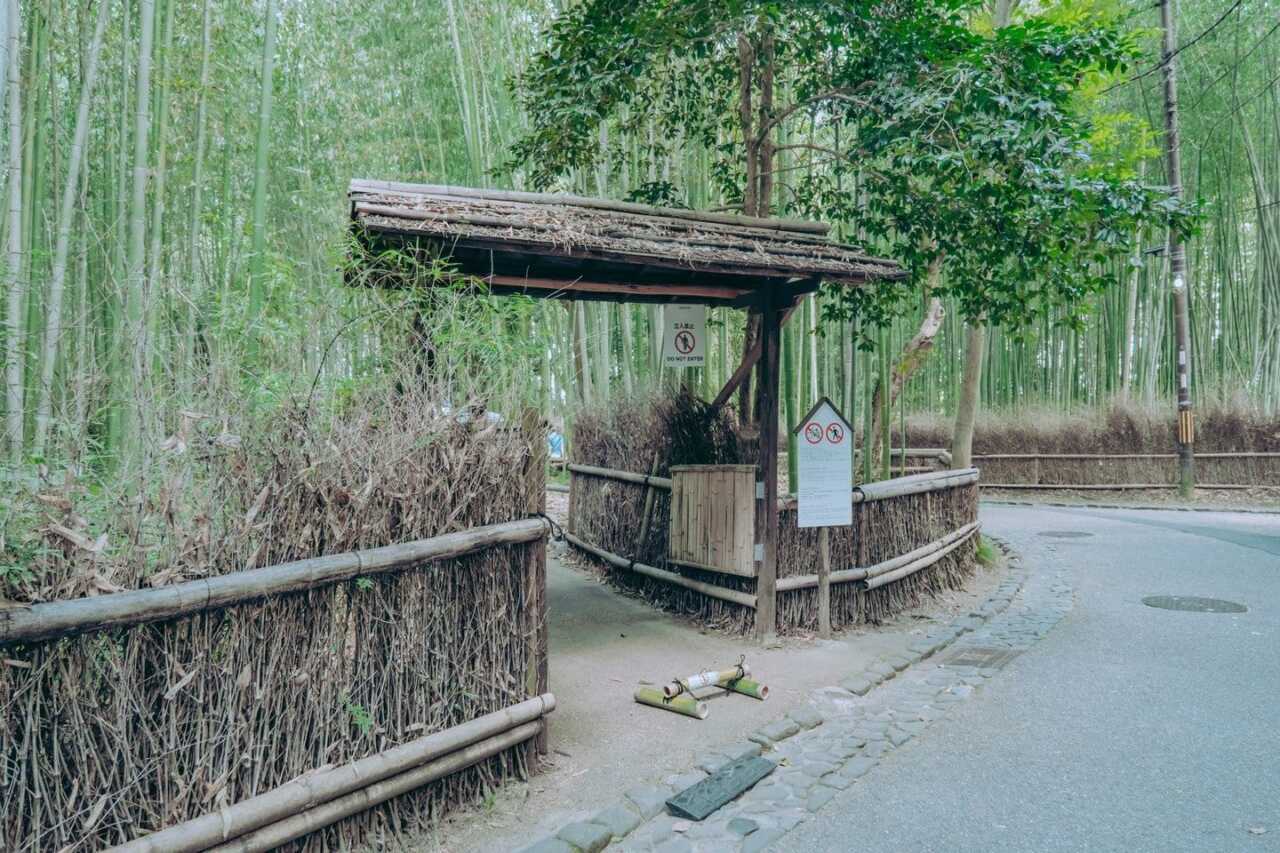
The Bamboo Grove Path links Tenryu-ji’s north gate with Arashiyama Station on the Sagano Scenic Railway. It is about 200 meters long, free and open year-round, and is listed among Japan’s “100 Soundscapes.” The bamboo on both sides tops 10 meters, and the swaying shadows and rustling leaves feel like a fairyland, so go early in the morning when it is quiet. Along the path you reach Nonomiya Shrine, known for its rare black-wood torii surrounded by bamboo and a moss garden. It is the place where Hikaru Genji and Lady Rokujo met again in The Tale of Genji, and is regarded as a sacred spot for prayers about love. It is said that a wish made before the “Turtle Stone” on the grounds comes true within a year. Admission is free, and it is open 9:00-17:00.
Hozugawa River Boat Ride: Foliage from the Water on a 400-Year-Old Tradition
Seats on the boats are mostly open-air in autumn and winter, so bring a warm jacket and a raincoat in case of splashes.
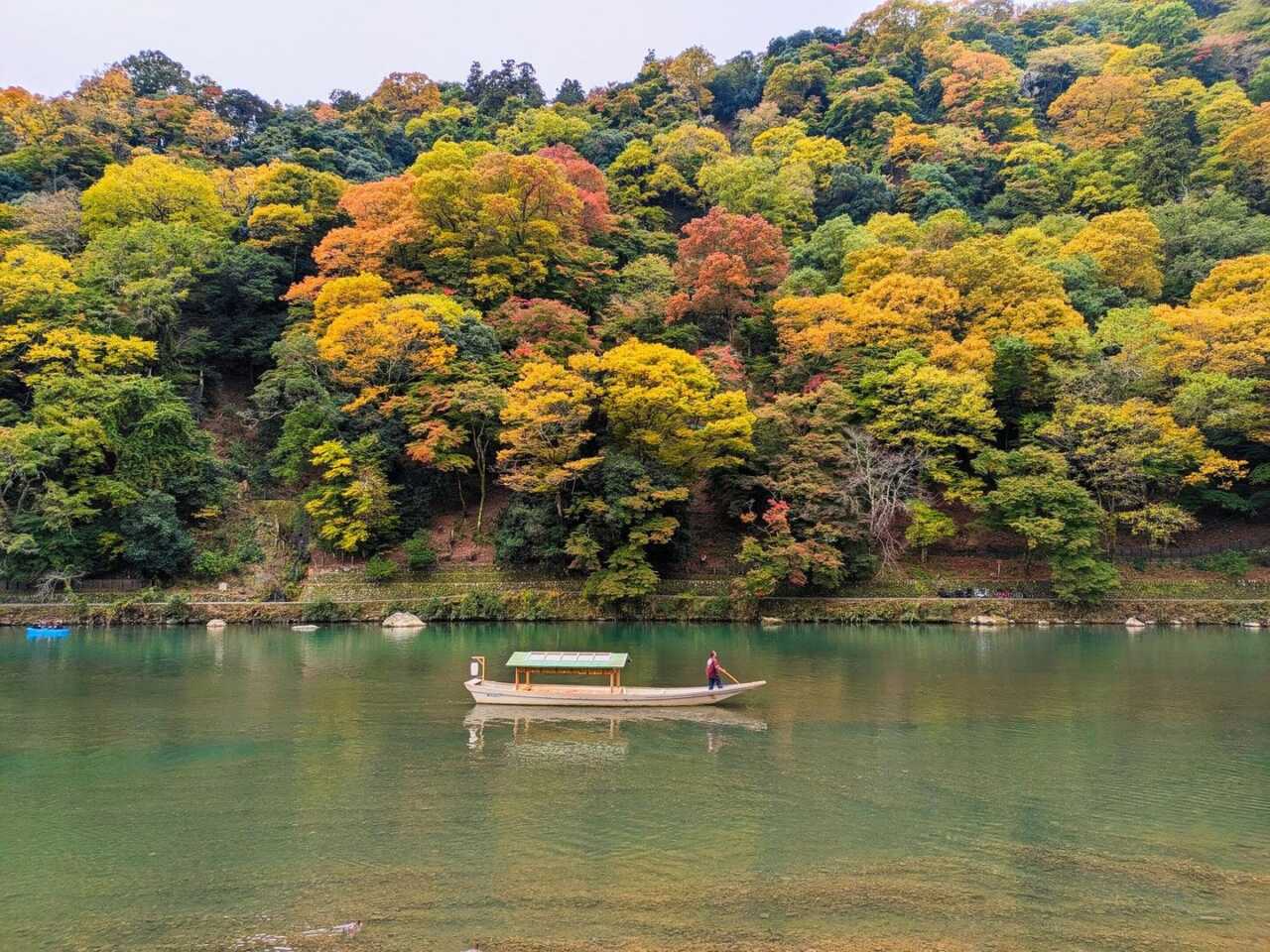
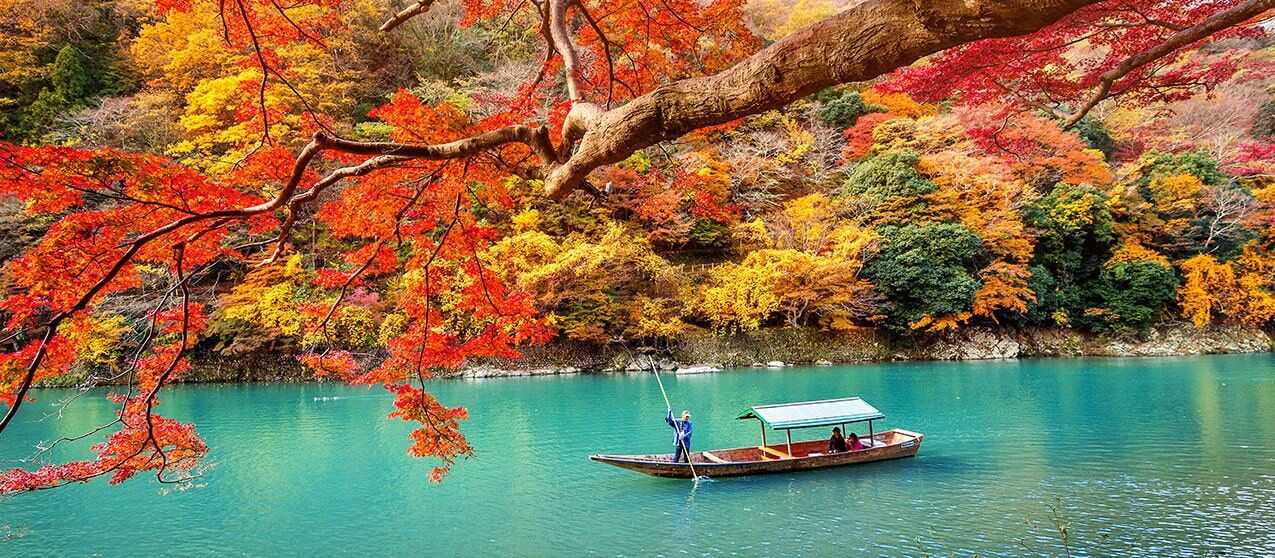
The Hozugawa River boat ride has a 400-year history. It runs 16 km from Kameoka to Togetsukyo Bridge in Arashiyama and takes 1.5-2 hours, with boatmen steering by pole and oar and explaining the history along the way.
In 2026 the regular boats run until December 13. Fares and schedules follow the announcements on the official site (hozugawakudari.jp), and you can reserve online or by phone (0771-22-5846). “Scenic train out, river boat back” is a popular combination, and we recommend booking online.
Sagano Scenic Railway: A Ride Through Tunnels of Red Leaves
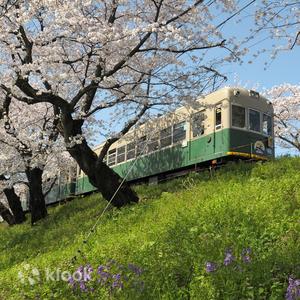
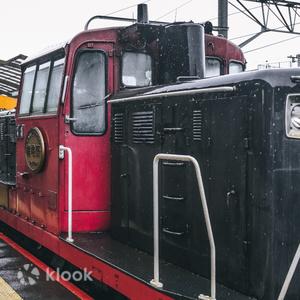
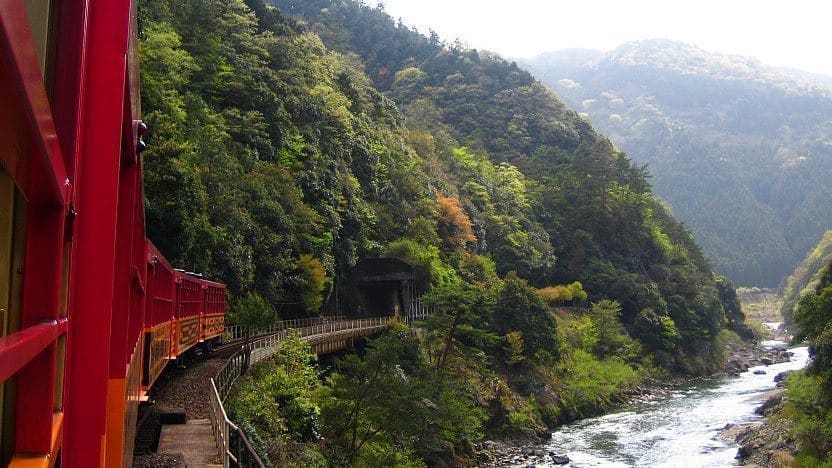
The Sagano Scenic Railway runs along the Hozugawa River gorge. The line is about 7.3 km long and a one-way ride takes 25 minutes, passing through 8 tunnels in retro wooden carriages with a Showa-era feel.
A one-way ticket between Saga-Arashiyama Station and Kameoka Station is ¥880 for adults and ¥440 for children. Trains run about once an hour from around 9:00, and the line is generally closed on Wednesdays (with exceptions in peak season). The open-air Car No. 5 is the most sought-after viewing seat, so book on the Sagano Scenic Railway official website when reservations open one month ahead.
The train slows down or stops briefly along the way so passengers can take photos. It is a relaxed way to enjoy the red leaves of the Arashiyama gorge with no walking, and suits families traveling with older relatives.
Daikaku-ji: A Hidden Foliage Spot at a Heian-Period Imperial Villa
Daikaku-ji was originally the villa of Emperor Saga in the Heian period and was converted into a temple at the end of the 9th century. You remove your shoes and walk its corridors throughout. The garden’s Osawa Pond is one of Japan’s oldest garden ponds, modeled on China’s Lake Dongting, and takes about 20 minutes to walk around. It is also a well-known spot for moon viewing and night foliage.
Admission is ¥500 for adults and ¥300 for junior high and high school students, and it is open 9:00-17:00. Visitors here are clearly fewer than around Tenryu-ji and Togetsukyo Bridge, which makes it ideal for people who have been to Arashiyama several times and want to avoid crowds and experience the historical depth.
It is about a 20-30 minute walk from JR Saga-Arashiyama Station.
Yusai-tei: A Secret Spot for Mirror-Like Reflected Foliage
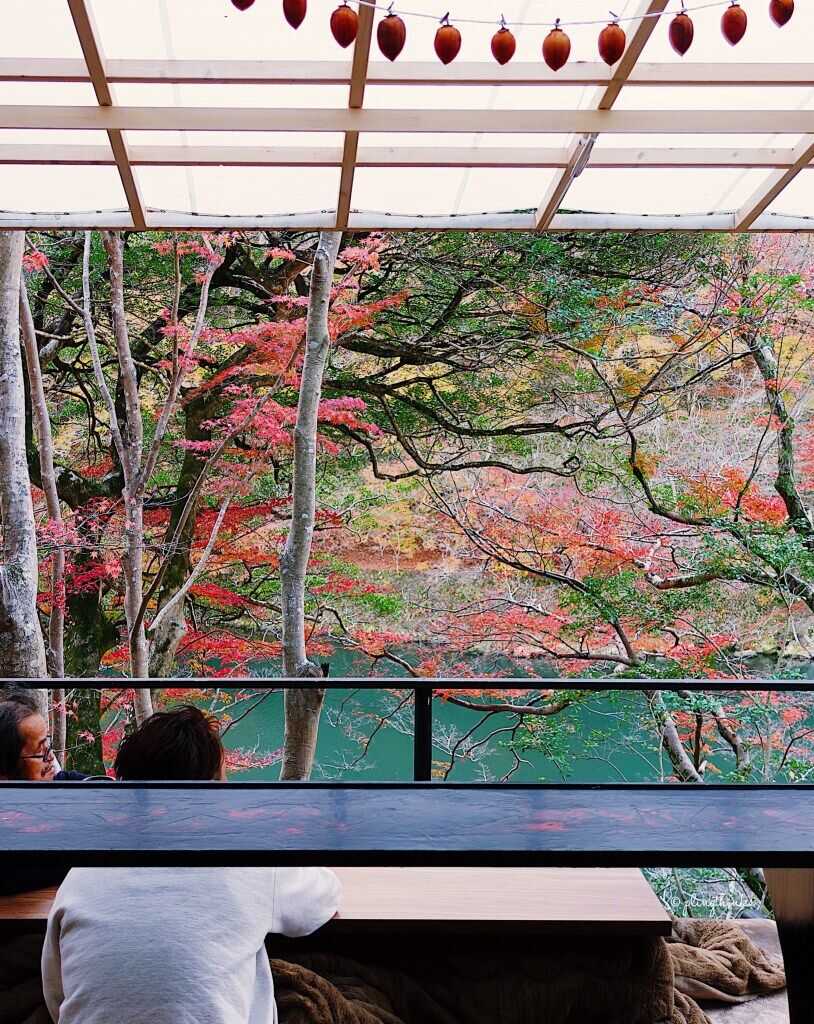
Yusai-tei, at the foot of Arashiyama, is a hidden foliage photo spot famous for “water mirror foliage,” where maple scenery is reflected on a black lacquer tabletop. The pavilion also exhibits dyeing art and is open only in autumn.
It is open 10:00-17:00 by advance reservation only. See the official website (yusai.kyoto) for fees and how to book.
Compared with classic spots such as Jojakko-ji and Togetsukyo Bridge, Yusai-tei is less well known, which suits photography lovers who like to seek out off-the-beaten-path places.
Tickets and Guided Tours
Most sights in Arashiyama are free to enter, but the following tours and tickets can make your foliage trip easier and deeper:
Arashiyama Walking Tour: A Deep Dive with a Local Guide
A local guide explains the story of Togetsukyo Bridge, the Sogenchi Garden at Tenryu-ji and the history of Jojakko-ji, which suits travelers who want to learn more about Arashiyama’s culture.
The tour takes about 2-3 hours and covers the main walking paths and temple visits. Prices vary by group size and language, roughly ¥2,000-4,000. We recommend booking on KKday or Klook at least 3 days ahead, as spots are in demand during peak foliage season.
A guide can share local stories you will not find on a map, adding depth to your trip, and suits travelers interested in history and culture.
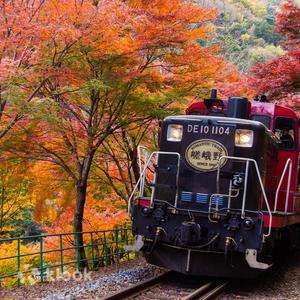
Sagano Scenic Railway Tickets: A Ride Through Gorge Foliage Tunnels
Official booking opening times follow the announcements. We suggest setting a reminder so you can grab the seat and time slot you want.
Sagano Scenic Railway tickets can be reserved on the official Sagano Scenic Railway website (ars-saganokanko.triplabo.jp), or bought as same-day tickets at station counters. In peak foliage season they often sell out in seconds, and the open-air Car No. 5 is especially sought after.
If you miss out on official tickets, you can book a scenic train day tour through platforms such as KKday and Klook, where the travel agency handles the seats for you. It suits travelers who do not want to leave it to chance.
Where to Stay Near Arashiyama’s Foliage
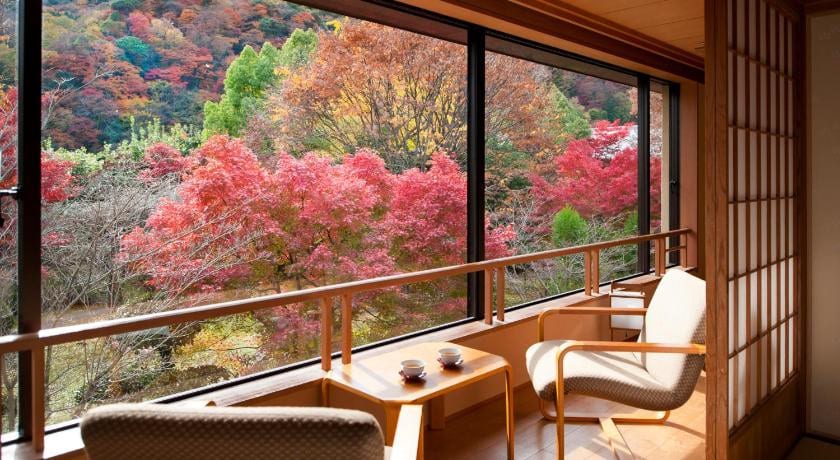
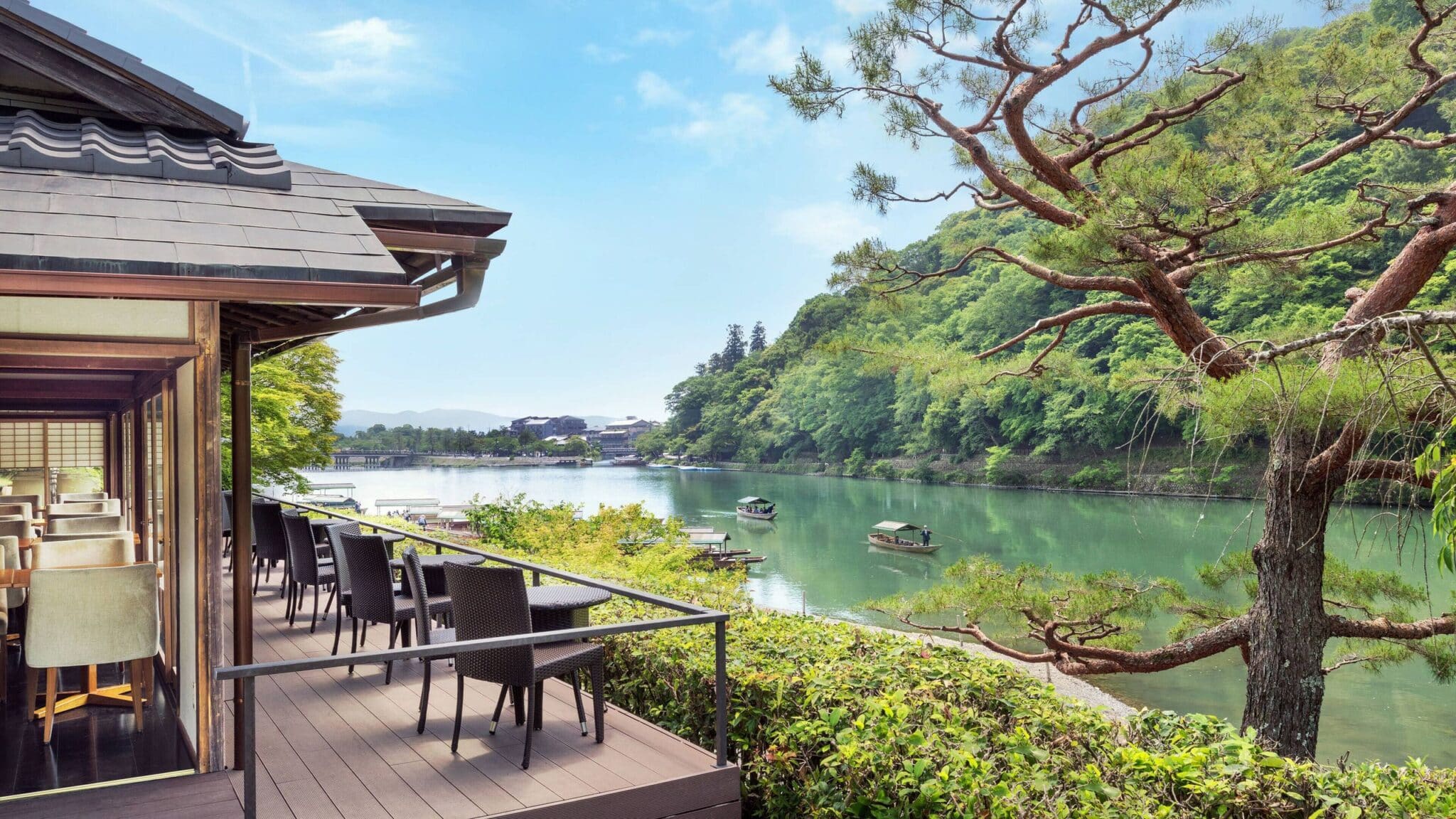

Where to Stay: Kyoto Station or an Arashiyama Hot Spring Inn
Accommodation in Arashiyama is mostly Japanese-style hot spring inns, with unique atmosphere but higher prices. They suit travelers who want to stay close by to catch the morning mist at Togetsukyo Bridge and stroll the bamboo grove early.
Arashiyama is about 20-30 minutes by car from central Kyoto. If you do not stay overnight there, stay near Kyoto Station or Karasuma-Shijo for flexible transport and easy access to other foliage spots such as Kiyomizu-dera and Tofuku-ji, which suits first-time visitors.
If your budget allows, choose an Arashiyama hot spring inn with an open-air bath for foliage views, adding relaxation to your trip.
Rooms are in demand in peak foliage season, so book 1-2 months ahead to get the room type and price you want.
Arashiyama Food Picks: Yudofu and Eel Rice
Sagano yudofu (tofu hot pot) is a traditional Arashiyama dish, and many long-established restaurants have garden views. Kaiseki sets cost about ¥3,000-5,500 and make a good lunch to pair with a foliage day at Tenryu-ji and the Bamboo Grove Path.
The Michelin one-star Hirokawa eel rice is by reservation only, so book ahead. % Arabica coffee by Togetsukyo Bridge and the croquettes and grilled dango on Arashiyama’s main street are also good ways to refuel, and souvenir shops along the street sell matcha sweets and Kyoto-only snacks.
At peak mealtimes, arrive early or call ahead to avoid long waits, especially at weekend lunch when the lines are long.
Arashiyama Foliage FAQ
Q: When is the best time to see Arashiyama’s autumn leaves?
In 2026 the best viewing period is expected to fall from late November to early December. Because of climate change, the peak has been arriving later year by year, so check the latest foliage report sites again one to two weeks before you go.
Q: Is a full day or half day better for Arashiyama?
If you want to experience Togetsukyo Bridge, the Bamboo Grove Path, Tenryu-ji, Jojakko-ji and Nison-in in depth, plan a full day. If time is short, do a half day focused on the bamboo avenue and Togetsukyo Bridge, then link up with other Kyoto sights in the afternoon.
Q: How can I avoid the crowds at Arashiyama’s foliage?
We strongly recommend arriving in Arashiyama before 8:30, going first to the Bamboo Grove Path and lining up at Jojakko-ji before it opens at 9:00. You can also visit lesser-known spots such as Daikaku-ji and Yusai-tei to avoid famously packed places like Tofuku-ji and Kiyomizu-dera.
Q: How do I choose between the Hozugawa boat ride and the Sagano scenic train?
They offer different experiences. The scenic train runs through 8 tunnels along the Hozugawa gorge and suits travelers who want a quick look at the gorge scenery. The boat ride takes 1.5-2 hours in total and sits closer to the water, so it suits those who want to feel the valley and hear the boatman’s commentary. The classic way is “train out, boat back.”
Q: Is Arashiyama suitable with older relatives or children?
Togetsukyo Bridge, the Bamboo Grove Path and Arashiyama’s main street are flat and easy to walk, so they suit older relatives and children. Jojakko-ji and Nison-in have steeper stone steps, so wear non-slip, comfortable shoes. When you get tired, you can soak your feet at the foot bath at Randen Arashiyama Station.