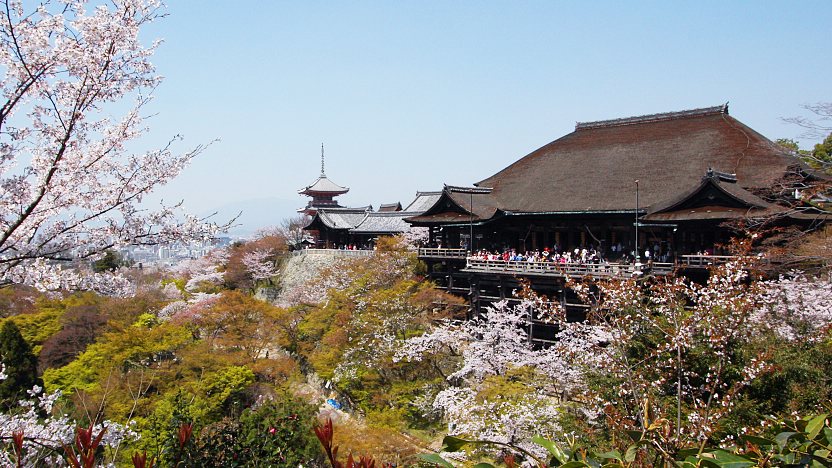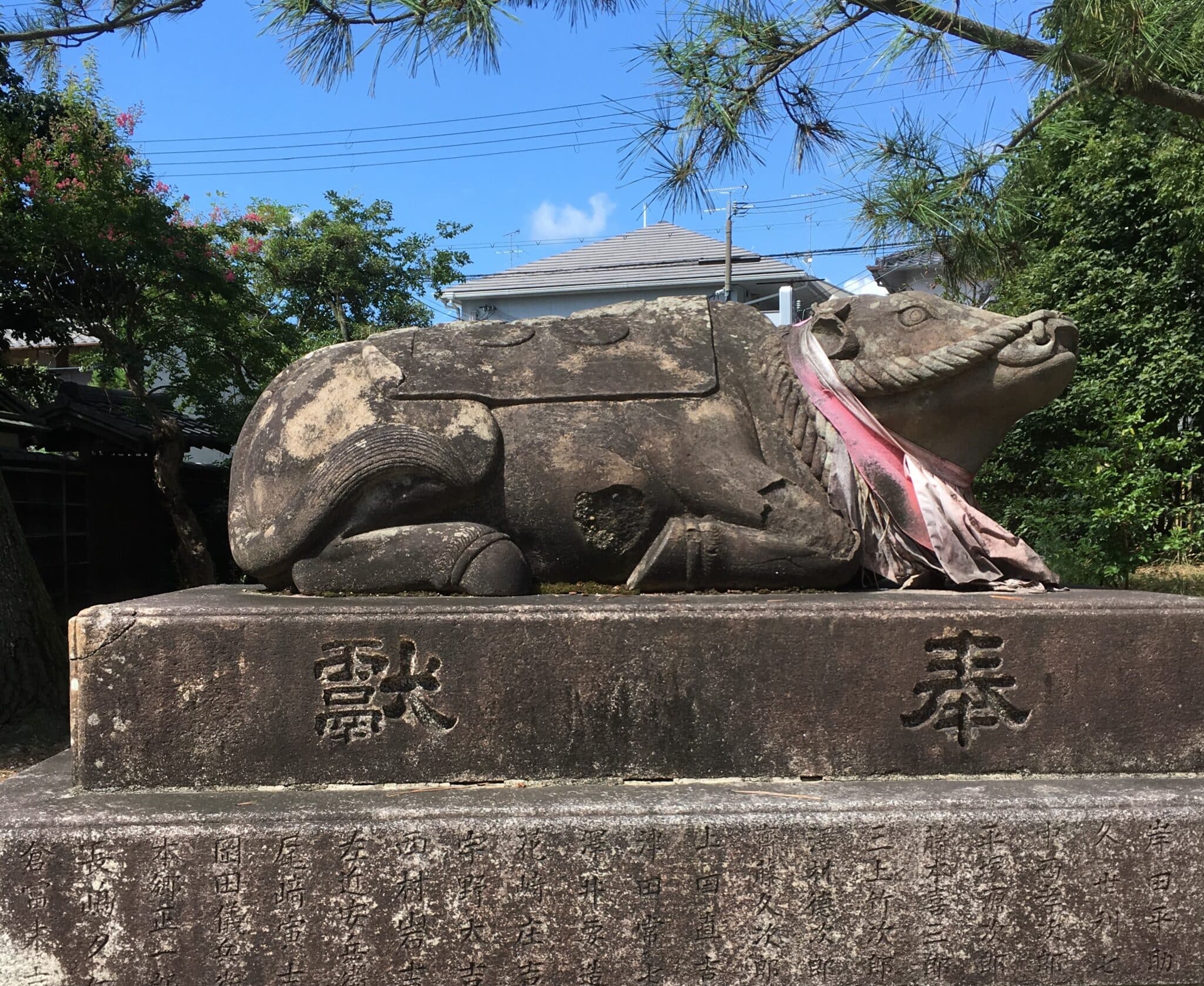

Jingoji Temple Guide: Kyoto’s Takao Mountain Temple, First in the City to Turn Red
Jingoji sits in the Takao mountains in northwest Kyoto and is among the first places in the city to reach peak autumn color. Admission is ¥1,000 for adults.
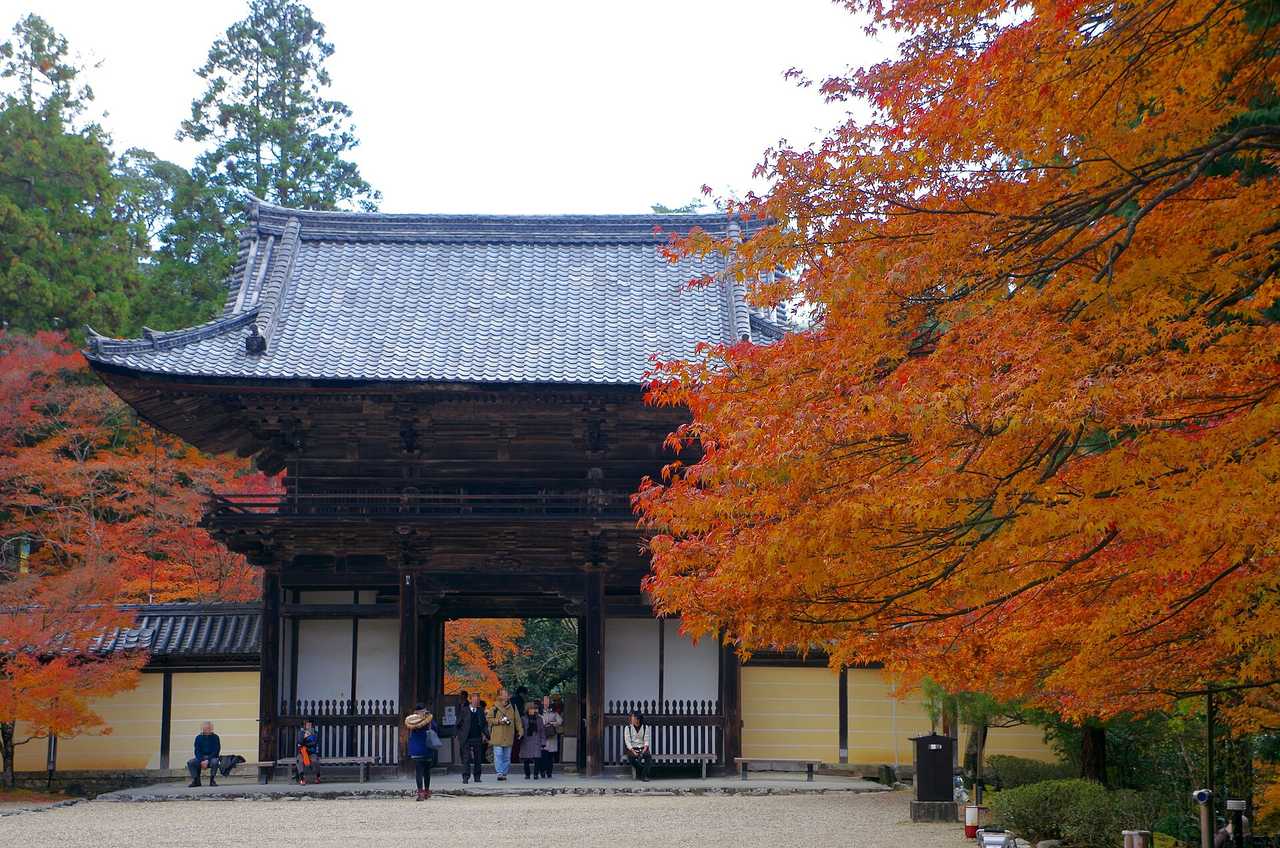
Founded by Wake no Kiyomaro, it is where the monk Kukai (Kobo Daishi) served as head priest for 14 years, making it the original core of Japanese esoteric Buddhism. The Kondo (Main Hall) enshrines a National Treasure standing statue of Yakushi Nyorai, a pinnacle of early Heian-period woodcarving. For visitors, three things stand out about Jingoji: the maple-framed Romon gate that greets you after 350 stone steps, the clay-disc throwing ritual for warding off bad luck, tossed out over Kinun Valley, and the hiking route linking it with Saimyoji and Kozanji, known as Takao Sanbi. It is not suited to anyone with limited mobility, but if you are fit enough, it is the one mountain temple in Kyoto most worth an hour-long bus ride.
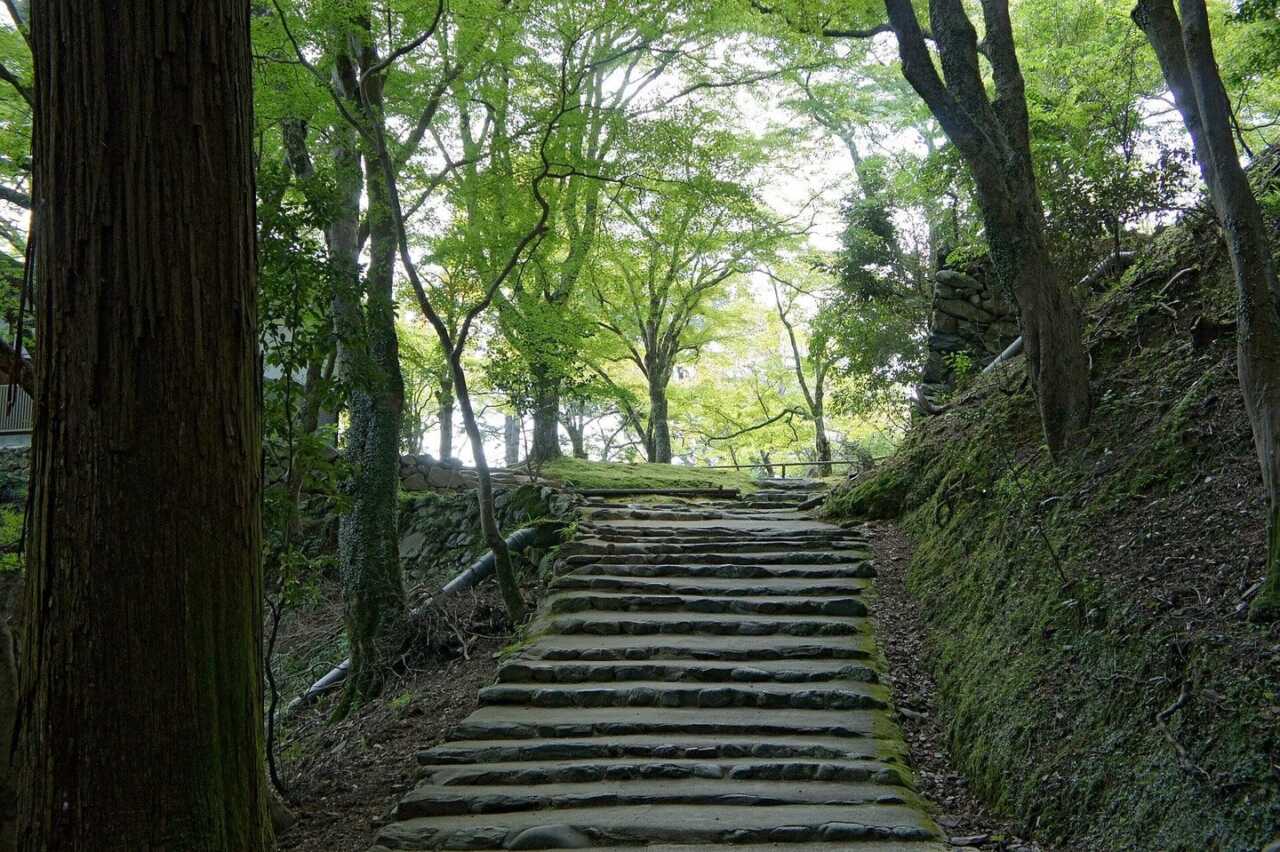
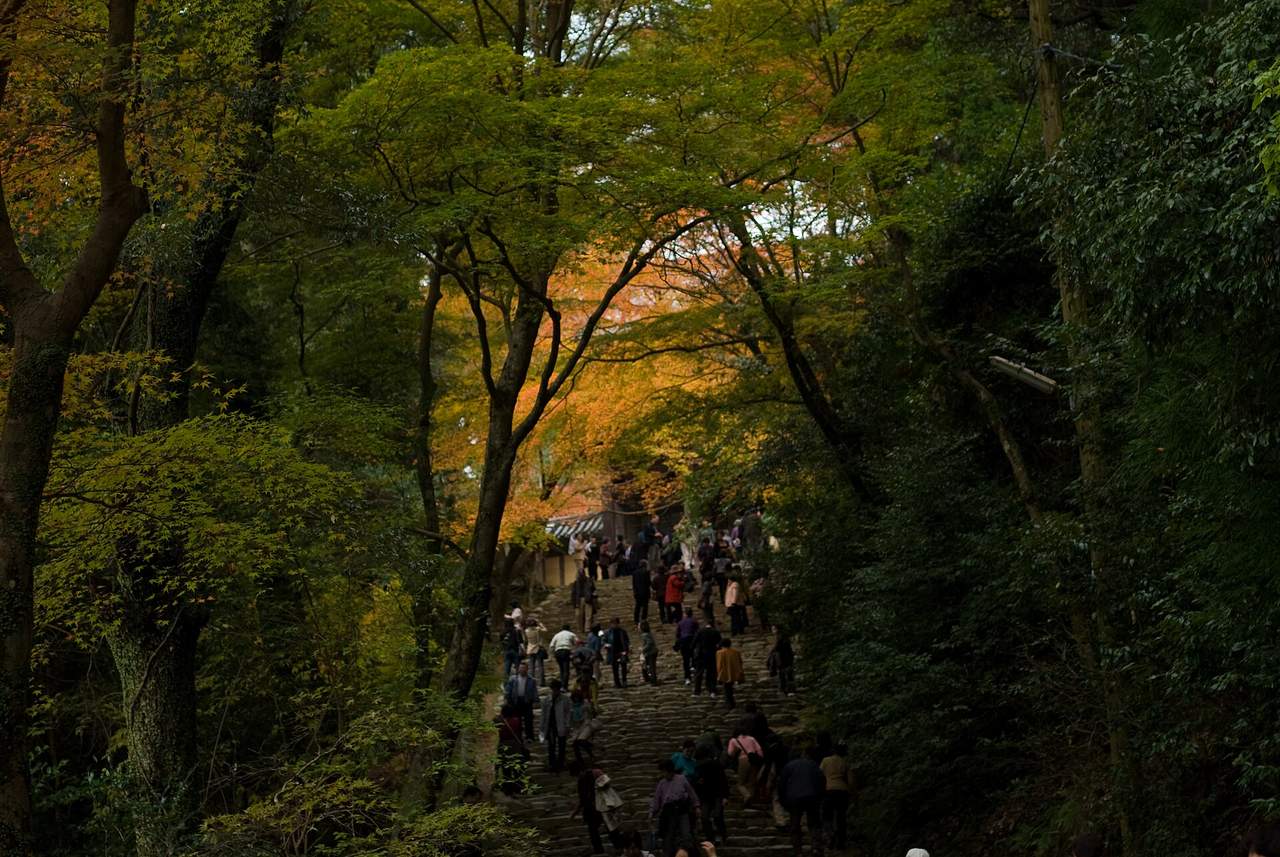
Jingoji’s Long Stone Steps and Romon Gate: A Tunnel of Red Leaves After 350 Steps
It is about a 20-minute walk from the bus stop to the Jingoji mountain gate, followed by roughly 350 to 400 steep stone steps, so wear comfortable shoes. At the top you will see the old Romon gate surrounded by a tunnel of red maple leaves, Jingoji’s classic photo spot. Admission is ¥1,000 for adults and ¥500 for elementary school students; it is open 09:00-16:00, and 1.5 to 2 hours is a good amount of time to allow. Both the walk and the steps are long, and there is no elevator or alternate route on the mountain, so anyone with limited mobility or families with small children should think carefully.

Kawarake Nage: The Birthplace of Clay-Disc Throwing in Japan
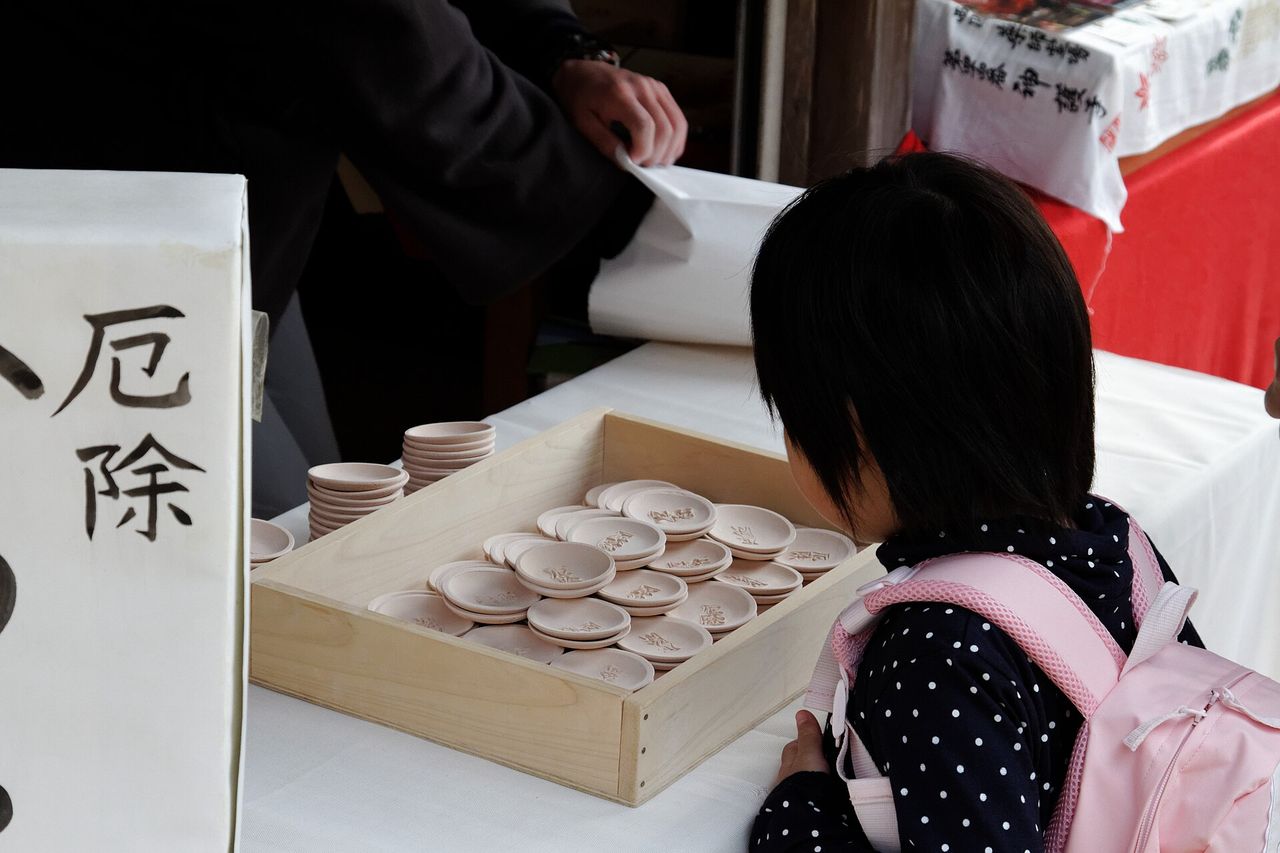
Jingoji is the birthplace of the kawarake nage (clay-disc throwing) ritual. At the lookout in front of Jizo-in, you can buy 3 unglazed clay discs for about ¥200 and throw them hard out over Kinun Valley.
Legend says the farther the disc flies, the more completely your bad luck and worries are cleared away. Watching the discs glide over the valley is fun and stress-relieving, and even children enjoy it, making it the most memorable experience here.
Before you throw, check that no one is on the trail below, and throw in the direction indicated by the signs on site. The discs are very thin and fly far without much force; the key is the angle and timing of your release.
Takao Sanbi: Kyoto’s Earliest Autumn Foliage Area
Jingoji, Saimyoji and Kozanji are together known as Takao Sanbi. They line up from north to south along the Kiyotaki River and are linked by trails you can walk. Takao sits at higher elevation and is the first area in Kyoto to turn red, with peak color from early to late November each year, nearly two weeks ahead of the city center, which makes it an ideal first stop of the foliage season. Kozanji holds the National Treasure Choju-giga scrolls, Saimyoji is the quietest, and Jingoji is the largest and most impressive. For the least effort, walk from Togano-o in the far north south to Takao, which takes about 30 to 40 minutes on foot in total. Admission to each of the three is bought separately; there is no combined ticket.
How to Get to Jingoji: JR Bus, City Bus and Pass Route Comparison
The best way from Kyoto Station is the West Japan JR Bus to Yamashiro Takao stop, which is free with a JR Pass.
| Route | Get off at | One-way fare |
|---|---|---|
| West Japan JR Bus (Kyoto Station, JR Bus Stop 3) | Yamashiro Takao | About ¥520 (JR Pass valid; check the official website for the actual fare) |
| Kyoto City Bus Route 8 (Shijo Karasuma / Omiya) | Takao | ¥230 |
| Arashiyama-Takao Gurutto Pass | Designated JR Bus section + all Randen lines | About ¥1,000 per day |
| Kyoto Subway and Bus One-Day Pass | Valid on City Bus Route 8 | ¥1,100 per day |
Take the West Japan JR Bus to Yamashiro Takao Stop (Most Recommended)
From JR Bus Stop 3 in front of Kyoto Station, take the West Japan JR Bus Takao-Keihoku Line toward Togano-o or Shuzan, and get off at Yamashiro Takao. Jingoji is about a 20-minute walk from there.
The one-way fare is about ¥520 and the ride takes about 50 minutes. It is free with a JR Pass, and it is the most convenient way in and out for a day trip to the three temples.
Extra buses run in peak foliage season, but the return trip often still has long lines. We suggest starting down before 3 p.m. to avoid the rush.


Take Kyoto City Bus Route 8 to Takao Stop
Another option is Kyoto City Bus Route 8. Board at Shijo Karasuma (Shijo subway station) or Omiya Station and get off at Takao; it is likewise about a 20-minute walk to Jingoji.
The one-way fare is only ¥230, making it the cheapest option, and you can ride it with the Kyoto Subway and Bus One-Day Pass (¥1,100). The downside is that it runs less often than the JR Bus and the last bus back is fairly early, so be sure to check the timetable before you set out.
This route passes through residential areas of Kyoto and takes slightly longer than the JR Bus. If you will be riding several times around the city that day, the one-day pass usually pays for itself; if you are only making a round trip to Takao, paying cash per ride works out cheaper.
Arashiyama-Takao Gurutto Pass: A Ticket That Ties Arashiyama and Takao Together
If you plan to visit Arashiyama and Takao on the same day, consider the Arashiyama-Takao Gurutto Pass. It costs about ¥1,000 and gives unlimited one-day rides on the West Japan JR Bus Takao-Keihoku Line (Kyoto Station to Togano-o) and the Randen tram (Arashiyama Main Line and Kitano Line), valid only on the day of purchase.
For current availability, valid sections and prices, please refer to the official announcements on the West Japan JR Bus website.
This pass does not include the Kyoto Municipal Subway or City Buses. If your itinerary includes other sights in the city, you will need to buy tickets separately or use an IC card, so plan the day’s route before you buy.
From the Bus Stop to the Kondo: A 20-Minute Walk Plus 350 Stone Steps
After getting off at Yamashiro Takao or Takao, walk down the slope to the Kiyotaki River. After crossing the bridge you begin climbing the stone steps of Jingoji’s main approach, about 350 to 400 steps. The slope is steep, and there are traditional teahouses along the way where you can rest.
It takes about 30 to 40 minutes from the bus stop to the Kondo. Allow 1.5 to 2 hours on the mountain for worship and the experiences, and keep an eye on the return bus times.
There are no convenience stores on the mountain, so bring water and cash from the city. The steps have no handrails and are slippery in rain or when leaves have fallen, so take it slowly on the way down. The signs along the route are clear and it is hard to get lost.
What Are the Must-See Sights at Jingoji? The Kondo, Clay-Disc Throwing and Takao Sanbi
Jingoji’s highlights are concentrated around the Romon gate, the Kondo and the Jizo-in lookout, and beyond the mountain gate lie Saimyoji and Kozanji.
Romon Gate: Jingoji’s Face at the End of a Tunnel of Red Leaves
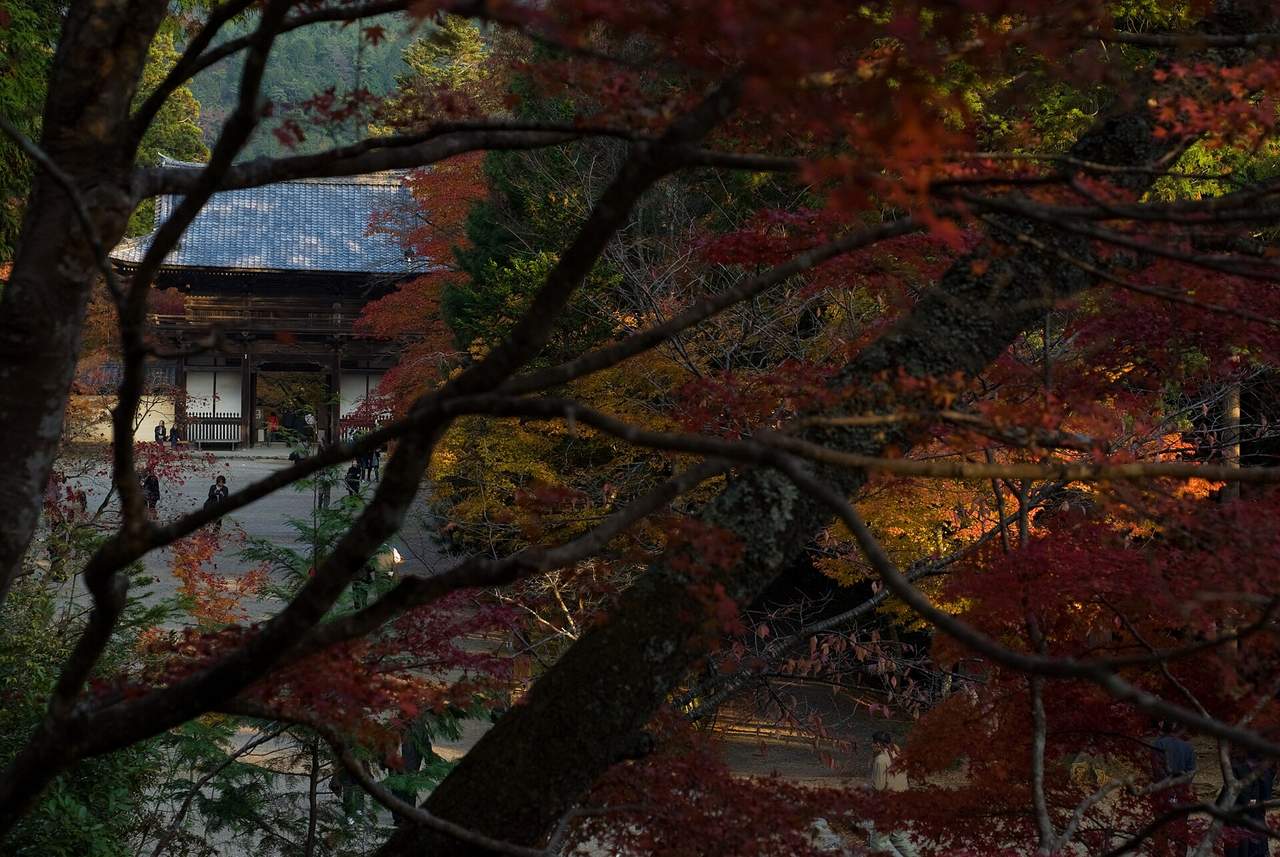
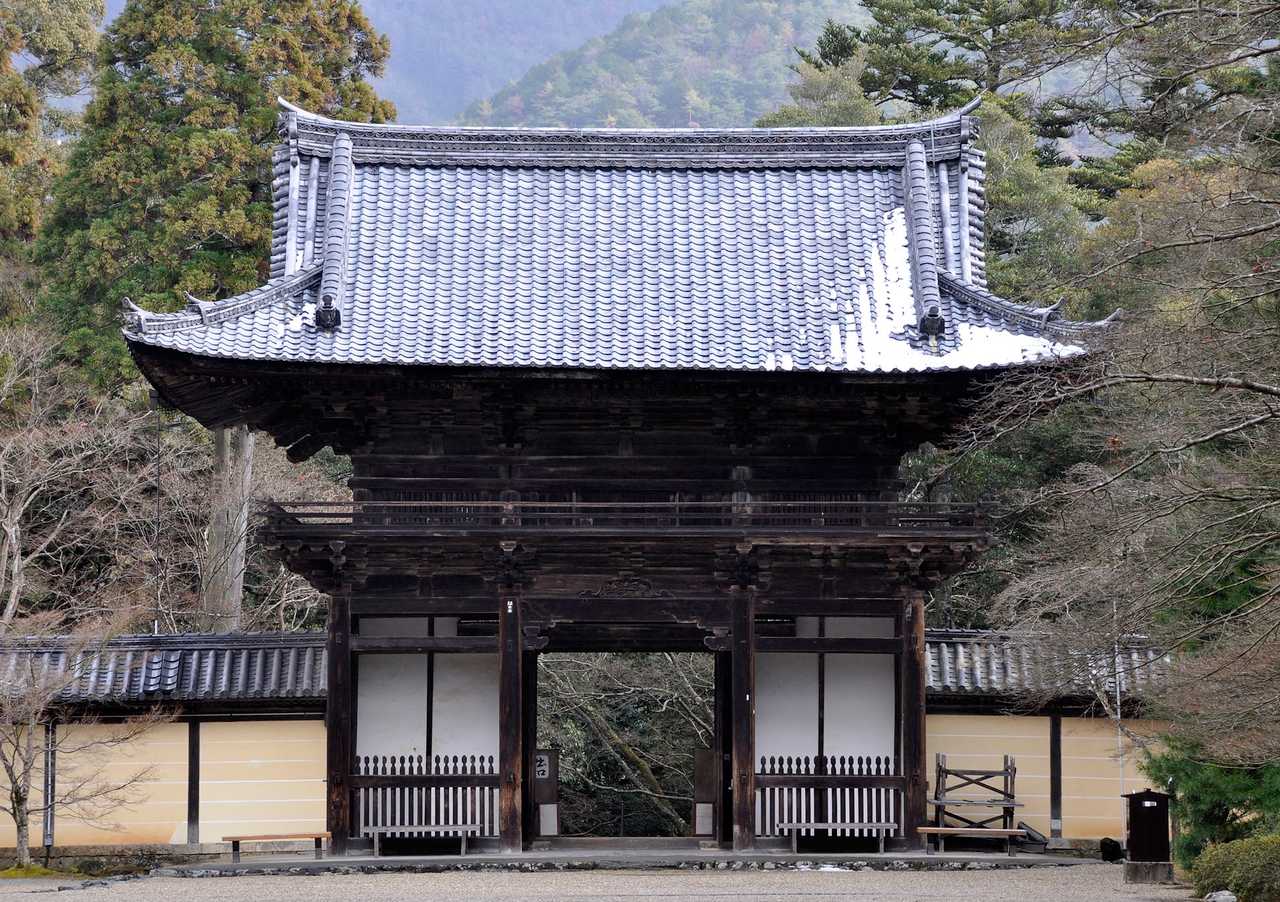
After climbing the long approach steps, the first thing you see is the simple, old Romon gate. In autumn the maples on both sides weave a red tunnel overhead, and the gateway frames the grounds behind it like a picture.
This is Jingoji’s classic and most photographed spot; we suggest standing midway up the steps and shooting upward as you look back. There is a line on November weekends and holidays, so arrive soon after opening if you want time to compose your shot.
Looking back through the gate, the red leaves along the steps give you a different view from above. The platform in front of the gate has limited space, so please give way to others when taking photos.
Kondo: The Majestic Giant Staircase and Main Hall
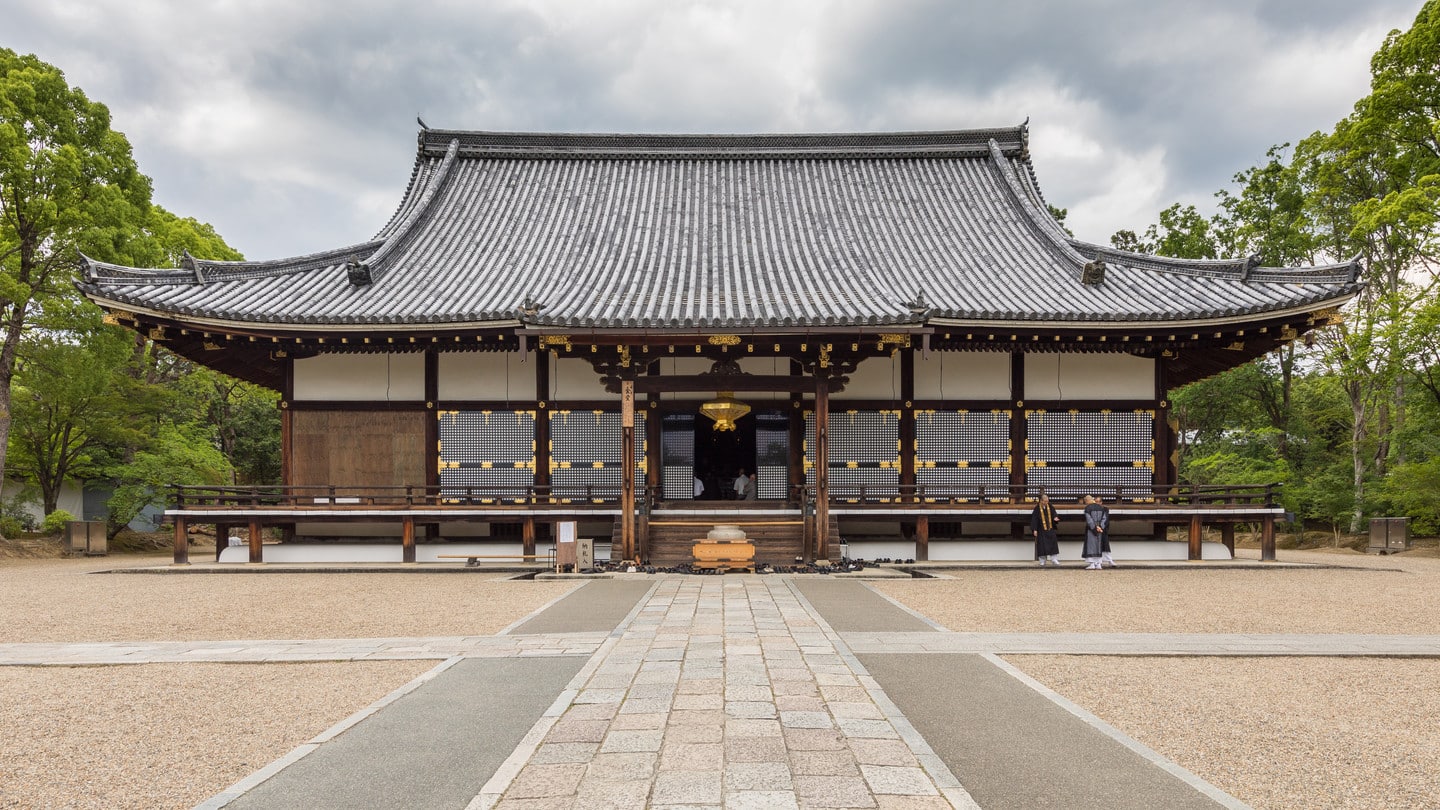
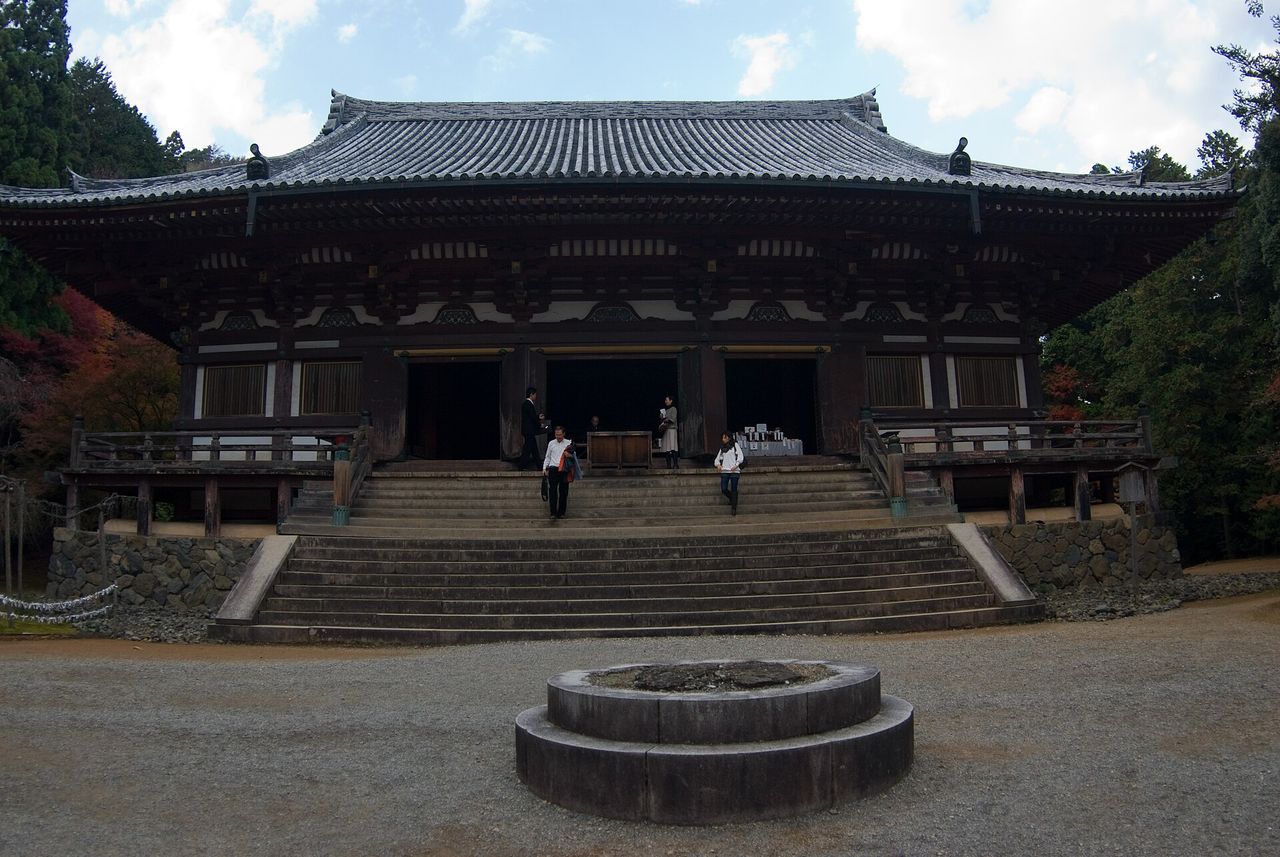
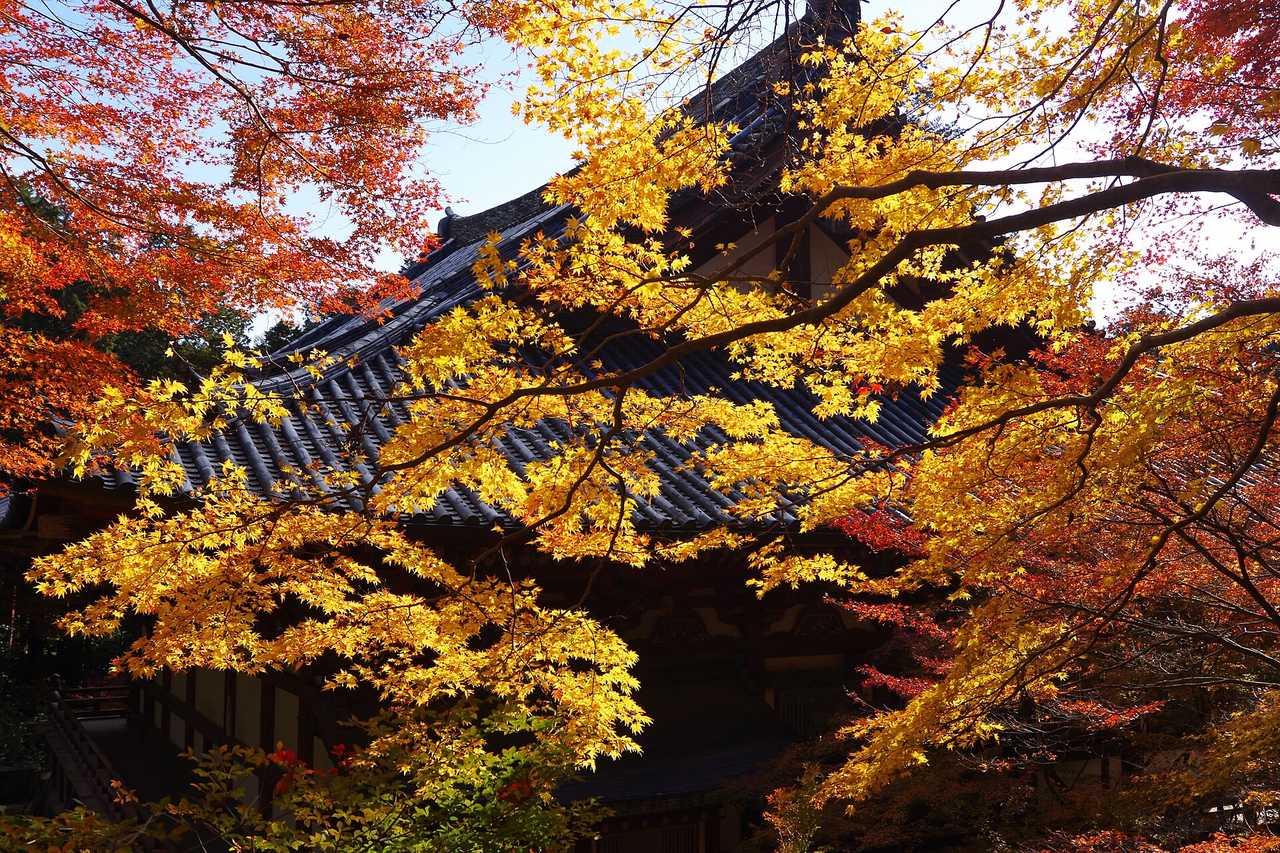
The Kondo is Jingoji’s main hall, at the highest point of the grounds. The existing hall was rebuilt in the early Showa era. Maples are planted along both sides of the staircase, and in autumn red, yellow and green leaves cover the steps, setting off the old hall in a majestic scene.
Looking back over the grounds from the platform in front of the Kondo gives you another wide-open viewpoint. Light inside the hall is dim, which heightens the solemnity of the Buddhist statues; please stay quiet when worshiping and follow the photography rules.
You have to climb one more stretch of the steepest steps to reach the Kondo. There are benches in front of the hall for a short rest, and the view and the scale of the hall at the top make you feel the climb was worth it.
National Treasure Yakushi Nyorai: The Peak of Early Heian Woodcarving
The principal image enshrined in the Kondo, the standing Yakushi Nyorai, is a National Treasure and the pinnacle of early Heian-period woodcarving. Carved from wood, it has a piercing gaze and a stern expression, with only the lips painted red and no paint or gold leaf elsewhere. Its commanding presence comes entirely from the mass of the wood, very different from the soft, rounded style of later periods, and it is the reason Buddha statue enthusiasts make the trip up the mountain.
The light inside the hall is dim and takes time to adjust to, so we suggest looking for a few more minutes before leaving. Follow the notices on site for photography; photos are mostly prohibited. Other Buddhist statues are also enshrined in the hall and are worth a close look.
Kawarake Nage: Throwing Your Bad Luck Out over Kinun Valley
Jingoji is the birthplace of the clay-disc throwing ritual in Japan. From the Kondo, walk to the left to the lookout in front of Jizo-in, where you can buy 3 small unglazed clay discs for about ¥200 and throw them with all your might out over Kinun Valley below.
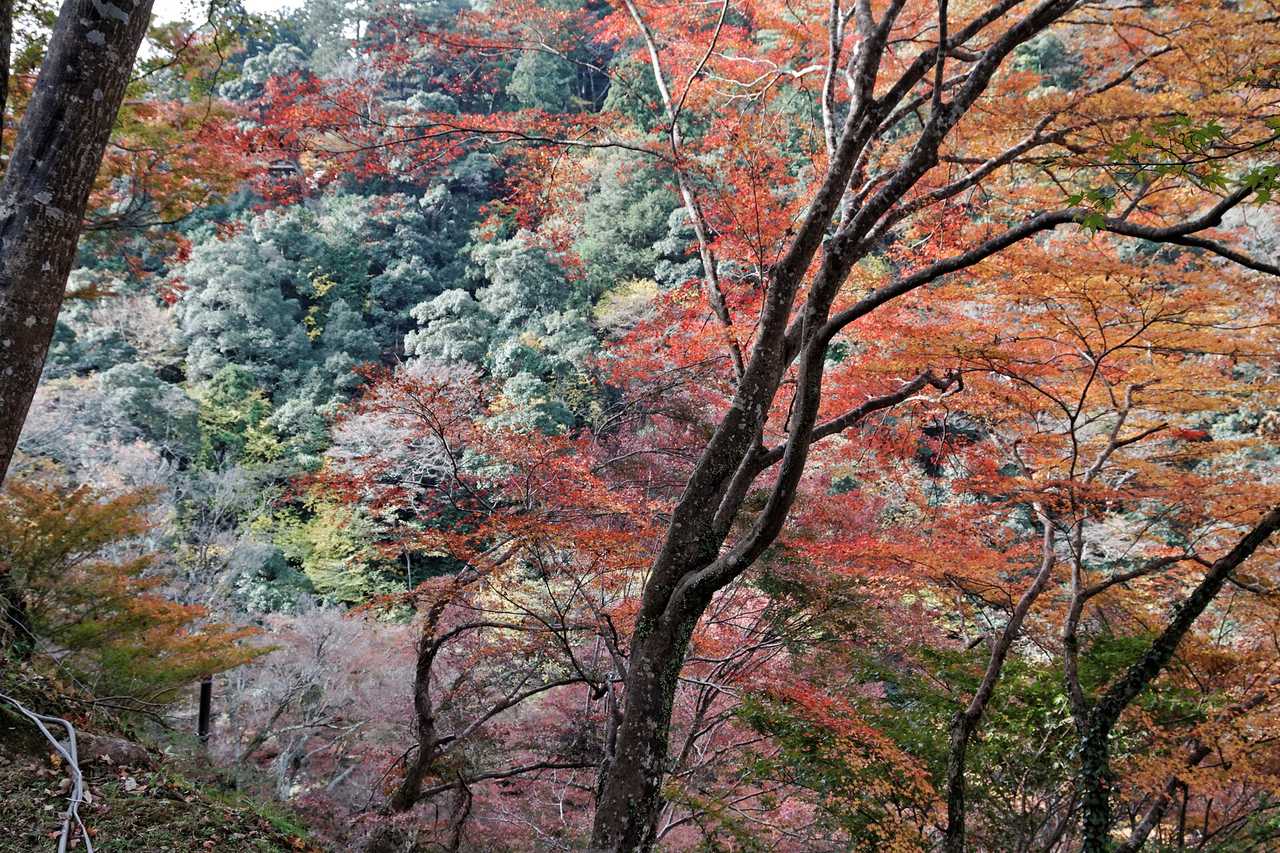
Legend says the farther the disc flies, the more thoroughly the bad luck and worries you carry are driven away. The view from the lookout is wide open, and even if you do not throw any discs, it is worth walking over just to look at the valley full of red leaves.
The discs are sold right next to the lookout, mostly for cash only, so bring small change. In peak season there is a line here; if you are short on time, worship at the Kondo first and come back around on the way down. In rain or strong wind, sales of the discs may be suspended, so go by what you find on site.
Jizo-in Lookout: A View over the Whole Valley of Red Leaves
Jizo-in is a little farther out on the west side of the grounds, about a 5-minute walk from the Kondo. The lookout in front of it faces Kinun Valley directly. It has the widest view at Jingoji and is also where kawarake nage is held.
In autumn the whole valley is covered in red leaves when you look out from here, and you can see the valley terrain of the Kiyotaki River in the distance. Because it is a bit off the main route, many visitors skip it, which is a real shame.
The path from the Kondo to Jizo-in is a gentle woodland trail that is pleasant to walk and noticeably quieter. If you want a peaceful place to sit and rest, this is a better spot than anywhere else in the grounds. Walking back from the lookout to the Kondo takes about 5 minutes, so it is not a detour.
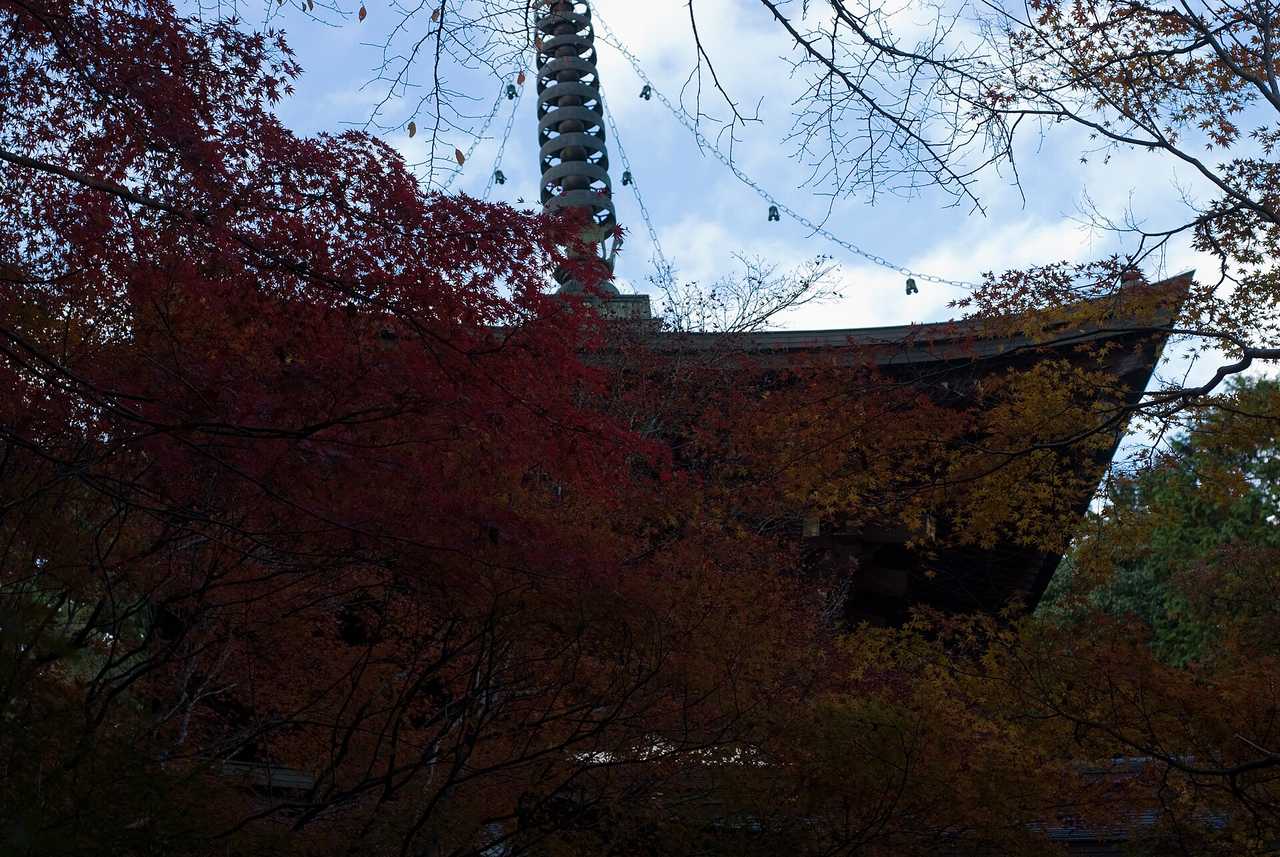
Tahoto Pagoda: National Treasure Five Great Kokuzo Bosatsu, Specially Opened in Spring and Autumn
The Tahoto pagoda deep in the grounds enshrines the National Treasure seated statues of the Five Great Kokuzo Bosatsu. According to Jingoji’s official website, Emperor Ninmyo vowed to build the pagoda hall in the 3rd year of Jowa (836), and it was completed in 845.
Each of the five statues has its body painted in one of five colors: white, yellow, blue-green, red and black. They are normally hidden Buddhas not open to the public. The special openings in 2026 are May 13 to 15 in spring and October 10 to 12 in autumn, with viewing hours of 10:00-15:00 and a viewing fee of ¥500 (the ¥1,000 temple grounds admission is also required).
The trail next to the pagoda is fairly steep, so watch your step.
Myoo-do: Fudo Myoo and the January Hatsu Daigoma Fire Ritual
Myoo-do is an important hall at Jingoji. Its principal image is a Fudo Myoo statue from the mid-Heian period, and the atmosphere feels close to that of an esoteric Buddhist ritual hall.
The official website announces that the Hatsu Daigoma (first great fire ritual) is held at 2 p.m. on the second Sunday of January each year. There are also goma prayers on the second Sunday of February to July and September to December, and the Segaki Goma on August 16. Please check the official website for dates.
It is on the way to Jizo-in and is often overlooked by visitors. If you are interested, stop to read the information boards to learn about Jingoji’s place in Buddhist history. The space in front of the hall is small, and crowds gather during ceremonies.
Special Viewing at Daishi-do: Wooden Carved Kobo Daishi Statue Open November 1 to 7
Jingoji’s official website announces that the Daishi-do holds a special viewing every year from November 1 to November 7, showing the temple treasure, the wooden carved statue of Kobo Daishi. Viewing hours are 9:00-16:00, the viewing fee is ¥500, and the ¥1,000 temple grounds admission is also required. A commemorative viewing goshuin stamp is issued during this period. This falls during peak foliage at Takao, so visitors who want to see the temple treasure can fit the Daishi-do into the same day as the Romon gate, Kondo and Jizo-in. The treasure pages of the official website also include a description of this carved statue.
Jingoji and Kukai: The Original Core of Japanese Esoteric Buddhism
Jingoji’s predecessors were Jingan-ji, built by Wake no Kiyomaro, and Takaosan-ji, the family temple of the Wake clan. They merged in 824 and were given the name Jingo Kokuso Shingon-ji, serving as a temple for praying for the protection of the nation.
After returning from his studies in Tang China, Kukai entered the temple in 809 and served as head priest for 14 years. He also held an important initiation ceremony in the history of Japanese Buddhism, making Jingoji the first base of Japanese esoteric Buddhism.
The grounds also preserve a number of items related to Kukai.
Teahouses on the Approach: A Rest Stop for Fried Maple Leaves While Viewing the Foliage
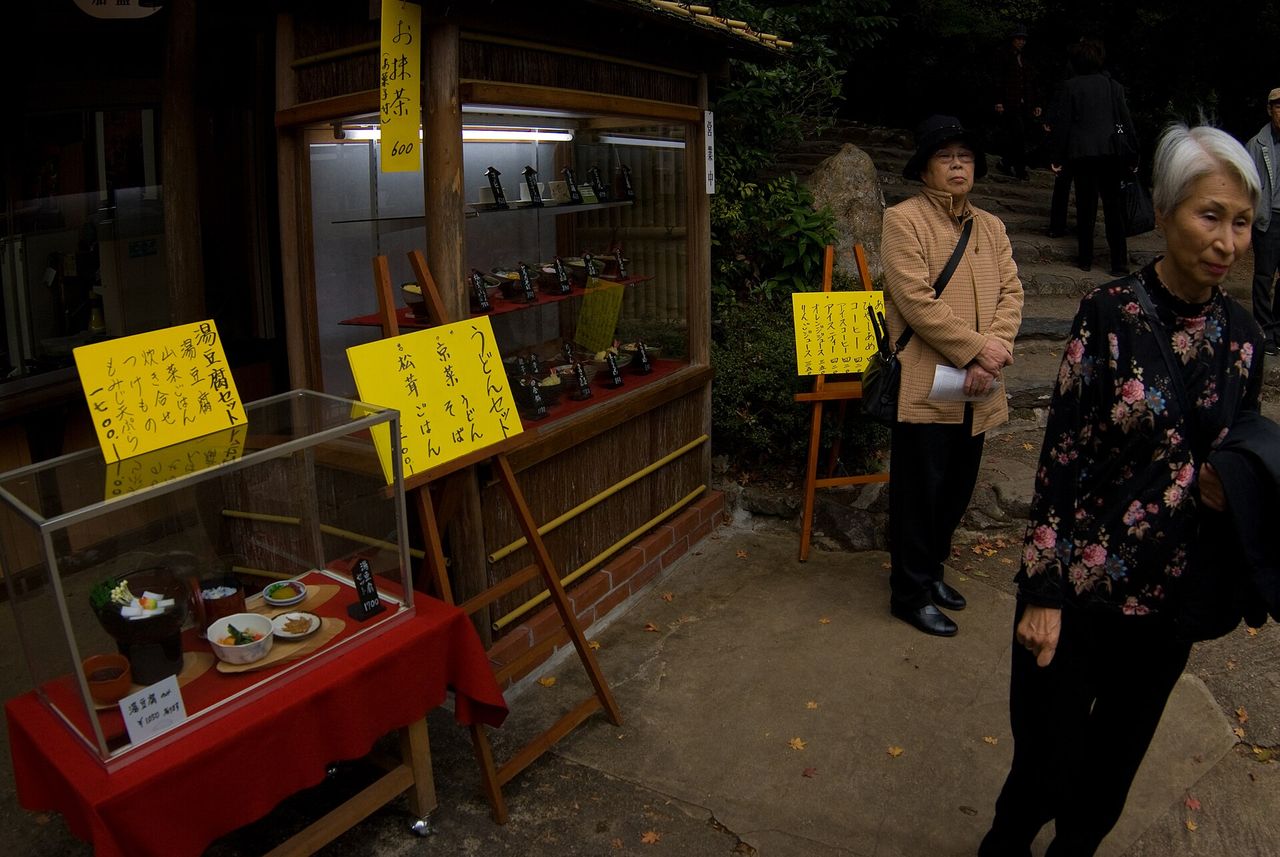
Along the climbing steps there are several traditional teahouses, such as the well-known Suzuriishi-tei (硯石亭). When you get tired, you can sit down and enjoy the local specialty, maple leaf tempura (momiji tempura), udon noodles or Japanese dumplings.
Sitting on a bench covered with a red cushion, resting while you view the foliage, is a very picturesque slice of Japanese atmosphere. Most teahouses are fully open only during the foliage season; for operating status on weekdays and in the off-season, go by what you find on site.
Fried maple leaves are made by coating salt-pickled maple leaves in batter and deep-frying them. They are sweetish and crispy, a special snack found only around Takao and Minoh in Osaka, and a nice reward after climbing the steps. Most teahouses take cash only, so bring small change from the city before heading up.
Kozanji (Togano-o): Choju-giga and Japan’s Oldest Tea Garden
Kozanji is at the northernmost and highest point of Takao Sanbi and is a World Heritage Site. The JR Bus goes directly to Togano-o stop, which makes it the starting point for a day trip to the three temples.
It is the site of Japan’s oldest tea garden and holds the National Treasure Choju-giga scrolls, considered the forerunner of Japanese manga. The view of the mountains from the open veranda of Sekisuiin is the most representative.
Sekisuiin is a paid area, while most other parts can be visited freely. Admission fees and opening hours are as stated on the official website, and an entry fee may be added in autumn. The Choju-giga on display are mostly reproductions, with the originals kept in museums.
Saimyoji (Makino-o): A Quiet Old Temple with Shigetsu Bridge, Moss and Red Leaves
Saimyoji lies between Kozanji and Jingoji. Following the mountain path and signs down from Kozanji, it takes about 10 to 15 minutes to reach. Of the three temples, it is the smallest and has the fewest visitors.
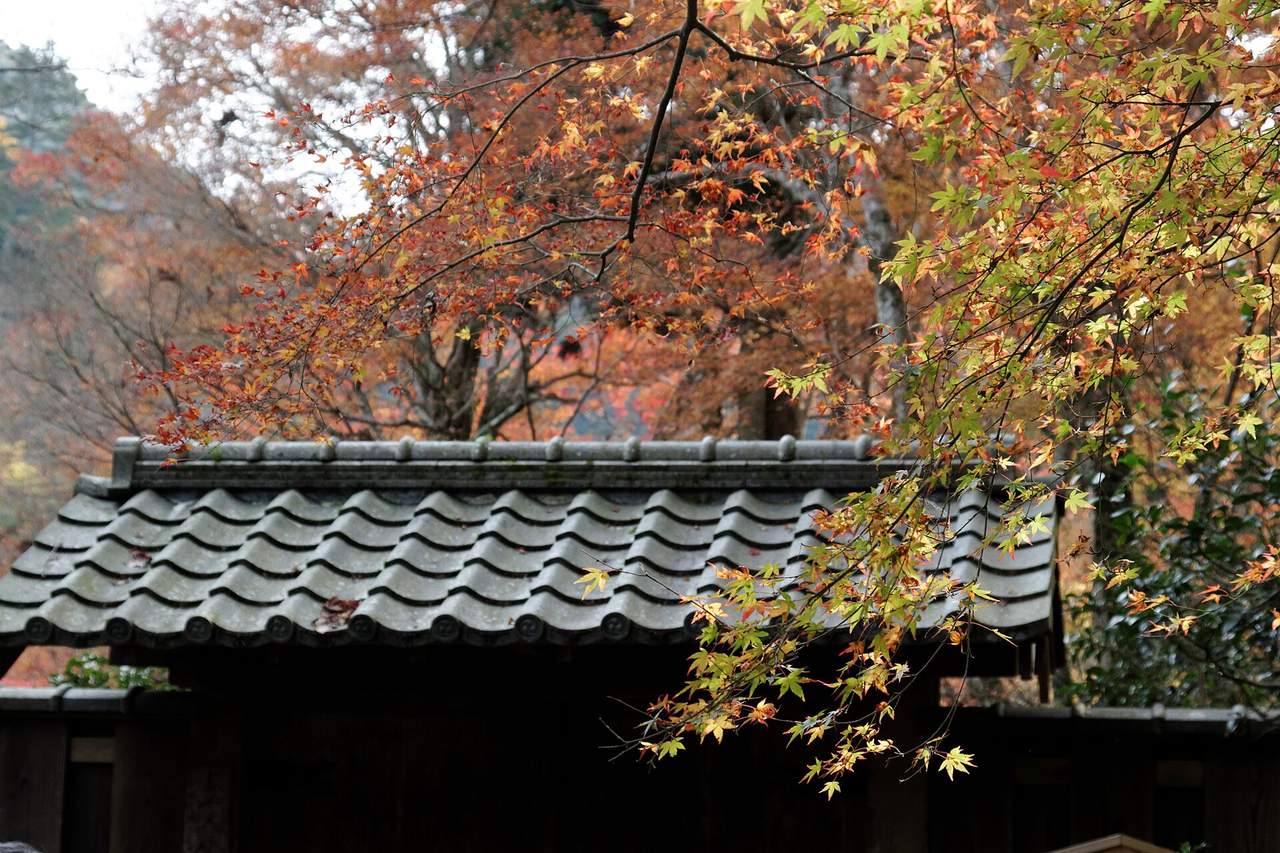
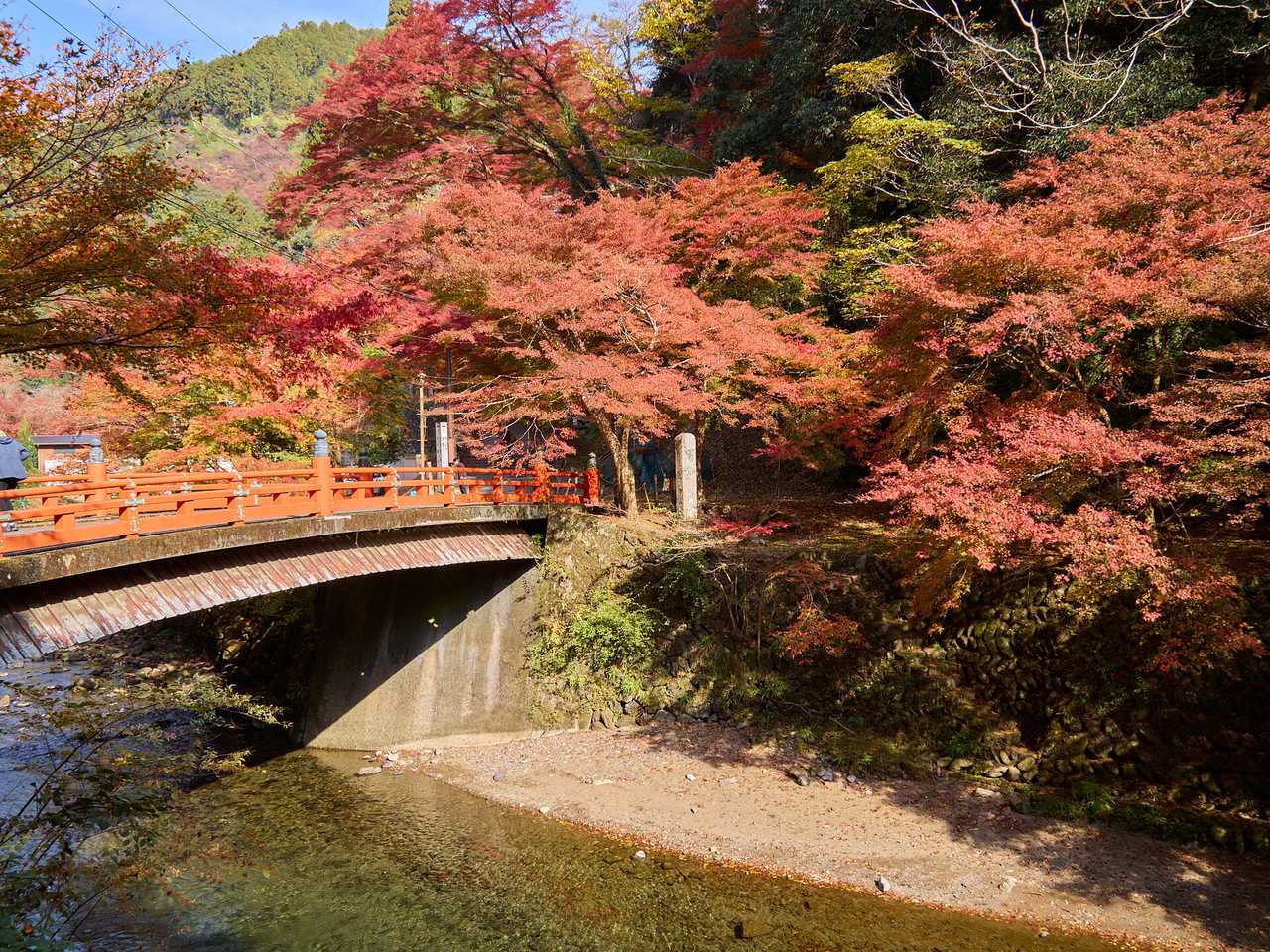
After crossing the red Shigetsu Bridge over the Kiyotaki River, you see a strong contrast between moss and red maple leaves, in a very tranquil atmosphere. If you are short on time and can pick only one quiet temple, this is the best choice.
The temple is not large and takes about 30 minutes to see, so it works well as a stop between Kozanji and Jingoji. Admission fees and opening hours should be checked against the notices on site. The Shigetsu Bridge itself is a popular photo spot; the bridge is narrow, so please give way when crossing and do not linger on it for long.
Kiyotaki River and Kinun Valley: The Valley Trail That Links the Three Temples
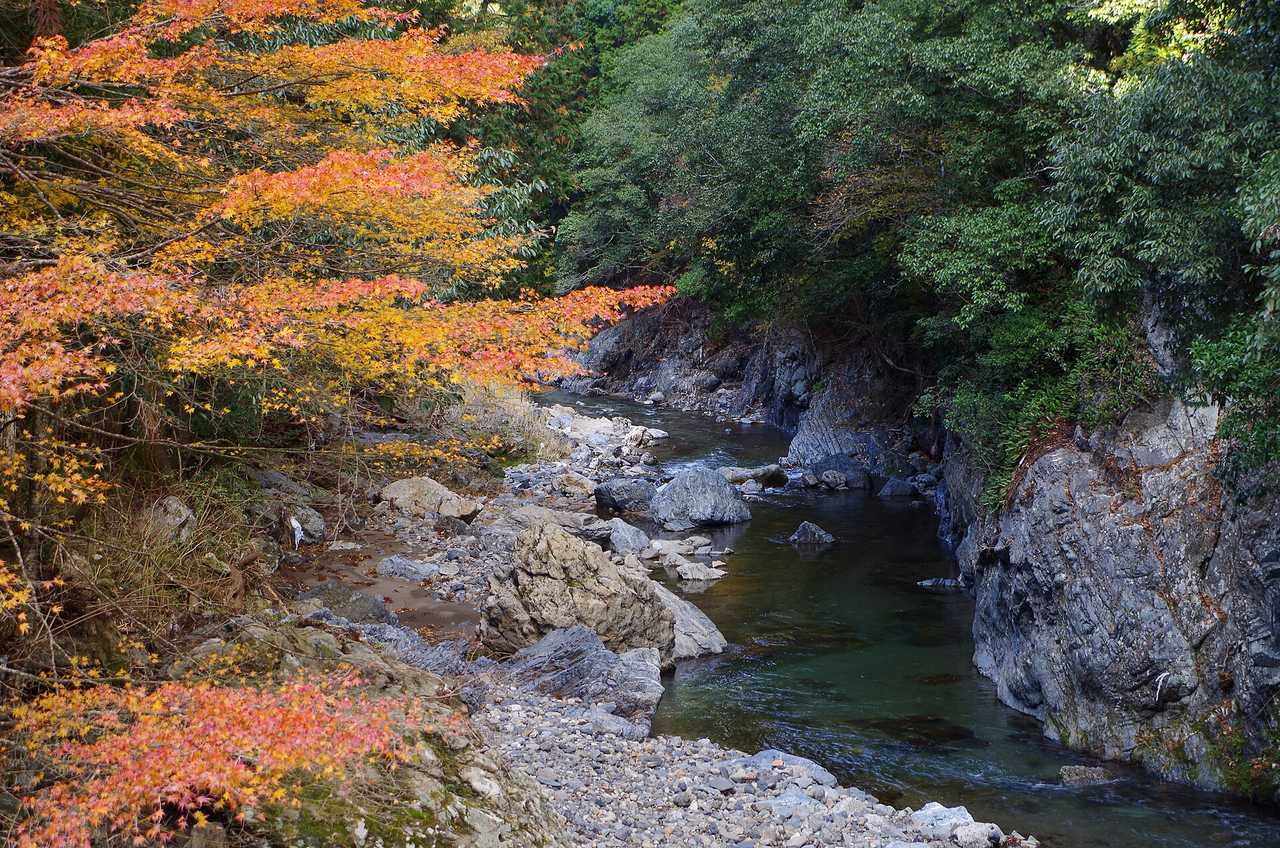
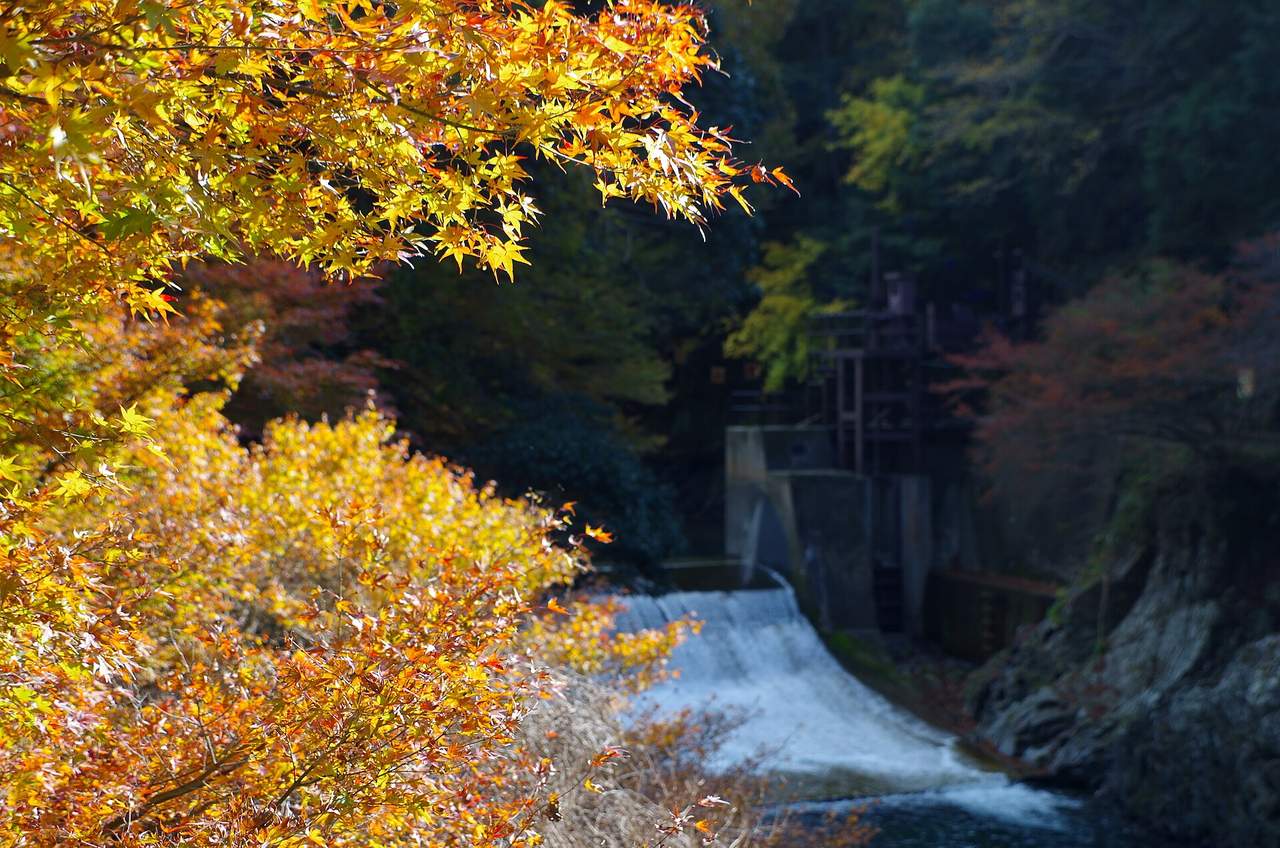
The three Takao temples line up along the Kiyotaki River, and the three temples are connected by a trail along the stream, about 30 to 40 minutes on foot in total. The stretch of valley below Jingoji is specifically called Kinun Valley, which is the direction the clay discs are thrown.
The trail is mostly gentle, but some sections are dirt paths that get slippery after rain, so be careful. Walking beside the stream in autumn and looking up at the red leaves on the hillsides on both sides is a completely different foliage experience from the one inside the temples.
In summer the temperature here is several degrees lower than in the city, and along the stream there are a few long-established inns serving kawadoko (riverside platform) cuisine, a way for Kyoto people to escape the heat, a completely different scene from the autumn foliage season. Kawadoko meals are mostly summer-only and require advance reservations.
Takao Sanbi Day Trip: The Easiest Route Is from High to Low
We suggest going from north to south, from high to low: take the JR Bus to Togano-o stop and see Kozanji first, walk down 10 to 15 minutes to Saimyoji, then walk about another 15 minutes to the entrance of Jingoji’s main approach.
Finally, catch the bus back to central Kyoto from Yamashiro Takao bus stop, which makes just one day. Going from south to north means a lot more uphill walking and is not recommended.
The route has many stone steps and dirt paths, so allow a full day. Return buses are not frequent, so be sure to confirm the last bus time before you leave. Restrooms along the way are limited, so we suggest using the ones in the temples.
Jingoji Foliage Season: Peak Color Begins in Early November
Takao sits at higher elevation and is cooler than the city, making it one of the first areas in Kyoto to turn red. Peak color usually falls from early to late November, about one to two weeks earlier than city sights such as Kiyomizudera and Tofukuji, which makes it almost the only choice for travelers who want to see foliage in early November.
During the foliage season the JR Bus adds extra runs, but the return trip often still has long lines, so we suggest heading down before 3 p.m. Actual peak timing shifts with each year’s temperatures, so check the latest foliage reports before you go; if the maples have not yet turned, the cedars in the grounds and the valley scenery are equally worth seeing. It is cooler on the mountain than in the city, so bring an extra jacket.
Arashiyama: A Nearby Area You Can Link with the Same Pass
Takao and Arashiyama are both in northwest Kyoto, and Arashiyama is the easiest area to pair with Jingoji. With the Arashiyama-Takao Gurutto Pass you can also ride the Randen tram without limit.
We suggest tackling Takao Sanbi in the morning, then heading down in the afternoon to see Togetsukyo Bridge and the Bamboo Grove Path in Arashiyama, which gives the most sensible route and crowd levels. If your energy is limited, you can also visit only Jingoji and then continue to Arashiyama, which makes for a much easier day.
Note that mountain buses are not very frequent, so leave a buffer when making connections. Arashiyama is very crowded in the early evening, so be prepared if you plan to be there in the afternoon. Many shops in Arashiyama close before 5 p.m., so shop early.
![[1-Person Departure Option Included] |Kyoto Arashiyama Half-Day Tour: Sagano Romantic Train & Hozugawa River Boat & Kyoto Rickshaw](https://travel.williamlion.tw/wp-content/uploads/sites/7/2026/08/image-628.jpg)
Shuzan Kaido and Keihoku: An Extension Deeper into the Mountains
The terminus of the JR Bus Takao-Keihoku Line is Shuzan. If you want to go deeper into the Kyoto northern mountains, you can follow the Shuzan Kaido road to the Keihoku area, which has wilder mountain-village scenery and quiet old temples with few visitors.
However, buses are very infrequent and the one-way ride is long, so it suits repeat visitors who have already done Takao Sanbi and want to explore deeper. Be sure to confirm actual schedules and last bus times in advance rather than deciding on the spot.
There are almost no signs in Chinese or tourist services in this area, and few places to eat, so we suggest bringing your own food and confirming your lodging and return arrangements before you go. It is not suitable for first-time visitors to Kyoto. Mobile signal is unreliable on some stretches along the way, so download your navigation offline first.
How Much Does a Trip to Jingoji Cost? Admission, Experiences and Transport Passes
Jingoji admission is ¥1,000 for adults, and with round-trip bus fares you will need roughly ¥2,000 to ¥3,000 for the day.
| Item | Cost | Notes |
|---|---|---|
| Jingoji admission (adult) | ¥1,000 | 09:00-16:00 |
| Jingoji admission (elementary school student) | ¥500 | — |
| Kawarake nage clay discs | About ¥200 for 3 discs | Lookout in front of Jizo-in |
| Tahoto Pagoda spring special opening | Separate fee | Spring May 13-15; autumn: the October three-day weekend |
Jingoji admission ticket: ¥1,000 for adults, open until 16:00
Jingoji admission is ¥1,000 for adults and ¥500 for elementary school students, bought on the spot at the ticket office next to the mountain gate. It is open 09:00-16:00, closing earlier than most Kyoto temples. It is about a 20-minute walk from the bus stop to the mountain gate, so if you want time to worship and try clay-disc throwing, we suggest reaching the mountain gate by 2 p.m. at the latest. The Kondo and most of the grounds are covered by the ticket. If you also plan to visit Kozanji and Saimyoji on the same day, admission to each of the three is bought separately; there is no combined ticket. There are restrooms in the grounds, but options near the bus stop at the foot of the mountain are limited.
Kawarake Nage Clay Discs: A Bad-Luck-Warding Experience at 3 Discs for ¥200
At the lookout in front of Jizo-in you can buy small unglazed clay discs (about ¥200 for 3) and throw them out over Kinun Valley. The discs are extremely thin and light, and trace a gliding arc as they fly. This is the birthplace of the clay-disc throwing ritual for warding off bad luck and bringing good fortune in Japan, and it is Jingoji’s most popular paid experience. Before you throw, make sure no one is below, and throw in the direction shown by the signs on site; do not throw toward the trail. Even companions who are not keen on temple touring often have a great time.
Tahoto Pagoda Special Opening: National Treasure Unveiling in Spring (May 13-15) and the Autumn Three-Day Weekend
The National Treasure seated statues of the Five Great Kokuzo Bosatsu are normally hidden Buddhas that are not open to view. They are shown only in special openings in spring and autumn, which in 2026 are May 13 to 15 and October 10 to 12, with viewing hours of 10:00-15:00 and a viewing fee of ¥500 (the ¥1,000 temple grounds admission is also required). It is one of the few chances to see this set of statues, over a thousand years old, with your own eyes. Photography is prohibited inside the hall during the openings, so follow the instructions on site; for actual dates and fees, please refer to the announcements on Jingoji’s official website.
Arashiyama-Takao Gurutto Pass: ¥1,000 Ties Two Areas Together
This day pass of about ¥1,000 includes unlimited rides on the West Japan JR Bus Takao-Keihoku Line (Kyoto Station to Togano-o) and the Randen tram (Arashiyama Main Line and Kitano Line). It is best for travelers who want to put Takao Sanbi and Arashiyama on the same day.
Sales locations, valid sections and prices are adjusted from time to time, so please check the announcements on the West Japan JR Bus website before you buy.
On the bus side, you can buy it at the Kyoto Bus Ticket Center in front of the JR Kyoto Station Central Exit, and on the Randen side at stations such as Shijo-Omiya and Arashiyama. If you are only making a round trip to Takao, just buy a single-ride ticket.
Foliage Day Trips Near Kyoto: An Alternative if You Don’t Want to Climb Steps
In peak foliage season there are often day tours from central Kyoto to the surrounding area. Some tours link Takao Sanbi with Arashiyama and Kinkakuji, led by a guide with lunch arranged, and last about 8 hours.
The advantage is that you skip the hassle of researching bus schedules and peak-season lines; the downside is that the stay at each stop is fixed, and you still have to climb Jingoji’s long steps yourself. Before booking, check whether the tour actually enters Jingoji’s grounds.
Tours in peak foliage season fill up very early, so if your dates are set, we suggest booking several weeks ahead. Whether admission and lunch are included varies by organizer, so read the description carefully before you book. Some tours only stop at the foot of the mountain without entering Jingoji’s grounds, so be sure to confirm exactly what is visited and how long you stay before booking.
Where to Stay Near Jingoji? Nearby Accommodation Suggestions

Staying in the Takao mountains or in Arashiyama lets you have the morning red leaves to yourself before visitors head up the mountain.
Where to Stay Near Jingoji? Takao and Arashiyama Accommodation Suggestions
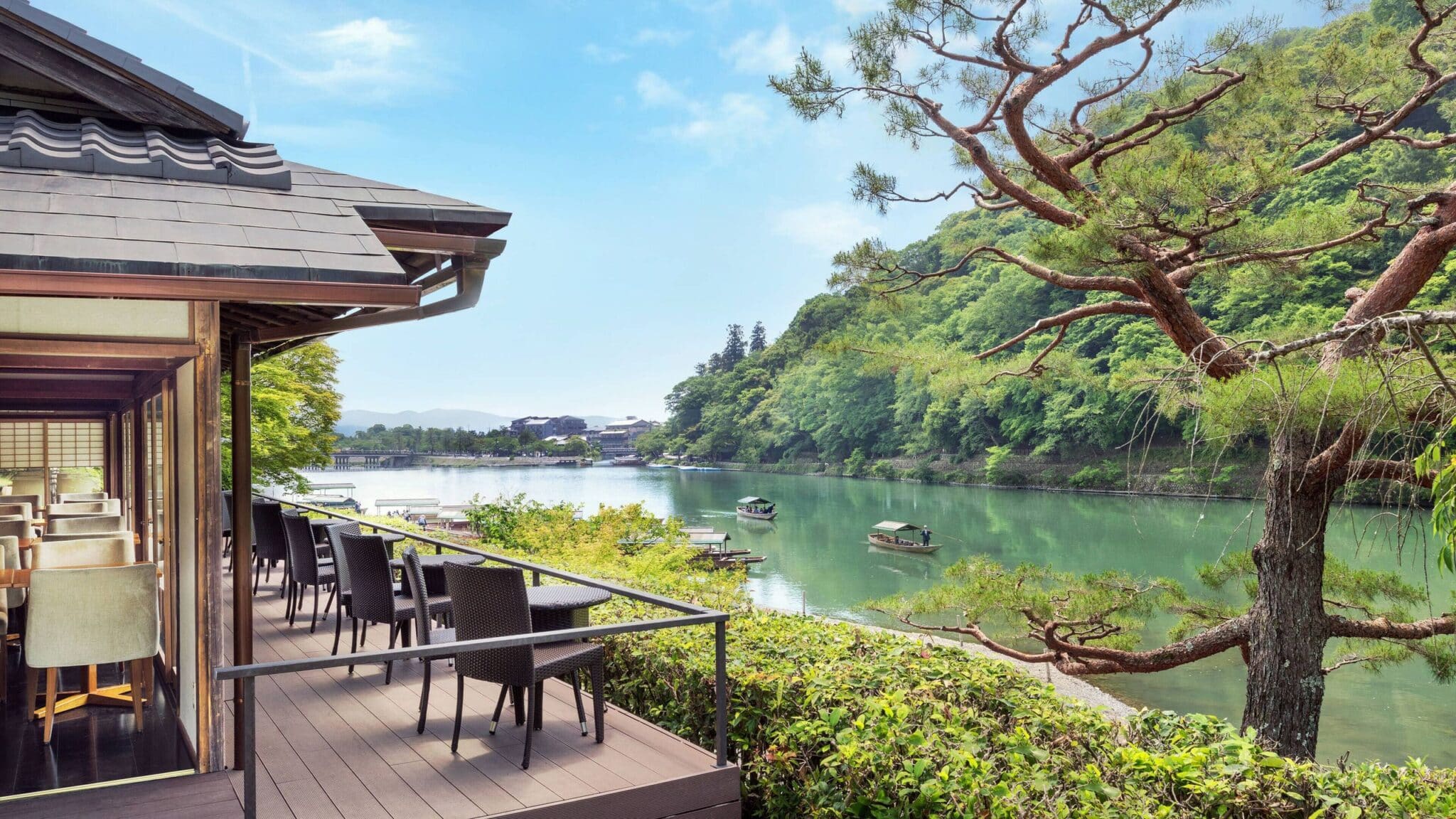
There are a few long-established inns in the Takao mountains serving kawadoko cuisine, where in summer you can dine on a riverside platform over the Kiyotaki River and in autumn soak in a bath while viewing the red leaves, a rare mountain-stay experience in Kyoto, but they have very few rooms and are hard to book in peak season. For a balance with convenience, staying in Arashiyama is best, with about a 20-minute JR Bus ride up the mountain and a stroll through the Bamboo Grove Path the next day; if you are on a tight budget or your itinerary includes sights in the city, the areas around Shijo Karasuma and Kyoto Station are the most flexible. Also, there are almost no restaurants or convenience stores in Takao after dark, so if you stay on the mountain, we suggest booking a plan with two meals for peace of mind.
Jingoji FAQ
Below are the questions travelers search for most often about Takao’s Jingoji.
Q: How much is admission to Jingoji?
Admission is ¥1,000 for adults and ¥500 for elementary school students, bought on the spot at the ticket office next to the mountain gate. It is open 09:00-16:00, closing earlier than most Kyoto temples.
Q: How do I get to Jingoji from Kyoto Station?
Take the West Japan JR Bus from JR Bus Stop 3 in front of Kyoto Station toward Togano-o or Shuzan and get off at Yamashiro Takao. The one-way fare is about ¥520, followed by about a 20-minute walk.
Q: Are Jingoji’s stone steps hard to climb?
It is about a 20-minute walk from the bus stop to the mountain gate, then roughly 350 to 400 steep stone steps, which takes real effort. Wear comfortable shoes, and anyone with limited mobility should think carefully.
Q: How do you play kawarake nage?
At the lookout in front of Jizo-in, buy 3 unglazed clay discs for about ¥200 and throw them out over Kinun Valley. Legend says the farther they fly, the more thoroughly your bad luck and worries are cleared away.
Q: When is the best time to see foliage at Jingoji?
Peak color is around early to late November each year, one to two weeks earlier than city sights in Kyoto. For travelers who want to start their foliage itinerary in early November, Takao is almost the only choice.
Q: Can I take the bus to Jingoji with a JR Pass?
Yes. The West Japan JR Bus Takao-Keihoku Line is covered by the JR Pass, so you can ride free with your pass, one of the cheapest ways to go.
Q: Can I see Jingoji’s National Treasure statues at any time?
The National Treasure standing Yakushi Nyorai in the Kondo can be worshiped at any time; the National Treasure Five Great Kokuzo Bosatsu in the Tahoto pagoda are hidden Buddhas, specially opened each spring and autumn, in 2026 on May 13 to 15 and October 10 to 12.