
2026 Amanohashidate Guide: One of Japan’s Three Great Views, and Seeing It Upside Down from Kasamatsu Park
Amanohashidate, in Miyazu City, Kyoto Prefecture, is a natural sandbar across Miyazu Bay. Together with Matsushima and Miyajima it is one of Japan’s Three Great Views, and viewing it upside down is the classic way to enjoy it.
The Amanohashidate Sandbar: A Natural Wonder Across Miyazu Bay
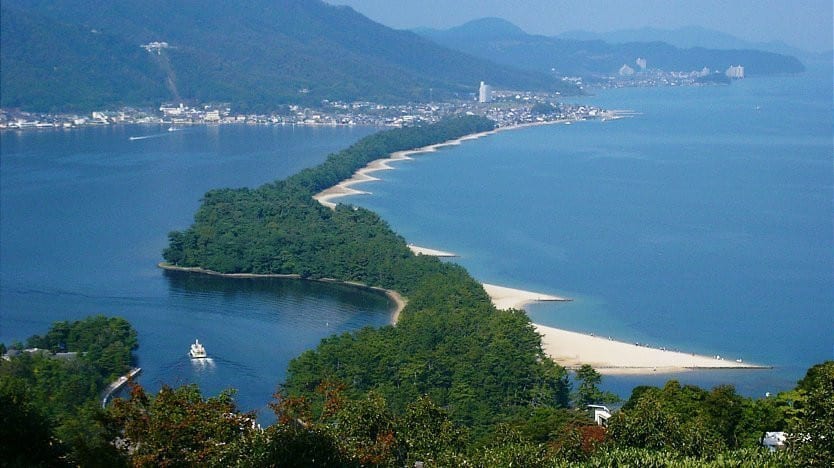
The Amanohashidate sandbar is about 3.6 kilometers long and 20 to 170 meters wide, with thousands of pine trees growing on it, a rare natural sand spit in Japan. It has a walking path and a cycling path, so you can cross it easily on foot (about 1 hour) or by rental bicycle. The sandbar connects the Monju and Fuchu areas. On the Fuchu side you can take a cable car or chairlift up to Kasamatsu Park for the view, while the Monju side is close to Chionji Temple and Amanohashidate View Land. The sandbar is free to enter, and official information is available from the Amanohashidate Tourist Association (amanohashidate.jp).

Why Amanohashidate Is One of Japan’s Three Great Views: The Origin of Matsushima, Miyajima and Amanohashidate
Japan’s Three Great Views are Matsushima in Miyagi Prefecture, Amanohashidate in Kyoto Prefecture and Miyajima in Hiroshima Prefecture. The idea comes from the early Edo-period Confucian scholar Hayashi Shunsai, who introduced the three places as “three wonders” in his 1643 work Nihon Koku Jiseki Kou (日本國事跡考). Amanohashidate is the only one of the three famous for a sandbar, which is about 3.6 kilometers long.
Kasamatsu Park (Shoryukan, the Rising Dragon View): The Classic Viewpoint Overlooking the Sandbar from the North
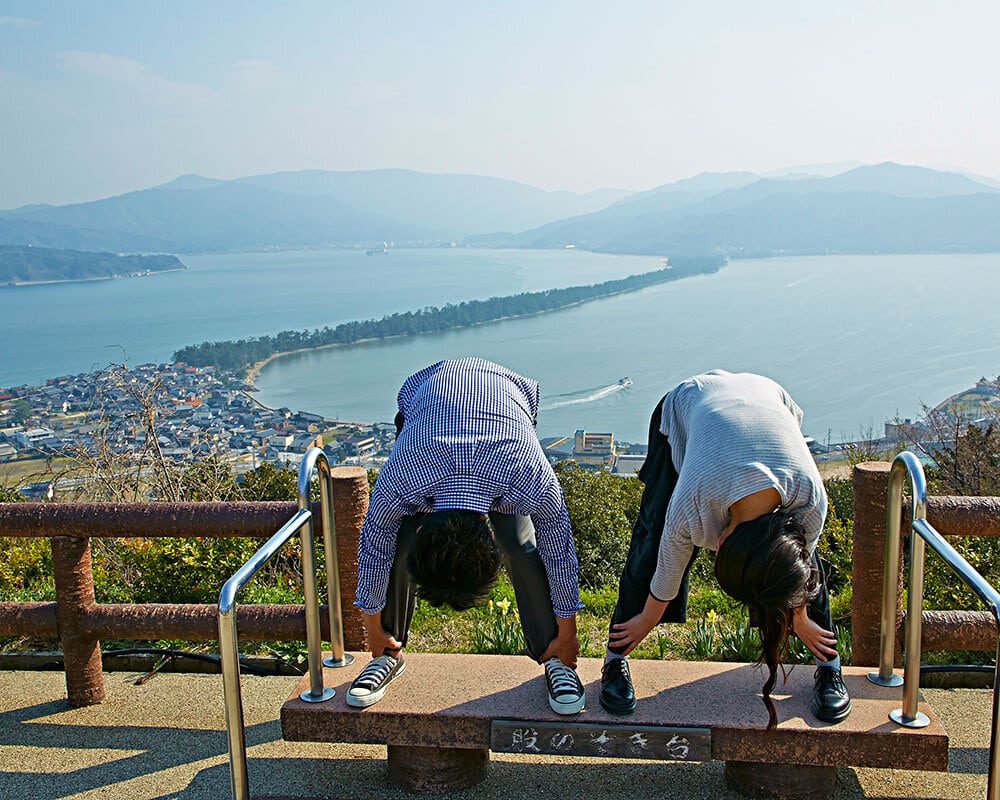
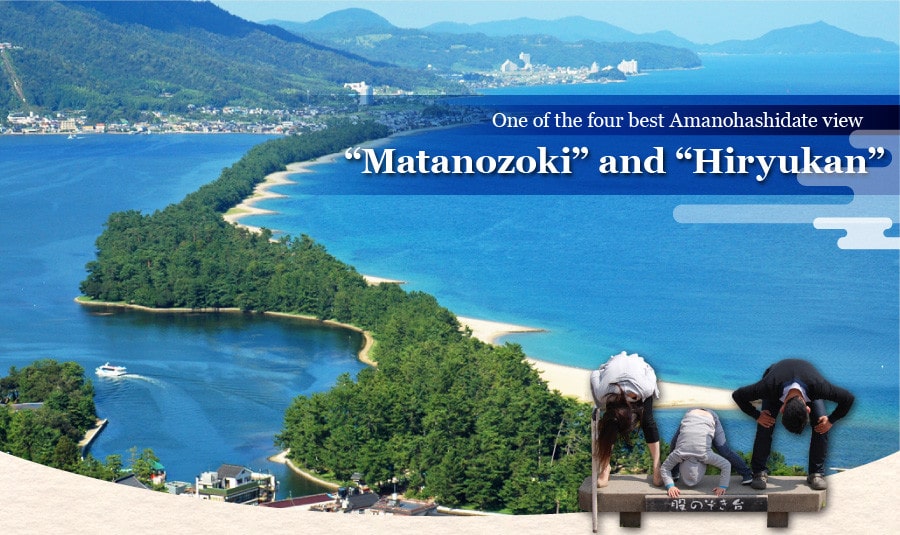
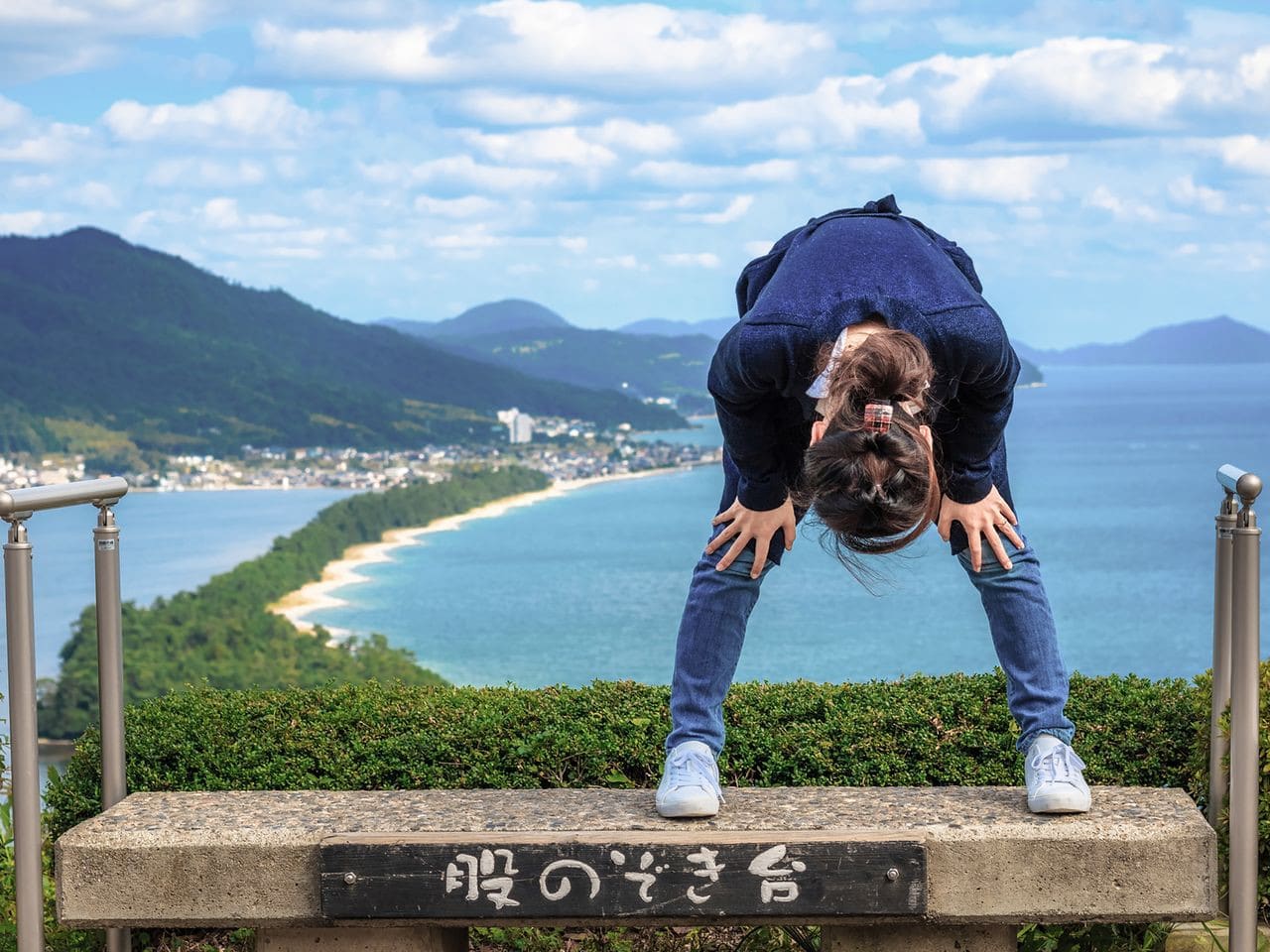
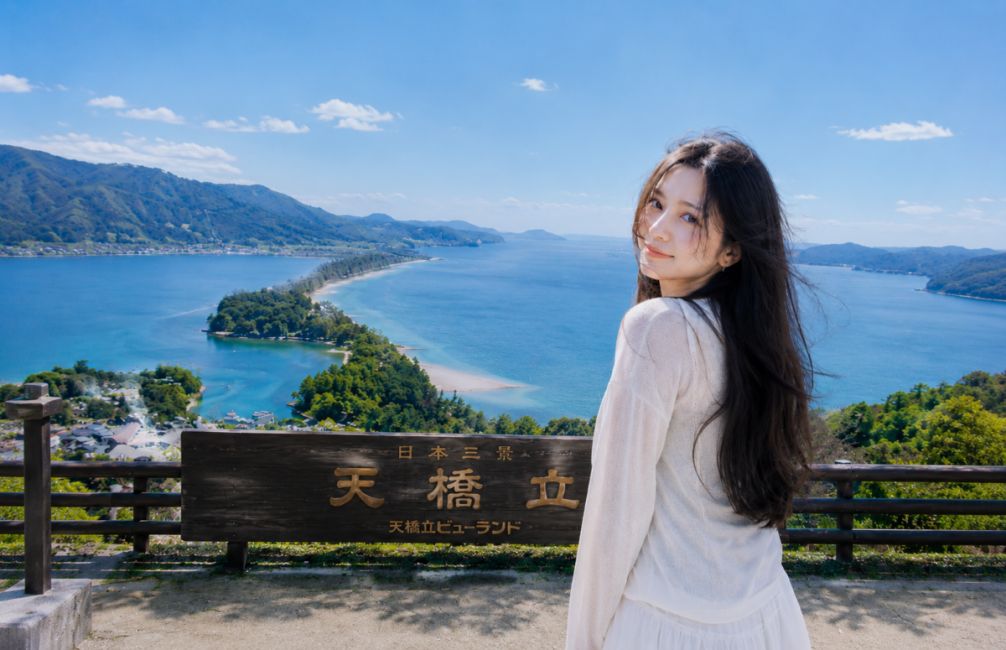
Kasamatsu Park is in the Fuchu area on the north side of Amanohashidate, about 130 meters above sea level, and is the best place to see the “Shoryukan” (Rising Dragon View). Peeking from between your legs, the sandbar looks like a giant dragon soaring up into the sky. The park has a dedicated viewing platform for the matanozoki (peek between your legs) pose, plus the AmaTerrace restaurant and a souvenir shop.
We suggest visiting Kasamatsu Park in the afternoon, when the light angle is better and photos turn out best. The cable car runs 9:00 to 18:00 from March to October and 9:00 to 17:00 from December to January. The viewing platform is a short walk from the station at the top, so it suits families and older travelers.

Amanohashidate View Land (Ryukan, the Flying Dragon View): The Park Where the Dragon Descends, from the South
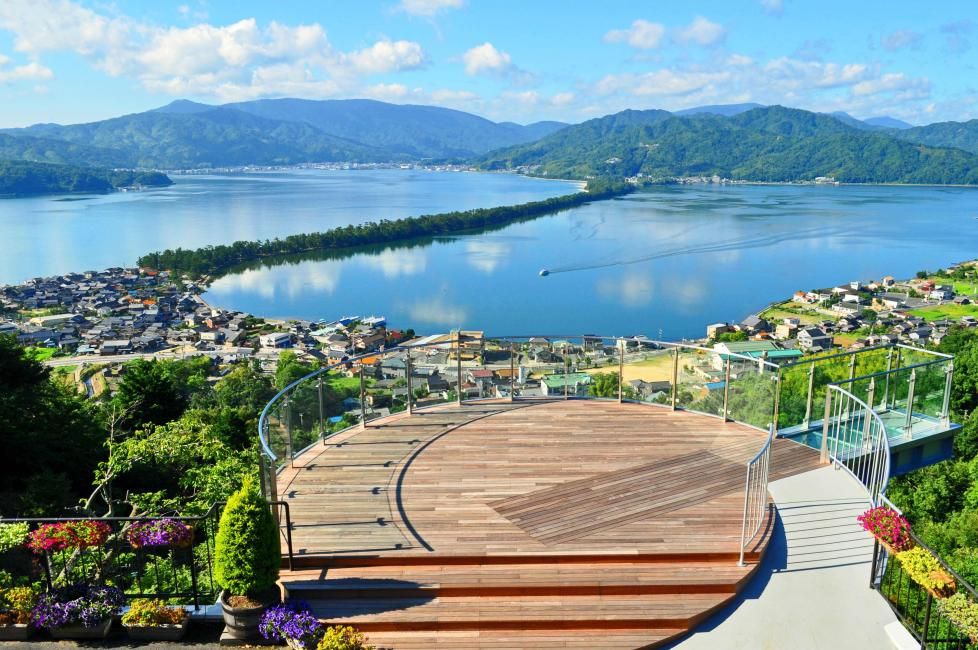
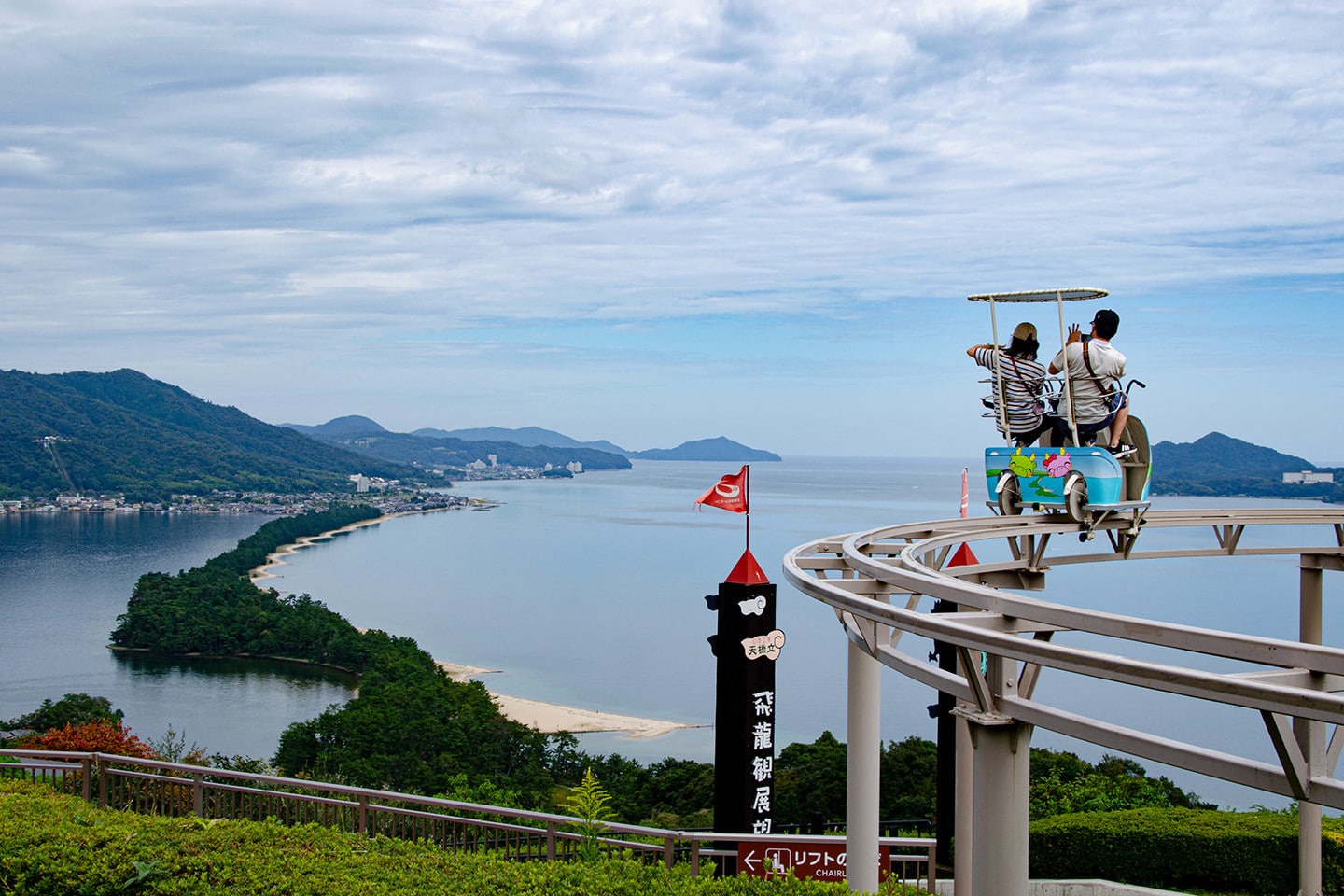
Amanohashidate View Land is on a hill in the Monju area and is the signature spot for the “Hiryukan” (Flying Dragon View). Looking down from the observation deck in the matanozoki pose, the sandbar looks like a flying dragon about to descend to earth, a truly striking sight. Besides the observation deck, the park has small rides and a restaurant, so it is also good for families with children.
We suggest visiting View Land in the morning, when the light is behind you and the sandbar is clearest. Admission is ¥1,000 for adults and ¥500 for elementary school children, including a round trip by chairlift or monorail. Opening hours are 9:00 to 17:00 depending on the season, and the website is viewland.jp.
Chionji Temple: A Thousand-Year-Old Temple for Prayers for Study and Wisdom
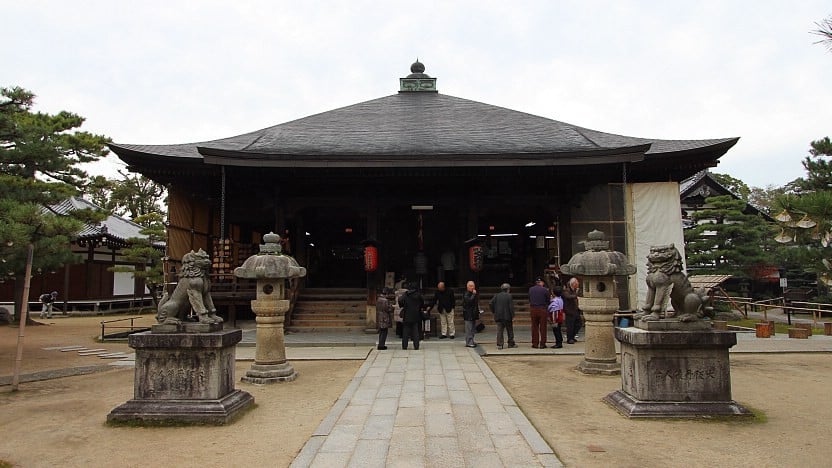
Chionji, also called Amanohashidate Chionji, enshrines Monju Bosatsu (the bodhisattva of wisdom). Together with Abe Monjuin in Nara and Daishoji in Yamagata, it is counted as one of Japan’s three Monju temples, and it is a well-known place near Kyoto to pray for exams and wisdom. The pagoda in the grounds is a National Important Cultural Property, and the fan-shaped fortune slips are unique to Chionji, elegant in shape and auspicious in meaning, and popular with visitors.
Visitors can buy wisdom omamori charms and try the “Chie no Mochi” (wisdom rice cakes) at the teahouse beside the temple gate. Chionji is open 8:00 to 17:00, entry to the grounds is free, and it is about a 5-minute walk from Amanohashidate Station. The official website is monjudo-chionji.jp.
Kaiten-bashi Swing Bridge: The Movable Bridge Linking the Sandbar and the Mainland
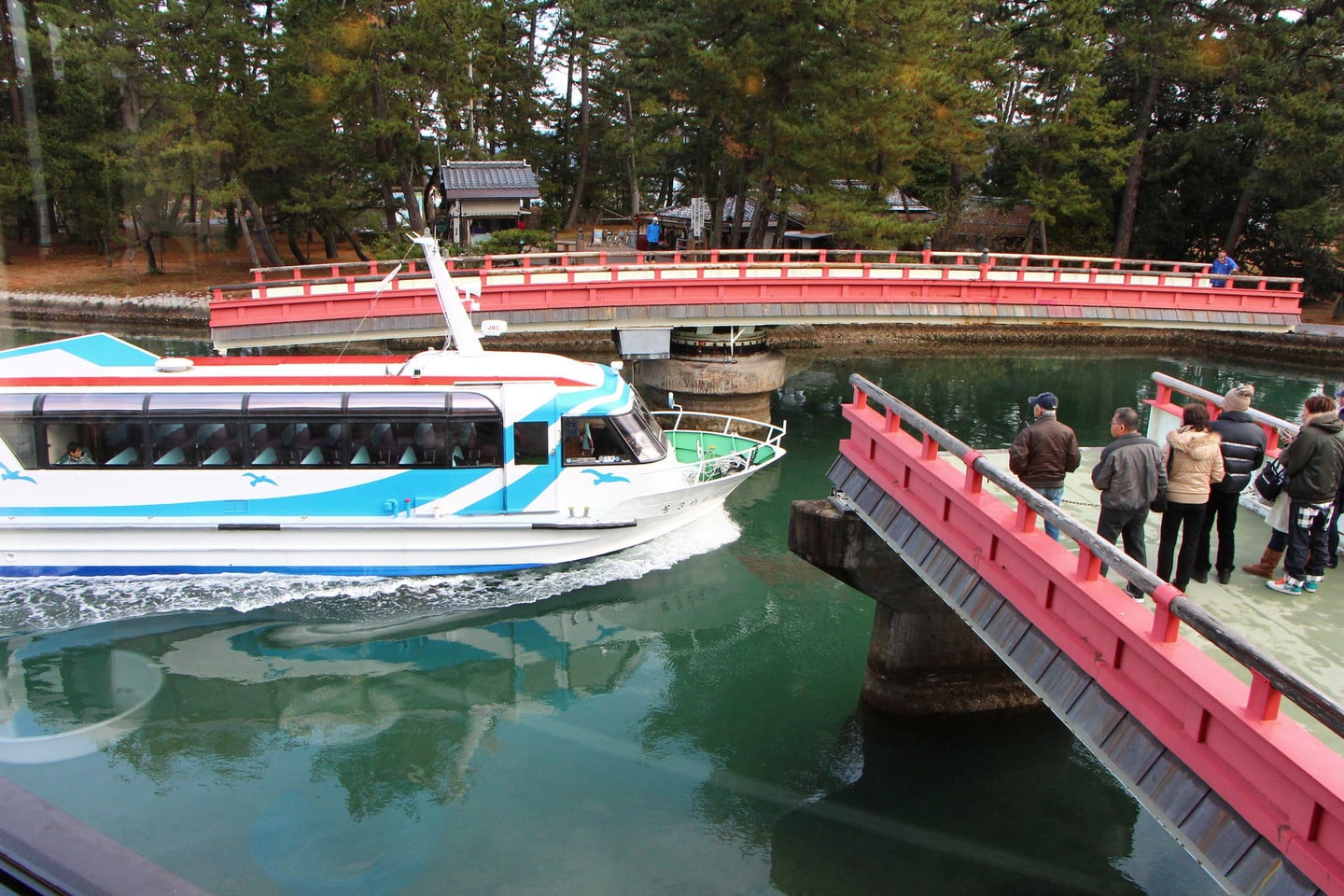
The Kaiten-bashi (swing bridge) is at the Monju-side entrance to the Amanohashidate sandbar. It is one of the few bridges in Japan that swings 90 degrees, mainly so fishing boats and sightseeing boats can pass. It was originally operated by hand and is now electrically controlled. Whenever a boat passes, the slowly rotating bridge is a photo spot visitors rush to capture.
The swing bridge is open to pedestrians all year with no extra fee. Stay 5 to 10 minutes to watch how it works, and if you happen to catch it swinging, it is a pleasant surprise on an Amanohashidate trip.
Moto-Ise Kono Shrine: The Origin of Ise Jingu
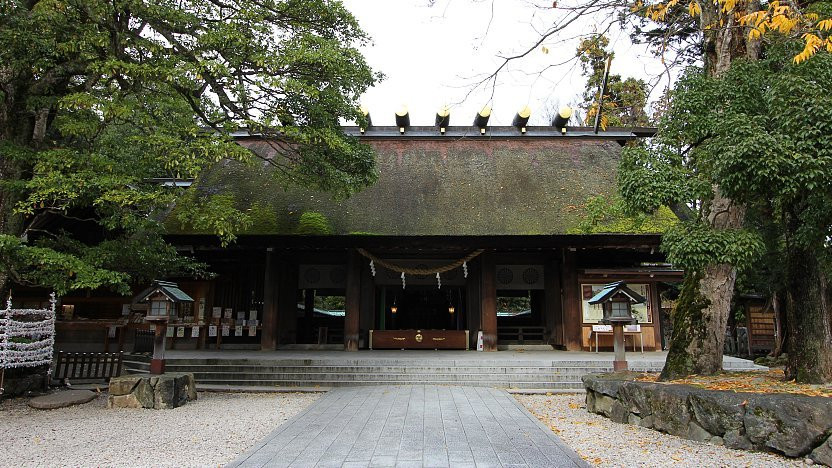
Moto-Ise Kono Shrine is at the northern end of Amanohashidate and enshrines Amaterasu Omikami and Toyouke Omikami. It is said to be the original site of Ise Jingu before its relocation, hence the name “Moto-Ise” (original Ise), and holds a high standing in Japanese Shinto belief. The buildings are simple and solemn, with ancient trees towering in the grounds and a quiet, dignified atmosphere, good for travelers who like history and religious culture to explore in depth.
Visitors can get goshuin and omamori here. The shrine is open 8:00 to 17:00 from February to November (until 16:30 from December to January), goshuin are available from 9:00, and the website is motoise.jp. We suggest putting it in the same itinerary as Kasamatsu Park.
Nariaiji Temple: A Mountain Temple on the Saigoku Thirty-Three Kannon Pilgrimage
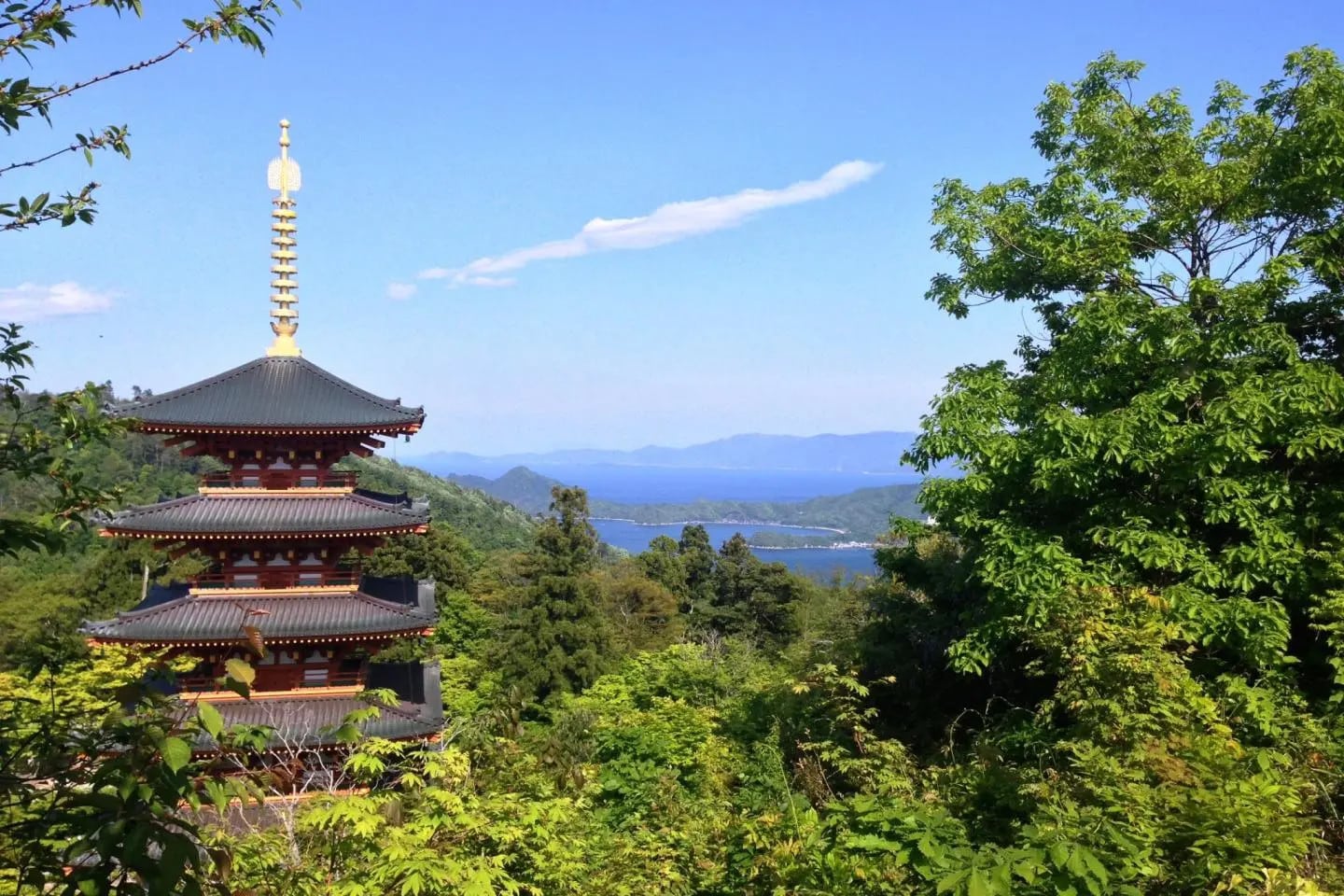
Nariaiji is on the hill behind Amanohashidate and is Temple No. 28 on the Saigoku Thirty-Three Kannon Pilgrimage. Its main image is Sho Kannon Bosatsu, and legend says it grants wishes, which is how it got the name “Nariai” (wishes come true). The temple sits on a mountainside, with an observation deck in the grounds overlooking Amanohashidate and Miyazu Bay.
To reach Nariaiji, change to the mountain bus at Kasamatsu Park, a ride of about 7 minutes. Visiting hours are 8:00 to 16:30, the entrance fee is ¥500, and the official website is nariaiji.jp. It suits travelers planning half a day or more.
Matanozoki (Peeking Between Your Legs): The Classic Way to See Amanohashidate
Matanozoki is a traditional way of viewing unique to Amanohashidate. Visitors bend over and look at the sandbar upside down from between their legs, which creates a visual illusion that makes Amanohashidate look like a giant dragon floating in the sky, hence the names Flying Dragon View and Rising Dragon View. The custom has hundreds of years of history and is the most representative Amanohashidate experience.
Both View Land and Kasamatsu Park have dedicated matanozoki viewing platforms with handrails so visitors can do it safely. Wear clothes that are easy to move in, and watch for other visitors around you to avoid bumping into anyone.
How to Get to Amanohashidate: Transport Options and Costs
Amanohashidate is in Miyazu City in northern Kyoto Prefecture. Although it is one of Japan’s Three Great Views, it is on the Tango Peninsula, so getting there from major Kansai cities takes a while. Here are the four main ways to get there from Kyoto.
How to Get to Amanohashidate at a Glance
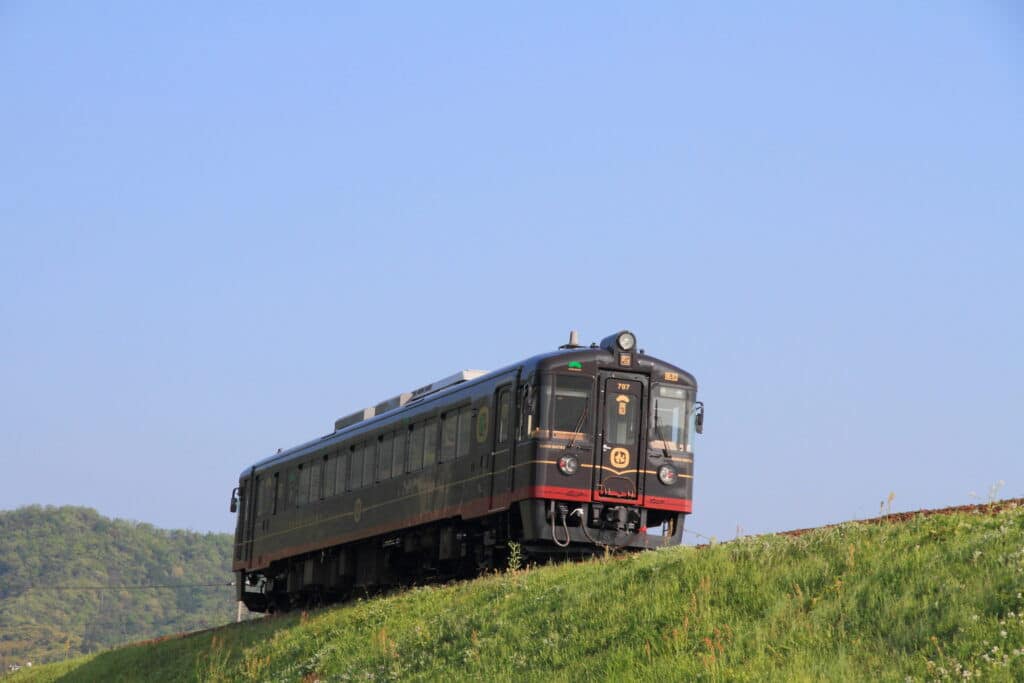
JR limited express “Hashidate”: About 2 hours from Kyoto to Amanohashidate. A reserved seat costs about ¥4,800 one way (fare plus limited express ticket), and all seats are reserved.
Kyoto Tango Railway: From the Fukuchiyama direction you can connect to Amanohashidate Station. The “Amanohashidate and Ine Free Pass 1 Day” costs ¥3,550 for adults and includes the railway, the sightseeing boat and the Kasamatsu Park cable car.
Express bus: About 2 hours 5 minutes from Kyoto Station, ¥3,200 one way (¥3,400 in peak season), 6 round trips a day, reservation required.
Rental car: From Kyoto, take the Kyoto Jukan Expressway. Tolls and parking fees vary by route and parking lot.

2026 Amanohashidate Guide: Highlights and Must-Do Experiences
What makes Amanohashidate worth visiting is not only the sandbar itself. The cable cars, viewing facilities and surrounding natural scenery are just as good.
Amanohashidate Kasamatsu Park Cable Car: The Fastest Way to the Rising Dragon View
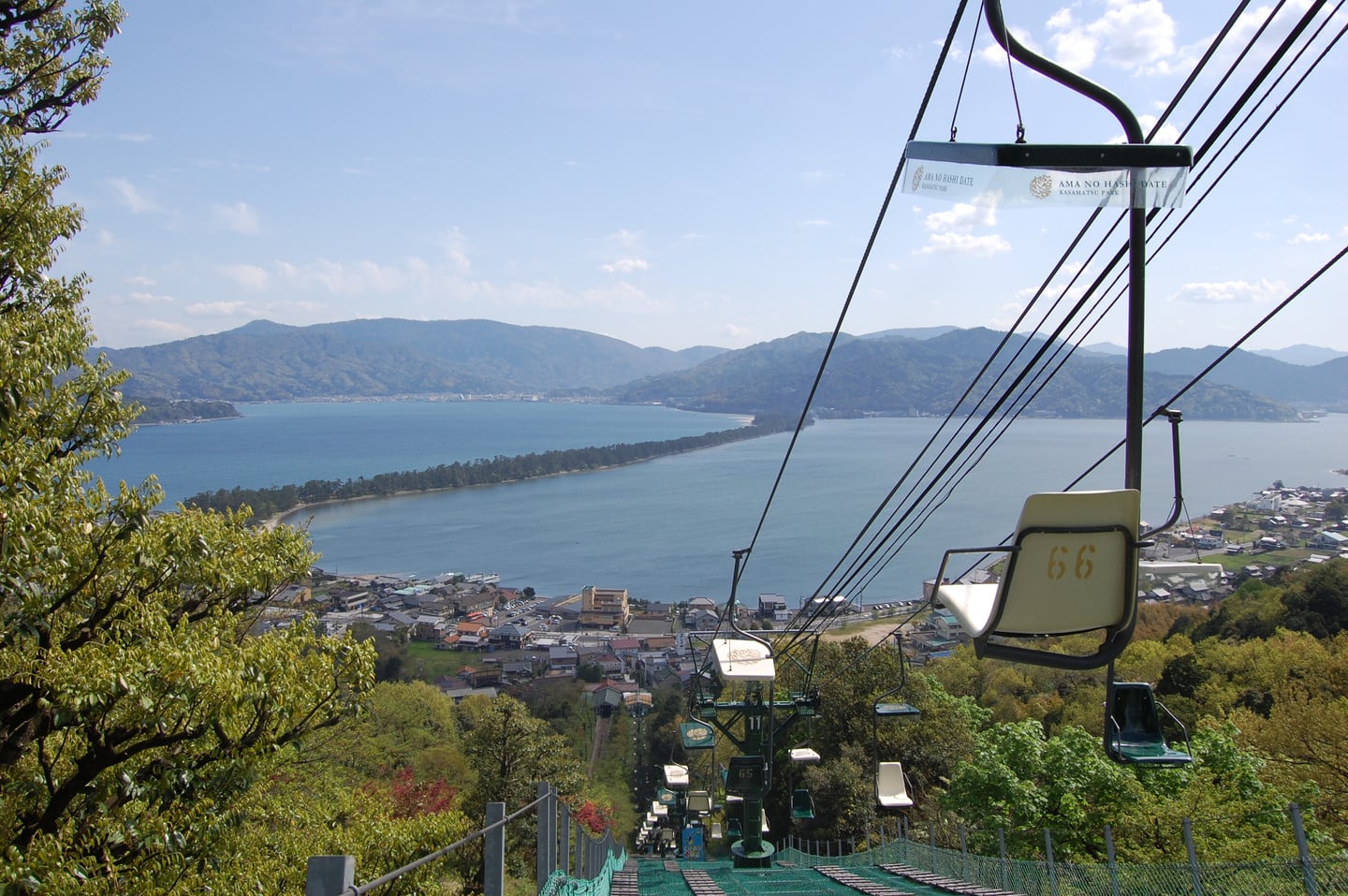
The Kasamatsu Park cable car has run since 1927 and is a long-established sightseeing cable car. From Fuchu Station, it takes about 4 minutes to reach Kasamatsu Park, 130 meters above sea level, with views over Miyazu Bay and the Tango Peninsula. You can choose the cable car or the chairlift. The chairlift is slower, but you feel the mountain breeze and the scent of pine up close.
Round-trip fare: ¥800 for adults and ¥400 for children. The cable car runs every 15 minutes, 9:00-18:00 from March to October and 9:00-17:00 from December to January. In bad weather or strong wind, the chairlift may be suspended and only the cable car runs.
Amanohashidate View Land Cable Car: A Shortcut to the Flying Dragon View Deck
The Amanohashidate View Land lift connects Monju Station to the hilltop park, and you can take a chairlift or monorail, the fastest way to the Flying Dragon View observation deck. The colorful cars let you look down on the roof tiles of Chionji and the whole swing bridge along the way, an excellent place to photograph Amanohashidate from above, and also popular with families.
The round trip is included in the View Land admission fee (¥1,000 for adults), so no extra ticket is needed. Opening hours are 9:00-17:00 depending on the season, extended to 18:00 in summer and shortened to 16:30 in winter. We suggest riding in the morning, when the light angle makes the sandbar’s pines look more vivid and three-dimensional.
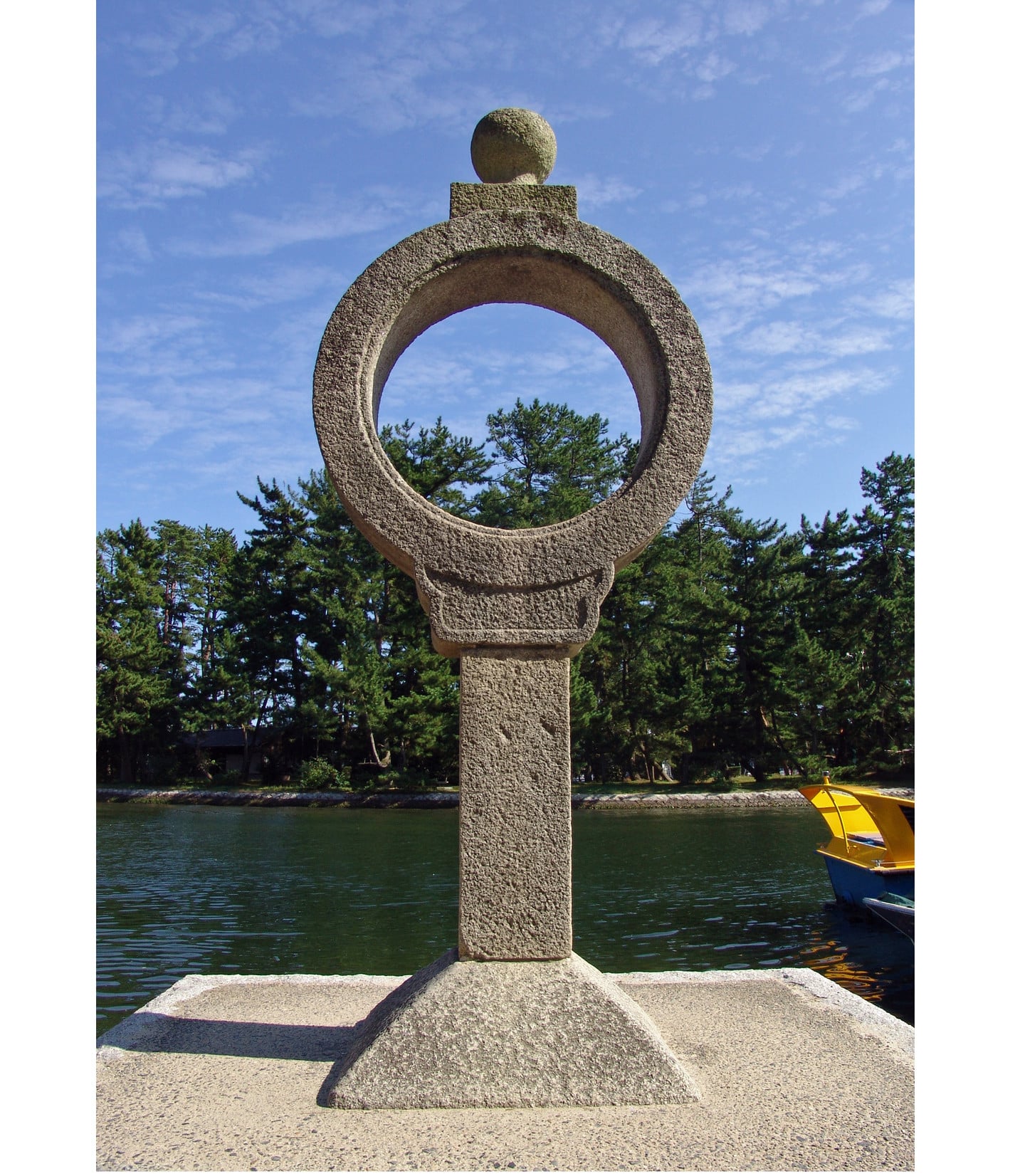
Wheel of Wisdom: A Prayer Experience Found Only at Kasamatsu Park
The Wheel of Wisdom (Chie no Wa) is a small prayer game found only at Kasamatsu Park. Visitors throw a small clay disc through a wooden ring hanging in the air, and success is said to bring wisdom and good luck. It grew out of the Monju faith of Chionji. Check the fee for a try on site. The success rate is not high, which only adds to the laughter.
This experience is available all year, though sales may be suspended in bad weather. We suggest fitting it into the same trip as the wisdom omamori and the fan-shaped fortune slips, as an extension of Amanohashidate’s religious culture and a popular topic for social media posts.
Amanohashidate Sightseeing Boat: A Panorama of the Sandbar from the Sea
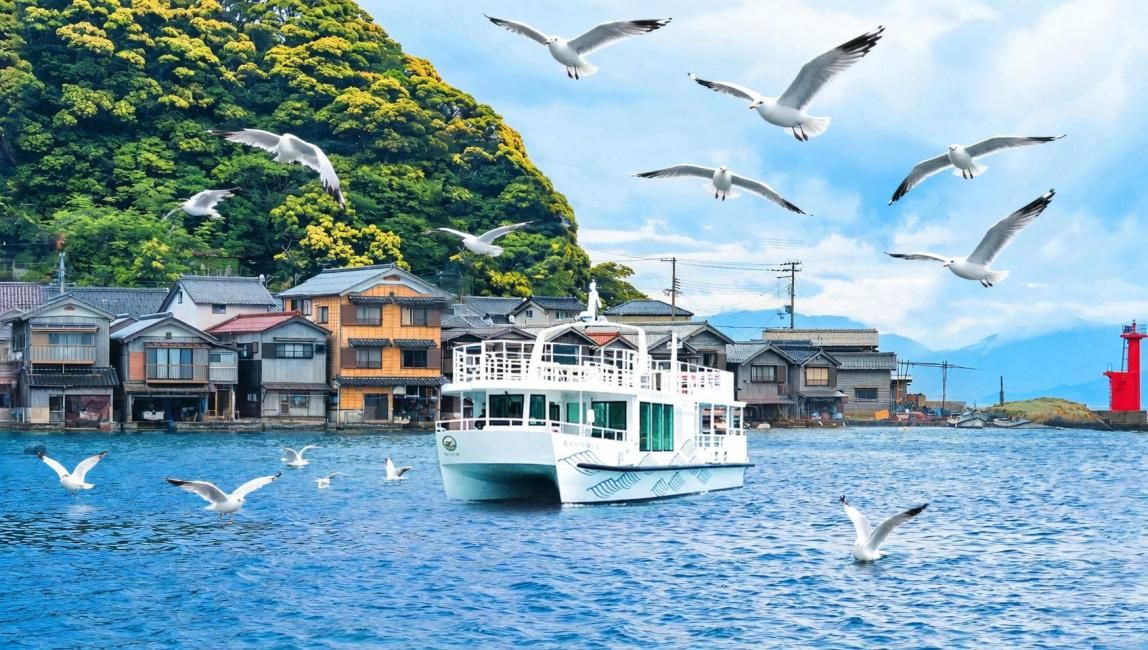
Besides being a means of transport, the Amanohashidate sightseeing boat is a popular experience in itself. Looking up at the sandbar and the pines on both shores from the water gives a view completely different from land, and you can enjoy the wide expanse of sea and sky over Miyazu Bay. The ride takes about 12 minutes and is run by Tankai Kairiku Kotsu.
Between Amanohashidate Pier (Monju side) and Ichinomiya Pier (Fuchu side), a one-way ticket is ¥800 for adults and ¥400 for children. The official website is Tankai Kairiku Kotsu (tankai.jp). Feeding the gulls is the most popular activity on board, and a favorite sight for families and photography fans.
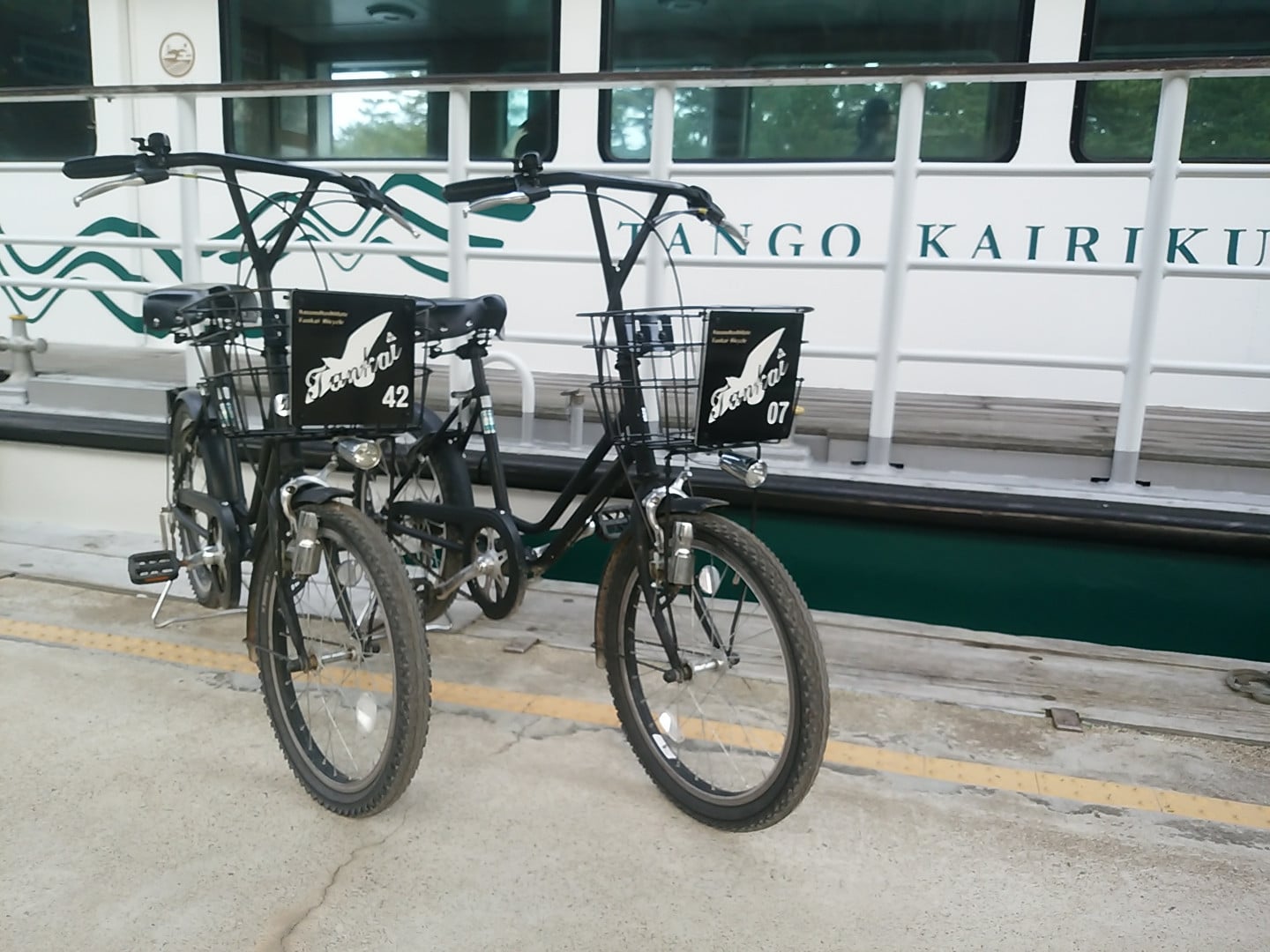
Sandbar Bicycle Rental: Freedom to Cross Amanohashidate Your Way
The Amanohashidate sandbar is 3.6 kilometers long and takes about 1 hour to walk. Renting a bicycle is a popular way to visit the attractions at both ends (the Fuchu and Monju areas). At Amanohashidate Pier and Ichinomiya Pier the rental is ¥500 for 2 hours, plus ¥300 for each additional hour.
You can return the bicycle at the pier on the opposite shore. We suggest cycling one way and taking the sightseeing boat the other, which saves energy and gives you both land and sea views. On the sandbar there are places such as the Isokiyomizu old well where you can stop for photos. When cycling, give way to pedestrians and follow the route markings.
Amanohashidate Onsen Chie no Yu: A Relaxing Soak to End the Day
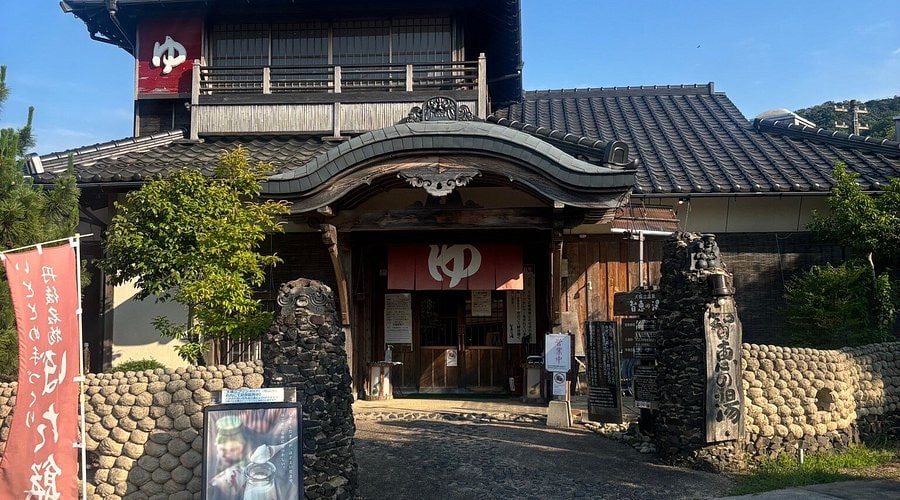
Chie no Yu is in front of Amanohashidate Station and is an excellent choice for a relaxing soak after a full day of sightseeing. It has an open-air bath and hand and foot baths.
The bathing fee is ¥800 for adults and ¥400 for elementary school children. It is open 12:00 to 20:00, closed Tuesday through Thursday, and guests with tattoos cannot enter. The official website is viewland.jp/chienoyu. Since it is right next to Amanohashidate Station, it is ideal for a rest before boarding your return train, washing away the day’s fatigue before you head home.
Ichiji-kan Park: Amanohashidate as a Straight Line, Seen from the West
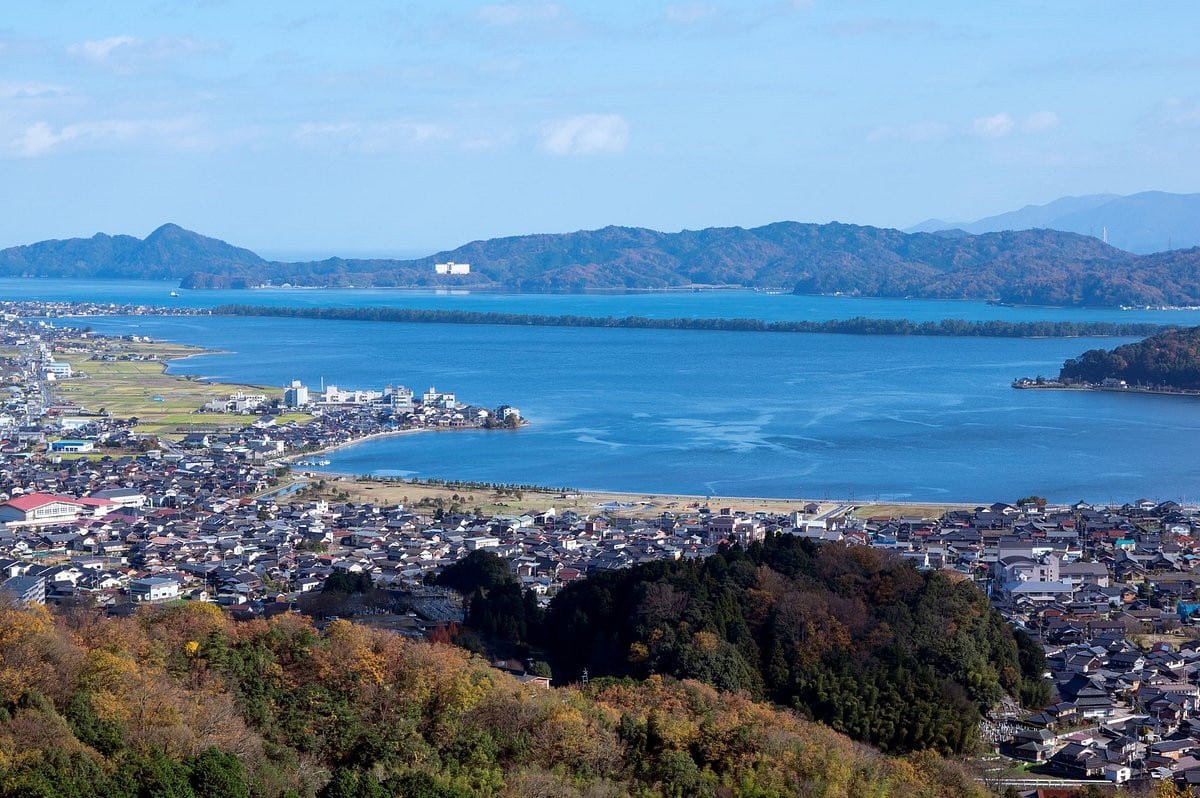
Ichiji-kan Park (Ouchi-toge Ichiji-kan Park) is in Yosano Town, Kyoto Prefecture. Looking from west to east, the Amanohashidate sandbar appears as a single straight horizontal line, like the character “一” (one) in calligraphy, which gives the park its name. It is a free viewpoint, with far fewer visitors than Kasamatsu Park and View Land.
The park is west of Amanohashidate Station, about 20 minutes by car from the station. There is no cable car to it, so we suggest driving or taking a taxi. The viewing angle is completely different from the other two main viewpoints and takes in the whole of Miyazu Bay and the sandbar.
Amanohashidate Shrine: A Seaside Guardian Shrine in the Middle of the Sandbar
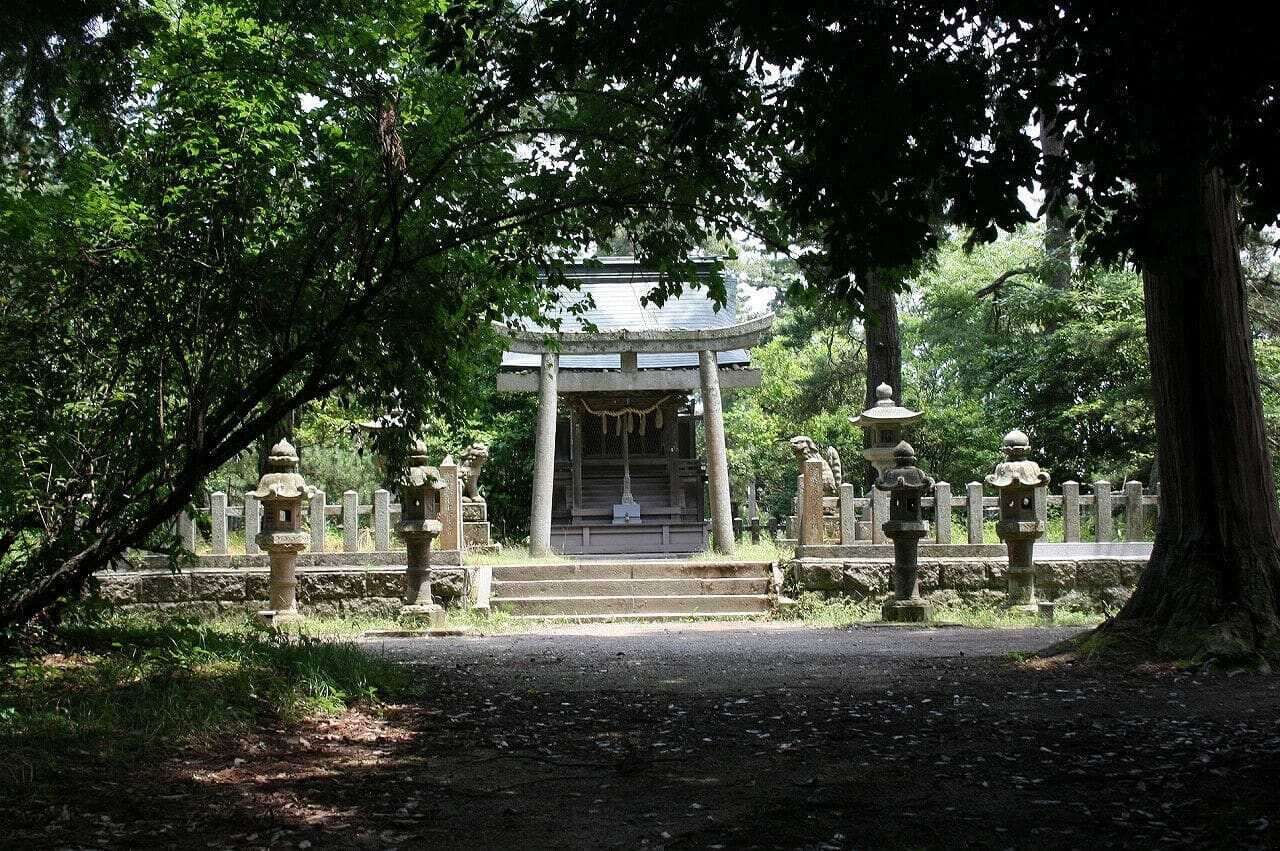
Amanohashidate Shrine stands in the middle of the sandbar and is the local center of faith that protects fishermen and sea travel. The shrine buildings are small, but it is an important rest and worship stop along the sandbar path. Beside it, the old Isokiyomizu well is said to hold sweet fresh water even though it springs in the sea, and is listed as one of Japan’s 100 Famous Waters.
The shrine is open for worship all year with no ticket needed, and you can stop here on foot or by bicycle as you cross the sandbar. It is an important halfway point between the viewpoints at both ends, linking religious culture and natural scenery on a single route.
Amanohashidate Tickets and Guided Tour Recommendations
Amanohashidate is a natural landscape, but to enjoy it smoothly and fully it helps to know the transport passes and itinerary options in advance. The cable car and chairlift tickets for Kasamatsu Park (north) and View Land (south), and cycling across the sandbar, each have their own tricks. Here are the most useful ticket combinations and recommended tours, so first-time visitors to one of Japan’s Three Great Views can plan everything at once and avoid wasting time queuing and figuring things out on site.
Kasamatsu Park Cable Car + Chairlift Round-Trip Set: The Classic “Upside-Down Amanohashidate” View from the North
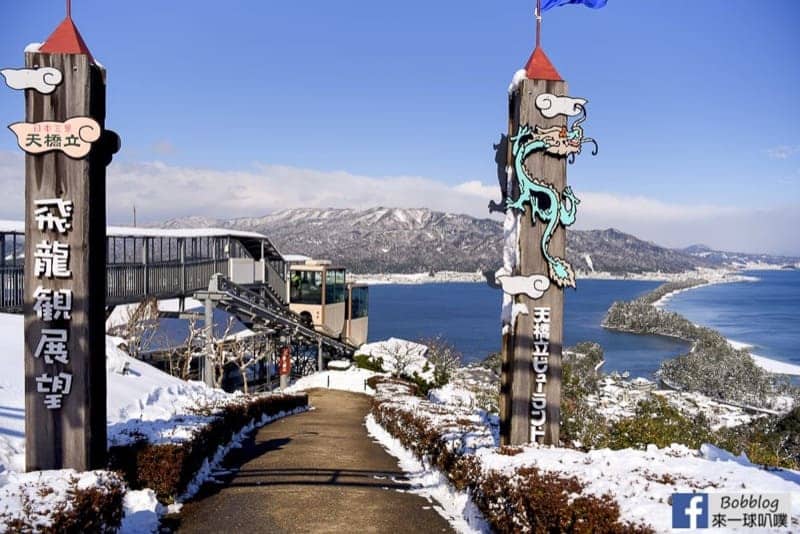
Kasamatsu Park is in the Fuchu area on the north side of Amanohashidate, the birthplace of the “Rising Dragon View” and of viewing Amanohashidate from between your legs. The cable car from Fuchu Station takes about 4 minutes to reach the top. A round trip is ¥800 for adults and ¥400 for children (¥400 one way), valid for both the cable car and the chairlift. The cable car runs every 15 minutes, 9:00-18:00 from March to October. We suggest taking the cable car up and the chairlift down. At the top are an observation deck, a matanozoki platform, and a restaurant and souvenir shop. Allow 30-60 minutes. Tickets are bought on site, with no reservation needed.
-Klook.jpg)
View Land Chairlift / Monorail Set: The Flying Dragon View from the South
Amanohashidate View Land in the Monju area on the south side is famous for the “Flying Dragon View.” Looking down at the curving sandbar, it looks like a giant coiling dragon, an angle photographers love. A monorail or chairlift takes you to the top. Admission is ¥1,000 for adults and ¥500 for elementary school children, including round-trip transport.
The hilltop amusement park has a Ferris wheel, a carousel and other rides, good for families. Opening hours are 9:00-17:00 depending on the season (until 18:00 in summer), and we suggest avoiding the weekend crowds from 10:00 to 12:00.
We suggest experiencing both the north and south sides to collect both the Rising Dragon View and the Flying Dragon View.
Amanohashidate Bicycle Rental + Pass: Crossing the Sandbar of Japan’s Three Great Views on Foot
Cycling or walking across the roughly 3.6-kilometer Amanohashidate sandbar and its thousands of pines is a great way to experience the “white sand and green pines.” Bicycle rental stations are in both the Monju and Fuchu areas, at ¥500 for 2 hours plus ¥300 for each additional hour, and one way takes about 20-30 minutes by bike, with the bike returnable on the opposite shore. You pass Chionji and Amanohashidate Shrine on the way. You can also take the “Amanohashidate Sightseeing Boat” one way across the water, a ride of about 12 minutes at ¥800 for adults, sometimes with gulls following along.
We suggest cycling out and taking the boat back, or the reverse, to combine land and sea views and enjoy the many layers of Japan’s Three Great Views.
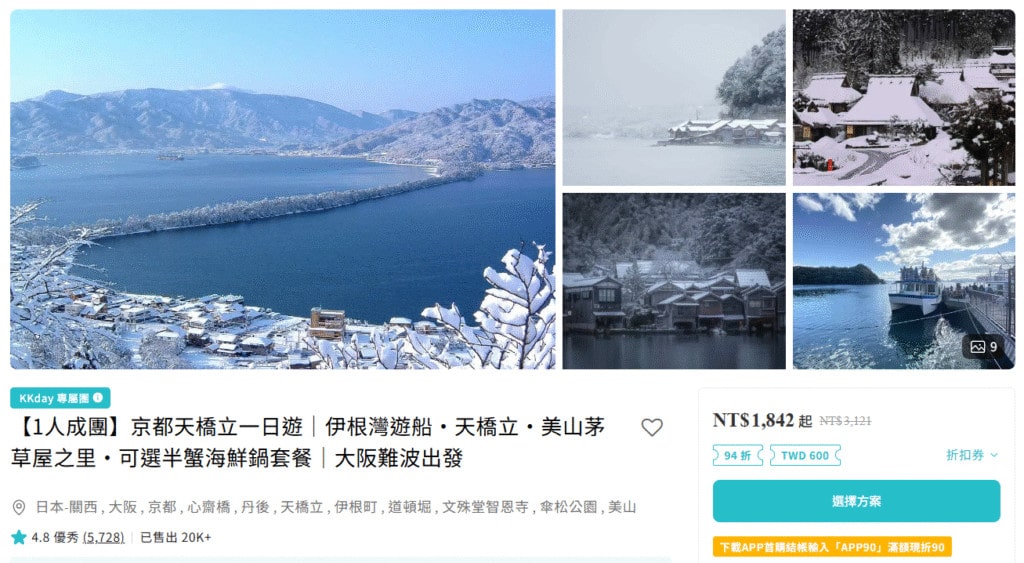
Amanohashidate and Ine Funaya Day Trip from Kyoto: Linking the Nearby Sights Hassle-Free
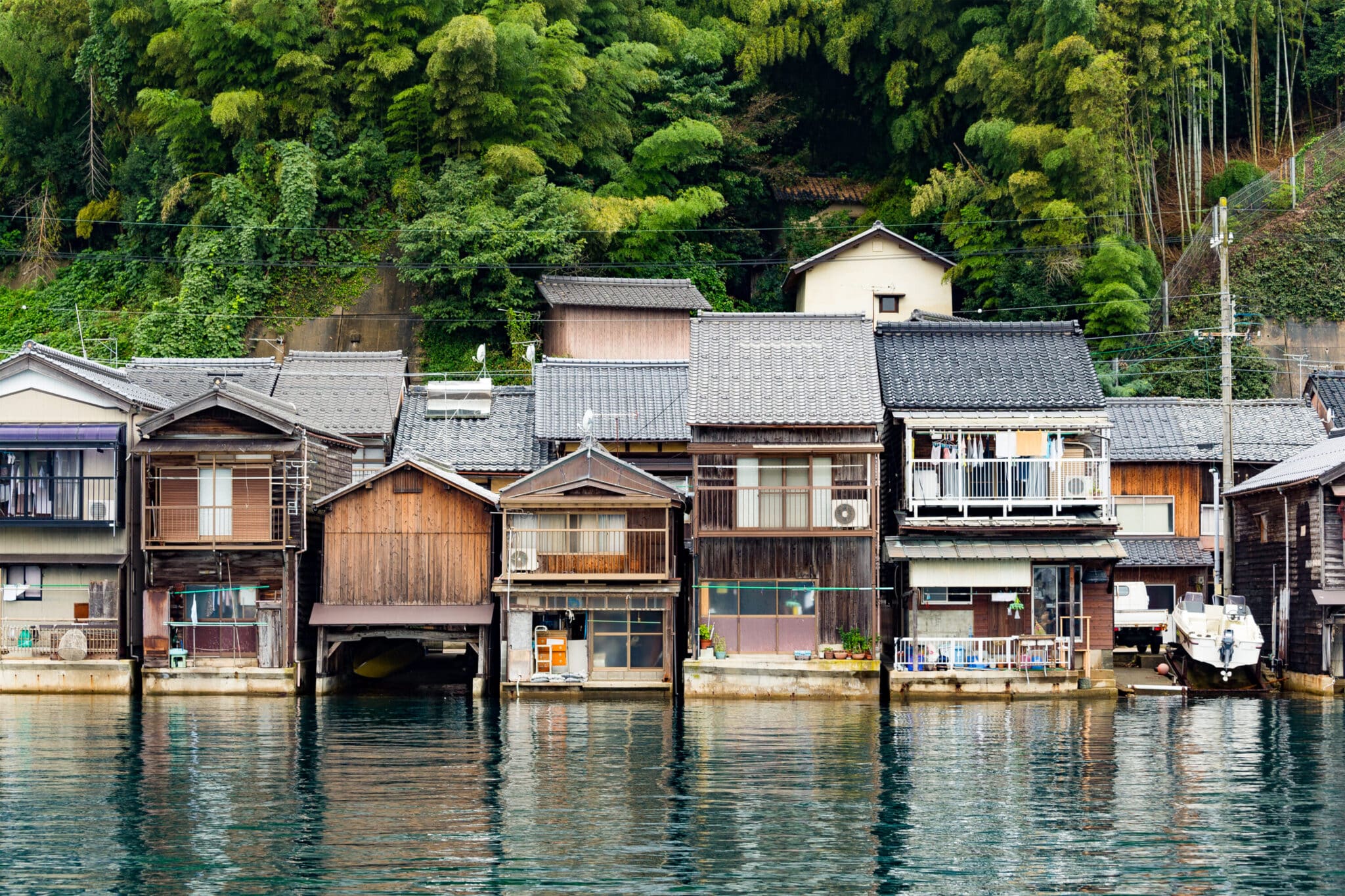
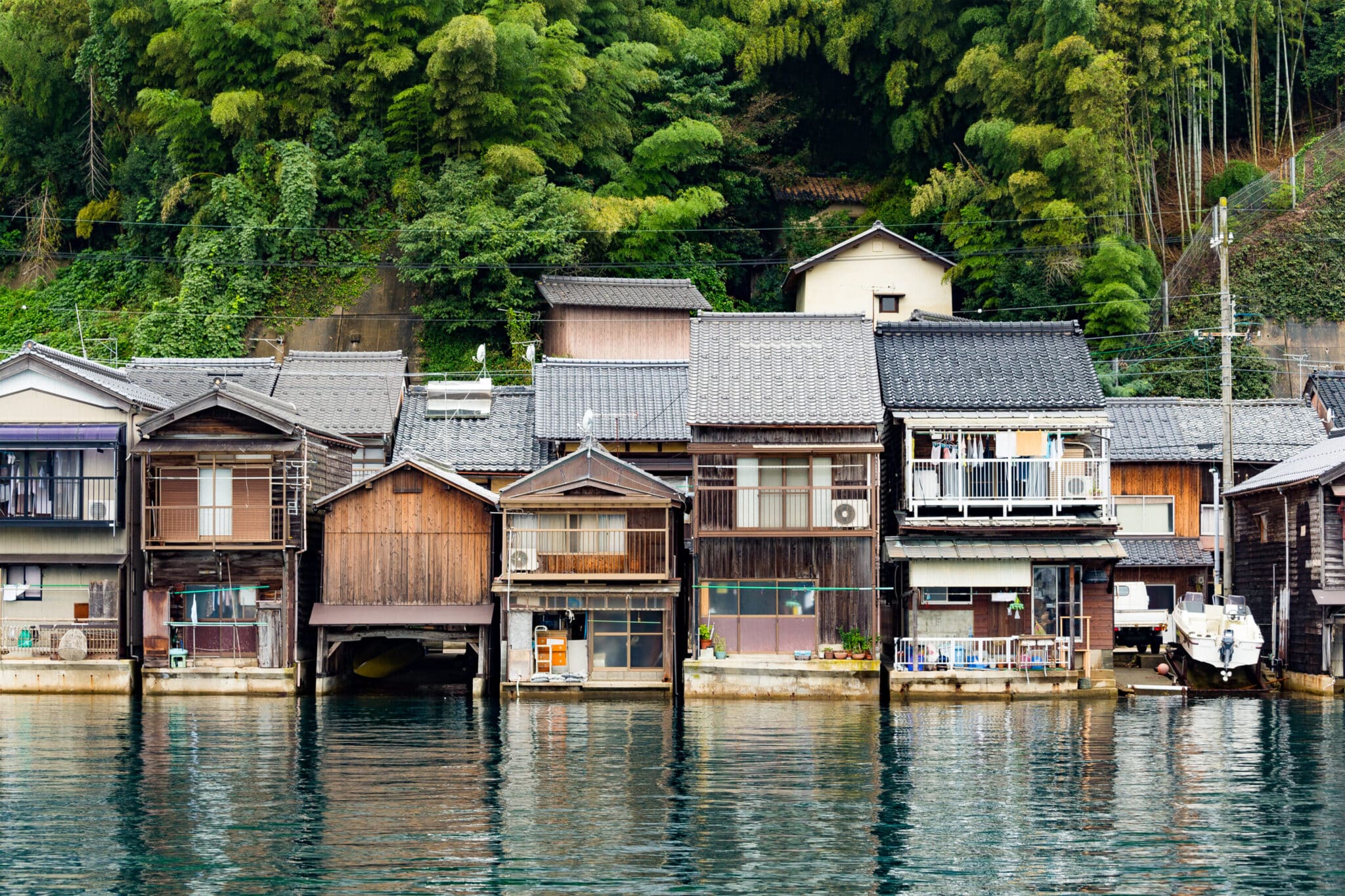
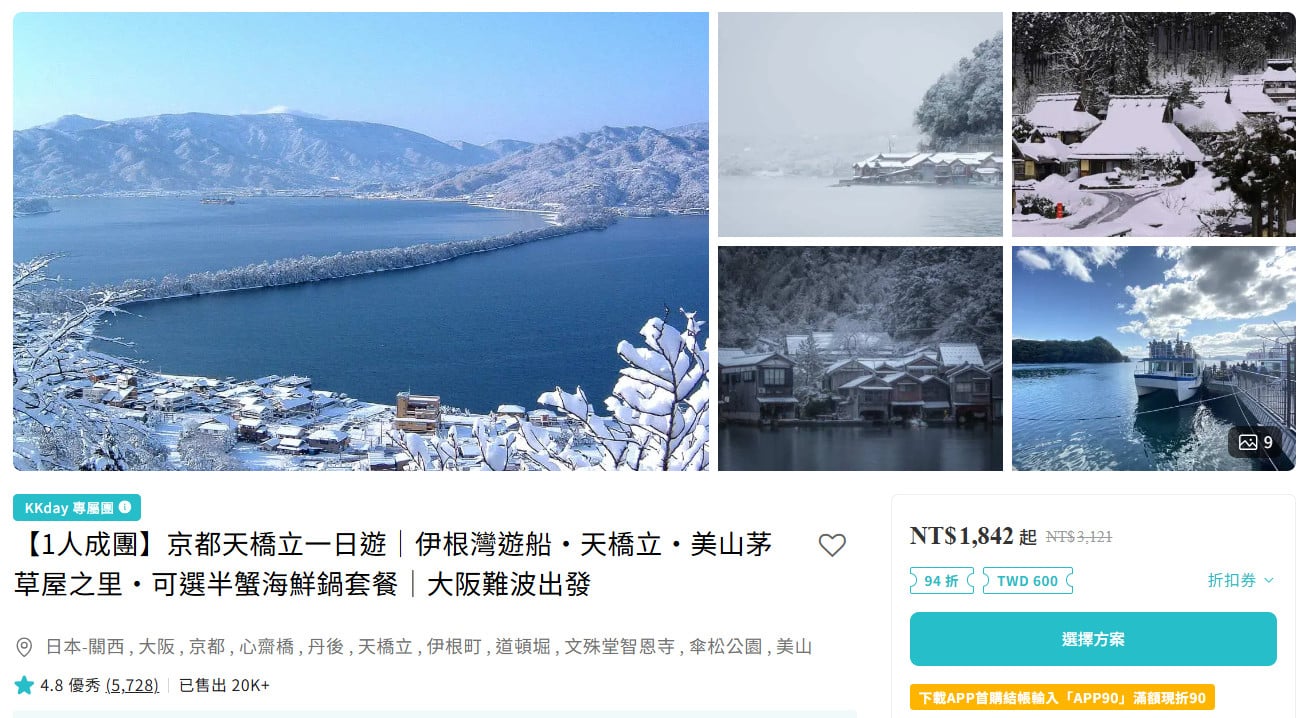
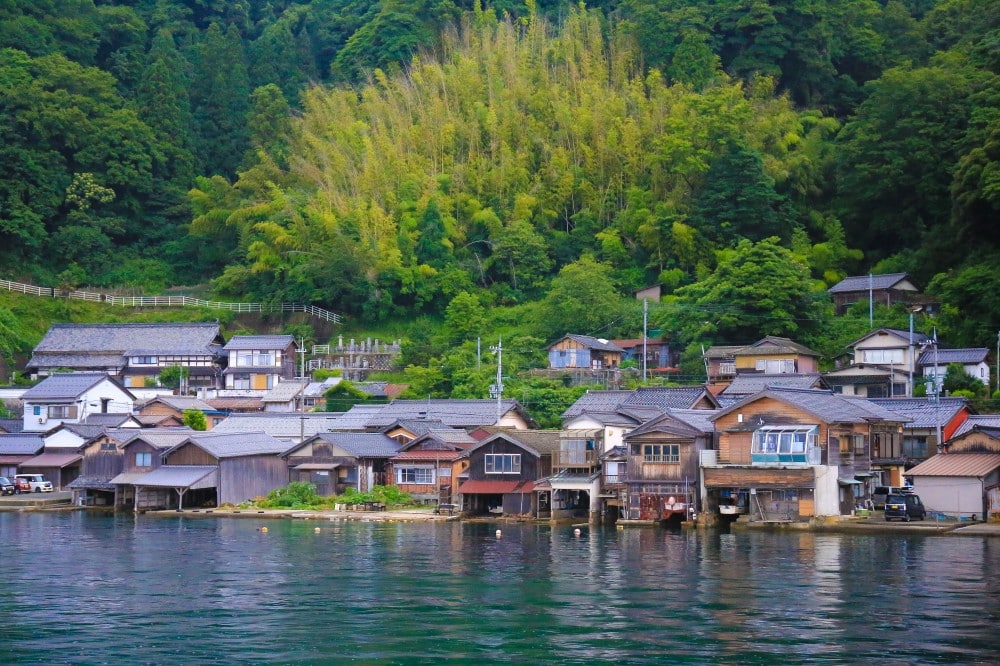
Day trips from Kyoto mostly include the Amanohashidate Kasamatsu Park cable car and a stroll on the sandbar, and link up with “Ine Funaya” on the same Tango Peninsula, a village of wooden seaside boathouses known as the “Venice of Japan.” Most itineraries include round-trip bus transfers, and some plans include tickets and a guide. Times and prices vary by plan, so check the booking page.
Amanohashidate and Ine Funaya are on the Tango Peninsula, where public transport runs infrequently. A guided tour saves you the trouble of transfers, and suits travelers with older relatives or children, or with limited days who want to cover both major sights efficiently.
-Klook.jpg)
Where to Stay
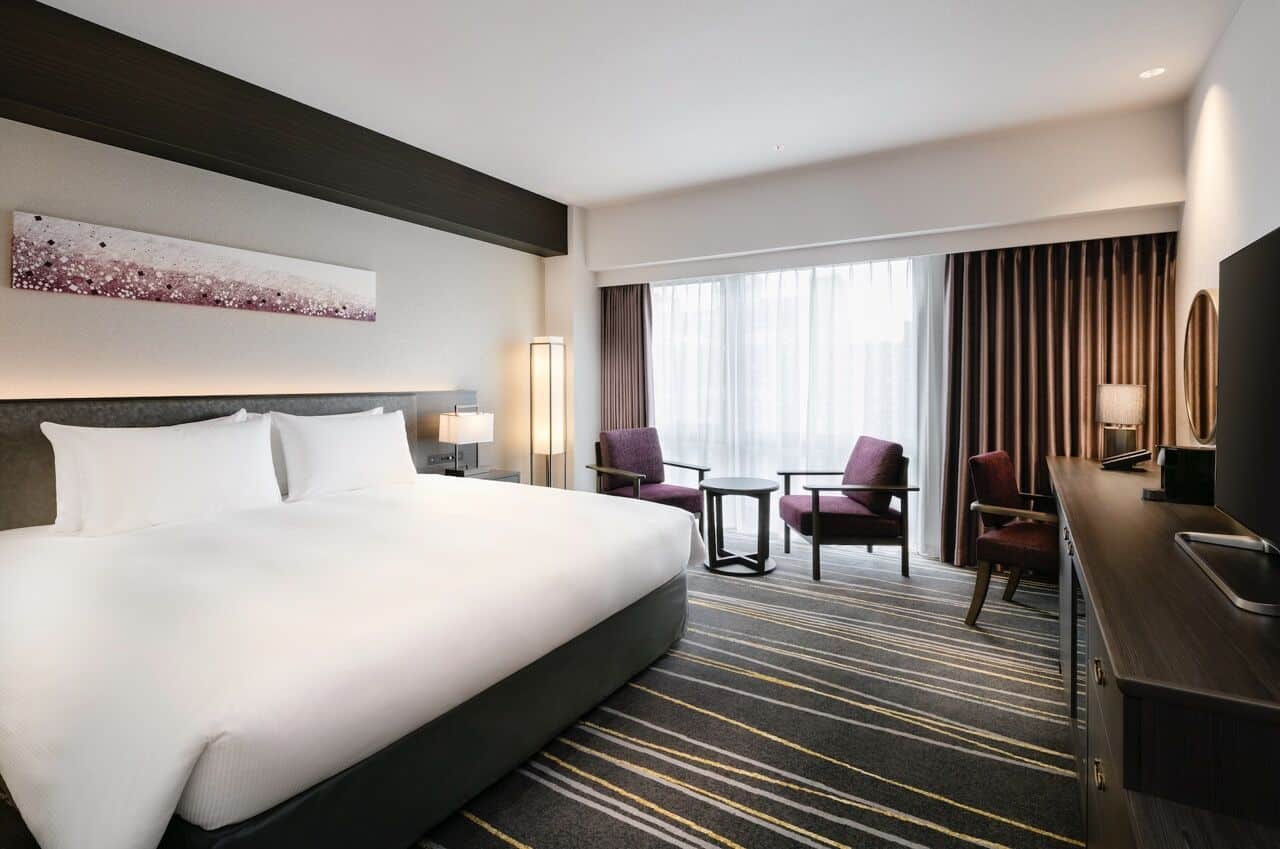
Lodging around Amanohashidate is concentrated near Amanohashidate Station and the Monju and Fuchu areas. Chie no Yu onsen is in front of the station, and Chionji is about a 5-minute walk away, so staying locally lets you fit in the Kasamatsu Park cable car and View Land at an easy pace, without the long commute back and forth from Kyoto.

FAQ
Q: How much do Amanohashidate tickets cost?
The sandbar itself is free. View Land admission is ¥1,000 for adults, the Kasamatsu Park cable car round trip is ¥800, and the sightseeing boat is ¥800 one way.
Q: How long does it take to get from Kyoto to Amanohashidate?
The limited express Hashidate takes about 2 hours, and the express bus from Kyoto Station takes about 2 hours 5 minutes, both one way.
Q: When is the best season to visit Amanohashidate?
Spring (April to May) for cherry blossoms and autumn (October to November) for foliage are the best, with pleasant weather and clear views. Winter has snow scenery, but the cable car may be suspended in strong wind.
Q: How long does it take to walk across the Amanohashidate sandbar?
The sandbar is about 3.6 kilometers long, about 1 hour one way on foot, or about 20 to 30 minutes to cross the whole way by rental bicycle.
Q: What is the difference between the Flying Dragon View and the Rising Dragon View?
The Flying Dragon View is the south-side view from View Land, best visited in the morning when the light is behind you. The Rising Dragon View is the north-side view from Kasamatsu Park, best visited in the afternoon. The two angles are completely different.
Q: What is special about the fan-shaped fortune slips at Chionji?
The fan-shaped fortune slips are unique to Chionji and are named for their folding-fan shape. They symbolize unfolding wisdom and good fortune, a souvenir that grew out of the Monju faith and is popular with visitors.
Q: Is Amanohashidate better as a one-day or two-day trip?
A one-day trip covers the core sights. If you want to add nearby places such as Ine Funaya, Miyama Town or Maizuru, a two-day trip is more relaxed.