

How to Get to Kirishima Onsen: Comparing the Limited Express Kirishima, Local Buses and Driving
Kirishima is a rural destination that you go to on purpose, so decide on your transport first and then plan the itinerary.
Limited Express Kirishima from Kagoshima-Chuo Station: The Main Route Without a Car
Without a car, take the limited express “Kirishima” from JR Kagoshima-Chuo Station. It runs directly to JR Kirishima-Jingu Station in about 50 minutes, and its steady schedule makes it the most reliable backbone of a day trip. After arriving, change to a Kagoshima Kotsu bus outside the station: about 13 to 15 minutes to Kirishima Jingu, and about 30 minutes to Maruo in Kirishima Onsen. Buses are infrequent, so we suggest photographing the timetable at your stop when you get off and confirming the return times to avoid long waits in the mountains. The limited express Kirishima makes several round trips a day, and in peak season we recommend reserving a seat in advance.
From Kagoshima Airport: The Closest Entrance
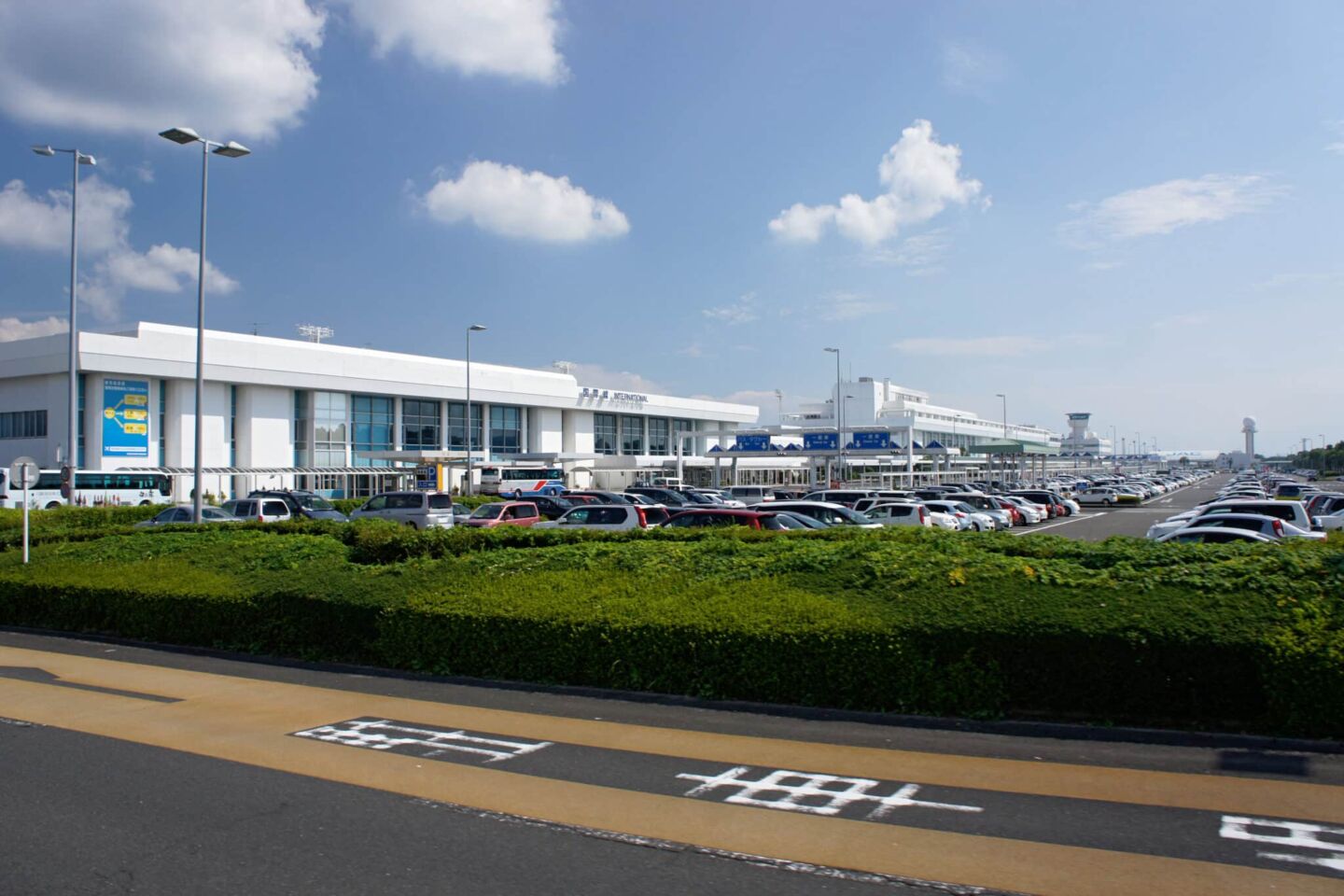
Kagoshima Airport is within Kirishima City and is the closest entrance to Kirishima. With a rental car on the Kyushu Expressway, you reach Kirishima Jingu or Kirishima Onsen in about 30 to 40 minutes, with the greatest mobility.
Without a car, you can also take the airport connection bus, whose route goes toward Kirishima Onsen. It suits those who go straight to the hot spring area after landing and head into Kagoshima city the next day. Schedules and stops may change with the season, so follow the bus operator’s announcements that day before you go. The airport has a free foot bath, so you can warm up while picking up a car or waiting for a bus and start the Kirishima onsen rhythm early; it is a fixed stop for many people before heading home.
Local Kirishima Buses and the Kirishima Bus One-Day Pass: A Money-Saving Option Linking the Sights
Kirishima’s sights are spread out along mountain roads, so single tickets get fragmented. From Kokubu Station or the city, you can use the Kirishima bus one-day pass (Kagoshima Kotsu’s “Kirishima Nottari Oritari My Plan”), which allows unlimited rides on designated routes during its validity, covering the Kirishima mountain circuit buses from Maruo to Ebino Plateau and Takachiho-gawara. It suits itineraries that move between several points around the hot spring area. Actual routes, prices and sales locations may change, so confirm that day’s announcements and check the timetable before buying; if you are only going to Kirishima Jingu, a single return ticket is better value.
Driving and Parking: The Most Flexible, but Watch the Mountain Roads
Driving is the most flexible way to get around Kirishima, especially if you want to include outlying spots such as Shioibitashi Onsen Ryoma Park, Inukai Falls and Kirishima Open-Air Museum; a rental car is almost the only solution. Most major sights have free or low-cost parking.
Note that Kirishima is mountainous, and in winter the roads may be icy or snow-covered, with some sections requiring snow tires or chains. Also, because of volcanic activity, the prefectural road around Ebino Plateau is sometimes open only at certain times. Check road restrictions and weather information before you go. The mountain roads also have many curves and some sections have no streetlights at night, so keep your driving to daytime and arrange car rental and refueling early.


What Are the Must-See Sights in Kirishima? Kirishima Jingu, Maruo Falls and the Hot Spring Area Highlights
The list below follows the order “around the shrine → hot spring area → outlying extensions” so you can plan your route by geography.
Kirishima Jingu: The Vermilion Shrine Buildings Designated a National Treasure in 2022
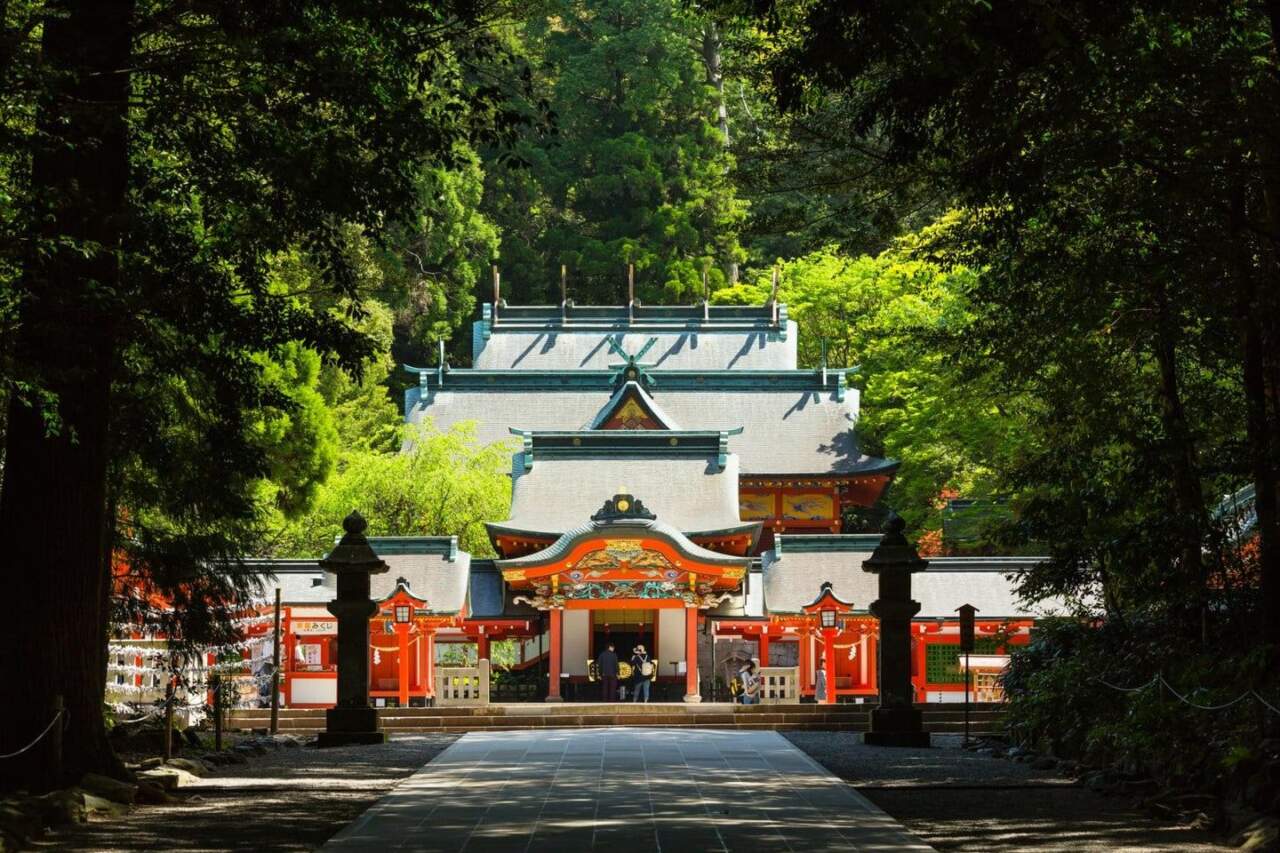
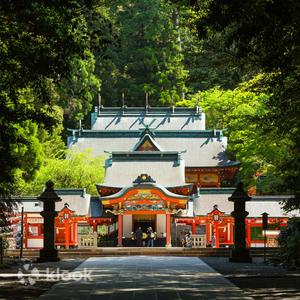
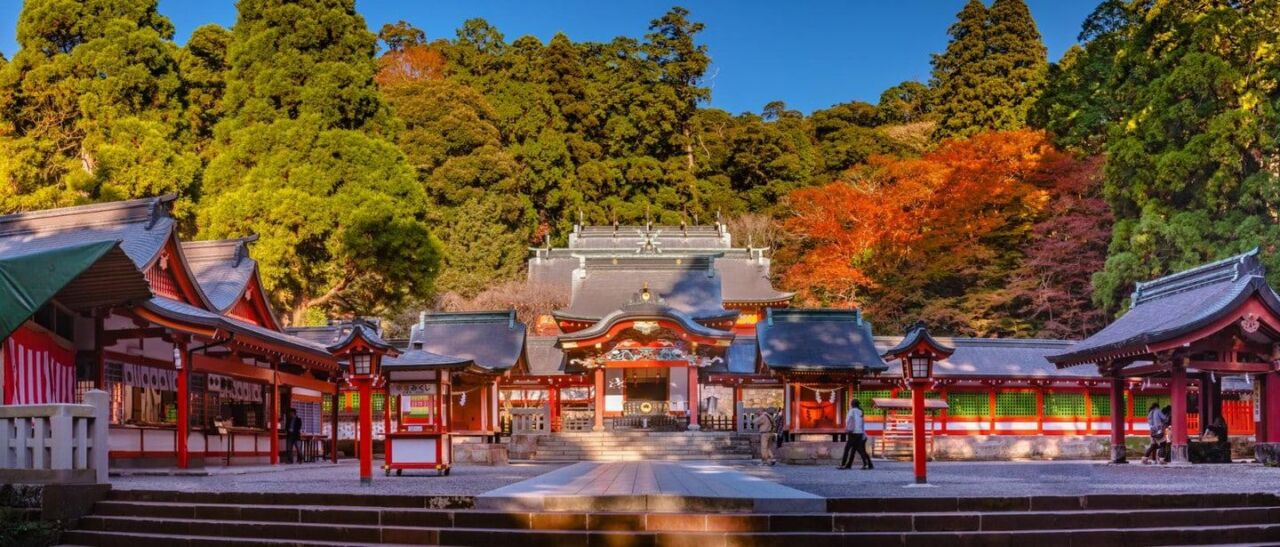
Kirishima Jingu is the first priority of a Kirishima trip. The vermilion shrine buildings stand in an ancient cedar forest, with eaves and pillars covered in colorful carvings and metalwork, the most ornate in southern Kyushu, earning the name “Nishi Toshogu.”
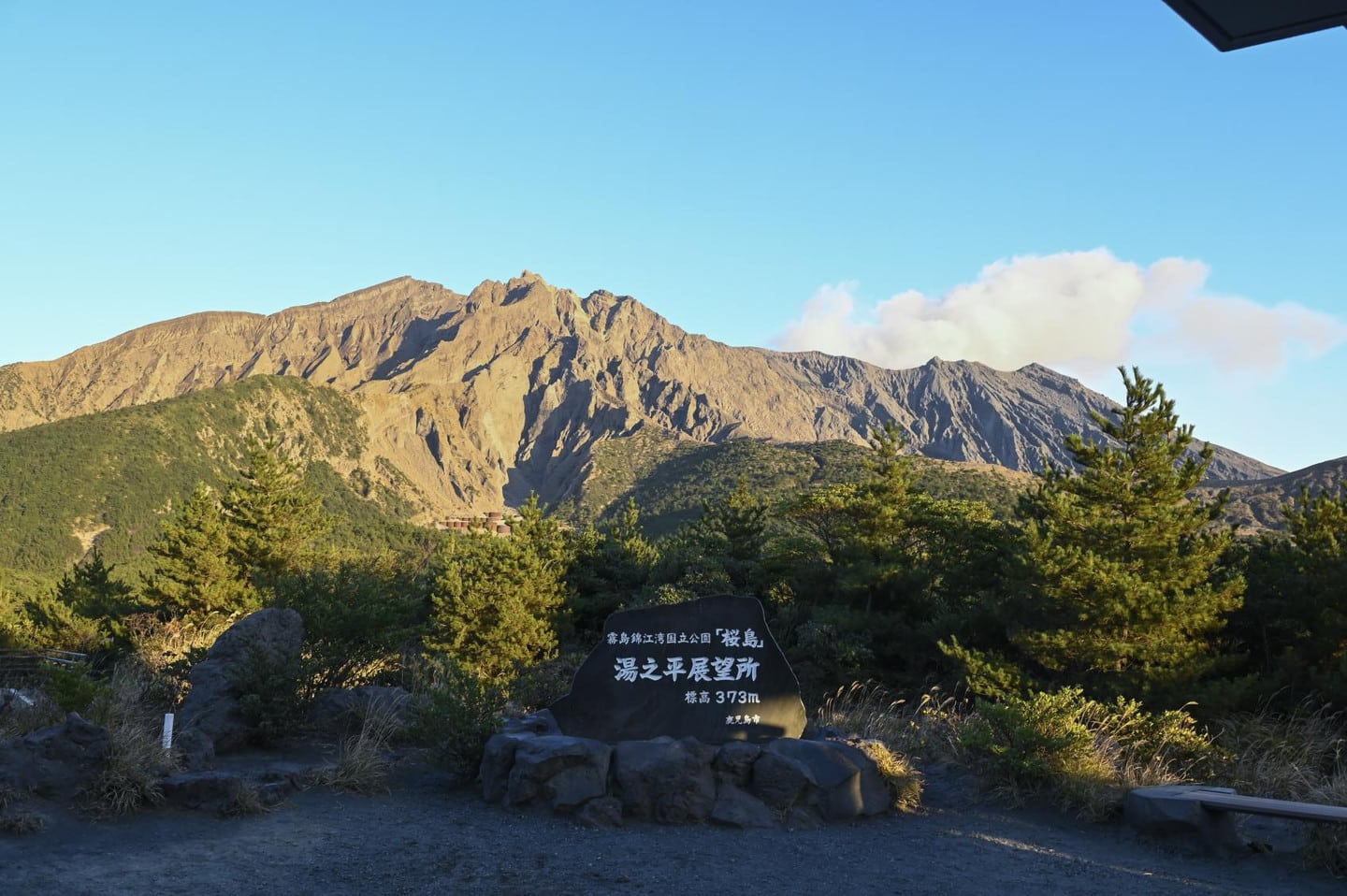
The existing buildings were rebuilt in 1715 by Shimazu Yoshitaka, 4th lord of the Satsuma domain, and the main hall, offering hall and worship hall were designated National Treasures together in February 2022, the first National Treasure buildings in Kagoshima Prefecture. Worship in the grounds is free, and opening hours follow the shrine’s announcements; we suggest avoiding the noon crowds. The great torii at the entrance to the approach and the lookout are also good for photos, and on sunny days you can see Sakurajima in the distance.

The 800-Year-Old Sacred Tree, Omamori and Goshuin: Highlights Not to Miss When Visiting
Walking along the approach beside the shrine buildings, you will see Kirishima Jingu’s sacred tree, a huge cedar about 800 years old and about 38 meters tall, said to be the ancestor of the cedars of southern Kyushu. The trunk is so thick that several people are needed to circle it, and standing beneath it and looking up is quite overwhelming.
The shrine’s amulet office (shuyosho) is right next to the worship hall, where you can get omamori (amulets) related to mythology, relationships and good luck, and goshuin (shrine stamps) are also handled there. There are lines in peak season or during festivals, so leave some slack in your schedule. Bring a goshuin book in advance if you can, though they are also sold on site. There are viewing positions around the sacred tree; please do not touch the trunk, and step back to the designated area when taking photos so the roots are not damaged.
Shinsuikyo Trail: Into a Valley of Volcanic Columnar Joints
The Shinsuikyo Trail is right next to Kirishima Jingu, about 1,800 meters long, following a stream valley. The main highlight is the exposed volcanic columnar joints on both sides, hexagonal rock columns lined up neatly, the most direct evidence that Kirishima is a volcanic zone.
The trail is mostly natural surface with steps and changes in elevation, so wear comfortable shoes. It is slippery in rain or after rain, and may be closed by fallen trees in typhoon season, so check the announcements from the shrine or Kirishima City before you go and allow about an hour for the round trip. Information boards along the way explain how the columnar joints formed, so a walk is like a free class in volcanic geology, and children will not be bored.
Takachiho-gawara and the Old Kirishima Jingu Site: Where the Shrine First Stood
Kirishima Jingu was originally not at its present site but around Takachiho-gawara at the foot of Takachihonomine, and was moved because volcanic eruptions burned it down several times. The old site still has a torii and a ritual ground, and the annual Tenson Korin Gojinka Festival is also held here.
This is also the trailhead for Takachihonomine, with a visitor center and parking. Because it is right next to an active volcano, the status of the trails and surrounding roads changes with the eruption alert level, so be sure to check the latest announcements from Kirishima City and the Japan Meteorological Agency before going. The view up at Takachihonomine from here is very open, and even if you do not climb, a stroll around the old site is well worth it, and the visitor center has volcano and mythology exhibits.
Maruo Falls: A Milky-Blue Hot Spring Waterfall
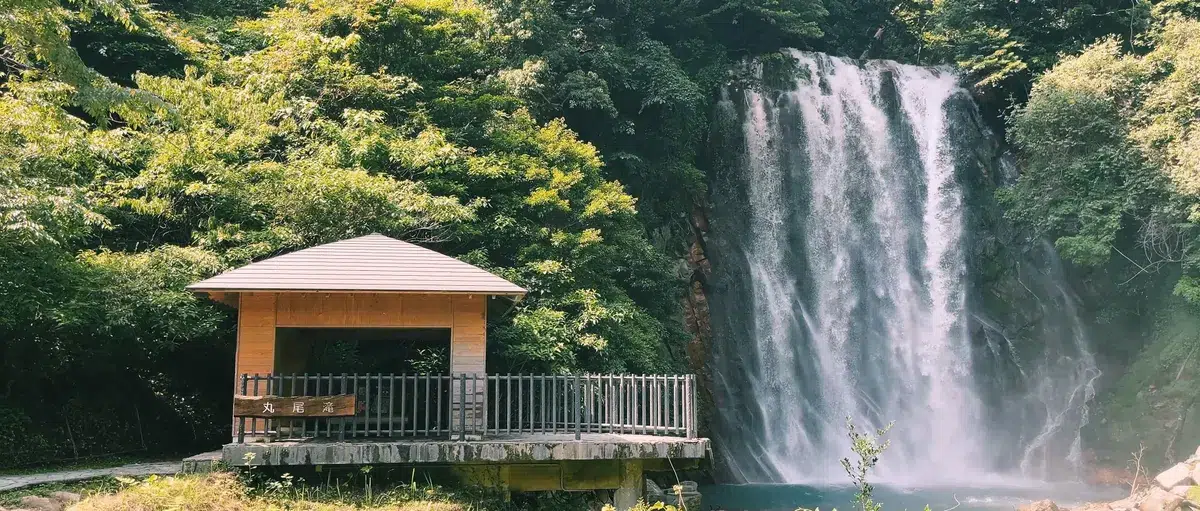
Maruo Falls looks pale milky blue because hot spring water mixes into it, and you can smell sulfur up close, which is rare in Japan.
The falls are about 23 meters high and 16 meters wide, beside the road from Maruo to Kirishima Jingu, with a viewing spot and parking space, so you can photograph the whole view without walking a mountain trail. Some seasons it is illuminated at night, with dates following the organizer’s announcement; if you happen to be there, it is worth coming back to see. The viewing spot is small and parking fills up in peak season, so avoid the midday peak. The road has many curves, so watch for traffic when crossing.
![[Kagoshima Kirishima Route All Highlights] Premium Small-Group Day Tour / Myth Park + Shrine Blessing + Maruo Falls + Takachiho Ranch Healing Trip](https://res.klook.com/images/w_300,h_300,c_fill,q_75/w_80,x_15,y_15,g_south_west,l_Klook_water_br_trans_yhcmh3/activities/c7zs7pa5izfupeumqef1/【鹿兒島霧島線全打卡】精品小團一日遊神話公園+神宮祈福+丸尾瀑布+高千穗牧場治癒之旅-Klook.jpg)
Kirishima Myth Village Park: Views of Sakurajima and Kinko Bay from the Observation Deck
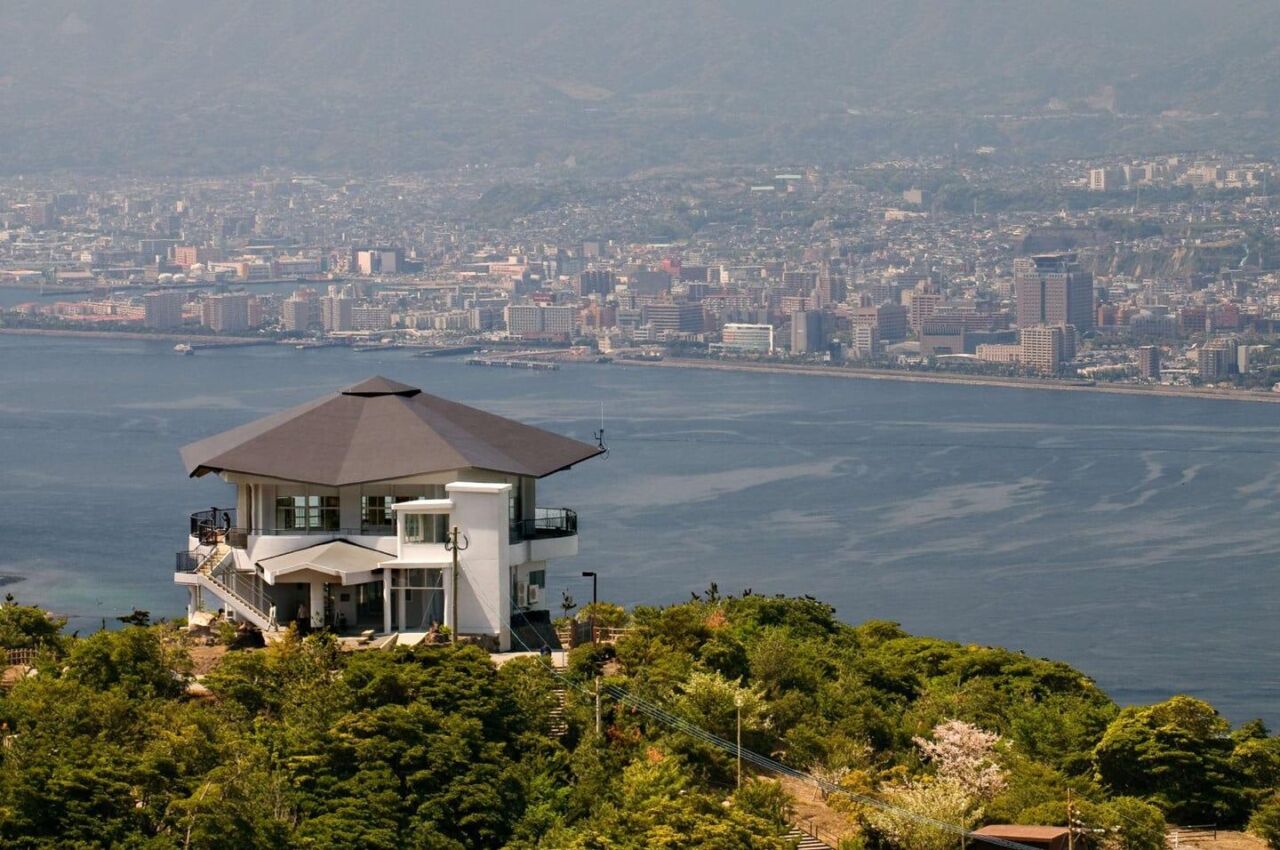
Kirishima Myth Village Park sits on a plateau at about 670 meters above sea level. On clear days you can see Kinko Bay and the active volcano Sakurajima in the distance, one of the best viewpoints in Kirishima.
A scenic chairlift in the park reaches a higher lookout, and facilities such as grass sledding and a park train suit families with children. Admission and each facility are charged separately, and hours change with season and weather, so confirm the official announcements before you go. The park has a farm produce shop and a restaurant where you can eat while looking at the view. In bad weather the view is easily hidden by clouds and mist, so choose a clear day.
Takachiho Ranch: A Pilgrimage Site for Dairy Products Within Miyazaki Prefecture
Takachiho Ranch is in Miyakonojo, Miyazaki Prefecture, on the road east from Kirishima Jingu, a short drive away and the most convenient cross-prefecture extension of a Kirishima trip. The ranch grounds are wide open, and you can get close to animals such as sheep and horses.
The point of coming here is the dairy: freshly made soft serve so rich it is almost like fresh milk, plus popular yogurt and cheese, and a restaurant serving grilled meat. Entry is free, while activities and some facilities cost extra, and closing days and activity times follow the ranch’s announcements. The park has large lawns and play equipment where children can run all afternoon. On weekends the parking lot fills quickly, so arrive early; it is also the most natural stopover between a Kirishima and a Miyazaki itinerary.
Shioibitashi Onsen Ryoma Park: The Starting Point of Japan’s Honeymoon Travel
Shioibitashi Onsen Ryoma Park is in Makizono, Kirishima City, the hot spring where Sakamoto Ryoma and his wife Oryo actually stayed on their honeymoon. Because that trip is often regarded as Japan’s first honeymoon, this has become the most story-rich spot in Kirishima.
The park has bronze statues of Ryoma and Oryo, a museum and a foot bath. It is small, and a stroll plus a visit takes about half an hour. It fits well as a stopover on a driving route, and admission fees and opening hours follow the park’s announcements. Next to the park is a roadside station where you can resupply or have lunch, and if you like late-Edo history we recommend seeing the museum too, as the exhibits are richer than expected.
Inukai Falls: A Forest Waterfall the Ryoma Couple Also Walked
Inukai Falls is also in Makizono, very close to Shioibitashi Onsen Ryoma Park, and the two are usually planned together. The falls drop about 36 meters with abundant water, surrounded by forest, and in summer you can clearly feel the cool air standing near the lookout.
The lookout is very close to the parking lot, so you can see the full view without a long hike, which is friendly to families with older relatives or children. After rain the flow grows and is more impressive, but the trail may also be slippery, so watch your step and follow on-site instructions. It takes only a few minutes to drive here from Shioibitashi Onsen Ryoma Park, and the two together take about an hour. Parking space is limited, and in peak season you may need to wait a little.
Kirishima Open-Air Museum, Kagoshima: An Outdoor Sculpture Museum in the Mountains
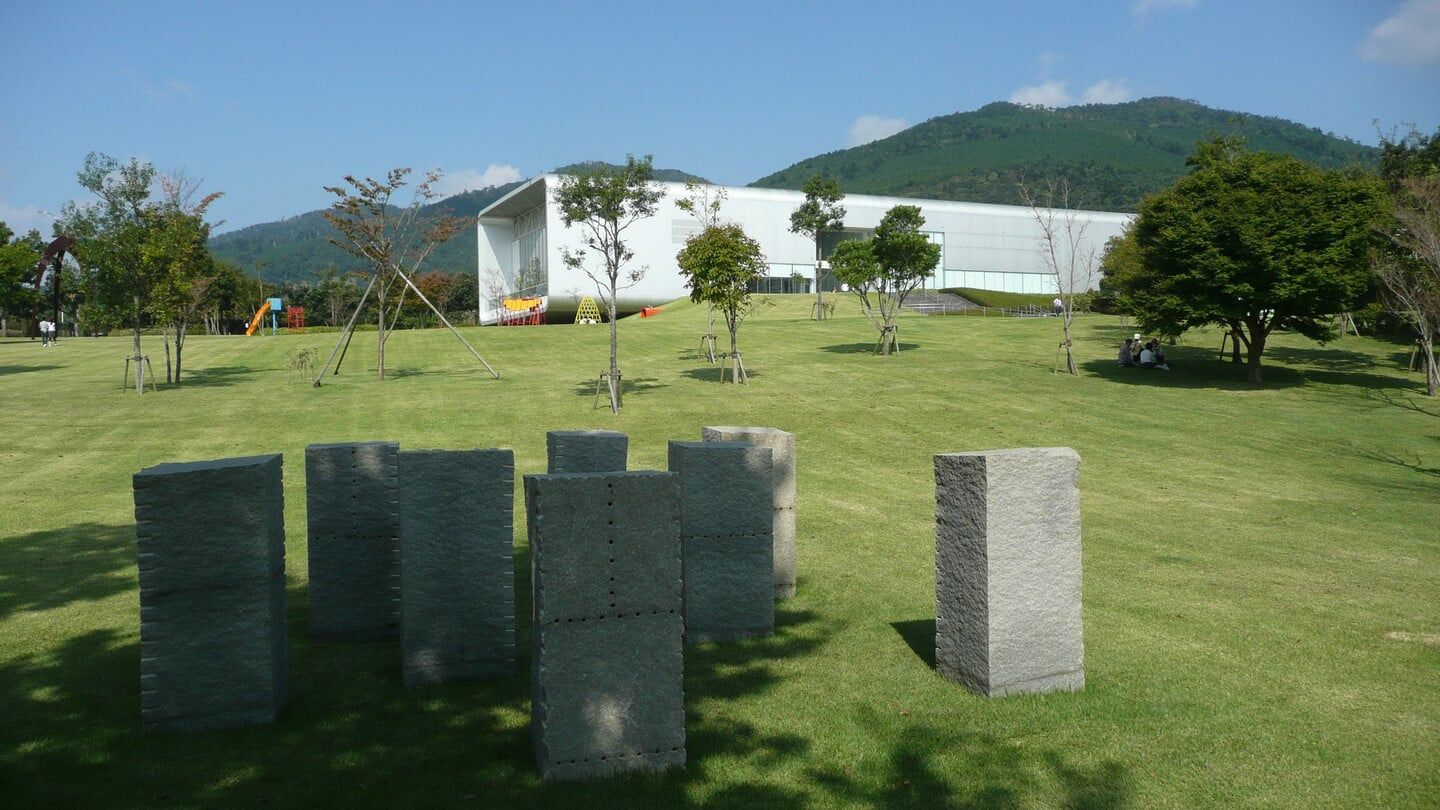
The Kirishima Open-Air Museum is in Yusui Town, a museum mainly of outdoor exhibits, with sculptures scattered across lawns and woods, where you can stroll and enjoy works by artists from Japan and abroad.
It plays differently from hot springs and shrines, and suits the second half of a trip for a change of pace. The museum has indoor exhibition rooms and a cafe space, with tickets and closing days following its announcements; the closing day is usually Monday each week. The outdoor area is large and takes more than an hour and a half to walk, so bring water and sun protection in summer. Because it is some distance by car from Kirishima Onsen, we recommend driving and putting it on the second day of your trip.
Ebino Plateau and Karakunidake: Highlands Across the Border in Miyazaki Prefecture
Ebino Plateau is in Ebino City, Miyazaki Prefecture, at about 1,200 meters above sea level, the hiking base of the Kirishima mountains. Around it are crater lakes such as Fudoike, and it is famous for autumn leaves and winter rime ice. It is in a different prefecture and city from the Kagoshima-side Kirishima Onsen, about an hour’s drive away.
Karakunidake is 1,700 meters high, the highest peak in the Kirishima mountains. However, due to volcanic activity at Shinmoedake, some trailheads and roads have long been under restriction, and the open areas change with the eruption alert level, so always follow that day’s announcements and never enter restricted areas casually. The nature trails on the plateau also change in what is open with volcanic activity, so check these before you go as well.
Onsen Market and Maruo Foot Bath: A Midway Refueling and Foot Soaking Stop
The Kirishima Onsen Market is right next to the Maruo bus stop and works well as the last stop on a “Maruo Falls → onsen market → bus back” route:
- 🍽️ Jigoku-mushi black pork buns, hot spring eggs and steamed corn, available singly while standing
- 💰 The foot bath outside the market costs extra
- 🛍️ Souvenirs and hot spring goods are concentrated here, so buy everything at once before heading back
There are also a few restaurants around the market where you can sit down to eat; from here you can also walk onto the road toward Maruo Falls, and if you have time you can walk along it for a while.
Kirishima Onsen Market Hours and Access: Right at the Maruo Bus Stop
The Kirishima Onsen Market is in Makizono, Kirishima City, open about 8:30 to 18:00 (varies by shop). From JR Kirishima-Jingu Station, take the Kagoshima Kotsu bus bound for Kirishima Iwasaki Hotel for about 28 minutes and get off at Maruo. The foot bath is ¥100 for adults and ¥50 for children, closed Tuesdays; hot spring eggs ¥100, purple sweet potato bean paste onsen manju ¥200. Steaming equipment is suspended during maintenance, and actual amounts and closures follow on-site notices.
A Kirishima Day Trip Route: From Kagoshima-Chuo Station, the Shrine, Maruo Falls and the Onsen Market
From Kagoshima-Chuo Station take the limited express for about 50 minutes to JR Kirishima-Jingu Station, then a bus for about 15 minutes to Kirishima Jingu, where worship is free and takes about an hour. Then take a bus toward Maruo, about 30 minutes, visit Maruo Falls and the Kirishima Onsen Market on the way, soak in the foot bath, then take a bus back. Mountain buses are infrequent, so confirm the last return bus before you go, and then decide how long to spend at each stop.
How Much Does Kirishima Onsen Cost? Admission, Passes and Experience Tours
Kirishima’s cost structure is simple: shrines are free, experience facilities are charged separately, and transport passes save money.
Kirishima Jingu Worship, Omamori and Goshuin: A Free-Entry Power Spot
The grounds of Kirishima Jingu are free to enter for worship, with no admission ticket, making it the easiest stop to fit into Kirishima. What actually costs money is the omamori and goshuin at the amulet office. Omamori types cover relationships, good luck, traffic safety and more, mostly priced from a few hundred to a thousand yen.
Goshuin are also handled at the amulet office, and you can buy a goshuin book on site if you do not have one. Opening hours and the amulet office’s service hours follow the shrine’s announcements, and there are more people during festivals, so arrive early. There are a rest area and shops in the grounds where you can pause after worship.

Kirishima Bus One-Day Pass: The Key to Saving Money Without a Car
The Kirishima bus one-day pass (“Kirishima Nottari Oritari My Plan”) is sold by Kagoshima Kotsu and allows unlimited rides on designated routes during its validity, suiting itineraries that move between several points around Maruo, Ebino Plateau and Takachiho-gawara. Check the fare and applicable routes in Kagoshima Kotsu’s announcements, then compare with single-ride fares to see which is cheaper.
Before buying, confirm the applicable routes and sales locations, and plan your order against the bus timetable. Mountain services are infrequent, and a wrong order can easily waste an hour or two waiting. Payment on board is mostly cash, so prepare coins and small bills in advance.
What to Watch For at Kirishima Onsen: Where to Stay and Volcano Restriction Reminders
Finally, two things that directly affect how smoothly your trip goes: where to stay, and how to check volcano conditions.

Maruo or Central Kagoshima? Where to Stay Around Kirishima
If the goal is soaking, we most recommend staying right in the Maruo area of Kirishima Onsen: the bus stop and the onsen market are both within walking distance, and most inns offer dinner-and-breakfast plans and their own source springs, so you can quietly enjoy an open-air bath at night. To save a little, you can also choose lodging around Kirishima-Jingu Station, which has simple transport connections.
If your trip also takes in central Kagoshima, Sakurajima or Ibusuki, basing yourself near Kagoshima-Chuo Station gives more flexibility, and you can take the limited express up to the mountains in the morning. Kirishima rooms are in high demand in peak season (holidays, foliage season), so book early.
Volcanic Activity and Seasonal Notes: Three Things to Check Before You Go
As of September 2026, Shinmoedake remains at eruption alert level 2, with a restricted zone of about 2 km around the crater, and the level may change at any time
Some Karakunidake trailheads may be closed or open only at certain times because of volcanic activity
Roads around Ebino Plateau may also be closed because of restrictions; before you go, check the latest announcements from the Japan Meteorological Agency, Kirishima City and Miyazaki Prefecture
Kirishima Onsen FAQ
Q: How long does it take to get to Kirishima from central Kagoshima, and what is the easiest way?
By JR, take the limited express Kirishima from Kagoshima-Chuo Station for about 50 minutes to JR Kirishima-Jingu Station, then a Kagoshima Kotsu bus: about 13 to 15 minutes to Kirishima Jingu and about 30 minutes to Maruo in Kirishima Onsen. By car from Kagoshima Airport on the Kyushu Expressway takes about 30 to 40 minutes, the most flexible way.
Q: Does Kirishima Jingu charge admission? How long does a visit take?
Worship in the grounds of Kirishima Jingu is free, with no admission ticket. A full visit plus the sacred tree and a walk through the surrounding cedar forest takes about an hour; if you also walk the Shinsuikyo Trail, allow about another hour. Opening hours and the amulet office’s service hours follow the shrine’s announcements that day.
Q: Why are Kirishima Jingu’s shrine buildings a National Treasure?
Kirishima Jingu’s main hall, offering hall and worship hall were designated National Treasures in February 2022, the first time a building in Kagoshima Prefecture received that designation. The existing buildings were rebuilt in 1715 by Shimazu Yoshitaka, 4th lord of the Satsuma domain, and are known for ornate colorful carvings, hence the name “Nishi Toshogu.”
Q: Can I do Kirishima without a car? What tickets should I buy?
Yes, but you have to work around bus times. We suggest taking the limited express to Kirishima-Jingu Station and changing to a local bus, and depending on your plan, consider buying Kagoshima Kotsu’s Kirishima bus one-day pass “Kirishima Nottari Oritari My Plan” (price and routes follow Kagoshima Kotsu’s announcements). Mountain services are infrequent, so always check the timetable first when ordering your stops and confirm the last return bus.
Q: How many spring types does Kirishima Onsen have? Can I soak without staying overnight?
Kirishima Onsen is a collective name for several hot spring districts, with nine different spring types in total, and sulfur springs are the most representative. You can soak without staying: many inns in the hot spring area offer day-use bathing, mostly priced from a few hundred to just over a thousand yen, but service hours are limited and may be suspended at short notice, so confirm before you go.
Q: What is the best season to visit Kirishima?
Spring has Kirishima azaleas, autumn has red leaves, and in winter there is a chance to see rime ice at high altitude, so each season has its highlights. If you mainly want to soak and worship, the air is clearest and the views best in autumn and winter, but in winter the mountains may be icy or snowy, so drivers should prepare snow tires and check road conditions.
Q: Shinmoedake is volcanically active; is it safe to visit Kirishima?
General sightseeing spots such as Kirishima Jingu, Kirishima Onsen and Maruo Falls are outside the restricted zone and can normally be visited as usual. However, Shinmoedake has an eruption alert level and surrounding restrictions, and some Karakunidake trailheads and roads around Ebino Plateau may be closed, so before hiking or going to the plateau, always check the Japan Meteorological Agency’s and local governments’ announcements that day.
Kirishima Onsen Guide: A Southern Kyushu Hot Spring Region Weaving Together Myth, a National Treasure and Nine Spring Types
Kirishima is the easiest place in southern Kyushu to satisfy three wishes at once: mythology, scenery and famous hot springs. The Kirishima mountain range spans Kagoshima and Miyazaki prefectures, and the Kirishima Onsen area at its foot is made up of several hot spring districts with as many as nine spring types. On the slopes, Kirishima Jingu was officially designated a National Treasure in 2022, the first time a building in Kagoshima Prefecture received that honor. It takes less than an hour from Kagoshima-Chuo Station by limited express, so you can do it as a day trip or stay a night with a soak and a dinner-and-breakfast plan. This guide first explains Kirishima’s layout, then breaks things down by transport, sights and tickets.
Kirishima Jingu: Southern Kyushu’s Biggest Power Spot
Kirishima Jingu enshrines Ninigi-no-Mikoto, who is said to have opened up the land of Japan, and is the heart of faith in the Kirishima area. Its ornate architecture has earned it the nickname “Nishi Toshogu” (the Toshogu of the West). The existing shrine buildings were rebuilt in 1715 by Shimazu Yoshitaka, 4th lord of the Satsuma domain, and the main hall, offering hall and worship hall were designated National Treasures together in February 2022.
Ancient cedars surround the grounds, and on sunny days the approach is dappled with beautiful tree shadows, the most iconic scene in Kirishima. A full visit plus a stroll around takes about an hour and fits well in the morning; for details, see the Kirishima Jingu official website (kirishimajingu.or.jp).
Kirishima’s Four Main Spring Areas: Nine Spring Types at a Glance
Kirishima Onsen is not a single hot spring town but a collective name for several hot spring districts within Kirishima City, divided into a few main spring areas with nine different spring types in total, from sulfur springs and bicarbonate springs to simple springs.
Of these, the Maruo area is the center for transport and facilities, with the bus stop, the onsen market and many inns all concentrated here. Travelers without a car usually base themselves at Maruo and radiate out to the sights.
The Onsen Market at Maruo: The Central Hub of the Whole Hot Spring Area
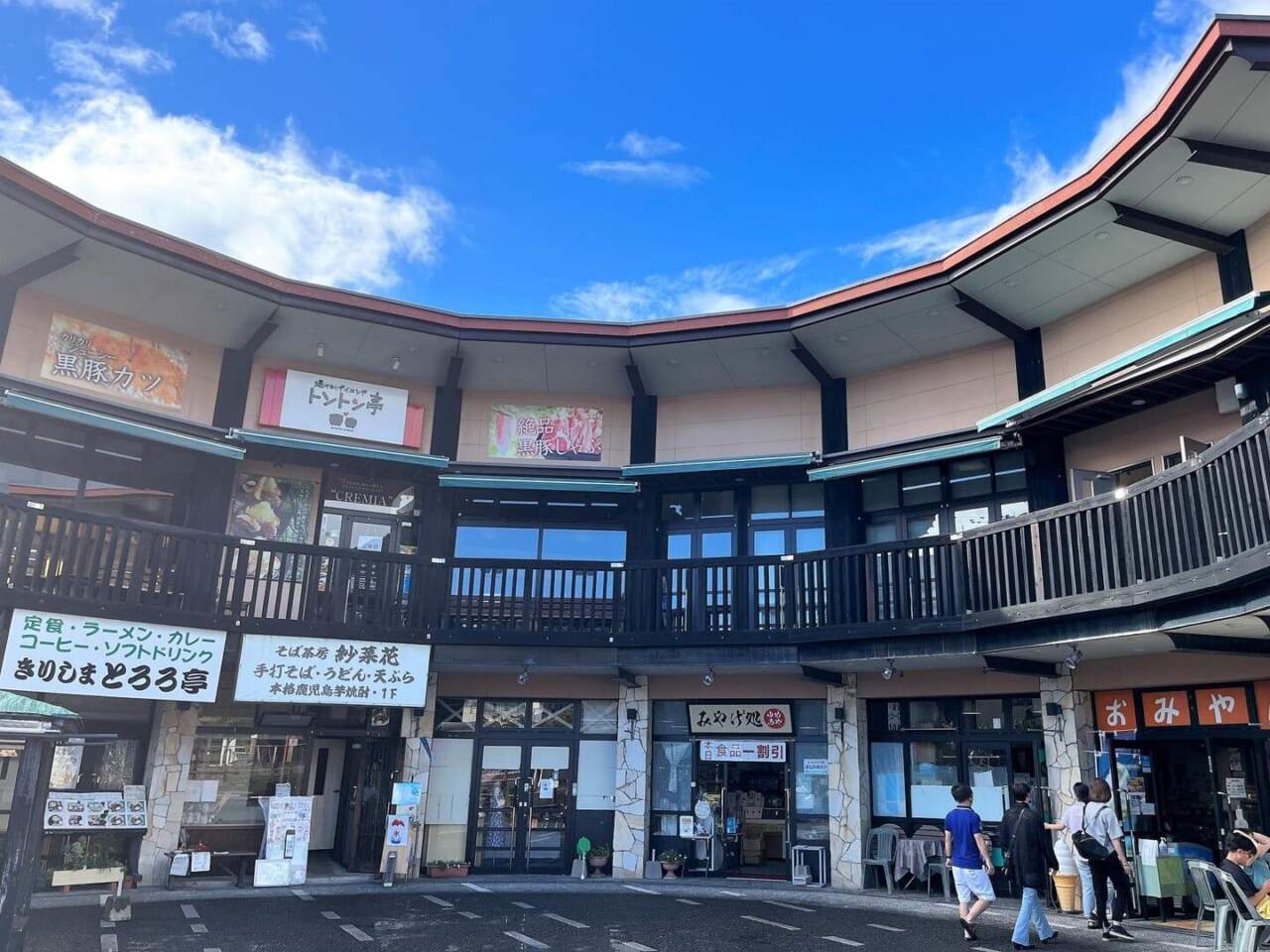
The Kirishima Onsen Market stands next to the Maruo bus stop and is the liveliest hub in the whole hot spring area. Its signature is “jigoku-mushi” (hell-steamed) food cooked in hot spring steam: black pork buns, hot spring eggs and steamed corn can all be bought singly and eaten as you walk.
There is a foot bath outside the market, which costs a fee and is the most comfortable way to fill the time while waiting for a bus. It is also where Kirishima souvenirs are most concentrated, so you can pick everything up at once before heading back.
The Kirishima Mountains: A Volcanic Group Spanning Kagoshima and Miyazaki
The Kirishima mountains are made up of volcanoes such as Karakunidake, Shinmoedake and Takachihonomine, spanning Kirishima City in Kagoshima Prefecture and Ebino City in Miyazaki Prefecture. They are the core of Kirishima-Kinkowan National Park, Japan’s first national park.
It is precisely because this is an active volcanic zone that the hot springs are so abundant, but it also means hiking and some roads are regulated according to volcanic activity. When planning a Kirishima trip, volcano information is as important as the weather, so be sure to check that day’s announcements before you go.
How to Get to Kirishima Onsen: Comparing the Limited Express Kirishima, Local Buses and Driving
Kirishima is a rural destination that you go to on purpose, so decide on your transport first and then plan the itinerary.
Limited Express Kirishima from Kagoshima-Chuo Station: The Main Route Without a Car
Without a car, take the limited express “Kirishima” from JR Kagoshima-Chuo Station. It runs directly to JR Kirishima-Jingu Station in about 50 minutes, and its steady schedule makes it the most reliable backbone of a day trip. After arriving, change to a Kagoshima Kotsu bus outside the station: about 13 to 15 minutes to Kirishima Jingu, and about 30 minutes to Maruo in Kirishima Onsen. Buses are infrequent, so we suggest photographing the timetable at your stop when you get off and confirming the return times to avoid long waits in the mountains. The limited express Kirishima makes several round trips a day, and in peak season we recommend reserving a seat in advance.
From Kagoshima Airport: The Closest Entrance
Kagoshima Airport is within Kirishima City and is the closest entrance to Kirishima. With a rental car on the Kyushu Expressway, you reach Kirishima Jingu or Kirishima Onsen in about 30 to 40 minutes, with the greatest mobility.
Without a car, you can also take the airport connection bus, whose route goes toward Kirishima Onsen. It suits those who go straight to the hot spring area after landing and head into Kagoshima city the next day. Schedules and stops may change with the season, so follow the bus operator’s announcements that day before you go. The airport has a free foot bath, so you can warm up while picking up a car or waiting for a bus and start the Kirishima onsen rhythm early; it is a fixed stop for many people before heading home.
Local Kirishima Buses and the Kirishima Bus One-Day Pass: A Money-Saving Option Linking the Sights
Kirishima’s sights are spread out along mountain roads, so single tickets get fragmented. From Kokubu Station or the city, you can use the Kirishima bus one-day pass (Kagoshima Kotsu’s “Kirishima Nottari Oritari My Plan”), which allows unlimited rides on designated routes during its validity, covering the Kirishima mountain circuit buses from Maruo to Ebino Plateau and Takachiho-gawara. It suits itineraries that move between several points around the hot spring area. Actual routes, prices and sales locations may change, so confirm that day’s announcements and check the timetable before buying; if you are only going to Kirishima Jingu, a single return ticket is better value.
Driving and Parking: The Most Flexible, but Watch the Mountain Roads
Driving is the most flexible way to get around Kirishima, especially if you want to include outlying spots such as Shioibitashi Onsen Ryoma Park, Inukai Falls and Kirishima Open-Air Museum; a rental car is almost the only solution. Most major sights have free or low-cost parking.
Note that Kirishima is mountainous, and in winter the roads may be icy or snow-covered, with some sections requiring snow tires or chains. Also, because of volcanic activity, the prefectural road around Ebino Plateau is sometimes open only at certain times. Check road restrictions and weather information before you go. The mountain roads also have many curves and some sections have no streetlights at night, so keep your driving to daytime and arrange car rental and refueling early.
What Are the Must-See Sights in Kirishima? Kirishima Jingu, Maruo Falls and the Hot Spring Area Highlights
The list below follows the order “around the shrine → hot spring area → outlying extensions” so you can plan your route by geography.
Kirishima Jingu: The Vermilion Shrine Buildings Designated a National Treasure in 2022
Kirishima Jingu is the first priority of a Kirishima trip. The vermilion shrine buildings stand in an ancient cedar forest, with eaves and pillars covered in colorful carvings and metalwork, the most ornate in southern Kyushu, earning the name “Nishi Toshogu.”
The existing buildings were rebuilt in 1715 by Shimazu Yoshitaka, 4th lord of the Satsuma domain, and the main hall, offering hall and worship hall were designated National Treasures together in February 2022, the first National Treasure buildings in Kagoshima Prefecture. Worship in the grounds is free, and opening hours follow the shrine’s announcements; we suggest avoiding the noon crowds. The great torii at the entrance to the approach and the lookout are also good for photos, and on sunny days you can see Sakurajima in the distance.
The 800-Year-Old Sacred Tree, Omamori and Goshuin: Highlights Not to Miss When Visiting
Walking along the approach beside the shrine buildings, you will see Kirishima Jingu’s sacred tree, a huge cedar about 800 years old and about 38 meters tall, said to be the ancestor of the cedars of southern Kyushu. The trunk is so thick that several people are needed to circle it, and standing beneath it and looking up is quite overwhelming.
The shrine’s amulet office (shuyosho) is right next to the worship hall, where you can get omamori (amulets) related to mythology, relationships and good luck, and goshuin (shrine stamps) are also handled there. There are lines in peak season or during festivals, so leave some slack in your schedule. Bring a goshuin book in advance if you can, though they are also sold on site. There are viewing positions around the sacred tree; please do not touch the trunk, and step back to the designated area when taking photos so the roots are not damaged.
Shinsuikyo Trail: Into a Valley of Volcanic Columnar Joints
The Shinsuikyo Trail is right next to Kirishima Jingu, about 1,800 meters long, following a stream valley. The main highlight is the exposed volcanic columnar joints on both sides, hexagonal rock columns lined up neatly, the most direct evidence that Kirishima is a volcanic zone.
The trail is mostly natural surface with steps and changes in elevation, so wear comfortable shoes. It is slippery in rain or after rain, and may be closed by fallen trees in typhoon season, so check the announcements from the shrine or Kirishima City before you go and allow about an hour for the round trip. Information boards along the way explain how the columnar joints formed, so a walk is like a free class in volcanic geology, and children will not be bored.
Takachiho-gawara and the Old Kirishima Jingu Site: Where the Shrine First Stood
Kirishima Jingu was originally not at its present site but around Takachiho-gawara at the foot of Takachihonomine, and was moved because volcanic eruptions burned it down several times. The old site still has a torii and a ritual ground, and the annual Tenson Korin Gojinka Festival is also held here.
This is also the trailhead for Takachihonomine, with a visitor center and parking. Because it is right next to an active volcano, the status of the trails and surrounding roads changes with the eruption alert level, so be sure to check the latest announcements from Kirishima City and the Japan Meteorological Agency before going. The view up at Takachihonomine from here is very open, and even if you do not climb, a stroll around the old site is well worth it, and the visitor center has volcano and mythology exhibits.
Maruo Falls: A Milky-Blue Hot Spring Waterfall
Maruo Falls looks pale milky blue because hot spring water mixes into it, and you can smell sulfur up close, which is rare in Japan.
The falls are about 23 meters high and 16 meters wide, beside the road from Maruo to Kirishima Jingu, with a viewing spot and parking space, so you can photograph the whole view without walking a mountain trail. Some seasons it is illuminated at night, with dates following the organizer’s announcement; if you happen to be there, it is worth coming back to see. The viewing spot is small and parking fills up in peak season, so avoid the midday peak. The road has many curves, so watch for traffic when crossing.
Kirishima Myth Village Park: Views of Sakurajima and Kinko Bay from the Observation Deck
Kirishima Myth Village Park sits on a plateau at about 670 meters above sea level. On clear days you can see Kinko Bay and the active volcano Sakurajima in the distance, one of the best viewpoints in Kirishima.
A scenic chairlift in the park reaches a higher lookout, and facilities such as grass sledding and a park train suit families with children. Admission and each facility are charged separately, and hours change with season and weather, so confirm the official announcements before you go. The park has a farm produce shop and a restaurant where you can eat while looking at the view. In bad weather the view is easily hidden by clouds and mist, so choose a clear day.
Takachiho Ranch: A Pilgrimage Site for Dairy Products Within Miyazaki Prefecture
Takachiho Ranch is in Miyakonojo, Miyazaki Prefecture, on the road east from Kirishima Jingu, a short drive away and the most convenient cross-prefecture extension of a Kirishima trip. The ranch grounds are wide open, and you can get close to animals such as sheep and horses.
The point of coming here is the dairy: freshly made soft serve so rich it is almost like fresh milk, plus popular yogurt and cheese, and a restaurant serving grilled meat. Entry is free, while activities and some facilities cost extra, and closing days and activity times follow the ranch’s announcements. The park has large lawns and play equipment where children can run all afternoon. On weekends the parking lot fills quickly, so arrive early; it is also the most natural stopover between a Kirishima and a Miyazaki itinerary.
Shioibitashi Onsen Ryoma Park: The Starting Point of Japan’s Honeymoon Travel
Shioibitashi Onsen Ryoma Park is in Makizono, Kirishima City, the hot spring where Sakamoto Ryoma and his wife Oryo actually stayed on their honeymoon. Because that trip is often regarded as Japan’s first honeymoon, this has become the most story-rich spot in Kirishima.
The park has bronze statues of Ryoma and Oryo, a museum and a foot bath. It is small, and a stroll plus a visit takes about half an hour. It fits well as a stopover on a driving route, and admission fees and opening hours follow the park’s announcements. Next to the park is a roadside station where you can resupply or have lunch, and if you like late-Edo history we recommend seeing the museum too, as the exhibits are richer than expected.
Inukai Falls: A Forest Waterfall the Ryoma Couple Also Walked
Inukai Falls is also in Makizono, very close to Shioibitashi Onsen Ryoma Park, and the two are usually planned together. The falls drop about 36 meters with abundant water, surrounded by forest, and in summer you can clearly feel the cool air standing near the lookout.
The lookout is very close to the parking lot, so you can see the full view without a long hike, which is friendly to families with older relatives or children. After rain the flow grows and is more impressive, but the trail may also be slippery, so watch your step and follow on-site instructions. It takes only a few minutes to drive here from Shioibitashi Onsen Ryoma Park, and the two together take about an hour. Parking space is limited, and in peak season you may need to wait a little.
Kirishima Open-Air Museum, Kagoshima: An Outdoor Sculpture Museum in the Mountains
The Kirishima Open-Air Museum is in Yusui Town, a museum mainly of outdoor exhibits, with sculptures scattered across lawns and woods, where you can stroll and enjoy works by artists from Japan and abroad.
It plays differently from hot springs and shrines, and suits the second half of a trip for a change of pace. The museum has indoor exhibition rooms and a cafe space, with tickets and closing days following its announcements; the closing day is usually Monday each week. The outdoor area is large and takes more than an hour and a half to walk, so bring water and sun protection in summer. Because it is some distance by car from Kirishima Onsen, we recommend driving and putting it on the second day of your trip.
Ebino Plateau and Karakunidake: Highlands Across the Border in Miyazaki Prefecture
Ebino Plateau is in Ebino City, Miyazaki Prefecture, at about 1,200 meters above sea level, the hiking base of the Kirishima mountains. Around it are crater lakes such as Fudoike, and it is famous for autumn leaves and winter rime ice. It is in a different prefecture and city from the Kagoshima-side Kirishima Onsen, about an hour’s drive away.
Karakunidake is 1,700 meters high, the highest peak in the Kirishima mountains. However, due to volcanic activity at Shinmoedake, some trailheads and roads have long been under restriction, and the open areas change with the eruption alert level, so always follow that day’s announcements and never enter restricted areas casually. The nature trails on the plateau also change in what is open with volcanic activity, so check these before you go as well.
Onsen Market and Maruo Foot Bath: A Midway Refueling and Foot Soaking Stop
The Kirishima Onsen Market is right next to the Maruo bus stop and works well as the last stop on a “Maruo Falls → onsen market → bus back” route:
- 🍽️ Jigoku-mushi black pork buns, hot spring eggs and steamed corn, available singly while standing
- 💰 The foot bath outside the market costs extra
- 🛍️ Souvenirs and hot spring goods are concentrated here, so buy everything at once before heading back
There are also a few restaurants around the market where you can sit down to eat; from here you can also walk onto the road toward Maruo Falls, and if you have time you can walk along it for a while.
Kirishima Onsen Market Hours and Access: Right at the Maruo Bus Stop
The Kirishima Onsen Market is in Makizono, Kirishima City, open about 8:30 to 18:00 (varies by shop). From JR Kirishima-Jingu Station, take the Kagoshima Kotsu bus bound for Kirishima Iwasaki Hotel for about 28 minutes and get off at Maruo. The foot bath is ¥100 for adults and ¥50 for children, closed Tuesdays; hot spring eggs ¥100, purple sweet potato bean paste onsen manju ¥200. Steaming equipment is suspended during maintenance, and actual amounts and closures follow on-site notices.
A Kirishima Day Trip Route: From Kagoshima-Chuo Station, the Shrine, Maruo Falls and the Onsen Market
From Kagoshima-Chuo Station take the limited express for about 50 minutes to JR Kirishima-Jingu Station, then a bus for about 15 minutes to Kirishima Jingu, where worship is free and takes about an hour. Then take a bus toward Maruo, about 30 minutes, visit Maruo Falls and the Kirishima Onsen Market on the way, soak in the foot bath, then take a bus back. Mountain buses are infrequent, so confirm the last return bus before you go, and then decide how long to spend at each stop.
How Much Does Kirishima Onsen Cost? Admission, Passes and Experience Tours
Kirishima’s cost structure is simple: shrines are free, experience facilities are charged separately, and transport passes save money.
Kirishima Jingu Worship, Omamori and Goshuin: A Free-Entry Power Spot
The grounds of Kirishima Jingu are free to enter for worship, with no admission ticket, making it the easiest stop to fit into Kirishima. What actually costs money is the omamori and goshuin at the amulet office. Omamori types cover relationships, good luck, traffic safety and more, mostly priced from a few hundred to a thousand yen.
Goshuin are also handled at the amulet office, and you can buy a goshuin book on site if you do not have one. Opening hours and the amulet office’s service hours follow the shrine’s announcements, and there are more people during festivals, so arrive early. There are a rest area and shops in the grounds where you can pause after worship.
Kirishima Bus One-Day Pass: The Key to Saving Money Without a Car
The Kirishima bus one-day pass (“Kirishima Nottari Oritari My Plan”) is sold by Kagoshima Kotsu and allows unlimited rides on designated routes during its validity, suiting itineraries that move between several points around Maruo, Ebino Plateau and Takachiho-gawara. Check the fare and applicable routes in Kagoshima Kotsu’s announcements, then compare with single-ride fares to see which is cheaper.
Before buying, confirm the applicable routes and sales locations, and plan your order against the bus timetable. Mountain services are infrequent, and a wrong order can easily waste an hour or two waiting. Payment on board is mostly cash, so prepare coins and small bills in advance.
What to Watch For at Kirishima Onsen: Where to Stay and Volcano Restriction Reminders
Finally, two things that directly affect how smoothly your trip goes: where to stay, and how to check volcano conditions.
Maruo or Central Kagoshima? Where to Stay Around Kirishima
If the goal is soaking, we most recommend staying right in the Maruo area of Kirishima Onsen: the bus stop and the onsen market are both within walking distance, and most inns offer dinner-and-breakfast plans and their own source springs, so you can quietly enjoy an open-air bath at night. To save a little, you can also choose lodging around Kirishima-Jingu Station, which has simple transport connections.
If your trip also takes in central Kagoshima, Sakurajima or Ibusuki, basing yourself near Kagoshima-Chuo Station gives more flexibility, and you can take the limited express up to the mountains in the morning. Kirishima rooms are in high demand in peak season (holidays, foliage season), so book early.
Volcanic Activity and Seasonal Notes: Three Things to Check Before You Go
As of September 2026, Shinmoedake remains at eruption alert level 2, with a restricted zone of about 2 km around the crater, and the level may change at any time
Some Karakunidake trailheads may be closed or open only at certain times because of volcanic activity
Roads around Ebino Plateau may also be closed because of restrictions; before you go, check the latest announcements from the Japan Meteorological Agency, Kirishima City and Miyazaki Prefecture
Kirishima Onsen FAQ
Q: How long does it take to get to Kirishima from central Kagoshima, and what is the easiest way?
By JR, take the limited express Kirishima from Kagoshima-Chuo Station for about 50 minutes to JR Kirishima-Jingu Station, then a Kagoshima Kotsu bus: about 13 to 15 minutes to Kirishima Jingu and about 30 minutes to Maruo in Kirishima Onsen. By car from Kagoshima Airport on the Kyushu Expressway takes about 30 to 40 minutes, the most flexible way.
Q: Does Kirishima Jingu charge admission? How long does a visit take?
Worship in the grounds of Kirishima Jingu is free, with no admission ticket. A full visit plus the sacred tree and a walk through the surrounding cedar forest takes about an hour; if you also walk the Shinsuikyo Trail, allow about another hour. Opening hours and the amulet office’s service hours follow the shrine’s announcements that day.
Q: Why are Kirishima Jingu’s shrine buildings a National Treasure?
Kirishima Jingu’s main hall, offering hall and worship hall were designated National Treasures in February 2022, the first time a building in Kagoshima Prefecture received that designation. The existing buildings were rebuilt in 1715 by Shimazu Yoshitaka, 4th lord of the Satsuma domain, and are known for ornate colorful carvings, hence the name “Nishi Toshogu.”
Q: Can I do Kirishima without a car? What tickets should I buy?
Yes, but you have to work around bus times. We suggest taking the limited express to Kirishima-Jingu Station and changing to a local bus, and depending on your plan, consider buying Kagoshima Kotsu’s Kirishima bus one-day pass “Kirishima Nottari Oritari My Plan” (price and routes follow Kagoshima Kotsu’s announcements). Mountain services are infrequent, so always check the timetable first when ordering your stops and confirm the last return bus.
Q: How many spring types does Kirishima Onsen have? Can I soak without staying overnight?
Kirishima Onsen is a collective name for several hot spring districts, with nine different spring types in total, and sulfur springs are the most representative. You can soak without staying: many inns in the hot spring area offer day-use bathing, mostly priced from a few hundred to just over a thousand yen, but service hours are limited and may be suspended at short notice, so confirm before you go.
Q: What is the best season to visit Kirishima?
Spring has Kirishima azaleas, autumn has red leaves, and in winter there is a chance to see rime ice at high altitude, so each season has its highlights. If you mainly want to soak and worship, the air is clearest and the views best in autumn and winter, but in winter the mountains may be icy or snowy, so drivers should prepare snow tires and check road conditions.
Q: Shinmoedake is volcanically active; is it safe to visit Kirishima?
General sightseeing spots such as Kirishima Jingu, Kirishima Onsen and Maruo Falls are outside the restricted zone and can normally be visited as usual. However, Shinmoedake has an eruption alert level and surrounding restrictions, and some Karakunidake trailheads and roads around Ebino Plateau may be closed, so before hiking or going to the plateau, always check the Japan Meteorological Agency’s and local governments’ announcements that day.
