
Kyushu Autumn Leaves Guide 2026: The Complete Guide to Fall Scenery Across the Seven Prefectures
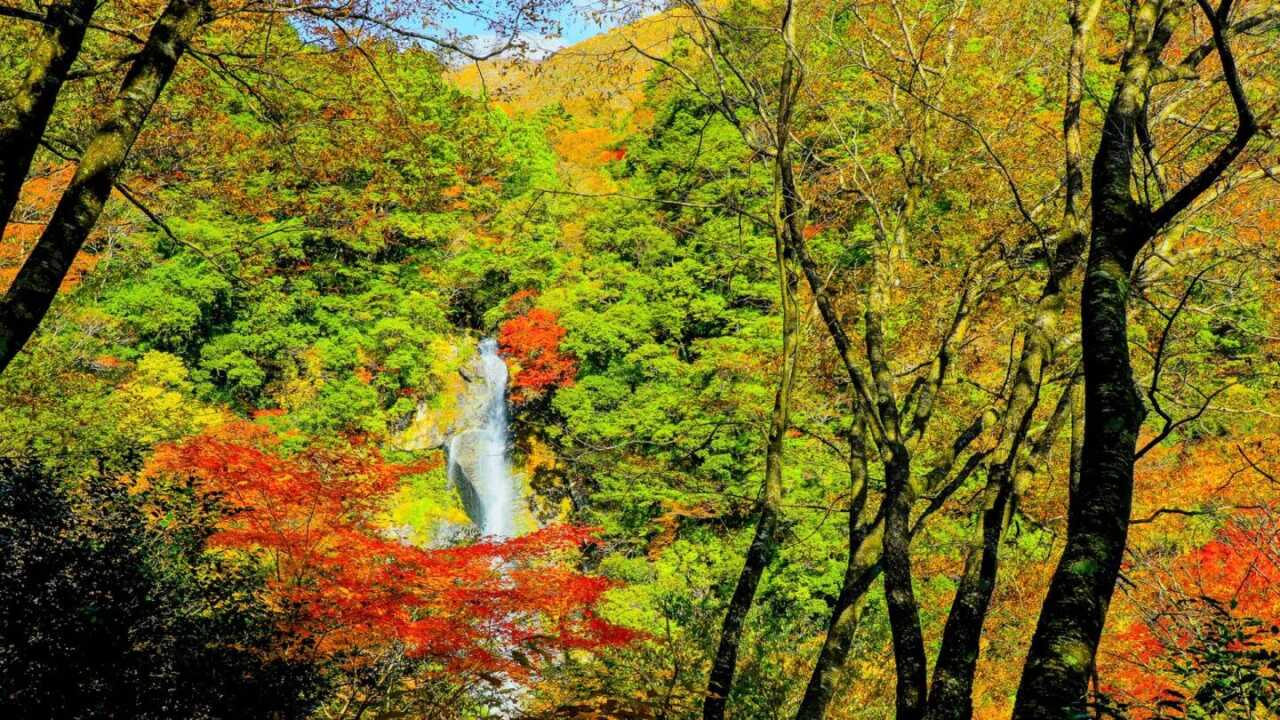
The Appeal of Kyushu Autumn Leaves and the Peak Color Timeline
Kyushu is vast, and its seven prefectures each have a different character. From high mountain gorges to shrines and historic sites, autumn in Kyushu offers magnificent natural scenery together with deep history and culture, an often underrated treasure when planning a Japan foliage trip.
In 2026, Kyushu’s leaves are expected to start turning red in early November and reach their best viewing period from mid to late November. Because elevation and location differ greatly between prefectures, the color spreads from the high mountains down to the lowlands: highland areas (such as Unzen in Nagasaki and Kuju in Oita) turn red first, as early as late October, while lowlands and cities can stay beautiful until early December.
Kyushu Autumn Leaves 2026 Peak Forecast
When planning, we suggest dividing the trip into “mountains and gorges (late October to mid November)” and “historic sites and gardens (mid November to early December).”
The first 2026 autumn leaves forecast announced by the Japan Meteorological Corporation on September 2 says that peak color is expected around December 7 in Fukuoka and around December 10 in Kagoshima, and around November 3 at Unzen Nita Pass in the mountains. The second forecast is expected in early October, so please check the latest conditions again before you go.
Overview of Autumn Leaves Spots in Kyushu’s Seven Prefectures
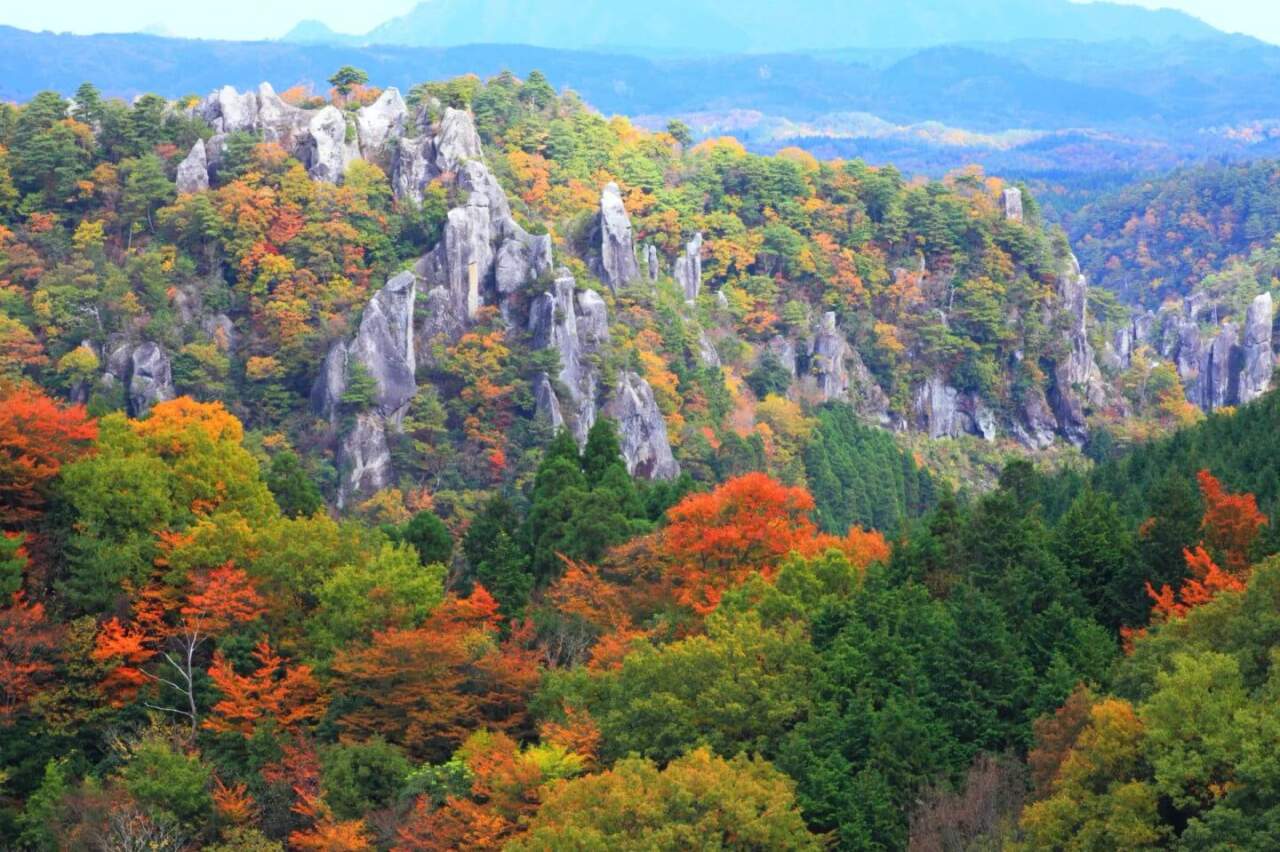
Mountain and gorge series (high elevation, earlier peak): Nagasaki’s Unzen Nita Pass has Kyushu’s earliest peak; Oita’s Kokonoe Yume Otsurihashi and Yabakei with its strange rocks and red maples; Kumamoto’s Kikuchi Gorge with clear streams; and Miyazaki’s Takachiho Gorge, a mythic gorge.
At Matoishi Ochaya-ato in Aso City, peak color is forecast for around November 25, 2026.
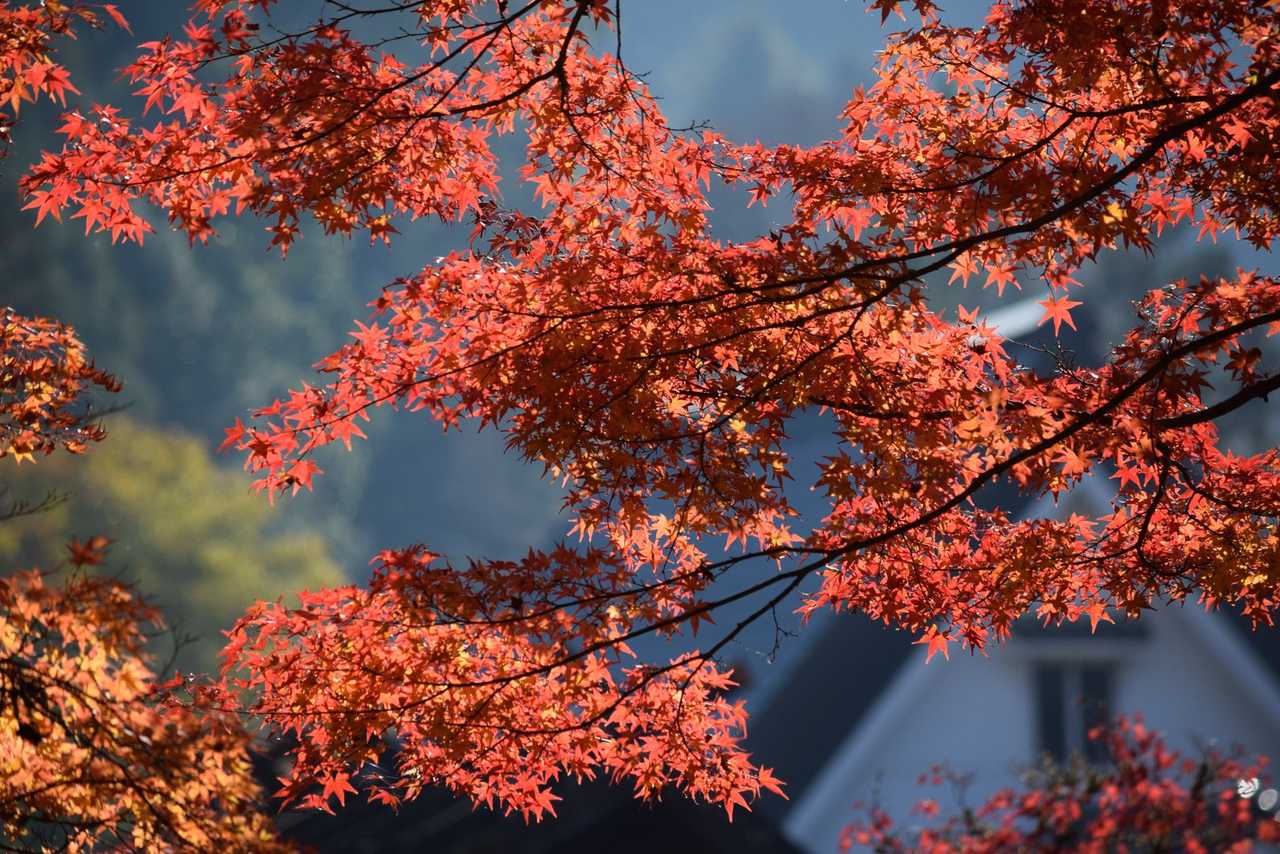
Shrines, historic sites and Japanese gardens series (lowlands, illuminated night maples): Saga’s Mifuneyama Rakuen has Japan’s well-known night maple illumination; Fukuoka’s Akizuki Castle ruins, Dazaifu Tenmangu and Kamado Shrine; Saga’s Kankyo Art no Mori; and Kagoshima’s Kirishima Jingu, whose peak comes later, suited as the finale of your trip.
Essential Tips for Independent Kyushu Autumn Leaves Trips
Public transport vs. driving: Fukuoka city, Dazaifu, Yufuin and similar places are easy to reach by rail. But if you want to link nature hideaways such as Yabakei, Kokonoe Yume Otsurihashi and Kikuchi Gorge, buses are very infrequent, so we strongly recommend renting a car to save time.
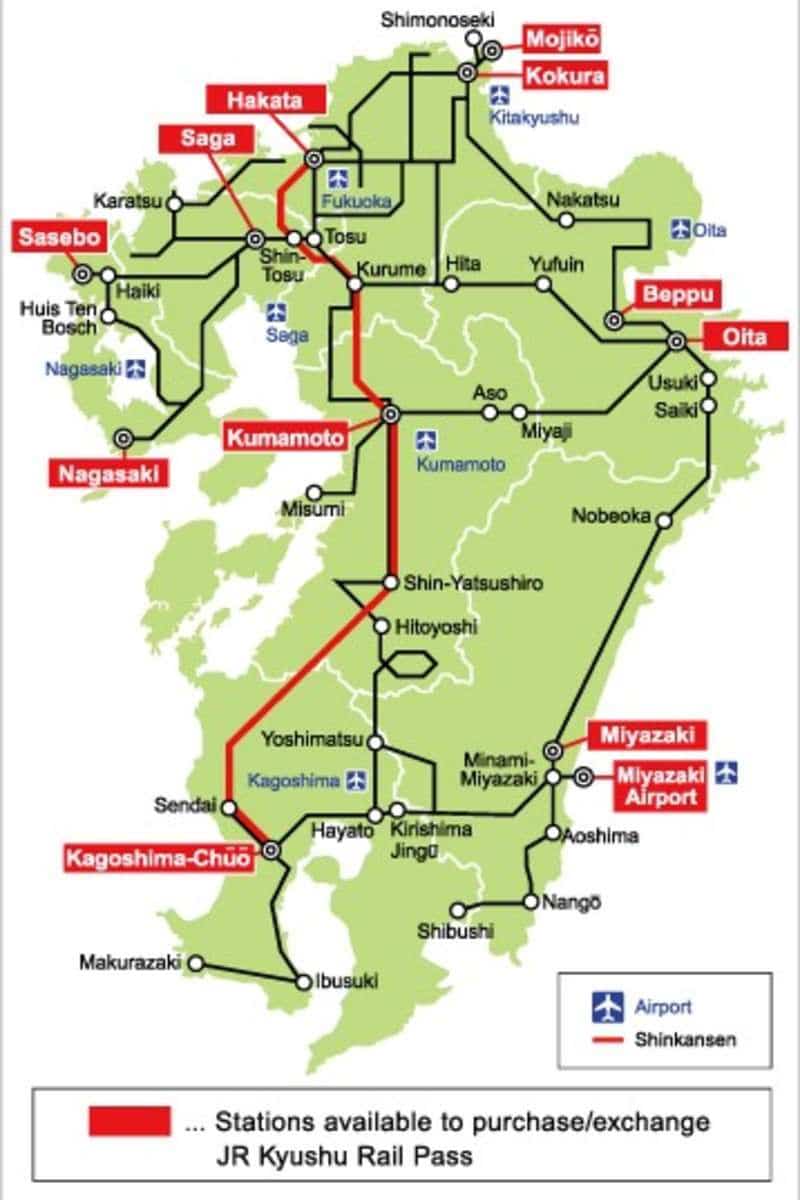
Make good use of rail passes: travelers planning to use public transport can buy the “Northern Kyushu” or “All Kyushu” pass on the JR Kyushu website according to the area they will visit. The Northern Kyushu 3-day pass starts at about ¥15,000 and is very good value for riding limited express trains.
What to wear: in November the day-night temperature gap in Kyushu is large, and in the mountains temperatures can drop below 10 degrees. We suggest dressing in layers and bringing non-slip sneakers.
Kyushu Autumn Leaves Transportation Guide
JR Kyushu Rail Pass
Travelers planning to rely mainly on public transport can choose the “Northern Kyushu” or “All Kyushu” pass according to the area they will visit. The Northern Kyushu 3-day pass covers JR lines in Fukuoka, Saga, Nagasaki, Oita and northern Kumamoto, starting at about ¥15,000 for adults (check the official website for the actual price at the time).
Whether to buy depends on your itinerary: if you only go around Fukuoka’s suburbs, you do not need one; if you will link Fukuoka, Nagasaki, Yufuin and other cross-prefecture stops, it is much better value. We suggest listing the cities you want to visit and adding up the one-way fares to compare before deciding.

Renting a Car: The Best Way to Link Mountain Hideaways
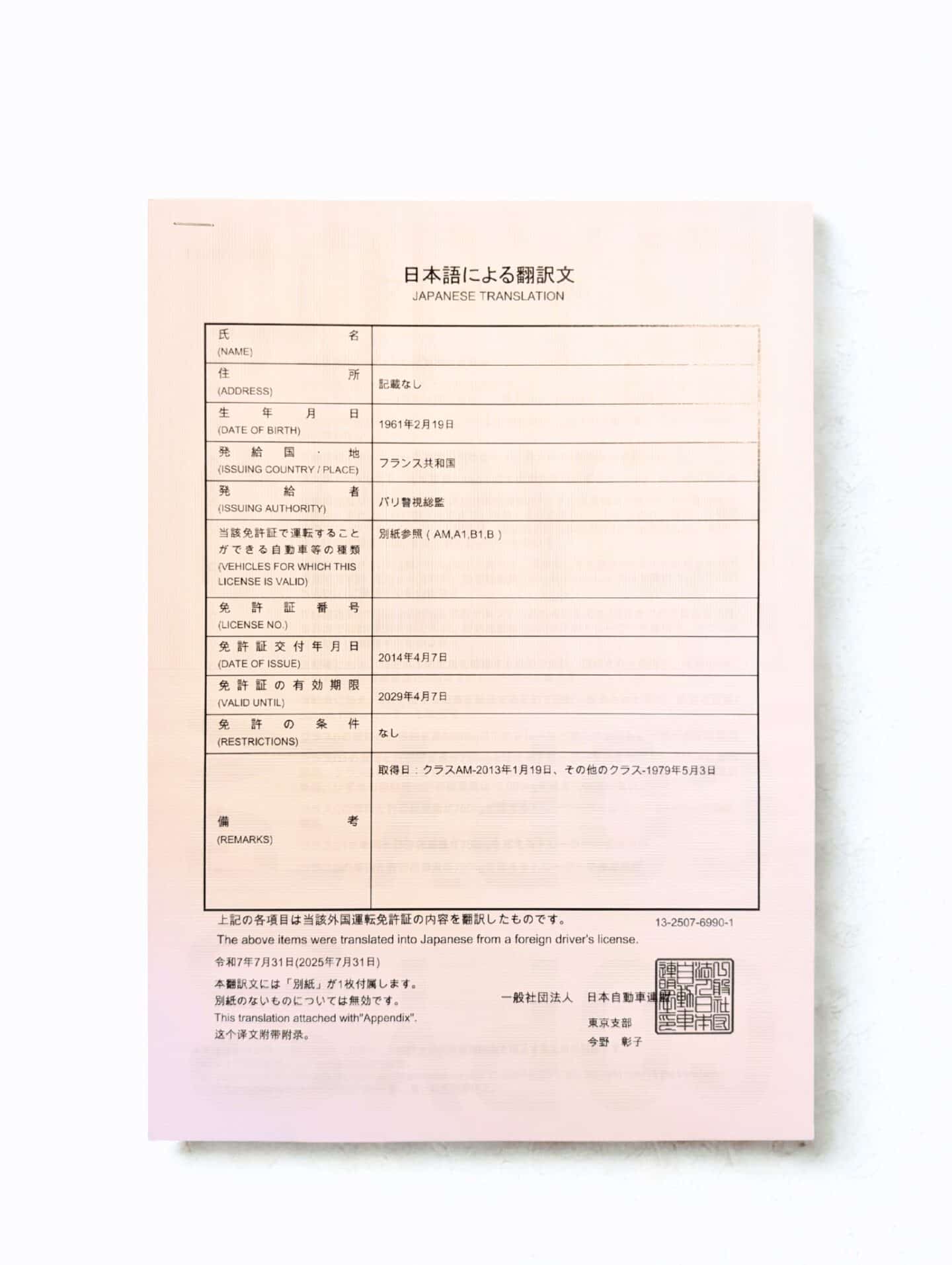
Nature hideaways such as Yabakei, Kokonoe Yume Otsurihashi and Kikuchi Gorge have very infrequent buses, so we strongly recommend renting a car. It saves precious travel time and lets you flexibly add stops and photo breaks on the way.
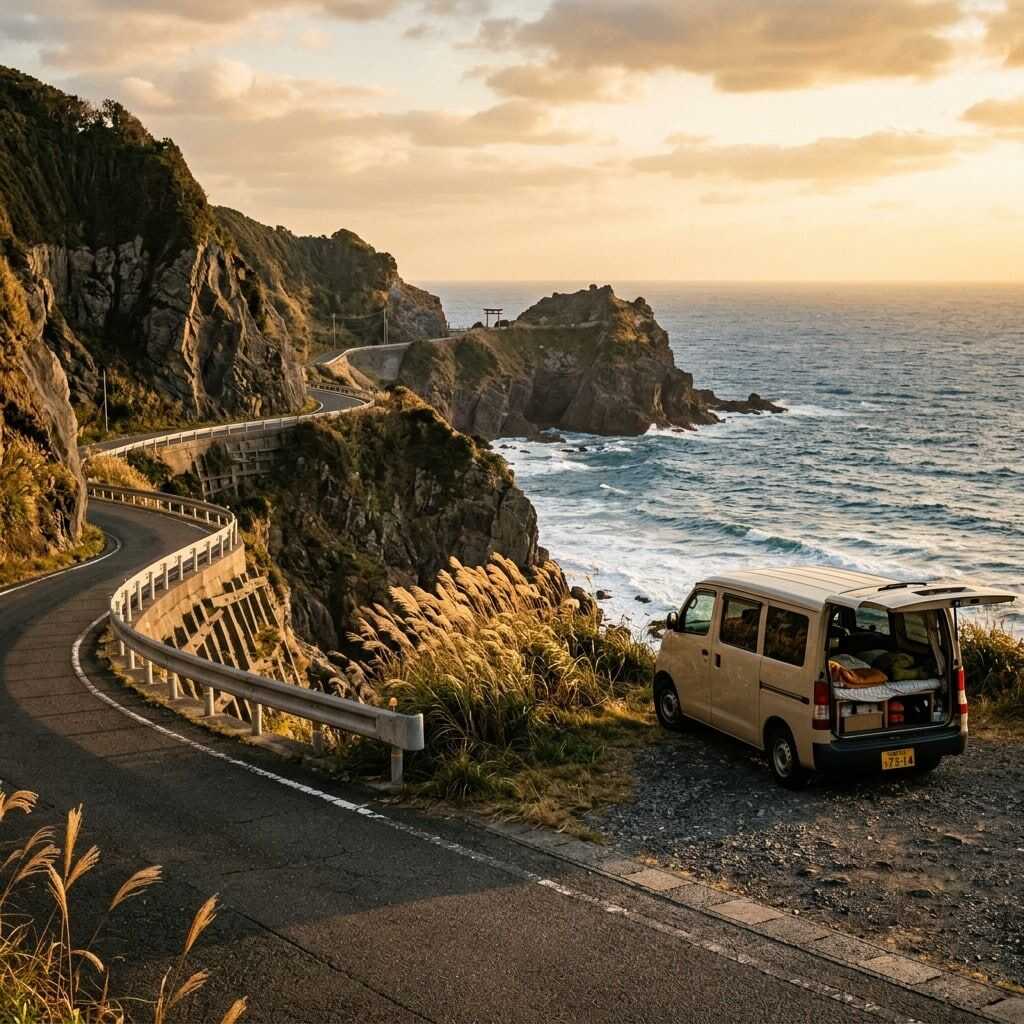
Before driving, learn Japan’s traffic rules and get used to driving on the left. Mountain roads have many curves and some stretches have unstable signal, so we suggest renting an unlimited-data eSIM first so you can check live road conditions and navigation at any time.

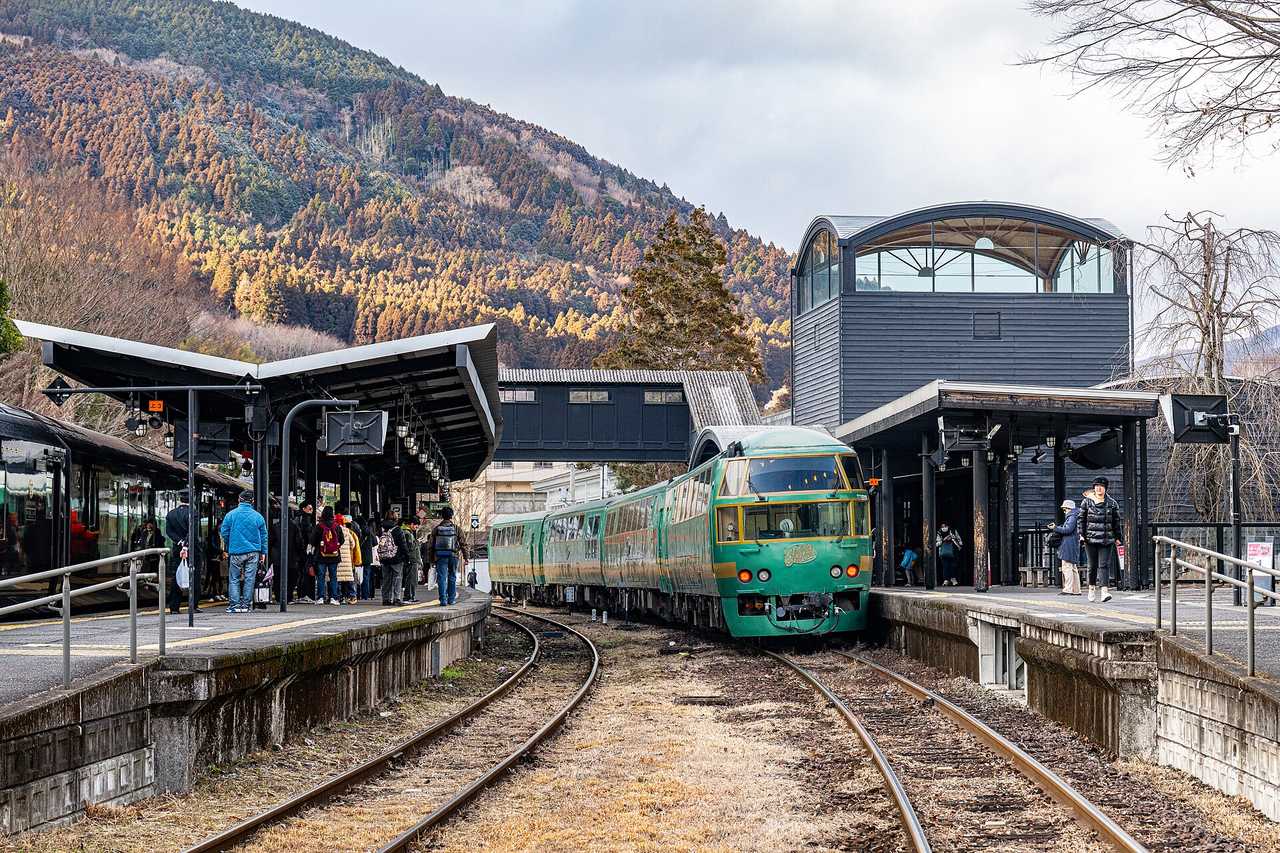
Yufuin no Mori Sightseeing Train: A Rail Foliage Experience
The Yufuin no Mori sightseeing train links Hakata and Yufuin, with autumn scenery in Kyushu’s mountains along the way, a popular choice for rail travel fans. There are also day tours that combine it with Umi Jigoku.
Travelers who do not want to drive but want to see several spots in one day can consider this kind of package tour, which saves the trouble of planning transfers and timetables yourself.
The carriage interior is elegant, and the view out the window is especially charming as the train passes through mountain tunnels and valleys. It is one of the popular routes many rail fans come specifically to ride.

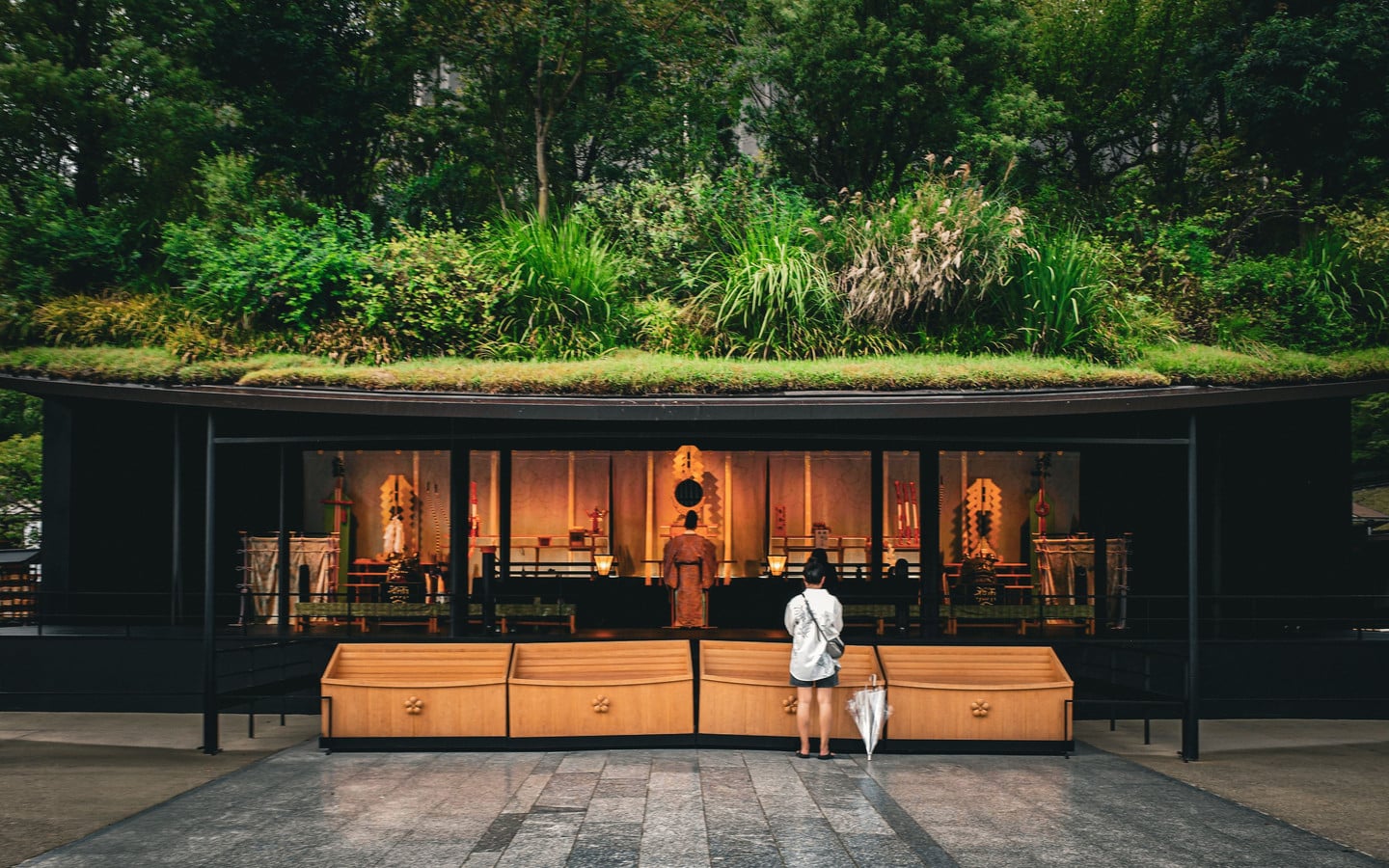
Mifuneyama Rakuen Free Shuttle Bus
During the night maple illumination at Saga’s Mifuneyama Rakuen, a free shuttle bus runs to and from the nearest station on weekends, while on weekdays service is very sparse or absent, so we suggest going on a weekend for a smoother trip and to avoid weekday transport trouble.
If the shuttle times do not suit you, you can also consider a chartered car or taxi to remove the uncertainty of waiting for a ride, especially convenient when traveling with elderly relatives or children.


Complete Guide to Kyushu Autumn Leaves Spots
Below are nine top Kyushu foliage spots across the seven prefectures of Nagasaki, Oita, Kumamoto, Miyazaki, Saga, Fukuoka and Kagoshima, which you can combine flexibly by area and timing when planning.
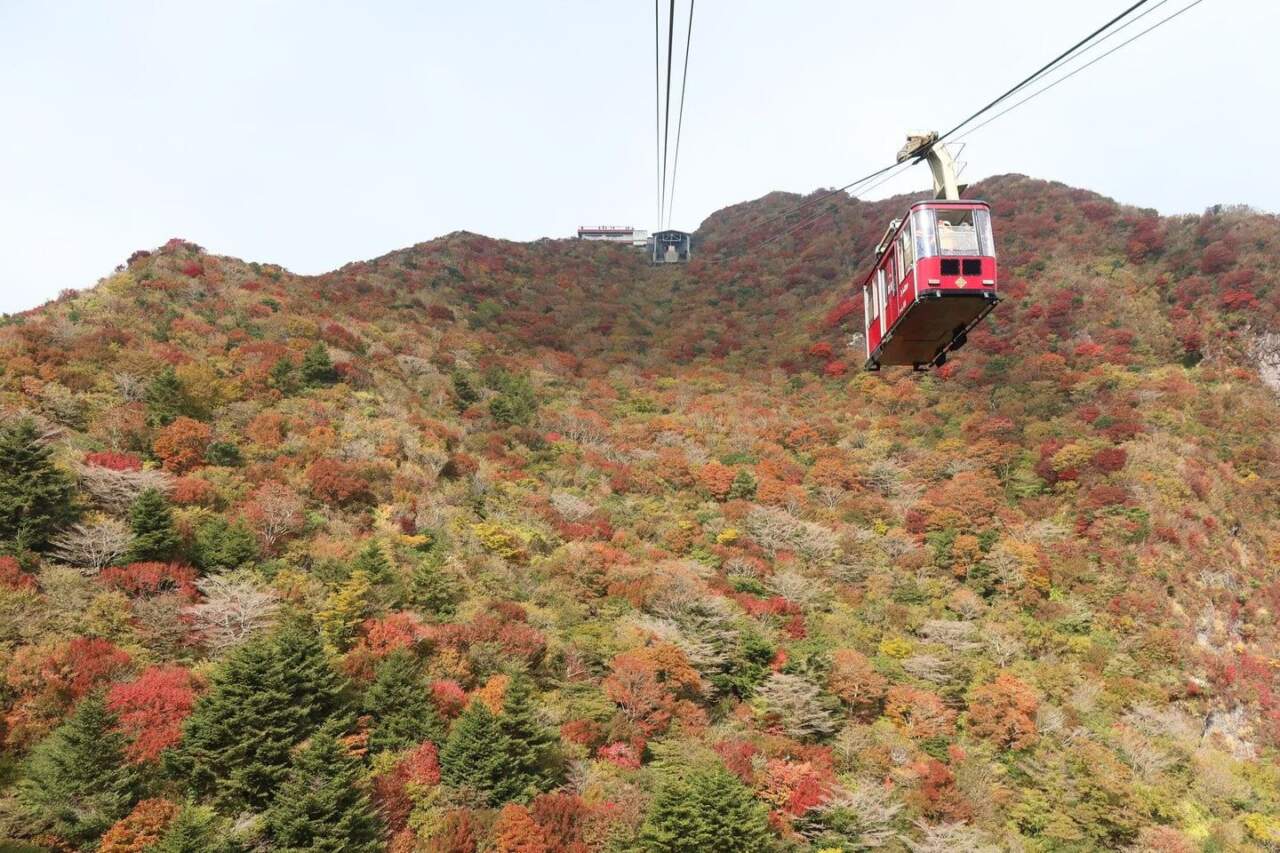
Unzen Nita Pass: Kyushu’s Earliest Volcanic Autumn Leaves
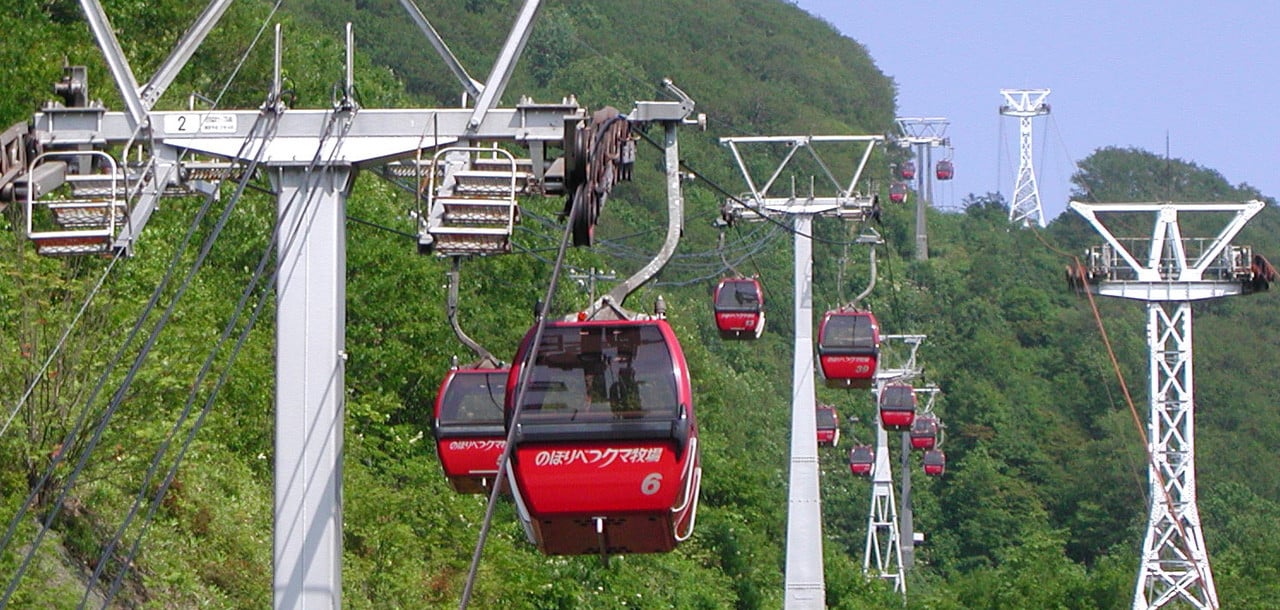
Unzen Nita Pass is the first place in Kyushu to see autumn leaves. We recommend riding the Unzen Ropeway to look down from the air at the volcanic mountains woven from more than 120 kinds of color-changing plants, and on clear days you can see Heisei Shinzan in the distance.
The main stage of Unzen’s autumn leaves is “Nita Pass” above Unzen Onsen in Nagasaki Prefecture. The maple forest around Mt. Fugen is a national natural monument of Japan, and the Unzen Ropeway (雲仙ロープウェイ) website lists the usual peak for Myokendake autumn leaves as early to mid November.
We suggest staying 1.5 to 2 hours, and Unzen Onsen nearby can be visited for a soak on the way.
Unzen Nita Pass Access and Ropeway Information
By car, take the 11.3 km “Nita Pass Loop Road,” toll-free since 2009, open 8:00 to 18:00 from April to October and 8:00 to 17:00 from November to March; from Unzen Onsen town it is about 15 minutes by car to Nita Pass. By public transport, take a Shimatetsu bus from Isahaya Station, Shimabara Station or Shimabara Port to “Unzen,” then a taxi for about 15 minutes. The ropeway takes about 3 minutes one way, and a round trip is ¥1,500 for adults (junior high and above) and ¥750 for children. It may be suspended in bad weather, and the official website posts operating status every morning.

Kokonoe Yume Otsurihashi: Looking Down on a Red Maple Gorge from Mid-Air
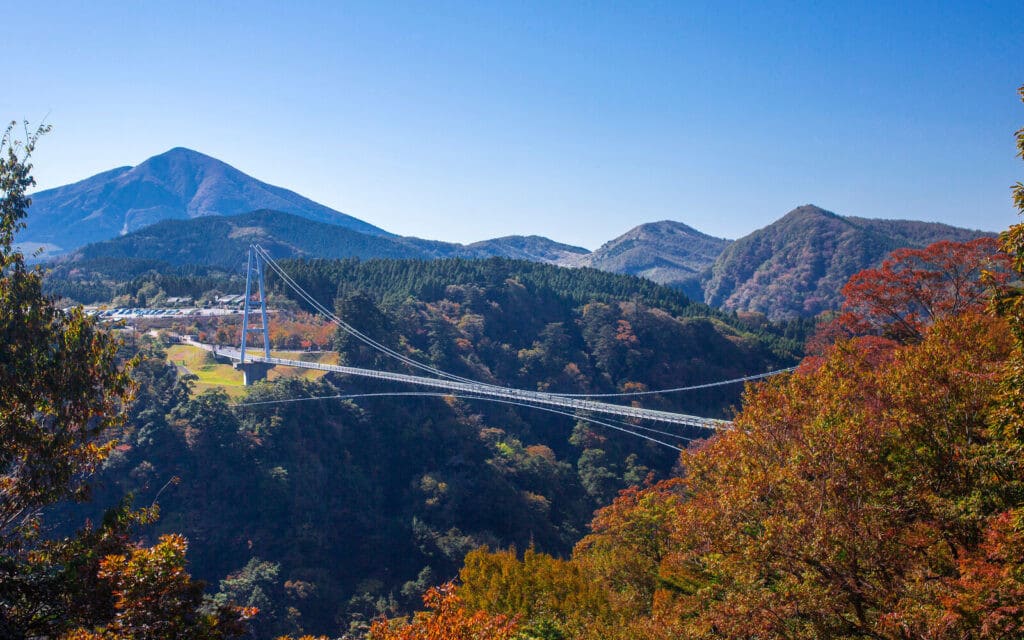
Walk on Japan’s highest pedestrian-only suspension bridge and look down 360 degrees with no blind spots over the red-leaf-filled Naruko River gorge and magnificent waterfalls. The thrill of viewing foliage in mid-air is intense, and the best viewing period is about late October to mid November.
We suggest staying 1 hour. In 2026 admission is ¥500 for adults and ¥200 for elementary school children. Selfie sticks are prohibited on the bridge. It is one of the most spectacular photo spots on a Kyushu foliage trip.
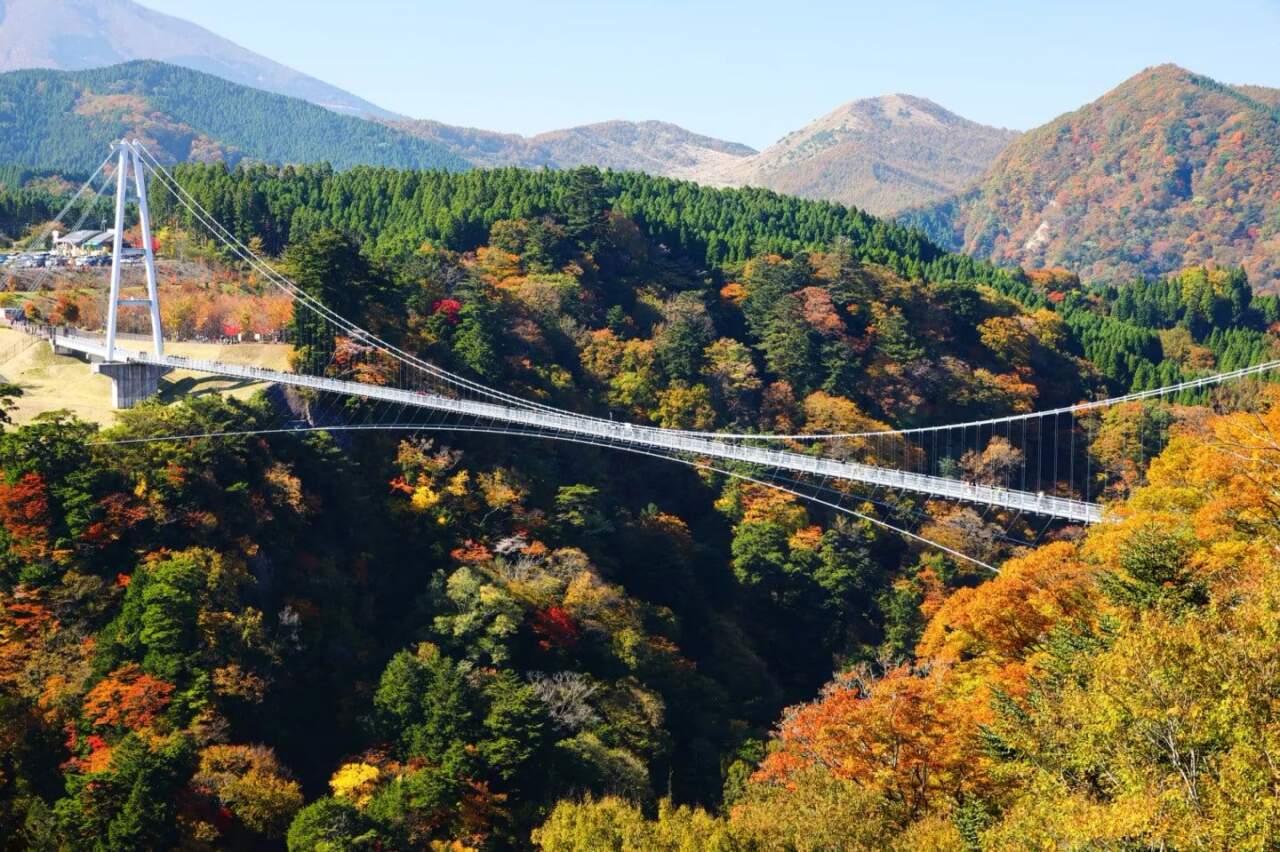
![[Kyushu Oita Day Tour] Kokonoe Yume Otsurihashi, Yufuin, Steamer Cuisine (Departing from Fukuoka)](https://travel.williamlion.tw/wp-content/uploads/sites/7/2026/08/image-271.jpg)
Yabakei: One of Japan’s Three Great Autumn Leaves Spots
Yabakei is known as one of “Japan’s three great autumn leaves spots.” The strange rock formations contrast sharply with the vivid red maples covering the mountains. The best viewing period is about late October to late November (Hon-Yabakei earlier, Fukayabakei later), and “Ichimoku Hakkei” is the classic viewpoint.
We suggest staying 1.5 hours. Admission is free. Transport in the mountains is inconvenient, so we recommend driving, so that you can stop freely at each viewpoint and enjoy them slowly.
Some stretches of Fukayabakei are even more untouched hideaways, suited to travelers with plenty of time who want to avoid crowds and explore deeper, with several free parking spaces along the way for rest and photos.
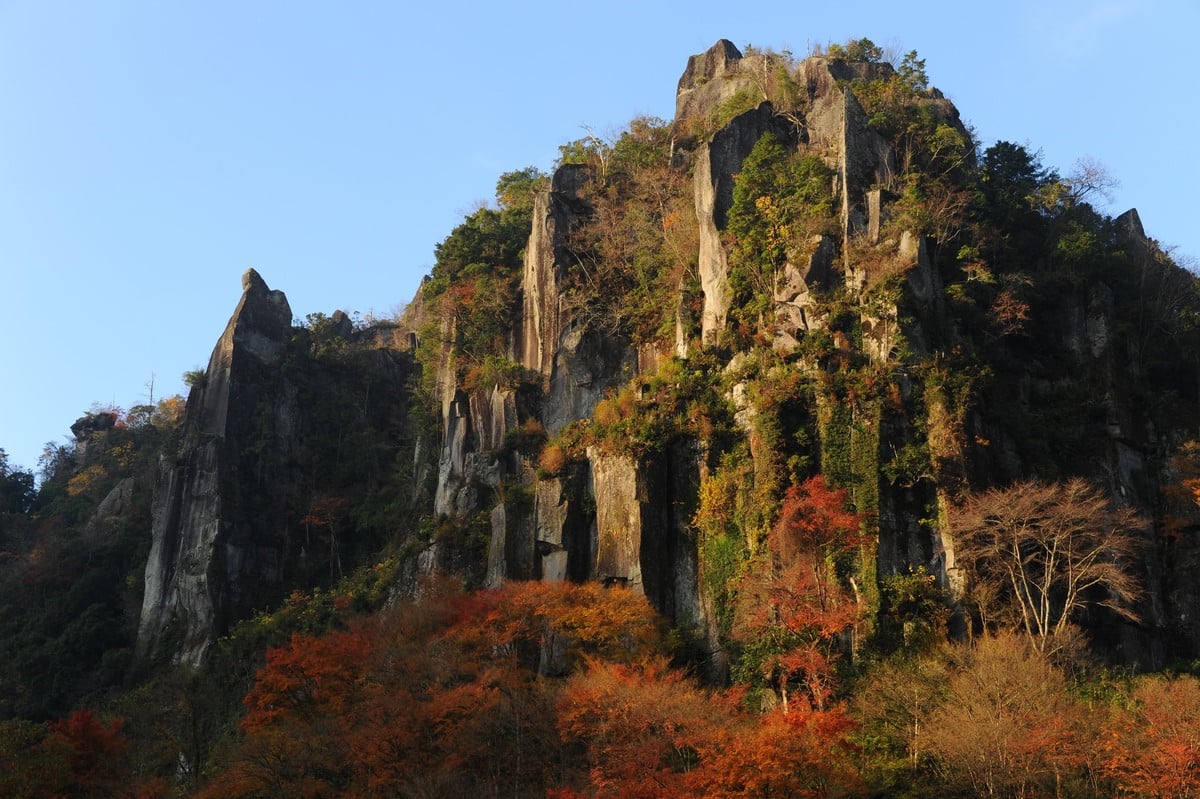
![Fukuoka - [Autumn Only] Kyushu Beppu Autumn Leaves One-Day Tour | Kamado Shrine + Yufuin + Umi Jigoku + Yabakei | Chinese and English Guide (Departing from Fukuoka)](https://res.klook.com/images/w_300,h_300,c_fill,q_75/w_80,x_15,y_15,g_south_west,l_Klook_water_br_trans_yhcmh3/activities/lusk3cxc0eci67y0mcny/【秋季限定】九州別府賞楓一日遊|灶門神社+由布院+海地獄+耶馬溪|中英文導遊(福岡出發)-Klook.jpg)
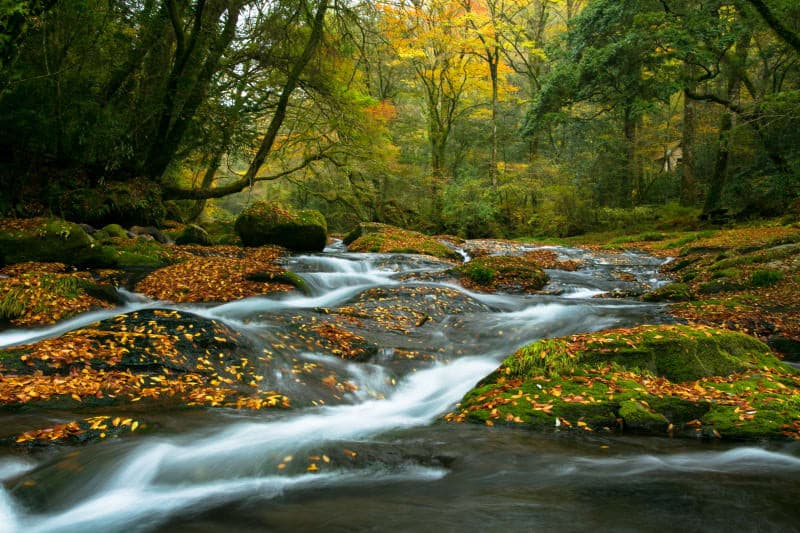
Kikuchi Gorge: A Famous-Water Hideaway with “Jesus Light”
Kikuchi Gorge is one of Japan’s 100 Famous Waters. Crystal-clear streams and waterfalls set against densely lined maples along the banks, with the best viewing period about early to late November. On autumn mornings you may be able to photograph the beautiful “Jesus light,” sunlight piercing thin mist onto the red-leaf stream.
We suggest staying 1.5 to 2 hours. An entrance fee is required (check the official announcement for the amount). Arriving early in the morning means fewer people and is also the best time to capture the Jesus light.
The riverside path is gentle and easy to walk, suitable for the whole family to hike and enjoy the foliage. The stream is clear and cold all year, and even without getting in the water you can feel the cool forest air.
Suizenji Jojuen: Stroll-Garden Foliage in Kumamoto City
Suizenji Jojuen is in Kumamoto City, a stroll garden centered on a large pond, and a good place to see foliage in Kumamoto city. It is open 8:30 to 17:00 (last entry 16:30), and admission is ¥500 for adults and ¥200 for children. For details see the Suizenji Jojuen official website. Take the Kumamoto City Tram to the “Suizenji Koen” stop and walk about 3 minutes. The timing of the color change differs each year, so check the latest peak forecast before you go.
Takachiho Gorge: A Columnar Basalt Gorge in the Land of Myths
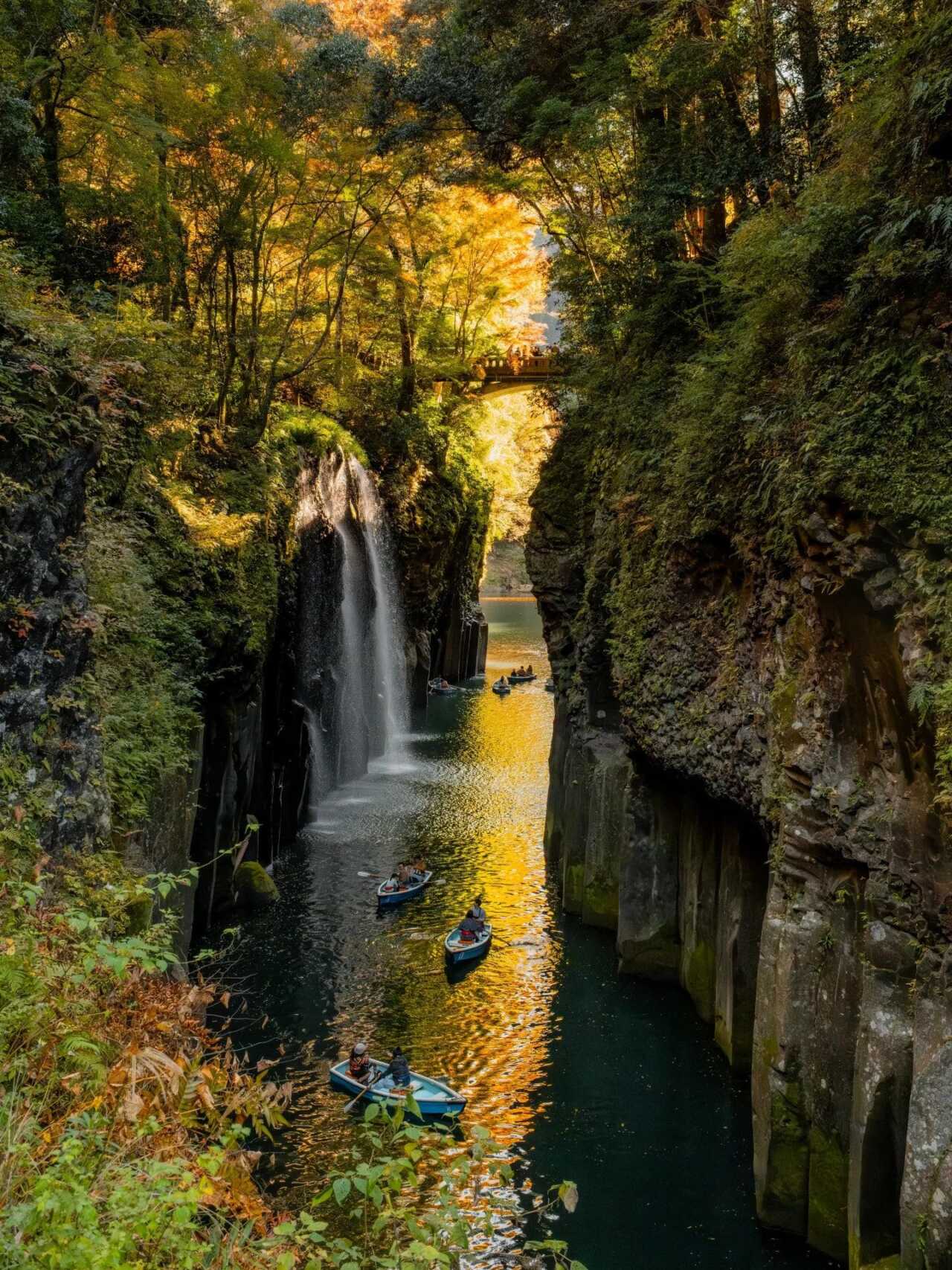
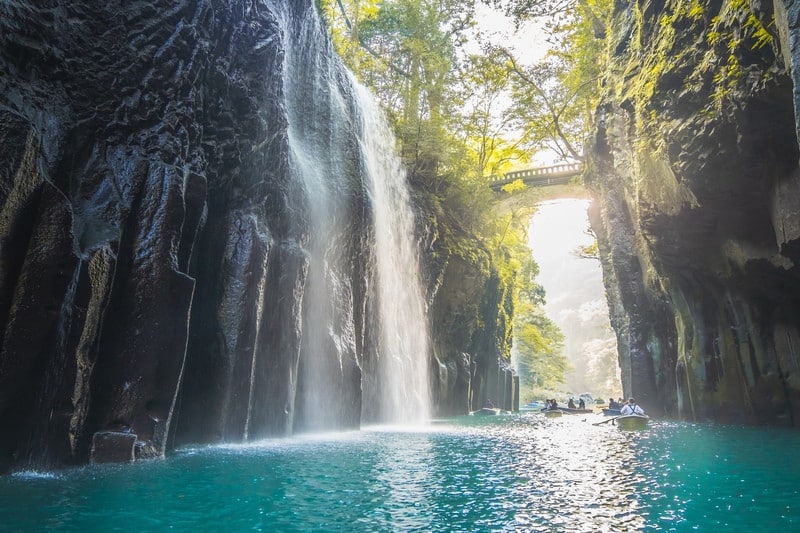
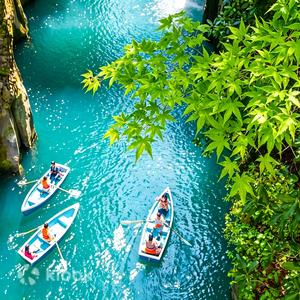
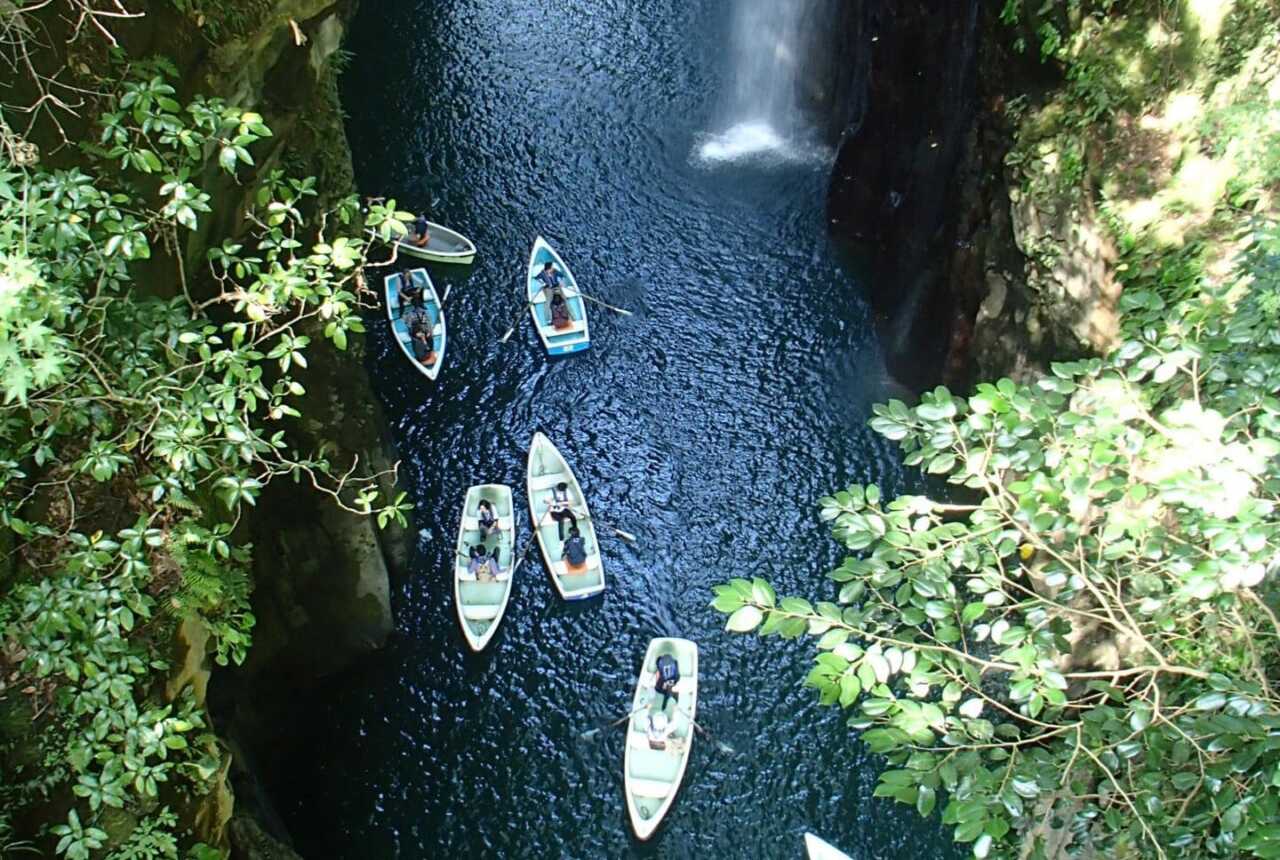
Takachiho Gorge is known as the land of myths. Between the steep columnar basalt cliffs the Manai Falls pours down, with orange-red maples dotting both sides. The best viewing period is about mid to late November, and we suggest arriving early to rent a boat and look up at the dreamlike autumn colors from the gorge stream.
We suggest staying 1.5 hours. Boating costs from about ¥4,100 per 30 minutes (up to 3 people per boat), and in peak season there is often a wait.
-Klook.jpg)
Mifuneyama Rakuen: Japan’s Well-Known Night Maple Illumination
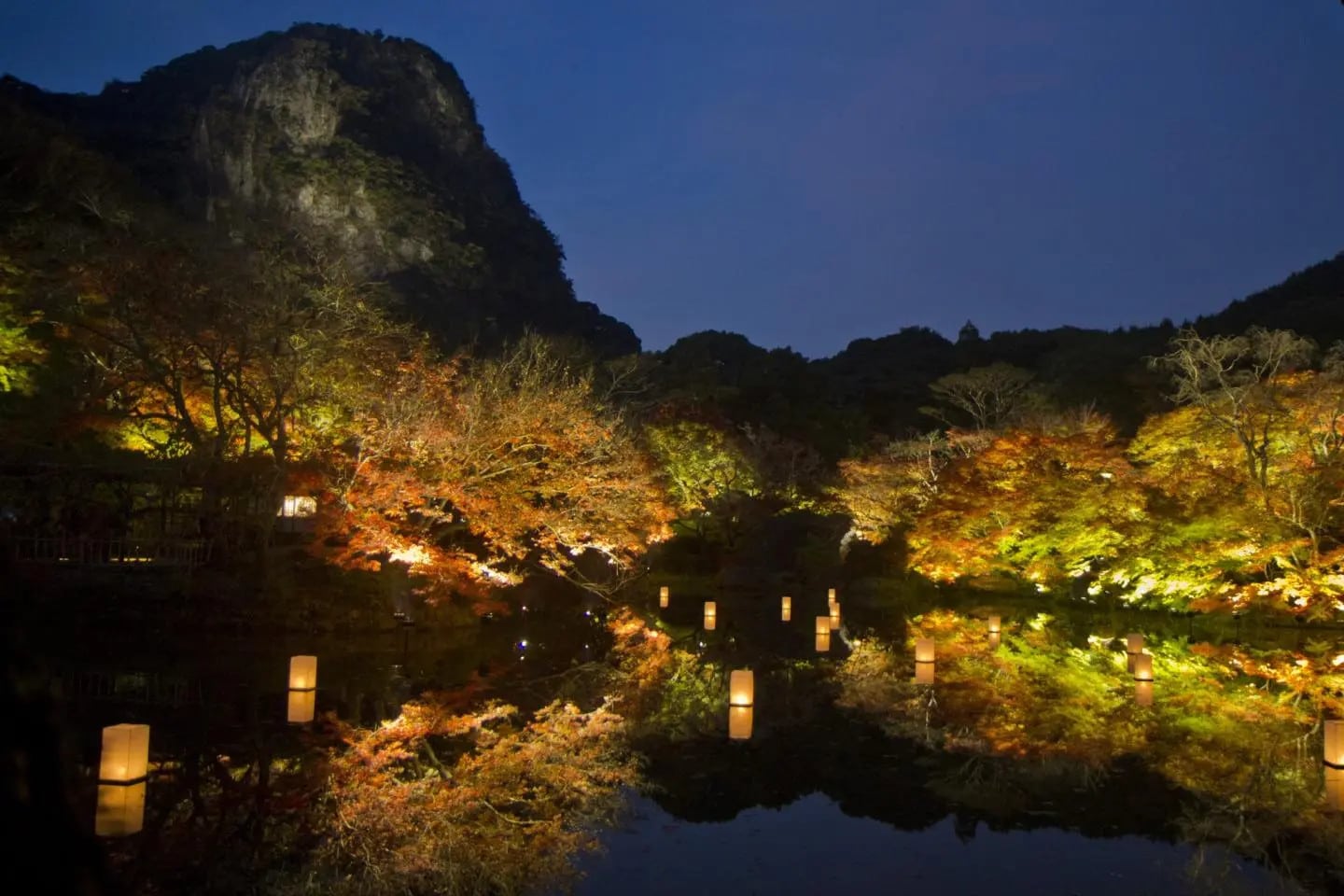
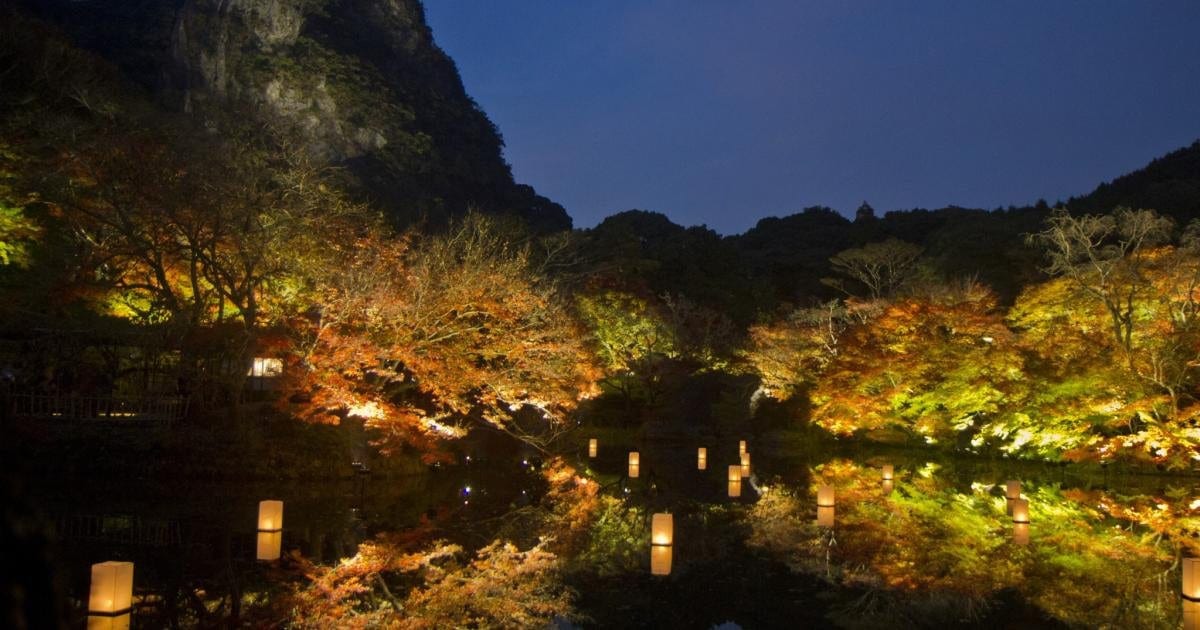
Mifuneyama Rakuen has a well-known night maple illumination in Japan, expected to be held from early November to early December 2026 (in 2025 it ran from November 6 to December 7; the official 2026 dates are as announced on the official website). The mirror-like lake of the pond-and-stroll garden perfectly reflects Mt. Mifune and the red leaves lit by the lights, dreamlike.
We suggest staying 1.5 hours. Night entry is about ¥600 for adults and ¥300 for children (the day-and-night pass is about ¥900, 2025 figures). There is a free shuttle bus on weekends and very few services on weekdays, so we suggest going on a weekend for a smoother trip.
Dazaifu Tenmangu: A National Important Cultural Property, Umegae Mochi, and Amulets and Goshuin
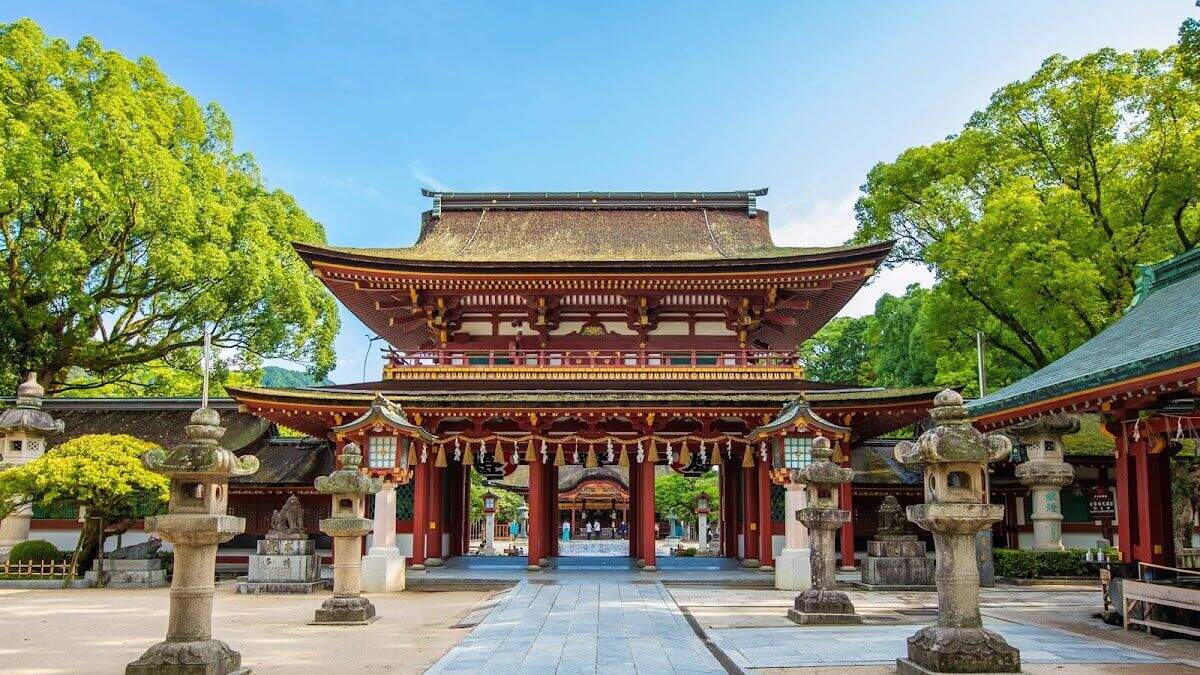
The main hall of Dazaifu Tenmangu was rebuilt in 1591 and is designated a National Important Cultural Property of Japan. It enshrines Sugawara no Michizane, the god of learning, and the best viewing period is about mid November to early December. It is a famous shrine where students and exam takers pray for exam success.
We suggest staying 1.5 to 2 hours. The address is 4-7-1 Saifu, Dazaifu City, Fukuoka Prefecture, about 5 minutes’ walk from Nishitetsu Dazaifu Station. Opening hours are about 6:30 to 18:30-19:30 depending on the season. The shrine office on the grounds offers amulets and goshuin, and on the main approach there is a Starbucks said to be the most beautiful in Japan, where you can also try the specialty umegae mochi.
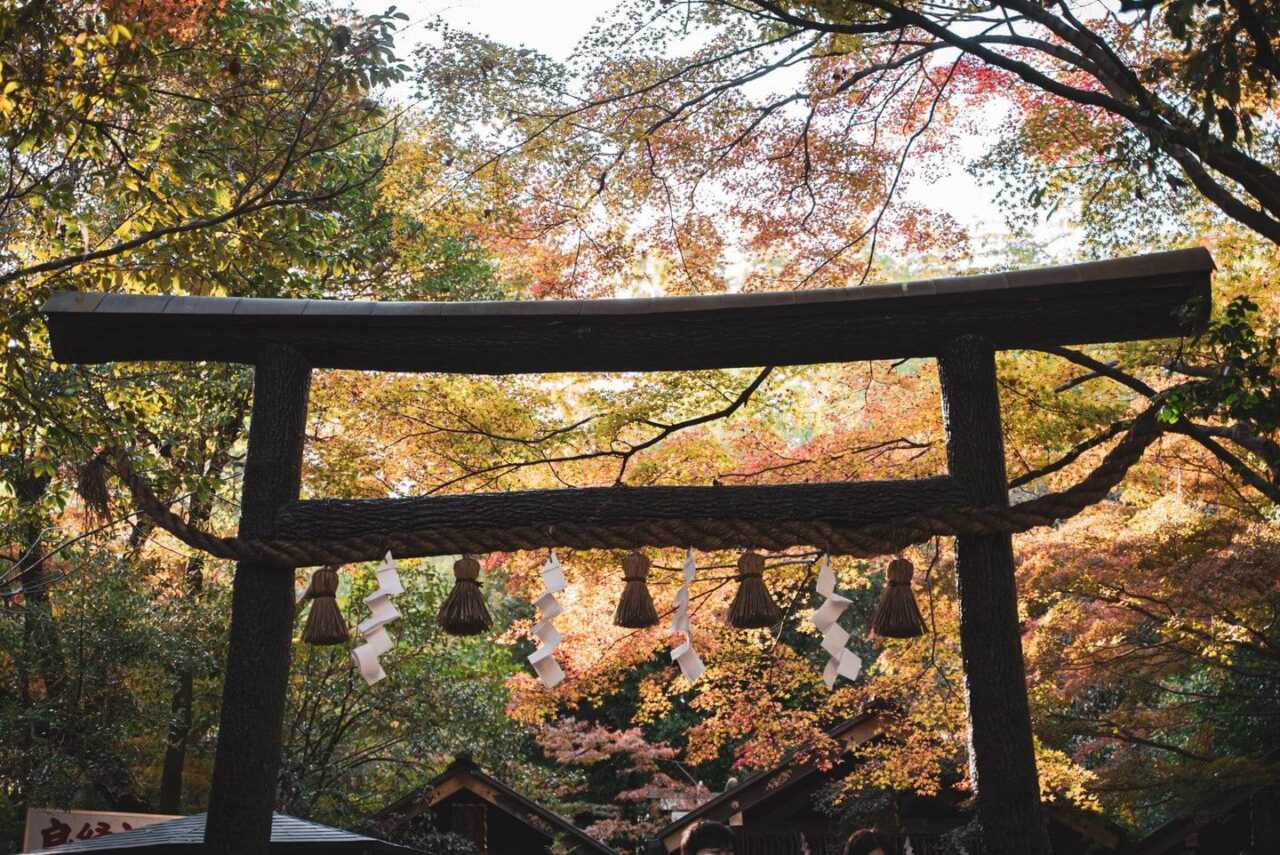
Kamado Shrine: A Shrine of Love Surrounded by a Tunnel of Red Leaves
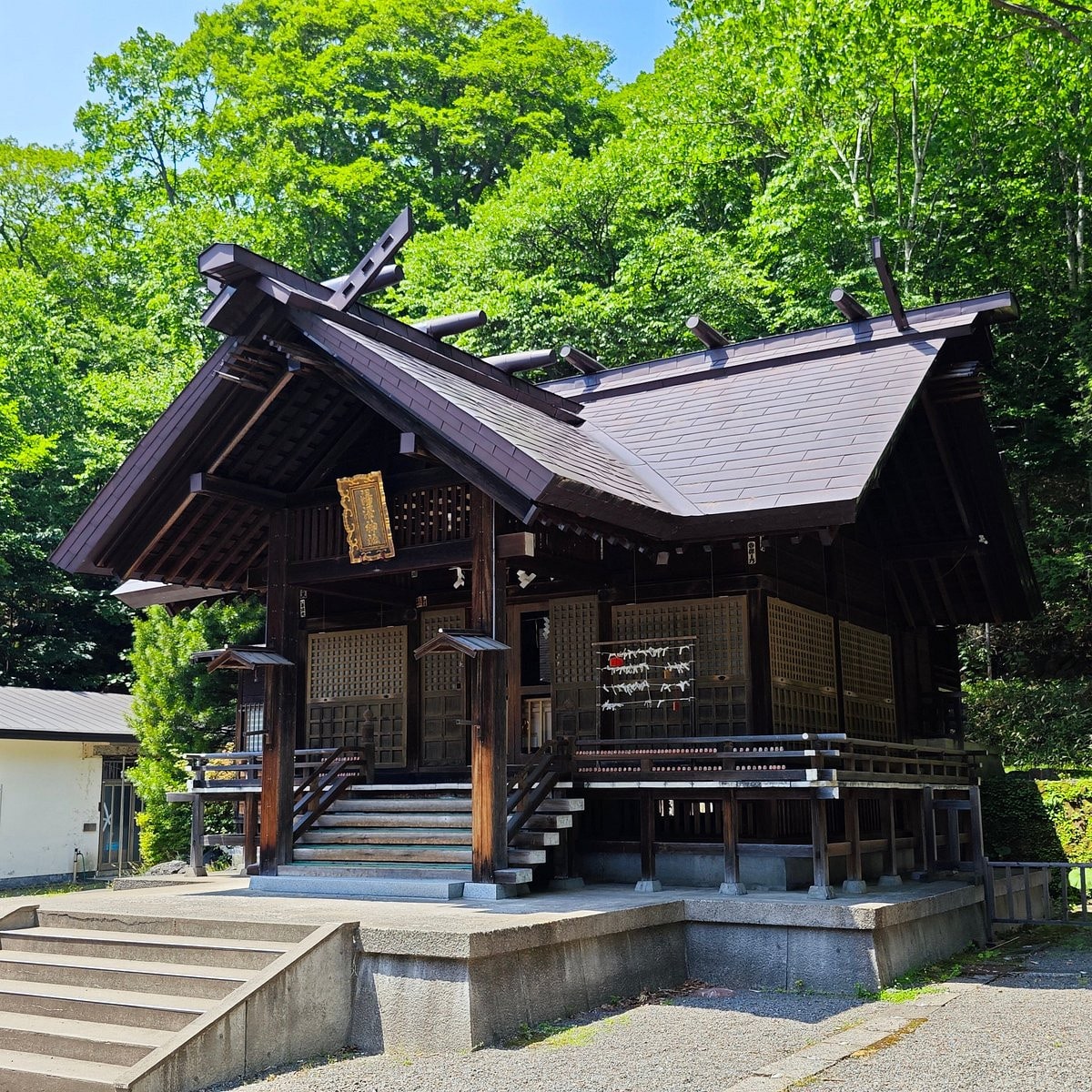
From Dazaifu Tenmangu you can take a bus to nearby Kamado Shrine, a sacred place for love and matchmaking. The best viewing period is similar to Dazaifu, about mid November to early December, and the most classic scene here is the dreamlike staircase surrounded by a tunnel of red leaves.
We suggest staying 1 hour. Admission is free, and the shrine also offers matchmaking amulets, a good side trip after Dazaifu Tenmangu.
Maples line both sides of the stone steps on the grounds, and from the top you can look over the view of Dazaifu city. It is a popular pilgrimage spot for couples and those praying for a good match.
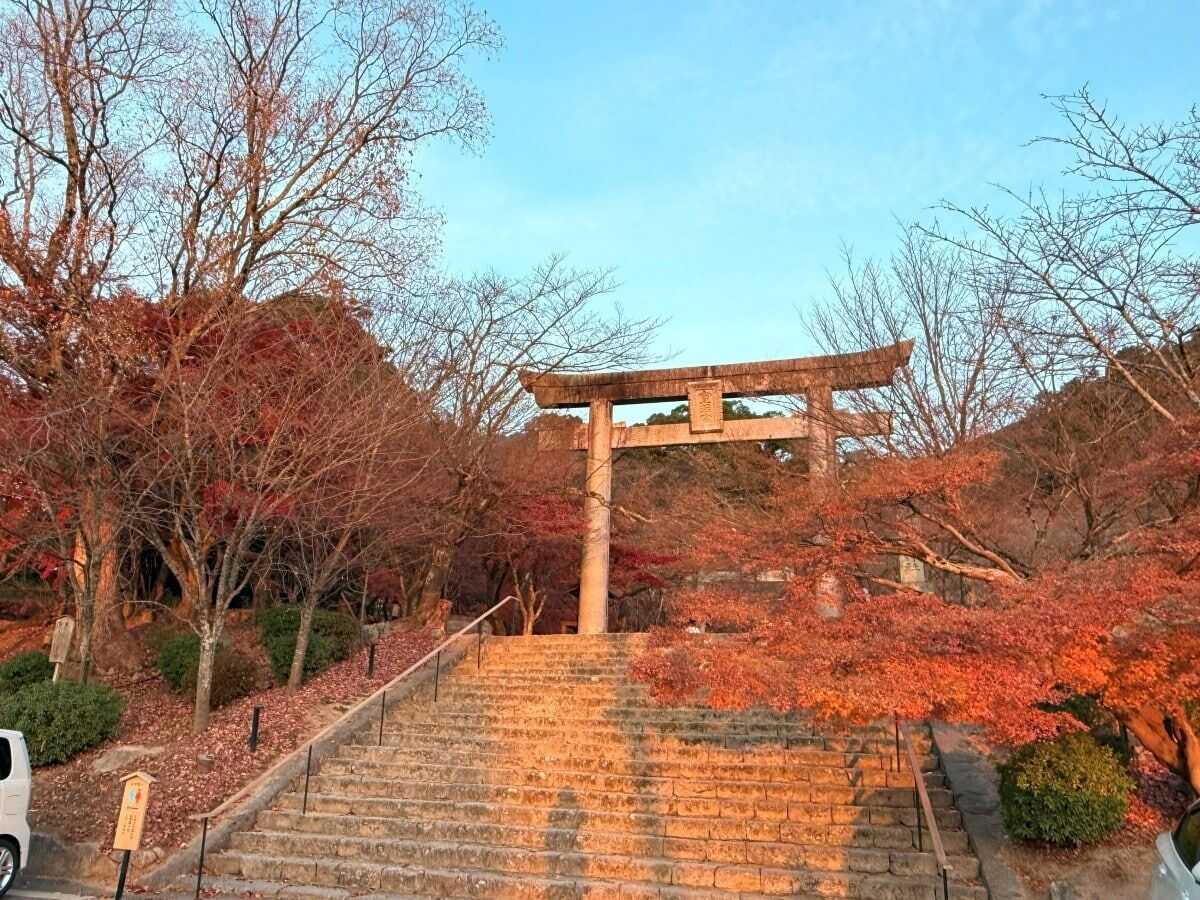
Kirishima Jingu: The Finale of a South Kyushu Foliage Trip
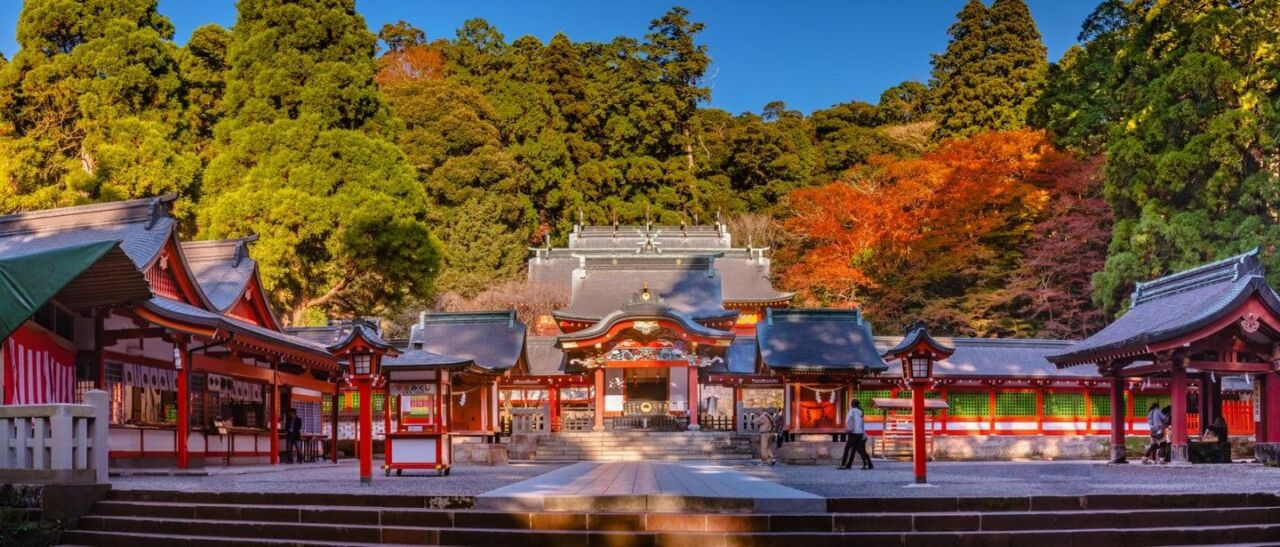
Kirishima Jingu is the representative foliage spot of South Kyushu. Its magnificent vermilion halls are layered between old trees turning red in autumn, grand and sacred. Peak color here comes later, about mid November to early December, suited as the finale of a Kyushu foliage trip.
We suggest staying 1 hour. Admission is free, and the shrine office on the grounds offers amulets and goshuin. It is an excellent stop for linking Sakurajima and Ibusuki Onsen when planning a South Kyushu trip.
Tickets and Tours
Below are the most practical tickets and experience tours for Kyushu foliage. Booking in advance saves you from queuing on site and last-minute waitlists.
JR Kyushu Rail Pass: One Ticket for Cross-Prefecture Travel
Choose the Northern Kyushu or All Kyushu version by the area you will visit. The Northern 3-day pass starts at about ¥15,000 and covers JR lines in Fukuoka, Saga, Nagasaki, Oita and northern Kumamoto, suited to travelers linking cross-prefecture sights such as Dazaifu, Yufuin and Unzen.
Whether to buy depends on your itinerary. If you only go around Fukuoka’s suburbs, you do not need one; if you plan a longer trip around the island, the All Kyushu version is usually better value. We suggest listing the cities you want and adding up the fares to compare.

Kokonoe Yume Otsurihashi Ticket
In 2026 admission is ¥500 for adults and ¥200 for elementary school children. You can look down from mid-air on the Naruko River gorge and waterfalls, one of the best-value spots on a Kyushu foliage trip. Selfie sticks are prohibited on the bridge.
We suggest staying 1 hour. You can buy tickets on site to enter. On peak-season weekends, go early to avoid the queues.
Takachiho Gorge Boat Experience
Boating costs from about ¥4,100 per 30 minutes (up to 3 people per boat), paid separately, and in peak season there is often a wait. For how to reserve, please confirm with the Takachiho Town Tourism Association. Once aboard you can look up at the dreamlike autumn colors of waterfalls and red leaves from the gorge stream.
If you cannot get a boat, the walking path on shore also offers a view of the whole gorge, so you can still feel the magnificent scenery without boating.
Mifuneyama Rakuen Night Maple Illumination Ticket
Expected to be held from early November to early December (the official 2026 dates are as announced on the official website). Night entry is about ¥600 for adults (2025 figure). We suggest checking the official website for the latest prices and hours. Weekends are busier, so enter early.
Day and night each have a different character. If time allows, consider experiencing both, to feel the completely different beauty of the garden in sunlight and under the lights.
Where to Stay Along the Way
A Kyushu trip spans multiple prefectures, so we suggest arranging lodging by foliage route, and it is also a great chance to add a relaxing hot spring soak.

Yufuin, Takeo and Central Fukuoka: Three Lodging Bases Along the Way
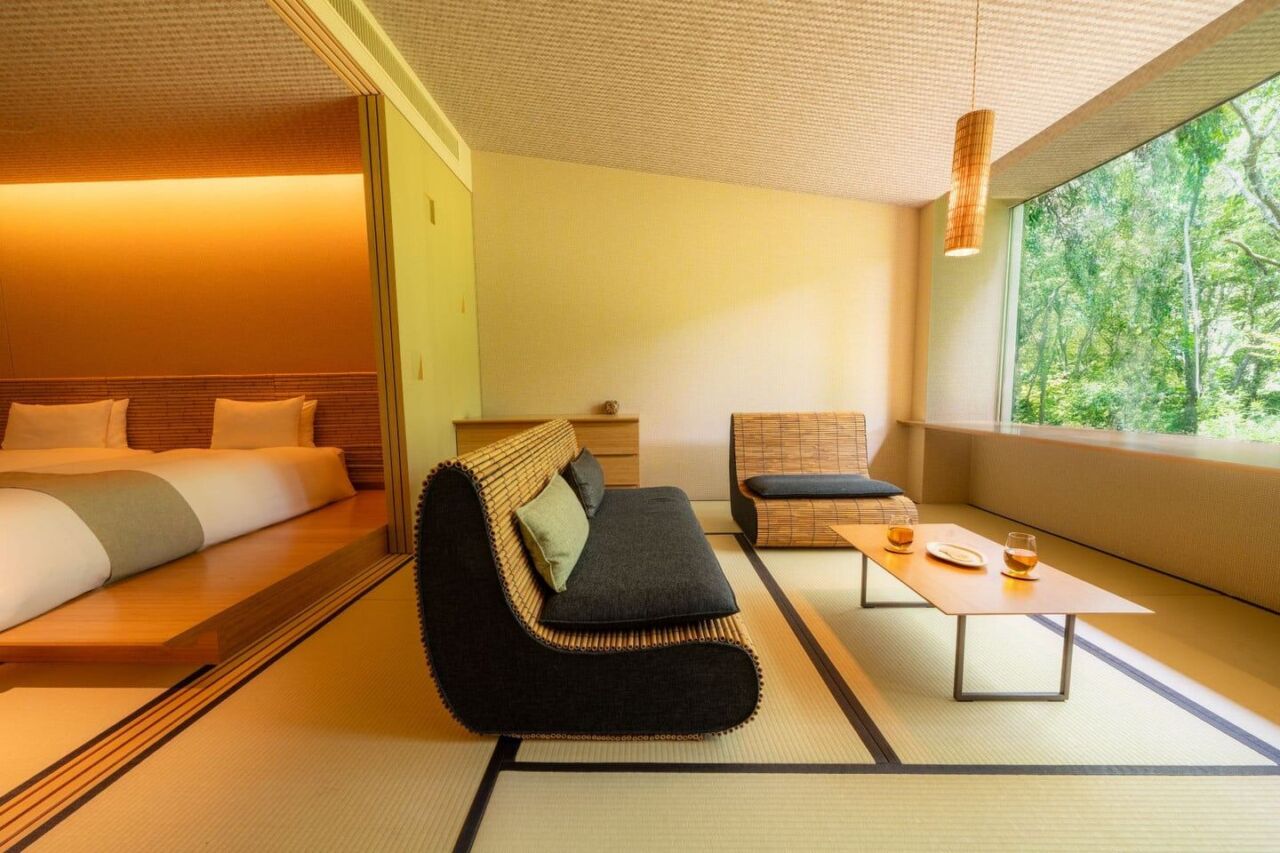
Yufuin is Kyushu’s foremost hot spring town, with hot spring inns lining the area around Lake Kinrin. It suits a stay after Oita sights such as Kokonoe Yume Otsurihashi and Yabakei: foliage by day and a soak at night, a key lodging choice for many travelers planning a Kyushu foliage trip. Takeo Onsen is near Mifuneyama Rakuen, so when planning the night illumination you can consider staying nearby to save evening travel to and from the city.
If your trip focuses on northern Kyushu sights such as Fukuoka, Dazaifu and Kamado Shrine, staying in central Fukuoka is the most convenient, with rail in every direction and easy local food outings for Hakata ramen and yatai. If you plan South Kyushu stops such as Kirishima Jingu, Sakurajima and Ibusuki, we suggest staying nearby in central Kagoshima or Ibusuki Onsen.
For detailed hotel comparisons, price ranges and booking tips, see our other dedicated Kyushu lodging guide, which covers the pros and cons of each area.
Kyushu Autumn Leaves FAQ
When is the best time to see autumn leaves in Kyushu?
Overall, leaves begin turning in early November, with the best viewing from mid to late November. Highland areas (Unzen, Kuju) turn red first in late October, while lowlands and cities stay beautiful until early December. In the early 2026 forecast, peak color is around November 3 at Unzen Nita Pass and around December 7 at Fukuoka city’s reference tree, with the official conditions following the forecasts updated after October.
Should I take public transport or drive for Kyushu autumn leaves?
Fukuoka city, Dazaifu, Yufuin and similar places are easy to reach by rail. But nature hideaways such as Yabakei, Kokonoe Yume Otsurihashi and Kikuchi Gorge have very infrequent buses, so we strongly recommend renting a car to save time.
What are the must-see night maple spots in Kyushu?
Saga’s Mifuneyama Rakuen has a well-known night maple illumination, expected from early November to early December 2026 (the official 2026 dates are as announced on the official website). The scene of the mirror-like pond reflecting lights and red leaves in the pond-and-stroll garden is unforgettable.
How do I plan a day trip to Dazaifu Tenmangu?
First stroll between the vermilion torii and red maples at Dazaifu Tenmangu and try umegae mochi, then take a bus to nearby Kamado Shrine to see the dreamlike staircase surrounded by a tunnel of red leaves. It suits a day round trip by train.
What transport tickets should I prepare for Kyushu autumn leaves?
Travelers planning to use public transport can buy the Northern Kyushu or All Kyushu JR pass according to the area they will visit. To link hideaways such as Yabakei and Kikuchi Gorge, we suggest also renting a car.
What should I note about clothing for Kyushu autumn leaves?
In November the day-night temperature gap in Kyushu is large, and especially in the mountains (such as Unzen and Kuju) temperatures drop below 10 degrees. We suggest dressing in layers and bringing non-slip sneakers.