
Zenkoji Temple Autumn Leaves Guide 2026: Nagano’s National Treasure Pilgrimage Site
Zenkoji in Nagano is a National Treasure pilgrimage temple with 1,400 years of history. With its autumn-leaf approach and evening illumination, it is the best starting point for foliage viewing and cultural experiences in Nagano city.
Zenkoji: The Temple Every Pilgrim Visits Once in a Lifetime
Zenkoji is said to have been founded in 644 and has about 1,400 years of history. It is the temple behind the Japanese saying “Isshō ni ichido wa Zenkōji mairi” (“visit Zenkoji once in your life”). Visitors of any sect, gender or age are welcome to worship here, making it an ideal first stop on a self-guided Nagano city itinerary. The address is 491 Nagano Motoyoshimachi, Nagano City, Nagano Prefecture.

Omotesando (Chuo-dori): The Autumn-Leaf Walk from Nagano Station to Zenkoji
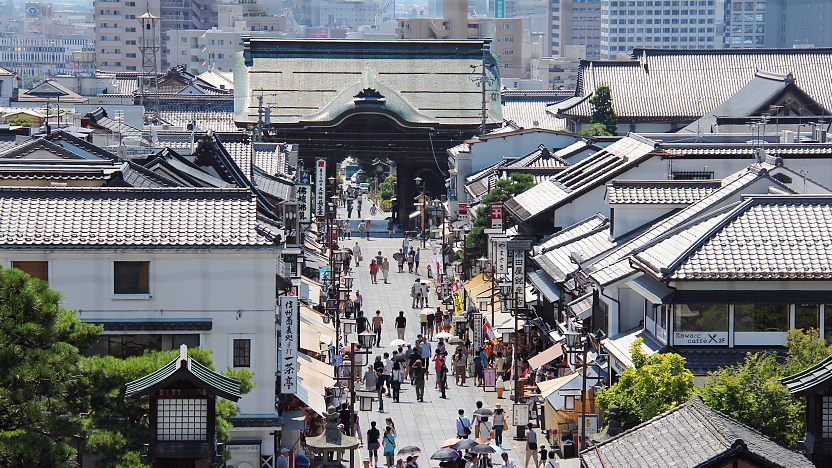
Omotesando (Chuo-dori) is the main road linking JR Nagano Station and Zenkoji, about 1.8 km long and lined with old buildings. In autumn the roadside trees turn red, making it the most representative foliage stroll in Nagano city. If you have the energy, walk the whole route in about 25-30 minutes and browse the long-established souvenir shops along the way.
Best Time for Autumn Leaves: Late October to Mid-November
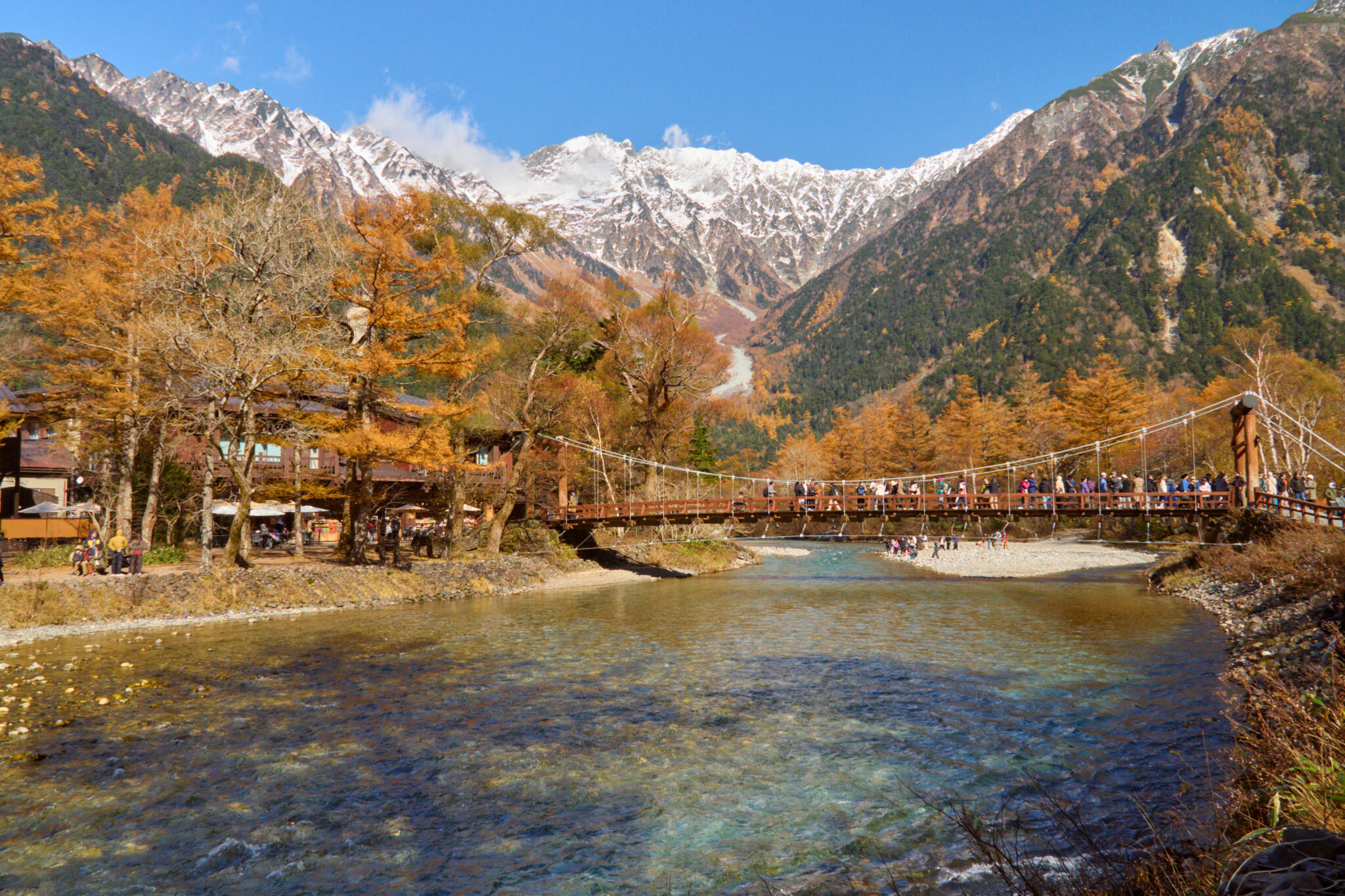
Foliage in Nagano Prefecture changes in stages by altitude. Mountain areas turn red first in late September, while Nagano city and the area around Zenkoji peak from late October to mid-November. During this period weekend crowds and parking spaces are tight, so we recommend going on a weekday or early in the morning.
How to Get to Zenkoji in Nagano: Complete Guide to Transport and Costs
There are many ways to reach Zenkoji in Nagano. Here is everything organized by starting point.
How to Get to Zenkoji: Transport and Costs at a Glance
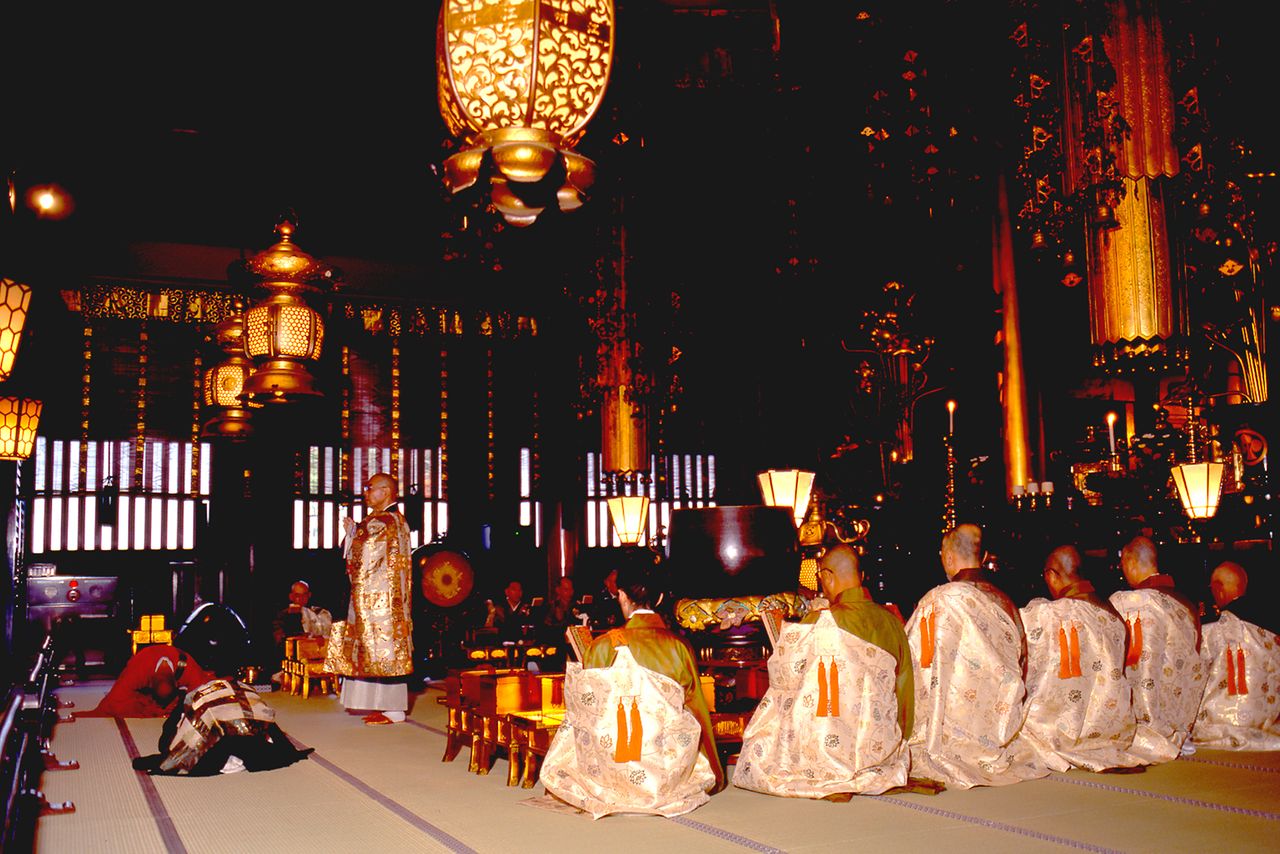
From Tokyo, the Hokuriku Shinkansen takes about 1.5 hours to Nagano Station, or you can take an expressway bus from Shinjuku. From the Zenkoji-guchi Bus Stop No. 1 at Nagano Station, a route bus reaches “Zenkoji Daimon” in about 10 minutes. From Stop No. 4, the “Gururin” loop bus runs every 30 minutes (departures 10:00 to 17:30) for ¥190 per adult. You can also take the Nagano Electric Railway to “Zenkojishita” Station and walk about 10 minutes, or walk the whole Omotesando in about 25-30 minutes. Nearby car parks fill up easily on peak-foliage weekends, so we recommend taking the bus.


Zenkoji Autumn Leaves Guide 2026: Must-See Spots and Experiences Explained
Within and around Zenkoji there are more than ten spots worth visiting. Below they are introduced in the order of the worship route and their foliage highlights.
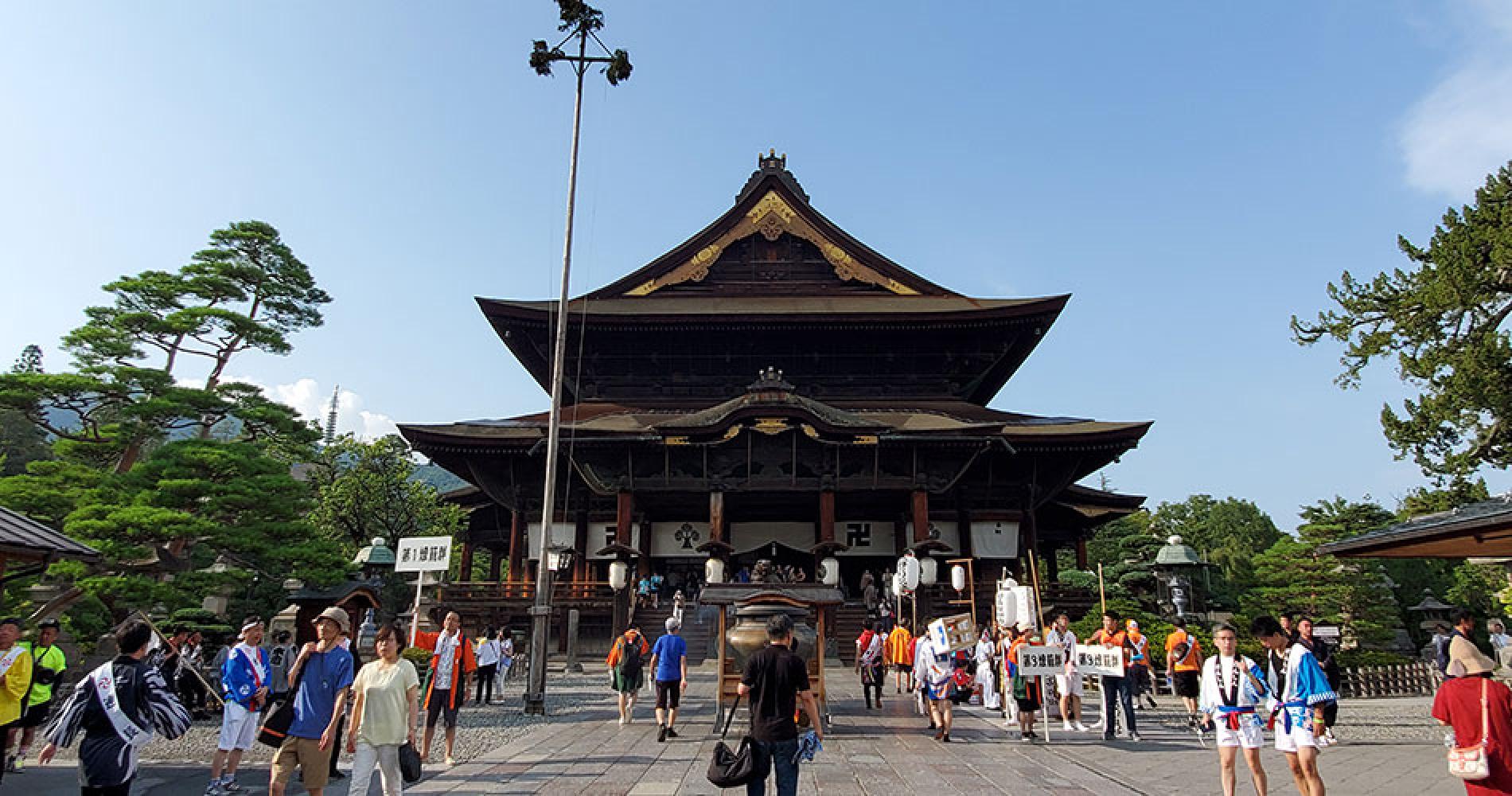
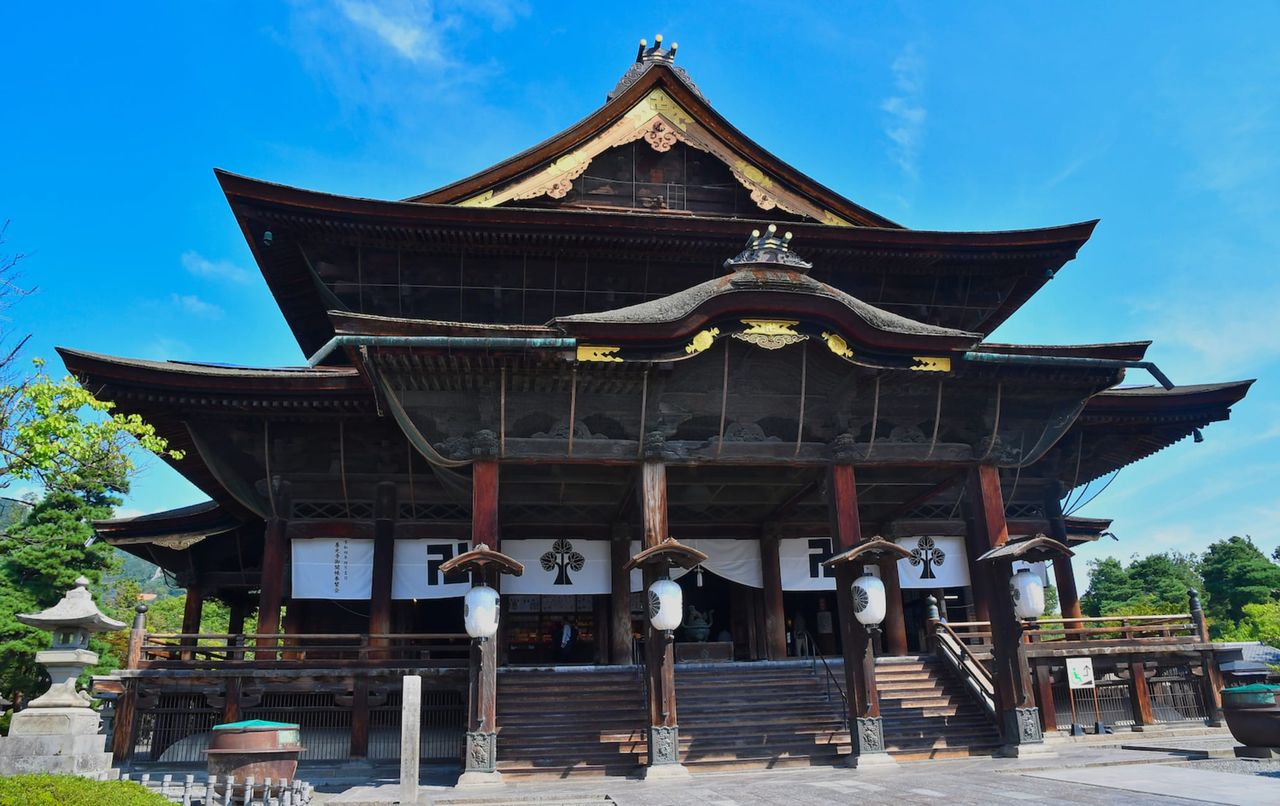
Zenkoji Main Hall: A National Treasure Wooden Building
The Zenkoji Main Hall was built in 1707 and designated a National Treasure of Japan in 1953, making it one of the largest wooden buildings in the country. The principal image, the “Ikko Sanzon Amida Nyorai”, is an absolute hidden Buddha that even the head priest may not see; only once every 7 years, at the “Gokaicho” unveiling, are worshippers allowed to pay respects to its replica. The address is 491 Nagano Motoyoshimachi, Nagano City, Nagano Prefecture, tel. 026-234-3591. The official site, zenkoji.jp, lists the latest Gokaicho year and ceremony schedule.

Niomon Gate: The Guardian Kings of the Approach
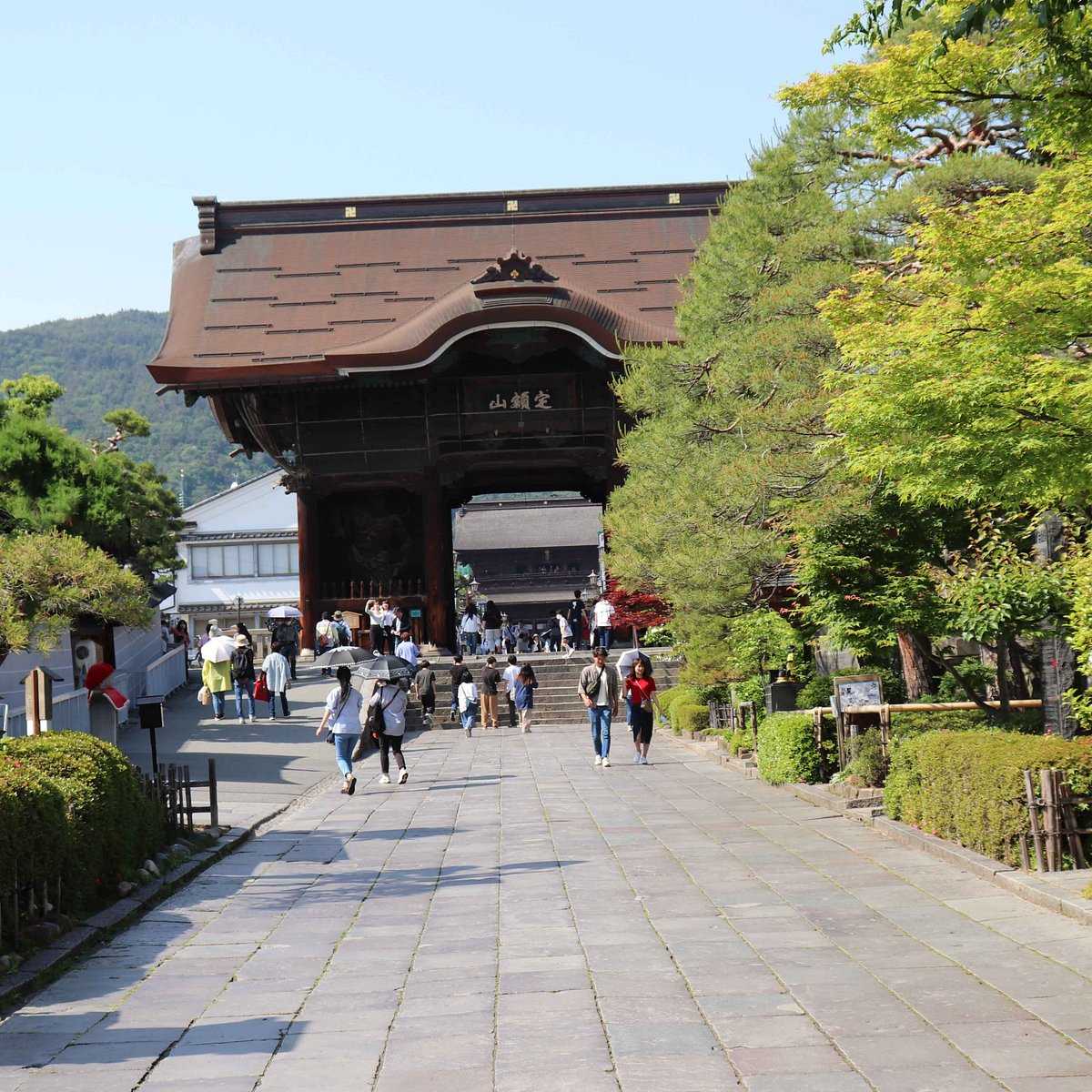
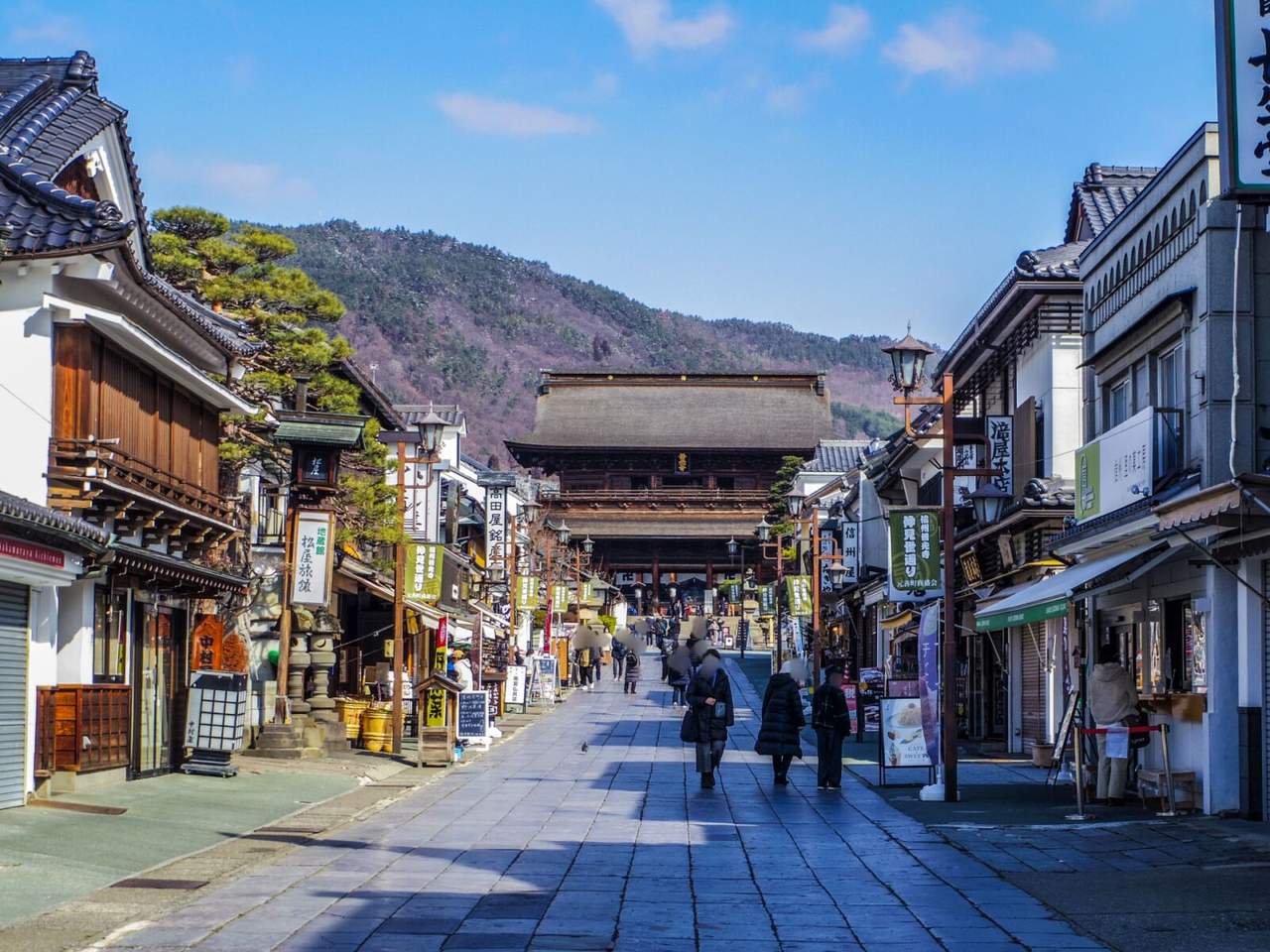
The Niomon Gate is the first gate on Zenkoji’s Omotesando. The current gate building was rebuilt in 1918, and the two Nio guardian statues inside, made by Takamura Koun and Yonehara Unkai, are imposing and a popular photo landmark. Past the gate you enter the Nakamise-dori shopping street. In foliage season the ginkgo and maples in front of the gate contrast beautifully with the vermilion gate, so we recommend visiting in the morning when the light is in your favor.
Sanmon Gate: Climb Up for a View of the Foliage Along Omotesando
The Sanmon, also known as the San-mon (Three Gates), is an Important Cultural Property. A statue of Monju Bodhisattva is enshrined on the upper floor, and with a paid ticket you can climb up to see the wooden structure up close and look down over the whole Omotesando and the layered colors of the autumn leaves. Sanmon admission is ¥800 for adults, ¥300 for high school students and ¥100 for elementary and junior high students, open 9:00-16:00. A combined ticket with the Kyozo is better value.
Kyozo: One Turn of the Revolving Sutra Library Equals Reciting the Sutras Once
The Kyozo is also an Important Cultural Property. Inside is a rotating “rinzo” sutra repository holding Buddhist scriptures, and it is said that pushing it around once with force equals reciting all the sutras once, a prayer method unique to Zenkoji. Kyozo admission is ¥500 for adults, ¥300 for high school students and ¥100 for elementary and junior high students, with the same 9:00-16:00 hours as the Sanmon. We recommend visiting it in the same time slot as the Kaidan-meguri.
Kaidan-meguri (Dark Corridor): Feel Your Way to the Lock of Paradise
The Kaidan-meguri is Zenkoji’s most iconic experience. You walk through a completely dark corridor beneath the Main Hall, keeping your right hand on the wall, which takes about 3-5 minutes. Along the way you must touch the “Lock of Paradise” directly beneath the principal image to form a bond with the Buddha. Because it is pitch black throughout, visitors with claustrophobia should think carefully before joining. The Main Hall inner sanctum and Kaidan-meguri ticket is ¥800 for adults; the inner sanctum is open until 16:30 (until 16:15 in March and November, and until 16:00 from December to February).
Morning Service (Asaji): Monks’ Sutra Chanting Before Sunrise and the Rosary Blessing
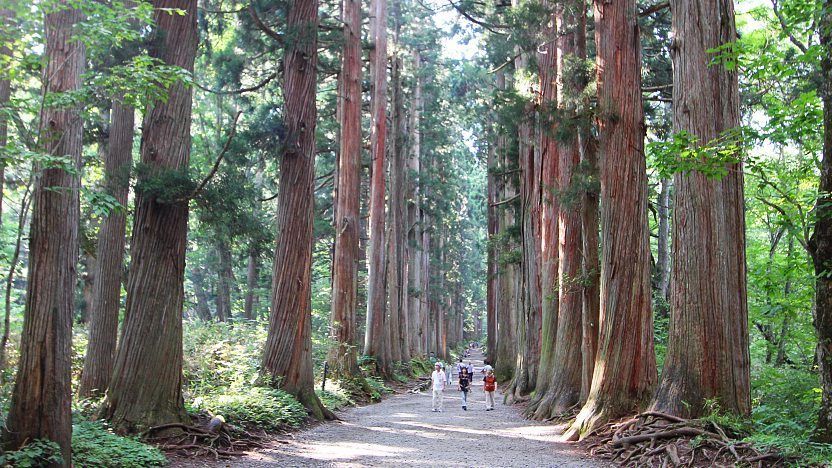
Every morning, timed to sunrise (it varies by season), the head priest and monks hold the morning service in the Main Hall. On their way to and from it, worshippers can kneel on the approach in front of the Main Hall to receive the “O-juzu Chodai”, in which a monk lightly touches a rosary to your head as a blessing. It is completely free to attend, and locals recommend it as the most rewarding experience. The Main Hall inner sanctum opens about 1 hour before the service; check the Zenkoji official site for exact times.
Nakamise-dori: The Approach Shopping Street and Oyaki
Nakamise-dori is a stone-paved shopping street about 200 meters long running from the Niomon Gate to the Sanmon Gate. It is laid with 7,777 stone slabs and has about 60 shops, with souvenir shops and sweet shops lining both sides. Along the way you can try the Nagano local snack “oyaki”, a dumpling with a buckwheat or wheat flour skin filled with nozawana greens or red bean paste, perfect for eating as you stroll.
Zenkoji Omotesando Evening Illumination: The Champagne-Gold Light Tunnel
The “Zenkoji Omotesando Illumination” lights the Omotesando with LEDs from the intersection in front of Nagano Station to the Zenkoji intersection. The 2026 season runs from November 14, 2026 to February 14, 2027, lit daily from 17:00 to 22:00. Please check the Nagano City official site for details.
Nagano Tomyo Matsuri 2027: Light and Sound Inside Zenkoji
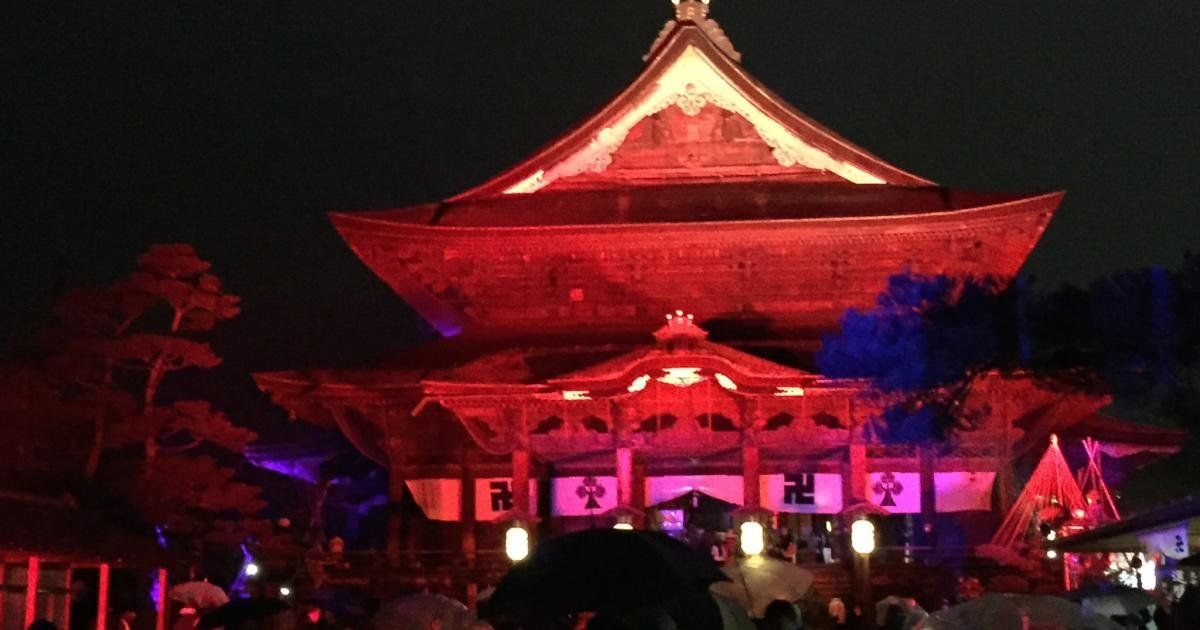
The “Nagano Tomyo Matsuri” is a light festival held at Zenkoji every February. The 24th edition is scheduled for February 10 to 14, 2027, daily from 18:00 to 21:00, with light and sound creating a nighttime atmosphere within the temple grounds. The Zenkoji Omotesando Illumination continues until February 14, 2027, so the two overlap, and you can combine a winter evening visit to the temple with the Omotesando lights on the same night. Please check the Nagano City official site for the latest information.
Zenkoji’s Sects and the Six Jizo: A Thousand Years of Merged Faiths
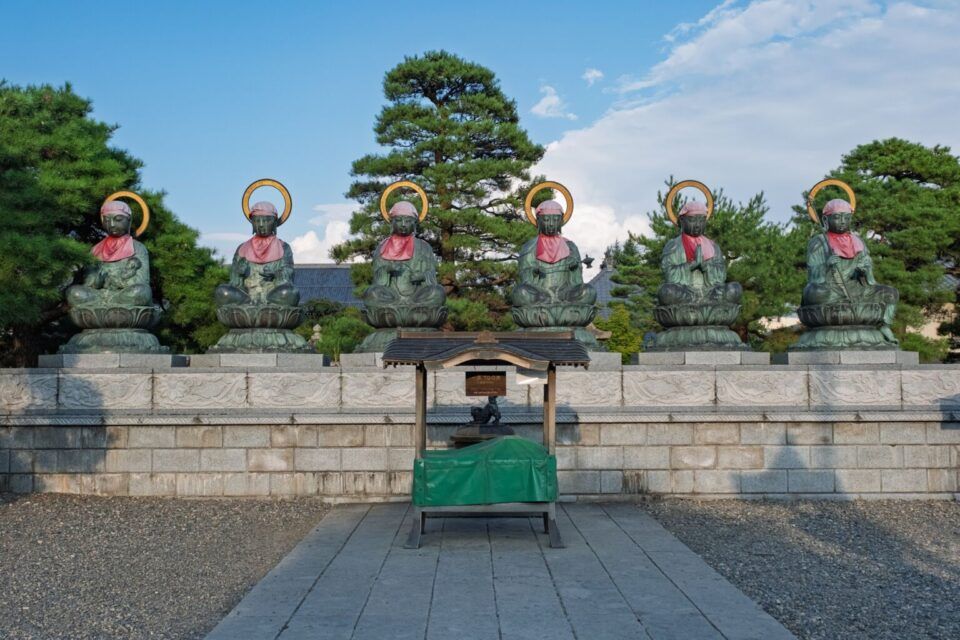
Zenkoji is a rare National Treasure temple in Japan that is non-sectarian, jointly supported by the Tendai-sect Daikanjin and the Jodo-sect Daihongan, and its daily services are held in both Tendai and Jodo styles. Beside the approach stand six Jizo Bodhisattva statues, corresponding to the six realms of reincarnation: hell, hungry ghosts, animals, asuras, humans and heaven. They are a detail of faith worth a closer look before you worship.
Goshuin and Omamori: Stamp Collecting and Good-Luck Charms
Different halls within Zenkoji offer different goshuin designs. For example, the Goma-do and Shaka-do within the Daikanjin grounds each have their own exclusive goshuin, a nice memento of your visit. The amulet office beside the Main Hall offers many prayer charms, from love and health to traffic safety, so you can choose according to your wishes. Hours and offering amounts follow the notices posted on site.
Shiroyama Park: Good for Both Autumn Leaves and Cherry Blossoms in Nagano City
Shiroyama Park lies east of Zenkoji, within walking distance after your visit. It is planted with many maples and ginkgo trees. In spring it is a popular cherry-blossom spot in Nagano city, and in autumn, from early to mid-November, it becomes a famous foliage spot of interwoven red and yellow. The Nagano Prefectural Art Museum is also in the park, so you can take a stroll among the leaves after visiting Zenkoji. It is open year-round with free admission.
Togakushi Highland Mirror Pond: A Hidden Spot Where Autumn Leaves Reflect on the Water
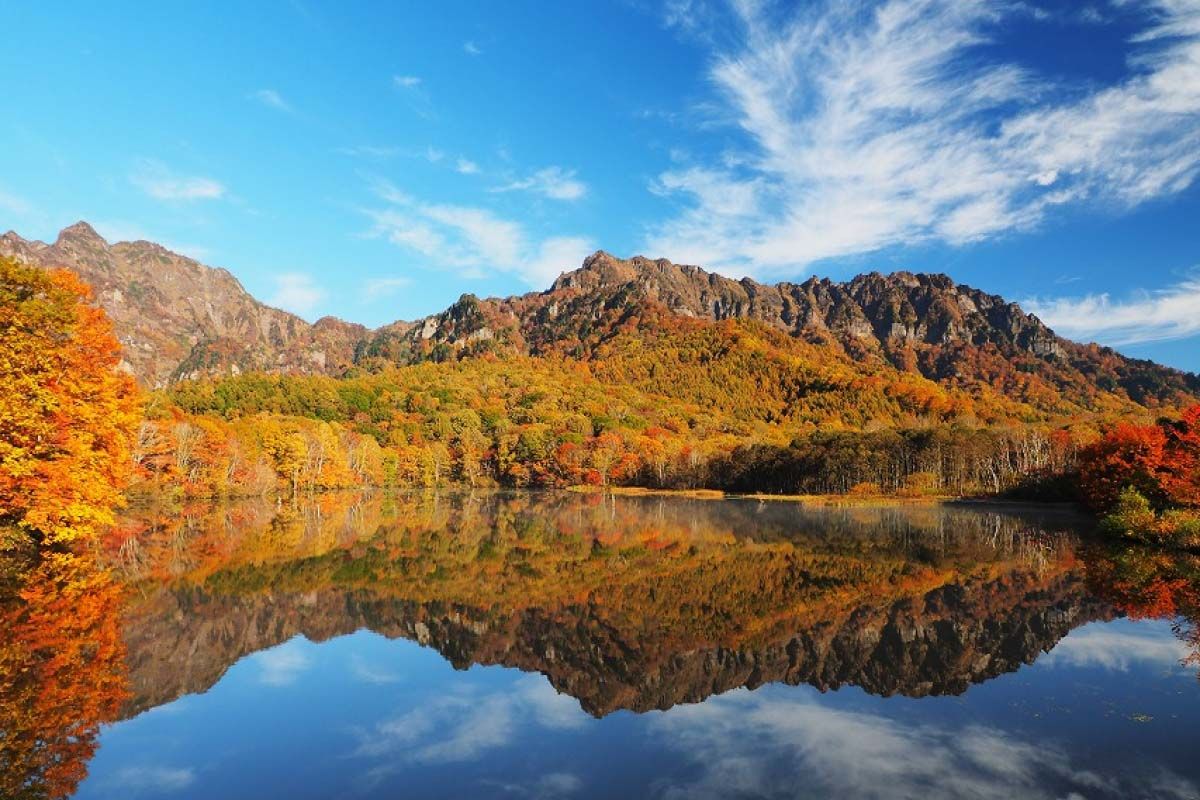
Togakushi Highland’s Kagami-ike (Mirror Pond) is about 1 hour by car from Zenkoji. The leaves begin to change in early October, with mid to late October the best time to see them. On a clear, windless morning the pond surface perfectly mirrors the surrounding red maples and the Togakushi mountain range in a symmetrical scene, a spot photography enthusiasts pass on by word of mouth. For a day trip, we recommend combining it with a pilgrimage of the five Togakushi Shrine sanctuaries.
Susobana Gorge: An Autumn-Leaf Valley in a Hot Spring Town
Susobana Gorge lies west of Nagano city, where the red maples along the valley match the hot spring town atmosphere. The local “Uruoikan” Susobana Gorge natural hot spring inn has two large open-air baths facing the Susobana River. Day-use bathing is 10:00 to 23:00 (last entry 22:30), ¥800 for adults on weekdays, and a free shuttle bus runs from JR Nagano Station. You can soak while enjoying the gorge views, making it a good place to relax in the afternoon to early evening of a half-day trip.
How Much Does a Zenkoji Autumn Leaves Trip Cost in 2026? Tickets and Guided Tours
Below are the Zenkoji admission combo tickets and the guided tours you can book nearby.
Zenkoji Worship Combo Ticket: Main Hall Inner Sanctum, Kaidan-meguri, Sanmon and Kyozo in One Ticket
The Zenkoji worship combo ticket covers the Main Hall inner sanctum and Kaidan-meguri, the Sanmon, the Kyozo and the Zenkoji History Museum. It costs ¥1,500 for adults, ¥600 for high school students and ¥200 for elementary and junior high students, and is free for preschool children. The Main Hall inner sanctum and Kaidan-meguri ticket alone is ¥800, and buying the Sanmon and Kyozo separately costs ¥800 and ¥500 respectively, so the combo ticket is the best value overall. For the latest prices, refer to the “Sanpaiken no Goannai” (worship ticket guide) notice on the Zenkoji official site, zenkoji.jp.
JR EAST PASS: A Handy Tool for Shinkansen Independent Travel
From March 14, 2026, JR East merged its two previous passes, the Nagano-Niigata and Tohoku passes, into a single JR EAST PASS. It is valid for 5 consecutive days (¥35,000 for adults) or 10 days (¥50,000 for adults) with unlimited rides on JR East lines (including the Hokuriku Shinkansen from Tokyo to Nagano). Short-term visitors with a foreign passport can buy it on the JR East website or at stations, and it suits a foliage trip that moves between Nagano, Karuizawa and Niigata.
Togakushi Shrine Day Tour: Zenkoji + Togakushi Shrine Package
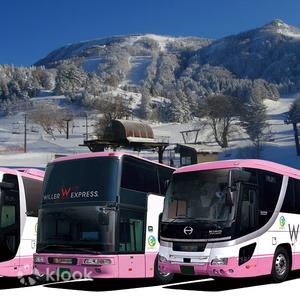
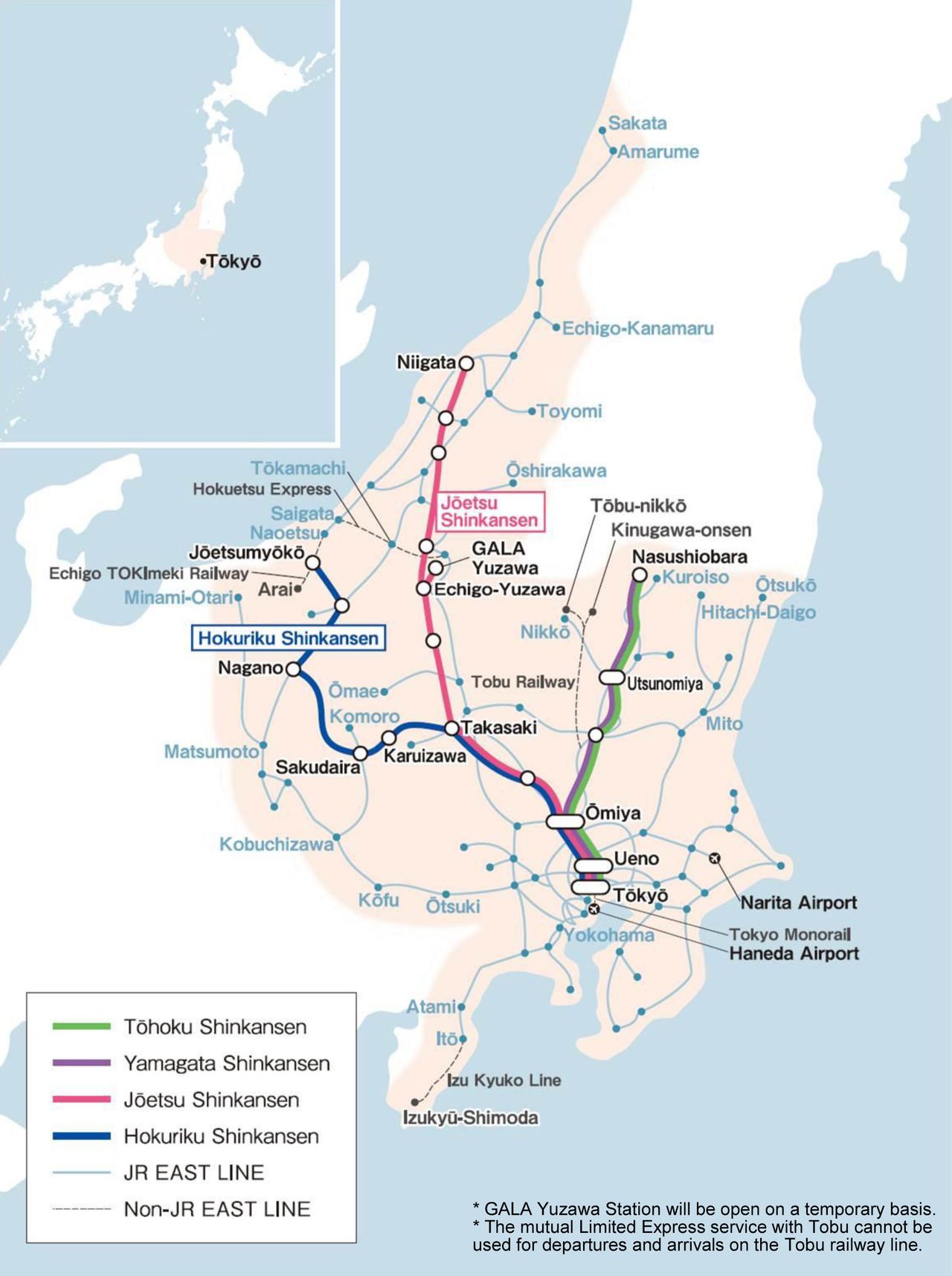
Togakushi Shrine consists of five shrines: Okusha, Kuzuryusha, Chusha, Hokosha and Hinomikosha. Most Nagano day tours on sale combine a Zenkoji visit with a pilgrimage of the five Togakushi Shrine sanctuaries, including private transport and guided commentary. They suit travelers who do not want to transfer between buses themselves; compare the itinerary, departure point and reviews before booking.
![[Nagano Day Tour] Togakushi Shrine and Jigokudani Monkey Park Snow Monkey Walk (Departing from Nagano)](https://travel.williamlion.tw/wp-content/uploads/sites/7/2026/10/Klook-10.jpg)
Zenkoji Morning Service Experience: Join the Monks’ Morning Blessing for Free
The morning service itself is completely free and needs no separate ticket. Just arrive at the Main Hall before it begins to join the sutra chanting and the rosary blessing (times vary with sunrise). It is the best value local experience. We suggest staying near Zenkoji the night before so you can walk there the next morning, saving the time pressure of an early train or bus.
Where to Stay Near Zenkoji in Nagano? Sightseeing Directions and Itinerary Tips

Below are the areas worth considering for an overnight stay around Zenkoji, along with common itinerary combinations.
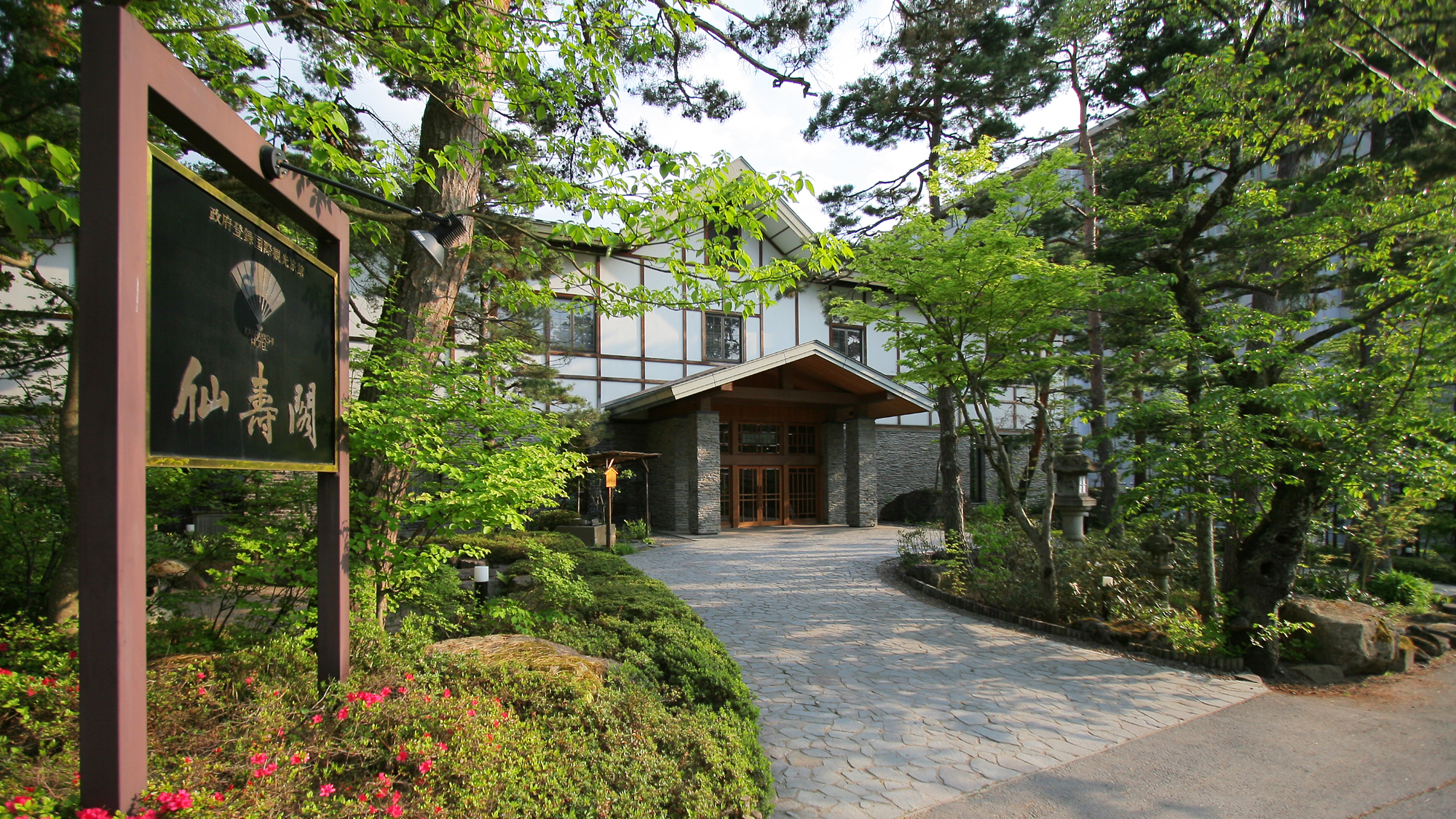
Jizokan Matsuya Ryokan: The Gate-Front Inn on Nakamise-dori
Jizokan Matsuya Ryokan is the only inn on Nakamise-dori. The building dates from the early Meiji period, and its 1918 facade was designed by Shida Shozaemon, the carpenter who rebuilt the Niomon Gate. It has a large public bath and serves kaiseki meals made with seasonal Shinshu ingredients. Staying within the Zenkoji precincts, you can walk to the morning service and the rosary blessing early in the morning. It suits travelers who want to deeply experience the temple-town atmosphere, and booking in advance is recommended.
Hotel Metropolitan Nagano: A Convenient Choice Connected to Nagano Station
Hotel Metropolitan Nagano is directly connected to the JR Nagano Station building, so you are there as soon as you exit the station, and its exit links to the “Shinshu Omiyage Sando ORAHO” souvenir street. The address is 1346 Minamiishido-cho, Nagano City, Nagano Prefecture, tel. 026-291-7000. It suits travelers with lots of luggage or who want to save commuting time. Zenkoji is about 25-30 minutes on foot or 15 minutes by bus.
Toyoko Inn Nagano Station East Exit: An Affordable Chain Business Hotel
Toyoko Inn Nagano Station East Exit is in Kurita on the east exit side of Nagano Station, about a 1-minute walk down the east exit pedestrian bridge, with 242 rooms and a free breakfast. It suits budget-minded independent travelers who use a hotel only as a place to sleep. To reach Zenkoji, take a bus or taxi. For room rates, please refer to the live prices on booking platforms.
How to Plan a Zenkoji Itinerary: From a Half Day to Two Days and One Night
A half-day trip can cover worship at Zenkoji, Nakamise-dori and a day-use hot spring. For a one-day trip, we suggest visiting Zenkoji in the morning and making a pilgrimage of the five Togakushi Shrine sanctuaries in the afternoon. A two-day, one-night trip can add Togakushi Highland’s Mirror Pond for the foliage, or a Nagano Electric Railway trip to Obuse, then return to Zenkoji early on the second morning for the morning service. Nagano Station has a tourist information center where you can pick up maps and bus information.
Zenkoji Autumn Leaves Guide 2026: FAQ
Q: How much is admission to Zenkoji?
The worship combo ticket (Main Hall inner sanctum and Kaidan-meguri, Sanmon, Kyozo) is ¥1,500 for adults. The temple grounds themselves are free to enter and need no ticket.
Q: When does the 2026 Zenkoji Omotesando evening illumination start?
The 2026 season runs from November 14 to February 14, 2027, lit daily from 17:00 to 22:00. Dates follow the official announcement from Nagano City.
Q: How long does it take to get from Nagano Station to Zenkoji? How different are the bus and walking?
Walking along Omotesando takes about 25-30 minutes, and the bus to Zenkoji Daimon takes about 10 minutes. For bus frequency and boarding stops, please refer to the notices at the Nagano Station tourist information center. If you are short on time, we recommend the bus.
Q: When are the autumn leaves at Zenkoji most beautiful?
In Nagano city, late October to mid-November is best, while mountain areas begin changing in late September, with the color moving down the mountains in stages by altitude.
Q: In which year is the next Zenkoji Gokaicho?
The Gokaicho is held once every 7 years. The next is from April 4 to June 19, 2027. For detailed schedules, refer to the notice on the official site, zenkoji.jp.
Q: Is the Zenkoji Kaidan-meguri dark corridor scary?
The corridor is completely dark and you move forward only by feeling the wall, finishing in about 3-5 minutes. Visitors with claustrophobia or a fear of the dark should think carefully before joining.
Q: Does Zenkoji have wheelchair access or Chinese and English services?
For the latest information on barrier-free facilities and foreign-language services, we recommend confirming with Zenkoji (tel. 026-234-3591) or the Nagano Station tourist information center before you go.