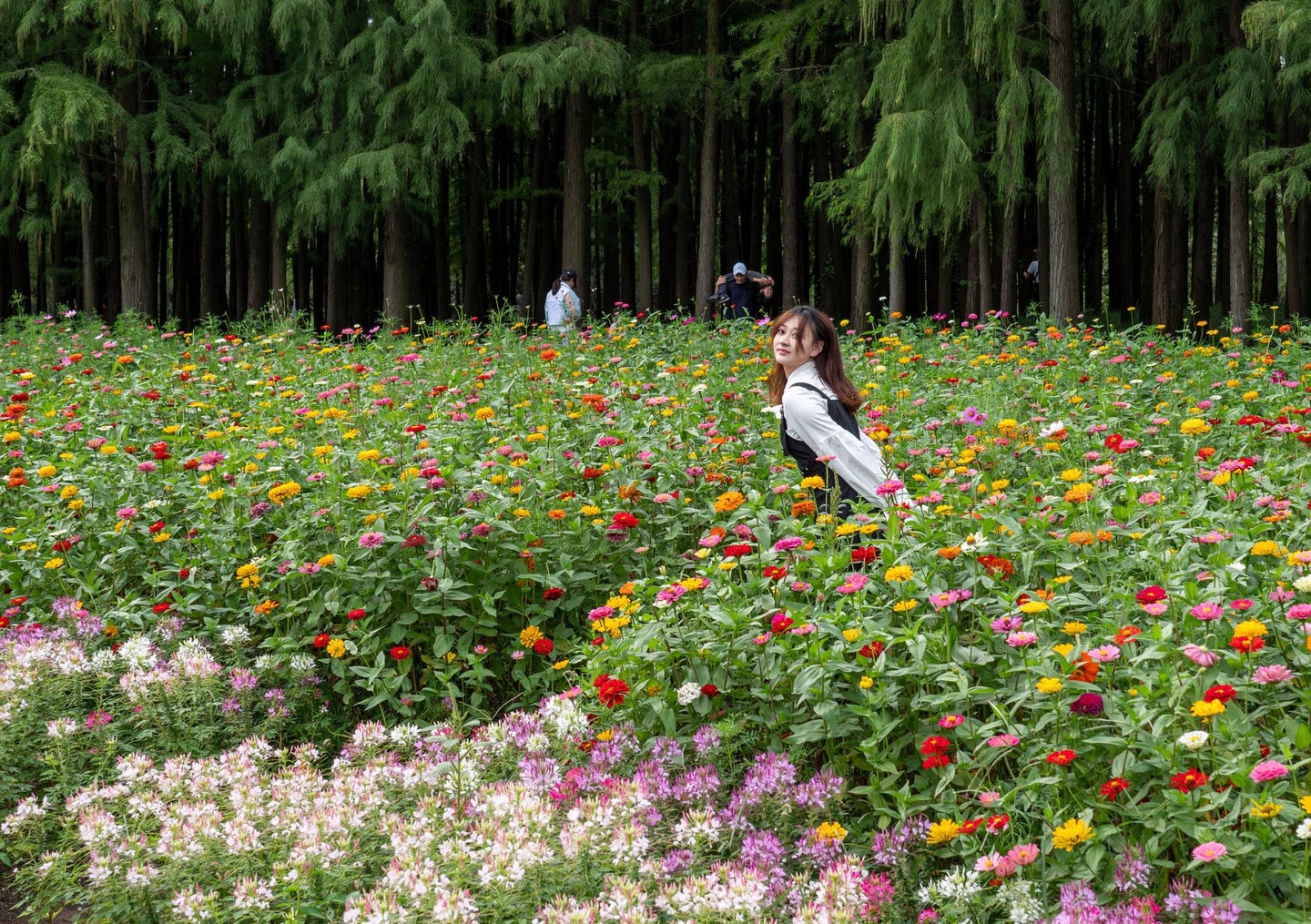

Showa Kinen Park Autumn Leaves 2026: A Double Feast of Ginkgo and Maples near Tokyo
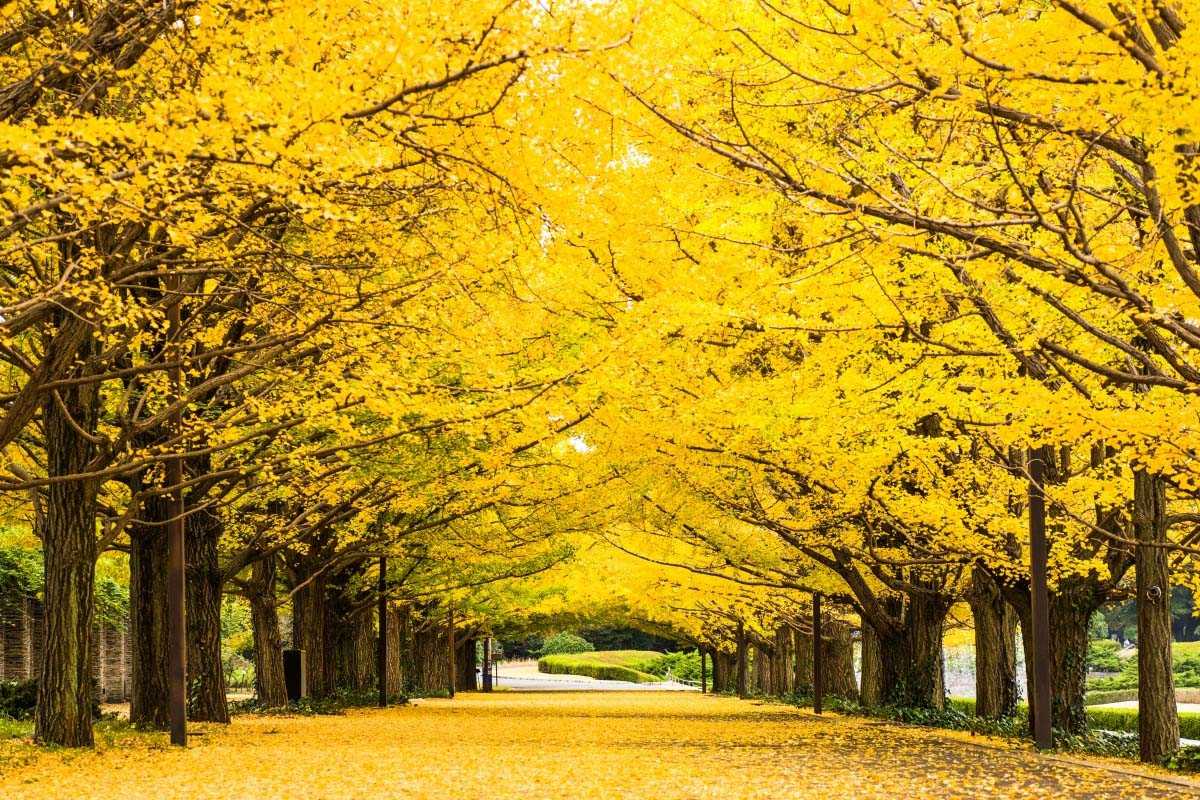
Showa Kinen Park (昭和記念公園) is the top pick for autumn leaves and ginkgo near Tokyo, in Tachikawa. Covering about 180 hectares, it was built on the former US Tachikawa Air Base and opened in 1983 to commemorate the 50th anniversary of Emperor Showa’s reign, under the concept of “the revival of greenery and the enhancement of humanity.” The park has both a golden ginkgo avenue and the maples of its Japanese garden. It is about 30-40 minutes from Shinjuku by JR, suits families, older travelers and photography fans for a half-day to full-day trip, and is one of the few national parks near Tokyo where you can see both ginkgo and maples in one visit.
How to Get to Showa Kinen Park: Transport from Shinjuku
Showa Kinen Park is at 3173 Midoricho, Tachikawa, Tokyo. Take the JR Chuo Line Rapid from Shinjuku Station to Tachikawa Station in about 30-40 minutes, then choose an entrance based on your destination.
JR, Monorail and Driving: Which Entrance to Choose
- JR Chuo Line: From the north exit of Tachikawa Station, it is about a 10-minute walk to Akebono Gate (あけぼの口) and about 18 minutes to Tachikawa Gate (立川口), where the Canal Ginkgo Avenue greets you right inside the park.
- JR Ome Line: Get off at Nishi-Tachikawa Station and walk about 2 minutes to Nishi-Tachikawa Gate (西立川口), near Mizudori Pond.
- Tama Monorail: Get off at Tachikawa-Kita Station and walk about 8 minutes to Akebono Gate.
- By car: The park has three parking lots, Tachikawa Gate (1,755 spaces), Nishi-Tachikawa Gate (345 spaces) and Sunagawa Gate (431 spaces). Standard cars pay ¥900, and in peak season we recommend arriving early to avoid full lots.
![[Tokyo Travel Essential] Suica Card | The Most Convenient Transit Card](https://travel.williamlion.tw/wp-content/uploads/sites/7/2026/10/Suica-Klook.jpg)


Must-See Autumn Leaf Spots at Showa Kinen Park: Highlights by Area
Here are the 9 must-visit foliage and ginkgo spots in the park, ordered by popularity and character to help you plan your route.
Kataraino Ginkgo Avenue (かたらいのいちょう並木): A 300 m Golden Tunnel
The roughly 300 m Kataraino Ginkgo Avenue is the park’s most iconic photo spot, forming a spectacular golden carpet when fallen leaves cover the ground. Peak ginkgo color is around mid to late November.
To photograph an untouched carpet of fallen leaves, arrive when the park opens at 9:30. Ginkgo is best shot before 10 a.m. in front light.

Canal Plaza (カナール): European-Style Symmetry of Fountains and Ginkgo
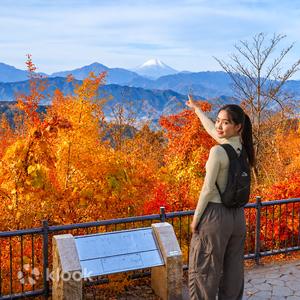
Entering from Tachikawa Gate, you see ginkgo trees pruned into neat cone shapes lined up on both sides of the Canal, which together with the fountains forms a rare European-style symmetrical landscape. The reflection of the ginkgo on the water is a popular postcard view in the park.
The plaza is close to the Tachikawa Gate entrance and works well as your first stop after entering, before heading west to Kataraino Ginkgo Avenue or the Japanese Garden.
Japanese Garden: A Strolling Pond Garden and Matcha at Kanfutei
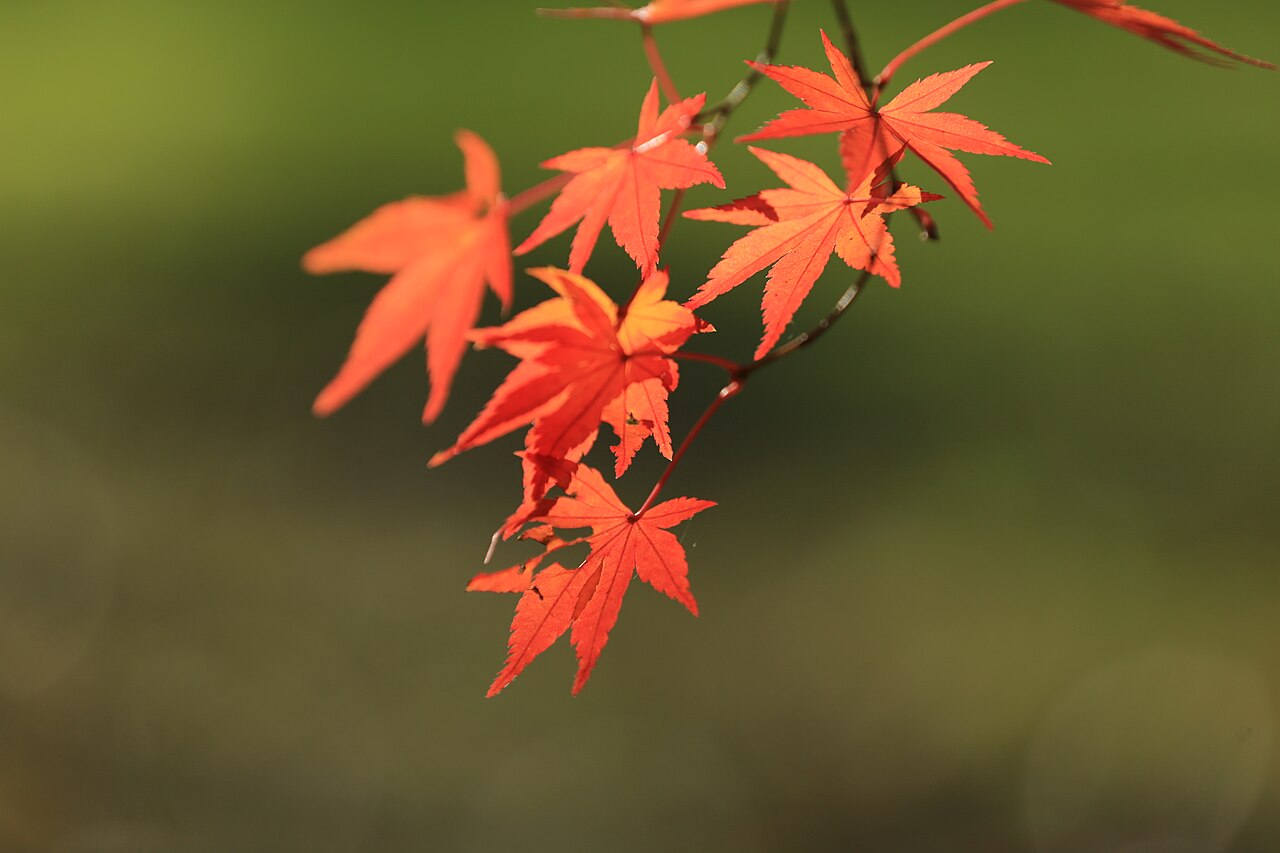
This strolling pond-style Japanese garden of about 6 hectares uses artificial hills, bridges and ponds to frame vivid red maples. Red leaves reflected in the pond are the park’s most classically Japanese scene, with peak color around mid to late November. In the garden’s tea house Kanfutei (歡楓亭, かんふうてい), you can enjoy matcha and seasonal Japanese sweets (extra charge) while taking in the view.
The garden is in the north of the park and has about 300 maple trees. If you can pick only one spot, the Japanese Garden is the top choice for red leaves.
Mizudori Pond: Boating and a Light Meal by the Lake
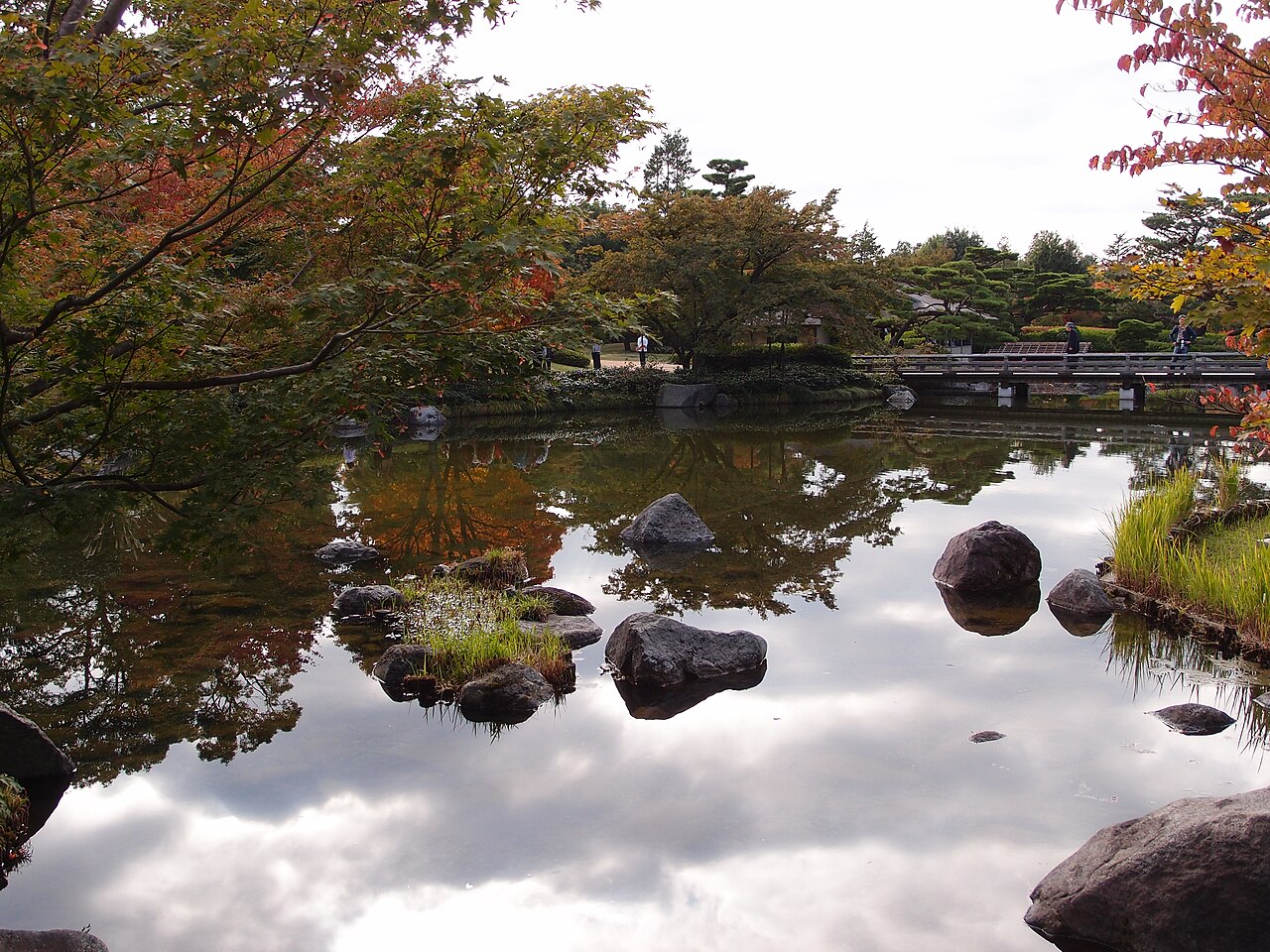
Mizudori Pond covers about 5 hectares, and you can rent a rowboat (¥800 for 60 minutes) or a pedal boat (¥800 for 30 minutes), one of the few places in the park where you can play on the water. A simple restaurant by the lake lets you eat and rest right at the water’s edge after boating, enjoying the autumn colors reflected on the surface.
The lakeside path is flat and easy to walk, suited to an easy stroll of about 1 hour for families with older relatives or strollers.
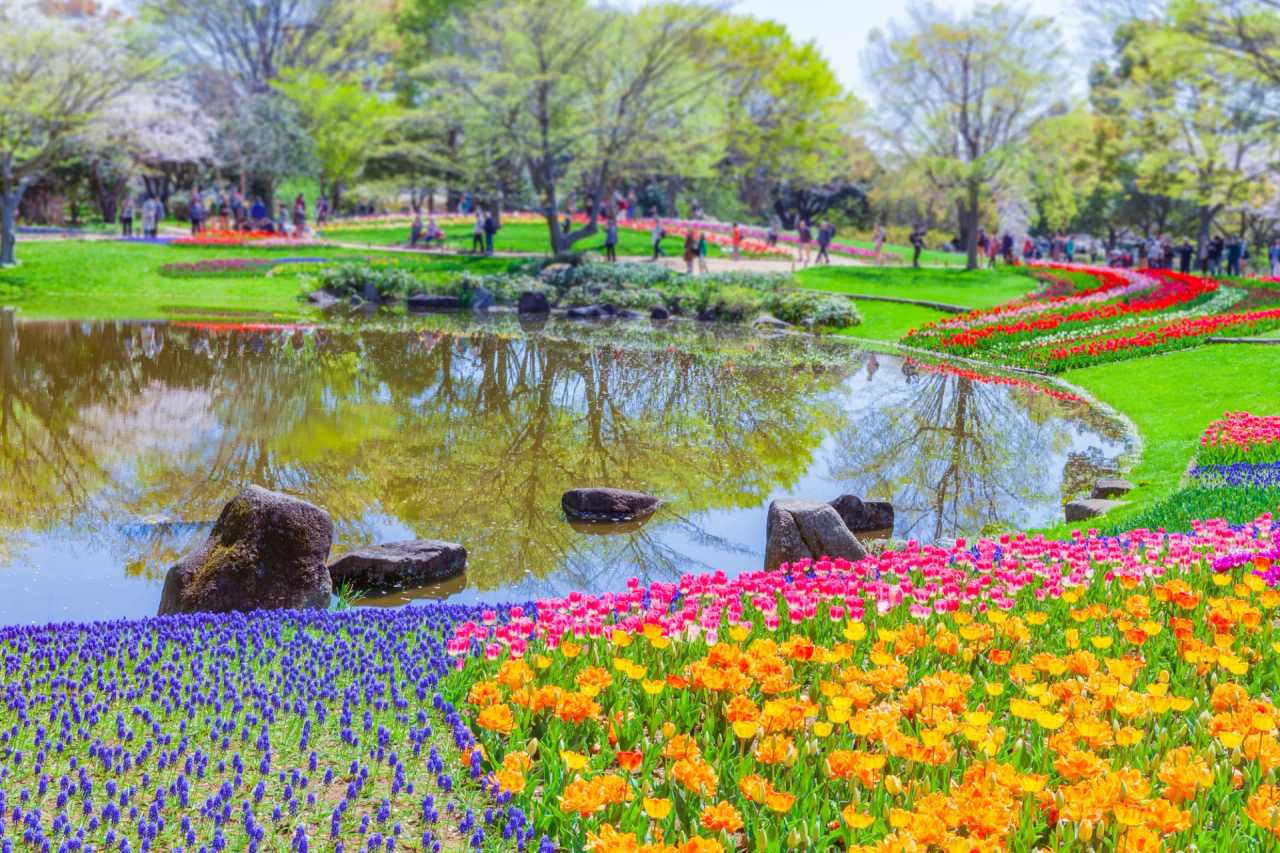
Minna no Harappa (みんなの原っぱ): A Big Lawn for Picnics and Autumn Cosmos
The Minna no Harappa lawn in the middle of the park has a tall zelkova tree as its focal point and is a popular picnic spot, with food stands nearby so you don’t need to bring all your own food. The official “Cosmos Festival 2026” runs until October 25. Cosmos and red buckwheat in the East Flower Field of Harappa bloom from early to late October, and the autumn flower-bouquet garden in the South Flower Field runs until late October, another photo highlight before the ginkgo.
Kochia on Herb Hill (ハーブの丘): Red Summer Cypress Until Mid-October
Herb Hill has about 1,800 kochia (summer cypress) plants, with the officially announced best-viewing period from early August to mid-October, turning gradually from green to red from mid-September. This period overlaps with the “Cosmos Festival 2026” (September 12 to October 25), so if you visit Showa Kinen Park in the first half of October, you can enjoy the autumn colors of the lawns and flower fields before the ginkgo and maples turn. Check the official website for flower updates before you go.
Kodomo no Mori (こどもの森): The Children’s Forest for Families
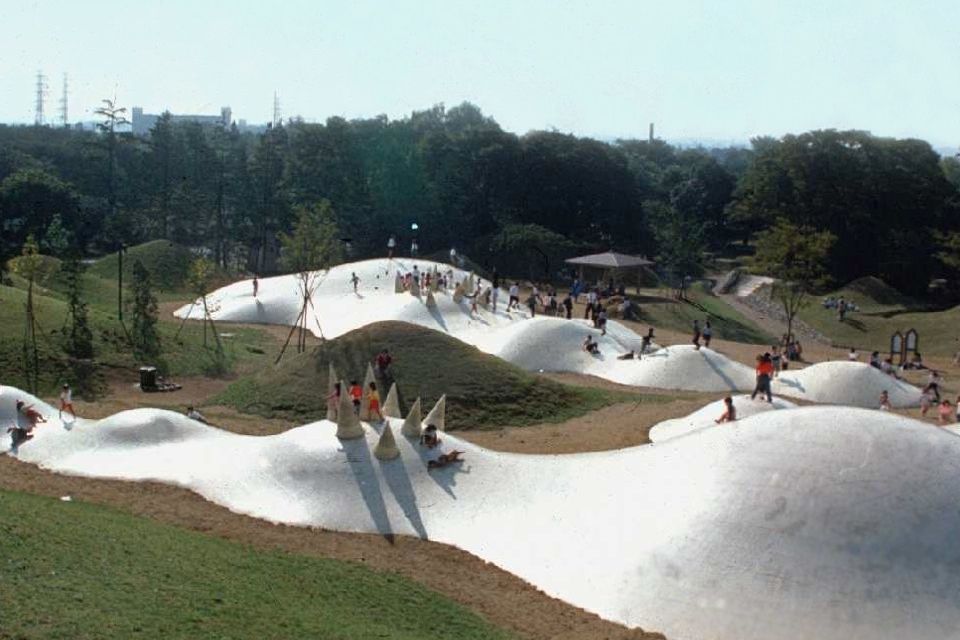
Kodomo no Mori covers about 9 hectares and has play facilities for families such as the Forest of Mist, Stone Valley, Rainbow Hammock, Sea of Clouds and Dinosaur Sand Hill. Surrounded by trees, it is a good place for families with kids to spend half a day on top of seeing the autumn leaves.
Most facilities are outdoor interactive play equipment, so we suggest going in the cooler morning to avoid the midday crowds and sun.
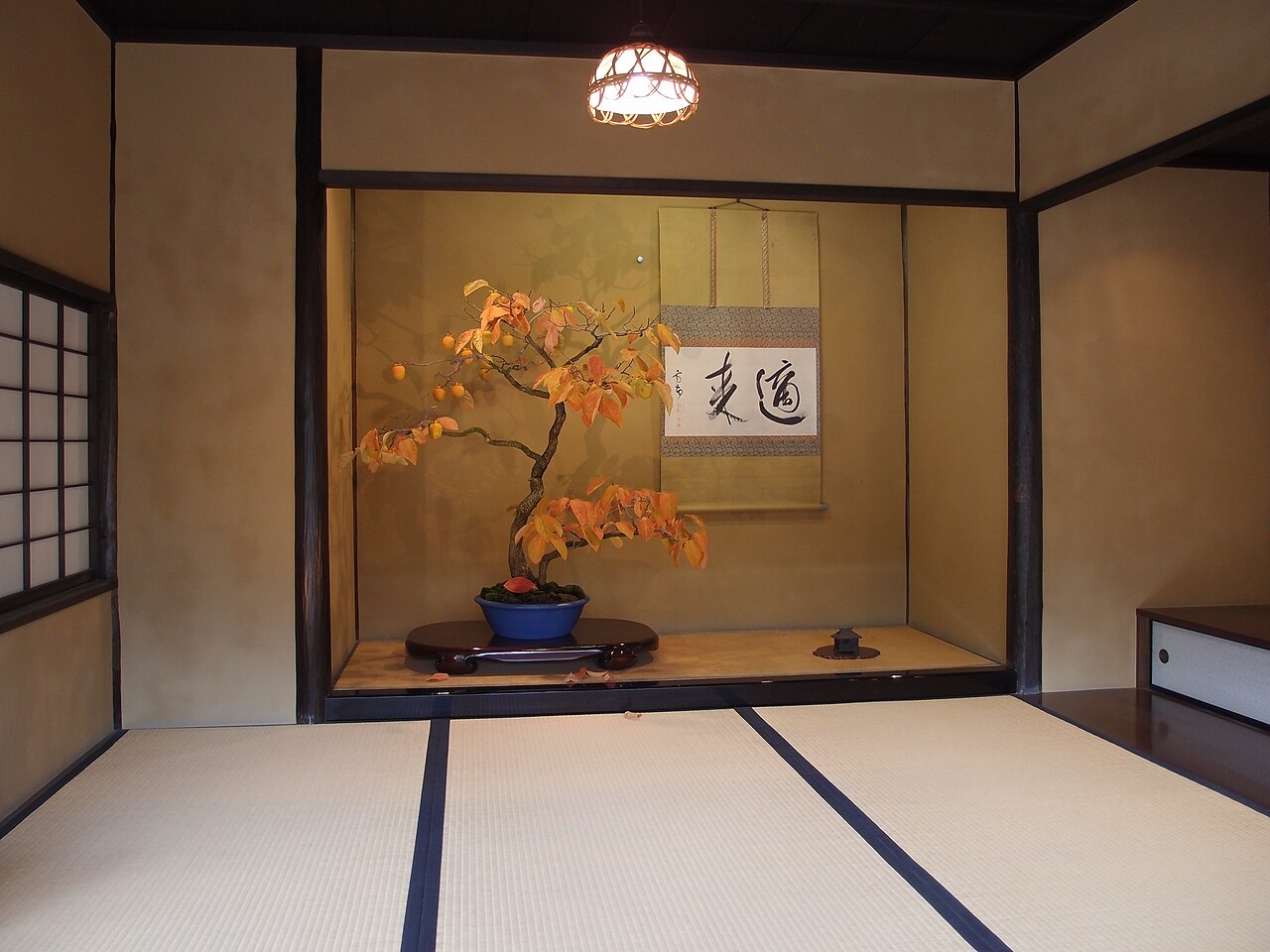
Bonsai-en: A Lit-Up Highlight Connected to the Japanese Garden
Bonsai-en sits beside the Japanese Garden and holds many finely shaped bonsai trees. During the autumn “Yellow and Red Leaves Festival” it is included in the illumination area, so you can study the bonsai craft in detail by day and see a completely different lighting atmosphere at night.
Bonsai-en is inside the Japanese Garden and is not large, so it is easy to visit after the garden.
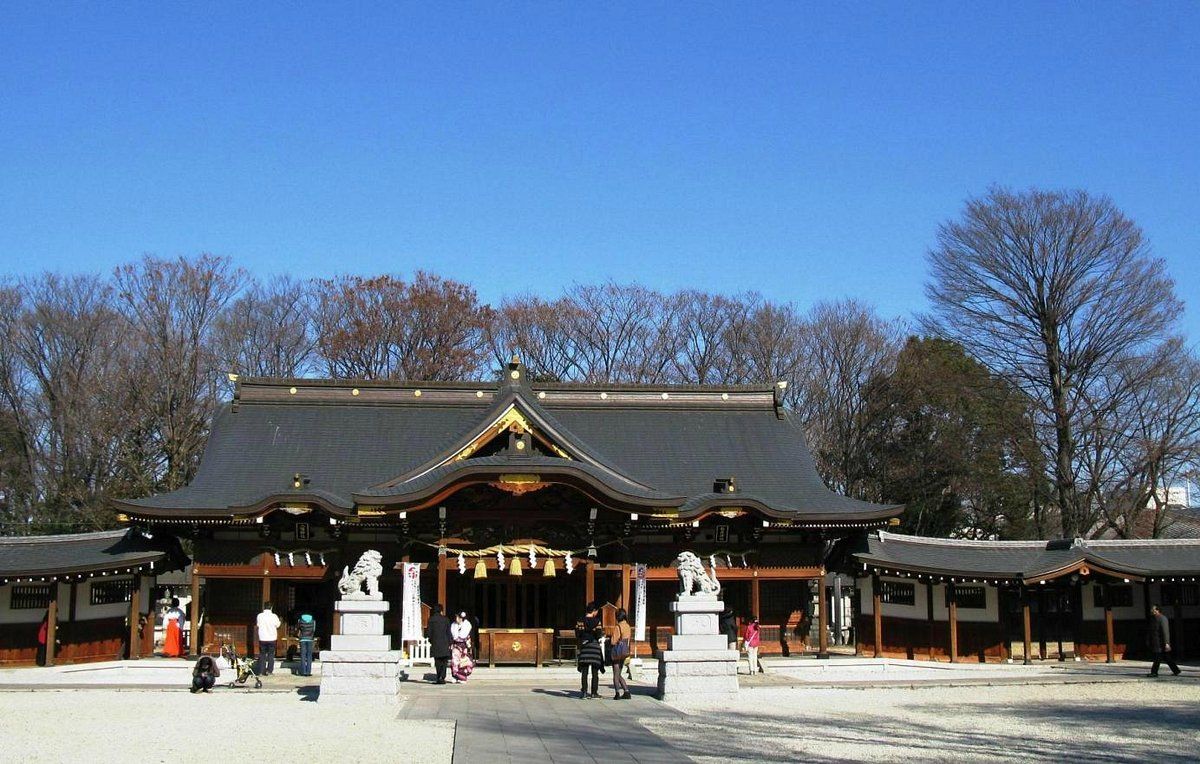
Tachikawa Suwa Shrine: An Old Shrine South of Tachikawa Station
Tachikawa Suwa Shrine is a long-established shrine in the Tachikawa area, enshrining Takeminakata no Kami and praying for a good harvest and local safety. Amulets and goshuin seals are available, making it a good place to stop and pray after viewing the leaves.
The shrine is south of Tachikawa Station, on the opposite side of the station from the park, so we suggest visiting when you have extra time.
Tonogayato Garden (殿ヶ谷戸庭園): An Autumn Garden on the Chuo Line
Tonogayato Garden is next to JR Kokubunji Station, on the same JR Chuo Line as Tachikawa. It is a strolling garden that uses the terrain of the cliff line, and in autumn the lawn and the area around Jiro Benten Pond turn vivid red.
If you have time, you can plan a one-day autumn leaves tour combining Showa Kinen Park and Tonogayato Garden.
How Much Does Showa Kinen Park Cost? Tickets and Activities
Showa Kinen Park Admission and Annual Pass: One Ticket for Ginkgo and Gardens
Admission is ¥450 for adults (age 15 and over), ¥210 for ages 65 and over, and free for junior high school students and younger. If you plan to visit several times in a year, the ¥4,500 annual pass is better value. Tickets can be bought at the automatic ticket machines in the park on the day, with no advance reservation needed.
In November the park is open from 9:30 to 16:30. The official website “Showa Kinen National Government Park” (showakinen-koen.jp) announces opening days, flower conditions and event information, so check it before you go.
Autumn Night Walk Illumination Tickets: The Japanese Garden Requires a Separate Ticket
“Autumn Night Walk” is the park’s annual illumination event. In 2025 it was held from October 30 to November 30, lighting up Kataraino Ginkgo Avenue, the Canal and the Japanese Garden from 16:30 to 20:30, with the park closing at 21:00 during the period. Entering the Japanese Garden at night requires a separate “Japanese Garden Illumination Viewing Ticket,” which must be reserved in advance on a dedicated website. The 2026 dates follow the official website’s announcement.
Bicycle Rental: An Easy Way to Get Around a Large Park
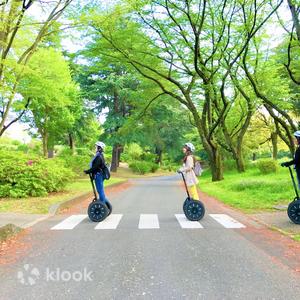
The park covers a vast 180 hectares, so renting a bicycle is a good way to get around with less effort: ¥600 for 3 hours or ¥800 for the whole day for adults, and ¥350 for 3 hours or ¥400 for the whole day for children. The park has dedicated cycling paths, but riding is prohibited in the night illumination areas.
Park Train (パークトレイン): Easily See the Sights
If you don’t want to walk much, you can ride the Park Train, the park’s sightseeing train. It costs ¥400 per ride for adults and ¥200 for children, or ¥600 for a day pass, stopping at many of the park’s main sights, and suits families with older relatives or young children.
Where to Stay near Showa Kinen Park: Lodging Suggestions

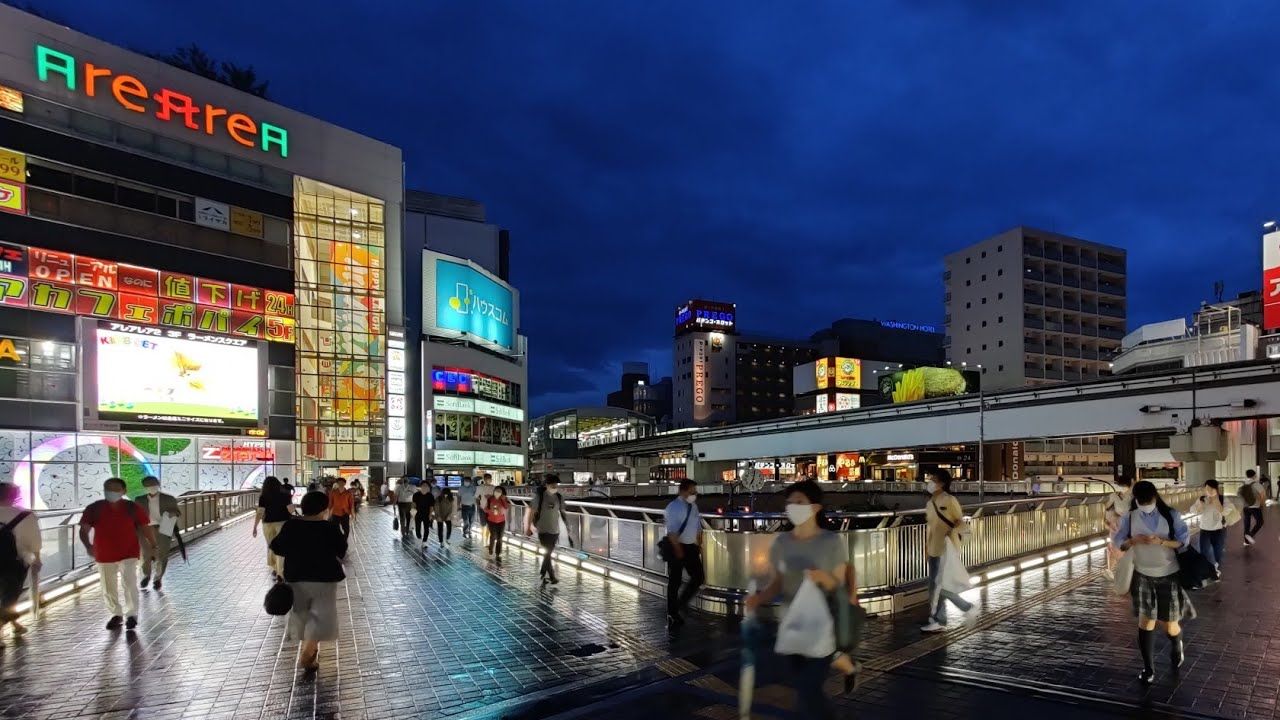
Around Tachikawa Station: Dine and Stay in One Place After the Leaves
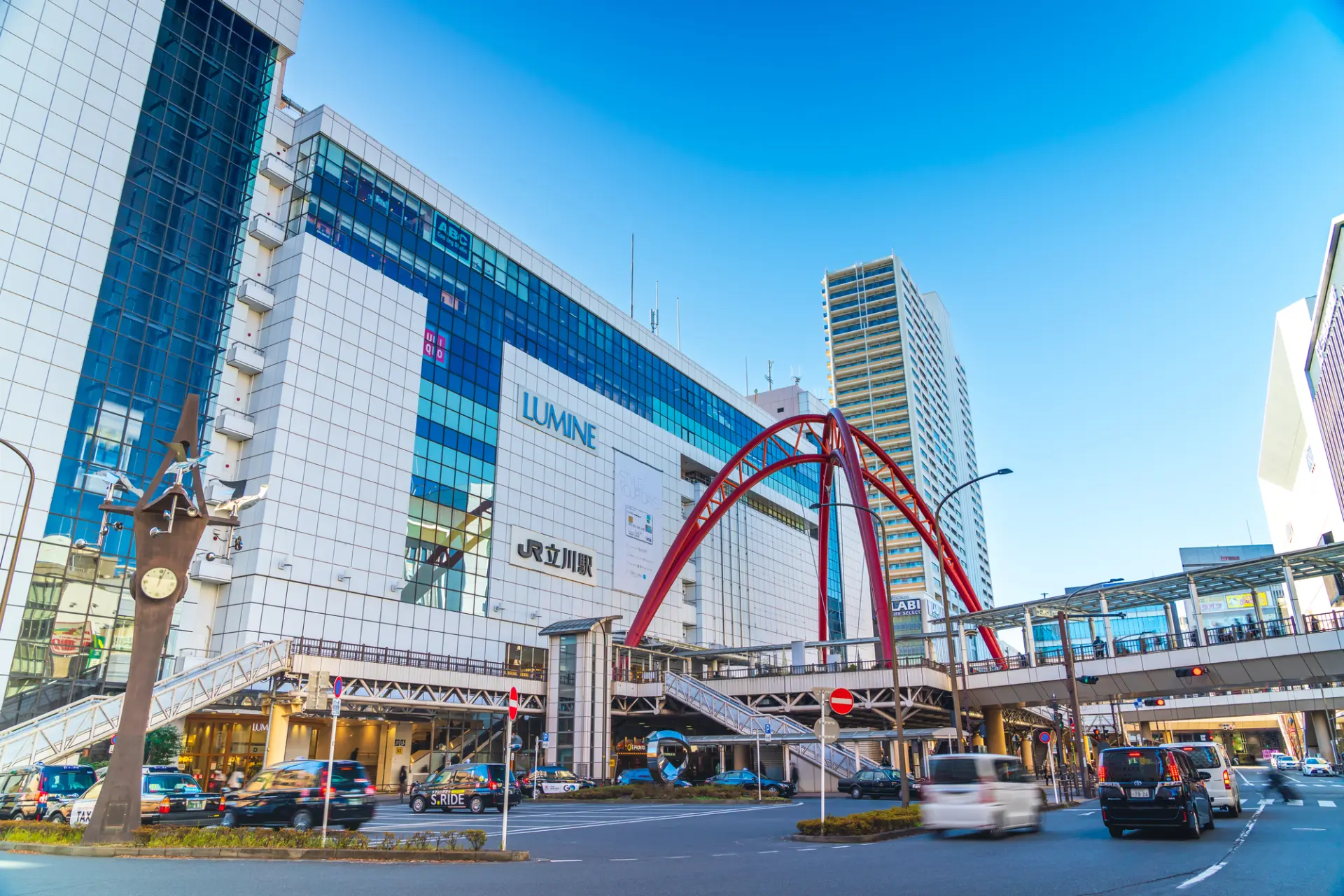
It is about a 10-15 minute walk from Showa Kinen Park back to Tachikawa Station, where department stores line the station front. It is a good place to eat after viewing the leaves before heading back into central Tokyo, saving the time of changing trains to find a restaurant.
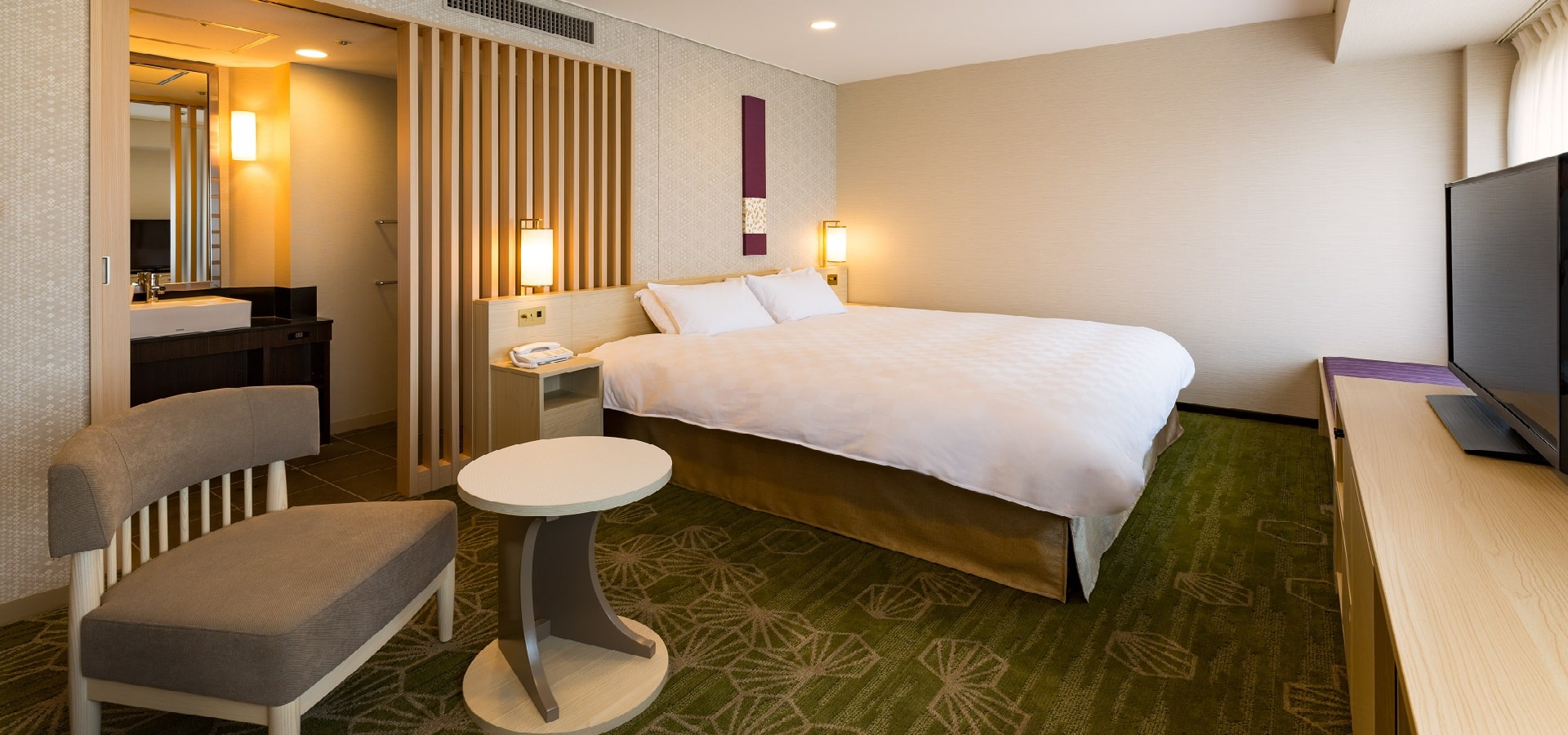
Tachikawa Station is also the junction of the JR Chuo Line and the Tama Monorail. If you plan to stay overnight, choosing a hotel around Tachikawa Station balances convenient transport with plenty of dining choices, making it easy to connect with Shinjuku or central Tokyo itineraries.
Showa Kinen Park Autumn Leaves FAQ
Q: How much is admission to Showa Kinen Park, and where do I buy tickets?
Adult (age 15 and over) admission is ¥450, ¥210 for ages 65 and over, free for junior high school students and younger, and the annual pass is ¥4,500. All are bought on the day at the automatic ticket machines in the park.
Q: When are the ginkgo and maples at Showa Kinen Park most beautiful in 2026?
Peak color for both the ginkgo avenue and the Japanese Garden is around mid to late November. The period when the two overlap is best for seeing both colors together. Check the official website’s “Hana Dayori” (flower updates) for actual conditions.
Q: How do I buy tickets for the Autumn Night Walk illumination? Does the Japanese Garden cost extra?
The ginkgo avenue and Canal illuminations can be viewed with just the park admission ticket. Entering the Japanese Garden at night requires a separate “Japanese Garden Illumination Viewing Ticket,” which must be reserved in advance on a dedicated website.
Q: Is there a big difference in crowds between weekdays and weekends at Showa Kinen Park?
Weekday mornings are quieter and good for relaxed viewing and photos. On weekends and after dusk during the illumination period, visitors increase noticeably, and queues are common at the ginkgo avenue and the Japanese Garden entrance, so we recommend arriving early or going on a weekday.
Q: Can I still visit Showa Kinen Park for autumn leaves on a rainy day?
The park opens as usual in the rain, but the stone steps and wooden bridges in the Japanese Garden are slippery, so take it slowly. In light rain the leaf colors look richer and are good for photos. We recommend bringing rain gear and wearing non-slip shoes, but a picnic on the lawn is not recommended.
Q: How long does it take to get from Shinjuku to Showa Kinen Park?
The JR Chuo Line Rapid from Shinjuku Station takes about 30-40 minutes to Tachikawa Station. From there you can walk about 10 minutes to Akebono Gate, or change to the JR Ome Line for one stop to Nishi-Tachikawa Station and walk about 2 minutes from the exit to Nishi-Tachikawa Gate.
Q: Will it be cold to see the illumination at night, and what should I prepare?
Temperatures drop noticeably during the illumination in November, and suburban Tachikawa is cooler than central Tokyo, so we recommend bringing hand warmers and a windproof jacket. The reflections on the water under the lights also have richer layers than in daylight.