
JR East Pass: Price Changes and Discontinuation of the Old Passes
The 2026 reform of the JR East Pass brings new passes, along with some price adjustments and the discontinuation of the old passes. Understanding these changes is essential for planning your budget and when to buy. This section gives detailed fare information and explains how the old passes are handled.
The adjustments reflect the wider coverage and changes in operating costs, and also encourage travelers to switch to the more flexible new passes. Be sure to check the latest prices carefully before buying, and note the final sales date of the old passes.
New Pass Prices at a Glance
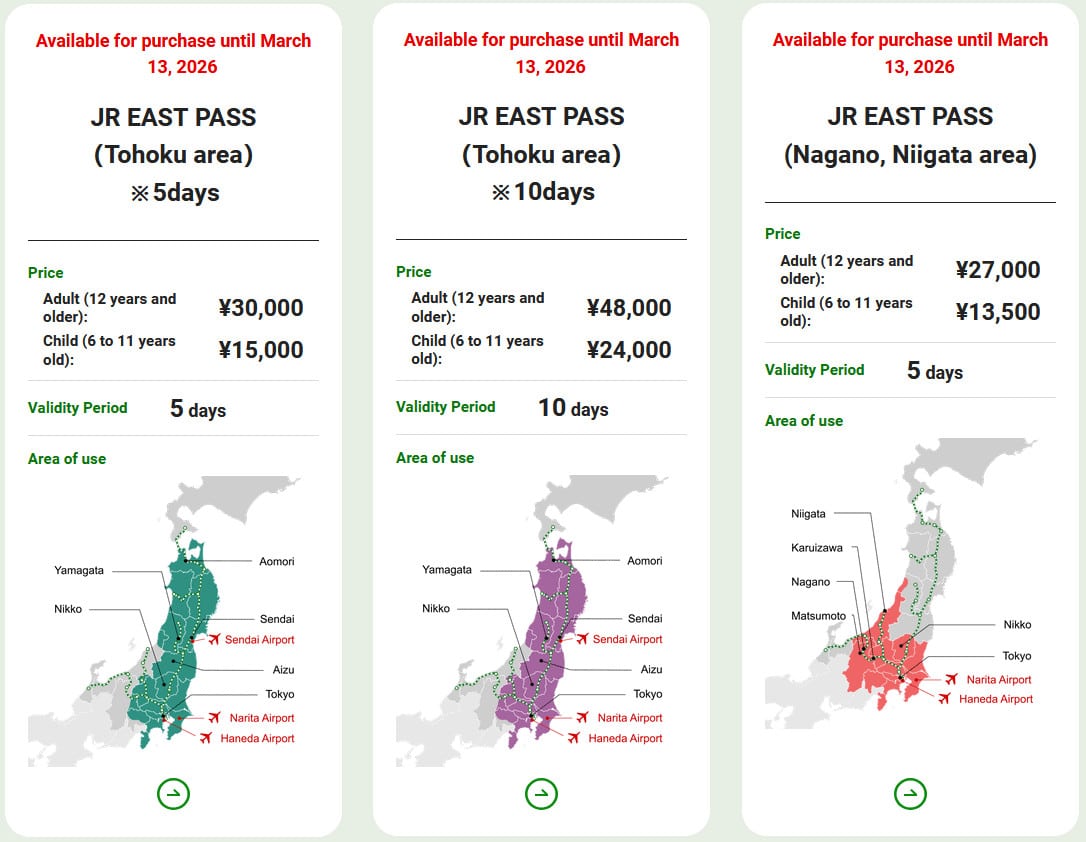
The new “JR East Pass” comes as a 5-day version (¥35,000 adult, ¥17,500 child) and a 10-day version (¥50,000 adult, ¥25,000 child), with wider coverage.
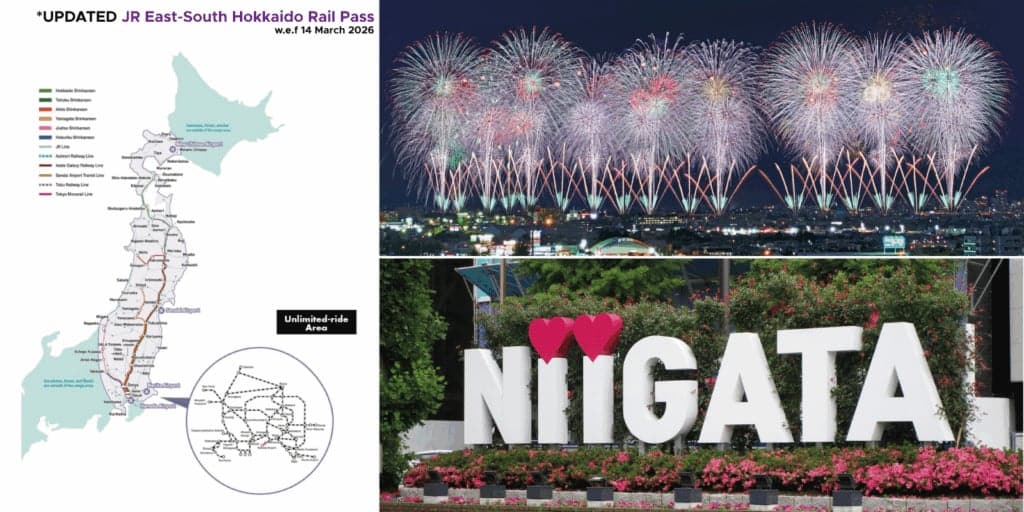
The “JR East-South Hokkaido Rail Pass” is valid for 6 consecutive days at ¥40,000 per adult (previously ¥35,370) and ¥20,000 per child, with Tohoku and Niigata newly added to its coverage. The “Hokuriku Arch Pass” is valid for 7 consecutive days at ¥35,000 per adult (previously ¥30,000) and ¥17,500 per child.
Old Pass Discontinuation and Validity
The former “JR East Pass (Tohoku Area)” and “JR East Pass (Nagano, Niigata Area)” ceased sales on March 13, 2026, and from March 14 are replaced by the new pass.
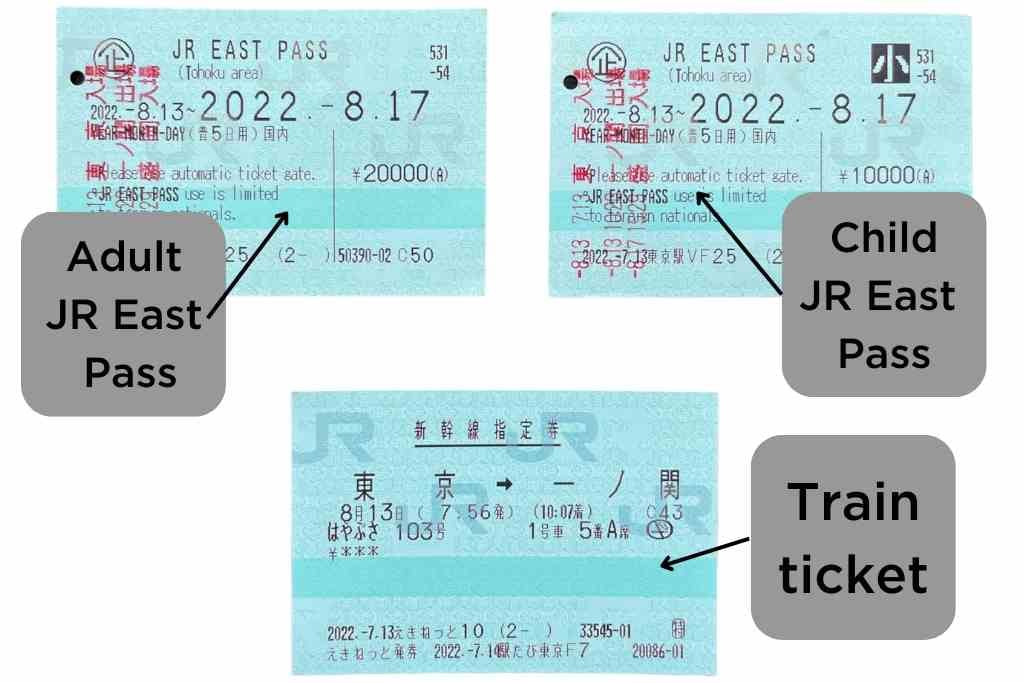
However, old passes bought before the sales end date can still be used normally as long as they are within their validity period. Travelers who already hold an old pass need not worry, but be sure to check the expiry date printed on the ticket and finish using it within that period.
Adjustments to the Nationwide JR Pass and Other Regional Passes
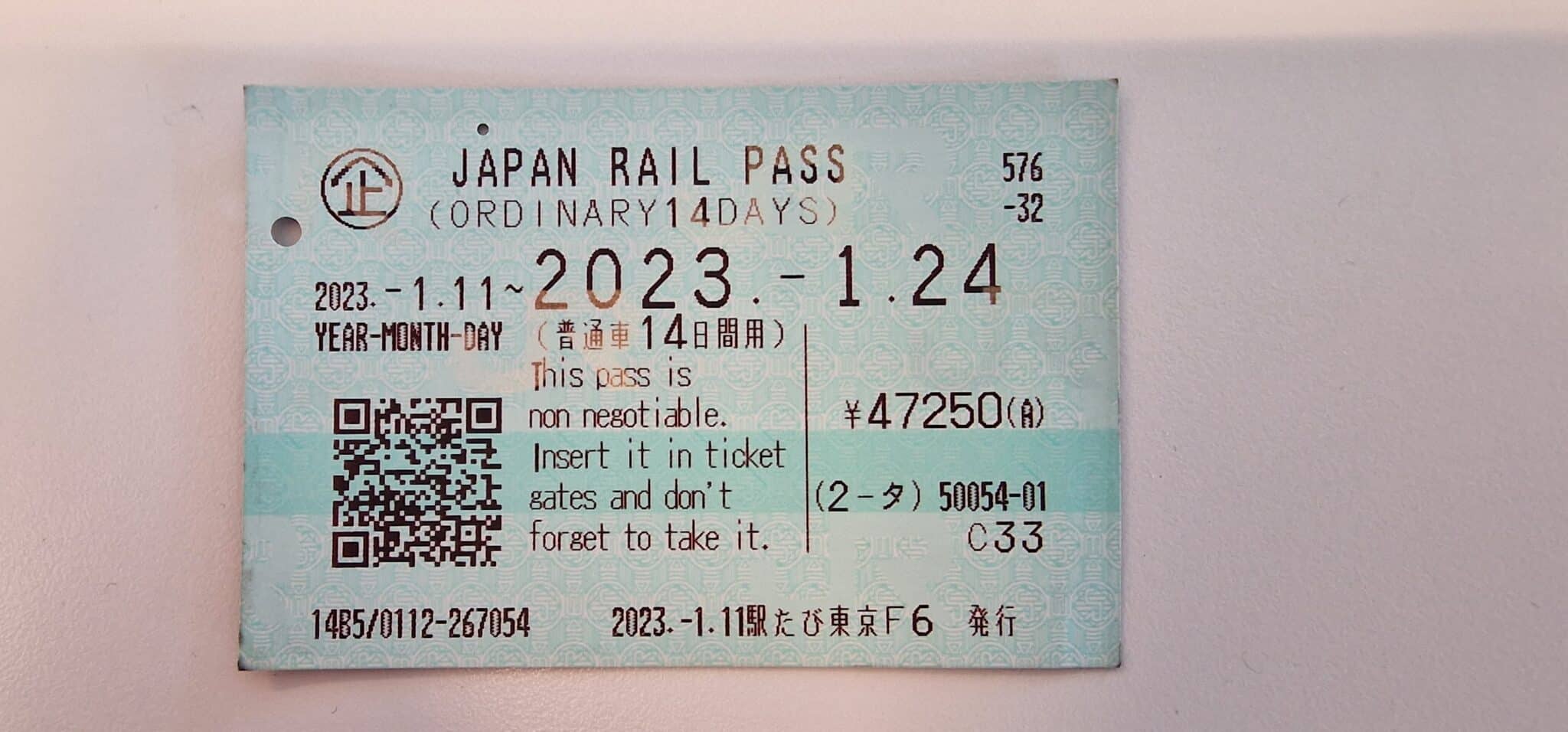
From April 1, 2026, the “JAPAN RAIL PASS” booked through JAPAN RAIL PASS Reservation can be exchanged directly at designated reserved-seat ticket machines with a passport reader at selected JR East stations, which is more convenient.
The “Hokuriku Arch Pass” expanded its coverage from March 14, 2026 and was repriced to ¥35,000, while the JR Tokyo Wide Pass (3 days) rose from ¥15,000 to ¥16,000.
JR East Pass: Buying and Exchanging Guide
Buying and exchanging a JR Pass is an important part of independent travel in Japan. With the 2026 reform, purchase channels and exchange procedures for the JR East Pass will also be streamlined. This section explains how to buy and exchange your pass efficiently so your trip goes smoothly.
Learning these steps in advance not only saves precious travel time but also helps you avoid unnecessary trouble on the spot. Whether you book online or buy in person, knowing the correct process is the first step to enjoying the convenience of the JR Pass.
Overseas Booking and Purchase in Japan
Before departure, you can book a JR East Pass overseas through the official JR-EAST Train Reservation website or partner travel agencies such as Klook and KKday. Overseas bookings usually give you an exchange voucher, which you exchange after arriving in Japan.
After arriving in Japan, you can also buy directly at a JR EAST Travel Service Center or at some stations. We recommend comparing the price and convenience of booking overseas versus buying in Japan.
New Ticket Machine Exchange Option
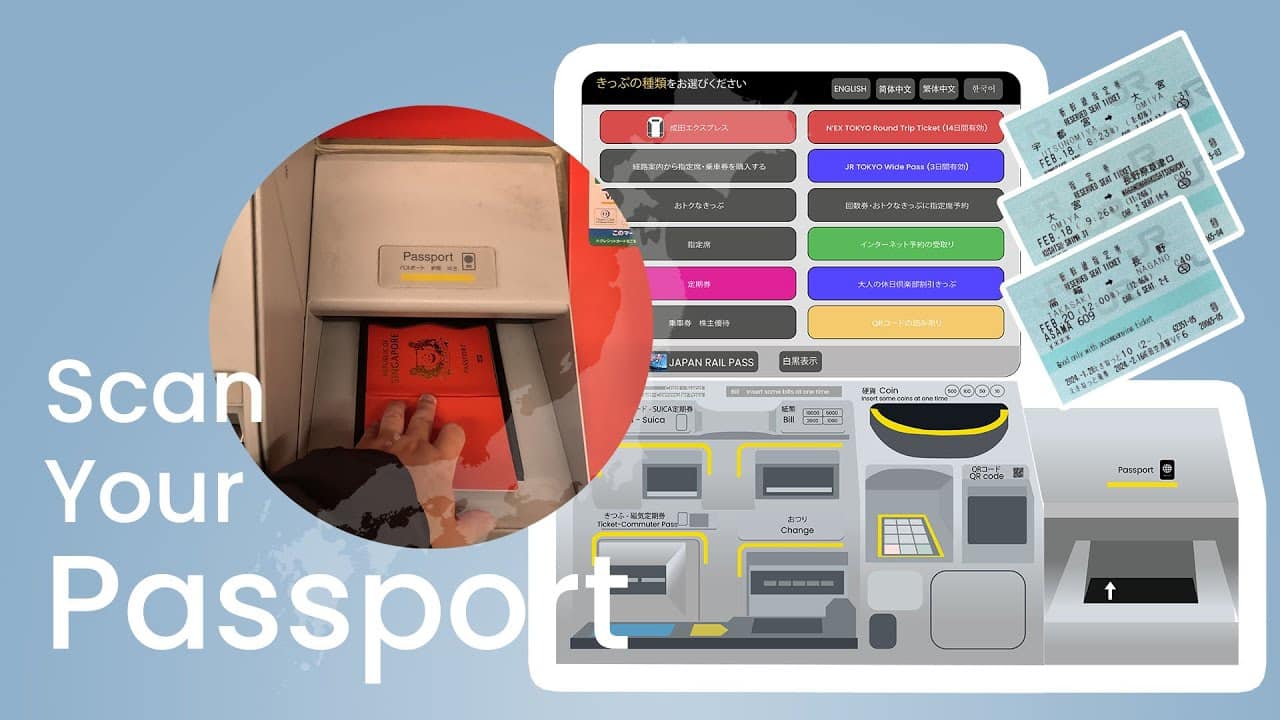
From April 1, 2026, the nationwide JR Pass booked through the official JR website “JAPAN RAIL PASS Reservation” can be exchanged directly at designated reserved-seat ticket machines with a passport-reading function. This new measure greatly reduces the time spent waiting at staffed counters.
This applies to nationwide JR Passes booked through JAPAN RAIL PASS Reservation; those bought from travel agencies must still be exchanged at the original exchange points. Simply scan your passport at the machine and follow the on-screen instructions to complete the exchange.
Reserved-Seat Booking and Usage Notes
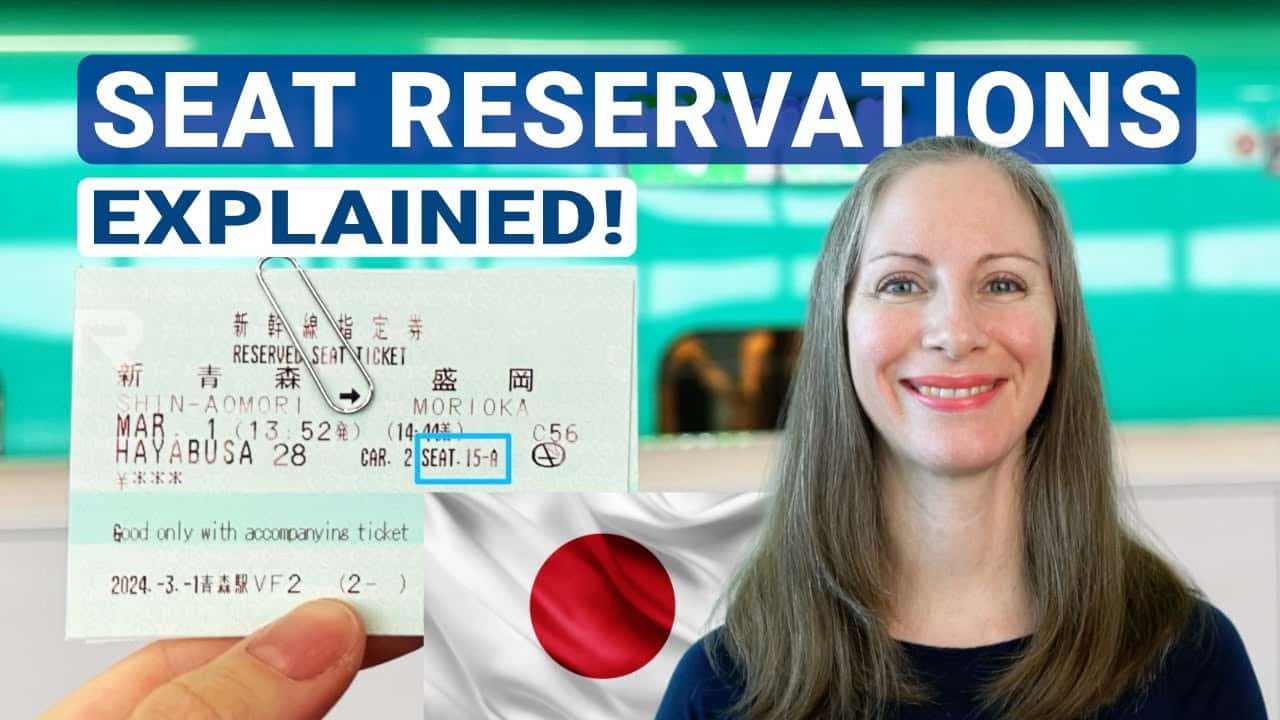
JR Pass holders can reserve ordinary-car reserved seats on trains within the designated area free of charge. We recommend reserving in advance when riding the Shinkansen or popular sightseeing trains, especially in peak season, to make sure you get a seat.
Seat reservations can be made at JR ticket offices, travel service centers, or reserved-seat ticket machines at some stations. Some passes also support online seat reservations: you can plan ahead with the JR-EAST Train Reservation system and pick up your ticket at a reserved-seat ticket machine.
JR East Pass: Practical Tips to Maximize Value
You buy the JR East Pass to travel Japan more economically and conveniently. But how to make full use of it and maximize its value is a question every traveler cares about. This section offers a series of practical tips to help you get the most out of your pass.
From itinerary planning to train choice and extra discounts, these small tricks can make your Japan trip richer and better value. Careful planning and smart travel are the surest way to enjoy Japan’s railways.
Itinerary Planning: Choose the Best Pass for Your Number of Days
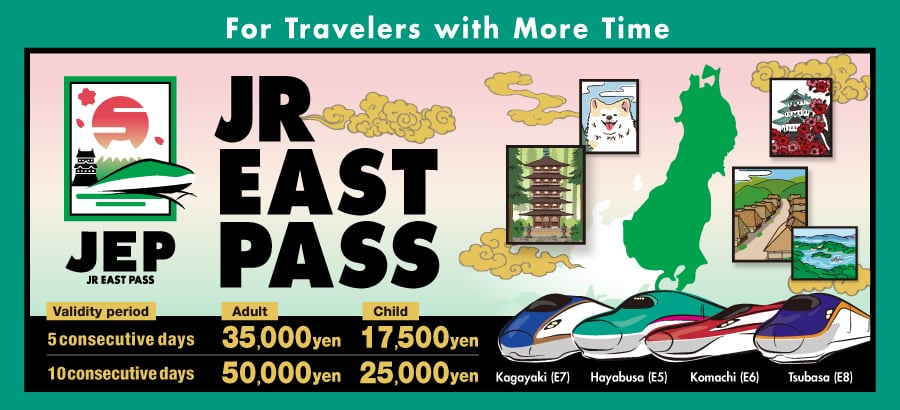
The new JR East Pass comes in 5-day (¥35,000) and 10-day (¥50,000) versions: choose 5 days for a short trip and 10 days to explore eastern Japan in depth. You can split your itinerary between Kanto (Tokyo, Nikko, Karuizawa) and Tohoku (Sendai, Aomori, Akita), or combine it with Nagano and Niigata.
We suggest scheduling long-distance trips within the validity period, such as taking the Shinkansen from Tokyo to Sendai and then on to Aomori, using the pass’s unlimited rides to hop between many places and save considerably on transport.
Themed Trains and JR Buses
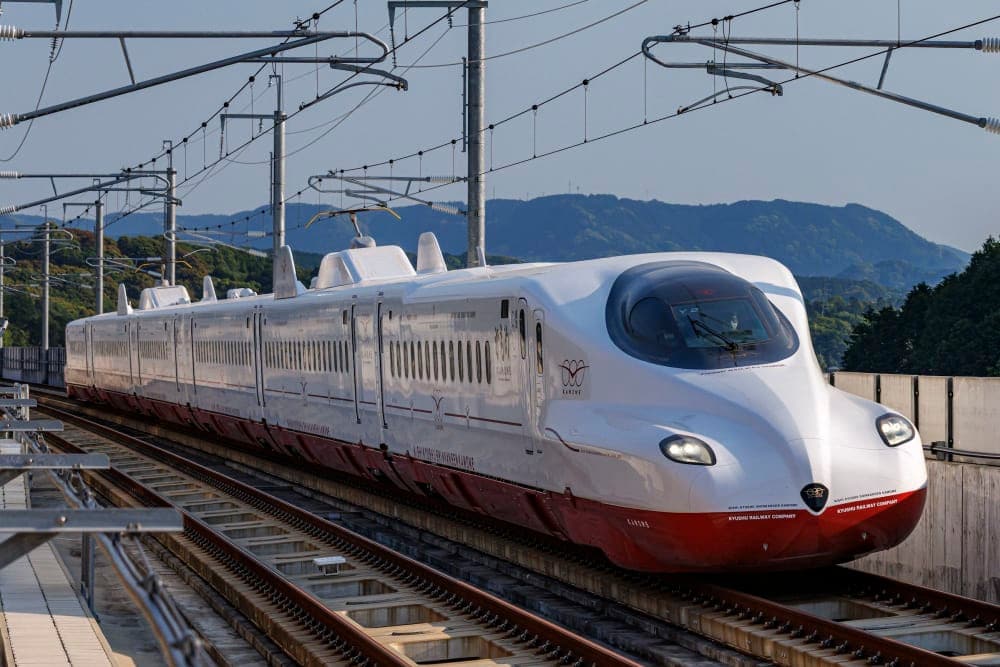
The JR East area has many distinctive themed sightseeing trains (such as the Resort Shirakami and SATONO). These trains usually require a seat reservation, but JR Pass holders can ride them free of charge. Riding them is a unique travel experience in itself.
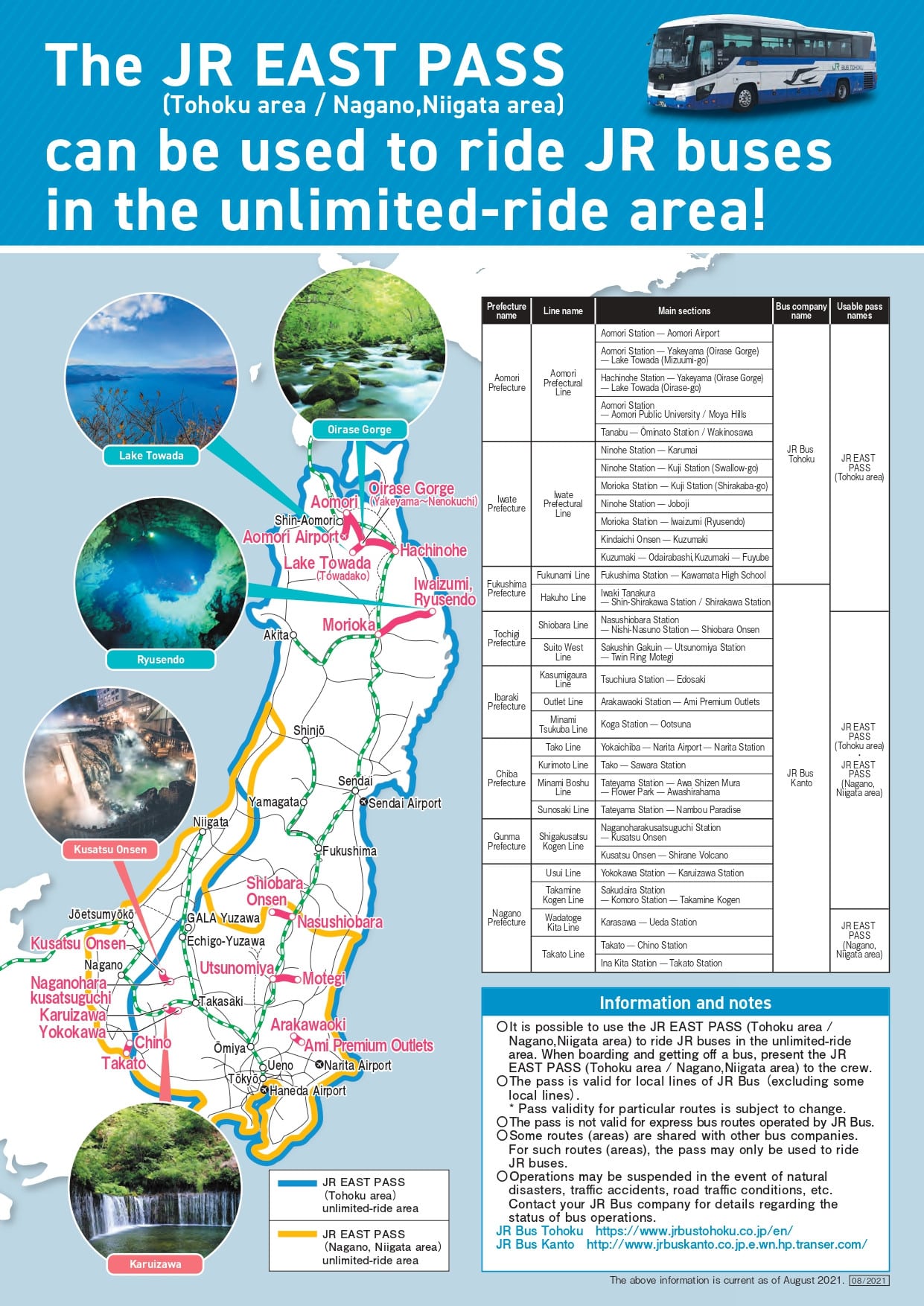
In addition, some JR bus routes, such as JR Bus Kanto routes, are also covered by the pass. Using these buses lets you reach sights that trains do not, making your itinerary more complete. Be sure to check in advance exactly which bus routes you can ride.
JR EAST Rewards and Other Perks
JR East offers the “JR EAST Rewards” program: just show your JR Pass at participating shops to get exclusive discounts or small gifts. The perks cover shopping, dining and sightseeing facilities, adding extra value to your trip.
JR East also runs special pass-related campaigns and partner deals from time to time, such as attraction discounts in cooperation with local tourism offices. We recommend following the official JR East website or partner announcements before departure so you do not miss any chance to save.

Where to Stay Along the Way
If you exchange your JR East Pass and head from Tokyo to Tohoku or Shin’etsu, you can stay around Tokyo Station, Ueno or Shinjuku; all three have a JR EAST Travel Service Center, so exchanging and setting off is straightforward.


The 2026 JR East Pass Series: New Passes Explained
The new pass series that JR East launches in 2026 aims to offer wider coverage and a more convenient travel experience. The passes have been redesigned to suit different itineraries, so whether you want to explore eastern Japan in depth or extend to Hokkaido or Hokuriku, you can find a suitable option.
This section introduces the features, coverage and validity of the three core new passes in detail, to help you make the smartest choice when planning your trip to Japan. Knowing the specific differences between these passes is the key to getting the most out of your trip.
JR East Pass (JR EAST PASS)
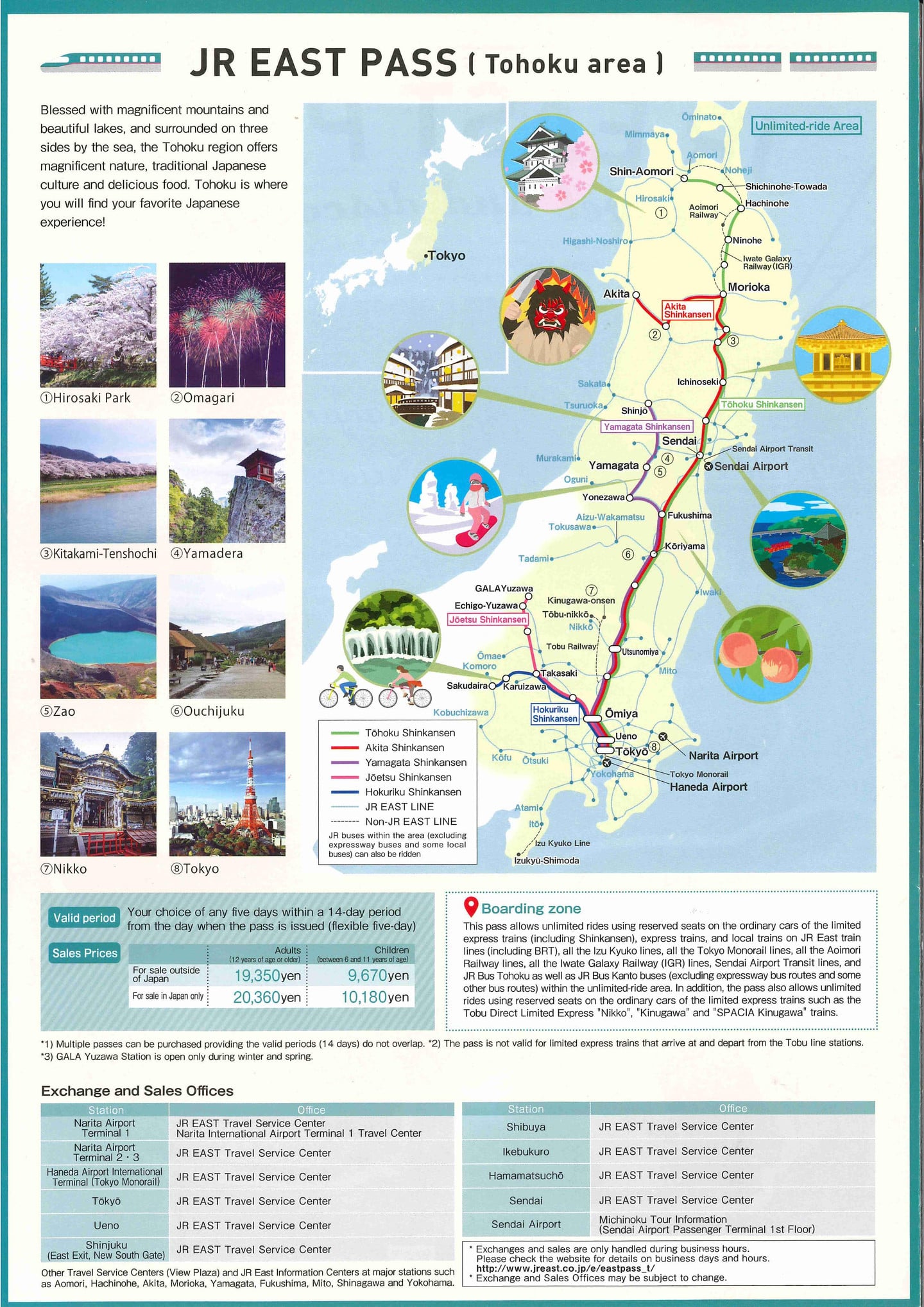
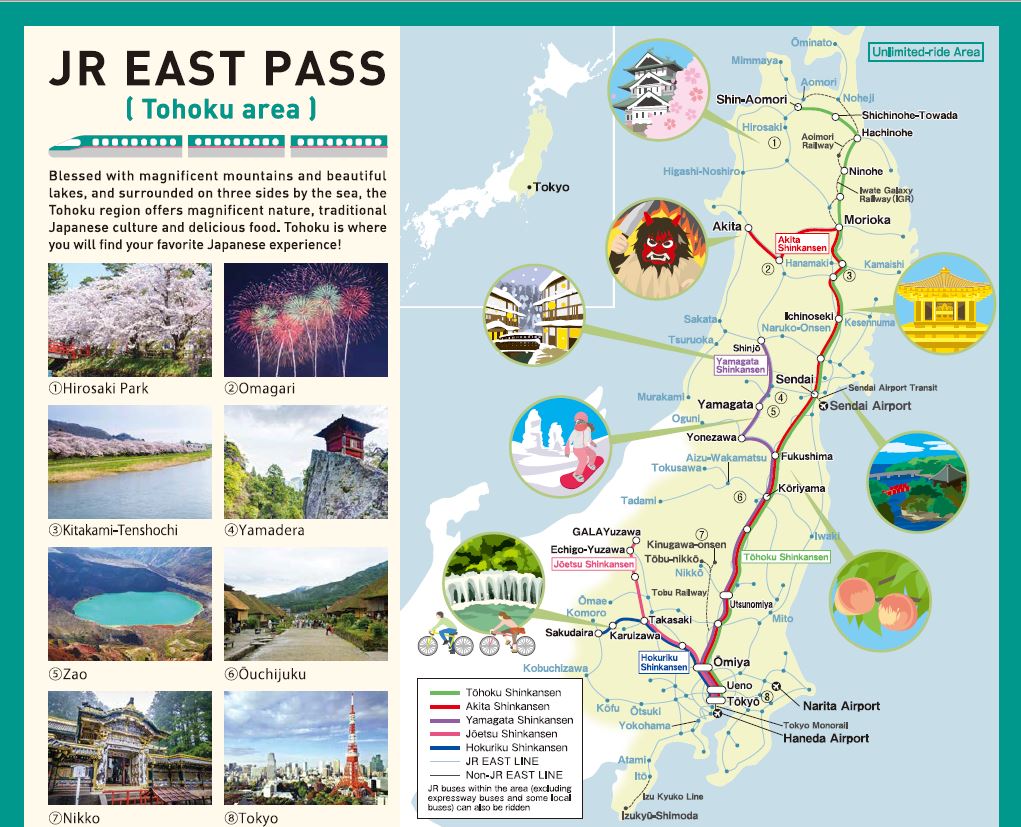
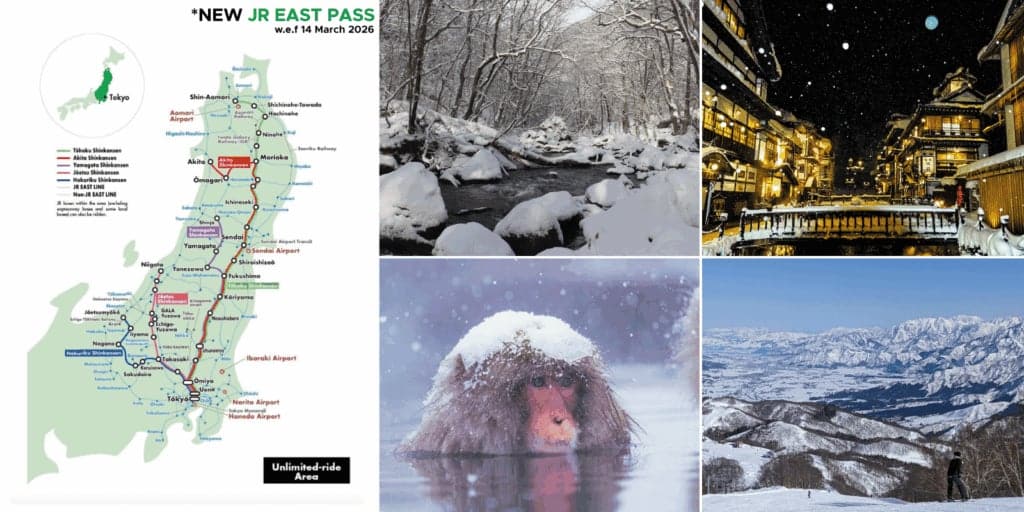
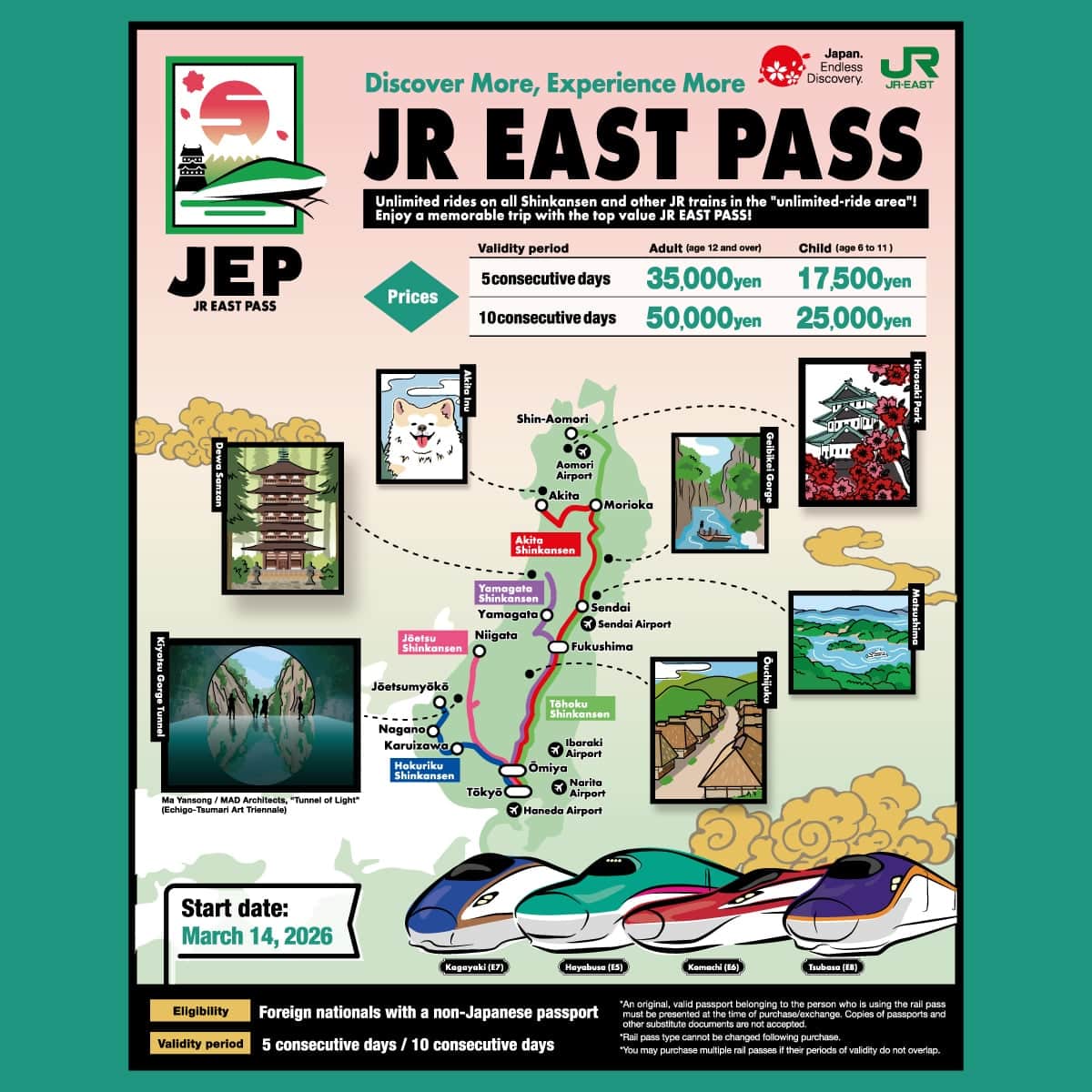
The new “JR East Pass” merges the former Tohoku and Nagano/Niigata passes and comes in a 5-day version (¥35,000) and a 10-day version (¥50,000). It covers all JR East lines, the Tokyo Monorail, and local private railways such as Aoimori Railway, IGR Iwate Galaxy Railway and Sendai Airport Railway.
With the pass you can ride Shinkansen, limited express and local trains in the designated area an unlimited number of times, in ordinary-car reserved seats, making it easy to reach sights in Kanto, Tohoku and Shin’etsu such as Karuizawa, Nikko, Sendai and Aomori.
JR East-South Hokkaido Rail Pass
This pass is valid for 6 consecutive days at ¥40,000 per adult and is jointly sold by JR East and JR Hokkaido. Its coverage includes designated JR East lines in Tohoku and Niigata (including the entire Joetsu Shinkansen and Uetsu Line), the Hokkaido Shinkansen, and JR Hokkaido lines in the Hakodate, Sapporo and Otaru areas, which suits itineraries linking Tokyo, Tohoku and Hokkaido.
Hokuriku Arch Pass
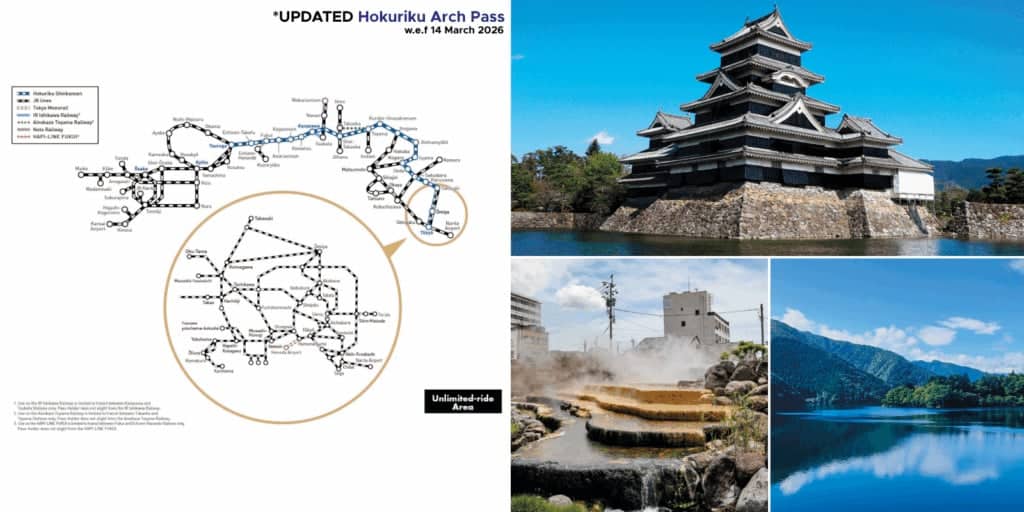
The new “Hokuriku Arch Pass” is valid for 7 consecutive days at ¥35,000 per adult and is jointly sold by JR East and JR West. From March 14, 2026, its coverage expands to the Tokyo metropolitan area, the Chuo Line, the Oito Line and more, linking Tokyo, Kanazawa and Osaka.
With the pass you can ride the Hokuriku Shinkansen and JR East and JR West limited express and local trains in ordinary-car reserved seats within the area, plus the Tokyo Monorail. To buy it, you must hold a passport issued by a country other than Japan and enter Japan with “Temporary Visitor” status.
JR East Pass: Price Changes and Discontinuation of the Old Passes
The 2026 reform of the JR East Pass brings new passes, along with some price adjustments and the discontinuation of the old passes. Understanding these changes is essential for planning your budget and when to buy. This section gives detailed fare information and explains how the old passes are handled.
The adjustments reflect the wider coverage and changes in operating costs, and also encourage travelers to switch to the more flexible new passes. Be sure to check the latest prices carefully before buying, and note the final sales date of the old passes.
New Pass Prices at a Glance
The new “JR East Pass” comes as a 5-day version (¥35,000 adult, ¥17,500 child) and a 10-day version (¥50,000 adult, ¥25,000 child), with wider coverage.
The “JR East-South Hokkaido Rail Pass” is valid for 6 consecutive days at ¥40,000 per adult (previously ¥35,370) and ¥20,000 per child, with Tohoku and Niigata newly added to its coverage. The “Hokuriku Arch Pass” is valid for 7 consecutive days at ¥35,000 per adult (previously ¥30,000) and ¥17,500 per child.
Old Pass Discontinuation and Validity
The former “JR East Pass (Tohoku Area)” and “JR East Pass (Nagano, Niigata Area)” ceased sales on March 13, 2026, and from March 14 are replaced by the new pass.
However, old passes bought before the sales end date can still be used normally as long as they are within their validity period. Travelers who already hold an old pass need not worry, but be sure to check the expiry date printed on the ticket and finish using it within that period.
Adjustments to the Nationwide JR Pass and Other Regional Passes
From April 1, 2026, the “JAPAN RAIL PASS” booked through JAPAN RAIL PASS Reservation can be exchanged directly at designated reserved-seat ticket machines with a passport reader at selected JR East stations, which is more convenient.
The “Hokuriku Arch Pass” expanded its coverage from March 14, 2026 and was repriced to ¥35,000, while the JR Tokyo Wide Pass (3 days) rose from ¥15,000 to ¥16,000.
JR East Pass: Buying and Exchanging Guide
Buying and exchanging a JR Pass is an important part of independent travel in Japan. With the 2026 reform, purchase channels and exchange procedures for the JR East Pass will also be streamlined. This section explains how to buy and exchange your pass efficiently so your trip goes smoothly.
Learning these steps in advance not only saves precious travel time but also helps you avoid unnecessary trouble on the spot. Whether you book online or buy in person, knowing the correct process is the first step to enjoying the convenience of the JR Pass.
Overseas Booking and Purchase in Japan
Before departure, you can book a JR East Pass overseas through the official JR-EAST Train Reservation website or partner travel agencies such as Klook and KKday. Overseas bookings usually give you an exchange voucher, which you exchange after arriving in Japan.
After arriving in Japan, you can also buy directly at a JR EAST Travel Service Center or at some stations. We recommend comparing the price and convenience of booking overseas versus buying in Japan.
New Ticket Machine Exchange Option
From April 1, 2026, the nationwide JR Pass booked through the official JR website “JAPAN RAIL PASS Reservation” can be exchanged directly at designated reserved-seat ticket machines with a passport-reading function. This new measure greatly reduces the time spent waiting at staffed counters.
This applies to nationwide JR Passes booked through JAPAN RAIL PASS Reservation; those bought from travel agencies must still be exchanged at the original exchange points. Simply scan your passport at the machine and follow the on-screen instructions to complete the exchange.
Reserved-Seat Booking and Usage Notes
JR Pass holders can reserve ordinary-car reserved seats on trains within the designated area free of charge. We recommend reserving in advance when riding the Shinkansen or popular sightseeing trains, especially in peak season, to make sure you get a seat.
Seat reservations can be made at JR ticket offices, travel service centers, or reserved-seat ticket machines at some stations. Some passes also support online seat reservations: you can plan ahead with the JR-EAST Train Reservation system and pick up your ticket at a reserved-seat ticket machine.
JR East Pass: Practical Tips to Maximize Value
You buy the JR East Pass to travel Japan more economically and conveniently. But how to make full use of it and maximize its value is a question every traveler cares about. This section offers a series of practical tips to help you get the most out of your pass.
From itinerary planning to train choice and extra discounts, these small tricks can make your Japan trip richer and better value. Careful planning and smart travel are the surest way to enjoy Japan’s railways.
Itinerary Planning: Choose the Best Pass for Your Number of Days
The new JR East Pass comes in 5-day (¥35,000) and 10-day (¥50,000) versions: choose 5 days for a short trip and 10 days to explore eastern Japan in depth. You can split your itinerary between Kanto (Tokyo, Nikko, Karuizawa) and Tohoku (Sendai, Aomori, Akita), or combine it with Nagano and Niigata.
We suggest scheduling long-distance trips within the validity period, such as taking the Shinkansen from Tokyo to Sendai and then on to Aomori, using the pass’s unlimited rides to hop between many places and save considerably on transport.
Themed Trains and JR Buses
The JR East area has many distinctive themed sightseeing trains (such as the Resort Shirakami and SATONO). These trains usually require a seat reservation, but JR Pass holders can ride them free of charge. Riding them is a unique travel experience in itself.
In addition, some JR bus routes, such as JR Bus Kanto routes, are also covered by the pass. Using these buses lets you reach sights that trains do not, making your itinerary more complete. Be sure to check in advance exactly which bus routes you can ride.
JR EAST Rewards and Other Perks
JR East offers the “JR EAST Rewards” program: just show your JR Pass at participating shops to get exclusive discounts or small gifts. The perks cover shopping, dining and sightseeing facilities, adding extra value to your trip.
JR East also runs special pass-related campaigns and partner deals from time to time, such as attraction discounts in cooperation with local tourism offices. We recommend following the official JR East website or partner announcements before departure so you do not miss any chance to save.
Where to Stay Along the Way
If you exchange your JR East Pass and head from Tokyo to Tohoku or Shin’etsu, you can stay around Tokyo Station, Ueno or Shinjuku; all three have a JR EAST Travel Service Center, so exchanging and setting off is straightforward.
JR East Pass: 2026 New System Overview
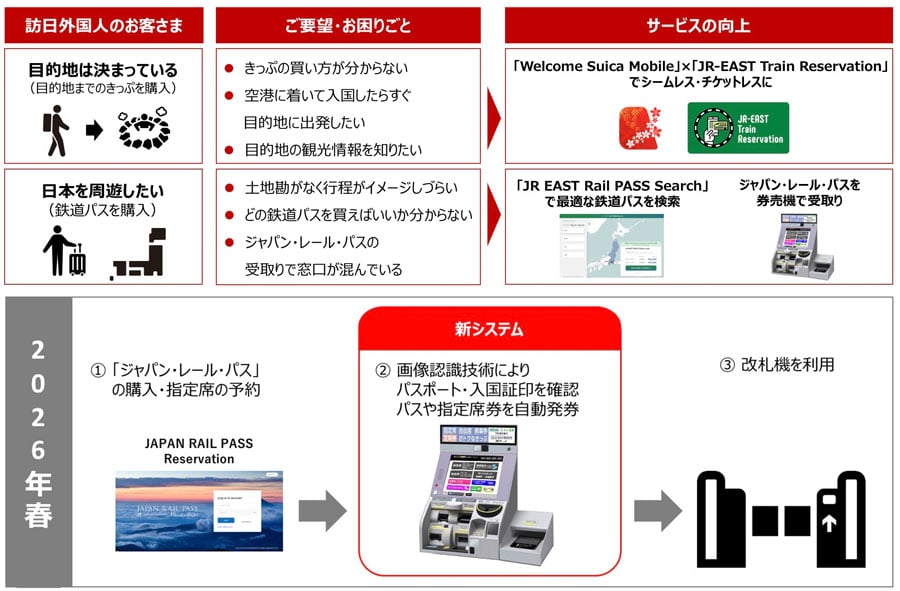
From March 14, 2026, the JR East Pass for visitors becomes the new “JR EAST PASS,” covering the entire JR East network. The reform merges the two regional passes (Tohoku, and Nagano/Niigata) into one and adjusts the price of some passes, so overseas visitors can plan trips around eastern Japan more flexibly.
The heart of the new system is fewer pass types, a wider coverage area and better digital services. If you plan to explore Tohoku, Kanto or even southern Hokkaido, it pays to understand these changes so you can get the most value from your pass and enjoy a seamless rail trip.
Officially launches on March 14, 2026
The new JR East Pass system took effect on March 14, 2026. The last sales day for the old Tohoku pass and the Nagano/Niigata pass was March 13; from March 14 they are replaced by the new “JR EAST PASS.” Before buying, please check the official JR East website for the latest announcements.
The change aims to standardize services and improve efficiency, so it is worth learning the new rules and planning your purchase early.
Consolidated and Simplified Pass Types
The new system merges the former “JR East Pass (Tohoku Area)” and “JR East Pass (Nagano, Niigata Area)” into a single “JR East Pass.” This greatly simplifies your choice: you no longer need to worry about regional boundaries and can move freely between areas.
Beyond the eastern Japan consolidation, the new “JR East-South Hokkaido Rail Pass” and “Hokuriku Arch Pass” have also been expanded and upgraded. These changes offer more attractive and flexible options for travelers who want a deeper trip.
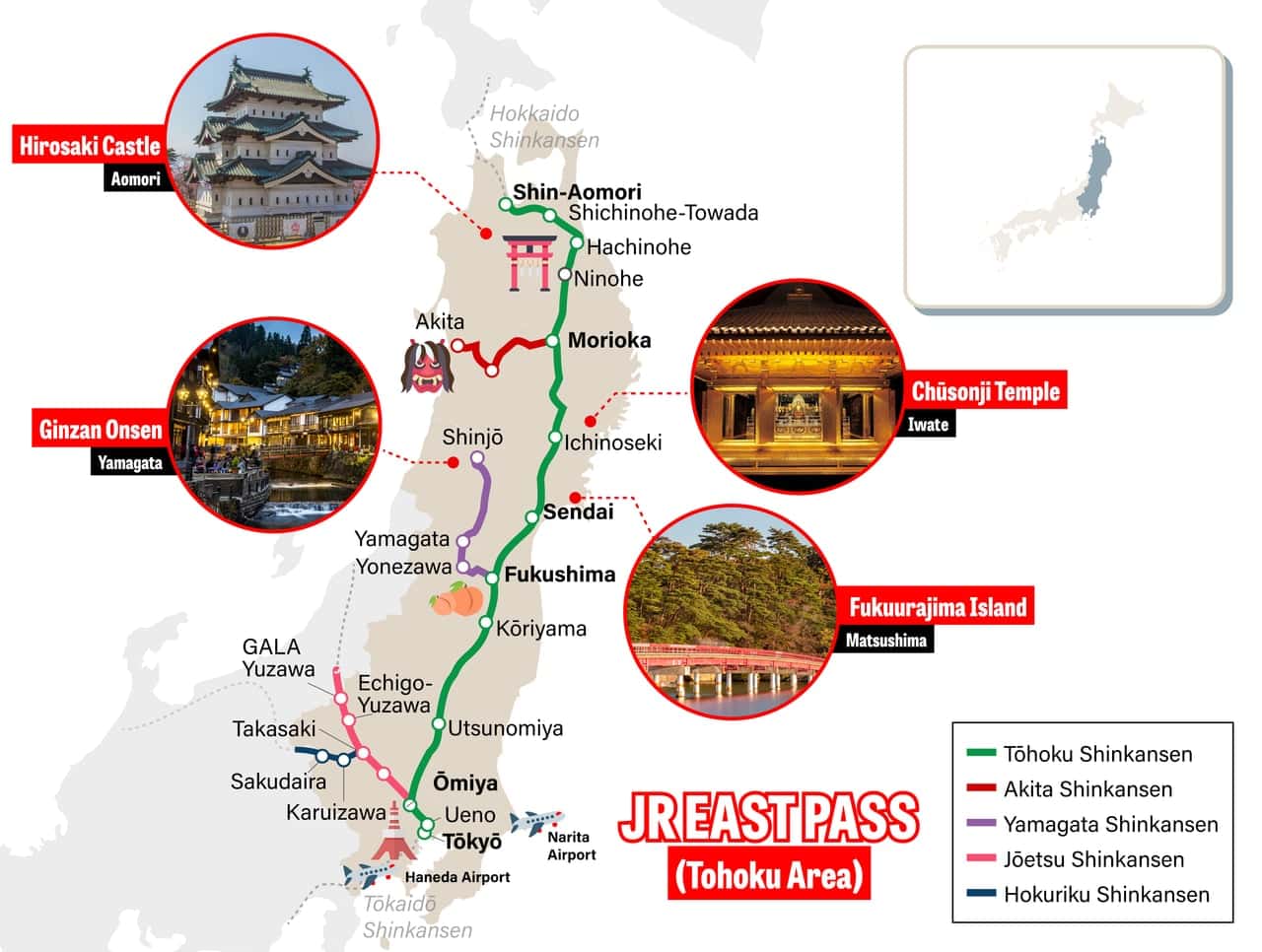
Fare Structure and Exchange Process Improvements
As pass coverage grows and services improve, the price of some passes will also change. The adjustments reflect the added value, and JR East is also working on easier exchange methods, such as expanding exchange functions at ticket machines.
From April 1, 2026, the nationwide JR Pass booked through JAPAN RAIL PASS Reservation can be exchanged at designated reserved-seat ticket machines at selected JR East stations that have a passport reader, saving you the wait at a staffed counter.
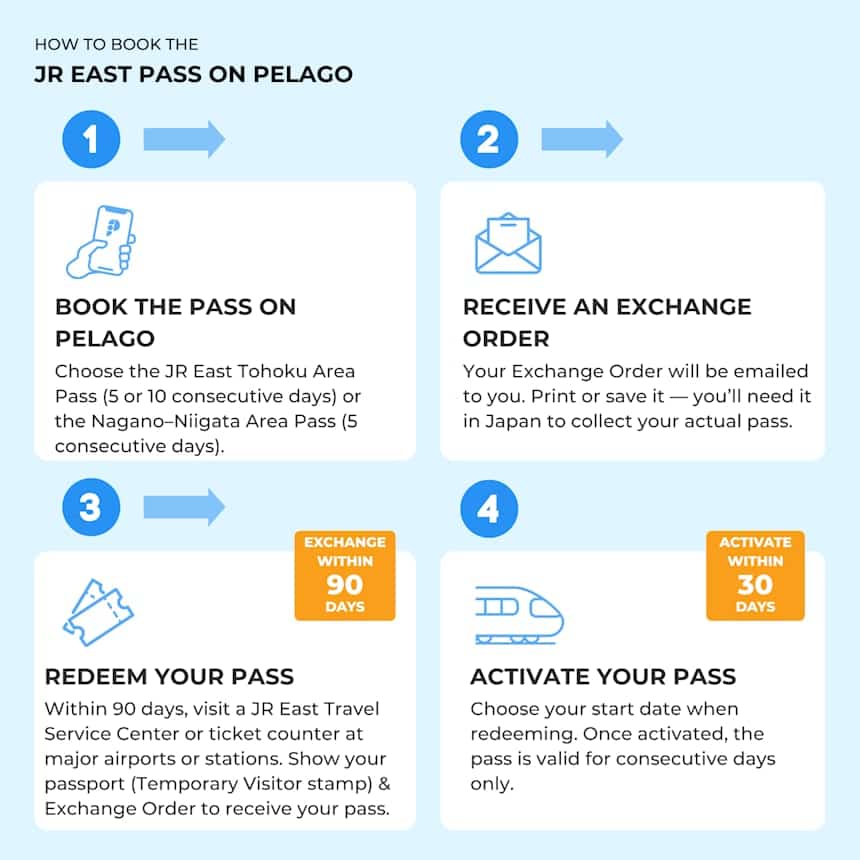
What Is the Japan Rail Pass, and Which Shinkansen Can You Ride?
The JR EAST PASS is a regional pass from JR East for overseas visitors, and you must hold a passport issued by a country other than Japan to buy it. The 5-day pass costs ¥35,000 for adults and the 10-day pass ¥50,000, with unlimited rides on Shinkansen, limited express and local trains in the covered area, in ordinary-car reserved seats, during the consecutive days.
The Tokaido Shinkansen and Hokkaido Shinkansen are not covered. For Tokyo–Osaka trips you will need the nationwide JAPAN RAIL PASS instead; the 7-day ordinary pass costs ¥53,000 from October 1, 2026, and riding the Nozomi or Mizuho requires a separate ticket.
Which Shinkansen Pass Should You Choose: JR EAST PASS, Tokyo Wide Pass or Hokuriku Arch Pass
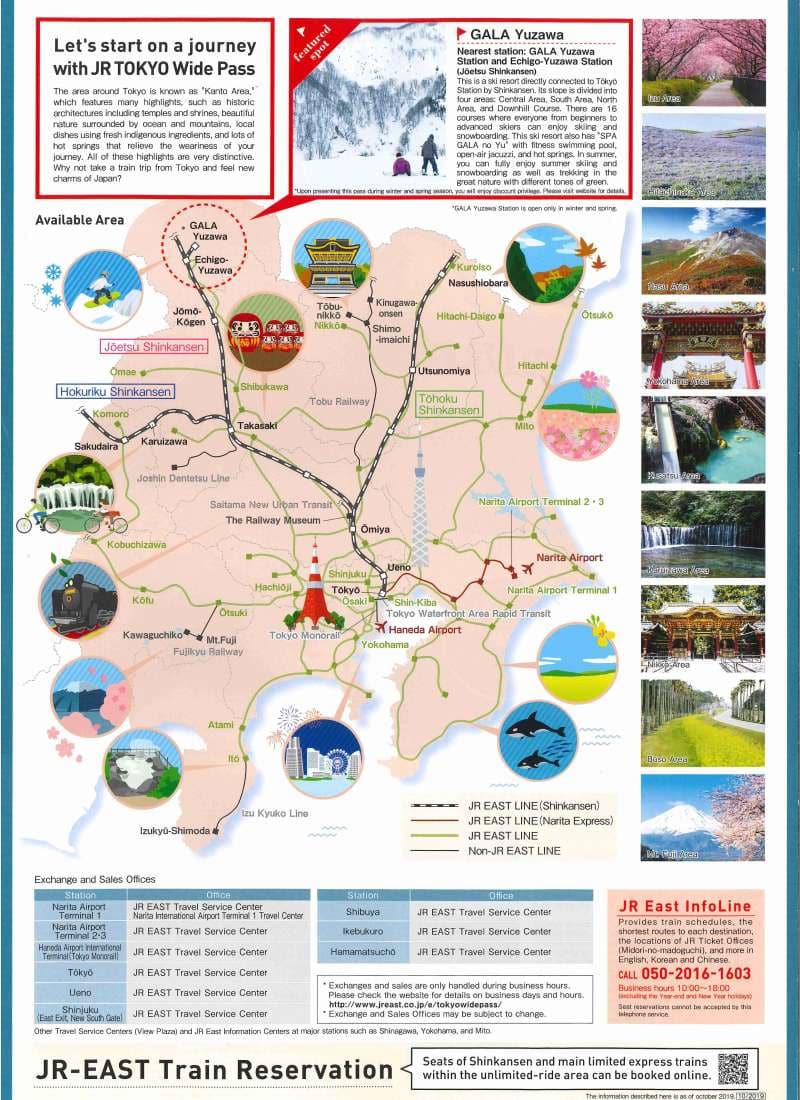
To use a Shinkansen pass around Tokyo, choose by number of days and destination. The JR EAST PASS (5 days ¥35,000, 10 days ¥50,000) covers the whole JR East network and suits trips to Tohoku and Shin’etsu. The JR TOKYO Wide Pass is valid for 3 consecutive days at ¥16,000 per adult, limited to the Kanto area, and also covers Fuji Kyuko, Izukyu and the Tokyo Monorail. The Hokuriku Arch Pass is valid for 7 consecutive days at ¥35,000 per adult and links Tokyo, Kanazawa and Osaka.
Getting There
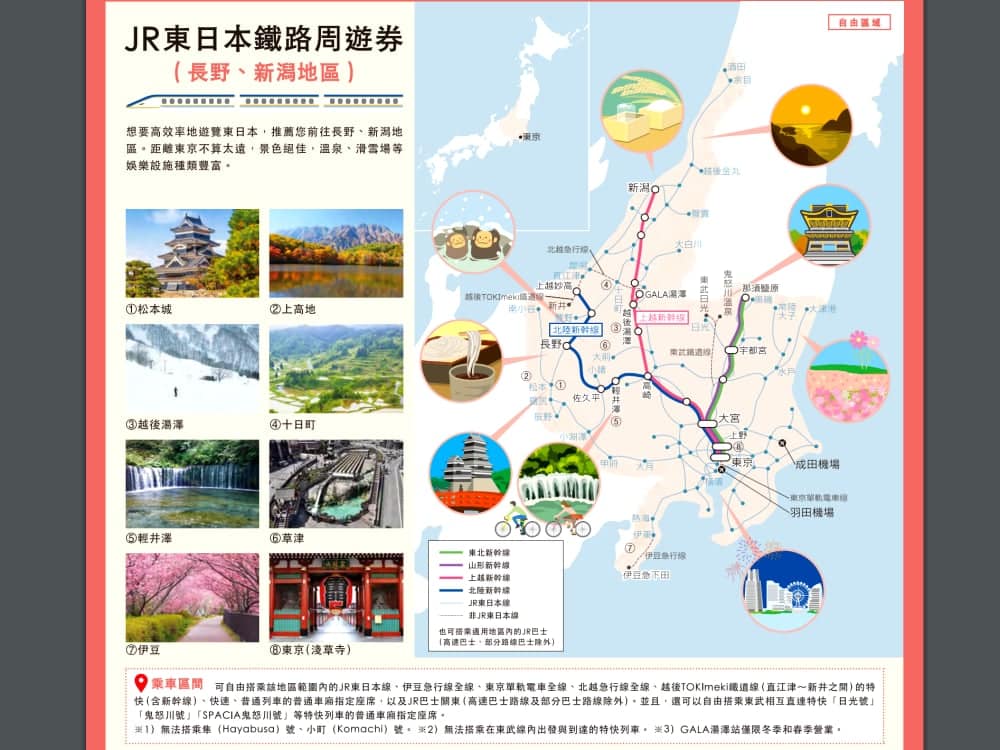
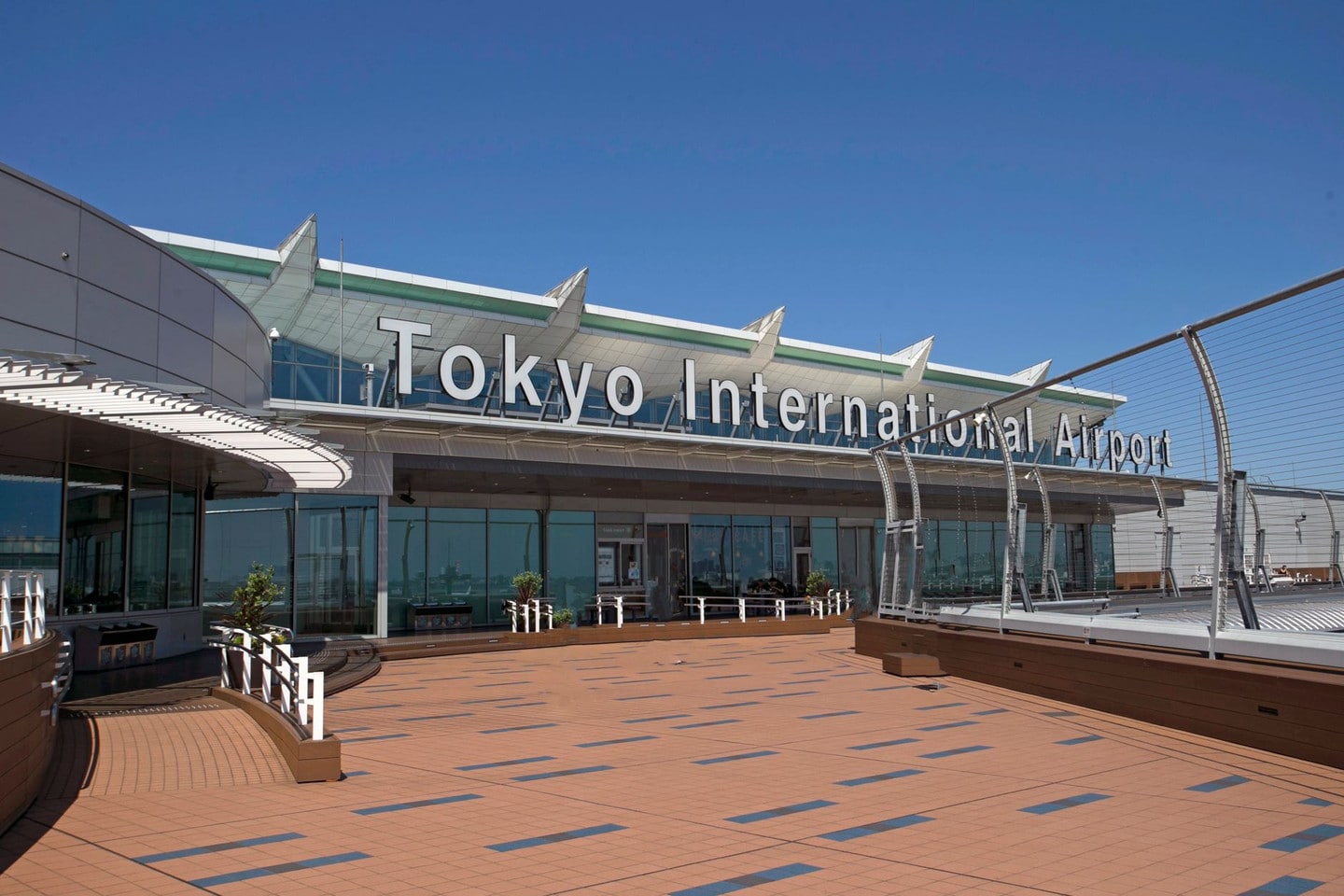
JR East Pass exchange and usage points are concentrated at the major stations, which makes things convenient. After arriving at Narita or Haneda Airport, you can exchange your pass directly at the JR EAST Travel Service Center in the airport, without going into the city and back to a station. If you are already staying in central Tokyo, head to the service centers at Tokyo Station’s Marunouchi North Exit, Shinjuku Station’s New South Exit or Ueno Station. These are close to the Yamanote Line and Shinkansen platforms, so after exchanging you can transfer straight to Tohoku or Kanto destinations.
We suggest exchanging your pass the day before your start date or early on the day itself, to avoid the queues before Shinkansen departures. If your route includes Sendai, the JR EAST Travel Service Center at Sendai Station also offers exchange and seat reservations, so you can confirm your onward route and seats before heading deeper into Tohoku.



Highlights and Experiences
![Japan Tickets] JR Pass East Japan Rail Pass (Tohoku Area) | Must-Buy Ticket for Tohoku ...](https://travel.williamlion.tw/wp-content/uploads/sites/7/2026/04/1775378606584-i101r1rh.jpg)
The best part of holding a JR East Pass is exploring the top sights of Tohoku and the Kanto outskirts without counting each fare. Matsushima in Miyagi Prefecture is one of Japan’s Three Views; take the Shinkansen to Sendai and transfer to the Senseki Line to get there. The sight of more than 260 islands dotting the bay makes it one of the classic trips within the pass area. Hirosaki Castle in Aomori is known for cherry blossoms in spring and autumn leaves in fall, and boating on the moat around the castle tower is also popular with visitors.
If you love mountain snow scenery, head to Zao in Yamagata, where in winter a ropeway takes you up to see the famous “snow monsters.” Kakunodate in Akita preserves many samurai residences, and strolling the stone-paved lanes of the samurai district gives you a feel for the Edo period. These sights are scattered across the Tohoku prefectures, which is exactly where the pass’s unlimited Shinkansen and limited express rides shine. You can fit several cities into your days as you like, and save on Shinkansen and limited express fares.
Tickets and Tours
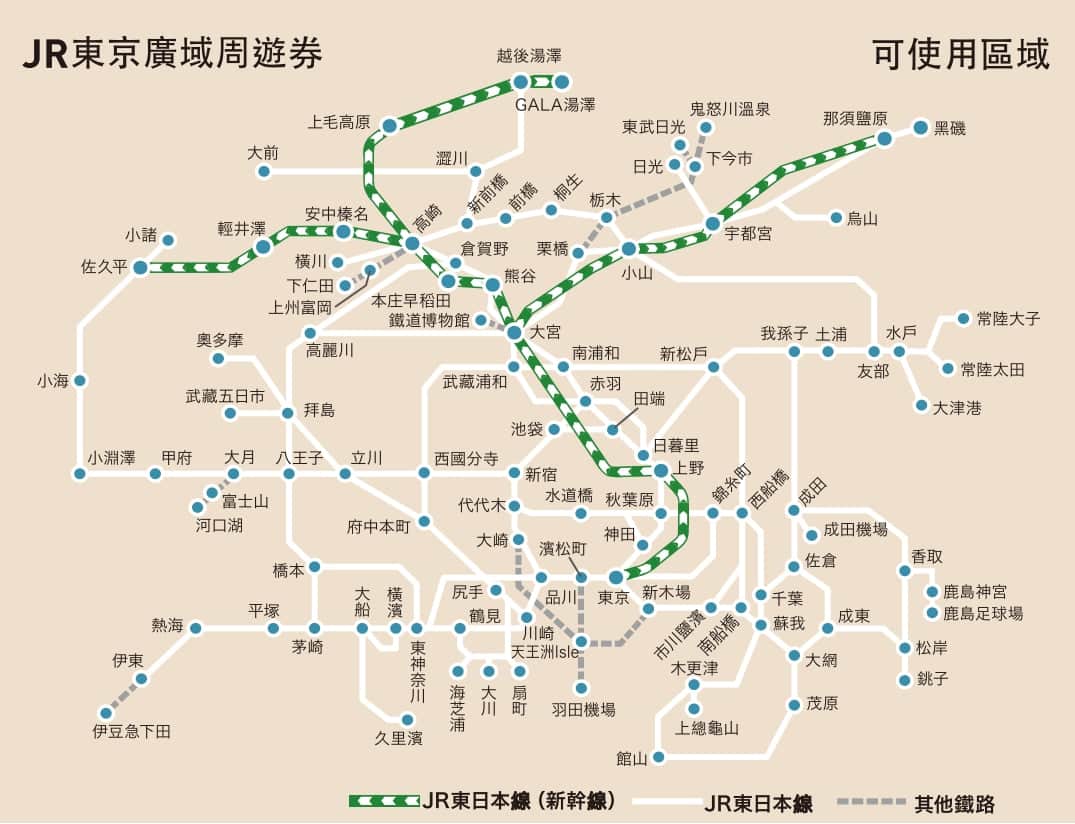
Besides planning on your own, you can also book a JR East Pass exchange voucher in advance through platforms such as KKday and Klook, then exchange it at a designated station with your booking confirmation after arriving in Japan. Prices and exchange methods follow each platform’s product page, and some plans offer Chinese-language customer service, which suits first-time independent travelers. If you do not want to rely on the pass alone for sightseeing, you can also add a local day tour (for example a Matsushima cruise or a Zao snow monster ropeway set) to complement the pass’s transport coverage and enrich your itinerary.

Local Food
![2026 Latest] JR East Pass (Tohoku Area) 5-Day 4-Night Independent Trip: How to Ride ...](https://travel.williamlion.tw/wp-content/uploads/sites/7/2026/04/E69DB1E58C97E8A18CE7A88B-_Gemini_Generated_Image_xwo3tzxwo3tzxwo3.jpg)
When you travel deeper into Tohoku with the pass, Sendai Station is a great place to refuel. “Gyutan-dori” (Beef Tongue Street) on the 3rd floor of the station gathers well-known beef tongue restaurants such as Rikyu, Kisuke and Zenjiro. The thick-cut charcoal-grilled tongue is crisp outside and tender inside, and the signature way to eat it in Sendai is with barley rice and oxtail soup, so you can have a meal before changing trains. If you have time, the “Sendai Asaichi” market, about a 5-minute walk from the station, has several seafood-bowl and ramen stalls that are ideal before an early Shinkansen.
Sendai Specialty: Gyutan-dori (Rikyu / Kisuke / Zenjiro)
- 🍖 Must-order: Thick-cut charcoal-grilled beef tongue set (barley rice, oxtail soup, pickled wasabi)
- 💰 Price: about ¥2,400–¥2,900 per set
- 🚉 How to get there: Exit JR Sendai Station at the Shinkansen Central Gate; Gyutan-dori is on the 3rd floor of the station
For dessert, Sendai’s zunda (edamame) sweets are especially representative. The edamame shake and edamame mochi at “Zunda Saryo” are Sendai-only flavors that visitors should try, and many souvenir shops in the station have counters selling them. If your trip extends to Aomori, apple desserts and seafood bowls around the station are also worth trying. While moving between cities with your pass, set aside half an hour to an hour to taste local food in the station area and add more local flavor to your trip.
Sendai Dessert: Zunda Saryo
- 🍡 Must-order: Edamame shake (zunda shake), edamame mochi (zunda mochi)
- 💰 Price: from about ¥420 (edamame shake, depending on size)
- 🚉 How to get there: “Zunda Kōji” on the 3rd floor of JR Sendai Station; just past the Shinkansen ticket gates
The 2026 JR East Pass Series: New Passes Explained
The new pass series that JR East launches in 2026 aims to offer wider coverage and a more convenient travel experience. The passes have been redesigned to suit different itineraries, so whether you want to explore eastern Japan in depth or extend to Hokkaido or Hokuriku, you can find a suitable option.
This section introduces the features, coverage and validity of the three core new passes in detail, to help you make the smartest choice when planning your trip to Japan. Knowing the specific differences between these passes is the key to getting the most out of your trip.
JR East Pass (JR EAST PASS)
The new “JR East Pass” merges the former Tohoku and Nagano/Niigata passes and comes in a 5-day version (¥35,000) and a 10-day version (¥50,000). It covers all JR East lines, the Tokyo Monorail, and local private railways such as Aoimori Railway, IGR Iwate Galaxy Railway and Sendai Airport Railway.
With the pass you can ride Shinkansen, limited express and local trains in the designated area an unlimited number of times, in ordinary-car reserved seats, making it easy to reach sights in Kanto, Tohoku and Shin’etsu such as Karuizawa, Nikko, Sendai and Aomori.
JR East-South Hokkaido Rail Pass
This pass is valid for 6 consecutive days at ¥40,000 per adult and is jointly sold by JR East and JR Hokkaido. Its coverage includes designated JR East lines in Tohoku and Niigata (including the entire Joetsu Shinkansen and Uetsu Line), the Hokkaido Shinkansen, and JR Hokkaido lines in the Hakodate, Sapporo and Otaru areas, which suits itineraries linking Tokyo, Tohoku and Hokkaido.
Hokuriku Arch Pass
The new “Hokuriku Arch Pass” is valid for 7 consecutive days at ¥35,000 per adult and is jointly sold by JR East and JR West. From March 14, 2026, its coverage expands to the Tokyo metropolitan area, the Chuo Line, the Oito Line and more, linking Tokyo, Kanazawa and Osaka.
With the pass you can ride the Hokuriku Shinkansen and JR East and JR West limited express and local trains in ordinary-car reserved seats within the area, plus the Tokyo Monorail. To buy it, you must hold a passport issued by a country other than Japan and enter Japan with “Temporary Visitor” status.
JR East Pass: Price Changes and Discontinuation of the Old Passes
The 2026 reform of the JR East Pass brings new passes, along with some price adjustments and the discontinuation of the old passes. Understanding these changes is essential for planning your budget and when to buy. This section gives detailed fare information and explains how the old passes are handled.
The adjustments reflect the wider coverage and changes in operating costs, and also encourage travelers to switch to the more flexible new passes. Be sure to check the latest prices carefully before buying, and note the final sales date of the old passes.
New Pass Prices at a Glance
The new “JR East Pass” comes as a 5-day version (¥35,000 adult, ¥17,500 child) and a 10-day version (¥50,000 adult, ¥25,000 child), with wider coverage.
The “JR East-South Hokkaido Rail Pass” is valid for 6 consecutive days at ¥40,000 per adult (previously ¥35,370) and ¥20,000 per child, with Tohoku and Niigata newly added to its coverage. The “Hokuriku Arch Pass” is valid for 7 consecutive days at ¥35,000 per adult (previously ¥30,000) and ¥17,500 per child.
Old Pass Discontinuation and Validity
The former “JR East Pass (Tohoku Area)” and “JR East Pass (Nagano, Niigata Area)” ceased sales on March 13, 2026, and from March 14 are replaced by the new pass.
However, old passes bought before the sales end date can still be used normally as long as they are within their validity period. Travelers who already hold an old pass need not worry, but be sure to check the expiry date printed on the ticket and finish using it within that period.
Adjustments to the Nationwide JR Pass and Other Regional Passes
From April 1, 2026, the “JAPAN RAIL PASS” booked through JAPAN RAIL PASS Reservation can be exchanged directly at designated reserved-seat ticket machines with a passport reader at selected JR East stations, which is more convenient.
The “Hokuriku Arch Pass” expanded its coverage from March 14, 2026 and was repriced to ¥35,000, while the JR Tokyo Wide Pass (3 days) rose from ¥15,000 to ¥16,000.
JR East Pass: Buying and Exchanging Guide
Buying and exchanging a JR Pass is an important part of independent travel in Japan. With the 2026 reform, purchase channels and exchange procedures for the JR East Pass will also be streamlined. This section explains how to buy and exchange your pass efficiently so your trip goes smoothly.
Learning these steps in advance not only saves precious travel time but also helps you avoid unnecessary trouble on the spot. Whether you book online or buy in person, knowing the correct process is the first step to enjoying the convenience of the JR Pass.
Overseas Booking and Purchase in Japan
Before departure, you can book a JR East Pass overseas through the official JR-EAST Train Reservation website or partner travel agencies such as Klook and KKday. Overseas bookings usually give you an exchange voucher, which you exchange after arriving in Japan.
After arriving in Japan, you can also buy directly at a JR EAST Travel Service Center or at some stations. We recommend comparing the price and convenience of booking overseas versus buying in Japan.
New Ticket Machine Exchange Option
From April 1, 2026, the nationwide JR Pass booked through the official JR website “JAPAN RAIL PASS Reservation” can be exchanged directly at designated reserved-seat ticket machines with a passport-reading function. This new measure greatly reduces the time spent waiting at staffed counters.
This applies to nationwide JR Passes booked through JAPAN RAIL PASS Reservation; those bought from travel agencies must still be exchanged at the original exchange points. Simply scan your passport at the machine and follow the on-screen instructions to complete the exchange.
Reserved-Seat Booking and Usage Notes
JR Pass holders can reserve ordinary-car reserved seats on trains within the designated area free of charge. We recommend reserving in advance when riding the Shinkansen or popular sightseeing trains, especially in peak season, to make sure you get a seat.
Seat reservations can be made at JR ticket offices, travel service centers, or reserved-seat ticket machines at some stations. Some passes also support online seat reservations: you can plan ahead with the JR-EAST Train Reservation system and pick up your ticket at a reserved-seat ticket machine.
JR East Pass: Practical Tips to Maximize Value
You buy the JR East Pass to travel Japan more economically and conveniently. But how to make full use of it and maximize its value is a question every traveler cares about. This section offers a series of practical tips to help you get the most out of your pass.
From itinerary planning to train choice and extra discounts, these small tricks can make your Japan trip richer and better value. Careful planning and smart travel are the surest way to enjoy Japan’s railways.
Itinerary Planning: Choose the Best Pass for Your Number of Days
The new JR East Pass comes in 5-day (¥35,000) and 10-day (¥50,000) versions: choose 5 days for a short trip and 10 days to explore eastern Japan in depth. You can split your itinerary between Kanto (Tokyo, Nikko, Karuizawa) and Tohoku (Sendai, Aomori, Akita), or combine it with Nagano and Niigata.
We suggest scheduling long-distance trips within the validity period, such as taking the Shinkansen from Tokyo to Sendai and then on to Aomori, using the pass’s unlimited rides to hop between many places and save considerably on transport.
Themed Trains and JR Buses
The JR East area has many distinctive themed sightseeing trains (such as the Resort Shirakami and SATONO). These trains usually require a seat reservation, but JR Pass holders can ride them free of charge. Riding them is a unique travel experience in itself.
In addition, some JR bus routes, such as JR Bus Kanto routes, are also covered by the pass. Using these buses lets you reach sights that trains do not, making your itinerary more complete. Be sure to check in advance exactly which bus routes you can ride.
JR EAST Rewards and Other Perks
JR East offers the “JR EAST Rewards” program: just show your JR Pass at participating shops to get exclusive discounts or small gifts. The perks cover shopping, dining and sightseeing facilities, adding extra value to your trip.
JR East also runs special pass-related campaigns and partner deals from time to time, such as attraction discounts in cooperation with local tourism offices. We recommend following the official JR East website or partner announcements before departure so you do not miss any chance to save.
Where to Stay Along the Way
If you exchange your JR East Pass and head from Tokyo to Tohoku or Shin’etsu, you can stay around Tokyo Station, Ueno or Shinjuku; all three have a JR EAST Travel Service Center, so exchanging and setting off is straightforward.