
Tobu Railway Nikko Pass: Your Key to a Deeper Nikko Trip
Nikko is a treasure of Japan that blends World Heritage sites, magnificent scenery and onsen culture, and it is a top pick for many visitors. Getting from Tokyo to Nikko and then around the area, however, can be expensive. The Tobu Nikko Pass from Tobu Railway was created to solve exactly that problem, offering international visitors an affordable and convenient transport option.
The pass covers the round trip between Asakusa and Nikko, plus unlimited rides on several kinds of transport within the Nikko area, so you can easily visit famous spots such as Toshogu Shrine, Lake Chuzenji and Kinugawa Onsen. This article walks through the latest 2026 prices, what each pass covers, how to buy it and how to plan your itinerary, to help you put together the best possible Nikko trip.
What Is the Nikko Pass?
The Nikko Pass is a Tobu Railway pass designed for international visitors, making it easy to travel from Asakusa in Tokyo to Nikko and Kinugawa Onsen. It bundles trains and buses at a discounted price so you can explore Nikko’s World Heritage sites, Lake Chuzenji, Oku-Nikko and Kinugawa Onsen. Two versions are offered: the “Nikko World Heritage Area Pass” (2-day) and the “Nikko All Area Pass” (4-day), so you can choose according to your itinerary. Pass holders can ride designated train sections and buses as often as they like, and the 4-day pass also includes a Lake Chuzenji sightseeing cruise and a day-use bath offer at Nikko Astoria Hotel.
Why Choose the Nikko Pass?
The main reason to choose the Nikko Pass is its clear savings and convenience. Bus fares in the Nikko area are relatively high, especially to farther spots such as Lake Chuzenji and Oku-Nikko, and single fares add up quickly. The pass gives you unlimited bus rides within the designated zones, which can cut your transport costs considerably.
It also simplifies ticketing: no need to buy a ticket every time you board, so you can focus on enjoying the trip. For international visitors planning to stay in Nikko for 2 or 4 days, this pass is almost a must-have and keeps your trip running smoothly.
Tobu Nikko Pass Types and Latest 2026 Prices
There are two main versions of the Nikko Pass: the “Nikko World Heritage Area Pass” (2-day), suited to a short World Heritage tour, and the “Nikko All Area Pass” (4-day), which covers a much wider area including Oku-Nikko and Kinugawa Onsen. Prices for both were revised on April 20, 2025; the prices below are those currently published on the Tobu Railway website.
Which pass to pick depends on how long you will stay and which areas you want to explore. If you only want to see World Heritage sites such as Nikko Toshogu, the 2-day pass is enough; if you want to go deeper into Oku-Nikko and Lake Chuzenji, or even experience Kinugawa Onsen, the 4-day pass is the better value. Please note that these passes are for international visitors only, and you may be asked to show your passport when buying.
Nikko World Heritage Area Pass (2-Day)
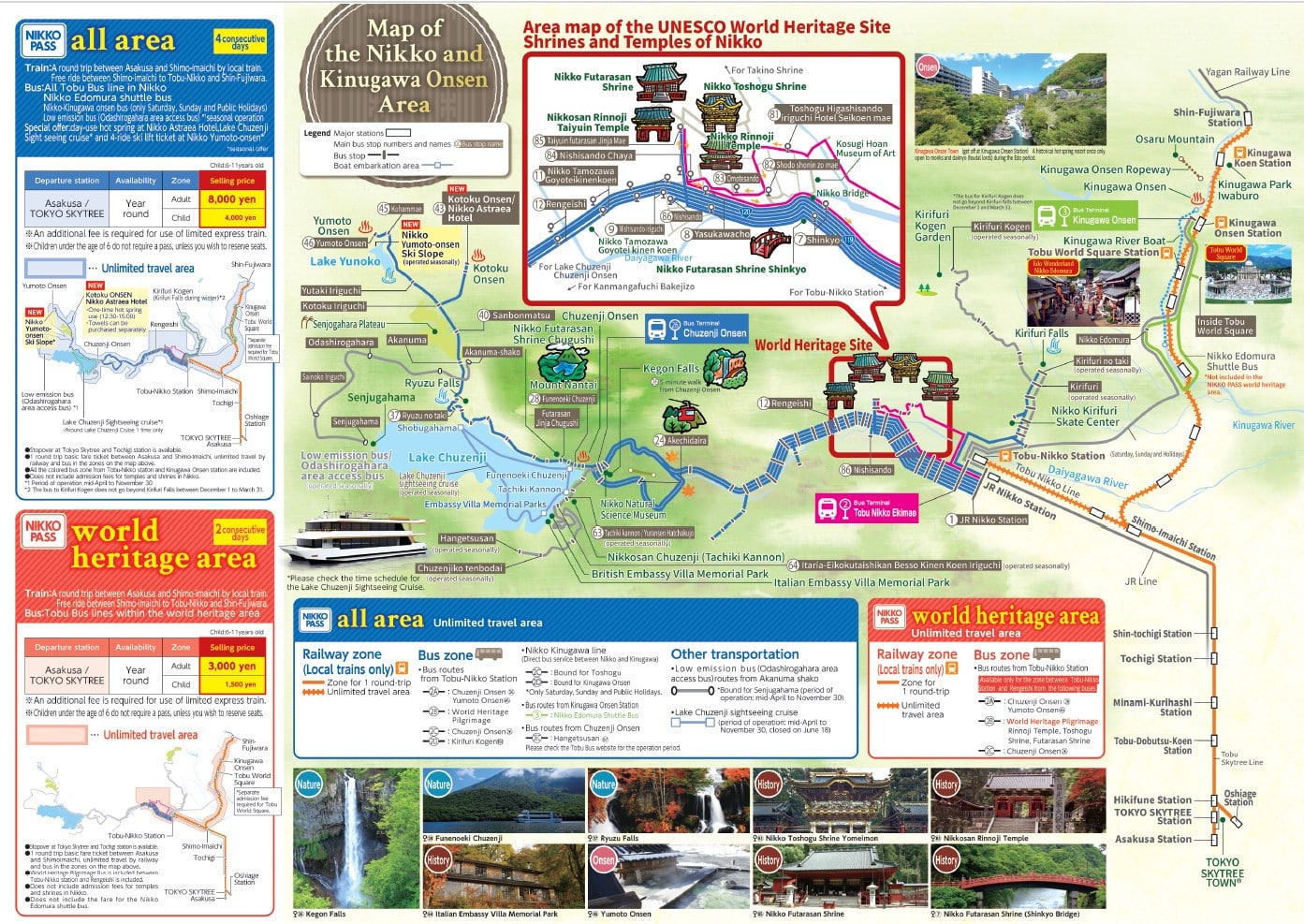
This pass is designed for travelers planning a short, in-depth trip within the Nikko World Heritage area, and it is valid for 2 consecutive days. It includes one round trip by Tobu Railway between Asakusa and Shimo-Imaichi, unlimited Tobu Railway rides between Shimo-Imaichi and Tobu-Nikko and between Shimo-Imaichi and Shin-Fujiwara (including Kinugawa Onsen Station), and unlimited rides on Tobu buses within the World Heritage area. It is ideal if your time is limited but you still want to take in the essence of Nikko’s history and culture.
Latest 2026 price: adult ¥3,000, child ¥1,500 (before the April 20, 2025 increase, the adult price was ¥2,120). Limited express fares are not included, but the bus coverage is enough to get you around the core sights, including the Two Shrines and One Temple, with ease.
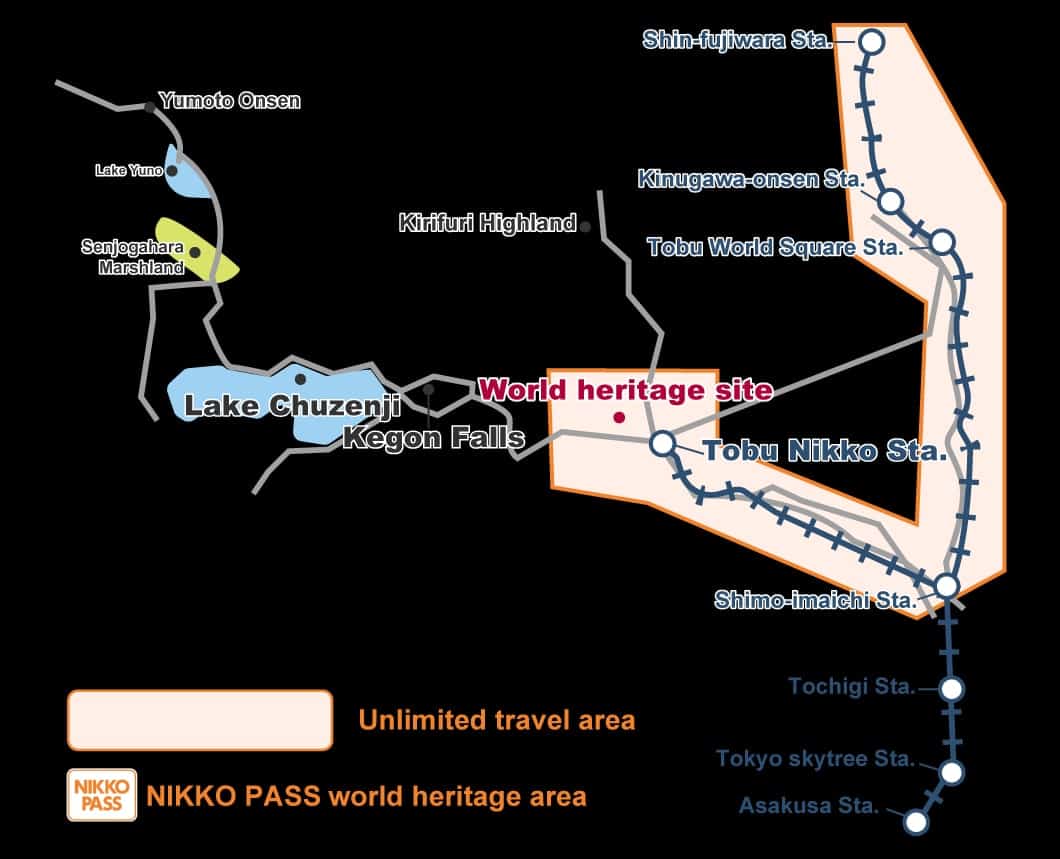


- 🎫 Price: Adult ¥3,000 / Child ¥1,500
- 🗓 Validity: 2 consecutive days
- 🔗 Tobu Railway official website (NIKKO PASS)
Nikko All Area Pass (4-Day)
If you want to ride bus routes to Lake Chuzenji, Kegon Falls, Okunikko Yumoto Onsen or the Kinugawa area, you need the “NIKKO PASS ALL AREA”. It is valid for 4 consecutive days and likewise includes one round trip by Tobu Railway between Asakusa and Shimo-Imaichi, unlimited Tobu Railway rides within the area, and unlimited rides on all Tobu bus routes in the Nikko area. It also includes transport such as the Lake Chuzenji sightseeing cruise (operating from mid-April to November 30), plus a day-use bath (one-day bathing) offer at Nikko Astoria Hotel.
Price: adult ¥8,000, child ¥4,000, the same all year (from April 20, 2025; before the change the peak-season adult price was ¥4,780). Admission to Nikko’s shrines and temples, Tobu World Square, Edo Wonderland and similar attractions is not included, and limited express and reserved seats must be bought separately.
Please note: what was discontinued on September 30, 2025 is the domestic Japanese version, the “Marugoto Nikko-Kinugawa Tobu Free Pass”. The “NIKKO PASS all area” for overseas visitors is still on sale, and you can buy a digital pass online or exchange for a paper ticket.
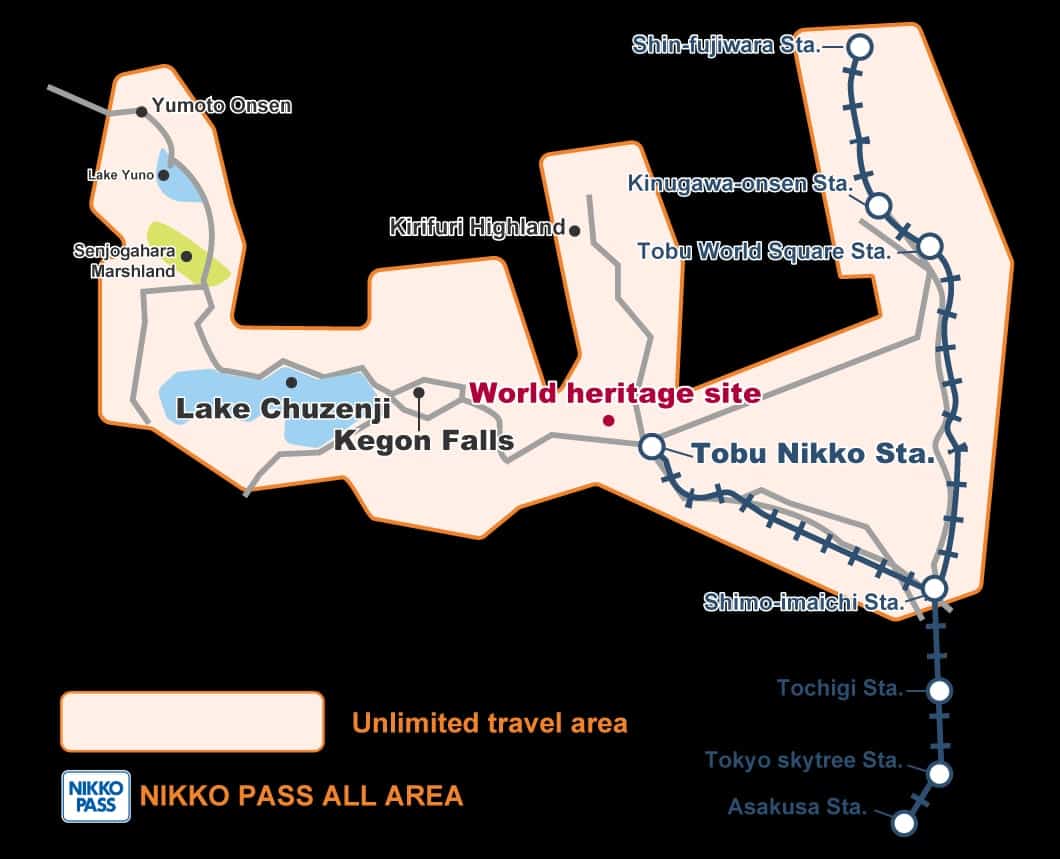
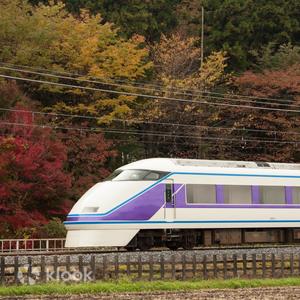-Klook.jpg)
- 🎫 Price: NIKKO PASS all area Adult ¥8,000 / Child ¥4,000
- 🗓 Validity: 4 consecutive days (currently still on sale)
- 🔗 Tobu Railway official website (NIKKO PASS ALL AREA)
Limited Express Surcharges
The Nikko Pass covers local trains only. If you want to save time on a Tobu limited express, you need to buy a separate limited express ticket and a reserved seat ticket. The limited express takes about 2 hours from Asakusa to Tobu-Nikko Station, roughly 1 hour faster than a local train.
Limited express ticket: Asakusa to Tobu-Nikko is about ¥1,940 for a standard seat and about ¥2,520 for a Premium seat on SPACIA X. Amounts may change by season and seat type, so please follow Tobu’s official announcements (the ¥1,400 is the base fare, which is already included in the round-trip ticket within the pass).
Tobu Nikko Pass: Detailed Coverage and Transport Routes
Knowing exactly what the Nikko Pass covers is key to planning your trip. The two passes differ in the rail lines and bus sections they include, which directly affects which sights you can reach. Below is a detailed look at the coverage of each pass, along with the main routes from Asakusa in Tokyo, so the Nikko transport network is clear at a glance.
Whichever pass you choose, departing from Asakusa is the most convenient way to go. Tobu Asakusa Station is the starting point for Nikko and offers many train services. Knowing these transport details will help you use the pass more efficiently as you explore Nikko.
2-Day Pass: Rail and Bus Coverage
The Nikko World Heritage Area Pass (2-day) includes one round trip by Tobu Railway between Asakusa and Shimo-Imaichi, plus unlimited Tobu Railway rides between Shimo-Imaichi and Tobu-Nikko and between Shimo-Imaichi and Shin-Fujiwara (including Kinugawa Onsen Station). In Nikko itself, it lets you ride the “World Heritage Loop Bus” as often as you like.
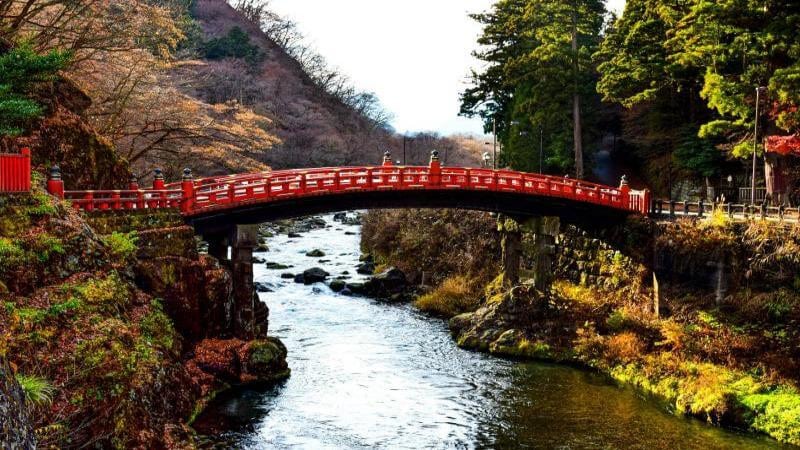
This bus route mainly circles the World Heritage area around Nikko Toshogu, Futarasan Shrine and Nikko Rinnoji Temple, as well as nearby highlights such as Shinkyo Bridge and Nishisando. For travelers who only want to focus on cultural heritage, this coverage is more than enough to move easily between the historic sites.
4-Day Pass: Rail and Bus Coverage
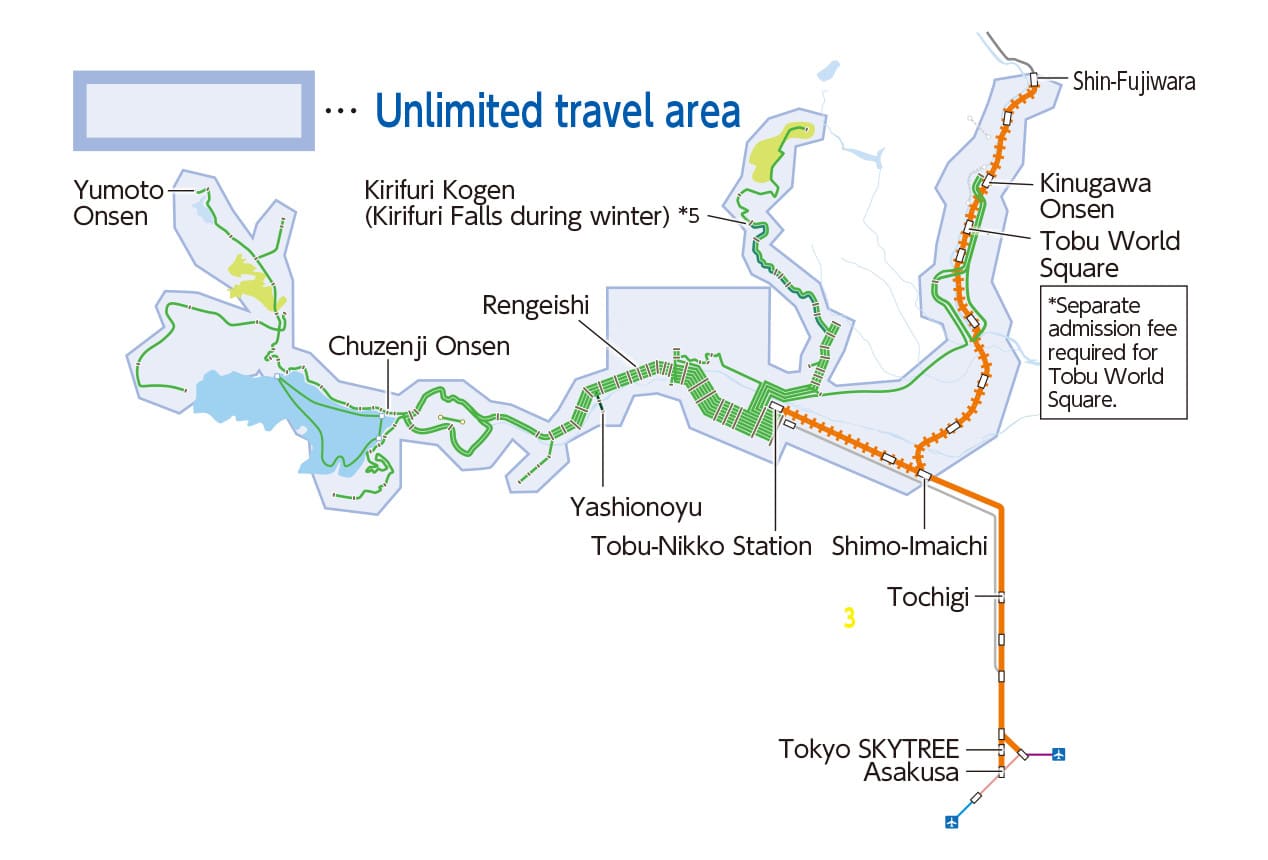
The Nikko All Area Pass (4-day) covers a much wider area. The rail portion is the same as the 2-day pass: one round trip by Tobu Railway between Asakusa and Shimo-Imaichi, plus unlimited Tobu Railway rides between Shimo-Imaichi and Tobu-Nikko / Shin-Fujiwara, so you can go straight to Kinugawa Onsen.
For buses, besides the World Heritage Loop Bus it covers all Tobu bus routes in the Nikko area, including the Oku-Nikko routes to Lake Chuzenji, Kegon Falls, Ryuzu Falls, Senjogahara and Yumoto Onsen, as well as the Nikko-Kinugawa Onsen bus that runs only on Saturdays, Sundays and public holidays. This pass lets you dive into Nikko’s natural hideaways and onsen towns.
From Asakusa: Main Transport Routes
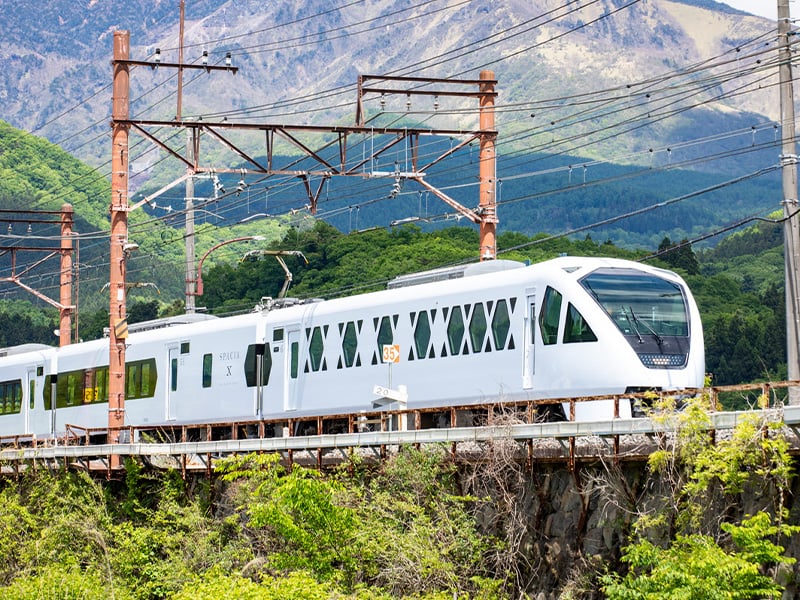
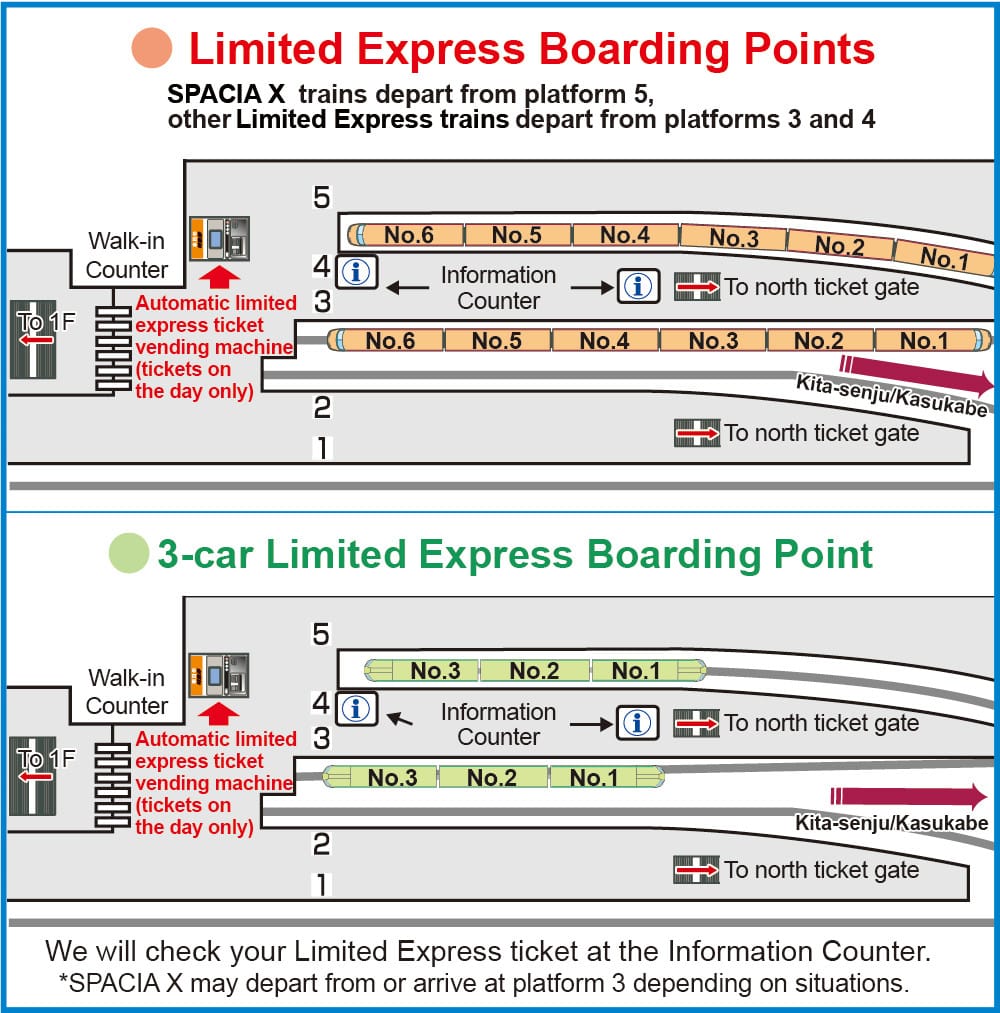
The main starting point from central Tokyo to Nikko is Tobu Asakusa Station. You can take a train on the Tobu Skytree Line or the Isesaki Line. The fastest option is a limited express such as the “SPACIA”, “Revaty” or “SPACIA X”, which reaches Tobu-Nikko Station in about 2 hours.
Without a limited express ticket, you will take a local train, which takes longer and may involve a transfer. Before you set out, check the latest timetables on the Tobu Railway website or a transit app to plan your day. The Tobu tourist information center at Asakusa Station can also give detailed transport advice.
Special Trains: SPACIA X and the SL Taiju Steam Train
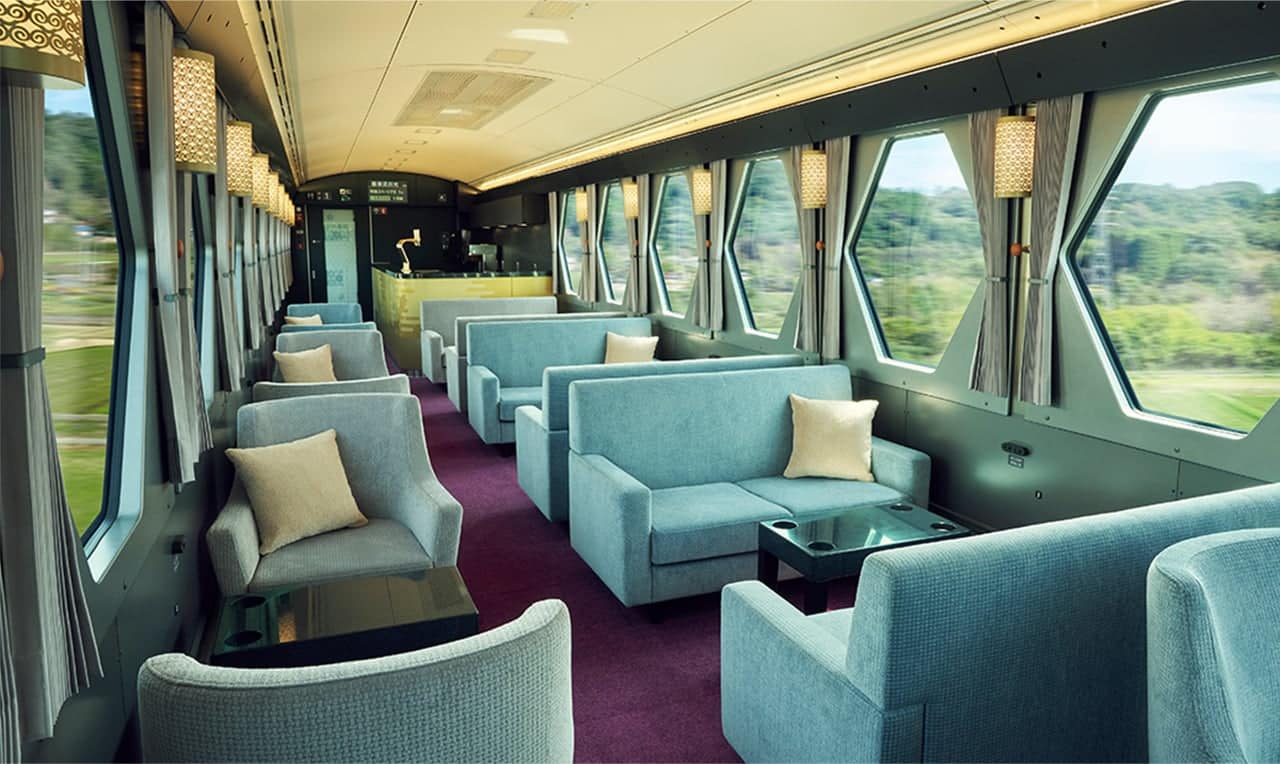
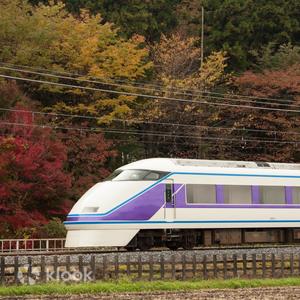
Besides the regular limited expresses, Tobu Railway offers some distinctive rides. The newest limited express, “SPACIA X”, is known for its luxurious, comfortable cabins and scenic seats. It runs directly from Asakusa to Nikko and is a premium way to get there; a limited express ticket and a reserved seat ticket must be bought separately.
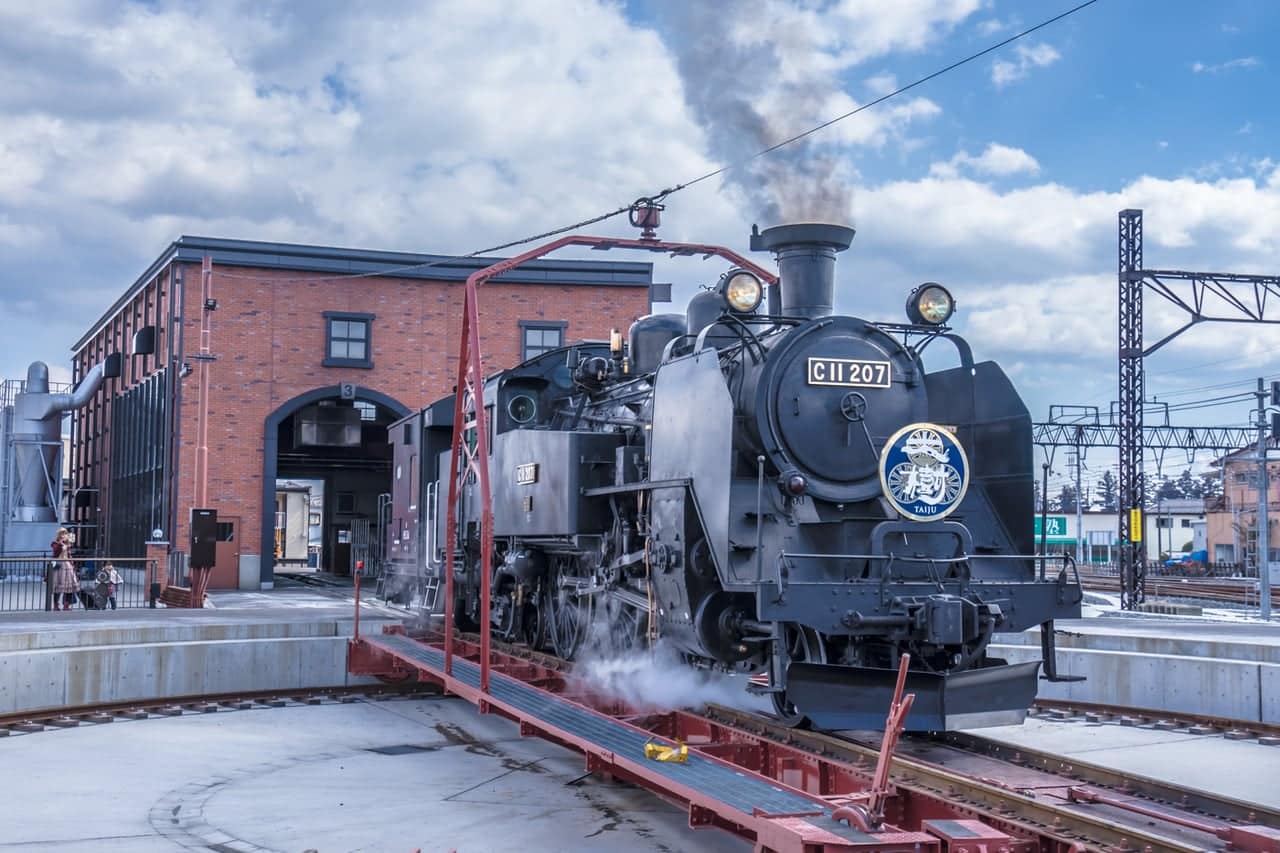
Another highlight is the “SL Taiju”, a steam locomotive that runs between Shimo-Imaichi Station and Kinugawa Onsen Station. Riding it gives you a nostalgic rail journey and a taste of the charm of steam trains. The SL Taiju also requires a separately purchased reserved seat ticket, so booking in advance is recommended.
Getting Around Nikko and to Toshogu: A Complete Guide to Buses, Cable Cars and Walking
After arriving at Tobu-Nikko Station or JR Nikko Station, you can reach the World Heritage area (Toshogu, Futarasan Shrine, Rinnoji) and Lake Chuzenji by the “World Heritage Loop Bus” or a Tobu bus. The key options are:
- 🚶 On foot: from Tobu-Nikko Station to the Toshogu main approach is about 30 minutes (2.2 km); you can also take a bus instead
- 🚌 World Heritage Loop Bus: runs between Tobu-Nikko Station, JR Nikko Station and the main sights, ¥200 one way; the one-day ticket “Sekai Isan Meguri Tegata” is ¥600 for adults and ¥300 for children
- 🚌 To Lake Chuzenji and Kegon Falls: transfer to the Tobu bus “Chuzenji Lake / Yumoto Line”, about 45-50 minutes, passing through the “Irohazaka” winding road
- 🎫 Best value with a pass: the Nikko Pass (2-day or 4-day) gives unlimited rides on Tobu buses within the designated area, saving you transport costs
Tobu Nikko Pass: How to Buy and Where to Exchange
There are many ways to buy the Nikko Pass: book online, buy through an overseas travel agency, or purchase directly at a designated location after arriving in Japan. Knowing the pros and cons of each channel will help you choose the one that suits you best and keep your trip running smoothly.
In recent years, e-tickets have also become widespread, giving travelers a more convenient choice. Whether you prefer a traditional paper ticket or the convenience of a digital one, Tobu Railway offers both. We recommend buying in advance, especially in peak travel season, so your plans are not disrupted.
Booking Online: Klook and KKday
Online travel platforms such as Klook and KKday are the first choice for many travelers buying the Nikko Pass. These platforms often offer discounted prices and let you book ahead, so your transport ticket is settled before you leave. After purchase, you will receive an exchange voucher (usually a QR code or an email confirmation).
With the voucher, you can go to a designated location after arriving in Japan (such as the Tobu tourist information center at Tobu Asakusa Station) to exchange it for a physical ticket. The advantages of booking online are easy price comparison, early planning and no need to queue at the counter.
Buying and Exchanging in Japan
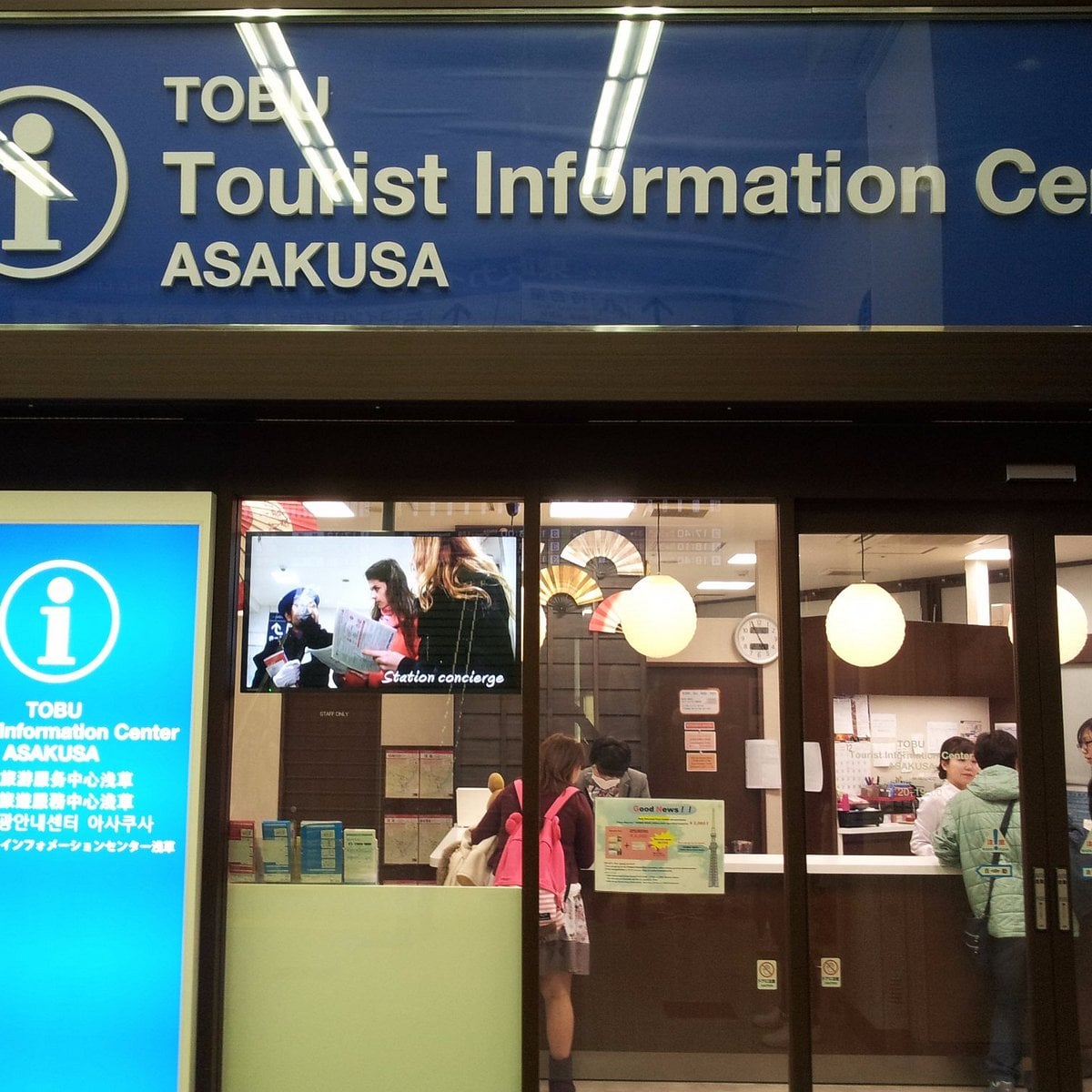
If you choose to buy or exchange in Japan, the main location is the “Tobu Tourist Information Center” at Tobu Asakusa Station. Multilingual staff there can offer detailed advice and help. According to the Tobu Railway website, paper tickets are currently sold at the Tobu tourist information center in Asakusa, as well as at AC Hotel by Marriott Tokyo Ginza and Courtyard by Marriott Ginza Tobu Hotel in Ginza, and can be bought as early as 1 month before the day of use; e-tickets are sold on Tobu’s official TOBU Japan Trip Tickets website. Japanese companions traveling with you can also buy the pass together.
In peak season these locations can get crowded, so go early. Be sure to show your passport when buying, since the Nikko Pass is a discount ticket designed for international visitors. The advantage of buying on the spot is that you get the ticket right away and can ask about your itinerary directly.
How to Use an E-Ticket
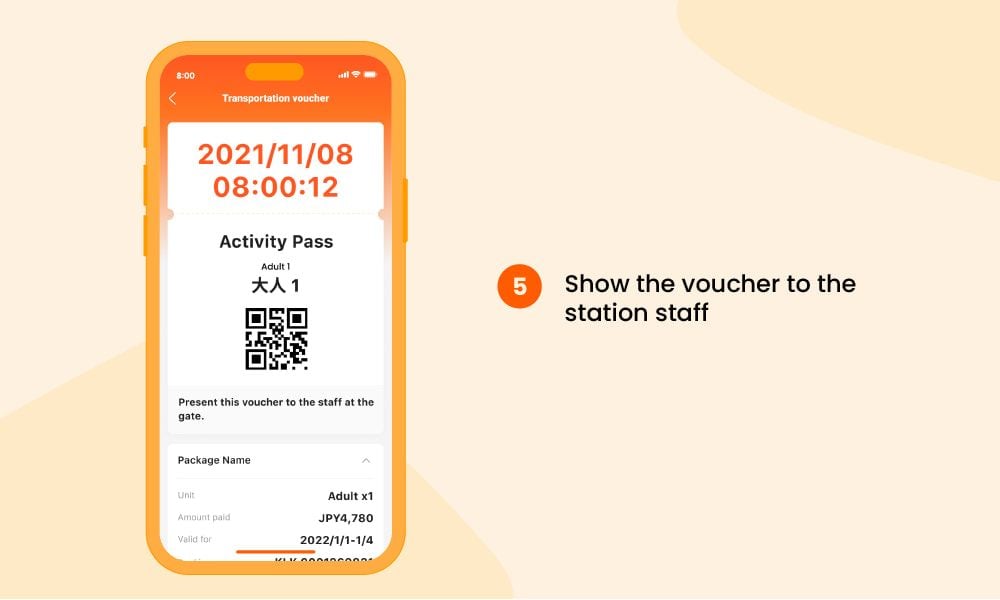
In recent years, Tobu Railway has also introduced e-ticket options that make the pass even more convenient. E-tickets bought through platforms such as Klook can usually show a QR code directly on your phone, so you can use them without exchanging for a physical ticket. When boarding a train or bus, simply show the e-ticket on your phone to station staff or the driver.
Note, however, that even with an e-ticket you still need to buy a limited express ticket and a reserved seat ticket separately to ride a limited express. The advantages of an e-ticket are that it is eco-friendly, hard to lose and saves the time of queuing to exchange. Make sure your phone is well charged before use and get familiar with how it works.
NIKKO MaaS Digital Passes: Types and Prices
“NIKKO MaaS”, as you will see when searching for it, is a smartphone-only website run by Tobu Railway (tobu-maas.jp) where you can buy a “digital pass” (digital free pass) on your phone and look up and book sightseeing content for Nikko and Kinugawa in one place. It is a different ticket system from the NIKKO PASS described above: NIKKO PASS can only be bought by international visitors, while NIKKO MaaS is a separate digital ticket bought and used through the mobile website. Eligibility and available dates are as shown on the website at the time, so please check there.
The NIKKO MaaS passes likewise include a round-trip ticket from your departure station to Shimo-Imaichi, unlimited Tobu Railway rides between Shimo-Imaichi and Tobu-Nikko / Shin-Fujiwara, and unlimited bus rides in the designated area, plus discounts at partner facilities and shops; limited express trains, the SL Taiju and similar services cost extra. Prices vary by departure station and season. The following are adult prices departing from Asakusa, as revised by Tobu Railway on June 3, 2025:
- Digital Nikko World Heritage Free Pass (Nikko World Heritage): ¥3,000, valid for 2 days (child ¥1,500)
- Digital Kinugawa Onsen Free Pass (Kinugawa Onsen): ¥3,000
- Digital Chuzenji / Kegon Falls Free Pass (Lake Chuzenji and Kegon Falls): ¥4,500
- Digital Oku-Nikko / Yumoto Onsen Free Pass (Oku-Nikko and Yumoto Onsen): ¥6,000, valid for 4 days (child ¥3,000)
- Digital Yunishigawa Onsen Free Pass (Yunishigawa Onsen): ¥6,000
The two systems divide the areas differently: if you only want to see the Toshogu area, the World Heritage area passes on both sides are ¥3,000; if you want to go all the way to Lake Chuzenji or Oku-Nikko, compare the coverage of the NIKKO PASS ALL AREA (¥8,000, 4 days) with the NIKKO MaaS regional passes before deciding.
Nikko Bus One-Day Ticket and Bus Passes: What to Buy Without the Train
If you have already bought your round-trip ticket to Nikko (for example by JR, or by buying a limited express ticket separately) and only need buses once you are there, you can buy a bus pass directly from Tobu Bus Nikko. According to the Tobu Bus website, the following four are currently available:
- World Heritage Tour Pass (Sekai Isan Meguri Tegata): adult ¥600, child ¥300, valid on the day of purchase only, covering mainly the “World Heritage Loop Bus” route around the Two Shrines and One Temple; this is the closest thing to a “Nikko bus one-day ticket”
- Chuzenji Onsen Free Pass: adult ¥2,300, child ¥1,150, valid for 2 days, suited to Lake Chuzenji and Kegon Falls
- Yumoto Onsen Free Pass: adult ¥3,500, child ¥1,750, valid for 2 days, letting you ride all the way to Oku-Nikko Yumoto Onsen
- Kirifuri Plateau Free Pass: adult ¥1,500, child ¥750, valid for 2 days, not sold from December 1 to March 31
Paper tickets are sold at the tourist information center at Tobu-Nikko Station (opening hours as posted on site), and you can also buy mobile tickets through NIKKO MaaS, TOBU Japan Trip Tickets or Jorudan. Note that none of these bus passes includes the train from Tokyo to Nikko; if you are leaving from Asakusa and want to go all the way to Lake Chuzenji, buying a pass that includes the train is usually simpler.
Tobu Nikko Pass: Recommended Sights and Itinerary Planning
The Nikko area is rich in attractions, from World Heritage sites to dramatic natural scenery and onsen towns. With the Nikko Pass, you can plan a varied itinerary according to your interests and time. Below are some must-visit sights in the Nikko area, along with itinerary suggestions that make the most of the pass.
Whether you are a history and culture lover or an outdoor enthusiast, Nikko has something for you. Please note that opening hours and seasonal events at some attractions may vary, so check again before you set out.
World Heritage: Nikko Toshogu and the Shrines and Temples
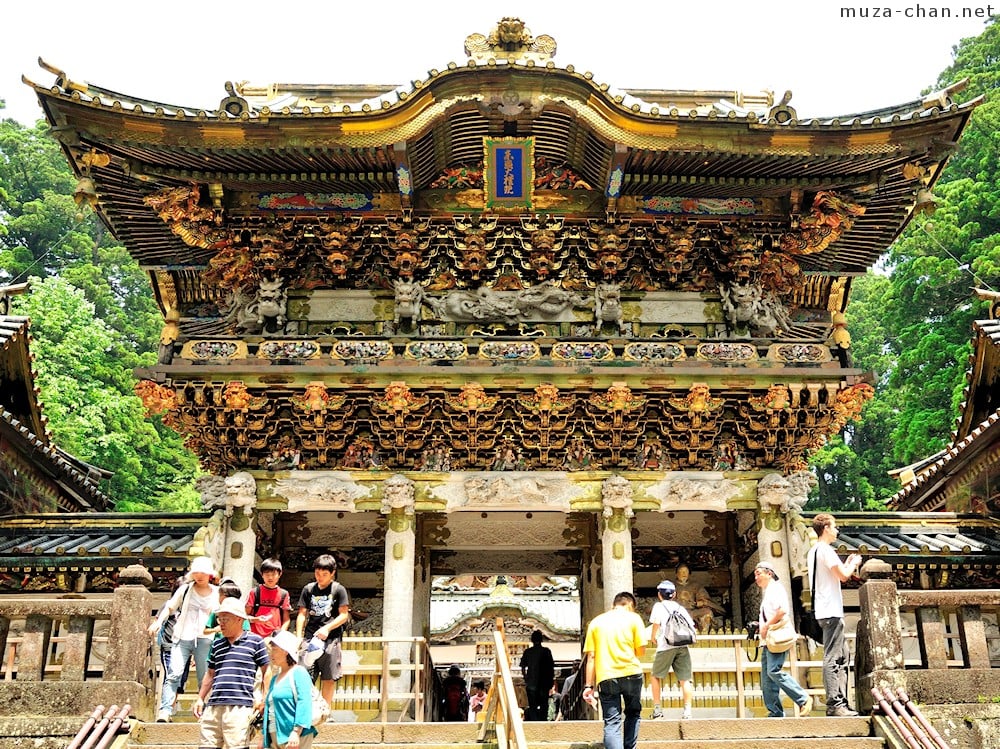
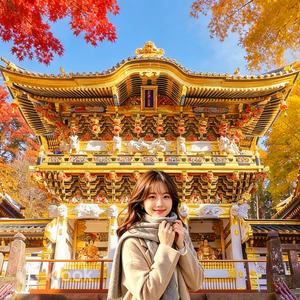
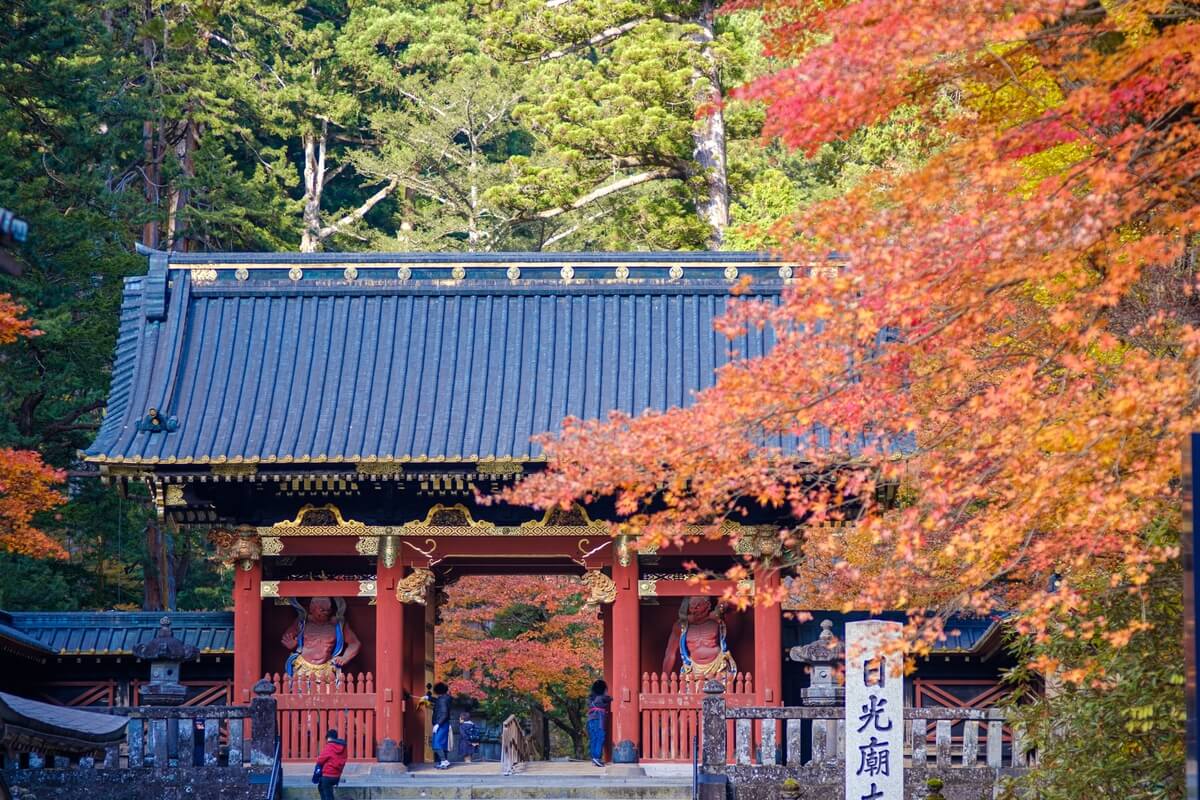
Nikko is best known for its World Heritage “Two Shrines and One Temple”: Nikko Toshogu, Futarasan Shrine and Nikko Rinnoji Temple. Nikko Toshogu is the shrine dedicated to Tokugawa Ieyasu, famous for its ornate carvings and architecture, including the well-known “Three Wise Monkeys” and “Sleeping Cat”.
The Two Shrines and One Temple area is easy to reach on the World Heritage Loop Bus covered by both the 2-day and 4-day passes. Plan at least half a day to a full day to explore these historic complexes and take in the depth of traditional Japanese culture. Don’t forget to collect goshuin (temple and shrine stamps) and pick up a distinctive omamori charm.

Spectacular Nature: Lake Chuzenji and Kegon Falls
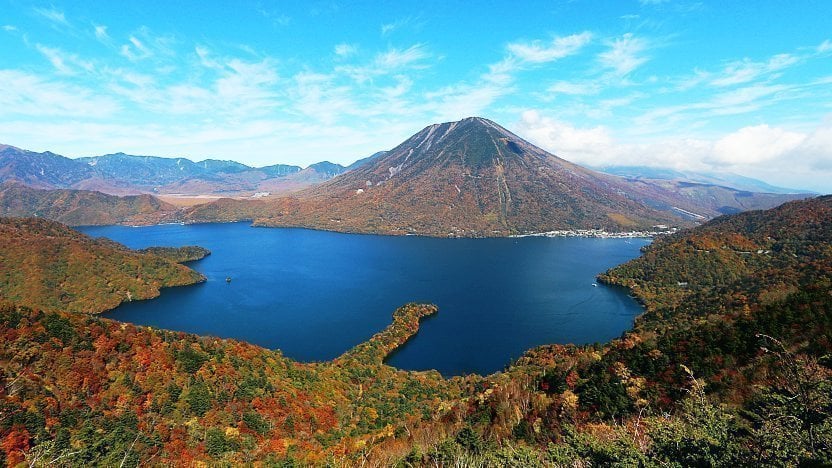
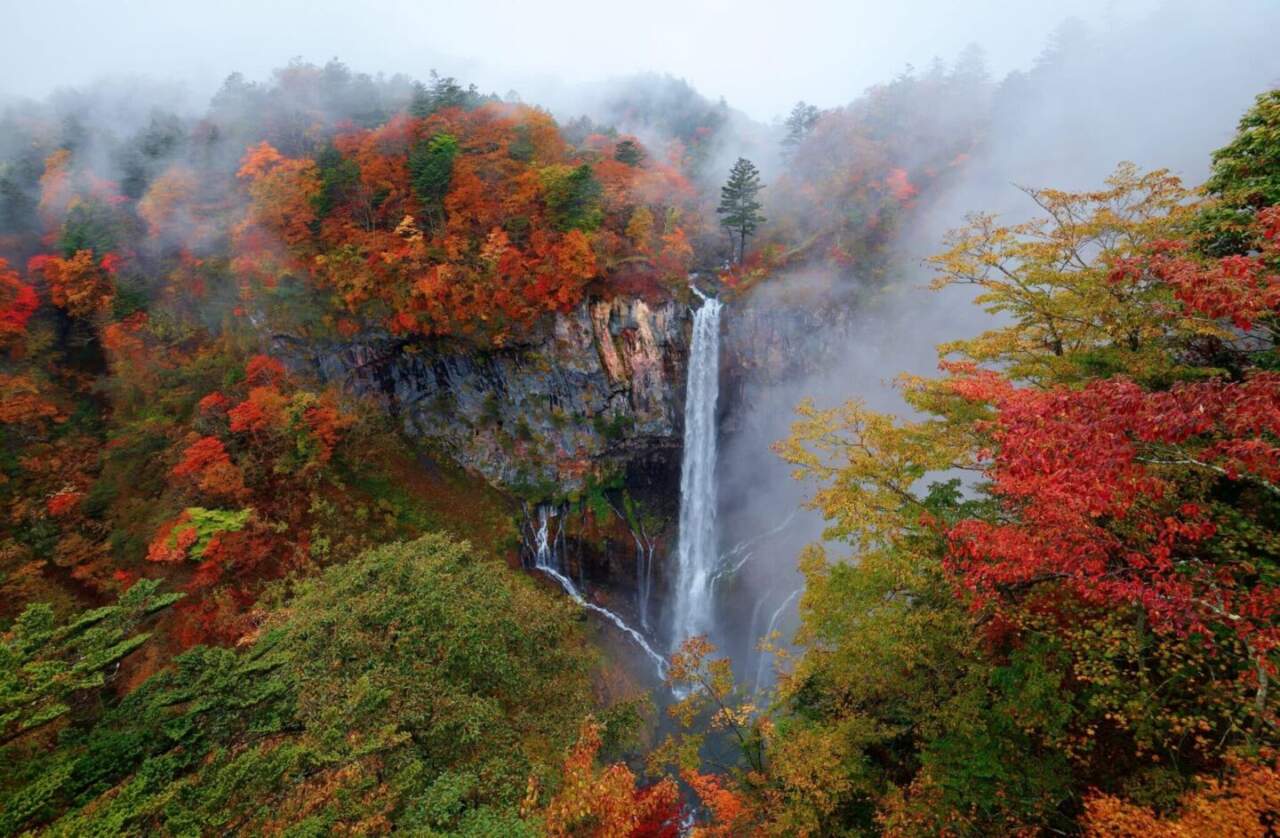
Lake Chuzenji, the largest lake in the Nikko area, is beautiful in every season and at its finest in autumn foliage; the lakeshore has plenty to see, and you can also take a cruise. Kegon Falls, one of Japan’s three famous waterfalls, is awe-inspiring, and an elevator takes you down to an observation platform at the base for a close-up view.
The Tobu bus to Lake Chuzenji and Kegon Falls in Oku-Nikko offers lovely scenery along the way, especially in autumn, so we suggest setting aside a full day. Ride with the 4-day pass.
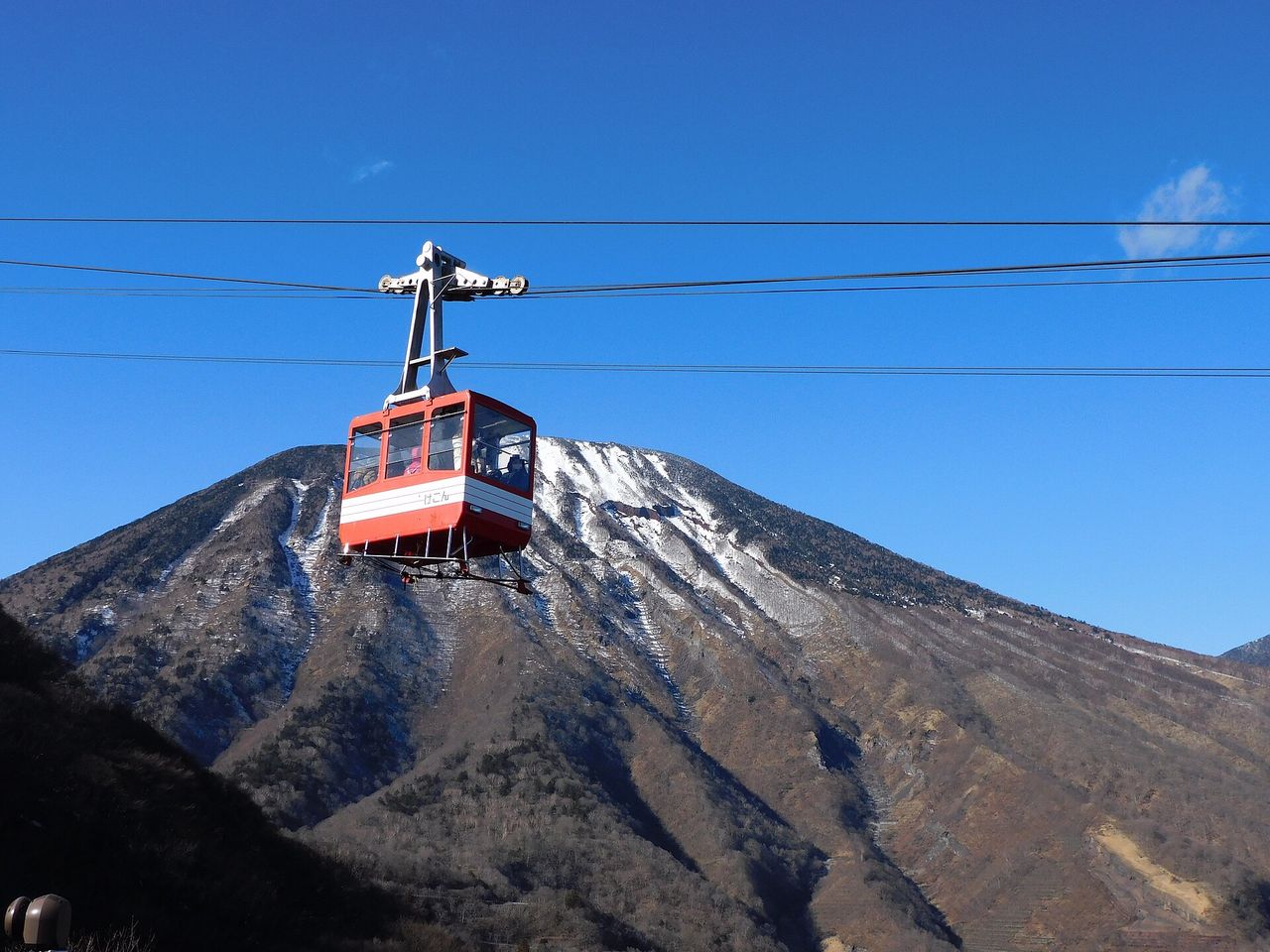
⚠️ The Akechidaira Ropeway is suspended from January 16, 2026 to August 31, 2027 (reopening expected in September), so please do not include it in your plans. We suggest hiking the Akechidaira Observation Deck trail instead, or heading straight to Lake Chuzenji, Kegon Falls and other spots for the autumn leaves.
Hidden Oku-Nikko: Ryuzu Falls and Yumoto Onsen
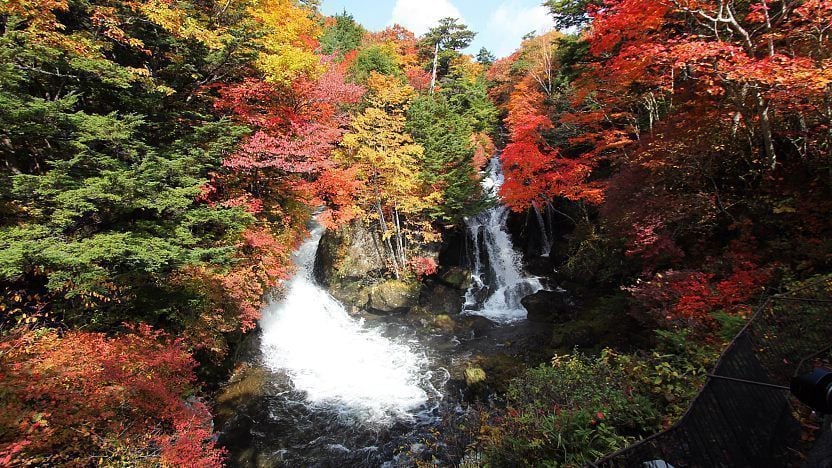
If you want to explore Nikko’s natural scenery more deeply, Ryuzu Falls and Yumoto Onsen in the Oku-Nikko area are excellent choices. Ryuzu Falls is named for its resemblance to a dragon’s head and is a popular spot for autumn leaves; a trail lets you view the falls up close. Yumoto Onsen is a quiet hot spring town with rich sulfur springs, a great place to unwind.
These sights also require the 4-day pass and a bus ride. Continue up from Lake Chuzenji and you will reach these Oku-Nikko hideaways. We suggest combining them with hiking trails to experience Nikko’s unspoiled beauty.
Onsen Town: Kinugawa Onsen and Tobu World Square
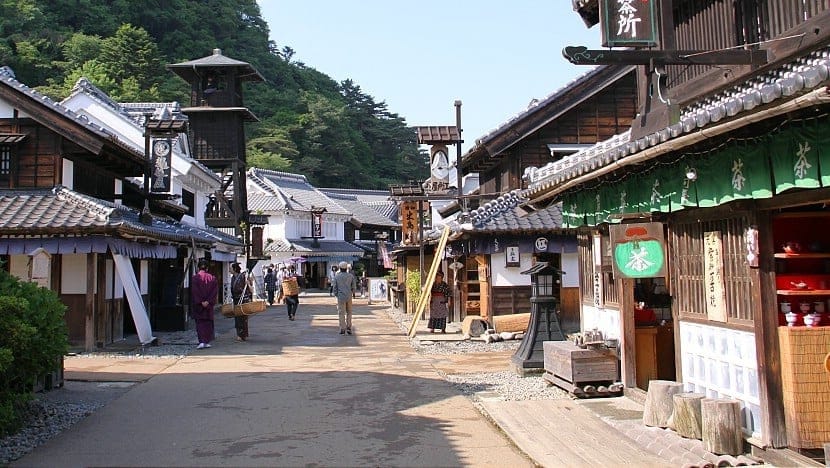
Kinugawa Onsen is a well-known hot spring town in the Kanto region, with dozens of onsen ryokan offering a variety of stays and bathing experiences. Besides soaking, there are sightseeing options such as Kinugawa river cruises and the Kinugawa Onsen ropeway. Nearby Tobu World Square is a miniature-model theme park displaying famous buildings from around the world, and it is great for families with children.
To reach Kinugawa Onsen and Tobu World Square, both the 2-day and 4-day passes cover the Tobu Railway section between Shimo-Imaichi and Shin-Fujiwara, so you can ride straight to “Kinugawa Onsen Station”, while Tobu World Square has its own “Tobu World Square Station”. As for buses, the 2-day pass covers only Tobu buses within the World Heritage area, while the 4-day pass covers all Tobu bus routes in the Nikko area. If you have time, we suggest staying a night here to experience Japanese onsen ryokan hospitality and sample the local specialties.
![Tochigi - [Autumn Ryuokyo Gorge Hiking Day Tour] Kinugawa Suspension Bridge + Kinugawa Onsen](https://res.klook.com/images/w_300,h_300,c_fill,q_75/w_80,x_15,y_15,g_south_west,l_Klook_water_br_trans_yhcmh3/activities/dv6jbq3wmd54e2swb0ne/【秋季龍王峽徒步一日遊】鬼怒川大吊橋+鬼怒川溫泉-Klook.jpg)
Nikko Pass: Where to Eat Nearby
When you visit Nikko, enjoying the scenery is only part of the trip; sampling the local food matters too. The area has many distinctive dishes, from traditional yuba (tofu skin) cuisine to creative desserts, sure to satisfy your appetite. Here are a few local restaurants around Nikko to make your trip even richer.
These restaurants not only serve delicious food; many are also close to the main sights, so you can eat easily between sightseeing stops. Please note that some popular places may require a reservation in advance, or a wait in line at mealtimes.
Yuba Cuisine: Ganso Nikko Yuba Ryori Kappo Ebisuya
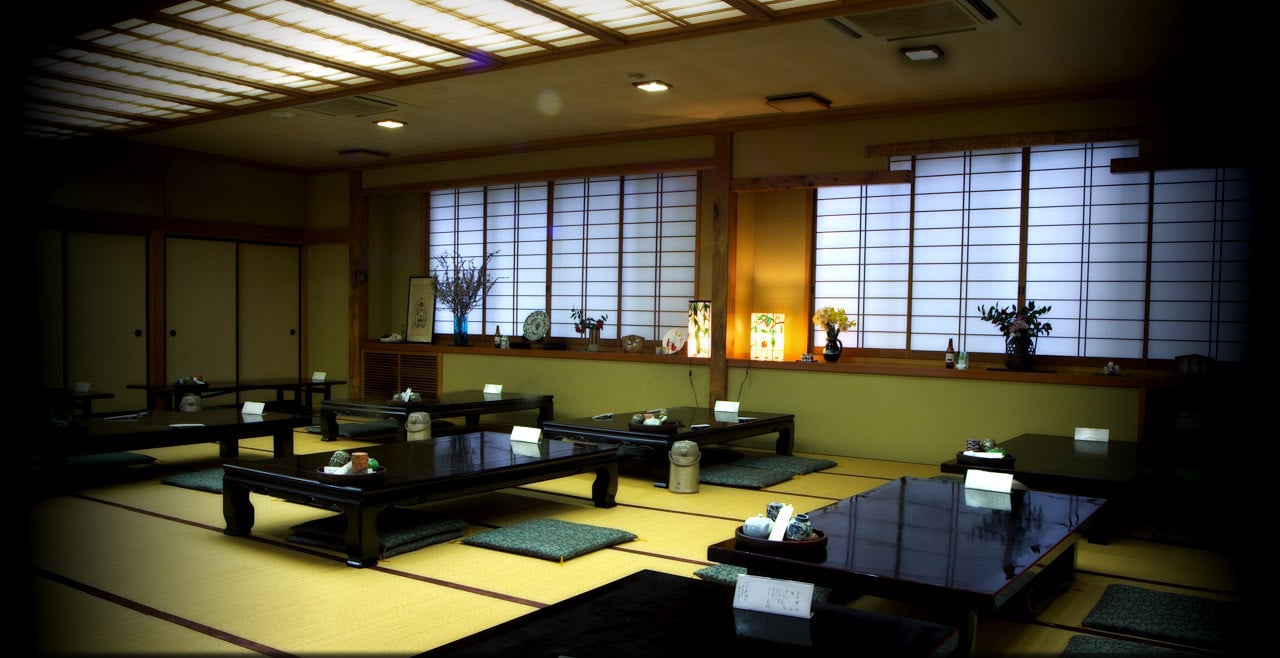
Nikko is famous for its distinctive yuba (tofu skin) cuisine, and Kappo Ebisuya serves refined kaiseki-style set meals that bring out the delicate sweetness and varied textures of yuba to the fullest, making it one of Nikko’s signature dining experiences. The setting is elegant and the service attentive; reservations are recommended. It is closed on Tuesdays, but actual opening days follow the restaurant’s own announcements.
- 🍽️ Must-try: yuba kaiseki full course (Course A, including fresh-lifted yuba sashimi, agemaki yuba with vegetable sauce and more)
- 💰 Price: about ¥2,400-5,000 (depending on the course)
- 🚉 Access: about a 15-minute walk from Tobu-Nikko Station along the “Nihon Romantic Kaido”
Japanese Soba: Teuchi Soba-dokoro Amano
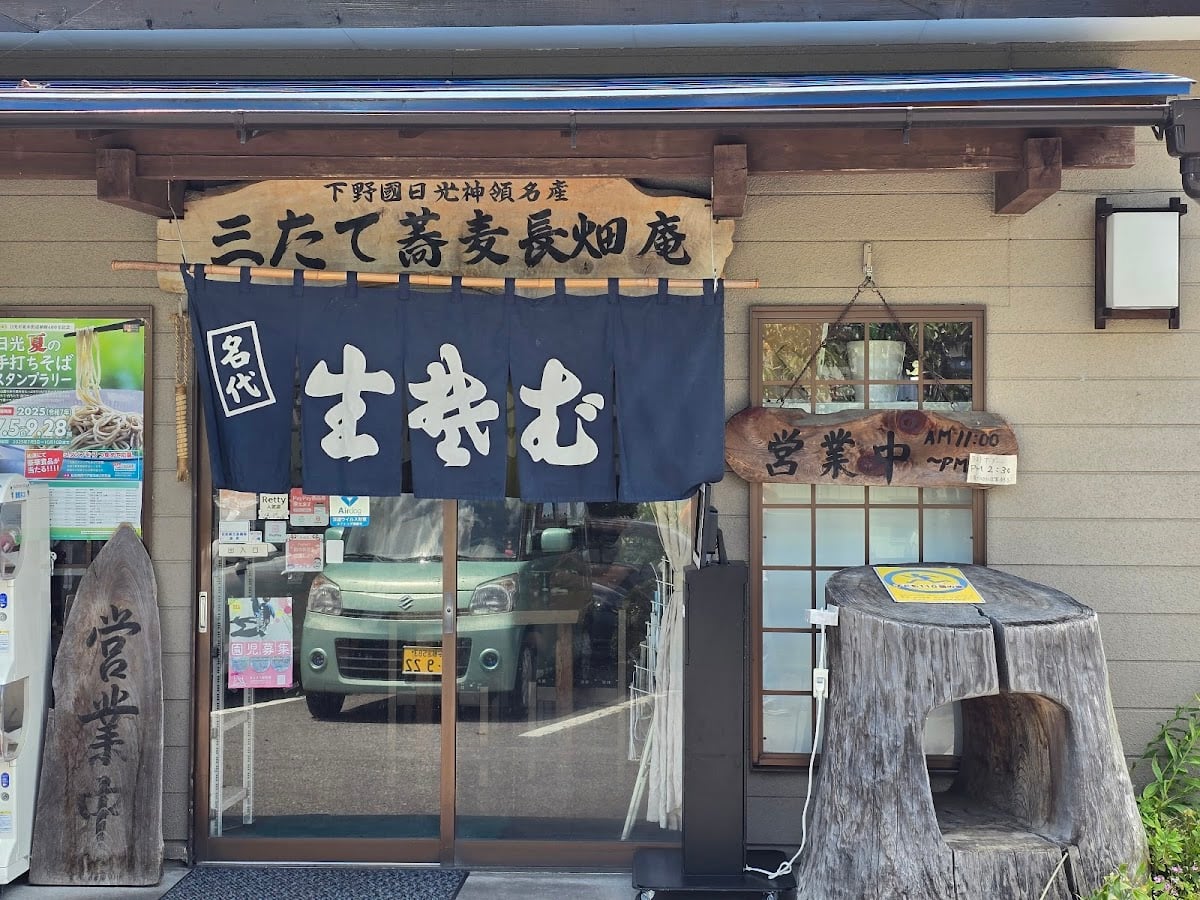
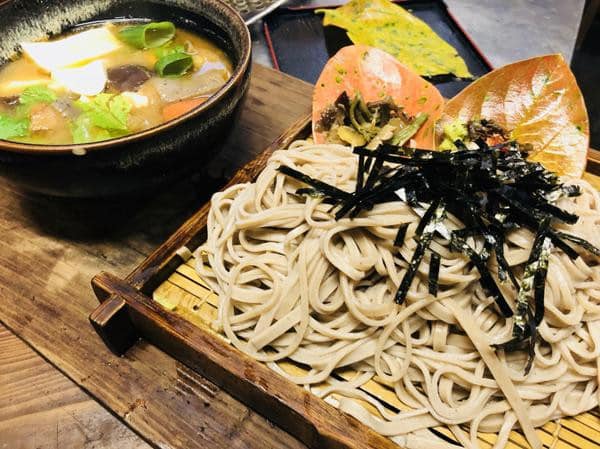
On a cold Nikko day, a steaming bowl of handmade soba is the go-to warm-up. Teuchi Soba-dokoro Amano is known for its chewy soba made fresh every day, with a rich buckwheat aroma, and you can pair it with tempura or duck. Located near Tobu-Nikko Station, it is a popular stop when arriving in or leaving Nikko and offers an authentic Japanese dining experience.
- 🍜 Must-try: juwari handmade soba (seiro soba), soba inari (soba-stuffed fried tofu pouches)
- 💰 Price: about ¥1,000-1,500 per person
- 🚉 Access: 5-10 minutes on foot from Tobu-Nikko Station (reservations recommended; a wait is common)
Local Sweet Snack: Sakaya Fried Yuba Manju
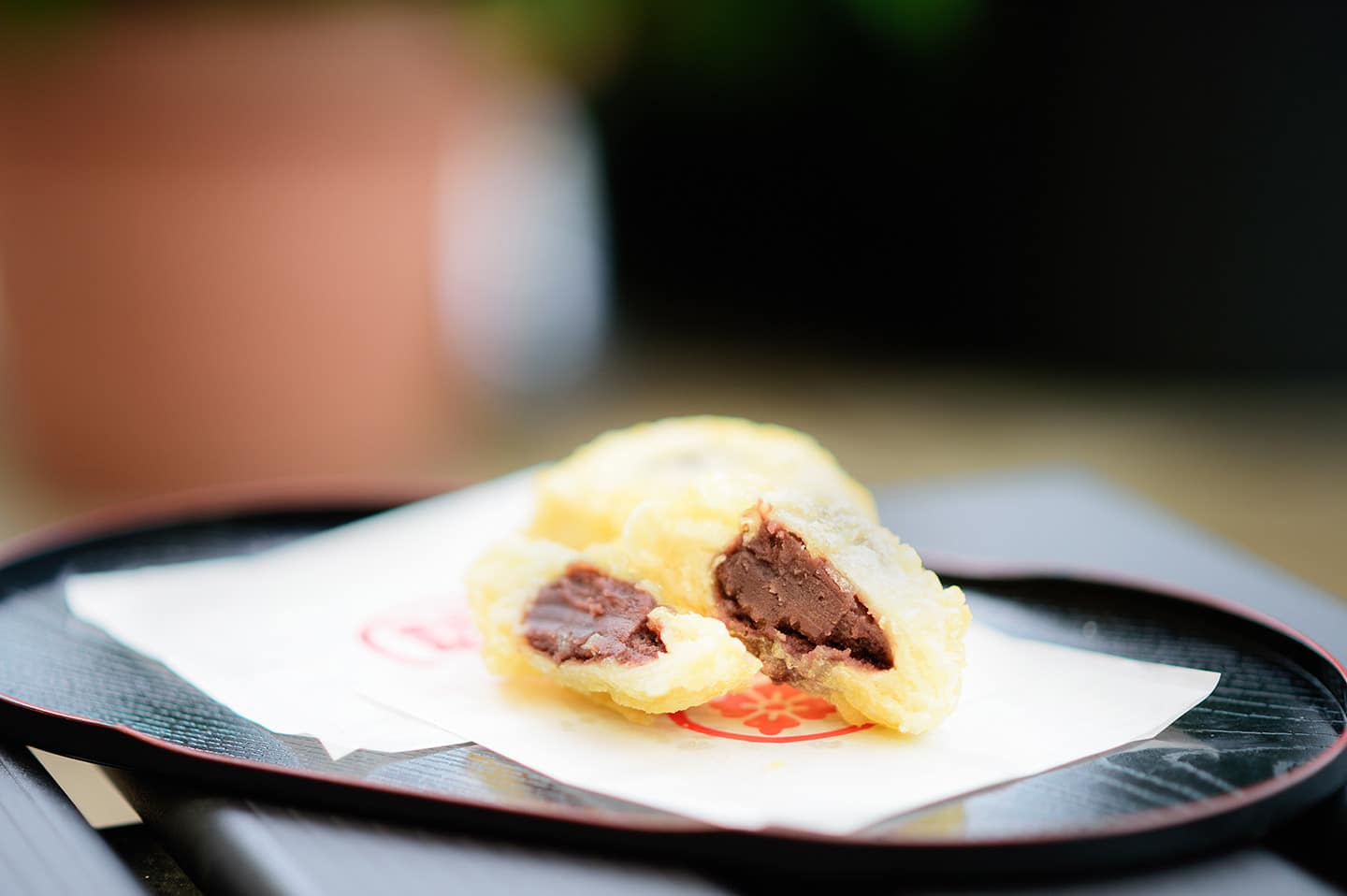
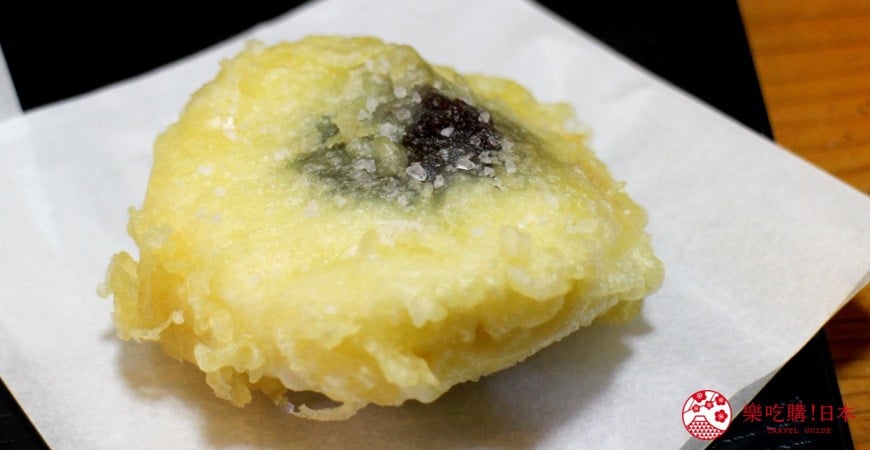
Sakaya’s fried yuba manju is a must-try local snack in the Nikko area. Yuba (tofu skin) wraps a sweet red bean filling and is then deep-fried, giving a crisp shell and a sweet, soft, fragrant center with layered texture. Its distinctive flavor and texture are hard to find anywhere else.
The shop is usually on the road from Tobu-Nikko Station to the World Heritage sites, and many visitors pick one up as a snack while strolling. Freshly fried yuba manju are piping hot, perfect for a cold day, and make a good souvenir to take home.
- 🍡 Must-try: signature fried yuba manju (agé yuba manju), Nikko strawberry shaved ice (seasonal)
- 💰 Price: about ¥200-300 each
- 🚉 Access: about 1 minute on foot from the exit of Tobu-Nikko Station
Street Snacks: Kegon Falls’ Signature Croquettes
After visiting Kegon Falls, be sure to try the area’s well-known croquette snack. Next to the falls elevator (the entrance to the observation platform), “Hishiya Kegon Falls Branch” has several stalls, and the freshly fried gyoza croquette (a whole pan-fried gyoza wrapped inside a croquette) is crispy and delicious, the handiest hot bite after taking in the falls; yuba meat buns, dango and other options are also available.
- 🍢 Must-try: gyoza croquette (gyoza korokke), yuba meat bun
- 🚉 Location: next to the Kegon Falls elevator (the entrance to the observation platform)
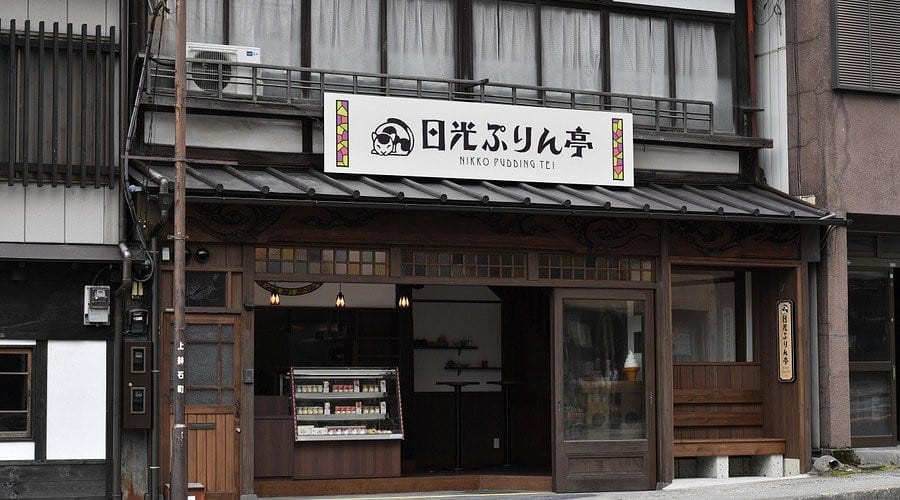
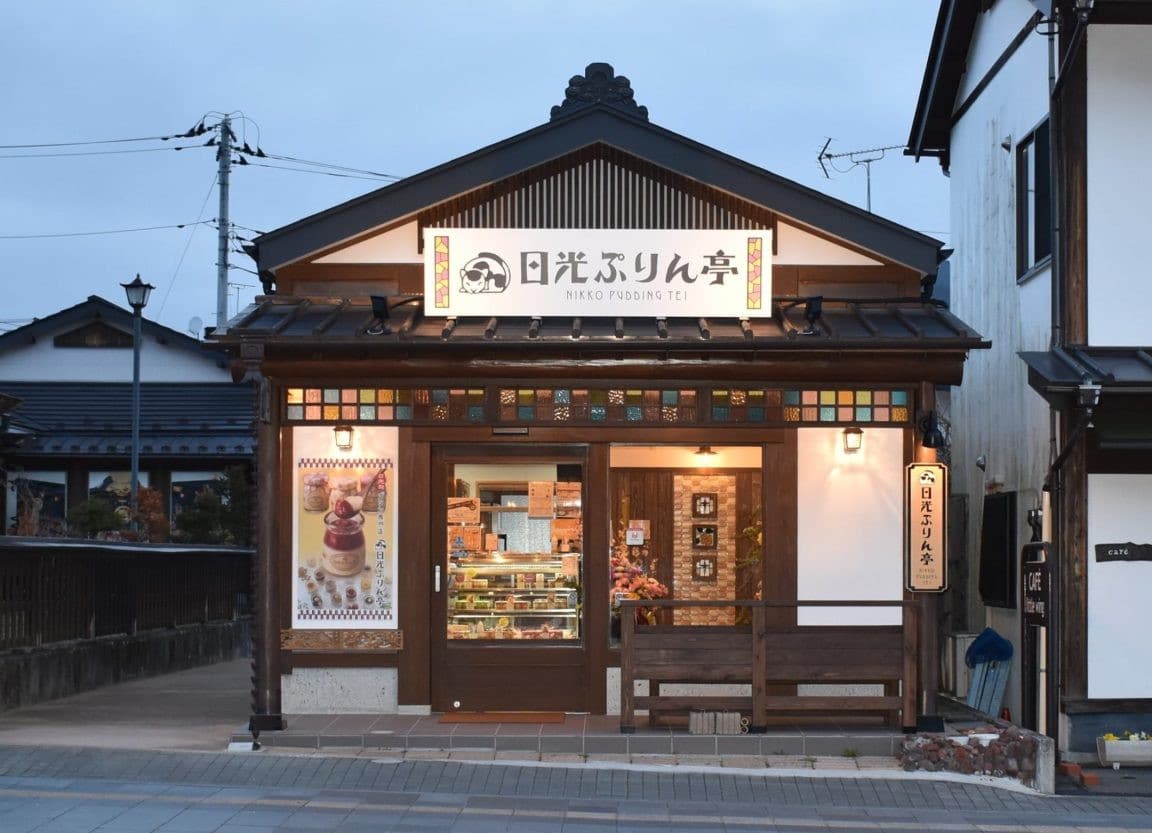
Coffee and Sweets: Nikko Pudding-tei
Between sightseeing stops in Nikko, there is nothing better than finding a place to rest with a coffee and a dessert. Nikko Pudding-tei is known for its handmade puddings, smooth in texture with a rich egg-and-milk fragrance, available in several flavors.
This cozy café is a great place to relax after shopping or visiting the sights. Besides pudding, it also serves other desserts and drinks. Located near Tobu-Nikko Station, it is handy for a stop while waiting for a train or taking a break, adding a sweet memory to your Nikko trip.
- 🍮 Must-try: signature Nikko pudding (original / seasonal flavors), pudding soft serve
- 💰 Price: about ¥450-700 each
- 🚉 Access: about 5 minutes on foot from Tobu-Nikko Station