
Minoh Park Guide 2026: Minoh Falls Autumn Leaves Hike and Momiji Tempura Explained: Osaka’s Only Waterfall in Japan’s Top 100
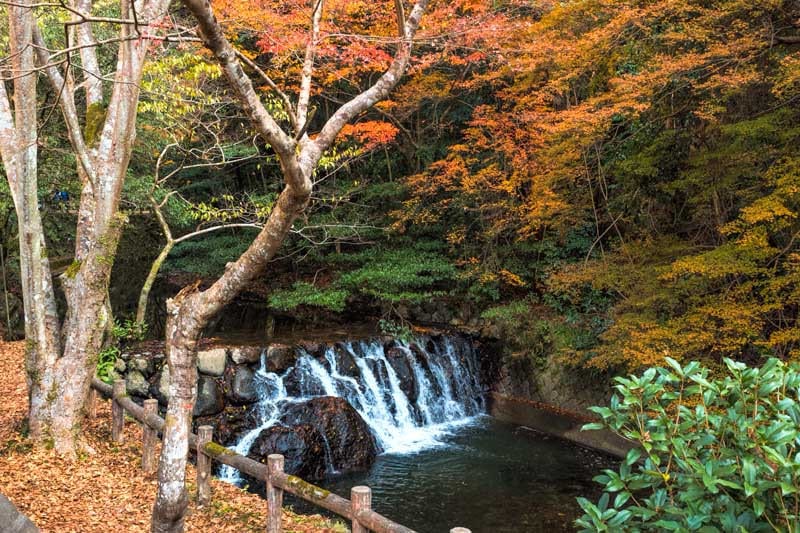
Minoh Park is the only spot near Osaka listed among “Japan’s 100 Best Waterfalls.” Known for the 33-meter Minoh Falls and mountainsides of autumn color, it is free to enter all year and a top choice for forest bathing and leaf-viewing.
What Kind of Place Is Minoh Park?
Minoh Park is in Minoh City, Osaka Prefecture, and is part of Meiji no Mori Minoh Quasi-National Park. It was designated a quasi-national park in 1967 and selected as one of “Japan’s 100 Forest Bathing Forests” in 1986. The park follows the Minoh River valley under dense woodland, and it is a popular weekend escape from the heat and stress for people living in the Osaka metropolitan area.
Wild macaques live in the park. Feeding or touching them is prohibited and may be penalized.
Scale and Features of Minoh Falls
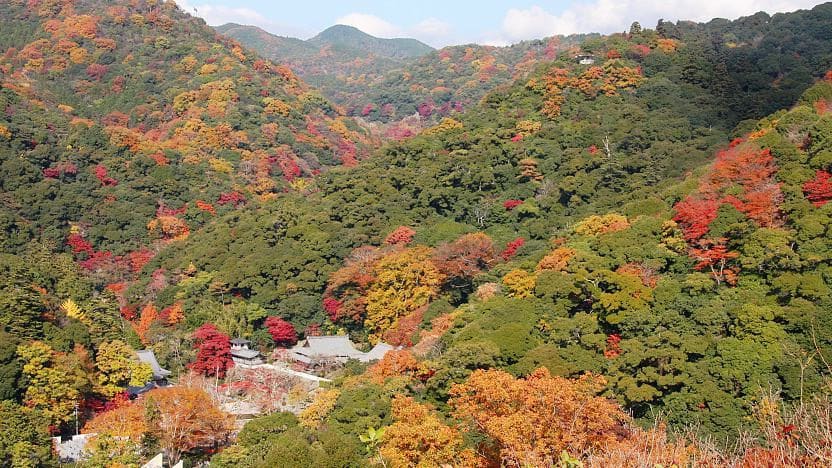
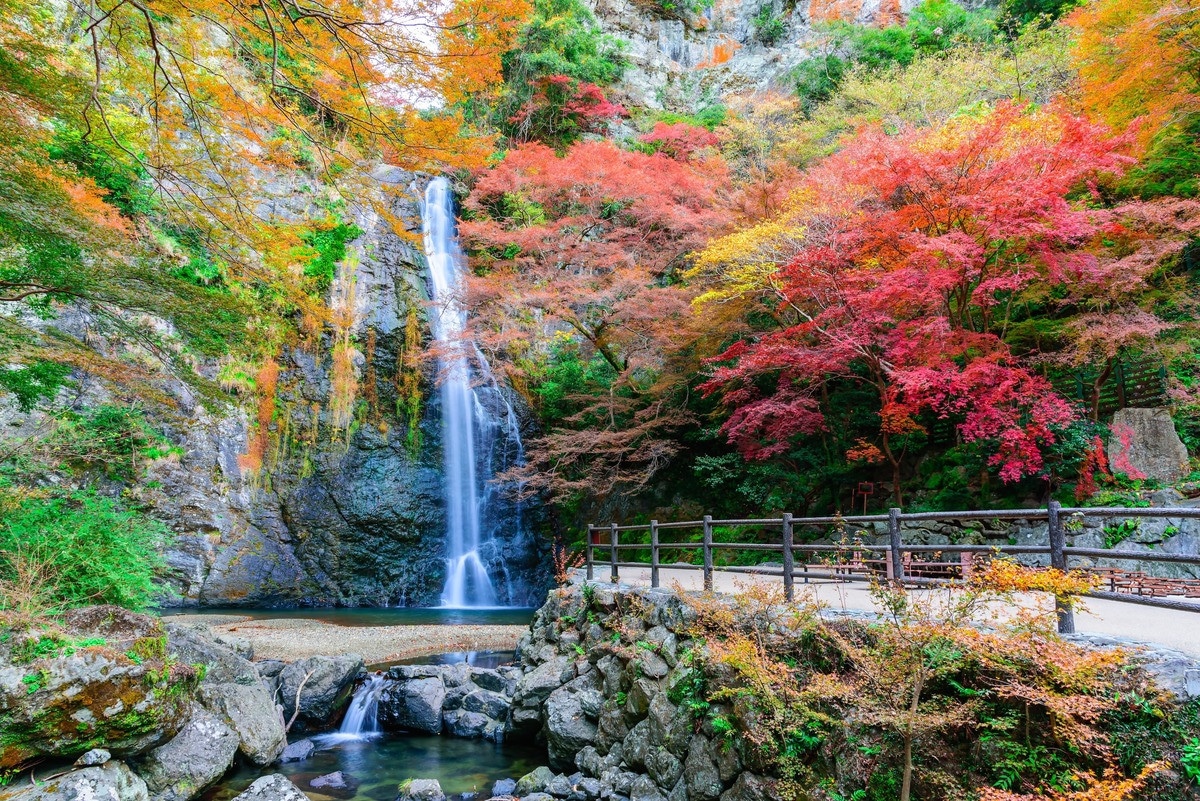
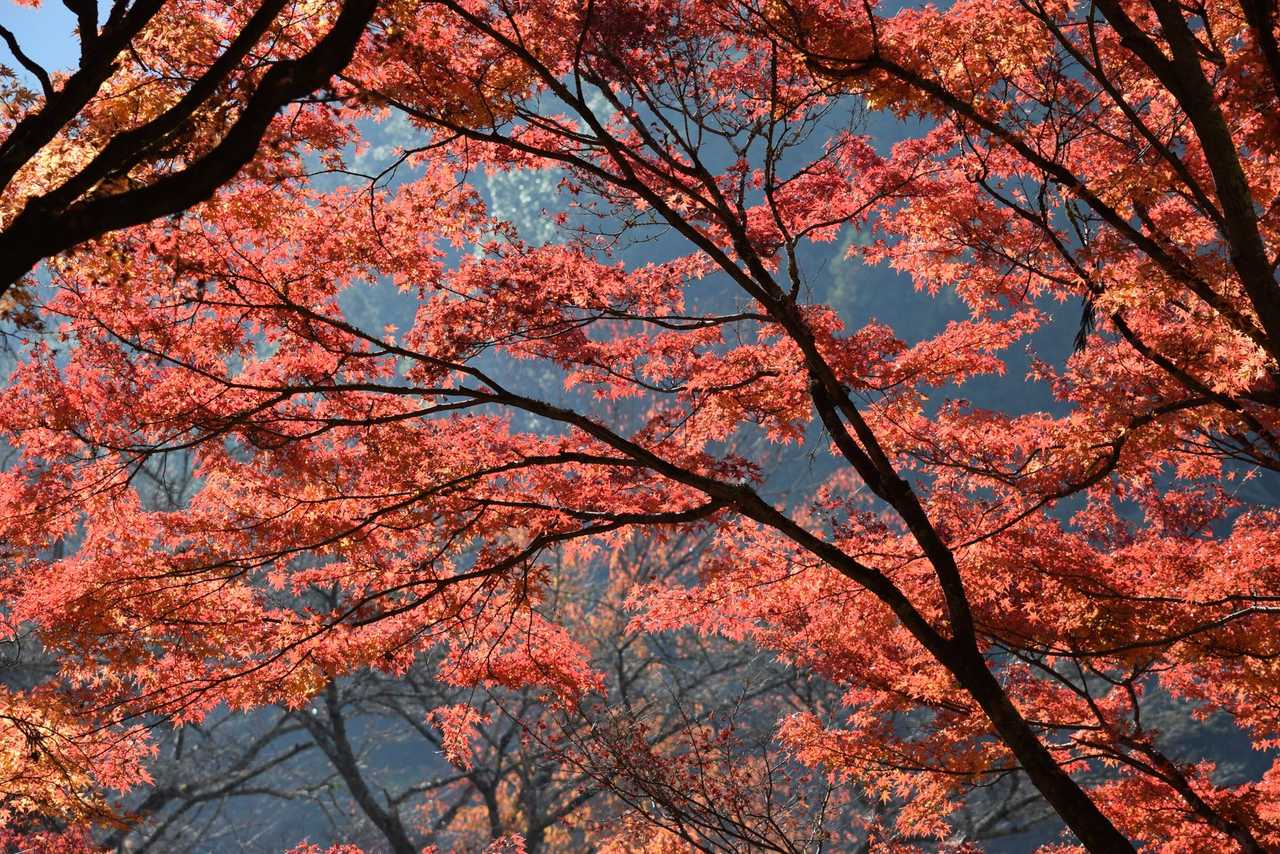
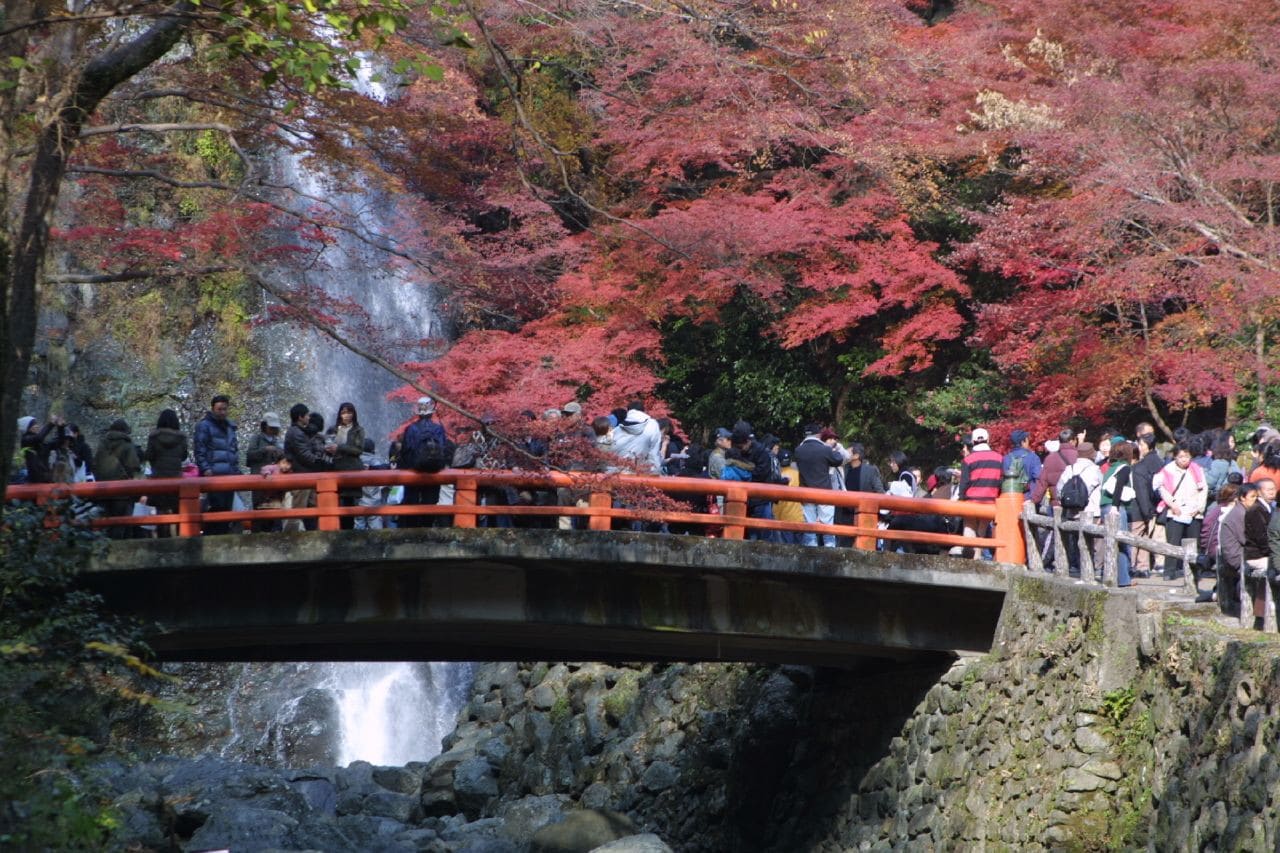
Minoh Falls drops a full 33 meters. It is the centerpiece of Minoh Park and the only waterfall in Osaka Prefecture listed among “Japan’s 100 Best Waterfalls.” The flow is especially full after rain, the spray forms a fine mist, and with maples and evergreen conifers woven together around it the falls look different in every season, most spectacular in the autumn color season from mid-November to early December.
There are several theories about the origin of the name; one says it comes from the shape of the flowing water, which resembles the farm tool “mi” (みの, a winnowing basket). A viewing platform stands near the falls, and it is the most soothing reward at the end of the hike.

Minoh Park in Summer and Other Seasons
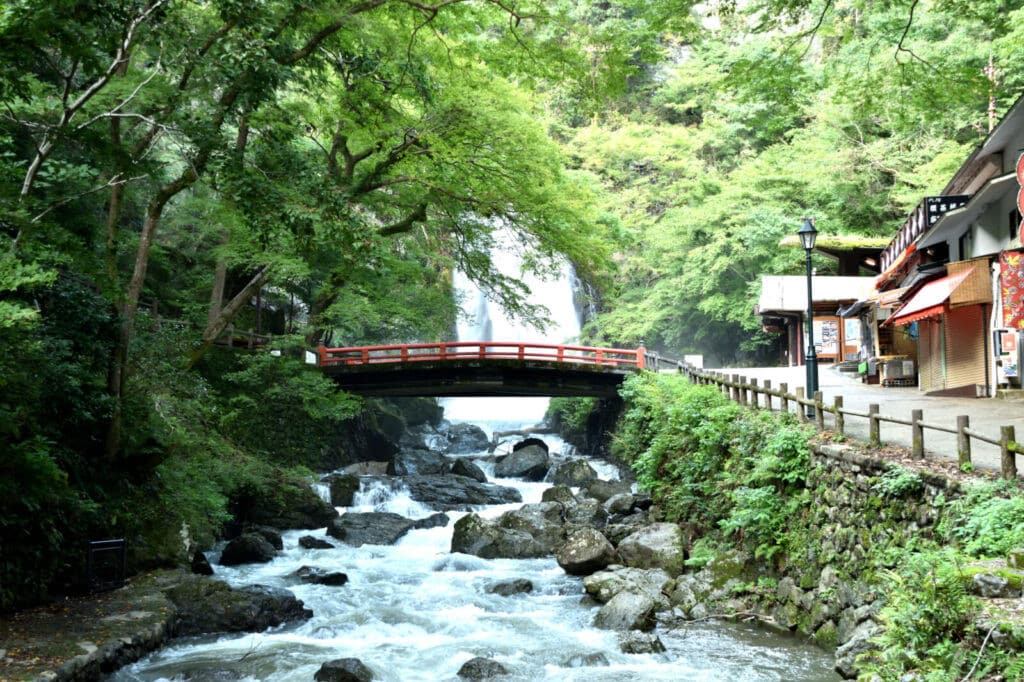
Minoh Park is not only worth visiting in autumn. In summer the park is cooler than central Osaka, and the thick shade and mist from the stream make a natural air-conditioned room, so it is a popular place for locals to hike and beat the heat.
The fresh green of spring and the quiet woods of winter are equally worth exploring, though visitor numbers are far lower than in the maple season, which actually suits travelers who like peaceful trails. Whenever you visit, entry to Minoh Park is completely free, and only individual facilities such as the Insect Museum charge separately.
Best Time to See Minoh’s Autumn Leaves in 2026
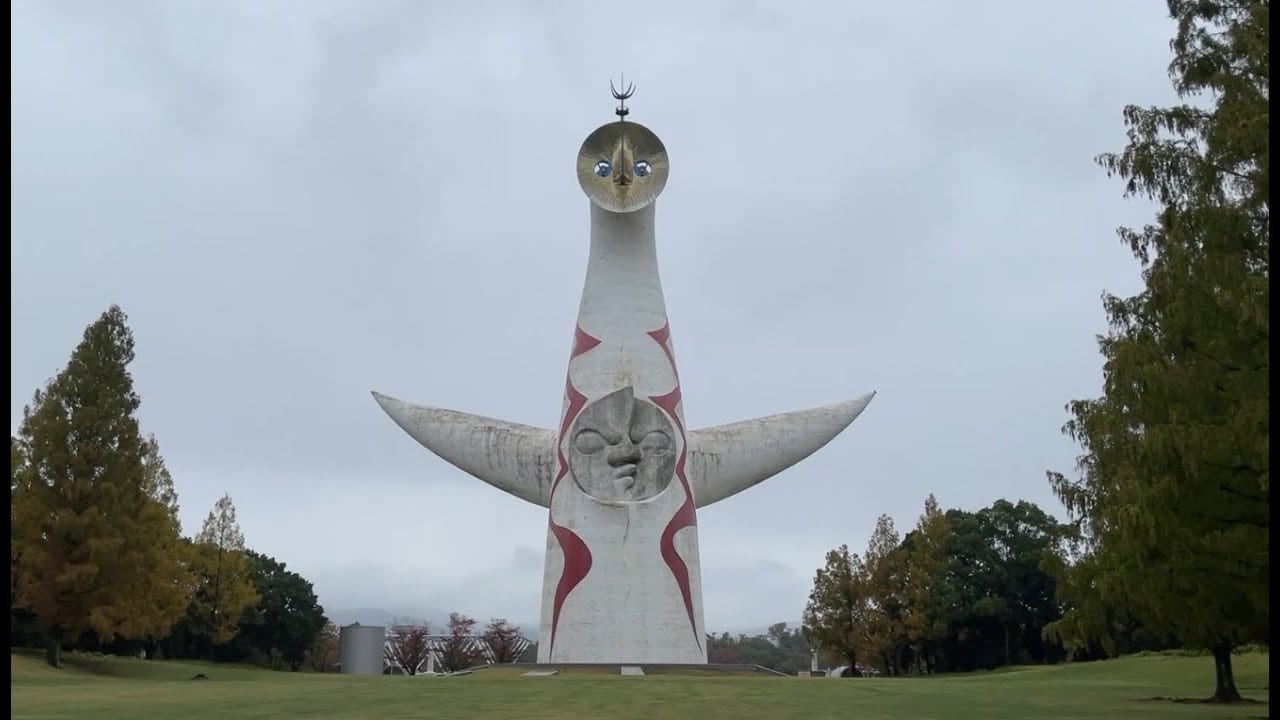
The peak viewing period for autumn leaves at Minoh Park in 2026 is expected to run from mid-November to early December, with late November the best time, when you can enjoy maples together with the 33-meter waterfall. The mountains around Minoh turn color one to two weeks earlier than central Osaka, so we suggest scheduling Minoh first and then heading to city spots such as Osaka Castle Park and Expo Commemoration Park.
The leaf-viewing season at Minoh Park usually includes the evening illumination “Minoh no Mori no Yoru Sanpo,” but the 2025 illumination at Minoh Falls was canceled due to a fire; for 2026, follow announcements from the Minoh City Tourism Association.
Minoh Shopping Street and Momiji Tempura
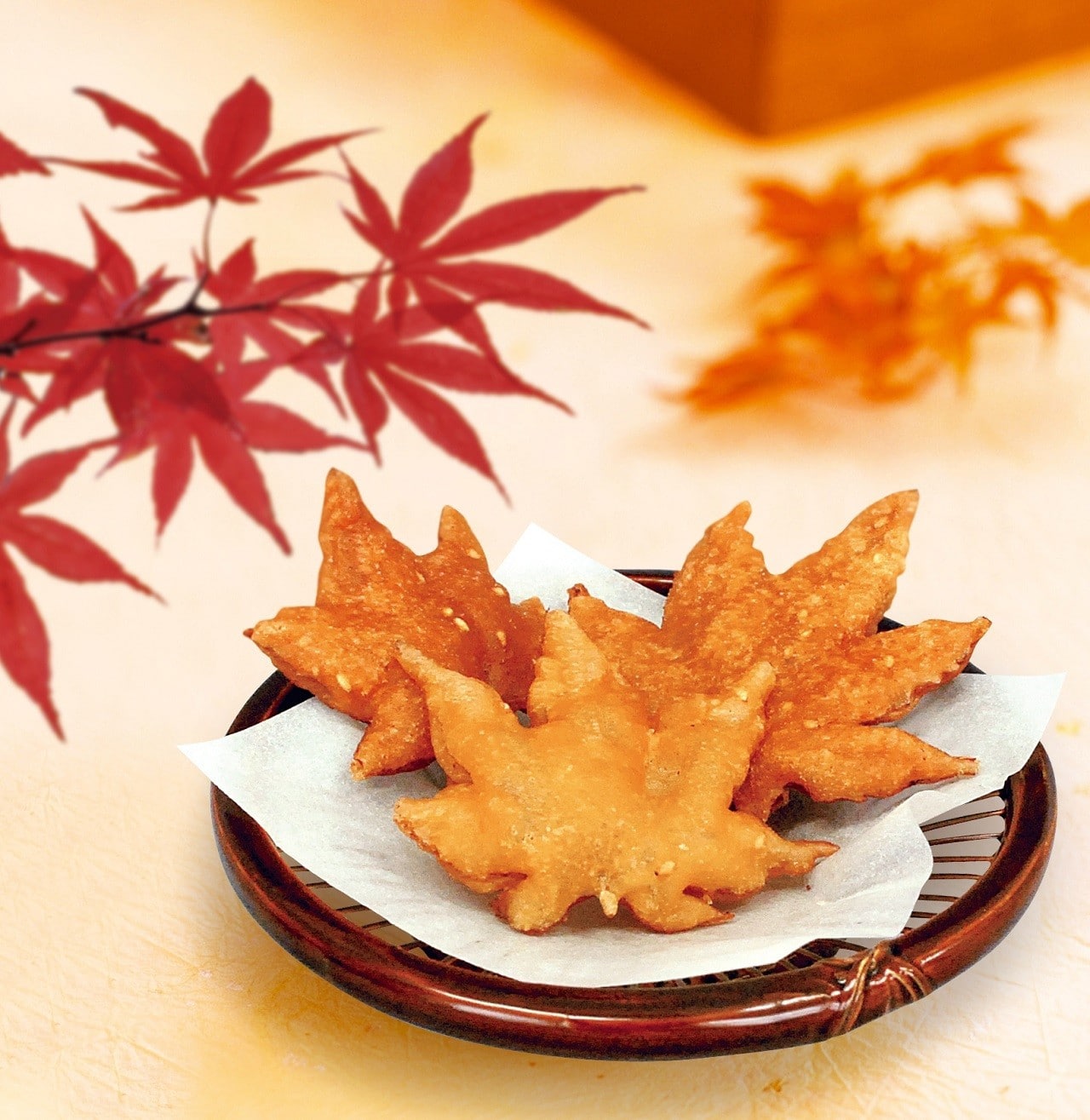
On the way from Minoh Station to the falls, the Minoh shopping street sells the local specialty “momiji tempura” (もみじの天ぷら). It is made from edible “Ichigyoji” maple leaves that are salted, then coated in batter and sugar and deep-fried, giving a crisp, lightly sweet texture, and it is a signature snack for the hike. Some long-established shops forbid photographing the frying process to protect their methods, so you can only buy the finished product. The street also sells the local specialty “MINOH BEER,” a popular souvenir.
Forest Bathing and Unique Ecology
As one of “Japan’s 100 Forest Bathing Forests,” Minoh Park deliberately preserves a great deal of native woodland along its trails, so visitors can breathe deeply and take in the forest air while hiking and come away relaxed in body and mind.
In addition, from April to early November the banks of the Minoh River offer “kawadoko” dining, where you can sit on a platform raised over the stream and enjoy kaiseki or shabu-shabu to the sound of the water. This seasonal experience is unique to Minoh Park and is much loved by local food fans.
How to Get There: Minoh Park Guide 2026, Minoh Falls Autumn Leaves Hike and Momiji Tempura Explained? Complete Guide to Transport and Costs
Minoh Park is close to central Osaka and easy to reach. Below are the four most practical ways to get there, with fares, frequencies and tips.

How to Get to Minoh Park: Transport Options at a Glance
🚋 Hankyu Railway: from Osaka-Umeda take the Takarazuka Line to “Ishibashi-handaimae,” then change to the Minoh Line and ride to the terminus “Minoh” Station, about 25–30 minutes; check the Hankyu website for fares. From the station, walk the 2.8-kilometer Takimichi trail, snacking on momiji tempura along the way.
🚇 Osaka Metro Midosuji Line: from Namba or Shinsaibashi ride to Umeda and change to Hankyu; or take a through train onto the Kita-Osaka Kyuko line to “Minoh-Kayano” Station, which opened in March 2024, then change to Hankyu Bus route 21 or 36 to “Hankyu Minoh Station.”
🚌 Bus: no regular route bus goes directly to the falls entrance. Minoh City has in the past run a trial one-way sightseeing loop bus, the “Minoh Takimichi One-Way Sightseeing Loop Bus,” on holidays (Hankyu Minoh Station → Minoh Falls → Katsuoji). Whether it runs in 2026 has not been announced, so check Minoh City announcements before you go.
🚗 Driving and car rental: there is no parking lot inside the park or along the Takimichi trail, and general vehicles (including motorbikes and bicycles) are prohibited from entering the park. You need to park in a paid lot in front of Minoh Station or at the “Otaki-ue parking lot” along Prefectural Road 43; traffic jams are common during the autumn leaf season and on weekends and holidays.
Choosing How to Reach Minoh Falls: Walking Times and Parking Summary
According to the official Minoh Park notice, it is about 5 minutes on foot from Hankyu Minoh Station to the park entrance (Ichinohashi), about 15–20 minutes to the Insect Museum, and about 40–50 minutes to Minoh Falls. The path is mostly gentle, and this is how most people go. If you drive and park around Minoh Station, it is about 50 minutes’ walk to the falls; if you park at the “Otaki-ue parking lot” above the falls (renamed from “Dainichi parking lot” in July 2024), it is only about a 15-minute walk downhill, but that stretch is steep, so take special care with strollers or wheelchairs, and you will have to climb back up on the return. Visitors with limited mobility can ask the park management office about borrowing electric-assist wheelchairs.


What Are the Must-See Spots? Minoh Park Guide 2026, Minoh Falls Autumn Leaves Hike and Momiji Tempura Explained: Highlights by Area
There are several spots worth visiting along and around the Minoh Takimichi trail. Here they are one by one.
Minoh Takimichi: The 2.8-Kilometer Valley Hiking Trail
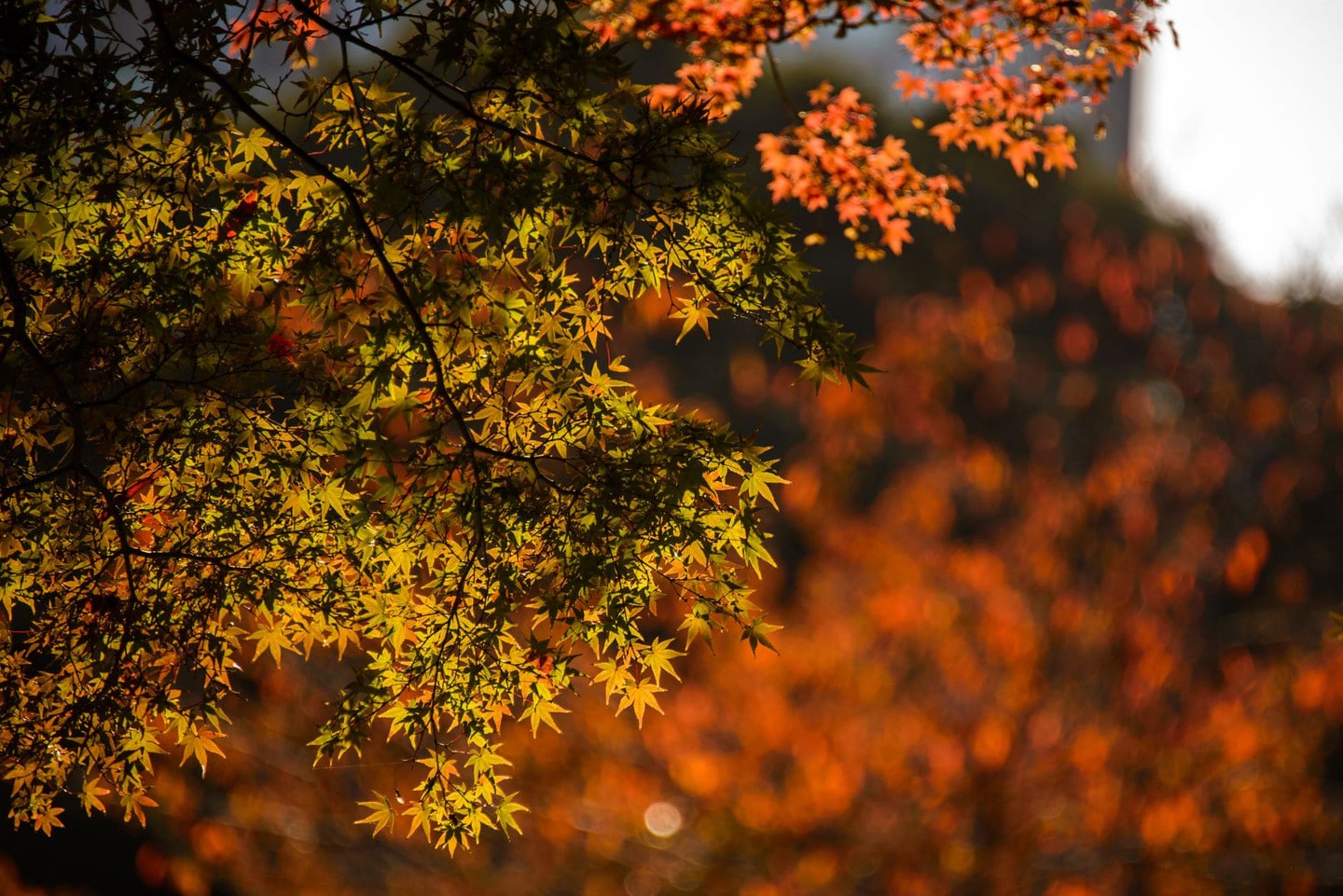
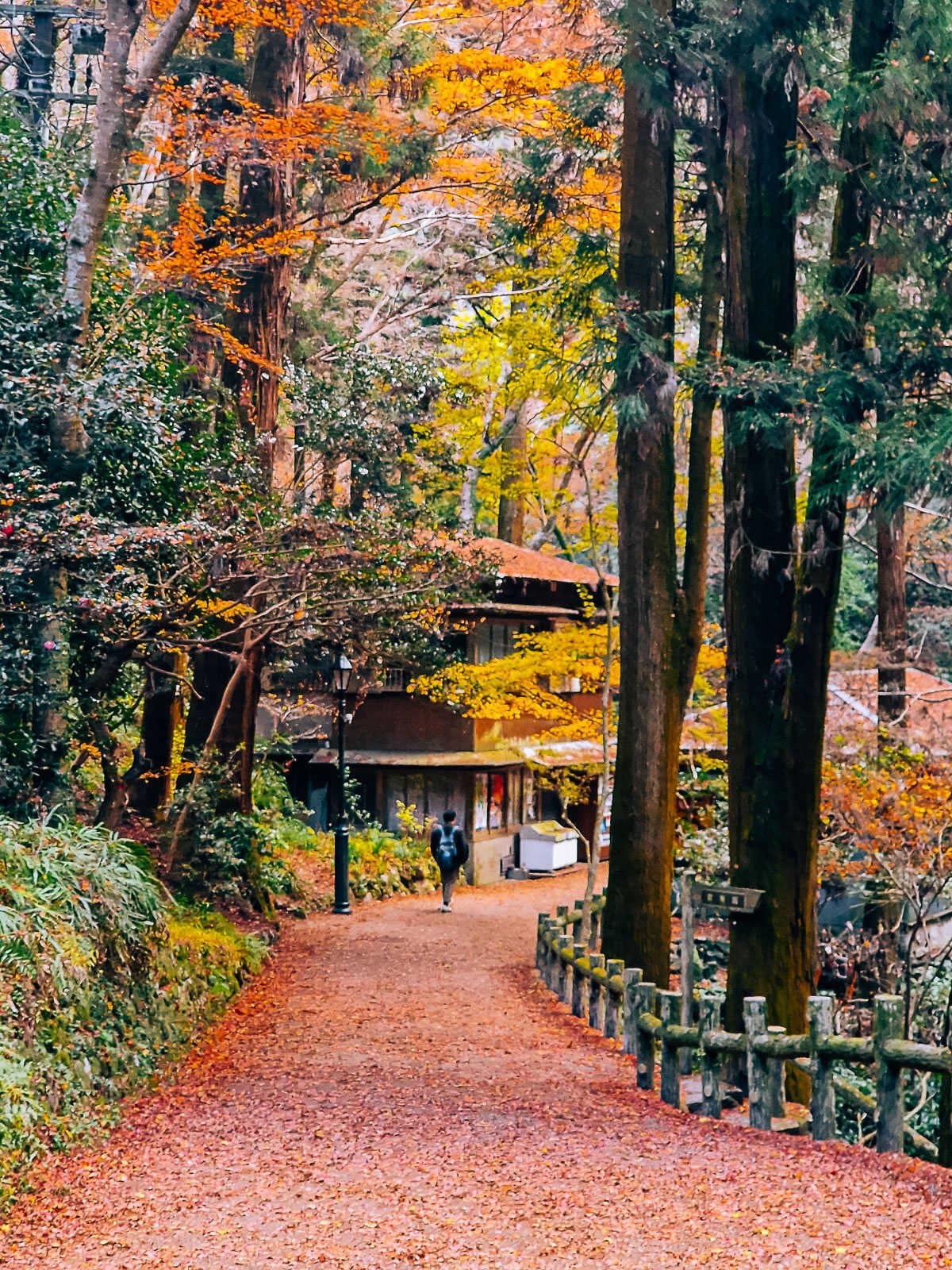
The Minoh Takimichi is the main trail from Minoh Station to Minoh Falls, about 2.8 kilometers long and 40–50 minutes one way. The trail follows the Minoh River valley on a flat, gentle path, suitable for families, older travelers and beginner hikers. When the maples turn in autumn it becomes a tunnel of orange and red, the signature route of Minoh Park.
Along the trail are cafés, souvenir shops and a foot bath, mostly within a 5-minute walk of Minoh Station, so you can rest whenever you like. We recommend going early in the morning, when crowds are thin, to avoid the weekend rush and photograph the valley’s autumn leaves.
Ryuanji: Birthplace of Japan’s Lottery Culture
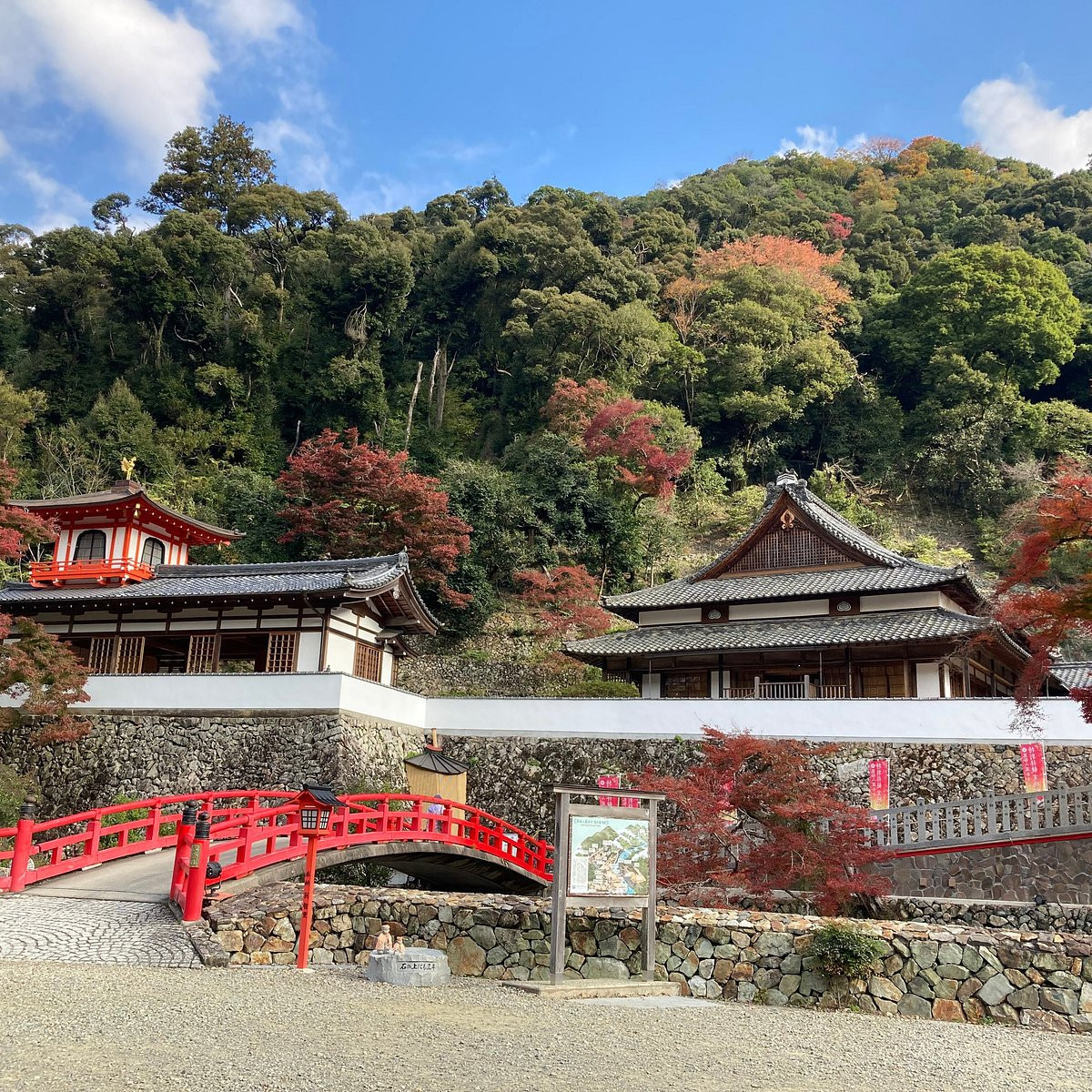
Ryuanji (Minoo-san Ryuanji) stands along the Minoh Takimichi and is a Shugendo temple dedicated to Benzaiten (goddess of fortune); the grounds enshrine Benzaiten as the principal deity and are an old Shugendo place of worship in Japan. The temple is said to be the origin of Japan’s first lottery, the “Minoh Tomi,” so many worshippers seeking good fortune come here specially.
In autumn the vermilion bridge in front of the temple and the surrounding maple leaves complement each other, a favorite spot for photographers. Visitors can pray for wealth and good relationships, and the temple also offers omamori charms and goshuin stamps as a unique memento of a visit. We suggest allowing 15–20 minutes during your hike to stop and pay your respects.
Ryuanji’s Minoh Tomi and Temple Office Hours
Ryuanji holds the “Minoh Tomi” every year on October 10; in 2026 it falls on a Saturday, with entries accepted from 9:00 a.m. and the draw starting at 11:00, and the ceremony takes about 30 minutes. That day the guest hall and Hoo-kaku also have a special viewing (accepted until 12:00). On weekdays the temple office is open 10:00 to 16:00, and handwritten goshuin cannot be accepted when the head priest is away. The official website is ryuanji.org; confirm before you go.
Bridges Along the Takimichi and the Noguchi Hideyo Statue: The Last Photo Stop Before the Falls
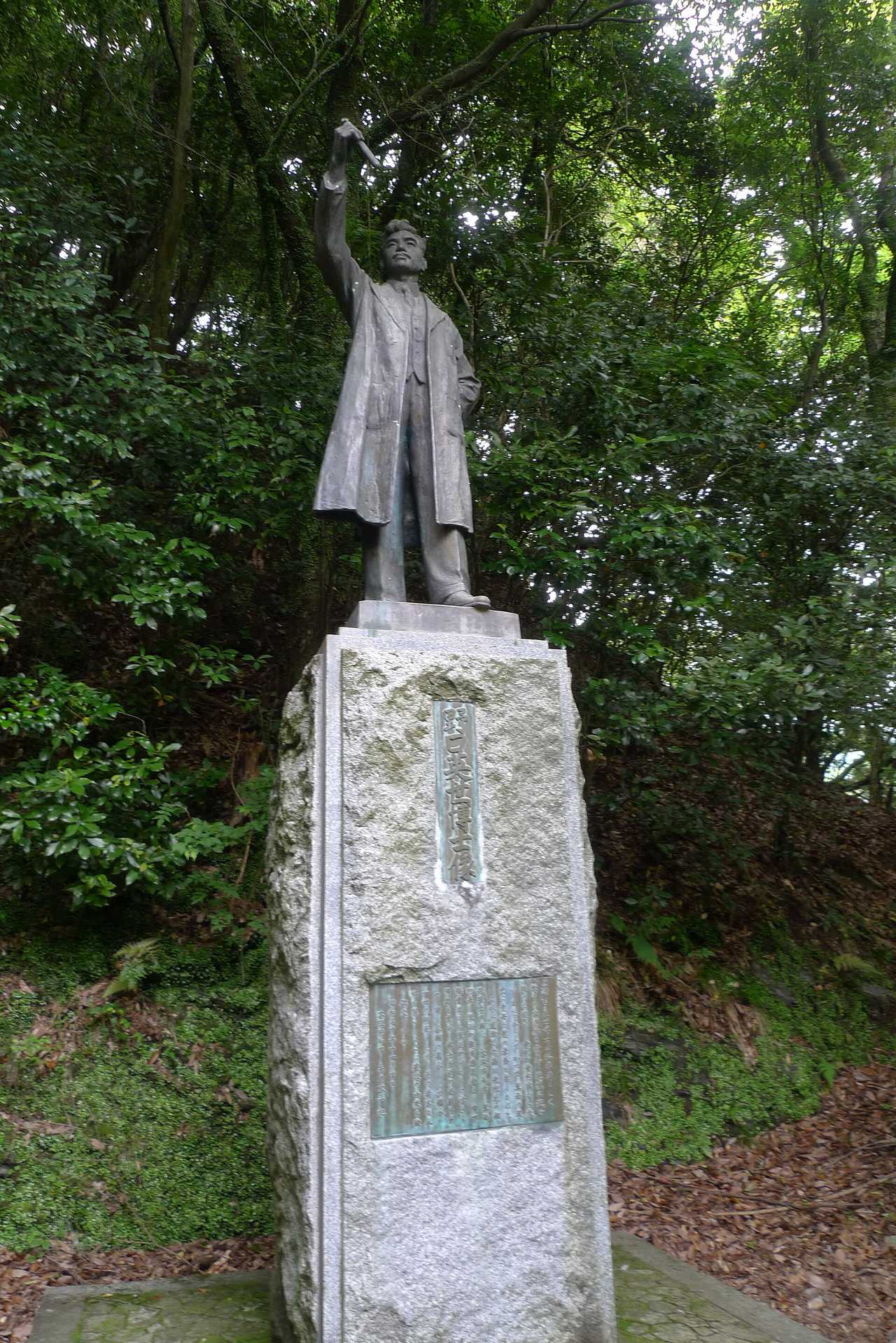
The bridges crossing the Minoh River along the Takimichi include Ichinohashi, Meotobashi, Kaedebashi and Takimibashi, and in autumn the scenery is especially lovely when red leaves reflect on the water, so stop for photos along the way. After Ryuanji, climb the stairs beside the trail for about 2 minutes to find a statue of the famous bacteriologist Noguchi Hideyo; it is said to have been built because, after he returned to Japan from the United States and took his mother to eat in Minoh, onlookers were moved by his filial devotion, and it is now an intellectual photo stop on the hike.
From here, walk another 5–10 minutes to reach the Minoh Falls viewing platform. This stretch is the most crowded, so go early in the morning or on a weekday.
Katsuoji: Wishing Daruma and a Hidden Spot for Night Maples
Katsuoji is close to Minoh Falls, about a 20-minute drive away, and is known for its “winning luck daruma” tumbler dolls and some of Kansai’s most beautiful autumn leaves. The daruma sold in the temple are believed to bring “certain victory,” drawing exam takers, athletes and business people to pray, and the thousands of daruma figures on the grounds make a unique sight.
In autumn Katsuoji holds a night illumination, and the maples take on a dreamlike mood under the lights, very different from the solemn daytime atmosphere. We suggest planning a half-day visit: pay your respects during the day and enjoy the night maples at dusk. The temple also offers omamori charms and goshuin stamps.


Meiji no Mori Minoh Quasi-National Park: An Ecological Treasury Covering the Whole Mountain Forest
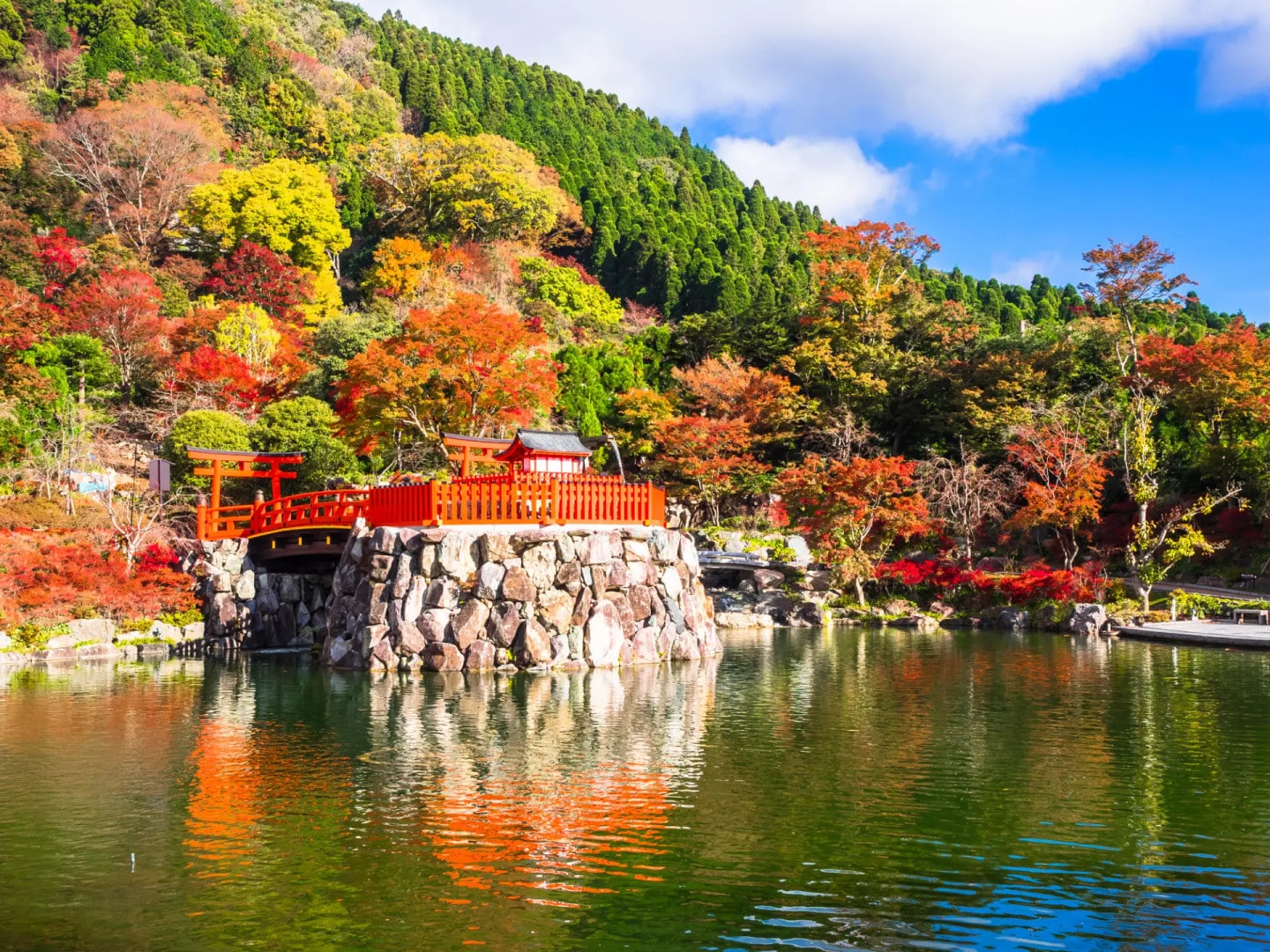
Minoh Park lies within Meiji no Mori Minoh Quasi-National Park, which was designated by the Japanese government in 1967 and covers the whole Minoh mountain forest, an important conservation area in the Kansai region. The area is ecologically rich: besides the wild macaques it supports many native plants and insects, and it is a rare, well-preserved stretch of original forest so close to a city.
Thanks to good conservation, the area was selected as one of “Japan’s 100 Forest Bathing Forests” in 1986. Hikers can enjoy the autumn leaves and also experience the restorative benefits of the forest for body and mind, which is the biggest feature setting Minoh Park apart from ordinary city parks.
Minoh Park Insect Museum: One of Japan’s Three Great Insect Collections
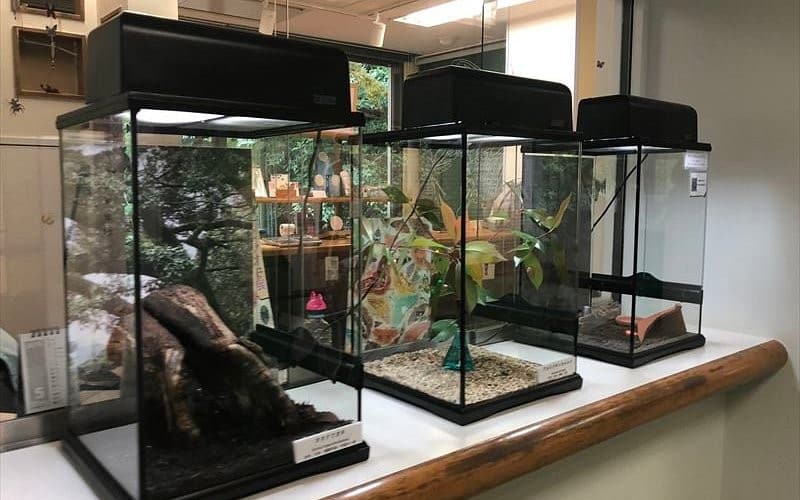
The Minoh Park Insect Museum stands beside the Takimichi trail and is known as one of “Japan’s three great insect collections.” It displays specimens and live examples of the insects that inhabit the Minoh mountain forest, making it an excellent mid-trip stop for families. Adult admission is ¥280, and junior high students and younger enter free.
The Insect Museum is open 10:00 to 17:00 (last entry 16:30) and closed on Tuesdays (open if Tuesday is a public holiday, closed the next day instead). Its official website is mino-konchu.jp, and a visit of 20–30 minutes is suitable.
Shoten-gu Saikoji: Where Minoh Mountain Faith Begins
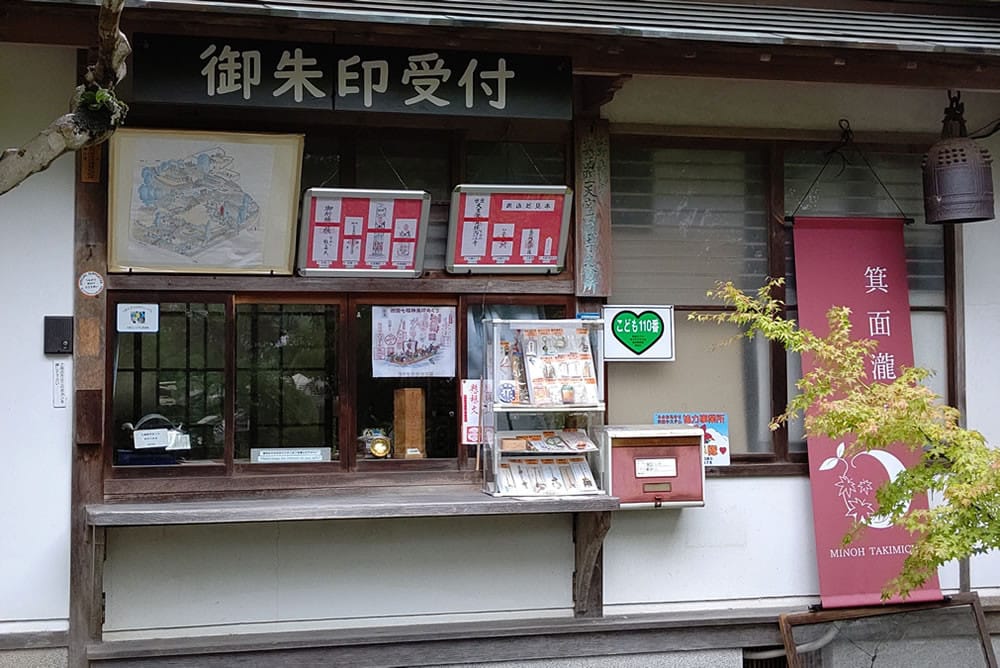
Shoten-gu Saikoji also stands along the Minoh Takimichi and enshrines Daishō Kangiten. It is an important center of Minoh mountain religious culture with a long history, and belongs to the same Minoh mountain Shugendo system as Ryuanji. The temple is not as grand as Katsuoji, but its quiet, ancient atmosphere draws many visitors who enjoy a peaceful worship experience.
Because it sits right beside the trail, you can stop to worship during the hike without any detour, making it a hidden gem that visitors short on time can easily fit in; the temple also offers omamori charms to buy.
Minoh Visitor Center: The First Stop for Planning Your Trip
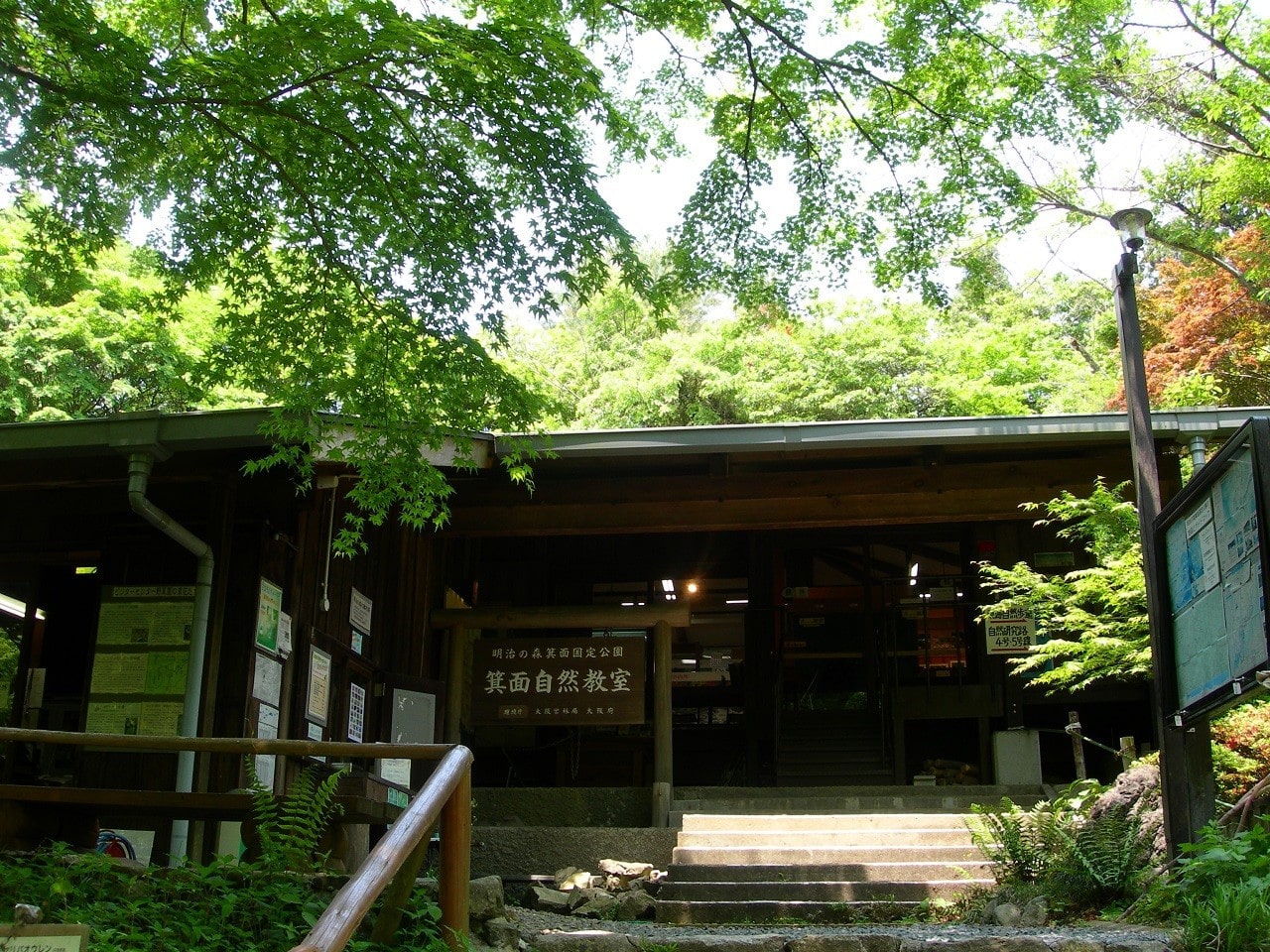
The Minoh Visitor Center is near Minoh Station and provides useful materials such as detailed trail maps, real-time information on autumn leaf conditions and loop bus timetables, so we recommend visiting it first after you arrive in Minoh. Staff can offer simple consultations in Chinese or English, which is very friendly to first-time independent travelers.
The visitor center also sells local specialties and souvenirs, including limited-edition Minoh Beer merchandise, so it is a good place to plan your route before hiking or to pick up souvenirs on the way back after your hike.
Hoshida Park (Hoshi no Buranko): A New Hidden Spot for Aerial Leaf-Viewing Near Osaka
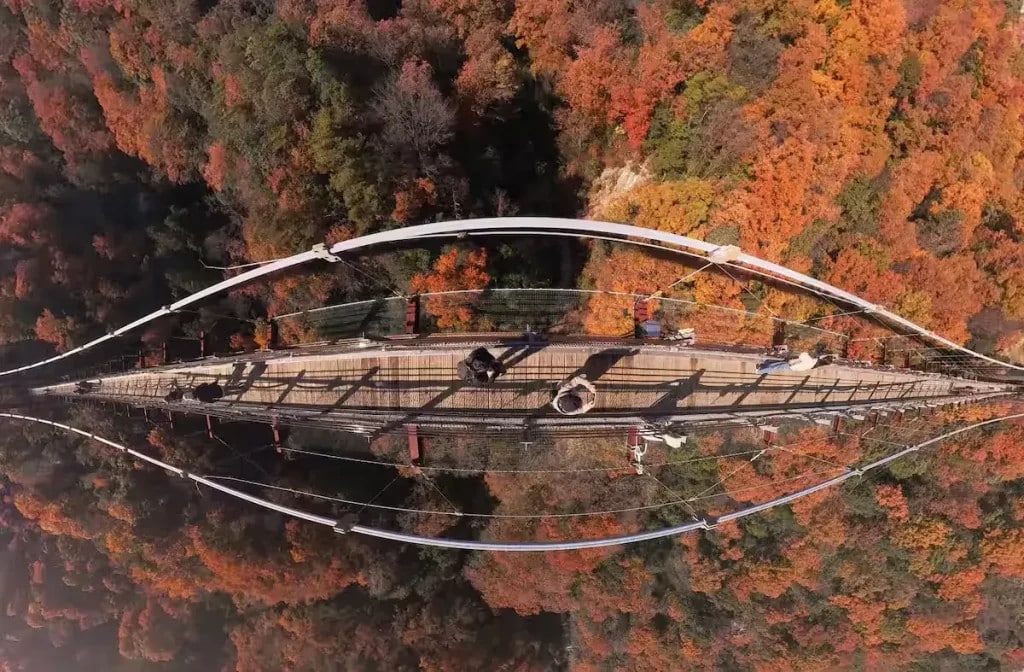
Hoshida Park is a leaf-viewing spot near Osaka that has gone viral on social media in recent years. Its official name is Osaka Prefectural People’s Forest Hoshida Park (ほしだ園地), and it is in Katano City. The suspension bridge inside, “Hoshi no Buranko” (星のブランコ), lets you walk in mid-air over a valley of red leaves and is a popular photo landmark. It is in a different area from Minoh Park, so plan a separate day.
Entry to the park is free, and the suspension bridge is usually open 9:30 to 16:30. On peak-season holidays you often need to queue, so we recommend going on a weekday.
How Much Does It Cost? Minoh Park Guide 2026, Minoh Falls Autumn Leaves Hike and Momiji Tempura Explained: Admission and Experience Tours
Minoh Park is in Minoh City, Osaka Prefecture, and is a completely free quasi-national park; the hiking trail to Minoh Falls needs no ticket either, which is one of the main reasons it is such a popular leaf-viewing spot near Osaka. Still, if you want an easier or deeper trip, a few costs are worth budgeting for, including transport passes, the cost of buying momiji tempura, and, if you want to skip the hassle of working out routes, a day tour or chartered car. Here are the items you will actually spend on, to help you set a budget.
Hankyu Railway One-Day Pass: A Money-Saving Way to See Osaka and Minoh
From central Osaka to Minoh Park, take the Hankyu Railway to “Minoh Station,” then walk the Takimichi for about 40–50 minutes to reach the falls. If you also plan to visit Osaka Umeda or Kyoto’s Arashiyama, we recommend the Hankyu Railway one-day pass (about ¥1,300 per adult; the price may change slightly). It is an e-ticket bought on your phone and suits plans such as “autumn leaves at Minoh in the morning, shopping in Umeda in the afternoon,” saving time and money. Platforms such as KKday and Klook also offer discounted e-tickets. Note that there is no regular route bus between Minoh Station and the falls, so you have to walk.
Minoh’s Signature “Momiji Tempura”: A Century-Old Flavor You Have to Try Once
The momiji tempura at Minoh Park is a century-old souvenir, made by coating salted maple leaves in a sesame-sweet batter and deep-frying them. It is crisp, with a light sweetness and a hint of sesame. Several long-established shops beside the falls trail sell it, such as the old shop “Hisakuni Kosendo” and its branch “Cobeni,” at about ¥320 to ¥440 for a pack of roughly 60 grams. On peak-season holidays shops often have long queues or sell out, so buy early. Besides the original, some shops offer seasonal flavors or brown sugar and matcha varieties. Budget about ¥500 to ¥1,000 to be satisfied.
Minoh Park Insect Museum: A Bonus Stop for Families
The Minoh Park Insect Museum is a recommended family spot, displaying specimens and live insects from around Osaka and the world, with a butterfly greenhouse that suits family interaction. Admission is ¥280 for adults, and junior high students and younger are free. It is open 10:00–17:00 (last entry 16:30) and closed Tuesdays. The museum is near the entrance to the falls trail, convenient to visit before or after the hike, with a stay of about 40–60 minutes, and it is a resting point during the leaf-viewing hike.
Day Trip Charter or Transfer from Osaka: A Time-Saving, Effortless Option
If you want to skip transfers or have companions who can’t walk far, you can book a Minoh Park day charter or transfer from Osaka through KKday or Klook. A private car goes straight to near the park entrance, saving the 40-minute walk. Some tours also link Imamiya Ebisu Shrine, Osaka Castle and other sights. A 4-seat sedan costs about ¥20,000 to ¥30,000 a day, which is quite economical when split among several people, and suits those with limited mobility or heavy luggage. The leaf-viewing season (mid-November to early December each year) is crowded, so book online one to two weeks ahead to avoid trouble hailing a car on the spot.

Where to Stay Nearby
Minoh Park is not far from central Osaka, and most travelers stay around Osaka Umeda, from where it takes about 25 to 30 minutes by Hankyu to Minoh Station, so you needn’t drag luggage through transfers on the round trip. Room availability is tight on autumn-leaf weekends, so we recommend booking as soon as your plans are set and choosing your area to match your return train times.


FAQ
Q: How much is admission to Minoh Park?
Entry to Minoh Park is completely free; only individual facilities such as the Insect Museum charge separately, ¥280 for adults, free for junior high students and younger.
Q: What is the fastest way to get to Minoh Falls?
From Osaka-Umeda Station take the Hankyu Takarazuka Line to Ishibashi-handaimae Station, change to the Hankyu Minoh Line to Minoh Station, then walk the Takimichi for about 40–50 minutes.
Q: When is the best time to see Minoh’s autumn leaves in 2026?
The predicted peak is mid-November to early December, with late November the best time; the mountains usually turn 1–2 weeks earlier than the city.
Q: Is the Minoh Takimichi hiking route tiring?
It is about 2.8 kilometers in total and 40–50 minutes one way, on a gentle, well-paved trail suitable for families, older travelers and beginner hikers.
Q: Where can I buy momiji tempura, and how much is it?
Shops along the Minoh shopping street generally sell it in autumn as a street snack; prices vary slightly by shop, about a few hundred yen per serving.
Q: Can I feed the monkeys at Minoh Park?
No. The park explicitly prohibits feeding or touching wild macaques, violations may be penalized, and please keep your food put away and watch them from a distance.
Q: Can I visit Minoh Falls and Katsuoji on the same day?
Yes. The two are about a 20-minute drive apart; check Minoh City announcements on whether the loop bus runs in 2026. It suits a half-day to full-day plan.