
Fukuoka Airport (Fukuoka International Airport): One of Japan’s Closest Major Airports to the City Center
The most striking thing about Fukuoka Airport is its location: the subway gets you from the airport to Hakata Station in just two stops, about five minutes, and to Tenjin in only five stops. That is almost unmatched among Japan’s major airports. Narita is an hour from central Tokyo, and Kansai Airport is more than forty minutes from Osaka.
But it has one structural catch: the subway station is at the domestic terminal, and the international terminal has no subway. The two terminals are about 10 to 15 minutes apart by vehicle. First-time visitors often wander the international terminal dragging their luggage, looking for the subway. Below, we first lay out the airport’s layout and time estimates, then move on to the arrival procedure and transport options. All fares in this article are reference values checked in August 2026, so please rely on the official announcements of the day.
The Key Points First: Fukuoka Airport Arrival Time and Time to the City
- 🛬 Arrival time at Fukuoka: from leaving the plane to walking out of customs takes about 30 to 45 minutes when all goes smoothly; allow 45 minutes to 1 hour at peak times or when baggage is slow to arrive
- 📱 Visit Japan Web: register before you leave and use the combined QR code at the shared self-service kiosk (KIOSK) for the fastest way through
- 🚇 To Hakata Station: take the free shuttle bus to the domestic terminal, then ride the subway two stops, about 5 minutes
- 🚌 To avoid transferring: take the Nishitetsu bus from stops 6 and 7 on the 1st floor of the international terminal to Hakata Station Chikushi Exit, 400 yen one way
- ⏱️ Landing to Hakata Station: within an hour if all goes smoothly; allow an hour and a half to be safe
Why It Counts as Close: Two Subway Stops to Hakata
Fukuoka Airport is in Hakata Ward, Fukuoka City, and the straight-line distance to the city center is very short. On the Fukuoka City Subway Airport Line, it is only two stops, about five minutes, from Fukuoka Airport Station to Hakata Station, and five stops, about 11 minutes, to Tenjin. Subway fares are distance-based, so please check the fare chart in the station or the day’s display on the ticket machine for the actual fare.
This changes how you can build an itinerary: on arrival day you can start shopping and eating in the afternoon, and on departure day you can still squeeze in another round of sightseeing in the morning before heading to the airport. By contrast, in most other big Japanese cities the two to three hours of round-trip airport travel eat up half a day. That is also why Fukuoka works well as the start and end point of a Kyushu trip.
Terminal Layout: The Subway Station Is Only on the Domestic Side
Fukuoka Airport is split into an international terminal and a domestic terminal on opposite sides of the runway, about 10 to 15 minutes apart by vehicle, so you cannot walk between them. Flights from Taiwan always use the international terminal.
The key point: the subway’s Fukuoka Airport Station is on the first basement level of the domestic terminal, and the international side has no subway. To take the subway you must first ride the free shuttle bus to the domestic terminal. Airport buses, on the other hand, board right at the 1st floor of the international terminal, with no need to cross terminals. This difference decides which transport you should choose, and we compare them in detail later.
How Much Time to Allow: A Realistic Estimate from Landing to the City
Now that self-service immigration is widespread, arrival at Fukuoka Airport is much faster than it was a few years ago. If all goes well, it takes about 30 to 45 minutes from leaving the plane to walking out of customs, and adding the shuttle bus and subway, it is reasonable to expect to be at Hakata Station within an hour of landing.
But watch out for peak times: when several international flights arrive together, both immigration and the baggage carousels get congested. A practical rule is to allow an hour and a half to reach the city. If you plan to continue south by Shinkansen or limited express that day, leave extra transfer time, especially if you first need to exchange a rail pass at the green ticket office, which means yet another queue.
How to Choose: Luggage and Hotel Location Decide Everything
The decision really comes down to two variables. The first is luggage: if you travel light and move easily, the shuttle bus plus subway is the fastest and most punctual; if you are dragging two big suitcases and have kids, just take the bus from the 1st floor of the international terminal and skip the hassle of transferring.
The second is where you are staying: near Hakata Station, both subway and bus work well; in Tenjin, the five-stop direct subway ride is convenient; around Nakasu-Kawabata or Ohori Park, the subway also gets you there. If your hotel is somewhere the airport bus does not go, or there are four or more of you, a taxi split among the group may not cost more. The next section lays out the location, travel time, and fare for each option one by one.
How to Get From Fukuoka Airport to the City: Shuttle Bus, Subway, Bus, and Taxi Compared
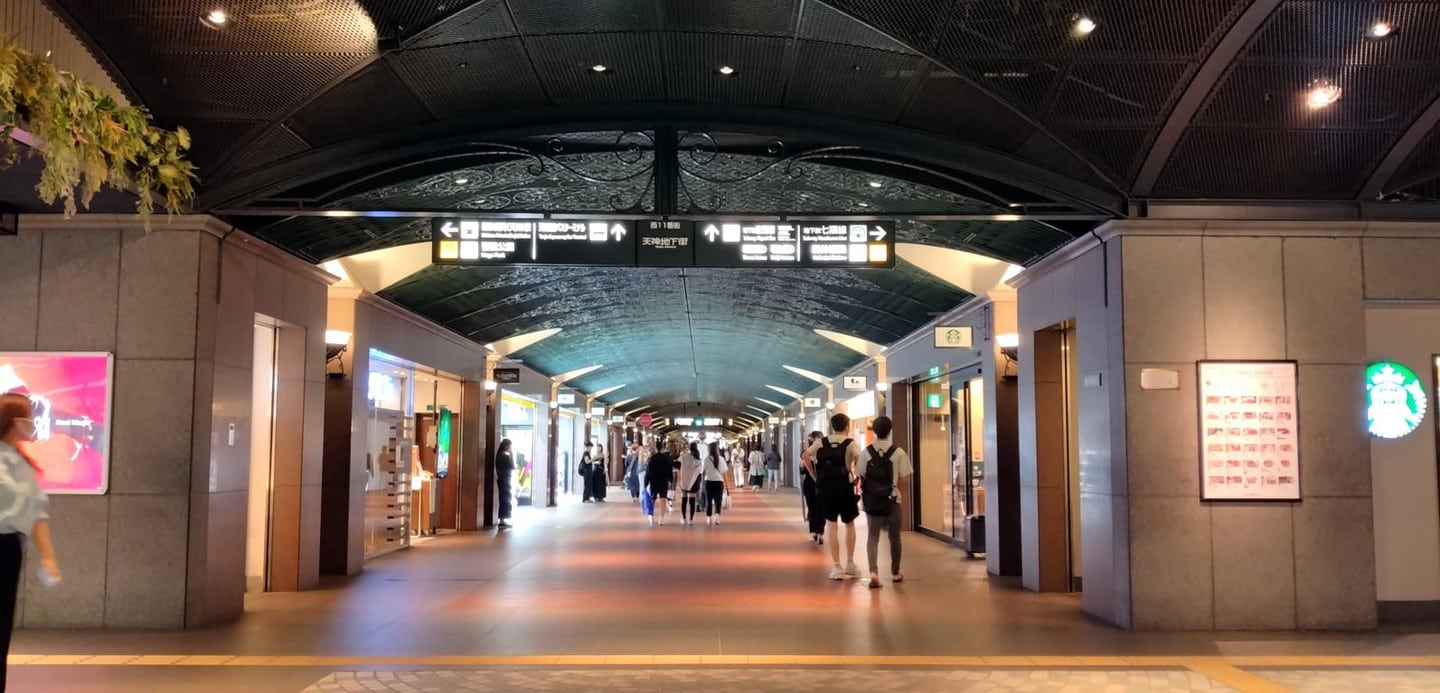
From the international terminal there are four main routes: the free shuttle bus plus subway, the direct airport bus, a taxi, and a pre-booked transfer. Below we explain the boarding location, travel time, and fare for each.
All fares are values checked in August 2026; please rely on on-site announcements for actual prices.
Free Shuttle Bus: Outside the 1st Floor of the International Terminal, Every 5 to 6 Minutes in the Daytime
If you want to take the subway, the first thing to do is find the shuttle bus. The boarding area is outside on the 1st floor of the international terminal; after leaving the arrivals hall, head outside and you will see the signs.
- 🚌 Frequency: according to the Fukuoka Airport website (fukuoka-airport.jp), a bus runs about every five to six minutes during the day and about every 10 to 15 minutes in the evening; the first bus from the international terminal is around 6:17 a.m. and the last around 10:51 p.m.
- 💰 Cost: completely free, about a 10-minute ride
- 📍 Stop: numbering may change with terminal traffic flow, so follow the on-site signs
There is luggage space on board, but at peak times it is crowded and you may have to stand, especially between 8:30 and 9:30 a.m. This bus also carries passengers transferring to domestic flights, so check the destination on the front of the bus before boarding. The return trip from the domestic terminal to the international terminal uses the same system. If you have a lot of luggage or someone in your group has limited mobility, consider the airport bus that you can board directly at the international terminal instead.
Subway: Fastest and Most Punctual, Just 5 Minutes to Hakata
After arriving at the domestic terminal, follow the signs to Fukuoka Airport Station on the first basement level and take the Fukuoka City Subway Airport Line.
- 🚉 Hakata Station: two stops, about 5 minutes
- 🚉 Tenjin Station: five stops, about 11 minutes
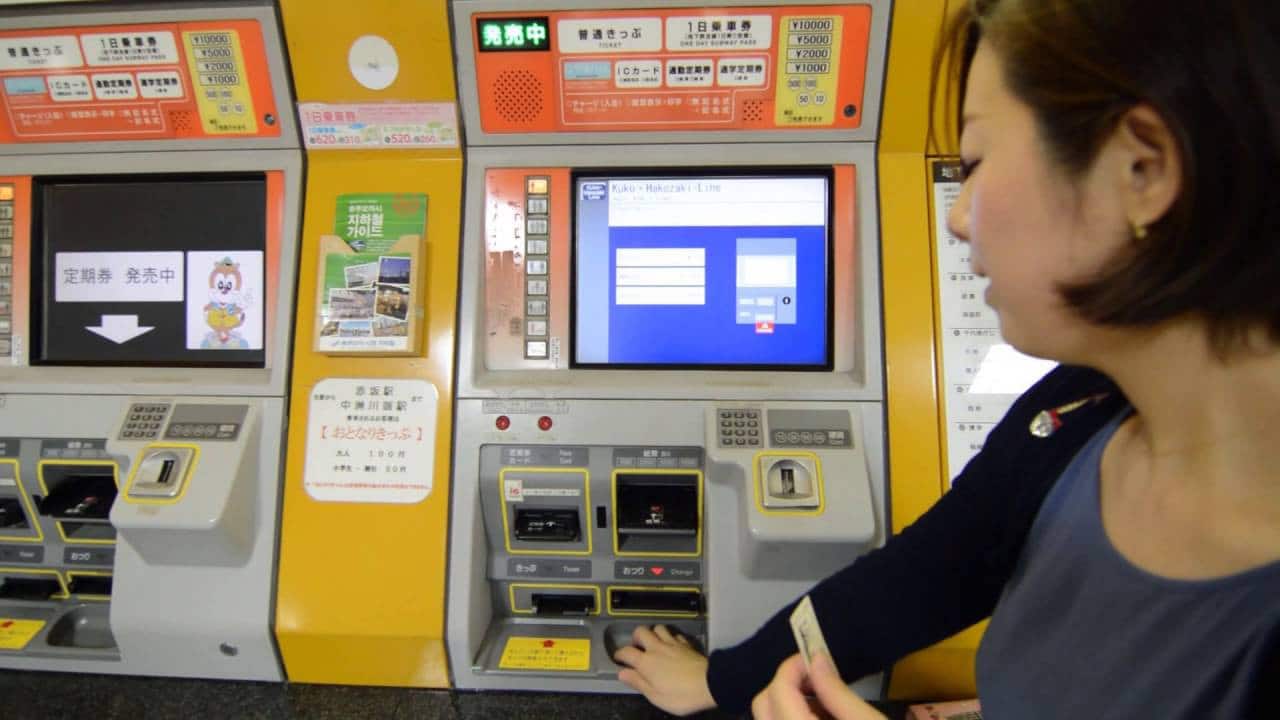
- 💰 Fare: from Fukuoka Airport Station to both Hakata and Tenjin, the adult one-way fare is 260 yen; please check the fare chart in the station or the ticket machine display for the actual amount
Payment is flexible: you can use an IC card (ICOCA, Suica, and other nationwide interoperable cards), the fare gates at all 36 Fukuoka City Subway stations support contactless credit card payment (Visa, Mastercard, JCB, and others), or you can buy a single-ride ticket at a ticket machine.
The subway’s biggest advantage is that there is no traffic, trains are frequent, and the timing is completely predictable. The drawback is that you have to take the shuttle bus first, which means one more boarding and one more round of dragging luggage.
Airport Bus to Hakata Station: Stops 6 and 7 on the 1st Floor of the International Terminal, 400 Yen
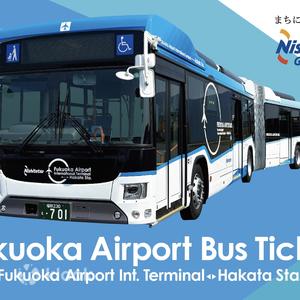
If you would rather not transfer between terminals, you can board the Nishitetsu bus (website nishitetsu.jp) directly at the 1st floor of the international terminal and ride to Hakata Station, getting off right next to the station.
- 🚉 Boarding location: stops 6 and 7 on the 1st floor of the international terminal; since April 26, 2025, the terminus has changed to “Hakata Station Chikushi Exit” instead of the Hakata Bus Terminal
- 💰 Fare: 400 yen one way for adults; paying with a credit card or transit IC card takes 20 yen off, making it 380 yen
- 💳 Cashless payment is the rule, so please use a credit card or transit IC card; if you only have cash, explain to the driver and you can pay in cash
Travel time is affected by traffic; the Nishitetsu website lists the fastest at about 15 minutes. If your flight arrives during the evening commute, the subway is still the safer choice.
-Klook.jpg)

To Tenjin and Other Cities: Airport Bus and Express Buses
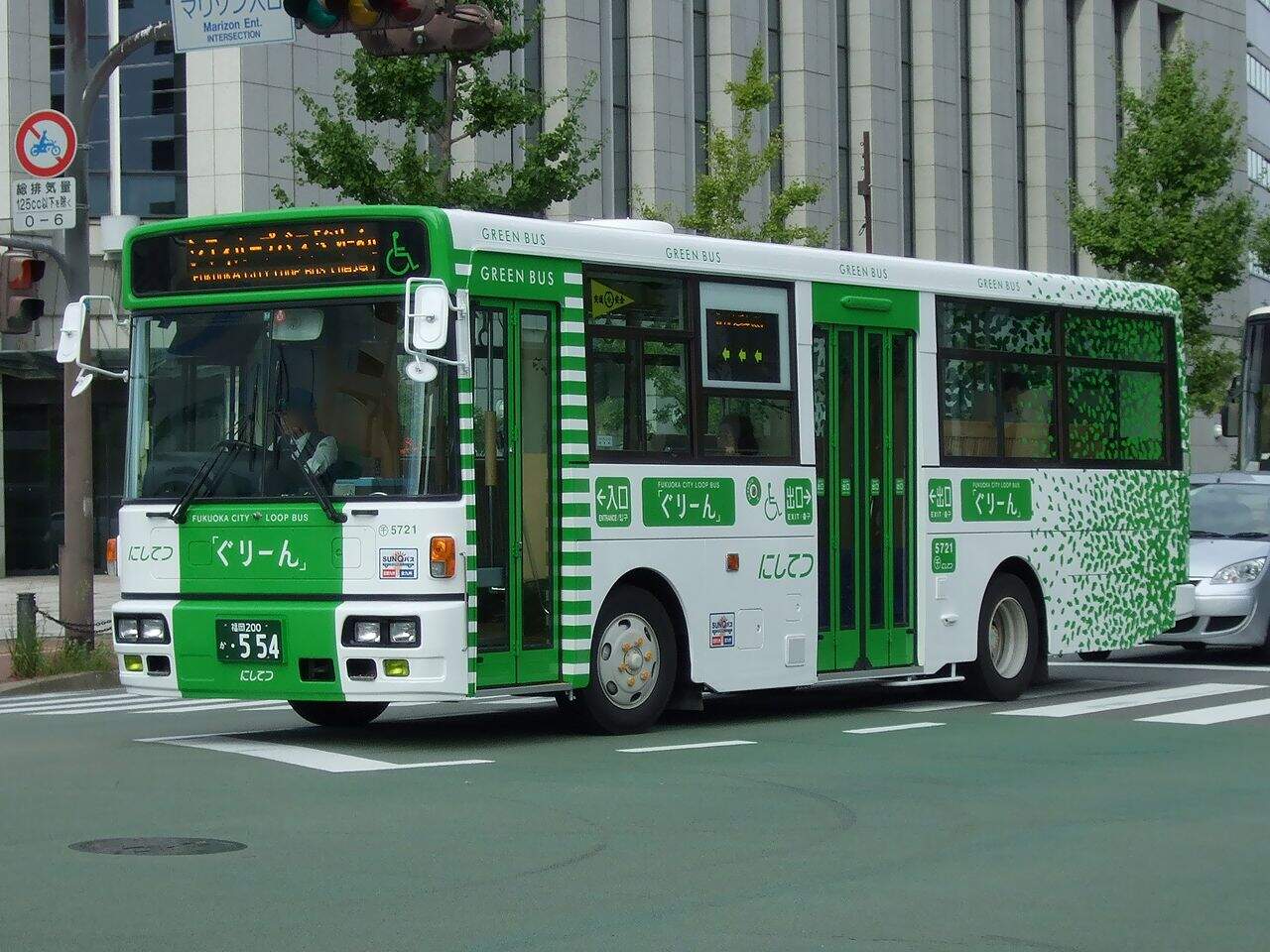
The bus to Tenjin is Nishitetsu’s “Airport Express,” which runs directly to the Nishitetsu Tenjin Highway Bus Terminal with no intermediate stops, taking as little as about 30 minutes.
- 🚉 Boarding location: stop 8 on the 1st floor of the international terminal
- 💰 Fare: 500 yen one way for adults; paying with a transit IC card takes 20 yen off, making it 480 yen (10 yen off for children)
Fare figures for the Tenjin route circulating online vary widely, so we still recommend checking against the day’s announcements at the stop and on board before you travel.
Fukuoka Airport is also an important hub of Kyushu’s express bus network, with direct routes to Yufuin, Beppu, Kumamoto, and more. If your first stop is a hot spring area rather than Fukuoka city, taking an express bus straight from the airport is far easier than going into the city first and then transferring.
These routes mostly need advance reservations or an early spot in line, and departures are limited, so be sure to check the timetable before you go.
Taxis and Transfers: The Solution for Groups of Four or More or Late-Night Arrivals
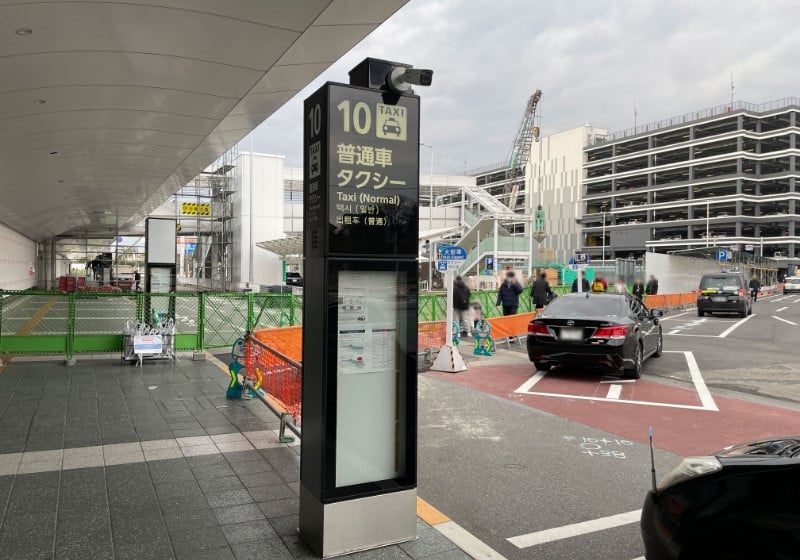
There is a taxi stand outside the international terminal. The ride to the Hakata Station area is short, and the fare is quite reasonable by Japanese standards; split among four people it often comes to about the same as four bus tickets. It is especially worthwhile with lots of luggage or when your lodging is some distance from a station.
Another option is a pre-booked transfer service. Its advantages are that the driver waits in the arrivals hall holding a sign and you can choose the vehicle type, which suits travelers with elders or small children or late-night flights. Japanese taxis almost never accept haggling and charge by the meter, with a surcharge late at night. Either way, save a screenshot of your hotel’s address in Japanese and its phone number beforehand, and communication will go much more smoothly.

How Does the International Arrival Procedure at Fukuoka Airport Work? Visit Japan Web and Self-Service Immigration Explained
Fukuoka Airport’s international terminal has fully adopted the “shared self-service kiosk (KIOSK),” which lets you handle immigration and the customs declaration at once with a single combined QR code, then use a dedicated lane to exit quickly. With the preparation done in advance, the whole process is very fast.
Below we break down every step from registration before departure to walking out of customs, and point out where mistakes are most likely.
The Fukuoka arrival procedure has five steps: register on Visit Japan Web before departure; after landing, scan the combined QR code and your passport at the shared self-service kiosk (KIOSK); join the dedicated immigration lane; collect your baggage; and finally exit through the electronic declaration lane.
How long does arrival at Fukuoka take, and how long does it take to clear customs at Fukuoka Airport? There is no officially published fixed time; it varies by flight and crowds. In practice, about 30 to 45 minutes when smooth, and 45 minutes to 1 hour at peak times.
To shorten the time, the official advice is to fill in Visit Japan Web first and then use the shared self-service kiosk (fast-track clearance). Fukuoka Airport has had these machines installed since December 1, 2025.
How Long Does Arrival at Fukuoka Airport Take? Officially Published Immigration Waiting Times
“How long does Fukuoka arrival take” and “how long does it take to clear customs at Fukuoka Airport” are the questions asked most often before departure. Beyond travelers’ own experience, Japan’s Immigration Services Agency publishes monthly immigration waiting-time statistics for each airport, and Fukuoka Airport is included, so they serve as a fairly objective reference. Looking at the most recent published data, for March 2026:
- The share of foreign visitors at Fukuoka Airport who “completed immigration within 20 minutes” averaged about 56% for the month, meaning nearly half of people waited more than 20 minutes
- The daily “longest waiting time” ranged from about 32 to 65 minutes, mostly occurring between roughly 8:30 and 11:30 a.m., exactly when many international flights arrive together
- On the day with the most arrivals that month (March 27), the share of short-stay foreign visitors waiting more than 60 minutes at Fukuoka Airport was 0%
- Since May 2025, this statistic has also counted the time spent using the shared self-service kiosk (KIOSK) outside the inspection area, which is closer to what travelers actually experience in line
In other words, immigration itself takes a dozen or so minutes when smooth, but at peak times you should be prepared to wait 40 minutes or more; adding the walk from the gate to the inspection area, waiting for baggage, and customs, allowing 45 minutes to 1 hour for the whole Fukuoka arrival procedure is the safer bet. If you arrive on a morning flight and then need to catch a Shinkansen or limited express, leave even more transfer time; completing your Visit Japan Web registration before departure and saving a screenshot of the QR code is the only thing you can do yourself to shorten the time. These figures are updated monthly, and actual conditions on the day still prevail.
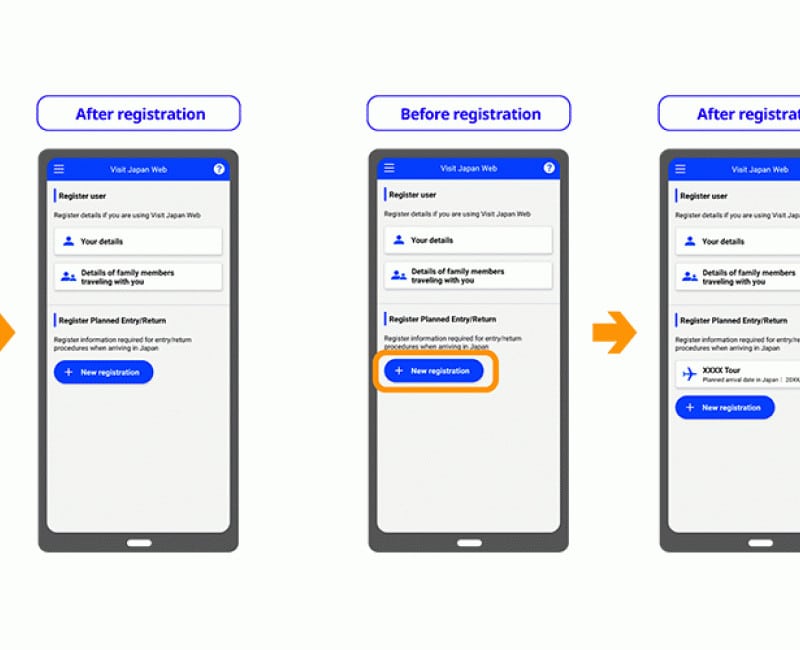
How Do You Fill In Visit Japan Web for Fukuoka Arrival? Register Before You Leave
Before entering Japan, you need to complete registration on the official Visit Japan Web page (operated by Japan’s Digital Agency, at vjw.digital.go.jp), including personal information, arrival information, and the customs declaration. The authorities have not announced a hard deadline for “how many hours ahead,” but in practice we recommend finishing it before you leave, while you still have a stable internet connection at home, rather than putting it off until you are on the plane. In-flight Wi-Fi is unreliable, and it is easy to get stuck at the verification email step.
Registration requires your passport details, flight number, and your lodging address in Japan (hotel name, address, and phone number); saving a screenshot of your booking confirmation on your phone beforehand saves a lot of trouble. Family members traveling together can create multiple records under one account to manage them together, but each person has their own QR code.
Fast-Track Clearance at Fukuoka Airport: One Combined QR Code Handles Immigration and the Customs Declaration
Fast-track clearance at Fukuoka relies on the combined QR code from Visit Japan Web, which merges immigration and the customs declaration. It is the key to the whole arrival procedure, so call it up before landing and save a screenshot, or turn up your screen brightness in advance.
One thing to flag in particular: Visit Japan Web has no official app. Any app with the same name on the App Store or Google Play is not official and may be a scam, so do not download it; always use the official web version. Also, the airport’s mobile signal can be unstable when it is crowded, so saving the QR code as an offline screenshot is the safest approach.
Step 1: Follow the “Arrival” Signs and the Infrared Temperature Scanner
After leaving the plane, follow the “到着 (Arrival)” signs. The first checkpoint is the quarantine area, where infrared equipment senses body temperature; normally you do not need to stop, just walk through.
The practical tip here is to walk a bit faster. When several international flights land together, arriving at the immigration hall ten minutes later can mean two or three hundred more people ahead of you. If someone in your group is slow, send one person ahead to get in line. Also, this walk is not short and there are usually restrooms along the way; it is better to use them now than to need one while waiting in the immigration line.
Step 2: Scan the QR Code, Passport, Face, and Fingerprints at the KIOSK
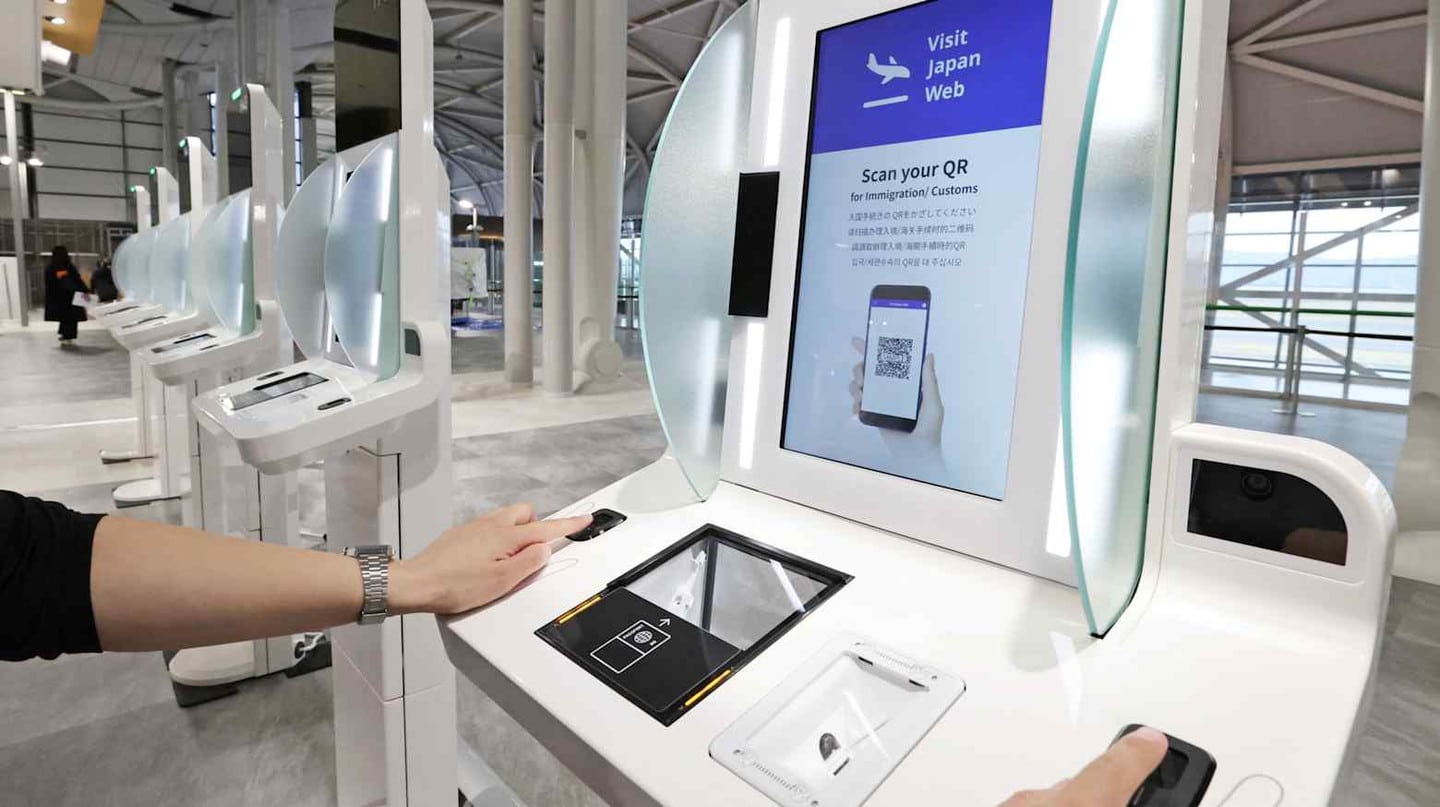
Before reaching the immigration hall, you will first see a row of shared self-service kiosks (KIOSK). The sequence is: scan the combined Visit Japan Web QR code, place your passport on the scanning area, complete facial recognition by looking at the camera, and finally press both index fingers for fingerprints.
The whole process usually takes under a minute, the machines have a Chinese-language interface, and staff are on hand to help. The most common cause of failure is a passport not opened to the data page or placed crooked so it cannot be read. When you finish, the machine either gives you a slip or completes your registration directly, and then you go to the dedicated immigration lane.
Exception: Children Under 135 cm Cannot Use the Shared Self-Service Kiosk (KIOSK)
Here is an easily overlooked restriction, and it is based on height rather than age: according to Japan Customs, because of the machine’s specifications, people under 135 centimeters tall cannot use the shared self-service kiosk, and these children must go through a staffed counter instead.
Customs’ electronic declaration gates have a separate rule: children under 100 centimeters tall should pass through together with their family, and the family simply enters the number of accompanying children when making the declaration. Families with children must know these rules in advance, or they will get stuck at the machine and have to re-queue.
In practice, the easiest approach is for the adults to complete their own registration at the KIOSK while the child goes to the staffed counter, or for the whole family to queue in the staffed lane together.
The staffed lane can be longer than the self-service lane at peak times, so families with children are advised to get off the plane early and head there quickly. These rules may change, so please follow the on-site instructions.
Step 3: Get the “Temporary Visitor” Landing Permission Sticker
After completing KIOSK registration, queue through the dedicated lane and show your passport to the immigration officer. Once everything checks out, a “Temporary Visitor” landing permission sticker will be placed in your passport, which is your proof of legal entry.
This sticker matters more than you might think: if you plan to exchange a JR Pass next, the counter will check your passport for landing permission from this entry, and without it you cannot exchange. So after getting your passport back, first confirm that the sticker is attached and the date is correct, then put it away. In some cases an electronic record is used instead of a physical sticker, and if that happens you can confirm the form of your entry record with the officer on the spot.
Step 4: Find Your Baggage by the Flight Number on the Screen
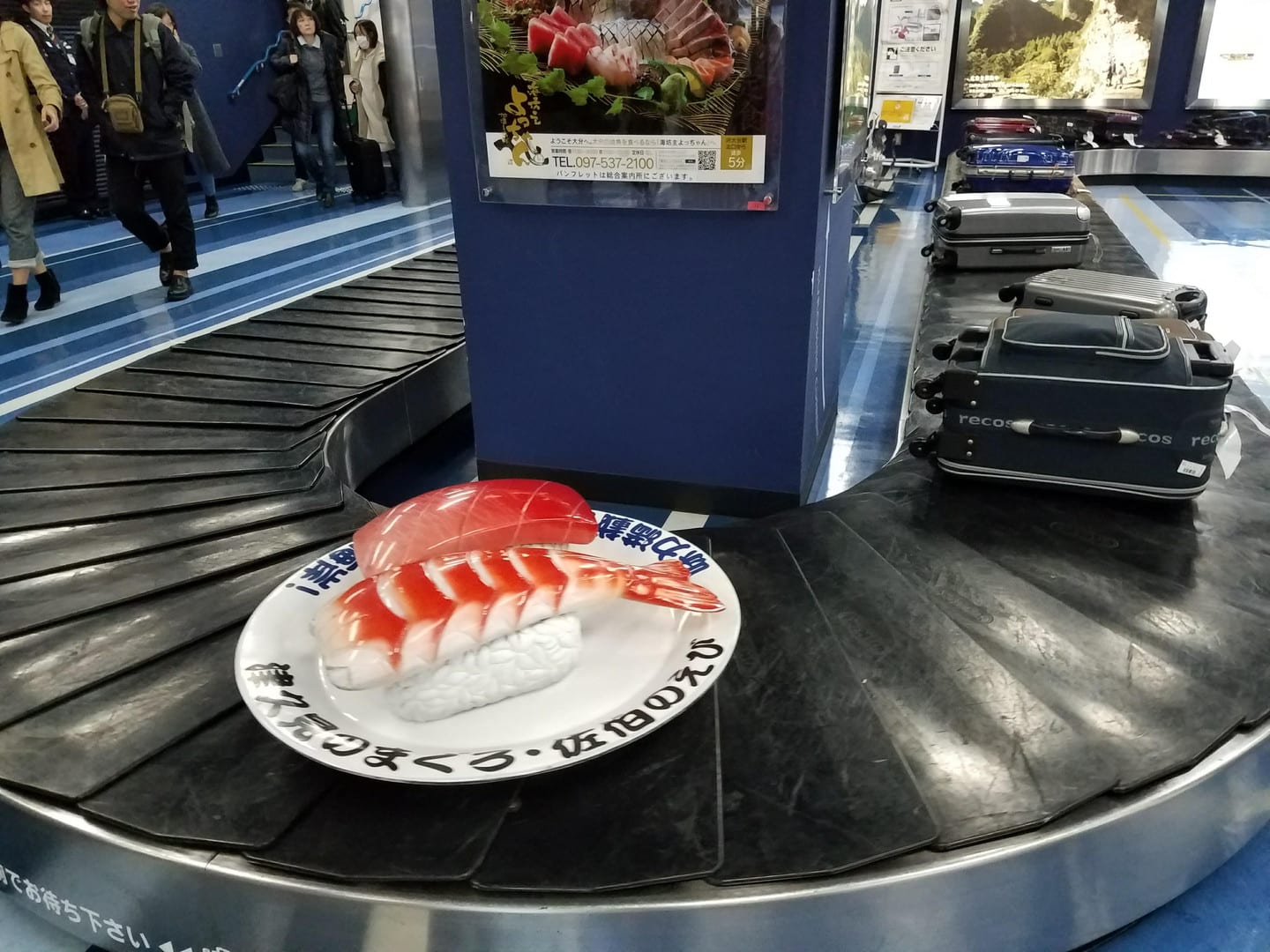
Past immigration is the baggage claim area. Find the carousel matching your flight number on the screen above the carousels and wait for your bags. The international baggage area at Fukuoka Airport is not large and is usually easy to find.
Two practical tips: many suitcases look alike, so tying a conspicuous identification strap on yours before departure saves a lot of time; and if the carousel has stopped and you still have not seen your bag, go to the lost baggage counter nearby right away, because the sooner you report it, the easier it is to handle. Also, this is usually the last area in the airport with a large supply of luggage carts, so grab one first if you have a lot of luggage.
Step 5: Take the Electronic Declaration Lane, Where Facial Recognition Opens the Gate Automatically
Because the customs declaration was already completed at the KIOSK step, after collecting your baggage you can go straight to the “electronic declaration lane” (the green duty-free lane). When passing through the unstaffed electronic gate, look straight at the camera for facial recognition and the gate opens automatically.
This checkpoint requires almost no stopping, and it is where self-service clearance is most noticeable; in the days of handing in paper declaration forms, there were often long lines here. Note that if you are carrying items over the duty-free allowance or items that must be declared, you cannot use this lane. In a few cases, customs officers still conduct spot checks and ask you to open your bags, so just cooperate.
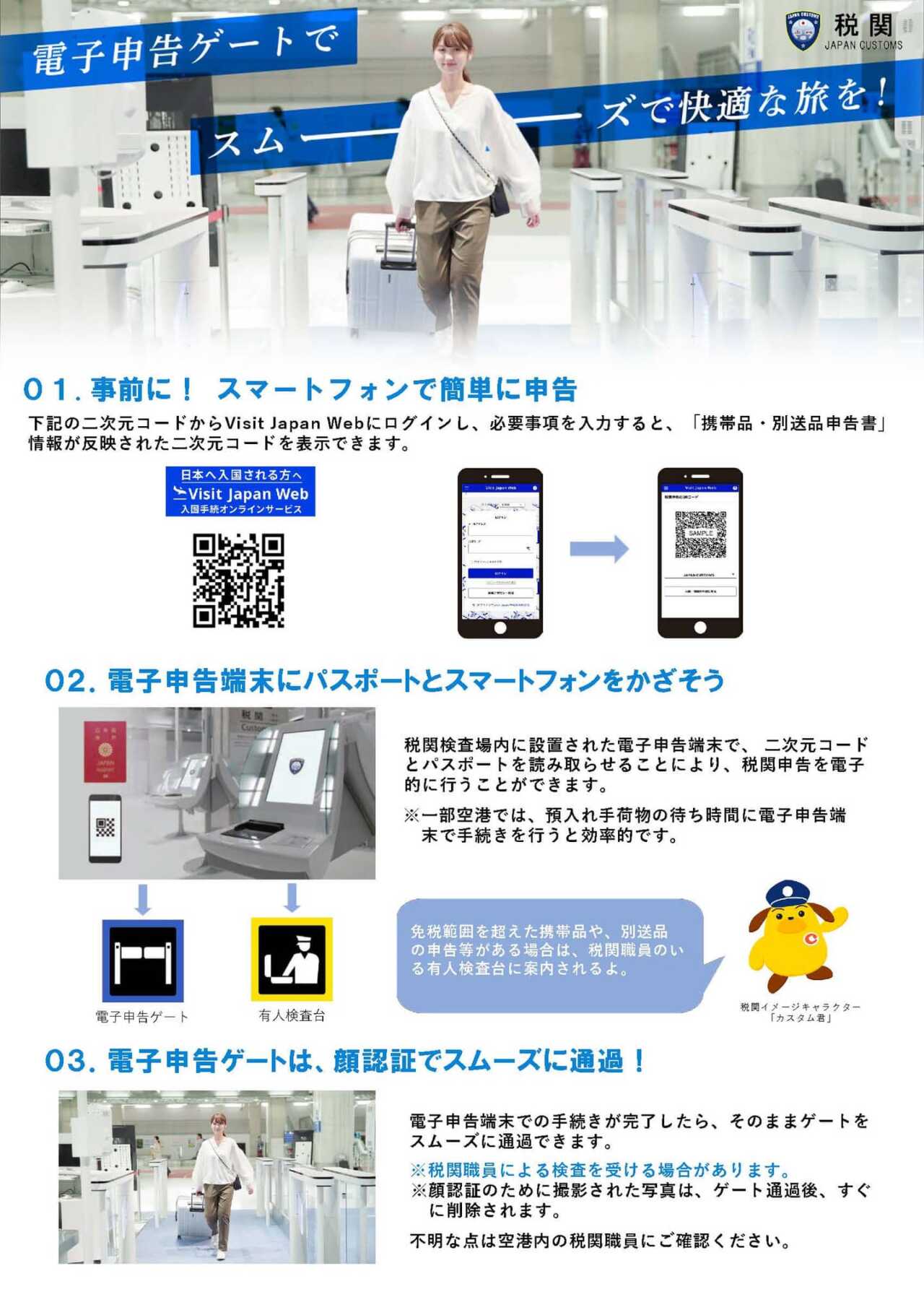
When to Use the Red Channel: Items Over the Duty-Free Allowance
When you carry items exceeding Japan Customs’ duty-free allowance, you must use the declaration (red) channel and declare honestly. Items that commonly exceed the limit are alcohol, tobacco, luxury brand goods, and large quantities of the same item bought on behalf of others.
According to the official Japan Customs announcement, the adult duty-free allowance is: three bottles of alcohol (760 milliliters per bottle); 200 cigarettes, or 50 cigars, or 10 packs of heated tobacco, or 250 grams of other tobacco; 2 ounces of perfume (one ounce is about 28 milliliters); and for other goods, a total overseas market value of 200,000 yen, with items worth less than 10,000 yen each in overseas market value being duty-free and not counted toward that total. People under 20 have no alcohol or tobacco allowance. Also, carrying cash or securities worth more than 1 million yen must be declared. The duty-free rules are adjusted from time to time, so please check the official Japan Customs announcement again before you leave. In addition, meat products, some fruits and vegetables, and animals and plants face strict quarantine restrictions and cannot be brought in even in small amounts; travelers are fined for this every year, so be sure to check beforehand.
Shopping Reminder: From November 1, 2026, Tax-Free Shopping Changes to “Pay Tax First, Get a Refund After Leaving Japan”
After you have entered, Visit Japan Web also has a “tax-free QR code” feature that you can scan directly at participating stores when claiming tax exemption, so you do not need to take out your original passport every time.
Note that Japan’s tax-free system will change to a “refund method” on November 1, 2026: stores first charge the tax-inclusive price, and the consumption tax is refunded only after you take the goods out of the country and customs confirms it. Before that date, the current method of handling tax exemption at the store counter still applies.
Not every store supports the QR code, and where it is not supported you still need to show your passport. For the actual procedure, thresholds, and refund process, please rely on the announcements of the store and the Japan Tourism Agency at the time of purchase.
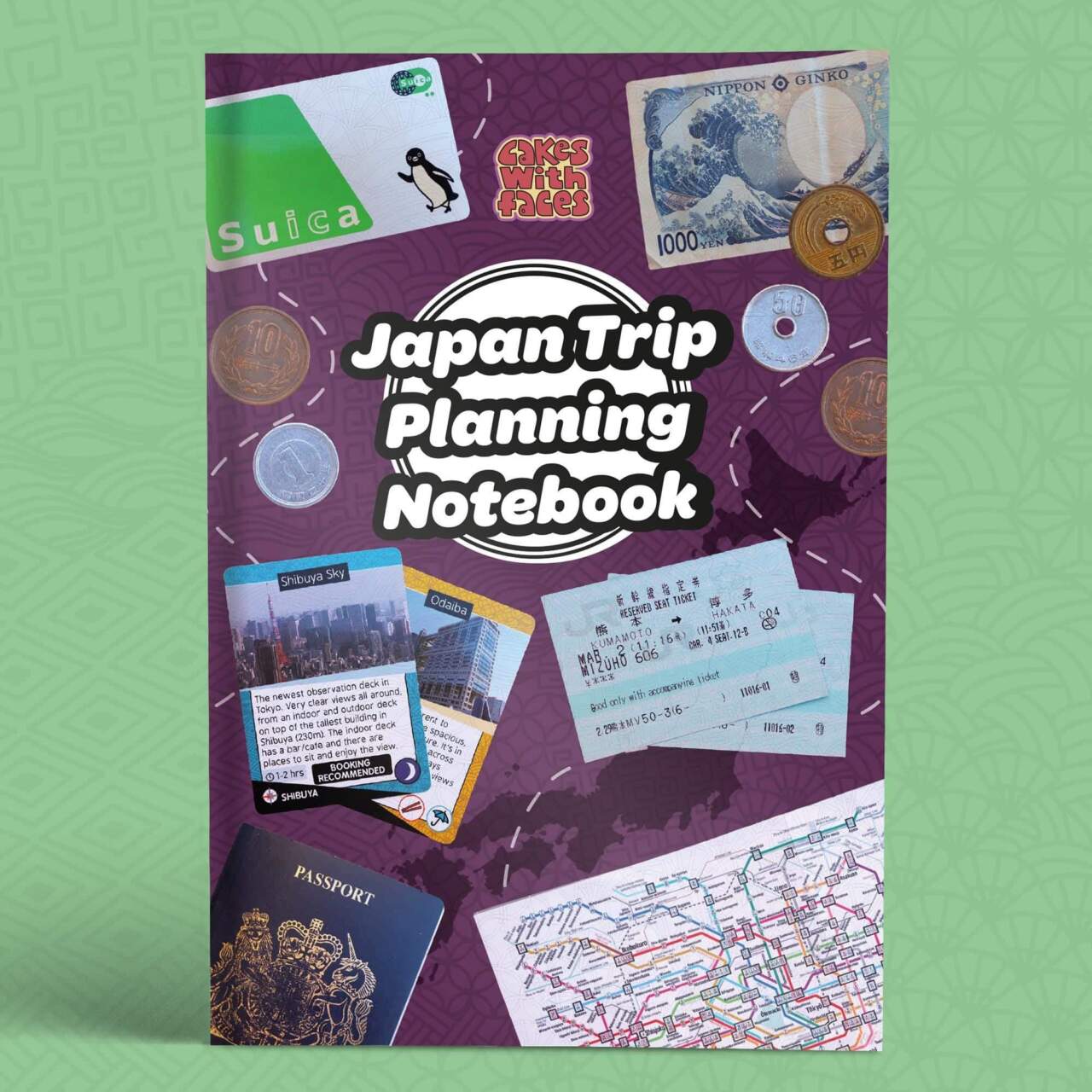
What to Prepare After Landing at Fukuoka Airport: Transport Tickets, Internet, and Itinerary Add-Ons
The three things you most often need to sort out after landing are transport tickets, internet access, and your first-day itinerary. Below are some practical options and the situations they suit.
Prices and plan details change often, so please rely on the official or platform announcements at the time of purchase.
Subway One-Day Pass: Worth It Once You Ride Three or More Times in the City
The Fukuoka City Subway (website subway.city.fukuoka.lg.jp) issues a one-day ticket that allows unlimited subway rides within its validity period. Subway fares are distance-based, and the adult one-day pass is 640 yen; as long as you take three rides in the city that day, the pass usually starts to pay off.
The use case is clear: on arrival day you go from the airport into the city, then head to Tenjin for shopping, Nakasu for dinner, and back to your hotel in Hakata, which is already three rides. Conversely, if that day you only go from the airport to your hotel and then get around on foot, a single-ride ticket is enough. The one-day pass can be bought at the ticket machines in subway stations.
Highway Bus Pass: For Places the Railway Does Not Reach
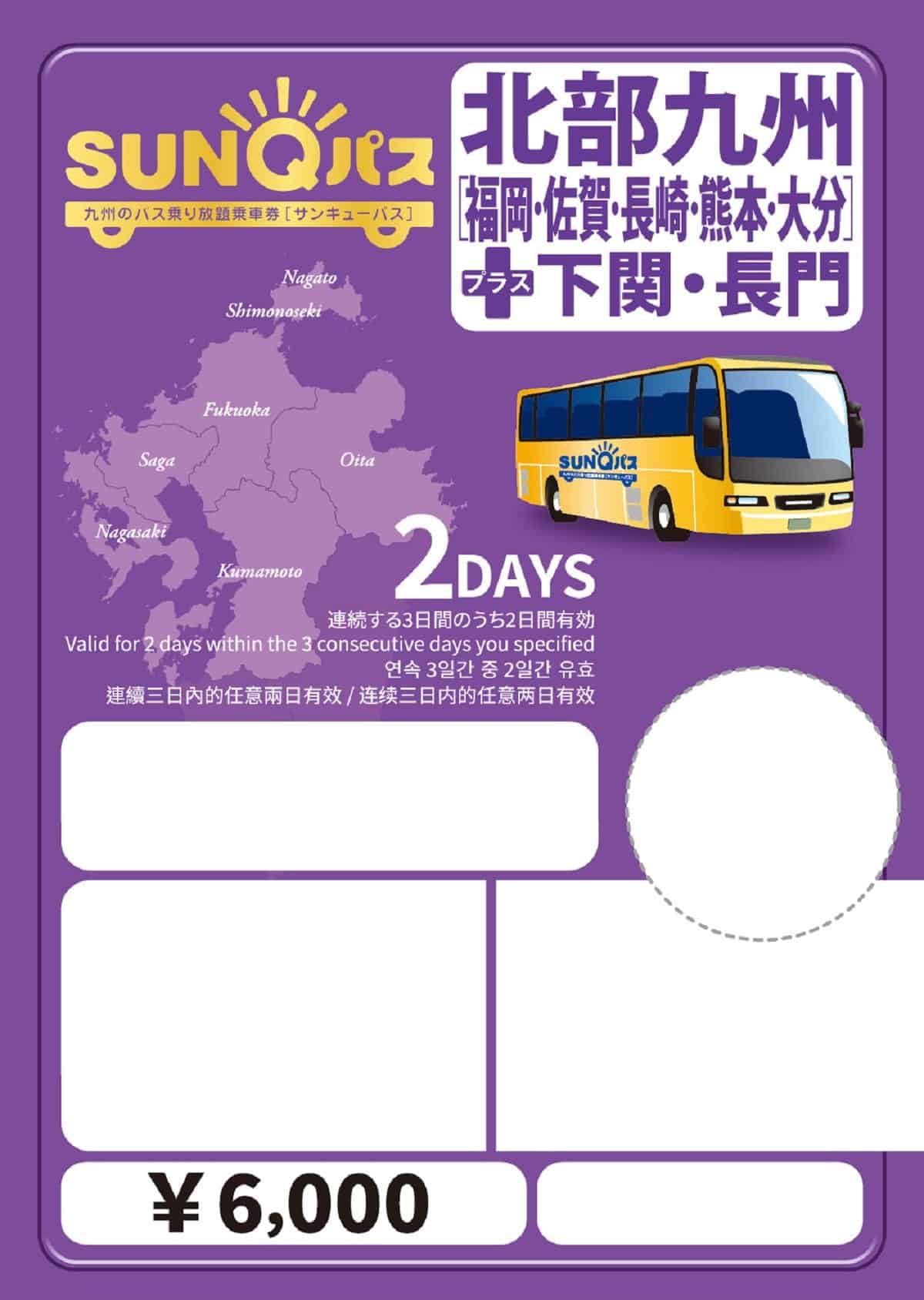
Kyushu has a pass for highway buses and local route buses (the SUNQ PASS), whose coverage varies by version, allowing rides on highway buses and city route buses across Kyushu. For those who want to visit Yufuin, Kurokawa Onsen, and Takachiho, where rail is inconvenient, its value is high.
It complements rather than replaces the JR Pass: the JR pass covers the railway backbone between cities, while the bus pass takes you deep into the mountain areas. Note that some popular routes require seat reservations in advance, and the pass versions, prices, and coverage have been adjusted in recent years, so be sure to check the latest official information before buying, and do not estimate from the figures in older articles.
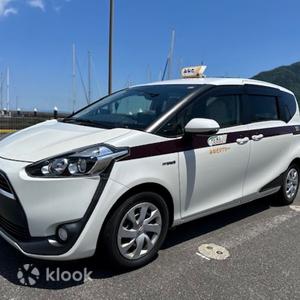
Pre-Booked Transfer: Easiest for Late-Night Arrivals or Traveling with Elders
Although Fukuoka Airport is very close to the city, a pre-booked transfer is still worthwhile in several situations: your flight arrives late at night or early in the morning, you are traveling with elders or a stroller, you have more than four pieces of luggage, or your lodging is somewhere neither bus nor subway serves conveniently.
With a reservation-based transfer, a driver waits in the arrivals hall holding a sign and takes you right to your hotel door, with no luggage-dragging transfers. The fee is usually per vehicle, so when there are many people the split works out quite reasonably. When booking, remember to enter the correct flight number so the driver can adjust if the flight is delayed, and provide your hotel’s address in Japanese as well.

Internet: How to Choose Between an eSIM and a Pocket Wi-Fi
The arrival procedure and transport lookups all depend on internet access, so having a connection as soon as you land makes things much smoother. There are three main options: an eSIM set up before departure, a pocket Wi-Fi router rented in advance, and a physical SIM card bought at the airport.
The advantage of an eSIM is that it works as soon as you turn on your phone, with no queue to pick it up, which suits solo travelers; a pocket Wi-Fi suits several people sharing but you have to remember to charge and return it; buying a SIM card on the spot is the most flexible but may involve a queue. If your itinerary includes Kyushu’s mountain areas (Aso, Takachiho, Kurokawa), signal coverage will be weaker than in the city, so save important maps and tickets offline beforehand.
Planning Arrival Day: Yatai Stalls and a Half-Day in the City
Because the airport is so close to the city, Fukuoka is one of the few places where you can enjoy your arrival day. If you land in the afternoon, after dropping off your bags you still have half a day: Kushida Shrine, Kawabata Shopping Arcade, and Tenjin Chikagai are all along the subway lines and easy to cover in one loop.
The highlight of the evening is the yatai (street food stalls) in Nakasu, lined up all along the Naka River, selling tonkotsu ramen, yakitori, and mentaiko tamagoyaki. Yatai mostly open in the early evening, and may not set up in rain or bad weather. If you would rather not figure it out yourself, there are also half-day tours that string together Kushida Shrine, the yatai, and city sights, so you do not need to spend energy researching routes on your first day.
What Else to Watch Out for at Fukuoka Airport: Luggage, Connections, and Departure Tips
Once arrival is taken care of, a few more things will affect how smoothly the whole trip goes: how to handle your luggage, whether to connect to a domestic flight, and how early to get back for your departure.
Handling Luggage: Lockers vs. Hotel Delivery
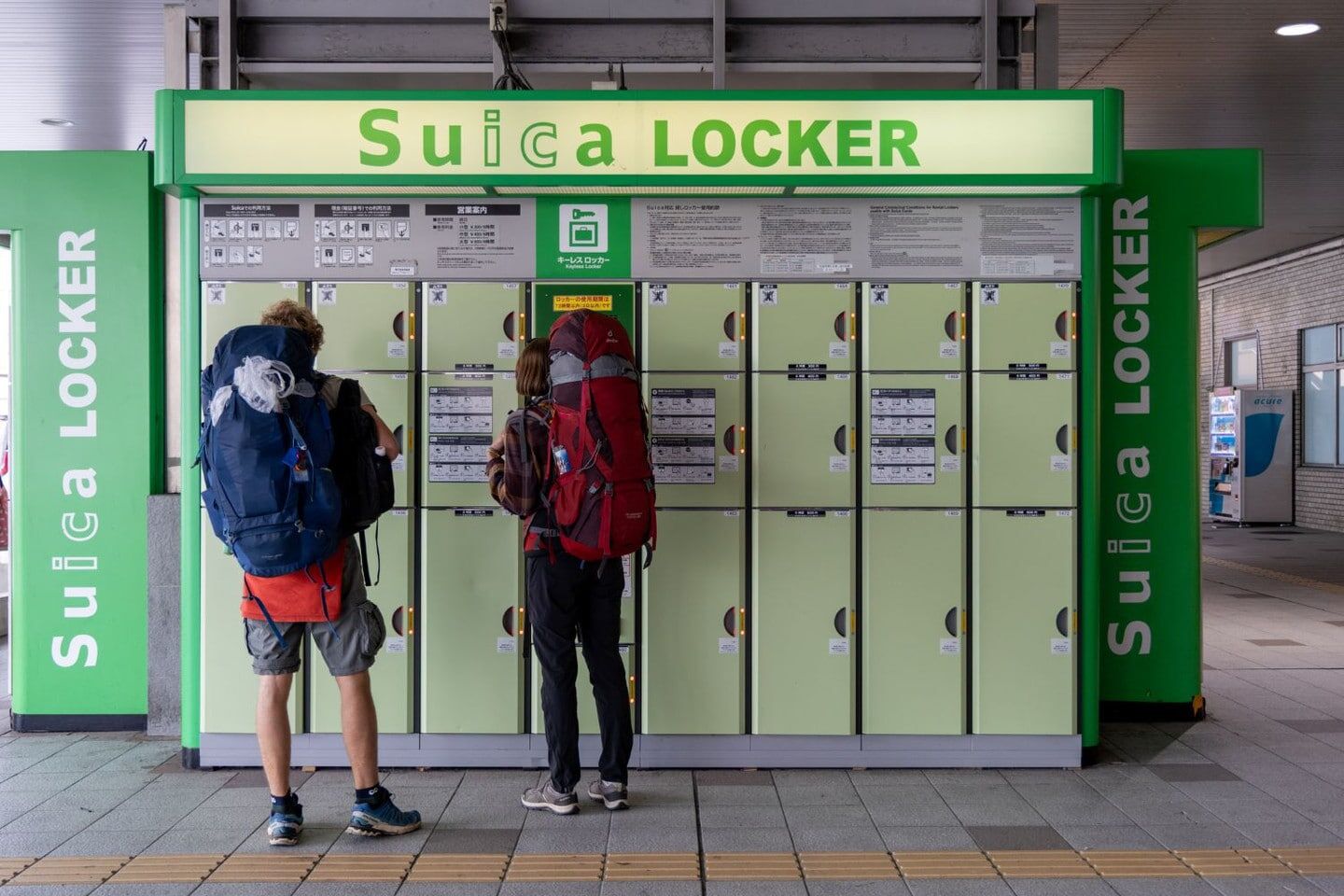
If your hotel room is not ready on arrival day, both the airport and Hakata Station have coin lockers, though the large ones tend to fill up at peak times. Another option is the airport’s baggage storage counter, which can take a larger number of items.
An even less strenuous approach is to use a luggage delivery service and send your large bags straight to your hotel or your next lodging, so you can move around light. Between Kyushu cities, delivery usually arrives the next day, and for trips that span regions (for example Fukuoka to Kagoshima) you need to factor in the time. The same goes for the return: you can send your luggage from the hotel to the airport in advance, or ship it directly back to Taiwan (the international leg depends on the carrier’s rules). Fees are based on size and distance, so please rely on the counter’s posted prices.
Connecting to a Domestic Flight: Always Factor in the Shuttle Bus Time
If your itinerary involves connecting from Fukuoka to a domestic flight to Okinawa, Tokyo, or another city, remember that the domestic terminal is in a different building and you must take the free shuttle bus over; it takes about 10 to 15 minutes one way, and with waiting for the bus and walking, you should allow 30 minutes or more.
More critically, connecting from an international to a domestic flight usually requires checking in and dropping off baggage again (unless it is a single through ticket with bags checked through). Since the arrival procedure itself takes 30 to 45 minutes, we recommend at least three hours between the two flights. If you see a combination with only an hour and a half of connection time when booking, the risk is high and we do not recommend it.
Returning Home: How Long Does Departure Take at Fukuoka, and How Early Should You Arrive at the Airport
On the way back from the city to the international terminal, the terminal issue applies again: the subway only goes to the domestic terminal, so taking the subway means transferring to the shuttle bus as well.
- 🚌 Simplest: take the airport bus from Hakata Station to the international terminal, with no transfer
- 🚇 By subway: get off at Fukuoka Airport Station, then transfer to the free shuttle bus to the international terminal
How early should you arrive at Fukuoka Airport? Three hours before departure. Check-in cutoff times vary by airline, so please rely on the airline’s announcements.
- 🛍️ On long weekends and in peak travel season, check-in counters and security at the international terminal both get congested
- ⏱️ If you need to return a rented pocket Wi-Fi or process duty-free goods, allow another 30 minutes
- 💰 From November 1, 2026, tax-free shopping changes to a refund method, and on departure you must pass customs so they can confirm the goods are being taken out before you can get your tax back, so factor that time in too
The international terminal has fewer dining choices than the domestic terminal, so if you want a good meal, take care of it in the city.
Airport Facilities: Lounges, Restaurants, and Whether You Can Stay Overnight
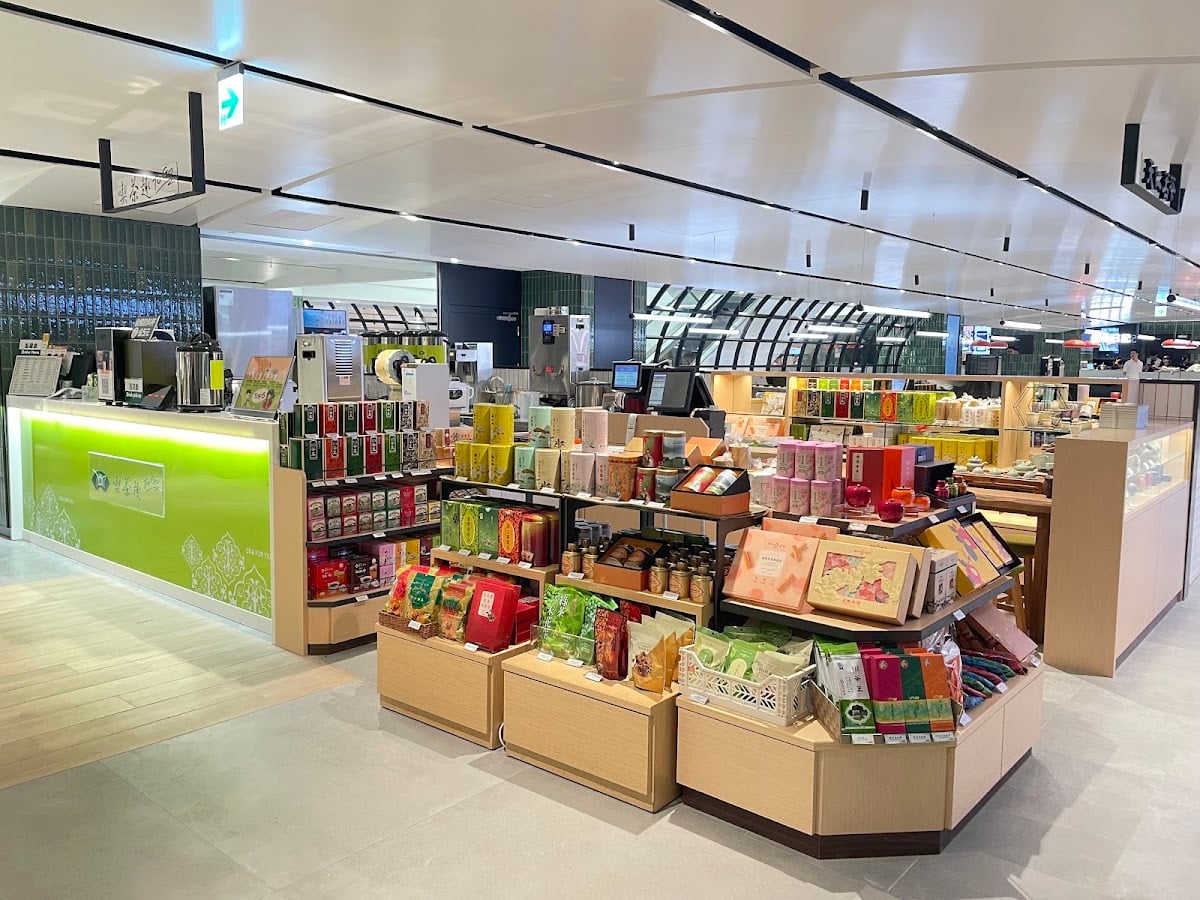
Fukuoka Airport’s dining and shopping have offered a good selection since its recent renovation, and the domestic terminal’s food area is larger, with distinctive shops such as the ramen on a moving walkway. Some lounges accessible with certain credit cards are also in the airport, so check beforehand whether your card has the benefit.
As for staying overnight at the airport: Fukuoka Airport is not open 24 hours, and some areas close late at night, so it is not suitable as a place to sleep. For an early-morning flight, it is more realistic to stay at a business hotel near Hakata Station or around the airport and take the first subway or a taxi over in the morning. Business hours and facility conditions are subject to official announcements.
Fukuoka Airport Arrival and Transport FAQ
Below are the questions travelers most often ask when arriving at Fukuoka Airport.
Q: Can I take the subway directly from the international terminal?
No. The subway’s Fukuoka Airport Station is on the first basement level of the domestic terminal, and the international side has no subway. To take the subway you must first ride the free shuttle bus from outside the 1st floor of the international terminal; according to the airport’s official information, it runs about every five to six minutes in the daytime and takes about 10 minutes. If you do not want to transfer, you can take the bus directly to Hakata Station Chikushi Exit from stops 6 and 7 on the same floor. Please follow the on-site signs for stop numbers.
Q: How long does it take and how much does it cost to get from the airport to Hakata Station?
The subway takes about five minutes for two stops (you must first take the free shuttle bus to the domestic terminal), and fares are distance-based, so please rely on the fare chart in the station. The airport bus runs directly from stops 6 and 7 at the international terminal to Hakata Station Chikushi Exit for 400 yen one way (380 yen with a credit card or IC card, with cashless payment the general rule), but it is affected by traffic, and the Nishitetsu website lists the fastest at about 15 minutes. Fares are values checked in August 2026; please rely on on-site announcements.
Q: Do I have to fill in Visit Japan Web in advance?
You can enter without it, but you will be directed to the staffed procedure and have to fill in paper forms, which takes much longer. There is no official announcement of how many hours ahead it must be completed; we recommend registering before you leave, while you have a stable connection, and saving a screenshot of the combined QR code offline. A special reminder: Visit Japan Web has no official app, and apps with the same name in app stores are not official, so please always use the official web version.
Q: Can children use the self-service kiosk?
According to Japan Customs, this is a height restriction rather than an age restriction: because of the machine’s specifications, people under 135 centimeters tall cannot use the shared self-service kiosk (KIOSK) and must use a staffed counter. For customs’ electronic declaration gates, children under 100 centimeters tall must pass through together with their family.
In practice, the easiest approach is for the whole family to go through the staffed lane, or for the adults to register themselves at the self-service kiosk while the child goes to a staffed counter. The staffed lane has longer lines at peak times, so we advise getting off the plane early and heading there. Rules may change, so follow the on-site instructions.
Q: Roughly how long does it take from leaving the plane to walking out of customs?
With self-service clearance and no peak-time crowds, it takes about 30 to 45 minutes from leaving the plane to walking out of customs; at peak times or when baggage is slow, allow 45 minutes to an hour to be safe. Adding the shuttle bus and subway, it is reasonable to expect to reach Hakata Station within an hour of landing.
It slows down noticeably when several international flights land together, so we recommend allowing an hour and a half. If you also need to catch a Shinkansen or exchange a rail pass that day, leave even more time.
Q: How much time should I allow when connecting to a domestic flight at Fukuoka?
We recommend at least three hours. The arrival procedure takes 30 to 45 minutes, the cross-terminal shuttle including waiting and walking takes 30 minutes or more, and you usually still need to check in again and drop off baggage for the domestic flight. A combination with only an hour and a half of connection time is very risky and not recommended.
Q: Can I go directly from the airport to Yufuin or Beppu?
Yes. Fukuoka Airport is a hub of Kyushu’s express bus network, with direct routes to Yufuin, Beppu, Kumamoto, and more, so you do not need to go into the city and transfer first. But these routes have limited departures, some need advance reservations, and the ride is longer. If your flight arrives rather late, staying a night in Fukuoka and setting out the next day is safer. Please rely on the operator’s announcements of the day for timetables and fares.