
How to Get to Ureshino Onsen: Nishi-Kyushu Shinkansen, Highway Bus and Driving Compared
Since the Nishi-Kyushu Shinkansen opened, Ureshino has gone from “a bit of a hassle” to “quite easy to reach,” but there is one thing to understand first: the Shinkansen station and the hot spring old town are not in the same place.
From Hakata: Limited Express Plus Nishi-Kyushu Shinkansen, About 65 Minutes
From Hakata it takes about 65 minutes. First take a JR limited express to Takeo-Onsen Station, then change across the same platform to the Nishi-Kyushu Shinkansen “Kamome,” and the next stop is Ureshino-Onsen Station. The transfer route is simple and not hard even with plenty of luggage. This route suits travelers holding a JR Kyushu Rail Pass, who can link Ureshino with Nagasaki and Sasebo in one line. Services and transfer times follow JR’s announcements for the day, so check once before you leave; for a same-day round trip, confirm the last train time. Along the way you pass the rural scenery around Takeo Onsen, a short ride that still feels like a real journey.
From Nagasaki: Nishi-Kyushu Shinkansen Direct, About 25 Minutes
From Nagasaki it is easiest: the Nishi-Kyushu Shinkansen “Kamome” goes directly to Ureshino-Onsen Station in about 25 minutes with no change, ideal for arriving in Nagasaki, staying a night in Ureshino, and continuing to Hakata the next day.
The ride is short and is often arranged as an extension of a Nagasaki trip or a half-day soaking stop. We suggest checking services in advance, as gaps are longer outside peak hours. The stations along the line are new, with elevators and lockers throughout, so moving with luggage is easy, and it is an efficient backbone route linking Nagasaki, Ureshino and Takeo Onsen.
Highway Bus from Fukuoka Airport or Hakata: Straight to the Heart of the Old Town
If you are not in a hurry, the highway bus “Kyushu-go” is the more convenient choice. From the Fukuoka Airport international terminal or Hakata Bus Terminal, it takes about 1.5 to 2 hours straight to Ureshino Bus Center, which is right in the center of the hot spring town, with no transfer and no further shuttle, especially friendly to anyone with luggage.
Services and fares follow the bus operator’s announcements for the day, and we recommend booking early in peak season and holidays. The bus stops at a rest area along the way where you can get off and stretch. Going from Fukuoka Airport lets you head straight to the hot spring town, saving the time of changing in the city.
From Ureshino-Onsen Station to the Old Town: Plan This Leg in Advance
Note that the Nishi-Kyushu Shinkansen’s Ureshino-Onsen Station is some distance from the core of the hot spring old town. After getting off you need to take a route bus (about 5 to 10 minutes) or a taxi, and some inns also offer a free shuttle by reservation.
When booking a room, be sure to confirm how and when to reserve the shuttle, or you may have to wait for a bus on arrival. If driving, it takes a little over ten minutes after leaving the Kyushu Expressway, and the old town area and most inns have parking, so parking is generally not a problem. If you arrive by bus, Ureshino Bus Center is itself in the old town and most inns are within walking distance, the easiest option when you do not have much luggage.




Must-Visit Ureshino Attractions: A Full Guide to the Beauty Hot Spring, Tea Country and Old Town
The spots below are ordered as “hot spring town, then tea country, then outlying extensions”; following this order saves the most travel time.
Ureshino Onsen Public Bathhouse Siebold no Yu: A Beauty Bath You Can Enjoy Without Staying Overnight
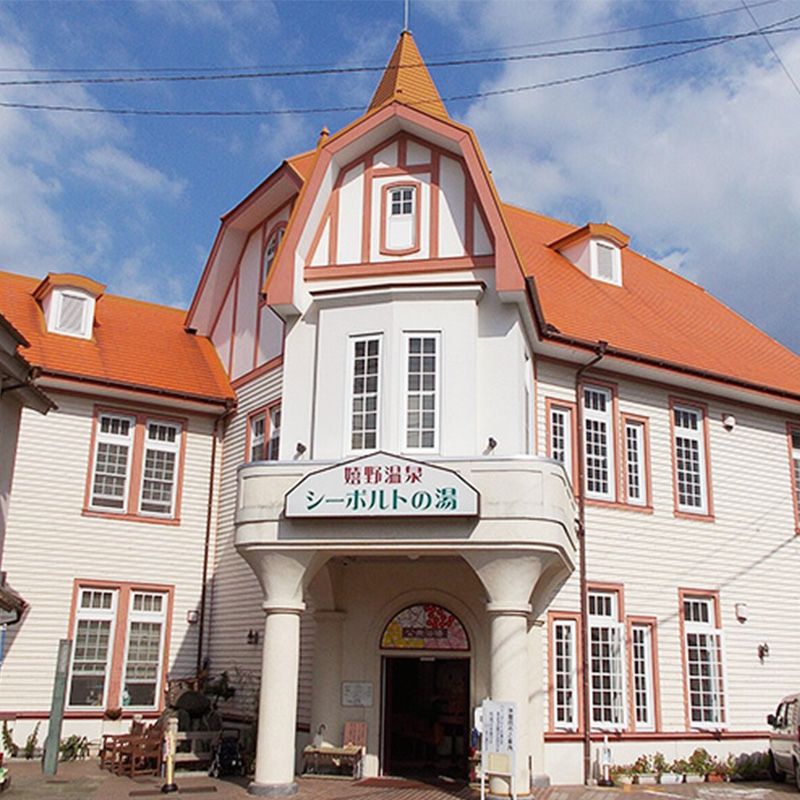
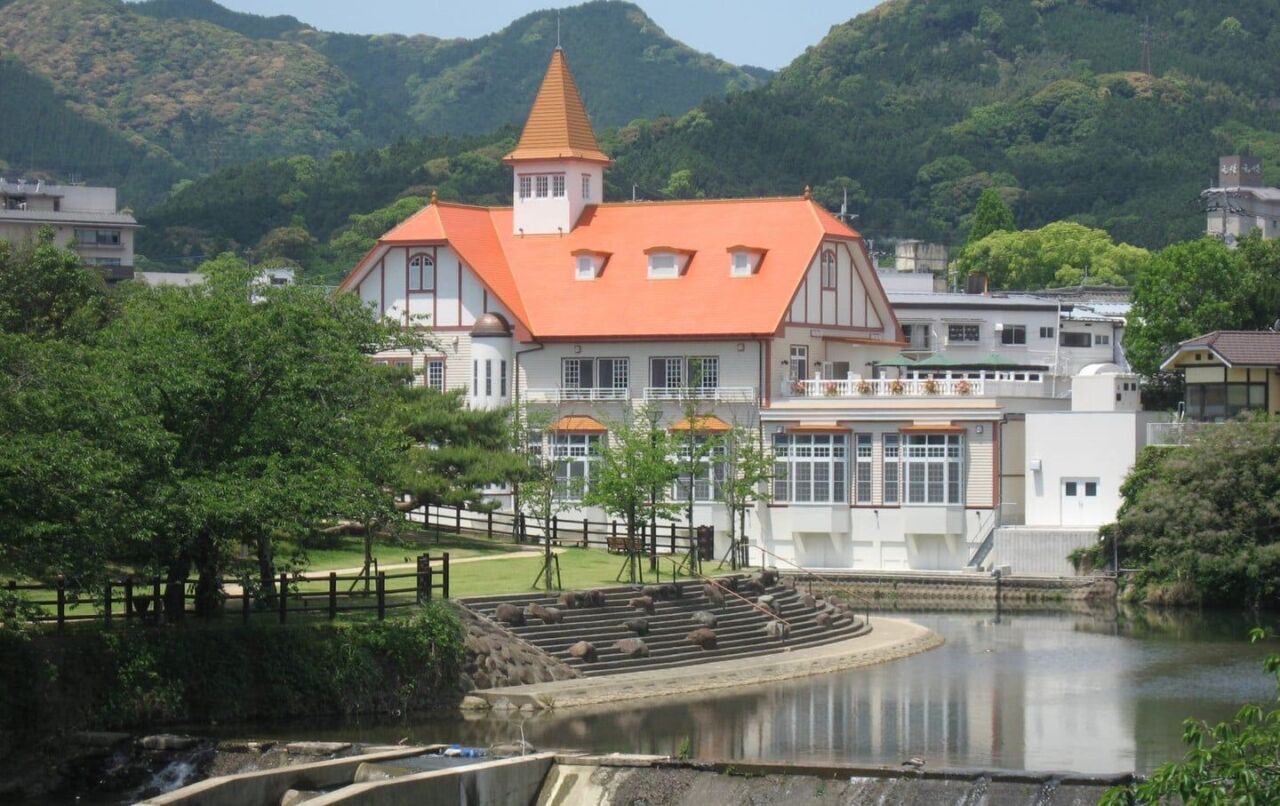
Siebold no Yu is the landmark of Ureshino’s old town, a two-story wooden building with an orange pointed roof full of Taisho-romance charm. Its total floor area is about 750 square meters, it reopened on April 1, 2010, and it stands opposite Ureshino Onsen Park.
Inside are a main bath, a private bath you can reserve, and a citizens’ gallery. Prices are affordable and suit day-trippers wanting to try the beauty hot spring; bathing costs ¥450 for adults, and it is busier in peak season. The exterior is good for photos, and when lit at night it looks different from daytime, with a rest area beside the entrance.

Toyotamahime Shrine: Praying to the Beauty Goddess and Her White Catfish Messenger
Toyotamahime Shrine enshrines Toyotamahime, daughter of the sea god. Legend says she had fair skin and she is regarded as a goddess of beauty, echoing Ureshino’s “beauty hot spring,” and it is the most talked-about stop in the hot spring town.
The shrine holds a statue of a white catfish messenger. When visiting, you pour hot spring water over the statue and stroke it while praying for skin as fair and smooth as a catfish’s. The shrine is small and within walking distance in the old town, so ten-odd minutes is enough. On the grounds you can get beauty and good-relationship charms, which draw many women visitors. Charm-office hours follow the day’s announcement, so we suggest visiting during the day.
Siebold Foot Bath: A Free Foot Bath in the Old Town
If you are tired from walking and do not want to change clothes for a big bath, the Siebold Foot Bath in the old town is the best choice. It is free: just sit down and put your feet into Ureshino’s hot spring water to feel that distinct slipperiness.
Beside the foot bath there are usually simple seats and a roof, a good rest point after visiting the shrine or a tea house. Bring a small towel to dry your feet, as one may not be provided. It is free and open 24 hours, especially pleasant in winter. It is close to Siebold no Yu, so the two can be arranged together.
Yuyado Hiroba: A Unique High-Temperature Steam Foot Bath
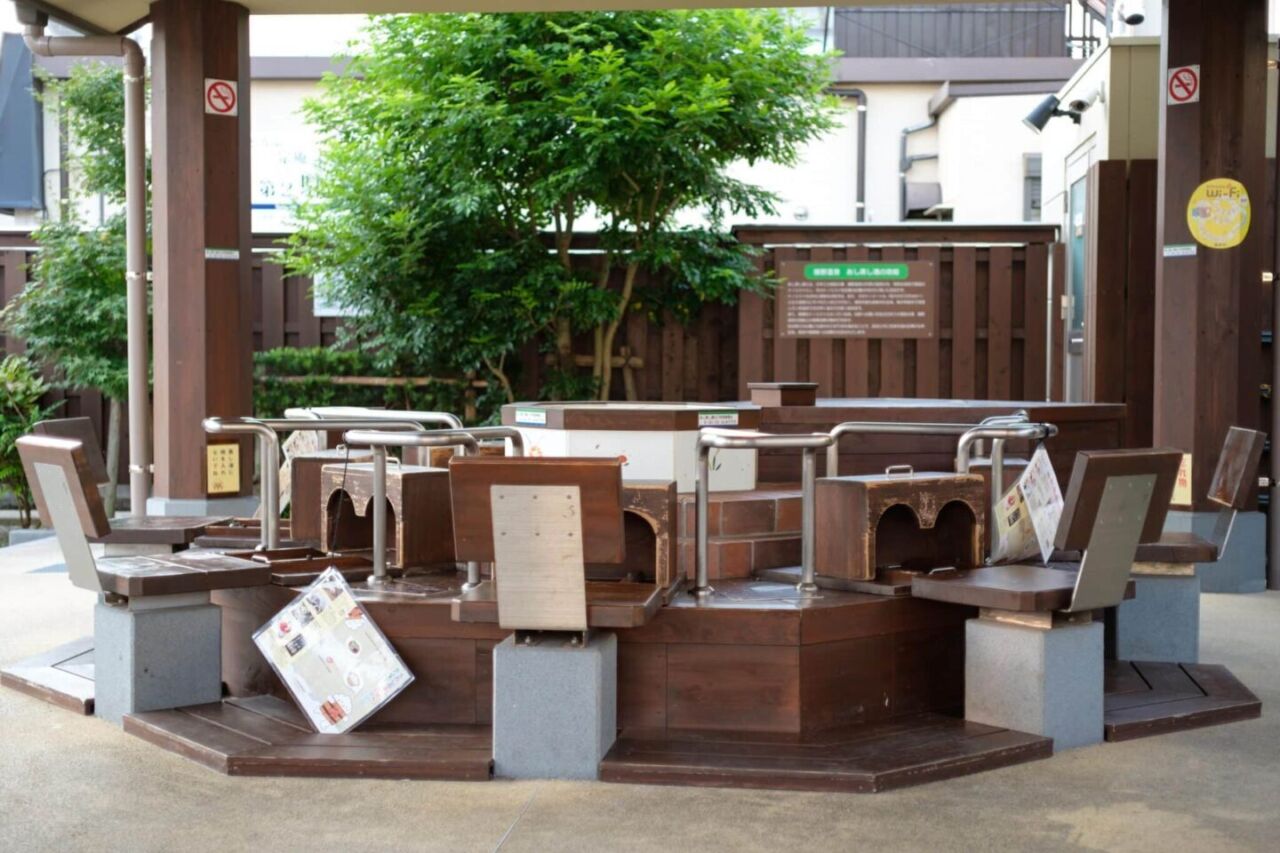
“Yuyado Hiroba” is another free hot spring facility in the old town. Besides the usual foot bath it has a steam foot bath (ashi-mushi-yu) with 7 seats arranged in a circle, so you can steam your feet and chat with the person next to you. It feels completely different from soaking in water, so first-timers should start with a short time to get used to it. The foot bath is open 8:00 to 23:00, and the steam foot bath 9:00 to 20:00.
The plaza is on the walking route through the hot spring town and can be combined with the Siebold Foot Bath. Both are free, making them Ureshino’s best-value experiences, and the seating and roof around them make it a good place to rest on a walk with kids.
How Many Foot Baths Are in Ureshino? Siebold Foot Bath and Yuyado Hiroba Hours at a Glance
Ureshino’s hot spring town has two free foot baths. The Siebold Foot Bath is in a corner of Ureshino Onsen Yuyu Hiroba and is open 24 hours; Yuyado Hiroba is along the main road of the hot spring town, with a foot bath open 8:00 to 23:00 and a steam foot bath open 9:00 to 20:00. Both are free all year. Just sit down and soak your feet as you stroll to feel the smoothness of Ureshino’s water, with no need to change clothes.
Soan Yokocho: The Birthplace of Onsen Yudofu
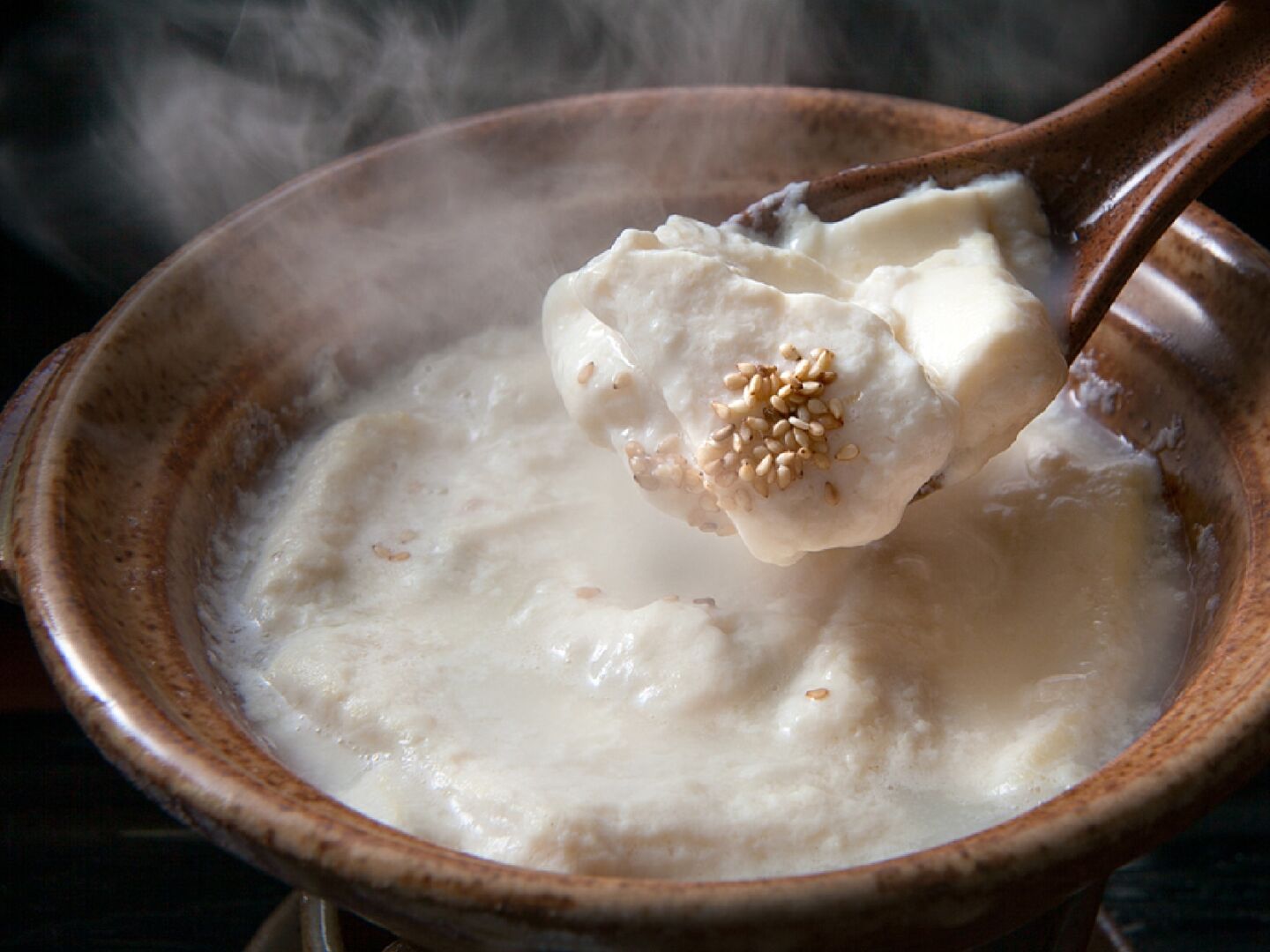
For onsen yudofu, Soan Yokocho is a must-visit, regarded as the birthplace of Ureshino onsen yudofu. It uses house-made tofu simmered in mildly alkaline hot spring water until the edges melt and the broth turns milky white, with a melt-in-the-mouth texture.
Besides the yudofu pot it also serves set meals. There is often a wait at peak meal times, so avoid around noon; it is open 10:30 to 20:30 and closed on Wednesdays. The shop also sells its house-made tofu and onsen yudofu broth base to take home. It is within the hot spring town, reachable on foot.
Ureshino Tea and Tea House Experiences: Brew a Cup of Kamairi Tea on the Spot
Ureshino tea is made by the kamairi method, giving rounded, curled granules and a full aroma with a rounded, sweet aftertaste, clearly different from the common long, thin sencha.
Several tea houses in the old town brew on the spot, letting you compare different varieties and roast levels. The area also offers the “Ureshino Chatoki” tea-travel program combining tea fields, tea rooms and lodging; hours, experiences and reservation requirements follow each shop’s announcements. Tea shops in town also sell vacuum-packed leaves that are easy to carry, a practical souvenir. We suggest comparing one kamairi tea with one steamed tea; the difference is clear.
Ureshino’s Great Tea Tree: An Old Tea Tree Designated a Natural Monument
Ureshino’s Great Tea Tree stands in the Fudozan area and is a symbol of Ureshino tea. It is over 300 years old and designated a national natural monument. The tree is much larger than the neatly pruned tea bushes in the fields, showing how long Ureshino’s tea-growing history is.
It is some distance from the hot spring town and in practice requires driving, passing continuous terraced tea fields on the way, which are scenic in themselves. There are no large facilities around it, so allow about half an hour for the visit, and watch for narrow farm roads and farm vehicles. Signboards near the tree explain how tea reached Ureshino and the origin of the kamairi method; after reading them and returning to the old town for tea, the experience feels completely different. We suggest going on a clear day, as visibility on the mountain road is poor in the rain.
Todoroki Falls and Todoroki Falls Park: A Cool-Off Spot Outside the Hot Spring Town
Todoroki Falls lies on the outskirts of Ureshino. The water drops in stages into a wide pool below, and the surroundings are laid out as a park with paths and rest areas, where locals cool off and picnic in summer.
It is about ten minutes by car from the hot spring town and is the easiest nature spot to include. After rain the flow is powerful, but the paths and rocks are slippery, so please do not climb the rocks near the pool. There are few commercial facilities in the park, so buy drinks in the old town first and bring mosquito repellent. The park has parking and restrooms and is convenient with kids, so you can make a round trip in a free afternoon.
Hizen Yoshida Ware Kilns: A Pottery Region with Four Hundred Years of History
Hizen Yoshida ware (Yoshida-yaki) is a pottery region in Ureshino with more than four hundred years of history. Its style is plainer than Arita ware and leans toward everyday tableware, and in recent years many young artists have also released modern designs.
The city has kilns and workshop facilities, and some offer painting (etsuke) experiences; finished pieces must be fired and then shipped separately. Business days and whether a kiln is open to visitors vary a lot, and experiences mostly require advance reservation, so be sure to check before going. The city also has a sales space gathering works from several kilns; if time is limited, going straight there to compare is much quicker than visiting one by one, with prices ranging from everyday tableware to artists’ works.
Shida-yaki no Sato Museum: Step into an Old Pottery Factory
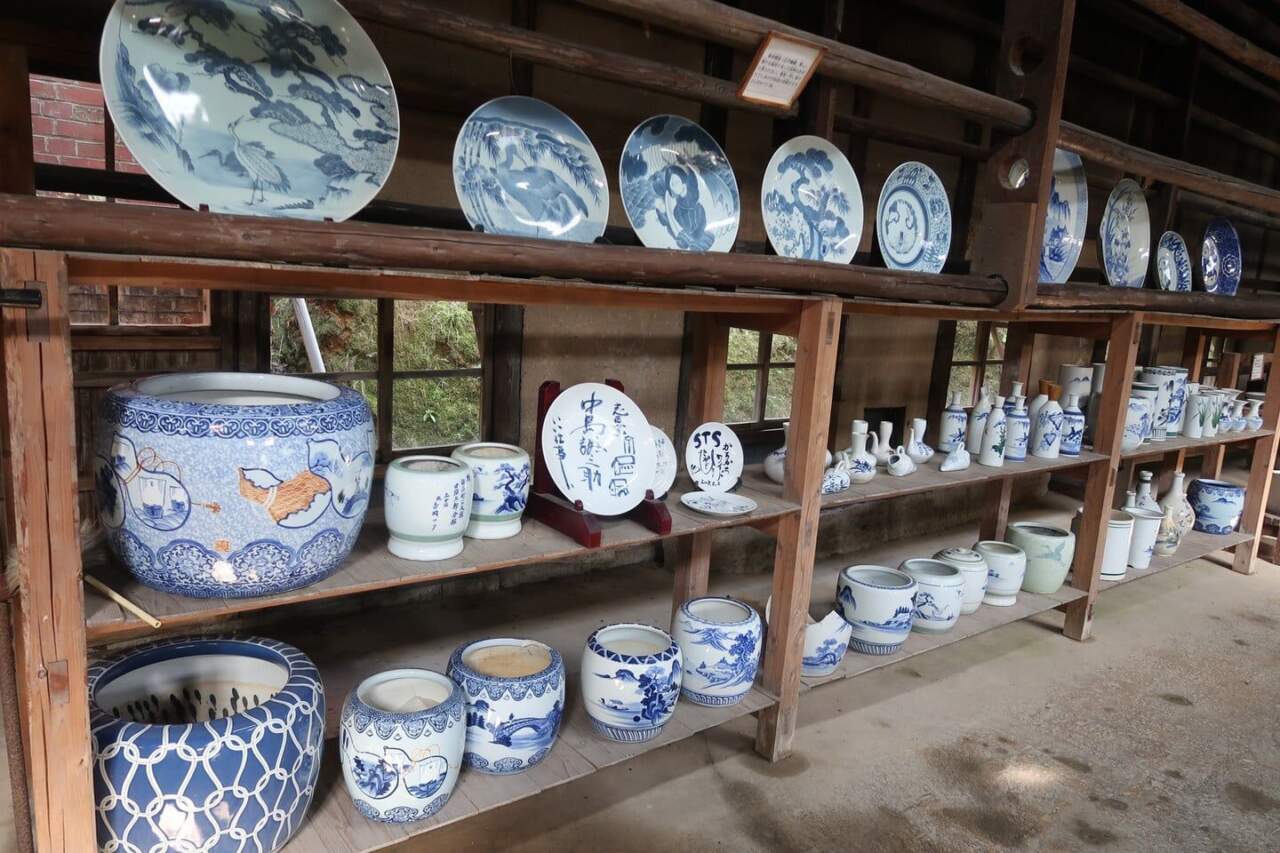
The Shida-yaki no Sato Museum is in Shiotamachi, Ureshino. Converted from a former pottery factory, it preserves the whole set of equipment from forming and glazing to firing, showing the scene of past mass production of ceramics.
Unlike a gallery that simply shows finished pieces, this place focuses on the “manufacturing process,” suiting people who love crafts and old buildings. Hours, admission and closing days follow the museum’s announcements, and we suggest driving there. Some spaces double as event and market venues, which are livelier on event days. It is about twenty minutes by car from the Ureshino hot spring town and can be combined with Shiotazu, with ample parking beside the museum.
Shiotazu: A Nationally Important Preservation District of White-Walled Machiya Townhouses
Shiotazu is in Shiotamachi, Ureshino. Once prosperous through river transport on the Shiota River, it retains rows of white-walled machiya townhouses and old merchant houses and is designated a nationally important preservation district for groups of traditional buildings.
The old street is not long, about an hour for a stroll, and has fewer visitors than the Ureshino hot spring town, good for avoiding crowds. Some buildings are open to visit, with hours and fees following each facility’s announcements, and please use the designated parking lots. Cafes and craft shops along the street offer places to rest, and it is near the Shida-yaki no Sato Museum, so it suits the same afternoon.
Strolling Ureshino Onsen Town: Turning the Beauty Hot Spring into a Route
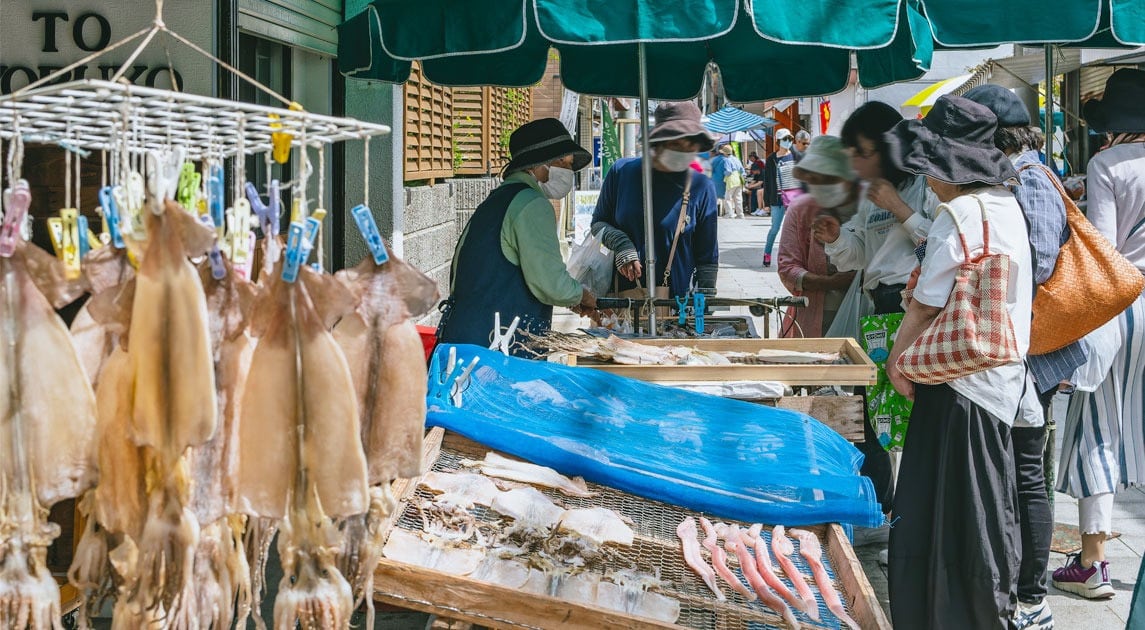
The Ureshino hot spring town is not large: Siebold no Yu, Toyotamahime Shrine, the Siebold Foot Bath, Yuyado Hiroba and several tea houses and yudofu shops are all within walking distance, one of the few hot spring towns in Kyushu that can be fully explored on foot. A walk along the Ureshino River is highly recommended, with inns and old houses on both banks and a lovely atmosphere once the lights come on at dusk. Some operators rent bicycles to reach the farther tea fields, with rental terms following the operator’s announcements. The old town also sells beauty products made with hot spring water, such as lotion and soap, souvenirs very characteristic of Ureshino.
How Much Does Ureshino Onsen Cost? Bathing Fees, Experiences and Transport Passes
Ureshino’s cost structure is friendly: foot baths are free and the public bathhouse costs coins; the real spending is on food and transport.
Siebold no Yu Bathing Fee: The Most Affordable Beauty Hot Spring Experience
Ureshino Onsen’s public bathhouse Siebold no Yu offers affordable day-trip bathing, with a main bath and a private bath available for an extra fee, the most direct choice for travelers on a day trip with no overnight stay.
Towels and toiletries may need to be bought or rented separately, so we suggest bringing your own. Adult bathing is ¥450 (¥340 for ages 70 and over, ¥220 for elementary school students), open 6:00 to 22:00 and closed on the third Wednesday of each month. Renovation work is scheduled from August 27 to December 15, 2026, so please check with the Ureshino Onsen Tourism Association first.

|嬉野溫泉-Klook.jpg)
What to Watch Out for at Ureshino Onsen: Where to Stay and Pre-Trip Reminders

Two last things: where to stay, and what to confirm before you go.
Stay in Ureshino Onsen, Nagasaki or Hakata? Where to Stay Nearby
The ideal way to see Ureshino is still to stay a night. The hot spring town has inns from long-established to new styles. Taishoya, open since 1925, is in the middle of the hot spring town, about 5 minutes by taxi from Nishi-Kyushu Shinkansen Ureshino-Onsen Station, and also offers a free shuttle by reservation; its “Shiki no Yu” and “Taki no Yu” baths are both highly rated. Others often searched for include Wataya Bessho, Yoshidaya, Shiibasanso, Ureshinokan and the tea-culture-focused Ureshino Hachijuhachi.
If your itinerary centers on Nagasaki or Hakata, treating Ureshino as a half-day soaking stop is entirely workable. But you would then give up a one-night, two-meal Saga beef dinner and the quiet hot spring town at night. Rooms are in high demand in peak season and holidays, so book early.
Three Things to Check Before You Go: Shuttle, Opening Hours and Water Reminders
Shuttle reminder: the Nishi-Kyushu Shinkansen’s Ureshino-Onsen Station is far from the old town, so you need a route bus (about 5 to 10 minutes) or a taxi, and some inns offer a free shuttle by reservation, so confirm when booking. The highway bus “Kyushu-go” goes straight to Ureshino Bus Center, which is right in the old town.
Siebold no Yu, tea houses, yudofu shops and kilns each have different closing days, so please check each before leaving; the latest information is on the Ureshino Onsen Tourism Association’s official website (spa-u.net). Ureshino is a sodium bicarbonate spring and skin may feel dry after bathing, so remember to apply lotion, and we suggest removing silver jewelry before bathing.
Ureshino Onsen FAQ
Q: Why is Ureshino Onsen called a beauty hot spring? What is the water type?
Ureshino ranks with Hinokami Onsen in Shimane and Kitsuregawa Onsen in Tochigi as one of “Japan’s Three Great Beauty Hot Springs.” The water is a sodium bicarbonate-rich sodium spring with a natural effect of softening and cleansing the outer skin layer. It is gentle with a slightly viscous feel, and skin becomes noticeably smoother after a soak, which is where the beauty hot spring title comes from.
Q: How long does it take to get to Ureshino Onsen from Hakata or Nagasaki?
From Hakata it takes about 65 minutes: take a JR limited express to Takeo-Onsen Station, then change on the same platform to the Nishi-Kyushu Shinkansen “Kamome” to Ureshino-Onsen Station. From Nagasaki, the Nishi-Kyushu Shinkansen goes direct in about 25 minutes. To arrive right at the old town, you can also take the highway bus “Kyushu-go” from Fukuoka Airport or Hakata, about 1.5 to 2 hours to Ureshino Bus Center.
Q: Is Ureshino-Onsen Station the hot spring town?
No. The Nishi-Kyushu Shinkansen’s Ureshino-Onsen Station is some distance from the core of the hot spring old town. After getting off you need a route bus (about 5 to 10 minutes) or a taxi, and some inns offer a free shuttle by reservation. If you want to arrive right in the old town, the highway bus to Ureshino Bus Center is more convenient.
Q: Can I enjoy Ureshino Onsen without staying overnight?
Yes. The public bathhouse Siebold no Yu offers affordable day-trip bathing, with a main bath and a private bath you can book for a fee, and many hot spring inns also accept day visitors. The Siebold Foot Bath and Yuyado Hiroba in the old town are both free foot baths, letting you experience the water without changing clothes.
Q: What is onsen yudofu and where can I eat it?
Onsen yudofu is tofu simmered in mildly alkaline Ureshino hot spring water. After the water reacts with the proteins in the tofu, the edges slowly melt and the broth turns milky white, with a melt-in-the-mouth texture. Several specialty shops in the old town serve it, and Soan Yokocho is regarded as the birthplace, using house-made tofu.
Q: How is Ureshino tea different from ordinary Japanese tea?
Ureshino tea is distinguished by the “kamairi-cha” method of pan-firing the leaves to halt oxidation. The leaves come out as rounded, curled granules, clearly different from the common long, thin sencha, and the tea has a rich aroma and a rounded sweetness. Tea houses in the old town let you brew and compare on the spot, and the area also has tea-travel experiences such as “Ureshino Chatoki.”
Q: Can I see Ureshino Onsen in one day? Should I stay a night?
For the hot spring town alone, half a day to a day is enough, with Siebold no Yu, Toyotamahime Shrine, the two free foot baths and yudofu shops all within walking distance. But to add the Great Tea Tree, Todoroki Falls, Shiotazu or a Yoshida ware experience, you need to drive and stay a night, which also lets you have the inn’s Saga beef kaiseki dinner.
Ureshino Onsen Attractions: One of Japan’s Three Great Beauty Hot Springs in Tea Country
Ureshino Onsen sits in southwestern Saga Prefecture, a hot spring town surrounded by tea fields. Its best-known title is one of “Japan’s Three Great Beauty Hot Springs,” alongside Hinokami Onsen in Shimane and Kitsuregawa Onsen in Tochigi. The water is a sodium bicarbonate-rich sodium spring that feels distinctly slippery, and after a soak your skin feels as if lotion has been smoothed over it. Besides bathing, the town has two more trump cards: onsen yudofu, tofu simmered in hot spring water until it melts, and Ureshino tea, famed for its kamairi (pan-fired) method. With the Nishi-Kyushu Shinkansen now making Ureshino quick to reach from Hakata or Nagasaki, it is one of the easiest hot spring getaways to arrange in Kyushu. Below we cover the four core attractions first, then transport and costs.
One of Japan’s Three Great Beauty Hot Springs: Water That Is Noticeably Slippery
Ureshino’s hot spring water is mainly sodium bicarbonate, which has a natural effect of softening and cleansing the outer skin layer, and this is where the “beauty hot spring” title comes from. The water is gentle with a slightly viscous feel, and you can sense the difference simply by rubbing your hands together in it.
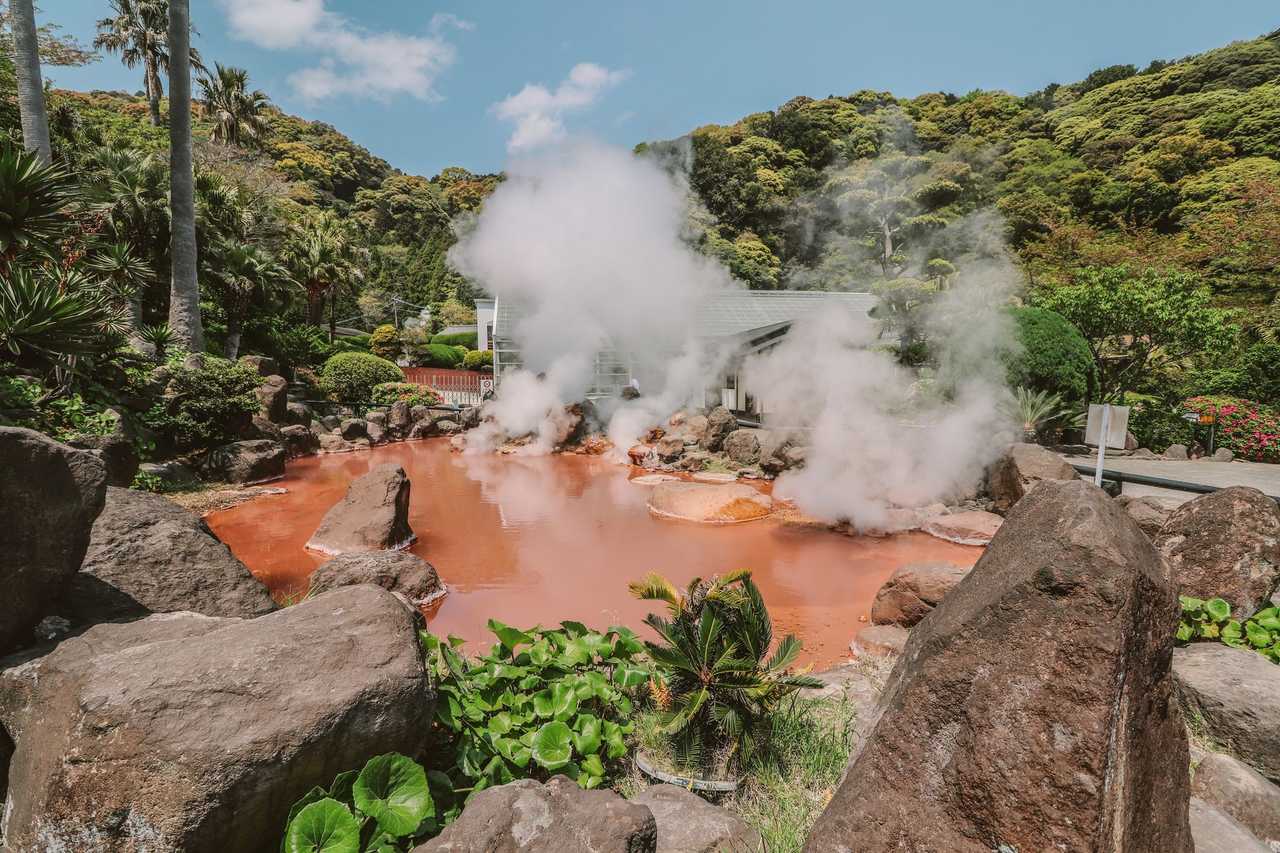
Because the water is the star, a visit to Ureshino is simple: during the day, soak in the free foot baths in the old town and explore the shrine and tea houses, then in the evening return to your inn or the public bathhouse for a proper soak. Even with only half a day, you can take in the main experience of the beauty hot spring.
Siebold no Yu: A Taisho-Romance-Style Public Bathhouse
Ureshino Onsen’s public bathhouse, Siebold no Yu (Siebold Bath), is the most eye-catching building in the old town, with an orange pointed roof and a two-story wooden Taisho-romance exterior. Its total floor area is about 750 square meters, and it reopened on April 1, 2010.
Inside are a main bath, private reservable baths and a citizens’ gallery. It stands opposite Ureshino Onsen Park and is the top choice for experiencing the beauty hot spring without staying overnight. Bathing costs ¥450 for adults. It is open 6:00 to 22:00 and closed on the third Wednesday of each month.
Onsen Yudofu: Tofu Simmered Until It Melts into the Broth
Onsen yudofu is Ureshino’s most famous local specialty. The tofu is placed directly into the mildly alkaline Ureshino hot spring water and simmered. The water reacts with the proteins in the tofu, so the edges slowly melt and the broth turns a milky white.
It melts in the mouth, quite unlike ordinary yudofu. Several specialty shops line the old town, and among them Soan Yokocho is widely regarded as the birthplace of onsen yudofu, with its house-made tofu as the signature.
Ureshino Tea: Tea Country Known for the Kamairi Method
Ureshino is a well-known tea-growing region, and its greatest hallmark is “kamairi-cha,” made by pan-firing the leaves in a kettle. The leaves come out as rounded, curled granules, quite different from the long, thin look of ordinary sencha, and the tea has a rich aroma and a rounded, sweet aftertaste.
A few tea houses in the old town let you brew a cup on the spot, and the area also offers a tea-travel program called “Ureshino Chatoki” that combines tea fields, tea rooms and lodging. Buying tea leaves as souvenirs is a regular part of any Ureshino trip.
How to Get to Ureshino Onsen: Nishi-Kyushu Shinkansen, Highway Bus and Driving Compared
Since the Nishi-Kyushu Shinkansen opened, Ureshino has gone from “a bit of a hassle” to “quite easy to reach,” but there is one thing to understand first: the Shinkansen station and the hot spring old town are not in the same place.
From Hakata: Limited Express Plus Nishi-Kyushu Shinkansen, About 65 Minutes
From Hakata it takes about 65 minutes. First take a JR limited express to Takeo-Onsen Station, then change across the same platform to the Nishi-Kyushu Shinkansen “Kamome,” and the next stop is Ureshino-Onsen Station. The transfer route is simple and not hard even with plenty of luggage. This route suits travelers holding a JR Kyushu Rail Pass, who can link Ureshino with Nagasaki and Sasebo in one line. Services and transfer times follow JR’s announcements for the day, so check once before you leave; for a same-day round trip, confirm the last train time. Along the way you pass the rural scenery around Takeo Onsen, a short ride that still feels like a real journey.
From Nagasaki: Nishi-Kyushu Shinkansen Direct, About 25 Minutes
From Nagasaki it is easiest: the Nishi-Kyushu Shinkansen “Kamome” goes directly to Ureshino-Onsen Station in about 25 minutes with no change, ideal for arriving in Nagasaki, staying a night in Ureshino, and continuing to Hakata the next day.
The ride is short and is often arranged as an extension of a Nagasaki trip or a half-day soaking stop. We suggest checking services in advance, as gaps are longer outside peak hours. The stations along the line are new, with elevators and lockers throughout, so moving with luggage is easy, and it is an efficient backbone route linking Nagasaki, Ureshino and Takeo Onsen.
Highway Bus from Fukuoka Airport or Hakata: Straight to the Heart of the Old Town
If you are not in a hurry, the highway bus “Kyushu-go” is the more convenient choice. From the Fukuoka Airport international terminal or Hakata Bus Terminal, it takes about 1.5 to 2 hours straight to Ureshino Bus Center, which is right in the center of the hot spring town, with no transfer and no further shuttle, especially friendly to anyone with luggage.
Services and fares follow the bus operator’s announcements for the day, and we recommend booking early in peak season and holidays. The bus stops at a rest area along the way where you can get off and stretch. Going from Fukuoka Airport lets you head straight to the hot spring town, saving the time of changing in the city.
From Ureshino-Onsen Station to the Old Town: Plan This Leg in Advance
Note that the Nishi-Kyushu Shinkansen’s Ureshino-Onsen Station is some distance from the core of the hot spring old town. After getting off you need to take a route bus (about 5 to 10 minutes) or a taxi, and some inns also offer a free shuttle by reservation.
When booking a room, be sure to confirm how and when to reserve the shuttle, or you may have to wait for a bus on arrival. If driving, it takes a little over ten minutes after leaving the Kyushu Expressway, and the old town area and most inns have parking, so parking is generally not a problem. If you arrive by bus, Ureshino Bus Center is itself in the old town and most inns are within walking distance, the easiest option when you do not have much luggage.
Must-Visit Ureshino Attractions: A Full Guide to the Beauty Hot Spring, Tea Country and Old Town
The spots below are ordered as “hot spring town, then tea country, then outlying extensions”; following this order saves the most travel time.
Ureshino Onsen Public Bathhouse Siebold no Yu: A Beauty Bath You Can Enjoy Without Staying Overnight
Siebold no Yu is the landmark of Ureshino’s old town, a two-story wooden building with an orange pointed roof full of Taisho-romance charm. Its total floor area is about 750 square meters, it reopened on April 1, 2010, and it stands opposite Ureshino Onsen Park.
Inside are a main bath, a private bath you can reserve, and a citizens’ gallery. Prices are affordable and suit day-trippers wanting to try the beauty hot spring; bathing costs ¥450 for adults, and it is busier in peak season. The exterior is good for photos, and when lit at night it looks different from daytime, with a rest area beside the entrance.
Toyotamahime Shrine: Praying to the Beauty Goddess and Her White Catfish Messenger
Toyotamahime Shrine enshrines Toyotamahime, daughter of the sea god. Legend says she had fair skin and she is regarded as a goddess of beauty, echoing Ureshino’s “beauty hot spring,” and it is the most talked-about stop in the hot spring town.
The shrine holds a statue of a white catfish messenger. When visiting, you pour hot spring water over the statue and stroke it while praying for skin as fair and smooth as a catfish’s. The shrine is small and within walking distance in the old town, so ten-odd minutes is enough. On the grounds you can get beauty and good-relationship charms, which draw many women visitors. Charm-office hours follow the day’s announcement, so we suggest visiting during the day.
Siebold Foot Bath: A Free Foot Bath in the Old Town
If you are tired from walking and do not want to change clothes for a big bath, the Siebold Foot Bath in the old town is the best choice. It is free: just sit down and put your feet into Ureshino’s hot spring water to feel that distinct slipperiness.
Beside the foot bath there are usually simple seats and a roof, a good rest point after visiting the shrine or a tea house. Bring a small towel to dry your feet, as one may not be provided. It is free and open 24 hours, especially pleasant in winter. It is close to Siebold no Yu, so the two can be arranged together.
Yuyado Hiroba: A Unique High-Temperature Steam Foot Bath
“Yuyado Hiroba” is another free hot spring facility in the old town. Besides the usual foot bath it has a steam foot bath (ashi-mushi-yu) with 7 seats arranged in a circle, so you can steam your feet and chat with the person next to you. It feels completely different from soaking in water, so first-timers should start with a short time to get used to it. The foot bath is open 8:00 to 23:00, and the steam foot bath 9:00 to 20:00.
The plaza is on the walking route through the hot spring town and can be combined with the Siebold Foot Bath. Both are free, making them Ureshino’s best-value experiences, and the seating and roof around them make it a good place to rest on a walk with kids.
How Many Foot Baths Are in Ureshino? Siebold Foot Bath and Yuyado Hiroba Hours at a Glance
Ureshino’s hot spring town has two free foot baths. The Siebold Foot Bath is in a corner of Ureshino Onsen Yuyu Hiroba and is open 24 hours; Yuyado Hiroba is along the main road of the hot spring town, with a foot bath open 8:00 to 23:00 and a steam foot bath open 9:00 to 20:00. Both are free all year. Just sit down and soak your feet as you stroll to feel the smoothness of Ureshino’s water, with no need to change clothes.
Soan Yokocho: The Birthplace of Onsen Yudofu
For onsen yudofu, Soan Yokocho is a must-visit, regarded as the birthplace of Ureshino onsen yudofu. It uses house-made tofu simmered in mildly alkaline hot spring water until the edges melt and the broth turns milky white, with a melt-in-the-mouth texture.
Besides the yudofu pot it also serves set meals. There is often a wait at peak meal times, so avoid around noon; it is open 10:30 to 20:30 and closed on Wednesdays. The shop also sells its house-made tofu and onsen yudofu broth base to take home. It is within the hot spring town, reachable on foot.
Ureshino Tea and Tea House Experiences: Brew a Cup of Kamairi Tea on the Spot
Ureshino tea is made by the kamairi method, giving rounded, curled granules and a full aroma with a rounded, sweet aftertaste, clearly different from the common long, thin sencha.
Several tea houses in the old town brew on the spot, letting you compare different varieties and roast levels. The area also offers the “Ureshino Chatoki” tea-travel program combining tea fields, tea rooms and lodging; hours, experiences and reservation requirements follow each shop’s announcements. Tea shops in town also sell vacuum-packed leaves that are easy to carry, a practical souvenir. We suggest comparing one kamairi tea with one steamed tea; the difference is clear.
Ureshino’s Great Tea Tree: An Old Tea Tree Designated a Natural Monument
Ureshino’s Great Tea Tree stands in the Fudozan area and is a symbol of Ureshino tea. It is over 300 years old and designated a national natural monument. The tree is much larger than the neatly pruned tea bushes in the fields, showing how long Ureshino’s tea-growing history is.
It is some distance from the hot spring town and in practice requires driving, passing continuous terraced tea fields on the way, which are scenic in themselves. There are no large facilities around it, so allow about half an hour for the visit, and watch for narrow farm roads and farm vehicles. Signboards near the tree explain how tea reached Ureshino and the origin of the kamairi method; after reading them and returning to the old town for tea, the experience feels completely different. We suggest going on a clear day, as visibility on the mountain road is poor in the rain.
Todoroki Falls and Todoroki Falls Park: A Cool-Off Spot Outside the Hot Spring Town
Todoroki Falls lies on the outskirts of Ureshino. The water drops in stages into a wide pool below, and the surroundings are laid out as a park with paths and rest areas, where locals cool off and picnic in summer.
It is about ten minutes by car from the hot spring town and is the easiest nature spot to include. After rain the flow is powerful, but the paths and rocks are slippery, so please do not climb the rocks near the pool. There are few commercial facilities in the park, so buy drinks in the old town first and bring mosquito repellent. The park has parking and restrooms and is convenient with kids, so you can make a round trip in a free afternoon.
Hizen Yoshida Ware Kilns: A Pottery Region with Four Hundred Years of History
Hizen Yoshida ware (Yoshida-yaki) is a pottery region in Ureshino with more than four hundred years of history. Its style is plainer than Arita ware and leans toward everyday tableware, and in recent years many young artists have also released modern designs.
The city has kilns and workshop facilities, and some offer painting (etsuke) experiences; finished pieces must be fired and then shipped separately. Business days and whether a kiln is open to visitors vary a lot, and experiences mostly require advance reservation, so be sure to check before going. The city also has a sales space gathering works from several kilns; if time is limited, going straight there to compare is much quicker than visiting one by one, with prices ranging from everyday tableware to artists’ works.
Shida-yaki no Sato Museum: Step into an Old Pottery Factory
The Shida-yaki no Sato Museum is in Shiotamachi, Ureshino. Converted from a former pottery factory, it preserves the whole set of equipment from forming and glazing to firing, showing the scene of past mass production of ceramics.
Unlike a gallery that simply shows finished pieces, this place focuses on the “manufacturing process,” suiting people who love crafts and old buildings. Hours, admission and closing days follow the museum’s announcements, and we suggest driving there. Some spaces double as event and market venues, which are livelier on event days. It is about twenty minutes by car from the Ureshino hot spring town and can be combined with Shiotazu, with ample parking beside the museum.
Shiotazu: A Nationally Important Preservation District of White-Walled Machiya Townhouses
Shiotazu is in Shiotamachi, Ureshino. Once prosperous through river transport on the Shiota River, it retains rows of white-walled machiya townhouses and old merchant houses and is designated a nationally important preservation district for groups of traditional buildings.
The old street is not long, about an hour for a stroll, and has fewer visitors than the Ureshino hot spring town, good for avoiding crowds. Some buildings are open to visit, with hours and fees following each facility’s announcements, and please use the designated parking lots. Cafes and craft shops along the street offer places to rest, and it is near the Shida-yaki no Sato Museum, so it suits the same afternoon.
Strolling Ureshino Onsen Town: Turning the Beauty Hot Spring into a Route
The Ureshino hot spring town is not large: Siebold no Yu, Toyotamahime Shrine, the Siebold Foot Bath, Yuyado Hiroba and several tea houses and yudofu shops are all within walking distance, one of the few hot spring towns in Kyushu that can be fully explored on foot. A walk along the Ureshino River is highly recommended, with inns and old houses on both banks and a lovely atmosphere once the lights come on at dusk. Some operators rent bicycles to reach the farther tea fields, with rental terms following the operator’s announcements. The old town also sells beauty products made with hot spring water, such as lotion and soap, souvenirs very characteristic of Ureshino.
How Much Does Ureshino Onsen Cost? Bathing Fees, Experiences and Transport Passes
Ureshino’s cost structure is friendly: foot baths are free and the public bathhouse costs coins; the real spending is on food and transport.
Siebold no Yu Bathing Fee: The Most Affordable Beauty Hot Spring Experience
Ureshino Onsen’s public bathhouse Siebold no Yu offers affordable day-trip bathing, with a main bath and a private bath available for an extra fee, the most direct choice for travelers on a day trip with no overnight stay.
Towels and toiletries may need to be bought or rented separately, so we suggest bringing your own. Adult bathing is ¥450 (¥340 for ages 70 and over, ¥220 for elementary school students), open 6:00 to 22:00 and closed on the third Wednesday of each month. Renovation work is scheduled from August 27 to December 15, 2026, so please check with the Ureshino Onsen Tourism Association first.
What to Watch Out for at Ureshino Onsen: Where to Stay and Pre-Trip Reminders
Two last things: where to stay, and what to confirm before you go.
Stay in Ureshino Onsen, Nagasaki or Hakata? Where to Stay Nearby
The ideal way to see Ureshino is still to stay a night. The hot spring town has inns from long-established to new styles. Taishoya, open since 1925, is in the middle of the hot spring town, about 5 minutes by taxi from Nishi-Kyushu Shinkansen Ureshino-Onsen Station, and also offers a free shuttle by reservation; its “Shiki no Yu” and “Taki no Yu” baths are both highly rated. Others often searched for include Wataya Bessho, Yoshidaya, Shiibasanso, Ureshinokan and the tea-culture-focused Ureshino Hachijuhachi.
If your itinerary centers on Nagasaki or Hakata, treating Ureshino as a half-day soaking stop is entirely workable. But you would then give up a one-night, two-meal Saga beef dinner and the quiet hot spring town at night. Rooms are in high demand in peak season and holidays, so book early.
Three Things to Check Before You Go: Shuttle, Opening Hours and Water Reminders
Shuttle reminder: the Nishi-Kyushu Shinkansen’s Ureshino-Onsen Station is far from the old town, so you need a route bus (about 5 to 10 minutes) or a taxi, and some inns offer a free shuttle by reservation, so confirm when booking. The highway bus “Kyushu-go” goes straight to Ureshino Bus Center, which is right in the old town.
Siebold no Yu, tea houses, yudofu shops and kilns each have different closing days, so please check each before leaving; the latest information is on the Ureshino Onsen Tourism Association’s official website (spa-u.net). Ureshino is a sodium bicarbonate spring and skin may feel dry after bathing, so remember to apply lotion, and we suggest removing silver jewelry before bathing.
Ureshino Onsen FAQ
Q: Why is Ureshino Onsen called a beauty hot spring? What is the water type?
Ureshino ranks with Hinokami Onsen in Shimane and Kitsuregawa Onsen in Tochigi as one of “Japan’s Three Great Beauty Hot Springs.” The water is a sodium bicarbonate-rich sodium spring with a natural effect of softening and cleansing the outer skin layer. It is gentle with a slightly viscous feel, and skin becomes noticeably smoother after a soak, which is where the beauty hot spring title comes from.
Q: How long does it take to get to Ureshino Onsen from Hakata or Nagasaki?
From Hakata it takes about 65 minutes: take a JR limited express to Takeo-Onsen Station, then change on the same platform to the Nishi-Kyushu Shinkansen “Kamome” to Ureshino-Onsen Station. From Nagasaki, the Nishi-Kyushu Shinkansen goes direct in about 25 minutes. To arrive right at the old town, you can also take the highway bus “Kyushu-go” from Fukuoka Airport or Hakata, about 1.5 to 2 hours to Ureshino Bus Center.
Q: Is Ureshino-Onsen Station the hot spring town?
No. The Nishi-Kyushu Shinkansen’s Ureshino-Onsen Station is some distance from the core of the hot spring old town. After getting off you need a route bus (about 5 to 10 minutes) or a taxi, and some inns offer a free shuttle by reservation. If you want to arrive right in the old town, the highway bus to Ureshino Bus Center is more convenient.
Q: Can I enjoy Ureshino Onsen without staying overnight?
Yes. The public bathhouse Siebold no Yu offers affordable day-trip bathing, with a main bath and a private bath you can book for a fee, and many hot spring inns also accept day visitors. The Siebold Foot Bath and Yuyado Hiroba in the old town are both free foot baths, letting you experience the water without changing clothes.
Q: What is onsen yudofu and where can I eat it?
Onsen yudofu is tofu simmered in mildly alkaline Ureshino hot spring water. After the water reacts with the proteins in the tofu, the edges slowly melt and the broth turns milky white, with a melt-in-the-mouth texture. Several specialty shops in the old town serve it, and Soan Yokocho is regarded as the birthplace, using house-made tofu.
Q: How is Ureshino tea different from ordinary Japanese tea?
Ureshino tea is distinguished by the “kamairi-cha” method of pan-firing the leaves to halt oxidation. The leaves come out as rounded, curled granules, clearly different from the common long, thin sencha, and the tea has a rich aroma and a rounded sweetness. Tea houses in the old town let you brew and compare on the spot, and the area also has tea-travel experiences such as “Ureshino Chatoki.”
Q: Can I see Ureshino Onsen in one day? Should I stay a night?
For the hot spring town alone, half a day to a day is enough, with Siebold no Yu, Toyotamahime Shrine, the two free foot baths and yudofu shops all within walking distance. But to add the Great Tea Tree, Todoroki Falls, Shiotazu or a Yoshida ware experience, you need to drive and stay a night, which also lets you have the inn’s Saga beef kaiseki dinner.