
Dogo Onsen Guide: Japan’s Oldest Hot Spring Town and Its Three Public Baths
Dogo Onsen sits in Matsuyama, Ehime Prefecture, and is one of the oldest hot springs in Japan’s written records, with a history often described as 3,000 years long. Its fame comes from three things: it is the setting of Natsume Soseki’s novel Botchan, its wooden main building is widely thought to be one of the inspirations for the bathhouse in Spirited Away, and its spring water is natural source water with nothing added and no heating.
Unlike most hot spring towns, the heart of Dogo is not the inn baths but three public baths open to everyone: Honkan, Asuka-no-Yu Spa and Tsubaki-no-Yu, each with its own character and price. The whole onsen district is only a few minutes’ walk from the station to Honkan, and strolling around in a yukata is part of everyday life here. Below we start with four key stops, then cover transport and costs.
Dogo Onsen Honkan: A Wooden Public Bathhouse Ranked as an Important Cultural Property
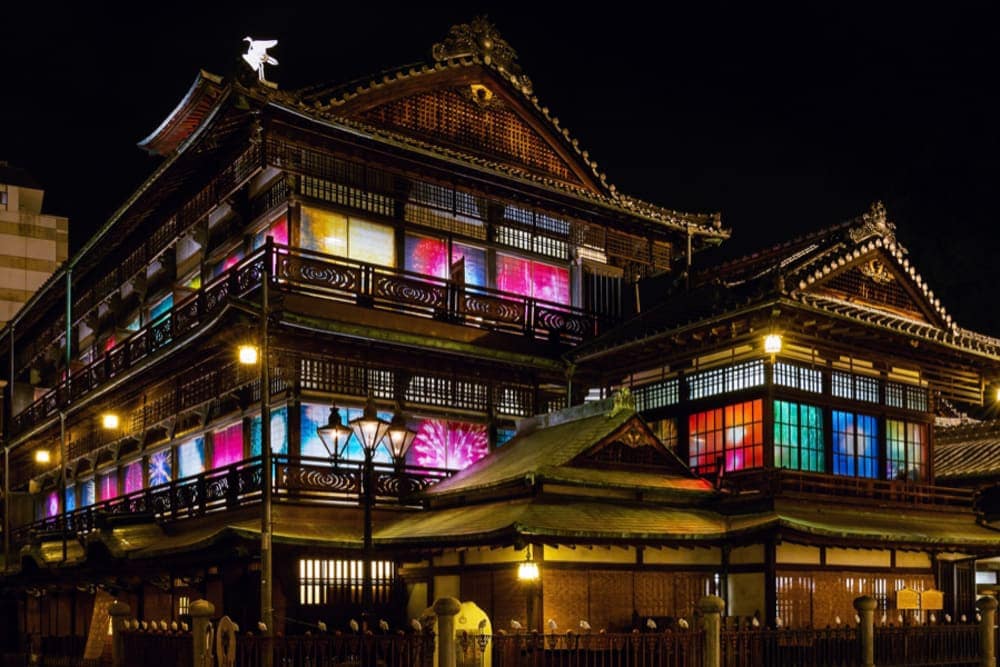
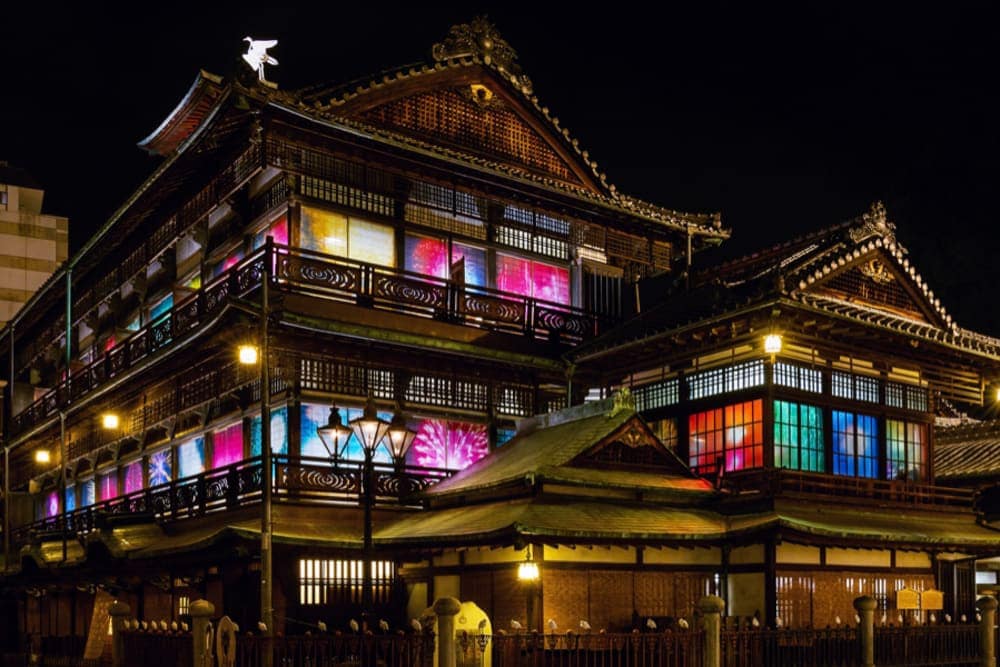
Dogo Onsen Honkan is the symbol of the town. This three-story wooden building from the Meiji era is designated a national Important Cultural Property, and the Shinshaku-kaku cupola on the roof and its red glass stand out especially when lit at night. It is also a bathhouse that is still in operation, not just a monument to look at.
Honkan went through years of preservation and repair work, staying open partially during that time, and has returned to full operation now that the work is complete. Inside, the baths are split into the general public bath Kami-no-Yu and the more refined Tama-no-Yu; which bath areas and which lounge rooms you can use depends on the type of ticket you buy.
Asuka-no-Yu Spa: An Annex Themed on the Asuka Period
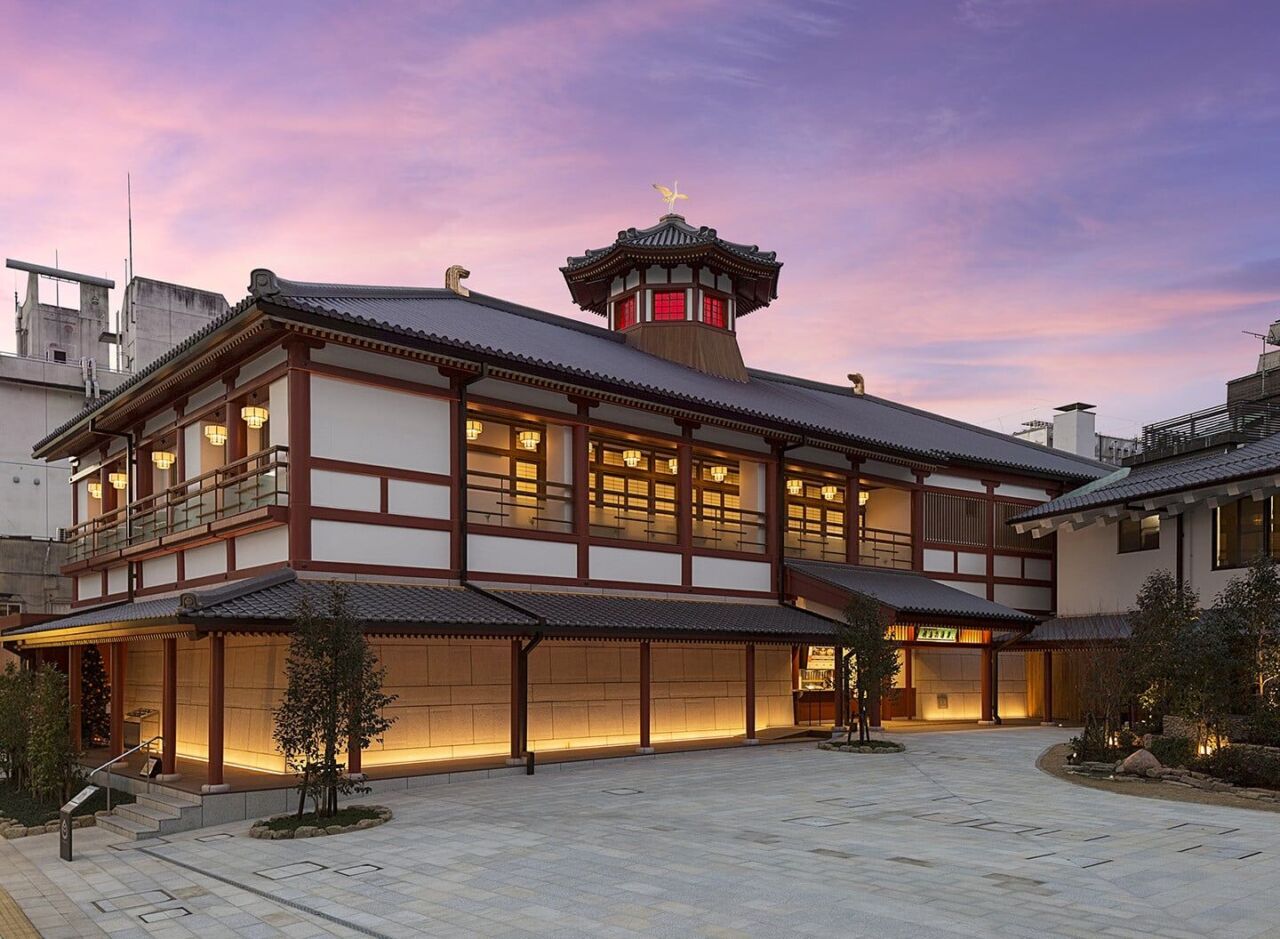
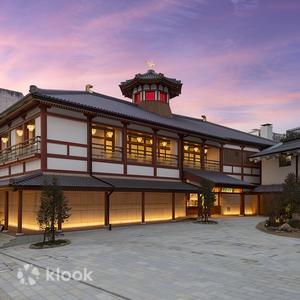
Asuka-no-Yu Spa is the annex of Dogo Onsen, designed with the architecture of the Asuka period (6th-7th century) as its concept, and its exterior is more open and bright than Honkan’s. Traditional Ehime crafts are used throughout the building: Tobe ware, mizuhiki cord, Himetemari and Imabari towels are all worked into the space.
It is the only one of the three public baths with an open-air bath, and it also has a spacious tatami hall for resting. After your soak you can change into a yukata, sit down with tea and a sweet, and enjoy the most complete experience of the three. Private-room and large-hall plans are priced differently, so you can choose according to how long you want to stay.

Tsubaki-no-Yu: The Affordable Public Bath Locals Use Every Day
Tsubaki-no-Yu is right next to Asuka-no-Yu Spa. It is the cheapest of the three public baths and the one Matsuyama locals genuinely use as their everyday bathhouse. The building dates from 1953 (Showa 28) and reopened in 2017; its exterior is an L-shaped kurayashiki style with no elaborate decoration, just one pool of good water.
With no lounge or extra services, the process is simple: buy a ticket, go in, soak, wash, and leave. If you want to try Dogo’s spring water on a limited budget, or see everyday bathing culture without the tourist filter, this is the best choice.
The Onsen District: A Compact Area Just Minutes from the Station to Honkan
Nearly all of Dogo Onsen’s highlights are packed within walking distance of the station. Outside Dogo Onsen Station you will find Hojoen Square and the Botchan Karakuri Clock; walk through the L-shaped arcade shopping street, Dogo HAIKARA Street, and you arrive at Honkan, all in just a few minutes.
Both sides of the shopping street are lined with souvenir shops, mikan (mandarin) specialty stores and snack stalls, and many visitors stroll out in their inn’s yukata and wooden geta sandals. On the small hill behind Honkan there are also a free observation deck and a foot bath, and the whole onsen district can be covered without any transport.
How to Get to Dogo Onsen: Matsuyama Airport, City Trams, the Botchan Train and Limited Express Compared
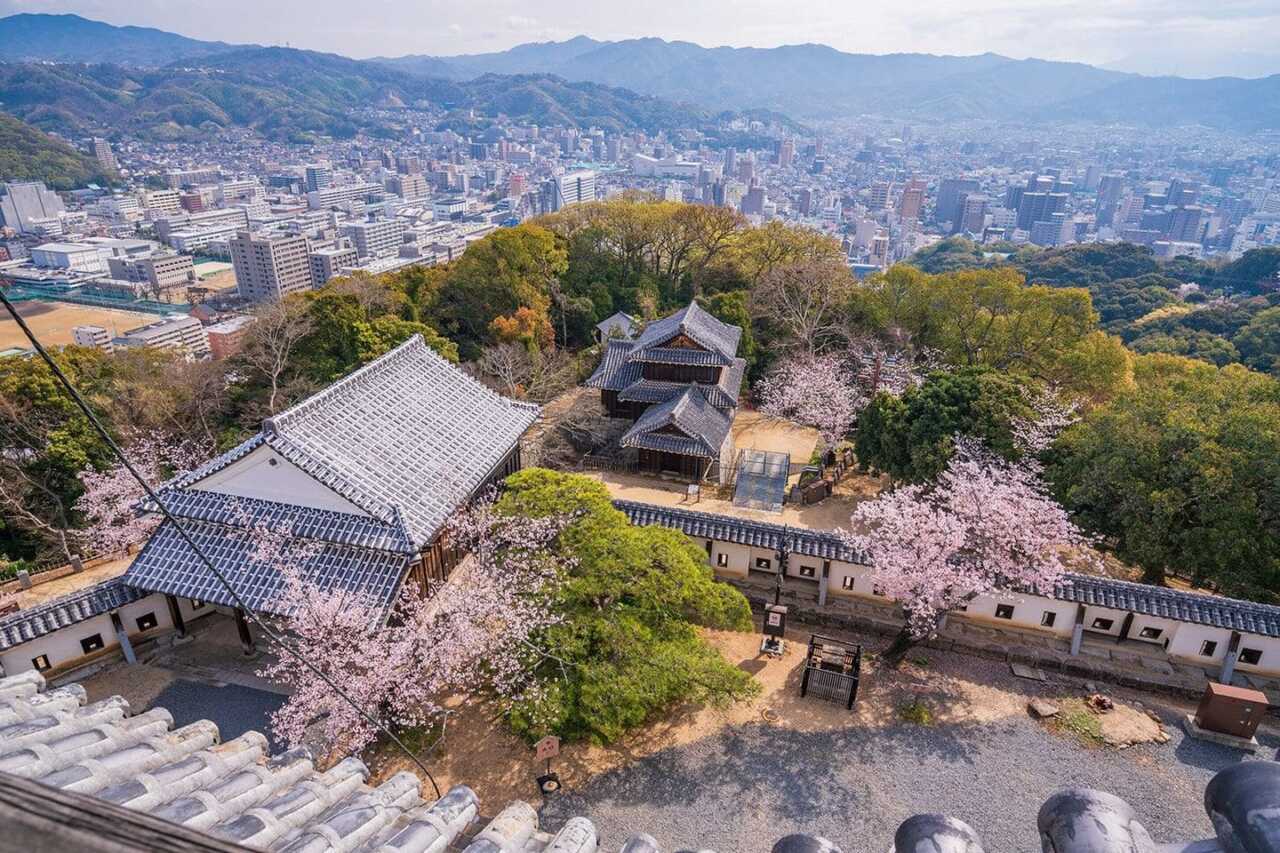
Dogo Onsen is on the east side of Matsuyama, and wherever you come from, the last leg is almost always on Iyotetsu’s city streetcars. Here are the four ways to get there.
From Matsuyama Airport: Limousine Bus to Dogo Onsen Station
Matsuyama Airport handles international and domestic flights and is the fastest way into Ehime. After clearing the airport, take the airport limousine bus; choose a departure heading for the front of Dogo Onsen Station. The ride takes about 40 minutes and costs ¥830 for adults (some departures only go as far as Matsuyama City Station, where you transfer to a city tram), passing JR Matsuyama Station and Matsuyama City Station on the way.
This route needs no transfers and is the friendliest for travelers with luggage; you get off right at the entrance to the onsen district. Departures are timed to flights, but late at night or when a flight is delayed there may be no connecting service, and you will have to take a taxi. Check the operator’s announcements on the day for actual timetables and fares.
City Tram: From JR Matsuyama Station or Matsuyama City Station to the Terminus
Iyotetsu’s city streetcars are Dogo Onsen’s main transport artery. From JR Matsuyama Station, take the line toward Dogo Onsen and ride to the terminus, Dogo Onsen Station; the ride takes about 25 minutes, and the fare is a flat, small-coin price.
Note that Matsuyama has two easily confused stations: JR’s “Matsuyama Station” and Iyotetsu’s “Matsuyama City Station.” They are some distance apart and are different stations. Travelers who come by Shinkansen and limited express arrive at JR Matsuyama Station, while the downtown commercial district is around Matsuyama City Station.
Botchan Train: A Retro Steam-Style Sightseeing Tram
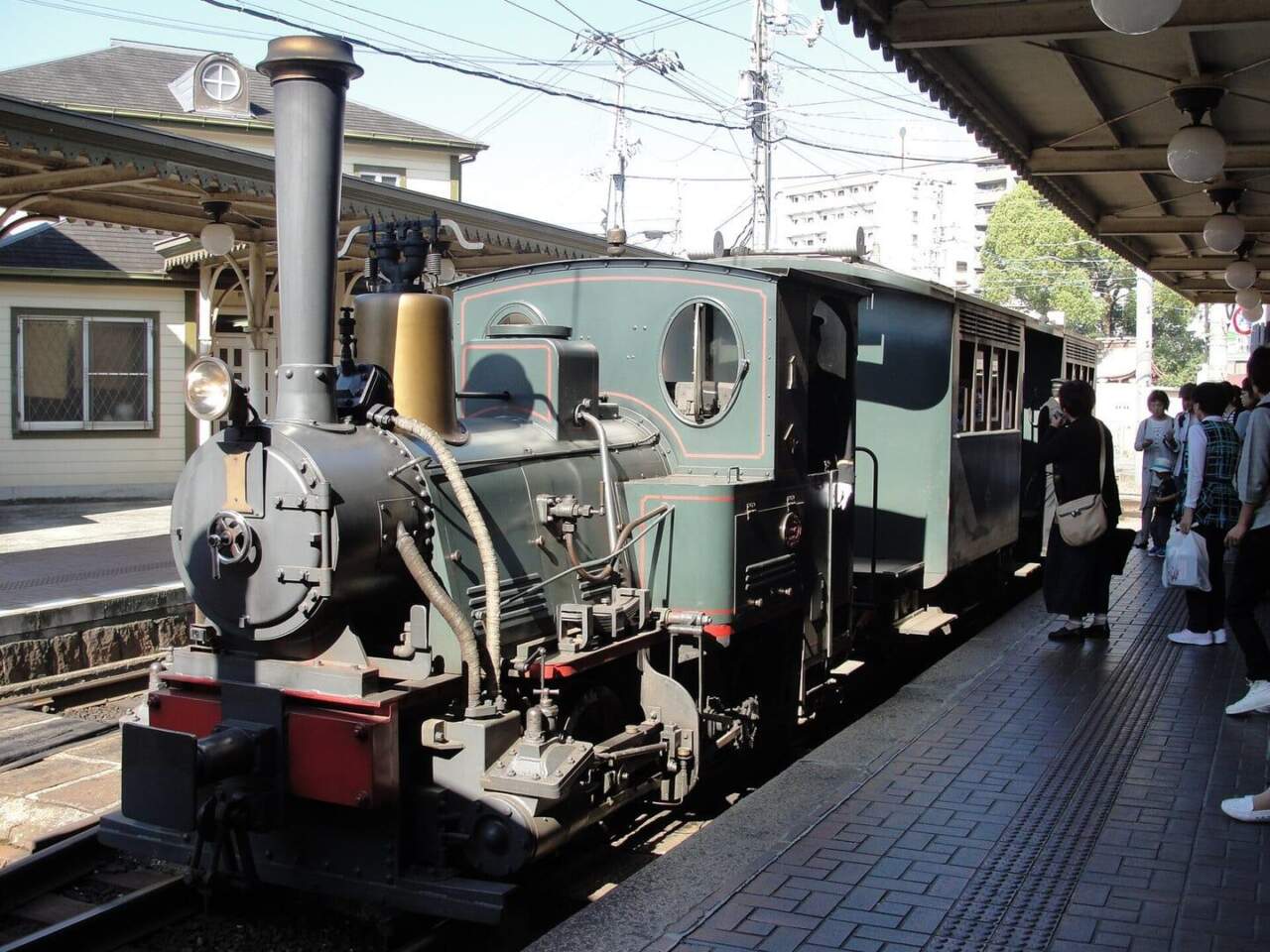
The Botchan Train is a sightseeing train modeled on Meiji-era steam locomotives, running on the city tram tracks; its wooden carriages and conductors in retro uniforms are its trademarks. It takes its name from Natsume Soseki’s novel Botchan.
It was once suspended because of a shortage of drivers and resumed running in 2024, but it runs only on Saturdays, Sundays and national holidays and requires a separate ticket: ¥1,300 for adults and ¥650 for children one way. If you want to ride, be sure to check the day’s schedule and whether it is operating.
From Takamatsu and Okayama: JR Limited Express Shiokaze or Uwakai
From Honshu or other prefectures in Shikoku, you mainly rely on JR limited express trains. From Okayama, the Shiokaze crosses the Seto Ohashi Bridge and runs directly to JR Matsuyama Station; from Takamatsu, take the Ishizuchi limited express. Both take several hours.
After arriving at JR Matsuyama Station, transfer to a city tram for Dogo Onsen. For travelers with a JR Shikoku rail pass, taking the limited express is the best value, but note that the pass usually does not cover Iyotetsu’s city trams. Timetables and rules follow JR’s announcements on the day.
By Car: Parking Is Limited in the Onsen District
The benefit of driving is the convenience of extending your trip to Matsuyama Castle, Uchiko or Uwajima. Matsuyama has expressway interchanges, driving to Dogo is not difficult, and most onsen inns have a car park for guests, so when booking, check whether you need to reserve a space.
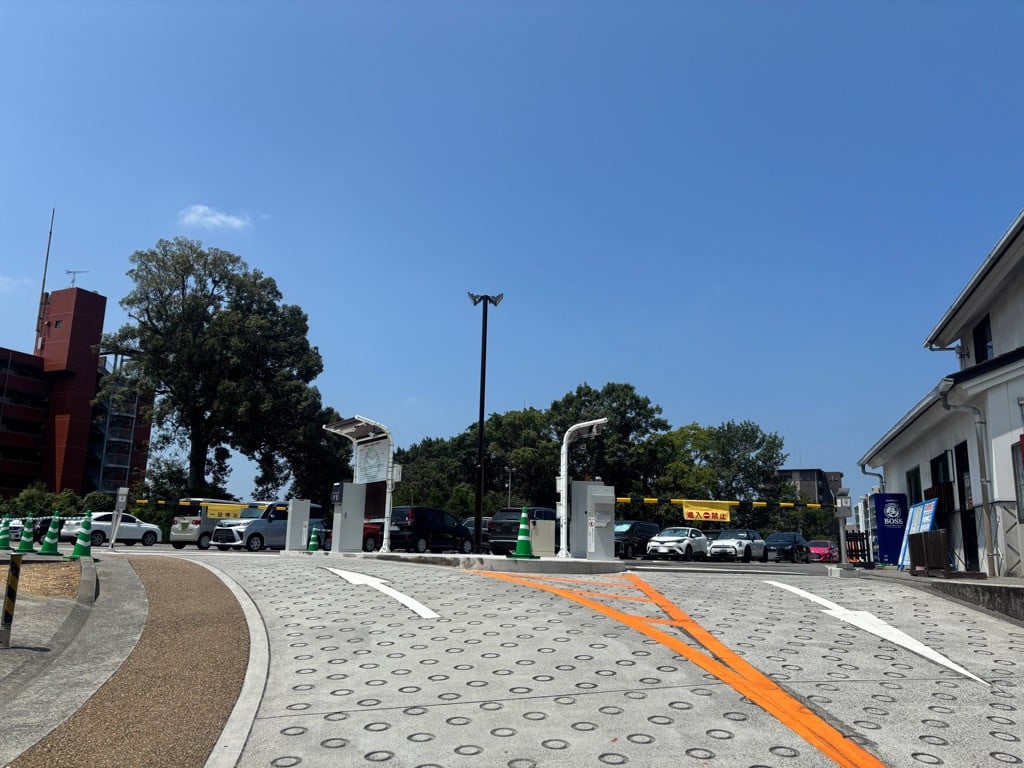
However, the onsen district itself has narrow roads, many pedestrians in yukata, and some sections with traffic restrictions, so it is not suited to driving around. If you only came for the public baths, we suggest parking at a nearby paid car park and walking, or simply taking the city tram.



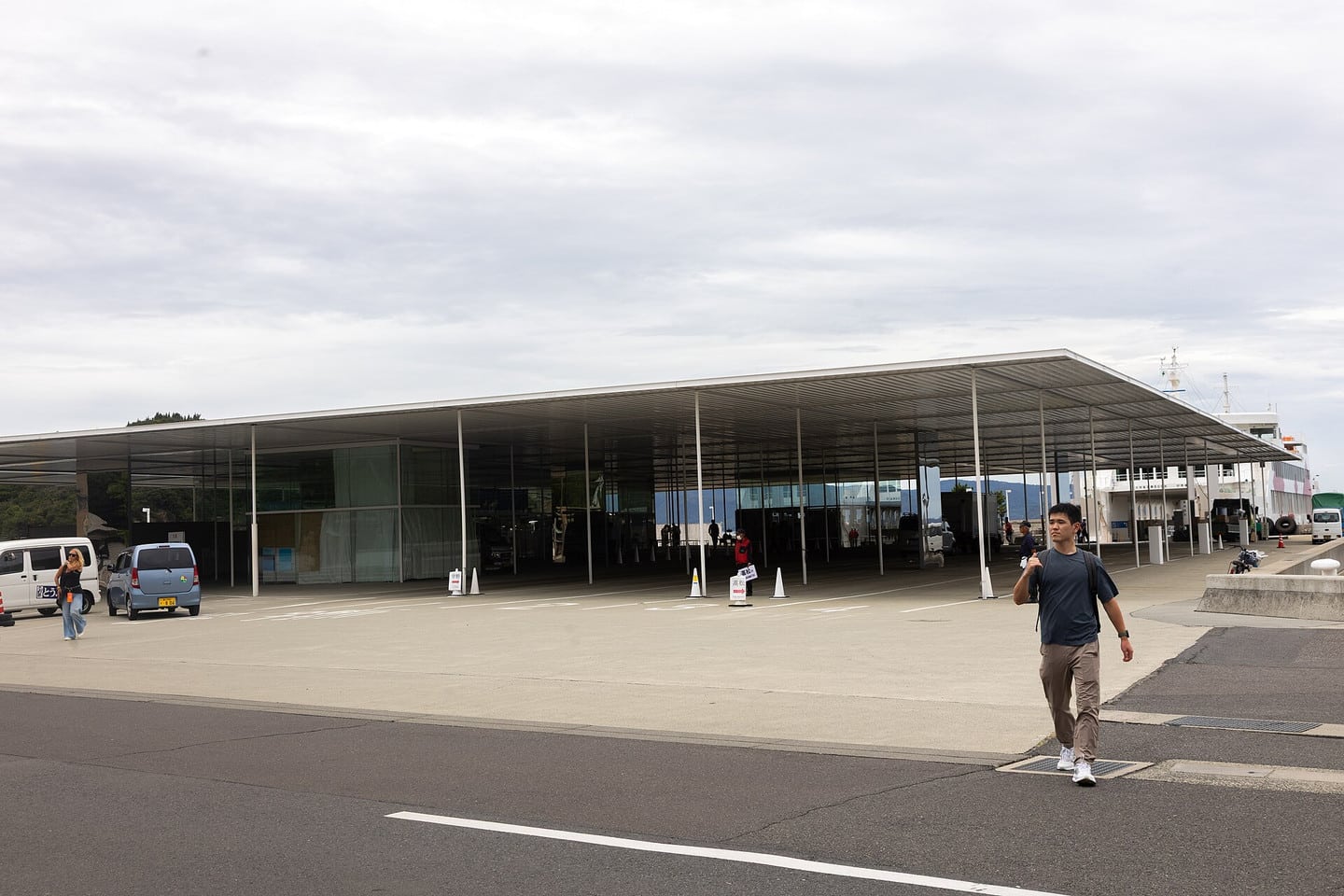
Which Dogo Onsen Sights Are Worth Visiting? The Three Public Baths and a Stroll Through the Onsen District
Below we start with the three public baths, then expand outward to the onsen district and the nearby shrine and park. The whole area can be covered on foot, and half a day to a full day is a good amount of time to plan.
Dogo Onsen Honkan, Kami-no-Yu: The Most Basic and Classic Bath
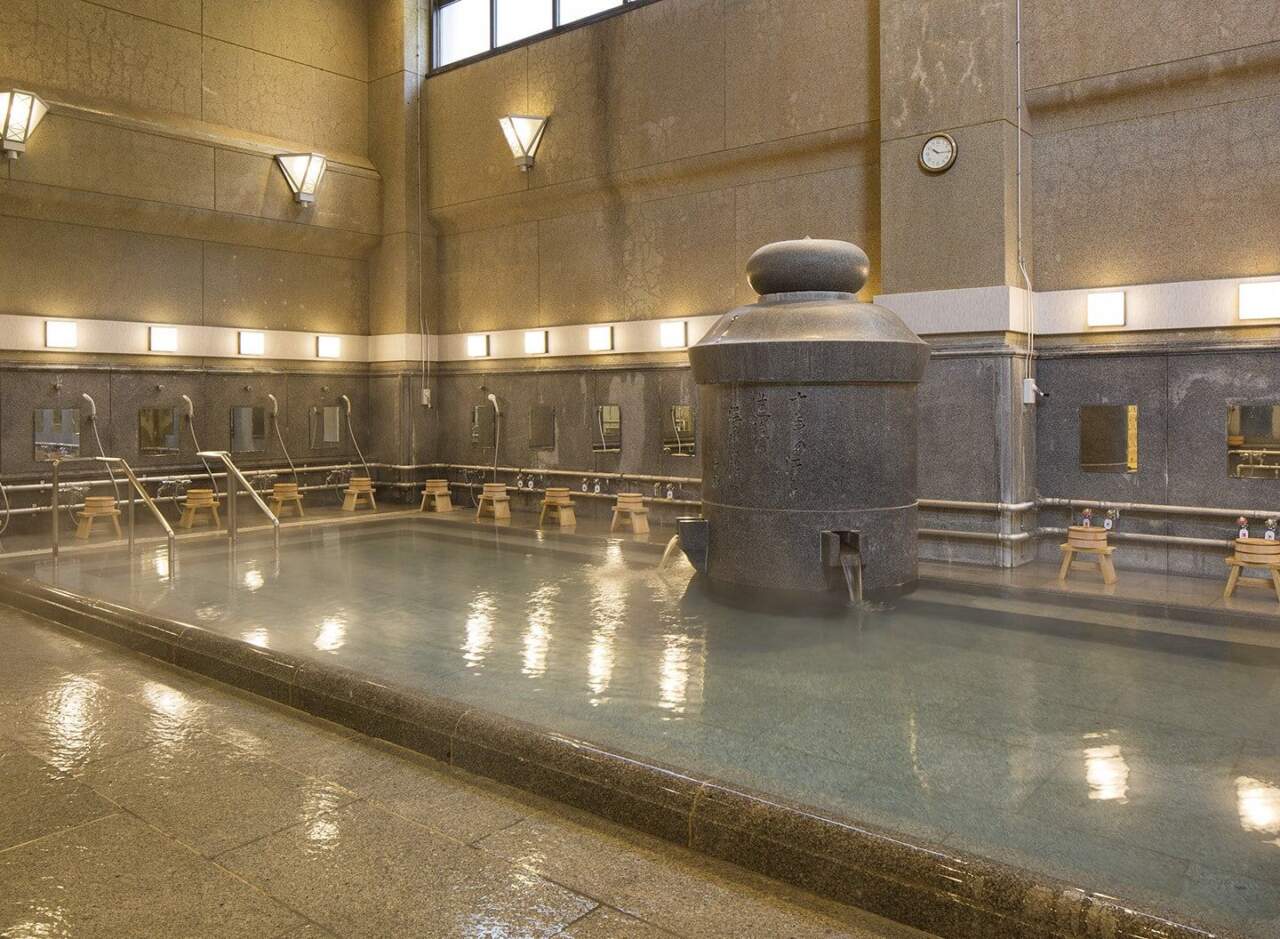
Kami-no-Yu is Honkan’s general public bath and the option most people choose. The bathroom is made of stone, with Tobe ware ceramic panel paintings of Dogo Onsen legends set into the walls; in the middle of the bath stands a cylindrical spout, popularly called the “yugama,” from which hot water pours out, under a high ceiling and a calm atmosphere.
The water is alkaline simple spring water, silky and low in irritation, so it is quite gentle to soak in. Honkan’s water has nothing added and is not heated, which is what Dogo is proudest of. The basic ticket for Kami-no-Yu (downstairs) alone is ¥700 for adults and ¥350 for children, the cheapest way in; bathing fees, available lounge space and opening hours should still be checked against Honkan’s announcements on the day.

Dogo Onsen Honkan, Tama-no-Yu: Plans with a Second- or Third-Floor Lounge
Tama-no-Yu is Honkan’s more refined bath; the space is smaller than Kami-no-Yu, the materials are more carefully chosen, and it is less crowded. It is usually sold bundled with a second- or third-floor lounge plan, and after your soak you can go to a tatami room, change into a yukata, and have tea with Botchan dango.
The third-floor private rooms and the second-floor large hall have different atmospheres and different prices, and they are the plans that best give you a “Meiji-era bathing” experience. Note that Honkan’s ticket types are split quite finely, so check at the ticket counter what baths and lounges each one includes before you buy.
Yushinden: Japan’s Only Bathroom Built for the Imperial Family
Honkan also hides a special space, the “Yushinden,” a bathroom built for the imperial family in the Meiji era and the only surviving building of its kind in Japan. Inside are the Gyokuza-no-ma (throne room), the Goi-no-ma and the Go-yudono, built with a completely different level of materials and craftsmanship.
It is not a bathing facility and can only be viewed: a Tama-no-Yu ticket for the second-floor seating or higher lets you view it freely, and there is also a separate guided-tour ticket, ¥500 for adults and ¥250 for children, about 30 minutes, with advance reservation required. Whether it is open and the guided-tour sessions follow Honkan’s announcements on the day, so we suggest asking when you enter.
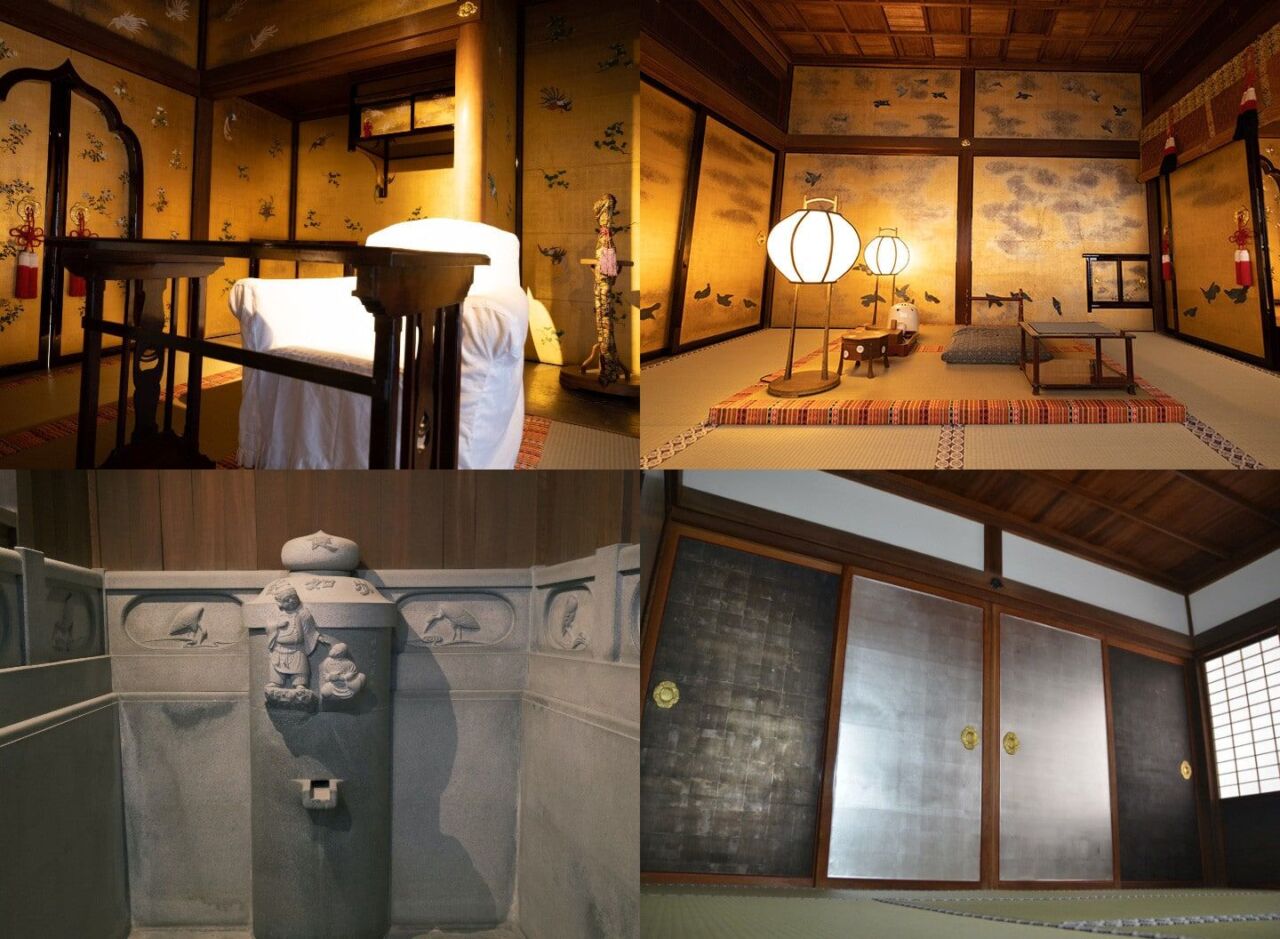
Asuka-no-Yu Spa: The Only One of the Three Public Baths with an Open-Air Bath
Asuka-no-Yu Spa is the newest of the three and offers the most complete experience. Besides the indoor large bath, it is the only public bath with an open-air bath, and the garden-style outdoor space adds a sense of openness to bathing, in contrast to Honkan’s enclosed wooden atmosphere.
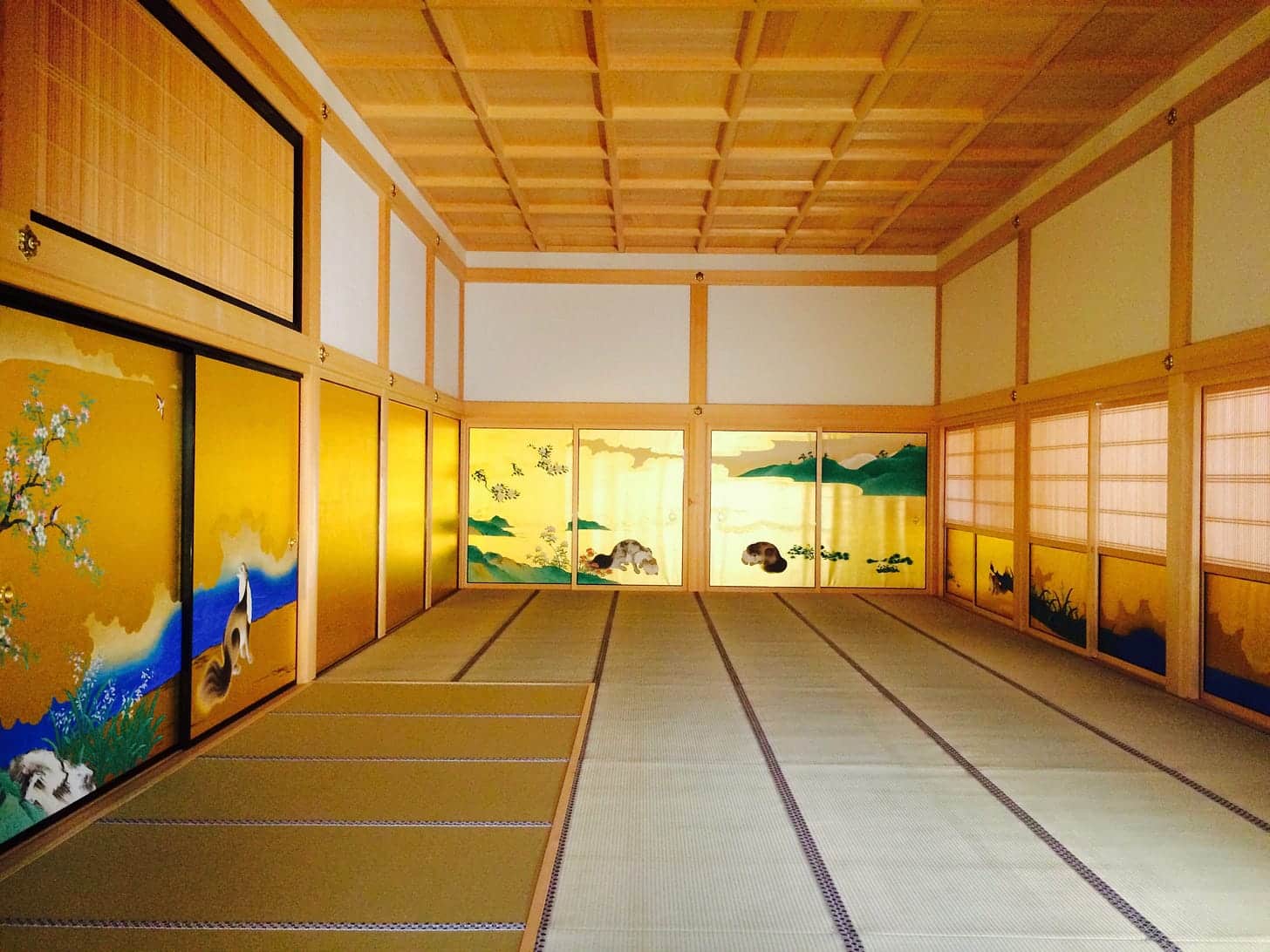
The building is decorated throughout with traditional Ehime crafts, and the large hall and private rooms on the second floor have tatami floors and come with tea and sweets. The courtyard recreates the scene described in the Yuoka Stele inscription as the “Tsubaki Forest,” a corner of the building worth lingering in.
Tsubaki-no-Yu: No Lines and the Most Affordable Choice
Tsubaki-no-Yu is right next to Asuka-no-Yu Spa and is the plainest of the three; its name comes from the camellia, Matsuyama’s city flower. The exterior is simple and the interior is just a clean, spacious large bath, with no lounge, no guided tours and no lines of tourists.
That is exactly why its fee is the lowest, yet you soak in the same Dogo spring water. When the line at Honkan is too long, or you only have half an hour free in your schedule, this is the most practical alternative, and you are also most likely to meet local residents who come with their wash basins.
Botchan Karakuri Clock and Hojoen Foot Bath: A Little Show on the Hour
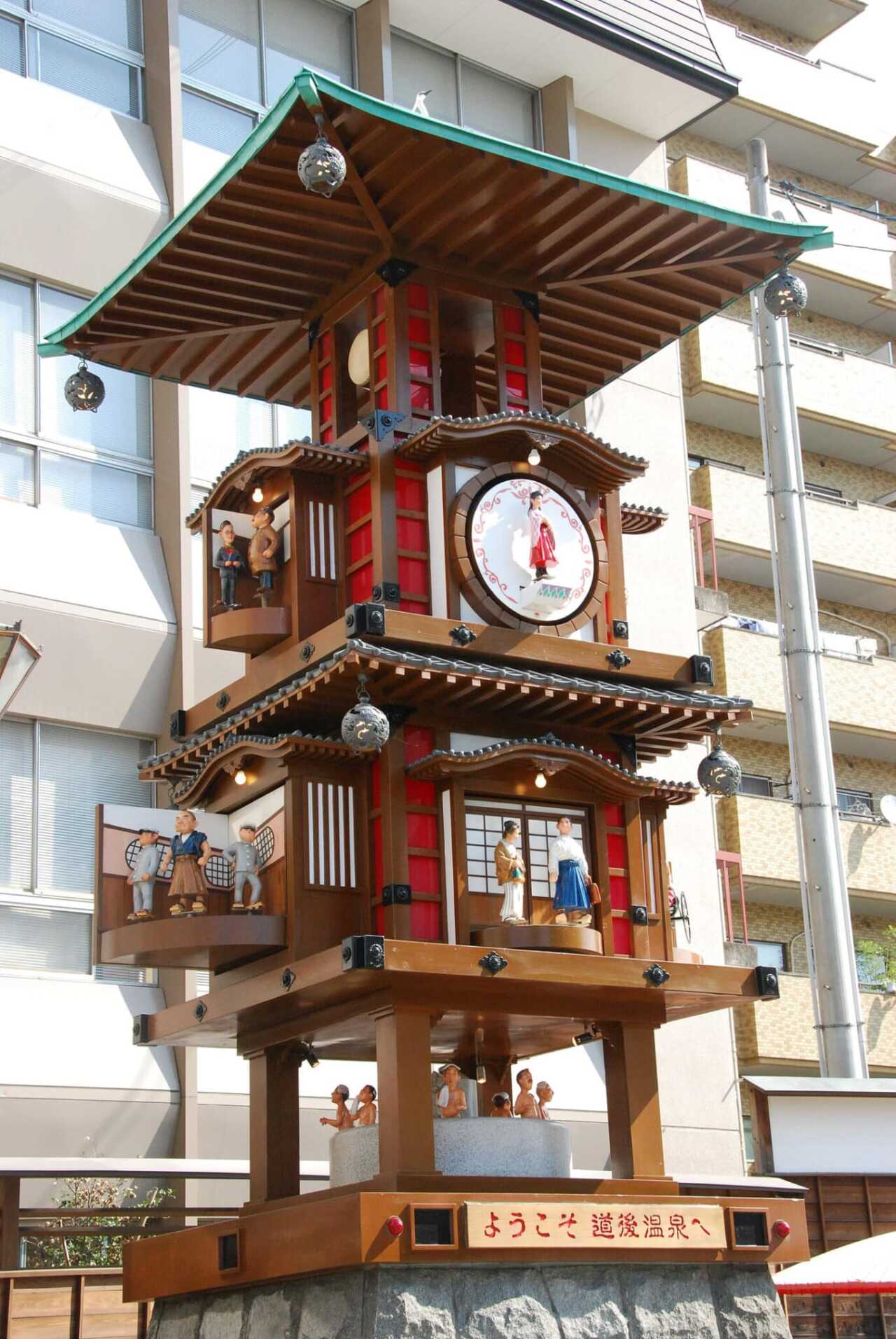
As soon as you leave Dogo Onsen Station you will see the “Botchan Karakuri Clock” in Hojoen Square. Every day between 8 a.m. and 10 p.m. on the hour (possibly more often in peak season), the clock tower slowly rises and opens to music, and figures of characters from the novel Botchan appear one after another.
The show lasts several minutes, and the square fills with people before it starts; it is the free show you are most likely to catch in Dogo. Next to the tower there is also a free foot bath, where you can soak your feet while waiting for the next show on the hour, the standard first stop after arriving in Dogo.
Dogo Onsen Station and the Station Starbucks: Coffee in a Meiji Western-Style Building
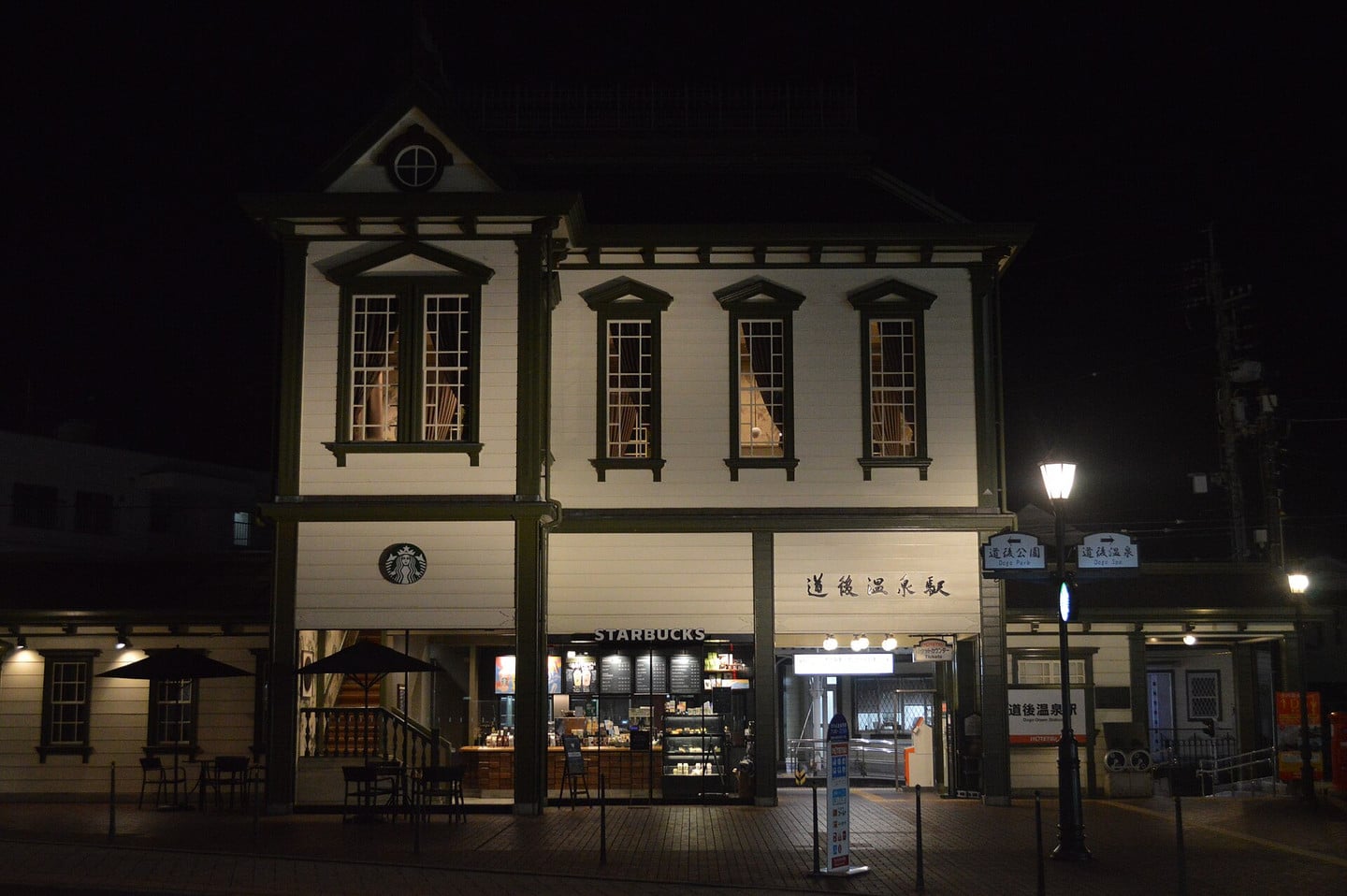
Dogo Onsen Station is a Meiji-style Western building, a replica of the old Meiji 44 (1911) station building rebuilt in Showa 61 (1986), with white walls, wooden windows and a pointed roof that stand out at the entrance of the onsen district; it is a frequently photographed landmark in itself, and the scene when the Botchan Train pulls in is a classic.
There is a Starbucks inside the station building, with an interior designed entirely in keeping with the building’s Meiji Western-style atmosphere; wooden seating, high ceilings and retro lighting make it completely different from an ordinary store, and it is one of the most popular photo spots in Dogo. There are not many seats and you often have to wait at peak times; opening hours and whether there are exclusive items follow the store’s announcements on the day.
Dogo HAIKARA Street: An Arcade Shopping Street for Strolling in a Yukata
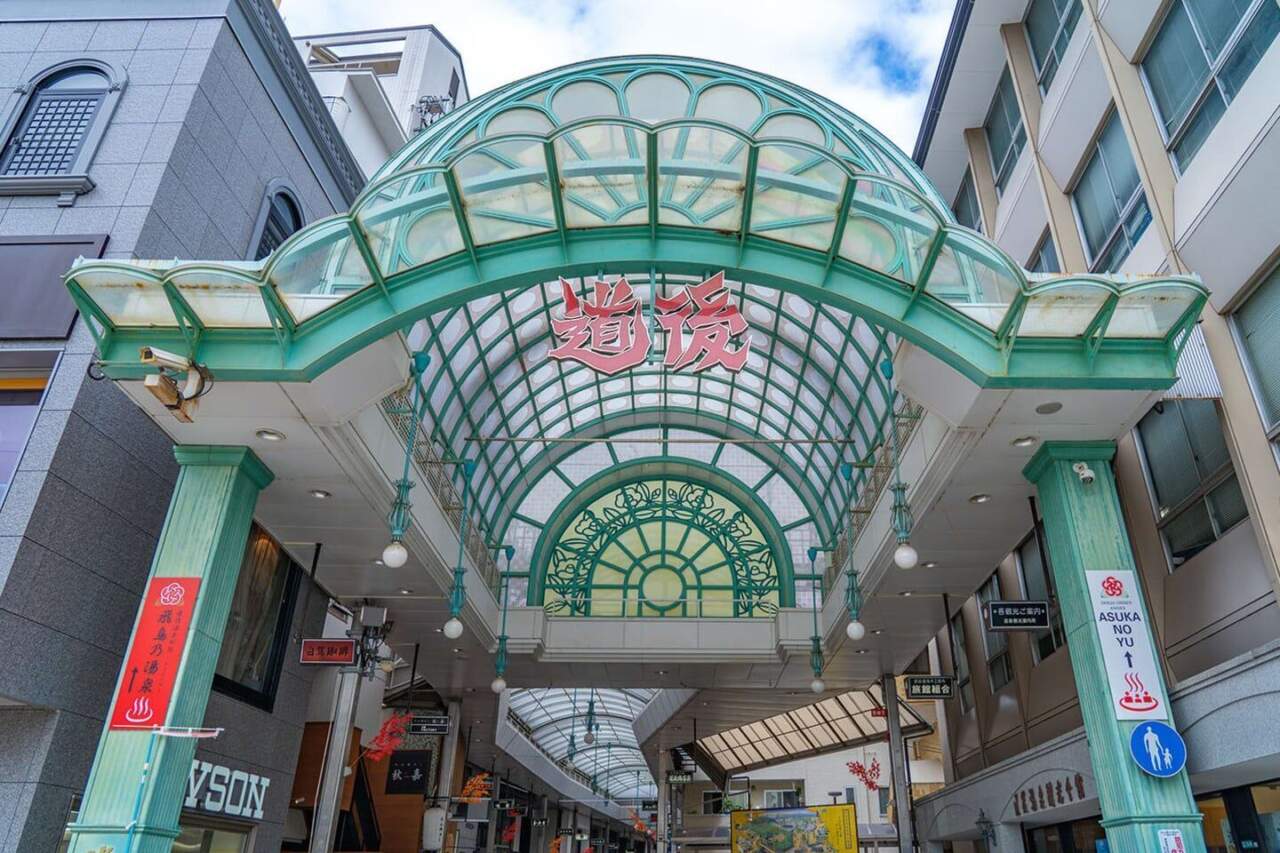
The L-shaped arcade shopping street running from the station to Honkan is called “Dogo HAIKARA Street.” It is not long, but it packs in souvenir shops, mikan specialty stores, snacks and restaurants, and its roof means rainy days do not matter.
The most common sight here is visitors in their inn’s yukata, wearing geta and eating as they walk, and that relaxed feeling is exactly what makes Dogo special. Botchan dango, Dogo pudding and freshly squeezed mikan juice are all on this street, and when you finish you connect right to Honkan, the natural backbone of a Dogo itinerary. Shops’ closing days differ and they close fairly early in the evening, so if you want to buy souvenirs, do not leave it until the end.
Sora-no-Sanpomichi: An Observation Deck Overlooking Honkan’s Night View
On the small hill south of Honkan is a path called “Sora-no-Sanpomichi” (Sky Promenade), reached by the slope or an elevator, with an observation deck and a free foot bath. It is one of the few places from which you can look down on the whole exterior of Dogo Onsen Honkan from above.
By day you can see Honkan’s complex roof structure and the Shinshaku-kaku cupola at the top clearly, and after dark, when it is lit, the wooden building glows in the darkness, the acknowledged best night-view angle in Dogo. Because relatively few people know about it, you hardly need to push through crowds even in peak season, and there are seats beside the foot bath where you can sit for a while. Evening lighting hours follow the city’s announcements.
Isaniwa Shrine: A Vermilion Hachiman-zukuri Shrine Up 135 Stone Steps
Walk east from Honkan and up 135 stone steps and you reach Isaniwa Shrine. It uses the rare “Hachiman-zukuri” architectural style and is counted as one of Japan’s three great Hachiman-zukuri; its vermilion shrine buildings were rebuilt by the Matsuyama domain lord in the Edo period and are designated a national Important Cultural Property, with a presence completely unlike the bustle of the onsen district.
The long straight flight of stone steps in front of the shrine is its most famous view; climbing it is a little breathless, but looking back gives a wide view over Dogo’s old streets and Matsuyama’s cityscape. The grounds also preserve more than twenty “sangaku” votive tablets from the Edo period to modern times, a uniquely Japanese custom of writing math problems on wooden boards and offering them to the gods, and their number is extremely rare nationwide; people who love history and architecture should allow another half hour.
Dogo Park (Yuzuki Castle Ruins): A Medieval Castle Site Next to the Onsen District
Directly across from Dogo Onsen Station is Dogo Park, formerly the residence “Yuzuki Castle” of the Kono clan, the medieval shugo of Iyo Province, now maintained as a national historic site and urban park, with its moat, earthen ramparts and reconstructed samurai residences preserved.
The park has a museum displaying excavated artifacts and reconstruction models of the castle, free to enter. The observation deck at the top of the hill looks toward Matsuyama Castle, and in spring it is a well-known cherry blossom spot in Matsuyama. A stroll around before or after a bath is just right, and no admission ticket is needed at all.
Enman-ji: A Small Temple Hung with Colorful Wish Charms
Enman-ji is tucked into an alley of the onsen district, a small temple with a tall white Yu-no-Daijizo statue beside the main hall. In recent years it has gone viral because the grounds are hung with colorful “omusubi-dama” wish charm balls, making it a photo hot spot in Dogo.
The colorful little balls photograph well in sunlight and are also often used as wish charms for forming good connections. The temple is not large and can be seen in ten-odd minutes, but because it sits in the lanes near Honkan, it fits well into a strolling route.
Mikan Food: Juice from a Tap and Dogo Pudding
Ehime is Japan’s citrus kingdom, and the shopping street in Dogo is full of mikan products. The most talked-about is the “mikan juice from a tap” experience: some shops have this device, and you can turn the tap yourself and fill a cup with fresh-flowing juice.
10FACTORY Dogo specializes in citrus, turning dozens of different varieties into juice, gelato and beer, good for tasting and comparing in one go. Dogo pudding in a retro milk bottle and the three-color Botchan dango are also staples of this street.
How Much Does a Dogo Onsen Visit Cost? Bath Tickets, the Three-Bath Pass and Experiences
Dogo’s cost structure is clear: the public bath fee is the main expense, but even the most expensive plan is hardly pricey. All amounts below should be checked against each facility’s announcements on the day.
Dogo Onsen Honkan: Ticket Types Are Split Finely, So Check Before You Buy
Honkan’s tickets are the most complicated of the three: the most basic “Kami-no-Yu downstairs” covers bathing only, ¥700 for adults; adding second-floor seating is ¥1,300; including Tama-no-Yu and second-floor seating is ¥2,000; including Tama-no-Yu and a third-floor private room is ¥2,500, with children always half price. The higher plans include a lounge and a viewing of the Yushinden, and prices rise step by step.
Lounge plans usually include a yukata, a towel and tea and sweets, with a time limit. If it is your first visit and you want the Meiji-era bathing atmosphere, we suggest choosing a plan with a lounge. Ticket contents and prices follow Honkan’s announcements on the day.
Three-Bath Pass: Bathe at Honkan, Asuka-no-Yu Spa and Tsubaki-no-Yu in One Go
Dogo sells the “Dogo Onsen Three-Facility Pass” that lets you bathe in all three public baths in turn, ¥1,440 for adults and ¥680 for children, about 20% cheaper than buying a ticket for each of the three separately, and the plan most often chosen by people who want the full public bath experience in one go. This ticket began as a limited-period offer from July 2024 and has been on sale as a regular, unlimited-period item since April 1, 2025.
Note that this ticket covers only basic bathing, not extras such as the lounge, a yukata or a Yushinden viewing; it is valid for two days in total, the day of purchase and the next day, not indefinitely. The three facilities’ closing days are not the same, so before buying, check whether all three are open that day. Sales locations, prices and scope of use should all follow the official announcements on the day.
Asuka-no-Yu Spa: Large Hall vs. Private Room Plans
Asuka-no-Yu Spa offers a bathing-only plan, a plan with the second-floor large hall, and a plan with a private room. The large hall is a shared tatami space, while the private room lets you relax in quiet; both provide a yukata and tea and sweets.
All plans include the first-floor baths (large bath and open-air bath); the large hall is ¥1,280 for adults and the private room is ¥1,690 for adults. Actual fees and plans follow the facility’s announcements on the day.
Tsubaki-no-Yu: The Same Spring Water for Small-Coin Prices
Tsubaki-no-Yu’s bathing fee is the lowest of the three, ¥500 for adults and ¥200 for children, yet you soak in the same Dogo spring water; the first-floor large bath at Asuka-no-Yu Spa is ¥610 for adults. Tsubaki-no-Yu has only a large bath, with no lounge or extra services, and you need to bring your own towel and toiletries or buy them separately.
For people on a limited budget, or who just want a quick soak in a gap in the schedule, this is the best-value choice. Shoe lockers and changing lockers may require cash, and opening hours and closing days follow the facility’s announcements on the day.
Yukata Strolls and the Onsen District Experience: Mostly Provided by Your Inn
Strolling in a yukata is the norm in Dogo, and most onsen inns provide yukata and geta for guests to use for free, with no need to rent separately. If you are not staying overnight, the lounge plans at Honkan and Asuka-no-Yu Spa also include a yukata, which you can change into inside.
There are also some paid experiences around the onsen district, such as painting Ehime’s specialty Tobe ware and making wagashi by hand, mostly requiring advance reservation and with minimum group sizes. For a two-day, one-night trip, we suggest saving the first evening for a yukata stroll and the karakuri clock show, and soaking in a public bath again the next morning, which makes for a more comfortable pace.
Food Budget: Sea Bream Rice, Botchan Dango and Mikan Products
Ehime’s most representative dish is sea bream rice, in two styles: the Uwajima style, where slices of raw sea bream are dipped in an egg-and-soy sauce and mixed with rice, and the Matsuyama style, where a whole sea bream is cooked together with the rice; prices range from a little over ¥1,000 to ¥3,000, just right for lunch.
As for snacks on the go, the three-color Botchan dango and the Dogo pudding in a retro milk bottle are both small-coin prices; mikan products cover a wide price range, from a cup of freshly squeezed juice to premium citrus gift boxes. If you save lunch for sea bream rice and leave dinner to your inn’s one-night-two-meals plan, a snack and drink budget of ¥3,000 to ¥5,000 per person per day is already quite generous.
What to Know Before Visiting Dogo Onsen: Where to Stay and Pre-Trip Reminders
Three last things: which area to stay in, what to know before bathing, and how to combine this with your Matsuyama city itinerary.

Dogo or Downtown Matsuyama? Where to Stay
To fully experience Dogo, staying in the onsen district is ideal. Most inns have their own large hot spring baths and provide a yukata so you can walk straight out for a stroll, and the atmosphere of the onsen district lit up at night is completely different from the day, something you will not see on a same-day round trip.
If your itinerary centers on Matsuyama Castle and downtown shopping, staying near Matsuyama City Station is more convenient, and the city tram to Dogo takes only about twenty-some minutes. Each area has its merits; for a two-day, one-night trip, most people choose one night in Dogo and one day in the city.
Before You Bathe: Check Current Status, Ticket Types and Bathing Etiquette
First, current status. Honkan went through a long preservation and repair project, and the range of operation was adjusted several times during that period; before setting out, be sure to check which baths, lounges and whether the Yushinden are open that day, so you do not plan your trip around old information.
Second, etiquette. All three are public baths, and before entering the water you must wash your body thoroughly at the washing area; towels must not be put into the bath, and photography and phone use are prohibited in the bathrooms. Some facilities have separate rules about tattoos, so if in doubt, we suggest asking the facility before you go so you are not turned away on the spot.
How Do You Bathe at Dogo Onsen? The Process for First-Timers
Dogo’s three public baths are all public bathhouses, and the process is simple: go to the facility and buy a ticket, enter the changing room, wash your body at the washing area, and then get into the bath; reservations are generally not needed for ordinary bathing (only Asuka-no-Yu Spa’s special baths, Honkan’s private rooms and the Yushinden tour require advance reservation, which can be made through the booking system on the Dogo Onsen official website, dogo.jp).
Dogo Onsen Opening Hours, Time Limits and Payment Methods
Every ticket has a time limit, including changing and resting: most Honkan plans are 60 minutes (90 minutes for the third-floor private room), Asuka-no-Yu Spa plans are all 90 minutes, and Tsubaki-no-Yu is within 1 hour. As for opening hours, Honkan and Asuka-no-Yu Spa open at 6:00 and Tsubaki-no-Yu at 6:30; for basic bathing, entry stops at 22:30 and closing is at 23:00; however, Honkan plans with a lounge end earlier, with the second-floor seating stopping at 21:00 and the third-floor private room at 20:30. Both Tsubaki-no-Yu and Asuka-no-Yu Spa accept cashless payment such as credit cards and transit IC cards, but the official site also reminds visitors that facilities such as shoe lockers and changing lockers may require cash, so it is best to carry some change.
Itinerary Pairing: Linking Matsuyama Castle with Uchiko and Uwajima
Dogo itself can be done in half a day to a day, and pairs well with Matsuyama Castle for a two-day, one-night trip: by day take the ropeway up to Matsuyama Castle to see the surviving original keep, and in the evening return to Dogo for a bath and a stroll. The two places are connected by city tram, so the travel burden is small.
If you have more time, you can extend south to Uchiko, which preserves Edo-period merchant streets, and Uwajima, famous for sea bream rice, or east by limited express to connect with Takamatsu and Kotohira-gu, stringing the north coast of Shikoku into one line. Matsuyama is the most convenient accommodation base on the west side of Shikoku, with relatively frequent rail and highway bus services.
Dogo Onsen FAQ
Q: Is Dogo Onsen Honkan still under renovation? Can you bathe there now?
Honkan went through years of preservation and repair work, remaining open partially during that time, and has returned to full operation now that the work is complete. However, the availability of the baths, lounges and Yushinden inside may still change with maintenance, so before you go, please follow the official announcements on the day.
Q: If I only bathe at one of the three public baths, which should I choose?
Choose Honkan for historic architecture and atmosphere; choose Asuka-no-Yu Spa for an open-air bath, newer facilities and a tatami lounge; and if your budget is limited or you only have half an hour left, Tsubaki-no-Yu is the most practical. All three use the same Dogo spring water, with nothing added and no heating.
Q: What is the difference between Kami-no-Yu and Tama-no-Yu?
Kami-no-Yu is Honkan’s general public bath: large, crowded and low-priced; Tama-no-Yu is smaller and more refined, and is usually sold bundled with a lounge plan in the second-floor large hall or third-floor private room, where you can change into a yukata and have tea after bathing. Both use the same spring water source.
Q: How long should I plan for Dogo Onsen?
Just bathing plus the shopping street takes half a day. If you want to bathe at all three public baths, walk Sora-no-Sanpomichi and Isaniwa Shrine, and watch a Botchan Karakuri Clock show, a whole day is more relaxed. Combined with Matsuyama Castle, two days and one night is the most common arrangement.
Q: Is Dogo Onsen Honkan really the model for Spirited Away?
Dogo Onsen Honkan has long been seen as one of the inspirations for the bathhouse in the film, and its wooden multi-story structure and night-lit atmosphere are indeed very close. However, officially no single building has ever been named as the sole model, and the more careful way to put it is “one of the inspirations.”
Q: Is the Botchan Train still running?
Yes. The Botchan Train was once suspended because of a shortage of drivers and resumed running in 2024, but it runs only on Saturdays, Sundays and national holidays, at ¥1,300 one way for adults. If you want to ride, check the day’s schedule and ticketing method first; if you turn up unannounced you may not get on.
Q: Do I need to bring my own towel to the public baths?
It depends on the ticket type. Plans with a lounge usually include a yukata and towel; with only a basic bath ticket, you mostly need to bring your own towel or buy or rent one on site. The bathrooms at Honkan and Asuka-no-Yu Spa have shampoo, conditioner, body soap and hair dryers; Tsubaki-no-Yu’s official site does not list free amenities, so bring your own or buy shampoo and conditioner in the building (¥50 each), and towels can also be rented on site (¥110). Details follow each facility’s announcements.