
Kotohiragu Shrine: The Head Shrine of the Sea Guardian Deity, a Once-in-a-Lifetime Visit
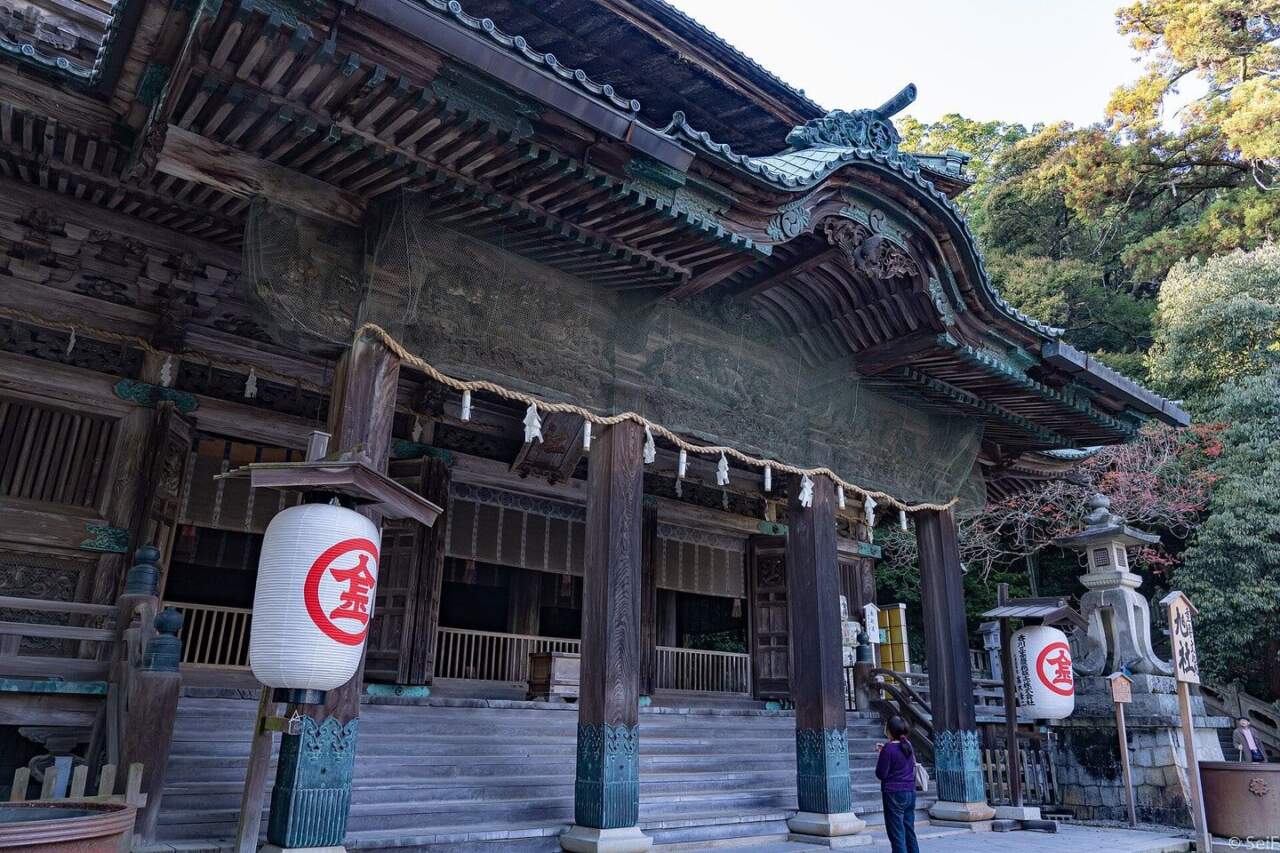
Kotohira-gu sits in Kotohira Town, Nakatado District, Kagawa Prefecture, halfway up Mount Zozu (Mount Kotohira), and locals fondly call it “Konpira-san.” It is the head shrine of nearly six hundred Kotohira and Konpira shrines across Japan. Its main deity, Omononushi-no-Kami, has long been revered as the guardian of maritime travel, and the faith runs especially deep among sailors and fishermen.
One reminder: its official name is “Kotohira-gu,” and “Konpira-san” is only a nickname, so using the official name in your itinerary or when asking directions avoids confusion. The best-known feature here is of course the long stone staircase: it takes 785 steps to reach the Main Shrine, and 1,368 if you push on to the Inner Shrine. Below we meet the four key points first, then cover access, costs and time planning.
The 785-Step Main Shrine: The Main Goal of Your Visit
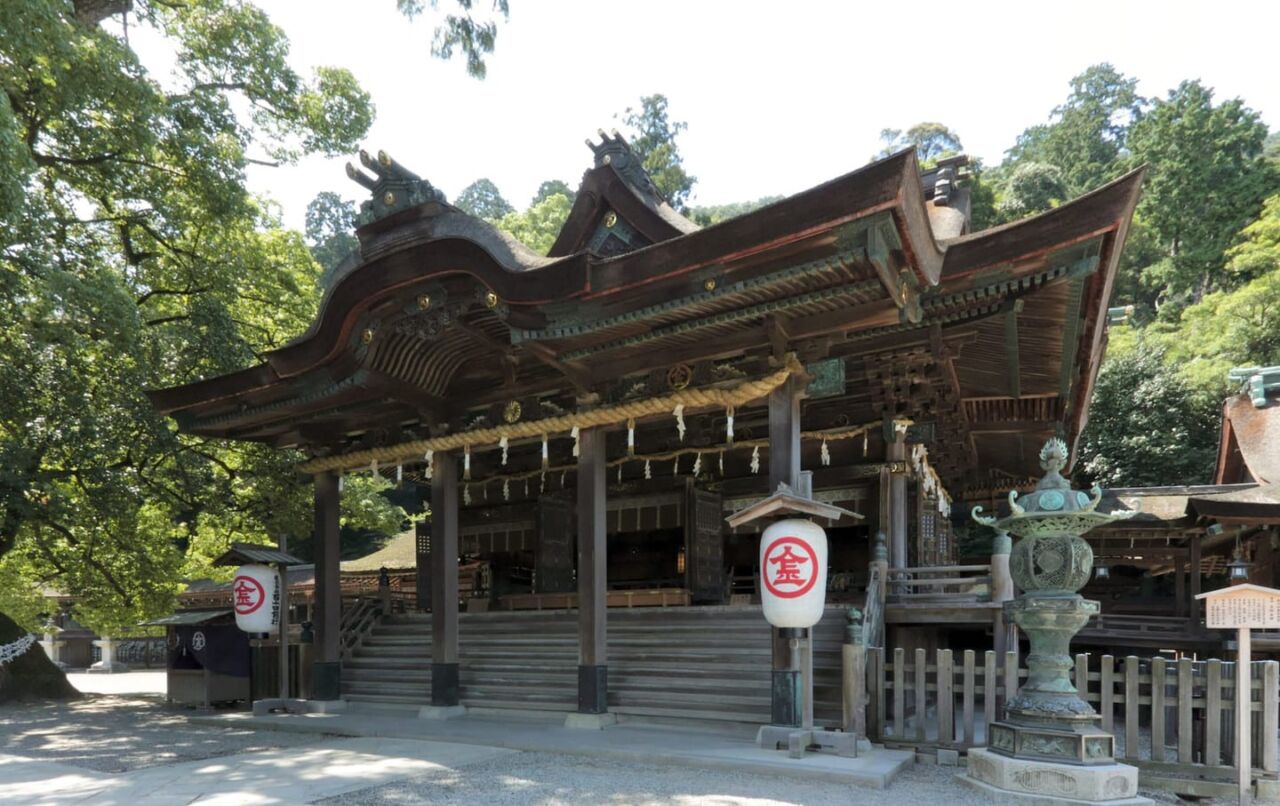
Counting from the start of the Omotesando approach, it is 785 steps to the Main Shrine, which takes most people about forty minutes to an hour, longer if you browse the shops along the approach. This is where the main deity Omononushi-no-Kami resides and the final stop for the vast majority of visitors.
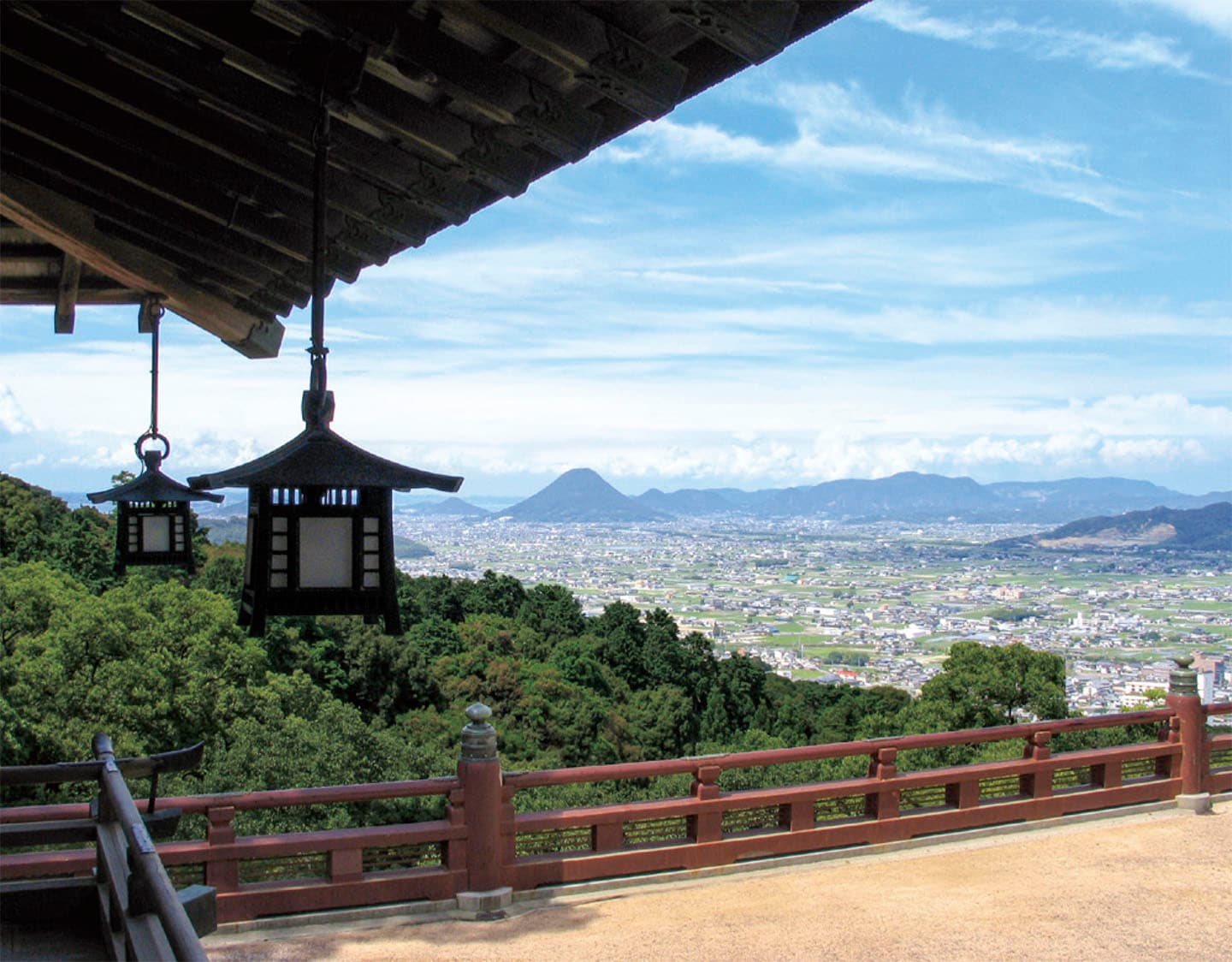
The observation deck beside the Main Shrine is another highlight. The view sweeps across the Sanuki Plain, and you can clearly see the perfectly rounded Mount Iino, nicknamed “Sanuki Fuji.” Feeling the breeze and taking in the view here after the climb is the moment many people feel makes the effort entirely worthwhile.

The 1,368-Step Inner Shrine (Izutama Shrine): The True Deepest Point
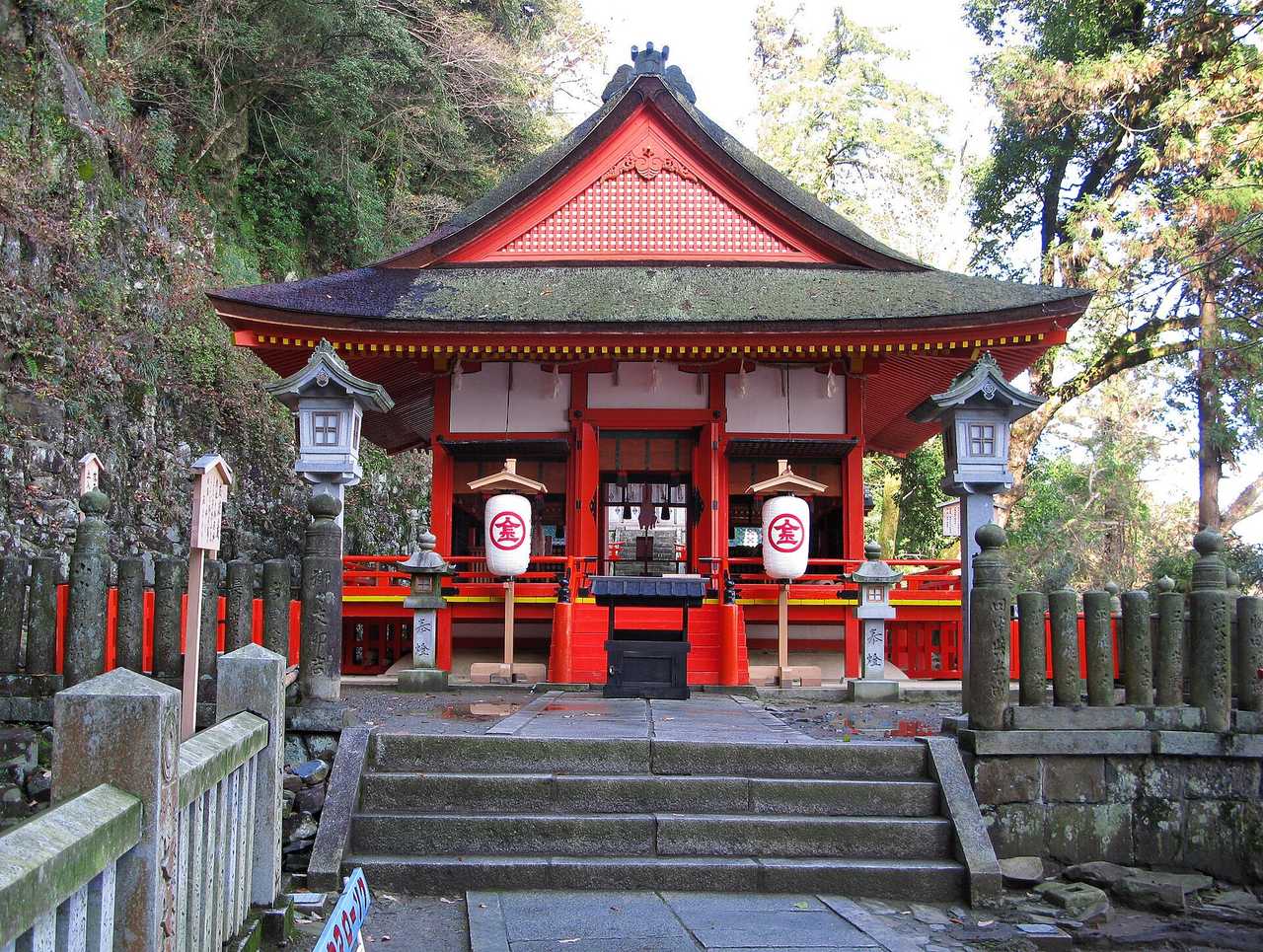
If you still have energy, continue up from the Main Shrine to the Inner Shrine, “Izutama Shrine,” for a total of 1,368 steps. This section feels completely different from the earlier approach: no shops, almost all shaded mountain path, so quiet that you hear only your footsteps and birdsong.
From the Main Shrine to the Inner Shrine takes about another thirty minutes one way. The rock wall behind the Inner Shrine is carved with reliefs of tengu and karasu-tengu, the most famous sight here, and the view looking down from in front of the shrine is more open than at the Main Shrine. Allow at least an hour or more for the round trip.
How Many Steps Are There at Kotohira-gu? How Long to Walk 785 Steps to the Main Shrine and 1,368 to the Inner Shrine
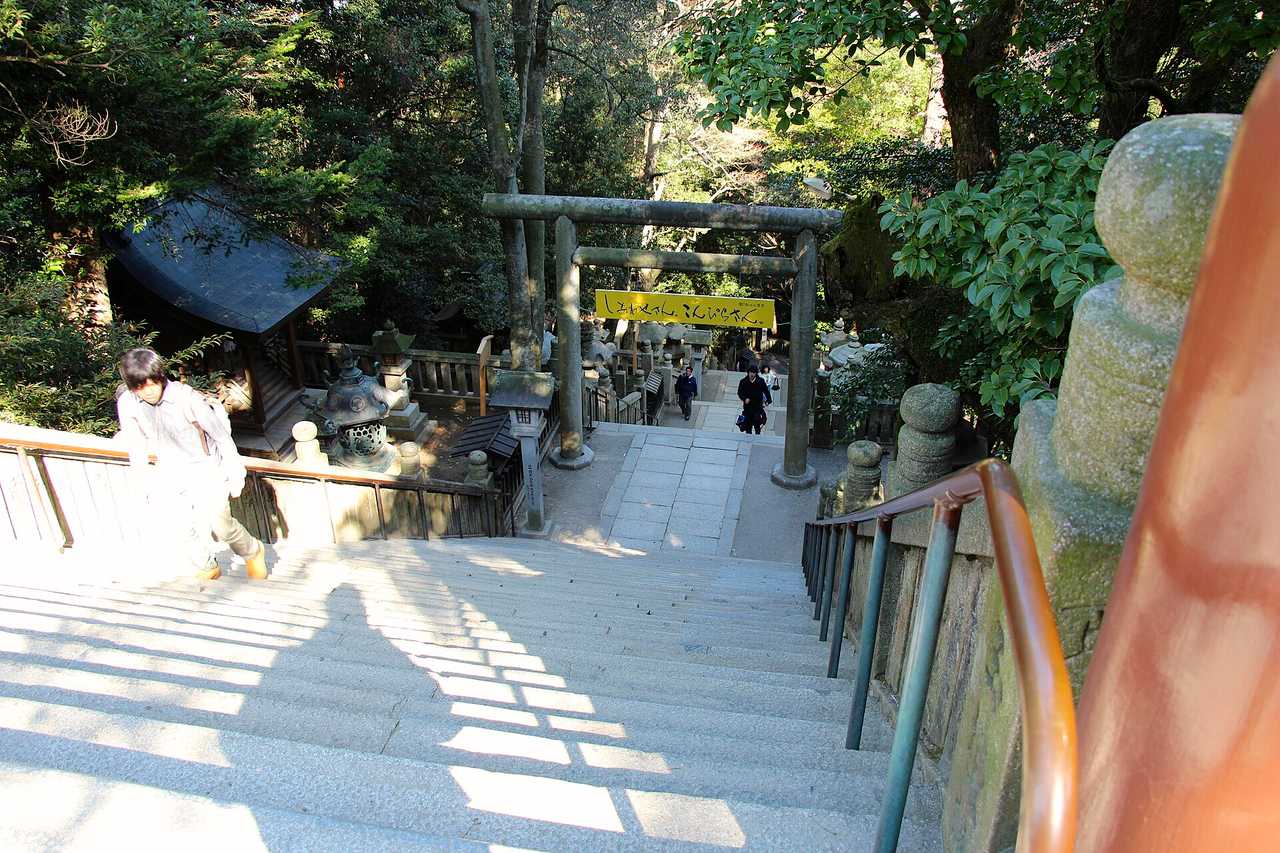
Kotohira-gu’s stone steps number 785 to the Main Shrine, and the official website says it takes about 1 hour one way from step 1 to the Main Shrine. Continuing to the Inner Shrine (Izutama Shrine) adds about 1.2 kilometers and 583 steps, for a cumulative 1,368 steps, usually about 30 more minutes depending on your pace. Along the way, the Daimon gate is at step 365 and Asahisha is at step 628, so those with limited stamina can set one of these as a turnaround point.
Omotesando: The Steps Are Not Just a Path but an Attraction
Walking from JR Kotohira Station or Kotoden Kotohira Station, the Omotesando approach before the steps begin is lined on both sides with souvenir shops, udon restaurants and candy shops, as lively as the staircase itself. Many shops lend bamboo walking sticks, free or for a few coins, to be returned on the way back.
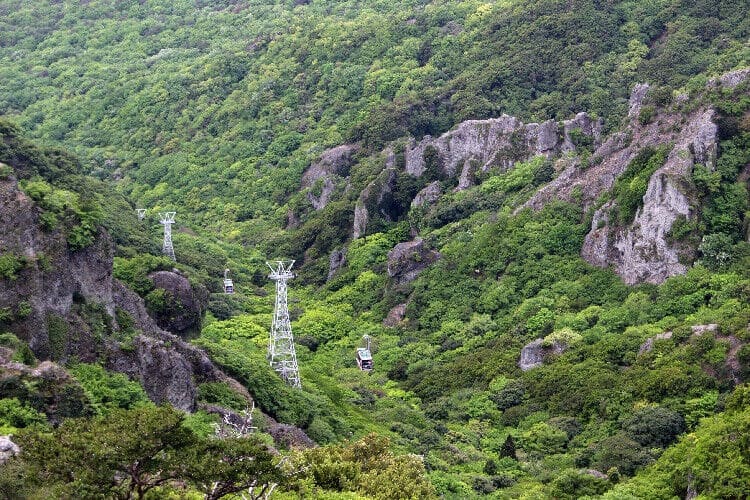
Note that there is currently no transport of any kind up the mountain, so preparing your shoes and stamina beforehand matters a lot.
Kotohira Town: More Than a Shrine, with Japan’s Oldest Kabuki Theater
Many people treat Kotohira-gu as a half-day trip, but Kotohira Town itself deserves more time. Within walking distance is Japan’s oldest surviving kabuki theater, the “Old Konpira Grand Theater (Kanamaruza),” where the Shikoku Konpira Kabuki Grand Theater is still staged every spring.
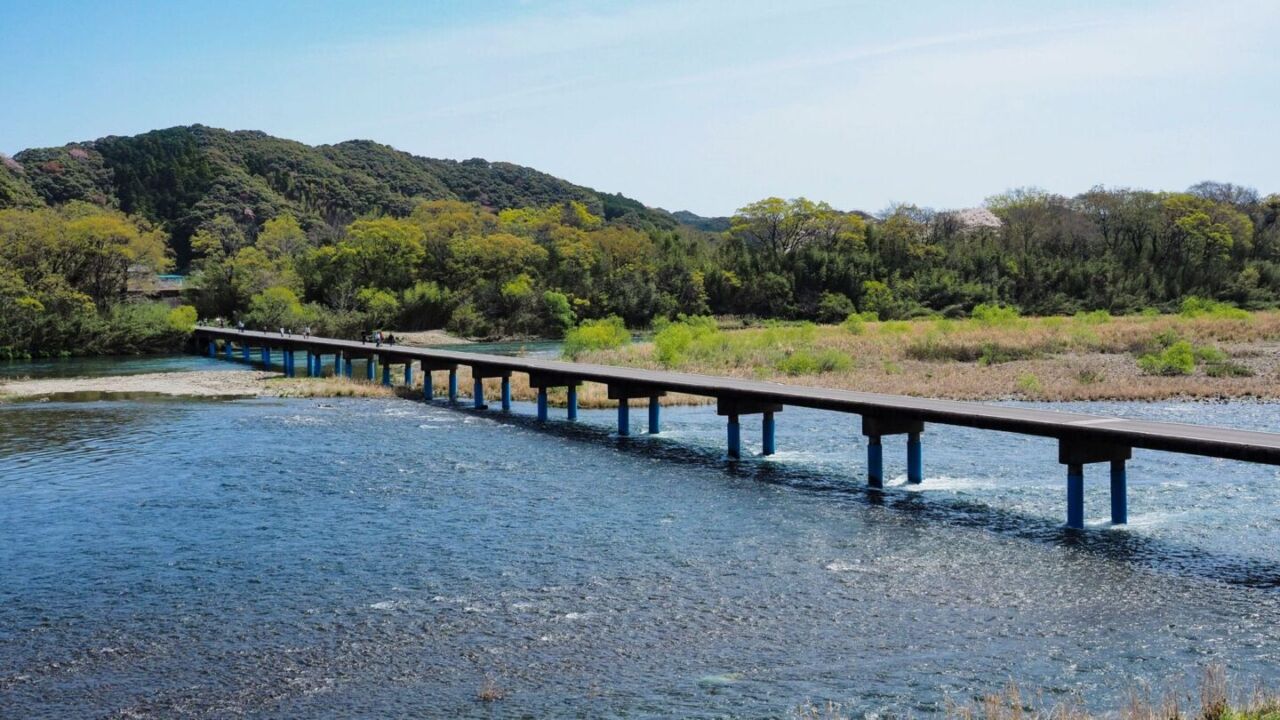
There is also the 27.6-meter high lantern, known as Japan’s tallest wooden lantern, and the roofed “Sayabashi” bridge with no piers. Linking the shrine with these sights, you can fill a whole day in Kotohira.
How to Get to Kotohira-gu: Kotoden, JR, Expressway Bus and Driving Compared
Kotohira has two stations, JR Kotohira Station and Kotoden Kotohira Station, which are close to each other and both within walking distance of the Omotesando approach. From Takamatsu, which to choose mainly depends on whether you want to buy a one-day pass.
Kotoden from Takamatsu: Direct to Kotohira with a One-Day Pass Available
Take the Kotoden Kotohira Line from Takamatsu-Chikko Station to the terminus, Kotoden Kotohira Station. The ride takes about an hour, and a one-way ticket costs a little over ¥700. It is only a few minutes’ walk to the Omotesando after you exit, the simplest route, and along the way it passes sights such as Ayagawa Station (Yadon Park).
If you plan to move around Takamatsu city the same day, buy the Kotoden one-day free pass directly. A round trip to Kotohira alone already comes close to the pass price, so a detour to Kawaramachi for shopping on the way back is effectively free. Prices and how they are sold follow the Kotoden’s announcements on the day.
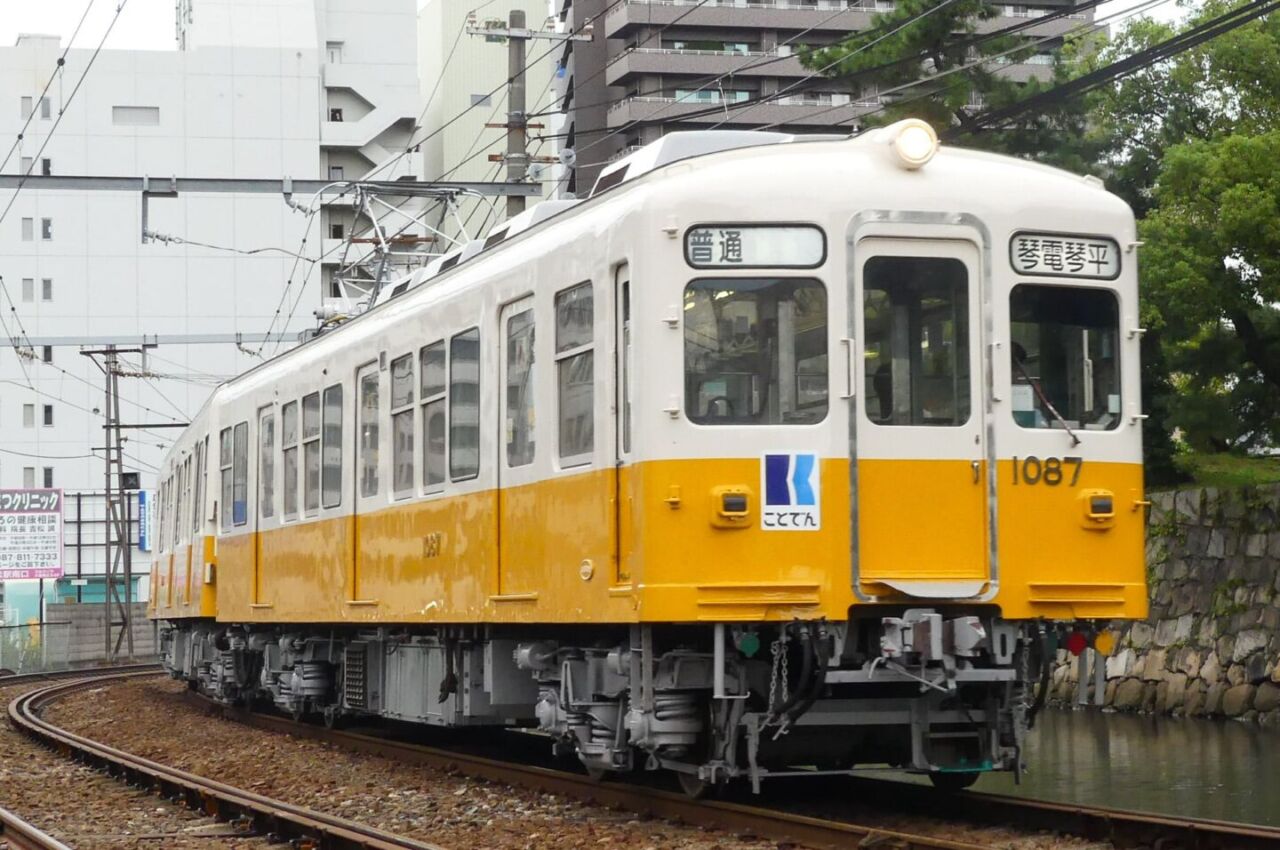
JR Dosan Line: Best Value for Rail Pass Holders
JR Kotohira Station is on the Dosan Line, reached from Takamatsu Station by rapid or limited express, with limited express trains taking less time. The station is a Taisho-era Western-style wooden building with real character, and the Omotesando entrance is about a fifteen minute walk from the exit.
For travelers with a JR Shikoku series pass or a JR West-related pass, JR is usually the best value and also makes it easy to connect directly from Okayama, Tokushima and Matsuyama. Few limited express trains stop here, so check the timetable before you go.
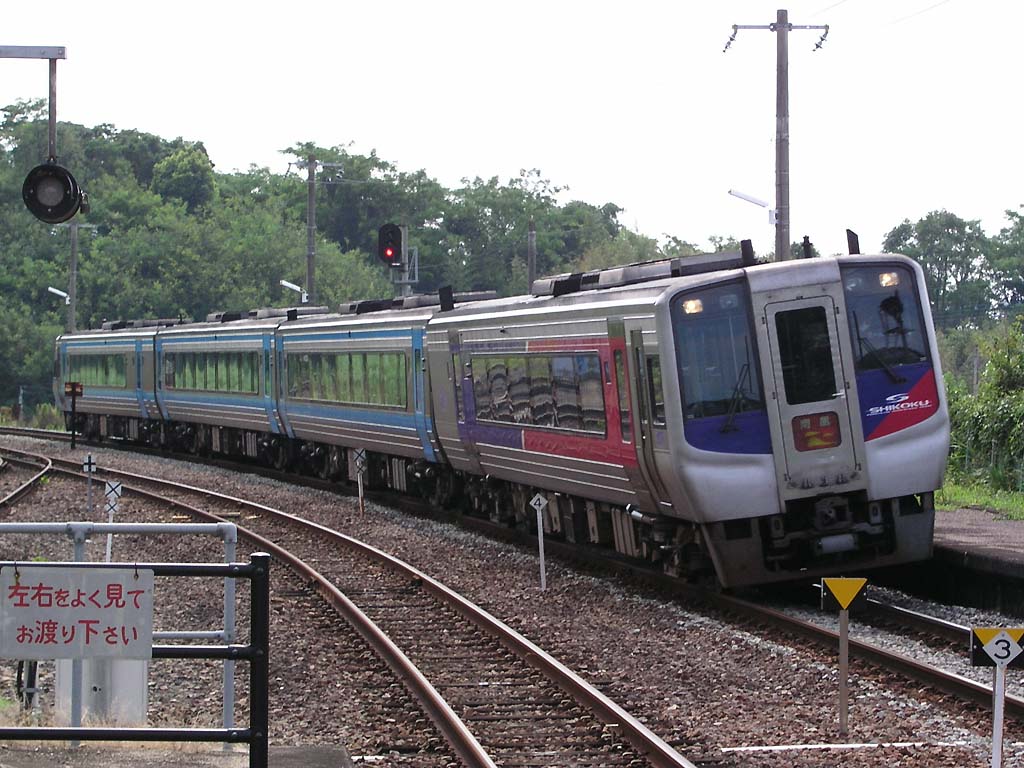
From Honshu: Change at Okayama or Take an Expressway Bus Directly
From Honshu, the most common route is to take a limited express from JR Okayama Station across the Seto Ohashi Bridge, then change at Tadotsu to the Dosan Line to Kotohira. Some limited express trains run straight to Kotohira with no change, which is especially convenient with a lot of luggage.
From Osaka and Kobe there are also expressway buses directly to Kotohira or Marugame. The ride is longer but the fare is much cheaper, suiting budget travelers or those who want to save a night’s lodging. After getting off you usually still need a short route bus or taxi ride to the Omotesando, and arrival time is easily affected by expressway congestion. Schedules, fares and whether reservations are needed follow each operator’s announcements on the day, and it is best to book early for Golden Week and long holidays.
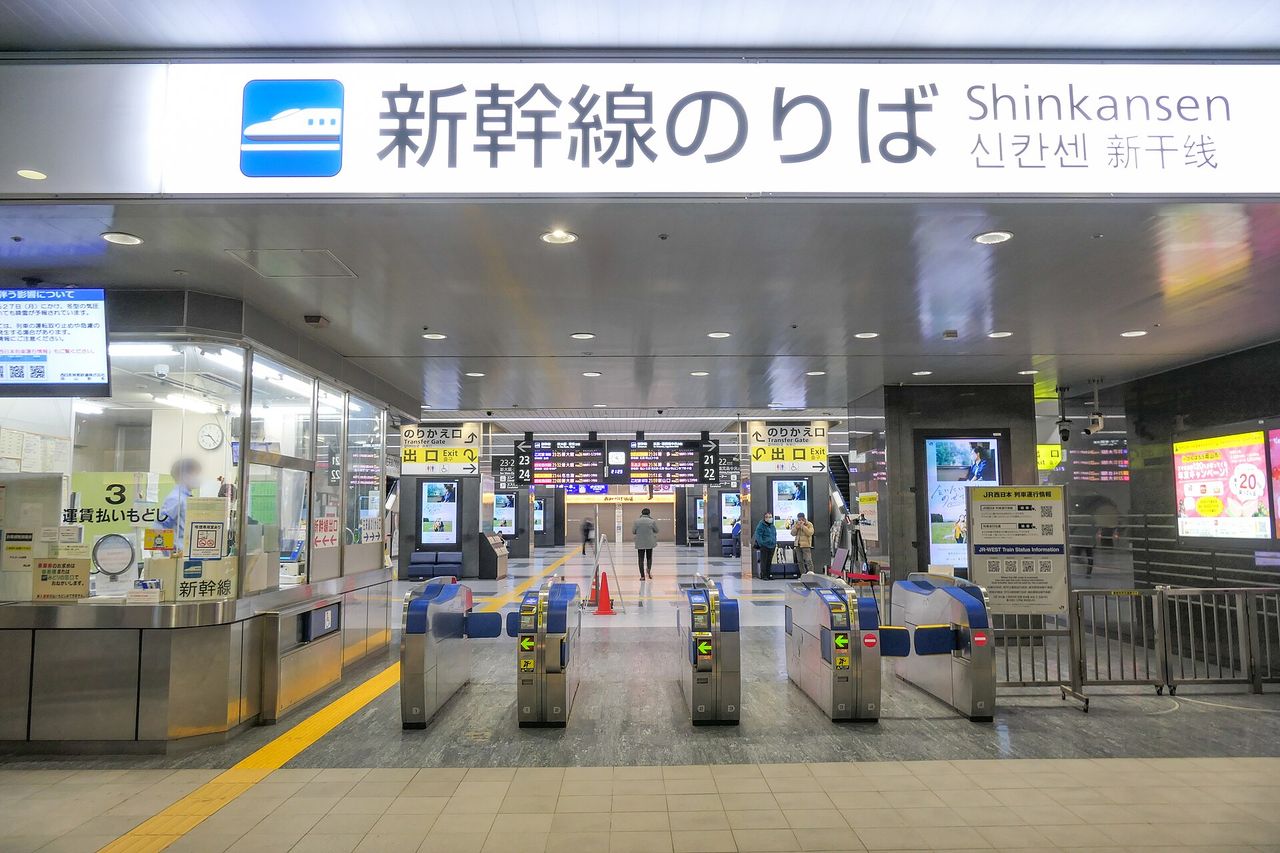
By Car: Most Parking Lots Are Around the Omotesando
Driving from Takamatsu city on the expressway takes about an hour, and the Zentsuji Interchange exit is not far away. Kotohira Town has several private parking lots, clustered near the Omotesando entrance, and they fill up on holidays and around New Year.
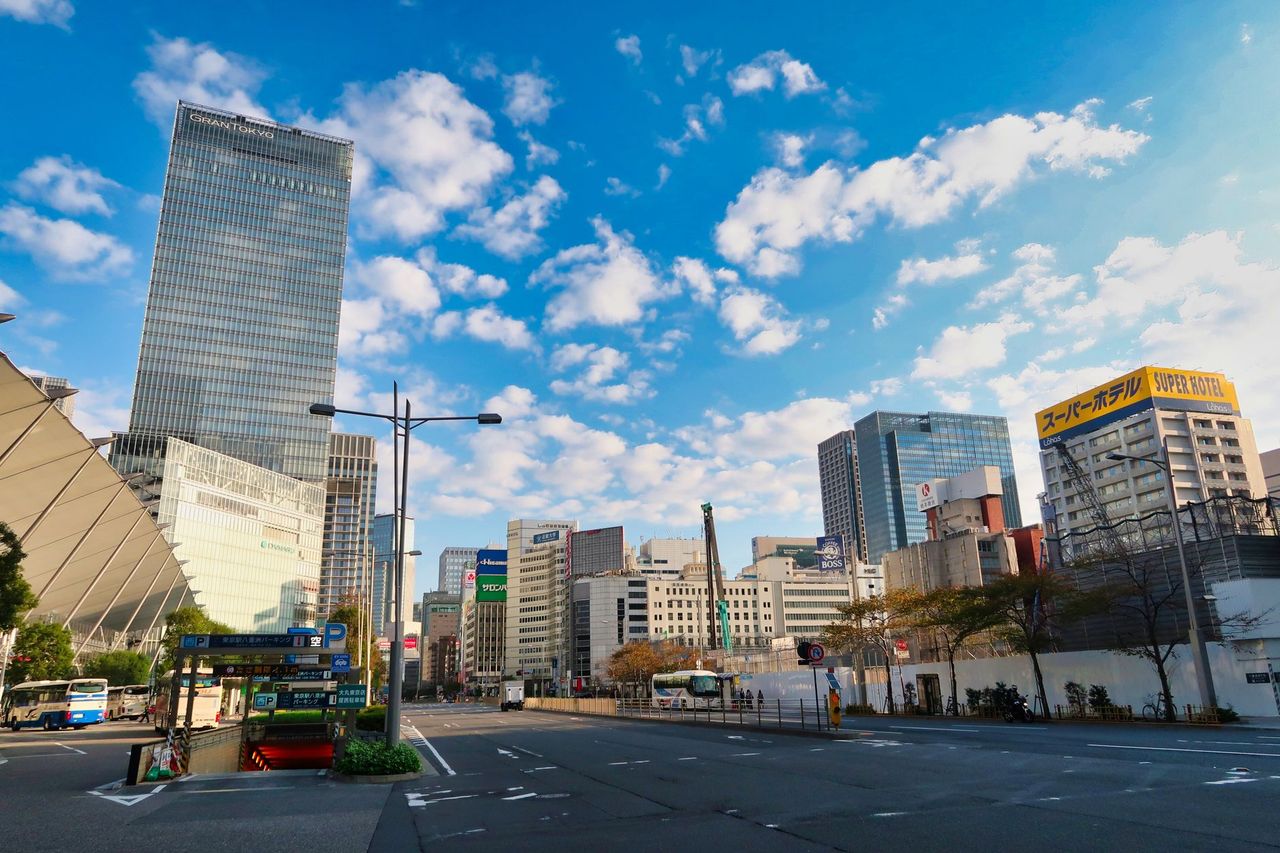
According to the official website, Kotohira-gu itself has no parking lot. Customers of “Kamitsubaki” in the grounds can use the Kamitsubaki parking lot at the 500th step. If you plan to see Kanamaruza, the high lantern and Sayabashi together, parking in a lot a bit farther away but centrally placed is actually more convenient and makes walking between sights smooth. Around New Year and long holidays there are more traffic controls in town, so arrive early or take public transport.
You Can Only Go Up on Foot: The Human-Powered Palanquin Has Ended
There is now no cable car and no shuttle bus up to Kotohira-gu, and the only way is to walk. The “Ishidan Kago” palanquin that carried people to the 365-step Daimon gate ended service in January 2020, though old information online often still mentions it.
If your stamina is limited or you are with older relatives, set your goal at the 365-step Daimon gate or the 628-step Asahisha, and rest at the cafe at step 431, rather than forcing yourself to reach the Main Shrine.


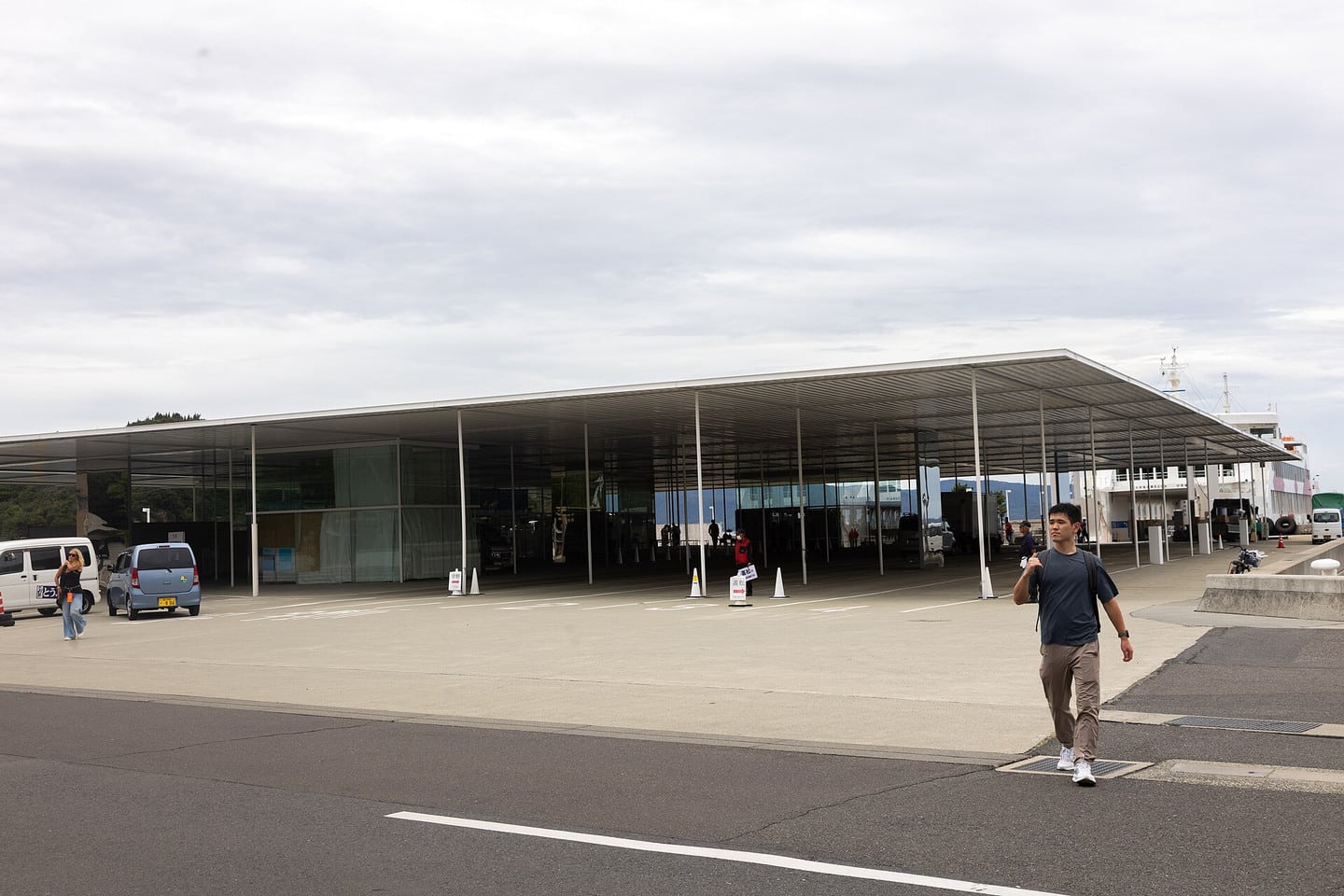
What Are the Must-See Stops on the Kotohira-gu Route? From Step 0 to Step 1,368
Here the stops are listed from the lowest step number to the highest, like a map you can follow on foot. After reading it you will know which step to set as your goal.
For those who want a Kotohira-gu map first, the official website has three resources you can save to your phone: “Visitor Guide: Main Shrine Edition” and “Visitor Guide: Inner Shrine Edition” introduce the shrine buildings along the approach in order, and there is also a PDF, “Kotohira-gu Area Transport Guide Map,” that marks the Omotesando steps, the back approach, parking lots and Kamitsubaki (if driving, the official advice is to set your navigation destination to JR Kotohira Station). Memorize the main line as the text map below and you won’t get lost:
- Start of the Omotesando steps (step 1) → from step 113, the steepest section “Ichinosaka”
- Step 365, Daimon gate: the official explanation is that from here it is sacred ground, and behind the gate is a roughly 150-meter stone path, “Sakura Baba”
- Along Sakura Baba: the Treasure House, the Takahashi Yuichi Museum, the Shoin (Omote Shoin) and the underground Shiseido cafe “Kamitsubaki”
- Step 628, Asahisha → Sakaki Gate → the final 133 steps, “Gozen Yondan-zaka”
- Step 785, the Main Shrine (251 meters above sea level); the official site says it takes about 1 hour one way from step 1 to the Main Shrine
- From the torii beside the observation deck on the right of the Main Shrine, continue about 1.2 kilometers and 583 steps → step 1,368, the Inner Shrine (Izutama Shrine, 421 meters above sea level)
Step 0, Omotesando: Borrow a Walking Stick Before You Start
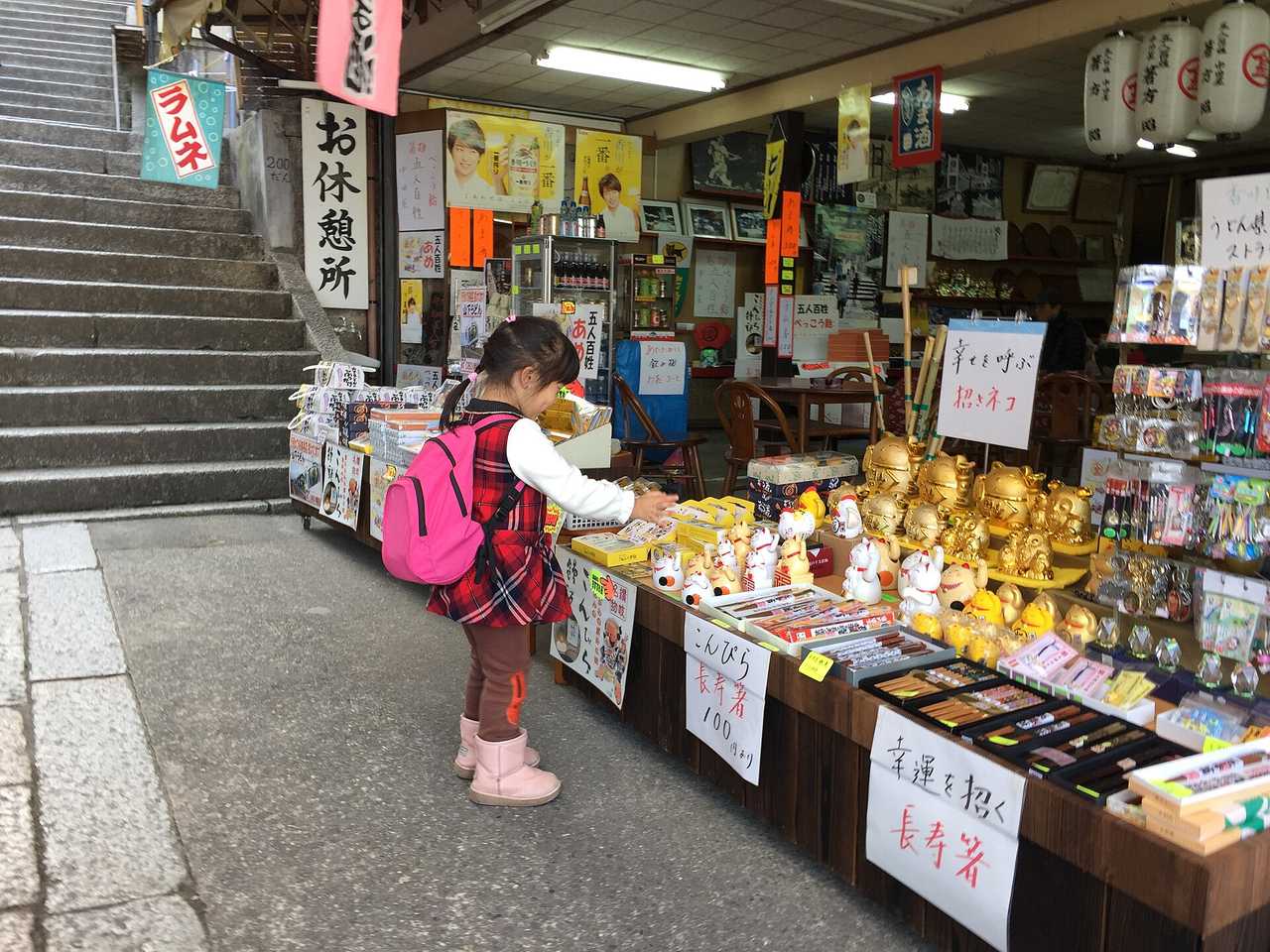
The steps begin at the end of the Omotesando shopping street. The shops on both sides sell udon, Japanese sweets, uchiwa fans and all kinds of souvenirs, and are also where you get a bamboo walking stick. Most lend them free or for a few coins, and when you return it you can pop in and buy something.
Strongly recommended: take one. Kotohira-gu’s steps vary in height and some sections are steep, and the load on your knees on the way down is actually greater than on the way up, so a stick makes it much easier. The steps are also very slippery in rain, so grip on your soles matters more than anything.
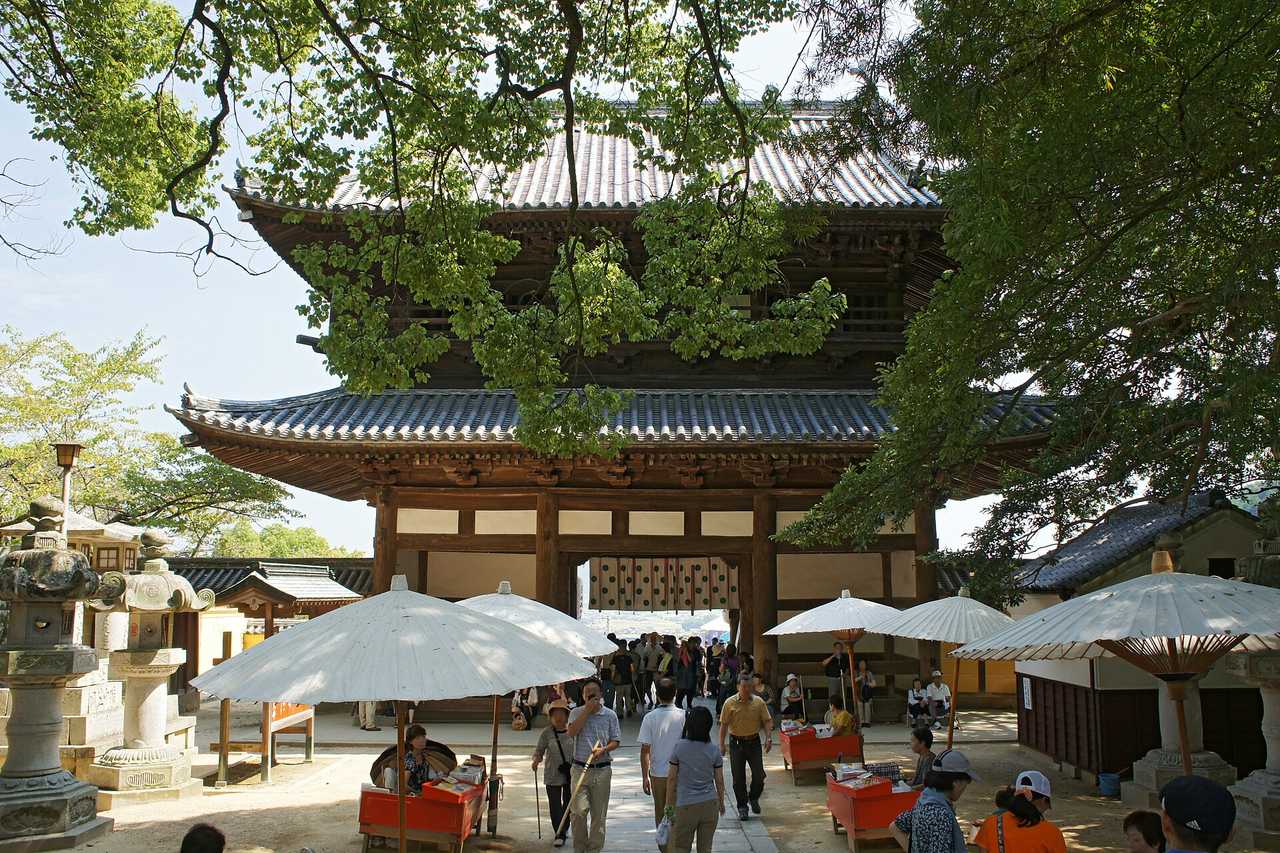
Step 365, Daimon Gate and the Five Families: Where You Truly Enter Sacred Ground
At step 365 you reach a two-story gate, the “Daimon,” and passing through it you officially enter the shrine grounds. Not far beyond it is one of Kotohira-gu’s most distinctive sights: stalls under five big white umbrellas, all selling the same yellow malt candy, “Kamiyo Ame.”
These five families are called the “Gonin Hyakusho” (Five Farmers) and are the only vendors licensed to trade within the grounds, said to descend from a hereditary grant for service to the shrine. The candy comes with a small mallet to break it yourself, has a yuzu aroma, and makes a memorable souvenir.
Step 431, Kamitsubaki: The Shiseido Cafe Halfway Up the Stairs
“Kamitsubaki” beside step 431 is a cafe run by Shiseido, placed right where stamina starts to fade, arguably the most cleverly sited shop on the whole approach. The name comes from the nearby camellia grove, and the interior is bright with greenery outside the floor-to-ceiling windows.
Its signature items are limited-edition parfaits and drinks, and it also serves light meals, with a formal restaurant on the basement floor. The contrast of sitting down to ice cream halfway up the stairs is what many people remember most. Opening hours and closing days follow the shop’s announcements on the day.
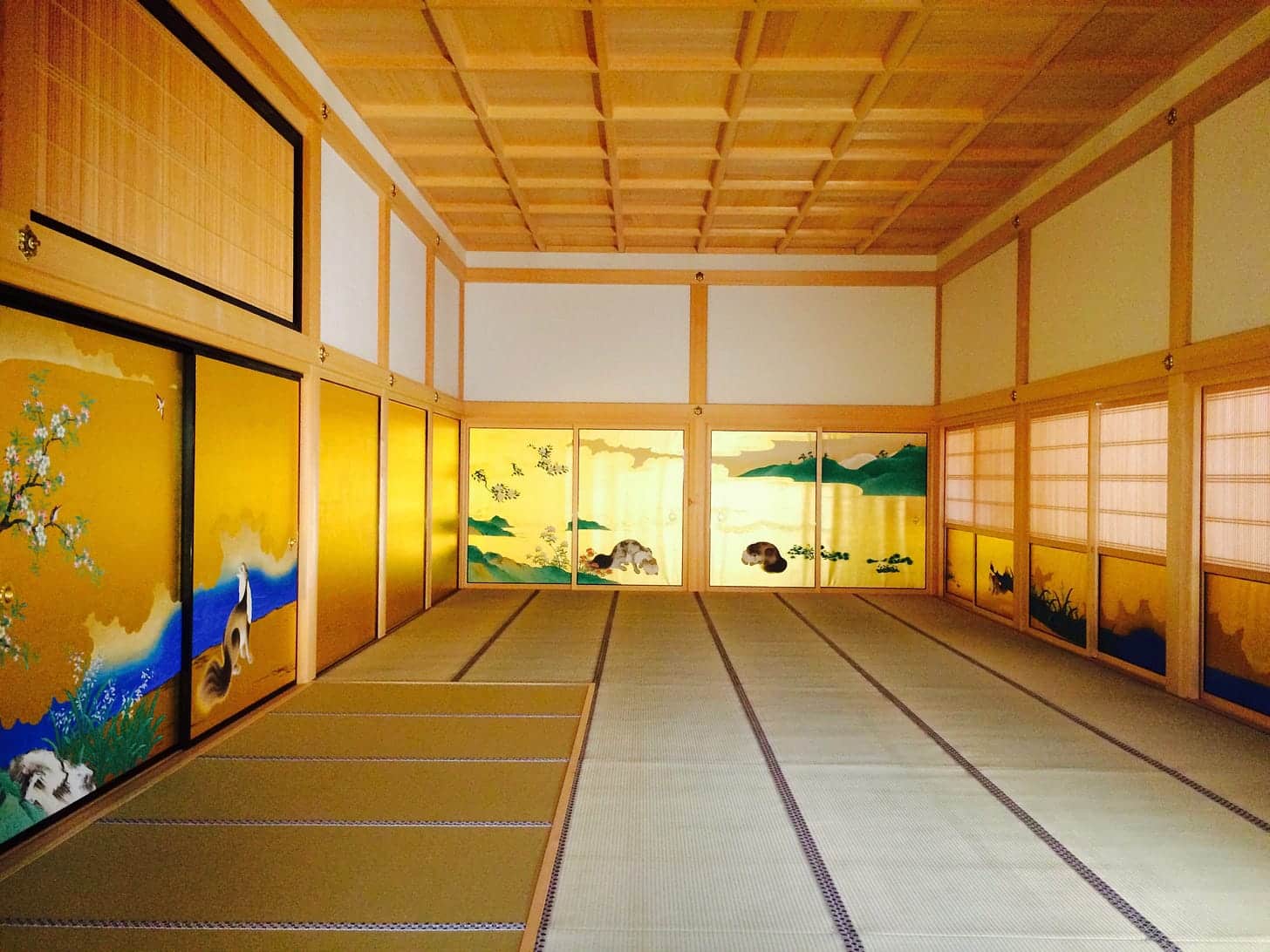
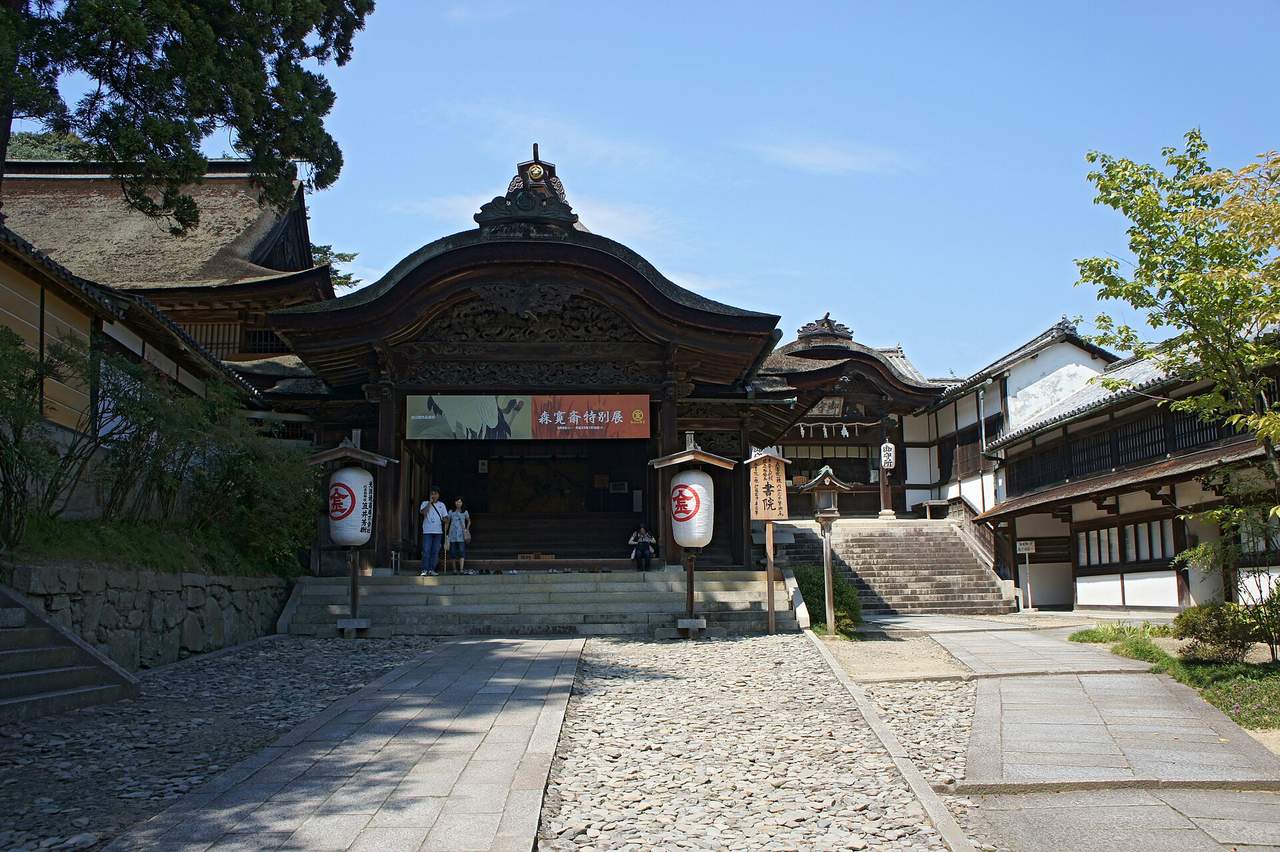
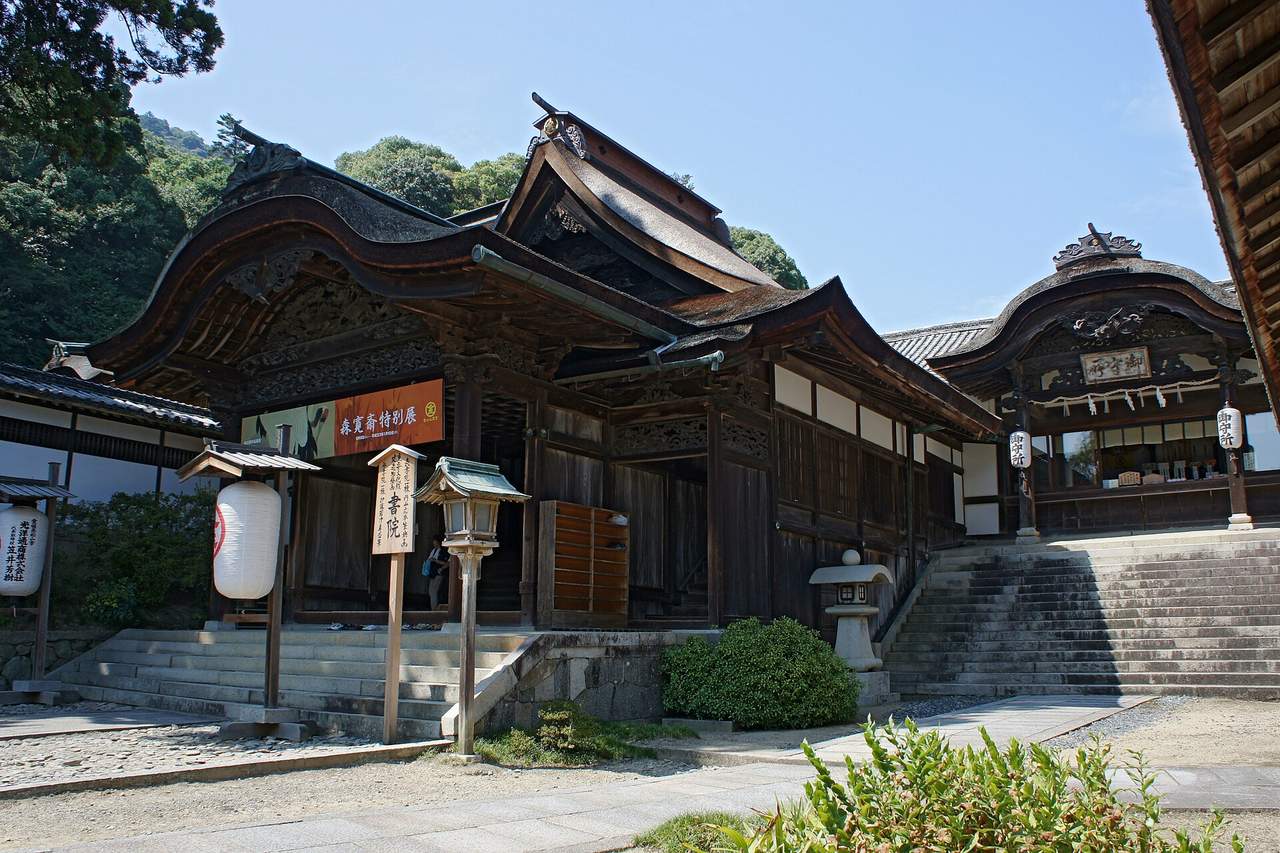
Step 477, Omote Shoin: Maruyama Okyo’s Sliding Door Paintings Are Here
The Omote Shoin at step 477 is a nationally designated Important Cultural Property, and its biggest draw is the sliding-door paintings by the Edo-period painter Maruyama Okyo. The tigers in the “Tiger Room,” with their subtle expressions, are especially famous, and Okyo is said never to have seen a real tiger and to have painted them from pelts.
The Shoin charges a separate admission and photography is not allowed inside. If you are interested in Japanese painting or architecture, it is the most worthwhile indoor space in the grounds, and if you are short on time you can skip it and keep climbing. Opening hours and admission follow the shrine’s announcements on the day.
Step 628, Asahisha: An Important Cultural Property So Grand It Is Often Mistaken for the Main Shrine
Asahisha at step 628 is a huge two-story wooden building, its eaves densely covered with carvings of flowers, birds and people, awe-inspiring, and designated a national Important Cultural Property. It is so grand that visitors have long mistaken it for the Main Shrine.
By tradition, on the way up you should pass Asahisha and continue to the Main Shrine, and pay your respects at Asahisha on the way back down. It is also a breather before the last steep slope, with the “Gozen Yondan-zaka” leading to the 785-step Main Shrine ahead.
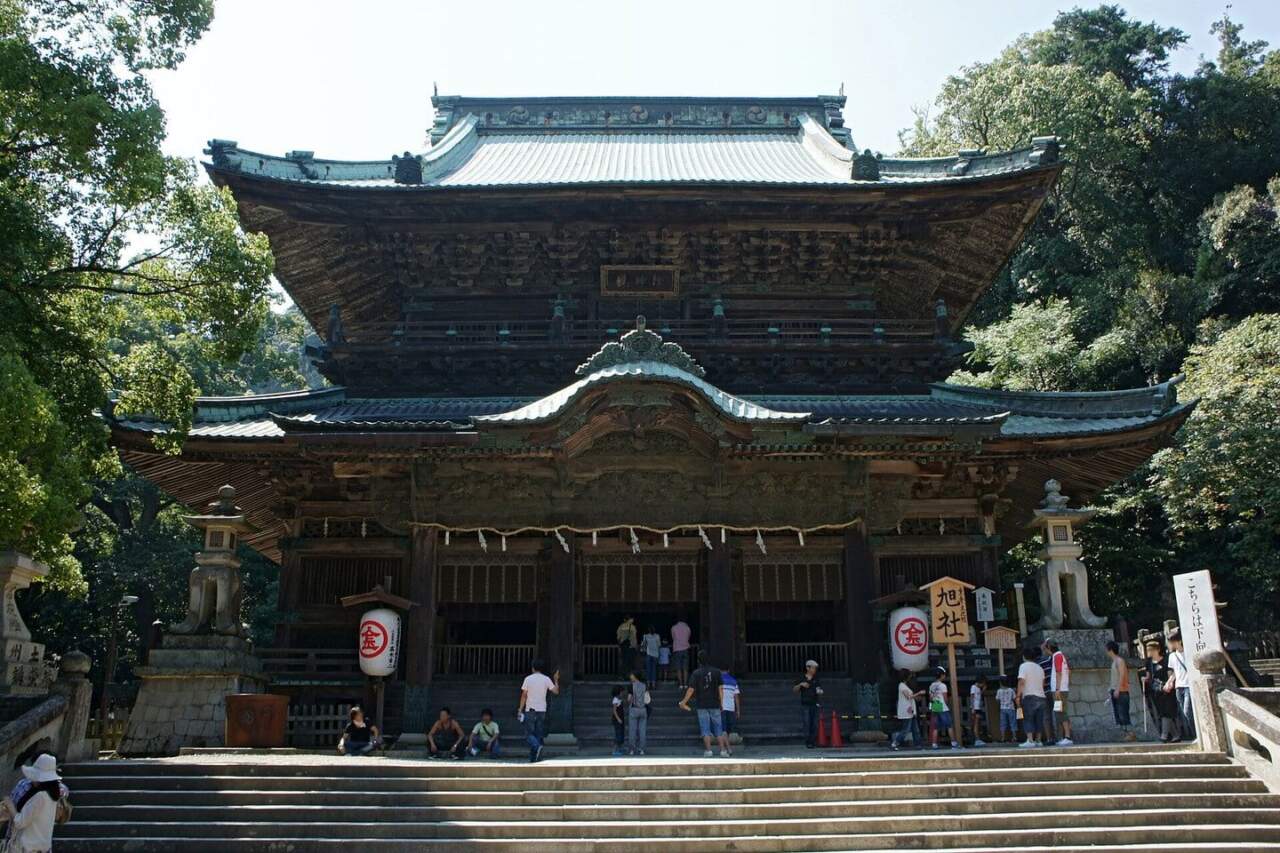
Step 785, the Main Shrine: The Sanuki Plain and Sanuki Fuji at a Glance
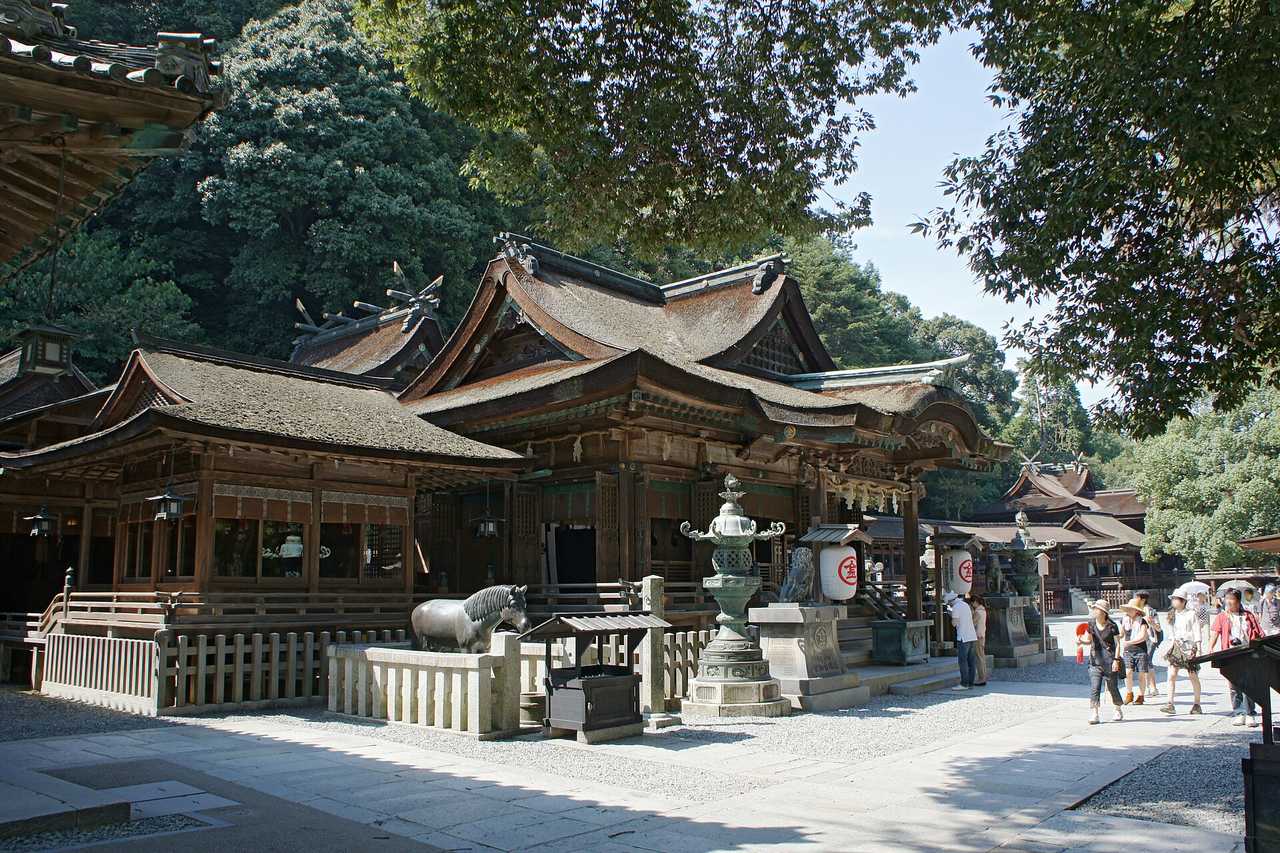
After the last four steep slopes you arrive at the Main Shrine at step 785. The shrine building stands on a raised platform with a thick shimenawa rope hung under the eaves, a solemn atmosphere. The main deity Omononushi-no-Kami is famous as the sea guardian, so offerings of anchors, rudders and ship models are common in the grounds.
The observation deck beside the Main Shrine has the best view of the whole walk. On a clear day you can see the whole Sanuki Plain and the rounded Mount Iino (Sanuki Fuji), and farther off toward the Seto Inland Sea. The amulet office is right next to it, and the omamori charms are all obtained here.
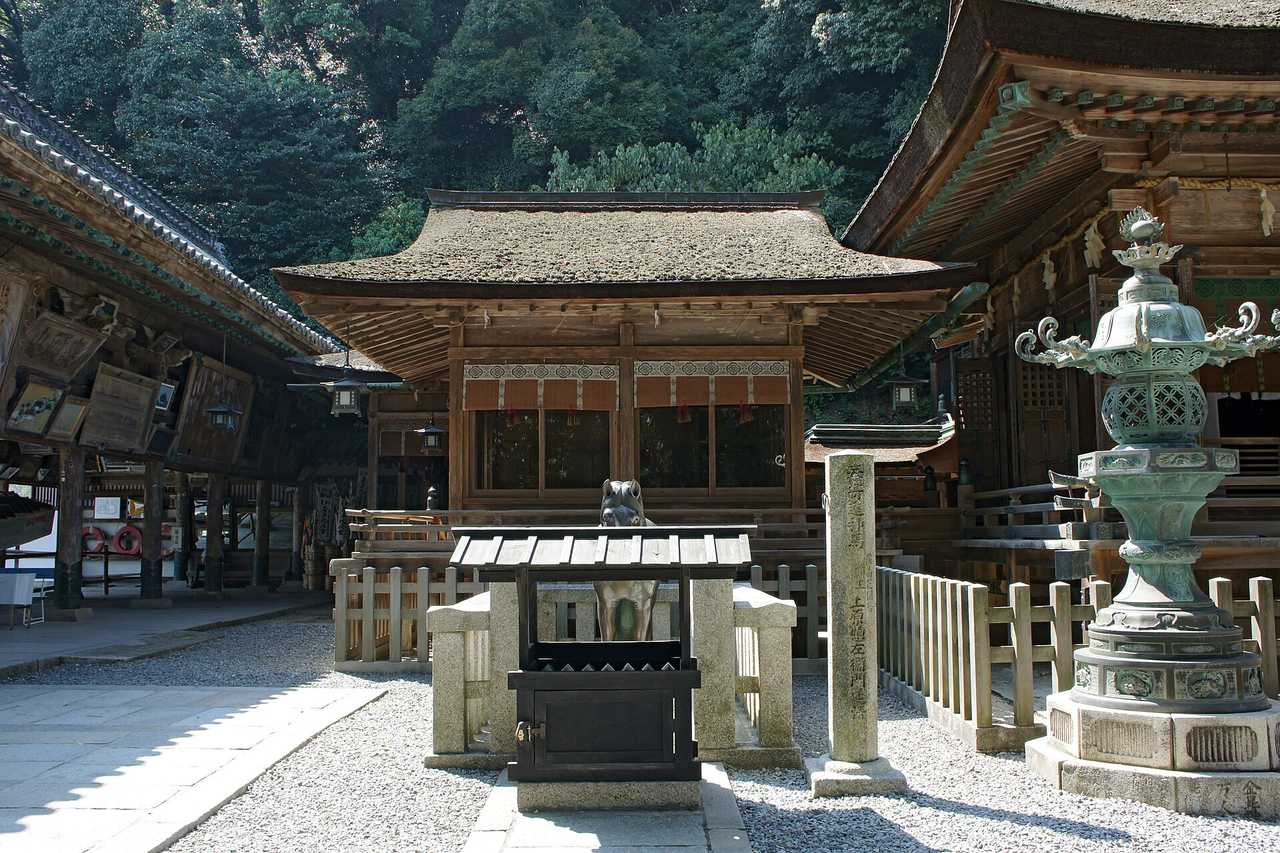
Beside the Main Shrine, Mihotsuhime Shrine: Another Often-Overlooked Shrine Building
Beside the Main Shrine is also Mihotsuhime Shrine, which enshrines Mihotsuhime-no-Kami, the consort of Omononushi-no-Kami. Most people hurry to take photos of the view and get omamori once they reach the Main Shrine and miss this entirely, but its building is quite exquisite and the atmosphere is much quieter than in front of the Main Shrine.
You pass it on the way from the Main Shrine toward the Inner Shrine, and it is easy to find. If you plan to continue to step 1,368, it makes a good place to catch your breath and drink water, and if you plan to turn back here, it is worth a look before heading down, costing only a few minutes. The surroundings are densely shaded, so a short stay here feels noticeably cooler in summer.
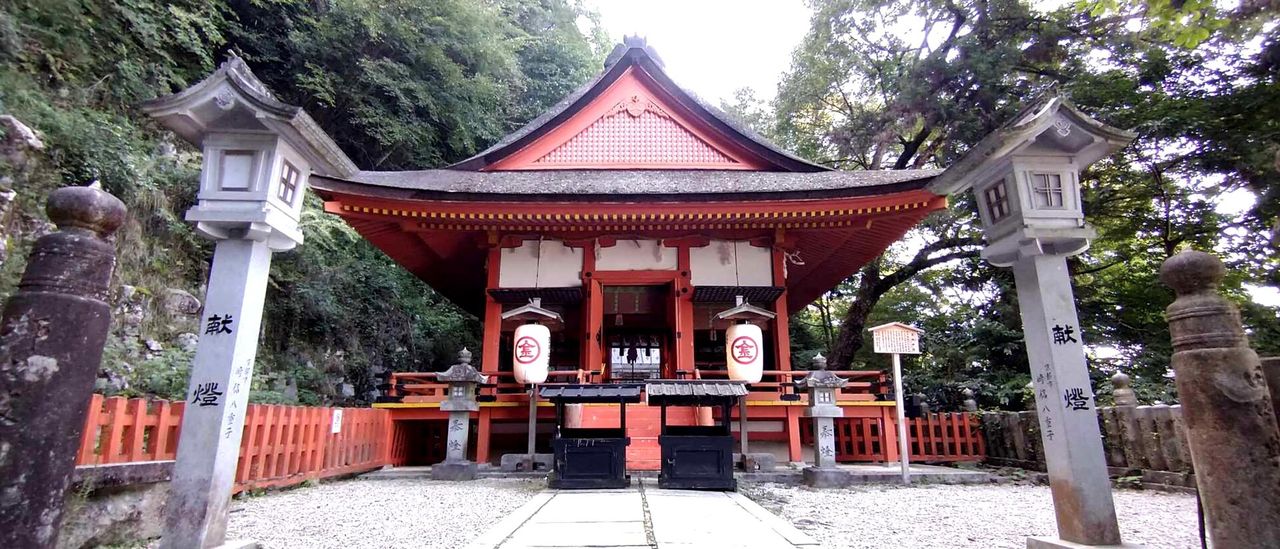
Step 1,368, the Inner Shrine (Izutama Shrine): Tengu Reliefs on the Rock Wall
About thirty minutes’ walk further up from the Main Shrine, through a forest path with almost no shops, you reach the 1,368-step Inner Shrine, Izutama Shrine. This section is not the steepest, but it is long and the surface is less even, so the importance of good shoes becomes fully apparent.
The Inner Shrine’s most famous sight is the huge rock wall beside the shrine building, carved with reliefs of tengu and karasu-tengu. Looking down from in front of the shrine, the view is more open than at the Main Shrine. It is also the quietest place on the mountain, with clearly far fewer people.
The Konpira Dog on the Approach: The Edo-Period Dog Who Prayed for His Owner
Along the approach you will see a bronze statue of a dog carrying a small bag, called the “Konpira Inu.” In the Edo period, the journey to Kotohira-gu was long, and people who could not go in person would hang offering money and feed on a dog and entrust it to walk to Kotohira with other pilgrims.
Travelers along the way would take turns looking after it, feeding it and taking it along, until someone finally delivered it to the shrine to complete the prayer on its owner’s behalf. This gentle legend is Kotohira-gu’s most beloved story and has given rise to hugely popular Konpira dog omamori and all kinds of related goods.
Old Konpira Grand Theater (Kanamaruza): Japan’s Oldest Surviving Kabuki Theater
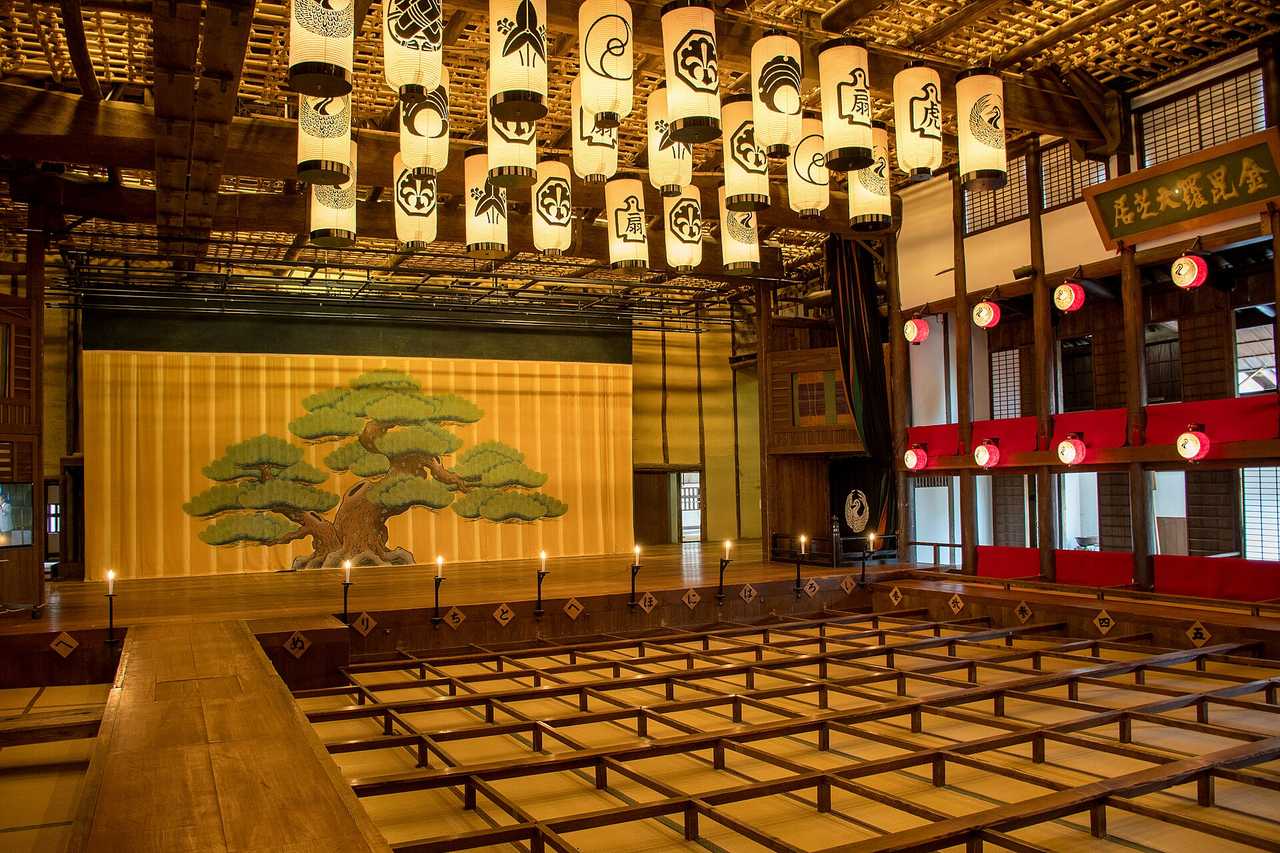
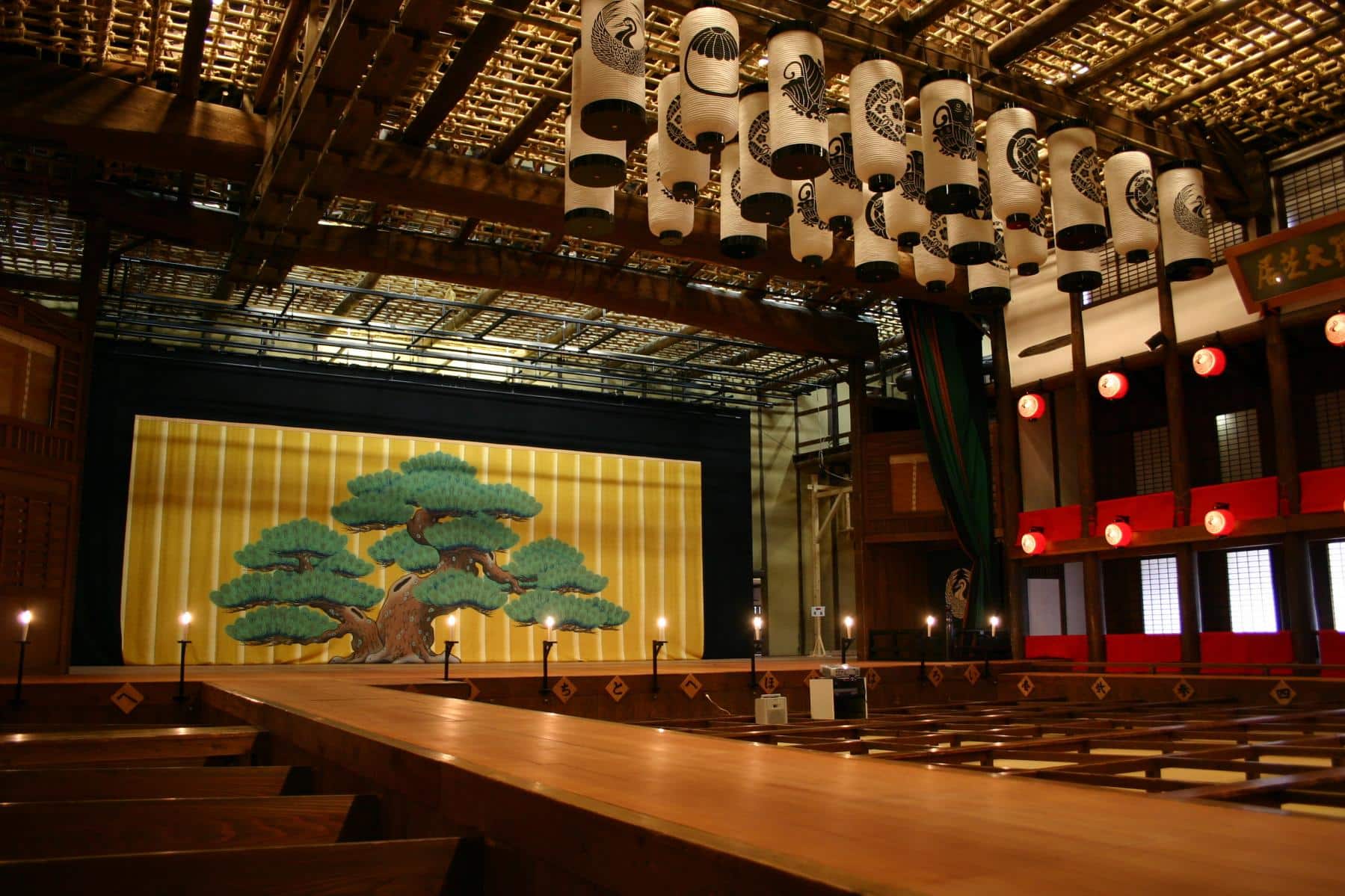
Kanamaruza was built around 1835 and is Japan’s oldest surviving kabuki theater, designated a national Important Cultural Property. Outside performance periods you can buy a ticket to go inside and freely walk onto the stage, the hanamichi walkway and even the underground mechanism space.
The most interesting parts are the stage mechanisms run entirely by human power, the revolving stage “mawari-butai” and the lift “seri,” and guides explain how people pushed them from below in those days. Every spring the Shikoku Konpira Kabuki Grand Theater is still held here.
High Lantern and Sayabashi: Two Easily Missed Cultural Properties in Kotohira
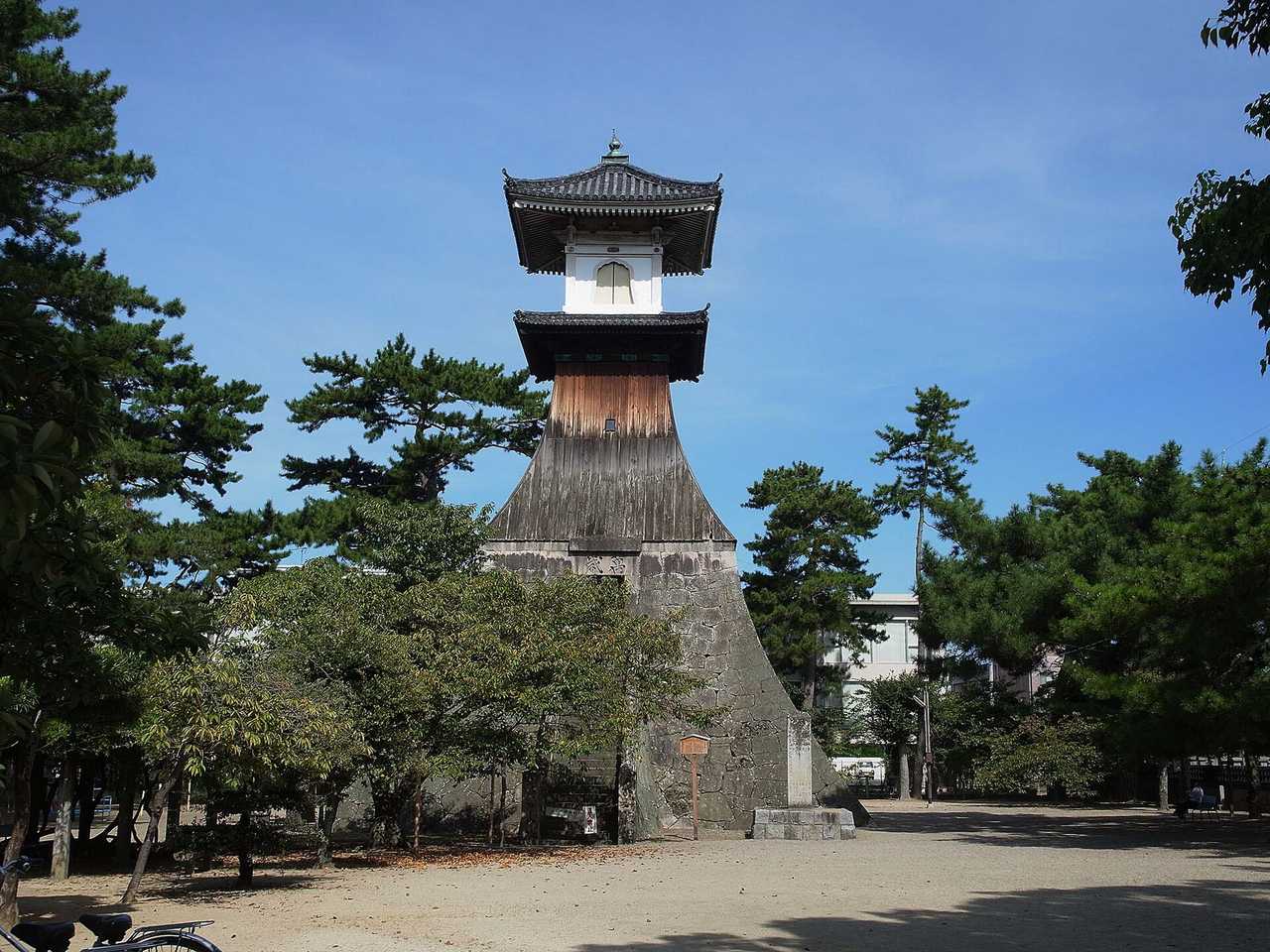
The high lantern is near Kotoden Kotohira Station and stands 27.6 meters tall, Japan’s tallest wooden lantern, taking several years to complete in the late Edo period. It was originally meant to let ships sailing far offshore of Marugame see the direction of Kotohira-gu, and it is still lit today.
The other is “Sayabashi,” a bridge over the Kanakura River with a roof but no piers beneath, a rare design that is also designated a cultural property. It is normally closed to passage and mainly used during festivals, but taking photos from the bank is no problem.
Kinryo no Sato and Nakano Udon School: Two Experiences on the Approach
“Kinryo no Sato” on the Omotesando is a museum set up by a long-established local sake brewery, displaying Edo-period brewing tools and the brewing process. The free area alone is well worth seeing, and you can taste and buy sake, with the big camphor tree at the entrance as a landmark.
Another popular experience is the Nakano Udon School, where you knead, stomp and cut the noodles to make your own bowl of Sanuki udon and receive a completion certificate, especially suited to families and groups. Reservations are needed in advance, and details and prices follow the shop’s announcements.
How Much Does Visiting Kotohira-gu Cost? Admission, Omamori and Experience Fees
Visiting Kotohira-gu itself is free, and the main costs come from a few facilities that charge separately, omamori charms and nearby experiences. Please treat all amounts below as subject to each facility’s announcements on the day.
Visiting the Grounds Is Free: Check Opening Hours First
Climbing the steps and visiting the Main Shrine and Inner Shrine are free, which is Kotohira-gu’s best value. But the grounds and facilities have their own opening times, and the hours for the grounds at the Daimon gate, the Main Shrine’s door opening hours and the amulet office hours all differ.
According to the official website, the Daimon gate is open 6:00 to 18:00, the Main Shrine door 7:00 to 17:00, the amulet office 8:30 to 17:00 and the Inner Shrine door 9:00 to 16:30, so those who want omamori shouldn’t climb too late. Daylight is short in winter, so set out in the morning, and actual times follow official announcements.

(行程自由搭配)-Klook.jpg)
Omote Shoin Admission: Seeing Maruyama Okyo Takes a Separate Ticket
The Omote Shoin at step 477 charges separately, ¥800 for adults, and there is also a three-venue combined ticket for the Omote Shoin, Takahashi Yuichi Museum and Treasure House at ¥1,500. Inside you can see Maruyama Okyo’s sliding-door paintings and the shoin architecture itself, and photography is prohibited throughout.
The shrine also has exhibition facilities such as the Treasure House, with fees and opening status independent of each other and not necessarily open all year, so check before you go. If time is short and you have no special interest in Japanese painting and architecture, you can actually skip this and save your energy and time for the steps up to the Main Shrine, and dropping in on the way back if you have energy to spare is also common.
The Happiness Golden Omamori and the Konpira Dog: The Two Most Popular Charms
The amulet office beside the Main Shrine is where you get omamori. The most famous is the yellow “Happiness Golden Omamori,” derived from the shrine’s yellow image and exclusive to the shrine office. Another popular one is the omamori and bell shaped like the Konpira dog, whose round shape is much loved.
There are also charms for maritime safety and traffic safety, reflecting Omononushi-no-Kami’s domain. Charms can only be obtained at the Main Shrine at step 785, and the shops at the foot of the mountain sell souvenirs rather than official omamori, so don’t confuse the two.
Kanamaruza Admission and the Shikoku Konpira Kabuki Grand Theater
Outside performance periods, Kanamaruza charges an admission fee at a few coins level, letting you freely visit the stage, hanamichi and underground mechanisms, with interesting guided explanations, one of the best-value sights in Kotohira Town.
The Shikoku Konpira Kabuki Grand Theater held each spring is an entirely different matter: tickets are sold in advance and often sell out quickly after going on sale, prices are much higher, and you need to plan the whole trip around the performance schedule. During the performance period Kanamaruza is not open for general visits, so if your aim is to see the stage mechanisms, check that year’s performance schedule before planning your itinerary.
Udon-Making Experience: By Reservation, with Completion Certificate
The Nakano Udon School on the Omotesando offers a full experience from kneading and stomping to cutting the noodles, and afterward you can boil and eat them on the spot and receive a completion certificate and a rolling pin. The session takes about forty minutes to an hour and is especially popular with families and groups.
The experience is by reservation, and peak season and group time slots fill easily, so book online or by phone early and leave travel time before and after. Prices fall roughly in the range of a little over ¥1,000 to ¥2,000, and some plans include a bowl of udon to eat on site. Please treat actual prices, available sessions, minimum numbers and whether a meal is included as subject to the shop’s announcements on the day.
Food Budget: How to Plan for Sanuki Udon and Honetsukidori
There are several Sanuki udon shops on the Omotesando and nearby, with most bowls from a few coins to ¥1,000. Eating too much before climbing the steps is unwise, so save it for after you come down. Local shoyu udon and kamaage udon are both very representative.
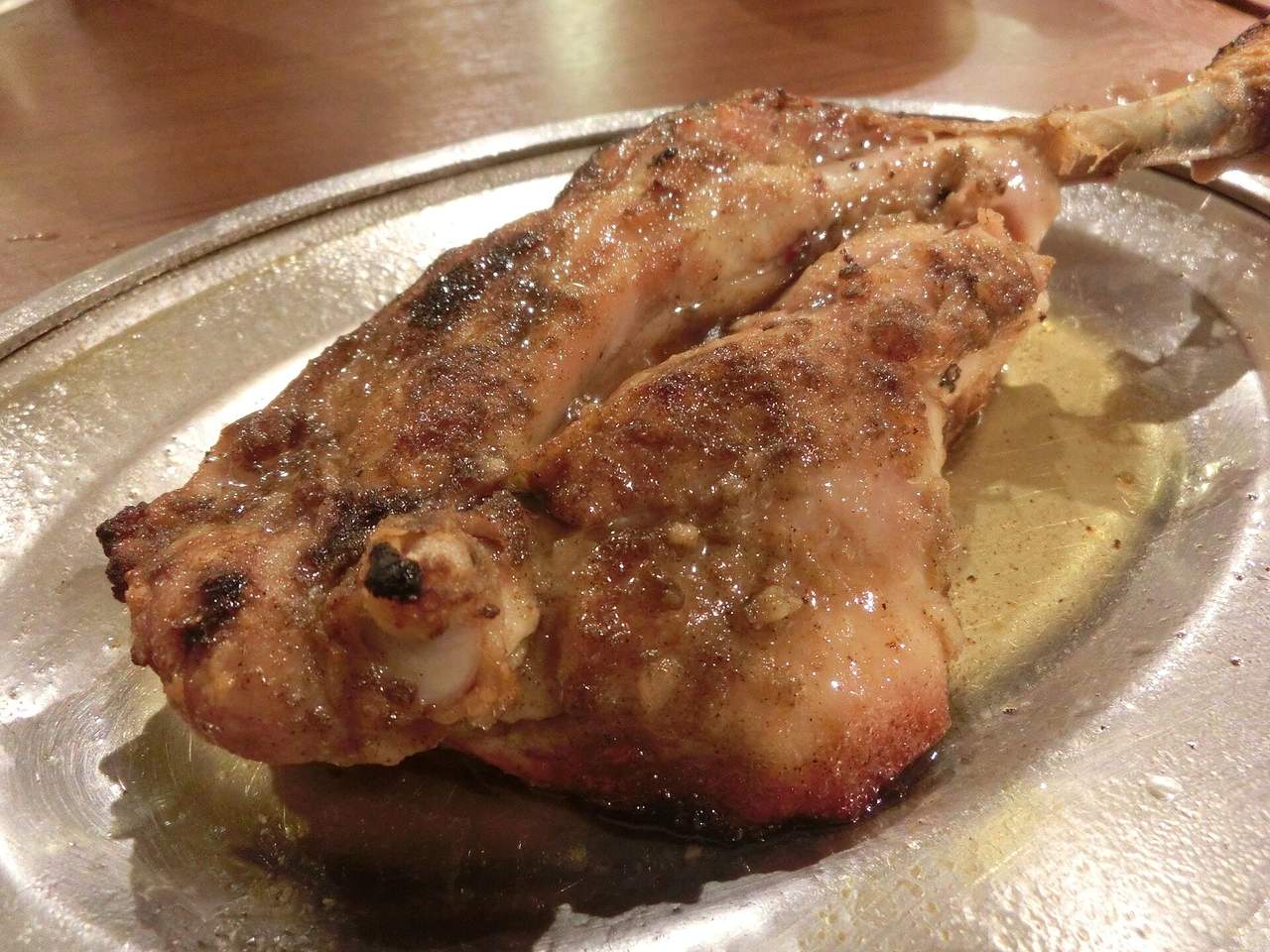
Another Kagawa specialty is honetsukidori (bone-in roast chicken leg), about ¥1,000 each, in tender “hinadori” and chewier, more flavorful “oyadori,” usually eaten with cabbage. Adding Japanese sweets, candy and drinks along the approach, a food budget of ¥2,000 to ¥3,000 per person per day is already quite generous in Kotohira.
What to Know When Visiting Kotohira-gu: Nearby Hotel Suggestions and Pre-Trip Tips
Last, three things: where to stay, how to pace your energy, and seasonal differences.

Stay in Kotohira or Takamatsu? Nearby Hotel Suggestions
Kotohira Town itself has onsen inns and hotels clustered around the Omotesando and the station. The advantage of staying here is that you can climb before the morning crowds, when the early-morning approach is so quiet it is a completely different experience, and a soak in the bath soothes the soreness after the steps.
If your itinerary centers on Seto Inland Sea island hopping or Takamatsu city, staying in Takamatsu and making a round trip to Kotohira is also reasonable, about an hour each way on the Kotoden. The main difference between the two is whether you get Kotohira’s early morning and evening, so decide based on your travel rhythm.
Pacing and Gear: Shoes Matter More Than Anything
There is now no transport of any kind up the mountain, and the human-powered palanquin ended service in 2020. Wear comfortable sneakers or walking shoes and avoid sandals and new shoes. The steps vary in height and are slippery in rain, and the load on your knees on the way down is especially great, so a walking stick really helps.
For time, allow two and a half to three hours if going only to the Main Shrine (including rests and browsing) and four hours or more to reach the Inner Shrine. In summer, bring water and a towel. There are vending machines on the approach, but fewer the higher you go, and supplies on the mountain are not convenient.
Season and Crowds: New Year, Cherry Blossoms and Autumn Leaves Compared
The New Year period is the most crowded time of year at Kotohira-gu, with queues on the steps and tight parking and transport. Unless you specifically want the New Year’s first-visit atmosphere, avoiding these days is much easier. The same goes for Golden Week and Obon.
Spring cherry blossoms and autumn leaves and ginkgo are the two most beautiful seasons in the grounds, especially around Sakura Baba. In summer the steps are sun-baked and humid, very tiring, so set out early. In winter there are fewer visitors and the air is clear, but watch for frosty surfaces.
Kotohira-gu FAQ
Q: How long does it take to climb from the Omotesando to the Main Shrine?
Climbing the steps alone takes about forty minutes to an hour, and with shopping along the way, a rest at Kamitsubaki and photos, two and a half to three hours is a comfortable allowance. To continue to the 1,368-step Inner Shrine, allow four hours or more.
Q: Is there a cable car or shuttle to get up?
No. Kotohira-gu has no cable car and no shuttle bus, and the only way is to walk the stone steps. The “Ishidan Kago” palanquin that used to carry people to the 365-step Daimon gate ended service in January 2020, so please don’t rely on old information online.
Q: If my stamina is limited or I’m with older relatives, how far is reasonable to go?
Set your goal at the 365-step Daimon gate, where you are already in sacred ground and can see the Five Families. Pushing a little further brings you to the Kamitsubaki cafe at step 431 and the Important Cultural Property Asahisha at step 628. There is no need to force yourself to the summit, and resting in stages and going slowly is common.
Q: Are Kotohira-gu and “Konpira-san” the same place?
They refer to the same place, but “Konpira-san” is only a popular nickname. The official name is “Kotohira-gu,” and the mountain it sits on is Mount Zozu (Mount Kotohira). Using the official name when researching, booking tickets or asking directions avoids mistakes.
Q: Where do I get the Happiness Golden Omamori?
You must walk to the amulet office beside the Main Shrine at step 785 to get it. The shops at the foot of the mountain sell souvenirs rather than official charms. The amulet office closes earlier than the grounds’ visiting hours, so go up early if you want omamori.
Q: Is it a good idea to visit Kotohira-gu in the rain?
Yes, but be extra careful. The steps are very slippery in rain, with higher risk especially on the way down, so wear non-slip shoes and make good use of a walking stick and handrails. Views are limited in rain and you won’t see Sanuki Fuji from the observation deck, so consider rescheduling if your timing is flexible.
Q: If I only visit Kotohira-gu, should I plan half a day or a full day in Kotohira?
Half a day is enough if you only go as far as the Main Shrine. But if you want to add Kanamaruza, the high lantern, Sayabashi and Kinryo no Sato, or even try making udon, a full day is more relaxed. Those who tackle the Inner Shrine will almost certainly use the whole daytime.