
Matsuyama Castle Guide: One of Japan’s 12 Original Keeps, Perched on a Hilltop in the Middle of the City
Matsuyama Castle sits on top of Mt. Katsuyama, right in the center of Matsuyama City in Ehime Prefecture, about a hundred-plus meters above sea level, and you can see it looking up from almost anywhere in town. It is one of only twelve “surviving keeps” in Japan, meaning the keep is an authentic Edo-period structure rather than a postwar concrete replica, something only twelve places in the whole country can claim.
But what makes Matsuyama Castle truly special goes beyond the keep itself. It also preserves the rare “renritsushiki” (linked) keep layout and the “noborisekigaki” (climbing stone walls) found at only a handful of castles, and it is regarded as a culmination of Japanese castle defense technology. With a ropeway and single-seat chairlift running from the foot of the hill to the top, getting up there is not a hard climb at all. Below, we start with four core highlights, then cover access, costs and itineraries.
The 12 Original Keeps: This Keep Is the Real Edo-Period Thing
Matsuyama Castle is one of only twelve wooden original keeps left in Japan. The interior still has Edo-period wooden staircases that you have to climb holding the handrails.
The existing keep was rebuilt in the Ansei era at the end of the Edo shogunate. It is the latest of the twelve and the best preserved, and is regarded as the last castle architecture completed in the Edo period. Inside, exhibits include swords, armor and materials on the castle’s construction history, and from the top you get a 360-degree view over Matsuyama’s cityscape and the Seto Inland Sea.

Linked Keep Layout: The Highest-Grade Layout, Used by Only Three Castles in Japan
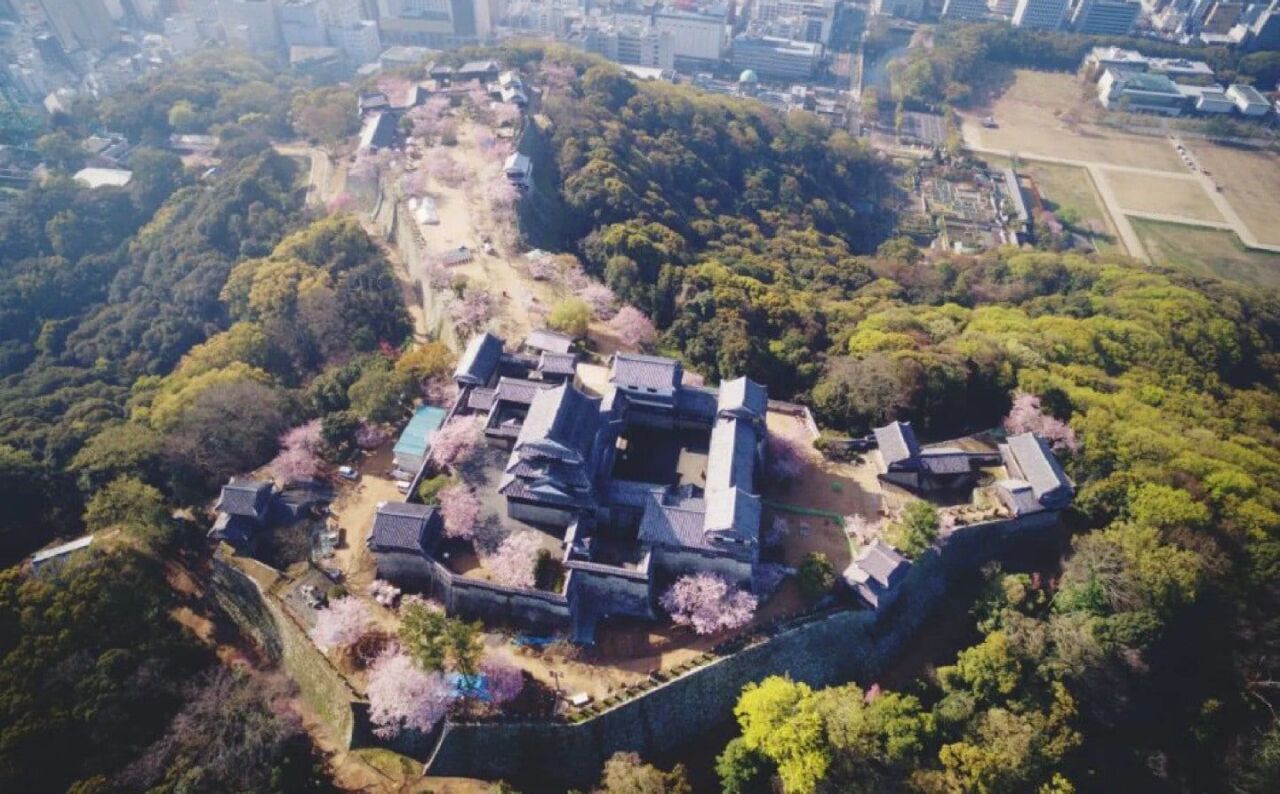
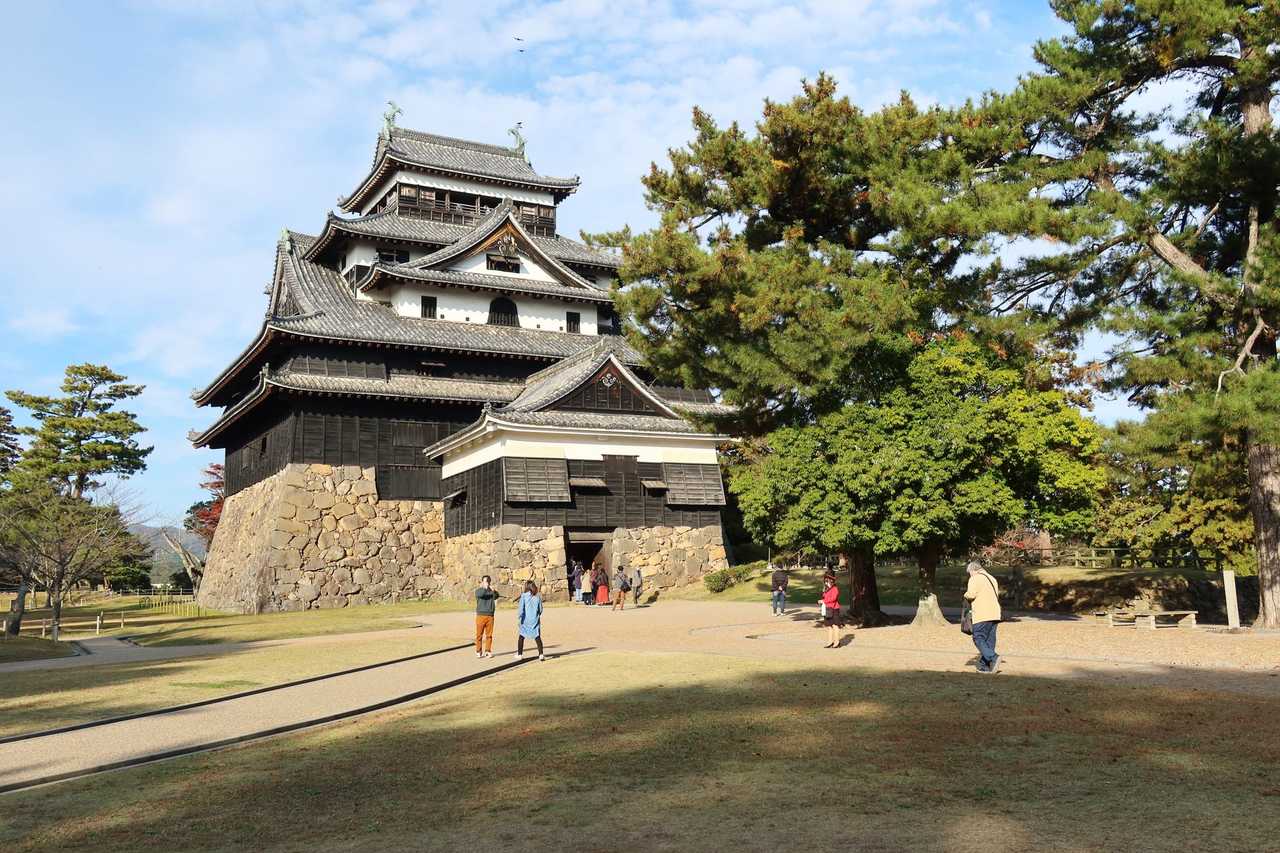
A “renritsushiki” (linked) keep connects the main keep, the sub-keep and corner turrets with connecting turrets, forming a ring that encloses a sealed courtyard in the middle. Even if attackers broke in, they would fall into a pocket exposed to fire from all four sides, making it the most defensive keep layout there is.
Very few castles in Japan use this layout, and Matsuyama Castle and Himeji Castle are the two most often mentioned together as representatives. Standing in the Honmaru plaza and looking toward the keep, the sight of the whole group of buildings linked together and stacked in layers is the most direct picture of the linked layout, and it is also the best angle for photos here.
Getting Up the Hill: Ropeway or Single-Seat Chairlift from Higashiguchi
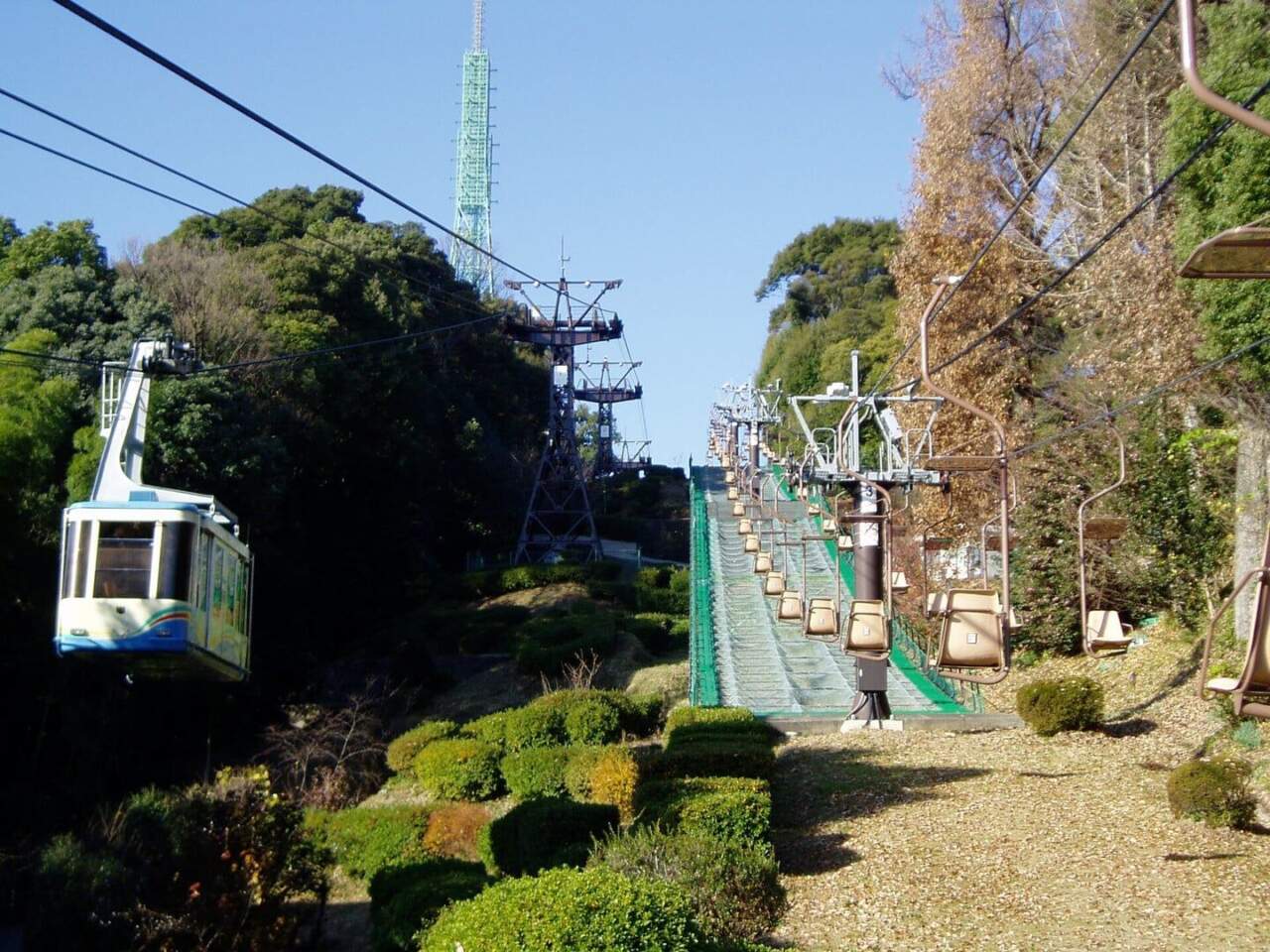
The easiest way from the city to the hilltop is to take the ascent facilities at Higashiguchi. There are two options here, a ropeway and a single-seat chairlift, sharing the same ticket and the same price, and you can even mix them on the way up and down, for example taking the chairlift up and the ropeway down.
The ropeway ride takes about three minutes, in a smooth, covered cabin that suits seniors, children and anyone afraid of heights. The single-seat chairlift takes about six minutes and is completely open, so you ride with the wind in your face looking over a sea of trees, which makes it a popular choice for photos. Of course, you can also walk all the way up the castle paths on foot.
Honmaru Plaza Is Free, the Keep Costs Money: Know the Dividing Line
Many people don’t realize that the Honmaru plaza at the top of Matsuyama Castle is free to enter. From the ropeway’s top station, everything along the way, past the gates and stone walls to the Honmaru plaza, viewing the exterior of the whole linked keep and looking out over the city, requires no admission ticket.
What costs money is going inside the complex of keep buildings. In other words, if you only want to go up for the views and the exterior, the ropeway fare is enough; if you want to climb in, step on the wooden stairs and see the exhibits, you need to buy a separate admission ticket for the keep.
How to Get to Matsuyama Castle: A Full Comparison of Streetcar, Ropeway/Chairlift, Castle Paths and Driving
Matsuyama Castle is right in the city center, so getting there is no problem at all. What you really need to decide is “which way to go up the hill” and “which castle path to start from.”
From the City Center: Take the Streetcar to Okaido Station, About a 5-Minute Walk
The standard route is to take the Iyotetsu streetcar to Okaido Station, then walk north along the Okaido shopping street for about five minutes to the ropeway station at Higashiguchi. The whole way is under the shopping street’s arcade, so you stay dry even in the rain.
Okaido is the liveliest stop in downtown Matsuyama, with restaurants, souvenir shops and department stores clustered around it, so it works well to schedule Matsuyama Castle in the morning and eat lunch right in this area after coming down. The streetcar charges a flat fare and runs quite frequently.
From Dogo Onsen: Streetcar or Route Bus Both Work
If you’re staying in Dogo Onsen, take the streetcar toward the city center and get off at Okaido, a ride of roughly ten-plus minutes. You can also get off at Kamiichiman Station and walk up the castle path on the other side, which is a bit shorter than the route from Okaido.
There are also route buses connecting Dogo and the area near the ropeway station, with a ride of just a few minutes. The most common plan is to visit Matsuyama Castle during the day and take the streetcar back to Dogo in the evening for a soak. The two areas are close with frequent service, so it is easy to arrange flexibly.
Ropeway or Chairlift? Same Price, Different Feel
The ropeway and single-seat chairlift at Higashiguchi Station share the same ticket sales and the same fare. You buy a round-trip ticket and can mix and match going and returning. The ropeway takes about three minutes in an enclosed cabin and usually still runs in rain or strong wind; the chairlift takes about six minutes and is completely open-air.
The chairlift experience is sitting in a chair gliding slowly over the treetops, with a very different view and feel of the wind. It is popular with younger travelers, but it isn’t suitable in the rain, and you also cannot ride it with large luggage or while holding a small child. Actual fares and operating status follow the operator’s announcements on the day.
Hiking Up: Higashiguchi, Kuromonguchi and Other Castle Paths
If you don’t take the ropeway, there are several castle paths up Mt. Shiroyama that you can walk, including the Higashiguchi, Kuromonguchi and Kencho-ura routes. Walking takes roughly twenty to thirty minutes depending on the route, and the slopes vary but are all quite well maintained.
The advantage of walking up is seeing the layers of stone walls and gates along the way, which the ropeway skips right over, and it makes a big difference if you want to look closely at the castle’s structure. Some castle paths were closed after the July 2024 landslide disaster on the hill, so please check the status of each route on the official Matsuyama Castle website before you go. The climb is noticeably sun-exposed in summer, so bring water.
Driving: Parking Mostly Around the Ninomaru at the Foot of the Hill
Driving from within Matsuyama or from an expressway interchange isn’t far, and there are paid car parks near the Ninomaru Historical Garden at the foot of the hill and around the city. But since Matsuyama Castle is on a hilltop in the city center, you cannot drive up to the Honmaru.
On weekends and during cherry blossom season, parking in the city center is quite tight. If you’re staying in Matsuyama city or Dogo, you can reach the castle by streetcar and don’t need to drive for Matsuyama Castle.
If you do drive, the most convenient option is the officially announced “Matsuyama Castle Parking Lot” (1-6-11 Kiyocho, Matsuyama), about a 2-minute walk to the Higashiguchi ropeway station. It is open from 8:00 until 30 minutes after the ropeway stops running, and charges ¥420 for the first 2 hours for a standard car, then ¥100 per 30 minutes after that. The Ninomaru Historical Garden also has a separate free car park for visitors.


What Are the Must-Sees at Matsuyama Castle? The Keep, Multiple Gates and Stone Walls Explained
The sights below are arranged in order from the foot of the hill to the top. Matsuyama Castle’s appeal isn’t only the keep; the gates and stone walls along the way are what earn it the reputation of a defensive masterpiece.
Ninomaru Historical Garden: A Garden of Remains at the Foot of the Hill
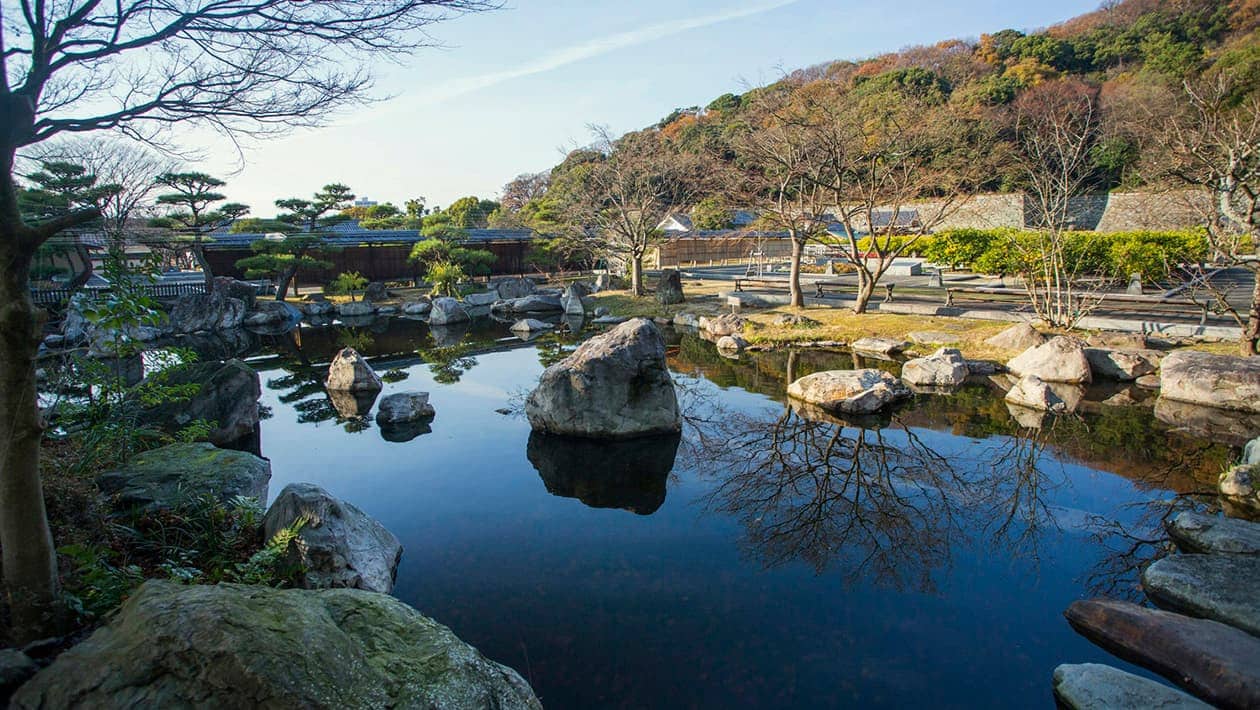
The Ninomaru Historical Garden lies at the foot of Mt. Shiroyama and is a garden created from the remains of the Edo-period Ninomaru Palace. The positions of the former rooms and corridors are recreated with ponds, sand and plantings, so walking through it is like walking across an enlarged architectural floor plan.
The garden is divided into the flowing water and pond area of the Omote Goten and the lawn area of the Oku Goten. It is a quiet space with clearly fewer visitors than the hilltop. It charges a separate admission fee, which is only a few coins, and there is also a combination ticket with the keep.
Noborisekigaki: A Rare Stone Wall Climbing the Slope
One of Matsuyama Castle’s most expert highlights is the “noborisekigaki,” a long stone wall built up the slope from bottom to top. It joins the Ninomaru at the foot of the hill and the Honmaru at the summit into a single enclosed defensive zone, preventing enemies from flanking up the side slopes.
This structure is extremely rare among Japan’s surviving castles, and only a handful of castles have kept one. You can see its course beside the castle path leading up from the Ninomaru, and if you’re interested in castle structure, this stretch is even more worth lingering over than the keep itself.
Tonashi Gate: A Gate Deliberately Built Without Doors
Walking from the ropeway’s top station toward the Honmaru, the first important gate you meet is called “Tonashimon” (the “doorless gate”), designated a National Important Cultural Property. Its name is so blunt it’s almost odd, because this gate really has no doors and has stood open since it was built.
This is not an oversight but deliberate design: the open gate lures attackers to rush in unsuspectingly, and then at the turn they run into the heavily guarded Tsutsui Gate and the Hidden Gate, caught in a squeeze from front and back. Matsuyama Castle’s defensive logic starts here and links one stage to the next, so as you walk through it is worth looking back at the layout of the whole space.
Tsutsui Gate and Hidden Gate: Matsuyama Castle’s Classic Ambush Mechanism
Right after passing Tonashi Gate, directly ahead is the huge Tsutsui Gate, the main line of defense of the Honmaru. Attackers’ attention is naturally drawn to this great gate, and in the shadow of the stone wall right beside Tsutsui Gate hides a nearly invisible little door, the “Kakuremon” (Hidden Gate).
The Hidden Gate is an Important Cultural Property, designed so that the defenders could slip out quietly from the side and rear and catch the enemy attacking Tsutsui Gate in a pincer. Standing in that spot, you can clearly feel that the whole space was laid out for this ambush.
Honmaru Plaza: A Free View of the Whole Linked Keep
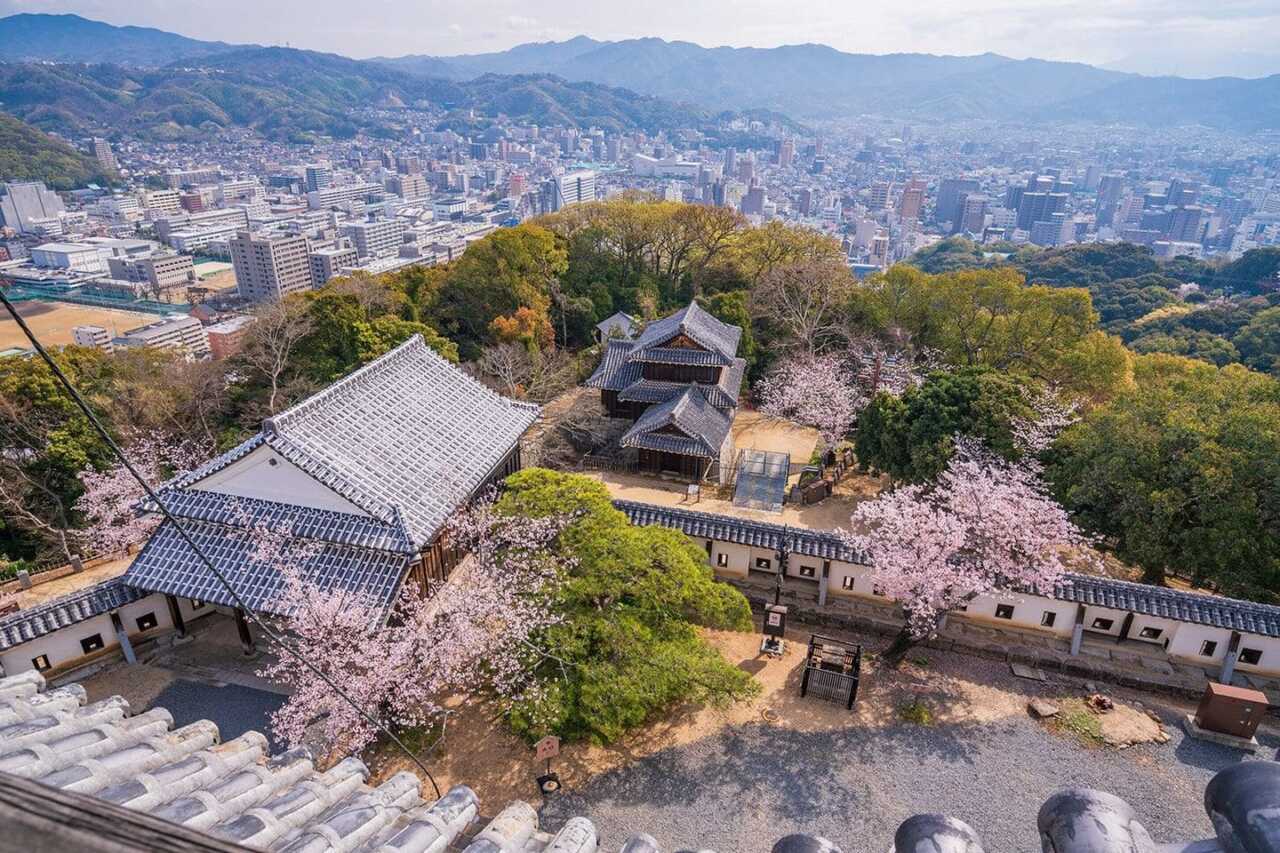
After passing through the successive gates, you reach the Honmaru plaza, an open flat area that is also free to enter. From here you can see the full exterior of the main keep, the sub-keep and the corner turrets linked into a ring, and it is the best spot for photographing Matsuyama Castle as a whole.
On the other side of the plaza is a lookout toward Matsuyama’s cityscape and the Seto Inland Sea, and in good weather you can see the distant mountain ridges and the sea all the way out. In spring this is one of Matsuyama’s best-known cherry blossom spots, with hundreds of cherry trees framing the keep. The scene is superb, but it is also the busiest time of year, and the time when you most need to set out early.
Inside the Keep: Edo-Period Wooden Stairs So Steep You Hold the Handrails
After buying a ticket and entering the keep, you take off your shoes and climb up the wooden floors. The staircases inside are very steep, with an angle close to a ladder, and you must grip the handrails tightly. This is exactly the original form of a surviving keep, which was a military facility to begin with, not a building meant for comfortable going up and down.
Each floor displays swords, armor, materials on the castle’s construction and models of the castle, and defensive features such as sama (loopholes) and ishiotoshi (stone-dropping openings) are preserved for you to examine up close. The top floor has windows on all four sides, giving a 360-degree view over Matsuyama’s urban area, distant Mt. Ishizuchi and the Seto Inland Sea.
Time Needed at Matsuyama Castle: Planning Your Ropeway Ride and Keep Visit
It takes about 3 minutes by ropeway or 6 minutes by chairlift from Higashiguchi to the top, then about 10 minutes on foot from Chojagahira Station to the keep. The keep is open 9:00 to 17:00 (adjusted by season), with last entry 30 minutes before closing. Walking up the castle path takes about 20 to 30 minutes, and a visit inside the castle including the keep takes about 1.5 hours. Please confirm opening hours on the official website before you go.
Sub-Keep and Connecting Turrets: Walking the Inner Courtyard of the Linked Layout
The visitor route through the keep takes you through the sub-keep and the connecting turrets linking each building, which is the best way to understand the “linked” layout: you find yourself circling continuously inside an enclosed ring, with a courtyard in the middle that is completely invisible from outside.
Looking down into the courtyard from a connecting turret’s window, you can see why this layout is considered the most defensive: any enemy who got into the courtyard would be surrounded by buildings on all four sides at once. This stretch of the route is hard to experience at other castles.
Honmaru Stone Walls: Walls That Fold Back and Forth Like a Folding Screen
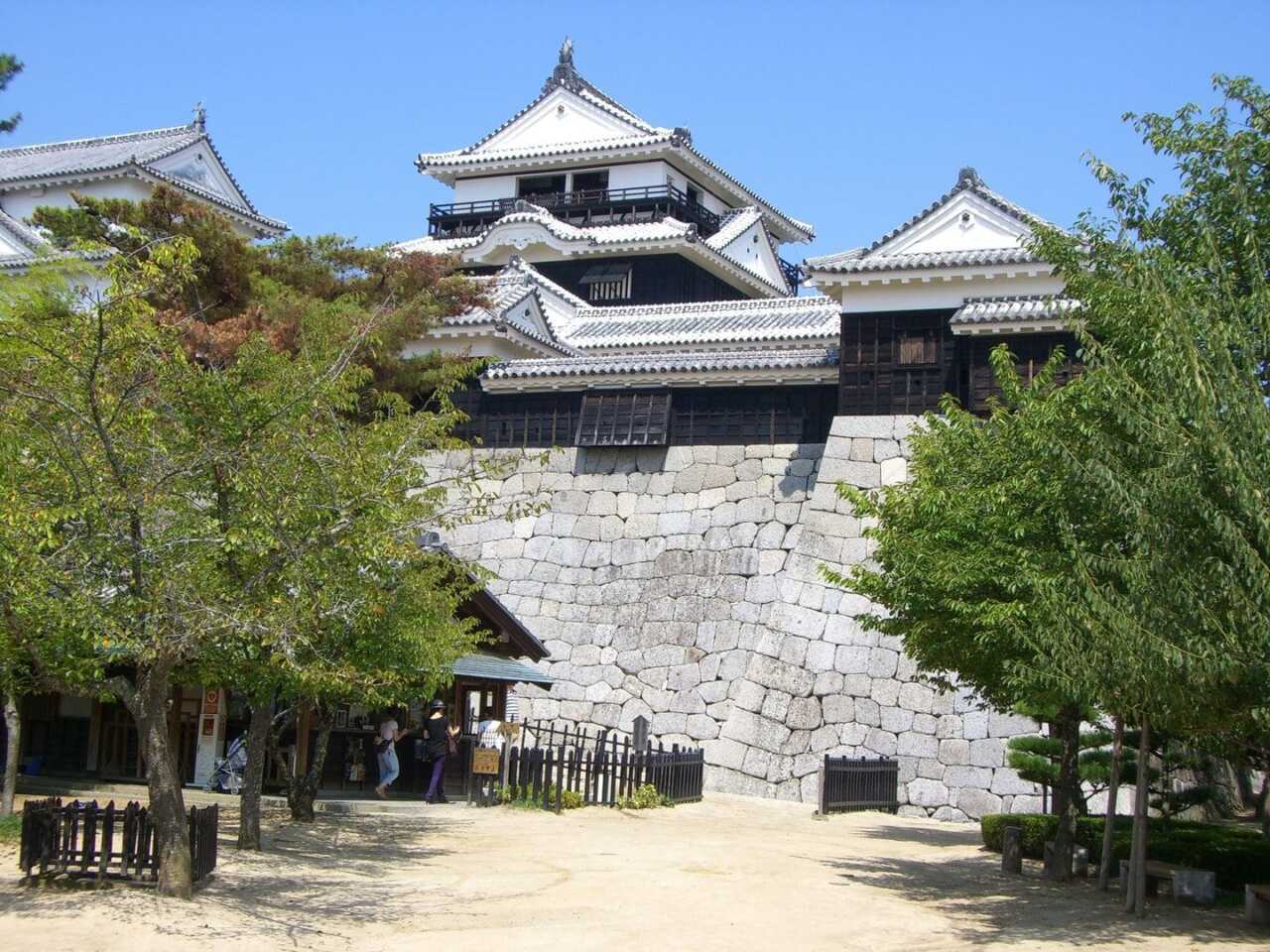
Matsuyama Castle’s stone wall construction is very refined, and in particular the walls around the Honmaru terrace are deliberately made with repeated bends, known as “byobu-ori” (folding-screen folds). These angles let the defenders fire from the side on enemies advancing along the wall, eliminating blind spots.
The way the stones are stacked also differs by construction period, and if you look closely you can tell different techniques such as uchikomi-hagi and kirikomi-hagi, so the whole walk is like reading a timeline of castle-building technology. For castle fans, the information in Matsuyama Castle’s stone walls is almost on par with the keep itself, and worth studying and comparing slowly along the way.
Castle History: Over Two Hundred Years from Kato Yoshiaki to the Matsudaira Clan
Matsuyama Castle was begun by Kato Yoshiaki, who was granted the domain after the Battle of Sekigahara. Construction started in the early seventeenth century and took several decades to be largely completed. Afterward the castle passed through the Gamo clan and was then governed for a long time by the Matsudaira clan, a branch family of the Tokugawa, until the end of the shogunate.
The keep you see today is the version rebuilt at the end of the shogunate. Because the lord at the time was the Matsudaira clan, a Tokugawa branch family, hollyhock crests remain on the roof tiles, which is quite unusual among the twelve surviving keeps. More than twenty buildings in the castle are designated National Important Cultural Properties, among the highest densities of any castle in Japan.
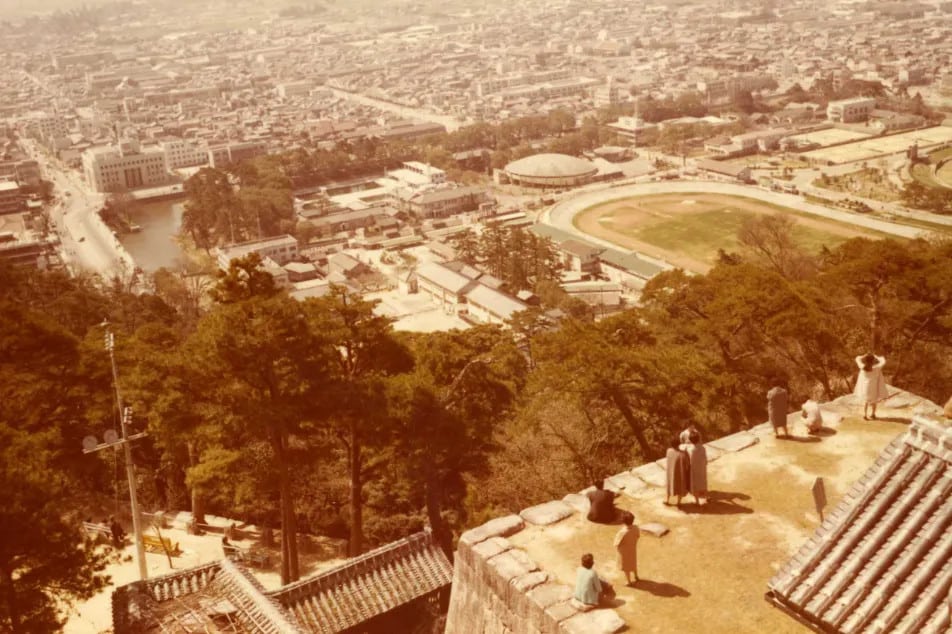
Shiroyamaso Mikan Soft Serve: The Must-Eat Treat After Your Castle Climb
Next to the Honmaru plaza there is a rest area and shop, and its most famous item is the citrus soft serve made with iyokan, a specialty of Ehime. It has a distinct tartness and strong fruit aroma, and after climbing gates and stairs it is especially refreshing, almost a regular finale to a castle visit.
The shop also sells Matsuyama Castle limited-edition goods, drinks and light meals, and has seating where you can eat while looking at the keep, one of the few places on the Honmaru plaza where you can sit and rest. Opening hours and menu items change with the season, and in winter some cold drinks and soft serve may not be sold, so actual offerings follow on-site announcements.
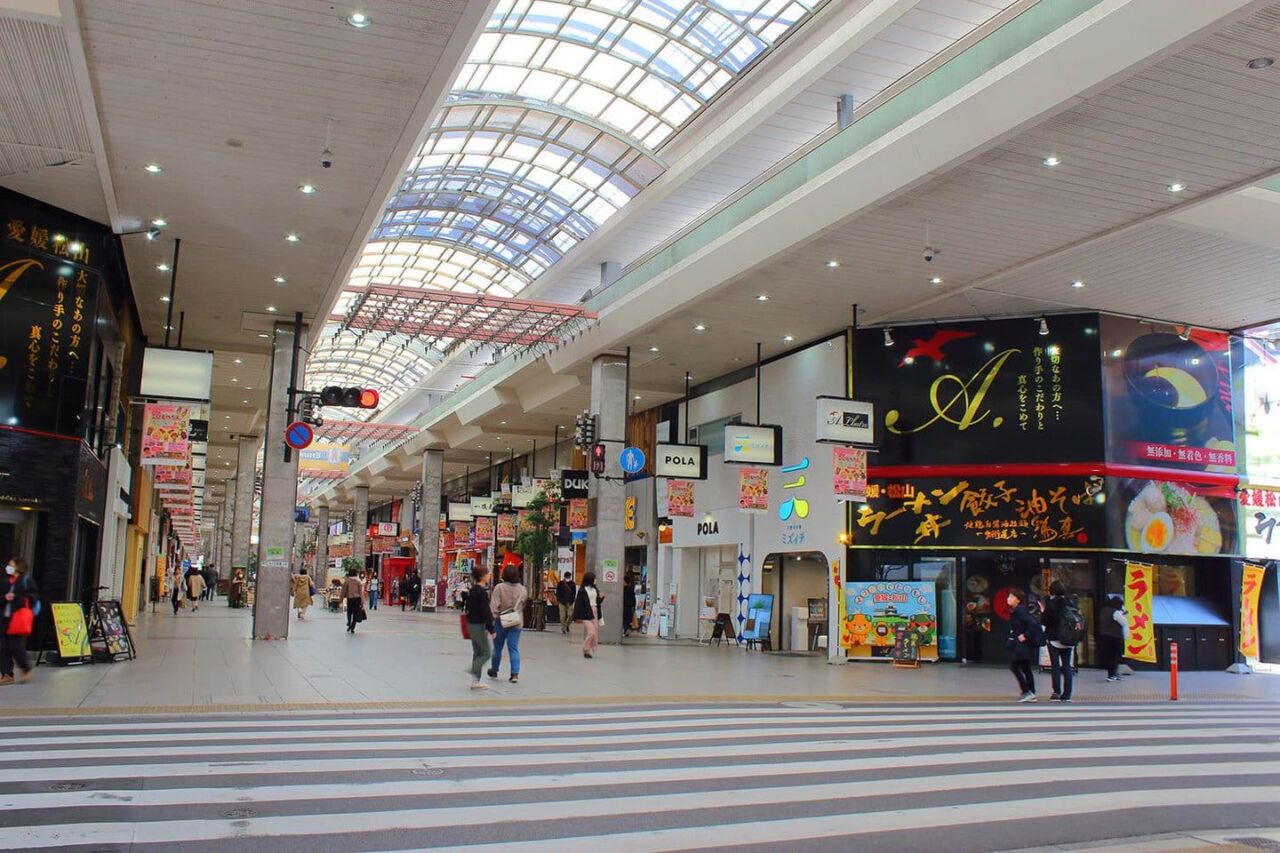
Okaido Shopping Street: A Shopping Street That Connects Right After Your Descent
Walking south from the Higashiguchi ropeway station brings you to the Okaido shopping street, the main covered arcade in downtown Matsuyama, lined with department stores, drugstores, restaurants and souvenir shops. It is roofed all the way, making it the most natural follow-up after coming down the hill.
Ehime’s classic souvenir “Ichiroku Tart,” a roll-shaped sweet made by rolling yuzu-flavored red bean paste inside sponge cake, can be bought at the Ichiroku Honpo shop on this street, and mikan citrus products and Imabari towels are also easy to find. Continuing south, the street connects to Gintengai, and together the two cover Matsuyama’s shopping in one go.
Matsuyama Castle by Season: Cherry Blossom Season Is the Busiest of the Year
Matsuyama Castle is listed among Japan’s 100 Best Cherry Blossom Spots. In spring the Honmaru plaza and the Ninomaru area are surrounded by hundreds of cherry trees, and the image of the keep with cherry blossoms is the most classic scene of the year, which also makes it the peak for crowds and queue times.
The other seasons are just as beautiful: lush greenery in summer, autumn foliage in fall, and clear air in winter, when visibility is best for looking out from the top of the keep toward the Seto Inland Sea and Mt. Ishizuchi. Illumination events are sometimes held at night, and Honmaru opening hours and the last ropeway departure may be adjusted by season and event, so check before you go.
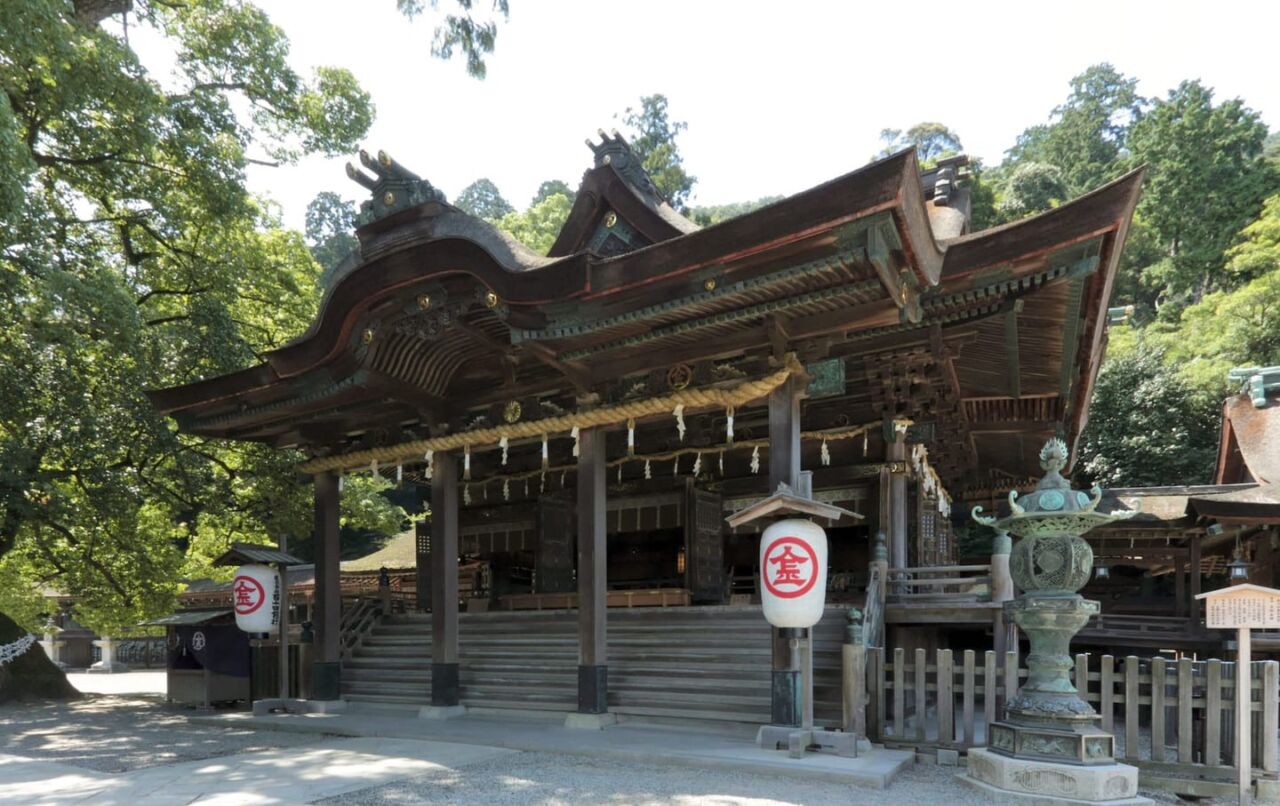
How Much Does Matsuyama Castle Cost? Ropeway Tickets, Keep Admission and Combo Tickets
Matsuyama Castle’s costs are split into three parts: the ropeway ticket up the hill, the keep admission ticket, and the Ninomaru Garden entrance fee at the foot of the hill, all sold separately. Please treat all amounts below as subject to the official announcement on the day.
Castle Ropeway and Single-Seat Chairlift: One Ticket, Either Ride
The Higashiguchi ascent facilities have a single fare, with the ropeway and chairlift priced the same: round trip is ¥520 for adults and ¥260 for children, one way is ¥270 for adults and ¥140 for children. Round trip is better value, and you can mix the two on the way up and down without paying extra.
The chairlift cannot be used in rain, strong wind or when carrying a small child, in which case you must take the ropeway. The ropeway runs from 8:30 to 17:30 and the chairlift until 17:00, with hours adjusted in August and from December to January. Check the last departure time before heading up; fares follow the operator’s announcements.

Keep Admission Ticket: Only Needed If You Want to Go Inside
Keep admission tickets are sold at the entrance to the Honmaru plaza: adults ¥520, elementary school students ¥160. To remind you again: the Honmaru plaza and its views are free, and this ticket buys the right to enter the complex of keep buildings.
Since you’ve already come all the way up, most people still recommend buying a ticket and going in, because the interior structure and exhibits of a surviving keep are the truly rare part of this place. The keep is open 9:00 to 17:00, extended to 17:30 in August and moved up to 16:30 from December to January, with last entry 30 minutes before closing. It is closed on the third Wednesday of December each year for annual cleaning, so allow plenty of time if you are visiting in the afternoon.
Ninomaru Historical Garden Admission and Combo Tickets
The Ninomaru Historical Garden at the foot of the hill charges a separate fee: adults ¥200, ages 6 to 12 ¥100, cheaper than the keep. The official side also offers a combined ticket covering the keep and the Ninomaru Garden, and if you want to see both, the combo usually saves a bit.
Some plans also bundle the castle ropeway ticket, and the contents are adjusted from time to time, so it is safest to ask once at the ticket office before buying. If you also plan to ride the streetcar back and forth to Dogo Onsen that day, it is worth checking whether Iyotetsu’s one-day pass is a better deal. Actual ticket types, prices and scope follow the official announcement on the day.
Castle Food and Souvenirs: Mikan Soft Serve and Ichiroku Tart
The shop on the hill is known for its mikan soft serve, which costs a few hundred yen each. The Okaido shopping street below is the souvenir headquarters, where you can pick up Ehime’s signature Ichiroku Tart, mikan-related products and Imabari towels all in one place.
For lunch, restaurants are extremely dense around Okaido and Gintengai, and you can find Ehime specialties like tai-meshi (sea bream rice), Matsuyama’s distinctive nabeyaki udon and all kinds of izakaya, across a wide price range. A food budget of ¥2,000 to ¥4,000 per person per day is already quite ample in Matsuyama city. Actual prices follow each shop’s announcements on the day.
Volunteer Guides and Armor Experiences: Bringing the Castle’s Details to Life
Matsuyama Castle has volunteer guides who explain the gates’ defensive design, stone wall techniques and history around the Honmaru. Having a guide makes a big difference, because without someone pointing out those mechanisms, it’s easy to walk through them as if they were ordinary gates.
The castle also holds occasional armor and jinbaori (battle surcoat) try-on experiences, seasonal events and night illuminations. The dates, fees and whether reservations are required for such programs differ every year, so we recommend checking the official website for current events before you go.
What to Watch Out For at Matsuyama Castle? Where to Stay and Pre-Trip Reminders
Three last things: which area to stay in, what to confirm before heading up, and how to combine the castle with Dogo Onsen into one day.
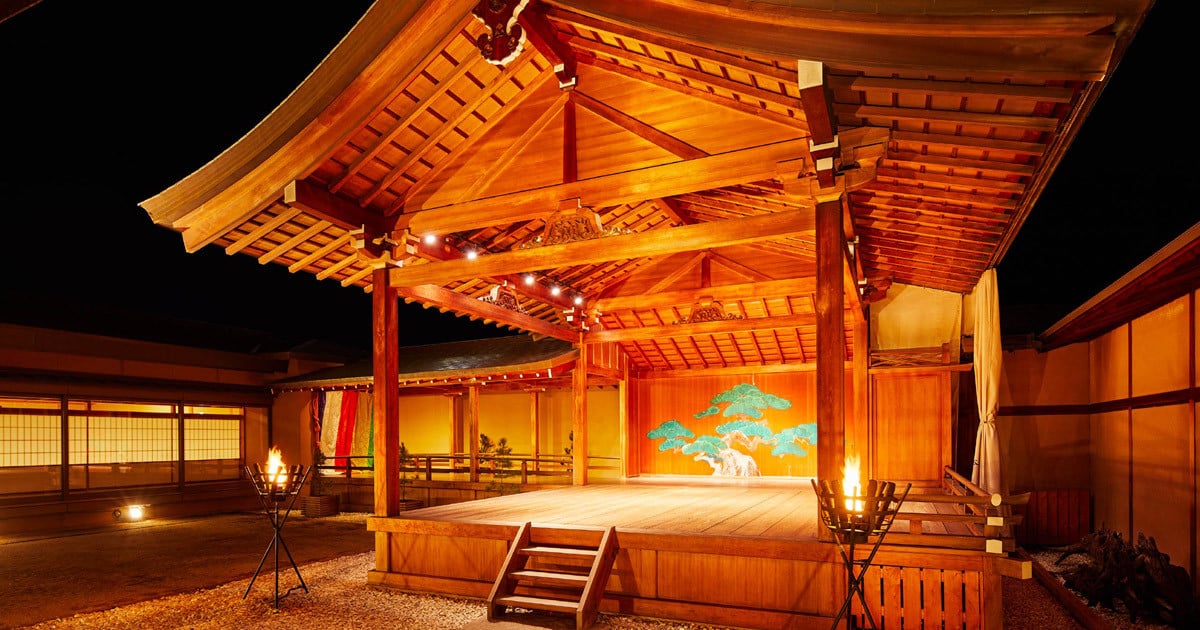

Okaido or Dogo Onsen? Where to Stay
If your trip centers on Matsuyama Castle and downtown shopping and dining, staying around Okaido or Matsuyama-shi Station is the easiest: the ropeway station is a few steps away, there are the most restaurant and izakaya choices at night, and business hotel prices are relatively reasonable, making it the most efficient option.
If you want to soak in hot springs, stay in Dogo Onsen, ten-plus minutes away by streetcar. Most people stay one or two nights in Dogo, taking the streetcar into the city by day to visit Matsuyama Castle and stroll Okaido, then returning to Dogo in the evening for the outdoor baths, which makes for a smooth route and good pacing of your energy.
Check Before You Go: Last Ropeway, Last Entry and Castle Path Conditions
First is timing. Ropeway and chairlift hours change with the season, and in winter they end especially early; the keep’s last entry is also earlier than its closing time. If you set out in the afternoon, you may only have time to see the exterior and not get inside the keep.
Second is the castle paths. Some paths were closed after the 2024 landslide, so please go by the announcements on the official Matsuyama Castle website, and temporary restrictions are also possible after typhoons or heavy rain. Third is the weather: in strong wind or rain the single-seat chairlift stops running and you can only take the ropeway, and the wind on the hill also makes it feel colder.
Stamina and Clothing: The Keep’s Stairs Are Steeper Than You Think
Even if you take the ropeway up, there is still an uphill stretch and some stone steps from the top station to the Honmaru, and the stairs inside the keep are so steep they are close to ladders, so you need to use both hands and feet on the handrails. Wear comfortable walking shoes, avoid skirts and high heels, and don’t carry large luggage up.
Inside the keep you must take off your shoes and carry them as you tour, so wearing shoes that are easy to slip on and off is much more convenient. Allow about two to three hours for the whole trip including the Ninomaru Garden, and since there are quite a few sun-exposed spots on the hill in summer, we recommend preparing a hat and water before you go up.
Matsuyama Castle FAQ
Q: How long should I plan for Matsuyama Castle?
With the round-trip ropeway, walking through the gates and the Honmaru, and visiting inside the keep, about two to three hours. If you add the Ninomaru Historical Garden at the foot of the hill and a stroll along the Okaido shopping street after coming down, half a day is more comfortable, fitting neatly before lunch or the evening at Dogo Onsen.
Q: Should I take the ropeway or the single-seat chairlift?
The fare is the same, and you can mix them going and returning. With seniors, children or a fear of heights, take the ropeway, about three minutes, smooth and covered; for an open-air feel and photo opportunities, take the chairlift, about six minutes. But the chairlift cannot be used in rain, strong wind or when carrying a small child, in which case the ropeway is your only option.
Q: Can I skip the ropeway and walk straight up?
Yes. Mt. Shiroyama has several castle paths such as Higashiguchi and Kuromonguchi, taking roughly twenty to thirty minutes on foot, and along the way you can see layers of stone walls and gates that you would miss on the ropeway. Some routes were closed after the 2024 landslide, so please check the passage announcements on the official Matsuyama Castle website before you go.
Q: Do I still need to buy an admission ticket after going up?
It depends on how far you want to go. The Honmaru plaza, the gates and the city views are all free, so a ropeway ticket alone lets you see the full exterior of the linked keep. What costs money is going inside the complex of keep buildings, for which you buy a separate admission ticket.
Q: Is Matsuyama Castle the same as “Bitchu Matsuyama Castle”?
No. The one in Matsuyama, Ehime is “Iyo Matsuyama Castle,” and there is another, “Bitchu Matsuyama Castle,” in Takahashi, Okayama Prefecture. Both are among the twelve surviving keeps, but they are far apart. When you see “Matsuyama Castle” while researching or booking, be sure to confirm which prefecture it is in first.
Q: What is the best season to visit Matsuyama Castle?
Spring cherry blossom season is the prettiest and also the most crowded, as Matsuyama Castle is listed among Japan’s 100 Best Cherry Blossom Spots. To avoid the crowds, autumn and winter have the clearest air, with the best visibility toward the Seto Inland Sea and Mt. Ishizuchi from the top of the keep. The hill is sun-exposed in summer, so we recommend going early in the morning.
Q: How do I fit Matsuyama Castle and Dogo Onsen into one day?
The smoothest plan is to visit Matsuyama Castle in the morning, eat and shop on the Okaido shopping street at noon, then take the streetcar to Dogo Onsen in the afternoon for the outdoor baths and the Botchan Karakuri Clock, and stay overnight in Dogo. The two are ten-plus minutes apart by streetcar, and it is Matsuyama’s most classic one-day itinerary.