
Naoshima Attractions: An Open-Air Museum in the Seto Inland Sea
Naoshima is a small island in the Seto Inland Sea off the northern tip of Kagawa Prefecture. The main island covers about 8 sq km (about 14 sq km for Naoshima Town including the surrounding islets), and fewer than about 3,000 people live there. Thirty-odd years ago it was an industrial island known for its smelter; today it is a pilgrimage site for art travelers from around the world, thanks to the “Benesse Art Site Naoshima” project that began in the late 1980s and set museums, a hotel and artworks right into the island’s terrain and villages.
So Naoshima is not “a single museum” but three areas, each with its own character: Miyanoura Port, where the ferries land; Honmura, the cluster of old houses; and the Benesse area on the southern hillside. There are slopes and distances between them, and how your Naoshima trip goes depends almost entirely on whether you sorted out reservations and transport beforehand. Below we cover the four core highlights first, then ferries, costs and itineraries.
Chichu Art Museum: Tadao Ando’s Underground Museum Lit Only by Natural Light
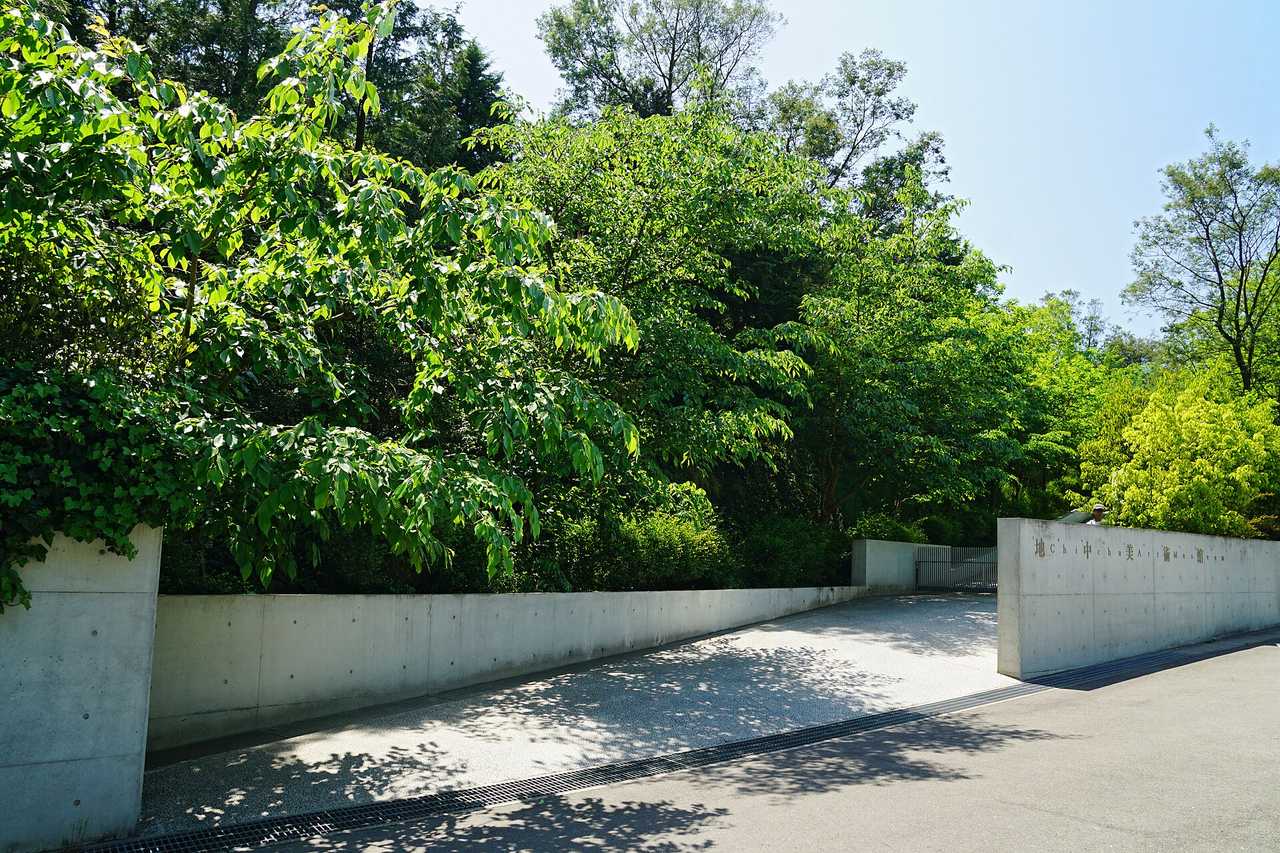
The Chichu Art Museum is Naoshima’s most iconic building, designed by Tadao Ando and opened in 2004. To avoid spoiling the Seto Inland Sea scenery, the entire structure is buried in the hillside, with only geometric openings showing above ground; you only realize how large it is when you see it from the air.
The permanent collection includes Monet’s Water Lilies series and works by James Turrell and Walter De Maria, all lit by natural light alone, so the same piece looks completely different at different times and in different weather. Entry is by timed reservation, so be sure to book tickets on the official website in advance.

Yayoi Kusama’s Red and Yellow Pumpkins: Naoshima’s Two Most Famous Landmarks
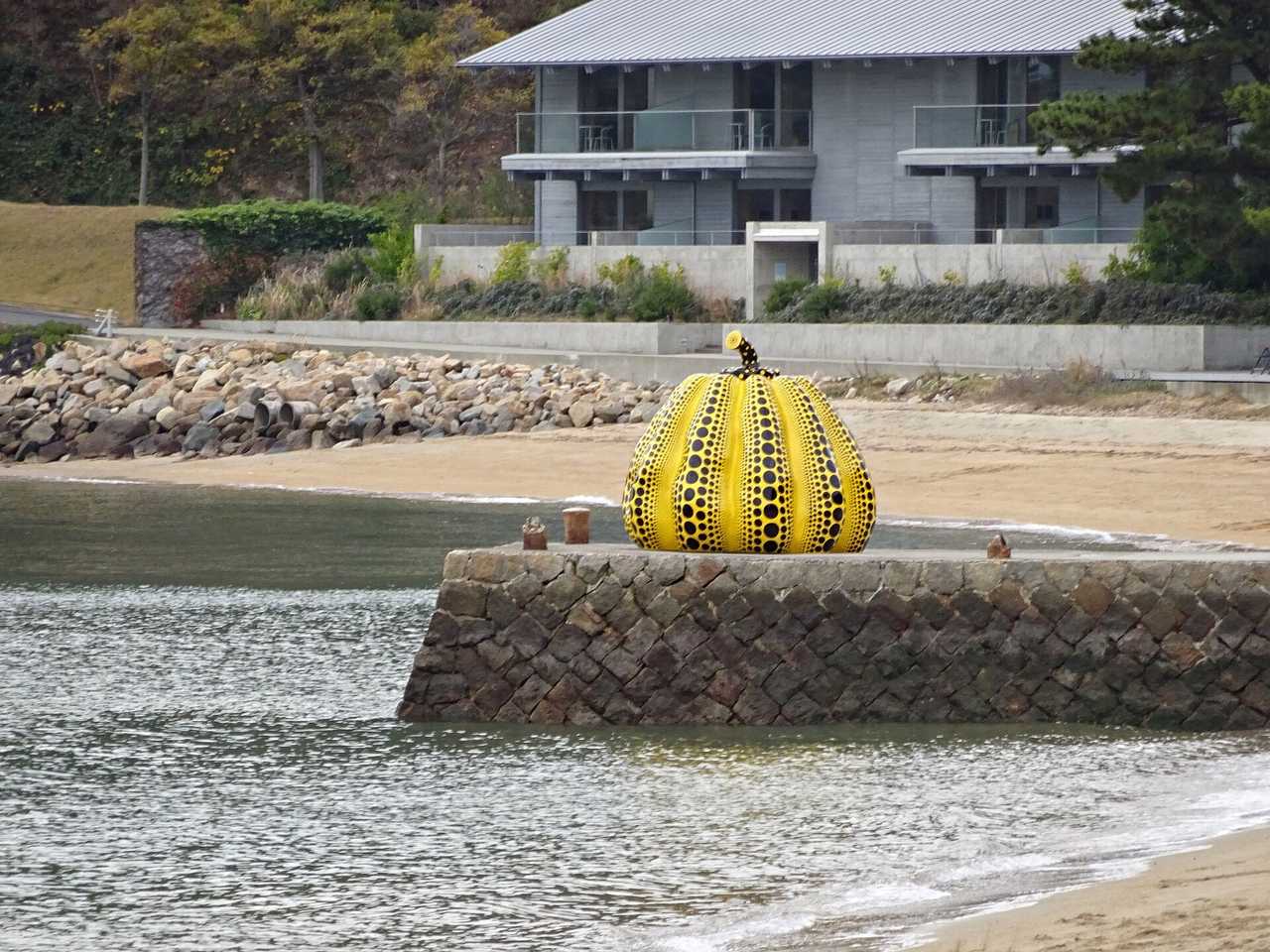
Naoshima has two Yayoi Kusama pumpkins. The Red Pumpkin stands at the ferry landing at Miyanoura Port; it is large, some of its black dots are cut-outs, and you can walk inside and look out. The Yellow Pumpkin stands alone at the end of a seaside pier in the Benesse area and is the most widely shared photo of Naoshima.
The Yellow Pumpkin was swept away and damaged by large waves in a 2021 typhoon, then repaired and reinforced, and was reinstalled on its original pier in 2022. Both pumpkins are outdoors and free to view, but the Yellow Pumpkin is inside the Benesse area, so check in advance how to get there and the bicycle restrictions.
Art House Project (Ie Project): Turning a Whole Old Village into Artworks
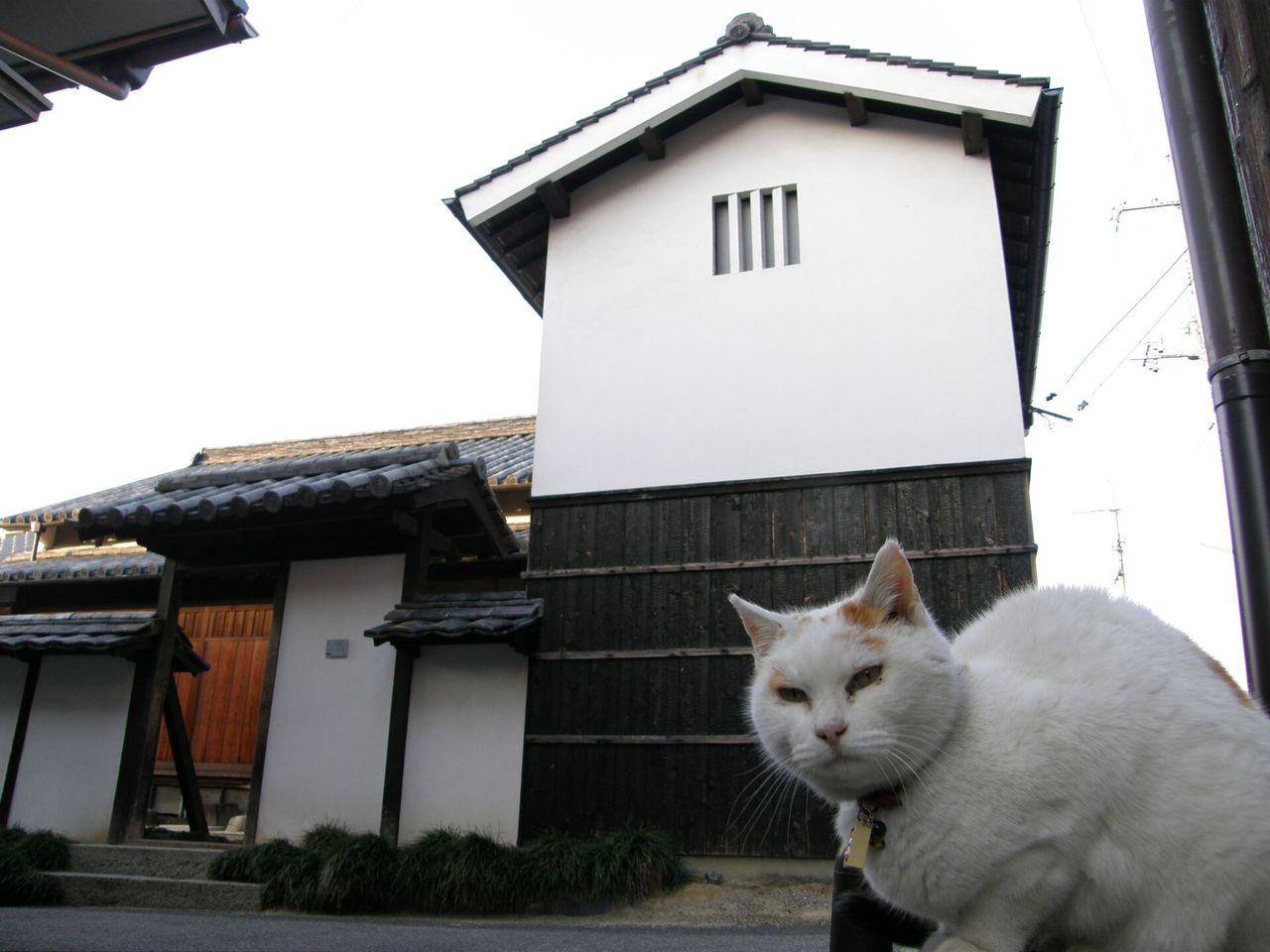
The Art House Project is Naoshima’s most distinctive feature. Instead of placing works in a museum, entire century-old houses, a shrine and a former dental clinic in the Honmura village were handed over to artists to transform, so the works grow together with the buildings and even with residents’ daily lives.
The sites currently open to visitors include Kadoya, Minamidera, Go’o Shrine, Ishibashi, Gokaisho, Haisha, and Kinza, which needs a separate reservation, scattered through the narrow lanes of Honmura. Visits use a combination ticket, so walking the full loop also takes you through the whole old village.
Miyanoura Port and Honmura Port: Where Naoshima’s Two Gateways Lead
Naoshima has two ports. Miyanoura Port is the main entrance, where ferries from both Takamatsu Port and Uno Port dock. Around it you will find the Red Pumpkin, the SANAA-designed Naoshima Ferry Terminal, the Naoshima Bath “I♥YU” and car rental shops,
Honmura Port is on the east side of the island, served by passenger boats from Uno Port and high-speed boats from Takamatsu Port; you step off straight into the old village where the Art House Project sits. If you are coming from Okayama and want to focus on Honmura, taking a boat straight to Honmura Port saves the most time.
How to Get to Naoshima: Takamatsu Port and Uno Port Ferries Compared, Plus Electric Bikes on the Island
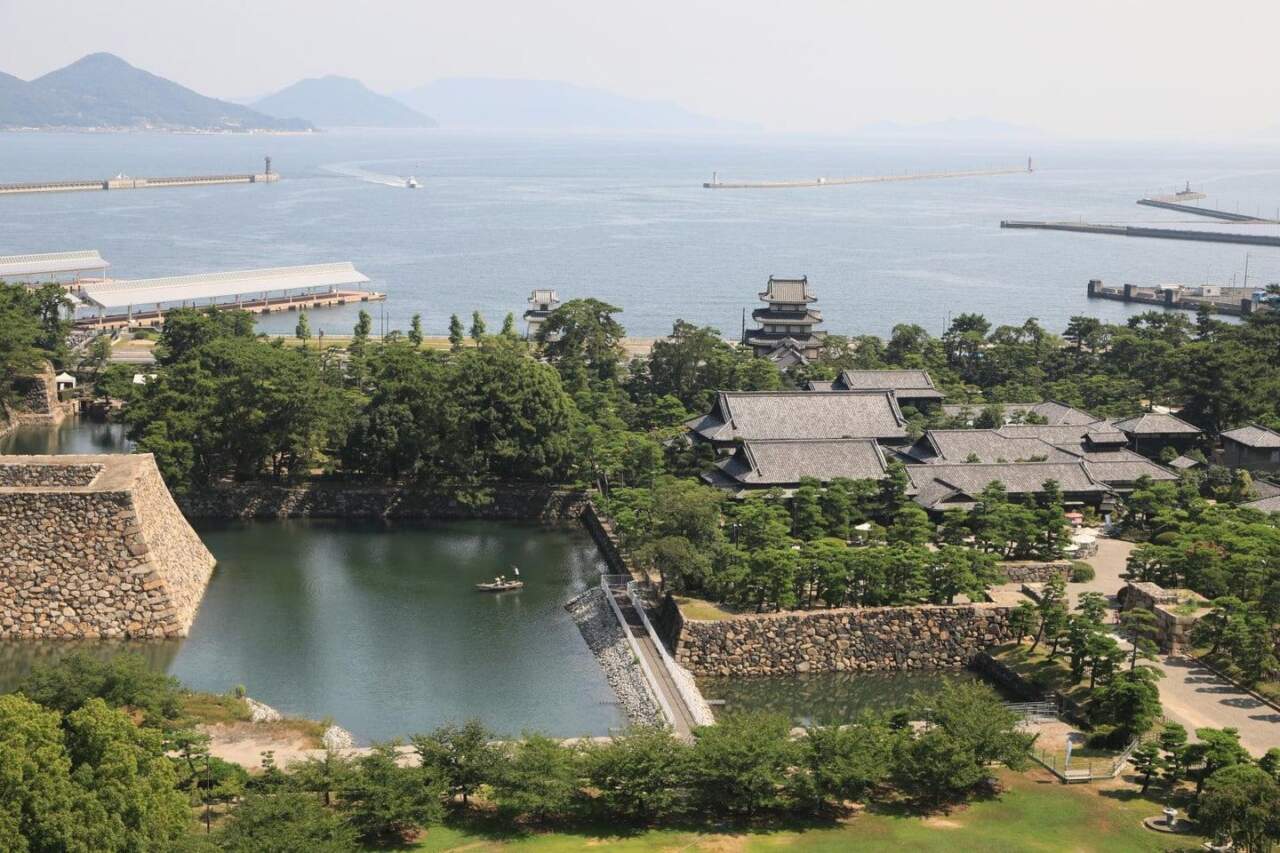
There is no bridge to Naoshima, so you have to take a boat. How you get there depends on whether you start from Shikoku or Honshu, and getting around the island is the key to a smooth trip.
From Takamatsu Port: Ferry About 50 Minutes, High-Speed Boat About 30 Minutes
From the Shikoku side, you take a boat from Takamatsu Port to Miyanoura Port. The ferry takes about 50 minutes to an hour; it is cheap, carries vehicles, and has a roomy cabin and an outdoor deck. The high-speed passenger boat takes about 30 minutes, but the fare is clearly higher and there are fewer sailings.
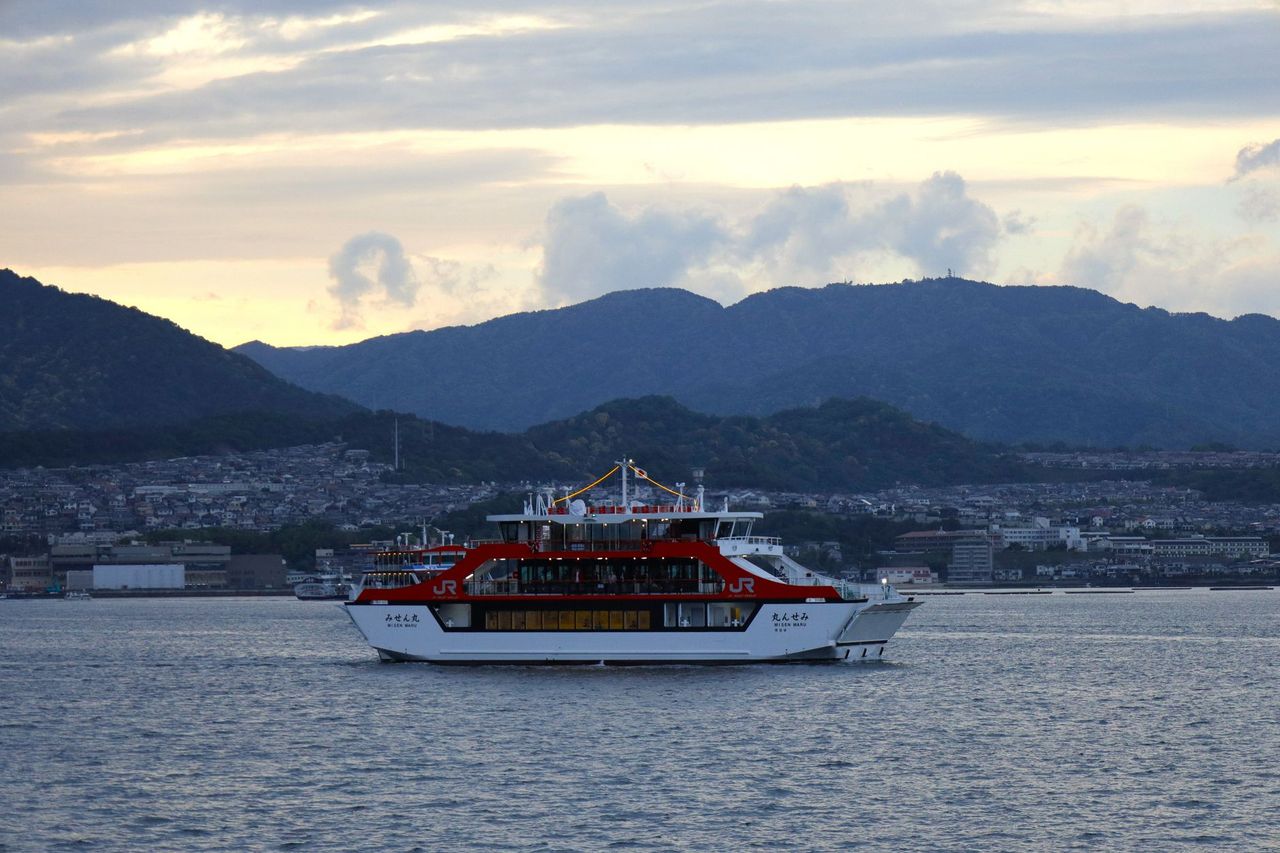
Most travelers choose the ferry because the crossing itself is scenery: from the deck you can see the whole Seto Inland Sea and its islands. Extra sailings are added in peak season and during the art festivals, while weekdays and winter are sparser, so always check that day’s timetable before you go and note the last boat time.
Takamatsu Port to Naoshima: Ferry and High-Speed Boat Fares and Pier Locations
The Shikoku Kisen ferry from Takamatsu Port to Miyanoura Port takes about 50 minutes and costs ¥680 one way for adults; it carries bicycles and cars. The high-speed passenger boat takes about 30 minutes and costs ¥1,590 one way for adults; it cannot carry vehicles. The ferry and high-speed boat piers are about a 3-minute walk apart, and tickets go on sale 40 and 30 minutes before departure respectively. Reservations are not accepted, and boarding is first come, first served.
From Uno Port in Okayama: The Crossing Takes Only About 20 Minutes
If you are coming from Honshu, especially from the Okayama side, Uno Port is the fastest way in. Take the JR Uno Line from JR Okayama Station to Uno Station, and the pier is right outside the exit. The ferry to Miyanoura Port takes about 20 minutes, and the fare is cheaper than from Takamatsu.
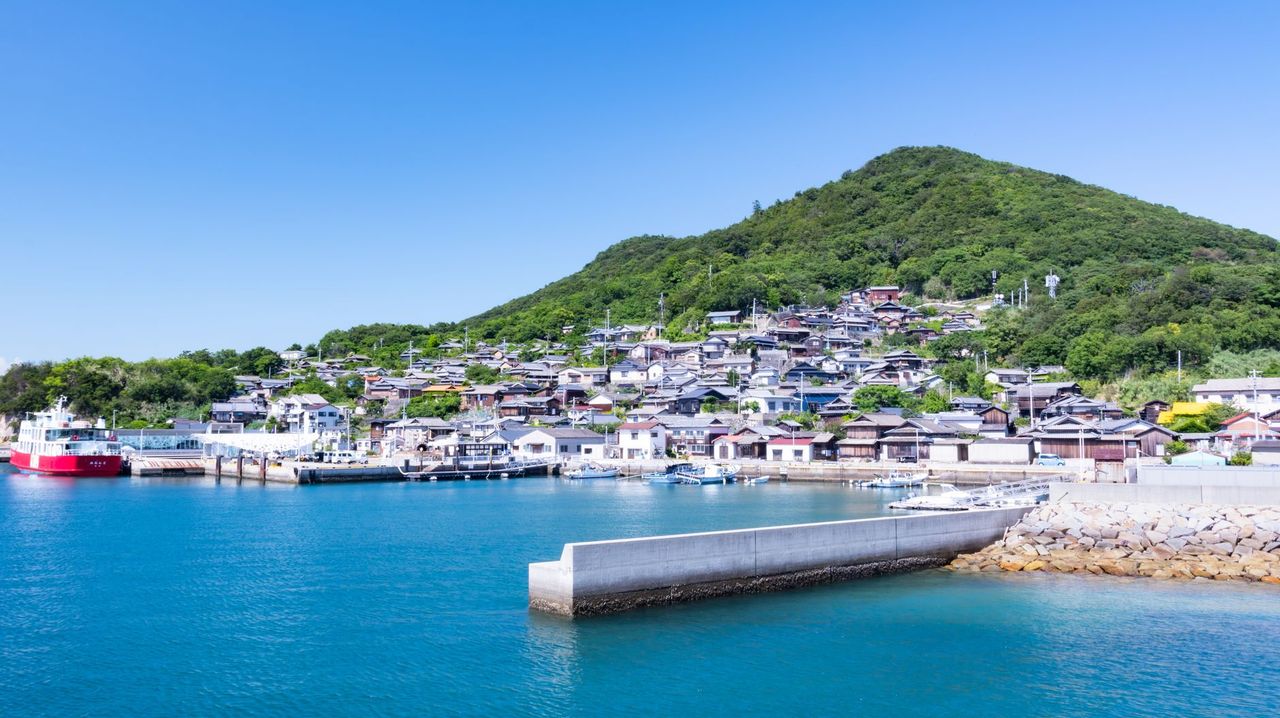
Uno Port also has a separate route that goes straight to Honmura Port on the east side of the island, also about 20 minutes, which suits those who want to see the Art House Project first. The two routes have different operators and pier locations, so confirm whether you are heading to Miyanoura or Honmura before buying a ticket, to avoid boarding the wrong boat.
Uno Port to Naoshima: Miyanoura Route Schedule and Fares
The Shikoku Kisen ferry from Uno Port to Miyanoura Port takes about 20 minutes and the passenger boat about 15 minutes; both cost ¥370 one way for adults. The ferry runs 13 or more round trips a day, from about 6:10 to 20:45, and carries bicycles and cars; the passenger boat runs only 2 times a day, and there is a separate passenger boat route from Uno to Honmura. Schedules and fares are subject to the Shikoku Kisen official announcements.
Getting Around the Island: Reserve an Electric-Assist Bicycle in Advance
The loop around Naoshima is over ten kilometers, which does not sound long, but the island is clearly hilly: going from Miyanoura to Honmura and from Honmura to the Benesse area both involve climbing slopes, and a regular bicycle can wear you out quickly. We strongly recommend renting an electric-assist bicycle; a day’s rental costs roughly ¥1,000 or more.
There are several rental shops right by Miyanoura Port, but the number of bikes is limited and in peak season and on weekends they are often all rented out by the morning. Be sure to reserve online or by phone beforehand and note your return time; some shops close earlier than the last boat, so ask clearly when you pick up and return the bike.
Town Bus and the Free Benesse Shuttle: Alternatives If You Don’t Want to Cycle
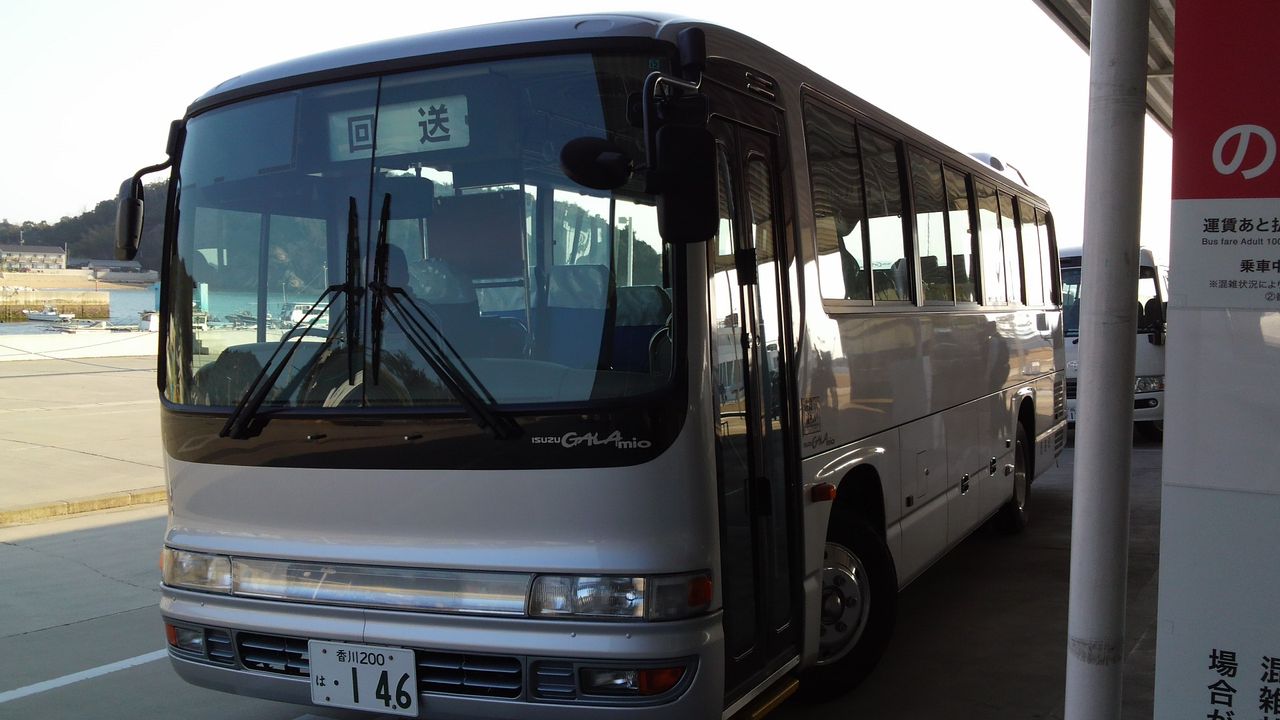
If you would rather not cycle, the island has a town-run bus linking Miyanoura Port, Honmura and Tsutsuji-so, with a single fare of just a coin or two. The service is regular but not frequent, and it fills up easily when boat passengers arrive; after the museums, especially, arrive at the stop early if you need to catch a boat.
Inside the Benesse area a different set of rules applies: regular bicycles cannot be ridden in and must be left around Tsutsuji-so, after which you continue on foot or take the area’s free shuttle bus to and from the Chichu Art Museum, the Lee Ufan Museum and Benesse House. Be sure to understand this part of the route in advance.
How to Plan a Day Trip: A Clockwise Route Through Miyanoura, Honmura and Benesse
The most common and least tiring plan is this: arrive at Miyanoura Port in the morning, rent a bike and photograph the Red Pumpkin and the Naoshima Pavilion, then ride to Honmura for the Art House Project and ANDO MUSEUM, have lunch at a Honmura cafe, and in the afternoon enter the Benesse area to see the Chichu Art Museum and walk to the Yellow Pumpkin.
The key is to treat your Chichu Art Museum reservation slot as the backbone of the whole day and fill in other items before and after it. Also note that most restaurants on the island close in the early evening, so dinner usually has to be eaten back in Takamatsu or Okayama.


What Are Naoshima’s Must-See Works? A Full Guide to the Museums and Outdoor Art in Three Areas
The sections below follow the three areas of Miyanoura Port, Honmura and the Benesse area; walking one loop in this order is the least tiring way to do it.
Chichu Art Museum: Monet’s Water Lilies and Rooms Lit Only by Natural Light
The core of the Chichu Art Museum is the permanent rooms of three artists. The Monet room displays the Water Lilies series, with a floor made of several hundred thousand small tiles; visitors must remove their shoes to enter, and the whole room uses no artificial lighting, with the paintings lit by natural light coming through a skylight.
Walter De Maria’s space is made up of a huge black granite sphere and gold-leaf wooden columns, while James Turrell’s work treats light itself as the material. Entry is by online reservation for a specified date and time, and in peak season it is often fully booked weeks ahead, so please book this item first of all.
Lee Ufan Museum: A Semi-Underground Space of Stone, Iron Plate and Emptiness
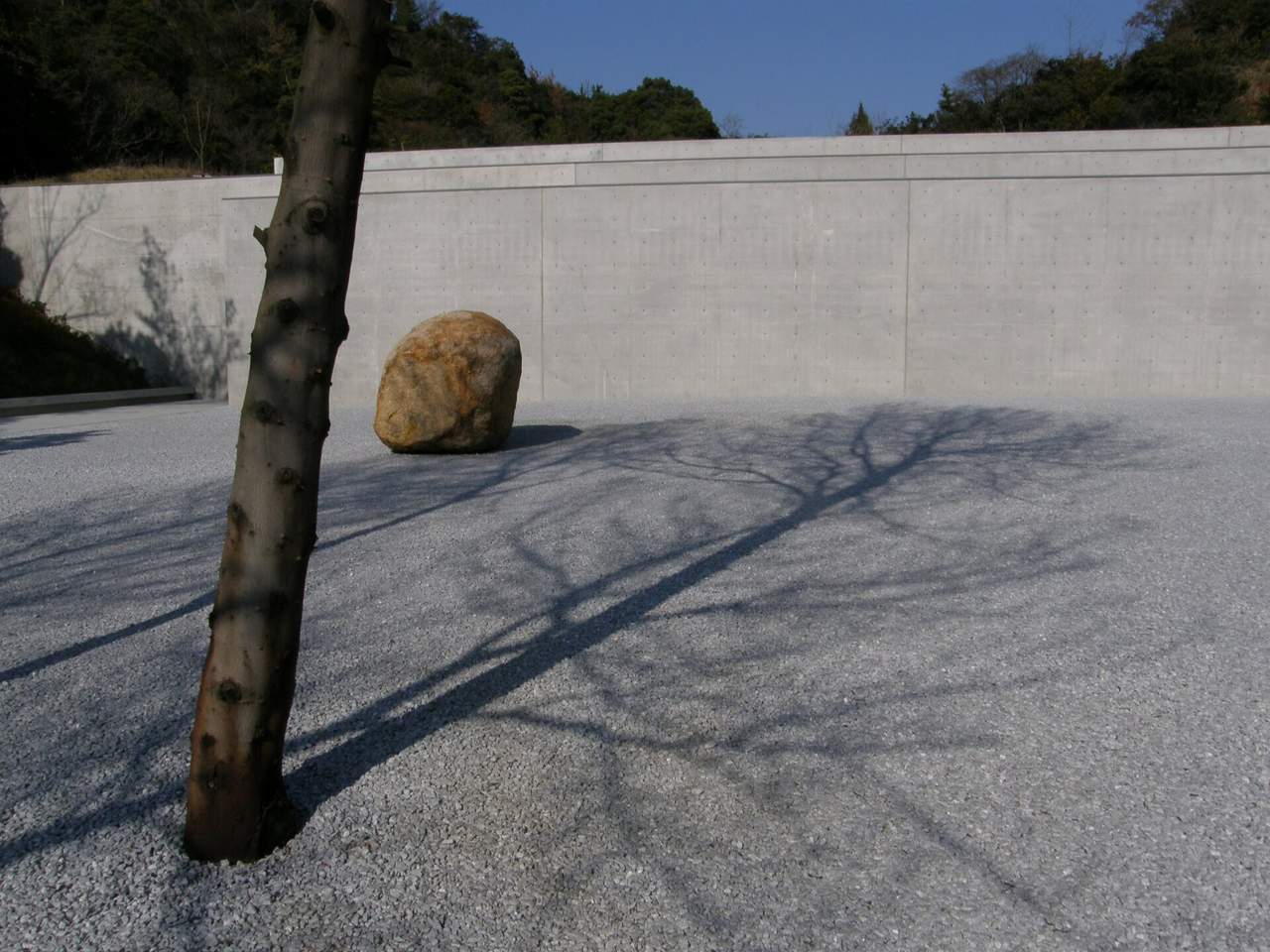
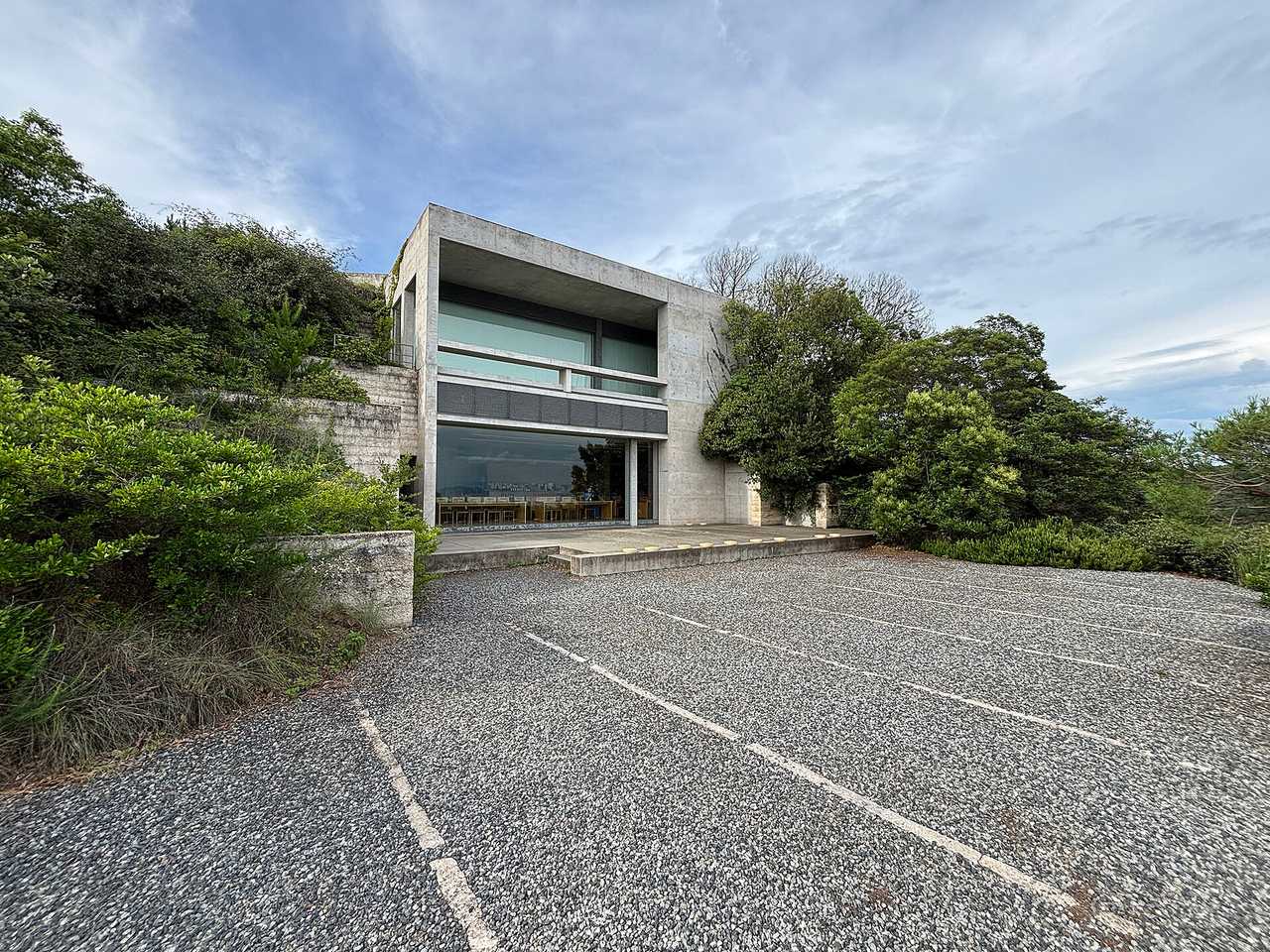
The Lee Ufan Museum opened in 2010 and was also designed by Tadao Ando; it sits in the valley between the Chichu Art Museum and Benesse House. The building is half buried in the ground, and the tall pillar and stones standing in the plaza in front of the entrance are already part of the work before you even go in.
The museum shows paintings and sculptures by this Korean-born artist known for the Mono-ha school; the works often consist of just a natural stone and an iron plate, and the point is the emptiness and tension between them. We recommend buying tickets online on the official website first, and please check the opening days before visiting.
Benesse House Museum: A Museum You Can Stay In
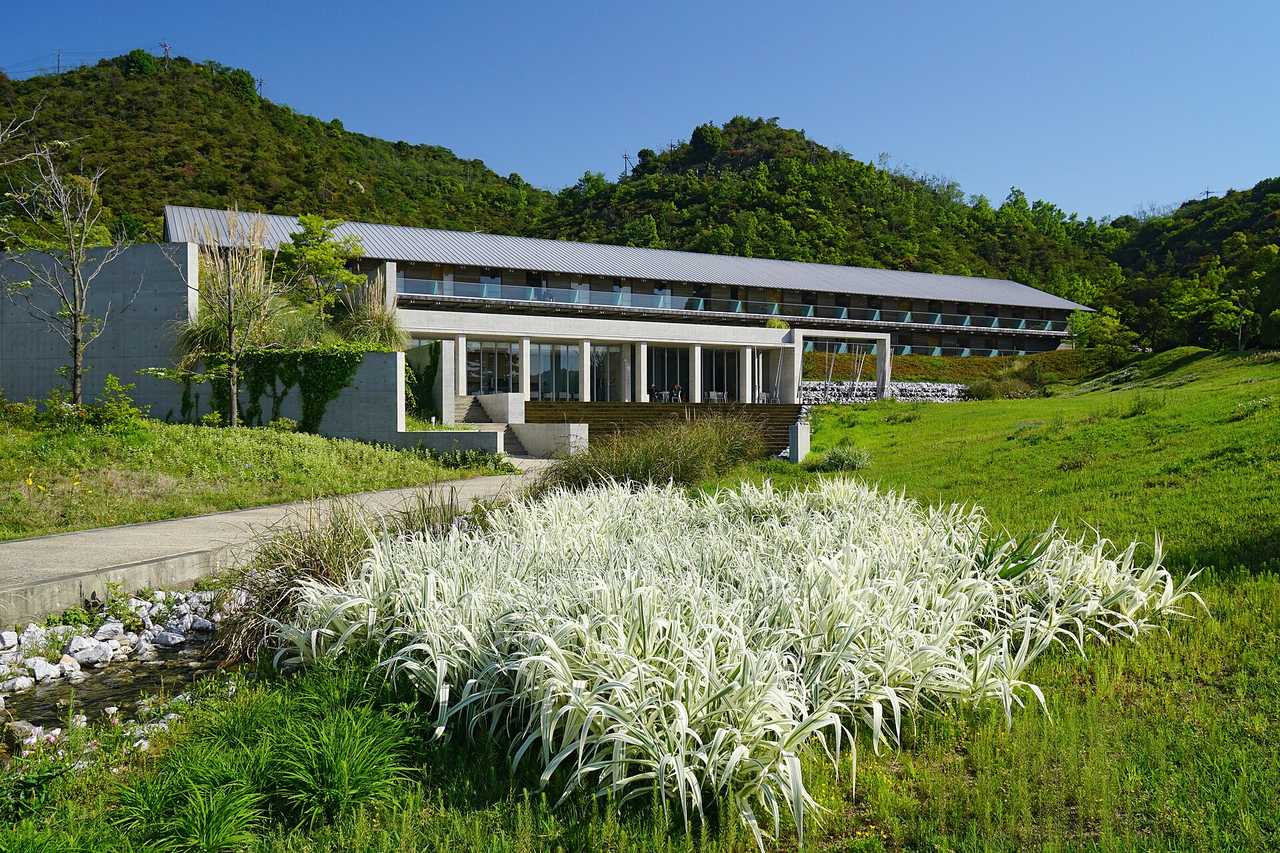
Benesse House opened in 1992 as the starting point of the Naoshima art project and was Tadao Ando’s first work on the island. Its most distinctive concept is “museum and hotel in one”: overnight guests can view the works alone in the galleries at night, after the museum has closed to the general public.
The collection focuses on contemporary art, and the building is arranged in tiers along the coastal hillside, with corridors and terraces that frame views of the Seto Inland Sea. Besides the Museum building there are the Oval, Park and Beach areas, and many large outdoor sculptures are scattered around for free viewing.
Naoshima New Museum of Art: Opened in 2025, Tadao Ando’s Tenth Building on Naoshima
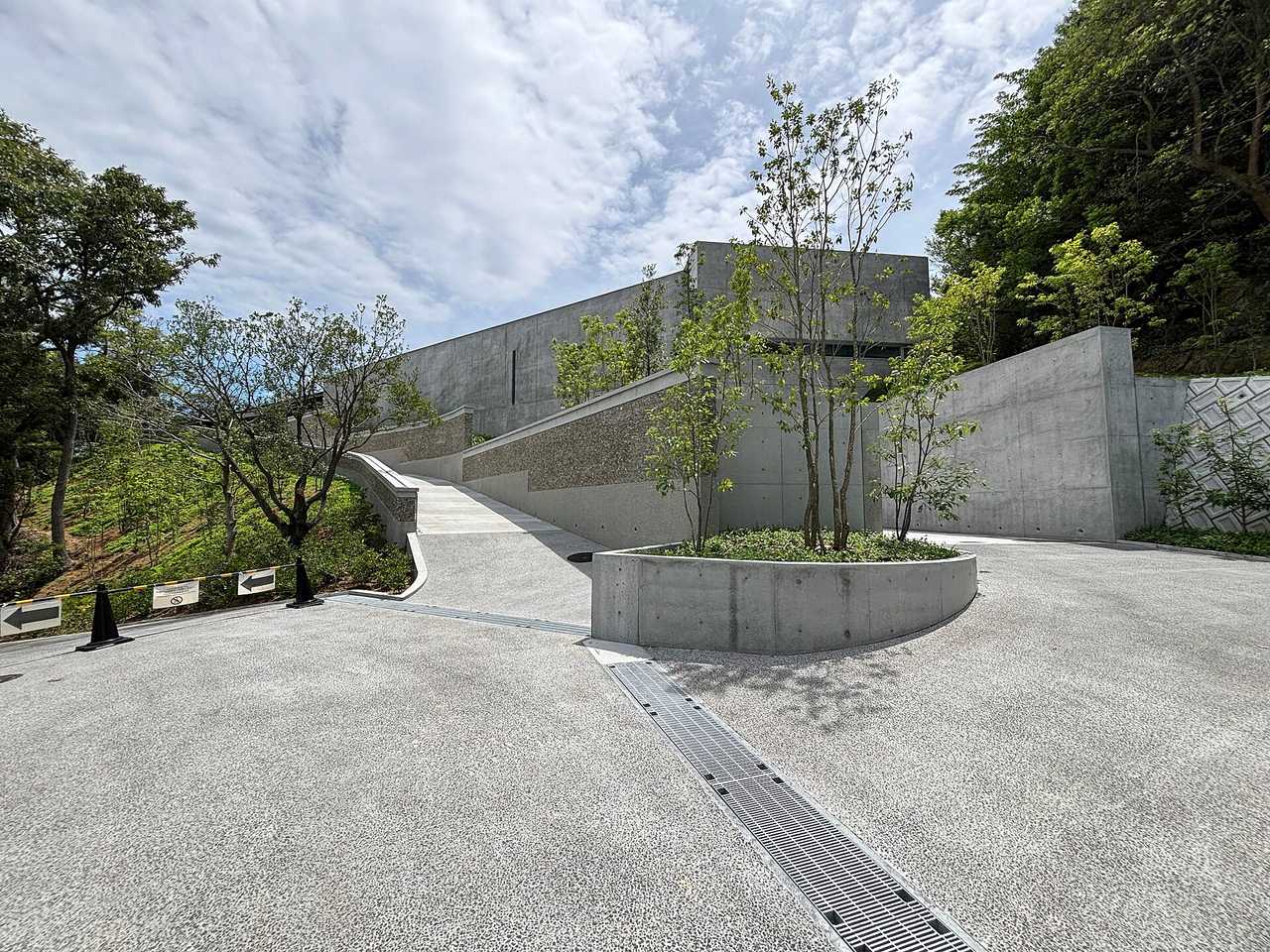
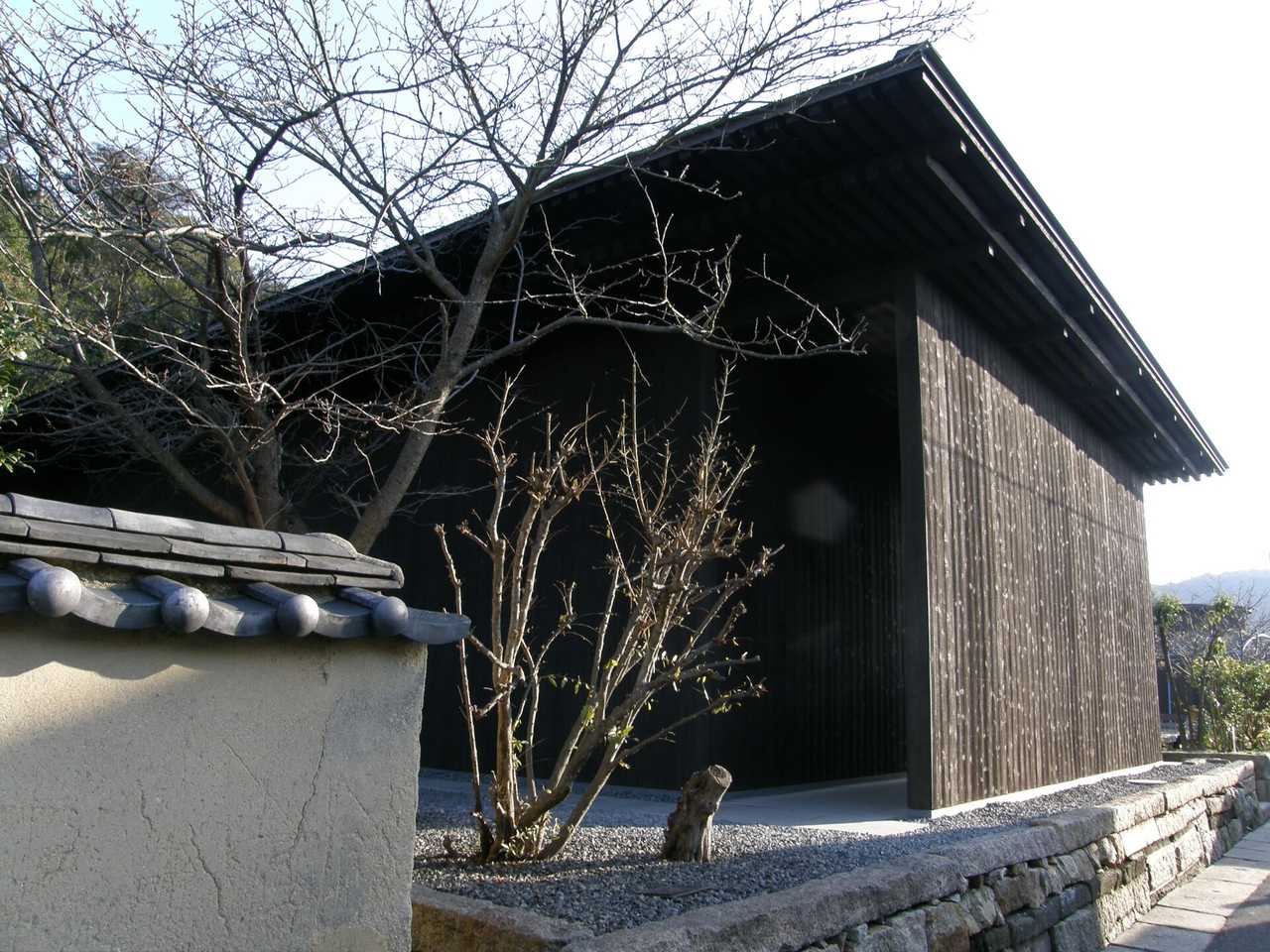
The Naoshima New Museum of Art opened on May 31, 2025, on a rise next to the Honmura village, and is Tadao Ando’s tenth architectural work in Benesse Art Site Naoshima. The building has two floors below ground and one above, and its exterior is finished in black plaster with a charred-cedar-board texture, deliberately blending into the skyline of the village’s tiled roofs.
Inside are several galleries focused on contemporary art from Japan and across Asia. Because it is right in Honmura, you can walk straight over after the Art House Project. Opening hours are 10:00-16:30 (last entry 16:00), closed on Mondays (if Monday is a national holiday it is open and closed the next day).

Art House Project: Minamidera, a Work That Begins After You Enter a Pitch-Black Space
Minamidera is the Art House Project work most people recommend; the building was designed by Tadao Ando and the work is by James Turrell. Visitors are led into a space with no light at all, feel their way along the wall to sit down, and then wait quietly in the dark.
After a few minutes your eyes gradually adjust, and a faint glow slowly appears in front of you where you thought there was nothing: that is the work itself. Because it takes time for your vision to adapt, entry is in groups, with a queue when it is busy, so allow plenty of time.
Art House Project: Go’o Shrine, a Glass Staircase Linking Above and Below Ground
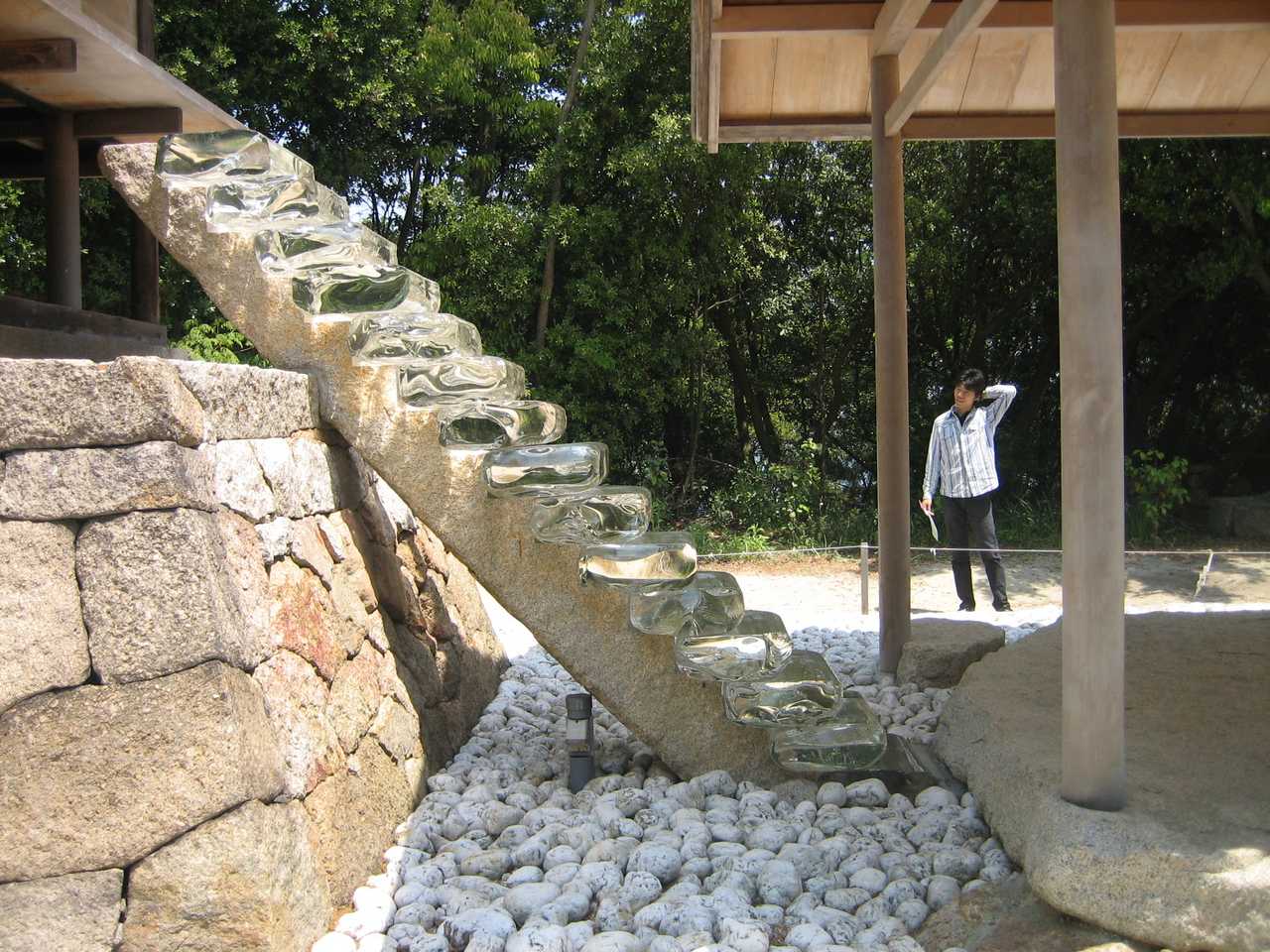
Go’o Shrine is Honmura’s local shrine, rebuilt by the photographer Hiroshi Sugimoto, and the work is titled Appropriate Proportion. A staircase made of optical glass runs between the main hall and the worship hall, and in sunlight it refracts a transparent blue.
More importantly, there is the underground: if you go down through the narrow stone chamber beside the shrine, you can see the glass staircase continue to the other end underground, while the opening looking out frames the sea. Above and below ground, the man-made and the natural are joined here, making it the richest and most layered of the Art House Project works.
Art House Project: Haisha, the Statue of Liberty in a Former Dental Clinic
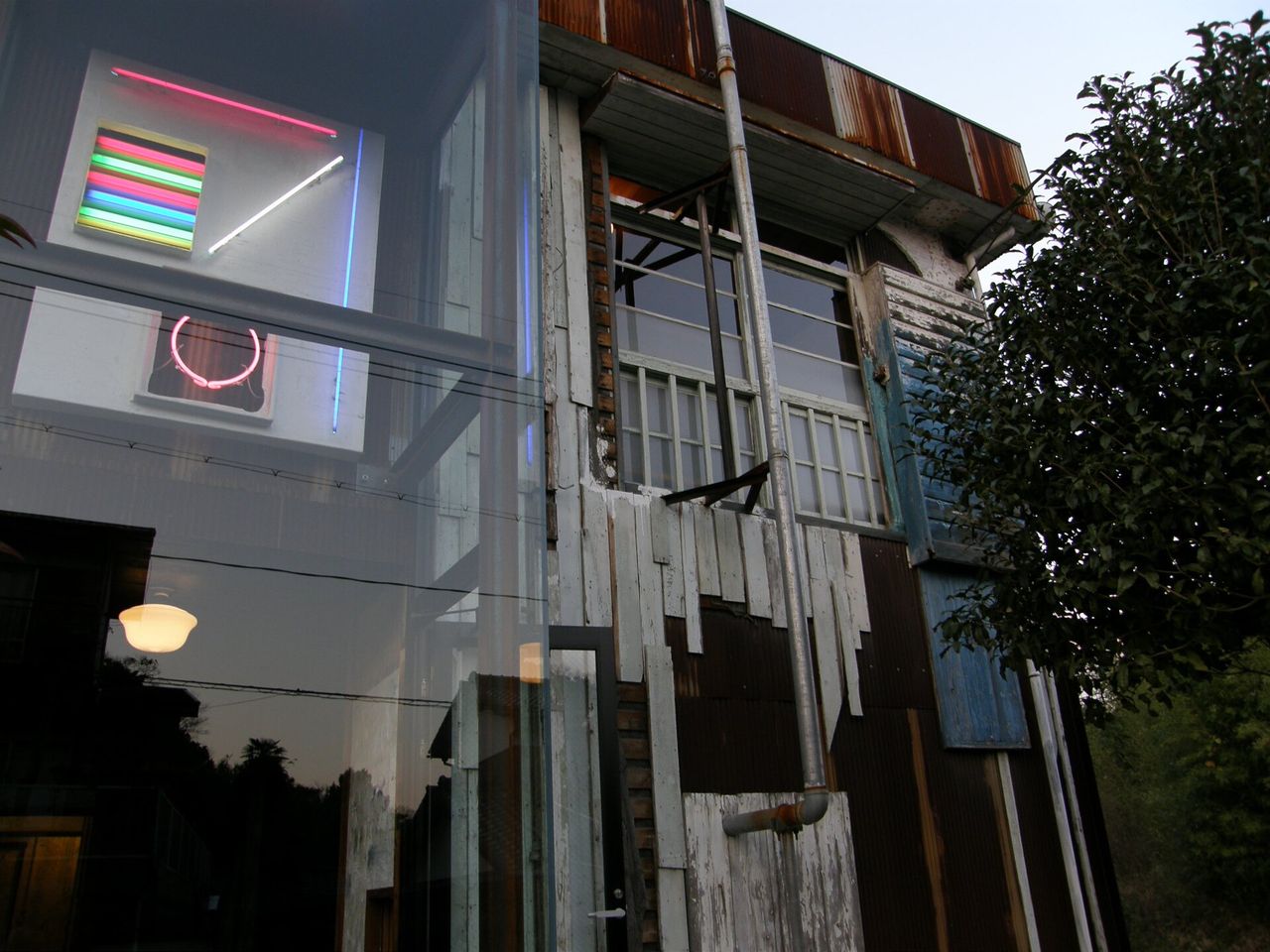
“Haisha” is the Japanese word for dentist, and this building really was Honmura’s dental clinic and residence before being handed to the artist Shinro Ohtake to transform; the work is titled Dream/Boccon-Nozoki (Shin-Zetsu-Mu, “Dream on the Tongue”). The exterior is covered in scrap materials, signs and collage, and is recognizable from far away.
The interior is likewise packed with found objects and graffiti, and the most outrageous element is a giant replica of the Statue of Liberty that runs from the second floor down through the first. It contrasts sharply with the minimalism of Minamidera and the serenity of Go’o Shrine, and is the liveliest and most memorable of the Art House Project works.
ANDO MUSEUM: A Full Set of Exposed Concrete Hidden in an Old Wooden House
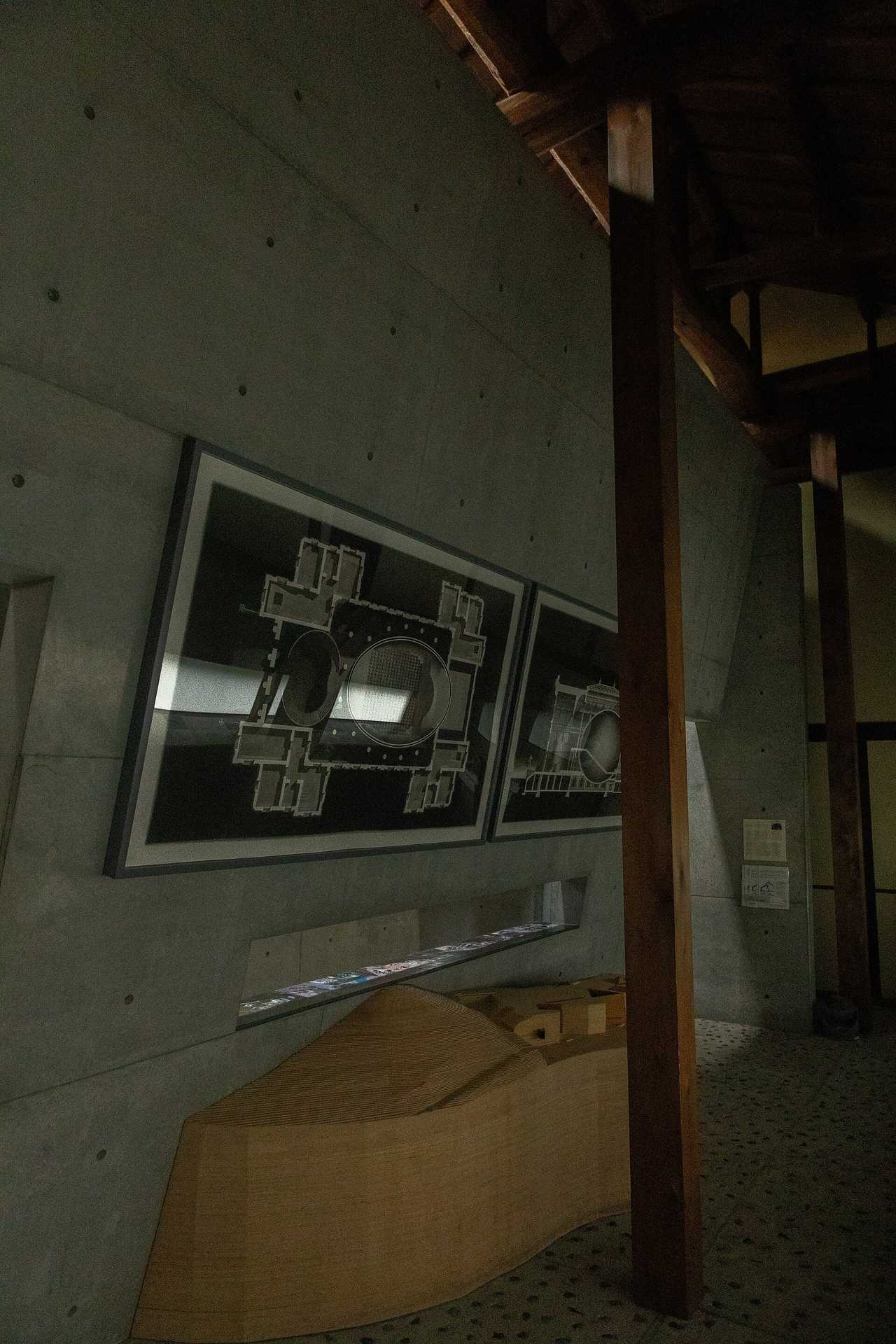
ANDO MUSEUM sits in a lane in Honmura and looks like an unremarkable century-old wooden townhouse, but pushing the door open reveals a completely different world: the interior is propped open by a full exposed-concrete structure, light from a skylight cuts across the concrete walls, and your sense of the space is turned inside out.
The museum displays Tadao Ando’s sketches, models and photographs from more than thirty years on Naoshima, effectively condensing the architectural history of the whole island into one small house. We recommend visiting it after the Art House Project, as you will more easily understand how those buildings relate to one another.
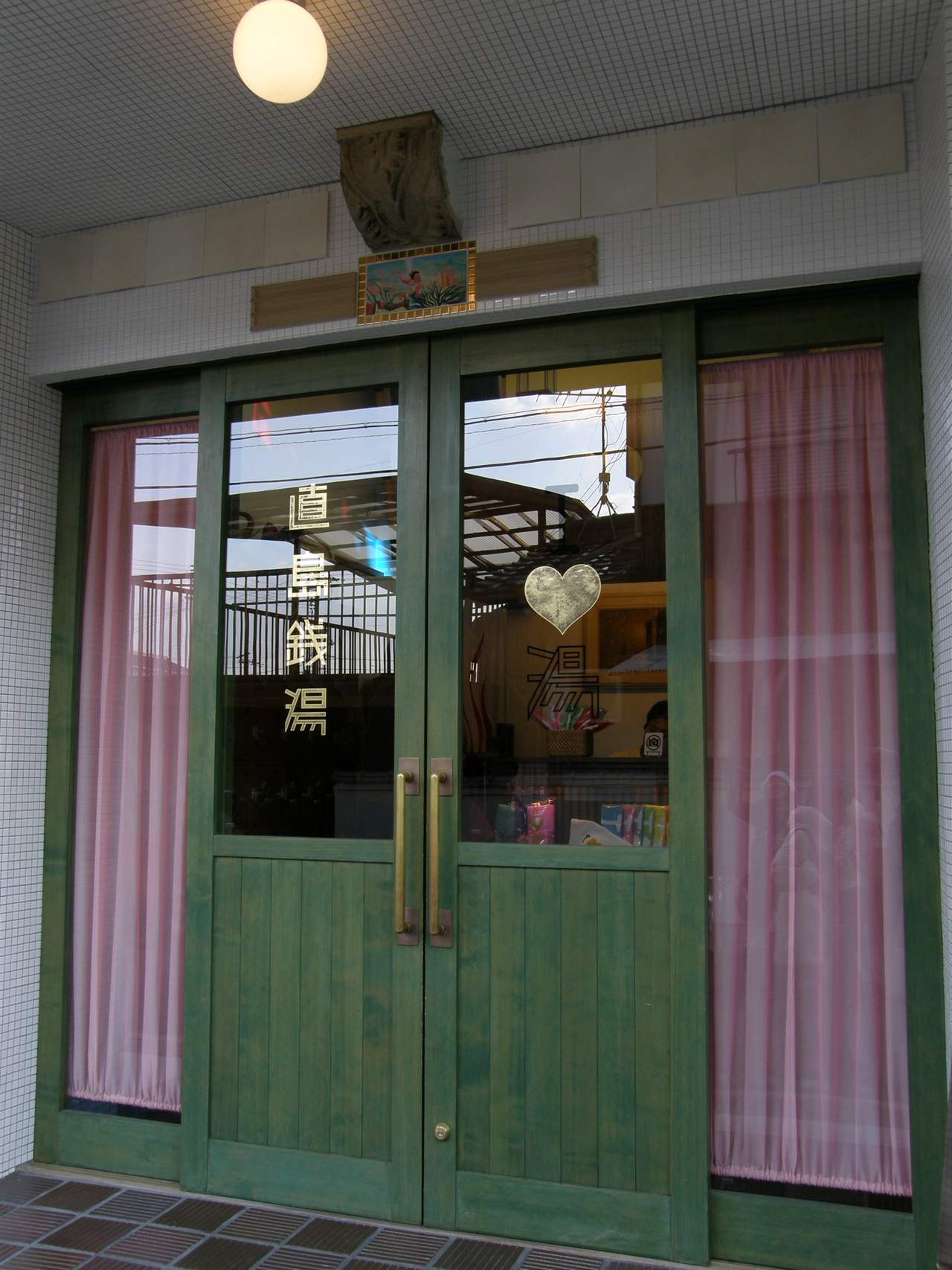
Naoshima Bath “I♥YU”: An Art Bathhouse You Can Really Soak In
Naoshima Bath “I♥YU” is within walking distance of Miyanoura Port and was created by Shinro Ohtake. Its exterior is covered in tiles, signboards and all kinds of found objects, and the strong Showa-era collage feel is unforgettable at first sight; the name itself is also a pun meaning “I love bath” (yu).
The most fun part is that it is not an exhibit but a real public bathhouse in operation: you buy a ticket, undress and soak in the bath, and even the bottom of the bath and the walls are works of art, with a stuffed elephant standing above the wall between the men’s and women’s baths. Opening hours and closing days follow the operator’s announcements on the day.
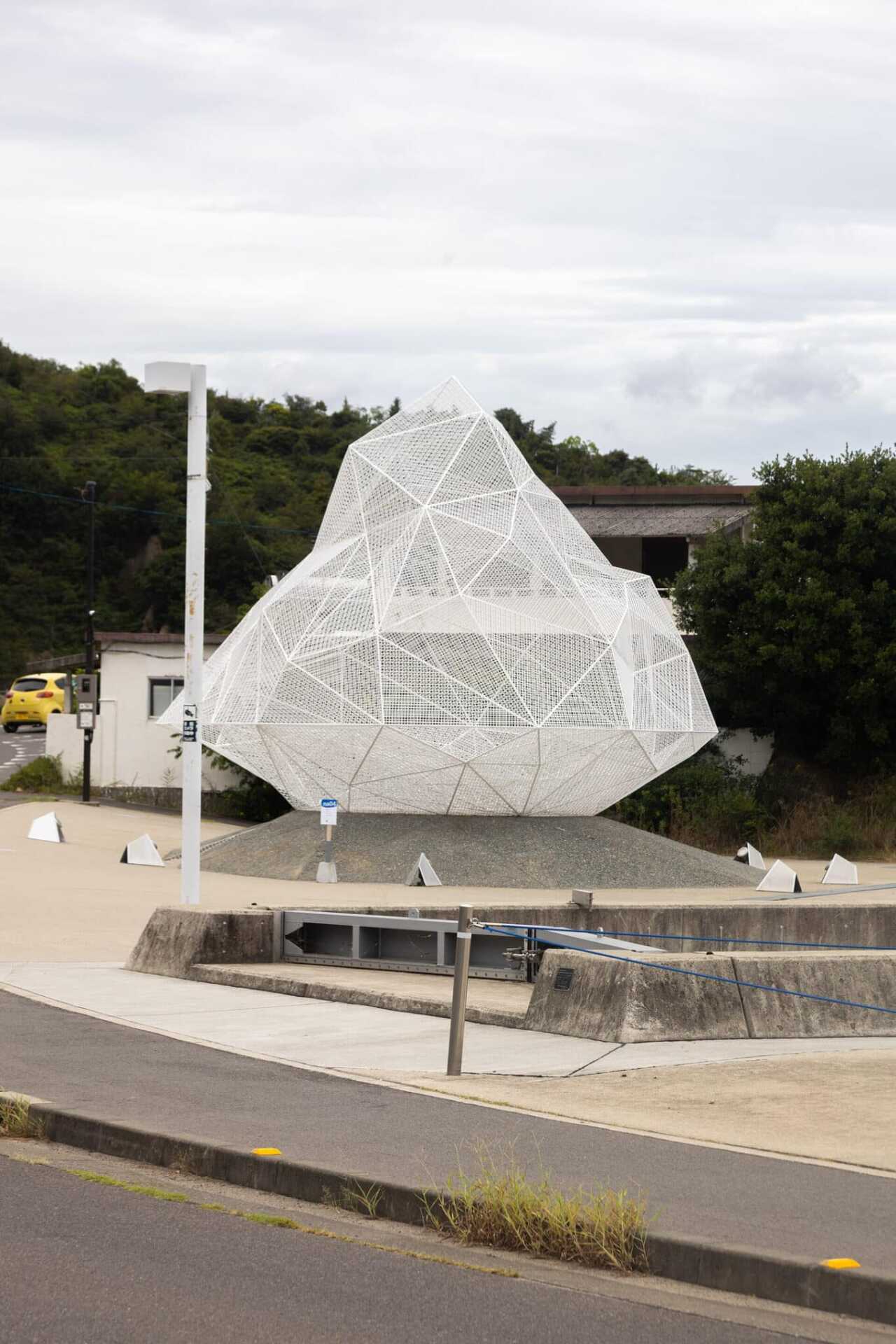
Naoshima Pavilion: A White Floating Island by Miyanoura Port
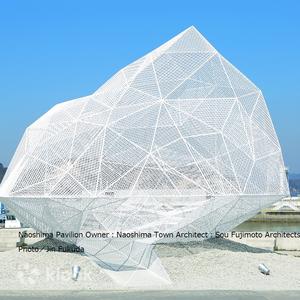
The Naoshima Pavilion is a work by the architect Sou Fujimoto, installed in 2015 on the waterfront green space beside Miyanoura Port. Around two hundred stainless steel mesh pieces form a translucent white geometric mass, conceptually described as the “27th island of Naoshima Town.”
You can walk inside it, and from within the grid cuts the sea and sky into fine fragments; after dark it lights up and glows, making it the most photogenic night view at Miyanoura Port. It is right near the landing, so it is a good place to wander around while waiting for your boat.
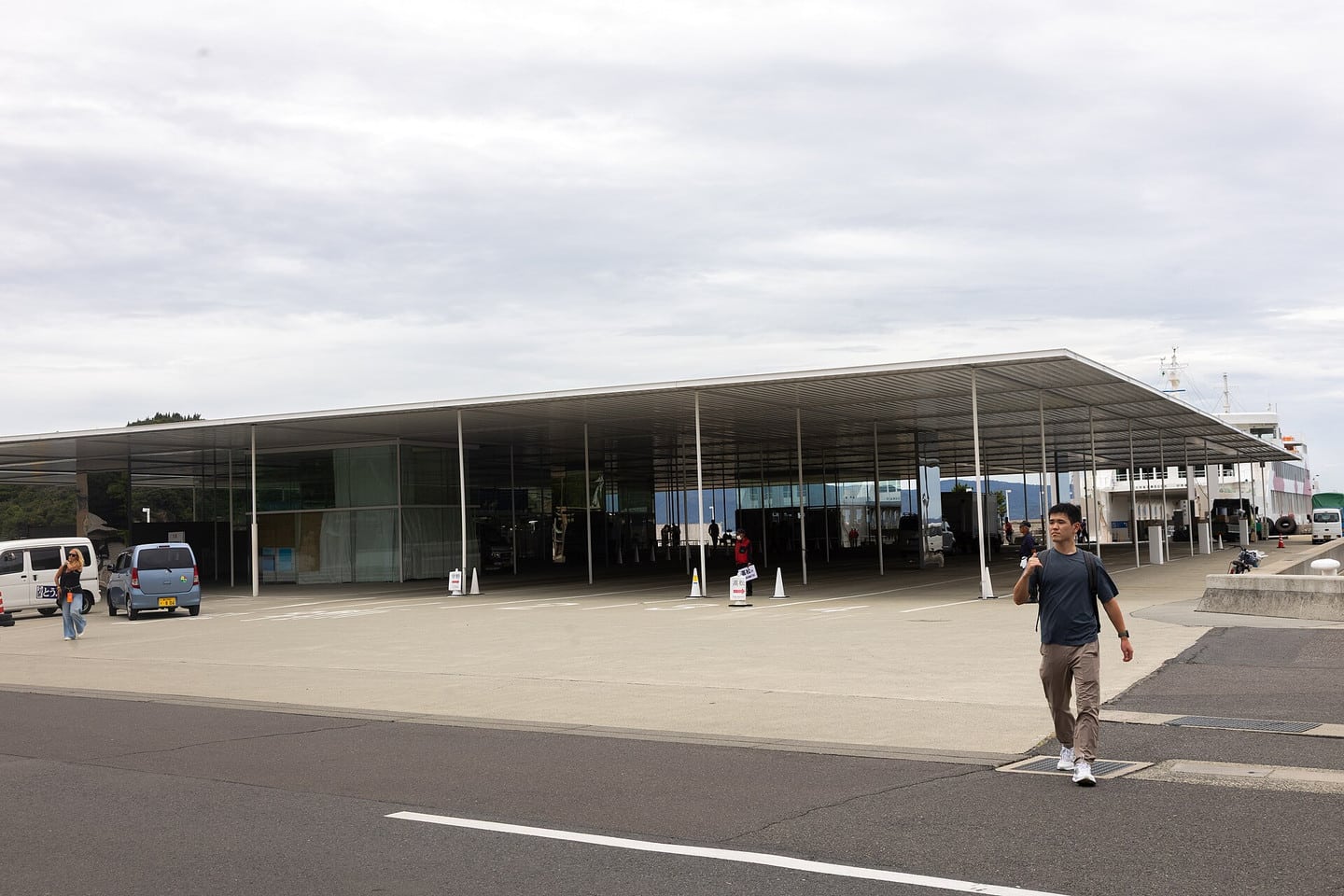
Naoshima Ferry Terminal: The SANAA-Designed Big Roof at Miyanoura Port
The thin white-roofed building you see first on stepping off the ferry is Miyanoura Port’s passenger terminal, the Naoshima Ferry Terminal (Umi no Eki Naoshima), designed by the SANAA office of Pritzker Prize winners Kazuyo Sejima and Ryue Nishizawa and opened in 2006.
Its signature is an extremely thin flat roof supported by many slender steel columns and glass, with almost no walls, so the sea breeze passes straight through the building. Inside are a tourist information office, coin lockers, a shop and a waiting area, and the first thing most people do after arriving on Naoshima is leave their luggage here.
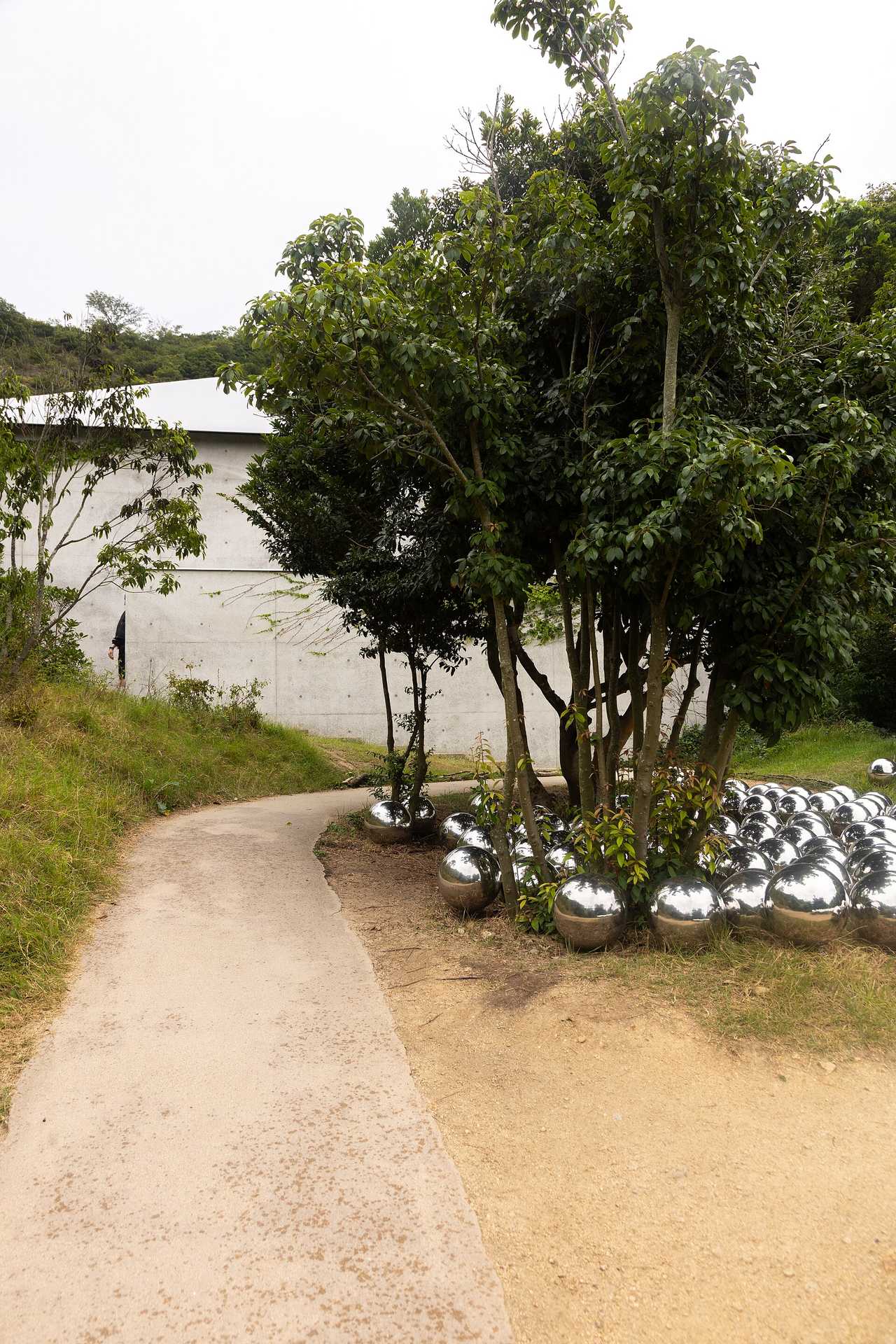
Valley Gallery: Yayoi Kusama’s Mirror Balls by the Valley Pond
Valley Gallery is a newer exhibition space in the Benesse area, opened in 2022 and also by Tadao Ando. The building is not large, and its semi-open structure lets wind, light and rain into the interior, merging with the surrounding valley terrain.
The most famous work here is Yayoi Kusama’s Narcissus Garden, in which hundreds of stainless steel mirror balls are scattered inside and outside the building and on the water, reflecting distorted views of the landscape as you move. It is near the Lee Ufan Museum, so it can be included in a walking route around the Benesse area.
Tsutsuji-so and the South Shore Beach: The Area Entrance and an Evening Sea View
Tsutsuji-so is the terminus of the town bus and the transfer point into the Benesse area: leave your bicycle here, leave your luggage here, then switch to the area’s free shuttle or simply walk along the coast to the Yellow Pumpkin and the museums.
The area itself is also worth a stop. The south shore has a gentle sandy beach and lawns, with large sculptures scattered outdoors, and in the evening the sea’s reflections overlapping with the silhouettes of the islands opposite are quite beautiful.
How Much Does Naoshima Cost? Tickets, Reservation System and Ferry Fares
Naoshima’s costs come down to three things: ferry fares, museum tickets and rentals. It is not cheap overall, but more than the ticket prices, what really needs to be handled in advance is the reservations.
Chichu Art Museum: The Timed Reservation to Handle First
The Chichu Art Museum uses an online reservation system with a specified date and time, tickets must be bought in advance on the official website, and day-of tickets may not be available on site. In peak season, long weekends and during art festivals it often sells out completely weeks ahead, so be sure to book this one first.
Its ticket price is on the higher side among Naoshima facilities, and for visitors 15 and under there are generally free or discounted rules. Once a reservation slot is chosen it usually cannot be changed freely, so plan that day’s ferry times and other activities together before booking. Actual prices and rules are subject to the day’s announcement on the Benesse Art Site Naoshima official website (benesse-artsite.jp).
How to Buy Lee Ufan Museum Tickets: Online Tickets Are ¥200 Cheaper Than the Window
Unlike the Chichu Art Museum, the Lee Ufan Museum does not have a per-slot visitor cap, but we still recommend buying an online ticket on the official website first: ¥1,200 online, ¥1,400 at the window, free for ages 15 and under. The two museums are close together, so they can be scheduled into the same afternoon, leaving buffer time for walking and the shuttle between them.
Naoshima New Museum of Art Reservations and Ticket Prices
How do you reserve the Naoshima New Museum of Art? Since October 1, 2024, Benesse Art Site Naoshima has introduced online ticketing for all its art facilities, and the Naoshima New Museum of Art tickets are likewise bought from the “Museum Reservation” page on the official website: ¥1,500 online, ¥1,700 at the window. Ages 15 and under are free but still need an online ticket for each person. Opening hours are 10:00-16:30 (last entry 16:00), closed on Mondays; a new summer exhibition opens from June 7, 2026.
Art House Project Combination Ticket: One Ticket for the Old-House Works of Honmura
The Art House Project uses a combination ticket, so one ticket lets you visit several works, which is much better value than buying single tickets one by one. The ticket office is at a service point in Honmura, so buy your ticket first on arrival in Honmura and then start exploring, and your route will go much more smoothly.
Note that the combination ticket (¥1,200 online) covers Kadoya, Go’o Shrine, Ishibashi, Gokaisho and Haisha, but does not include Minamidera and Kinza: both have timed visitor limits and require separate timed tickets (¥600 each online), and Kinza admits only one person at a time. The ticket price and coverage should also be checked against the official announcement of the day.
Ferry Tickets and Cash: Pier Windows May Not Accept Credit Cards
The ferry from Takamatsu to Miyanoura is ¥680 one way for adults and the high-speed boat is ¥1,590; from Uno it is ¥370. Ferry tickets are mostly bought at the pier window on the day, and some windows and small shops on the island accept cash only, so be sure to bring enough yen in notes and coins before you set out.
Vending machines, small eateries and some rental shops on the island may likewise not support credit cards or mobile payments, and Naoshima has very few ATMs. Withdrawing the cash you will need that day in Takamatsu or Okayama first is the least error-prone approach.
What to Watch Out for on Naoshima: Accommodation Tips and Pre-Trip Reminders
Naoshima is an island with many rules. If you haven’t sorted out the following three things beforehand, your itinerary can easily get stuck on the spot.

Stay on Naoshima or in Takamatsu or Okayama? Accommodation Tips for Side Trips
Lodging on the island is represented by Benesse House, where guests can have the museum galleries to themselves after closing, Naoshima’s most luxurious experience, but rooms are few, prices are high and you need to book very early. There are also guesthouses and small inns around Honmura and Miyanoura, but choices are limited and they are likewise in demand in peak season.
Most travelers choose to stay in Takamatsu or Okayama and take the boat back and forth during the day. The benefits are more dinner options and no need to move luggage; the cost is being tied to the last boat and not seeing the island after dark. To see all the museums at a relaxed pace, staying one night is still the ideal option.
Monday Closures and the Reservation System: The Two Easiest Traps on Naoshima
The first trap is closing days. Most Naoshima museums and Art House Project works close on Mondays, shifting to the next day if Monday is a national holiday, which means that if you go on a Monday or the day after a holiday, the indoor facilities on the whole island may be closed. Avoid those days when planning your trip.
The second trap is reservations. The Chichu Art Museum uses timed reservations and often sells out weeks ahead; Minamidera and Kinza also need separate timed tickets, and for the Lee Ufan Museum and the Naoshima New Museum of Art we recommend buying online tickets first (¥200 cheaper than the window). Treat your reservation slots as the fixed backbone of the itinerary: book first, then decide which boat to take.
Cash, Meal Times and the Last Boat: Life on the Island Starts Early
Quite a few shops, ferry ticket windows and vending machines on the island accept cash only, and ATMs are few, so be sure to have yen in cash before boarding. Also, restaurants and cafes on the island mostly close in the early evening and are often full at lunchtime, so if you want to eat at a particular place, go early or check its opening hours first.
Finally, the last boat. If you miss it you have to stay overnight on the island, and finding a room at short notice is nearly impossible. After the last sight, leave plenty of time for the ride back and returning the bike; there is still a considerable distance from the Benesse area to Miyanoura Port, and shuttles and buses are not frequent.
Naoshima FAQ
Q: Is one day enough for Naoshima?
If you focus only on the Chichu Art Museum, the Art House Project and the two pumpkins, a day trip is feasible, but it will be quite tight and must follow the boat schedule exactly. If you also want to add the Lee Ufan Museum, the Naoshima New Museum of Art and Benesse House, or enjoy a relaxed meal on the island, we recommend two days and one night.
Q: Do I have to reserve the Chichu Art Museum in advance?
Yes. The Chichu Art Museum uses online reservations for a specified date and time; tickets must be bought in advance on the official website, tickets on site are not guaranteed, and in peak season it is often fully booked weeks ahead. For the Lee Ufan Museum and the Naoshima New Museum of Art we also recommend buying online tickets on the official website in advance; although ages 15 and under are free, a ticket is still required for each person.
Q: Will there be nothing to see if I go to Naoshima on a Monday?
Most museums and Art House Project works are closed on Mondays, shifting to the next day if it is a national holiday. The outdoor Red Pumpkin, Yellow Pumpkin and Naoshima Pavilion can still be viewed freely, but the indoor facilities are basically all closed, so we strongly advise against scheduling Naoshima on a Monday.
Q: Is Yayoi Kusama’s Yellow Pumpkin still there?
Yes. The Yellow Pumpkin was damaged and swept away by large typhoon waves in 2021, then repaired and more firmly secured, and in 2022 it was reinstalled at its original seaside pier in the Benesse area; it can still be viewed and photographed freely today.
Q: Is it better to go from Takamatsu Port or Uno Port?
It depends on your overall itinerary. If your trip is centered on Shikoku, go from Takamatsu Port, where the ferry takes about 50 minutes; if it is centered on Okayama or the Kansai direction, go from Uno Port, which takes only about 20 minutes and has cheaper fares. Uno Port also has a route straight to Honmura Port, which suits seeing the Art House Project first.
Q: Do I have to rent a bicycle? Can I walk?
Walking alone is very tiring, since there are slopes and distances from Miyanoura to Honmura and from Honmura to the Benesse area. We recommend renting an electric-assist bicycle, or taking the town bus plus the area’s free shuttle. Note that regular bicycles cannot be ridden into the Benesse area, and that section must be covered on foot or by transferring.
Q: Can I use credit cards on Naoshima? How much cash should I bring?
Many small shops, eateries, vending machines and ferry ticket windows on the island accept cash only, and there are very few ATMs. We recommend withdrawing the yen cash you need for the day’s meals, ferry fares, rentals and tickets in Takamatsu or Okayama beforehand, and not counting on solving it after you reach the island.