
Kifune and Kurama Day Trip 2026: Kurama-dera’s Tengu Legend and Kifune Shrine’s Water Fortune-Telling Explained
Kifune and Kurama lie in Rakuhoku, northern Kyoto, a pair of thousand-year-old sacred mountain sites that combine tengu legend with water-deity worship, and you can hike between both ancient sites in a single day.
Kurama-dera
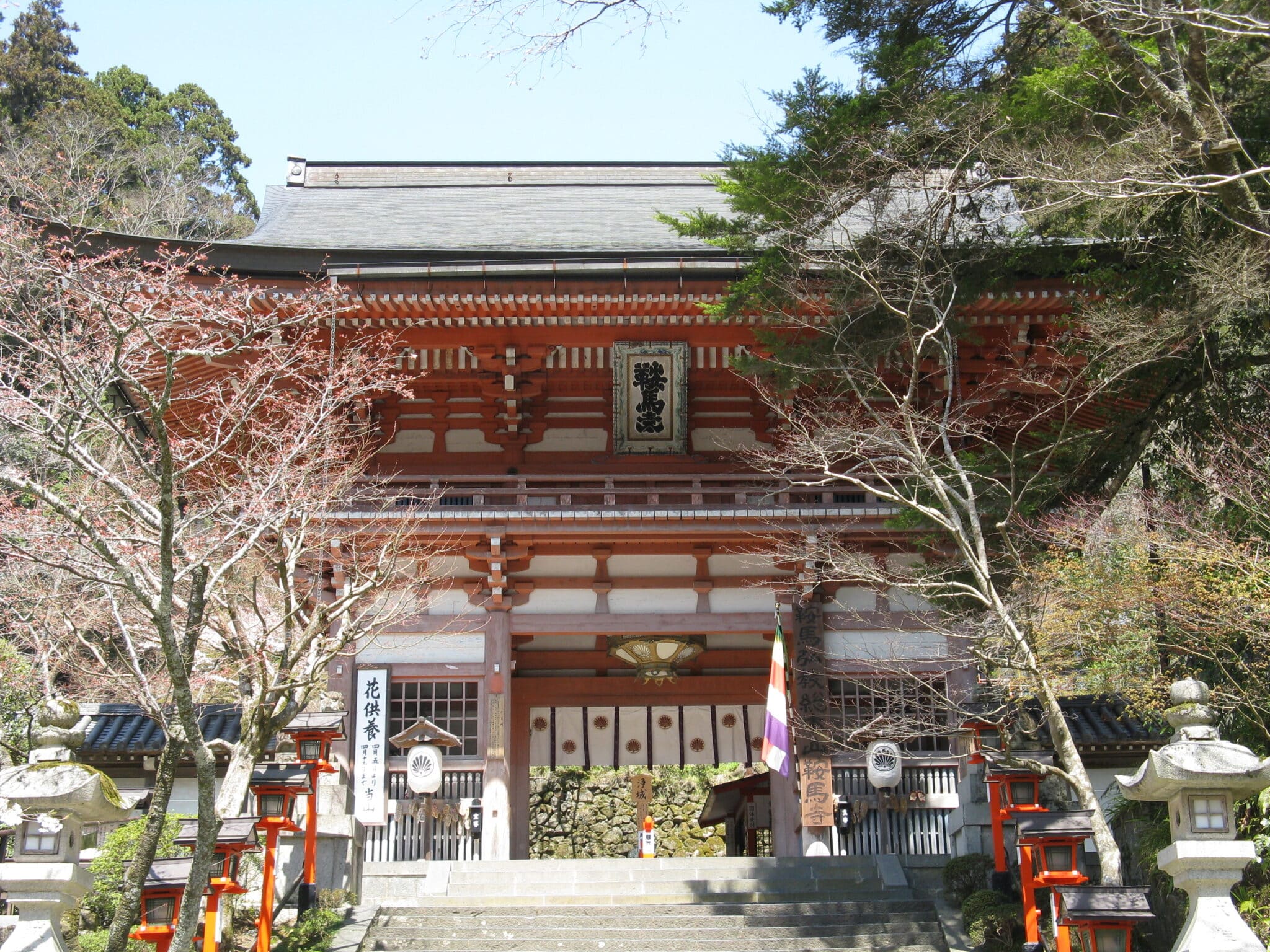
Kurama-dera was founded in 770 and is the most representative tengu sacred site in Rakuhoku, Kyoto, enshrining the Sonten trinity. After entering through the Niomon Gate, you climb on foot or take the mountain cable car to the main hall, the Kondo.
Legend has it that the young Minamoto no Yoshitsune (Ushiwakamaru) trained in martial arts with the tengu here, and tengu statues and related souvenirs can be found all over the grounds. The mountain admission fee is ¥500 (raised on April 1, 2023), and the temple is open daily from 9:00 to 16:15, with occasional temporary closures of the mountain in winter.

![Kyoto - [Kyoto / Kurama] KURAMA Onsen Bathing Ticket](https://res.klook.com/images/w_300,h_300,c_fill,q_75/w_80,x_15,y_15,g_south_west,l_Klook_water_br_trans_yhcmh3/activities/pufygh4jikhvuiugb4dg/【京都・鞍馬】KURAMA温泉入浴券-Klook.jpg)

Niomon Gate
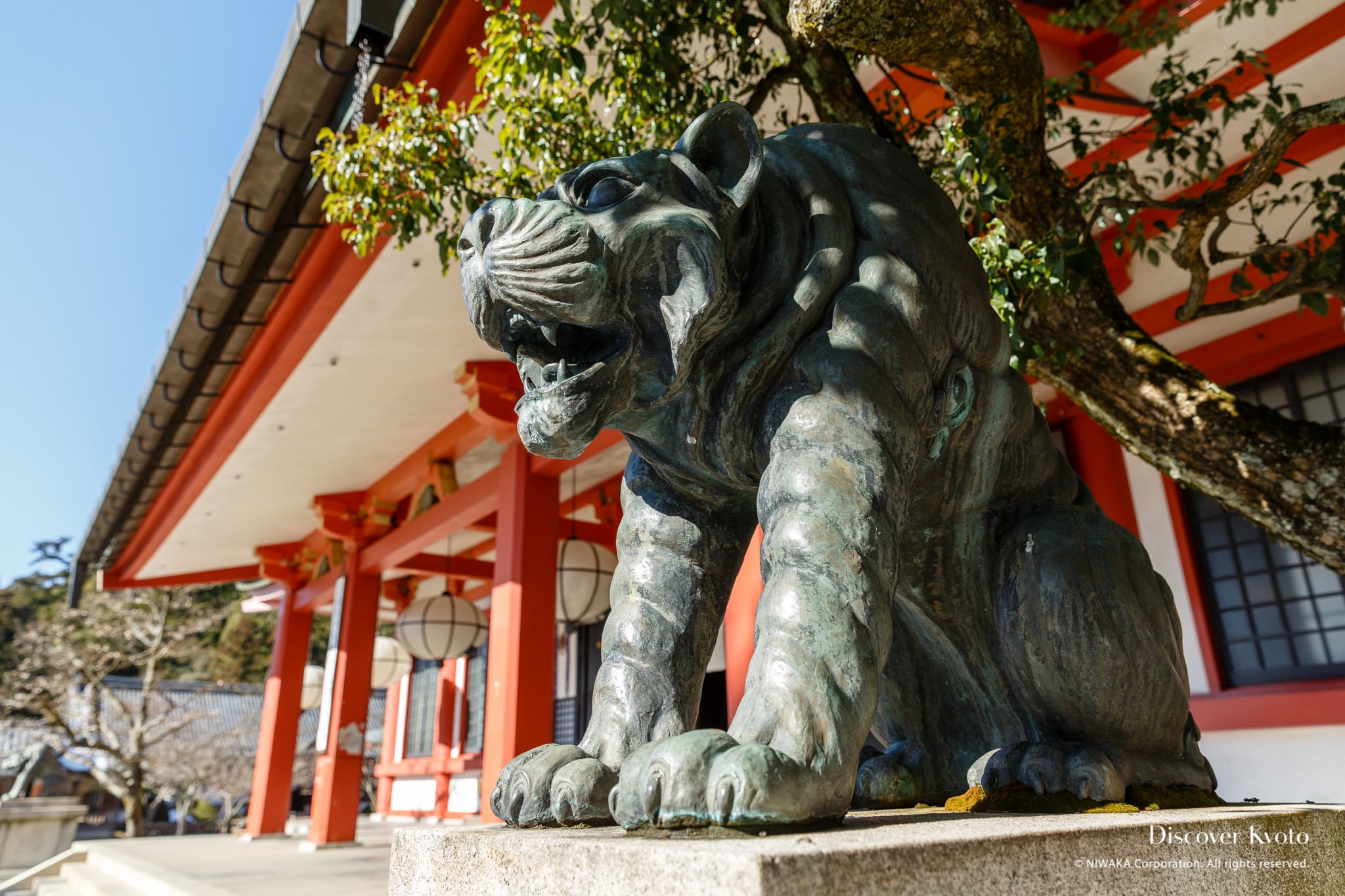
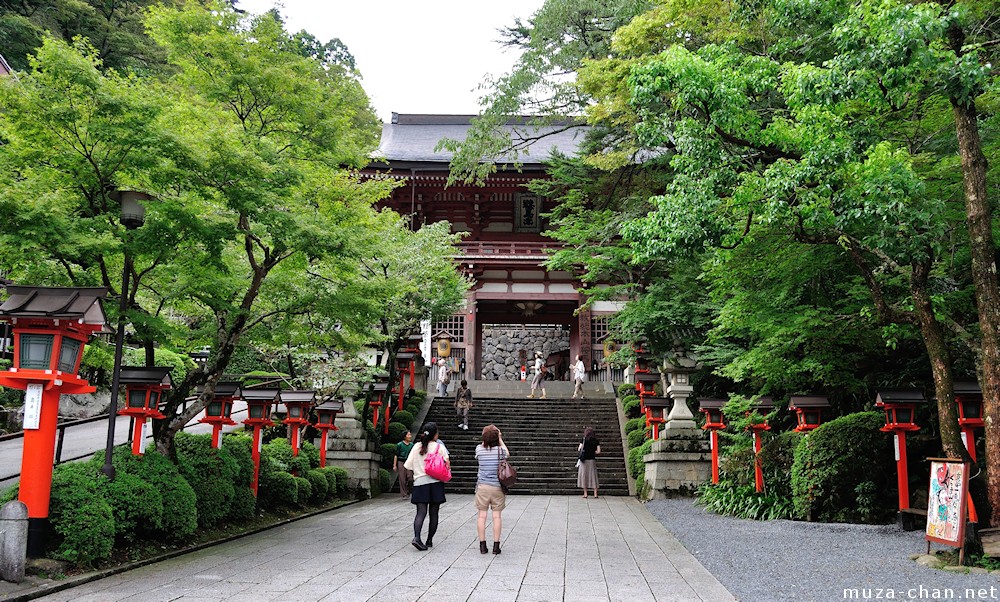
The Niomon Gate is the mountain gate entrance to Kurama-dera, with fierce Nio guardian statues enshrined on both sides. It is the first checkpoint into the sacred realm of Mt. Kurama and also the starting point of the hiking route.
An admission fee booth stands in front of the gate, and visitors must buy a ticket here to continue up the mountain. There is also a small rest area and souvenir shop around the Niomon Gate, a good place to pause and get ready before setting off.
Walking from the gate to the Kondo main hall takes about 30 minutes; according to the official website, the mountain cable car runs its first uphill train at 8:40 and its last downhill train at 16:25, and is available if your stamina is limited.
Yuki Shrine and the Great Cedar
Yuki Shrine stands along the approach to Kurama-dera, and inside the shrine rises a giant cedar about 800 years old, its branches towering skyward and full of sacred energy, a must-visit power spot for photography lovers.
The Kurama Fire Festival, held every year on October 22, is centered on Yuki Shrine. The torch procession is magnificent, one of the Three Strange Festivals of Kyoto, drawing large crowds of visitors and photographers on pilgrimage.
![[Kyoto / Yuki Shrine] Wish with all your heart and it will come true! The 53-meter sacred tree Osugi-san | Novaburo Shrines](https://travel.williamlion.tw/wp-content/uploads/sites/7/2026/07/unnamed-file-1116.jpg)
Kondo Main Hall
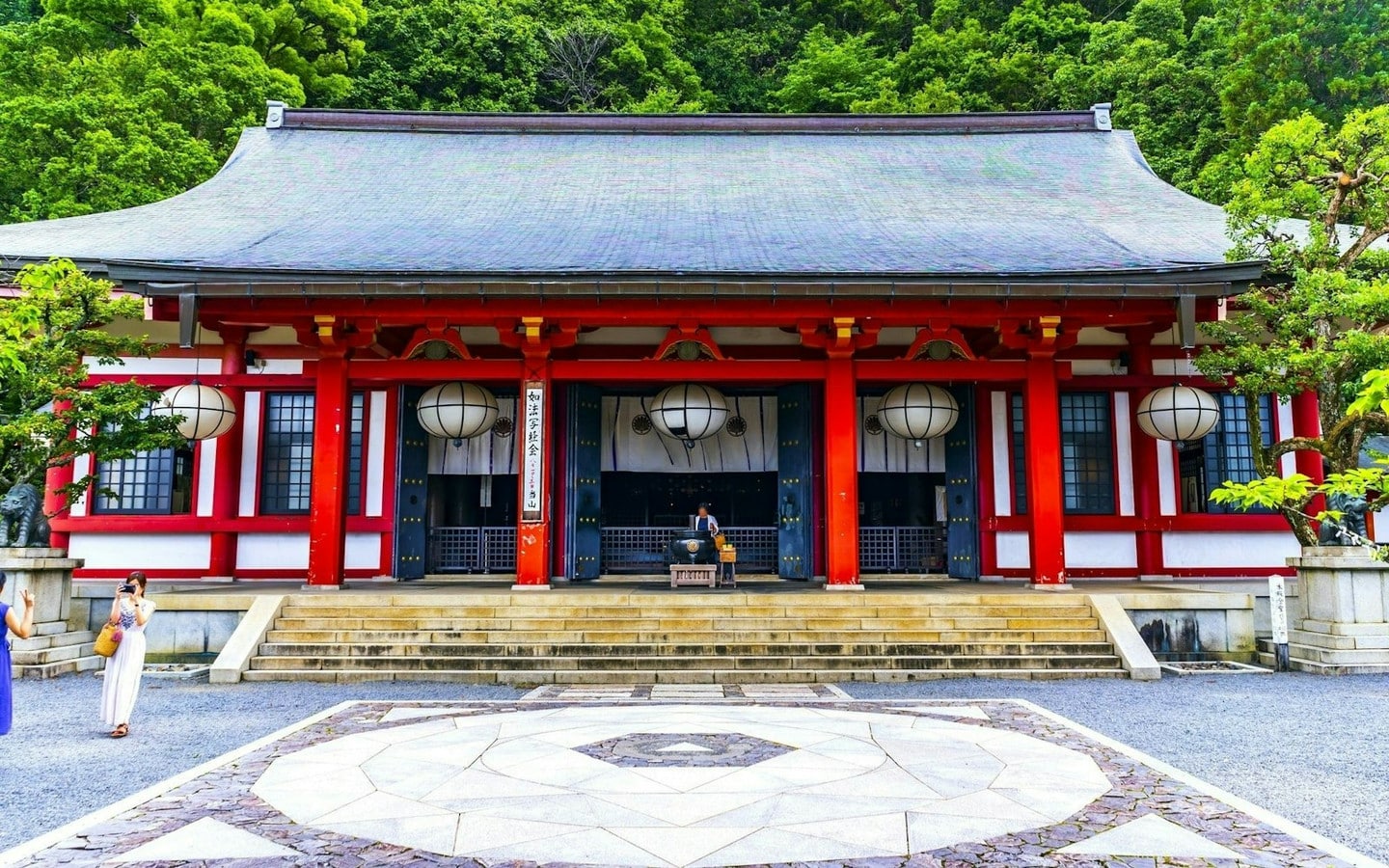
The Kondo is the heart of Kurama-dera, enshrining the Sonten trinity. In front of the hall, a hexagram is drawn on the ground, called the Kongo-sho (Diamond Floor), said to be where cosmic energy gathers.
Many visitors queue specifically to stand in the center of the hexagram to pray and take photos, feeling the legendary energy field. The plaza in front of the hall has open views, and on a clear day you can look down over the whole Kurama valley.
The Kondo is open from 9:00 to 16:15, so allow plenty of time for your visit to avoid running out of time near closing.
Kinone Michi (Tree Root Path)
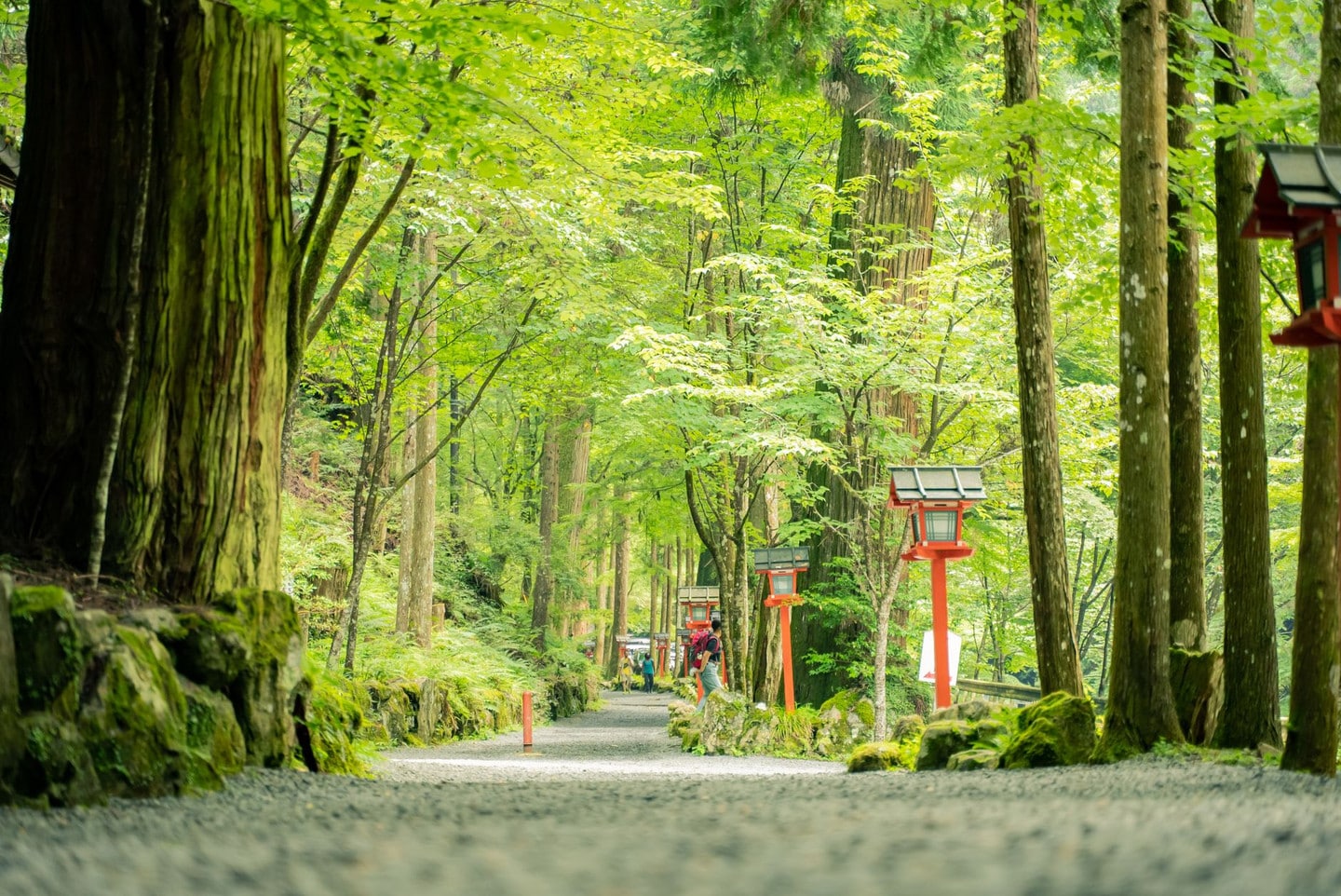
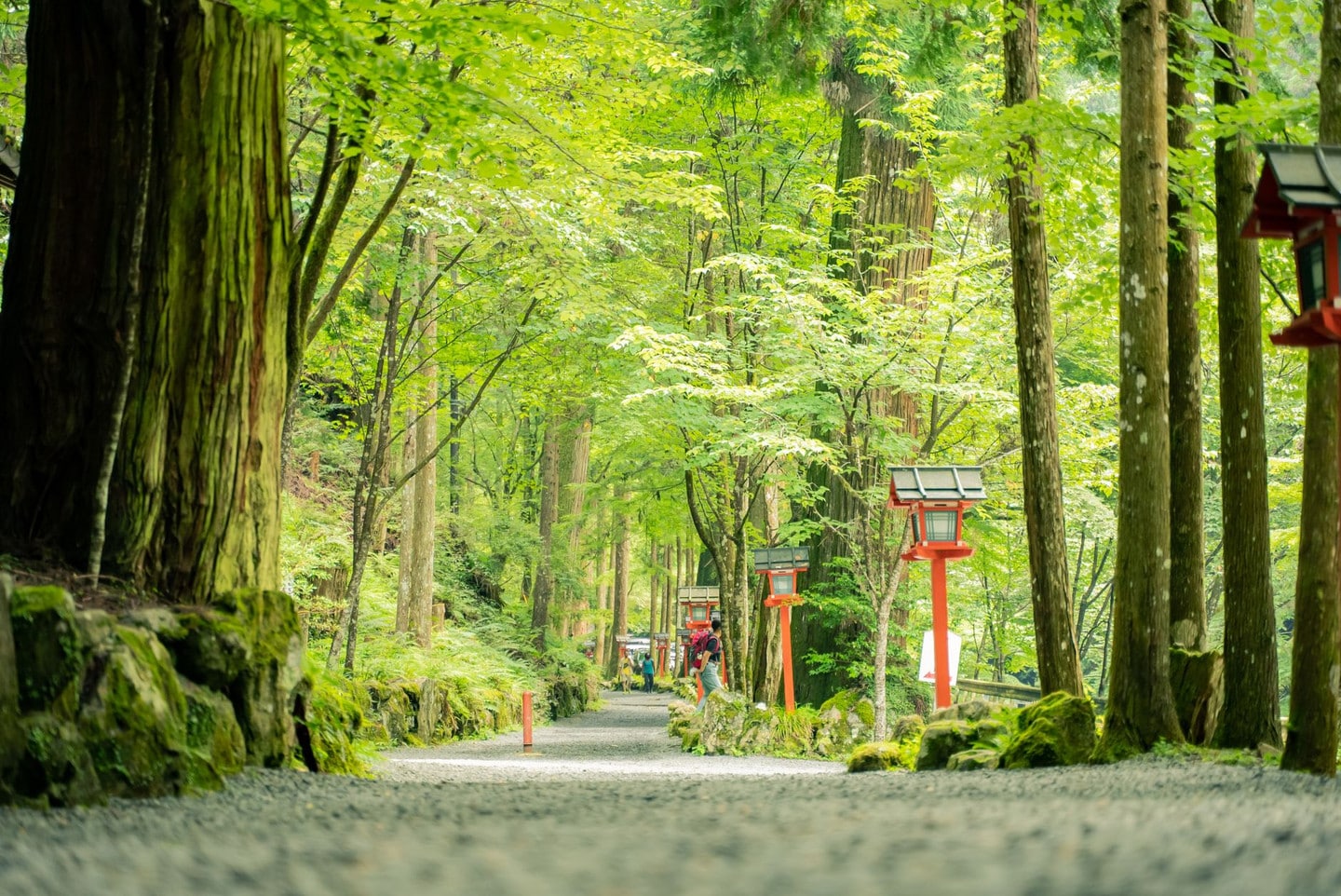
Kinone Michi is a hiking trail linking Kurama-dera and Kifune Shrine. The hard ground leaves the cedar roots exposed on the surface, and the tangled roots form a fantastical landscape.
It is said to be exactly where Minamoto no Yoshitsune trained in martial arts with the tengu. The path is shaded by trees with fresh air, and the walk takes about 30 to 40 minutes, a popular photo spot. The exposed roots make non-slip, comfortable shoes advisable, and after rain you should slow down even more.
Okunoin Maoden
Okunoin Maoden enshrines the guardian Maoson and stands near Kinone Michi. It is the highest point of the Kurama-dera hiking route and a place you must pass on the way to Kifune Shrine.
Though the hall is not large, the atmosphere is solemn and mysterious. It is said to have a strong magnetic field, and many power-spot enthusiasts come specially to pray quietly here before continuing down the mountain.
After worshipping, follow the mountain path down toward the west gate to join the hiking route to Kifune Shrine, and allow ample time for the trip.
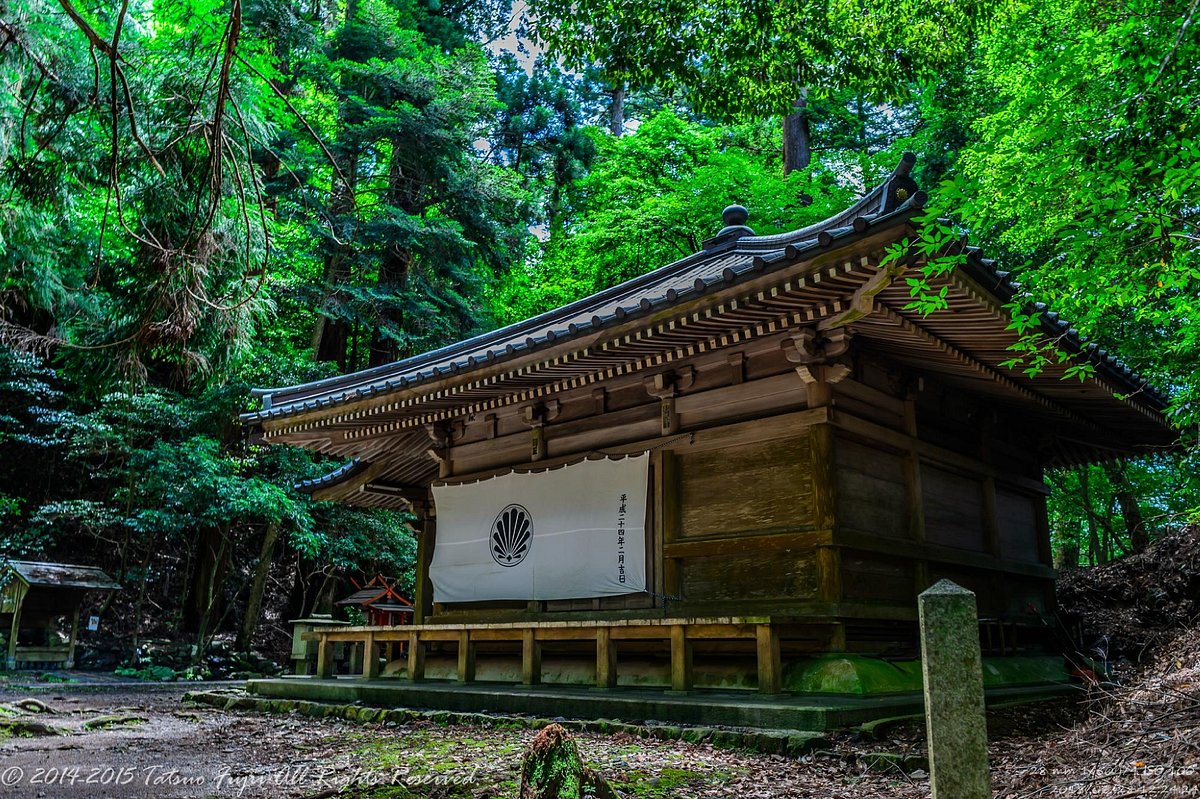
From Kurama-dera to Kifune Shrine: About 1 Hour and 1.5 km on Foot
From the Kondo of Kurama-dera, you pass Okunoin Maoden and Kinone Michi in turn, then descend through the west gate to reach Kifune Shrine, about 1.5 km and about 1 hour on foot. The walk from the mountain gate to the Kondo takes about another 30 minutes, and those with limited stamina can take the mountain cable car; check that day’s mountain opening and cable car operating times before you set out.
Kifune Shrine Main Shrine
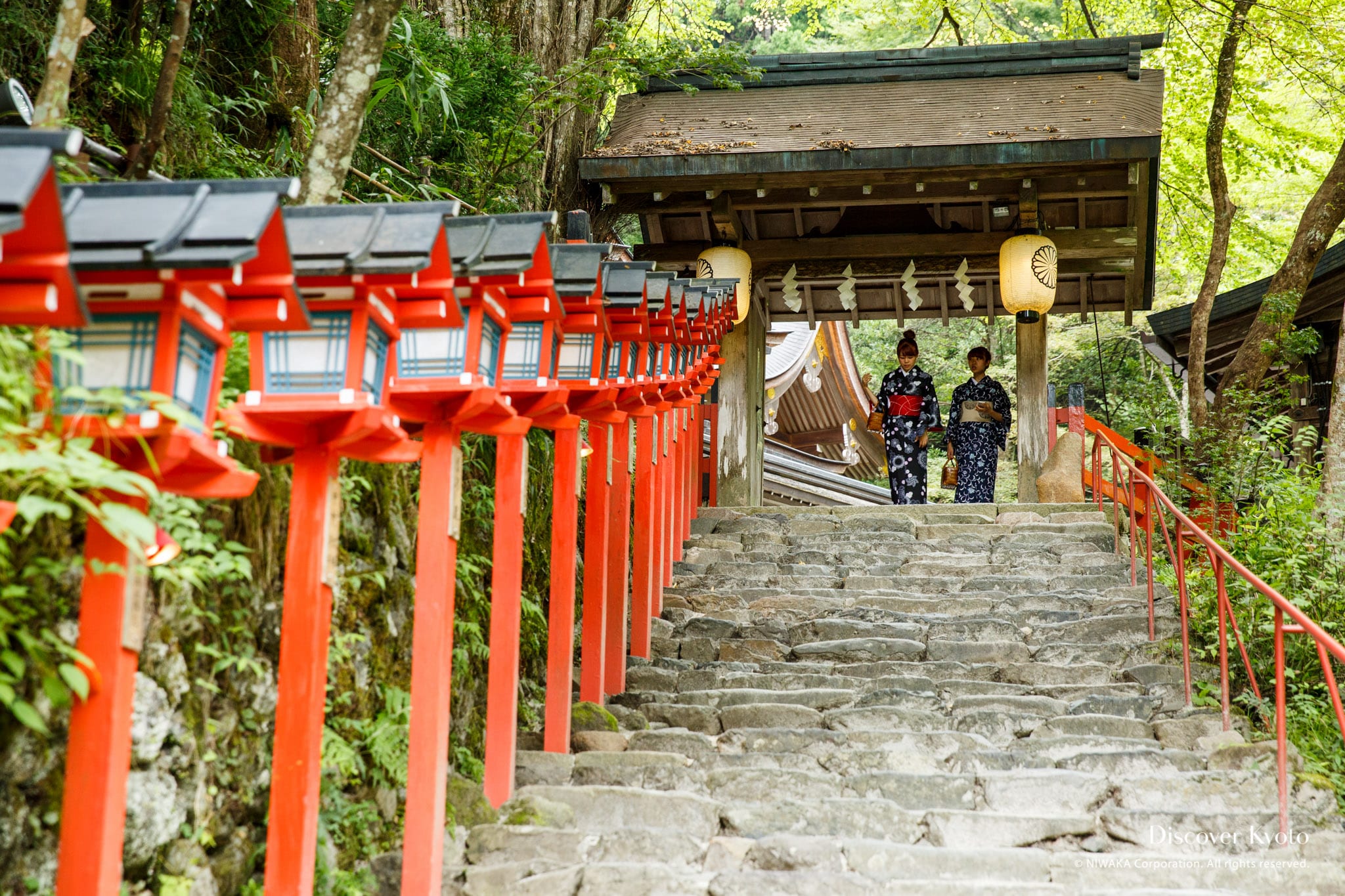
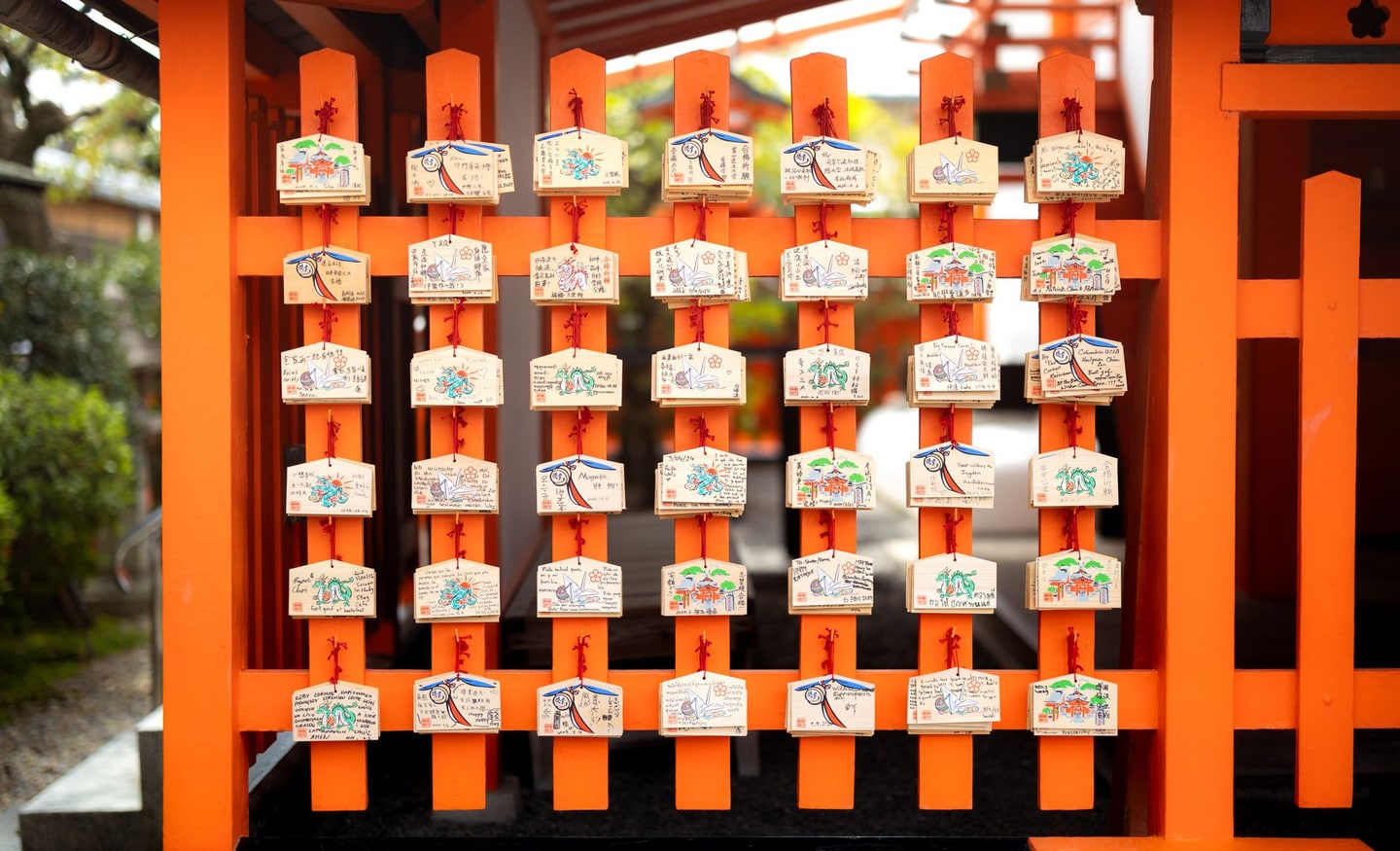
The founding date of Kifune Shrine is unknown, but it is said to have a history of 1,600 years. It enshrines the water deity Takaokami no Kami, is the head shrine of all Kifune shrines across Japan and is the birthplace of the ema votive plaque tradition.
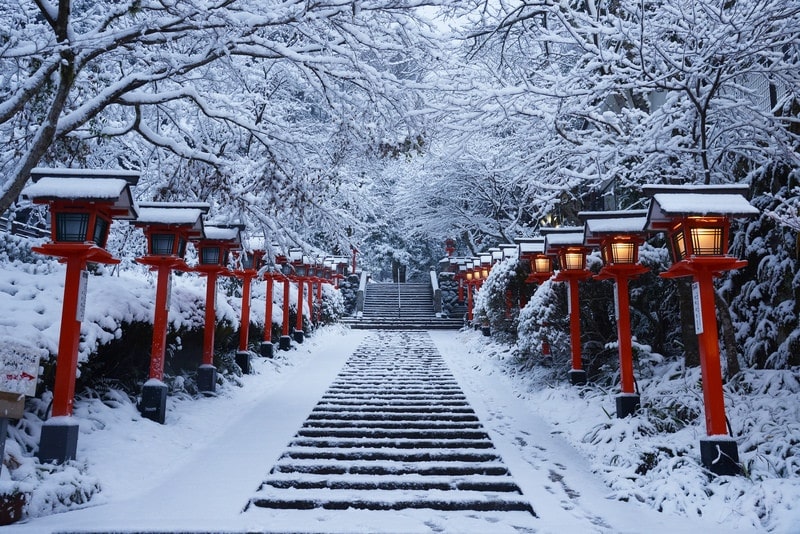
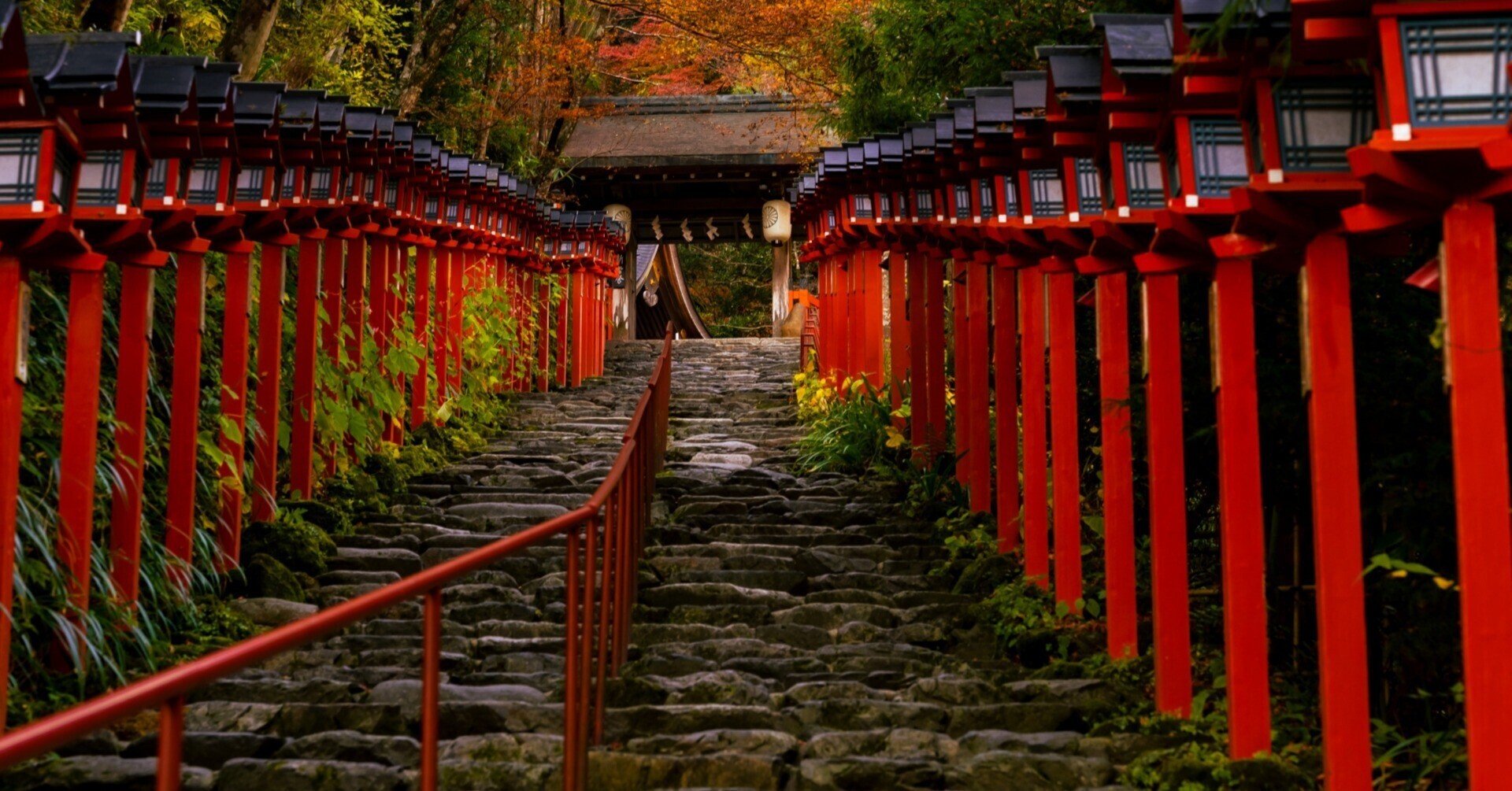
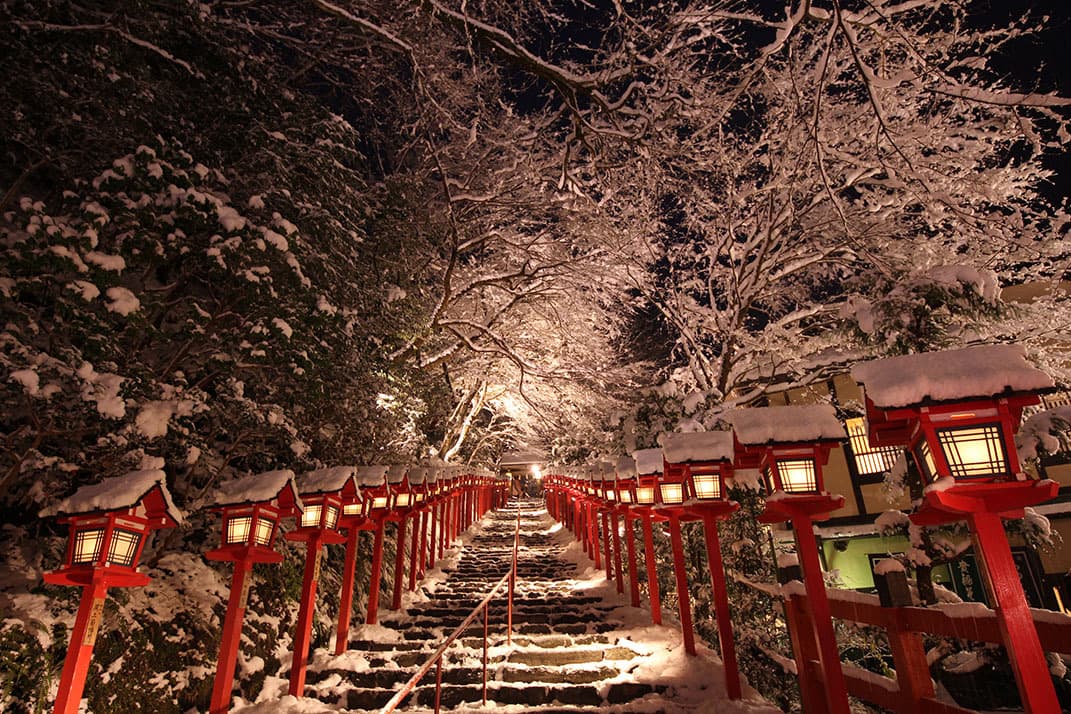
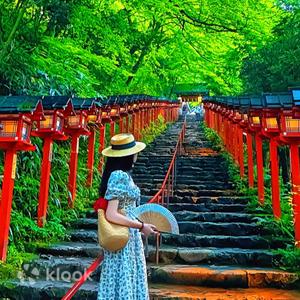
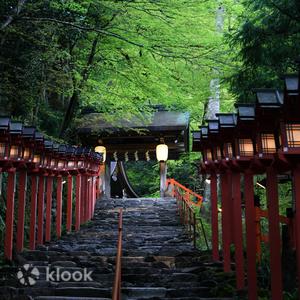
The red lantern stone steps in front of the main shrine are Kifune Shrine’s classic photo scene, with vermilion lanterns lining both sides of the steps as they climb, beautiful in every season and especially dreamlike when lit at night.
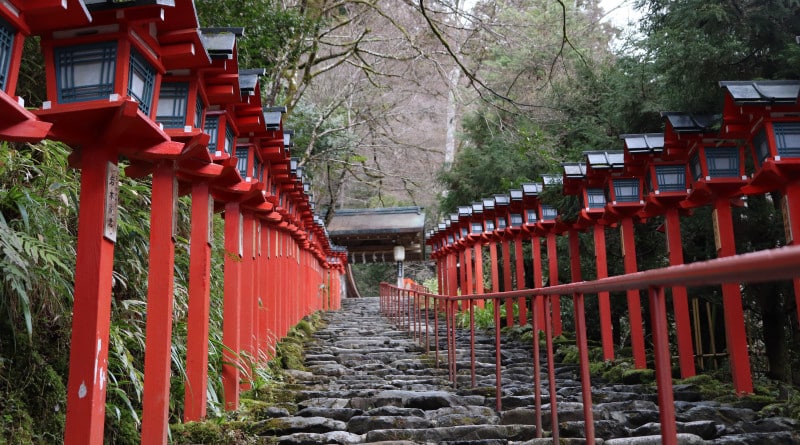
Kifune Shrine Yui-no-yashiro (Nakamiya)
Yui-no-yashiro, also called Nakamiya, enshrines Iwanagahime no Mikoto and is a famous Japanese shrine for love and matchmaking. It is said to be linked to the love story of the waka poet Izumi Shikibu, and attracts many young visitors praying for a good match.
The grounds sell ema for wishes and matchmaking amulets, among Kifune Shrine’s most popular souvenirs. From the main shrine, walk along the approach toward the Okumiya for about 5 to 10 minutes to reach Yui-no-yashiro.
Kifune Shrine Okumiya
The Okumiya sits at the deepest point of the shrine, a quiet and solemn setting. Legend says that beneath its main hall lies a powerful dragon vein, and it has been regarded since ancient times as the place where the water deity descends.
Dense trees surround the Okumiya and the stone paving on the path is slippery when wet, so non-slip shoes are recommended. After worshipping, you can retrace your steps to the area around the main shrine for a meal or to buy amulets.
The main shrine, Yui-no-yashiro and Okumiya together are called the Three Shrines of Kifune. They are generally visited in the order of main shrine, Yui-no-yashiro, Okumiya, and the round of the three shrines takes about 30 to 40 minutes.
How to Get to Kifune and Kurama on a Day Trip: Transport, Tickets and Costs
Kifune and Kurama lie in the mountains north of Sakyo Ward, Kyoto. Although they are not in the city center, getting there is simpler than you might expect: a day trip mainly relies on the Eizan Electric Railway combined with a bus or walking. The classic way to do the area is to enter at Kurama and exit at Kifune, or the reverse, passing through the Kinone Michi hiking route of Kurama-dera in between. Plan your transport tickets ahead to save money and avoid wasting time queuing to buy tickets on site. Below are the most common ways to travel, including fares, frequency and tips, so you know what to expect before you set out.
How to Get to Kifune and Kurama: Transport Options at a Glance
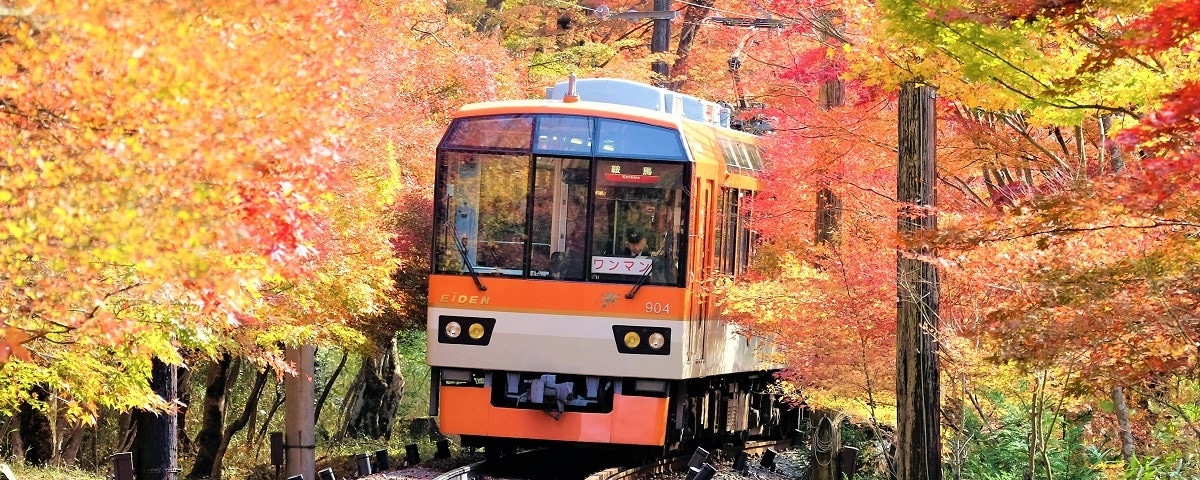
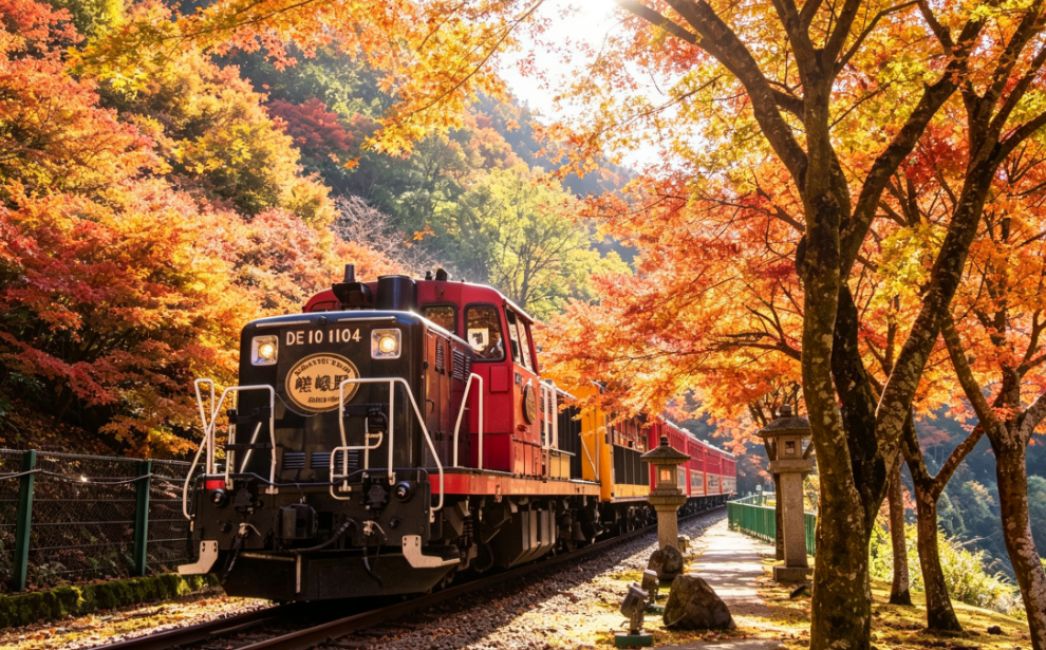
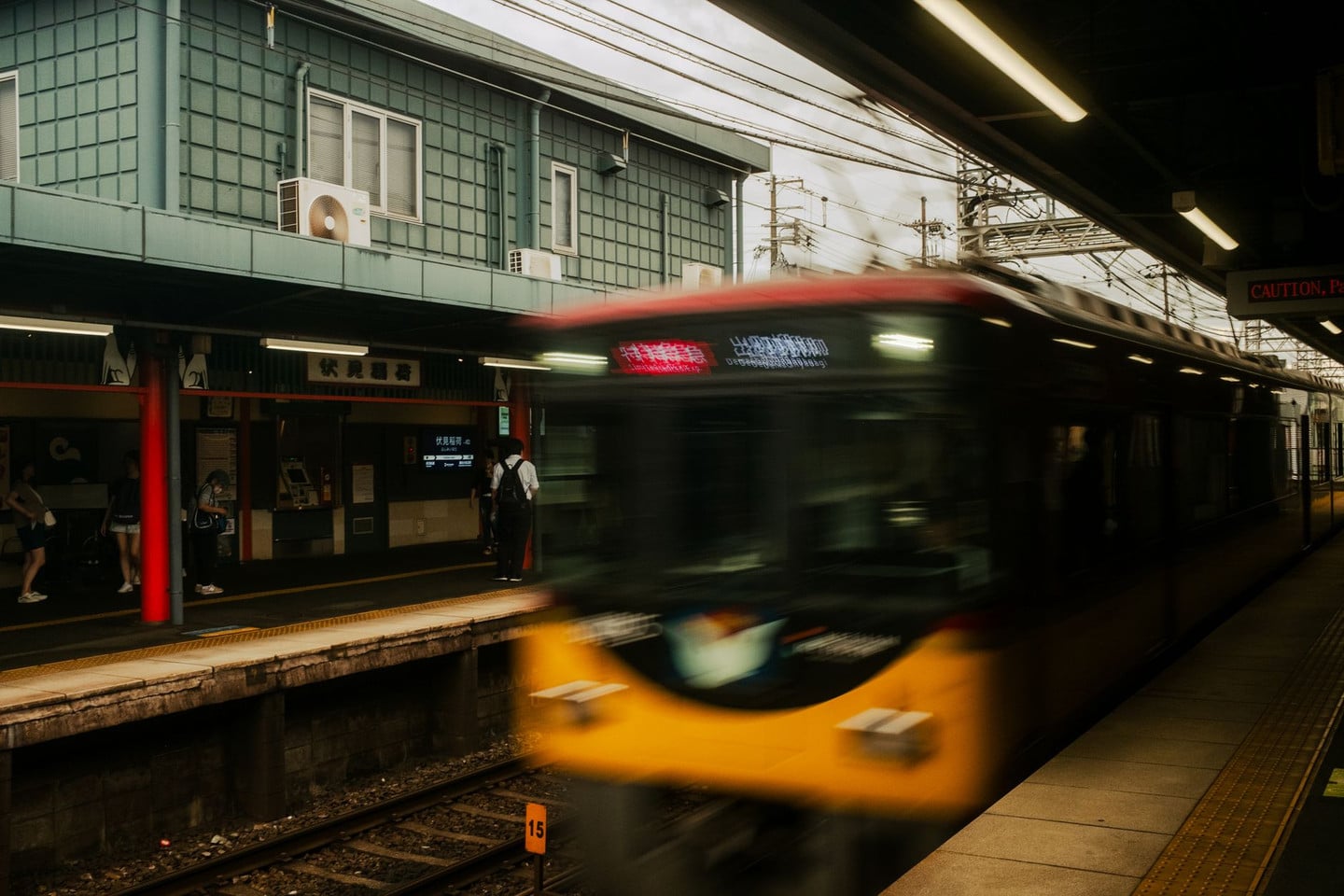
🚋 Eizan Electric Railway Kurama Line: from Demachiyanagi to Kurama takes about 30 minutes, with fares based on distance, and you can tap in with transport IC cards such as ICOCA and Suica. In autumn leaf season, the panoramic “Kirara” train adds extra runs.
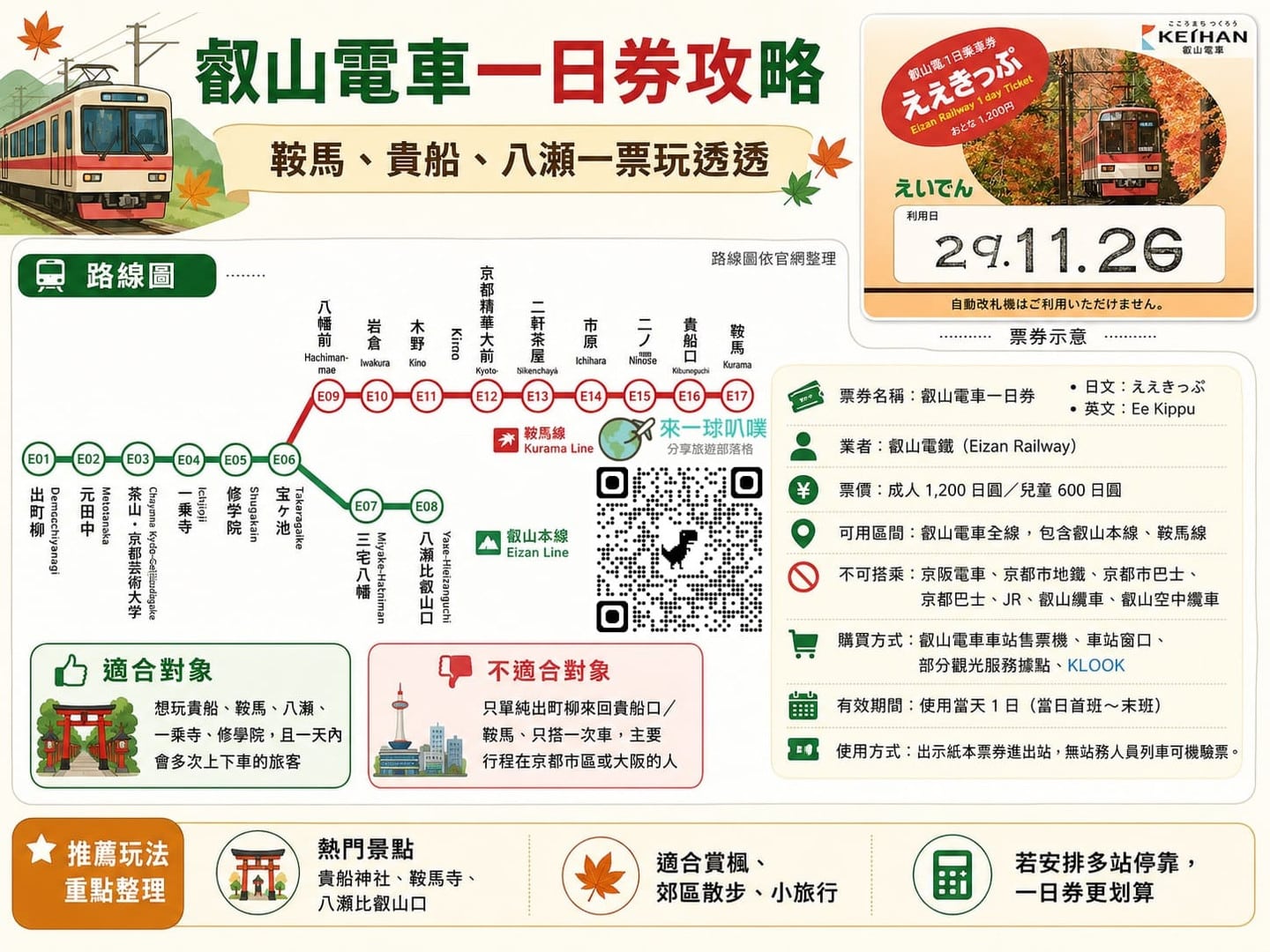
🎫 Eiden one-day pass “Ee Kippu”: ¥1,200 for adults and ¥600 for children, with unlimited rides on all Eizan Electric Railway lines for a day, plus discounts at temples, shrines and facilities along the line, handy for adding other Sakyo Ward spots such as Mt. Hiei.
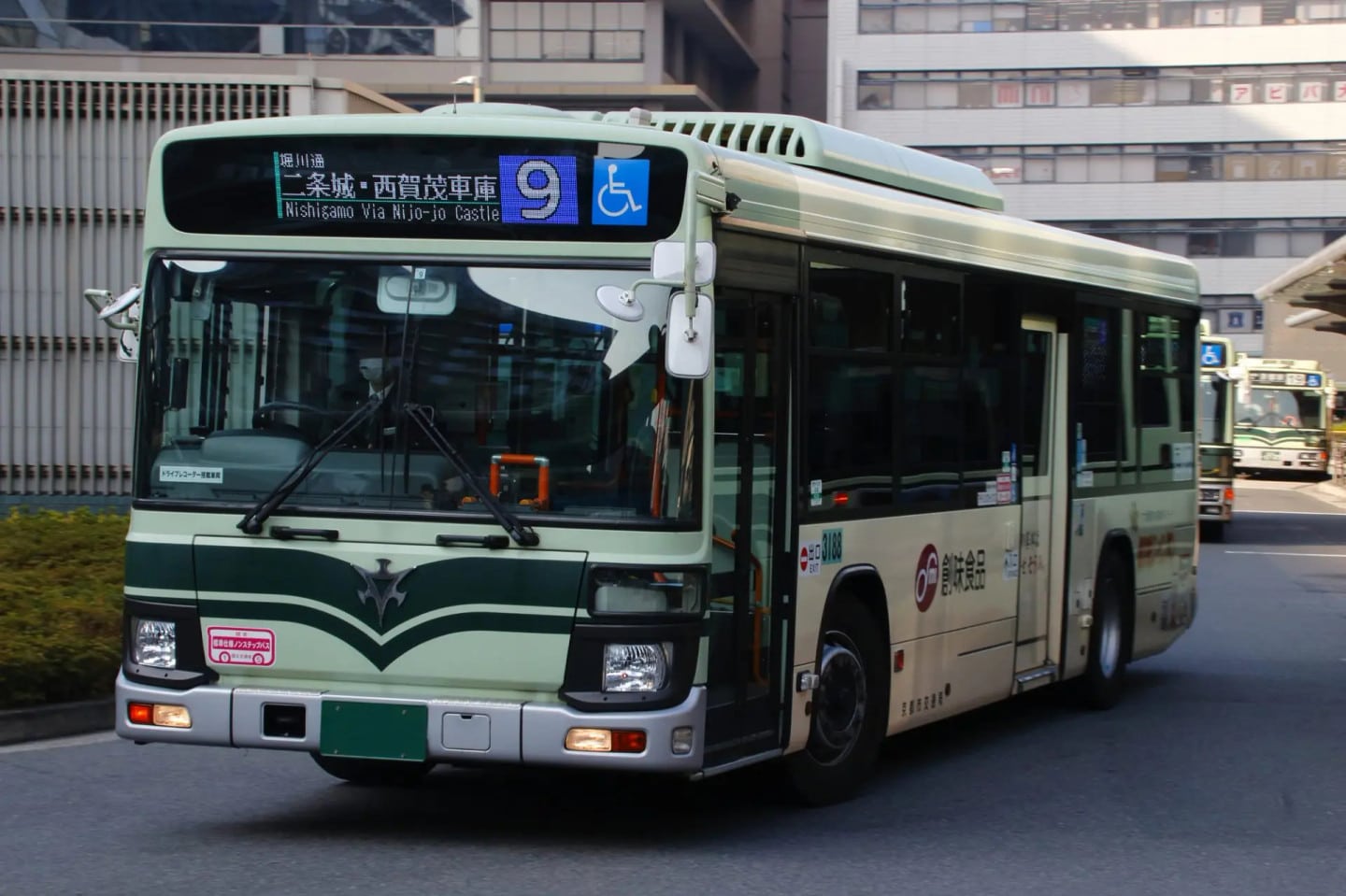
🚌 Kyoto Bus shuttle: from Kibuneguchi Station to Kifune Shrine takes about 5 minutes by bus. Check Kyoto Bus for the fare; buses are infrequent, and you can also walk up along the Kibune River in about 25 to 30 minutes.
🚕 Chartered car or taxi: mountain roads are narrow and parking is scarce, so driving yourself is not recommended; a chartered car or taxi from central Kyoto to Kifune Shrine takes about 40 minutes, and you should confirm the fare with the operator in advance.
Must-Do Experiences on a Kifune and Kurama Day Trip: Water Fortune-Telling, Itinerary Planning and Nearby Sights
The soul of a Kifune and Kurama day trip lies in water fortune-telling, hiking and seasonal events, introduced one by one below.
Kifune Shrine Water Fortune-Telling
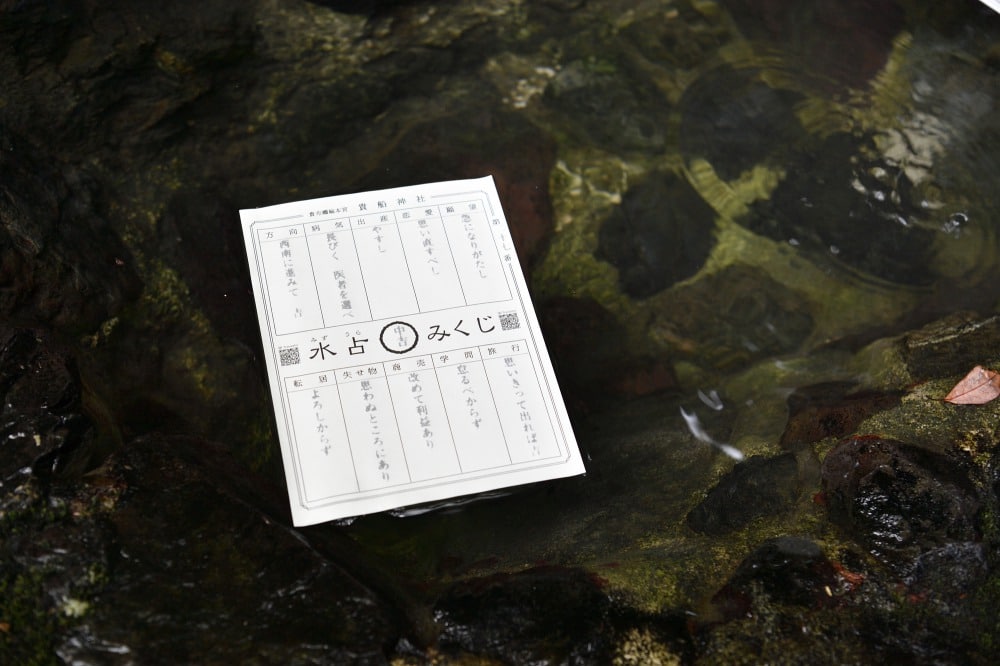
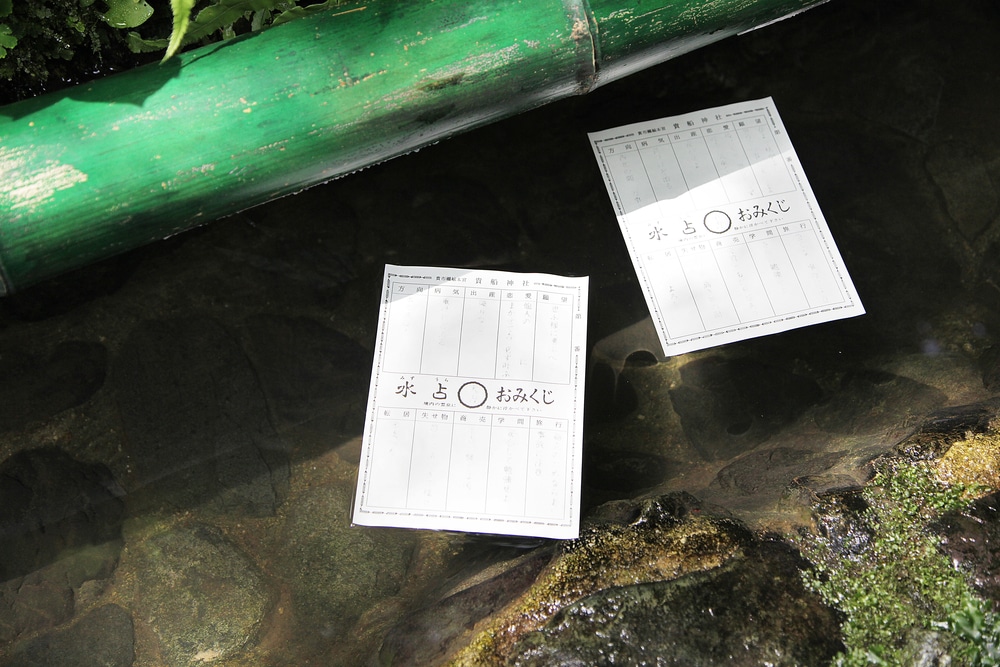
Water fortune-telling is Kifune Shrine’s most famous experience. Visitors first pay ¥200 at the amulet office for a completely blank water fortune slip, then go to the sacred water pool opposite the main hall and gently dip the slip in the water.
Within a few seconds, fortune text appears on the slip. This ritual, called “sacred water fortune-telling,” is said to originate from the worship of the water deity in the Heian period, a fortune-drawing method unique to Kifune Shrine and a must-try photo highlight.
It is best to go on a weekday afternoon when crowds are thinner so you can take your time and take photos; at weekend peak times you often have to queue for 10 to 20 minutes.
Fumyoden and the Mountain Cable Car
Fumyoden is an important midway station after the Niomon Gate of Kurama-dera and the starting station of the mountain cable car, the “Tahoto Cable Car.” A one-way ticket is ¥200 and the ride takes about 2 minutes, saving you the effort of a long steep climb on foot.
Though the cable car is short, you can look down over the lush Mt. Kurama forest along the way, especially suitable for older travelers and families with small children. The cable car runs in line with Kurama-dera’s opening hours and may be suspended when snow lies in winter.
Fumyoden also has a small rest area and restrooms, a good place to recover your energy during the hike.

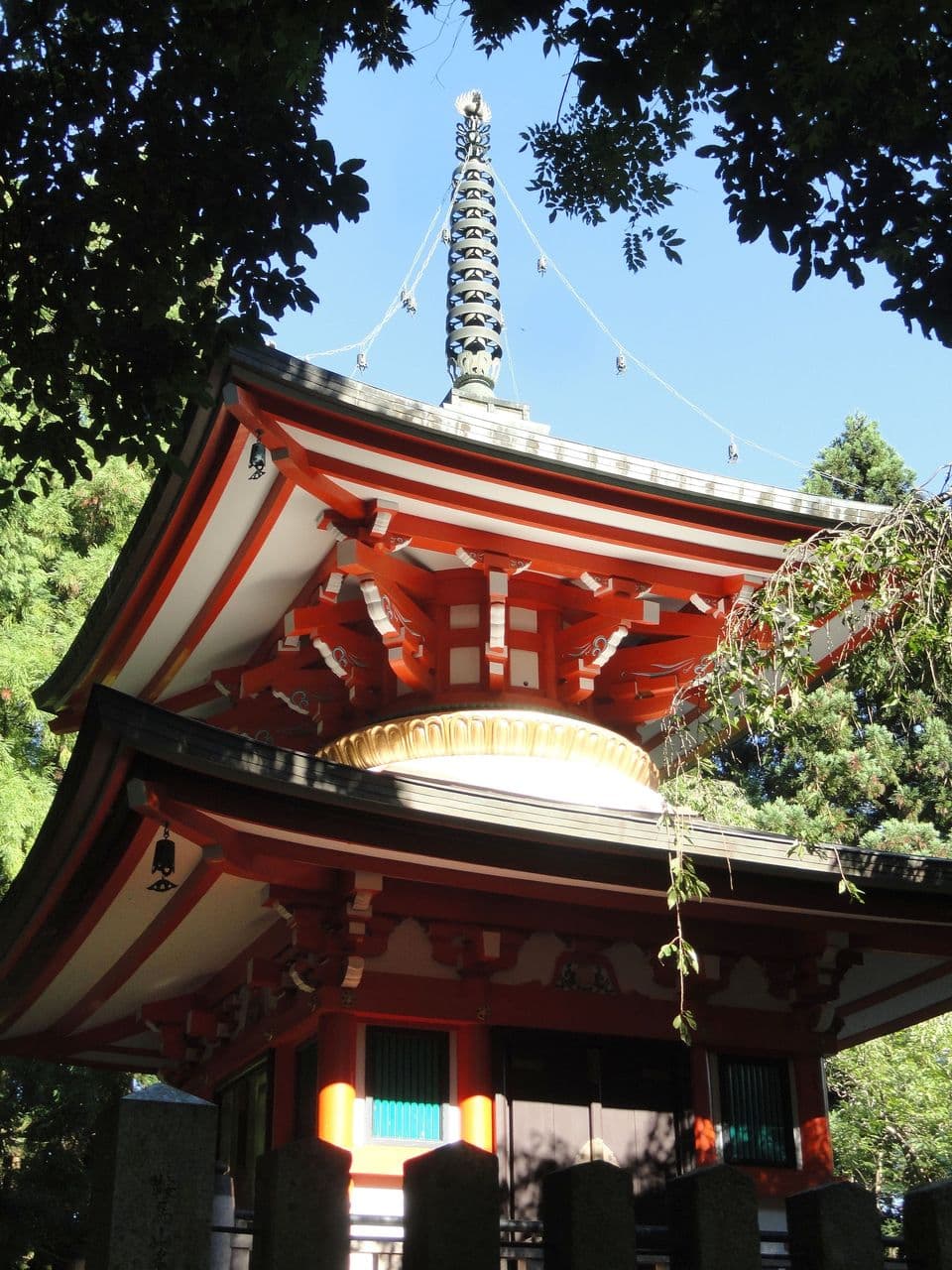
Tahoto Pagoda
Tahoto Pagoda is where the terminus of Kurama-dera’s mountain cable car is located. The building is simple and solemn, and the viewing platform at the pagoda has open views over the Kurama valley and the layered mountains of the Kyoto suburbs in the distance.
From the Tahoto Pagoda, walk on for about ten-plus minutes to reach the Kondo. The path is quiet and shaded, and in autumn red maple leaves color the mountain trail, an excellent spot for photography lovers.
Allow at least 20 minutes to linger, and take time to enjoy the garden in front of the pagoda and the surrounding natural scenery.
Kurama Fire Festival (October 22)
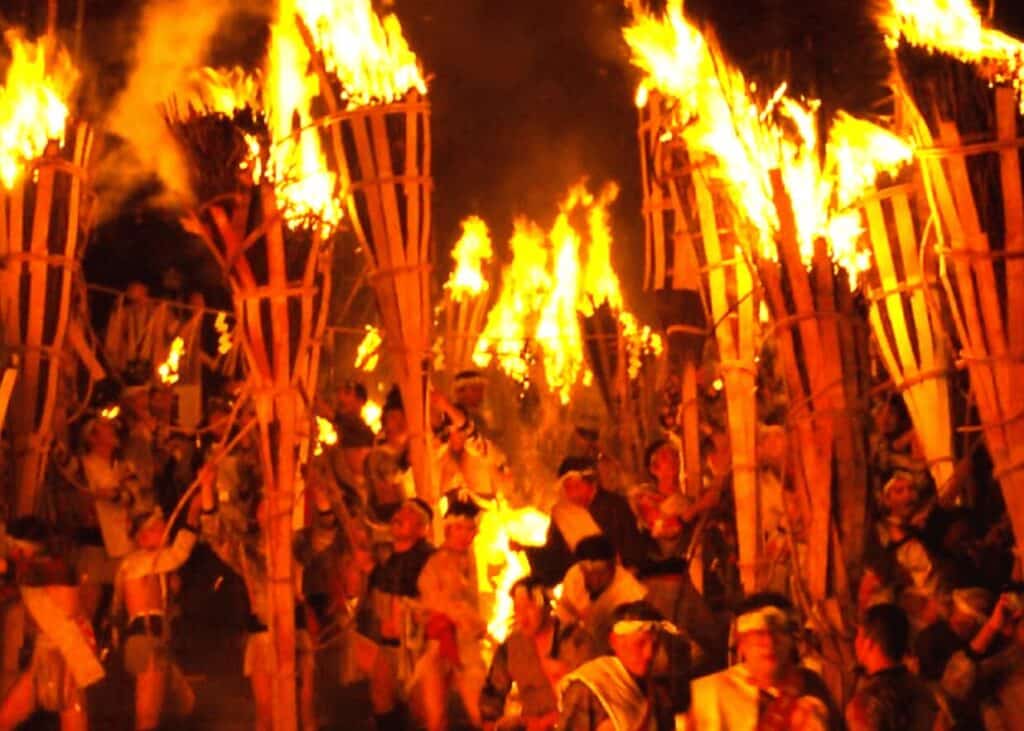
The Kurama Fire Festival is held every year on October 22, the annual festival of Yuki Shrine and one of the Three Strange Festivals of Kyoto. Its origins go back to Heian-period rituals for warding off evil and praying for good fortune.
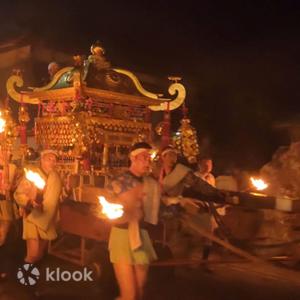
On the night of the festival, Kurama residents carry huge torches in a procession along the streets, firelight lighting up the valley night in a spectacular and stirring scene that draws large numbers of photography enthusiasts and visitors on pilgrimage.
Because of traffic controls and large crowds that night, plan your return trains in advance and take care to keep warm and stay safe.
Kurama Fire Festival 2026: Transport and Timing for the Torch Lighting at 18:00 on Thursday, October 22
The 2026 Kurama Fire Festival takes place on October 22 (Thursday), with the torches lit at about 18:00. Torches for small children, boys and young men appear in turn, around 20:00 the procession heads to the front of the mountain gate, and rituals such as the mikoshi procession continue until about midnight. That day the Eizan train runs a special schedule for the festival and traffic controls are in force in the Kurama area, so confirm your return trains in advance.
Autumn Leaves and Winter Night Illuminations
From mid to late November each year is the best time for autumn leaves in Kifune and Kurama, when the maple tunnel along the Eizan line and the maples on the Kifune Shrine approach reflect each other in beautiful scenery.
On snowy winter days, Kifune Shrine holds its snow-day illumination, with white snow covering the vermilion lantern approach in a dreamlike snow-country scene, the seasonal event photography enthusiasts look forward to most.
Illumination times are adjusted according to annual announcements, so check the latest official information before you go.
Summer Cool-Down and Kawadoko Dining
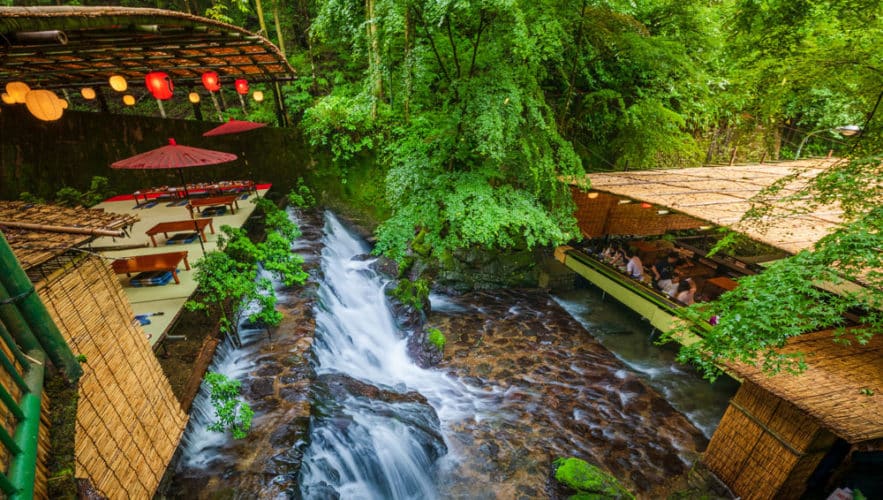
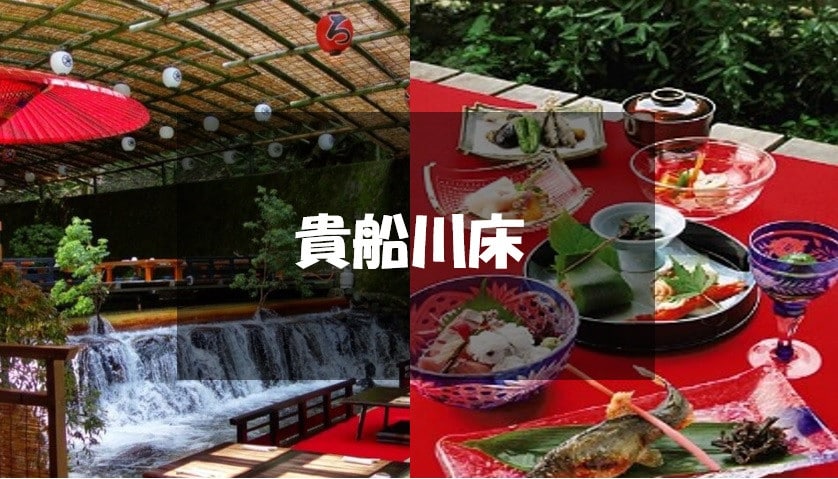
The Kifune area is about 5 degrees cooler than central Kyoto in summer, making it Kyoto’s famous summer retreat. From May to September each year, kawadoko seating is built over the river on both banks, offering limited-season kawadoko cuisine and kawadoko nagashi somen.
Kawadoko nagashi somen sends chilled noodles flowing down in cool stream water for diners to pick up with chopsticks, accompanied by the sound of running water and cicadas, a summer-only way to cool off, with set menu prices varying by restaurant.
Reservations in advance are recommended for dining; in peak season and on holidays a table is often hard to get and you need to book 1 to 2 weeks ahead.
Energy Experience at Yuki Shrine and the Great Cedar
The giant cedar in the grounds of Yuki Shrine is over 800 years old, a power spot where hikers pause to feel the spiritual energy, with a trunk so thick that several people must link arms to circle it.
Small seats around the sacred tree are good for photos and a brief rest, and on the night of the Kurama Fire Festival this spot is the core of the festival procession, with an especially solemn and lively atmosphere.
The Hexagram in Front of the Kondo (Kongo-sho)
A striking hexagram is drawn on the ground in front of the Kondo, called the Kongo-sho (Diamond Floor), said to be where cosmic energy gathers, drawing large numbers of visitors to queue to stand in the center to pray and take photos.
The views here are open, overlooking the whole Kurama valley, and it is the most popular power-spot photo location in Kurama-dera. Go early on a weekday morning when crowds are thinner to experience this mysterious atmosphere more calmly.
Arashiyama Bamboo Grove Path
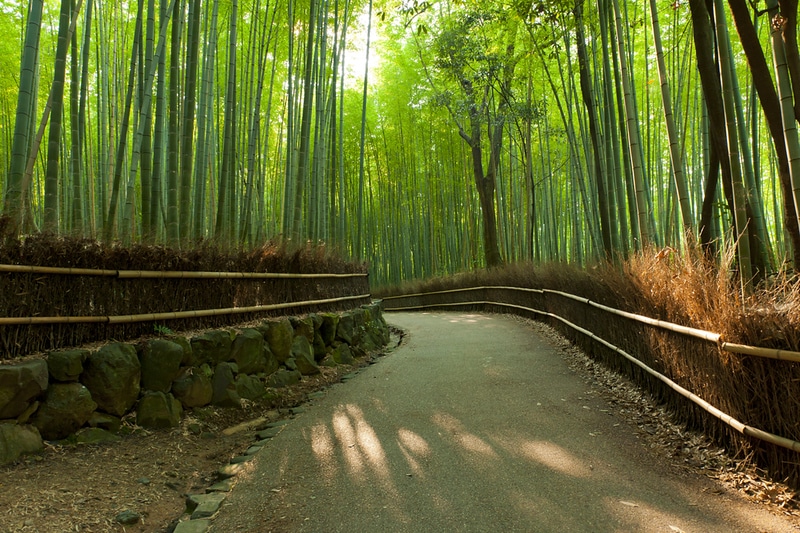
The Arashiyama Bamboo Grove Path is another must-see natural sight in Kyoto beyond the Kifune and Kurama day trip, with emerald bamboo towering overhead and sunlight filtering through the leaves to the ground in dreamlike light and shadow.
The path is about 500 meters long and takes about 10 to 15 minutes to walk, near Nonomiya Shrine and Tenryu-ji. It suits a next-day side trip outside the Kifune and Kurama itinerary, and arriving before 7 a.m. avoids the heavy tourist crowds.
-Klook.jpg)
Sagano Scenic Railway
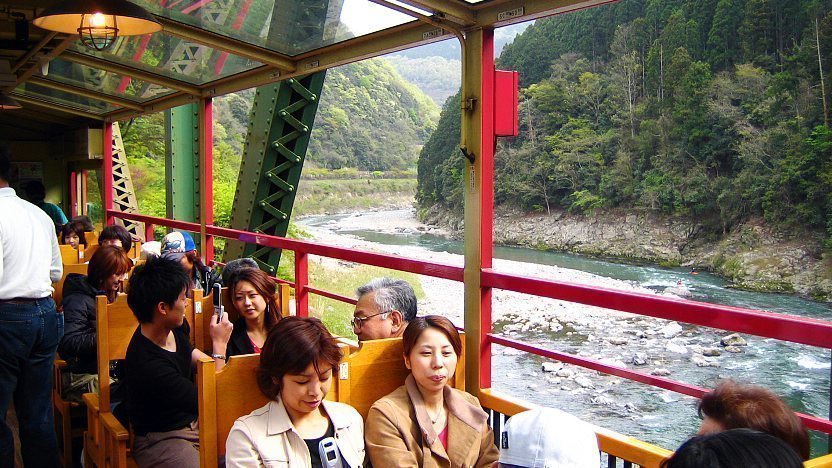
The Sagano Scenic Railway runs along the Hozukyo gorge, with retro carriages, and along the way you can enjoy the changing seasonal scenery of the Hozu River valley, most spectacular in cherry blossom and autumn leaf season.
The whole ride takes about 25 minutes and the adult fare is ¥880. Reserve in advance through the official website or a JR Green Window; weekend tickets often sell out several days ahead. If you combine it with a Kifune and Kurama itinerary, visit on different days to avoid an overly tight schedule.

Kifune Shrine Water Fortune-Telling Experience
Kifune Shrine main shrine (180 Kurama Kibune-cho, Sakyo Ward, Kyoto) has free admission, open 6:00 to 20:00 from May 1 to November 30; check the official website for other months. The signature water fortune-telling (mizu omikuji) costs ¥200 each; place it in the sacred water and your fortune appears, with Japanese, English, Chinese and Korean translations. After visiting the main shrine, Yui-no-yashiro and the Okumiya are a 5 to 10 minute walk away, and the round of the three shrines takes about 30 to 40 minutes. The water fortune is affordable and makes a keepsake, since you can take the slip home, a must-visit highlight at Kifune Shrine.
Kibune Kawadoko Lunch
From May to September each year, kawadoko dining along the Kibune River is a summer-only experience, with ryotei such as Kibune Hirobun and Ugenta placing seats above the stream for a strongly cooling atmosphere. Set menus and prices vary by restaurant, so check each restaurant’s official site.
Book at least a week ahead through the official site or by phone, especially on weekends and in the summer peak; if you have no preference, ask a local tourist information office or look for a restaurant along the Kifune Shrine approach.
Though the prices are high, you get authentic Kyoto cuisine above a stream, suited to lunch after visiting Kurama-dera and enriching your cultural and culinary experience.
Eizan Train and Transport Passes
The most convenient way to reach Kurama and Kifune is the Eizan train Kurama Line, about 30 minutes from Demachiyanagi to Kurama Station, with fares based on distance; on the autumn maple tunnel section the train slows down so passengers can view the leaves. Departing from central Kyoto, consider the Keihan “Subway and Eiden Kurama-Kifune Day-Return Ticket,” ¥2,100 for adults (valid April 2026 to March 2027), which covers the Kyoto Municipal Subway, the Eizan train and the Keihan section between Sanjo and Demachiyanagi, excluding buses. Combined Keihan and Eizan tickets often include subway transfer discounts, suited to those departing from Kyoto Station or Shijo Kawaramachi.
Recommended Kifune and Kurama Transport Passes and Winter Illumination Information
Is the Kyoto-Osaka Sightseeing Pass (Expanded Kurama and Kifune Area Version) Good Value?
The Keihan “Kyoto-Osaka Sightseeing Pass (Expanded Kurama and Kifune Area Version)” gives unlimited rides for one day within its validity period on all Keihan lines and the Eizan Electric Railway (Demachiyanagi to Kurama), good value for travelers planning a “enter at Kurama, exit at Kifune” hiking day trip, especially if your plans also link central Kyoto or round trips to Osaka, saving the time and cost of buying multiple tickets. Buy it from the ticket machines at major Keihan stations or at the tourist service centers, and check the Keihan website before departure for the latest fares and sales coverage.
When Is Kifune Shrine’s Snow-Day Illumination Held?
Kifune Shrine’s “snow-day illumination” is held only on days when a suitable amount of snow lies on the grounds; it is not held every day, and the lights do not come on every time it snows. The dates are announced separately each year, so check on the Kifune Shrine website or official social media the day before to avoid a wasted trip; mountain temperatures are low after dark, so be sure to dress warmly.
Where to Stay for the Trip
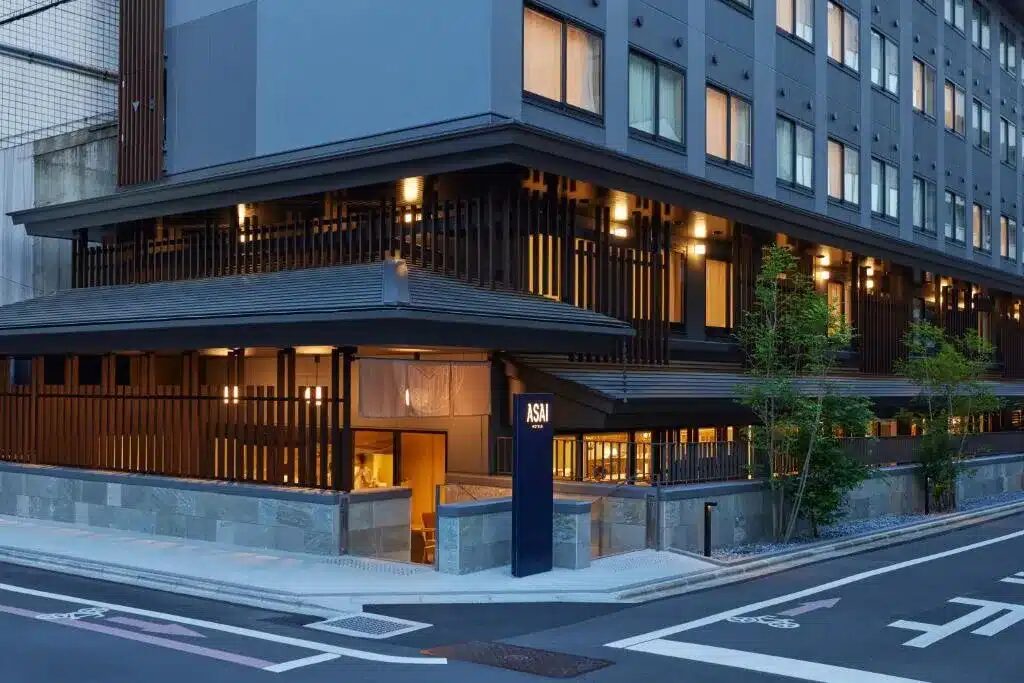
Kifune and Kurama lie north of central Kyoto and have no large lodging cluster, so most travelers base themselves in central Kyoto and make a day trip. The Eizan train departs from Demachiyanagi Station; if you stay around Kawaramachi or Shijo, you can transfer to the Keihan line to Demachiyanagi and then take the Eizan train, and for an early start, lodging around Kawaramachi saves time.

Kifune and Kurama Day Trip FAQ
Q: How long does a Kifune and Kurama day trip take?
Allow 4 to 5 hours for the whole trip, including worship at Kurama-dera, the Kinone Michi hike of about 30 to 40 minutes, and time for touring Kifune Shrine and dining.
Q: How much is the water fortune-telling at Kifune Shrine?
Each water fortune slip is ¥200 and can be bought on site at the Kifune Shrine amulet office, the most affordable and representative experience of the trip; after the slip is dipped in the sacred water, fortune text appears.
Q: What are Kurama-dera’s opening hours and admission fee?
Kurama-dera is open daily from 9:00 to 16:15, the mountain admission fee is ¥500 (raised from April 1, 2023), and the mountain cable car costs an extra ¥200 one way. Temporary mountain closures are occasionally announced in winter, so check the Kurama-dera website before you go.
Q: What is the best way to travel for a Kifune and Kurama day trip?
Take the Eizan train Kurama Line from Demachiyanagi Station straight to Kurama Station, then return by train from Kibuneguchi Station; buying a one-day pass for the whole trip is better value.
Q: What season is best for visiting Kifune and Kurama?
Autumn leaves in mid to late November, summer escape and kawadoko dining from May to September, and snow-day illuminations in winter; each season has its own character.
Q: How can I avoid the crowds in Kifune and Kurama?
Go on a weekday afternoon, avoiding weekend mornings and the Golden Week of the leaf season. Crowds are also relatively thin right after Kurama-dera opens in the morning, and in peak kawadoko season you should book early.
Q: When is the Kurama Fire Festival held?
The Kurama Fire Festival is held every year on October 22, the annual festival of Yuki Shrine and one of the Three Strange Festivals of Kyoto, with traffic controls in effect that night.