
Matsunoo Taisha Guide: Kyoto’s Oldest Shrine and the Origin of Sake Worship
Matsunoo Taisha stands south of Arashiyama and is one of the oldest shrines in Kyoto. Entry to the grounds is free, and the garden costs a separate ¥500.
Founded in 701 and dedicated mainly to Ōyamakui no Kami, it has been revered as “Japan’s number one god of sake brewing” since the Muromachi period, because the Hata clan who built it were skilled brewers. Its three highlights are the wall of sake barrels donated by breweries across the country, “Shofuen,” the three gardens that were the final works of garden master Mirei Shigemori, and about three thousand yamabuki (kerria) bushes that bloom along the Ichinoi River in spring. Compared with Arashiyama, one station away and packed with crowds, Matsunoo Taisha is much quieter, ideal for travelers who want to avoid the tourist peak and take a deeper look at gardens and Shinto culture, and it also links easily into a western Kyoto route through Tsukiyomi Shrine, Suzumushi-dera and Saiho-ji.
Japan’s Number One God of Sake Brewing: A Giant Wall of Sake Barrels Donated by Breweries Nationwide
In 701, the Hata clan, who had come from the continent, founded a shrine here. Because the Hata were skilled in brewing and land reclamation, Matsunoo Taisha has been revered as Japan’s number one god of sake brewing since the Muromachi period, and it remains the spiritual center for brewers across the country.
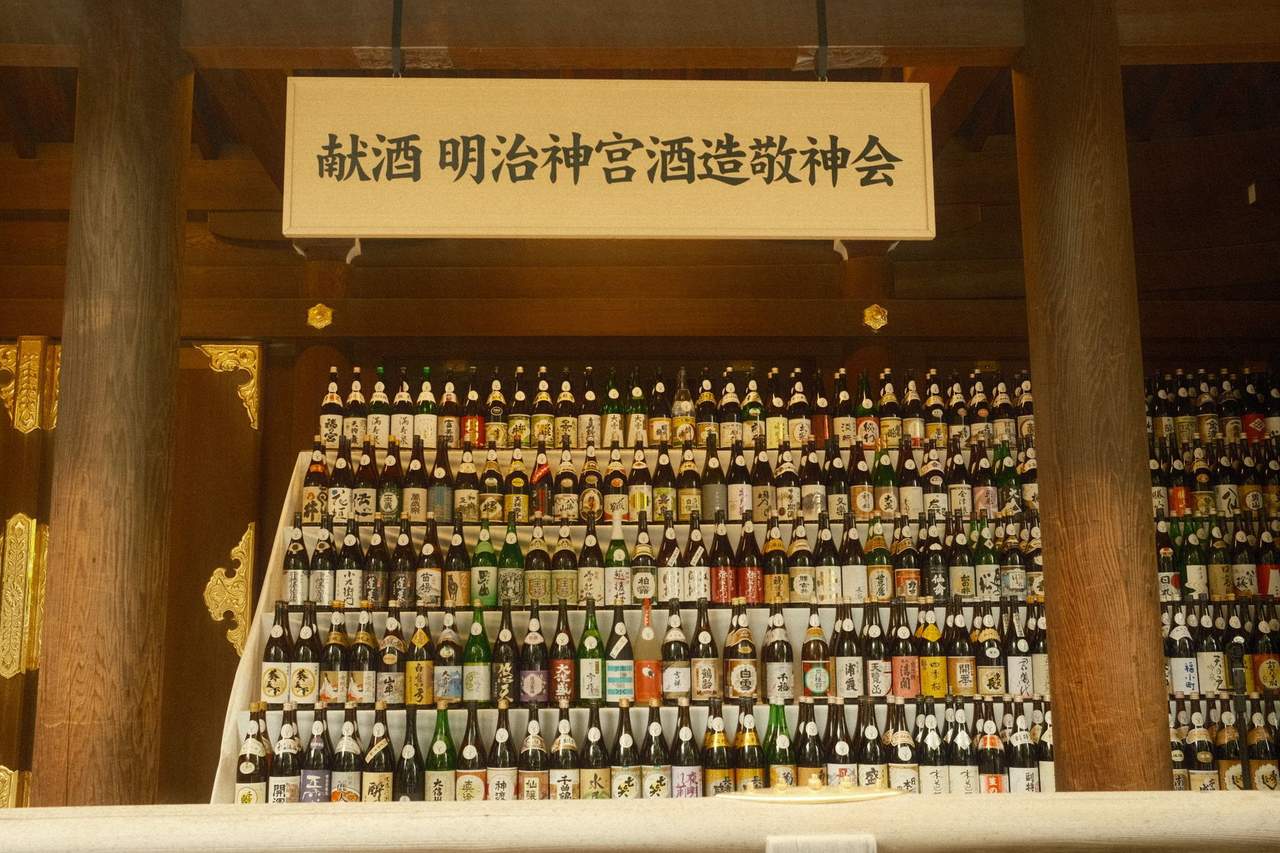
As soon as you enter the grounds you see a giant wall of sake barrels donated by breweries from all over Japan. A whole face of colorful barrels stacked together is an impressive sight and the easiest landmark here to recognize and photograph. Worshipping in the grounds is completely free, and the barrel wall alone is worth the trip.
Every year when the new sake is made, brewers from across the country come to pray for a smooth brewing season, which means that beyond sightseeing the shrine still performs a lively role in industry worship.
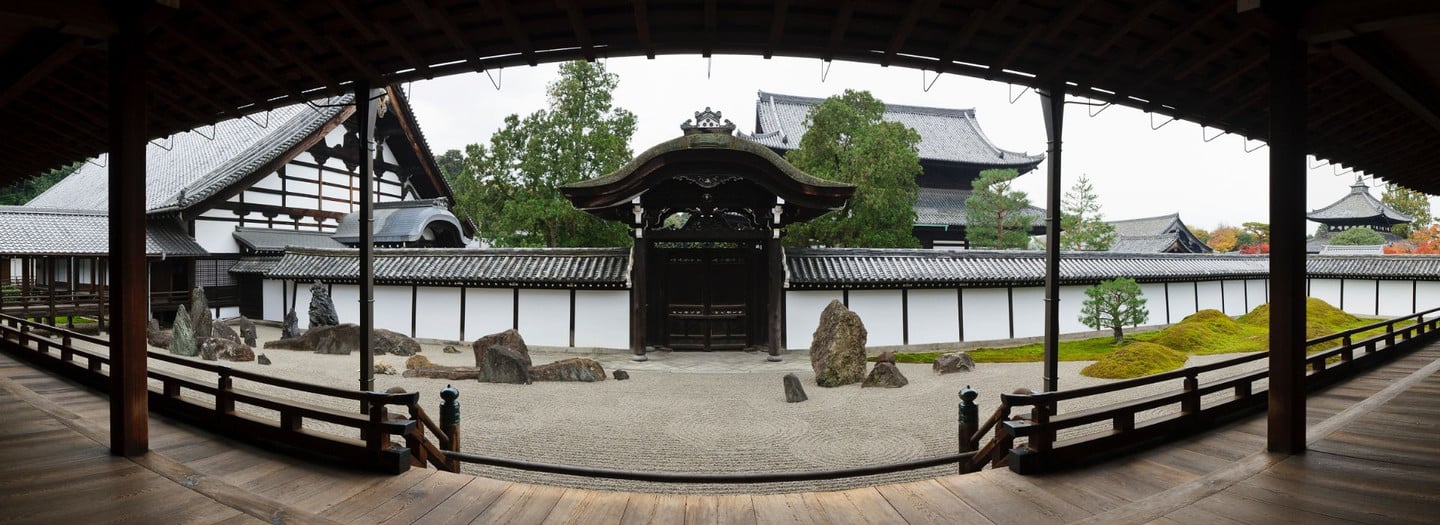
Shofuen Three Gardens: Mirei Shigemori’s Final Works
Shofuen, in the paid area, was the last work of the modern garden master Mirei Shigemori, created in the 1970s. Breaking from the delicate softness of traditional Japanese gardens, he used bold, strongly geometric stone arrangements and wave-like lines to express three different eras at once.
The Jōko Garden, the Kyokusui Garden and the Hōrai Garden correspond to the aesthetics of primitive Shinto, the Heian aristocracy and the Kamakura period respectively, making them the best teaching material for understanding how Japanese gardens moved toward modernity. Shofuen shares one ¥500 ticket with the Shinzōkan statue hall.
Over his life Mirei Shigemori visited and surveyed several hundred old gardens across Japan, and only in his later years did he turn all he had accumulated into works here, so the three gardens combine archaeological rigor with the tension of modern sculpture.

Yamabuki no Sato: One of Kansai’s Finest Seas of Golden Kerria
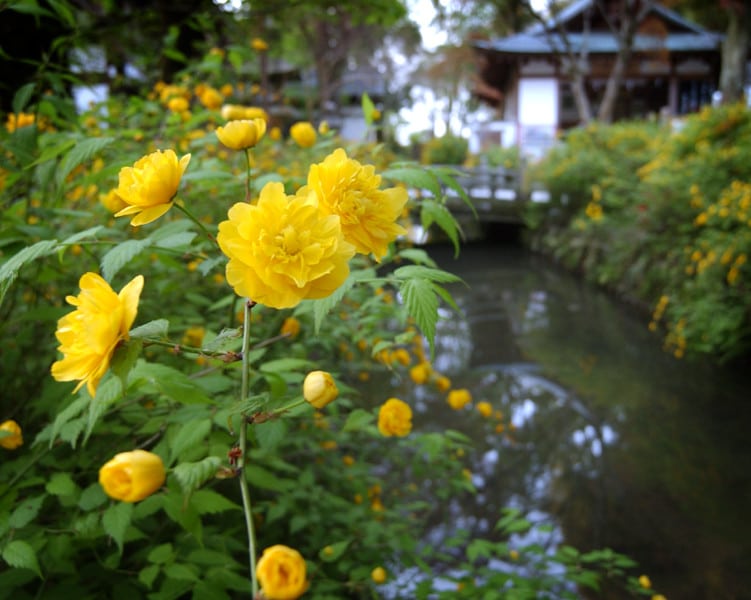
The official site announces the “Yamabuki Matsuri” (Kerria Festival) for April 10 to May 5 every year. During this period a large number of yamabuki (kerria) are planted along the Ichinoi River in the grounds of Matsunoo Taisha in Kyoto. At full bloom, layers of golden petals pile up and mirror the shrine buildings, arched bridge and stream, and it is hailed as Kyoto’s most beautiful golden flower sea of spring.
If you visit in midsummer, July or August, the grounds have recently been decorated with cooling summer wind chimes (not a fixed event, so please check the official site first).
The bloom lasts only two to three weeks and changes from year to year, so check flowering reports before you go rather than relying on last year’s dates.
Matsunoo Taisha Amulets and Goshuin: Sake Charms, the White Tiger Fortune Slip and the Kyoto Gosha Meguri
Matsunoo Taisha enshrines the ancestral god of brewing and its amulet office offers three sake charms: the “Brewing Charm” for those who make sake, the “Selling Charm” for those who sell it and the “Drinking Charm” for those who drink it. Details are subject to what is available on site.
The popular “Byakko Mikuji” (White Tiger fortune slip) corresponds to the white tiger of western Kyoto. It was suspended in December 2025 and has since resumed, in limited numbers; the touchable turtle and the pair of carp in the grounds symbolize longevity and good luck.
You can include it in the “Kyoto Gosha Meguri,” which together with Heian Jingu, Yasaka Shrine, Jonan-gu and Kamigamo Shrine makes up the five shrines of the four directions. The first shrine issues the special shikishi card for ¥1,000, and each goshuin costs ¥300.
Matsunoo Taisha Goshuin: The Byakko Goshuin, Its Offering Fee and Hours
Matsunoo Taisha’s goshuin are handled at the amulet office. Among them, the “Byakko Goshuin,” themed on the white tiger, the guardian beast of western Kyoto, is available all year; the offering is ¥500, and the design sets the white tiger against the green of a bamboo grove. The amulet office accepts requests from 9:00 to 16:00, extended to 16:30 on Sundays and national holidays. Limited-time goshuin designs and dates are not fixed, so please check the latest announcements on the Matsunoo Taisha official site before you go.
How to Get to Matsunoo Taisha: Hankyu Train, Bus and Walking from Arashiyama Compared
The fastest way is the Hankyu Arashiyama Line to Matsunoo-taisha Station, a 3-minute walk from the exit; on foot from Arashiyama it takes about 17 minutes.
| Method | Where to get off | Walking time |
|---|---|---|
| Hankyu Arashiyama Line (most recommended) | Matsunoo-taisha Station, West Gate | About 3 minutes |
| Walk from Arashiyama | — | About 17 minutes |
| Kyoto Bus / City Bus | Matsunoo Taisha-mae | About 1 minute |
| Kyoto Bus / City Bus | Matsuo-bashi | About 5 minutes |
Hankyu Arashiyama Line to Matsunoo-taisha Station: 3 minutes on foot from the exit
The most recommended route is the Hankyu Arashiyama Line to Matsunoo-taisha Station; from the west gate it is about a 3-minute walk to the great torii, one of the few shrines in Kyoto you reach right from the station.
From Kyoto Kawaramachi or Osaka Umeda, you need to change to the Arashiyama Line at Katsura Station; if you are already in Arashiyama, it is just one stop by Hankyu train, which is easiest.
The station is small, with few exits and clear signs, so it is hard to get lost even if you do not read Japanese. There is a convenience store in front of the station; one stop north is Arashiyama and to the east you can change at Katsura Station to the Kyoto Line, which keeps your itinerary flexible. Note, however, that apart from an elevator the station has no other accessibility facilities.
Walking from Arashiyama: About 17 Minutes Along the Katsura River
If you are on the main street of Arashiyama, there is no need to take transport: walking south along the Katsura River for about 17 minutes brings you to Matsunoo Taisha, with open river views and fewer people along the way, which makes it a pleasant stroll.
On the way you pass Matsuo Bridge, where you can photograph the Katsura River and the full panorama of the Arashiyama mountains. The sun is strong in summer and the river wind is cold in winter, so judge the weather before setting out; if you are not in a hurry, this route is more rewarding than taking the train.
There are almost no shops or restrooms along the route, so it is best to take care of that in Arashiyama, which is also why the route is quiet enough to walk in peace. On rainy days the riverbank path floods, so taking the train is the safer choice.
Taking the Bus to Matsunoo Taisha-mae or Matsuo-bashi
If you would rather not change to a train, you can also take a Kyoto Bus or City Bus and get off at Matsunoo Taisha-mae, a few steps from the torii; if you get off at Matsuo-bashi, you need to walk another 5 minutes.
The advantage of the bus is that you can come directly from city hubs such as Shijo-Omiya and Kyoto Station; the downside is that traffic around Arashiyama is severe in cherry blossom and foliage seasons and timing is hard to control, so the Hankyu train is still recommended first when you are on a tight schedule.
If you have already bought a one-day bus pass, coming by bus saves the train fare; but watch the last bus times, since services in the Rakusai area drop noticeably after evening, so do not push your schedule too late. Before boarding, check whether it is a Kyoto Bus or a City Bus, as the two have different ticket coverage.


Rakusai Walking Route: From Matsunoo Taisha to Tsukiyomi Shrine and Suzumushi-dera
We suggest starting at Hankyu Matsunoo-taisha Station, visiting Matsunoo Taisha and the Shinzōkan first, then walking south about 4 minutes to Tsukiyomi Shrine, then on to Suzumushi-dera and Saiho-ji, and stopping at Umenomiya Taisha on the way back.
Saiho-ji requires an advance online reservation and Suzumushi-dera often has a queue of over an hour on holidays, so schedule the two at different times: we suggest queuing for Suzumushi-dera first thing in the morning and booking Saiho-ji for the afternoon.
The whole route is gently sloped and short, one of the few shrine and temple circuits in Kyoto that can be done entirely on foot, but closing times are early, so start in the morning; dining options along the way are few, so check restaurants for lunch in advance.
What to See at Matsunoo Taisha: A Complete Look at the Sake Barrel Wall, Shofuen and the Rakusai Area
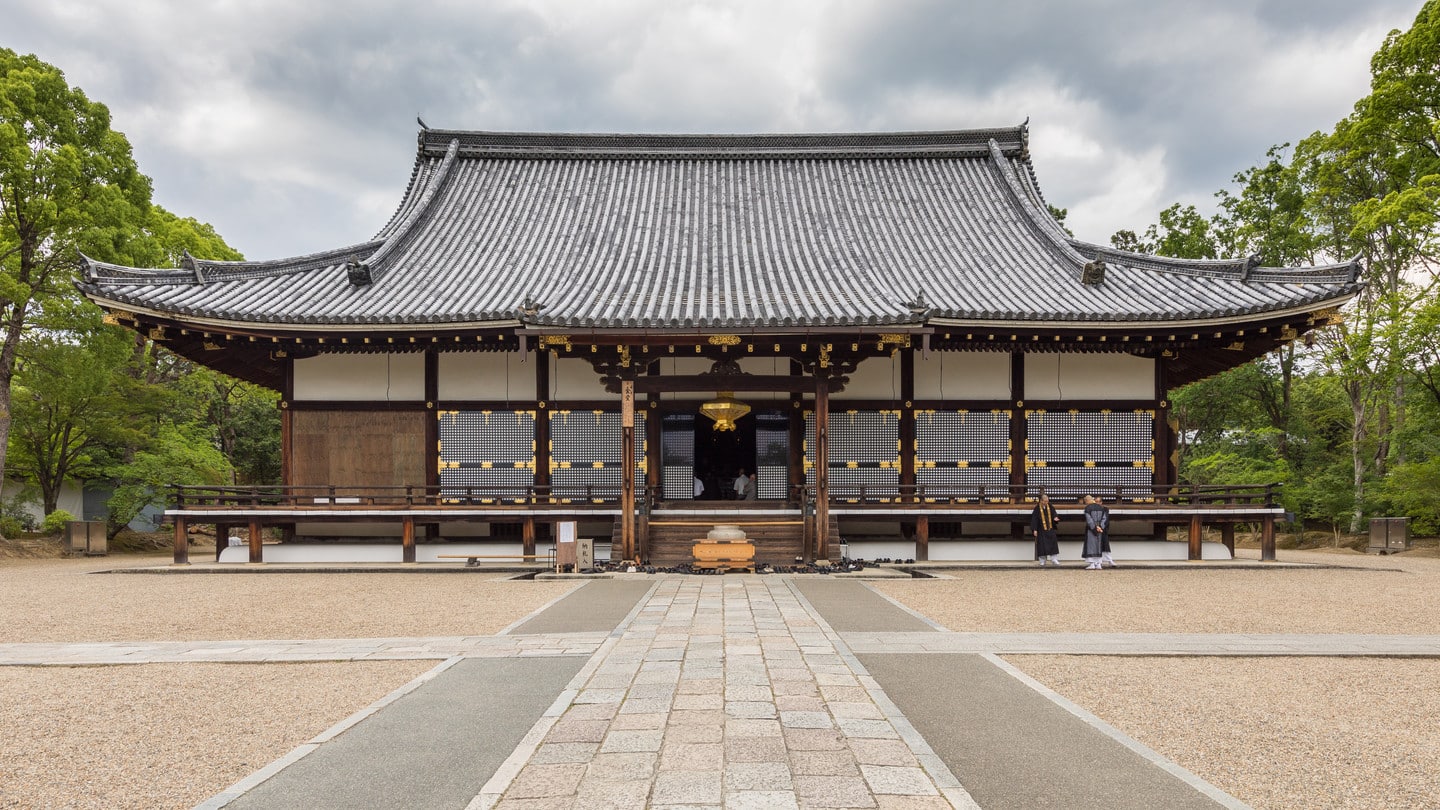
The attractions of Matsunoo Taisha divide into the free grounds, the paid garden and the Shinzōkan, plus the cluster of Rakusai shrines and temples within walking distance.
Sake Barrel Wall: A Colorful Wall of Barrels Donated by Breweries Across Japan
After passing through the great torii, the first thing you see is a whole wall of giant sake barrels donated by major breweries across Japan, colorful and imposing, the most direct proof of Matsunoo Taisha’s status as “Japan’s number one god of sake brewing” and the most popular photo spot in the grounds. It is beside the approach and open for free, so it is worth seeing even if you do not enter the paid garden. The barrels are replaced irregularly as donating breweries change, so the combination is different each time. To capture the full force of the wall, step back to the opposite side of the approach; the low, slanting light of early morning and late afternoon makes the colors more saturated.
Main Hall and Ōyamakui no Kami: An Important Cultural Property in the Ryōnagare-zukuri Style
Matsunoo Taisha enshrines Ōyamakui no Kami and Ichikishimahime no Mikoto, and its main hall is built in the rare “Ryōnagare-zukuri” style, with the roof extending forward and backward from the ridge, and is an Important Cultural Property.
The existing main hall is said to have been rebuilt in the Muromachi period and, despite repairs, retains its original form. Worship follows two bows, two claps and one bow; the grounds are free to enter, and we suggest visiting in the morning after the gates open.
The main hall stands behind the worship hall and visitors can only view it from outside; the roof curves and the layers of cypress-bark thatch are fully preserved, a detail architecture fans should not miss. The space in front of the worship hall is small, so groups should mind the flow of people.
Reigame no Izumi (Kame no I): The Famous Spring Brewers Come to Draw Water From
Reigame no Izumi, called “Kame no I” in Japanese, behind the main hall, is the spring of greatest religious significance at Matsunoo Taisha. It is said that adding water from here to sake keeps it from spoiling, and many sake brewery owners and master brewers still come specially to draw water and pray.
There is a stone turtle beside the spring, and containers for carrying water are also sold. This area falls within the route of the paid garden, so you need to buy a ticket to enter in order to draw water; the actual availability is subject to on-site notices.
The spring flows naturally and its volume varies with the season. If you want to take water home, bring a clean container and follow on-site instructions; do not put your hands directly into the spring pool. Whether the water can be drunk directly must be judged by the on-site signs.
Turtle and Carp: The Two Divine Messengers of Matsuo no Okami
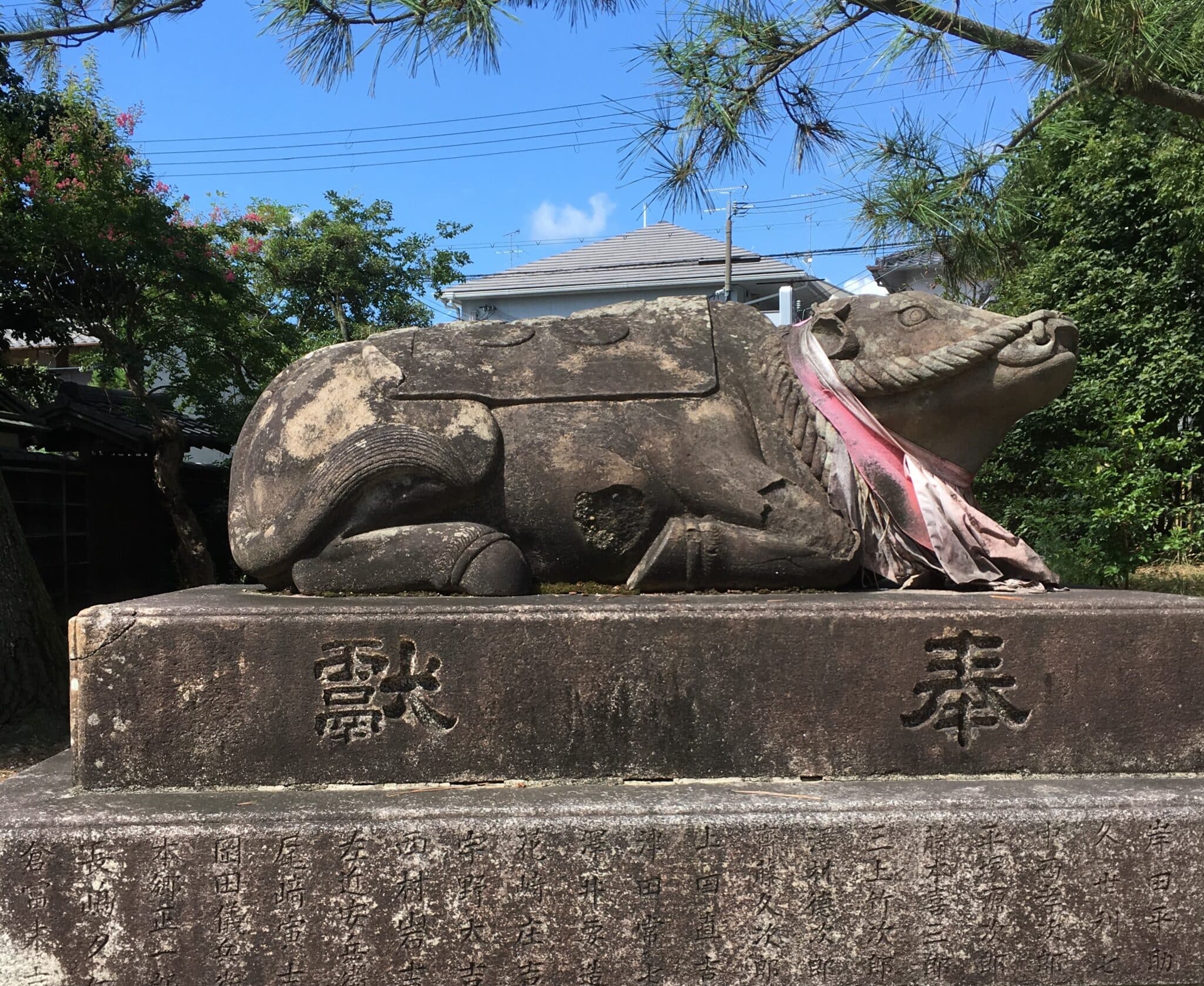
It is said that Matsuo no Okami once rode a turtle upstream and a carp to open up the land, so the turtle and carp became divine messengers, commonly seen on water basins, stone carvings, ema and amulets.
The turtle symbolizes longevity and steadiness, and the carp symbolizes swimming upstream; together they form the identifying symbol unique to Matsunoo Taisha, and finding all the turtle and carp designs in the grounds is a hidden pleasure for many repeat visitors.
The spout of the water basin is a stone turtle, an easily overlooked but representative detail; designs showing the turtle and carp together are also common on amulets and ema, which make good souvenirs; the grounds also have a turtle-shaped stone bridge, so look down closely as you cross.
Jōko Garden: A Primeval Sacred Realm Inspired by Iwakura
The first of the Shofuen three gardens is the Jōko Garden, inspired by the “iwakura,” the huge rocks on the mountain behind the shrine where ancient people believed the gods descended. Mirei Shigemori used rugged boulders and wide stretches of green moss to recreate the atmosphere of nature worship from before shrine buildings existed.
The stone arrangement shows no trace of polish and deliberately keeps its raw edges and sense of mass; standing before the garden you feel the pressure of being surrounded by rock. This is the least “garden-like” of the three, yet the one where you can best feel the origins of Shinto.
The garden is at the deepest point of the Shofuen route and requires a short climb to reach, so it has the fewest visitors. Standing quietly for a few minutes helps you understand the phrase “Shinto originally had no buildings” better than any explanation sign.
Kyokusui Garden: A Modern Take on the Heian Aristocrats’ Winding-Stream Banquet
The Kyokusui Garden draws on the Heian-period aristocratic “Kyokusui no En,” in which a sake cup is set on a winding channel and a waka poem must be composed before the cup drifts in front of you.
Mirei Shigemori abstracted the flow of water and the romance of the Heian court with smooth, curved stone channels; the lines are soft with plenty of empty space, more approachable than the Jōko Garden, and it is the most popular of the three with the public.
The arcs of the stone channels show different rhythms at different heights; we suggest walking once around the garden and returning to the starting point, and you will find the composition completely different, making it the best of the three for savoring slowly, with a bench nearby for sitting and viewing for a long time.
Hōrai Garden: The Island of Eternal Life Where Immortals Live
The Hōrai Garden is based on the garden style of the Kamakura period, and its theme is “Hōrai,” the legendary realm where immortals live and never age. The stones in the pond are arranged to suggest a ship and islands, and the layout is full of the vitality of stone and bold use of empty space.
This garden is designed as a stroll garden, so you can walk around the pond and view it from different angles, with the relationships between the stones changing with every step. Of the three gardens it has the strongest visual impact and is the culmination of Mirei Shigemori’s late style.
When there is no wind the surface of the pond reflects the stones and the sky. When the afternoon light slants in, the shadows of the stones cut the composition into greater depth, the time of day photographers recommend most.
Shinzōkan: One of Japan’s Oldest Surviving Carvings of Deities
The Shinzōkan in the shrine houses three Important Cultural Property deity statues carved in the early Heian period: the statue of Ōyamakui no Kami, the statue of an elderly male deity and the statue of a female deity, regarded as among the oldest surviving carvings of deities in Japan.
Shinto originally did not make statues of its gods, and these works record the transitional stage after Buddhist sculpture techniques arrived and Shinto began to take on concrete forms; anyone interested in antiquities should definitely make a special trip to see them. The ticket is shared with Shofuen at ¥500.
The space inside is small and the number of exhibits is not large, but each one is worth stopping to look at closely. Please follow the on-site signs on the rule about photography inside; a visit takes about 20 minutes. The lighting is deliberately dim to protect the wooden statues, and your eyes need a little time to adjust.
Yamabuki Matsuri: Three Thousand Kerria Bushes Along the Ichinoi River
The official site announces the “Yamabuki Matsuri” period as April 10 to May 5 every year, when the yamabuki along the Ichinoi River bloom, golden petals piled along the stream, paired with the vermilion arched bridge and shrine buildings, a signature spring flower scene in Kyoto.
The “Yamabuki Matsuri” is held during this period, and in some years special night worship is added. The bloom shifts with the weather, so check the official site or social media for flowering reports first.
There are more people during the flowering period but still far fewer than in Arashiyama; we suggest coming on a weekday morning when the light falls on the flowers, and at the end of the season fallen petals covering the stream have a charm of their own.
Shinkōsai (April 26) and Kankōsai (May 17): The Boat Procession Carrying the Portable Shrines Across the Katsura River
The Matsuo Matsuri is the annual grand festival of Matsunoo Taisha, divided into the Shinkōsai in late April and the Kankōsai in mid-May. The most spectacular scene is the “Funawatari-gyo,” in which the portable shrines are carried onto boats and ferried across the Katsura River, a sight quite rare among Kyoto festivals.
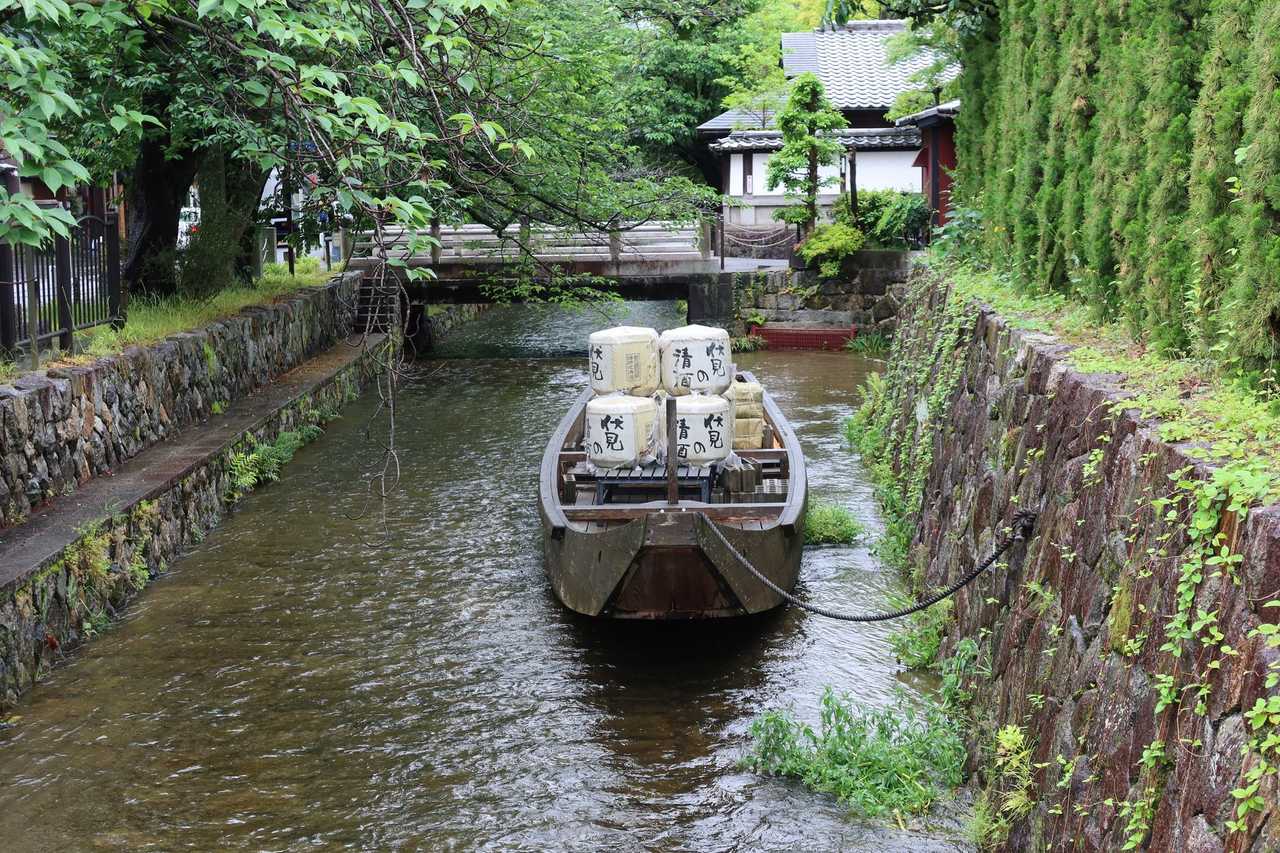
The whole procession passes through several of the surrounding parishioner districts, with chances to see the portable shrines up close along the way. The dates are adjusted each year according to the calendar, so please follow the official announcement for the actual schedule; traffic and parking around the area are restricted on the day.
If your trip happens to coincide, it is well worth making time to watch, as this is one of the few traditional Kyoto festivals still staged on a river. To photograph the boat procession, both banks of the Katsura River have good positions, and it is safer to claim a spot early.
Wind Chime Prayer Season: Hundreds of Colorful Wind Chimes in the Summer Grounds
In recent years Matsunoo Taisha has hung large numbers of colorful glass wind chimes in the grounds in summer, and when the wind passes it makes a whole sheet of crisp sound, a rare way to cool off in Kyoto’s scorching summer. This event is not listed in the official site’s annual schedule of rites, and its period is adjusted year by year, so please check the official site or social media announcements before you go.
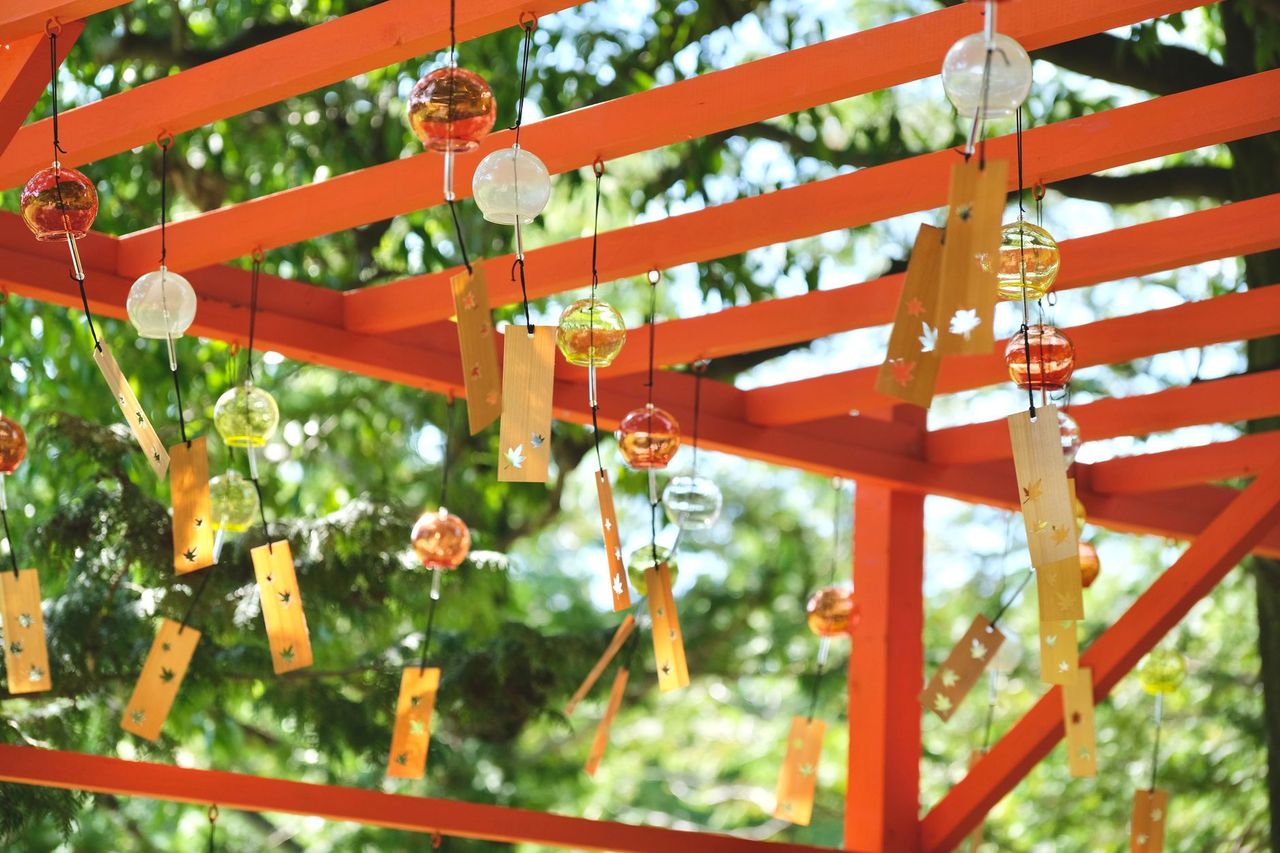
On site you can buy a wind chime, write a wish on a paper strip and hang it, and special limited-time goshuin are also offered. This period is also when the grounds have relatively few visitors, so taking photos is unhurried.
The colors and styles of the wind chimes differ slightly each year and are a popular photo subject on social media. Kyoto summers are extremely muggy, so come in the morning or before evening and carry drinking water. To capture the translucence of the chimes, stand with your back to the sun and shoot from below looking up.
Tsukiyomi Shrine: A 4-Minute Walk to a Sacred Site for Safe Childbirth Prayers
Tsukiyomi Shrine lies about 400 meters south of Matsunoo Taisha, an auxiliary shrine outside its precincts, with an extremely tranquil setting and few people; as you walk in you can hardly hear any tourists.
The most famous feature in the grounds is the “Prayer Stone for Safe Childbirth” (Tsukinobe-ishi); legend says Empress Jingu stroked this stone to pray for a safe birth, so it became a well-known place to pray for children and easy delivery. The shrine office may be unstaffed at ordinary times, so for goshuin matters it is best to ask at Matsunoo Taisha first.
The way from Matsunoo Taisha runs through an ordinary residential area with few signs and a very low-key entrance, so locate it on a map before setting out to avoid walking past. The grounds have almost no shade, so remember sun protection when visiting in summer.
Umenomiya Taisha: A Cat Lover’s Paradise and Another Sake Shrine
Umenomiya Taisha, across the Katsura River, enshrines a god of sake brewing and, like Matsunoo Taisha, is a shrine of sake worship; more than ten free-roaming cats have been taken in on the grounds and often sunbathe beside the sake barrels at the gate or in the garden.
Besides brewing and fertility amulets there are music amulets and cat-themed goods, and occasionally a hidden-edition goshuin stamped with a cat paw print. The February Plum Festival and the May Shinen Festival are the two major events.
The cats are free-roaming residents, not exhibits, so please do not feed or pick them up. The Shinen garden is a paid area, with the fee subject to on-site notices. It is about a 15-minute walk from Matsunoo Taisha and requires crossing Matsuo Bridge.
Suzumushi-dera (Kegon-ji): The Happiness Jizo That Grants Only One Wish
Suzumushi-dera, whose formal name is Kegon-ji, is named for the tens of thousands of bell crickets that chirp together in its main hall all year round. Its most famous feature is the “Happiness Jizo,” said to walk to your home in person to grant your wish, so when making a wish you must give your full address, and each person may make only one wish.
Admission is ¥500 (with tea and sweets), and you queue to enter the main hall and listen to about 30 minutes of “Suzumushi Sermon,” which is only in Japanese but has a wonderful atmosphere. The yellow “Happiness Amulet” is the temple’s signature.
Because entry is by queue in batches into the main hall, there is a wait when it is crowded, so schedule it at the start of the day rather than at the end.
Saiho-ji (Moss Temple): A World Heritage Moss Garden That Requires a Reservation
Saiho-ji, right next to Suzumushi-dera, is a World Cultural Heritage site, its grounds covered with more than 120 kinds of thick moss like one green carpet. To protect the moss, tickets cannot be bought on site at all.
You must reserve in advance through Saiho-ji’s official channels (reservation period and method follow the official site), and the offering fee is ¥4,000 per person, for junior high school students and older. After entering the temple you must first complete a sutra-copying and chanting ritual before you can stroll the moss garden.
Reservation slots are very competitive, and in the rainy season, when the moss is at its most beautiful, it is hard to get a place. If your plans are set, book the moment reservations open; on a whim it is almost impossible to get in. The visit takes about an hour and a half after entering, so leave plenty of room in your schedule.
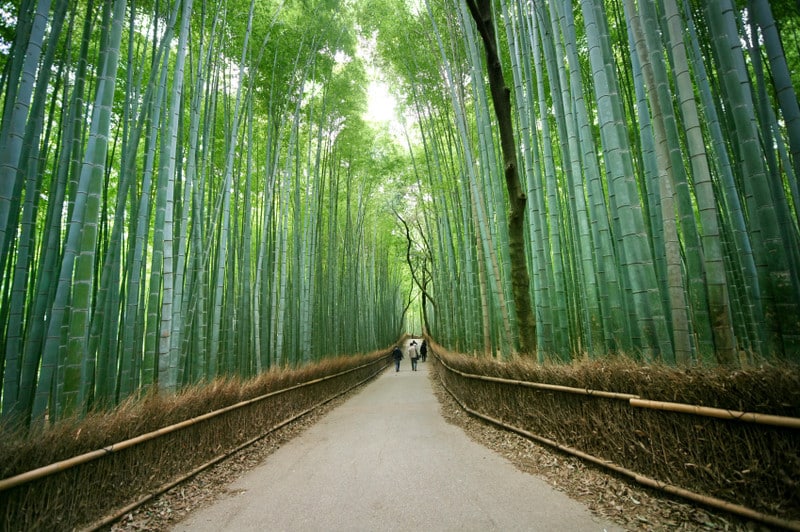
Arashiyama Bamboo Grove: A Classic Stop One Station Away
One station north of Matsunoo-taisha Station on the Hankyu Arashiyama Line is Arashiyama Station, from which the famous bamboo grove path is within walking distance. The towering moso bamboo forms a green tunnel, one of the most iconic scenes in Kyoto.
It is free and open all day, but crowds surge in quickly after nine in the morning, so to photograph it empty, arrive before eight. Scheduling it on the same day as Matsunoo Taisha creates a nice contrast of the lively and the quiet.
The bamboo grove path itself is short and takes only about ten minutes to walk, and it is usually combined with Tenryu-ji and Togetsukyo Bridge. After the crowds clear in the evening it photographs just as well, with softer light.

How Much Does Matsunoo Taisha Cost? Admission, Garden and Nearby Shrine and Temple Fees
The grounds of Matsunoo Taisha are free, and the combined ticket for Shofuen and the Shinzōkan costs only ¥500, one of the best-value garden tickets in Kyoto.
| Facility | Fee | Notes |
|---|---|---|
| Matsunoo Taisha grounds | Free | Sake barrel wall, main hall, amulet office |
| Shofuen + Shinzōkan | ¥500 | Weekdays and Saturdays 09:00-16:00 / Sundays and national holidays until 16:30 |
| Suzumushi-dera (Kegon-ji) | ¥500 | Includes tea, sweets and the Suzumushi sermon |
| Saiho-ji (Moss Temple) | From ¥4,000 | Online reservation on the official site, ages 13 and over |
Shofuen + Shinzōkan Admission Ticket: ¥500 to See the Three Gardens and the Treasure-Class Deity Statues
The grounds of Matsunoo Taisha are free, but entering Shofuen’s three gardens and the Shinzōkan requires an adult admission ticket of ¥500; one ticket covers both, a rare high-value garden ticket in Kyoto.
The official viewing hours are 09:00-16:00 on weekdays and Saturdays and 09:00-16:30 on Sundays and national holidays, closing earlier than most temples, so schedule it for the morning or early afternoon. Visiting the shrine alone takes about 30 to 45 minutes, and with the garden we suggest leaving 1 to 1.5 hours.
The ticket window is at the amulet office beside the worship hall and mostly takes cash, so have small change ready. If you have limited time and can only pick one, garden lovers should choose Shofuen and history fans the Shinzōkan.
Suzumushi-dera Admission: ¥500 with Tea, Sweets and a 30-Minute Sermon
Suzumushi-dera’s ¥500 admission already includes tea and sweets and about 30 minutes of the “Suzumushi Sermon.” The sermon is only in Japanese, but the monk’s witty delivery lets visitors who do not understand Japanese still feel the atmosphere.
After the sermon you can make a wish at the Happiness Jizo outside the temple and receive a yellow Happiness Amulet. Holidays and long weekends often mean a queue of over an hour, so come to queue before the gates open in the morning.
When making a wish you must clearly state your address, as the Jizo is said to need it to find your home, which is what the temple is best known for. Many people come back to give thanks after their wish comes true and to replace the amulet with a new one, making this a temple with a lot of human warmth. There is also a flight of stone steps to climb, so those with limited mobility should take note.
Saiho-ji Reserved Visit: A ¥4,000 Sutra-Copying Experience
Saiho-ji operates a very strict advance reservation system; you must reserve through Saiho-ji’s official channels, with the reservation period and method following the official site, and the offering fee is ¥4,000 per person, for junior high school students and older.
The fee includes the sutra-copying experience and the moss garden visit. After entering you must first copy a sutra or trace the Heart Sutra in the main hall and take part in chanting before you can stroll the moss garden, and the whole visit takes about 1.5 hours. Please follow the official announcements for the actual rules.
A brush and a model text are provided for the copying, and even if you cannot write kanji you can finish by tracing, so there is no need to worry. The goshuin issued afterward has very Zen-like calligraphy and is a dream item for collectors. Quotas and fees may change, so please check the official site.
Arashiyama and Rakusai One-Day Itinerary: Fitting Matsunoo Taisha into Your Arashiyama Trip
One-day Arashiyama tours from central Kyoto mostly include the bamboo grove, Togetsukyo Bridge and Tenryu-ji, with some adding Rakusai sights such as Matsunoo Taisha or Saiho-ji, taking about 6 to 8 hours.
If you arrange it yourself, you can buy a Hankyu and bus pass, touring Arashiyama in the morning and visiting Matsunoo Taisha and the Rakusai shrines and temples in the afternoon to avoid the peak crowds.
On a tour, stay times are fixed; arranging it yourself lets you enjoy the garden at Shofuen at leisure, which feels freer; if you do not want to work out transfers, a tour is easier. Tours fill up in peak cherry blossom and foliage seasons, so book several weeks ahead and confirm the meeting point and whether admission is included.
Where to Stay Near Matsunoo Taisha: Accommodation Suggestions for the Area
Staying one station away in Arashiyama lets you stretch the Rakusai sights into an unhurried two days.

Where to Stay Near Matsunoo Taisha? Accommodation Directions for Arashiyama and Rakusai
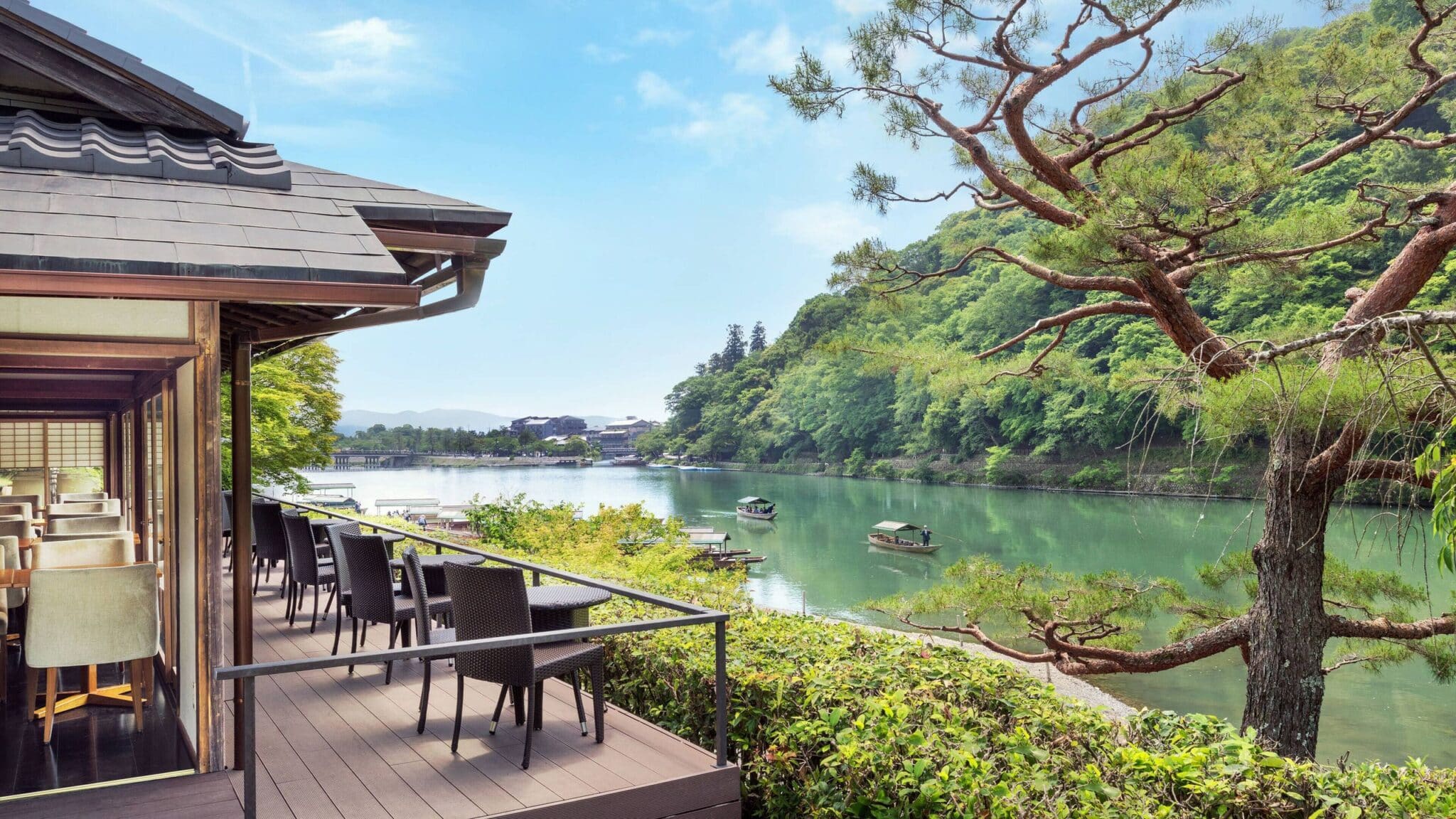
There are not many choices in the residential area around Matsunoo Taisha; one station north is Arashiyama, which covers everything from high-end hot spring inns to budget guesthouses, and in the early morning you can have the bamboo grove path and Togetsukyo Bridge to yourself. For flexible transport, you can choose near Hankyu Katsura Station or Kyoto Station, both within 30 minutes of Matsunoo Taisha; to save money, choose a business hotel around Shijo-Omiya, which has direct buses. Most restaurants in Arashiyama close by evening, so dinner choices are limited; book a plan with dinner or eat in the city first and then return to your hotel.
Matsunoo Taisha FAQ
Here are the Matsunoo Taisha questions travelers search for most.
Q: Do you need a ticket for Matsunoo Taisha?
The shrine grounds are free to visit. To enter Shofuen’s three gardens and the Shinzōkan, you need to buy an adult admission ticket of ¥500; one ticket covers both.
Q: What is the fastest way to get to Matsunoo Taisha?
Take the Hankyu Arashiyama Line to Matsunoo-taisha Station; from the west gate it is about a 3-minute walk. From Arashiyama it is just one stop by train, or about 17 minutes on foot.
Q: What are the opening hours of Shofuen?
09:00 to 16:00 on weekdays and Saturdays and 09:00 to 16:30 on Sundays and national holidays, closing earlier than most temples. The combined admission for the garden and the Shinzōkan is ¥500 for adults, ¥400 for students and ¥300 for children. We suggest scheduling the garden in the morning or early afternoon to avoid arriving too late.
Q: When do the yamabuki flowers bloom at Matsunoo Taisha?
The official site’s “Yamabuki Matsuri” runs from April 10 to May 5 every year, when the kerria along the Ichinoi River in the grounds bloom together. The bloom shifts with the weather, so check the official site’s information first.
Q: What are the special amulets at Matsunoo Taisha?
The three sake charms tied to sake worship, the “Brewing Charm” (for brewers), the “Selling Charm” (for sellers) and the “Drinking Charm” (for drinkers), are the most representative; another popular item is the “Byakko Mikuji” (White Tiger fortune slip), representing the guardian beast of the west, which the official site says resumed in December 2025 in limited numbers. Items and prices are subject to the amulet office on site.
Q: How do you get the goshuin at Matsunoo Taisha? Can you collect the Kyoto Gosha Meguri?
Yes. Matsunoo Taisha is the shrine guarding the west (the white tiger) in the “Kyoto Gosha Meguri,” which with Heian Jingu, Yasaka Shrine, Jonan-gu and Kamigamo Shrine makes up five shrines; you receive the special shikishi card at the first shrine you visit and then collect a goshuin at each of the five (KYOTOdesign lists the shikishi at ¥1,000 and each goshuin at ¥300). For the types, prices and hours of ordinary goshuin, please follow the notices at the amulet office on site.
Q: How long should you spend at Matsunoo Taisha? What can you combine it with?
Visiting the shrine alone takes about 30 to 45 minutes, and with the garden and the Shinzōkan we suggest leaving 1 to 1.5 hours. Nearby you can add Tsukiyomi Shrine, Suzumushi-dera, Saiho-ji and Umenomiya Taisha.
Q: Can you buy tickets on site for Saiho-ji (Moss Temple)?
No. Saiho-ji operates a strict online reservation system; you must reserve in advance through the official channels, with the reservation period following the official site, and the fee is ¥4,000 per person, for junior high school students and older.