
Nichinan Coast Sights: Myths and Strange Rocks on Miyazaki’s Southern Coastline
The Nichinan Coast is the coastline that stretches south from Miyazaki City; driving along National Route 220, you have the Pacific on one side and subtropical plants and palm trees on the other, and the road itself is the scenery. The three stars along this route each have their own character: at the north end, Aoshima Shrine is ringed by the national natural monument “Devil’s Washboard”; in the middle, Sun Messe Nichinan (the Moai statues) has the only officially licensed full-scale replicas of Moai in the world; and at the south end, Udo Shrine builds its vermilion main hall into a sea cave, and offers “unda-nage” (luck-ball throwing), a way of making a wish found nowhere else. Because they happen to line up from north to south, most people plan them as a day trip. Below we first introduce these four core spots, then cover transport and tickets.
Aoshima Shrine and the Devil’s Washboard: A Matchmaking Sanctuary in a Southern Jungle
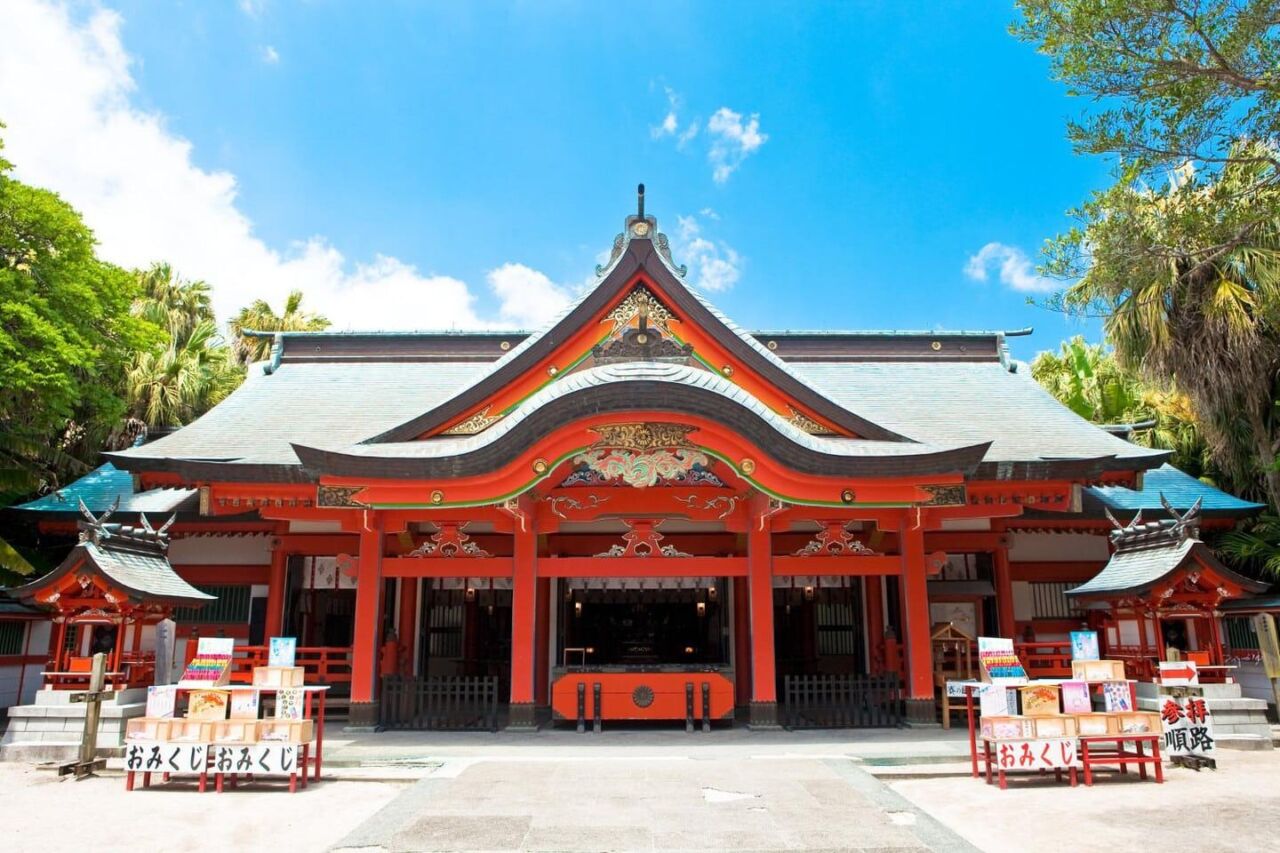
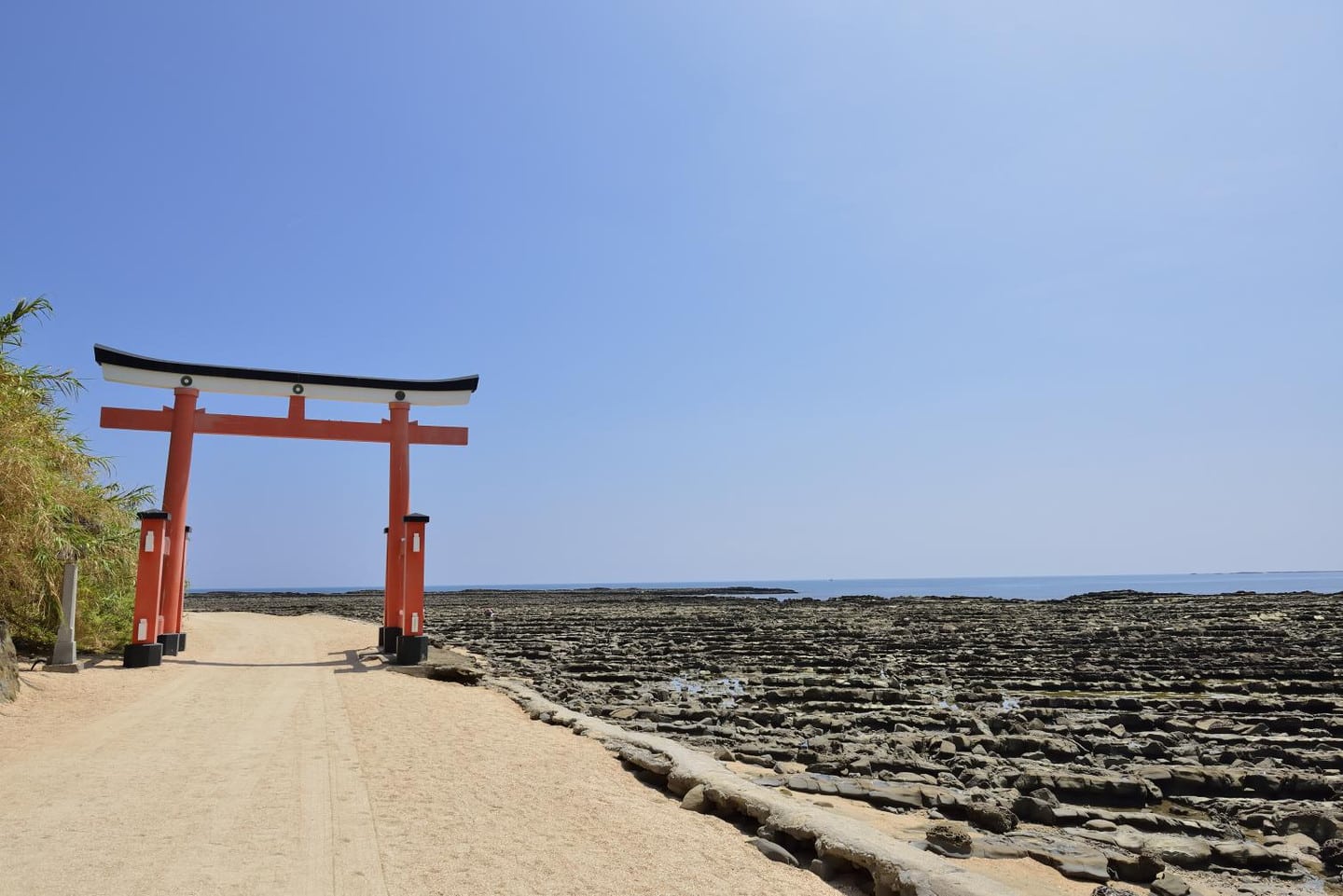
Aoshima Shrine stands on a small island linked to the mainland by a bridge, covered with subtropical betel palm groves, and as soon as you walk in you feel a strong southern resort atmosphere. The shrine enshrines Yamasachihiko and Toyotama-hime, and is Miyazaki’s most representative shrine for matchmaking and romantic luck.
The island is ringed by wave-shaped eroded rock called the “Devil’s Washboard,” officially named “Aoshima’s Uplifted Seabed and Strange Wave-Eroded Features,” a nationally designated natural monument. It is most spectacular at low tide when the whole rock platform is exposed, so checking the tide table before departure makes a big difference. The island is mostly stone paving and sand and not hard to walk; allow about an hour to see the main hall and surroundings.
![[Japan Kyushu Miyazaki Chartered Car Day Tour] Start and End in Miyazaki City or Miyazaki Port | Aoshima Shrine / Devil's Washboard Kirishima / Sun Messe Nichinan / Udo Shrine / Phoenix Nature Zoo | Flexible Itinerary](https://travel.williamlion.tw/wp-content/uploads/sites/7/2026/08/image-467.jpg)


Sun Messe Nichinan: The World’s Only Officially Licensed Moai
Sun Messe Nichinan (サンメッセ日南) sits on a plateau overlooking the Nichinan Coast, where seven Moai stand in a row with their backs to the Pacific, an image that stays with you. These Moai are not ordinary copies: they are the only full-scale replicas in the world to have received official permission from the elders of Easter Island.
Each Moai is about 5.5 meters tall and weighs about 18 to 20 tons. The grounds are large, and besides the Moai there are photo spots such as a sea-facing swing and colorful Moai. Admission fees and opening hours follow the park’s announcements. The park is on a hillside with a slope on the way up, so those who dislike the sun or have limited stamina can make use of the shuttle inside the park.
Udo Shrine: A Main Hall Built into a Sea Cave
Udo Shrine is a rare “lower shrine” in Japan: to worship you walk down stone steps and pass through the cave mouth before you see the vermilion main hall set into a sea cave in the cliff, facing the Pacific. In mythology this is where Toyotama-hime gave birth, and it has long been known for safe childbirth, child-rearing and matchmaking.
The walk from the car park to the main hall passes an undulating approach with quite a few steps, so assess it first if you travel with elders or a stroller. Waves beat against the rock right beneath your feet, and that sound and scene are the most unforgettable part of Udo Shrine.
Obi Castle Town: A Little Kyoto of Kyushu Along the Way
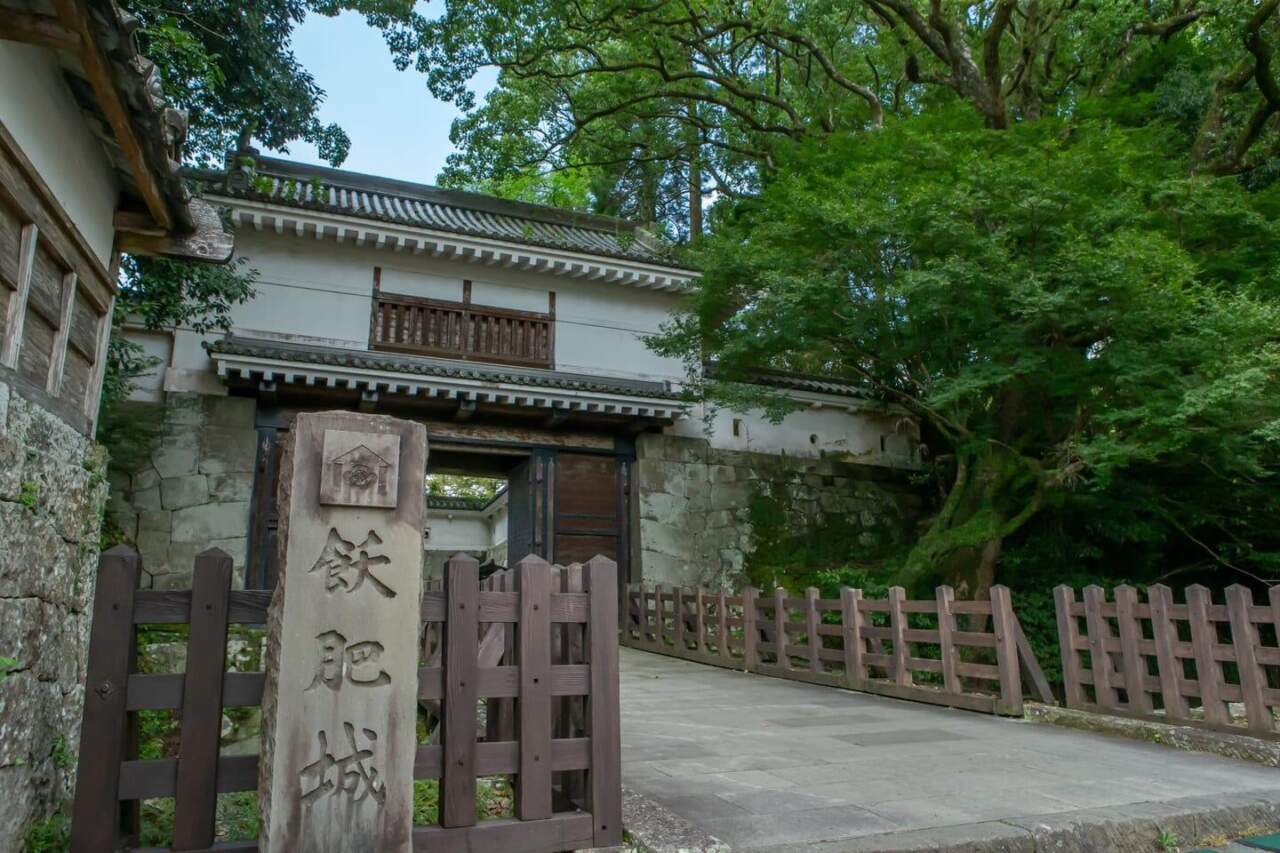
If your day trip has time to spare, you can drive about 20 minutes inland from Udo Shrine to Obi. Obi Castle Town is an Important Preservation District for Groups of Traditional Buildings, with samurai residences and stone-walled streets well preserved, earning it the title “Little Kyoto of Kyushu.”
The local specialties are “Obi-ten,” fried sweet fish paste, and thick-rolled omelet, good for eating as you walk. Miyazaki Kotsu route buses also run to Obi, so those not driving can plan it too, just watch the timetable.
How to Get to the Nichinan Coast? Driving, Miyazaki Kotsu Bus and the JR Nichinan Line Compared
The Nichinan Coast is a typical linear itinerary, and how you travel decides how many stops you can fit in.
Driving: heading south along National Route 220 is smoothest
Driving is the most recommended way to see the Nichinan Coast; take National Route 220, with the Pacific on your right all the way. Miyazaki city to Aoshima Shrine is about 25 minutes, and Aoshima to Udo Shrine about 30 minutes, with photo stops possible along the way at Horikiri Pass and the Michi-no-Eki Phoenix viewpoint.
Rental cars are mostly picked up at Miyazaki Airport or Miyazaki Station; continuing on to Cape Toi adds more than an hour of driving. The coast road has many bends and the backlight in the evening affects visibility, so we suggest driving in daylight and allowing time for parking and walking; there are also free viewing parking areas along the route where you can pull over at any time.
Miyazaki Kotsu route buses and the one-day ticket
If you are not driving, you can take the Miyazaki Kotsu “Miyazaki Station / Miyazaki Airport – Nichinan / Obi” route bus, which passes Aoshima, Sun Messe Nichinan, Udo Shrine and Obi. We suggest buying the foreign-visitor-only “VISIT MIYAZAKI BUS PASS,” ¥2,000, for which you must show your passport and a return flight ticket; on the day of use it allows unlimited rides on Miyazaki Kotsu regular route buses, better value than buying single tickets.
Buses run about once an hour, so missing one may mean waiting another hour and one fewer sight. We suggest photographing the timetable at the stop when you get off, noting the return time and the next departure, not planning more than three stops, and confirming whether payment is by cash or transport IC card.
JR Nichinan Line: only reaches Aoshima, then you still need to transfer
If you are only going to Aoshima Shrine, you can take the JR Nichinan Line and get off at “Aoshima Station,” then walk about 10 minutes across the bridge into Aoshima, the simplest choice if you are not driving and want to avoid the bus timetable. But the Nichinan Line does not run frequently and does not reach Sun Messe Nichinan or Udo Shrine directly, so you still need to transfer to a bus or taxi. In practice most people use JR only for the Aoshima section and rely on buses or a chartered car for the rest. The trains have few cars and are crowded with tourists on holidays, which is tight with large luggage. If your itinerary is only half a day, taking JR to Aoshima and back to Miyazaki city is easiest, and you do not need to worry about missing a bus.
Car parks and Hacchozaka: the last stretch after arrival
Udo Shrine’s parking is divided into the “large tour bus car park” and the “No. 1 / No. 2 car parks” near the approach. When using navigation, try to choose the car park near the main hall; otherwise you must walk an extra, fairly long steep slope, “Hacchozaka,” which is very tiring with elders.
Aoshima Shrine’s car park is on the shore in front of the bridge, about 10 minutes’ walk across the bridge; Sun Messe Nichinan has its own large car park, with a shuttle inside the park for the slope. In peak season and long weekends all car parks fill easily, so leave early. If you happen to find a car park full, you can first stop at a nearby roadside station or viewpoint and wait for a round of spaces to free up before entering, which is more efficient than queuing at the entrance.


Must-Visit Sights on the Nichinan Coast: Udo Shrine, Aoshima and the Moai Explained
The sights below are arranged from north to south; following this order gives the standard day-trip route.
Aoshima Shrine: A Matchmaking Shrine Wrapped in Betel Palm Groves
Aoshima Shrine enshrines Yamasachihiko (Hikohohodemi no Mikoto) and Toyotama-hime and belongs to the Umisachi-Yamasachi myth system, the two ends of the same story with Udo Shrine at the south end. The whole island of Aoshima, where the shrine stands, is covered with subtropical betel palm groves, and the groves are themselves a national natural monument.
It takes about ten minutes to walk from Aoshima Station or the car park across the Yayoi Bridge linking the main island, and worship within the grounds is free. The amulet office (shamusho) offers matchmaking amulets and goshuin seals, and ema plaques and colorful wish ropes decorate the whole approach, making it one of the most photogenic shrines in Miyazaki.
![[Kyushu/Miyazaki] Nichinan Day Tour (Aoshima Shrine / Pelican Shrine)](https://travel.williamlion.tw/wp-content/uploads/sites/7/2026/08/image-463.jpg)
Aoshima Shrine’s Motomiya: Pot-Throwing Wishes Hidden in the Subtropical Jungle
Behind the main hall, a short path through subtropical plants leads to the much quieter “Motomiya.” This is the most atmospheric corner of Aoshima Shrine, with light dappled by the leaves and far fewer visitors.
At Motomiya you can try throwing the “tsubo-nage” (Ame-no-hiraka throwing), tossing a small clay dish toward the area enclosed by a shimenawa rope to make a wish; you can also tie colorful paper cords called “musubi-koyori” to pray for good relationships. The contents and prices of the offerings follow the shrine’s announcements on the day. It takes only a few minutes to walk from the main hall to Motomiya, but the atmosphere is very different, and the extra walk is well worth it. The path is lined with native subtropical plants, and mosquitoes are more numerous in summer, so spray repellent first.
Devil’s Washboard: A Natural Monument Visible Only at Low Tide
The Devil’s Washboard, officially named “Aoshima’s Uplifted Seabed and Strange Wave-Eroded Features,” is a wave-shaped rock platform formed when seabed sandstone and mudstone layers were uplifted and then eroded by waves over many years; it surrounds Aoshima and the Nichinan Coast and is a nationally designated natural monument. The key is the tide: at high tide most of it is submerged, and only at low tide does the full pattern appear, so be sure to check the day’s tide table before departure, and avoid running on the rock, as the surface is wet and slippery with drops. You can see the whole view from the Aoshima Shrine bridge and the path around the island, with no need to climb down onto the rock.
Aoshima Subtropical Botanical Garden: A Free Oasis Next to Aoshima
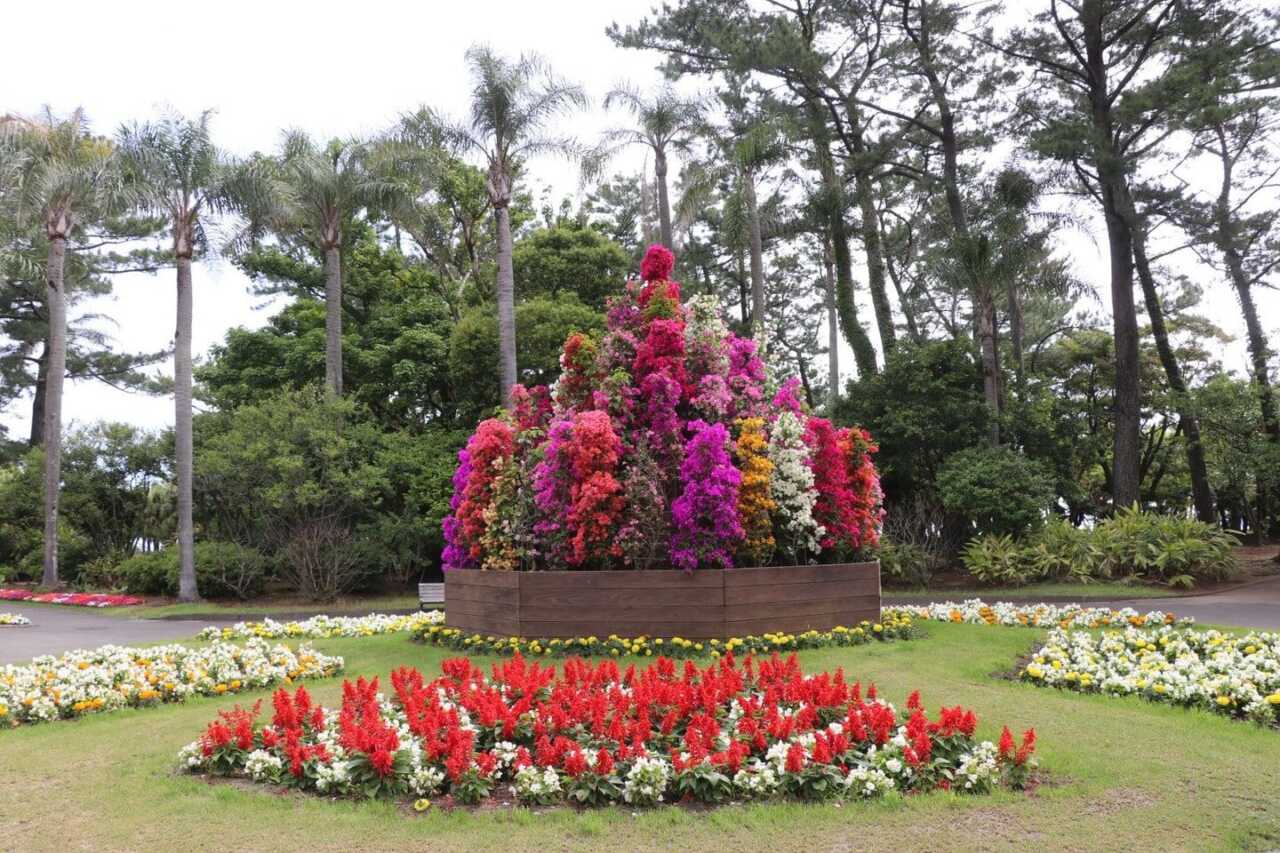
Aoshima Subtropical Botanical Garden (Miyako Botanic Garden Aoshima) is near the Aoshima bridge and displays Miyazaki’s subtropical and tropical plants; the outdoor garden is free, the large greenhouse costs about ¥200 extra and holds more tropical flowers and fruit trees, a good side trip while waiting for the tide or a bus.
The garden is small, about 30 minutes for a loop, with plenty of shade, restrooms and a rest area, which is very useful at midday in summer. Greenhouse opening hours and special exhibition fees follow the garden’s announcements on the day, and winter to early spring is the best season for the greenhouse. It is only a few minutes’ walk from Aoshima Shrine and fits well as a stop on an Aoshima itinerary.
Sun Messe Nichinan: Seven Officially Licensed Full-Scale Moai Replicas
What Sun Messe Nichinan is most famous for is the seven Moai standing in a row with their backs to the Pacific. These Moai are special because around 1990 a Japanese team volunteered to restore the fallen Moai on Easter Island, which helped Easter Island be inscribed as a World Heritage Site as “Rapa Nui National Park,” and the elders and islanders of Easter Island for the first time officially permitted full-scale replicas in Japan.
Each is about 5.5 meters tall and weighs about 18 to 20 tons, and you only feel the size when standing in front of one. The park spreads along the hillside, with a sea-facing swing, colorful Moai and an observation deck as well, and a visit takes about one to one and a half hours.
Udo Shrine Main Hall: A Vermilion Hall Set into a Sea Cave
Udo Shrine’s main hall is built inside a natural sea cave beneath a cliff, a rare lower shrine in Japan that you must “walk down” to reach. After passing the cave mouth, before you is a vermilion hall surrounded by rock walls and facing the Pacific, with the sound of waves rising from beneath your feet, an atmosphere very unlike an ordinary shrine. In mythology this is where Toyotama-hime gave birth to Ugayafukiaezu-no-Mikoto, so it is known for safe childbirth, child-rearing and matchmaking. Worship within the grounds is free, and opening hours and the amulet office’s service hours follow the day’s announcements; in peak season, go in the morning. The temperature difference inside and outside the cave is noticeable, cool in summer and cold in winter, so watch for the sea breeze.
Luck-Ball Throwing: Wishing at the Turtle Rock, Left Hand for Men, Right Hand for Women
Looking down from the platform in front of the main hall, you will see a rock shaped like a giant turtle, the “Turtle Rock,” whose hollowed shell is enclosed by a shimenawa rope with a small round hole in the middle. This is the stage for Udo Shrine’s most famous “unda” (luck ball).
The method is to first buy a red luck ball molded from clay; men throw with the left hand and women with the right, silently making a wish and throwing toward the hollow; if it lands in or hits within the shimenawa, the wish will come true. The distance is farther than you imagine, and most people miss several times, which turns out to be the most fun part. The contents and prices of the offerings follow the shrine’s announcements. There is often a queue at the throwing platform; after throwing, please give the spot to the next group. This part is also great for souvenir photos.
Ochichi-iwa and the Faith in Safe Childbirth: Another Highlight of Udo Shrine
Deep in the cave where the main hall stands is a dripping rock wall called “Ochichi-iwa,” said by legend to be the breasts Toyotama-hime left behind to nurse her child when she departed, and the core of Udo Shrine’s faith in safe childbirth and child-rearing.
The cave is dim and the floor damp, so slow down. Childbirth-related offerings are also handled here, with actual content following the shrine’s arrangements on the day; for special prayers, ask at the shrine office first. It is also a good place to photograph the rock layers on the cave ceiling, but please do not use a flash or touch the rock walls, and the footing is slippery, so those carrying children need special care.
Horikiri Pass and Michi-no-Eki Phoenix: The Classic Viewpoints of the Nichinan Coast
On the way from Miyazaki city to Aoshima you pass Horikiri Pass, the widest-view stretch of the Nichinan Coast road, lined with Washington palms, with the continuous Devil’s Washboard and the Pacific below.
The adjacent “Michi-no-Eki Phoenix (道の駅フェニックス)” has an observation deck, a shop and a restaurant, where you can buy Miyazaki mango products and souvenirs, and is the best place on a drive to resupply and use the restroom. Parking is free but often full on holidays. It is also the best relay point on the drive for a break, convenient whether heading south or north. The sea wind is strong, so mind your hat and light items when getting out for photos, and do not cross the guardrail toward the cliff edge.
Obi Castle Ruins and Samurai Residence Streets: The Heart of Kyushu’s Little Kyoto
The Obi Castle ruins are the remains of the residence of the Ito clan of the Obi domain, preserving stone walls, the Ote-mon gate and a group of samurai residences, and the whole district is an Important Preservation District for Groups of Traditional Buildings, with its stone walls and white-walled townhouses well preserved.
It is about 20 minutes by car from Udo Shrine, and a walk plus visits takes about two hours; some buildings charge admission and there is a combined visit ticket, with contents and prices following the announcements of Nichinan City’s tourism office on the day. The cedar forest and stone steps of the castle ruins have a lovely atmosphere and are popular in the cherry blossom season. If time is limited, walk the Ote-mon gate and the samurai residence street to get a feel for the castle town layout; the car park is near the entrance.
Obi-ten and Thick-Rolled Omelet: Eating on the Move in the Castle Town
The thing to do when exploring Obi Castle Town is to eat as you walk. “Obi-ten” is a local dish of fish paste mixed with tofu and sugar and deep-fried, with a distinct sweetness and a fluffier texture than ordinary fish cake; the thick-rolled omelet is sweet as pudding and even better chilled.
Both can be bought at many shops and tea houses in the castle town, mostly sold by the piece, great for sharing. Opening hours follow each shop’s announcements, and on weekday afternoons some shops close early. Many shops also offer seating, so when you get tired you can sit down with a cup of tea. Obi is about 20 minutes by car from Udo Shrine, just right as the last stop of a day trip.
Cape Toi: The Southernmost Cape Where Wild Horses Live
If your itinerary stretches to two days, you can go further south to Cape Toi in Kushima City. This is one of the few places in Japan where you can see wild horses (Misaki horses) grazing freely, with grassland stretching all the way to the sea cliffs and a white lighthouse standing at the very tip.
It is more than an hour more by car from Udo Shrine, so in practice it is hard to fit into the same day. Entry to the area is by voluntary contribution, the wild horses have their own range, so keep your distance and do not feed them, and slow down when driving through the grassland sections. The Cape Toi Lighthouse on the cape is one of the few lighthouses in Kyushu you can climb, with opening hours following the managing body’s announcements. The mountain road along the way has many bends, so allow ample round-trip driving time.
How Much Does the Nichinan Coast Cost? Admission, Tickets and Experience Fees
The cost structure of the Nichinan Coast is simple: shrines are free, park-type sights charge admission, and transport is kept down with a one-day ticket.
Udo Shrine worship and luck balls: free entry, luck balls extra
Worship within Udo Shrine’s grounds is free and no ticket is needed; what actually costs money is the luck balls and amulets. Luck balls are small red balls molded from clay, sold at the amulet office near the main hall, and landing one in the hollow of the Turtle Rock means your wish will come true.
The shrine is also known for faith in safe childbirth and child-rearing, and related amulets and goshuin are handled at the amulet office. Prices and sales methods follow the shrine’s announcements on the day, and in peak season the office has a queue, so allow generous time.
Sun Messe Nichinan admission: the main ticket expense of a day trip
Sun Messe Nichinan is the only large sight on this route that requires an admission ticket. The park spreads along the hillside and, besides the seven full-scale Moai replicas, has a sea-facing swing, colorful Moai and observation facilities, with a shuttle inside the park to help with the slope.
We suggest staying one to one and a half hours. Opening hours are 9:30 to 17:00 (last entry 16:30); admission fees and closed days follow the day’s announcement on the official site (sun-messe.co.jp), and in strong wind or bad weather some facilities stop operating.
Miyazaki one-day bus ticket: the key ticket for a no-car itinerary
If you are not driving, Miyazaki Kotsu’s “VISIT MIYAZAKI BUS PASS” is ¥2,000, sold only to foreign visitors with a passport and a return flight ticket, available at the Miyazaki Station Bus Center, the Miyazaki Airport office and other places; on the day of use it allows unlimited rides on Miyazaki Kotsu regular route buses, covering Aoshima, Sun Messe Nichinan, Udo Shrine and Obi. There is also the “Nichinan 1-Day Free Pass (日南1Dayフリーパス)” combined with the JR Nichinan Line, ¥2,300 for adults and ¥1,150 for children, including JR between Miyazaki and Nango and Miyazaki Kotsu buses between Miyazaki Station and Obi.
Visiting two or more sights usually pays for itself. Before buying, plan the order against the timetable, because buses run only about once an hour and getting the order wrong easily wastes a whole afternoon.
Obi Castle Town combined ticket: see several paid buildings at once
Obi Castle Town has several paid buildings and old houses, and locally there is a combined visit ticket, suited to travelers who plan to see the castle ruins and samurai residences in full. If you only stroll, take photos and eat Obi-ten, you can enjoy it without buying a ticket.
The “Ayumi-chan Map” currently issued by the Obi Castle Town Preservation Society comes in two types: the version including 6 buildings such as the Obi Castle History Museum, Matsuo-no-Maru, Yoshokan and Komura Jutaro Memorial Hall is ¥1,600 for adults, ¥1,400 for high school and university students and ¥1,150 for elementary and junior high school students; the version including only the old Yamamoto Inpei residence and the merchant house museum, 2 buildings, is ¥1,000, and both come with 5 tabearuki (eat-as-you-walk) exchange coupons. They are sold at the ticket counter of the Obi Castle tourist car park and at “Nichinan-ya (にちなん屋)” in Obi Station. Prices and contents may change, so after arriving we still suggest confirming at the tourist information office.
Nichinan Coast chartered car or day tour: save the timetable anxiety
If you travel with elders or children and do not want to drive, consider a chartered car or a day tour departing from Miyazaki city that links Aoshima, Sun Messe Nichinan and Udo Shrine into one line, with no need to bend to bus timetables.
Such tours usually include the car fare and a guide; whether admission and lunch are included depends on the plan, so read carefully before ordering. The more people, the better the cost split, and with two or more people it is worth comparing prices once against the bus option.
What to Know Before Visiting the Nichinan Coast? Where to Stay and Pre-Trip Reminders
Finally, two things that directly affect the experience: where to stay and what to check before departure.

Stay in Miyazaki City or in Aoshima/Nichinan? Where to stay along the way
Most people base themselves in Miyazaki city, for simple reasons: JR Miyazaki Station and Miyazaki Airport are both here, the starting points for buses and rental cars are here, you can eat Miyazaki beef and chicken nanban at night, and it is easy to organize heading north to Takachiho or south to Cape Toi the next day.
If you want to get into Aoshima earlier to photograph the Devil’s Washboard at low tide, or want to stay one more night in Nichinan, there are also sea-view inns and hot spring lodgings around Aoshima and inside Nichinan City, with few rooms, so book early in peak season. If you plan to finish Obi as well, staying in Nichinan City saves quite a lot of driving compared with going back and forth from Miyazaki city each day.
Three Things to Check Before You Go: Tides, Timetables and Steps
First is the tide. At high tide most of the Devil’s Washboard is covered by sea, and only at low tide can you see the complete wave-shaped rock platform, so be sure to check the day’s tide table before departure and schedule the Aoshima stop around low tide.
Second is the bus timetable. Miyazaki Kotsu’s Nichinan Line runs only about once an hour, and missing one means an hour’s wait, so photograph the timetable at the stop when you get off. Third is steps and slopes: Udo Shrine’s approach has undulations and long stairs, and parking in the wrong car park means walking the extra Hacchozaka; if you travel with elders or a stroller, be sure to choose the car park near the main hall and wear comfortable shoes. The coast is windy, so bring sun protection and a light jacket as well.
Nichinan Coast FAQ
Q: How should I plan a Nichinan Coast day trip? Where do I start?
The standard route starts from Miyazaki city and goes from north to south: first Aoshima Shrine and the Devil’s Washboard, then Sun Messe Nichinan for the Moai, and finally Udo Shrine for luck-ball throwing. By car it is about 25 minutes from Miyazaki city to Aoshima and about 30 minutes from Aoshima to Udo Shrine; by bus you must fit around the roughly hourly service, so we suggest at most three stops in a day.
Q: How does luck-ball throwing at Udo Shrine work? How much does it cost?
At the amulet office near the main hall, buy a red luck ball molded from clay; men throw with the left hand and women with the right, silently making a wish and throwing toward the round hollow in the back of the “Turtle Rock” below the front of the main hall; if it lands in or hits within the shimenawa, the wish will come true. Prices and sales methods follow the shrine’s announcements on the day.
Q: Does Udo Shrine charge admission? Are there many steps?
Worship within the grounds is free and no ticket is needed. But the approach has clear undulations and long stairs, and you must also walk down into the sea cave to reach the main hall. If driving, try to park at the No. 1 / No. 2 car parks near the main hall; if you park in the large tour bus car park you must walk an extra steep slope, “Hacchozaka,” so assess it first if traveling with elders.
Q: When is the Devil’s Washboard most beautiful?
At low tide. The Devil’s Washboard, officially named “Aoshima’s Uplifted Seabed and Strange Wave-Eroded Features,” is a nationally designated natural monument; at high tide most of it is covered by sea, and only at low tide does the complete wave-shaped rock platform appear. Check the day’s tide table before departure and schedule Aoshima around low tide to be safe.
Q: Are the Moai at Sun Messe Nichinan real?
They are the only officially licensed full-scale replicas in the world. Around 1990 a Japanese team volunteered to restore the fallen Moai on Easter Island, and the elders and islanders of Easter Island therefore for the first time permitted full-scale replicas in Japan; there are seven in the park, each about 5.5 meters tall and weighing about 18 to 20 tons.
Q: Can I see the Nichinan Coast without driving? What tickets should I buy?
Yes. The main option is the Miyazaki Kotsu “Miyazaki Station / Miyazaki Airport – Nichinan / Obi” route bus, which serves Aoshima, Sun Messe Nichinan, Udo Shrine and Obi, and the ¥2,000 “VISIT MIYAZAKI BUS PASS,” available to foreign visitors, is the best value. But buses run only about once an hour, so be sure to check the timetable first and confirm the last return bus.
Q: What is the difference between Aoshima Shrine and Udo Shrine?
Both belong to the Umisachi-Yamasachi myth system but have very different characters. Aoshima Shrine is on a small island surrounded by betel palm groves and the Devil’s Washboard, focused on matchmaking and romantic luck, with a bright southern atmosphere; Udo Shrine is a lower shrine you walk down into a sea cave, focused on safe childbirth, child-rearing and matchmaking, with luck-ball throwing, and a much more mysterious atmosphere.