
Tofuku-ji Temple Guide 2026: Tsutenkyo Bridge Autumn Leaves and Practical Viewing Tips
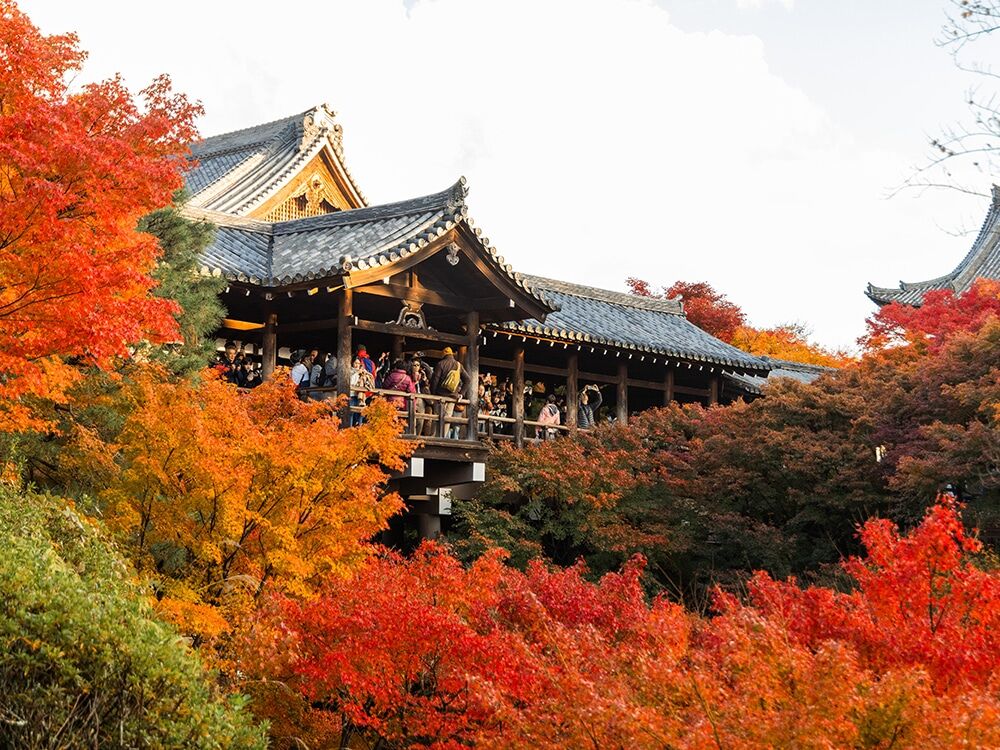
Tofuku-ji is the “king of maple temples” in Kyoto. More than 2,000 maple trees turn Tsutenkyo Bridge and the Sengyokukan valley into a sea of red, making it a must-visit in autumn.
History and Standing of Tofuku-ji
Tofuku-ji was founded in 1236 at the wish of Kujo Michiie. It is one of Kyoto’s Five Great Zen Temples and the head temple of the Tofuku-ji school of Rinzai Zen. Its name combines characters from Nara’s Todai-ji and Kofuku-ji.
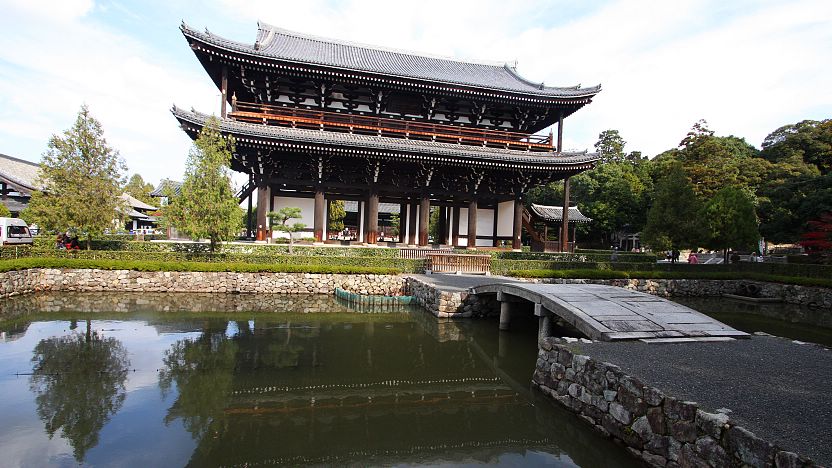
The temple preserves buildings from the Kamakura and Muromachi periods. The main hall and the Sanmon gate are designated Important Cultural Properties or National Treasures, showing Zen aesthetics and some 700 years of history.
Tofuku-ji Opening Hours and Visiting Etiquette
Tofuku-ji is open all year. From April 1 to November 13, visits are accepted from 9:00 to 16:00 (gate closes at 16:30). During the autumn-leaves period from November 14 to December 6, Tsutenkyo Bridge opens from 8:30. From December 7 to March 31, hours are 9:00 to 15:30 (gate closes at 16:00). Please check the official Tofuku-ji website (tofukuji.jp) for the latest hours.
Allow 60 to 90 minutes to see Tsutenkyo Bridge and the Honbo garden. Peak autumn brings big crowds, so leave extra time for queuing to buy tickets.
Tofuku-ji Through the Seasons
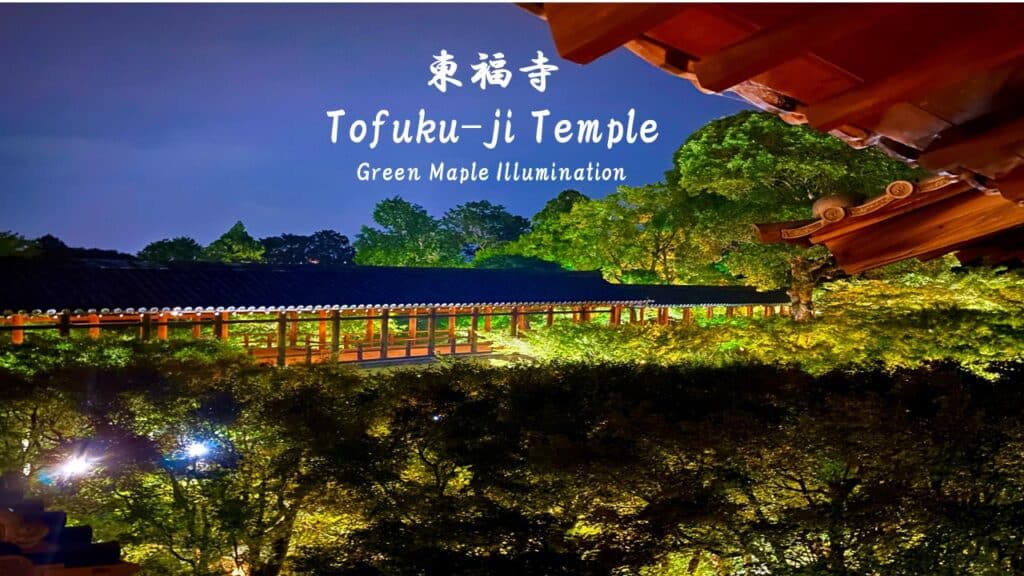
Spring is known for fresh green maples, and summer Sundays offer a Zen meditation experience. Autumn peaks from mid-November to early December, and in winter the New Year’s Eve bell is rung on December 31 to welcome the new year.
Each season has its own look, but the sea of autumn leaves is the most iconic, and one of the main reasons travelers from around the world visit Kyoto.
How to Get to Tofuku-ji: Transport Options and Fares
From Kyoto Station, the JR Nara Line takes just 2 minutes to Tofukuji Station (fare ¥150), and the temple gate is about a 10-minute walk from there. This is the fastest and most recommended route. You can also take the Keihan Main Line to Tofukuji Station, with a similar walking route. Trains run frequently, and it pairs well with an ICOCA card or a Keihan one-day pass.
Top Sights at Tofuku-ji 2026: Complete Guide to Tsutenkyo Autumn Leaves
Tofuku-ji stands in Honmachi, Higashiyama Ward, Kyoto, and is one of Kyoto’s Five Great Zen Temples and the most representative autumn-leaves spot in Kansai. The grounds are spacious, and besides the world-famous Tsutenkyo Bridge there are the Honbo garden, the hojo hall, Kaizando and Ryogin-an, all worth savoring. Below are the eight must-see spots within Tofuku-ji so you can plan the most complete route for the 2026 foliage season.
Tsutenkyo Bridge
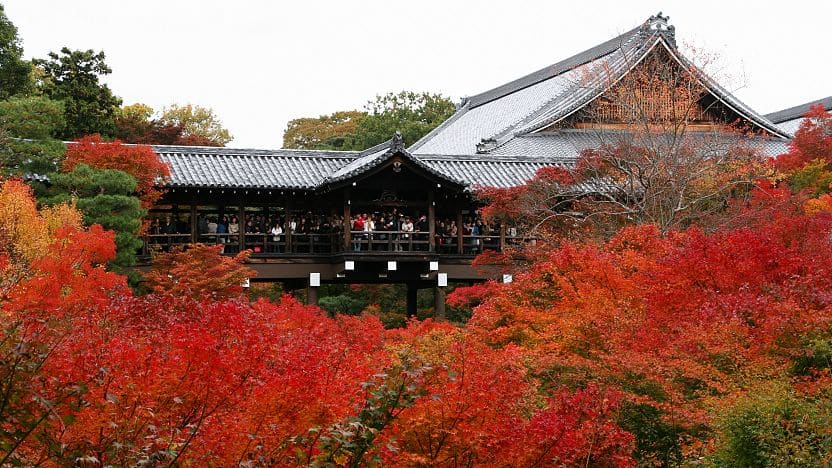
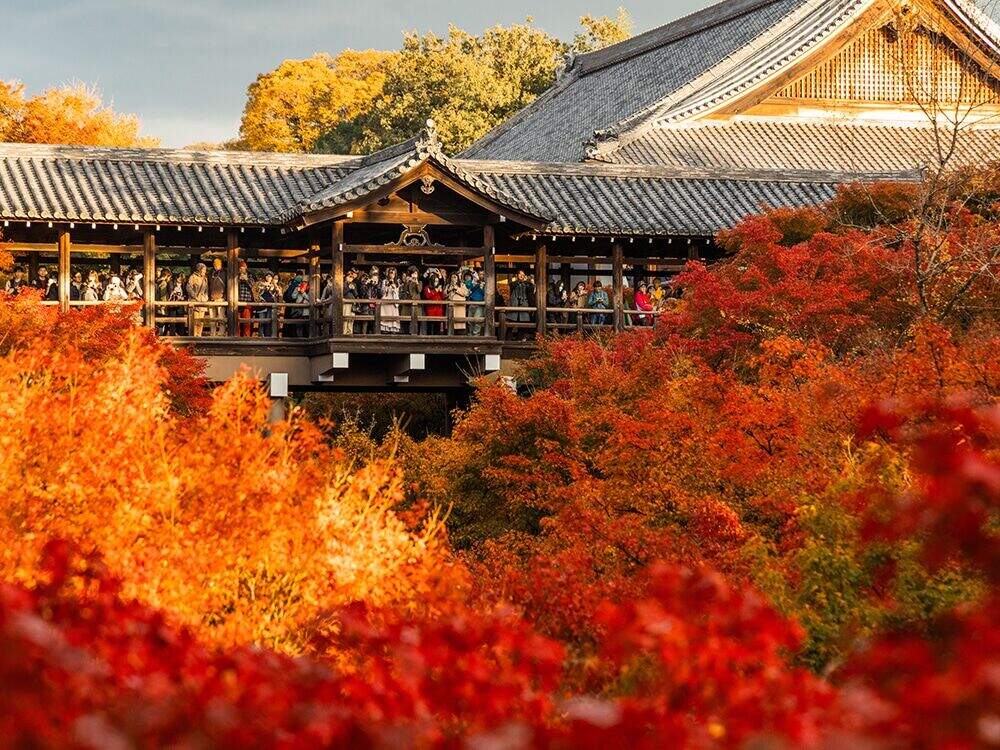
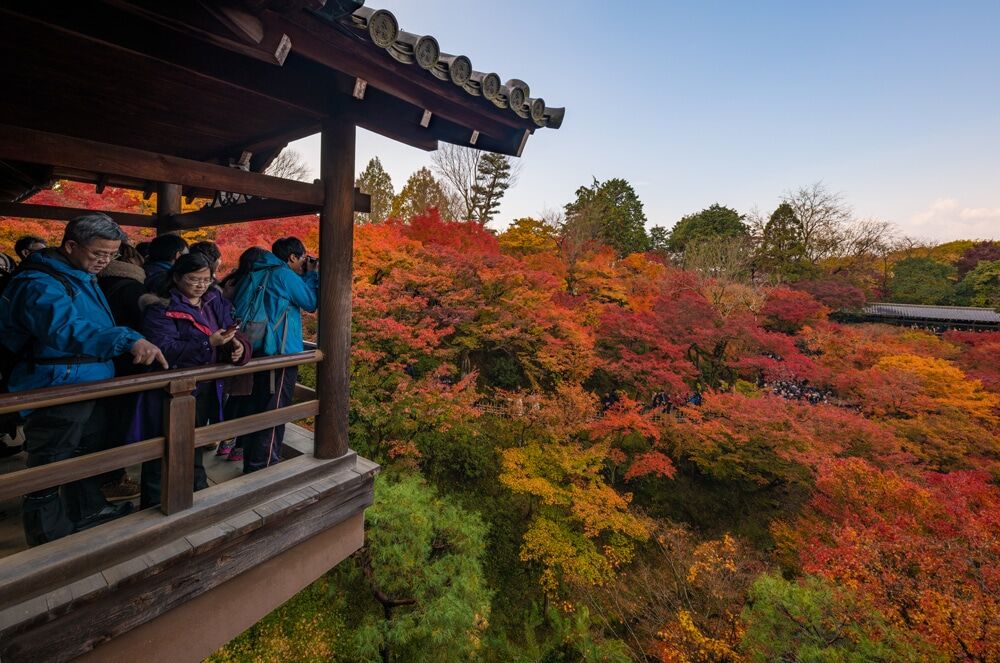
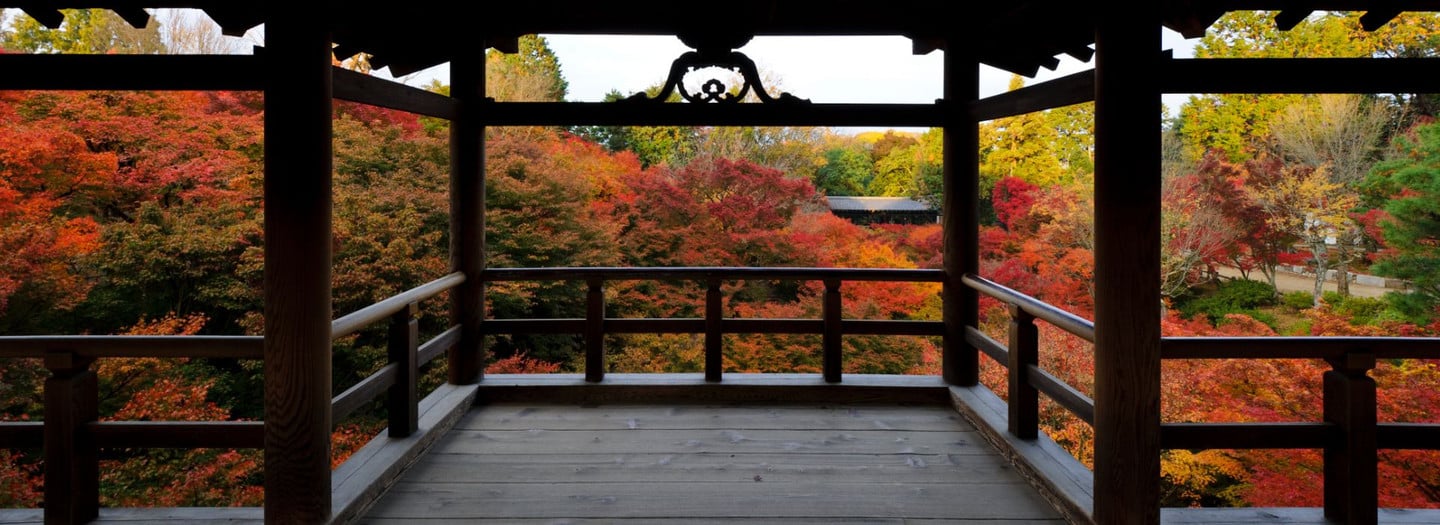
Tsutenkyo Bridge spans the Sengyokukan valley and connects the main hall to Kaizando, about 27 meters long. From mid-November to early December, the 2,000 maples below the bridge blaze red, a classic Kyoto autumn scene. The bridge is said to have been built by Shunoku Myoha in 1380, destroyed by a typhoon in 1959 and rebuilt in 1961.
The best time to see the leaves is mid-November to early December. Arrive between 8:30 and 9:30 for smaller crowds. Admission to Tsutenkyo and Kaizando is ¥600 for adults normally and ¥1,000 during the foliage season. Plan to stay 1 to 1.5 hours.


Gaun-kyo Bridge
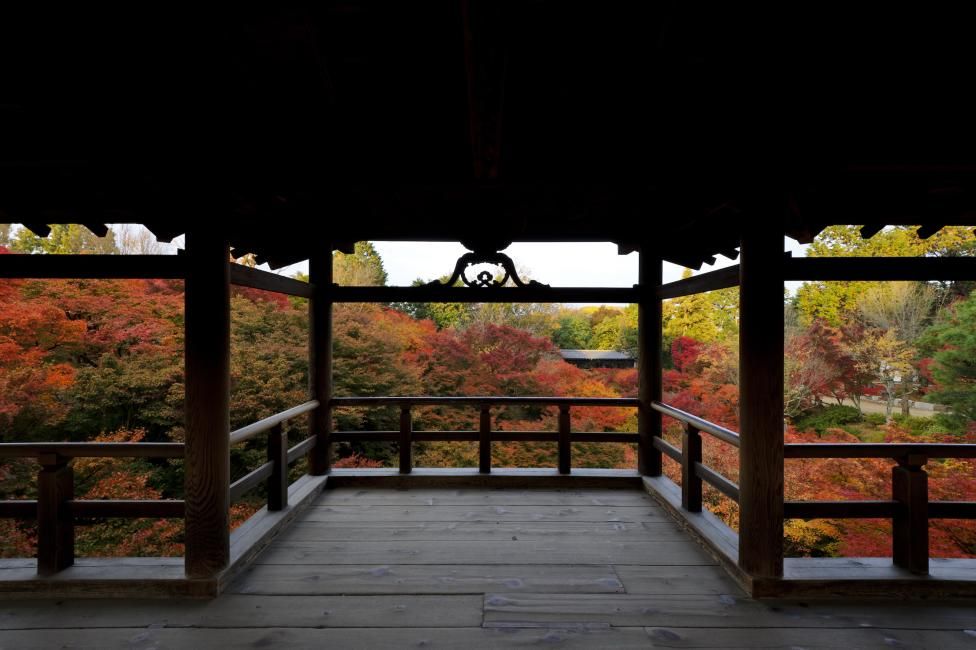
Gaun-kyo is the covered corridor bridge on the way to Tsutenkyo, and entry is free. It is a popular spot for photographing Tsutenkyo and the red leaves of the Sengyokukan valley, and the angle most often seen on social media. Because it is free, it is often packed in peak season, especially between 9:00 and 11:00 a.m. Go when the temple opens at 8:00 or just before closing in the evening to avoid crowds. Plan on 20 to 30 minutes, and combine it with Tsutenkyo and Engetsu-kyo to walk all of the “three famous bridges of Tofuku-ji” and enjoy the different views of the maple valley.
Honbo Garden (Hojo Garden)
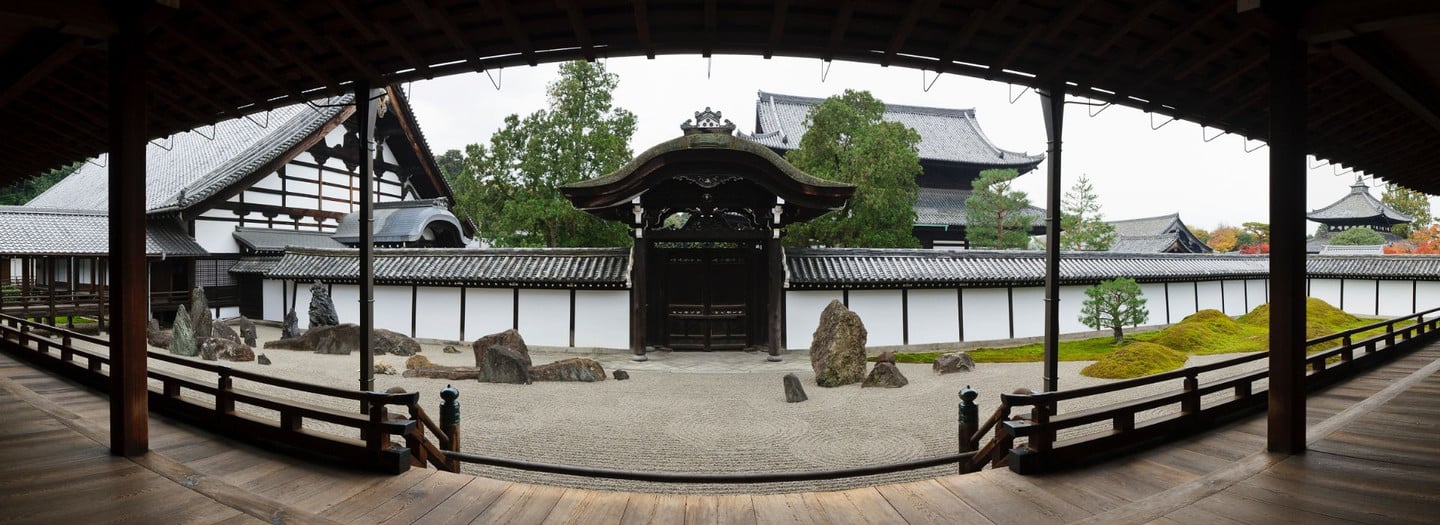
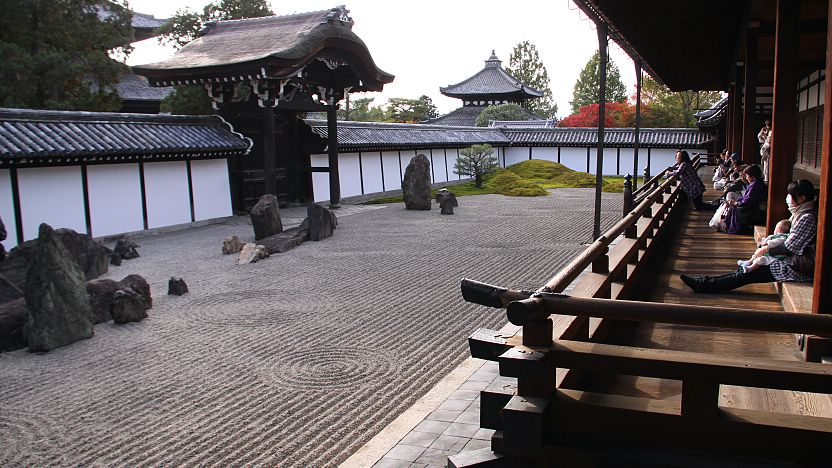
The Honbo garden was designed in 1939 by Shigemori Mirei, a famous Showa-era garden designer, and is a masterpiece of modern Japanese gardens. Based on the concept of the “eight aspects of enlightenment,” it is divided into four distinctive dry-landscape gardens to the east, west, south and north, blending traditional and modern aesthetics.
The south garden uses huge rocks to represent the four immortal islands, with white sand ripples symbolizing the sea. The north garden arranges moss and stone blocks in a checkerboard pattern, and its modern geometry contrasts with the curves of the maple leaves, attracting architecture and design fans.
Admission to the Honbo garden is ¥500 for adults, rising to ¥600 from November 1, 2026. Hours are about 9:00 to 16:00, and a visit takes 45 minutes to 1 hour.
Kaizando
Kaizando (also called Joraku-an) is Tofuku-ji’s important founder’s hall, enshrining a wooden statue of the founder Enni Ben’en (Shoichi Kokushi). Its architecture blends Song-dynasty and Japanese traditions, and the roof carries a rare pavilion-style “Denne-kaku.”
When the autumn leaves are in full color, the area around Kaizando and the maple grove frame each other and make a popular photo spot.
Kaizando and Tsutenkyo use the same ticket (¥600 for adults normally, ¥1,000 during the foliage season). Visit them together, allowing about 1.5 hours, to combine crossing the bridge for the leaves with paying respects at the hall.
Ryogin-an
Ryogin-an is a sub-temple of Tofuku-ji and has the oldest surviving hojo building in Japan, a National Treasure built in the early Muromachi period. Precious wall paintings are preserved inside.
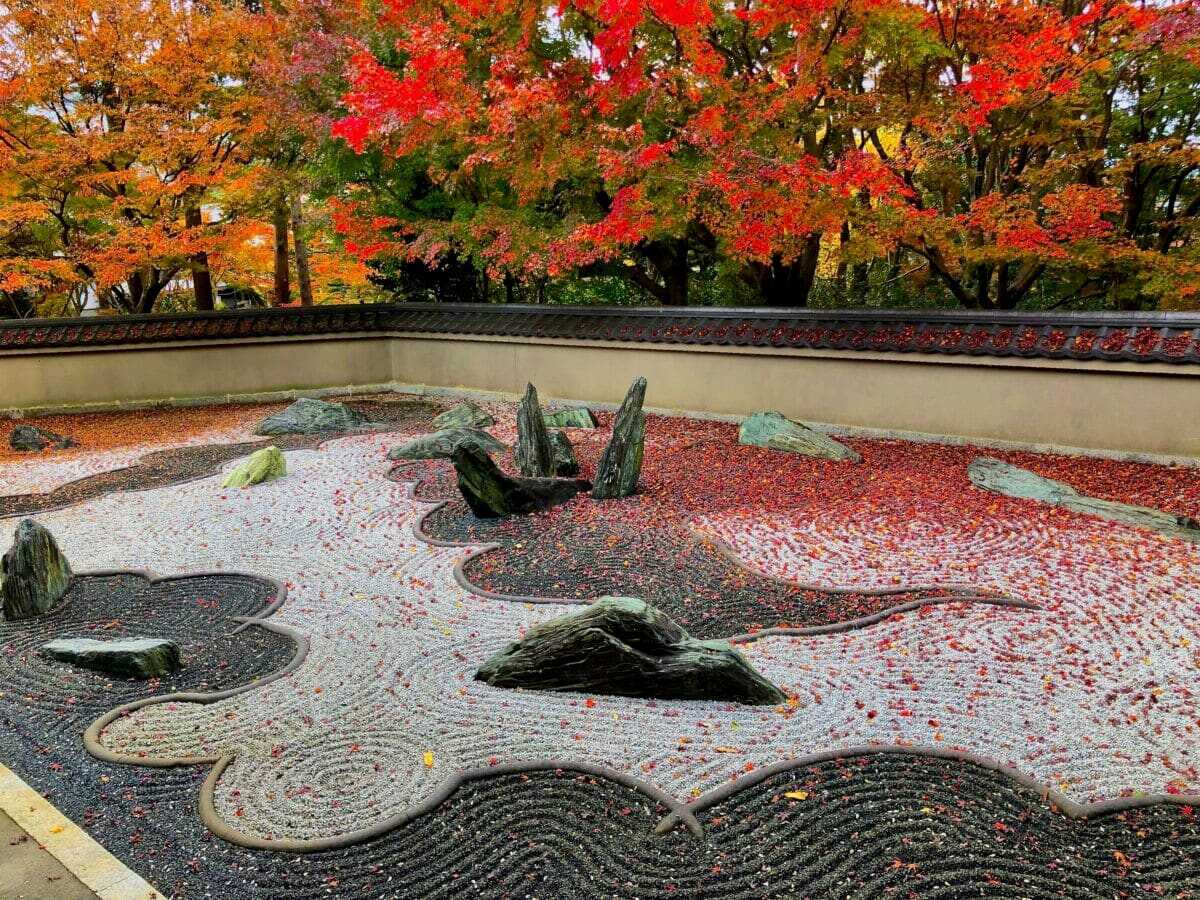
The garden was designed by Shigemori Mirei and includes three dry-landscape gardens: the “Garden of Nothingness,” the “Dragon Garden” and the “Garden of Inseparability.” The Dragon Garden uses black sand to depict the dragon god ascending to heaven, with great dramatic tension.
Ryogin-an is not regularly open and is specially opened only in spring and autumn. In autumn 2025 it was open from November 8 to December 7 for ¥1,000 for adults. For 2026, please check the official Tofuku-ji website (tofukuji.jp). Plan on 30 to 40 minutes.
Engetsu-kyo Bridge
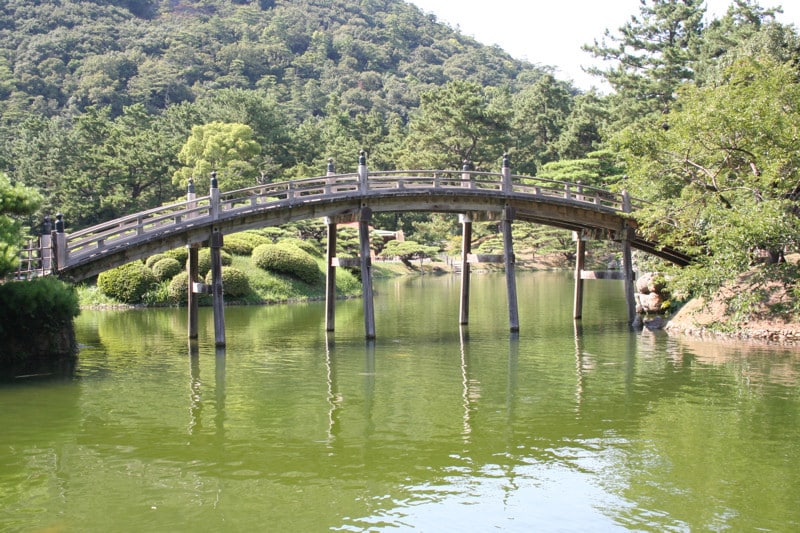
Engetsu-kyo is the most secluded and least visited of Tofuku-ji’s three famous bridges, a wooden covered bridge spanning the valley on the way to Ryogin-an and Sokushu-in. Its elegant half-moon shape makes it an Important Cultural Property. Its hidden location means few visitors and an especially quiet, peaceful setting. In autumn the maple leaves reflect in the stream beside the old wooden bridge, showing the subtle beauty of the ancient capital, and it suits travelers who want to avoid crowds. Passage is free, and it is best combined with a special opening of Ryogin-an. Plan about 15 to 20 minutes for photos and a stroll, and enjoy a calm atmosphere unlike Tsutenkyo.
Tofuku-ji Main Hall (Butsuden)
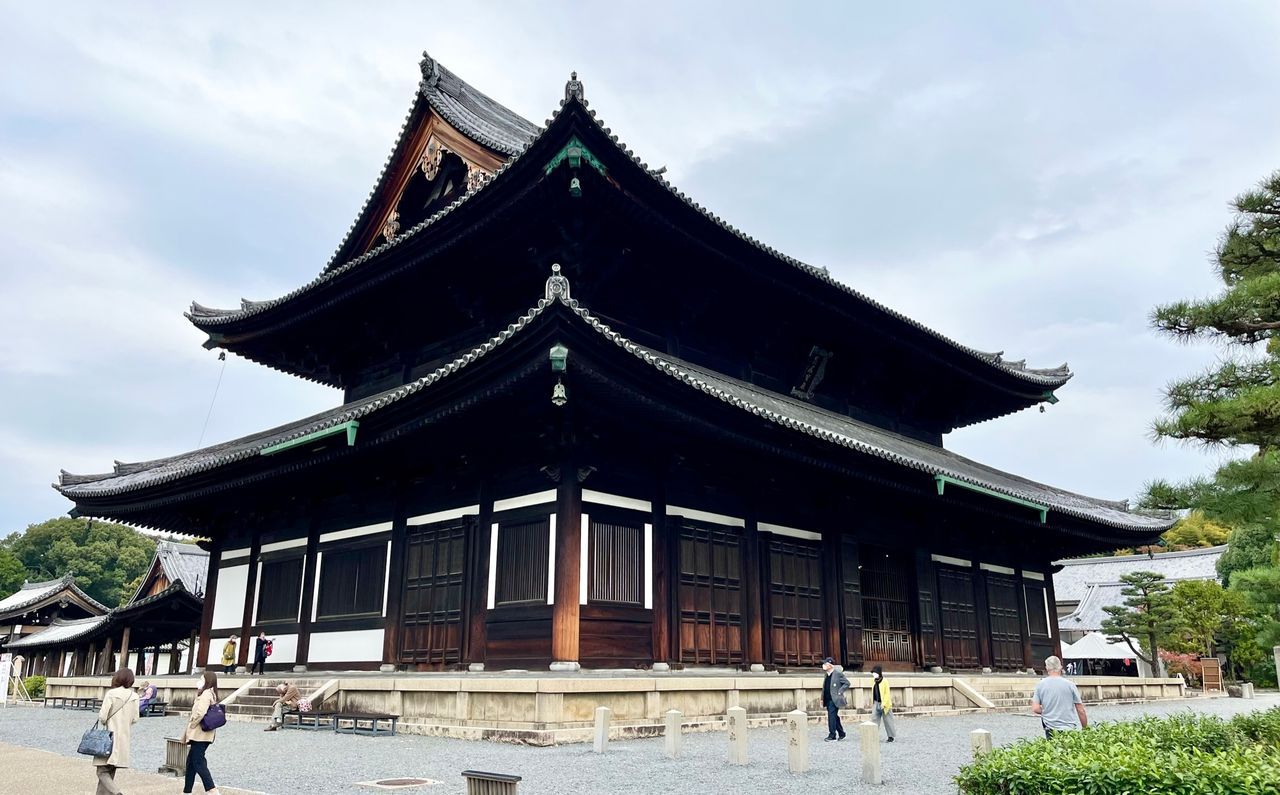
The main hall, also called the Butsuden, is a huge wooden building rebuilt in 1934 (Showa 9) and one of the largest Buddha halls in Kyoto Prefecture. It enshrines the main image, the Shaka Triad, and the ceiling carries the “Blue Dragon” painting by Domoto Insho, a powerful sight.
As the spiritual heart of Tofuku-ji, the main hall is an important place for worship. Visitors can pray here formally and feel the solemn atmosphere of the temple, in contrast to the leaf-viewing crowds outside.
Most of the area around the main hall is free to visit. Plan on 15 to 20 minutes, and if you have time you can buy an omamori charm as a souvenir.
Tofuku-ji Goshuin Office and Omamori Shop
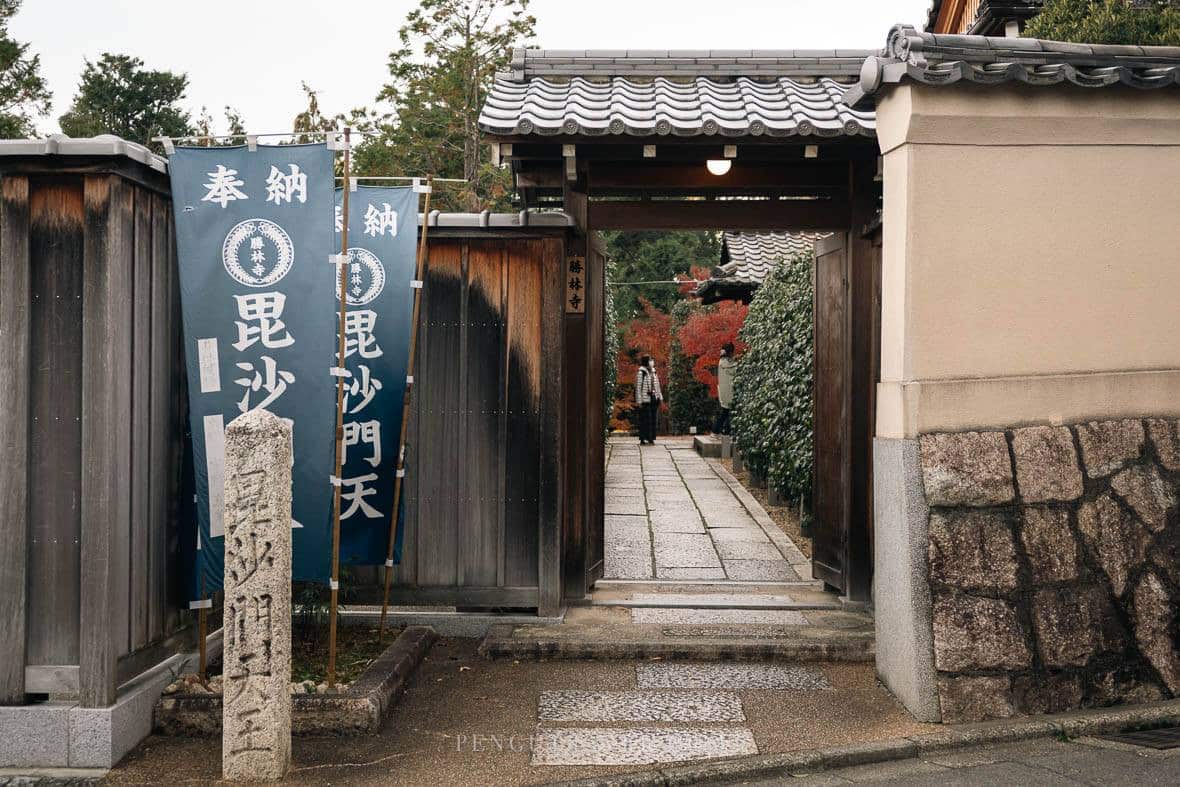
The Tofuku-ji goshuin office offers its own goshuin stamp, with the words “Shaka Nyorai” and the temple seal, a must-visit for goshuin collectors. Please check the fee on site.
The shop sells omamori on themes such as academic success, relationships and good fortune. A limited maple-leaf design sells well during the autumn foliage season, so buy early.
The goshuin office and charm shop are open about 9:00 to 16:00, the same as the temple. After visiting Tsutenkyo and the main hall, make this the last stop of your tour, about 10 to 15 minutes.
How Much Does Tofuku-ji Cost? Tickets, Special Events and Tours
Tofuku-ji is at 778 Honmachi 15-chome, Higashiyama Ward, Kyoto, and is one of the best-value spots among Kansai’s foliage destinations. Tickets are affordable and charged by area, so you can choose just Tsutenkyo, the hojo garden or both. Below are the details of each ticket, special opening and outside tour, so first-time visitors can plan their budget and route. In the foliage season (mid-November to early December) crowds are heavy, and knowing prices and how to buy tickets in advance saves a lot of queuing time.
Tsutenkyo and Kaizando Admission Ticket
Tofuku-ji’s signature spot, Tsutenkyo, spans the Sengyokukan valley and is picture-perfect when the maples turn red. Visiting Tsutenkyo and Kaizando requires a ticket: ¥600 for adults and ¥300 for children normally, and ¥1,000 for adults and ¥500 for children during the foliage period from November 14 to December 6, when no combination ticket is sold. Hours are 9:00 to 16:00 (Tsutenkyo from 8:30 in foliage season), with last admission at 16:00.
Arrive at 8:30. Parking nearby is limited and the free spots are crowded. Tickets are bought in the queue on site with no reservations, so allow 30 minutes or more in peak season.
Hojo Garden (Honbo Garden) Admission Ticket
The hojo garden, designed by Showa-era garden designer Shigemori Mirei, is a dry-landscape garden made up of four gardens blending traditional and modern aesthetics. Admission is ¥500 for adults (¥600 from November 1, 2026) and ¥300 for elementary and junior high students. Hours are 9:00 to 16:00, with the gate closing at 16:30.
The checkerboard moss-and-stone pattern of the “north garden” is a popular photo spot. A combination ticket for ¥1,000 per adult is sold at normal times, but not during the foliage season, when the two sites are ticketed separately.
You must remove your shoes in the garden, and the floors are cold in autumn and winter, so wear thick socks.
Special Openings of Aizendo and the Sanmon
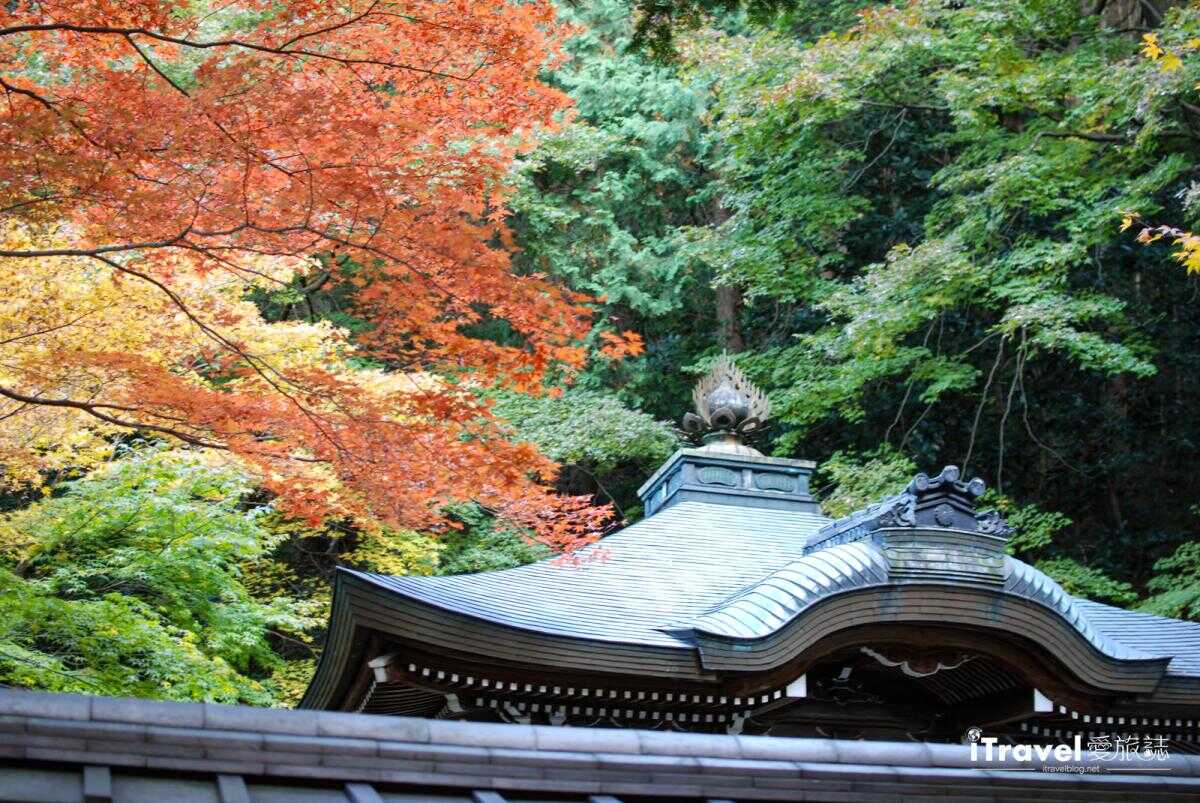
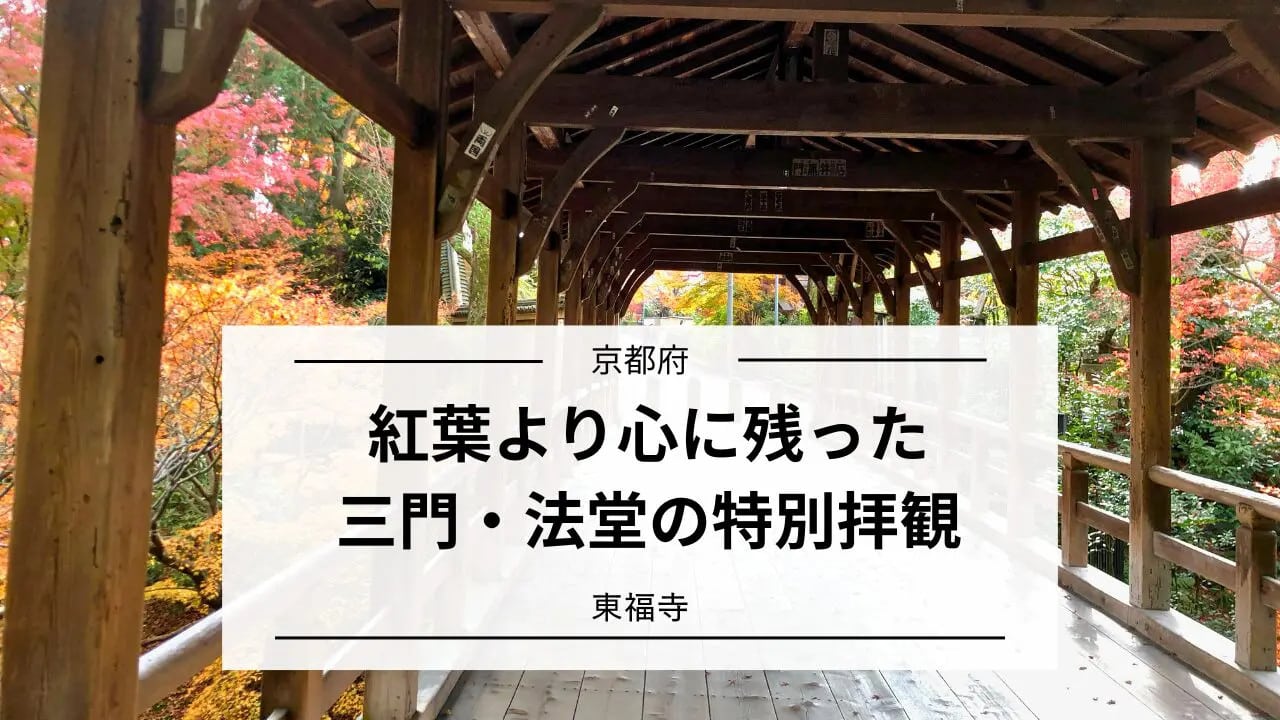
The Tofuku-ji Sanmon is the oldest Zen temple gate in Japan and a National Treasure. A “special opening” is held irregularly each autumn (check the official site tofukuji.jp for dates), with tickets around ¥1,000 (adjusted yearly), letting you climb to the second floor to see the Buddha statues and ceiling paintings.
Aizendo is a vermilion octagonal hall built in the Nanboku-cho period and designated an Important Cultural Property. Its vivid color complements the red maples and makes a popular photo spot.
Special openings offer a rare chance to see spaces and artifacts closed on ordinary days and to learn more about Zen architecture and Buddhist art. Plan ahead and confirm the opening dates.
Kyoto Autumn Leaves Day Tour Packages (Including Tofuku-ji)
If your time is limited or you want a private vehicle with a guide, look at the “Kyoto Arashiyama and Tofuku-ji Autumn Leaves Day Trip” packages on KKday and Klook, which link foliage spots such as Chishaku-in, Arashiyama and Tofuku-ji’s Tsutenkyo. Please check the product page for schedule and price. A guide explains the historic buildings and photo timing, and you skip crowded buses and transfers in the leaf season. Some tours add a kimono experience or matcha tea, suiting families or travelers with limited mobility who want to see several famous foliage spots easily.
Where to Stay Nearby
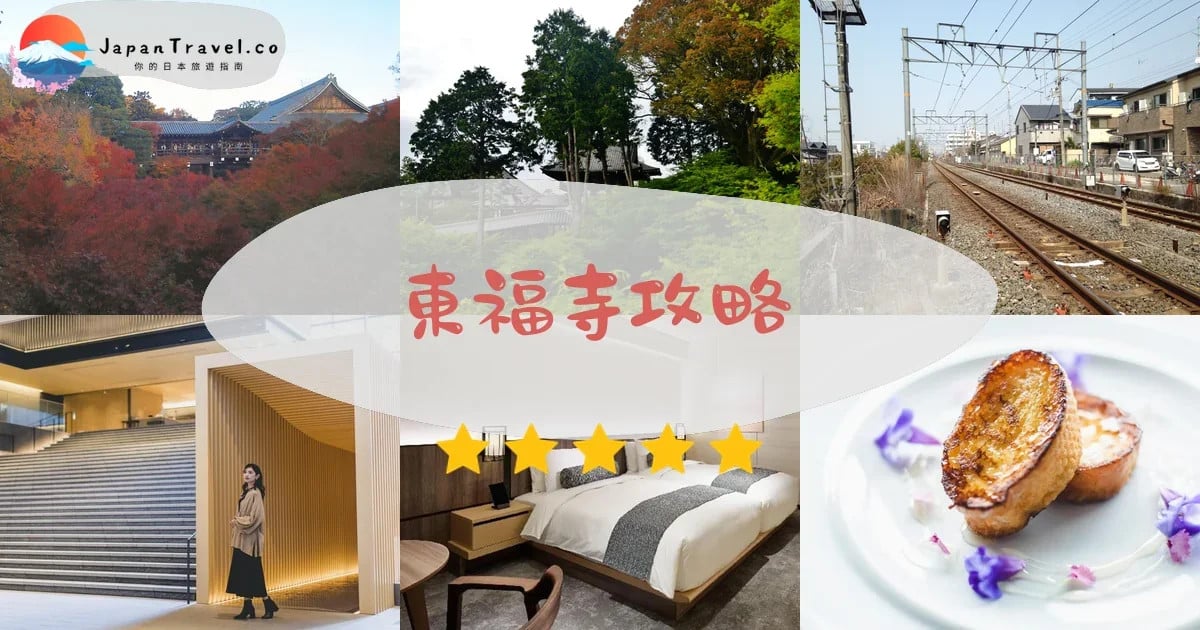
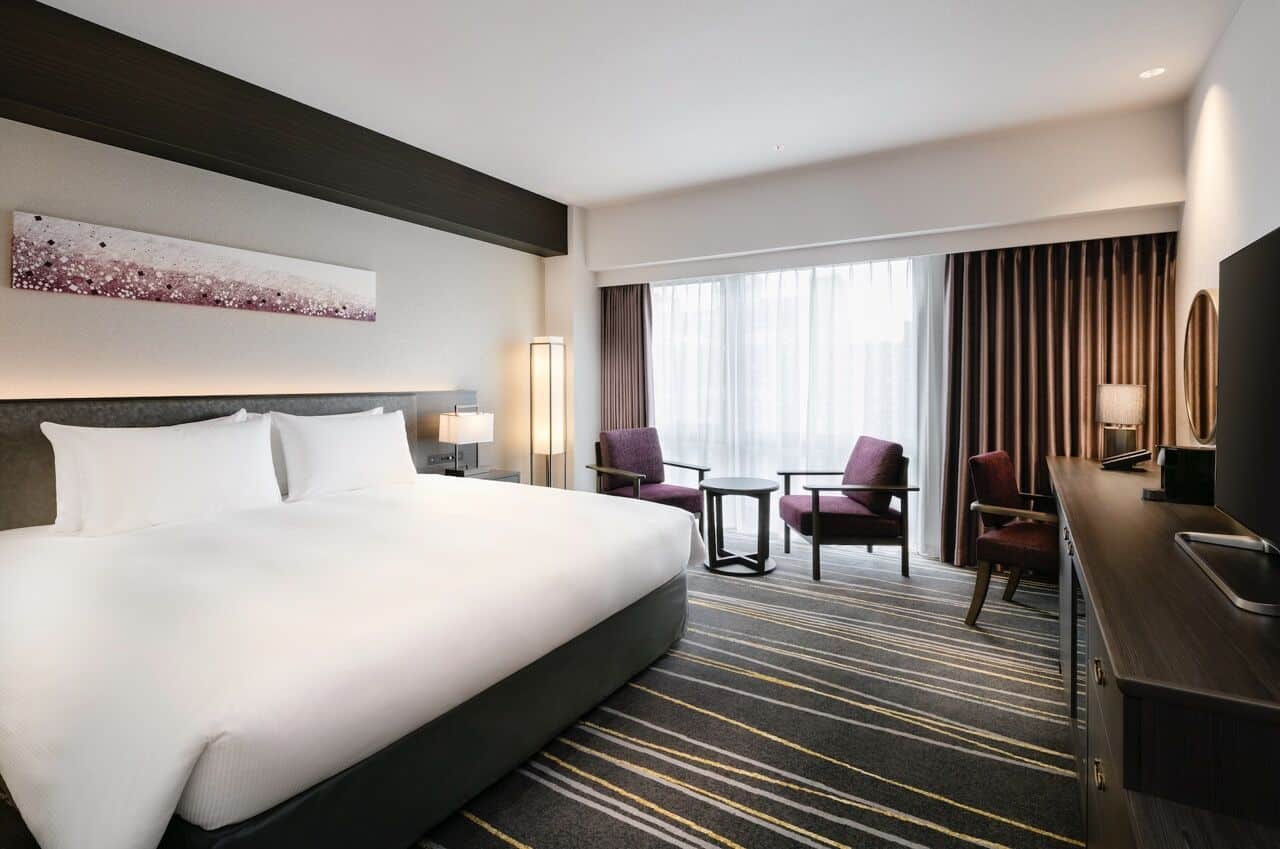
Tofuku-ji is just one stop on the JR Nara Line, about 2 minutes from Kyoto Station, so staying around Kyoto Station is the most convenient. During the foliage period (November 14 to December 6) Tsutenkyo opens at 8:30, and it is about a 10-minute walk from the station by train, so an early start needs no rush.

Tofuku-ji Autumn Leaves FAQ
Q: How much are Tofuku-ji tickets?
During the foliage season (November 14 to December 6), Tsutenkyo and Kaizando cost ¥1,000 for adults and ¥500 for students; normally ¥600. The Honbo garden is ¥500 for adults, ¥600 from November 1.
Q: What is the easiest way to get to Tofuku-ji?
The JR Nara Line from Kyoto Station is the fastest and cheapest, just 2 minutes, then about a 10-minute walk to the temple gate.
Q: When is the best time to see autumn leaves at Tofuku-ji?
The best time is mid-November to early December each year, with late November to early December the golden period of peak color.
Q: How much time should I allow for Tofuku-ji?
Allow at least 60 to 90 minutes for a full route covering Tsutenkyo, Gaun-kyo, the Sengyokukan valley and the Honbo garden, and longer if you queue in peak season.
Q: How can I avoid the crowds at Tofuku-ji?
Go first thing: arrive and queue before 8:15 to enter when the gates open at 8:30, when crowds are smallest and the light is soft, and avoid peak-season weekends.
Q: Can I use a tripod on Tsutenkyo Bridge?
No. Tripods are prohibited on the Tofuku-ji grounds. On crowded weekends and holidays during the foliage season, photography on Tsutenkyo may be restricted, so please follow on-site notices.
Q: What other sights are near Tofuku-ji?
You can combine Fushimi Inari Taisha, Sennyu-ji, Imakumano Kannon-ji and Kiyomizu-dera into a full Higashiyama autumn-leaves day route in Kyoto.