
2026 Osaka Shitennoji Guide: The Thousand-Year History of the Five-Story Pagoda, Access and Visiting Tips, the Origin of Faith at Japan’s Oldest Official Temple
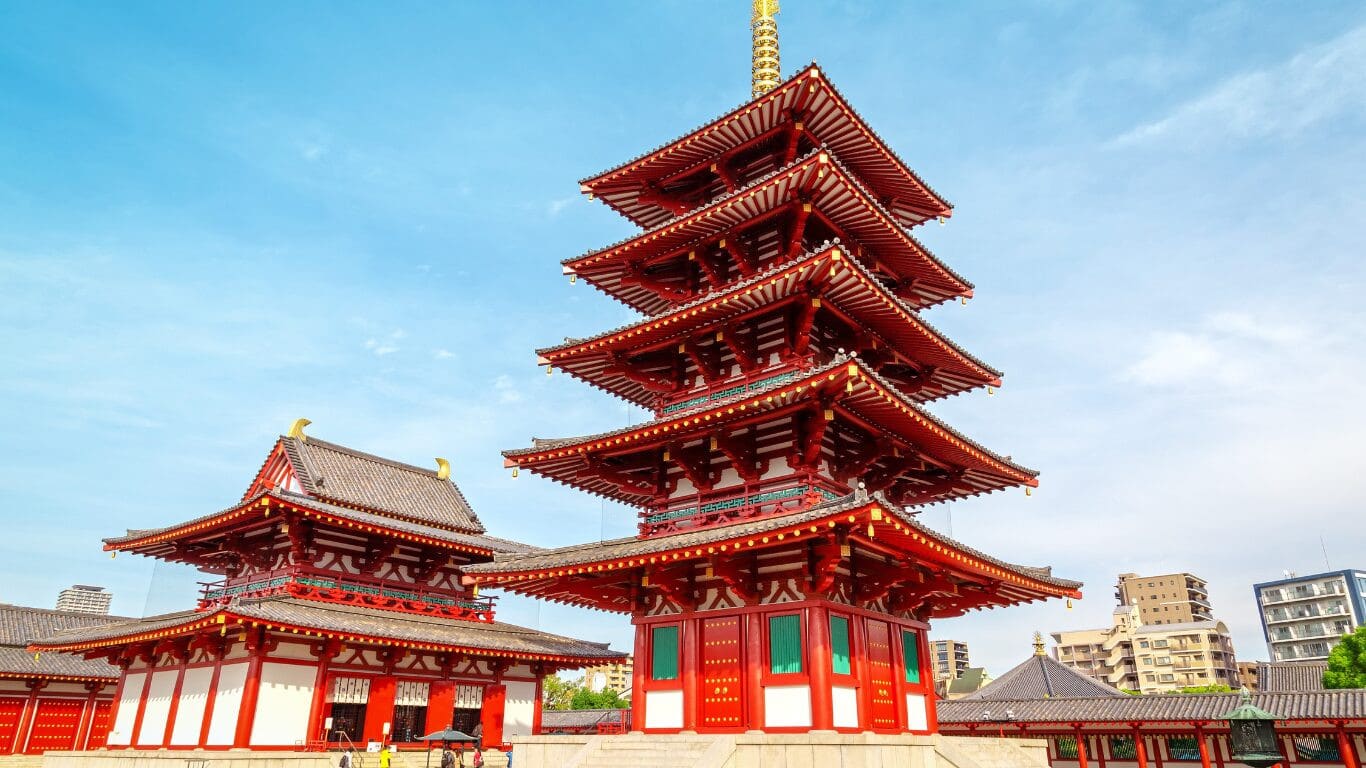
Shitennoji, founded in 593 by Prince Shotoku, is Japan’s oldest officially sponsored temple and the head temple of the Washu sect. Famous for its Shitennoji-style layout, it is the first choice for a temple visit in Osaka.
Shitennoji: The Pagoda Built by Prince Shotoku to Fulfill a Vow
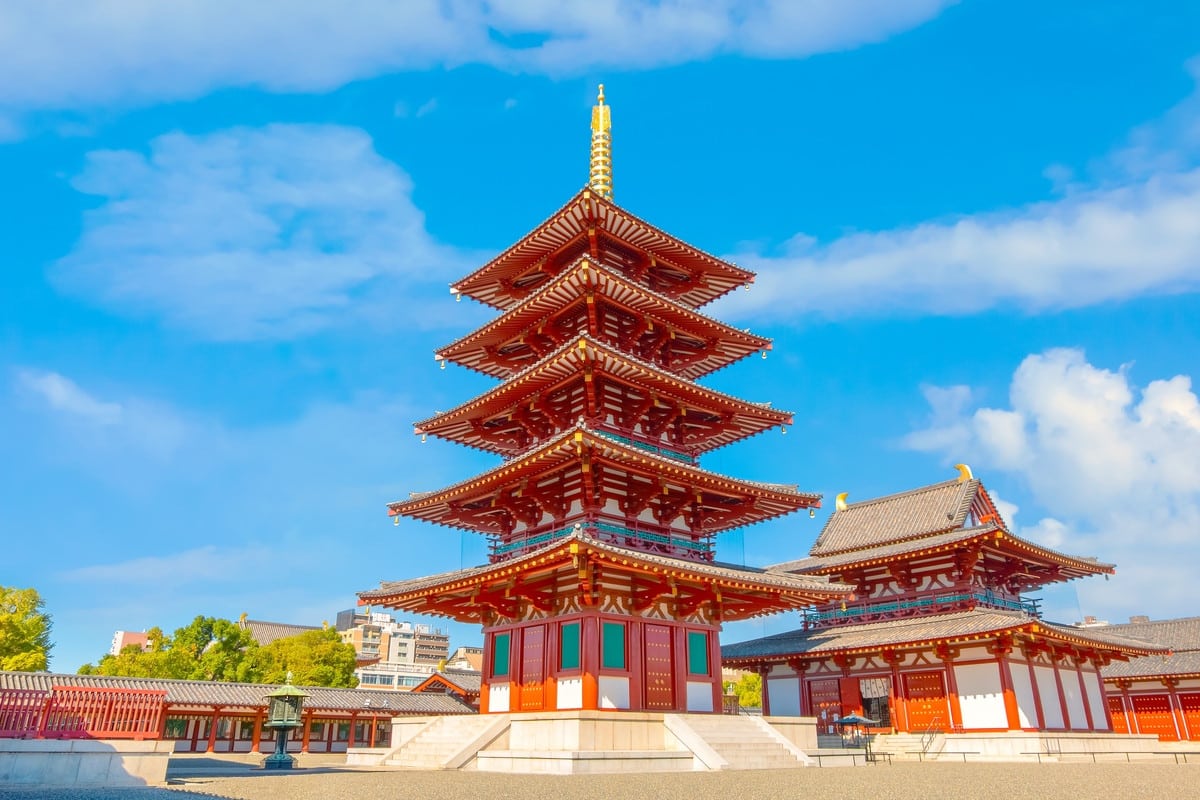
In 593, after Prince Shotoku defeated the Mononobe clan, he fulfilled a vow by founding Japan’s first state-run Buddhist temple, Shitennoji, on the Uemachi Plateau. Tradition holds that to save the beings of the six realms, the prince buried six Buddha relics and six strands of his own hair in the foundation stone of the five-story pagoda’s central pillar, so the pagoda is also called the Pagoda of Rescue From the Six Realms, a symbol of a thousand years of salvation.
Shitennoji has been destroyed and rebuilt eight times through war and disaster. The most recent was the eighth-generation reinforced-concrete rebuild of 1959, whose exterior still faithfully presents the Asuka-period layout. This temple, which has stood unshaken for a thousand years, is an important starting point for understanding Japanese Buddhist history and the development of Osaka.

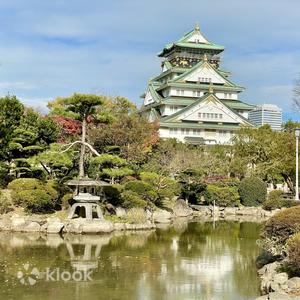

Shitennoji-Style Layout: Japan’s Oldest Surviving Temple Plan
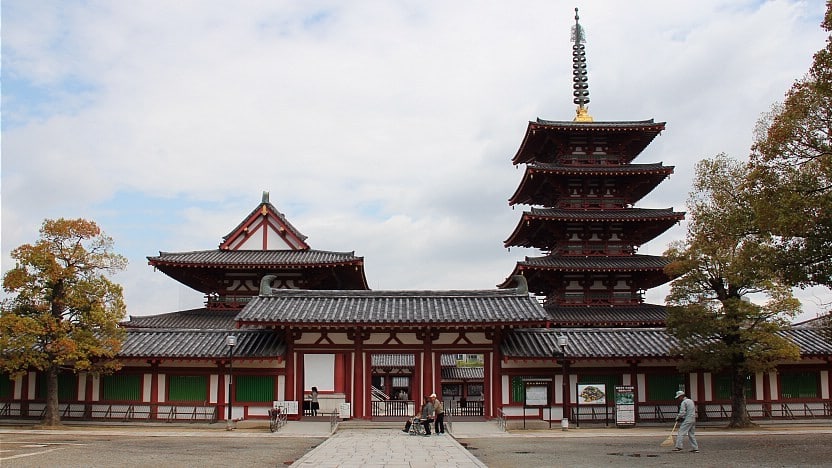
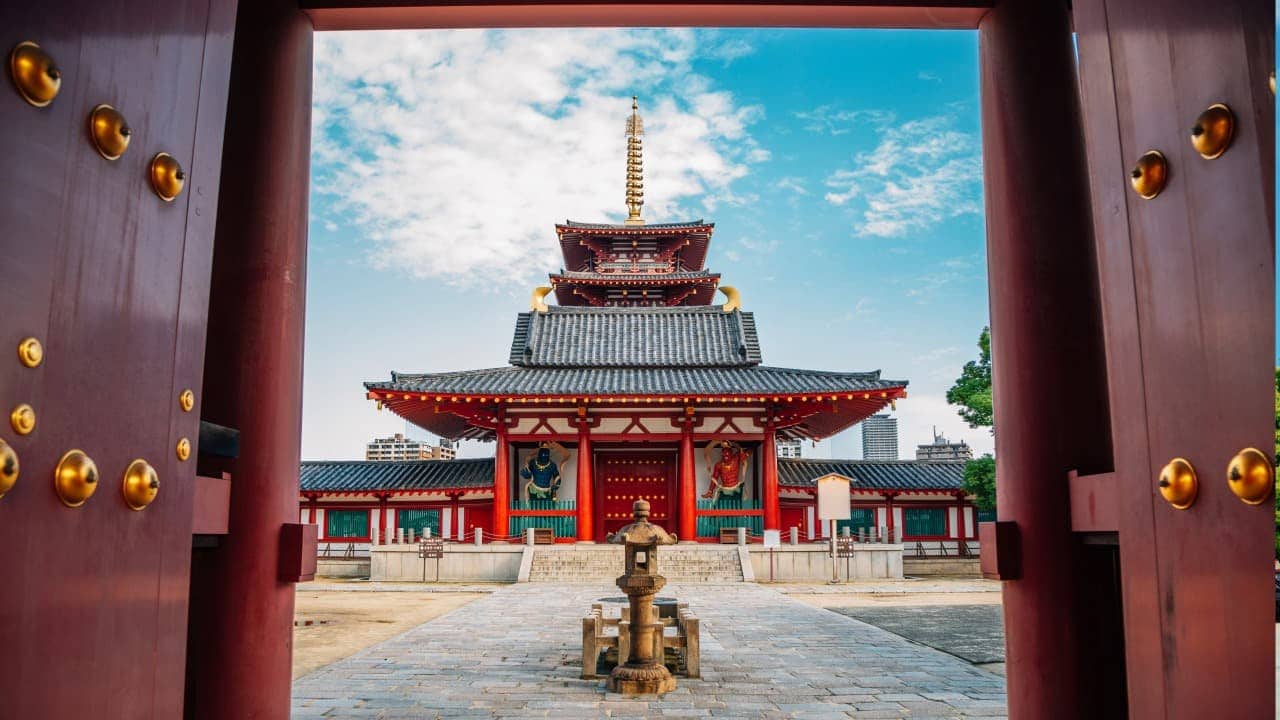
The middle gate, five-story pagoda, golden hall and lecture hall are lined up in order along a central axis, surrounded by a cloister. This Shitennoji-style layout is important evidence of the introduction of ancient temple styles from China and the Korean peninsula, and is one of the oldest surviving temple layouts in Japan, deeply influencing later Japanese temple design.
The buildings use entasis, the classical Greek technique of a slightly swelling mid-column, showing the international aesthetics that reached Japan along the Silk Road in the Asuka period. The proportions of columns and eaves are precisely calculated for both beauty and structural stability, and the curves of the beams and pillars are worth a close look.
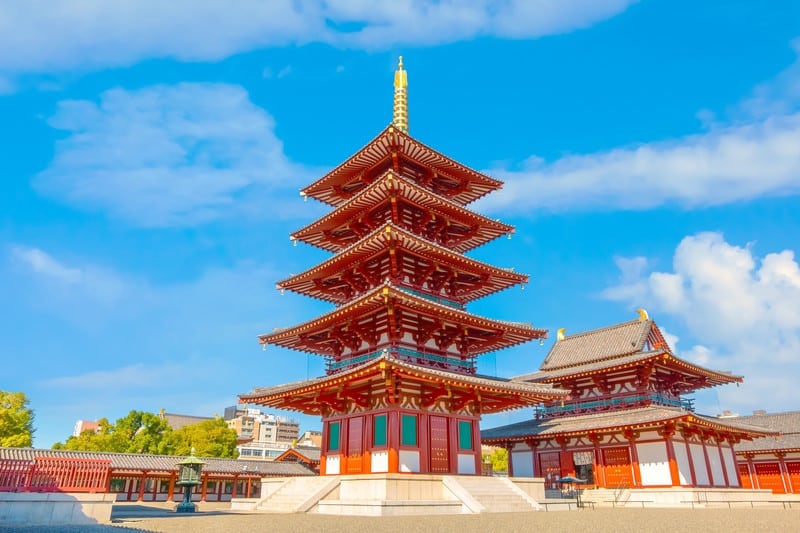
Head Temple of the Washu Sect: A Unique Standing Across Sects
Shitennoji belongs to no single Buddhist school but is the head temple of its own Washu sect, embodying Prince Shotoku’s spirit of valuing harmony. It welcomes worshippers from all sects, which is the biggest difference between Shitennoji and other old Japanese temples. This inclusive faith draws visitors from different sectarian backgrounds to pray and make pilgrimages.
The grounds hold both Buddhist and Shinto elements, such as the stone torii on the west side, concrete evidence of the culture of Shinto-Buddhist syncretism. Visitors can feel the blending of Japanese religious culture in a single space, which makes Shitennoji an important site for studying the history of Japanese faith.
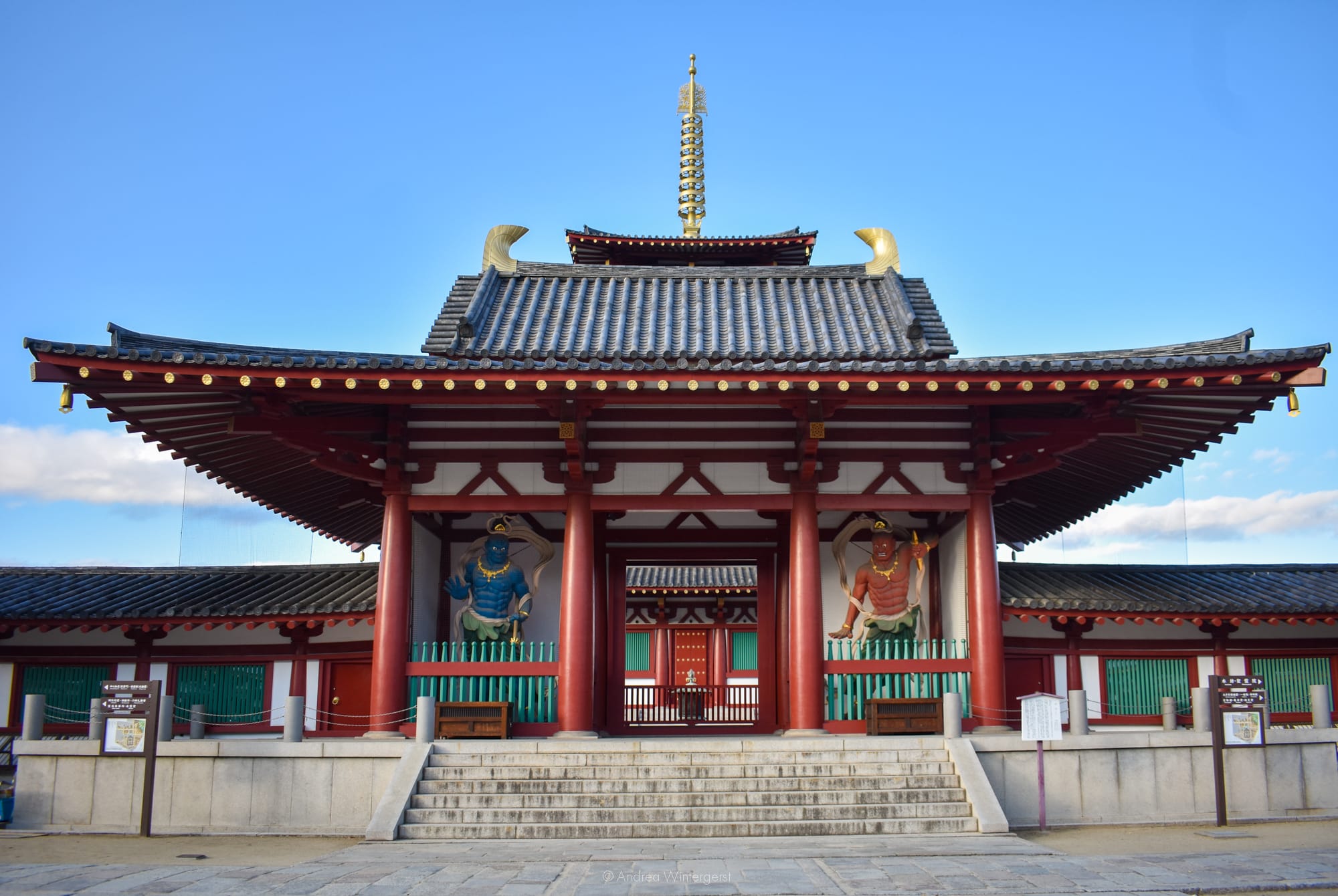
How to Get to Osaka Shitennoji in 2026: A Complete Guide to Transport and Costs
The fastest way to reach Shitennoji is by subway, and fares can be paid by tapping transport IC cards such as ICOCA and Suica at the gates.
How to Get to Shitennoji: Transport at a Glance
🚇 Osaka Metro Tanimachi Line: to Shitennoji-mae Yuhigaoka Station, about a 5-minute walk from Exit 2 to the west gate, the fastest and most convenient.
🚆 JR Osaka Loop Line / Osaka Metro Midosuji Line: to Tennoji Station, about a 12-minute walk to the south gate, good for combining with sights around Tennoji.
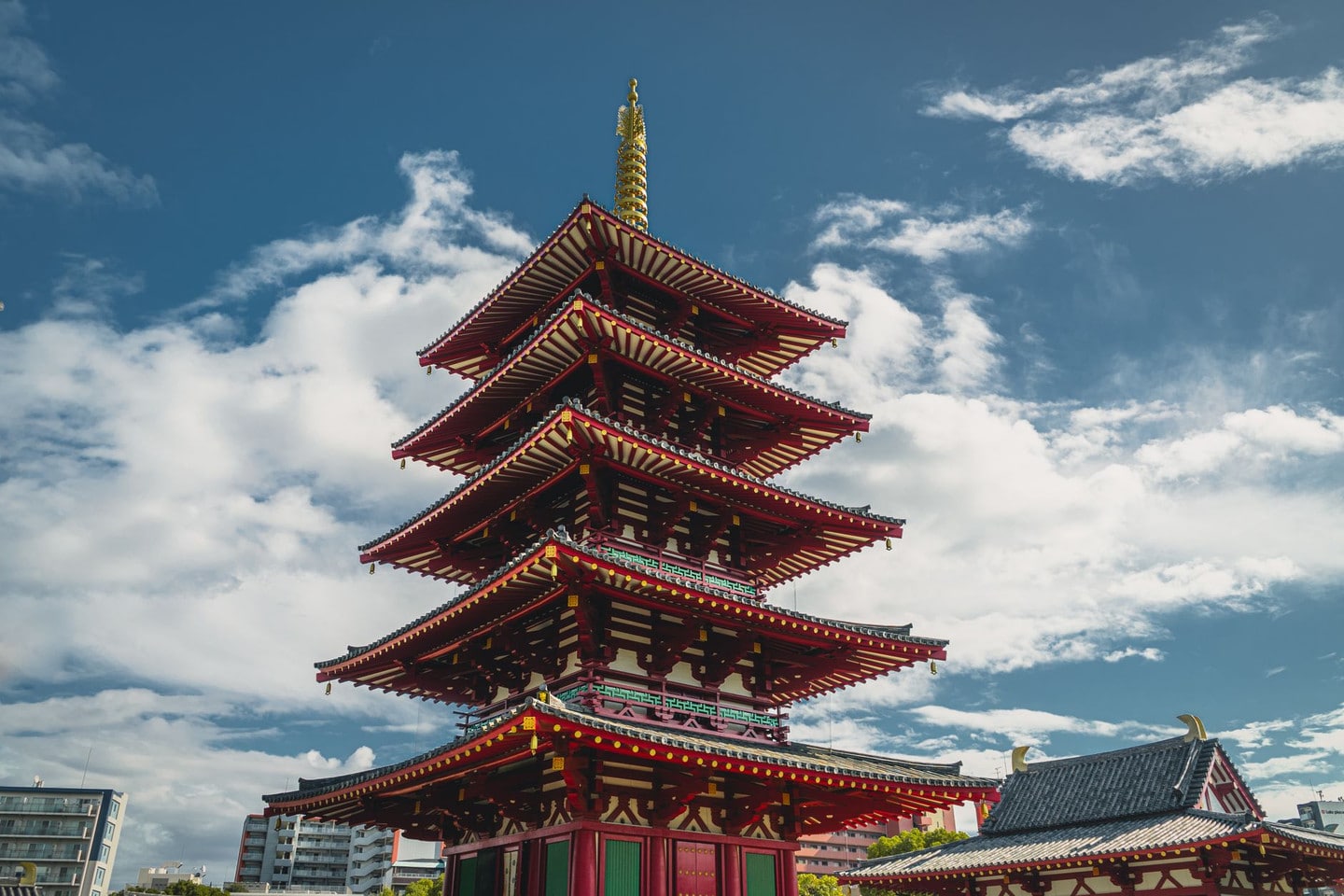


What to See at Osaka Shitennoji in 2026? The Five-Story Pagoda and the Central Precinct Explained
Admission to the central precinct starts at ¥300. Do not miss the five-story pagoda, golden hall, Gokuraku-jodo garden and stone torii. The visiting route runs from the south gate north through the whole grounds.
Five-Story Pagoda: The Pagoda of Rescue From the Six Realms Spanning a Thousand Years
The five-story pagoda of Shitennoji is the eighth generation, rebuilt in 1959, faithfully reproducing Asuka-period proportions and witnessing more than 1,400 years of history. Its central pillar runs down into the ground, symbolizing the five elements of Buddhism and showing the earthquake-resistance wisdom of ancient tall buildings. The contrast between old and new architecture makes the pagoda an excellent photo spot. Admission to the central precinct (including the pagoda) is about ¥500 for adults. Hours are 8:30-16:30 in summer (April to September) and 8:30-16:00 in winter (October to March). Allow 20-30 minutes; it is the main point of a visit.
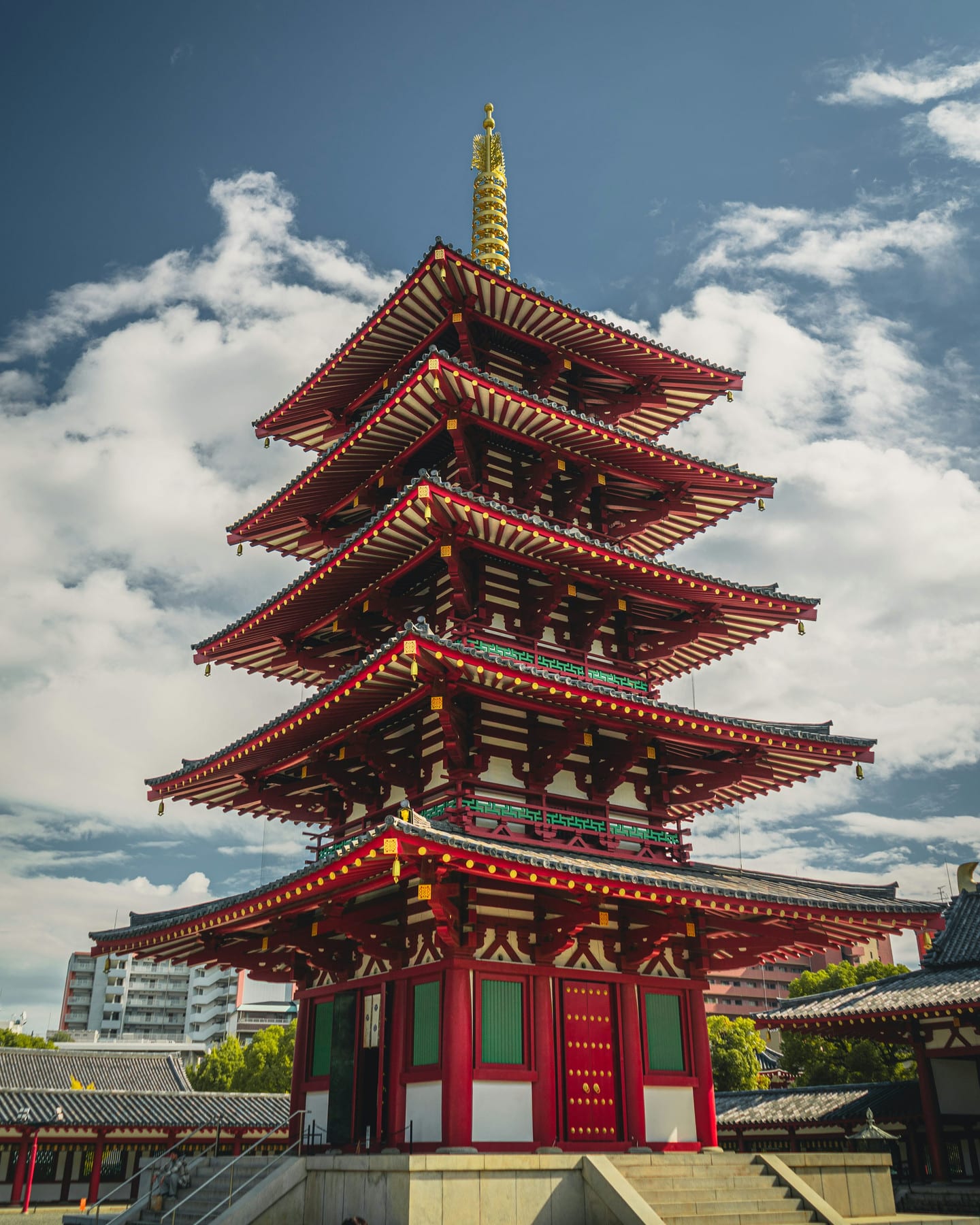
Central Precinct: The Core of the Shitennoji-Style Layout
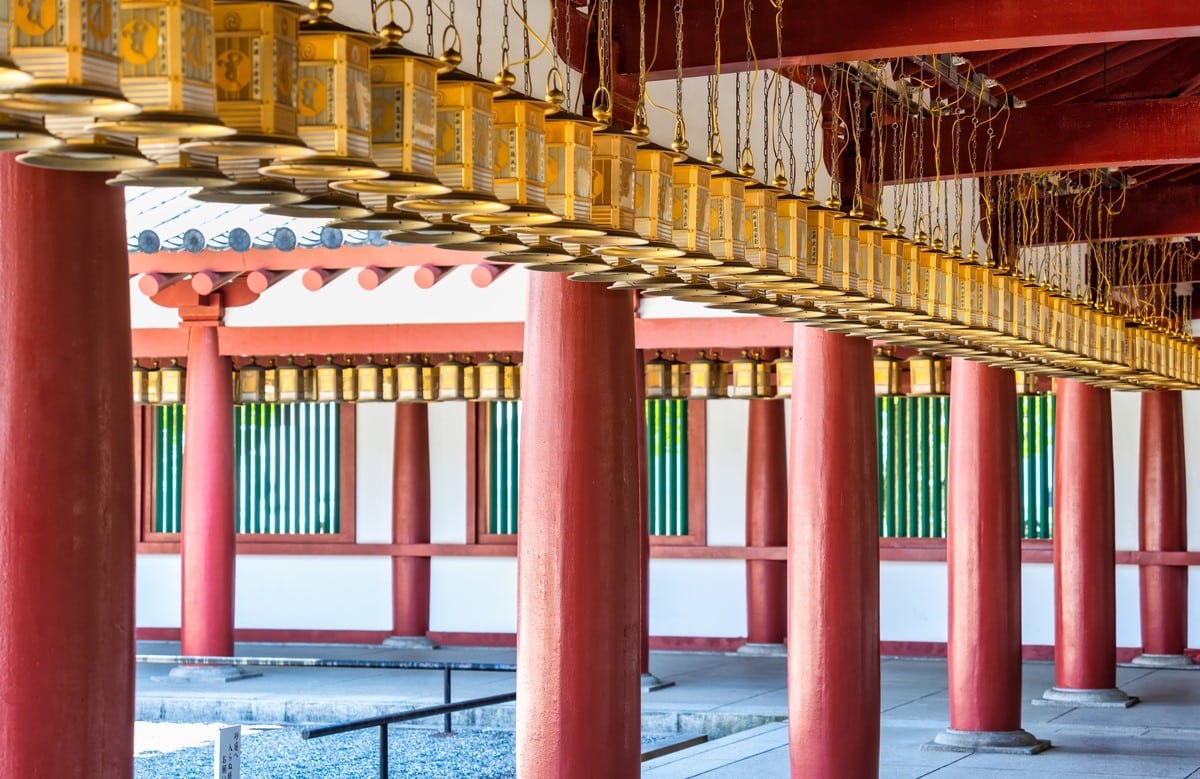
The central precinct is the paid area, containing the middle gate, five-story pagoda, golden hall, lecture hall and cloister, lined up in a single north-south line. It shows the core layout of the Shitennoji-style plan, the oldest and most architecturally significant in Japan, symbolizing a spiritual journey from the mortal world to the Buddhist realm.
The cloister lets you view the pagoda and golden hall from many angles as the light changes. Adult admission is about ¥500, sold separately from the Honbo Garden. It is open free during the monthly Daishi-e on the 21st, Taishi-e on the 22nd, the spring Higan-e in March and the autumn Higan-e in September. Allow at least 40 minutes.
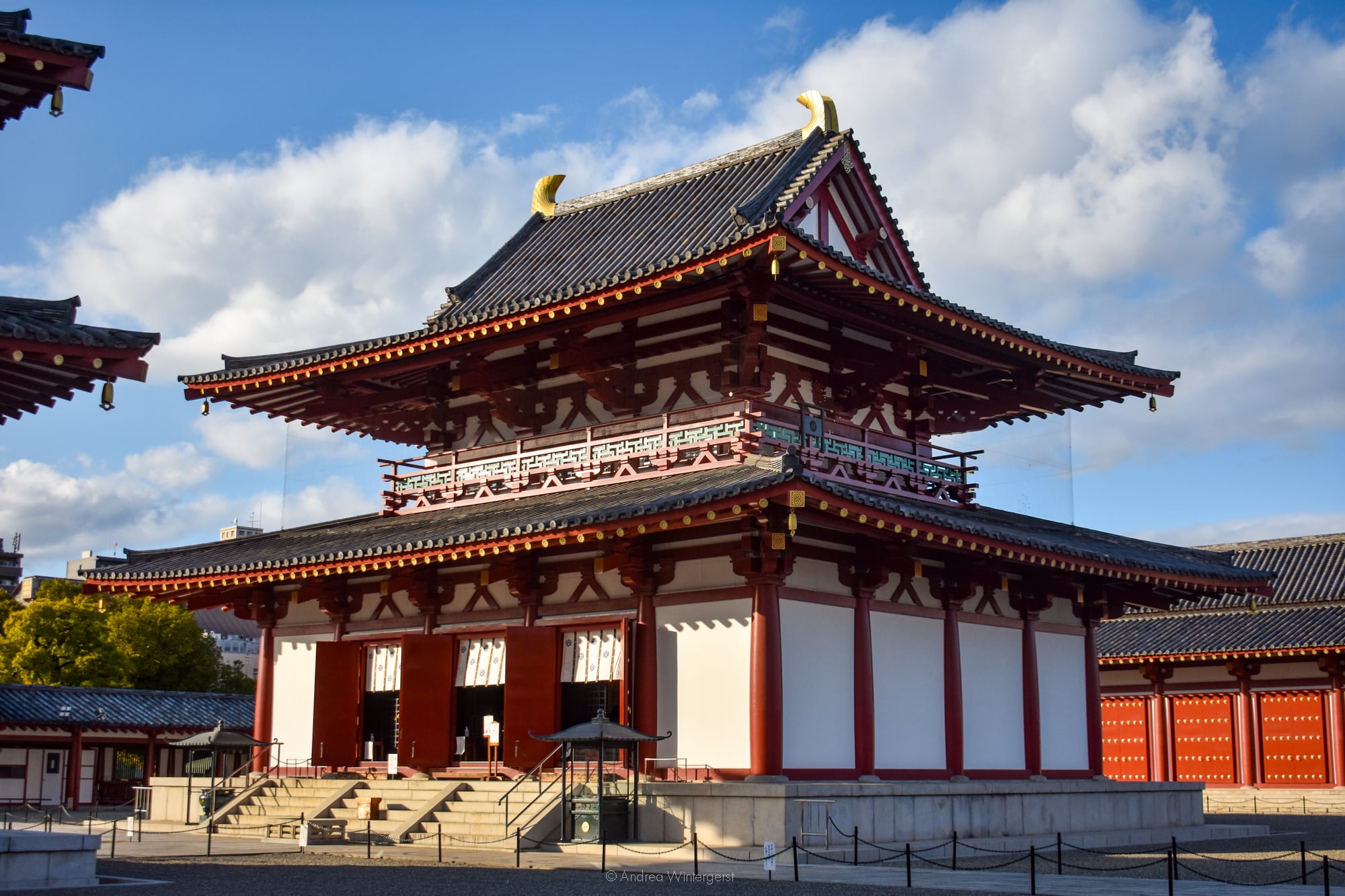
Golden Hall and Lecture Hall: The Faith Core Enshrining the Principal Image of Shakyamuni
The golden hall enshrines a seated Shakyamuni Buddha guarded on four sides by the Four Heavenly Kings, the faith core of the temple. The lecture hall, north of the golden hall, enshrines Amida Nyorai and the Eleven-Faced Kannon, and the two halls are linked by the cloister to form a complete worship route. The golden and lecture halls are modern buildings rebuilt around 1963 using traditional methods; although not the original wooden structures, the proportions of beams and pillars and the painted details are highly faithful to the Asuka and Heian styles. The murals inside depict the life of Prince Shotoku, an important stop for understanding the faith of Shitennoji.
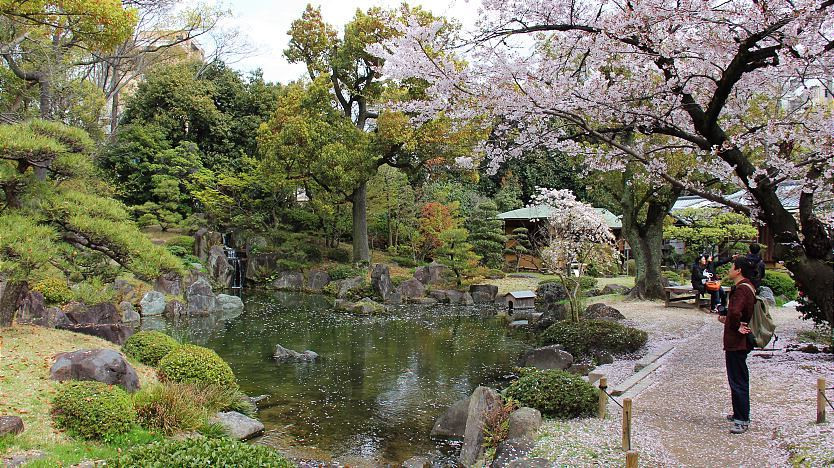
Honbo Garden, the Gokuraku-jodo Garden: A Pond-Stroll Japanese Garden
The Honbo Garden (Gokuraku-jodo Garden) is a separately ticketed Japanese garden inside Shitennoji, designed around a pond with a strolling path. By the pond are stone lanterns, a tea house and a small bridge, symbolizing the Buddhist Pure Land, the quietest and most beautiful spot in the grounds. Spring cherry blossoms and autumn maples reflect on the water, so it is scenic all year and a good photo spot. Adult admission is about ¥300, sold separately from the central precinct. Allow 20-30 minutes. A tea house in the garden offers rest away from the crowds, a calm entirely different from the main halls, a hidden highlight recommended by those who know Shitennoji and often overlooked by first-time visitors.
Stone Torii and Nissokan: A Shinto-Buddhist Wonder of Faith
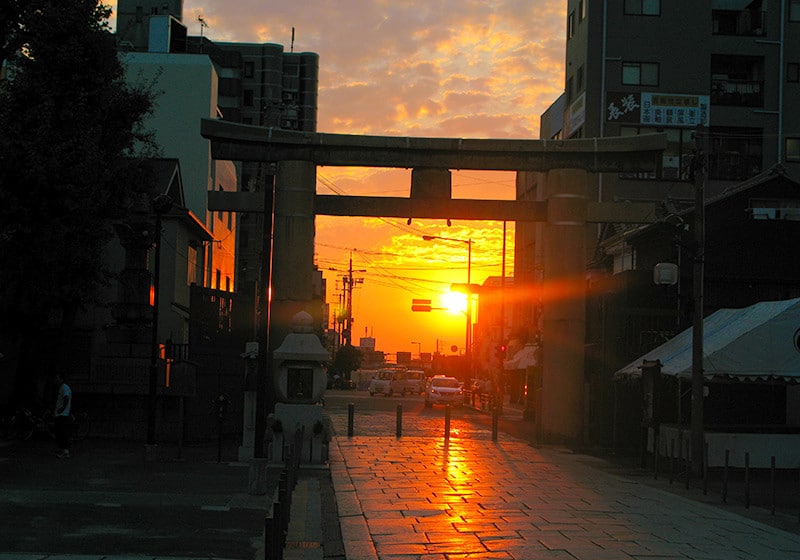
The stone torii on the west side of Shitennoji was built in 1294 and is one of the oldest surviving stone torii in Japan. It testifies to the culture of Shinto-Buddhist syncretism and retains original Kamakura-period components, with very high historical value.
Around the spring and autumn equinoxes the setting sun falls precisely in the center of the torii, creating the Nissokan (sun contemplation) scene, a tradition from the practice of facing west toward the Pure Land. It is also described in the classical Noh play Yorobōshi. The place name Yuhigaoka (Sunset Hill), where the torii stands, comes from this, and at the equinox it draws many photographers and worshippers.
Treasure Hall: Home of the National Treasure Fan-Shaped Lotus Sutra
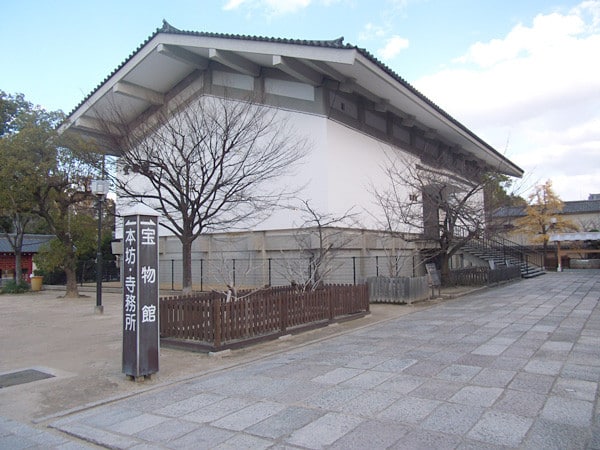
The Treasure Hall holds Shitennoji’s national treasures and important cultural properties. Among them, the Fan-Shaped Lotus Sutra booklets, painted in gold and silver on fan shapes, show Heian-period aesthetics and are physical evidence of ancient court Buddhist art. Exhibits change themes each spring and autumn. The autumn 2026 exhibition, A Great Gathering of Medieval Documents, runs from October 10 to November 29.
Admission to the Treasure Hall is about ¥500, and it is open only during the spring and autumn special exhibitions, so check the official site for the schedule before you visit. The space is small but the exhibits are fine; allow 20 minutes.
Rokujiraisando: Dawn and Dusk Worship at an Important Cultural Property
The Rokujiraisando is an important cultural property whose name comes from the monks’ ritual of chanting sutras six times a day. It is one of the few halls in the grounds that keeps ancient religious rites running, and monks can still be seen chanting at fixed times, letting visitors feel a living place of faith. The square in front of the hall is an important stage for traditional festivals, and the DOYA DOYA naked festival is held around it every January 14. Note: the Rokujido is currently undergoing conservation repair as an important cultural property, so its exterior may be hidden behind construction fencing; follow Shitennoji’s official site for the completion schedule.
Kameido: The Kamei Fudo Sutra-Washing Prayer Ritual
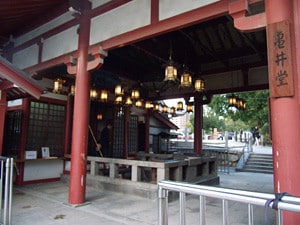
Kameido enshrines Kamei Fudo and offers a unique sutra-washing ritual: worshippers place a wooden tablet inscribed with ancestors’ names in clear water to be washed away by the flow, symbolizing the removal of misfortune, prayers for blessing and repose for the departed. This ritual is unique to Shitennoji and few visitors encounter it, so its meaning is worth experiencing in person.
Kameido is near the exit of the central precinct and can be visited after worship. The ritual takes about 5-10 minutes. Although the explanation is in Japanese, staff will guide you so that visitors who do not read Japanese can complete it smoothly, a fine chance to experience local faith culture.
Goshuin and Omamori: Souvenirs of Worship and Prayer Charms
Shitennoji offers several kinds of goshuin (temple stamps), such as the Taishi-den (dedicated to Prince Shotoku) and the Daihi-den (dedicated to the Kannon of the golden hall), costing about ¥300-500; follow the posted price at the office. Omamori come in great variety, including Prince Shotoku amulets and good-luck amulets, suitable as souvenirs or gifts.
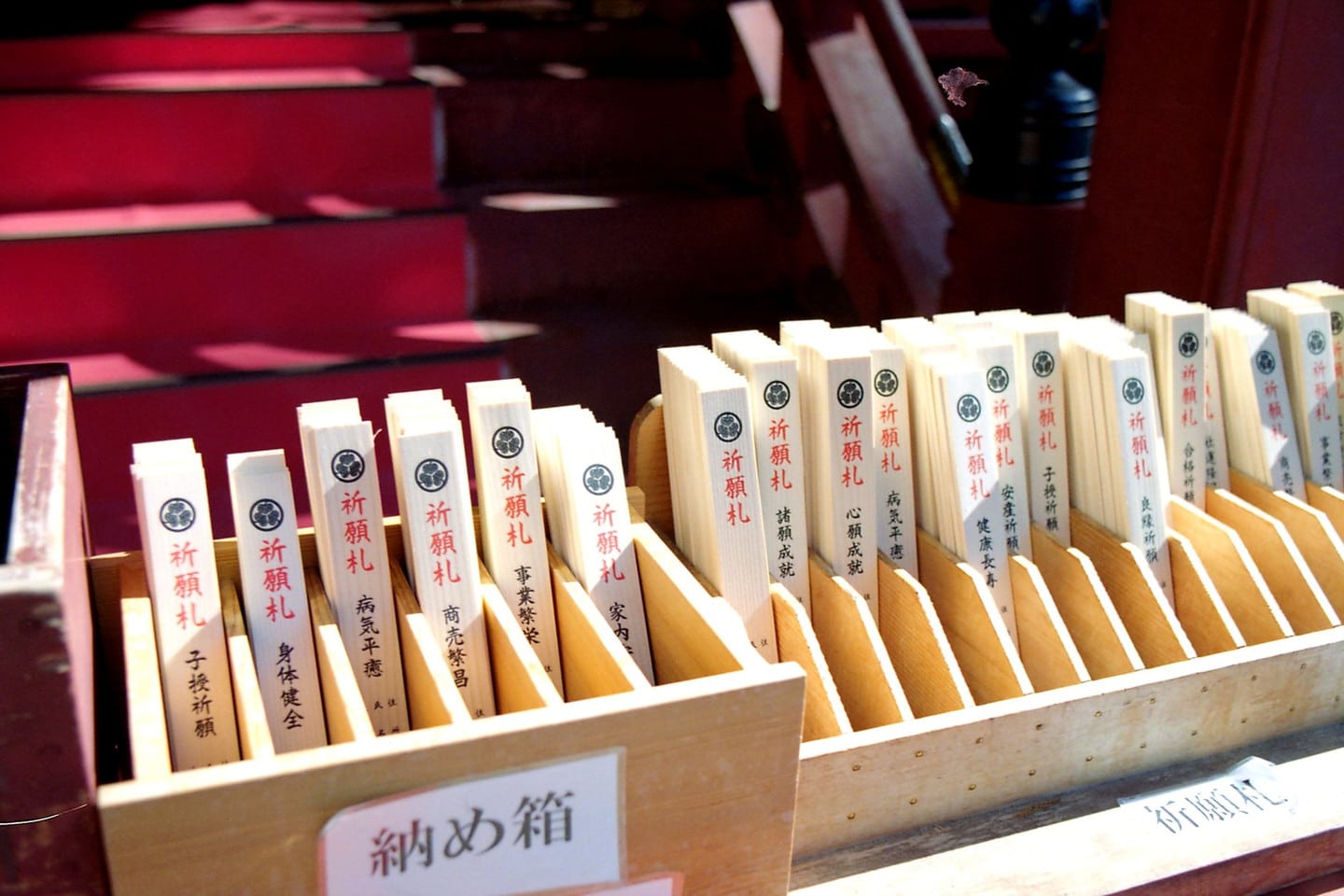
On market days (the 21st and 22nd of each month), weekends and holidays the goshuin office often has long queues. Arrive early, or leave your goshuin book first and collect it after your visit.
Omamori are sold at several offices in the grounds; styles and prices follow the notice on site.
Daishi-e and Taishi-e Ennichi Markets: The Annual Highlight on the 21st and 22nd of Each Month
The Daishi-e on the 21st and the Taishi-e on the 22nd of each month are Shitennoji’s liveliest ennichi markets, with more than 300 stalls covering antiques, kimono, street food and more, one of the largest regular markets in Kansai and a great time to experience local culture. On market days the central precinct is often open free, a budget-friendly, festive choice. Arrive at 8:30 in the morning, when the stalls are fully set up and the crowds have not yet arrived, so you can browse at leisure; in the afternoon crowds grow and popular stalls may close early, so the morning is the key to visiting the market.
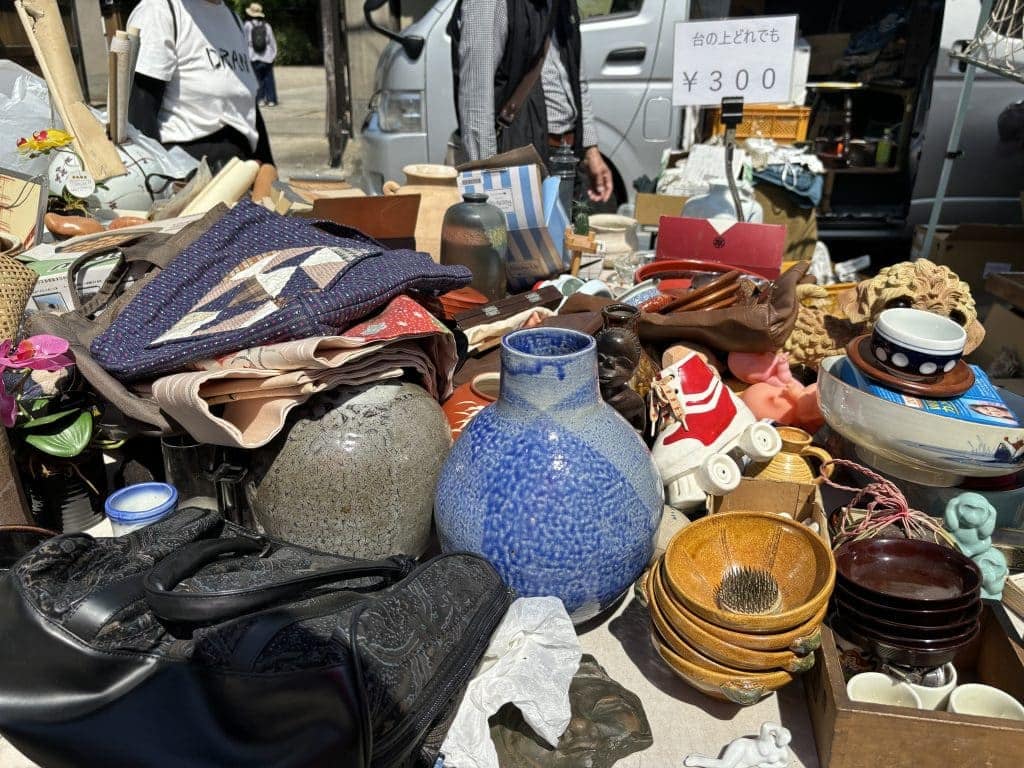
Antique Market: Kansai’s Largest Treasure Hunt for Old Goods
The Shitennoji antique market is held on the 21st and 22nd of each month, with stalls of old ceramics, vintage photos, kimono, antique furniture and more. It is said to be one of the largest secondhand markets in Kansai, drawing antique lovers from all over Japan to hunt for treasure, and most vendors are experienced professional dealers.
A tip for browsing: go within the first two hours of the market, before the best items are snapped up. Bring cash in small bills, and note that some rare items are limited and not restocked, so decide on the spot whether to buy when you see something you like.
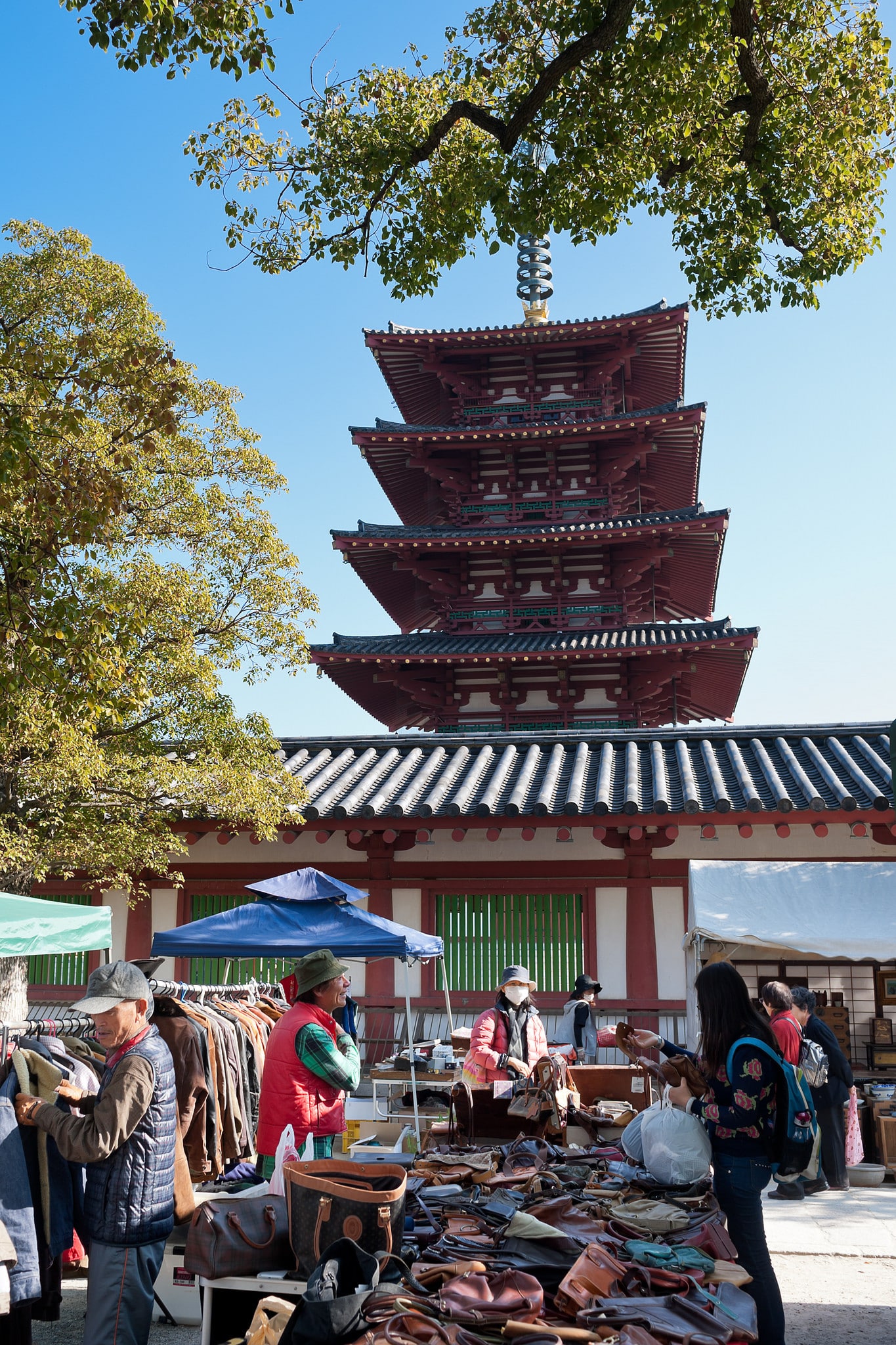
Shitennoji Antique Market 2026: Held on the 21st and 22nd of Each Month
The Shitennoji antique market is held on the 21st (Daishi-e) and 22nd (Taishi-e) of each month, with more than 300 stalls. The 21st is bigger and more crowded, and the 22nd is relatively quieter. On both ennichi days the central precinct is open free, and on the 21st it opens early at 8:00, so it is a good idea to browse the market in the morning and then go in to worship.
Keitakuen Garden and Tennoji Zoo: Nearby Places for Nature and Rest
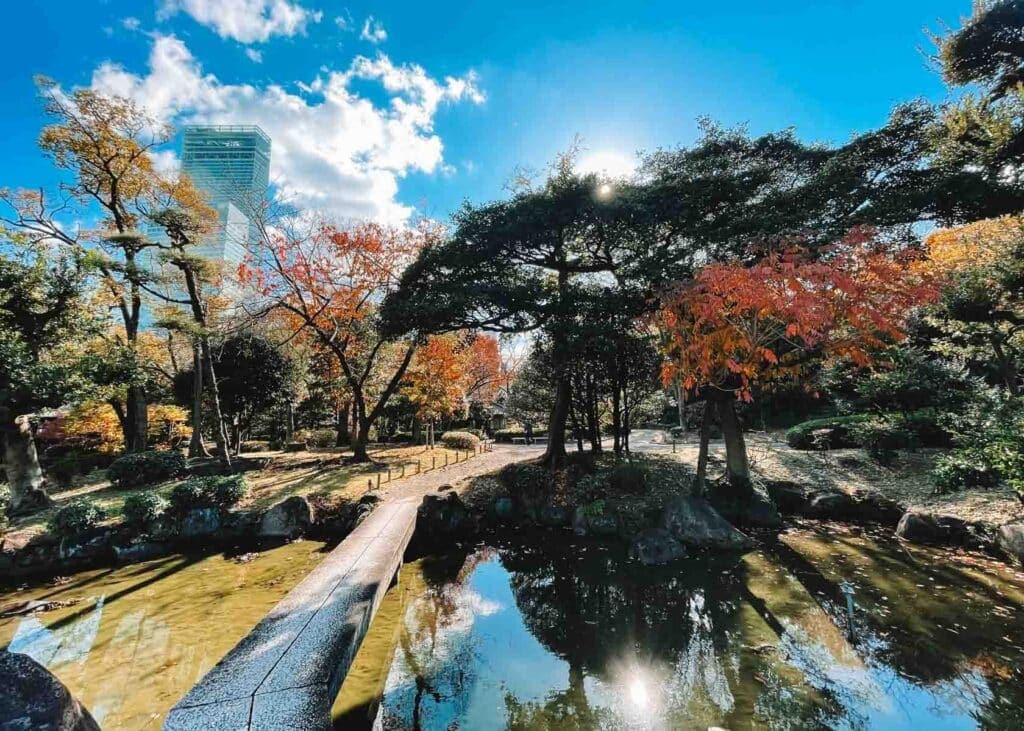
Keitakuen Garden, next to Tennoji Park, is a Japanese garden known for its pond-stroll landscaping, with adult admission about ¥300 and a 10-minute walk away. It is a pleasant stroll after visiting Shitennoji. Tennoji Zoo, one of the oldest zoos in Osaka, has adult admission of ¥800 (from July 1, 2026) and keeps more than 180 species of animals, including giraffes and tigers.
Both sights are in Tennoji Park and suit an afternoon after visiting Shitennoji, linking culture with family fun, and are especially good for families with children.

Tsutenkaku, Shinsekai and Abeno Harukas: A Trio of Landmarks Nearby
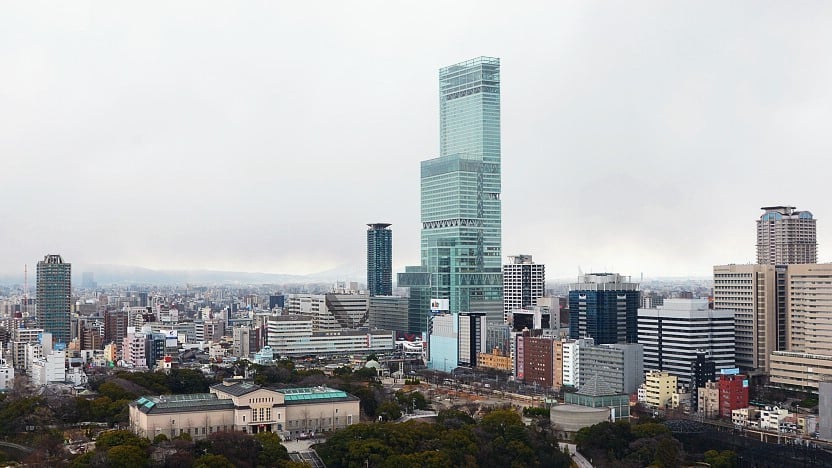
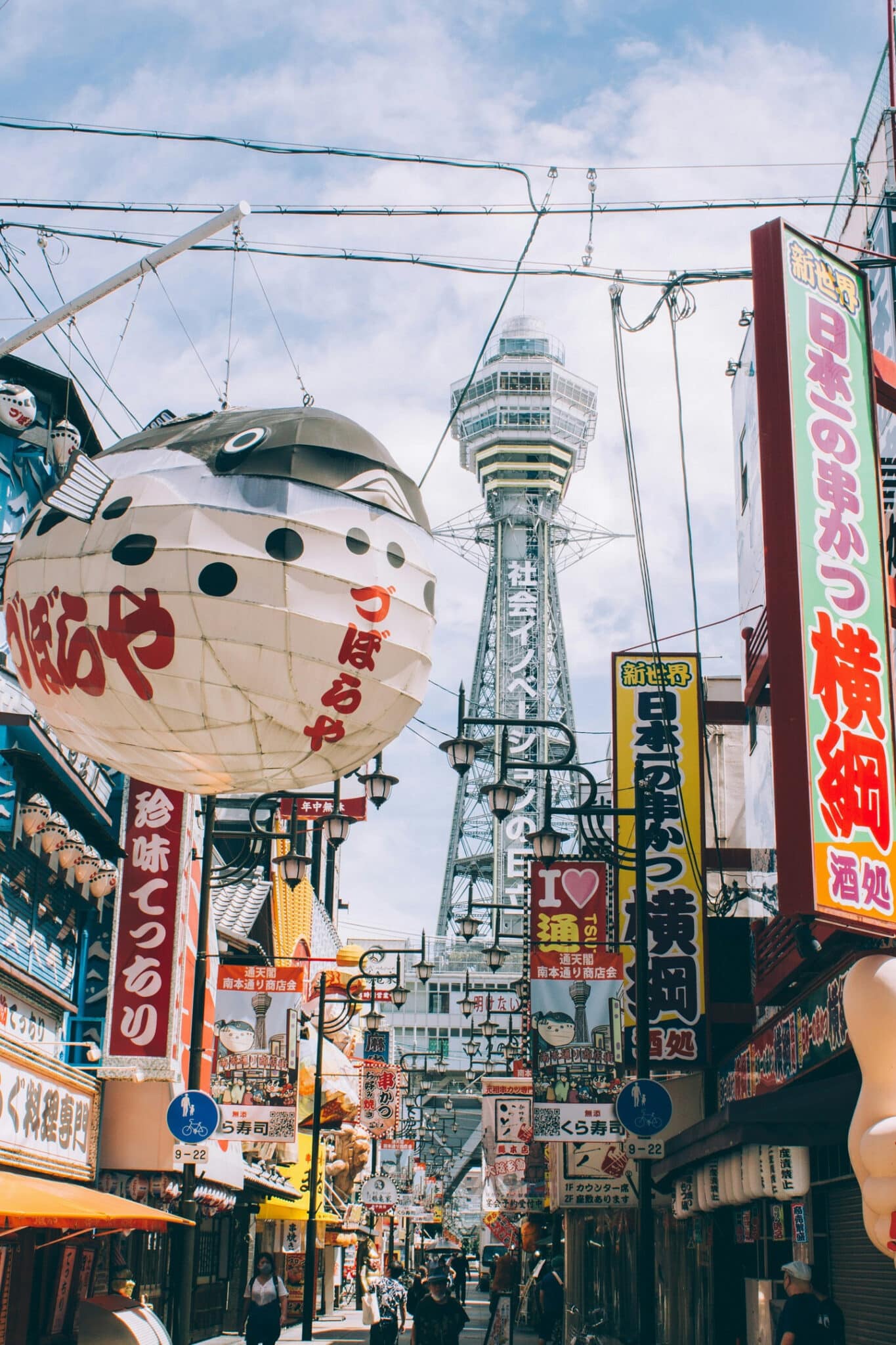
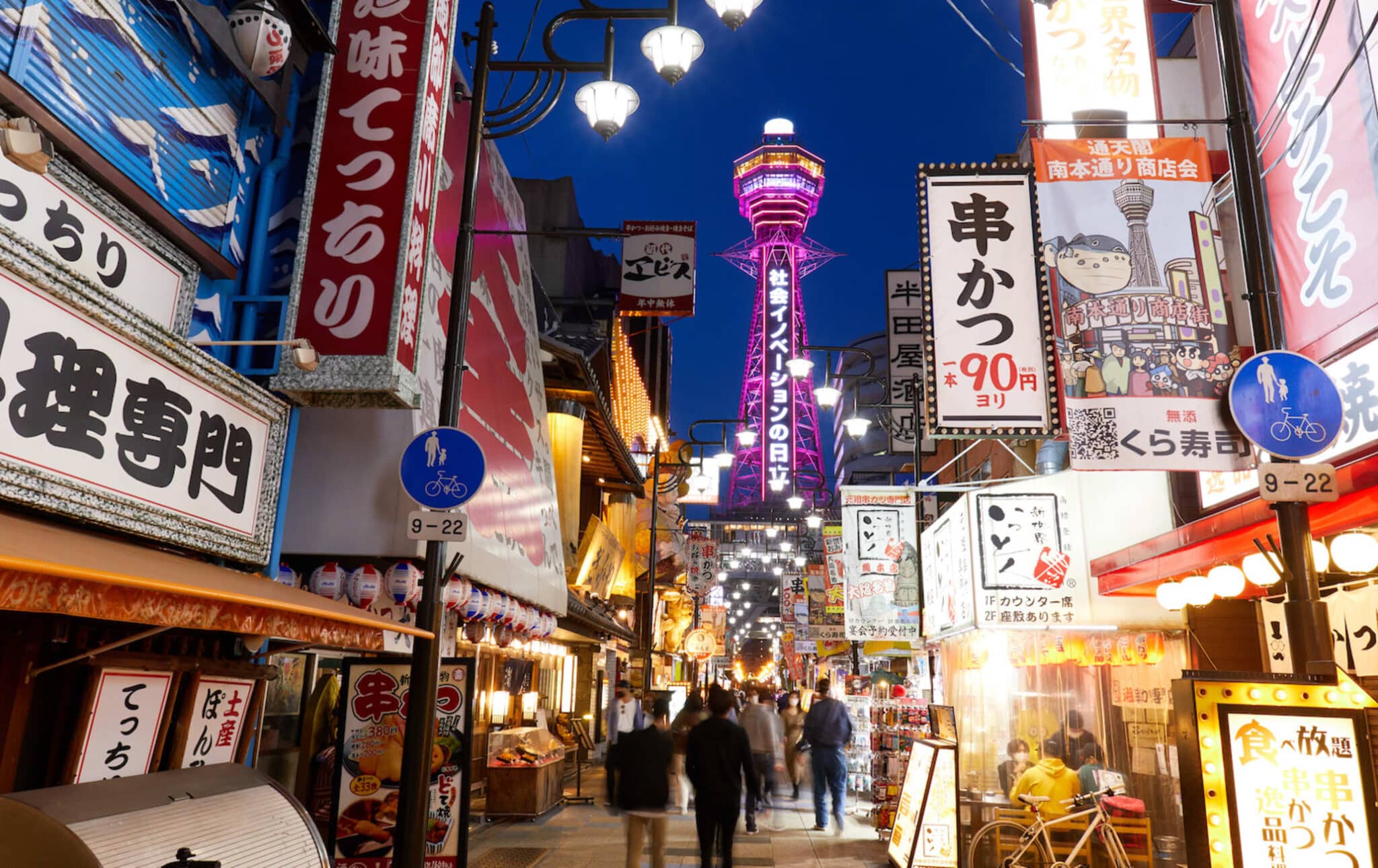
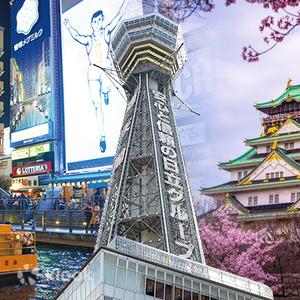
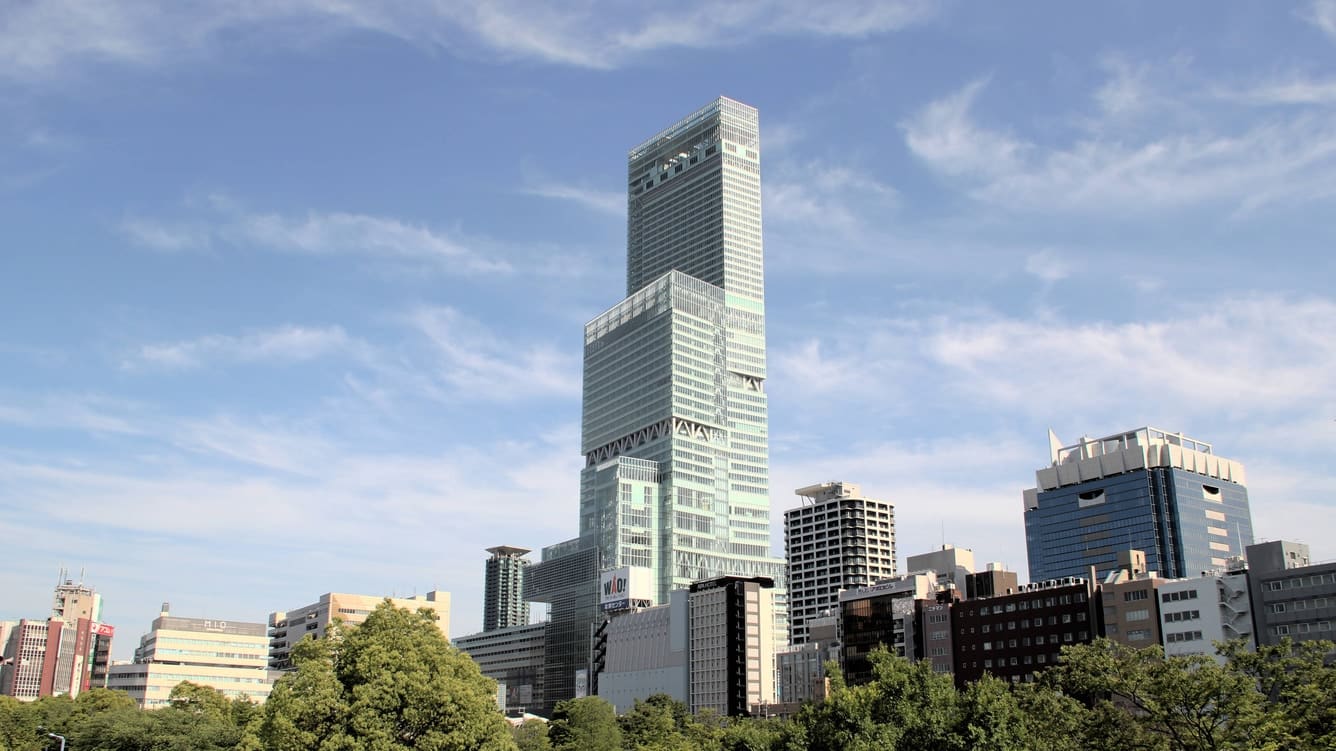
Tsutenkaku is Osaka’s signature landmark tower, with an observation ticket of about ¥1,500 (from April 2026 the regular observation deck and the special open-air deck are combined into one set price), and the Shinsekai district below it is famous for kushikatsu (deep-fried skewers). Abeno Harukas is one of the tallest skyscrapers in Japan; check the official site for ticket prices to the Harukas 300 observatory, with views over the Osaka plain.
All three are 10-20 minutes from Shitennoji on foot or by transit, and they can be linked into a half-day itinerary.
How Much Does Osaka Shitennoji Cost in 2026? Admission, Experiences and Guided Tours
Shitennoji has no single combo ticket; tickets for each area are bought separately, so choose the most economical combination for your plan.
Shitennoji Central Precinct and Five-Story Pagoda Ticket: A View Over the City From the Pagoda Area
The central precinct ticket includes viewing the five-story pagoda at about ¥500 for adults. Hours are 8:30-16:30 in summer and 8:30-16:00 in winter, opening early at 8:00 on the 21st of each month. It is the best-value paid item of a visit, letting you see the Shitennoji-style layout and the five-story pagoda up close.
Honbo Garden, Gokuraku-jodo Garden Ticket: A Pond-Stroll Garden Experience
Admission to the Honbo Garden is about ¥300 for adults, bought separately from the central precinct. It suits those who love Japanese gardens and want to slow down for a stroll, and is most beautiful in spring and autumn.
Treasure Hall Special Exhibition Ticket: National-Treasure Artifacts Up Close
Treasure Hall admission is about ¥500 and only open during the spring and autumn special exhibitions. The collection includes precious items such as the National Treasure Fan-Shaped Lotus Sutra, suiting in-depth travelers interested in Buddhist art and historical relics.
Osaka Amazing Pass: A Combo for Free Entry to Many Sights
The Osaka Amazing Pass one-day pass (¥3,500) or two-day pass (¥5,000) gives unlimited rides on the Osaka Metro and city buses, plus free entry to about 40 facilities. Check the official facility list for which sights it covers before you enter. It suits travelers planning a one-day tour of many sights.

Where to Stay Nearby
Tennoji Station is the junction of the JR Osaka Loop Line and the Midosuji and Tanimachi subway lines, about a 12-minute walk to Shitennoji’s south gate, with easy access to Namba, Umeda and Kansai Airport, making it a good base for an Osaka trip. On the monthly ennichi market days of the 21st and 22nd it is more crowded, so book lodging early.

FAQ
Q: How much is admission to Shitennoji?
The central precinct and five-story pagoda are about ¥500, the Honbo Garden is an extra ¥300, the Treasure Hall during special exhibitions is about ¥500, and the outer areas are free to visit.
Q: What is the fastest way to get to Shitennoji?
Take the Tanimachi Line subway to Shitennoji-mae Yuhigaoka Station, about a 5-minute walk to the west gate, the fastest and most time-saving route.
Q: What are Shitennoji’s opening hours?
The outer grounds are open all day, and paid areas such as the central precinct are open about 8:30-16:30, adjusted slightly by season.
Q: Which days are the Shitennoji markets?
The ennichi markets are held on the 21st (Daishi-e) and 22nd (Taishi-e) of each month, with more than 300 stalls, the liveliest days to visit.
Q: When is the best time for cherry blossoms at Shitennoji?
Cherry blossoms bloom from late March to early April, and the Honbo Garden’s Gokuraku-jodo Garden is the best cherry blossom spot in the grounds.
Q: What is Nissokan and when can you see it?
Nissokan is the scene of the setting sun falling into the exact center of the stone torii around the spring and autumn equinoxes, from the tradition of practice facing west toward the Pure Land.
Q: How long is the wait for goshuin at Shitennoji?
On market days or holidays crowds are larger and waits longer. Follow the official site for the sutra-copying office hours, and go early or leave your goshuin book first.
Q: How long should I allow at Shitennoji?
Worshipping only in the free areas takes about 30 minutes to 1 hour. To enter the central precinct for the pagoda and add the Honbo Garden, allow 1.5 to 2 hours. If you want to browse the stalls at the 21st/22nd ennichi market or the antique market at leisure, allow at least half a day.